Feeds:
Posts
Comments

Archive for the ‘Uncategorized’ Category

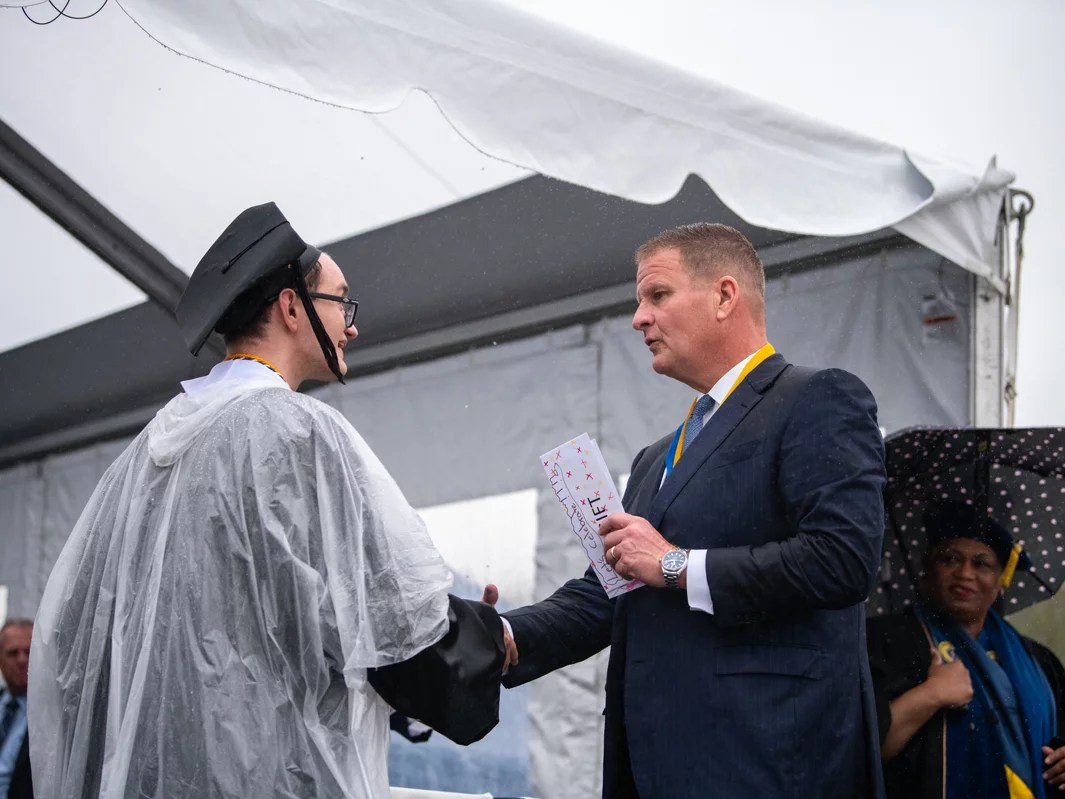
Photo: Karl Christoff Dominey/University of Massachusetts Dartmouth via NPR.
Robert Hale gives an envelope with cash to a graduating UMass Dartmouth student at commencement. Each of the 1,200 graduates received $1,000 onstage, half to keep and half to donate.

Here’s a story from the most recent graduation season: a speaker who gave graduates the inspiration and also the means to start being productive members of society right away.

Jenna Russell reported at the New York Times in May, “Until the final minutes of their commencement ceremony last Thursday, the 1,200 graduates of the University of Massachusetts Dartmouth thought they knew what they would remember most about it: the supremely bad weather during the outdoor ceremony, where they sat drenched and shivering in a torrential rainstorm.

“Then, as they prepared to collect their diplomas, their commencement speaker, Rob Hale, a billionaire philanthropist from Boston, returned to the dripping podium. He brought along two cash-stuffed duffel bags, he announced, and would hand every graduate $1,000 as they crossed the stage — $500 to keep for themselves, and $500 to give to any good cause. …

“Hale, the co-founder and chief executive of Granite Telecommunications … told the graduates at UMass Dartmouth he has never forgotten the experience of losing everything, when the first company he built went bankrupt in the dot-com crash more than 20 years ago.

” ‘Honestly, have you guys ever met someone who lost a billion dollars before?’ Mr. Hale, a part owner of the Boston Celtics, asked in his speech, which he cut short because of the rain.

“Since that disaster, he said in an interview this week, he and his wife have found deep joy and satisfaction in giving their money away. In granting college students a chance to experience the same feeling, he said he hoped to light a spark that they will carry with them — even if he had no guarantee that they will honor his request. …

“ ‘If they get to feel that joy themselves, then maybe it becomes something they want to do again, and make part of their own lives,’ Mr. Hale, 57, said.

‘In America and the world, these are times of turmoil, and the more we help each other, the better off we’ll be.’

“In the week since a businessman they had never met handed them two damp envelopes onstage — one labeled ‘GIFT and the other ‘GIVE’ — the new graduates have packed up dorm rooms, fine-tuned résumés and snapped last campus selfies. They have also pondered where to send what for most will be the largest charitable gift they have ever had the chance to give.

“Tony da Costa, a graphic design major who graduated with high honors, considered giving his $500 to a charitable organization but decided instead to hand it over to an acquaintance of his mother, someone he has never met, who is suffering from an illness and struggling to pay bills. …

“Kamryn Kobel, an English major, gave her $500 to the Y.W.C.A. in Worcester, Mass., where she learned to swim as a child, to support its programs for young women and survivors of violence. Her donation felt like something to be proud of, she said — once it sank in that the envelopes she tucked under her rain poncho contained exactly what Mr. Hale had promised. …

“UMass Dartmouth enrolls about 5,500 undergraduates, more than half of them first-generation college students. Eighty percent come from Massachusetts; 80 percent receive financial aid. It is the fourth Massachusetts college campus in the last four years where Mr. Hale has thrilled graduates with his signature split gift. Each time, he has selected a public school with high concentrations of first-generation and lower-income students who have ‘worked their tails off to get there,’ he said. …

“In an interview … he briefly grew emotional describing how one of the UMass Dartmouth graduates had given her $500 to a local group that provides holiday gifts for children in need — a program that had helped her family when she was a child.

“ ‘Seeing things like that is very cool,’ he said.”

More at the Times, here. There’s a story on this at NPR, too, where there’s no paywall.
Read Full Post »

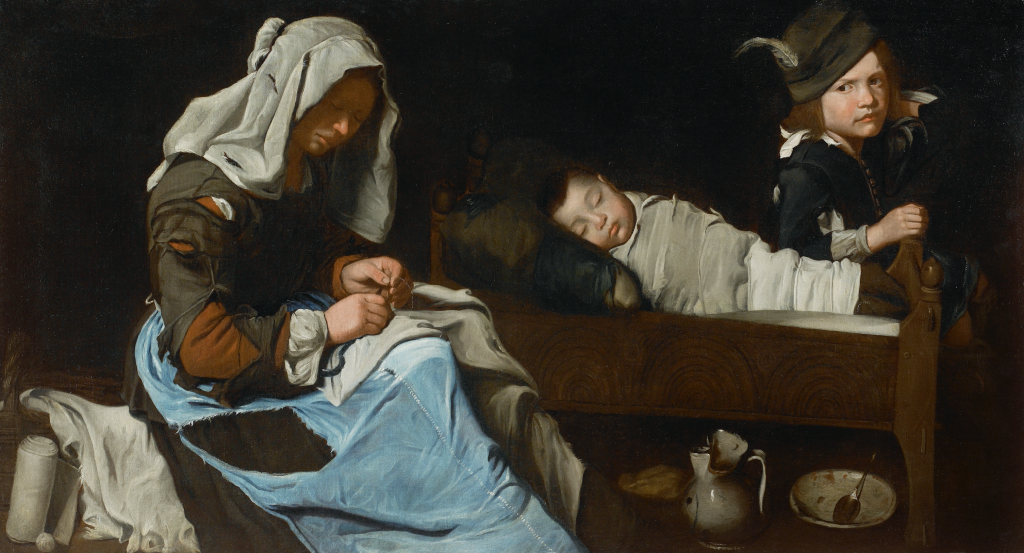
Photo: Galerie Canesso.
An unknown artist now dubbed “Master of the Blue Jeans” created “A Woman Sewing with Two Children” (c. 17th century).

In case you missed it, several outlets wrote recently about a Parisian gallery’s exhibit drawing attention to what looks like blue jeans in 17th century paintings. What? They weren’t invented by Levi Strauss?

Vittoria Benzine writes at Artnet News, “A new exhibition opening at Galerie Canesso will highlight the contested origins of blue jeans, with the display of 17th-century paintings that appear to depict the fabric. Levi Strauss is often credited with creating the sartorial staple in California 150 years ago, though France and Italy have made their own claims. But 10 early artworks featuring blue jeans complicate the narrative.

“In 2004, curator Gerlinde Gruber reattributed these works to an unknown artist dubbed the Master of the Blue Jeans. By 2010, the Italian dealer Maurizio Canesso had bought up all of the mysterious painter’s works. Two will appear in his gallery’s 30th anniversary show, taking place in Paris (May 16—June 23) and Milan (May 23 — June 23), but only one of them, Woman Begging with Two Children, will be for sale.

“Since Galerie Canesso’s last exhibition in 2010, which presented the full-known oeuvre of the Master of the Blue Jeans, the dealer has located one additional example, which he bought in Buenos Aires.

“The original 10 paintings by the Master have always been traced to Northern Italy during the 17th century, but were previously attributed to Michael Sweerts, Diego Velásquez, and Georges de Latour. While they are all early genre scenes centered on society’s poorest people, most feature flashes of prototypical jeans crafted from blue cloth and white thread.

“ ‘People are still not very familiar with the true history of blue jeans, as they confuse it with the material made by Levi Strauss,’ Canesso told Artnet News. ‘One has to distinguish between blue jeans and denim: jeans come from Genoa, while denim comes from the French city of Nîmes.’ The Italian specimens were woven with perpendicular stitches, while their French kin were woven in chevron patterns.

“ ‘An amazing thing is that until the 11th century, no one could wear blue fabric because they didn’t know how to make blue color adhere to the fabric,’ Canesso continued. ‘Only in the year 1000 did this begin to happen using woad leaves, and at a very high cost. The genius of the Genoese was to find the indigo stone in India and make this an industrial and therefore low-cost process.’ …

“Genre painting flourished in the century that followed, but these works stand out. ‘The Master of the Blue Jeans is the only one who painted jeans,’ Canesso wrote. ‘These paintings are the story of a family: they are always the same characters, wearing the same clothes — clothes that they used every day. And they are true jeans fabric: when it tears, the white thread comes out.’

“This feature is especially visible in ‘A Woman Sewing With Two Children’ — another work by the Master of the Blue Jeans set to go on view at Galerie Canesso. It will be on loan (like most works in the anniversary show) from the collector that Canesso originally sold it to.”

More at Artnet News, here. No paywall. If you prefer an audio version of the story, check out radio show The World, here. That’s where I first learned about this.

Read Full Post »

Art: Jonathan Lyndon Chase.
“Calm Touches” (2021), acrylic paint, oil stick, and marker on canvas, 20 x 20 inches. One of the pieces that students chose for the art collection at Wake Forest University.

I’ve been reading Just Kids, Patti Smith’s memoir about her life with artist Robert Mapplethorpe, and I’ve been thinking about how young artists carve out new ways, how they realize they have a different vision and develop the confidence to stick with it.

So it was with interest that I read at Hyperallergic about a university tapping youthful insights about art to form a very special collection.

John Yau reports from Winston-Salem, North Carolina, “Wake Forest University is one of the few American institutions of higher education to establish a collection of student-acquired art.

“Once every four years, a small group of students, along with faculty advisors, travels to New York City to buy art for the Mark H. Reece Collection of Student-Acquired Contemporary Art. This collection was started in 1963, at the beginning of a convulsive era in American history.

“Mark Reece, the dean of students and college union advisor, decided the school should establish a collection of contemporary art chosen by an acquisitions committee composed solely of students. In June of that year, Reece, Dean Ed Wilson, Professor J. Allen Easeley, and two students, David Forsyth and Theodore Meredith, drove to New York to visit contemporary art galleries. Working within a budget that Reece had cobbled together from unused funds, Forsyth and Meredith chose 18 works by 17 artists. 

“Earlier this year, Wake Forest University celebrated the 60th year of this program — and the 16 trips that have taken place since the program’s inception — with a selection of works obtained by previous generations of students. The exhibition, Of the Times: Sixty Years of Student-Acquired Art at Wake Forest University at the Charlotte & Phillip Hanes Art Gallery, was curated by Jennifer Finkel, who also contributed to the catalog, along with Leigh Ann Hallberg and J. D. Wilson. 

“The collection comprises more than 130 works, including, paintings, sculptures, drawings, photographs, and prints. Unsurprisingly, given that the acquisitions committee changes every four years, no style, movement, or material dominates. The one constant holding the collection together, though in no obvious way, is the mandate that Reece gave the first two students, which has been followed ever since: the art they buy must be ‘a reflection of the times.’ 

“During my time on campus, I was invited to sit on Professor John J. Curley’s class, titled Slow Looking. The small group of students, seated in a semicircle, faced Ida Applebroog’s ‘Promise I Won’t Die?’ (1987), a work on paper combining lithography, linocut, and watercolor that the acquisition group elected to buy in 1993. …

“By asking students to research an artist and carefully scrutinize a particular work of art, Curley encouraged them to go down a rabbit hole, where they can consider what they are looking at and how it communicates with them. This level of engagement is hard to achieve without being in the presence of a physical artwork. That it was chosen by a group of students 30 years ago underscores this collection’s ongoing vitality and relevance. 

“On campus, I also met some of the students who participated in the most recent New York buying trip. All were genuinely excited. They talked about how they prepared for the trip, beginning with Reece’s original mandate. They began compiling the initial list of 300 artists once they had been accepted into Contemporary Arts and Criticism. Throughout the semester the list expanded and contracted until it was down to 20 names. The students met in and outside of class. Each week, they presented a short list to their two professors, Finkel and Curley. 

“The students discussed what they thought art reflecting the times would look like, and who might make it, resulting in a racially diverse group. Before the trip, they made appointments with the artists’ galleries. Some dealers, I learned, were arrogant to them, treating them as if they didn’t know what they were doing. Others were warm and welcoming. At least one gallerist kept looking to the professors who accompanied them, convinced it was they who would make the final decision. …

“This immersive art-buying experience … mirrors this country’s changing demographics. For the first decades, the artists on the list were all or nearly all White. In 1989, the students bought Robert Colescott’s painting ‘Famous Last Words: The Death of a Poet’ (1988). … Four years later, the students bought ‘Untitled (Four Etchings)’ (1992) by Glenn Ligon and ‘Untitled (from the Empty Clothing series)’ (1991) by Whitfield Lovell. In 2001, they added South Korean artist Do-Ho Suh and Pakistani-American artist Shahzia Sikander to the collection. They confronted controversial subjects, such as Congolese child soldiers, photographed by Richard Mosse, and Pakistani artist Salman Toor’s paintings of queer Brown men. 

“This year, the eight students chose the work of eight artists: Tunji Adeniyi-Jones, Jonathan Lydon Chase, Melissa Cody, Adebunmi Gbadebo, Emilie Gossiaux, Melvin L. Nesbitt Jr., Willa Wasserman, and Zhang Xiaoli.

“My only criticism,” Yau writes, “is that the university has no building dedicated to this collection, and it really should. Yet the diversity of artists, mediums, and practices is to be applauded. Taking their cues from Reece’s mandate, Wake Forest’s students have assembled an impressive gathering of art.”

I love how the university recognizes that young people have different sensibilities and how it honors that. More at Hyperallergic, here. No paywall. Subscriptions encouraged.

Read Full Post »

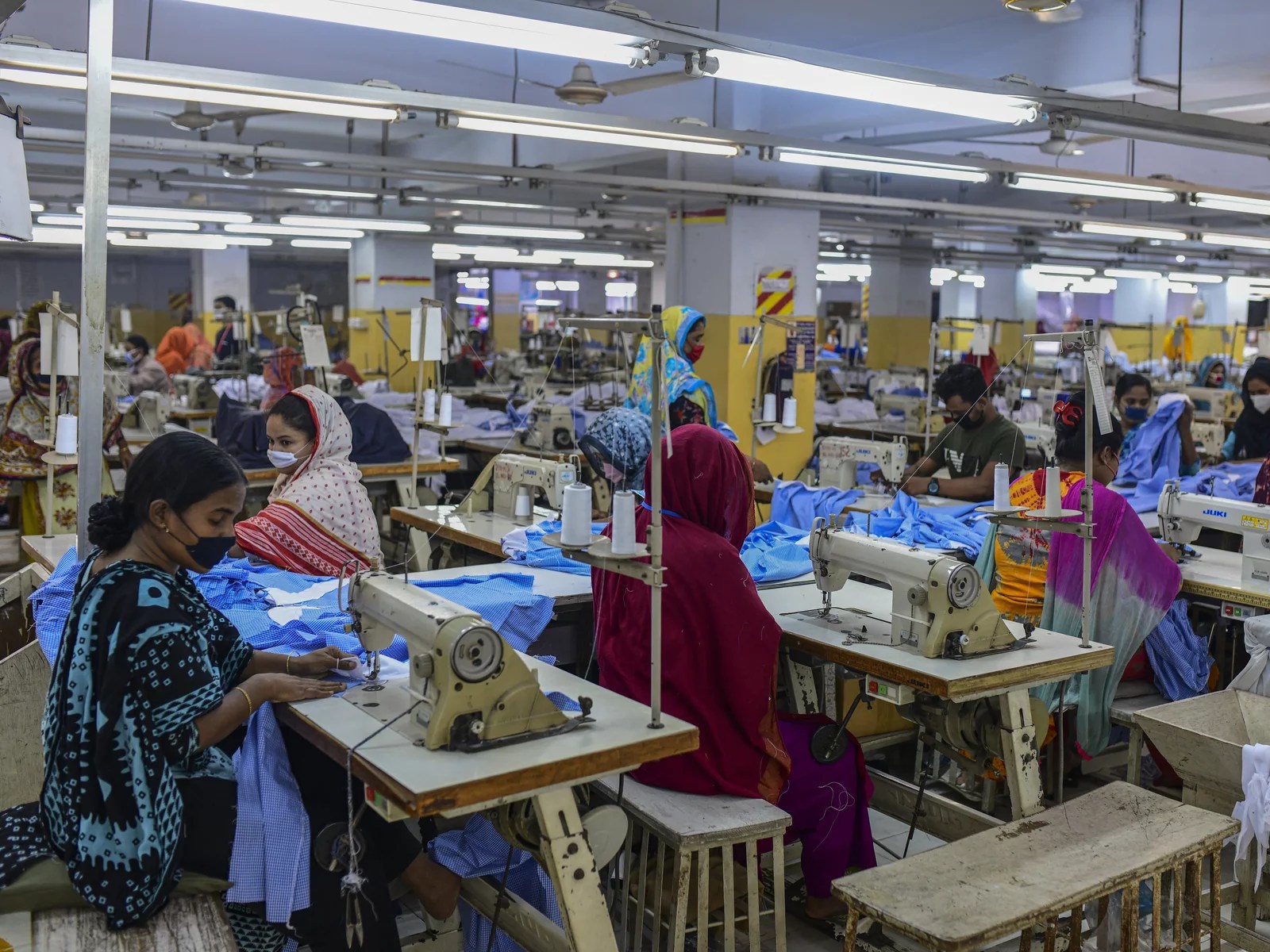
Photo: Zabed Hasnain Chowdhury/SOPA Images/LightRocket via Getty Images.
Garment workers were deemed essential employees during the Covid lockdown in Bangladesh, when workers were more worried about hunger than the pandemic and customers in wealthier places were still demanding new clothes.

Here’s a support group that most of the world needs. It’s one that recognizes capitalism — or at least acquiring more and more “stuff” — as an unhealthy addiction for Spaceship Earth.

Gerry Hadden reports at Public Radio International’s The World, “Twice a month, members of the support group Capitalists Anonymous gather in a small room in Paris, France, beset by chronic buyer’s remorse. 

“Some arrive worried over how much they consume and don’t know how to stop. 

“On a recent night, each of the eight people stood up, introduced themselves, and gave their reasons for coming to the support group. A woman named Claire, who didn’t want to share her last name, said she wants to be with people who share her concerns for the planet and mental health. …

“ ‘Where I live in southwest France’ [said participant Olivier Montegut], ‘it reached 90 degrees one day — in April. We’ve just had a baby, and I am scared for her future,’ he told the group. 

“Most scientists agree extreme weather is being fueled by climate change, which is exacerbated by the burning of fossil fuels. And capitalism is the force behind it all, said the group’s founder, Julien Lamy. 

“He said it’s a global system that pushes unfettered consumption on the rich and poor alike, and virtually everyone, he said, is addicted.

“ ‘To push back, I searched for support groups with a focus on recovery and eventually found Alcoholics Anonymous, with its 12-step method,’ Lamy explained. …

Capitalists Anonymous has just eight steps but starts with the same one — admitting that you have a problem. 

“ ‘It means recognizing that we’re participating in a system that’s destroying life on our planet,’ he said. …

“These steps might sound familiar to people in drug or alcohol programs, but Lamy said in some ways, capitalism is harder to shake because it permeates every part of modern life.

“ ‘I often say that what we’re trying to do is like striving for sobriety,’ he said, ‘but while living inside a bar.’ A planet-sized bar. 

“To avoid feeling overwhelmed, Lamy suggests people take small steps to reduce their impact just to feel better in their personal lives, such as biking to work or cutting back on red meat. …

“Resident Anne-Christelle Beauvois said she heard Lamy on the radio and reached out to learn more.  

“Beauvois worked for years in the fashion industry. She said she became alarmed in the 1990s when so-called fast fashion arrived — that system of mass-producing cheap clothes in sweatshops that then get shipped all over the world.

“ ‘It’s nuts,’ she said. ‘You can wake up in the middle of the night, jump on Instagram to follow some influencer or brand and click, you place an order.’

“Beauvois said she has never ordered anything online in her life. But she’s hardly ‘holier than thou,’ she said as she lit a cigarette and took a puff on another addiction. 

“It may be hard to avoid capitalism when the entire global economy depends on it, but Beauvois said people can still produce differently. 

“ ‘Do we need to make stuff we don’t need?  Must we work 50 hours a week? Is it such a problem to add more pleasure to our lives and less work?’ she said. …

“Lamy, the founder, said people from all over Europe — even Mexico — have written to ask how to start their own chapters.”

So my question is, How do we stop unnecessary acquiring and still ensure that the people who are providing all the “stuff” not only have enough to eat but can have a decent life?

“Houston, we have a problem.”

More at PRI’s The World, here.

Read Full Post »

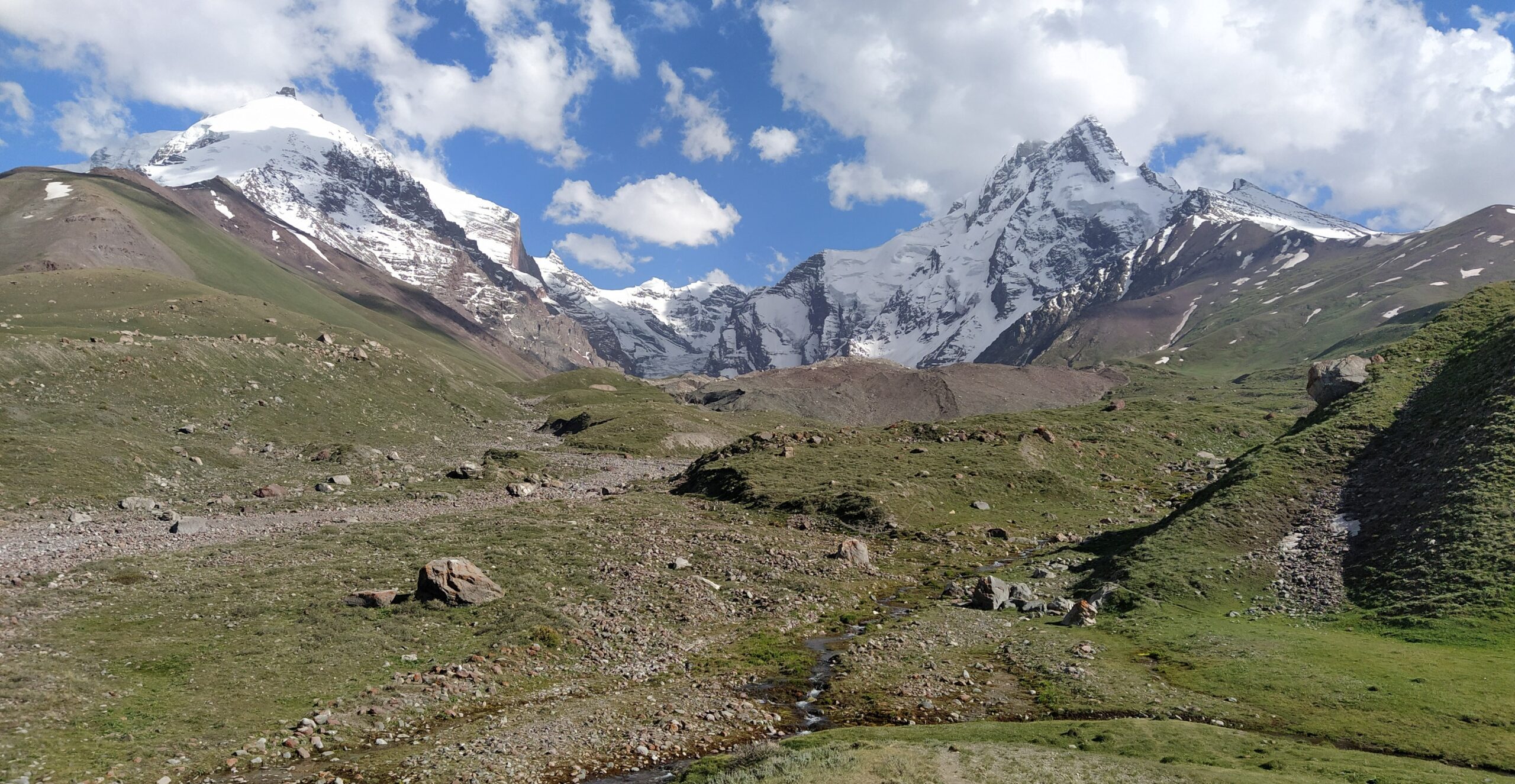
Photo: Achille Jouberton at the Pamir Project.
Swiss scientists are tackling the mysteries of ice in countries that can be dangerous to work in.

Today Levi Bridges at the great international radio show The World brings you the latest on glaciers in Kyrgyzstan and Tajikistan, countries that could be more important to us than we realize as we wallow in the anxieties of our own places, those bits of Earth we imagine are the only important ones.

“On a sunny summer day two years ago,” Bridges reports, “a massive chunk of ice broke off from a glacier on a mountain in the Central Asian country of Kyrgyzstan.  An avalanche quickly raced down the mountain toward a group of hikers below, which one man caught on film.

“The hikers braced themselves for impact as the cascade of snow and ice poured down the mountain toward them. Miraculously, the group survived with only several people receiving minor injuries

“The event highlighted the challenges facing the world’s glaciers. This year, the UN declared that climate change reached record levels in 2023. And glaciers, which hold most of the Earth’s freshwater, are melting at an unprecedented rate. 

“But some glaciers located in mountainous parts of Central Asia aren’t melting and, in some cases, are actually growing. This cold, arid region, known as the Third Pole, is one of the only places in the world outside the interior of Antarctica where ice has so far been relatively unaffected by the climatic changes associated with rising temperatures.

“Even during the summer it remains so cold in parts of Tajikistan that ice on a glacier’s surface can turn into a gaseous state instead of melting through a process known as sublimation. That can cause spectacular ice formations on a glacier’s surface that look like inverted icicles or ice pyramids, according to Evan Miles, a glaciologist at the Swiss Federal Research Institute who studies Tajikistan’s glaciers. …

“Miles is the scientific coordinator for a team of Swiss and international scientists who have formed a research group known as the Pamir Project that hopes to discover what makes some of the region’s glaciers so unique. Each summer, they travel to isolated locations in Tajikistan’s mountains to study glaciers.  Scientists must spend days trekking up to altitudes sometimes as high as 15,000 feet just to visit their research sites, carrying in supplies and scientific equipment by donkey. 

“Miles said the remote locations the team visits in Tajikistan pose different challenges than research sites he has visited on Mount Everest where there are established trails and usually other people nearby.

“ ‘In Tajikistan, there’s nobody — there’s no helicopter that’s going to come rescue you if something goes wrong,’ he said. 

“But understanding these glaciers is worth the risk because millions of people in Asia depend on them as a water source.

“Scientists believe these glaciers aren’t melting because water is evaporating from vast, irrigated farmland in nearby Pakistan, China and Uzbekistan. An increase in atmospheric moisture drives changes in weather patterns, so more snow gets dumped on Tajikistan’s glaciers and helps their size remain stable. 

“These mountains are just one of many unsolved mysteries glaciologists are working on. It can be difficult for scientists to predict how much ice most glaciers will lose — and when — because there are still basic unanswered questions, like how much snowfall many mountains get. …

“Scientists who are part of the Pamir Project have [teamed up] with historians and geographers who are searching for Soviet documents that contain earlier data about Tajikistan’s glaciers. Some members are also conducting oral histories with locals in Tajikistan’s mountains.

“Sofia Gavrilova, a researcher at the Leibniz Institute for Regional Geography in Germany that’s helping with the initiative, met a Tajik schoolteacher as part of her oral history work who kept dated records of changes in the level of a local river.

“ ‘This is really very valuable, large-scale data that you cannot necessarily capture any other way,’ Gavrilova said. …

“Although some of Tajikistan’s glaciers remain stable for the moment, scientists predict that they, too, will eventually start to melt and get smaller. Researchers believe it will prove very difficult to stop that process after it starts.

“ ‘Let’s say that we actually manage to withdraw carbon from the atmosphere effectively by 2050, there’s still actually going to be quite some time, probably 20 to 30 years, that the glaciers will continue shrinking and losing mass,’ said Miles, of the Pamir Project.

“He stressed that every effort we make to stop global warming — even by lowering the Earth’s temperature by just a tenth of a degree — can help save the world’s glaciers in the long run.”

More at The World, here. There’s no paywall, and you might enjoy some delightful pictures of the local people in that part of Asia.

Read Full Post »

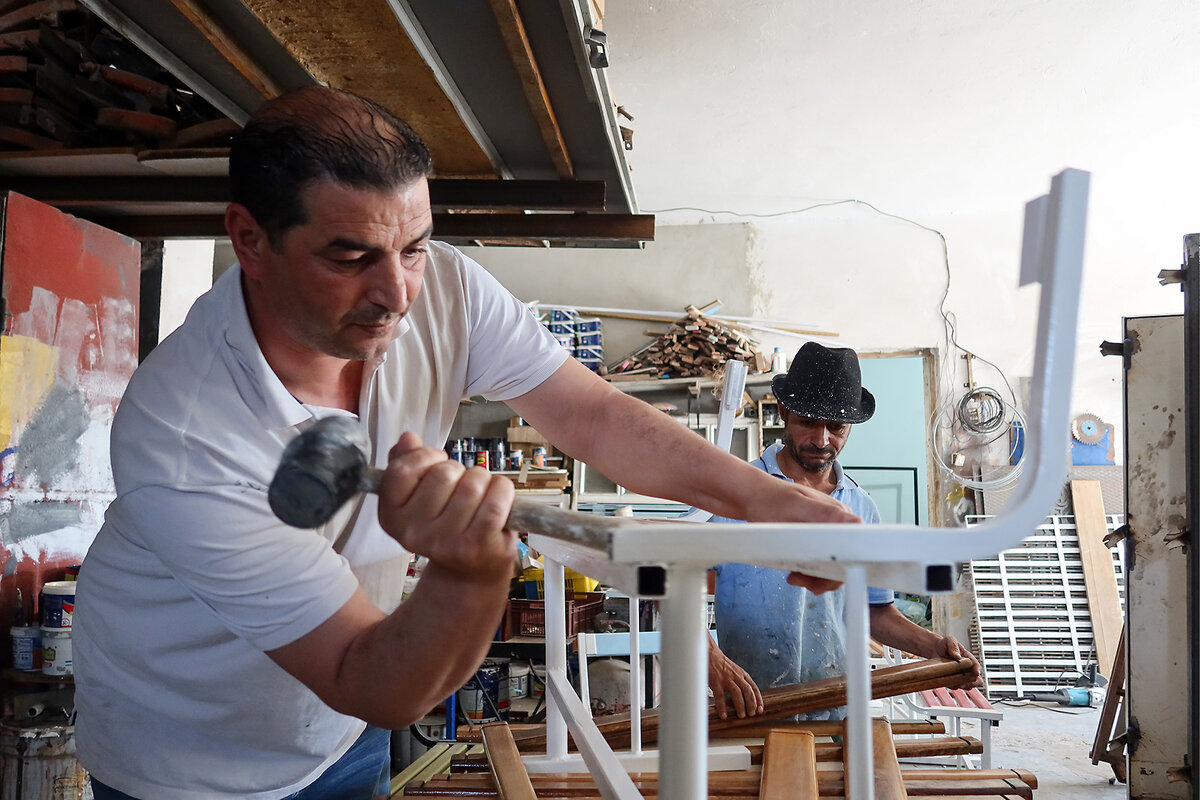
Photo: Erika Page/Christian Science Monitor.
Karim Arfa (left) works on a bench in his workshop in El Mourouj, a neighborhood of Tunis, Tunisia. He often shoulders jobs that government should have been tackling.

You were thinking from this post’s title that it was about the US? No. Not overtly. I certainly am preoccupied with harnessing the power of ordinary people in the US these days.

But no, this post is about Tunisia.

Erika Page writes at the Christian Science Monitor about how good, no-nonsense people can — and do — take civic problems into their own hands. Just because the work needs doing.

“Chadia Jarrahi can still taste the sting of embarrassment she felt when the principal sent her young sons home from school, their clothes too wet and muddy to attend class. From that day on, whenever the river was high, Ms. Jarrahi took the two boys piggyback across the ravine separating her village from the main road on the other side. …

“It’s a common story in the mountainous, interior regions of rural Tunisia, where fewer government resources are directed to infrastructure and services than along the more urban coast. The residents of Al Taraiya, in the northwestern province of Béja, had been fighting since the 1990s for a bridge connecting their community to the only nearby school, mosque, grocery store, and hospital. [Local] officials deemed the project too expensive.

“Then Karim Arfa caught wind of the residents’ plight. In recent years, the building and painting contractor has made it his mission to take on just that sort of impossible-seeming project. Using mainly scrap metal and his own creativity in his workshop in Tunis, he has built much-needed infrastructure and equipment, from furniture for schools to pedestrian bridges.

“Mr. Arfa’s work serves to assure those who have long felt abandoned by their national and local governments that regular people can come up with solutions to entrenched problems – even where resources are scarce. …

“Today, a bright pink bridge stretches from the winding highway to the rolling hills on the other side of the river. Ms. Jarrahi’s children play with other kids along the walkway; neighbors lead donkeys and motorcycles to and from the homes that are just visible across the valley. Residents no longer worry about missing work, running out of places to buy food, or not being able to go to the hospital when rain makes the river swell. …

“The bridge will help reduce absenteeism and school dropouts in the area, predicts Mohamed Jouili, a professor of sociology at the University of Tunis, over email. He also says Mr. Arfa’s initiative ‘encourages other members of the community to recognize their own agency and actively contribute to improving their environment.’

‘If everyone does something small, we can do it all,’ says {Karim] Arfa.

“Mr. Arfa himself grew up in a rural area of Tunisia, some 100 kilometers (62 miles) south of Al Taraiya. He nearly dropped out of school because of the difficulty of getting to and from class. … He eventually opened his own workshop on the outskirts of Tunis. But he never turned away from his rural roots. ‘I wanted to do something to repair their situation, as if I was repairing something for myself,’ he says.

“He started with a school dormitory that burned down in 2018, redecorating the space and then building a new library for the school in an abandoned room. From there, he began repairing desks and chairs in schools and maintenance hole covers for roads. After hearing about a young girl who died crossing a river on foot in 2019, he and his team of volunteers began building their first bridge, in the province of Kasserine.

Steep mountains meant the machinery couldn’t get to the bridge site, so they had to dig out the base by hand.

“ ‘Karim goes to the places the government doesn’t go,’ says Cherif Ait Daoud, a Tunis-based architect who helped design the bridge. …

“The bridge in Béja, Mr. Arfa’s sixth such project, was finished in 2023. ‘One year, seven days, and two hours ago,’ recalls Ahmed Terroui, a resident of Al Taraiya. He and others spent two months helping Mr. Arfa assemble the bridge, often after working long shifts as day laborers on nearby farms.

“The bridge’s railings are made of rods from old school desks, refurbished and repainted at Mr. Arfa’s workshop. Three-fifths of the steel is recycled. Only the cement, gravel, sand for the foundation, and the rest of the steel had to be bought. Officials had predicted that construction could total 2 million dinar (about $635,000). … Mr. Arfa and his team pulled it off for 41,000 dinar. …

“So far, he has relied on donations alone, either in the form of scrap metal or money. But it has been difficult to secure stable funding. 

“As trucks and motorcycles whir by, Basma Ammouri rolls dough into a ball, presses it into a wide circle, and sticks it on the inner wall of an open clay oven to bake. She set up her makeshift roadside bakery across the bridge from her home in Al Taraiya, just after it was inaugurated. She now has reliable access to customers who stop along the highway to buy her traditional tabouna bread. That income helps support her young children.”

When we think, “What can one person do?” it helps to remember people like Mr. Arfa. Even if you can’t build an actual bridge, you can build bridges to others. And then there’s the “stable funding” piece of the puzzle: even small monthly donations to worthy causes help people who do the work you value and lets them know how much they can plan for.

More at the Monitor, here.

Read Full Post »

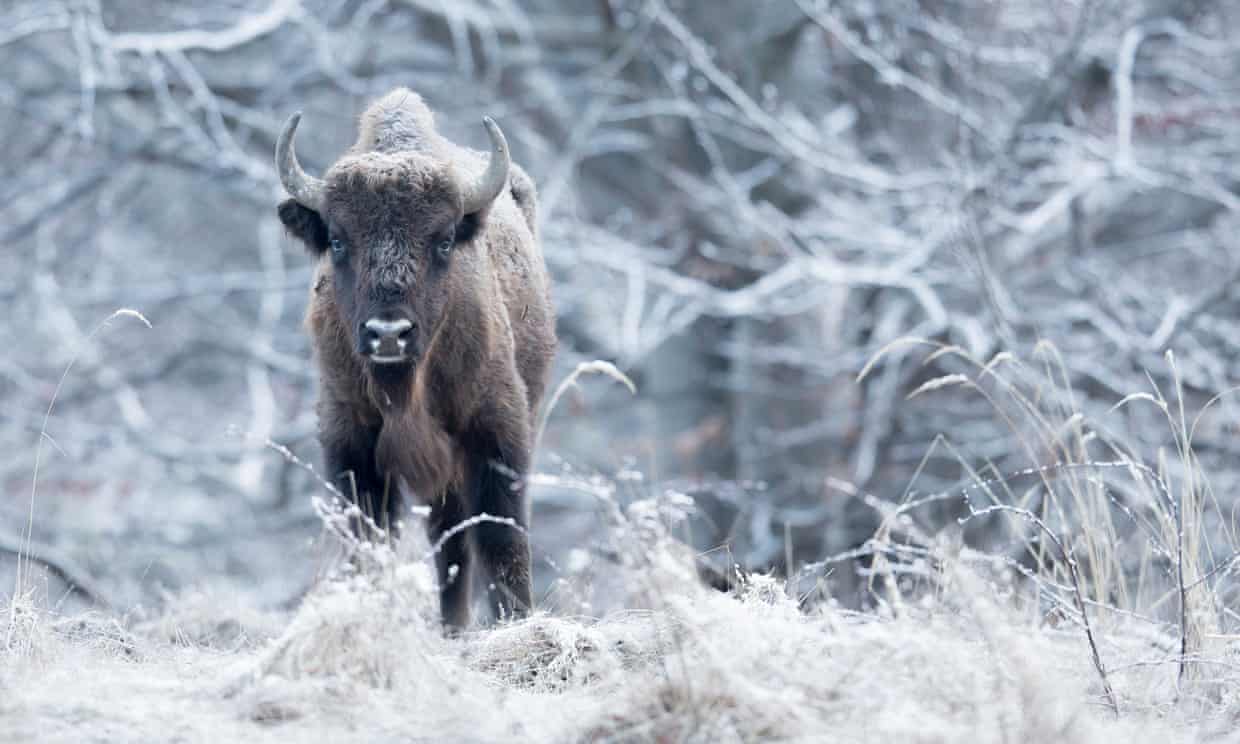
Photo: Michel Doutemont.
“European bison disappeared from Romania more than 200 years ago,” says the Guardian, “but the species was reintroduced to the southern Carpathian mountains in 2014.” 

We think of bison as iconically North American. Who knew about the bison in Europe — also nearly wiped out by humans? It turns out they are worth bringing back, if only to store carbon.

Graeme Green explains at the Guardian, “A herd of 170 bison reintroduced to Romania’s Țarcu mountains could help store CO2 emissions equivalent to removing 43,000 US cars from the road for a year, research has found, demonstrating how the animals can help mitigate some effects of the climate crisis.

“European bison disappeared from Romania more than 200 years ago, but Rewilding Europe and WWF Romania reintroduced the species to the southern Carpathian mountains in 2014. Since then, more than 100 bison have been given new homes in the Țarcu mountains, growing to more than 170 animals today, one of the largest free-roaming populations in Europe. The landscape holds the potential for 350-450 bison.

“The latest research, which has not been peer-reviewed, used a new model developed by scientists at the Yale School of the Environment and funded by the Global Rewilding Alliance, with the bison paper funded by WWF Netherlands. The model, which has been published and peer reviewed in the Journal of Geophysical Research: Biogeosciences, calculates the additional amount of atmospheric CO2 that wildlife species help to capture and store in soils through their interactions within ecosystems.

“The European bison herd grazing in an area of nearly 50 sq km [~19 square miles] of grasslands within the wider Țarcu mountains was found to potentially capture an additional 54,000 tonnes of carbon a yearThat is nearly 9.8 times more carbon than without the bison – although the report authors noted the 9.8 figure could be up to 55% higher or lower, so making the median estimate uncertain. This corresponds to the yearly CO2 released by a median of 43,000 average US petrol cars, or 84,000 using the higher figure, or a median of 123,000 average European cars, due to their higher energy efficiency, the researchers said.

“Prof Oswald Schmitz of the Yale School of the Environment in Connecticut in the US, who was the lead author of the report, said: ‘Bison influence grassland and forest ecosystems by grazing grasslands evenly, recycling nutrients to fertilize the soil and all of its life, dispersing seeds to enrich the ecosystem, and compacting the soil to prevent stored carbon from being released.

“ ‘These creatures evolved for millions of years with grassland and forest ecosystems, and their removal, especially where grasslands have been plowed up, has led to the release of vast amounts of carbon. Restoring these ecosystems can bring back balance, and “rewilded” bison are some of the climate heroes that can help achieve this.’

“[Alexander Lees, a reader in biodiversity at Manchester Metropolitan University, who was not involved with the study] said more in-the-field research would help validate the models and assist understanding of how long it would take for bison benefits to accrue, adding: ‘This study reinforces an emerging consensus that large mammals have very important roles in the carbon cycle.’ …

“A keystone species, bison play an important role in ecosystems – their grazing and browsing helps maintain a biodiverse landscape of forests, scrub, grasslands and microhabitats. In the Țarcu mountains, their return has also inspired nature-based tourism and businesses around rewilding. Schmitz noted that the Carpathian grasslands have specific soil and climate conditions, so the effect of the European bison could not necessarily be extrapolated internationally – American prairies, for example, have much lower productivity.

“ ‘This research opens up a whole new raft of options for climate policymakers around the world,’ said Magnus Sylvén, the director of science policy practice at Global Rewilding Alliance. ‘Until now, nature protection and restoration has largely been treated as another challenge and cost that we need to face alongside the climate emergency. This research shows we can address both challenges: we can bring back nature through rewilding and this will draw down vast amounts of carbon, helping to stabilize the global climate.’ …

“Schmitz said the team had looked at nine species in detail, including tropical forest elephants, musk oxen and sea otters, and had begun to investigate others. He added: ‘Many of them show similar promise to these bison, often doubling an ecosystem’s capacity to draw down and store carbon, and sometimes much more. This really is a policy option with massive potential.’ “

More at the Guardian, here.

Read Full Post »

Clover photos: Suzanne.
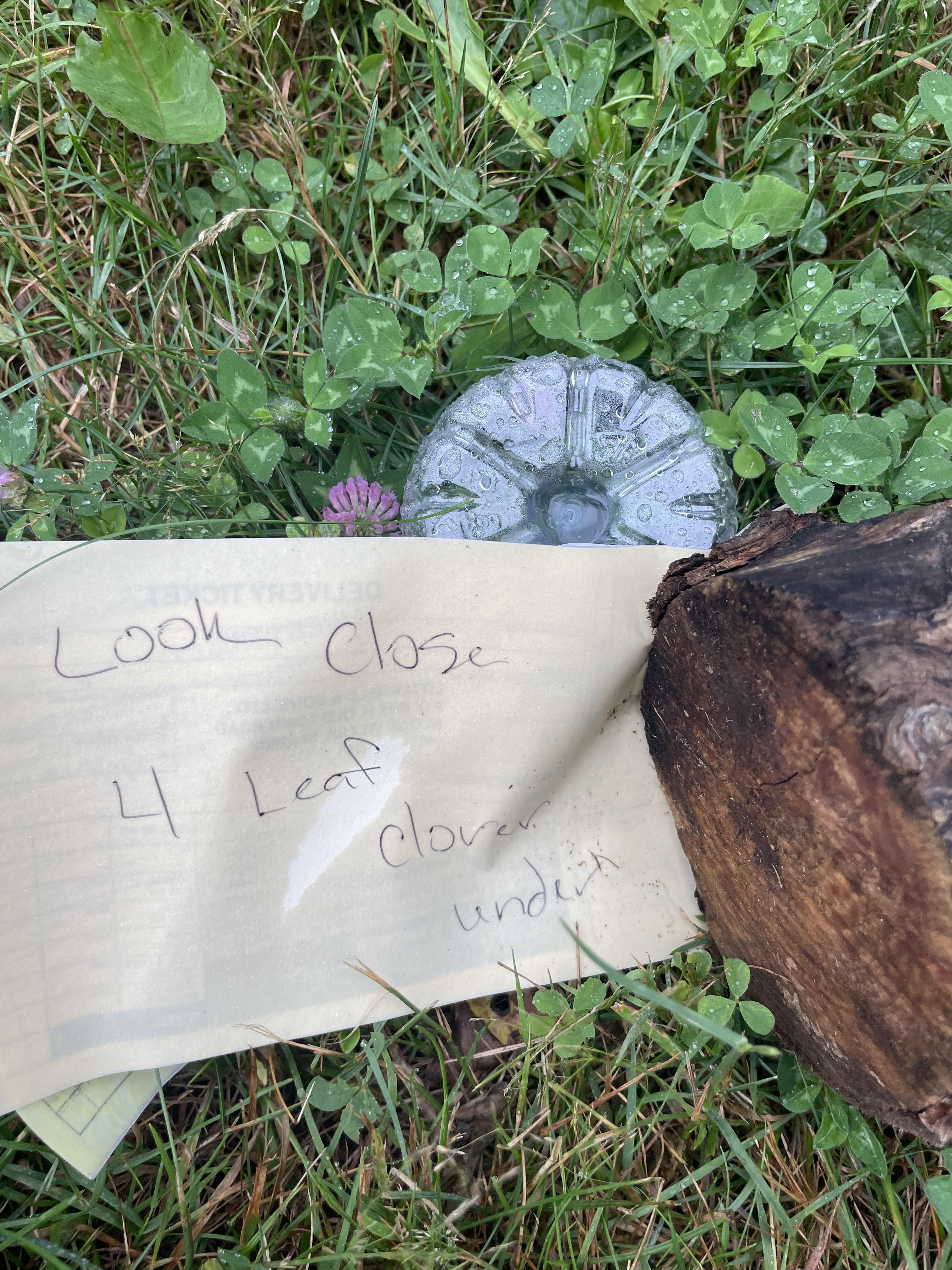
What the propane-delivery guy left for us.

Summer sunshine is always good for photos. And when we haven’t been swimming in a pea-soup fog here, we’ve had beautiful sunshine. A few of today’s photos have little stories that go with them, too.

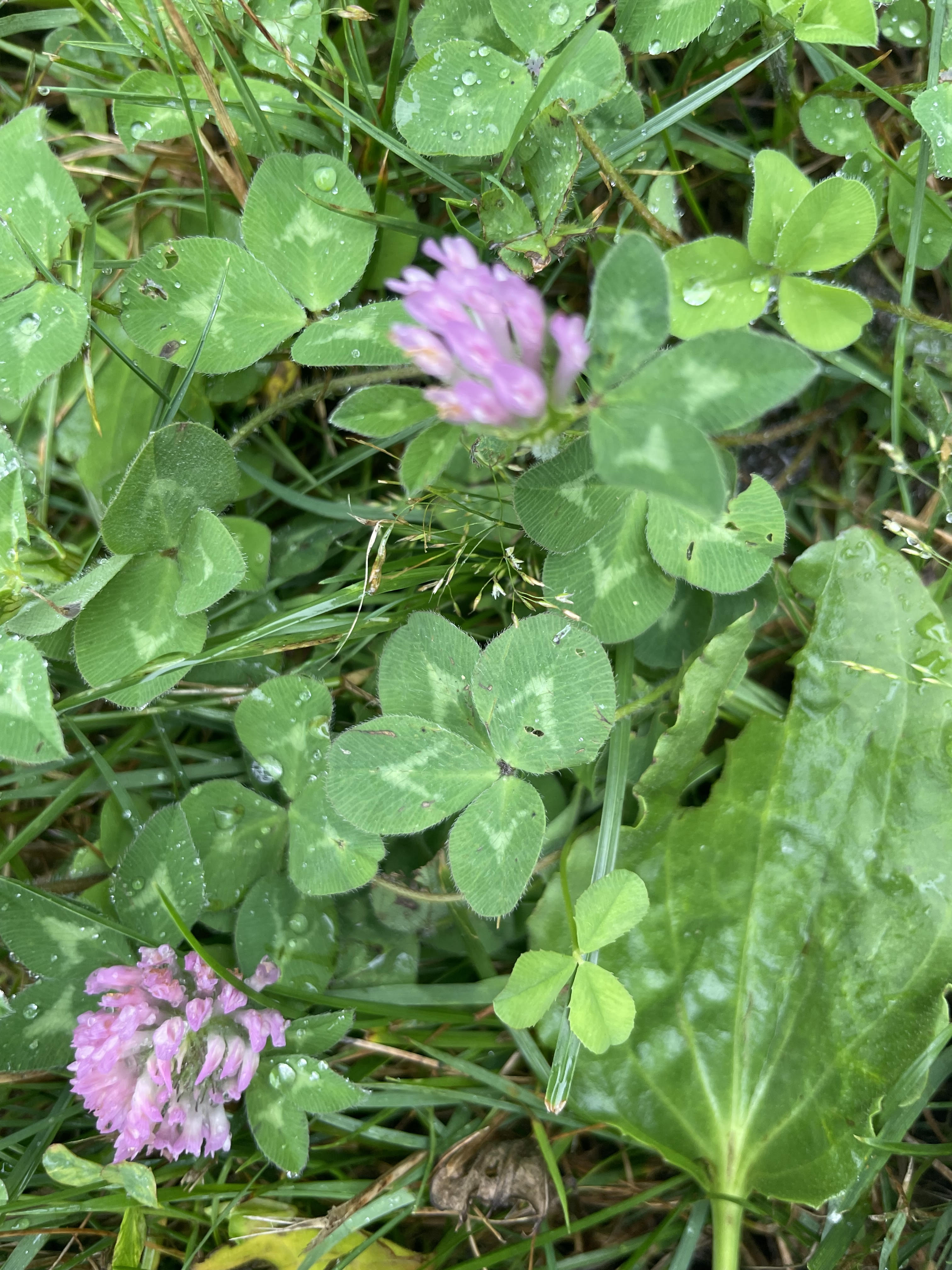
Here’s one. In New Shoreham, we still need propane. The person who delivered our last tank somehow noticed a four-leaf-clover in the grass by the garage. When we came back from wherever we were that day, we found a note and a small display under a piece of plastic bottle. How amazing is that? I called the propane company to say thank you.

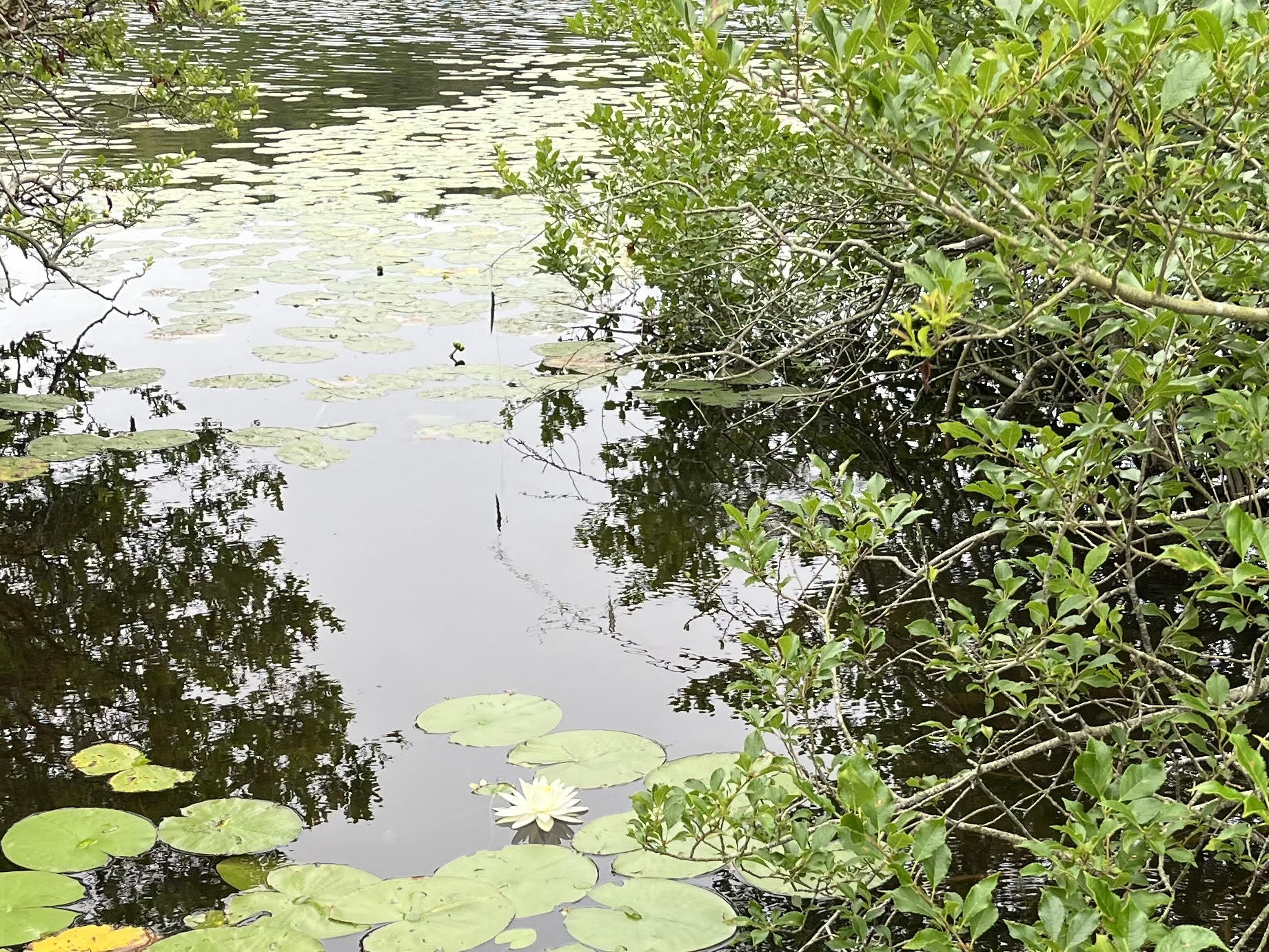
Water lilies are still the flower for July despite the changes to our climate.

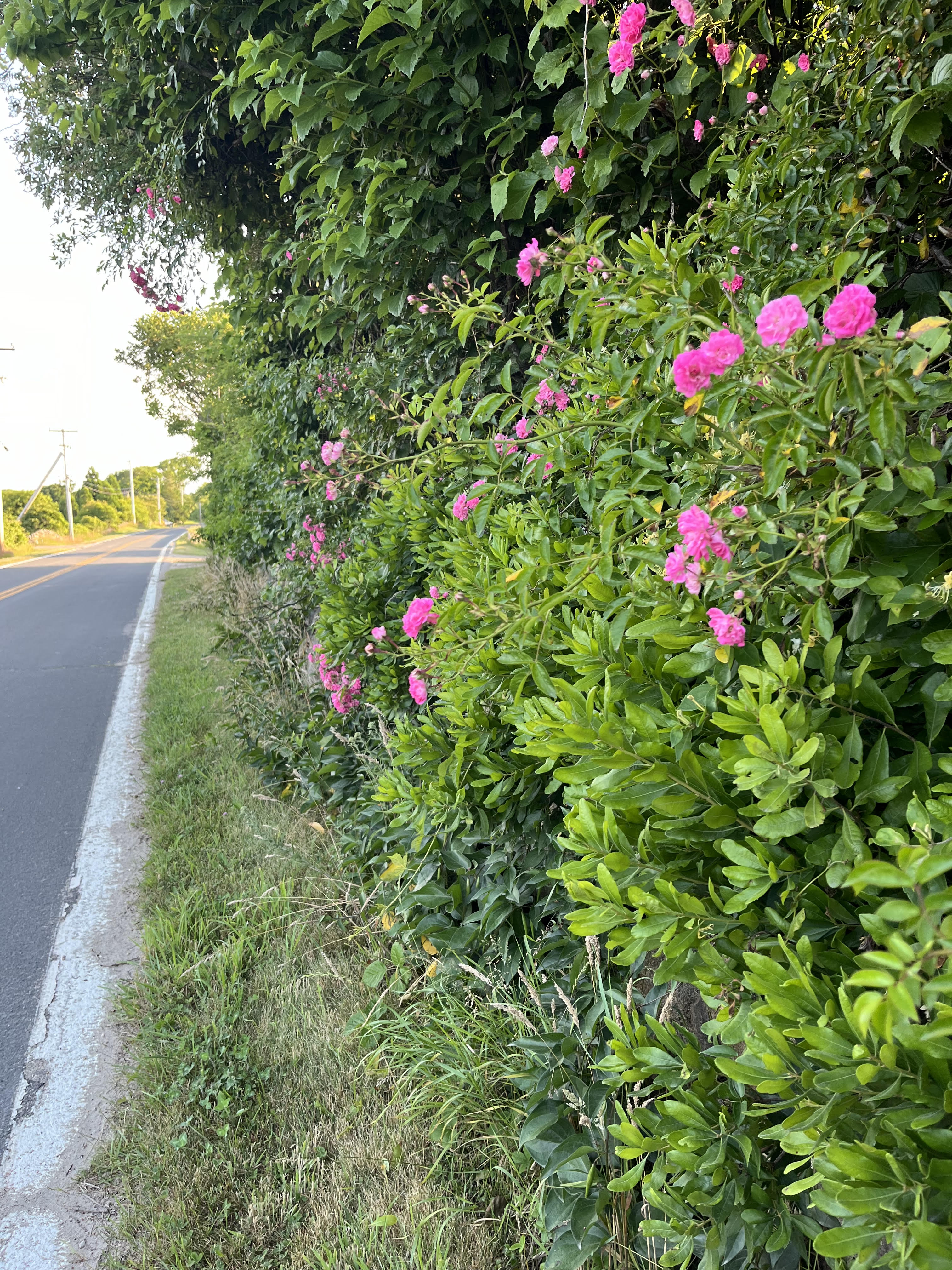
Rosa Rugosa grows everywhere. Also this other wild rose. My app calls that one a China rose.

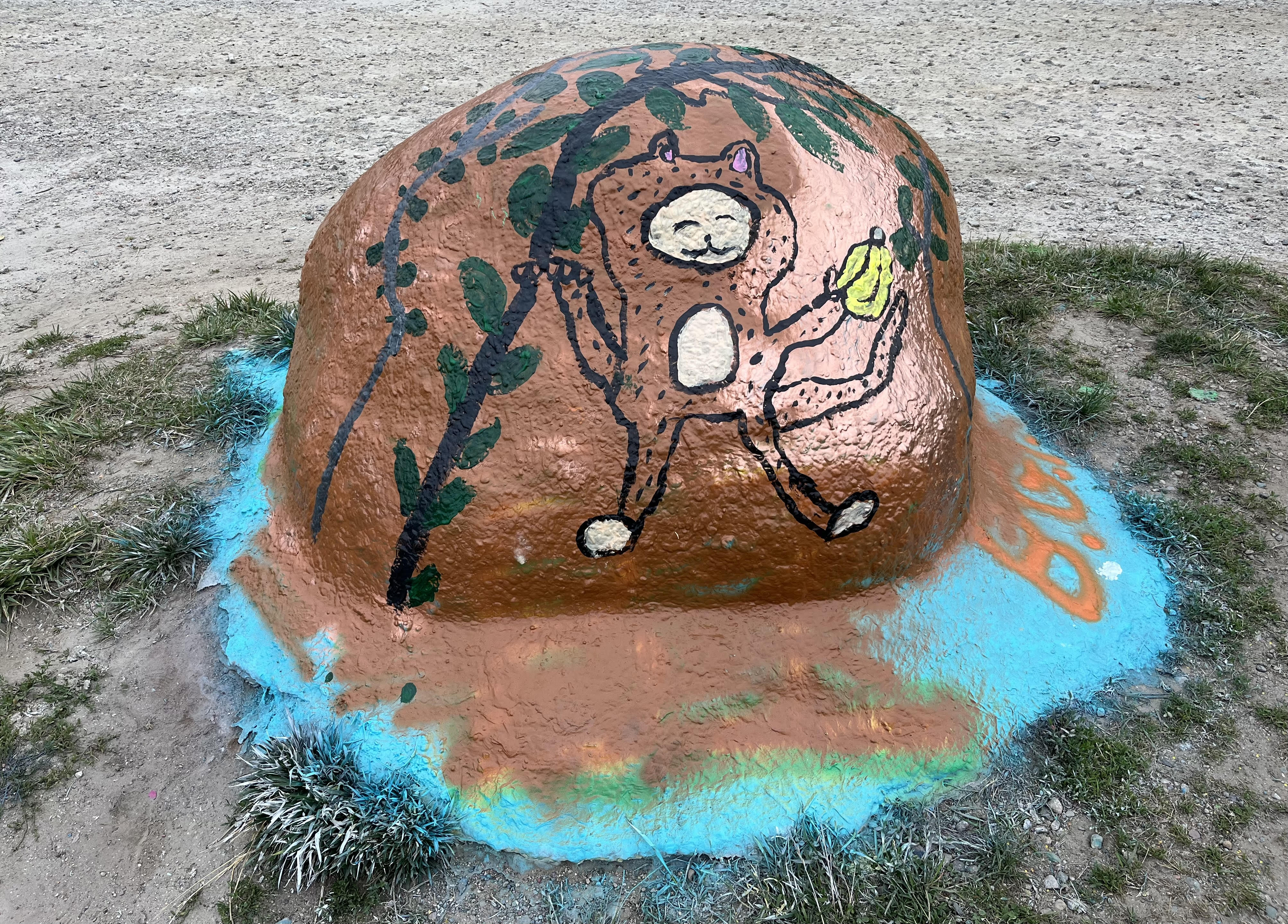
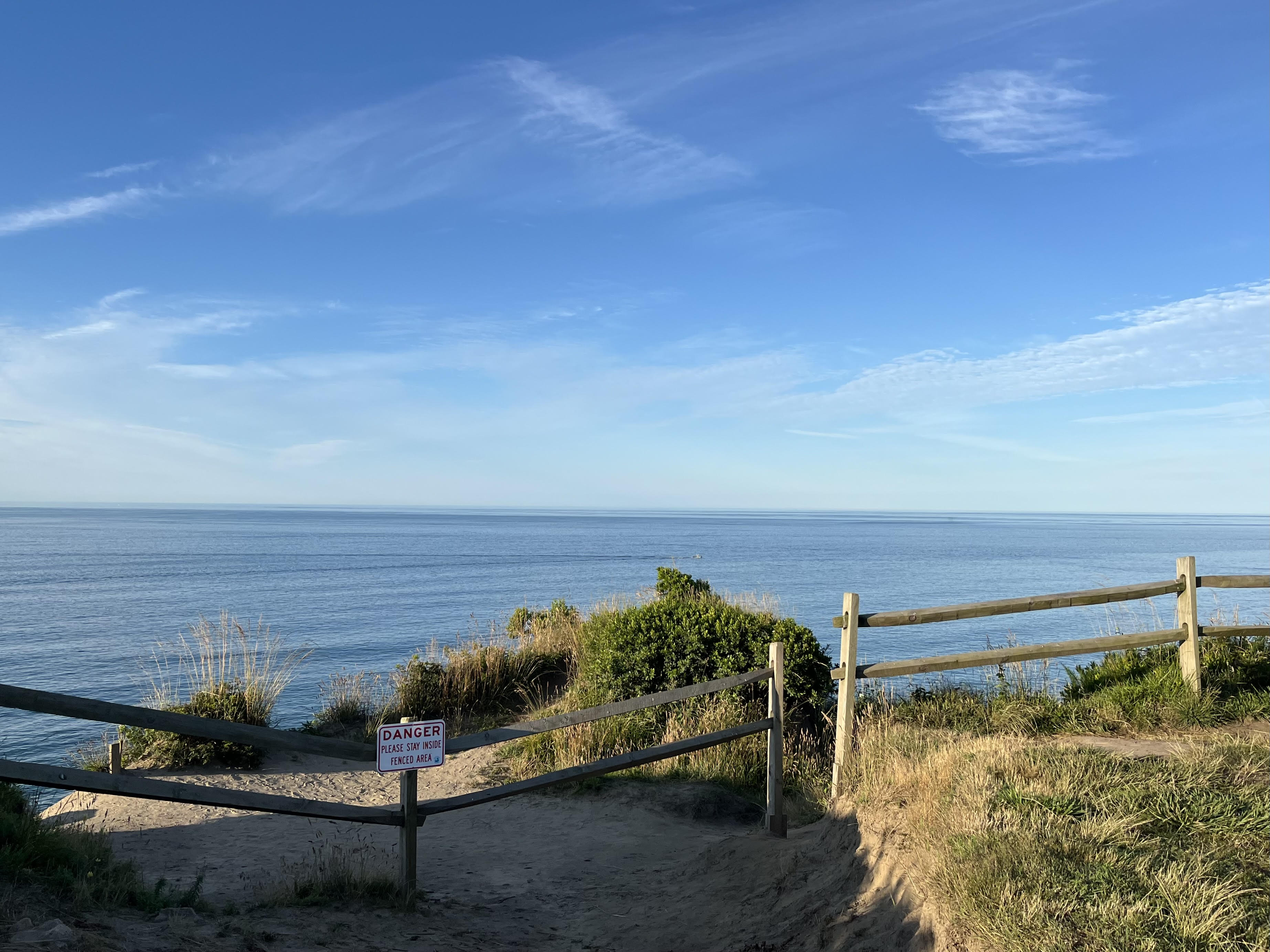
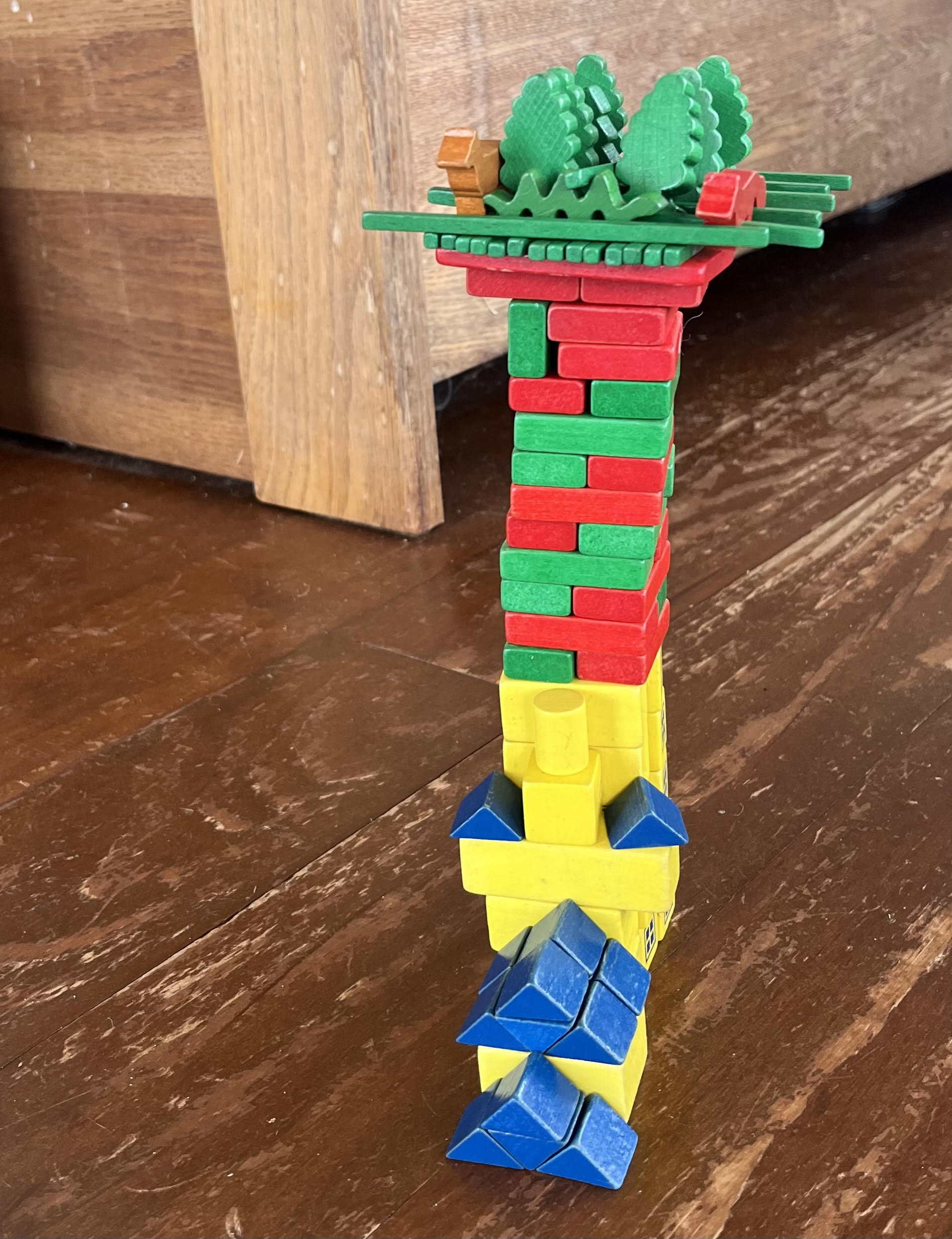
Next is the Painted Rock, a path to the bluffs, the eroding bluffs, a cactus (What? In New England?), and one granddaughter’s concept of a modern hotel. She tells me that there is a village in this hotel and a park with trees on top.

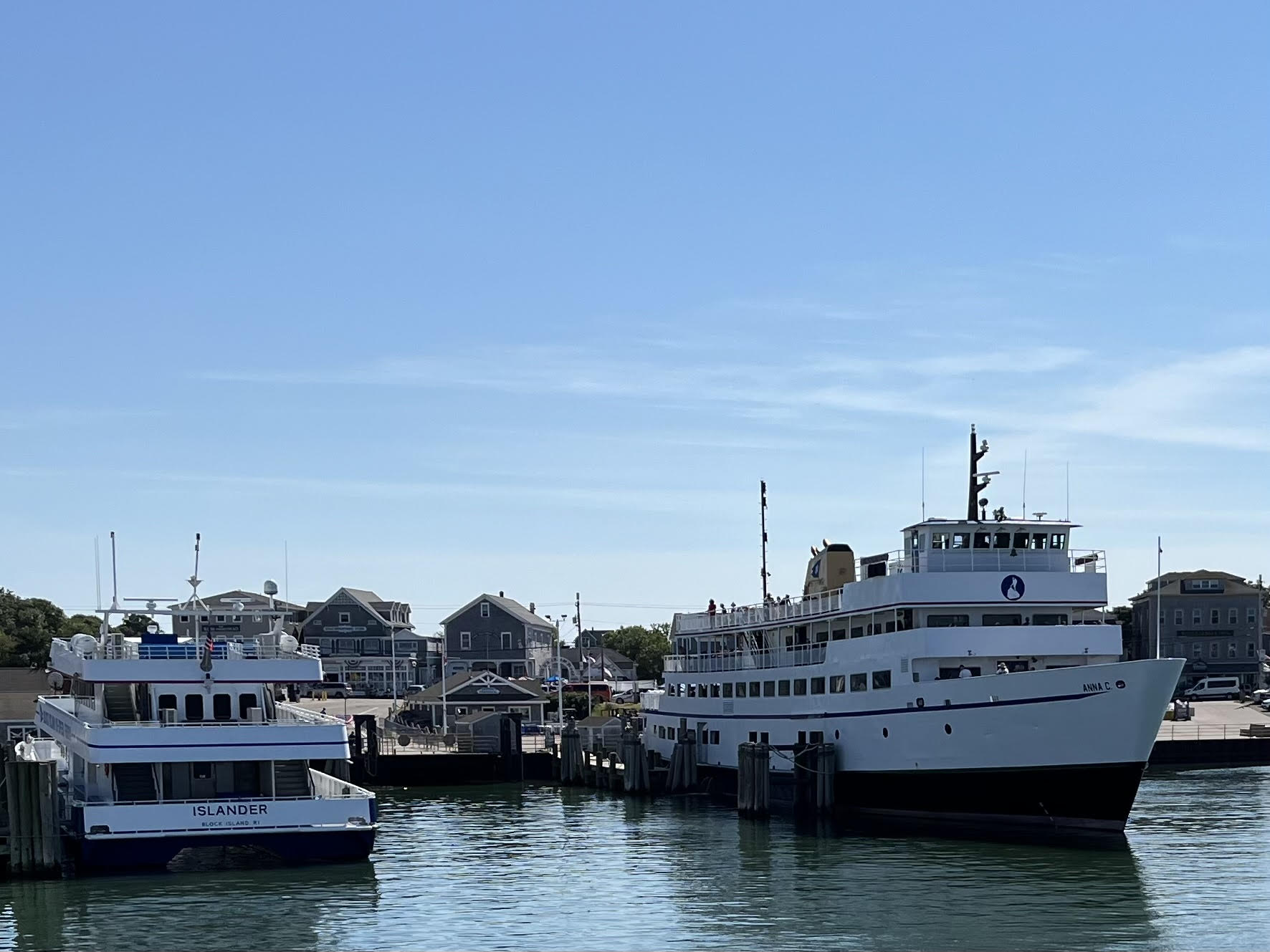
Boats in the harbor conclude today’s collection.

Read Full Post »

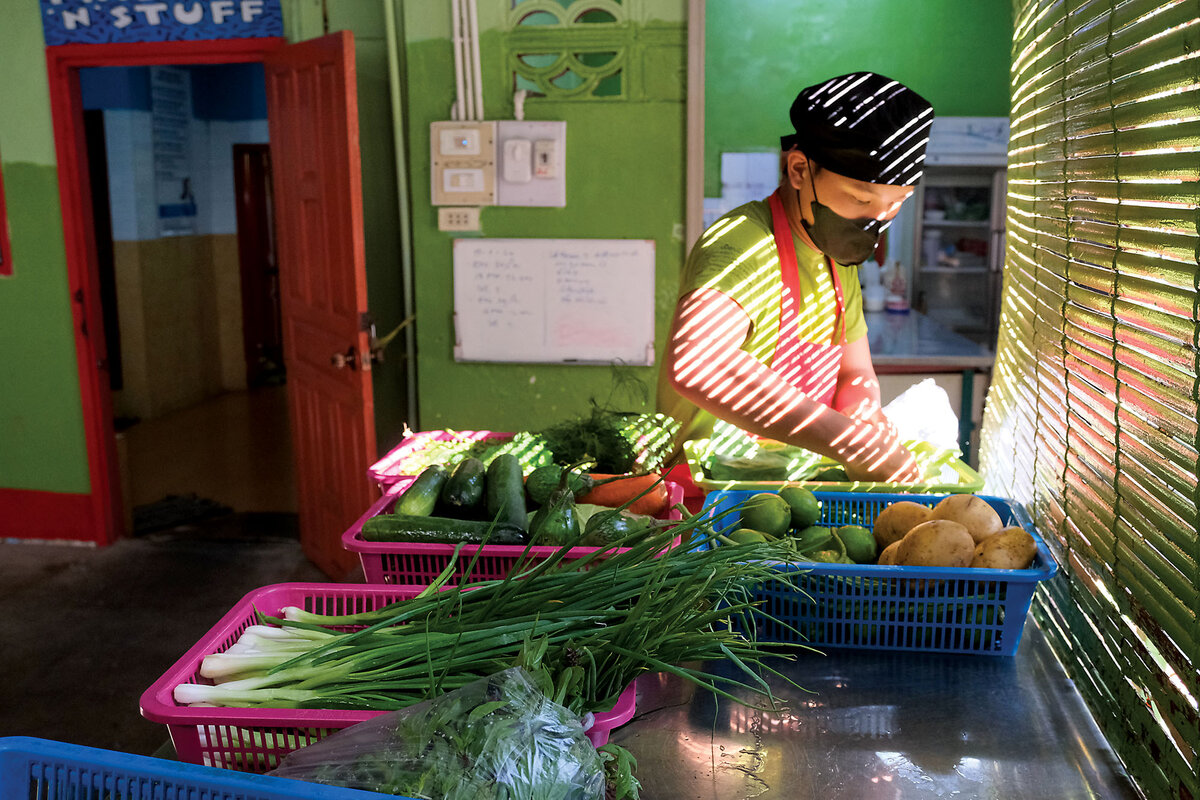
Photo: Zinara Rathnayake.
A student prepares vegetables before lunch begins at Mini-Makphet, a vocational restaurant in Vientiane, Laos.

I can’t read anything about Laos without thinking of the mystery series that Colin Cotterill wrote, which includes a plea for the poor of that country and for removing the explosive mines left by the US. Since today’s article is about training young restaurant workers in Laos, I’m particularly remembering the noodle shop in the mystery series, run by Daeng, the wife of investigator Dr. Siri Paiboun.

Zinara Rathnayake wrote the following story for the internationally focused Christian Science Monitor.

“Until about a year ago, Xue Xiong had never seen a town,” wrote Rathnayake. “She lived in a small village with a dirt road that turns muddy when it rains, making travel difficult. She dropped out of school early to help her parents farm rice and breed cattle to feed her 10-member family. 

“It was at Khaiphaen, a charming restaurant two hours away in Luang Prabang, that Ms. Xiong learned to dream. The Laotian fusion eatery trained her to prepare and serve food for the tourists who flock every day to the bustling city. 

“ ‘I want to save money and open my little Lao food stall, because tourists love Lao food,’ says Ms. Xiong, who is Hmong, one of Laos’ marginalized ethnic minorities. ‘Because I feel like I can do anything now.’

“Khaiphaen was opened by the Cambodia-based organization Friends-International and collaborates with the Lao government and other nonprofits to aid young people interested in culinary education as a path to more prosperous futures.

“Laos is one of Asia’s least-developed countries, and poor education and the lack of economic opportunities often force children and young people there to work in lower-paid, menial jobs under exploitative conditions. Many others are trafficked into factories or prostitution.

“At almost 10 a.m. on a chilly January morning, an hour before Khaiphaen opens for the day with plates of laab (spicy minced-meat salad) and beer-battered Mekong River fish, Ms. Xiong laughs as she watches her friend, another young woman, slice carrots. Ms. Xiong shows off her yellow T-shirt from Le Petit Prince, a nearby Korean cafe where she started working after Khaiphaen. She thinks the cafe’s owner is nice, her English is improving, and soon she will play the piano at the cafe, Ms. Xiong tells her friend.

“ ‘I see children tremble the first time they come to serve,’ says Khaiphaen’s restaurant manager, Anousin Phanthachith, ‘and then in a few years, you see them grow into entrepreneurs.’ He joined the team at Friends-International in 2014 when Khaiphaen was just a concept with a few dining tables, and he has never thought of leaving. ‘You feel fulfilled because you help many young people – especially children who come from remote, underprivileged communities, some of them with traumatic childhoods.’ 

“Nearly a third of Laos’ population lives in poverty, subsisting on less than $4 a day, according to 2022 figures from the World Bank. Children bear the brunt of it. Although Laos has made progress on child mortality, 43 out of every 1,000 children die before reaching age 5 – one of the highest child mortality rates in Southeast Asia (down from 154 in 1990). The government is pushing for primary education for all children, but the number of dropouts is high. 

“More than 130 students have graduated from Khaiphaen. Yet it is not a traditional cooking school, says Friends-International social worker Ae Thongkham. Besides waiting tables, students gain experience making noodle bowls with their teachers from scratch in the kitchen as well as preparing beverages. Mr. Thongkham adds that when students arrive from minority ethnic groups, many of them don’t speak Lao, the country’s official language. So at the social work center upstairs, students learn basic Lao and English, in addition to life skills such as managing their finances. 

“Students aren’t salaried but receive free training, accommodations, meals, transportation, and health care. After graduation, they are placed in hotels, cafes, and restaurants across Luang Prabang’s flourishing tourism industry.

“For Mr. Phanthachith, who left his village at age 18 and studied at a temple before working at the city’s restaurants, looking after his young students has always been the priority. ‘We always talk to our students even after they leave the program to make sure that they are in a safe workplace that benefits them and treats them well,’ he says.

“Khaiphaen is part of a series of vocational restaurants that Friends-International operates across Southeast Asia. Although some of the eateries shuttered during the coronavirus pandemic, Khaiphaen began delivering food to locals to stay afloat. In the capital, Vientiane, Khaiphaen’s sister restaurant Mini-Makphet turned into a soup kitchen, feeding underprivileged children and their mothers. Housed in a tin-roofed space with varnished wooden tables and chairs, Mini-Makphet is much more modest and mainly serves Vientiane residents.

“Ketsone Philaphandet, Friends-International’s country program director for Laos, is quick to highlight that Vientiane receives far fewer tourists compared with Luang Prabang. The quiet, industrial Lao capital serves only as a pit stop for many foreign travelers exploring the country’s far-flung karst mountain towns and vibrant cultural hubs. ‘So we keep our prices lower and food spicier,’ Ms. Philaphandet says, smiling.

“For many young people, Mini-Makphet is a social lifeline. Mala Thoj has worked at the restaurant for only two months but can already pour a latte with a little foam heart on top. ‘I feel happy here, because I have friends who support me,’ she says. She used to live with abusive relatives and was compelled to toil at a rubber estate. …

“Emi Weir, founder of the social enterprise Ma Té Sai, which sells handmade products crafted by Laotian women [notes] that although Khaiphaen lacks marketing to reach tourists who are ‘ready to spend more for a good cause,’ its program has excellent social work, training, and outreach initiatives.”

More at the Monitor, here. No firewall. You can learn a lot more about our world from the Monitor or The World, on radio, than you can from the Washington Post or the New York Times. Check them out.

Read Full Post »

Photo: The Guardian.
Innocent Monsters is an example of a book bound by Geena of ‘beaudelaireslibrary.’ Bookbinding is attracting interest on TikTok.

TikTok comes in for a lot of criticism these days, not least because people think its Chinese ownership enables the Chinese government to spy on the US. For all I know, that could be a legitimate concern, but some activities on TikTok sure seem innocent. I can’t imagine any government secrets hidden in bookbinding lessons, for example.

David Barrett reports at the Guardian about the curious hobby that has taken hold there.

“The videos often begin with every bibliophile’s nightmare: a person ripping the covers off a book. They are not vandals, however; they are bookbinders, taking part in a growing trend for replacing the covers of favorite works to make unique hardback editions, and posting about their creations on TikTok and Instagram.

“Mylyn McColl, a member of the UK-based Society of Bookbinders, runs their international bookbinding competition. She said: ‘It is great to see people taking on our craft and turning their favourite novels into treasured bindings.’ …

“Emma, 28, posts on social media as The Binary Bookbinder, after discovering the hobby a year ago. ‘I was scrolling through social media and I came across a video of someone doing it and was intrigued,’ she said. …

“After a practice attempt with a few sheets of printer paper and some card-stock, Emma, who lives on the East Coast in the US, graduated to re-binding books from her favorite genre, fantasy. ‘It is deeply satisfying re-binding a book to look like it would belong in the world I’m reading about,’ she said. …

” ‘Overall it is a relaxing hobby, but it still comes with its challenges. I like to use my tech background to integrate 3D printed, laser cut, or electronic parts in the books I rebind and that can be difficult.’ …

“A search for ‘bookbinding’ on TikTok produces more than 60 million results, with high-speed time lapse videos showing a brand new product emerging from a mass-produced paperback. Bookbinding tools and equipment include specialist glues, and vinyl cutters for making silhouettes or cameos on covers, which can cost more than £300 [~$384].

“Emma said interest in bookbinding was being driven in part by BookTok, the TikTok genre that has boosted sales for the publishing industry, and the general increase in reading post-pandemic. … ‘Different parts of the same story will resonate with people, so owning a copy of a book that has your favourite quote, image or symbol from the book on the cover is something special.’

“McColl, of the Society of Bookbinders, said: ‘Historically the society was made up predominantly by older people, often retirees enjoy new free time. But that is changing … on the London committee there are now people in 20s, 30s, 40s.’

“Some bookbinders do it for their own enjoyment, while others sell their creations through platforms like Etsy. Geena, who posts on Instagram as baudelaireslibrary, saw it as an opportunity to give physical form to a genre generally only available online – fan fiction.

“The 33-year-old from Wiltshire said: ‘I started bookbinding nearly a year ago. I had been reading Harry Potter fan fiction for about two years. … I had absolutely previous knowledge on how to create a book – I didn’t know it was possible to do at home without commercial equipment.’

“Geena says bookbinding encompasses ‘four or five hobbies,’ allowing her to use skills from her other pastimes, such as embroidery and crochet. She says, ‘With the rise of screens dominating people’s time, I think that creative hobbies where you use your hands and make something from scratch bring a simple joy that [people] haven’t experienced before. It taps into a part of the brain that can improve mental health, and is a real mood booster.’

“Geena says she has made new friends through the hobby, and is hoping to attend a meet-up of British amateur bookbinders later this year. Emma has attended meet-ups in the US. She said: ‘The community aspect is wonderful, and I’ve really been able to bond with people across the world.’

“Jennifer Büchi of the American Academy of Bookbinding, based in Colorado, said there had been a shift in how people discovered the hobby. …

” ‘We saw a big increase in students who’d started learning to bind books online and through social media after the pandemic. It’s been great for us because there’s a lot more interest in our classes – our introductory courses fill up within hours of being posted. Anything that drives interest in the book ultimately helps more students find us, and more students means more folks carrying the craft forward.’ ”

More at the Guardian, here.

Read Full Post »

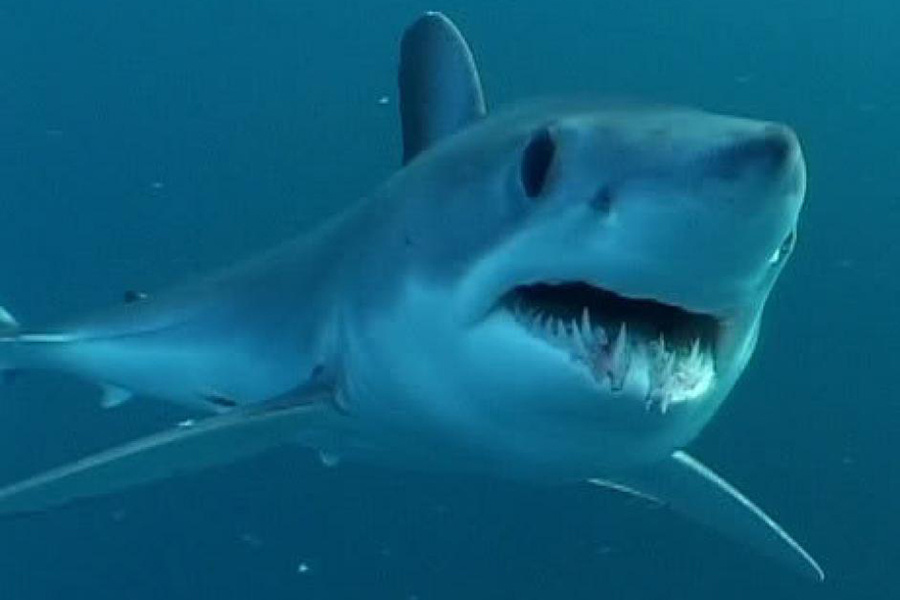
Photo: NOAA Fisheries.
Mako sharks are part of a study involving acoustic tags.

You have to move fast to get a tag on a shark, and you have to throw the shark back, even if you’re not done, if it starts showing any sign of weakness. Frank Carini has the story at ecoRI News.

“A South Kingstown-based nonprofit co-founded by a lifelong Rhode Islander [attaches tags to sharks].

Jon Dodd, the Atlantic Shark Institute’s executive director, said getting an acoustic tag, or any tag, for that matter, onto a shark works like a ‘NASCAR pit stop.’ A crew of four, sometimes six, has a maximum of 12 minutes to get a tag attached and take a blood sample and measurements. If a sharks begins to look lethargic, Dodd said the animal is immediately placed back in the sea, even if all the data hasn’t been collected or the tag fastened.

“A hose is put in the shark’s mouth to flush salt water through its gills, and a towel is often placed over the eyes to keep the animal calm.

“The Atlantic Shark Institute, an all-volunteer nonprofit, partners with other shark scientists and researchers, which allows collaboration to play a critical role in the research, management, and conservation of large predatory sharks in the northwest Atlantic Ocean, according to Dodd.

“ ‘We have to spend wisely to advance science,’ he said. The institute’s budget gets a helping hand from 20 local boat captains who provide their vessels and fuel free of charge for tagging research.

“Dodd noted tagging allows researchers and scientists to track where sharks go and when. … Given the vulnerability of most of the shark species they are tagging, studying, and tracking, Dodd said, they abide by strict protocols regarding the way the sharks are handled when they are being caught, tagged, and measured. He noted that traditional J hooks, which can fatally puncture an organ, have been replaced by circle hooks, which are more likely to lodge in the corner of a shark’s jaw, making removal easier. Fishery regulations also require hooks to be composed of corrodible metals which, unlike stainless steel, degrade faster and increase the chance of a shark’s survival if a hook can’t be removed.

“The type of tag used is determined by the species caught and the study being conducted, according to Dodd.

“The least expensive are national fisheries tags — an index card in a plastic tube attached to the base of the dorsal fin. These cards are provided by NOAA Fisheries for free. A shark swims around and ‘if somebody caught it someday, they say please unscrew the cap and the card rolls out and it says please call the National Fishery Service and tell us where you caught this shark, what size it was, et cetera.’ …

“Acoustic tags, which cost $425 and last about a decade, track a shark’s movement via signals picked up by acoustic receivers, which cost $2,500 each, that have been placed up and down the East Coast. Both the Atlantic Shark Institute and the Rhode Island Department of Environmental Management have placed receivers in local waters.

“Pop-up satellite archival tags — each with a price tag of up to $4,000 — provide even more detailed data beyond location, such as water depth and temperature. They last about two years before the battery dies and the tag corrodes and falls off the shark. …

“The Atlantic Shark Institute’s … mission, and that of its science partners, is ‘to do the highest quality shark research to help manage and conserve these magnificent animals.’ …

“During a recent conversation with ecoRI News, Dodd often used the words ‘beautiful’ or ‘awesome’ to describe a shark species — well, maybe not spiny dogfish.

“Dodd has spent much of the past 45 years, even while working full-time in a totally different field, thinking about, learning about, and studying sharks. He has caught, released, and tagged some 1,000 sharks for various research projects during the past four-plus decades. …

“ ‘When I saw my first shark, I was fascinated, and it just kept rolling,’ Dodd said. ‘But it quickly went from fascination to concern. It was just this realization that Man will take a lot of things out of an ecosystem, and it didn’t feel right.’

“His concern about the species grew during the 1980s and ’90s, especially as he watched the popularity of shark tournaments grow, the number massacred for their fins increase, and the amount killed in bycatch rise.

“ ‘We take over 100 million out of the ocean every year. It’s just too many,’ said the 62-year-old Dodd. ‘And the big problem is that a lot of these sharks are very slow growing and slow maturing. I’ll give you a perfect example. … It takes the female great white 33 years before she’s sexually mature. So we’re talking right now and it’s March 21, 2024, so if a white shark is born while we’re chatting that shark will finally reproduce when I’m 95 years old.

“ ‘For the first time she can finally replace herself, but what’s the chance that her pup [litter sizes range from 4-12 individuals] survives? A lot of things can eat you, you can bite the wrong hook, you can sit on a longline and die because you’ll basically suffocate. You can get dragged up somewhere. You can get caught by a recreational guy that poses with it too long and kills it. What’s the chance that you survived 33 years so you can reproduce?’ …

“Since 1975 the world’s shark populations have declined by 71%, according to the Save Our Seas Foundation. It’s a disturbing trend that Dodd said has major implications beyond the marine environment.

“He likes to tell people, ‘Shark health is ocean health and ocean health is our health. Sharks are the apex predator, and they regulate everything underneath them.’ “

More at ecoRI News, here. No firewall.

Read Full Post »

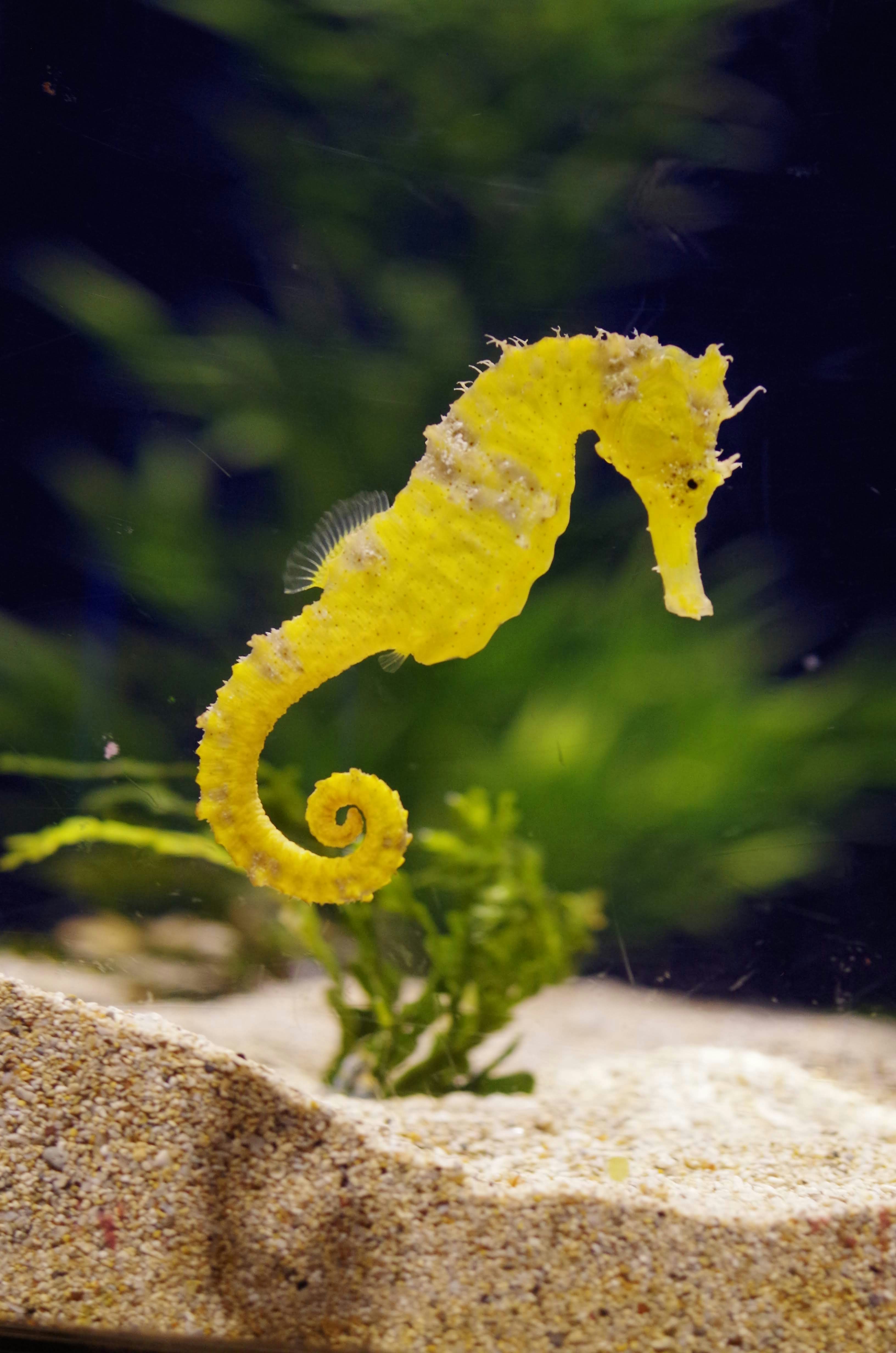
Photo: Valkyrie Pierce/Unsplash.
Citizen scientists are helping us learn more about seahorses.

For all its shortcomings, social media has enabled us to work together on meaningful projects if we so choose. Consider the citizen scientists who are expanding our knowledge of the natural world.

Erin Blakemore has a story at the Washington Post about the latest research on seahorses — and how you can help study them.

“Members of the public are helping to advance research on sea horses, the tiny fish that can be found in coral reefs, shallow waters and estuaries around the world, according to a study.

“When researchers looked at the results of public contributions to the iSeahorse science project between 2013 and 2022, they found the community effort enabled scientific advances in the field.

“Citizen contributions provided new information on 10 of 17 sea horse species with data once considered deficient and helped update knowledge about the geographic distribution of nine species, researchers wrote in the Journal of Fish Biology. Some of the observations even helped scientists better understand when and how sea horses breed. … According to the project website, iSeahorse has amassed about 11,000 observations from more than 1,900 contributors to date.

“Overall, the researchers were able to validate 7,794 of the observations from 96 countries and 35 sea horse species. The volunteer observers even noted rare species that traditional monitoring probably would not detect, they write.

“ ‘Seahorses are very much the sort of fascinating species that benefit from community science, as they are cryptic enough to make even formal research challenging,’ Heather Koldewey, the project’s co-founder and the lead on the Bertarelli Foundation’s marine science program, said in a news release. …

“Want to get involved? Visit https://projectseahorse.org/iseahorse/ to learn more. More at the Post, here.

And check out this page from the Journal of Ethnobiology and Ethnomedicine, here. It reads, in part, “Seahorses are endangered teleost fishes under increasing human pressures worldwide. In Brazil, marine conservationists and policy-makers are thus often skeptical about the viability of sustainable human-seahorse interactions.

“This study focuses on local ecological knowledge on seahorses and the implications of their non-lethal touristic use by a coastal community in northeastern Brazil. Community-based seahorse-watching activities have been carried out in Maracaípe village since 1999, but remained uninvestigated until the present study. …

“We interviewed 32 informants through semi-structured questionnaires to assess their socioeconomic profile, their knowledge on seahorse natural history traits, human uses, threats and abundance trends.

“Seahorse-watching has high socioeconomic relevance, being the primary income source for all respondents. Interviewees elicited a body of knowledge on seahorse biology largely consistent with up-to-date research literature. Most informants (65.5 %) perceived no change in seahorse abundance. Their empirical knowledge often surpassed scientific reports, i.e. through remarks on trophic ecology; reproductive aspects, such as, behavior and breeding season; spatial and temporal distribution, suggesting seahorse migration related to environmental parameters.

“Seahorse-watching operators were aware of seahorse biological and ecological aspects. Despite the gaps remaining on biological data about certain seahorse traits, the respondents provided reliable information on all questions, adding ethnoecological remarks not yet assessed by conventional scientific surveys. We provide novel ethnobiological insight on non-extractive modes of human-seahorse interaction, eliciting environmental policies to integrate seahorse conservation with local ecological knowledge and innovative ideas for seahorse sustainable use. Our study resonates with calls for more active engagement with communities and their local ecologies if marine conservation and development are to be reconciled.”

Read Full Post »

Photo: Erika Page/The Christian Science Monitor.
Alfredo Paniagua lifts a young girl up to see planet Jupiter through his telescope on a sidewalk in Madrid last February.

It seems that people are more likely to engage with the stars in the summer than at other times of year. I myself see a lot more stars when I vacation in New Shoreham in July because there are fewer sources of ambient light. The stars are more noticeable.

Today’s story is about a man in Spain who loves to show anyone who’s interested the wonders of astronomy.

Erika Page reports at the Christian Science Monitor, “As the rest of the city heads out on a Friday evening, Alfredo Paniagua dons a lime-green vest, loads his 180-pound telescope into a van, and drives into the center of Madrid.

“He sets up the telescope at the mouth of the busy Ópera metro station, a block from the Royal Palace. The sun still setting, he swivels the massive cylinder to an invisible point in the sky and fiddles with the focuser. And then he waits.

“It doesn’t take long for curiosity to pique. Children tug on sleeves and point. Friends dressed for an evening out stop to ask what’s up there.

“ ‘Jupiter,’ says Mr. Paniagua. ‘The view is spectacular tonight.’

“A line begins to take shape, curious passersby waiting their turn to peek through the lens. Mr. Paniagua places a footstool for those who need it and lifts the smallest kids up himself. He shows each viewer how to focus the image. Then he steps back for his favorite part. Eyebrows raised, he watches face after face light up at the sight: a perfectly round ball of bright gas marked by two clear stripes near its equator, tiny to the eye yet big enough to fit 1,321 Earths. Four moons stretch out in a straight line below. …

“It’s a nightly ritual Mr. Paniagua has performed for two decades, whenever the sky is clear. He often stays past midnight, sharing his telescope with hundreds of strangers free of charge. Many leave a donation, which he accepts. … ‘I like to think that they begin to ask themselves new questions.’ …

“[The immensity is] what Ana Afonso Martin says she felt looking through Mr. Paniagua’s telescope. She and three friends just arrived from the Canary Islands for a weekend in Madrid. Jupiter was the last thing she expected to find in the capital.

” ‘We are teeny, tiny, and this is immense,’ she says. ‘If you’re always stuck in your world, and you don’t look up at the sky, you don’t realize that.’

“It’s also what pulled Mr. Paniagua into the fold 25 years ago. At the time, he was working odd jobs, mostly as a metalworker, on the outskirts of Madrid. He heard word of a free astronomy course offered by someone in his neighborhood, and signed up.

“It was Saturn that hooked him, on the last day of the class. From there, he and a few others formed the Agrupación Astronómica Madrid Sur (South Madrid Astronomical Association) and began bringing an old telescope to schools, hospitals, small towns, and whoever invited them. Most of what he has learned he taught himself, though he eventually became a certified astronomy monitor through the Starlight Foundation, a nonprofit dedicated to promoting and protecting the night sky. Over time he realized that to reach the most people, he needed to be out on the street. …

‘A growing dark-sky movement is working to protect the night from light pollution, which grew by nearly 10% every year between 2011 and 2022.” More at the Monitor, here.

Read Full Post »

Photo: Suzanne and John’s Mom.

If possible, just enjoy the simple things today.

Read Full Post »

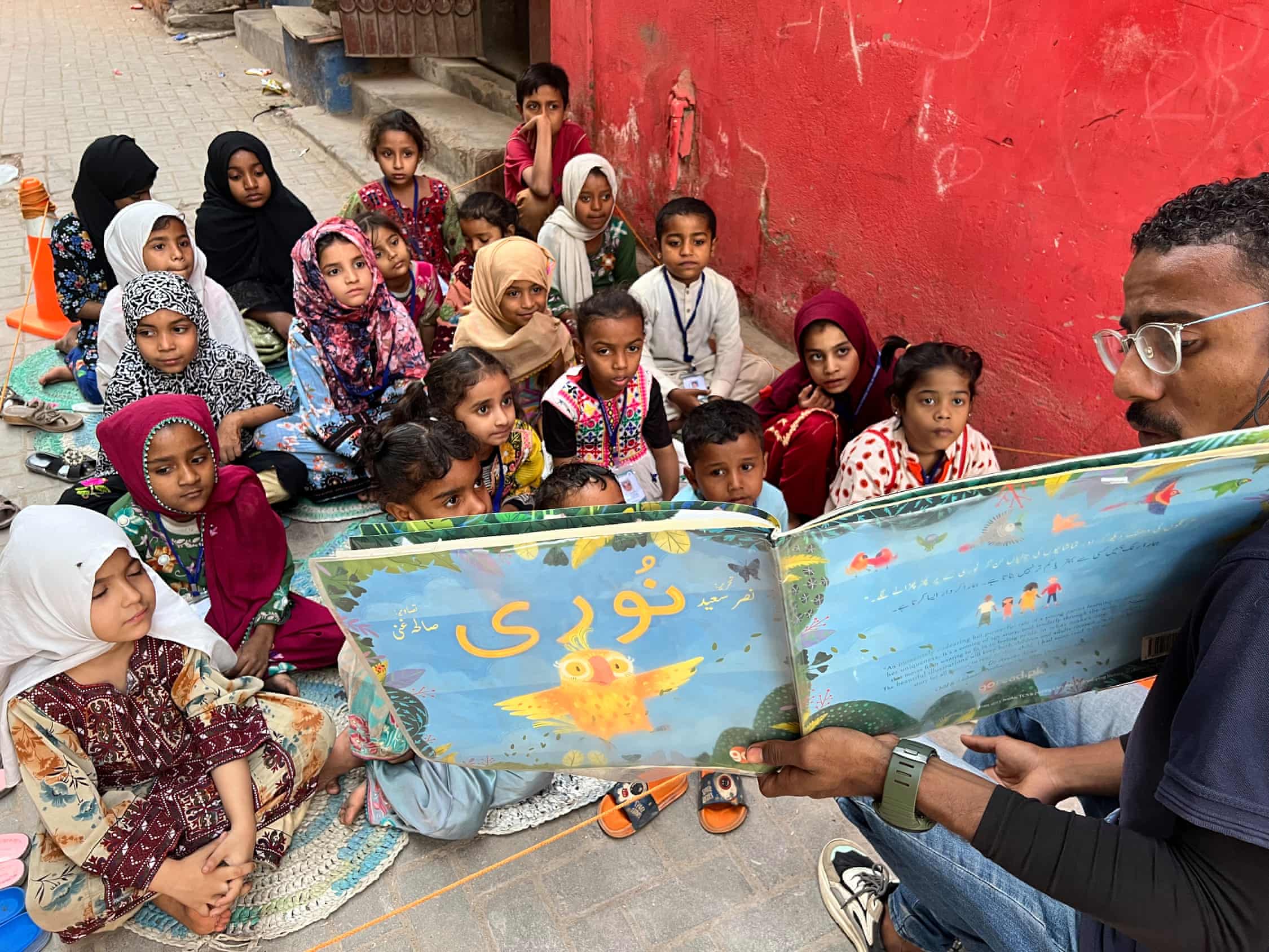
Photo: Zofeen T Ebrahim/The Guardian.
A GoRead worker helps to educate children in Pakistani slums through storytelling. The GoRead director says, “We cannot expect children to want to read if we don’t read to them first.”

If it’s true that Sauron is always collecting his strength to rise again, it’s also true that people who do good never stop doing good. Whatever happens, you can’t completely stamp out kindness or good works. They gather strength, too.

I hate hearing decent people’s defeatism. I like focusing on stories like today’s, stories of people trying to make the world a little better wherever they are.

Zofeen T Ebrahim writes at the Guardian, “Pedaling down a narrow alleyway in Karachi’s crowded Lyari Town, Saira Bano slows as she passes a group of children sitting on the ground, listening to a man reading aloud from a book. The eight-year-old gets off her bike, slips off her sandals, and sits on the mat at the back.

“She has already heard the story from Mohammad Noman, who is entertaining more than a dozen children with the tale of Noori, an insecure yellow parrot. ‘I don’t mind listening to it again,’ says Saira. ‘He’s so funny.’

“Noman, 23, is spending two weeks in Lyari pedaling an old ice-cream cart through its lanes, stopping to read his stories and leaving behind books for the children to borrow. He dropped out of school himself as a teenager but has returned to education and is now studying for his high school certificate.

“He is also one of two storytellers working part-time for the Kahaani Sawaari (Stories on Wheels) program, run by GoRead.pk, which is working to improve literacy among underprivileged communities in Karachi, Pakistan’s largest city.

“ ‘I become a kid when I am around the children,’ says Noman. In the past 18 months, he has visited 30 areas of Lyari, one of the most densely populated and deprived neighborhoods of Karachi, with more than 660,000 residents, mostly from the marginalised Baloch ethnic group.

“ ‘I have learned so much,’ says Noman. ‘It has brought a change in me as well. I’ve become more tolerant of people and developed patience. I think I have a certain rapport with children and they listen.’ …

“Education is free and compulsory in Pakistan yet, according to the UN, it has the world’s second-highest rate of children absent from school, at 44% of five to 16-year-olds. And 77% of 10-year-olds are unable to understand simple text, according to the World Bank. Books and uniforms can be prohibitively expensive in Pakistan. Saira dropped out of school a year ago when her father, who worked in a toy shop, lost his job as Pakistan’s economy was hit by rocketing food and fuel prices. …

“Erum Kazi, GoRead’s program director, says parents have told her how their children have developed a love for reading since the scheme began. …

“Nusser Sayeed, GoRead’s director [and] a former teacher, was inspired to set up the program after seeing ‘very little joy in the lives of children studying in schools in underprivileged neighborhoods.’ Children were growing up without anyone reading them stories, she says, adding: ‘We cannot expect children to read if we don’t read to them first.’ “

More at the Guardian, here. And in a related Guardian story, read about how a camel delivered books to poor children in Pakistan when Covid closed schools, here.

Read Full Post »

« Newer Posts - Older Posts »