Feeds:
Posts
Comments

Archive for the ‘Uncategorized’ Category

Photo: Biblioteca Medicea Laurenziana, Florence, and MiBACT.
Disguised Mexica merchants in Tzinacantlan acquiring quetzal feathers.

Thanks to work by the Getty Research Institute and indigenous partners to post an ancient codex online, some mysteries about Aztec hstory are available for all of us to plumb.

Maya Pontone opines at Hyperallergic that “the 16th-century ‘Florentine Codex offers a Mexican Indigenous perspective that is often missing from historical accounts of the period.” So how did this knowledge end up in Italy?

“After centuries of remaining largely inaccessible to the public,” she writes, “a rare manuscript featuring 2,500 pages of detailed illustrations and text documenting the history and culture of 16th-century Mexico is now available online. The Digital Florentine Codex, a seven-year project by Los Angeles’s Getty Research Institute, features new transcriptions and translations, updated summaries, searchable texts and images, and more.

“Modeled after medieval European encyclopedias, the Florentine Codex is a three-volume, 12-book collection written in Spanish and Nahuatl documenting the daily life and customs of the Mexica (Aztec) people, as well as other information including astronomy, flora, and fauna, during the time of Spanish conquest. It was originally created by Bernardino de Sahagún, a Spanish Franciscan friar who began logging information about the Indigenous communities in central Mexico with whom he worked closely.

“Although Sahagún is frequently credited as the primary author, the 12-book manuscript was created with the help of numerous elders, grammarians, artists, and scribes from the Nahua community. As a result, the codex maintains an important Indigenous perspective that is often missing from other historical accounts of the time.

“In 1577, the codex was sent to Spain, where it then somehow traveled to Italy to fall under the ownership of Cardinal Ferdinando I de’ Medici, who brought the work to Florence. The codex was stored away in one of the Medici family libraries and remained forgotten for several centuries. In 2012, a scanned edition of the work was made digitally available through the World Digital Library, and in 2015, it was incorporated into UNESCO’s Memory of the World Register.

“But, as the Digital Florentine Codex’s project manager Alicia Maria Houtrouw told Hyperallergic, the manuscript still remained largely out of reach for the public.

“ ‘Access to codex was partial in that published transcriptions and translations tackle either the Spanish or the Nahuatl column of text or just a selection of the codex,’ Houtrouw said, adding that reading these reproductions often required knowledge of both early and modern Spanish and Nahuatl. Many published versions also didn’t include the manuscript’s crucial illustrations, or if they did, excluded context.

“ ‘The Nahuatl and Spanish texts provide two complementary, though distinct, narratives, and the images go beyond the alphabetic texts, providing unspoken details and communicating yet another layer of knowledge,’ Kim Richter, senior research specialist and the principal lead of the Florentine Codex Initiative, told Hyperallergic.

“Now the public can access the entirety of the codex through an online portal released by the Getty Research Institute last [October], and learn a wide span of subjects including the origin of ancient Aztec deities, theology and philosophy, cooking, and gardening. In Book 11, Sahagún documents the plague of smallpox, writing of the ‘infinite number of people’ who succumbed to the illness.

“The final book in the codex documents the Spanish invasion of Mexico, including the Massacre in the Great Temple of Tenochtitlan that occurred on May 22, 1520, under Spanish conquistador Pedro de Alvarado. …

“The digital codex was created with the help of native Nahuatl speakers out of the Instituto de Docencia e Investigación Etnológica de Zacatecas (IDIEZ), who translated thousands of sections of the codex and wrote the summary of the Spanish conquest of Mexico.

As a result, the Digital Florentine Codex now makes available a historical narrative about Indigenous resistance and heroism in the face of Spanish colonizers that has largely been absent from many educational curricula. …

“ ‘Indigenous people in Mexico, as in the US, face discrimination — so to have access to such important historical sources restores a sense of pride and also supports language revitalization — the primary mission of IDIEZ,’ Richter said.”

See the wonderful pictures at Hyperallergic, here. No paywall.
Read Full Post »

Wigmaking for Theater

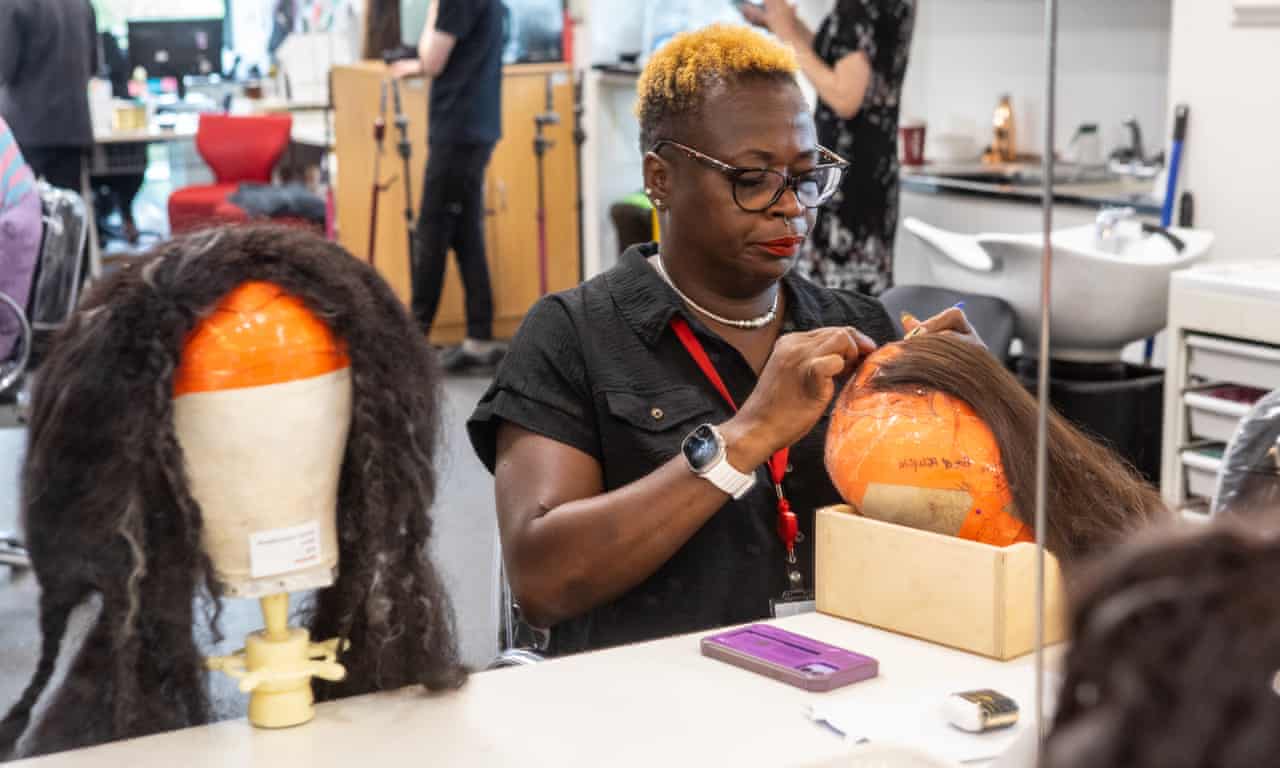
Photo: Antonio Olmos/The Observer.
Skilled wigmaker Violet Barrie at England’s RSC [Royal Shakespeare Company].

Although I was in many theatrical productions as a kid, the first time I learned anything about wigs was when I had chemo. I lost my hair and wasn’t brave enough to go to work without any. (John told Suzanne, who was living in Switzerland then, “Mom looks like a little, bald mouse.”) But Dana Farber was known for nice wigs, and I got one there that I liked a lot.

Today’s story from the Guardian is all about wigs for the theater. Which can get complicated.

David Jays writes, “It’s a sunny afternoon in Stratford upon Avon and I’m watching actors become witches. In Georgia McGuinness’s design for Macbeth, the witches seem to be mostly hair. Amber Sylvia Edwards and Dylan Read peer out from mountains of furry locks, each looking as if a yeti has fallen asleep on their shoulders. The tumble of tresses is so heavy, it needs a harness for support. Welcome to the wild world of wigs.

“Some hairpieces are bobby-dazzlers: towers of Restoration foppery, ravishingly long Rapunzels. Others slink by unnoticed, disguised in realism. Who makes them? Who pins them on night after night? To find out, I meet two wig mavens. Sandra Smith is head of wigs at the RSC [Royal Shakespeare Company], and has warmly invited me to spend the day with her team in Stratford. Chris Smyth, meanwhile, only recently began his wig journey: he designed a memorable crimson creation for Jane Asher in The Circle at the Orange Tree in London. …

“The RSC storeroom’s wooden doors conceal mop after mop of blondes, browns and russets. A separate cupboard holds periwigs and judges’ rugs, like a bevy of poodles. This hoard reflects a practice built on sustainability and thrift. Mounds of witchy hair were foraged from the stores, saving thousands of pounds. ‘Nothing goes to waste, even the ratty bits,’ Smith says.

“Wigs, like actors, never retire. ‘We keep them till they die,’ her colleague Lavinia Blackwell says matter-of-factly. … ‘Wigs is an area of theatre that has been drastically cut back,’ designer Tom Piper says. ‘People have disappeared and budgets have gone down. I’m so grateful for somewhere like the RSC, who’ve got the team and a lot of stock.’ …

“Only when I see the foundations for all the team’s creations do I appreciate the challenge of our lumpy, bumpy human variety. Some heads are footballs, some shaped for rugby. The wigs team wrap actors’ heads in clingfilm and wind round sellotape to map the cranium, marking the hairline. …

“Theatrical wigs take quite a bruising, and the hair may be reused, which helps explain why the V&A [Victoria & Albert] collection holds few early wigs – the oldest come from Diaghilev’s Ballets Russes in the early 20th century. Even so, key artifacts indicate their role in nailing character. When Vivien Leigh played Blanche DuBois in the film of A Streetcar Named Desire in 1951, ‘the wig fundamentally made her appear less glamorous,’ [says Simon Sladen, V&A senior curator of theatre and performance] says. Leading theatrical wig-maker Stanley Hall created ‘impoverished, rather thin hair … to point out her highly nervous, worn-out character.’ …

“It’s painstaking work. ‘You tie each hair with a tiny little hook,’ Smyth tells me. How did he acquire the skills? ‘I do drag and I make my own costumes,’ he says. ‘I did a couple of days’ training in wigs and just fell in love, because it’s so difficult. It’s like the dark arts. I will never know everything. Everybody does it differently; it’s a rabbit hole that keeps deepening and deepening.’ …

“Everyone’s route into wig world is different. Smith was studying hairdressing and beauty therapy in Pontypridd when a friend took a job at the RSC, and she visited for work experience. ‘I had a lovely two weeks and I haven’t left since. I’ve been with the RSC for 38 years.’

“I crouch beside Violet Barrie, who ran a salon in Leamington Spa until Covid struck. Hairdressing was a family trade in her Jamaican childhood, so the fascination began early – just as it did when Smith grew up in Wales, watching friends and neighbors who came to get their hair done by her aunt on a Thursday evening. No wonder the wig room feels like a hug. …

“ ‘We invade somebody’s space from the first moment,’ Smith asserts. ‘We’ve got to be really skilled, but equally sophisticated in personal care: 90% of our job is reacting to somebody’s needs.’ The team intuit who is comfortable, who hates to be touched. …

“In the wings, Thérèse Bradley, playing Duncan, rushes up with a huge beam and a hug for Smith. ‘These women!’ she says. However careworn you may be when you sit in the wig room chair, she says, you leave ready for anything. ‘They perform miracles!’ ”

More at the Guardian, here. No firewall. Donations solicited. Check out the wild wigs for the Macbeth witches.

Read Full Post »

Photo: Juan Rumimpunu via Unsplash.
Thinking? This pensive character looks like me when I’m struggling with word retrieval.

With every passing year, most of us take a bit longer to retrieve le not juste. Sometimes a lot longer.

The research of Nichol Castro, assistant professor of communicative disorders and sciences at the State University of New York at Buffalo, looks at “word retrieval in aging adults and adults with language impairments (e.g., aphasia, dementia), with a particular focus on how words are organized in memory.” What I loved about this story is learning that no two people have the same way to retrieve words because no two people have built up exactly the same associations with words.

Castro writes at the Conversation, “Just like a physical dictionary, your mental dictionary contains information about words. This includes the letters, sounds and meaning, or semantics, of words, as well as information about parts of speech and how you can fit words together to form grammatical sentences. Your mental dictionary is also like a thesaurus. It can help you connect words and see how they might be similar in meaning, sound or spelling.

“As a researcher who studies word retrieval … I’m intrigued by how words are organized in our mental dictionaries. Everyone’s mental dictionary is a little bit different. And I’m even more intrigued by how we can restore the content of our mental dictionaries or improve our use of them, particularly for those who have language disorders. …

Your personal mental dictionary is customized based on your individual experiences.

“What words are in my mental dictionary might overlap with the mental dictionary of someone else who also speaks the same language, but there will also be a lot of differences between the content of our dictionaries.

“You add words to your mental dictionary through your educational, occupational, cultural and other life experiences. This customization also means that the size of mental dictionaries is a little bit different from person to person. …

“There is a lot of debate about how mental dictionaries are organized. Many scholars agree that it’s probably not like an alphabetized book.

“One widely rejected theory, the grandmother cell theory, suggests that each concept is encoded by a single neuron. This implies that you would have a neuron for every word that you know, including ‘grandmother.’

“While not accepted as accurate, the aspect of the grandmother cell theory suggesting that certain parts of the brain are more important for some types of information than others is likely true. For example, the left temporal lobe on the side of your brain has many regions that are important for language processing, including word retrieval and production. Rather than a single neuron responsible for processing a concept, a model called parallel distributed processing proposes that large networks of neurons across the brain work together to bring about word knowledge when they fire together.

“For example, when I say the word ‘dog,’ there are lots of different aspects of the word that your brain is retrieving, even if unconsciously. You might be thinking about what a dog smells like after being out in the rain, what a dog sounds like when it barks, or what a dog feels like when you pet it. You might be thinking about a specific dog you grew up with, or you might have a variety of emotions about dogs based on your past experiences with them. All of these different features of ‘dog’ are processed in slightly different parts of your brain. …

“Your mental dictionary can’t be like a physical dictionary [because] it is dynamic and quickly accessed. Your brain’s ability to retrieve a word is very fast. In one study, researchers mapped the time course of word retrieval among 24 college students by recording their brain activity while they named pictures. They found evidence that participants selected words within 200 milliseconds of seeing the image. After word selection, their brain continued to process information about that word, like what sounds are needed to say that chosen word and ignoring related words. This is why you can retrieve words with such speed in real-time conversations. … Until you have a breakdown in word retrieval. One common failure in word retrieval is called the tip-of-the-tongue phenomenon.

It’s the feeling when you know what word you want to use but are unable to find it in that moment.

“You might even know specific details about the word you want, like other words with similar meaning or maybe the first letter or sound of that word. With enough time, the word you wanted might pop into your mind.

“These tip-of-the-tongue experiences are a normal part of human language experience across the life span, and they increase as you grow older. One proposed reason for this increase is that they’re due to an age-related disruption in the ability to turn on the right sounds needed to say the selected word.

“For some people, though, tip-of-the-tongue experiences and other speech errors can be quite impairing. This is commonly seen in aphasia, a language disorder that often occurs after injury to the language centers of the brain, such as stroke, or neurodegeneration, such as dementia. …

“Fortunately, there are treatments available that can help someone improve their word retrieval abilities. For example, semantic feature analysis focuses on strengthening the semantic relationships between words. There are also treatments like phonomotor treatment that focus on strengthening the selection and production of speech sounds needed for word production. There are even apps that remotely provide word retrieval therapy on phones or computers.” Find out more at the Conversation, here.

Read Full Post »

Photo: TJ Watt/Ancient Forest Alliance.
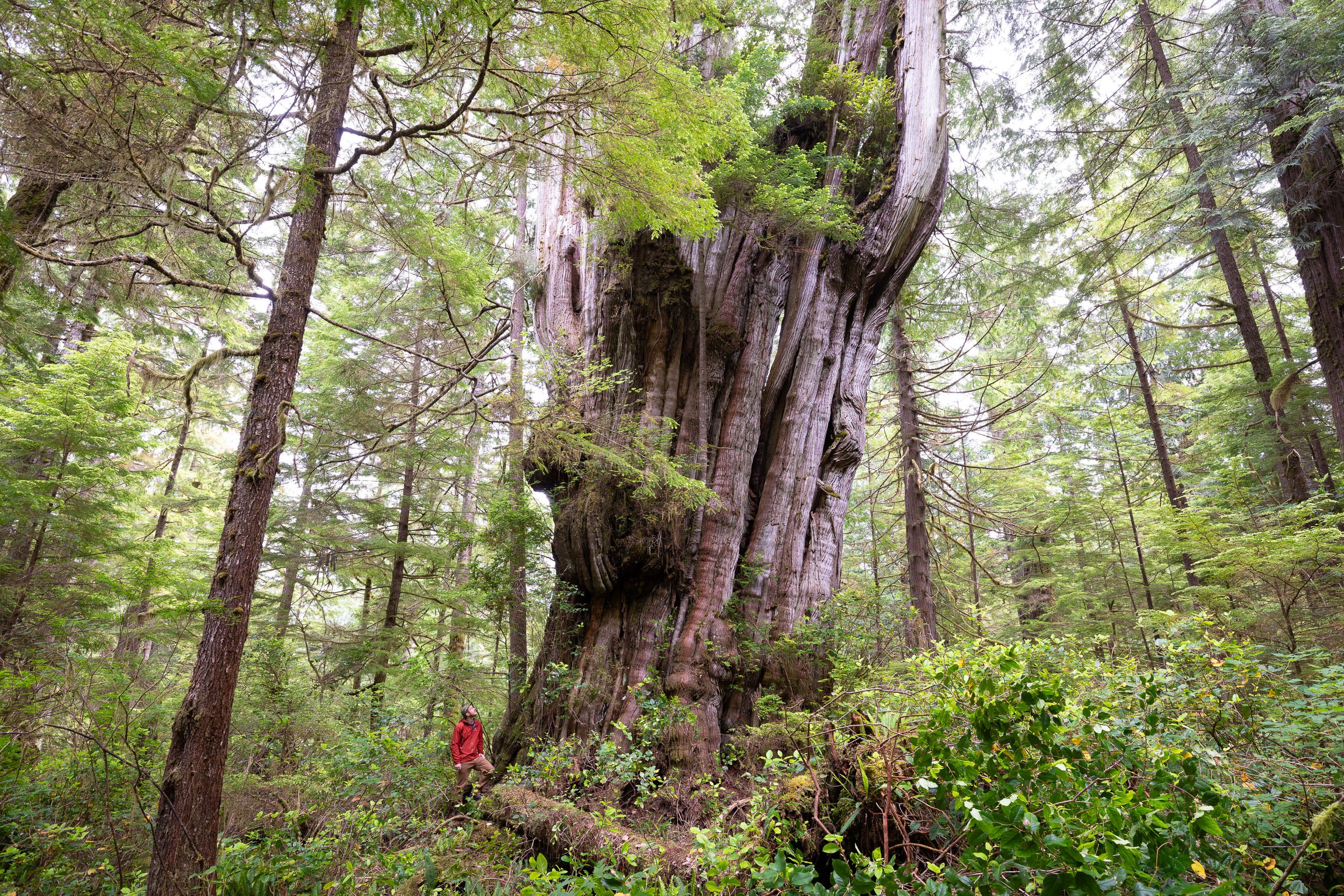
Ancient Forest Alliance photographer TJ Watt and an ancient Western red cedar. The tree is estimated to be 46 metres high [150 feet]. It is located on Flores Island, in Clayoquot Sound off Vancouver Island in the territory of Canada’s Ahousaht tribe. 

I love reading about unusual careers and pursuits people have devoted their lives to. There’s so much to learn!

Chad Pawson reports at Canadian Broadcasting (CBC) about a guy at the Ancient Forest Alliance in Canada who hunts down big, old trees. Although the local indigenous people probably always knew about the tree he calls “The Wall,” it can’t hurt to teach others about why it needs protection.

“For 20 years, Victoria’s TJ Watt, 39, has trekked through the province’s vast and verdant landscape seeking out giant, old trees to document them and make a case for their conservation. Now, at a time when exceptionally large trees have dwindled due to logging, he’s recorded what he calls the tree of his lifetime.

” ‘No tree has blown me away more than this one,’ he said. ‘It literally is a wall of wood.’

“Watt photographed the tree, a Western red cedar, in 2022 on Flores Island in fabled Clayoquot Sound on Ahousaht First Nations territory while on a field trip as a National Geographic and Royal Canadian Geographical Society explorer. (The species is also spelled redcedar because it’s not deemed to be a true cedar.)

“It’s estimated to be 46 metres tall [151 feet] and five metres wide at its base. The old-growth tree, part of forests that store carbon and support many species of plants and animals, is estimated to be at least 1,000 years old, according to Watt.

“Its dimensions put it at the very top of the biggest and oldest trees in the province and across Canada.

” ‘Unlike most other trees, it actually gets wider as it goes up,’ said Watt. …

“Watt and the Ahousaht First Nation have now revealed images and details of the tree to the public — although keeping its location secret — to show it as an example of the importance of the province meeting commitments to overhaul forestry to balance harvesting with ecological values.

” ‘It’s representative of a healthy, intact, coastal, temperate ecosystem,’ said Tyson Atleo, 36, a hereditary representative of the Ahousaht First Nation. ‘We don’t see a lot of trees that size anymore.’

“The tree has been nicknamed ‘The Wall or [a word meaning] ‘big redcedar’ in the Nuu-chah-nulth language. It’s in a type of forest that’s in danger of disappearing from B.C.’s landscape due to a history of intense logging. …

“The tree is not currently in danger of being logged as it’s in an area where old-growth logging is being deferred as part of work between First Nations and the province to protect old-growth forests at risk of permanent biodiversity loss.

“The Ahousaht First Nation, whose territory spans Clayoquot Sound, a globally recognized biosphere reserve, is at the forefront of work to keep significant trees in biodiverse forests standing while finding other ways, such as tourism, to replace lost revenues. …

“Ahous Adventures, an Ahousaht-owned and operated eco-cultural tour company in Tofino, won’t be taking visitors to the tree in order to keep the area protected but does other tours to show off the region’s other impressive trees.

“Nations like the Ahousaht are hoping for more conservation funding from the province to be able to develop [alternatives to logging]. …

“In order to raise funds on its own, the Ahousaht has established a voluntary stewardship fee for its territories, much like B.C. Parks’ day-use passes.

“Meanwhile, others also making careers of trying to locate and document massive old-growth trees that still exist, say coming across trees like The Wall is akin to a religious experience.

” ‘You feel so small, and you realize it is so incredibly important what these things are. They represent so much more than just a tree. It’s an ecosystem unto itself,’ said Colin Spratt, a conservation photographer who takes people on tours of Vancouver’s Stanley Park to show off old-growth trees there.”

More at the CBC, here. Other details at the Washington Post, here.

Read Full Post »

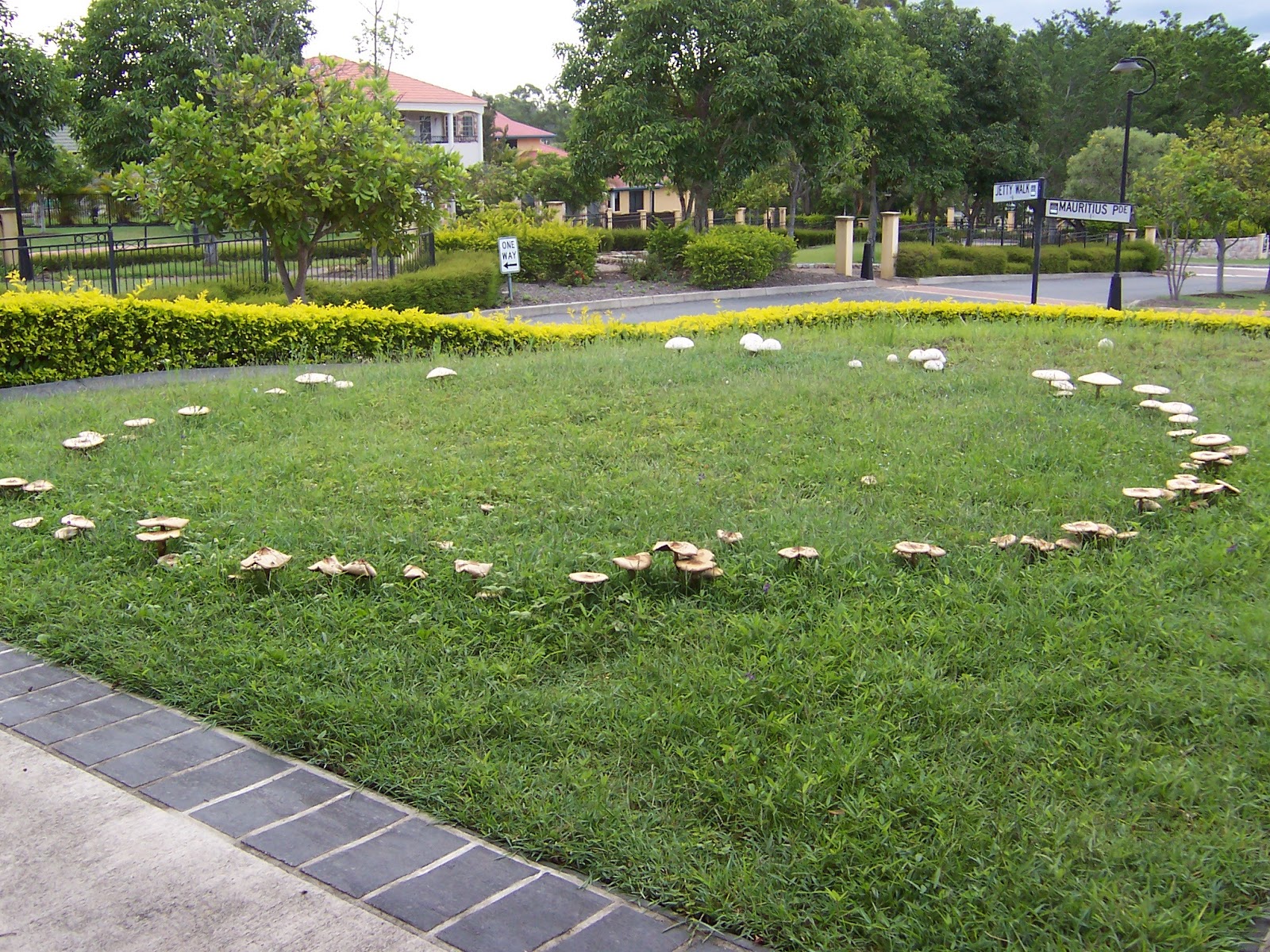
Sometimes called a Fairy Circle, fungi like these tell a story of what is going on underground.

I don’t know as much about about fungi as New Zealand blogger Spores, Moulds, and Fungi — who posts some amazing photos from time to time — but in recent years, I have gotten interested in mushrooms and more.

Part of the reason is that I am noticing that they are beautiful. But also, as Jonathan Moens reports at the Washington Post, a few bags of dirt with the right fungi “could make the planet more resilient to climate change.”

Moens begins his story in Kazakhstan.

“A team of scientists loaded into a gray minivan [earlier] this year and drove for hundreds of miles west through the Kazakh steppe — a vast region marked by endless open plains of grass, abandoned farms and flower-filled meadows.

“It’s a desolate, semiarid landscape, but just a few inches below the ground may lie one of the most diverse fungi ecosystems on Earth.

“Across much of the planet, thin, wildly interconnected filamentous structures — known as ‘mycelium’ — hold the earth together. When these underground fungi come together, they form sophisticated systems known as ‘mycorrhizal networks.’ The Kazakh steppe, which stretches from the north of the Caspian Sea to the Altai Mountains, is one of the largest dry steppes in the world and is predicted to have a wild diversity of mycorrhizal fungi. But as the region becomes increasingly desert-like, many of these fungi may disappear.

” ‘There’s a time limit, 100 percent,’ said Justin Stewart, an evolutionary ecologist who led the mapping expedition. ‘If we collect a sample when it’s already a desert, then we’ve already lost all that diversity.’

“The Kazakhstan mission is part of a worldwide project led by the Society for the Protection of Underground Networks, or SPUN, a scientific research organization dedicated to mapping out underground fungi. The goal is to sample soil in 10,000 biodiversity hot spots across the world to create a global picture of what species of fungi exist and where.

“The team identified these areas using a predictive map based on thousands of observations and environmental data. In it, the Kazakh steppe stood out because of its wide-ranging diversity of ecosystems.

Understanding which mycorrhizal fungi survive in the harsh temperatures there may help scientists determine how these fungal communities might adapt to the climate crisis as droughts, fires and desertification become more prevalent.

“The researchers chose three areas of the steppe, each with a different climate: They began in the southern deserts, then drove out west to an area dominated by vast grasslands, agricultural lands and meadows. They ended north, near the Russian border, where they entered a forest ecosystem.

“At each site they took tens of samples by mapping out a grid with measuring tape, pounding a tube into the ground to extract the soil and storing this soil in a plastic bag for mixing. These samples may help scientists unlock secrets that could one day help ecosystems capture more carbon dioxide and restore soil health — as well as the trees, plants and animal life that rely on it. …

“Mycorrhizal fungi often form mutually beneficial relationships with plants. They trade essential nutrients such as phosphorus and nitrogen in exchange for carbon, and act as an extended root system, allowing plants to access water they can’t reach.

“These networks may also prove to be invaluable for transporting carbon underground, a study published in June found. About 13 gigatons of carbon fixed by vegetation — equivalent to about one-third of all carbon dioxide emissions from fossil fuels in one year — flows through underground fungi, according to an analysis of nearly 200 data sets.

“In the steppe, these plant-fungal benefits may be short-lived, however. While deserts are a natural part of Kazakhstan’s ecosystem, more than half of the country’s vegetation and drylands is at risk of becoming desert as well. The main drivers are large-scale intensive agriculture and increasingly warm and dry temperatures brought by climate change. …

“As the minivan moves northwest toward Kostanay, a city about 100 miles away from Russia’s southern border, the clay-red, barren landscapes give way to endless fields of grass. Herds of horses reared for meat consumption trot along the wide expanse while eagles circle the skies in search of prey.

“For hundreds of years, the steppe was a region of nomadic herders. In the 1950s, under Soviet rule, the government mobilized thousands of young volunteers to produce as much grain as possible in order to alleviate food shortages, an initiative known as the virgin lands campaign.

“The fields were extensively plowed, which degraded the soil, and were later abandoned because they were not productive. ‘It had an impact on vegetation, on steppe species — it’s now very fragmented in the northern part,’ said Alyona Koshkina, a researcher at the Association for the Conservation of Biodiversity of Kazakhstan, a national conservation group.

“The farming damaged the fungi networks, too, by ripping them out of the ground and stripping the soil of nutrients. The researchers hope the samples here give them more information on what kinds of fungi are able to survive in such unfavorable conditions, and compare it to other sites, such as forests and meadows.

“Over the years, the fields have had time to slowly recover, but they face new threats. Since 2021, the Kazakh government has been working on a nine-year project to bolster the livestock sector in the steppe.

“While grazing of the grasslands can help these ecosystems thrive, overgrazing may lead to further desertification, Koshkina said. To restore the steppe would mean winding back the clock to its pre-Soviet era, when the region was largely undisturbed or ‘pristine,’ she said. …

“Conservationists agree that the health of aboveground vegetation is inextricably linked to that of below-ground biodiversity. As such, mycorrhizal fungi may play an important role in shaping the steppe’s future. …

“Studying the steppe’s fungi could help scientists figure out whether they could thrive in other, similar climates. One way to test this would be via inoculation. If, for instance, SPUN’s work revealed that pristine steppes had higher mycorrhizal diversity compared with more degraded land, those same fungi could be transferred elsewhere to test whether they improve soil quality.”

More at the Post, here. A good person to follow at X, formerly known as Twitter, is Sam Knowlton, @samdknowlton, who works with fungi to improve soil health in agriculture.

See also the Guardian, here, where Fiona Harvey has more about mapping the world’s fungi. She quotes Jane Goodall, adviser to the SPUN project: “An understanding of underground fungal networks is essential to our efforts to protect the soil, on which life depends, before it is too late.”

Read Full Post »

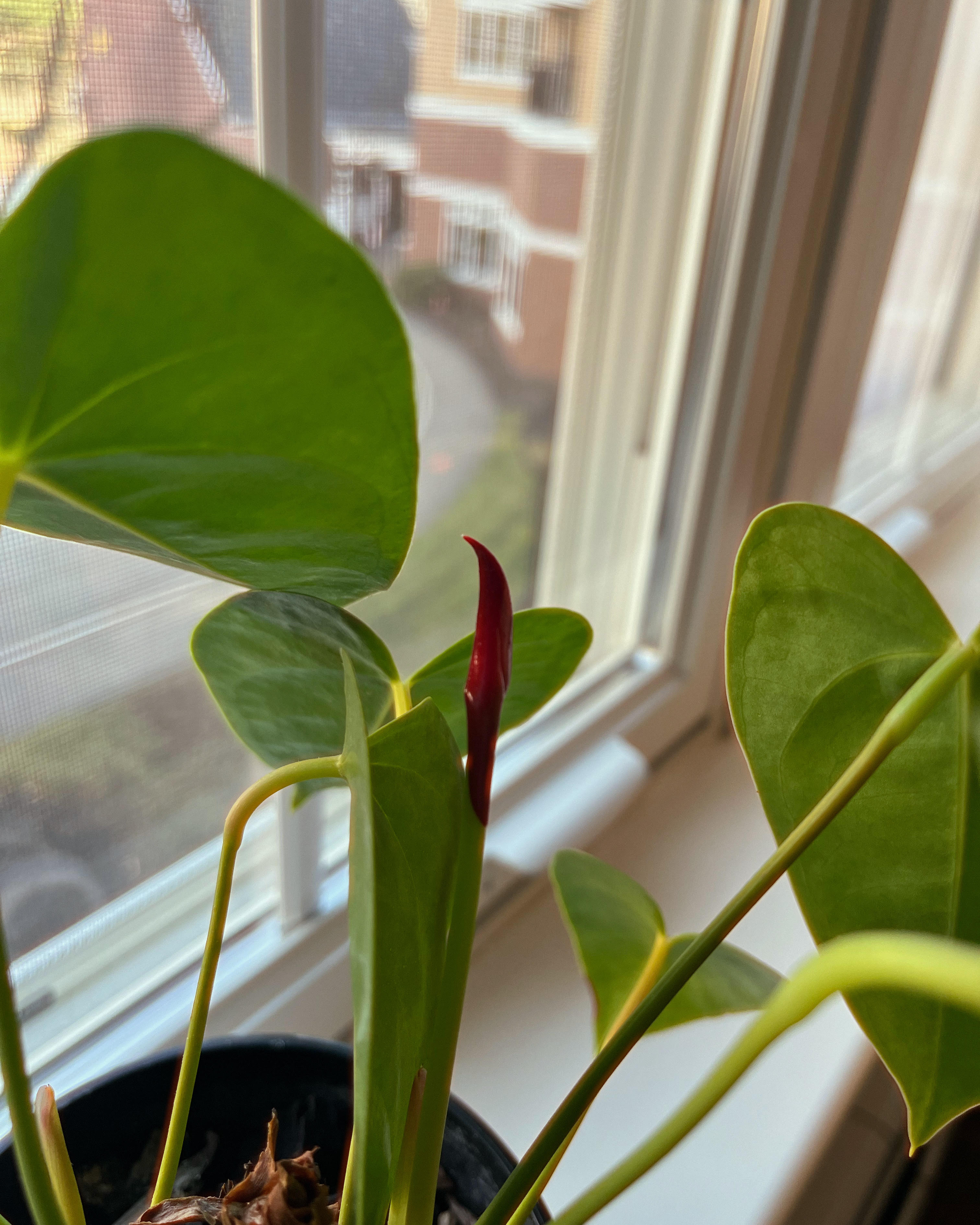
I have a great attachment to my anthurium (above), which my niece and nephew gave me in early 2020 after my sister died. The plant told me her name was Gladys. I like to wish her Good Morning and ask how she’s doing.

Artist Kit Howard Burns, a college classmate, saw a great blue heron in the root of a fallen tree. Isn’t it great?

Next, you may think you see a bench, but it’s really a story of sun and shadow. I look everywhere for these stories in winter, when they may appear only for a few moments.

The annual gingerbread competition at the Colonial Inn inspired the next artwork, Verrill Farm’s version of the Barbie movie. My husband pointed out the pretzel fence, which I missed at first.

I’m still trying to figure out the characters I saw in the bushes near Jeanne’s house. Tell me what they are, if you know. The woman looks like a Disney gal, but are those soldiers that I see climbing a nearby branch? They look dangerous.

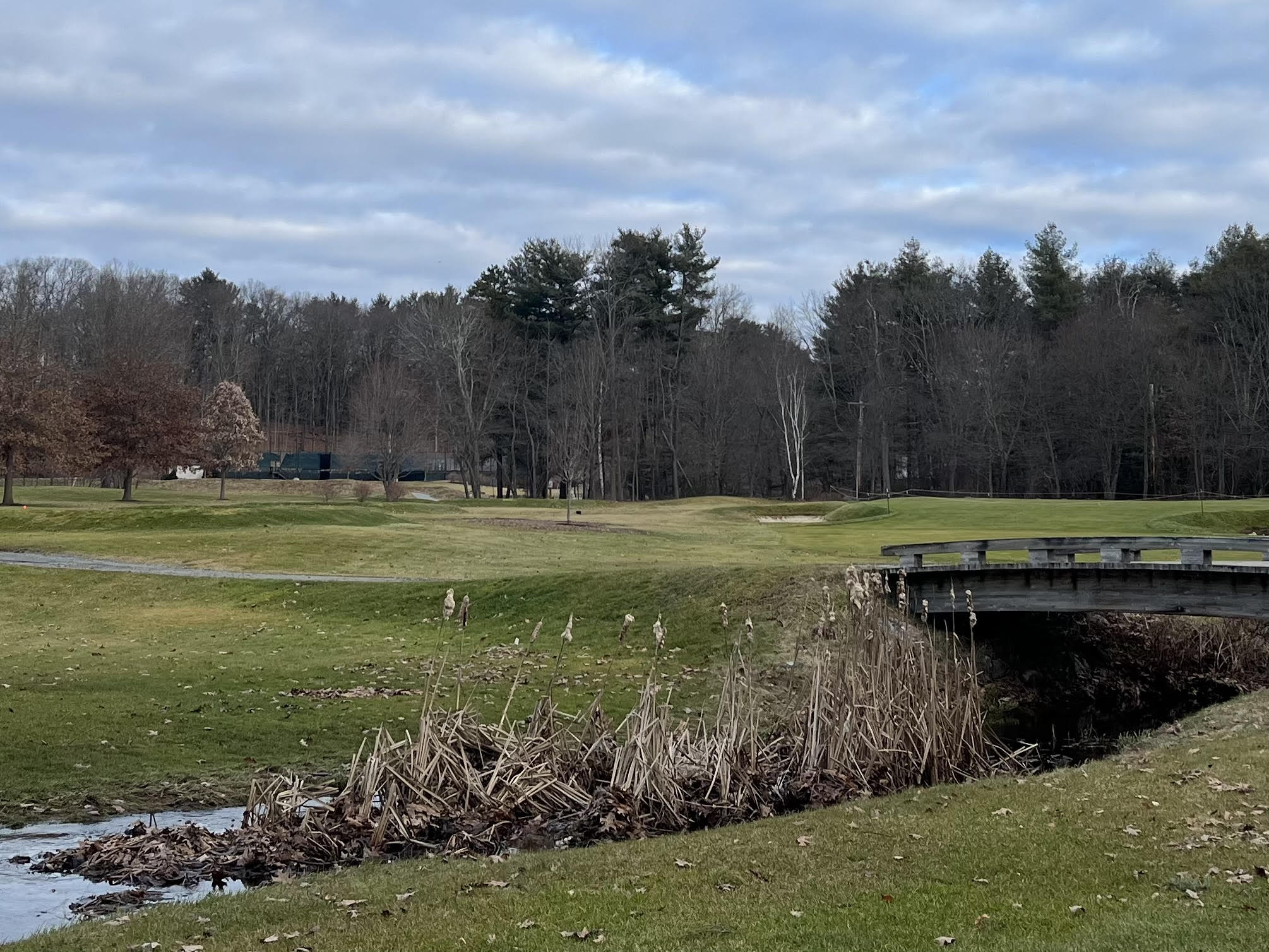
On New Year’s Day, I took advantage of the cold and quiet to trespass on the temporarily unused golf course. Nearly every day I walk along the road that runs beside it, and I always feel tempted to disobey the “No Trespassing” signs. I wonder if 2024 is going to be a year of disobedience.

Neighbor Lynne Stinson’s beautiful photo of the moon coming through clouds says to me 2024 could be almost anything.

Finally, here’s a version of “My Way” you may like. I never cared much for the song when it was all about Frank Sinatra doing it his way, but notice how much more meaningful it seems in Spanish. I heard this on the jazz station, wicn.org. Check it out.

Read Full Post »

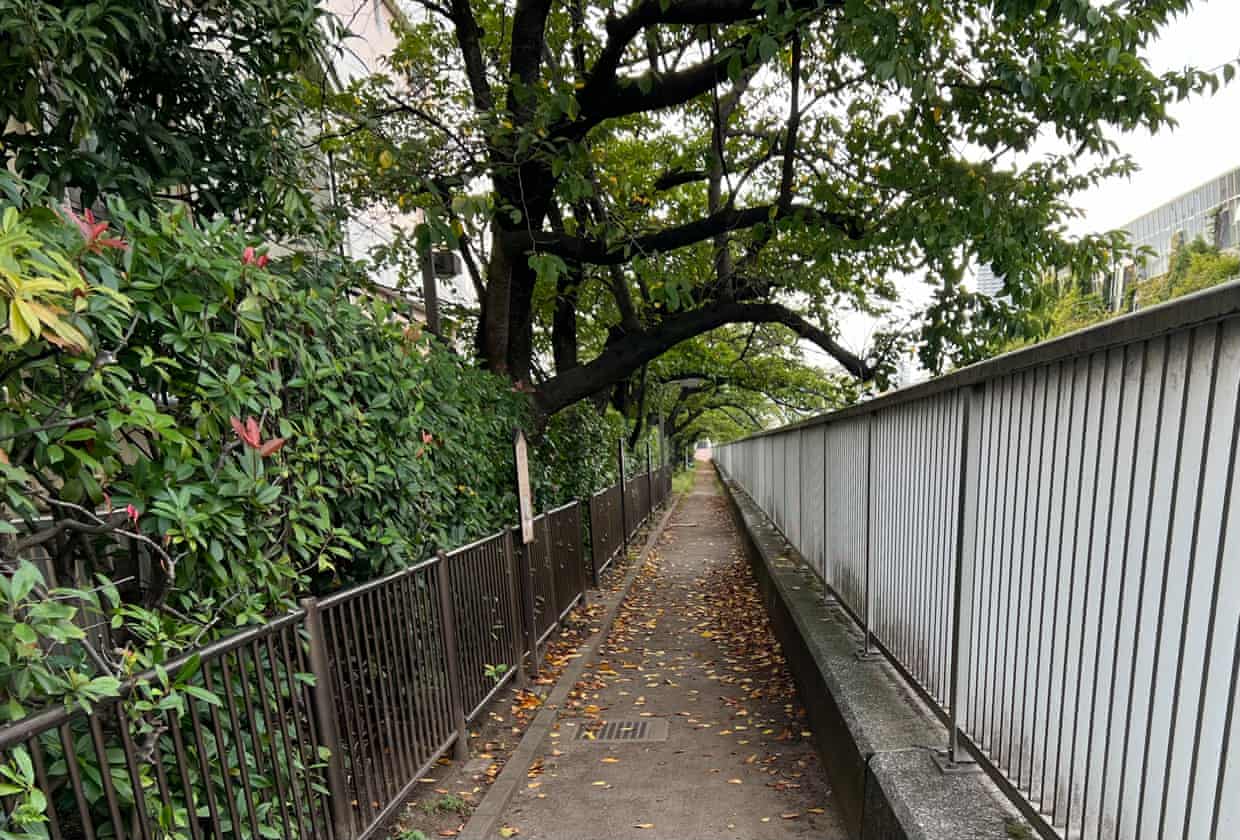
Photo: Justin McCurry/The Guardian.
A path along the Sendaibori river in eastern Tokyo, Japan, that is dotted with tablets showing haiku by Matsuo Bashō, Japan’s most revered poet. 

Happy New Year, Everyone! This year I want to do more things to reduce carbon emissions. Eat less beef? Compost more? Drive less? Turn down the heat and air conditioning? Some things are harder to do in community living, but I will find a way to influence group conservation.

Among the many areas threatened by climate change, there is one you probably never have thought about: the haiku!

Justin McCurry, writing at the Guardian, is not entirely joking.

“Wooden tablets dotted along a path between office buildings and the Sendaibori river in eastern Tokyo mark the start of a journey by Japan’s most revered poet that would result in his greatest collection of verse. The tablets showing haiku by Matsuo Bashō are steeped in the seasonal certainties of the late 1600s. There are references to full moons, chirping cicadas and, of course, cherry blossoms.

“Awareness of the seasons, and the seamless transition from one to the next, is found in myriad aspects of Japanese life [including] haiku poetry. Almost four centuries later, Bashō’s words continue to inspire admiration and countless amateur exponents of the 17-syllable form. But they are also a reminder that haiku faces what some of its enthusiasts fear is an existential threat: the climate crisis.

“The poems displayed at regular intervals along the Sendaibori promenade are intended to evoke the cooler climes of autumn, but this year they feel off kilter even though it is late September. …

“One of the poems encapsulates the feeling of seasonal misalignment.

Ishiyama no
Ishi yori shiroshi
Aki no kaze

A whiteness whiter
than the stones of Stone Mountain
The wind in autumn

“Bashō wrote those words after a visit to a hilltop temple in Komatsu, near the Japan Sea coast, on 18 September 1689. Read contemporaneously, they would have evoked the arrival of cooler, crisper days. … Today, though, they belong not just to another century, but to an age of symmetry between culture and the seasons that is being irrevocably blurred by the climate crisis.

“Japan is no stranger to extreme weather, but summers once described as uncomfortably muggy are now so hot that they represent a real threat to human life, especially among Japan’s large and growing population of older people. …

“The climate crisis is wreaking havoc on the Saijiki – the ‘year-time almanac’ of thousands of seasonal words that are widely acknowledged as acceptable for inclusion in haiku. A kigo could refer to a particular plant or animal, the weather, seasonal festivals, the sky and the heavens. When read at a corresponding time of the year, it is supposed to stir emotions in the reader.

“ ‘With kigo, you’re compressing three or four months into a single word,’ says David McMurray, a haiku poet who has curated the Asahi Shimbun newspaper’s Haikuist Network column since 1995. ‘Take the word mosquito … the entire summer is packed into that one word, and it conjures up so many images.’

“The premature first pops of sakura buds in spring and and the arrival of typhoons in the summer instead of the autumn are two notable examples of seasonal dissonance.

“ ‘The seasons are important to haiku because they focus on one particular element,’ adds McMurray, a professor of intercultural studies at the International University of Kagoshima. … ‘The risk is that we will lose the central role of the four seasons in composing haiku, and the Saijiki will essentially become a historical document. The Saijiki is very specific in the way it presents the words. But they no longer reflect reality.’ …

” ‘Take koharubiyori, a kigo of late autumn to early winter used to express a day of warm, mild, sunny, almost springlike weather in the midst of harshly cold days, associated with a sense of soothing and comfort,’ [Etsuya Hirose, a professional haiku poet] told the Nikkei business newspaper. ‘Nowadays, more days are warm at that time of year, so you can’t really empathize with that kigo, that season and emotion.’ …

“According to Toshio Kimura, a poet and director of the Haiku International Association, warmer, more unpredictable weather is blurring the transition from one season to the next, but haiku has the versatility to [adapt]. ‘The purpose of haiku is not to praise seasons themselves, but to try to see the human essence through nature.’ “

Read at the Guardian, here, about how an “understated form of environmental activism is now making its way into haiku.” No paywall.

Read Full Post »

Photo: WedMD.
People who let their handwriting go often need small-motor exercises later. Ideas for working on hands with osteoarthritis may be found at WebMD, here.

It’s always something, isn’t it? We like the convenience of keyboarding — not to mention suggested words popping up in text messaging, saving us strokes — but what if there’s a downside? What if our hands lose their versatility?

At the Washington Post, Gina Rich notes that “Writing by hand may feel difficult for many of us as we engage less in fine motor activities and use devices more. …

“Handwriting is a fine motor skill that isn’t innately learned; it needs to be taught and practiced. It also is a skill that benefits us by stimulating our brain: We remember information better when we write it down by hand, research shows.

“But for many of us, handwriting can feel difficult as we turn to smartphones, other devices and even robots for many of our hand tasks.

“And with cursive dropped from Common Core State Standards in 2010 in the United States, children have few opportunities to learn and practice; for some, handwriting has been relegated to an extracurricular activity.

“The problem isn’t only that we’re practicing less. Technology has changed the way we use our hands. Also, the more time we spend on our devices, the greater the probability of problems with our hands and wrists, such as pain, weakness and nerve changes.

“ ‘It’s like going to the gym,’ said Mellissa Prunty, an occupational therapist at Brunel University London and chair of the National Handwriting Association in the United Kingdom. ‘When you write for long periods of time but you don’t do it often, you are going to feel tired and fatigued.’

“The hand-brain connection is stronger when we write something by hand vs. typing it, said Paula Heinricher, an occupational therapist and national presenter for Learning Without Tears, which trains educators in subjects, including handwriting. Although we might be able to take more notes on a keyboard than by hand, ‘there’s also research that shows when you write by hand, there is a deeper brain connection and a deeper understanding, and you retain that information longer,’ she said. …

“The ability to write quickly and legibly also has a critical link with academic performance. A 2013 study found that children who had good handwriting skills in preschool performed better in reading and math in second grade. And in a 2019 study of 141 first-graders in four schools in Italy, children who were taught cursive developed better reading and writing skills compared with a control group. …

“While there is little hard evidence that fewer students are taking notes or completing assignments by hand now compared with years past, children’s use of devices has increased, especially in the pandemic years, parents said.

There’s no benefit to using one part of the hand so extensively, Inal said, but there are risks.

“But devices aren’t the only culprit. In general, we’re not engaging in as many fine motor activities as in the past, said Ritu Goel, a certified hand therapist at the University of Maryland Medical Center.

“With keyless entry, for instance, many of us no longer turn a key to unlock our car or the front door; instead, we push a button or tap out a code. So the lateral pinch, a fine motor motion, ‘is becoming a little less used in day-to-day activity,’ Goel said. …

“With the repetitive pinching motion of texting, ‘only one muscle is doing really hard work,’ said study author Esra Erkol Inal, associate professor of physical therapy and rehabilitation at Reyap Hospital Istanbul. There’s no benefit to using one part of the hand so extensively, Inal said, but there are risks. …

“A study of neurology patients at a Turkish university found that people diagnosed with carpal tunnel syndrome spent more hours per day on their smartphones than those without hand or wrist complaints. …

“Even as we continue to use technology and devices, we can bolster our handwriting muscles with a few strategies.

Make sure your smartphone isn’t too big. If our smartphone is large relative to our hand, we wind up reaching across it more, which can cause thumb pain, Goel said. You should be able to hold your smartphone comfortably in one hand with a good grasp.

Use devices mindfully: Her teenage patients scoff, but Goel advises texting with the index finger — not thumbs — while holding the smartphone in the other hand. Give yourself cues to take breaks from scrolling, such as by setting alarms on your phone. And don’t forget posture: When working at a desk, Inal stores her phone in a smartphone stand and strives to keep herself vertical, rather than hunched over.

Stretch and strengthen: If your hands are cramping, Goel recommends tendon gliding exercises, movements to bend and straighten different joints. You can also perform what’s called a prayer stretch by bringing your palms together with your elbows out and pointing your fingertips upward for a wrist extension. Reverse the exercise with a wrist flexion, directing your fingertips down so the backs of your hands touch. In addition, Goel suggests rolling your hands across therapeutic putty, Play-Doh or a small rolling pin.

“Completing tasks without assistive devices will help strengthen the small stabilizing muscles in your hands. For instance, using a manual can opener engages your gripping and pinching muscles, Kruse said.”

More at the Post, here.

Read Full Post »

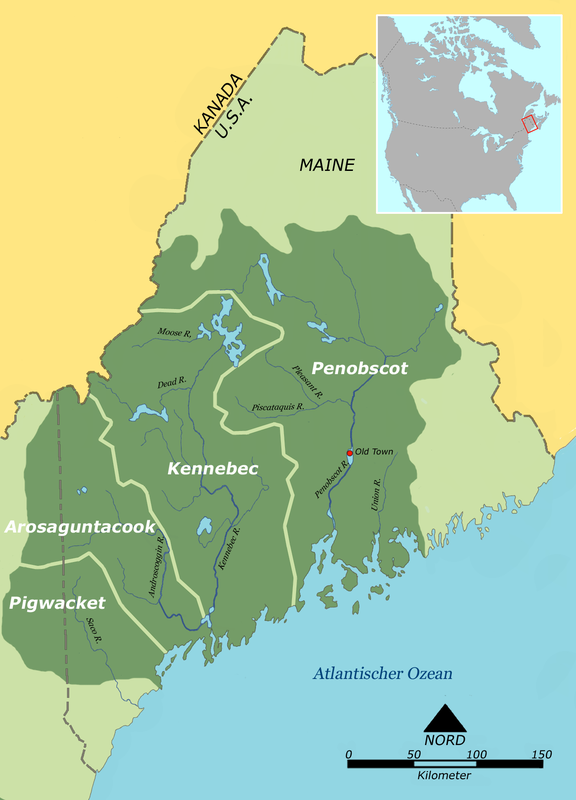
Map: Wikipedia.
Eastern Abenaki tribes (Penobscot, Kennebec, Arosaguntacook, Pigwacket/Pequawket). Indigenous people often exhibit the best stewardship of natural resources.

What can we learn from people who have been taught from infancy how to live in harmony with the natural world? In an op-ed at the Washington Post, Bina Venkataraman suggests that “in Maine, a return of tribal land shows how conservation can succeed. …

“On a recent morning at the Penobscot Nation headquarters, moose mating rituals dominated the office banter: the wacky way a lovesick moose had stumbled around someone’s pickup truck [when] he heard a hunter’s [mating call]. …

“The Penobscot Nation’s record of caring for nature while still using it — hunting moose and duck while keeping their populations steady, selectively harvesting timber to preserve forests and restoring rivers to support fisheries — inspired an effort to return a 31,000-acre tract of forested land to tribal ownership.

“Late last year, the Trust for Public Land, a conservation group, bought the parcel from an industrial timber company, and today it announced it will give the land to the tribe once it pays off $32 million in loans. …

“The land is close to Mount Katahdin, sacred in Penobscot tradition, and to an 87,000-acre national monument created in 2016 in the North Woods of Maine. It contains 53 miles of streams in the watershed of the Penobscot River, which has been for the tribe a central highway and a source of food and water.

“The transfer is part of a movement to return lands to Indigenous stewardship and work with tribal communities to protect biodiversity. The hope is both to restore justice for tribes that were long ago stripped of their ancestral homelands and to learn from long-standing Indigenous practices new ways to save a beleaguered planet. The pending land return in Maine, or ‘rematriation’ as some Indigenous people call itstands out because of its scale — many previous land returns in the eastern United States have been on the order of hundreds of acres — and because the Penobscot will decide how the land will be managed.

“This is a significant change. For most of the past two centuries, Western conservationists have largely ignored Indigenous people’s knowledge of landscapes and wildlife, along with tribes’ historic claims to the land. But that is no longer tenable. Worldwide, Indigenous-managed lands host 80 percent of the world’s biodiversity, by some estimates, and encompass much of the world’s remaining intact forests, savannas and marshes. If environmentalists and political leaders hope to conserve more natural landscapes … collaboration with tribal nation leaders is critical.

Modern environmentalism has been deprived of Indigenous knowledge, in part, because it has seen nature as something apart from humans.

“Early thinkers hold some responsibility for this. John Muir, long lauded as the father of the national parks, believed that natural landscapes needed to be stripped of the Native Americans who lived on them to create his ideal of pristine wilderness. In the Muir tradition, the U.S. government drove tribal people out of areas that today are considered America’s most beloved landscapes — Yellowstone, Yosemite, the Everglades — a history documented by David Treuer, an Ojibwe writer.

“The federal government created the National Bison Range in 1908 by evicting tribal members from more than 18,000 acres of the Flathead Indian Reservation — ignoring century-old practices for keeping up the bison herd. Only recently has the government returned the land to the Confederated Salish and Kootenai Tribes, whose successful traditional methods for maintaining the herd are featured in a forthcoming ABC documentary.

“When Henry David Thoreau … traveled to the Maine woods in the 19th century, he distinguished between ‘scientific men’ and Indian guides, even as he acknowledged the latter’s navigational expertise. It’s laughable now to think that communities that had inhabited a place for centuries, gaining intimate knowledge of the natural features, flora and fauna and passing down that knowledge across generations, could have less to offer scientifically than settlers encountering those lands for the first time. Yet it was only last year that the U.S. government formally recognized how much tribes can contribute to ecological knowledge of their ancestors’ landscapes. …

“For decades, tribal members in Maine advocated bringing down Penobscot River dams that once powered saw and paper mills to restore an Atlantic salmon fishery. The Penobscot method of timber harvesting, which leaves 75- to 100-foot buffers of trees around rivers and streams, creates ideal conditions for salmon. Salmon like to spawn upriver in shady pools, created by allowing the forest at a river’s edge to thicken and birch trees to fall into it. …

“Some evidence suggests that, globally, the track record for Indigenous management of wildlife is at least as good as that of formal conservation. Researchers have shown, for instance, that Indigenous-managed lands in Canada, Australia and Brazil contain biodiversity equivalent to that of areas designated for conservation.

“But perfect alignment between tribes and environmental groups doesn’t always happen. The economic challenges that many tribes face — and their efforts to acquire land to reclaim sovereignty — often force tough decisions about development, gambling and heavy industry. Some tribal nations have greenlighted oil and gas drilling. The Penobscot have allied with conservationists to oppose a proposed zinc mine in northern Maine because of its likely harm to fisheries. But several tribal members expressed to me their misgivings about wind farms, which most environmentalists see as essential to combat climate change.

“Penobscot leaders have varying visions about how they might one day develop the land that is now being returned to them. Some imagine using it to adapt to sea-level rise — by building housing or growing food; others envision ecotourism lodges or a cultural center that could be accessed by the general public. In the near term, tribal leaders aim to make it accessible to hikers and hunters with permits and to offer public access to the national monument via an old logging road.

“In other parts of North America, co-management of conservation areas is becoming more common. … Groups such as the Trust for Public Land and the Nature Conservancy are brokering more land returns and collaborating with tribes to manage ecologically important landscapes. But more private landowners, philanthropists, nonprofit groups and governments should mimic the efforts in Maine. …

“Environmental movements might have better protected nature if they had long sought to conserve cultures and communities along with land. Earning the trust now of people who have inherited wisdom for living in balance with nature will give conservation a fighting chance on a warming planet.”

More at the Post, here.

Read Full Post »

Leadership at 97

Photo: The Guardian.
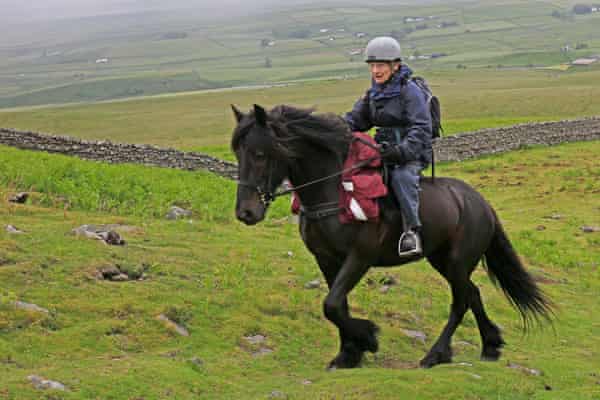
Ninety-seven-year-old equestrian and botanist Margaret Bradshaw is the chief caretaker of some of the UK’s rarest flowers. 

Where we live now, the majority of people are not as involved in the world as they used to be. But there are those who stay “in the fray,” embracing all the abrasions and adjustments that rubbing up against the world brings.

At the Guardian, Phoebe Weston reports on Margaret Bradshaw, 97, of Teesdale, UK, who fights to preserve a unique mix of plants in her region and intends to keep moving. Often on horseback.

“Margaret Bradshaw crouches on all fours on Widdybank Fell in Teesdale, being drenched by sheets of horizontal rain. The 97-year-old botanist mumbles the names of arcane plants as she scours the damp ground.

“This part of the uplands is a seemingly empty landscape, heavily grazed by sheep, but it hides botanical treasures that have been here for more than 10,000 years. Some of the plants can’t be found anywhere else in the UK and – until Bradshaw arrived on the scene – many were unaccounted for.

“Bradshaw is the chief caretaker of some of the country’s rarest flowers. She has spent seven decades obsessively studying the unique arctic-alpine flora of Teesdale, in the north of England. …

“Where once they were widespread in Britain, now only fragments remain, and 28 species are threatened with extinction.

“ ‘Everything about Teesdale is unique,’ says Bradshaw with pride – and the authority of someone who has just written a 288-page book on the subject.

“Teesdale’s Special Flora: Places, Plants and People was published as part of the Princeton Wild Guides series in February. The ‘Teesdale assemblage’ is celebrated because it is a mix of alpine-arctic flowers and southern European species; nowhere else in Britain do they all grow together.

“Now, though, the area’s unique attributes are under threat. Bradshaw has been recording rare plants here since the early 1950s and has witnessed great declines. [She] first heard about Teesdale when she was a student at Leeds University almost 80 years ago. ‘It stuck in my mind,’ she says. ‘I knew it had a special flora.’ She moved to the area, having never been there before, and did a doctorate in botany at Durham University.

“After a 20-year stint in Devon from 1980, she returned to Teesdale and found all plants had ‘decreased substantially.’ Since the 1960s, plant abundance has dropped by 54% on average. Some have essentially disappeared, such as the dwarf milkwort, down by 98%, and the hoary whitlow-grass, down by 100% (there is now just one recorded plant). …

“She says: ‘We’ve got various buildings in the country – Stonehenge, Durham Cathedral, and others; if they were crumbling away, there would be groups and money helping stop it, because people would say: “We can’t let this happen.” These flowers’ communities are much, much older, and in some respects they are more beautiful.’

“The main reason for the decline of these plants is an unusual one – not enough sheep. The number of sheep on the fells had been reduced by half by 2000, as the uplands were generally believed to be ‘overgrazed.’ Bradshaw says while some upland areas are ‘sheepwrecked,’ reducing grazing on Teesdale has been devastating. Longer grass overshadows the delicate flowers, taking away the light they need to grow.

“As a result of her findings and her work with farmers who graze the land – as well as Natural England, which manages it – sheep numbers are increasing and the timing of grazing is being carefully managed. This has led to the partial recovery of some plants.

“But the question of other factors looms: the effects of artificial fertilizers; rabbits, which have their own impact on grazing; and the climate crisis. …

“Bradshaw is committed to working these mysteries out – and is a model for how to live in your 90s. At 93, she set up Teesdale Special Flora Research and Conservation Trust to record rare plants and find people to continue her work in the future. A keen horse rider, at 95 she did a 55-mile (88km) horse trek across Teesdale, raising almost [$13,000] for the trust. I ask her the secret to longevity. ‘Just keep going,’ she says. ‘Keep at it. Don’t sit down and just watch the telly.’ ”

Check out the wildflower photos at the Guardian, here. No paywall.

Read Full Post »

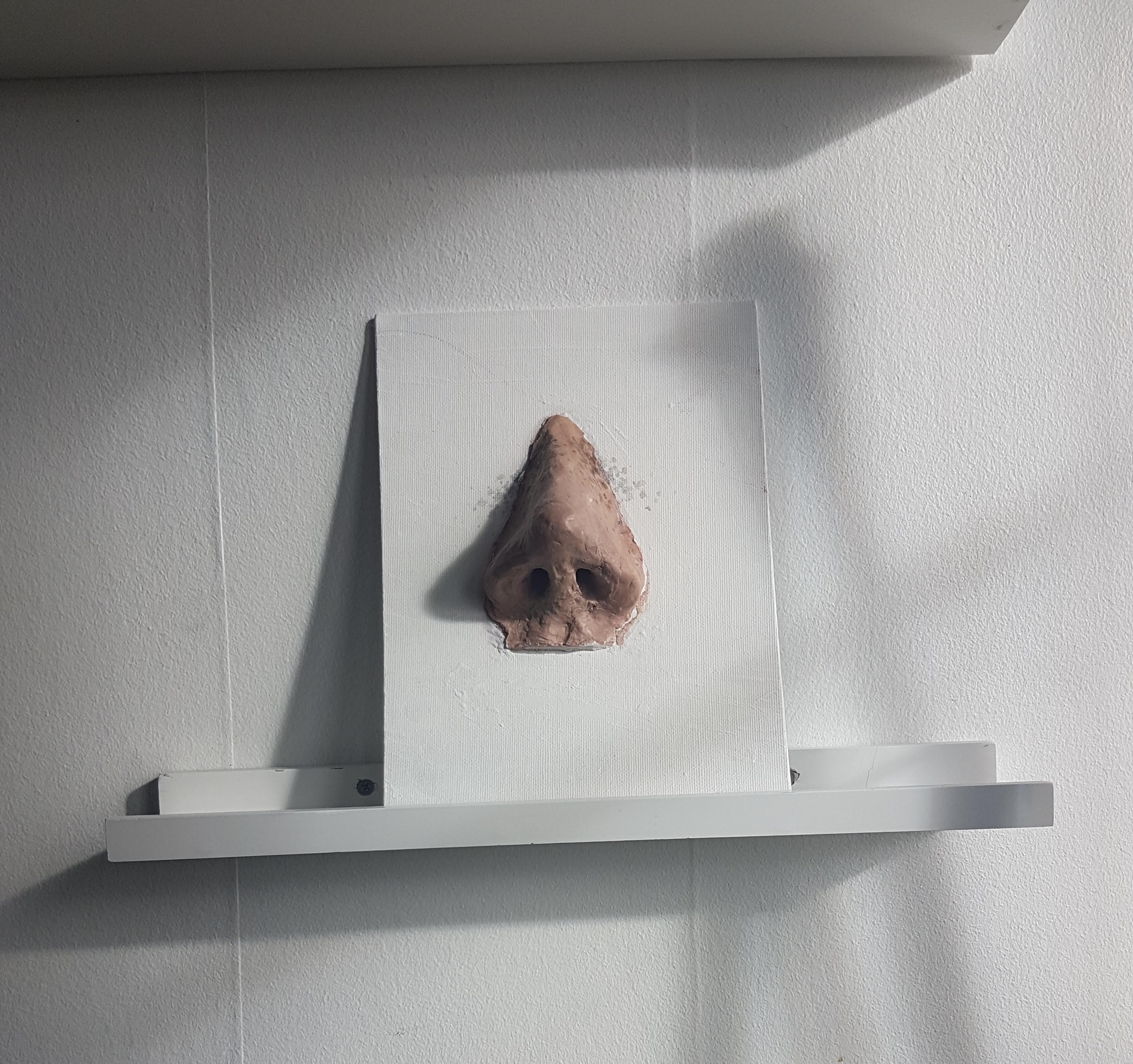
Photo: Trude Jonsson Stengel via Unsplash.
An artistic nose from Sweden. New research finds a connection between a healthy sense of smell and a healthy memory — meaning less dementia.

Back in the 1980s, we experimented with using a kerosene space heater for a cold room. The first time I smelled that burning kerosene, I was taken back to age 4 and the week my brother and I spent in a home that used kerosene heat. What about you? Can you think of memories triggered by a smell?

Nicola Davis reports at the Guardian, “Whether it is the waft of clove-studded oranges or the crisp fragrance of a fir tree, the festive season is filled with aromas that conjure Christmases past. Now researchers say our sense of smell, and its connection to our memory, could be used to help fight dementia.

“Our senses can worsen as a result of disease and old age. But while impairment to hearing or vision is quickly apparent, a decline in our sense of smell can be insidious, with months or even years passing before it becomes obvious.

“ ‘Although it can have other causes, losing your sense of smell can be an early sign of dementia,’ said Dr Leah Mursaleen, the head of research at Alzheimer’s Research UK, adding it was a potential indicator of damage in the olfactory region of the brain – that is, the part of the brain responsible for smell.

“That has led to researchers examining whether loss of smell could be used to diagnose conditions such as Alzheimer’s long before symptoms such as memory loss set in – an approach, experts say, that could allow patients access to drugs such as lecanemab early in the course of the disease, when they work best to slow cognitive decline.

“But just as research has suggested the use of hearing aids could reduce the risk of developing dementia, questions are being asked about whether bolstering our sense of smell could do the same. Could a declining sense of smell be a risk factor for cognitive decline, not just a symptom?

“ ‘Olfaction is intimately involved in many brain processes, and especially the emotional processing of stimuli,’ said Prof Thomas Hummel, of Technische Universität Dresden. Indeed, smells, memories and emotions are often tightly bound, with research revealing recollections triggered by scent tend to be rooted in our childhood. …

“Neurons involved in the olfactory system are also involved in other systems in the brain. Indeed, as Hummel and others note, some areas of the brain play a key role in cognitive and olfactory processes. As a result, if the sense of smell becomes dysfunctional, cognitive processing might also be affected.

A number of studies have found that exposure to certain odors can either boost or hinder cognition. …

Work by Hummel and colleagues has suggested smell training in older people can improve their verbal function and subjective well-being.

“More pertinent still, a small study published last year, by researchers in Korea, revealed that intensive smell training led to improvements in depression, attention, memory and language functions in 34 patients with dementia compared with 31 participants with dementia who did not retrieve such training. …

“Intensive scent training takes time and effort. In an attempt to solve this problem, Dr Michael Leon, professor emeritus at the University of California, Irvine, and his team have come up with a device called Memory Air that emits 40 different smells twice a night, while people are sleeping – an approach Leon says allows ‘universal compliance.’ The hope is that exposing people to more smells, even when they are asleep, could strengthen their olfactory abilities.

“The team is about to start a large trial with the gadget among older adults without dementia, building on a smaller study that suggested the approach could improve memory performance in such participants. ‘We will then start a large trial with Alzheimer’s patients using that device,’ said Leon.

“In another small study, Dr Alex Bahar-Fuchs, a clinical neuropsychologist at Deakin University, Australia, is looking at whether training cognitively healthy older adults to distinguish smells using a scent-matching memory game can help improve wider aspects of memory and cognition, compared with using a similar game based on matching pictures. The approach, he said, goes further than passive exposure to odors by setting cognitive tasks for participants.

” ‘We believe that the neuroplastic properties of the olfactory centers in the brain might make it more likely that improved performance on olfactory memory will generalize, or transfer, to memory functions more broadly,’ he said.

“Meanwhile, Prof Victoria Tischler, at the University of Surrey, is working to learn more about how our olfactory function changes as we age normally.

“As part of their work, the team hopes to produce olfactory training kits suitable for healthy older people, those with mild cognitive impairment, and those living with dementia in care homes.

“Tischler said it was important to cherish our most enigmatic sense. ‘I would advise the public to look after their sense of smell, much like they look after other aspects of their sensory health,’ such as their eyesight, she said.”

Well, I’m convinced. I’m now going around ripping orange peels and sniffing them, breathing in ground coffee, chocolate, Christmas tree needles.

More at the Guardian, here. No firewall; donations encouraged.

Read Full Post »

Photo: Bargello Museums, Florence.
Drawings believed to be by Michelangelo in the Stanza Segreta, or Secret Room, at the Museum of the Medici Chapels, part of the Bargello Museums and the Basilica of San Lorenzo in Florence.

It’s pretty unusual to find works by a master like Michelangelo centuries after his death, but that’s what happened in Florence in 1975. Now visitors — on a limited basis — are being allowed into the room where Michelangelo once hid out. It seems that even in hiding he couldn’t stop drawing.

Sarah Cascone reports at Artnet, “Guidebooks to the Italian city of Florence have long noted that the Basilica of San Lorenzo is home to a secret room believed to have been decorated by Michelangelo while the famed Renaissance master was in hiding from the pope for two months in 1530. Now the chamber, which is part of the the Museum of the Medici Chapels (itself one of the fives sites of the city’s Bargello Museums), will be open to the public for the first time. …

“The stunning drawings of the Stanza Segreta, or Secret Room, were rediscovered in 1975. That’s when Paolo Dal Poggetto, then director of the Museum of the Medici Chapels, tasked restorer Sabino Giovannoni with trying to clean part of the walls of a narrow chamber beneath the church’s mausoleum, which had been designed by Michelangelo in 1520.

“The corridor, measuring about 32 feet long, 10 feet wide, and eight feet tall, had been used it to store coal, until it had been sealed shut some 20 years prior. It was accessible only by narrow stairway beneath a trap door that had been concealed beneath a wardrobe amid a pile of unused furniture and decor.

“The initial plan was to potentially create a new tourist entry and exit point from the museum. But what Giovannoni found changed everything. Hidden under two layers of plaster, he soon realized, the walls were covered in large-scale charcoal and red chalk sanguine drawings executed with the confidence and ease of a master draftsman.

“ ‘The moment you enter that room you simply are speechless,’ Paola D’Agostino, director of the Bargello Museums, told the New York Times, adding that as your eyes adjust to the low light ‘you start seeing all the different drawings and all the different layers.’

“But why would Michelangelo have been sequestered in this subterranean space, with just a single window letting in light from the street above?

“At the time, the artist’s main patrons, the Medici family, had just returned from exile, having been overthrown by a populist revolt in 1527. Because Michelangelo had worked on behalf of the republican government, supervising the city’s fortifications, Pope Clement VII — a member of the family — had sentenced him to death.

“Hiding beneath the basilica was a way for Michelangelo to lay low until he was back in the pope’s good graces. Fortunately, the Medicis ended up forgiving Michelangelo about two months later, lifting the death sentence and allowing him to leave his (freshly decorated) hiding place to resume work on the family’s tombs at the basilica. …

“Be forewarned that there will still only be limited access to the Secret Room. The museum is making just 100 tickets — priced at €32 ($34), including access to the Medici Chapels — available for each week, with 15 minute slots for groups of four. There is a 45-minute gap between each visit, to limit the works’ exposure to light.” More at Artnet, here.

The Times, here, adds a description of “an imposing nude near the entrance, which has the sketch of a face in profile and looking forward. Experts say it evokes Michelangelo’s ‘Resurrection of Christ.’ [And some] scholars have suggested that Michelangelo could have drawn sketches of a falling man that resemble the central figure of his ‘The Fall of Phaeton.’ Some even think a flexed and disembodied arm on the wall evokes his David statue. What is certain, Ms. D’Agostino said, is that ‘nothing of this kind exists in the world of 16th-century drawings.’ ”

Read Full Post »

Photo: Team Hood via the Guardian.
New Zealand curling skip Anton Hood with fan and Chartwell Colonel Belcher resident Bill Dench. The New Zealand team found a good place to live while in training — a retirement community in Calgary, Canada.

This is a story about a retirement community, a team from the other side of the world, and the unexpected benefits of co-housing.

Scott Cacciola reported at the New York Times early this year, “Ben Smith never could have imagined spending the winter at a retirement home in Calgary, Alberta, sipping Caesar cocktails with three of his best friends — Anton Hood, Brett Sargon and Hunter Walker — while their octogenarian neighbors play bridge and tabletop shuffleboard.

“In fact, the four men, who are professional curlers from New Zealand working on their Olympic aspirations in one of the world’s most celebrated curling hotbeds, have made themselves at home since moving into the Chartwell Colonel Belcher Retirement Residence, a senior living community on Calgary’s west side. They are the building’s newest tenants — and its youngest. …

“The story of how a team of young men wound up occupying two suites at a Canadian retirement home … involves luck, economics and word-of-mouth generosity among Calgary-area curlers. In the process, the arrangement has showcased the virtues of intergenerational living.

“ ‘Oh, we really were just shocked,’ said Bertha Esplen, 97. ‘We really were. Because all of a sudden we get curlers from New Zealand in our building. Man, that was great. We couldn’t wait for them to come.’

“Since arriving in September [2022], the team has financed its curling dreams by landing day jobs — Mr. Smith, 24, for example, works as a plumber four days a week — while acclimating to life in a sprawling community of surrogate grandparents and well-intentioned back-seat curlers.

“At least one resident has asked for a practice schedule so that he can taxi over to the Calgary Curling Club, where the team trains and Mr. Hood, 23, moonlights as an assistant ice technician, and offer advice. …

“They nitpick because they care. That became clear to Mr. Sargon a few weeks ago when he joined Mr. Hood at a curling tournament in Okotoks, about 25 miles south of Calgary. As soon as their match began, Mr. Sargon and Mr. Hood realized that they had their own fan club. Fourteen residents, armed with bag lunches and homemade signs, had made the trip via charter bus to cheer them on in a loss to a team led by Mike McEwen, one of the top curlers in Canada.

“For those unfamiliar: Curling is a winter sport that involves pushing heavy granite rocks down a long sheet of ice toward a target. And while it is hugely popular in Canada, curling does have some historical ties to New Zealand. Miners from Scotland brought an outdoor version of the game with them to the country during the gold rush of the 19th century, and it has persisted as a popular activity whenever the ponds on New Zealand’s South Island are cold enough to form a thick slab of ice at the surface. …

“Finding the game was easy enough for Mr. Hood, Mr. Smith and Mr. Walker, 21, all of whom grew up in Naseby, New Zealand, a small resort town that, for many years, was home to the Southern Hemisphere’s only dedicated indoor curling rink. Mr. Sargon, who is from Auckland, learned the game on hockey ice. …

“Mr. Sargon soon met the others through curling circles and formed a team. But to truly grasp the sport’s many nuances and reach their long-term goal of qualifying for the 2026 Winter Olympics in Italy — a process largely based on results at the world championships — Mr. Sargon and his teammates knew that they would need to immerse themselves in the game. That meant training in Canada. …

“The team spent several weeks training in Calgary last year ahead of the inaugural Pan Continental Curling Championships, which the city hosted. … Over the summer, Mr. Hood was chatting with Kim Forge, who sits on the board of the World Curling Federation, when he mentioned the team’s plans. The challenge, he told her, was finding affordable short-term housing in Calgary. …

“She posted a message on Facebook soliciting help from the Calgary curling community in locating ‘very cheap rent’ for Team Hood. …

“The post soon found its way to Cassandra Murray, a retirement living consultant at Chartwell Colonel Belcher who is a former competitive curler. She was brainstorming with Christine Taylor, a colleague, when they came up with a potential solution.

“ ‘You probably won’t want to do this, but we do have a couple of spare rooms,’ Ms. Murray wrote the team via Facebook Messenger.

“It should be noted that while Team Hood has a couple of sponsorships … curling is not an especially lucrative profession. … So when Ms. Murray offered them a place to stay for free, aside from a few dollars a month for utilities, they were thrilled. They also were glad to find a situation where they could blend more easily with the fabric of the city than they had last winter. What better way to do that than to share a roof with some of Calgary’s most esteemed residents? …

“Karl Berg, a director of regional operations and sales for Chartwell, endorsed the idea, citing a renewed emphasis on ‘socialization’ among its residents in the wake of the pandemic. He also was aware of a successful intergenerational living experiment in the Netherlands, where the presence of a few college students in a nursing home gave their older neighbors a greater sense of connection to the outside world and increased their mental stimulation.

“ ‘It’s been awesome watching people’s faces light up when we talk to them,’ Mr. Sargon said, ‘and now we’re really starting to get know more of them. Everyone buys into what we’re trying to do as well, which is cool. Everyone wants to tell us their curling story.’ ”

More at the Times, here, the CBC, here, and the Guardian, here.

Read Full Post »

Photo: Wild Gratitude.

Many of us know about the World War I Christmas truce, when as many as 100,000 soldiers on European battlefronts lay down their arms for a night.

I’ve been saving up a similar story by Dave Kindy at the Washington Post — this one from World War II. It’s a lovely one, with a Loaves and Fishes angle.

“On Christmas Eve 1944, heavy snow blanketed the Hürtgen Forest in Germany, near the Belgian border. Inside a tiny cabin deep in the woods, 12-year-old Fritz Vincken and his mother, Elisabeth, listened to warplanes and artillery shells as the Battle of the Bulge neared its climax. …

“Months earlier, the mother and son had moved to the isolated cottage when their home in nearby Aachen had been destroyed by Allied bombing. For Fritz, who first recounted his story in a 1973 article for Reader’s Digest, the remote cabin offered a reprieve from the death and destruction of World War II.

“They were alone because Fritz’s father, Hubert, who baked bread for the German army, had recently been called into service as Allied armies pressed closer to Germany. …

“Less than two weeks earlier, the tranquility of the Hürtgen Forest had been shattered when Field Marshal Gerd von Rundstedt unleashed 30 divisions hidden in the nearby Ardennes Forest of Belgium for the last major German offensive of World War II. Vicious fighting erupted across the Western Front, including around the Vincken cabin, as Allied armies desperately tried to repel the surprise attack amid blizzard conditions.

“As mother and son prepared Christmas Eve dinner, they were startled by a knock on the door. The closest neighbors were miles away. With Fritz by her side, Elisabeth opened the door and saw three young soldiers, all armed. Two were standing; the third was lying in the snow with grievous wounds. The men spoke a language unknown to the Vinckens. Fritz realized they were Americans.

“ ‘I was almost paralyzed with fear, for though I was a child, I knew that harsh law of war: Anyone giving aid and comfort to the enemy would be shot,’ Fritz later remembered.

“Elisabeth also knew the penalty for harboring Americans. But the soldier bleeding in the snow was young enough to be her son. She motioned for all three to enter the tiny cabin. Fritz and his mother helped the severely injured man into a bed and tended to his wounds.

“None of the Americans spoke German, but Elisabeth and one of the men communicated in French. Elisabeth, seeking to stretch their meager meal to accommodate the guests, told Fritz, Go get Hermann.’

Hermann was a rooster being fattened in case Hubert made it home for dinner. He was named for Hermann Göring, a Nazi leader for whom Elisabeth had little regard.

“Suddenly, there was another knock on the door. Fritz opened it, expecting to see more Americans lost in the forest. Instead, he was alarmed to find four German soldiers. The young men had become separated from their unit and were looking for shelter from the cold.

“Elisabeth went outside to speak with the new arrivals, telling them they were welcome to spend the night but had to leave their weapons outside. When the young Wehrmacht corporal started to object, Elisabeth looked at him sternly and said, ‘It is the Holy Night and there will be no shooting here.’

“While the Germans placed their weapons next to the woodpile, Elisabeth went back into the cabin and returned with the Americans’ guns. When they were all gathered inside, the enemies stared at each other in stony silence. …

“Elisabeth took command of the scene, Fritz wrote in Reader’s Digest, and had the combatants mingle close together. …

“When the wounded American started moaning, one of the Wehrmacht soldiers examined him. He had been a medical student before the war. … Eventually, everyone began to relax. Both groups of soldiers searched their backpacks for food to share. The Wehrmacht corporal contributed a bottle of red wine and loaf of rye bread.

“Soon the soup was served. Elisabeth bowed her head and said grace. Fritz remembered seeing tears in his mother’s eyes and noticed that some of the soldiers wept too, perhaps thinking of their families far away or feeling grateful that they wouldn’t have to fight on Christmas Eve. …

“Fritz always hoped to meet the soldiers again, though he knew his chances of seeing the Germans were not good, given their staggering casualty rate at the end of the war. He thought publicity might help, starting with his 1973 Reader’s Digest article, which President Ronald Reagan mentioned in a 1986 speech. In 1995, Fritz appeared on national television, telling his story on Unsolved Mysteries to host Robert Stack.

“A nursing home chaplain in Frederick, Md., saw the episode and remembered a resident telling a similar story. He contacted the TV producers about Ralph Blank. In 1996, Fritz flew to Maryland to meet with Blank, who was 76 and in poor health. They recognized each other immediately. …

“The reunion was filmed and shown on Unsolved Mysteries later that year. At one point during the episode, Ralph turned to Fritz and said, ‘Your mother saved my life.’ For the former German boy who was now an American citizen, that moment was the high point of his life.”

More at the Post, here.

Read Full Post »

Photos: Suzanne and John’s Mom.
My older granddaughter made a gingerbread house from a kit, and I helped a little with decorating.

Merry Christmas to all who celebrate. A few photos for Christmas Eve.

In addition to helping out on the gingerbread house, I managed (on the peaceful days between Covid and the Covid rebound) to make the cookies from John’s preschool recipe in the tiny new kitchen. Sometimes it feels like we are in a boat cabin here.

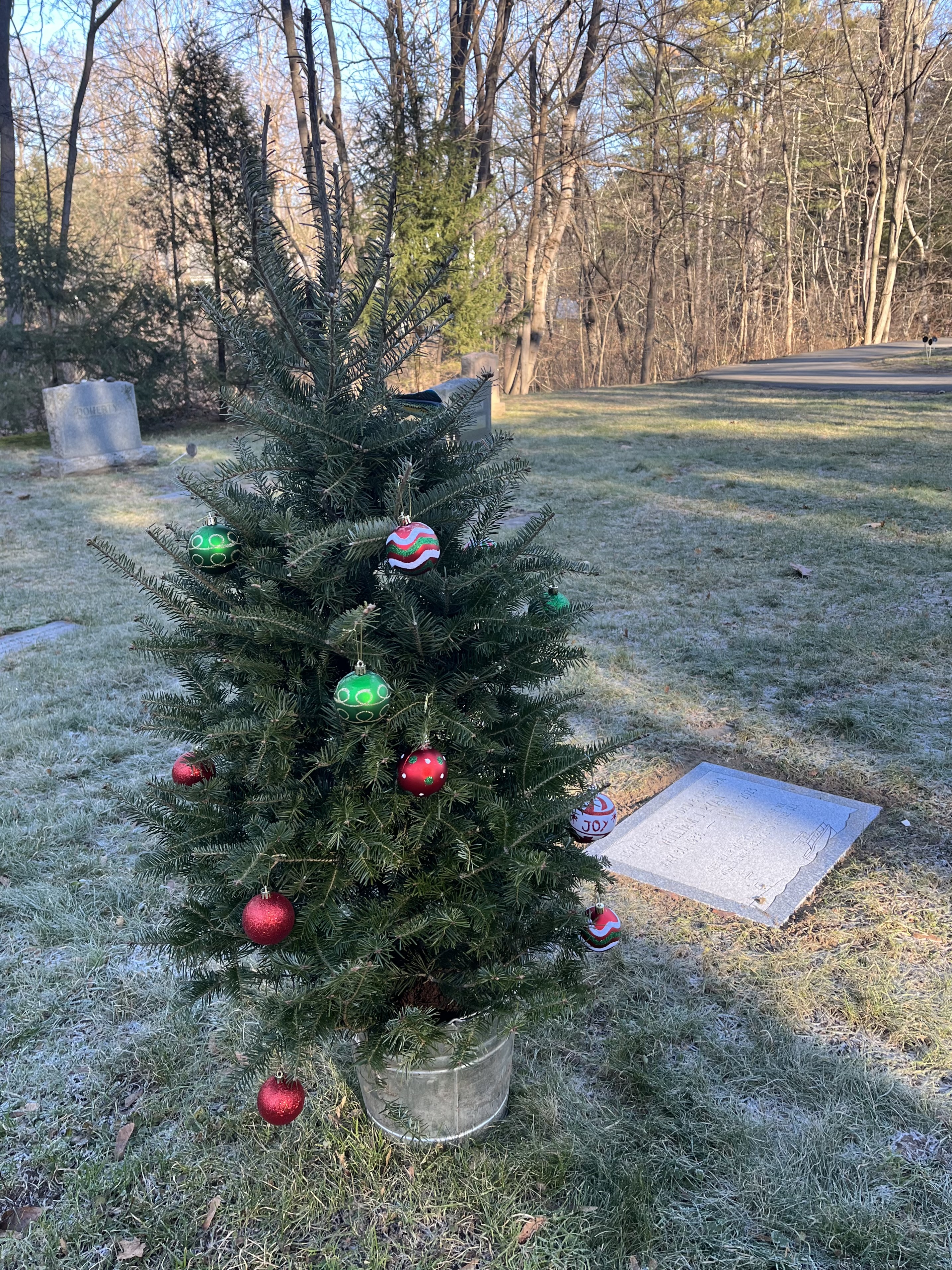
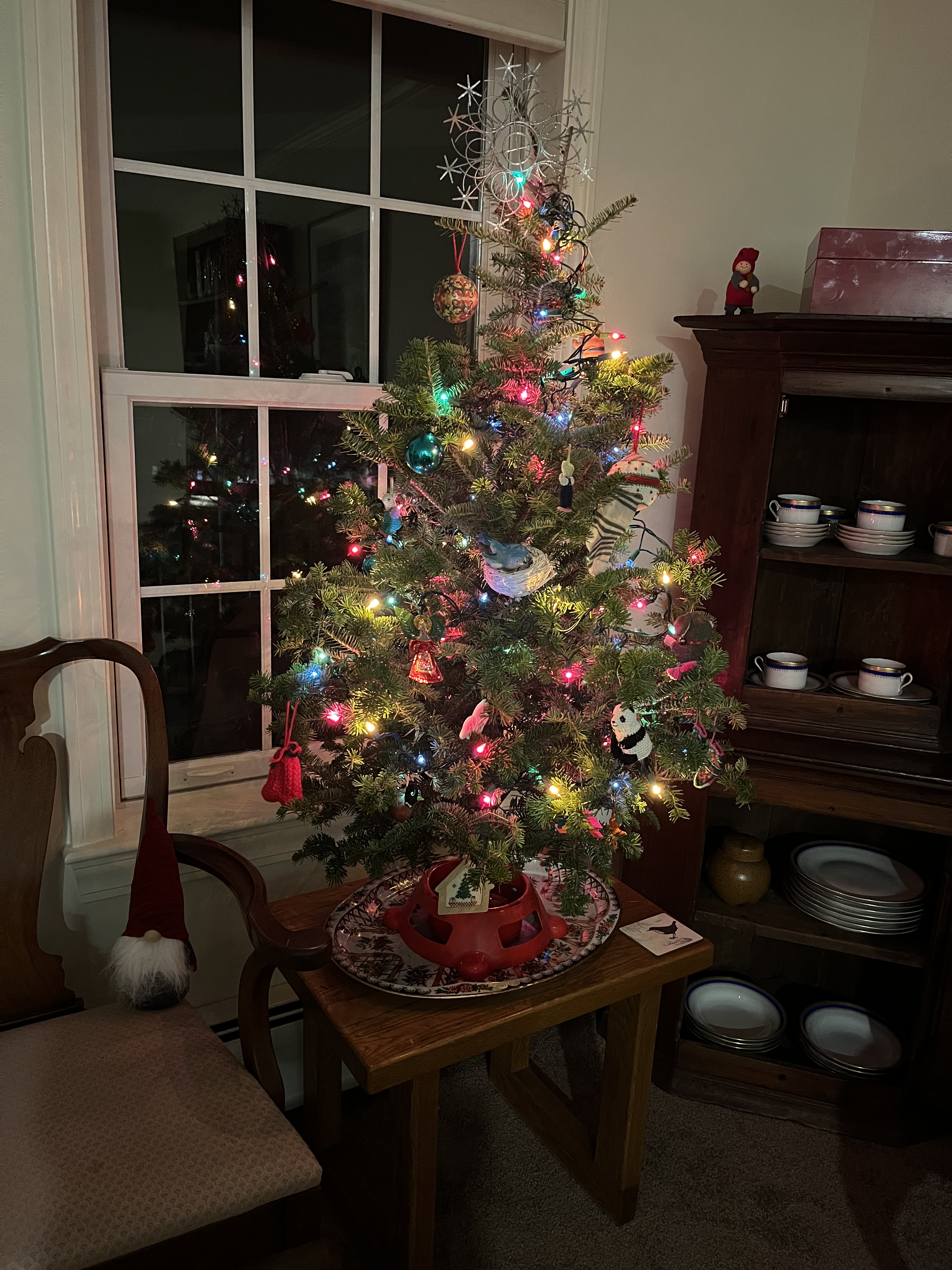
On a recent walk in the lovely Sleepy Hollow cemetery, I noted that some family couldn’t bear thinking of their departed loved one without a decorated tree. So they brought a living one to the cemetery. I want to get one like that next year as I just found out cut trees are not allowed here.

Still, it looked cute when it first went up.

The Nativity scene was from another walk.

Now be sure to listen blogger Will McMillan sing John Bucchino’s song “Grateful,” here. It expresses my exact feelings, and Will is so good at conveying the emotional side of every song.

Read Full Post »

« Newer Posts - Older Posts »