Feeds:
Posts
Comments

Archive for the ‘Uncategorized’ Category

Photo: Dave Herasimtschuk, US Fish & Wildlife Service/Wikimedia.
In Washington State, the Yakama Nation Fisheries crew routinely teams up to catch lamprey at an “eeling” hole that’s fed tribal members for generations. Lamprey use the suction of their oral discs to climb rocks at the eeling hole.

I like to explore social media and recently added Mastodon to the places I visit. At Mastodon, you have to join a group (what they call an instance), and I chose the Climate Justice instance. Being with Climate Justice has exposed me to people I haven’t followed before on social media. You won’t be surprised to learn that a topic like climate justice has attracted quite a few indigenous people. They are from all over the world: Sámi from the Nordic countries, Aborigine people from Australia, among others.

B. “Toastie” Oaster is one, a citizen of the Choctaw Nation in Oklahoma. From Toastie, I learned about a publication called High Country News and an article on the Pacific lamprey, an ugly fish with a long, important history.

“Lamprey have lived on Earth for 450 million years. To them, dinosaurs were a passing fad, and the North American continent is a fairly recent development. Lamprey swim out to sea as juveniles, looking for hosts like salmon to parasitize until they are mature enough to swim up some other river to spawn. Adult lamprey are calorie-dense and slow, protecting their hosts and cousins, the salmon, by acting as a predation buffer in another gesture of reciprocal care. 

“Though lamprey play a key role in Pacific watershed ecosystems, they remain understudied outside of tribal fisheries. They’re the target of misplaced disdain, in part because they’re easily confused with sea lamprey, an Atlantic species that caused ecological havoc in the Great Lakes after a 19th century shipping canal allowed them to invade. Pacific lamprey are a different species, in a different ecosystem; they belong here, just like the people they sustain.

“As far back as the memory archive reaches, people have fished for eels in this watershed. Lamprey climb wet rocks with their sucker mouths, so waterfalls are good places to catch them. Celilo Falls was a dangerous place for eeling, so people went to places like Willamette Falls, Celilo’s younger cousin. In its heyday, it was an international destination for summer eeling. Elders remember elders who remember trails that connected the falls to central Oregon. Camps lined both sides of the Willamette and the Clackamas River, which branches off below the falls. 

“Wewa [an elder and tribal councilman of the Confederated Tribes of Warm Springs] and other elders are clear that their ancestors were not nomads. Families returned to permanent homes, making seasonal trips to where food thrived. This non-European approach to agriculture ensures that both people and ecosystems flourish. In its healthy state, the Willamette Valley was a food-producing white oak savanna, bright blue in springtime with flowering carpets of delicious camas roots. That’s where it got its name: ‘Willamette’ is a French corruption of lámt, the Ichishkíin word for blue, Wewa said. ‘They ruined it.’

“For the millions of lamprey that returned from the ocean to spawn in the Willamette Valley, the first obstacle they faced was Willamette Falls. In the late 1800s, settler accounts described the 1,500-foot-long, four-story-high falls as ‘completely covered‘ in eels during the summer runs — three layers deep, in some places. Historical photos give an idea of how the rocks looked blanketed in eels, some latched onto each other’s backs, rendering the boulders as shaggy as mastodons. In the 1940s, European settlers commercially harvested as many as 500,000 lamprey a year, but tribal harvests until that point had kept the population in careful balance. …

“Since industrialization, lamprey numbers have dropped by 90%, largely because of dams. According to some Natives, public antipathy toward the species hasn’t helped. Willamette Falls is one of the last places where there are still enough lamprey to harvest. There, the Confederated Tribes of the Umatilla Indian Reservation, the Confederated Tribes of Warm Springs, the Confederated Tribes and Bands of the Yakama Nation and the Nez Perce Tribe — all of whom retain treaty fishing rights at Willamette Falls — boat upriver between industrial structures to harvest lamprey at the falls. These four tribes comprise the Columbia River Inter-Tribal Fish Commission (CRITFC), an organization that enforces treaty rights and promotes conservation of the basin’s aquatic life. Every year, CRITFC coordinates eeling trips with tribes.

“Eeling teams consist of at least two people: one to hold the net, the other to catch the eels. Plucking them off the rocks is easy enough with cotton work gloves, which provide the best traction against eels’ dolphin-smooth skin. …

“To work a waterfall, crews start at the bottom; eels will spook and stampede if they sense danger or smell blood in the current. Sometimes, eelers use this to their advantage, sticking a net or a trap at the downspout of a rockpool and scaring the eels into it from behind. When a dipnet is full, the crew transfer the catch eel by eel into burlap bags, then carry the pulsing, writhing sacks over the boulders to the boat. …

“While any tribal member can organize eeling trips, the fisheries department conducts its own trips to get eels for elders, those in need and ceremonial uses. The boat’s driver, a teddy-bear-faced man in his mid-50s with a bandanna tied over a loose knot of gray hair, lit a cigarette, apparently the only person unfazed by the cold or the early hour.

“ ‘All this is pretty tame to me,’ he laughed. He said he used to work ’30-hour days’ running a commercial salmon fishing operation at Lake Celilo, where Celilo Falls used to be. He reminisced about his glory days at Willamette Falls in the late ’80s and early ’90s, claiming, with a sly smile, that he caught so many eels, he’s probably the reason they’re in decline. Five thousand pounds in a day, he said. ‘I’ve been there, done that, 30 years ago, 40 years ago.’

“The boat driver is Evans Lewis Jr., a veteran fisherman now serving as the assistant manager of the Yakama Nation Fisheries’ sturgeon hatchery. … Lewis said he knows the best eeling holes from previous generations, where lamprey still gather by the thousands. He pointed out the best route along the boulders: Don’t hug the ridge, he said. Swing out in a wide arc, closer to the water line. He described techniques no one uses anymore: Drilling drainage holes in a metal trash can is easier, he said, than hauling gunny sacks of eels back across the rocks. ‘Nobody fishes like I do,’ Lewis told me and grinned.’ “

Toastie’s long, fascinating article is at High Country, here. You may read four High Country articles for free each month.
Read Full Post »

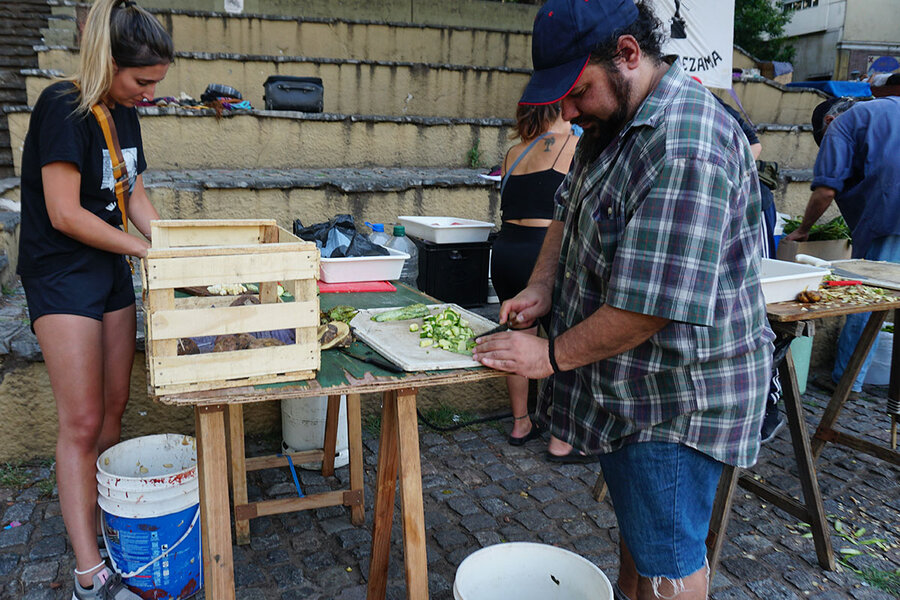
Photo: Natalie Alcoba.
Gerardo Romero and Flor Yciz donate the gift of time to the nonprofit Parque Lezama Olla Popular, preparing
a meal they serve each week to those in need in Buenos Aires, Feb. 6, 2023.

One thing that struck my husband when he returned from over a year of working in China was that Americans do a lot of volunteering. His perception of China at that time was that the government did everything and that citizens didn’t often take it on themselves to help others less fortunate.

Christian Science Monitor reporter Erika Page notes that Argentinians, too, aren’t known for helping strangers, but that young people are leading the way in tough inflationary times.

“Every Tuesday evening,” she writes, “as streetlights flicker on in downtown Buenos Aires, a man named Charlie tidies a section of sidewalk, preparing for his visitors.

“Charlie lives on the street. The volunteers who regularly check in on him as part of their recorrida nocturna, or night route, are an emotional lifeline.

“The team of six sit with Charlie in a semi-circle on the pavement, offering juice, yerba mate, and conversation. They chat about the weather, current events, the neighbors, and when the laughter lulls, they ask Charlie about more immediate concerns, like his health, upcoming medical appointments, and how the police have been treating him.

“There are thousands of people like Charlie living on the streets across the capital, and 43% of the country’s population lives in poverty. It’s a reflection of the unrelenting economic crisis and sky-high inflation that’s enveloping this South American nation. Some 600 volunteers take part in these nightly visits organized by the nonprofit Fundación Sí, underscoring a growing movement of volunteers, fueled by young people, who are working to fill the void where government services and the labor market are falling short. 

“These volunteers may not be well off – or even interested in staying in Argentina long-term – but they offer whatever they can to lift their neighbors up: a hand, an ear, a meal, or simply some of their time. Argentina isn’t known for high rates of volunteerism, but recent data shows that’s changing.

A study published by Voices! Consultancy found that a record 36% of Argentines volunteered last year, including nearly 60% of people between 18 and 24 years old.

“Generosity of time and affection is generally reserved for family and close friends in Argentina, says Constanza Cilley, executive director of Voices! Consultancy. But, ‘there are significant increases [in volunteering] in times of greatest crisis,’ she says. …

“Last year, annual inflation reached 94.8%, sending food prices soaring, and making saving nearly impossible. Most young people no longer expect a higher standard of living than their parents in a country whose social mobility was once a point of national pride. That can cause internal conflict for those who want to do good here. …

“Emilia Maguire, a therapist, has considered emigrating for years, tired of the poverty she can no longer ignore – and which she sees as a reflection of distorted political and economic priorities. She recently joined Fundación Sí’s night routes.

“ ‘Sometimes I get home tired and distressed,’ says Ms. Maguire. ‘But when you connect with things like this that are gratifying, it’s easier to get by, because your focus shifts.’ …

“The Voices! study found a correlation between volunteering and general satisfaction. Some 23% of respondents who said they volunteered last year indicated Argentina as the best place for them to live, compared to only 14% of non-volunteers.

“The group got their start in 2018 with close to nothing, as the value of the Argentine peso began to plummet once again. They’ve since acquired a gas stove and donations from businesses and farmer’s collectives. They invite those who come to eat to help cook as part of the team. …

“ ‘The crisis itself pushes people together, uniting in empathy,’ says Carmela Pavesi, an organizer in her mid-20s. ‘You don’t need a lot of money or a lot of things,’ she says. ‘With the people you have nearby, wherever you are, you can do something with what you have.’ …

“ ‘Today there are more people living on the streets, more people in need, more people begging for money or help,’ says Eduardo Donza, a researcher with the Social Debt Observatory at the Universidad Católica de Argentina.

“The country’s poverty is structural and historic, says Mr. Donza, in large part due to a precarious labor market. Only 35% of the population works in the formal private sector, another 15% in the public sector, leaving half the population doing informal work. …

“ ‘If we don’t generate more wealth, if we can’t create more good jobs, we’re never going to come out of this,’ he says. Volunteering can’t solve these wider issues on its own. ‘But it seems to me like solidarity has increased. That willingness to help matters.’ “

More at the Monitor, here. No firewall.

Read Full Post »

Photo: Melanie Stetson Freeman/CSM.
Repotting plants at Eastie Farm.
The Christian Science Monitor says, “The geothermal greenhouse is warmed in the winter and cooled in the summer by heat exchange, using pipes that circulate a fluid underground. Crops will be grown during all seasons.”

Here’s a new take on an urban community farm — keeping it going in the winter without recourse to fossil fuels.

Ariana Bennett writes at the Christian Science Monitor, “Tucked near a highway underpass, a greenhouse glows faintly in the cold night. Inside, volunteers stand in the warmth, crowded around two pizzas topped with homegrown basil. Rows of potted greens, herbs, peppers, eggplants, and even strawberries line shelves along the walls.

“The greenhouse is a new project of Eastie Farm, a nonprofit educational urban farm founded in 2016 and housed in East Boston. Focused on feasible climate action, the nonprofit – and its new greenhouse – provides the surrounding community with greater control over its food supply. The building runs on geothermal energy and is the first of its kind in New England. …

“ ‘Everything that we do, we try to make sure that it has a relevance here and now, and it serves the purpose for the people who are living here today,’ says Kannan Thiruvengadam, the director of Eastie Farm. …

“The geothermal greenhouse operates as a heat exchange. Below the frost line, Earth’s temperature stays at a steady 50 to 60 degrees Fahrenheit year round. A fluid composed of water and antifreeze is pumped up from the ground, runs through a compressor, passes over a warm coil, and finally blows into the greenhouse as warm air. The fluid then heads back underground, forming a closed loop system.

“By drawing the temperature below the frost line up and into the greenhouse, the system warms in the winter and cools in the summer. Add in some warmth from sunshine, and winter temps in the greenhouse can be as high as 70 degrees.

“Inspiration for the greenhouse sparked during one of Eastie Farm’s nature classes taught to local students: Kids wanted an opportunity to get outside and farm in the colder months. ‘They even asked, “Come on, there must be something we can grow in the wintertime, ‘ ” Mr. Thiruvengadam remembers. …

“There was no one to guide Eastie Farm through the project – because it hadn’t been done before. Greenhouses are typically powered by propane and aren’t all that green, despite their name. They leak warm air in the winter and are often abandoned or used as storage in the hot summer months. Funding entities and contractors alike were unsure how to help. …

“Greenhouse manager Will Hardesty-Dyck aims to use the 1,500-square-foot enclosure to grow year-round, for about 2,000 pounds of produce yearly.

“Inside the greenhouse, string lights crisscross the ceiling underneath an insulation layer that is pulled tight to trap the daylight’s long-gone heat inside the building. The smell of soil fills the space with the feeling of spring.

“ ‘I just really love growing plants,’ Mr. Hardesty-Dyck says. ‘That makes me tick – and then being able to do that in this sort of organization where we’re really engaging with people and addressing needs.’

“The neighborhood Eastie Farm serves is as unique as its greenhouse. East Boston is a community that suffers a disproportionate burden of climate hazards. The peninsula is home to Boston Logan International Airport, houses stores of petroleum-derived products, and is at risk of climate-related flooding. It also experiences a high level of food insecurity.

“Mr. Hardesty-Dyck is already fielding requests to house budding saplings as well as to cultivate culturally relevant foods that may not be available – at least not fresh – at supermarkets.

South and Central American community members have asked for tropical and subtropical fruits, such as mamoncillo. There have also been requests for herbs such as cilantro and mint, a common ingredient in Moroccan tea.

“ ‘The reality is that we don’t have a lot of access to fresh fruits and vegetables. So the farm really is a great way to expose yourself to a variety that you don’t easily get in the stores that we have,’ says Bessie King, a CSA subscriber and East Boston resident.

“Eastie Farm challenges the conventional definition of an urban farm.  ‘Urban farms have more to harvest from their proximity to a lot of consumers and from their connections with rural farms than just by maximizing what [they grow] in every square inch,’ Mr. Thiruvengadam says. …

“One of the pillars of the nonprofit is education. Students can learn about the greenhouse effect and its meaning for the planet while standing in a greenhouse and experiencing it hands-on. The farm also manages four school gardens, which give students ‘ownership or buy-in to the school community,’ says Sam Pichette, a fifth grade teacher at Bradley Elementary whose students have participated in nature classes here. ‘It helped to strengthen ties between the students and to the community they live in.’ “

More at the Monitor, here. No firewall. Subscriptions encouraged.

Read Full Post »

Photo: Erin Clark/Globe staff.
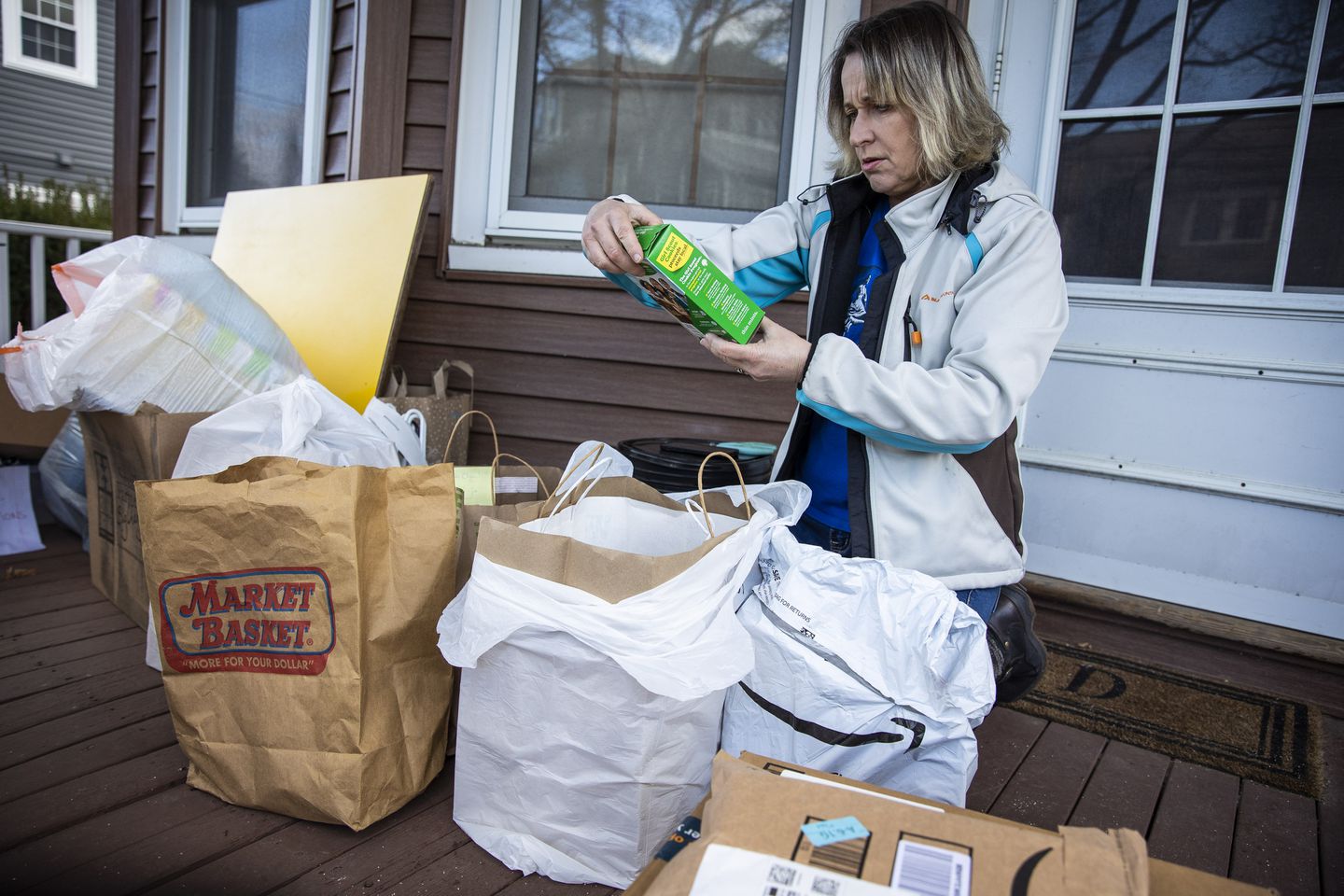
Olga Yulikova sorts through donations that people drop off “onto the front porch of her Arlington home to help a Ukrainian family fleeing war,” the Boston Globe reports.

Because I’m downsizing and complaining about how difficult it can be to get some items into the hands of people who need them, Suzanne told me about our community’s Buy Nothing Project on Facebook. So far, no one there has wanted an old ironing board, but lots of people were interested in beat-up posters. I picked the first to raise her hand.

Meanwhile, in Arlington, they call their Facebook group Everything Is Free and are using it to help refugees get settled. To me that’s a worthier cause than giving free things to people who could often afford to buy them ten times over.

Sonel Cutler writes at the Boston Globe, “In Ukraine, Olena had a fulfilling job in real estate and an apartment she loved. The only time she had ever left her home city of Zaporizhzhia was to go on vacation.

“[In] February 2022, Olena, who asked to be identified by her first name only for privacy, became scared for the safety of her young daughter and made the most difficult decision of her life: to flee her home.

“She and her daughter left Zaporizhzhia abruptly in March after Russian forces took over a nearby nuclear power station. They took only passports, her daughter’s birth certificate, and few other items before driving to western Ukraine and then to Germany.

“In April, the Biden administration launched the Uniting for Ukraine program, which helped Olena and her daughter seek refuge in the United States. They arrived in late June, staying with childhood friends in Arlington until January, when their hosts had to bring their own parents to the country from Ukraine. …

“Connecting on Facebook, Olena became friends with Arlington resident Olga Yulikova, who helped her secure an apartment and turned to the town’s ‘Everything is Free’ Facebook group for donations to furnish the place.

“Arlington residents overwhelmingly answered her request. In a matter of days, the previously bare apartment had a fridge, coffee maker, queen-sized mattress, dish soap, and more essentials for Olena and her daughter.

“ ‘I’m completely overwhelmed, and I’m so grateful for all the help,’ Olena told the Globe, with Yulikova translating. …

“Yulikova, who immigrated from Moscow as a refugee in 1989, had been organizing humanitarian aid for Ukrainian refugees since the war began last year.

“She and Olena became close friends after meeting online, sharing stories over cups of coffee, and connecting over the discovery that Yulikova’s great-grandmother hailed from Olena’s hometown in Ukraine.

‘I cannot stop the war. I’m very much against it,’ Yulikova said. ‘I cannot save the Ukrainian people that are suffering. I can only help one or two individuals.’

“Yulikova posted her request for donations or small amounts of money in the community Facebook group on Jan. 22, and set up a wish list, listing a drop-off location for donated items.

“ ‘She [had] an empty apartment with no money,’ Yulikova said. ‘She’s very happy, but she [didn’t] really have a mattress to sleep on. So I figured I’ll put it on our Arlington lists, just like I did for everything else when I was collecting donations to be sent to Ukraine.’

“Daniel Icekson, a 54-year-old Arlington resident and friend of Yulikova, had been following Olena’s story after they had met briefly months before.The tragedy of the war in Ukraine moved Icekson, whose relatives perished in the Holocaust. When he heard Olena was looking for donations, Icekson began disassembling a large wardrobe, planning to reassemble it in Olena’s apartment.

“ ‘I thought, Why not? We have this extra wardrobe. We’ll just give it away,’ Icekson said. ‘If I can just contribute in a small way to one family, then I guess that’s a good thing.’

“Yulikova said she initially worried about how she and Olena would transport hefty items like a kitchen table and a jumbo bean bag into the apartment by themselves. But, according to Yulikova, ‘people came out of the woodwork’ to help.

“ ‘[They] said “Oh, no problem. I will drive. I will bring. I will assemble, disassemble,” ‘ she said. ‘People just volunteer.’

“While she knew Icekson, the majority of donors were complete strangers to Yulikova, something she said helped restore her lost faith in humanity. …

“Though her young daughter has immersed herself in school, performing with the local theater, and learning English, Olena remains troubled by her separation from her son and father, who remain in Ukraine to support the army.

“ ‘Every day, I don’t know if my son and my father will live another day,’ she said. ‘Every day I keep the phone at my fingertips and check in on them 100 times a day.’ “

More at the Globe, here.

Read Full Post »

Photo: David L. Ryan/Globe staff.
A detail of Barrington Edwards’s “Monumental: Oscar Dunn and His Radical Fight in Reconstruction Louisiana,” 2020. It’s part of a Boston University exhibit aiming to establish comics as a medium.

Comics have evolved until they have become an art. Are they also a “medium”? A new exhibit at Boston University argues for the distinction.

Abigail Lee reports at the Boston Globe, “For the comic fan, the assumption that comics are merely a children’s genre — colorful like an animated kids’ movie, easy to read like a picture book — is exasperating at best, inaccurate and reductive at worst.

“Comics, like any other art form, are capable of complex expression and storytelling. That’s exactly the idea an exhibit from Boston University Art Galleries, called ‘Comics Is a Medium, Not a Genre,’ aims to establish. …

“Some 184 pieces from 29 lenders are on display in what curator Joel Christian Gill calls ‘an explosion of comics.’

“ ‘We have as many kinds of comics as you can think of,’ Gill said. ‘When you walk in, it’s going to be overwhelming.’

“Gill is himself a cartoonist, historian, and the chair of BU’s Master of Fine Arts in Visual Narrative program. The Visual Narrative program began in fall 2022, and the exhibit was meant to roughly accompany its launch. When planning the exhibit, Gill sought to combat the misconceptions about comics.

“People often mistake the most prominent comics in pop culture as representative of the entire form, Gill said. For example: Because the Marvel and DC comics are well-known, many assume comics in general tell superhero stories, he explained, the problem is a conflation of genre with medium.

“As he put it: ‘It would be like reading a bunch of Stephen King books and then thinking all novels were Stephen King.’

“Gill pulled together a variety of comics — from fiction to nonfiction, newspaper strips to self-published works, mainstream to underground pieces — to provide a ‘macro view of comics.’

“Most of the pieces in the exhibit are samples from longer works, which allowed for the large assortment of comics, said Lissa Cramer, director of BU Art Galleries. … The exhibit includes Charles M. Schulz’s first published appearance of Charlie Brown, a self-portrait by ‘Maus’ creator Art Spiegelman that pays homage to the cartoonist Ernie Bushmiller, and pages from Alison Bechdel’s ‘Dykes to Watch Out For’ comic strips. Other artists featured are the comics pioneer Will Eisner, Mad magazine founder Harvey Kurtzman, and Denys Cowan, cofounder of Milestone Media, a company created in the 1990s to diversify comics.

“There are also several international artists showcased, including Claire Bretécher and Jean Giraud from France, Gabriella Giandelli from Italy, and Tatsumi Yoshihiro from Japan.

“Gill tried to create a diverse representation of artists of color, female artists, and LGBTQ+ artists. However, he was wary about arranging the artists into these sections or categories because he didn’t want to define them by their identities. Instead, the exhibit is organized ‘by what looks good together,’ Gill said.

“The curation process involved asking artists and lenders for specific works, but also giving them the option to contribute works of their own choice. Gill’s approach was unconventional, according to Cramer, but it made the experience ‘free’ and ‘collaborative.’

“ ‘This really is an artist-driven show in that respect because the artist got to choose what they thought was most valuable,’ Cramer said.

“Gill said he hopes visitors leave wanting to find comics that appeal to them. He emphasizes that comics encompass a range of genres and audiences because at the end of the day, they are a mode of storytelling.” More at the Globe, here.

“Comics Is a Medium, Not a Genre,” is on display through March 24, at the Stone Gallery, 855 Commonwealth Ave., Boston. Free.

Read Full Post »

Photo: AP.
A Buddhist community anchored by a temple in Hampton, Minnesota, is drawing dancers of all ages.

It’s interesting to see what draws people to a faith community — besides faith. When we moved to a town where we didn’t know anyone, I visited several churches and chose the friendliest one. As we got involved, we got acclimated. The children made friends, and I got to know parents who filled me in on the best public school teachers.

Other people may join for other reasons. Consider the dance opportunity in today’s story.

Giovanna Dell ‘Orto reports at the Associated Press (AP), “The Buddhist community anchored by an ornate temple complex here in the Minnesota farmland is trying a new way to ensure its faith and ancestral culture stay vibrant for future generations — an open call for the sacred dance troupe.

“Founded by refugees fleeing the Khmer Rouge regime, which sought to eradicate most religious institutions, Watt Munisotaram and its troupe hope that teaching young children sacred dance will strengthen their ties to both Buddhism and Cambodian traditions.

“ ‘The connection is stronger when I dance,’ said Sabrina Sok, 22, a Wattanak Dance Troupe leader. ‘The thing that stays in my head is this dance form almost disappeared with the Khmer Rouge.’

“During their 1975-79 regime, the Khmer Rouge caused the deaths of an estimated 1.7 million in Cambodia. Hundreds of thousands fled, first to neighboring Thailand and later the United States, where Southeast Asians are one of the largest refugee communities.

“They carried this sacred dance tradition with them. On a frigid early February evening, Sok rehearsed for the upcoming Cambodian New Year holiday with fellow troupe leader Garrett Sour and his sister Gabriella, whose parents were among those refugees. …

“While recruitment was by word of mouth, this winter’s enrollment — open to anybody eager to learn the dance form — brought in the highest number ever after being posted on the temple’s Facebook page.

“Clothed in traditional thick silk shirts and pants from Cambodia, the three dancers sinuously stretched and bent every part of their bodies, from joint-defying toe curls on up. …

“ ‘We’re never ourselves, we’re just physical embodiments of higher spirits,’ said Garrett Sour, 20, as he meticulously coached the poses, urging a smaller step here, a deeper calf tilt there. ‘Dance was seen not as entertainment but a medium between heaven and earth.’

“The marketing student at a Twin Cities university started dancing when he was six and has learned Khmer to better delve into the sacred storytelling. He will be one of the teachers for the incoming dancers – about 20, which nearly doubles the troupe, and most of them younger than teens. …

“In the temple’s ornate higher room, where the ten monks in residence chant and meditate daily surrounded by sacred books and large Cambodian-made paintings of Buddha’s life, the Venerable Vicheth Chum also highlighted the importance of what he called ‘blessed dance.’

” ‘Very important to have, and to keep our ancestral tradition even when moved to (Minnesota),’ said Chum, who came to the United States more than 20 years ago from Cambodia. ‘Buddhist teaching is practice for peace and happiness, no matter the nation.’

“Monks at Watt Munisotaram – which roughly means the place to enjoy learning from wise men – practice Theravada, one of the oldest forms of Buddhism rooted in Southeast Asian cultures. …

“Dozens of faithful in equally bright white outfits [met] to celebrate Magha Puja, a holiday marking the gathering of 1,250 of Buddha’s first disciples and the establishment of his rules for the new community.

“Chum and seven other monks in elaborately folded, bright orange robes led a candlelit procession multiple times past an altar with several golden Buddha statues, glittery decorations and a profusion of flowers including lotus blossoms – most artificial, though in more clement weather some are grown locally or shipped from Florida.

“Several children marched along, carrying the U.S. flag and Cambodia’s state and Buddhist flags, before everyone sat in neat rows on the carpeted floor for two hours of chanting in Khmer.

“Chum said the monks worry about young people’s growing disenchantment with religion but believe that life’s inevitable struggles will eventually bring most back to the temple for guidance from Buddha’s teachings. …

“ ‘The world is using them to educate the other communities, I keep on reminding them,’ Sophia Sour said. She hopes to take Garrett and Gabriella to Cambodia to learn even more about the roots of their spirituality, whose fundamental values she listed as respect for the elders and good deeds.

“ ‘If you do good, good will come to you,’ she said. ‘I’m not sure if that’s religion, or just life.’ ”

More at AP, here.

Read Full Post »

Photo: Suzanne and John’s Mom.
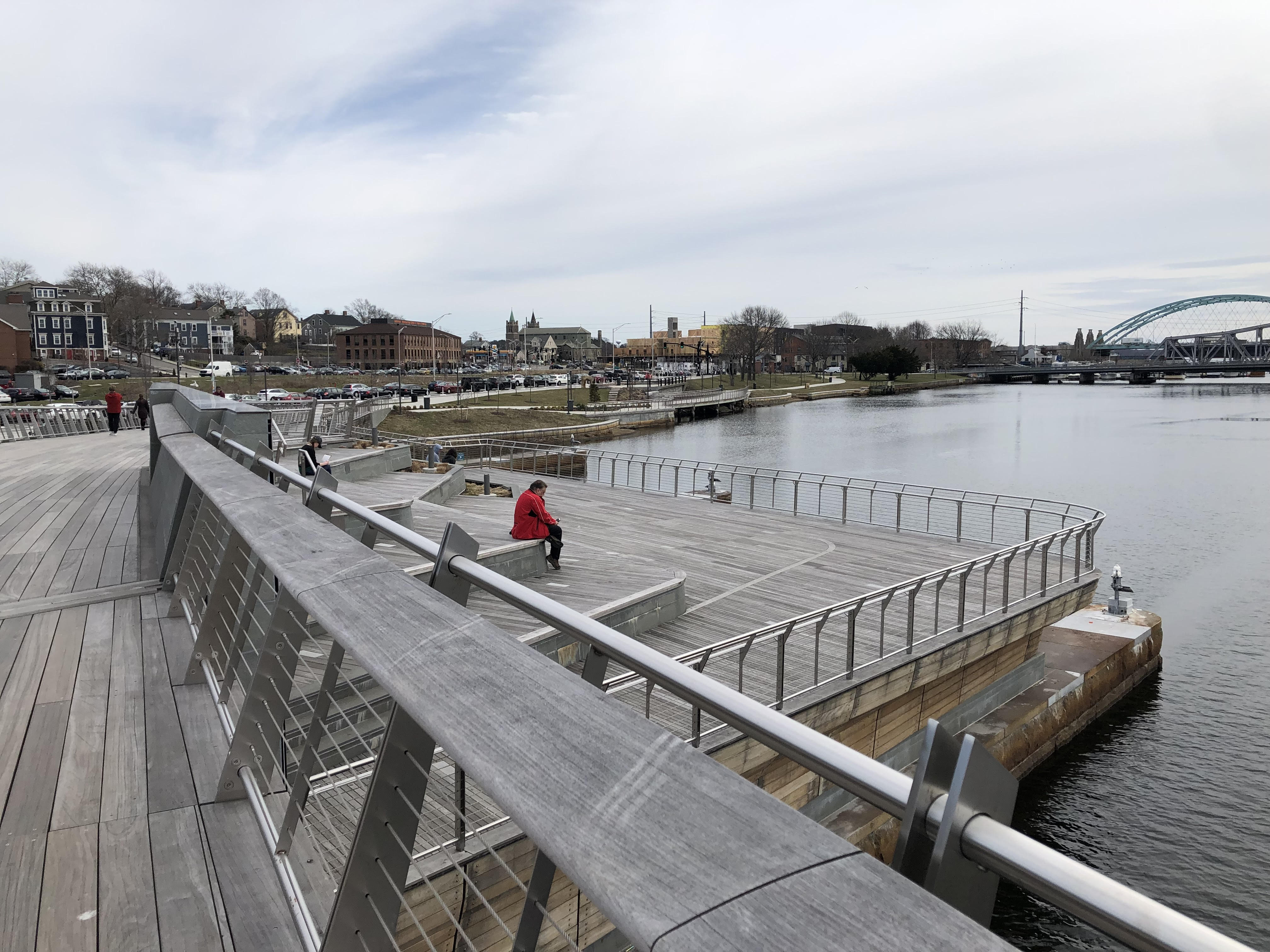
The beautiful pedestrian bridge over the Providence River in Rhode Island. This is a city that values free public space.

On Twitter and Mastodon, I follow a guy (@FortPointer) who is a voice in the wilderness for free public amenities in Boston. He himself may be able to afford the prices that have been slapped onto events that were once going to be accessible for all, but he is outraged for the sake of lower-income people — and for the world-class city Boston could have been. He may be Don Quixote, but there are those of us who believe in the mission.

For example, there used to be a pleasant footbridge that went over Fort Point Channel and connected two parts of the city. I loved to walk there on my lunch hour. Bikers biked it. When the old bridge wore out, the city — under cover of needing access for emergency vehicles — decided to replace it with a bridge for cars and trucks. The Fort Pointer was outraged. So was I!

Today’s article from the Guardian talks about footbridges that enhance life for pedestrians in London.

Rowan Moore writes, “All the world loves a bridge that moves. Usually, the point of a bridge is that it is fixed – when so much trouble has been taken to overcome gravity and tame nature, instability is the last thing that you want – so there is surprise and delight when it confounds its own rigidity. I give you as an example Tower Bridge.

“In an overlooked part of east London, weed-strewn and still industrial – a district un-steamrollered by the giant apartment blocks going up in much of the old docklands, close to where the River Lea joins the Thames – two curve-cornered squares of steel frame the view. They look like heavy metal sculptures. They are actually essential elements of the recently completed Cody Dock Rolling Bridge, designed by the architect Thomas Randall-Page and Tim Lucas of the engineers Price & Myers, which moves in a way that no bridge has done before. Its purpose is to make good a missing link in the Leaway, a ‘green corridor’ that runs from Hertfordshire then along the Olympic park towards the Thames. It also serves as an emblem for the Gasworks Dock Partnership, a charitable social enterprise that has created a ‘community-based arts and creative industries quarter’ on what was derelict land.

“As its name says, the bridge rolls. It crosses a channel that runs from the Lea to an adjoining dock, and most of the time it provides a flat steel deck, level with the ground, which pedestrians and cyclists can use to get from one side to the other.

When necessary, those squares can be turned through 180 degrees, such that the deck is raised in the air and turned upside down, which gives enough headroom for boats to pass underneath.

“It is operated by two manual winches, the tonnage of steel balanced in such a way that a bit of human muscle can shift it. The simplicity of its idea requires fiendish mathematics and precise construction. The squares roll along sinuous tracks, kept in place by interlocking teeth and sockets, the angles and forces of each one different from its neighbor. Cake Industries, the company that built it, employed furniture-makers to construct the moulds for the concrete elements of the structure. …

“Meanwhile, in a gentler place some distance up the Thames, another structure has been completed that is also in the nice-to-have rather than must-have category. It is a bridge under a bridge, a way of getting a riverside path to pass below the Victorian iron arches of Barnes Railway Bridge. Previously, users had to trek inland, through a menacing tunnel under the tracks, and back again to the riverbank. Now they can travel over a broad, winding deck, falling then rising again, that projects over the water with a mild frisson of peril.

Dukes Meadows Footbridge is designed by Moxon Architects, a practice based in London and Aberdeenshire with several other bridges to its name, and the structural engineers COWI. This, too, has required ingenuity, albeit less for the self-imposed reasons at Cody Dock: the deck has to just clear the high-water mark of the tidal river, while giving enough room beneath the arches, without obstructing access for maintenance for the old structure. It could impact neither on the many rowers who use this stretch (the Oxford and Cambridge boat race finishes nearby), nor on the endangered snails in a neighboring nature reserve, which meant that its route and its lighting were designed not to disturb them. …

“The result is faceted and intriguing, its irregularity driven by the imaginative response to circumstance. ‘It’s marvelous,’ says an elderly user, unsolicited. Funded by the London borough of Hounslow and the mayor of London’s Liveable Neighbourhoods scheme, it makes a striking contrast with the years-long, still-ongoing struggle to make Hammersmith Bridge, the next crossing downriver, safe for traffic. It’s easier, evidently, to build one that doesn’t actually cross a river than to repair one that does.

“Moxon is also working on a plan, long promoted by local citizens, to make a disused part of the old railway structure into a linear park – a small version of New York’s High Line, or a successful version of Boris Johnson’s doomed Garden Bridge. Like the new footbridge, this project is shaped more by quality-of-life considerations than the hard industrial imperatives that drove either the original railway bridge or the big old structures of docklands.”

What is your experience of footbridges?

More at the Guardian, here. No firewall. Great pictures.

Read Full Post »

Photo: Lauryn Ishak/Bloomberg.
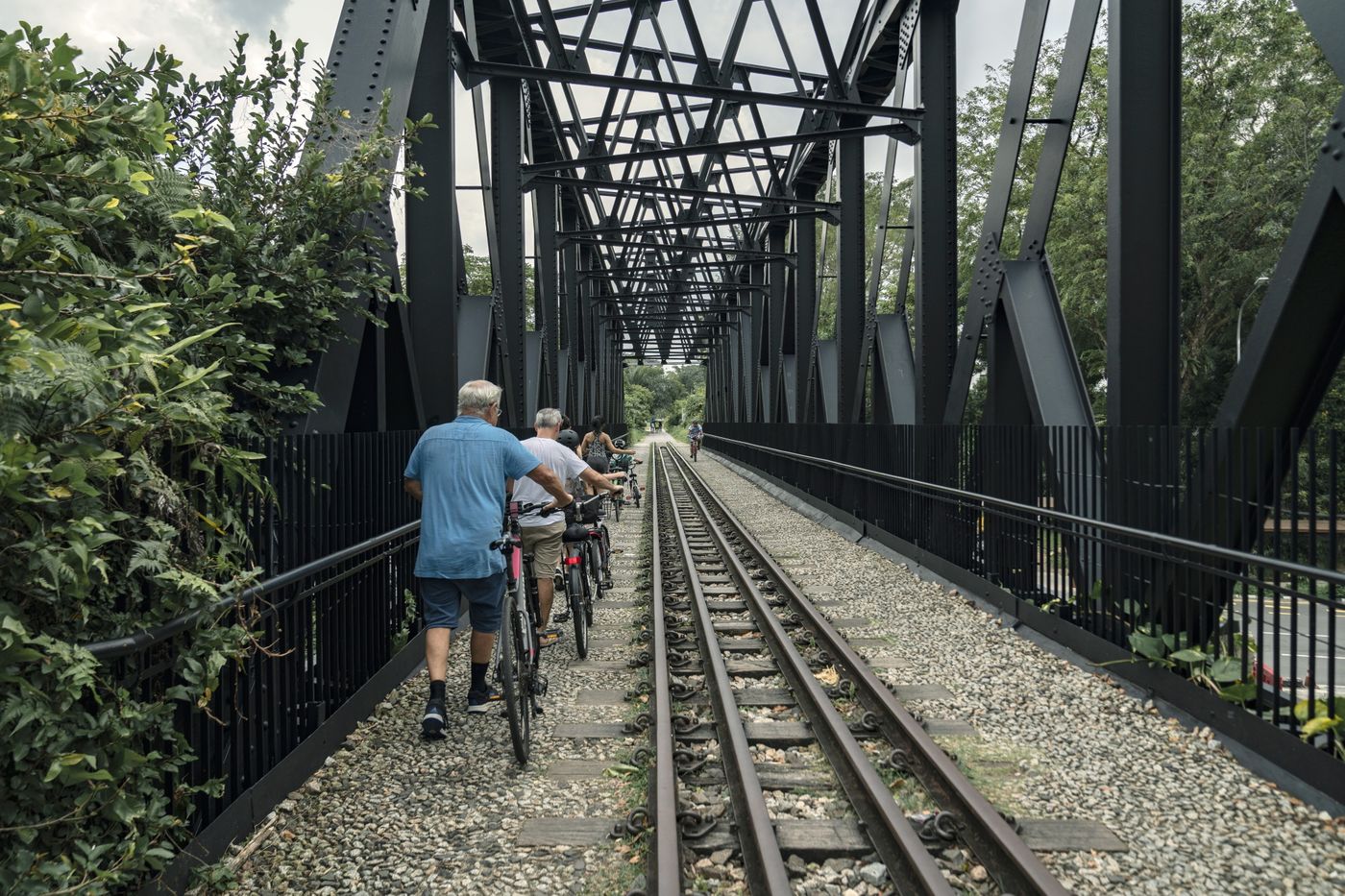
Bukit Timah Truss Bridge on the Rail Corridor in Singapore.

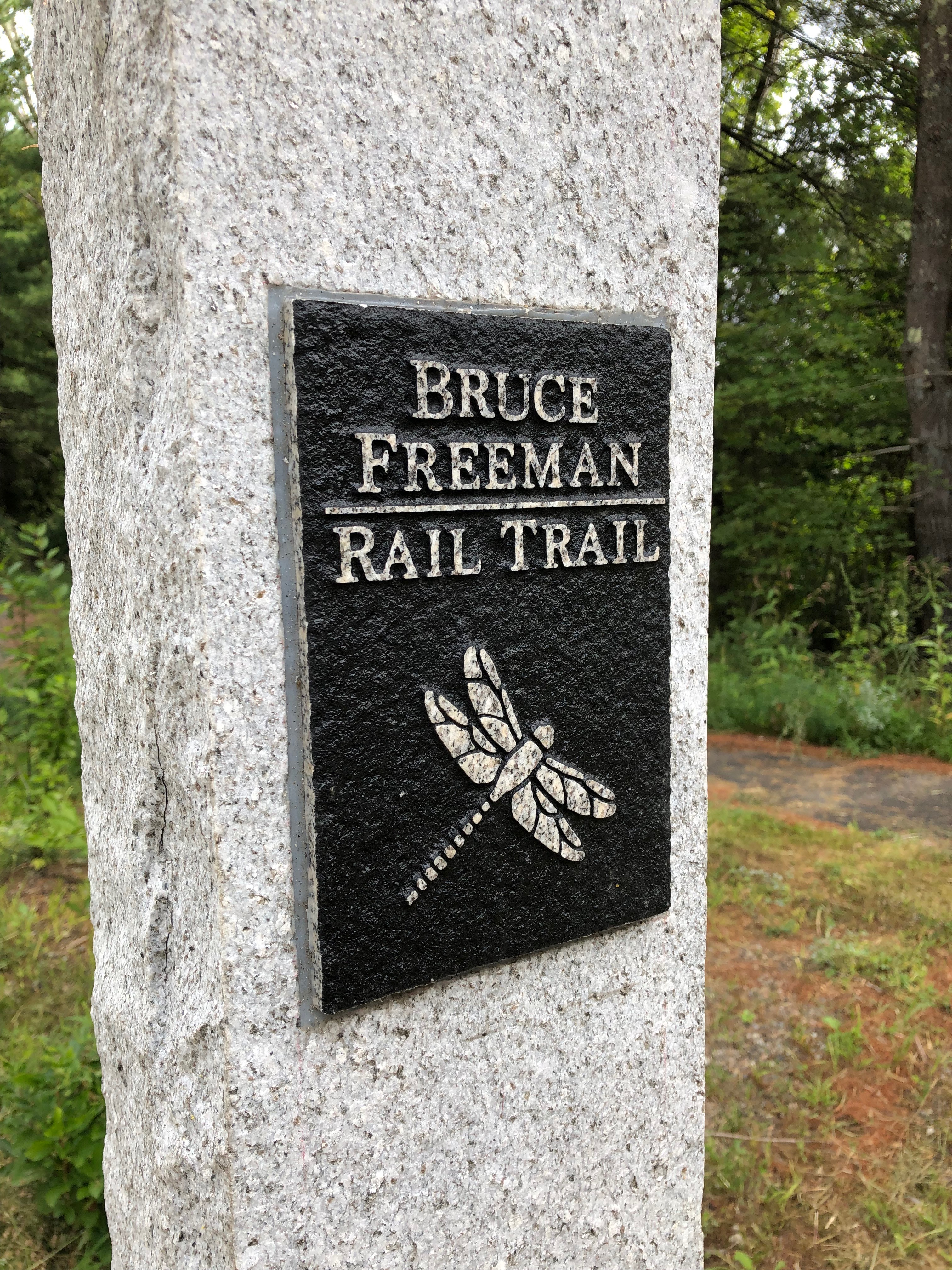
Where I live, certain abandoned rail corridors have taken decades to be ready for biking and hiking. You know Americans: lawsuits. But perseverance pays off, and now you can go for miles on the Bruce Freeman Trail.

Meanwhile in Singapore, government moves faster.

Selina Xu reports at Bloomberg, “A former railway line running through the heart of Singapore has turned into one of its biggest conservation success stories, marking a departure from the more manicured approach to nature that the city-state is known for. 

“The 24-kilometer (15 miles) contiguous stretch of land was part of a rail track built by the British colonial government in Malaya and was returned to Singapore from Malaysia in 2011, more than four decades after the two countries parted ways. Singapore was now faced with a question: What should it do with the land?

“The Nature Society, Singapore’s oldest conservation group, submitted an audacious proposal to authorities: convert the railway into a green corridor that would connect existing green spaces from the Sungei Buloh Wetland Reserve in the north, through some of the city’s most exclusive neighborhoods, all the way to the central business district in the south.

“Since 2012, parts of the rail corridor have been accessible to the public. The government has refrained from parceling out land for real estate development, keeping it as a green spine that’s 10 times longer than the High Line in New York, from which it drew inspiration. Authorities are now committed to preserving it in the long term, and continue to enhance more parts of the corridor, reopening them in phases.

‘When I gave that proposal to them, I wasn’t optimistic that they’d embrace the entire length,’ said Nature Society conservation committee chair Leong Kwok Peng, who spearheaded the campaign. ‘Never in my wildest dreams could I’ve actually imagined that would happen.’

“This month, an 8-kilometer northern stretch that had previously been under renovation was unveiled, with 12 new access paths connecting the corridor to surrounding residential estates and parks and an observation deck with views of the Bukit Timah Nature Reserve. More augmentations are still on the way, according to the National Parks Board (NParks) and the Urban Redevelopment Authority. 

“The focus on preserving the railway underscores a shift in Singapore’s relationship with nature. While half a century ago the city took a tamer and less ambitious approach to greenery, as encapsulated in the government’s ‘Garden City‘ vision which emphasized beauty and tidiness, the thinking now is to bring back the wilderness.

“The preservation of the rail corridor comes after Singapore’s development into a wealthy metropolis meant the sacrifice of acres of forests and wetlands. From 2000 to 2020, it experienced a net loss of 379 hectares (3.6 square kilometers) of tree cover, according to Global Forest Watch, roughly equivalent to 936 football fields. The railway, however, had been left largely untouched for decades due to land disputes between Singapore and Malaysia.

“ ‘The Rail Corridor passes through every terrestrial habitat you can find in Singapore,’ said Ngo Kang Min, a forest ecologist, pointing out on a map the patches of mangroves, marshland, forests and grassland alongside the railway tracks. By allowing the movement of species previously cut off from each other, Ngo envisions the corridor becoming a connector that can increase the genetic diversity of local flora and fauna.

“In October 2018, NParks and the URA began rewilding a 4-kilometer stretch in the central part of the Rail Corridor. Several endangered native primary forest species were reintroduced to return the landscape to its original rainforest state. To date, NParks has planted more than 52,000 native trees and shrubs along the corridor. The restored belt of native forest has since become a key passage, habitat and source of food for various animals, including the Sunda Pangolin, the world’s most trafficked mammal, and the Straw-headed Bulbul. …

“More rewilding will soon be happening in the north of the Rail Corridor, driven by the Nature Society — the largest-scale project of its sort under a nongovernmental organization to date. It plans to plant several thousand trees in order to bring back rare species and improve the canopy cover in a section of the corridor that’s mainly grassland. …

“The Nature Society is now lobbying the government to extend a trail along the Old Jurong Line, a disused railway track that runs through the western industrial tip of Singapore, where fragmented green spaces are scattered among factories, oil refineries and roads. The society is also focusing on preserving already-wild spaces along and adjacent to the corridor, parts of which will be disrupted by proposed housing development. …

“ ‘The attitude towards conservation in the past by the government has always been build, build, build first — economy comes first,’ said Ngo. ‘But now after Covid the conversation has shifted significantly. People want to see more green spaces. There can be room for more radical thinking and design in the way that we build those spaces.’ ”

More at Bloomberg, here.

We love the Bruce Freeman Rail Trail in Massachusetts.

Read Full Post »

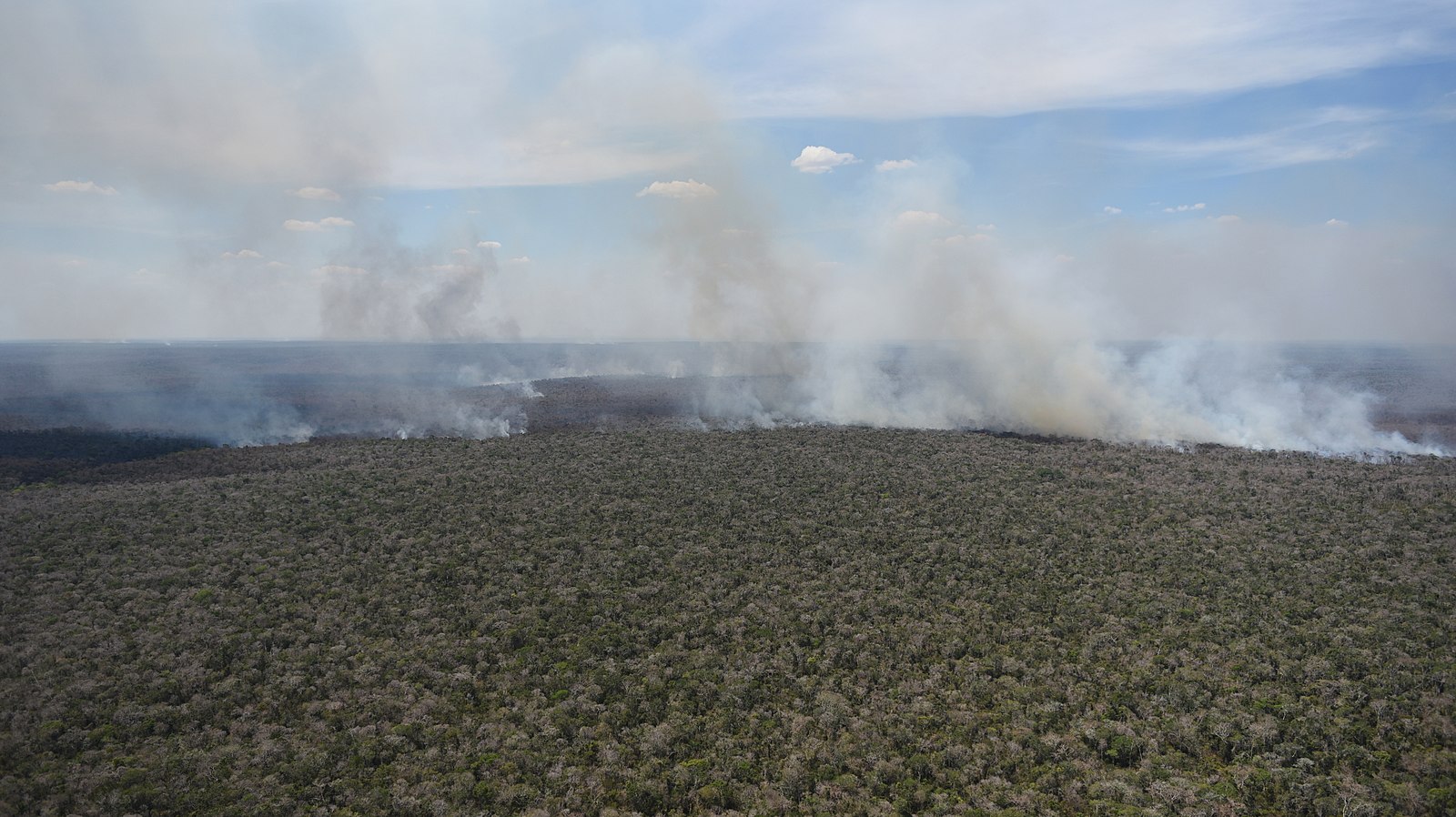
Photo: Felipe Werneck/Ibama via Wikimedia.
Wildfires in Brazil’s indigenous territory, 2017. Conservationists believe that restoration of the rainforest works best if a variety of seedlings are used, not just one kind.

I think humans are like ants in this regard: as soon as our anthill is destroyed, we start rebuilding. And as soon as greed destroys another swath of rainforest, conversationists, indigenous people, and fundraisers move in to rebuild. It may be hopeless, but that’s how we roll.

Bruno Vander Velde, managing director of content at Conservation International, writes at the Conversation about one rebuilding program.

“A bold initiative to regrow 73 million trees in the Brazilian Amazon has made substantial progress despite some unexpected hurdles, according to an upcoming report. While the global pandemic and an increase in Amazon fires presented setbacks, the initiative, launched in 2017, has delivered almost 20 percent of its forest restoration target, according to Conservation International in Brazil, one of several partners involved in implementation. 

“The partners point to surprising progress taking root, as the COVID pandemic shows signs of leveling off and a new incoming presidential administration publicly commits to stem the tide of deforestation. …

Launched at a Brazilian music festival, the initiative targeted areas along the southern edges of the Amazon forest, known as Brazil’s ‘arc of deforestation,’ as well as in the heart of the forest, where natural regeneration is still possible.

“By restoring these carbon-absorbing forests, the initiative is intended to help the South American country achieve its climate commitments under the Paris Agreement, as well as its target of reforesting 12 million hectares (nearly 30 million acres) of land by 2030. 

“The initiative comprises two efforts: Amazonia Live, an effort led by the Rock in Rio music festival in collaboration with Conservation International and Brazilian nonprofit Instituto Socioambiental; and the Amazon Sustainable Landscape project, a collaboration among Conservation International, the Brazilian Ministry of Environment, the Global Environment Facility, the World Bank and the Brazilian Biodiversity Fund. 

“In sum, the initiative is an experiment to ‘figure out how to do tropical restoration at scale, so that people can replicate it and we can drive the costs down dramatically,’ Conservation International CEO M. Sanjayan told Fast Company in 2017. …

“One of the initiative’s most noteworthy features was the use of a seed-planting method called ‘muvuca,’ widely advocated by the Instituto Socioambiental as a way to reduce restoration costs. Unlike typical reforestation efforts, in which tree saplings are planted one at a time, the muvuca method relies on spreading a large and varied mixture of native seeds across the targeted areas, to assure a higher diversity of trees. The technique’s results have exceeded expectations, experts say. 

‘We’re seeing a tree yield that is three times higher than our initial estimates,’ said Miguel Moraes of Conservation International’s Brazil office. 

“ ‘Rather than 3 million trees growing in 1,200 hectares (3,000 acres), as we would have expected, we’re estimating 9.6 million trees in the same area,’ based on monitoring reports, he added. …

“This restoration effort has not escaped some hard, real-world realities in Brazil’s Amazon. Some restored areas were burned by fires and will be monitored to see if they can regenerate on their own, Moraes said. (The area lost was not counted against the overall goal.) 

“Such fires — all of them set by humans, usually to clear forests for agriculture and livestock — are a sign of the times. The Brazilian Amazon has been hit especially hard by wildfires in recent years. By September 2022, more forest fires were recorded in the region than in all of 2021, amid a surge of deforestation. …

“ ‘Our initial expectation [in this effort] was to prioritize the restoration of large contiguous areas within conserved areas,’ Moraes said. Restored forests in those areas should have been more durable; however, in the past two years ‘deforestation within protected areas in Brazil has increased significantly,’ he added. 

“The resilience of the Brazilian Amazon’s many protected areas will be critical to the long-term success of the initiative. 

“As it did around the world, COVID upended life in Brazil. …

“ ‘Like everyone, we were completely unprepared for a global pandemic — not only at the project level, but also at an individual level,’ [Moreas] said. … ‘Twenty percent restored might seem a low figure — and it generates a bit of frustration. But given the context, that we were able to achieve 20 percent of our target is impressive.’

“Even in the tropics, trees take years to grow to maturity. But reforestation projects usually last only a fraction of that time. … ‘Most projects like these are an intervention at a point of time, and then they end,’ Moraes said. ‘But restoration is a long and continuous process. So, ensuring permanence is a huge issue.’

“Practitioners are taking steps to address this, including planning for long-term satellite monitoring to keep a close eye on restored forests. They will also work with communities and local governments to try to bolster on-the-ground protection of these areas. 

“Five years after the restoration initiative was announced, nearly three years into a pandemic and just weeks since a new administration took office in Brazil, project organizers are hopeful. The 2023 deadline for completion has been shifted to 2026, after some administrative challenges in the project’s early years. Organizers have now grown more comfortable managing the complexities inherent in a partnership of this size, Moraes said.

“ ‘I believe we underestimated the complexity of the challenge ahead of us. We are now trying to be more strategic. … Conservation International’s restoration efforts in Brazil go beyond just this effort,’ he said. ‘But if we succeed, we can show that we can make an impact at the scale needed to bring the forest back from the brink.’ ”

More at Conversation, here. No firewall.

Read Full Post »

Photo: David M. Jensen (Storkk) via Wikimedia.
Capuchin monkeys like the same fruits that certain fish like. And the fish know it.

My husband is up very early and often checks to see what’s doing in the No Man’s Land of early morning television. There are always lots of ads for pharmaceuticals geared to the elderly. Sometimes there are ancient black and white movies. Or there might be reruns of David Attenborough nature shows.

That’s how he learned about fish that have a symbiotic relationship with monkeys. I had to search online to learn more.

One helpful article was from DPZ in Germany, here.

“Eckhard W. Heymann of the German Primate Center (DPZ) and Shin Shin Hsia von Earth Corps have found by reviewing literature, that various vertebrate species intermittently associate with primates to profit from the primates’ behavior.

“The idea suggests itself: Where one animal species feeds, remains of the food might be dropped which will be a meal to another species or potential prey might be flushed. If both species tolerate each other, they might even benefit from each others’ alarm calls against predators. But data about such associations in primates have been mostly confined to stray remarks in primate studies.”

The authors of Unlike fellows – a review of primate-non-primate associations “have now reviewed a large number of relevant studies and by comparative analysis found that such associations have been documented quite often throughout almost all ranges of primates worldwide. Highlighting this conclusion, the review adds a new role in primates’ significance for their habitat to the roster.

“The researchers have found evidence for 174 such primate – non-primate associations (PNPA) in total, involving 64 primate species and 95 other vertebrates. Most of these associations can be categorized as commensalist: They are beneficial for the one part, neutral for the other (in this case mainly the primate species).

“Most often birds associate with primates. In Africa for example, the black-casqued hornbill (Ceratogymna astrata) joins several medium-sized primate species while these feed on fruit from trees. The birds take advantage of the relative security produced by the primates’ vigilance and alarm calls against predators. Also the asiatic chital deer (Axis axis) entertains a close relation to northern plains gray langurs (Semnopithecus entellus): the deer follows langur groups on average 2.6 hours a day to eat fruit and leaves the primates drop.

“Even associations as improbable as between fish and primates are documented: In South America, fruit-eating Piraputangas (Brycon microlepis) have been spotted following a group of capuchin monkeys (Cebus apella) up to 100 yards along a river to snap up fruit dropped by the monkeys.

” ‘The geographical distribution of such associations is also significant,’ Eckhard Heymann says. Most of them are reported for the Neotropics, many for Asia and the African Continent, but none for Madagascar. ‘We have so far only documented associations for diurnal species, which in part accounts for the fact that in the madagascan species, often being nocturnal lemurs, no associations are known,’ Heymann adds.” More.

At Riozonas Acai, here, the focus is on the symbiotic relationship between certain monkeys and fish. The website hails the “ingenious fish species named piraputanga [that] can jump out the water to pick fruits off of trees that overhang the jungle rivers of Brazil. In one swift jump, it’s able to grab a handful. … This feat involves strength, agility and precision.

“The name comes from the indigenous language tupi-guarani, with two meanings, ‘fish that eats fruit’ as well as ‘reddish fish.’ Although they have a preference for fruits, their diet also consists of seeds, flowers, small fish, insects, arachnids and crustaceans. This fish lives in clear and crystalline waters, which makes it much easier to be caught. So here’s one interesting fact: if you notice crystal clear waters and little presence of piraputangas, it might be an indication that the place is not preserving the species as well as it should.

“For us humans, this fish is very well known — we could even say famous — for being hard-to-catch for those who enjoy fishing for sport. It battles and offers great resistance to be caught, and that is a great thrill for those into fishing. It is also known for providing tasty meat, being included in several recipes. It becomes slightly red when cooked, making people think tomato sauce was used during its preparation!”

Read Full Post »

Photo: Emily Turner.
Emily Turner (pictured) planned to take 16 buses in total, traveling exclusively by buses that fall under the government’s £2 [$2.40] local bus program. 

The other day, a friend asked me what I will do if I decide to give up driving: for example, how will I get to the Providence grandchildren from Massachusetts. Public transportation, I said. It will take all day, and I’ll have to go there less often and stay longer, but it’s doable. I’ve tested it.

Because public transportation in the US is not the best, I think you really have to reorganize your life around using it. And you have to assume everything will take a lot longer. But what’s the hurry?

Here’s a woman in the UK who decided to test how far she could go just using public buses. She’s been buoyed by all the people following her adventure on social media.

Sophie Zeldin-O’Neill reported last month at the Guardian, “A British woman undertaking an epic three-day expedition from London to Scotland using only local buses has expressed her surprise at the level of support from thousands of people following the chronicles of her journey on Twitter.

“Writer and podcast host Emily Turner, from London, began her nearly 400-mile journey in the early hours of [Feb. 10], announcing on Twitter: ‘I’ve been wanting to do this for YEARS!!’ …

“She plans to arrive at her destination, Edinburgh, on Sunday, taking 16 buses in total, and traveling exclusively by those that fall under the government’s £2 [$2.40] local bus program. …

“Turner, who hosts the Roundel Round We Go podcast about the London underground, planned her trip to coincide with her 35th birthday on Friday, and is attempting to keep the total cost under £35 [$42].

“On Friday night, she tweeted: ‘And that concludes my 35th birthday. When my mother turned 35, she was about to give birth to me, but I feel like today I have given birth to a whole Twitter bus lover community, so to each their own.’

“In response to one Twitter user who commented ‘I bet it’s going to cost more than a single megabus ticket,’ Turner replied, ‘Oh definitely! It was more about the journey than saving money.’

“Upon arriving in Leeds, she explained some of the background to her penchant for public transport, saying: ‘Leeds is a city I’ve spent about three weeks in previously. They were while I was doing intensive teacher training, and I was spending a lot of time with large groups of people, which I found exhausting, so I’d escape and go ride buses.’

“Thousands of people around the UK have followed her account before and during her journey, providing tips and encouragement – and sharing their own bus-related anecdotes. One Twitter user said: ‘Looks like you passed my house on the Stagecoach 59 from Barnsley this morning. Wish I’d known, I’d have got you a coffee and a sandwich from Noble’s at Busy Corner.’ …

“Turner has been compiling a bus-themed playlist, with songs including Erica Banks’ ‘Buss It’ and ‘Vengabus’ by the Vengaboys.

“In response, she has been offered tips for audio accompaniments to the voyage: ‘I hope you liked the 16-minute @GratefulDead song I recommended earlier,’ said one follower. ‘If you’ve got another long bus ride still to come, I’ve got a 30-minute one ready for you.’

“A newer follower added: ‘Very much enjoying the @ETWriteHome bus tour … I did a similar hitchhike to Paris from Edinburgh in 2010. If you can muster the energy down to @NewbarnsBrewery when you make it to Edinburgh there will be a drink on the bar for you.’

“Despite trying to adhere to a strict schedule en route to Scotland, Turner’s journey has been disrupted and delayed at various points. On Friday, she boarded an unplanned bus at Luton, and on Saturday, she got stuck after her card was declined – something which, it transpired, was because she had carried out more than the permitted number of Apple Pay transactions in a single day.

“At the time of writing, Turner is in Newcastle. She plans to get the train back to London on Sunday evening.”

Have you had public transportation adventures worth sharing? I seem to recall that blogger Asakiyume tweeted that her son had planned a similar trip in the US. And the reason I learned that public transportation to and from Providence was doable was a blizzard.

I left my car in the Amtrak garage in Providence and trained it to South Station in Boston. From there, I took the subway to Porter Square, Cambridge, and hung around for the commuter rail to my town. When I got to town, I walked across the snowy street to my house, a block from the train.

It was the only moment I needed my snow boots.

More at the Guardian, here.

Read Full Post »

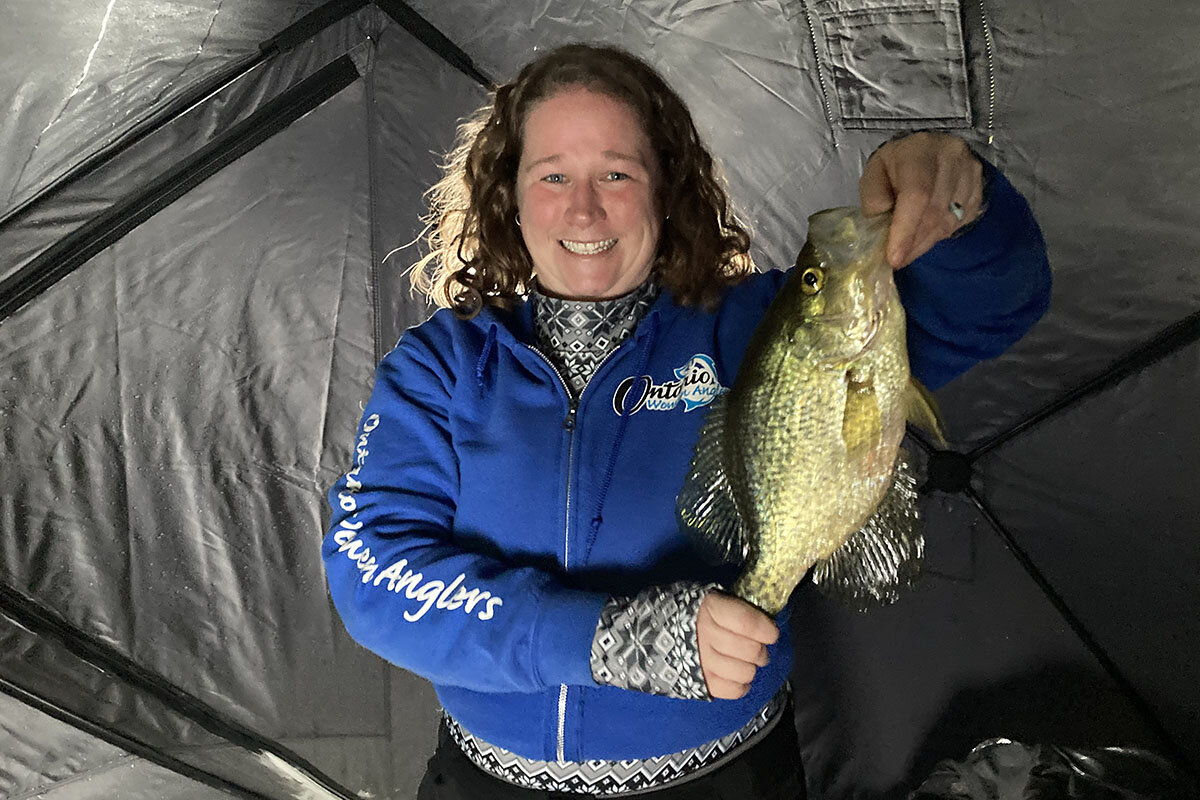
Photo: Sara Miller Llana/Christian Science Monitor.
Nicole Chafe holds the black crappie she just caught – her biggest ever through the ice – Feb. 4, 2023. The Bob Rumball Camp of the Deaf hosted the Ontario Women Anglers for a women-only ice fishing weekend.

It’s the time of year for articles on ice fishing. You may have seen one recently about a Maine man who reeled in a “massive, ‘world-class’ 25.9 pound northern pike on his first time ice fishing.” Today’s is about women who go ice fishing. Sara Miller Llana covers the story at the Christian Science Monitor.

“Pauline Gordon and Nicole Chafe load their sled – with rods, a bucket of pinners and shiners, a bump board, chairs, a shovel, a heater and propane, a sonar fish finder, a scoop for the ice, and food for the day – and haul it across the frozen lake.

“A half-mile later we arrive at their pop-up hut, which they’d set up the day before shoveling out knee-deep snow, making sure to pack extra at the sides so it didn’t blow away overnight. It’s minus 20 degrees Fahrenheit in the morning, so cold my phone dies every time I try to record. But we aren’t the most hardcore of the bunch. Some women set out in pitch black, headlamps leading the way over multiple layers of clothing.

“Ideal girls’ weekend? It is for the 30 participants who joined the Ontario Women Anglers (OWA) on a women-only ice fishing expedition this month. ‘I love this,’ says Ms. Gordon, her arms wide greeting the [rising dawn] and snow-crusted forest hemming Second Lake.

“Ice fishing in North America traces back about 2,000 years to Indigenous communities, but for the last century has been a sport dominated by men. Now groups like OWA are introducing more women to the beauties of the ‘hard water,’ in an extreme embrace of winter. ‘Being on a frozen lake is kind of like walking on the moon. When the ice is building, it’s actually an audible noise that kind of sounds like whales,’ says Capt. Barb Carey, who founded Wisconsin Women Fish because all of this felt inaccessible to women at one time. …

“That ice fishing clubs for women are popping up in the United States and Canada is in large part due to Captain Carey, a U.S. Coast Guard-certified captain who, when she discovered ice fishing, had to teach herself everything.

‘Nobody would tell you where they were catching fish or how they were doing that,’ she says. ‘It was kind of like this secret that was shared between a couple of buddies.’

“Women still make up a minority in fishing overall. In Canada, men made up about 80% of all domestic anglers, according to a 2015 government survey. The demographics in ice fishing are harder to pin down since licenses are year-round, but club presidents, anglers, and tourism operators on both sides of the border say women are increasingly present on the ice. And ice fishing is particularly appealing because participants don’t need a boat. …

“Today Wisconsin Women Fish counts 600 women from 20 states and Canada. One of those women is Yvonne Brown, the founder of OWA, who organized the expedition outside Parry Sound, 150 miles north of Toronto. …

“Ms. Chafe whoops as a head comes out of the 16-inch thick hole they drilled in the morning. It’s the biggest black crappie she’s ever caught – at over 13 inches it means she has earned her status as ‘master angler.’ …

“ ‘This is the kind of cold that keeps the men inside,’ says [Terri] Fracassa, as she revs the engine of the all-terrain vehicle she just learned to drive across the ice. ‘And the women are doing it.’

“Ms. Brown says she began mentoring women a decade ago because there were no fishing organizations in Ontario where women were teaching other women. She found her niche providing a safe, noncompetitive space where there are no ‘stupid questions,’ she says.

“That’s not to say there is no competition in Parry Sound. … But mostly it’s a weekend of learning and helping. ‘Who needs the auger?’ ‘Does anyone need a ride back to the lodge?’ The women swap jig heads and fish bags.

“ ‘When I learned of OWA, I thought, “how awesome to learn from a bunch of ladies.” This is a judgment-free zone where everybody’s learning from everybody,’ says Ms. Chafe, who learned how to read a sonar from Ms. Gordon this weekend. ‘You don’t feel put down if you don’t know something.’ …

“Roselle Turenne, a colleague of Captain Carey’s and member of OWA who was not at Parry Sound, has studied gender dynamics in fishing, writing a thesis titled ‘Women Fish Too’ for her master’s in tourism management. She found that fishing ‘has almost nothing to do with fish.’ Instead, says Ms. Turenne, who now runs Prairie Gal Fishing in Winnipeg, ice fishing is a lot of decompressing, a lot of being out in nature, of getting outside and through the dark of winter, and sitting down and simply talking to whoever is next to you. …

“[One angler says] she needs to be out here … returning to an activity that she loved when little – until her teens when people started to say ‘fishing is weird’ or fishing isn’t for girls.’

“Oh yes it is, she retorts today. ‘I can feel it in myself. I need my fish therapy.’ ”

Have any of you tried ice fishing, male or female? Did you catch a fish or wasn’t that the point?

More at the Monitor, here. No firewall. Subscriptions welcome.

Read Full Post »

The organization Daughters for Earth believes women are key to solving the climate crisis.

Here’s a nonprofit I just learned about that’s working to, among other things, restore the Colorado River with a diverse environmental team. It’s called Daughters for Earth.

From the website: “The Colorado River has not connected to the sea for a generation, and its Delta is dying out. This once lush region of 3,000 square miles teeming with plant, bird, and marine life lived only in the memory of older community members.

“Most had abandoned hope that nature would ever return. … [The plan is to] help the Sonoran Institute (SI) revive, enhance, and maintain 751 acres of this area and reconnect the Colorado River to the sea. By reintroducing water, landscapes, wildlife, and communities thrive together.

“Led by Edith Santiago, who has 22 years of experience in the restoration of wetlands, this project comprises a diverse team of biologists, ecologists, hydrologists, community planners, environmental educators, and economists. Women hold over 50% of these positions.

“[The team aims to] monitor the water and surrounding wildlife and conduct restoration activities that include irrigation, weeding, fire prevention, vigilance, and signage to prevent vandalism. It will also help grow native species at the SI nursery near the Delta. Producing vegetation closer to restoration activities prevents plant damage and reduces transportation time.

“Environmental education and outreach activities are essential to inspire the local community to help restore and conserve the Colorado River Delta. SI will achieve this through an online course about wildlife and vegetation, guided visits to restored areas, talks, presentations, and workshops. Building a training and multiple-use site will serve as a gathering and educational spot for the community.

“SI has already engaged people through the visitor center at Laguna Grande, guided tours, and ‘Family Saturdays.’ Through these programs, nearly 26,000 people have reconnected with the river.

The recovery and stewardship of the Delta ultimately depend on the commitment of people who live in the region.

“Having local community groups, leaders, and government agencies participate in the restoration work, operate plant nurseries, manage restoration sites, and welcome guests is a significant part of this project. With a flowing river and a steady stream of visitors, the conservation site will become the heart of an economy based on working with nature, and a living, learning laboratory for the one million residents of Mexicali.

“The long-term plan is to restore and protect 30,000 acres of habitat. Another prime goal is to connect the river and sea for an average of 146 days a year.

“Through education and social media, it aims to reach more than 400,000 people who will get to know the endangered beaver and many of the 380 bird species in the Delta. It will continue implementing virtual and in-person activities with students from kindergarten through college, families, national and international media, and donors. …

“SI’s work has been crucial to adopting agreements between the United States and Mexico that have become a global example of collaboration. The Minute 319 and 323 accords between the two governments support the complete restoration of the Colorado River Delta.

“By advancing agreements governing the river, restoration can succeed in the Delta as people connect with their natural resources.” More at Daughters for Earth, here.

From the nonprofit’s Who We Are page: “Our planet and people are in crisis. Around the world, we face massive climate change due in large part to the destruction of Earth’s lands, waters, and wildlife, and women are being severely impacted. They are also on the frontlines fighting to protect our future.

“Women-led initiatives are combating this global crisis, making strides in protecting and regenerating the Earth, and ultimately transforming their communities. Yet, this work and leadership is often not seen, heard, appreciated, or funded.

“Daughters was co-founded by female leaders in the women’s rights, environmental and philanthropic sectors who came together to address the marginalization of women in climate change action. It is a campaign of One Earth, an organization working to accelerate collective action to solve the climate crisis through groundbreaking science, inspiring storytelling, and an innovative approach to climate philanthropy.”

Hat tip: Priscilla Stuckey on Mastodon.

Check out this urgent grandma rap on YouTube: “Grandmothers are calling for all daughters to rise.”

Read Full Post »

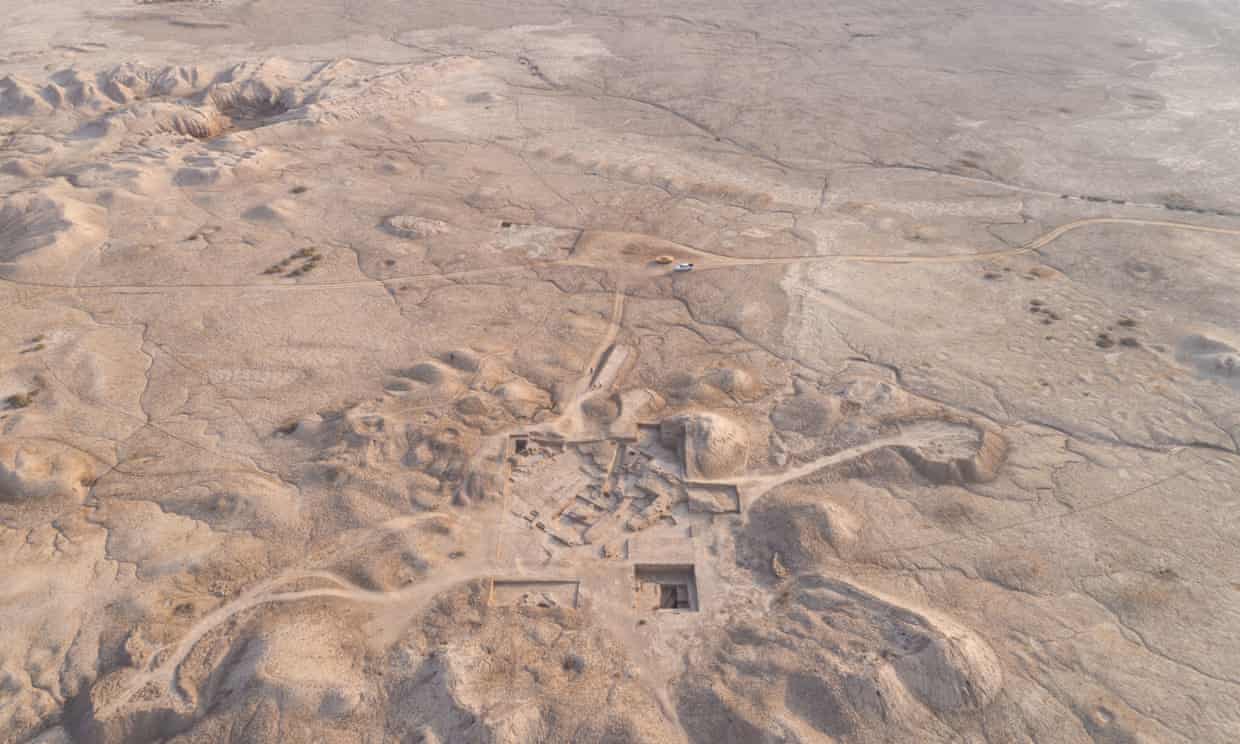
Photo: British Museum.
An aerial view of the ancient city of Girsu in Tello, Iraq. The Sumerians inhabited the ancient eastern Mediterranean region of Mesopotamia. 

Today we have more archaeology for people who love stories about newly discovered ancient places — particularly stories about archaeologists no one believed.

Tobi Thomas reports at the Guardian that “the archaeologist who led the discovery of a lost Sumerian temple in the ancient city of Girsu has said he was accused of ‘making it up’ and wasting funding.

“Dr Sebastien Rey led the project that discovered the 4,500-year-old palace in modern-day Iraq – thought to hold the key to more information about one of the first known civilizations.

“The Lord Palace of the Kings of the ancient Sumerian city Girsu – now located in Tello, southern Iraq – was discovered during fieldwork last year by British and Iraqi archaeologists. Alongside the ancient city, more than 200 cuneiform tablets were discovered, containing administrative records of the ancient city.

“Rey said that when he first brought up the project at international conferences no one believed him. ‘Everyone basically told me, “Oh no you’re making it up you’re wasting your time you’re wasting British Museum UK government funding.” ‘ …

“Girsu, one of the earliest known cities in the history of humankind, was built by the ancient Sumerians, who between 3,500 and 2,000 BC invented writing, built the first cities and created the first codes of law. The ancient city was first discovered 140 years ago, but the site has been the target of looting and illegal excavations. …

“Alongside the discovery of the palace and the tablets, the main temple dedicated to the Sumerian god, Ninĝirsu, was also identified. Before this pioneering fieldwork, its existence was known only from ancient inscriptions discovered alongside the first successful excavation of the ancient city.

“The project follows the Iraqi scheme first funded by the British government in response to the destruction of important heritage sites in Iraq and Syria by Islamic State. Since its establishment, more than 70 Iraqis have been trained to conduct eight seasons of fieldwork at Girsu. …

“The Sumerians inhabited the ancient eastern Mediterranean region of Mesopotamia, and were responsible for many technological advancements, including measurements of time as well as writing.

“According to Hartwig Fischer, the director of the British Museum, the site of the ancient city in southern Iraq was ‘one of the most fascinating sites I’ve ever visited. …

” ‘The collaboration between the British Museum, state board of antiquities and heritage of Iraq, and the Getty represents a vital new way of building cooperative cultural heritage projects internationally. … While our knowledge of the Sumerian world remains limited today, the work at Girsu and the discovery of the lost palace and temple hold enormous potential for our understanding of this important civilization, shedding light on the past and informing the future.’

“The ancient Sumerians may not be as well known a civilization as the ancient Egyptians or Greeks, but according to Dr Timothy Potts, the directory of the Getty Museum, Girsu is ‘probably one of the most important heritage sites in the world that very few people know about. … This innovative [Girsu Project] provides critical support for the uniquely important archaeological site of Girsu, through the training of Iraqi specialists entrusted with its development for sustainable archaeology and tourism.’

“Iraq’s culture minister, Ahmed Fakak Al-Badrani, said: ‘The British archaeological excavations in Iraq will further unveil significant ancient eras of Mesopotamia, as it is a true testimony to the strong ties between the two countries to enhance the joint cooperation.’ ” More at the Guardian, here.

The Guardian adds the “explainer” below is case your memory of the Sumerians is as fuzzy as mine.

“The Sumerians were the inhabitants of Sumer, which is the earliest known civilization in the historical region of Mesopotamia, located in modern-day southern Iraq. According to archaeological evidence, they built about a dozen city-states in the fourth millennium BC.

“Girsu, which is located in Tello, Iraq, was first discovered 140 years ago, and was significant in that it first revealed to the world the existence of the Sumerian civilization, as well as bringing to light some of the most vital monuments of Mesopotamian art and architecture.

“The Sumerians were ancient pioneers, having advanced the craft of writing, writing literature, hymns and prayers. They built the first known cities as well as creating the first known code of law. They also perfected several existing forms of technology, including the wheel, the plough and mathematics.

“The epic of Gilgamesh, considered the world’s oldest surviving piece of literature, derives from five Sumerian poems.

“They were also notably one of the first civilizations to brew beer, which was seen by the ancient people as a key to a healthy heart and liver.”

Read Full Post »

Photo: Studio Gibli via Comicbook.com.
Here’s a life-sized No Face from the wild imagination of “the world’s greatest living animator,” Hayao Miyazaki. You can see other beloved characters if you visit a new theme park in Japan.

All you friends of Japanese animator Hayao Miyazaki, how would you like to get up close to some of his delightful, scary characters? I can’t imagine it’s quite as powerful as seeing them on the screen, but amusement-park developers in Japan are betting on fans wanting to enter the Miyazaki movies and take selfies with characters.

Sam Anderson writes at the New York Times, “As an American, I know what it feels like to arrive at a theme park. The totalizing consumerist embrace. The blunt-force, world-warping, escapist delight. I have known theme parks with entrance gates like international borders and ticket prices like mortgage payments and parking lots the size of Cleveland. … This is a theme park’s job: to swallow the universe. To replace our boring, aimless, frustrating world with a new one made just for us.

“Imagine my confusion, then, when I arrived at Ghibli Park, Japan’s long-awaited tribute to the legendary animation of Studio Ghibli.

“Like filmgoers all over the world, I had been fantasizing about a visit to Ghibli Park since the project was announced more than five years ago. … Hayao Miyazaki, the studio’s co-founder, is one of the all-time great imaginary world-builders — right up there with Lewis Carroll, Jim Henson, Ursula K. Le Guin, Charles Schulz, Maurice Sendak and composers of the Icelandic sagas. Even Miyazaki’s most fantastical creations — a castle with giant metal chicken legs, a yellow bus with the body of a cat — feel somehow thick and plausible and real.

“Miyazaki started Studio Ghibli in 1985, out of desperation, when he and his co-founders, Isao Takahata and Toshio Suzuki, couldn’t find a studio willing to put out their work. The films were brilliant but notoriously artsy, expensive, labor-intensive. Miyazaki is maniacally detail-obsessed. He agonizes over his children’s cartoons as if he were Michelangelo painting the Sistine Chapel. He will pour whole oceans of effort and time and money into the smallest effects: the way a jumping fish twists as it leaps, individual faces in a crowd reacting to an earthquake, the physics of tiles during a rooftop chase scene. …

“ ‘Ghibli’ is an Italian word, derived from Arabic, for a hot wind that blows across Libya. The plan was for the company to blow like a hot wind through the stagnant world of animation. It succeeded. For more than 35 years, Studio Ghibli has been the great eccentric juggernaut of anime, cranking out classic after odd classic: Castle in the Sky (1986), My Neighbor Totoro (1988), Kiki’s Delivery Service (1989), Only Yesterday (1991), Princess Mononoke (1997), Spirited Away (2001). …

“Did I find myself stepping into the wonders of Ghibli Park? My first impression was not awe or majesty or surrender or consumerist bliss. It was confusion. For a surprisingly long time after I arrived, I could not tell whether or not I had arrived. There was no security checkpoint, no ticket booths, no ambient Ghibli soundtrack, no mountainous Cat Bus statue. Instead, I found myself stepping out of a very ordinary train station into what seemed to be a large municipal park. A sea of pavement. Sports fields. Vending machines. It looked like the kind of place you might go on a lazy weekend to see a pretty good softball tournament. …

I wandered into and out of a convenience store. I saw some children wearing Totoro hats and started to follow them.

“It felt like some kind of bizarre treasure hunt — a theme park where the theme was searching for the theme park. Which was, in a way, perfectly Studio Ghibli: no pleasure without a little challenge. And so I headed down the hill, trying to find my way in.

“Like many non-Japanese viewers, I first encountered Studio Ghibli through the 2001 film Spirited Away. It is Miyazaki’s masterpiece, a popular and critical supertriumph that won the Oscar for best animated feature and became, for two decades, the highest-grossing film in Japanese history. Critics all over the world simultaneously fell out of their armchairs to praise it in the most ecstatic possible terms. …

“I, on the other hand, am not a film critic. I am an ordinary American … which means that my entertainment metabolism has been carefully tuned to digest the purest visual corn syrup. Sarcastic men with large guns. Yearning princesses with grumpy fathers. Explosive explosions explosively exploding. When I watched Spirited Away, at first I had no idea what I was looking at. In the simplest terms, the film tells the coming-of-age story of a 10-year-old girl named Chihiro. It takes place in a haunted theme park — where, almost immediately, Chihiro’s parents are turned into pigs, and Chihiro is forced to sign away her name and perform menial labor in a bathhouse for ghosts (ghosts, spirits, monsters, gods — it’s hard to know exactly what to call them, and the film never explains). …

“But plot isn’t really the point. The majestic thing about Spirited Away is the world itself. Miyazaki’s creativity is radically dense; every little molecule of the film seems charged with invention. The haunted bathhouse attracts a proliferation of very weird beings: giant yellow ducklings, a sentient slime-blob, fanged monsters with antlers, a humanoid radish spirit who appears to be wearing an upside-down red bowl for a hat. There is a trio of green disembodied heads, with black mustaches and angry faces, who bounce around and pile up on top of one another and grunt disapprovingly at Chihiro. There are so many creatures, stuffed into so many nooks and crannies, that it seems as if Miyazaki has been spending multiple eternities, on multiple planets, running parallel evolutionary timelines, just so he can sketch the most interesting results. As a viewer, you have to surrender to the abundance. Crowd-surf into the hallucination.

“Miyazaki knows that his work can be difficult — and he is, at all times, righteously defiant. ‘I must say that I hate Disney’s works,’ he once declared. ‘The barrier to both the entry and exit of Disney films is too low and too wide. To me, they show nothing but contempt for the audience.’ …

“Let’s pause here, briefly, to make sure we all fully appreciate No Face. The very best Miyazaki characters, the ones that hit on the deepest spiritual levels, are the ones that do not speak. Totoro, the Cat Bus, soot sprites, kodama (the little rattle-headed forest spirits in Princess Mononoke). And the greatest of all these — one of the great strange miracles in the history of cinema — is No Face. No Face is a lonely ghost who appears, out of thin air, in the middle of Spirited Away. He is so simple and deep, so eloquently silent, that it is hard to even describe him. Words themselves hesitate. This, in fact, is partly what No Face is about: the failure of language. …

“This was the one experience I absolutely wanted to have at Ghibli Park, the thing I had been fantasizing about from thousands of miles away: to sit next to No Face. I wanted to enter Miyazaki’s most iconic scene: No Face, sitting, expressionless, on a red velvet seat on an ethereal train near the end of Spirited Away. I needed to sit there with him, to put my real 3-D body next to his fake 3-D body. I needed to feel that I was gliding over the water, lonely but not alone, on his sad hopeful journey.

“Unfortunately, this turned out not to be possible. Everyone else in Japan seemed to have come to Ghibli Park to take this photo.” 

Read Anderson’s long, wonderful article at the Times, here. Better yet, find the movies and watch them.

Read Full Post »

« Newer Posts - Older Posts »