Feeds:
Posts
Comments

Archive for the ‘Uncategorized’ Category

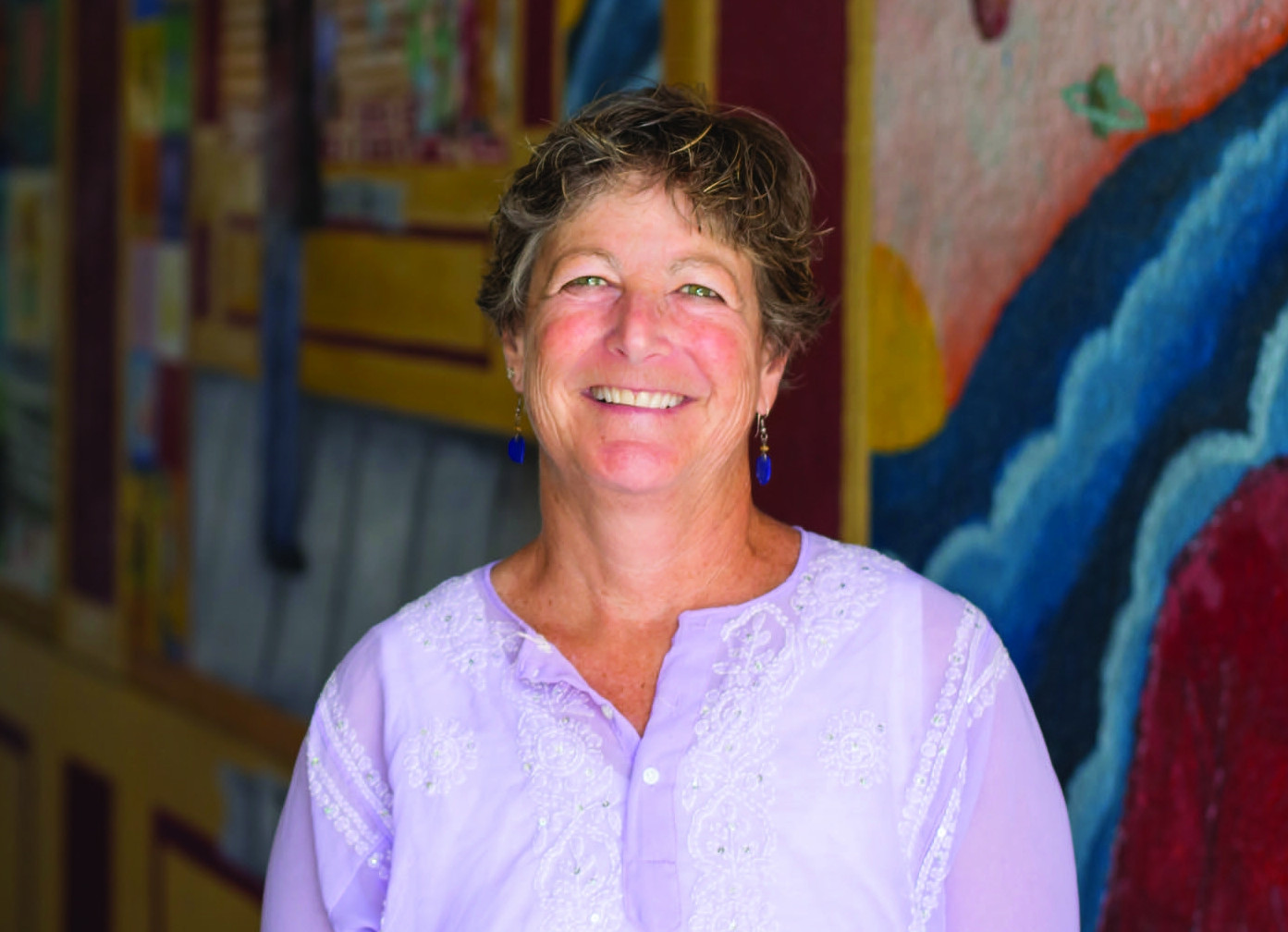
Photo: Routledge, Taylor & Francis.
Merryl Goldberg, Professor of Music, California State University San Marcos, and part-time spy
.

Do you like true spy stories? Here’s one about a mild-mannered saxophonist, now a music professor, who felt a call to help Jewish musicians in 1980s Russia.

Lily May Newman has the story at Wired.

“In 1985, saxophonist Merryl Goldberg found herself on a plane to Moscow with three fellow musicians from the Boston Klezmer Conservatory Band. She had carefully packed sheet music, reeds, and other woodwind supplies, along with a soprano saxophone, to bring into the USSR. But one of her spiral-bound notebooks, lined with staves for hand-notating music, contained hidden information.

“Using a code she had developed herself, Goldberg had obscured names, addresses, and other details the group would need for their trip in handwritten compositions that looked, to an untrained eye, like the real melodies she’d written on other pages of the book. Goldberg and her colleagues didn’t want to give Soviet officials details of who they planned to see and what they planned to do on their trip. They were going to meet the Phantom Orchestra.

“The group was a dissident ensemble that Goldberg describes as an amalgamation of Jewish refuseniks (Jews who were barred from emigrating out of the USSR), Christian activists, and Helsinki monitors—watchdogs who tracked Soviet compliance with the 1975 Helsinki Accords. The Americans’ trip was funded and coordinated by the nonprofit Action for Soviet Jewry (now Action for Post-Soviet Jewry), which works on humanitarian relief in the former Soviet Union and was focused on helping Soviet Jews emigrate to Israel and the United States. 

“The trip was a rare and special opportunity for American and Soviet players to meet in the USSR and make music together. It was also an opportunity for the American musicians to smuggle information about aid efforts and plans to the Phantom Orchestra, and for the ensemble to send updates out, including details about individuals looking to escape the Soviet Union.

“Goldberg and her colleagues, all of whom are Jewish, traveled to Moscow separately in two pairs to make it less likely that they would arouse suspicion as a group. They had received training on how to react to questioning and been told to expect surveillance, even run-ins with Soviet officials, throughout their trip. But first Goldberg needed to get her notebook past border control. 

” ‘When we arrived, we were immediately pulled aside, and they went through everything in our luggage, to the point of unwrapping Tampax. It was crazy,’ says Goldberg, who [presented] about the experience and her musical code at the RSA security conference in San Francisco [in June]. ‘With my music, they opened it up and there were some real tunes in there. If you’re not a musician, you wouldn’t know what’s what. They went page by page through everything—and then they handed it back.’ …

“Musical note names span the letters A to G, so they don’t provide a full alphabet of options on their own. To create the code, Goldberg assigned letters of the alphabet to notes in the chromatic scale, a 12-tone scale that includes semi-tones (sharps and flats) to expand the possibilities. In some examples, Goldberg wrote only in one musical range, known as treble clef. In others, she expanded the register to be able to encode more letters and added a bass clef to extend the range of the musical scale. These details and variations also added verisimilitude to her encoded music.  For numbers, Goldberg would simply write them between the staves, where sometimes you might see chord symbols. …

“While someone could technically have played the code as music, it would have sounded less like a tune and more like a cat walking across piano keys.

“ ‘I picked a note to start, and then I created the alphabet from there. Once you know it, it ends up being pretty easy to write things. I taught my friends on the trip the code, too,’ Goldberg says. ‘We used it in order to take in people’s addresses and other information we would need to find them. And we coded things while we were there so we would be able to take out some information about people and their efforts to emigrate, as well as details we hoped could help other people ask to leave.’

“The US musicians got their bearings in Moscow before heading to Tbilisi, the capital of Georgia. There and on their next stop in Yerevan, the capital of Armenia, they successfully met members of the Phantom Orchestra, many of whom spoke some English. …

“During eight days of travel, the musicians were tailed constantly by Soviet agents and were repeatedly stopped for questioning. Goldberg says that members of the Phantom Orchestra, all of whom faced similar treatment in their daily lives, gave her and her colleagues advice and encouragement. When the Americans would express concerns that their presence was endangering the activists, Goldberg says the Phantom Orchestra members were resolute about the importance of spending time together. She adds, though, that some of the activists were later arrested and even beaten, because of the interactions.

“ ‘On the second night, we were playing together and the KGB came in and everything got shut down. The electricity was turned off; it was a scary situation,’ Goldberg says. ‘And yet, when we’re playing music no one can take away that sense of freedom and empowerment. Playing together and communicating with people through music is like nothing else. I was amazed by the strength it brought the people there. Music can be very comforting, but it also conveys a sense of feeling powerful.’ “

More at Wired, here. No firewall.

Read Full Post »

Jean-François Millet, The Gleaners (1857)
Musée d’Orsay, Paris; Wikimedia Commons

Not long ago, I heard an interesting story at Public Radio International’s the World about the origins of the dominant wheat we have in the US. In searching for more, I stumbled on a Palouse Heritage Blog post written by the main interviewee.

Richard Scheuerman wrote, “I was recently contacted by Bianca Hillier from National Public Radio’s PRI The World national radio program. Given the current food crisis stemming from the conflict in Ukraine, she asked to interview me regarding our work with heritage grains that have ancestral ties to that region. Our conversation ended up lasting over forty-five minutes as we covered a range of related topics, including our recent charitable work in Ukraine. For time’s sake, she could not include our full discussion in the show’s finalized segment (which you can listen to here). However, I wanted to share more of my comments from our conversation here in case it would be of further interest. …

The US is a major exporter of wheat around the world. But according to experts, most modern US wheat can be traced back to Turkey Red Wheat, which Mennonites brought from present-day Ukraine in the late 1800s.

NPR: Tell us a little about your background and where you live.
Richard Scheuerman: My wife, Lois, and I reside here in the Tri-Cities of Washington State which is located in a region of remarkable agricultural bounty known as the Columbia Plateau. We were raised in the rolling hills of Eastern Washington’s scenic Palouse Country. …

“Among the earliest immigrants to the area were Germans from southwestern Russia who had settled in the Volga region under Empress Catherine the Great in the late 1700s, while others established farming colonies in the Ukraine’s Black Sea region in the early 1800s under Catherine’s grandson, Tsar Alexander I. My great-grandparents immigrated from Russia to Kansas in 1888 and continued on to the Palouse in 1891. They first resided in what our elders called the ‘Palouse Colony,’ which was a small agrarian commune along the Palouse River where today we operate Palouse Colony Farm.

“We raise non-hybridized landrace ‘heritage’ grains for artisan baking and craft brewing. … The community of Connell in central Franklin County was first called ‘Palouse Junction’ for its strategic location as an important Northern Pacific Railroad grain terminal. Numerous Germans from Russia and Ukraine settled in that vicinity as well, and the area figures prominently in author Zane Grey’s 1919 best-seller The Desert of Wheat in which Turkey Red might well be called a principal character.

NPR: How did you come to be interested in Russian and Ukrainian agriculture?
Richard: When you’re raised in rural communities many of your nearest neighbors and best friends are elders in their 80s and 90s! I came to enjoy visiting with first generation immigrants who told captivating stories about life in the Old Country — riding camels, encounters with the peaceful nomadic peoples of the steppes, raids by roving bandits, and the beauty and bounty of the native grasslands which their ancestors transformed into one of the world’s breadbaskets. …

“NPR: How have grains from southeastern Europe influenced American agriculture and culinary history?
Richard: Well, it’s not much of an exaggeration to say that before pioneering Midwestern immigrant farmers started raising ‘Turkey Red’ bread wheat in the 1870s, that there was no bread such as we know it today made in America. Of course, folks were baking breads since early colonial times, but it was made from soft white and red ‘Lammas’ wheats from the British Isles and western Europe that is better suited to flatbreads, scones, biscuits, pancakes, and the like. Production of many of these varieties like White ‘Virginia May’ Lammas, which we have worked to revive and was used to make Northwest Indian frybread, were devastated in the 1770s by Hessian fly infestations. So our early ‘Founding Farmer’ families, like Washington, Jefferson, John and Abigail Adams … devoted considerable attention to acquiring new grain varieties. …

“It was not until German Mennonites from Ukraine settled in central Kansas in the 1870s that one of their leaders, Bernard Warkentin, began raising Turkey Red. It was a hard red bread grain native to the Crimea we call ‘Crimson Turkey,’ and its seeds began an agricultural and culinary revolution in the US in figurative and literal terms.   

PR: How was Turkey Red different from other grains raised in the US?
Richard: Turkey Red was America’s first true hard red bread wheat. That is, the kernels possess gluten proteins with a cross-hatch molecular structure that traps gases produced by yeast that makes bread dough rise. Not only that but the nutritionally dense inner endosperm and fiber make for an incredibly delicious loaf that has a naturally sweet, nutty flavor. … Of the many modern varieties of bread grains raised throughout North America, virtually all can trace their lineage back to the Turkey Red native to Ukraine. …

PR: What are your thoughts about the situation in Ukraine today?
Richard: The news of the war is deeply disturbing, and I hope Americans will stand in solidarity with the people of Ukraine for freedom’s cause. During our Revolutionary War notable help came from abroad in terms of material aid as well as the heroic service of foreigners. … Perhaps lesser known but of special significance was the remarkable service of Polish officer Thaddeus Kosciuszko who helped win victory for the Continentals at the Battle of Saratoga, which is considered the turning point of the war. He later returned to Europe and fought against autocratic rule in his native land as well as in Ukraine.

“My special interest has been in joining with others to promote the work of A Family for Every Orphan (AFFEO) to provide safe havens for Ukraine’s most vulnerable children. AFFEO also provides food for those in need through its Operation Harvest Hope bakeries in Ukraine. Until the tragic outbreak of the war, no nation on earth had done more to reduce orphanhood than Ukraine through a remarkable collaborative of churches, government child protection agencies, and social service organizations.”

More text at Palouse Heritage blog, here. Listen at the World, here. No firewalls for either one. (Palouse: “Heartland of the Inland Pacific Northwest.”)

Read Full Post »

Photo: BBC.
“In the extreme northwest corner of the contiguous US,” reports the BBC, a 1970s storm uncovered a forgotten village.

If Lewis Carroll’s “boiling hot” sea becomes a reality, if the ocean doesn’t overflow from melted icebergs but instead dries out, will the lost Kingdom of Atlantis rise up?

Something like that already happened in 1970 on the west coast of Washington state.

Brendan Sainsbury wrote at the BBC, “In 1970, a violent storm uncovered a Makah village that was buried by a mudslide more than 300 years earlier. A newly re-opened museum tells the fascinating story of the ancient site.

“Coming to the end of a short, winding trail, I found myself standing in the extreme north-west corner of the contiguous US, a wild, forested realm where white-capped waves slam against the isolated Washington coast with a savage ferocity. Buttressed by vertiginous cliffs battling with the corrosive power of the Pacific, Cape Flattery has an elemental, edge-of-continent feel. No town adorns this stormy promontory. The nearest settlement, Neah Bay, sits eight miles away by road, a diminutive coast-hugging community that is home to the Makah, an indigenous tribe who have fished and thrived in this region for centuries.

“The Makah are represented by the motif of a thunderbird perched atop a whale, and their story is closely linked to the sea.

” ‘The Makah is the only tribe with explicit treaty rights to whale hunting in the US,’ explained Rebekah Monette, a tribal member and historic preservation program manager. ‘Our expertise in whaling distinguished us from other tribes. It was very important culturally. In the stratification of Makah society, whaling was at the top of the hierarchy. Hunting had the capacity to supply food for a vast number of people and raw material for tools.’

“After reading recent news stories about the Makah’s whaling rights and the impact of climate change on their traditional waters, I had come to their 27,000-acre reservation on Washington’s Olympic Peninsula to learn more, by visiting a unique tribal museum that has just reopened after a two-year hiatus due to Covid-19.

“Due to a trick of fate, Makah history is exceptionally well-documented. In contrast to other North American civilizations, a snapshot of their past was captured and preserved by a single cataclysmic episode. In 1970, a brutal Pacific storm uncovered part of an abandoned coastal Makah village called Ozette located 15 miles south of Cape Flattery.

Part of the village had been buried by a mudslide that was possibly triggered by a dramatic seismic event around 1700, almost a century before the first European contact.

“Indeed, recent research argues that ancestors of the Makah – or related Wakashan speaking people – have been present in the area for at least 4,000 years, which, if proven, would change our understanding of prehistory in the Olympic Peninsula and Vancouver Island.

“Miraculously, the mud had protected embedded organic matter by sealing it off from the air. As a result, thousands of well-preserved artifacts that would normally have rotted – from intact woven cedar baskets to dog-hair blankets and wooden storage boxes – were able to be painstakingly unearthed during a pioneering archaeological dig. …

“The Washington Post called it ‘the most comprehensive collection of artifacts of a pre-European-contact Indian culture ever discovered in the United States.’

“Anxious the material might be engulfed by the sea and lost, the tribe called in Richard Daugherty, an influential archaeologist at Washington State University who’d been involved in fieldwork in the area since the 1940s. Having good connections with Congress, Daugherty helped secure federal funding for an exhaustive excavation.

” ‘Dr Daugherty was instrumental in the excavation work,’ recounted Monette. ‘He was very progressive and interested in working alongside the tribe.’ …

“The Makah, like many indigenous groups, have a strong oral tradition, with much of their history passed down through storytelling, song and dance. The evidence unearthed at Ozette affirmed these stories and added important details. …

“While much of the material dated from around 1700, some of it was significantly older. Indeed, archaeologists ultimately determined that multiple mudslides had hit Ozette over a number of centuries. Beneath one of the houses, another layer of well-preserved material dated back 800 years. The oldest finds so far have been radiocarbon-dated to 2,000 years and there are middens in the area that are at least 4,000 years old, according to [archaeologist Gary Wessen, a former field director at the site who later wrote a PhD dissertation on the topic].

“From the outset, the Ozette dig was different from other excavations. Tribal members worked alongside university students at the site, and, early on, it was decided that the unearthed material would stay on the reservation rather than be spirited off to distant universities or other non-indigenous institutions. In 1979, the tribe opened the Makah Cultural and Research Center in Neah Bay with a museum to house a ‘greatest hits’ of the collection. The 500 pieces currently on display represent less than 1% of the overall find.

” ‘The tribe was very assertive of their ownership and control of the collection,’ said Monette. ‘A lab was developed in Neah Bay. For the museum, we hired Jean Andre, the same exhibit designer as the Royal BC Museum in Victoria.’ “

More at the BBC, here. Doesn’t it sound like Pompeii, only with the preservative being mud instead of volcanic ash?

Read Full Post »

Photo: Suzanne and John’s Mom.
Remember Ralph Waldo Emerson’s lines, “By the rude bridge that arched the flood …”? A nonprofit news site named after this bridge will expand on a local-news trend led by the
Texas Tribune.

Hope is coming for one of the cornerstones of democracy, local journalism. Nowadays, it looks like the for-profit model ends in acquisitions, hedge fund ownership, and generalized stories that can be plugged into any town. Which is why we are seeing more nonprofit efforts for community news.

Margaret Sullivan writes at the Washington Post that if local journalism manages to survive, we need to “give Evan Smith some credit for it. The Texas Tribune founder has been a ‘true pioneer’ in finding ways to cover local communities as a nonprofit.

“When Evan Smith co-founded the Texas Tribune back in 2009, digital-first nonprofit newsrooms were something of a rarity. There was ProPublica, only two years old at the time, MinnPost in Minneapolis, the Voice of San Diego, and a few others.

“So his move from top editor of the award-winning Texas Monthly magazine, at the urging of venture capitalist John Thornton, was considered slightly bizarre.

“ ‘The tone of the coverage was almost mocking,’ Smith recalled last week, soon after he announced he would step down as the Tribune’s CEO at the end of this year. ‘It was, “What does this joker think he’s doing?” ‘

“As it turns out, Smith and company — he and Thornton recruited Texas Weekly editor Ross Ramsey to join the endeavor — had a good idea of what they were doing, or figured it out along the way.

“The Austin-based Tribune has grown from 17 employees to around 80 (more than 50 are journalists), raising $100 million through philanthropy, membership and events, including its annual Texas Tribune Festival that has attracted speakers including Nancy Pelosi and Willie Nelson.

Most important, it has done a huge amount of statewide news coverage with a focus on holding powerful people and institutions accountable.

“These days, such newsrooms are springing up everywhere; there are now hundreds of them. They are easily the most promising development in the troubled world of local journalism, where newspapers are going out of business or vastly shrinking their staffs as print revenue plummets and ownership increasingly falls to large chains, sometimes owned by hedge funds.

“In Baltimore, the Banner — funded by Maryland hotel magnate Stewart Bainum — is hiring staff and expects to start publishing soon. In Chicago, the Sun-Times is converting from a traditional newspaper to a nonprofit as it merges operations with public radio station WBEZ. And in Houston, three local philanthropies working with the American Journalism Project (also co-founded by Thornton) announced a $20 million venture that will create one of the largest nonprofit news organizations in the country.

“ ‘These newsrooms are popping up like mushrooms after a rainstorm,’ Smith, 55, told me. …

“As a speaker at Trib Fest myself, I’ve seen Smith in action — a promotional force of nature, energetic organizer, prodigious fundraiser, and lively onstage interviewer.

“Emily Ramshaw, who started at the Trib as a reporter and was named its top editor in 2016, called him ‘an innovator, a ringleader and a fearlessly ambitious local news entrepreneur.’ What’s more, she told me, Smith has brought along ‘a whole series of news leaders who have grown up in his image.’

“Ramshaw counts herself among them; she left the Trib in 2020 to found a new nonprofit news organization, the 19th, which covers the intersection of gender, politics and society.

“The Trib’s new editor is Sewell Chan, most recently at the Los Angeles Times, where he was the top opinion-side editor, and previously at the New York Times and the Washington Post. Smith considers it a triumph for nonprofit newsrooms that it’s no longer unusual for them to attract the likes of Chan, or of Kimi Yoshino, who was managing editor of the L.A. Times before being named editor in chief of the Baltimore Banner. …

“The Trib’s journalism is influential well beyond its own free website. More than 400 Texas Tribune stories appeared on the front pages of newspapers throughout the state last year, provided free of charge. The site has done investigative projects on the effect of sex trafficking on young girls, the influence of religious belief on the lawmaking of Texas legislators, and an investigation, part of its voting rights coverage, into the state’s review of voting rolls. In 2019, it announced it was joining forces with ProPublica to form a new investigative unit based in Austin. …

“With local news outlets withering in many communities — statehouse coverage, in particular, has dwindled despite its importance — and democratic norms under attack in many states, the need for that kind of watchdog reporting is acute everywhere.” More at the Post, here.

Another nonprofit news site will launch locally in fall, The Concord Bridge. Hooray. A world for which the “embattled farmers” fought doesn’t have to be merely aspirational. Neither does good local journalism.

Read Full Post »

Lydia Ricci, “I’m Not Sure They Need to Do That Now” (2020), scrap materials, 3 x 5 x 1 1/2 inches

The world is full of big wonders that people want to see before Covid or some other misfortune grounds them. As for me, I’m almost more interested in not missing some small, important thing close to home. I keep thinking there might be magic in the ordinary. No wonder I enjoy art that uplifts everyday items!

Sarah Rose Sharp writes at Hyperallergic about artist Lydia Ricci and the endless possibilities she finds in everyday objects.

“As the saying goes, one man’s trash is another man’s treasure, and no one embodies this sentiment more acutely than sculptor and filmmaker Lydia Ricci. From a pile of scraps and everyday detritus accumulated over the last 30 years, Ricci makes imperfectly perfect replicas of quotidian moments and objects.

“ ‘I have been collecting my family’s scraps for over 25 years,’ wrote the artist in a confessional essay on her website, ‘but I have to admit, I also steal some too.’ These purloined scraps include a reusable BINGO card from a family function at the local elementary school (‘fancy … with red plastic windows that cover the numbers’), dusty electrical tape (‘nobody needs three rolls’), a lightbulb box from a neighbor’s garage (‘the bulb probably didn’t even work’). …

“If you leave Ricci alone in a waiting room, she considers your paper clips fair game.

” ‘I treasure an electric bill from 1984 like others would covet their family jewels,’ Ricci told Hyperallergic by email.

The results are mementos that do not so much mirror their real-world counterparts as deeply evoke a sense of life as it is remembered — a little wonky, a little irregular, very detailed in places but highly abstract in others.

“Ricci poses and photographs her tiny sculptures in tableaux in which the objects are often out of proportion, giving them the surreal quality of dreams and memory. A tiny aquarium makes tight quarters for a peeled cocktail shrimp. A ramshackle miniature couch struggles to conceal life-sized keys and Cheerios and hairballs. A teensy dishwasher is slowly buried in a drift of life-sized detergent flakes.

“As if creating these scenes out of multiple media isn’t enough, Ricci then recasts them in multimedia productions, adding single-sentence text snippets that seem to voice over the images or serve as narration to short films. Her three-minute film I WILL ALWAYS LOVE YOU (2021) made the rounds this past spring at film festivals in Arizona and Washington, DC, and tells the story of an evolving relationship through its everyday dramas: the wait for a diner booth, the politics of toothbrush-sharing, the request (or lack thereof) for help reaching a high shelf, the need (or not) for company on a grocery run.

“ ‘There is absolutely nothing precious or precise about what I am constructing,’ Ricci added. ‘The sculptures are messy and imperfect just like our memories.’ …

“Ricci was part of a four-person show that ran through April at James Oliver Gallery in Philadelphia, with another show slated to open on August 23 at the Kohler Art Museum in Sheboygan, Wisconsin. She’s also hoping to publish a book of her images, titled Don’t You Forget About Me.” More at Hyperallergic, here.

You might also be interested in a book by Richard Deming called The Art of the Ordinary, of which Cornell University Press says: “Cutting across literature, film, art, and philosophy, Art of the Ordinary is a trailblazing, cross-disciplinary engagement with the ordinary and the everyday. Because, writes Richard Deming, the ordinary is always at hand, it is, in fact, too familiar for us to perceive it and become fully aware of it. The ordinary he argues, is what most needs to be discovered and yet is something that can never be approached, since to do so is to immediately change it.”

Read Full Post »

Photo: David Clode/Unsplash.
An emu. Would you want to cross a guy who looks at you like your third grade teacher at her most exasperated?

Never leave the scene of an accident. That’s today’s message from the Animal Kingdom.

Jennifer Hassan writes at the Washington Post about a recent lesson from the UK.

“England has two new, unexpected celebrities — a 42-year-old chef and a massive emu, who inadvertently teamed up to help catch a driver who fled a crash scene after narrowly missing pedestrians and causing extensive damage.

“Dean Wade said he heard a loud ‘screeching noise’ near his workplace in Wiltshire, southwest England, on Monday and raced out to see a jeep careening before smashing into the front of an empty shop.

“In an interview with the Washington Post on Wednesday, Wade, who has been working at the Old Bell Hotel in Malmesbury for only two weeks, said he could see the driver, who ‘appeared drunk,’ was getting ready to back away from the scene. A female passenger had left the vehicle.

“ ‘There’s no way you’re going anywhere,’ Wade told the man, who he said was ‘swaying’ and ‘staggering.’ all over the place. …

“Wearing his slip-resistant rubber kitchen clogs and chef’s overalls, Wade chased the driver for 15 to 20 minutes, through bushes, allotments and gardens before the pair ended up at an animal sanctuary. …

“ ‘I could see this massive emu,’ Wade said. ‘I’m six foot tall and it was bigger than me.’

“Wade said he could tell the bird, which was surrounded by its offspring, was likely to spring into defense if anyone intruded its enclosure.

“ ‘Mate, don’t go in there,’ Wade warned the man, who he said ignored his advice, replying: ‘I can fight emus’ before heading into the animal’s pen — where he was repeatedly pecked.

‘It was stabbing his body all over,’ Wade said, causing the man to curse and unsuccessfully attempt to ‘kung-fu-kick’ the animal away.

“The bird kept stabbing at the driver, who eventually gave up, fled the pen and headed toward a river — while Wade took the opportunity to flag down a nearby police car. …

“Following ‘an extensive search of the area,’ officials said, one person had been arrested after driving drunk. They did not name a suspect.

“Wade told the Post that he had just relocated from the sprawling city of Leeds to the picturesque village of Malmesbury for his new job at the Old Bell Hotel, which claims to be England’s oldest hotel. According to its website, the venue has served travelers since 1220.

“ ‘In Leeds, we don’t stand by and do nothing,’ Wade said, crediting his home city of West Yorkshire and his passion for justice for providing him with the instinct to chase the driver.

“Emus are classified as one of the world’s biggest birds, according to National Geographic. The animals can weigh up to 97 pounds and grow over six feet tall. While they cannot fly, they have ‘long, powerful legs’ that they often use to kick predators that come too close.

“Wade was keen to stress that he did not consider the birds aggressive but, rather, ‘curious creatures’ that are determined to protect their young. …

“Wade admitted his new life and job in Malmesbury had so far surpassed all expectations: uniting with an emu to solve crime; being invited to appear on national radio and TV in the UK; and fielding interview requests. …

“The emu, despite its newfound fame, has retained a lower profile, with the wildlife sanctuary declining interviews but telling national broadcaster BBC that all its emus were unharmed and that they are ‘wonderful creatures.’

“Following Wade and the emu’s successful partnership, the hotel and the animal sanctuary have also teamed up — striking a deal that sees staff deliver bucket loads of vegetable peelings from the kitchen to the animals each day in a bid to reduce food waste.”

It’s an ill wind that blows nobody good. More at the Post, here.

Read Full Post »

Photo: Reminder Publishing.
Jared and Sam Newell are the current owners of Fruit Fair in Chicopee, Mass.

Too many low-income communities lack a decent supermarket or any access to the fresh fruits and vegetables so necessary for healthful living. I do occasionally see reports on food-desert pioneers trying to remedy that, but they seldom succeed without a little help from funders.

Karen Brown wrote at New England Public Media about a pioneering market in Chicopee, Massachusetts, that everyone wants to see successful.

“Western Massachusetts is home to acres of farmland and vegetable stands, as well as many neighborhoods considered ‘food deserts.’ As food prices go up, government programs are supporting efforts to offer more affordable, healthy food.

“The new owners of one longtime grocery store in Chicopee have made it their mission to become a fresh-food resource, but against considerable odds.

“One recent afternoon, Samaita Newell, co-owner of Fruit Fair, was slicing cheese at the deli counter, giving one of her staff a few minutes off and exchanging pleasantries with the regular customers. …

“In 2019, Newell and her husband Jared bought the 6,000 square-foot store (plus an extra 5,000 square feet of storage). At the time, most of the produce inventory was packaged or frozen. They added more long shelves of fruits and vegetables, including from local farms.

“ ‘We even have things like fiddleheads,’ Newell said, pointing at a long shelf of fresh produce. ‘We get radishes, we get scallions, we get green leaf, red leaf, asparagus, native corn.’

“This area of Chicopee has long been classified by the US government as a low-income, low-access food area, also known as a food desert, where it’s hard to find affordable, fresh food.

“The Newells say their goal was to fill that void, while making a living, but they are learning how low the profit margin is. ‘We actually have yet to cash in any of our paychecks,’ Samaita Newell said. ‘And we have been working here almost three years.’

“Newell didn’t start her career in the grocery business. She emigrated as a college student from India, studying physics and astronomy, which is what her family and culture expected from her. But when she started dating Jared, she said, her family stopped supporting her.

“ ‘Being an immigrant and studying physics, I didn’t really have like a lot of connections,’ she said. ‘So I had to start somewhere and I started in retail.’ …

“Feeling stymied as a person of color, she decided it was time to own her own business. Jared had been working for a forestry company. The couple had already bought a few rental properties for income. But they wanted a store.

They bought Fruit Fair for $1.4 million and quickly discovered it would need a lot of investment.

“ ‘All of the equipment was falling apart,’ Jared Newell said. ‘More than a quarter of everything was already dated. We had to throw it all out just so that we could have fresh product coming in.’ …

“ ‘[There are] a lot of convenience stores, but it’s all chips and soda,’ said John Waite, who administers a state-funded program called the Massachusetts Food Trust. Waite’s organization, the Franklin County Community Development Corporation, is in charge of giving out loans and grants to food retailers in western and central Massachusetts. The program came out of a 2012 report on the need for more equitable access to healthy food.

“Waite said one strategy is to recruit large supermarkets like Big Y and Stop & Shop into underserved areas, but those efforts can take years of advocacy. ‘So trying to get a smaller store to increase their offering is the other way to go,’ he said. ‘We also think this is a good economic development tool.’ …

“The Newells say a loan and grant from the Massachusetts Food Trust has helped keep them afloat. But it still hasn’t been easy. … Sales are up by 20%, but some costs have tripled. Every week they have to relabel 200 grocery items to keep up with rising prices.

“ ‘The same customers are coming in,’ Samaita Newell said, ‘but instead of getting like 20 things, they’re probably getting like 15 or 16 and thinking like, “Okay, this is a huge price difference. This I will get elsewhere.” ‘

“That means stiff competition from large chains such as Walmart, which can sell groceries at a discount. …

“Samaita and Jared Newell say they’re in it for the long haul — but it is a long haul. Both in their 30s, they have decided to put off having children while they get the store going. This year they hope to finally pay themselves a salary.”

More here. No firewall.

Read Full Post »

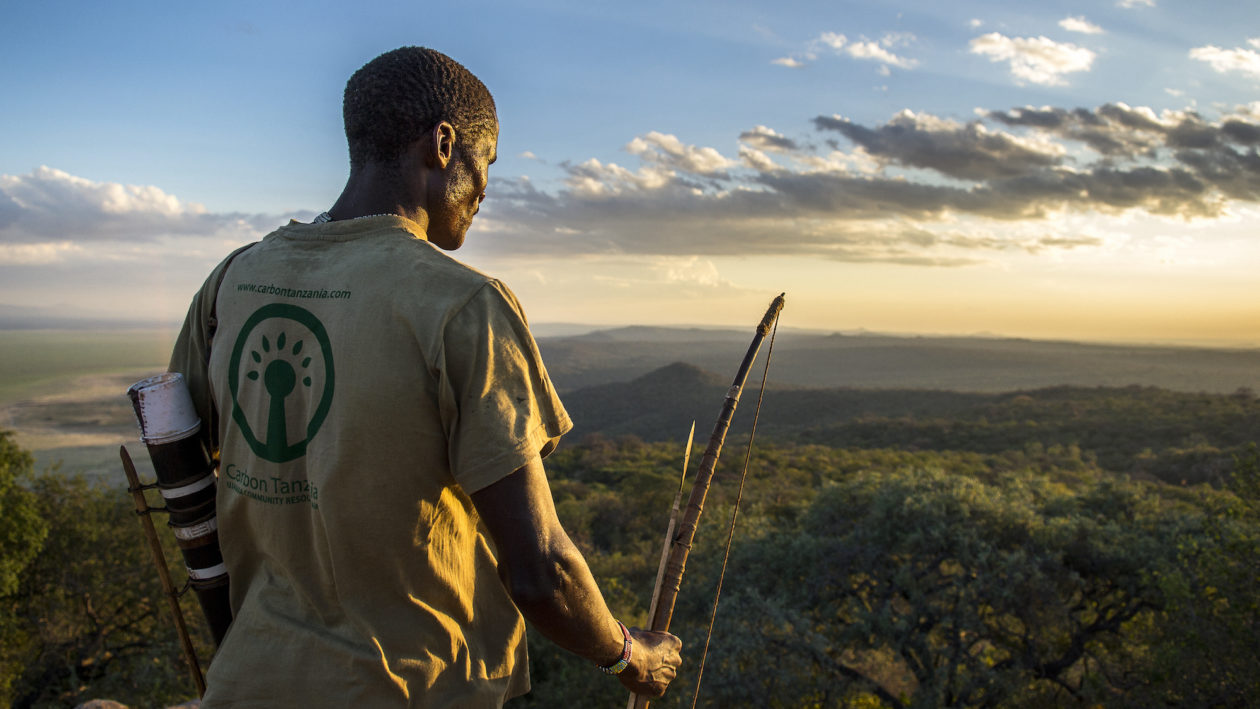
Photo: Roshni Lodhia/Carbon Tanzania.
Hadza scout Ezekiel Phillipo overlooking Tanzania’s Yaeda Valley.

With a “carbon offset,” polluters pay to reduce or remove emissions of carbon dioxide or other greenhouse gases in one place in order to compensate for emissions made elsewhere. Even individuals may pursue offsets: for example, because their airplane travel increases global warming. My friend sends money to tree-planting organizations when she flies. Corporations do this on a larger scale. But offsets are an imperfect tool.

Fred Pearce writes at YaleEnvironment360, “Carbon offsets have been criticized for failing to provide carbon savings and ignoring the needs of local communities. But in Tanzania, hunter-gatherer tribes are earning a good return for their carbon credits and protecting their forests from poachers and encroaching agriculture.

“Deep in the Rift Valley of East Africa,” he continues, “close to some of the most ancient human remains ever unearthed, one of the continent’s last hunter-gatherer tribes is embracing 21st -century environmentalism. The Hadza people, often called ‘the last archers of Africa,’ are selling carbon credits generated from conserving their forests and using the revenues to employ their youths as scouts to keep forest destroyers away.

“Starting this March, some 1,300 Hadza and members of the cattle-herding tribes with whom they share the Yaeda Valley of northern Tanzania, began receiving the first payments of what will be nearly half a million dollars annually from a local social enterprise, Carbon Tanzania, for protecting woodland hunting and grazing grounds across an area larger than New York City.

“The project will radically extend an existing decade-old carbon-offsetting initiative on Hadza land north to the edge of the Ngorongoro Conservation Area, one of Africa’s most iconic wildlife havens. But, unlike the Ngorongoro reserve, which was in part created by expelling local people, this project will embrace the skills of the hunting Hadza as custodians of the forests. …

“The locals are enthusiastic. They say the existing project helps them push back against outsiders keen to grab land for farming.

‘We are seeing a steady increase of some animal species like elephants passing through and in forest growth compared to the beginning,’ says Christopher Shija, a scout recruited from Jobaj village.

“Moshi Isa, another scout who is from Mongo wa Mono village, notes, ‘The carbon project has strengthened our rights. And increased forest density is sustaining our hunting and gathering life.’

“Foreign experts familiar with the checkered history of carbon offsetting agree. Carbon offset projects based on forest conservation are often criticized for failing to provide real carbon savings and simply shifting deforestation elsewhere; for riding roughshod over local forest communities; and for allowing Western companies to put off cutting their emissions.

“In Tanzania, most such projects have been ‘largely unconcerned’ with the wellbeing of the local communities whose lands host them, according to Sebastién Jodoin, an environmental and land-rights lawyer from McGill University in Montreal. But of those he analyzed, the Yaeda Valley project was ‘the sole and important exception … designed and implemented in a manner that recognized the traditional rights and knowledge held by Indigenous Peoples.’

“Without the projects, ‘the Hadza would really be on the brink. With it, they are in a more secure position than they have been for decades,’ says Fred Nelson, CEO of Maliasili, an organization that supports community conservation projects across Africa. It is ‘probably the best such project in Africa.’

“The Hadza have lived in northern Tanzania for at least 40,000 years. Their ancient ways of living off the land have become a magnet for researchers ranging from anthropologists to those studying healthy eating. Linguists are intrigued by their ‘click’ language, which is spoken nowhere else.

“Their land is a patchwork of wet grasslands and craggy hills covered in acacia and water-holding baobab trees. It harbors leopards, lions, gazelles, giraffes, antelopes, wild dogs, and Cape buffalo. The Hadza harvest wild fruits, tubers, honey, natural medicines, and bush meat, says Mosh. …

“But these territories have long been under threat. The Hadza have lost more than three-quarters of their traditional lands in the past half-century. Pastoralists bring their livestock onto the grasslands, especially in the dry season, and farmers clear forests to plow.

“ ‘Shifting agriculture is the primary driver of deforestation in the region, as in much of Tanzania,’ says Jo Anderson, the co-founder and director of Carbon Tanzania. …

“In the past, invasions have often been officially encouraged, says Anderson. Both in British colonial times and since the country’s independence in 1961, the nomadic ways of the Hadza were regarded by urban elites as an embarrassing cultural leftover. In the 1970s, they were subjected to a national policy of enforced settlement known as ‘villagization.’ In 2007, the government announced plans to lease most of the Yaeda Valley to a hunting safari company from the United Arab Emirates.

“But the tide has turned. Unexpected heroes in the story have been three American brothers — Daudi, Mike, and Thad Peterson. Raised in Tanzania, they had operated an early ecotourism business, Dorobo Safaris, before, in the 1990s, setting up and funding the Ujamaa Community Resource Team (UCRT), an NGO helping villagers and Indigenous groups using Tanzanian land laws to secure legal title to their territories.

“The UCRT’s Indigenous activists successfully campaigned against the planned Arab takeover of the Yaeda Valley. And in 2011 they secured title to about 50,000 acres, later expanded to 84,000 acres, of the Hadza’s ancestral lands, giving them the legal right to rebuff encroachers.

“The rights also brought responsibilities, and the UCRT then helped the Hadza, in consort with their pastoralist neighbors, to draw up land-use plans required by the Tanzanian government as a condition of title, zoning the territories for farms, housing, pastures, meeting grounds, cattle enclosures, water collection, and hunting grounds and setting aside some lands for nature. …

“Along the way, the UCRT’s work attracted a young British volunteer, Jo Anderson, who proposed helping the Hadza earn money from their newly acquired land rights by protecting the forests from invaders and selling the resulting carbon credits.” 

At YaleEnvironment360, here, read more on how the initiative evolved. No firewall.

Read Full Post »

Photos: Suzanne and John’s Mom.
Walk this way.

It’s a hot July, but we’ve had a good breeze and I’ve been able to take walks and shoot photos regularly by heading out early. So walk this way.

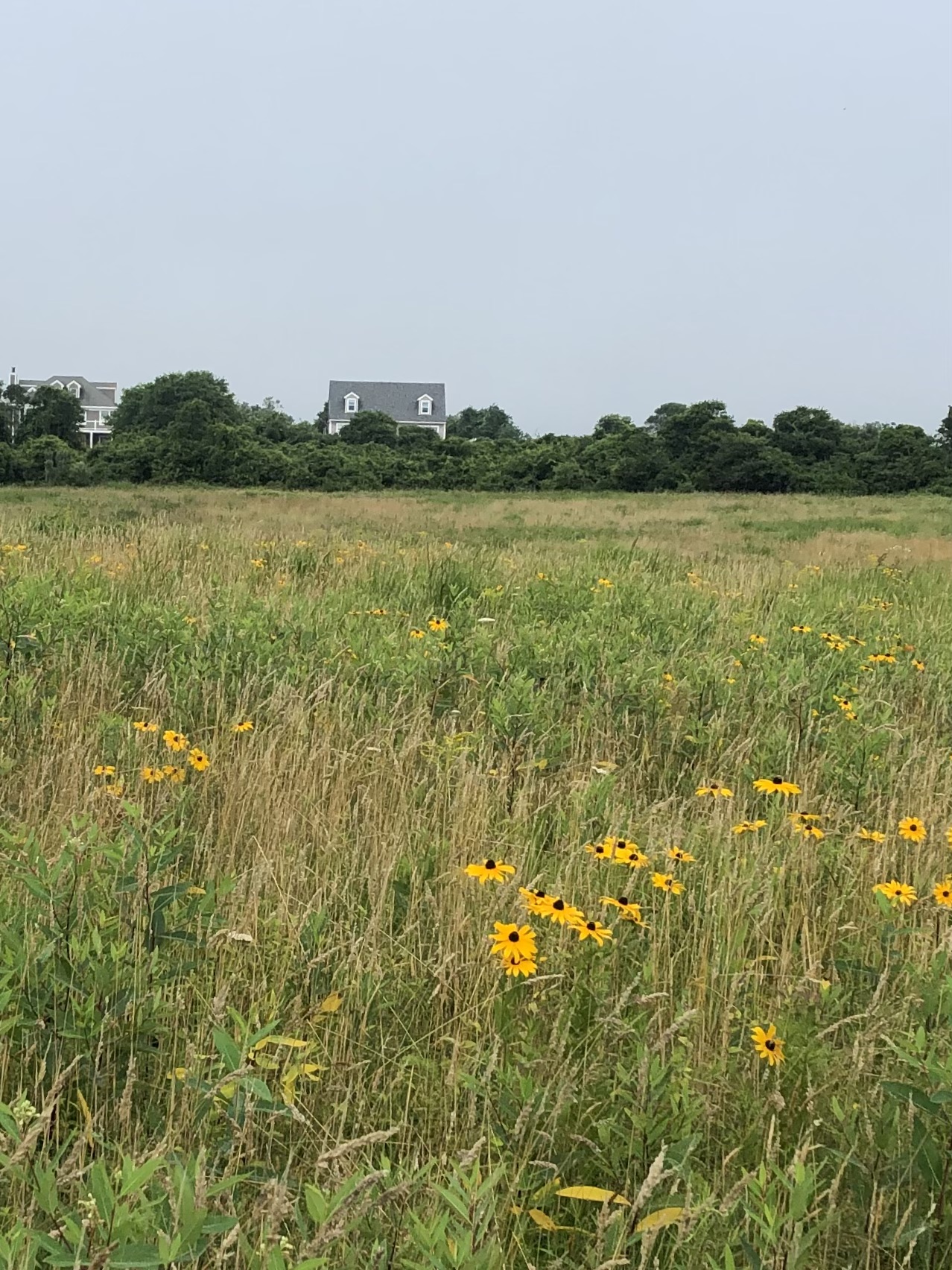
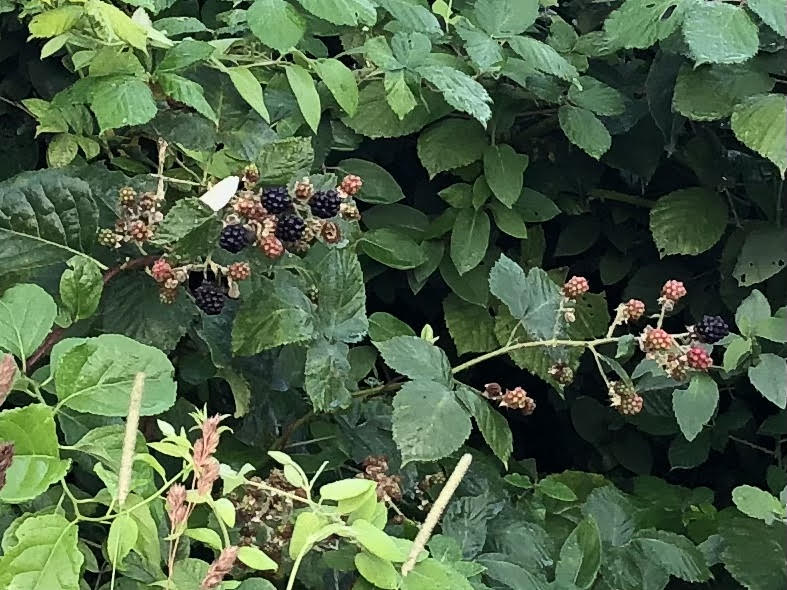
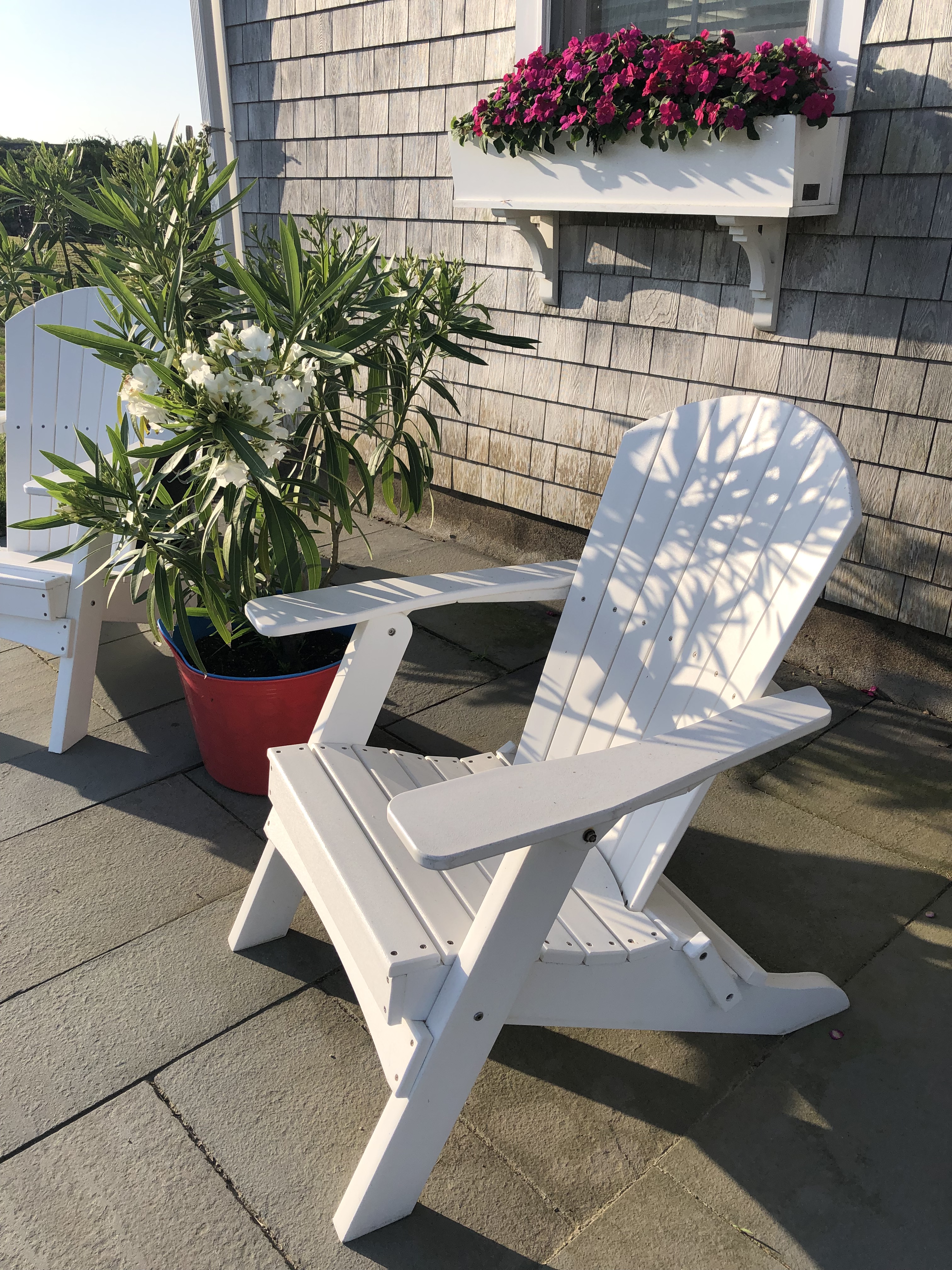
Black-eyed Susans come up every year where they will no matter what else is going on in the world. Blackberries ripen and Pat gathers them so Sandra can make jam on the dark winter days ahead. I took a picture of Sandra’s mother’s lovingly tended oleander plants. They don’t normally live up North, but Sandra pounces as soon as she sees an aphid and that’s why they are still healthy.

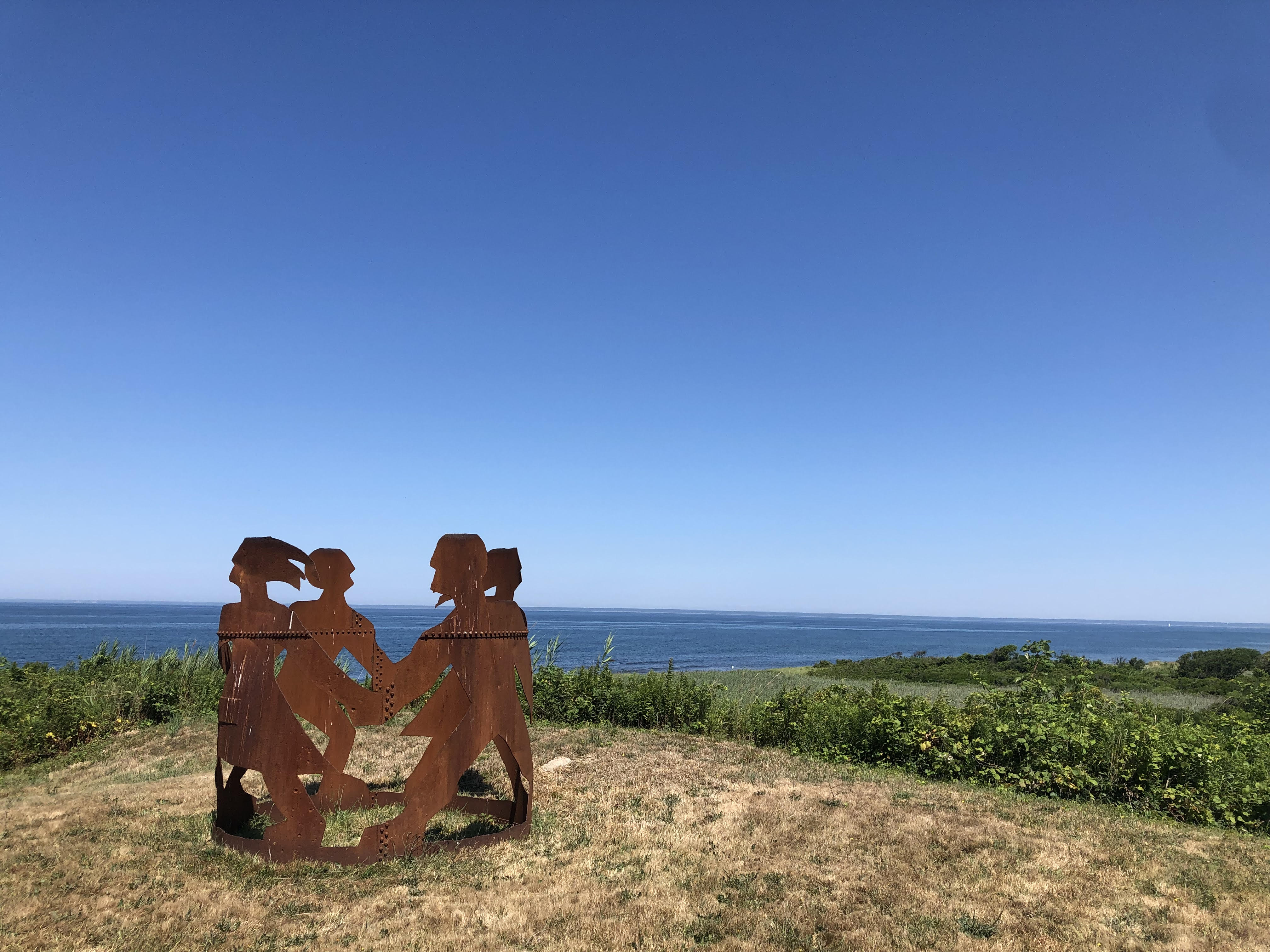
The rust-painted “Recycling” sculpture at the New Shoreham transfer station (former dump) is by Peruko Ccopacatty and shows the possibilities of reclaiming history.

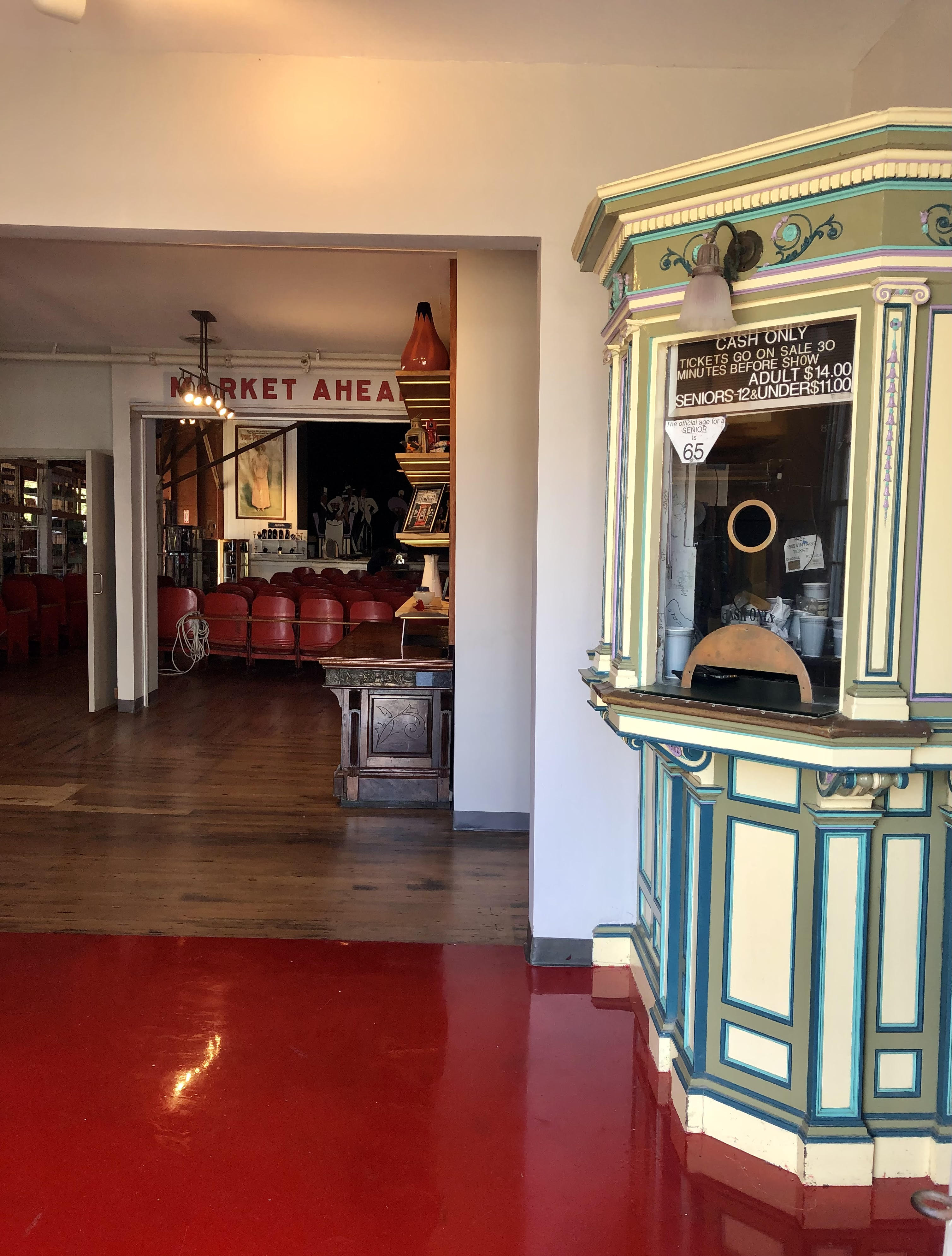
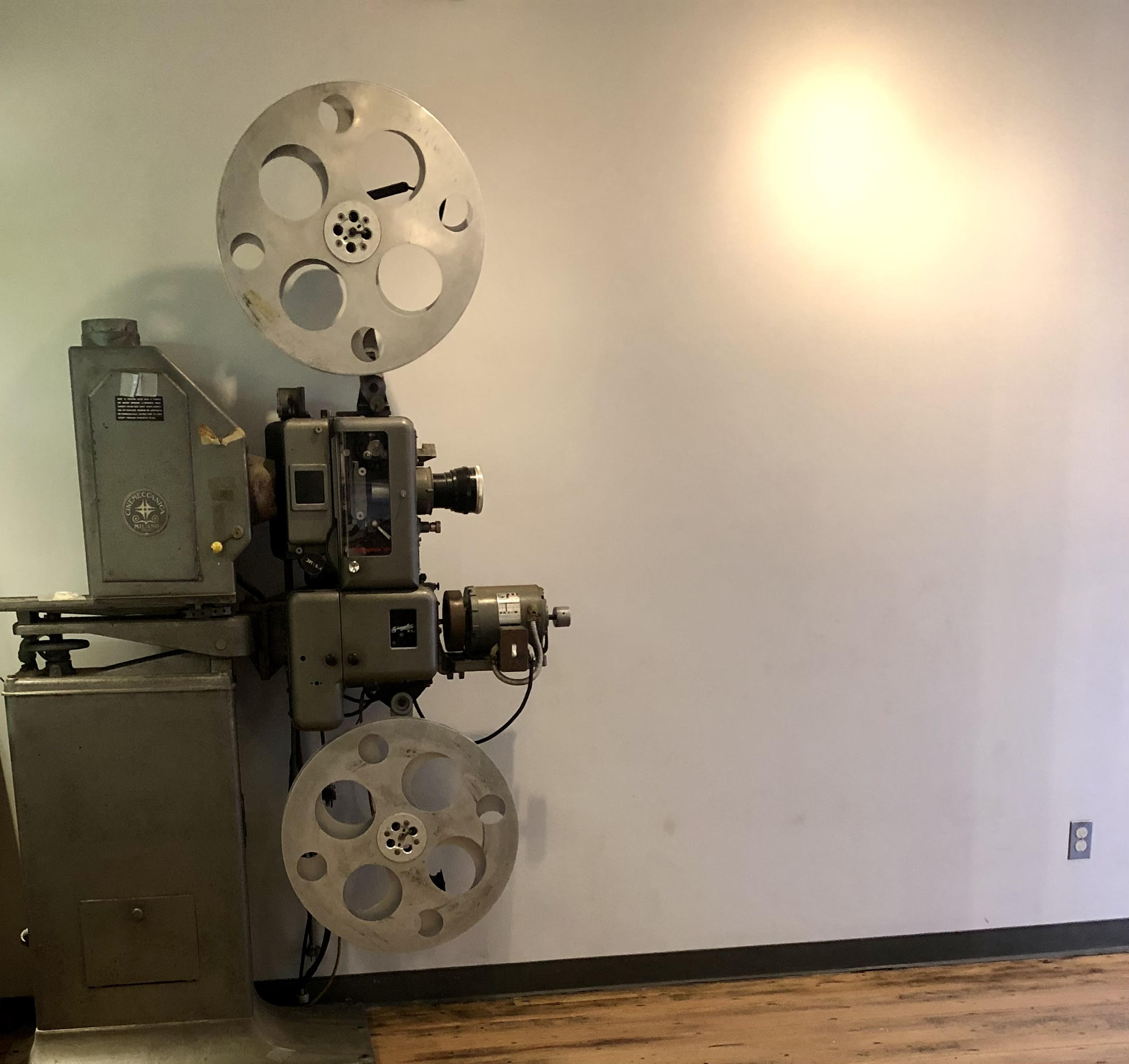
Speaking of history, I think we need to enjoy old-time movie theaters now, while they last.

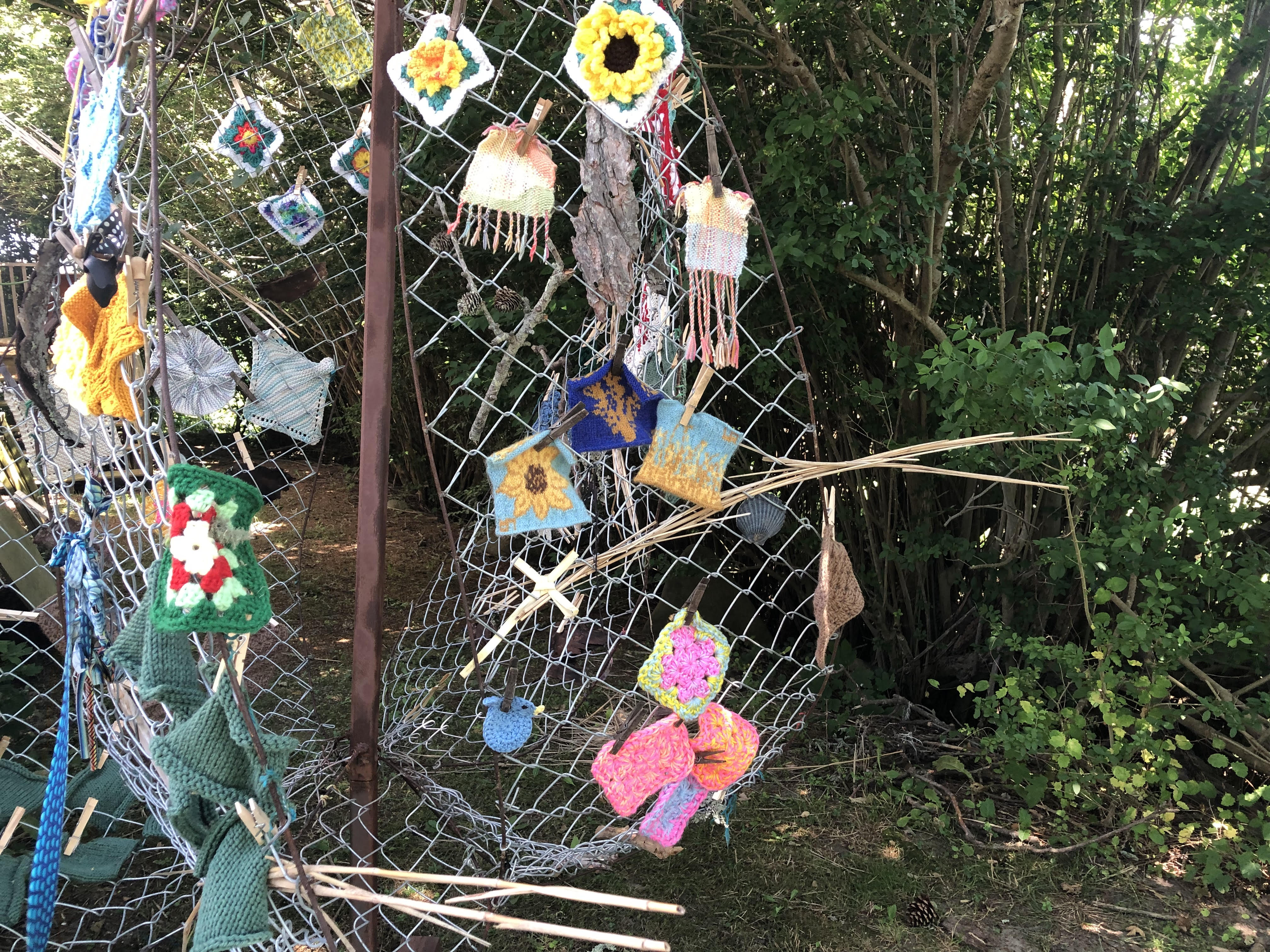
Outside the Spring Street Gallery, I added a grape vine to this “community fiber tree.” I am also planning to thread and hang a feather and a couple shells with holes if I can interest a grandchild in helping.

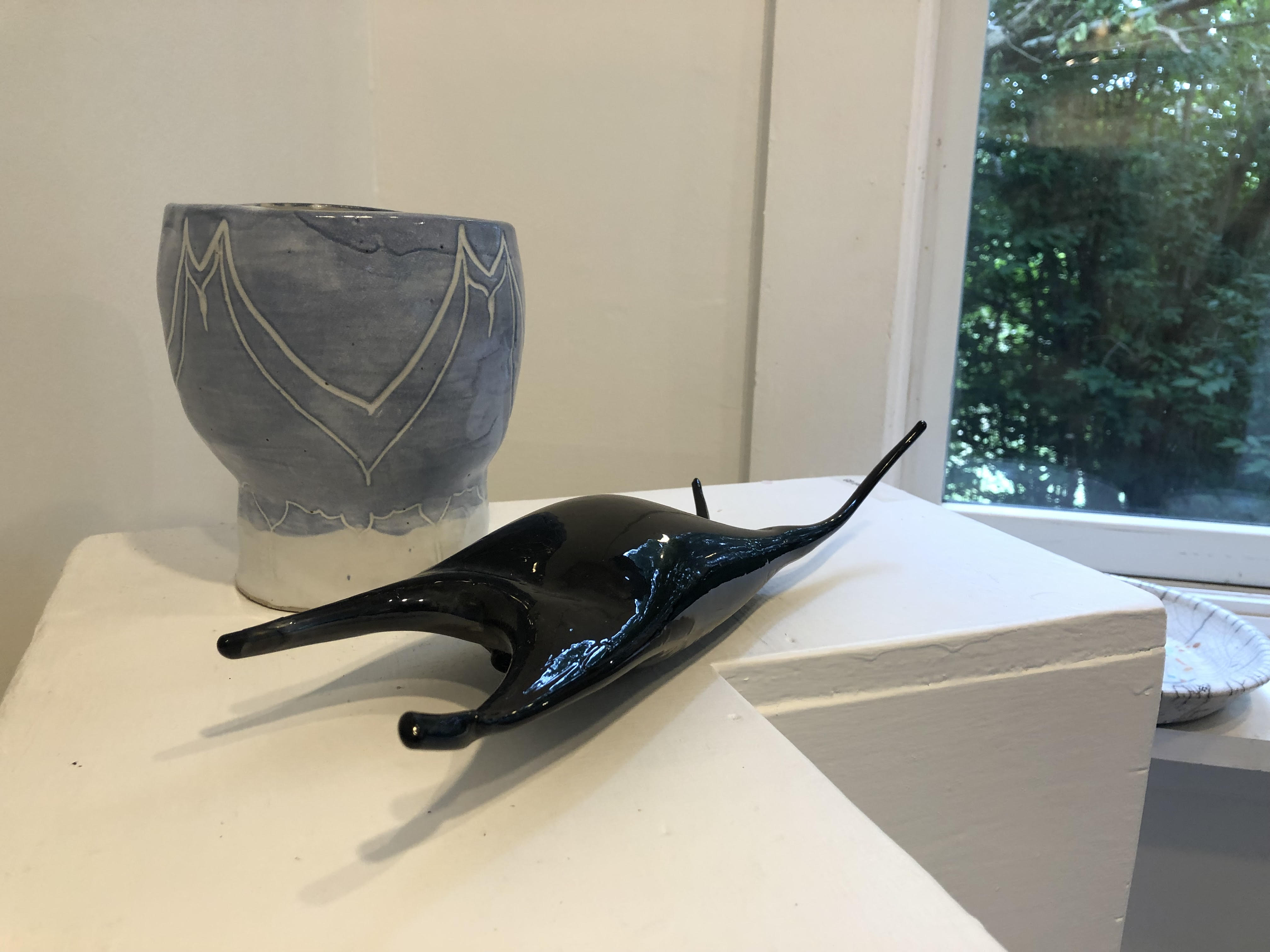
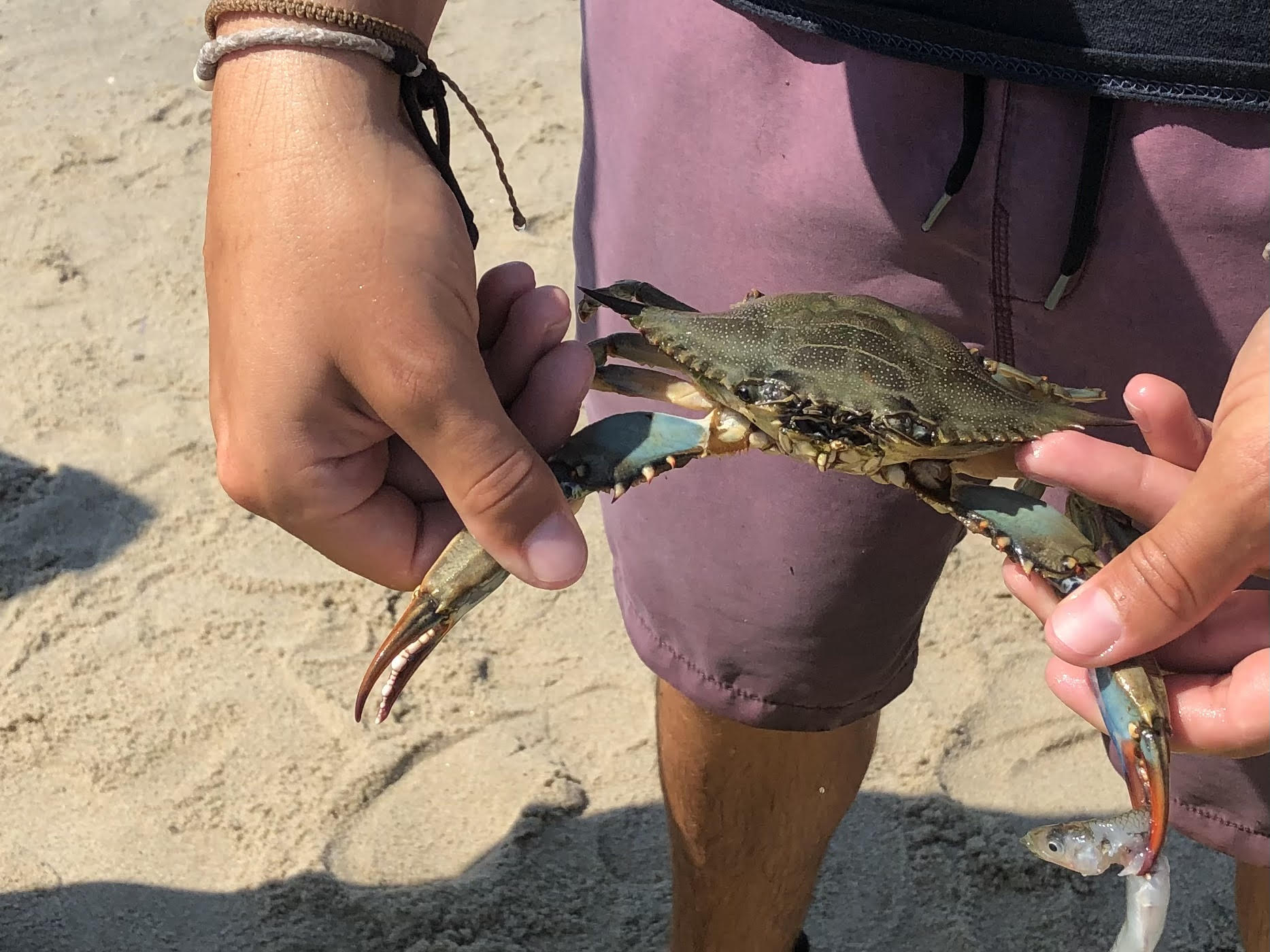
Inside the gallery, there’s a large ceramic version of a skate’s egg case. Next Nature herself appears, in the form of a blue claw crab who was about to release thousands of eggs into the salt pond. Blue claws are moving north, which is nice if you love to see them, not so nice if you realize it’s because of a warming climate. The little girl at the Nature Conservancy seining-net demonstration was entranced with a green crab, too.

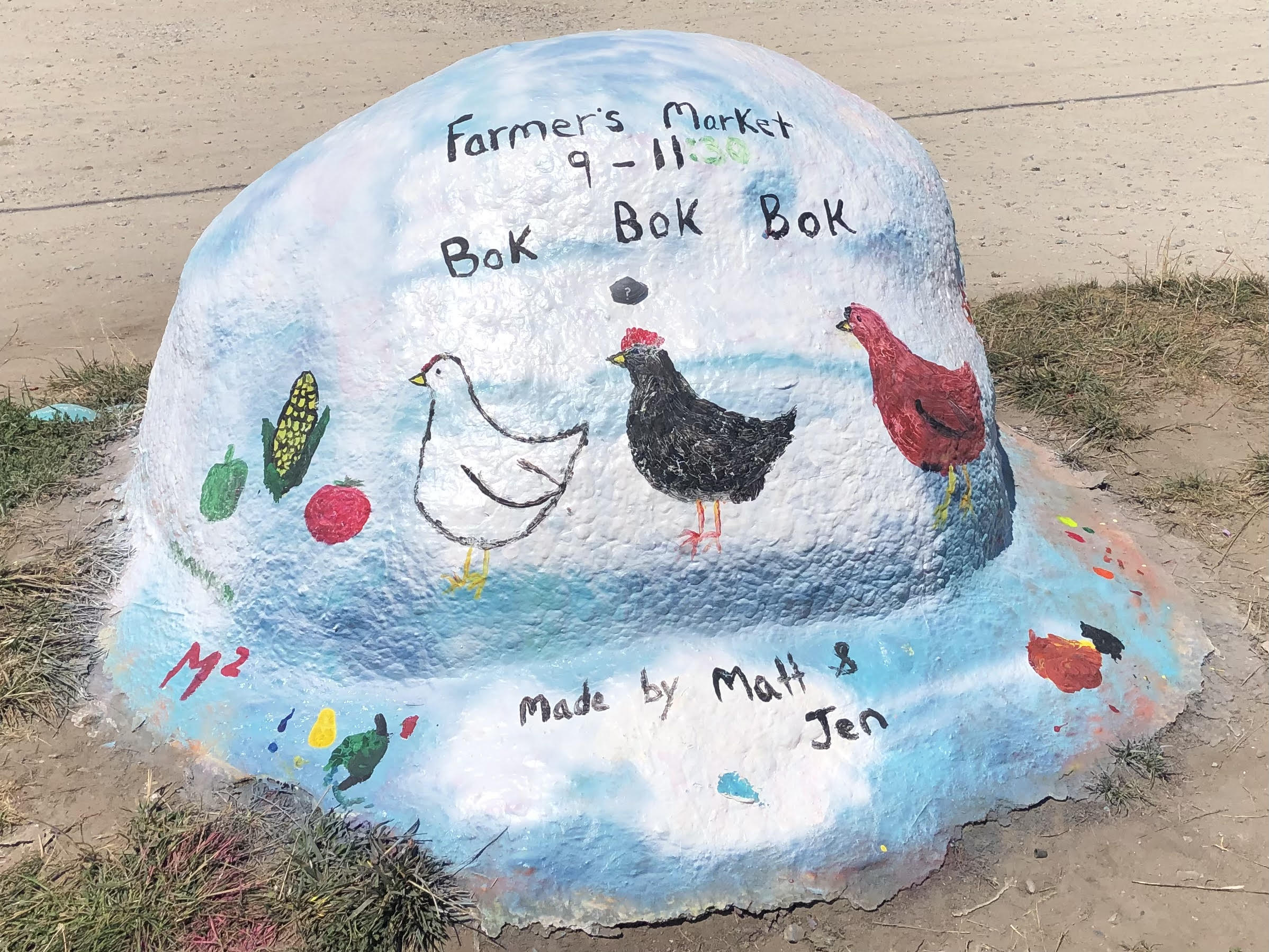
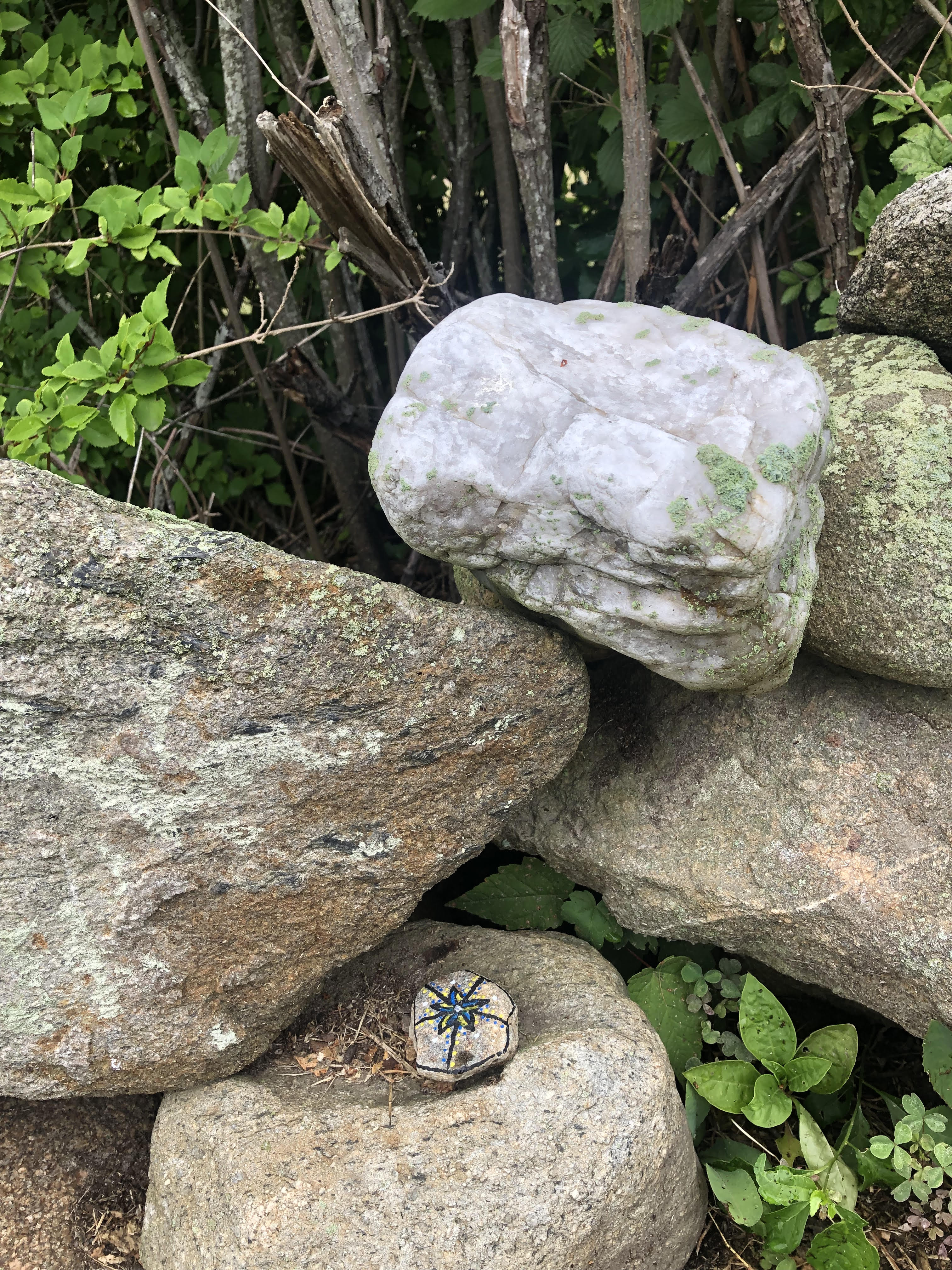
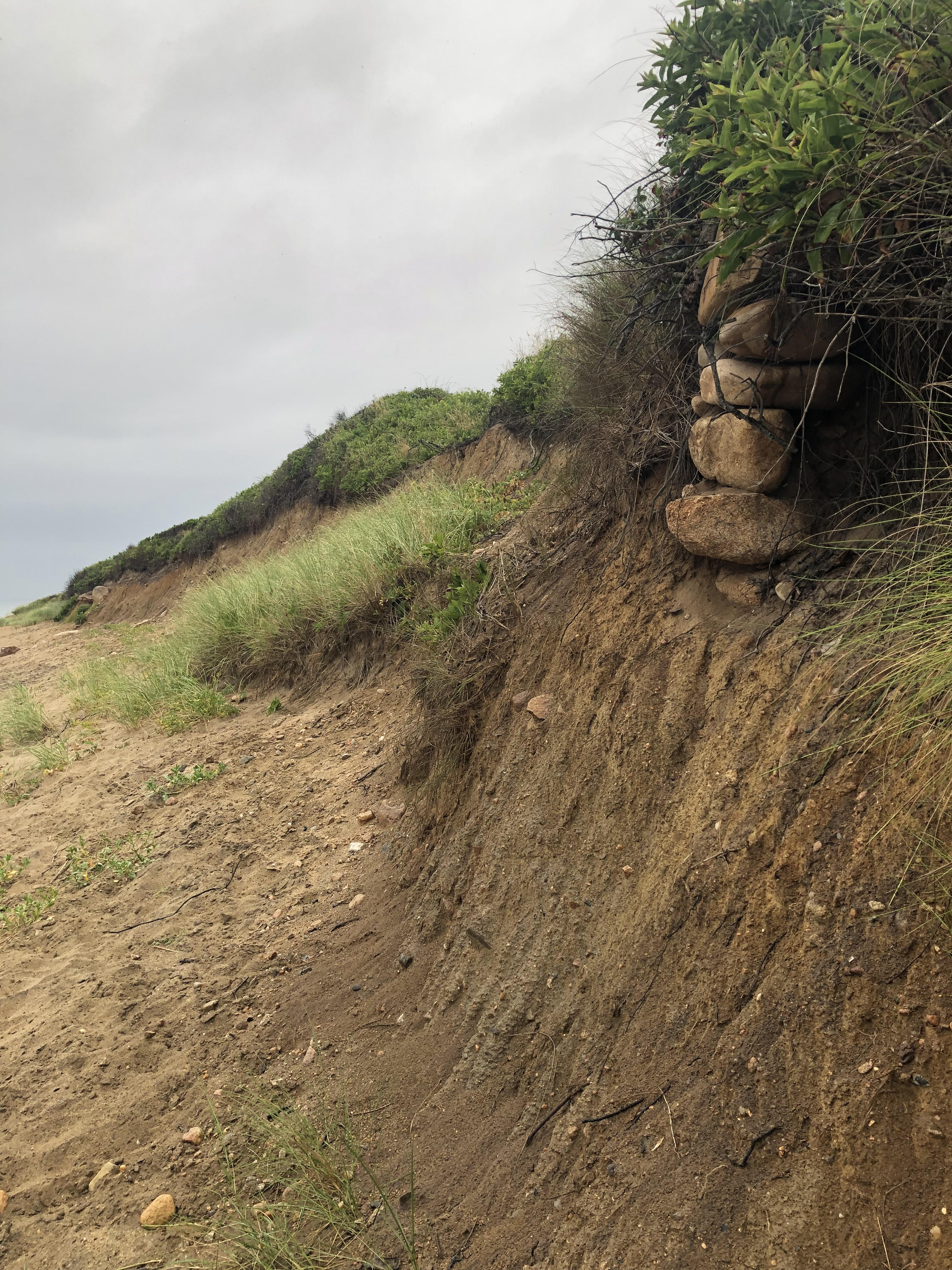
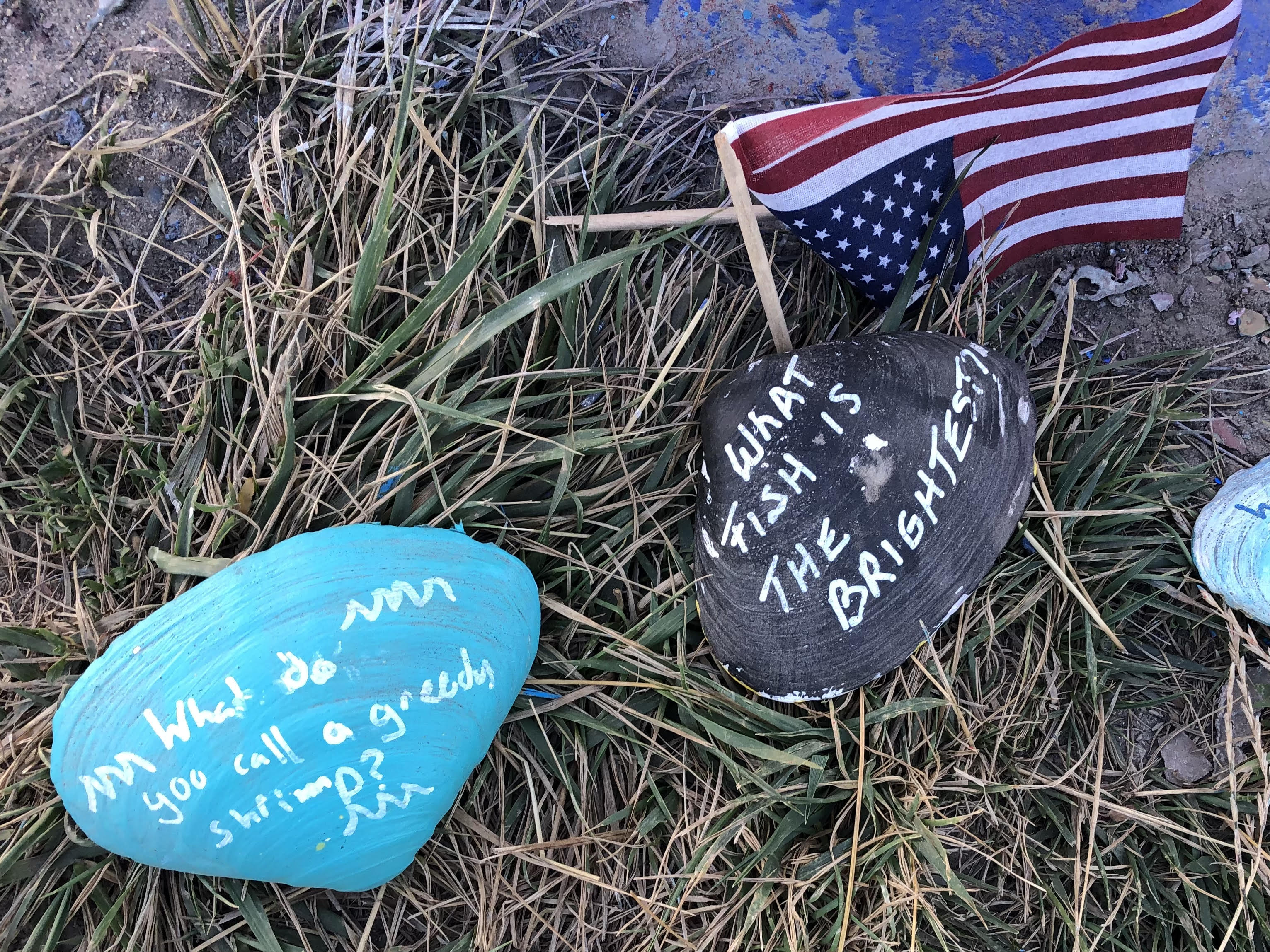
Painted rocks of various sizes are next, followed by precarious ones threatening to fall from the ever changing bluffs. All islands have messages about about the precarious — what Nature makes precarious, what humans do.

Read Full Post »

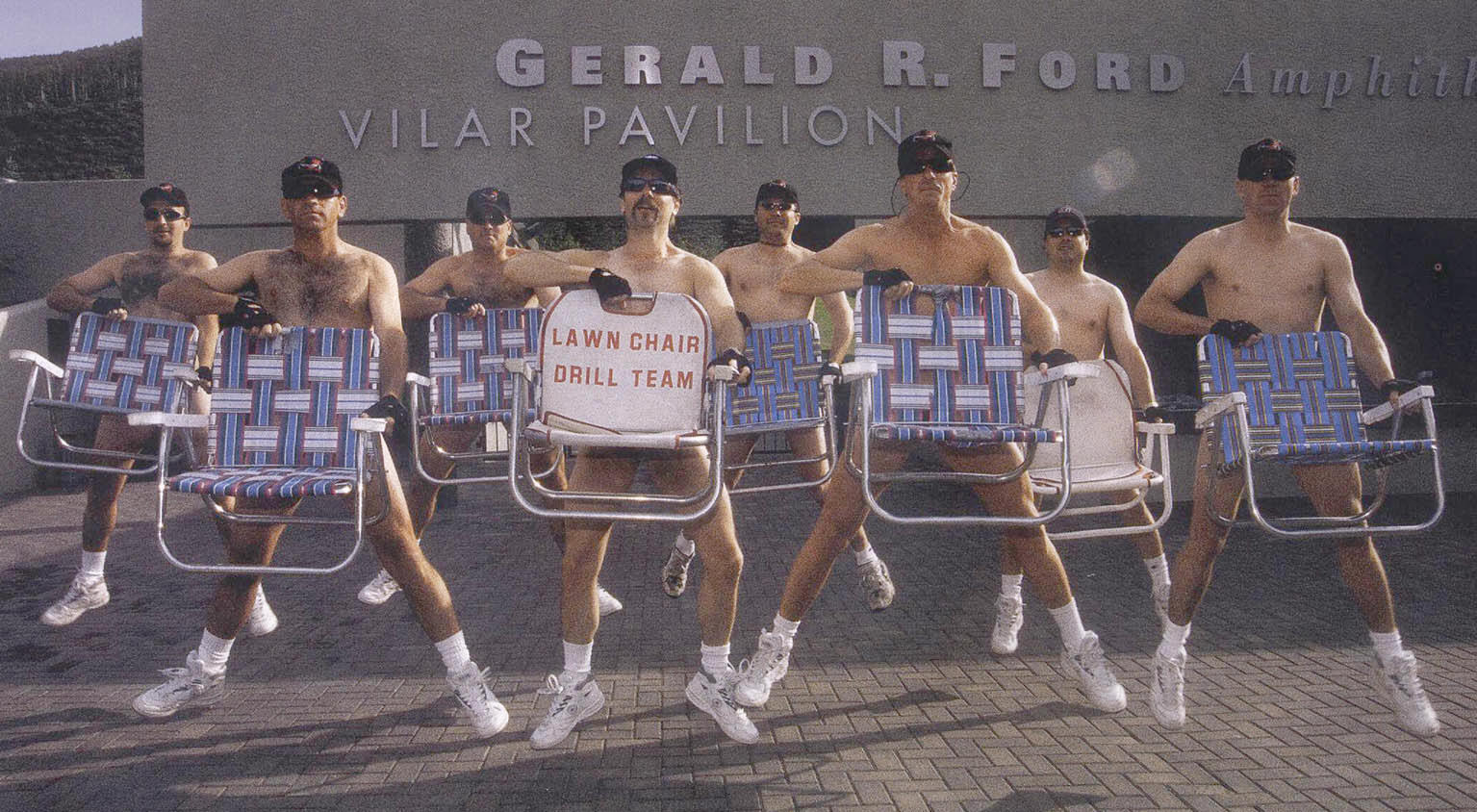
Photo: Vail Lawn Chair Team.
Precision lawn-chair team in Vail, Colorado. It takes commitment to pull off something so unserious this well.

Never doubt the ability of the human brain to amuse itself.

In Vail, Colorado, there’s a group of guys who work long hours to perfect their moves for the next lawn-chair precision-marching event. Randy Wyrick wrote about this unusual group at the Vail Daily.

“Nine guys launched Vail’s Precision Lawn Chair Demonstration 35 years ago. …

“Lawn chair pioneer Richard Carnes said [that] they debuted in Vail’s 1984 July Fourth parade. The crowd went wild, especially when the chair men lobbed water balloons at the crowd and one splashed former President Gerald Ford. …

“One thing led to another, as things often do, and they landed all sorts of gigs. No one had ever seen anything like them. We still haven’t.

“There was a Heath candy bar commercial, multiple performances nationwide for conventions and other special events like NBA halftime shows and even a few NFL and MLB events.

“For the uninitiated, the Vail Precision Lawn Chair Demonstration Team is a bunch of guys and several Banner Babes in Hawaiian attire, shorts and sunglasses and, for [the 2019] Vail America Days parade, 10th Mountain Division baseball caps. Their performance is sort of like a military drill, except they use lawn chairs instead of rifles. …

“Participation faltered a bit in the early 1990’s, but resurrection was close at hand. They represented Colorado in Washington, D.C. for President Bill Clinton’s 1993 Presidential Inauguration. …

“It was 9 a.m. January 20, 1993 and the local chair men owned Pennsylvania Avenue, an eight-lane thoroughfare lined with tens of thousands of spectators, held back by hundreds of D.C’s finest. …

“Maybe it was the buffed aluminum, or the intricate nylon webbing with the strategically placed finger-hole in the back. Or maybe it was their new Hawaiian shirts, sometimes-sponsored shorts, sunglasses and sporadically matching shoes.

“No one knows for sure, but minor TV commercials with major ski resorts led to TV interviews with the likes of Erma Bombeck and Bob Beattie, all leading to the pinnacle of TV fame — a Miller Lite ‘Tastes Great/Less Filling’ commercial.

“They ‘suffered’ through four days of shooting on the beach around the Santa Monica pier, surrounded by bikini-clad women. That’s what it takes to create greatness, and film a 30-second commercial.

“The D.C. Elite decided if the chair men were good enough for Bubba, they were good enough for Bush.

“ ‘For whatever reason, and trust me when I say many were searching for them, we were invited back to Washington D.C. to do it all over again, this time for George Bush’s Inaugural Parade in 2001,’ Carnes said.

“They appeared live on ‘Good Morning America’ with Tony Perkins, followed by a humorous discussion with Charles Gibson and Diane Sawyer. Taped appearances went national. …

“Seventeen radio shows beamed them around the globe from Eugene, Oregon, to Boca Raton, Florida, and all the way to the BBC in London. In fact, three separate divisions within the BBC did three separate interviews; all transmitted live throughout Western Europe.

“They don’t make as many personal appearances as they used to. Some of the original nine — Craig Campbell, Gary Pesso, Will Lewis, Kirk Kennedy, Nick Svoboda, Brian Heslerlee, Jeff Atencio, Gary Howe and Carnes — have passed the torch, and the chairs, to their children.

“ ‘The Vail Fourth of July parade is an annual rite of passage, for the crowds of course, but also for team members and now even their children,’ Carnes said.”

More at the Vail Daily, here. Or watch them perform in the television interview below.

Read Full Post »

Photo: Drew Arrieta | Sahan Journal.
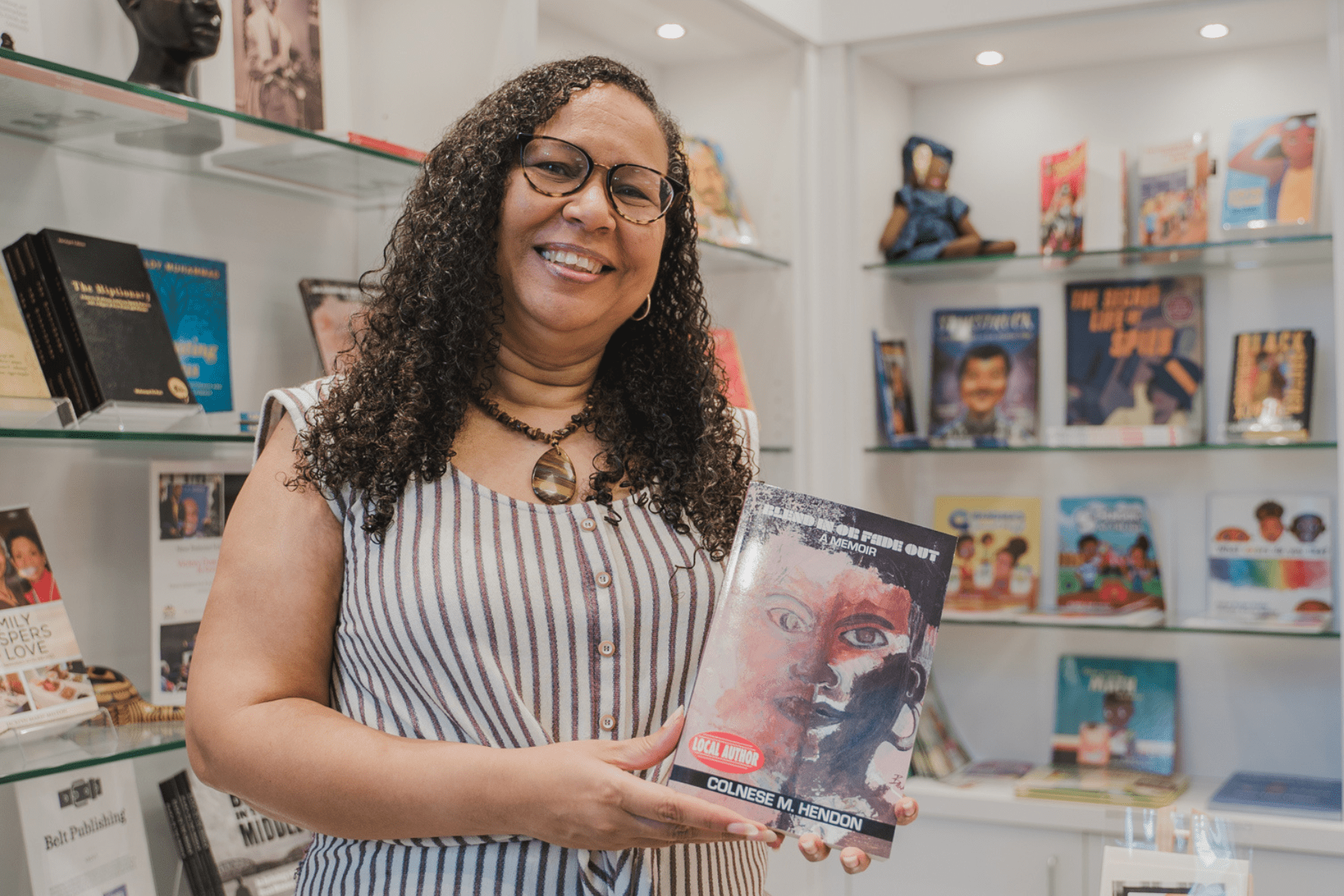
Mary Taris poses with Blended In Or Faded Out, by Colonese M. Hendon, at Strive Bookstore in Minneapolis on July 15, 2022. 

A Black educator and mother in Minneapolis saw a problem. There were few books with characters her students grandchildren could relate to. So she took action. And in the process, helped her own family and many others.

“When Mary Taris was raising her four children in north Minneapolis,” writes Noor Adwan at Sahan Journal, “she knew she needed to give them books more representative of their identity than the ones she’d had as a child. 

“ ‘I always had to spend extra time and money to find books that our Black children could relate to,’ she said. ‘At a certain point, after years of being frustrated, I just decided I needed to do something about it.’ …

“In 2018, Taris founded Strive Community Publishing to carve out space in the publishing world for Black authors. It has published fiction and nonfiction works for adults and children from 20 authors and five illustrators, and recently opened its first store at the IDS Center in downtown Minneapolis.

“Strive Bookstore’s grand opening [July 20 featured] Anthony Walsh, author of Hockey Is for Everybody. …

“ ‘We’re hoping that at the grand opening we can get to know some of the people who live in the downtown community and find out what they would like to see in a bookstore,’ Taris said.

“Taris’ experiences as a reader, educator, and mother all contributed to her aspiration to provide children with culturally relevant books. When she was a child growing up in north Minneapolis, reading was a reprieve from a chaotic home life.

“ ‘I would just be in my room reading anything I could get my hands on,’ Taris, 58, said recently during an interview at Sistah Co-op, the Black-woman focused business collective in the IDS Center where Strive is also located. ‘It was like reading for escape, and wishing I was somewhere else.’

“But she never felt represented in the books she read as a child. … It wasn’t until Taris was in her 20s that she read something that she could see herself in. One of her coworkers, an older Black woman, had stepped in. 

“ ‘Girl, you need to be reading some books by Black folks,’ Taris recalled her coworker saying. She loaned Taris Disappearing Acts, a novel by Terry McMillan. …

“Taris said the straw that broke the camel’s back came during her final few years of teaching. Her school, located in the Robbinsdale school district, had received an arts grant, and she was encouraged to put together an arts-integrated lesson plan.

“At the time, her class of predominantly Black fifth-graders was busy learning about autobiographies and biographies. But there were only a handful of Black biographies in the school’s library.

“To fill that void, Taris planned to have her students pretend to be adults, and write and illustrate their own autobiographies.

She put in a budget request for blank books and markers for her students. Her request was denied.

“ ‘That was it for me,’ Taris said. ‘It’s like, “I’m just gonna start my own business and I’ll spend my money on what I want for our kids.” ‘ … 

“When Taris founded Strive, she was supported by a circle of writers she calls her founding authors.

“ ‘I give them that distinction because they had to go through the learning process with me,’ Taris said. She said she felt fortunate that they trusted her – and Strive – with their stories.

“ ‘One thing that’s key in publishing is to be able to have the trust of the authors, especially authors who are marginalized like Black authors are, because they have been writing their stories for years,’ Taris said. ‘By the time it gets to me, they’re handing over their baby.’

“Donna Gingery, a 61-year-old Black woman and one of Strive’s founding authors, said one of her favorite parts of working with Strive was the support and encouragement she received throughout the writing process.

“ ‘There’s a lot of things I like about Strive Publishing,’ Gingery said. ‘The encouragement of the writer, the respect that you’re getting from the publisher, and not trying to change the narrative of your book. I think that’s really important.’ 

“Taris said that Strive does its best to hire Black editors to look over their books. …

“Taris’ vision for Strive doesn’t end with the IDS Center location. ‘We do have plans for growth and a possible second location,’ she said.

“In the meantime, she wants to focus on serving the downtown community. ‘We’re really striving to connect across cultures,’ she said.

“Part of that, she said, is portraying the Black community and all of its richness and diversity of talent in a positive light. Readers are already responding.

“ ‘This is a cultural exchange,’ Shimelis Wolde, 70, said recently as he browsed the co-op. ‘It’s important for the new generation.’ “

More at Sahan Journal, here. You can also read summaries of five new books available at the bookstore.

Read Full Post »

Photo: Melanie Stetson Freeman/CSM Staff
An Indigenous mural fills the front of a building in the North End of Winnipeg, Manitoba, on May 11, 2022.
First Nations in Winnipeg are rethinking their history with the powerful Hudson Bay Company, says the Christian Science Monitor.

It may take a long time, but it’s possible for wrongs to be righted. At least a bit.

Sara Miller Llana reports at the Christian Science Monitor on how the indigenous people of Winnipeg, Canada, are moving toward a new future as they rethink their history with the exploitive Hudson Bay Company and the fur trade.

“After the Hudson’s Bay Co. department store shuttered its hulking, 650,000-plus-square-foot building in downtown Winnipeg in 2020,” she writes, “Peatr Thomas was asked to replicate one of his murals in the empty windows.

“The Inninew and Anishnaabe artist at first hesitated. If any entity casts a colonial shadow in Canada, it is the Hudson’s Bay Co.

“Established in 1670 by the king of England, the HBC existed for centuries as a fur trading enterprise that upended the lives of First Nations as it aggressively expanded into what would later become Canada. Mr. Thomas didn’t want to be affiliated.

“At the same time, the flagship store in Winnipeg looms large — physically and in historical relevance. Mr. Thomas saw an opportunity to share his vision of a ‘new future,’ he says, ‘built on truth.’

“Today his vibrant mural, ‘Aski Pimachi Iwew,’ reflects back the story of the earth’s renewal. Animals painted in black, upon a red background representing dawn, depict the seven ancestor teachings of ‘Turtle Island,’ what many Indigenous people call North America: love, wisdom, respect, courage, honesty, humility, and truth. …

“His mural would be a taste of what’s to come to downtown Winnipeg. Since April, colorful flags and banners have enlivened the building’s drab neoclassical facade, installed by the Southern Chiefs’ Organization (SCO), which represents 34 First Nations groups in southern Manitoba.

“This spring HBC, now a holding company that owns businesses and investments including Saks Fifth Avenue, transferred the building to the SCO. The Indigenous leaders plan to turn it into a multifaceted facility centered around low-income housing for the urban Indigenous community, as well as restaurants, pop-up stores, and space for artists. It will also become the new seat of SCO governance.

“At a time when Canada says that Reconciliation with Indigenous peoples is a driving goal at the highest levels of government, the transfer of a colonial icon to Indigenous leaders resonates with symbolism. …

“ ‘I think it was important for us to let it be known that this is the change that’s coming,’ says Jerry Daniels, the grand chief of the SCO, whose offices are currently based on the industrial outskirts of Winnipeg near the airport. ‘This is what Reconciliation is.’ …

“HBC is Canada’s oldest company. It was chartered in 1670 by King Charles II, after two fur traders convinced him that a base on the shores of the Hudson Bay would provide direct access to the beaver pelts so popular in Europe at the time.

“HBC would come to rule over trapping grounds that represent a third of Canada today. And in its pursuit it would drive settlement across the continent, acting as a de facto government and disrupting communities that had been self-sustaining with their own sophisticated trade networks and diplomatic ties to one another. …

“In an elaborate ceremony, Grand Chief Daniels, in a beaded headdress, transferred two beaver pelts and two elk hides, the traditional ‘rent’ under the original charter, to the governor of HBC, New York business executive Richard Baker.

“Sophia Smoke was invited there as the oral historian. She’s an eloquent 14-year-old from Dakota Plains Wahpeton First Nation in Manitoba. … She addressed the crowd in the Dakota language, which her grandmother taught her, before continuing in English. ‘Today there is no mistaking, we are changing the course of history for good,’ she told the crowd. …

“Today, Winnipeg counts the largest urban Indigenous population in Canada with over 92,000 (in a population of 750,000). It has led to a vibrant Indigenous social and cultural scene that is increasingly present on the cityscape. But the economic reality of Indigenous peoples, dispossessed from their lands, also comes into stark view here.

“According to the latest census figures, 31% of Indigenous people in Winnipeg live below the low-income threshold, compared with 13% of the non-Indigenous population. Homelessness is a major problem for the city, and 66% of those in emergency shelters, transitional housing, and safe spaces identify as Indigenous. Child poverty is the highest of any province. …

“Mr. Daniels, from Long Plain First Nation, says he experienced much turbulence growing up, part of the child welfare system for a while. He says providing stable housing will have a ripple effect on the community that’s suffered poverty and intergenerational trauma, especially from the residential schooling system.

“ ‘Families are built on the stability of their grandparents and their great-grandparents who were able to provide the knowledge and the love and support to engage in different areas,’ he says. ‘We didn’t have that opportunity.’ …

“Wehwehneh Bahgahkinahgohn is meant to be a vibrant hub, with two restaurants and community space. It will showcase Indigenous art and culture and include a museum that tells the role that Indigenous people played in the founding of HBC from their perspective.

“The building reinforces a transformation already underway in Winnipeg. There is Qaumajuq, billed as the largest Inuit art center in the world, that opened last year. There is the Canadian Museum for Human Rights, which dedicates a significant portion of its permanent display to the truth about Canada’s violent assimilationist policies. Indigenous murals, sculpture, and gardens color the cityscape. …

“The new project could become a model for other Canadian cities and landmarks, says Lloyd Axworthy, a former Canadian foreign minister and former president of the University of Winnipeg who is an adviser on this project. … ‘This project dispels the idea of Native people being dependent on welfare and all those kinds of stereotypes. No, they are entrepreneurs, they are activists doing important things, and they can manage a big project.’

“Stephen Bown, author of the book The Company, which tells the story of the first 200 years of HBC, says the Winnipeg project in some ways takes history full circle. ‘The amount of Indigenous involvement in that business often goes unrecognized,’ he says.

“While run from London, HBC on the ground depended on the knowledge, savvy, and goodwill of the Indigenous inhabitants. ‘That began right from the very, very beginning. … The symbolic significance could be that the company is returning maybe in one sense to its roots as an Indigenous-run thing.’ ”

More at the Monitor, here. No firewall.

Read Full Post »

Photo: Suzanne’s & John’s Mom.
Have you ever wondered how this tradition got started?

Here is what I was able to find out about the custom of putting a tree on the roof of a building under construction.

Mark Vanhoenacker posted one explanation at Slate in 2013. “The tree is an ancient construction tradition. There are many such rites associated with a new edifice including the laying of foundation stones, the signing of beams, and ribbon-cuttings. But what’s particularly charming about the construction tree is that it isn’t associated with the beginning or the end of construction. Rather, the tree is associated with the raising of a building’s highest beam or structural element.

[The] name of the rite: the topping-out ceremony. It’s a sign that a construction project has reached its literal apogee, its most auspicious point. …

“When a new building reaches its final height, it’s not surprising we’d mark the occasion with a ceremony. But why celebrate with a tree?

“In fact, the first topping-out ceremonies didn’t use trees. In 8th-century Scandinavia sheathes of grain were the plant material of choice. But as topping-out ceremonies spread throughout northern Europe, trees were a natural evolution. …

“The ancient topping-out ceremony has survived mostly intact in this era of high-tech, high-altitude edifices. In the U.S., particularly on large projects, the final beam is often signed, and an American flag may accompany the tree skyward. The purpose of the ceremony — at least for shining skyscrapers — is usually couched in comfortably post-pagan terms: a celebration of a so-far safe construction site, an expression of hope for the secure completion of the structure, and a kind of secular blessing for the building and its future inhabitants.

“But superstition remains a part of the ceremony, especially on smaller projects. Elizabeth Morgan, an architect at Kuhn Riddle in Amherst, Mass., (and a childhood friend) told me that the general understanding among her colleagues is that the greenery may ‘symbolize the hope that the building will be everlasting.’ She also reports a vague sense among construction teams that ‘if you don’t do it, bad things will happen.’

“Her colleague Brad Hutchison noted that ceremonies often involve a pine bough, not a whole tree. He remembers a wintry Friday afternoon ceremony when a pine bough was mounted on the ridge beam of a recently framed roof. … ‘This is New England, so a lot of carpenters are/were sort of New Agey and took the tradition somewhat seriously,’ he said. ‘New-Agey superstition and carpentry/building go well together, I think.’ …

“What about outside of America? The tree tradition reputedly remains strong in much of northern Europe. … In Victoria, Australia, Kate Ulman, a farmer and blogger, recently attended a topping-out ceremony at her parents’ house. Their construction team had never been to a topping out but were familiar with the custom. This being Australia, in addition to a fir branch, they added—what else?—some eucalyptus. And there was cake.

“What about in Hong Kong, where skyscrapers are a revered form of public art, and the resulting skyline dwarfs even that of New York? I contacted Julia Lau, a Hong Kong architect. … Lau told me that despite Hong Kong’s British heritage, Western topping-out ceremonies are rare. The main celebration is Chinese-influenced and takes place at the start of construction, with a roast suckling pig. On the (auspiciously numbered) date of the ceremony, a stakeholder in the building will bow three times while holding three pieces of burning incense — a pleading for a ‘safe and smooth-sailing project,’ says Lau.”

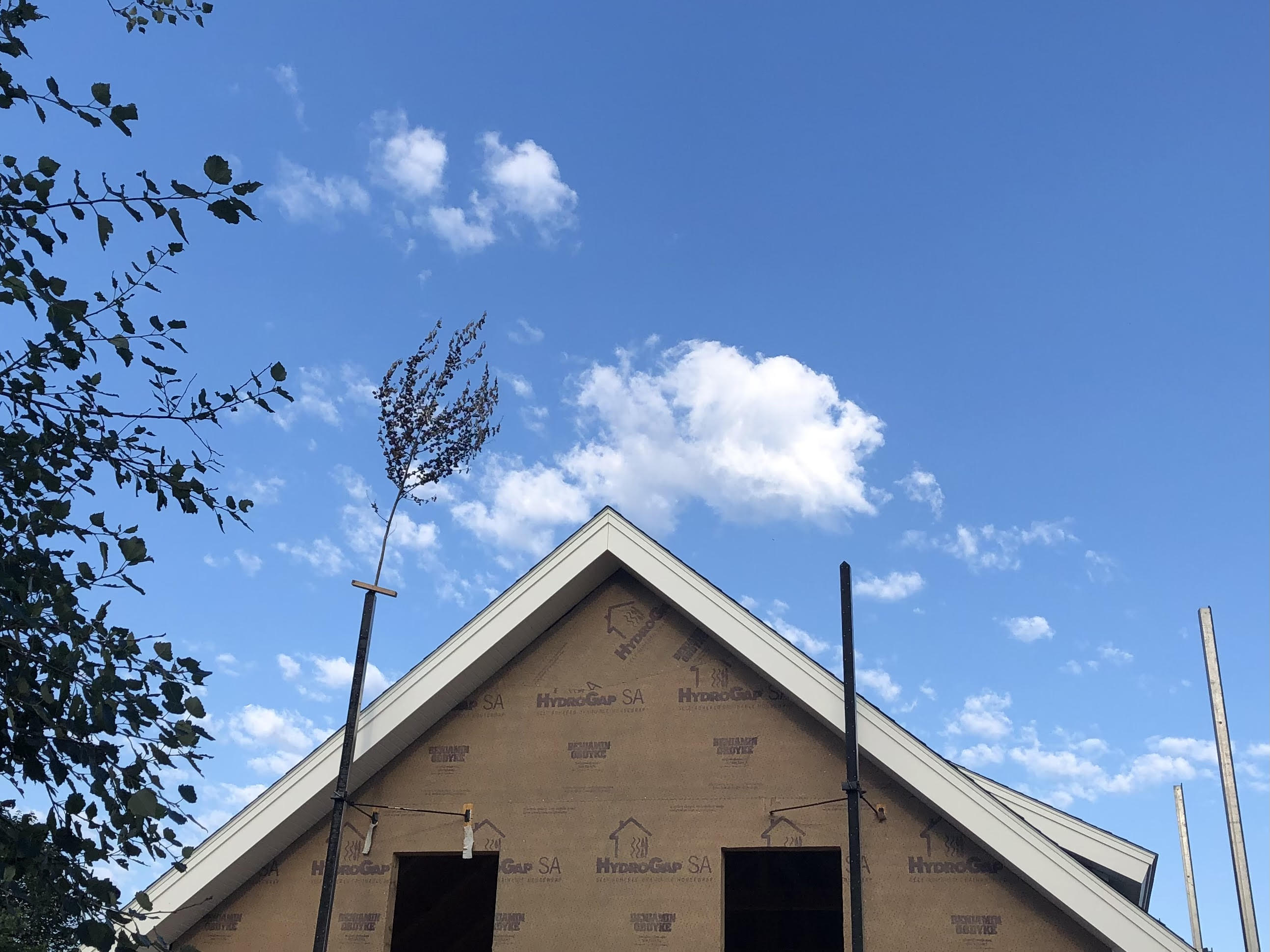
Sandra and I walked by the building in the photo this morning around 6 (hot day). We’d been wondering about the custom. The topping-out here uses a branch from a nearby tree and is not actually attached to the roof but hoisted nearby to look like it. I hope it still brings luck.

More at Slate, here.

Read Full Post »

Photo: Anne Pinto-Rodrigues.
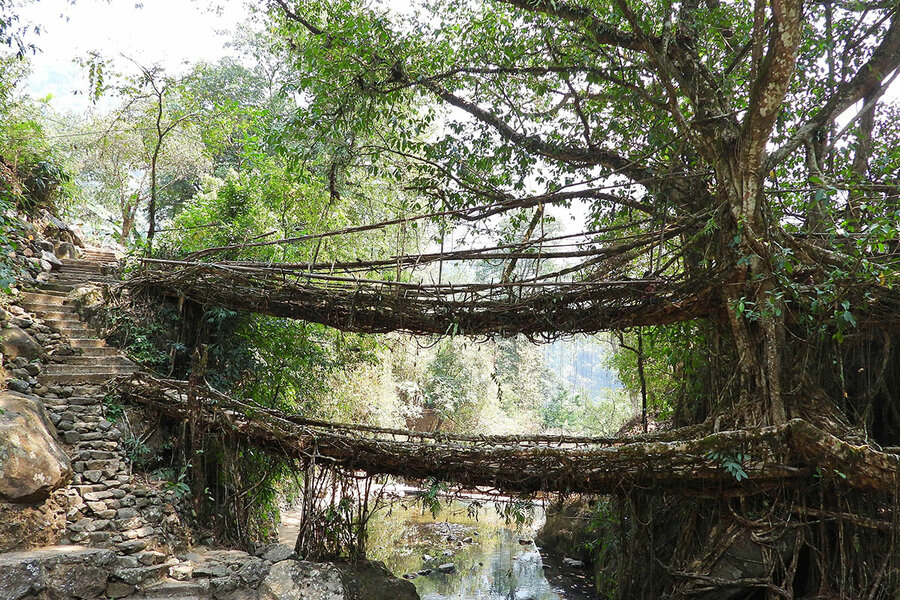
According to the Christian Science Monitor, this double-decker bridge in India’s Nongriat village is among the most famous of the region’s many living-root bridges. Locals say it’s about 250 years old.

I’m reading a quirky, amusing novel about India right now, Tomb of Sand, in which at times the author reminds one that many of the things Westerners think they invented already have a long history in South Asia.

Today’s post shows that at least some Westerners are garnering architecture ideas from Indian villagers.

Anne Pinto-Rodrigues reports at the Christian Science Monitor, “Covered with thick subtropical forests and streaked with streams and rivers, the hilly state of Meghalaya in India’s northeastern corner is one of the wettest places on the planet. During the monsoon season, torrential rains turn docile rivers into raging waterways, and people rely on centuries-old bridges to access farms, schools, and markets. 

“But these aren’t typical overpasses made of wood or steel – the bridges are alive. 

“For hundreds of years, the Khasis of Meghalaya have manipulated the aerial roots of the rubber fig tree (Ficus elastica) to build sturdy bridges, known in the Khasi language as jingkieng jri. There are at least 150 such bridges in Meghalaya, according to Morningstar Khongthaw, who works to preserve and educate the public about the community’s architectural traditions. The figure includes the famous double-decker living root bridge of Nongriat village, which locals estimate is about 250 years old. Mr. Khongthaw’s village, Rangthylliang, has 20 living root bridges. ‘The oldest one is about 700 years old,’ he says, with great pride.

“Today, the jingkieng jri are not only a big tourist draw, but also an important proof of concept for engineers and designers interested in practicing living architecture. Integrating plants into architectural design lessens the need for harmful construction materials and promotes biodiversity, but it can also take generations to test and develop the right building methods. Bioengineers from around the world are studying the living root bridges in the hopes of applying aspects of the Khasi tradition to projects in their own countries.

“ ‘The Khasis have a brilliant understanding of architectural engineering, totally different from the western way,’ says Ferdinand Ludwig, professor of green technologies in landscape architecture at the Technical University of Munich. …

“ ‘There are different ways of designing, building, and growing a living root bridge,’ says Mr. Khongthaw. The most popular model of construction, and the fastest, involves the creation of a bamboo framework, over which the roots of a nearby rubber fig tree are pulled and intertwined, until the roots reach the opposite bank. The bamboo framework itself serves as a temporary bridge while the living root structure takes shape. Over time, the bamboo rots away while the roots grow and merge together, making the structure sturdier and more stable. 

“Mr. Khongthaw says a bridge crossing a stream would be about the length of a school bus, and take nearly 20 years to become functional, whereas a bridge across a river would take 70-80 years. In places where there are no rubber fig trees nearby, villagers must first plant a sapling on the river bank and wait 10-15 years for the aerial roots to appear before building the bamboo framework. 

The time required to reach the first functional stage – when the bridge is strong enough to hold about 500 pounds, or roughly three people with loaded baskets – depends on the required length of the bridge.

“In all stages of their development, the bridges require regular maintenance. This happens in monsoon season when the roots are more pliable. ‘Everyone in my village takes part in maintaining the bridges,’ says Mr. Khongthaw. ‘Whoever crosses the bridge, spends five or 10 minutes working on the roots to make the structure stronger.’ …

“In addition to bridges, the Khasis construct cliffside ladders, tree platforms, swings, and tunnels using traditional techniques passed down orally from one generation to the next. …

“In Germany, Professor Ludwig has been studying examples of living architecture from around the world for nearly two decades. He has designed and overseen the construction of several structures that integrate plants, including a footbridge that uses living willow plants as the sole supports.

“Professor Ludwig first learned of the living root bridges of Meghalaya in 2009, via a documentary, and was struck by the Khasi approach to building. ‘They do not prescribe the structure itself. They only prescribe the aim,’ he says. ‘They want to go from A to B in a safe and comfortable way.’ …

“One of his students at the Technical University of Munich, Wilfrid Middleton, is studying Meghalaya’s living root bridges as an example of regenerative design – an increasingly popular concept wherein structures are not just sustainable (built with minimal and efficient use of resources) but they also replenish the resources required for their functioning and enrich their surroundings, thus having a net-positive effect on the environment.

“In cities, living structures like the footbridge designed by Professor Ludwig can help sequester carbon, create a cooling effect, and provide a habitat to birds and other urban wildlife. …

“Mr. Middleton has visited 70 jingkieng jri so far, and with the consent of the village elders, he photographs the bridges to create precise 3D models. ‘Each year, as the bridge grows and changes, we are able to capture its incredibly complex structure,’ he says. ‘We are trying to learn from the Khasis.’

“While there is increasing international appreciation of the living root bridges, back in Meghalaya, Mr. Khongthaw says many villagers aspire for a modern lifestyle, complete with concrete houses and bridges. Worried that traditional Khasi knowledge may feel irrelevant to younger generations, Mr. Khongthaw founded the Living Bridge Initiative in 2016, with the objective of preserving, protecting, and increasing the number of living root bridges. He regularly visits educational institutions to speak about his work. …

“Mr. Khongthaw has also started a sapling center to address the shortage of rubber fig saplings, which are not easy to find in the forest. The biggest threat to these ancient bridges, however, are the development projects in their vicinity.”

More at the Monitor, here. No firewall. Additional pictures at the Better India, here, are also worth checking out.
Read Full Post »

Photo: D.I.R.T. Studio.
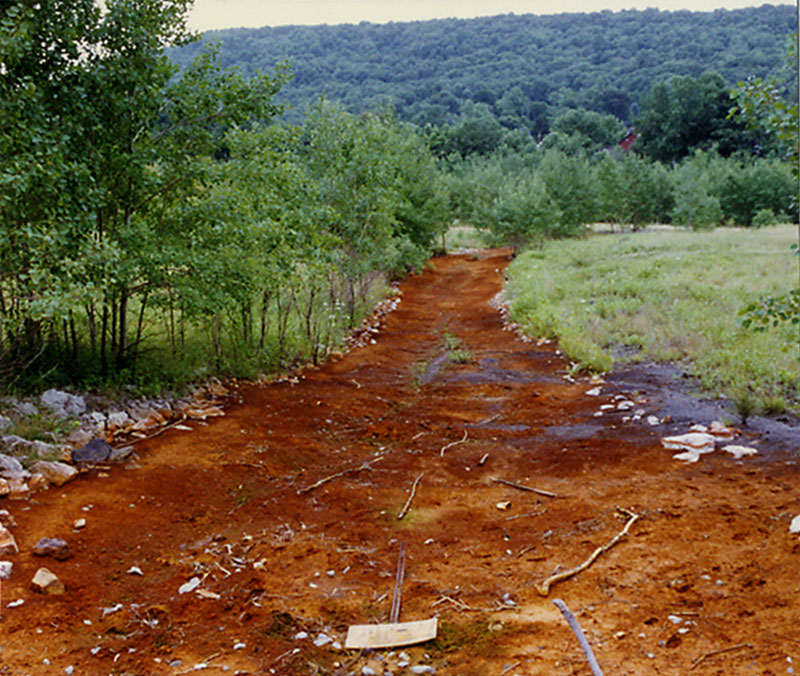
Vintondale Reclamation Park, Vintondale, Pennsylvania. Landscape architect Julie Bargmann’s “work to revitalize toxic sites and reconnect them to their communities has earned her the nicknames ‘Toxic Avenger’ and ‘Queen of Slag,’ ” says the
Times.

Have you ever looked at a polluting site, maybe fire from a smokestack or rusting steam engines, and seen a kind of artistic beauty — that is, something that would be beautiful if the poisonous fangs were removed?

Today’s story is about a landscape architect with that way of seeing and the skills to reclaim what had been lost.

Tanya Mohn reports at the New York Times, “For more than 30 years, Julie Bargmann, a landscape architect and founder of D.I.R.T. Studio (Dump It Right There) in Charlottesville, Va., has focused on contaminated and forgotten urban and postindustrial sites, dedicating her practice to addressing social and environmental justice. …

Her projects include an abandoned pump house and reservoirs in Dallas transformed into an art-filled residential garden; the derelict parking lot of a 19th-century fire station in Detroit converted into an urban woodland; historic shipyards that became welcome centers and corporate campuses; and former coal mines, quarries and foundries recast as community parks and public spaces.

In an essay titled ‘Justice from the Ground Up,‘ Ms. Bargmann wrote that there is a disturbing overlap between maps showing where poor people and ethnic minorities live and where contaminated soils exist in the United States. …

“In October 2021 she was named the inaugural winner of the Cornelia Hahn Oberlander International Landscape Architecture Prize, created to celebrate prominent living landscape architects.

“ ‘Being a fierce public advocate is part of the practice of landscape architecture,’ said Charles A. Birnbaum, president and chief executive of the Cultural Landscape Foundation, the nonprofit that awarded the prize. … ‘Bargmann’s legacy is much bigger than the built work,’ Mr. Birnbaum said. ‘It’s valuing the landscape and the cultural life associated with it.’ This interview has been edited for clarity and length. …

“NYT: Did your early years impact your career focus?

“Julie Bargmann: My own little industrial history started riding in my family station wagon on the New Jersey Turnpike. I was living in a really nice postwar neighborhood with big old trees, but when we would see all of the refineries and factories I thought, ‘Wow.’ I remember looking beyond them at all the modest workers’ houses. I went to college in Pittsburgh, a city with those same working neighborhoods stacked up on the hillsides and those belching steel mills down in the valley. I loved the steel mills. They’re so raw, they’re so tough. Everybody sees the bridges, but in the mills you’re seeing and feeling the heat, your jaw drops at the faces blackened by smoke. …

“Three decades ago no landscape designer was looking at the vast manufacturing and mined landscapes, landfills and every type of degraded landscape. When I thought about the number of acres, it was astonishing. That set me off. Folks might think I’m a bit crazy, but I’m going to go find the landscapes that I want to work on, not more or less already perfect landscapes. …

Was there a turning point in your approach to landscape design?

“During my first teaching job, I got some funding, and I took off on the road and looked at mined landscapes around the country, including restricted areas. It was fascinating, but when I learned what environmental engineers were doing, it infuriated me. They were doing very quick fixes. They took no account of the social or cultural implications of the landscapes; environmentally, they were squeaking by to meet the regulations. That completely negates any of that human agency. They’re throwing meaning out, robbing it from the community. That’s really when I launched into a holistic approach to my work.

Do most prospective clients understand your approach?

“When I talk to a corporate leader or an E.P.A. representative who are skeptical, I don’t go on defending the sexy rust. I tell them stories. And I work really hard to pose alternatives. Degraded sites, toxic sites, a lot of times are not 100 percent contaminated. I always use the word ‘regenerate,’ to create anew. I became fascinated with biologically-based remediation technologies. That science has totally propelled what we can do.

How did you learn about those technologies?

“I go out into the field. I call up a scientist. The whole mining world was a total crash course on the different types of reclamation law.

I always tell my students, do your homework, and do it in the world. Engage real people with the design process.

Vintondale Reclamation Park, a 35-acre site in coal country near Pittsburgh, completed in 2002, was pivotal. Why?

“It was a perfect, multidisciplinary team of engineers, hydrogeologists, architects, artists, historians and landscape architects. We learned everything about acid mine drainage treatment to design a natural filtration system that addressed years of pollution from mine runoff. Excavators resculpted 19th-century beehive ovens used to convert coal to coke to make steel. We brought them out from behind those chain-link fences and made the science visible, beautiful. Now it’s a neighborhood park alongside a historic bike trail. I mean, boom. It all came together. People started paying attention. There really weren’t any models at that time in the U.S. From then on I could point to something in rural Pennsylvania and say, ‘This is totally possible.’ ”

More at the Times, here.

Read Full Post »

« Newer Posts - Older Posts »