Feeds:
Posts
Comments

Archive for the ‘Uncategorized’ Category

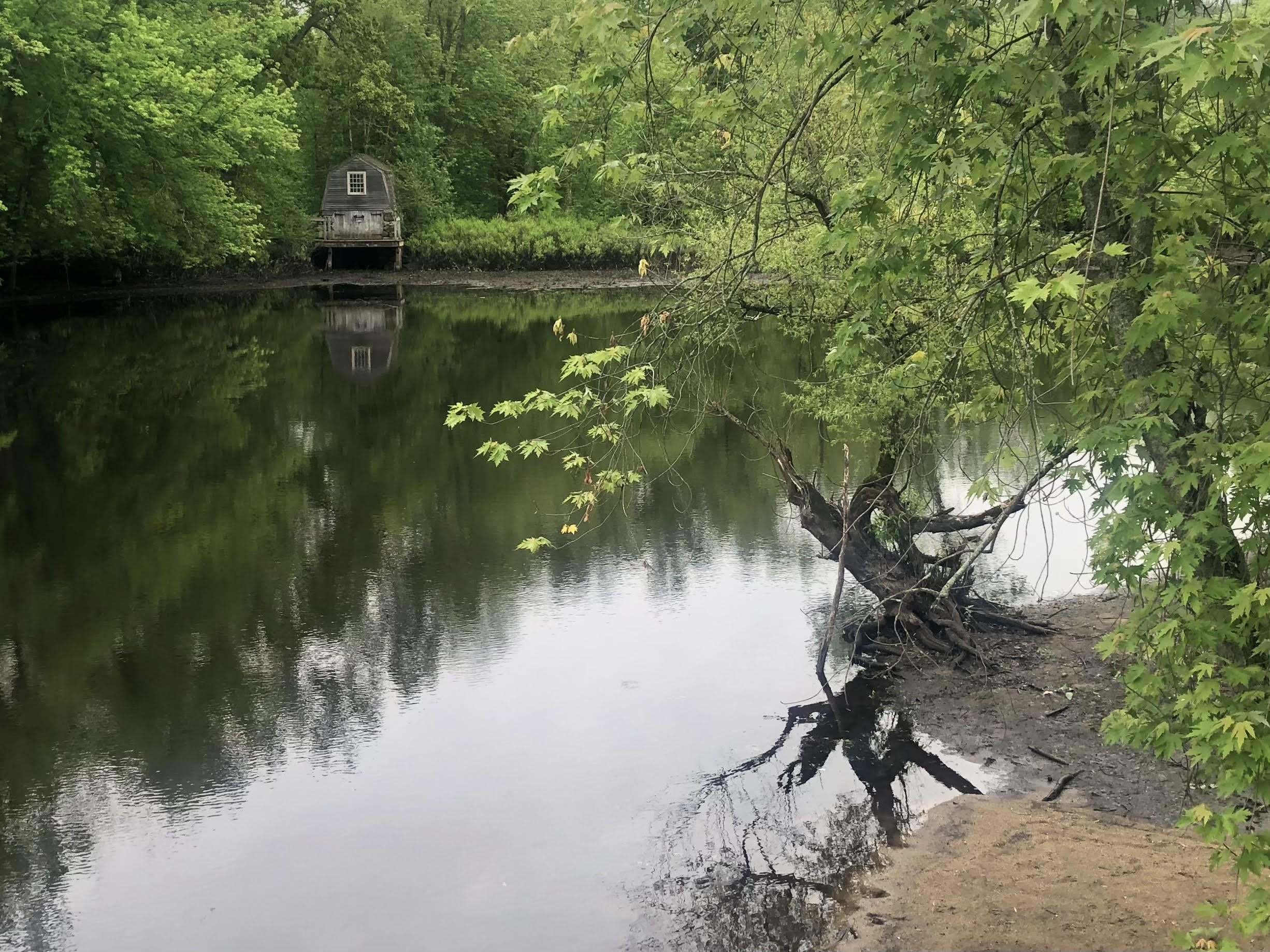
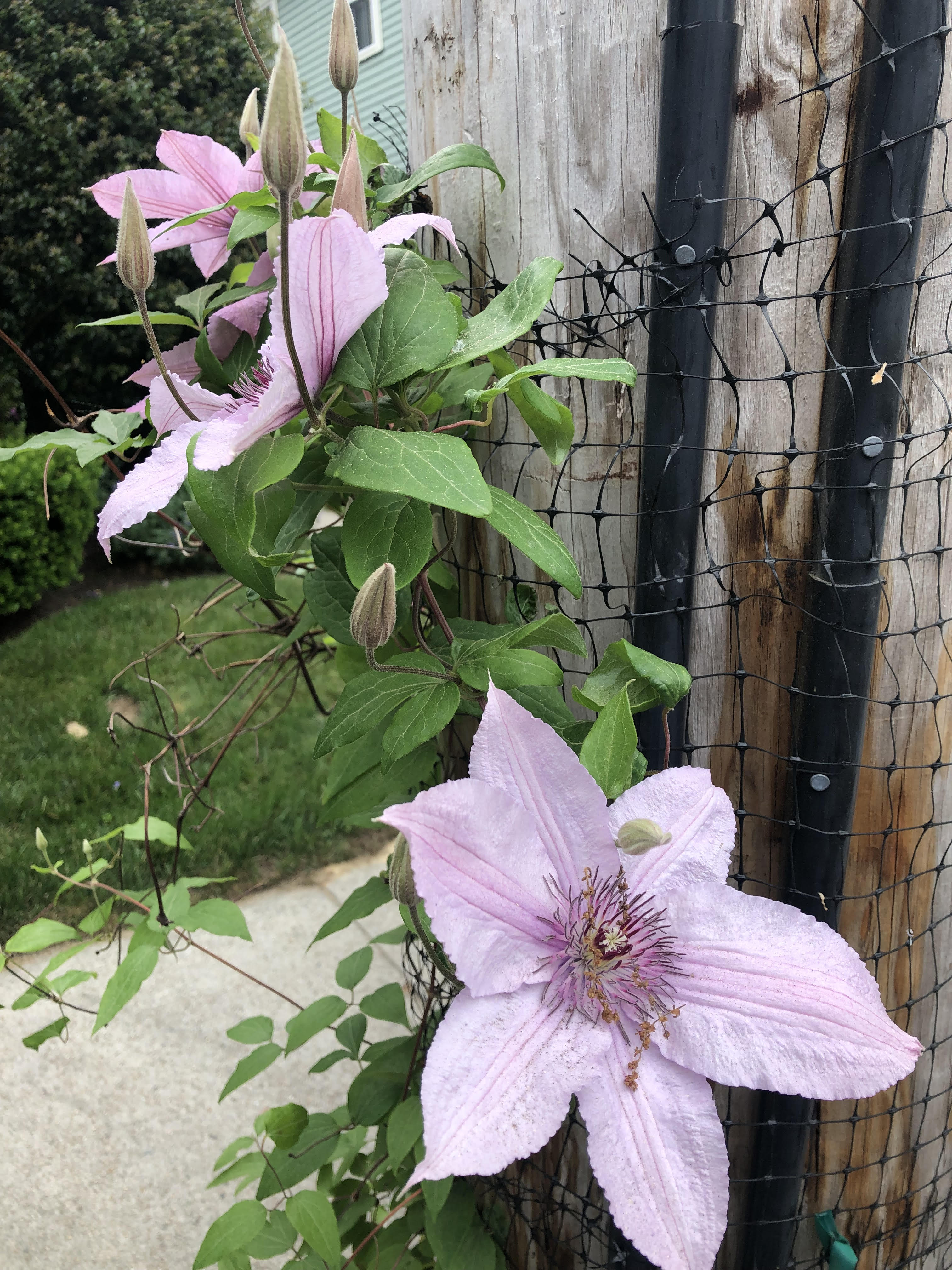
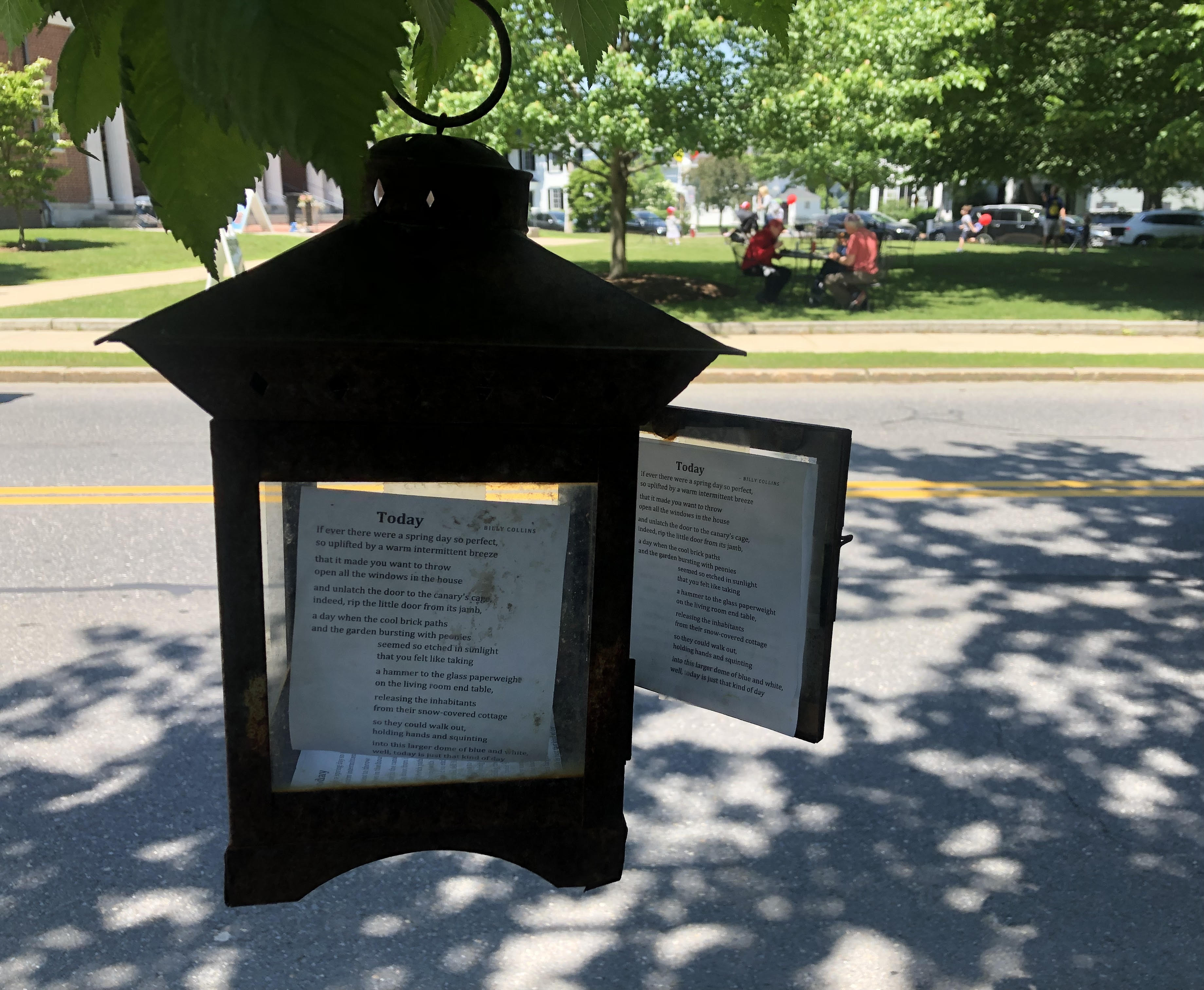
What a great time of year for New England nature photos — really, any photo that benefits from strong sunlight.

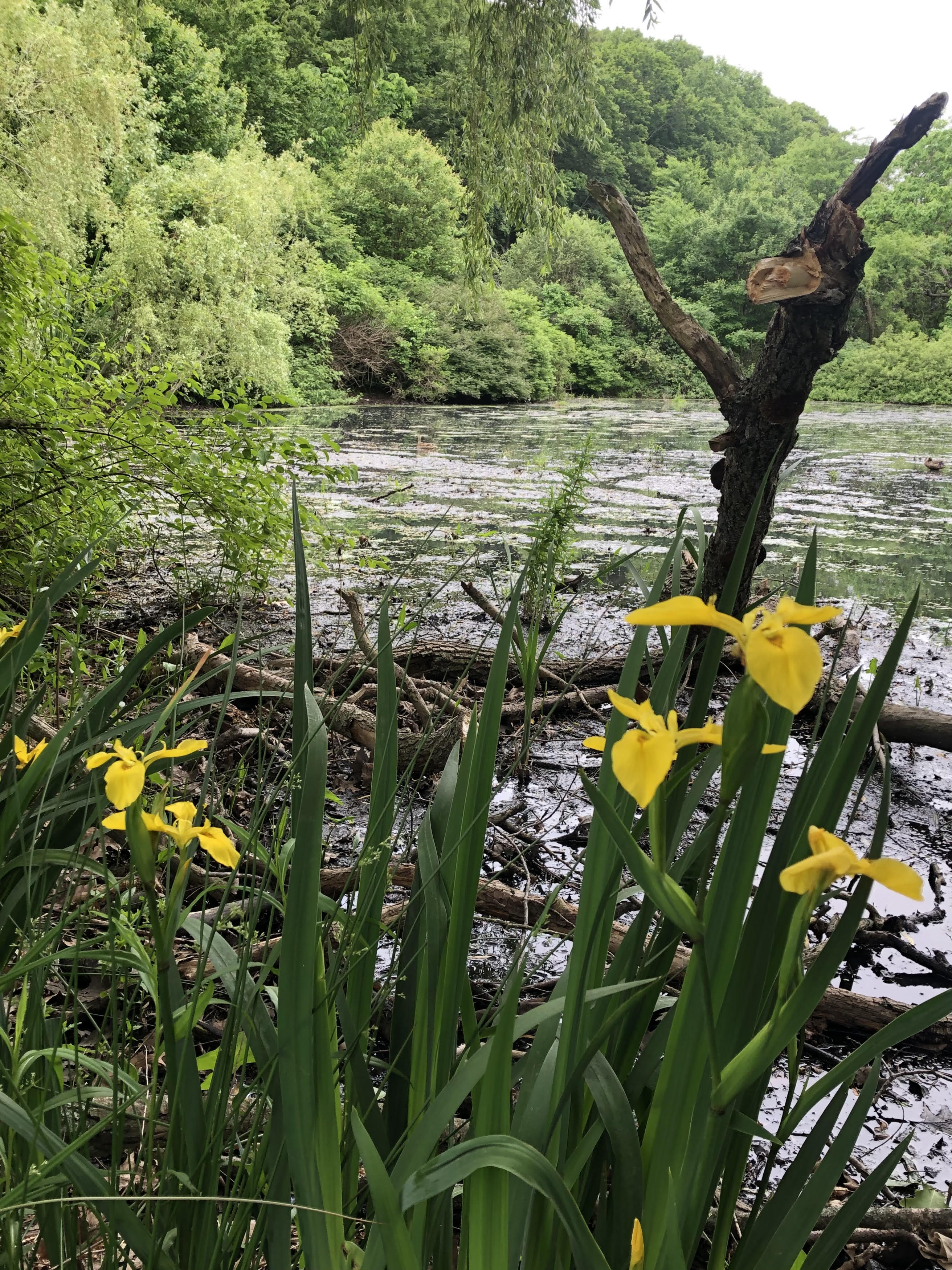
The first two iris photos are from the the grounds of the Buttrick Mansion at Minuteman National Park. The next one shows wild irises in a swamp near Walgreen’s.

Finding rare Lady Slippers is always a thrill, especially finding a large stand. The photo after the Lady Slippers shows fragrant lilacs and wisteria. That one is followed by a field of pink Dame’s Rocket near woods. The little bridge with the crab apple canopy is just off a busy parking lot. Even small pockets of nature are important.

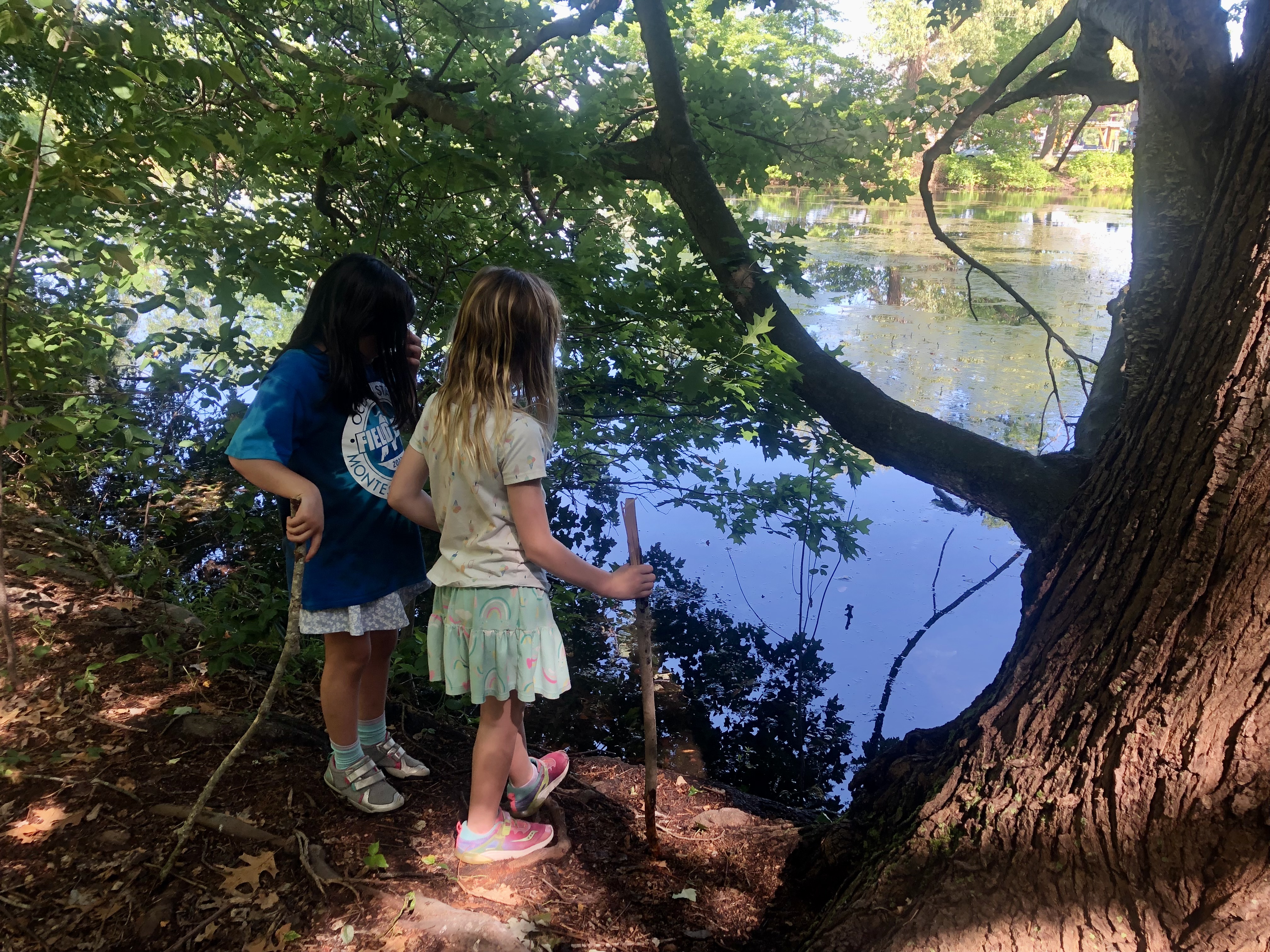
The next photo is by Kristina, whose yard has a stream running through it. The painted turtle was not found there, however. It was on a high stone wall by the park. Someone must have rescued it from the middle of the road. It didn’t seem to know what to do about being so high up. Perhaps it was injured. I moved it to a field across the street. Not sure I did right.

A lot of people in town have been holding off on mowing in order to protect our pollinators. See the signs. I love that they are doing that — and not just because of the reprieve from noisy, polluting lawn mowers.

A different kind of sign is in Walden Woods. Author Toni Morrison once noted that there were few markers preserving the history of the enslaved. This one honors former slave Brister Freeman, well known in town during Thoreau’s time.

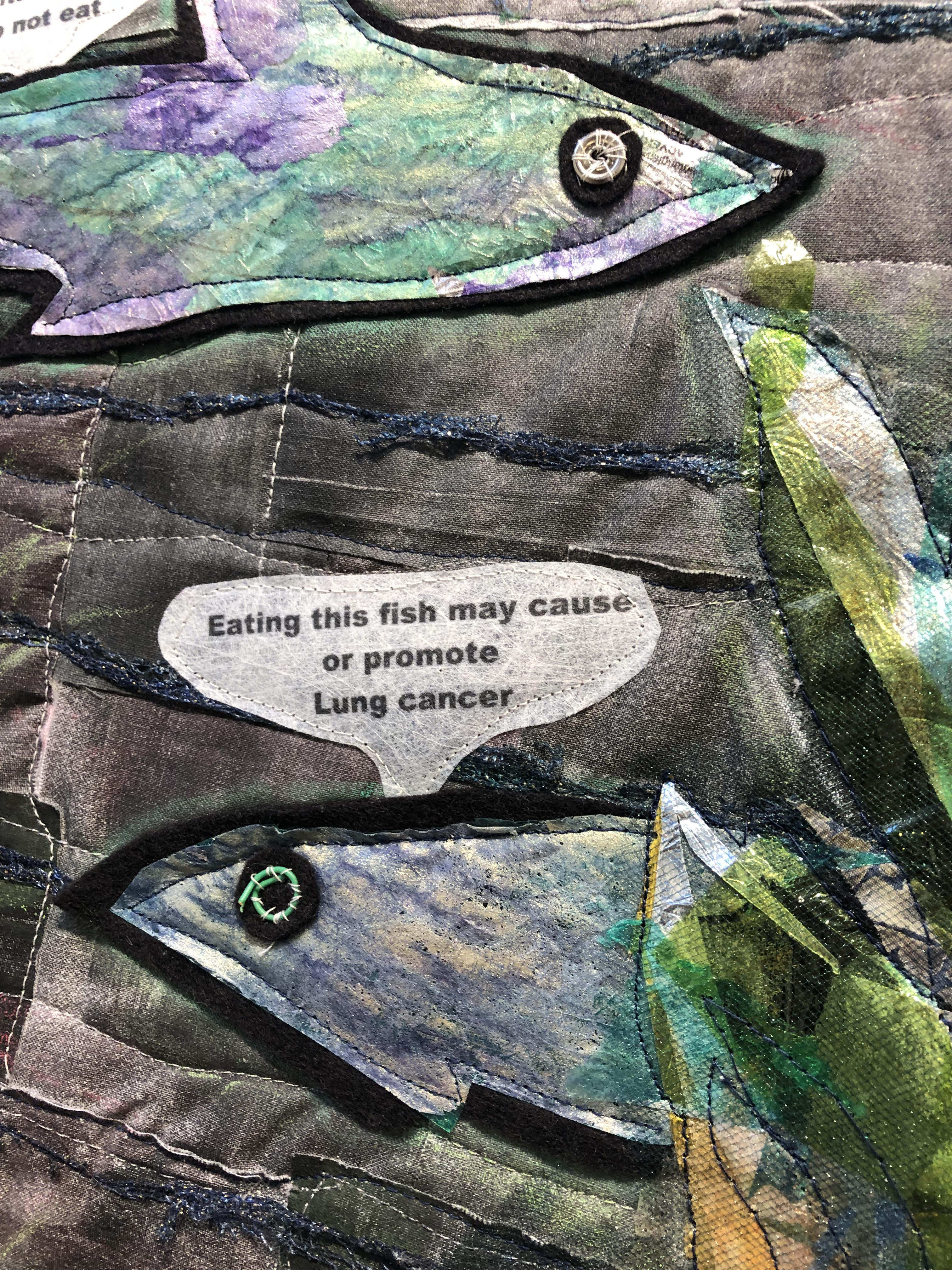
Next we have spring wreaths, a high school senior dressed as a clown for Pranks Day, glamorous table legs in a bakery, and the dogwood at my house.

Read Full Post »

Although the Staten Island of actor Pete Davidson and Saturday Night Live is a running joke, there is more to this borough of New York City than people realize.

Liza Weisstuch at the Washington Post decided to visit as a tourist and found a lot of surprises.

“In 1916, a young woman with dreams of making it big on Broadway lit off from her home in Cincinnati, leaving her young children with their grandparents, and arrived in New York City. She never found success as an actress. Instead, she opened an antiques gallery on Madison Avenue in Manhattan and developed a keen fondness for — rather, obsession with — Tibetan art and took up residence on Lighthouse Hill, a leafy enclave of Staten Island.

“While Jacques Marchais never set foot in Asia, she accrued what remains one of the largest collections of Tibetan art outside Tibet. It’s all housed in the Jacques Marchais Museum of Tibetan Art, which she opened in 1947, next to her home. It took her nine years to build, during which time she collected stones in her pickup truck that were used in the construction of the museum and terraced garden.

“ ‘It’s a wonder there were any stones left on Staten Island after she was done,’ the museum’s executive director, Jeff Gaal, told me, pointing out the flat roof, trapezoidal-trimmed windows and doors with crosscut wood posts, a few of the elements in the style of a Tibetan monastery in the United States. …

“One day last spring, I sat for a while in the garden outside. It was easy to understand why Marchais found it a refuge from Manhattan.

“Staten Island, which sits 5.2 miles south of New York City’s Financial District and measures 58.5 square miles, has been called many things: the greenest borough, the Forgotten Borough, Staten Italy, the Rock, the city’s dump. (It was the site of a noxious 2,000-plus-acre landfill, one of the world’s largest, for more than 50 years. A project to turn it into green space is underway, with some sections now open to the public.) …

“Arguably today’s most famous Staten Islander is SNL prodigy and boyfriend to the stars Pete Davidson, who wrote and starred in Judd Apatow’s The King of Staten Island in 2020. …

“Over the past few months, I’ve made a few trips to the borough to see things I sheepishly and shamefully never knew there were to see. And learning what makes the island so unique has brought my understanding of New York City — and it’s no exaggeration to say other parts of the world, too — into clearer focus.

“Case in point: Tibet. And also, Sri Lanka. A community of Sri Lankans from the South Asian island nation has grown here over the past few decades. Lakruwana [restaurant], which opened its first location in Manhattan in the 1990s and its second here in 2000, is a bedrock of the community. It’s run by Jayantha Wijesinghe and her husband, Lakruwana, who met on the Staten Island Ferry. He oversees the place and decorated it with art, furniture and Buddhist sculptures he shipped over from Sri Lanka. She’s the chef, and her visually arresting dishes emphasize traditional flavor — curries and sambals. Their daughter, Julia, created a Sri Lankan museum, the first outside the country, in the restaurant’s basement in 2017. She was 18. …

“What was fast becoming an Asian-arts-oriented expedition continued a few days later when I returned to visit Snug Harbor Cultural Center & Botanical Garden, an 83-acre campus that encompasses three museums, 14 botanical gardens, two art galleries and a two-acre urban farm where produce is grown for some of New York City’s most famous restaurants. Among the sites is the New York Chinese Scholar’s Garden, an otherworldly … tranquil space, a re-creation of Ming Dynasty Chinese gardens. Sounding like the stuff of fairy tales, the buildings were fabricated in China by 40 artisans, then shipped to New York City and assembled here in the late 1990s in accordance with old-world methods. That’s to say: no nails, screws or glue, just pegs securing the latticework. …

“Snug Harbor is not why people call Staten Island ‘the greenest borough.’ You can chalk that up to the Greenbelt, a 2,800-acre expanse of parks, trails and open spaces that cuts diagonally across the center of the island. (For scale, Central Park is 843 acres.) The park on top of the aforementioned dump nearly doubles the island’s green space. Red foxes, groundhogs, beavers, deer, wild turkeys and great blue herons are just a sampling of the wildlife that roam the woods and wetlands. …

“Going back to the Lenape Indians who lived here when the Dutch arrived, life and commerce revolved around the farmland. And the sea. A visit to the museum at Historic Richmond Town, a collection of 40 structures (including outhouses) on the site of a 17th-century village, offers insight on that, with its display of old local oyster shells, some as large as adult shoes. …

“A visit to the National Lighthouse Museum, located in a former Coast Guard station a few minutes from the ferry terminal, gave me a clearer understanding of the island’s critical role in the evolution of the nation’s lighthouse network.”

More at the Post, here.

Read Full Post »

Photos: Valaurian Waller.
Ederique Goudia is a chef who came through for her community after Hurricane Ida. She is seen here with a statue commemorating child slaves on the Whitney Plantation — the only museum in Louisiana with an exclusive focus on the lives of enslaved people.

Have you been following the efforts of Chef José Andrés and World Central Kitchen as they serve the displaced people of Ukraine? Inspirational. Today I have a related story. It’s also about chefs who help desperate people by giving what they know best.

Xander Peters has the story at the Christian Science Monitor. “Ederique Goudia isn’t the type who stops moving. From November through February, her life was like a hurricane’s gust, tossing her about the country between the community that raised her and the place she now calls home.

“In early November, Ms. Goudia and an entourage of chefs made their way from Detroit to her childhood hometown of Wallace, Louisiana, a community of nearly 600 about 50 miles outside New Orleans that had been pummeled by Hurricane Ida’s Category 4 strength last summer. Her foodways colleagues Raphael Wright and Jermond Booze, among a host of others from their home in Detroit, rallied around her and organized a day of service for the community, followed by their group’s inaugural diaspora dinner. …

“The day after they arrived back in Detroit, Ms. Goudia and company made a beeline back to the kitchen, where they began working alongside colleagues to prepare 50 family-sized Thanksgiving meals for their food-insecure community members. The meals were prepared through the food security group Make Food Not Waste, of which Ms. Goudia is the lead chef. 

“Food relief is about more than physical sustenance for Ms. Goudia and the many chefs who volunteer alongside her. It is a rung on the ladder to stability. And it can be the glue that holds communities together. ‘It creates a shared song amongst people, of a reset,’ says Detroit chef Kwaku Osei-Bonsu, founder of ​​BlackMetroEats and one of the volunteers who traveled to Wallace with Ms. Goudia. …

“After Ida hit southeast Louisiana, [friends from the nonprofit Taste the Diaspora] were among the first to ask how her family fared, and they were well aware that it wasn’t feasible to get to Louisiana to help right away, as disaster recovery dragged on for weeks after the storm. They then suggested hosting local pop-up fundraisers. Before long, they had gathered a group of 15 or so members of the Detroit food community interested in traveling to Wallace. …

“[Ms. Goudia] knows small towns like hers don’t often receive disaster relief quickly while efforts concentrate on metro areas like New Orleans and Baton Rouge first. Wallace sits in the middle of a petrochemical corridor and has long struggled with environmental justice issues.

“Ida made landfall on Aug. 29. As Ms. Goudia checked on her family, the Detroit food scene leaped into action. … In total they raised $8,500 and they distributed it to Wallace residents through the Descendants Project, an advocacy group for descendants of formerly enslaved people in Louisiana’s river parishes. … 

“By the time Ms. Goudia and her colleagues were ready to head to Wallace themselves, word had spread through the Detroit area. Soon sponsorships began rolling in: The Kresge Foundation, which expands opportunities for low-income individuals nationwide, was the first major group to chip in. Then ProsperUS Detroit, an economic development initiative, pitched in. Turning Tables NOLA caught wind of their efforts soon after and offered to help as well. …

“The Detroit food community’s support for Ms. Goudia and her hometown was, in some ways, as emotionally overwhelming as watching Ida hit her family. At the same time, it wasn’t surprising. It’s what Ms. Goudia has come to know as the heart of Detroit.

“ ‘The hospitality that lives in Detroit, it isn’t a one-off,’ says Ms. Goudia. ‘It isn’t surprising at all, because there is this Southern hospitality that’s here, that’s unmatched.’

“On the day of the Wallace dinner, as always, Ms. Goudia didn’t stop moving. She and her volunteers worked through the afternoon to prepare an evening meal of a beet-based African dish, mirliton dressing, baked spaghetti, cornbread tea cakes, and pralines.

“As he leaned against a picnic table out front, opening cans of corn, Mr. Osei-Bonsu of BlackMetroEats reflected on his and others’ trip down South so far, and what he hoped the meal would mean for the community.

“Healing a community’s emotional wounds through food ‘is definitely something that’s impactful,’ Mr. Osei-Bonsu says. ‘Today will be about so much more than just the consumption of food. It’ll also be a dialogue.’ …

“Ms. Goudia says from her home in Detroit several weeks later [that the point is] to use ‘food in a way that breathes life into people, that gives them what they didn’t think they needed at the time.’ She stops and reflects for a moment. ‘I think we were successful in that. … Everybody that came on the trip is now family. Not only with me, but with the residents of Wallace. I was blessed to be able to provide that for them.’ ”

More at the Monitor, here.

Kwaku Osei-Bonsu, Detroit-based chef and founder of BlackMetroEats, sets the table for a 100-person Taste the Diaspora community dinner in Wallace, Louisiana, Nov. 21, 2021.

Read Full Post »

Photo: Walt Disney Productions via Wikipedia.
Having trouble finding workers? There are underused categories of potential employees who would love a job and will repay you with enthusiasm and dedication.

No one ever considers the Seven Dwarfs as having a disability or not being able to work. But they are in a category of potential employees that is sometimes overlooked today.

As Katie Johnston points out in this article from the Boston Globe, rather than complain about a labor shortage, companies could be more open-minded. In Massachusetts, the state is making that easier.

“Faced with too many job openings and not enough people to fill them,” writes Johnston, “employers are considering candidates they might not have even looked at in the past, a change that could have lasting implications for the labor market.

“Companies are reaching out to applicants with criminal records and disabilities. They’re dropping drug testing and welcoming those struggling with homelessness. In some cases, college degrees and related job experience are no longer required. …

“Tight labor markets often lead to the temporary loosening of hiring practices, but this time around there’s potential to bring more people into the workforce permanently, economists and employment specialists say. A cascade of baby boomers retiring early and workers abandoning low-wage professions has created a massive need at a time when companies are actively seeking to diversify their ranks. Armed with this mission, along with improved technologies and new-found remote work capabilities, employers are lowering barriers that have long left people on the sidelines.

“Kareem Berry, 33, had struggled to find a steady job for years before he was hired by Brigham and Women’s Hospital in the fall. Berry, who was born and raised in Dorchester, served 32 months in prison for selling drugs. After he got out in 2018, he took a job-readiness course at Strive Boston and bounced around at temporary and seasonal jobs. Often, however, when prospective employers found out about his record, he said, ‘a lot of people didn’t give me a call back.’

“Then Strive connected him with an apprenticeship program at the Brigham aimed at chronically unemployed Bostonians.

Berry started working in materials management, stocking supply rooms with syringes, gloves, and gowns, and is now a full-time employee making well above minimum wage with health insurance and a 401(k) match.

“The program started three years ago, but as the hospital seeks to provide more opportunities — and with nearly 10 percent of its jobs unfilled, double the amount before the pandemic — more workers are being brought in this way, said program founder Bernard Jones. Previously, the hospital had a practice of not hiring people with certain offenses on their records, Jones said, even though no official policy prevented it. Now, all applicants with a nonviolent background are considered.

“ ‘These are people who have gone through challenges and come out the other side,’ said Jones, who hopes to expand the program throughout the Mass General Brigham system. …

“Nationwide, there are more than 27 million ‘hidden workers’ who are unemployed or underemployed because they are routinely screened out during the hiring process, according to a 2021 Harvard Business School study. These are people with mental health or developmental challenges, physical disabilities, or prison records. They are immigrants, caregivers, veterans. They might come from disadvantaged backgrounds or lack a college degree.

” ‘Three-quarters of US employers in the study used some type of automated hiring system that rejects candidates whose resumes raise red flags, leaving “no room for any narrative,” ‘ said study coauthor Joseph Fuller, a Harvard management professor.

“But if employers took a more thoughtful approach to hiring, they’d likely be happy with the results, he said. …

“At a time when corporate awareness of racial inequities is at an all-time high, inviting in more people, especially those involved in the criminal justice system, which disproportionately affects people of color, would go a long way toward diversifying the workforce, Fuller said. …

“In Massachusetts, $1.4 million in grants is being offered to organizations helping formerly incarcerated residents and young people with disabilities find jobs. The US Labor Department recently launched an initiative to dismantle hiring roadblocks based on race, age, gender, sexual orientation, and ability. Congress is also considering legislation that would decriminalize marijuana use and expunge records for marijuana offenses. …

“The Bank Policy Institute, an advocacy group representing the country’s biggest banks, is pushing to loosen federal restrictions on people with criminal records working in banks. The Second Chance Business Coalition, made up of major companies including Walmart and AT&T, promotes expanding opportunities for people with criminal backgrounds.

“Kelly Services, a national staffing agency that works with 165 employers in New England, launched the Equity@Work initiative in the fall to improve access for job seekers, including those on the autism spectrum or without college degrees. In the runup to launching the program, Kelly placed 645 job seekers with criminal records at a Toyota plant in Kentucky and said the effort reduced monthly turnover to an all-time low and increased the diversity rate by 8 percent. …

“The Hampden County Sheriff’s Department in Ludlow, which has a long-running vocational program for inmates, said the number of employers reaching out for staffing assistance has tripled compared to before the pandemic.”

More at the Globe, here. Another option, of course, is for employers to raise pay. But using this period to integrate lots of new and worthy workers is also a good idea.

Read Full Post »

Photo: Jennifer Croft via the First News.
The translator Jennifer Croft will no longer work with publishers who don’t put her name on the cover.

There’s a book by French-to-English translator Kate Briggs called This Little Art. Briggs and others have been opening my eyes lately to the notion that translators are almost on the level of the author they translate. They write a new version of the book. It’s an art.

Alexandra Alter wrote an interesting story at the New York Times about another translator, Jennifer Croft. She knows her worth.

“When Jennifer Croft talks about translating the Polish novelist Olga Tokarczuk’s novel Flights, she sometimes affectionately refers to the book as ‘our love child.’

“ ‘It’s Olga’s, but also it has all of these elements that are mine, these stylistic elements and these decisions that I made,’ she said in a recent interview.

Flights was a labor of love for Croft, who spent a decade trying to find a publisher for it. It was finally released by Fitzcarraldo Editions in Britain in 2017 and Riverhead in the United States in 2018, and was celebrated as a masterpiece. The novel won the International Booker Prize and became a finalist for the National Book Award for translated literature, helping Tokarczuk, who was later awarded the Nobel Prize, gain a much larger global audience.

“But Croft also felt a twinge of disappointment that after devoting years to the project, her name wasn’t on the book’s cover. Last summer, she decided to make a bold demand:

“ ‘I’m not translating any more books without my name on the cover,’ she wrote on Twitter. ‘Not only is it disrespectful to me, but it is also a disservice to the reader, who should know who chose the words they’re going to read.’

“Her statement drew wide support in the literary world. Croft published an open letter with the novelist Mark Haddon, calling on publishers to credit translators on covers. The letter has drawn nearly 2,600 signatures. … Her campaign prompted some publishers, among them Pan Macmillan in Britain and the independent European press Lolli Editions, to begin naming all translators on book covers.

“Croft’s latest published translation is Tokarczuk’s The Books of Jacob, a 900-plus page historical novel about an 18th-century Eastern European cult leader named Jacob Frank, whose story unfolds through diary entries, poetry, letters and prophecies. …

“This time, Croft’s name appears on the cover. Riverhead added her after she and Tokarczuk requested it. Croft is also being paid royalties for The Books of Jacob, which she didn’t receive for Flights. (Translators, who typically receive a flat, one-time translation fee, don’t automatically get a share of royalties from most publishers.) …

“ ‘She is incredibly linguistically gifted,’ Tokarczuk said in an email. ‘Jenny does not focus on language at all, but on what is underneath the language and what the language is trying to express. So she explains the author’s intention, not just the words standing in a row one by one.’ …

“For Croft, the campaign to bring greater recognition to translators isn’t just a plea for attention and credit, though it’s partly that. Croft also believes that highlighting translators’ names will bring more transparency to the process and help readers evaluate their work, the same way they might assess an audiobook narration for not just the content but for the performance.

“Translation isn’t just a technical skill, but a creative act, she argues. ‘We should receive credit, but also have to take responsibility for the work we have done,’ she said. …

“That work often entails much more than rendering sentences and syntax from one language to another. Translators also find themselves in the role of literary scout, agent and publicist. Many are constantly reading in the languages they’re fluent in to find new authors and books, then pitch them to publishers. When English-language versions come out, translators are often called upon to facilitate interviews and join authors on book tours and manage their social media accounts in English.

“Translated literature accounts for just a fraction of titles published in the United States. Despite the success of books by international stars like Elena Ferrante, Haruki Murakami and Karl Ove Knausgaard, many publishers still worry that American readers are put off by translations. …

That belief has become something of a self-fulfilling prophecy. Since 2010, fewer than 9,000 English-language translations of fiction and poetry have been published, and in 2021, just 413 translations were released, according to a database of English-language translations that is compiled and maintained by Chad W. Post, the publisher of Open Letter Books, and is available on Publishers Weekly’s website. …

“An even smaller number of titles feature translators on the cover. Less than half of the English-language translations released in 2021 had translators’ names on the covers, Publishers Weekly reported last fall.”

More at the Times, here.

Read Full Post »

Photo: Murdo MacLeod/The Guardian.
Camryn Stewart, 14, and Naomi Bell (right) open the salmon season on Scotland’s River Dee with the first casts.

So many good people trying to make the world better! Each one has their own area of action. It may be health, sports for kids, peace, housing, justice, the environment, art, teaching school. You name it. Today’s story is on people doing something about the effects of global warming where they live — along Scotland’s rivers.

Severin Carrell reports at the Guardian that “millions of trees are being planted beside Scotland’s remotest rivers and streams to protect wild salmon from the worst effects of climate heating.

“Fisheries scientists have found rivers and burns in the Highlands and uplands are already too warm in summer for wild Atlantic salmon as they head upstream to spawn, increasing the threat to the species’ survival.

“Fisheries on the River Dee in Aberdeenshire, one of the country’s most famous salmon fishing rivers, have planted 250,000 saplings along key tributaries. They plan to plant a million in the Dee’s catchment by 2035. …

“In 2018, the year Scotland recorded the lowest rod catch for salmon since records began, climatic changes meant water temperatures in 70% of salmon rivers were too warm for at least one day that summer. They exceeded 23C [73.4 Fahrenheit], a temperature that induces stress and behavioural change. …

“Marine Scotland scientists found that only 35% of Scotland’s rivers, which stretch for 64,000 miles (103,000km), have adequate tree cover.

“Lorraine Hawkins, the river director for the Dee District Salmon Fishery Board, a statutory body, said: ‘These rivers and burns are the nursery grounds for young fish and it’s the young fish which will be affected by summer temperatures – their feeding and growth rates are affected. If it gets hotter, we will see fish dying.’

“Fishery boards across Scotland have similar tree-planting programs, to provide essential shade to lower water temperatures. Many will be fenced off to prevent the saplings from being eaten by deer. Hawkins said these projects improved the overall health and biodiversity of rivers across the uplands, increasing insect life, leaf fall, managing essential nutrients and flood control.

“Alan Wells, the director of Fisheries Management Scotland, an industry body, said climate forecasts were clear that water temperatures would continue to climb, even if governments succeed in limiting climate heating. …

“He said, ‘This will get worse. We need to grow trees now to create that cooling shade.’

“The dramatic decline in wild salmon numbers is blamed on numerous factors: climate change affecting food availability; weirs and other obstructions in rivers; predation by soaring seal populations; sea lice attracted by fish farms; bycatch by trawlers at sea and poor river quality. Wells said that while Scottish ministers were proposing new conservation strategies, he remained frustrated with the slow pace of change.

“The Dee marked the start of its angling season [in February] by inviting two female anglers who won a fundraising competition last year to make the first cast, an annual ceremony at Banchory. …

“Camryn Stewart, 14, one of the first cast fishers, said she had been brought up fishing by her parents, Deirdre and Jim. The sport is targeting women and children as it strives to expand its participation and appeal. …

“ ‘I have been surrounded by people who fish, and I’ve wanted to fish all my life,’ she said. ‘We need more people fishing. … We gain so much from it. Just being outside and being in the wild. Even if you don’t catch anything, you come back from the day fulfilled.’ ”

More at the Guardian, here. No firewall.

Read Full Post »

Photo: Omar Adel via Unsplash.
The Al-Rifa’i Mosque in Cairo. The city’s redevelopment highlights every kind of culture, from mosques to belly-dancers.

Members of my extended family were in Egypt recently, and judging from the videos and photos, they had a fantastic time. It made me think of an article I saw back in January about Cairo.

Donna Abu-Nasr at Bloomberg CityLab had a report on how the city’s “revival blends ancient Egypt with modern tastes.”

She wrote, “When Egyptian ballerina Amie Sultan decided to go into belly dancing, she raised eyebrows among her friends and fellow professionals. Why switch from an art form that’s highly respected to one that’s often scorned in her home country and the rest of the Arab world?

“Six years later, Sultan wants to elevate a dance focused on shaking hips and torsos in low-end cabarets to the theater. It’s just one of the ways Egyptians are trying to establish a contemporary cultural identity in Cairo that taps into their heritage.

“The renaissance of traditions spans everything from new museum exhibits to artisans integrating old crafts into modern furniture and designers selling handmade jewelry, bags and shoes online. There’s also the redevelopment of buildings to champion Egyptian identity. For her bit, Sultan says her goal is to preserve, document and revive the performing arts. Egypt is the spiritual home of belly-dancing, which traces its roots back to ancient times. …

“Perhaps the most striking example of the cultural resurrection was when 22 mummies were transported through central Cairo [in April 2021] to their latest resting place at the new National Museum of Egyptian Civilisation. The multi-million dollar spectacle was broadcast live on state television. …

“Some parts of the sprawling metropolis are being refurbished in an attempt to recapture more of the tourism market. … One of those areas is central Cairo, also known as Khedival Cairo in reference to Khedive Ismail, the ruler under whom downtown Cairo was built in the late 19th century. The country’s sovereign wealth fund plans to redevelop the mid-20th century Mogamma building, a hulking government office complex. …

“Private entrepreneurs, like Karim Shafei, 48, have also for years been actively working on restoring that part of town. … The vision that he and his partner, Aladdin Saba, an investment banker, have for downtown is to make it a real city center that reflects Egyptian identity: a meeting point for Cairenes from all walks of life and a platform for innovation and creativity.

“ ‘There’s nowhere in Cairo where tourists can go and experience the contemporary Egyptian lifestyle, unlike many other cities such as Beirut, Istanbul, Paris and New York,’ said Shafei. ‘Today, there’s a big portion of tourism that’s intended to experience a country in its modern form. You want to experience the way cuisine is, the way people live, how they dress.’ 

“One thing that Shafei has noticed is a change in the government’s attitude toward restoration. In the past, authorities would just focus on painting a wall or fixing a sidewalk. In the past year, the discussions have become deeper.

“Sultan, the dancer, has likewise found a sympathetic ear for her project, which she is doing through her company Tarab Collective. When she has approached government officials with her idea, ‘there’s some shock, but then as they listen they actually see that this is a serious project.’ . …

“Belly-dancing has been associated with smoky cabarets where alcohol is served. … It’s also informally performed by people at home, at picnics or celebrations. …

“Last year, Tarab Collective produced a tribute to the golden age of Egyptian cinema and the dance’s divas from 1940 to 1960. It featured 12 performers and premiered at the closing of the Gouna Film Festival in October.

“[Sultan’s] company is also working on setting up an institute to teach the dance, register it with UNESCO as intangible heritage and change its name from one that comes from the French danse du ventre to ‘Egyptian dance.’

“ ‘At the end of the day, this dance represents Egypt,’ she said. ‘It’s how we show ourselves to the world, just like we identify Spain with flamenco.’ “

More at Bloomberg CityLab, here. I know I’ve told you that there was a wonderful belly-dancer at our son’s wedding — with flaming candles in her hair, no less. If I can get into my old computer, I’ll post a picture.

Read Full Post »

Photo: NOAA (National Oceanic and Atmospheric Administration).
Lightning as seen from the Geostationary Lightning Mapper on NOAA’s GOES-16 satellite from April 29, 2020. The World Meteorological Organization has found that one of the lightning flashes within this thunderstorm complex was the longest flash on record, covering a horizontal distance of 477 miles.

Let’s talk about natural phenomena. Let’s talk about lightning. Can you imagine one flash covering 477 miles? That’s the record, set in 2020. Here’s Matthew Cappucci‘s January article for the Washington Post about such megaflashes.

Capupucci wrote, “The World Meteorological Organization announced on Monday that it had confirmed two new mind-blowing lightning ‘megaflash’ records. The findings, which come after careful data-checking and rigorous certification processes, include one record event that occurred over the Lower 48 states.

“On April 29, 2020, a sprawling mass of strong to severe thunderstorms produced a 477.2-mile-long lightning strike over the southern United States. It stretched from near Houston to southeast Mississippi, a distance equivalent to that between Columbus, Ohio, and New York City. …

“The WMO also identified a new world record for the long-lasting lightning flash. It lit up the skies over Uruguay and northern Argentina for 17.1 seconds on June 18, 2020. …

“ ‘These are extraordinary records from single lightning flash events,’ wrote Randall Cerveny, rapporteur of Weather and Climate Extremes for WMO, in a statement.

“Megaflashes dwarf ordinary lightning strikes. As Earth dwellers, we’re accustomed to seeing what’s going on near the ground, including conventional cloud-to-ground lightning bolts. …

“Megaflashes are different. They’re enormous. They snake through regions of high electric field and can travel for hundreds of miles while lasting more than 10 seconds. Since most storm clouds are fewer than 10 miles high, lightning can’t grow terribly long in the vertical direction. But megaflashes have plenty of space to sprawl in the horizontal.

“All megaflashes accompany MCSs, or mesoscale convective systems. MCSs are clusters of thunderstorms that often rage overnight and can occupy an area the size of several states, last for hours and stretch 750 miles or more end-to-end. They’re a staple of the spring and early summer across the southern and central United States, and are also common in Brazil, Argentina and Uruguay. South America’s ‘Altiplano,’ or high Andean Plateau, also brews prolific lightning-producing storms.

“Megaflashes crawl through the clouds but can produce or induce ground connections at various points. Sometimes MCSs merge, leading to amplified and more chaotic electric fields that can also be supportive of megaflashes. Covering so much real estate means megaflashes flicker for an extended duration.

“While atmospheric electrodynamicists had long since theorized about the existence of megaflashes, the scale and duration of said flashes was not well-understood until recently. …

“ ‘Detecting these extreme lightning events is very difficult due to their exceptional rarity and scale,’ wrote Michael J. Peterson of the Space and Remote Sensing Group at Los Alamos National Laboratory, in an email. ‘Your sensor has to be in just the right place at perfectly the right time to be able to see it — and the instrument has to be capable of measuring something as large as a megaflash.’ …

“That changed with the Nov. 19, 2016, launch of the GOES East weather satellite, soon followed by GOES West. Both peer down on North America from 22,236 miles above Earth and have ‘Geostationary Lighting Mappers,’ or instruments that are able to discern the infrared signal associated with a lightning flash. That allows for the tracking of cloud-to-cloud and intracloud flashes from above. …

“Megaflashes may be more common than once believed. Now that scientists are able to spot and resolve them over North America, they’re able to begin constructing a catalogue of events. One particularly impressive discharge, which eventually spanned 300 miles but was not evaluated by the WMO, occurred on the morning of Oct. 23, 2017. A thunderstorm was raging near Thackerville, Okla., a little more than an hour’s drive north of the Dallas-Fort Worth Metroplex. A lightning strike illuminated skies near the Red River — Oklahoma’s southern border — at 12:13 a.m.

“At the same time, the landscape was also aglow near Burlington, Kansas; the same massive 300 mile-long lightning bolt had illuminated an area four times larger than the state of Connecticut.”

More at the Post, here. I wonder what Philip Pullman, author of the amazing Golden Compass fantasy series, could do with this. His powerful imagination already has done a lot with electromagnetic waves.

Read Full Post »

Illustration: Paul Blow/The Guardian.

Summer is coming, and all over America, kids will be seeking out basketball hoops for pickup games or organized sports. Today we know that the recognized stars of the game are often Black, but apparently, that wasn’t always the case.

Frederic J. Frommer explains at the Washington Post why Edwin Bancroft Henderson is “known as the ‘father of Black basketball’ (or sometimes the ‘grandfather’). The first Black certified instructor of physical education in the United States, [he] brought the White-dominated sport to Black America. …

“ ‘Henderson and his contemporaries envisioned basketball — and sports in general — as providing a rare opportunity to combat Jim Crow,’ wrote Bob Kuska in Hot Potato: How Washington and New York Gave Birth to Black Basketball and Changed America’s Game Forever.

“[Henderson] learned basketball while studying physical education at Harvard University’s Dudley Sargent School of Physical Training. The school was affiliated with the International YMCA Training School in Springfield, Mass., where James Naismith had invented the sport just a decade earlier. When Henderson returned to Washington, he organized a basketball league for Black players, in a city where only Whites had access to basketball courts or clubs.

“ ‘What’s sad is that more people don’t know the story of E.B. Henderson, who was a pioneer, a trailblazer, someone who was a direct protégé of Dr. Naismith,’ said John Thompson III, the former head men’s basketball coach at Georgetown University, now vice president of player engagement at Monumental Basketball.

“Today, community leaders are taking steps to raise Henderson’s profile. In February, the University of the District of Columbia renamed its athletic complex the Dr. Edwin Bancroft Henderson Sports Complex. The school also launched the Dr. Edwin Bancroft Henderson Memorial Fund, which will help pay for the renaming, a scholarship endowment and the creation of a permanent Henderson memorial on campus. …

“On April 1, the Wizards named forward Anthony Gillthe inaugural winner of the team’s E.B. Henderson Award, which recognizes the Wizards player most philanthropically active in the D.C. community.

“And last year, Virginia honored Henderson with a state historical marker in Falls Church, where he lived from 1910 to 1965 and helped organize the NAACP’s first rural branch. Henderson also served as president of the Virginia NAACP.

After completing his studies at Harvard, Henderson tried to attend a basketball game at a Whites-only YMCA in D.C. in 1907 along with his future brother-in-law, but they were shown the door by the athletic director.

“Undeterred, Henderson started the D.C.-based Basket Ball League, where his 12th Street YMCA team went undefeated in 1909-10 in competition with local rivals and teams from other cities and won the unofficial title of Colored Basketball World Champions.

“His playing days came to an end in 1910 when he was 27 [but] Henderson’s work continued off the court, as he formed the Public Schools Athletic League, the country’s first public school sports league for Black students, which included basketball, track and field, soccer and baseball.

“In 1912, Henderson moved to Falls Church, and soon he was taking on racial discrimination there, helping to challenge a local ordinance that restricted where Black residents could live. After a court ruled the ordinance unconstitutional, the Town Council rescinded it.

“Henderson continued to challenge discriminatory treatment of African Americans, often through the many newspaper articles and letters to the editor he wrote over the years. In a September 1936 letter to the Post titled ‘The Negro in Sports,’ for example, he touted the success of Black athletes such as track star Jesse Owens, who won four gold medals at the 1936 Summer Olympics in Berlin.

“ ‘Right here in Washington, it ought to be possible for a Jesse Owens, or a city-wide marble champion, or a Joe Louis to come up through the lists and tournaments,’ he wrote. ‘When will the Capital of the Nation meet this challenge?’

“In 1939, he wrote a book with the same title, The Negro in Sports, which he updated in 1950. In the intervening decade, Jackie Robinson had broken baseball’s color barrier, and Black players had returned to the NFL after being shut out of the league for a dozen years.

“ ‘Henderson resists what might have been the high temptation to gloat at the sensational success of the Negro boys when finally they got their chance to play in the big leagues,’ Shirley Povich wrote in a Washington Post review of the revised edition. ‘Instead, he pays tribute to the American sportsmanship that sufficed, finally, to provide equal opportunity.’ …

“ ‘I never consciously did anything to be first. I just happened to be on the spot and lived in those days when few people were doing the things I was doing,’ Henderson said a few years before his death in 1977, at the age of 93. ‘But sports was my vehicle. I always claimed sports ranked with music and the theater as a medium for recognition of the colored people, as we termed ourselves in my day. I think the most encouraging thing, living down here in Alabama, is to see how the Black athlete has been integrated in the South.’

“Henderson was inducted into the Naismith Memorial Basketball Hall of Fame in 2013, following a campaign waged by his grandson, Edwin B. Henderson II, a retired educator and local historian.”

More at the Post, here.

Photo: University of the District of Columbia.
Edwin Bancroft Henderson, the “Father of Black Basketball.”

Read Full Post »

Photo: Sterling College, Flickr, CC BY-S.
Solar panels and sunflowers, the national flower of Ukraine. Solar energy and renewables can help keep oil tyrants from invading other countries.

One of the challenges Ukrainian allies have had in fighting back against Putin’s war is that so many of them have been dependent on Russian oil.

Bobby Bascomb at Public Radio International’s Living on Earth interviews environmentalist Bill McKibben on ways to get serious about renewables and free ourselves from the power of the fossil fuel industry.

“BOBBY BASCOMB: The horrors of Russia’s war in Ukraine are funded in large part by fossil fuels that it sells to the tune of half a billion dollars every day. Nearly half the federal budget for Russia comes from oil and gas revenue and the European Union is their biggest customer. … But the EU recently unveiled a plan to cut Russian gas imports by two-thirds this year and eliminate imports entirely by 2027.

“To help speed that phase out the Biden White House is reportedly considering a plan to use the Defense Production Act to rapidly manufacture and send electric heat pumps to European homes, many of which are currently heated by Russian gas. This idea to make Heat Pumps for Peace was first raised by writer and activist Bill McKibben, who co-founded 350.org and Third Act. … So first remind us, what exactly is a heat pump? …

“BILL MCKIBBEN: Think of it as an almost reversible air conditioner, made often by the same people. It takes ambient heat from the air, and uses that to heat the inside of your house, and does it pretty well, down to quite cold temperatures, because it turns out there remains some latent heat in the air even on a cold day. It’s wonderful technology because it’s able to produce heat with far, far less emissions than if you were running the gas furnace or the oil furnace in the basement. It runs off electricity, which means that the cleaner you get the grid, the cleaner the emissions result. And in the case of the current war in the Ukraine, it’s particularly significant because deployed in sufficient number across Europe, it would rob Vladimir Putin of his longtime weapon, the threat to turn off the gas supply to Western Europe. …

“What you really want, of course, is to connect them to a grid that gets steadily, steadily cleaner. … Not just in order to save the planet’s climate, though that would certainly be nice. But also because [fossil fuel] is the fuel of choice for autocrats.

“BASCOMB: Well, why push for heat pumps then and not say, expanded rooftop solar, for instance?

“MCKIBBEN: That works too, go to work on any of these things. In fact, some of the things are super easy. There’s a lot of spare capacity in the US, apparently, for producing insulation right now. And anybody who’s spent time say, in a British house knows that insulation was not a big feature of a lot of the housing stock. So let’s get bundles of that across the ocean as fast as we can. The point is that if we’re able to make use, say, of the Defense Production Act, which every president since the Korean War has used, and which both Trump and Biden used to speed up vaccine production, then we can take advantage of this spare capacity and get some of this stuff over to Europe before next October, when I would predict it’s going to start getting cold again. …

“BASCOMB: Well, how quickly can manufacturers ramp up production of heat pumps on the massive scale that would be needed to quickly phase Europe off of gas?

“MCKIBBEN: Well, the people that I’ve talked to in the federal government think that it can happen pretty fast, that there’s spare capacity at the big air conditioner manufacturers, companies like Carrier or Trane, that would allow them to start pretty quickly putting this stuff into operation — and that talking about the course of the next six months for getting a lot of these installed is not crazy. But again: heat pumps, insulation, whatever we can think of that help reduce the power of Vladimir Putin’s energy weapon. …

“BASCOMB: I looked into getting heat pumps in my house here in New Hampshire a couple years ago; we put up solar panels at the time and considered heat pumps to go along with them. But it was basically going to double the cost of our solar installation. What kinds of policies can be put in place to help bring down those costs, so they’re more affordable for many Americans?

“MCKIBBEN: Well, first of all, this is precisely, you know, one of the advantages of getting the government involved quickly in doing this. Once you start building things en masse, you get better at it, and they get cheaper, and more and more people know how to install them. And that’s already happening. You know, we have them installed here in [Vermont]. The local contractors are increasingly conversant with the technology. But that needs, as you say, to spread out fast. … There’s no way that we’re going to do what the IPCC has asked and cut emissions in half by 2030 if everybody’s still got a gas furnace blazing away in the basement.

“BASCOMB: Well, heat pumps are basically air conditioning systems in reverse, as you mentioned earlier, so they provide heat in the winter, and they cool homes in the summer. Around 5% of European homes currently have air conditioning. So to what extent can heat pumps [have] the added benefit of helping Europe prepare for the extreme heat waves that are going to be coming with climate change? …

“MCKIBBEN: A very significant point. It’s not just Europe, either. I mean, the demand for air conditioning is going to grow exponentially as this century goes on. And it’s going to grow most in the hottest and poorest places. Countries like India are forecast a huge growth in air conditioner usage. … Efficient, good technology like this is desperately needed around the world.”

More at Living on Earth, here. No firewall.

Read Full Post »

Photo: Antoine Giret via Unsplash.
Are you ready to do something more about plastic?

Not quite sure what to make of the inventions described in today’s post. Another energy-using appliance, this time for dealing with plastics? I’m keeping an open mind.

Chris Velazco writes at the Washington Post that “a new wave of home tech could keep plastics out of landfills. …

“For a pair of start-ups we first met at CES [Consumer Electronics Show] no kitchen would be complete without a new kind of home appliance: one that makes recycling a little easier.

Lasso Loop relocated from the United Kingdom to California to work on its product, a hefty home appliance machine that automatically sorts and breaks down the recyclables you toss inside it. And ClearDrop, founded by a Texas businessman named Ivan Arbouzov, aims to handle single-use plastic bags, one of the most odious artifacts of modern life. …

“And while it might sound a little easier to keep a couple of dedicated recycling bins around, both companies are, in their own way, tackling a flaw in our waste management systems that many people probably aren’t aware of.

As it turns out, much of the material we toss into our recycling bins doesn’t actually ever get recycled.

“That’s for a whole host of reasons: improperly cleaned materials can contaminate others that would have been recyclable otherwise, and some of the items people might just assume are recyclable — say, plastic cutlery — usually aren’t. …

“In 2018 — the last time it published these figures — the Environmental Protection Agency reported that glass accounted for a little over 4 percent (or 12.3 million tons) of our total municipal solid waste. About a quarter of it was recycled. But of the more than 35 million tons of plastics that entered the country’s waste management systems that same year, just 9 percent was recycled or composted.

“Perhaps the only surefire way to reduce plastic waste is for companies to produce less of it in the first place. In the meantime, start-ups like Lasso Loop and ClearDrop hope to make people more mindful of what happens to the materials they don’t need anymore.

“For Lasso Loop, that means removing as much of the guesswork as possible. In its current form, the company’s Lasso machine is bigger than a dishwasher but smaller than a fridge, though the team hopes to be able to squeeze the final model under your countertops.

“What’s more interesting is the stuff inside: Lasso growth manager Dominique Leonard said the machine uses a smattering of sensors, cameras and AI to determine whether the stuff you’ve put inside it can be recycled. (Anything that doesn’t pass muster, like certain kinds of plastic, are summarily rejected.) From there, the remaining plastic, glass and metal products are steam cleaned, broken apart — seriously — and stored separately in a series of bins based on type to prevent contamination. …

“That sophistication will come at a cost, especially at first. The Lasso team plans to sell its machine for $5,000 — or $3,500 with a prelaunch discount — to start, though it hopes incentives from local governments will help lighten the load on potential customers.

“ClearDrop’s Minimizer, a trash can-sized plastics compactor, is much less complicated by comparison. You’re meant to feed all of your soft plastics into a slot onto the top of the machine, and once it has had enough — Arbouzov said that usually takes around a month — the Minimizer heats and compresses the bags to form a slightly squishy brick. If your municipality is one of the rare ones that accepts soft plastics, you should be able to toss those bricks into your recycling bin. …

“Important questions still linger. Leonard and Arbouzov both claim that an important chunk of their future business will require them to partner up with manufacturers and recycling facilities that are equipped to turn those materials back into actual products. … For now, those key partnerships have yet to solidify. It’s also unclear how energy-efficient these appliances are, though Lasso Loop claims that its machine requires roughly the ‘amount of power required for a hot water washing machine cycle’ to function.

“These start-ups face another considerable hurdle: How will they handle all the stuff their machines create, especially if they plan to resell it?

“The Lasso team will find out when it launches a pilot program with customers in the San Francisco Bay area next year. Once those first Lasso machines are live and full of precious glass and plastic bits, their owners are meant to schedule pickups from a smartphone app. But when people come to haul away those materials, they won’t be working from their local municipal recycling crew, but a team of people working on behalf of Lasso itself.

“That means, beyond just building the machines to help people recycle, it must also manage a fleet of people who fetch those recyclables and make sure they go where they’re supposed to. …

“ClearDrop has similar issues to sort out. … For now though, [Arbouzov] seems slightly more concerned with another goal of his: to be able to produce his Minimizers within six months, and sell them for just $150. Whether that’s a realistic forecast or start-up founder bluster is difficult to say, but to Arbouzov, what mostly matters is getting people to think more closely about where their old stuff goes.”

Gotta love inventors — whether they succeed or not. Their thought processes are inspiring. More at the Post, here.

Read Full Post »

Photo: Guangxi speleology research team 702 via the Guardian.
Cave explorers have come across a sinkhole, or karst, in a semi-autonomous region of southern China. Previously known only to locals, it is 306 metres (335 yards) in length, 150 metres (164 yards) wide and 192 metres (210 yards) deep. It has a forest at the bottom.

When I was a kid spending summers on Fire Island, we all thought the Sunken Forest the most magical place ever. But just imagine if a forest were so removed from the world that it harbored previously unknown species! Scientists in China are beginning to study a forest of tantalizing possibilities at the bottom of a huge sinkhole.

Stephanie Pappas reports at Live Science, “A team of Chinese scientists has discovered a giant new sinkhole with a forest at its bottom. 

“The sinkhole is 630 feet (192 meters) deep, according to the Xinhua news agency, deep enough to just swallow St. Louis’ Gateway Arch. A team of speleologists and spelunkers rappelled into the sinkhole on Friday (May 6), discovering that there are three cave entrances in the chasm, as well as ancient trees 131 feet (40 m) tall, stretching their branches toward the sunlight that filters through the sinkhole entrance. 

” ‘This is cool news,’ said George Veni, the executive director of the National Cave and Karst Research Institute (NCKRI) in the U.S., and an international expert on caves. Veni was not involved in the exploration of the cave, but the organization that was, the Institute of Karst Geology of the China Geological Survey, is NCKRI’s sister institute. …

“Veni told Live Science, [that] southern China is home to karst topography, a landscape prone to dramatic sinkholes and otherworldly caves. Karst landscapes are formed primarily by the dissolution of bedrock, Veni said. Rainwater, which is slightly acidic, picks up carbon dioxide as it runs through the soil, becoming more acidic. It then trickles, rushes and flows through cracks in the bedrock, slowly widening them into tunnels and voids. Over time, if a cave chamber gets large enough, the ceiling can gradually collapse, opening up huge sinkholes. 

” ‘Because of local differences in geology, climate and other factors, the way karst appears at the surface can be dramatically different,’ he said. ‘So in China you have this incredibly visually spectacular karst with enormous sinkholes and giant cave entrances and so forth. In other parts of the world you walk out on the karst and you really don’t notice anything. Sinkholes might be quite subdued. … Cave entrances might be very small, so you have to squeeze your way into them.’ 

“In fact, 25% of the United States is karst or pseudokarst, which features caves carved by factors other than dissolution, such as volcanics or wind, Veni said. About 20% of the world’s landmass is made of one of these two cave-rich landscapes. 

“The new discovery took place in the Guangxi Zhuang Autonomous Region, near Ping’e village in the county of Leye, according to Xinhua. Guangxi is known for its fabulous karst formations, which range from sinkholes to rock pillars to natural bridges and have earned the region UNESCO world heritage site designation.

“The sinkhole’s interior is 1,004 feet (306 m) long and 492 feet (150 m) wide, Zhang Yuanhai, a senior engineer with the Institute of Karst Geology, told Xinhua. … Chen Lixin, who led the cave expedition team, told Xinhua that the dense undergrowth on the sinkhole floor was as high as a person’s shoulders. Karst caves and sinkholes can provide an oasis for life, Veni said.

‘I wouldn’t be surprised to know that there are species found in these caves that have never been reported or described by science until now,’ [team leader] Lixin said.

“In one West Texas cave, Veni said, tropical ferns grow abundantly; the spores of the ferns were apparently carried to the sheltered spot by bats that migrate to South and Central America.

“Not only do sinkholes and caves offer refuge for life, they are also a conduit to aquifers, or deep stores of underground water. Karst aquifers provide the sole or primary water source for 700 million people worldwide, Veni said. But they’re easily accessed and drained — or polluted.” More at Live Science, here. No firewall.

The Washington Post offers more on the forest. Reporter Marisa Iati writes, “Large sinkholes are known in Chinese as ‘tiankeng,’ or ‘heavenly pits.’

“The sinkhole near Ping’e village is known to local residents as Shenying Tiankeng, or ‘the bottomless pit.’ From a distance, the cliff looks like a pair of soaring wings, the Guangxi Daily newspaper reported.

“The researchers arrived at the sinkhole May 6 and saw dense trees blocking the bottom of the pit, the newspaper reported. They used drones to explore the area and then rappelled and hiked to the bottom for several hours, passing dense thorns and fig plants. They found three caves in the wall that may have formed early in the sinkhole’s evolution, Zhang Yuanhai, senior engineer at the Institute of Karst Geology of China Geological Survey, told Chinese state-run news agency Xinhua.

“While trees exist in other sinkholes, Veni said they can only grow if the hole is shallow enough and has a big enough opening to let in sunlight. The newly explored sinkhole is almost definitely home to small animals, such as insects, that are currently unknown to scientists, he said.”

More at the Post, here.

Read Full Post »

Photo: Francois Brunelle.
Charles Hall Chasen and Michael Malone, photographed in Atlanta in 2014. “Our mothers don’t see the resemblance,” Malone told CBS News’ Anthony Mason. “And when I met Charlie, I didn’t see the resemblance, either.”

In today’s story, we learn about an unusual photography project that brings people together — often complete strangers — and highlights their resemblance. In the beginning, French Canadian photographer Francois Brunelle asked friends he thought looked alike if they would participate, and then he put the word out on social media.

CBS covered the story for National Look-Alike Day (who knew?) in 2015. Public Radio International (PRI) did an interview this year.

From CBS: “On National Look-Alike Day, April 21, [we take] a look at Francois Brunelle’s long-running photography project of ‘doppelgangers’ bringing together people who share an uncanny resemblance but no family ties. …

“The 64-year-old photographer had the idea for the project after someone said he looked like the actor Rowan Atkinson’s character, Mr. Bean. He didn’t see the resemblance at first. But then came the inspiration: ‘I’ll find two identical people, I’ll bring them together, and then when they meet they will be in shock,’ Brunelle told CBS News’ Anthony Mason. ‘And then I will take a picture of them. And that will be amazing, to look at this picture.’ …

“Nina Singh and Anna Rubin, photographed in Montreal in 2004, [were] born on the same day, look alike, but [are] unrelated. (One’s parentage is from Eastern Europe, the other’s from India.) …

“Stephanie Kazar and Christy Walker (photographed in Atlanta in 2014) aren’t related, either. Kazar hails from Georgia, Walker from Ohio. [They are the women in the first shot below.]

” ‘It’s very rare you find your own twin,’ said Walker.

“Ayanna Bryant and Lindsey Sampson, photographed in Atlanta in 2014: The two first met when they shared a room in college:

” ‘The day I moved in, she walked into the dorm and my mom was like, “Oh my gosh! She’s your twin!” ‘ laughed Bryant.

” ‘I really think that she was the ying to my yang,’ said Sampson. …

“Valerie Carreau and Jean Philippe Royer, photographed in Montreal in 2004, look like they could be brother and sister, but they are not – they’re a couple. …

“Word about Brunelle’s project began to spread over the Internet. He’s received emails from people all over the world – the United States, South America, Europe, New Zealand, and China. …

“The government of Colombia recently commissioned Brunelle to shoot an advertising campaign to promote harmony. They found look-alikes who often were meeting for the first time during the shoot. The tag line of the campaign: ‘Let’s choose to see what we have in common.’ …

“Brunelle’s project is supposed to end with the book he plans to publish, but he says he has a problem: ‘If I would go photograph everyone that has written me, I would travel for years!‘ “

Of course, you need to look at all the pictures. See them at the CBS site, here, and the photographer’s website, here. You can also listen to PRI’s The World interviewing Brunelle about the project, here, and watch the video below. No firewalls.

Read Full Post »

Photo: Ichihara Art x MIX Committee.
An astronaut greets passengers at Kazusa-Murakami station. Leonid Tishkov titled his installation “Mr. Murakami’s Last Flight,” or “Waiting for A Moon-Bound Train.

Today I have a couple links to something fun happening in Japan, where whimsical art in the countryside is drawing tourists.

At the Economist we learn that “a cosmonaut sat for most of the winter on a platform at Kazusa-Murakami station in Chiba, a rural Japanese prefecture next to Tokyo. As they waited for trains, local grandmothers would chat with the inanimate installation, the work of the Russian artist Leonid Tishkov. Visitors to an abandoned clothing factory in the nearby village of Ushiku found a multimedia labyrinth assembled by the Japanese artist Nakazaki Toru, using objects and memories retrieved from the site: old sewing machines, mannequins draped in fabric samples and recorded interviews with the family that once ran the place. These were two of over 90 pieces created for a triennial festival known as Ichihara Art x Mix, held in the Ichihara area of Chiba in late 2021.”

Alan Gleason at Artscape Japan continues the story: ” ‘Art x Mix’ may seem a curious title for the triennial art festival in Ichihara, Chiba Prefecture. However, the event does boast an unusual blend of elements that serve the art it showcases very well. One is the verdant, rolling landscape of the Boso Peninsula. But even more central to the festival’s identity, and perhaps the key to its success, is a tiny privately operated train line, the Kominato Railway.

“The festival is a fairly new event. First held in 2014, its third edition was scheduled for 2020 but delayed by a year due to the Covid pandemic. Sponsored by the city of Ichihara, the program itself is planned and directed by a team under Fram Kitagawa, Japan’s reigning outdoor art festival impresario. …

“Operating since 1917, the [Kominato] line is a living anachronism, a holdover from the days — well into the postwar era — when trains got everyone everywhere in Japan. As roads improved and rural areas emptied out in a mass migration to the cities, passengership plunged and, one by one, Japan’s local railways shut down.

“How has the Kominato Railway survived? At least partially thanks to the vision and marketing savvy of its management, it would seem. In the last decade the company has carried out what it calls ‘reverse development’ of its stations, restoring them to their appearance in days of yore; enlisted the help of residents along the line to keep brush trimmed back and the station yards attractive; purchased used diesel rolling stock from closed lines in other parts of the country; and, in 2015, introduced the Satoyama Torocco (from ‘truck,’ a small rail car used in mining or logging).

Satoyama, literally ‘villages and hills,’ is a buzzword the city and the railway favor to highlight the pastoral beauty of rural Ichihara. The Torocco is a special train outfitted with open-air passenger cars and a miniature steam locomotive that is actually a diesel. …

“Ichihara Art x Mix is a brilliant initiative on the city’s part, not least because it gives the Kominato Railway pride of place as an art object in itself. The trains — at most two cars in length — trundle slowly along a single narrow-gauge track at roughly one-hour intervals, making the 40-kilometer trip from Goi, on Tokyo Bay, up the Yoro River Valley to its southern terminus in the Boso highlands in one and a half hours. …

“The other defining factor in the festival’s allure is the Yoro River itself, which twists and turns its way through the highlands, carving deep ravines and creating some impressive cliffs and waterfalls in the bargain. …

“In typical kitchen-sink festival fashion, the organizers have installed works all over the area — far too many to see in a day, or even two or three. … A car is certainly the most efficient mode of transport, but also the least rewarding. The train is a pleasure in itself, but its sparse schedule, and the distance between the stations and many art venues, will limit the number of destinations you can easily get to. A good compromise is the festival’s free shuttle bus, which travels around two circuits that cover most of the major venues. …

“Ushiku: In a copper-clad former sundries shop, Chinese artist Ma Leonn’s Mobile Photo Studio has a hilariously retro stage set inspired by prewar kamishibai (‘paper play’) storytellers; staff will kindly photograph visitors posing against this backdrop. …

“Satomi Elementary School: The dark, cavernous gymnasium is the perfect setting for a ‘playback’ of Artists Breath, a tour-de-force display of multiple videos with corona-related messages by artists from around the world. …

“Tsukizaki Village: Sitting in the middle of a fallow rice field is Dutch artist Elmo Vermijs’s cryptically titled installation Mirror of Soil. But that is precisely what it is: a shallow concave hemisphere scooped out of the ground that functions as a ‘sound mirror.’ Stand on the raised platform smack in the center of the pit, and it’s true — you will hear a faint murmur you did not hear before, which the artist describes as the ‘sounds of nature.’

“Just down the road stands an imposing edifice, the now-vacant residence of one of the village’s more eminent citizens. Currently it is home to Turkish artist Ayse Erkmen’s installation Inventory. Erkmen videotaped the process by which the entire contents of the house — not just furniture, but decades of accumulated bric-a-brac — were removed, sorted, and placed in wire crates that now line the path from the gate to the house. Running this gauntlet of family heirlooms, one encounters everything from wall clocks and electric fans to old swords, stuffed birds, dolls, and souvenirs of the kind that all postwar families of means used to acquire on holiday excursions. The experience will give anyone who has lived in Japan a twinge of nostalgia; we all have friends whose parental homes were full of just this sort of stuff. Inside the house, the artist has placed video monitors in each room that play back her recordings, striking a poignant contrast between the on-screen activity and the silence of the emptied rooms.

“The ancient but well-preserved stations along the Kominato Railway are also part of the fun. Each one features at least one prominent outdoor art object, and one extremely eccentric public toilet. The toilets are the brainchild of architect Sou Fujimoto, who appears to have thoroughly enjoyed himself designing facilities customized to the ambience of each stop. Kudos go to Itabu station’s Toilet in Nature, a pristine white throne that sits in a glass box surrounded by a 200-square-meter garden. It’s for women only, by the way. Privacy is ensured by a curtain and the 2-meter-high log fence around the garden.

“Greeting every train at Kazusa-Murakami — an unmanned station that is the first and last stop on the line just outside the Goi terminus — is Russian artist Leonid Tishkov’s astronaut.”

More at Artscape Japan, here. No firewall.

Read Full Post »

Photo: Jonathan Atk/Cunard.
“Boundless as the Sea” is a new piece created for Cunard cruises by Owen Horsley from Shakespearean love scenes, including Romeo and Juliet, Macbeth, Othello, The Winter’s Tale, Troilus and Cressida, and A Midsummer Night’s Dream.

Several of my friends are back to taking cruises now that Covid appears manageable. Today’s post is about some new entertainment offerings on cruises. I enjoyed reading about them about as they bring to mind the “Royal Viking Singers and Dancers!” that our family got such a kick out of on our one cruise, 1990.

Siobhan Burke reported in January at the New York Times about a very modern dance group taking to the high seas. And Emma Powell had a Daily Mail story about Cunard Lines tapping the Bard.

Burke wrote, “On a late-summer night, three choreographers greeted friends at the New York opening of their latest show, exchanging hugs and chatting through masks over the blare of pop music. Neon projections in the theater, a nightclub-like space called the Red Room, exclaimed ‘Welcome to the Show!!’ Cocktail servers wove efficiently through the crowd with trays of drinks, as nimble as the dancers who would soon take the stage.

“It could have been one of the many clubs or theater spaces where the choreographers — Ani Taj, Sam Pinkleton and Sunny Min-Sook Hitt — had performed and presented their work over the past decade, as members of the Dance Cartel, a group founded by Taj in 2012 and known for its exuberant, open-to-all, party-meets-performance live events.

“But a few features set this space apart: the screen outside the entrance beckoning ‘Sail Into Something Spectacular’; the fluorescent signs reading ‘PORT’ and STARBOARD to mark stage left and stage right; the enormous pink inflatable whale onstage.

“How had the artists landed here, on a 2,770-passenger luxury cruise ship, which on this particular night was docked in Manhattan, en route to Miami? Among the three of them, they have choreographed for Broadway, television, opera, music videos, museums and other arenas. But as Taj said when they recently got together for a video interview, a foray into cruise ship entertainment was ‘not something any of us expected to be on the timeline of our careers.’

“ ‘We definitely had a moment of: A cruise ship — did they get the right people?’ Pinkleton said, recalling his confusion when he and Taj, who are represented by ICM Partners, were invited by their agents to pitch a show to Virgin Voyages, a new adults-only cruise line founded by the British billionaire Richard Branson. ‘I think we had a very narrow idea of what making a show for a ship would mean.’ …

“Dance shows on cruise ships typically take place on proscenium stages, for seated, stationary audiences. … In the group’s first and signature work, ‘OntheFloor, which Taj and Pinkleton directed, dancers maneuver around and among a standing audience, their irrepressible energy an invitation to join in. …

“Still, she and Pinkleton answered the call for a pitch.

“We said, ‘Yeah, we’ll accept that challenge and come up with something that surely won’t fly,” ‘ Taj said.

“ ‘We were like, “This seems like a fun exercise,” ‘ Pinkleton added, ‘and dared ourselves to present a pretty authentic version of what we would like to make.’

“That exercise, which began in 2017, has now become a full-fledged, hourlong production aboard the Scarlet Lady, the first Virgin ship to set sail for paying customers.”

Funny article. See it at the Times, here.

Meanwhile, the Daily Mail reports, “The Royal Shakespeare Company has teamed up with British cruise line Cunard to take the Bard’s work out to sea as part of a three-year partnership.

“Voyagers on the Queen Mary 2 will be able to enjoy several pieces during transatlantic crossings from Southampton or explorations around Norway’s fjords.

“One such performance is ‘Boundless as the Sea,’ a brand new piece created by Owen Horsley from Shakespeare’s iconic love scenes including Romeo and Juliet, Macbeth, Othello, The Winter’s Tale, Troilus and Cressida and A Midsummer Night’s Dream. …

“Workshops will be on offer as well as events ‘where the actors will perform their personal favorite sonnets and speeches, and answer questions from the audience.’

“The Queen Mary 2 will also host touring exhibition, ‘Digital Diorama: An Augmented Journey Through Shakespeare’s Stratford,’ with some of the RSC’s most popular productions including Hamlet, Henry V, The Merry Wives of Windsor and As You Like It screened in the on board cinema. … The first voyages will run from May 29 until August 12 and then again from September 15 to November 13.”

More at the Daily Mail, here.

Read Full Post »

« Newer Posts - Older Posts »