Feeds:
Posts
Comments

Archive for the ‘Uncategorized’ Category


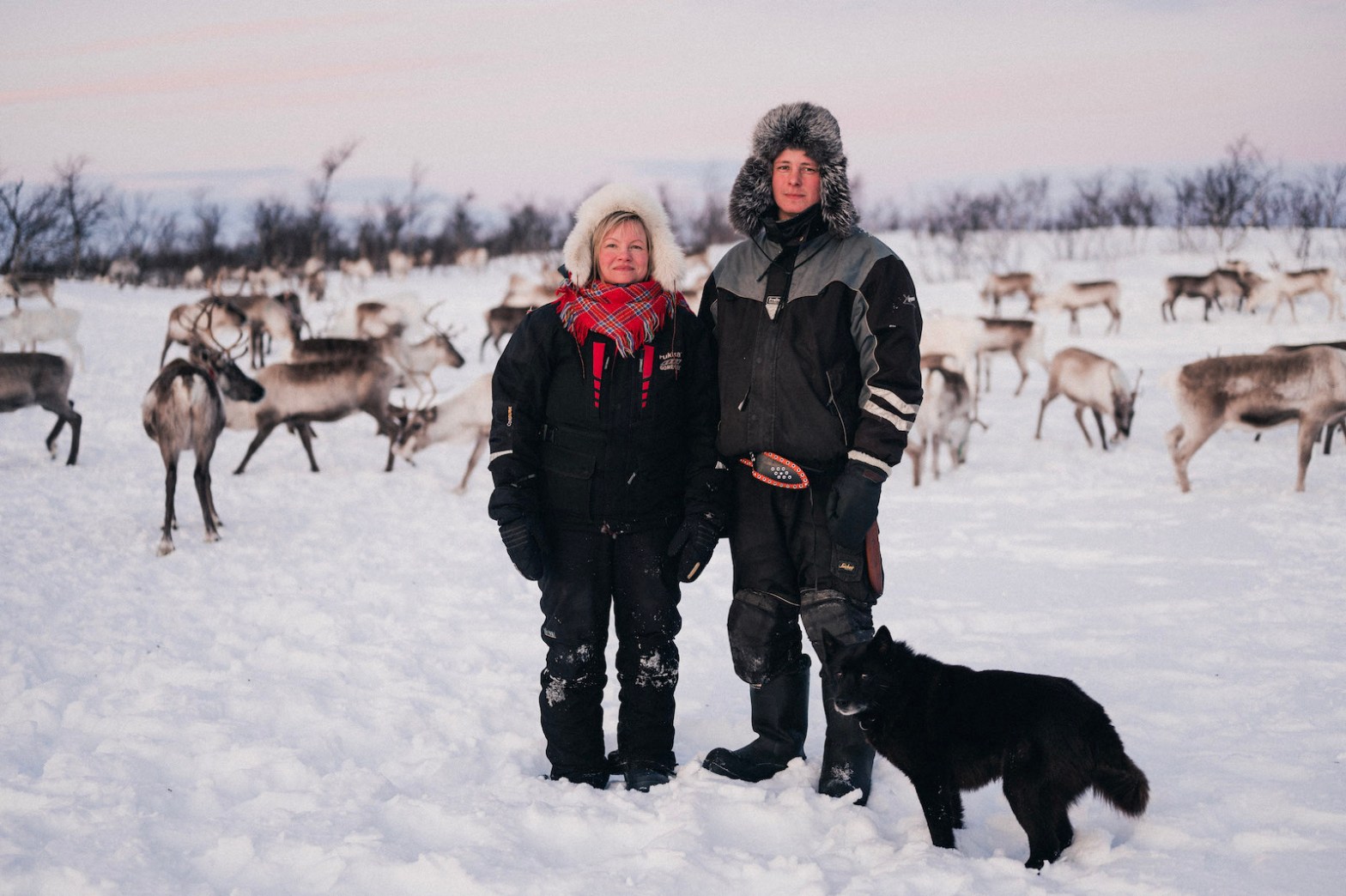
Photo: Michael Miller / OCA.
Venice Biennale Sámi Pavilion artist Máret Ánne Sara and her brother, Jovsset Ante Sara.

The Sámi are indigenous people of Finland, Norway, and Sweden. Today’s post is about the art some of them have chosen to present to the world at the Venice Biennale this year.

Anna Souter reports at Hyperallergic, “Sámi artist Pauliina Feodoroff says that ‘to be Indigenous is to be site-specific.’ For centuries, colonial governments have deliberately represented the site-specific Indigenous landscapes of the European Arctic as empty wildernesses. In reality, these are the ancestral lands of the Sámi people. Far from empty, they are ecologically diverse sites of culture, care, and collective endeavor. 

“At this year’s Venice Biennale, the Nordic Pavilion will be transformed for the first time into the Sámi Pavilion. The project undermines the nationalistic structure behind the Biennale, instead recognizing the sovereignty and cultural cohesion of Sápmi, the Sámi cultural region, which covers much of the northernmost areas of Norway, Sweden, and Finland, as well as part of Russia. The three contributing artists — Pauliina Feodoroff, Máret Ánne Sara, and Anders Sunna — draw attention to the ongoing colonial oppression and discrimination experienced by Indigenous Sámi under local and national governments across the Nordic region. 

“Feodoroff’s family members are Skolt Sámi reindeer herders, originally from the part of Sápmi within the Russian border. They were pushed into Finland after World War II, into a reputedly toxic area ravaged by mining and fallout from Chernobyl. Feodoroff’s work for the Sámi Pavilion will combine performance and video installations to explore non-colonial modes of physical expression, emphasizing the close relationship between the body and landscape in Sámi culture.

“Feodoroff has no artist studio; instead she sees the landscapes with which she works as her expanded studio. Her creative practice is inseparable from her work as a land defender. … She laments and resists the logging of old, slow-growth forests for one of Finland’s key exports: toilet paper. The bathos is not lost on Feodoroff and local Sámi reindeer herders, who are bypassed by the transaction, gaining nothing but a degraded landscape and poorer survival rates for their reindeer. 

“To protect and restore remaining old-growth forests, Feodoroff is attempting to use the art market to buy back land to be owned and managed collectively by Sámi people. Purchasing one of her works is framed as a contract through which the collector buys the right to visit an area of land in Sápmi; in return, the artist pledges to protect that land. …

“In 2015, the Norwegian government introduced mass reindeer culling quotas for Sámi herders, hitting younger herders such as artist Máret Ánne Sara’s brother particularly hard. Throughout a lengthy and expensive legal process, Sara has supported her brother’s appeal against the ruling, showing solidarity and resistance through her artistic project ‘Pile o’Sápmi’ (2016-ongoing).

“In 2016, Sara piled 200 reindeer heads outside the Inner Finnmark District Court and topped the pile with a Norwegian flag. The work refers to the 19th-century white settler policy of controlling the Indigenous population of Canada by slaughtering millions of buffalo and piling their bones in enormous heaps. …

“Sara’s work emphasizes that reindeer herding is at the heart of both Sámi culture and the complex ecologies of Sápmi. Her installation for the Sámi Pavilion incorporates preserved dead reindeer calves as bittersweet symbols of both loss and hope. …

“Anders Sunna’s painting and sound installations speak directly to his own history. ‘My paintings tell stories of what happened to my family,’ he says. ‘Today our family has no rights at all, we have lost everything.’ Located on the Swedish side of Sápmi, Sunna’s family has been refused its ancestral right to herd reindeer because of the competing interests of local Swedish landowners. … Sunna’s family has been practicing what he describes as ‘guerrilla reindeer herding’ for 50 years.

“Sunna’s paintings borrow motifs from international protest movements, news footage of riots, and his artistic origins as a graffitist. His move into the fine art world is helping to bring his family’s story to an international audience. For the 2022 Venice Biennale, he has created five paintings depicting episodes from the last five decades of the Sunna family’s struggles. … Sunna tells stories of oppression and even despair in the face of relentless attacks on his family’s rights, but he also hopes for a better future for the next generation.

“Before I visited Sápmi to meet the Sámi Pavilion artists in February 2022, I felt disillusioned with the power of the art world to enact change; despite countless artworks raising awareness of climate breakdown, for example, society has failed to make meaningful changes. But across Sápmi, I met individuals who believed in the capacity for art — and for the Venice Biennale — to make a difference. …

“The stories told in the Sámi Pavilion have rarely been presented on an international stage; and though often deeply personal, they speak to issues that affect us all. The Arctic is warming four times faster than the rest of the world; it is a litmus test for our environmental future. Indigenous knowledge and Indigenous land management could lead us toward a safer ecological future.”

More at Hyperallergic, here. For related posts, search on “Sámi” at this blog.
Read Full Post »

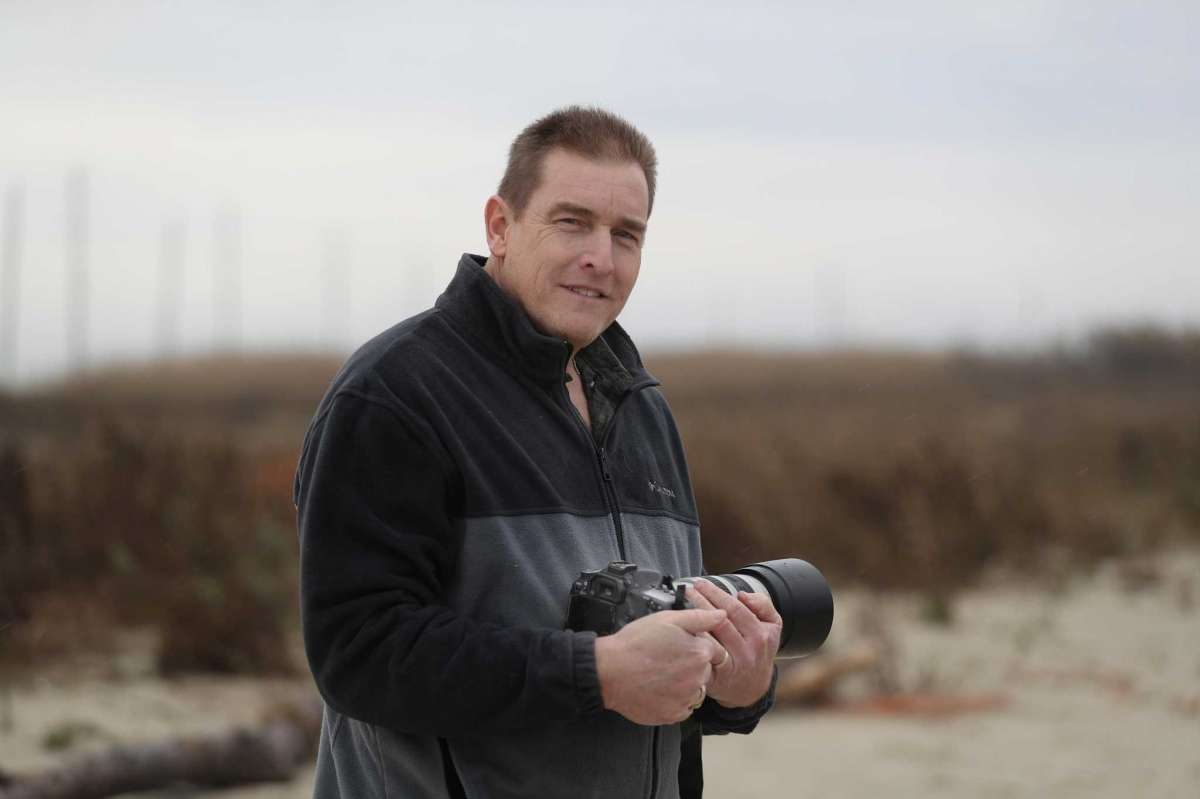
Photo: Houston Chronicle.
Ron Wooten of Galveston is a guy with a heavy dose of curiosity. His determination to learn more about the pack that killed his dog led to a surprising scientific discovery.

You may have already heard about the discovery in today’s story, but for me, the real story is about an ordinary guy and his insatiable curiosity.

After his dog was killed by a pack of coyotes, Ron Wooten went out searching for the pack, observed they looked different from normal coyotes, began a hunt to collect their DNA, and spent years trying to convince scientists that he had discovered something new. A true citizen scientist.

Emily Anthes wrote about him at the New York Times.

“From a distance, the canids of Galveston Island, Texas, look almost like coyotes, prowling around the beach at night, eyes gleaming in the dark.

“But look closer and oddities appear. The animals’ bodies seem slightly out of proportion, with overly long legs, unusually broad heads and sharply pointed snouts. And then there is their fur, distinctly reddish in hue, with white patches on their muzzles.

“The Galveston Island canids are not conventional coyotes — at least, not entirely. They carry a ghostly genetic legacy: DNA from red wolves, which were declared extinct in the wild in 1980.

“For years, these genes have been hiding in plain sight. … Their discovery, which came after a determined local resident persuaded scientists to take a closer look at the canids, could help revive a captive breeding program for red wolves and restore the rich genetic variation that once existed in the wild population.

“ ‘It doesn’t seem to be lost any longer,’ said Bridgett vonHoldt, an evolutionary biologist at Princeton University, referring to the genetic diversity that once characterized red wolves. …

“Ron Wooten, a Galveston resident, never paid close attention to the local coyotes until they ran off with his dog one night in 2008. ‘A pack took him and carried him off,’ recalled Mr. Wooten, an outreach specialist at the U.S. Army Corps of Engineers.

“He found the pack, and what remained of his dog, in a nearby field. He was horrified, and he blamed himself for his dog’s death. But as his flashlight swept over the coyotes’ red muzzles, he found himself fascinated.

“Determined to learn more, he posted a message on Facebook asking his neighbors to alert him if they spotted the animals. Eventually, a friend came through: There was a pack near her apartment building.

“Mr. Wooten raced over with his camera, snapping photographs as he watched a group of pups chasing each other. ‘They were just beautiful,’ he said.

“But when he looked more carefully at the photos, he began to wonder whether the so-called coyotes were really coyotes at all.

‘They just didn’t look right,’ he said. ‘I thought at first that they must have bred with Marmaduke or something because they had super-long legs, super-long noses.’

“Mr. Wooten, a former fisheries biologist, started reading up on the local wildlife and stumbled across the history of red wolves. Once abundant in the southeastern United States, the wolves had dwindled in number during the 20th century — a result of habitat loss, hunting and other threats.

“In the 1970s, the U.S. Fish and Wildlife Service made a last-ditch effort to save the species, traveling along the Gulf Coast and trapping all the red wolves it could find. Scientists selected some of the animals for a breeding program, in hopes of maintaining the red wolf in captivity.

“Mr. Wooten became convinced that the creatures that had taken his dog were actually red wolf-coyote hybrids, if not actual red wolves.

“Eager to prove his hypothesis, he began looking for dead canids by the side of the road. ‘I was thinking that if these are red wolves then the only way they’re going to be able to tell is with genetics,’ he recalled.

“He soon found two dead animals, collected a small patch of skin from each and tucked them away in his freezer while he tried, for years, to pique scientists’ interest. …

“Eventually, in 2016, Mr. Wooten’s photos made their way to Dr. vonHoldt, an expert on canid genetics. The animals in Mr. Wooten’s photos immediately struck her. They ‘just had a special look,’ she said. ‘And I bit. The whole thing — hook, line and sinker.’ …

“Dr. vonHoldt and her colleagues extracted DNA from the skin samples and compared it to DNA from coyotes, red wolves, gray wolves and eastern wolves. Although the two Galveston Island canids were mostly coyote, they had significant red wolf ancestry; roughly 30 percent of their genetic material was from the wolves, they found. …

“Mr. Wooten was thrilled. ‘It blew me away,’ he said.

“Even more remarkable, some of the genetic variants, or alleles, the Galveston animals carried were not present in any of the other North American canids the researchers analyzed, including the contemporary red wolves. The scientists theorize that these alleles were passed down from the wild red wolves that used to roam the region.

“ ‘They harbor ancestral genetic variation, this ghost variation, which we thought was extinct from the landscape,’ Dr. vonHoldt said. ‘So there’s a sense of reviving what we thought was gone.’ “

More at the Times, here.

Read Full Post »

Photo: AP.
After Greta Thunberg went back to Sweden on a sailboat, the concept of flygskam – “flight shame” in Swedish – became common in Europe. Today increasing numbers of people are finding they are enjoying trains and bikes, and other transportation alternatives a lot more than airport hassles.

Yesterday, Suzanne and Erik took their kids on their first train trip. As a big fan of trains myself, I’m eager to hear how these experienced young fliers feel about Amtrak’s more leisurely mode of getting somewhere.

If they become train converts, they won’t be alone, as Stephanie Hanes writes at the Christian Science Monitor.

“The last time Jack Hansen took an airplane, he was a junior at the University of Vermont. To return from a semester abroad in Copenhagen, he flew from Denmark, stopped in Iceland, and landed in New York. 

“But the next term, one of his professors asked students to calculate their individual energy usage. And when Mr. Hansen did the math, he realized that just one leg of that international flight accounted for more energy, and more greenhouse gas emissions, than all the other things he had done that year combined – the driving and heating and lighting and eating and everything else.

“ ‘I just couldn’t justify it,’ he says. ‘It really is an extreme. It’s an extreme amount of energy, an extreme amount of pollution.’

“So Mr. Hansen decided to stop flying. That was in 2015. Since then, he has traveled by train and bike and car, and has even written a song about the trials of getting home to Chicago on an overnight bus. But he has not been on an airplane.   

“And he has never found travel more joyful, he says. …

“With more people recognizing the climate impact of the aviation industry, and more people interested in lowering their own carbon footprint, a new ethos of ‘slow,’ climate-friendly travel is taking hold. And those at the forefront of this movement – travelers like Mr. Hansen who have pledged to go ‘flight free’ for a year or more – claim that their new approach from getting here to there is surprisingly fun.

“ ‘The motivation initially is the emissions, but once you try it, you think, “Why have I been torturing myself?” ‘ says Anna Hughes, the head of Flight Free UK, a group based in the United Kingdom that has collected some 10,000 pledges from people to eschew flying. …

“Go more slowly, she says, and travel begins to return to what it once was: a slow metamorphosis of one place to another, a sense of space, an unwinding of time. …

“But there is more underlying the satisfaction of land-based travel, psychologists say. A growing body of research increasingly ties environment- and climate-friendly behavior to a personal sense of well-being. In a recent Environmental Research Letters article, for instance, author Stephanie Johnson Zawadzki of the University of Groningen in the Netherlands explored the stereotype that environmental living is all about sacrifice. She found numerous studies showing that people not only felt better when they took easy ‘green’ actions – choosing a paper bag at the grocery store, for instance, or buying a ‘sustainable’ product – but also reported an improved sense of well-being when those actions required more give. …

“Part of this, psychologists speculate, is that taking actions to counteract global warming helps counteract ‘climate distress,’ an increasingly recognized psychological phenomenon.  

“Climate distress, explains New York-based psychologist Wendy Greenspun, is ‘a range of emotional reactions from sadness to despair to grief to anger and rage, hope and shame and guilt.’ And one of the key ways to build resilience to it, she says, is to behave like part of the solution, and to creatively connect with others doing the same.

“ ‘Guilt maybe leads us to recognize that we care and we want to repair,’ she says.”

More at the Monitor, here.

Read Full Post »

Photo: Clara Germani/The Christian Science Monitor.
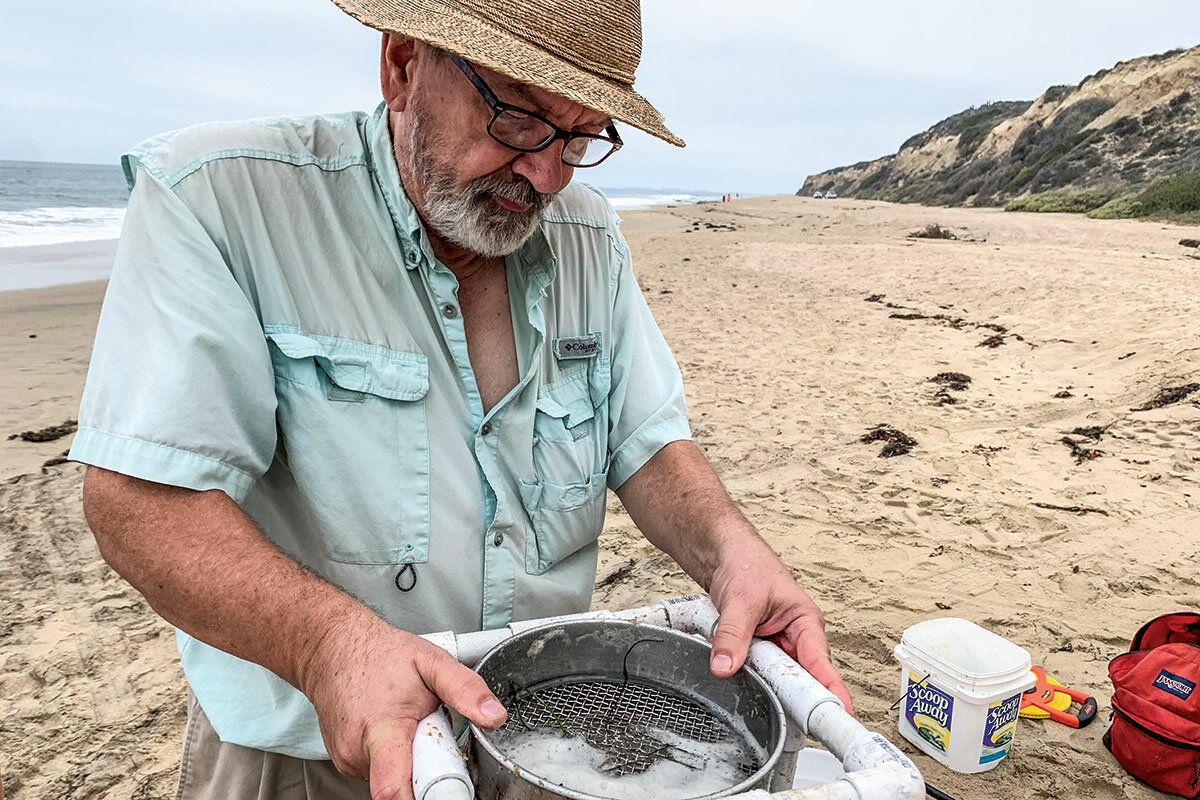
Dr. Mark McReynolds sifts collected sand through a sieve that brings microplastics to the surface.

Everywhere, lately, we read about microplastics showing up in places they are not wanted — on beaches, in lungs, in our food, in used diapers. Rather than succumb to despair, we can follow the lead of the scientists in today’s story. Measure first, then work on a fix.

Clara Germani reports at the Christian Science Monitor from Crystal Cove State Park, California, a “3-mile stretch of sand and tide pools beneath a fortress of 80-foot bluffs, [and a] California tourism poster if there ever was one. Nothing disturbs the pristine, sunny view, except – once you’re aware of them – the nurdles.

“But you have to look close – on-your-hands-and-knees close – to see one. And once you do, you see another and another – so many that you may not think of this, or any beach, the same way again.

“Mark McReynolds is trying to bring into focus these tiny preproduction plastic pellets that manufacturers melt down to mold everything from car bumpers to toothpaste caps. They’ve been escaping factories, container ships, trains, trucks – and public notice – for decades.

“Dr. McReynolds is an environmental scientist with the Christian conservation nonprofit A Rocha International who’d never heard of nurdles three years ago. He’s now joined a global movement studying their trail into the environment. Some – like the Great Nurdle Hunt and the Nurdle Patrol – map nurdles through informal online reporting by citizen scientists around the globe.

” ‘Knowledge opens your eyes. You don’t see plastic bags blowing around [on this beach] because people pick them up,’ says Dr. McReynolds. ‘But, they’re not picking up the stuff that’s 3 millimeters [because] they don’t even know it’s there.’

“The 2- to 3-millimeter, multicolored orbs are a subset of microplastics ­– plastic particles less than 5 millimeters in size. Nurdles accumulate where water inevitably takes them, and they’ve been found on shorelines of every continent.

“Establishing a baseline count of the presence of nurdles – and, more broadly, any microplastics – is the focus of Dr. McReynolds’ scientific study here. Charting the count, noting tide, current, and weather conditions will show if amounts are increasing, and perhaps at what rate and why. That knowledge, he says, can inform solutions to plastic pollution such as regulation of their use.

“Aided by citizen science volunteers – and his wife, Karen McReynolds, an associate professor of science at Hope International University who offers access to a lab and student help – he conducts a complex monthly microplastic sampling and a twice-annual nurdle hunt.  

“Microplastics research and cleanups have ‘exploded’ in the past decade due to new ‘understanding of the apparent health and ecosystem risks,’ says Erica Cirino, whose book Thicker than Water: The Quest for Solutions to the Plastic Crisis is a tale of adventure chasing microplastics around the globe.

“In her travels she’s been struck by how unifying the plastic problem can be for people from diverse groups – from faith-based organizations to surfers and fishers, conservatives to liberals. They don’t all know what to do about it, she says, but ‘a very concrete thing like a [nurdle] hunt or getting your hands dirty is one of the best ways to get people involved.’

” ‘What are you doing? Picking up trash?’ queries a steady stream of beach walkers whenever Dr. McReynolds’ crew trundles onto the beach. …

“[Dr. McReynolds] explains the science of nurdles and microplastics to the curious while keeping an eye on volunteers troweling sand into 5-gallon buckets. Each bucket of sand can yield anywhere from no plastics to as much as 300 pieces to be analyzed in the lab. It sounds small, but the randomized samples can be extrapolated to the rest of the beach. …

“One recent morning he told some beach walkers how nurdles are believed to absorb toxic chemicals, and – because they resemble fish eggs – are eaten by fish and birds and enter the food chain. Almost on cue, a bold seagull hopped up to a laminated photo of nurdles and hungrily pecked at it.

“A scarlet macaw expert by training, and an ordained Mennonite pastor who holds outdoor church services in the nearby San Gabriel Mountains, Dr. McReynolds is an unpaid director of A Rocha’s Southern California operations – which means he’s as much a volunteer as his citizen scientist recruits.

“And it can be a lonely devotion, says his wife Karen, who notes that he possesses ‘bulldog grab-it-and-do-not-let-go’ tendencies to bridge science and faith. His A Rocha colleague, Bob Sluka, says it’s Mr. McReynolds’ ‘pastoral heart’ that drives the Crystal Cove microplastics survey and its potential to spur people ‘to recognize things they are doing in their own life as consumers and change their behavior.’ ” More at the Monitor, here.

As in my recent post about saving salamanders, most often, when people learn they are hurting the environment unawares, they do something about it.

Read Full Post »

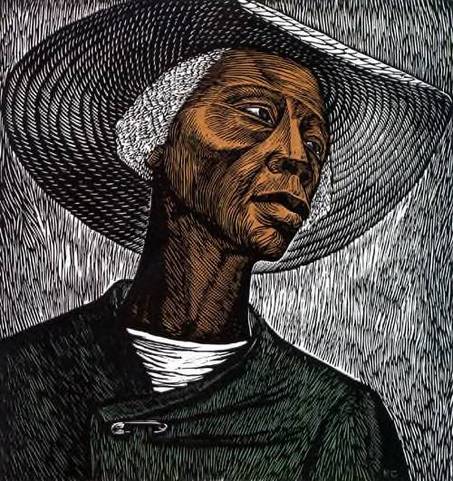
Elizabeth Catlett: Sharecropper (1968)

If you are on Twitter, I recommend following @womensart1. She has introduced me to some outstanding art by women.

Her website says, “Art is art and artists are artists, yes, but there is also a gendered historical, social and cultural framework in which it is produced and received, which has ongoing implications on issues of value and recognition. The masculine term ‘master,’ for instance, and the ideal of lone male genius, still underpin the omnipresent Western concept of ‘the artist.’ …

“My own online project #WOMENSART was created with the simple premise of raising the profile of women artists. By highlighting their diverse historic and global work, the project clearly reflects that ‘women’s art’ is not a category in itself, yet it does indicate genres to which women are more culturally and socially linked.

“#WOMENSART also creates an integral opportunity to promote women’s self-representation and to explore the female rather than much more scrutinized ‘male gaze.’ … Specific exploration of the artwork of women has enabled insights into areas including capitalism, migration, class, globalization, ethnicity, disability and so on, from an unusual, uniquely female perspective. …

“In addition, the #WOMENSART project has enabled consideration of genres such as textiles, ceramics, zines, crafts and street art rather than focusing solely on the Western definition of ‘high art’ (sculpture and painting), therefore challenging the hierarchical limitations of a system historically based on discrimination rather than ability.

“Utilizing social media as an outreach facility has, in turn, proved quite a leveler, as it provides access to/for artists, genres and audiences that the establishment may ignore.” More here.

At MoMA, I learned more about the artist shown above, Elizabeth Catlett: “Catlett once said that the purpose of her work was to ‘present black people in their beauty and dignity for ourselves and others to understand and enjoy.’ Sharecropper calls attention to the tribulations of tenant farming — a system in which rent for the land is paid by the farmer with a part of the crop, creating an impossible-to-escape cycle of debt — while also offering a heroic portrait of an anonymous woman. …

“Her printmaking practice included woodcut, screenprint, lithography, and, most importantly, linoleum cut, which she learned at the Taller de Gráfica Popular (People’s Graphic Workshop) in Mexico City.

“Founded in 1937, the workshop aimed to continue the Mexican tradition of socially engaged public art. It specialized in linoleum cut, a technique that produces inexpensive prints and can accommodate large editions. Catlett first visited this renowned workshop and artists’ collective while she was in Mexico on a fellowship in 1946, where she found a kinship with the Mexican muralists, including Diego Rivera and José Clemente Orozco. Like them she tried, she explained, to make art ‘for the people, for the struggling people, to whom only realism is meaningful.’ ” More at MoMA, here.

One of the many advantages of @womensart1 is that it inspires you to find out more about the female artists you see there.

Read Full Post »

Photo: Sciencing.
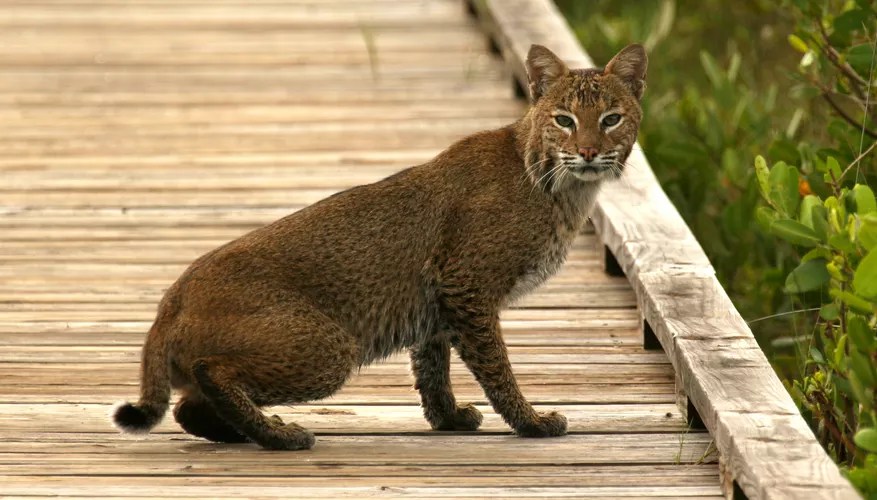
As boa constrictors from Latin America increase in Florida, bobcats that love boa eggs may help to keep them in check.

Story lovers of a certain age assume that the champion snake challenger of all time is the mongoose — to be precise, a brave cobra-fighting mongoose in India called Rikki-Tikki-Tavi.

But in Florida, where non-native boa constrictors are increasing, other snake predators are gaining attention. Recently, scientists were surprised to learn that one of them is the bobcat.

Matt Kaplan reports at the New York Times, “The voracious appetite of the invasive Burmese python is causing Florida’s mammal and bird populations to plummet. With little natural competition to control the big snake’s numbers, the situation looks desperate. But new observations suggest that the bobcat, a wildcat native to Florida, might be able to help.

“A team of ecologists collected evidence recently of a bobcat devouring python eggs in the Big Cypress National Preserve in Florida, and last month reported their findings in the journal Ecology and Evolution. It’s hard to say whether this individual cat was more adventurous than the average bobcat, but it suggests one potential way the python’s proliferation could be limited — by other animals eating their unhatched young.

“The event was captured by a motion sensitive camera that a team led by Andrea Currylow, an ecologist at the U.S. Geological Survey, deployed in June 2021 near the nest of a large female Burmese python. The camera had been put in place to better understand the reproductive biology of these huge snakes. A few hours after installation, the snake slithered away and the camera snapped shots of a bobcat arriving and eating python eggs during the early evening. …

“Apparently the feline decided that it rather liked what it had found because it came back for another snack three times that night. The next morning the bobcat returned to cache uneaten eggs in the ground to consume at a later date. That evening the bobcat returned again, but, this time, the python was back on her nest. Weighing about 20 pounds, the feline was clearly aware that the 115-pound python posed a serious threat and, rather than trying to eat more eggs, it padded around the nest at a safe distance for a few minutes before leaving.

“The next night the camera took a photo of the two predators in a face-off. Apparently, the bobcat felt the clutch was worth fighting for because it returned in the morning and aggravated the python enough to prompt an attack. …

“Precisely how the duel ended is unclear but when the researchers arrived that evening to collect the camera, they found the snake sitting on a badly damaged nest.

“ ‘We thought the snake must have caused the damage herself by somehow crushing her own eggs,’ Dr. Currylow said, ‘but then we saw the photos and, well, it was just incredible.’ …

“While it is possible that this interaction was just an isolated incident, it is also possible that native species are beginning to respond to the presence of the python. …

“Reptile eggs are already a part of the Florida bobcat diet. Bobcats are known to eat sea turtle eggs, and these may have similarities to python eggs. …

“Of course, the big difference between python nests and those of sea turtles is that the snake nests are usually guarded. But Dr. Currylow also points out that female pythons typically go without food until their eggs are about to hatch. That might be the main reason the bobcat survived its adventure.”

We’ll see. The boa may adapt, too. I remember how the mother cobra, Nagaina, felt about her eggs in the Kipling story.

More at the Times, here. For more on the boa invasion, check out the Smithsonian, too.

Read Full Post »

Photo: Menorah Islands Project.
Christianity, Judaism, and Islam are referred to as the “Abrahamic” religions because they are all rooted in a common ancestor – the biblical Abraham.

Today is like an alignment of planets because the three main Abrahamic religions are celebrating three important holidays at the same time: Ramadan, Passover, and Easter. I was thinking it would a good day to remind ourselves what the three faiths have in common, so I did an internet search and found information at the British Library.

The library had put the question in the hands of Anna Sapir Abulafia, Professor of the Study of the Abrahamic Religions at the Faculty of Theology and Religion at the University of Oxford and a Fellow of Lady Margaret Hall.

She writes, “When people refer to the Abrahamic religions they are usually thinking of Judaism, Christianity and Islam. There are, in fact, more Abrahamic religions, such as the Baha’i Faith, Yezidi, Druze, Samaritan and Rastafari, but this article will focus on the main three aforementioned.

“The term ‘Abrahamic’ highlights the hugely important role which the figure of Abraham plays in each of these traditions. Jews, Christians and Muslims look to their sacred texts to find the history of Abraham and how it has been interpreted through the ages. For Jews, the central text is the Hebrew Bible consisting of the Torah (the first five books or Pentateuch), the Prophets (Nevi’im) and the Writings (Ketuvim). Abraham’s story unfolds in Genesis, the first book of the Torah. …

“For Christians, the Hebrew Bible is the Old Testament, the precursor of the New Testament that narrates the birth, ministry, death and Resurrection of Jesus Christ as well as the life and preaching of the earliest followers of Jesus. For Christian understandings of Abraham the Letters of St Paul are of particular importance.

“Muslims engage with the figure of Abraham/Ibrāhīm in their holy book, the Qur’an, as well as in the Hadith, the body of writings which transmit the sayings and actions of the Prophet Muhammad.

“Let us turn to Genesis to map out the story of Abraham, which is shared by Jews and Christians. In Genesis 12: 1–3 Abraham (at that stage his name is still Abram) is called by God to: ‘Go from your country and your kindred and your father’s house to the land that I will show you. I will make of you a great nation, and I will bless you, and make your name great, so that you will be a blessing … and in you all the families of the earth shall be blessed.’ “

Professor Abulafia proceeds to describe in detail how each of the religious traditions perceives Abraham. She explains that Abraham has a son with Hagar (Ishmael) and also with Sarah (Isaac), saying, “trouble brews between Sarah and Hagar as their sons grow up, and Sarah persuades Abraham to send Hagar and Ishmael away (Genesis 21). God promises Hagar that Ishmael too will be made into a great nation.

“God then tests Abraham’s faith by commanding him to sacrifice Isaac (Genesis 22). But when Abraham is about to sacrifice Isaac on Mount Moriah, an angel stops him and directs his gaze to a ram caught in the thicket. The ram is sacrificed instead of Isaac. …

“In Jewish tradition, Abraham became identified as the ‘first Jew.’ He is depicted as the embodiment of the faithful Jew upholding God’s commandments. Traditionally, Jews see themselves as the descendants of Abraham through his son Isaac and Jacob, his grandson. …

“In Christian tradition, Abraham’s faith became paradigmatic for all those who followed Jesus. In the words of St Paul, in Romans 4: ‘For what does the scripture say? “Abraham believed God, and it was reckoned to him as righteousness.” ‘ …

“Islam shares with Judaism the narrative of Abraham’s destruction of idols in the service of the worship of the one true God. In Surah 37 of the Qur’an, Abraham ‘said to his father and to his people, “What is that which ye worship? Is it a falsehood – gods other than Allah that ye desire? Then what is your idea about the Lord of the worlds?” … Then did he turn upon them, striking (them) with the right hand. … He said: “Worship ye that which ye have (yourselves) carved? But Allah has created you and your handwork!” ‘ …

“In the same Surah, Abraham has a vision that he must sacrifice his son. As in the Bible, Allah intervenes in time. The Qur’an emphasizes that this was a difficult trial which both Abraham and his son passed with flying colors. It does not specify whether the son was Isaac or Ishmael, although today most Muslims believe that it was Ishmael/Ismā‘īl.

“The biblical narrative concerning the dismissal of Hagar and Ishmael is paralleled in the Muslim tradition with Abraham taking Hagar and Ishmael to Mecca, where in due course Abraham and Ishmael build the Ka‘bah, the focus of the Hajj.” More from the professor here.

I wrote another post in 2011, here, on the Abrahamic faiths. In a 2014 post, I described a nonprofit that brings together young people from the three backgrounds. A post earlier this year was on an Abrahamic collaboration that is helping Afghan refugees in Maryland, here.

Read Full Post »

Photo: Elucius/Wikimedia.
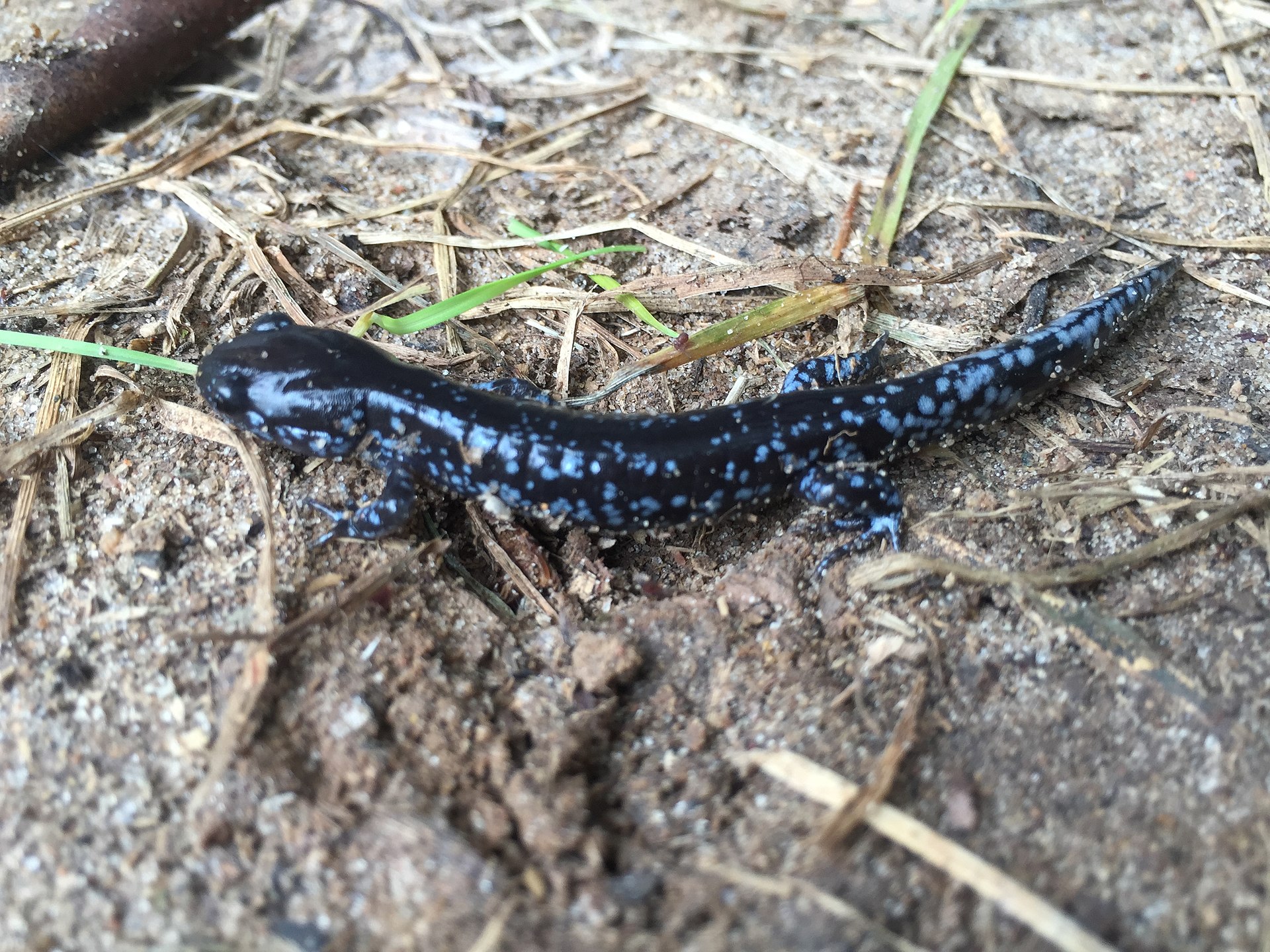
Blue-spotted salamander (Ambystoma laterale).

Anyone can make a difference, as students in Michigan learned when they decided to do something about cars killing salamanders in migration season.

Cathy Free reports at the Washington Post, “Eli Bieri noticed something disturbing as he walked through Presque Isle Park in Marquette, Mich., a few years ago.

“Several dozen blue-spotted salamanders had been smashed by cars while they were crossing from the forest to the wetlands on the other side of the road during their annual migration to breed and lay eggs. …

“ ‘I’ve always loved salamanders, and it really made me sad,’ said Bieri, 23, then a freshman ecology student at Northern Michigan University in the Upper Peninsula, about the 4-inch, bug-eyed amphibians, a common species in east-central North America. …

“ ‘I saw them crossing the road en masse,’ said Bieri, adding that they go to their breeding ponds when the weather is just right — rainy and 30 to 40 degrees.

“The following year, Bieri said he knew he had to do something to help the blue-spotted salamanders that were being crushed by people who drove their cars into the park to stargaze, not knowing any better.

“ ‘I’ve been fascinated by swamps and ponds since I was a kid chasing frogs and turtles, so of course, I was out there,’ he said. … He started a university research project to figure out how many of the salamanders were being killed by tires in Presque Isle Park every year.

“ ‘It’s impossible for a driver to see them at night because they’re black and the asphalt is black,’ said Bieri, explaining that the long-tailed salamanders move slowly, increasing their chance of being squashed.

“Bieri checked the park road every day for several weeks. … He got other students to help with his research, and together they tagged salamanders to get a feel for their numbers, he said.

“They found about 400 dead salamanders on the road that spring, and learned that many of them were getting wiped out on the park’s main thoroughfare every year, Bieri said. He released his findings, and upon seeing them, Marquette decided in 2020 to block a quarter-mile section of the park’s main road during migration season, from 8 p.m. to 8 a.m.

“That year, Bieri found only three salamanders flattened by car tires, a big victory.

“The road closure now happens every year, and other groups joined the city to help let the public know about the salamander’s plight, including the Superior Watershed Partnership and Northern Michigan University.

“Once residents found out about the salamanders, they flocked to the park to see them, leaving their cars in safely designated areas, and searching for the critters on foot, Bieri said. …

“Although blue-spotted salamanders are not endangered, they’re an indicator species that can alert humans to problems in the ecosystem, said Tyler Pendrod, a program manager at Superior Watershed Partnership, a lake protection group in Marquette.

“ ‘What’s really cool about Eli’s research is that a lot of educational programming has come out of it,’ he said. ‘Children are experiencing nature in a way they never did before.’ …

“Blue-spotted salamanders venture out only in full darkness and they’re best viewed with a flashlight on a rainy night, Bieri said. He said he is delighted to see families carefully walking along the roadside at night with flashlights, hoping to catch the beginning of the spring migration, when the salamanders come out in droves. “

More at the Post, here.

Read Full Post »

Photo: Naturskyddsforeningen.
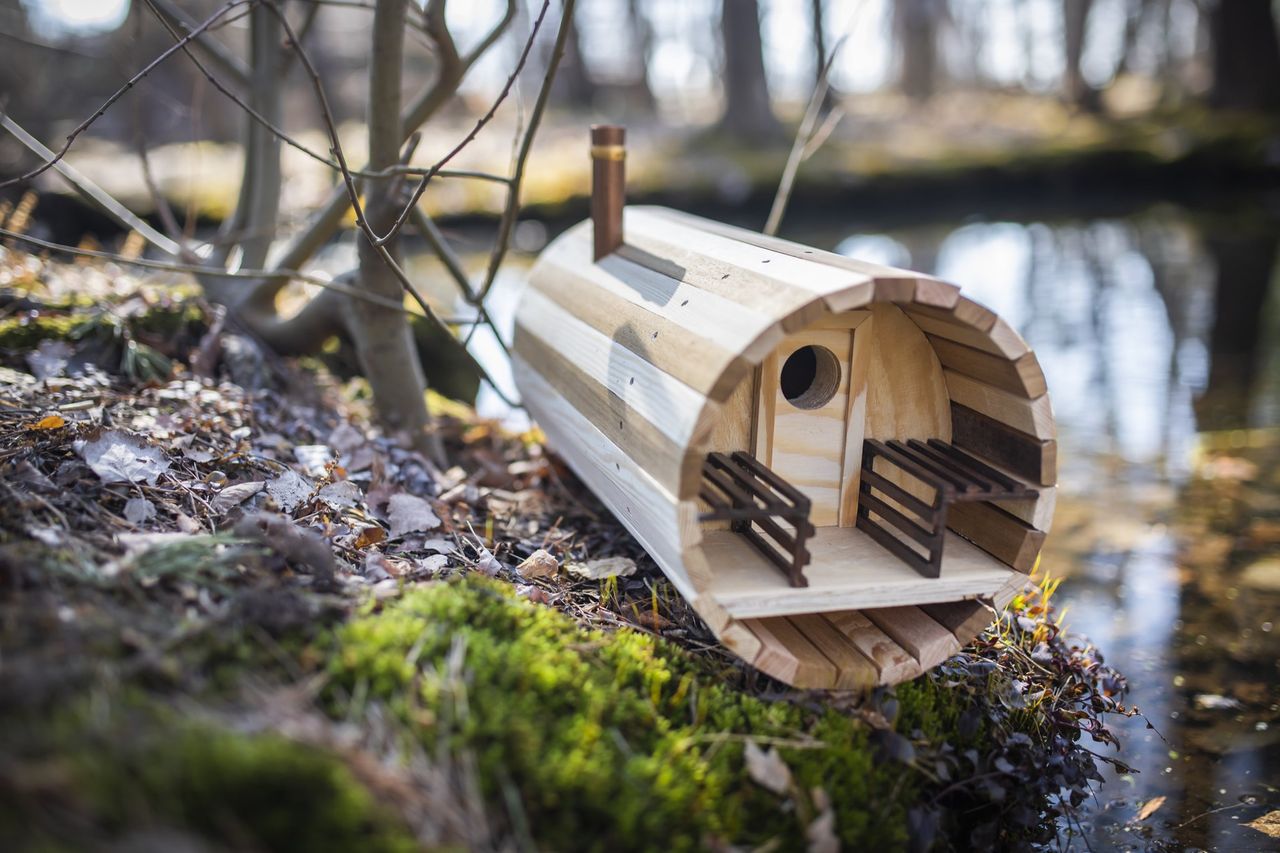
The aim of the Swedish birdhouse championship is to encourage birds’ nest building and children’s commitment to nature.

I follow @swedense on Instagram, which is where I learned about an annual birdhouse competition for students.

The Swedish birdhouse championship, says Swedense, “is for primary and secondary school classes and is organized by the Swedish Society for Nature Conservation, @naturskyddsforeningen. The aim is to encourage birds’ nest building and children’s commitment to nature.

“This year’s special prize goes to the special school at Sanda education centre in Huskvarna for their contribution ‘Trafikljuset’ (traffic light). The birdhouse has a built-in camera that lets students follow a nesting bird’s yearly cycle from eggs to flight-ready birds in the schoolyard.

“Birdhouses have come to play an important role in the biodiversity of the forest. The lack of older deciduous trees means that many birds in Sweden are currently suffering from a housing shortage.”

Meanwhile, others are getting into the act.

“Bee Breeders Competition Organizers is excited to announce the results for its Legendary Bird Home / Edition 2 competition! This is the second competition in a series aiming to raise awareness for the global environmental crisis. This competition was held in collaboration with Birdly – a socially-responsible start-up that aims to support environmental activism worldwide through funds raised by selling bird homes.

“Bee Breeders worked with an international jury panel consisting of: Marco Barba, Mexican industrial designer and founder of Marco Barba Design and designer of the KUKU birdhouse product; Andris Dekants, project manager at the Latvian Ornithological Society; Farid Esmaeil, co-founder of Dubai based X Architects and winner of the Aga Khan award for the Wasit Natural Reserve Visitor Center project; Mark Gabbertas, founder of West-London based Gabbertas Studio with a portfolio that includes the Gloster Birdhouse; James Krueger, Design Principal in HMC Architects’ in San Diego studio; Heike Schlauch of Heike Schlauch raumhochrosen which has designed the ‘Vorarlberger Baukunst’ birdhouse series; Jolanta Uczarczyk, who runs Uczarczyk, through which she produces original, handmade works such the Mocak Bird Feeder; and Chad Wright, founder of Studio Chad Wright with a portfolio that includes the Attic birdhouse.”

Last year Sofia Wickström, then a 9th grade student at Futuraskolan International Bergtorp, was one of the finalists with Naturskyddsforeningen. The school’s profile on her says she had “been working on her birdhouse during wood shop since the end of 8th grade totaling about 50 work hours. Her entry is called ‘Bergsprängaren’ (Boom Box).

“When designing her birdhouse, she was inspired when seeing two old boomboxes on the floor of the woodshop room where the project got started, she decided then and there on her design. According to Sofia, the hardest part and what actually took the longest time in making the ‘Boom Box’ birdhouse was getting the edges round and smooth. … In researching birds for this project, Sofia found that small birds actually love bright colors; this was perfect as she herself is a big fan of bright colors, hence the pretty pink/green look to the birdhouse.”

More here and here. Good photos here. I especially love the birdhouse with stones embedded in plaster and a handy woodpile. Who can resist designing a birdhouse after seeing these pictures?

Read Full Post »

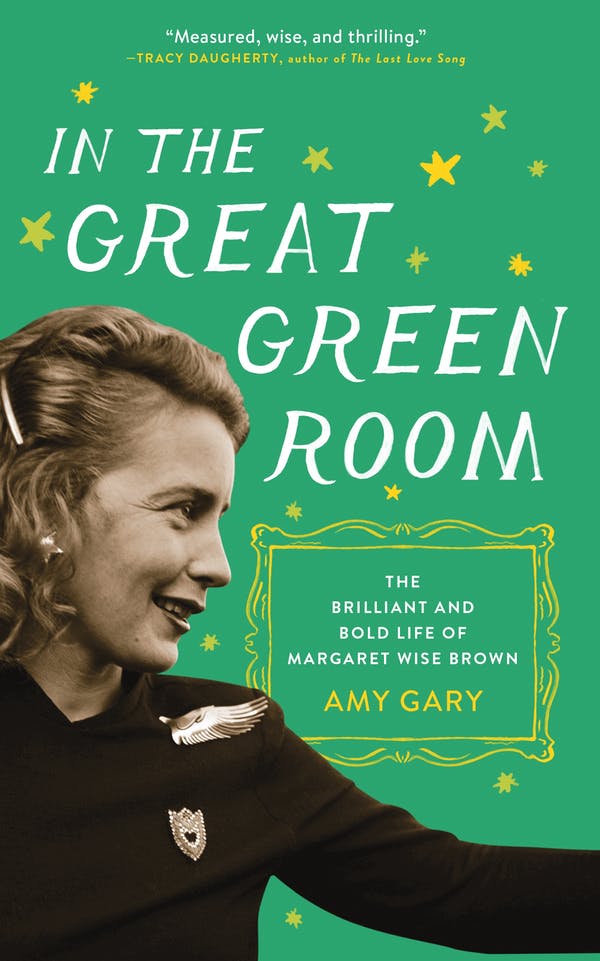
The biography of a woman who channeled childhood.

Today I decided to share this GoodReads report on a biography I read recently.

“I really liked this biography of the prolific and influential writer for children Margaret Wise Brown.

“Amy Gary is not primarily a biographer. In her earlier jobs, she was head of publishing for Lucasfilms and Pixar. But curiosity led her to a treasure trove of unpublished papers that the sister of Margaret Wise Brown had stored away in the attic after Brown’s death at 42 from an embolism.

“Margaret Wise Brown not only wrote the seminal Goodnight, Moon, which after a slow start sold more that 48 million copies worldwide, but many other titles you might recognize without knowing they were by her. At this time of year, I always pull out Home for a Bunny, for example.

“Brown wrote for a variety of publishers, including Harper, Disney, and Golden Books. But it wasn’t that she was a warm and fuzzy child-loving, motherly type. It was more that she never stopped being a child. She thought like a child. She fit in well with the cutting-edge child-development philosophy of the Bank Street School, one of her first employers in New York, but even before she knew about that, she sensed that books featuring repetition and descriptions of very familiar objects would please young children. And she tested everything on her audience.

“Gary’s access to Brown’s papers makes this a rich biography of a wild and original, nature-loving girl who became a wild and original, nature-loving adult. Despite a life of privilege in both New York and the south (she was a frequent visitor to her cousins’ Manhattan-sized island, Cumberland, which is now a national park), nothing could dampen her ability to see everything around her in terms of a story for kids.

“I think you will be interested in how Brown met some great illustrators and writers and nurtured their talents — and in how she came up with innovations like furry books and records in book pockets. She was valued for her work, which was satisfying, but her love life with both men and women she knew were bad for her kept her from being happy for long.

“I really appreciated Gary’s long epilogue, in which she tied up every possible loose end. And the forward by Brown’s fiance, James Stillman Rockefeller Jr., was a lovely way to capture Brown’s vibrant way of talking about, thinking about, whatever she saw.”

Read Full Post »

Photo: Harout Bastajian.
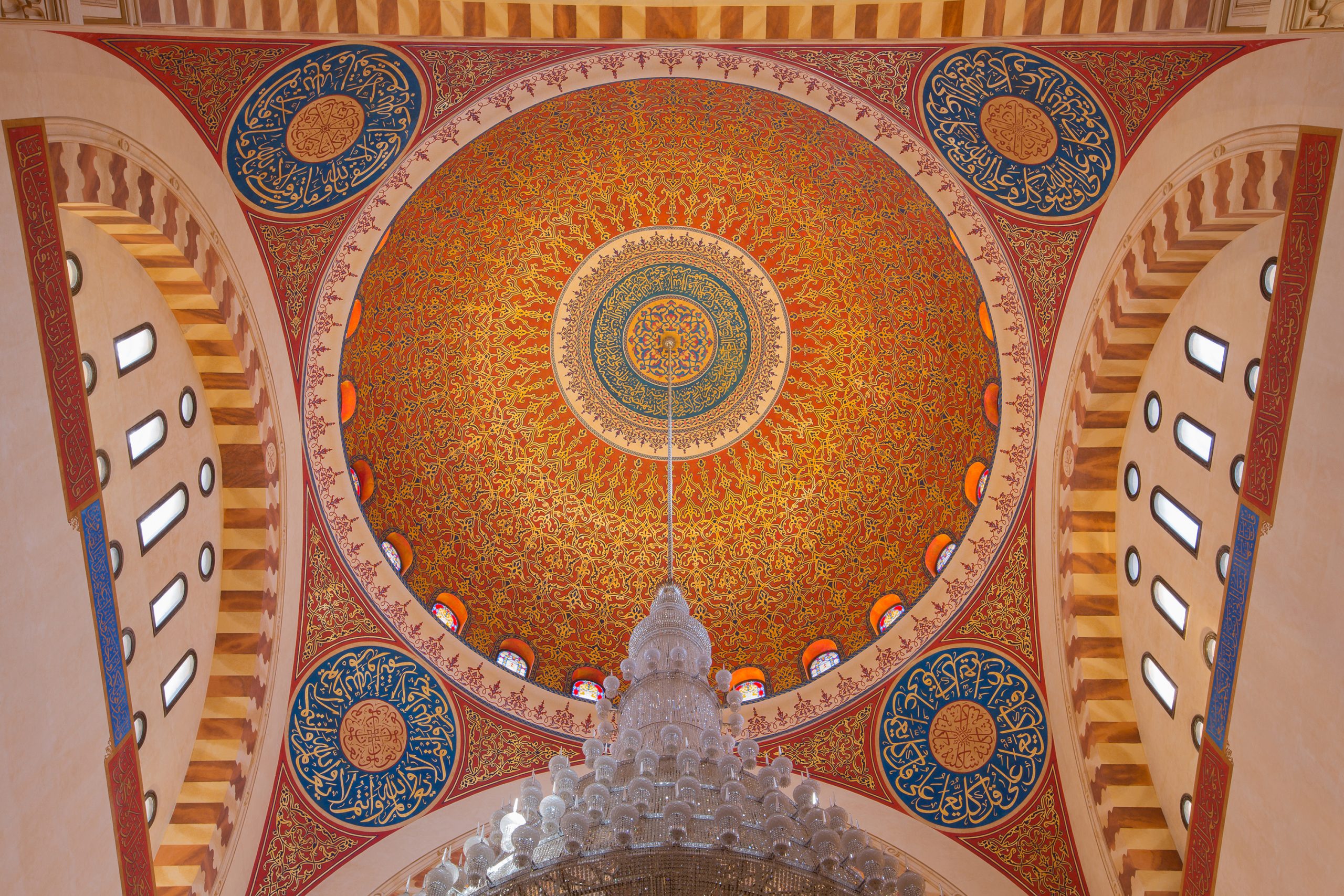
The Mohammad al-Amin Mosque, also referred to as the Blue Mosque, in downtown Beirut, Lebanon.

Some years ago, I read Jason Elliot’s fascinating book about his travels in Iran, Mirrors of the Unseen. One thing that stuck with me was his theory about caves and how they might have influenced Islamic art and the dome shape of mosques. I wrote about it before.

Today I chose an article on a man who is often called in to paint or repaint domes, both Islamic and Christian. His own theories are about which types of imagery are best for which sects.

Hrag Vartanian reports at Hyperallergic, “At the center of downtown Beirut is the prominent Mohammadal-Aminmosque, the largest mosque in Lebanon. …

“Inside is a stunning painted dome. It is the work of an artist who has gained a reputation as a leading painter of decorative ornament, particularly in mosques. What may surprise many people unaware of the rich cosmopolitan tradition of Islamic religious art is that the artist, Harout Bastajian, is not Muslim himself. When people ask him how a Christian is creating the decorative program of a mosque, he likes to answer, ‘God works in mysterious ways, brings us all together to decorate his house of worship.’

“He embarked on this artistic path back in 2004, when he was asked by the Hariris, a prominent business and political family in Lebanon, to decorate the newly inaugurated Hariri mosque in Sidon, Lebanon. …

“The journey into painting in sacred spaces has been inspiring for the artist. Not only has he painted the interiors of mosques but he’s also been involved in the restoration of Roman Catholic and Armenian Catholic buildings in Lebanon. He remembers his first mosque commission in Sidon well. ‘When I went in and saw the huge dome, which is like 900 square meters [roughly 9,687 square feet], I couldn’t sleep that night.

‘I was thinking, “How am I supposed to do this?” And then I was playing basketball in my backyard. I saw the basketball, the shape, how it’s divided. So I started thinking, how can I divide the dome and try to manage it?

” ‘And it was easy. Within two months I was able to finish the project with my team,’ he explains. … ‘I go through history, through different schools, and I try to come up with something somehow contemporary and work on it. And I will always use the golden ratio as a fundamental for my work. Regarding the colors, I don’t see one color. I always work with layers of colors.’ …

“He currently has a team of six or seven colleagues who work with him full time, and a graphic designer who helps organize the project plan since Bastajian doesn’t like to work with digital tools. …

“In the last 18 years, Bastajian says, he has painted 37 full and half domes, which translates into over a dozen mosques and many secular projects as far afield as Nigeria, the United Arab Emirates, Saudi Arabia, Kuwait, and Switzerland.

“ ‘[When] I did my first few mosques, I had to travel a lot and check other mosques in order to understand it all better. Then I took some courses in Islamic design and Islamic art [and] after a while it became part of me. I can see the end result only by doing the sketches and preparing the designs.’ …

“He conceives each project from the ground level, where visitors will experience the work, incorporating a mixture of geometric designs, along with vegetal and floral motifs, to create a rich web of patterns. ‘The shape of the dome itself, it has something divine in it because it’s circular. It doesn’t have a start or an end,’ Bastajian explains. ‘And the light that comes in from the windows, they call it the light of God. The dome itself, you feel that it’s flying, it’s something divine.’

“[The artist] is sometimes inspired by other works, such as the designs from the Topkapi Palace in Istanbul, which influenced his work for the al-Aminmosque in Beirut. He adjusts the designs according to the sect: Ottoman designs tend to work better for Sunni spaces, while Shia holy spaces tend to take their aesthetic cues from Persian-influenced styles and geometry.”

More at Hyperallergic, here. No firewall.

Read Full Post »

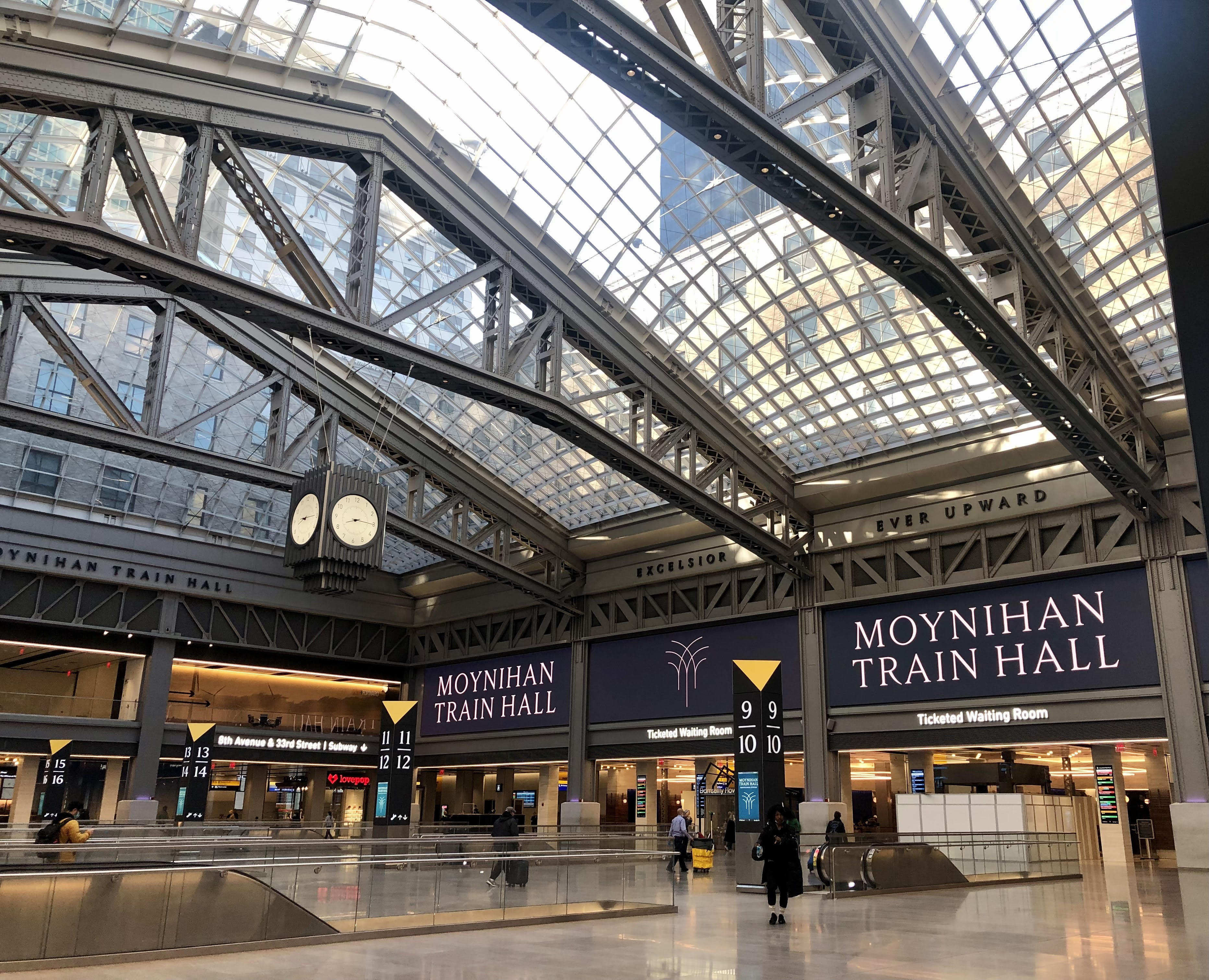
The new version of Penn Station, New York, is across the street in the former Post Office. The Moynihan Train Hall has a large, high dome that lets in lots of light.

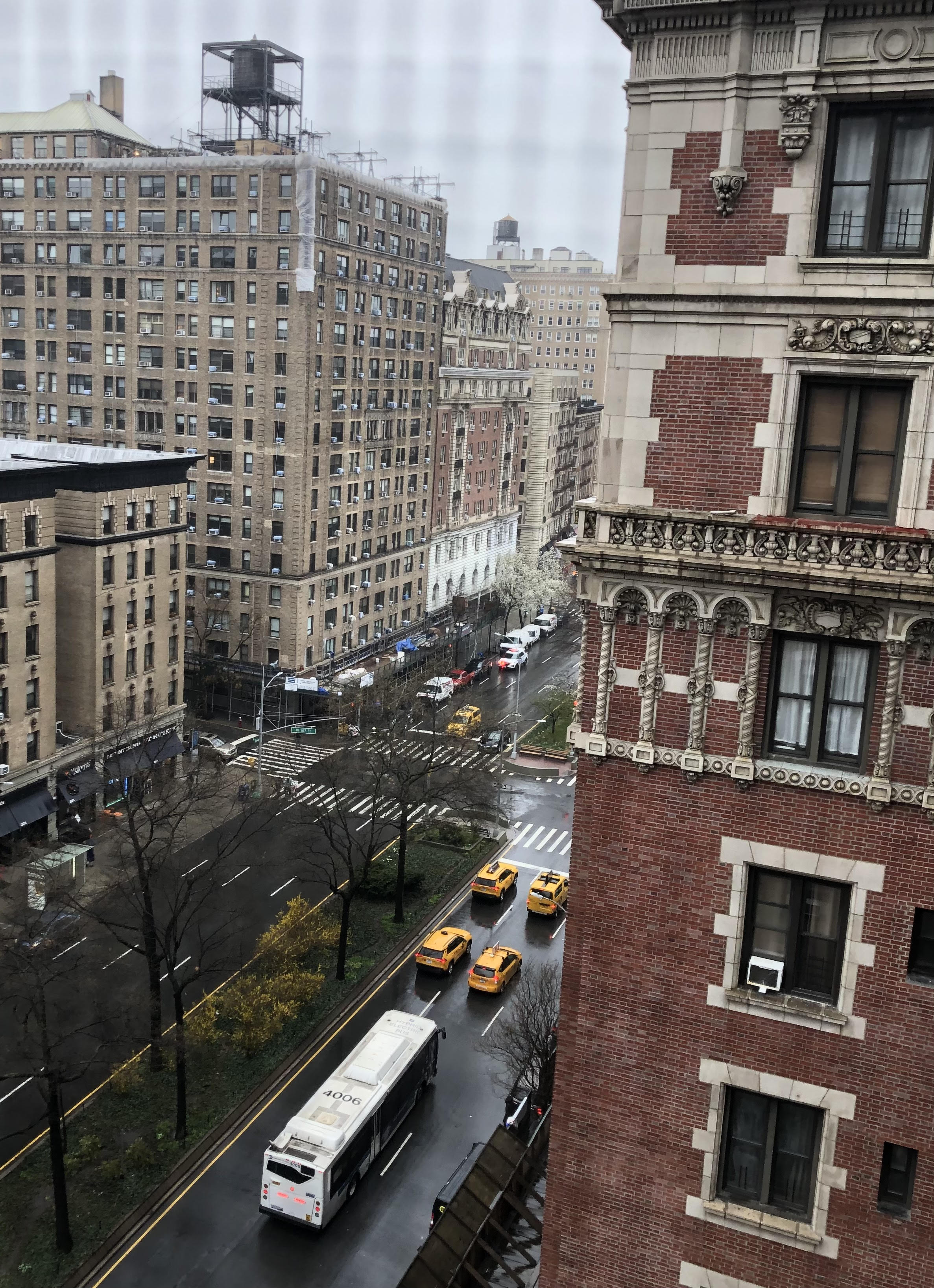
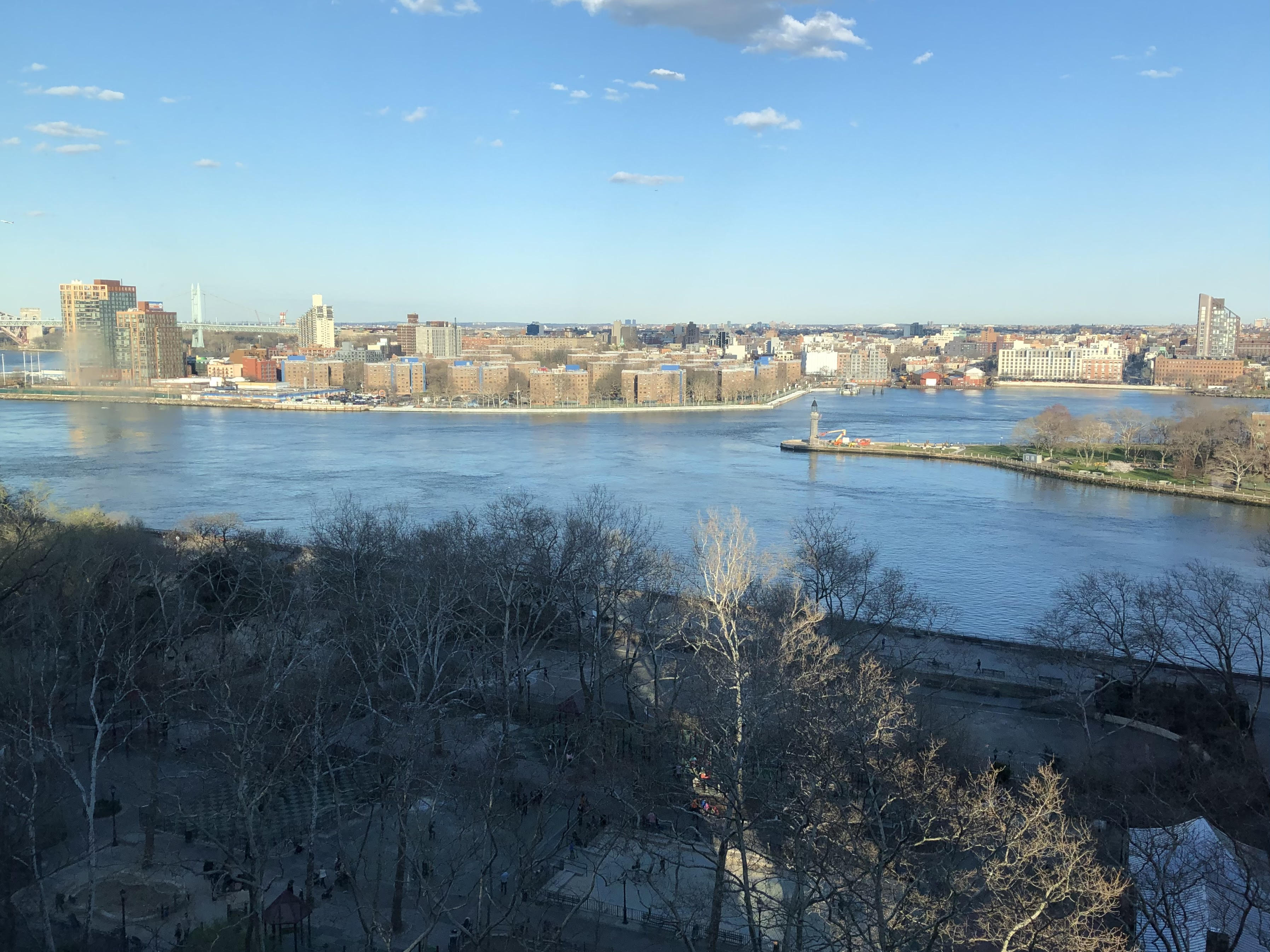
I do love New York. But thanks to Covid, I hadn’t been to visit it for two years. Last week I had my first big post-Covid adventure and went to my high school reunion in the city.

New York is in a constant state of crumbling and rising, disintegrating and reemerging. Like the rest of the world, I suppose. It’s just that in New York, it’s more obvious.

What did I feel about the city after two-plus years? I love the Upper West Side, but there are parts of it that are messier than ever: trash bags ripped open and spread all over the sidewalk, dog feces, a once productive community garden destroyed and turned into a mattress dump, a rat. In some places, I had a sense of New York saying, “OK, I give up!”

In the midst of all that, though, are the mothers leaving the projects holding the hands of their small children to get them safely to school, babies watching pigeons and laughing, workers going to work whether they feel like it or not. And right up against the trash and disintegration is the pristine haven of Central Park, where people from every walk of life are enjoying nature and enjoying being with other people from every walk of life who are enjoying nature. And dog lovers are throwing balls for happy, well-cared-for dogs.

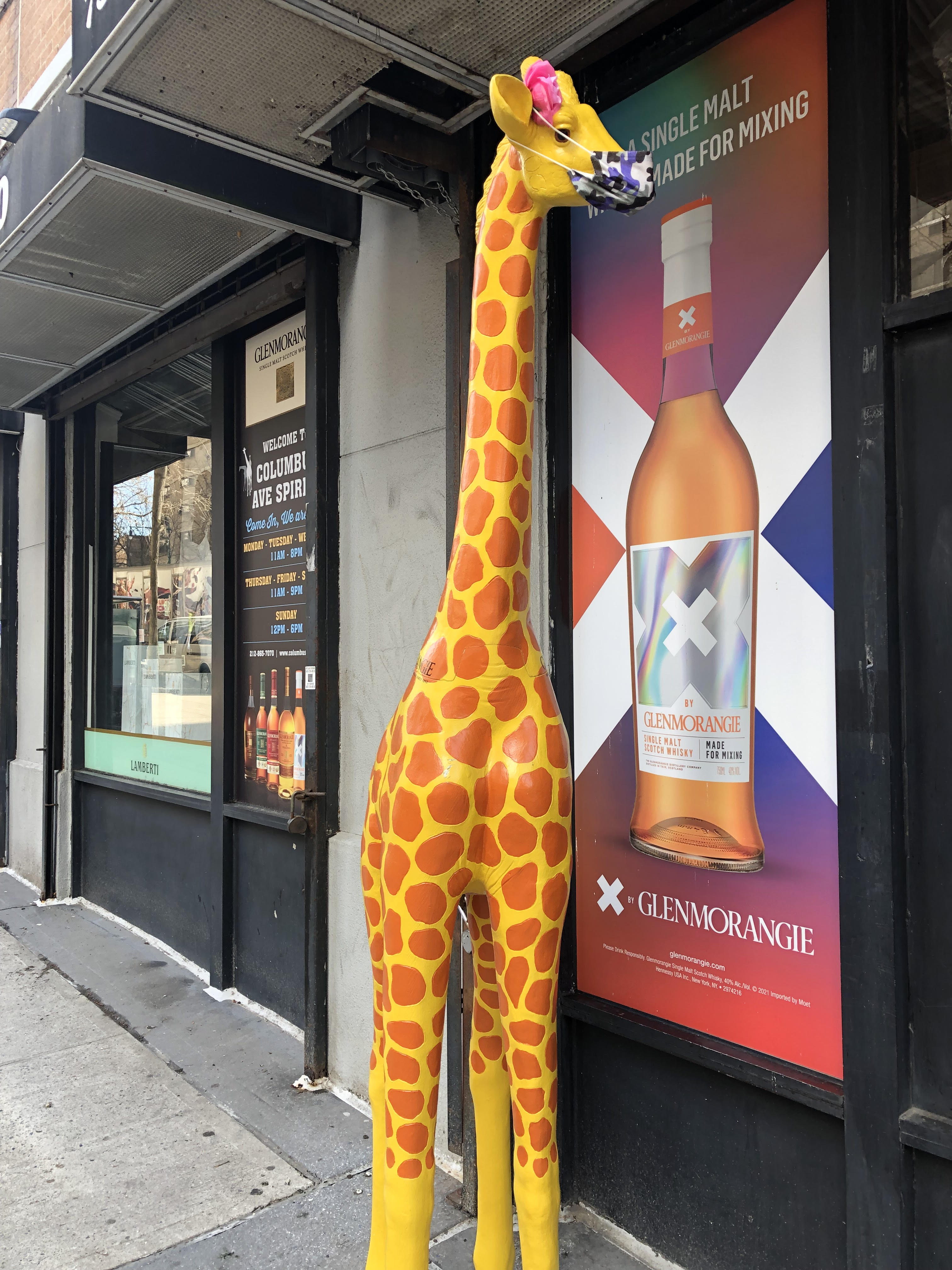
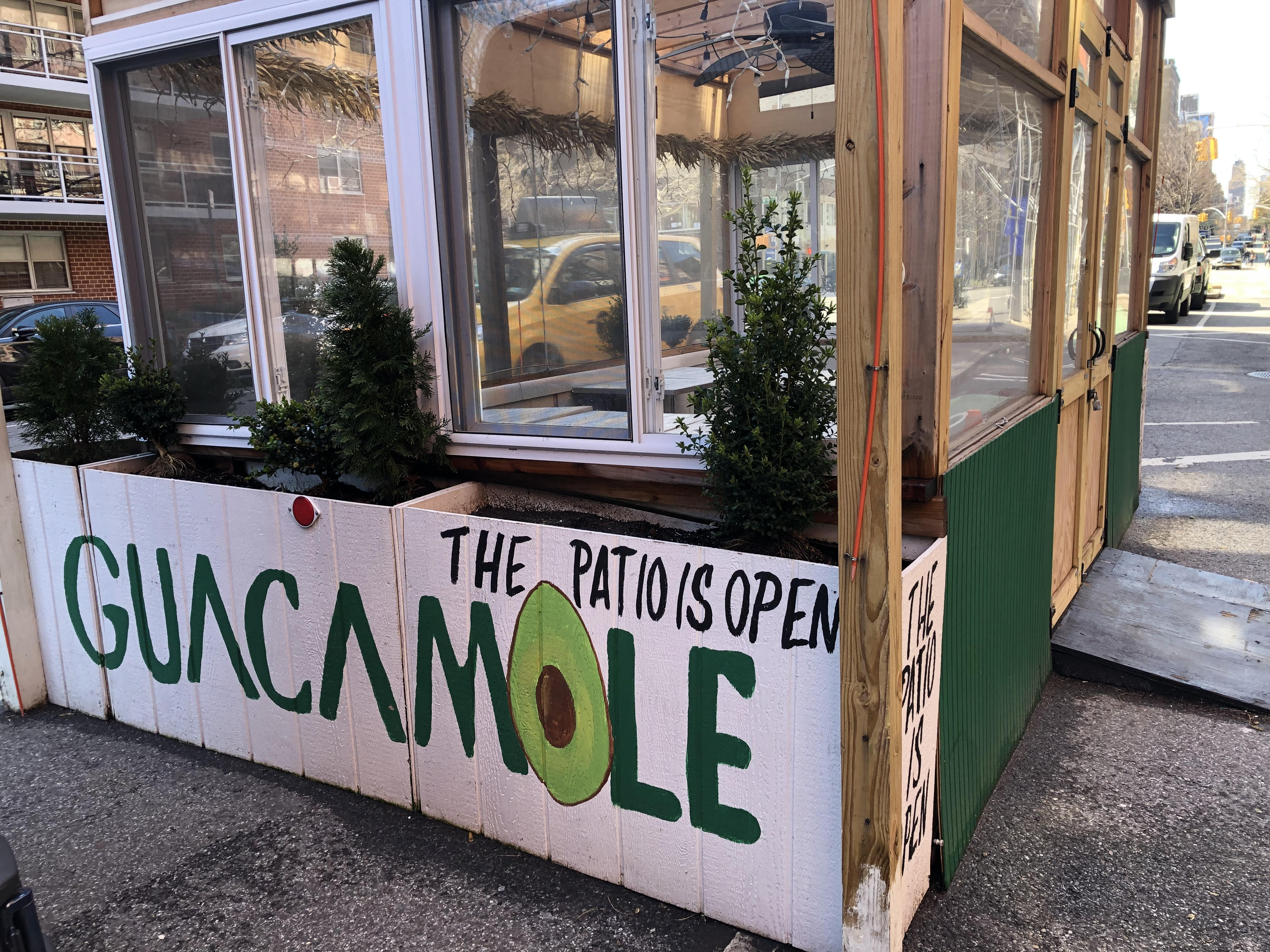
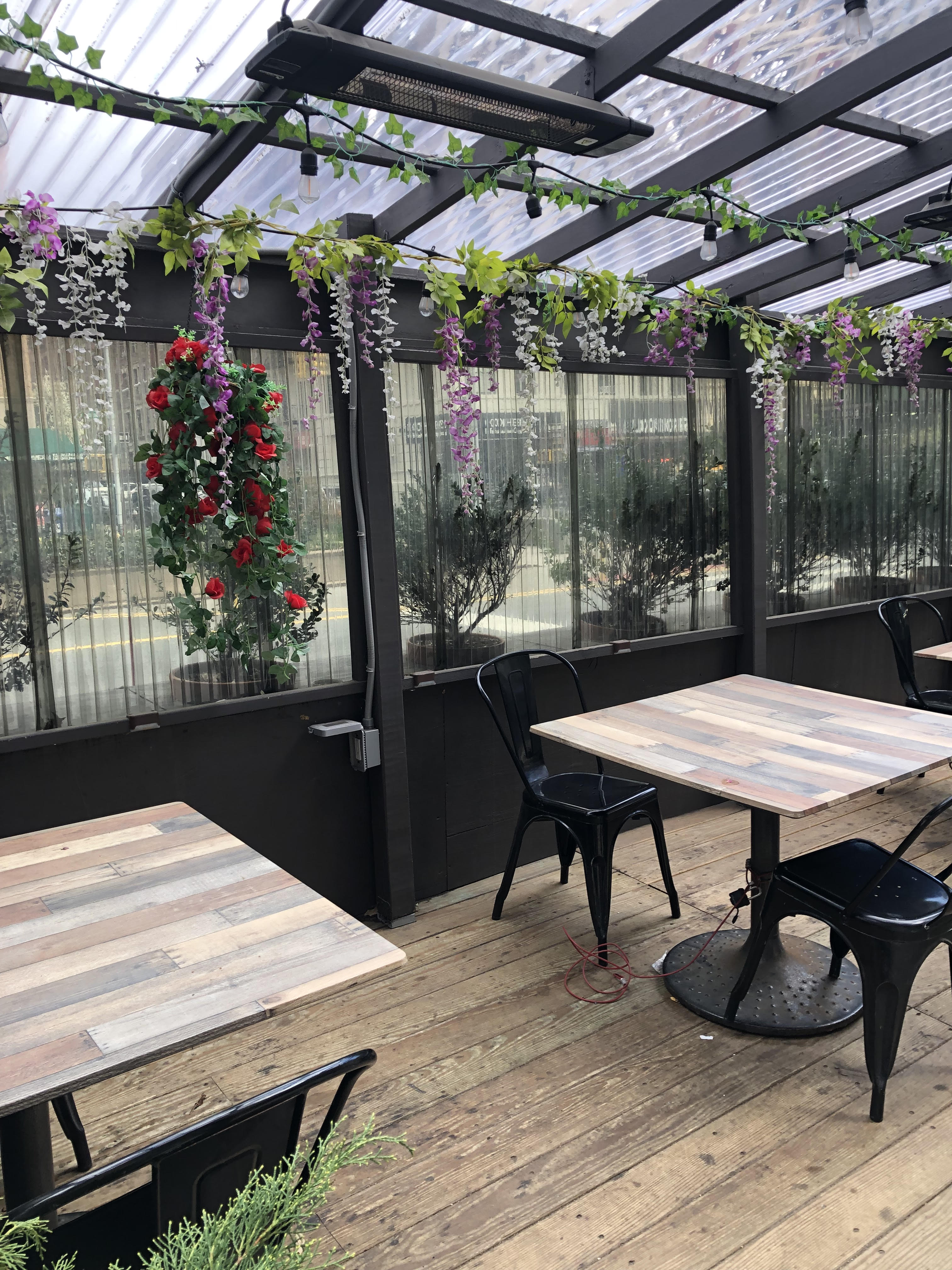
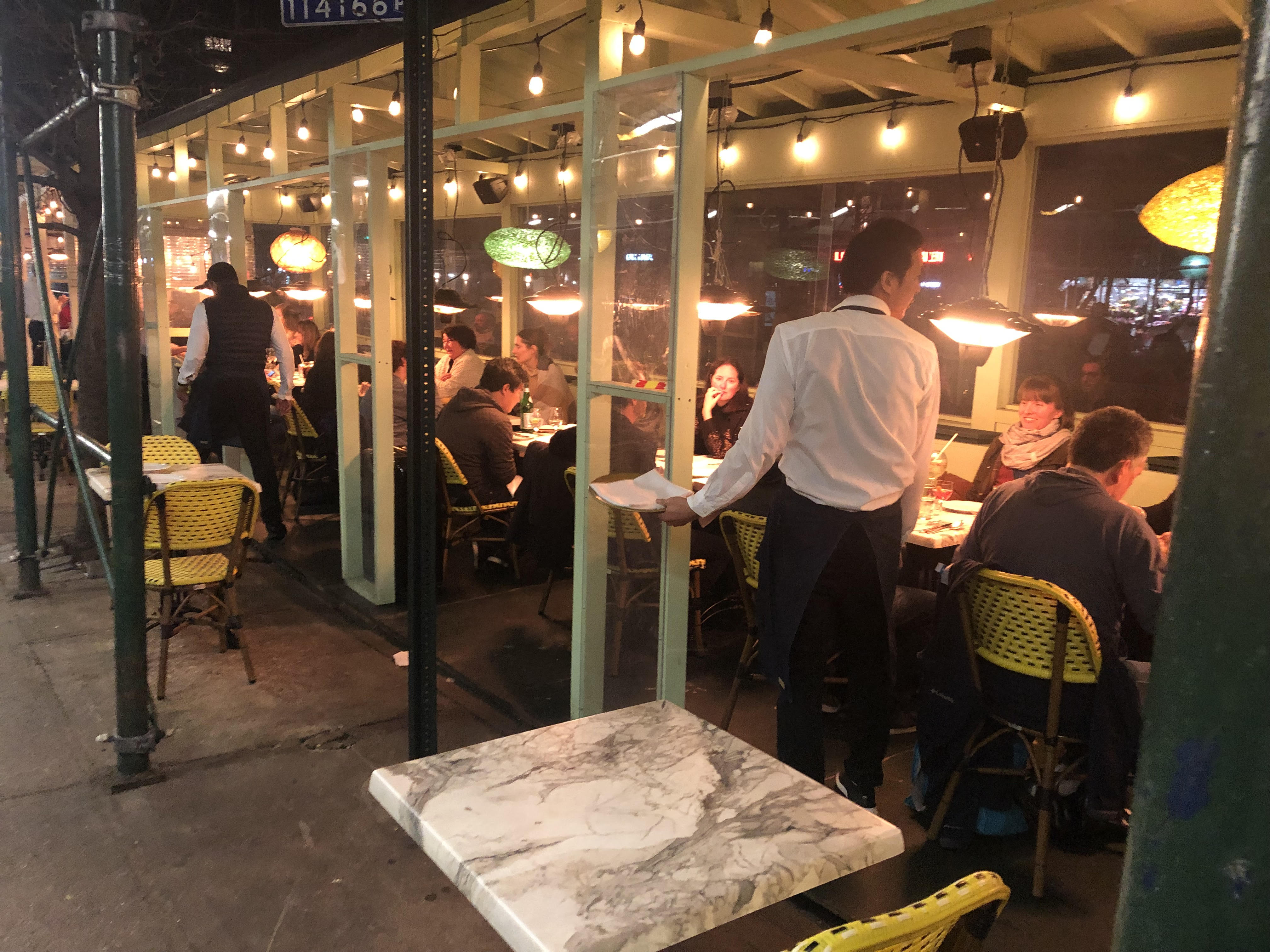
Note the endurance of a small business below — a liquor store, no less — and its playful effort to grab your attention. Note the adaptability of Covid-era restaurants, almost every one of which has an air-circulating shed that looks ratty by day and magical after dark.

I wake in the night to the racket of something or other on Upper Broadway and roll over with a smile on my face. It’s the Lullaby of Broadway.

Read Full Post »

Photo: Carlos Magno/Unsplash.
Remember when we weren’t so hyper about Covid germs? My kids loved this.

I tend to pounce on articles about the importance of creative play for children (in this 2020 post, for example). I have seen the value of play in my own life and in the lives of my former students, my children, and my grandchildren.

Also, I read Dickens, who was a leader in encouraging imagination and who wrote about its value often — not just in his education novel Hard Times, where he calls for “Queen Mab’s chariot among the steam engines.”

Jackie Mader writes at the Hechinger Report about a study on “guided” play, which has the advantages of free play and a bit more.

What happens when you stop teaching young children via direct instruction and instead set up purposeful opportunities to play? They could learn just as much — or more — when it comes to literacy, numeracy and executive function skills critical to early academic success, according to a new review of 17 studies of play.

“Researchers looked at 39 studies of play and included 17 in a meta-analysis that found when children ages three to eight engage in guided play, they can learn just as much in some domains of literacy and executive function as children who receive direct instruction from a teacher or adult. …

“Guided play [means] there is a learning goal set by an adult and children are ‘gently steered’ to explore. The study found children also learned slightly more in some areas of numeracy, like knowledge of shapes, and showed a greater mastery of some behavioral skills, like being able to switch tasks.

“These findings, which were published in the journal Child Development, add to a growing body of research that has found play is not simply a carefree tangent to learning, but rather an effective way to teach important early skills.

“ ‘Children often struggle with mathematical concepts because they are abstract,’ said Elizabeth Byrne, a co-author of the study and a research associate at the University of Cambridge, in a statement. That’s why the hands-on nature of play may be helpful. Those concepts ‘become easier to understand if you are actually using them in an imaginary game or playful context.’ …

“Last year, a report by the LEGO Foundation that looked at 26 studies of play from 18 countries found play is so powerful it can reduce inequality and close achievement gaps between children ages 3 to 6. Those studies, which also looked at free play in addition to guided play, found children progressed in several domains of learning, including language and literacy, math and social-emotional skills.

“While direct instruction gets information across quickly and is effective for certain skills or lessons in a classroom, ‘real learning’ occurs when children are active and engaged, said Kathy Hirsh-Pasek, a professor of psychology at Temple University and a senior fellow at the Brookings Institution. That’s why play can be so effective. … ‘What it’s really about here is can we teach human brains in the way human brains learn,’ Hirsh-Pasek said.

“An added benefit is kids enjoy play more than sitting and listening to an adult talk at them. ‘The kids are happier, the teachers are happier. It’s teaching them more about how to collaborate and communicate,’ she added.

“In the years prior to the pandemic, some states and districts were bringing more play into schools by creating play-based kindergarten classrooms. It was an attempt to move away from the rigorous, academic-focused kindergarten classrooms that emerged in a nation concerned about low reading scores and meeting the Common Core standards.

One top pre-K researcher recently called for more play in pre-K amidst concerns that state-funded pre-K programs involve too much direct instruction and not enough time spent outside. …

“Ideally, guided play involves forethought in setting up play opportunities based on a learning goal, but it doesn’t necessarily require extensive adult interaction. For example, if a climbing structure is painted to show units of measurement, children may take notice and talk about how high they’re climbing. Or if kids are trying to learn addition and subtraction during lesson, throwing a giant number line on the ground and letting children jump forward or backward becomes a guided play activity.

“Teachers or parents ‘become guides on the side,’ Hirsh-Pasek said. ‘When we interact too much and become helicopter parents, the kids check out,’ she added.”

More at the Hechinger Report, here.

Read Full Post »

Photo: China Highlights.
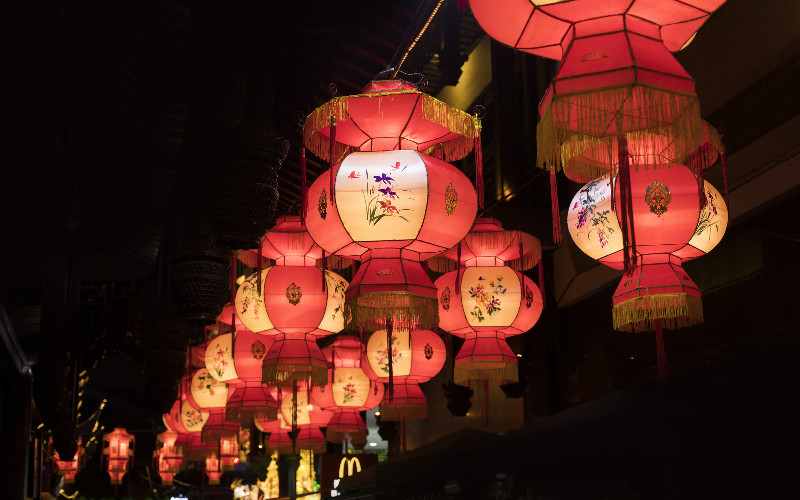
“In ancient China, lanterns were used to provide light and as aspects of worship. Today, they are used only for decoration,” says China Highlights.

There is something about candles and lanterns that seem to take one back in time. If I light candles in a hurricane when the electricity goes out, I don’t think of lighting candles last week for a dinner or a birthday party, I think of being a little girl in a long ago hurricane. Lanterns also take me back in time — to my college’s traditions and our night-time processions with the lanterns of our particular year and the songs we’d learned to sing in ancient Greek.

Rebecca Kathor at Public Radio International’s The World reports on how China passes the ancient tradition of lantern making to new generations.

“Sixty-five-year-old Li Jianguo grew up in Shanghai during the Cultural Revolution,” she writes. “He remembers not always having enough to eat when he was young and having to drop out of school. Yet, his happiest memories as a child were during the Lunar New Year.

“ ‘That was when we had new clothes to wear and good food to eat,’ he said. ‘After dinner, [we] kids would run outside and play with our lanterns in the alleyways.’

“In China, the tradition of children playing with handmade paper lanterns during the Lunar New Year has been passed down for generations. During Lantern Festival, the last day of Lunar New Year celebrations, families gather for a meal of dumplings and light lanterns together. …

“Today, most lanterns are manufactured, but when Li was a boy, everyone had simple bamboo and paper ones. His was made by his father who learned from his own father. It was lit by a candle and had four wooden wheels and a string to pull it along.

“ ‘At the time, the streets in Shanghai weren’t well-paved and our rabbit lanterns would bump along behind us as we ran,’ he said. ‘If the rabbit fell over, the candle inside would burn up the lantern. The other kids would laugh at you, but it was also considered good luck — like you burned up all your bad luck and could start fresh in the new year.’

“These days, Li doesn’t play with lanterns anymore. He makes them. Li is one of the last remaining lantern craftspeople in Shanghai. His cramped apartment is covered floor to ceiling with paper lanterns shaped like rabbits, dragons and lotus flowers. He and his wife spend the entire year making 600 lanterns to sell during the 15 days of the Lunar New Year. Sometimes, he’s so busy, he said, that he doesn’t have time to sit down for a meal.

“ ‘This isn’t the busiest time of the year for me. Every day, I’m busy,’ Li said. ‘If I don’t keep up the pace during the year, when it comes time to sell my lanterns, people will be disappointed if I run out too fast.’ …

“Li demonstrated how to make a rabbit lantern. It takes 60 intricate steps to build the bamboo frame and decorate each one — a nearly six-hour process that he learned from watching his father. Each sells for $15. …

“Craftspeople like Li are disappearing, though, in a rapidly modernizing Shanghai.

“Zhou Qi is the author of a book featuring 60 of Shanghai’s remaining craftspeople. Over the course of eight years, she searched out artisans who make everything from handspun cloth to woven bamboo shopping baskets to hand-stitched cotton shoes.

“ ‘They all make everyday things I used as a child growing up here in the ’80s,’ she said. ‘But they are more than just things we use, they are also a part of our culture.’

“Many of the craftspeople in her book are elderly. And they haven’t passed down their skills because there are few people who want to learn these crafts. Zhou said that she found only four lantern makers in Shanghai. …

“The craftsmen are tough to find — most of them don’t have a storefront and aren’t on social media.

“One place you can find lanterns is at Yu Gardens, in Shanghai’s Old City. Every year at this time, crowds flock here to take photos of the massive lantern displays near the City God Temple.

“Rabbit lantern maker Li is here too, but … many people are buying their children cheaper, mass-produced plastic and paper versions instead. And these days, they are lit up by battery-powered light bulbs.

“Li said that he doesn’t make lanterns for the money. He and his wife live off their retirement pension.

“ ‘I want my children and grandchildren to have a memory of playing with rabbit lanterns just like I did,’ he said.”

More at the World, here. No firewall.

Read Full Post »

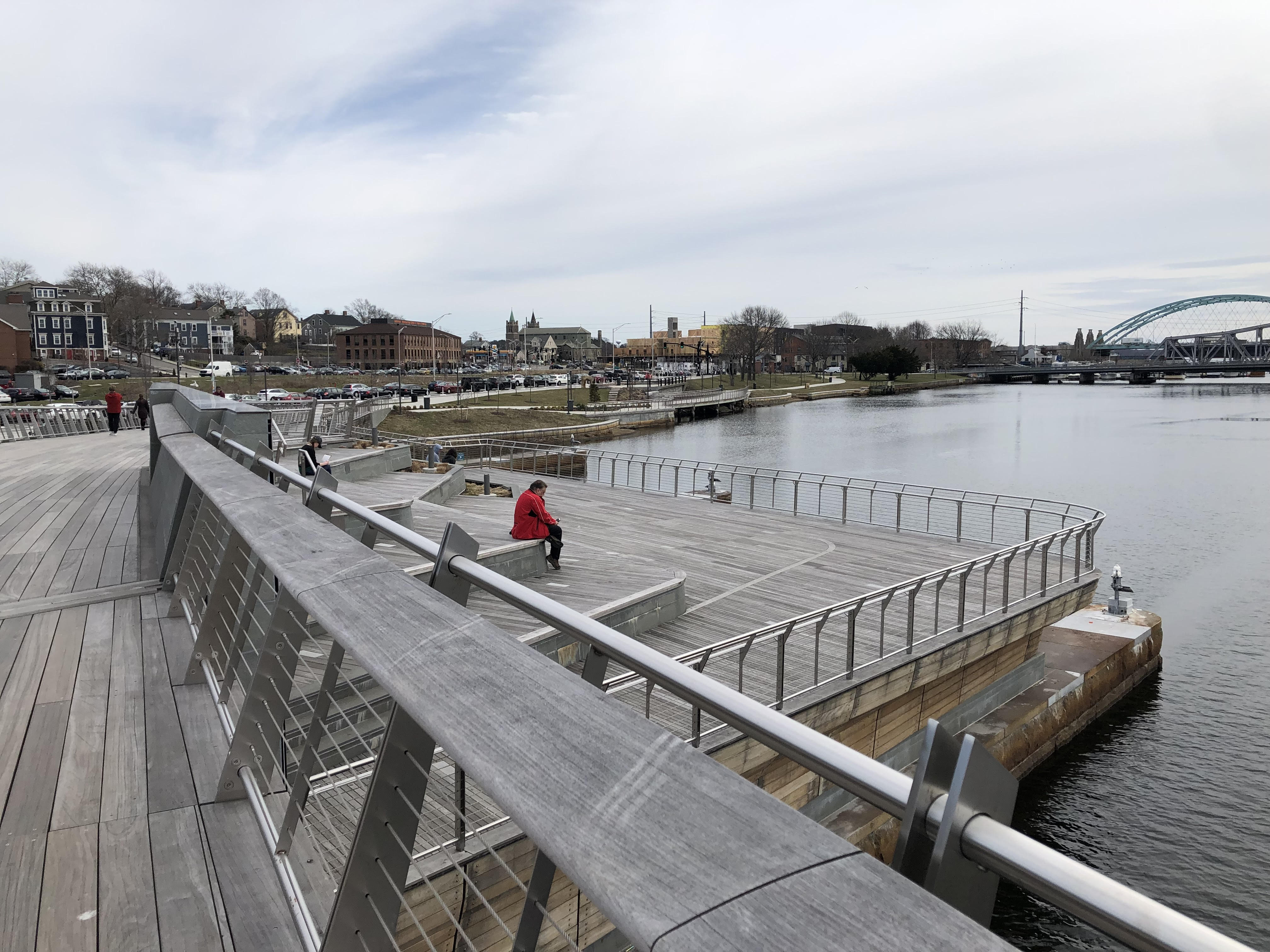
The Michael S. Van Leesten Memorial Bridge is a footbridge crossing the Providence River. The bridge connects Providence’s Fox Point neighborhood to the city’s former Jewelry District.

Spring is coming to New England in fits and starts. I warned Stuga40 before she left Sweden to visit Providence that she might need to bring clothes for anything from balmy days to a deep freeze. She was glad to know that, as it turned out we did have both.

The day we walked with her over the Providence River pedestrian bridge (above) it was cold but warm enough to eat our lunch outside at a nearby vegan restaurant. We were dressed for it.

When the I-195 highway was rerouted, Providence had a big debate about what to put in the old Jewelry District area where land was freed up. I’m so glad the pedestrian advocates won out. The bridge is truly magnificent, a model that other cities would be well to emulate. We don’t need to enable more cars and driving. And the bridge has become a major attraction, which helps local businesses.

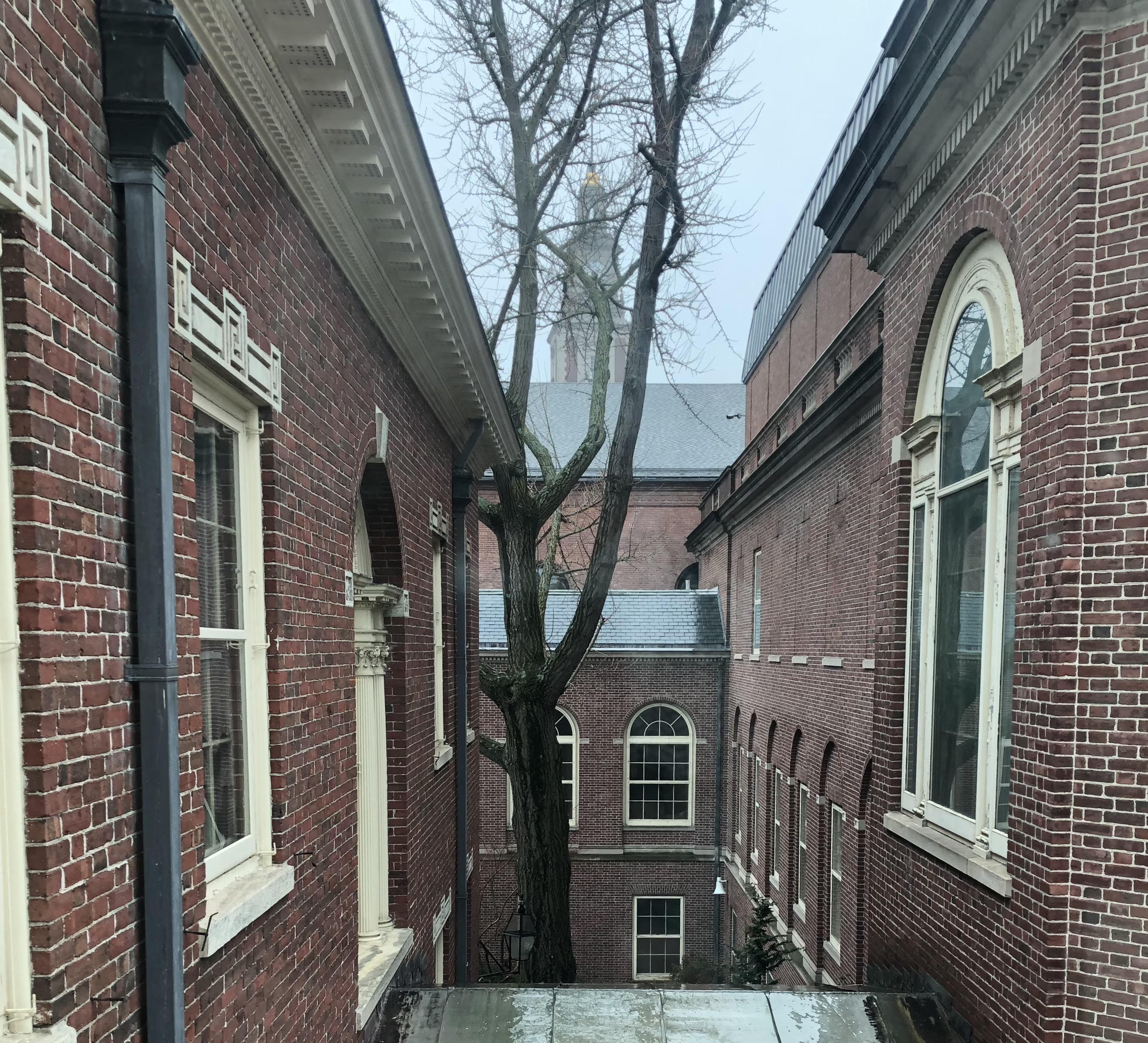
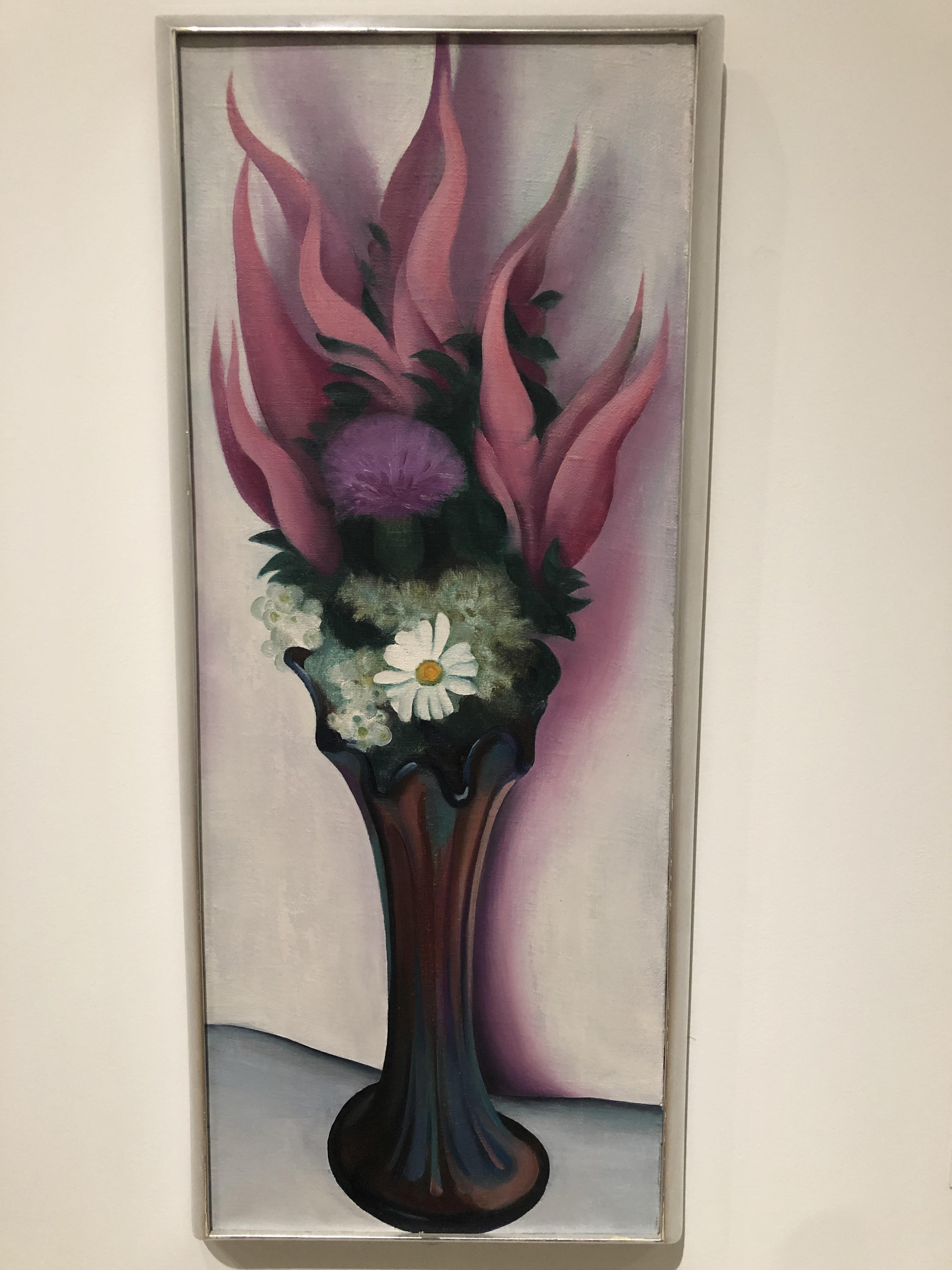
While our Swedish relative was at Suzanne and Erik’s house, my husband and I stayed at a rental apartment nearby in order to have more time to explore the city with her. Below are two photos from our rainy day at the Rhode Island School of Design Museum. The RISD Museum is a quirky collection of buildings featuring photogenic nooks and crannies that I like. I also liked this Georgia O’Keeffe. When I showed the photo to my 7-year-old granddaughter, she knew already that many O’Keeffe paintings are close-ups of flowers. She’d heard about the artist in school.

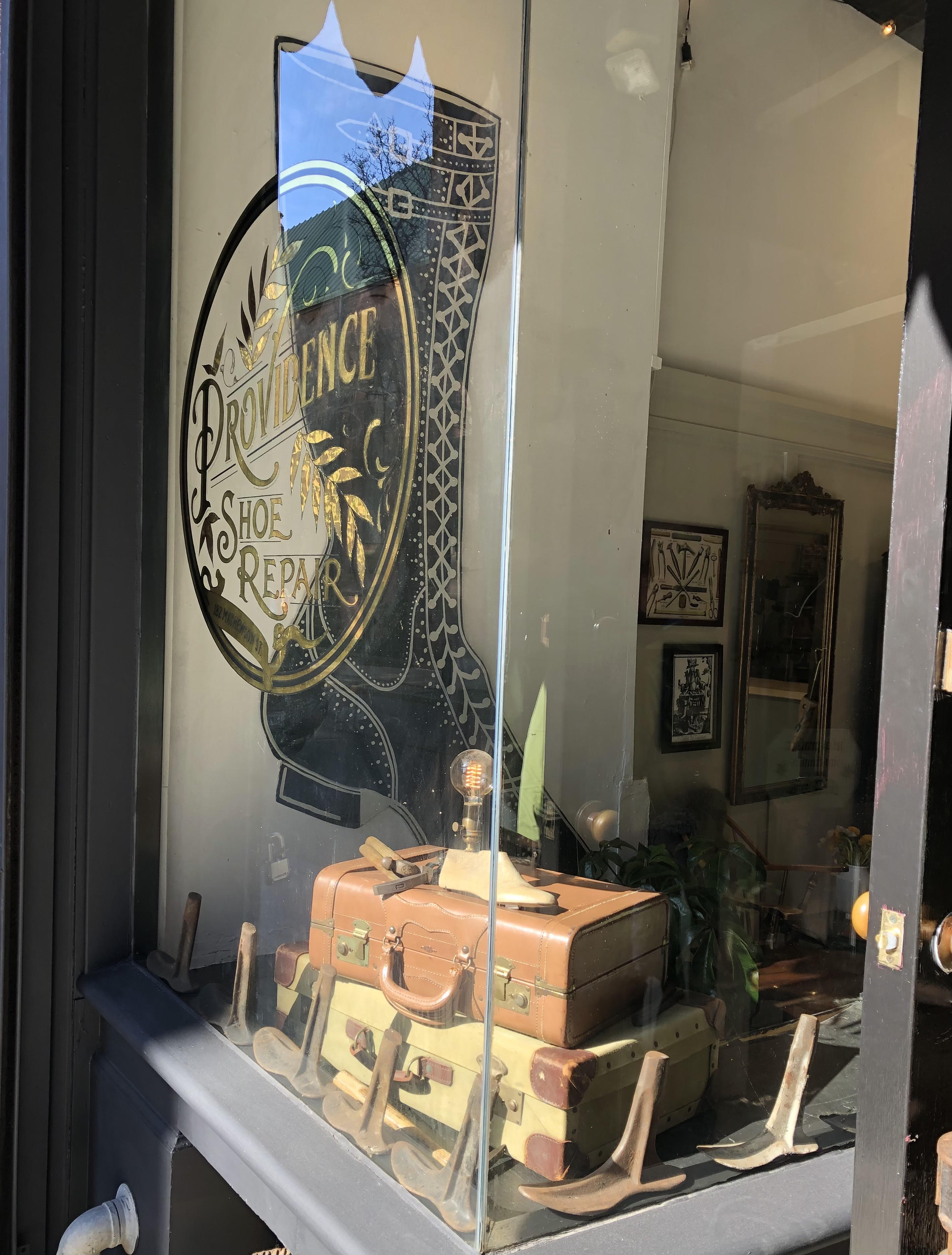
Stuga40 and I also walked the downtown area and chatted with the shoemaker at the new cobbler shop, recently reviewed in the Boston Globe.

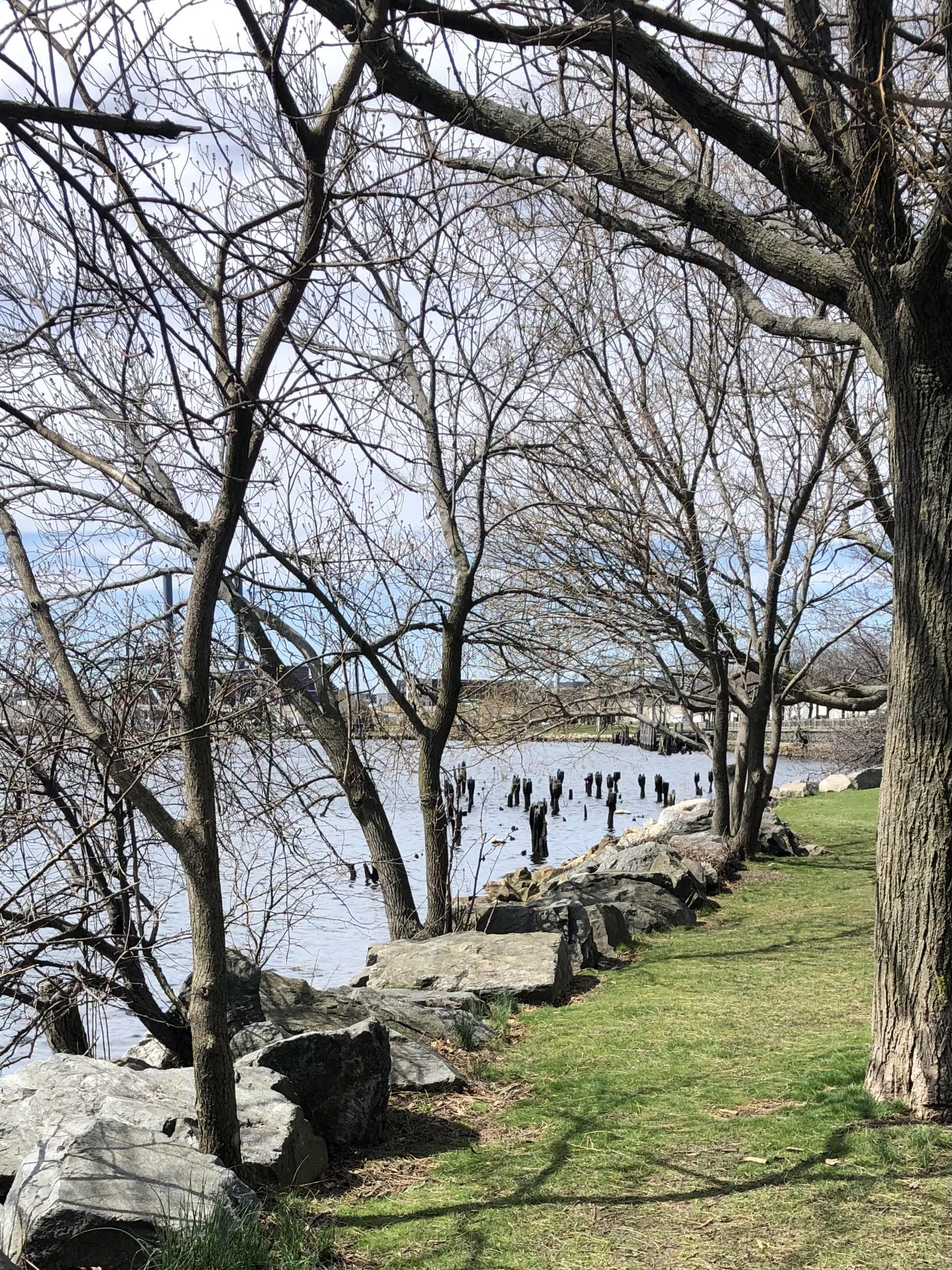
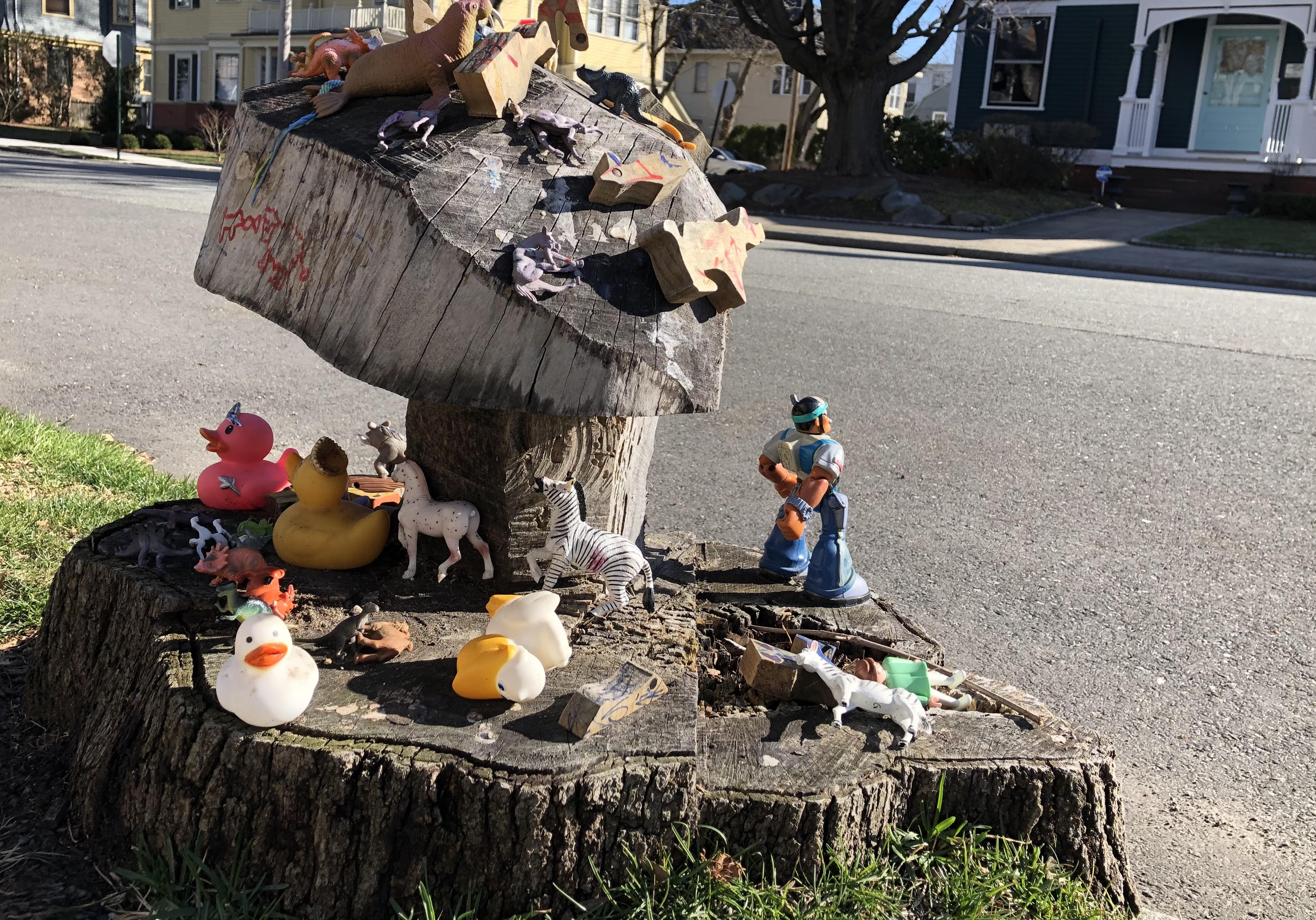
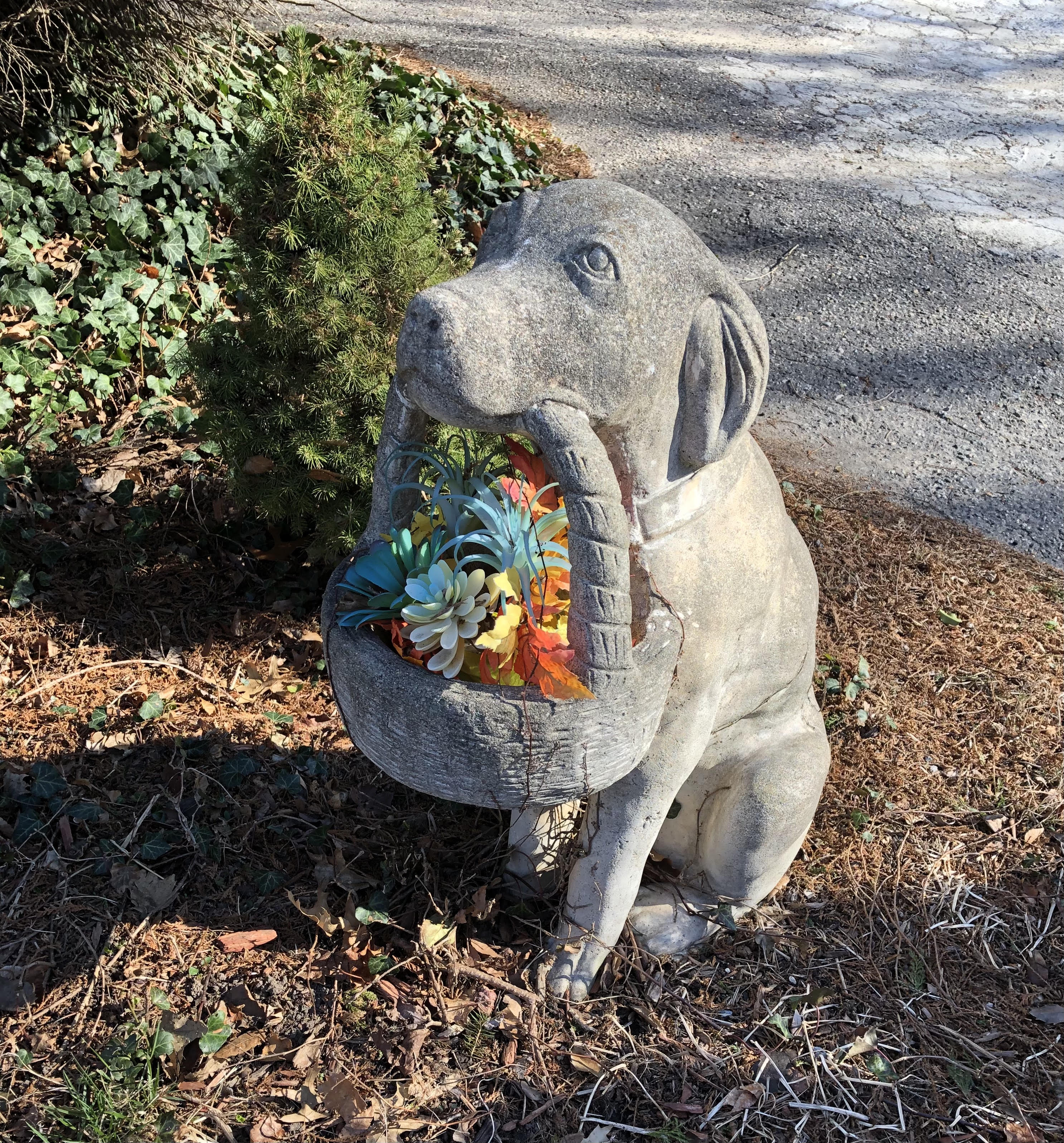
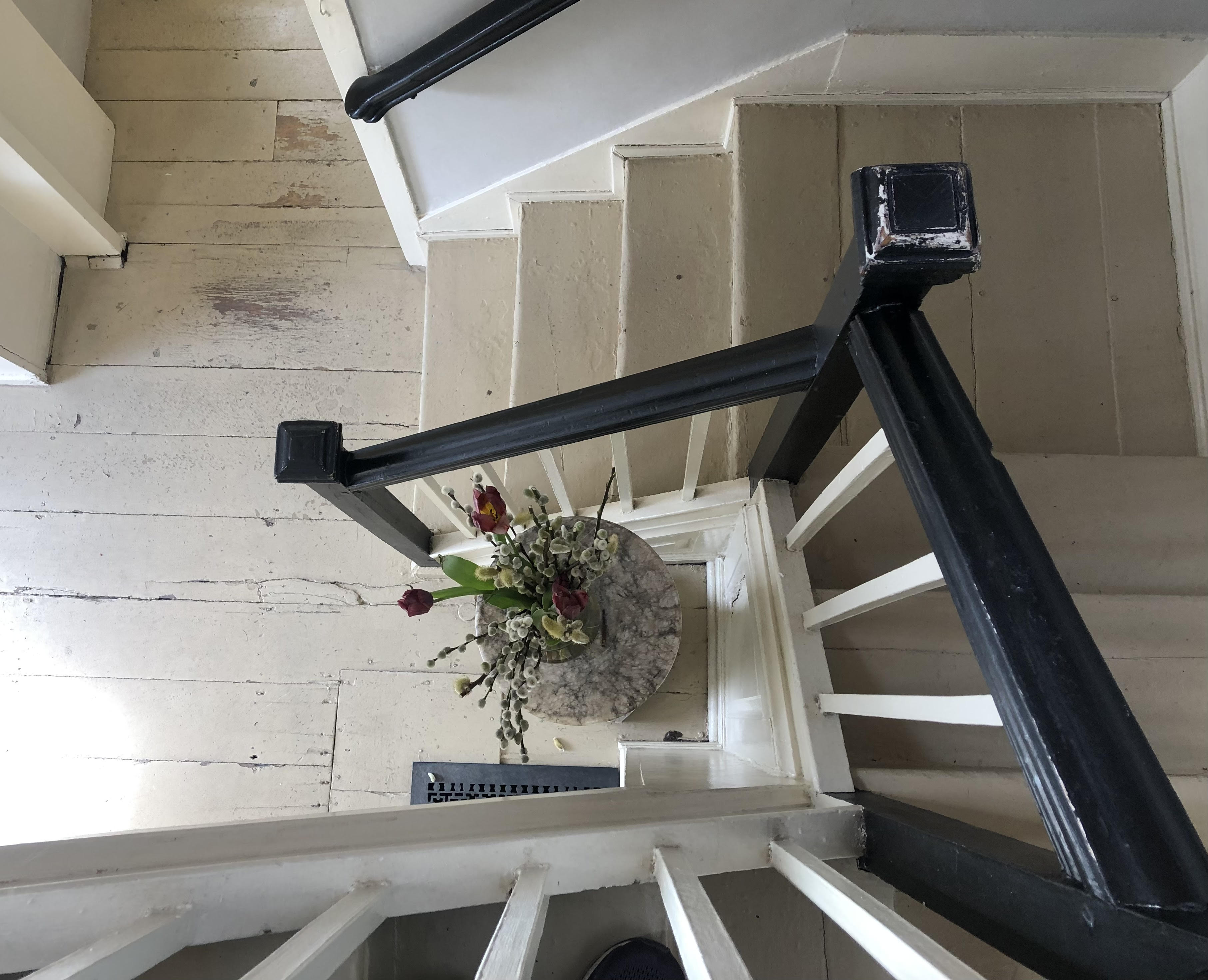
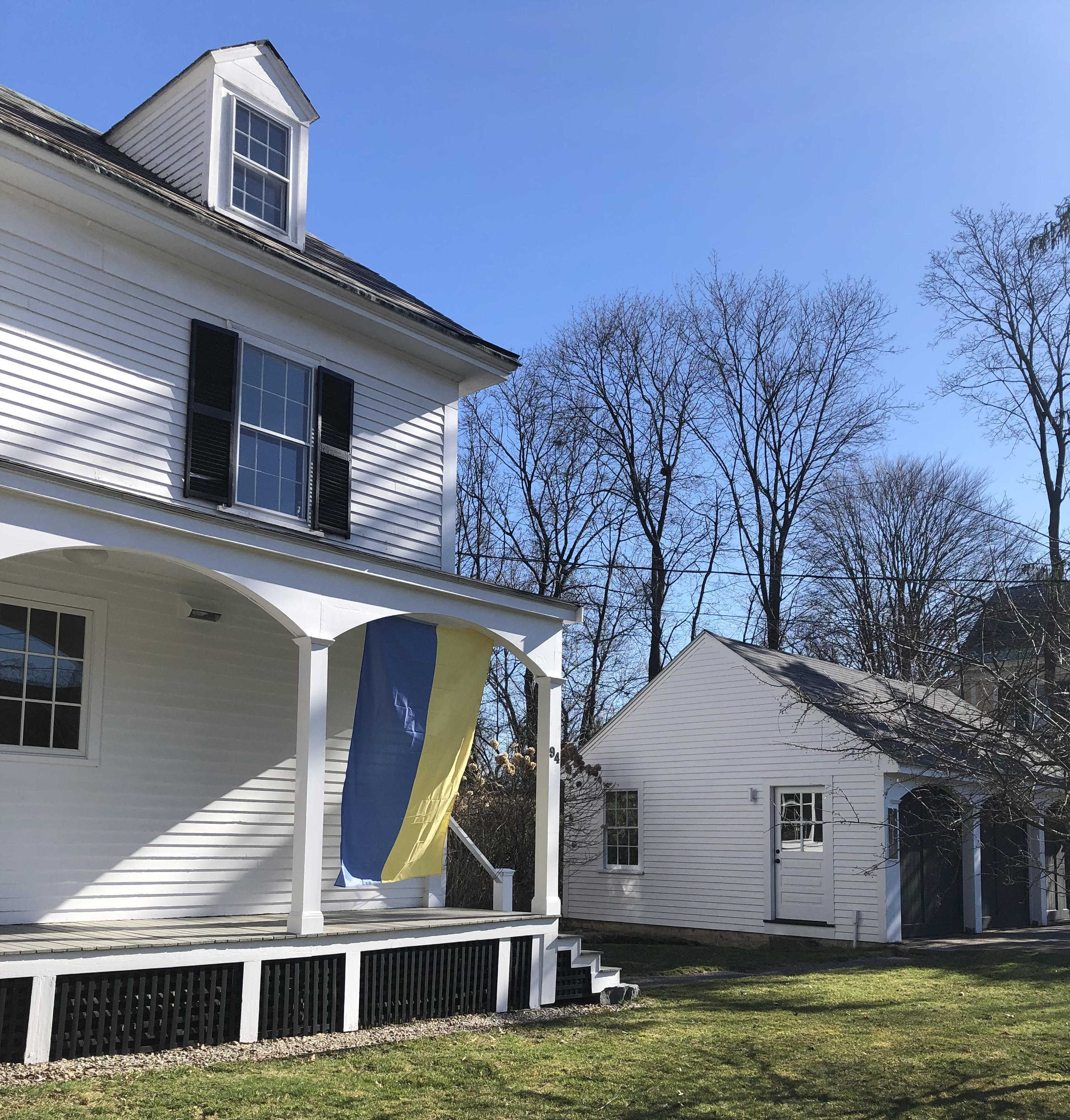
The other photos are just things that caught my eye, both in Rhode Island and Massachusetts.

Note that signs of Ukraine solidarity are popping up everywhere. You might be interested in a Kyiv messaging project that Asakiyume and I (and many other volunteers) are working on. Podcast here.

Read Full Post »

« Newer Posts - Older Posts »