Feeds:
Posts
Comments

By Golly, it pays to read the alum magazine. The people I knew at grad school are no longer posting their achievements, but younger people are doing plenty of creative and interesting things! Consider a 2017 Syracuse University grad who launched a national campaign not far from where I live.

Brandon Dyer wrote about her initiative at Syracuse University Magazine. “When in-person instruction at her school was canceled for the rest of the year because of the pandemic, school guidance counselor Sarah Kamya ’17 decided to work from her hometown of Arlington, Massachusetts. Unlike her New York City apartment, her home in Arlington had enough room to accommodate a makeshift office.

“After her online workday was over, Kamya often tried to spend time outside. ‘I would go on a lot of walks every day, and I passed a few Little Libraries in my neighborhood,’ she says. The Little Free Libraries are part of a national network of outdoor, weatherproof, publicly accessible bookshelves that serve as a free book exchange in many communities. ‘I found that they were a great place to get or share books,’ Kamya says. …

“As an undergraduate majoring in child and family studies [at Syracuse’s] Falk College, Kamya had interned at a local middle school. Although she enjoyed her hands-on experience, it underscored the fact that people of color are still underrepresented in materials used to support the curriculum — an observation Kamya recalled from her own childhood as a book lover who rarely saw herself represented. …

“For the past year, Kamya has been working at Manhattan’s Public School 191, the Riverside School for Makers and Artists, where she has seen how important an inclusive curriculum is to the students, who are predominately people of color. …

“In the Little Free Libraries near her home office, Kamya saw an opportunity to enlighten her community. She began by placing books that offered full, relatable portrayals of Black characters. ‘It was a light bulb, and it just worked out with the timing of being home, the timing of the protests going on. … Why not take this opportunity to really spread awareness and open up people’s eyes to things that they hadn’t seen before?’

“Kamya says these books can potentially enhance awareness, providing access to literature that is new to many families and giving all children an opportunity to read stories that feature Black excellence. She believes books have the power to create change. ‘That change may be within ourselves or spread to others.’ She calls her project Little Free Diverse Libraries.

“To finance books, she started with a request on social media. She asked her family and friends to make a donation and promised all proceeds would be spent at Black-owned bookstores. This idea resonated with people, and she raised $10,000. Then, New York City author Eva Chen amplified Kamya’s message to her own 1.4 million followers and suggested a way to streamline the donation process. …

“ ‘People are really supportive of this project and have been helping me expand this further than I ever imagined.’

“To date, 28 different states have received or will be receiving books from Kamya’s collection. She filled 15 Little Libraries in her hometown of Arlington, and volunteers in Austin, Texas, filled five. Three Little Libraries in Los Angeles have received books like Undefeated, written by Kwame Alexander and illustrated by Kadir Nelson, and Hair Love, written by Matthew Cherry and illustrated by Vashti Harrison. Other examples include Angie Thomas’ The Hate U Give, Michelle Obama’s Becoming, and Beverly Daniel Tatum’s Why Are All the Black Kids Sitting Together in the Cafeteria?

“During her summer vacation, Kamya is spending a lot of time in her dining room processing the piles of books. She’s enlisted friends and her parents, calling the project a team effort. ‘I had to make my mom relocate her home office, but it’s okay,’ she says. When donations arrive, Kamya spends at least an hour unboxing everything. Each book is outfitted with individual stickers that say: ‘Black stories matter. This book was chosen with love by anti-racist educators. Please treat it with care and return it to the Little Free Library so that others can enjoy it.’

“Although her project is time consuming, the potential benefits for people of color inspire Kamya.

‘My hope is that these younger people and students will really feel motivated. Hopefully students of color can see themselves represented and go out there and make change.’ …

“Kamya’s goal is for these books to be accessible to all people and to inspire conversations. ‘I want the books to keep replenishing themselves. I want Black authors to keep writing books, and for characters that are minorities to be represented.’ ” More.

The original Little Free Library team also interviewed Kamya, asking, for example:

“What advice do you have for Little Free Library stewards who want to share diverse books in their libraries?
“My advice for Little Free Library stewards is to reach out to those in the community. When I started this project, I had people reach out to me saying they were a teacher or a parent, and they had some books they would like to donate, or their kid had outgrown the books and they were happy to drop off these books so the next person could have them. Sometimes people don’t even know what they have until they take a closer look at their collection!  I would also suggest thinking about your own community, who is represented, who is not represented and what books can you add to your library to welcome or educate those within the community. …

“Can Little Free Library stewards apply to receive books from you?
“I am continuing to send books, as long as I have the books and the funds. If stewards would like to receive books they can reach out to me via email, through the [Little Free Library stewards’ private] Facebook group, or on Instagram.

“What are your top 10 favorite diverse children’s books?
“1. Tallulah the Tooth Fairy CEO by Dr. Tamara Pizzoli
“2. I Am Enough by Grace Beyers
“3. Julian is a Mermaid by Jessica Love
“4. Jabari Jumps by Gaia Cornwall
“5.The Undefeated by Kwame Alexander
“6. Amazing Grace by Mary Hoffman
“7. The Proudest Blue by Ibtihaj Muhammad
“8. The Day you Begin by Jacqueline Woodson
“9. Hair Love by Matthew Cherry
“10. Of Thee I Sing by Barack Obama”

More at the Little Free Library site, here. For a podcast by Kamya, click at Syracuse University Magazine. And check out the Little Free Diverse Libraries Instagram profile.

So many things have been cancelled this year! But the people of New Orleans are not taking the cancellation of their beloved Mardi Gras lying down. Where there’s a will, there’s a way.

Doug MacCash writes at NOLA.com, “Carnival season 2021 may lack the usual parades, marching bands and big bags of beads, but never-say-die New Orleanians have taken their holiday back by inventing a whole new way of celebrating. …

“Socially distanced float houses have become a thing. A really big thing. … Lavishly, lovingly, laughingly decorated houses are becoming as ubiquitous as potholes. …

“Tiffany Tandecki, a marketing and development exec, said the thing she would have missed most about Mardi Gras parades is the satire. So she transplanted some Carnival-style comedy to her 5975 Canal Blvd. home for the pleasure of passing commuters. Tandecki used the characters from her TV binge-watching fave ‘Schitt$ Creek’ to lampoon the crumbling streets of her Lakeview neighborhood and COVID-19-era frustrations in general.

“In Tandecki’s view, the sweet-tart sitcom, in which a family of millionaires finds themselves adapting to small-town life, is a perfect metaphor. There’s millionaire Moira Rose shaking up an afternoon martini to take the edge off the stress of home schooling. There’s disdainful son David passing judgment on the inconvenient virus with raised eyebrows. There’s ditzy daughter Alexis stating the obvious: ‘I miss my life.’ And there’s bewildered hubby Johnny, standing beside a burglarized Lakeview car with a smashed-out window.

“The painted plywood cutouts of the ‘Schitt$ Creek’ characters standing in Tandecki’s front yard look exactly like the sort of thing you might see on a passing Carnival float, because they were made by professional float maker Lindsay DeBlieux, who Tandecki hired to bring her vision to life. …

“For DeBlieux, like most Mardi Gras float artists, the cancellation of this year’s parades was a catastrophe. Her employer, Mardi Gras Decorators LLC, tried to keep the staff employed as long as possible, she said, but in December, she was laid off. Thank goodness that by that time, the float house fad was fast taking root.

“Almost immediately, DeBlieux said, she was commissioned by three homeowners who planned to participate in the Krewe of House Floats, a citywide stationary house parade. … Then she was enlisted into the Krewe of Red Beans ‘Hire a Mardi Gras Artist’ campaign that is producing some of the city’s most elaborate float houses.

“Of course, DeBlieux welcomes the income at a time when many of her fellow citizens are unemployed. But the float house phenom is important in another way, too. Despite the popularity of parades, the talents of float artists can go unnoticed in the joyful chaos. Carnival 2021 has helped slow down the parade, so to speak, and let the creativity shine. …

“Megan Boudreaux, an insurance claims adjuster and member of the Leijorettes Carnival dance troupe, has made a historic impact on Mardi Gras. She’s right up there with the first person who put a plastic baby in a king cake, or tossed the first doubloon. … Boudreaux’s contribution began humbly. She just didn’t want to sit out Carnival 2021. So she planned to decorate her front porch and maybe toss trinkets to passersby on Mardi Gras morning. …

“Boudreaux didn’t invent Carnival house decoration, of course. But she made it into a movement. In no time, her Krewe of House Floats Facebook page attracted thousands of do-it-yourselfers aching for a way to safely celebrate, plus homeowners eager to employ professional artists. Before Boudreaux’s widening eyes, KOHF subkrewes sprouted up in 39 neighborhoods across the city. …

“On Feb. 1, the KOHF plans to launch an online map that will allow Carnival fans to tour decorated houses in social-distanced safety. Boudreaux said it was startling to realize that roughly 3,000 participants have added their addresses to the site. Some of them live far, far from the parade routes. …

“Artist Devin DeWulf, the captain of the Krewe of Red Beans, a marching group known for its dizzyingly complicated costumes decorated with dried legumes, has become a COVID-era hero. His organization raised more than $1 million to support restaurants by supplying meals and snacks to front-line hospital employees. To help provide float sculptors and painters with work, the krewe founded the Hire A Mardi Gras Artist project. …

“The project was conceived by Caroline Thomas, a float designer with Royal Artists. … Each house cost $15,000, paid for by donations and a lottery. DeWulf said the project has employed 45 artists and is on track to produce 21 projects.”

More here.

This interesting story about reaching for a more egalitarian type of economics says that capitalism got started in the Netherlands in the 17th century, but a very good book says that says it started with the enclosure of commonly used pasture in England in the 13th century. (See Steven Stoll’s Ramp Hollow: The Ordeal of Appalachia.)

Whenever capitalism started, it’s past time for a look at whether it inevitably caused the extreme inequality we see today.

Ciara Nugent writes at Time, “One evening in December, after a long day working from home, Jennifer Drouin, 30, headed out to buy groceries in central Amsterdam. Once inside, she noticed new price tags. The label by the zucchini said they cost a little more than normal: 6¢ extra per kilo for their carbon footprint, 5¢ for the toll the farming takes on the land, and 4¢ to fairly pay workers. …

“The so-called true-price initiative, operating in the store since late 2020, is one of dozens of schemes that Amsterdammers have introduced in recent months as they reassess the impact of the existing economic system. By some accounts, that system, capitalism, has its origins just a mile from the grocery store. In 1602, in a house on a narrow alley, a merchant began selling shares in the nascent Dutch East India Company. In doing so, he paved the way for the creation of the first stock exchange — and the capitalist global economy that has transformed life on earth. ‘

“[But, asks Drouin], ‘Is it actually making us healthy and happy? …

“In April 2020, during the first wave of COVID-19, Amsterdam’s city government announced it would recover from the crisis, and avoid future ones, by embracing the theory of ‘doughnut economics.’

“Laid out by British economist Kate Raworth in a 2017 book, the theory argues that 20th century economic thinking is not equipped to deal with the 21st century reality of a planet teetering on the edge of climate breakdown. Instead of equating a growing GDP with a successful society, our goal should be to fit all of human life into what Raworth calls the ‘sweet spot’ between the ‘social foundation,’ where everyone has what they need to live a good life, and the ‘environmental ceiling.’ By and large, people in rich countries are living above the environmental ceiling. Those in poorer countries often fall below the social foundation. The space in between: that’s the doughnut.

“Amsterdam’s ambition is to bring all 872,000 residents inside the doughnut, ensuring everyone has access to a good quality of life, but without putting more pressure on the planet than is sustainable. Guided by Raworth’s organization, the Doughnut Economics Action Lab (DEAL), the city is introducing massive infrastructure projects, employment schemes and new policies for government contracts to that end. …

“Raworth says DEAL has received an avalanche of requests from municipal leaders and others seeking to build more resilient societies in the aftermath of COVID-19. Copenhagen’s city council majority decided to follow Amsterdam’s example in June, as did the Brussels region and the small city of Dunedin, New Zealand, in September, and Nanaimo, British Columbia, in December. In the U.S., Portland, Ore., is preparing to roll out its own version of the doughnut, and Austin may be close behind.

“The theory has won Raworth some high-profile fans; in November, Pope Francis endorsed her ‘fresh thinking,’ while celebrated British naturalist Sir David Attenborough dedicated a chapter to the doughnut in his latest book, A Life on Our Planet, calling it ‘our species’ compass for the journey’ to a sustainable future. …

“Amsterdam is grappling with what the doughnut would look like on the ground. Marieke van Doorninck, the deputy mayor for sustainability and urban planning, says the pandemic added urgency that helped the city get behind a bold new strategy. … She says, ‘I think in the darkest times, it’s easiest to imagine another world.’ …

“Raworth published her theory of the doughnut as a paper in 2012 and later as a 2017 book, which has since been translated into 20 languages. The theory doesn’t lay out specific policies or goals for countries. It requires stakeholders to decide what benchmarks would bring them inside the doughnut — emission limits, for example, or an end to homelessness. The process of setting those benchmarks is the first step to becoming a doughnut economy, she says.

“Raworth argues that the goal of getting ‘into the doughnut’ should replace governments’ and economists’ pursuit of never-ending GDP growth. Not only is the primacy of GDP overinflated when we now have many other data sets to measure economic and social well-being, she says, but also, endless growth powered by natural resources and fossil fuels will inevitably push the earth beyond its limits. …

“The doughnut can seem abstract, and it has attracted criticism. Some conservatives say the doughnut model can’t compete with capitalism’s proven ability to lift millions out of poverty. Some critics on the left say the doughnut’s apolitical nature means it will fail to tackle ideology and political structures that prevent climate action.

“Cities offer a good opportunity to prove that the doughnut can actually work in practice. … Van Doorninck, the deputy mayor, says the doughnut was a revelation.

‘I was brought up in Thatcher times, in Reagan times, with the idea that there’s no alternative to our economic model. … Reading the doughnut was like, Eureka! There is an alternative! Economics is a social science, not a natural one. It’s invented by people, and it can be changed by people.’ …

“When the Netherlands went into lockdown in March, the city realized that thousands of residents didn’t have access to computers that would become increasingly necessary to socialize and take part in society. Rather than buy new devices — which would have been expensive and eventually contribute to the rising problem of e-waste — the city arranged collections of old and broken laptops from residents who could spare them, hired a firm to refurbish them and distributed 3,500 of them to those in need. ‘It’s a small thing, but to me it’s pure doughnut,’ says van Doorninck. …

“The doughnut model doesn’t proscribe all economic growth or development. In her book, Raworth acknowledges that for low- and middle-income countries to climb above the doughnut’s social foundation, ‘significant GDP growth is very much needed.’ But that economic growth needs to be viewed as a means to reach social goals within ecological limits, she says, and not as an indicator of success in itself.”

More at Time, here.

1920s Yiddish Puppets

Sometimes there things that we don’t think we can say that instead we put in the mouths of stuffed animals, pets, or puppets. In the early 20th Century, that’s what left-leaning Yiddish puppet masters found themselves doing more and more as international audiences lapped it up.

Eddy Portnoy writes at Smithsonian about Yosl Cutler and Zuni Maud, who “created a Yiddish puppet theater that fused traditional Jewish folklore, modern politics, and a searing satiric left-wing sensibility.

“Both immigrants from Eastern Europe, Cutler and Maud met in the New York offices of a Yiddish humor magazine called Der groyser kundes (‘The Great Prankster’), where both worked as cartoonists and writers of often surreal short stories. They became fast friends and opened a small studio on Union Square, where they sold artworks and painted furniture. Both were tangentially involved in theater set decoration; when Maurice Schwartz, the founder and director of the Yiddish Art Theater, asked the two to create puppets for a scene in a play he was staging at the end of 1924, they jumped at the chance.

“Puppets weren’t a common form of entertainment in Jewish culture. … But in the mid-1920s, puppetry had become hot in American theater. … Schwartz, who had his finger on the pulse of New York’s theater world, saw an opportunity to put puppets in his production of the Yiddish classic Di kishefmakherin (‘The Sorceress’). It would be the first time puppets would speak Yiddish on a Yiddish theater stage.

“But it never happened. … Schwartz decided that the puppets Cutler and Maud had created were too small to see from the house, so he cut the scene. The two would-be puppeteers took their creations home. As a joke, they began taking the puppets with them to the literary cafés they frequented and performed shtick for their friends. Someone suggested they start a Yiddish puppet theater. …

“At the end of 1925, Cutler and Maud set up shop in a space in the Lower East Side in what had previously been a children’s clothing factory. They briefly hired an artist by the name of Jack Tworkov, who had been trained in the art of puppet making by Bufano. During shows, they would set fabric cutting tables and simple wooden benches in front of the stage for the audience: a somewhat ramshackle production with a proletarian feel. Initially performing comic scenes and a modernized version of the traditional Jewish Purim shpil (holiday play), which included a variety of characters from the Lower East Side, they quickly garnered good reviews in New York’s Yiddish newspapers.

“Under the moniker Modicut, a combination of their last names, word spread, and their shows began to sell out. Adding to their repertoire, they included comic playlets, often including parodies of popular Yiddish theater songs. …

“In addition to lauding Modicut’s plays, reviewers noted how finely their puppets were constructed. Although they were caricatures and grotesques, their costumes were deemed authentic, from the silk robes and prayer shawls of Jewish traditional figures to the work clothes worn by Lower East Side laborers. Some of their puppets included unique, culturally relevant innovations, such as the rotating thumb or wagging thumb of a sermonizing rabbi, or the wiggling ears of their emcee. The first time Yiddish-speaking audiences saw homegrown characters on a puppet stage, their reaction was one of sheer joy. …

“They went on tour in 1928, bringing their Yiddish puppets up and down the Eastern seaboard, to parts of the Midwest, and even to Cuba. As they wrote and performed new skits, they became more politicized, actively engaging with and satirizing the news of the day. …

“They traveled to Europe, playing in England, France, and Belgium before heading to Poland, the largest center of Yiddish culture. In Warsaw, they played 200 sold-out shows, followed by 75 sold-out shows in Vilna. Reviews in the Yiddish press were effusive, and journalists were amazed that two ‘Americans’ could present something that was so authentically Jewish. …

“On the back of their European success, Modicut was invited to perform in the Soviet Union during 1931 and 1932. They prepared by writing skits addressing themes such as the oppression of the working class, and featuring sweatshops, corrupt bosses, exploitation, imperialism, the depression, and war. All of this proved popular to audiences in the USSR. …

“They worked together until 1933, when a fight of unknown origins caused them to split up the act. … In May 1935, Cutler went on the road, allegedly to California in hopes of making a full-length Yiddish puppet film, performing in Jewish communities along the way. It was on the road to Denver that Cutler and his puppets met their demise [in a car crash]. …

“Maud was devastated by Cutler’s death. Having worked together so intensely and successfully, he felt awful on account of their earlier falling out. He nonetheless continued to produce art and work in puppetry for the remaining twenty years of his life. Notably, he worked with puppeteer Nat Norbert Buchholz, who later taught the craft to Shari Lewis, who debuted her famed Lamb Chop puppet on Captain Kangaroo in 1956.”

“Cap’n Aroo,” as a kid I know used to say! Though not as insightful as the later children’s TV star Fred Rogers (who also used puppets to speak for him), he nevertheless entertained kids for 29 years. So here’s to puppets on Captain Kangaroo!

Read more about the Yiddish puppeteers at Smithsonian, here.

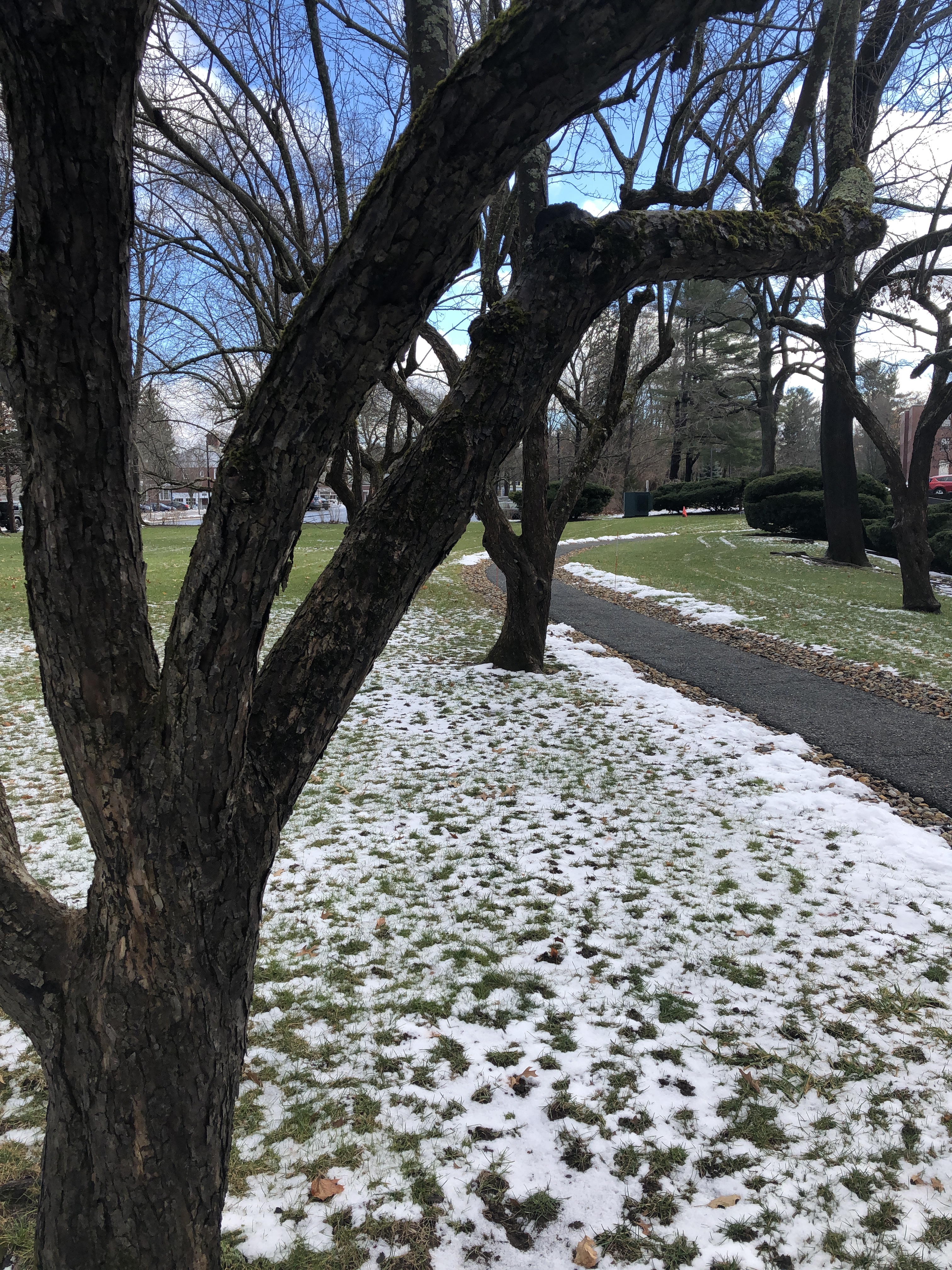
Today I have a few Massachusetts photos that I took myself and a few that other people took. Most need no explanation, but please let me know if you have comments.

The abandoned boathouse is next to the Sudbury River, which you can see through the trees if you look closely. A shot taken nearby shows more of the river, including the farther shore and the ice forming along the edges.

About the traffic signs: Are drivers supposed to be hopeful about the availability of tickets?

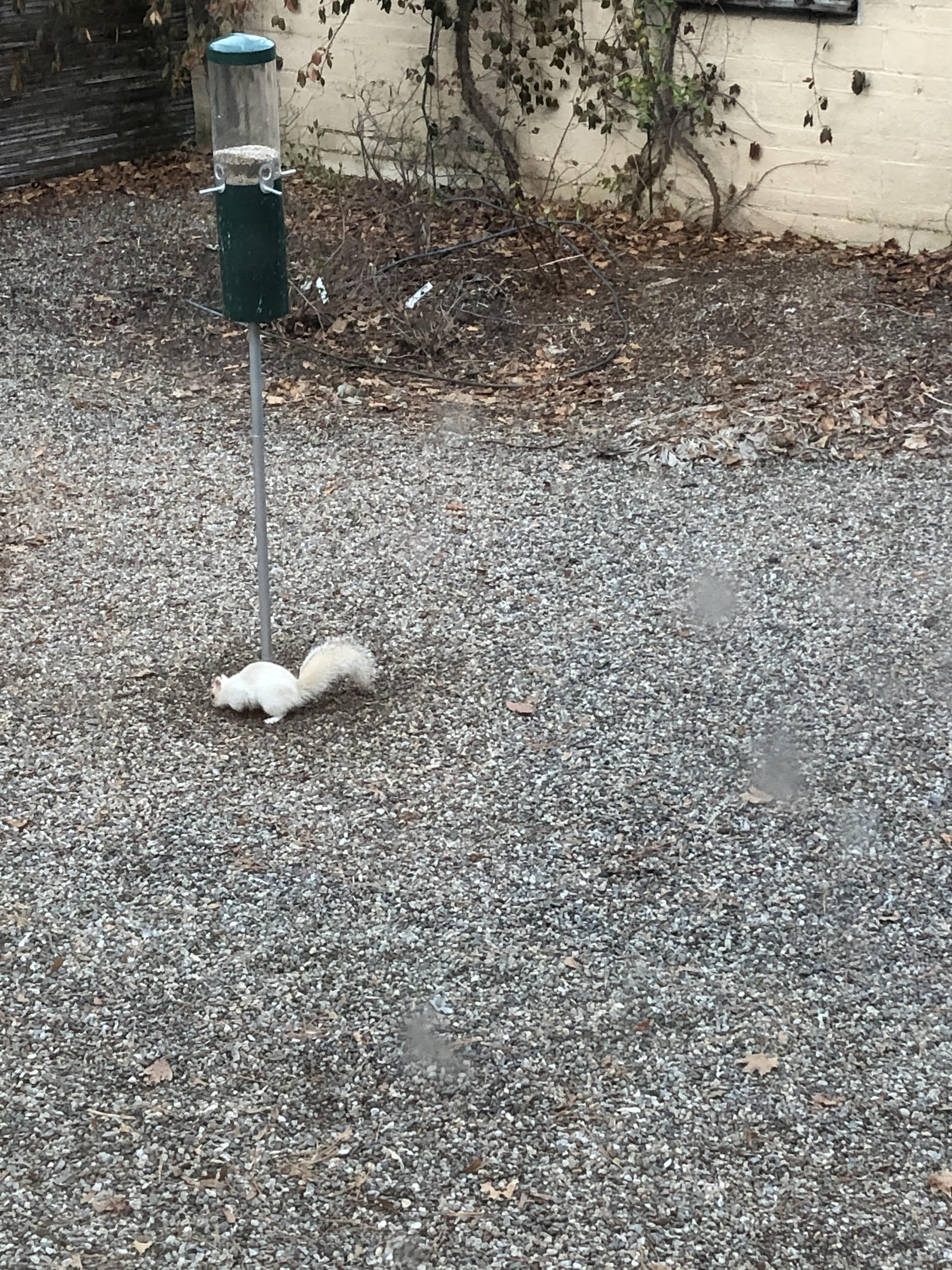
My husband researched white squirrels after I pointed out our visitor. This squirrel could be either an albino gray squirrel or a mutation. I think I have the mutation. Very aggressive, by the way.

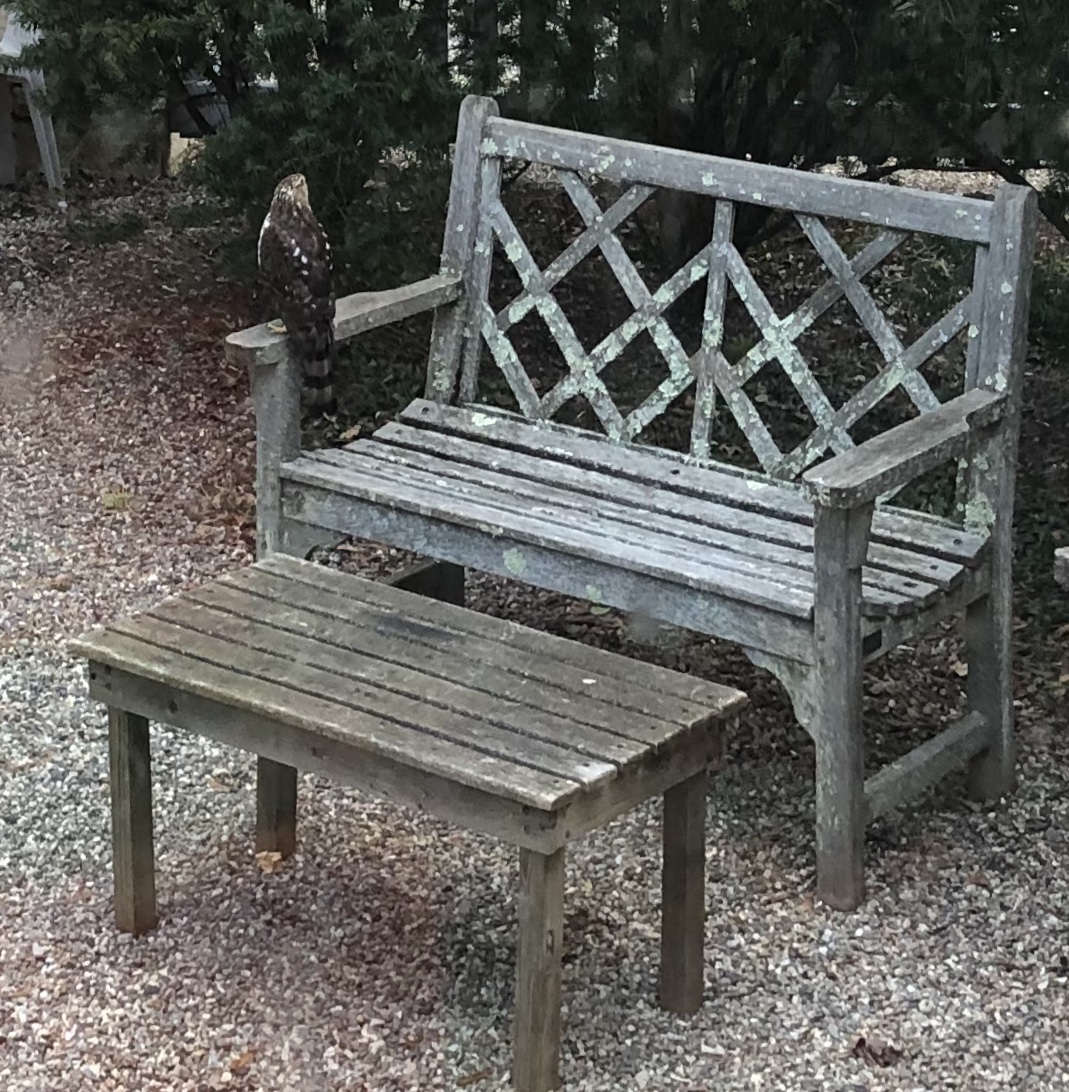
The new bird feeder has provided terrific entertainment ever since it went up December 16. The sharp-shinned hawk seen on the backyard bench agreed that the feeder was entertaining, although his enthusiasm was not as innocent as mine.

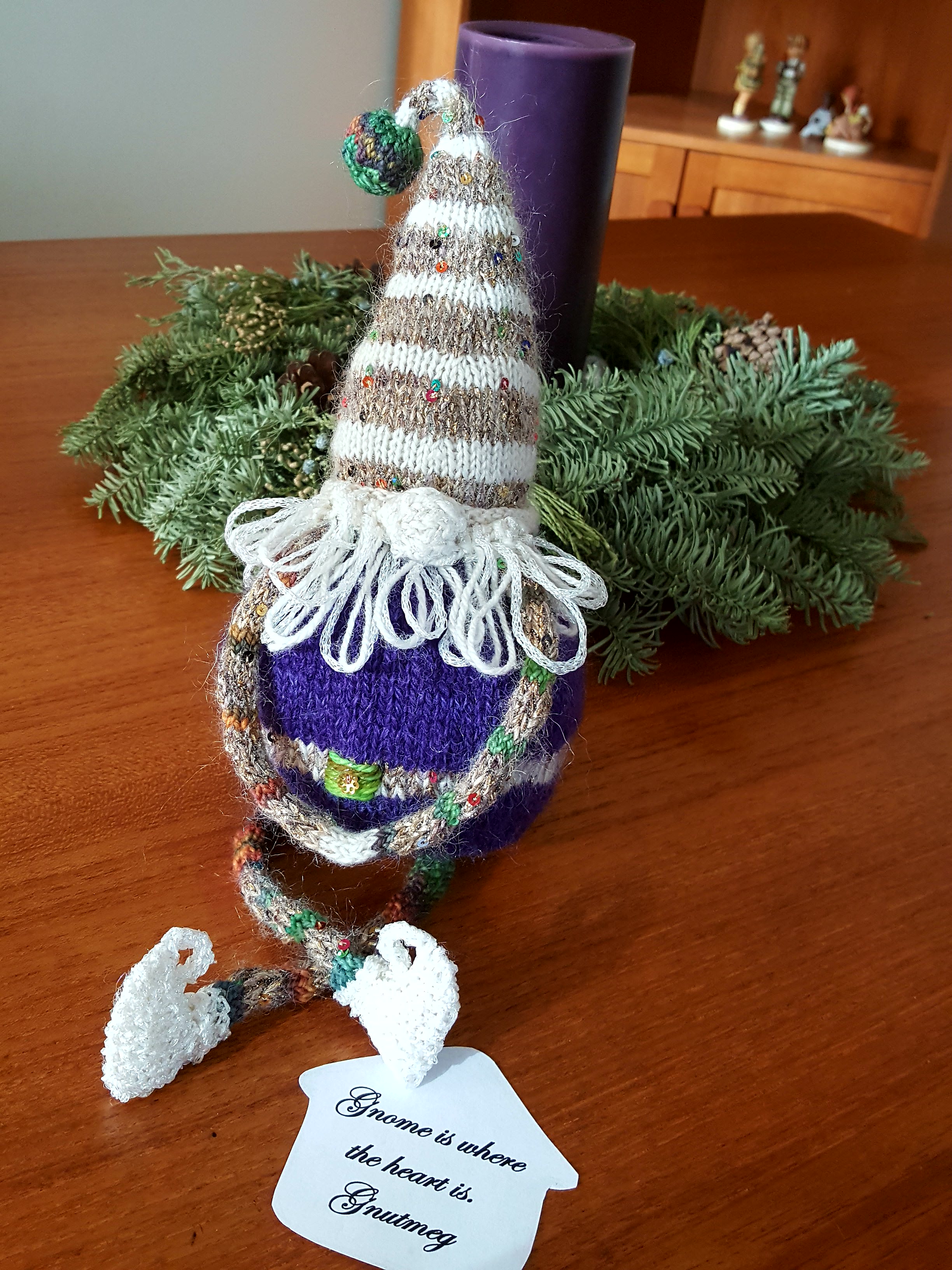
Kristina took the next two pictures: one of the gnome she made over Christmas, and the other of her bright and cheery plants.

My oldest grandson took the picture of his sister next to a big New Year’s ice sculpture in his town.

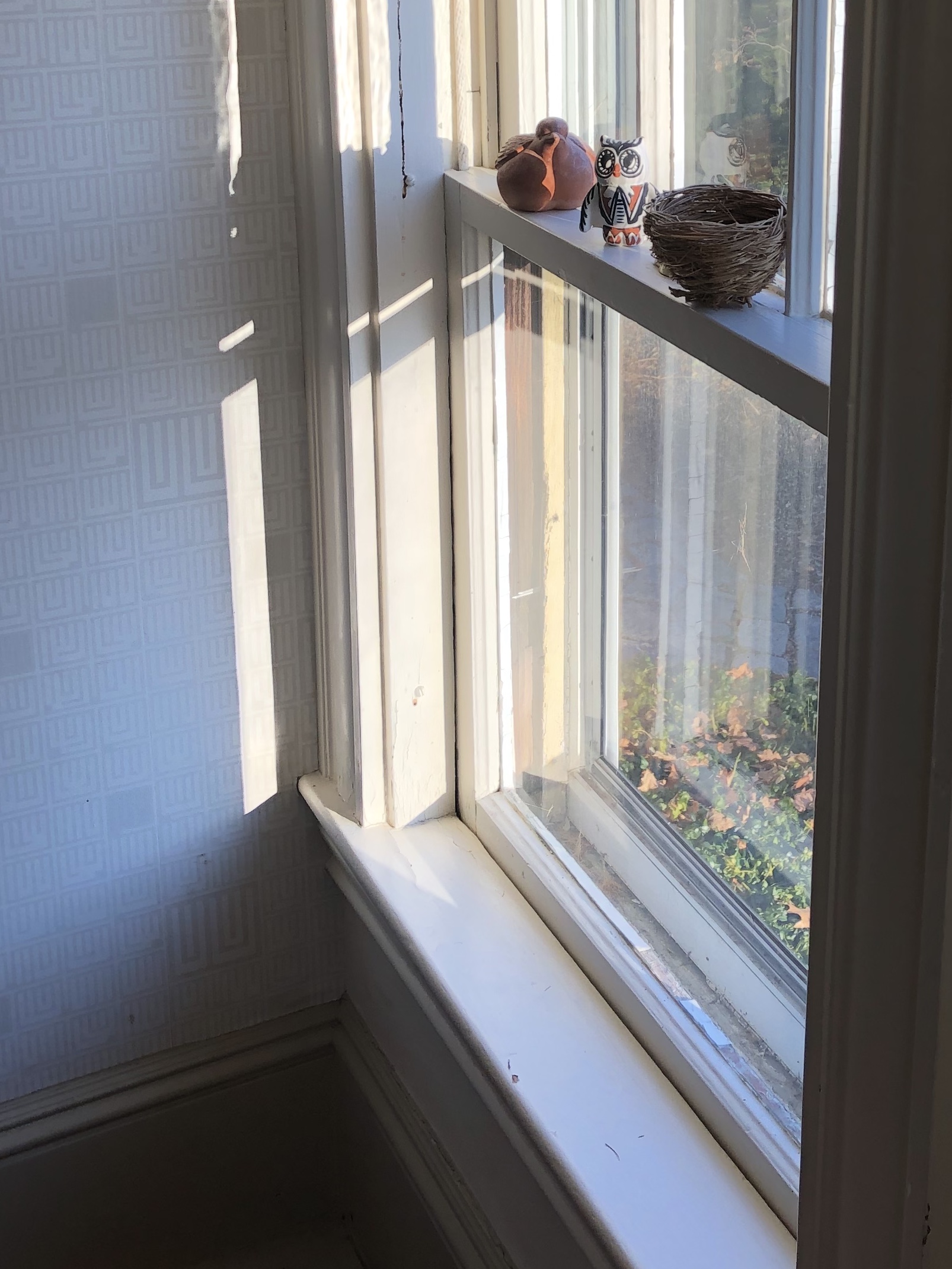
Finally, I hardly ever miss a chance to shoot a photo of nice shadows.

It isn’t hard for me to give up eating beef — but milk? For one thing, my doctor wants me to drink it. I do know that cows and other livestock are not helping with our global-warming problem, and that’s a worry. Here’s something that could help.

Tatiana Schlossberg writes at the Washington Post, “One of the most powerful weapons in the fight against climate change is washing up on shorelines around the world, unnoticed by most beachgoers. It’s seaweed. Specifically, Asparagopsis taxiformis and Asparagopsis armata — two species of a crimson submarine grass that drifts on waves and tides all around the world’s oceans.

“It doesn’t seem like much, but it could practically neutralize one of the most stubborn sources of a powerful greenhouse gas: methane emissions from the digestive processes of some livestock, including the planet’s 1.5 billion cows, which emit methane in their burps.

“Reducing methane from livestock, and cows in particular, has long been a goal of scientists and policymakers but is especially tricky: How do you change a fundamental fact of animal biology in an ethical way that doesn’t affect milk or meat?

“In lab tests and field trials, adding a small proportion of this seaweed to a cow’s daily feed — about 0.2 of a percent of the total feed intake in a recent study — can reduce the amount of methane by 98 percent. That’s a stunning drop when most existing solutions cut methane by about 20 or 30 percent.

“Meanwhile, growing seaweed used for the feed supplement could also help sequester carbon dioxide, another greenhouse gas, and reduce ocean acidification, because the plant sucks up carbon in the water as food.

“Rob Kinley, the scientist who identified asparagopsis as a methane inhibitor, said it might just be the most promising way to eliminate methane emissions from livestock in the next decade.

“That’s significant because livestock overall account for about 15 percent of global greenhouse gas emissions, with nearly 40 percent of that linked to methane from the digestive process, according to the United Nations’ Food and Agriculture Organization. …

“In a study published in 2016, Kinley and his co-authors found that asparagopsis virtually eliminated methane emissions in lab trials. When a cow eats grass or other fibrous plants, microbes inside its rumen, or first stomach, use carbon and hydrogen from the fermentation of those plants to produce methane, which escapes from the cow mainly through burping, although about 5 percent is released through flatulence.

“Asparagopsis and other types of seaweed have specialized gland cells that make and store bromoform, an organic compound. When the blurry red seaweed is freeze-dried, powdered and sprinkled as a garnish on a cow’s meal, bromoform blocks carbon and hydrogen atoms from forming methane in the stomach.

“In response, the cow makes more propionate, a fatty acid that helps produce glucose in the metabolic process, allowing the animal to more efficiently grow or to produce more milk. That may enable farmers to use less feed and save money. …

“Some evidence suggests that herders in ancient Greece fed their cows seaweed, as did many in 18th century Iceland. The most recent effort began when

Joe Dorgan, a farmer on Prince Edward Island in Canada, observed that his cows that grazed on seaweed that rolled up on beaches had better pregnancy success, produced more milk and suffered less from mastitis than cows that didn’t eat seaweed.

“Before Dorgan could sell the seaweed to other farmers, the Canadian government required proof that it was safe, said Kinley, who was then at Dalhousie University in Nova Scotia and was hired by Dorgan. …

“Dorgan’s seaweed reduced methane by about 18 percent, [but, he says,] ‘The light came on for me that there’s probably a seaweed in the world that’s better than that.’ …

“A number of companies have been working to make asparagopsis taxiformis and asparagopsis armata into commercial products that can be added to animal feed. … While their approaches differ, they share an urgency in getting asparagopsis to farmers, something they recognize is not easy. It’s a challenge to figure out how to grow and process asparagopsis at scale and in a way that will translate into higher earnings for farmers.”

At the Washington Post, here, you can read about four companies that are working on this.

Cows by the sea.

When I wrote about people having trouble falling asleep, here, it was September 2020. It seemed like a more stressful time than January 2021, despite today’s increasing numbers of Covid cases. Readers who had their own reasons for stress in September, weighed in with their techniques for getting to sleep. Today, I offer a new one.

David Patrick Stearns remarks at the Philadelphia Inquirer that musicians work hard to keep audiences awake, but “not in the new Bowerbird concert series Liminal States, seven streamed events slotted at 10 or 11 p.m. that aim to put listeners into a sort-of slumber somewhere between sleeping and waking. The series is co-produced with West Philly’s Rotunda, Bowerbird’s home venue.

“ ‘Everybody is so traumatized and beat up that if a concert involves another state of awareness, that’s a very attractive prospect,’ said pianist Marilyn Nonken, who [opened] with Morton Feldman’s spare, meditative, 90-minute Triadic Memories.

‘It’s not a piece so much as it’s an environment, a sanctuary, where you can go and stay a while. … where your brain waves change.’

“If the other Liminal musicians have anything in common it’s a concept of sound that proceeds without a predictable end in sight.

“The hard-to-categorize indy artists include Jeff Zeigler (Jan. 31), next on the schedule after Nonken, an engineer and producer whose own music falls in the ambient zone. Philadelphia-born Laraaji (Feb. 14), the series’ third performer, is described as often as a mystic as he is a percussionist who creates shimmering, luminous sound environments.

“Laura Baird (Feb. 25) arises more from the folk tradition but crosses over into the electronic zone. Tatsuya Nakatani (March 10) has a gong orchestra, with instruments gently bowed more often than they’re struck. If there’s such a thing as an experimental harpist, it’s Mary Lattimore (March 25), whose ambient collaborations with Zeigler have her harp giving definition to his washes of sound.

“Relatively traditional — at least on the surface — is Variant 6, a Philadelphia-based vocal sextet that ends the series on May 6, and typically sings a range from Monteverdi to newly written vocal works. …

“Bowerbird artistic director Dustin Hurt is encouraging live performances — a particularly atmospheric possibility for Nakatani’s gongs, since the East Coast streaming time will be around dusk in the New Mexico desert where the artist lives. Some artists will be pre-recorded, though nocturnally, in the late-night slot that their streaming will occupy. …

“ ‘This idea has been around, inside my mind, for a long time,’ said Hurt, who has enjoyed liminal states when listening to Feldman while lying on the floor (an option not available at most in-person concerts).

” ‘The music levitates very slowly, so that when you wake up, you wonder “Was I asleep for 10 minutes or an hour?” ‘

“Variant 6 member Elisa Sutherland said working remotely, and given the lag time that can come with conference technology, ‘there’s potential for a powerful, somewhat spooky experience.’

“Liminal States concerts are pay-what-you-wish, with a suggested donation of $25. Information: bowerbird.org.

More at the Inquirer, here.

Did you ever wonder why you have to work so hard at exercise when for millennia, humans did OK with whatever movement was part of their normal day? Some folks say we’ve been overdoing things.

At National Public Radio (NPR), Terry Gross interviewed Daniel Lieberman, a professor in the department of human evolutionary biology at Harvard, about his new book on exercise. The interview relieved me of some preconceptions, but I didn’t see anything about getting the heart beat up.

“For much of history, human beings needed to be physically active every day in order to hunt or gather food — or to avoid becoming food themselves. … a professor in the department of human evolutionary biology at Harvard [says] that the notion of ‘getting exercise’ — movement just for movement’s sake — is a relatively new phenomenon in human history. …

“Lieberman says, ‘When I go to these [remote African tribal] villages, I’m the only person who gets up in the morning and goes for a run. And often they laugh at me.’…

“Lieberman has spent a lot of time with indigenous hunter-gatherers in Africa and Latin America, cataloging how much time they spend walking, running, lifting, carrying and sitting. He writes about his findings, as well as the importance of exercise and the myths surrounding it in his new book, Exercised.

” ‘If you actually look at what our ancestors do, they walk about 5 miles a day, which turns out to be, for most people, about 10,000 steps,’ Lieberman says.

“Lieberman notes that many people are moving less than they did before the pandemic. He says if 10,000 steps feels out of reach, it’s OK to shoot for less — just so long as you’re focused on movement. Even fidgeting can keep your muscles engaged.

‘The more we study physical activity, the more we realize that it doesn’t really matter what you do. You don’t have to do incredible strength training. … It’s all good in different ways.’

Prof. Daniel Lieberman

Interview Highlights
On the demonizing of sitting as “the new smoking”
“When I walk into a village in a remote part of the world where people don’t have chairs or a hunter-gatherer camp, people are always sitting. … Some friends and colleagues of mine actually put some accelerometers on some hunter-gatherers and found that they sit on average about 10 hours a day. …

“It’s not unnatural or strange or weird to sit a lot, but it is problematic if, of course, that’s all you do. As I started to explore the literature more, I was fascinated because most of the data that associates sitting a lot with poor health outcomes turns out to be leisure-time sitting. …Then the numbers get a little bit scary.

On the importance of “interrupted sitting”
“Just getting up every once in a while, every 10 minutes or so — just to go to the bathroom or pet your dog or make yourself a cup of tea — even though you’re not spending a lot of energy, you’re turning on your muscles. … It uses up fats in your bloodstream and sugars in your bloodstream, and it produces molecules that turn down inflammation. So the evidence is that interrupted sitting is really the best way to sit. In hunter-gatherer camps, people are getting up every few minutes, to take care of the fire or take care of a kid or something like that. …

“A seat back essentially makes sitting even more passive than just sitting on a bench or a stool because you lean against the seat back and you’re using even fewer muscles, even less effort to stabilize your upper body. And the result is that we end up having very weak backs. So there are a lot of muscles that we use in our backs to hold up our upper body, and those muscles, if we don’t use them, just like every other muscle in your body, they atrophy. And weak muscles then make us more prone to back pain. …

On the idea that running is bad for your knees
“There’s this kind of general idea out there that running is like driving your car too much, [but] study after study has shown that in terms of ‘wear’ — by which we really mean arthritis, degeneration of the cartilage in your joints — that people who run more are not more likely to get arthritis in their knees. … That said, it’s also true that the most common site of injury for runners is their knees. But a lot of those injuries, I think, are preventable by learning to run properly. …

On becoming frail with age
“One of the most important points about physical activity is that as we age, it becomes not less but more important to be physically active. Muscle atrophy is the perfect example. … We have plenty of evidence that older individuals in America are less physically active and they do fewer activities that involve strength. And one of the really sort of serious negative consequences of that is that our muscles dwindle, they atrophy. … That’s the bad news.

“But the good news is that it doesn’t take a huge amount of physical activity to kind of reverse that, turn it around. Think about Ruth Bader Ginsburg. She was celebrated for her vim and vigor, which meant that a lot of that came from the fact that she kept working out and as she got older, she went to the gym several times a week. Now, she didn’t do crazy. … She did a few rounds of weight training every week and that helped keep her marvelously active and vigorous up until her late 80s. “

Lots more advice at NPR, including how much sleep we actually need, here.

I better stand up now. I’ve been sitting more than 10 minutes.

You know about the Little Free Library movement (e.g., here and at Fake Flamenco, here). And you know about the miniature art gallery that blossomed in Boston at the start of the pandemic (here). But did you know about the Little Free Art Library in Seattle? You may be interested to see how the idea evolved from something the artist had done for her mother. Cathy Free at the Washington Post has the story.

“Stacy Milrany probably runs the only art gallery in the country where visitors are encouraged to walk away with the art. And as far as she knows, her Little Free Art Gallery in Seattle’s Queen Anne neighborhood is likely the only museum where all of the works will fit neatly in a pocket.

“Milrany’s miniature gallery, which opened for public view on Dec. 13, sits five feet off the ground inside a white wooden box in front of her house. The head curator and painter said she based her idea on the popular Little Free Libraries in neighborhoods coast to coast.

‘The idea is pretty simple — anyone is welcome to leave a piece, take a piece or just have a look around and enjoy what’s inside,’ said Milrany, a painter who runs a small, appointment-only gallery featuring her works. …

“Milrany gave her wee museum a contemporary design [and] installed a tiny bench and small plastic people who, she said, appear to be reflecting on the art. The bench and people are part of the permanent collection and not for the taking. …

“Said Milrany, ‘Just the surprise of seeing what people put in there has made this super fun for me.’ So far, she has seen works featuring bulldogs, masked heroes and a chicken farmer, as well as intricate collages and painted seashells.

“It was March 2019 when she first started creating miniature art pieces. … Milrany’s mother had just been diagnosed with cancer and was about to begin chemotherapy treatment in Portland, Ore., about 2½ hours away from her home.

“ ‘I decided if I couldn’t be with her every day she was going through treatment, I could offer a little piece of something via UPS every single day — something made by a human hand to add some brightness to those dark days,’ she said.

“Friends and gallery visitors offered to help when they learned what Milrany was doing for her mother, and together they created 140 pieces of mixed-media pieces of art measuring 4-by-6 inches each. Her mother, who is now healthy, said the daily deliveries helped her to get through the most difficult time of her life, Milrany said.

“When the pandemic took hold in Seattle last year, she decided to expand her idea and paint 500 more small artworks and send them to people who were isolated because of the virus. She called her project ‘Dose of Art.’

“ ‘I put a notice on Instagram and people started asking me to mail them to people who were in nursing homes or their moms or dads who were home alone,’ Milrany said. …

“Then last month, Milrany came up with the idea for her Little Free Art Gallery.

“A carpenter friend helped her build an 18-by-15-inch cedar display case, paint it white and install it on a post out front, along with a sign:

“ ‘Welcome to the smallest free-est art gallery in the world. Have a look around! If you’d like to take a piece, please leave another piece in its place for the next art-lover who comes around.’ …

“ ‘In three days, 10 pieces had come and gone,’ Milrany said. She was a bit saddened, however, to discover that one of her plastic miniature gallery figures — a character she named Chef — had gone missing.

“Milrany posted a sign asking for the return of her ‘4.7 inch chef and arts patron’ — and a week later, an anonymous donor mailed her an entire new set of whimsical plastic people to place inside the museum. …

“Many of the people who tuck artwork inside her gallery are Seattle-area artists, delighted to find a new venue for their work.

“Artist A. McLean Emenegger created a piece that features her grandfather as a young man, enjoying some time with a friend. ‘It’s a nod to joyful abandon,’ said Emenegger, 53, who added beeswax, sewing thread and bits of turquoise and coral to an old family photo for her contribution. … She said, ‘There’s something charming and reassuring about the Little Free Library concept. And translating that into an art exchange is genius.’

“Burton Holt, an artist who primarily creates works with found objects, donated a piece he’d made from colorful rubber bands. ‘The gallery is a real shot in the arm for the neighborhood in these difficult times,’ said Holt, 80, a retired ship captain.”

More at the Washington Post, here. Follow Milrany on Instagram @stacy_milrany_art.

I’m one of those nosy old ladies who calls the police for things like abandoned bicycles. I used to see them a lot near the train, and if a bike was in the same place with no lock for several days, I would call. The police usually have a list of people upset about a stolen bike.

Kyle Melnick reports at the Washington Post about an assistant pastor who was also upset when his bike disappeared. At least at first.

“Someone stole Robbie Pruitt’s mountain bike off the rack of his Honda Odyssey in September. Pruitt visited a local bicycle store in Ashburn, Va., the next day only to find there were very few bikes in stock available to buy.

“That’s when an idea hit him — the thief might have stolen the bike because they’re in short supply during the coronavirus pandemic. What if the thief needed the bike to get to work? Pruitt, 44, wanted to help people who might be in such a predicament.

“Pruitt, an assistant rector at the Church of the Holy Spirit in Leesburg, Va., posted on a private Loudoun County Facebook page that he’d fix anyone’s bicycle free. In the post he also said he was accepting unwanted bikes, which he’d fix and donate to people in need. …

“That day, he received about 30 bicycles at his townhouse. After his next post, about 500 people expressed interest in either donating bikes or having Pruitt fix them.

“He set a goal of fixing 100 bikes before the end of 2020. He surpassed that, repairing more than 140 bicycles — donating about 60 percent of them and returning the rest to their owners. He gives bikes to anyone who asks, but tries to support children and families who are struggling. …

“Perhaps more important, along the way, he has taught more than a dozen young people in Loudoun County to mend their own bikes and the bikes of others. …

“Pruitt’s interest in helping people with their bikes during the pandemic started a couple of months before his was stolen.

“One July evening, after returning from a mountain bike ride in Reston, Pruitt was revamping the disc brake on his red Diamondback bicycle in front of his house when a group of four children from the neighborhood approached on their own bikes. Pruitt asked if they wanted to learn how to repair parts of a bike. Pruitt also noticed their bicycles were in bad condition, and some had flat tires. That night, he fixed them. It was the start of a friendship, and a neighborhood project.

‘All the neighborhood kids are spending a lot more time doing something that’s hands-on,’ said Danny Offei, Pruitt’s next-door neighbor. ‘Almost everybody in the neighborhood has a bike now, and he’s helped put those bikes together.’ …

“Pruitt grew up with his mother and two siblings in Columbia, S.C., where he said he’d always been interested in building and fixing. … In 2004, when working for Epiphany Episcopal Church in Herndon, Pruitt began repairing and donating bicycles as part of a church project. …

“In July after his family moved to Ashburn, [he] saw the condition of some of the neighborhood children’s bikes. Now, many nights, Pruitt is online, buying materials such as seats, brake levers, handlebars, training wheels, shifters, pedals and brakes. He estimates he has spent almost $1,500 on parts. Pruitt said repairing each bike takes around 30 minutes, depending on what it needs. He tries to restore each one so it’s as good as new.

“ ‘The feeling you get when somebody rides off with a bike that didn’t have one … there’s a lot of gratification,’ said Pruitt. …

“Pruitt’s favorite part of his bike project is creating friendships. He said after he fixes bikes, the owners will sometimes drop by his backyard just to chat. Some people will bring him food, including a Greek family that dropped off chicken souvlakia on Christmas Eve.”

More at the Washington Post, here.

I liked today’s story about bringing joy through dance. I especially liked learning about research showing that differences drop away when people move in unison.

Sara Miller Llana writes at the Christian Science Monitor, “He has led firefighters and police officers to the rhythms of bhangra – a centuries-old dance that hails from the farming fields of Punjab. He has danced in front of Canada’s Parliament in Ottawa and amid crashing waves of the country’s Pacific Coast.

“But these days, Gurdeep Pandher has more fans than he ever has – by posting videos of himself dancing in the snow-covered forest behind his cabin near Whitehorse in Yukon, Canada’s northwesternmost territory.

“At this time of year, it’s not until about 11 a.m. that the sun comes out, filtering through the trees and drawing him outdoors. ‘It looks so beautiful, to me it looks just like magic,’ he says. ‘I do feel like I live in a winter wonderland.’

“On the winter solstice last month, in a bright blue sweater, an orange turban, and brown snow boots, Mr. Pandher posted a new video of himself doing what he calls a ‘happy dance’: arms raising to the sky, knees as high as they go, and the broadest of smiles. …

“Bhangra began as a farmer’s dance in Punjab to celebrate a good harvest, but it’s found its way across the globe, from trendy DJ fusions to entertainment on basketball courts of North America. Mr. Pandher has been dancing it since he was a child, and he says there’s no surprise to him that it’s caught on – for its upbeat sounds and its core value of joy.

‘If you’re dancing bhangra, and you are not happy, that is not bhangra, even if you are doing all the moves perfectly,’ he says.

“That’s why he believes his videos, one after the other, keep going viral during the pandemic, when there is so much darkness and heaviness.

“ ‘There’s a Punjabi saying that when there’s a lot of darkness, we value brightness more. And I’ve noticed that, a lot of the sort of people who never cared about watching my videos before, like lawyers, or politicians, or diplomats, are sending me messages,’ he says.

“ ‘Before maybe they didn’t feel like something light was professional, or important, but now in these difficult times they realize the importance of someone dancing to create happiness, someone who’s preaching that kindness is important, what our ancestors from centuries have been preaching.’

“He’s not the only one feeling a new buzz around bhangra. Harshjot Singh, who founded Power Bhangra with his wife in Montreal, is these days offering popular bhangra fitness classes over Zoom. It’s a physical workout, but he says it’s also the culture of bhangra that he believes keeps his students – who span Canada and even North America – signing up. ‘You have to smile, it’s just the rule of the dance. And as students learn about it, slowly and steadily, it just comes naturally.’ …

“Peter Lovatt, the author of new book The Dance Cure, says that dancing, unlike just plain fitness, has four key benefits in the realms of social, thinking, emotions, and the physical – which, fittingly, spell STEP.

“All of those areas are suffering during the pandemic, and everyone benefits from things like physical activity or disconnecting from the Internet. But there is something especially compelling about the synchrony of dance in today’s climate. ‘When people dance in synchrony, it increases how much they like each other,’ Dr. Lovatt says.”

More at the Christian Science Journal, here.

Birdsong Competition

In Suriname, a country that borders Brazil on the south and the Atlantic Ocean on the north, there’s an unusual sport that only men engage in — from businessmen in suits to tough-guy boxers. It involves songbirds.

Anatoly Kurmanaev reports at the New York Times, “Every Sunday just after dawn, while much of the city sleeps, a group of men gather on the overgrown lawn of a public park in a quiet neighborhood in the capital of Suriname, South America’s smallest country. They huddle together, and hush.

“They have bird cages, each carrying a songbird — a picolet, a twa-twa or a rowti, as the species are known here. Over the next few hours, the men will lean in, silent and focused, and listen to the birds as referees note the duration of each burst of singing, and rate each songster’s performance on a chalk board.

“The audience is engrossed, but wins and losses are greeted by handlers with the same quiet collegiality that has marked the morning.

“Birdsong competitions, a sort of a Battle of the Bands between trained tropical birds, are a national obsession in Suriname. …

“ ‘Some people like football or basketball,’ said Derick Watson, a police officer who, on his days off, helps organize the competitions with a cigar in his mouth. ‘This is our sport. It’s a way of life.’ …

“The yearly bird song championship, which culminates in final rounds that are broadcast on national television in December, draws around a hundred competitors that square off for trophies and a moment of national glory. …

“The most accomplished birds, with renowned stamina, sell in Suriname for up to $15,000, a fortune in the poor former Dutch colony, which gained independence in 1975. But part of the sport’s appeal is that at entry level, it is accessible to anyone, with young untrained birds available for just a few dollars in pet shops.

‘It’s a tradition,’ said Arun Jalimsing, a Surinamese pet shop owner and one of champions of last year’s competition. ‘We grew up with it. When my father gave me money to buy a bicycle, I went and bought a bird.’ …

“Training a songbird requires expertise, but also immense patience and perseverance. To build the birds’ singing endurance, aficionados spend years stimulating them through interaction, regulating their diets and putting them in proximity with female or male partners, according to elaborate training strategies meant to elicit courtship or competitive behavior from each songbird. …

“Suriname is a diverse country, a legacy of the Dutch colonial system, which brought enslaved people and indentured laborers from around the world to work sugar, coffee and banana plantations. … The bird enthusiasts support different political parties and often live in separate, ethnically-defined neighborhoods.

“Suriname’s few decades since independence have been turbulent. … Yet politics, race, class and other differences that have bred confrontations in other arenas seem not to intrude on the collegiality of the songbird owners’ community.

“ ‘Everybody is friends when they come here,’ said Marcel Oostburg, a bird aficionado and a senior official at Suriname’s National Democratic Party, which dominated the country for decades before being ousted in a tense election last year. ‘We never talk politics here.’ ”

More at the New York Times, here.

It makes me happy when people are proud of their culture, especially people who have long felt marginalized. Today in Alaska, increasing numbers of indigenous residents are embracing their history and art.

Jennifer Nalewicki writes at the Smithsonian, “A community-wide effort began in Juneau in late 2017, when Sealaska Heritage Institute, a private nonprofit that promotes cultural diversity through the arts and public services, announced its plans to make ‘Juneau the Northwest Coast arts capital of the world.’ They’d meet this goal through the promotion and support of several Indigenous cultures that are strongly interwoven into the fabric of the region, and whose works exemplify this artistic style.

“By definition, Northwest Coast art is recognizable by its usage of ‘formline designs,’ according to The Canadian Encyclopedia, or ‘the continuous, flowing, curvilinear lines that turn, swell and diminish in a prescribed manner.’ The term was coined by art historian and author Bill Holm in his 1965 book Northwest Coast Indian Art: An Analysis of Form. Indigenous artists, particularly the Tlingit, Haida and Tsimshian peoples, … apply this style of art in everything from drawings and paintings to sculptures and weavings. …

“A closer look at Juneau reveals a city populated by art museums, galleries, murals and statues promoting the artistic endeavors of local artists. Public art can be seen all over the city, from the Old Witch totem pole created by Haida carver Dwight Wallace in 1880 that creeps up the side of the State Office Building to the ‘Raven Discovering Mankind in a Clam Shell’ mural by painter Bill Ray, Jr. located on the side of the City Municipal Building. …

“One of the first steps Sealaska Heritage took to reach its goal occurred in 2015, when it opened phase one of its Sealaska Heritage Arts Campus. … Once complete, the 6,000-square-foot campus will [comprise] both indoor and outdoor spaces that are designed for artists to create different mediums of Northwest Coast art, both on a small and ‘monumental scale,’ the latter of which will include totem poles and canoes. …

“Lily Hope, a Juneau native known for her colorful and intricate weavings that have been on display at the Alaska State Museum, Portland Art Museum and the Burke Museum of Natural History and Culture in Seattle, is hopeful that Juneau’s Indigenous art scene will get the recognition that it deserves. As a member of the Tlingit people, she has been weaving since she was 14 years old, when her late mother taught her the craft.

“Now 40, Hope continues their legacy by weaving arm bands, face masks and jewelry using techniques she mastered while working alongside her mother for many years. Hope also serves as the president and co-founder of Spirit Uprising, a nonprofit ‘dedicated to preserving the integrity of Ravenstail and Chilkat weaving.’ …

“ ‘Our focus is on art forms that were starting to become extinct,’ [Rosita Worl, president of Sealaska Heritage,] says. ‘We want Northwest Coast art to be recognizable and to be everywhere. We’re working with our local congressional district to try to get it to become a designated national treasure. … We want art everywhere in our community, from street signs around Juneau to pieces on street corners. When people visit Juneau, we want them to be excited about our art.’ “

More at the Smithsonian, here.

This story sent me straight to TikTok. I love both the creativity of Cory Linger’s idea and his professional execution. He is someone who really made isolation work for him.

Leigh Scheps reports at DanceSpirit, “With #SocialDisDancing still very much in place, it’s a challenge for dance partners to perform safely, and even harder to perform safely together.

“But Broadway’s Cory Lingner may have found the solution — on TikTok. He’s using the app to tap alongside some of the most iconic movie stars. …

“Lingner has perfected the use of the app’s duet feature. On one side of the video is a clip of the tap-dancing icon and on the other is Lingner, dancing in unison. And as a bonus, Lingner’s also giving viewers facts about the stars and the performances as they watch.

“Lingner’s danced in everything from On the Town to An American in Paris, Charlie and the Chocolate Factory, and Carousel. But still, his tapping TikToks may be one of his favorite challenges yet. …

“Without a stage and a live audience, he’s getting his fill of performing from his social media duet series. And it’s so popular on TikTok, he’s gained more than 8 thousand followers in a mere month.

“Dance Spirit: How did your ‘Cory’s Duet Series’ on TikTok get started?
“Cory Lingner: … The very first spark of inspiration was another fellow tapper, Nicole Billow. She actually did the first side-by-side with Gene Kelly from An American in Paris. I watched it and I was like, ‘This looks really fun.‘ …

“The majority of what I’ve tried to focus on is introducing new performers so I don’t repeat dancers too much. The last time that I repeated was with Vera Allen in White Christmas, since it was the holiday. I also try to find sections where not only I can do the choreography in my limited space, with my little piece of plywood, but also if they’re able to stay on a single camera shot for long enough for the 20 to 30 seconds. …

DS: What do you think about the skill level of some of Shirley Temple’s tap steps?
“CL: It’s remarkable the fact that she did that many films and had that kind of tap dance skill set at such a young age. … People were commenting on that video too, writing, ‘Oh my gosh, I didn’t even realize what she can do.’ …

DS: What is some of the feedback you’ve been getting?
“CL: Oh, my goodness. It’s so lovely, all the comments and messages. There was a grandmother that said, ‘I think you just inspired my 3-year-old grandson to start taking dance.’ It warms my heart. …

DS: What are some dream duets that you need to do?
“CL: There were other duets people were recommending, like James Cagney. So I’m trying to find a moment when he stays still. I learned ‘Moses Supposes’ from Singin’ in the Rain many years ago, which would be really fun to tackle again. Maybe I’d do that one in two separate sections, so I can do one with Gene Kelly and one with Donald O’Connor.”

Are you on TikTok? It’s worth it, just for this. More at DanceSpirit, here.

Some people think religion is incompatible with science, but that depends on the individual and the particular field of science you’re talking about. One of my brothers is both devout and a scientist. And at his Zoom retirement party this past year, I learned he wasn’t the only one in his lab.

A woman who heads up an important climate change center is Texas is another example. Sarah Kaplan wrote about her at the Washington Post.

“ ‘What world have I brought my child into?’ the new mom pleaded. ‘What can I do to make sure my baby isn’t brought up in a world that’s being destroyed?’

“It was 2019, and climate researcher Katharine Hayhoe was at a church breakfast in Fairbanks, Alaska, when a young woman tapped on her shoulder and confessed that she was terrified. Ever since the birth of her daughter, the young woman said, she couldn’t stop worrying about the threat of a rapidly warming planet.

“ ‘That heartfelt question is one I thought I could only really answer as a fellow mom,’ said Hayhoe, an atmospheric scientist at Texas Tech University and an evangelical Christian who has spent years trying to educate the public about climate change.

“Hayhoe told the Alaska woman the same thing she sometimes had to tell herself when she worried about her own son’s future: Channel your fear into action. Talk to your friends and family. Advocate for change in your town, your church, your school, your state. Now, Hayhoe aims to replicate that exchange on a much bigger scale.

“Along with five fellow climate scientists who are also mothers, she has teamed up with Potential Energy, a nonprofit marketing firm, to launch Science Moms, a $10 million campaign to educate and empower mothers to do something about climate change.

“Advertisements featuring Hayhoe and the female scientists will air on national TV and online for the next month. The initial push will be followed by ads in several key states where the effects of climate change are already being felt, including North Carolina, Arizona and Wisconsin. …

“In one video, Colorado State University atmospheric scientist Melissa Burt narrates a montage of images of her 4-year-old daughter, Mia, juxtaposed with footage of a hurricane.

“ ‘You don’t have to be a climate scientist to want to protect the Earth,’ she says. ‘And for Mia, I want you to know that I worked really hard to be a part of the change and to make it a better place for you.’

“The campaign also has a website featuring facts and resources, including links to books on talking to kids about climate and a form for contacting elected officials. …

“Mothers are the ‘sweet spot’ for inspiring social change, said John Marshall, a veteran marketing executive and consultant and a founder of Potential Energy. They have a long track record of political activity: Mothers Against Drunk Driving helped lower the legal limit for blood alcohol content in drivers. Moms Demand Action has lobbied for initiatives to prevent gun violence. …

“His research suggests that mothers are not more vocal about the warming threat because they’re not confident they understand the science and are unsure of what to do about it. That’s where Science Moms comes in.

‘Moms trust moms,’ said Burt. She hopes that viewers will see her — a Black woman who studies the warming Arctic and presents at scientific conferences but also cooks spaghetti for her family and gardens with her daughter — and feel represented.

“ ‘I want to connect with moms who look like me. … We are disproportionately affected by the impacts of climate change. I just want other moms who look like me to know they have a role in combating this crisis,’ she added.

“Science Moms is funded through donations, including large gifts from philanthropist MacKenzie Scott and former Nature Conservancy chief executive Mark Tercek. The group says it will be the biggest educational awareness campaign around climate since Al Gore’s $100 million ad blitz about the issue in 2007. [The] group cannot engage in political campaigns or seek to influence legislation.

“Marshall will measure success in heightened awareness of the threat posed by global warming and increased willingness to take action. He said his aim is to double the proportion of Americans who say they are ‘alarmed’ about climate change — a number that hovers around 26 percent, according to the Yale Program on Climate Change Communication. …

“Hayhoe hopes the ads will help counter the climate misinformation and misconceptions that so many Americans are exposed to: claims that it only affects polar bears (weather-related disasters cost the United States $95 billion and killed more than 200 people last year); assertions that the climate is always changing (in 4.6 billion years it has never warmed this fast); accusations that other countries are more at fault (the United States is the largest historical source of planet-warming emissions). …

“ ‘What we want to do is empower other moms to become messengers in the most-trusted category, which is friends and family,’ she said. ‘I really believe that using our voices is the way we can make a difference.’ ”

More at the Washington Post, here.