Feeds:
Posts
Comments

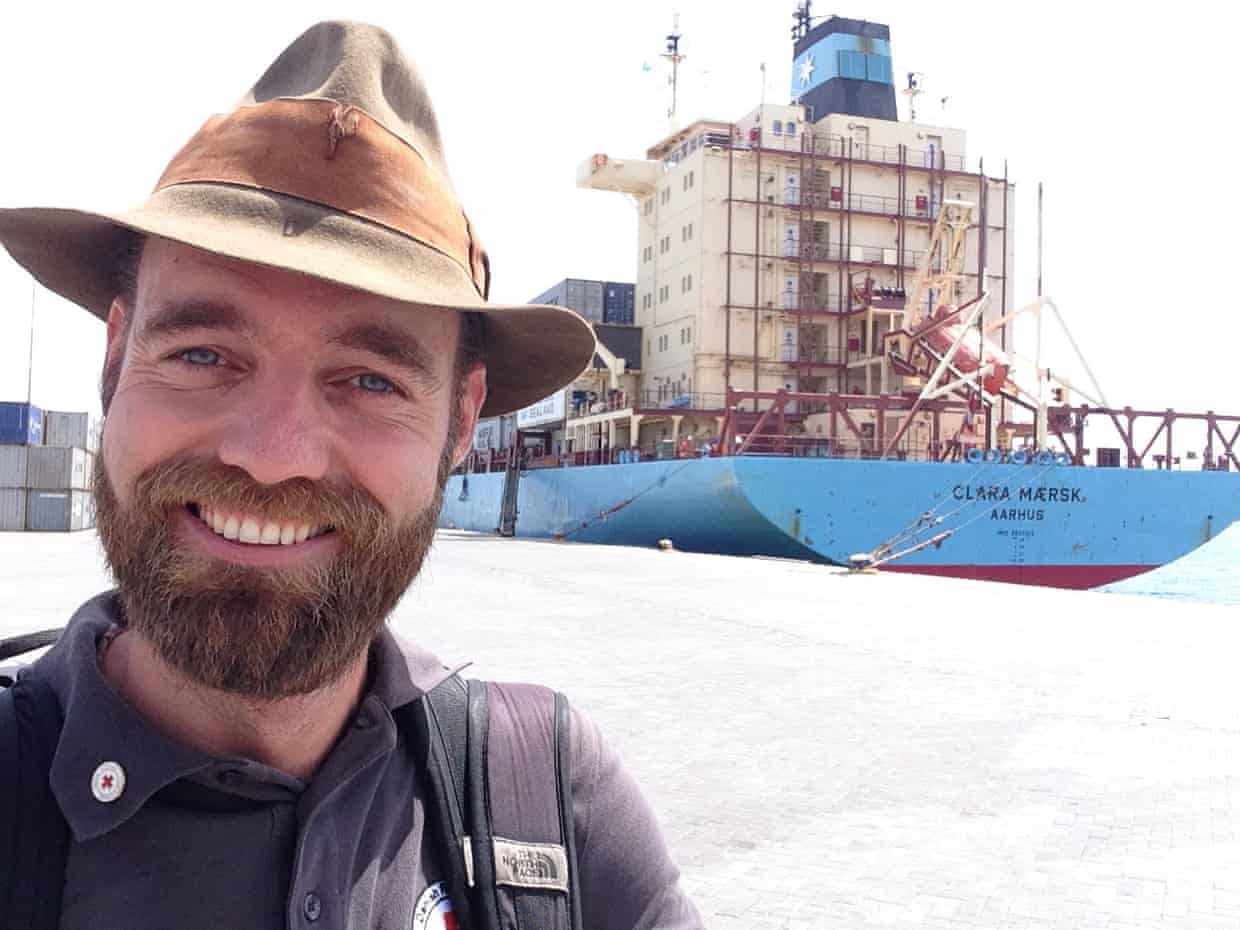
Photo: Thor Pedersen.
Thor Pedersen took a container ship from Praia, Cape Verde, to Guinea Bissau — one step in his quest to travel the world without flying. 

I recently met a couple who are unusually thoughtful about their footprint on Planet Earth, to the point of investigating how they could get to Europe without flying. There are ways to travel without flying, as we learn from today’s story in the Guardian, but they all have a cost in carbon emissions — ocean-going vessels especially. Unless you’re talking sailboats, which are not practical for most people.

Nevertheless, experiments in avoiding airplanes are consciousness raising — and often fun. Thor Pedersen reported on his own effort to travel everywhere without flying. It took him 10 years!

He writes, “Growing up, it seemed as if all the great adventures had happened before I was born. But in 2013 I discovered that – although it had been attempted – no one had made an unbroken journey through every country without flying. I had a shot at becoming the first to do it. …

“At 34, I set off – and didn’t return home until almost a decade later. These are the lessons I learned along the way.

“1. Human generosity can be astounding. It was a cold, dark night in December. A train had brought me to Suwałki, which people say is the coldest city in Poland. It was quiet. Snow was falling, but otherwise everything was still. I was carrying a piece of paper with a name, a phone number and an address for where I was supposed to be staying. But I had no sim card, so I began walking, looking for someone who could help me.

“Just as I was beginning to wonder if I would ever meet anyone, a woman opened her front door. I dashed over. Luckily, she spoke English and invited me in. She was happy to host me and convinced me there was no point in heading back out into the cold.

“I was quickly given a full plate of food and a spare bed. All this from a stranger. The next day, I was served breakfast and taken to the bus that would carry me to Lithuania.

“2. There are still some hidden and spectacular natural wonders. Lesotho was country No 106 on my very long journey. Its natural beauty was immediately apparent. … The mountains of Lesotho are horse country. Every now and again, riders draped in thick blankets would pass. Then I reached Maletsunyane Falls. The nearly 200-metre waterfall was glistening in the sun at the end of a canyon. And I had it all to myself.

“3. People’s resilience is powerful. In 2015, I travelled through western Africa. At the time, Guinea, Sierra Leone and Liberia were dealing with the world’s largest Ebola outbreak. A taxi driver in Guinea said to me: ‘Here we have everything, but we have nothing.’ These countries are rich in many ways – from natural resources to beautiful landscapes – yet most of the people are not.

“But after only an hour in Sierra Leone, I had been invited to a wedding: loads of music, lots of people in fancy clothes, an abundance of food and drink, small talk and dancing.  …

“4. Isolating yourself is a mistake. When you take public transport in Denmark, where I’m from, you always pick the seat farthest from everyone else. We value our privacy and respect the privacy of others. But in much of the world, the best seats are the ones next to other passengers. Where else will you find conversation?

“In west and central Africa, I found that everyone in a bus or a bush taxi would immediately form a unit, sharing food and stories and holding babies for one another. …

“5. What you want and what you need are not the same thing. … I hit a wall after about two years, but had to push through it to reach my goal. I learned the difference between what I want and what I need. I learned to live on a rock and how to engage in conversation with absolutely anyone. Once I returned home, I realized the only things that had kept their value were the relationships and conversations I had had. Everything else seemed perishable.

“6. You can form connections without sharing a language. I once had a 12-hour train journey from Belarus to Moscow during which no one else spoke anything but Russian. It didn’t seem to bother them that I didn’t know the language beyond nyet or da; they sat and spoke to me in Russian for several hours, while we shared food and vodka.”

To see more of Pedersen’s photos and his life lessons from this kind of travel, click at the Guardian, here. No paywall.
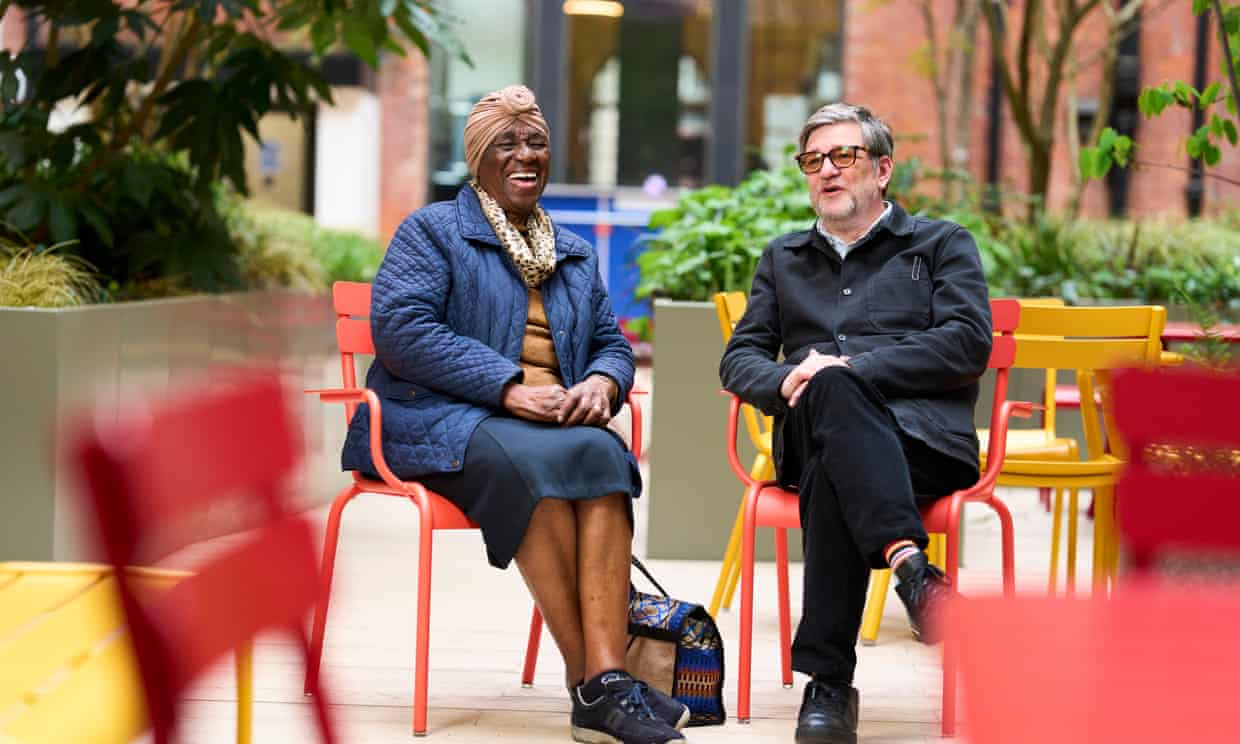
Photo: Christopher Thomond/The Guardian.
Elaine Unegbu, the chair of the Age Friendly Manchester [UK] older people’s board, and Paul McGarry, the head of the Greater Manchester aging hub. 

Where I live now, in a retirement community with various levels of care, the management favors pilot projects from academia and startup companies to test technology that can keep people independent longer. I haven’t volunteered for any of them, but I think it’s a good idea, especially as Erik still holds patents for something along those lines.

I recently read about some simple but ingenious innovations in Manchester, England, that I thought might interest readers like Making Home Home. I mean — how obvious but how overlooked is putting numbers on outdoor benches to aid in emergencies?

Chris Osuh  reports at the Guardian, “Futuristic planning for spaces where people can age well and live in an area designed for them to grow old in is accelerating in the UK with a radical project backed by £1.5bn [$1.7bn].

“The plan to transform a hospital into the first neighborhood in the country designed for people to thrive as they age will be a national testbed for holistic health and social care approaches. It will include hi-tech homes that adapt to occupants’ life stage and care needs, transport, a village green and a social calendar to combat isolation.

“The master plan for the North Manchester general hospital (NMGH) redevelopment in the Crumpsall district is the result of collaboration by public health officials, local politicians, experts and architects.

“Michelle Humphreys, the director of strategic projects for Manchester University NHS foundation trust (MFT), described it as a neighborhood that ‘adapts around people as they go through life,’ powered by advances in medical wearables and remote monitoring. …

“NMGH’s ‘healthy neighborhood‘ scheme is multigenerational. It will include family housing and will be built in line with age-friendly concepts, spearheaded by the World Health Organization (WHO) in response to two major trends – the aging population and urbanization.

“By 2050 60% of the global population will live in urban environments and 27% of people will be over the age of 65, the OECD predicts, yet experts say cities are often defined by spatial agism where environments are not set up for older people.

“The age-friendly movement aims to ensure older people can still play a part in civic life. The Elders Council of Newcastle, Northern Ireland’s older people’s commissioner and Wales’ commitment to becoming an age-friendly nation reflect how UK regions and devolved governments have been preparing for demographic change.

“The humble bench – improved with armrests, numbered to aid in a medical emergency, or placed strategically for wellbeing and intergenerational conversation – can be transformative, with dozens installed in Manchester, taking inspiration from New York’s CityBench initiative. However, the UK has further to go.

Akita, in northern Japan’s Tohoku region, where 30% of the population is over 65, has more than 60 heated roads to prevent slips on ice.

“In Singapore, where one in four are predicted to be over 65 by 2030, the Admiralty ‘vertical village’ has a central medical tier, so older residents, who live in slip-proof homes with alarms alerting neighbors in an emergency, can have surgery without leaving. In Germany in 2007, BMW made 70 changes to its Dingolfing factory to adapt to an older workforce. …

“Prof Stefan White, from Manchester Metropolitan University and Manchester School of Architecture, said the NMGH project would exemplify how to free up hospital space and allow people to ‘age in place’ with the type of support ordinarily provided in a care home made available to the whole neighborhood on a flexible basis.

“Elaine Unegbu, the chair of the Age Friendly Manchester older people’s board, has successfully lobbied the Greater Manchester mayor’s team for transport adaptations, benches and afternoon matinees. She said the healthy neighborhood would give residents peace of mind at a time when gentrification ‘whitewashed’ older urbanites, with many forced from their homes by health crises to the detriment of communities.

“Manchester, where previous age friendly projects include the Derek Jarman Pocket Park inspired by LGBTQ+ over-50s, has been pioneering the movement in the UK since 2008. Last month the city hosted international experts at the Age-Friendly Futures Summit.

“Paul McGarry, the head of the Greater Manchester aging hub, said: ‘The task is to get a national conversation on aging.’ “

More at the Guardian, here.

Book Towns Galore

Photo: Wigtown, Scotland, Book Festival.

Book lovers who are traveling this year may want to think about visiting one of the “book towns” profiled recently in National Geographic. Ashley Packard collected seven that sound charming.

“1. In the Welsh village of Hay-on-Wye, where sheep outnumber people and books spill onto the streets, a quiet revolution began. Antiquarian and academic Richard Booth inadvertently launched a global movement when he began filling the empty buildings of Hay-on-Wye with secondhand books.

“What started as a single decision in 1961 to fill his sleepy hometown with secondhand books to sell in numerous empty buildings, turned into the birthplace of a global literary mecca uniting villages, bibliophiles, and dreamers alike. …

“Hay-on-Wye became the first ever ‘book town,’ supporting patrons who flocked to the shops. Booth, who crowned himself ‘King of Hay,’ inspired others to turn literature into lifelines for their little towns and villages. As word of his success spread, more towns around the world embraced the concept for their communities. Before long, the International Organization of Book Towns was formed in April 2001, though it had existed without the official designation for decades prior.

“The organization aims to raise public awareness of book towns through online information and a biennial International Book Town Festival. It supports rural economies by facilitating knowledge exchange among booksellers and businesses, encouraging the use of technology, and helping to preserve and promote regional and national cultural heritage on a global scale.

“By definition, a book town is ‘a small, preferably rural, town or village in which secondhand and antiquarian bookshops are concentrated.’ … Today, there are dozens of towns with the designation, from Pazin, Croatia, to Featherson, New Zealand. These selected and approved locations take pride in their history, scenic beauty, and contributions to the literary world. …

“2. In a small village tucked away in the hilly countryside of Belgium, Redu is now celebrating its 41st anniversary since becoming the second book town in 1984. This idyllic village is described as, ‘fragrant with the scent of old paper.’ … It, along with its hamlets Lesse and Séchery, were recently added to the ‘Most Beautiful Villages in Wallonia‘ list in July 2024.

“3. [In Scotland] nestled on a hill overlooking the sea along a rugged coastline, woodlands, and forests, lies Wigtown, celebrating 20 years as ‘Scotland’s Book Town.’ … It has 16 different types of book shops, many secondhand, that participate in an annual Spring Weekend in early May, a community festival in July, a market every Saturday from April through late September, and the annual Wigtown Book Festival in late September through early October. The 10-day literary celebration was founded in 1999 and now features more than 200 events, including music, theater, food, and visual arts. 

“4. Turup [in Denmark] is situated 37 miles north of the Danish capital of Copenhagen, between the sea and a fjord, and has a population of 374 people. Here, locals put out the best and most high-quality secondhand books from donations out for sale along the rural roads of the 10 different shops (if you can call them that) for purchase. These ‘bookshops’ include a garage, a workman’s hut, a disused stable, a bookshelf on a farm entrance, and even a newly restored railway station. Some of these stalls process transactions on a self-help and honesty basis where customers leave their change in a jar in exchange for their purchases. The Torup Book Town Association hosts an annual Nordic Book Festival with book readings from authors, contemporary short films, cultural events, and more. 

“5. Surrounded by stunning landscapes, rolling hills, and vineyards is the quaint town of Featherston [New Zealand] … became officially recognized as a book town in 2018. It is famously known for the annual book festival held in May. They have initiatives dedicated to fostering community growth, inspire reading, writing, and idea-sharing across Wairarapa and Aotearoa, New Zealand.

“6. Offering year-round bookstalls and literary festivals, the village of St-Pierre-de-Clages is home to Switzerland’s only book village. ‘Le Village Suisse du Livre,’ translated to ‘The Swiss Book Village,’ is home to a large secondhand market, along with authors, thematic exhibitions, activities for children, and a renowned Book Festival that has been hosted every last weekend of August since 1993. … This festival takes place over three days and attracts visitors from all over French-speaking Switzerland and neighbors. It offers insight into book professions such as calligraphy and old printing techniques, a welcoming space for writers and publishing houses to meet, and various artists to display their work.

“7. The former garrison town of Wünsdorf [in Germany] is known as ‘book and bunker city’ due to the historical sites, buildings, book shops, cafes and tea rooms, and lively cultural life. Nestled about 12 miles south of Berlin, the town offers year-round events, readings, exhibitions, military vehicle meetings, and currently five different bunker and guided tours. Wünsdorf was established as an official member of the International Organization of Book Towns in 1998 thanks to its three large antiquarian shops that boast of a wide array of literary treasures on topics such as poetry, philosophy, classical literature, and many more.”

More at National Geographic, here. Great photos, as you would expect from National Geographic.

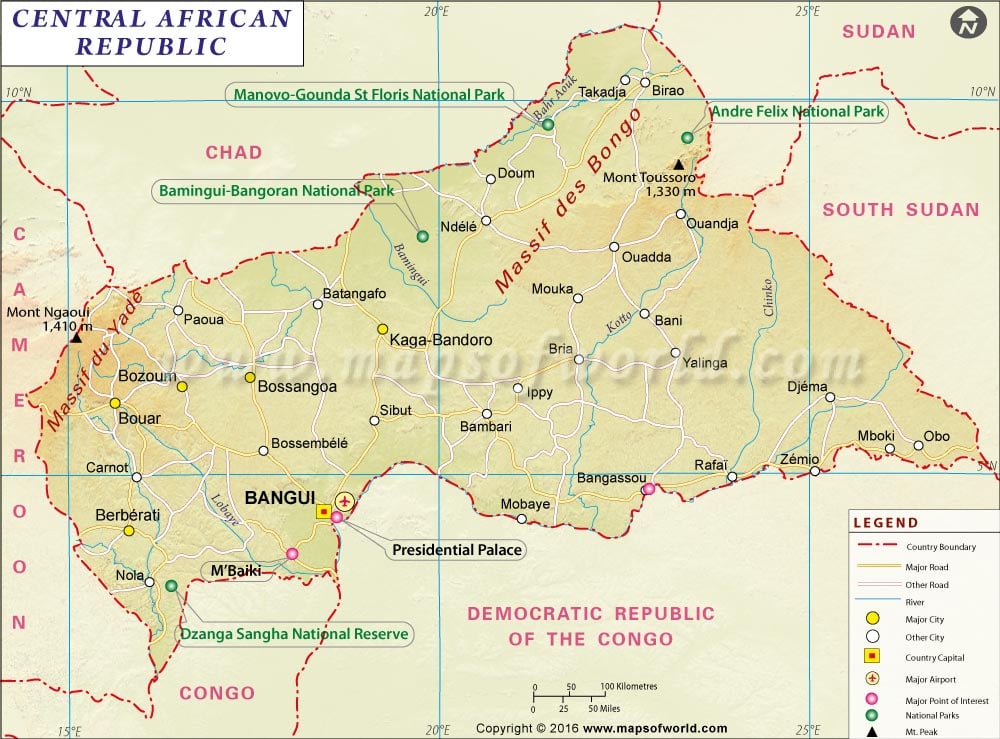
Map: Maps of the World.
The National Ballet in the Central African Republic brings to life traditional dance forms from different ethnic groups across the country. 

In parts of Africa where colonialism glommed together disparate tribes with ancestral enmities, wars have continued off and on for decades. But the Central African Republic (CAR) is setting a different example, with the help of its national ballet company. The idea is to give all the CAR groups a moment in the sun by highlighting the dance traditions of each. The effort also brings people together in new ways.

In the following article, we learn about a number of ethnic dance groups, including the National Artistic Ensemble that performed recently at the Africa Day of School Feeding (ADSF) in Bouboui. [See the African Union site for an explanation of ADSF. Interesting.]

France24 reports: “The dancers shake their hips, kicking their feet to the beat of the age-old ‘dance of the caterpillars,’ typically performed in the south where the insects are gathered for food.

“Three times a week the National Ballet rehearses traditional dances of the many ethnic groups making up the Central African Republic.

” ‘The creations they ask of us are based on the particularities of each ethnicity. I’m Banda and I have to suggest dance steps from the Banda ethnic group,’ Sidoane Kolema, 43, said.

“They aim to preserve the heritage of the CAR, a mosaic of ethnic groups that is scarred by decades of conflict and instability and is among the world’s poorest countries.

“From behind the scenes, 26-year-old Intelligentsia Oualou began singing in Gbanu, the language of her native southwestern Ombella-M’poko region.

“To the jingle of bells and rhythmic thud of the drum and xylophone-like balafon, the spinning silhouettes of the other dancers soon appeared across the dilapidated stage, set up on waste ground in the capital Bangui.

” ‘All my relatives are artists and I’ve dreamed of being an artist too,’ said Oualou. She is one of 62 dancers in the National Artistic Ensemble, created by CAR President Faustin Archange Touadera in 2021.

” ‘Promoting our cultures means going to the hinterlands to find the different dance steps of the Central African Republic in order to create a show that is diverse,’ National Ballet choreographer Ludovic Mboumolomako, 55, said. He spent three weeks living among the Pygmies in their ancestral forests in the south in order to enrich his choreography with their dances, songs and ways of living. …

“The company is often called upon to perform the ancestral dances in public at political gatherings, inaugurations and official ceremonies. In front of officials or at festivals, they dance in costumes of raffia skirts topped with pearl belts and patterned wax-print fabrics.

” ‘We need to raise awareness among young people … by dancing the different dances of our different ethnic groups in front of everyone. Tomorrow, if we are no longer here, it will be up to them to take over,’ Kolema said.

“The dancers were even recently integrated into the civil service, just like the actors and musicians who also belong to the National Artistic Ensemble.

“One of the upsides is that the dancers ‘have not a subsidy, but a salary’ [Culture Minister Ngola Ramadan] said. …

“Kevin Bemon, 44, said he had been able to put his former ‘difficult’ life dancing at neighborhood wakes behind him, thanks to the monthly salary of [$124] – just over twice the minimum wage in the CAR. …

“For a decade until 2013, the CAR was wracked by civil wars and intercommunal conflict, and although the violence has lost intensity since 2018, tensions persist.

” ‘Traditional dance has brought us together. After the recent wars, different ethnic groups were divided. Thanks to dance, we’ve become children of the same family,’ Oualou said.”

Check out the great photos at France 24, here. No paywall.
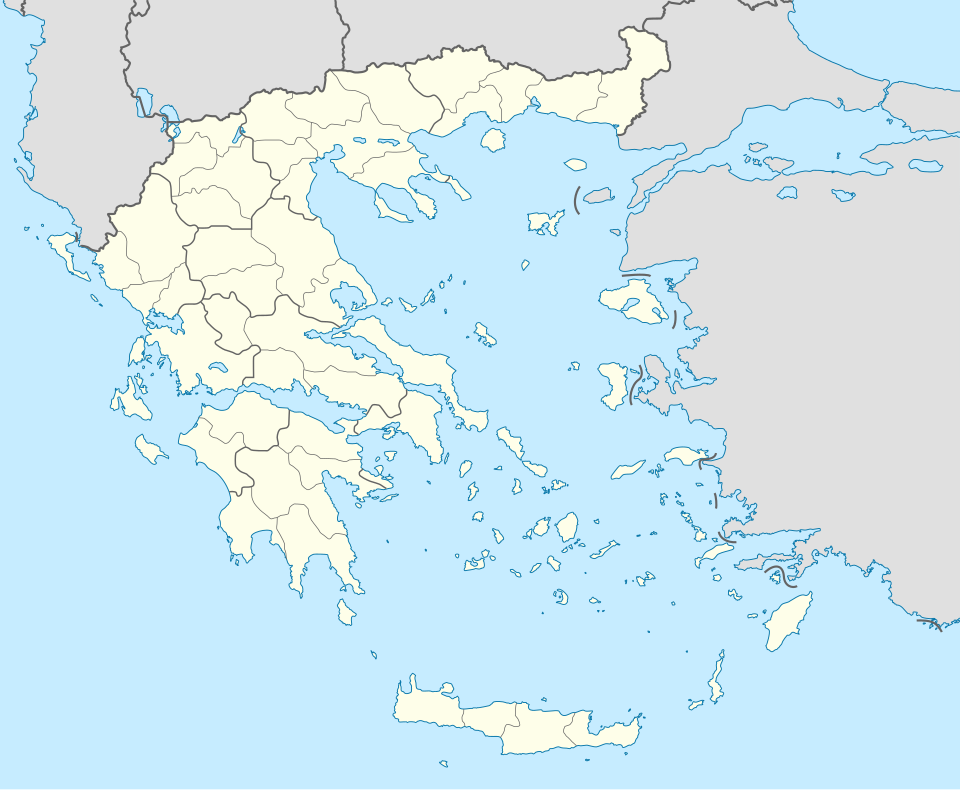
Map: Lencer.
Do you see the group of three islands on the west coast of Greece? Lefkada is the furthest north of the three, kind of a bell shape.

Like many of us, I have contradictory memories of being a teenager. There’s a lot of “on the one hand,” “on the other hand.” On the one hand, when I think of my trip to Greece, there were all those confused interactions with other teens on the independent schools’ trip and with an Athenian power couple for whom I had a letter of introduction.

On the other hand, seeing the Ancient Greek ruins in the Aegean Islands was something to cherish.

I had been interested in Ancient Greece since childhood and ultimately took five years of the language. I remain curious about the old tales from that part of the world, and especially any information on new excavations — like the one in today’s article.

Min Chen reports at Artnet, “More than a century after its initial discovery, the only known amphitheater on the Ionian Islands is finally seeing the light of day.

“Perched on a hillside on Lefkada, an island off the west coast of Greece, the structure has been excavated by archaeologists from the Ephorate of Antiquities of Aitoloakarnania and Lefkada over the past decade. While the upper part of the building has not been well preserved, the team was able to study its cavea, or semicircular seating area. The researchers have also estimated that construction on the theater began around the 4th century B.C.E., when ancient Lefkada was experiencing economic prosperity.

“ ‘Although damaged by time,’ the researchers said in a press announcement, ‘the theater, fully and harmoniously integrated into the geomorphology of the hill, with a panoramic view of the wider area, is undoubtedly the most important and imposing monument that has come to light in ancient Lefkada.’

“Ancient Lefkada was settled sometime before the 7th century B.C.E. by seafaring Corinthians. They homed in on the locale for its strategic position along major sea routes, which fueled the flourishing of the city-state. …

“In 1901, the ruins of the arena were found by German archaeologist E. Kruger and later logged by his collaborator Wilhelm Dörpfeld in his 1927 volume Alt Ithaka. Following their survey, the Germans reburied the monument. Over the years, as the grounds grew over with olive groves and became dotted with makeshift warehouses, the location of the theater was lost.

“It took decades before the structure was rediscovered in 1997 by archaeologists studying the geomorphological characteristics of the area. From 2015, a systemic excavation of the building commenced. Large olive trees had to be uprooted and extensive earthworks carried out in a project that archaeologists deemed ‘particularly difficult and demanding.’ So far, the project has unearthed the building’s cavea, orchestra pit, most of the stage, and various walls.

“The cavea boasted 21 rows of seats, likely topped by a diazoma, or horizontal aisle, which led up to a further three rows. Two cavea walls were found standing at lengths from 65 to 91 feet. The theater, however, appears to have been unfinished. Still, the team calculates it could have seated about 3,500 spectators; if completed, estimates put its capacity at 10,000 to 11,000.

“The orchestra pit, meanwhile, was discovered carved into natural rock in a perfect circle some 54 feet in diameter. A stone frame encircles it. Remains of the stage area were also discovered, including parts of sandstone columns and architraves. These fragments once formed part of the Ionic facade of the theater’s loggia, or external gallery, which once boasted 16 columns and was flanked by ramps.

A highlight during the dig, the team noted, was the unearthing of fragments of three stone thrones.

“These seats, once decorated with reliefs depicting dolphins, birds, and lion paws, were intended for prominent guests, whether priests or city officials.

“Quite likely, the theater saw modifications during its lifetime before it was abandoned as Lefkada declined during the Roman era. In 31 B.C.E., Roman emperor Augustus founded Nicopolis, a new capital city near Preveza, at which the majority of Lefkada residents were made to settle. Ancient Lefkada was deserted, with many of its buildings, including the theater, being mined for construction material.

“At the remains of the monument that once dominated the ancient city, archaeologists will next survey its upper cavea and part of the stage. The team is also awaiting approval for its plans to conserve the theater.”

Interesting. I hadn’t hear of covering up a partial excavation as the German archaeologists did in the early 20th century. I assume they had reason to think the ruins need protection.

Good pictures at Artnet, here. No firewall.

Illustration: Theodore Low De Vinne (1828-1914) via Wikimedia Commons.
Illustration of a punch (left) and matrix (right) used in type-founding, ca. 1876.

I’ve always loved the way steel-cut letters make a formal invitation look, the way they press into high-quality paper, drawing my attention to the hands of whoever did the typesetting. It’s a dying art to make the letters and even to print with them, and that inspired a filmmaker to look into the masters of the craft.

Carey Dunne writes at Hyperallergic, “In a smoky atelier in Torino, Italy, Giuseppe Branchino works as one of the world’s last punch cutters. Cutting punches, the first step in traditional typesetting, is the meticulous craft of carving letterforms into small steel billets.

“Branchino was the former head of the engraving department of type foundry and printing press manufacturer Nebiolo, founded in Turin in 1852. Along with a few others scattered across the globe, he carries on a centuries-old practice that’s becoming obsolete in the age of digital type.

“In the meditative short film The Last Punchcutter, by Giorgio Affanni and Gabriele Chiapparini, we watch Branchino create a punch. Drinking espresso and smoking a cigarette, he works silently and slowly, carving the letter ‘G’ into a thin block of steel with awls and chisels, peering through a magnifying glass to inspect his handiwork. He spends nearly seven minutes on a single letter.

“The film was created as part of Griffo, the Great Gala of Letters, a multidisciplinary project focusing on the life of Francesco Griffo, a 15th-century Venetian punch cutter and type designer. Born circa 1450 near Bologna, the son of the goldsmith and engraver Cesare Griffo, he went on to work for the house of Aldus Manutius of Venice, the most important publisher of the day. In 1501, for an edition of Virgil (the Aldine Virgil), he created what’s regarded as the first italic typeface. 

“Though his typefaces are still widely used and inspire most contemporary type designers, details of his biography are murky and, as Joseph Blumenthal put it in The Art of the Printed Book 1455–1955, ‘Griffo has never received adequate recognition for his enormous contribution to type design.’ Through videos, texts, and an upcoming exhibition, the Great Gala of Letters project aims to bring Griffo some long overdue recognition on the the 500th anniversary of his death.”

That book is out of print, but nothing stops GoodReaders from reading out-of-print books. Marc Joseph gave Blumenthal book five stars, saying, “Joseph Blumenthal was a fine printer for years at his Spiral Press. One of the great printers of the mid-twentieth century. He was also a typographer, educator, author in all things fine printing and a historian in the history of the printed word.

“Here he brings all of that acumen to bear on the history of the printed book, from 1455 to 1955. … There are multiple plates showing examples of the printing mentioned in the text, so the reader not only reads the facts, but sees them as well.

“This book forms a foundational basis for understanding the history of print. A note must also be made on the production values of this book. It is printed letterpress by the Stinehour Press (which for the size of the book and length is crazy). The tactile feel of the letterpress is amazing and shows the reader what fine press work is all about.

“The plates were printed by the Meridian Gravure Company, another fine printer, particularly of plates, either black and white or in color (black and white here). This hardbound volume was released in 1973 by the co-publishers, the Pierpont Morgan Library and David R. Godine. At the time of writing this review [December 2023], this particular edition can be had for $22.00 in ‘as new’ condition.”

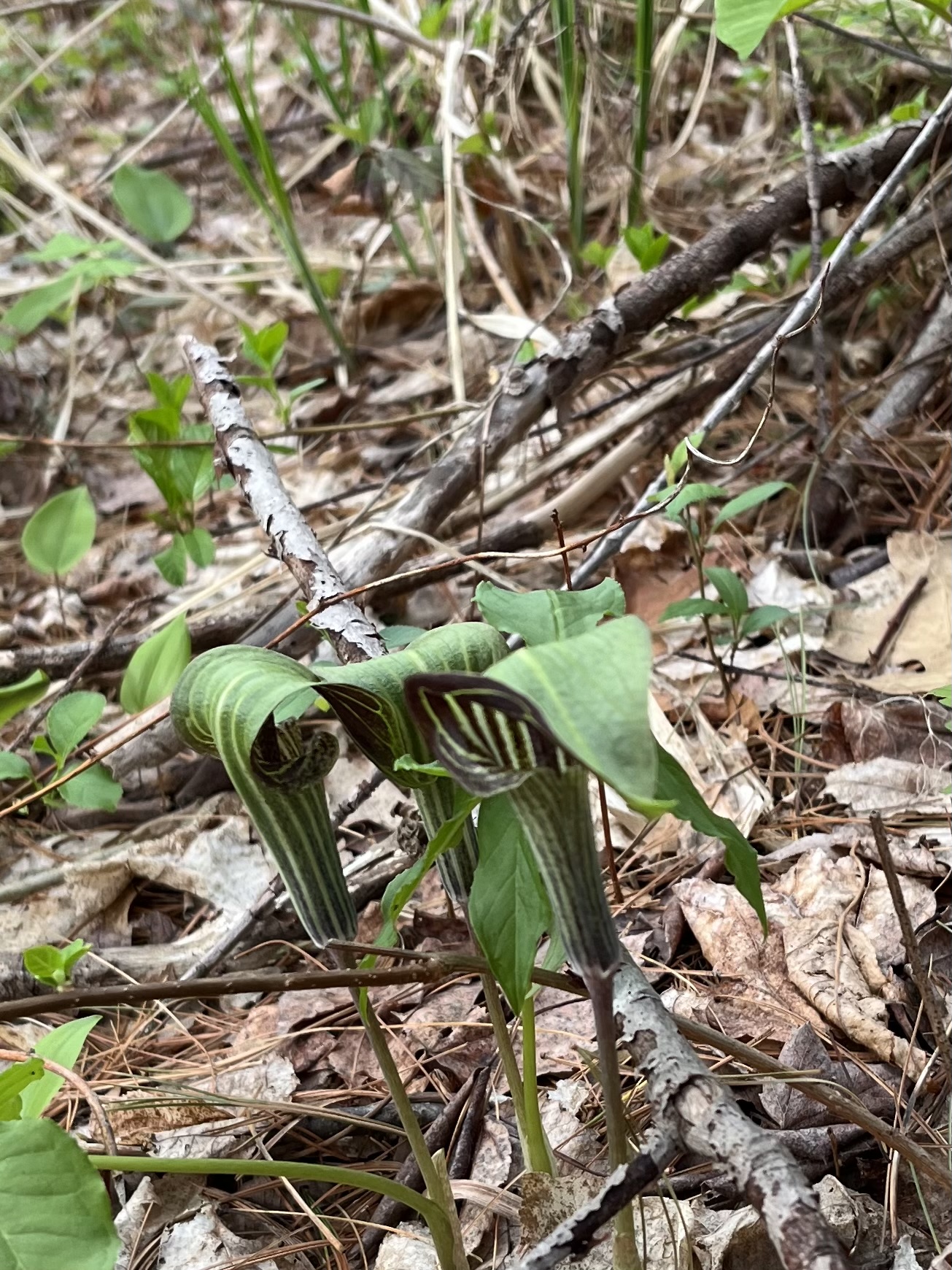
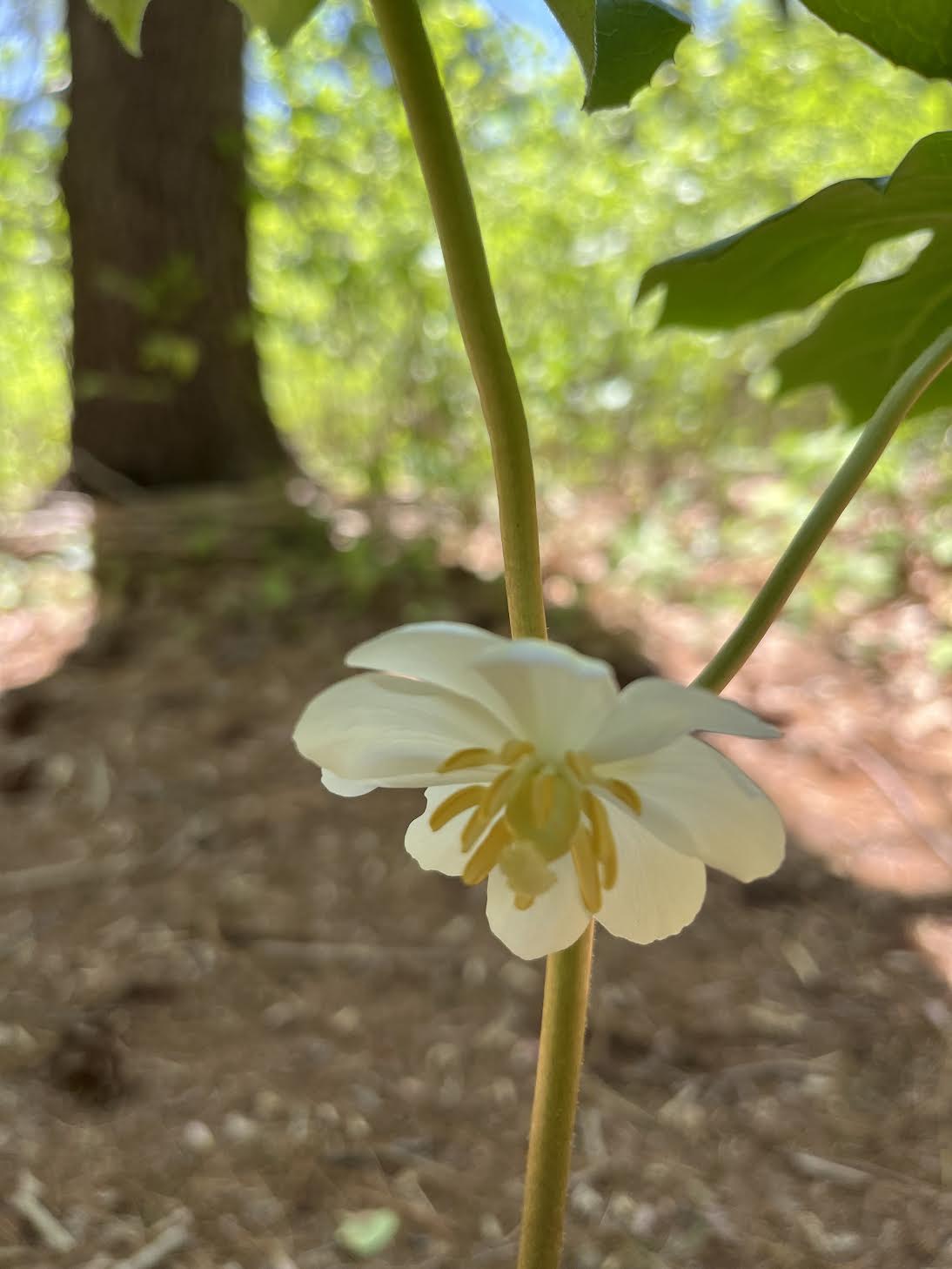
Photos: Suzanne and John’s Mom.
First Jack-in-the-Pulpit I had seen in years.

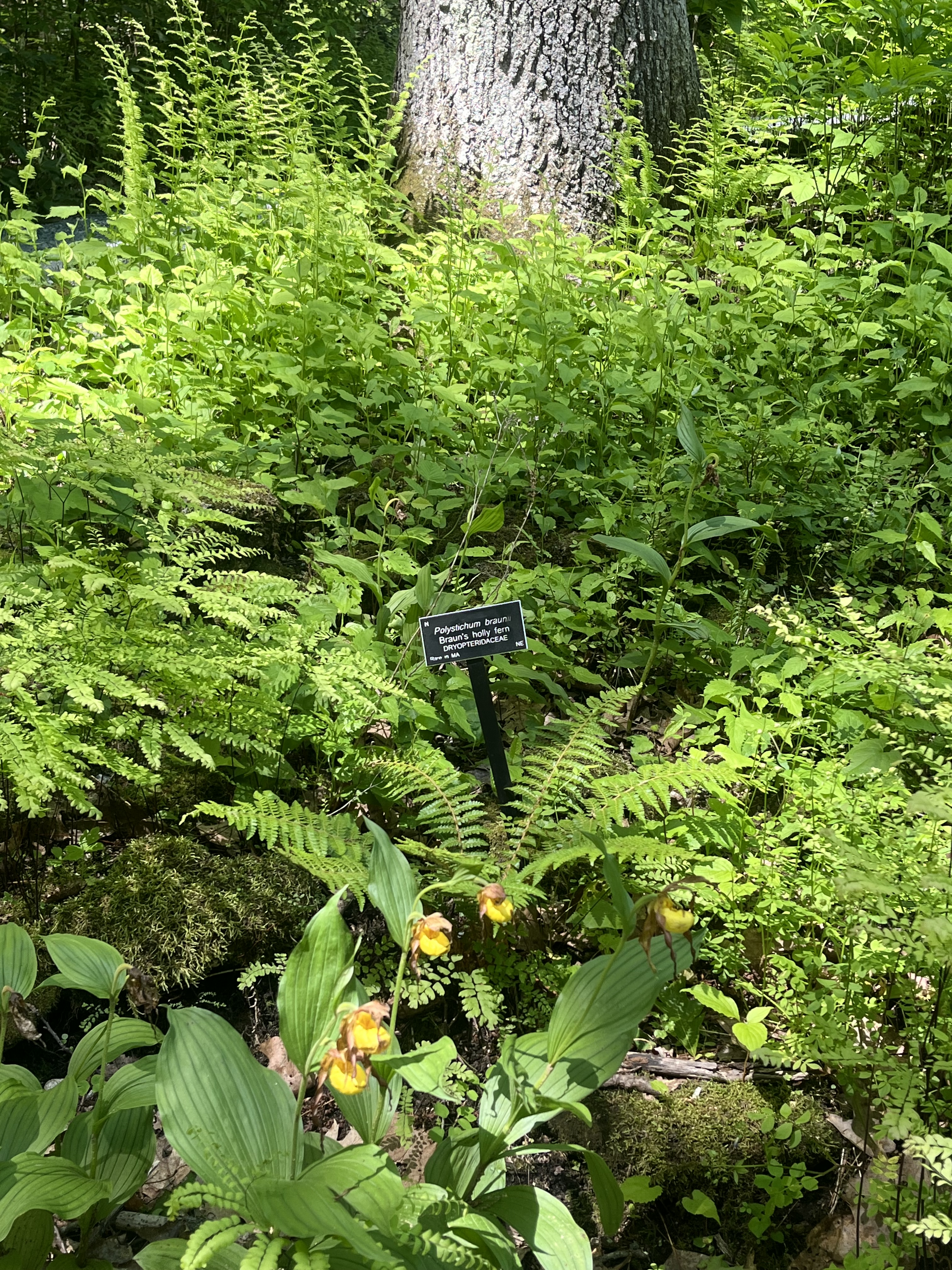
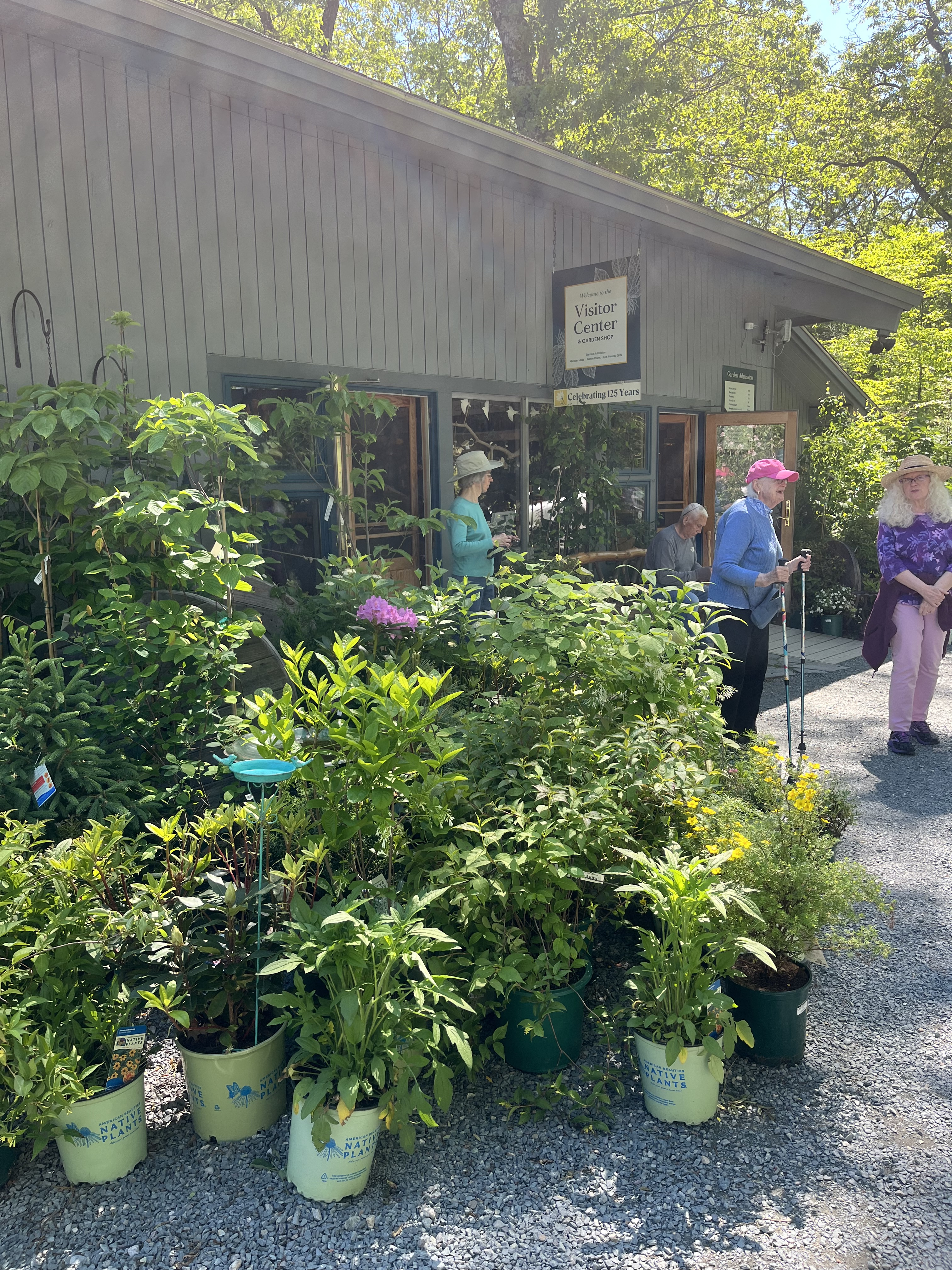
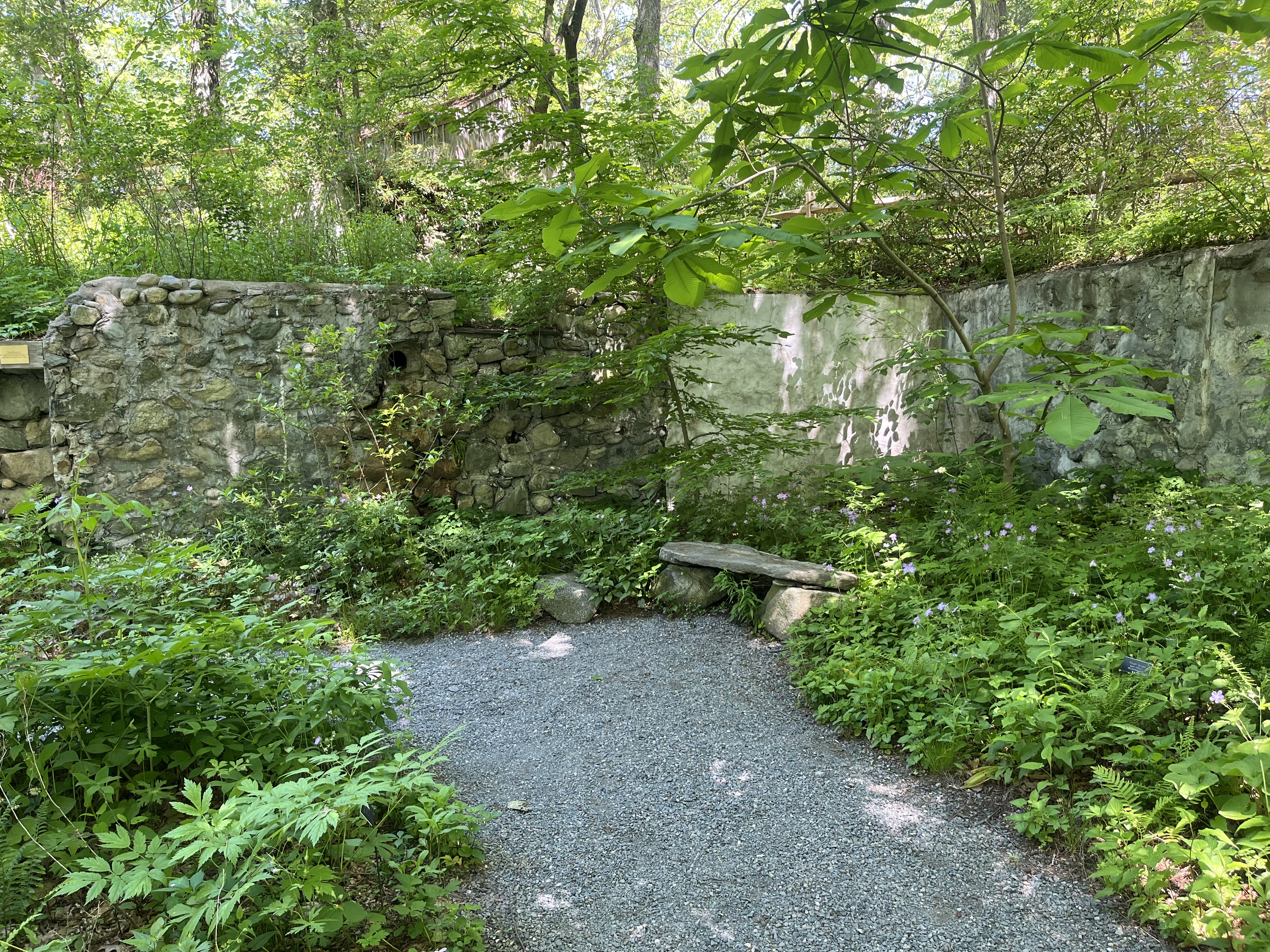
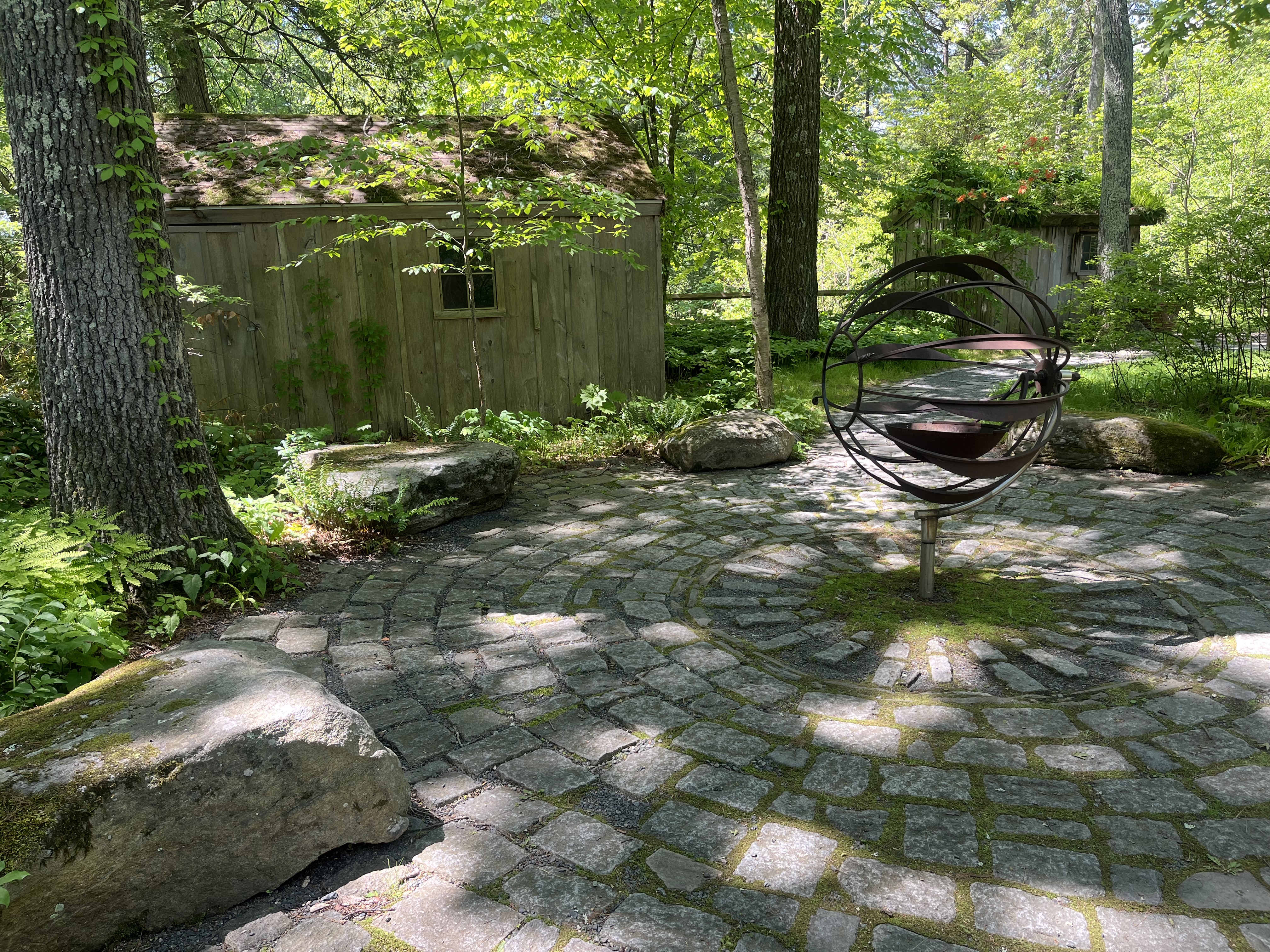
Today I’m sharing recent photos — mostly of Massachusetts spring flowers. One thing I’m especially enjoying this year is all the wildflowers. After my retirement community built a boardwalk that could accommodate walkers and wheelchairs, the administration and a group of residents started planting (ethically grown) wildflowers. Wonderful! And then we got a trip to the Native Plant Trust’s Garden in the Woods, which is entirely wildflowers.

Below, note a flowering May apple near our boardwalk. It’s followed by yellow Lady slippers at Garden in the Woods. At the same nature preserve, we learned about Golden club, which is found in the wetland area. So unusual!

There are more pictures from Garden in the Woods after that.

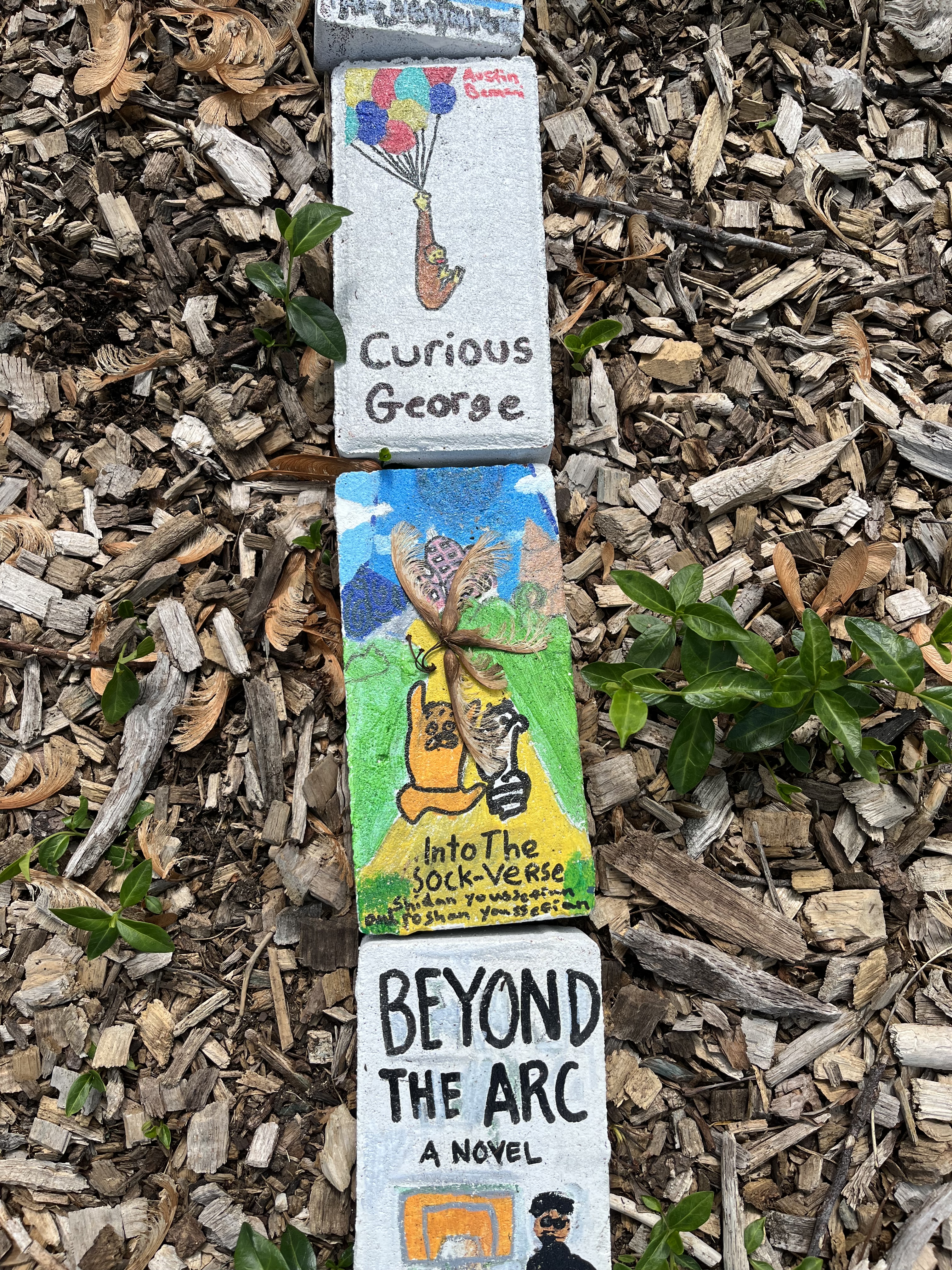
Next are a couple photos from our local library. The librarians love fun art projects, often involving child artists. They offer loads of activities for kids. For example: painting book bricks to border a garden.

Next are Jane’s poppies. Jane has a variety of flowers and edibles in one of the raised beds in our community.

Finally, here are some pansies that seemed to sing, reminding me of the pansies in a wacky Disney remix I love.

Photo: Colorado Department of Transportation.
A black bear (black bears are sometimes brown) walks through a wildlife underpass at State Highway 9. 

In parts of the country where people really value their wildlife, there are increasing efforts to prevent roadkill by building safe crossings for animals. They’re expensive, but the passes also save humans from life-threatening collisions.

In an article at the New York Times, reporter Catrin Einhorn learns that the motivation to build pathways crosses political divides.

She writes, “The aim was to protect motorists and wildlife along an especially grisly stretch of highway. Now, it was time to see whether the investment would pay off.

“Aran Johnson, a wildlife biologist for the Southern Ute Indian Tribe in the southwestern part of Colorado, walked up a bank to a newly constructed overpass crossing Route 160. … It was a cool summer morning in 2022, with mist rising from the ground. Mr. Johnson carried trail cameras. Mule deer and elk wouldn’t be showing up in any numbers until later in the year, when they had to cross the highway to reach their wintering grounds. Still, he wanted the cameras ready to capture the earliest evidence possible of any animals using the structure.

“At the top of the overpass, he could barely believe what he saw: a line of hoof prints pressed deep into the fresh mud, stretching from one side to the other. An elk had already found its way across. …

“Since then, it’s been one successful year after another. Entire herds of mule deer and elk use the structures, as well as bears, mountain lions, bobcats, coyotes and foxes.

“Wildlife crossings are growing in popularity across the country, and in recent years, Colorado has emerged as a leader. Since 2015, it has built 28 new large game crossing structures, according to the state Transportation Department.

“The state is rich in wildlife, and many of its species travel from higher elevations in the summer to lower ones in the winter, oftentimes crossing highways at great peril. In 2022, the General Assembly passed a law creating a cash fund for the department to use for animal crossings. Colorado has also evaluated its highways to create a priority list for future projects.

“Wildlife crossings, when combined with long stretches of fencing to funnel animals to the right location, have been found to reduce vehicle collisions with large animals by more than 80 percent.

“They are expensive, but research has shown they can save money when installed on stretches of highway with at least an average of three collisions between motorists and deer per mile per year. For collisions with elk and moose, which are bigger and therefore cause more damage to vehicles and people, that threshold goes down to less than one collision per mile per year.

“Locals had long known they had to pay close attention when driving along that stretch of Route 160, near the Chimney Rock National Monument. … In the early 2000s, Mr. Johnson, the biologist for the Southern Ute, started collaring mule deer to better understand how they moved over the landscape around the reservation. He analyzed his data and superimposed them on state records of wildlife-vehicle collisions. …

“The Colorado Department of Transportation, which covers the vast majority of the cost for wildlife crossings, agreed to put in an underpass on the reservation. But the Southern Ute also wanted to install an overpass, since certain species, particularly elk, seem to greatly prefer them. The tribe came up with $1.3 million from the Bureau of Indian Affairs to make that happen.

“Additional funding for the $12 million project came from the state department of wildlife, nonprofit groups and even a private donor. …

“An added bonus of wildlife crossings is the photos that come from trail cameras, which help to bring attention to the programs, Mr. Lawler said. … [But with cuts in] federal spending, a grant program that helps states and tribes pay for wildlife crossings in collision hot spots is now in doubt, including grants that had already been promised. …

“Wildlife crossings transcend political divisions, said Patricia Cramer, an ecologist who consults with states on wildlife crossings. … Of the two states she sees as national leaders, Wyoming is red and Colorado is blue.”

More at the Times, here, and at Denver7.com, here.

Photo: NASA Worldview, NASA Earth Science Data and Information System.
Satellite imagery showing the iceberg calved from George VI Ice Shelf in the Bellingshausen Sea, Antarctica, on 19 January 2025.

Not much of a recompense for ruining our planet, but it’s true that global warming is giving scientists a chance to study previously unknown places.

At Schmidt Ocean Institute, we learn about some unexpectedly vibrant communities of ancient corals and sponges in Antarctica.

“An international team on board Schmidt Ocean Institute’s R/V Falkor (too) working in the Bellingshausen Sea rapidly pivoted their research plans to study an area that was, until last month, covered by ice. On January 13, 2025, an iceberg the size of Chicago, named A-84, broke away from the George VI Ice Shelf, one of the massive floating glaciers attached to the Antarctic Peninsula ice sheet.  The team reached the newly exposed seafloor on January 25 and became the first to investigate an area that had never before been accessible to humans.

“The expedition was the first detailed, comprehensive, and interdisciplinary study of the geology, physical oceanography, and biology beneath such a large area once covered by a floating ice shelf. The ice that calved was approximately 510 square kilometers (209 square miles), revealing an equivalent area of seafloor.

“ ‘We seized upon the moment, changed our expedition plan, and went for it so we could look at what was happening in the depths below,’ said expedition co-chief scientist Dr. Patricia Esquete of the Centre for Environmental and Marine Studies (CESAM) and the Department of Biology (DBio) at the University of Aveiro, Portugal. ‘We didn’t expect to find such a beautiful, thriving ecosystem. Based on the size of the animals, the communities we observed have been there for decades, maybe even hundreds of years.’

“Using Schmidt Ocean Institute’s remotely operated vehicle, ROV SuBastian, the team observed the deep seafloor for eight days and found flourishing ecosystems at depths as great as 1300 meters. Their observations include large corals and sponges supporting an array of animal life, including icefish, giant sea spiders, and octopus. The discovery offers new insights into how ecosystems function beneath floating sections of the Antarctic ice sheet. …

“The team was surprised by the significant biomass and biodiversity of the ecosystems and suspect they have discovered several new species.

“Deep-sea ecosystems typically rely on nutrients from the surface slowly raining down to the seafloor. However, these Antarctic ecosystems have been covered by 150-meter-thick (almost 500 feet) ice for centuries, completely cut off from surface nutrients. Ocean currents also move nutrients, and the team hypothesizes that currents are a possible mechanism for sustaining life beneath the ice sheet. The precise mechanism fueling these ecosystems is not yet understood.

“The newly exposed Antarctic seafloor also allowed the international team, with scientists from Portugal, the United Kingdom, Chile, Germany, Norway, New Zealand, and the United States, to gather critical data on the past behavior of the larger Antarctic ice sheet. The ice sheet has been shrinking and losing mass over the last few decades due to climate change.

“ ‘The ice loss from the Antarctic Ice Sheet is a major contributor to sea level rise worldwide,’ said expedition co-chief scientist Sasha Montelli of University College London (UCL), United Kingdom, also a 2019 Schmidt Science Fellow. ‘Our work is critical for providing longer-term context of these recent changes, improving our ability to make projections of future change — projections that can inform actionable policies. We will undoubtedly make new discoveries as we continue to analyze this vital data.’

“In addition to collecting biological and geological samples, the science team deployed autonomous underwater vehicles called gliders to study the impacts of glacial meltwater on the physical and chemical properties of the region. Preliminary data suggest high biological productivity and a strong meltwater flow from the George IV ice shelf. …

“ ‘The science team was originally in this remote region to study the seafloor and ecosystem at the interface between ice and sea,’ said Schmidt Ocean Institute Executive Director, Dr. Jyotika Virmani. ‘Being right there when this iceberg calved from the ice shelf presented a rare scientific opportunity. Serendipitous moments are part of the excitement of research at sea – they offer the chance to be the first to witness the untouched beauty of our world.’ ”

More at Schmidt Ocean Institute, here, and at radio show The World, here. No firewalls.

Photo :A large sponge, a cluster of anemones, and other life is seen nearly 230 meters deep at an area of the seabed. Sponges can grow very slowly, and the size of this specimen suggests this community has been active for decades, perhaps even hundreds of years.

Photo: David Cooper/Shaw Festival.
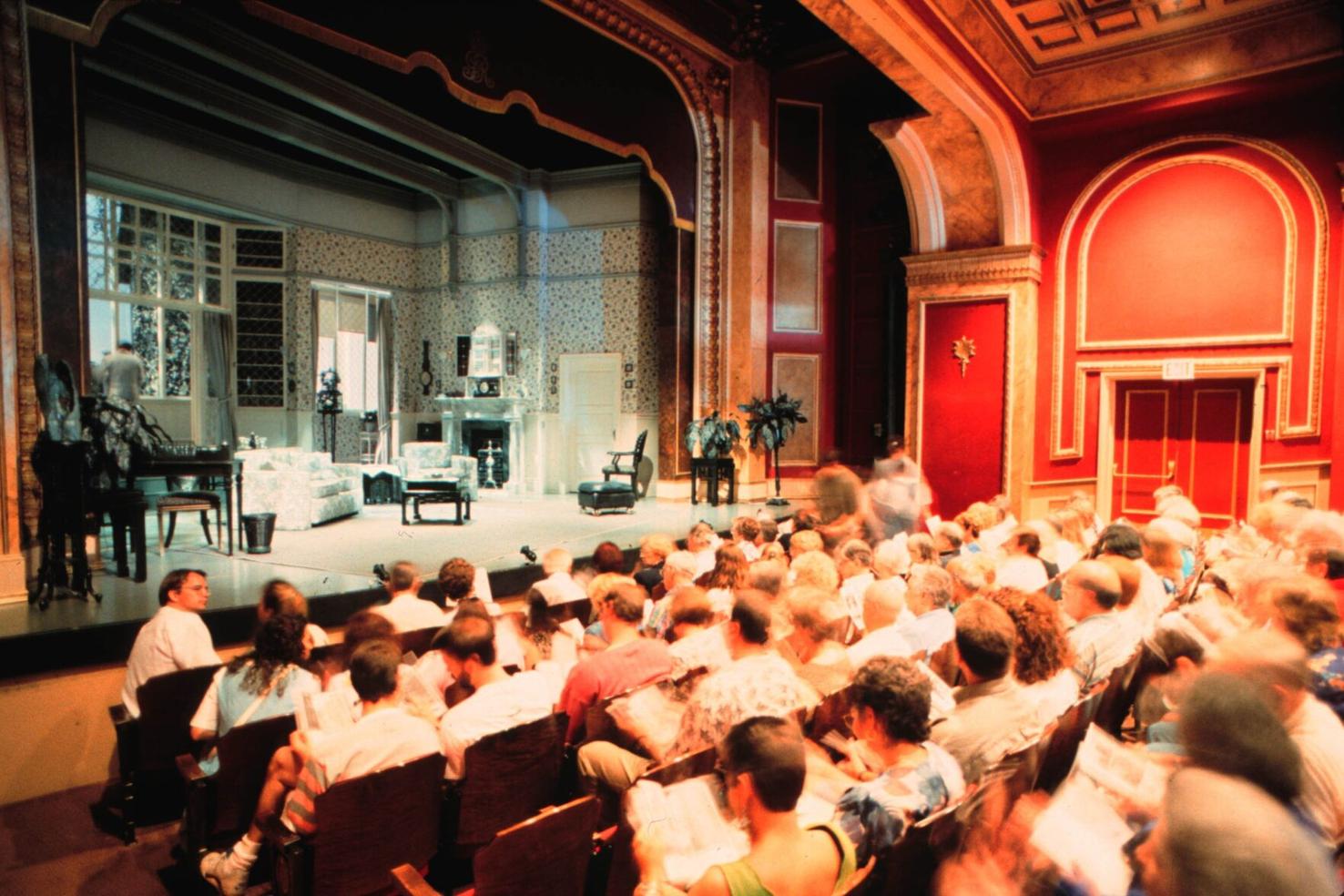
The Shaw Festival’s Royal George Theatre, pictured in this undated file photo, will close at the end of the 2025 season to make way for renovations. 

In Ontario, Canada, near Niagara Falls, there is a great summer festival centered around the plays of George Bernard Shaw. I remember a lovely weekend we spent there when Suzanne and John were little. Suzanne had barely started to walk. I think of it every year when I decorate my Christmas tree because a couple crocheted ornaments from China were bought in a shop there.

With two young children, my husband and I had to trade off babysitting. He went to one of the Shaw plays (Arms and the Man? I don’t remember). I took advantage of the opportunity to see the aging concert comedian Anna Russell. I’ll never forget her rendition of an Edith Piaf character: “She vas drinking too much, she vas smoking too much, she vas doing everything too much. And when you do everything too much — even if eet is ni-ice — eet is to-o much!”

Joshua Chong recently reported at the Toronto Star that the province of Ontario is determined that future generations will enjoy the Shaw Festival as much as we did.

“The Ontario government will invest $35 million over three years,” he writes, “to help rebuild the Shaw Festival’s aging Royal George Theatre. 

“The announcement [comes] after the repertory company in Niagara-on-the-Lake previously said it was permanently closing the 305-seat venue at the end of this year due to persistent infrastructure issues. 

“The proposed theatre that will replace it is expected to honor the original building’s design, the province said, but will also include about 20 per cent more seats, accessible front-of-house areas and new rehearsal space. The project is expected to be completed by the spring of 2029. 

” ‘The Shaw Festival is a cultural icon for Ontario and for Canada, and is just one of the many great reasons to visit Niagara-on-the-Lake and the broader Niagara Region throughout the year,’ said Stan Cho, minister of tourism, culture and gaming, in a statement announcing the rebuild. …

“ ‘Rebuilding this beloved venue has been a priority for us, not just so we can continue to deliver outstanding theatre here in the heart of wine country, but to play our part in accelerating the growth of our region as a world-class center for cultural tourism,’ said Tim Jennings, executive director and CEO of the Shaw Festival, in the release. 

“The existing Royal George Theatre, which began its life as a vaudeville house in 1915, stands on the site of a former blacksmith shop.

It was initially an entertainment venue for troops stationed in town during the First World War, then served for years as a movie theatre.

“The Shaw Festival acquired the space in 1980, hosting dozens of productions in the decades since. But the venue has become a liability for the organization in recent years. In the 2023 season, a water leak in the building’s clay foundation forced the cancellation of several performances. 

“Before it closes, the Royal George Theatre will host four productions this season. Tons of Money, the British farce by Will Evans and Arthur Valentine, will run from April to October in a new production helmed by Eda Holmes.

“In June, Peter Hinton-Davis will direct Bernard Shaw’s Major Barbara, a social satire about a Salvation Army officer and her estranged father. The play is the sole Shavian offering programmed for the upcoming season. …

“Shaw Festival artistic director Tim Carroll will then close the Royal George Theatre with his production of A Christmas Carol, which has been revived annually since it premiered in 2017.”

More at the Toronto Star, here.

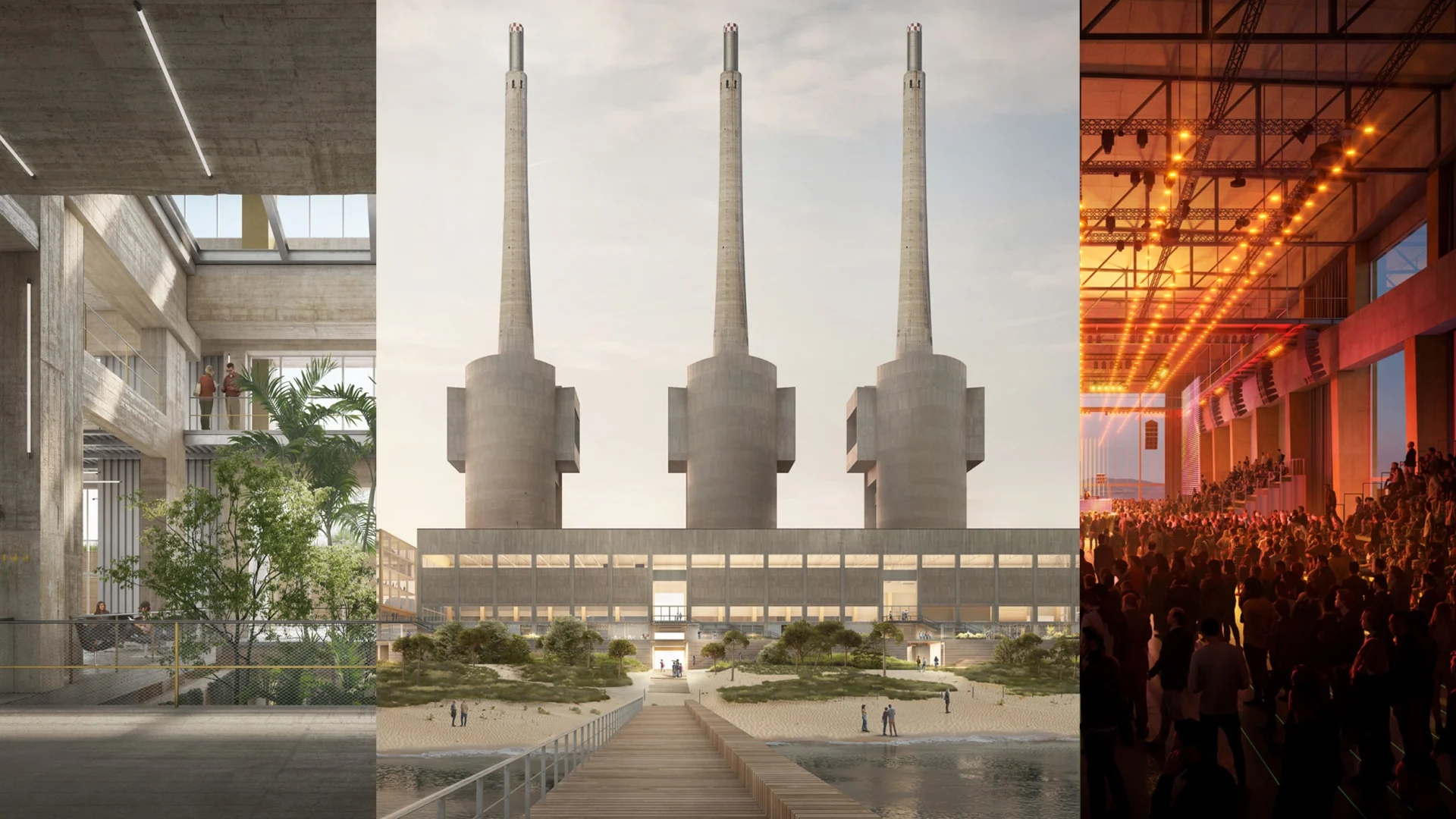
Photo: Garcés de Seta Bonet Arquitectes/Marvel.
Barcelona is transforming its skyline’s biggest eyestore into a beautiful tech hub.

I have a dear friend who is so keen on the possibilities of artificial Intelligence that she doesn’t seem to care how much energy it takes from other purposes — or whether the energy is clean. She says China uses coal; China is ahead.

I, on the other hand, rejoice to see coal going by the wayside and creative uses for the coal plants that once stained the landscape.

Jesus Diaz has a story about that at Fast Company.

“Tres Xemeneies (Three Chimneys) is a former coal-fired power plant in Sant Adrià de Besòs. … Barcelona’s plant is set to undergo a radical transformation into the new Catalunya Media City — a cutting-edge hub for digital arts, technology, and education. 

“The winning design is called E la nave va, a nod to Federico Fellini’s film of the same name, which translates to And the Ship Sails On, a reference to how this long-dead structure that resembles a three-mast ship will keep cruising history in a new era. According to its creators — Barcelona-based Garcés de Seta Bonet Arquitectes and New York-Barcelona firm Marvel — the project promises to honor the site’s industrial legacy while propelling it into a sustainable, community-centric future. The project is slated to break ground in late 2025 and be completed by 2028.

“Three Chimneys looks exactly how it sounds: a gigantic structure dominated by three 650-foot-tall chimneys. The brutalist plant was built in the 1970s and faced controversy even before its opening. Many of the residents of Badalona and Barcelona hated it both for the aesthetics and the environmental implications. Its problems continued in 1973, when workers building the station went on strike. … The company that ran the station was also sued because of the pollution it caused, and the plant eventually shuttered.

“The structure is imposing. Its giant concrete vaults, labyrinthine floors, and towering chimneys presented a unique challenge to preserving its industrial DNA while adapting it for the 21st century. … Rather than force modern elements onto the existing framework, the team used the building’s features to organize its function.

“For instance, the lower floors — with their enclosed, cavernous spaces — will host incubators and exhibition halls, while the airy upper levels with their panoramic coastal views will house vocational training classrooms and research labs.

“ ‘We kept the existing structure largely unaltered,’ [Guido Hartray, founding partner of Marvel] says, ‘retaining its experiential qualities and limiting modifications.’ This approach ensures that the power plant’s raw, industrial essence remains palpable, even as it accommodates immersive media studios and a modern, 5,600-square-meter exhibition hall likened to London’s Tate Modern Turbine Hall. …

“The architects leveraged the building’s robust concrete skeleton — a relic of its industrial past — as a sustainability asset. Barcelona’s mild climate allows the thermal mass of the concrete to passively regulate temperatures, reducing reliance on mechanical systems. Spaces requiring precise climate control, such as recording studios and laboratories, are nested in a ‘building within a building,’ insulated from external fluctuations, according to the studios.

“The rooftop will double as a public terrace and energy hub, with 4,500 square meters [~48,438 square feet] of solar panels generating renewable power. This dual function not only offsets the energy demands of lighting and HVAC systems but also creates a communal vantage point connecting Barcelona, Sant Adrià de Besòs, and Badalona. ‘The rooftop’s role as both infrastructure and gathering space embodies our vision of sustainability as a social and environmental practice,’ Hartray says.

“The project’s most striking intervention — the ‘transversal cuts’ that slice through the turbine hall — emerged from a meticulous study of the building’s anatomy. Marvel and Garcés de Seta Bonet identified natural breaks in the long, warehouse-like structure, using these to carve openings that link the interior to the outdoors. These cuts create fluid transitions between the industrial hall and the surrounding landscape. …

“The north facade’s new balcony, overlooking the Badalona coastline, epitomizes this connectivity. Jordi Garcés, cofounder of Garcés de Seta Bonet Arquitectes, tells me via email that they have designed a proposal that plays with connections and knots — temporal, landscape, and territorial. … ‘The architectural elements at different heights will offer new landscape perspectives, as if it were a land art piece.’ In this ‘shared communal space,’ he says, residents and visitors alike can engage with the Mediterranean horizon.

“The building is the core of Catalunya Media City, which is a project that the regional government says will democratize access to technology and creativity. It claims that it will house educational programs for more than 2,500 students annually, including vocational training; research incubators partnering with universities and corporations; immersive installations and performances in a monumental hall with 56-foot-tall ceilings; and production studios, including an auditorium, soundstages, and UX labs.”

More at Fast Company, here.

Dinosaur Choir

Photo: Wes McRae/Georgia Tech School of Music.
Dinosaur Choir is a musical instrument that reconstructs the vocal tract of a Corythosaurus — a type of duck-billed dinosaur with a large, distinctive crest on its head.

Where will the imagination of science-oriented artists take us next? Here’s the story of two imagineers who investigated how dinosaurs might have sounded back in the day.

Verity Burns writes at Wired, “What did dinosaurs really sound like? If you’ve ever found yourself asking that question, a musical project using 3D models of dino skulls could be getting closer to answering it. …

Dinosaur Choir is a musical instrument developed by artists Courtney Brown and Cezary Gajewski, which reconstructs the vocal tract of a Corythosaurus—a type of duck-billed dinosaur with a large, distinctive crest on its head.

“To make a sound, the user stands in front of a camera while blowing into a microphone. Depending on how hard they blow and the shape of their mouth as they do, the vocalizations that resonate through the dinosaur’s skull will change. In effect, the user’s breath becomes the dinosaur’s breath. The result is not the roar that we hear in the movies, but something that sounds more like a deep wail.

“The instrument has just been recognized at Georgia Tech’s 2025 Guthman Musical Instrument Competition, an event that brings together inventors from around the world to discuss ideas on the future of music. …

“ ‘In 2011, we were on a family road trip and we stopped off at a dinosaur museum in New Mexico,’ Brown tells Wired. ‘There I saw an exhibit of a Parasaurolophus, which had crests like a Corythosaurus. There had been many theories as to why this family of dinosaurs had these crests, but researchers have settled on the idea that it could have been for sound resonation. As a musician, I felt empathy with them.’ …

“Brown was inspired and immediately started work on her first project, Rawr! A Study in Sonic Skulls, which is the work that Dinosaur Choir continues. Both projects focus on the Corythosaurus, but at different stages of their lifespan to investigate how changes to the crest in adult maturity affects their sound. However, the biggest difference between the two projects is the way the sound is made — the reimagining of the dinosaur’s vocal box.

“ ‘With Rawr!, we used a mechanical larynx, so people would have to actually blow into a mouthpiece to create the sound. But once we started exhibiting it, we realized it wouldn’t be possible for people to interact with it in a way that was hygienic — and the pandemic solidified that. That’s when I started thinking about something more computational. And as I have a computer science degree, it also made more sense.’

“The work on Dinosaur Choir officially began in 2021, with Brown traveling to Canada, where the Corythosaurus is supposed to have lived, to update her research. She and Gajewski worked with paleontologist Thomas Dudgeon, from the University of Toronto and the Royal Ontario Museum, to analyze the most recent CT scans and 3D fabrications. From those, they built a life-size replica of an adult Corythosaurus’ head, right down to its intricate nasal passages.

“ ‘I’m extremely proud of my nasal passages,’ jokes Brown. ‘I learned CT segmentation for about a year to get them as accurate as possible, taking into consideration the effects that being buried for millions of years would also have had on them.’

“With the skull model complete, work then began on imagining the dinosaur vocalizations themselves. Recreating the vocal box in computational form gave Brown much more control to test out new, and perhaps even conflicting research, without having to rebuild everything from scratch.

“ ‘The models are based on a set of mathematical equations that relate to the mechanics of the voice — things like changes in air pressure and a number of other affected variables through time,’ she says. …

“So far, Brown has developed two models for Dinosaur Choir — one based on the syrinx of a raven, and a more recent one based on that of a dove, but she is also working on one of an alligator too. As these models are computational, they can be switched between in real time during a performance, and participants can also experiment with different trachea lengths and vocal membrane widths to hear the effects on the sound. …

“ ‘We [can’t] completely rule out that non-avian dinosaurs maybe didn’t vocalize at all. Soft tissue [like vocal chords] rarely preserves, and the vocalizations are also a type of behavior that leaves no fossils at all. In my heart, I truly believe they vocalized, but feelings are not facts. So much is lost to time.’ ”

More at Wired, here.

Photo: Dina Litovsky.
Román Baca leads rehearsal on the deck of the Intrepid, the aircraft carrier turned museum on the Hudson River.

The wars that have been fought in my lifetime sometimes seem to have been necessary and inevitable. Most often, not. As the young people head off, I always think about how their lives will have been warped if they get back. It seems so wrong. And right now the services we’ve promised them are being slashed.

Fortunately, there are efforts at healing that forge ahead. One such program involves ballet.

Brian Seibert writes at the New York Times, “When Román Baca was serving as a Marine in Iraq in 2005, he didn’t tell many people what kind of work he had done before the war. He had tried that in boot camp, and it hadn’t gone well. So when his best friend in the platoon asked him why he seemed so interested in local dance practices, he hesitated before admitting the truth: He was a ballet dancer.

“Baca’s friend wasn’t bothered by the revelation. So Baca told him his crazy idea: to translate their wartime experiences into dance.

“Eventually, that crazy idea became Baca’s life. With his wife, Lisa Fitzgerald, he founded Exit12 Dance Company, which makes and performs works about military experience. What started as a way for Baca to deal with his trauma has expanded into a mission to help other veterans deal with theirs — through dance.

“In recent weeks, a group of veterans and family members of veterans, ranging in age and physical ability, has been gathering in the belly of the U.S.S. Intrepid, an aircraft carrier turned museum on the Hudson River. Using various improvisational exercises, they have been creating a dance work [to] perform on May 30 on the ship (on the flight deck, weather permitting). More important than that performance, though, is the process.

“Baca sees the workshops as a corrective for military training. ‘To make a person respond immediately to orders and commit acts of violence, military training changes your identity,’ he said. ‘It removes everything that defines a person’ — your clothing, your haircut — ‘and then it changes you through physical exercises, repetitive motion and powerful brain-body connections.’

“Baca, who has been leading these workshops since 2011, recalled a moment from one: Everett Cox, a Vietnam War veteran who had kept away from everything military for decades, responded to a prompt of action verbs by expertly stabbing and slashing with an invisible bayonet. His long-unused training was intact in muscle memory.

“Another time, Baca was choreographing a military exercise sequence and directed his dancers to yell ‘kill’ with every motion. When Fitzgerald questioned if that creative decision might have been a bit much, Baca explained that he was only being accurate: Coupling all actions with the word ‘kill’ was part of boot camp.

” ‘That’s absolutely needed when you are in uniform,’ he said. ‘But what do you do with that after you get home?’

“The workshops use physical exercises to help restore what Baca, borrowing a term from the philosopher Paul Ricoeur, called narrative identity. ‘You start to tell people who you are and parts of your story and then you listen to others do the same,’ he said.

“ ‘A lot of trauma survivors will say that you never fully heal,’ he added. But as evidence of how the process can work, he pointed to the experience of Cox, who returned from service in Vietnam feeling so guilty and ashamed that he did not consider himself a veteran. ‘I lost my mind in Vietnam’ is how Cox put it to me.

“For nearly 40 years, Cox, who took drugs and attempted suicide, tried to lock away what had happened. He was diagnosed as paranoid schizophrenic; one psychiatrist told him he was incurably insane. Then, in 2010, he attended a retreat for veterans at the Omega Institute, a holistic wellness center in the Hudson Valley. ‘It changed my life,’ he said. For the first time, he began to talk about his wartime experiences, and to write about them, and to cry. …

“ ‘If you’re holding a war in, it takes a lot of energy,’ he said. ‘And if you want to loosen that up, it also takes a lot of energy.’ ”

I so admire Baca, who against what seems to me like very long odds, keeps working hard to bring these damaged veterans back to life.

More at the Times, here.

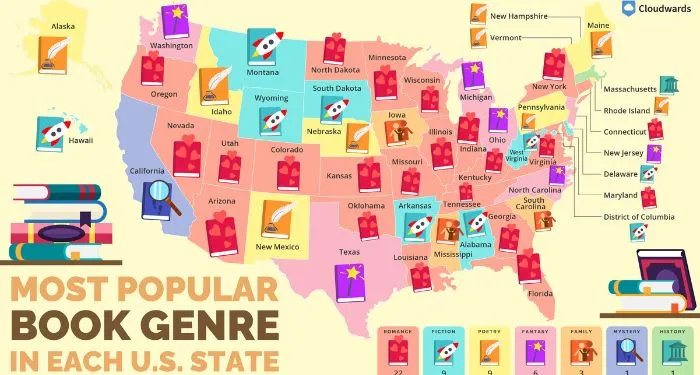
Map: Cloudwards.

Using Google searches to analyze which books are most popular in each US state seems about as flaky a brand of research as can be, but it’s kind of fun anyway. I mean: The favorite genre in Texas is fantasy? I need to ponder that for a while.

Kelly Jensen writes at Book Riot, “Are there different preferences for book genres depending on what state you’re in? According to new research from Cloudwards, there are trends in book preferences based on location.

“Utilizing Google Trends data over the last 12 months, Cloudwards explored the most searched genre in each of the 50 states, plus the District of Columbia. All searches were limited to Google Trends ‘Books and Literature’ category, and the researchers used a variety of common genre terms to determine the frequency of interest in them by state. Some of the genre categories were a little unconventional for the average reader –- how do you determine the difference between ‘fiction’ and ‘family’ as terms -– but the major genres were included, including romance, fantasy, mystery, and so forth.

“Romance dominated in terms of genre popularity across the US, with 22 states seeing it as their top searched genre. In terms of geographic region, romance was especially popular in the south, with states like Florida, Georgia, Louisiana, Tennessee, Kentucky, and Virginia ranking it as their top genre.

“Fiction and poetry tied for next most popular genres, each either nine states reporting it as the most searched genre. The researchers note that these findings aren’t surprising, given that fiction is broad and encompassing. As for poetry, it is likely not surprising to see people looking for more information about poetry; the research here isn’t about poetry being the most read genre, but rather, one of the most researched genres.

“The next most popular genres were fantasy (six states), family (3 states), mystery (1 state), and fantasy (1 state).

“It should come as little surprise there is so much national interest in romance. It is a genre that consistently sells well across all of its subgenres, and in 2023, print romance books sold upwards of 39 million copies. …

“One of the most surprising findings might be that only one state ranked historical fiction as its most popular genre. That state was Massachusetts. It is a perennially popular genre among readers, and it is a genre that has been a long-running staple on best-of and awards lists. …

“The researchers note that their methodology lacks scientific scrutiny but shows a general idea of interest in different reading genres. Among some of the weaknesses of this study are the loosely-defined genres, as well as the lack of nuance when it comes to format of genre. It’s not clear whether or not the researchers looked into genres outside of those which ranked among the top in the US, as there’s no full list of utilized search terms. There is no indication in the research, for example, whether or not science fiction or westerns were researched, and while horror is a mood and not a genre, it is surprising to see zero representation for horror here, either.

“Furthermore, poetry encompasses a wide variety of genres, as it is a format, rather than a genre. It’s also worth wondering where and how graphic novels in their myriad genres fit in with reader popularity.

“If there’s a takeaway, it’s this: no matter how frequently romance novels can be derided or belittled in pop culture, it’s a genre that is thriving, that is growing, and that tops the list of genres readers are interested in in nearly half of the United States.”

This is fun, but I really think that a more useful study would analyze books sales and library book preferences, don’t you?

It’s hard for me to name a book genre that is my favorite. I love fantasy, but I read many more mysteries than fantasies as there are so few good fantasies. I love certain kinds of biography but read more fiction than biography. I live in Massachusetts but hate historical fiction. If asked about your favorite genre, how would you answer?

More at Book Riot, here. See unscientific results for individual states here.

Photo: Dominique Soguel.
Rua, a Damascus university student, poses for a photo wrapped in the Syrian flag while celebrating the anniversary of the revolution that led to the toppling of Bashar al-Assad, in Damascus, Syria, March 15, 2025.

Although we can’t know where Syria is headed in the long run — or how many powerful countries will interfere with what everyday people want — I think we’re allowed a moment of hope at this this time. Certainly, that is what many astonished Syrians felt when the regime of the tyrant Bashar al-Assad was overthrown in a “sudden” uprising that was many years in the making.

Dominique Sequol of the Christian Science Monitor wrote an article in March about what Syrians were feeling. While it focuses on a new freedom to worship, worship is only one example of the change there.

“Alaa al-Saadi, like many Syrian men of his generation,” she says, “once fought to overthrow longtime dictator Bashar al-Assad. Now Mr. Saadi is savoring his first ‘free’ Ramadan in his hometown of Qaboun, a low-income neighborhood and former rebel stronghold on the outskirts of Damascus.

“At sunset, when Muslims rush home to break the fast with the iftar meal, the business owner stands on a street corner pouring out licorice juice from a giant metal pot. …

“Damascus is observing its first Ramadan since the fall of Mr. Assad, who cast himself as a protector of Syria’s many minorities while ruling them all with an iron fist. The Muslim holy month – one of heightened spirituality, and marked by the pursuit of good deeds to help those in need – is observed in Syria and across the Middle East.

“Mr. Saadi, who spent several years in Libya before returning to Syria in 2019, recalls hiding during previous Ramadans to avoid being conscripted into the Syrian army. Now, he is grateful to be in the position to help his community. …

“Families displaced by the conflict are trickling back to Qaboun, although much of it remains reduced to rubble after years of siege and bombardment.

“ ‘This Ramadan, our loved ones have returned,’ says Mr. Saadi, fielding greetings outside his car-painting workshop. ‘We are reunited. Friends, loved ones, and young men are all back. Things will gradually improve.’

“Indeed, Damascus seems to be inching toward greater functionality, with uniformed traffic police on the streets and a steadier electricity supply. The mood in the capital is one of cautious optimism under President Ahmed al-Sharaa, who broke ties with Al Qaeda and led the military effort that toppled Mr. Assad in December.  

“This has been a month of prayer but also mixed-gender celebrations that continue late into the night under the glitter of Ramadan light installations. Women in all kinds of Islamic dress – from the niqab to the veil – converged on central Ommayad Square for the March 15 marking of the anniversary of the 2011 Arab Spring-inspired revolution. So did women with no veil. …

“There has been no shortage of individual and collective volunteer efforts inspired by the month of fasting.

“In Douma, another war-ravaged suburb of Damascus, Osama Massaya leads the volunteer group Mulham. Boasting 40 participants, age 14 and up, it focuses on cleaning mosques and distributing meals to worshipers. Such ideas are not new – but the possibility of executing them this freely is.

“In 2024, Mr. Massaya, a history student at Damascus University, tried to obtain a license for a volunteer team to clean up mosques. The request never received the green light from the Ministry of the Endowment. ‘At the time, there was no interest in mosques,’ he explains.

“ ‘The mosques were very neglected,’ adds Mr. Massaya, whose team has helped to clean up a handful in Douma already. …

“The Mulham volunteers aim to distribute 4,000 meals throughout Ramadan. Such efforts are financed by individual donations made by local residents, including some who resettled in Europe and the Middle East during the war and remain abroad. Most donations – including a recent batch of 300 kilograms (660 pounds) of dates – are made anonymously. …

“The activities of mosques were closely monitored in the past. In 2011, they were a springboard for post-Friday prayer protests against the Syrian regime, and long were treated as potential hubs of dissent.

“Rua, a university student in Damascus who gave only one name and whose father died in the notorious Sadnaya prison, reports a similar newfound sense of freedom.

“ ‘It’s the difference between day and night,’ she says of this Ramadan, recalling past years when ‘people prayed quietly and left mosques quickly,’ to avoid regime informants.” More at the Monitor, here.

We don’t choose what country we are born into, and perhaps watching the news since 2011, many of us were glad we weren’t born in a country like Syria. But I think that to witness such a moment of hope after despair is something precious.