Feeds:
Posts
Comments

011912_Ione


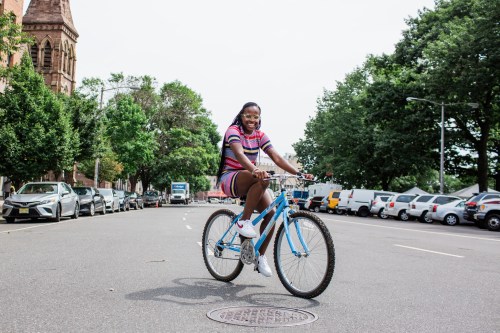
Look how happy my friend was after the 2012 ceremony that gave her US citizenship.

The other day the young lady above and I came to a funny realization about what I thought she told me 20-plus years ago when we first knew each other.

At that time, as a recent immigrant, her English was not as fluent as it is now, and I wasn’t as good a listener. As a result, I’ve been believing a bogus story for decades — and telling it to other people!

A naturalized US citizen originally from Brazil, my friend runs a cleaning business that has long benefited my family. Today she and I were chatting, and she happened to mention that she had studied nursing for two years. I was surprised. As the information sank in, I was even astonished.

“Wait! What? You spent two years studying nursing before you came here at age 14 with your boyfriend?”

It was her turn to be astonished. “I didn’t come here at 14. Oh, no! Something wrong with communication!”

“You didn’t leave home at 14 with your boyfriend, now your husband? The two of you didn’t come here through Mexico and work on a farm?!”

“No! Oh, my goodness, no!”

“But that’s my story about you!” I exclaimed. “I have told that story to everyone.”

How we laughed!

She said, “I think I know what I told you that made you think I came here when I was 14.”

“You mean I have to completely rethink my story of your life! Well, OK. Gee. I liked the old story.”

Laughing, she explained, “I met my boyfriend when we lived in Brazil. He came to America first, and he said, ‘Why don’t you come?’ So I got a visa and came. I was 18.”

“18! Well, I guess I’m glad you didn’t leave home at 14 after all.”

“My father was upset enough that I came here at 18. Imagine if I had come at 14! He would never speak to me again.

“I think I told you that there was an opening to become a citizen at that time, but to qualify, you had to be living and working in the orange groves for five years already. I wasn’t good with numbers when I told you that it meant I would have to be 14 when I started picking oranges. I should have said 13.”

Then I replied, thinking that if she had told me “13,” I really might have questioned the story more, “So you never came through Mexico?”

“No, we were in Florida. And the US had a special amnesty for people who worked in the orange groves for five years.”

“And the two of you never worked on a farm?”

“No! First I worked in a nursing home, but I really couldn’t speak English. I couldn’t understand what people were asking me for. The manager had to demonstrate everything.

“One time an old man asked me for water over and over and over, and when he finally tried using Portuguese, I just cried because I knew I hadn’t been helping him or the other old people when they needed help. So I went and put an ad in the newspaper for cleaning houses. That’s how it started.”

She had some other great stories about misunderstandings in English and we laughed a lot. Now everything is cleared up.

(I hope.)

Photo: Elissa Nadworny/NPR  
Cathy Meaney (right), a volunteer with International Neighbors, has befriended an Afghan refugee family in Charlottesville, Va.

Here’s a story of how one person can make a big difference. The one person I’m thinking of is a teacher who started a nonprofit to help refugees in Virginia. After launch, there was another “one person” and another and another.

In fact, quite a few kind Virginians were concerned to learn that refugees have to start taking care of their own needs in 90 days — a nearly impossible task in a strange place where you don’t know the language.

Elissa Nadworny has a report at National Public Radio (NPR).

“Here’s a number: 90. That’s how many days most refugees arriving in this country have before the basic resettlement money they get from the government runs out.

“But once that three months is over, there are still so many things recent arrivals need. That’s what Kari Miller saw over and over as a teacher in the public schools in Charlottesville, Va.

“In her classes, students who had recently arrived in the U.S. as refugees were struggling with all kinds of problems, like serious dental issues, or a lack of winter clothes or just the challenge of adjusting to life and school in a new land and a strange language. …

“She asked her principal for permission to take children to clinics, to buy them winter coats, to go home and meet their families. … Seeing them every day at school gave her an idea: Connect these families to their Charlottesville neighbors.

“Working out of her garage, Miller started the nonprofit International Neighbors. That was two years ago, and the organization has now grown to more than 200 volunteers. Many of them work full-time jobs but are ready to jump in to help families in that crucial period after the government aid runs out. …

“There are so many questions: Where can I get a car? Is school closed today? How do I turn on my shower? And, please, help me fill out all this paperwork!

“Paperwork, that’s the real currency in the United States, says Liza Fields, a member of International Neighbors’ board. … Fields helps refugees fill out those many, many forms — mostly for medical care but also dental work, school needs and, of course, paying bills. …

“The No. 1 request refugees make of International Neighbors is for a car. That’s usually followed closely by another related request: driving lessons. The organization provides money for lessons. But some volunteers like Helga Hiss are willing and able to give lessons. That, says Kari Miller, is the sweet spot. …

“Last fall, Hiss started giving driving lessons to a woman named Neegeeta, who moved to Charlottesville with her family from Afghanistan about 2 1/2 years ago.

” ‘It was very, very difficult life,’ Neegeeta says as her 18-month-old son, Musadiq, crawls into her lap. She asked that we use only her first name in order to protect family members who remain in Afghanistan.

“That first year in the U.S. was so hard, Neegeeta says, that they thought about moving back to Afghanistan. She felt isolated. She was working on her English, taking care of her three children, and dependent on a bus transfer to get her to appointments. …

“But, month by month, things got better. Her husband got a good job. The family got a car. They moved into an apartment downtown.

“Neegeeta credits much of this newfound confidence to volunteers like Hiss, who she says helped her feel welcome as she drove around her new city, laughing — and praying — in Hiss’s Toyota Camry.

“Those lessons, Neegeeta says, changed everything. Gave her freedom.”

Read about the nonprofit’s varied programs — including the one that pairs Charlottesville and refugee families who have similar characteristics — at NPR, here.

Photo: beniculturali.gov.it
The newly discovered “commander’s house” was found while digging Rome’s Metro C subway line. It dates back to the 2nd century.

Nowadays, archaeologists get involved at construction sites early, especially if there’s a suspicion of buried culture deep down. It must be frustrating for builders to delay a project when something of historical significance is unearthed, but I like to think that some builders (or perhaps some low-level workers) find it exciting to be part of history. I like to imagine that once in a while an inspired worker goes back to school and becomes an archaeologist.

In Rome, a subway project first revealed unexpected treasure in 2016. Elena Goukassian has a report at Hyperallergic.

“In the summer of 2016, while digging the new Metro C subway line in Rome, workers came across a rare archeological find, a 2nd-century CE Roman barracks. [More recently] archeologists uncovered the remains of a ‘commander’s house’ (domus) connected to the barracks, ‘the first discovery of its kind in the Italian capital,’ according to the Agenzia Nazionale Stampa Associata (ANSA).

“Complete with marble floors, mosaics, and frescoes, the Hadrian-era house was found [roughly 39 feet] under the Amba Aradam station, close to the Basilica of San Giovanni Laterano. …

“Measuring 300 square meters (~3,200 square feet), the house contains 14 separate rooms, including a ‘bathhouse with underfloor heating.’

“The house will be dismantled piece by piece and temporarily moved, before returning to its original location and incorporated into the new metro station, which ‘will surely become the most beautiful metro station in the world,” [the head of Rome’s monuments authority, Francesco Prosperetti] told reporters.”

Great pictures at Hyperallergic, here.

Who wouldn’t love the mosaic owl discovered under a subway line in Italy?

Photo: Helen H. Richardson/Denver Post
Denver Performing Arts Complex in 2017. The creative economy in Colorado accounted for 4.3 percent of the state’s gross domestic product in 2015, the most recent year for which data are available.

It can’t be stated too many times that the arts are often an important driver of local economies — and a reason for states and municipalities to help artists be successful. Rhode Island, for example, aims to help artists by not taxing art sales, but the lack of affordable housing in the state remains a big problem.

Joe Rubino writes at the Denver Post about Colorado’s creative economy, noting that anyone who saw a show at the local opera house in 2015, bought a painting or book by a Coloradan, or visited a local museum “contributed to the $13.7 billion arts and culture brought to the state’s economy that year, a figure that outdid both the mining and transportation sectors. …

“The U.S. Bureau of Economic Analysis and the National Endowment for the Arts on [March 7] unveiled their most recent analysis of the economic impact of arts and culture in the U.S. In 2015, the year with the most recent reporting data, goods and services generated by museums, architecture firms, artists and other artistically inclined businesses and agencies accounted for 4.3 percent of the Colorado’s GDP. …

“[Nationwide,] creative industries accounted for a $20 billion trade surplus that year, according to the analysis. Work in arts and culture accounted for 4.9 million U.S. jobs in 2015. Of those, 100,631 were in Colorado. …

“The analysis, collectively known as the Arts and Cultural Production Satellite Account, or ACPSA, looked at 36 industries that contributed to America’s arts and cultural economy. Some of them are considered core contributors — like museums and graphic design firms — and others are viewed as support industries [including] broadcasting. …

“When it comes to comparing states in the American West, arts and culture in Colorado ranked only behind California and Washington in terms of money made.”

More at the Denver Post, here.

Ghanian teacher Richard Appiah Akoto drawing Microsoft Word on a blackboard because he has no computer to help his students pass exams.

Over here in the Land of Plenty it’s hard to imagine some of the stratagems teachers in less favored regions must employ to help their students learn.

And although this particular story is about Africa, I don’t mean Africa only. There are many parts of the United States where meager school funding pushes dedicated teachers to extraordinary feats of creativity.

At CNN, Gianluca Mezzofiore reports on a teacher in Ghana who needs to teach kids computer usage — without a computer. How does he do it? He draws a screen image of Microsoft Word on a blackboard.

“Richard Appiah Akoto is a Ghanaian teacher who faces a pretty discouraging dilemma. His students need to pass a national exam that includes questions on information and  communication technology (ICT) — but the school hasn’t had a computer since 2011.

“So Akoto had an ingeniously simple idea: he drew computer features and software on his blackboard, using multicolored chalk.

” ‘I wanted them to know or see how the window will appear if they were to be behind a computer,’ Akoto told CNN. …

“Images of Akoto — who on social media uses the nickname ‘Owura Kwadwo Hottish’ — drawing a diagram of Microsoft Word for his pupils at Betenase M/A Junior High School in the town of Sekyedomase went viral after he posted them on Facebook. …

“Akoto’s 100-plus students were happy about the drawing because it made the explanation about launching Word simple for them, he said. And this is not the first time he has illustrated IT technology on the board.

” ‘I have been doing this every time the lesson I’m teaching demands it,’ he said. ‘I’ve drawn monitors, system units, keyboards, mouse, formatting toolbar, drawing toolbar, save as dialog box and so on.’

Quartz, which first reported on the teacher’s story, says the written exam is a requisite for 14- and 15-year-olds in Ghana to progress to high school.” More here.

Photo: Sonia Narang/PRI  
Inka Saara Arttijeff is the adviser to the president of the Sámi Parliament and hails from a family of Sámi reindeer herders. She represents Finland at international climate change summits. 

When I was in Sweden last year, I visited the history museum in Stockholm, where I learned a little about an indigenous population called the Sámi. I had previously heard them called Laplanders, but Wikipeida says they don’t like that term:

“The Sami people (also known as the Sámi or the Saami) are a Finno-Ugric people inhabiting Sápmi, which today encompasses large parts of Norway and Sweden, northern parts of Finland, and the Murmansk Oblast of Russia. The Sami have historically been known in English as the Lapps or the Laplanders, but these terms can be perceived as derogatory.”

Sonia Narang of the GlobalPost recently reported on the Sámi people and the threat that global warming poses for their way of life.

“Inka Saara Arttijeff and her family gather in the cozy kitchen of their red, wooden house, as a pot of soup simmers on the stove. They live at the edge of a frozen lake in the storybook village of Nellim, up toward the far reaches of northern Finland. … Arttijeff is part of a family of indigenous Sámi reindeer herders who are unfazed by short days in subzero weather.

“The Sámi [are] known for their centuries-old tradition of herding reindeer. … However, the warming climate has threatened to disrupt the Sámi people’s tradition of reindeer herding. … The combination of weather changes and increased tree cutting has made it harder for reindeer to find food, and it’s altered their migration patterns.

“ ‘Reindeer herding represents a way of life,’ Arttijeff said. … Arttijeff is one of a growing number of outspoken Sámi women who are taking their voices well beyond the borders of their small villages. The 33-year-old is the adviser to the female president of the Sámi Parliament, Tiina Sanila-Aikio, and represents Finland on the world’s stage. Every year, Arttijeff joins a delegation of indigenous representatives at the UN’s climate change talks. In between all that, she is also a graduate student in international relations and law. …

” ‘For reindeer herding, [we] need forest that is healthy,’ Arttijeff said. … Finland’s state-owned forestry agency, Metsähallitus, manages about one-third of the country’s forests, and it’s also responsible for harvesting and selling timber. Kirsi-Marja Korhonen, a regional director and environmental specialist at Metsähallitus, … notes 60 percent of trees on Sámi lands are in protected areas.

“That still leaves large swaths of Sámi forests up for grabs, reindeer herders say, and they point to clear-cutting of productive forests. …

“[Saara Tervaniemi, a reindeer herder] says it’s critical to monitor forestry activities on her people’s lands since logging is eroding the culture she hopes to pass down to her children. …

“Since Sámi women are primarily responsible for child care and passing on their culture to the next generation, reindeer herding has become an important issue for them, especially as logging and climate change have intensified in recent years. …

“It’s not just reindeer herding that’s at risk — it’s the four other Sámi livelihoods, too: fishing, gathering, hunting and handicrafts. ‘For all of those, you need materials from nature,’ Arttijeff says. ‘If the nature changes, you cannot do traditional livelihoods anymore. So, if that changes, everything changes for us.’ ”

More here. Hat tip: @morinotsuma on twitter.

For more on the importance of forests, see my post reviewing The Gospel of Trees, here.

Photo: Caiaimage/Robert Daly
Canadian doctors who want less pay think the money would be better spent elsewhere.

At first blush, it seems counterintuitive that doctors would reject more money, but like the Oklahoma teachers who went on strike after getting a raise, they were concerned about the priorities of the whole system.

Catherine Clifford reports at CNBC, “In Canada, more than 500 doctors and residents, as well as over 150 medical students, have signed a public letter protesting their own pay raises.

” ‘We, Quebec doctors who believe in a strong public system, oppose the recent salary increases negotiated by our medical federations,’ the letter says.

“The group say they are offended that they would receive raises when nurses and patients are struggling.

” ‘These increases are all the more shocking because our nurses, clerks and other professionals face very difficult working conditions, while our patients live with the lack of access to required services because of the drastic cuts in recent years and the centralization of power in the Ministry of Health,’ reads the letter, which was published February 25. …

“Canada has a public health system which provides ‘universal coverage for medically necessary health care services provided on the basis of need, rather than the ability to pay,’ the government’s website says.

“The 213 general practitioners, 184 specialists, 149 resident medical doctors and 162 medical students … ‘believe that there is a way to redistribute the resources of the Quebec health system to promote the health of the population and meet the needs of patients without pushing workers to the end,’ the letter says.

” ‘We, Quebec doctors, are asking that the salary increases granted to physicians be canceled and that the resources of the system be better distributed for the good of the health care workers and to provide health services worthy to the people of Quebec.’ …

“On February 1, the [Médecins Québécois pour le Régime Public] published a letter denouncing working conditions of nurses. ‘The nurses are exhausted by a heavy workload. They argue that the chronic lack of staff and the fatigue caused by repeated overtime, sometimes mandatory, for lack of replacement of the team, have an impact on the safety of patient care,.’ ”

More here, at CNBC. I’m impressed by how well these doctors appreciate that overworking nurses and staff can interfere with their own jobs — and with patient outcomes.

Photo: The Metropolitan Museum of Art
Detail showing Abraham Lincoln’s signature in an autograph quilt created by a seventeen-year-old Rhode Island girl in 1856.

To boldly go where no one has gone before (Star Trek)

Do not go where the path may lead, go instead where there is no path and leave a trail. (Ralph Waldo Emerson)

I like to think of myself as occasionally creative, but when I read a story like this one about a 19th century Rhode Island girl, I’m humbled. See how she took a traditional idea and expanded on it.

According to Public Domain Review, “In 1856, a seventeen-year-old girl from Rhode Island embarked on a unique and brilliant quiltmaking project.

“The girl’s name was Adeline Harris and her project was to make a quilt incorporating hundreds of celebrity autographs. While signature quilts were nothing new, the contributions were typically sourced from within a small community, such as a church, and functioned to commemorate a single event, such as a birth or marriage.

“Adeline, however, had bigger ideas, her community as the notable figures of her day, her event the phenomenon of nineteenth-century celebrity. …

“She sent a small diamond of white silk in the post with an explanation of her project and a request that they send it back to her signed. The returned and now autographed fragments were then worked into the quilt as the ‘top’ planes in a wonderful trompe l’oeil tumbling block design.

“The response she got to her unusual request was nothing short of phenomenal — she ended up incorporating 360 signed pieces in total, including those from such luminaries as Jacob Grimm, Alexander von Humboldt, Charles Dickens, Ralph Waldo Emerson, and Abraham Lincoln (one of eight American presidents represented). …

“One of the people Adeline contacted in 1864 was Sarah Hale, editor of Godey’s Lady’s Book, who, as well as providing her signature, also promptly wrote up ‘the very beautiful idea’ in her magazine. Hale explains how it is not only the signed pieces which tell a story:

Each autograph is written, with common black ink, on a diamond shaped piece of white silk (placed over a diagram of white paper and basted at the edges), each piece the centre of a group of colored diamonds, formed in many instances, from ‘storied’ fragments of dresses which were worn in the olden days of our country. For instance, there are pieces of a pink satin dress which flaunted at one of President Washington’s dinner parties …

“As for the process, conservator Elena Philips explains that, after examining the seams along the quilt top, it can be seen that ‘first she stitched the individual diamonds into blocks, then connected the blocks into columns, and finally seamed the columns together across the entire width. In total, she cut and stitched 1,840 individual silk pieces to create the quilt … [and used] more than one hundred and fifty different silk fabrics.’

“This is just one example from the Metropolitan Museum’s superb collection of 151 American quilts and coverlets, more about which you can read in curator Amelia Peck’s American Quilts and Coverlets in The Metropolitan Museum of Art (2009).”

More at Public Domain Review.

Photo: Destiny Connect
More than 50% of the honey sold in South Africa is imported. Mokgadi Mabela, a beekeeper and founder of the Native Nosi, is striving to change the business landscape.

How doth the little busy bee
Improve each shining hour …”

Yesterday I paid a visit to friends who recently moved to Massachusetts from Minnesota. The wife is a textile and quilt artist. The husband is a woodworker and beekeeper. Before moving, he sold his 2,000 pounds of honey and all his beekeeping equipment. But the new home came with a beehive in the backyard, and he can’t resist setting up on a smaller scale.

I think these two, retired from careers that have nothing to do with bees or art, may be the most industrious people I have ever met.

Speaking of busy bees, I just happen to have a post today on beekeeping. Hope you like it. Nazley Omar wrote the story for Destiny Connect.

“More than 50% of the honey sold in South Africa is imported. Mokgadi Mabela, a beekeeper and founder of the Native Nosi, is striving to change the business landscape [and] keeping the legacy of beekeeping in her family alive.

“She is a third-generation beekeeper who specialises in organic honey production. Mabela launched the Native Nosi in 2015 with the aim of producing local, quality pure honey, alleviating poverty through job creation and providing rural beekeepers with access to urban markets.

“ ‘In South Africa, beekeeping was historically never part of the basic academic curricula in agriculture,’ she says. ‘Therefore, your average South African knows very little about bees and their role in the ecosystem value chain.’ …

“Several bee species across the globe are heading towards extinction, which would have a huge impact on agriculture and food production. Mabela says we need more beekeepers to help preserve bees and produce honey.

“ ‘Ordinary citizens who have no interest in beekeeping can help by planting more trees and plants that are bee-friendly, as habitat loss is one of the factors contributing to the global bee population decline.’ …

“It’s important for South Africans to consume honey, wax and by-products that are produced organically and locally. Imported honey products have to be irradiated in order to limit South Africans to the exposure of impurities and diseases.

“ ‘Although this process is done with good intent, it destroys all the nutrients and delicate properties for which honey is known. When you buy local, you consume natural, quality honey that has not been subjected to any processing,’ explains Mabela.

“When Mabela first launched her company, she encountered many challenges. The startup capital required to buy beehives and processing equipment was high. She tackled this by buying honey from her father and other beekeepers and selling it to raise enough money to buy beehives, increasing her production and securing her own supply.

“I also won [an award] through a pitch competition sponsored by SAB, Standard Bank and The Hook Up Dinner, which I used to buy the equipment. …

“ ‘We are here to change the game and smash stereotypes about young, black, females in business and agriculture. … Starting is often the most difficult step. Once you start, you are able to get a lot of the fear out the way and get on with the real business.’ ”

More at Destiny Connect, here.

Photos: MoSwo PR
Despite birth defects resulting from her birth mother’s exposure to Chernobyl radiation, Oksana Masters won medals at three Paralympics in different sports: London 2012, Sochi 2014, and PyeongChang 2018.

There is so much to like in this story about a girl adopted from a Ukrainian orphanage who became a champion despite severe disabilities.

I lucked into Gary Waleik’s interview with her at WBUR radio’s Only a Game.

“Oksana Masters spent her early childhood in Ukraine. … When she was 7, Oksana stood only 36 inches tall and weighed just 35 pounds. She was malnourished, but that wasn’t the only reason she was small. Oksana was born in 1989, about 200 miles from Chernobyl, just three years after the nuclear disaster there.

” ‘I was missing the main weight-bearing bone in both legs,’ Oksana says. ‘And the left leg, I didn’t have a full knee. It was a floating knee. I had six toes. My hands were webbed, and I also have one kidney. I don’t have a full bicep on my right side. Thank God my hair didn’t get ruined. I could use a little more body, but I’m happy with it.’

“Oksana’s birth mother gave her up for adoption when she was a baby. Life was hard at the three orphanages she lived in, which were situated in the former USSR.

” ‘One of the things that I remember is, like, just that pain in your stomach from when you’re really, really hungry, and just how to ignore that feeling,’ Oksana says. ‘And sometimes you’d go to bed with no meals, or just a cup of soup, or just bread.’ …

“Thousands of miles away, a Buffalo, New York, speech pathologist saw a picture of Oksana in adoption agency literature.

“Says Gay Masters … ‘When I saw her picture, I just knew she was my daughter.’ …

“Not long after that, Oksana was shown a picture of Gay. [Then] on a freezing cold night in January, 1997, orphanage workers woke Oksana from a sound sleep. ..

” ‘I just see my mom, and she’s kneeling down on the bed next to me,’ Oksana says. ‘And I said, “I know you. You’re my Mom. I have your picture, see?” ‘ …

“Two weeks later, the new family landed in Buffalo. For the first time in Oksana’s life, there was ample food. There were toys and hugs. And there was a new language to learn. …

“Oksana did well in school. She had a restless energy that drove her to push her physical limits with the help of new prostheses. She climbed trees and jumped off steps with the neighborhood kids. …

” ‘My mom basically got me into ice skating, not necessarily to get into sports and be competitive, but have an opportunity to move and use your body and make friends,’ Oksana says. ‘And I fell in love with it.’ ”

Alas, first one and then the other malformed leg had to be amputated. Recovery after the second surgery was long and difficult.

“Then someone mentioned the Paralympics to her.

” ‘And I had no idea what the Paralympics was,’ she says. ‘When I found out about it, I went home, looked it up and then my competitive nature came out. Like, “Oh, my gosh, I can represent the United States? I can wear a flag on my back? What?” ‘ ”

Read about Oksana’s continuing quest for new sports, her triumphs and setbacks — and a moving visit to demoralized Ukrainian soldiers who had lost legs — at Only a Game, here.

And since you may be wondering what happened at the Winter Paralympics after that radio interview, Wikipedia reports that Oksana “claimed a silver medal in the women’s 6km sitting biathlon event during the 2018 Winter Paralympics.”

Oksana at the Ukrainian orphanage in 1993.

Photo: MFA Boston
The results of a study on school field trips surprised the Brookings Institution researchers.

One of the messages I take from this Brookings report on student field trips is the importance of conducting research with both an open mind and a willingness to follow up on unexpected results. Another takeaway: researchers prefer to study things for which there are a lot of data available; worthwhile questions that don’t have a lot of data to work with often don’t get studied.

Jay P. Greene writes, “Most education research focuses on math and reading outcomes or educational attainment because those are the measures that the state collects and are readily available to us. Less is known about how students are doing in other subjects and whether their progress in those areas has important benefits for them and society. …

“A new experiment … examines long-term effects of students receiving multiple field trips to the Woodruff Arts Center in Atlanta. The Woodruff Arts Center houses the High Art Museum, Alliance Theater, and Atlanta Symphony, all on one campus.

“We randomly assigned 4th and 5th grade school groups to get three field trips per year – one to each of Woodruff’s arts organizations – or to a control condition in which students received a single field trip. …

“The surprising result is that students who received multiple field trips experienced significantly greater gains on their standardized test scores after the first year than did the control students. …

“The reason these results are so surprising is that previous research had suggested that arts instruction tended not to ‘transfer’ into gains in other subjects. …

“When we conducted the analysis on the effects of treatment on test scores, we expected to find no statistically significant effects, just like almost all previous rigorous research. …

“We still do not believe that arts instruction and experiences have a direct effect on math or ELA ability. We think this because the bulk of prior research tells us so, and because it is simply implausible that two extra field trips to an arts organization conveyed a significant amount of math and ELA knowledge.

“Our best guess is that test scores may have risen because the extra arts activities increased student interest and engagement in school. … Maybe arts-focused field trips do not teach math or reading, but they do make students more interested in their school that does teach math and reading. But this is just a guess. …

“The odd thing about trying to write a paper with these results to present at conferences and submit to a journal is that there is strong pressure for us to pretend like we expected our findings all along. Discussants and reviewers generally don’t want to hear that you found something you didn’t expect and don’t really know why. They want to hear a clean story about how your results make sense and follow from your theory and literature review. In short, social science favors the false appearance of confidence.”

Ah, yes. When I was at the Fed, I often wondered about such things, but as a non-economist, I knew I was out of my depth.

Read about how the researchers intend to unpack the meaning of their unexpected results with future studies, here.

header-1-1068x400

Photo: Rhode Island Inno
Refugees learn US workplace skills thanks to a nonprofit called Beautiful Day.

For my taste, there can never be too many admiring articles about Beautiful Day (aka Providence Granola Project). I find the nonprofit’s model to be both wise and kind, and my only wish is that more markets would carry the products and more employers would hire the refugees after graduation.

I’ve known a number of immigrants who have gone through the training (including the somber Congolese girl above, who is still learning to share her radiant side more often).

Bram Berkowitz writes at Rhode Island Inno, “On many accounts, granola is considered a nutritious, lightweight and high-energy snack that has become a popular breakfast item, as well as a pick-me-up for hikers and campers.

“But at the Providence-based nonprofit Beautiful Day, the crumbled, whole-grain based food has become a path to the labor market for many refugees that come to this country lacking the skills needed to obtain a job.

“Keith Cooper, a former campus ministry veteran, founded Beautiful Day about 10 years ago as a granola business that employs refugees in order to give them hands-on experience and training they can use later on to gain permanent employment.

“As the United States prepares to take in the least amount of refugees since the 1980s, Cooper is gearing up to double growth at Beautiful Day so the organization can expand its services by taking on more refugees or train refugees for longer periods of time. …

“The organization finds refugees through various agencies, such as the Dorcas International Institute of Rhode Island. Cooper said typical candidates are those that have extremely high barriers to entry, whether its lacking cultural literacy or English speaking skills.

“Cooper said he chose granola because its non-perishable, healthy and a food that requires a lot of work to make, but not a lot of finesse.

“ ‘I had never run a food production company, but we have been determined to become our state’s premier granola company,’ he said, adding that the organization uses local distributors and suppliers when possible. ‘We try to use the highest quality ingredients we can to make granola people will really like.’

“Beautiful Day provides 200 hours of work to refugees in various parts of the granola business, which gives them experience for when they apply to their next job. The placement also comes with a stipend and has opportunities for refugees to interact with others in the community when the company goes to public places like farmer markets to sell the granola. … Cooper said most of the kitchen workers go onto entry level jobs such as working at a laundromat, in a warehouse, as a janitor or sometimes in food production.

“ ‘Most lack English language, but they can still learn pretty quickly how to look someone in the eyes during an interview,’ he said, adding that all of the program participants, many of whom lived for years in refugee camps, are extremely eager to work. ‘The primary skill we teach is confidence … In a lot of work settings you may not need much English, but you absolutely have to be able to communicate when you do or you don’t understand something. That takes confidence.’ …

“Cooper sees huge scalability through online subscriptions and consumer sales. He is also looking to sell directly to universities and law offices, which will also help spread Beautiful Day’s mission because subscribers receive a postcard each month with a story about a new trainee. …

“ ‘People can do something about refugee resettlement. … By making a small choice about what you eat for breakfast or for a snack, you can provide crucial on-the-job training for someone who otherwise can’t get a job.’ ”

More here.


Photo: Storify
Mudslides in Haiti in 2011. Reforestation of the once lush island is badly needed, but how can people in poverty wait decades for results when a sapling could provide charcoal for a hungry family?

Recently, I read a book that I recommend highly. It’s Apricot Irving’s memoir The Gospel of Trees. I wrote the following about it on GoodReads.

Author Apricot Irving’s parents were missionaries in Haiti for several years starting in the 1970s, and Apricot’s memoir evokes what the experience meant for her as a child, a teenager, and an adult. The vividness of her writing benefits from the fact that both parents kept diaries. Her own journal, which she started at a very young age, also gives both happy and bitter memories remarkable immediacy.

Apricot’s counterculture parents were people used to hiking long distances and sleeping under the stars. They shunned middle-class materialism and thought nothing of raising children in a shack with an outhouse. (The family eventually included three daughters.) They got religion at a point in their marriage when Apricot’s mother was fed up with Apricot’s father and his remoteness. She was ready to split. A pamphlet left by her mother-in-law led to her epiphany.

When the church the couple joined needed help at a medical mission in Haiti, Apricot’s father (a hard-working farmer and forest ranger) found the mission’s reforestation sideline appealing. Off they all went to save the poor people and tell them what was needed.

Over the years, the family began to see that that’s not how development is successful. They learned what Paul Farmer of Partners in Health had been preaching for decades in Haiti — namely that the local people must lead. (Oddly, the famous doctor is never mentioned, suggesting to me there’s some enmity.)

The Irving family lived through years of getting trees started in the ravaged, depleted soil, where mudslides, destruction, and death were the norm, only to see the new growth eaten by goats or cut down for charcoal — over and over and over and over.

They lived through revolutions, political upheaval (sometimes aggravated by US military action), danger, and crushing disappointment, coming back to help any way they could after the devastating 2010 earthquake. Once back there, they relived all the ironies– paying locals to plant trees, which enabled them to buy goats, which ate the trees. By this time they knew that buying imported furniture as NGOs demanded was wrong when desperate locals were struggling to keep their own furniture businesses afloat. They knew that forcing a flourishing local cooperative to meet an NGO timeline might be dooming it to failure. They agonized for the country they still loved.

The author recounts the history of the island, going back to Columbus, who discovered what was then a lush paradise, eventually ruined by clearing the land for crops grown by slaves. And she gradually peals back the stages of her personal awakening, her conflicted feelings about the country, her wish to help, her understanding that although the job is never finished, you still need to do what you can and know that others will continue the work.

I found that I liked Apricot a lot and admired her ongoing effort to find common ground with her demanding, sometimes cruel, father. I also admired her stalwart mother’s efforts to bring cheer — especially as the mission was falling apart and all the doctors and nurses and staff were feeling demoralized.

You get to see the beauty of the country in this book and the different strengths of the people. And you especially get to see why decades of do-gooder initiatives were bound to fail. Not that the medical mission did no good at all — many lives were saved, many people got jobs and other kinds of help — but the model was unsustainable.

I can think of so many people I know who would love this book — people who work with immigrants from Haiti and elsewhere, tree people trying to protect the environment, people who love beautiful, honest writing.

Photo: Elisa Coltro/Facebook
Nonna Irma, of Noventa Vicentian, Italy, poses with some of the children in the Kenyan orphanage she supports.

News outlets around the world reposted this story about a 93-year-old’s outreach work as described by her granddaughter on Facebook. But I found that BrightSide dug for additional details.

The website reports, “This charming woman from Noventa Vicentina, Italy is Irma, and she is 93 years old. Despite her age, she’s full of energy and desire to change the world for the better. She decided to fly to Kenya to help children in the orphanage there. Her granddaughter shared her grandma’s photos on her Facebook page, which took over the Internet. …

” ‘Irma has always loved life and was never stopped by life’s obstacles,’ her granddaughter [Elisa Coltro] wrote. She knows what difficulties are like and has always tried to help others. Irma lost her husband at 26 and later one of her three children. Her life has not been easy, and she has always relied on her own strength to make it through.

“Many years ago she met Father Remigio, a [missionary] who has spent his life helping the people of Kenya. Irma has supported him for many years. Once she heard that Father Remigio was hospitalized, she made a decision to visit him and all the places he had built during his lifetime, such as hospitals, orphanages and kindergartens.

“Now being in Kenya, Irma helps children as much as she can. She teaches English and Math in the school of Malindi. … Her age never stops her from taking motorcycle rides. Despite all the difficulties she’s faced, she continues to enjoy life. Irma plans to stay in Africa for a few weeks, but there is a possibility that she will want to stay there for good.

“She has always taught her children and grandchildren to help others. Her granddaughter Elisa did volunteer work in refugee camps in Greece in 2016 and 2017.” More here.

One of the things I like best about the story is the sense of a network of fellow travelers. Irma’s daughter went to Kenya with her. Her granddaughter volunteers. And zillions of people loved what Irma is doing enough to share the news on social media. One and one and 50 …

Photo: Elisa Coltro / facebook   

Photos: Shannon Young/The Republican
A model of the Extreme Model Railroad and Contemporary Architecture Museum, which will have 2,000 precision scale model trains that move throughout the exhibit.

I know a model train aficionado who is going to love the newest Frank Gehry museum — at least as much as my grandchildren will. Imagine having such a high-profile architect for model trains! No more making do with rented mall space for a couple weeks at Christmas.

Shira Schoenberg writes at MassLive (by way of the Republican), “Picture the World Trade Center near the Empire State Building near Fenway Park near London’s Tate Modern. Now picture trains zipping past the architectural icons.

“That is the vision world-famous architect Frank Gehry and museum developer Thomas Krens are trying to bring to North Adams, in the form of the Extreme Model Railroad and Contemporary Architecture Museum. …

“The museum will feature 164 buildings, by 71 international architects, that showcase contemporary architecture. These will include iconic structures like the Seagram Building in Manhattan or the Brooklyn Bridge. These buildings will be surrounded by more than 1,000 commonplace buildings such as houses. They will all be built at a scale of 1:48. The tallest building, One World Trade Center, will be 40 feet tall.

“The buildings will be surrounded by video-projected landscaping, featuring mountains or a city, which can change with the season.

“The buildings also will be surrounded by model trains: 107 operating steam and diesel locomotives, with more than 2,000 passenger and freight cars. There will be 12 rail lines, including two high-speed lines. The trains and buildings will be located in a single 670-foot-long gallery – the size of 2.5 football fields. …

“The for-profit museum is expected to cost around $65 million and open by 2021.”

More here.

The ambitious museum is part of an ongoing effort to make North Adams a tourist destination after its loss of manufacturing. That effort got its first big boost in 1999 when the modern art museum MassMoCA opened in an old factory. My husband and I spent a Thanksgiving holiday in the town with Suzanne and Erik some years ago — before grandchildren. Might be time to go back soon.

Below, a handsome model train sits on a map in the Extreme Model Railroad and Contemporary Architecture developers’ office.