Feeds:
Posts
Comments

Moisés Rosas is an organ grinder in Mexico City. According to Azam Ahmed at the NY Times, Rosas’s art is not as popular with the public as it used to be, and that makes some folks wistful.

“ ‘This is a dying art,’ Mr. Rosas said as he turned the dull metal lever of his instrument, wrenching out a troubled squawk. ‘The youth don’t really value us.’

“So it goes for Mexico City’s organ grinders, among the city’s more curious class of street performers. For years, they were beloved by residents, but now they are in a gloomy mood, convinced that their art — and a central part of the city’s culture — is fading away. …

“They are losing fans. Many young people, forced to listen to their music while out at a restaurant or in a square, pay them to leave. The ranks of older patrons, who recall the organ grinders with nostalgia, are thinning.

“Then there is the competition, which has multiplied in recent years. There are break dancers, mimes, movie characters, musicians, artisans and the afflicted, all vying for spare change.

“Worse, there are the superheroes.

“ ‘Don’t even get me started on them,’ [Luis Román Dichi Lara, the head of the organ players’ union], said. ‘You place yourself in the perfect spot, start your music and, boom, here come Thor, Batman and Spider-Man.’

” ‘They intimidate us,’ he said. ‘There’s like 15 of them. They just kick you out.’ ”

But people who want to preserve the culture are supportive, Ahmed reports.

“On a recent evening, Carlos Martínez dropped a few coins in the hat of Sergio Pérez, an organist midway through his evening shift.

“ ‘Not many people help them,’ said Mr. Martínez, 44, an office worker. ‘I don’t really like to listen to them that much, but if no one gives them money, they won’t survive.’ ”

More here.

Photo: Thelmadatter
Barrel organ player in the Zocalo Mexico City.

The Great Blue Whale

When I was a child, the great blue whale was the attraction I most looked forward to seeing at the American Museum of Natural History in New York City. Now my grandchildren look forward to it.

But in an article on the website called Seeker about how the whale gets cleaned every year, I learned that the model I saw was not anatomically correct.

“The original model was based on measurements taken by American Museum of Natural History scientists in the 1920s. The measurements were of a dead female blue whale captured by a whaling station in the southern Atlantic, and although the artists who crafted the whale followed the original records, there were anatomical inaccuracies, likely because the whale that the scientists examined was already decaying. …

” ‘It was the wrong color. It had bulging eyes, probably due to decomposition,’ [Melanie Stiassny, curator for the Department of Ichthyology] said. In 2001, artists adjusted the body color and flattened the whale’s eyes, also adding a navel that had originally been omitted.

“Today, the [whale] resembles living blue whales more closely than before. However, while scientists’ knowledge of blue whales has certainly improved, there is still much about these giants that remains elusive.

” ‘We still don’t know how many blue whales are out there,’ Stiassny said. ‘We don’t know exactly where they go to breed. They still remain one of the great mysteries of the ocean.’ ”

More at Seeker.

Art: Richard Ellis

Photo: The Economist

Reversing desertification in Africa has to be one of the biggest challenges ever attempted. But if we believe that the longest journey starts with a single step, then the continent’s long journey is off to a good start.

According to the Economist, “Building a wall of trees across the width of Africa is a tall order. Solving the twin problems of land degradation and desertification poses a greater challenge still. But more than 60 years after it was first proposed, just such a project is underway at the edge of the Sahara. …

“In 1952 Richard St Barbe Baker, a British environmental scientist, proposed planting a swathe of trees across the southern reaches of the Sahara. The trees would block the wind and sand that move southward from the desert and improve the quality of the soil by binding sediment together and adding nutrients to the mix.

“Although Mr Baker was unable to convince others of his plan during his lifetime, the idea has since taken root. In 2005, Olusegun Obasanjo, then president of Nigeria, revisited Mr Baker’s proposition, seeing in it an answer to some of the social, economic and environmental problems afflicting the Sahel-Sahara region.

“An estimated 83% of rural sub-Saharan Africans are dependent on the region’s land for their livelihoods, but 40% of it is degraded—worn away by soil erosion, human activity and scorching temperatures—leaving much of it unfit for use.

“In 2007, Mr Obasanjo gained the support of the African Union. The Great Green Wall Initiative was launched the same year. Today some 21 African countries are involved in the project, which has grown in scope. Trees have been planted, but building a wall of them is no longer the priority.

“Instead, the wall of trees has become a vehicle for a wider goal: countries in the region working together to tackle climate change, food security and economic growth. Recent projects include abating soil erosion and improving water management in Nigeria, agri-business development in Senegal and forestry management in Mali.”

More at the Economist.

An ESPN sports producer set out to do a piece on two high school wrestlers with disabilities. Today they think of her as family. Karen Given reports the story at WBUR radio’s Only a Game.

“Dartanyon Crockett … is legally blind. ‘Being a black kid in the inner city with physical limitations, or what people call a disability, you’re already written off,’ Dartanyon says. ‘No one expects much from you. You’re basically useless. And I wasn’t in a position where I could fix that.’ …

“So he pretended he could see. He joined his high school wrestling team and didn’t even tell the coaches. … Dartanyon didn’t want the coaches to treat him any differently, so they didn’t. Then one day during senior year, Leroy Sutton joined the wrestling team at Lincoln-West High School in Cleveland. Dartanyon was one of the team captains, and he wasn’t the least bit worried that his team’s new recruit was missing something. Well, two somethings.

” ‘We were talking in the cafeteria, and I asked him what happened to his legs,’ Dartanyon says. ‘And he told me that, “Yeah, I was run over by a train.” And I laughed, one of those deep belly laughs. He had always heard the, “Oh, my god. Oh, I’m so sorry. Oh, how did that happen? Oh.” Just to see someone not feeling sorry for him, just kinda sparked a bond almost instantly.’ …

“Soon, Dartanyon was carrying Leroy on and off buses, up and down stairs and into the bleachers. …

” ‘I didn’t know he was blind,’ Leroy says. ‘I found out in class. I noticed he was, like, really close to the book we were reading. So I was like, all right, he has problems seeing. So I turned to a couple of the other students around me and I was, like, “Hey, man, let’s do this like a project style and read out loud.” ‘

“And that’s probably how things would have stayed, Dartanyon and Leroy helping each other out — both thinking it was no big deal — if not for an ESPN feature producer named Lisa Fenn.”

Fenn goes to interview them and is greeted by a coach who said that “he’d been praying really hard for Dartanyon and for Leroy because he felt, once they graduate, the world had nothing for kids like them.”

Turns out the world had quite a bit for them. But it took years. Read the whole story at “Only a Game,” here, because look:

Four years after they first met, Leroy “wrote Lisa a letter for Mother’s Day. … That letter is printed in Lisa’s new book, Carry On, A Story of Resilience, Redemption, and an Unlikely Family. …

When I first met you those were dark days,
In that time I was stuck in my dark way,
There was no light, so you set the world ablaze,
And you snapped me out of that phase,
Then you went further,
Showing me you cared,
Answering my calls now I know that you’ll be there,
Then you ask questions, so slowly I shared,
This world you showed me is simply more fair,
You pull me out of a world where it was not clear,
Glad you did, there was no more air,
But now these days I’m full of smile, and full of play,
Hope you feel loved today,
So I’d like to take this moment to say,
Thank you Mom.
I love you.

Photo: Brownie Harris
Leroy Sutton (left), Dartanyon Crockett (center) and Lisa Fenn, the ESPN producer who came to Cleveland to tell their story.

Did you hear about the time a mule won the Great American Horse Race? It’s kind of a tortoise and hare story.

At WBUR’s Only a Game, Martin Kessler explains why endurance mattered.

“The year was 1976. … In honor of the bicentennial, trains and airplanes were painted red, white and blue. A fleet of tall ships sailed down the Hudson River.

“And there was a horse race unlike any other.

“It was called the Great American Horse Race, and it would span nearly 100 days and 3,500 miles, starting in New York, heading to Missouri, and then following the Pony Express route to California.

“[Curt] Lewis was hired by the race organizers to document all the greatness and Americaness of the Great American Horse Race. And also the competition.

“The rider who covered the distance fastest would get $25,000 – worth about $100,000 in today’s dollars.

“About 100 riders signed up. Cowboys took a break from rodeos. World War II veterans, finished with their missions on submarines and B-17 bombers, also entered. So did a sheriff — and even an Austrian count. …

“And then there was Virl Norton. He was one of the oldest riders. He didn’t have as big a bank account as most of the others. He didn’t have any fancy horse equipment. Or a big crew to help him set up camp or cook or do laundry.

“But he had a plan.

“While some riders entered Icelandic ponies, quarter horses, and Appaloosas, the consensus was that the horse to ride if you wanted to win was an Arabian. … Virl Norton entered a mule.”

With his 16-year-old son as the only crew, Norton set out across country with his mule Lord Fauntleroy and a backup called Lady Eloise. And left those fast horses in the dust.

Read all about it here.

Photo: Curt Lewis
Virl Norton, winner of the 1976 Great American Horse Race, with mules Lord Fauntleroy and Lady Eloise.

Greening the City

EcoRI News is a local environmental site where I often find good stories. I especially like this one. It’s not only an upbeat environmental story, but it features middle-school and high-school enrichment in a district that has not often been able to afford enrichment.

Frank Carini writes from Central Falls, “Crammed into 1.3 square miles is a diverse community of 19,300 residents, lots of traffic and plenty of pavement. The most densely populated city in the smallest state also lacks green.

“Central Falls has the lowest percentage of tree cover in Rhode Island. … Today, only 3 percent of Central Falls is green space, a problem Mayor James Diossa soon began addressing when he took office three years ago.

“ ‘Past administrations had never given priority or importance to the role of trees,’ he told ecoRI News earlier this year during a tour of revitalized Jenks Park and a nearby community garden. ‘Trees are instrumental for a community.’

“When Diossa took office in January 2013, it had been nearly three years since the city filed for receivership and nearly two years since it had filed for bankruptcy. Those challenges, however, didn’t prevent Diossa and his administration from implementing ‘Operation Tree Hugger.’

“In December 2014, students from Calcutt Middle School and Scituate High School partnered with the city to develop a proposal for the America the Beautiful-Tree Rhode Island 2015-2016 grant program. The students’ proposal was funded. Four months later, on April 10, 2015, the students planted 14 trees around Calcutt Middle School and established the Central Falls Arboretum.

“Since then, tree plantings haven’t stopped. Last year a group of local middle-school students planted 15 trees along Hunt Street. On National Arbor Day in April, six trees were planted in front of City Hall. A line item has been added to the budget to fund the planting and maintenance of the city’s slowly growing green space. …

“The city and its many partners, however, aren’t limiting new green to the tall variety. They are bringing back all kinds of vegetation. The 26th-most densely populated city in the country wants an urban jungle that features more than concrete, asphalt, steel and brick.

“The community seems to have embraced its greening. The mayor noted that neighborhood volunteers water new plantings, weed, and keep a watchful eye on new green space.”

More at EcoRI, here.

Photo: Joanna Detz/ecoRI News
Middle-school students have planted 15 trees along Hunt Street. Six trees were planted in front of City Hall in April. Central Falls High School students have planted eggplants, peppers and tomatoes in what used to be a vacant lot.

A Week Away, Weaving

I’m reblogging this post from KerryCan. She and her husband just came back from an intensive weaving immersion, learning Swedish, Danish and other Scandinavian weaving techniques.

Photo: Cornell University
Small predators related to jellyfish (Hydroids) and other marine creatures made of glass may be viewed at the Corning Museum of Glass until January 8, 2017.

Visitors to the Boston area are often taken to see the famous glass flowers created by Leopold and Rudolf Blaschka in the late 19th and early 20th centuries and displayed at the Harvard Museum of Natural History in Cambridge. I have taken guests there myself.

But it was news to me that the Blaschkas also created sea creatures in glass. Many of those were acquired by Cornell University in Ithaca, N.Y.

According to Wikipedia, the marine specimens came before the flowers.

“Leopold Blaschke was born in Český Dub, Bohemia, to a family which originated from Josefuv Dul (Antoniwald) in the Iser or Izera Mountains, a region known for processing glass, metals and gems. The family had also spent time in the glassblowing industry of Venice.

“Leopold displayed artistic skills as a child, and was apprenticed to a goldsmith and gemcutter. He then joined the family business, which produced glass ornaments and glass eyes. He developed a technique which he termed ‘glass-spinning,’ which permitted the construction of highly precise and detailed works in glass. He also Latinised his family name to ‘Blaschka,’ and began to focus the business on the manufacture of glass eyes.

“In 1853, Leopold was suffering from ill health and was prescribed a sea voyage. He traveled to the United States and back, using the time at sea to study and draw sea animals, primarily invertebrates.’ ” Read how he started making replicas of them at Wikipedia.

The Guardian alerts us to the current exhibition of the Blaschkas’ marine work in upstate New York. “Father and son team Leopold and Rudolf Blaschka created perfect reproductions of invertebrate marine life in glass in their studio in Germany in the 19th century. Cornell University acquired a collection of 570 items in 1885, and a selection of these can be seen at an exhibition at the Corning Museum of Glass. ‘Fragile Legacy: The Marine Invertebrate Glass Models of Leopold and Rudolf Blaschka’ runs until 8 January, 2017.”

Amazing photos here.

Is it possible for a group of people to collaborate effectively enough to make their quaint English village carbon neutral?

Tatiana Schlossberg has an answer at the New York Times: “Ashton Hayes is different in an important way when it comes to one of the world’s most pressing issues: climate change. Hundreds of residents have banded together to cut greenhouse emissions — they use clotheslines instead of dryers, take fewer flights, install solar panels and glaze windows to better insulate their homes.

“The effort, reaching its 10th anniversary this year, has led to a 24 percent cut in emissions, according to surveys by a professor of environmental sustainability who lives here.

“But what makes Ashton Hayes unusual is its approach — the residents have done it themselves, without prodding from government. About 200 towns, cities and counties around the world — including Notteroy, Norway; Upper Saddle River, N.J.; and Changhua County, Taiwan — have reached out to learn how the villagers here did it.

“As climate science has become more accepted, and the effects of a warming planet are becoming increasingly clear, Ashton Hayes is a case study for the next phase of battling climate change: getting people to change their habits.

‘We just think everyone should try to clean up their patch,’ ” said Rosemary Dossett, a resident of the village. ‘And rather than going out and shouting about it, we just do it.’

Oh, ye-es! One and one and 50 make a million.

More here.

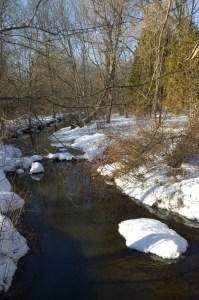
A Few Recent Photos

We turned on the heat and started wearing warm coats. (I’m even wearing gloves and earmuffs in the early morning, but don’t tell anyone.)

I think it’s time for a round-up of late summer scenes in New England before the snow flies.

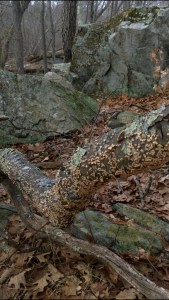
First come two pictures illustrating the Providence claim to fame as Creative Capital. Then shy mushrooms. Next are four photos from New Shoreham, including horses and a turtle who really hoped I’d just go away.

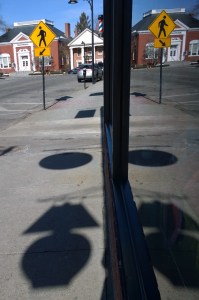
Moving right along: lovely shadows and fall colors in field and farmstand.

092816-creative-capital

100316-joyous-foil-dancers-brown-university

100616-mushrooms-hiding

100616-mushrooms-in-fall

100816-island-house

101016-horses-new-shoreham

101016-dirt-road-new-shoreham

101016-turtle-payne-road

100716-light-and-shadow-at-home

100216-fall-colors-concord-mass

093016-tomatoes-at-farmstand-concord-ma

093016-verrill-farm

As in other cities nationwide, relations between communities and police are often tense in Boston, but here is a small effort that focuses on reducing arrests and getting help for people who are troubled.

Evan Allen writes at the Boston Globe, “When Officers Michael Sullivan and Jeff Driscoll and senior crisis clinician Ben Linsky head out on their beat in Mattapan, they seek out the most vulnerable citizens: the drug-addicted, the homeless, and the mentally ill. Theirs is the only unit of its kind in the city, and its mission since it was started in February is to help, not arrest, people [with problems]. It’s part of a broader effort in the Police Department to work with the community. …

“Sullivan, Driscoll, and Linsky, who make up Mattapan’s ‘Operation Helping Hands,’ spend two nights a week freed from dispatch calls. Instead, they get to know the people on the streets, figure out what services they need, and try to provide them.

“ ‘You’re one part social worker, one part cop, and one part older brother,’ Sullivan said. …

“The number that [Police Chief William] Evans is most proud of is arrests: for the past year and a half, officers have been locking up fewer and fewer people. The city saw a 15 percent reduction in 2015, followed by the 10 percent drop so far this year.

” ‘When I came on the job, you measured what kind of an officer someone was by quantitative statistics. How many arrests. How many moving violations. We don’t do that anymore,’ Evans said. ‘I think our officers get it: It’s not about throwing people behind bars, it’s about getting them services and opportunities.’

“Driscoll, a 39-year-old father of two, has been on the force for 10 years, all of them in Mattapan. Before that, he served for several years in Watertown. He and Sullivan, a 32-year-old father of a 2-year-old boy, who joined the force three years ago, both grew up in police families, wanting to be officers. When Mattapan Captain Haseeb Hosein decided to start Helping Hands, they were an easy choice.

“ ‘With everything that’s going on in this country, the biggest thing is trust and fear. So how do we break those two barriers down? I think we break it down by building relationships,’ Hosein said. ‘They’re really good guys who understand the environment that we’re in, that we need to go the extra mile.’ ” More.

Getting people services that really create lasting change would be ideal, but who can cavil with de-escalating potential blowups? Ensuring that you don’t make matters worse than they are already is surely an important step.

Photo: Jessica Rinaldi/Globe Staff
“Operation Helping Hands,” made up of two officers and a crisis clinician, is the only Boston Police unit of its kind.

On Columbus Day

With no wish to detract from the joy that Italians take from their countryman’s spirit of adventure or the pride that Americans feel for positive developments that followed the First Encounter, it’s hard to deny that it wasn’t the best thing for the people already living here. So without beating a drum that isn’t mine to beat, I’ll just share a gentle poem by a major Native American poet, a member of the Muscogee (Creek) Nation. It’s a poem that is good for all people.

Eagle Poem by Joy Harjo

To pray you open your whole self
To sky, to earth, to sun, to moon
To one whole voice that is you.
And know there is more
That you can’t see, can’t hear;
Can’t know except in moments
Steadily growing, and in languages
That aren’t always sound but other
Circles of motion.
Like eagle that Sunday morning
Over Salt River. Circled in blue sky
In wind, swept our hearts clean
With sacred wings.
We see you, see ourselves and know
That we must take the utmost care
And kindness in all things.
Breathe in, knowing we are made of
All this, and breathe, knowing
We are truly blessed because we
Were born, and die soon within a
True circle of motion,
Like eagle rounding out the morning
Inside us.
We pray that it will be done
In beauty.
In beauty.

More at the Poetry Foundation.

Update June 21, 2019: Joy Harjo became the first Native American US Poet Laureate in 2019. Click here.

Photo: Wikipedia
Joy Harjo in 2012.

Science Becomes Art

Our friend Mika is back in Hokkaido these days, after several years in New York working in restaurants and perfecting her “house” dancing. But every once in a while she ventures out to help on a street art project. Here is her friend Florence Blanchard’s mural for CBM Network (Crossing Biological Membranes) at the University of Sheffield in England.

At her WordPress site, Florence explains what the art represents, “I am delighted to present my newest mural here – a collaboration with CBMNet at the University Of Sheffield, in conjunction with Festival Of The Mind 2016 / Fear of the Unseen: Engineering Good Bacteria.

“The ‘Crossing Biological Membranes Network’ is composed of scientists working to understand the mechanisms by which substances are transported into, within, and out of cells. Their ultimate aim is to produce knowledge which will enable the development of new technologies in the Industrial Biotechnology and Bioenergy sector (eg: producing biofuels using E coli bacteria).

“My role in this collaboration has been to translate the CBMNet area of work into a large outdoor mural located within the university campus. For this occasion I have presented my interpretation of a detail of a cell membrane as seen under an electron microscope, having undergone a cryofracture.

“A cryofracture is a procedure in which the sample is frozen quickly and then  broken with a sharp blow so you are able to study its structure in very close detail – Imagine breaking a bar of chocolate with hazelnuts, this way you can see how hazelnuts are positioned inside the bar.”

“For an online animation of a biomembrane cryofracture follow this link: http://www.sciencephoto.com/media/530082/view.”

Check out the WordPress post.

Photo: Florence Ema Blanchard
Blanchard’s street art is tied to a scientific quest: “Engineering Good Bacteria.”

A “funky, eco-friendly” shop in Providence, Small Point Café, serves wooden cutlery that can be recycled. The only problem is that if you do takeout and want to use the recycling bin at work, wood is not accepted.

Here’s an idea that could solve the problem of takeout-cutlery waste once and for all: utensils you can eat.

Brittany Levine Beckman writes at Mashable, “Tired of seeing mountains of plastic cutlery polluting India’s landfills, Narayana Peesapaty had an idea: What if you could eat your disposable spoon rather than toss it?

“Peesapaty, a researcher and agriculture consultant from Hyderabad, India, developed an edible spoon made of millet, rice and wheat flours, in 2010. Now, after selling 1.5 million spoons for his company Bakeys, he wants to reach even more eaters. Peesapaty knows that means he has to cut the cost of his products to compete with cheaper plastic counterparts. …

“Bakeys plans to use its successful Kickstarter campaign to improve production and expand the product line. Its ‘edible lunch spoon,’ which can last 20 minutes in hot liquid, comes in a variety of flavors: sugar, ginger-cinnamon, ginger-garlic, cumin, celery, black pepper, mint-ginger and carrot-beetroot. The spoons have a shelf life of two to three years.

” ‘You can eat it up. If you don’t want to eat it, you can throw it. It decomposes within four to five days,’ Peesapaty said in a promotional video that has been shared millions of times since posting on March 16. …

” ‘Plastic is very cheap, true. But I can make it as cheap,’ Peesapaty remarks confidently. ‘I can with volumes, and once I get the volumes, I [can go to] the farmers directly and start procuring raw material directly from the farmers, in which case my spoons will be as cheap as the plastic spoons.’ ”

More. Learn how to get a supply of your own.

Photo: Mashable
Edible cutlery is already reducing plastic waste and benefiting the environment.

Earliest Fossils

With every new discovery of fossils, it seems, the first appearance of life on Earth is earlier.

Maybe.

There is always controversy, and your belief about the earliest date may depend on just how hellish you think the Hadean period was, when asteroids bombarded the planet and life probably would have been impossible.

Nicholas Wade writes at the New York Times, “Geologists have discovered in Greenland evidence for ancient life in rocks that are 3.7 billion years old. The find, if confirmed, would make these fossils the oldest on Earth and may change scientific understanding of the origins of life.

“Experts are likely to debate whether the structures described in the new report were formed biologically or through natural processes. If biological, the great age of the fossils complicates the task of reconstructing the evolution of life from the chemicals naturally present on the early Earth. It leaves comparatively little time for evolution to have occurred and puts the process close to a time when Earth was being bombarded by destructive asteroids. …

“Certain features ‘are fairly credible hallmarks of microbial activity,’ Abigail C. Allwood of Caltech’s Jet Propulsion Laboratory wrote in a commentary accompanying the Nature article [by Allen P. Nutman et al.]. They have a few features that make them ‘interesting and possibly biological,’ she added in an email.

“Another expert in the early Earth’s environment, Tanja Bosak of M.I.T., said the structures do resemble modern stromatolites but their origin ‘will be hotly debated.’ …

“Dr. Nutman argues that life must therefore have originated even earlier, probably in the late Hadean stage of Earth’s history, which lasted from 4.65 billion years ago — when the planet formed from debris in orbit around the sun — to 4 billion years ago.

“But the Hadean was so called because of the hellish conditions thought to have prevailed, including cataclysmic meteorite impacts that boiled the oceans into steam and turned Earth’s surface into molten lava. The largest of these impacts, at 4.5 billion years ago, tore a piece from Earth that became the moon. It is difficult to see how life could have begun under such circumstances.”

Weigh in on the controversy here.

Photo: Allen Nutman
Stromatolites from Greenland may be evidence of the oldest life on earth.