Feeds:
Posts
Comments

Photo: Daily Table
Fresh surplus food is sold for less, with help from a distribution platform called Spoiler Alert.

A logistics company that moves unwanted, unneeded but perfectly fresh food to people who do want and need it has chosen the perfect Internet slang for its name: Spoiler Alert. Ordinarily, “spoiler alert” is what you say if you are recommending or reviewing a film or book and don’t want to spoil the ending for someone else. In this case, it’s about delivering fresh food where it’s needed before it spoils.

Janelle Nanos writes at the Boston Globe, “Spoiled food is a costly problem, accounting for about $218 billion in financial losses to US farms, businesses, and consumers each year, according to ReFED, a group of companies, nonprofits, and foundations that was formed last year to minimize food waste. Since its launch in 2015, Spoiler Alert’s food-matching platform has been adopted by 200 businesses and nonprofits in New England to cut down on waste and encourage donations by making them easier to track.

“The company was created by two MIT Sloan School of Management graduates, Ricky Ashenfelter and Emily Malina, and their chief technology officer, Marty Sirkin, and has worked its way through the city’s accelerator programs, winning $50,000 from MassChallenge in 2015 and a spot in this year’s Techstars Boston cohort. …

” ‘At Daily Table I like to think of Spoiler Alert as an opportunity to further meet our mission of capturing healthy, tasty products before they make it to compost or trash,’ said Ismail Samad, executive chef of the Dorchester grocery store, which sells food and prepared meals gleaned from donations. He said he relies heavily on Spoiler Alert to source the food for his store shelves.

“But part of Spoiler Alert’s recent success can be credited to another, rather wonky aspect of its platform, which helps companies navigate the tax code. [In December 2015], Congress passed a bill that expanded the tax breaks companies can receive for donating food, making it easier for small businesses to donate and for farmers to assess the fair market value of their inventories.” Read how it all comes together, here.

A nonprofit organization that is also a MassChallenge winner and does similar work in the region is Lovin’ Spoonfuls, which I blogged about here. MassChallenge is a startup accelerator that helps new companies get launched. Its judges are partial to companies that can do well by doing good, bless their hearts.

Photo: Lovin’ Spoonfuls
Lovin’ Spoonfuls donates food to Safe Haven, a housing program run by the Bedford (MA) Veterans Administration.

Could food delivery by bicycle be the wave of the future? Wayne Roberts, Canadian bicycle delivery maven from grade 7 to grade 12, thinks so.  Here’s what he wrote recently at the Torontoist.

“Bicycles never used to be thought of as central to the food system, but the Internet has allowed this particular wheel to be reinvented as a prime tool for localizing food systems while reducing traffic jams, cutting global warming emissions, and providing jobs.

“This innovation comes to light on account of Uber’s recent decision to reduce the fee it provides to UberEats bicycle couriers,” which has caused  controversy.

“But there’s another issue that got revealed here, which is the transportation system best suited to strong neighbourhoods and a vibrant and resilient food system. …

“The trip that’s a real killer from a space, energy, and hassle point of view — even worse than the short trip from the local warehouse to the local retailer — is the brief car trip from the customer’s residence to the retailer and then back home again. …

“If you want to calculate the embodied energy involved in moving food, the energy to move a two-ton car four miles to bring back 10 pounds of groceries is by far the most polluting trip any grocery item from anywhere has ever been on. …

“Putting food stores and restaurants back on main streets that are walking distance from densely populated neighbourhoods could be good for many reasons: good for fitness, getting to know neighbours, and building neighbourhood cohesion, which in turn is good for child safety and local response to emergencies. …

“To be resilient, cities need to localize as many services as possible to make them independent of outside control when it comes to the basics of life. Getting access to food is one of the basics, and the means of doing that should be as localized as the food and companies that get it customer-ready.

“The last mile needs to be in the hands of the people who live there.”

More at Torontoist, here.

Photo: Kat Northern Lights Man from the Torontoist Flickr Pool

My latest photo round-up includes several from family members plus examples of my own fascination with shadows and light.

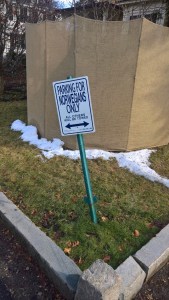
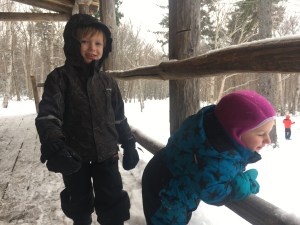
The first picture is from Erik’s mother in Sweden. I love that a Swedish gingerbread house was rendered in red board-and-batten style. Next is a funny sign about Norwegians that my husband shot in Concord. Then we have Suzanne’s photo of proto-skiers and another funny sign, this time in Vermont.

The old barn is next to the Ralph Waldo Emerson homestead. The house being torn down is the haunted one I have described before. Tearing it down revealed that it was actually haunted by a raccoon.

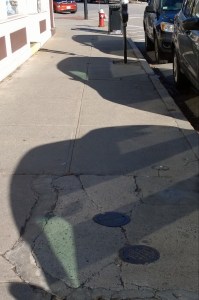
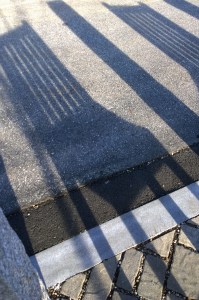
The six light-and-shadow photos depict a stuffed animal in bright sunlight, our front gate after a recent storm, Plato’s Idea/Form of a trash can and recycling bin, three green windows, chairs in the pocket park, and a surprising pattern of light on a window blind.

https://suzannesmomsblog.com/wp-content/uploads/2017/01/122516-swedish-gingerbread-house.jpg

011217-humorous-sign-about-Norwegians


https://suzannesmomsblog.com/wp-content/uploads/2017/01/122816-grandkids-in-vermont.jpg

122716-stowe-penquin-safety-tips


122916-barn-at-rw-emerson-house

122816-concord-demolition


010817-sunlight-on-stuffed-cat

010817-sunlight-on-snowy-walk


011617-shadow-recycling-bins

011516-three-green-shadows


011617-shadow-chairs-in-pocket-park

011617-light-on-window-shade


Weaving a Sari

Photo: Wikimedia Commons
Sari weaving at Kanchipuram — a city in the Indian state of Tamil Nadu.

One Instagram account I follow is The_Deepaks, which today posted a video about silk weaving that fascinated me. Instagram doesn’t make it easy to share posts, so I hunted around YouTube until I found another video on silk weaving.

The text accompanying the YouTube video is not in perfect English but is worth reprinting. “The saree is an unstitched garment worn by the women India, that reflects the vast aesthetics to suit a women’s need for adornment and cultural identity. It is a traditional wear across India of different styles depending on the region and occasion. Silk sarees (Pattu sarees) are renowned for their intricate work and adds value through Zari work which is considered to be special.

“These are characterized by huge contrast border offers an ethnic look along with appealing color combination, made through the inclusion of checks of varied colors and geometric patterns. Fine stripes as well as checks in both horizontal and vertical manner add to the relish of the fabric. Traditional motifs found are peacock and parrot with colors in mustard, brick red and black.”

Other videos I found bemoaned the dying art of silk weaving. It’s really unfortunate that the sari weavers, inevitably competing with machines, can no longer make a living doing the work by hand.

I wonder if some of them could earn a living teaching Westerners who appreciate handcrafts. I could imagine tour buses full of people coming for courses by skilled craftsmen and craftswomen.

More at Wikipedia, here.

Video: Dsource Ekalpa India


The world needs more thinkers who are as creative and bold as Patrice Banks of Upper Darby, Pennsylvania. She combined two very different skill sets into one business and made it work.

Bobby Allyn reports at radio WHYY NewsWorks, “Wearing a backwards red ball cap, skinny jeans and high-heel boots, Patrice Banks is doing her thing at the Girls Auto Clinic in Upper Darby.

” ‘That vroom, vroom noise you hear at a shop is called an impact gun,’ said Banks as she worked on a small blue coupe on a car lift in her garage. ‘It’s connected to compressed air, and so what that does is it removes bolts and nuts and stuff.’

“Spreading the mechanical gospel is in Banks’ blood. Her female-focused auto-shop has just opened up with the goal of empowering women to pop their hoods and get under their cars. It’s Banks’ brainchild, and she hopes the business is the start of a movement.

“Banks quit her day job as a materials engineer at DuPont to become an auto mechanic. … She was sick of being taken advantage of at local repair shops, and wanted to do something about it.

” ‘I felt like an auto-airhead. I hated all my experiences going in for an oil change, being upsold all the time for an air filter,’ she said. ‘Any time a dashboard light came on, I panicked.’

“Girls Auto Clinic is a two-in-one business: an auto repair shop and salon. While you get your car fixed by Banks and her other female mechanics, you can also get a mani, pedi or a blowout.

” ‘That’s what I wanted it to be like, a clubhouse for women, where you can just come and hang out and be around some other dope chicks,’ she explained. …

“Banks wants to take her Girls Auto Clinic concept nationwide. And she says some of her mechanics could be the ones opening up new locations.” More here.

Because combining two ideas appeals to me even more than teaching women to fix cars, I hope the new shops will be as creative. Just think of all the things that could be offered women while other women are repairing their cars: classes, baby playgroups, libraries, small business consultations — the sky’s the limit.

(Grateful to Scott for posting the Patrice Banks story on Facebook.)

Photo: Kimberly Paynter/WHYY
The Girls Auto Clinic Repair Center
Patrice Banks stands on the roof of the Girls Auto Clinic and Clutch Beauty Bar. She plans to build a roof deck for customers to enjoy.

Last Mile Health

You’ve heard of TED Talks — interesting people lecturing about amazing work?

Well, there is also something called a TED Prize, and medical entrepreneur Raj Panjabi will receive it in April. The TED website provides background.

“Raj Panjabi grew up in Liberia, but at age nine, his family fled a devastating civil war and relocated to the United States. He studied hard, and in 2005 returned to his native country as a medical student. He was shocked to find a health care system in shambles.

Only 50 doctors remained to treat a population of four million.

“Raj founded Last Mile Health to expand access to health services for those living in Liberia’s most remote regions. The nonprofit partners with the government to recruit, train, equip and employ community health care workers, empowering them to provide a wide range of services.

“In 2016, Last Mile Health deployed 300 community health workers, who conducted more than 42,000 patient visits and treated nearly 22,000 cases of malaria, pneumonia and diarrhea in children. The organization also helped tackle the Ebola epidemic in southeastern Liberia by assisting the government of Liberia in its response and training 1,300 health workers to prevent the spread of the disease.

“Last Mile Health has created a model that can be replicated. … The key: training and employing community health workers — individuals who learn to diagnose and perform medical interventions, and can serve as a bridge to the primary health system.”

At TED2017, Panjabi will reveal how he aims to transform access to care in remote areas elsewhere and protect against pandemic outbreaks.

More here. (Hat tip: Maria Popova on Twitter.)

Photo: Last Mile Health 
Born in Liberia, Raj Panjabi fled as a child because of civil war. He returned as a medical student — and went on to found Last Mile Health.

Free Culinary Training

Restaurants are having trouble finding trained workers, and many low-income people have trouble getting themselves qualified for a job.

Enter the Culinary Arts Training Program at the Salvation Army’s Kroc Center in Dorchester, Mass.

Sacha Pfeiffer writes at the Boston Globe, “A recent business survey found that the state’s dining sector is facing its worst labor shortage in more than three decades. That survey, by the Federal Reserve, called the staffing situation a ‘crisis,’ and Boston-area restaurants of all types report that hiring at every level, from dishwashers to chefs, is a major challenge.

“But those industry woes pose an opportunity for graduates of free culinary training programs offered by the Salvation Army, Pine Street Inn, Lazarus House Ministries, Community Servings, UTEC, Roca, and other local nonprofits, which have become a small but valuable source of employees for the region’s food service industry. …

“At [November’s] culinary graduation at the Salvation Army’s Kroc Corps Community Center in Dorchester, for example, several prospective employers attended the event to canvass for possible hires. …

“Aimed at low-income students, the programs generally offer basic training in cooking techniques, knife skills, food terminology, menu planning, nutrition, and kitchen safety standards. Many also teach ‘soft skills,’ such as resume writing and effective interviewing, and job-readiness, like the importance of punctuality. …

“Most also provide job placement assistance at not only restaurants, but school cafeterias, hospital kitchens, nursing homes, sporting venues, corporate cafes, and large food supply companies such as Aramark and Sodexo.

“ ‘There are more jobs than we have students for,’ said Paul O’Connell, the former chef/co-owner of Chez Henri in Cambridge who is now culinary director at the New England Center for Arts & Technology, which offers a 16-week culinary training course. … And even low-level jobs in the food sector can lead to lasting careers.

“ ‘The beauty of our industry is if people have a really good attitude and want to learn, they can go from the dish room to the boardroom and everywhere in between,’ said Robert Luz, chief executive of the Massachusetts Restaurant Association, which collaborates with many nonprofit programs.

“ ‘I’ve seen an incredible number of people grow their career from line cook to assistant kitchen manager to kitchen manager to chef and beyond,’ Luz added, ‘so it’s the road to middle income for a lot of people.” More here.

Photo: Jonathan Wiggs/Globe Staff
A graduate of the Culinary Arts Training Program at the Salvation Army’s Kroc Center shows off his certificate.

Photo: Ellen Albanese for The Boston Globe

For the latest in ridiculous luxury, make sure you get a box of chocolates from the milk of only one cow.

At the Boston Globe, Ellen Albanese has the story:   “You may have heard of single-malt scotch (which must be made from malted barley and distilled at a single distillery), but how about single-cow-origin chocolates?

“At Milk House Chocolates at Thorncrest Farm, Kimberly Thorn crafts certain flavors of chocolates with the milk from individual cows. Karissma, for example, provides the milk for the cabernet sauvignon truffles, while Daydream owns the sea salt caramels. Thorn says that when a pail of milk is delivered to the creamery, she can tell by the smell which cow it’s from.

“Thorn says she discovered the technique by accident. She had been making chocolates with combined milk from the farm’s cows, but one day she forgot to bring home the milk to make the candies. She went back to the barn and milked one cow. The chocolates made from that milk, she said, ‘came out so much better than anything I had ever made before.’…

“Single-cow-origin flavors have become so successful that Thorncrest breeds cows for specific milk/chocolate flavors. The other element is what they eat, said Thorn’s husband, Clint, who oversees genetics and feeding. The farm uses six different types of hay, as well as natural products that influence flavor.” More at the Boston Globe  and at the Hartford Courant.

KerryCan? You make amazing chocolates. Have you ever heard of the one-cow angle?

Photo: Patrick Raycraft/ Hartford Courant
Thorncrest Farm in Goshen, Connecticut, makes chocolates with milk from one cow at a time.


Here’s an upbeat story about the contributions of immigrants.  It relates to an area of Erie, Pennsylvania, that got a shot of adrenaline when entrepreneurial refugees began opening markets to serve various ethnicities.

Erika Beras reported at PRI radio’s The World, “Much of Erie, Pennsylvania is a food desert — people don’t have easy access to fresh or nutritious food. But [stores] run by refugees are popping up and making a big difference.

“At UK Supermarket, Samantha Dhungel pulls bags of vegetables out of the freezer. In her cart are onions and eggplant, but she pulls out a vegetable she only knows by its Nepali name. It’s a leafy green that her Nepalese husband uses in his cooking. …

“Before this store opened two years ago, there were a couple convenience stores and a few fast food spots around. All of them sold food that wasn’t nutritious, says Alex Iorio. She’s the public health educator for the Erie Department of Health. She says this place is different. …

“Most of the stores carry fresh foods and whole-grain items. Before, if people in the neighborhood wanted fresh vegetables, cornmeal or nuts, they’d have to drive across town or to the suburbs.

“Then two years ago, Pradip Upreti, a Nepalese refugee, opened UK Supermarket. … He wasn’t trying to solve the food desert problem — none of the store owners were. They just wanted refugees in Erie, who make up 10 percent of the city, to have access to specific foods.

“People would drive distances and buy up items like jackfruit and halal pizza. Then they’d resell those items to people in their community. Upreti saw a business opening there. …

“Upreti’s store carries mostly South Asian foods. Across the street is an Iraqi owned store that carries lots of spices. Around the corner, another Iraqi store specializes in fish and meats like lamb and goat. And there are well over a dozen more stores like them.” More here.

Many immigrants become small business owners. Happily for their neighbors and other people who enjoy foods from around the world, some of them open grocery stores.

Photo: Erika Beras
Pradip Upreti, center, stocks shelves in his Erie, Pennsylvania store, UK Supermarket.


I wish Pete Seeger were around for this story. The folksinger spent many years sailing his sloop the “Clearwater” up and down the Hudson River to draw attention to pollution. Today the river is in good enough shape to attract a whale chasing its dinner.

Recently, New York Times reporter Katie Rogers interviewed Dr. Rachel Dubroff, whose apartment overlooks the Hudson. She writes that the first time Dubroff spotted a whale swimming outside her living room window, “she didn’t quite believe the sighting was real,” but news reports in November confirmed that “the Hudson River has a resident humpback.”

Continues Rogers, “The Hudson, as scenic as it is, does not scream ‘whale habitat.’ But experts say cleanup and conservation efforts have led to cleaner waters and an abundance of fish. …

“A whale appearing in the Hudson is very rare, [Paul Sieswerda, the president of Gotham Whale, an organization that tracks marine life around the city] said, which is why he thinks this one is a solo traveler. But the whale still faces significant danger because it is swimming in traffic-laden waters. …

“ ‘When you have whales chasing the bunker [menhaden], and fishermen chasing the stripers that chase the bunker, accidental interactions between whales and vessels can occur,’ Jeff Ray, a deputy special agent with NOAA’s law enforcement division,” added.

I hope everyone using the river will watch out for whales and try to coexist. It would be great if the whale came back after the usual typical retreat to warmer breeding grounds in winter.

More at the New York Times, here.

Art: Amy Hamilton
A humpback whale like the one spotted in New York’s Hudson River in November 2016.

Improv in Prison

Prison improv classes organized by actress Sabra Williams and film director Tim Robbins correlate with lower recidivism, according to a recent article in New York magazine.

Writes reporter Mickey Rapkin, “You can imagine how this idea was received 10 years ago, but here’s the pitch: A tenacious British actress teams up with Oscar winner Tim Robbins to bring acting classes to maximum-security prisons.

“And not just any acting classes, but improv workshops that ask Crips and Bloods and convicted murderers and white supremacists to sit together, wear makeup and masks, and maybe even pretend to be women sometimes. The eight-week intensive is meant to help the incarcerated better handle their emotions. …

“People said, ‘Yeah, yeah, you want to give them crayons. You’ve got acting classes?’” recalls Robbins of the launch of the Actors Gang Prison Project. ‘We’re like, “No, … it’s about changing behavior.” ‘

“Fundraising was a slog. Correctional officers pushed back. And these actor-facilitators were dismissed as another merry band of liberals pushing what’s known in the Prison Industrial Complex as ‘hug-a-thug’ programming.

“Sabra Williams, the co-founder and executive director of the Prison Project — who also had a small part in Kristen Wiig’s Welcome to Me last year — remembers those early days. ‘There was so much opposition … A few haters thought we were giving inmates too much power. One spread rumors that I was having an inappropriate relationship with a student.’

“Yet, despite the haters, the Prison Project celebrated its 10th anniversary this year, and will expand to 10 California prisons in February 2017, just as some hard data has finally come in to prove the program’s merits.

“The recidivism rate in the state is more than 50 percent. But a recent preliminary study by the California Department of Corrections and Rehabilitation showed that, for inmates who completed the Prison Project, that number dropped to 10.6 percent. Critics will point to a sample size that’s too small to draw broad conclusions, and it’s a valid concern. But the provisional findings are encouraging.” More here.

I want so much to believe in this approach, but having recently read poet Jimmy Santiago Baca’s memoir of life in a maximum security prison in the late 1990s, I can’t help but wonder. I look forward to more data. My review of Baca’s A Place to Stand is at GoodReads.

Photo: Peter Merts
Sabra Williams, Tim Robbins, and inmates in an Actor’s Gang Prison Project class at the California Rehabilitation Center.

Theater of Old People

Here’s a great story from the Japan Times about a theater group for people over 60. Where do I sign up?

Nobuko Tanaka writes, “At the age of 91, Saitama resident Izumi Noguchi is speaking at his first press conference — at least as an actor anyway.

“ ‘When I saw an advert in April inviting anyone aged 60 or older to audition for a new project called 10,000 Gold Theater, I just felt like challenging myself to do something I’d never had a chance to try before,’ he says.

“Noguchi is the oldest person to join the 10,000 Gold Theater ensemble. …  ‘Gold Symphony, my dream, your dream’ [is] a staging on an unparalleled scale that features some 1,600 performers (not 10,000 as the name suggests) who are all volunteers and almost all amateurs …

“Arts promoter Taneo Kato came up with the idea [when] he was watching a performance of ‘Hamlet’ in which stage icon Yukio Ninagawa directed members of the Saitama Gold Theater and Saitama Next Theater — troupes made up of older and younger actors that he formed in 2006 and 2009, respectively, after becoming artistic director at Saitama Arts Theater in 2006.

“ ‘Out of the blue, midway through “Hamlet,” veteran enka singers the Komadori Sisters — who are actually twins — appeared and sang “I Want to be Happy One Day,” ’ Kato says, recalling how striking a moment it was to see the women, born in 1938, sing those words.” More here.

I wonder how big an issue memorization is for the performers. My friend Dorothy started a group of older amateur actors in Concord, but they do readings and don’t have to memorize. I have many memorized stories, Bible verses, and poems in my head and can trot them out at a moment’s notice. Not sure if I could acquire new ones to the same extent.

Photo: Maiko Miyagawa
Massive undertaking: Seiji Nozoe directs elderly actors during rehearsals for the play ‘Gold Symphony, my dream, your dream,’ performed in Chuo-ku, Saitama City, December 2016.

An African writer’s gratitude to a generous book lover in his childhood city has inspired an online bookstore geared toward African authors.

Daniel A. Gross writes at the New Yorker, “Magunga Williams grew up in Kisumu, a Kenyan city that’s home to more than three hundred thousand people but to only two major bookstores. There, Williams told me recently, ‘people depend on books that they find in supermarkets.’ Most of these books come from the United States and Europe. ‘These supermarkets do not have a rich African collection,’ Williams said.

“But there was one place where he could always find a wider range of books. It was the personal collection of a local man, whose house became a neighborhood meeting place and an unofficial sort of public library. …

“Williams moved to Nairobi and began an undergraduate program in law, but he never forgot the way that a house full of books, in a city with too few, became an escape. …

“So Williams, while he was in school, started a literary blog, Magunga.com, and … he made it his mission to create a space like that library—not in a house but on the Internet. The result is a fledgling online pan-African bookshop: the Magunga Bookstore.

“In becoming a bookseller, Williams was, in part, following in the footsteps of his girlfriend, Abigail Arunga. A few years ago, Arunga, a Nairobi-based freelance writer in her late twenties, stopped by a few local bookstores and asked if they would stock ‘Akello,’ her self-published collection of poems.

“At one shop, she was told that Kenyans don’t read poetry. At another, an employee claimed that her ninety-three-page book was too short. ‘They told me that my book had to be at least a hundred pages,’ she said. So she decided to sell the book herself — at poetry readings, literary festivals, even family gatherings. …

“An epiphany came last winter, when Williams was reading an article in the Guardian and noticed that the newspaper operates its own online bookstore. He told Arunga that they were going to open a bookstore, too. …

“Williams earns his living by writing sponsored posts on his blog, which attracts around five thousand readers each day. He asked his Webmaster, David Mabiria, to add a new tab to the Web site, which would offer books for sale. … He and Arunga requested book donations from writer friends, who provided copies of their own work. They launched the feature with ten titles in stock, under a simple slogan: ‘Spreading the Word.’

“Word spread slowly. The Magunga Bookstore made its first sale in December, 2015, when Williams was out of town — he had to ask a friend to deliver the book. ‘He was telling me he was in traffic,’ Williams recalled. ‘And I was, like, “I don’t care. Just go get a boda-boda ride.“ ‘ (Boda-boda is East African slang for a motorcycle taxi.) He remembers telling the friend, “I’ll pay you even if it costs me double the price. Just to make sure the client is happy.” ‘ ”

More at the New Yorker. And while you’re clicking, take a look at the Magunga Bookstore site, here.

Photo: Facebook/Babishai Niwe Poetry
Abigail Arunga and Magunga Williams at the 2016 Babishai Poetry Festival, in Ntinda, Uganda.

There are no limits to human ingenuity. Jordan Todorov writes at Atlas Obscura, for example, about an “olfactory artist” who has been working to recreate the scents of cities for more than a decade. And why not?

” ‘Berlin smells of cigars and boiled cabbage.’ This observation comes from the 1963 travelogue Thrilling Cities by the British author Ian Fleming … But for Berlin-based olfactory artist Sissel Tolaas, who creates ‘smellscapes’ of major cities, it smells like so much more.

“ ‘Every city has an identity like we humans do. And every city is unique smell-wise,’ explains Tolaas, a half-Norwegian, half-Icelandic expatriate artist with background in chemistry, linguistics, mathematics, and visual arts. ‘The odor depends on things like climate, geography, demography etc. Inside the city, smells differs from neighborhood to neighborhood.’ …

“Tolaas is traveling around the world and mapping its cities, one smell at a time. The project, called SmellScapes, has taken her to 35 cities so far, from London and Paris to Cape Town to Kansas City (both of them).

“Tolaas started working on her SmellScapes more than a decade ago. Most of them are commissioned by either creative platforms, city councils, or universities and private foundations, and they serve an amazingly wide variety of purposes. For example, her SmellScape of Mexico City, developed in 2001 in collaboration with the Harvard graduate student teacher program, was a creative way to understand pollution. …

” ‘I walked around and [caught] in a playful manner the smells in different neighborhoods. The goal was reproducing the smell of pollution—the car exhaust, the refrigerator, the air conditioner … Then I gave the smells to people and asked them to articulate them which made them understand better what’s causing the pollution.’ …

“Tolaas collects the smell samples in a small glass tube called tennex. Then the container is sent to her research partners from International Flavors & Fragrances, an American perfumery corporation headquartered in New York City, which according to Tolaas is ‘one of a small number of companies which controls how the world smells and tastes.’…

“After analyzing the sample with a gas chromatograph, IFF sends Tolaas a formula that contains the fingerprint of the smell captured, describing all the subtle nuances in great detail. Using this data chart, Tolaas replicates the smell in her lab, combining some of the nearly 4,000 individual molecules she has at her disposal. The result, Tolaas explains, is as close as possible to the original smell.” More at Atlas Obscura, here.

I am going to start paying more attention to neighborhood scents. I know, for sure, we have pizza aroma and dry cleaning chemicals and the smell of trains grinding to a halt on metal tracks. But in spring, we also have lots of flower smells.

I may come back to this.

Photo: Atlas Obscura
Sissel Tolaas uses a nano-scale to measure the smell molecules.

The children’s holiday show at the American Repertory Theater (A.R.T.) this year was a musical version of Roald Dahl’s James and the Giant Peach. My husband and I went to see it with our older grandson and granddaughter.

Last year, invited by our grandson’s friend and her grandmother, we attended A.R.T.’s musical about a pirate princess. Unfortunately, we didn’t have a good view. Somehow or other I had failed to complete my ticket purchase, and we ended up standing in the back much of the time.

This year we were right up front. Our six-year-old grandson was thoroughly engaged with the performance this year. His three-year-old sister, dressed up like a princess, was riveted but felt safest watching the show from my lap.

“What happened to James’s mother and father?” was her first question as the lights went up at the end. I reluctantly reported that they were eaten by a rhinoceros but added that, of course, “That’s pretend. Rhinoceroses don’t eat people.” She took it in stride and later told the theater-going neighbor from down the street that she loved the show.

One thing A.R.T. likes to do with children’s shows is provide some interactivity. For the Pirate Princess, there were actors in costumes before the performance wandering around the lobby and posing for pictures with the children. For Giant Peach, children could make origami fortune tellers (once called “cootie catchers”) that looked either like herring gulls or sharks. When sharks and gulls appeared in the production, children were encouraged to activate their own small versions. Our grandchildren both made sharks.

An adult played James in a childlike way. After James’s parents vanish, he’s sent sent to live with two nasty aunts, played by men. He is rescued when magic beans turn a peach into something big enough to crush the aunts.

As the peach grows, the critters inside the peach become giant-sized themselves (earthworm, spider, ladybug, centipede) and soon join forces with James as they all float skyward in the peach.

Each bug contributes special skills to extricating the team from dangers. I especially liked the blind earthworm, whose special skill turned out to be posing as bait for fearsome gulls so his friends could harness them with Miss Spider’s silk to get the peach away from sharks.

You can read more about the production here. Last chance to see the show is January 8, 2017.