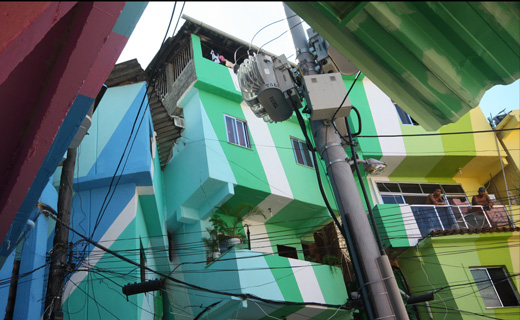
I have blogged about programs that use the arts to turn convicts toward something positive, to build up the self-worth of the homeless, to turn Brazilian slums into more hopeful places. The list goes on.
Recently ArtsJournal.com alerted me to a BBC story on an arts initiative that helps veterans reacclimate to civilian life.
“Many veterans are turning to charities for help. One is using the unlikely weapon of art to help fight the psychological wounds of war, while another organisation is actively encouraging artwork in the army. Outside of the [national health service] the charity Combat Stress is the biggest provider of support to armed forces veterans with conditions such as post-traumatic stress disorder (PTSD), depression and anxiety.
“Art therapy is one of the treatments it uses. Drawing, sculpting and painting are helping patients manage their symptoms with great success.
” ‘Traumatic memories take a different path from our normal memories and tend to be frozen in the body in the central nervous system,’ explains Janice Lobban, who has been a trauma therapist at Combat Stress for the past 10 years. …
“Group sessions typically begin with the therapist giving a one or two word brief to inspire creativity before veterans are given a selection of materials for painting, modelling or writing. After 45 minutes of quick work, the group then get together to talk about and describe what they’ve just created.
” ‘I try to keep a blank mind and just let images and feelings rise out from my unconscious to my hand and things start appearing,’ says Richard Kidgell … who served in the Royal Air Force from 1978 to 1985. ‘What surprises me is that while I’m drawing I don’t know what it is — they’re just images, but by the end of the session I’ve made a complete story. It’s quite enlightening as sometimes I’m not entirely sure what I’ve drawn until I speak to others about it.’ ”
When playwright Willie Reale started the 52nd Street Project in 1981 it was to meet a need. Children living in poverty in and around the Hell’s Kitchen section of New York City often had little joy in their lives. A group of theater people decided to use the art they knew best to change that.
“The mission of The 52nd Street Project is to bring together kids (ages 9 to 18) from the Hell’s Kitchen neighborhood, with theater professionals to create original theater. The primary activity of the Project is to present free theater to a general audience. The Project’s deeper purpose is to use the art form of theater to engage the children’s imaginations, broaden their means of expression, and increase their sense of self worth, their literacy skills and their appreciation for the arts. With the addition of our expanded Clubhouse and our own theater, the Project has been able to add programming in various other art forms (such as Photography, Poetry, Theatrical Design and Dance). Additionally, the Project runs a free, after school homework help and academic mentoring program.”
In the early years, I saw some of the plays created when one child and one actor bonded and collaborated. Delightful. As Reale says, “There is no way to fast forward and know how the kids will look back on this, but I have seen the joy in their eyes and have heard it in their voices and I have watched them take a bow and come up taller.”
In this clip, kids work with adult partners on haiku.
Here is a business that is in the business of innovating to solve problems in poor countries.
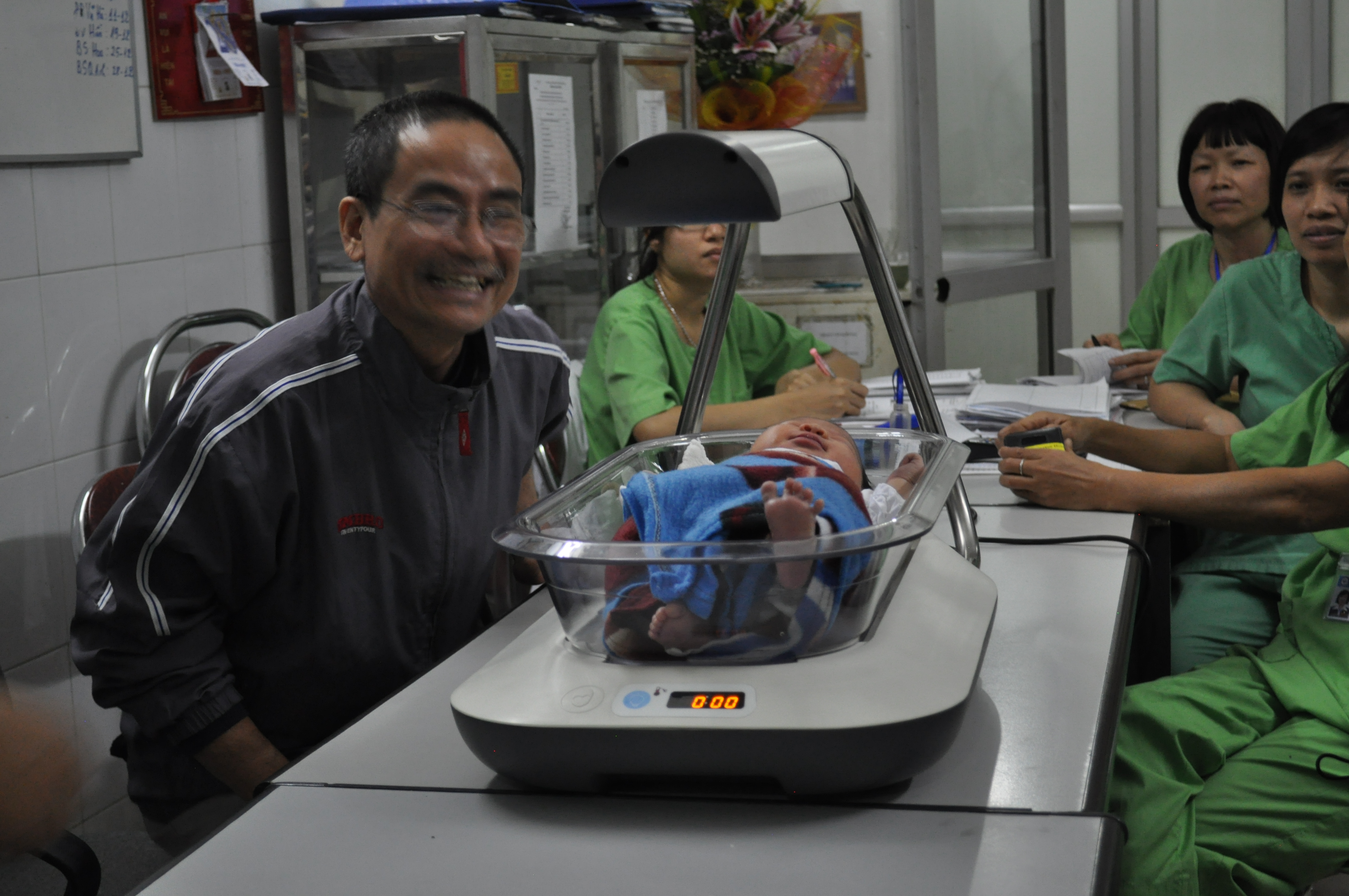
The latest initiative at Design that Matters has been to find a low-cost way to treat babies in the developing world who have jaundice. This week the group tested Firefly, an easily transportable phototherapy bassinet specially designed for Vietnam. The doctors in Vietnam were ecstatic.
“Currently infants born with jaundice in Vietnam will first travel to a district hospital in their search for treatment, which are usually not equipped with the proper tools to treat any newborn health issues and are referred on to a provincial or national hospital. Due to this lack of equipment at the rural and district level, infants’ conditions worsen as they travel for multiple days, risking the development of permanent brain damage. …
“In response, Design that Matters (DtM), the East Meets West Foundation (EMW) and Vietnamese manufacturer MTTS have launched a collaboration to develop a new infant care device that will treat newborn jaundice during the critical first days of life.” Read more about Firefly here.
“Design that Matters (DtM), a 501c3 nonprofit based in Cambridge, Massachusetts, creates new products that allow social enterprises in developing countries to offer improved services and scale more quickly. DtM has built a collaborative design process through which hundreds of volunteers in academia and industry donate their skills and expertise to the creation of breakthrough products for communities in need. Our goal is to deliver a better quality of service, and a better quality of life, to millions of beneficiaries through products designed for our clients.”
A November NY Times had this article on some activist nuns.
“Sister Nora Nash of the Sisters of St. Francis of Philadelphia. And the slight, soft-spoken nun had a few not-so-humble suggestions for the world’s most powerful investment bank.
“Way up on the 41st floor, in a conference room overlooking the World Trade Center site, Sister Nora and her team from the Interfaith Center on Corporate Responsibility laid out their advice for three Goldman executives. The Wall Street bank, they said, should protect consumers, rein in executive pay, increase its transparency and remember the poor. …
“Long before Occupy Wall Street, the Sisters of St. Francis were quietly staging an occupation of their own. In recent years, this Roman Catholic order of 540 or so nuns has become one of the most surprising groups of corporate activists around.
“The nuns have gone toe-to-toe with Kroger, the grocery store chain, over farm worker rights; with McDonald’s, over childhood obesity; and with Wells Fargo, over lending practices. They have tried, with mixed success, to exert some moral suasion over Fortune 500 executives, a group not always known for its piety.
” ‘We want social returns, as well as financial ones,’ Sister Nora said, strolling through the garden behind Our Lady of Angels, the convent here where she has worked for more than half a century. She paused in front of a statue of Our Lady of Lourdes. ‘When you look at the major financial institutions, you have to realize there is greed involved.’ ”
Sometimes it just takes a few small voices to verbalize what everyone has noticed and get the ball rolling.
I was thinking about that today as I read an essay by a student at my old girls high school. She had interviewed me and another of my classmates for her history (!) class, and she captured the importance I placed on my tiny role in helping my school desegregate. All I did was ask the headmistress why there were no black girls in the school (I think in the 1960s I would have said “Negro”). I believe that it was because of questions like that and her own natural inclinations — not to mention what was going on in the nation — that she took action.
At the time, I thought asking a question was pretty small potatoes, but now I think that if lots of people do a small thing, it can be big.
Had an awesome playdate with my grandson and his parents today.
John and I pushed the stroller to a playground that has lots of climbing things and outgrown toys that families donate. On the way, we passed a neighbor’s yard. Smoke was curling up behind the fence. The three-year-old twins were roasting green coffee beans in an old popcorn maker, their dad watching. The children are apparently quite skillful aficionados and know the difference between “first crack” and “second crack,” a coffee-roasting concept that was news to me. They gave a jar of roasted beans to John to take home, with instructions to let the beans breathe overnight.
At the playground, there were many dads with toddlers. Only two moms. It seems to be a Saturday-morning phenomenon — proof that Suzanne’s high school friend Mike was onto something when he founded Playground Dad.
We also had fun playing in the pup tent that had temporarily taken over John’s dining room. And we danced. My grandson will dance at the drop of a hat. You don’t need to play music — singing a cappella or rattling a jar of freshly roasted coffee beans to a good beat will get him going. His dad took break dancing as a kid. Also tap. And his mom is a super dancer. So there you go.
Perhaps you saw this CNN story about a sports-loving boy from Soweto and his transformation into ballet dancer. “Andile Ndlovu is one of South Africa’s most prominent young ballet dancers, an international performer and award winner both at home and overseas. But for Ndlovu to be accepted into the rarefied world of classical dance — which in South Africa is traditionally seen as an elitist and a predominantly white preserve — the boy from the rough Soweto townships says he had to overcome outdated stereotypes.
” ‘I used to be picked upon for the way I walk and the way I act or carry myself,’ he says of his time at school, where he became disparagingly known as ‘the dude who did ballet.’ …
“In late 2008, [his] perseverance was rewarded as he was offered a place at The Washington Ballet, one of the most prestigious dance companies in the United States. That year he shot to fame in a production of Don Quixote by the South Africa Ballet Theater. Now 23, Ndlovu has gone on to win awards at the Boston and Cape Town International Ballet competitions, as well as securing prominent roles in numerous ballet productions across the world. This success, he hopes, will eventually enable him to change conventionally held views not only of black dancers but male ballet dancers in general.
” ‘What I wanted was to change people’s minds in South Africa about black ballet dancers. I wanted to change that view, because everybody used to put it in a category for the elite people or, you know, it’s only for a certain racial group,’ he says.”
In this YouTube video, he describes how his sister was the one who gave him a push into the life he has now fully embraced. Speaking of her makes him smile.
A while back I wrote about stealth — in particular about a sculptor of paper dragons leaving works of art in libraries around the UK. I also mentioned a few of my own stealth projects.
Here is a stealth project I haven’t yet tried. It requires a camera. The idea is to move a book in bookstore to a shelf that you think suits the topic better, then take a picture of what you have done and post it to the “reshelving” group on Flickr. For example, an especially opaque tax-preparation book might go in the poetry section. A wildly imagined novel about, say, Jane Austen could get moved to biography. And a nonfiction book by a politician you don’t admire could be moved to the fantasy section.
You probably don’t want to mess things up in libraries, but just one book in bookstore … how bad can it be? Come to think of it, when my friend Paul Nagel’s biography of John Quincy Adams kept being put in a less prominent location than David McCollough’s book on John Adams, a malignant spirit took hold of me every time I entered that shop, and by the time I left, the Nagel cover was facing outward on the top shelf.
Even if you don’t sign up to post stealth photos of reshelved books, at least take a look at the Ministry of Reshelving site here.
The Boston Medical Center, whose patients are mostly poor, has been a pathbreaker in treating the whole person. Its volunteers and staff help patients find services for life issues that may be exacerbating health problems. BMC works with lawyers to get landlords to make building-code-required changes that affect asthma and other conditions.
Now it is doing an experiment with yoga.
On Monday, the Boston Globe wrote, a “yoga class, held in a Boston Medical Center lobby for staff and patients, features postures vetted for people with back pain. It was a prototype for an ongoing study exploring the use of yoga in the city’s poorer neighborhoods.
“A survey of 5,050 people who practice yoga, conducted for Yoga Journal in 2008, found that 44 percent — almost half — reported annual incomes of $75,000 or more, and 24 percent said their income was higher than $100,000. Chronic low-back pain annually affects between 5 and 10 percent of all income levels of the population …
“Because many yoga postures stretch and strengthen the muscles affecting the back, at least 10 published studies have been done on yoga and chronic low-back pain, says [BMC’s Dr. Robert B.] Saper. But though the majority have shown yoga to be promising as a low-cost treatment, all have been done on predominantly white, educated, affluent populations, he says.
“ ‘In our patient population, it’s unusual to have back pain alone as a single problem,’ Saper says, noting that many patients also suffer from hypertension, diabetes, obesity, depression, and anxiety. And while he emphasizes that he doesn’t consider yoga a ‘panacea for everything,’ he says that ‘because of the mind-body component of yoga, we’re aware that [it] may be helpful for a variety of patients with co-morbidities. And that it may help with depression, anxiety, and resilience.’ …
“The yoga group received one 75-minute class each week that included postures, deep breathing, and meditation. They were also given an instructional CD and equipment to practice 30 minutes a day at home. After 12 weeks, the yoga group reported one-third less pain and an 80 percent decrease in pain medications. The control group reported a decrease in pain of 5 percent and no change in medication use.”
A story in today’s NY Times has some delightful pictures of Santas attending a premier Santa school. This year there is increased concern that kids’ expectations may be too high for straightened pocketbooks, and Santas need to know how to handle that.
Monica Davey writes, “Santas — including the 115 of them in this year’s graduating class of the Charles W. Howard Santa Claus School — must learn to swiftly size up families’ financial circumstances, gently scale back children’s Christmas gift requests and even how to answer the wish some say they have been hearing with more frequency — ‘Can you bring my parent a job?’ …
The Charles W. Howard Santa Claus School in Midland, Michigan, is considered the Harvard of Santa schools. And it takes a holistic approach not only to what a Santa needs to do for children but what he needs to do for himself. “Along with training in how to store your wig, how best to answer the questions of kindergartners and how to perform on your local cable access television station, a financial planner advised the Santas … to open pension funds and contribute as much as possible to 401(k) retirement accounts. …
“Even with the economic downturn, not all the Christmas lists have grown shorter. Some children show up with elaborate printouts, cross-referenced spread sheets and clippings from catalogs. ‘I try to guide the children into not so unrealistic things, and I do tell them that Santa’s been cutting back too,’ said Tom Ruperd, of Caro, Mich.”
It’s at times like these that homemade gifts, family activities, and donations to worthy causes start to look like more reliable ways to have a good time.
My sister buys a subscription to the Utne Reader even though you can read much of it online. She loves the variety of articles it reprints and thinks she should support the effort.
At Thanksgiving she told us about an article Rachel Kadish wrote that originally appeared in The Good Men Project Magazine. It’s about Kadish’s Israeli cousin, Noam Galai, and a photo he took of himself screaming up at the sky. It’s about how the photo struck a chord with Iranians and with Arabs working to overthrow oppressive regimes and how they used the photo widely, knowing nothing about the photographer.
Rachel Kadish writes that people originally lifted the photo from Flickr, and soon it went viral. “Shortly after Noam began investigating the spread of his scream photograph around the globe, he discovered something completely unexpected. Images of his face were turning up graffitied on walls in Tehran. In Tabriz City.
“His portrait, it turned out, had been picked up by some antigovernment protesters in Iran. In the year following the Green Movement’s first open clashes with Ahmadinejad’s government—a violent [June 2009] confrontation watched anxiously by the world—images of Noam’s face were reproduced by activist graffiti artists, sometimes veiled in red-painted blood. His anonymous face was rendered by anonymous Iranians on metal fuse-boxes and walls, alone or amid a crowd of other spray-painted images: part of a mute but vociferous message dangerous to utter aloud. …
“When Noam learned that his self-portrait was being used by anti-Ahmadinejad protesters, he emailed some of the Iranian graffiti artists through Flickr, where they’d posted images of their work under aliases.
“ ‘I told them, “It’s me. It’s cool. I’ll be happy to see more of what you do.’ ” ‘
“One of the Iranian graffiti artists wrote back. It was a two-line exchange.
“ ‘He was cool,’ Noam said. ‘He was “Nice to meet you, I like your picture.” I didn’t tell him I’m from Jerusalem.’ ”
I love looking out the upper level of a parking garage at rooftops and chimneys. It makes me think of Dickens novels. And I’ve always been interested in art that shows a view from a window or someone looking out a window.
The Metropolitan Museum of Art must like windows, too, given that it mounted a whole show called Rooms with a View: The Open Window in the 19th Century. I’m told that the exhibit’s focus was on how a window can frame a subject, but I’m more interested in what the person at the window is feeling.
There is a lovely painting at Boston’s Museum of Fine Arts showing a young woman working at a sewing machine and gazing out a window through which a soft, dreamy light is falling. What is she thinking? “The Open Window,” painted by Elizabeth Okie Paxton in 1922, gives me the feeling that the woman is thinking about what other people are doing out in the world or what she might want to do someday.
I got a new insight into gazing-out-windows art from a review of the movie Hugo in the NY Times.
Manohla Dargis writes, “Mr. Scorsese caps this busy introductory section with Hugo looking wistfully at the world from a window high in the station. The image mirrors a stunning shot in his film Kundun, in which the young, isolated Dalai Lama looks out across the city, and it also evokes Mr. Scorsese’s well-known recollections about being an asthmatic child who watched life from windows — windows that of course put a frame around the world. This is a story shared by all children, who begin as observers and turn (if all goes well) into participants. But ‘Hugo’ is specifically about those observers of life who, perhaps out of loneliness and with desire, explore reality through its moving images, which is why it’s also about the creation of a cinematic imagination — Hugo’s, … Mr. Scorsese’s, ours.”
I had not thought about that before — that we all start out as observers.
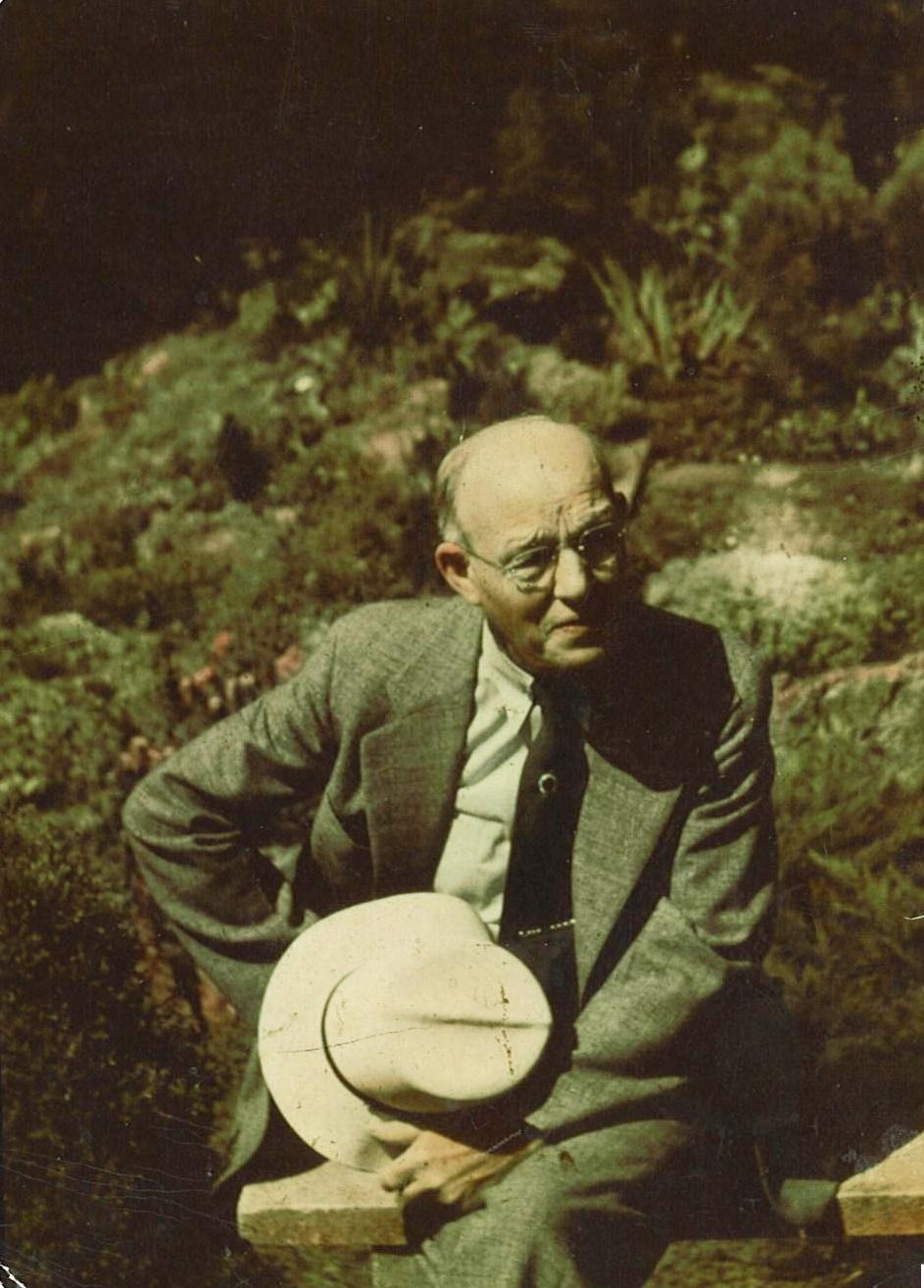
I never met my Syracuse grandfather. He was an osteopath and died before my time. But I often heard about his avocation, a remarkable alpine garden.
A garden needs a gardener, and it is understandable that the garden would fall apart after my grandfather’s death. But in recent years, neighbors got together to reconceive a garden on the site. In June 2007, their efforts paid off, with the mayor announcing the dedication of a memorial park.
“The Dr. James P. Burlingham Memorial Park will be officially dedicated on Saturday, June 30, 2007 … This park, formerly Gray Park, was originally a 2 acre meadow behind the house of Dr. Burlingham, which he slowly developed into flower gardens and a world famous alpine plant region in his spare time in the 1920s. … A small group of individuals from the neighborhood … decided to bring the park back to its original appearance with flower gardens and plants. … As part of the dedication ceremony on Saturday one of the doctor’s daughters, who is 94 years old, is expected to attend.”
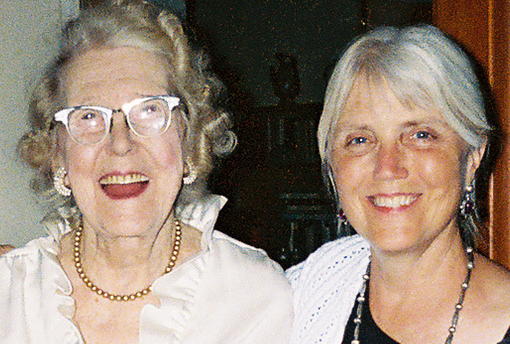
That would be my Aunt Maggie, seen here with her daughter Claire.
A gardening gene runs in the family. My son has it, both from my side and his father’s. As part of John’s interest in identifying mystery plants in his own yard, he came up with a crowd-sourcing solution. Today, if you upload a photo to Mister Smarty Plants, you can see if someone on the Internet knows what your plant is. Check it out.
We went downtown to have lunch at the Whitney Museum with friends and to take in the Real/Surreal exhibit.
Favorite artists like Charles Sheeler, Mardsen Hartley, and Grant Wood were featured. I liked the eerie emptiness of Edward Hopper’s “Seventh Avenue” and the anxious denizens of George Tooker’s subway world.
Sounds unnerving, but in surfacing the alienation, I think the artists make one feel the possibility of getting a grip on it.
Afterward, we walked up Madison, stopping at a gallery in the Carlyle Hotel that was showing Magritte works, some for sale.
I have always liked Magritte, with his bowler-hatted men blocked by giant green apples and his nighttime streets overarched by daytime skies. And I especially like him because once in a workshop, I directed a Tom Stoppard one-act play inspired by him, After Magritte. It was the best fun!
I’m thinking of a hymn I like and a line that seems to go with Thanksgiving, families, friends, and all the familiar faces that make up one’s context.
“Roots, hold me close.”
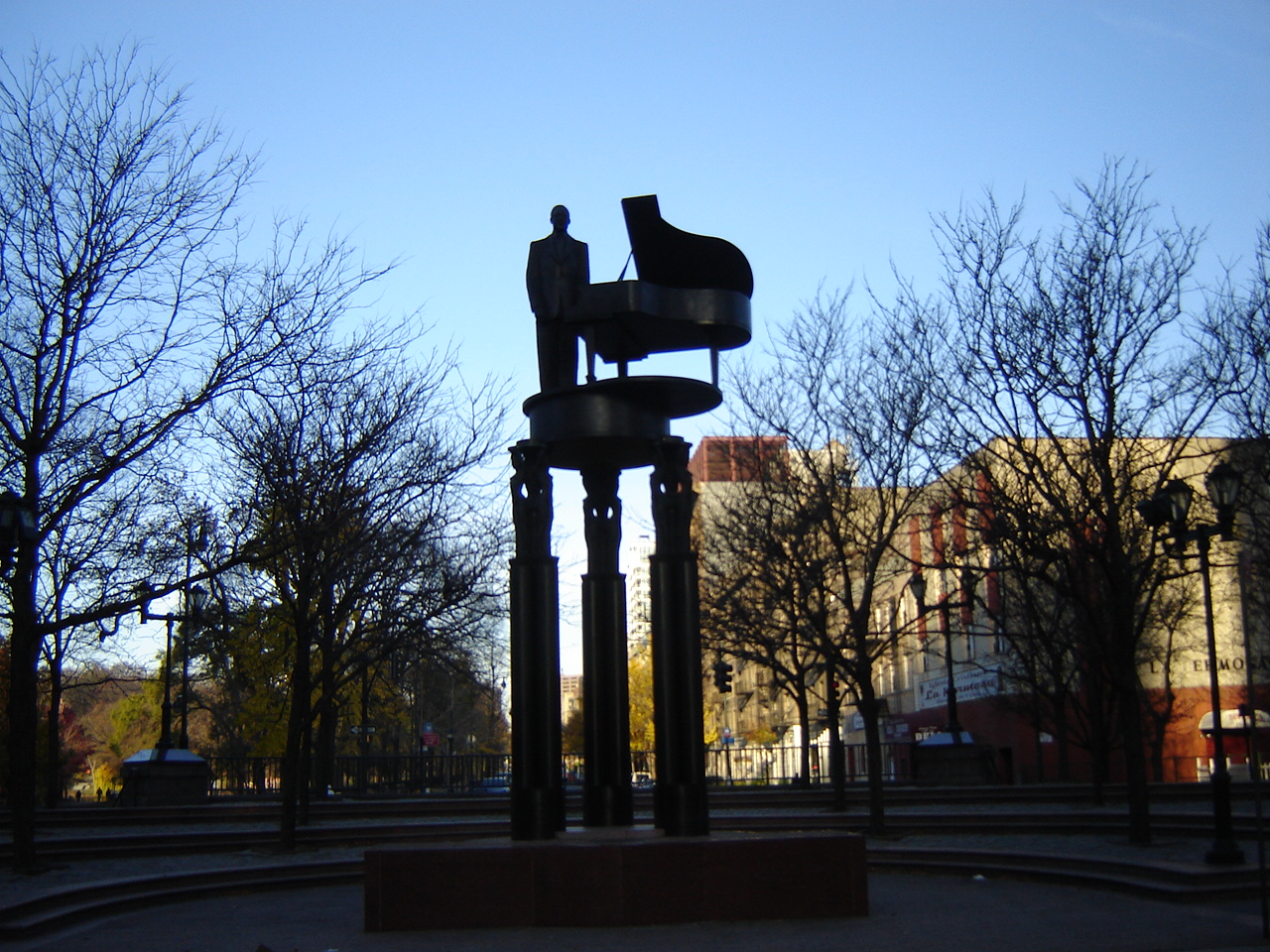
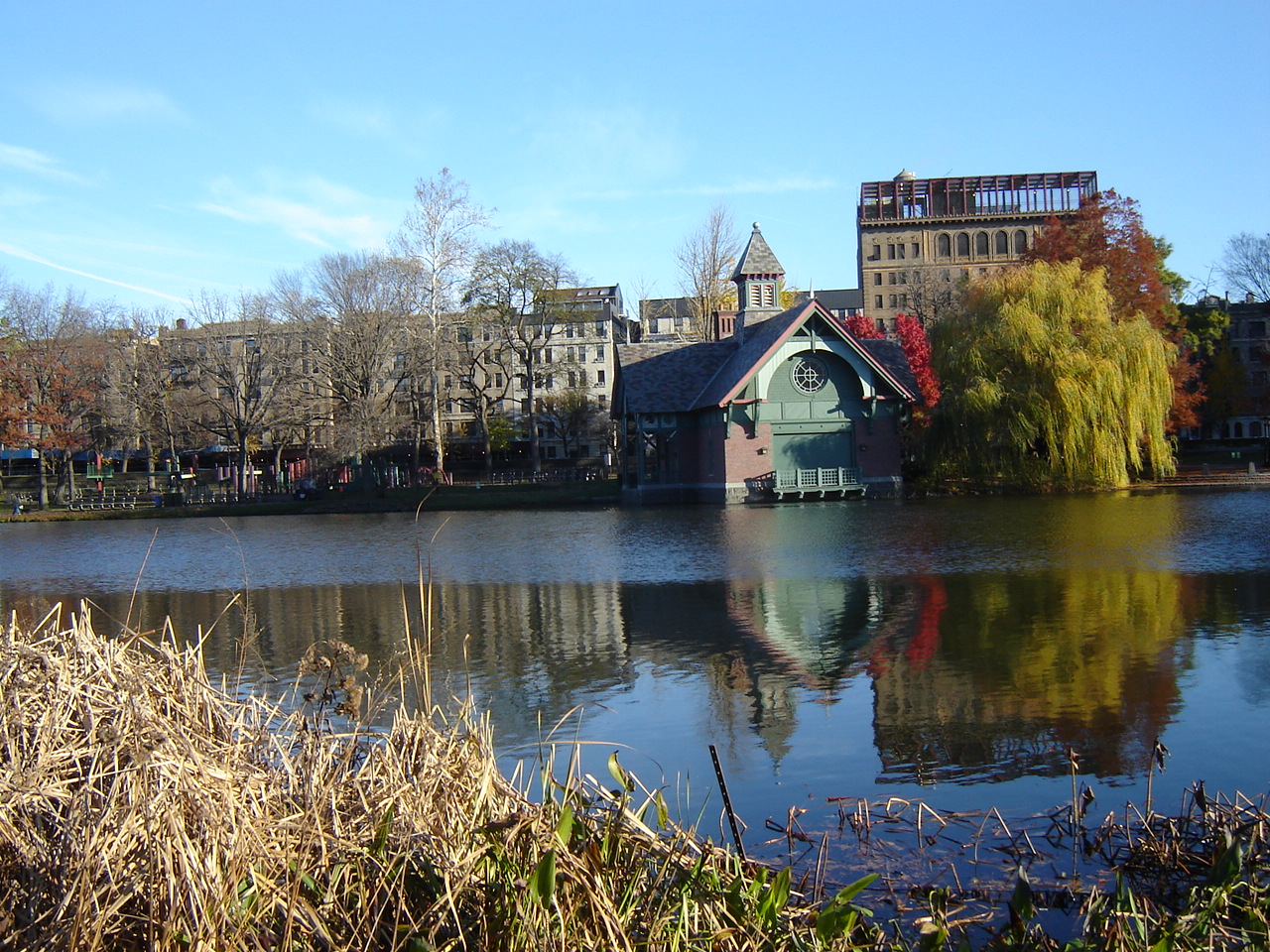
An early walk turned up these roots bordering Central Park. Also a fancy streetlight at Duke Ellington Circle. And the Dana Discovery Center on the lake called Harlem Meer.
We bought flowers on the way back to Suzanne’s apartment, then got to work helping cook the feast. The cranberry sauce from my previous post was a big hit. Also the Swedish apple pies from Erik’s cousin.
This is a poem about the Wheel of Fortune. Written in the 16th Century, it reminds readers that events go in cycles and that, in time, misfortune can turn to good fortune.
The poem could be read opposite ways, but since so many people seem to be feeling down lately, I think it comes across as reassuring.
Arthur Quiller-Couch, ed. 1919. The Oxford Book of English Verse: 1250–1900.
 The list goes on.




 Suzanne's Mom's Blog