Feeds:
Posts
Comments

How Horses Help Veterans

Photo: va.gov.
Army Veteran Carlos Longoria takes a trip on the track with Biscuit.

Whenever it gets close to Veterans Day, I start seeing stories about therapy for traumatized veterans. We know that, inevitably, some of the young people we send off to war will come back in bad shape. And unfortunately, our government spends a lot more on sending them off than on what they may need when they get back.

Often it’s civilian nonprofits that step up, like an arts group in Asheville, North Carolina, that offered supportive pottery classes to vets — that is, before Hurricane Helene. (Click here.)

Today’s article by Jason Kucera describes an ongoing Veterans Administration (VA) initiative.

“Mankind and horses have carried on beneficial, strong relationships with one relying on the speed, endurance, and raw power while the other affection and care. For a US Marine Corps Veteran such as Kody Wall, this special bond saved his life.

“ ‘I moved home to Montgomery (Texas) after my time as a Marine and very little went well. I had a really hard time adapting, so it wasn’t long until I was divorced and sleeping on an air mattress at my sister’s house,’ Wall said.

“During this time, he said he was battling suicidal thoughts, wanting to just ‘give up.’ Though he had been getting his routine care at a Houston VA outpatient clinic, he did not feel comfortable going into an office or trying to work through appointments over the phone. While hopelessness set in, the darkness would soon clear thanks to a unique therapeutic approach focused on his relationship with a horse.

“ ‘My sister pushed me to visit Sunny Creek Ranch as she knew how much I enjoyed being around horses. It was the best thing that could’ve happened for me,’ said Wall. ‘I’ve been attending sessions since 2016 and spend any extra time I have to help.’ He also shares his own experiences with other Veterans attending sessions, which can really help to open them up. 

“Sunny Creek Ranch hosts an intensive equine-assisted therapy Eagala-certified program in this heavily forested, southeast Texas town, just about an hour north of Houston. Launched by Shannon Novak, an Air Force Veteran spouse, the ranch is a partner of Houston VA. …

“She added that for a lot of Veterans and their family members that participate, they find the relationship with these horses to be similar to that of their own personal relationships. ‘Horses are so intuitive, they know everything about you, and they never forget you.’ …

“Houston VA recently began referring Veterans to equine therapy and plans to ramp up referrals to other holistic therapy approaches in the future. ‘Evidence-based talk psychotherapies for trauma are effective, but we know not every Veteran wants to address their trauma by sitting down in an office or virtual appointment with VA,’ said Dr. Shannon Sisco, whole health coordinator at the Houston VA. …

“Wall said working with the horses in equine therapy has helped him learn to communicate more openly with his young son, resulting in a better and more trusting relationship.

“ ‘The challenge in equine therapy is to develop a trusting relationship with your horse, which in many ways brings out lessons about our own relationships and helps us learn new ways of being in them,’ Sisco said.  

“Veterans do not need experience working with horses to participate in the therapy. They will not actually be riding horses, just interacting with them alongside a professionally licensed therapist. ‘The difference between connecting with horses versus people is that it all depends on your actions rather than your words,’ Sisco said. ‘They are watching what you do and listening to your tone. If you’re not earning their trust, they’re going to let you know.’ … 

“Veterans can choose to participate in individual equine therapy sessions, along with immediate family members, or in small groups with other Veterans.  For more information or to request a referral for equine therapy or any of the VA’s Whole Health programs.”

Although this story focused on Texas, there are similar VA programs around the country. Search here on “horses.” More on today’s feature, here.

Photo: Hansons Auctioneers.
Ten rediscovered Salvador Dalí prints were scheduled to be auctioned off in September. 

Have you ever bought something and stored it away, only to forget about it for years? I have. Mystery objects turned up when I was downsizing, but nothing of great value. I remember a folk art candle holder of brown painted pottery, for example. It was sweet, but I have no idea why or when I bought it.

Lianne Kolirin at CNN wrote about a different kind of discovery.

“Ten signed Salvador Dalí lithographs have been discovered in a garage in London, where they have been stashed for half a century. The artworks, which were discovered by an auctioneer during a routine valuation, are now expected to fetch several thousand dollars at auction.

“The colorful prints were uncovered when the expert was called to a property in Mayfair, central London, to give the customer an assessment of some antiques at the property. But the visit took a turn when the pair went out to the garage of the client, who has not been identified.

“Chris Kirkham, associate director of London’s Hansons Richmond auction house, recalled … ‘It was an amazing find. … I was invited to assess some antiques at a client’s home. During the visit the vendor took me to his garage and, lo and behold, out came this treasure trove of surrealist lithographs – all 15 of them.’

“Together with the 10 Dalí lithographs, which are a mixture of mostly mythological and allegorical scenes, were another five by Theo Tobiasse, a French painter, engraver, illustrator and sculptor.

“ ‘They’d been tucked away and forgotten about for around 50 years. It felt quite surreal. You never know what you’re going to uncover on a routine home visit,’ said Kirkham. … ‘The prints ended up in his garage. They were rediscovered because the seller has been having a clear out. He’s looking to retire and move abroad, so now his lithographs will finally see the light of day at auction. …

“Dalí, a leading member of the Surrealist group, was born in Figueres in Catalonia in 1904 and died there in 1989. A prolific artist, he was renowned for his bizarre images which famously included melting clocks.”

According to Artnet News, the seller, who “paid just $655 for the lot in the 1970s,” sold them in September for $26,200. (Click here.)

More at CNN, here. I once read that it’s advisable to do downsizing regularly — maybe every year. That way you find out what you’ve got that would be better to move elsewhere. Maybe it would help if every time we acquired something new, we promised ourselves to give away something else.

A Word on Chaucer

Art: Christina Chung.
A Chaucer fantasy.

What soothes you? Things like a massage, granola, walking, or reading generally work for me. Today, I’m delighting in a literary essay. I’m glad Camille Ralphs wrote at the Poetry Foundation about “how Chaucer remade language.” Good-bye for now to November 2024.

Ralphs says, “Chaucer’s works are very much of their moment, and perhaps required some distance from their context and coevals for their worth to be apparent. Ezra Pound observed that ‘Chaucer had a deeper knowledge of life than Shakespeare.’ If Chaucer hadn’t played so many roles in the medieval city, he likely couldn’t have written so expansively.

“He was the son of a vintner and grew up in London’s Vintry Ward, where he was formed and informed from the start by a babel of trades and trade-offs. He became a page in the house of the Countess of Ulster, a squire in the King’s household, a soldier, a controller of customs in the port of London, a justice of the peace, and Clerk of the King’s works. The Canterbury Tales owes some debt to the genre of ‘estates satire,’ which tallies different social classes and professions and elucidates both their importance to the state and their deficiencies. … Yet there is more reality to Chaucer’s characters than that.

“Who else could have imagined such a motley ensemble but someone who had jostled with the many flavors of humanity? The medleyed voices of the Miller, who can break down doors by running at them with his head; the ‘gat-toothed,’ half-deaf Wife of Bath, who rides astride in bright red stockings; the Canon alchemist, so sweaty from the ride that his horse is a lather of suds; the ‘ful vicious’ Pardoner with his jar of dubious holy ‘pigges bones’; and the garlic-loving Summoner, with a face so pimply ‘children were aferd’ — Chaucer knew them all.

“As Mary Flannery argues in her authoritative and diverting monograph Geoffrey Chaucer: Unveiling the Merry Bard (Reaktion Books, 2024), the mercenary assets of ‘The Shipman’s Tale,’ in which a merchant’s wife offloads a difficult financial situation by insisting she’ll repay her husband with sex (‘By God, I wol nat paye yow but abedde!’) must come from Chaucer’s roving through ‘warehouses, docks and markets.’ Works such as The Book of the Duchess (1368) — probably penned on the death of Blanche of Lancaster, the wife of John of Gaunt (it also circulated under the title ‘The Deth of Blaunche’) — could only be written by a man who’d worked in ‘palaces and great houses in England and on the Continent.’

“For a writer to be all things to all men, he must know a bit about things, and a lot about men — not to mention a lot about language and literature. Had Chaucer not been born into a mercantile environment and had the opportunity to mingle with Italians by the Thames, he may have struggled with Italian, and had he not spent so much time around nobility, he may not have learned French.

“His narratives are mostly borrowed from Latin and Romance-language sources (including Boccaccio’s DecameronOvid’s Metamorphoses, and the Roman de la Rose by Guillaume de Lorris and Jean de Meun). His forms and genres almost all derive from French minstrel romances and fabliaux (bawdy medieval stories), and, more granularly, from the verse structures of poets such as Guillaume de Machaut, from whom Chaucer stole the seven-line form now known as ‘rime royal‘ or the ‘Chaucerian stanza.’ And he may never have thought about writing in English had he not observed how Dante elevated Florence’s vernacular in his Commedia (1321), a technique Chaucer noticed while in Tuscany for diplomatic work.  …

“Chaucer never claims to be inspirited by God or gods, nor does he ever refer to himself as a ‘poet’ or ‘author.’ This may result from his ‘distinctive self-deprecation,’ in Flannery’s terms, though comic exaggerations of the scribbler’s incompetence are found in Machaut too, as the scholar Colin Wilcockson notes.

“Such modesty was a way of keeping or getting out of trouble with those who might be offended by his bawdy side, or who might chide his literary aspirations — like his efforts to wash his hands of his own writings. In the Miller’s Prologue, for example, he ‘makes his audience responsible for whether they enjoy his work.’

‘In the Prologue to The Legend of Good Women (c. 1387), the God of Love and his wife Alceste chastise Chaucer with a list of his works (Chaucer later updated the Prologue to include recent works, assuring the record was correct), and the Man of Law’s Prologue from The Canterbury Tales offhandedly abuses Chaucer’s rhyme before giving another catalogue. The ‘retraction’ at the Tales’ end, in which Chaucer — apocryphally from his deathbed — asks God to forgive him for his ‘translaciouns and enditynges of worldly vanitees,’ fulfils the same role. …

“In her painstaking biography Chaucer: A European Life (2019), Turner argues that Chaucer’s writings must proceed from some sort of democratic impulse. … This, perhaps, is Chaucer’s great innovation in our literature, surpassing even the invention of the decasyllabic English line that found its way to iambic pentameter: a level narrative playing field, inviting interaction and discussion.”

If you’d enjoy leaving 2024 for another world, there’s lots more at the Poetry Foundation, here. No paywall.

Photo: Elke Scholiers/Getty Images.
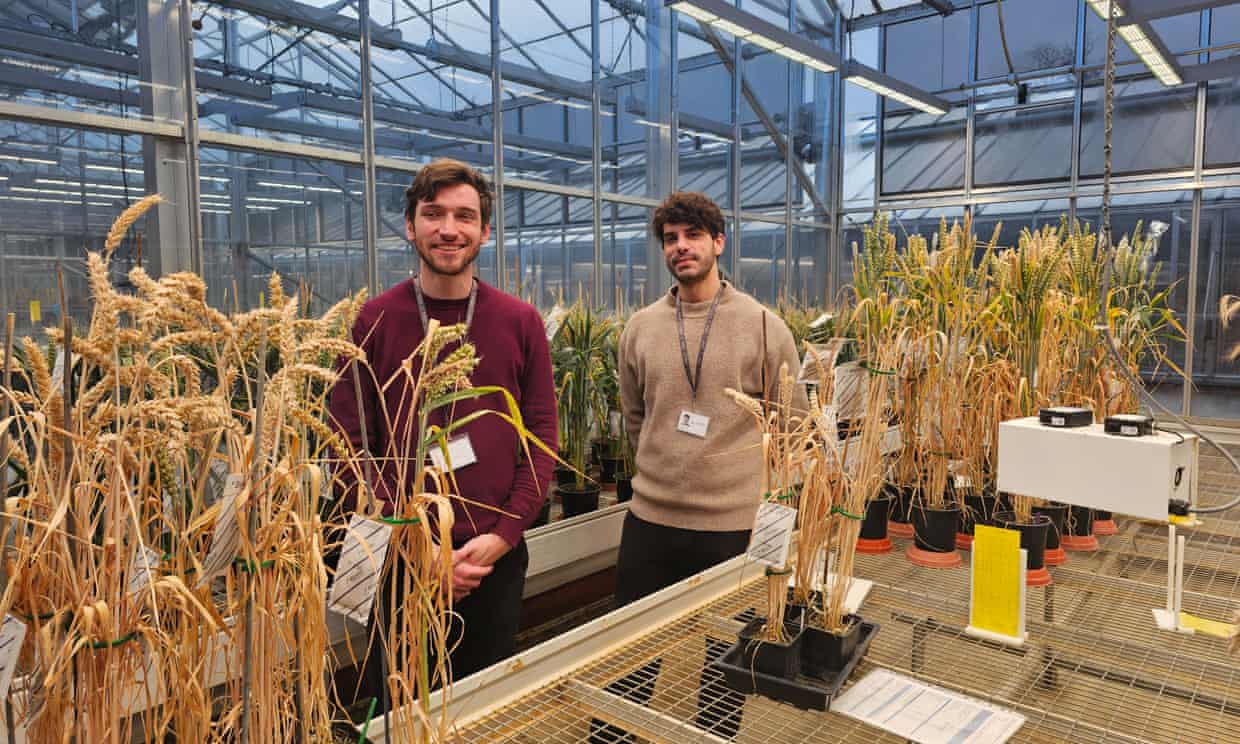
Workers sorting electronic waste at a factory in India. A team at University of Edinburgh is using microbes to recycle lithium, cobalt, and other expensive minerals — a greener way to go.

As we know, the downside of going all-electric to reduce the global-warming effects of fossil fuels is the mining of rare minerals for electricity, for batteries. But that mining can be destructive to communities wherever it’s done. Not to mention there’s a finite supply of such minerals on the planet.

Fortunately, human ingenuity even in the darkest times keeps functioning and looking for better ways to do things.

Robin McKie at the Guardian reports on what is potentially a greener way to acquire the rare minerals needed in the batteries we have today.

“Scientists have formed an unusual new alliance in their fight against climate change,” writes McKie. “They are using bacteria to help them extract rare metals vital in the development of green technology. …

“The work is being spearheaded by scientists at the University of Edinburgh and aims to use bacteria that can extract lithium, cobalt, manganese and other minerals from old batteries and discarded electronic equipment. These scarce and expensive metals are vital for making electric cars and other devices upon which green technology devices depend, a point stressed by Professor Louise Horsfall, chair of sustainable biotechnology at Edinburgh. …

“Said Horsfall, ‘All those photovoltaics, drones, 3D printing machines, hydrogen fuel cells, wind turbines and motors for electric cars require metals – many of them rare – that are key to their operations.’

“Politics is also an issue, scientists warn. China controls not only the main supplies of rare earth elements, but dominates the processing of them as well. ‘To get around these problems we need to develop a circular economy where we reuse these minerals wherever possible, otherwise we will run out of materials very quickly,’ said Horsfall. ‘There is only a finite amount of these metals on Earth and we can no longer afford to throw them away as waste as we do now.’ …

“And the key to this recycling was the microbe, said Horsfall. ‘Bacteria are wonderful, little crazy things that can carry out some weird and wonderful processes. Some bacteria can synthesize nanoparticles of metals, for example. We believe they do this as a detoxification process. Basically they latch on metal atoms and then they spit them out as nanoparticles so that they are not poisoned by them.’

“Using such strains of bacteria, Horsfall and her team have now taken waste from electronic batteries and cars, dissolved it and then used bacteria to latch on to specific metals in the waste and deposit these as solid chemicals. ‘First we did it with manganese. Later we did it with nickel and lithium. And then we used a different strain of bacteria and we were able to extract cobalt and nickel.’

“Crucially the strains of bacteria used to extract these metals were naturally occurring ones. In future, Horsfall and her team plan to use gene-edited versions to boost their output of metals. ‘For example, we need to be able to extract cobalt and nickel separately, which we cannot do at present.’

“The next part of the process will be to demonstrate that these metals, once removed from old electronic waste, can then be used as the constituents of new batteries or devices. ‘Then we will know if we are helping to develop a circular economy for dealing with green technologies.’ “

More at the Guardian, here. Remember the detestable partygoer in the Graduate who insisted “there’s a great future in plastics”? We now know what that kind of thinking led to. Sounds to me like the future might actually be in chemistry.

Photo: Melanie Stetson Freeman/CSM.
From left, Lynn Rosenbaum, Sam Whyte, and Patti Gurekian introduce themselves through song at a CircleSinging session at St. Mary Orthodox Church, Aug. 18, 2024, in Cambridge, Massachusetts.

Those of us worry a lot need to make a point of searching out joyful moments. Here’s one way that folks in Massachusetts fill their joy quotient: circle singing.

Oli Turner reports at the Christian Science Monitor, “The song coming from the St. Mary Orthodox Church meeting room in Cambridge, Massachusetts, has never been heard before. And it will never be heard again. 

“Fourteen singers stand in a circle of metal folding chairs, improvising an organic cacophony of harmonious and discordant sounds. Some tap their feet, sway, or bob their heads to the rhythm – but no two people engage with the music in quite the same way. 

“In CircleSinging, there’s no sheet music, no director, no pitch pipe. There’s an art to it, but not a pretentious one.

The singers have coalesced into an intergenerational network of friendship.

” ‘It’s really all about following. Following well,’ organizer Peter McLoughlin explains to the group between exercises. Mr. McLoughlin is not a teacher or a director. He gently sets the group in motion, and then blends into the circle as a participant. 

“ ‘Everybody’s welcome, and we’re not as concerned with whether you’re an excellent singer or you are an excellent harmonizer,’ he says before the rest of the singers arrive. 

“The Boston area’s CircleSinging community – tucked away in church meeting rooms in Cambridge, Arlington, Somerville, and the Jamaica Plain neighborhood – is part of an international network of CircleSingers who delight in the spontaneous art form. 

“The improvisational singing technique was developed by jazz musician Bobby McFerrin, best known for his 1988 hit song ‘Don’t Worry, Be Happy,’ the first a cappella song to go No. 1 on the Billboard Hot 100 chart. Mr. McFerrin’s vocal jam sessions relied on a call-and-response model, in which a leader improvises one vocal part at a time and other singers repeat those ‘loops.’ Any singer can volunteer to lead a composition.

“Cambridge organizer Mr. McLoughlin started the first of the four Boston-area circles in 2015 on Meetup.com, inspired by Mr. McFerrin’s ‘magnificent’ rendition of Psalm 23. The looping choruses and complex harmonies reminded him of the music surrounding his own Catholic upbringing. He was hooked.

“Mr. McLoughlin learned the technique from Mr. McFerrin himself, attending his weeklong workshops once a year for seven years. Then CircleSinging Boston was born in Mr. McLoughlin’s living room.

“Each of the four Boston groups, run by different organizers, holds two-hour meetings that prioritize openness. One Boston CircleSinger, Maureen Root, says her favorite exercise starts by singing a random word – not for its meaning, but for its sounds.

“ ‘So it’s like these different vibrations and things come out,’ Ms. Root says. ‘It’s almost like you’re bypassing the mental circuitry. … It gets me out of my self-conscious mind.’

“Some CircleSingers have no prior musical or singing experience, like Ms. Root, a retired medical technologist and yoga and meditation instructor of more than 30 years. …

“Less-experienced singers like Ms. Root share a circle with vocal professionals like Boston Children’s Chorus conductor Destiny Cooper, who moved to Boston after college, ‘knowing not a soul.’ In experimental CircleSinging, a far cry from her familiar structured choirs, she found belonging.

“ ‘Most of the members are significantly older than me, but nonetheless, I think that community was really important to give me a sense of home,’ Ms. Cooper says. Since joining the group about five years ago, she never missed a circle until the pandemic. …

“Arlington CircleSinging organizer Lynn Rosenbaum leads her meetups with all singers in mind.

“ ‘I tend to think of the arc of where we start and where we end, and bringing people along, building their confidence and their skills,’ says Ms. Rosenbaum, a seasoned improv singer herself. ‘There’s usually a big difference between the beginning and the end, especially for new people – in their level of comfort and how much they’re willing to take risks.’ …

“ ‘Singing together and playing together – I say “playing” as in “playfulness” – it just creates a connection among people,’ Ms. Rosenbaum says. ‘It’s a common denominator that we can all connect to.’ …

“ ‘[CircleSinging is] just this opportunity to express our full range of emotions and letting it out through our voices and our bodies,’ Ms. Rosenbaum explains. ‘There’s not always a lot of opportunities in everyday life to do that, so this creates a safe space for people to be silly and explore and take risks and express joy.’ ”

More at the Monitor, here.
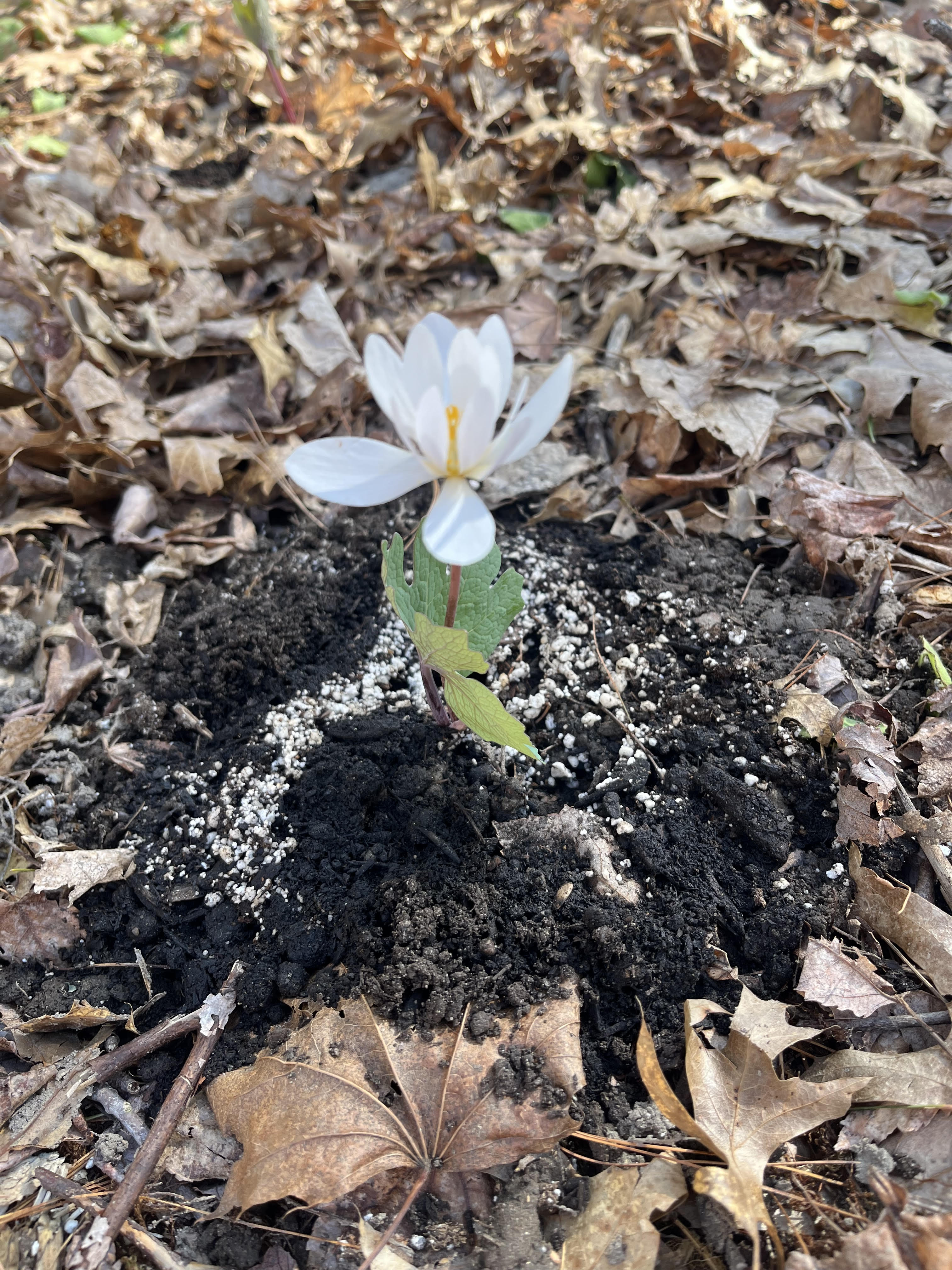
Photo: Ahmad Masood/Reuters.
Working on a salt pan in the western Indian state of Gujarat. The marshes produce 30% of India’s inland salt. 

I’m always up for a little good news from distance places, as I hope you are, too. Today we learn about the benefits of solar energy for one hands-on industry in India.

Suchak Patel writes at the Guardian, “In the expansive salt marshes of the Little Rann of Kutch the bleakness of the sunburnt, treeless landscape is matched only by the drudgery of the salt farmers who toil there for eight months of the year.

“In October, as the monsoon recedes and the flooded salt pans dry out, farmers and their families hop on to trucks and tractors to migrate to the Little Rann of Kutch in Kutch district, Gujarat, where they pitch tarpaulin shelters and begin mining the underground deposits.

“An estimated 10,000 families of farmers, known as agariyas in Gujarati, migrate to the marshes from across the state. They start each season by digging wells to pump out brine using diesel pumps; the brine is then poured into shallow, squarish plots carved on the salt pans and left to evaporate under the sun to produce salt crystals. These marshes produce 30% of India’s inland salt, typically table salt.

“Life in the salt marshes is uniquely challenging. Drinking water comes not from pipes but tankers, children attend schools inside buses not buildings, and the only avenue to healthcare is weekly mobile vans from the health department. Basic amenities such as an electricity grid and toilets are nonexistent.

“ ‘My entire family, including my brother’s two daughters, lives in the desert these eight months, and my nieces attend primary school in a mobile school bus,’ says Bharatbhai Shyamjibhai Mandviya, 45.

“Contracts made with salt traders before each season, where the traders pay an advance to the farmers to buy pumps, diesel, and to meet household expenses mean most farmers start the season in debt, with the harvest income barely enough to cover their costs, let alone allow them to save.

“Diesel constitutes nearly 65% of the input costs in salt farming, and about 1,800 litres [~476 gallons] of the fuel is needed to produce [about] 750 tons of salt, according to Purshottam Sonagra, area manager of nonprofit Vikas Centre for Development that works with salt producers in the region. …

“But the introduction of solar panels to the pans has triggered a significant shift in the lives and lifestyles of the impoverished salt workers. In 2017, the Gujarat government gave solar pumps to salt farmers at nearly 80% subsidy, as part of a larger push to cut emissions and bring down the costs involved in salt production.

“ ‘Solar-powered pumps have reduced the cost of salt farming to one-third of what it was,’ says Sonagra.

“Mandviya has installed three pumps on the salt pan he works on, the savings from which have led to many firsts in his life.

“ ‘We have now built a two-bedroom house with a separate hall and a kitchen in Kharaghoda [his home village],’ says Mandviya. The new home with tiled walls and built-in cupboards which he will share with his brother and family, is a big upgrade from the kuccha [mud and straw] house they lived in before.

“The brothers also bought a motorcycle and a refrigerator from the money they managed to save.

“With more than 5,500 solar-powered pumps now dotting the region, energy costs have fallen [and] the agariyas such as Mandviya are no longer as dependent on the capital from traders, which gives them greater negotiating power over salt prices. …

“Solar pumps and the financial stability they grant have improved access to health, education and mobility, while also offering freedom to salt farmers from an endless work cycle, campaigners say.

“ ‘Steady supply from the solar panels is powering not only pumps but also televisions. Children of salt makers are switching to state-run ‘edutainment’ programs to make up for the loss of education,’ says Bhavna Harchandani, a research scholar at the Indian Institute of Technology Gandhinagar, who has tracked the agariya community as part of her studies. …

“Sonagra says it was difficult to find an office assistant with basic secondary-school education among agariyas until a few years ago.

“ ‘Today, many agariya children attend private schools, complete ITI (vocational) courses, and some manage to go to college. Solar pumps have opened up educational opportunities for the next generation of the community,’ he says.”

More at the Guardian, here.


Curing Ballots

Photo: Elements5 via Unsplash.

Do you always sign things exactly the same way? I myself have a couple different signatures and I know that using the right one in certain situations is vital. On the tax forms, for example. My signature for tax purposes is actually different from the one I use to vote. Long story.

In the ballot booth, the wrong signature can mean your ballot will not be counted.

On Tuesday I will be trying my hand at “ballot curing” to help voters who have made some small mistake according to their state’s laws.

What is ballot curing? VoteAmerica says: “Ballot curing is the process of fixing any problems with your absentee or mail ballot to ensure that your vote is counted. You will have very little time to fix issues with your ballot, so act quickly.

“If your ballot was rejected and it’s after Election Day, you will need to act quickly. In most cases you will need to appear in person at your local election office with photo ID within 2-3 days of Election Day.

“Use your state’s online ballot tracking tool to check whether your ballot has been received and counted. If your state does not have an online tool, call your local election office and ask.

“If your absentee ballot was rejected and it’s before Election Day, you can probably still vote in person on Election Day at your polling place. Your local election office can provide more information about the rules around voting in person after your ballot was rejected.”

Now, to give you an example of a state’s particular rules, here’s what VoteAmerica says about Michigan’s rules:

“Your ballot will be rejected if you forget to sign it or if your signature does not match the one on file for you. You must make corrections by 5:00 pm on the third day after Election Day for your vote to count.

“Michigan laws says, ‘The clerk must notify the elector by telephone, email, or text message, if available.’

“Michigan law says, ‘The elector must be permitted an opportunity to cure the deficiency as provided under section 766a until 5 p.m. on the third day following the election.’ “

I have signed up with my candidate’s campaign for four hours of ballot curing, with a break in the middle.

For the first half hour, I will receive training and be assigned to a state. Then I will get contact information for people who have expressed a concern that they made a mistake, and I will refer them to the right people to help them fix it as allowed by their state.

I hate doing “phone banking” as a rule, but I think this is something people will actually be grateful for.

Check your state’s rules at VoteAmerica, here, and share the site with friends who need it. And may the best human win!

Photo:  Michael Willian.
“I’m a natural person and I’ve never had any surgery,” says Brazilian model Rosa Saito, 73.

In today’s story from the Guardian, Brazilian model Rose Saito looks pretty glam in her 70s, but that is not the point. The point is she never gave up on something she wanted to do. And it wasn’t until she was 69 that the movers and shakers in the fashion world realized they were plum out of beautiful older models. Suddenly she was in demand.

Ammar Kalia writes, “For her 68th birthday in 2019, Rosa Saito decided to give herself an unusual present. Over the past year, she had been approached by photographers and casting agents three times on the streets of her home town in São Paulo, Brazil, each telling her she should consider becoming a model. Initially, she brushed off the flattering advances, but after deliberating for several months, she changed her mind.

“ ‘No one had commented on my appearance until I reached 67, when people suddenly started to notice me,’ she says. ‘It was very strange, but being spotted made me realize I could still achieve something for myself at this stage of my life. I had raised three children and now I wanted to see what I could do alone. If not now, then I never would.’

“Contacting one of the agencies that had previously approached her, she was immediately added to their roster and sent out to castings. ‘At my first casting they asked me to act like I was just getting home from a nightclub, but I have never done that before,’ she laughs. ‘I didn’t get the job, but I started to see how modeling is about inhabiting a character and performing. It was a challenge that began to excite me.’

“It would be another year until Saito booked her first job. Arriving at dozens of castings and routinely turned away with little explanation or feedback, she was determined to see these experiences as an opportunity to practice her posing and walking in front of other professionals. ‘The rejections only made me want to book a job more,’ she says.

‘I was used to facing difficulties in my life and so these were small setbacks compared with everything else I had been through. I was prepared to keep going.’

“Saito learned resilience from an early age after becoming the sole carer, at 22, for her mother, who had a stroke. After the death of her husband, to whom she was married for 20 years, in 2000, she raised her three children alone. She has always been passionate about natural remedies and plant medicine. ‘I think that is the most important thing that has helped me look the way I do today,’ she says. …

“In 2020, at 69 years old, Saito’s persistence paid off and she finally booked her first modeling job for a Brazilian cosmetics brand. … ‘As soon as we began, my experience from all the castings kicked in and I relaxed. The production team asked me where I had been hiding, since they said they had been looking for older women like me for years.’ …

“Saito also found herself unwittingly becoming a role model for the younger women on the shoot. ‘I got so many compliments from the other models and it made me realize that my presence was showing them that you can grow older without fear,’ she says. …

“Now 73, Saito has modeled for clothing brands, cosmetics and magazine editorials, while her highlight has been making her debut at São Paulo fashion week in 2022 as one of the oldest models on the catwalk. … ‘It’s a gift to be doing this in my 70s,’ she says. ‘I love modeling because each job is a unique challenge and it pushes me to give the best I can. It has made me a more confident person in all parts of my life.’ ” More at the Guardian, here.

Say, did you notice that at São Paulo fashion week, she was only one of the older models on the catwalk!?

Photo: Axel Schmidt.
The Fluss Bad swim in the Spree canal, Berlin, is part of a campaign to change bylaws against swimming. 

How many lovely, tinkling waterways have we forced through metal pipes and covered over with roads and buildings?

For some years now, cities have started daylighting them. And in the countryside, dams have been removed to bring back fish, often in collaboration with the tribes that always knew better. (See the Penobscot report.)

Last summer, it was touch ‘n go about what days the Seine would be clean enough for Olympic meets, bringing renewed attention to the issue.

At the Guardian, Oliver Wainright writes. “After a century of ignoring the very arteries that allowed them to grow in the first place, cities are learning to love their rivers again. Around the world, as global heating causes summer temperatures to soar, people are flocking to urban waterways and reclaiming these once polluted, poisoned gutters as indispensable places to cool off and unwind.

“[In the summer] the urban swimming movement made its biggest splash yet, when 110 athletes dived into the River Seine for the Olympic triathlon. The televised spectacle of swimmers front-crawling their way through Paris, flanked by beaux-arts bridges, offered a glimpse of what all our urban waterways could look like. Might these dangerous arteries of cargo and sewage be reborn as the great free public spaces that they could be? …

“ ‘What’s happening in Paris represents a generational baton change,’ says Matt Sykes, an Australian landscape architect and the convener of the Swimmable Cities Alliance, a global network of urban swimming campaigners pushing to make the scenes in the Seine an everyday reality for us all. …

“To coincide with this summer’s Olympics, the alliance published a charter, signed by a host of municipalities, government agencies, community groups and cultural institutions from 31 cities around the world, in a bid to create safe, healthy and swimmable waterways, accessible to all. The hope is to have 300 new cities starting their journey towards ‘swimmability’ by 2030.

“The alliance is already making headway. In the Dutch city of Rotterdam, a masterplan for the Rijnhaven dock includes a new permanent beach and a tidal park. In Sydney, the Urban Plunge program has plans that include floating pools, and riverside ladders and lockers. By next summer, if all goes according to plan, New Yorkers will be swimming beneath skyscrapers in the safe surrounds of a floating, filtered pool in the East River.

“ ‘This is going to be the cleanest water anyone ever swims in,’ says Kara Meyer, the managing director of Plus Pool, a project which began in 2010 as a Kickstarter campaign by four young designers. Fourteen years on, New York State and New York City have announced changes to regulations that finally make the project possible, and committed [$16m] to see a prototype pool realized by 2025.

“ ‘The original idea was: “What if you just dropped a big strainer in the river?” ‘ says Meyer. ‘Now, we’re essentially building a floating wastewater treatment facility.’ Engineered by Arup, the pool will pass the river water through a series of filtration membranes and blast it with UV disinfectant, in order to meet stringent water quality standards. …

“The Clean Water Act, passed in 1972 with the ambitious goal of making all US rivers and lakes swimmable by 1983, set the wheels in motion, but that target is still a way off.

“ ‘The pandemic was a real catalyst,’ says Meyer. ‘There’s been a realization that we need far more public space, and much better access to our natural environment.’ She says a recent rise in drowning deaths, after decades of decline, underlines the importance of access to water and basic swimming skills – a need exacerbated by a shortage of lifeguards, after decades of pool closures. …

“Along with Switzerland – where Rheinschwimmen has been a tradition since the 1980s, after wastewater treatment reforms – Denmark is leading the way. Thirty years ago, Copenhagen’s harbor was a polluted mess of sewage and industrial waste. Now Danes are spoilt for choice of architect-designed bathing structures, and water quality is constantly monitored on a dedicated app. …

“Elsewhere in Europe, the Fluss Bad campaign in Berlin organizes an annual swim in the Spree canal, seeing swimmers splashing past the cultural palaces of museum island. The group is pushing for local bylaws to be changed to permit swimming, and has launched a water quality monitoring website to show the canal is clean enough to swim in 90% of the time. In Brussels, a city without a single outdoor swimming pool, the Pool Is Cool campaign operates a temporary pool each summer, as a prelude to future plans for swimming in the canal. In the bathing capital of Budapest, the Valyo group wants to see the city’s history of floating wooden pools return to the Danube. Swim fever is rampaging across the continent.”

More at the Guardian, here. No firewall.

Photo: Sky2105, CC BY-SA 3.0/Wikimedia Commons.
Qatar University campus features a new wind catcher design built into the architecture. The science behind it is borrowed from 12th C Iran.

Here’s a “cool” air-conditioning concept that was new to me but apparently known in Iran for centuries.

Durrie Bouscaren reports at radio show The World, “As a kid, radio producer Sima Ghadirzadeh spent her summers in one of the hottest places on earth — the desert city of Yazd, Iran. … Here, intricate wind-catching towers rise above the alleyways — they’re boxy, geometric structures that take in cooler, less dusty air from high above the city and push it down into homes below. 

“This 12th-century invention — known as badgir in Persian —  remained a reliable form of air-conditioning for Yazd residents for centuries. And as temperatures continue to rise around the world, this ancient way of staying cool has gained renewed attention for its emissions-free and cost-effective design. 

“Wind catchers don’t require electricity or mechanical help to push cold air into a home, just the physical structure of the tower — and the laws of nature. Cold air sinks. Hot air rises. 

“Ghadirzadeh said she can remember as a child standing underneath one in her uncle’s living room in Yazd. 

“ ‘Having been outside in the heat, and then suddenly, going inside and being right under the wind catcher and feeling the cool breeze on you, was so mysterious,’ Ghadirzadeh said. 

“Temperatures in Yazd can regularly reach 115 degrees Fahrenheit. But somehow, it was bearable, Ghadirzadeh said. … Historians say wind catchers are at least 700 years old. Written records in travelers’ diaries and poems reference the unique cooling structures. 

“ ‘From the 13th century, we have references to the wind catcher — by some estimates, they were in use in the 10th and 11th centuries,’ said Naser Rabbat, director of the Aga Khan program for Islamic architecture at MIT. 

“Most wind catchers only cooled the air by a few degrees, but the psychological impact was significant, Rabbat said. They soon appeared all over the medieval Muslim world, from the Persian Gulf to the seat of the Mamluk empire in Cairo, where they are called malqaf. 

“In Iran, the wind catcher is a raised tower that usually opens on four sides because there’s not a dominant wind direction, Rabat said. The ones in Cairo are ‘extremely simple in form,’ usually with a slanted roof and a screen facing the direction of favorable wind, he added.

“Over time, wind catchers became symbols of wealth and success, growing increasingly elaborate. Homeowners would install intricate screens to keep out the birds. Water features and courtyard pools could bring the temperature down even more.  

“ ‘They would even put water jars made out of clay underneath — that would cool the air further,’ Rabbat said. ‘Or, you can put a wet cloth and allow the breeze to filter through, and carry humidity.’ 

“Many of the older techniques that kept life comfortable in the Persian Gulf fell out of favor after World War II, said New York and Beirut-based architect Ziad Jamaleddine. …

“Those shaded walkways, created by overhanging buildings and angled streets so beloved in historic cities like Yazd, were no longer considered desirable. 

“ ‘What they did is they substituted it with the gridded urban fabric city we are very familiar with today. Which perhaps, made sense in the cold climate of western Europe,’ Jamaleddine said.  But in a place like Kuwait or Abu Dhabi, mass quantities of cool air are necessary to make this type of urban planning comfortable. 

“Attempts to re-create wind catchers occurred during the oil crisis of the 1970s and 1980s in cities like Doha, where the Qatar University campus incorporates several equally distributed wind towers. But these projects became less common when oil prices returned to normal. Wind catchers are not easy to replicate without a deep understanding of the landscape and environment, Jamaleddine said. …

“Today, air conditioners and fans make up more than 10% of global electricity use, according to the International Energy Agency. The air conditioners are leaking refrigerant into the atmosphere, which acts as a greenhouse gas. And they no longer function when the power goes out — as seen this summer during extreme heat waves across the world. 

“Architect Sue Roaf thinks it’s ‘almost criminal’ to build structures that continue to rely on air-conditioning, knowing its impact on the climate. Roaf focuses on climate-adaptive building and chose to build her home using the same principles of ventilation and insulation that she learned while studying the wind catchers of Yazd.”

More at The World, here. No paywall.

Delta Rhythm Boys singing “Dry Bones.”

I should have remembered that it was Ezekiel who was the original source for a song we used to sing in elementary school. It took this old video of the Delta Rhythm Boys singing “Dry Bones” to put me straight last Saturday. The reason I was looking for it on YouTube then was that a Pilates class got me thinking about how the sections of my backbone connected. I’m glad to share this in time for Halloween, when bones are a thing!

Dracula is also a thing at Halloween, and so a recent literary discovery is another just-in-time item. At Public Radio International, you can learn about a newly discovered Bram Stoker story — written before his Dracula masterpiece but unknown until now.

From The World: “All Dracula-inspired movies, TV shows and breakfast cereals can be traced back to a story published in 1897 by the Irish writer Bram Stoker.  His work is honored annually at the Bram Stoker Festival. … This year, the festival will highlight a a scary but lesser-known tale called ‘Gibbet Hill.’ …

“The story was published seven years before the original Dracula came to be, but received little attention until blogger and Stoker enthusiast, Brian Cleary, rediscovered the story in a library.  Cleary joined The World’s host Carol Hills to discuss his forgotten find.

Carol Hills: Give us a brief synopsis of the short story, but no spoilers.
Brian Cleary: The narrator of the story is a man who’s leaving London and going down to Surrey for a walk in a place called Gibbet Hill. He encounters what’s called the Sailor’s Stone. The stone is there because the sailor was murdered by three thieves, and they were actually gibbetted [and the bodies were] displayed as a warning to other criminals. Stoker sets his story off from that jumping-off point. …

Hills: Tell us how you found this short story, “Gibbet Hill.”
Cleary : I was interested in Stoker for years. I read Dracula when I was 12. I moved to Marino when I was an adult. Marino is where Bram Stoker was born. So, I was interested in local history and probably spent the last 15 years or so reading about every little detail I could get on Bram Stoker. I had some free time and ended up in the National Library of Ireland. While there, I systematically searched the British newspaper archives for all articles mentioning Bram Stoker between 1880 and 1897, when he published Dracula.

“A few weeks into that process, after reviewing a few thousand results, I got lucky. I hit on an advertisement for Christmas Supplement, the Dublin edition of the Daily Express, and it was referring to something published two weeks prior to that. The supplement had a story called ‘Gibbet Hill,’ by Bram Stoker, which just froze me in my seat because I knew this was something that I hadn’t come across before. I did some quick searches, and it was not on the internet or in any of the Stoker biographies or bibliographies. So, I went racing back through the editions of the Daily Express, got back to the relevant one from December 17th, and sure enough, there it was. …

Hills: What went through your mind when you realized, ‘Jeez, this is a big find’?
Cleary Well, I’m sitting in this churchlike atmosphere. It’s a Victorian building, big, high domed ceilings and beautiful, old paneled walls. So, it’s a really reverent space. And I’m holding my breath and I’m reading it, and I’m surrounded by proper historians and real writers. I just want to shout out and tell people what I found. But I just put my head down and read through, and I was amazed. It was a really good ghost story, you know, it was on a par with some of his other well-known short stories. …

“Hills: ‘Gibbet Hill,’ was written seven years before Dracula, but what does it tell you about Bram Stoker’s evolution as a writer? 
“Cleary: It shows how he was gradually working his way up to this masterpiece. So, in March 1890, he made the first notes for Dracula. … During that year, he went to Whitby for summer holidays in August 1890. While he was there, he got a book out of the library, and he found the term ‘dracula’ in that book, and he wrote it down lots of times. I think he liked how it sounded on his tongue. And then a few weeks later he was writing ‘Gibbet Hill.’ So, there are themes. … You can see he’s very much a writer developing his craft.” Lots more at The World, here.

Note to Hannah: Did we go see The Horror of Dracula together as young teens? On Fire Island? It made an impression on me that has lasted all these years.

Photo: John and Suzanne’s Mom.

The New England Nomad, a blogger who takes lots of great photos, said I could reblog this post about Salem, Massachusetts. Salem, as I’m sure you know, was the site of a horrendous crime committed against innocent women perceived as different — the witch trials of 1692 to 1693. Not neglecting that dark history, Salem has also managed to turn its memories into a commercial and playful Halloween success. (We are a strange species.) Check out the fans who put on costumes and joined in the annual Haunted Happenings Grand Parade in Salem.

052917--crocheted-tree-Stockholm

Photos: Suzanne and John’s Mom.
Crocheted tree in Stockholm, 2017.

Working with your hands, creating something that is all you — how satisfying that can be! Today’s story is on the latest research showing that that can be good for you and the people around you.

As Nicola Davis wrote at the Guardian, “Winston Churchill had painting, Judi Dench is famous for her rude embroidery and Tom Daley has been known to knit at the Olympics. Now researchers say we could all benefit from creative endeavors and that such pursuits have a bigger influence on life satisfaction than having a job.

“While arts and crafts have long been used to aid mental health, experts said most research has looked at their effect on patients rather than the general population, and tend to look at specific activities.

“However, the researchers have now said such interests could be an important tool for improving public health in general.

“Dr Helen Keyes, a co-author of the research from Anglia Ruskin University, said: ‘It’s quite an affordable, accessible and ultimately popular thing for people to do. And that’s key. You’re not going to be shoving something down people’s throats that they don’t want to do.’

“Writing in the journal Frontiers in Public HealthKeyes and colleagues reported how they analyzed data from more than 7,000 people aged 16 or over who took part in the face-to-face ‘taking part survey’ by the UK Department for Culture, Media and Sport between April 2019 and March 2020.

“As part of the survey participants were asked to rate various aspects of their well-being on 10-point scales, report whether they took part in arts or crafts, and provide demographic details.

“The team found that just over 37% of participants reported taking part in at least one art or craft activity in the past 12 months – ranging from painting to pottery and photography. …

“The results revealed that people who engaged with creating arts and crafting had greater ratings for happiness, life satisfaction and feeling that life was worthwhile than those who did not, even after taking into account other factors known to have an impact – including age, gender, deprivation, poor health, and employment status. …

“Among other results the team found engaging in arts and crafts was associated with an increase in happiness on a par with aging by 20 years (as Keyes notes, well-being goes up slightly with age), while the sense that life was worthwhile was more strongly associated with crafting than being in employment.

“Keyes said [the reults] might reflect that not everybody is in a job they find fulfilling, while people often have a sense of mastery or ‘flow’ when undertaking arts and crafts – experiencing control, achievement and self-expression. …

“Keyes said smaller clinical trials have suggested engaging in arts and crafts can increase well-being. Keyes also acknowledged the increases in well-being associated with creating arts and crafting were very small – on average engaging in such activities was only linked with a 2% higher rating for the feeling that life was worthwhile. But, she said, the results remained meaningful at a population level. …

“Keyes said that backing such activities would offer a simpler route for governments to improve the nation’s well-being than other factors that are known to have a big effect. …

“ ‘But it’s a really quite cheap, easy, accessible thing for us to engage people in.’ ”

What was the last craft you tried your hand at? I made a pottery vase.

More at the Guardian, here. No paywall.

I used to make collage greeting cards.

Swifties at the Museum

Photo: The Albertina.
Thousands of Taylor Swift fans flooded museums in Vienna in August after multiple institutions waived entry fees when security threats forced the cancellation of three concerts. Fans also traded bracelets with museum employees.

We’ve all seen the influence that singer Taylor Swift directly exercises over her fans. Indirectly, she has probably made some of them museum fans, too. That’s because museums in Vienna saw an opportunity when her concerts were cancelled.

Karen K. Ho reports at ArtNews, “Thousands of Taylor Swift fans flooded museums in Vienna [last August] after multiple institutions waived entry fees after three of the singer’s concerts were cancelled due to security threats.

“ ‘We weren’t really sure what to expect,’ Haus der Musik managing director Simon Posch told ARTnews.

‘The participating institutions were the Mozarthaus Vienna, House of Music, KunstHausWien and the Jewish Museum Vienna owned by the City of Vienna; MAK Vienna (Museum of Applied Arts) and MAK Geymüllerschlössel; the modern art museum Mumok, the art museum The Albertina, as well as the museum at the House of Strauss. The Museum quartier also offered Taylor Swift ticket holders free guided tours in English and German on August 10 and 11.

“The initiative was publicized through the Vienna Tourist Board and statements by the city’s mayor, Michael Ludwig, especially on social media.

“Several museum professionals in Vienna told ARTnews the slew of additional visitors were a pleasant surprise to their institutions. The demographics were mostly English-speaking young women, often between the ages of 18 to 25, traveling to the city from countries as far away as China, South Africa, Australia, Canada, and the United States. Many of them were also easily identifiable while wearing the singer’s concert merchandise, colorful outfits intended for the concert, and arms covered in friendship bracelets they intended to trade with other fans.

“The Albertina fully embraced the moment, waiving its [regular entrance fees] for more than 20,000 Swifties. … ‘On a normal and regular weekend, we would have, I would say 2,000 a day,’ spokesperson Nina Eisterer told ARTnews, noting that these types of visitor numbers are usually for blockbuster exhibitions like the one for Claude Monet in 2018.

“Eisterer said she and her colleagues in The Albertina’s marketing division were Swifties themselves, with several people planning to go to the concerts and personally devastated by the news of the cancellations. After the idea for waived entry fees was approved, the art museum’s security and ticketing teams were informed on August 6 that additional staff would be needed.

“The Albertina’s line for Swifties was so long that some fans stood outside in the sun and 91°F heat for approximately 20 minutes. ‘But there was no fuss about it,’ Eisterer said. ‘People were super nice.’

“The museum also switched the soundtracks playing its in 20 historical staterooms from classical music to Taylor Swift albums, prompting several large singalongs that went viral on TikTok.

“ ‘I love classical music, I love Mozart, I love Beethoven, I love all these classical artists, but it was really nice to have a Taylor Swift singalong more or less in the state rooms that normally stand for something else,’ Eisterer said. …

“Other institutions also saw an unexpected bump in activity. … Mozarthaus Vienna said they had 2,663 Swifties between August 9 and August 11, with additional staff called in on Saturday and Sunday. ‘Due to the large number of Swifties, guided tours in English were spontaneously added,’ spokesperson Jasmine Wolfram told ARTnews.

“Mumok’s head of press, Katharina Murschetz said 884 Taylor Swift fans stopped by. Eva Grundschober, the spokesperson for Capuchin’s Crypt said ‘exactly 500 Swifties’ used the option for the free ticket. And Josef Gaschnitz, the chief financial officer of the Jüdisches Museum der Stadt, said visitor numbers were ‘over 100% more’ compared to normal days. …

“Multiple people told ARTnews that social media played a major role in informing Swifties of the ‘super last-minute decision’ for the city’s offers and attracting them to the various museums. [Said] Posch, a self-professed Taylor Swift fan, ‘I think social media is the only way to reach this target group, because it didn’t help if the Austrian National Broadcasting System showed it in the evening news and they put it on their web page. None of these kids is going to visit the ORF home page.’ …

“ ‘We didn’t think about the money or the losing the money at all,’ Eisterer said, noting that its entry fees can be very expensive for young people. ‘It was, for us, important to set like a sign for this concert that had been canceled because of this horrible reason, and to give somehow a bit of hope and say to people, “Hey, we know it’s devastating. You can’t go to the concert, but hey, you can enjoy a bit of of art in Vienna, that’s what we can offer you.” ‘ …

“Some museums, like the Haus of Musik and The Albertina, also planned on extending the free entry offer to Swifties for one or two days beyond the weekend. ‘We will definitely still give them free access if they come with the Taylor Swift ticket,’ Posch said. ‘If they didn’t make it on the weekend and they’re still here, there’ll be no discussion, there’ll be our guests.’ “

More at ArtNews, here.

A Nation of Muralists

Photo: Tamara Merino/The Guardian.
Chilean muralist Alejandro ‘El Mono’ González compares the dimensions between his mock-up and a recent mural. 

For a long time, I’ve been curious about murals and street art. (Search on those terms at the top of this blog if you are interested.) Whether the art is shared openly or under cover of darkness, it seems to convey messages we don’t usually hear from smaller, less public works.

At the Guardian recently, John Bartlett wrote that “in Chile, walls and public buildings are blank canvases to express dissent, frustration and hope.” Blogger and friend of Chile Rebecca will know all about that.

“Bridges across dry riverbeds in the Atacama desert,” Bartlett continues, “are daubed with slogans demanding the equitable distribution of Chile’s water, and graffiti on rural bus stops demand the restitution of Indigenous lands from forestry companies. Every inch of the bohemian port city Valparaíso is plastered with paint and posters. …

“One renowned street artist in paint-spattered jeans spent two weeks transforming a water tower at the country’s national stadium into a powerful symbol of Chile’s battle to remember its past.

“ ‘I have always had a strong social conscience,’ Alejandro ‘Mono’ González exclaims brightly. ‘The fight was born inside me, it just didn’t have an escape. There’s so much you can say with paint and a blank surface.’

“González, 77, has painted across Latin America and Europe, and his murals adorn hotels and public buildings in China, Cuba and Vietnam.

“González’s giant creations combine bright petals of color, separated by thick black lines, and resemble stained-glass windows.

“ ‘I wouldn’t say it’s cheerful, but they’re hopeful colors, which go beyond victimhood, pain and sadness,’ he said.

“The stadium was one of Chile’s most notorious detention centers, where thousands were held after Gen Augusto Pinochet’s 1973 coup d’état. …

“González talks animatedly about how colors vibrate and interact. … His approach reflects a selfless view of the collective.

“ ‘In the streets, anonymity is important,’ he says, ‘The individual isn’t, it’s the message that is interpreted by the viewer that I care about.’

“González was born in the city of Curicó, 120 miles (193km) south of Santiago, in 1947, the son of a laborer and a rural worker. At primary school, his friends named their energetic classmate ‘Mono’ – monkey. …

“After dark, González would go out painting with his parents, both committed members of Chile’s Communist party. In art, he found a release for his burning social conscience. González joined the communist youth ranks in 1965 to develop its propaganda activities, and painted his first mural at the age of 17 during socialist candidate Salvador Allende’s presidential campaign.

“He was among the founders of the Brigada Ramona Parra, a street art and propaganda collective named after a murdered activist, during the heady days of the Allende campaigns. ‘We’d go out every night, sometimes to paint murals, sometimes just to write ‘Allende’ on any blank surface,’ he remembers.

“After Allende won the presidency in 1970, a sinister black spider began to appear on walls, sprayed by the adherents of a fascist paramilitary group. A battle for the streets began, and it has never truly died away.

“In 2019, protesters thronged the streets of Chile’s cities demanding a host of improvements to their lives and an end to the country’s entrenched inequalities. … Those protesters included members of Todas, a collective of more than 100 female muralists who mobilized in a WhatsApp chat.

“ ‘We organized ourselves so we could occupy the walls,’ said Paula Godoy, 34, an artist and muralist from a southern Santiago suburb. ‘We were talking all the time – “Where is there a wall free? Where do we need to get this message across?” – it was a really beautiful period.’ …

“Half a century earlier, González was 24 when Pinochet seized power on 11 September 1973, deposing Allende. … González slipped into the shadows. He stopped wearing his glasses, shaved off his mustache, and went by the name Marcelo as he worked as a set designer in the Municipal Theatre in Santiago.

“When the end of the dictatorship neared, González helped design the most famous campaign in Chile’s political history, the NO campaign against Pinochet’s continued rule in a 1988 plebiscite. …

“ ‘Chile is very conservative and reactionary – we advance, and then we go backwards,’ he says, stepping back from the water tower and shielding his eyes. ‘But memory is the one constant. The most important thing is having a lasting effect. This will still be here in 50 years’ time, and people will still have their memory.’ ”

More at the Guardian, here. No firewall. Donations solicited.