Feeds:
Posts
Comments

News on Dinosaurs

Photo: Eva K. via Wikimedia.
Herrerasaurus skeleton replica at a special exhibition of the Naturmuseum Senckenberg in Frankfurt am Main, the largest museum of natural history in Germany.

As we take in the horrendous flooding of two major hurricanes in the US this month, it’s hard to imagine that heavy rains and floods ever do anything beneficial. But last May in Brazil they added to human knowledge of dinosaurs, and that could be useful.

Eléonore Hughes wrote at the Associated Press, “A team of Brazilian scientists has discovered a fossilized skeleton of what they believe is one of the world’s oldest dinosaurs after heavy rains in the southern state of Rio Grande do Sul accelerated the natural process of erosion.

“The fossil found next to a reservoir in the municipality of Sao Joao do Polesine is [the oldest yet] according to paleontologist Rodrigo Temp Müller, who led the team from the Federal University of Santa Maria that found the bones in May. The claims have not been verified by other scientists or published in a scientific journal [as of this writing].

“The researcher believes the dinosaur lived during the Triassic period, when all continents were part of a single land mass called Pangaea. Dinosaurs are thought to have first evolved at that time.

“The apex predator discovered in Rio Grande do Sul belongs to the group known as Herrerasauridae — a family of dinosaurs that used to wander across lands that now make up present-day Brazil and Argentina, according to a fact sheet about the discovery shared with the Associated Press.

“The size of the bones reveals that the dinosaur would have reached around 2.5 meters (8.2 feet) in length, according to the document. …

‘Initially it seemed like just a few isolated bones, but as we exposed the material, we were able to see that we had an almost complete skeleton,’ Müller said. …

“Researchers will now try to determine whether the fossil belongs to an already known species or a new kind. That work is expected to take several months, as the process is meticulous to ensure no damaged is caused.

“Fossils are more likely to appear after rains, as water exposes the materials by removing the sediment that covers them, in a phenomenon known as weathering.

“Rio Grande do Sul saw record amounts of rainfall earlier this year. That caused devastating floods in May that killed at least 182 people, according to a toll published by the state’s civil defense on July 8. …

“Müller said that more fossils are appearing because of the heavy rains, which has launched a race against time to rescue the materials before they are ruined.

“In the field, his team observed ‘a leg bone and a pelvis bone in the pelvic region that were already being destroyed due to the rain,’ he said.”

More at APNews, here. If you’re keen on dinosaurs, check out the paleontologist’s diary of the excavation, here.

Photo: Panoramic Studio/Landprocess.
Thammasat University’s rooftop farm features cascades of rice paddy-style terraces used to grow organic crops.

Here in the US, we are all preoccupied with floods because we’re in the midst of an extreme hurricane season. So it seems strange to think of places where a certain amount of flooding is desired — rice paddies.

Xiaoying You at the BBC writes about what can be learned from ancient techniques for controlling rice-paddy flooding.

“One of Kotchakorn Voraakhom’s most memorable moments growing up in Bangkok in the 1980s was playing in floodwaters in a small boat built by her father in front of her home.

” ‘I was so happy that I didn’t need to go to school because we didn’t know how to get to it,’ recalls Voraakhom, a landscape architect based in the Thai capital.

“But nearly 30 years later, flooding turned from a fun childhood recollection to a devastating experience. In 2011, Voraakhom and her family – along with millions of others in Bangkok – found themselves ‘displaced and homeless‘ when floods plowed through swathes of Thailand and poured into the metropolis. …

“The disaster deeply shook Voraakhom, who believed it was time to use her expertise to do something for her hometown. She founded her own landscape architecture firm, Landprocess, which over the past decade has designed parks, rooftop gardens and public spaces in and around the low-lying city to help its people increase their resilience to flooding.

“Perhaps her most intriguing design so far has been an enormous nature-laden university roof inspired by rice terraces, a traditional form of agriculture that has been practiced in Asia for some 5,000 years. …

“The university roof designed by Voraakhom is part of a wider trend in Asia that is seeing architects seek inspiration from the region’s rice terraces and other agricultural heritages to help urban communities reduce waterlogging and flooding. …

‘The answers to the future of climate change, many of them are actually in the past,’ says Voraakhom.

“At Thammasat University, north of Bangkok, tiers of small paddy fields cascade down from the top of the building along Voraakhom’s green roof, allowing the campus to collect rainwater and grow food.

“There are four ponds around the building to catch and hold the water flowing down. On dry days, this water is pumped back up using the clean energy generated by the solar panels on the roof and used to irrigate the rooftop paddy fields. …

“Compared to a design made of concrete, the green roof can slow down runoff – excess rainwater that flows to the ground, a big problem for Bangkok – by about 20 times, according to estimates from Voraakhom. It can also lower the temperature inside the building by 2-4C (3.6-5.4F) during Bangkok’s notoriously hot summer, she says.

“Rice terraces are layer upon layer of paddy fields usually created by smallholder farmers along the sides of hills and mountains to maximize the use of land. They can be found in many Asian countries. …

“While their shapes and sizes may vary, all rice terraces are built to follow natural contor lines, which means each layer has equal elevation above sea level. This feat enables them to collect and hold rain and use it to nurture the soil and crops. Some rice terraces, such as those of the Hani people in southern China, overlook rivers, allowing the tiered soil to reduce, decelerate and purify excess rainwater washing down from the top of the mountain before it flows into the valley.

“Such indigenous know-how, passed down by generations of small-scale farmers, can hugely benefit Asian cities when it comes to handling rainstorms, according to Yu Kongjian, a professor of landscape architecture at Peking University in Beijing and the brains behind China’s ‘sponge city’ concept

“Chinese cities – as well as many others in Asia – have a monsoon climate, which is characterized by rainy summers and drier winters. … Huge downpours mean their flood-control measures need to be based on localized ways of adaptation tested and proven over thousands of years, he argues.

“Rice terraces are one of the pillars of Yu’s spongy city theory, which urges cities to turn to soil and greenery – not steel or cement – to solve flooding and excess rainfall problems. According to him, rainwater should be absorbed and retained at the source, slowed down in its flow and then adapted to where it ends up. Rice terraces deal with mitigating floods at the source, Yu says. …

“The Yanweizhou park, for example, completed in 2014 in Jinhua, Yu’s hometown, has a rice-terrace-like bank planted with grasses that can adapt to an underwater environment. The spongy feature is capable of reducing the park’s yearly maximum flood level by up to 63%, compared with a concrete one, a 2019 paper found.

“Such designs can also filter floodwater, which is often contaminated by sewage, chemicals and other pollutants. Another of Yu’s projects, Shanghai Houtan Park, is situated on a piece of once highly polluted land that used to house a landfill site for industrial waste. Since its establishment in 2009, each hectare of the park, which also features Yu’s terracing element, is capable of purifying 800 tons of heavily polluted water per day.”

Read about related flooding projects at the BBC, here. Fascinating photos.

Housing in Churches

Photo: Melanie Stetson Freeman/CSM.
John Woods, director of Allston Brighton Community Development Corp. in Massachusetts, stands in front of Hill Memorial Baptist Church in July. The church and grounds are being turned into a housing complex for older adults.

My 9-year-old granddaughter assures me that the best place to stay overnight in Nova Scotia is a converted church. The light from the stained glass was beautiful, she says, and so was the rest of the building.

Her family’s rental was privately owned, but in today’s story we learn about a Boston-area initiative to turn other unused churches into subsidized housing. And Boston is not alone.

Troy Aidan Sambajon reports for the Monitor, “With its 58-foot bell tower standing sentinel, Hill Memorial Baptist Church has witnessed Allston-Brighton’s dramatic transformation. Upscale apartments and condos now stand on the site of once-bustling stockyards. Gourmet food shops have replaced affordable grocery stores. Now, the 120-year-old church is set for its own transformation. … The church is finding a new role in the community: much-needed affordable housing for older people.

“Churches and faith communities across the United States are increasingly closing their doors. Five years ago, The American Baptist Churches of Massachusetts, noting a dwindling congregation in Allston-Brighton, considered downsizing or repurposing the land. The choice was ultimately left to Hill Memorial’s congregation.

“In a final act of generosity, members chose to sell the land to fulfill the church’s ‘mission of giving back to the Allston community in the form of senior housing,’ says the Rev. Catherine Miller, former pastor, over email. With the blessing of its former congregation, the site will become 50 apartments for older adults on a fixed income. Today, the average price to rent a one-bedroom apartment in Allston is $2,786 per month, according to Apartments.com. The average wait time for senior housing in Boston currently stretches more than five years.

“ ‘Something good needed to happen here,’ says John Woods, executive director of Allston Brighton Community Development Corp., a housing developer. …

“Across the country, more faith communities are opening their doors to creative affordable housing solutions: Some are building homes on underutilized land or converting unused residences.

“In California, the grassroots ‘Yes in God’s Backyard’ movement led to the Affordable Housing on Faith Lands Act. This makes it legal for faith-based institutions to build affordable, multifamily homes on lands they own by streamlining the permitting process and overriding local zoning restrictions.

A federal version, the Yes in God’s Backyard Act, was introduced this spring by Ohio Sen. Sherrod Brown. …

” ‘It’s sad when a church closes,’ says Donna Brown, executive director of the South Boston Neighborhood Development Corp., which is leading the conversion of a former convent. ‘When they sit empty, it leaves a real void in the neighborhood. But when a building can be converted to housing so that people can stay in that community – it can be a wonderful thing to knit a community back together.’

“The U.S. is not building housing fast enough to support America’s aging population, according to Housing America’s Older Adults 2023 report, recently released by Harvard University’s Joint Center for Housing Studies. … By 2030, Americans age 65 and older will make up more than 20% of the population, according to Census Bureau projections. The need for affordable housing for this demographic will only grow. Meanwhile, homelessness is rising among older adults. …

“Sometimes, those being priced out of a neighborhood have lived there for decades. Moving means leaving not only friends but also support structures. Take Allston-Brighton, which was once a very affordable neighborhood, says Karen Smith, president of Brighton Allston Elderly Homes Inc. With rising rent costs and the cost of care, it’s tough for older adults on a fixed income to stretch their budgets thousands of dollars more a year. …

“In densely populated cities, the space to build affordable housing is often far from where it is needed most, says the Rev. Patrick Reidy, associate professor of law at the University of Notre Dame. However, faith communities and former churches are typically located in high-density areas that are accessible to the most people.

“ ‘These kinds of adaptive reuse projects for affordable housing are a win-win-win,’ says Professor Reidy. ‘The local governments that are desperately in need of land for affordable housing are given access by faith communities seeking to live out their religious mission, and those who need affordable housing don’t always have to uproot their lives from their neighborhood.’

“Boston is a prime example of this trend. The transformation of former churches … illustrates how adaptive reuse can unite communities in finding solutions to the housing crisis. The locations of older church properties in New England are unique for other reasons. Many are quite literally older than zoning laws, which were first passed around the 1920s.

“Blessed Sacrament Church sits at the heart of the historic Latin Quarter. It is set to become a sanctuary of affordable living, with 55 income-restricted units, along with a performance and community space.

“The building sat empty for years. High restoration costs prompted its owners to contemplate selling it to developers on the open market to become high-end apartments. Former parishioners and residents opposed the sale and advocated for community input. In the end, after meetings attended by hundreds in the area, the selected proposal from developer Pennrose aimed to preserve the historic exterior of the church while renovating the interior to create affordable housing.”

More at the Monitor, here. No firewall. Subscriptions are reasonable. For more on repurposing old church buildings, see the other part of the Monitor series, here.

Photo: EllaJenkins.com.
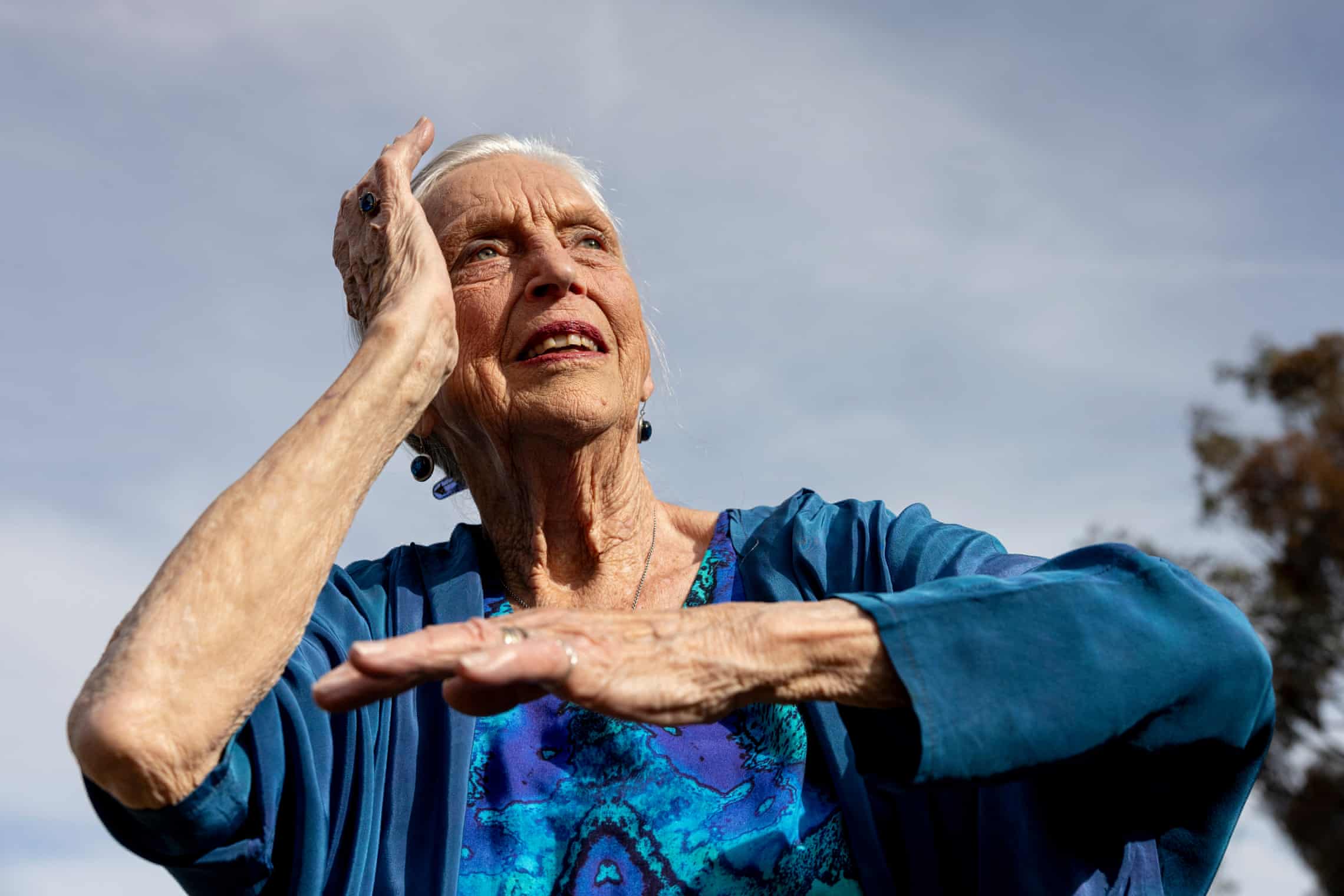
Ella Jenkins is the best selling individual artist in the history of Smithsonian Folkways Recordings. She introduced children to music from around the world and never talked down to them.

Today we learn about a folksinger whose unorthodox approach revolutionized music for children. Her name is Ella Jenkins.

Laurel Graeber writes at the New York Times, “When Ella Jenkins began recording young people’s music in the 1950s and ’60s, her albums featured tracks that many of that era’s parents and teachers would probably never have dreamed of playing for children: a love chant from North Africa. A Mexican hand-clapping song. A Maori Indian battle chant. And even ‘Another Man Done Gone,’ an American chain-gang lament whose lyrics she changed [into] a freedom cry.

“ ‘She found this way of introducing children to sometimes very difficult topics and material, but with a kind of gentleness,’ said Gayle Wald, a professor of American studies at George Washington University and the author of a forthcoming biography of Jenkins. ‘She never lied to them. She certainly never talked down to them.’

“Jenkins’s unorthodox approach became a huge success: … A champion of diversity long before the term became popular, Jenkins helped revolutionize music for the young, purposefully encouraging Black children. In addition to introducing global material, which she often recorded with children’s choruses, she wrote original, interactive compositions like ‘You’ll Sing a Song and I’ll Sing a Song,’ now part of the Library of Congress’s National Recording Registry. …

“You might think that Jenkins, [100], would now want to relax. … What she would really like to do — although her fragile health prevents it — is to perform again herself. ‘I want to get well and get back on the job, where I’m working with other people, working with children,’ she said. ‘I work with them, and they work with me. I enjoy work.’

“Jenkins’s efforts, which comprise more than 40 recordings, began on Chicago’s South Side, where she grew up. Although never formally trained as a musician, she learned harmonica from her Uncle Flood and absorbed a variety of musical traditions through neighborhood moves and jobs as a camp counselor. After graduating from what was then known as San Francisco State College, she directed teen programs at the Chicago Y.W.C.A., which helped cement her love for children. Her street performances led to an offer to do young people’s music segments on local television, a debut that would be followed years later by appearances on shows like Sesame Street and Mister Rogers’ Neighborhood.

“ ‘Her curiosity is so insatiable,’ said Tim Ferrin, a Chicago filmmaker who is completing a documentary, Ella Jenkins: We’ll Sing a Song Together. He added, ‘I think she saw herself as a conduit, as somebody who could then share that enthusiasm, share that understanding.’

“Often called ‘the first lady of children’s music,’ Jenkins captivated her listeners because she presented music not as lessons but as play. A charismatic performer whose accompaniment often consisted of only a baritone ukulele and some percussion, she encouraged her young audiences not to sit still but to get up and move. Using a signature call-and-response technique that she adapted from African tradition and artists like Cab Calloway, she engaged her listeners in a musical conversation, even if they didn’t understand what they were singing.

“ ‘She made it very immediate and not exotic,’ said Tony Seeger, an ethnomusicologist and the founding director of Smithsonian Folkways. … At a Chicago convention of the National Association for the Education of Young Children in the 1990s, he recalled, so many members tried to crowd into a Jenkins concert that the organizers shut the doors. Those excluded responded with frenzied knocking.

“ ‘It was astounding, her popularity, and also the insistence with which these preschool teachers were pounding on the door,’ Seeger said, chuckling in a video interview. ‘I mean, you don’t think that they would do that sort of thing. But they did.’ ”

More at the Times, here.

Photo: EcoForge.
Startup EcoForge’s lead scientist, Jiale Han, working on making sustainable building products.

Sometimes the Boston Globe features interviews with founders of startup companies. This company is in Rhode Island, and it makes alternative building products for a greener future.

Alexa Gagosz has the story.

“Brown University graduates Rongyu Na and Myung Bender are the founders of EcoForge, a startup that is developing local and sustainable building materials from agricultural residues and plants.

Alexa Gagosz: How does EcoForge work?
“Rongyu Na: We start by providing our solutions, such as material binding agents and fire-resistant agents, to materials like hemp — a bio-based material that’s carbon-negative — to interested companies and manufacturers.

“Unlike traditional materials that harm both people and the planet, our materials significantly improve sustainability and ensure material health. EcoForge’s bio-based building products help construction projects secure permits, reduce carbon emissions by up to 40 percent, and save on future energy costs, estimated at more than 15 percent on heating and cooling.

“AG: How does EcoForge fit into both of your experiences?
“RN: With my extensive experience in industrial design at NASA and at Subaru, Nissan, and Amazon, I’ve worked on future clean mobility concepts and innovative products like the Kindle, and led global initiatives focused on sustainable materials. My passion for sustainability is complemented by a strong background in innovation and design excellence.

“My cofounder, Myung Bender, is a seasoned entrepreneur. Her startup was acquired by Apple, and as the former head of product at Bumble, she brings strong business acumen and operational expertise. We’ve both developed numerous products, and we are now focusing on products that significantly impact our health and the planet.

“AG: What kinds of ‘agricultural residues’ are you using? And what kinds of building materials can they be transformed into?
“RN: Our technology is highly compatible with various plants, allowing us to form building products by leveraging their natural material structures.

Agricultural residues like hemp/cannabis waste, sunflower husks, sugarcane waste, corncobs, and invasive plants like Arundo donax [giant reed] are of particular interest to us.

“We’re currently focusing on creating solutions such as zero-VOC [no volatile organic compounds], 95 percent bio-based binders, and highly compatible sustainable fire-resistant technology that work with hemp and cannabis waste. We’re looking to collaborate with interested companies and manufacturers to transform these faster-growing plants and agricultural residues into various building products.

“AG: Who are your customers?
“RN: Our primary customers are large manufacturers seeking innovation and reduced carbon footprints through selling or licensing our ecologically safe material solutions. Secondary customers include corporate owners and real estate firms who renovate frequently to meet ESG [Environmental, Social, and Governance] goals.

“AG: Who or what is your greatest competition? How do you plan on breaking into the market?
“RN: Our greatest competition comes from traditional material solution suppliers using petroleum-based materials that employ green-washing strategies and lack transparency. These companies are also energy-intensive and cause harm to both the planet and human health. They still have a strong influence in the market, with established market presence, customer bases, and industry equipment tuned for their specifications, making it challenging for new entrants.

“To break into the market, we plan to leverage our unique value propositions. … Our hemp recipes tackle cost, supply, fire safety, performance, recyclability, or degradability issues. Our adaptable products are compatible with existing manufacturing lines and can be used for various building products like ceiling tiles, drywall, insulation panels, and flooring. …

“AG: What challenges are you facing currently, and how do you plan to overcome them?
“RN: One of the biggest challenges has been overcoming the industry’s struggle with greenwashing and false claims. Many companies claim to be sustainable but fall short in practice. This makes it difficult for genuinely sustainable products to stand out and gain trust. … We’re committed to maintaining maximum transparency and conducting rigorous testing to ensure our materials are genuinely sustainable and healthy.”

Read about the cost of their products and their funding sources at the Globe, here.

Photo: The Guardian.
Phra Mahapranom Dhammalangkaro, abbot of Wat Chak Daeng, with the solar-powered Hippo waste-collection vessel behind him. When he began his campaign against plastic, he found a novel way to get people to send monks their waste: ‘People can make [Buddhist] merits by giving us plastic bottles, bags and paper.’

Today’s story shows a good way to reduce current plastic problems, even though we know that long-term, we need to stop producing plastic. You can collect it and turn it into other products, but when the new products break down, we still have plastic.

Claire Turrell writes at the Guardian from Bangkok, ” ‘Once upon a time this river was filled with fish; now, nothing swims in it any more,’ says Wat Chak Daeng temple’s abbot, Phra Mahapranom Dhammalangkaro, as he looks out over Bangkok’s Chao Praya River.

“As a novice monk in the 1980s, he remembers seeing children playing in the river and people scooping up handfuls of water to drink. But when he became abbot of Wat Chak Daeng more than 25 years later, those bucolic images were a thing of the past. Instead, when he arrived at the 240-year-old temple, he was saddened by the sight of the dirty river and the rubbish-strewn grounds surrounding it.

“Dhammalangkaro knew that if nothing was done, the situation would only get worse. He built a recycling centre in the temple grounds, which evolved from collecting a handful of bottles to upcycling 300 tons of plastic a year. His biggest problem was that he was unable clean the river itself.

“But then he met Tom Peacock-Nazil, chief executive of Seven Clean Seas, an organization that finds solutions for plastic pollution. Last week the two men launched the Hippo, a solar-powered boat, which aims to remove [millions of pounds] of plastic a year from Bangkok’s busiest waterway. …

“The Chao Phraya River is the largest waterway flowing through central Thailand. It stretches more than 230 miles from the northern Nakhon Sawan province to the Gulf of Thailand and is home to critically endangered species such as the Siamese tigerfish, giant barb and Chao Phraya giant catfish.

“In Bangkok, it is an artery for a network of water buses, ferries and wooden long-tail boats. But it’s not just carrying people. According to research by the Rotterdam-based non-profit organization Ocean Cleanup, the Chao Praya River carries 4,000 tons of plastic waste to the sea every year. …

“The Hippo’s design is simple and effective. A boom on the vessel funnels the floating plastic from the river on to a solar-powered conveyor belt. This then hauls the rubbish out of the water and drops it into a dumpster hidden under its roof.

“The tangled mass of water hyacinths, food containers, plastic bottles and bags is then sorted by hand and recycled at the plant in the temple. …

“Chalatip Junchompoo, a director of the Marine and Coastal Resources Research Centre, believes the Hippo’s presence will have an important impact by raising awareness of plastic waste. She views it as a welcome addition to its network of river booms and rubbish-collection boats. …

Thailand is aiming to have all plastic recycled by 2027, up from 37% now, according to the Pollution Control Department. Plastic that cannot be recycled is, where possible, used for refuse-derived fuel. …

“While sponsorship has helped cover the running costs of the Hippo, future expenses and maintenance will be paid for with plastic credits, which companies can use to offset their plastic footprint.

“In Wat Chak Daeng, some of the plastic is sent to a factory to be converted into fabric. The fabric is then sewn by volunteer seamstresses at the temple into saffron-colored robes for the monks, as well as blankets and bags. …

“The monks can upcycle multilayered plastic, which is seen as challenging to recycle, thanks to a new machine that uses a chemical recycling method known as pyrolysis to break plastic down into oil. Any organic waste is converted into fertilizer using two industrial composters.

“The Hippo has created the final link in Wat Chak Daeng’s circular economy. Now the aim of the team is to build more Hippos to tackle other polluted rivers elsewhere in Thailand and south-east Asia.

“Peacock-Nazil says that addressing rivers alone is not the solution. ‘We need to work onshore and in riverside communities to make sure they have the infrastructure needed to stop plastic leaking into the environment in the first place,’ he says.

“Seven Clean Seas, as well as extending its reach in Bangkok, plans to create educational programs at a local level and would like to offer the Hippo as a floating laboratory for universities in the future.”

More at the Guardian, here. No paywall. Contributions keep the Guardian going.

Photo: Ng Han Guan/AP.
A worker arranges books in a Chengdu, China, bookstore that specializes in nüshu, a centuries-old secret script.  

As a kid I always liked the idea of communicating in mysterious ways. For a long time, my friends and I used what was called Goose Latin, which was based on English but with syllables repeated using an “f” in front. Did you ever hear of it? Something like Pig Latin.

I liked the idea of leaving messages in strange places and talking through a tin can on a string and making up a code known to maybe one other person.

So I was intrigued to read today’s report on a secret style of writing that women in China once used.

Huizhong Wu writes at the Associated Press (AP), “Chen Yulu never thought her home province of Hunan had any culture that she would be proud of, much less become an ambassador of. But these days, the 23-year-old is a self-proclaimed ambassador of nüshu, a script once known only to a small number of women in the south China.

“It started as a writing practiced in secrecy by women who were barred from formal education in Chinese. Now, young people like Chen are spreading nüshu beyond the women’s quarters of houses in Hunan’s rural Jiangyong, the county whose distinct dialect serves as the script’s verbal component.

“Today, nüshu can be found in independent bookstores across the country, subway ads, craft fair booths, tattoos, art and even everyday items like hair clips.

“Nüshu was created by women from a small village in Jiangyong, in the southern province where Mao Zedong was born, but there’s little consensus on when it originated. Scholars estimate the script is at least several centuries old, from when reading and writing were deemed male-only activities. So the women developed their own script to communicate with each other.

“The script is slight with gently curving characters, written with a diagonal slant that takes up much less space than boxy modern Chinese with its harsh angles. …

“Women lived under the control of either their parents or their husband, using nüshu, sometimes called ‘script of tears,’ in secret to record their sorrows: unhappy marriages, family conflicts, and longing for sisters and daughters who married and could not return in the restrictive society.

“[Xu Yan, 55, the author of a textbook on nüshu] is also the founder of Third Day Letter, a nüshu studio in Beijing named after a centuries-old practice by the script’s practitioners. The third-day letter is a hand-sewn book presented in farewell to a woman in Jiangyong on the third day after her marriage, when she’s allowed to visit the childhood home she left.

“The script became a unique vehicle for composing stories about women’s lives, typically in the form of seven-character line poems that are sung. A secret world sprung from the script that gave Jiangyong women a voice through which they found friends and solace. …

“Chen, who studied photography at an art school in Shanghai, said her male professors often doubted that she could keep up with the male photographers because of her slight physique. That attitude, she said, is ‘in every aspect of life, there’s nowhere it doesn’t touch.’

“She was frustrated but didn’t see much room to push back — until she learned about nüshu. ‘I felt that I had received a very strong power, and I think a lot of women need this power,’ she said.

“Chen wanted to make a documentary about feminism and came across nüshu in her online search. When she realized the script originated from Jiangyong, just a few hours from her hometown, she immediately knew that she had found her graduation project’s topic.

“The more she learned about this script, the more she learned about its duality: that it was as much a painful thing as it was a source of strength.

“In her documentary, she follows He Yanxin, a formally designated inheritor for nüshu who is now in her 80s. … He comes from Jiangyong and says she was forced to marry a man she didn’t want to be with, who physically abused her and tore up photos from nüshu meetups and workshops she attended. She did not feel that the script had made her life materially better, according to Chen’s first-person account, published on social media. Yet, He is the one who urged her to learn the script.

“Formal inheritors of the script have to be from Jiangyong, Chen said, and have to master the nüshu, but there was nothing stopping her from sharing her love of the script with others. …

“Lu Sirui, a 24-year-old working as a marketer, learned about nüshu from online feminist groups and joined Chen’s nüshu-focused WeChat group.

“ ‘At first I just knew that it was a women’s inheritance, belonged only among women,’ Lu said. ‘Then, as I got to know it better, I realized that it was a kind of resistance to traditional patriarchal power.’ “

More at AP, here.

Photo: Dominique Soguel.
Nataliia Kalinichenko and her husband, Yurii, outside the office of the print weekly Bilopilshchyna, which they have continued to publish despite the war.

And while we’re on the subject of Ukraine, I want to share a story while it’s fresh, because in a war zone, you never know how long a piece of good news will last.

Dominique Soguel (with support from Oleksandr Naselenko) reports at the Christian Science Monitor, “The streets of [Bilopillia, Ukraine], just seven miles from the Russian border, are nearly deserted. Air-raid sirens have been a round-the-clock reality for weeks, and people take them seriously: When the warnings blare, everyone lies flat to take cover or scrambles to underground shelters.

“But for Nataliia Kalinichenko and her husband, Yurii, there’s no break from getting the news out to the community. They have safety routines; Ms. Kalinichenko asks friends or relatives to monitor social media platform Telegram for news of incoming Russian attacks, while Mr. Kalinichenko uses a drone detector while driving. But their mission is to keep locals informed through publication of their print weekly, Bilopilshchyna.

“Before the war, the newspaper featured 12 to 16 colorful spreads with articles on local entertainment, politics, and practical information like bus schedules. Now, it is a stark black-and-white publication filled with military and civilian obituaries and snapshots of local buildings destroyed by Russian attacks.

“ ‘With the onset of Russia’s invasion, our community’s information needs changed dramatically, as did our ability to meet them,’ says Ms. Kalinichenko, who joined the newspaper in 1996 and became its editor-in-chief a decade later. ‘Safety became the primary concern.’ …

“The information landscape has transformed over the past 2 1/2 years. Televisions, once tuned to Russian and Ukrainian channels, lost their appeal. The first Russian strike on the town’s television tower in March 2022 marked the beginning of a series of barrages. Telegram, which now tracks incoming missiles, has become a lifeline – though it requires electricity and an internet connection. Both have been hard to reliably access amid Russia’s offensive. …

“Inevitably, the community has shrunk. The agricultural district of Bilopillia was once home to about 16,000 residents. Now the figure is between 3,000 and 8,000, according to Ms. Kalinichenko. Residents come and go depending on attacks and electricity supplies. New arrivals from other regions temporarily swell the numbers.

“The Kalinichenkos are determined to stay put and keep the paper running as a team. On the walls of their office hang photographs documenting the paper’s history, including a period when it was known as the Flag of Stalin. Piles of newspapers are testament to disruptions in postal delivery services, and a collapsed ceiling from a recent blast prevents Ms. Kalinichenko from sitting at her usual desk.

“At a nearby shop, salesperson Nina Davydova and her teenage daughter, Victoria, discuss the toll of constant strikes. Though Victoria gets her news only through Telegram, Nina says Bilopilshchyna is still popular.

“ ‘People really like to buy the newspaper,’ she says, pointing out that she has already sold six copies this morning, even though Russian attacks were particularly intense. ‘Grandmothers will buy five to six copies so that they can bring it to their neighbors who cannot walk.’

“The newspaper sells at 20 locations in the Sumy region, which shares a 28-mile border with Russia. While many readers have fled, they continue to pay for a subscription in order to remain connected to their homeland, says Ms. Kalinichenko. Even in its reduced format, it serves as a vital source of information for local agricultural communities.

“Serhii, a sardonic shopkeeper, displays the latest copies alongside shrapnel that damaged his shop, which sits a few blocks from Nina’s. ‘If people would not buy it, I would not sell it,’ he says. ‘About five people buy it every day. But people also come from surrounding villages on market days to buy 10 copies at a time.’

“Articles pay tribute to slain soldiers and quote analysts to dispel rumors and dismantle Russian disinformation. One recent instance involved pollution of the river Seim – caused by industrial activities upstream in Russia. Russian trolls on Telegram spread the notion that drinking water had also been compromised, but that was not actually the case. Experts quoted in the paper helped debunk that notion.

“ ‘For villagers with no internet, it is an important source of information and local news,’ says Serhii.

“That assessment is echoed by customer Dymtro Potiomkyn, who grew up with the paper on the family table. He recalls it being a way for people to buy and sell goods locally. Today, it publishes information about what kind of social help is available locally. He buys the paper in person, while his mother gets it delivered by mail.

“ ‘This newspaper is crucial for villages that are right on the border with Russia,’ says Mr. Potiomkyn, who runs a funeral business in the region. ‘Some have been without electricity or internet for years. It’s literally their only source of Ukrainian news.’ “

I know from my own four-month remote gig with a Ukrainian news outlet that Telegram is important to the information landscape there. I also know about Ukrainians’ concern that the outside world gets false information from social media posted by Russians. That’s why Americans like me were helping Ukrainian journalists put their own Twitter and Facebook updates in colloquial English. My experience here.

More at the Monitor, here. No paywall. Subscriptions are reasonable.

Photo: Rasha Al Sarraj.
Ghulam Hyder Daudpota teaching his craft to students at a ceramics class in Karachi. 

Part of the effort to save artistic and cultural treasures has to be keeping alive the ability to make them in the future. It involves passing on the skills to new generations. Consider today’s story.

Saeed Kamali Dehghan reports at the Guardian, “The small city of Nasarpur in Pakistan has a centuries-old reputation for its ceramics. That’s why, when the ceramic worker Ghulam Hyder Daudpota decided to come all the way to London to master his craft, he says ‘it seemed futile.’ But, he adds: ‘It turned into a life-changing opportunity.’

“Daudpota grew up with eight siblings in a city where the mosques and shrines are embellished with terracotta and blue glazed tiles, known as the art of kashikari. He spoke little English until the age of 27 and his parents had ‘no deep pockets’ to pay his tuition fees.

“But the talented Pakistani secured a full scholarship at the King’s Foundation school of traditional arts (KFSTA) in east London, before returning to his country and helping to revive the dying craft.

“ ‘Kashikari is ubiquitous across [the province of] Sindh, but when I was growing up it was considered a dying craft and only a few craftsmen were practicing. If it wasn’t for my time at KFSTA, I wouldn’t be where I am at the moment,’ Daudpota says from his Nasarpur workshop, which now employs 40 people.

“Believed to have originated in the Iranian city of Kashan, kashikari involves making biomorphic patterns on terracotta clay by dabbing graphite on perforated paper, before applying turquoise metallic pigments found in copper and cobalt oxides.

“ ‘If you go back 100 years, we had a variety of glazes and techniques – masterpieces that we see today in Shah Jahan mosque in the city of Thatta – but we had no proper patronage and we lost our skills, we lost our knowledge,’ Daudpota says.

“Daudpota has since worked on designs at Islamabad airport, Pakistan’s pavilion at Dubai Expo 2020 and on restorations at prominent mosques and mausoleums. In 2010 he was awarded the Jerwood prize for traditional arts for a tile fountain inspired by kashikari panels found in Nasarpur’s old mosque. Daudpota sold the fountain for £5,000 [~$6,600] and received £2,500 in prize money, which he took back to Pakistan and opened a workshop.

“It was a long way from what he had expected from life. Daudpota did not perform well at school and his parents apprenticed him to a local craftsman. An encounter while working on a commission at a private mansion changed the course of his career. ‘It was a turning point in my life,’ he says.

“The house was owned by a teacher at the National College of Arts (NCA) in Lahore. He told Daudpota that his experience would qualify him to study for a master’s degree, provided he learned English within the next four months. He took classes at sunrise every day and passed the test.

“The NCA has a longstanding arrangement with KFSTA, sending one student to London every year for almost three months. Daudpota was chosen for the 2008 program. …

“KFSTA promotes ‘the living traditions of the world’s sacred and traditional art forms,’ such as Persian miniature painting, Moroccan zellige mosaic tilework and Egyptian Mamluk woodcarving. …

“ ‘Teachers in my country were discouraging me from pursuing traditional arts; they were saying it was primitive. The school broadened my perspective, and gave me the training platform to understand how we can turn a dying tradition into a living tradition.’ ”

More at the Guardian, here. No paywall. Donations encouraged.

Saving Art in Ukraine

Photo: Julia Kochetova/The Guardian.
Leonid Marushchak with artworks from his private collection. He launched a death-defying rescue plan to help museums save Ukraine’s art from the invaders.  

You may know about the Monuments Men, charged by President Roosevelt with protecting cultural heritage during World War II. In Ukraine, after the Russian invasion, private individuals took on a similar task. One man especially.

At the Guardian, Charlotte Higgins has a fascinating piece about what historian Leonid Marushchak and his cohorts have accomplished.

“In early March 2022, when his country seemed in danger of falling to the Russians, it occurred to Leonid Marushchak, a historian by training, to call the director of a museum in eastern Ukraine to check that a collection of 20th-century studio pottery was safe.

“He had loved the modernist works by artist Natalya Maksymchenko since he had encountered them almost a decade earlier. There were vessels covered with bold abstract glazes in purple, scarlet and yellow; exuberant figurines of musicians and dancers with swirling skirts; dishes painted with birds in flight. The collection was the radiant highlight of the local history museum in Sloviansk, the ceramicist’s home town.

“It was remarkable that they were in this small museum at all. Though she was born in Ukraine in 1914 and studied in Kharkiv, Maksymchenko had lived the rest of her life in Russia. But, after her death in 1978, her family, fulfilling her wishes, oversaw the transfer of about 400 works from her studio in Moscow to the city of her birth. … Maksymchenko’s final gift to her home town and country seemed like a statement of defiance.

“Now, as the Russian army inched nearer and nearer to the museum, Marushchak worried that these works in delicate porcelain could be destroyed by a missile in a moment – or, if Sloviansk were occupied, taken by the invaders back to Moscow. Had the ceramics been prioritized for the first round of evacuations, Marushchak asked the museum director on the phone.

“ ‘Lyonya, what round?’ came the reply. ‘We still haven’t got the order to evacuate!’

“Marushchak phoned his friend Kateryna Chuyeva, who was then Ukraine’s deputy minister for culture. ‘Katya,’ he asked her, ‘why have you still not given the order for the Sloviansk museum?’ She explained that she couldn’t just authorize it herself – the regional authorities needed to request it first. So he called the region’s culture department. They said that to issue an order, they would first need a full list of items to be evacuated.

“Marushchak was furious. The situation was urgent; there was no time for that kind of paperwork. ‘Let’s just say I have sometimes had to take my time and breathe slowly,’ said Chuyeva, in the face of her friend’s sometimes volcanic passion. She found a way to break the bureaucratic impasse. Before the official order had even arrived, Maruschak was on his way to Sloviansk.

“Marushchak cannot drive. … Without his own means of getting to Sloviansk, Marushchak had his brother-in-law drive him from Kyiv 300 miles east to the city of Dnipro. From there, friends took him a further 50 miles, to the city of Pavlohrad. Then he walked to the last checkpoint in town and hitched a lift for the last 120 miles – this time, on a Soviet-era armored personnel carrier.

“In Sloviansk, artillery boomed alarmingly close; the opposing armies were fighting over a town only 18 miles away. When Marushchak reached the museum, staff were finally packing up the exhibits – though, to his annoyance, the official instructions on what should be prioritized dated from 1970, and stated that what he referred to as ‘an old bucket of medals’ from the second world war should be rescued first. Aside from the Maksymchenko ceramics and the medals, there was also a natural history collection to deal with – AKA, stuffed animals, which, just to add another layer of danger to the enterprise, had probably been preserved with highly toxic arsenic. …

“Since those early days of the war, with the help of a motley group of intrepid friends, Marushchak has achieved something quite extraordinary. He has organized the evacuation of dozens of museums across Ukraine’s frontline – packing, recording, logging and counting each item and sending them to secret, secure locations away from the combat zone. Among the many tens of thousands of artifacts he has rescued are individual drawings and letters in artists’ archives, collections of ancient icons and antique furniture, precious textiles, and even 180 haunting, larger-than-life medieval sculptures known as babas, carved by the Turkic nomads of the steppe.

“ ‘At times,’ said Chuyeva, ‘he has been doing almost unbelievable things’ – putting himself into extreme personal danger for the sake of often humble-seeming regional museum collections on Ukraine’s frontline.

“A nation’s understanding of itself is built on intangible things: stories and music, poems and language, habits and traditions. But it is also held in its artworks and artifacts, fragile objects that human hands have made and treasured. Once lost or destroyed, they are gone for ever, along with the stores of knowledge they contain, and potential knowledge that future generations might harvest from them. For Marushchak, his country’s culture, no less than its territory, is at stake in this war: a culture that Vladimir Putin has repeatedly claimed has no distinct existence, except as an adjunct to Russia’s.

“On that day in Sloviansk, something became clear to him: there was no point relying on official evacuation efforts. If he wanted to see the job done, he was going to have to do it himself. ‘He had to do it with his own hands,’ his friend, the artist Zhanna Kadyrova told me. ‘There was no one else.’

This is a long article. Read it at the Guardian, here. No paywall, but contributions are solicited.

Photo: Judith Jockel/The Guardian.
As part of outreach to people in the Netherlands with dementia, Yke Prins uses a paint palette and spinning tops for a demonstration about colors.

About a year ago, I saw a meditation and breathing exercise that involves focusing on one’s five senses. Very interesting. (Click here.) Just as we don’t think about our breathing all the time, we don’t always think about how important each of our five senses is either.

Now I’m reading that one approach to reaching people with dementia also taps into the five senses. That is happening in the Netherlands, which is generally ahead of the curve on senior care. It’s from there that Senay Boztas reported today’s story for the Guardian.

“Eight people approached a fragrant carpet of lavender in the Kunstmuseum Den Haag gallery,” she writes. “Four of them had dementia and four were their relatives and carers. ‘Put your nose nearer the ground and smell it, it’s wonderful!’ called Annie Versteeg, 88, to Bwieuwkje Bruinenberg-Haisma, 90, in her wheelchair nearby.

“ ‘This tour is about color and here we have a color and it goes with a smell,’ said Yke Prins, the museum guide. ‘Do you know what it is? It is lavender. What does it make you think about?’

“This was no ordinary gallery tour, but a dedicated effort to welcome visitors with dementia and their carers. The new Art Connection tour ran for the first time [in June] and is scheduled for the last Friday afternoon of every month.

“ ‘The heart does not get dementia,’ said Maaike Staffhorst, the museum’s spokesperson. ‘People with dementia still have feelings [that] can give a sense of fulfillment. For the carer, this brings a level of equality. You can talk about the same thing.’ …

“On the inaugural tour, the residents of the Nebo care home and their carers looked at four artworks. … Prins opened up a bag of tricks: she whipped spinning tops to demonstrate how dots of color blend in front of the eye; pulled out palettes of color and, at the last work, coloring-in sheets.

“Bruinenberg-Haisma, who, her son Harry said, had been in the care home for four months after it became too difficult for him to look after her, wore a constant smile. ‘Beautiful!’ she said, several times.

“Another visitor, Jeroen Smit, 74, who was diagnosed with dementia after falling from his bicycle two years ago, said over tea before the tour that he struggled with daily life. ‘I can’t do it any more – I’m rudderless,’ he said. As the afternoon progressed, he visibly relaxed.

“The free art tours in The Hague– organized thanks to a bequest – were inspired by the Museum of Modern Art in New York’s Alzheimer’s Project. They are part of a larger push to adapt Dutch society as the population ages and one in three women and one in seven men will be diagnosed with dementia.

“This was a priority for Conny Helder, the last minister of long-term care. ‘It’s vital that we keep working to ensure that people with dementia are treated as valued members of society,’ she told the Guardian. … ‘Science shows that this can enhance cognitive functioning in many people with dementia, effectively giving them their lives back. All this requires a major change in thinking.’

“One driving force towards a ‘dementia-friendly‘ society is Alzheimer Nederland. The charity has helped create free, online training videos so everyone can recognize and respond correctly to signs of Alzheimer’s. …

“ ‘This is hugely urgent,’ said the director, Gerjoke Wilmink. ‘Right now, about 300,000 people are living with dementia in the Netherlands and this number will rise explosively to around half a million in 2040. But care and carers are not growing in tandem. It is essential that people with dementia can continue to participate … and this needs to be systematically embedded in our society.’ …

“Rotterdam’s deputy mayor for care, Ronald Buijt, described initiatives such as multilingual awareness programs for city workers and taxi drivers, and Alzheimer’s cafes for old and young. ‘The most important thing is for us to learn that these people should live as good a life as possible, and as normal a life,’ he said. ‘Let them do what they can still do.’ …

“Elsewhere in the Netherlands, a ‘participation choir‘ initiative matches singers with dementia with two supportive buddies, who pick them up and help them find their way in the songbook. ‘The musical memory stays intact for the longest time,’ said the choir’s founder, Erik Zwiers. ‘Caregivers, the audience, musicians all see that people with dementia can reach a higher artistic level than they often think. It gives a completely new view on how to deal with people with dementia – and it’s fun.’ ”

More at the Guardian, here.

Photo: Justin McCurry/The Guardian.
Members of Ara Style Senior breakdancing club at a recent class in Tokyo, Japan. 

When John was in middle school, he got into breakdancing for a while, an activity that seems manageable for young people. But what about for the elderly? For them, the more recent nomenclature, “breaking,” seems more appropriate.

But not in Japan. Justin McCurry filed another story at the Guardian about that endlessly fascinating country.

“Ten people – wearing bright orange and green T-shirts that mark them out as members of Ara Style Senior – do not belong to the demographic you would normally associate with breakdancing. Their average age hovers just below 70, and the oldest is 74.

“But on a hot afternoon in an eastern Tokyo suburb, amid nervous smiles and initial timing issues, the group ends with a perfectly executed pose the dance’s originators in 1970s New York neighborhoods would probably agree is not too shabby at all.

“Senior breaking is one of a growing category of sports tailored to Japan’s large population of older people who, thanks to the country’s extraordinary longevity statistics, are determined to keep popping and locking for as long as their bodies will allow.

“ ‘At first I thought, there was no way I could breakdance at my age,’ says 69-year-old Hitomi Oda. ‘And of course, we can’t do anything extreme, but it’s fun just to do the easy moves and get your body working.’

“These superannuated b-girls and b-boys, who meet twice a month at a community center in the capital’s Edogawa ward, have the organizers of this summer’s Paris Olympics, and former breaking national champion Yusuke Arai to thank for this novel approach to fitness in their later years.

“ ‘Some of my mother’s friends told her they were interested in learning how to breakdance, and when it was chosen as an Olympic sport, I thought, “Why not give it a go?” ‘ Arai tells the Guardian. …

“The 39-year-old tailors his class to bodies that may not be as supple as the children he has been teaching for almost a decade. ‘You have to lower the hurdles to make it possible for older people to do the moves, so I begin with a focus on easy moves using the top half of the body,’ says Arai. …

“The class is just a few minutes old when the dancers, faces flushed from stretches and warm-up exercises, take the first of several breathers. The genteel approach works: since the classes started last year, not a single dancer has so much as sprained an ankle.

“A few have backgrounds in other forms of dance, but most had never tried breaking until a combination of Olympic excitement and gentle peer pressure brought them through Arai’s door. Now they are converts, practicing together between sessions with the help of YouTube tutorials.

“The class ends with a meticulously rehearsed routine that combines toprocks and floor moves and, as its sign-off, a baby freeze the dancers are asked to re-create multiple times by a visiting Japanese TV crew.

“ ‘The rhythm and the perseverance mean it stimulates your brain as well as your body,’ says Kazuharu Sakuma, the only male dancer, who is here taking a trial class.

“The 71-year-old says he will be back. ‘It’s not like you have to memorize the moves … you just do them two or three times and you realize, “yes, I can actually do this.” That’s when it becomes really enjoyable. It’s also great for general fitness … I’m hoping it will make it easier to walk up stairs.’

“Class regular Takako Mizutani removes her trucker cap and pronounces herself ‘not in the least bit tired. … It doesn’t matter if you’re not very good at it, it’s a lot of fun and a proper workout,’ adds Mizutani, who has a background in jazz dance. ‘I plan to keep breaking for as long as I can.’ ”

More at the Guardian, here. No paywall.

Photo: Justin McCurry/The Guardian.
Rieko Hirosawa performs the music of the goze – itinerant blind and visually impaired women who earned a living playing the shamisen in Japan.

I love how the Guardian collects stories from around the world that I would never learn about otherwise. Sometimes I wonder how they do that. Do they have a reporter in all these locales, does a freelancer pitch them an idea? Maybe they have a stringer in a nearby country and send them there. Here is a story I like from Japan.

Justin McCurry reports at the Guardian, “Rieko Hirosawa sits on a stone bench outside her home, tunes her instrument and takes a deep breath. She unleashes an impossibly high note while her bachi plectrum slaps the three strings of her shamisen, a traditional instrument. …”

“Barely a decade has passed since Hirosawa started learning goze uta (blind women’s songs) – a prodigious genre of music spanning four centuries that most Japanese people have probably never heard.

“That she now plays with the composure of a veteran is remarkable for two reasons: not a single goze uta musical score exists, and even if the chords and notes had been written down, Hirosawa would not be able to read them.

“ ‘I knew when I was a young child that I would lose my sight,’ says Hirosawa at her hillside home in Tomi, Nagano prefecture, the outline of the Japanese Northern Alps in the distance.

“But it is because of her condition, not in spite of it, that the 65-year-old has formed an unbreakable spiritual bond with the music of the goze – blind and visually impaired women who earned a living as itinerant musicians and who numbered in their hundreds in the late 19th century.

“In the north-western prefectures, where the tradition flourished during the Edo period (1603-1868), Hirosawa is at the heart of a movement to protect the legacy of the goze.

“ ‘They sang songs while they were living really tough lives,’ she says. ‘Just surviving was a challenge. They used music to have a sense of purpose and then passed on those skills to their apprentices.’

“The musical genre, which historical texts and artwork suggest began as long ago as the 1500s, was no simple career choice. In feudal Japan, girls from poor rural regions who suffered from visual impairment as a result of measles and cataracts, then both commonplace, had only two means of making a living – as masseuses or as traveling musicians.

“Those who chose the latter route out of poverty and discrimination became live-in apprentices at guilds run by an experienced goze, who would pass on songs by word of mouth and teach the shamisen by sitting behind younger musicians and guiding their hands along the instrument’s three strings. …

“They were expected to give a portion of their earnings to the most senior woman in a show of loyalty and observed a strict hierarchy, from the use of honorific to address senior musicians, to the way they wore their hair. The least experienced ate and bathed last, their stock rising with every year of their apprenticeship. The women were not allowed to marry, and men were banned from their lodgings. …

“ ‘It wasn’t unusual for parents to go directly to the master of a goze household and ask her to take on their daughter,’ says Zenji Ogawa, curator of a museum dedicated to the musicians in Takada, a town in Niigata prefecture that was once home to almost 100 performers. ‘They were worried about what would happen to them after they died.’ …

“Life on the road was even more arduous. Three or four musicians, led by a sighted guide, spent 300 days of the year walking from one village to the next, mainly in Japan’s northwestern prefectures of Nagano and Niigata. …

“The women were paid in rice that they would exchange for cash. ‘There was a belief that the goze must have magical powers to have overcome so much adversity and become musicians, so people would buy back the rice they had donated to the women,’ says Ogawa, who organizes bus tours of goze-related sites. …

” ‘They thought that feeding the rice to their children would make them just as strong-willed,’ adds Ogawa, co-founder of the Takada Goze Culture Preservation and Promotion Association. ‘It was the opposite of discrimination. People with disabilities suffered terrible discrimination in those days, of course, but the goze were treated differently.’ …

“Haru Kobayashi, who went blind when she was three months old, is regarded as the last true goze. Born in 1900, she spent her childhood locked in a room at the back of her family home in Niigata and began her career at the age of eight.

“She continued performing until 1978 and was named a living national treasure and received the medal of honor. …

“ ‘Kobayashi-san was 101 years old when I met her,’ says Hirosawa, who wanted to interview the musician for her local radio program, Rieko no Mado (Rieko’s Window). ‘She had lost her sight, of course, and her hearing was failing too.’ Hirosawa had been warned by care home staff that Kobayashi would not be able to sing during their meeting.

“ ‘But she was determined to sing one stanza of a song to me. When I heard her sing it was like thunder … I’d never experienced anything like it. It sent chills down my spine, and I found myself crying the whole time, even on the train on the way home.’

“Inspired by the encounter, she continues to memorize more of the goze repertoire with the help of a teacher who once studied under Kobayashi. ‘All I want is for people to enjoy the music … after all, that’s what the goze’s original purpose was,’ she says.”

More at the Guardian, here. No paywall. Contributions encouraged.

Another Species Rescued

Photo: Carlton Ward Jr.
A grasshopper sparrow in Florida. 

Continuing on the subject of endangered birds, let me introduce Florida’s grasshopper sparrow. Now, you may think that with all the troubles in the world, the future of the grasshopper sparrow is the least of your worries.

But I like how the story represents bigger things — how we can make the world better if we try, how there are people who devote their lives to some small area that has big implcations.

Richard Luscombe writes at the Guardian, “Scientists in Florida are hailing the landmark release this week of a tiny bird only 5 inches tall as an oversized success in their fight to save a critically endangered species.

“Numbers of the Florida grasshopper sparrow, seen only in prairies in central regions of the state, dwindled so severely by 2015, mostly through habitat loss, that authorities took the decision to remove remaining breeding pairs into captivity. Their wager was that a controlled repopulation program would be more successful than leaving the birds to their own devices.

“[Their] gamble was rewarded. Partners joined the Florida Fish and Wildlife Conservation Commission (FWC) to release into the wild the 1,000th bird bred under controlled conditions, adding to an increasingly stable population that researchers believe has turned the tide towards the species’ survival.

“ ‘The recovery and release program diverted the extinction of the Florida grasshopper sparrow,’ said Adrienne Fitzwilliam, lead sparrow research scientist at the FWC’s fish and wildlife research institute.

“The fear was we might just be expediting their demise by bringing in proven breeders, so to see these birds making it in the wild, breeding with wild birds and other release birds, and their offspring going on to breed, has just been incredibly rewarding.’ …

‘Releases, which began in 2019, have taken place at three sites, with the newly freed birds monitored by patient teams of observers with binoculars and lawn chairs at two more. Birds are released in batches at about 40 days of age and, Fitzwilliam said, quickly set about setting up their ‘territory.’

“ ‘There’s a lot of sitting and waiting and watching because their nests are incredibly hard to find,’ she said.

“At the Avon Park military range south of Orlando where the milestone release took place this week, researchers have this year recorded 16 nesting pairs and 30 ‘singing’ males looking for a mate.

“At Three Lakes wildlife management area, the program’s first release site where once only 11 pairs were present, the observers found 40 pairs and 68 males, and are hopeful of more with the breeding season still in progress. …

“ ‘These numbers mean released birds successfully survive, breed and raise young in the wild, which is a huge success,’ Fitzwilliam said. ‘It has diverted extinction and allows partners to research possible landscape-level solutions.’

“Grasshopper sparrows, per their name, eat mostly grasshoppers and seed, and according to the FWC, the loss of large areas of prairie habitats to agriculture fields has vastly reduced their range and numbers. … FWC’s program partners, which include Audubon, White Oak Conservation and the Fish and Wildlife Foundation of Florida (FWF), are researching potentially beneficial land management practices such as roller chopping, which prepares land for controlled burns and speedier regeneration of native grasses. …

“News of the recovery of grasshopper sparrow numbers follows an upbeat report by a coalition of prominent universities for the future of Florida’s wildlife, if the climate emergency is mitigated properly.

“Andrew Walker, FWF president and chief executive, said: ‘These little birds represent a big beacon of hope that our commitment, partnership and holistic approach can save vulnerable wildlife from the brink of extinction.’ “

More at the Guardian, here.

Photo: Richard Vogel/AP.
A California condor takes flight at the Los Angeles Zoo, on 2 May 2023. 

Few of us warm up to scavengers like condors and vultures, but I recall a kid I knew back in the day who was obsessed with endangered California condors. Now their numbers are creeping back, thanks to protection efforts, and more people are learning why scavengers are essential.

Coral Murphy Marcos reports at the Guardian, “Nearly 20 new California condors will fly across the western sky after a record-setting hatching of baby birds this summer at the Los Angeles Zoo.

“The zoo marked a record of 17 California condor chicks hatched during this year’s breeding season, with staff members preparing to set the birds into the harsh wild as they are currently protected as an endangered species.

“ ‘Our condor team has raised the bar once again in the collaborative effort to save America’s largest flying bird from extinction,’ said Rose Legato, curator of birds at the LA Zoo.

“Legato said the record number of birds was thanks, in part, to new breeding and rearing techniques developed and implemented by the team. The process places two or three condor chicks together with a single adult surrogate condor to be raised. Usually, the four-inch-long eggs are laid in late winter or spring, and take two months to hatch. …

“The condors will be released as part of the recovery program for the California condor, led by the US Fish and Wildlife Service. In 1967, the California condor was listed as endangered by the federal government. …

“Twelve years later, the wildlife service started the California Condor recovery program. The species ranged from California to Florida and western Canada to northern Mexico, but, by 1982, only 22 condors survived in the wild. Those birds remained in captivity and were placed in the agency’s program. As of December 2023, there were 561 California condors in the world, of which 344 are living in the wild, according to the zoo.

“Ashleigh Blackford, the California Condor recovery program coordinator, said that the birds play an important role in the ecosystem because they help eliminate disease and recycle nutrients by feeding on animal carcasses that would otherwise decompose and spread disease. …

“This year, for the first time, the zoo’s condor team implemented a technique allowing three chicks to be raised at the same time by a female to increase the ability to raise condors without human interaction. … This process helps breeding pairs produce more than one viable egg in a season. It also makes the birds adjust better to the wild after they are released.

“The number of birds in the wild fluctuates due to habitat loss, pesticide contamination, consumption of micro trash in their environment, and lead poisoning from eating lead bullet fragments or shot pellets found in animal carcasses.

“Lead poisoning is the main hurdle to recovery of the California condors. Avian influenza is also an increasing threat to the condors. In response to a recent outbreak of highly pathogenic avian influenza in the western coast of the US, the US Fish and Wildlife Service has been vaccinating condors before releasing them into the wild.” More at the Guardian, here.

And while we’re on the topic of scavengers, read how cattle medicine that accidentally poisoned vultures in India led to thousands of human deaths.

Catrin Einhorn wrote at the New York Times, “To say that vultures are underappreciated would be putting it mildly. With their diet of carrion and their featherless heads, the birds are often viewed with disgust. But they have long provided a critical cleaning service by devouring the dead.

“Now, economists have put an excruciating figure on just how vital they can be: The sudden near-disappearance of vultures in India about two decades ago led to more than half a million excess human deaths over five years, according to a [study] in the American Economic Review.

“Rotting livestock carcasses, no longer picked to the bones by vultures, polluted waterways and fed an increase in feral dogs, which can carry rabies. It was ‘a really huge negative sanitation shock,’ said Anant Sudarshan, one of the study’s authors and an economics professor at the University of Warwick in England.

“The findings reveal the unintended consequences that can occur from the collapse of wildlife, especially animals known as keystone species for the outsize roles they play in their ecosystems.” The Times story is here.

My last word on this topic is for people who enjoy reading mysteries set in foreign countries. One of my all-time favorite mysteries is The Skull Mantra, which is the beginning of a series about Tibet. Somewhere in that series, I learned about the role of a class of people who traditionally prepared bodies to be exposed to vultures on high plateaux for “sky burials,” a way of life that other Tibetans seemed to find both distasteful and holy.