Feeds:
Posts
Comments

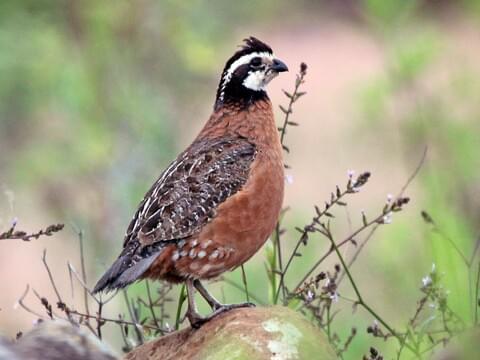
Photo: AllAboutBirds.
The northern bobwhite quail has a hopeful story.

This is a comeback story. When habitat is lost through ignorance, knowledge can restore that habitat — and the wildlife that used to live there. Humans can learn.

At the Washington Post, Dana Hedgpeth reports on a charming bird that says its name.

‘I don’t want to shoot them anymore — I just like to see them around and hear them whistle,’ said a landowner

“In his teen years, when Joe Graves heard the unique call of quail on his family’s 800-acre farm in rural Virginia, he and his brother Clark would often go out with their dogs and hunt them.

“But due to development and a shift in agricultural practices, the birds that once flourished on their farm in Halifax County and in the state have become harder to find. Now Virginia wildlife experts, hunters and landowners, including the Graves brothers — who are now in their 70s — are working to restore quail habitats in an effort to increase their population.

“ ‘We want to see quail be a part of the Virginia landscape, so we’re trying to create habitats that are critical for their survival,’ said Graves.

“Northern bobwhite quail, which are roughly the size of a softball, have short legs, short wings and don’t fly much. From afar they look like small, plump chickens that walk with their chests puffed out. Male quail typically have a white coloring on their neck area. Quail are best known for their unique sound — similar to a sharp whistle, which they make to communicate with each other and as a way to attract a mate.

“Because they spend most of their life on the ground — much like pheasants and turkeys — quail need a mix of habitat: Honeysuckle and briers provide protection from predators, and they walk among shrubby patches, between weeds and grasses, pecking at seeds. In the fall and winter, quail typically live in flocks, or coveys, with about a dozen birds. They roost in a circle, shoulder-to-shoulder to stay warm, and face outward to watch for predators.

“When a snake, hawk or raccoon approaches, a quail’s defense mechanism is to escape by leaping into the air, flying fast for a few seconds, though they don’t go far — about half the length of a football field. The longer they’re in the air, the more exposed they are to a predator. …

“Quail habitats have been ruined by several factors, including encroaching development and farming practices that have changed because many landowners want neat, well-kept fields between planting seasons. Justin Folks, a wildlife biologist for the Virginia Department of Wildlife Resources, said simply, ‘Quail like weeds and brush, and farmers don’t.’

“Hudson Reese, 84, who owns 1,000 acres in Halifax County, said as a teen, he could regularly find eight coveys of quail on his farm, and now that’s down to one or two. ‘People have tractors, bush hogs and mowers now,’ Reese said. ‘They want to keep their property looking like a golf course. You don’t have quail on a golf course.’ …

“With the destruction of their habitats, the quail population in Virginia has plunged nearly 80 percent since the 1960s, and so too has interest in hunting them. …

“Nationally, experts said quail were once in the mid-Atlantic region, Southeast and Midwest but are now considered one of the top birds suffering a major population decline.

“ ‘It’s amazing we have any because our environment of modern, manicured land doesn’t suit them,’ [John Morgan, director of the National Bobwhite & Grassland Initiative at Clemson University] said. ‘They’re just hanging on and slowly slipping away.’

“While northern bobwhite quail are not considered an endangered species, they are a ‘species of concern,’ according to Jay Howell, a wildlife biologist and small-game project leader who works on the quail recovery team for the Virginia Department of Wildlife Resources. He is worried that continued population declines could make them even more rare.

“Over the past 13 years, Virginia wildlife officials have made a concerted effort with hunters and more than 3,300 landowners to revive their population, and there are signs of success. Howell said the state’s quail population, though still low, is starting to reach equilibrium, and the rate of decline is slowing.

“Landowners are trying to improve quail habitat through controlled burns of forest areas. That process gets rid of pine needles, leaf debris and dead vegetation, leaving more easily walkable areas for quail. The more open ground encourages the growth of new plants and seeds and attracts insects — all of which in turn appeal to quail.

“There are similar efforts in neighboring Maryland. Officials have conducted timber harvests and controlled burns in Pocomoke State Forest since 2013, and last year quail were heard for the first time in decades, according to a 2022 report by the National Bobwhite and Grasslands Initiative, a group that promotes quail conservation.

“Overton McGehee, who owns 150 acres in Virginia’s Fluvanna County, is also working with state wildlife experts to bring quail back.

“ ‘Quail are one more of the species in Virginia that we don’t want to see disappear,’ he said. ‘They’re like a canary in a coal mine,’ he said. ‘If we don’t have the right habitat for quail, then we probably don’t have the right habitat for a variety of birds and pollinators — from whippoorwills and goldfinches to monarch butterflies and bumble bees.’ ”

When I was a kid, I was surprised that organizations of people who fish and hunt were great supporters of conservation, but it stands to reason they need places to hunt. Today I’m grateful for this example of how very different ideologies can work together for common goals.

More at the Post, here.
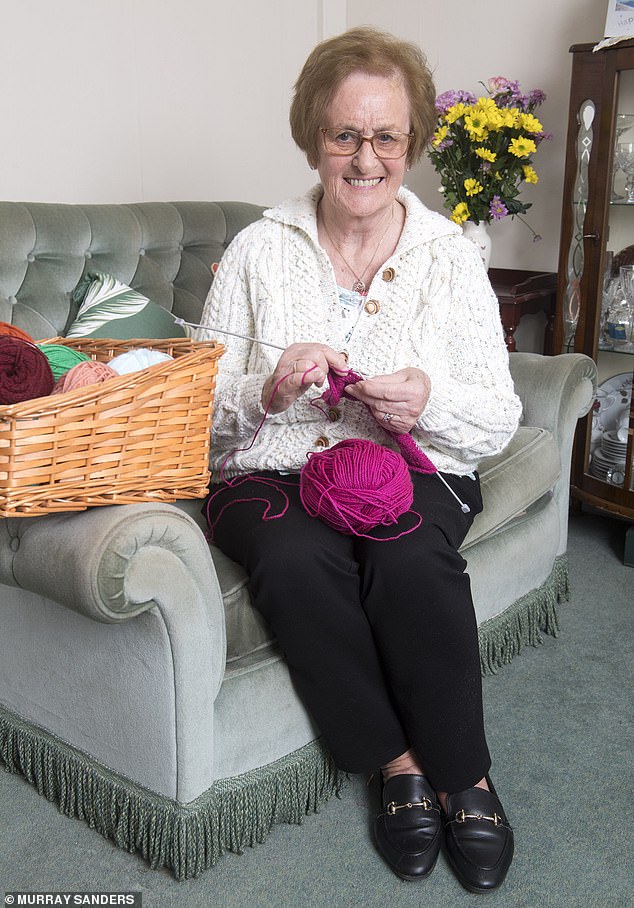
Photo: Murray Sanders via the Daily Mail.
Delia Barry, an 83-year-old widow from Greystones, County Wicklow, started knitting classes to improve her skills for a cancer charity after her husband of 48 years died suddenly in 2010. Now she’s a knitter to the stars.

How many ways are there to love this story? An Irish woman gets serious about knitting late in life and becomes so highly skilled that she’s in demand. An acclaimed movie director’s team seeks her out to make sweaters (“jumpers”) for actors in a film that turns out to get an Oscar nomination. She has to watch the movie twice because the first time, she is only looking at the sweaters. And when the New York Times calls, she says to call back because she’s playing bingo!

Lou Stoppard reports at the Times, “When I first contacted Delia Barry, she asked to be called back later. It was a Wednesday afternoon in Greystones, Ireland, where she lives, and she was playing bingo. ‘It’s just more of a social gathering for local senior citizens, which I am one of,’ Ms. Barry, 83, said by telephone.

“When not at bingo, Ms. Barry is usually knitting. Four of her sweaters appear in the Oscar-nominated film The Banshees of Inisherin, which is set on a fictional island in 1923, toward the end of the Irish civil war. These include a navy roll-neck and a red pullover with a distinctive long collar, both worn by Colin Farrell; a thick blue knit worn by Brendan Gleeson; and a purplish ribbed fisherman’s sweater worn by Barry Keoghan. Esquire U.K. called Banshees the “Next Great Knitwear Film.”

“ ‘It’s pure madness,’ she said of the attention. ‘I’ve knitted so many jumpers, they are just another jumper to me.’ She hopes to see the film a second time soon, she said, to better appreciate the acting and Martin McDonagh’s direction. ‘When I went the first time, I was just looking for the knitwear,’ she said.

“Ms. Barry learned to knit at school in Cahir, County Tipperary, at age 7. As a teenager, she made her own clothes, trying out new patterns, perfecting shapes. At 20, she moved to London with her future husband and worked in a telephone factory. More than a decade later, they returned to Tipperary, where Ms. Barry worked in a bar before moving to her husband’s birthplace of County Wicklow, where the town of Greystones is. …

“Ms. Barry knitted throughout her marriage, she said, but her commitment grew when her husband died in 2010, and she began knitting to raise funds for Greystones Cancer Support. ‘They were very good when he was diagnosed,’ she said. She donated a portion of her film earnings to the organization. …

“On an average week, Ms. Barry rises at 6 a.m. and knits until 8:30 a.m. She always knits in the same spot — on her sofa, with the light from the window behind her. At 9:30, she goes for a walk to the beach with a friend, about two miles away. She has never owned a car, she said, and has walked everywhere her whole life. …

“Back home, she’ll knit for another three to four hours. She’ll take a short break for dinner, then knit throughout the evening. ‘I get up and walk around every so often,’ she said. … ‘When you’re living on your own, it’s nice to have something to do.’ she said. …

“Eimer Ni Mhaoldomhnaigh, the film’s costume designer, commissioned Ms. Barry to create the sweaters. After the release of the movie, Ms. Ni Mhaoldomhnaigh recalled, ‘My daughter, who is 20, came and said Delia is a TikTok sensation.’

“Ms. Ni Mhaoldomhnaigh came across Ms. Barry’s work when she was sourcing knitwear for a 2017 television adaptation of Little Women. A woman working on the production knew that Ms. Barry had helped on other films, including Dancing at Lughnasa, for which she created knitwear for Meryl Streep’s character.

“ ‘Ireland is very small,’ Ms. Ni Mhaoldomhnaigh said, laughing. ‘It’s all word of mouth.’

“Ms. Barry credits her success to being willing to take on a job without a pattern, something many knitters would be wary of. For The Banshees of Inisherin, Ms. Ni Mhaoldomhnaigh provided photographs of Irish fishermen from the 1920s, which Ms. Barry studied with a magnifying glass. One showed a sweater with a distinctive long collar, the inspiration for the red piece that would become Mr. Farrell’s. …

“Once each item was complete, it went to the aging department, where pieces are dyed and distressed. ‘People think they just take a cheese grater to it, but it’s not as simple as that,’ Ms. Ni Mhaoldomhnaigh said. She sees the process as a means of communicating subtleties about a character — somebody who walks purposefully with their hands wedged in their pockets, somebody who gets nervous and wipes their hands on the front of their clothing.”

More at the Times, here. For the story at the Daily Mail, here, there is no firewall.

Photo: Amy via Louisiana Radio Network.
Do you know where to find the “Strawberry Capital of the World”?

When I was volunteering last spring with the Ukrainian media team, we often chatted by text when work was slow, and Leilya happened to mention that Louisiana was the strawberry capital of the world.

She said the strawberries started in February! This year’s Ponchatoula Strawberry Festival is scheduled for April 14 to 16, so you still have time to get down there.

The festival website says, “Since 1972, the Ponchatoula Strawberry Festival has attracted visitors from near and far to celebrate our local strawberry farmers, non-profits, and our special community, flourishing into the largest free harvest festival in the state of Louisiana.”

Events seem to include non-strawberry events, such as rides, an egg toss, and a ceremony for fallen heroes: “Join us in Veterans Square, commonly referred to as the Strawberry Parking Lot, to witness history as we support our Fallen First Responders and Wounded Veterans from 9/11. The Ponchatoula Strawberry Festival is proud to bring the Tunnel To Towers Foundation’s 9/11 Never Forget Mobile Exhibit to Louisiana for the first time! This high-tech exhibit will sit among local Veteran booths, representatives from our country’s Military Forces, and the ‘Spirit of Louisiana’ Fire Truck.”

To learn more about the actual strawberries, I turned to the Strawberry Marketing Board, here: “Louisiana’s strawberry industry dates back to the 1800s when the Great Economic Migration brought a wave of Italians and Hungarians to America with hopes of finding work. Many moved to Louisiana and began strawberry farms in the warmer weather and rich soil.”

“The Louisiana State University (LSU) Ag Center, here, adds, “Tangipahoa Parish is still the leading strawberry-producing parish, growing 75% of the total acres in Louisiana and accounting for 79% of the state’s total gross farm value. Louisiana strawberries can be found in grocery stores, farmers markets and roadside stands as early as November, December and January.

“Early fall is the time to plant strawberries. Home gardeners can successfully grow strawberries with even a small area, plenty of sun and some TLC. … Strawberry plants are typically sold in local garden centers as bare-root plants, but they also can be found as transplants. Plants can be purchased online, too.

“In Louisiana, we need to plant short-day or day-neutral strawberry varieties. Short-day plants begin to produce flowers when the days shorten during fall and winter. They initiate flower buds when there is 14 hours of daylight per day or less. Day neutral means day length doesn’t affect flower production. These strawberries will blossom and set fruit no matter how long or short the days are.”

There was also a piece at Fox News, here.

Every year there are signs that spring is on its way. One of the earliest comes on Feb. 27 when National Strawberry Day is observed.

“While the industry has shrunk over the decades, Southeast Louisiana still holds a strong presence in the strawberry industry with most of the production concentrated in the eastern part of the Florida Parishes.”

The state’s marketing board website, also notes, “The crop peaked in 1931, with Tangipahoa Parish becoming the most important center of distribution as farms along the City of New Orleans rail line could ship as far north as Chicago and even by commercial truck on Highway 51. The activity was so heavy in the area that there was a boom of people moving into the area to farm and experiment with the fertile soil and temperatures to create new breeds of berries.

The Klondyke strawberry was cultivated in Tangipahoa Parish around the Independence area and the name was given to reflect how the growing industry at the time was like the ‘gold rush’ that occurred in the American west and Alaska just prior to the Civil War.

“Today, most Louisiana farms are small and independently run and some allow the public to come to pick their own berries to buy on-site.”

“The Louisiana radio network noted in February that the crop did not get the ideal weather this year.

“As we approach the peak of strawberry season, Springfield strawberry farmer, Trey Harris said it’s been a tough year so far weather-wise. He said production is down from this time last year, but the current unseasonably warm temps are speeding things up.

“ ‘But I see a lot of blooms, a lot of green fruit coming really strong right now. We’ve just to … hope that we can get some really sunny days like today and cold nights so we don’t just get overflooded with berries right now,’ said Harris.

“Harris said highs in the 80s and lows in the 70s are causing a growth spurt among strawberries. And while you might assume strawberry farmers welcome rain, Harris said they are able to control water consumption, and too much water and fog at this point can affect the taste of strawberries.

“ ‘We really don’t want rain at all, we don’t want any rain on the strawberries because it’s going to make them taste like water,’ said Harris. … He said its vital residents support locally grown berries now more than ever.

“ ‘That’s why it’s very important that the people in Louisiana buy strawberries from all of us local farmers. We only have a few Louisiana strawberry… maybe 15 farmers left.’ ”

Photo: Douglas Magno/AFP.
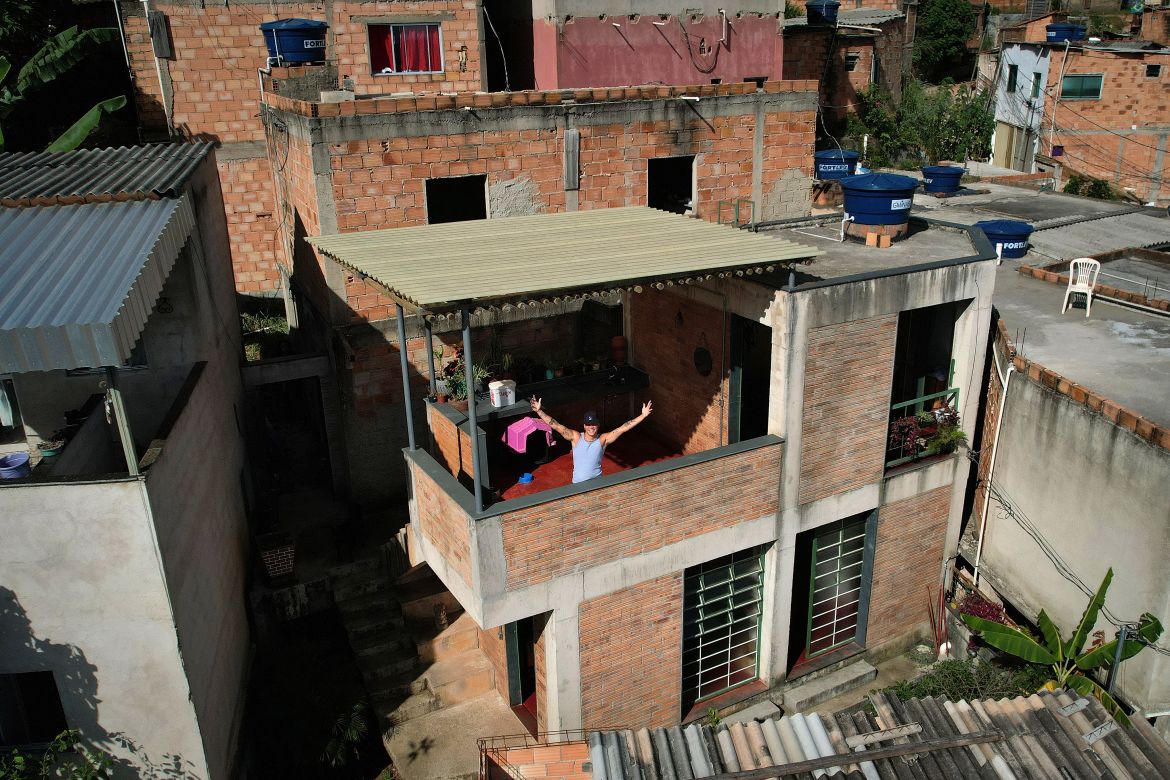
An aerial view shows Kdu dos Anjos’s house in Aglomerado da Serra, a favela complex on the outskirts of Belo Horizonte, Minas Gerais State, Brazil. The home, in an area of deep poverty, has won an architecture award.

I have mixed reactions to today’s story about upgrading a home in a Brazilian favela, or slum. On the one hand, the results are joyful. On the other hand, couldn’t our world also try to eliminate slums and poverty? (Read about a poverty-abolition movement in Matthew Desmond’s Poverty, by America.)

Al Jazeera reports on the award-winning favela home, “At first glance, it is a house like dozens of others in the crowded favelas of Brazil. But this seemingly modest dwelling of 66 square metres (710 square feet), with its exposed brick walls, has just been recognized as the ‘house of the year’ in an international architecture competition.

“The house honored by specialized website ArchDaily belongs to Kdu dos Anjos, a 32-year-old artist living in the bustling Aglomerado da Serra favela at the bottom of a hill on the edge of the southeastern city of Belo Horizonte.

“The two-story structure defeated some more imposing contest entries from India, Mexico, Vietnam and Germany.

‘I’m very proud that my house won this prize, because most of the news about the favelas talks of violence and homes destroyed by landslides,’ said dos Anjos. ‘Today, my home is on top of the world!’

“The house, built on a small lot dos Anjos purchased in 2017, is well ventilated and enjoys abundant natural light; it features horizontal casement windows and a large terrace.

“ ‘The design of the house represents a constructive model that uses common materials in the slums, with an adequate implementation and attention to lighting and ventilation, resulting in a space with great environmental quality,’ ArchDaily wrote on its website.

“For dos Anjos, who founded a cultural centre in his community, the prize carries special significance. ‘I know my house isn’t the most chic in the world, but it’s a well-built shack,’ he says with a grin. … ‘What the architects did is pure magic,’ he added. ‘We barely have [710 square feet], but I’ve had parties here with close to 200 people.’

“The design was the work of the Levante architecture collective, which does pro bono or low-cost work in the favelas. From the outside, the house resembles its neighbors, but it incorporates several features that make it both sturdier and more respectful of the environment, particularly in its ‘attention to lighting and ventilation,’ said architect Fernando Maculan, the project leader.

“One apparent difference with nearby houses is in the arrangement of the bricks, laid horizontally — not vertically — and in staggered rows, which adds solidity and improves insulation. …

“ ‘The masons were angry because they thought laying bricks this way was very time-consuming,’ Maculan said. ‘And we had a lot of trouble getting the materials up the stairs — it’s the last house on the alley, and I had to pay the workers who carried it a lot,’ he said. …

“The entire job cost 150,000 Brazilian reais ($29,000), and the investment paid off in more ways than one: Not only did the architecture prize bring international recognition, the house has helped dos Anjos realize a childhood dream.

“ ‘When I was a boy, I lived in a very modest, poorly insulated room. I even got stung by a scorpion — my sister did too,’ he said. ‘Winning this prize after having suffered from architecture-related problems represents a great victory for me.’ ”

More at Al Jazeera, here. There’s a wonderful array of pictures and no firewall.

Images: Public domain.
Depictions of sea creatures in 13th C manuscripts
. How marvelous these illustrations are!

The maritime archaeologist in today’s article says it was just a coincidence that he was reading ancient Norse texts and connected the description of a sea creature to recent observations of whales. But I believe it’s not a coincidence. Everything connects to everything, and the more widely you read, the more likely you are to find the connections.

The researchers noted: ‘Definitive proof for the origins of myths is exceedingly rare and often impossible, but the parallels here are far more striking and persistent than any previous suggestions.’

Donna Lu writes at the Guardian, “Mysterious whale feeding behavior only documented by scientists in the 2010s has been described in ancient texts about sea creatures as early as two millennia ago, new research suggests.

“In 2011, Bryde’s whales in the Gulf of Thailand were first observed at the surface of the water with their jaws open at right angles, waiting for fish to swim into their mouths. Scientists termed the unusual technique, then unknown to modern science, as ‘tread-water feeding.’ Around the same time, similar behavior was spotted in humpback whales off Canada’s Vancouver Island, which researchers called ‘trap-feeding.’

“In both behaviors the whale positions itself vertically in the water, with only the tip of its snout and jaw protruding from the surface. Key to the technique’s success, scientists believe, is that fish instinctively shoal toward the apparent shelter of the whale’s mouths.

“Flinders University scholars now believe they have identified multiple descriptions of the behavior in ancient texts, the earliest appearing in the Physiologus – the Naturalist – a Greek manuscript compiled in Alexandria around 150-200CE.

“Dr John McCarthy, a maritime archaeologist at Flinders University in Adelaide, South Australia, and the study’s lead author, made the discovery while reading Norse mythology, about a year after he had seen a video of a whale tread-water feeding.

“He noted that accounts of a sea creature known as hafgufa seemed to describe the feeding behavior. ‘It really was a coincidence,’ McCarthy said.

“The most detailed description appeared in a mid-13th-century Old Norse text known as Konungs skuggsjá – the King’s Mirror. It reads: ‘When it goes to feed … the big fish keeps its mouth open for a time, no more or less wide than a large sound or fjord, and unknowing and unheeding, the fish rush in in their numbers. And when its belly and mouth are full, [the hafgufa] closes its mouth, thus catching and hiding inside it all the prey that had come seeking food.’

“The King’s Mirror was an educational text used for explaining the world to young people, McCarthy said. ‘They exaggerate the size … [but] it’s not a fantastical description with any kind of supernatural elements.’ …

” 1986 analysis of the King’s Mirror had found correlations between 26 Old Norse descriptions and scientifically recognized marine animals, but had concluded that the hafgufa ‘must be relegated to the world of the miraculous.’

“ ‘The hafgufa was frustrating for these scholars because they couldn’t quite figure out any animal that this matched to,’ McCarthy said. …

“In the Naturalist – a 2,000-year-old text that ‘preserves zoological information brought to Egypt from India and the Middle East by early natural historians like Herodotus, Ctesias, Aristotle and Plutarch’ – the ancient Greeks referred to the creature as aspidochelone.

“A surviving version of the text reads: ‘When it is hungry it opens its mouth and exhales a certain kind of good-smelling odor from its mouth, the smell of which, once the smaller fish have perceived it, they gather themselves in its mouth. But when his mouth is filled with diverse little fish, he suddenly closes his mouth and swallows them.’ …

“Bryde’s whales and humpbacks are both rorquals, a type of baleen whale. The study was published in the journal Marine Mammal Science.”

More at the Guardian, here. No firewall. Donations encouraged.

Photo: Rick Bowmer/AP/File.
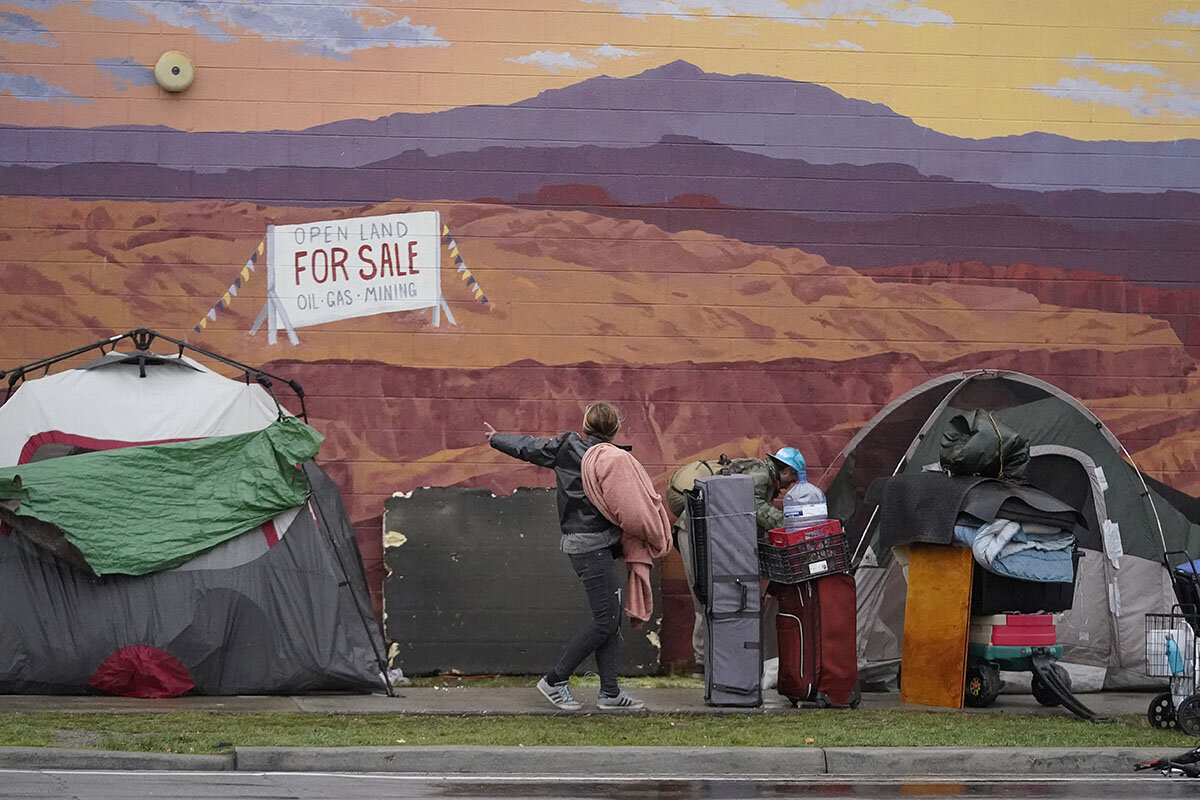
People collect their belongings as Salt Lake County conducts a homeless camp cleanup of the Fleet Block area in 2021. Today Utah and a few other states are considering government-sanctioned tent encampments as steppingstones for those without homes.

One has to appreciate politicians who try to solve problems rather than sweep them under the rug. If people are homeless, kicking them out of an encampment with nowhere to go just creates an encampment somewhere else. Some states are considering a different approach.

Patrik Jonsson reports at the Christian Science Monitor, “When Salt Lake City began enforcing an urban camping ban several years ago, hundreds of Utahns picked up their belongings and headed toward the Jordan River.

“For centuries, the river has been a trading post, a border, and a nexus of nomadic activity. But most of all, it has been ‘a place of refuge,’ says Søren Simonsen, executive director of the Jordan River Commission.

“Today, growing numbers of encampments filled with Americans without permanent homes dot the banks of the river. And Mr. Simonsen is on the front line of what to do about it.

“A decade ago, Utah claimed it had largely ‘solved’ homelessness, reducing it by 91%. Now it is considering an idea, supported by Mr. Simonsen, that is gaining traction across the United States: outlawing unsanctioned camping and instead creating government-sanctioned tent encampments as steppingstones for those without homes to find more permanent housing.

“For much of the recent past, one assumption in addressing homelessness has been that everyone wants a solid roof. The debate over encampments is shifting those assumptions.

“Increasingly, cities and states are exploring whether there can be a sense of dignity and agency in ‘safe outside spaces’ as an end in themselves. As some carry out sweeps to clear out encampments, others are experimenting with the idea of making them more humane, hygienic, and livable as one potential part of the solution to the housing crisis. …

Says Mr. Simonsen. ‘Can’t we make space for people that aren’t ready, aren’t capable, aren’t interested in living such a fixed-address kind of lifestyle?’

“The situation is Utah is common across the country. Tent encampments have ‘definitely become more of a visible issue since the pandemic,’ exacerbated by a national housing shortage, says Courtney Anderson, an expert on social welfare law at Georgia State University College of Law in Atlanta. ‘It’s a problem that people can see, so they need a solution where they can’t see it.’

“Under pressure from voters, officials are taking action. Authorities in Rhode Island cleared an encampment from the steps of the state capitol in December. Washington, D.C., conducts regular camp removals. New York City has conducted hundreds of ‘sweeps’ under Mayor Eric Adams. Residents have largely hailed the efforts, but the majority of those affected haven’t moved into more permanent housing. …

“ ‘The raiding of camps is really tragic,’ says Professor Anderson. ‘The more you dehumanize people, the easier it is to do that kind of thing.’

“The 9th U.S. Circuit Court of Appeals ruled it is unconstitutional to ban sleeping in public if there are no other sleeping options available, and some municipal courts have made similar rulings. But this year, Tennessee made camping away from sanctioned areas a felony. Other states are following suit.

“The Georgia Senate is considering a bill that would criminalize camping and force municipalities to comply. But the bill would also allow the state to designate areas for sanctioned camps.

“In Savannah, Georgia, Shirley Walkowicz says the move to criminalize what she is doing – living in her car – ‘just shows that people don’t [care] about me and people like me.’ …

“The Georgia bill is significantly based on the thinking of Judge Glock, a senior fellow at the nonpartisan Cicero Institute. Dr. Glock saw the early potential of ‘housing first’ – an Obama-era policy that ended requirements such as drug testing for housing recipients. But he now says the policy has largely failed. An average of five homeless people die on the streets of Los Angeles every day, he says – more than twice as many as a decade ago.

“ ‘This is a crisis situation,’ he says. ‘It’s about what we can do this month, this year. We can’t just sit on our hands until the housing [shortage] is solved.’

“He points to cities such as Austin, Texas, and Portland, Oregon, which are banning makeshift encampments but creating safe spaces for people without homes.

“ ‘The argument is, if cities are going to allow it, make sure they provide the things you need: sanitation, social services, security,’ says Dr. Glock. …

“Birmingham, Alabama, has just voted to erect a tiny house village to accomplish many of these goals. For City Council member Hunter Williams, the logic is clear. …

“ ‘We don’t have to have tent cities under every overpass in America. … We can do better than that.’ ”

More at the Monitor, here. No firewall; subscriptions welcome.

Photo: Lane Turner/Globe Staff.
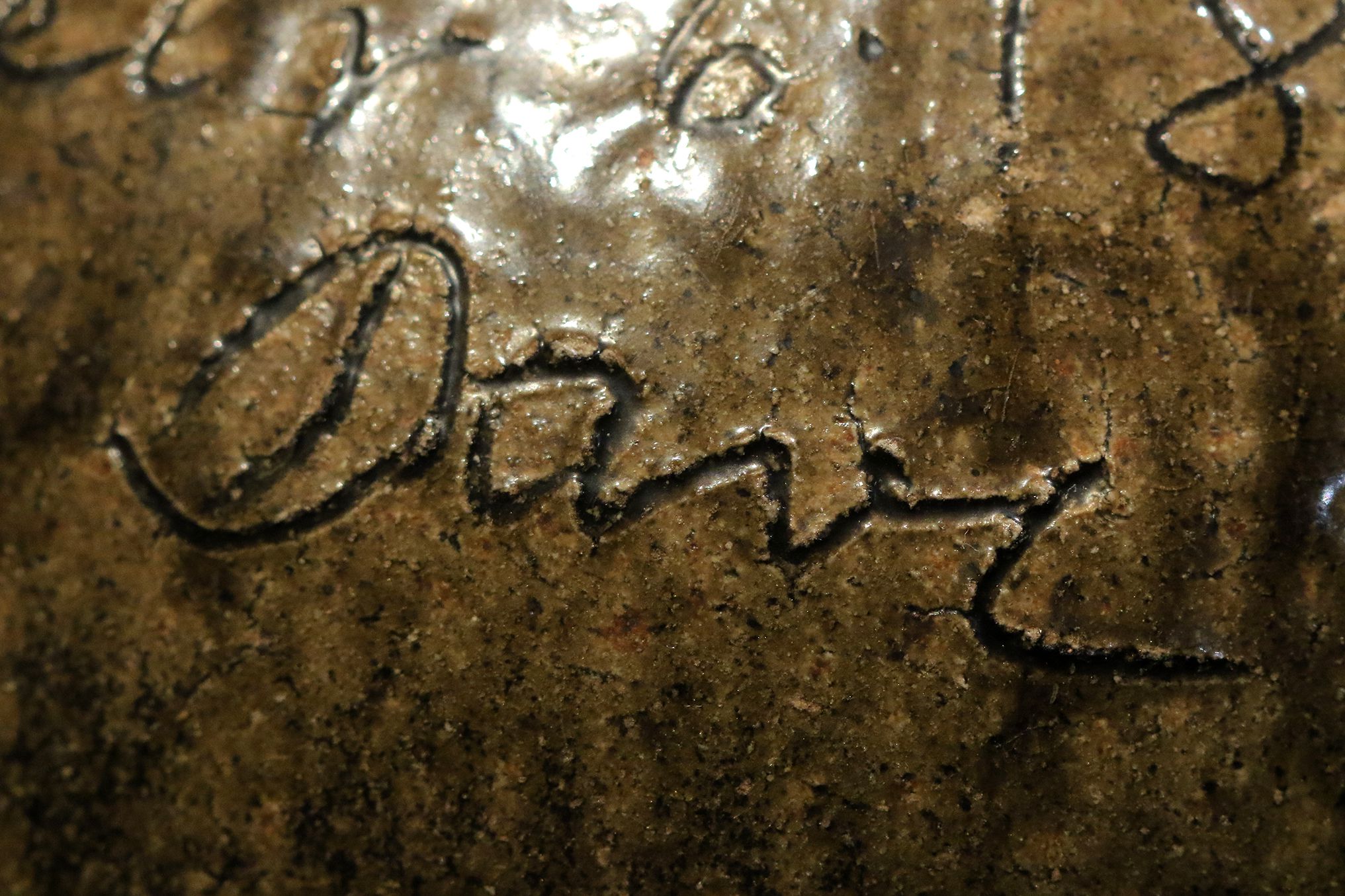
“Hear Me Now: The Black Potters of Old Edgefield, South Carolina,” an exhibition at Boston’s Museum of Fine Arts, presents 12 works by enslaved potter David Drake. Above, David Drake’s signature, “Dave,” on a storage jar from 1858. 

Today’s story is about an enslaved potter and the descendants who found him 150 years later. It is so painful to read about him being “bought.” You really have to wonder about the depths to which humanity sometimes descends.

Malcolm Gay reports at the Boston Globe, “In 1857, an enslaved potter in South Carolina’s Old Edgefield district carved a brief poem into a pot he’d turned in the mid-August heat.

“The potter had been bought and sold by a series of owners by then. He’d lost a leg, but his gifted hands won him local renown: His expert work with clay ensured he would be kept in the district known for its stoneware, even as his family was torn from him at auction.

“Using a sharpened tool, he etched into the jar’s shoulder: ‘I wonder where is all my relation/Friendship to all — and every nation.’ The potter then added his enslaver’s initials, the date, and, finally, his own name: ‘Dave.’

“In that simple act, the man, long known as Dave the Potter, and later David Drake, was not only wondering about his lost family: He was committing an extraordinary act of defiance in pre-Civil War South Carolina, indelibly asserting his existence in an age that sought to obliterate the humanity of Black people.

“Originally created to store meats and other foods, Drake’s 40 or so poem jars are today highly sought after by museums. His inscribed vessels routinely fetch six figures at auction, and his stoneware features prominently in ‘Hear Me Now: The Black Potters of Old Edgefield, South Carolina,’ an exhibition featuring enslaved potters [at Boston’s] Museum of Fine Arts.

“Perhaps most significantly: More than 150 years after Drake composed his mournful verse, researchers appear finally to have found his direct descendants.

“ ‘He was sending these messages,” said Daisy Whitner, 84, whom genealogists have identified as Drake’s great-great-great-granddaughter. ‘He wanted people to know: I’m a human being; treat me as such.’

“Now in their mid-70s and 80s, Whitner and her three siblings, Pauline Baker, John N. Williams, and Priscilla Ann Carolina, believed for most of their lives that their known family tree began in Aiken, S.C. They hadn’t known they’d had family in Edgefield. They’d certainly never heard of David Drake.

“But that changed in 2016, when April Hynes, an independent genealogist and researcher who’s been tracking down descendants of enslaved people from the area, cold-called Whitner. By pairing historical research with publicly available documents, Hynes had determined that Whitner and her siblings were the potter’s direct descendants. …

“ ‘I don’t have a word to describe him,’ said Baker, 75, seated on a sofa in her niece’s tidy home outside Washington, D.C., a replica Drake pot placed prominently on the dining room table. …

“Seated to her right, Whitner grew emotional as she described touching one of Drake’s pots during a trip to New York’s Metropolitan Museum of Art, which organized the exhibition with the MFA.

“ ‘It just tore me to pieces,’ she said. ‘I can’t stop reading and reading, trying to dig more and more.’

“The family has read nearly everything published about their ancestor, as they puzzle over his poems, searching for possible meanings and seeking clues about his life.

“Whitner is haunted by a particular jar Drake created and inscribed in 1836. It reads: ‘horses mules and hogs —/all our cows is in the bogs —/there they shall ever stay/till the buzzards take them away.’ ‘He’s using farm animals rather than to say slave,’ she said. …

“The [family] had mixed emotions when Hynes first called them with the news about Drake, but soon they were traveling down to Edgefield with around 30 family members to take part in celebrations to honor the potter.

“ ‘It’s a joyous feeling,’ said John N. Williams, 81. ‘But then there was a sadness about it, because you thought about the atrocities that happened.’

“They appreciate how rare it is, as the descendants of slaves, to be able to read their ancestor’s thoughts — particularly while he was still in bondage. But discovering a forebear who spent most of his life enslaved has also personalized their perception of the era, wrestling as they do with the scant details, and many unknowns, of Drake’s life.

“Whitner said she’d previously avoided looking at movies about slavery because ‘my heart couldn’t take it.’

“ ‘It hurt me to my core,’ she said. ‘And I will look now.’ ”

More at the Globe, here.

Photo: Jennifer Hodges.
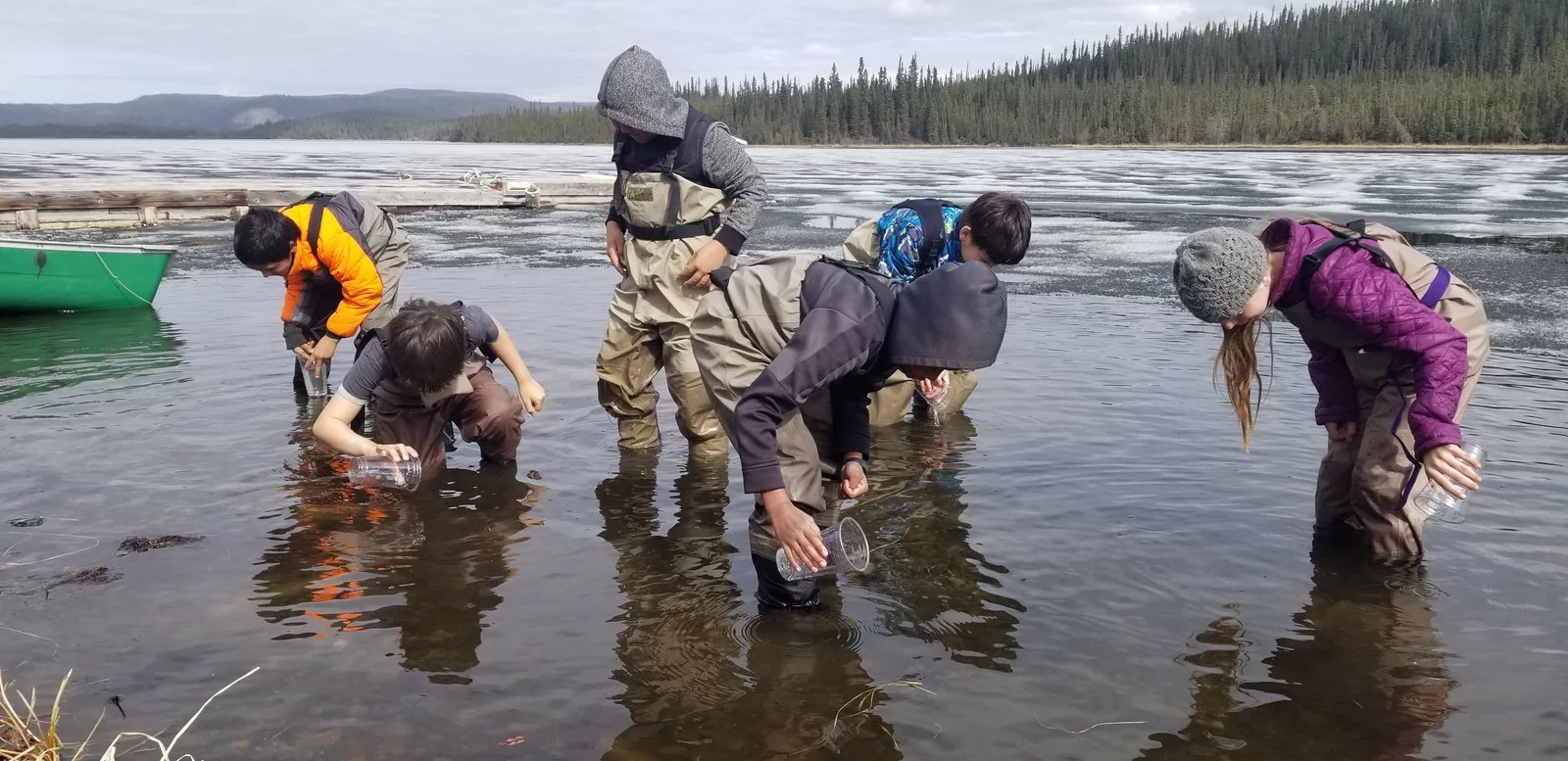
Students releasing salmon into the lake on the Salmon Field Trip in Alaska.

Much of our hope for protecting the planet relies on the education of young children. That’s why this story from Alaska about getting up close and personal with the salmon life cycle is so interesting.

Claire Murashima reports for National Public Radio (NPR), “Kenny Lake School in Copper Center, Alaska, is small, with about 60 students from kindergarten to high school seniors. It’s even smaller in winter when some parents homeschool their children because of the long drives and slick roads.

“Jennifer Hodges is a third, fourth and fifth grade teacher. She says her three-grade class sits only at desks for 20 minutes a day. They do a lot of practical learning, such as raising Coho salmon from egg to Alevin to fry then releasing them into a lake.

“It’s through a program called Salmon in the Classroom, established by the Alaska Department of Fish and Game. Kate Morse, program director for the Copper River Watershed Project, is in charge of implementing the program in six schools throughout Alaska’s Copper River watershed.

“Coho salmon lay eggs in the fall, when many schools start. The eggs remain in the classroom about six months before they are released into lakes. After that, they live for two to four years before they spawn and then die shortly afterwards.

“Every day, about a third of Hodges’ students ride the bus 45 minutes from the Native Village of Chitina. Many students already have experience fishing salmon, which is a staple in Native Alaskan communities.

‘It’s really a delicate balance because we are dealing with traditions and culture of the Native people,’ Hodges says. ‘This is their land, this is their salmon. And so we have to really be part of that.’

“Ahtna, a local tribal association, helped donate the tank in her classroom.

“Though many of her students grow up fishing salmon for food, few have raised them as pets.

” ‘The salmon have turned from being just fish in their backyard that they catch to eat, to fish that they are connecting to,’ says Hodges. ‘With this project, they have a whole different perspective because they know what it takes to actually go through the stages of a salmon.’

“Learning about climate change is more crucial now than ever. In 2022, the Arctic had its sixth-warmest year on record. But these lessons are made concrete to them in raising salmon, which require cold water to survive.

‘We had a failure in our equipment and it brought the temperature up about five degrees,’ says Hodges. ‘Just warming it that much just wiped out our eggs.’

“During the months that the salmon are in the classroom, students like to sit by the tank to observe. ‘When the eggs hatch they have sacs that carry their food,’ says Addy, a student. ‘That way they can hide still and don’t have to look for food. It’s funny because when they try to swim they just end up in circles.’ …

” ‘Putting hand sanitizer on your hands and then putting your fingers in the tank – you’ve polluted the tank,’ Hodges says. ‘That has happened to us before. That year we had seven make it. Normally we have about 180 that make it.’

“Students like to calculate when the salmon will turn from eggs to Alevin to fry based on the temperature of the tank. To them, it’s not practicing math problems: it’s predicting the future. …

“Since Hodges and her students live in such a rural area, there aren’t many field trips. But each year in May, she takes her students on the Salmon Field Trip, where they get to release the salmon they’ve raised in class. …

” ‘The best part is getting to release them after watching them hatch from eggs, grow into fry and take care of them,’ says Fisher, a student. ‘You get to say goodbye.’

“The student put the salmon in a bucket and then secured it with a seatbelt. Students suit up in chest waders, rubber bodysuits to keep them dry when they go into lakes, and then each gets a cup of about ten fish. They put the cup under water and let the fish swim out.”

More at NPR, here. No firewall.

Photo: Melanie Stetson Freeman/CSM Staff.
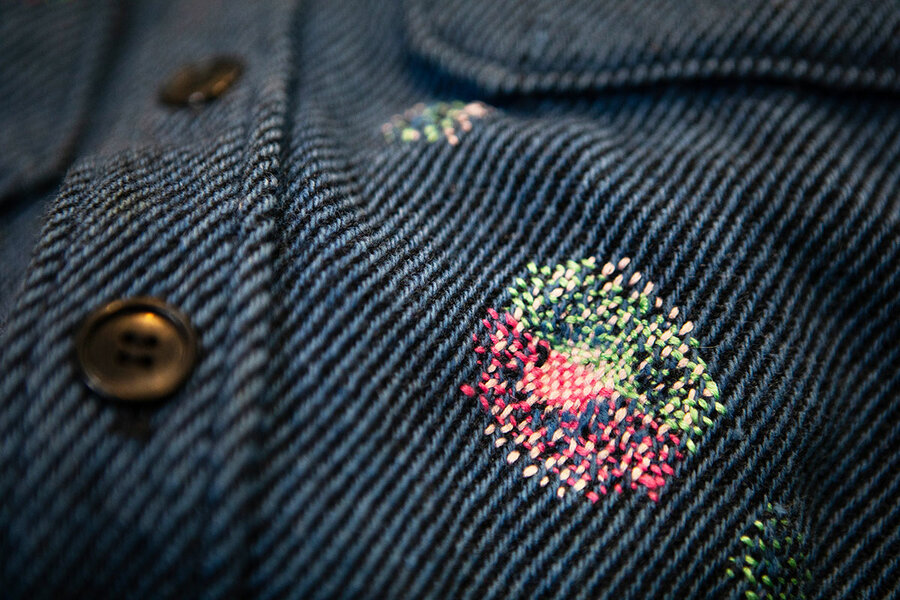
The “Mending by Hand: Visible Stitching” class in Boston teaches people an alternative to relegating worn-out clothes to landfills. Here attendees use colorful thread to repair their garments.

Did you ever learn to darn? I know I don’t need to ask Deb or some other readers, but sometimes I am surprised to recall that it was one of the few domestic skills my mother taught me. Nowadays, Zero Waste Scotland and others are helping people concerned about sustainable living learn mending. The classes actually look like fun.

Sara Lang reports at the Christian Science Monitor, “A giant brown table in the center of a room that smells faintly of paint and worn pine is strewn with colorful yarn. Students ranging from recent college graduates to retired professionals are perched on stools around it, needles poised, eyes fastened on their instructor dressed in bright red. 

“ ‘Can you do that again?’ one asks. 

“Jessamy Kilcollins teaches darning at the Eliot School of Fine and Applied Arts in the Boston neighborhood of Jamaica Plain. She holds up a snip of denim and a needle threaded with yarn to demonstrate her stitch. Mending [is] back in vogue. The students on this recent evening have brought items they want to not only breathe new life into but also keep out of landfills – sweaters with holes in the elbows, a thrifted pillow, a favorite pair of leggings worn from too many hours on the pickleball court. 

“ ‘Where have you been all my life?’ asks overall-clad Jen Zehler, laughing as she threads her needle, ready to fortify a hole in her leggings. 

“The evening classroom provides a glimpse into a ‘slow fashion’ trend that is catching on across the United States. Fixing your favorite clothes isn’t just practical and sustainable, its adherents say. It’s also enjoyable and an antidote to tech-laden and sped-up lives. And in Massachusetts, it’s become a necessity. In the fall of 2021, the Bay State released its final 2030 Solid Waste Master Plan with a goal of reducing waste statewide by 30%.

On Nov. 1, 2022, Massachusetts issued a ban on throwing textiles in the trash, in what officials have said is the first time a state has implemented such a measure.

“Toni Columbo, a professional weaver in Boston, has witnessed an influx of customers wanting their clothes mended in the past few years especially as environmental awareness grows. Ms. Columbo, who has been mending for over four decades, started Invisible Reweaving in 1981 with her mother and sisters.

“ ‘Fast fashion is made out of plastics. It’s easy and cheap to manufacture. But when it comes time to dispose of those materials, it’s difficult. It doesn’t degenerate into the soil. It’s like a trash bag,’ says Ms. Columbo, who mainly works on repairing natural fibers such as wool. She had not heard of the Massachusetts ban until the Monitor asked her about it. ‘Natural fibers are better for the environment, but they are more expensive,’ she adds. …

“In the U.S., only 15% of textiles are recycled. A number of states and cities have launched initiatives to change that figure. In New York, Re-Clothe NY and Green Tree Textiles work to inform consumers about the locations of textile recycle bins and what can be recycled there. California recently enacted a law piloting a new system for industrial textile recycling, which includes educating the community about the impacts of fast fashion and establishing accessible recycling sites. Companies like Patagonia and Madewell encourage customers to send in their worn clothes to receive store credit or cash when they are resold. 

“ ‘The speed of the fashion cycle is very closely aligned to the really key question in fashion and sustainability, which is around volume,’ says Kate Fletcher, a professor at the Royal Danish Academy in Copenhagen who coined the term ‘slow fashion’ in 2007. ‘At the moment we’re engaging in a cycle of gross overconsumption and gross overproduction.’ …

“Every year, around 100 billion pieces of clothing are produced, and an estimated 92 million tons end up in landfills (11.3 million tons in the U.S. alone as of 2018). The World Economic Forum in 2021 identified fashion as the world’s third-largest polluter, with global research suggesting the industry’s annual greenhouse gas emissions range from 2% to 10% and are growing.

“At first, ‘thrifting,’ shopping for secondhand clothes, became a trendy answer to fast fashion, especially among environmentally aware Generation Z and millennial shoppers who had an eye for unique and well-made clothing of previous decades. But as the popularity of thrifting has grown, so have its prices. Enter mending. …

“ ‘Studies have shown that people get the same sense of satisfaction or engagement from shopping for new things, as you do when you’re maintaining and repairing the things you already have,’ says Dr. Fletcher.

“In Grosse Pointe, Michigan, Angie Hoffman, a project manager for Ford Motor Company, says it was her experience working in retail – observing the constant consumer desire for more new clothes – that turned her away from shopping toward the creative pursuits of knitting, sewing, and mending. 

“When her sister first taught her to knit, Ms. Hoffman thought it was ridiculous to buy yarn to make socks when you could easily purchase a dozen tube socks for $6. But now she finds a lot of satisfaction in knitting while watching TV, or mending a hole in a sock or sewing patches on her favorite sweaters on an evening in. 

“ ‘I’ve made 23 pairs of socks by hand. It truly is the joy of making something beautiful and having that come from your two hands,’ says Ms. Hoffman. ‘That joy of conquering something new is really satisfying to me.’ ” 

More at Zero Waste Scotland, here. At the Monitor, here, you can get the rest of the story, including how a sustainable fashion class opened a whole new world for teacher Kilcollins. No firewalls.

Rx: Find a Friend

Photo: Caroline Hernandez/Unsplash.
Few things matter as much as a good friend.

I’m thinking a lot about friends today because one of my friends has been in the hospital more than a week, having had a serious fall. She lives alone and has health issues that cause her to fall. Her only family, a nephew, lives far away. So her health proxy (and good friend) designated four of us as her family. The ICU admits only family.

My friend has come out of her coma and ditched the ventilator, and we have been rejoicing over the smallest things: eyes opening, head nodding for answers to questions, the lifting of a hand.

Friends have always meant a lot to me (see post “Time with Friends Boosts Health“), and today’s article suggests one of the reasons why: they are good for my health. They certainly have been good for my friend’s health.

Sharon Barbour (@SharonBarbour on Twitter) reports at the BBC, “A new approach to helping people with depression is becoming more and more popular. ‘Social Prescribing’ sees GPs sending patients on trips to places like allotments (community gardens) rather than pharmacies. Healthcare professionals say it works, and reduces pressure on GPs and A&E [emergency rooms] too.

“Craig Denton, from Gateshead, has struggled with depression and loneliness for years. … He is one of more than eight million adults in England now taking antidepressants. But, in the North East, a new approach to helping people with depression is growing.

” ‘Social prescribing’ is part of a plan by health and council bosses to tackle what Gateshead’s director of public health described as ‘really shocking’ health outcomes in the region.

“It has seen Craig enjoy a day out at an allotment run by his GP’s surgery where he has dug and cleared, but also chatted with other people, and not been alone.

” ‘Instead of just sitting down in your house, where you can just dwell on things, you can use this as a distraction, meet new people,’ he said.

“Julie Bray, from Oxford Terrace and Rawling Road Medical Group in Gateshead, was one of the first NHS social prescribers in the country and said she was ‘really passionate’ about it. … ‘They build their confidence up, it reduces GP appointments, it reduces A&E appointments, and it just makes them connect with the community and be resilient.’

“The North East has among the highest rates of drug-related deaths, heart disease, liver disease and suicide in England.

“Rates of child poverty are double the England average in some areas with poverty underpinning much of the ill health. Social prescribing is only one part of a plan by the NHS, local councils, and community groups to make improvements by 2030.

“Alice Wiseman, Gateshead director of public health, said a report in 2020 showed that, while life expectancy across the UK had stalled, it had started getting shorter for those in the bottom 10% income bracket in the North East.

” ‘Nine of all 13 areas within this plan have a healthy life expectancy of less than 60 years,’ she said. ‘People aren’t even reaching retirement age without having a life-limiting illness. It is really shocking.’ …

“What is needed is ‘forming friendships and feeling as if they’ve valued, as if they’re worth something,’ she said.”

Tell me about the importance of your own friends. It may not be enough for serious depression, but as the saying goes about chicken soup, “It wouldn’t hurt.”

More at the BBC, here. No firewall.

Photo: Lauren Daley.
On March 18, 2023, in a small town in the smallest state, Hundreds of people lined Main Street for ‘The World’s Shortest St. Patrick’s Day Parade,’ ” the Boston Globe says. “The parade route was just 89 feet long.

Here’s something fun and silly. You should file it under sustainable living or slow fashion — that is, the simple life.

Here is Lauren Daley with her cute report for the Boston Globe.

“It just may be the world’s shortest St. Patricks’ Day parade — but it was long on energy. On Saturday, hundreds of Rhode Islanders, many dressed in green, gathered to watch an 89-foot-long parade that was billed as ‘The World’s Shortest St. Patrick’s Day Parade.’ …

“Marjory O’Toole, executive director at Little Compton Historical Society, walked the route with a measuring tape — from the green ribbon starting line at one side of the Kinnane Brothers’ film studio at 26 Main St. (also known as the Old Stonebridge Dishes) to the parade’s end at other end of their property, 89 feet away. Participants left one side lot, marched in front of the building, and then exited into another lot on the other side of the building.

“Rhode Island Lt. Gov. Sabina Matos was on hand to present a proclamation to parade marshals Jim and Paula Downing, of Little Compton.

“ ‘We’re going to make it official! On behalf of the state of Rhode Island, we want to congratulate and formally recognize… the Little Compton 2023 World Shortest St. Patrick’s Day parade,’ she said. …

“A post-parade fundraiser — a corned beef and cabbage dinner at the Buttery Nook, the function room at the Kinnane Brothers’ studio — raised about $10,000 for the Little Compton Food Bank, [co-organizer Charles] Kinnane estimated on Sunday.

“They also raised spirits. The energy, and sense of community, was palpable. In a place where most community events are held on the other side of town, at Town Commons, an outdoor celebration on Main Street in the village district felt new and exciting.

“An estimated 600 to 700 people watched 30 groups — including dancers from the Clann Lir Academy of Irish dance, Portland and District Pipers, the Little Compton Band, bicyclists, motorcyclists, miniature ponies from Adamsville Stables, and others — marched or rode the short route.

“The Little Compton Band idled their turquoise truck for a mini-concert. Local surf legend Sid Abbruzzi was there, as well as Boston-based actor, James L. Leite. …

“On the sidelines, dogs dressed for the occasion, families waved, and kids shouted and collected stickers and candy. One little girl was so taken by the older girls performing Irish step dancing, she stood in the middle of the parade route to watch. A little boy wore his hooded sweatshirt backwards and used his hoodie to collect treats.

“The parade and after-party were hosted in part by the Kinnane Brothers, a group of eight filmmaking brothers known for their works with actor Kevin James and the Netflix hit ‘Home Team.’

“This was the second year the town held the parade, which ‘started as a joke’ said Paddy Manning of Tiverton, a cousin of the Kinnanes. … The pandemic forced a delay, during which they learned about a 98-foot-long parade in Hot Springs, Arkansas, which called itself the world’s shortest St. Patrick’s Day parade. It gave them a benchmark — and a title — to shoot for.

“Last year’s inaugural parade was smaller, Kinnane said. They never expected the crowd to double in size from last year. The amount raised for the Little Compton Food Bank also just about doubled, said Kinnane.

“They may have some competition next year, though not in Rhode Island: Bemidji, Minnesota, held their own ‘World’s Shortest St. Patrick’s Day Parade’ this year. According to the Bemidji Pioneer, there were dozens of onlookers for the event, which ran a length of ’78 paces.’ “

Uh-oh, watch out for Minnesotans! They are competitive and have a lot of experience with weird parades and races. I once attended the outhouse race in Isanti, Minn.

More at the Globe, here.

Barefoot Year Round

Photo: Joe Buglewicz for the New York Times via OddityCentral.
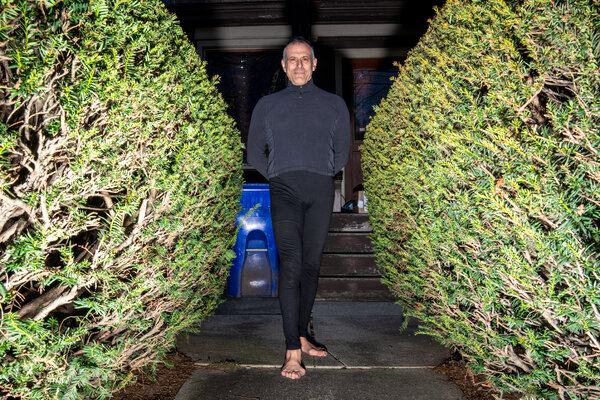
Joseph DeRuvo has gone barefoot for years. He says going barefoot means being mindful of how you move through the world. (And washing well at night!)

Here’s an unusual guy worth writing about. We can always learn something interesting from the outliers in our society. Let me know what you think. In my case, this guy makes me wince just thinking about all the stubbed toes I had as a barefoot child on Fire Island.

Katherine Rosman reports at the New York Times, “A few years back, Joseph DeRuvo Jr. made a quick stop at an upscale supermarket to buy eggs and was stopped in the dairy aisle by a store manager. ‘You’re not wearing shoes,’ he recalled the manager saying to him.

“He was right. Mr. DeRuvo wasn’t wearing shoes. He almost never does. The employee cited health codes; Mr. DeRuvo disputed that he was in violation. The employee made vague references to insurance policies; Mr. DeRuvo replied, ‘More people break their necks with high heels than they ever do going barefoot.’ …

“Mr. DeRuvo initially decided to forgo shoes because of agonizing bunions, but he has stayed barefoot for reasons that transcend physical comfort. …

“There are questions he is asked frequently that he is always happy to answer. How does he manage snow and ice? Doesn’t he get sharp objects stuck in his thick calluses? But that’s the simple stuff. ‘Navigating the terrain is easy,’ Mr. DeRuvo said. ‘Navigating people is tricky.’

“When asked to leave a shop or a restaurant, he normally does so without protest, said Mr. DeRuvo’s wife, Lini Ecker, a shoe-wearer who serves as a bridge between her husband and a world that generally asks for conformity. …

“For two decades, Mr. DeRuvo, 59, has lived an almost entirely barefooted life, one he has constructed, with Ms. Ecker’s help, to limit or avoid such confrontations. After years spent as a photographer and a photography teacher, he is still self-employed, now as a Pilates instructor, a particularly barefoot-friendly profession. And the couple stays close to home. When they go out, they gravitate toward mom-and-pop stores and restaurants where they can forge personal connections with owners and managers, and he can be seen as more than the guy with the feet.

“Still, said Ms. Ecker, 61, ‘we get thrown out of a lot of places.’ … Ms. Ecker, a preschool teacher, prepared lunch, lightly grilling bagels in a cast iron pan, slicing avocados, tossing a salad. Mr. DeRuvo grabbed a pair of chop sticks, his preferred cutlery. This is among his ‘quirks,’ as he calls them. He needs reggae music to play in the background at almost all times; the only numbers he can remember are of radio stations, which he uses for internet passwords.

“ ‘I clearly have one foot on the spectrum,’ he said earlier (though he clarified that he has never undergone an autism evaluation).

“Mr. DeRuvo’s lifestyle has given him reason to think a lot about bare feet, assessing their safety and hygiene and whether they threaten polite society. He can come up with no health risk. What germs can his feet carry that the bottom of someone’s shoes do not? …

“Mr. DeRuvo assumes all risk of stubbed toes, or worse. He has performed a number of jobs all in his bare feet and all safely. He is a tinkerer and a maker, including of his own Pilates equipment that he fabricates in the elaborate workshop he built out of the garage behind his house, sometimes wearing safety goggles but rarely shoes. (He will wear moccasins while welding.)

“In case he steps on something sharp, he carries a sunglasses case filled with tweezers to remove detritus, pulling his feet close to his face to spy metal splinters and shards of glass. He showers at night, scrubbing his feet clean before getting into bed with his wife.

“And he knows when to capitulate, he said, keeping a pair of loosefitting sandals in the car in case there is an event where others would be inconvenienced by him getting refused entry, like when they go to dinner with friends.

“But generally Mr. DeRuvo chooses the comfort of his feet over doing anything or going anywhere that forces him to force them into a pair of shoes.

“Bare feet outside of the beach, the yoga studio or the pedicure chair tend to attract attention. … ‘People have a thing about feet,’ Mr. DeRuvo conceded. ‘People get skeeved.’

“Mr. DeRuvo’s look like they would hurt inside a pair of shoes: His big toes, with a protruding large bump at their bases, jut aggressively toward the pinkie toes on a diagonal.

“The bumps are bunions. About 20 years ago, they had become painful — throbbing during long runs in tight sneakers and interfering with his life. Mr. DeRuvo saw a doctor who recommended surgery. As he awaited the scheduled procedure, he went without shoes because the pain was so intense. In the intervening days he learned that the screws that were to be implanted in his feet contained a metal he was allergic to. He also realized that he felt better since he quit shoes.

“It did not take long before he came to see that going barefoot was enriching his life in ways he did not anticipate. There were physical benefits in addition to the relief for the bunions: He found comfort from the ground beneath him. ‘The tactile feedback just kind of makes everything else going on feel a little bit smoother,’ he said.

“There are spiritual benefits too, said Mr. DeRuvo, a religious man. ‘God says to Moses, “Take off your sandals,” you know, “this ground is holy,” ‘ he said. ‘Well, I kind of like to take that as far as it can go.’ ”

More at the Times, here.

Photo: Hannah Wright via Unsplash.
The Mekong River, where it passes through Cambodia.

You would think that because I was around in the 1960s, mention of the Mekong River would bring to mind only Vietnam War scenes from television. I do think of those but also of Colin Cotterrill’s Dr. Siri Paiboun mystery series, where the river is a character all its own, and where Laotian characters may cross secretly to Cambodia, Thailand, or Vietnam.

So naturally, research on the river’s improving quality caught my eye.

Stefan Lovgren has a report at YaleEnvironment360. “Among the many ailments plaguing Southeast Asia’s Mekong River, ‘hungry water’ stands out with particular clarity. In recent dry seasons, the Mekong has in places turned a pristine blue as upstream dams rob it of the nutritious particles that normally color the river a healthy mud brown. It’s a phenomenon that can be highly destructive, with the sediment-starved water eating away at unbuffered river banks — hence the ‘hungry’ epithet — and causing harmful erosion.

“It also encapsulates the troubled state of the Mekong, a river that may look healthy on the surface but has grown increasingly sick from a wide range of problems, including dam building, overfishing, deforestation, plastic pollution, and the insidious impacts of a changing climate. During El Niño-induced droughts in recent years, things got so bad that some people suggested the Mekong River was approaching an ecological tipping point beyond which it could not recover.

But events in the past year suggest such doomsday predictions may be premature, especially in Cambodia, which sits at the heart of the Mekong basin.

“Thanks to the last monsoon season, which delivered above-average rainfall to the region, and authorities cracking down on illegal fishing, fish stocks have increased. Fishers along the Mekong have discovered giant fish thought to have disappeared, and the Cambodian government, which has a mixed environmental record, has stepped up conservation efforts.

“Among them is a new government-backed proposal that seeks to turn a particularly bio-rich stretch of the river in northern Cambodia into a UNESCO World Heritage Site. Such a designation, reserved for sites of great scientific or cultural significance, means this part of the river should, at least on paper, enjoy protection from various forms of development, including dam building. …

“ ‘The Mekong is not dead,’ says Sudeep Chandra, director of the Global Water Center at the University of Nevada, Reno, who leads the USAID-funded Wonders of the Mekong research project. ‘We’ve seen huge environmental pressures causing the Mekong to dry up and fisheries to almost collapse. And yet we also see the incredible resilience of this river in the face of those threats.’

“Originating in the Tibetan highlands and winding its way through six countries before disgorging into the South China Sea, the 2,700-mile-long Mekong River is home to the world’s largest inland fishery, with about 1,000 species of fish. Many of the 70 million people living in the basin rely on the river for their livelihoods, whether that is farming, fishing, or other occupations.

” ‘A case could be made that the Mekong is the world’s most important river,’ says Chandra.

“The river’s extraordinary productivity is linked to a giant flood pulse that, in the wet season, can raise water levels 40 feet. With the increase comes sediment that’s essential to agriculture as well as vast numbers of young fish, which are swept into Cambodia’s vital Tonle Sap Lake and other floodplains where they feed and grow.

“But the river’s natural flow regime has been increasingly disrupted by dams, especially those that China began building in the early 1990s in the Upper Mekong and which the country has operated with little regard for downstream impacts. 

“A subsequent frenzy of dam building in Laos and elsewhere, mostly on tributaries to the Mekong, has greatly exacerbated the problem, with dams blocking fish from completing their natural migrations. Already under extreme pressure from overfishing, some fish populations have plummeted, especially large species like the critically endangered Mekong giant catfish, which can grow to 10 feet in length and more than 600 pounds, but is now on the brink of extinction.

“With climate change intensifying, monsoon rains have become more unpredictable. During droughts in 2019 and 2020, the flow of water from the Mekong into Tonle Sap, the largest lake in Southeast Asia, dried up. …

“Mass deaths of fish due to shallow and oxygen-poor water were reported in the lake, and many of the hundreds of thousands of fishers operating on the lake were forced to abandon their work. On the Tonle Sap River, which connects the Mekong and the lake, two thirds of the 60-something commercial ‘dai’ operators working stationary nets, which in years past could each catch several tons of fish in just an hour, had to shut down. …

“However, the river system caught a break with the most recent monsoon season, which runs roughly from June to November, delivering greater than average rainfall to the lower basin and the Tonle Sap Lake region. Although China continued to hold back water to counter its persisting drought, water levels in Tonle Sap rose more than one meter above recent-year averages. With the lake expanding into seasonally flooded forests, which provide excellent feeding grounds for fish, fish populations appear to have been boosted. …

“On a recent visit to the lake, Ngor noticed an increase in medium- and large-size carps, including Jullien’s golden carp, also known as the isok barb, a critically endangered species. There were spottings of other rare fish too, like the Laotian shad and clown featherback, along with increases of more common fish, like the climbing perch and snakehead. Several wallagos, a catfish that can grow up to 8 feet long, could be seen jumping from the open water.

More at YaleEnvironment360, here. No firewall.

Whales’ Sonic Lips

Photo: Minette Layne/Wikimedia Creative Commons.
Toothed whales like orcas can make astonishingly loud sounds in three vocal registers. How do they do it despite the tremendous pressure underwater?

Do you remember Rudyard Kipling’s Just So Stories? Our favorite growing up was “How the Elephant Got Its Trunk.” I still have a wonderful recording on cassette of my father reading it aloud in his stentorian voice. We loved Kipling’s robust language and used his expressions in daily life. For example, we always said that our Uncle Jim spoke just like the tale’s python rock snake, who lived “on the banks of the great grey-green, greasy Limpopo River, all set about with fever-trees.”

(Is Kipling PC these days? I hope we can take him with a grain of salt. I would hate to lose these stories.)

Hannah Devlin at the Guardian harks back to Kipling in her report on whales with voices.

“The question of how the whale got its voice has been solved by scientists, who have discovered how the creatures use ‘phonic lips’ in their nose to produce the loudest sounds in the animal kingdom.

“The research also reveals that toothed whales, a group that includes killer whales, sperm whales, dolphins and porpoises, use three vocal registers equivalent to vocal fry (a low creaky voice), a normal speaking voice and falsetto.

“The research [was presented] at the annual meeting of the American Association for the Advancement of Science (AAAS) in Washington DC. …

“Prof Peter Madsen, a whale biologist at Aarhus University in Denmark and lead author, said: ‘These animals are producing the loudest sounds of any animal on the planet while being at a depth of 1,000 metres [3,280 feet]. It just seems such a paradox.’

“A central puzzle was how whales manage to generate sufficient flow of air, given that at 1,000 metres below the surface the pressure is so great that the air in the whale’s lungs is crushed to 1% of the volume it would occupy at the surface.

“The latest work shows that as whales dive deep below the surface, their lungs collapse and air is compressed into a small muscular pouch inside the mouth. To make a click, the whale opens a valve on the pouch for about a millisecond causing a high pressure blast of air to pass through a vibrating structure in the nose, called the phonic lips.

“ ‘When the lips slap back together, that’s what makes the click,’ said Madsen. The clicks, used to navigate and hunt prey, can reach volumes equivalent to a very powerful rifle being fired.

“The study, carried out over a decade, used high-speed video recorded through endoscopes, and collected audio recordings, using electronic tags, from trained dolphins and porpoises, and sperm whales and false killer whales in the wild. The researchers approached the huge marine mammals at sea in small boats and waited for them to come close in order to attach lightweight recording devices.

“ ‘Many whales will come up to us and have a look and echo-locate on the boat,’ said Madsen. ‘I sometimes wonder who is studying who – except they don’t put a tag on us.’ The recordings revealed three distinct registers. …

“The analysis, published in the journal Science, showed the whales use two additional registers for social communication. Scientists know that toothed whales have sophisticated social communication abilities, ranging from cooperation during hunting to the signature whistle that dolphins use to identify themselves. Other species, such as killer and pilot whales, make very complex calls that are learned and passed on culturally like human dialects.”

More at the Guardian, here. No firewall. Donations solicited.

Photos from Winter

Photo: Suzanne and John’s Mom.
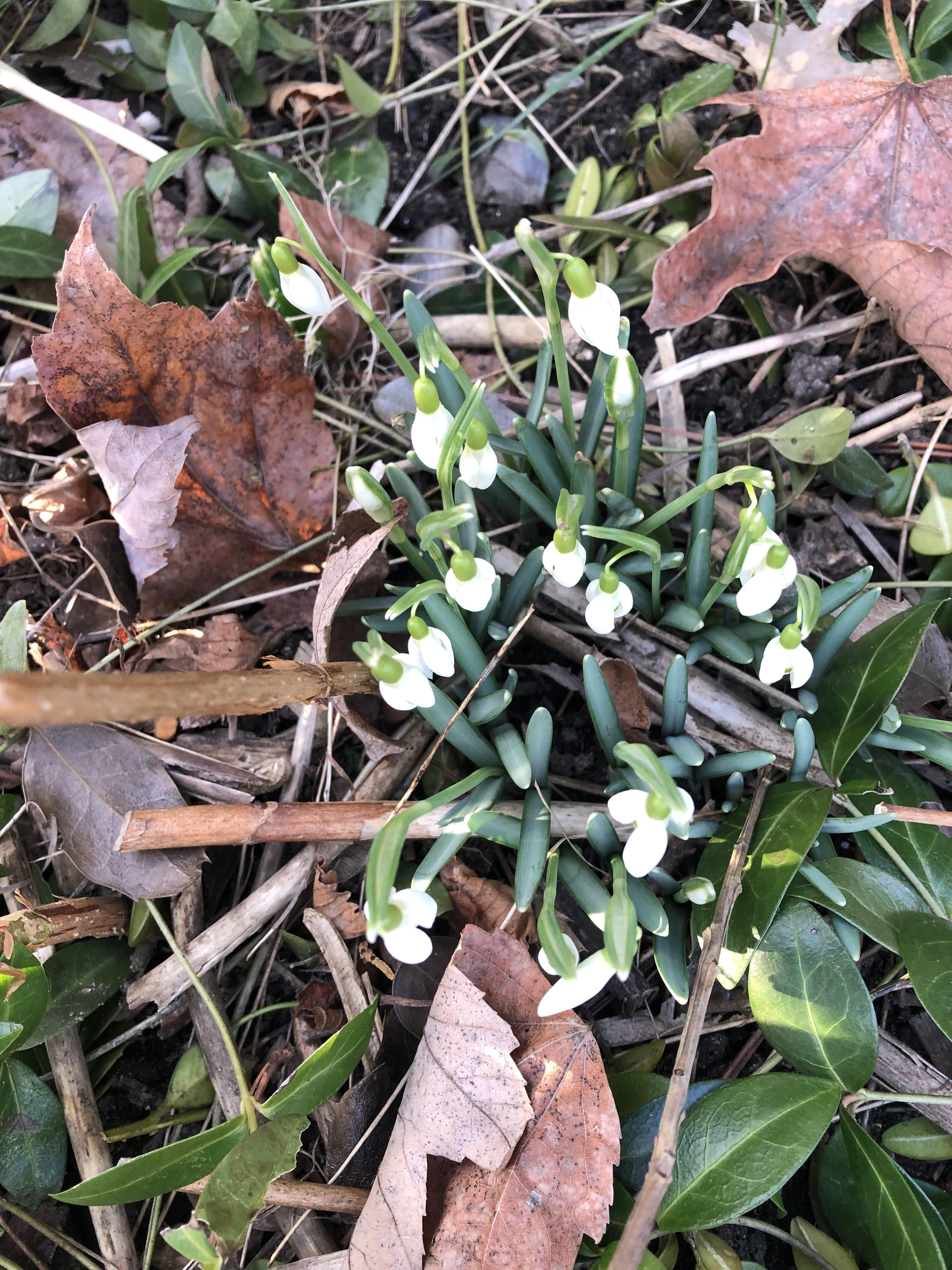
Snowdrops arrive in Massachusetts.

I haven’t posted photos for a while, and now I’m realizing that today’s selection goes way back to early January, when Erik’s mother was still visiting from Sweden. She showed me a garden-like cemetery in Providence where she loves to run — and where we were greeted by the largest gang of wild turkeys I have ever encountered!

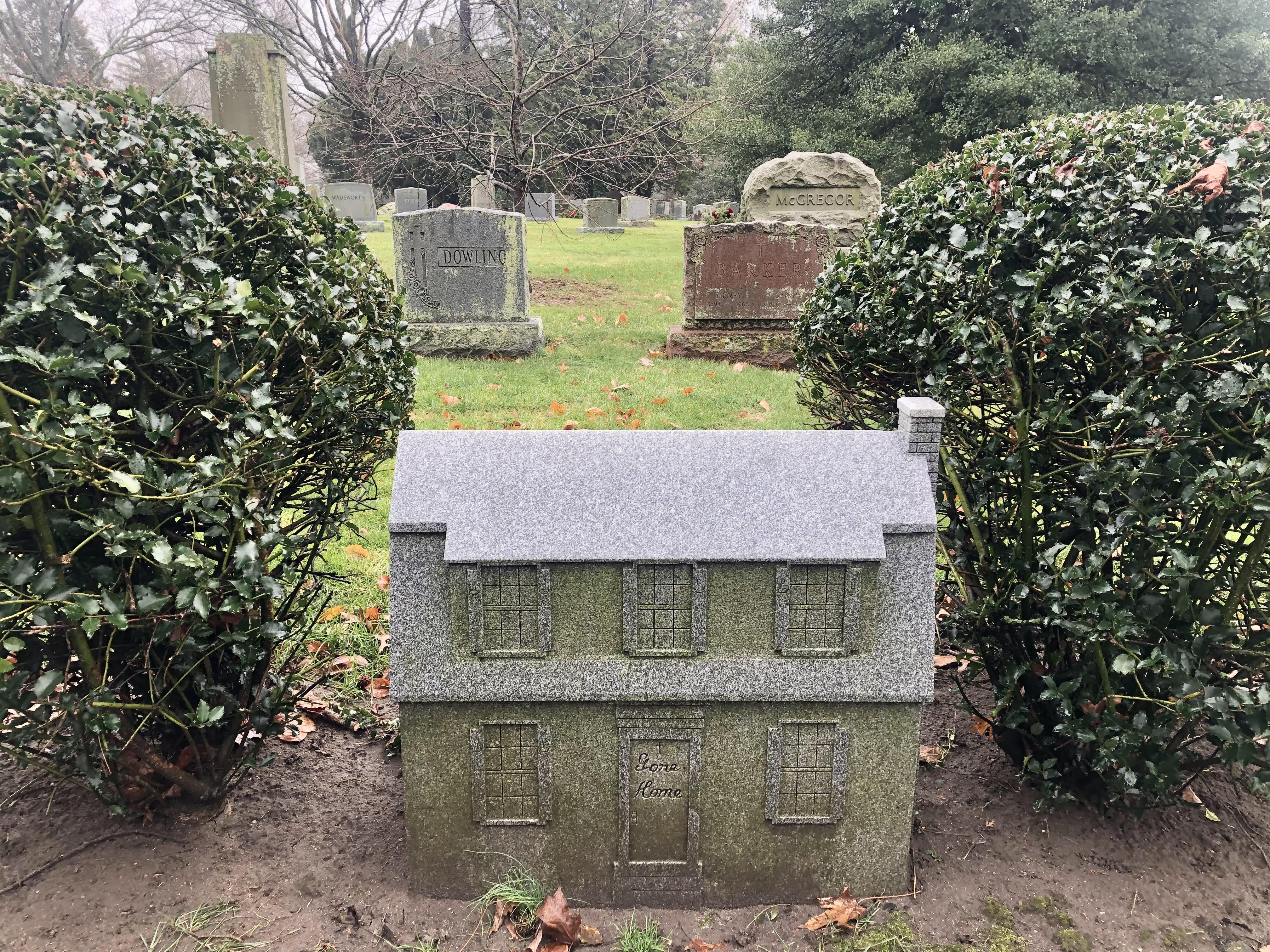
I particularly liked the unique headstone below: someone must have felt OK about having a final home in this park.

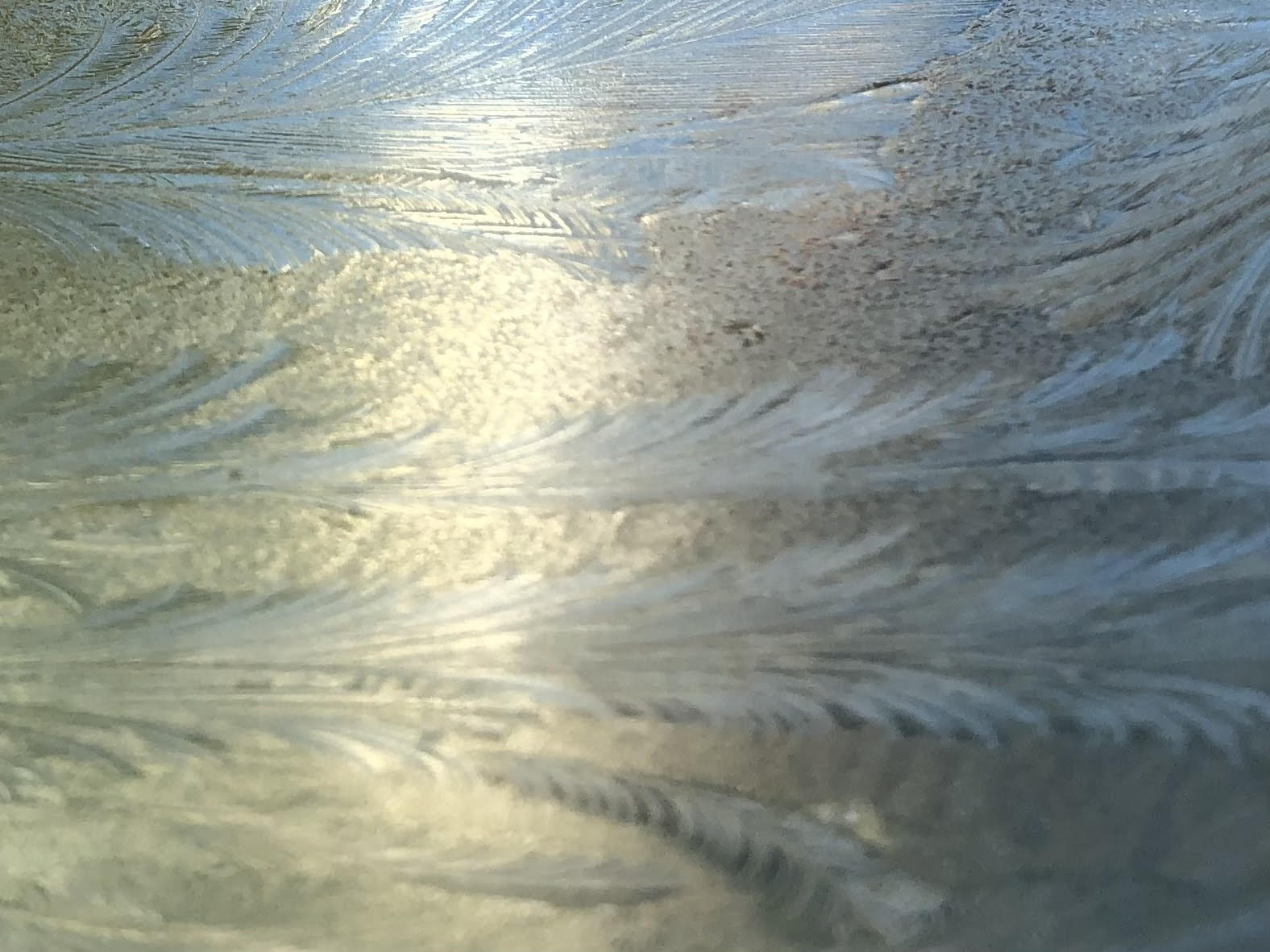
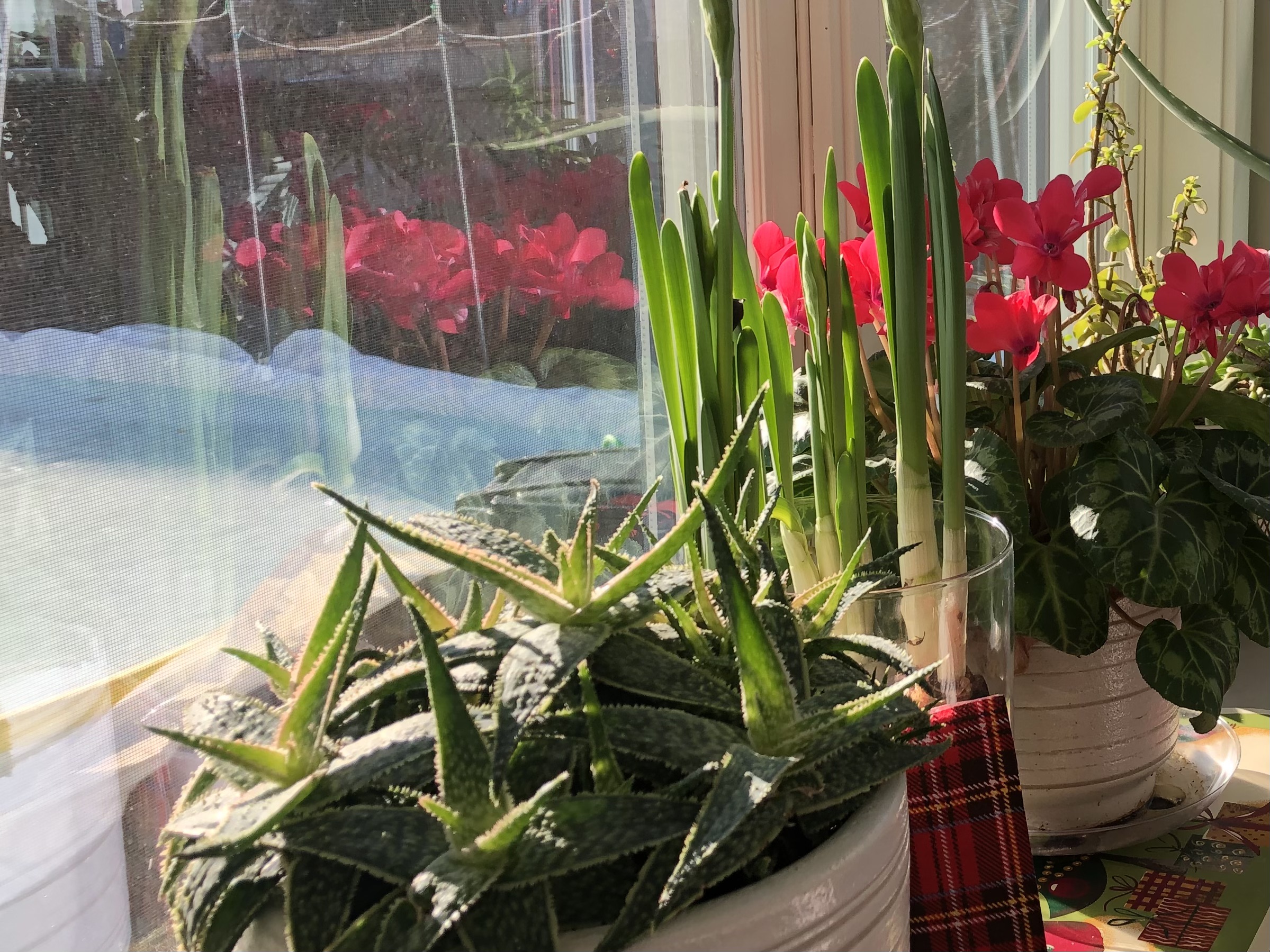
The next photo shows my frosty windshield in February. But indoors at John’s house, warm floral colors were defying the frost.

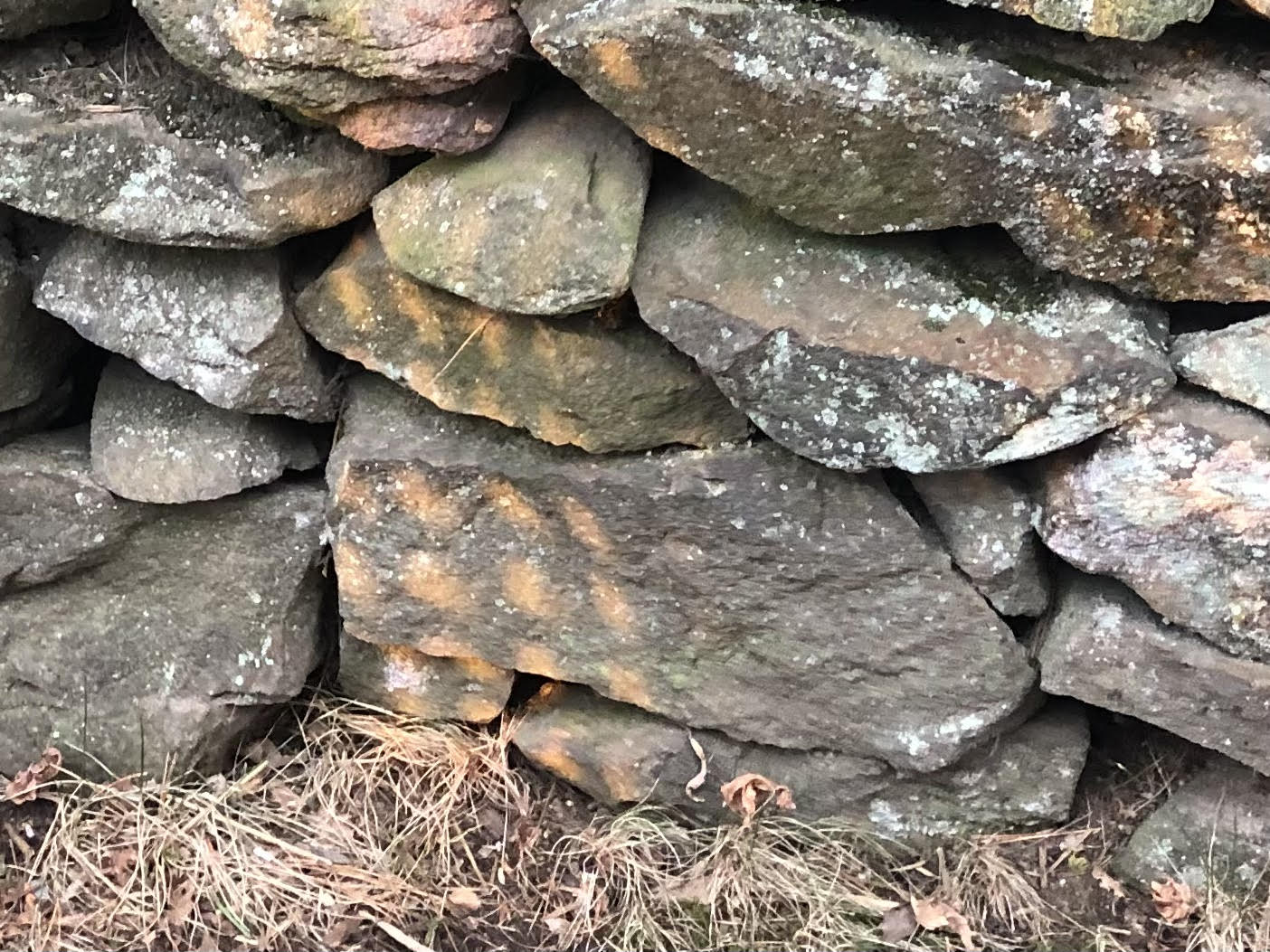
Note that Suzanne’s stone wall has a light pattern on it. It comes from the sunrise over the river in Providence and through her fence. I have to be quick with the camera as the pattern disappears fast.

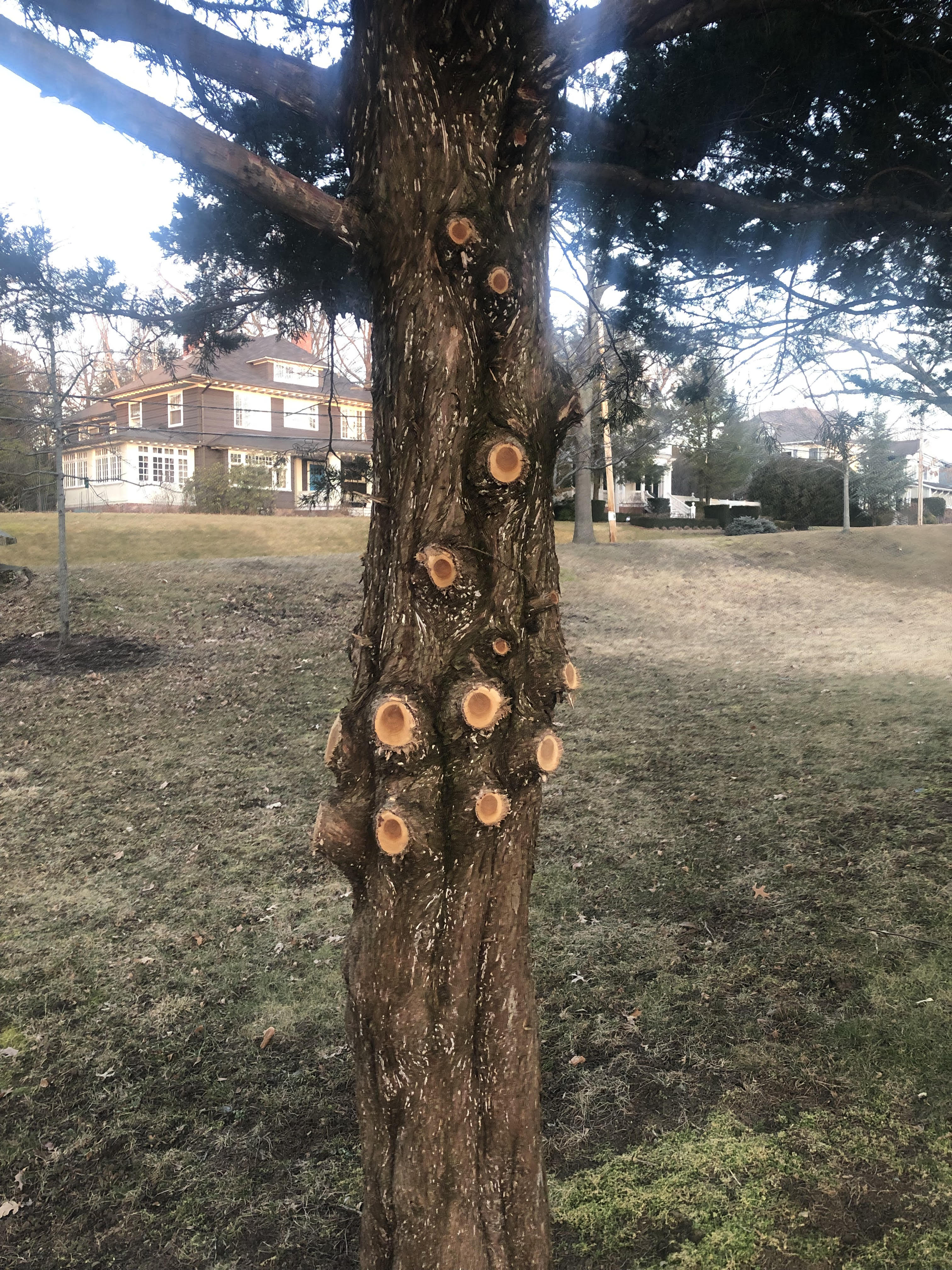
The tree of many eyes was also in Providence. Kind of weird and interesting.

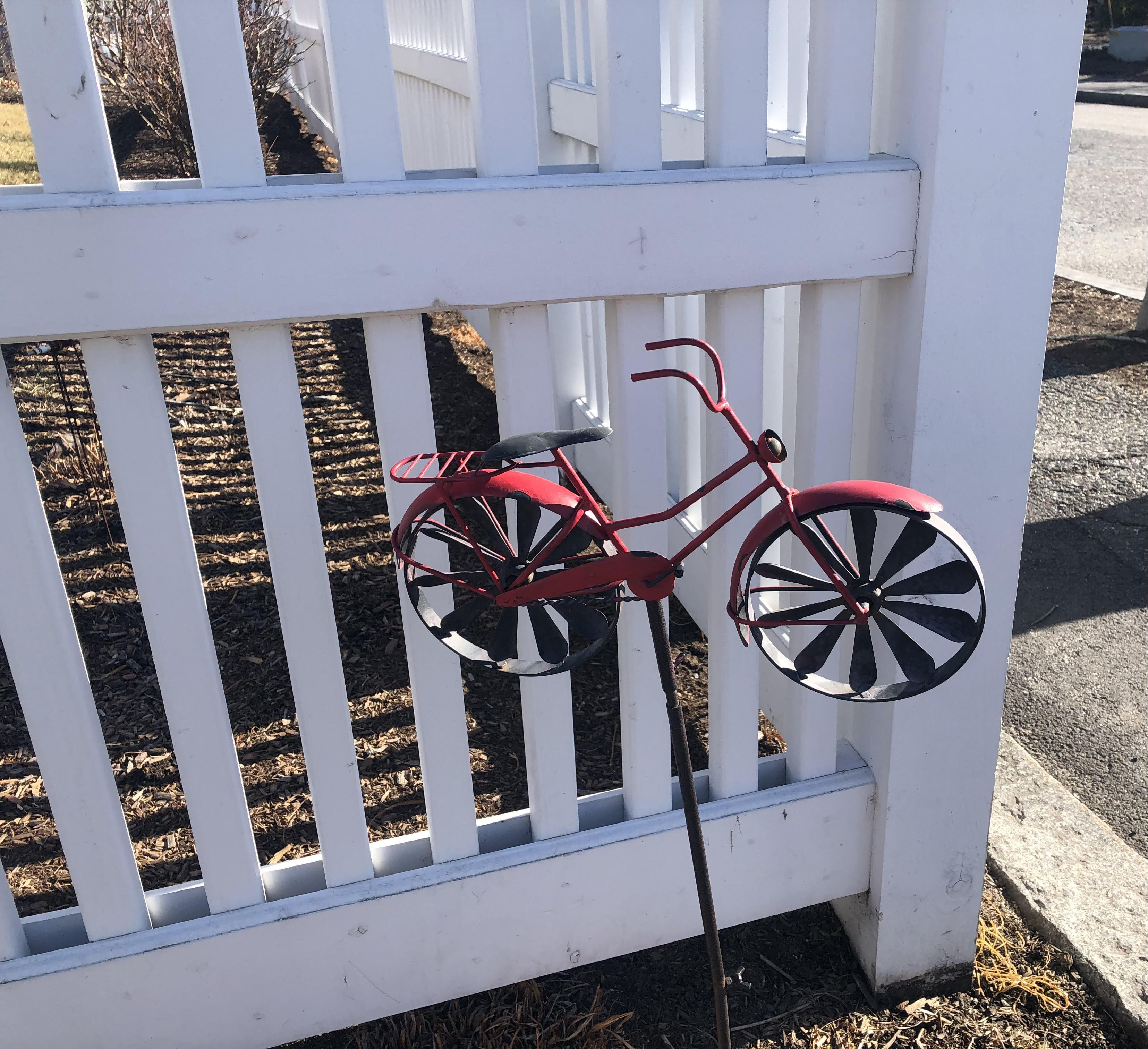
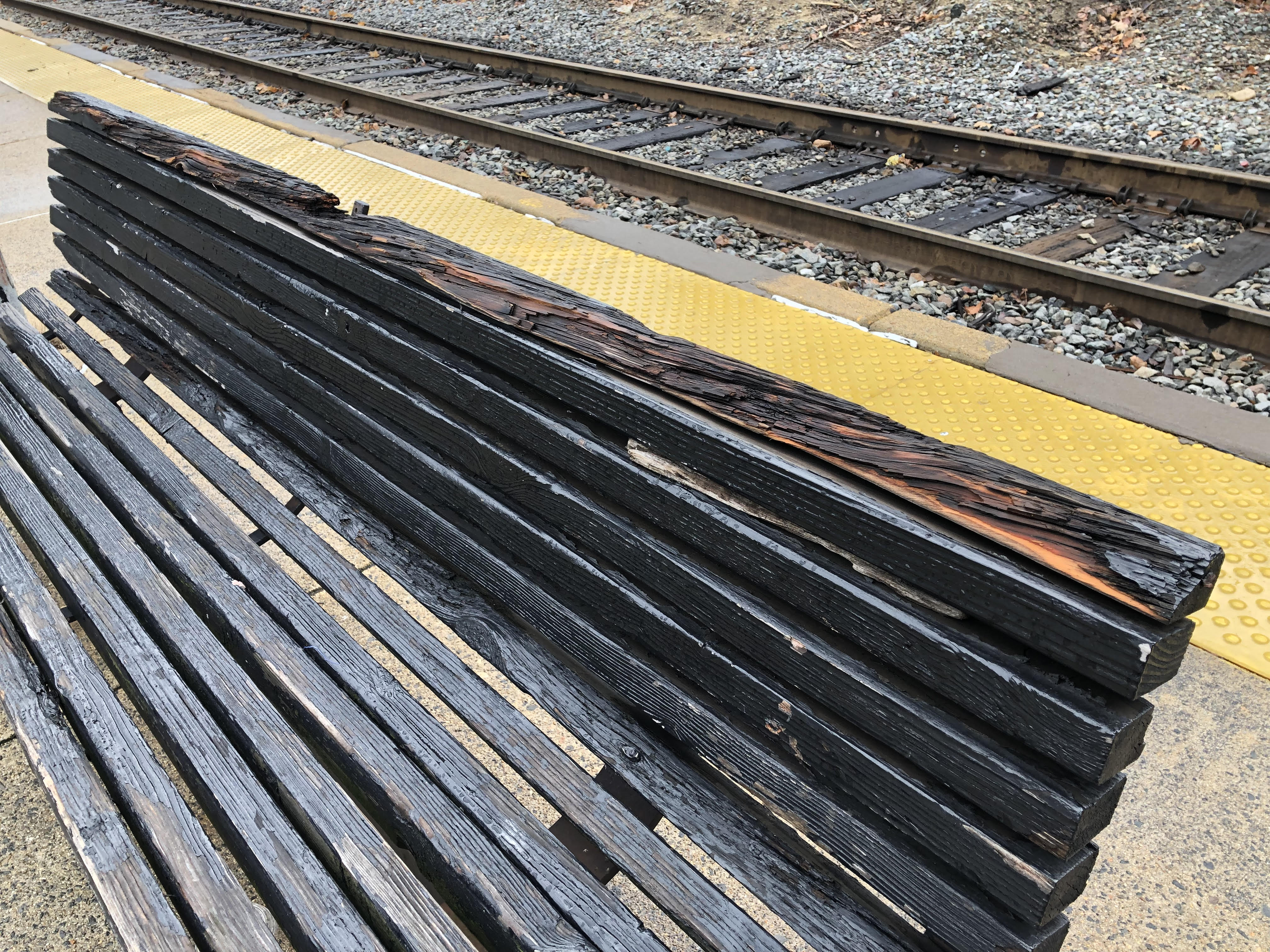
The tiny bicycle is ready for a windy ride. The chewed-up bench at the commuter rail station suggests to me that the train is often late.

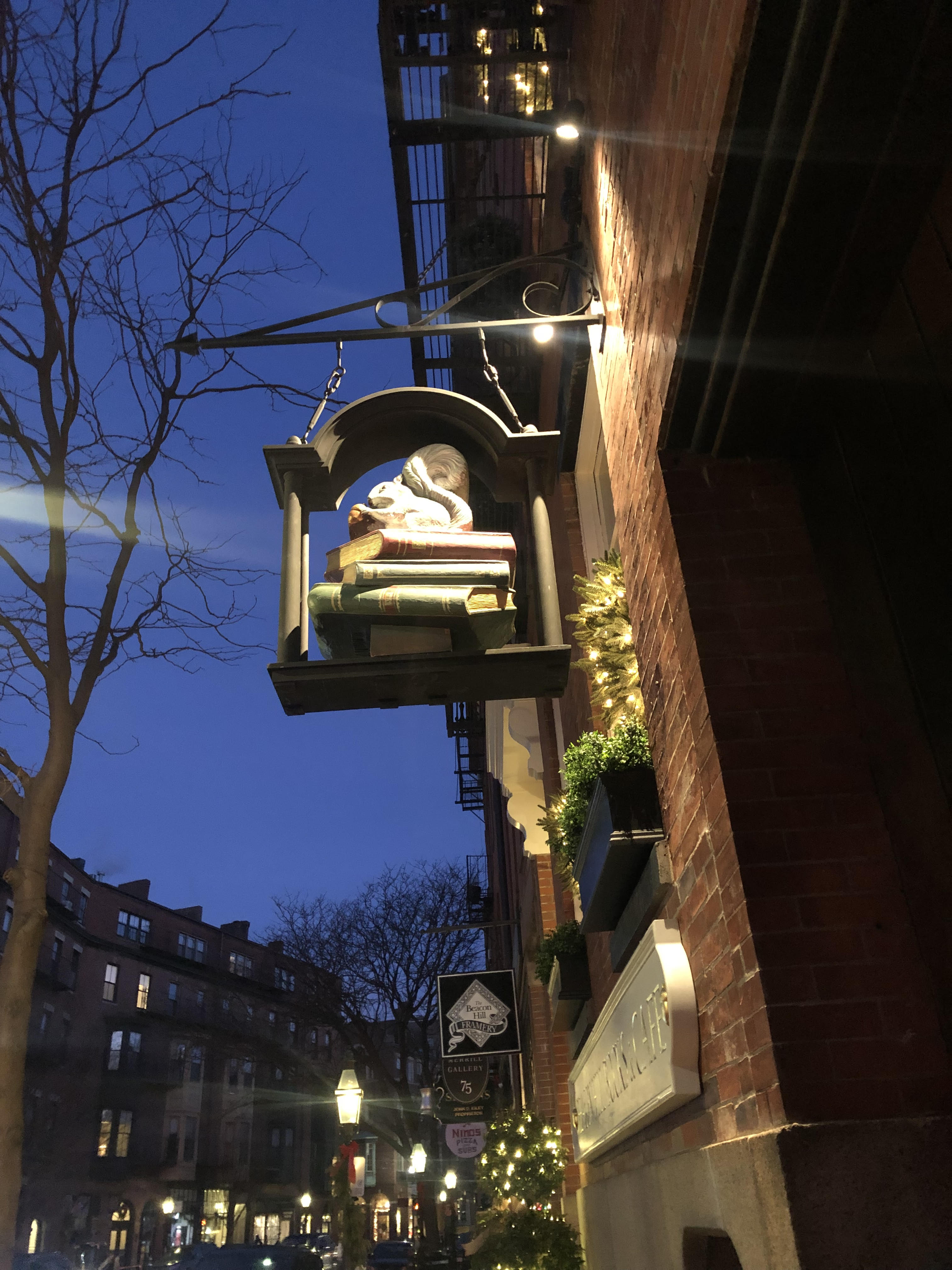
The book store with the literary squirrel in Boston is part of the indie book store resurgence I wrote about recently, here.

There was a mechanical face in the sidewalk near the park. Conducting surveillance, I suppose.

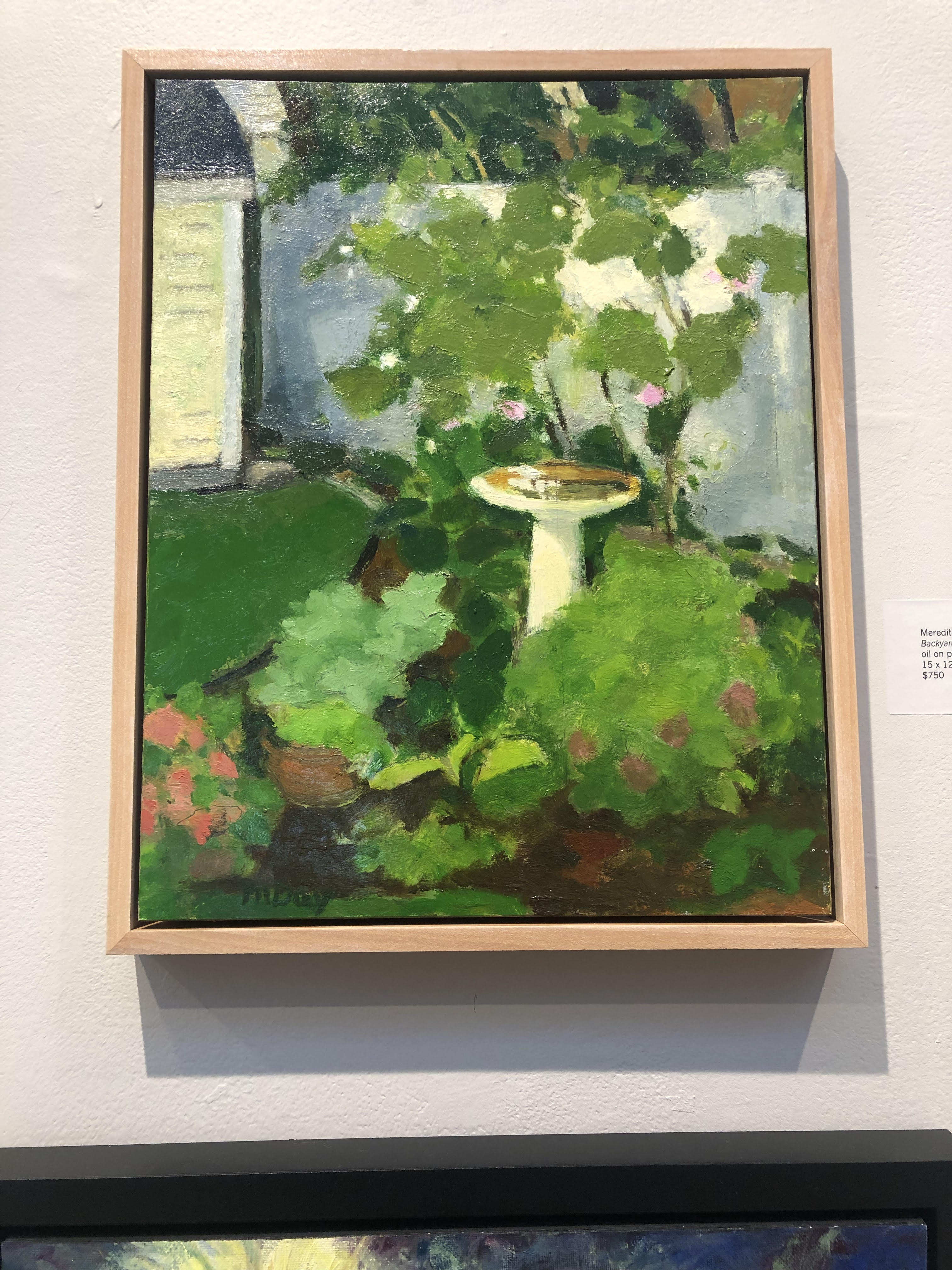
Finally, a spring treat: Meredith Fife Day’s lovely contribution to a recent exhibit at Concord Art.