Photos: Isa Farfan/Hyperallergic. A light well at the recently reopened Studio Art Museum in Harlem.
Suzanne and Erik lived in Harlem before they moved to Rhode Island. They loved their apartment, and they loved being able to enjoy so many of the things New York City has to offer. One of the attractions of Harlem itself was the Studio Art Museum, which now has an impressive new building, after being closed from 2018 to 2025.
Isa Farfan writes at the art magazine Hyperallergic, “The Studio Museum in Harlem has a new, stunning home. The 57-year-old New York institution, dedicated to artists of African descent, [has] inaugurated its new building. …
“Founded by a group of artists and activists, the museum closed its 125th Street location in 2018 to undergo construction of a new building, the first specifically created for the arts institution. The Studio Museum originally opened at a site on Fifth Avenue before moving to its current home on 125th Street and Adam Clayton Powell Jr. Boulevard in the 1980s, the former New York Bank of Savings building. The striking 82,000-square-foot (~7,618-square-meter) new building at the same site was designed by Adjaye Associates with Cooper Robertson. …
” ‘I have truly missed having our physical space,’ Director and Chief Curator Thelma Golden told Hyperallergic. ‘In the years we’ve been closed, our visitors, friends, members, and artists have made it known how much they miss us; everywhere I go.’
“The museum is debuting a series of inaugural exhibitions, including‘Tom Lloyd,’ a one-gallery career survey of the artist-activist’s flashing light sculptures. Works from the museum’s approximately 9,000-item collection span three galleries as part of the exhibition ‘From Now: A Collection in Context,’ which will feature a rotating display.
“Though the construction was delayed in part due to the COVID-19 pandemic, Studio Museum Curator Connie Choi told Hyperallergic that the extended timeline gave the institution a chance to look deeper within itself.
” ‘It allowed us the opportunity to do a deep dive into understanding our collection holdings, to do research, conservation, and framing,’ Choi said. ‘We’ve also done a deep dive into our institutional history in a way that we haven’t been able to do before.’
” ‘We thought very hard about how to be present while closed,’ Golden added. During its seven-year closure,the institution launched several collaborations, including the traveling exhibition ‘Black Refractions: Highlights from The Studio Museum.’ …
“Choi said she’s most excited about the Lloyd survey, noting that he was the first artist to participate in the museum’s studio program.
” ‘It’s a space of contemplation, even as the works themselves are blinking and exciting,’ Choi said. ‘We are hoping that people can slow down; they are coming off of 125th street, which is the busiest street in Harlem, into a space that allows a moment of rest and respite and contemplation of artwork.’ “
More at Hyperallergic, here. The photos of the new building really make me want to see it.
Elizabeth Catlett’s “Mother and Child” (1993) on display in “From Now: A Collection in Context” at the Studio Art Museum.
Art: S.M. “Sylvester” Wells, c. 1975. Collection of Jonathan Otto. The Addison Gallery of American Art in Andover, Massachusetts, presents the work of the Florida Highwaymen, a loosely affiliated group of 26 African American landscape painters, 1950s-1980s.
My friend Nancy told me about an art show she saw last fall on a little known group of Black artists. Although I didn’t get there and can’t give you my firsthand account, I want to share what the gallery’s website has to say so you can click through and enjoy the paintings and videos.
From the Addison Gallery of American Art in Andover, Massachusetts: “This exhibition presents the work of the Florida Highwaymen, a loosely affiliated group of 26 African American landscape painters who sold their vivid and expressive tropical scenes door-to-door and out of the trunks of their cars along the coastal roads of Eastern Florida from the 1950s through the 1980s. …
“It explores the improbable story and prodigious output of the Florida Highwaymen, an amorphous group of primarily self-taught African American artists who forged often lucrative careers as landscape painters against the backdrop of racially segregated Jim Crow Florida.
“Hailing largely from the communities of Fort Pierce and Gifford along the Atlantic coast of Florida, the Highwaymen produced hundreds of thousands of expressive and shockingly vibrant landscape paintings that captured the rapidly disappearing natural beauty of their region from their emergence in the late 1950s through the early 1980s.
“Denied access to gallery representation and excluded from the mainstream art world, the enterprising Highwaymen painters adopted a model of itinerant distribution, peddling their riotous, often rapidly produced oils, almost always still wet and priced to sell at around $25, on average, wherever they could — door-to-door, in doctor’s offices, bank lobbies, and shops — or to road-tripping tourists out of the trunks of their cars parked on the side of the interstate.
“Building on a tradition of American landscape painting that traces its roots back to the nineteenth-century tropical Floridian fantasias of artists like Winslow Homer, George Inness, Martin Johnson Heade, Hermann Herzog, and Thomas Moran, the Highwaymen painters reinvigorated the form, bringing fresh energy and an unrestrained color palette to bear on otherwise conventional scenes of swaying palm trees, polychrome sunsets, and breaking waves. Their exuberant art fundamentally shaped popular perception of the Sunshine State and provides lasting documentation of Florida’s disappearing natural paradise.
“Unless otherwise noted, all works in this exhibition are drawn from the collection of Jonathan Otto (PA’75 and P’24 and P’27). …
“The term ‘Highwaymen’ was not used to describe the group of Black artists responsible for these once ubiquitous Florida landscape paintings — either by themselves or others — until writer and historian Jim Fitch discovered their work in antique shops and flea markets throughout Florida during the early 1990s. Never seeing themselves as part of a unified, artistic school, some artists retroactively given the distinction of being a Highwayman bristled at the term in large part due to its association with criminality and its misleading implication of a unified movement.
“Interest in the work of these painters grew throughout the ’90s and Gary Monroe’s 2001 book The Highwaymen: Florida’s African-American Landscape Painters introduced the work of the Highwaymen to a broader audience.
“Monroe’s publication, consequentially and controversially, specifically defined the Highwaymen as a group of twenty-six artists — twenty-five men and one woman, excluding several artists who failed to meet Monroe’s criteria for inclusion. In 2004, the twenty-six artists were inducted into the Florida Artists Hall of Fame and, since then, the paintings of the Highwaymen have skyrocketed in value and collectability, with many artists coming out of retirement to meet the newfound demand for their work.”
“Murray Whyte wrote at the Boston Globe in November, ‘For all the communion the show can offer with individual works, its power lies in something much larger and more powerful — in how, in a time of severe repression, a creative impulse shared across a community of the like-minded can start to look something like freedom, made by hand.’ ” More here.
Photo: Claire Kirch. Ashley Valentine (r) of Rooted MKE, a BIPOC children’s bookstore in Milwaukee processes the membership of Shannon Taylor (c) of Pages & Volumes Bookstore in Washington, DC, while Darnelle McGuire-Nelson (l) of B & E’s Literary Treasures in Alexandria, Va. observes during New Voices New Rooms in Atlanta.
The publishing world is in a strange place right now, reaching for good literature as usual but afraid to offend anyone. So it looks like bringing worthy new voices into this environment may be harder than ever. That’s why a new organization of African American booksellers is poised to help.
Publisher’s Weekly has the story.
“The National Association of Black Bookstores, a member-based nonprofit organization which aims to support and promote Black booksellers, announced its launch [recently]. Its mission, NAB2 said in the announcement, includes ‘promoting literacy, amplifying Black voices, and preserving Black culture.’ …
“NAB2 was founded by Kevin Johnson, the owner of Underground Books in Sacramento, Calif., who is also a former professional basketball player and the mayor of that city between 2008-2016. The organization’s board represents a mix of seasoned owners of historic stores and young booksellers who have opened stores in recent years. Among the board members are Maati Primm of Marahall’s Music and Book Store in Jackson, Miss., founded in 1938, and Yvonne Black of Hakim’s Bookstore in Philadelphia, founded in 1959, as well as and Onikah Asamoa-Caesar of Fulton Street Books & Coffee in Tulsa, Okla., and Dara Landry of Class Bookstore in Houston, both founded in 2020.
“Other board members include some of the most prominent names in bookselling: Jordan Harris of Alkebu-Lan Images in Nashville; Janet Webster Jones of Source Booksellers in Detroit; Blanche Richardson of Marcus Books in Oakland, Calif.; and Troy Johnson of African American Book Lit Club in Tampa, Fla. Author Lucille O’Neal, best known as the mother of former basketball player Shaquille O’Neal, is also a board member. …
“Johnson was adamant that Black booksellers should not consider membership in NAB2 as an alternative to membership in the American Booksellers Association, which has recently come under fire for not addressing the concerns and needs of Black booksellers. In response to these criticisms, which came to the fore during a contentious community forum at Winter Institute 2024 in Cincinnati, the ABA sponsored pre-conference programming just for BIPOC booksellers at WI2025 in Denver and Children’s Institute in Portland. …
“NAB2 board members are in full agreement that Black booksellers need an organization that addresses their unique needs. Jones told PW that NAB2 is ‘an effort to pull together Black booksellers and stores in an overarching organization that would not just advocate, but also partner with other aspects of the industry.’ …
“Landry told PW that she has witnessed ‘firsthand how vital Black bookstores are to our communities — not just as places to buy books, but as cultural hubs, safe spaces, and sources of truth and empowerment. I think NAB2 is necessary because it helps connects us, amplifies our collective voice, and reminds us that we are not doing this work in isolation. We’re part of a larger legacy.’ …
“Jones and Landry both emphasized the potential of NAB2 as a vehicle to make the industry more accessible, not just for Black booksellers but also Black authors and readers; distribution, they both pointed out, is a key component in achieving this goal. Landry said she and others affiliated with NABB are committed to ‘making it easier for independent Black-owned stores to get access to the titles our readers are hungry for, while also lifting up indie Black authors who often struggle to get shelf space. Representation matters at every level.’
“The ABA registered its own enthusiasm for the new venture as well, with communications director Ray Daniels [saying] ‘several ABA members are founding board members and we look forward to working with their organization.’ …
“There is some divergence among the Black bookselling community as to how best to achieve their common goal to open up the book publishing industry to Black booksellers, authors, and readers. Last week, Ramunda Lark Young, the owner of Mahogany Books in the Washington, D.C., metro area and cofounder of the Black Bookstore Coalition [BBC] sent out a public letter disclosing that Kevin Johnson had approached BBC leaders with the suggestion that the two groups merge into one group under Johnson’s leadership. …
“ ‘After thoughtful discussion and a leadership vote, we’ve decided not to align with [NAB2] and will continue our work independently,’ Young wrote. ‘Our decision was shaped by member concerns about the significant overlap in missions, the timing and rollout of the request, and elements of Mr. Johnson’s public record that warrant reflection and due diligence.’ …
“Noting that BBC had launched a number of initiatives in the past five years, among them the Black Bookstore Coalition Bestsellers List and the Black Lit Weekend celebration of books, which is led by NAB2 board member Asamoa-Caesar of Fulton Street Books, Young said he was poised to ‘take the next steps toward formalizing our leadership structure to push this group further. … We believe there’s room for multiple efforts to thrive.”
Photo: Magdalena Wosinska for the New York Times. Ian White, an artist, against a burned house across from the park named for his celebrated father, the painter Charles White.
The outside world never knew much about the generations of Black artists enriching life in Altadena — not until after the town burned down.
As Sam Lubell wrote in February at the New York Times, “Before the Eaton fire raced across Altadena, destroying more than 9,000 of its buildings, many, even in nearby Los Angeles, barely knew of the place’s existence. This sleepy 42,000-person hamlet hugging the glowing foothills of the San Gabriel Mountains is not part of that city but an unincorporated community of Los Angeles County, and just far enough off the beaten track to blissfully avoid notice.
“Once typified by its bucolic quirkiness, tight-knit neighborhoods and generations-old churches and businesses, Altadena now consists of row after row of twisted, charred building remains, scorched car chassis, blinking or broken stoplights and the occasional khaki National Guard Humvee. The future, for now, is filled with toxic cleanup, insurance adjustments and conflicting visions for rebuilding.
“Yet the past has gained newfound prominence. With so much gone, Altadena’s histories are being unearthed, by residents, scholars and preservationists who say they may hold a key to making this a special place once again, and provide anchors for those weighing whether to stay.
“One of the most profound of Altadena’s legacies — its spectacular story of Black creative culture — had been buried not only under its seclusion, but also under layers of racial and institutional apathy, the loose accounting of informal memory, and the absence of formal plaques and other preservation markers. The fire has spurred calls for a more rigorous approach to remembrance.
“ ‘Sometimes it takes a tragedy for people to mark history,’ said Brandon Lamar, president of the N.A.A.C.P.’s Pasadena branch, whose own home was destroyed, as was his school, his grandparents’ home and their church. But that destruction, he noted, ‘does not mean that we can’t create public memories in spaces now, so that people can remember this information for generations to come.’
“Starting in the 1950s and ’60s, the west side of Altadena (and parts of neighboring northwest Pasadena not bulldozed for the 210 and 134 Freeways) drew middle-class Black families eager to buy homes.
“Many came because the redlining — discriminatory lending by banks — was less severe here, and some of the schools had been integrated comparatively early. The area became a magnet not just for Black teachers and social workers but also for Black artists from around the country, drawn to its affordability, inventive vibe, gorgeous mountain backdrop and general spirit of permissiveness.
“ ‘It had this energy of bohemian California,’ said Solomon Salim Moore, assistant curator of collections at the Benton Museum of Art at Pomona College. ‘You could have a little less scrutiny and a little more room to do your projects.’
“On Feb. 22, as part the Frieze Los Angeles art fair, a discussion called ‘Land Memories’ will feature artists’ recollections of this unique legacy. The talk will be co-hosted by the Black Trustee Alliance for Art Museums, which will also share oral histories recorded from Altadena artists and residents, and collect new histories.
“Moore, who is also an artist, grew up in Altadena and said that its nonconformist spirit has endured to the present, even as prices have climbed and the Black population has fallen, according to the U.C.L.A. Bunche Center for African American Studies, to about 18 percent from 43 percent in 1980. Artists here, he said, loved that they could set up informal studios or even family compounds, or that they could enjoy little freedoms like hosting parties without friends worrying about permit parking.
“Sometimes creative people need to step away because you need to get out of the light to see,” said Ian White, an artist, teacher and the son of Charles White, the renowned painter and printmaker whose haunting depictions of African Americans, their struggles and dignity, inspired generations of artists. He spent the last 20 years of his life in Altadena and is buried at the community’s Mountain View Cemetery. Ian lives in a house next to his father’s modest home (which he also owns) in the Meadows, a district along Altadena’s west edge that in the 1950s and ’60s became one of the first here to integrate. Virtually all of the Meadows survived the fire.
“Also living west of Lake Avenue (then the unofficial dividing line between white Altadena and Black Altadena) was John Outterbridge, the noted assemblage artist and longtime director of the Watts Towers Arts Center. His home on Fair Oaks Avenue was destroyed, along with much of his archive and family memorabilia, according to his daughter, Tami. The famed enamel artist Curtis Tann lived within walking distance, while the prolific sculptor Nathaniel Bustion, known as Sonny, lived near White in the Meadows. Betye Saar, 98, known for repurposing everyday objects into mystical collages, grew up in a home on northwest Pasadena’s Pepper Street, just blocks from Altadena’s west side.
Sidney Poitier, a good friend of White’s from New York, and the first Black actor to win an Academy Award, rented a home in west Altadena before moving to Beverly Hills.
“Ivan Dixon, the actor and trailblazing director, lived on Marengo Avenue, and the science fiction writer Octavia Butler on Morada Place.
“Later generations of Black artists continued to thrive here, including Mark Steven Greenfield, Yvonne Cole Meo, Senga Nengudi and Michael Chukes, and dozens of others holding down day jobs and creating whenever they could in this secret Eden.
“Charles White, already an established figure when he moved from New York in 1959 for health reasons — he had respiratory problems and was advised to live in a milder climate — would become the glue holding this arts community together. His home and studio, still standing, was a gathering place, with many artists competing for the honor of driving White to or from one place or another. (He didn’t drive.)
“Ian still refers to Dixon, Poitier and Charles’s good friend Harry Belafonte as his ‘fictive uncles.’ He recalled how his father set up the sculptor Richmond Barthé, a cornerstone of the Harlem Renaissance, with an apartment, and how his mother, a social worker named Frances Barrett, was his caregiver until the end.”
Photo: Debra Brehmer/Hyperallergic. Installation view of Nordic Utopia? African Americans in the 20th Centuryat the Chazen Museum of Art in Madison, Wisconsin, showing the suitcase owned by classical pianist Eugene Haynes.
Looks like there was a good show last fall in Madison, Wisconsin, at the Chazen Museum of Art. Since it’s come and gone, I won’t be able to see it, but I was interested to learn about it from Debra Brehmer at Hyperallergic. I hadn’t known about the warm welcome that Nordic countries gave to African American artists in the last century.
Brehmer wrote, “An old suitcase with a small leather handle summons the presence of the person who once carried it across oceans and nations. Surrounding it in a display case are a pair of shoes, gloves, a hat, and a Bible, all owned by the Julliard-trained Black classical pianist Eugene Haynes. The suitcase symbolizes the flight of Black artists to European countries during the civil rights era and beyond. Although Paris was a well-known hotbed of artistic expats, Nordic Utopia? African Americans in the 20th Centuryat the Chazen Museum of Art zeroes in on a far less charted corner of Black history: the artists who ventured north.
“Haynes spent summers and winters in Denmark from 1952 to 1962 while he performed across Europe. … Even the most accomplished Black artists found the Jim Crow conditions untenable — the US wasn’t only segregated, it was dangerous.
“At this time, the Nordic countries of Sweden, Norway, Finland, and Denmark held the promise of racial equality, despite primarily White populations. And slowly, word spread. While many Black artists found solace in the Parisian avant-garde (Josephine Baker, James Baldwin, and Langston Hughes, among others), the Nordic regions, according to poet Gregory Pardlo, quoted in the exhibition catalog, were ‘hipper … for black intellectuals escaping the stifling air pollution of American racism.’
“One could get lost in the details of this research-heavy presentation, but an overall theme emerges: the need to get away, not just from an inhospitable place, but from the weight of always being defined by race. Distance from US discriminatory politics gave these artists room to experiment, to make art that wasn’t about being Black or the entrenched problems of their homeland. After he ventured to Scandinavia, the artist William H. Johnson painted van Gogh-influenced portraits, expressionistic sunrises, street scenes, and boats in a harbor. He had married Danish textile artist Holcha Krake. When he returned to the US in 1938, his art underwent a major stylistic shift as he produced folk art-influenced paintings that centered on Black life in Harlem and portraits of Black global activists, for which he is best recognized. …
“Harlem-born painter Herbert Gentry, who first spent five postwar years in Paris and then moved to Copenhagen and later Stockholm, chose cities with thriving jazz scenes as well as international art communities. Gentry often made abstract paintings on unstretched canvas that he could fold into suitcases for easy transport. Ronald Burns, who relocated to Denmark in 1965, pursued a Surrealist style of complex dreamlike compositions. Howard Smith, an artist and designer who arrived in Finland in 1962, worked across media with paper-cutting, laser-cut steel forms, porcelain sculpture, and collage. …
“Being in Europe, most of the artists absorbed the prevalent modernist influences, seeing themselves as part of a broader and more open public consciousness, an environment particularly supportive of Black swing and jazz musicians. … A brilliant documentary, Dancing Prophet (1971), shows dancer/choreographer Doug Crutchfield back home in Cincinnati in earnest conversation with his Baptist minister father about why he needs to leave the USA to pursue his dancing career.
To its credit, the exhibition does not offer simple conclusions.
“Instead it provides multiple perspectives on issues of expatriation, including the fact that racism also existed overseas. … Dexter Gordon expresses one attitude, quoted in wall text: ‘Since I’ve been over here, I felt that I could breathe, you know, and just be more or less a human being, without being white or black, green or yellow, whatever. Actually it’s very seldom that I’m conscious of color here in Europe.’ Artist Howard Smith, who lived in Finland for 14 years, suggests a different condition: ‘I got lonesome there … I need the spiritual input, I guess, of being around Black people.’ …
“Walter Williams first ventured to Denmark in 1955 on a fellowship. He previously earned recognition for his New York City urban scenes. The new landscapes of Denmark stirred him to paint sun-infused pastoral imagery. ‘Southern Landscape’ (1977–78) portrays a young Black girl in the foreground, standing in a field of blooming sunflowers. A bouquet of flowers sprouts from her shoulders. Butterflies surround her. In the background, another Black girl appears to be picking cotton in a field with a shanty behind her.”
Photo: via Robert Turpin. Woody Hedspeth was one of several Black American cyclists in the early 20th-century to move abroad to further his career.
A country shoots itself in the foot when it pushes away talent. I’m thinking of asylum seekers who may have something to offer. I’m thinking of Black talent going to Europe to find a more welcoming and level playing field — writer James Baldwin, for example, singers Josephine Baker, Marian Anderson, and Paul Robeson.
Today I’m learning about Black bicycling champions turning to Europe in the early days of the competitive sport.
Rich Tenorio writes at the Guardian, “When cycling first took the US by storm in the late 19th and early 20th centuries, Black Americans joined in the new pastime. One Black cyclist, Marshall ‘Major’ Taylor, became a world champion in 1899. Yet American cycling installed a color line in professional racing. Opportunities became so limited that Black competitors had to take them wherever they could find them – including on the vaudeville stage and in Europe. Their story is documented in a new book, Black Cyclists: The Race for Inclusion, by Robert J Turpin, a professor of history at Lees-McRae College in North Carolina.
“ ‘We fall into the trap that history is linear,’ Turpin says. ‘With race relations, we think about the end of the Civil War: “Slavery ended, and things gradually got better and better for Black people.” My book shows what we already know: Things actually got worse for Black people in the US, especially from the 1880s through the 1920s … It got harder for Black cyclists to compete as professionals or even win prize money in general.’
“Turpin is a cyclist himself, and his college features a cycling studies minor, which he believes is the only such program in the US. His interest in the history of cycling extends to how it has been marketed over the decades – the subject of his previous book. …
“Turpin raises another issue: a lack of diversity in contemporary cycling. The book cites a 2020 USA Cycling survey of over 7,000 members in which just 3% reported they were Black or African American. Such underrepresentation extends to the [Olympics] and the Tour de France, where [in July] Biniam Girmay became the first Black African stage winner in the race’s 120-year history. Yet the book notes the increasing impact and influence of Black elite competitors such as 11-time national champion Justin Williams and the first Black female professional cyclist, Ayesha McGowan.
“Before attending graduate school at the University of Kentucky in 2009, Turpin learned about Taylor, whose exploits in cycling began as a teenager in Indianapolis, and crested with a world championship in the one-mile sprint in Montreal. In doing so, he became the first Black American world champion in any sport and his achievements were chronicled in an autobiography, The Fastest Bicycle Rider in the World. ‘He was an international superstar,’ Turpin says. …
“Several years later, Turpin returned to Taylor’s story. By that time, additional primary sources had been made publicly available through digitization. Turpin learned more about not only Taylor, but also his predecessors and peers. …
“Massachusetts became a venue for early Black success in cycling. David Drummond regularly won Fourth of July races in Boston. Taylor used his winnings to buy a home in Worcester – and the city’s first automobile. Katherine ‘Kittie’ Knox, a seamstress turned racing star, was famous for her self-designed outfits and her endurance. Knox illuminated challenges faced by cyclists who were both Black and female.
“ ‘If you were Black and a woman, those were two big strikes against you,’ Turpin says. …
“In 1894, a prominent nationwide cycling organization called the League of American Wheelmen, … barred all Black cyclists except Taylor from professional racing. The ban was not officially repealed until 1999 by the organization, which had been renamed the League of American Bicyclists.
“The book shows the ways in which Black cyclists responded. These included criticizing the decision in the Massachusetts state legislature and forming Black cycling leagues.
“ ‘I stress their agency,’ Turpin says. ‘I do not talk about them as victims. They were resourceful in figuring out alternative ways to still make a living and find social mobility.’ …
“Unlike Jim Crow America, international venues welcomed Black participation as professionals. Taylor left for France and Australia, and named his daughter Sydney after the city where he felt most welcome. Fellow racer Woody Hedspeth followed Taylor to France – and while Taylor returned to the US, Hedspeth remained in Paris.”
Photo: Rainbow Skateland. Roller skating — often in the street — has been part of African American culture for years.Today it’s really an art form.
The world of roller skating is a world I know nothing about. The one time I tried it at a kid birthday party, I was mostly frozen. But wait till you hear about the expertise of today’s Black roller skating world!
James Thomas reports from Atlanta for the New York Times, “To parse the different regional roller skating styles in metro Atlanta rinks, watch the traffic patterns.
“Sparkles Family Fun Center in Smyrna, Ga. on a recent Thursday night offered a case study: Locals skating in the hometown style churned the floor’s edge, punctuating their synced steps with hand claps that rose from the shoulder. Skaters in the New York-New Jersey-style bobbed steadily and pivoted in tight circles at the center of the crowded rink. A critical mass of skaters doing Chicago’s brand of fluid, James Brown-inspired footwork, or JB skating, carved a jet stream between the crowds.
“It was the warm-up party for the Jivebiscuit Skate Family Reunion, one of the longest-running national gatherings of Black roller skaters. The 17-year-old event, held in February, is one of several annual parties that have made Atlanta a skating hub, bolstered by a steady, decades-long influx of Black residents from other cities.
“ ‘It’s definitely like the Great Migration meets the skate migration,’ said Reggie Brown, 40, a JB skater and music producer who grew up in Chicago. Though he now lives in New York, Brown visits Atlanta frequently to skate. …
“That commingling has Atlanta’s stalwart skaters concerned about keeping their distinctly energetic and percussive style alive. They say Atlanta’s newer skaters, who have wide access to regional variants, increasingly practice a hybridized type of skating that’s not rooted in any one tradition.
“ ‘If you don’t understand the foundation, you have the potential to lose it altogether,’ said Vaughn Newton, the skating choreographer for the 2006 coming-of-age movie ATL. Newton, 58, is a respected bridge between the city’s younger and older skaters. …
“On any given night in Atlanta — certainly on a destination party night — a D.J.’s song choices can activate or chill the various pockets of culture swirling the floor. So when D.J. Arson played ‘Presha‘ by 2 Chainz and Lil Wayne, a standout of the trap subgenre, on the second night of Jivebiscuit at Stone Mountain Skates in Stone Mountain, Ga., the Atlanta-style skaters took their cue.
“Paul Antonio Johnson led a procession along the perimeter, his high knees evoking a drum major in a marching band. He called out routines; the skaters behind him clapped and matched cross slides to the pounding beat. The maneuver is a foundational element of the Atlanta style, where a skater crosses feet laterally in sync with the music. Though known by different names across regions, Atlanta skaters in the 1970s first termed it the crisscross. Younger generations smoothed it out, lifting their skates for a cross-body step they called the cross slide.
“ ‘If you know what you’re looking for,’ says Newton, ‘you’ll see the crisscross. And that’s what everything is built on.’
“Arson stayed in trap mode for the next half-hour before shifting smoothly out of the simmering, drum-heavy hip-hop into mid-tempo R&B with muscular grooves and few lyrics. The Atlanta skaters slowed down and cycled off the floor while the JB skaters took over, swaying and lunging, arms high. They had buoyancy and finesse.
“Atlanta style embodies ‘a lot of energy, showmanship, ugly face. It’s real hype,’ said Kenneth Anderson, known as Kojak. He and his wife, Tijuana Anderson, or Lady Tee, 61, are pillars of the Atlanta skating community. ‘It’s like riding a motorcycle on 285 and just letting your hair down,’ Kojak, 62, said. ‘It’s a real aggressive style.’ …
“When Joi Loftin moved to the area from Detroit in 1988, synth-funk and early hip-hop were prevalent. In 1995 she and other transplanted Detroit skaters, who were used to up-tempo R&B, began to pool their money each week. ‘We would rent Golden Glide rink just so we could play the music that we wanted to skate to,’ she said. ‘That session is still going on to this day.’
“Loftin soon developed relationships with other rink owners, D.J.s and skaters. She and John Perkins, a transplant from New York, started Sk8-a-Thon in 1996, one of the first recurring national parties that showcased Black roller skating styles. Their first event drew 836 skaters from around the country to the Golden Glide in Decatur, six miles east of downtown Atlanta. Over the years it grew to accommodate thousands in multiple rinks over four days, making a Labor Day trip to Atlanta a Black roller skating ritual Loftin hopes will continue now that she’s held her last Sk8-a-Thon in 2023.
“ ‘It’s a beautiful thing,’ said Terron Frank, 34, who traveled from Portsmouth, Va. for Jivebiscuit. ‘You can pretty much see every style you’d want to see in Atlanta.'”
Photo: Jingnan Peng/Christian Science Monitor. On a tour of Louisville’s Western Library, librarian Natalie Woods (right) shows a 1911 diploma of Louisville’s Central High School. Its former principal, Albert Meyzeek, helped create the oldest Black public library in the U.S. still independently run today.
It is often the case that people in a marginalized group excel in delivering badly needed services that others take for granted. Consider America’s oldest Black library and the man who started it.
Jingnan Peng writes at the Christian Science Monitor, “Thirty minutes into the library tour, Louisa Sarpee wants to work there. History is so close to her. One block away from her high school, the small library she had never set foot in laid the foundation of African American librarianship. What is more, the library was created by a former principal of her own school. Its archives even house a diploma of her school from the time the word ‘colored’ was still in the school’s name.
“ ‘Is there any way to volunteer at the library?’ the ninth grader asks Natalie Woods, the librarian giving the tour. …
“For Ms. Woods, the manager of Louisville’s Western Library, the gasps coming from the group of 18 students learning about its history is no surprise. She meets Louisvillians every day who know nothing about Western. The library under her care is the oldest public library in the United States independently run by and for African Americans. It was also the earliest training ground of Black librarians from around the South. It is a legacy that has changed Ms. Woods’ life, and preserving it has become her vocation. …
“The ‘Western Colored Branch’ of the Louisville Free Public Library system opened in 1905, in an era when Black communities across the South were building institutions in the wake of emancipation, says historian Tracy K’Meyer at the University of Louisville. …
“The segregated library was considered an experiment, says Ms. Woods. Its first manager, the Rev. Thomas Fountain Blue, had no formal schooling in library science – because there were no library schools open to Black people.
“Blue not only ran a successful library … he also started the first training program for Black library workers. The course became the prototype for the first degree program in library science for African Americans, which opened in 1925 at Hampton Institute in Virginia. …
“Ms. Woods remembers Blue’s cursive handwriting. The first time she held his papers, they changed her life. She never learned about Western’s history when she grew up in Louisville. The child of a Black father and a white mother, she became a page at Louisville’s Shawnee Library. There, she would hear mentions of Western’s history.
“In 2008, while working as a library clerk and attending college at night, Ms. Woods lost the vision in her left eye due to complications from surgery. She couldn’t perceive distance properly and had to relearn basic activities, such as picking up a pencil, by repetition. It was a struggle to finish college, she says, and she gave up the idea of pursuing a master’s degree in library science.
“Then, one day, a supervisor brought Ms. Woods a folder of documents to transcribe. They were the papers of Thomas Fountain Blue.
“On lined sheets, the cursive hand discussed circulation methods, library cards, and a library’s role in educating the public.
“ ‘I knew of him, but I didn’t know how deep and intentional he was in everything he did,’ Ms. Woods says. ‘And it just gave me a new love and desire to go to library school.’ She obtained her library degree at Florida State University. She became Western’s manager on March 6, 2016: Blue’s 150th birthday.
“When Ms. Woods started at Western, she found that many people living near Western did not even know the library exists.
“The library’s archive, which includes Blue’s papers and a wealth of material on Black Louisville history, was disorganized. There was no indexing, and the room was not even locked down, Ms. Woods says.
“So she started giving tours of the library, which she still offers about once a week. In 2018, she obtained a $70,000 grant to index and digitize Western’s archive.
“It is an important archive that sheds light on ‘how Black librarians, in real time, were trying to imagine what a library to serve a Black community should look like,’ says David Anderson, a professor of English at University of Louisville. …
“A child of formerly enslaved parents, Blue attended college and seminary in Virginia and ran a Louisville YMCA before starting at Western. He died in 1935, after being denied medical care for a treatable infection, says Annette Blue, his granddaughter. ‘He died from Jim Crow laws,’ she says in a Zoom interview from her home in California. …
“Ms. Woods says she does her work in honor of Blue and her parents. She tries to embody Blue’s commitment to ‘the betterment of his people.’ Her parents, who faced much opposition to their relationship as an interracial couple, taught her to ‘treat people the way you want to be treated.’ “
More at the Monitor, here. No firewall. Subscriptions are reasonable.
Art: Ernie Barnes. Photo: Ernie Barnes Estate, Ortuzar Projects and Andrew Kreps Gallery. Ernie Barnes’s “The Sugar Shack” (1976) sold well above its estimate at a Christie’s auction in 2022.
I’ve been thinking about artists whose popularity often seems to put them beyond recognition by the “academy.” Can they be taken seriously by serious people if they are popular? If their works are deliberately priced to be affordable, does that mean they are not valuable?
Adam Bradley writes at the New York Times about the long underappreciated artist Ernie Barnes, who is having “a moment” now that he has died.
Bradley writes that “in the 1970s, buying a print of Ernie Barnes’s ‘The Sugar Shack,’ the iconic 1976 dance club painting that adorns the cover of Marvin Gaye’s album released that spring, ‘I Want You,’ and appears in the credits for the classic sitcom Good Times (1974-79), required nothing more than mailing a $20 check to the artist’s West Hollywood studio.
“In 2022, the second of two originals — inspired by a childhood adventure of sneaking into a famed dance hall to watch couples drag and sway to the live performances of Clyde McPhatter or Duke Ellington — came up for auction at Christie’s, selling for $15.3 million. The buyer was the Houston-based energy trader and high-stakes gambler Bill Perkins, 54, who won a bidding war against 22 other prospects. This vast divergence of price belies a convergence of spirit: The countless individuals hanging inexpensive prints on the walls of bedrooms and barbershops share with Perkins (and no doubt with the other wealthy collectors who bid the painting up to more than 76 times its high estimate) an ineluctable desire for the nostalgia and affirmation that Barnes’s work conveys.
“Barnes, who died in 2009 at 70, left a paradoxical legacy. He was an artist of the people — most especially of Black people — selling reproductions at prices that enabled everyone to own something beautiful. He was also an artist to the rich and famous; he sold many of his original works to athletes, movie stars and musicians, from Kareem Abdul-Jabbar to Grant Hill, Diana Ross to Bill Withers, Harry Belafonte to Sylvester Stallone. He was among the most visible artists of the ’70s, with millions seeing his paintings on television each week; yet his work was excluded from major museum collections.
“The unprecedented price paid for ‘The Sugar Shack,’ Barnes’s most recognizable work, has changed everything — and nothing at all, inviting a wider (and whiter) audience to revisit an artist whose reputation among Black Americans is unassailable. More than a dozen years after his death, Barnes, long a popular painter, has become an important one, with all that term entails: a hot global market for his work (pricing out many of Barnes’s original collectors); newfound interest from museums; and, most immediately, a major gallery exhibition scheduled for next year at Ortuzar Projects in New York, which will invite a deeper look at Barnes’s varied career.
“Ernest Eugene Barnes, Jr., was born in Durham, N.C., in 1938, and grew up in a segregated neighborhood known as the Bottom. His father was a shipping clerk for Liggett & Myers Tobacco Company and his mother worked as a domestic.
“In his 1995 memoir, From Pads to Palette, Barnes recalls using sticks as a child to sketch undulating lines ‘in the damp earth of North Carolina.’ By the time he was in high school, Barnes had grown close to his full height of 6 feet 3 inches and finally gave in to the football coach’s entreaties for him to play offensive lineman.
“By 1956, he had 26 college scholarship offers; he enrolled at the historically Black North Carolina College (now North Carolina Central University), where he studied art. Though Barnes found support for his artistic endeavors on campus (he sold his first painting, ‘Slow Dance,’ a precursor to ‘Sugar Shack,’ for $90, to the recent alum and Boston Celtics guard Sam Jones), he often faced bigotry beyond it, and this led him away from art. The Baltimore Colts selected Barnes in the 1960 N.F.L. draft, and he played for four other teams in a six-year career before leaving the game because of the physical toll of injury and the psychic toll of delaying his true calling as a painter. …
“Barnes worked for a short period in the off-season as a door-to-door salesman, and as a construction worker building crypts. Then, with the endorsement of the business mogul and San Diego Chargers owner Barron Hilton, Barnes crashed the American Football League owners’ meeting to make a pitch to become the first official painter of a professional sports franchise. Many of the owners ignored him; one heckled him.
“But another, Sonny Werblin of the New York Jets, offered to pay him a player’s salary to become the team’s official painter. After a year, Barnes had built up enough of a portfolio for Werblin to sponsor Barnes’s first solo show, at the famed Grand Central Art Galleries in Midtown Manhattan. Barnes was 28. His work, which rendered football as modern-day gladiatorial spectacle, was stylized and dramatic. One could see within it the stirrings of his mature aesthetic: his loose and gestural handling of human form, his passion for portraying bodies in motion.
“His athleticism was far from incidental to his art. … Barnes understood the human body not from the outside in, in the studied manner of a draftsperson, but from the inside out, through his knowledge of how bone, muscle and ligament move in concert. …
“Barnes’s 1966 New York show might have marked his triumphant emergence into the artistic mainstream. Instead, it was greeted with indifference. ‘It was a shock to me,’ Barnes said decades later. If the art world was going to reject him, then he would reject it. ‘When I found out that I didn’t have to belong, really, to that world, he said, ‘that was much more assuring to me as a human being.’ …
“He expanded his subject matter to suit a broader audience, directing his eye for physicality toward everyday life. What does it look like to walk down the street with swagger, to hoist a heavy bag at day’s end, to jump double Dutch? Inspired in part by the Black Is Beautiful movement of the photographer Kwame Brathwaite and others, Barnes began producing works that would comprise a show titled ‘The Beauty of the Ghetto. It opened in 1972 at what was then known as the California Museum of Science and Industry and traveled the country for seven years. …
“In 1973, he met with the television producer Norman Lear, who was preparing a new program provisionally titled The Black Family. Lear was so taken with Barnes that he proposed not only using Barnes’s paintings on the show but also making the family’s eldest child, J.J. (who’d be portrayed by the actor Jimmie Walker), an artist himself. …
“ ‘His work is really about joy and positivity,’ says Ales Ortuzar, 47, who along with Andrew Kreps co-represents Barnes’s estate. ‘Those are two things that have traditionally been dismissed in the art world.’ Indeed, irony has no place in Barnes’s artistic worldview. His canvases are domains of earnestness and striving, of unalloyed celebration and pride. …
“ ‘There are a number of folks who will say, “Oh, his work has a $15 million price tag on it,” ‘ says [Derrais Carter, 39, a professor of gender and women’s studies at the University of Arizona and the curator of the Barnes exhibition at Ortuzar Projects]. ‘ “Let me pay attention to it.” And I’m like, “Well, Black folks never needed no $15 million to own that work.” It’s been in dens, college dorm rooms, on faded album covers, the whole nine. These [paintings] are like talismans, anchors of home.’ ”
Photo: Artist unknown/Historical Society of Pennsylvania. Portrait of James Forten (c. 1834), oil on paper, from the Leon Gardiner collection of American Negro Historical Society records.
The US likes to designate a month for neglected groups to be honored, which is OK, I guess, but accomplished women are interesting even when it isn’t Women’s History Month, as are people who identify as Latino/a when it isn’t National Hispanic Heritage Month or African Americans when it isn’t Black History Month in February. I like to post the stories year round. So it’s August, and here’s a bit of Black history.
At Hyperallergic, Xenobia Bailey offers research on 19th century fiber craftsman James Forten.
Bailey begins, “That I, a quiet, radical, African-American fiber artist, raised in a nautical lakeshore Black community in the Pacific Northwest, would find the book A Gentleman of Color: The Life of James Fortenby Julie Winch, about a free-born, quiet, radical, elite African-American fiber craftsman, living in North America from 1766 to 1842 — the most prosperous and philanthropic sailmaker, born in Philadelphia during the turbulent period of the Revolutionary War — was truly a cosmic alignment. … I saw this book steps from the Schomburg Center for Research in Black Culture in Harlem, on the table of a street vendor and book dealer, Brother Mustafa. …
“James Forten’s miraculous life, and its role in shaping a prominent African-American history, is one of my greatest inspirations. Unknown to me, I opened my fiber arts studio in Philadelphia blocks away from where Forten’s sailmaking loft was located at Penn’s Landing on the Delaware River. It was my research into Forten’s life that bridged my wild, aquatic childhood, along Seattle’s Lake Washington, with my present fiber arts practice, which focuses on the evolution of African-American domestic textiles before and after emancipation.
“Looking back, it was fulfilling growing up in a lakeside ‘redlined’ Black community in Seattle’s Central District, with a pack of rambunctious children from the neighborhood. We played in the ponds and wooded area around our homes, venturing through Washington Park’s Arboretum to a now gentrified and forgotten area of natural bodies of shifting sand and clay mounds. They would emerge and disappear with the tides that created patches of land we claimed and named as our islands.
“We’d play pirate captains, patterning ourselves on the rowdy Seafair Pirates who opened the citywide Seafair summer festival of parades, hydroplane boat races, and carnivals every year. We built three-walled log cabins with open roofs and gathered floating logs for rafts from the fallen trunks, broken roots, branches, mud, and stones, and as our furniture we used the beautiful, organically sculpted driftwood that was scattered along the edge of the lake.
“Like James Forten’s community, ours was an unfamiliar story of the African-American experience. Our playground was the shoreline, with a backdrop of flying sea hawks, seagulls, rowboats, motorboats, and houseboats. And, like Forten, we were mesmerized by the majestic sails on the sailboats. …
“As with young James Forten in the mid-1700s, we too had the inquisitiveness and freedom of imagination of childhood — characteristics that continue to serve us as adults. We were aware of the community activism, cultural revolutions, and Black Power Movement happenings of the 1960s. In our imaginations, this was our private utopia. We’d make believe whatever we wanted. …
“James Forten and my siblings and I also share the experience of having a father who was an intuitive and knowledgeable maker. The senior Forten was a master sailmaker who repaired worn sails and prepared raw materials for sewing the strong textiles into tents for surveyors and sails for large-sail ships. …
“My father was a self-taught manipulator of electrical wiring. He purchased an abandoned van for about $100 and a broken floor buffer for $25 from a local junkyard and rewired them, which allowed him to start our family’s janitorial business. This upcycling practice was common in our underserved yet sustainable community in an otherwise booming industrial Seattle.
“Mrs. Forten, a ‘fierce’ homemaking mother, refused to give birth to children until she was able to buy her freedom at age 42; this was followed by her birthing two free, healthy children whom she groomed into outstanding adults. One of my fierce homemaking mother’s many gifts was enriching our home with vintage crocheted Afghans and quilts that she would purchase from the Goodwill Store and then elegantly drape and tuck the handmade textiles over our secondhand furniture.
“Forten was an abolitionist. His benevolent service to both free and enslaved Black people during the unsettling times of the Fugitive Slave Acts (passed by the US Congress in 1793 and 1850), the American Revolution, and the state of affairs before Emancipation is deeply admirable.
“Forten learned his discipline starting at the age of seven, from going to work with his father when an apprentice was absent, at the sailmaking loft near their home. This is the same loft young Forten would buy for his future successful sailmaking business, from Robert Bridges, the man who employed his father.
“At his prestigious sailmaking loft, Forten employed Black, White, and Indigenous men who were supported by his engineering a unique suite of sails and a device I am currently researching allowed his commissioned ships to outpace British war ships during battles and sea pirate ships searching for booty.”
Read about Forten’s connection to Paul Cuffe and the Back to Africa movement at Hyperallergic, here. No firewall.
Photo: Publishers Weekly. Groundbreaking cartoonist Barbara Brandon-Croft — and friends.
I enjoyed reading Michael Cavna’s interview with this cartoonist for many reasons, including the fact that she attended Syracuse University. That’s where I went to grad school and I feel a kind of kinship with people who went there — grad or undergrad.
Cavna starts the Washington Post article with the story of the artist’s first pitch to a publisher.
“Barbara Brandon-Croft wrote a pitch that, 34 years later, has lost none of its punch.
“ ‘Few Black Cartoonists have entered national syndication since the 1970s,’ began the boldfaced heading to her letter to newspaper syndicates. ‘None have been Black Women.’
“What Brandon-Croft was offering the gatekeepers of such mass distribution was not a shaming as much as a way to course-correct. They could overcome their lack of representation while also reaching new audiences. ‘We all gain from the Black experience,’ she wrote in the letter. ‘Moreover, everyone’s to gain from the Black female experience in particular.’
“Her precise verbal strike caught the eye of legendary Universal Press Syndicate editor Lee Salem. … He knew excellence when he saw it, replying to her: ‘It’s rare to have such a good ear for nuance and character.’ She was on her way.
“As the next decade dawned, she became the first African American woman ever to have a comic strip, ‘Where I’m Coming From,’ syndicated to the mainstream press.
“The trail Brandon-Croft blazed is being celebrated in a beautiful hardcover retrospective, Where I’m Coming From: Selected Strips, 1991-2005 [I’m giving you the Bookshop.org link because I avoid Amazon]. The overdue salute not only provides a nostalgic trip through the lives of Brandon-Croft’s nine central female characters; the book also includes essays and letters that spotlight just how unique her achievement was.
“ ‘I felt like I was pushing against history,’ the Queens-based Brandon-Croft says last month during a Zoom interview. Yet she was undaunted in her early 30s, a fledgling Detroit Free Press cartoonist who was full of ‘nerves and spunk.’ …
“The steps encapsulated the cartoonist’s job, according to her late Washington-born father, Brumsic Brandon Jr., whose comic ‘Luther,’ launched in 1968, is credited with being one of the first mainstream strips ever to have an African American lead character. …
“None of those ‘60s-born strips, though, was created by female writers or artists. And none of them centered on adult experience. In that era, ‘Out of the mouths of babes seemed the most palatable way to introduce Blacks to the funny pages,’ she wrote in her 1989 syndicate pitch letter. It was high time for a change.
“What she delivered in her strip was a circle of friends who have an uncanny way of drawing in the reader through casually conversational tones, sometimes breaking the fourth wall. The talk was eclectic, easily shifting from international politics to office politics — and including such topics as dating and parenthood, feminism and racism, even the obstacles to self-love and respect. …
“The strip’s nine women who so resonate with readers include Cheryl (‘an in-your-face kind of person who has her strong opinions,’ Brandon-Croft says); the spiritually Zen Alisha (‘she believes the world should get along’); Judy (‘a good friend when you need somebody to talk to’); Lekesia (‘fun and very socially conscious’); Nicole (‘kind of a full-of-herself airhead’); the fair-skinned Monica (‘she looks White but she’s very militant — she talks about the idea of colorism’). Brandon-Croft also created Lydia, through whom the cartoonist meditated on motherhood. …
“The strip also stood out because its characters were rendered mostly as talking heads and expressive hands. … For Brandon-Croft, the aesthetic of characters without bodies served a larger purpose.
“ ‘I’m tired of women being summed up by their body parts,’ she wrote in a 1992 article for the publication Cartoonist PROfiles, continuing: ‘I’m interested in giving my women a little more dignity. I want folks to understand that women — in addition to breasts — have ideas and opinions. Look us in the eye and hear what we’re saying, please!’ …
“Brandon-Croft would attend Syracuse University, where she drew for the school paper. She says there were few Black students in her visual arts program, where Brandon-Croft flourished and found her footing. She also reveled in some of her non-arts classes, in which she would ‘learn about human relationships,’ she says — which would serve her well as a keen social observer on the comics page.
“Once out of school, she had no plans to become a cartoonist, despite delighting in ‘Peanuts’ and Mad magazine as a child. She entertained the idea of being an artist, perhaps a fashion illustrator. She had worked as a writer for Essence for several years when an opportunity came along. An editor at the Detroit Free Press sought a new creator to help diversify the paper’s comics and contacted Brandon-Croft’s father. Could he recommend someone?
“He looked to his daughter. Here was her chance. She headed to his family basement studio and went to work creating ‘Where I’m Coming From,’ which in 1989 began appearing in the Free Press.”
Photo: Garrett Houston. Terrance Jackson came to Virginia’s Barter Theatre as an actor and now leads Barter’s Outreach and its Black Stories Black Voices initiative.
I have always loved August Wilson’s plays about the Black families in the Pittsburgh neighborhood where he grew up. I’ve seen most as many were tried out in Boston during Wilson’s lifetime. But there are other Black playwrights achieving success, and today’s article from American Theatre highlights efforts to help still more develop their skills.
Former Barter Theatre director Karen Sabo writes, “Barter Theatre in Virginia isn’t unique in their current position: It is a predominantly white institution that is currently attempting to better serve audiences and artists of color. But the innovative structure of Barter’s new Black Stories Black Voices program … could well serve as a national model for inclusive art-making that embraces and empowers Black communities at mainstream theatres.
“It may seem like a departure, but in some ways it’s also a continuation. When, 90 years ago, Robert Porterfield founded Barter in his rural, mostly white hometown of Abingdon, Va., in the midst of the Great Depression, he brought New York actors to this Appalachian agricultural area to match unemployed — and in some cases, underfed — actors with local farmers struggling to sell goods to people with little money. The price of admission was 40 cents, or an equivalent amount of produce, dairy, or livestock. ‘Porterfield and his partners accepted almost anything as payment,’ according to Encyclopedia Virginia. ‘A pig was worth 10 tickets, while two quarts of milk bought one ticket.’ …
“Full disclosure: I spent six years working as a director and resident actor at Barter in the early 2000s. My immersion in this organization gave me an appreciation for certain aspects of the institutional culture of this rural LORT [League of Resident Theatres] theatre. …
“During my tenure, Barter had an acting company made partly of out-of-towners — big-city pros who landed at Barter and stayed — alongside some home-grown artists. A few particularly talented local performers made their artistic home at Barter, and the Barter Players, the young, non-Equity company, produced many actors who eventually joined the resident acting company.
“While few would deny that the creation of regional theatres in the United States was a positive development, in their early days these organizations often operated with a kind of cultural imperialism, as they attempted to enlighten or elevate audiences by bringing work from the cities to ‘the provinces.’ In an attempt to better serve its Appalachian population, 20 years ago Barter started the Appalachian Festival of Plays and Playwrights. This encouraged writers to tell the stories of the unique region where Barter is located, and while some of these new plays featured characters who were Black, Indigenous, or people of color, they mostly told stories of the majority-white population of the Southern Appalachian Mountains.
“Just before the pandemic, Katy Brown became Barter’s new producing artistic director, only the fourth in the theatre’s 90-year history. Brown herself is a home-grown leader; I remember seeing her first performance 25 years ago with the Barter Players shortly after she finished college. Like many other predominantly white theatres, Barter has begun hiring more people of color, and producing more shows telling stories of Black Americans. They’ve also designated that at least one play in the yearly Appalachian Festival of Plays and Playwrights be written by a Black artist. But in the spirit of Barter’s culture of empowerment, honoring its region, and developing local artists, they’ve also created the program Black Stories Black Voices (BSBV).
“BSBV is the brainchild of collaborative thinking from many on the Barter leadership team. The first public performance under this new initiative was the 2022 Shine project last April 24, which featured professional actors reading new monologues submitted by Black residents of the counties surrounding Barter. …
“The Barter team wanted input from an authority regarding presenting more inclusive stories. They reached out to Dr. William H. Turner, a known expert on Black life in the South and Appalachia, and Turner suggested that rather than just focusing on producing Black plays, they help create Black playwrights.
“ ‘We wanted people who knew nothing about playwriting to get involved, so that’s where the story collection idea came from, and that came through Cathy,’ Brown said, referring to Barter’s resident playwright, Catherine Bush. Bush suggested asking local people to share stories and then hiring Black artists to help turn stories into monologues. At Shine, those monologues were performed by professional actors, and the Barter team intends the next steps to be turning monologues into scenes and eventually full-length plays.
“But to encourage the sharing of stories, Barter needed to strengthen their outreach and build relationships, especially with communities of color. Enter Terrance Jackson, a Florida native who initially came to Barter as an actor, and who now leads both Barter’s Outreach and Black Stories Black Voices.
“ ‘Our statement of intent is to provide a safe space for Black Appalachian artists to share their stories and showcase their work, while also fostering our Black community with a safe space to see theatrical work,’ said Jackson. … ‘I will be reaching out to different groups and different people, not just Black and brown people, but all types of people, and letting them know that they matter at our theatre, and that they have a place here.’ …
“Jackson summed up his experience with the project so far by saying, ‘Barter is a predominantly white institution still, and we are actively doing our best to, not necessarily to change that, but to make it equitable, and to build a space where all people feel comfortable to work and to see plays. We’re not done creating dope Black stuff — we’re just beginning. And hopefully we do work that really matters to Black folks in Appalachia, but also to the entire theatre world and theatre industry as a whole.’ ”
Photo: Classical Voice America. The composers represented in the African Diaspora Music Project include (top row, left to right) Nathaniel Dett, Donal Fox, Anthony Green, and Jacqueline B. Hairston, and (bottom row, left to right) Robert A. Harris, Roland Hayes, Lori Hicks, and Moses Hogan.
During lockdown, I read an excellent biography of Black classical singer Marian Anderson and learned a lot I didn’t know about Black musicians and composers of the early 20th century. To America’s shame, most of these musicians had to seek training and experience in Europe, which was more open to giving their talents space to grow.
There are still challenges for Black musicians, especially in the classical arena, which is why Louise Toppin has created the African Diaspora Music Project.
Xenia Hanusiak at Classical Voice America has the story.
“ ‘How do you move something from being token to intentional?’ asks musical polymath Louise Toppin. This provocation is just one of the many questions that occupy the mind of the international scholar, opera singer, and activist. As a musical avatar who has performed at Carnegie Hall and Elbphilharmonie, Toppin is on a mission to recalibrate who, what, and how we program our concert seasons to enable a more equitable representation of music from composers of African descent. She is seeking a sustained and systemic cultural shift.
“Toppin’s solution? Her recently launched African Diaspora Music Project, a database that houses nearly 4,000 songs and 1,200 symphonies by composers of African descent. …
‘We need to stop presenting one movement of Florence Price for Black History Month and giving no time to rehearse it,’ she says, ‘and then spend two weeks on the Beethoven Ninth Symphony that everyone has played for the last 30 years.’ …
“The spotlight programming on African American composers during this year’s post-COVID season openers points to recent mea culpa moments. The staging of Terence Blanchard’sFire Shut Up in MyBones at the Metropolitan Opera on opening night represented the first production of an opera by a Black composer in the company’s 138-year-old history. Riccardo Muti conducted a work by Florence Price for his opener with the Chicago Symphony. The question arises about what happens next.
“ ‘Before the pandemic, I was talking to programmers about their programming in Black History Month,’ says Toppin. ‘You are bringing in singers of color to sing Mozart? What does this have to do with Black History Month?’
“You might think Toppin is angry or frustrated with the historical lack of representation of African American composers in programming. But in our recent Zoom conversation from her office at the University of Michigan’s School of Music, Theatre & Dance, where she is professor of music and voice, Toppin presented her case with high-octane optimism and boundless passion.
“Her life’s work is genetically pre-determined to advocacy and pushing boundaries. Toppin’s commitment continues the legacy of her father, Edgar Allan Toppin (1928-2004), an author and professor of history specializing in Civil War, Reconstruction, and African American history. His accomplishments were many. But perhaps his most enduring legacies eventuated as board president of the Association for the Study of Afro-American Life and History. In this role, he was instrumental in turning Black History Week into Black History Month in 1976. …
“Toppin’s database is built on her lifelong commitment to her cause. She has been researching, recording, editing, and performing African American music across the globe. In October, Toppin gave a recital dedicated to the songs of Harry T. Burleigh — one of the most influential figures in the history of American song — at London’s Oxford Lieder Festival. The impetus for her database is further inspired by the vocal competition on African American art song and opera that she co-founded with tenor George Shirley. Toppin realized pretty quickly that the same repertoire kept resurfacing in the competition. So, the idea of a database to expand knowledge of the repertoire for the young singers began to take shape.
“ ‘My father’s passion for history as a public historian — not someone who spent his time just writing works for an academic audience, but hosting television and radio shows, writing for newspapers, finding ways to reach a wide audience — has deeply informed my approach and scope for this project.’ …
“Toppin’s father devoted his life to academia, but in equal parts he shared his work with his children. For the Toppin household, the line between his work and their play entwined with daily life.
“ ‘When I was a little girl, my father would take me to the library, and I would do the microfiche with him,’ says Toppin. ‘He would also take me to the stacks. He would teach me to look things up for him. He would give me a date. I could barely read, but I could manage January 1865.’ …
“Toppin began her African American Music Diaspora project in earnest during the 1990s as a way to catalog the music she had been collecting. She became a doctoral research student of Willis Patterson, bass-baritone and professor emeritus associate dean at the University of Michigan, who edited what the New York Times described as a ‘ground-breaking anthology of black art songs’ in 1977. ‘It made an international splash, and it is still selling,’ says Toppin.
“ ‘While I was organizing his music, I made sure that I made extras copies. It was part of what inspired me to start collecting. I had the foresight to see and record everything you see on the data base today: Dedications, dates, performances, biographical information, and recordings are all part of the catalog.’ ”
You might also be interested a New York Times article on the importance of Europe for Black composers neglected at home. It begins, “In early September 1945, amid the rubble of a bombed-out Berlin, the Afro-Caribbean conductor Rudolph Dunbar stepped onto a podium and bowed to an enthusiastic audience of German citizens and American military personnel.
“The orchestra had gathered in an old movie theater functioning as a makeshift concert hall in the newly designated American zone of the city. First on the program was ‘The Star-Spangled Banner.’ Then came a fairly standard set of orchestral pieces, with Carl Maria von Weber’s ‘Oberon’ Overture followed by Tchaikovsky’s ‘Pathétique’ Symphony. But one piece stood out from the rest: William Grant Still’s ‘Afro-American Symphony.’ When it premiered in 1931 in Rochester, N.Y., it was the first symphony by a Black American to be performed by a major orchestra.” Europe helped that happen. Continue here.
Art: Jacob Lawrence, via PEM. Missing Panel 28 from the “American Struggle” series as shown at PEM, the Peabody Essex Museum in Salem, Massachusetts. This panel and one other were recently found in New York City.
Have you been following the story of the missing panels of a major work by African American master Jacob Lawrence? It was exciting enough when one missing panel was discovered in New York in the past year, but two? In different homes?
Hilarie M. Sheets at the New York Times reported on the latest developments.
“When a nurse living on the Upper West Side checked an app for neighborhood bulletins last fall, she learned about the recent discovery of a Jacob Lawrence painting in an apartment a few blocks away. It had turned out to be one of five panels long missing from the artist’s groundbreaking 30-panel series “Struggle: From the History of the American People,” which was on view at the Metropolitan Museum of Art, right across Central Park.
“The name Jacob Lawrence rang a bell. She walked over to look more closely at a small figurative painting on her dining room wall, where it had hung for two decades, its signature barely legible. It was a gift from her mother-in-law, who had taped a 1996 New York Times profile on Lawrence to the back. The nurse, who had only glanced at the back while dusting, learned from the app that Lawrence was a leading modernist painter of the 20th century — and one of the few Black artists of his time to gain broad recognition in the art world.
“Could lightning strike twice in just two weeks’ time? The woman told the story to her 20-year-old son, who had studied art in college and quickly Googled the Met’s exhibition. He found a murky black-and-white photograph of their very painting being used as a place holder for Panel 28. It was titled ‘Immigrants admitted from all countries: 1820 to 1840—115,773,’ and the wall label read: ‘location unknown.’
“ ‘It didn’t look like anything special, honestly,’ said the owner. … ‘I didn’t know I had a masterpiece.’ …
“After she had connected the dots, she called the Met, but her messages went unreturned. By day three, her son suggested they just head over on his motorbike. His mother recalled:
‘I grabbed a young kid at the information desk in the lobby and said, “Listen, nobody calls me back. I have this painting. Who do I need to talk to?” ‘
“Eventually, an administrator from the modern and contemporary art department met them downstairs and asked the owner to email her photos of the work — which she did on the spot, from her phone.
“By that evening, Randall Griffey and Sylvia Yount, the co-curators of the Met’s Lawrence show, and Isabelle Duvernois, the Met’s paintings conservator, were making their second trip to an Upper West Side apartment in the space of two weeks to verify the authenticity of a Lawrence painting that had not been seen publicly since 1960.
“The nurse, who has agreed to lend her painting for the last two stops of the traveling exhibition, was granted anonymity because she said she was concerned for her family’s security living with a now-valuable artwork. The panel will debut March 5 at the Seattle Art Museum in ‘Jacob Lawrence: The American Struggle’ and remain on view through May 23.
“Before the discovery of Panel 16, first reported by The New York Times on Oct. 21, the Met’s team had known only the work’s title and subject matter — Shays’ Rebellion — but had no image to help authenticate it. … With Panel 28, they had a low-quality photograph of the work, which had been exhibited in the late 1950s at the gallery of Lawrence’s dealer Charles Alan.
“The painting, in vivid red, gold and brown tempera on hardboard, shows two women draped in shawls flanking a man in a broad-brimmed hat, their heads bowed and oversized hands clasped toward the center of the image. The panel, evoking old-world travelers, was inspired by immigration statistics in Richard B. Morris’s 1953 ‘Encyclopedia of American History,’ part of Lawrence’s exhaustive research on the foundational contributions of immigrants, Blacks and Native Americans to the building of the nation. (He refers specifically in the title to the number of immigrants who came to the United States during the early years of the 19th century.) …
“The owner of Panel 28 doesn’t know how her mother-in-law — who was an immigrant herself and raised her family on the Upper West Side while amassing an eclectic array of inexpensive artworks — acquired the painting. ‘I have a feeling my mother-in-law didn’t pay much more than $100,’ she said.”
Photo: Mark Humphrey/AP. National Museum of African American Music, Nashville, Tennessee.
I haven’t headed back to museums yet, but I’m pretty sure I will be allowing myself to go this year. I’ve been interested to read that many museums plan to keep some presentation techniques they’ve used during the pandemic. Meanwhile, other museums are actually just launching.
Kristin M. Hall reports at the Associated Press (AP), “A new museum two decades in the making is telling the interconnected story of Black musical genres through the lens of American history.
“Even as Nashville has long celebrated its role in the history of music, the new museum fills a gap by telling an important and often overlooked story about the roots of American popular music, including gospel, blues, jazz, R&B and hip-hop.
” ‘When we think of the history of African American music and the important part it has played in our country, it was long overdue to honor it in this type of way,’ said gospel great CeCe Winans, who serves as a national chair for the museum.
“The idea for the museum came from two Nashville business and civic leaders, Francis Guess and T.B. Boyd, back in 1998, who wanted a museum dedicated to Black arts and culture. And while there are museums around the country that focus on certain aspects of Black music, this museum bills itself as the first of its kind to be all encompassing. …
“Said H. Beecher Hicks III, the museum’s president and CEO, ‘[It’s]it’s one thing to say that I’m a hip hop fan or I’m a blues fan, but why? What was going on in our country and our lived experience and our political environment that made that music so moving, so inspirational, such the soundtrack for that part of our lives?’
The museum tells a chronological story of Black music starting in the 1600s through present day and framed around major cultural movements including the music and instruments brought by African slaves, the emergence of blues through the Great Migration, the Harlem Renaissance and the civil rights movement.
“When Winans recently took a tour of the museum, she saw her own family of gospel singers, the Winans, represented in the museum’s exhibit on spiritual music alongside the artists that influenced her own musical career.
” ‘You never start out doing what you’re doing to be a part of history or even be a part of a museum,’ said the 12-time Grammy-winning singer. She noted that the museum put gospel music in context with how it inspired social change, especially during the civil rights era. …
“The museum has 1,600 artifacts in their collection, including clothes and a Grammy Award belonging to Ella Fitzgerald, a guitar owned by B.B. King and a trumpet played by Louis Armstrong. To make the best use out of the space, the exhibits are layered with interactive features, including 25 stations that allow visitors to virtually explore the music.
“Visitors can learn choreographed dance moves with a virtual instructor, sing ‘Oh Happy Day’ with a choir led by gospel legend Bobby Jones and make their own hip-hop beats. Visitors can take home their recordings to share via a personal RFID wristband.
“There will be a changing exhibit gallery, with the first topic to be the Fisk Jubilee Singers, an a cappella group originally formed in 1871 to raise money for Fisk University. The group sang slave spirituals at their concerts. The tradition continues today.
“After a year of racial reckoning through the movement of Black Lives Matter, Hicks said the timing couldn’t be more perfect to highlight the contributions of Black music to our shared American experience.
“ ‘[It] is not an accident that we are able to finish and get the museum open in this moment, in this moment where we need to be reminded, perhaps more than others or more than in the recent past that we are brothers and we share more together than we do our differences.’ “
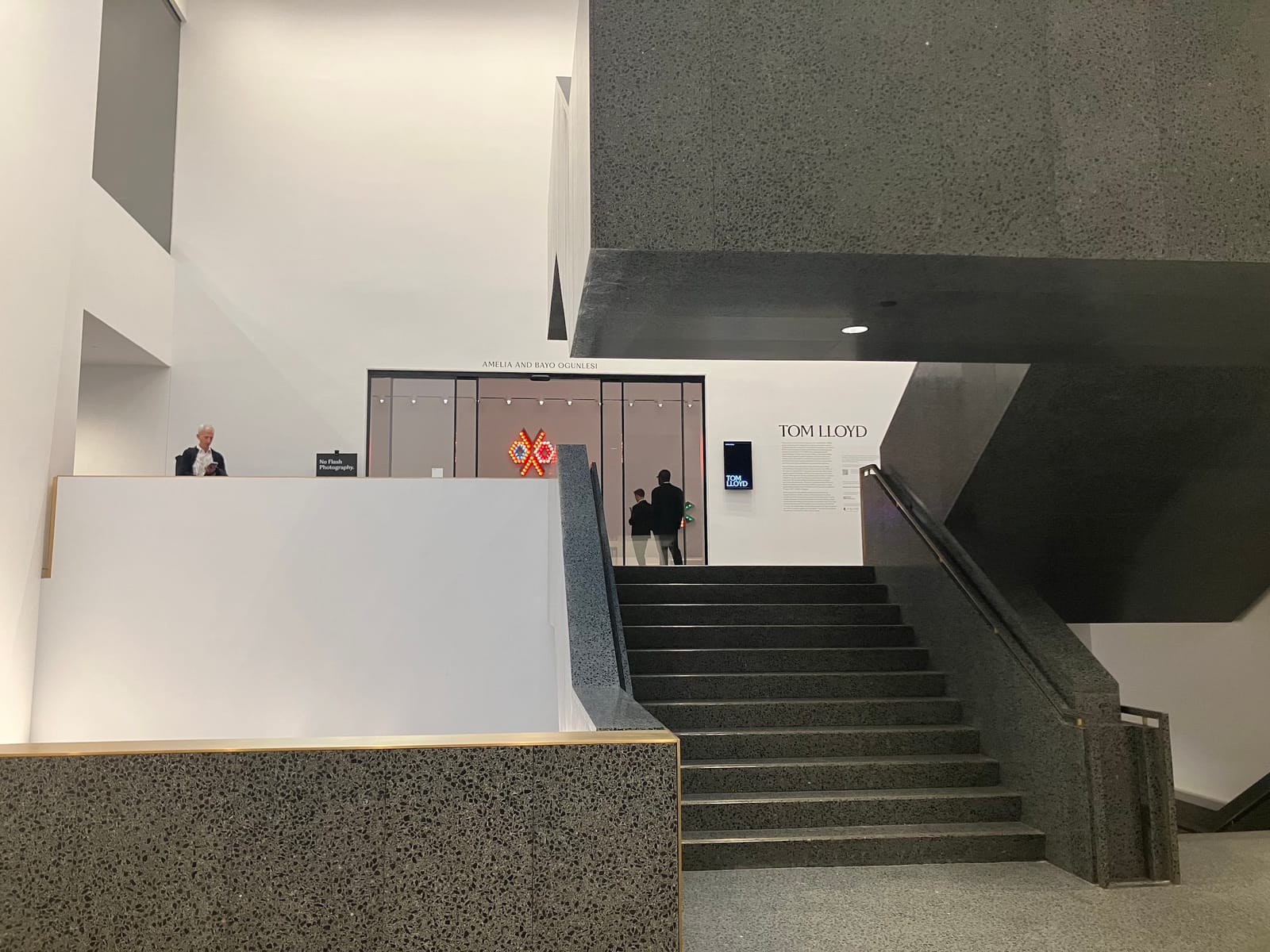
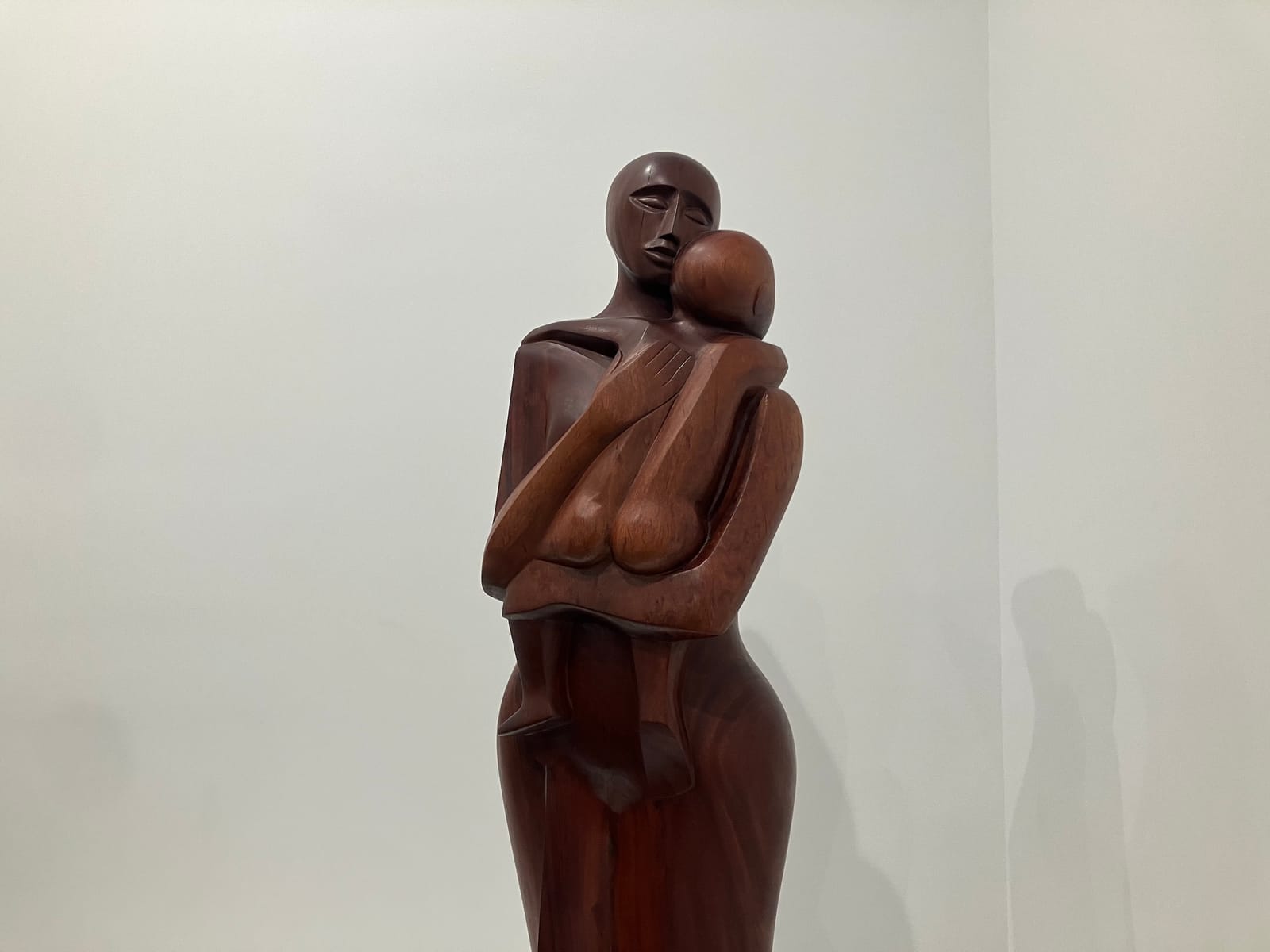

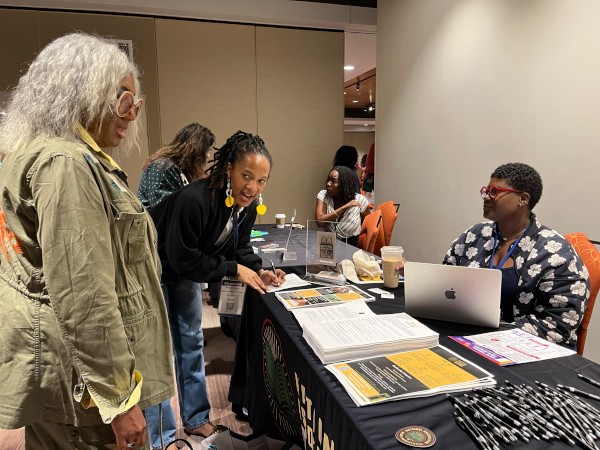


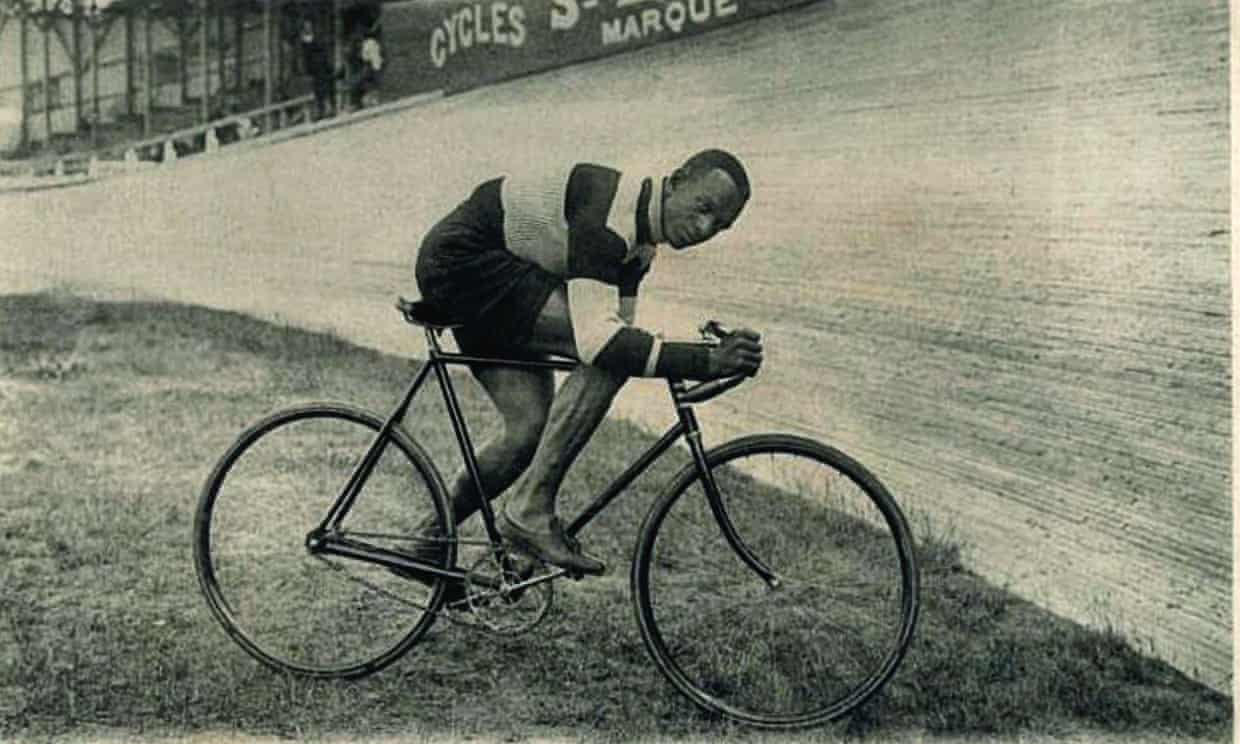

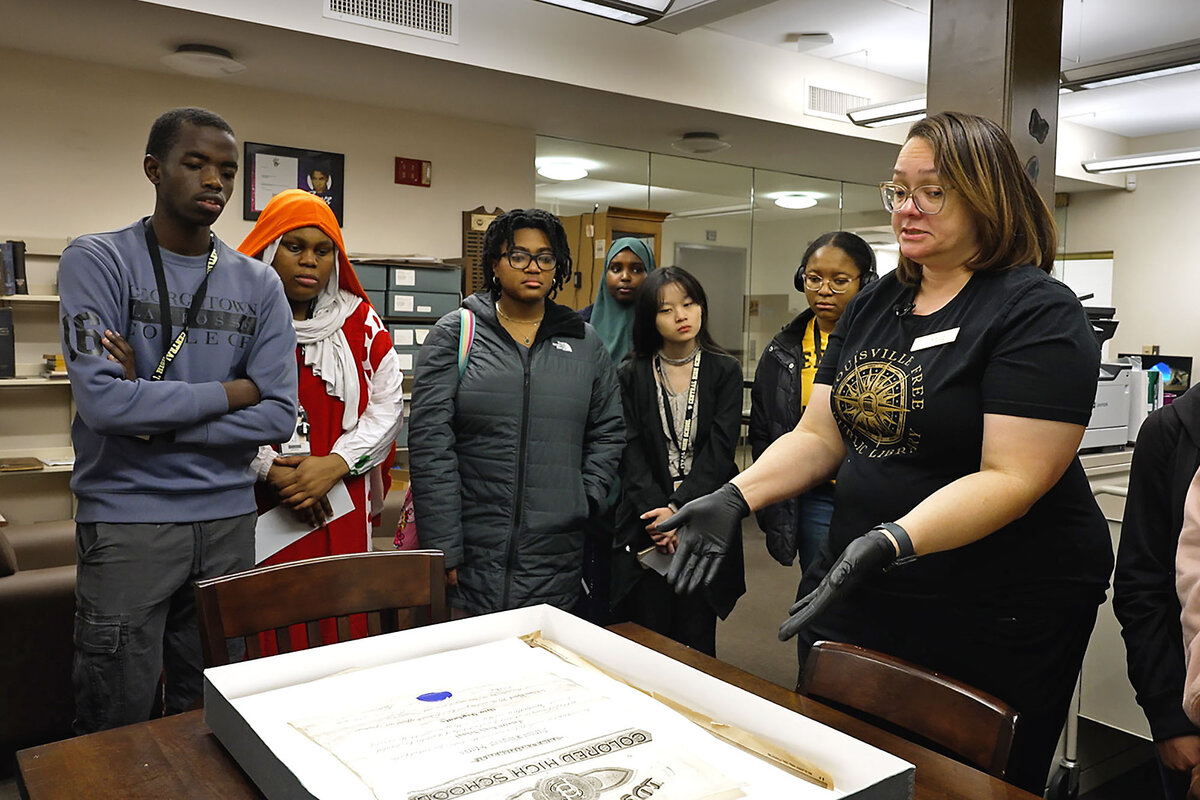
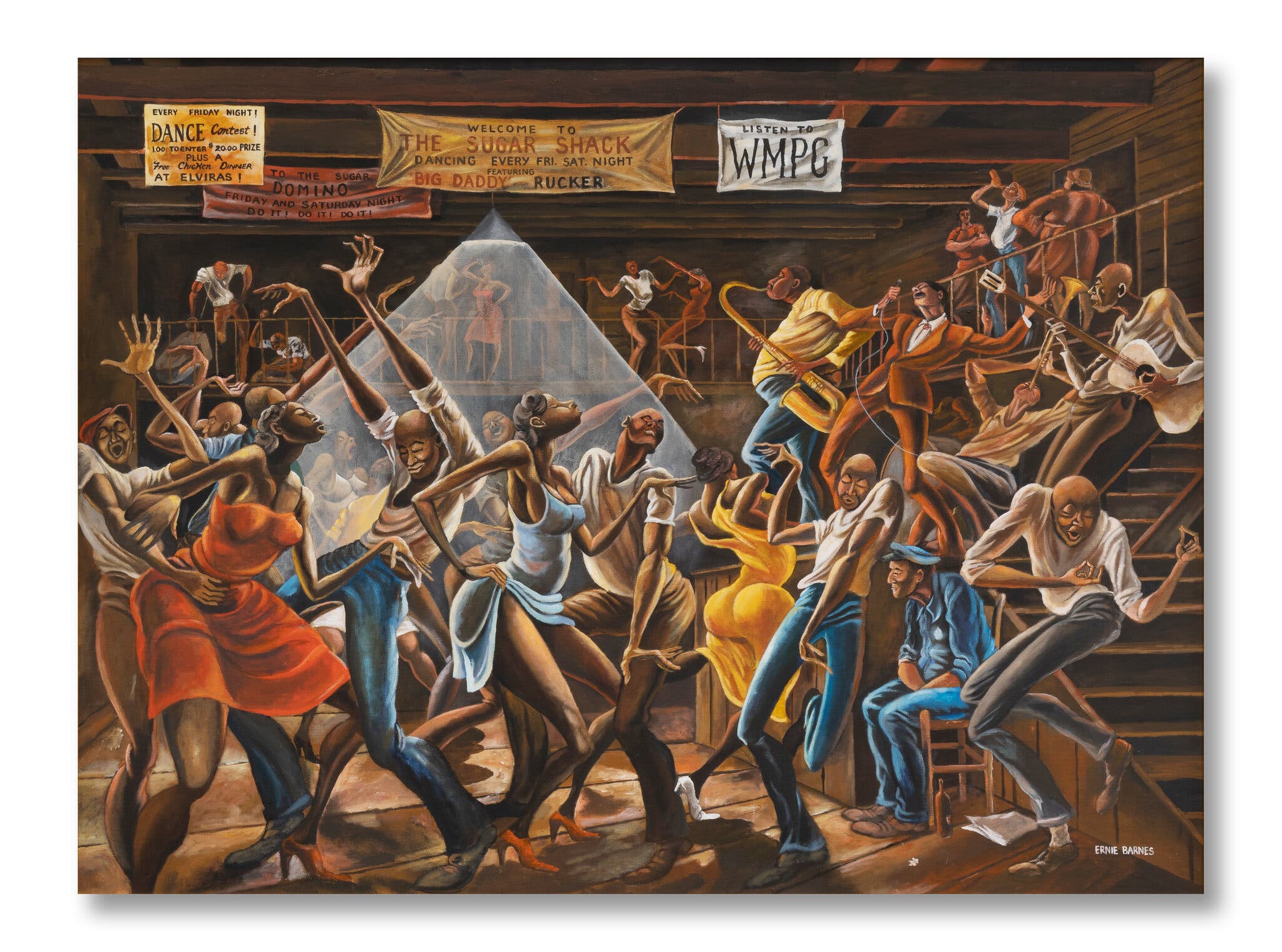
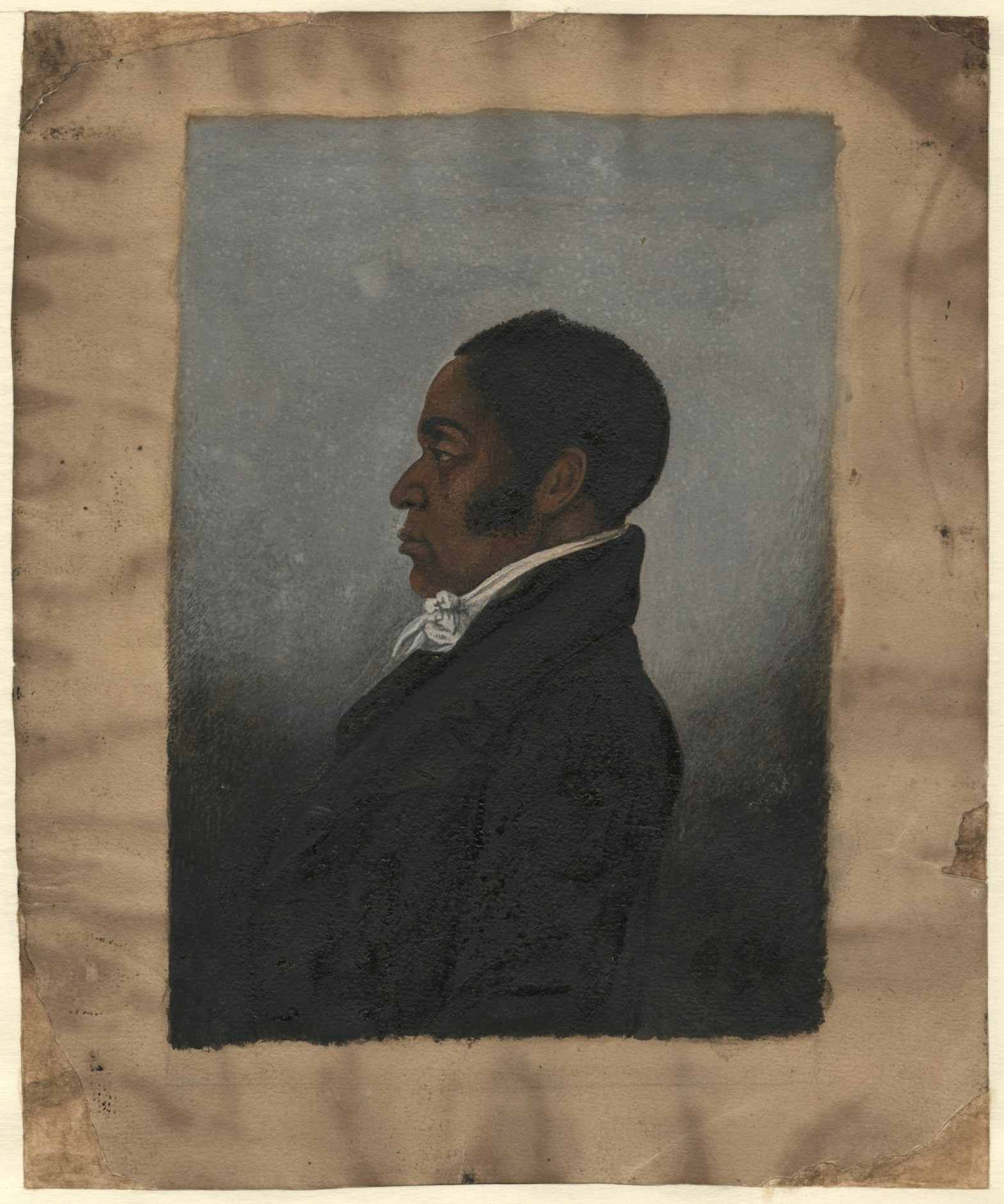
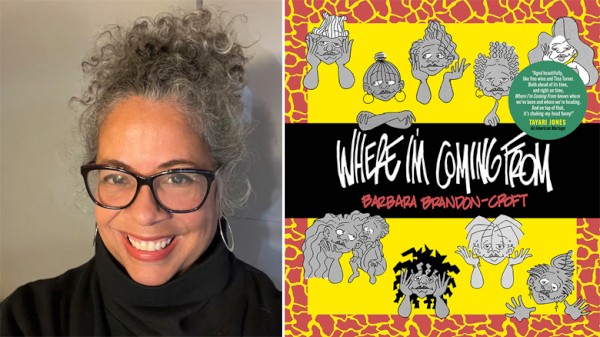

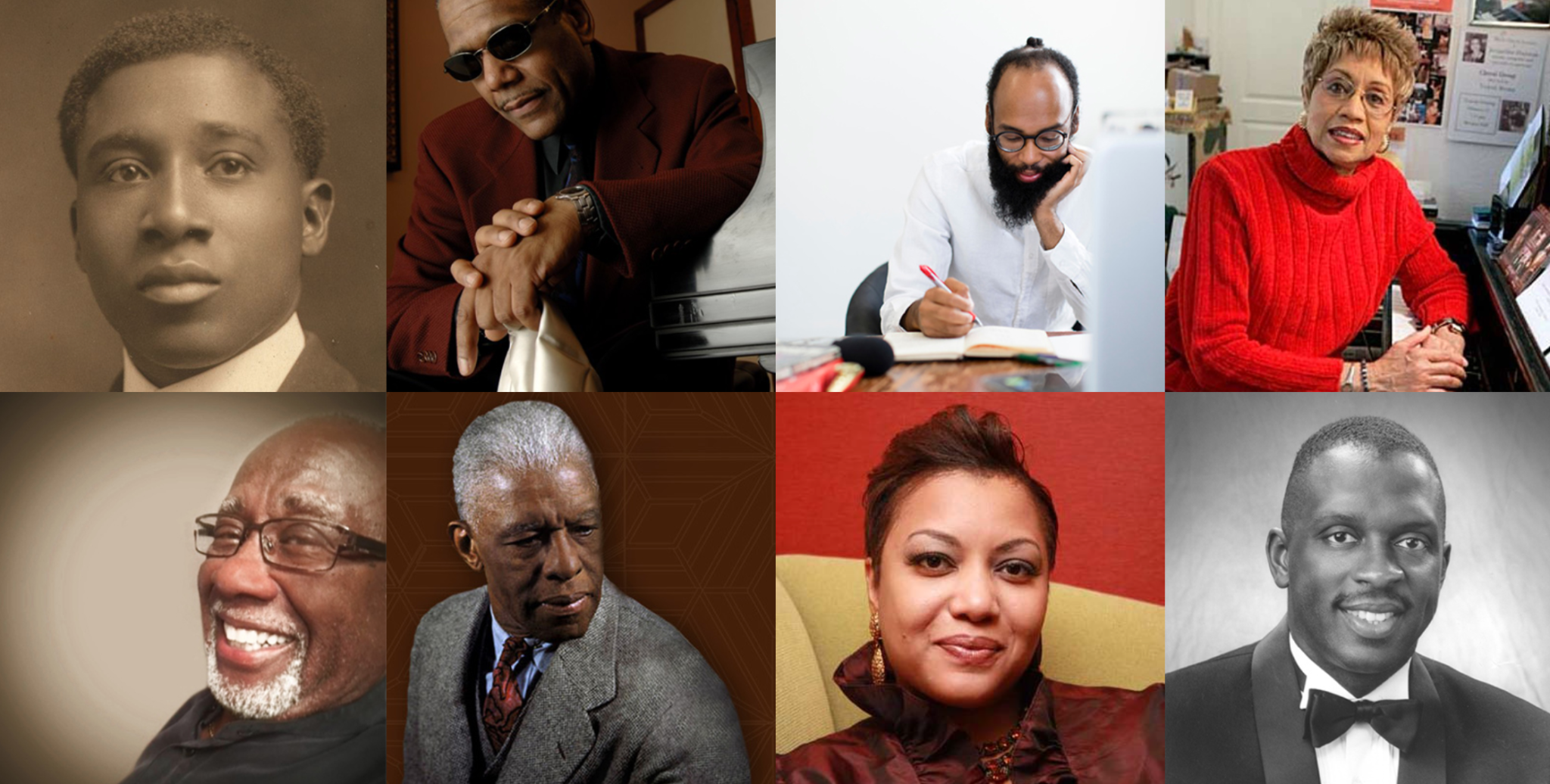

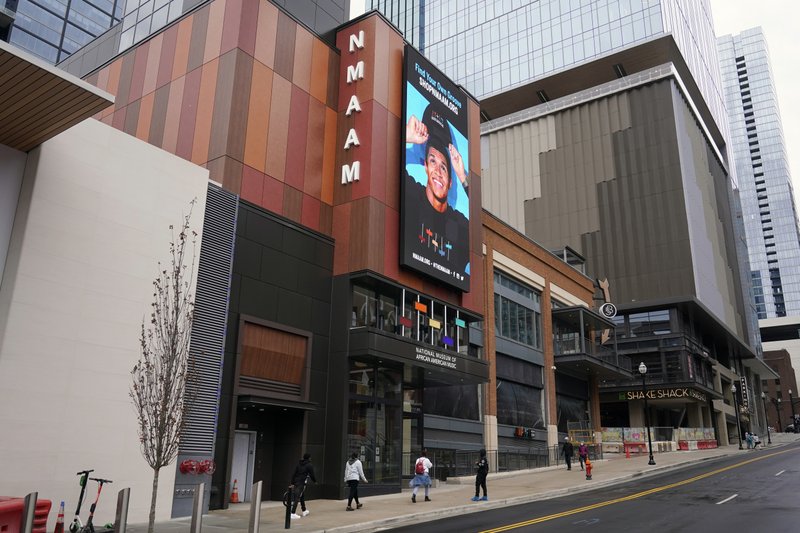

 Suzanne's Mom's Blog