Feeds:
Posts
Comments

Posts Tagged ‘agriculture’

Photo: Mark Stockwell/Boston Globe.
Mohammed Hannan of Hannan Healthy Foods farm in Lincoln, Massachusetts, holds garlic, one of many organic greens grown on his farm.

After the US takes a step forward, it always seems to take two steps back. In today’s story, We learn about federal funds that have been supporting sustainable agriculture. Until now.

Jocelyn Ruggiero reports for the Boston Globe, “It’s dreary, gray, and unseasonably chilly on the first day of Community Supported Agriculture pickups at the Hannan Healthy Foods farm. As CSA members trickle in to collect their bags of produce, they chat with Mohammed Hannan and passersby who’ve stopped to buy green garlic, beets, collards, and various herbs and greens at the farm stand. Hannan’s 11-year-old daughter, Afsheen, sits bundled up at the checkout table, reading a book alongside volunteer and longtime CSA member Tricia Moore. Aside from the weather, the scene looks similar to opening day last summer. But circumstances are vastly different from what they were 12 months ago.

“One person is notably absent. Hannan’s wife, Kaniz Fouzia, died of pancreatic cancer in March. And even as the family grieves, Hannan confronts the practical challenges of running the farm without his primary support.

“He also faces another crisis. Last year, as with every year since it launched, the farm’s biggest buyer was the New Entry Sustainable Farming Project’s Food Hub, which purchased $7,000 in produce, primarily funded by two federal grants: the Local Food Purchase Assistance and Local Food for Schools Cooperative Agreement programs.

“Since 2021, the Food Hub has bought more than $32,000 of produce from Hannan, supported by these food grants, both part of the 2021 American Rescue Plan. These initiatives enable local schools, food banks, and senior centers to purchase produce from the Hub and, by extension, local farmers and producers. They’ve brought close to $20 million to the Massachusetts economy. Both the LFPA and LFS were originally scheduled to run through December 2025, [but the federal] administration abruptly and prematurely terminated funding for both programs. …

“Established in 2005, the Food Hub aggregates and distributes vegetables grown by more than 35 beginning, immigrant, and refugee farmers in the Boston region. It is an initiative of the Friedman School of Nutrition Science and Policy at Tufts University, which was founded in 1998 to integrate recent immigrants and refugees with farming backgrounds into Massachusetts agriculture. …

“[The] sudden termination of multiple streams of support disrupted many long-planned efforts and, in some cases, left farmers holding the bill for purchases they had already made based on awards that were withdrawn.

“It’s no coincidence that Hannan is the steward of a successful farm. He’s always had close ties to agriculture. He grew up on his family’s organic farm in Bangladesh, which was both a source of food and income. Hannan went on to earn a master’s degree in wildlife biology, studying the country’s ecologically critical coastal areas. In 2014, he gave up an opportunity to accept a Duke fellowship when his wife received a US Diversity Visa; the family left Bangladesh to settle in Cambridge.

“He eked out a living at multiple minimum-wage jobs — Walgreens, Indian restaurants, and MIT facilities — before landing work in biotech, then as a lab manager at MIT. During the lean years, he yearned for the affordable organic food that was so accessible in Bangladesh. He wondered, ‘How can I change my situation? How can I grow food here?’ …

“Unsure about whether working a full-time job while running a farm would be feasible, Hannan spent the summer of 2017 volunteering mornings, nights, and weekends at White Rabbit Farm in Dracut. … He began the New Entry Sustainable Farming Project farmer training program that winter, leasing a small piece of land through New Entry and growing produce to feed his family. By 2019, he had launched his first 30-member CSA and was selling to the Food Hub. In 2020, he graduated and set his sights on a plot in Lincoln.

“The weeds were chest-high on the 2.5-acre barren plot, and there was no potable water for washing produce. … ‘I came up with a plan: I’ll grow veggies that do not need washing: bottle and bitter gourds, tomatoes, eggplants, peppers.’ As he expanded, Hannan connected with the Lincoln community through an online forum. There, he met Tom Flint, an 11th-generation Lincoln farmer. Flint introduced him to Lincoln Land Conservation Trust trustee Jim Henderson, who let Hannan use his backyard sink and cure garlic in his barn. These were the first of many new friends who welcomed him to Lincoln. …

“During COVID, unsolicited, strangers started contacting Hannan: ‘I had accountants, engineers, doctors. They were helping on the weekends. … We were laughing, harvesting … and eating from the farm. It was really good.’ Town residents later responded to his query on the town’s forum and helped Hannan build a deer fence when he couldn’t afford a contractor. His robust volunteer network has strengthened and extended beyond Lincoln, and today includes such groups as the Boston-based climate justice nonprofit Mothers Out Front. …

“[Today] Hannan’s MIT job subsidizes his farm, and his volunteer community provides supplemental support. However, for many other small farmers affected by funding cuts, the consequences will be existential. As Hannan puts it: ‘Small farmers like me … will definitely choose other options.’ ”

More at the Globe, here.

Read Full Post »

Photo: Riley Robinson/Staff.
Organic farmers Kayleigh Boyle and Doug Wolcik stand in a hoop house at Breadseed Farm in Craftsbury, Vermont.

‘I have long believed this is a bipartisan issue,’ says John Klar, a Vermont farmer who in 2022 ran for a Vermont state Senate seat as a Republican.

One reason I like the Christian Science Monitor is that it’s so good at searching out stories of divided Americans coming together. Today’s example features a diverse group of Vermont farmers promoting sustainable practices and eat-local values.

Stephanie Haines writes, “Kayleigh Boyle and Doug Wolcik knew all the reasons not to farm in Vermont: the short growing season, the hilly terrain, the dirt roads that make it hard to get products to market.

“Even the size of most farms here is a problem. For decades, farms across the United States have gotten larger as agricultural policies pushed growers to consolidate and scale up their operations. Vermont’s farms, however, have stayed relatively small. According to conventional wisdom, that means unprofitable.

“But small was what the couple wanted. Ms. Boyle is from Vermont, and while studying at Emerson College in Boston, she worked an office job connected to the local food movement. But she quickly realized she wanted to be outside with her hands in the earth.

“Mr. Wolcik graduated from the University of Massachusetts Amherst, where he studied sustainable agriculture and community food systems. He, too, realized he wanted a life close to the soil.

“They met while working at a nonprofit farm outside Boston and soon discovered they shared a dream about buying their own acreage to grow food and flowers. They weren’t interested in a massive operation. Instead, their vision included no-till growing methods, hand tools, and a desire to build a ‘human scale’ production system.

“They also wanted to make their living entirely from their farm – something increasingly difficult to do in New England. Over the past 60 years, the region has lost 80% of its farmland. …

“They spent years saving money and scouring Zillow listings and USDA soil surveys online. They eventually found a 16-acre property at the edge of Vermont’s rural Northeast Kingdom, complete with a house and a flat, 2-acre plot that got a lot of sun. In September 2020, they decided to take the plunge.

“And they’ve thrived. ‘We’ve just far exceeded any expectations that we set for ourselves,’ says Mr. Wolcik. ‘We’re selling everything we can. We can’t even grow enough. There’s such demand for it, from restaurants to retail to wholesale to markets,’ he says. ‘We can’t produce enough product fast enough.’

“Some of this is because of the couple themselves: Ms. Boyle’s sense of marketing, Mr. Wolcik’s attention to detail and innovation, and the experience and high standards they share as growers.

“But it is also because, when they bought these rare flat acres, they joined a community actively building a new storyline around farming, food, and resilience in New England.

“Here, in this part of little Vermont, statewide population 648,000, a coalition of farmers, nonprofits, and residents is eschewing mainstream beliefs about what makes agriculture successful and what it means to create a prosperous economy.

“Instead, they are building a system in which farmers are able to make a living and residents can eat healthy food grown nearby. They are intentionally moving away from a global supply chain vulnerable to market shocks – everything from pandemics to tariffs to natural disasters. …

“Across the country, communities on all sides of the political spectrum are reimagining the way Americans produce and value what they eat, tapping into a simmering belief that something is amiss with how detached, both economically and nutritionally, we have become from this fundamental human sector. …

“Subsistence farming gave way to commercial dairying and gardening for market. Refrigeration, and the resulting large-scale grocery stores, meant individuals didn’t need to spend their time growing food. Urbanization and competition from out-of-region farms followed.

“Still, what we think of as the modern food system is largely a phenomenon of recent decades. This includes a global supply chain, factory farming, and ultraprocessed foods, which now make up more than 50% of the calories in the American diet, according to the Johns Hopkins Bloomberg School of Public Health. What people tend to think of as the ‘local food movement’ is also relatively new. 

“[Although fascination] with locally grown organic foods became popularly associated with progressives – and was regularly criticized as elitist – there was also an emerging libertarian and conservative desire for a different, more localized sort of food system.

“ ‘I have long believed this is a bipartisan issue,’ says John Klar, a Vermont farmer who in 2022 ran for a Vermont state Senate seat as a Republican, a bid that fell short. ‘If there’s one thing that should bring Americans together, it is local, healthy food.’

“To him, the small farm is inherently conservative – a rejection of what he sees as dangerous globalism. It is a return to self-sufficiency, and far more environmentally and climate friendly, he says, than the traditionally liberal causes of electric vehicles and solar farms. …

“ ‘Both sides have been lulled by modernization of agriculture and the technological sirens,’ says Mr. Klar. ‘But both sides are coming back and coming together. These things don’t lend themselves to the red-blue dichotomy.’ ”

More at the Monitor, here. No paywall. Lots of cool pictures.

Read Full Post »

Photo: Jesse Casana.
Jonathan Alperstein, a researcher, excavates land on an unexpectedly large ancient agricultural site in Michigan.

The other day, my neighbor surprised me with a bunch of aerial photos of my New Shoreham place that were taken by her nephew’s drone. As drones are used more and more in warfare, I sure like thinking about the harmless and often useful things drones do.

In today’s example, a mystery revealed by drone led to a long-term collaboration between Menominee tribal members and non-Indigenous archaeologists in Michigan.

Nell Greenfieldboyce reports at National Public Radio (NPR), “Archeologists studying a forested area in northern Michigan say they’ve uncovered what is likely the largest intact remains of an ancient Native American agricultural site in the eastern half of the United States.

“The researchers used a drone equipped with a laser instrument to fly over more than 300 acres, taking advantage of a brief period of time after the winter snow had melted away but before the trees had put out their leaves.

“This allowed the drone to precisely map subtle features on the surface of the exposed ground, revealing parallel rows of earthen mounds. This is what’s left of raised gardening beds that were used to grow crops like corn, beans, and squash by the ancestors of the Menominee Indian Tribe of Wisconsin, in the centuries before European colonizers arrived.

“The mounds appeared to continue on beyond the surveyed area, the researchers say, showing agriculture at a surprisingly vast scale in a place that wasn’t a major population center.

” ‘We haven’t even been able to locate any significant settlement sites in this region. There’s a couple of tiny little villages,’ says Jesse Casana, a professor of anthropology at Dartmouth College and one of the authors of a new report in Science. ‘So it’s really shocking in this case to see this level of investment in an agricultural system that would require really enormous amounts of human labor to make happen.’

“It’s especially odd given the relatively poor growing conditions that far north, especially during a period of colder temperatures known as the Little Ice Age, as well as the presence of wild rice right nearby, says Madeleine McLeester, a Dartmouth anthropologist who led the research team. …

” ‘This astonishing paper shows how much we’ve underestimated the geographic range, productivity, and sustainability of intensive Indigenous agriculture across North America,’ says Gayle Fritz, an anthropologist with Washington University in St. Louis.

” ‘The study is outstanding in many ways, one being the long-term collaboration between Menominee tribal members and non-Indigenous archaeologists,’ she says — with the other being the combination of new technologies plus ‘old-fashioned, ground-based excavation and survey.’

“While some people may envision historical Native Americans as mostly hunter-gatherers or nomads, ‘that is very incorrect,’ says Casana. ‘By the time colonists arrived, what they were encountering were a lot of pretty sedentary communities all over North America who were practicing various forms of farming,’ he says. …

“The site mapped in this new study is part of Anaem Omot, which means the ‘Dog’s Belly’ in Menominee. It’s an area along the Menominee River on the border between Michigan and Wisconsin, and is of great cultural and historical significance to the Menominee tribe.

“The region contains burial mounds and dance rings. It’s also known to have agricultural ridges, ranging from 4 to 12 inches in height, because previous work back in the 1990’s had mapped some of them.

” ‘These features are really difficult to see on the ground, even when you’re walking around, and they’re difficult to map,’ says McLeester.

“That difficulty, plus concerns about proposed mining activities in the area, is why the research team — which included the tribe’s historic preservation director, David Grignon — wanted to see if new technology could reveal more acres covered with the earthen agricultural rows.

“McLeester says they thought they’d find some more rows, but also expected that others would have eroded away since the last mapping effort. …

“But the drone surveys revealed that the field system was ten times bigger than what had been previously seen. ‘Just the scale, I would say, was unexpected,’ she says. …

“Says Casana, ‘One of the interesting things about this study is that it kind of shows us a preserved window of what was probably a much more extensive agricultural landscape.’ …

Susan Kooiman of Southern Illinois University, an expert on the precontact Indigenous peoples of Eastern North America, says … ‘To find intact, ancient indigenous agricultural fields in any state, at any level, is very rare. …

” ‘The amount of work, and just how far these fields extend, is beyond anything that I think people suspected was going on this far north in eastern North America,’ she says. … ‘The question now is, what are they doing with all this stuff they were growing?’ “

More at NPR, here. (NPR is struggling since the massive federal cut. Help them out here if you can. No amount too small.)

Read Full Post »

Photo: Annick Sjobakken/New York Times.
Farmers are restoring the prairie with government help. The aim is to reduce nutrient runoff from cropland, and help birds and bees.

Sometimes we have to go back to the old ways to fix the mistakes of the new ways.

For example, our country’s beloved “bread basket” has used for generations agricultural techniques that have depleted the soil. Maybe we can learn something from the time of Little House on the Prairie.

Cara Buckley reports at the New York Times, “The little tracts of wilderness grow on Maple Edge Farm in southwest Iowa, where the Bakehouse family cultivates 700 acres of corn, soybeans and alfalfa. Set against uniform rows of cropland, the scraps of land look like tiny Edens, colorful and frowzy. Purple bergamot and yellow coneflowers sway alongside big bluestem and other grasses, alive with birdsong and bees.

“The Bakehouses planted the strips of wild land after floodwaters reduced many fields to moonscapes three years ago, prompting the family to embark on a once-unthinkable path.

“They took nearly 11 acres of their fields out of crop production, fragments of farmland that ran alongside fields and in gullies. Instead of crops, they sowed native flowering plants and grasses, all species that once filled the prairie.

“The restored swaths of land are called prairie strips, and they are part of a growing movement to reduce the environmental harms of farming and help draw down greenhouse gas emissions, while giving fauna a much-needed boost and helping to restore the land.

“As the little wildernesses grew, more and more meadowlarks, dickcissels, pheasants and quail showed up, along with beneficial insects. Underground, root networks formed to quietly perform heroic feats, filtering dangerous nutrient runoff from crops, keeping soil in place and bringing new health to the land.

“ ‘We’re thinking about our farm as a small piece of the overall good puzzle,’ said Jon Bakehouse, on a visit to the family’s fields one sunny morning earlier this summer. ‘On a larger scale, we’re all in this together.’

“The fertile soils of America’s vast prairies made the heartland ideal for growing crops. But today in Iowa, less than 0.1 percent of original prairie remains, scattered in fragments around the state.

“Prairie strips are helping to reverse that loss, and are being adopted at an increasing clip. Researchers counted 586 acres of prairie strips on farmland across seven states in 2019. As of last year, they had spread to 14 states, filling 22,972 acres.

“While the acreage accounts for a tiny fraction of the Midwest’s farm fields — Iowa alone has roughly 30 million acres of cropland — researchers said the strips had disproportionately positive impacts.

“ ‘There are a whole suite of dramatic environmental benefits that come with this small intervention,’ said Lisa Schulte Moore, a professor of natural resource ecology and management at Iowa State University, and a founder of its prairie strips project. ‘If you put a bit of prairie back, it makes a big difference.’

“To  be classified as a prairie strip, restored land must adjoin active cropland, reach a width of at least 30 feet and be sown with dozens of native plant species.

“Researchers at Iowa State found that when prairie strips were planted in and around soy and corn fields, they acted as both ‘speed bumps and diapers,’ Professor Schulte Moore said.

“Soil erosion and surface runoff plummeted, as the prairie plants held soil in place and transpired water. Levels of nitrogen and phosphorus carried in surface runoff from adjacent cropland decreased by as much as 70 percent, absorbed instead by the prairie strips, resulting in less water contamination. The prairie strips created better conditions for helpful bacteria, resulting in dramatically lower levels of nitrous oxide, a powerful greenhouse gas generated by chemical fertilizer, compared to cropland without prairie strips. The strips also drew twice as many native grassland birds and three times as many beneficial insects, compared to fields that had not been rewilded.

“While the research did not show that prairie strips affected yields in adjacent cropland, tests found that the strips boosted the health and fertility of the soil where they were sown. …

“Iowa has the most industrialized livestock farms in the country, and tens of millions of pounds of untreated manure that they produce end up fertilizing crops, along with synthetic fertilizer made from fossil fuels. The nitrogen-heavy runoff from agricultural fields threatens drinking water, and is a leading cause of an oxygen-starved dead zone in the Gulf of Mexico that kills marine plant and animal life.

“In 2007, Professor Schulte Moore was part of a team at Iowa State University that began researching the ways in which restoring parts of the prairie could enrich soil, help insects and wildlife, and stanch emissions and fertilizer runoff. They went on to plant prairie strips on commercial farms and at some of the university’s test sites, and found that benefits were consistently achieved when 10 percent of a farm’s cropland is converted into prairie strips, with lower amounts still providing some boons.

“The findings might have sat on a shelf, Professor Schulte Moore said, were it not for her department chair, who rewrote the professor’s job description so she could promote the idea to farmers.

“In late 2018, the prairie strips initiative got perhaps its biggest boost when it was included in the federal Conservation Reserve Program. That meant that farmland owners who converted some of their acreage to prairie strips could collect money from the federal government. According to the Agriculture Department, the average payout for prairie strips is $209 per acre each year.

“ ‘That was monumental,’ Professor Schulte Moore said. ‘It helped align hearts, heads and pocketbooks.’ ” More at the Times, here.

Read Full Post »

Photo: Whitney Eulich.
Fernando Matus Hernández ties a small bucket filled with heirloom corn kernels around his waist before planting them on his family’s farm in Oaxaca, Mexico.
Small farms like his are an endangered species.

Agricultural capitalism is making it hard for small farms to survive, but so are some environmental regulations, normally a public good. How can we protect both the environment and the small farms that feed us?

At the Christian Science Monitor, Erika Page, Whitney Eulich, and Srishti Jaswal have an in-depth report on the challenges facing farmers today.

“Julie De Smedt tries not to picture her future too often. When she does, she has trouble imagining herself anywhere but here, planted on this stretch of fertile land that runs from her childhood home to the River Scheldt.

“Her family’s cattle ranch is the last farm left on this sleepy Belgian country road. If she were a statistic, she would have left for the city. But at 21 years old, she’s made up her mind.

“ ‘I want to take over the farm,’ says Ms. De Smedt, who lives doors down from her grandparents and cousins on both sides. ‘I don’t want to be anywhere else.’

“But she knows how unlikely her dream is. Sometime soon, all her family farm’s land will be converted into a nature reserve. The European Union is pushing to restore ecosystems in the face of widespread environmental degradation, which contributes to climate change, so the state has expropriated their land.

“The family is not against green policies. ‘There has to be nature, and there have to be people who defend nature,’ says Wendy Vasseur, Ms. De Smedt’s mother, looking through the back door of a cow barn at the line of trees that marks the boundary of the future reserve. But nobody seems to care what will become of their family and the life they have built on this land, they say. …

“Small-farm owners around the globe, in fact, are feeling that same sense of helplessness. From Germany and Spain to India and Canada, farmers are rising up to protest not only burdensome new environmental regulations but also the impact of corporate mega-farms and cheap food imports, which have caused their costs to rise and their profits to fall dramatically. So, many around the world have driven their tractors into capital cities, sometimes spraying manure on city streets and sidewalks. They’ve blocked major freeways, set fires in urban metro stations, and demanded changes to policies that, to them, feel like death sentences. 

“ ‘What they want is a decent living,’ says Morgan Ody, general coordinator of La Via Campesina, an international small-farmers organization. ‘What they want is respect for their work.’

It would be a mistake, she says, to see the latest wave of protests as simply right-wing backlash against the green agenda.

“True, some farmers oppose green policies on political grounds, but many support them. As rural areas lose population, farmers on every continent say they are being sacrificed to meet the demands of a society that no longer values the people who feed it. …

“A cow and a pig were all Ms. De Smedt’s grandfather needed to open this farm in the 1950s. As agriculture intensified and industrialized, the farm, too, grew. Today, the wooden barns the family built itself hold 250 cattle, whose meat is sold mainly to French grocery chain Carrefour. 

“They fatten their cows on corn and beets they grow on the land destined for the nature reserve. And they will continue for as long as they can, Ms. Vasseur says. But it is a perpetual battle to keep the farm going, and Ms. Vasseur has to work a full-time job at a nearby factory to make ends meet.

“The price they can charge for their beef has not kept up with the rising costs of inputs such as fertilizer and pesticides needed to keep poisonous weeds at bay. Now, the family business has to deal with rules governing crop rotation and fallow land. …

“Their story has repeated itself around the world for decades, says Timothy Wise, a researcher and senior adviser at the Institute for Agriculture and Trade Policy, an international nonprofit that promotes sustainable food production. ‘Bigger farms get bigger, and smaller farms disappear. Rural communities just get hollowed out.’ 

“Between 2005 and 2020, the EU lost nearly 40% of its farms and over 5 million farmers, most of them smallholders. At the same time, the amount of land being farmed has stayed the same. …

“That isn’t how Lieven Nachtergale wants things to end. As coordinator of the Sigma Plan, the project responsible for Belgium’s new nature reserve, Mr. Nachtergale does not enjoy removing farmers from their land. He does, however, think it’s necessary: Natural habitats in the densely populated region of Flanders have been badly degraded, and floods pose a growing risk. In such cases, the needs of the land, if not the planet, must take precedence.

“But the real problem he sees is a model of intensified agriculture that has become so disconnected from the natural world. Fields treated with herbicides, pesticides, and heavy doses of fertilizer leave native species next to no room to thrive, he says. 

“The EU’s Nature Restoration Law requires countries to restore 30% of their natural ecosystems by 2030 and 90% by 2050. Mr. Nachtergale’s team is helping Flanders establish 36,000 hectares (almost 90,000 acres) of nature reserve, the equivalent of 5% of the land area being farmed.

“Over the years, he has grown increasingly interested in figuring out how nature and agriculture might better work together. He is working on a pilot project that would give farmers who want to produce in a ‘nature-inclusive’ way 2 hectares of land (5 acres) for every hectare of their own that they contribute. The goal is to restore ecosystems while keeping family farmers on the land. 

“ ‘We will need farmers in the future to do this kind of management,’ he says. But he recognizes the challenge of competing with bigger industrialized farms. ‘If we want to change the system and give the farmers a better future, I think we should pay more for what they are producing.’ “

More from farmers around the world at the Monitor, here. No paywall. Subscriptions welcome.

Read Full Post »

Photo: Suzanne and John’s Mom.
Cattle at Codman Farms, Lincoln, Mass. “Cows are often described as climate change criminals,” says Grist, “because of how much planet-warming methane they burp.” But, Grist adds, raising ruminants can also lead to deforestation, making alternatives to meat doubly important.

The other day at dinner, my husband regaled Sally and me with the latest on Europe’s use of mealworms as alternative proteins. The idea of eating mealworms — straight, no chaser — was not appealing to me even though I know they often sneak into the packaged nut and grain products we buy at the store. Which is why I freeze those products for 24 hours. I suppose I eat frozen mealworms that way, but it’s inevitable.

Grist magazine reported recently on the damage that livestock agribusinesses do to the planet when they cut down trees to graze more animals.

Max Graham says, “To feed the world’s growing appetite for meat, corporations and ranchers are chopping down more forests and trampling more carbon-sequestering grasslands to make room for pastures and fields of hay. … The greenhouse gases unleashed by this deforestation and land degradation mean food systems account for one-third of the world’s human-generated climate pollution.”

At Nature magazine I learned that alternative proteins are gaining traction in France, of all unlikely places. The focus is not on eating insects straight.

Rachael Pells writes at Nature about “the world’s largest vertical insect farm — home to at least 3 trillion mealworm beetles (Tenebrio molitor). The company’s chief executive and co-founder, Antoine Hubert, says that the beetles have a good life, as far as being an insect goes. Each of their stacked plastic trays is kept at an optimal 60% humidity and a balmy 25–27 °C. Nutrition, growth and moisture levels are all recorded for analysis, and human visitors are allowed to inspect the trays only from a distance — to prevent contamination of this prized ecosystem.

“The beetles are raised in this way from larvae to adult, at which point they meet a quick death in steam before being harvested into oil, protein and fertilizer.

“Insects have come under the spotlight over the past few years, as scientists seek alternative sources of protein to feed the rapidly expanding global population. A direct nutritional comparison shows that edible insect species have greater protein potential than do conventional meat products — 100 grams of mealworm larvae produces 25 g of protein, whereas 100 g of beef contains 20 g of protein. Insects also have a high food-conversion ratio when compared with livestock.

“To produce the same amount of protein, for example, crickets require around six times less feed than do cattle, four times less than sheep, and half that of pigs and chickens. But various attempts by companies to market insects as a mainstream food source in Europe and North America have fallen flat and largely been dismissed as a fad. And some researchers have concerns about the effects on the environment, ranging from whether escaped insects might disrupt local ecosystems to the impact of insect ‘factories.’ So why farm insects at all?

” ‘The world is facing a huge food sustainability crisis,’ explains Huber, an environmental engineer. ‘Insect protein is one very realistic and obvious solution to mitigating some of those challenges,’ he says.

“With the global population expected to reach almost 10 billion by 2050, United Nations forecasters have warned that food production will also need to increase by as much as 70%.

“However, because mealworm burgers are, at the moment, unlikely to sell out in your local supermarket, Ÿnsect grows insects for animal feed. This is given to fish, pigs and poultry, taking the pressure off conventional agricultural land use.

“The use of vertical farming has grown rapidly over the past few years, spurred on, in part, by advances in LED lighting, the cost of which fell by 94% between 2008 and 2015. Several start-ups (including Infarm in Berlin and Aerofarms in Newark, New Jersey) use the system to produce vegetables such as lettuce for human consumption. And the global market of the vertical-farming industry is expected to grow from US$3.7 billion in 2021 to $10.5 billion in 2026.

“Meanwhile, sales of plant-based alternatives to meat that are designed to reduce the demand for cattle farming — an industry responsible for 65% of all livestock emissions — seem to be stalling. When meat-substitute company Beyond Meat in El Segundo, California, went public on the stock market in 2019, its share price rose by 163%. But after the initial excitement, sales slowed, and they have remained about the same since 2020.”

As with most innovations, there are caveats. Get the details at Nature, here. And for a report on livestock and deforestation, check out Grist, here. No paywalls for either one.

Read Full Post »

Photo: Crops for the Future via Wikimedia.
Cañihua, a native grain of the Andes of southern Peru and Bolivia, is supremely adapted to high altitudes, according to Crops for the Future.

We have yet to figure out how to feed the whole planet, but here and there, investigators are finding that little known sources of nutrition used by small populations may offer hope in a warming climate.

Tibisay Zea has an example at the Public Radio International (PRI) program The World.

“Trigidia Jiménez was born in an Indigenous village in the Andean mountains of Bolivia at 14,000 feet above sea level. She grew up in a family of farmers, and she loved working the land. 

“But like many others in her town, she moved to the Bolivian capital in search of new opportunities and eventually became an agricultural engineer. She worked and got married, but after 15 years of being in the city, she realized she wanted to return to the mountains. 

“ ‘I needed to be in touch with the sun, fresh air and work our land,’ Jiménez told The World over Zoom. 

“Back in the Andes, she started thinking about an ancestral green that was almost extinct — cañahua. It’s similar to the quinoa plant and virtually unknown outside of Bolivia and Peru. 

“ ‘That’s what our ancestors used to eat every day. A cup of cañahua for breakfast,’ Jiménez said. ‘We make it like oatmeal.’

“Cañahua is ‘nutritious, high in protein, amino acids and iron.’ It has also proven to be very adaptable to climate change, according to Jiménez. …

“Jiménez started small, with about an acre of land, producing enough grain for just one family. Two decades later, cañahua is being produced on approximately 5,000 acres. 

“Bolivia’s government offers subsidies to low-income families to buy cañahua, and that’s helped build the market. …

“ ‘We realized that we’ve been reliant on too few food crops,’ Jeff Maughan, a professor of molecular genetics at Brigham Young University in Utah, told The World. …

“Twenty years ago, Maughan and other researchers at BYU got interested in quinoa as a higher protein crop for subsistence farmers in the Andean region. Today, quinoa is everywhere — from your favorite supermarket to fancy restaurants. Maughan and his team have successfully introduced the South American grain in Morocco, Rwanda and Saudi Arabia. …

“Trigidia Jiménez earned international recognition for helping to revive cañahua cultivation. ‘Cañahua made me a stronger woman,’ she said. ‘Powerful and happy.’

“It’s also helped sustain the local communities where it’s produced. Jiménez is now looking at ways to expand her business and export the ancient grain to the United States.” More at PRI, here.

Now, you may have heard as I did that the newfound popularity of quinoa has made it to expensive for the Peruvians it came from to afford it. I did an online search to see what I could find.

According to a study described at National Public Radio, poor Peruvians have actually benefitted from the demand for quinoa, especially farmers who grow it. The real concern is that “export demand has focused on very few of the 3,000 or so different varieties of quinoa, prompting farmers to abandon many of those varieties.

” ‘Those varieties, created by Andean farmers, are the future of quinoa, to adapt to things like climate change,’ says Stefano Padulosi, a [Bioversity International] specialist in underused crops. … He would like to see some sort of global mechanism to reward Andean farmers for their role in creating and maintaining quinoa diversity.’ ” More here.

That insight may be something for promoters of cañahua to think about, too.

Read Full Post »

Photo: Plantible Foods.
Duckweed to feed the world.

I admit I have not yet found a plant-based hamburger or vegan chicken that I really like, but since inventors keep working on better-tasting meat substitutes, I have hope. Today’s story is about a company investing in new protein sources — for example, duckweed.

Michael J. Coren is Climate Advice Columnist at the Washington Post.

He writes, “I came to this aquatic farm an hour outside of San Diego because I wanted to see what could be the future of humanity’s protein supply. At the moment, it looks more like a meth lab out of the drama Breaking Bad, jokes Tony Martens Fekini, the chief executive of Plantible Foods.

“Decrepit recreational vehicles squat on the property. In one corner, people tend to vials, grow lights and centrifuges in a trailer lab. More than a dozen big ponds filled with duckweed, a tiny green plant, bask in the Southern California sunshine.

“But the only thing cooking here is protein.

“Within each tiny floating aquatic plant is a molecule colloquially called rubisco. Without it, most life on Earth would cease to exist.

“Plants use rubisco protein — technically known as Ribulose-1,5-bisphosphate carboxylase/oxygenase — as the catalyst for photosynthesis, combining CO2 from the air with the building blocks for sugars and carbohydrates composing the base of our food chain.

“Rubisco is arguably the most abundant protein on the planet. Every green leaf has it. But this tireless molecule is locked inside plants’ cells, spoiling almost as soon as it comes into contact with the outside world. At the moment, eating salads is the only way to consume much of it.

“But Plantible’s farm may change that. If it succeeds, duckweed may become humanity’s first new major crop in more than a century. …

“Rubisco doesn’t just provide the protein we crave. It’s one of the world’s most versatile proteins, shape-shifting into forms resembling egg whites, meat, milk, gluten or even steak — all extracted from leaves. …

“The world grows more than enough food to feed everyone on Earth. Much of it goes to livestock. About half of the corn and soybeans grown in the United States are fed to cows, pigs and chickens to support meat-rich diets.

“This is not changing anytime soon. Even as protein alternatives proliferate, global meat consumption reached a record high in 2021, roughly doubling since 1990. The typical American consumed about 260 pounds of meat and 670 pounds of dairy last year, according to government statistics.

“Advising people to eat less of it isn’t likely to do much. In country after country, as incomes rise, meat consumption follows virtually in lockstep.

“That comes at a steep cost to ecosystems and the climate. Meat, at least how most of it is raised today, is the driver behind 57 percent of all food production emissions. …

“The challenge, then, is not to persuade people to eat more vegetables. It’s how to make plant proteins taste better than their animal counterparts.

“For a moment, it seemed like ‘alternative meat’ might succeed. Highfliers like Impossible Foods and Beyond Meat, after seeing sales soar in 2020, have faltered. Retail sales of alt-meat dropped more than 10 percent in 2022 amid health questions and high prices. Plant-based milk, while stealing market share from traditional dairy, still accounts for just 9 percent of the volume sold in the United States. …

“Plant proteins aren’t a perfect substitute. They can impart grainy textures, ‘vegetal’ off-flavors or fall short of the savory appeal of eggs, dairy and meat.

“So food producers are searching for the holy grail of plant proteins, one that combines the best of plant and animal proteins: affordable, abundant and easy to grow, with the physical properties that make a hamburger or milkshake so alluring. Rubisco might just be it. …

“Rubisco’s composition is a nearly ‘ideal’ protein for humans, according to the U.N. Food and Agriculture Organization, boasting an amino acids profile rivaling egg whites or casein in milk. Unlike the most common plant protein in soy, wheat and peas, it offers a non-allergenic, easily digestible and complete set of all nine essential amino acids our body can’t produce on its own.

“In contrast to alt-meats, rubisco is a versatile shape-shifter on the human palate. … As a binder in plant-based meats, it retains the delicious bite of a juicy burger. In a fluffy omelet or whipped meringue, it replicates the function of eggs. …

“The problem, however, has been getting it out of the leaf. As soon as a leaf is cut, its compounds bind to rubisco, rendering it unusable as a food ingredient. At the industrial scale, harvesting rubisco has proved to be a formidable challenge.

“ ‘You just have to process the plant material reasonably quickly so you don’t end up with a brown sludge,’ says [Grant Pearce, a protein chemistry researcher at the University of Canterbury in New Zealand]. Sugar beet leaves, cauliflower, kale, broccoli stems, radishes and even invasive plant species have all been harvested as protein sources. None proved economical. And some are skeptical it will ever be. …

“Duckweed, or lemna, doesn’t get much respect in most of the world. While eaten in parts of Southeast Asia, the pond vegetation is regarded as a nuisance elsewhere. That reputation belies the plant’s remarkable biology.

“The family’s 35 or so species thrive on nearly every continent, surviving at near-freezing temperatures in water conditions lethal to many others. As the world’s smallest known flowering plant, it consists of a single floating leaf, an oval not much larger than the tip of a pen. Its delicate roots dangle millimeters below the surface. In ideal conditions, it grows at a ferocious rate, doubling in mass every two or three days.

More at the Post, here.

Read Full Post »

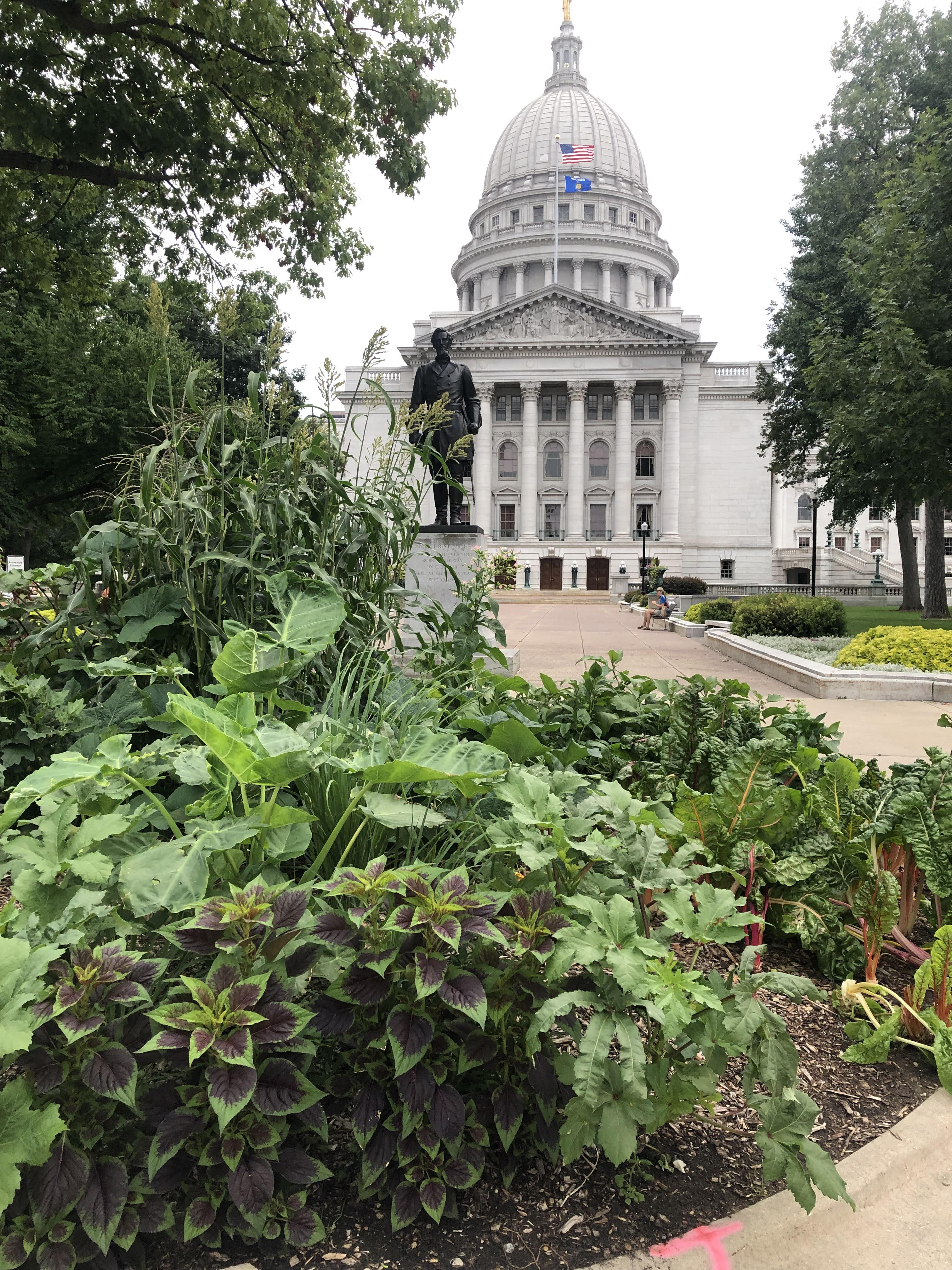
If you’re landscaping the capital in an agricultural state, focus on veggies.

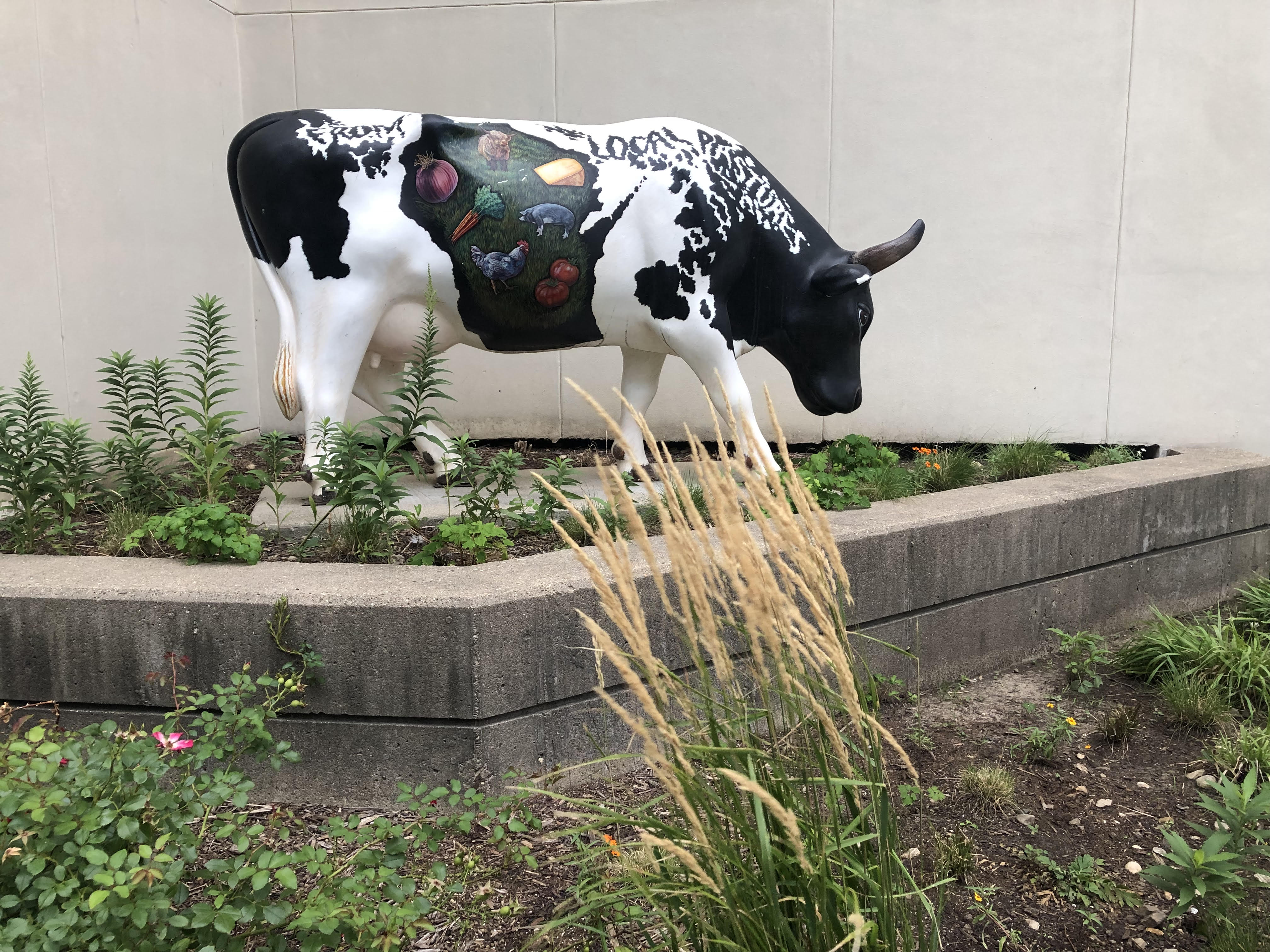
First of all, I need to apologize to blogger Rebecca for not telling her I was in town. I didn’t tell anybody. My family kept scheduling impromptu activities around my nephew’s wedding. I’ll just say I thought Madison was a delightful city and share some memories.

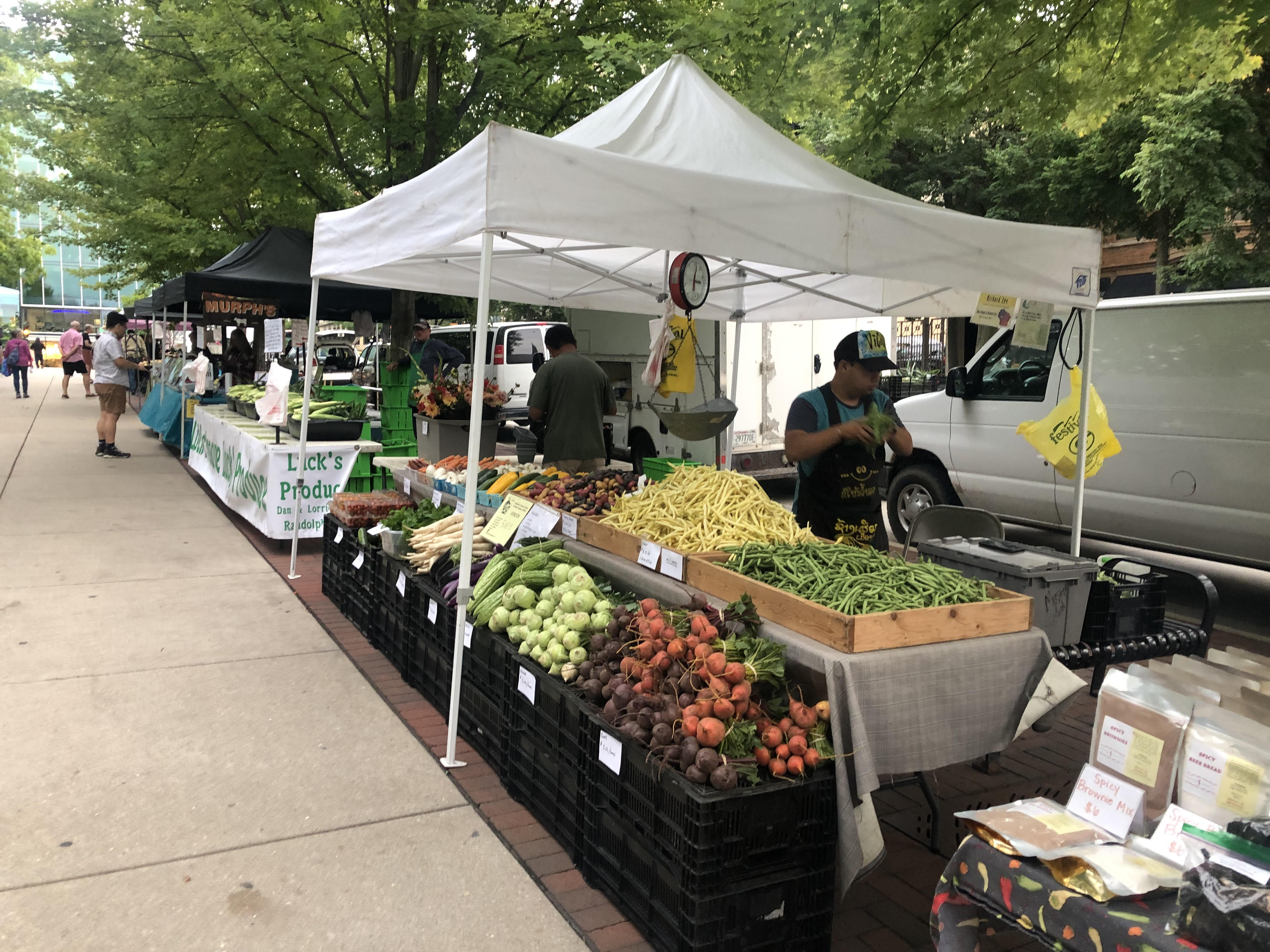
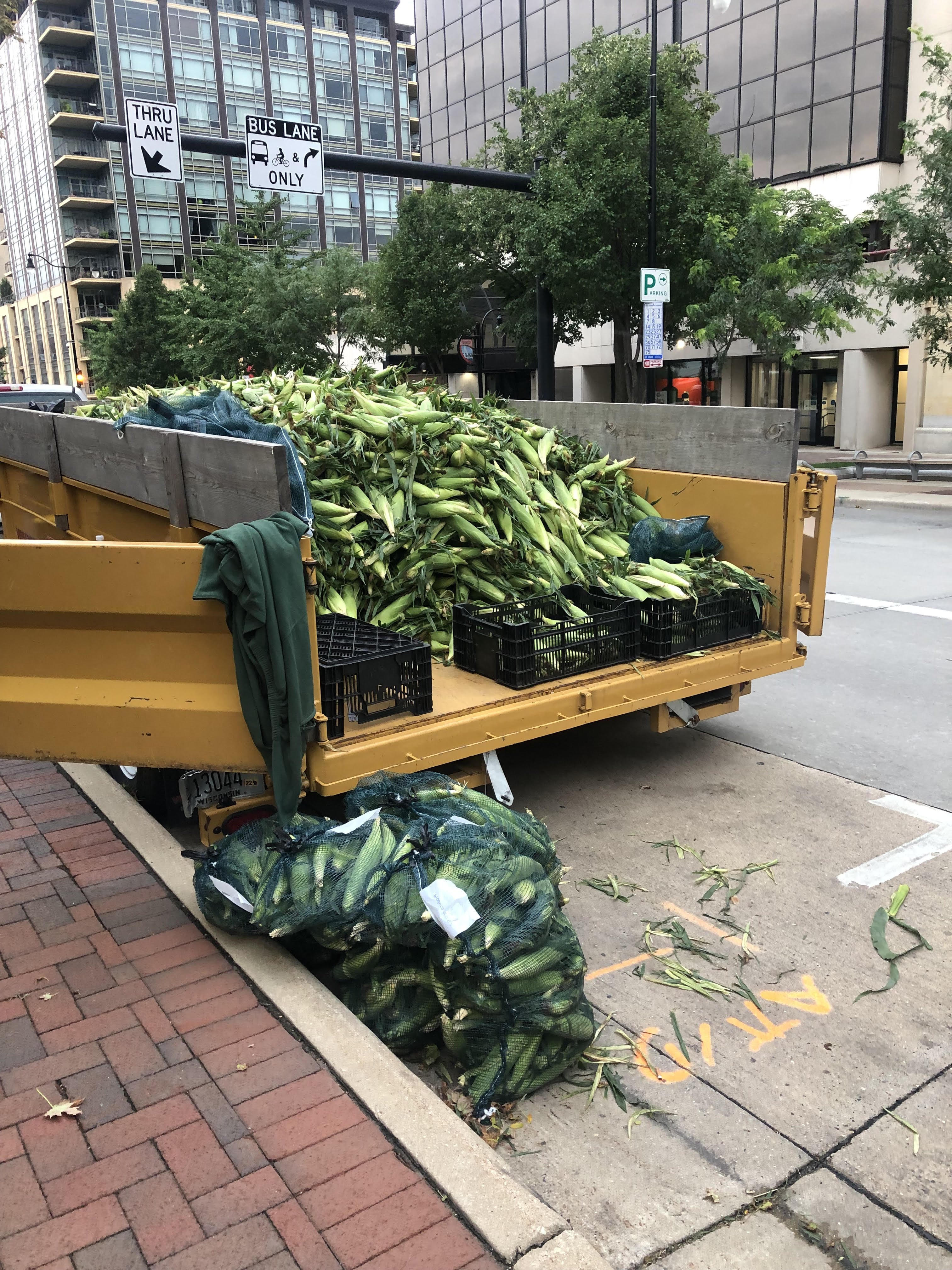
The Sunday farmers market at the capital was amazing. I walked the circuit twice.

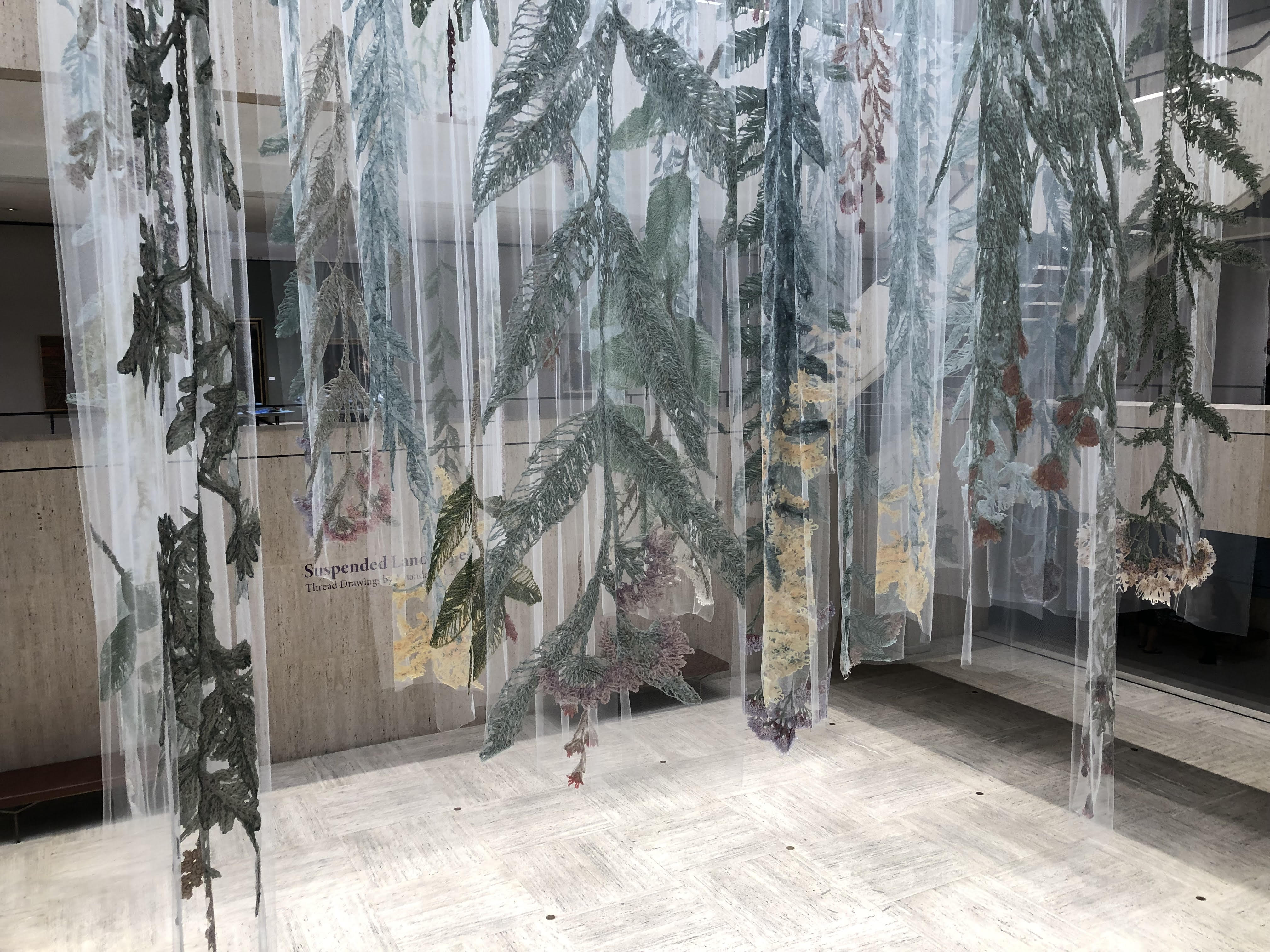
The university’s “dementia-friendly” Chazen Museum was also pretty amazing. I am sharing “L’Amante,” by Beth Cavener, “Typewriter Eraser,” by Claes Oldenburg, “Thread Landscapes,” by Amanda McCavour, and “Are a Hundred Playing You? Or Only One?” by Xiang Jing. (I agree. That title gives no clue to the meaning of the mesmerizing porcelain sculpture.)

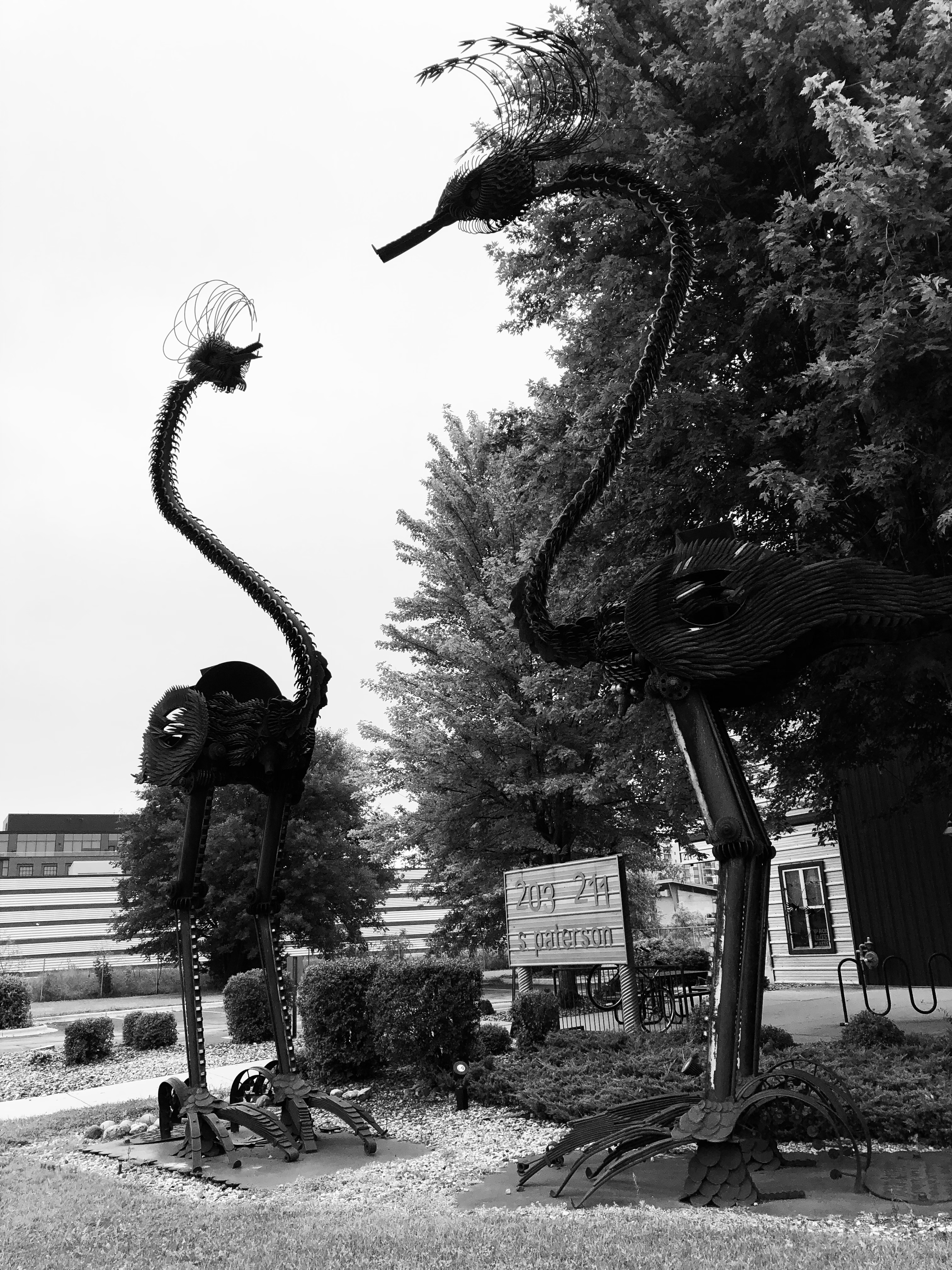
The giant birds were outside a housing complex near our hotel. The illuminated quote from painter Georgia O’Keeffe was inside the hotel, a former paint factory with a paint-and-painters theme. The red letters spell out the name of the hotel. (I needed my grandson to point that out to me.)

Read Full Post »

Photo: Angel Valentin/The Guardian.
“Puerto Rico imports 85% of its food,” the Guardian reports. The three farms of Güakiá Colectivo Agroecológico in Dorado “seek food sovereignty and climate solutions.”

The UK-based Guardian has some of the best coverage of North America to be found anywhere, and it’s free. Readers are asked to contribute, and I recommend doing so if you want to support good journalism.

A few days ago, the Guardian posted this update on an agricultural movement in Puerto Rico that, if taken up elsewhere, could make a big difference to the planet.

Nina Lakhani wrote, “Puerto Rico was once a thriving agricultural hub thanks to its tropical climate, rich biodiversity, and sustainable farming traditions. Today, less than 2% of the workforce is employed in agriculture and tens of thousands of acres of arable land sit idle. Meanwhile 85% of the food eaten in Puerto Rico is imported, grocery prices are among the highest in the US and last year two in five people experienced food insecurity.

“ ‘Unemployment is brutal, prices are brutal, migration from the island is brutal,’ said Denise Santos, who runs Puerto Rico’s food bank.

“Puerto Rico, a mountainous Caribbean archipelago, is also one of the places in the world most affected by extreme weather such as storms, floods and droughts. In 2017, Hurricane Maria devastated the islands and people went hungry as ships were unable to dock at the damaged ports.

“In the face of so many challenges, a new wave of interest in food and farming among younger Puerto Ricans is flourishing, as part of a wider movement demanding political, environmental and social justice. Small scale sustainable farming known as agroecology is driving a resurgence in locally grown produce that chefs, farmers, entrepreneurs and researchers argue can help revitalize the local economy, improve food sovereignty and both mitigate and adapt to the climate crisis.

“Agroecology is low impact agriculture that works with nature and local conditions to produce food sustainably so as to protect biodiversity and soil quality while drawing carbon out of the atmosphere.

  • “It involves a set of farming principles and practices that can be adapted to any ecosystem, microclimate and culture – a way of life practiced for thousands of years by indigenous people and peasant farmers. Farmers often integrate crops, livestock and trees (agroforestry) in order to maximize ecological conditions, such as a fruit orchard that aids water retention and provides shade for crops and grazing animals who in turn fertilize the earth to improve the yield.
  • “Crop rotation and crop cover are fundamental to this holistic approach, that takes into consideration the well-being of the Earth, those who produce the food as well as the local communities who eat it. …
  • “Advocates say agroecology offers locally driven solutions to a myriad of interconnected crises including food insecurity, biodiversity loss, environmental degradation and global heating.
  • “Agroecology is a social and political movement seeking to influence public policies so that sustainable farming benefits from government support (tax breaks, subsidies, and bailouts) currently propping up the dominant industrial agriculture system which is a major cause of biodiversity loss and accounts for more than a quarter of global greenhouse gases.”

The Guardian goes on to profile “three agroecology farms striving to change what and how Puerto Ricans eat by challenging the political, economic and agricultural status quo.” Here is one.

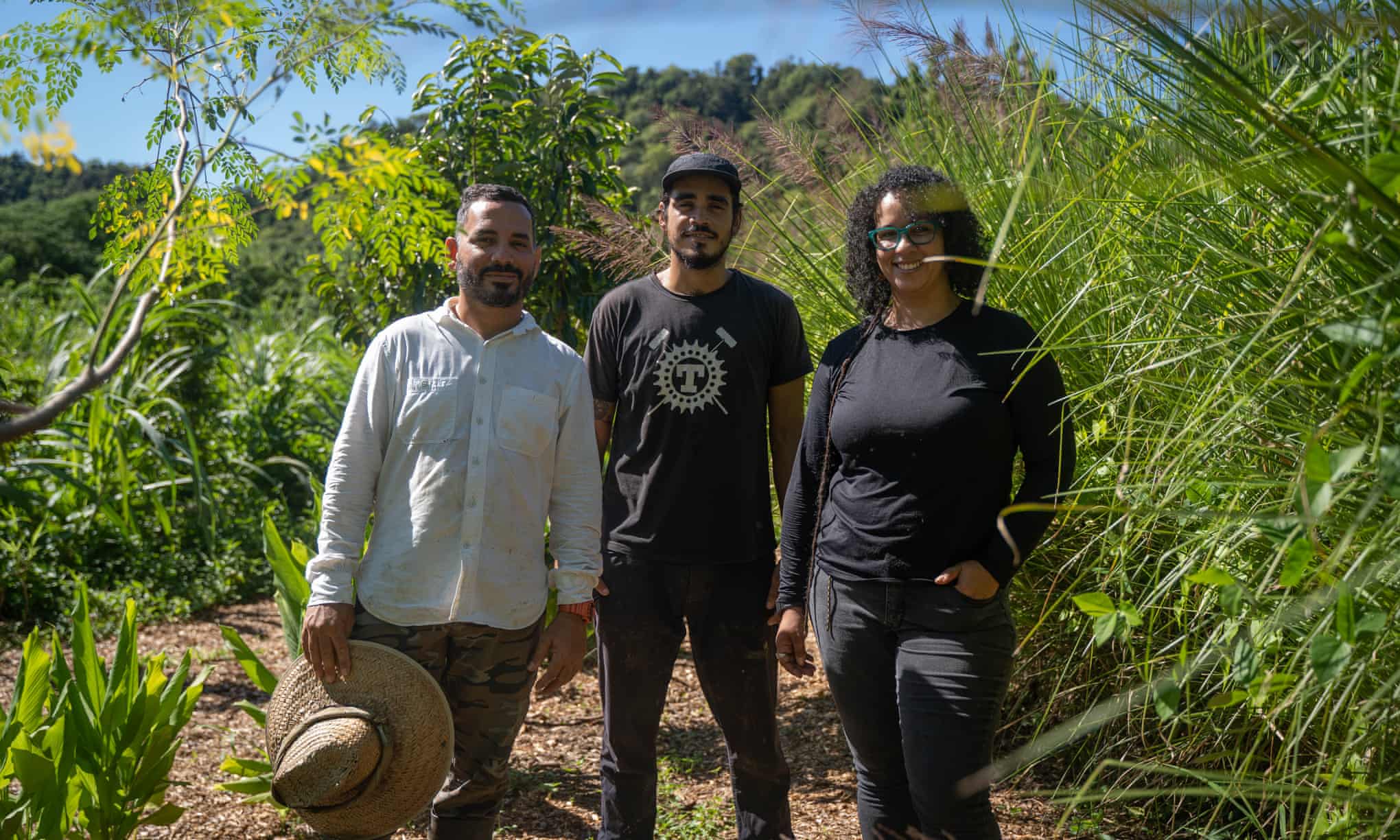
Güakiá Colectivo Agroecológico “is the collective brainchild of four graduates from [the Josco Bravo project] whose main objective is to improve access to healthy affordable food for vulnerable local communities. The farm is located off a highway in Dorado, an economically divided municipality with both multimillion dollar beach homes and families living hand-to-mouth in houses without indoor plumbing.

“The land belongs to a New York-based order of nuns who agreed to rent them 11 acres in 2017 for a symbolic amount ($1 per acre per year) after they’d almost given up hope of finding somewhere affordable. Back then it was a mess, having been used for years as an unauthorized rubbish dump, and they were still cleaning up when Maria struck, leaving many without work, shelter, food or clean water.

By the beginning of 2018, they were able to share the first crop – plantain, beans, yuca and papaya – with families going hungry.

” ‘Agroecology has always been a form of resistance against colonial capitalism, and here we are trying to rescue collective working and reject individualism by reconnecting people to the land and food, and building trust and solidarity,’ said Marissa Reyes-Diaz, 32, a biology graduate who also works for the nonprofit El Puente: Latino Climate Action Network. (All four members of the collective have second jobs.)

“Agroforestry is a big focus here, and there are fragrant fruit trees growing alongside a variety of crops, which has created multiple small ecosystems that help keep precious nutrients and rainwater in the ground. (Diversity enhances a farm’s resilience, as different crops are vulnerable and resistant to different pests, climate extremes and soil deficiencies.)

“So far the orchards have helped them survive two very dry spells, but it’s not enough to sustain and grow the farm, even with rainwater tanks and water from a neighbouring farmer. They’re trying to raise $40,000 to build a well connecting to the underground aquifer as water remains the biggest obstacle to long term success.

“But Güakiá is not just a farm, it’s also a community hub where neighbors come to enjoy the green spaces and try unfamiliar produce such as beets, turmeric roots and wild basil, as well as taste tomatoes fresh from the vine.

“Some locals volunteer, others exchange their food waste (needed to make compost) for vegetables, and prices remain accessible. They’ve hosted festivals with live music, art exhibitions, self defence classes, yoga and dominos — a very popular Caribbean pastime — and have built an emergency shelter fitted with solar panels ready for the next climate catastrophe. Reyes-Diaz said: ‘Agroecology has never been just about producing food, it’s also about sustaining our physical and mental health and spiritual well-being.’ ”

More at the Guardian, here.

Read Full Post »

Photo: Photographic/Scenic Ireland/Alamy via the Guardian.
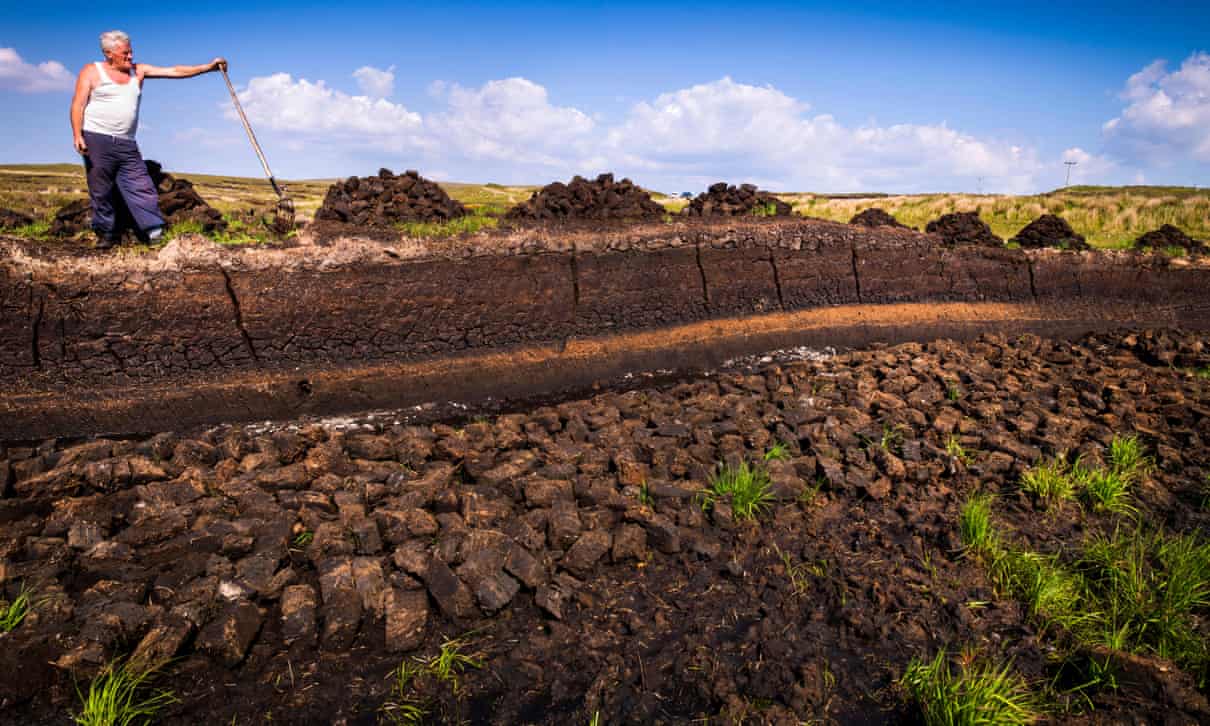
Burning peat increases global warming, which is why commercial operations are closing, but undisturbed bogs have always been great for keeping carbon
from the atmosphere.

My father-in-law was in the peat moss business back in the day. The Philadelphia company he worked for and later ran was called I.H. Nestor. It sold peat mostly for agriculture, but you may know that peat was also burned for heat, especially in Ireland. My friend, the late great James Hackett, and his family always heated their home with peat, with unfortunate consequences for their health.

Today’s story is about the historical value of peat bogs, an aspect that has been mostly unrecognized until now.

Chris Mooney writes at the Washington Post, “Long before the era of fossil fuels, humans may have triggered a massive but mysterious ‘carbon bomb’ lurking beneath the Earth’s surface, a new scientific study suggests. If the finding is correct, it would mean that we have been neglecting a major human contribution to global warming — one whose legacy continues.

“The researchers, from France’s Laboratory of Climate and Environmental Sciences and several other institutions across the globe, suggest that beginning well before the industrial era, the mass conversion of carbon-rich peatlands for agriculture could have added over 250 billion tons of carbon dioxide to the atmosphere. That’s the equivalent of more than seven years of current emissions from the burning of fossil fuels for energy.

“ ‘Globally [peatlands] are only 3 percent of the land surface but store about 30 percent of the global soil carbon,’ said Chunjing Qiu, a researcher at the laboratory, a joint institution supported by French government research bodies and the Versailles Saint-Quentin University, and the first author of the study published Friday in the journal Science Advances.

“The new finding of an ‘ignored historical land use emission’ suggests that even now, we lack a complete understanding of how the Earth’s land surfaces are driving and modulating the warming of the planet. … Scientists have long worried about the potential for massive amounts of carbon being released by northern permafrost, where ancient plant remains lie in a kind of suspended animation beneath the surface. But the peat threat is very similar; in fact, peatlands overlap considerably with permafrost regions.

“Peatlands are a particular type of wetland, one in which dead plant matter does not fully decay due to the watery conditions, and thus accumulates.

In its normal state, peat slowly pulls carbon out of the atmosphere — unless you disturb it.

“If a peatland is drained — as has occurred for many centuries to promote agriculture, especially the planting of crops — the ancient plant matter begins to decompose, and the carbon it contains joins with oxygen from the atmosphere. It is then emitted as carbon dioxide, the principal greenhouse warming gas. …

“To try to get around the problem of missing historical records, the new study simulates the Northern Hemisphere (outside of the tropics) over thousands of years to determine where peat would have likely developed. Over time, the computer model will begin to include growing agricultural activities. It can then be used to analyze different scenarios for how frequently such developments may have occurred on peatland.

“In a middle-of-the-road scenario, where humans would have regularly grown crops on peatlands, the study finds that some 70 billion tons of carbon (over 250 billion tons when converted to carbon dioxide) would have been lost from the soil.

“Importantly, the analysis does not cover all the peatlands across the globe: It only considers Northern Hemisphere peatlands from the year 850 CE onward. Massive losses of tropical peat are even now occurring in countries like Indonesia and Malaysia, for instance, so global losses will be higher. …

“The study is ‘a broad modeling approach with many assumptions, which can all be individually questioned and debated,’ added Hans Joosten, who leads a peat research group at the University of Greifswald in Germany. ‘But the overall message that remains is that drainage of only a small part turns the entire northern peatland resource into a net carbon source.

‘Though peatlands indeed are carbon sinks in their pristine state, they should also be seen as carbon bombs, which explode whenever they are damaged. Keep them wet!’ …

“The new work underscores that major gaps remain in how much we know about the human contribution to climate change, even as we are trying to halt it. With poor understanding about peat locations, and poor reporting about land conversion, experts say, many countries can’t fully account for peat emissions even now. That could raise questions about what has been happening in their land-use sector.”

More at the Post, here.

Read Full Post »

cali_wwfus

Photo: Julia Kurnik, World Wildlife Fund
WWFUS hopes that a research-based pilot project could identify the best crops to grow in the mid-delta Mississippi region as climate change forces California to reconsider what it should grow
.

As changes in weather patterns damage agriculture in California, scientists are wondering if the Mississippi Delta could pick up the slack. The potential benefits of moving some farming to Mississippi include employment, better distribution systems, and less waste.

Radio show Living on Earth says,”Droughts and extreme weather are already taking a toll on the produce grown in the Central Valley of California. Now researchers from the World Wildlife Fund have found that the mid-Delta region of the Mississippi River, where rich soils currently mostly grow commodity crops like rice, corn, and soybeans, is ripe for growing more specialty crops such as fruits and vegetables.

“Jason Clay of WWF spoke with Host Steve Curwood about how the types of crops now grown in California could also be grown in the Mississippi mid-Delta region to enhance climate resilience and address poverty, food waste and food insecurity in America’s Heartland.

“CURWOOD: When you take a juicy bite out of a honeydew melon or chomp down on a handful of almonds, chances are that food came from the central valley of California. This region has perhaps the world’s largest patch of Class 1 soil, with abundant sunlight and no winter snow. But as the climate has changed, the flow of water from the Sierra Mountains has become less reliable. There have also been more heat waves and choking smoke from wildfires. So scientists and economists from the World Wildlife fund [say] the Mid-Mississippi river delta region is ripe for a switch from commodity crops such as cotton, rice and soy, to more high value specialty crops such as fruits and vegetables. …

“So how did you get into this study of farming and food?

“CLAY: I actually grew up on a farm, a very small farm in northern Missouri. And we lived on less than $1 a day. And so, as you might imagine, I couldn’t get away from farming fast enough. But everything I’ve done in my life has kind of led me back to farming. And about 20 years ago or so I started to work with WWF and convince them that, in fact, the biggest threat to the planet to biodiversity to ecosystem services is where and how we produce food. And from that point on, we begin to develop a program around agriculture, around livestock, around aquaculture, seafood. …

“CURWOOD: So Jason, what’s the importance of California to our food systems?

“CLAY: For the last hundred years or so California has become the major source of the fresh food that we eat. About a third of all vegetables about two thirds of the fruits and nuts all come from California. So, almonds and pistachios and things like that, but also cling peaches and olives and Kiwi and honeydew. California is just very important to the food system. 100 years ago it wasn’t, but it is today. …

“CURWOOD: What are some of the risks to this system? Looking ahead?

“CLAY: Well, it’s actually not even looking ahead. We’re already seeing that California is being affected by droughts, by fires, by freezes late in the spring, [also] by winters that are too warm to actually allow the fruit trees to bloom well and [we’re seeing] below normal snowfall in the mountains. And then in the summer, the snow melts too fast so that we don’t have enough water all year round to irrigate the crops. We’re losing at least the last of four crops and maybe the last two, depending on where you are. …

“CURWOOD: So I understand that you and your colleagues at the World Wildlife Fund have just released a report that identifies the potential of the Mississippi River mid-Delta region, that’s near Memphis, as I understand it, as perhaps an agricultural engine for fruits and vegetables. You’re calling it the Next California plan. …

“CLAY: Could we actually begin to shift production in a logical, organized way into this region without major disruptions in the food system? Because if we can anticipate this change, we can can make it happen much more smoothly, much more efficiently and a lot cheaper. …

“Fruit trees, for example, which require cold winters, are perfect for this area. In fact, they’re better than in California. There’s also the fact that in this region, there’s a lot of poverty, a lot of unemployment. …

“We’re probably going to get back to a much more distributed food system with the impacts of climate change. [One] of the things that struck me about farming in the Midwest is that most of the farming areas are actually food deserts. …

“They don’t have access to fresh food all year round. And this is no exception. In fact, people in the mid-Delta region are like number 49 or 50, in terms of [eating] fresh fruits and fresh vegetables.

“CURWOOD: Jason, some folks point out that we waste about 1/3 of our food. …

“CLAY: What the Next California does is reduce the transportation involved in food. It increases the quality of food on the shelf by having it more local. [We] can really take advantage of how close this region is to Chicago and St. Louis and Kansas City and New Orleans and [through] the intercoastal canal up to the East Coast. And so those things all should reduce food waste.”

More here.

Read Full Post »

farming_soul-fire-farms-group-portrait_july2018

Photo: Soul Fire Farm
Run by a collective of black, brown, and Jewish people, Soul Fire Farm works to end injustice within the food system and offers trainings for people of color to learn essential agricultural skills,

I’ve been reading a sad book by Sarah Smarsh called Heartland. It’s about generations of her family on a small Kansas farm, and the subtitle tells it all : “A Memoir of Working Hard and Being Broke in the Richest Country on Earth.” So far she hasn’t said anything about today’s young people returning to the land with enthusiasm, which blog followers know is one of my interests. I’m into the chapter about giant agribusiness taking everything over.

But I know there are more stories out there offering hope for small, sustainable farming. Today’s story is about an upstate New York farm that focuses on helping black and brown people learn agricultural skills and fight food injustice.

From the radio show Living on Earth: “Leah Penniman is the co-founder of Soul Fire Farm and joins host Steve Curwood to discuss her new book, Farming While Black: Soul Fire Farm’s Practical Guide to Liberation on the Land, and her journey as a woman of color reclaiming her space in the agricultural world. …

“CURWOOD: Tell me a little bit about your journey falling in love with nature and farming, and how it has led you to create your book, Farming While Black.

“PENNIMAN: Well, nature was my only solace and friends growing up in a rural white town. … In absence of peer connection, I went to the forest and found a lot of support and love in nature. And so, when I became old enough to get a summer job, I [was] able to land a position at the Food Project in Boston, Massachusetts, where we grew vegetables to serve to folks without houses, to people experiencing domestic violence. And there was something so good about that elegant simplicity of planting, and harvesting, and providing for the community. That was the antidote I needed to all the confusion of the teenage years. …

“I feel connected to the whole ecosystem, but the plants are incredible. They have these secret lives that we can’t see, or even imagine. So take, for example, the trees of the forest, right? There’s a underground network of mycelium that connects their roots, and they’re able to pass messages and warnings. They pass sugars and minerals to each other through this underground network. And they collaborate across species, across family. And so, when we tune into that, I think we learn something about what it is to be a human being and how to live in community with each other in a way that if we’re not connected to nature, we sort of lose that deeper sense of who we are, who were meant to be.

“CURWOOD: Now, your book is not only a how-to guide for folks who are interested in pursuing a path similar to yours, but it also, well, it has some history, sociology, environmental lessons all wrapped up in this package. Why did you add those additional stories and information in with your guide, rather than it, well, having it be strictly a manual?

“PENNIMAN: Well, I wrote this book for my younger self. So, after a few years of farming, I would go to these organic farming conferences, and all the presenters were white. … In putting together this book, I was really thinking about myself as a 16-year-old and, all the other returning generation of black and brown farmers who need to see that we have a rightful place in the sustainable farming movement that isn’t circumscribed by slavery, sharecropping, and land-based oppression, that we have a many, many thousand-year noble history of innovation and dignity on the land. …

“The raised beds of the Ovambo and the terraces of Kenya, and the community-supported agriculture of Dr. Whatley, those are to remind us that, you know, we’ve been doing this all along, and we belong. …

“CURWOOD: You have a waiting list of people who want to come to Soul Fire Farm and learn how to do this? …

“PENNIMAN: This was something that just surprised me because I thought I was just a weirdo out here, I was going to start this farm with my family, grow food, provide it to those who need it most in the community. And that was going to be it. And I got a call our first year from this woman, Kafi Dixon in Boston who said, you know, through tears, I just needed to hear your voice to know that it was possible for a woman like me to farm, and that I wasn’t crazy, and that there’s hope. Right? And that was the first of thousands and thousands of phone calls and emails to come of folks saying, ‘I need to learn to farm, I want to do it in a culturally relevant, safe, space. I want to learn from people who look like me.’ …

“We’re living under a system that my mentor Karen Washington calls food apartheid. So, in contrast to a food desert as defined by the US Department of Agriculture, which is a high poverty zip code without supermarkets, right, a food apartheid is a human created system, not a natural system like a desert. … There are consequences to that. We see in black and brown communities a very high disproportionate incidence of diabetes, heart disease, obesity, cancer, even some learning disabilities, and poor eyesight. …

“CURWOOD: One of the most intriguing sections of your book Farming While Black: Soul Fire Farm’s Practical Guide to Liberation on the Land is this explanation of how you can clean up lead-contaminated soil, which you find in so many places in the urban environment. You have a very practical guide as to how you can use natural plants to chelate, that is, to remove lead from the soil, so that it’s safe to grow food there. I don’t think I’ve seen that anywhere else. …

“PENNIMAN: There’s an incredible plant, it’s an African origin plant called Pelargonium or scented geranium, and it’s a hyper accumulator. So, you can plant it, you acidify the soil, you plant it and it will suck the lead out and store the lead in its body. So, then you can dispose of that plant in a safe place. …

“CURWOOD: And what do you think people of color lost when we lost contact with the land?

“PENNIMAN: Certainly not all folks of color, right? Right now, about 85 percent of our food in this country is grown by brown skinned people who speak Spanish. And … it’s a belief in West African cosmology that our ancestors exist below the earth and below the waters, and by having contact with the earth we’ve received their wisdom and guidance. And with the layers of pavement, and steel, and glass, and the skyscrapers, it’s harder to feel that contact. … When folks come to Soul Fire and get their feet back on the earth, what I hear time and again is, I’m remembering things I didn’t know that I forgot.”

More at Living on Earth, here.

Read Full Post »

When I was at the magazine, I often sought out authors from different regions who could write about the benefits of community gardens to low-income neighborhoods. Kai remembered that and tagged me on Facebook when he posted an article yesterday about a comprehensive farming initiative in inner-city Detroit.

Robin Runyan writes at the website Curbed Detroit, “This week, the Michigan Urban Farming Initiative (MUFI) revealed its plans for the first Sustainable Urban Agrihood in the North End.

“Wait, an agrihood? It’s an alternative neighborhood growth model, positioning agriculture as the centerpiece of a mixed-use development. There are some agrihoods around the country, but in rural areas. This is the first within a city.

“MUFI’s agrihood spans three acres on Brush Street, a few blocks up from East Grand Boulevard. MUFI runs a successful two-acre garden, a 200-tree fruit orchard, and a children’s sensory garden. They provide free produce to the neighborhood, churches, food pantries, and more.

“The big part of the announcement was the plan to renovate a three-story, 3,200-square-foot vacant building that MUFI had bought at auction years back. …

“The Community Resource Center will include office space for MUFI, event and meeting space, and two commercial kitchens on the first floor. A healthy cafe will be located on vacant land next to the CRC.

“Tyson Gersh, MUFI President and co-founder, said at the announcement that they want to be the first LEED certified platinum building in Detroit.”

The article credits Sustainable Brands, BASF, GM, and Herman Miller and Integrity Building Group for providing much-needed help on the project.

More here.

Photo: Michelle & Chris Gerard
The Michigan Urban Farming Initiative.

Read Full Post »

In Tanzania, women farmers appearing on a TV show called in English “Female Food Heroes” are bringing attention to the importance of their work and the barriers to expansion.

Oxfam America reporter Coco McCabe writes about contestant Edna Kiogwe, “She grew up in a farming family and knows well the hurdles they face, especially women farmers who, in her country, own only a small fraction of the land. …

“It’s that inequality — and the lost opportunities buried beneath it — to which Kiogwe and 14 other women farmers helped to bring attention this year as contestants in the fifth season of a highly popular reality TV show shot in Tanzania and aired across East Africa. Called Mama ‘Shujaa wa Chakula ,’ or ‘Female Food Heroes,’ the Oxfam-sponsored show celebrates the vital contributions women farmers make in feeding the planet, and highlights the challenges many encounter on a daily basis, including limited access to land, credit, and training opportunities. …

“In the village of Kisanga, where ‘Mama Shujaa wa Chakula’ was filmed [in 2015], the 15 contestants learned a great deal about the struggles local farmers face in feeding their families. Each of the women stayed with a village family for the duration of the three-week shoot, and daily contests included designing tools that could be useful to Kisanga farmers, interviewing them about their agricultural challenges, and putting together skits to help bring attention to those hurdles. …

“Kiogwe [now] spends most of her time in Dar es Salaam, a coastal city about a two-and-a-half hour drive away, where she lives and works as a civil servant. But her city life belies her village roots — and her keen interest in farming. Unlike most women in Tanzania, Kiogwe owns her own land, given to her by her forward-thinking father on her wedding day. She harvests corn, cassava, rice, and sugar cane, carefully aligning her 28 days of annual leave from her city job with peak work times on her small farm in the Morogoro region. …

“ ‘I want to make agriculture like a business,’ says Kiogwe. … With a little effort, greater value can be added to the fruits farmers grow, for instance.

“ ‘Change it from fruit to juice, we can sell it … We can add value to maize — maize flour for porridge — and you can have a good label and good packaging and compete with international businesses. That is my dream.’ ” More here.

According to OXFAMCloseup, the nonprofit’s quarterly magazine, the episodes shot in Kisanga, Tanzania, aired in five countries and had 14 million people tune in. The magazine adds, “Versions of the program are now being produced in Ethiopia and Nigeria, and some finalists have become involved in local, national, and even global farmer advocacy.”

Photo: Coco McCabe / Oxfam America
Edna Kiogwe helps her host family with the morning chores in Kisanga, where the TV show “Female Food Heroes” was filmed in 2015.

Read Full Post »

Older Posts »