Feeds:
Posts
Comments

Posts Tagged ‘artist’

Jim Dwyer writes lovely human-interest stories for the NY Times. On September 5, he wrote about a guy who plays music by the Hudson River for an audience of birds, fish, and whatever friends or strangers wander by.

On Tuesday morning, Jose Modesto Castillo, retired from a job in a plastics factory, walked just about as far west in northern Manhattan as it is possible to go, to the end of a long pier fingering into the Hudson River at Dyckman Street. A harmonica rigged to his head was just a breath away from his lips. Lashed to his hands with hair ties were 17 miniature percussion instruments made from items like a Snapple cap, the lid of a prescription bottle, a Spider-Man figurine, the shells of plastic eggs that once held toys from supermarket vending machines.

“Strike up the one-man mambo band.

“Mr. Modesto’s mouth danced across the harmonica, and his fingers made rhythm out of junk. He played and he bobbed. At the end of the nameless number, he raised his arms as if waving to the Palisades on the far shore. Suddenly, he noticed that he was being watched, and called out, ‘Hello señor,’ and burst into a laugh.

“It was the Tuesday after Labor Day, the first day after the spiritual end of summer, though not yet the true beginning of autumn. At the pier and tiny cove on Dyckman Street, calendars were beside the point. Mr. Modesto, 66, comes every day to play, even if only the birds and fish are there to hear him.”

Some artists can get joy even if no one is around. As a musician, Modesto sees potential in bottle caps and plastic eggshells the way a painter might see it in clouds or the sun on the subway stairs.

Read more.

Photograph: Marcus Yam for the NY Times

Read Full Post »

Indiana University’s Strategic National Arts Alumni Project (SNAAP) reports that artists generally seem to be happy with a life in the arts.

From the blog ArtsJournal.com: “According to SNAAP’s survey of 36 000 creative arts grads, their unemployment rate is half that of the national average and 71% of bachelor’s degree holders in the arts and 86% of those with an MA are working or have worked as professional artists.” More at the Snaapshot site.

Having seen La Bohème and read George Gissing’s 1891 novel New Grub Street (and having accepted every word as Gospel), I believe that a life in the arts can be difficult. But I do think if you can work in a field that lets you use your creativity — or one that provides time to do art  part time — you will be happier. Everyone, in fact, should have a creative outlet, I’d say.

Would love your comments.

Photograph of Timothy Callaghan by Mary Ann Hall, Quarry Books editor

Read Full Post »

On mornings when I don’t walk in my neighborhood or in the Greenway near work, I’m more likely to walk around the emerging waterfront district than the Public Garden, the approach to which involves too much waiting at street lights.

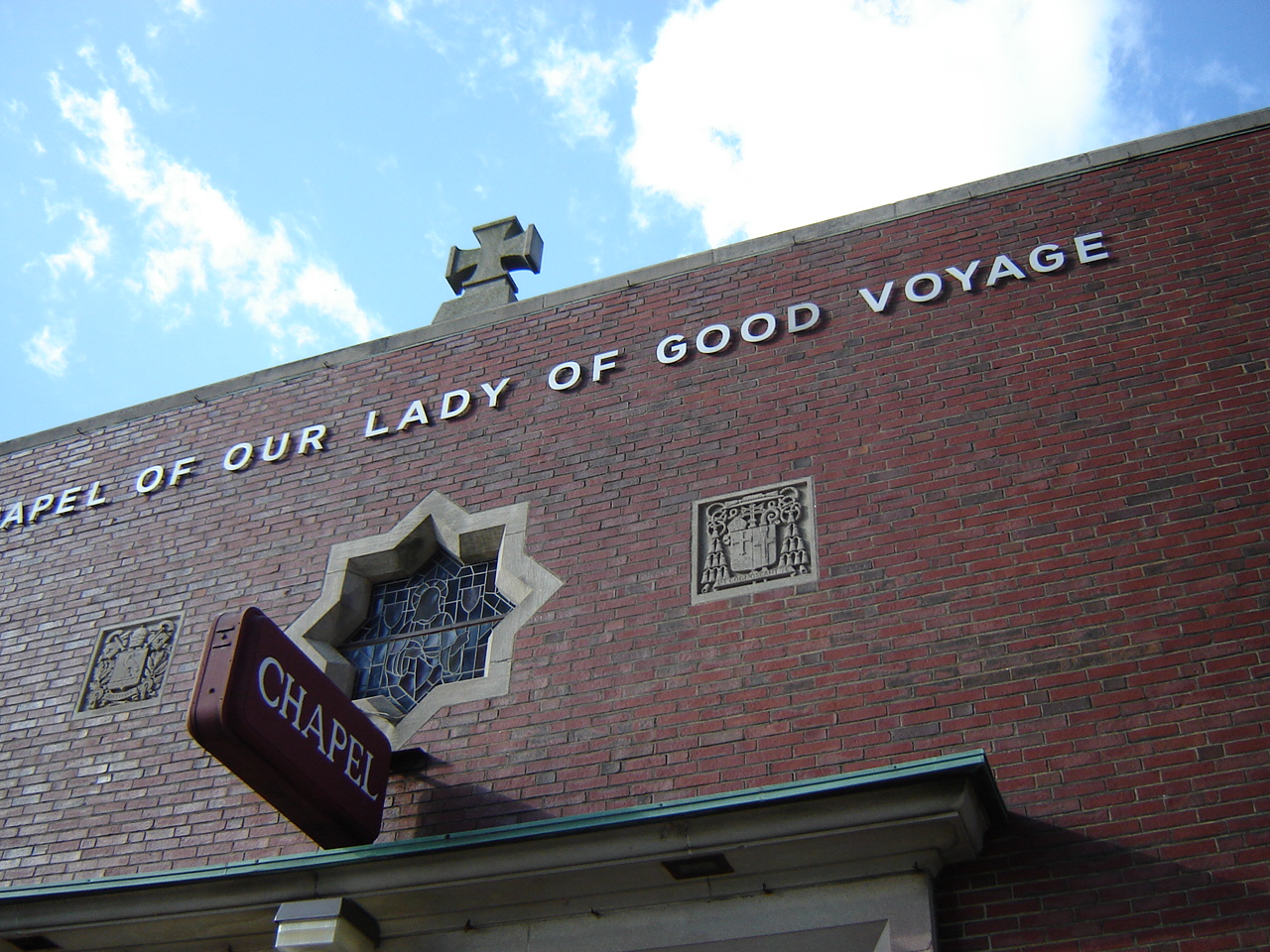
The area near Seaport Boulevard and the harbor, though booming with construction today, still wears the remnants of its formerly neglected status: vistas of pitted parking lots, streets that end ­­­­­­in chain-link fences, highway underpasses filled with brown grass and fast-food wrappers. Then there is the Chapel of Our Lady of Good Voyage.

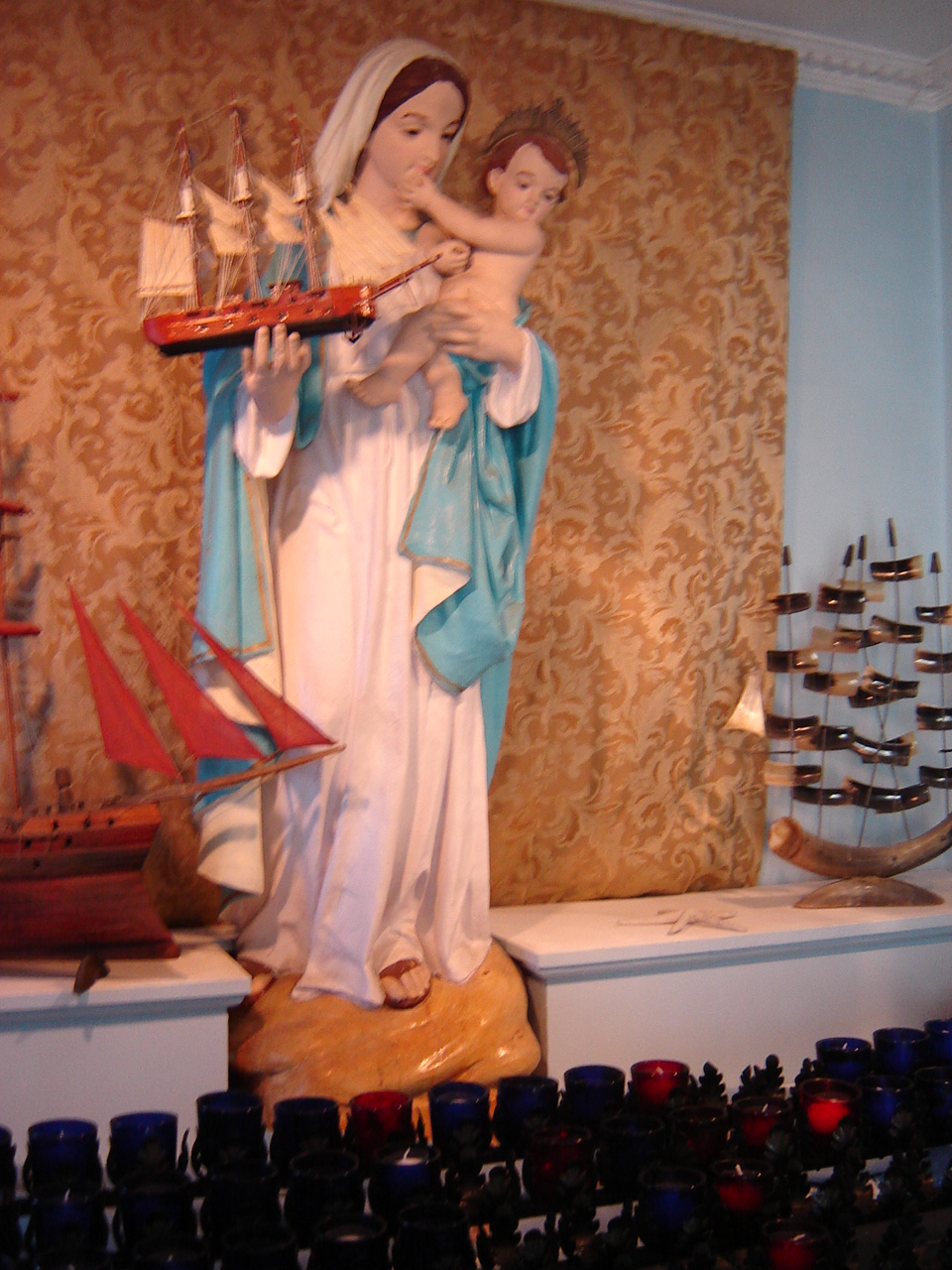
Unlocked, empty, and trusting, the tiny chapel has a basket for donations to the food pantry. Under a statue of Mary holding her infant in one hand and a ship in the other are votary candles. Someone in charge must think – or know – that no traveler seeking blessings will steal alms for the poor in front of Mary unless desperate. In which case, perhaps he will be welcome to it.

I picture Ishmael coming to a place like this (different denomination and in New Bedford) to hear the sermon on Jonah and the Whale before his ill-fated voyage with the obsessed Captain Ahab.

I wonder if sailors really go to the chapel nowadays and what will happen to it as the area develops at its rapid pace. Along the water, the mayor’s prized Innovation District is gathering steam. In the other direction, the Fort Point Channel area is bursting with restaurants, arts, and artists.

Less than 20 years ago, I visited one artist, the son of friends, who was squatting with other artists in the abandoned Fort Point warehouses where doors had no locks, broken boards and pipes littered the floors, and loose wires hung from the ceilings.

The chapel is part of that earlier world, when lighting a votary candle might have seemed like one’s best chance for making it until tomorrow.

Read Full Post »

A couple Sundays ago, it was so hot that all we could do was sit. When we came to ourselves, we said: Who has air conditioning besides the supermarket? Where can we go to see something interesting or entertaining without wilting?

The deCordova Sculpture Park and Museum is a place of wonder. It’s true that sometimes the wonder takes the form of “What the heck?!” But more often it provokes pondering and admiration. The piece below was both lovely to look at and food for thought. The artist filmed people moving obscurely behind ice. The work suggested ideas to me beyond the idea of ice (although ice itself was worth focusing on that day).

Ice often makes an appearance in art. I think of the First Night (New Year’s Eve) sculptures in Boston.  And I remember a whole ice wonderland in St. Paul one January when we lived in Minnesota. Then there is the ice story by a native of that city, F. Scott Fitzgerald.

Fitzgerald apparently wanted to cut his ties with his hometown, but St. Paul had other thoughts, naming the theater where “A Prairie Home Companion” plays just for him, and conducting a posthumous reading of “The Great Gatsby” in his honor.

Fitzgerald’s short story “The Ice Palace” is about a southern girl who tries to adjust to the culture of her betrothed’s wintry landscape. She becomes lost and terrified in an ice palace that somehow reflects his family and his nature, and she decides her future should unfold back home in the South. I read that a long time ago, but I recall many meanings for ice in it.

Meanwhile, at the deCordova, the “Ice Cave” video seems to be about the limits of perception, about seeing through a glass darkly.

What are the people doing? we wonder. Even if we knew, would we know what it meant?

Please share your ice images with the blog.

Image from Daniel Phillips’s Ice Cave video is at the Dodge Gallery in New York.


Read Full Post »

For an artsy, literary treat, take a look at the Project Gutenberg version of painter Marsden Hartley‘s out-of-print book, Adventures in the Arts: Informal Chapters on Painters, Vaudeville, and Poets, dedicated to Alfred Stieglitz.

Hard to resist an introduction like this:

“Sometimes I think myself one of the unique children among children. I never read a fairy story in my childhood. I always had the feeling as a child, that fairy stories were for grown-ups and were best understood by them, and for that reason I think it must have been that I postponed them. I found them, even at sixteen, too involved and mystifying to take them in with quite the simple gullibility that is necessary. But that was because I was left alone with the incredibly magical reality from morning until nightfall …

“I was constantly confronted with the magic of reality itself, wondering why one thing was built of exquisite curves and another of harmonic angles. It was not a scientific passion in me, it was merely my sensing of the world of visible beauty around me, pressing in on me with the vehemence of splendor, on every side. …

“It is because I love the idea of life better than anything else that I believe most of all in the magic of existence.”

(Thank you, Ellen Levy, for sending me the link.)

Art:  Marsden Hartley

Read Full Post »

I love artists. They come up with the wackiest ideas. And often the ideas have bypassed the rest of us because they are in fact so incredibly sane.

In the July 27, 2012, Boston Globe, Stephanie Steinberg writes about two such artists.

Carla “Repice, 40, and Geoffrey Cunningham, 37, who met while studying at Lorenzo de’ Medici school of art in Italy, started the performance art project Office of Blame Accountability [in 2007] while working on a separate project in California. The two artists, now self-proclaimed ‘blame accountants,’ were frustrated by the lack of accountability by the media, government, and individuals. …

“Repice had recently purchased a red 1920s telephone at a flea market. As they sat on a bench outside Cal State Fullerton Grand Central Art Center in Santa Ana discussing whom to blame for personal and countrywide problems, Repice brought up the idea of the phone representing an emergency call.

“ ‘We were talking about blame accountability, and there was this red phone, and we thought, “OK, let’s create an office. . . . Let’s place a desk on the sidewalk and facilitate a space where people can engage this idea of blame and accountability,” ’ ” she said.

“Within an hour, they set up a desk and placed a typewriter, mock blame forms, and, of course, the telephone on top. They then started asking random passersby, ‘Do you have any blame to place?’ ”

The lovely part is that the “blame accountants” also ask people to consider their own role is the thing they are blaming on others. The results can be quite touching. Read more.

Photograph: Tisha Kawcak

Read Full Post »

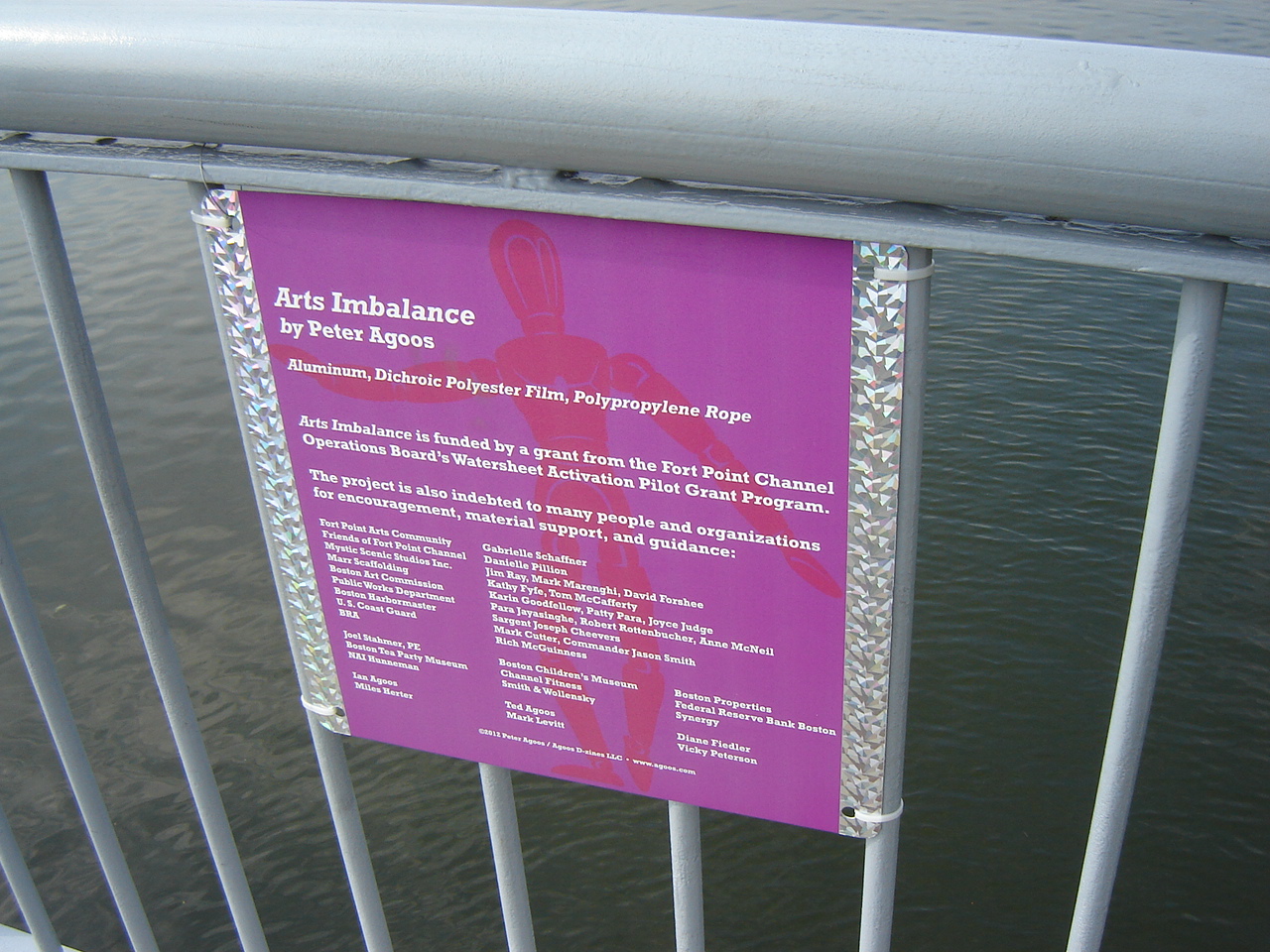
John and two college friends rented a motor boat in Fort Point Channel Friday to see the sights of Boston Harbor. But first they motored near my building so I could wave as they passed under this piece of public art.

The Mystic Scenic Studios site explains the art:

“A designer named Peter Agoos approached Mystic Scenic Studios with the idea of creating two life-sized human figures made of aluminum to hang above the Fort Point Channel in Boston.

“Mystic Metal’s, Mike Onischewski, fabricated the figures from an aluminum sheet; [they] were then covered with refractive dichroic film with the help of David Forshee, also of Mystic Scenic Studios.

“The piece was installed on July 2, 2012, with a team of 12 volunteers who worked from a small boat on the water and a scissor lift on land. The piece was strung from a 300-foot yellow tightrope between the Samson Post structure on Summer Street and the counterweight tower on Congress Street. The life-sized figures were counterbalanced on the rope and inspired by a classic articulated wooden artist’s manikin.”

Photograph: Mystic Scenic Studios

Read Full Post »

Sunday evening I went over to Concord Academy to hear Seán Curran talk about how he creates choreography. Betsy, one of the dancers from his company, did a beautiful job of demonstrating what he meant.

As a little boy growing up in Watertown, Seán said, he waited eagerly for the mail that brought Look magazine. He liked to cut out pictures and make collages with them.

He says that his approach to choreography is similar. He arranges many snippets or dance phrases in different ways. His challenge is to edit down the many ideas so that the choreography doesn’t topple from too much weight.

I make collages, too. I have always liked the idea of taking a bunch of random things people have said and trying to make a play out of them, for example.

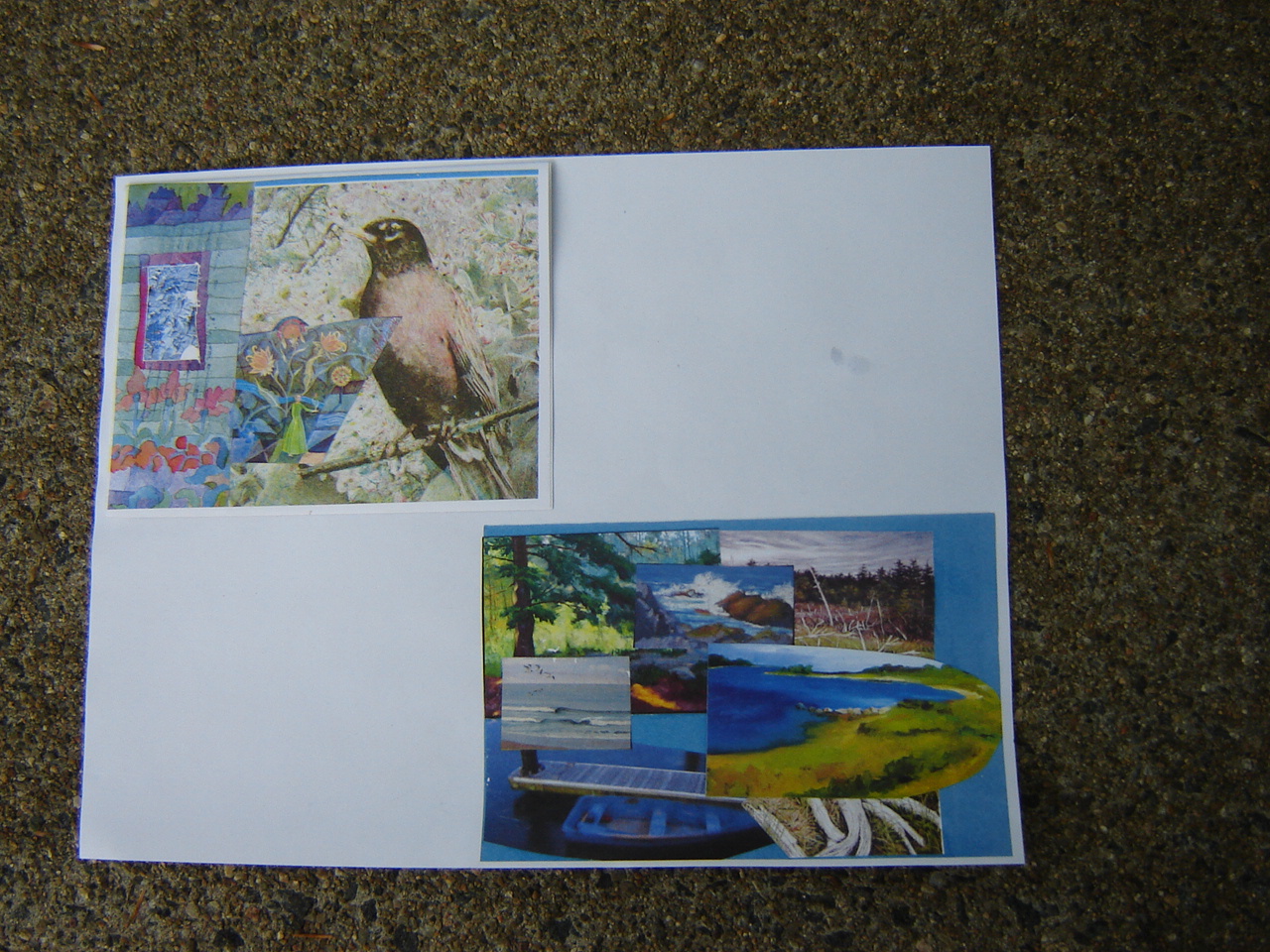
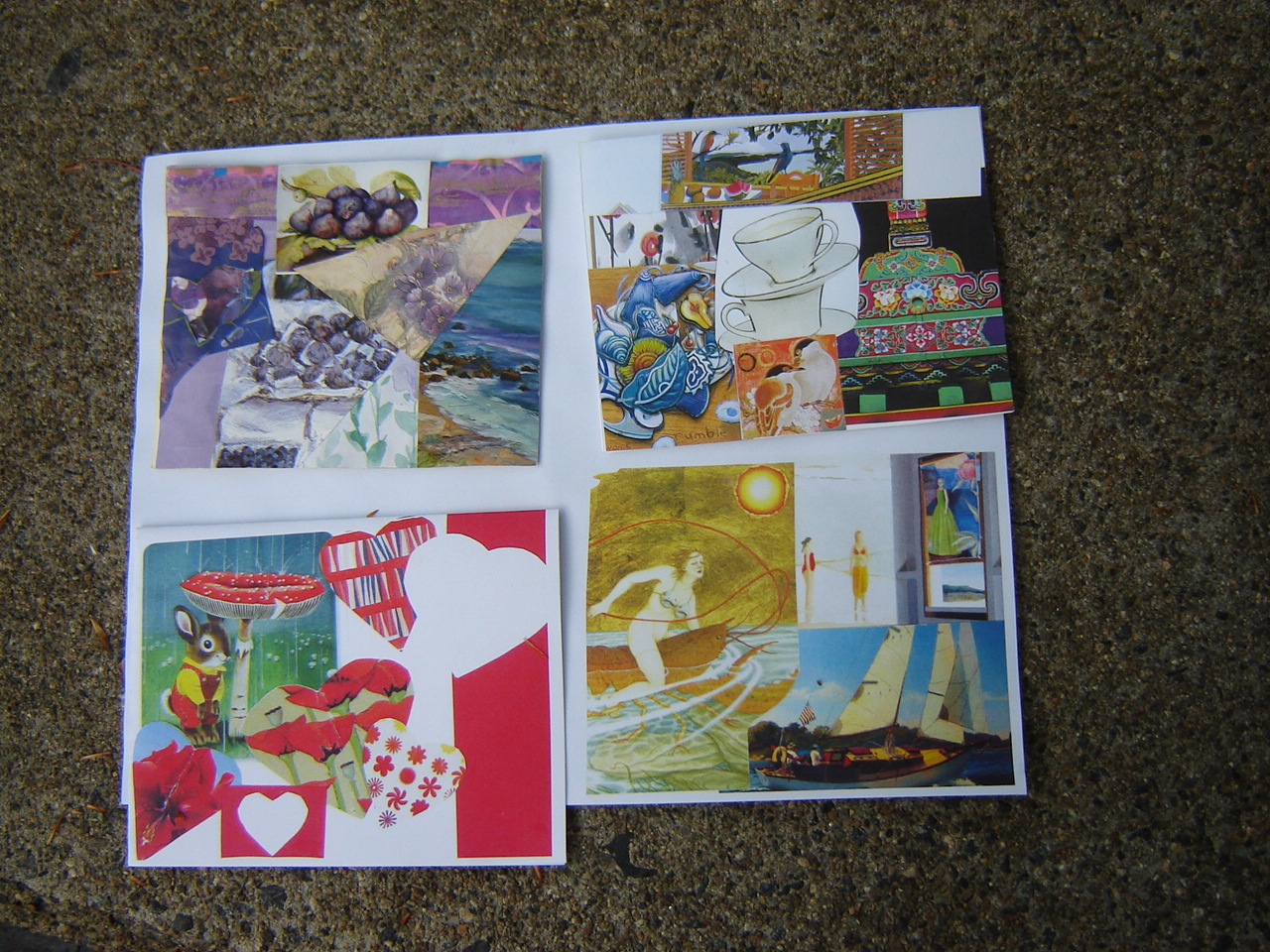
I also make collage greeting cards. I keep a box of promising pictures, cut from magazines and gallery postcards. I go through the whole pile and set aside maybe 20 items that somehow remind me of the person for whom I am making the card. Then I edit them down to the few pieces that will be best for the particular occasion.

All that happens before I cut the shapes and decide on how to arrange them. Sometimes I do a cutout of a cutout and put something else in the space: for example, I cut a vista out of a painting of a window and put a girl in the space (bottom right).

Here are examples.

Read Full Post »

Photograph: South End Knitters

Today I am thinking about the South End Knitters, the stealth street artists who wrap their knitting around parking meters and fire hydrants and telephone poles.

Writes Linda Matchan in the Boston Globe, “The South End Knitters’ weekly meetings at a Washington Street café seem innocuous, but don’t be fooled. Over knitting needles and yarn at the long table they’ve commandeered, they are contemplating something far more mischievous than a sweater. They’re graffiti knitters, and they’re plotting their next target. …

“As with graffiti, no two tags in the yarn-bomber subculture are alike. They range from sleeves on parking meters to tubes on tree limbs to sweaters on statues: A recent high-profile example is the neon pink sweater that the New York street knitter Olek crocheted in December for the 16-foot ‘Charging Bull’ statue on Wall Street.”

What put me in mind of the South End Knitters was an extraordinary post at the WordPress blog Pickled Hedgehog Dilemma, which describes a crochet effort that is drawing a lot of attention to the plight of vanishing corals.

Concerned about the effect of global warming on reefs, Margaret Wertheim and her twin sister got an idea that involved “crocheting corals. They used a crocheting technique invented by mathematicians in 1997 to model hyperbolic shapes called hyperbolic crocheting. … This ended up being a perfect technique for producing coral reproductions. …

“They crocheted a lot of corals,” continues Pickled Hedgehog, ” then they did something to change the world. They shared their corals with art museums. They got a community in Chicago to crochet with them. Then the crafting became a movement and groups all over the world started to crochet corals.”

Read Pickled Hedgehog Dilemma’s illustrated summary here. And if you have the time, this TED talk is super.

Pickled Hedgehog Dilemma

Read Full Post »

I have admired the New England artist James Aponovich for some time but had not seen his paintings up close until the Clark Gallery in Lincoln had a show of his recent work. Amazing!

I am probably not using accepted art history terms, but the paintings  make me think of Italy and the Renaissance and are breathtakingly luminous. He might feature, for example, a large, glorious amaryllis flower in an ornate urn on a wall high over a traditional, distant landscape. You just want to go there.

The work in the current show is the result of Aponovich making up his mind to create a painting a week for an entire year. He succeeds splendidly, often making everyday items like Chinese takeout feel exceptional. For my money, there is not a dud in the bunch. (Although my money can’t stretch to even the smallest of the 52 pictures.)

I am so grateful to galleries that make work like this free for anyone who walks in off the street to view. Museums, wonderful as they are, don’t often let you in free.

Read Aponovich’s blog about the 52 weeks. Cate McQuaid in the Globe captures the essence of the show. Check her out, too.

Read Full Post »

Eben Horton, a glassblower with a studio in Wakefield, Rhode Island, loved hearing how glassblowers in Lincoln City, Oregon, had hidden special creations on a local beach for a community treasure hunt.

Inspired to do something similar, he settled on the idea of glass floats, the kind traditionally used on fishing nets.

The Block Island Tourism Council helped Horton launch the Glass Float Project. The council’s site has details.

“WHEN: The hunt begins June 2nd, 2012, and continues indefinitely. It only ends when all the floats have been found!

“WHAT: 200 Glass Floats (glass orbs about the size of a grapefruit) will be hidden on Block Island. Floats will be dated, numbered and stamped with the shape of Block Island. All floats are clear glass except for 12 (because it is 2012), which are special colored orbs. One super special float is made entirely out of gold leaf.

“WHERE: 100 floats on beaches and 100 floats on Greenway trails. Floats will be hidden above the high tide mark but NEVER in the dunes or up the bluffs.”

Understandably, they don’t want people walking on the dunes, which protect the island in storms.

Check the council website for the bio on the artist, too: “Eben creates custom one of a kind pieces on an individual basis out of his studio that he calls ‘The Glass Station’- a converted 1920’s gas station.” More.

Read Full Post »

I am trying too figure out what the acronym RAW stands for. It’s an organization to promote young artists in many media.

“RAW:natural born artists is an independent arts organization, for artists, by artists. We’re a community made up of creative individuals across the nation. Our mission is to provide independent artists within the first 10 years of their career with the tools, resources and exposure needed to inspire and cultivate creativity.”

The website says that in 2003, Heidi Luerra moved from a small town to Los Angeles to become a fashion designer. But being a small fish in a big pond was a struggle. She met young people in other fields who were also struggling, and she had an idea for bringing them together.

“In 2005, Heidi Luerra threw her first multi-faceted showcase in Los Angeles. After much interest from the over 750 attendees that came to the event, she found her calling — to create a platform for the many people who are talented, yet go unnoticed.

“In 2009, equipped with a mission of bringing tools and resources to artists who were fighting the good fight on their own, RAW was born. After the first RAW event, a local web developer, Matthew Klahorst, approached Heidi about combining these art events with an online showcase for artists. From this collaboration came the next evolution of RAW —  promoting artists both online and offline.

“In 2011, they decided to take the concept beyond Southern California. RAW now hosts monthly showcases that spotlight indie talent in film, fashion, music, art, hair & makeup artistry, performing art and photography in 54 cities across the U.S and counting. By July 2012, RAW will be in 54 U.S. cities and Australia. RAW will launch in China and Europe in 2013.”

Read more. And if you are an artist in the first ten years of your career, consider joining the showcase.

Art: Joa Stenning

Read Full Post »

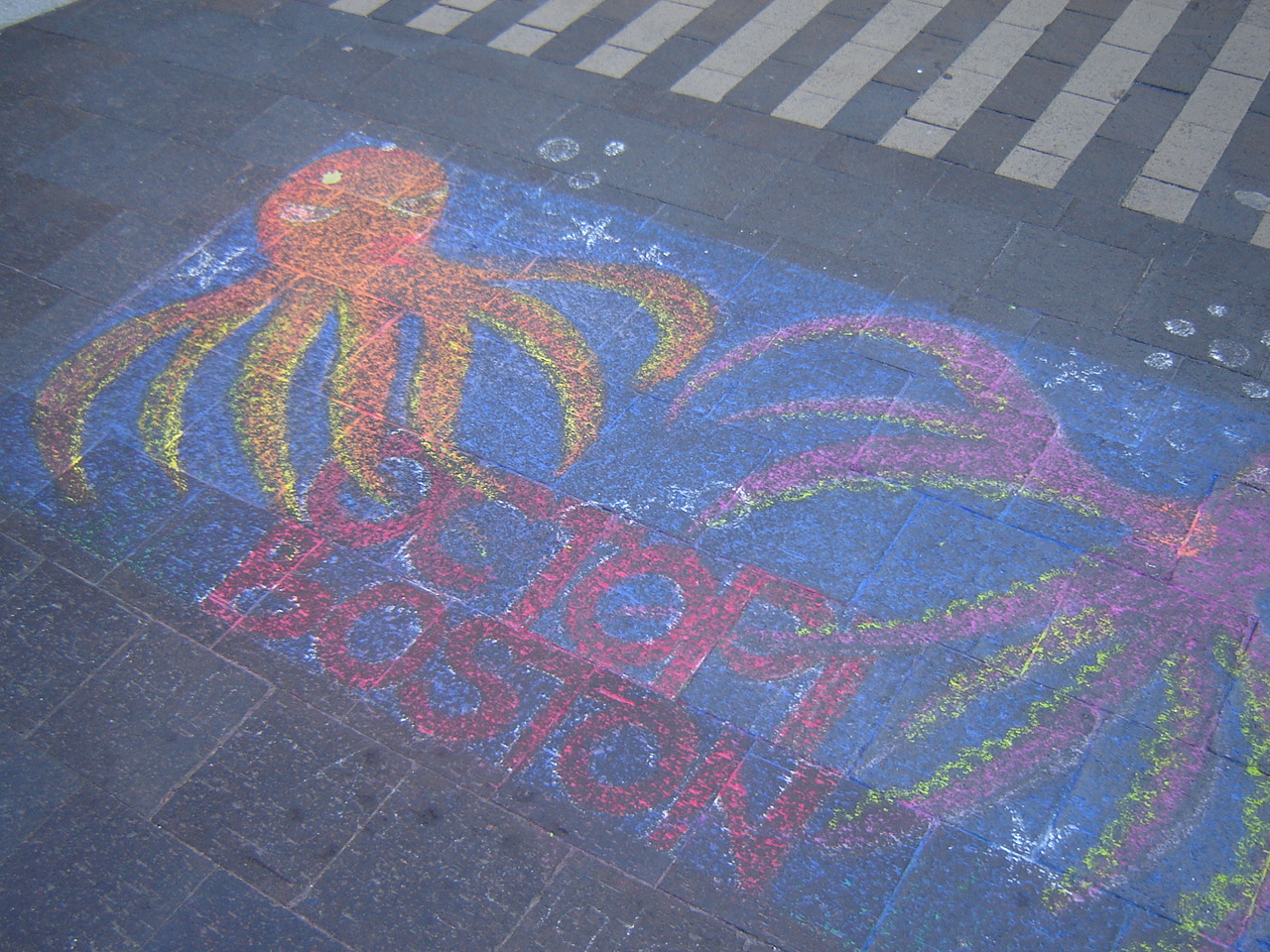
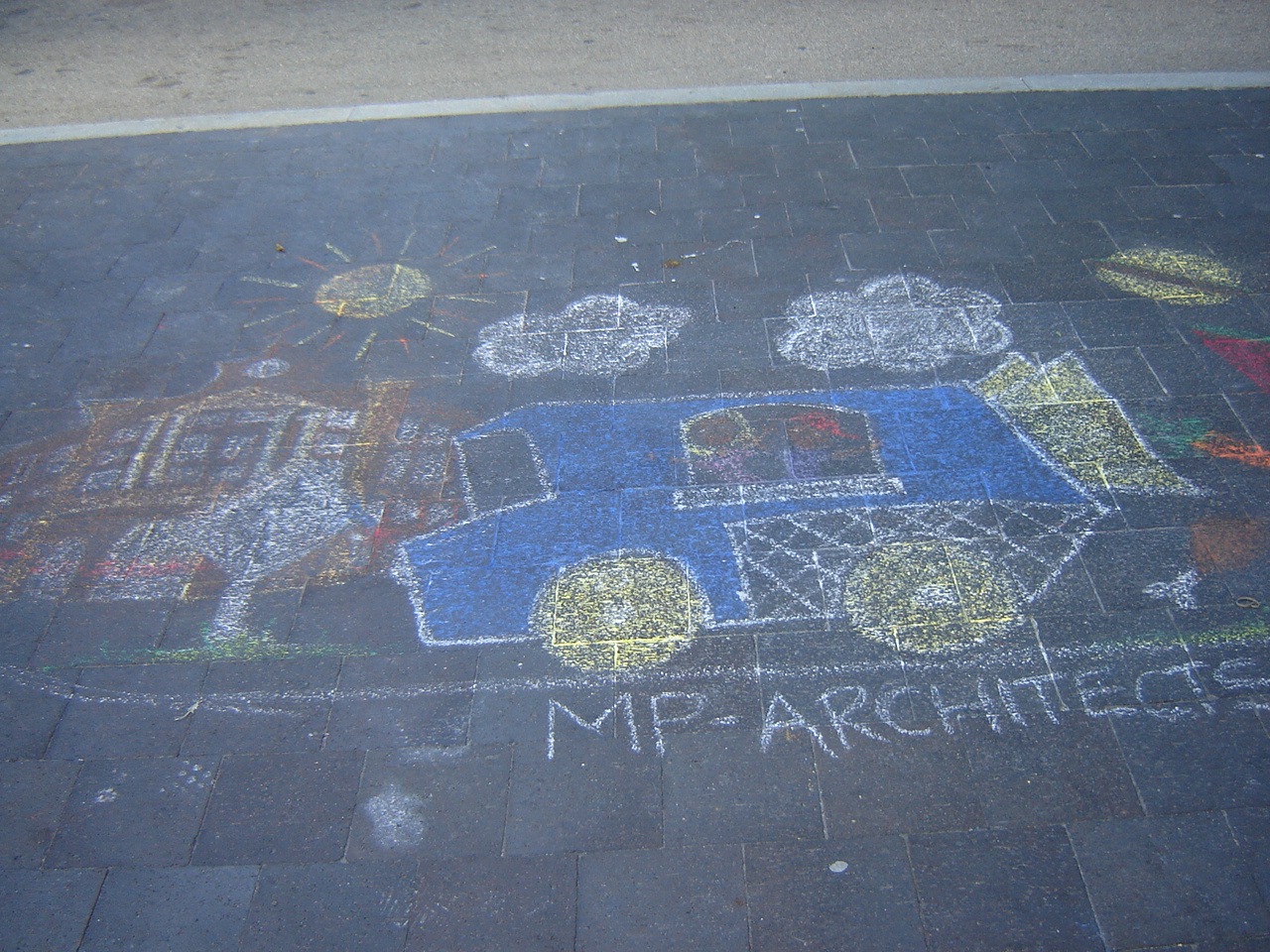
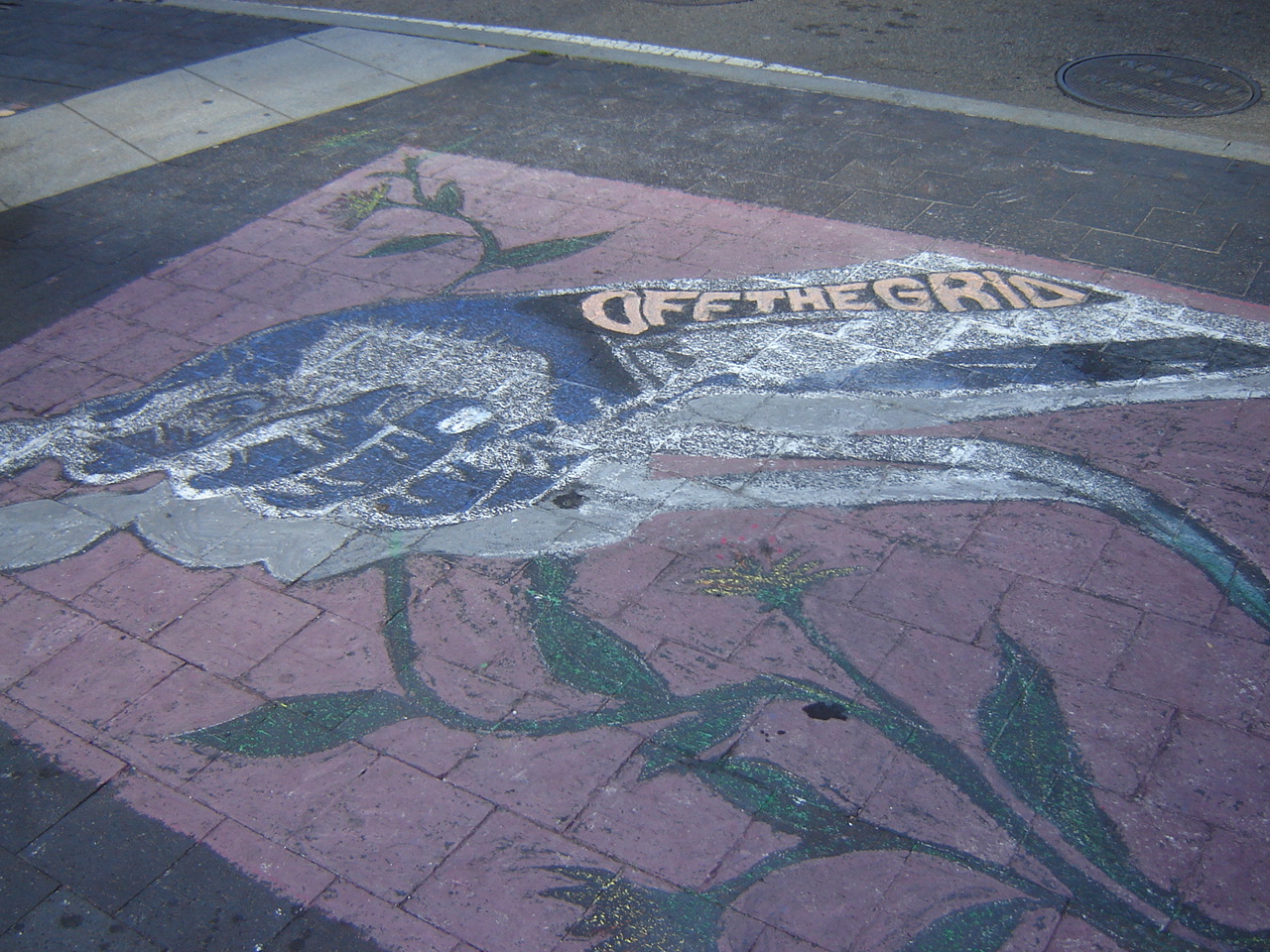
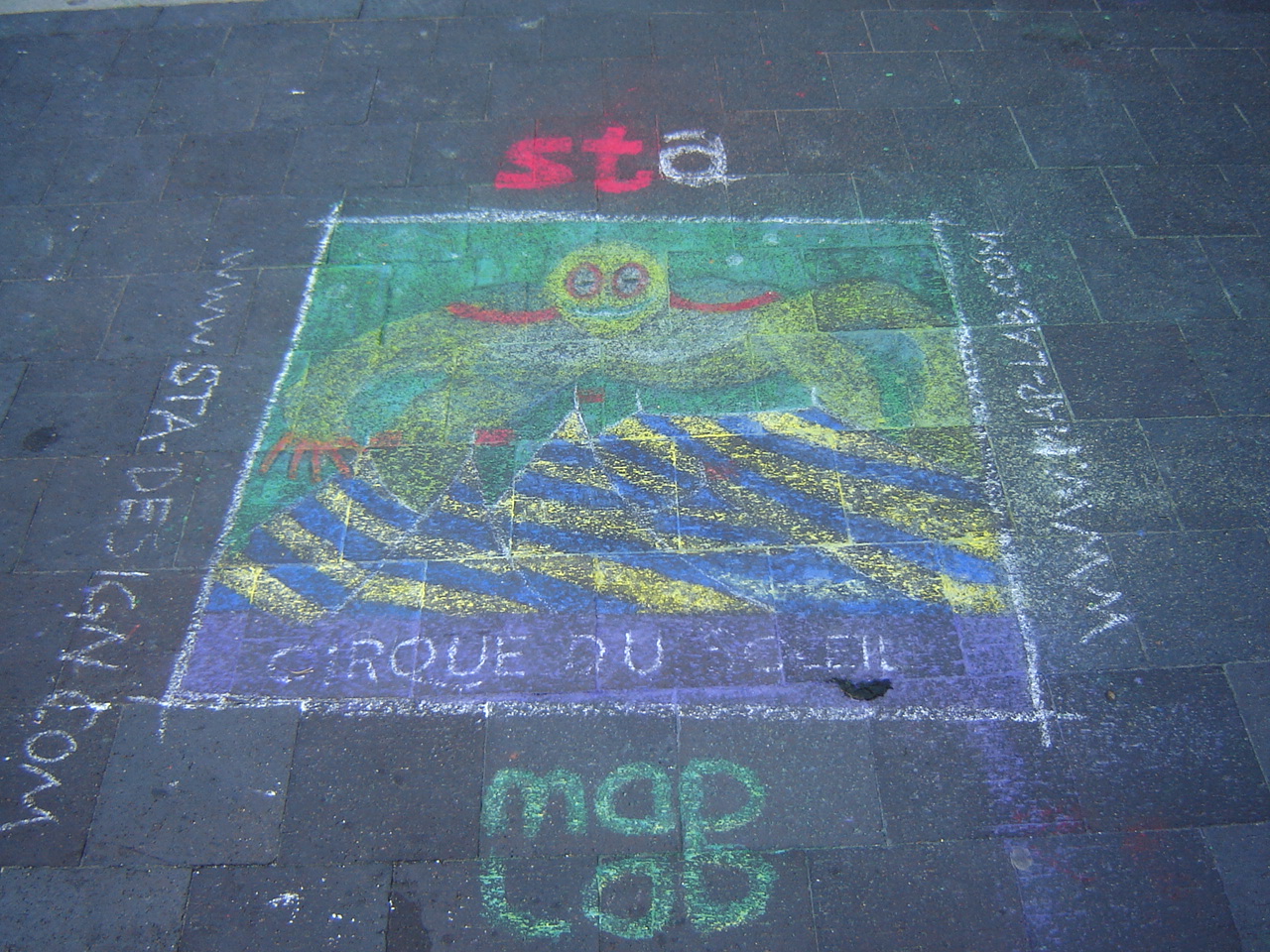
As you may recall, Occupy Boston camped out in Dewey Square. Today the new sod and the demonstration garden are flourishing alongside gourmet food trucks — and on farmers market days, alongside vendor tents.

But it’s still a place for the public voice to express itself. I hope you can see these chalk drawings, captured Tuesday. Already gone, they were a rather fleeting public voice, as street art often is. One is called “Octopi Boston.” There’s another featuring Cirque du Soleil and one on the Red Sox. Icon Architecture stealth is apparently behind that one.

Read Full Post »

I have blogged before on the use of the arts to help veterans readjust to civilian life. Today I’d like to highlight an initiative started by veteran Drew Cameron and Drew Matott. It focuses on the art that interests them most — papermaking — and is their way of giving back and moving on.

“The Combat Paper Project utilizes art making workshops to assist veterans in reconciling and sharing their personal experiences as well as broadening the traditional narrative surrounding service and the military culture.

“Through papermaking workshops, veterans use their uniforms worn in combat to create cathartic works of art. The uniforms are cut up, beaten into a pulp and formed into sheets of paper. Veterans use the transformative process of papermaking to reclaim their uniform as art and begin to embrace their experiences in the military.

“The Combat Paper Project is based out of art studios throughout the United States and has traveled to Canada and the United Kingdom, providing veterans workshops, exhibitions, performances and artists’ talks.” More here.

Photograph: Combat Paper

Read Full Post »

Some outstanding musicians have performed in the Cambridge and Boston subways over the years. I never know quite what to expect.

New Yorkers also get some nice surprises in the subway. Alex Vadukul of the NY Times writes about a paper-cutting portraitist who works fast:

“In the congested world of subway performers, where dance troupes, conga circles and violin players blur, Ming Liang Lu, 57, is an alluring presence. A self-described ‘master paper portrait cutter,’ he has the ability to trim facial portraits out of frail paper within minutes, compelling some riders to willingly miss their trains.

“Mr. Lu practices several ancient Chinese art forms, and says he hails from a noted Shanghai teaching lineage. On weekends, he teaches calligraphy, painting and cutting at the New York Chinese Cultural Center. He said that in Shanghai, his birth city, he was renowned for stone sculpture and stamp seal carving. He credits the facial portraits to his formative training in a three-dimensional form.” 3-D before 3-D. Read all about it.

Photograph: Joshua Bright for the NY Times

Read Full Post »

« Newer Posts - Older Posts »