Feeds:
Posts
Comments

Posts Tagged ‘arts’

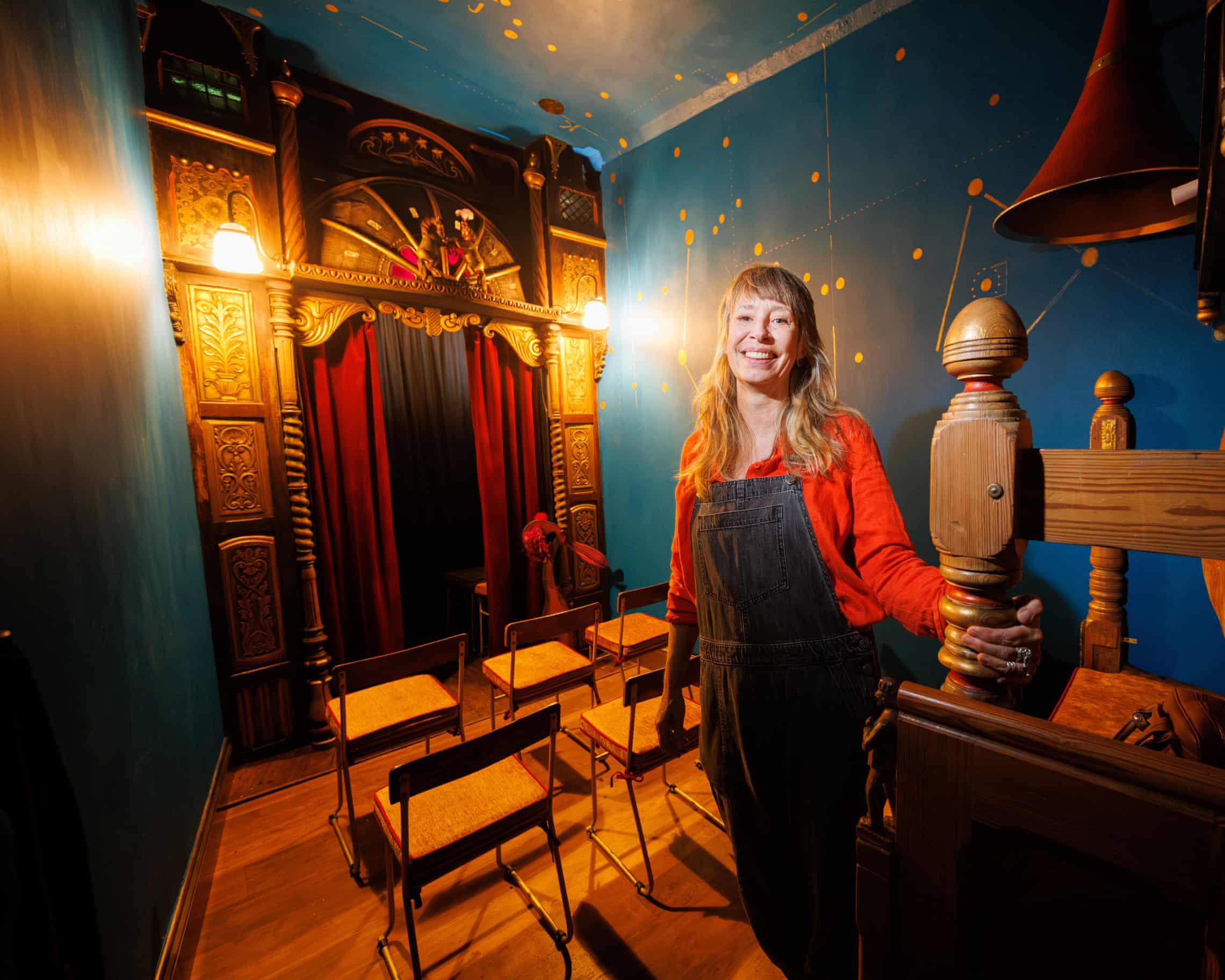
Photo: Sam Frost/The Guardian.
Loz Samuels, creative director of the tiny Theatre of Small Convenience, believes that in the digital age it is ‘really important’ to keep places like this alive. 

People care about having the arts in their lives. It’s not all about big donors wanting to show themselves in designer clothes at a charity ball. Although they are needed, too.

It’s mostly about the audience.

Jessica Murray writes at the Guardian about how a threatened UK theater, housed in what was once a Victorian public toilet, was brought back to life.

“Perched on a sign above a tiny stage draped with red velvet curtains are the Latin words Multum in parvo. Meaning ‘much in little,’ it has become the motto of this minuscule establishment in the Worcestershire town of Malvern.

“This is the world’s smallest commercial theater, with room for 12 people – or 16 with some standing – that has been brought back to life by local residents after falling into disrepair and at risk of demolition.

“Called the Theatre of Small Convenience, it was once a Victorian toilet and measures just [108 square feet] – the stage itself is a snug [16 square feet].

“ ‘Places like this are so rare now,’ said Loz Samuels, the theatre’s creative director and co-founder of the community interest company which runs it. …

“The theatre was created in 1997 by Dennis Neale, described as a local legend and eccentric performer who spent 19 years putting on puppetry shows in the space that captivated local children. In its heyday it was a much-loved and unique claim to fame for Malvern, with the theatre entering the Guinness World Records in 2002.

“But after Neale’s retirement in 2017, the building fell into disrepair and was badly damaged by a fire caused by a dehumidifier. With a destroyed roof, damp floor and damaged walls, local residents began to fear it would be lost for ever, especially with talk of a development next door. …

“Along with local volunteers Jan Birtle and Dibah Farooqui, [the community interest company] acquired the building from the council and raised [$22,000] from the local community to help get the renovation off the ground.

“ ‘It needs replastering, it needed rewiring, it needed a new floor, it needed underfloor heating. There’s obviously no room for heaters,’ Samuels said. …

“The theatre’s deep blue walls are adorned with a vivid gold constellation – with stars ‘sponsored’ by local residents – while intricate wooden carvings frame the stage.

“The challenge hasn’t been plain sailing, and Samuels has fears for the long-term future of the theatre. The team were recently rejected for Arts Council funding, and … with just 12 seats, making the space financially viable will take some creative thinking.

“Set to open its doors in October [2025], the theatre’s first show is Sceptre, a seance-themed immersive show designed specifically for the space. There are plans for a Narnia-style Christmas grotto and even weddings in the future.

“ ‘It is a challenge to find work that fits in here,’ she said. ‘But I feel like the building creates opportunities, you’ve just got to be imaginative. You can make real sensory experiences because you can control the light. As soon as you step foot in here, you forget the world outside, you could be anywhere.’

“Neale, who still lives locally, has also given the project his blessing and recorded a message that will be played at the start of future performances.

“ ‘I think what he did is so quintessentially English and so special,’ Samuels said. ‘He’s really happy, although I think at first he was a bit like, Who is this crazy woman?  …

“Samuels is urging performers and artists with original ideas for the space to come forward, and despite some nervousness, is optimistic for the future of the venue.

“ ‘I feel like it’s a strangely magical place and I just believe that the universe will look after it somehow,’ she said.”

More at the Guardian, here. No paywall.

Read Full Post »

Photo: Erin Brethauer.
Marquee hosted more than 300 artists and small business owners in Asheville, North Carolina, before Hurricane Helene, a devastating storm in 2024.

When Hurricane Helene washed through Asheville, North Carolina, last year, my childhood friend Ursula was one of the many who lost out. Her basement washed out, not only forcing her to stay at a neighbor’s but damaging many of her father’s artworks and the materials for her own weaving. At the same time, Asheville lost its whole arts district.

Now Ursula is rebuilding, and so is Asheville.

Jonathan Abrams writes at the new York Times, “Jeffrey Burroughs strolled among crooked trees and clumsily leaning chain-link fences on a recent Thursday afternoon in Asheville’s lower River Arts District. Nearby, heaps of flood-damaged antiques dotted the ground outside gaptoothed buildings that had previously housed hundreds of working artists.

“ ‘It’s nice that at least it’s green,’ Burroughs, president of the River Arts District Artists, said of the bent trees. ‘It was really depressing through the winter and the fall.’

“Burroughs, who uses they/them pronouns, is not joking when they say they have taken just two days off in the more than 10 months since Hurricane Helene, the deadliest hurricane to strike the mainland United States since Katrina in 2005, ravaged wide swaths of the Southeast, leaving at least 250 people dead.

“The storm overwhelmed Asheville’s French Broad River, submerging much of the once robust River Arts District in as much of 24 feet of water, caking it in layers of mud and destroying the life’s work and financial pipeline of hundreds of artists. …

“ ‘People were prepared because this area has flooded’ in the past, Burroughs said. ‘They moved everything up. Nobody anticipated second floors would flood. That’s not something you even conceive.

‘All of a sudden, it was like a lake opened in the middle of our town.’ …

“Over the past few decades, the River Arts District blossomed into that sprawling artistic epicenter as antiquated buildings transformed into bustling studios, classrooms, galleries and showrooms. The district’s recovery is seen as a crucial step in regaining a steadiness of income and the sense of normalcy for the many who lost so much in the storm.

“ ‘The business owners in the River Arts District have been working their tails off to rebuild since Hurricane Helene struck and I am making sure the state works with that same urgency to support their recovery,’ said Gov. Josh [Stein] who recently toured the district on a bike.

“The River Arts District housed nearly 750 artists before the hurricane. ‘You’re just immersed in art,’ said Davis Perrott, a woodworker who recalled waking up from the storm to a sound like someone forcefully slamming themselves against his window. ‘I’m sure there are other areas like it, but I haven’t seen it.’

“The upper portion of the district, which houses Burroughs’s jewelry store, returned fully in January. A few spaces have reopened in the lower portion of the district, which is closer to the river and suffered the most flooding.

“About 350 of the displaced artists are working again in the district. Some are actively involved in the continuing recovery process, waiting to return to the home that welcomed them.

“Others have decided not to return. For them, the risk of another storm outweighed anything else.

“Riverview Station was a major hub in the district, once hosting hundreds of artists, including the 14,000-square-foot ceramics space, the Village Potters Clay Center. That was before ’26 feet of water went through and wiped us out,’ said Sarah Wells Rolland, its founder. …

“The center was home to studios, showrooms, a gallery and classrooms where workshops were held. Wells Rolland said that $500,000 worth of equipment was lost in the flooding.

“ ‘I never even entertained going back,’ she said. … ‘I believe it’ll all wash away again.’

“Instead, Wells Rolland opened a new center near the arts district. While her business has returned, she is still searching for her creative spark.

“ ‘I’ve lost a lot of people. … Just numb is what I felt. I didn’t have any ideas. Still, almost a year out, I’m a highly creative person, but I still don’t feel like I have that creative energy yet.’

“As the district returns in fits and bursts, it could provide a blueprint for how other communities ravaged by increasingly destructive natural disasters can recuperate their livelihoods. Those affected have been depending much more on smaller networks of supporters and volunteers than on any government channels. …

“Marquee, an art gallery that hosted more than 300 artists, [anticipated] a September reopening, with other businesses in the lower district.

“ ‘We’re able to tweak the things that we wished we’d have done the first time before we opened and now we’re getting to get it all right,’ said Robert Nicholas, the building’s owner.

“Despite the devastation it caused, the storm reinforced what had drawn many to the district in the first place, heightening their sense of community.” More at the Times, here.

Read Full Post »

Photo: Kyle Mellott via Heather Divoky.
Catastrophic flooding swallowed up buildings of Asheville’s River Arts District. Despite ongoing floods and fires in the US, government disaster relief is facing big cuts.

My childhood friend Ursula, an artist in Asheville, North Carolina, lost much of her own and her late father’s artwork to Hurricane Helene last year. As I consider the Hyperallergic article below, I can’t help thinking that in addition to individuals who helped victims (like blogger Deb), government disaster relief (like FEMA, now on the chopping block), was indispensable.

Rhea Nayyar wrote, “Southeastern states are reeling from catastrophic loss and damages after Hurricane Helene tore a deadly path of devastation from Florida’s Big Bend region up through inland Georgia, the Carolinas, and Tennessee. In the mountains of western North Carolina, the city of Asheville was particularly hard hit by flooding … obliterating the cherished River Arts District (RAD) — a creative hub home to studios, galleries, community spaces, and other artist-run small businesses.

“ ‘Two-thirds of the district has been destroyed,’ said Jeffrey Burroughs, president of the River Arts District Artists Association, in an interview with Hyperallergic. Hosting over 350 local artists and craftspeople, the RAD complex comprises 27 buildings that span just over a mile of the eastern riverside. The southernmost string of buildings along Foundy Street, including the enormous Marquee warehouse which was once a bustling marketplace for artisans and antique dealers, are ‘gone,’ according to Burroughs. …

“ ‘Marquee is rubble, the nearby winery has washed away … It’s completely apocalyptic,’ Burroughs said. He recalled overseeing artwork, art supplies, and cans of beer being carried off by the [water] itself, saying that it was like ‘watching the spirit of Asheville being washed away.’

“A little further north at Pink Dog Creative on Depot Street, Asheville artist Heather Divoky, a marketing co-chair for RAD, told Hyperallergic … ‘This will absolutely reshape RAD — we’re going to be forever changed,’ Divoky said. ‘We’re all in complete shock right now. I don’t know how many of us can come back.’

“Down the street, Trackside Studios reported that flood waters reached the ceiling of the first floor where about 40 of the 60 studio artists maintain their practice. Co-owners Julie Bell and Michael Campbell were out of state during the storm, and have since become a communications switchboard as they have reliable internet access and power. Bell noted to Hyperallergic that Trackside Studios had recently completed a months-long renovation prior to the storm to restore the building’s historic appearance. …

“ ‘It’s so dangerous to clean up after these types of disasters because the mud is full of debris, mold spores, sharp objects, and dead fish. It’s neither safe nor sanitary,’ she said. …

“Miles east of RAD, artist, tax expert, and Hyperallergic contributor Hannah Cole reported that her studio along the Swannanoa River tributary had been entirely upheaved by floodwaters.

“ ‘The building is totaled,’ Cole told Hyperallergic, noting that 20 years worth of artwork and supplies were ‘effectively put in a blender for hours’ in a mixture of water, mud, heavy furniture and tools, and other debris carried in by the river.

“ ‘Some level of flooding is normal during big storms, but this has never happened before,’ Cole continued, adding that when she paid a risky visit to the studios after Helene, the water lines were up to the ceiling.

“Ruby Lopez Harper, executive director of the Craft Emergency Relief Fund (CERF+), which imparts safeguarding advice for natural disasters and offers emergency relief and preparedness grants to artists across the United States, told Hyperallergic that ‘recovery is going to take years.’

“ ‘We tell artists to store their things in waterproof bins and other such protective measures … None of that is going to help when your home is underwater,’ she said, explaining that no one had predicted this. …

“But on the ground, both Burroughs and Cole expressed that it’s impossible to even think so far ahead while they and their loved ones are still focused on securing potable water. However, Burroughs and the other RAD board members are conceptualizing an action plan to get stipends for artist relief, recovery funds for RAD, and a clean-up effort to remove the dangers and debris onsite.

“ ‘My husband and I moved here in 2020 after I was suffering from long COVID,’ Burroughs said. ‘There is nothing like this area, this community, anywhere else in the country. We will come back stronger.’ ”

More at Hyperallergic, here.

Read Full Post »

Photo: Liam James Doyle/MPR News.
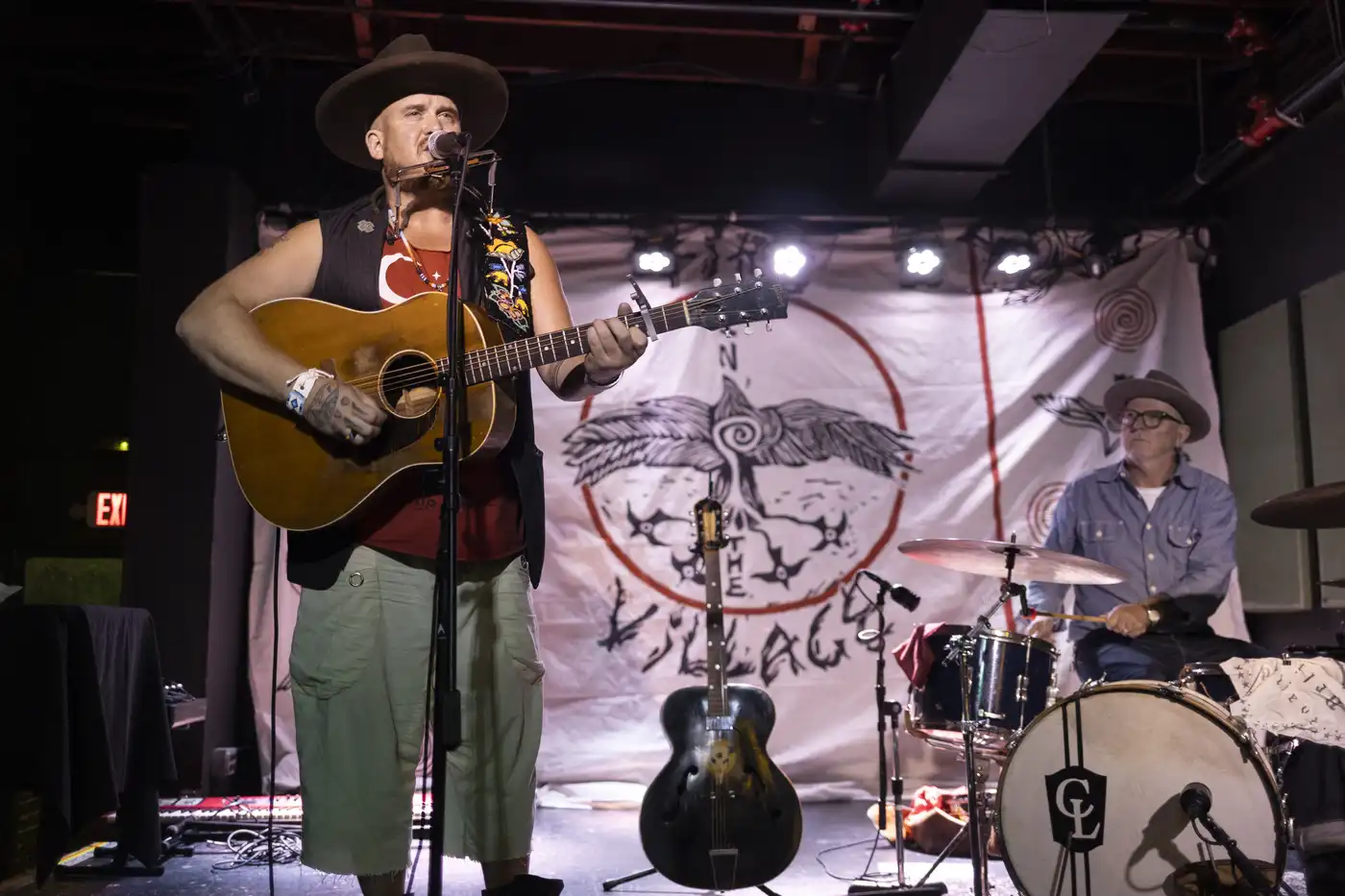
David Huckfelt performs on the Turf Club stage. “We’re building these little fires in small places,” Huckfelt says.

Because I still believe that “one and two and fifty make a million,” as Pete Seeger used to sing, I get a kick out of all the stories I’ve been seeing lately that confirm the power of small.

Alex V. Cipolle reports at Minnesota Public Radio (MPR) about one small but mighty effort, a new arts collective that “goes on tour to build community in rural Minnesota and beyond. …

“On a September evening at the Turf Club in St. Paul, models weave through bar tables in upcycled designs.

Annie Humphrey, an artist and musician based on the Leech Lake Reservation, performs on the stage, followed by Minneapolis musician David Huckfelt. On a back table Shanai Matteson, an artist from Palisade leads printmaking demos with a stencil of a black aandeg (the Anishinaabe word for crow) and an orange-red sun.

“ ‘There’s a story about the crow. Long ago, the crow had bright, beautiful, vibrant colored feathers,’ Humphrey recalls. ‘But crow also saw that the people were suffering because they had no fire.’ To bring fire to the people, crow flew close to the sun and scorched his feathers black.

“ ‘He was able to grab the fire and bring it back down to the earth and bring fire to the people so that they could be warm,’ Humphrey continues. ‘If you take a crow feather and hold it in the sun, it’s iridescent, and all these colors are still in that feather.’

“The stencil is the logo for the new arts and community-building collective Fire in the Village, started by Humphrey, Matteson and Huckfelt this year. (Fire in the Village is also the title of a book of Ojibwe stories by Humphrey’s mother, Anne Dunn.) …

“The trio all share a background in activism, specifically fighting the Line 3 oil pipeline. … But with Fire in the Village, the collective wants to do something untethered from any one cause. 

“ ‘If we were going to start something, I knew that it should center on art and the human spirit, the human condition,’ Humphrey says, ‘and have no politics involved at all.’

“Through art, fashion, music and collaborative events with schools and local organizations, the collective is hoping to heal divides and put a dent in the loneliness epidemic in rural communities and on reservations.

“ ‘I think a lot of people are feeling isolated,’ Matteson says. ‘There’s a lot of divisiveness going on. Personally, I’m not interested in continuing that. I don’t want to be part of a cause where it feels like it’s putting another barrier between me and the people who live around me.’ …

“ ‘We like the feeling of the collective and not pushing one person as a front for something,’ Huckfelt adds. ‘So, we’re really working together with our skillset because we believe in music, we believe in art, we believe in community, and so that’s what’s being put forward here.’ …

“ ‘Fire in the Village is a way to connect with individuals and to smaller communities that you’re a part of,’ says Meira Smit, one of the Macalester students who came to the Turf Club. ‘A way to build messages and movements around the things that we deeply care about.’

“Haley Cherry, a producer for Minnesota’s Native Roots Radio on AM950, also came out to walk in the fashion show after meeting Humphrey and Huckfelt this past year.

“ ‘It’s important to hear from both perspectives: issues of Indigenous identity, but also [from] David, as a white ally, I think it’s important to draw those bridges of community concerns,’ says Cherry, who is a descendant of the Ho-Chunk Nation of Wisconsin. …

“In June, Humphrey also led a community mural with youth groups on the Leech Lake Reservation, the Boys & Girls Club in Deer River and the Long Lake Conservation Center. Soon, the mural will be installed at the powwow grounds in Ball Club, a village on the reservation. There are more murals to come, Humphrey says.

“The tour is also about revival, Huckfelt says, stopping at historic community buildings in small towns, such as the 210 Gallery and Art Center in Sandstone Oct. 19 and the Historic Chief Theater in Bemidji on Nov. 2. ‘A lot of these spaces are really beautiful old music and theater art spaces,’ Huckfelt says. …

“Huckfelt says, ‘We’ve been doing this work in our own ways for a long time, individually and together. It’s a natural step to call it “Fire in the Village” —  little fires that we can sustain and we can huddle around for good ideas and for community.’ …

“ ‘It’s a very gentle way to say really hard stuff,’ Humphrey says. ‘I have played in front of people who don’t agree with what I speak, but when I sing it?’ “

More at MPR, here. No firewall. Great pictures.

Read Full Post »

Photo: FeelBeit.
FeelBeit is a cultural center for Israelis and Palestinians on the border of East and West Jerusalem.

Today’s story, published at Public Radio International’s The World on April 12, 2024, is one of those beauties one hopes is still true two months later. It’s about a group of Jewish and Palestinian artists who have provided a safe space for different cultures to be together in Jerusalem. It’s called FeelBeit.

Host Marco Werman reported, “For years, isolated pockets of quiet resistance in Jerusalem have tried to bring together people from both sides of the conflict, but the Oct. 7 attacks seem to have put a lot of that resistance on indefinite hold.

“But since then, one place is trying again to establish common ground between Israelis and Palestinians: FeelBeit, an event space and bar in Jerusalem.

“Located on the seam line between east and west Jerusalem, FeelBeit is an Israeli-Palestinian arts house and incubator, according to one of its managers, Karen Brunwasser. Each Wednesday night, the venue gives audiences a few hours of escape from the latest news engulfing the lives of Israelis and Palestinians.

“The venue intentionally sits on the line that divides Arab East Jerusalem and Israeli West Jerusalem. In both Arabic and Hebrew, bayt or beit means ‘home,’ so ‘FeelBeit’ literally means ‘feel at home.’ …

“ ‘This is our sort of sacred refuge,’ Brunwasser said.

“FeelBeit is an offshoot of Jerusalem Season of Culture, another organization that runs a summer festival in the city. The festival calls itself a laboratory for connection between people of different backgrounds, but it has struggled in the past against deeply entrenched opinions about the conflict.

“But Brunwasser and [Riman Barakat, a fellow manager] felt like they had a responsibility to continue hosting events amid the increased tension after Oct. 7.

“ ‘We understood how scared people are because we, ourselves, were afraid in the beginning,’ Brunwasser said. … ‘We understood that people were terrified to talk.’

That’s where they got the idea to call this evening of the arts ‘No Words,’ a stealth tool to bring people together.

“There have been eight or nine ‘No Words’ shows since the Israel-Hamas war began.

“According to Barakat, the audience every week is a mix of Israelis, Palestinians and people from other international backgrounds. And every show features Israeli and Palestinian artists alongside one another on stage. In fact, Barakat said it has actually been easier to coordinate joint performances with Israeli and Palestinian artists since the war began.

“ ‘And that’s something that has blown our mind,’ she said. …

“Zudhi Naguib is another FeelBeit member who started working on communications for the group about five years ago. He said he felt instantly at ease, partly because of the violence experienced growing up as a Palestinian in Jerusalem.

“He described the nature of this violence: ‘Eh, getting attacked by extremist Jewish Israelis, by being attacked by extremist Palestinians. Like I was attacked from both sides.’ Naguib said FeelBeit gave him a home.

“ ‘It actually shows me that Jerusalem is really much bigger than what I thought before. It shows me that there’s space for everyone. It was the trust that we succeeded to build with the people who come to FeelBeit, it really was what rescued us after the seventh of October,’ he said.

“After Oct. 7, Naguib felt too scared to leave his house. He didn’t speak to anyone for five days. It was the FeelBeit community that finally helped him. Naguib drove to the home of his boss at FeelBeit, who wanted him to join her at a kibbutz — an Israeli commune — where the parents of their mutual friend Oz had been killed in the attacks. … Naguib recounted Oz’s response to his condolences: ‘It’s not my sorry, it’s ours.’

“ ‘And he told me, “I don’t want anyone to use my mom and dad’s blood for revenge,” ‘ Naguib added.”

More at The World, here. No firewall. Donations encouraged.

Read Full Post »

Photo: Riley Robinson/Monitor Staff.
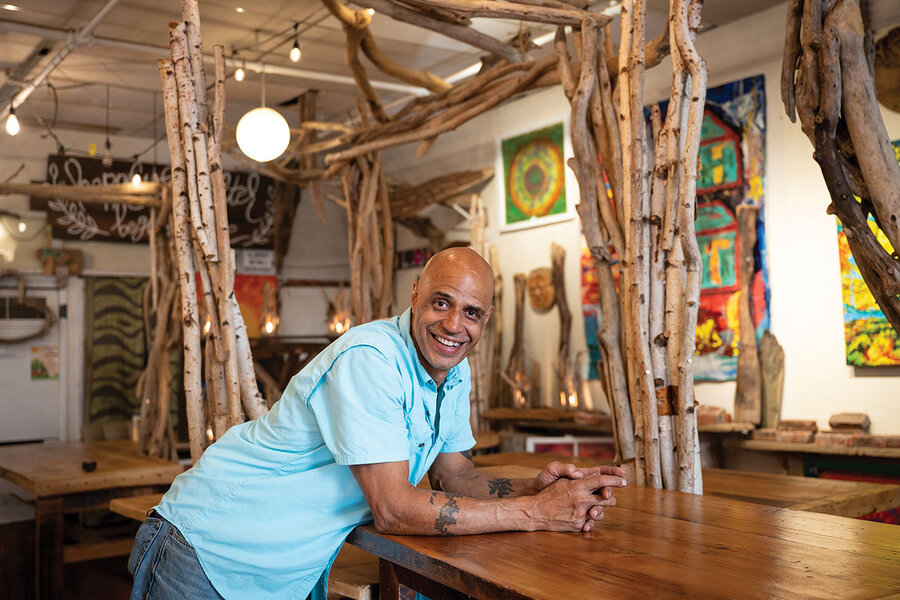
Artist Danny Killion poses in his gallery, Weathered Wood, in Troy, New York. He is one of many who have benefited from the Prison Arts Program.

Some folks have no sympathy for people in prison and would begrudge any type of cultural program that might help them. “If they wanted to do [art, music, a GED …], they shouldn’t have committed the crime.”

But many of us know that life circumstances and not always conscious decisions can accumulate until someone is in big trouble. I like the Norwegian approach to corrections, here, and the often small but meaningful work that is done in the US.

Troy Aidan Sambajon wrote about an example at the Christian Science Monitor.

On a long table, Jeffrey Greene prepares bundles of colored pencils for delivery to Connecticut state prisons. …

“Finished artwork lines the shelves of this airy warehouse, home to the permanent collection of the Prison Arts Program. Mr. Greene reaches up to a high shelf and retrieves a model RV, rendered in detail down to the windowsills. The shingles were cut from cardboard with a nail clipper and glued with a mixture of floor wax and nondairy creamer. Another artist unraveled a prison blanket and crocheted the threads into a 3D horse. …

“[Mr. Greene] has known his students for years, even decades. He can describe the medium they use and the metaphors their pieces convey, and has seen how the artistic process helps students deal with issues like depression, anxiety, and post-traumatic stress disorder.

‘Art unsettles habitual modes of thought and gives you the opportunity to think differently,’ says Robin Greeley, professor of art history at the University of Connecticut.

” ‘It can disrupt your whole routine and can create a sense of wonder.’

“The Prison Arts Program is one of the oldest correctional arts programs in the United States. It’s the longest-running program of Community Partners in Action, a criminal justice nonprofit based in Hartford. …

“Mr. Greene never intended to work in the prison system. After graduating from Hamilton College in New York, he volunteered to teach art workshops in prison on a whim. But he’s never forgotten the impression left by his first day on the job. 

“ ‘Everyone’s developing in this artificial, man-made, absurd, adversarial environment. It’s ridiculous,’ recalls Mr. Greene. …

“ ‘What drives Jeff really is the ability to show the humanity of the prison, of the people that are incarcerated,’ says Beth Hines, director of Community Partners in Action. ‘They know they can count on him when they get out.’

“In each prison he visits, Mr. Greene instructs his students to create art that only exists because they exist. He says it’s about more than finding a hobby while behind bars: ‘They are people that are coming out into the world with this incredible empathy and curiosity.’ Even if they never leave the prison system, he adds, that mindset can have a positive effect on others. …

“For years, Natasha Kinion felt like she’d been swallowed alive in prison. ‘I was guilt-ridden. I was shameful. I was really broken,’ she says in a phone interview. 

“A mother of four who has experienced domestic abuse and substance addiction, Ms. Kinion spent 13 years at York Correctional Institution in Connecticut. There she started making abstract art. 

“ ‘It took me at least the first six years of my incarceration to really open up and allow the healing process to start,’ says Ms. Kinion. …

“Mr. Greene helped Ms. Kinion send her artwork to her children. Her daughter Mayonashia Jones once received a drawing of a butterfly trying to fly with broken wings. She remembers thinking of her mom and wondering, ‘Has she always felt like that?’ …

“Since her release in 2019, Ms. Kinion has published a book about her journey, titled Stand Up You’ve Been Down for Too Long, and has opened her own digital art company, Dezigning Deztiny. 

“ ‘I never told him this … but Jeff is really my hero,’ says Ms. Kinion.

“Danny Killion had little interest in art when he was robbing banks in Connecticut. Then he was caught and sentenced to 12 years in prison. ‘Prison can be a very cold, hard environment,’ says Mr. Killion. …

“He spent 10 years in the Prison Arts Program, learning to concentrate on the artistic process and find solace in a concrete cell. 

“ ‘I’ve never met anyone who’s a more profound teacher,’ says Mr. Killion, who finished his sentence in 2007. As he found his feet in society, Mr. Greene would drop by, offering art materials and a listening ear.

“After working in construction, Mr. Killion began creating furniture using driftwood from the Hudson River. In 2013, he opened his own art studio and gallery, Weathered Wood, in Troy, New York. He traces his transformation back to those first classes with Mr. Greene. …

“This year, Mr. Killion unveiled his first public commission, a sculpture of twisted scrap metal depicting a man breaking through chains, installed at Old New-Gate Prison, a historical site in East Granby, Connecticut. Mr. Greene was there too, both men now standing outside prison gates.”

More at the Monitor, here.

Read Full Post »

Photo: Charukesi Ramadurai.
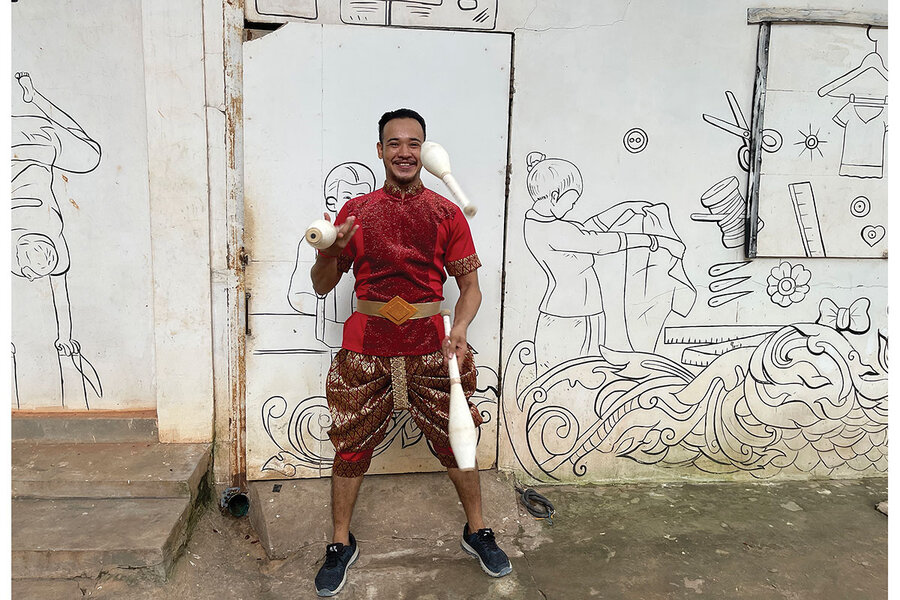
A juggler welcomes visitors as they start arriving for the evening show at Phare Circus. Like other performers, he is a student of the Phare Ponleu Selpak school in Battambang, Cambodia.

I don’t belong to the religion, but I’ve always liked Christian Science Monitor articles, and now I know why. The other day, one of the editors wrote that finding positive angles on painful realities is intentional.

The story today acknowledges the horror of the Khmer Rouge genocide and its impoverished aftermath but focuses on one of the ways people are healing.

Charukesi Ramadurai writes, “A short drive away from the famed Angkor Wat temple ruins in Siem Reap, Cambodia, another spectacle has been quietly attracting visitors for years. Every evening, under the big top at the Phare Circus, audiences watch mesmerized as acrobats and artists jump and somersault, dance and paint, execute midair flips and twist into pretzels. …

“Watching them smile under the spotlight, it is difficult to imagine that these confident young men and women come from impoverished or troubled families. Celebrating its 10th anniversary on Feb. 8, Phare Circus simultaneously provides young Cambodians with a livelihood and showcases the talents of students at Phare Ponleu Selpak, a not-for-profit arts school located in Battambang, Cambodia.

“Phare Ponleu Selpak – meaning ‘The Brightness of the Arts’ – was set up in 1994 by French art teacher Véronique Decrop, who practiced art therapy at refugee camps, and a small group of refugees who returned home from Thailand after the brutal Khmer Rouge regime ended in 1979. Apart from giving children a safe space away from crowded homes and dangerous streets, the school aims to revive arts that were decimated during the Cambodian genocide. …

“ ‘The Khmer Rouge left us with zero – 1,000 years of history of the Cambodian empire reduced to ash. More than 90% of the masters were killed or just disappeared,’ says musician and genocide survivor Arn Chorn-Pond, who founded Cambodian Living Arts, an organization that provides arts education scholarships.

“Preserving the arts ‘gives young Cambodians something to hold on to from their past,’ he says. ‘It also gives them an identity; it gives them confidence; it gives them the voice to tell their own stories to the world.’

“Tor Vutha, one of the co-founders, says the school was their way of paying it forward, or as he puts it, ‘transfer the knowledge from our heart to the community.’ He says that the organization started small and evolved along with the needs of locals. 

“ ‘Many children were suffering from war trauma and needed help,’ he recalls. ‘We had received art in the refugee camp and embodied its benefits, so we wanted to share the same with the children and youth to help them overcome their traumas and help the community rebuild.’ …

“Today, the school offers training in graphic design, animation, music, and other arts, and students are free to explore their interests. It takes in more than 1,000 children annually, many of whom have gone on to perform at Phare Circus.  …

“[Craig Dodge, director of sales and marketing at Phare Circus], who has been with Phare Circus from the beginning, remembers it starting back in 2013 with an ‘outdoor stage, plastic chairs, rain.’ It has since come a long way.

“In addition to the main circus tent, the Phare campus in Siem Reap hosts local musicians, food stalls, and a small crafts shop. Families are welcomed at the main gate by jugglers and acrobats, who give them a taste of what awaits inside. Phare Circus has produced 23 different shows over the past decade, with more than 5,000 performances in front of over a million spectators, including foreign tours in countries such as the United States, Australia, Japan, France, Italy, and Singapore.

“All shows are strongly rooted in Cambodian culture, from dances depicting rural life, to a juggling act that pokes fun at tourists, to acrobatic routines inspired by Cambodian mythology and folklore. …

“Wendell Johnson, an American retiree in Siem Reap, has been a regular visitor to Phare Circus since its first year of production. He says what keeps him coming back are ‘the smiles, the incredible athletic abilities, and the storylines’ that vividly connect Cambodia’s past to the present. He also praises the artists’ grit and determination, noting that he’s seen performers immediately redo failed stunts and succeed. 

“The Phare Circus performers train for several years at the school, building both their skills and self-esteem, before they’re eligible to work at the circus. Almost all come from large families with limited resources, and being at school keeps them away from hunger, drugs, abuse, and trafficking. The circus is also an opportunity to travel the world, and pays well. 

“The steady work has been particularly transformative for the handful of female performers, whom young girls back in Battambang look up to as inspirations. 

“Srey Chanrachana started training at Phare Ponleu Selpak in 2007 at the age of 11. Back then, her family of five depended on the irregular income of her taxi driver father.

“ ‘We used to live in a very small house where we would all sleep together, and our roof would always leak whenever there was rain,’ she recalls. Now they live in a larger, more comfortable home. 

“With her earnings, she has also enrolled in English and computer classes to further her education, and she says working at the circus has made her more confident.”

More at the Monitor, here. No firewall.

Read Full Post »

Photo: Fabrizio Bensch/Reuters.
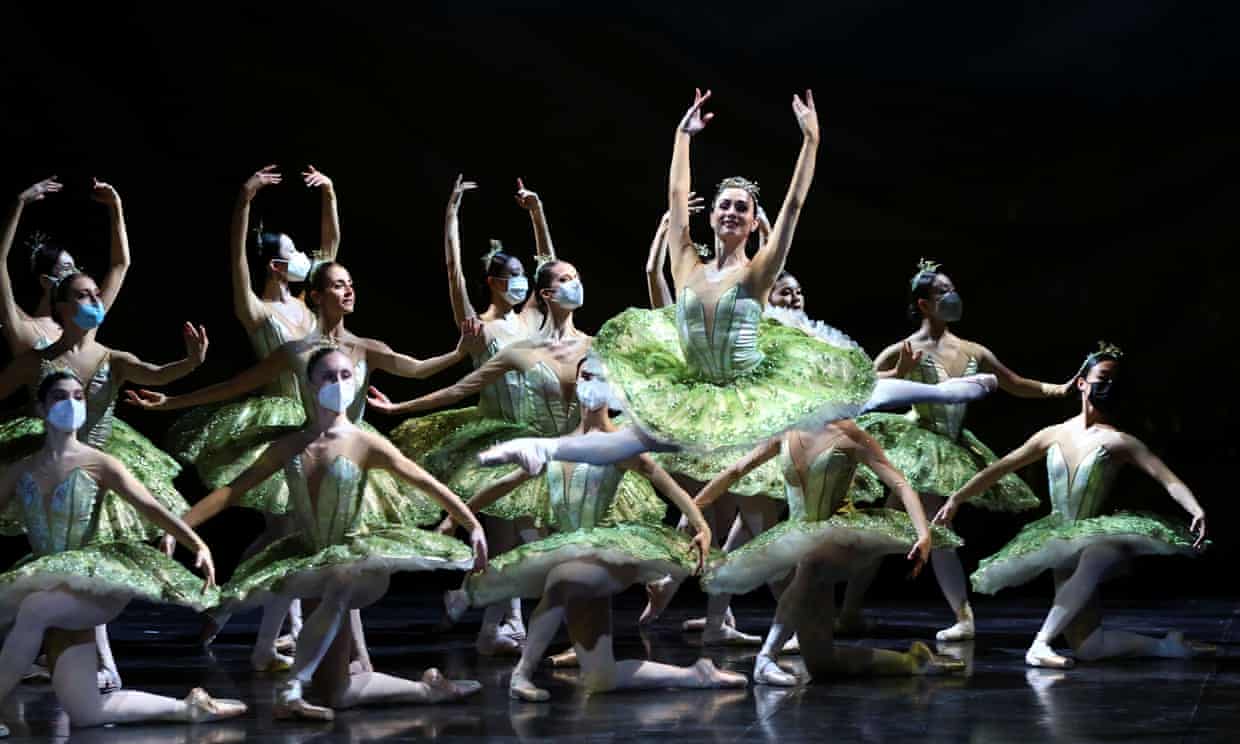
Dancers from the Berlin State Ballet during the dress rehearsal for a production of Don Quixote in Berlin last December. 

I am often surprised to see how much “Old Europe” leads the way into the future. Not only do we count on Europe to curtail the monopolistic excesses of tech companies like Apple and Google, but we look to thought leaders there for ideas on dealing with everything from climate change to improving arts access.

Kate Connolly in Berlin, Sam Jones in Madrid, Jon Henley in Paris and Angela Giuffrida in Rome have a report at the Guardian.

“Young Germans are to join other Europeans in being offered a voucher to spend on their choice of cultural offerings under a scheme launched by the government. The €200 Kulturpass, which will be made available to all 18-year-olds, has twin aims: to encourage young adults to experience live culture and drop stay-at-home pandemic habits; and give a financial boost to the arts scene, which has yet to recover from repeated lockdowns.

“Germany’s culture minister, Claudia Roth, described the cultural passport as the ‘equivalent of a birthday present’ for the 750,000 people who will turn 18 in 2023. It will bring the EU’s most populous country in line with France, Italy and Spain, which have introduced similar schemes.

“The finance minister, Christian Lindner, described the pass as ‘cultural start-up capital’ that its recipients can use within a two-year period for everything from theatre and concert tickets to books or music. It will be managed via an app and a website that provides a direct connection to a virtual marketplace of everything from bookshops to theaters. …

“Online platforms such as Amazon and Spotify have been excluded from the scheme, which places an emphasis on smaller, often local organizations, such as independent cinemas and bookshops.

Individual purchases will be limited in value to prevent someone from using the voucher to buy, for example, a single concert ticket for €200.

“Launching the Kulturpass, Roth and Lindner said that if successful, the scheme would be extended and probably rolled out to a wider age group, possibly from the age of 15 upwards.

“A similar scheme, announced last year by Spain’s Socialist-led coalition government, offers young people a €400 culture voucher when they reach 18. According to the Spanish government, 57.6% of all those who turned 18 in 2022 registered for the voucher scheme in its first year.

“France’s Pass Culture, or youth culture pass, a promise from President Emmanuel Macron’s 2017 election campaign, was trialled across the country the following year and – after a lengthy delay due to the pandemic – officially launched in 2021.

“The app-based pass gives every 18-year-old €300 to spend on cinema, museum, theatre and concert tickets, as well as on books, art materials, arts courses, musical instruments or a subscription to a French digital platform. …

“This year the €200m-a-year scheme was extended to over-15s, in two parts: a collective allowance of (depending on age) €25-30 per pupil per year available to teachers for class visits to exhibitions, films, plays, concerts or workshops, plus from €20-30 that each teenager can spend individually.

“In 2016, Italy introduced a ‘culture bonus’ of €500 for every 18-year-old under prime minister, Matteo Renzi, It has been maintained by the culture ministry despite various changes of government since then and an attempt by populist leaders to scrap it in 2018. …

“Roth said the German pass would open up a range of cultural opportunities for young people comparable with the Interrail Pass, a train ticket that has allowed generations of Europeans the opportunity to travel cheaply around the continent.

“Olaf Zimmermann, the chairman of the German Cultural Council, an umbrella organization representing more than 200 cultural associations, said the voucher was a ‘meaningful way to support both young people and the world of culture which have suffered in particular from the pandemic.’ But he said that establishing what young adults … should cover as many areas as possible, from drawing classes to the purchase of a musical instrument.”

More at the Guardian, here.

Read Full Post »

Photo: Lea Suzuki / The Chronicle.
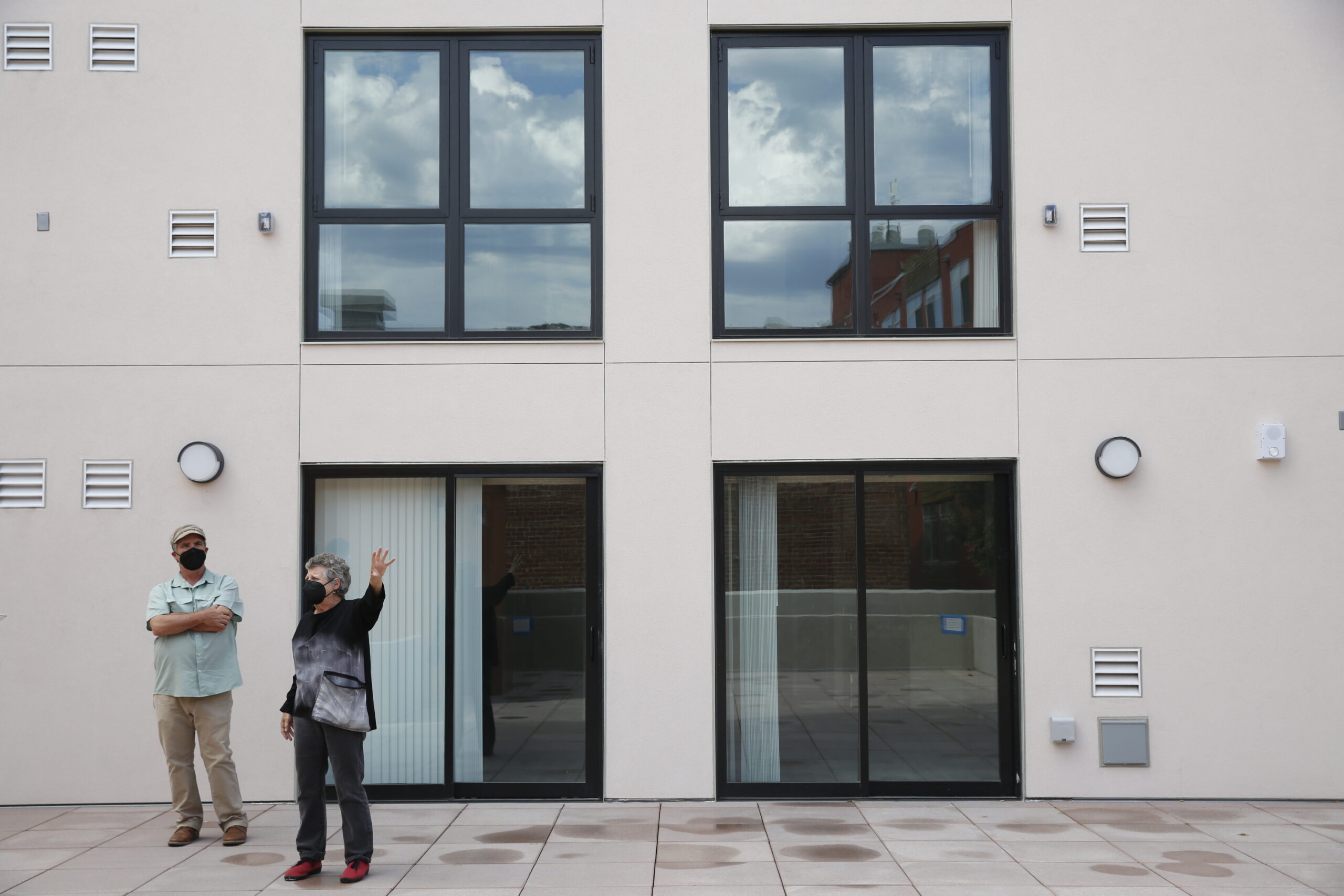
Mark Morrisette, facilities director, and Susie Medak, managing director of Berkeley Rep, at a building that will host performers in the pricey Bay area.

Every day, it seems, I read a story on how the current cost of housing affects a different group of people. Yesterday it was about elderly people in Rhode Island becoming homeless and advocates asking the governor to lift local restrictions to house them.

Today it’s about arts leaders using their characteristic creativity to figure out a solution for visiting performers in one of the most expensive regions in America.

Lily Janiak  reports at the San Francisco Chronicle, “Across the breezeway from Berkeley Repertory Theatre’s new Medak Center, fuchsia light from the set of the new musical Goddess streamed through an open loading bay door, like a portal to Narnia.

“Such a sight might frequently greet the company’s out-of-town actors, directors, designers and playwrights — as well as its fellows, Berkeley Rep’s interns — when they wake up each morning and walk next door to work from their new home.

“But the 42,885-square-foot, $26.2 million center, which plans to host a dedication ceremony on Sept. 3, isn’t just about short commutes. It marks a historic and visionary investment in artist housing in a region with ballooning real estate costs.

“Berkeley Rep’s outgoing managing director, Susie Medak, the center’s namesake and the driving force behind its construction, remembers when housing out-of-town artists cost the company $300,000 to $400,000 per year. These days it’s more like $2 million. Before the pandemic postponed the most recent season opening, Berkeley Rep had committed to paying for 7,000 nights at a nearby Marriott hotel for this past year. …

She remembers when housing out-of-town artists cost the company $300,000 to $400,000 per year. These days it’s more like $2 million.

“Assuring comfort and quiet was another objective for the Medak Center. In a university town, a living situation that looked promising during daylight hours might be beset by 3 a.m. parties.

“ ‘I can’t tell you the number of times we’ve had to move actors in the middle of a run,’ Medak said.

“The new center, located next door to Berkeley Rep’s Roda and Peet’s theater, has 45 units with capacity for 128 occupants. Fellows will share three-bedroom units. When Berkeley Rep’s not using those rooms, it plans to rent them to other nonprofits. …

“The building also features a classroom and a studio workshop space, which could host anything from movement classes to small experimental performances. … Other amenities include new storage space, a third-floor terrace with gardening beds for organic produce for residents, and a covered loading dock for the theaters so crews no longer have to load and unload sets while exposed to the rain.

“The building has key-card access, laundry on every floor and full kitchens in every unit. It’s also Gold LEED-certified for environmental efficiency.

“A trendy gray palette marks the interior. For one wall of the exterior, Berkeley Rep has commissioned a four-story mural by Oakland artist Cece Carpio to honor Ohlone peoples, on whose ancestral and unceded lands Berkeley Rep now sits.

“The theater has owned the property where the Medak Center was built since 1991, but for years it contained an empty lot and a warehouse. The project was a decades-long dream until Signature Bank helped finance it. The theater company finally broke ground in 2019.

“One comparable local facility is the San Francisco Conservatory of Music’s Ute and William K. Bowes Jr. Center for Performing Arts, which opened in 2020 and can house 400 conservatory students and 10 visiting artists, as well as 52 students from the San Francisco Ballet School. Those students pay for rooms, however, while Berkeley Rep’s fellows get free housing as part of their contract as workers.

“ ‘The Bowes Center brought together a range of our ambitions: positioning the institution right in the middle of Civic Center, providing much needed additional performance and teaching space, giving our students beautiful, safe accommodations in a place where they can work and live,’ said President David H. Stull.

“That meansfor example, a guest artist such as superstar Chinese pianist Yuja Wang might live and create and record music in the same building as students. …

“The San Francisco Ballet School has been able to increase student beds from 40 to 52 since the Bowes Center opened, said Jennie Scholick, director of education and training.  And now that students live right next to where they take classes, as opposed to a bus ride away in Pacific Heights, the school can accept younger students.

“At Berkeley Rep … the company’s first fellows [were] set to move into the new building Sept. 26, followed by visiting artists in Berkeley Rep’s Ground Floor program, and then the cast and creative team for Wuthering Heights later in the fall.

“The board’s commitment to the Medak Center through pandemic delays and uncertainty, Medak said, was ‘the greatest statement of our intent to exist on the other side of this pandemic. Building this building is a statement of optimism.’ ”

It’s not something every city will have the priorities or resources to tackle, but it’s an inspiring idea, don’t you think? More at the San Francisco Chronicle, here.

Read Full Post »

Two artists who benefited both the nation and themselves in a 1970s recession have wisdom to share about why a federally funded arts program might be a good idea as we rebuild after the pandemic.

Virginia Maksymowicz and Blaise Tobia write at Hyperallergic, “Franklin Delano Roosevelt’s Works Progress Administration and its employment of artists during the 1930s [was not] the one and only time the federal government employed artists en masse. [From] 1974 to 1982, federal funds provided employment to 10,000 artists nationwide under the Comprehensive Employment and Training Act (CETA). …

“Signed into law by Richard Nixon in 1973 during a recession, CETA was … originally conceived as a means of training unskilled workers. It was subsequently amended to allow the hiring of trained professionals in high unemployment fields. John Kreidler, an intern at the San Francisco Arts Commission, was the first to recognize how CETA monies could be directed towards artists, and he began using the funding for SFAC’s Neighborhood Arts Project. Soon, similar programs were developed in cities and towns across the country. …

“Why are the CETA artist programs less well known than the WPA projects? For one thing, they took place under less dramatic circumstances — an economic crisis not nearly as severe as the Great Depression. For another, they were decentralized: planned and carried out at the state and municipal level rather than under federal administration. For yet another, they were designed primarily for artists to provide public service (such as teaching, project leadership, or administration) rather than to produce individual artworks. …

“We worked under the largest CETA-funded arts project in the country, the Cultural Council Foundation (CCF) Artists Project in NYC. It and four associated projects employed 500 visual, performing and literary artists. … We worked four days per week in community assignments and one day per week in our studios. Some of the visual artists created community-requested public art works but, unlike the Federal Art Project, this was not a major part of the program.

“The CCF musicians performed in a number of ensembles, such as the Orchestra of New York and the Jazzmobile CETA Big Band, giving free concerts throughout the city. The media artists worked as a documentary video production unit. Many of the writers became part of a mobile teaching/performing unit called ‘Words to Go.’ …

“Our experience proved invaluable to us, not just because it provided a regular paycheck. Through working in different community settings in all five boroughs, we learned how to interact as artists with a wide range of institutional bureaucracies, ethnic groups, and economic classes. …

“When it came to assignments, CCF acted as matchmaker. Community organizations, schools, museums, theaters, and other nonprofits submitted proposals for CETA artists. While the federal government provided the funds and CCF wrote the checks, it was the sponsor’s responsibility to provide the space, materials, and assistance that their proposal required.

“[During] the first year, Blaise was a photographer for the project’s documentation unit along with two other photographers, three writers, and an archivist. He traveled to artists’ studios, to performances and exhibitions, to workshops and classes, and to official and unofficial events related to the project. … In his second year, with the closing of the documentation unit, he was transferred to the general photographers’ pool and worked in three community projects. One was for the Richmond Hill Historical Society, which uses his photographs on its website to this day.

“Virginia experienced a variety of placements ranging from teaching children, to renovating an old school, to assisting in museums to creating public artworks. Her work for an after-school program in the Bronx resulted in a collaboration with Charles Biasiny-Rivera at En Foco. They jointly mounted an exhibition of drawings made by the children and photographs made by professionals. …

“She was also part of a crew of 10 artists assigned to the Brooklyn Arts and Cultural Association. … Under the direction of its founder, Charlene Victor, they converted the former St. Boniface’s School on Willoughby Street into a performance and art space. Their efforts resulted in what came to be known as BACA Downtown, a venue that gave Spike Lee, Danny DeVito, and Suzan-Lori Parks their starts.

“Across the country, CETA artists had similar experiences. … Like the WPA, the CCF Artists Project helped lay a foundation for the future careers of individual artists. It connected artists to communities and to each other. Many of us were able to transition out of the gig economy into sustainable positions. …

“CETA particularly benefited African-American, Latinx, Asian, and women artists, not only as individuals but in terms of kickstarting and stabilizing organizations, some of which remain active today. … Museums and cultural institutions across the country benefited from the CETA funding of support staff. In NYC alone, there were 300 CETA employees in maintenance, security, and other positions. The Philadelphia Museum of Art had at least 38 CETA staff lines. ….

“CETA’s employment of artists was money well spent. The investment was returned to society manyfold in the form of taxes paid, services rendered, real estate values increased, neighborhoods revived, and an overall economy made more vibrant. …

“What would it take to allow a jobs program like CETA to happen again? The will to do so, along with the right approach. … The Biden administration will have to address massive un- and under-employment across all sectors of society. …

“An updated version of Nixon’s ‘new federalism’ might help CETA-like legislation through Congress. Another benefit of the CETA approach is that it relied upon partnerships between government entities and private nonprofits. Such partnerships, intended to increase efficiency within the public sector, often enjoy bipartisan support. … What happened 40 years ago can happen again.”

More at Hyperallergic, here.

Read Full Post »

I’ve been learning recently, both from my daughter-in-law and online, that parents frustrated with the imperfections of pandemic school are complaining about the problems to teachers even though it’s mostly not something teachers can control.

Meanwhile, teachers adapt. They’ve been going beyond the extra mile to make everything work. An ESL teacher I work with often spends long, unpaid hours solving technical problems, and my husband’s orchestra-teacher niece in North Carolina rarely finishes her day before 10:30 pm.

Max Tapogna writes at Oregon Artswatch about what arts teachers in his state are doing with limited resources for remote instruction.

“One by one, students pop into the classroom, each in a respective Zoom window. Trisha Todd, a drama teacher at Portland’s Grant High School, waits a few minutes until everyone in her Beginning Theatre class has arrived. Todd is teaching from her office at Grant, which is full of theater tchotchkes: a turquoise folding screen, a poster for Sarah Ruhl’s play Orlando, and what looks like poor Yorick’s skull. Todd’s students, however, are scattered around the city. …

“Class begins, inconspicuously, with a warmup. First some stretching. Then Todd asks the students to go around and share the musical artists they’ve been listening to recently. More than one student mentions Billie Eilish; another says he’s been blasting a lot of classic rock.

“ ‘I’m doing whatever I can to keep them engaged,’ Todd says. ‘We’re just hoping to keep them with us until they get back.’ …

“When classrooms were shuttered due to the coronavirus. Arts educators, especially those with subjects in the performing arts, were forced to grapple with ways to reach students from a distance.

“ ‘It was really hard,’ says Lisa Adams, a music teacher at Duniway Elementary School. … ‘Participation was not required. There wasn’t a unified way that every school was handling it.’

“ ‘Spring was very doomy gloomy,’ says Laura Arthur, a music teacher on special assignment for the district. ‘I feel like the fall is the second, third stage of grief. We’ve reached acceptance and solutions.’ …

“Mary Renaur, a visual arts teacher at Mt. Tabor Middle School … created online tutorials on how to make art supplies at home, like glue and paint, from materials that could be found in a kitchen or recycling bin. …

“Similarly, Adams has taught her students at Duniway to craft their own instruments from household objects, like a ‘guitar’ made from a berry container and rubber bands. One student, Adams says, filled a paper towel tube with beans and fixed tape to the edges. …

“Of course, the technology comes with its complications. On the day I spoke with Renaur, she described how a student’s Chromebook unexpectedly had stopped working.

When she learned the computer wasn’t working, Renaur hopped in her car and drove to school, picked up a new computer, dropped it off at the student’s home, and drove back to her house in time for her next class.

“ ‘Between classes, I had forty-five minutes,’ Renaur says. …

“Other adjustments have been less stressful. Chris Meade, who teaches drama and music at Lent K-8, says, ‘I did a whole assignment on taking silly selfies just to get students used to using a camera.’

“At the beginning of the school year, Meade surveyed his students to get a sense of their preferences for learning music virtually. ‘The majority of my kids were really uncomfortable singing by themselves into a computer,’ Meade says. …

“Instead, Meade shifted his focus to emphasizing music appreciation and literacy. This fall, for example, students are learning about the various musics of Latin America. District-wide, arts classes are now structured around themes like emotional resilience and racial equity. That change, Meade says, has been welcome.

“He says, ‘It’s nice to [explore] all these other aspects of music that kind of get glossed over during the regular school year.’

“For theater, Todd says her goal is less forcing her old curriculum into a new format than tailoring her subject to online learning. ‘We can look at history, we can look at Shakespeare, we can look at the Greeks,’ Todd says. ‘We could just read plays for a semester.’

“Instead of directing a fall play, Todd is organizing a 24-hour devised theater piece. The festival will showcase a play written, directed, and acted entirely by students. ‘It’s supposed to happen really quickly,’ says Todd. ‘You go with your instinct. You don’t have set limitations. You create them.’ ”

Read at Oregon Artswatch, here, how the typical isolation of arts teachers has been altered by pandemic isolation, which in at least one district has led to a collaborative way of working that will likely outlast lockdowns.

Read Full Post »

Photo: Ken Hofheinz
Brandon Steppe, the founder of the David’s Harp Foundation, received a grant for his work using music education and multimedia training to help at-risk youth.

When philanthropists step up to fill a need, it may be a sign that our tax money is not being used in some important ways. Arts education, for example, provides so many benefits to students that it really should be available in every school, but too often it’s the first thing to go when districts are underfunded.

So hooray for philanthropists filling a gap! Lauren Messman wrote at the New York Times, “The Lewis Prize for Music, a new philanthropic organization focused on fostering music education and career development in young people, announced its first slate of winners on [January 14]. The $1.75 million will be awarded to the leaders of nine organizations in eight states.

“The prize, which is split into three categories and includes both long-term and single-year support, was founded in 2019 by the philanthropist Daniel R. Lewis.

“ ‘My vision is to ensure opportunities to learn, perform and create music are available to all young people,’ said Mr. Lewis in a statement. ‘Ideally, this would be happening in every school, but that isn’t the case, especially in low-income and historically marginalized communities.’

“The Accelerator Award, which provides $500,000 for multiyear support, was given to Community MusicWorks, which provides classical music educational programs in Providence, R.I.; My Voice Music, which brings songwriting, recording and performance mentorships to mental health treatment and detention centers in Portland, Ore; and The David’s Harp Foundation, a San Diego-based organization that works to develop job skills through music with youth in the juvenile justice system. …

“ ‘What we’ve noticed is that when these young people come from being incarcerated back into the community, there’s a gap in our service there,’ [Brandon Steppe, the founder,] said in a phone interview. He added that the rest of the money will go toward building ‘arts-based diversionary programming in the community,’ in an effort to keep youth out of the juvenile justice system.

“Winners of the Infusion Award, which provides $50,000 over one year, include programs aimed at inspiring Native American music educators and composers, bringing traditional Mexican music education to the children of immigrants, providing music and entrepreneurship training for young musicians of color in Detroit and building support for the next generation of New Orleans brass band musicians.” More at the Times, here.

I liked reading further about one of the Infusion Award winners, the Native American Composer Apprentice Project. The Grand Canyon Music Festival website explains, “Since 1984, the Grand Canyon Music Festival has been dedicated to bringing the world’s finest musicians to Grand Canyon National Park in celebration of the power and beauty of this magnificent World Heritage site.

“Since 1985, the Festival has extended this gift of music to the students of northern Arizona’s under-served and rural communities, primarily at schools on the Navajo and Hopi Reservations. In 2001, the Festival initiated its Native American Composers Apprentice Project (NACAP) to extend its outreach to training talented Native American students in the art of composition. NACAP develops musical literacy and enhances critical thinking and decision making skills through the study of music composition. It introduces students to European ‘classical’ music techniques, develops their understanding of their own musical heritages and how to use that knowledge to develop their own compositional voices.”

Read Full Post »

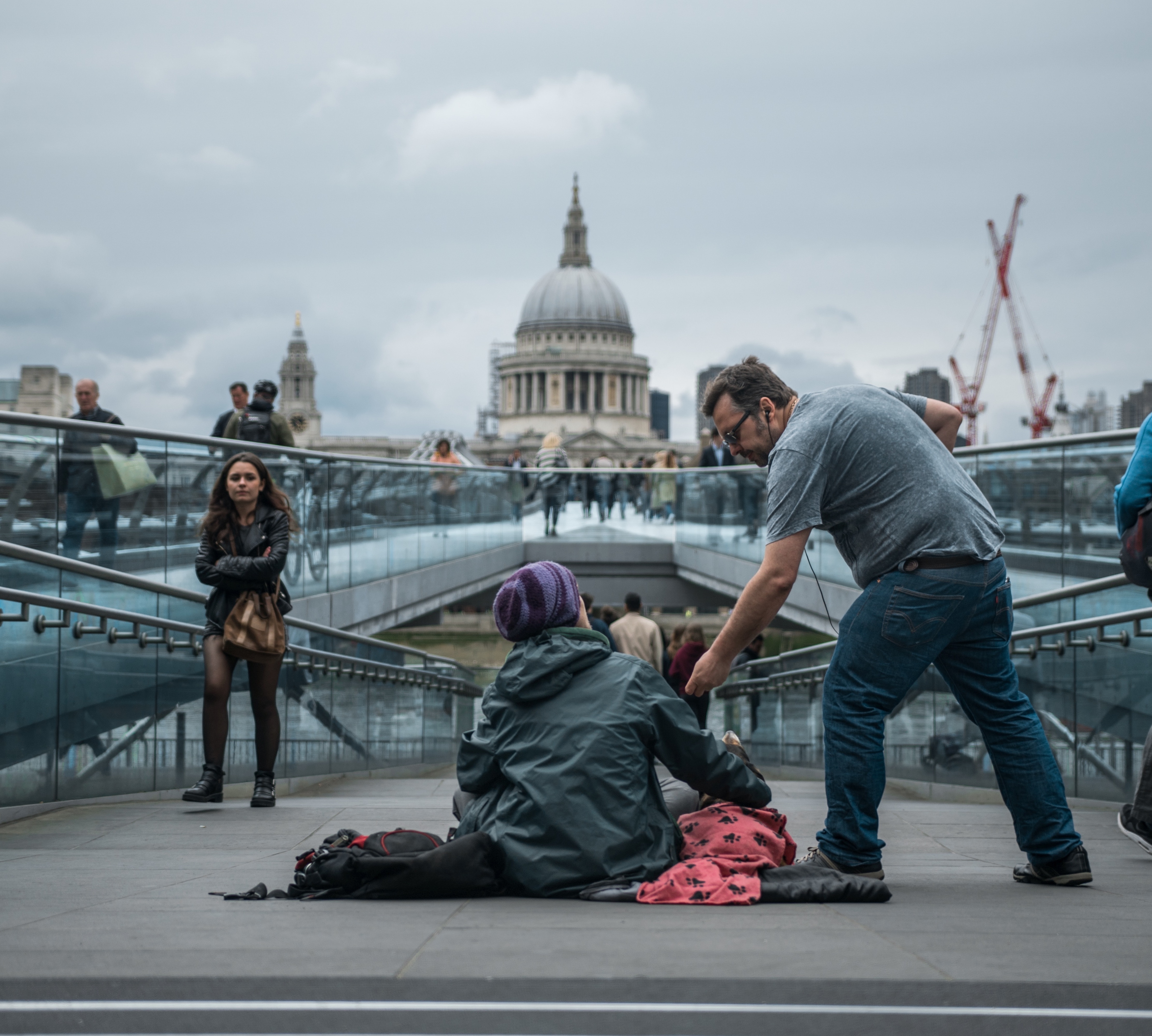
Homeless Young People

tom-parsons-pVmjvK44Dao-unsplash

Photo: Tom Parsons on Unsplash
Concern for homeless youth continues to grow.

Since I read Sarah Smarsh’s memoir Homeland, I have had to recognize that my difficult childhood was not as difficult as many other people’s. And my difficulties were never exacerbated by the relentless poverty Smarsh’s farming family experienced despite always working hard.

Still, I identified with some aspects of her story, like the wish to run away. In the book, Smarsh would decide to live with a different relative from time to time, which seemed to help her get her head together for a while. I never ran away, but even as an adult, I used to fantasize about ways a child might do that successfully. I finally concluded it’s not possible, despite The Boxcar Children and their apparent self-sufficiency.

It may not be possible to do so successfully, but children and teens do run away. Tristan Hopper and Kaitlin J. Schwan write about youth homelessness in Canada at The Conversation and suggest some ways to help them.

“Despite decades of policy and programming, youth homelessness remains an urgent issue in many communities across Canada. [Twenty] per cent of people experiencing homelessness are youth. Particular groups — Indigenous youth, racialized youth and youth who identify as LGBTQ+ — are at increased risk of homelessness due to intersecting forms of structural and systemic inequity. …

“Given this, there has been an increased focus on homelessness prevention across Canada and globally. … Research shows that meaningful and accessible activities like sports and arts can have significant impacts on youth social connectedness, better developmental outcomes, improved mental health and recovery from trauma. …

“Youth homelessness is a complex social issue affecting people between the ages of 13-24 who are living independent of parents or caregivers and do not have the means to acquire safe and secure housing. …

“A key component of youth homelessness prevention is not only preventing youth from experiencing homelessness in the first place, but also preventing young people from re-entering life on the streets. …

“Social exclusion, loneliness and limited social networks are particularly common issues for those who have recently left homeless status. These experiences powerfully contribute to mental health decline, substance use, feelings of hopelessness and subsequent returns to homelessness.

“Young people exiting homelessness may be housed in locations that are isolated from services, community centres and childcare. This distance can create barriers to accessing meaningful activities and can present challenges to social and political inclusion.

“All young people deserve stable and safe housing, and also the opportunity to be engaged in meaningful activities, [which include] resources that encourage social inclusion … Social inclusion may also mitigate risks of eviction. For example, neighbourhood groups may help navigate conflicts with landlords. This inclusion may help in the development of a new identity as young people re-articulate their sense of selves in a new community.

“Some studies show that youth experiencing homelessness view artistic activity and sports engagement as absolutely critical to their wellbeing, recovery and exits from homelessness. … Recreational sport participation can have several physical, psychosocial, emotional and developmental benefits. … However, for sport programming for homeless youth to be purposeful, the social, political and cultural barriers to participation must be addressed, including time and place of programming, cost of access and cultural acceptance.

“Research has shown that for Indigenous youth, re-connection with cultural practices — including sports — can be a critical component in connectedness and meaning. … We need to [invest] in frontline prevention programming that includes sports and arts activities driven by the needs and interests of the young people they serve.”

More at The Conversation, here. (I believe social scientists like these are doing good work, but their writing is awfully dry. For more-engaging and specific writing on youth in trouble, try UTEC, here.)

Read Full Post »

Photo: Metro Arts
This
student is engaged in a restorative justice program that uses the arts to reach young offenders. Cecilia Olusola Tribble, Community Arts Coordinator of the Metro Nashville Arts Commission, says, “We have been able to work and watch miracles happen every day.”

My friend Diana was the first to explain to me the concept of restorative justice, and I wrote about it here. The idea is to bring a young perpetrator and his or her victim together, if the victim is willing, to learn about the effects of the crime and make restitution. When the process works, the young person turns aside from wrongdoing and keeps a clean record. Today I have a story about how the arts can be part of a restorative justice outreach to youth who are already incarcerated.

Cecilia Olusola Tribble writes at ArtsBlog, “The purpose of the Restorative Justice + the Arts program is to enable artists and arts organizations to provide dynamic program opportunities for youth and families who have interacted with the criminal justice system. Our aim is to equip teaching artists with the tools they need to bolster their practice in ways that lead youth toward productivity, resiliency, and well-being.

“In 2016, photographer and musician Nduka Onwuzurigbo heard about the transformation happening in the juvenile justice system and wanted to create a project with the youth in the detention center.

“Since her election in 2014, Judge Sheila Calloway has been restructuring the juvenile justice system in Metro Nashville/Davidson County to include resources to divert children and families in trouble, providing them creative paths toward a better, brighter, and more productive future. …

“[She] mobilized her team to make sure the children in the detention center were able to participate in the photography project. As that singular project was seeing success with the youth who were incarcerated and had a positive community response, Metro Arts in Nashville approached the judge about establishing an ongoing partnership. Since then, Metro Arts and the Juvenile Court in collaboration with the Oasis Center have been able to build the Restorative Justice + Arts program.

“It costs roughly $88,000 to incarcerate one youth for a year in Nashville. For the same amount of money, we have been able to pitch, build, and pilot the Restorative Justice + Arts program. …

“To start the program, Metro Arts held focus groups with our artist community, grantees, arts educators, and other stakeholders. … Next, Metro Arts spent time in the various departments in Juvenile Court. The focus in the court is in the process of shifting from solely emphasizing penalty to giving children and parents the tools to restore healthy relationships and communities. Judge Calloway has explained Restorative Justice in the following way:

‘Restorative Justice moves the conversation from “Who did the crime & what do they deserve?” to “Who has been harmed?”, “What are their needs?” [and] “Whose obligation is it to fix their harm?” ‘ …

“In FY 2018, the artists have been able to serve 424 youth who have been incarcerated, had other involvement with the court, or who are deemed at-risk due to poverty, school attendance, neighborhood crime, poor school performance, or living in an area where fresh food is scarce. …

“It is because of the partnership between multiple government agencies, youth-centered organizations, arts organizations, and artists that we have been able to work and watch miracles happen every day. We have witnessed youth leaving the detention center and seeking out their yoga and dance teacher. … We have watched the miracle where former gang members admit to shooting at each other, but theater and painting classes have bonded them together as brothers with arms entangled. Our hearts are full at experiencing young folks arguing with the characters of an August Wilson play to make a better choice. …

“This spark came from one artist who asked the question and made the difference.” One and one and 50 make a million. More here.

Read Full Post »

Photo: Jackson Food and Art Festival
A food festival in Mississippi incorporates the arts to address nutrition issues.

It’s a good thing that philanthropies are able to support projects that improve lives in communities, because low-income municipalities can’t afford to tackle as many concerns as they’d like. Among the initiatives that Bloomberg Philanthropies supports are arts programs that address human needs.

As ArtForum reports, “Jackson, Mississippi, is the latest city to be awarded a $1 million Public Art Challenge Grant from Bloomberg Philanthropies. … The funds will support the project ‘Fertile Ground: Inspiring Dialogue About Food Access,’ which aims to inform policy related to nutrition by using art as a medium to communicate the complexities of the issue in the city. Local and national artists, landscape architects, filmmakers, farmers, chefs, nutritionists, and community members will be invited to collaborate on a citywide exhibition featuring installations and performances, as well as other programming.

“The initiative will activate public streets, community gardens, a local elementary school, and a vacant building, which will be converted into exhibition space and a food lab with a pop-up kitchen, to address challenges stemming from the proliferation of fast food restaurants in the area. According to the Clarion-Ledger, many areas of Jackson are considered food swamps where there is almost no access to grocery stores.

Due to the overabundance of fast food, the city has the second highest obesity rate in the nation and the highest rate for children between the ages of ten and seventeen.

“ ‘The city is overjoyed to have been selected in this process,’ Jackson Mayor Chokwe Antar Lumumba said in a statement. ‘This was a highly competitive grant.’ …

“Among those participating in the project are artists Adrienne Domnick and Kara Walker; filmmakers Keegan Kuhn and Roderick Red; Mark Bittman, the country’s first food-focused op-ed columnist for the New York Times and a faculty member of Columbia University’s Mailman School of Public Health; chef Nick Wallace; clean eating advocate Ron Finley; and landscape architect Walter Hood.

“In February [2018], Bloomberg Philanthropies invited mayors of US cities with thirty thousand residents or more to submit proposals for temporary public art projects that address important civic issues.” More here.

And click here to read descriptions of other winning projects, including one to help heal the community after the Parkland school shooting: “The City of Coral Springs in partnership with the City of Parkland proposes developing five temporary installations to bring the community together in collective healing and reflection following the Marjory Stoneman Douglas High School shooting in February of 2018. The artworks will serve as the community’s vision of change and hope for the future. The project will draw on and support Coral Springs Museum of Art’s ‘Healing with Art,’ an art therapy program which began as an immediate response to the shooting.”

Read Full Post »

Older Posts »