Feeds:
Posts
Comments

Posts Tagged ‘culture’

Photos: Viaggio nei Fori
Special multimedia light shows will be enriching Roman history at the forums of Caesar and Augustus until November 11 this year.

Recently, I was talking to the amazing Margaret, who was diagnosed with my sister’s horrible cancer more than eight years ago and has never had a recurrence. She had just returned from volunteering with a Jesuit refugee organization in Rome and showing her nephew the sights of the city. She described how they were given access to a special Mass in the crypt below St. Peter’s Basilica, where recent archaeological testing suggests that Peter’s bones really were buried.

I thought of Margaret and her nephew as I read this article about a initiative to bring history alive for Rome’s many visitors.

Livia Hengel has a report at Forbes. “Rome is a city filled with cultural heritage. Every building, statue and column has a story to tell, but it takes a vast amount of knowledge to piece together the city’s nearly 2,800-year-old history. … Where do you even begin? …

“From video projections cast upon ancient walls and multimedia light shows to virtual reconstructions revealed through 3D visors, technology is being used to help tell the story of Rome in a more concrete and compelling way.

“A large part of this trend can be attributed to the pioneering work of Paco Lanciano, a Rome-born physicist with a passion for cultural communication and a keen understanding of the learning process. Namely: if you make education fun, it sticks. ‘You need to strike a balance between creating something spectacular to hold an audience’s attention while also helping them learn in the process,’ Mr. Lanciano tells me. …

“Together with Piero Angela, a leading Italian television host and science journalist, Mr. Lanciano designed an immersive multimedia visit of ‘Le Domus Romane’ within Palazzo Valentini over a decade ago – the first time technology was used to enhance an archeological site in the capital. During the virtual tour, visitors can see baths, furnishings and decorations brought to life through digital projections that enhance the archeological site without compromising it. …

“After the success of Palazzo Valentini, Mr. Lanciano and Mr. Angela worked together again to create Viaggio nei Fori, two popular shows that cast the stories of Emperor Augustus and Julius Caesar onto the ancient forums each evening during the summer months. These screenings have become a mainstay of Rome’s summer entertainment and are on view this year from April 21 to November 11 2019.

“Now Mr. Lanciano has turned his attention to an even more ambitious project with Welcome to Rome, a 30-minute introduction to the city, through a stirring film and 3-dimensional models of some of the city’s major landmarks. The show begins thousands of years ago when Rome is home to a handful of tribes scattered across its seven hills and takes the viewer on a journey through the Roman Republic, the Roman Empire, the Middle Ages, the Renaissance and then finally the present day. ‘It was quite a challenge to synthesize the story of Rome, but the feedback has been very positive,’ ” says Lanciano.

More at Forbes, here.

This summer’s light shows in Rome are available in eight languages: Italian, English, French, Spanish, German, Russian, Chinese, and Japanese. (Gives you an idea of where the city expects most visitors to come from.)
Read Full Post »

Photo: Annie Tritt for the New York Times
Muriel Miguel, a founder of the feminist Native American collective Spiderwoman Theater, is considered a grandmother of the Indigenous theater movement in the United States and Canada.

I’ve been interested to read how indigenous peoples around the world are reaching out to one another and starting to benefit from the strength of numbers. One result has been the emergence of international festivals staking out a place for native people in the arts world. I’m late with this story, but I wanted you to know about one such festival. It took place in January in New York City.

Siobhan Burke at the New York Times noted in particular that a grandmother of the Indigenous theater movement in the United States and Canada, Brooklyn-born playwright Muriel Miguel, was scheduled to be “among the 30 or so artists participating in this year’s First Nations Dialogues New York/Lenapehoking. (Lenapehoking is the homeland of the Lenape, the original inhabitants of the area encompassing New York City.) Taking place at multiple downtown theaters, the Dialogues bring together Indigenous performing artists from Australia, Canada and the United States for a week of performances, discussions and other gatherings, beginning Jan. 5. …

“In drawing attention to the breadth of contemporary Indigenous performance — with works spanning dance, theater, performance art and genres in between — the Dialogues are something rare for New York, if not unprecedented. Describing what to expect is not easy and not intended to be. In deciding what to program, the chief organizers — [Merindah Donnelly, an organizer of the series and the executive producer of BlakDance in Australia], the choreographer Emily Johnson, and Vallejo Gantner, the former director of Performance Space — set out to challenge a notion they often come across, that Indigenous performance fits any single description. …

“Ms. Donnelly said. ‘The people making it are Indigenous, but Indigenous is not a genre.’ …

The offerings here — many of which deal with themes of trauma, grief and healing — include Ms. Miguel’s Pulling Threads Fabric Workshop, in which storytelling and quilting serve as tools for mending old wounds. …

“While the tone may be somber at times, there is also much to celebrate. SJ Norman, an Australian artist of Wiradjuri and Wonnaruah heritage, said in an email that the opportunity to gather in New York ‘feels like an honoring of the continued existence of our peoples in the big city, as well as the dynamism and globalism of our peoples, which is absolutely vast.’ …

“A Native Alaskan artist of Yupik ancestry, Ms. Johnson has been working tirelessly to counter what she calls ‘the perceived invisibility’ of Indigenous performing artists, particularly in the United States. …

“One approach to bringing the United States up to speed is an ambitious pilot program, the Global First Nations Performance Network, which will be in development during this year’s Dialogues. … The network also requires, of each presenter, a commitment to undergoing what Mr. Gantner calls ‘a kind of decolonization process.’ …

“Ms. Johnson sees this year’s Dialogues as a microcosm of what the network may eventually accomplish, including opening up international exchange. For the Australian choreographer Mariaa Randall, whose ‘Footwork/Technique,’ [explores] the footwork of Aboriginal dances, a highlight of the Dialogues is the chance to simply talk and listen with peers from around the world.

“ ‘In our countries we can become kind of siloed,’ she said. ‘I want to be able to sit with and see and hear from other First Nations females: what their struggles are, their achievements, and how they continue to keep their culture and their practice together, to keep moving forward, because sometimes it is really hard.’ ”

More at the New York Times, here.

Read Full Post »

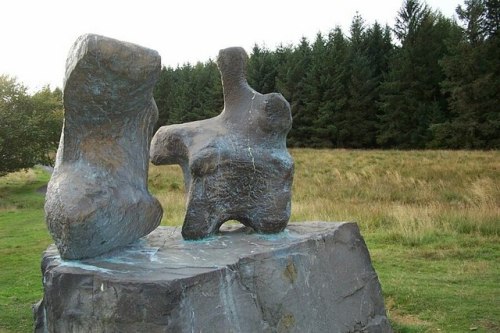
moore_geograph-418511-by-elliott-simpson

Photo: Elliott Simpson
“Two Piece Reclining Figure No.1,” by Henry Moore, Glenkiln Sculpture Park in southwest Scotland. Scotland’s government has proposed a policy that, among other things, would give ordinary Scots a greater say in shaping the cultural life of their communities.

What I remember about a trip to Scotland decades ago is Loch Ness, the glowing quality of sunlight in Inverness, how Edinburgh’s castle looms over the city, sheep on the hills, sheep crossing narrow highland roads.

But there is more to Scotland, and now the government is working to give communities a greater say in how the country’s culture is presented to the world.

Christy Romer writes at Arts Professional, “Ensuring culture is fundamental to Scotland’s social and economic prosperity is a core aim of the country’s first culture strategy in over ten years. …

“The draft document outlines plans for a new Government cultural adviser and new funding models for the sector. In addition, it aims to give people a ‘greater say’ in shaping the cultural life of their communities through participatory models of decision-making and community ownership.

“ [The draft strategy says Scotland] ‘places culture as of equal importance alongside other areas such as the economy, education, environment, health and tackling inequality, and values culture for the unique perspectives it can bring.’ …

“One of the major initiatives announced is a new cultural leadership post within Scottish Government, which would be supported by strategic thinkers from the culture sector and beyond.

“This figure would be responsible for joining up thinking across Government and with major stakeholders. They would aim to respond to big societal issues and make culture central to progress in areas such as health, the economy and education.

“Other initiatives include developing a national partnership for culture, which would see the sector work with academics to develop new approaches to measuring and articulating the value of culture.

“Partnership working with businesses, schools and care homes is also seen as key to creating opportunities for more people to take part in culture. The document …  suggests using Scottish Government powers to generate a collective responsibility to support culture in the long term.’ This could involve the National Investment Bank or devolved tax and legislative powers.”

Oh, dear. Already I see trouble ahead. The intentions are good, but that wonky document suggests to me that artists were not involved in the writing and may not be helping much to carry out the policy. Hmmm. I’m wondering if government’s role in a country’s culture should be limited to funding it.

For example, consider what Claire Selvin reported in October at ArtNews about New York City: “With largest-ever allotment for department of cultural affairs, New York City Grants $43.9 million to arts programs.” That’s putting your money where your mouth is. I realize some of the funds may get lost in the bureaucracies of the various recipient arts organizations, but I think I’d rather have them working on the ultimate allocations than a government entity.

More on Scotland at Arts Professional, here.

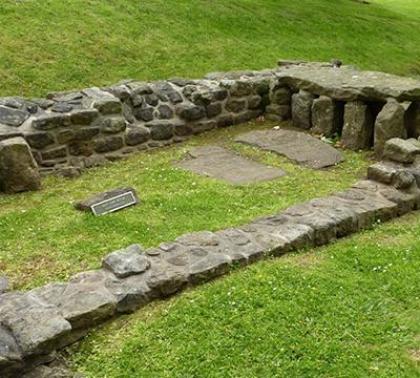
One of Scotland’s historical highlights is the Antonine Wall, built by the Romans across what is now the Central Belt of Scotland. These ruins mark the northernmost frontier barrier of the Roman Empire.

materials

Read Full Post »

p06hrbyj

Photo: PjrTravel/Alamy
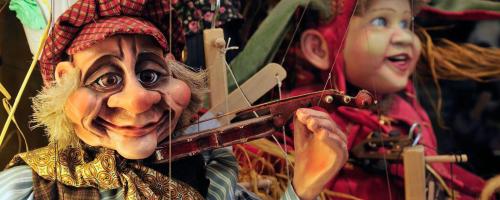
The act of building puppets has long been a form of protest for the Czech people.

Never underestimate the power of the arts to affect the course of nations. In this story, puppets kept the Czech language alive during a period of repression by German speakers.

Jacklyn Janeksela writes at the BBC, “It was thanks to the humble puppet that the Czech nation – and its language – was inadvertently saved.

“In the 17th Century, when the kingdom of Bohemia was under Habsburg rule, the Czech language almost disappeared. …

“When the Protestant court left Prague in the early 1600s, the city fell into decline for almost two centuries. The new ruler, Ferdinand II, did not tolerate non-Catholics, viewing Protestants as a threat to his faith. Czech locals, mostly peasants and working class people, were forced to speak the German language of their invaders. Soon after, intellectuals, who had initially resisted the German language, followed suit. Even Czech actors began to perform in German as an official mandate. Czech became a mere dialect, and would have slipped into oblivion had it not been for some unassuming pieces of wood.

“The act of building puppets has long been a form of protest for the Czech people. Seventeenth-Century wood-carvers, who were more versed in sculpting Baroque seats for churches than human facsimiles, started making puppets for the actors of Bohemia soon after Ferdinand II came to power, as puppets were the only remaining entities that had the right to speak Czech in public places. While the rest of the country and its people adhered to the newly imposed German language, wandering actors and puppet-masters spoke through the puppets in their native Slavic tongue.

“It might seem unlikely that a few hundred puppets and puppet-masters could safeguard a language, especially through a loophole, but the people’s last remaining legacy to their past was tied to the puppet’s strings.

“It’s easy to see why these marionettes have found a home in Czech hearts, and why the magic of puppets continues to permeate the city. …

“In the streets, puppeteers make magic happen. I watched a puppet show in a charming cobblestoned square, where the puppet-master wore the velvety cap of a pageboy, pierced by a single plume that swayed along with the puppet’s movements. He used his puppets to beckon bystanders. Melodic medieval music accompanied the dance of a peasant male and young princess, a Czech love story with a plot twist that favours the underdog, the peasant who wins the heart of a far-fetched royal love.” Read more at the BBC, here.

With minority languages threatened around the world today, it’s worth remembering that a culture and way of life can be preserved through arts like puppet-making. See also my blog post on the historically important role of shadow puppets in Armenia, here.

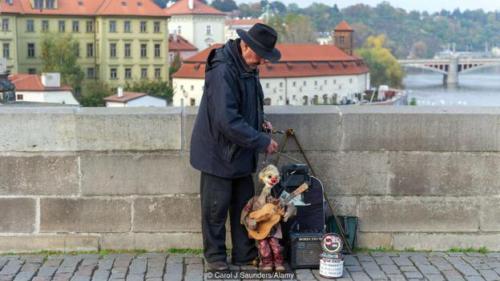
Photo: Carol J Saunders/Alamy
Puppets have a special place in the hearts of the Czech people. For one thing, they saved the language in the early 1600s when German-speaking rulers prevented everyone but puppets from speaking Czech in public.

p06hrc3s

Read Full Post »

13-mobilehomestead-atsidewalkdetroit-2018-720x405

Photos: Museum of Contemporary Art Detroit (MOCAD)
Visitors to the Sidewalk Festival enjoy a µTopian Dinner with Hinterlands performers outside the Mobile Homestead.

Kristina and I were discussing the other day all the different kinds of yoga that are popping up. Suzanne’s friend Liz tried goat yoga. Kristina had heard of knitting yoga and laughter yoga.

Similarly, it seems like I’m constantly hearing about new ways of extending the boundaries of theater. In this story from Hyperallergic, sharing food with audiences in person and through Skype is the focus.

As Sarah Rose Sharp writes, artists are practiced “in finding ways to forge interpersonal connections through gesture, metaphor, and performance — or sometimes just by inviting people to dinner.

“ ‘Food is so interesting, because it evokes memory, and it’s a multi-sensory experience,’ said Liza Beilby, in an interview with Hyperallergic during preparations for one in a series of µTopian Dinners, staged by Detroit-based experimental theater ensemble The Hinterlands and co-produced with Poetic Societies, a performance lab fostering cross-cultural and poetic connections. …

“Since 2017, the group has been staging permutations of the µTopian Dinners as a subset of a larger work, The Enemy of My Enemy, a hybrid, digital-live performance project that simultaneously links performers and audiences in the US and so-called ‘enemy’ nations of China, Russia, and Iran. …

“The Hinterlands views the µTopian Dinner projects as a kind of a laboratory to investigate the cultural values that are reinforced through eating, meals, and cooking. [In August], µTopian Dinners took literally to the streets, as the ensemble presented a four-part performance and rotating series of events, during the homegrown and wildly popular Sidewalk Festival of Performing Arts. …

“[The group] — as well as their foreign counterparts tuning in from Moscow, Bejing, and Tehran — operated out of the modular traveling unit from Mike Kelley’s Mobile Homestead, which is permanently housed at the [Museum of Contemporary Art], making one of the rare forays into the farther-flung Detroit neighborhoods for which it was expressly designed. …

“Artist and designer Yi Zhou, who runs a studio out of Beijing called Body Memory, met The Hinterlands during her 2016 residency at Popps Packing, and the ensemble has visited her twice over the last two years, touring with their previous show, The Radicalization Process, and other performances.

“ ‘In between the first year that we went and the second year that we went, she and a bunch of friends who are designers and architects started this group called TGIS,’ said Beilby. ‘It’s a Sunday brunch in this little courtyard at the studio of one of the members, and they invite people to come and have brunch, and then there’s a lecture, or talk, or conversation, which are themed.’ During the Sidewalk performance, Hinterlands Skyped into the beginning of the brunch taking place in Bejing. …

“ ‘It’s like translation, in a way. You’re trying to contextualize something for the people where you are, that’s meaningful, and then express something about the people here to another group. … It’s an interesting way to try to bridge two spaces or times or peoples, through sensory experiences that aren’t just talking.’ …

“One could call it a new medium, enabled by the tools of our increasingly interconnected world, or one might consider it the mission of any meal undertaken by people who begin as strangers, and perhaps leave with a better understanding of each other.”

More here.

Mike Kelley’s Mobile Homestead traveling unit at the Sidewalk Festival for the Performing Arts in Detroit.

14-mobilehomestead-atsidewalkdetroit-2018-720x405

Read Full Post »

wwasp4iub5cohnfzrupp4aleui

Photo: Jose F. Moreno / Inquirer Staff Photographer
In South Philadelphia, young Khmer women are earning to perform traditional Cambodian dance.

When one marginalized community taps into its roots and strengthens its identity, other ethnic groups may benefit, too. Consider this story about young Cambodian women in South Philadelphia and their how traditional dances are often performed for neighboring communities of color.

Bethany Ao reports at the Inquirer, “When Lanica Angpak started the organization Cambodian American Girls Empowering three years ago as a personal project, she visualized it as a safe space where young Cambodian women could talk about ‘taboo’ topics they didn’t feel comfortable discussing with their families.

“But when Angpak broached that idea with the women she was mentoring at the time, the group had an addendum: They wanted Angpak to teach them traditional Cambodian dance.

” ‘I was already teaching some of them,’ said Angpak, who learned how to dance from her mother. ‘But bringing it into this organization allowed us to build bridges through dance.’

“On a recent Sunday, the organization gathered at Bok Bar, a popular rooftop bar in South Philly with gorgeous views of the Philadelphia skyline, for a sunny afternoon workshop performance.

“The women slipped off their shoes and completed stretches that were harder than your average yoga pose. Eventually, they shifted into formation and performed a dance about a Cambodian celebration for young children. The dancers moved slowly, but their movements required just as much precision as ballet. Their mastery of balance was impressive, as was their flexibility. …

“Cambodian dance is a crucial part of storytelling in the country’s culture. It has existed for thousands of years and draws its roots from Indian mythology and religion. Every component of the dancer’s body is engaged during a performance, from their fingertips to their facial expressions. …

“The Philly area has the fourth largest Cambodian population in the United States — about 13,000, according to the most recent census — centered in South Philly. Angpak works closely with the Cambodian Association to help support the community here. Besides the performances, CAGE also holds dance workshops for females as young as 6 and as old as 72.

” ‘On average, we do about 14 performances a year, and we’ve already surpassed that number this year,’ Angpak said. ‘We prioritize public events.’ … The group particularly enjoys performing for organizations representing other communities of color.

“Angpak said dance is an alternative way of sharing between communities, an exchange of culture and art, of sorts. The organization charges on a sliding scale for performances. Workshops, including the one at Bok Bar next month, are free and open to the public.”

More at the Inquirer, here. And click here for my 2017 post about how Princess Norodom Buppha Devi, half-sister of Cambodia’s King, is working to reenergize the Royal Ballet of Cambodia. Perhaps some of these Philadelphia women and girls will get a chance to audition for that.

Photo: Jose F. Moreno / Inquirer Staff Photographer
A mother and daughter learn traditional Cambodian dance at the Bok Bar in South Philadelphia. Cambodian American Girls Empowering (CASE) helps women and girls preserve their heritage through traditional Cambodian dance.

pltyg5csarh53btkfol46pgw5a

Read Full Post »

arev_oom_2017_ezerum_close-up

Photo: J. Urban/Smithsonian
Arev Armenian Dance Ensemble

Because I live in the Greater Boston area, where there is a large Armenian population, I was interested to read how how Armenian dance is helping to preserve the culture in the diaspora.

Roger Catlin writes at Smithsonian that Armenian dance has adapted in intriguing ways over time and place.

“Can dancing preserve culture?” he asks. “Those who circle up, link pinkies and swirl to the traditional village dances of Armenia believe they can.

“And as part of the 52nd annual Smithsonian Folklife Festival this summer, scores of dancers from Armenia and across North America will perform, present master classes and share technique. [Note: This took pace in July.] …

“One of the oldest centers of civilization, Armenia once stretched from the Black Sea to the Caspian Sea and between the Mediterranean Sea and Lake Urmia in present-day Iran. Its key location in the South Caucaus region of Eurasia made it a central place for commerce with other cultures, but also a site for constant invasion from neighboring empires, the Ottomans to the west and Iran to the south and Russia to the east.

“Already the dance traditions of individual villages, separated by mountainous topography had been unique to each town. But with the Armenian diaspora, the dancing, which continued as a way to keep connected to the old country, became even more individualistic, [says Carolyn Rapkievian, who is serving as an Armenian dance advisor for this year’s Folklife Festival], noting that the dances were further influenced by the host countries. …

“Gary and Susan Lind-Sinanian, dance historians at the Armenian Museum of America in Watertown, Massachusetts, say traditional western Armenian music and dance remained an important cultural touchstone for the immigrating community.

“ ‘As the Armenian language fell into disuse among many American-born Armenians, the music and dance gained even more importance, as one of the remaining avenues of cultural identity maintenance,’ they have written. ‘Today, this music and dance have developed into a characteristic form unique to the United States, and one of the principal means that today’s Armenian-American youth assert their Armenian identity.’

“ ‘The two means of expression, outside of being a member of the church, to mark you as an Armenian are dance and food,’ Gary Lind-Sinanian says. ‘Those are the two every Armenian family practices to some degree.’ Still, every village seemed to have its own style, he said. ‘When people make their pilgrimages to some monastery for a festival, they could see, when various groups danced to a melody, by the way they danced, you could tell where they came from.’

More at the Smithsonian, here. If you are ever in Watertown, try to get some Armenian food. It’s delicious — a little bit like Middle Eastern cuisines you already know, a little bit not. And you can get an interesting angle on the Ottoman Empire’s relationship with the Armenians from this wonderful book, Destiny Disrupted, by Tamin Ansary.

Read Full Post »

image

Photo: Sunaina Kumar
Women of Jad tribe spinning wool in Dunda village, Uttarakhand. Their language belongs to the Tibeto-Burman group of languages and is one of 780 (possibly 850) in India.

Here is a heretical thought from someone who loves language: if practically everyone speaks a different language from everyone else, maybe we don’t need language? One must at least ponder the question of whether there is a better way to communicate with others. I’ve no idea what it could be. Even gestures have different meanings in different cultures.

There is always a need to communicate, isn’t there? It’s a puzzle. Even English, despite its frequent role as the bridge language Esperanto was meant to be, suffers from so many Orwellian uses of common words today, you can hardly trust it to convey what you mean.

These thoughts came to me because of an article by Sunaina Kumar at Atlas Obscura on the amazing array of languages in India alone.

Kumar writes, “In 1898, George A. Grierson, an Irish civil servant and philologist, undertook the first ever Linguistic Survey of India. It took Grierson 30 years to gather data on 179 languages and 544 dialects. The survey was published in 19 volumes, spanning 8,000 pages, between 1903 and 1928. …

“Ganesh Devy was frustrated by this lack of contemporary data, especially the discrepancies he saw in the existing numbers. Since the government wasn’t likely to start on a new survey in the near future, Devy, a former professor of English from the western state of Gujarat, launched the People’s Linguistic Survey of India in 2010. The name refers to the fact that it was the people of the country, and not the government, that embarked on this project.

“With single-minded ambition, he put together a team of 3,000 volunteers from all parts of the country. Since 2013, the PLSI has published 37 volumes, featuring detailed profiles of each of India’s languages. The project is expected to be completed by 2020 with 50 volumes. In the linguistic landscape of India, the work done by PLSI is not just pathbreaking, it is crucial in recording and thus preserving the languages of the country for future generations. …

“The challenge of putting a disparate team together with a minuscule budget of 8 million rupees ($1,17,000) — provided by a private trust — to map the languages spoken by 1.3 billion people was enormous.

“ ‘My team was not made of linguists, but people who could speak their own language,’ Devy says. ‘We had writers, school teachers, philosophers, social scientists, some linguists. We also had farmers, daily wagers, car drivers, people who had been in and out of jail. They had an intimacy with their language. Even if it was less scientific, it was authentic.’ These volunteers were asked to record data about the languages they spoke, including the history of the language, its grammatical features, and samples of songs and stories. It was chaotic, Devy admits, but he traveled to every corner of the country to train the team and the final product was vetted with academic rigor.

“So far, the PLSI has recorded 780 languages in India and 68 scripts. When Devy embarked on the mammoth project, even he did not expect to unearth that many. He says that the PLSI could not report on nearly 80 languages for various reasons, including accessibility of a given region due to remoteness or conflict, which brings the estimated total number of languages closer to 850.

“Based on data from the survey, Devy estimates that in the last 50 years, India has lost 220 languages, including some within the last decade. …

“ ‘India has some of the oldest surviving languages,’ says Devy. ‘A language like Tamil has been around for 2,500 years. Some of the tribal languages would be even older.

These languages have survived because they have a philosophical context to them and that philosophy is part of the lived lives of the speakers.’ …

“After mapping India’s languages, Devy, whose spirit is unflagging at 67, has turned his attention to the world at large. His next project is the Global Language Status Report. The UNESCO states that nearly half of the over 6,000 languages spoken in the world may disappear by the end of this century. The GLSR proposes to cover the languages of Africa and South America, two regions where languages are fast disappearing without any trace, and where linguistic diversity has not been mapped. …

“ ‘I have been traveling to Africa for a year now and I am not deterred by the scope of mapping 54 countries,’ Devy says. ‘The experience with PLSI was great fun, and I believe if people decide to do something, they actually can.’ ”

More here, at Atlas Obscura.

Read Full Post »

Photo: Rosa Furneaux
Haroon Ebrat reaches for his notepad, where he has written down audience requests. The entrepreneurial immigrant runs Afghan Theatre TV, a Farsi-language variety show, out of his garage in suburban California.

I’m impressed how this immigrant from Afghanistan took it on himself to keep his culture alive by broadcasting a variety show from his garage. Many viewers have responded with gratitude.

Jeremy Lybarger writes at Pacific Standard, “Afghan Theatre TV operates out of a soundproof garage 40 miles east of San Francisco. … It’s an unexpected setting for a studio whose Farsi-language variety shows stream online 24 hours a day to more than a million viewers a month, according to the station. But much about Afghan Theatre TV is unexpected, starting with its credo that politics and show business don’t mix. …

” ‘We entertain,’ says Haroon Ebrat, the network’s 66-year-old founding impresario and star. On most afternoons for the last six years, he’s shuffled out to his garage in house slippers to host the live call-in shows that have made him famous, or at least recognizable to the Muslims who mob him, groupie-like, in restaurants, supermarkets, and parking lots across the Bay Area. The calls — 500 an hour, Ebrat says — come from all over: Canada, Germany, Russia, Australia, and many of the dozens of other countries that make up the Afghan diaspora. …

“Afghanistan has been in a quasi-permanent state of war for over three decades, historically exporting more refugees per year than any nation besides Syria. Most Afghans decamp to neighboring Iran or Pakistan, but approximately 124,000 live in America. …

” ‘He has preserved the culture of Afghanistan,’ says Ebrat’s 36-year-old daughter Shabnam, who hosts a call-in show of her own, often accompanied by a local psychic who counsels callers about work and love. Such preservation has come at a cost, both literal and cultural.

“Afghan Theatre TV is a family business, as are many of the more than 3,000 ethnic media outlets. … In between these segments of original programming, the station airs Afghan music videos and concert footage, and on some nights local musicians perform traditional songs like a live house band (hence the soundproofing). Ebrat, a prolific filmmaker, also screens the movies he’s made, which are ultra-low-budget mash-ups of comedy, action, and music starring him and his family.

“The station boasts a handful of Bay Area advertisers — kebab shops, halal supermarkets, Muslim-owned tax services — but Ebrat relies on his children to keep the lights on. (Shabnam is a real estate agent; [older brother] Burhan works with cars.) …

“Ethnic media, produced by and for immigrants, faces unique challenges. The relatively small niche audiences, for example, can discourage advertisers. … Even large outlets struggle to survive. Channel 18, a multilingual network that broadcast out of Los Angeles for more than 40 years, filed for bankruptcy in 2012 before finally shuttering its international format in 2017. …

“Part [the] experience includes reckoning with cultural disagreements within the same family. Shabnam Ebrat has become a target for older or more traditional Muslims who see her appearance — dyed-blond hair and make-up — as an affront to God. She doesn’t wear a hijab either. On Instagram, where her selfies reach about 23,000 followers, commenters debate whether or not she’s going to hell for posing in miniskirts and bikinis. …

“There’s the added stigma of being outspoken in a society that, to many Western onlookers, muzzles women. In Afghanistan, some women have no public identity of their own. They’re referred to simply as the wife of, daughter of, or sister of. …

“Overall, though, politics are absent from Afghan Theatre TV, where the maxim is that entertainment brings people together and politics drive a wedge. Haroon is more interested in the zombie horror movie he has in production than he is in discussing the White House. His only stated political aspiration, however vague, is to restore peace in Afghanistan.” More.

Seems like a good idea to stick to entertainment. One thing I’ve noticed while working with Afghan refugees, whether their first language is Farsi or Dari, is that individuals are, well, individualistic. Like groups everywhere, Afghans may have attitudes that diverge a good bit.

Read Full Post »

Photo: David Bedard
An example of the resurgence of indigenous theater is
Our Voices Will Be Heard, directed by Larissa FastHorse. It was performed at Perseverance Theatre in 2016 in Alaska. 

Another way that culture gets shared, revitalized, and preserved is through theatrical performances. Alaska and Hawaii, in particular, are seeing a resurgence of indigenous theater.

As Frances Madeson writes at American Theatre, “The pace at which producers of Hawaiian and Alaskan Native theatres are creating original offerings specific to their lands and peoples and mounting them on their mainstages ranges somewhere in the giddy spectrum between prestissimo and full-tilt boogie.

“ ‘We’re experiencing a Native arts revival right now,’ said Alaska Native playwright Vera Starbard, whose autobiographical advocacy play Our Voices Will be Heard was performed in Juneau, Anchorage, Hoonah, and Fairbanks. …

“Part of the exhilaration comes as a result of resources to match the rhetoric of support for Native theatre arts. In 2016 Starbard was granted $205,000 from the Andrew W. Mellon Foundation to sustain her while she creates three full-length Alaska Native plays over three years. …

“There is also an attitudinal shift by institutional gatekeepers toward inclusion of Native theatre artists, some of whom have been maintaining the vision for a very long time with minimal support.

“The first Hawaiian-language play presented at the Kennedy Theatre at the University of Hawai‘i at Mānoa was in February 2015, ‘in the theatre’s 51st season,’ said Tammy Haili’ōpua Baker, who wrote it. … She repeated for emphasis: ‘Half a century to get anything Hawaiian on that stage.’

“But now that the vessel’s been unstoppered, there’s a growing groundswell of audience demand for shows with Native-centric realities and expression.

“ ‘The success of Our Voices was completely community-driven,’ said Starbard. …

“Tlingit actor and playwright Frank Henry Kaash Katasse said he sees a category shift. ‘Indigenous stories are now seen as American stories.’ …

“Katasse teaches theatre in schools to Alaska Native kids, and encourages them to take acting seriously. ‘They didn’t even know this was a career option,’ he said.

“Indeed, to keep pace with demand, artistic directors Harry Wong III at Kumu Kahua Theatre and Eric Johnson at Honolulu Theatre for Youth (HTY) on Oahu, and Art Rotch of Perseverance Theatre in Juneau and Anchorage, are prioritizing both actor training and play development. …

“In Fairbanks, Alaska, [Allan Hayton, language revitalization program director at Doyon Foundation] pursues theatre as a vehicle for cultural and linguistic survival.

“ ‘We are restoring balance,’ Hayton said. ‘In indigenous tradition theatre is performed to achieve something for the people and balance for the world in the natural environment. Theatre is a healing art form in which we can address very serious and difficult issues safely, and offer a larger healing for society.’ …

“For Starbard, Alaska Native theatre artists literally standing on thousands of years of storytelling tradition have nothing to prove.

” ‘Our goal as Native artists and theatremakers is not to develop this “uncultured” audience so they can come in and understand what a Western theatre is like. I think that’s the attitude taken sometimes,’ she said, choosing her words with great care. ‘I’m proud of Native artists who are pushing back against this mindset. It’s not about how we can help our people adapt to the Western theatre, but how we can help Western theatre to be an even more dynamic and beautiful thing.’ ”

More here.

Read Full Post »

2016-635897543773346986-334

Photo: Magda Saleh collection
Egypt’s first prima ballerina, Magda Saleh, as she is today and in ballets of
the 1960s and 1970s.

I like to include stories about Egyptian culture whenever I see them because of my special connection to two naturalized citizens who were born in Egypt. Here is an intriguing New York Times article by Brian Seibert about an Egyptian who excelled at ballet and even performed with the Bolshoi in Moscow.

“Once upon a time, the Egyptian ballerina Magda Saleh danced the dream role of Giselle in Moscow as a guest star with the mighty Bolshoi Ballet. …

“Recently, in the elegant Upper East Side apartment that she shares with her husband, the American Egyptologist Jack Josephson, Ms. Saleh, 73, recounted how her life had been ‘punctuated’ by shifts in Egyptian political history. …

“In the era just before she was born, Egypt was no longer a protectorate of Britain, but British influence was still high. Her father, who would become a prominent academic, studied agriculture in Scotland and brought home a Scottish bride, Ms. Saleh’s mother. Their children spoke English and Arabic at home, French at school. …

“Her first ballet teachers were British, and she traveled to Britain to study ballet. By then, though, Egypt had undergone a revolution and soon it was at war with Britain. Young Ms. Saleh was called home, where she discovered that her British instructors had left.

“But the Egyptian government was now friendly with the Soviet Union, and new teachers arrived. In 1959, the Egyptian Ministry of Culture created an Academy of Arts, with a Higher Institute of Ballet, and imported teachers from the Bolshoi to run it.

” ‘This was unprecedented in Egyptian history,’ Ms. Saleh said. ‘We have this very ambiguous attitude toward dance and especially women dancers …

“ ‘None of this would have been possible,’ she continued, ‘but for a confluence of time and circumstance and one man, the first minister of culture’ — Tharwat Okasha, an army officer with vision and tenacity. …

“Ballet education came filtered through translation, with old Russians who had fled to Egypt during the Russian Revolution converting the instructions of the newly arrived Soviet dancers into broken Arabic.

“Yet the school developed rapidly, and in 1963, Ms. Saleh and four other female students were offered scholarships to study at the Bolshoi in Moscow. She was 19 — or ’19 going on 11,’ she said, ‘because we were so sheltered.’ Now they were on their own in the bitter cold of the grim Soviet capital, sitting on radiators before class to thaw. …

“The experience was tough. ‘But character forming,’ Ms. Saleh said. ‘The Russians taught us with love. Not love for us. Love for dance. They instilled this in us.’

“Back in Cairo, diplomas in hand, they wanted to dance. So the ballet institute mounted ‘The Fountain of Bakhchisarai,’ a 1934 Soviet ballet about a Polish princess abducted by a Tatar Khan. The Egyptian public loved it. The president, Gamal Abdel Nasser, awarded the dancers the Order of Merit.

“Even more meaningful to Ms. Saleh was the praise of a poor old man after a performance in the southern backwater of Aswan. ‘People had insisted that Egyptians wouldn’t accept Egyptian ballet,’ she recalled misty-eyed. ‘But we were right!’ ”

Read more and see some lovely pictures at the New York Times, here — and also here, at Ahramonline.

Read Full Post »

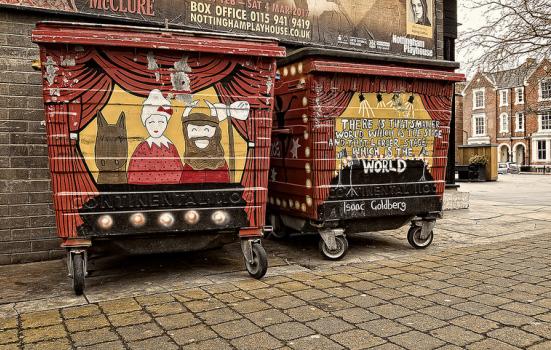
Photo: fractalx via VisualHunt.com
Street art outside Nottingham Playhouse. The city has a plan to integrate arts and culture into all aspects of life.

What do we know about the city of Nottingham? We know about the sheriff, I guess, and his adversarial relationship with Robin Hood. But did we know that modern-day Nottingham is really into the arts? A website called Arts Professional wants to enlighten us.

Christy Romer writes, “Nottingham has committed to embedding culture in education and healthcare as part of an ambitious ten-year vision for the city.

“By 2027, the city aims to make ‘culturally-inspired lifelong learning’ available for every person in Nottingham, and establish cultural programmes, research and partnerships that enhance health and wellbeing.

“The vision … aims to achieve national and international acclaim for the quality and diversity of locally-produced artistic work.

“ ‘Culture will unlock potential in our city. The next ten years will continue to see a transition that takes the city from its industrial, manufacturing past, paving the way to reimagine the city for generations to come,’ the [Cultural Statement’s] foreword reads. …

“Plans include supporting schools to develop a world-class cultural learning offer and giving every person opportunities to access creative skills and careers. …

“The City Council also aims to work in partnership with public health professionals and local commissioning groups to understand and enhance the health and wellbeing of the city’s residents. …

“The city announced its bid for the European Capital of Culture 2023 title in August.” More.

Alas, the Brexit vote to leave the European Union means that UK cities will not be eligible. Here’s hoping that Nottingham’s worthy ambitions are not derailed by Brexit and that the UK government will help the city find the resources to carry out its plans. (One has to wonder if the ramifications of leaving the EU was ever fully thought out.)

AmeliainHull, it sounds like Nottingham wants to give Hull a run for its money!

Art: Louis Rhead, “Bold Robin Hood and His Outlaw Band,” New York: Blue Ribbon Books, 1912.

Read Full Post »

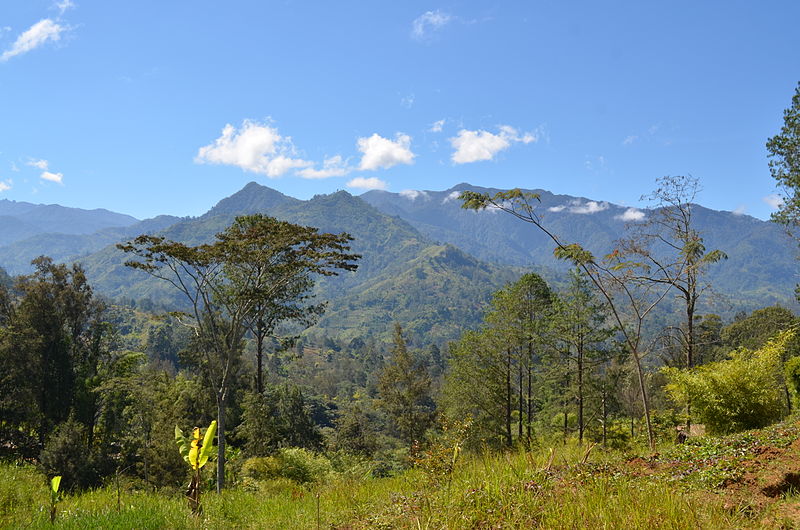
Photo: eGuide Travel
The highlands of Papua, New Guinea, are among the isolated places that linguists search for speakers of dying languages.

I’ve blogged before about linguists and others who are trying to preserve languages spoken by only a few people. The belief is that there is intrinsic value in such endangered languages and that they are key to understanding cultures. Recently I saw that one group is focusing on a particular manifestation of rare languages — their poems.

Fiona Macdonald writes at the BBC about the Endangered Poetry Project.

” ‘They fly to Port Moresby in Papua New Guinea and there they take a bus for three days and then they hike over a mountain and then they take a canoe and then they get to this little bay with 300 people,’ ” she reports, quoting Mandana Seyfeddinipur, head of the Endangered Languages Archive at London’s SOAS [School of Oriental and African Studies]. …

” They are ‘PhD students of 25 with a digital camera, a digital audio recorder and solar panels.’ …

“ ‘They live with the communities for months at a time, and develop social relationships, and talk to them and record them, and then they come back and they give me this SD card. … ‘The only record that we have of this language is in this tiny SD card.’ …

“The newly launched Endangered Poetry Project aims to tackle [language] loss at another level. ‘Languages are dying out at an astonishing rate: a language is being lost every two weeks,’ says the National Poetry Librarian Chris McCabe. ‘And each of those languages has a poetic tradition of some sort.’ …

“The project has issued a call-out to members of the public, asking for poems written in an endangered or vulnerable language. ‘In the first week, we’ve had over a dozen submissions in about 10 languages,’ says McCabe. ‘That includes poems in Breton, and poems in a dialect of Breton called Vannes. We’ve had a poem in Alsatian, and the Sardinian dialect Logudorese. We’re interested in these variations in language in different places as well, which can often be markedly different from the established language. …

” ‘You get a focus on place – in poems we’ve received from Sardinia, for example, there’s a focus on the mountain range there,’ says McCabe. ‘It shows you where people felt drawn to for inspiration in the landscape. Also, the style of a lot of Gaelic poems is very lyrical, and often uses repetition, a lot like a song. In that poetic tradition, you see how the division between poetry and music is quite slight – they often cross over between one and the other. The poetry tells us a lot about what kind of artistic experience people like, as well as what’s important in their geography.’ ”

Lots more here. Very interesting stuff.

Read Full Post »


Photo: Talia Herman for The New York Times
Girls wearing traditional dance attire on the Yurok Indian Reservation in Klamath, Calif. Young people are learning to make regalia the old-fashioned way, from materials like elk and deer sinew.

As dedicated tribal members revive customs that were once disparaged, young people are responding. For youth from the Yurok tribe in California, hands-on creation of traditional dance materials has been the starting point for an awakening of cultural pride.

Patricia Leigh Brown writes at the New York Times, “The gathering known simply as ‘Uncle Dave’s camp’ begins at daybreak on the pebbled banks of the Klamath River, the age-old spruce and redwoods on the bluffs shrouded in mist.

“Here on the Yurok Indian Reservation near the Oregon border, so remote that certain areas have yet to receive electricity, young male campers sit on cedar logs while keeping tabs on a river rock heated in a fire. The rock, hand-hollowed and chiseled with basketry patterns, contains a molten glue made from the dried air bladders of sturgeons.

“The syrupy concoction is a crucial ingredient for making feathered headdresses, hide quivers, obsidian-blade sticks and other forms of ceremonial dance ornaments, or regalia, that are at once works of art and living conduits to the spirit world.

“The fishing camp that David Severns, a tribal member, started over 20 years ago has grown into a grass-roots culture camp dedicated to making regalia the old-fashioned way, before mail-order. The source is nature itself — elk and deer sinew, baleen from a whale stranded in the river and delicate fibers from wild irises culled from forested high country. It is part of a broader revival of ancestral ceremonial practices, including dances and songs, among native youths. …

“ ‘Regalia is collective medicine,’ said Mr. Severns, 54, who spends most of April through October sleeping under the stars with the campers and his wife, Mara Hope Severns, 49, from the Kanatak tribe in Alaska. ‘To make them, you’ve got to have a pure heart, because the character of a person is reflected.’ …

“Each spring, Mr. Severns and the young men erect the camp from logs that have washed downstream during winter rains. Soon, the stretch of river known as ‘Blake’s Ripple,’ for his maternal great-grandfather, springs to frenetic life. It’s a place where finely-crafted cedar boxes holding eagle and condor feathers are hollowed out with an adze, and brothers braid each others’ hair. …

“ ‘You wear your culture,’ said Melissa Nelson, a Turtle Mountain Chippewa who is an associate professor of American Indian Studies at San Francisco State University and president of the Cultural Conservancy, a native-led indigenous rights organization. ‘Young people are hungry for meaning,’ she added. ‘The opportunity to do hands-on work with abalone, clam beads, pine nuts and other materials is a thread to a healthier and more sustainable way of being in the world.’ …

“To the Yurok and other tribes, the regalia, resplendent with abalone and the scarlet crests of woodpeckers, are a dazzling life force. ‘It’s just another bird until you pray for it, burn a root for it, have a dance leader bless it — then it’s regalia,’ Josh Meyer, a camper turned teacher, said of the eagle feathers he was assembling on the beach for the Brush Dance, a healing ceremony for sick children. The United States Fish and Wildlife Service makes eagle, condor and some other feathers available for religious and cultural use. …

“ ‘Spirituality is the basis of who we are as a people,’ said Susan Masten, a former president of the National Congress of American Indians who served as Yurok tribal chairwoman. ‘For young people, a strong sense of culture and spirituality helps with whatever they face out in the world.’…

“Mr. Meyers, the teacher, grew up with alcohol in the family and a lot of anger. ‘A lot of us didn’t have father figures in our lives,’ he said. ‘We looked to Dave for that.’

“On his exquisite regalia box, Mr. Meyers chiseled a triangle pattern meant to suggest the back of a sturgeon, burnishing it with a torch to give it a coppery patina. ‘I showed up one day and never left,’ he said of the camp. ‘Making regalia is a big part of who I am.’ ”

More at the New York Times, here.

Read Full Post »

Photo: Floyd Davidson
Genuine “Eskimo Kiss.” Iñupiat sharing a kunik at a Nalukataq festival in Barrow, Alaska.

For Asakiyume and others interested in inventive efforts to preserve the culture of marginalized groups, this New Yorker story may be of interest.

“Iñupiat people, a tribe native to Alaska, did not have a written language for much of their history,” reports the magazine’s Culture Desk. “Instead, for thousands of years, their culture was passed down orally, often in the form of stories that parents and grandparents would tell and entrust to their children.

“In recent years, those stories, and the lessons and values and history that they contain, have become harder to preserve, as the young people of the tribe, growing up in the modern world, have drifted further and further from traditional ways.

“[A new] video, which originally appeared on ‘The New Yorker Presents‘ (Amazon Originals) and is based on a story by Simon Parkin, is about a recent experiment in transmitting Iñupiat culture through a new medium: a video game … in which an Iñupiat child travels across the wilderness to find the source of the bitter blizzards that have been hitting his village.

“Before they began building the game, E-Line developers travelled up to Barrow, in northern Alaska, in the deep, dark cold of January, to meet with tribe members and to lay the groundwork for the project. The resulting game is called Never Alone. …

“Never Alone was created through a highly collaborative process: ‘We’ve had everybody from eighty-five-year-old elders who live most of the year in remote villages to kids in Barrow High School involved in the project,’ Amy Fredeen, the C.F.O. of E-Line, told Parkin. …

“As Clare Swan, who sits on the tribal council that had to approve the project, recalls, ‘We just said, “Shoot, of course it’s difficult.” Anything that’s worth it is.’ ”

More at the New Yorker, here.

I imagine that elders and students got a thrill out of this project in different ways. I would love to know to what extent their feelings overlapped. Did the elders care more about the preservation aspects and the children about making modern media?

Read Full Post »

« Newer Posts - Older Posts »