Feeds:
Posts
Comments

Posts Tagged ‘culture’

Photo: Rosa Furneaux
Haroon Ebrat reaches for his notepad, where he has written down audience requests. The entrepreneurial immigrant runs Afghan Theatre TV, a Farsi-language variety show, out of his garage in suburban California.

I’m impressed how this immigrant from Afghanistan took it on himself to keep his culture alive by broadcasting a variety show from his garage. Many viewers have responded with gratitude.

Jeremy Lybarger writes at Pacific Standard, “Afghan Theatre TV operates out of a soundproof garage 40 miles east of San Francisco. … It’s an unexpected setting for a studio whose Farsi-language variety shows stream online 24 hours a day to more than a million viewers a month, according to the station. But much about Afghan Theatre TV is unexpected, starting with its credo that politics and show business don’t mix. …

” ‘We entertain,’ says Haroon Ebrat, the network’s 66-year-old founding impresario and star. On most afternoons for the last six years, he’s shuffled out to his garage in house slippers to host the live call-in shows that have made him famous, or at least recognizable to the Muslims who mob him, groupie-like, in restaurants, supermarkets, and parking lots across the Bay Area. The calls — 500 an hour, Ebrat says — come from all over: Canada, Germany, Russia, Australia, and many of the dozens of other countries that make up the Afghan diaspora. …

“Afghanistan has been in a quasi-permanent state of war for over three decades, historically exporting more refugees per year than any nation besides Syria. Most Afghans decamp to neighboring Iran or Pakistan, but approximately 124,000 live in America. …

” ‘He has preserved the culture of Afghanistan,’ says Ebrat’s 36-year-old daughter Shabnam, who hosts a call-in show of her own, often accompanied by a local psychic who counsels callers about work and love. Such preservation has come at a cost, both literal and cultural.

“Afghan Theatre TV is a family business, as are many of the more than 3,000 ethnic media outlets. … In between these segments of original programming, the station airs Afghan music videos and concert footage, and on some nights local musicians perform traditional songs like a live house band (hence the soundproofing). Ebrat, a prolific filmmaker, also screens the movies he’s made, which are ultra-low-budget mash-ups of comedy, action, and music starring him and his family.

“The station boasts a handful of Bay Area advertisers — kebab shops, halal supermarkets, Muslim-owned tax services — but Ebrat relies on his children to keep the lights on. (Shabnam is a real estate agent; [older brother] Burhan works with cars.) …

“Ethnic media, produced by and for immigrants, faces unique challenges. The relatively small niche audiences, for example, can discourage advertisers. … Even large outlets struggle to survive. Channel 18, a multilingual network that broadcast out of Los Angeles for more than 40 years, filed for bankruptcy in 2012 before finally shuttering its international format in 2017. …

“Part [the] experience includes reckoning with cultural disagreements within the same family. Shabnam Ebrat has become a target for older or more traditional Muslims who see her appearance — dyed-blond hair and make-up — as an affront to God. She doesn’t wear a hijab either. On Instagram, where her selfies reach about 23,000 followers, commenters debate whether or not she’s going to hell for posing in miniskirts and bikinis. …

“There’s the added stigma of being outspoken in a society that, to many Western onlookers, muzzles women. In Afghanistan, some women have no public identity of their own. They’re referred to simply as the wife of, daughter of, or sister of. …

“Overall, though, politics are absent from Afghan Theatre TV, where the maxim is that entertainment brings people together and politics drive a wedge. Haroon is more interested in the zombie horror movie he has in production than he is in discussing the White House. His only stated political aspiration, however vague, is to restore peace in Afghanistan.” More.

Seems like a good idea to stick to entertainment. One thing I’ve noticed while working with Afghan refugees, whether their first language is Farsi or Dari, is that individuals are, well, individualistic. Like groups everywhere, Afghans may have attitudes that diverge a good bit.

Read Full Post »

Photo: David Bedard
An example of the resurgence of indigenous theater is
Our Voices Will Be Heard, directed by Larissa FastHorse. It was performed at Perseverance Theatre in 2016 in Alaska. 

Another way that culture gets shared, revitalized, and preserved is through theatrical performances. Alaska and Hawaii, in particular, are seeing a resurgence of indigenous theater.

As Frances Madeson writes at American Theatre, “The pace at which producers of Hawaiian and Alaskan Native theatres are creating original offerings specific to their lands and peoples and mounting them on their mainstages ranges somewhere in the giddy spectrum between prestissimo and full-tilt boogie.

“ ‘We’re experiencing a Native arts revival right now,’ said Alaska Native playwright Vera Starbard, whose autobiographical advocacy play Our Voices Will be Heard was performed in Juneau, Anchorage, Hoonah, and Fairbanks. …

“Part of the exhilaration comes as a result of resources to match the rhetoric of support for Native theatre arts. In 2016 Starbard was granted $205,000 from the Andrew W. Mellon Foundation to sustain her while she creates three full-length Alaska Native plays over three years. …

“There is also an attitudinal shift by institutional gatekeepers toward inclusion of Native theatre artists, some of whom have been maintaining the vision for a very long time with minimal support.

“The first Hawaiian-language play presented at the Kennedy Theatre at the University of Hawai‘i at Mānoa was in February 2015, ‘in the theatre’s 51st season,’ said Tammy Haili’ōpua Baker, who wrote it. … She repeated for emphasis: ‘Half a century to get anything Hawaiian on that stage.’

“But now that the vessel’s been unstoppered, there’s a growing groundswell of audience demand for shows with Native-centric realities and expression.

“ ‘The success of Our Voices was completely community-driven,’ said Starbard. …

“Tlingit actor and playwright Frank Henry Kaash Katasse said he sees a category shift. ‘Indigenous stories are now seen as American stories.’ …

“Katasse teaches theatre in schools to Alaska Native kids, and encourages them to take acting seriously. ‘They didn’t even know this was a career option,’ he said.

“Indeed, to keep pace with demand, artistic directors Harry Wong III at Kumu Kahua Theatre and Eric Johnson at Honolulu Theatre for Youth (HTY) on Oahu, and Art Rotch of Perseverance Theatre in Juneau and Anchorage, are prioritizing both actor training and play development. …

“In Fairbanks, Alaska, [Allan Hayton, language revitalization program director at Doyon Foundation] pursues theatre as a vehicle for cultural and linguistic survival.

“ ‘We are restoring balance,’ Hayton said. ‘In indigenous tradition theatre is performed to achieve something for the people and balance for the world in the natural environment. Theatre is a healing art form in which we can address very serious and difficult issues safely, and offer a larger healing for society.’ …

“For Starbard, Alaska Native theatre artists literally standing on thousands of years of storytelling tradition have nothing to prove.

” ‘Our goal as Native artists and theatremakers is not to develop this “uncultured” audience so they can come in and understand what a Western theatre is like. I think that’s the attitude taken sometimes,’ she said, choosing her words with great care. ‘I’m proud of Native artists who are pushing back against this mindset. It’s not about how we can help our people adapt to the Western theatre, but how we can help Western theatre to be an even more dynamic and beautiful thing.’ ”

More here.

Read Full Post »

2016-635897543773346986-334

Photo: Magda Saleh collection
Egypt’s first prima ballerina, Magda Saleh, as she is today and in ballets of
the 1960s and 1970s.

I like to include stories about Egyptian culture whenever I see them because of my special connection to two naturalized citizens who were born in Egypt. Here is an intriguing New York Times article by Brian Seibert about an Egyptian who excelled at ballet and even performed with the Bolshoi in Moscow.

“Once upon a time, the Egyptian ballerina Magda Saleh danced the dream role of Giselle in Moscow as a guest star with the mighty Bolshoi Ballet. …

“Recently, in the elegant Upper East Side apartment that she shares with her husband, the American Egyptologist Jack Josephson, Ms. Saleh, 73, recounted how her life had been ‘punctuated’ by shifts in Egyptian political history. …

“In the era just before she was born, Egypt was no longer a protectorate of Britain, but British influence was still high. Her father, who would become a prominent academic, studied agriculture in Scotland and brought home a Scottish bride, Ms. Saleh’s mother. Their children spoke English and Arabic at home, French at school. …

“Her first ballet teachers were British, and she traveled to Britain to study ballet. By then, though, Egypt had undergone a revolution and soon it was at war with Britain. Young Ms. Saleh was called home, where she discovered that her British instructors had left.

“But the Egyptian government was now friendly with the Soviet Union, and new teachers arrived. In 1959, the Egyptian Ministry of Culture created an Academy of Arts, with a Higher Institute of Ballet, and imported teachers from the Bolshoi to run it.

” ‘This was unprecedented in Egyptian history,’ Ms. Saleh said. ‘We have this very ambiguous attitude toward dance and especially women dancers …

“ ‘None of this would have been possible,’ she continued, ‘but for a confluence of time and circumstance and one man, the first minister of culture’ — Tharwat Okasha, an army officer with vision and tenacity. …

“Ballet education came filtered through translation, with old Russians who had fled to Egypt during the Russian Revolution converting the instructions of the newly arrived Soviet dancers into broken Arabic.

“Yet the school developed rapidly, and in 1963, Ms. Saleh and four other female students were offered scholarships to study at the Bolshoi in Moscow. She was 19 — or ’19 going on 11,’ she said, ‘because we were so sheltered.’ Now they were on their own in the bitter cold of the grim Soviet capital, sitting on radiators before class to thaw. …

“The experience was tough. ‘But character forming,’ Ms. Saleh said. ‘The Russians taught us with love. Not love for us. Love for dance. They instilled this in us.’

“Back in Cairo, diplomas in hand, they wanted to dance. So the ballet institute mounted ‘The Fountain of Bakhchisarai,’ a 1934 Soviet ballet about a Polish princess abducted by a Tatar Khan. The Egyptian public loved it. The president, Gamal Abdel Nasser, awarded the dancers the Order of Merit.

“Even more meaningful to Ms. Saleh was the praise of a poor old man after a performance in the southern backwater of Aswan. ‘People had insisted that Egyptians wouldn’t accept Egyptian ballet,’ she recalled misty-eyed. ‘But we were right!’ ”

Read more and see some lovely pictures at the New York Times, here — and also here, at Ahramonline.

Read Full Post »

Photo: fractalx via VisualHunt.com
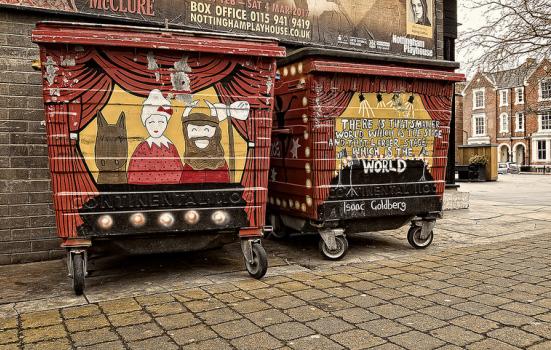
Street art outside Nottingham Playhouse. The city has a plan to integrate arts and culture into all aspects of life.

What do we know about the city of Nottingham? We know about the sheriff, I guess, and his adversarial relationship with Robin Hood. But did we know that modern-day Nottingham is really into the arts? A website called Arts Professional wants to enlighten us.

Christy Romer writes, “Nottingham has committed to embedding culture in education and healthcare as part of an ambitious ten-year vision for the city.

“By 2027, the city aims to make ‘culturally-inspired lifelong learning’ available for every person in Nottingham, and establish cultural programmes, research and partnerships that enhance health and wellbeing.

“The vision … aims to achieve national and international acclaim for the quality and diversity of locally-produced artistic work.

“ ‘Culture will unlock potential in our city. The next ten years will continue to see a transition that takes the city from its industrial, manufacturing past, paving the way to reimagine the city for generations to come,’ the [Cultural Statement’s] foreword reads. …

“Plans include supporting schools to develop a world-class cultural learning offer and giving every person opportunities to access creative skills and careers. …

“The City Council also aims to work in partnership with public health professionals and local commissioning groups to understand and enhance the health and wellbeing of the city’s residents. …

“The city announced its bid for the European Capital of Culture 2023 title in August.” More.

Alas, the Brexit vote to leave the European Union means that UK cities will not be eligible. Here’s hoping that Nottingham’s worthy ambitions are not derailed by Brexit and that the UK government will help the city find the resources to carry out its plans. (One has to wonder if the ramifications of leaving the EU was ever fully thought out.)

AmeliainHull, it sounds like Nottingham wants to give Hull a run for its money!

Art: Louis Rhead, “Bold Robin Hood and His Outlaw Band,” New York: Blue Ribbon Books, 1912.

Read Full Post »

Photo: eGuide Travel
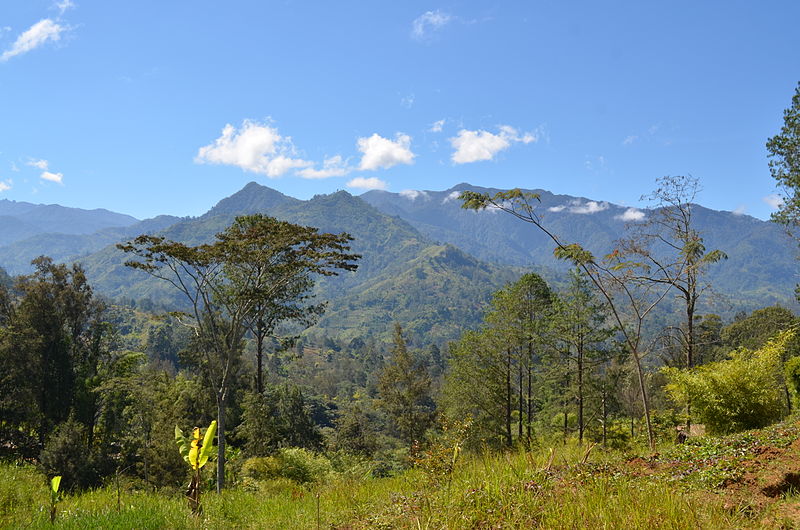
The highlands of Papua, New Guinea, are among the isolated places that linguists search for speakers of dying languages.

I’ve blogged before about linguists and others who are trying to preserve languages spoken by only a few people. The belief is that there is intrinsic value in such endangered languages and that they are key to understanding cultures. Recently I saw that one group is focusing on a particular manifestation of rare languages — their poems.

Fiona Macdonald writes at the BBC about the Endangered Poetry Project.

” ‘They fly to Port Moresby in Papua New Guinea and there they take a bus for three days and then they hike over a mountain and then they take a canoe and then they get to this little bay with 300 people,’ ” she reports, quoting Mandana Seyfeddinipur, head of the Endangered Languages Archive at London’s SOAS [School of Oriental and African Studies]. …

” They are ‘PhD students of 25 with a digital camera, a digital audio recorder and solar panels.’ …

“ ‘They live with the communities for months at a time, and develop social relationships, and talk to them and record them, and then they come back and they give me this SD card. … ‘The only record that we have of this language is in this tiny SD card.’ …

“The newly launched Endangered Poetry Project aims to tackle [language] loss at another level. ‘Languages are dying out at an astonishing rate: a language is being lost every two weeks,’ says the National Poetry Librarian Chris McCabe. ‘And each of those languages has a poetic tradition of some sort.’ …

“The project has issued a call-out to members of the public, asking for poems written in an endangered or vulnerable language. ‘In the first week, we’ve had over a dozen submissions in about 10 languages,’ says McCabe. ‘That includes poems in Breton, and poems in a dialect of Breton called Vannes. We’ve had a poem in Alsatian, and the Sardinian dialect Logudorese. We’re interested in these variations in language in different places as well, which can often be markedly different from the established language. …

” ‘You get a focus on place – in poems we’ve received from Sardinia, for example, there’s a focus on the mountain range there,’ says McCabe. ‘It shows you where people felt drawn to for inspiration in the landscape. Also, the style of a lot of Gaelic poems is very lyrical, and often uses repetition, a lot like a song. In that poetic tradition, you see how the division between poetry and music is quite slight – they often cross over between one and the other. The poetry tells us a lot about what kind of artistic experience people like, as well as what’s important in their geography.’ ”

Lots more here. Very interesting stuff.

Read Full Post »


Photo: Talia Herman for The New York Times
Girls wearing traditional dance attire on the Yurok Indian Reservation in Klamath, Calif. Young people are learning to make regalia the old-fashioned way, from materials like elk and deer sinew.

As dedicated tribal members revive customs that were once disparaged, young people are responding. For youth from the Yurok tribe in California, hands-on creation of traditional dance materials has been the starting point for an awakening of cultural pride.

Patricia Leigh Brown writes at the New York Times, “The gathering known simply as ‘Uncle Dave’s camp’ begins at daybreak on the pebbled banks of the Klamath River, the age-old spruce and redwoods on the bluffs shrouded in mist.

“Here on the Yurok Indian Reservation near the Oregon border, so remote that certain areas have yet to receive electricity, young male campers sit on cedar logs while keeping tabs on a river rock heated in a fire. The rock, hand-hollowed and chiseled with basketry patterns, contains a molten glue made from the dried air bladders of sturgeons.

“The syrupy concoction is a crucial ingredient for making feathered headdresses, hide quivers, obsidian-blade sticks and other forms of ceremonial dance ornaments, or regalia, that are at once works of art and living conduits to the spirit world.

“The fishing camp that David Severns, a tribal member, started over 20 years ago has grown into a grass-roots culture camp dedicated to making regalia the old-fashioned way, before mail-order. The source is nature itself — elk and deer sinew, baleen from a whale stranded in the river and delicate fibers from wild irises culled from forested high country. It is part of a broader revival of ancestral ceremonial practices, including dances and songs, among native youths. …

“ ‘Regalia is collective medicine,’ said Mr. Severns, 54, who spends most of April through October sleeping under the stars with the campers and his wife, Mara Hope Severns, 49, from the Kanatak tribe in Alaska. ‘To make them, you’ve got to have a pure heart, because the character of a person is reflected.’ …

“Each spring, Mr. Severns and the young men erect the camp from logs that have washed downstream during winter rains. Soon, the stretch of river known as ‘Blake’s Ripple,’ for his maternal great-grandfather, springs to frenetic life. It’s a place where finely-crafted cedar boxes holding eagle and condor feathers are hollowed out with an adze, and brothers braid each others’ hair. …

“ ‘You wear your culture,’ said Melissa Nelson, a Turtle Mountain Chippewa who is an associate professor of American Indian Studies at San Francisco State University and president of the Cultural Conservancy, a native-led indigenous rights organization. ‘Young people are hungry for meaning,’ she added. ‘The opportunity to do hands-on work with abalone, clam beads, pine nuts and other materials is a thread to a healthier and more sustainable way of being in the world.’ …

“To the Yurok and other tribes, the regalia, resplendent with abalone and the scarlet crests of woodpeckers, are a dazzling life force. ‘It’s just another bird until you pray for it, burn a root for it, have a dance leader bless it — then it’s regalia,’ Josh Meyer, a camper turned teacher, said of the eagle feathers he was assembling on the beach for the Brush Dance, a healing ceremony for sick children. The United States Fish and Wildlife Service makes eagle, condor and some other feathers available for religious and cultural use. …

“ ‘Spirituality is the basis of who we are as a people,’ said Susan Masten, a former president of the National Congress of American Indians who served as Yurok tribal chairwoman. ‘For young people, a strong sense of culture and spirituality helps with whatever they face out in the world.’…

“Mr. Meyers, the teacher, grew up with alcohol in the family and a lot of anger. ‘A lot of us didn’t have father figures in our lives,’ he said. ‘We looked to Dave for that.’

“On his exquisite regalia box, Mr. Meyers chiseled a triangle pattern meant to suggest the back of a sturgeon, burnishing it with a torch to give it a coppery patina. ‘I showed up one day and never left,’ he said of the camp. ‘Making regalia is a big part of who I am.’ ”

More at the New York Times, here.

Read Full Post »

Photo: Floyd Davidson
Genuine “Eskimo Kiss.” Iñupiat sharing a kunik at a Nalukataq festival in Barrow, Alaska.

For Asakiyume and others interested in inventive efforts to preserve the culture of marginalized groups, this New Yorker story may be of interest.

“Iñupiat people, a tribe native to Alaska, did not have a written language for much of their history,” reports the magazine’s Culture Desk. “Instead, for thousands of years, their culture was passed down orally, often in the form of stories that parents and grandparents would tell and entrust to their children.

“In recent years, those stories, and the lessons and values and history that they contain, have become harder to preserve, as the young people of the tribe, growing up in the modern world, have drifted further and further from traditional ways.

“[A new] video, which originally appeared on ‘The New Yorker Presents‘ (Amazon Originals) and is based on a story by Simon Parkin, is about a recent experiment in transmitting Iñupiat culture through a new medium: a video game … in which an Iñupiat child travels across the wilderness to find the source of the bitter blizzards that have been hitting his village.

“Before they began building the game, E-Line developers travelled up to Barrow, in northern Alaska, in the deep, dark cold of January, to meet with tribe members and to lay the groundwork for the project. The resulting game is called Never Alone. …

“Never Alone was created through a highly collaborative process: ‘We’ve had everybody from eighty-five-year-old elders who live most of the year in remote villages to kids in Barrow High School involved in the project,’ Amy Fredeen, the C.F.O. of E-Line, told Parkin. …

“As Clare Swan, who sits on the tribal council that had to approve the project, recalls, ‘We just said, “Shoot, of course it’s difficult.” Anything that’s worth it is.’ ”

More at the New Yorker, here.

I imagine that elders and students got a thrill out of this project in different ways. I would love to know to what extent their feelings overlapped. Did the elders care more about the preservation aspects and the children about making modern media?

Read Full Post »

Photo: Jessica Hinchliffe/ABC Brisbane
The women of Queensland’s Spice Exchange create different spice blends to sell. 

This happy refugee story is from Australia, another country where refugees make valuable contributions, in this case sharing their beautiful foods and recipes with the broader population.

Jessica Hinchliffe writes at ABC Brisbane, “A social enterprise in Queensland is helping refugee and migrant women gain employment and foster community spirit through cooking.

“The Spice Exchange sees these enterprising women come together to create spice blends, condiments and gingerbread. They use recipes and spices well known in their home countries.

“Backed by Access Community Services, the social enterprise in Logan, south of Brisbane, also helps the women practise their English-speaking skills.

“Many of those involved are single women with dependent children, with limited education and literacy skills.

“Organiser Tianna Dencher said the Spice Exchange was helping these women, who sometimes felt isolated, find their voice. …

” ‘We saw that these women were comfortable with food and we decided to create something that would engage women around food.

” ‘Many of the women had such great cultural diversity, had beautiful cuisines that had spices … that’s how we started.’

“The program also teaches the women about workplace culture, marketing and how to price products. …

“Adhel Mawien Ukong began with the Spice Exchange in September and said the program provided her with opportunities for her and her children.

” ‘I’ve learnt so much,’ she said. ‘I start at 9:00 am and finish at 2.30 pm, and it’s given me a job four days a week and it’s helped us.

I love it so much so I come here every day of the week sometimes, and I’ve invited other women to join me.’ “

More here.

Hat Tip to @VictoriaLynden on twitter.

Read Full Post »

Photo: Iñaki LL

One of my Facebook friends shared an entertaining page on “rare and strange instruments” (you have to see it to believe it), leading me to seek more information on an instrument called the txalaparta. It may not be as unusual as the piano that makes cats meow but is nevertheless worthy of investigation.

According to Wikipedia, the txalaparta is “a specialized Basque music device of wood or stone. In some regions of the Basque Country, zalaparta (with [s]) means ‘racket,’ while in others (in Navarre) txalaparta has been attested as meaning the trot of the horse, a sense closely related to the sound of the instrument. …

“During the last 150 years, txalaparta has been attested as a communication device used for funeral (hileta), celebration (jai) or the making of slaked lime (kare), or cider (sagardo). After the making of cider, the same board that pressed the apples was beaten to summon the neighbours. Then, a celebration was held and txalaparta played cheerfully, while cider was drunk. …

“Traditional txalaparta was almost extinct in the 1950s with a handful of pairs of peasants maintaining the tradition. It was then revived by folklorists, such as Jesus and Jose Antonio Artze from the group Ez dok amairu.” Now you can hear it on YouTube, below.

More at Wikipedia.

Video: The Give and Take of Wood and Stone. Oreka Tx Brings Once Threatened Basque Sounds and New Global Resonances to the U.S. in September 2010 and on Nömadak Tx.

Read Full Post »

Chalk up another one for art and culture. According to Lisa Contag at the website Blouin Art Info, a UNESCO study has found evidence that art and culture improve safety in cities, in part by building social cohesion.

She writes, “UNESCO makes a strong case for systematically fostering culture in city planning in its new ‘Global Report, Culture: Urban Future.’ …

“In more than 100 case studies, the survey analyzes the situations, risks, and potentials for cities in a number of regional contexts, with a particular interest also in Africa and Asia, where urbanization is expected to continue increasing rapidly in the next decades.

“ ‘Culture lies at the heart of urban renewal and innovation. This report provides a wealth of insights and concrete evidence showing the power of culture as a strategic asset for creating cities that are more inclusive, creative and sustainable,’ Irina Bokova, Director-General of UNESCO noted in a statement, stressing that ‘culture gives cities social and economic power,’ especially with the help of the creative industries.

“As an example, the report refers to Shanghai, China, which has held the status of a UNESCO Creative City of Design since 2010, and is considered ‘one of the world’s major creative centers, with more than 7.4% of residents employed in the creative industries.’

“Cities in conflict and post-conflict situations, such as Samarra, Iraq, which was confronted with the destruction of a number of invaluable sites such as the Al-Askari Shrine in 2006, are also taken into consideration and seem to benefit similarly. ‘Reconstruction and rehabilitation efforts have demonstrated the ability of culture to restore social cohesion between communities and improve livelihoods, paving the way for dialogue and reconciliation,’ the authors explain.”

The authors observe that culturally diverse, safe, and thriving cities are people-centered and culture-centered and feature policy-making that builds on culture.

More here.

Photo: UNESCO
Screenshot from Reza’s UNESCO video “Culture – the Soul of Cities”

Read Full Post »

Moisés Rosas is an organ grinder in Mexico City. According to Azam Ahmed at the NY Times, Rosas’s art is not as popular with the public as it used to be, and that makes some folks wistful.

“ ‘This is a dying art,’ Mr. Rosas said as he turned the dull metal lever of his instrument, wrenching out a troubled squawk. ‘The youth don’t really value us.’

“So it goes for Mexico City’s organ grinders, among the city’s more curious class of street performers. For years, they were beloved by residents, but now they are in a gloomy mood, convinced that their art — and a central part of the city’s culture — is fading away. …

“They are losing fans. Many young people, forced to listen to their music while out at a restaurant or in a square, pay them to leave. The ranks of older patrons, who recall the organ grinders with nostalgia, are thinning.

“Then there is the competition, which has multiplied in recent years. There are break dancers, mimes, movie characters, musicians, artisans and the afflicted, all vying for spare change.

“Worse, there are the superheroes.

“ ‘Don’t even get me started on them,’ [Luis Román Dichi Lara, the head of the organ players’ union], said. ‘You place yourself in the perfect spot, start your music and, boom, here come Thor, Batman and Spider-Man.’

” ‘They intimidate us,’ he said. ‘There’s like 15 of them. They just kick you out.’ ”

But people who want to preserve the culture are supportive, Ahmed reports.

“On a recent evening, Carlos Martínez dropped a few coins in the hat of Sergio Pérez, an organist midway through his evening shift.

“ ‘Not many people help them,’ said Mr. Martínez, 44, an office worker. ‘I don’t really like to listen to them that much, but if no one gives them money, they won’t survive.’ ”

More here.

Photo: Thelmadatter
Barrel organ player in the Zocalo Mexico City.

Read Full Post »

Photo: Robert W Kelley/Time Life Pictures/Getty Images
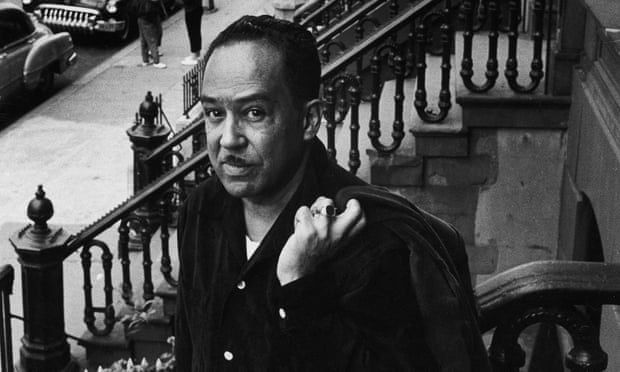
Langston Hughes on the front steps of his house in Harlem, June 1958.

Before Suzanne and Erik moved to Providence, they were living in a lovely renovated brownstone in Harlem.

There’s a fine line between newcomers investing where there’s been too much disinvestment — and gentrification. The early changes seem to benefit a neighborhood and its people, but inevitably rising property values push out many longtime residents and institutions.

Today, a group of Harlem artists from various disciplines are banding together to keep a significant piece of the Harlem Renaissance around to nourish African American arts.

Tom Kutsch writes at the Guardian, “All that signifies the legacy of a house once occupied by the poet laureate of Harlem is a small bronze plaque, partially covered by a cedar tree’s branches and the green ivy that envelops much of the building.

“The onetime home of Langston Hughes has sat largely unoccupied for years, but a new movement is trying to reclaim, for a next generation of artists, the space of a man who is forever intertwined with the Harlem Renaissance.

“Spearheaded by writer, performer and educator Renée Watson, the collective effort is busily trying to raise the necessary funds to purchase a lease and make needed renovations to the house. …

“Watson plans to make the Hughes house the home of the I Too, Arts Collective that she launched alongside the effort, which aims to, in her words, have ‘programming that nurtures, amplifies, and honors work by and about people of color and people from other marginalized communities.’ …

“The collective gets its name from one of Hughes’s most famous poems – I, Too – in which his narrator concludes by intoning:

They’ll see how beautiful I am
And be ashamed—
I, too, am America.

“Watson is using the crowdfunding website Indiegogo to solicit donations for the project, for which they’re hoping to raise at least $150,000 to cover a lease and begin the renovation process. By the time of publication, they had raised more than $54,000, already exceeding the $40,000 Watson says would cover at least a six-month lease. …

“For more than a century, Harlem has been inextricably linked to black life and culture in America; the birthplace of the aforementioned Harlem Renaissance, which fostered a wide array pre-eminent black artists and writers, from Zora Neale Hurston to Claude McKay and Duke Ellington. …

” ‘The erasure of black Harlem may come despite our best efforts …’ said Tracey Baptiste, a local children’s author who is involved with Watson’s collective. ‘But this project is about making sure that gentrification doesn’t also happen in the hearts and minds of our artists.’ ”

More here.

Read Full Post »

Here’s a follow-up to a 2013 post about words and phrases that don’t have an equivalent in other languages. (“In Sweden, mangata is the word for the roadlike reflection the moon casts on the water. In Finland there’s a word for the distance reindeer can travel comfortably before taking a break: poronkusema.”)

Now Maria Popova at Brain Pickings has posted about a book that offers more on the subject. It’s Lost in Translation: An Illustrated Catalog of Beautiful Untranslatable Words from Around the World.  It’s by Ella Frances Sanders, the artist who did the illustrations that were in my original post.

“Beautifully elusive words is what writer and illustrator Ella Frances Sanders, a self-described ‘intentional’ global nomad, explores in Lost in Translation,” reports Popova. …

“From the Japanese for leaving a book unread after buying it to the … Italian for being moved to tears by a story to the Welsh for a sarcastic smile, the words Sanders illustrates dance along the entire spectrum of human experience, gently reminding us that language is what made us human.

“In addition to the charming illustrations and sheer linguistic delight, the project is also a subtle antidote to our age of rapid communication that flattens nuanced emotional expression into textual shorthand and tyrannical clichés. These words, instead, represent not only curiosities of the global lexicon but also a rich array of sentiments, emotions, moods, and cultural priorities from a diverse range of heritage.”

I’m remembering that a while back, Erik explained a few Swedish idioms to me (something about an owl in the moss?), and I tried them out on his parents when they visited. I could tell at once from their blank looks that the phrases were indeed untranslatable!

Art: Ella Frances Sanders
An illustration of an untranslatable Norwegian word.

Read Full Post »

A Native American chef trained in French cuisine has a mission to teach the world about an older, unrecognized culinary tradition that has influenced most of us. Hanna Choi reported the story for National Public Radio.

“When Nephi Craig enrolled in the culinary program at Arizona’s Scottsdale Community College, there was nothing like ‘Native American Cuisine 101’ in the curriculum. Craig identifies as White Mountain Apache and Navajo, and the first mention he can recall of anything remotely related to his background was a class discussion on fry bread, a crispy fried concoction that ‘is really a taste of American colonialism,’ he says …

“Since then, he increasingly came to sense a sort of dismissiveness and sloppiness towards Native Americans and indigenous food ways in the mainstream culinary world.

“Craig grew up immersed in his culture through art, music and ceremony, and food always played a large role. He wanted to find a way to bridge the gap. …

“Upon graduating from culinary school in 2000, Craig launched the Native American Culinary Association. Based in Arizona, NACA is a network of Native chefs — professionals and those just starting out — dedicated to the research, refinement, and development of Native American cuisine. Since 2011, the association has organized a yearly Indigenous Food Symposium, bringing people from different fields together to share and learn about Native foods, agriculture and landscapes.

‘Craig is also the executive chef of The Summit Restaurant at Sunrise Park Resort in Whiteriver, Arizona. … Craig’s culinary team there is staffed entirely by cooks and other food workers who identify either with the White Mountain Apache tribe or as Navajo/Dineh.”

In the NPR interview, Craig tells Choi, “I had always been cooking since I was a kid, growing up here on the rez with my mom and my family. We didn’t have a lot of money and so we would bake and sell our goods and I would bag up stuff in sandwich bags and sell them as a little guy.

“I’ve been cooking my entire life, all through my adolescence and I had ultimately wanted to do something creative. …

“I had no idea the world that I would be entering in the long classical legacy that is French cuisine. But that’s kind of where I started out, just in childhood, and then realizing just by pure observation that we were left out of this picture of world cuisine even when about 70 percent of foods consumed around the world today were developed and domesticated by Indigenous peoples of the Americas.”

Craig explains more here. Check it out.

Photo: Evan Sung/Nephi Craig
Nephi Craig, executive chef of The Summit Restaurant at Sunrise Park Resort in Whiteriver, Arizona.

Read Full Post »

Racing against the clock, the last fluent speaker of a Native American language records folktales and creates a dictionary.

Jia Tolentino writes at the website Jezebel, “Marie Wilcox, an octogenarian Native American woman from the San Joaquin Valley in California, was born on Thanksgiving in 1933; she grew up in a one-room house with the grandmother who delivered her and spoke her native Wukchumni …

“In this 10-minute mini-doc from the Global Oneness Project, via NYTLive, Marie talks about speaking primarily English to her children, who worked alongside her in the fields for a good part of the year. She started learning Wukchumni when her sister started speaking it again in an attempt to pass the endangered language on to each their kids.

“ ‘I was surprised she could remember all that,’ her daughter says. ‘She just started writing down her words on envelopes. … She’d sit up night after night typing on the computer, and she was never a computer person.’

“ ‘I’m just a pecker,’ says Marie. ‘I was slow.’

“She decided to make a dictionary. ‘Not for anyone else to learn — I just wanted to get it together.’ …

“According to a New York Times piece on this documentary from 2014:

Before European contact, as many as 50,000 Yokuts lived in the region, but those numbers have steadily diminished. Today, it is estimated that fewer than 200 Wukchumni remain.”

Watch the short film Marie’s Dictionary, by Emmanuel Vaughan-Lee, here. I found it moving.

Photo: Emmanuel Vaughan-Lee

Read Full Post »

« Newer Posts - Older Posts »