Feeds:
Posts
Comments

Posts Tagged ‘dance’

Photo: AP
Young ballerinas practice under the instruction of Kenyan ballet dancer Joel Kioko, 16, left, in a room at a school in the Kibera slum of Nairobi, Kenya.

The other day, someone clicked on all my ballet and dance posts without leaving a comment. I can tell from looking at my site stats.

I hope whoever it was is still checking as I have another great dance story today. It was reported by AP staff in Australia on December 26, 2016.

“Joel Kioko is arguably Kenya’s most promising young ballet dancer. Currently training in the United States, he has come home for Christmas — and is dancing a solo in a Nairobi production of The Nutcracker while he’s here. …

“Kioko grew up in Nairobi’s Kuwinda slum and took his first dance class five years ago in a public school classroom, with bare walls, no barre and no mirror, the desks and chairs pushed outside. …

“ ‘I don’t know what I could have done without ballet, without dancing,’ Kioko said. …

“He was discovered by a fellow dance student who at age 14 was teaching a class at his school and told her teacher, [Dance Centre Kenya’s artistic director, Cooper] Rust, about him.

“ ‘From the beginning, when he joined the ballet, there was nothing else he could talk about,’ said Kioko’s mother, Angela Kamene, who raised him and his sister in a one-bedroom shack shared with an aunt and a grandmother. …

“Now others are pursuing dance as a way out of poverty. … Michael Wamaya, a finalist for the 2017 Global Teacher Prize, teaches dance to around 100 kids a week in Nairobi’s Kibera and Mathare slums.

“At the end of the day, we’re not just training them to have dance for fun, we’re doing it in a serious level,” Wamaya said. …

“ ‘People say sometimes, why are you not teaching them, for instance, African dance or hip hop?’ he said. ‘Yes, it’s a Western thing coming in, but it’s dance, and dance is diverse, you know? To me, it’s not about ballet as a dance style, but it’s about the discipline that ballet has in itself as a dance technique.’

“As the only son in a family growing up without a father, Kioko laughed at the notion that some people might consider a man in tights, dancing classical ballet, to be unmanly. He was teased by some in his neighbourhood about the dancing, he said, but he never had to fight.

“ ‘Where I came from there is poverty, there is stealing, there is drugs,’ Kioko said. ‘You have to be a man to live in where we live. … It’s like a lion in the jungle, you have to show that you are the male there, you are the one who roars and everyone follows.’ ”

More here.

Read Full Post »

A while back, I wrote about Lata, which teaches older folks around the world to create street art with spray paint. I follow Lata on Instagram and can confirm that the results of senior graffiti are a hoot.

Now Vicky Thornton writes at Arts Professional about starting a modern dance troupe for people over 60. There’s hope for us all.

She writes, “DANCE SIX-0 started in response to a visit to the Elixir Festival at Sadler’s Wells that included a performance by the Company of Elders, a contemporary dance company for people aged over 60. Judith Bossano, Meg Edgar and Philippa Heseltine were inspired to establish a similar opportunity for contemporary dance in Salisbury and sought my advice and support.

“I was overwhelmed by their effervescence in describing what they had seen, their enthusiastic response and a very clear directive that ‘we need this’. Judith spoke passionately and eloquently about why at the age of 80 she felt it absolutely necessary to keep moving and dancing and experience the joy she feels when performing. …

“Meg felt this was something needed in Salisbury, recognising that dance brings many physical, social and emotional benefits that are so important for overall wellbeing. She identified Salisbury Playhouse as an ideal venue, considering its location, facilities and audience base.

“Salisbury Playhouse enthusiastically recognised the project’s potential, offering support to trial the idea. We were keen to emphasise that it cater for anyone over 60 with varying levels of mobility. The playhouse facilitated three taster workshops with three professional dance practitioners …

“The high demand for places resulted in two open classes and we held an audition for our inaugural performance company, selecting nine women and three men. …

“At the Wiltshire Public Health Awards in April we won our category of ‘Tackling Health Inequalities in the Community’ for our work with people aged over 60. We hope this award reflects our commitment to offering opportunities but also in challenging stereotypes of what older people can and should do.”

I’m down with that. Read more at Arts Professional, here.

Photo: Adrian Harris/ArtsProfessional
DANCE SIX-0 is a contemporary dance company for the over 60s in Salisbury, UK.

Read Full Post »

Today there are increasing numbers of opportunities for people with disabilities to enjoy the benefits of activities that others take for granted.

Eva Clifford writes at Women & Girls Hub about one intriguing example: ballet for the blind.

“In a third-floor dance studio, Lorena Nieva begins teaching her ballet class. Every weekend Nieva, the international coordinator of Psicoballet, travels 80 miles (130km) from her home in Puebla to give lessons to a group of girls from Casa Rosa de la Torre, a home for blind children run by nuns. Aged between nine and 22, all of the girls in Nieva’s class are completely blind or partially sighted.

“As the music plays, Nieva guides the girls, steering their movements with the sound of her voice and a gentle push with her hand. While the first half of the lesson is spent rehearsing a dance routine, the second half is devoted to improvisation. Breaking from the rigidity and strictness of conventional ballet training, Nieva brings in objects to inspire movement and games, such as fabric sheets, elastic ribbons and chairs.

“ ‘Dance cannot be reduced to a single sense,’ says Nieva. ‘It has to come from the whole body – from its limitations, too.’

“Founded on the belief that dance is ingrained in our biological roots, Psicoballet was created in 1973 by Cuban psychologist Georgina Fariñas Garcia … Teachers and advocates say Psicoballet, like most forms of dance, improves balance, posture and mobility, while also boosting self-esteem and reducing anxiety and depression. …

“ ‘I really enjoy discovering new ways of teaching, as it forces me to get out of my comfort zone,’ says Nieva, who has instructed people of all ages and various disabilities, but says teaching the blind girls has so far been the most rewarding. ‘I am keen to see that the girls have fun in the lessons, and that what is learned does not just stay in class, but it also enriches their everyday lives.’

“For many of the girls, that’s exactly what Nieva’s teaching does. ‘It has helped me a lot,’ says Itary, 15. ‘I feel I have improved my way of coexisting. Before, I was very aggressive, I walked a little weirdly and crashed up against everything, and this is not the way to be. Everything has to be done in a smooth way. To dance is to express with my movements what is within me.’ ” More here.

I found the article at the Huffington Post, which had reposted it.

Photo: Eva Clifford
Four girls who suffer from blindness wait to be called out for their first dance in Chiapas southern Mexico.

Read Full Post »

“Will you, won’t you, will you, won’t you, will you join the dance?” go the lyrics of the “Lobster Quadrille” (the “Mock Turtle’s Song“) in Alice in Wonderland.

And Wonderland is where you may imagine you have landed if you stumble upon this irresistible invitation to dance with your shadow.

At FastCoDesign, Mark Wilson explains how the dancers are drawn in.

“At some point between ages 3 and 13, we go from the life of the wedding dance floor to being the awkward kid standing at the edge of the gym wondering why we wore a silk shirt. …

“But what if our environment could encourage us to dance — without any balloons, bridal parties, or booze? A project called Mesa Musical Shadows, by Montréal’s Daily Tous Les Jours studio, is doing just that. It’s a public installation that turns a chunk of pavement in Arizona’s Mesa Arts Center into a giant game of Dance Dance Revolution that you play by moving your shadow.

“As detailed by Creative Applications, the system itself uses light sensors, coupled with speakers built into the mosaic tiles. If the tiles sense a shadow—or even just you stepping directly on the sensor—it plays a note. And so as many people swing and kick together, these notes combine into a harmonious soundscape generated in real time. …

“Now that the physical installation of sensors and speakers is done, the studio can see how people use it, and actually program the system’s entire logic to react in more complicated ways to a user’s behavior, like ramping up with more and richer sounds as a person becomes more and more engaged.” More.

Video: Creative Applications

Read Full Post »

I’ve read before about inventive approaches to teaching math — and my daughter-in-law, who coaches teachers of math, probably knows most of them. But recently, the Washington Post examined a new method, one that uses dance.

Reporter Moriah Balingit described observing a kindergarten game that “actually was a serious math lesson about big and small and non-standard measurements. Dreamed up by [drama teacher Melissa] Richardson and kindergarten teacher Carol Hunt, it aims to get the children to think of animal steps as units of measurement, using them to mark how many it takes each animal to get from a starting line to the target.

“[Today] teachers are using dance, drama and the visual arts to teach a variety of academic subjects in a more engaging way. …

“The Wolf Trap Institute, based at the Wolf Trap Foundation for the Performing Arts, brought Richardson to Westlawn Elementary through a program that pairs art teachers with early-childhood educators to formulate math lessons. The program also provides professional development to teachers.

“And the program appears to have been effective: A study by the American Institutes for Research found that students in classes headed by Wolf Trap-trained teachers performed better on math assessments than did their peers being taught by teachers who were not in the program. …

“Researcher Mengli Song said the students in the program did not necessarily learn additional math content but they did demonstrate a better grasp of the material. And the effect was comparable to other early-childhood interventions. …

“Jennifer Cooper, director of the Wolf Trap Institute for Early Learning Through the Arts, said arts integration — particularly lessons where children get to move and play — is a good way to reach a lot of children who struggle with traditional book lessons.

“ ‘By embodying a concept . . . and putting it through your body in a multi-sensory way, you’re going to reach a lot of different kinds of learners,’ Cooper said.”

Read more at the Washington Post, here.

Photo: Bill O’Leary/The Washington Post
Teaching artist Melissa Richardson, right, from the Wolf Trap Institute, watches her kindergarten students at Westlawn Elementary School take large bear steps during a math lesson in Falls Church, Va.

Read Full Post »


Photo: Sara Krulwich/NYT

Everyone is beautiful in the ballet.”

The truth of that line is being demonstrated over and over again at English National Ballet — not just onstage but in classes for Parkinson’s patients.

According to the website Ballet.org, “Dance for Parkinson’s extends opportunities for people with Parkinson’s, their carers, friends and family members to engage in artistic dance activity inspired by the repertoire and within the professional environment of the dance studio.

“Regular weekly classes in London are based at our studios in Kensington. Our programme provides an insight into the way a production is put together with opportunities to meet our dancers and musicians, see rehearsals and English National Ballet performances.

The ballet did make me urgently want to move more, and move better and hinted at how this might be possible. – Participant, Dance for Parkinson’s London …

English National Ballet is proud to be part of the Mark Morris Dance Group Dance for PD membership programme and the Dance for Parkinson’s UK.” More at Ballet.org/uk.

The initiative receives significant support from the P H Holt Charitable Trust, D’Oyly Carte Foundation and Paul Hamlyn Foundation.

Read Full Post »

121115-ICA


Until January 24, you can see at the ICA in Boston an exhibition on the artistic legacy of one of the most interesting colleges ever. It couldn’t last, but while it did, it burned with a bright flame.

Let me drop a few names of people who worked and studied there: Robert Rauschenberg, Josef Albers, Robert Motherwell, Cy Twombly, Jacob Lawrence, Willem de Koonig (painters); Buckminster Fuller (architect); Merce Cunningham (choreographer); John Cage (music); and Robert Creeley (poetry). I am leaving out too many, including the women, whose names are not as well known.

I went on my lunch hour and so swept through the exhibition too fast. I confess I am not crazy about much of the art from this period. My favorites here are Motherwell, Lawrence, Cunningham, and Creeley. But how amazing that they all gathered North Carolina’s Blue Ridge Mountains, energizing one another across disciplines and making the school their life for a while, even pitching in with the chores.

Surprisingly, the things I took away with me were two ideas I’d like to apply to art with grandchildren.

I’ve done photographic paper before (you put objects like leaves or shells on the paper, leave it in the sun a few minutes, then run in the house and rinse it in water), but someone in the show did a full body. I might try a hand or a face. I also loved the textures of one piece of art I saw. Not quite a collage, it used string and bumpy surfaces in imaginative ways that reminded me of a project I watched Earl Gordon do when I was a child. He sliced the seed pod of a flower and used it as a stamp. Got to try more of that.

You can read about the school and the exhibit here.

Photo: Craig F. Walker/Globe
I liked “Female Figure” on sun-exposed photographic paper, by Susan Weil and Robert Rauschenberg, left.

Read Full Post »

Cosmopolitan‘s Heather Wood Rudulph recently presented an interview with Lisa Mara about the path that led to Mara starting a dance company.

“Mara, 29, founded DanceWorks Boston as a creative outlet for people just like her: skilled dancers who also have full-time jobs and never pursued dance as a career. A handful of friends dancing together turned into hundreds of dancers, a second DanceWorks location in New York, and a new career that marries her love of business and her passion for the art form.

Mara: “Since I could walk, I was really active — I played soccer, tennis, I swam, I skied. I kind of went kicking and screaming to my first dance class. I didn’t like to join things when I was younger unless a friend was doing it. But I was dancing around the house 24/7 in my older sisters’ dance costumes. …

“In seventh grade, I was hugely influenced by Britney Spears, Christina Aguilera, and *NSYNC. I learned all the dances and sent in an audition tape to MTV’s TRL. I was asked to dance on this Britney Spears show. I think in a dream world I thought I wanted to be her backup dancer, but it was also my first taste of what these glamorous Hollywood red-carpet events are like. It’s like hurry up and wait. You never see the celebrities. And everyone hates it. I was like, This is kinda not fun.

“I went to the Newhouse School at Syracuse University and studied PR. … I fell into PR because I thought that’s what I would be the best at.

“Syracuse has several options for trained dancers. I chose the student-run organization, DanceWorks. After a fairly competitive, strenuous audition, I joined the company my freshman year. By sophomore year, I was on the executive board, and by junior year, I was the co-director. Everything was run like a business. I choreographed dances, organized workshops for up to 300 dancers, led auditions, ordered costumes, managed budgets. I wanted a hand in everything.”

After several years in PR, Mara moved back to Boston and thought about what she wanted to do next.

“I had a network of about five Syracuse alumni in Boston. I said, ‘Hey, I’m thinking of starting a DanceWorks Boston. Would you join if I did?’ They said, ‘Yeah, where do I sign?’  …

“The target audience I was reaching was high-caliber dancers who wanted to continue dancing and choreographing into their adult lives. Many of our dancers have full-time jobs. Many of our dancers are dance teachers, but this is their opportunity to dance for themselves.”

Read more at Cosmopolitan, here.

Funny thing: I myself went to the Newhouse School, not in PR but television and radio. One assignment was to interview a classmate in the TV studio. I asked a classmate who had always been a ballet dancer but had stopped dancing to come to grad school. I interviewed her about dance.

After we were finished and were walking away she said to me, “Wow, this interview really makes me want to find a dance company in Syracuse and keep dancing.”

Photo: Joyelle West

Read Full Post »

May-Day-basket

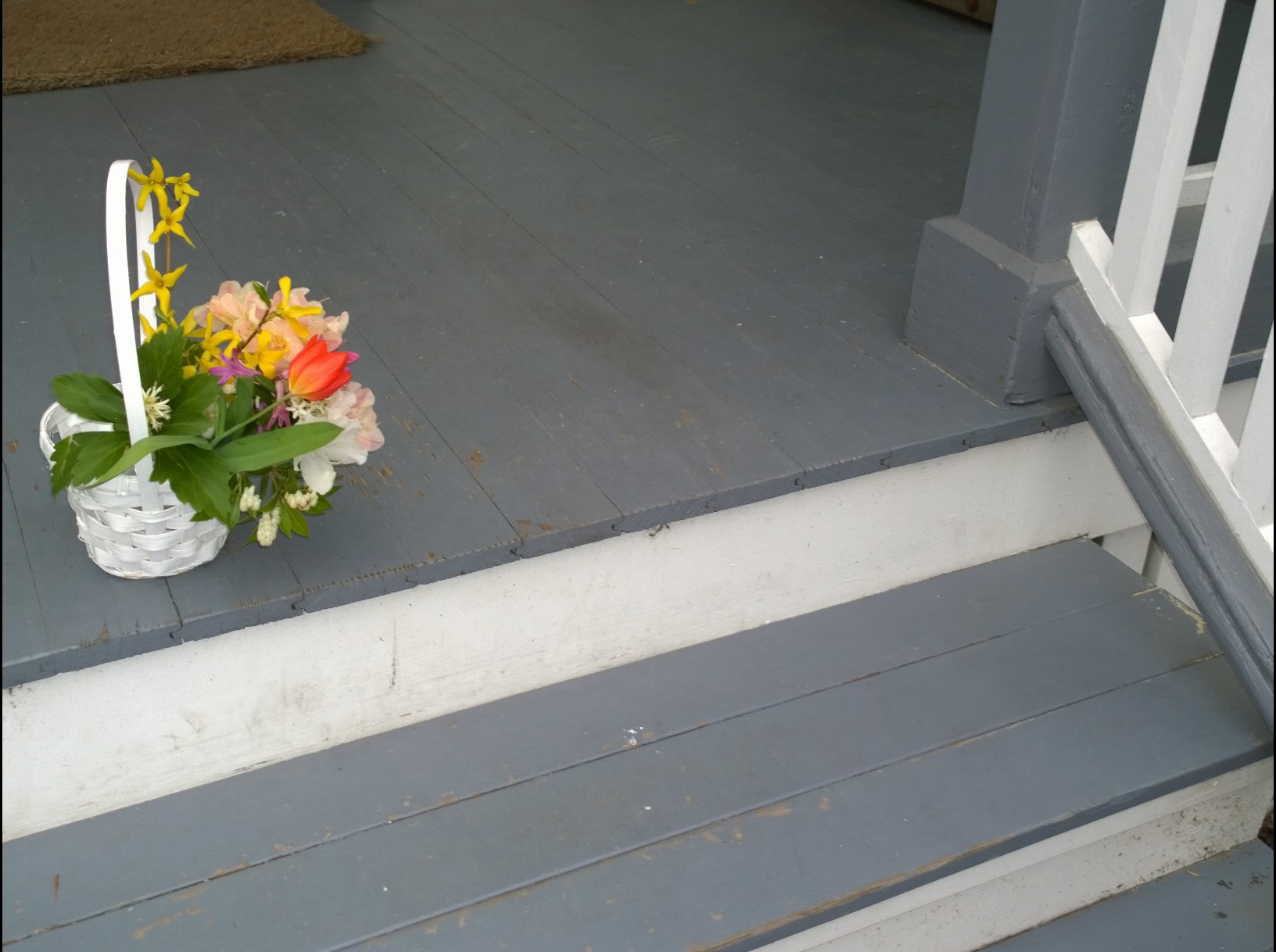
Happy May Day, Everyone.

Not to take anything away from other things that get celebrated on May 1, but it’s in the ancient rituals of girls dancing ribbons around poles and secretly leaving  baskets of flowers on doorsteps that the deep magic lies.

May-Day-flowers

Read Full Post »

I intended to go straight to YouTube after reading NY Times dance critic Alastair Macaulay’s enthusiastic review of jookin at a recent Memphis showcase. But then I couldn’t remember the name of the dancer or what the dance style was.

It’s jookin. And I can see why Macaulay — who can be utterly scathing about ballet dancers and choreographers who don’t meet his standard — is so ecstatic about jookin.

Macaulay writes about the rise of the form and a now-famous dancer called Lil Buck (born Charles Riley) at the NY Times: “In 2007 Katie Smythe, a  ballet teacher working out of her native Memphis, was driving her most remarkable student, Charles Riley, across the Mississippi to a lecture-demonstration in Arkansas. Mr. Riley, a young man specializing in the local form of virtuoso hip-hop footwork known as jookin, had started taking ballet lessons to gain strength and extend his range.

“Ms. Smythe had already persuaded some jookin dancers to improvise to Haydn and Mozart. Now she asked Mr. Riley to perform to the cello ‘Swan’ music from Saint-Saëns’s suite ‘The Carnival of the Animals.’ …

“In jookin, men wearing sneakers dance a version of pointwork too. They don’t wear tights, and in those shoes they can’t straighten their knees, but they go onto tiptoe and ripple their arms with the hip-hop currents … When Ms. Smythe and Mr. Riley reached their destination, she introduced him to the audience and put on the music. Her school’s archivist filmed the performance and posted it on YouTube.

“In 2010 this YouTube video (no longer online) was spotted by Heather Watts, a former principal of New York City Ballet who had danced for George Balanchine, Jerome Robbins and many other choreographers. …

“Watching this video of Lil Buck on YouTube, Ms. Watts was immediately electrified.” Read here how she helped him get national attention.

Jit is another type of street dance, from Detroit. I believe that is what you see in the second video, but I hope someone will correct me if I’m wrong.

Read Full Post »

Claire swims in Walden Pond before work. I take a lazy walk. Other people run or go to the gym. But in Brooklyn, you have the option of a dance party at a club.

Stacey Anderson has the story at the NY Times: “It was a typically raucous scene in Williamsburg, Brooklyn … . However, not all was familiar at this rave called Daybreaker, held at the club Verboten. For a start, the 400 young participants wore athletic clothing and pressed office wear rather than skimpy dresses and droll T-shirts. Some were bright-eyed, but just as many yawned and clutched cups of coffee. …

“The Daybreaker dance party, which runs from 7 to 9 a.m. three times a month, is one of two new early electronic diversions finding audiences in Brooklyn and Manhattan. Branded as both a morning workout option and a wholesome inversion of dance culture, the events are novel beyond their sunrise start times: They are alcohol-free, with coffee and fruit-infused water distributed at the bar instead of the customary club libations. The event, which had its debut in December and moves from place to place, darkens its spaces to mimic the typical rave experience, quite convincingly.

“ ‘It’s like a casino in here; there’s no idea of time,’ said Malcolm Ring, 24, a financial analyst. He woke at 5:30 a.m. to attend this Daybreaker party, his first. ‘I would normally go for a run right now, but this is more enjoyable.’ ”

More here.

Photo: Willie Davis for The New York Times
The rap artist Salomon Faye at a Daybreaker party at Verboten, a club in Williamsburg, Brooklyn. 

Read Full Post »

When John was in fifth grade, the parent-teacher association held a “cakewalk” as a fundraiser. It was kind of like Musical Chairs except players didn’t sit down. People would get eliminated in each session, and the last one standing would win one of the cakes. At the time, the idea was new to me.

Now, as I’ve been looking into James Hackett’s Days Gone By again, I am realizing the cakewalk was based on a much older custom.

Writes James, “The cake dance, to which references were made frequently in the 18th and 19th century, was not a particular dance but rather a baire or session of dancing of which a cake was offered to the couple who proved themselves the best dancers. These events were usually sponsored by the local alehouse or tavern, and such gatherings were associated with hurling and other athletic contests. …

“The cake to be danced for is provided at the expense of the publican, or alehouse keeper, is placed on a board, which in turn is put on top of a pike that stands ten feet high, and from it hangs a garland of meadow flowers and also some apples fastened with pegs on the outside of the garland. … Those who are able to dance the longest around the cake are declared winners.”

Photo found here.
If you know where to find a photo of an actual Irish cake dance, let me know. In the meantime, here is an Irish piper accompanying a couple dancers.

Read Full Post »

We watched Only When I Dance on Netflix last weekend, and afterward my husband did a Google search on the dancer who won the awards.

(The other dancer was heartbreaking. She was told that because she was black, there would be no opportunity in Brazil to join a company and she’d have to win a place abroad. Abroad, they told her she weighed too much — even though she was quite slender. Her family was poor and sacrificed everything for her.)

Dancer Irlan Silva ended up at the Boston Ballet.

James H. Burnett III wrote about him for the Globe. “At 23, Silva is a rising talent with Boston Ballet. But six years ago he wasn’t sure whether he’d even live long enough to see his dream of a career in ballet come to fruition. …

“Where he came from — a gritty favela in Rio de Janeiro — was documented in a critically acclaimed 2009 documentary called Only When I Dance, in which Silva and another dancer from the slums of Rio, Isabela Coracy, battle the odds in pursuit of their careers. Favelas, shanty towns that surround the city, are rife with poverty and violence. …

“Silva’s interest in ballet developed when he attended a professional performance at the age of 10. ‘I was hooked immediately,’ he says.

“He says his natural flexibility and leaping ability carried him until he was able to receive formal training, but not every flexible would-be dancer in Brazil was able to land a spot in Centro de Dança Rio, the nation’s premier ballet school.

“ ‘My teacher — a great teacher — Mariza Estrella  is responsible for inspiring me and pushing me on my way, out of the nest.’ …

” ‘Ballet can be expensive,’ he says. ‘My mother ran a cafe from her home. She still does in the same place. And she just made sure I had whatever I needed, like ballet shoes. …

“His father … Irenildo Santos, a factory worker in Rio, said through an interpreter in a recent phone interview that his son’s dancing ability was what convinced him that ballet was a worthwhile pursuit.

“ ‘We live in a very tough community. It can be very dangerous. There is crime. And there are even people who wish to harm you if you don’t behave in a certain way or fit a certain mold. … But when I saw him dance the first time, I was very moved. And now I am his fan. I am his biggest fan.’ ” Read more.

Photo: Essdras M Suarez/Boston Globe
Dancer Irlan Silva

Read Full Post »

Photo: Thomas Ondrey/The Plain Dealer
Zumba instructor Kelly Perkins, center, leads a group dance-walking  through Shaker Heights on Friday. The local version of the craze was organized by Shaker resident Jennifer Lehner.

Mary Ann is one of Cleveland’s biggest boosters. This week she’s been posting on Facebook about a dance-walk outing she joined Friday.

Janet Cho at the Cleveland Plain Dealer interviewed dance-walk organizer Jennifer Lehner.

“The idea came out of a backyard barbecue,” Cho writes. Lehner “was chatting with her friend Karen Katz, wife of Fire Food & Drink’s Doug Katz, about the fun YouTube video where WNBC television reporter Ben Aaron convinces New Yorkers to strut their stuff with him down the city streets.

” ‘We should do that!’ Katz said.

” ‘About one hour later I went home and bought the dancewalkfitness.com domain, set up the website and the Facebook page,’ she said. ‘You know, that’s just how I roll.’ …

“Lehner envisions tying the dance-walks in with her monthly Flash Cashers events, since the group might end up having lunch at a local restaurant after the workout.

“Flash-Cashers summons consumers to descend upon a local Shaker Heights-area business to spend at least $20 each during the cash mob event, giving the merchant a welcome one-night boost and increasing awareness among residents who may never have stepped foot in the store before.” Read more at the Cleveland Plain Dealer, here.

And here is Ben Aaron, who started the whole thing.

Read Full Post »

The rainy Saturday turned out to be gorgeous, so we went to the Somerville PorchFest and ran into some people we know.

A variety of bands play on porches around the town.  Neighbors sit on their steps to listen, families and college students wander in, entertainers entertain, and almost everyone is moved to dance.

My grandson and his best friend are pictured cutting a rug.

Read about this annual event here.

one-porch-fest-band

somerville-porchfest-051714


twirling-balls-on-string

dancers-at-porch-fest


Read Full Post »

« Newer Posts - Older Posts »