Feeds:
Posts
Comments

Posts Tagged ‘diversity’

Photo: Shirin Jaafari/The World.
Moayyed al-Kharrat, whose family has been performing the Sema in Syria for decades, described the dance as a sort of prayer.

As recently as June, when radio show The World filed this story about whirling dervishes, hope seemed to be the main emotion in Syria. The brutal Assad regime was gone, and victorious rebels were promising diversity and justice. Today sectarian violence has erupted.

But I think there are still reasons for hope — and for diverse groups to flourish. Like the Sufis.

This post shares what Shirin Jaafari wrote about the famous Sufi dance and the performers’ hopes.

“In the heart of Damascus, a group of men and boys dressed in long, white robes and tall headpieces stood in a semicircle. Their chants filled the courtyard of a traditional Damascene house that was turned into a hotel. …

“As the melody built up momentum, several of the men and boys began to twirl, their white skirts flaring out like blooming flowers. The dancers’ synchronized rotations make them trance-like, seemingly detached from everything around them.

“The al-Kharrats say they are the only family in Syria who have continuously performed the Sema, as the dance is known. It was introduced to the country in the 14th century and first popularized by the Persian poet Rumi in Turkey.

“Through years of war, repression and threats from extremist groups like ISIS, the family has still been able to pass the ritual on to younger generations.

Now, they say they are hopeful about new opportunities under the new Syrian government.

“Moayyed al-Kharrat, one of the two brothers who oversee the dancers, said their great-uncle learned the Sufi dance and taught it to others in the family. …

“ ‘The spinning represents pilgrims moving around the Kaaba in Mecca,’ Kharrat said, referring to the ritual performed by Muslims. ‘It’s also reminiscent of the planets moving around the sun.’

‘During the ritual, one hand is extended upward, palm facing the sky, he went on to explain, which symbolizes receiving divine blessing. The other one is turned downward, palm facing the earth, to pass the blessings to the world.

“Mahmoud al-Kharrat learned the Sema when he was 4 years old. He said that keeping the tradition alive in Syria hasn’t been easy.

“Sufism is a mystical branch of Islam focused on spiritual closeness to God. It has long faced suspicion from extremists, who consider Sufis to be non-believers. ISIS fighters have attacked their shrines and killed and imprisoned the descendants of the saints and personalities they represent.

“The regime of ousted President Bashar al-Assad didn’t prohibit the Kharrat family from performing, the brothers said. But it did make it difficult for them to get the right permissions. The Assad regime used the arts to paint a more positive image of itself to the world, they explained. For example, when foreign dignitaries visited, they asked the family to perform for them.

“As the civil war ravaged Syria, countries stopped issuing visas for Syrians to travel. The family found it almost impossible to take its performances to international audiences as it had done before. One time, they managed to go to the US, but upon returning, Mahmoud was questioned by a border guard about why he hadn’t yet completed Syria’s mandatory military service, which all men had to complete at the time.

“Mahmoud estimated that he ended up paying around $7,000 in bribes so he wouldn’t get sent to the frontlines. …

“At the Damascene home-turned-hotel, the first part of the performance wrapped up, and the two brothers discussed with the younger members what they could improve on. …

“After some discussion, they got ready for the next part of the performance — their long, white skirts sweeping the ground as they moved around.

“ ‘The best way to keep this tradition alive,’ Moayad al-Kharrat explained, ‘is to pass it on to the younger generation [making] sure they learn the chants, and the full meaning of what this dance represents.’ …

“ ‘When I dance, I feel like I’m flying,’ Mahmoud added. ‘I feel like a child who has just been given a birthday present.’ ”

More at The World, here.

Read Full Post »

Photo:Todd Davis.
Friends of Cleveland School District, a nonprofit composed of local parents and community members are working to save the town’s school district.

Northern states are supposedly against segregation, but as soon as Boston desegregated its public schools, it resegregated. Interestingly, a city in the deep South, is embracing diversity.

Leonardo Bevilacqua reports from Cleveland, Mississippi, for the Guardian, “Fernando Green sits on a pile of plywood in a new barn on a humid Mississippi Delta afternoon. The barn will be a center for students like his daughter to get a feel for local jobs in agriculture. There’s school swag for the incoming middle schoolers. A petting zoo with a baby alligator is off in one corner while boys throw a pigskin around in the back.

“A Mississippi Delta native … looks out with a glint in his eyes on the grounds of a middle school that used to house his revered high school: East Side. … A recent effort by a parent group looking to heal divides and counteract disinvestment has locals like Mr. Green excited. … Using donated lumber and dollars, the parents are fighting not only for their children’s future but for their town’s as well. …

“Says Todd Davis, a professor at the town’s own Delta State University in an interview with the Monitor. ‘I’m not fighting for some grand mission … I just want my kids to go to a nice school. … Every kid should have that option.’ …

“Dr. Davis joined with Kierre Rimmer, a Cleveland native and coordinator at the Family Treatment court, to fight disinvestment in Cleveland public schools. The duo, along with community partners, LaKenya Evans, Clare Adams Moore, and Rori Eddie Herbison, helped found the group, Friends of Cleveland School District (FOCSD).

“In a 2016 high-profile court-ordered integration, Cleveland School District’s two middle schools and high schools were ordered to merge. Some 63 years after Brown v. the Board of Education, Cleveland became the last district in the United States to desegregate in 2017. The historically white high school became the consolidated high school, and the historically Black high school became the site of the consolidated middle school. The district’s football team was rechristened the Wolves in purple and white. 

“The following autumn, over 100 white parents pulled their children out of public school – as locals of all races had predicted. That, locals interviewed say, is why residents both Black and white sought to block integration, to the consternation of mainstream media outlets and policy watchdogs. Many in town feared that court-ordered desegregation would inspire a massive white flight in the last town in the Delta to have a sizable white population still enrolled in the public schools.

“And, those interviewed say, the reality on the ground was different than in the headlines. By the time of consolidation in 2017, enrollment at Cleveland High and Margaret Green Junior High, the historically white schools, were roughly 50-50 when it came to race. In 2013, parents were granted the freedom to choose which high school to send their children to.

“With students arriving for their first day Aug. 5, administrators are still waiting on a final head count for the 2024-2025 academic year. Last year, 243 more students joined Cleveland public schools, the first time the district wasn’t losing students since consolidation. …

“Friends of Cleveland School District has secured $30,000 worth of paint, timber, and appliances from the likes of Fleming Lumber Company and other regional and local businesses. They’ve raised roughly $250,000 for the school from grants and fundraising efforts.

“This is a little less than the roughly $300,000 that leaves the district each year with the 300 or so students that depart for private school or other towns, after the neighborhood-zoned and magnet elementary schools cut off at sixth grade.

It helps that Cleveland has a middle class. Quality Steel, Baxter Healthcare, a luxury hotel, a local university, and a downtown with boutiques and coffee shops offer families comforts unknown in the rest of the Delta. …

“Dr. Davis is building planters for a school garden on a warm April afternoon, putting the raised funds to use. Students will get a chance to grow okra, sweet potatoes, and tomatoes – a reflection of the local agricultural economy.

“It’s still the big industry in this area,” remarks Dr. Davis. … He lends his green thumb during breaks in between teaching classes at the local university.

“Students have joined the garden club by the dozen, learning the power of civic mindedness with hands deep in world famous Delta dirt. The garden ‘allowed us to make new friends that we otherwise probably would not have made,’ says seventh grader Michael Vardaman. …

“Parent volunteer Stephen Chudy is tall and burly with a firm handshake and a warm smile beaming beneath a trucker hat. He’s here for one reason.

“ ‘I gave my daughter the choice, here or the independent school. She chose here. Fine by me. She’ll get to be around all different kinds of kids like there is out there in the world. It’s realistic,’ says Mr. Chudy, who is digging an irrigation path with ditches for the school’s many green stretches on a molasses thick morning. 

“ ‘There’s an understanding that the school is the only thing we all share as a town,’ he adds. ‘It’s a small place. We all go to the same McDonald’s and Walmart too.’ “

More at the Monitor, here. No paywall. Reasonable subscriptions. I really like the Monitor because it seeks out positive stories and international stories.

Read Full Post »

Photo: EllaJenkins.com.
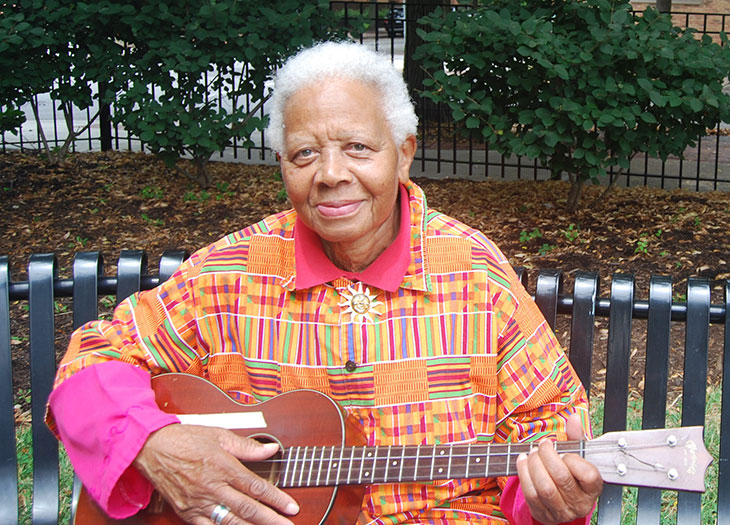
Ella Jenkins is the best selling individual artist in the history of Smithsonian Folkways Recordings. She introduced children to music from around the world and never talked down to them.

Today we learn about a folksinger whose unorthodox approach revolutionized music for children. Her name is Ella Jenkins.

Laurel Graeber writes at the New York Times, “When Ella Jenkins began recording young people’s music in the 1950s and ’60s, her albums featured tracks that many of that era’s parents and teachers would probably never have dreamed of playing for children: a love chant from North Africa. A Mexican hand-clapping song. A Maori Indian battle chant. And even ‘Another Man Done Gone,’ an American chain-gang lament whose lyrics she changed [into] a freedom cry.

“ ‘She found this way of introducing children to sometimes very difficult topics and material, but with a kind of gentleness,’ said Gayle Wald, a professor of American studies at George Washington University and the author of a forthcoming biography of Jenkins. ‘She never lied to them. She certainly never talked down to them.’

“Jenkins’s unorthodox approach became a huge success: … A champion of diversity long before the term became popular, Jenkins helped revolutionize music for the young, purposefully encouraging Black children. In addition to introducing global material, which she often recorded with children’s choruses, she wrote original, interactive compositions like ‘You’ll Sing a Song and I’ll Sing a Song,’ now part of the Library of Congress’s National Recording Registry. …

“You might think that Jenkins, [100], would now want to relax. … What she would really like to do — although her fragile health prevents it — is to perform again herself. ‘I want to get well and get back on the job, where I’m working with other people, working with children,’ she said. ‘I work with them, and they work with me. I enjoy work.’

“Jenkins’s efforts, which comprise more than 40 recordings, began on Chicago’s South Side, where she grew up. Although never formally trained as a musician, she learned harmonica from her Uncle Flood and absorbed a variety of musical traditions through neighborhood moves and jobs as a camp counselor. After graduating from what was then known as San Francisco State College, she directed teen programs at the Chicago Y.W.C.A., which helped cement her love for children. Her street performances led to an offer to do young people’s music segments on local television, a debut that would be followed years later by appearances on shows like Sesame Street and Mister Rogers’ Neighborhood.

“ ‘Her curiosity is so insatiable,’ said Tim Ferrin, a Chicago filmmaker who is completing a documentary, Ella Jenkins: We’ll Sing a Song Together. He added, ‘I think she saw herself as a conduit, as somebody who could then share that enthusiasm, share that understanding.’

“Often called ‘the first lady of children’s music,’ Jenkins captivated her listeners because she presented music not as lessons but as play. A charismatic performer whose accompaniment often consisted of only a baritone ukulele and some percussion, she encouraged her young audiences not to sit still but to get up and move. Using a signature call-and-response technique that she adapted from African tradition and artists like Cab Calloway, she engaged her listeners in a musical conversation, even if they didn’t understand what they were singing.

“ ‘She made it very immediate and not exotic,’ said Tony Seeger, an ethnomusicologist and the founding director of Smithsonian Folkways. … At a Chicago convention of the National Association for the Education of Young Children in the 1990s, he recalled, so many members tried to crowd into a Jenkins concert that the organizers shut the doors. Those excluded responded with frenzied knocking.

“ ‘It was astounding, her popularity, and also the insistence with which these preschool teachers were pounding on the door,’ Seeger said, chuckling in a video interview. ‘I mean, you don’t think that they would do that sort of thing. But they did.’ ”

More at the Times, here.

Read Full Post »

Photo: Edwards’s Botanical Register.
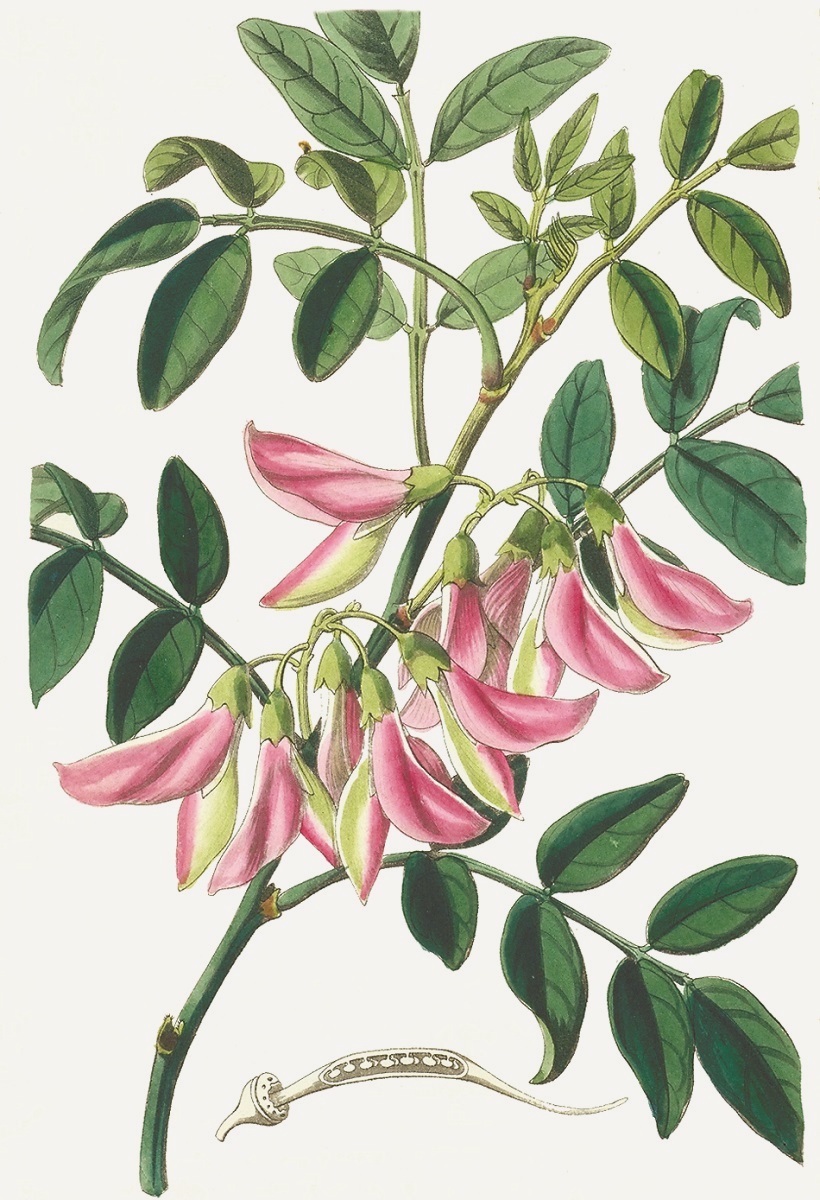
The Phillip Island glory pea, which once grew in Australia, is a leading candidate for de-extinction, according to e360

Do you get visions of Frankenstein’s monster when you hear about reversing extinction? Maybe we start with plants, but then what? Dinosaurs?

Well, it’s hard for me to be against anything that extends knowledge, so I’m keeping an open mind about the Yale Environment 360 report on the de-extinction of plants.

Janet Marinelli writes, “In January 1769, botanists Joseph Banks and Daniel Solander found a daisy in Tierra del Fuego, at the southern tip of South America. Later named Chiliotrichum amelloides, it is one of a thousand plant species unknown to European scientists that the two men collected during Captain Cook’s first voyage on the HMS Endeavor. … The plant was dried and pressed for future study. Today, the 254-year-old specimen is among the almost 8 million preserved plants in New York Botanical Garden’s William & Lynda Steere Herbarium.

“ ‘When a plant goes extinct,’ says Giulia Albani Rocchetti, a postdoctoral researcher at Roma Tre University and the lead author of the paper, ‘we don’t just lose a species, we lose a member of a habitat community with a specific role and relations with other species; … we lose genes which could have provided insight into the species and its community and yielded new pharmacological compounds and other products.’ …

“For nearly five centuries, herbaria have helped botanists identify, name, and classify the world’s floral diversity. Now these vast botanical libraries are being tapped to try to create a new chapter in the 500-million-year history of Earth’s terrestrial plant life. In Nature Plants in December, an international group of biologists published the first-ever list of globally extinct plants they believe can be returned from the dead, using seeds available in herbarium specimens. …

“In recent decades, the seeds of rare and imperiled species have been preserved in seed banks at low humidity and temperatures that ease the embryos inside into a kind of state of suspended animation to maximize their longevity. However, species already lost remain only as specimens in the collections of dried and pressed plants known as herbaria, and only in some (lucky) cases. … Only a few of these plants happened to be in fruit and in seed when they were collected. And even when herbarium seeds are discovered, there is no easy way to tell if the embryos inside are dead or lying dormant, waiting to sprout when conditions are right. …

“Abby Meyer, executive director of Botanic Gardens Conservation International in the United States, points to the rise in recent decades of the field of bioinformatics, which has transformed the trove of biodiversity information once locked up in natural history collections — such as herbarium specimens of extinct plants that contain seeds — into browsable digital databases. New York Botanical Garden (NYBG), for example, began digitizing its herbarium specimens in the mid-1990s, and today some 4 million, or about half of its preserved plants, have been scanned and can now be called up on a computer screen by anyone around the globe.

“Data aggregators such as the Global Biodiversity Information Facility provide researchers looking for seeds with instant access to millions of scanned specimens, along with associated ‘metadata’ such as the GPS coordinates where the plants were collected. At the same time, scientists have been refining in vitro embryo rescue techniques, increasing the odds that old or weak seed embryos can grow into viable plants. …

“While attempts to de-extinct the dodo, the woolly mammoth, and other charismatic megafauna continue to grab headlines, they would result at best in a hybrid, genetically engineered animal — a proxy of an extinct species. By contrast, recovering plants by germinating or tissue-culturing any surviving seeds or spores preserved in herbaria would result in the resurrection of the actual species. …

“One of the biggest hurdles is figuring out how to germinate the precious few seeds of often genetically unique plants found only on dried specimens. There is little margin for error, and before attempting to germinate the extinct species itself, scientists must perfect methods for germinating seeds of any closely related species that survive. …

“In December 2019, Giulia Albani Rocchetti sat in Florence’s Central Herbarium, marveling over the remains of Ranunculus mutinensis, an endemic buttercup that once grew in moist floodplain forests of the Po River, as it threads through northeastern Italy. … It was a thrill for her to find not just one but two Ranunculus specimens with numerous mature fruits called achenes. She then spent months at her desk in Rome, blowing up digitized images of extinct plants from herbaria across the globe on her computer screen in the improbable search for seeds.

“She was also spurred on by the knowledge that some seeds have the astonishing ability to survive adverse conditions and sprout after decades, even centuries — such as the Judean date palm, which a team of scientists successfully germinated in 2005 from a 2,000-year-old seed. …

“Albani Rocchetti and colleagues … identified 556 specimens that contained seeds, representing 161 of the extinct plant species [and] proceeded to devise a pioneering roadmap for prioritizing species for de-extinction. Assuming that species whose close kin produce long-lived seeds and newer specimens are the most likely to contain seeds that survive, they combined data on the seed behavior and longevity of closely related plants, as well as the age of each specimen, to create a DEXSCO, or best de-extinction candidate score for each species. …

Streblorrhiza speciosa, a spectacular member of the pea family, was [so] unique that it is considered the only member of its genus, or closely related group of plants. The species’ striking cascades of pink blossoms clambered exuberantly over trees on Phillip Island in the Pacific Ocean east of Brisbane, Australia. Collected in 1804 by Austrian botanist Ferdinand Bauer, the Phillip Island glory pea was an instant hit in Europe, coveted by every wealthy family with a conservatory. Meanwhile, however, Phillip Island was being overrun by pigs, goats, and rabbits introduced by British officers overseeing a nearby penal settlement, leaving barely a scrap of the remote island’s unique vegetation, and the glory pea was never seen in the wild again. …

“The glory pea is now presumed extinct, but at number three is near the top of the list of recommended de-extinction candidates. …

“Another challenge of plant de-extinction is the lack of financial support for pursuing it. But on the bright side, plant de-extinction has not kicked up the controversy surrounding attempts to resurrect, say, the wooly mammoth or passenger pigeon. ‘For whatever reason, the human brain doesn’t seem to be as concerned about plants as about animals,’ Knapp says. ‘But in this case, we’re literally just germinating seed. We’re not reconstructing a genome. And that’s way less intimidating. Everyone can understand that.’ “

More at e360, here. No firewall.

Read Full Post »

Photo: Disney.
Cape Town residents Nadia Darries and Daniel Clarke co-directed Aau’s Song, the final short film in the second volume of the Star Wars: Visions anthology.

I had just given birth to Suzanne when neighbors offered to help out by taking John to Star Wars. He was five, and that was the moment that Star Wars became a big deal in our family.

It was a big deal around the world, too, and today’s story shows that its lasting popularity in Africa has recently led to Disney and Lucasfilm blessing an African version.

Ryan Lenora Brown reports at the Christian Science Monitor, “When George Lucas first created the Star Wars universe [he] probably didn’t imagine extraterrestrial worlds crawling with fynbos, the brightly colored, prickly shrub land of South Africa’s Western Cape. Nor did he likely envision his Jedi warriors channeling the energy of sangomas, southern African traditional healers. 

“But when South African filmmakers Nadia Darries and Daniel Clarke were asked recently to create their own version of the Star Wars universe for an animated short film, their alien world bore distinct imprints of their Earthly homeland. 

“ ‘We weren’t super intentional about it, but of course we are South Africans, so we are drawing on real experiences from our own world,’ says Ms. Darries, an animator from Cape Town whose work has appeared on the BBC.

“The pair’s 15-minute film, Aau’s Song, is part of a recently released anthology called Star Wars: Visions, in which animation studios from around the world were invited to re-imagine the famous fantasy universe through their own eyes.

The resulting shorts feature Jedi in saris, anime-inspired Sith lords, and lightsaber-wielding teenagers with thick Irish brogues. …

“Since its inception, Star Wars has been the world’s darling. And its films have long had a dedicated following across the African continent. In 2015, for instance, The Force Awakens had the single most profitable opening day in South African cinema history to that point. And the Earthside location of Darth Vader’s twin-mooned home planet, Tatooine, is in Tunisia, where it’s been a popular site of pilgrimage for both local and international fans. 

“But the franchise itself has often been slow to reflect back the diversity of its audience. …

“ ‘As someone growing up in South Africa, my perception of sci-fi and fantasy was that the central character will have pale skin, speak English, and probably be a man,’ says Omar Morto, a South African radio presenter, musician, and lifelong Star Wars fan. 

“In recent years, however, Star Wars has made strides to look more representative of planet Earth, featuring protagonists of color and female characters who actually speak – sometimes even to each other. But its universe is still being imagined, largely, by Westerners. 

“Two years ago, Lucasfilm, the Star Wars production house, released a series of short, Star Wars-inspired films made by Japanese anime studios called Star Wars: Visions. The reaction to that series was so positive, producers said, that they decided to create a second volume, this time featuring animators from around the world. …

“For Ms. Darries and Mr. Clarke, who made Aau’s Song with the South African studio Triggerfish, the project never felt quite so cosmic. They simply wanted to tell a story that meant something to them, Mr. Clarke says. 

Aau’s Song takes place on a planet called Korba. Its inhabitants mine the kyber crystals used in lightsabers, which have been corrupted by the Sith of the Dark Side. Enter Aau, a young girl who has a magical singing voice that can alter the crystals – and a protective father afraid she’ll put herself in danger if she uses it. …

“It [felt natural to Ms. Darries], she says, that the story’s wise woman – a visiting Jedi named Kratu – would resemble a kind of wise woman found in her own family, a sangoma, or diviner. Like Jedi, who often act as peacekeepers and have the power to connect to people’s thoughts, sangomas heal personal and social rifts in part via their connections with the ancestral world. 

“And though the story is about a girl with the power to purify lightsaber crystals, Mr. Clarke says they saw it as fundamentally being ‘about a character healing a poisoned land, which is a very South African story.’ 

“Mr. Morto, the radio presenter, says he can still remember the rainy Cape Town afternoon in the 1990s when his uncle came back from the video rental store with Return of the Jedi. … ‘Since then, it has been my life,’ he says. 

“And so, seeing a Star Wars universe that looked like South Africa in Aau’s Song ‘was special to experience.’ ”

More at the Monitor, here.

Read Full Post »

Photo: Felipe Werneck/Ibama via Wikimedia.
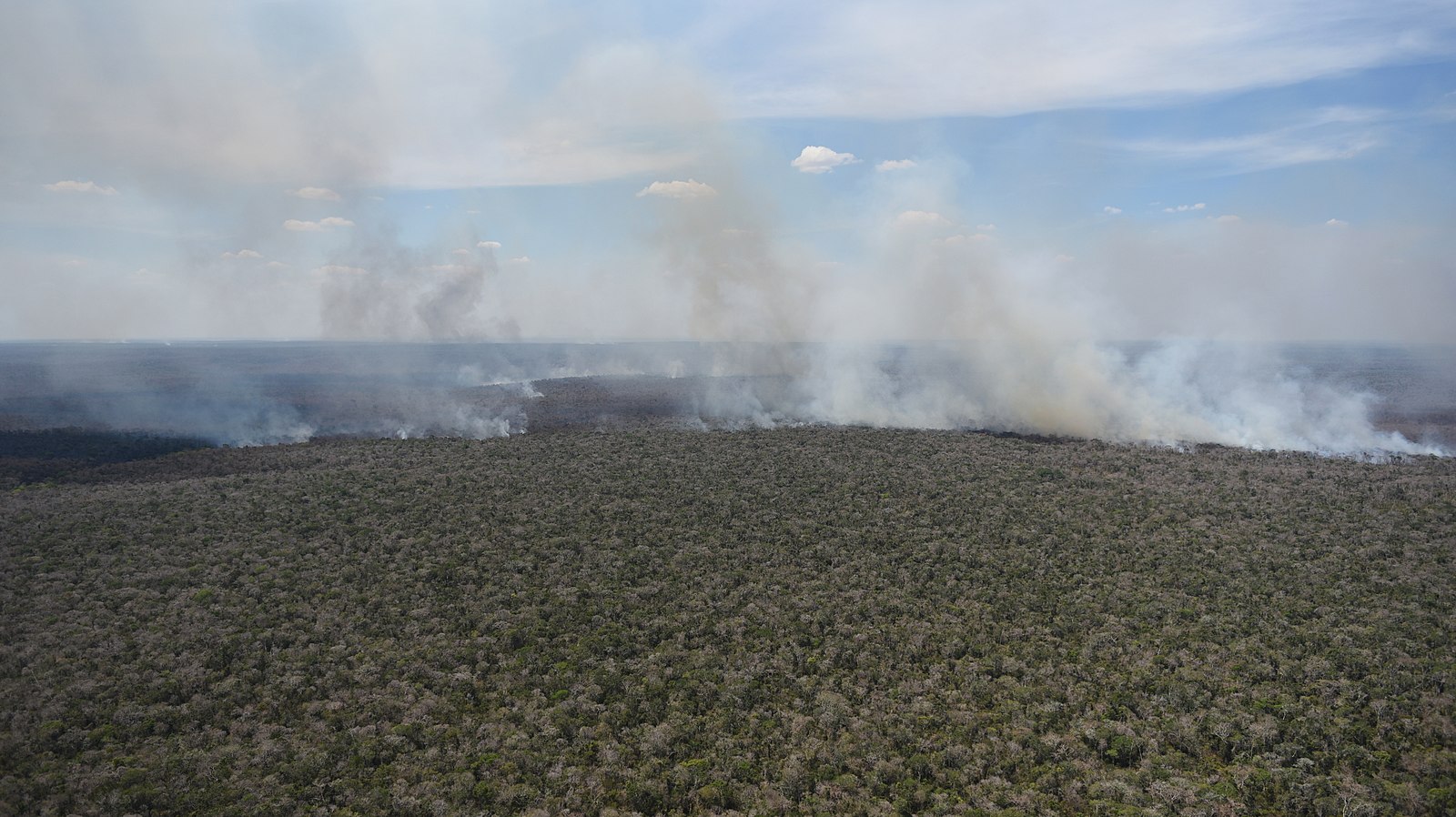
Wildfires in Brazil’s indigenous territory, 2017. Conservationists believe that restoration of the rainforest works best if a variety of seedlings are used, not just one kind.

I think humans are like ants in this regard: as soon as our anthill is destroyed, we start rebuilding. And as soon as greed destroys another swath of rainforest, conversationists, indigenous people, and fundraisers move in to rebuild. It may be hopeless, but that’s how we roll.

Bruno Vander Velde, managing director of content at Conservation International, writes at the Conversation about one rebuilding program.

“A bold initiative to regrow 73 million trees in the Brazilian Amazon has made substantial progress despite some unexpected hurdles, according to an upcoming report. While the global pandemic and an increase in Amazon fires presented setbacks, the initiative, launched in 2017, has delivered almost 20 percent of its forest restoration target, according to Conservation International in Brazil, one of several partners involved in implementation. 

“The partners point to surprising progress taking root, as the COVID pandemic shows signs of leveling off and a new incoming presidential administration publicly commits to stem the tide of deforestation. …

Launched at a Brazilian music festival, the initiative targeted areas along the southern edges of the Amazon forest, known as Brazil’s ‘arc of deforestation,’ as well as in the heart of the forest, where natural regeneration is still possible.

“By restoring these carbon-absorbing forests, the initiative is intended to help the South American country achieve its climate commitments under the Paris Agreement, as well as its target of reforesting 12 million hectares (nearly 30 million acres) of land by 2030. 

“The initiative comprises two efforts: Amazonia Live, an effort led by the Rock in Rio music festival in collaboration with Conservation International and Brazilian nonprofit Instituto Socioambiental; and the Amazon Sustainable Landscape project, a collaboration among Conservation International, the Brazilian Ministry of Environment, the Global Environment Facility, the World Bank and the Brazilian Biodiversity Fund. 

“In sum, the initiative is an experiment to ‘figure out how to do tropical restoration at scale, so that people can replicate it and we can drive the costs down dramatically,’ Conservation International CEO M. Sanjayan told Fast Company in 2017. …

“One of the initiative’s most noteworthy features was the use of a seed-planting method called ‘muvuca,’ widely advocated by the Instituto Socioambiental as a way to reduce restoration costs. Unlike typical reforestation efforts, in which tree saplings are planted one at a time, the muvuca method relies on spreading a large and varied mixture of native seeds across the targeted areas, to assure a higher diversity of trees. The technique’s results have exceeded expectations, experts say. 

‘We’re seeing a tree yield that is three times higher than our initial estimates,’ said Miguel Moraes of Conservation International’s Brazil office. 

“ ‘Rather than 3 million trees growing in 1,200 hectares (3,000 acres), as we would have expected, we’re estimating 9.6 million trees in the same area,’ based on monitoring reports, he added. …

“This restoration effort has not escaped some hard, real-world realities in Brazil’s Amazon. Some restored areas were burned by fires and will be monitored to see if they can regenerate on their own, Moraes said. (The area lost was not counted against the overall goal.) 

“Such fires — all of them set by humans, usually to clear forests for agriculture and livestock — are a sign of the times. The Brazilian Amazon has been hit especially hard by wildfires in recent years. By September 2022, more forest fires were recorded in the region than in all of 2021, amid a surge of deforestation. …

“ ‘Our initial expectation [in this effort] was to prioritize the restoration of large contiguous areas within conserved areas,’ Moraes said. Restored forests in those areas should have been more durable; however, in the past two years ‘deforestation within protected areas in Brazil has increased significantly,’ he added. 

“The resilience of the Brazilian Amazon’s many protected areas will be critical to the long-term success of the initiative. 

“As it did around the world, COVID upended life in Brazil. …

“ ‘Like everyone, we were completely unprepared for a global pandemic — not only at the project level, but also at an individual level,’ [Moreas] said. … ‘Twenty percent restored might seem a low figure — and it generates a bit of frustration. But given the context, that we were able to achieve 20 percent of our target is impressive.’

“Even in the tropics, trees take years to grow to maturity. But reforestation projects usually last only a fraction of that time. … ‘Most projects like these are an intervention at a point of time, and then they end,’ Moraes said. ‘But restoration is a long and continuous process. So, ensuring permanence is a huge issue.’

“Practitioners are taking steps to address this, including planning for long-term satellite monitoring to keep a close eye on restored forests. They will also work with communities and local governments to try to bolster on-the-ground protection of these areas. 

“Five years after the restoration initiative was announced, nearly three years into a pandemic and just weeks since a new administration took office in Brazil, project organizers are hopeful. The 2023 deadline for completion has been shifted to 2026, after some administrative challenges in the project’s early years. Organizers have now grown more comfortable managing the complexities inherent in a partnership of this size, Moraes said.

“ ‘I believe we underestimated the complexity of the challenge ahead of us. We are now trying to be more strategic. … Conservation International’s restoration efforts in Brazil go beyond just this effort,’ he said. ‘But if we succeed, we can show that we can make an impact at the scale needed to bring the forest back from the brink.’ ”

More at Conversation, here. No firewall.

Read Full Post »

Photo: 2Life Communities.

Back in June, I was listening to the radio in the car and heard a local interview with poet Billy Collins. Collins was in the area for a 2Life Communities fundraiser. In searching for more information on 2Life Communities, I found this 2021 story from GBH radio. Turns out, there actually exists, through a lottery system, an affordable and very diverse option for retirement in Greater Boston.

Marilyn Schairer reported, “Some senior adults living in and around Boston face a major life dilemma nowadays, especially when they retire and are on a fixed income: they have to choose between paying for heat, for food or for rent.

“That’s what 2Life Communities is working to change. The nonprofit is on a mission to help senior adults live in affordable housing in the Greater Boston area, with over 1,300 units and hundreds more in planning and construction stages, as demographic shifts leave more older Americans burdened by housing costs.

“Amy Schectman, president and CEO of 2Life Communities, said 2Life does more than just provide housing for middle- and low-income senior adults.

“ ‘We’re dedicated to the proposition that every older adult should have the opportunity to live a full life of connection and purpose in a dynamic, supportive environment,’ she said.

The organization’s mission brings together a community of people from all backgrounds and cultures. …

“A major demographic shift is underway in the United States as the baby-boomer generation ages. By 2030, one in five Americans will be 65 years old or over, according to the U.S. Census Bureau.

“But Schectman said only a third of older adults who qualify for subsidized housing actually receive it nationwide. The remainder, as found by Harvard Joint Center for Housing Studies, are ‘housing cost burdened,’ Schectman said, ‘meaning they’re spending an inadequate [amount on] money on food and medicine.’

“Currently, 2Life Communities has 1,340 affordable apartments on six different campuses in the Greater Boston area, including Newton and Framingham, and they’re looking to build another campus in Lynn. … Tenants at 2Life are selected through a lottery system, and the waitlist is long. …

“Tenant Darryl Smith won an apartment in the lottery three years ago, and he is thrilled.

“ ‘Oh man, I’m jumping for joy,’ he said. Smith, who is in his 70s. …

“2Life was formed in 1965, and back then it was called Jewish Community Housing for the Elderly. Schectman said the new name is meant to convey a sense of joyous aging, and it comes from a traditional Jewish or Hebrew toast: ‘L’Chaim,’ which means ‘to life.’

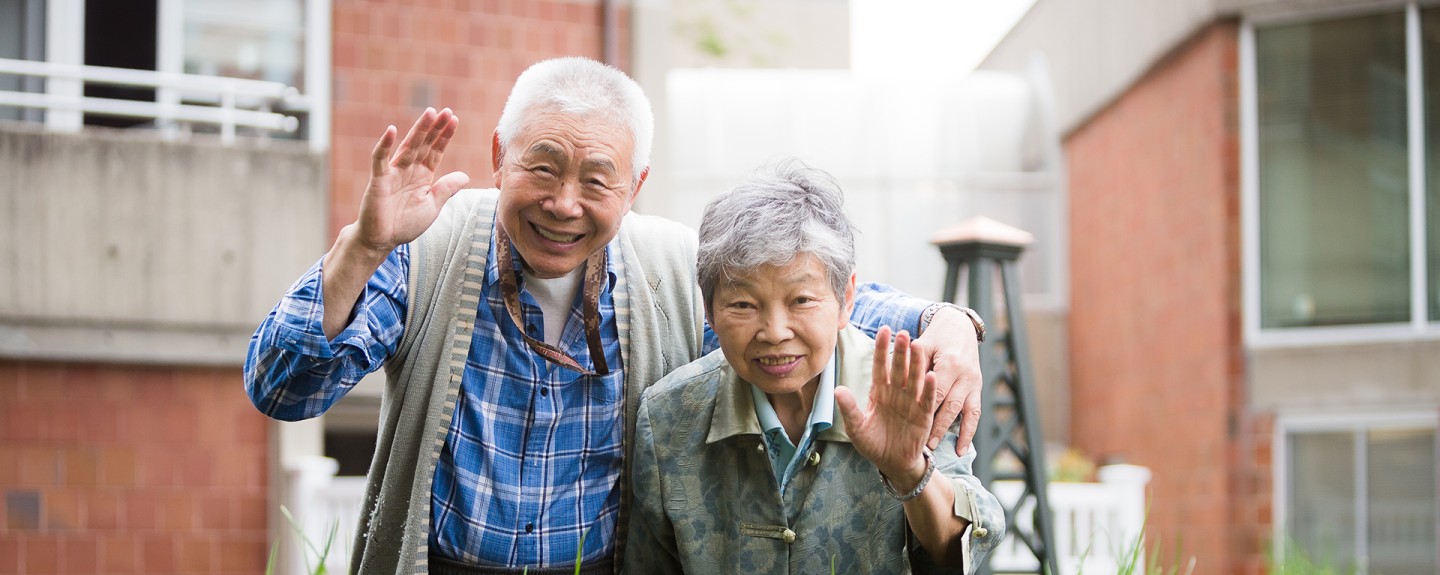
“One of the things tenants said they like about the living situation is the diversity. Resident speak a plethora of languages, and there are lots of people from the Boston area, of course, but many are immigrants, representing countries such as China, Ukraine and Belarus. …

“ ‘The end of the year is a big time of giving,’ she said. ‘And let me be clear, we can’t do what we do without philanthropy. We are 100% dependent because we believe you can’t chintz out on services and programs.’

“The median annual household income among residents is $12,078, according to Schectman. But even with federal subsidies and tax credits, she said partnerships with businesses like Dellbrook Construction are needed. Dellbrook’s CEO Michael Fish said he understands the need for organizations like 2Life Communities.

“ ‘The fact that they’re expanding and growing tremendously is not surprising whatsoever, and it’s incredibly necessary given the state we are in and the need for affordable housing for seniors,’ Fish said.

“And tenants like Darryl Smith feel a lot of gratitude for having a newfound home.

“ ‘I’ve got friends now that you can go right to,’ he said, noting the sense of community. ‘If you have any kind of problem, they’ll walk with you, and everybody’s smiling.’ ” More at GBH, here.

As my husband and I scout retirement communities, we realize that although we are fortunate enough to be able to pay the costs, we are going to lose out on contact with people of diverse backgrounds. Diversity of nationality, religion, and language is often tied these days to economic diversity. I will just have to keep volunteering with English as a Second Language classes. For me, making friends in those classes is truly enriching.

Read Full Post »

Photo: Shaniqwa Jarvis/Glamour.
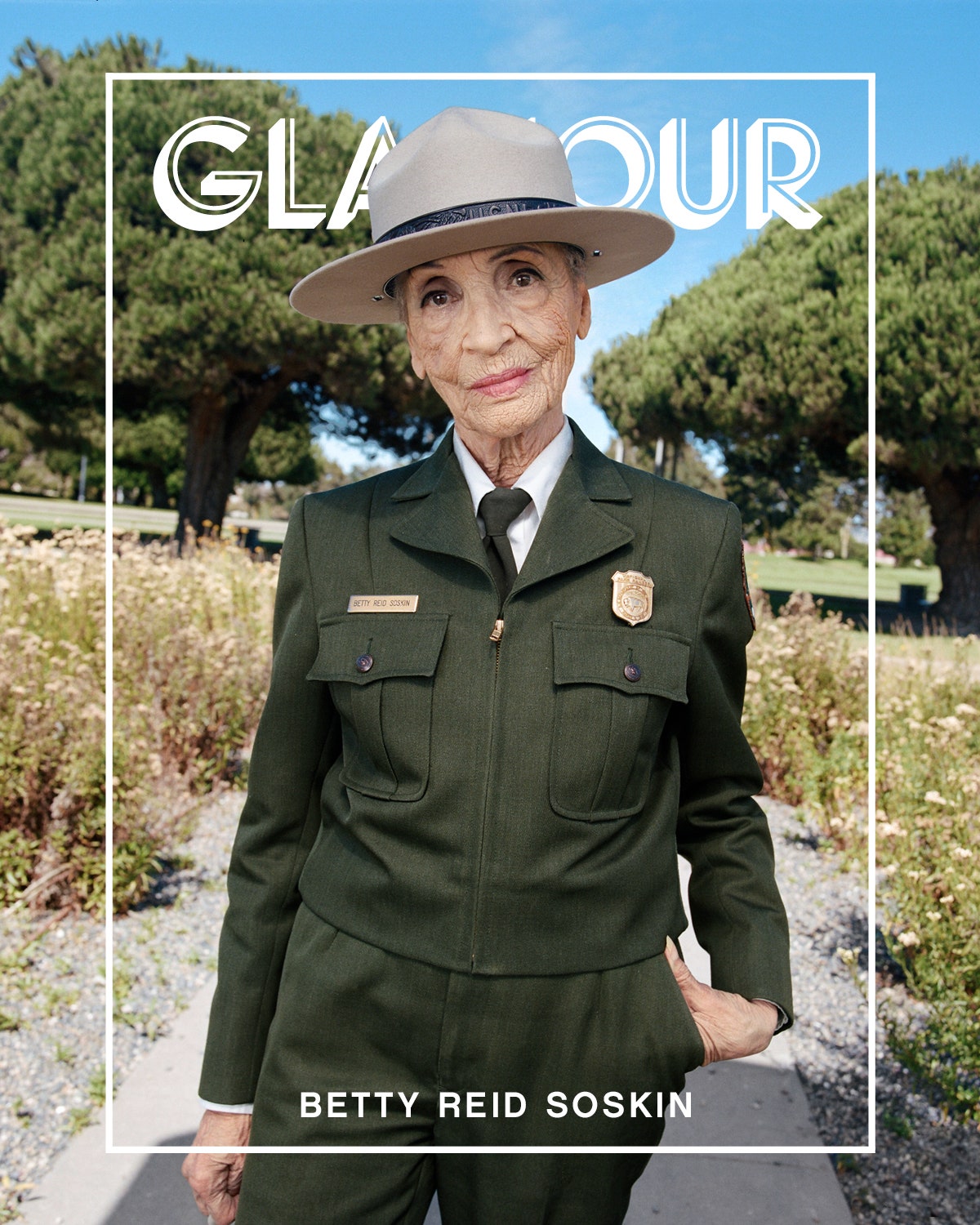
Betty Reid Soskin works at the Rosie the Riveter World War II Home Front National Historical Park in Richmond, Calif. Soskin is the oldest active ranger in the National Park Service.

In a fascinating September article at the Washington Post, Sydney Page interviewed a no-nonsense park ranger who was in her 80s when she heard a call to improve on the way US history is told. Here’s her story.

“When asked how it feels to be 100 years old, Betty Reid Soskin [said]: ‘The same way I felt at 99.’

“But she’s not just any centenarian: Soskin is the oldest active ranger in the National Park Service. …

“When it comes to sharing her story, Soskin is not shy. As a park ranger at the Rosie the Riveter World War II Home Front National Historical Park in Richmond, she spends her days recounting her rich and complicated history, in the hope that her firsthand account will resonate with people, and encourage them to share their own stories.

“ ‘I think everyone’s story is very important. There is so much diversity,’ Soskin said. ‘It’s in that mix that the great secret of a democracy exists.’

“It wasn’t until 21 years ago, though, that Soskin truly started telling her own tale — and it happened by coincidence. While working as a field representative for a California assemblyman, Soskin attended a meeting with planners from the National Park Service.

“They were organizing the development of the Rosie the Riveter WWII Home Front National Historical Park, created in 2000 to honor Americans on the home front, who worked in various industries across the country to bolster the war effort.

“The park paid homage to Rosie the Riveter, a pop-culture icon, symbolizing civilian women who worked in shipyards and factories — assuming the vacated jobs of men — during the war. But the depiction of a red-bandana-wearing White woman didn’t speak to Soskin’s own experience on the home front as a Black woman in segregated America, she said. During the war, Soskin worked as a file clerk in a segregated union, Boilermakers Auxiliary 36.

“ ‘Black women were not freed or emancipated in the workforce,’ she said in a 2015 interview with the Washington Post. ‘Unions were not racially integrated and wouldn’t be for a decade. They created auxiliaries that all Blacks were dumped into. We paid dues but didn’t have power or votes.’

Sitting in that meeting with the National Park Service planners as the only Black person in the room, she realized something: ‘The history, as I had lived it, was nowhere in sight — not one minute of it.

“Soskin decided to change that. She became a consultant to the park in 2003, and a park ranger in 2007 at the age of 85. Sharing her story with as many people as possible, she decided, was her way of reclaiming her history, and that of countless others whose tales have gone untold.

“She’s become known for saying: ‘What gets remembered is determined by who is in the room doing the remembering.’ So she made it her mission to stay in the proverbial room — which, in her case, was in the park’s visitor center. …

“Tom Leatherman, the park’s superintendent, said Soskin has had a profound impact on the park.

“ ‘She has been fundamental to us being able to tell a more complete story,’ he explained. … Soskin has propelled the park, Leatherman added, to seek other stories of people who have been marginalized and ensure that they are heard — including voices that are Latinx, Native American, Japanese American and LGBTQ. …

“The content of her presentations is dictated, in large part, by what visitors want to know. Often Soskin speaks of her upbringing in a tightknit Cajun-Creole family and her experiences with racial discrimination growing up in Oakland, Calif. …

“Over the years, Soskin — who has four children, five grandchildren and one great-grandchild — wore many hats: mother, musician, civil rights activist, antiwar advocate and finally, park ranger. Her most recent role is what pushed her into the national spotlight.

“Just like that, ‘someone dropped a uniform on the life that I was already leading,’ Soskin said. … Wearing it, she said, feels right.

“ ‘Little girls that see me in uniform see possibility. They have a feeling there’s an option open to them that they wouldn’t have known otherwise,’ she said. …

“Since becoming a ranger, Soskin was awarded the Silver Service Medallion by the National WWII Museum; she was presented with a commemorative coin from President Barack Obama; and she has written a memoir called ‘Sign My Name to Freedom,‘ which is being made into a documentary. …

“Her most recent accolade came just in time for her 100th birthday: A middle school was renamed after her.

“ ‘I didn’t know that would mean so much, except that it does, because I think that it means that I will go forward into history along with all the other people,’ she paused to wipe a tear, ‘who have tried to make a difference.’ ”

More at the Post, here. You might also like the 2018 article about Soskin at Glamour, here.

Read Full Post »

Urban Nutcracker

Photo: Suzanne Kreiter/Globe Staff.
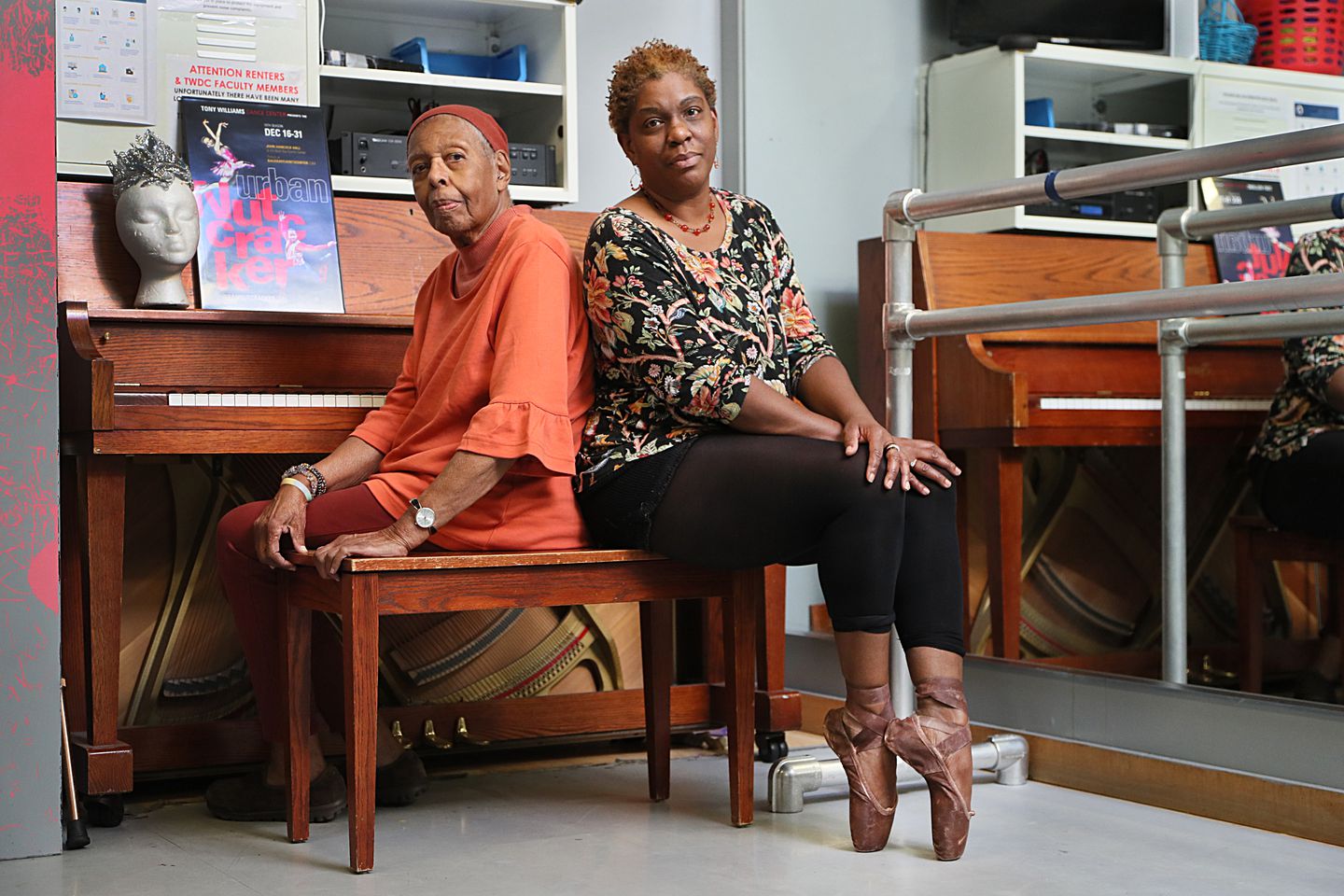
Mother and daughter Afrika Lambe (a pianist), and Erika Lambe (a dancer) talk about their deep roots in Boston arts and their love for the “Urban Nutcracker.

Boston has an unusual dance event at the holidays. It’s called the “Urban Nutcracker.” Some years ago, Kristina and I went to see to a production and really enjoyed it. My understanding is that it’s a little different every year, so I know I need to get back there. Today’s story highlights a mother and daughter who have had a role in preparing young dancers of color to take part both here and in the wider arts world.

The daughter danced with the acclaimed Boston Ballet for 11 years, but says that despite some principal solos there, she finds her current work with young dancers more meaningful.

Karen Campbell reports at the Boston Globe, “Twenty years ago, dancer Erika Lambe became Boston Ballet’s first Black Sugar Plum Fairy in ‘The Nutcracker.’ During much of her time with the company, she was the only Black ballerina.

“Now Lambe is involved with a version of the classic ballet dedicated to putting artists of color front and center. This season, City Ballet of Boston’s production of ‘Anthony Williams’ Urban Nutcracker’ also celebrates a landmark 20th anniversary. Williams’s multicultural twist on the ballet classic, set in present-day downtown Boston, blends the traditional Tchaikovsky score with Duke Ellington’s jazzy version and features dance styles ranging from ballet and flamenco to hip-hop.

“ ‘There’s no other “Nutcracker” like this,’ Lambe says. ‘Its whole intent is to speak to a more diverse audience, unlike the more traditional productions. … Twenty years ago, people in this community wouldn’t even consider going to a ballet, but this has brought them into the theaters and gives kids exposure to dance, ballet in particular. It’s such a holiday tradition.’

“This year, Lambe reprises her role as the Mother in ‘Urban Nutcracker,’ and a role behind the scenes, too, as ballet mistress, running the children’s rehearsals, working with some of the adults in the production, teaching upper-level classes in City Ballet of Boston’s school, and running its introductory Relevé program. She’s also helping in the wardrobe department, refurbishing costumes and making new tiaras.

“Now in her 50s, Lambe, who grew up in Brookline, has been enmeshed in the dance world since she began classes at the age of 4. She says she was never one of those kids who dreamed of being a ballerina, but after seeing a Boston Ballet ‘Nutcracker’ production when she was 6, she was hooked, beginning training with the company as one of only a handful of students of color. ‘I hated ballet, but I wanted to be in “The Nutcracker.” ‘ …

“When she was 10, she says, the ballet master pushed for her to be given the role of Clara. Boston Ballet founder E. Virginia Williams demurred, saying the ballet was a period piece, but she cast Lambe in other challenging roles to showcase her talent.

“At the age of 16, Lambe began her professional career at Dance Theater of Harlem under the legendary Arthur Mitchell, which led to three years of ‘great opportunities.’ Then Edward Villella invited her into the fledgling Miami City Ballet. In 1993, she joined Boston Ballet, dancing with the company until 2004. ‘I did a lot. Jumping was my forte, and I was a quick study. I remember I got thrown into a solo [last minute] in “Raymonda” — and I got a good review!’ she recalls with a delighted laugh.

“Lambe comes by her drive and enthusiasm honestly. Her mother is Afrika Hayes Lambe, a beloved Boston area dance accompanist with an impressive background as a vocal soloist as well. At the age of 88, Afrika is still accompanying ballet classes, known for her expansive memory in repertoire ranging from ballet classics to Broadway tunes.

Erika’s grandfather was the internationally acclaimed tenor Roland Hayes, whose father had been enslaved and was later emancipated. Roland went on to fill concert halls and shatter racial barriers around the world.

” ‘A lot of my grandfather’s history informs me,’ Lambe says, citing Hayes’s tireless fight against racism and inequity to blaze a trail for generations of Black vocalists and become one of the highest-paid recitalists in the world by the 1920s. …

” ‘I had hoped to follow in my grandfather’s footsteps,’ says Erika Lambe. ‘I wanted to be a principal or soloist at Boston Ballet, but it just didn’t happen. I got some principal roles so I did get the opportunities, just not the title. I had a great career dancing … but I feel like maybe what I’m doing now is more meaningful.’

“Williams, a progressive dance educator and former principal dancer with Boston Ballet … says at his own school, Lambe has become an inspiring role model. ‘Students and parents can identify with her,’ Williams says. ‘She really cares about them, and she’s passionate, reliable, professional, and very proactive about getting things done.’

“Lambe who has taught widely in Greater Boston, also currently teaches at Reading’s Northeast School of Ballet and created a program to bring students from the school’s youth company into the upcoming ‘Urban Nutcracker’ production. ‘It’s a great exchange,’ says Williams, ‘a nice bridge between the white suburbs and inner-city kids. … People that come to the show are struck by the diversity onstage. … Our first show happened right after 9/11, now this one’s right after COVID. I hope it offers the community a kind of a salve to help us heal wounds.’ “

More at the Globe, here.

Read Full Post »

Photo: Bettina Hansen/Seattle Times.
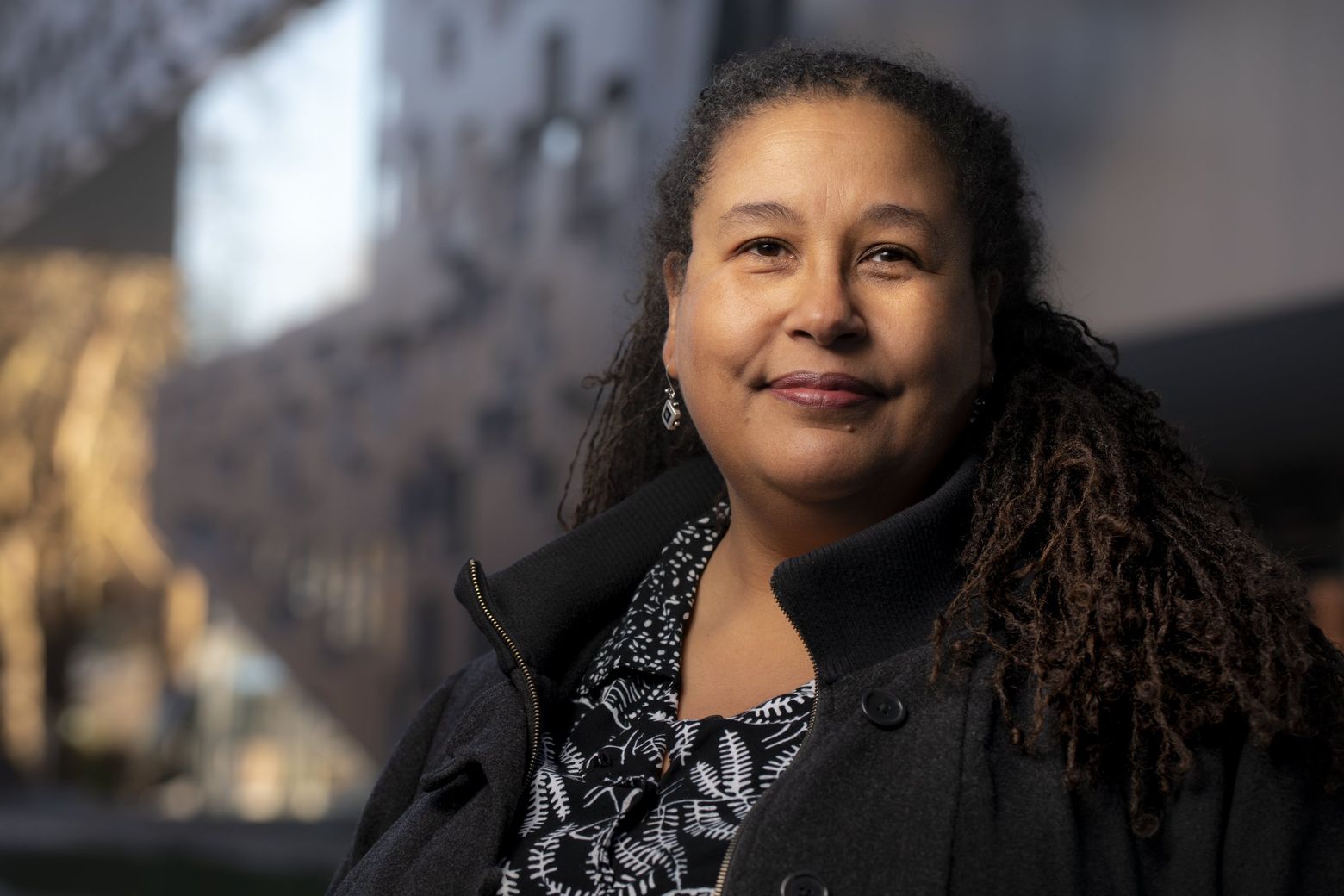
Naomi André, Seattle Opera’s scholar in residence, is passionate about sharing her love of opera and making the art form welcoming to a wide range of people, reports the Seattle Times. “I feel that everybody can find something to relate to in opera,” she says.

In March of this year, Naomi André gave a virtual talk at Vermont’s Bennington College on opera and her role as the Seattle Opera’s first scholar in residence. She was appointed right before the pandemic to share her enthusiasm for opera with a new and more diverse audience.

Here’s some background on the opera company’s pathbreaking appointment from Gemma Alexander at the Seattle Times.

“A week before Naomi André’s panel [in February 2020] on Black representation in the arts, Seattle Opera closed registration for attendance. The number of online reservations had hit the 300-person capacity of the Opera Center auditorium for the first time since the building opened in late 2018. At least in local opera circles, André’s name had buzz.

“André is Seattle Opera’s inaugural scholar in residence. It is a role the company created specifically for her and may be the only job of its kind in American opera. As scholar in residence, André acts as an adviser to help Seattle Opera become more inclusive, both for audiences and behind the scenes. …

‘There’s a kind of joy in going to the opera and seeing it live. Unfortunately, opera has an elitist reputation,’ said André, a professor at the University of Michigan, where she has taught courses on 19th-century Italian opera as well as classes on race and gender. …

“Her personal experience as a Black woman in the opera field led to her most recent book, Black Opera: History, Power, Engagement, which examined African American and Black South African participation in opera.

“ ‘I feel that everybody can find something to relate to in opera. This is not a genre that should go away,’ André said.

“To help Seattle Opera become a place where everyone can find their something, André advises on issues of race and equity both in their internal operations and in contextualizing the works they produce for audiences. One of her first acts as resident scholar was a response to the death of pioneering African American soprano Jessye Norman.

“ ‘There were a lot of pieces being written, but they were all so white! No one wrote about what she meant to Black fans. So I suggested that and they said, “Great! When can you have it ready?” ‘ André said with a laugh. ‘I was so impressed that this isn’t contentious.’ The piece she wrote is posted on the Seattle Opera blog.

“André first came to the attention of Seattle Opera when she participated in a forum on race and gender sponsored by the Glimmerglass Festival, a summer-season opera company in central New York state known for producing rare and new works. Called Breaking Glass, the panel visited Seattle in tandem with the 2018 production of Porgy and Bess. Impressed by André, Seattle Opera brought her back for 2019’s Carmen. In a forum called Deconstructing Allure, André and a panel of academics and artists — all women of color — explored representations of women and ethnic minorities in art. They considered the responsibility of contemporary arts organizations toward both classic works of art and the people who may be misrepresented by those art works.

“ ‘Some people would view that as a pretty radical conversation in the opera space,’ said Alejandra Valarino Boyer, Seattle Opera’s director of programs and partnerships. The event was so successful that Seattle Opera designed the new position of scholar in residence to formalize an ongoing relationship with André.

“[André] has recorded an episode of Seattle Opera’s podcast and contributed essays for program booklets. But her most visible role involves a series of free, public community conversations that invite audiences to question problematic social themes and portrayals of marginalized communities in opera while appreciating the artistic elements that continue to hold up.

“On Feb. 13, 2020, she [moderated] the Black Representation in the Arts community conversation at the Seattle Opera Center with speakers Theresa Ruth Howard, curator of the Memoirs of Blacks in Ballet symposium, and Bridgette Wimberly, librettist of Charlie Parker’s Yardbird.”

For her 2021 talk at Bennigton, André provided this preview: “In this talk, I outline some of the larger frameworks from my book Black Opera: History, Power, Engagement (2018) and take them further to include a quick mention of Beyoncé’s Homecoming (2018), and three operas on Black topics that debuted the summer of 2019 (Terence Blanchard and Kasi Lemmons, Fire Shut Up in My Bones, Opera Theater of St. Louis; Anthony Davis and Richard Wesley, The Central Park Five, Long Beach Opera; and Jeanine Tesori and Tazewell Thompson, Blue, Glimmerglass Festival).

“I quickly contextualize Fire Shut Up in My Bones and The Central Park Five and then spend the most time with Blue. I have been fortunate to see all three operas and got to know Tesori and Thompson through several panels in the Breaking Glass series (run by Glimmerglass Opera Festival). From the legacy of minstrelsy and the frequent negative portrayal of Blackness in opera, this talk outlines a shadow history and explores how opera can be relevant for today and a space of liberation.”

More at the Seattle Times, here, and at Bennington College, here.

Read Full Post »

payment-720x478

Photo: Jay Simple
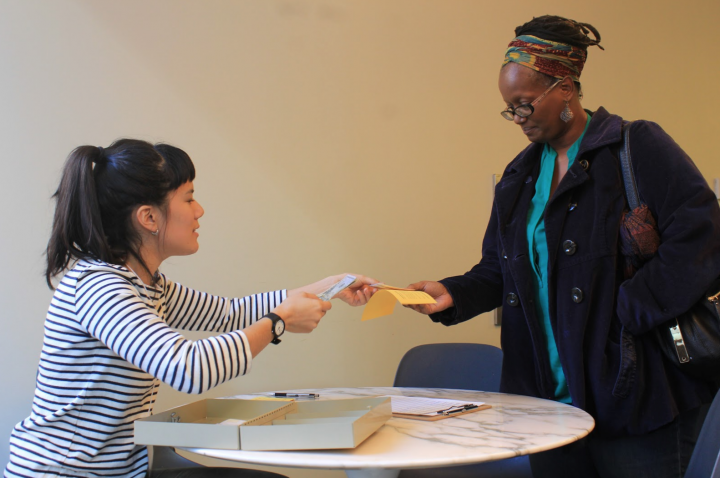
Artist Maia Chao pays a guest critic $75 in cash at the end of a 4-hour visit to the Rhode Island School of Design Museum.

The Rhode Island School of Design and its museum are justly famed for cutting-edge art and ideas. In this Hypoallergic story, Laura Raicovich speaks with Maia Chao and Josephine Devanbu, the founders of Look at Art. Get Paid., a program that pays people who wouldn’t otherwise visit art museums to visit one as guest critics. It premiered at RISD.

“Critique is a hallmark of the art field,” writes Raicovich, “yet the vast majority of cultural critics, curators, museum leadership, and museum visitors are affluent and white. What is critique without diversity? What possibilities and truths are we missing?

“I was fortunate to meet artists Maia Chao and Josephine Devanbu, who launched the pilot of an ingenious way to approach these questions called Look at Art. Get Paid. (LAAGP), in 2016 at the RISD [Rhode Island School of Design] Museum. The initiative is a socially engaged art project that pays people who wouldn’t otherwise visit art museums to visit one as guest critics of the art and the institution, flipping the script between the institution and its public, the educator and the educated, the paying and the paid. In the next year, they will embark on an expanded campaign to launch LAAGP simultaneously across a regional cohort of three to five art museums in the US. …

“Hyperallergic: What is the origin story of LAAGP?

“LAAGP: We started LAAGP when we were both students at the Rhode Island School of Design (RISD). We were grappling with the relevance of our chosen field to our wider communities. We believed in art making and cultural critique as vital sites of collective meaning-making and world-building, but felt frustrated by how access to the majority of resources and infrastructure to sustain ambitious projects was constrained to a (mostly white and affluent) initiated few. We asked each other, what would a critique environment look like if you didn’t need to be an insider to be in the room? We were curious to test out how we might use our institutional access and artistic license to move funds that would normally circulate within RISD out into the community. We launched our pilot in 2016 at the RISD Museum. …

“Paying people in cash to visit a museum names the elephant in the room: wealth, specifically the wealth accumulated by beneficiaries of the transatlantic slave trade, and the way this wealth continues to shape whose cultural production gets prioritized.

“As with any group of people, some enjoyed their experience and others didn’t. One critic took a picture of her favorite painting on her phone to get printed at Walgreens and hang it up in her living room. Others found the experience reaffirmed their assumptions that museums are boring.

“But beyond like and dislike of the experience, there was a general feeling amongst critics that the museum is ‘addressing a certain kind of person’ — namely white people and people with money. Throughout our conversations, the topic of belonging featured prominently, and one critic said, ‘maybe this place isn’t for me.’ Another critic articulated that they just didn’t feel like they had ‘bandwidth for another white space.’ When discussing what changes the critics would like to see, most agreed the museum would have to better represent POC [people of color] in their collection, improve language accessibility, advertise in their neighborhoods, and make the experience less intimidating.

“However, there were some critics who felt energized to help the museum. For instance, one critic, a sign-maker, said he’d love to help the museum improve their signage. Another critic — an organizer from Direct Action for Rights and Equality — suggested having cookouts at the museum. We’ve been working with these critics to commission local artists to engage these ideas. …

“Critic Samanda Martínez said, ‘Están cuidando más a las imágenes que a nosotros/They’re taking better care of the paintings than they are of us.’

“It’s one thing to know that a space isn’t welcoming to another person, but it’s another to hear directly from someone who has felt unwelcome. In general, our goal as artists is to make that experience legible and valid, in order to create more urgency and disrupt usual practices that need to change. ” More here.

Read Full Post »

Photos: The Plié Project
Annalisa Cianci of Teatro dell’Opera di Roma models a paper tutu for a project highlighting diversity in dance.

Did you ever see the intriguing documentary by Vanessa Gould called Between the Folds? It’s about origami masters, and my husband and I heard about it because Vanessa’s parents lived in our town.

I have never advanced in origami myself — folded fortune-tellers are about as far as I go — but I have great admiration for artists practicing the craft. And not long ago I read an astonishing story about a project involving origami ballet costumes.

Leah Collins wrote at CBC Arts, “On paper, it’s a partnership that doesn’t immediately make sense. Pauline Loctin (a.k.a. Miss Cloudy) is an origami artist and self-described ‘folding warrior.’ Melika Dez is a photographer, one who specializes in capturing dancers in action. And around this time last year, the Montreal-based artists began collaborating on something they call the Plié Project: an ongoing series of photographs featuring dancers from internationally famed companies, all wearing original, hand-folded costumes by Loctin.

” ‘Paper is kind of fragile, but at the same time, it’s a very strong material,’ says Dez. Beauty and strength and fragility, all in one: that’s how you describe a dancer, right there. But who gets to be those things? …

” ‘In a world where the ballerina “has to look” a certain way, we decided to showcase the beauty of these unconventional but extremely talented dancers and break the boundaries of stereotypes.’

Amanda Smith, Daphne M. Lee and Yinet Fernandez Salisbury of Dance Theatre of Harlem and Dandara Amorim Veiga of Ballet Hispanico. 

“Both artists have personal ties to the ballet, which partly explains their interest in the message. Loctin’s previous career was in classical music. The ballet, she explains, was always connected to her work. Dez is a dancer herself, and as a photographer, she shoots companies around the world, including the Black Iris Project in New York City.

” ‘In my work, I’m used to working with diverse people,’ says Dez. ‘There’s a wave of change that is happening in the dance world and it was important to me to push it forward because I myself, I’m a mix.’ …

” ‘There is a paper colour for every girl. … It was just an important message for me to put out there. For little girls to know that anything is possible no matter if they’re Black, white, Asian, Latina — anything is possible. They can do whatever they want as long as they put their heart into it.’ ”

More at CBC, here. There’s a terrific array of photos at the site.

Mai Kono of Les Grands Ballets. 

Read Full Post »


Photo: Richard Anderson
After running Center Stage in Baltimore for seven years, Kwame Kwei-Armah returns to England to serve as the new artistic director of the Young Vic.

The London theater world learned recently that the Young Vic‘s new artistic director would be the man behind seven strong years at Baltimore’s Center Stage. He is not native to Baltimore but England, where he has been an actor, a director, and a playwright — a versatility that is expected to serve him well at the Young Vic.

In September, Georgia Snow wrote at The Stage, “Kwame Kwei-Armah is set to be announced as the new artistic director of the Young Vic. …

“Kwei-Armah is understood to have been linked to other artistic director jobs in the UK recently. His recent productions as a director have included One Night in Miami… at the Donmar Warehouse, and a musical about the life of Bob Marley, which he also wrote and which ran at Birmingham Repertory Theatre earlier this year.

“He is currently in rehearsals for an adaptation of Henrik Ibsen’s The Lady from the Sea, also at the Donmar Warehouse, which he directs. …

“His plays have included Bitter Herb, and Elmina’s Kitchen, which ran at the National Theatre in 2003 and was nominated for an Olivier Award. …

“In an interview with The Stage last year, Kwei-Armah also said he thought black representation in the UK has not come as far as the US, and that Brexit has resulted in Britain taking ‘a step backwards into a world of xenophobia.’ ”

Michael Billington at The Guardian adds, “It is significant that Kwei-Armah, born Ian Roberts in London, changed his name when he was 19 after tracing his family history through the slave trade back to its ancestral origins in Ghana. He became interested in the past through watching the TV series Roots and much of his work has been about the search for identity. It was certainly a theme in his first big hit as a playwright, Elmina’s Kitchen, which was seen at the National in 2003 and later became one of the first plays by a black British playwright to make it to the West End.”

More at The Stage, here, and at The Guardian, here.

Read Full Post »

Photo: Southwest Minnesota Housing Partnership
Hmong dance festival in southwest Minnesota. A Community Development Investments grant from ArtsPlace aims to give newcomers a voice.

Never underestimate the power of art and cultural events to improve lives.

As Amy Evans reports in the magazine Shelterforce (published by the National Housing Institute), the community development field has come to recognize that the arts are key to integrating diverse populations.

Evans discusses the issue with the McKnight Foundation’s Vickie Benson.

“More and more, it seems that arts and culture are being perceived as essential to the core fabric of what builds and nourishes communities — and that gives Benson enormous hope. ArtPlace America, a decade-old collaboration of foundations, federal agencies, and financial institutions, has been one of the driving forces for that shift, Benson says, by insisting that the arts must be in conversation with other sectors, whether community development, housing, or health.

“In Minnesota, the Southwest Minnesota Housing Partnership (SWMHP) has joined that conversation. With the support of a community development investment [CDI] grant from ArtPlace America, which will provide $3 million in funding over three years, SWMHP is exploring ways of building arts and culture into its operations.

“It’s a bold step for the organization, and one that Benson wholeheartedly applauds.

” ‘Music, dance, or visual art are forms of expression within many cultures. And just the weaving together of these many, many varied cultural traditions is a natural path for people to communicate with each other,’ says Benson. ‘That is what I hope to see, that communities will understand the importance of arts and culture not as an add-on but as a core piece of community development.’ …

“A couple of decades ago, [the future of the southwest Minnesota town of Worthington] future looked bleak. The farm crisis had taken its toll; the town’s population dropped from 10,243 in 1980 to 9,980 in 1990 as people left the area in search of better opportunities.

“The expansion of the meat processing industry in Worthington turned this trend around. JBS Swift and Co., a subsidiary of ConAgra Foods Inc., established what would become its principal plant in Worthington. The impact was far-reaching in the area, propping up small businesses like Smith Trucking Inc. and local hog producers.

“In 1989, increases in productivity led to an additional shift at the plant, attracting workers from literally around the world. … The so-called foreign-born population of Worthington jumped in parallel from 3.7 percent of the total population in 1990 to more than 15 percent in 2000.

“Mike Woll remembers when that shift took place. ‘Worthington’s history of immigration dates back to when I was in high school, when we had some early Lao immigrants,’ Woll recalls. ‘The community became incredibly diverse.’

“Walk into Woll’s high school today and some 50 dialects can be heard, from Central American to Southeast Asian to East African. Downtown on 10th Street, Woll says, ‘you’ll see people from all over the world. Myanmar, Ethiopia, Laos, all sorts of Latin American influence. It’s a remarkable place.’ …

“Woll hopes that one outcome of Worthington’s participation in the CDI Initiative will be preservation of one of the community’s strongest assets.

“ ‘Diversity brings challenges, but it’s put Worthington ahead of the curve. It gives us a broader scope of the world,’ Woll says. He is proud to know that his college-aged son, who grew up in Worthington, can take living in a multicultural environment for granted, even more so than his peers from places like Minneapolis and Chicago. But making space for multiculturalism to truly thrive means giving voice to communities that often haven’t had a seat at the table. Woll hopes that the CDI Initiative will help expand leadership roles to segments of the population who have so much to say, but haven’t had the platform to say it.

“ ‘If not for a program like [ArtPlace], those cultures do get lost,’ Woll says. ‘Having a bit of institutional strength and a financial boost from ArtPlace can help take what are challenges and turn them into positives.’ ”

More at Shelterforce, here.

Read Full Post »

It’s amazing what you can learn from DNA. Recently, scientists have been collecting insights from camel DNA about how camel ancestors were used on ancient trade routes.

Victoria Gill writes at the BBC, “Scientists examined DNA samples from more than 1,000 one-humped camels. Despite populations being hundreds of miles apart, they were genetically very similar. Scientists explained that centuries of cross-continental trade had led to this ‘blurring’ of genetics.

“The findings are published in the Proceedings of the National Academy of Sciences.

“One of the team, Prof Olivier Hanotte, from Nottingham University, explained that what made the dromedary so biologically fascinating was its close link to human history.

” ‘They have moved with people, through trading,’ he told BBC News. ‘So by analysing dromedaries, we can find a signature of our own past. … Our international collaboration meant we were able to get samples from West Africa, Pakistan, Oman and even Syria.’ …

” ‘People would travel hundreds of miles with their camels carrying all their precious goods. And when they reached the Mediterranean, the animals would be exhausted.

” ‘So they would leave those animals to recover and take new animals for their return journey.’

“This caused centuries of genetic ‘shuffling’, making dromedaries that are separated by entire continents remarkably similar.

“Crucially, this has also ensured that the animals maintained their genetic diversity — constantly mixing up the population. This means that dromedaries are likely to be much more adaptable in the face of a changing environment. …

” ‘The dromedary will be our better option for livestock production of meat and milk. It could replace cattle and even sheep and goats that are less well-adapted.’ ”

More at the BBC website, here.

Photo: Mark Payne/Gill/NPL
Ships of the desert: camels provide transport, milk and food in arid, hostile environments

Read Full Post »

Older Posts »