Feeds:
Posts
Comments

Posts Tagged ‘environment’

Rhode Island has an outstanding independent, environmental news publication called ecoRI News. Who says local news is dead?

Well, actually, it is very much endangered and requires heroic efforts by those who understand its importance. Reporting at ecoRI News, for example, played a pivotal role in the rejection of an unnecessary new fossil-fuel plant in Burrillville, after a fight that lasted years (producing hostile stickers on utility poles throughout the state). The story may have been partly about quality of life in a small Rhode Island community, but as we now know, every bit of fossil fuel threatens the whole planet.

Local news addresses other issues that have international implications. As Tim Faulkner reported at ecoRI News in April, “Plastic pollution is everywhere, showing up in the air, water, food, and consequently in our bodies.

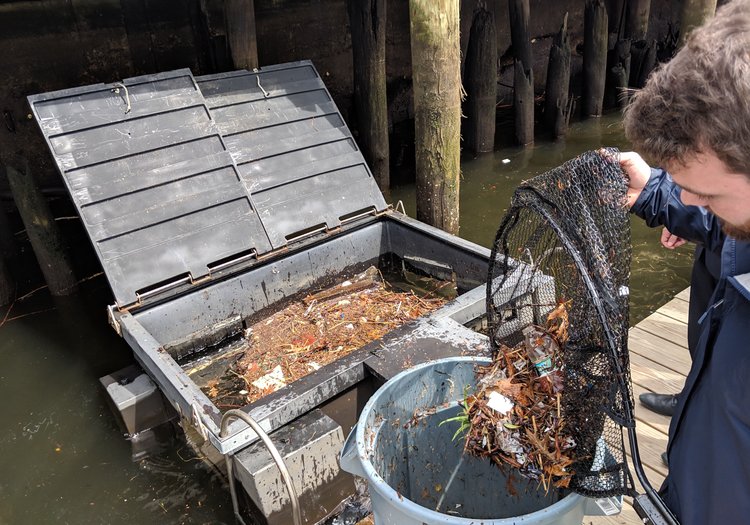
“To draw attention to this ubiquitous waste problem, plastic-catching traps, called trash skimmers, have been installed around Narragansett Bay to collect plastic debris and other trash in the marine environment.

“The latest skimmer was recently unveiled inside the hurricane barrier on the Providence River. It’s heralded as the first trash skimmer to be installed in a state capital.

“Using a pump to draw in debris, the partially submerged plastic box catches surface trash such as floating bottles and tiny debris called microparticles. Each skimmer costs about $12,000.

“Since 2017, three trash skimmers in Newport and one in Portsmouth have collected 27,000 pounds of trash. Cigarette butts, plastic food wrappers, and foam debris are the most common items collected. The skimmers are emptied daily throughout most of the year by interns and student groups. Each contains between 20 and 200 pounds of daily trash. The skimmers have collected unusual items such as floating plastic disks from a wastewater treatment plant in East Providence.

“The project is run by Clean Ocean Access, the Middletown-based pollution advocacy group directed by David McLaughlin.

“ ‘The skimmer is the last line of defense for our oceans, and each installation allows for open, positive, and forward-thinking conversation of how to solve the local and global problem of litter and marine debris,’ McLaughlin said. …

“Plastic bags are one of the top items collected in the trash skimmers. So far, 10 Rhode Island municipalities — Barrington, Bristol, Jamestown, Middletown, New Shoreham, Newport, North Kingstown, Portsmouth, South Kingstown, and Warren — have enacted bans on plastic retail bags. East Providence, Providence, and Westerly are poised to pass bans. …

“The trash skimmer project is funded by 11th Hour Racing, a Newport-based funder of ocean stewardship initiatives. … Two skimmers are operating in Newport Harbor and a third is in the water off Fort Adams. Another is at New England Boat Works in Portsmouth. A trash skimmer is operating in Gloucester, Mass., and a new trash skimmer is scheduled to be unveiled in New Bedford Harbor during the week of Earth Day. Other skimmers are planned for Stamford, Conn., and possibly Fall River, Mass.”

More here.

Photo: Tim Faulkner/ecoRI News
The Providence trash skimmer, which helps to clear plastic waste from Rhode Island waters, is fixed to a floating dock below the riverfront deck at the Hot Club
img_20190419_134501

Read Full Post »

closer-6576_wilds_hp_2120x1080

Photos: The Wilds
In Columbus, Ohio, you can camp overnight at the zoo.

A couple of my grandchildren brought sleeping bags on their latest visit, hoping to try camping — if not in a tent, then on the bedroom floor. A tent might be a little too exotic for where they are in life, although it worked for Suzanne when she was five weeks old.

Exotic camping makes me think of my friend Cathy. I saw her on the train the day she retired, and she told me that she was planning an overnight at the Columbus zoo. Apparently, you can sleep in a yurt. It’s not cheap. There is also a lodge or cabins, if you prefer.

The website says, “Today, it’s difficult to imagine The Wilds and its 9,000 plus acres as anything but a home to rare and endangered species from around the globe living in open range habitats.

“However, the park that has transformed wild life conservation practices was once devoted to strip mining.”

I loved reading this description of how the landscape was rescued from that devastation.

“The immense landscape of The Wilds and its mining history provides an ideal setting to study the process of ecological recovery and restoration. Ongoing biological inventories have recorded over a thousand species and provide an essential baseline for studying changes in populations over time.

“It is difficult for trees to survive on reclaimed mine land due to soil compaction and low nutrient availability. Instead, The Wilds has successfully established nearly 700 acres of prairies at The Wilds which provide beneficial pollinator and wildlife habitat.  Now we are conducting research to see how prairies change soil properties over time and whether the deep roots of prairie plants can prepare the land for the return of forests. …

“Wetlands are considered the most biologically rich ecosystems in the world.  However, development has caused these habitat types to become among the most endangered. The Wilds has restored a 20-acre area into a quality wetland refuge that supports a diversity of vegetation, waterfowl, and aquatic wildlife.  The removal of invasive species such as cattail is an ongoing effort. The ultimate goal is to increase native wetland vegetation and improve habitat for waterfowl and other aquatic wildlife. …

“Many of the reclaimed forests at The Wilds are in poor health, with low species diversity and overgrown with invasive species. The restoration department is currently working on restoring ~30 acres of forest. In order to accomplish this, invasive plant species are removed and native ones are planted in their place. Removal and replacement is a long and tedious process, but ultimately it will increase the biodiversity of the area. In addition, we intend to create native amphibian habitat by constructing two vernal pools and improving existing wetlands in the area. The end result of these combined efforts is expected to encourage more native animal and insect species to not only inhabit the area, but to thrive. …

“We have expanded our scope to improving the reclamation process immediately after mining. One essential step is seeding the land with new plant species. Traditional seed mixes used in land reclamation are not designed to create diverse habitat for wildlife, they simply aim to revegetate the land. We helped [the Ohio Department of Natural Resources] create more ecologically friendly seed mixes and monitored to see if sites planted with the native mix could revegetate the land as well as the traditional mix. Thus far, we have seen that mixes including native grasses and pollinator plants can definitely be successful, and that they undeniably increase native cover over traditional mixes. We are still working on long term monitoring of this project.”

To the conservationist side of me, this is all very impressive. But having just read a deep, thoughtful history of the destruction of Appalachia called Ramp Hollow, I can’t help but think that mining destroyed not only the environment but the ability of families to make a living off the land. I’d really like to see restoration for the people, too.

More.

Restoration Ecology

Read Full Post »

Photo: Ocean Sole
Says Ocean Sole: “We turn flip-flops into art and functional products and in turn raise visual awareness of the problem. … We are not only creating employment for a country that has 40% unemployment, but also sending a message about how we can help our planet.”

Around the world, flip flops have provided cheap footware for billions of people. Everyone loves them. Unfortunately, they’re part of the planet’s growing plastics and synthetics problem, a tsunami of trash that damages the environment and threatens marine life.

Some years ago, the company Ocean Sole was created to do something about that and at the same time provide employment in a high-unemployment region of Africa.

As Olivia Yasukawa and Thomas Page reported at CNN in 2017, “The shores of Watamu on the Kenyan coast should be pristine. They’re not. Downstream from an ecological disaster brewing a continent away, these placid waters are bearing the brunt of a foot-born problem: your flip flops. …

” ‘Over three billion people can only afford that type of shoe,’ says Erin Smith of Ocean Sole, a conservation group and recycling collective. ‘They hang on to them, they fix them, they duct tape them, mend them and then usually discard them.’ The average lifespan of a flip flop is two years, she adds.

“They’re ubiquitous, and the modern day synthetic rubber flip flop is not going away. In fact, tons of them are washing up on the East African coast. Reports suggest that at least eight million tons of plastic enters our oceans every year.

By 2050, there could be more plastic than fish in the seas by weight. …

” ‘We are actually receivers of pretty much the rest of the emerging world’s marine pollution,’ [Smith] argues. And a significant quantity of the pollution which appears on East Africa’s beaches come from discarded flip flops — approximately 90 tons a year. … They’re not only an eyesore, but a direct health hazard, and with no hope of biodegrading.

” ‘Our founder Julie Church back in the 90s discovered an entire beach … was just covered in flip flops,’ Smith says. ‘What she saw were not just dead fish that had been trying to eat in their natural habitat, but turtles unable to come up on to land and actually hatch. [The pollution] started to kill the plant life, it started to kill the crabs on the sand … we have deserted beaches that used to have communities there, that used to be able to fish, and the whole ecosystem has been ruined by this massive increase in marine pollution.’

“Matilda Mathias, a debris collector from the ‘Blue Team’ in Watamu, cites the benefits to the tourist industry when the beaches are clean, and says ‘we also benefit from the money.’

“Most of the detritus is recycled, some is reused, but in the case of flip flops, they’re upcycled. Ocean Sole has trained a team of 40-or-so artisans in a workshop in Nairobi to craft sculptures from these pre-owned, unloved objects into a source of income. Importing flip flops from recycling crews along the East Coast and from as far away as Zanzibar, Smith estimates the Ocean Sole team can repurpose approximately 800,000 flip flops a year. …

“There’s little chance artisans will run out of raw material any time soon as long as our flip flop habit remains.

” ‘I think it’s time for us to start looking for an alternative shoe, or an alternative material, to fit that kind of fashion need,’ argues Smith.”

More at Ocean Sole, here, and at CNN, here.

Warthog made of recycled flip flops by Ocean Sole. Many zoo gift shops carry these products.

Read Full Post »

47538971_303

Photos: Hive Earth
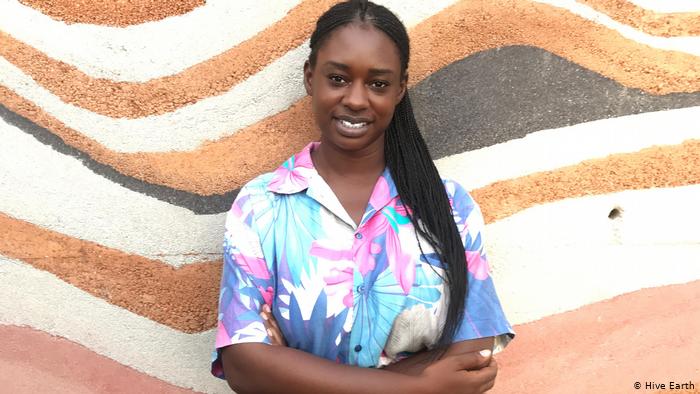
Joelle Eyeson is a co-founder of Hive Earth, which is working to address the housing challenges in Ghana. The company supports using the traditional ‘rammed earth’ technique as much more eco-friendly than cement.

Lately, I’ve seen a number of articles about how cement is bad for the planet. (For example, this story on the mining of sand used in cement.) But what else can we use? We can’t cut down all our remaining trees.

In Ghana, a company interested in sustainable home-building practices is experimenting with modernizing some traditional materials. DW interviewed Joelle Eyeson, co-founder of Hive Earth. Here is the DW interview.

“What are the housing challenges in Ghana right now?
“Joelle Eyeson: There is need for around 2 million new houses in Ghana per year, but most of the building is concentrated in the capital Accra, where land is very expensive. The other issue is that when you build in more rural areas it then becomes expensive to travel to the cities for work. We knew that the majority of people in Ghana have a relatively low wage. We thought it is strange you have workers building these big houses that cost hundreds of thousands of dollars and they could never afford them.

“So our aim is to build houses that our workers and the majority of Ghanaians and West Africans can afford. The prototype that should be ready by the end of the year will cost roughly $5,000 for a one-room house.

“What exactly is the ‘rammed earth’ technique that you use?
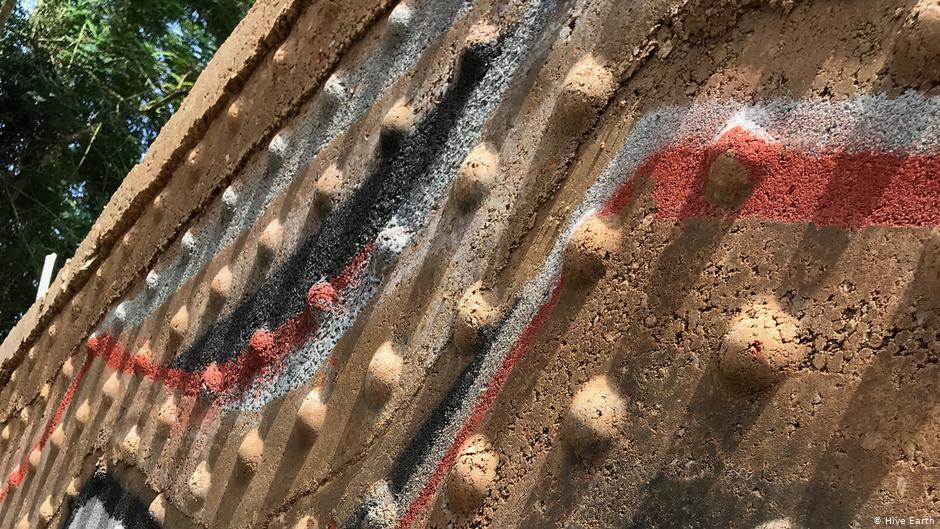
The rammed earth technique is just a mixture of laterite, clay and then granite chippings. We use 5 percent cement to bind it but also do it using lime.

We wanted a way of building without using cement, because it is very toxic; especially in our climate it combines with the heat and humidity and creates a really bad indoor air quality.

“When we discovered the rammed earth technique, we thought it was great because it is basically like the traditional mud house, but updated. It’s a tried and tested technique that’s been around for centuries. Parts of the Great Wall of China were even built with rammed earth.

“In what other ways are the buildings eco-friendly?
“In Ghana it is so hot you usually need air conditioning systems in your home, but these are not always affordable, eco-friendly, or good for your health. We teamed up with some German engineers who gave us the idea of underground cooling systems. We dig around 8 feet or more until we get to the cool air underground. Then we use a solar pump which is constantly bringing the cool air into the home. Then it is only the cost of the solar pump (around $300) which people need to pay and there are no bills. …

“With our foundation we are also planning on doing more workshops with local communities, helping to teach them the skills of building with rammed earth. We are also planning on building eco toilets. … We want to enable people to come and learn about rammed earth, build something that is beautiful, eco-friendly and useful for their own communities.”

More at DW, here.

The rammed-earth building technique uses local materials in Ghana and almost no cement.

47539467_403

Read Full Post »

bees-at-the-lyric-final_0

Photo: Omari Daniel
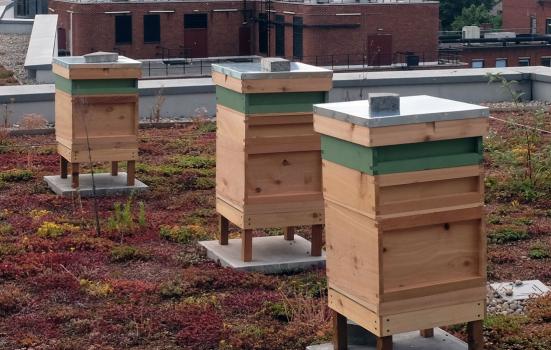
Bees at the Lyric Hammersmith Theater in West London.

The arts are always struggling for funds, so it’s lucky that artistic people are by definition creative. In this story, some creative theater people thought up a way to help the environment while simultaneously raising a little cash for their work. It’s all part of a theater’s broad sustainability plan.

Sian Alexander writes, “As a leading producing theatre and the largest creative hub in west London, the Lyric Hammersmith welcomes around 200,000 people a year to its building, including 30,000 young people at classes and activities. We have nine Young Lyric partners based here, three resident companies, 50 permanent staff and over 500 freelancers each year – all under one roof.

“Our roof is also now a symbol of our long-standing commitment to environmental sustainability. As well as our public roof terrace, a green oasis in the heart of an urban environment, we have a green sedum roof — covered in plants — installed in 2015 during our last major capital redevelopment.

“Last year we teamed up with the local business improvement district, HammersmithLondon, to install three beehives on the roof, now home to 180,000 Buckfast honey bees. They seem to be happy here, and this summer we enjoyed a substantial honey harvest. We sell the honey in our café and at local markets, where it is a great conversation starter about our efforts to go green. …

“Bees have a critical role in food production, as around a third of the food we consume relies on pollination. The bees also help our green roof mature through pollination, and help improve air quality and biodiversity in the local area. …

“We strive to ensure our green values run through all elements of our business. For example, our building has air-source heat pumps and predominantly LED lighting; we send zero waste to landfill, working with First Mile and Scenery Salvage; our energy supply is 100% renewable electricity and green, frack-free gas; our finance and administration teams run on a paperless system; and all new staff and creative teams are given a reusable water bottle on their first day. …

“We are introducing a vegetarian and vegan specials menu in our bar and grill, visiting allotments and trying alternative foods. We are also running a stall at the local food market to engage the public on food packaging, as well as addressing food waste.”

More at Arts Professional, here.

Read Full Post »

sai_photo_024Photos: Sai SanctuaryIn part to preserve the planet’s source of rainwater, this couple bought a sanctuary in India. As it expands, it protects more and more species.

A childhood friend on Facebook often posts interesting links. Her presence on that platform is a major reason I can’t bring myself to get off Facebook even though I feel extremely wary of what the company is doing with my data. But how many people from your nursery school do you connect with on a regular basis?

My friend recently alerted her followers to an animal sanctuary in India that sounded cool, and after a look at the website, I checked around for more information on the two wealthy nature lovers who saved the preserve from neglect.

Panna Munyal wrote this 2016 report at an Abu Dhabi publication called The National, “On most days, Pamela Gale ­Malhotra, co-owner of the Sai Sanctuary private forest in ­India, is fast asleep at 1.30am, after her typically full programme of organising walking safaris and animal feeds, and checking camera traps for signs of poaching.

“But a few years ago, Pamela and her husband, Anil Malhotra, woke up to the sound of trumpeting ­elephants. They assumed – rightly – that a baby elephant must have strayed too close to a partially covered pit and fallen in. As her husband switched on the rarely used floodlights and prepared to call on their neighbours for aid, Pamela stepped out to a magnificent sight.

Dozens of elephants from the Sai ­Sanctuary’s herds, as well as the neighbouring Bandipur, ­Brahmagiri and Nagarhole national parks, had gathered around the pit and were bellowing their assurances to the calf. Pamela describes the next hour as magical, as the enormously graceful creatures banded as one to lift the half-broken lid of the pit with their trunks, enabling the little one to clamber out.

“This show of concerned unity is typical of the environment the Malhotras have cultivated in Sai Sanctuary, which is nestled within southern India’s ­Western Ghats in the Coorg district. ‘Protecting what is left of the world’s forests is the only thing that will ensure our own survival,’ Pamela says. ‘Forests are directly responsible for rainfall, our primary source of water. Water, in turn, is the lifeline for plants, flowers, animals, birds and humans. We have nothing if not for our forests.’ …

” ‘When we bought our first parcel of land in India, it was just the two of us and 55 acres [22 hectares] of forest beside the Poddani River. We learnt from experience that if you want to protect a piece of land, you need to secure both sides of its water source. And here we both are 25 years later, managing 300 acres [121 hectares] on both sides of the river.’

“Pamela, who is part Native American, and her husband, a former banker, … follow a two-pronged approach to safeguard the forest, river and wildlife: purchase-to-protect and payment for environmental services. The first step is to buy private forested lands that border national parks or other reserve forests, and preserve them in their natural state. Next, the Malhotras offer compensation to members of the surrounding communities to, in turn, not harm the trees and animals around them. Compensation may be in the form of money, but it can also be a solution that works for both parties.

“ ‘We gifted all our cattle to some of our neighbours. The milk and dung give them an extra source of income, while for us it means less staff and more food for other grass-eaters,’ says Pamela. ‘Another time, some villagers approached my husband to help relocate a temple from the top of the mountain to the edge of the sanctuary. He agreed, on the condition that they would stop hunting.’ …

“Ingenious solutions and noble intentions aside, it’s undeniable that money – and large sums at that – is needed for a project of this magnitude. … ‘We now have four rooms in two eco-tourism cottages on the property alongside the main house in which we live.’ These cottages are open to visitors, and cost from [$42] per person, per night, which includes the stay, three nutritious vegetarian meals and daily treks. …

” ‘We outsource not only our housekeeping and laundry facilities, but also hire willing neighbours to cook the meals, some of which can be eaten in a local house or with the village priest. This ensures the money spreads through the community, and even our guests can get a feel for the culture,’ Pamela says. …

“Despite its size, Sai Sanctuary doesn’t have any safari vehicles. ‘You are always on foot here. It helps people to slow down and observe the flowers, birds and trees around them. … Guests are never taken to the same area twice during the course of their stay because ‘we want the wildlife to move freely even in the day. This is the purpose of a sanctuary.’

The National article is here. And if you explore the Sai website, here, you will find some beautiful pictures of the species that the sanctuary protects.

Thanks, Carole, for putting this on FB.

Photo: Sai Sanctuary
Anil Malhotra and Pamela Gale Malhotra put their money behind saving an animal sanctuary in Ind

Read Full Post »

Photo: Philadelphia Water Department
A rain garden manages stormwater runoff in Philadelphia’s Germantown section. 

When I was at the magazine, I solicited several articles about Philadelphia and what people there were doing to bring more of the natural environment into urban living. It’s not easy for any city as budgets are often strained. But when you can make the case that environmental improvements ultimately save costs (or when an EPA is serious about quality of life), you have a better chance of getting things done.

Bruce Stutz at Yale Environment 360 (a great publication I recommend following on twitter @yaleE360) has the story.

“Benjamin Franklin, Philadelphia’s favorite son, described his city’s stormwater problem well: By ‘covering a ground plot with buildings and pavements, which carry off most of the rain and prevent its soaking into the Earth and renewing and purifying the Springs … the water of wells must gradually grow worse, and in time be unfit for use.’

“When he wrote this in 1789, many of Philadelphia’s water sources, the scores of streams that ran into the Schuylkill and Delaware rivers, were already cesspools of household and industrial waste. As they became intolerable eyesores and miasmic health hazards, the city simply covered them with brick arches, turned the streams into sewers, and on top constructed new streets, an expanding impervious landscape that left the rains with even fewer places for ‘soaking into the Earth.’

“Crude as it was, this network of underground-to-riverfront outfalls through ever-larger pipes was pretty much the way Philadelphia and other U.S. cities coped with their stormwater for the next 200 years.

“But Ben Franklin’s town has decided to take the lead in undoing this ever-more costly and outdated system that annually pours huge volumes of polluted stormwater runoff and untreated sewage into the Delaware and the Schuylkill. Instead of building more and bigger sewers and related infrastructure, Philadelphia has adopted a relatively new paradigm for urban stormwater: Rather than convey it, detain it — recreate in the urban streetscape the kinds of pervious places where, instead of running into surrounding waterways, rainfall and the contaminants it carries can once again soak into the earth.

“The city is now in the seventh year of a 25-year project designed to fulfill an agreement with the U.S. Environmental Protection Agency (EPA) to reduce by 85 percent Philadelphia’s combined sewer overflows. … Rather than spending an estimated $9.6 billion on a ‘gray’ infrastructure program of ever-larger tunnels, the city is investing an estimated $2.4 billion in public funds — to be augmented by large expenditures from the private sector — to create a citywide mosaic of green stormwater infrastructure. …

“At nearby Villanova University, the Urban Stormwater Partnership, founded in 2002 under environmental engineering professor Robert Traver, had begun experimenting with green stormwater infrastructure. [Howard Neukrug who served as the city’s water department commissioner from 2011 to 2015] developed a couple of low-impact pilot design projects, and in 2009, the Philadelphia Water Department released a revision — 12 years in the making — to its stormwater and sewage management plan….

The city is working now to standardize the construction of green infrastructure and monitor its effectiveness. Costs are coming down as green infrastructure becomes more widely adopted. …

“As the Water Department’s planners expand the network of greened acres, they are bringing social, economic, and environmental investment to often marginalized neighborhoods. [Marc Cammarata, the Water Department’s deputy commissioner of planning and environmental services] says that green stormwater infrastructure projects now support 430 jobs. … Residents already report that green infrastructure projects have reduced crime as green spaces proliferate, says Cammarata.

The Water Department’s website map is crowded with green infrastructure sites across the city. Visitors can zoom in on their neighborhood and see what’s there.”

More here.

Read Full Post »

This is Greta Thunberg, the 16-year-old climate activist from Sweden. She started the Friday school strikes that are spreading around the world and made a splash scolding power brokers at the World Economic Forum in Davos, Switzerland.

You have probably heard of the ubiquitous Greta Thunberg, the Swedish teen who is leading a youth movement to address global warming. But there are many other climate movements right now, as I learned when I read Mary Robinson’s inspiring book Climate Justice. One example she cites is an Australia-based organization called 1 Million Women, which was started by a woman who was able to cut way, way back on her family’s carbon footprint and wanted to share what she learned.

One Million Women’s website includes a pollution-cutting activity center that “has 50+ ways to cut pollution, covering energy, money, household, food, travel, shopping, sharing and a special girls section. Each activity has a pollution value attached. Choose the activities that work for you,” it suggests.

For those of you who really want to roll up your sleeves and tackle daily activities, 1 Million Women also has a handy feature called the Carbon Challenge, which provides sustainability tips and helps you track your progress in reducing pollution. See that here. I confess that I haven’t taken the challenge yet, but I’d love to hear from anyone who gives it a shot.

The blog for 1 Million Women features entries from many activists, each focusing on a different aspect of climate change activism. The toilet paper post was funny. In another post, Eve White, “mum of two and a freelance editor with a PhD in Ecology, … founding member of Australian Mums for a Safe Climate and Australian Parents for Climate Action,” asks, “Why are we leaving it up to our kids?”

She writes, “In November, 2018, 15,000 Australian kids went on strike from school to demand stronger action on climate change. Other actions will follow, with the next climate strike planned for March, 2019. Listening to these kids speak, it is clear that they are articulate and informed. They include school captains and future doctors, leaders and business people; not the kind of kids who’d routinely skip school. But without the power to vote they are worried about their future, frustrated with inaction on climate change and desperate to be heard.

“It is wrong that it has fallen on the kids to do this. As one young speaker said, ‘We are expected to tidy up after ourselves. Adults should tidy up their own mess, not leave it for us. This is not fair.’ ”

White goes on to list “ways that parents can support their kids in the fight for the future, and not all of them require a lot of effort,” like talking to more people about the issue, supporting the kids’ movement logistically and financially, writing to the local paper, and getting active in national environmental groups. Another “not a lot of effort” thing to do if you are on social media might be to follow people who are working on this issue and share information with your followers.

More.

Read Full Post »

Photo: South West News Service
Pat Smith, married mother of two, grandmother, and owner of a B&B in Cornwall, cleaned plastic from 52 English beaches in 2018 and is still going strong.

Doesn’t 2019 feel like the year that environmentalism will pick up more proponents than ever? Thanks to activists and journalists, people are really up in arms about the plastic that’s defacing our beautiful beaches and about what fossil fuels and giant agribusinesses are doing to the climate. Humanity seems to take steps forward and then take steps back, but I feel like this is a forward year.

Consider these three anti-plastic, anti-litter stories.

Maddy Foley writes at Inverse about the origins of plogging, which is a “mash-up of ‘jogging’ and plocka uppa, the Swedish word for ‘picking up.’ …

“Plogging first emerged in 2016,” she says, “started — or at least branded — by Erik Ahlström, following his move from a resort town to Stockholm. Ahlström was reportedly struck by the amount of trash he passed by during regular runs — so he began picking it up along the way, often sporting medical gloves. Soon Ahlström was organizing community runs throughout the city, marrying environmental advocacy with sensible amounts of exercise.

“The practice supposedly grew from the long-standing Swedish philosophy of lagom, the Goldielocks of lifestyle tenets. Meaning ‘not too much, not too little.’ Lagom values moderation; it heralds the pleasure of existence, without being seduced by the lure of consumption.

“In plogging, those tenets translate to picking up some trash (not every single piece), while jogging (not sprinting). It’s about being out in the world, while accepting that it’s become a world beset by trash.” More at Inverse.

There’s also a nice story at Public Radio International’s The World about Ripu Dama, a long-distance runner in India who caught the plogging bug and who recently spread the word on a run through Europe.

Marco Werman reports on Dama’s efforts in India, “Dama, who is being called ‘India’s first plogger,’ is spreading a message of physical activity and environmental protection in Mumbai while participating and organizing clean ups — documenting everything on social media @ploggersofindia.

“ ‘I’m a runner. I run marathons and ultras. When you’re a runner and you run in the mornings, the thing that you observe most is trash and plastic. So [members of my running group and I] were already cleaning up individually. In 2017, we came across the term “plogging” and we thought “this is exactly what we do.” It was kind of becoming a global trend.’ …

“Dama hopes to make an impact on the younger generations. … ‘Schoolchildren take it up like fish to water. And that’s been the biggest high out of all of this. When we are doing this activity in our local parks or somewhere and kids see us doing it … they just come and join us and the habits that get inculcated at this young age will last a lifetime.’ ” Listen to the PRI interview here.

But wait! You don’t need to be a runner or a kid.

As Ed Riley writes at the Daily Mail, an English grandmother walked 52 beaches in 2018 cleaning up plastic, and she has no intention of slowing down.

Pat Smith, “founder of the environmental campaign group Final Straw Cornwall, said: ‘Doing 52 beach cleans in 2018 was my New Year’s Resolution and it’s finally done. I won’t stop as our beaches need me.

” ‘A lot of the rubbish I have picked up consists of everyday items. These things are used by all of us and it is shocking to find them polluting our beautiful beaches. …

” ‘I’m driven to try and protect our living planet for my children and grandchildren, and I will continue to do everything in my power to achieve that. …

” ‘I grew up in the generation where plastic use was at its worse. … [But] even though it was everywhere, we had no plastic at home — we would walk to the shops or get the bus to get groceries.’

“Mrs Smith said that she was often joined by other volunteers who were determined to keep our beaches clean. But she said not everyone understood, and on some occasions, she would be mistaken for doing community service.

“She said: ‘People don’t understand I’ve been doing this voluntarily. We should all take responsibility for picking up the litter, as well as ensuring we don’t drop litter in the first place.’ ” More at the Daily Mail, here.

If you are ever in Cornwall, you might consider staying at Mrs. Smith’s B&B. She sounds like a good person to know.

Read Full Post »

5b577d513b49fc31008b4699-1136-640

Photos: Recycled Island Foundation
This prototype for a floating park in Rotterdam is open to the public. It’s made of recycled plastic and is welcoming to many species, including homo sapiens (who is less than sapiens, it would seem, considering ongoing planet damage).

With the activities of humankind causing animal populations to decline 60 percent since 1970 and massive loss of essential insect species, I’m looking everywhere for more leadership in the environmental arena. So far, what I find are relatively small activities of isolated groups. But thank goodness for that! Small activities add up.

Jeremy Berke writes at Business Insider, “Rotterdam’s Floating Park — which is now open to visitors, though the park is just a prototype of what may become a much larger installation — is made out of plastic recycled from Rotterdam’s waterways.

“The recycled plastic is constructed into hexagonal pods, which mimic the landscape of Rotterdam’s Maas River before humans altered the landscape, according to the Recycled Island Foundation, the group behind the park.

“The pods can be used to create gardens, as habitat for wildlife, or for chilling out, and they can be molded into different seating arrangements.

5b577d863b49fc2e008b4697-1136-640

The Recycled Island Foundation says the park’s plastic hexagons were designed to provide habitat for native waterbirds, plants, fish, and even algae.

“On top of that, plastic dumped into the city’s canals is collected by ‘litter traps,’ which prevent plastic from flowing into the ocean.”

Pretty sure that dynamic and broadly effective leadership in the global-warming arena is going to come from people who are now only teenagers or even in middle school. Kids know what’s what.

More at Business Insider, here.

A litter trap in Rotterdam collects plastic waste, which can be recycled to make a floating park.

5b577c8e77bc282c008b4651-1136-640

Read Full Post »

4899

Photo: Arco Images GmbH/Alamy
Crows at a park in France have been trained to pick up cigarette butts and trash. 

You may have already heard about crows in France that are improving the environment. The stories were all over the news in August. I include two articles here — the first from the Guardian and the second from USA Today.

” ‘The goal is not just to clear up, because the visitors are generally careful to keep things clean’ but also to show that ‘nature itself can teach us to take care of the environment.’ said Nicolas de Villiers of the Puy du Fou park, in the western Vendee region.

“Rooks, a member of the crow family of birds that also includes the carrion crow, jackdaw and raven, are considered to be ‘particularly intelligent’ and in the right circumstances ‘like to communicate with humans and establish a relationship through play,’ Villiers said.

“The birds will be encouraged to spruce up the park through the use of a small box that delivers a nugget of bird food each time the rook deposits a cigarette end or small piece of rubbish.” More from the Guardian.

And from USA Today, “Crows have been trained to collect other items in a similar way. In 2008 a man created a ‘crow vending machine’ — a box that would dispense a peanut every time a crow found a coin and put it in the machine’s slot. The inventor, Josh Klein, surmised at the time that if a crow can be trained to collect coins it can be trained to help improve human lives, such as picking up trash or sorting electronics.

” ‘Don’t hate the crows,’ Klein told NPR in 2008. ‘Just let them save you.’ ”

Read Full Post »

657

Photos: Indonesian Marine Affairs and Fisheries Ministry
Children on the island of Bangka in Indonesia receive free goggles in a bid by the maritime affairs minister to engage them early in caring for endangered reefs.

It’s never too early to get children interested in nature. And anyone who has contact with young children can help provide experiences that will one day make them want to protect the environment. I’m sure reader Will McM. does that in his Making Music Together classes, and I know my kids and their spouses do that.

Meanwhile across the world, a maritime affairs minister sees hope in her country’s very youngest. Kate Lamb reports for the Guardian, “Indonesia’s maritime affairs minister has come up with an unconventional way to help preserve precious reefs from marine pollution: distribute boatloads of free goggles to children in the archipelago’s remote coastal regions.

“An avid snorkeler who is known for blowing up illegal fishing boats, minister Susi Pudijastuti said she wanted to give the next generation of Indonesians ‘the eyes’ to fully appreciate their marine environment.

“During visits to Indonesia’s remote eastern areas, home to the ‘Coral Triangle’ and some of the most diverse marine life in the world, the minister said she noticed Indonesian children watching tourists snorkelling for hours, not fully understanding what they were doing.

“ ‘I just realised in one moment: how can we ask them, how can we push them to take care of the beauty of the underwater world if they don’t even see how beautiful it is,’ she said, ‘I realised, what we see, they don’t see.’ … Visiting Banggai Laut in Sulawesi, one area where goggles had been distributed, the minister said children were swimming and jumping around, amazed by their reefs. …

“In a country suffering from chronic maritime waste, the minister hopes the initiative will encourage young Indonesians to appreciate their reefs, and in turn inspire them to protect their marine environment. Indonesia is the world’s biggest marine polluter after China, discarding 3.22m metric tons of waste annually. …

“Susi said she was angered when she saw plastic ‘at the beach, on the shore, on the reef, everywhere,’ and took measures to reduce usage in her own ministry. Single-use plastic is banned at Indonesia’s maritime affairs and fisheries ministry, and at all its ministerial events.

“Susi told the Guardian she looked forward to the day when Indonesia could ban single-use plastic altogether.” More at the Guardian, here.

Speaking of single-use plastic, I have recently learned that straws are dangerous to sea turtles and intend to stop using them. But recently at an earthy-crunchy juice bar, plastic straws were all they had. Disappointing. Everyone needs to do their bit.

Indonesian students on the island of Belitung receive free goggles.

1280

Read Full Post »

bi1

Photo: The College Crusade Rhode Island
At Great Salt Pond, young students from Rhode Island cities learn how to make and tow plankton nets and test water quality.

There’s a lovely story at ecoRI News that I wanted to share with you. It makes me both happy and sad — happy that some underserved urban kids are getting an inspiring engagement with nature in the summer but sad that it’s unusual for them. The experiences are those that my own children and grandchildren have had almost every year of their lives, experiences that really should be accessible to all children.

Frank Carni writes, “Most of the teenagers arriving on Block Island this summer, at least those affiliated with The College Crusade of Rhode Island, are coming from communities covered in pavement. Many had never been on a boat before and most had never set foot on New Shoreham.

“The students are making a good first impression, with their observations, curiosity, and passion for the environment, despite living among more gray and black than green and blue. The island community has embraced the out-of-towners from Providence, Central Falls, Pawtucket, Woonsocket, and Cranston.

“ ‘We throw a lot at them and it’s amazing what they absorb,’ said Valerie Preler, program director for the Block Island Maritime Institute (BIMI).

‘I learn a lot by watching what they see and what they say.’

“For the past 10 years the BIMI’s Dolphin Program has worked with and learned from students from underserved communities from Rhode Island, New Jersey, and New York City. Last year BIMI partnered with Providence-based The College Crusade of Rhode Island, as Block Island hosted a group of students from the college-readiness and scholarship program for middle-school and high-school students in low-income urban school districts for a week of learning and fun. …

“The mission of The College Crusade is to increase high-school graduation, college and career readiness, and college completion for youth in Rhode Island’s low-income communities. The organization supports about 4,200 students in middle school, high school, and college annually. Students join the program in grade 6 and continue through the early years of college, if they attend a public college in Rhode Island. …

“They learn to problem solve, study ecology by exploring the Great Salt Pond, and discuss the island’s different levels of biodiversity.

“During their visit to the museum at the Block Island Historical Society the students learn how colonists deforested in the island in the 1660s, how the island’s swordfish population was depleted by overfishing, how the introduction of deer in the 1960s for hunting purposes has led to the island’s current overpopulation problem, and why there is less bird migration to the island — more people and a growing population of feral cats.

“ ‘It’s an eye-opening experience for these kids, and for some it’s life-changing,’ [Lauren Schechtman, director of middle-school operations for The College Crusade] said. ‘Our kids don’t normally have access to these type of educational resources.’

“This Block Island adventure, like The College Crusade program, is free to the students and their families. They stay in a house rented by The College Crusade, enjoy dinners with Block Island families, and some New Shoreham restaurants help feed the island’s young guests for free.

“Besides visiting the island’s Great Salt Pond, the students go bird banding with The Nature Conservancy, learn about the Block Island Wind Farm, take a night-sky walk, tour New Harbor on the island’s west side, and conduct a beach cleanup. They also enjoy kayaking and/or paddle boarding, a beach visit, and fishing by the Coast Guard Station.”

I hope they loved the whole experience. Great Salt Pond is an especially intriguing place, where just this past weekend John, with family and friends, went seining and pulled up some real treasures: three pipe fish, a baby flounder, shrimp, and many minnows. They threw them back for another day.

More at ecoRI News, here. Be sure to check the other photos, including the one of bird banding. Our family has many great memories of bird banding with the woman who would have taught the kids in the story.

Read Full Post »

Photo: Aeromate
An urban farm flourishes on a rooftop in the heart of Paris.

I never can resist a story about urban rooftop gardens, which not only bring fresh produce to city dwellers but also make use of empty space and help reduce carbon in the atmosphere.

I have blogged about them a lot. There was the post about a rooftop garden in Montreal, here. Another about Higher Ground in South Boston, here. Suzanne and Erik’s former church in San Francisco, Glide Memorial, made its rooftop garden a community-building activity for Tenderloin residents. And this was an article about a Whole Foods that aimed to harvest 10,000 pounds of food a year from its rooftop in Lynnfield, Mass.

Today’s story comes from Paris.

Freelance blogger Aimee Lutkin writes at the World Economic Forum blog, “The mayor of Paris, Anne Hidalgo, was elected in 2014 with the intention to improve the city’s green spaces as a part of her platform. …

“In 2016, her administration launched Parisculteurs, a campaign that is working to cover 247 acres of rooftops and walls in Paris with greenery by 2020.

“One third of that greenery will specifically be set aside for urban farming. To date, 74 organizations have signed a charter to work with the city on planning this enormous enterprise. The city has already approved 75 projects for development, which are estimated to produce more than 500 tons of vegetation.

“The deputy mayor of Paris, Penelope Komites, [told CNN] … ‘Citizens want new ways to get involved in the city’s invention and be the gardeners.’ …

” ‘Three years ago, people laughed at my plan. Today, citizens are producing [food] on roofs and in basements. We are also asked by numerous cities around the world to present the Parisian approach,’ she said.

“And they already have their success stories. … La Chambeaudie started shortly after Parisculteurs was announced in 2016, but now grows over 40 varieties of plants and herbs using a hydroponic system …

” ‘We’ve seen a real craze among Parisians to participate in making the city more green,’ said Komites. ‘Urban agriculture is a real opportunity for Paris. It contributes to the biodiversity and to the fight against climate change.’

“And it also means jobs. According to Komites, Parisculteurs has created 120 full-time jobs.”

More at World Economic Forum blog, here.

Read Full Post »

Photo: Kathryn Scott Osler/Denver Post via Getty Images
Black-footed ferrets are the most endangered mammal in North America. Scientists in Montana are trying to save the ferrets by saving their main food source, prairie dogs.

Never doubt the power of a research report written in elementary school. Maybe I would have become interested in conservation anyway (my mother headed up a local conservation group for years), but a report I wrote in 6th grade about the devastation to birds caused by fancy hats pre-WWI made me pay particular attention to birds. John, an environmentalist today, really got into the cause of endangered black-footed ferrets when he wrote a report on them in elementary school.

Although once-threatened birds like the snowy egret and the great egret have been saved, the black-footed ferret, alas, is still endangered. At National Public Radio, Nate Hegyi reports on how scientists are addressing the problem today.

“In central Montana, drones are dropping peanut butter pellets on prairie dog colonies. It’s part of an effort by biologists to save North America’s most endangered mammal — the black-footed ferret (or as the U.S. Fish and Wildlife Service calls it, the BFF).

“Prairie dogs make up the vast majority of a BFF’s diet. Save the food and you save the ferret, biologists wager. …

“Kristy Bly, a senior biologist with the World Wildlife Fund, [said] there are only about 300 black-footed ferrets left in the wild, and they depend almost entirely on prairie dogs to survive. And protecting the prairie dog population is beneficial to species beyond the ferrets.

” ‘Prairie dogs are Chicken McNuggets of the prairie, where so many species eat them,’ Bly said.

“But in recent years, prairie dog towns across the American West have been exposed to a deadly disease called sylvatic plague. While it’s treatable in humans, sylvatic plague can wipe out entire prairie dog towns in less than a month. And that means no more food for endangered black-footed ferrets.

“So Bly, [Fish and Wildlife biologist Randy Matchett] and a team of scientists and engineers have spent this year vaccinating prairie dogs in central Montana against the plague using drones.

“Drone pilots fly the machines across the prairie, dropping blueberry-sized pellets about every 30 feet. They are flavored to taste like peanut butter, and prairie dogs love peanut butter. The kicker is that they’re laced with a live vaccine that protects them from the plague. …

“By the end of [one] day, they hope to expose more than 4,000 prairie dogs to the vaccine. Past field trials have shown that prairie dogs living in vaccinated areas survive waves of the plague.

” ‘Without [the ferret], do we really have a complete ecosystem?’ Bly asked. ‘You start taking those pieces apart, it’s like a domino effect. When we have ferrets on the landscape the piece of the puzzle that is the American prairie all fits.’ ” More here.

I like the idea of using drones this way. Makes me wonder if the technique could be adapted to handle the overabundance of deer in areas suffering from tick-borne disease. Couldn’t a deer contraceptive in salt pellets be scattered by drones? Just asking.

Read Full Post »

« Newer Posts - Older Posts »