Feeds:
Posts
Comments

Posts Tagged ‘flood’

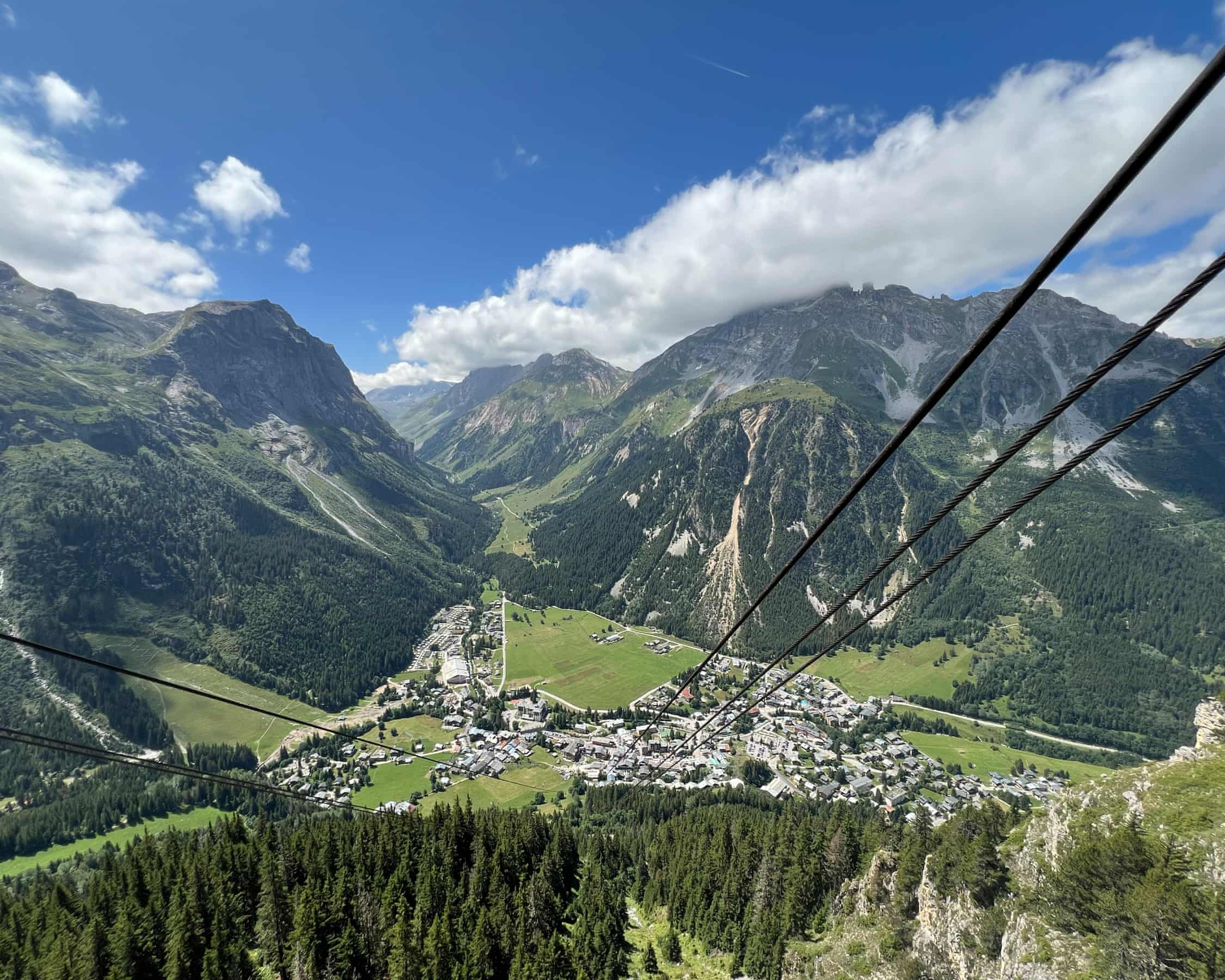
Photo: Kim Willsher/The Guardian.
Pralognan-la-Vanoise in the French Alps is in danger from global warming. An engineering operation to prevent catastrophic flooding will cost about €400,000 ($465,000). 

As discouraging as it is to read another story about global warming, one has to feel a little hopeful that human ingenuity keeps tackling its effects.

Kim Willsher reports at the Guardian about how engineering is fighting back in France. I leave it to you to decide whether putting humans first or the glacier first would be best.

The villagers of Pralognan-la-Vanoise in the French Alps know well the perils posed by the mountains that encircle them. Avalanches, rockfalls, mudslides, sudden crevices and torrents of water are within the living memory of most villagers, and every day the climate emergency throws up new dangers.

“Less than a year ago, an enormous lake formed by a melting glacier was discovered high above Pralognan that experts feared could inundate the village with more than 60,000 cubic metres [15,850,000+ gallons] of icy water. …

“As used to natural hazards as local people are high up in the Alps, they are not, however, an idle threat. The Swiss village of Blatten was wiped out by a rock and ice avalanche in May and last year a mountain lake swollen by heavy rainfall caused torrential flooding in La Bérarde in the Isère, forcing inhabitants to flee the hamlet. They have not returned.

“Today, an engineering operation is under way to prevent such a catastrophic scenario in Pralognan. Three workers have been helicoptered to the Grand Marchet glacier at an altitude of 2,900 metres [1.8 miles] to gouge a [narrow] ‘overflow channel’ in the ice. …

“ ‘The aim is to help the water find its way down the mountain gradually and avoid a rapid emptying of the lake,’ said David Binet, the director of the mountain land restoration service (RTM) for the northern Alps, part of the national forestry commission tasked with identifying and preventing natural hazards.

“ ‘What causes the problems and damage with torrents in the mountains is not the water but the stones, gravel, sand and even large rocks it brings down with it.’

“The glacier blocks the lake from spilling down the mountain but it is shrinking at a rate of 2 to 3 metres [6.6 to 9.8 feet] a year. There is also the risk that that the warmer waters of the lake could form a channel gush from underneath.

“Binet said his agency was examining 300 of the estimated 600 lakes in the Alps and Pyrenees one by one for such hazards. The Pralognan operation will cost about €400,000 [$465,000)]. …

“The idea of taking mechanical shovels to glaciers already shrinking at an alarming rate was deemed the least environmentally damaging option. Olivier Gagliardini, a glacier expert at Grenoble University, described it as ‘unfortunate, but necessary.’

“Martine Blanc, the mayor of Pralognan, said … ‘We asked ourselves could it wait but on the principle that prevention is better than cure we decided to go ahead,’ she said. ‘We decided to anticipate events rather than suffer them. Nature is nature and there’s no such thing as zero risk.’ …

“Local shopkeepers say the number of tourists and hikers this summer is down, possibly because the campsite is closed, but Silvere Bonnet, the director of the tourist office, said he had had very few calls from potential visitors concerned about the lake. …

“On a sunny day, the giant rock faces etched with shimmering cascades that rise almost vertically have a benevolent beauty. An hour later in a rapid change of atmosphere, the peaks are cloaked in dark clouds and loom intimidatingly.

“ ‘They can appear rather menacing at first to visitors because they are so sheer,’ [Bernard Vion, a 66-year-old Alpine guide who has watched the expanse of water grow and the mountain change over his lifetime] said. The 66-year-old knows these mountains ‘like his pocket,’ as the French say. He made his first high-altitude climb aged eight with his father, also a guide. Both his grandfathers were Alpinists.

“Vion first spotted what he describes as ‘a puddle’ of water on the Grand Marchet glacier in 2019. Every year since he has watched it grow; it now measures almost 2.5 acres. …

“ ‘We are on the frontline of climate change here. We know it is happening,’ he said.

“Blanc agreed. … ‘People here are used to natural hazards. We’re used to avalanches, falling rocks, torrential floods and mudslides because we’ve seen them and lived with them since we were young. Local people understand there are things we can control and then those we cannot.’ ”

More at the Guardian, here.
Read Full Post »

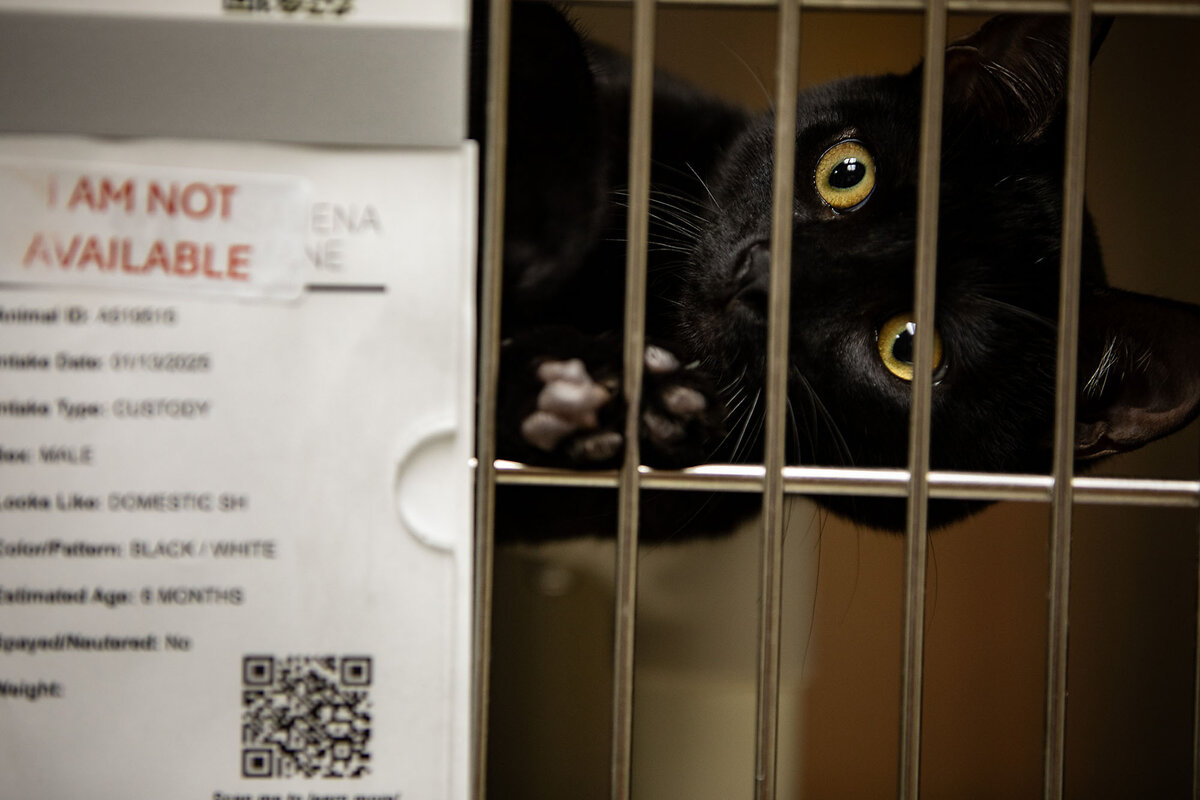
Photo: Melanie Stetson Freeman/CSM Staff.
A sign on the cage of a young black cat boarded at Pasadena Humane indicates that it belongs to someone who lost their home in the Eaton Fire. The organization took in about 500 pets right after the fires. As of March 8, there were about 170 still boarding, free of charge.

Speaking of those pets and other animals in the Latvian animated film Flow, what actually does happen to them in a disaster?

Whether it’s a catastrophic flood as in Flow, or a massive wildfire as in California last January, humane societies and lots of volunteers rise to the challenge.

Ali Martin wrote at the Christian Science Monitor, “Six weeks after the Los Angeles wildfires erupted, Chris Briffett was sifting through 10,000 volunteer applications. The director of volunteer services for Pasadena Humane, a nonprofit, is expected to bring on about 2,000 – giving the organization an ‘unprecedented chance, he says, to respond to the community’s needs. …

“When communities are devastated, people step up to help, often in ways that align with their own skills or interests. But in the past decade, more trained volunteers have been integrated with official disaster response, says Tricia Wachtendorf, co-director of the University of Delaware’s Disaster Research Center. The inclusion of volunteers in the government process of planning for emergencies, she adds, improves coordination in the midst of disaster.

“Christine Quesada, director of volunteer programs for LA County’s Department of Animal Care and Control, says volunteers were vital during the wildfire evacuations at LA Pierce College, which took in horses and other livestock. LA County’s Equine Response Team — volunteers trained to work with large animals — provided food and care; worked with organizations for donations of food and supplies; and cultivated relationships with owners. …

“During the January wildfires, the small staff at Pierce’s equine science center worked around the clock with about 20 volunteers a day, plus officers from the county’s Department of Animal Care and Control. After the first day, Pierce was at capacity with over 200 animals.

“Some belonged to Sarah Kern. She arrived with six horses and two donkeys after watching the glow of flames spread across the oak-covered hills surrounding her home in Topanga. Ms. Kern knew the stakes; she and her family lost a home in the 2018 Woolsey Fire.

“Their animals are a way of life, central to their daily activity and rhythms. With the horses and donkeys safe, she says, she could focus on caring for her family and protecting her property.

“ ‘Yes, you’re supporting animals,’ she says, ‘but you’re really supporting the people. … They’re both important.’

“Back at Pasadena Humane, Skinny Minnie is recovering from severe burns. She is one of nearly 170 animals still boarding here because of the fires.

“Owners Mark Pastor and Lisa De Lange evacuated their home in Altadena and managed to grab their other two cats – Beauregard and Stella – but little else, with flames melting the back of Mr. Pastor’s car as he pulled out of the driveway.

“Someone found Skinny Minnie in the burnt remains of their home and took her to the shelter, which posted her photo on its website, where it was discovered by Mr. Pastor. Either he or Ms. De Lange visit Skinny Minnie nearly every day.

“Skinny Minnie’s care has been extensive, and it’s all covered by Pasadena Humane. When they told him, Mr. Pastor says, he ‘broke down.’

“ ‘It’s like they care as much about us and our feelings as they do about the animals that they’re treating,’ says Mr. Pastor.”

More at the Monitor, here.

Read Full Post »

Photo: Sideshow/JanusFilms.
The movie Flow is all about animals — no humans and no verbal conversation — and it seems that domestic pets are mesmerized.

I had been wanting to see the movie Flow, so at Easter, Suzanne set it up for the kids and me while she attended to Bunny work.

It was fun to figure out with the grandchildren exactly what was happening in the film and to add our own sound track. But in the end, I don’t think they liked it much. I myself have a problem with ambiguous endings, gorgeous as the animation was.

Now I am fascinated to learn what the movie has meant to a different audience: household pets. Esther Zuckerman has a report at the New York Times.

“Search on TikTok and you’ll find a number of videos of dogs and cats alike viewing Flow alongside their owners, appearing to recognize themselves in the gentle saga, which tells the tale of an adorable black kitty who must work with a motley crew of other industrious animals to survive rising sea levels in a surreal landscape. The trend is a particularly cute coda to what was already one of the feel-good stories of awards season in which the dialogue-free indie — made on open-source software and directed by Gints Zilbalodis — triumphed over studio fare like Inside Out 2 and The Wild Robot, to earn Latvia its first ever Oscar.

“Watching Flow in the theater is a wonderfully immersive experience where the spectacle of the movie’s visuals are on full display. … Watching Flow at home (it is streaming on Max) with an animal is an equally delightful experience, but a different one. You may find your attention pulled in two directions as you try to contemplate what this all means to your pet as well as what it means to you.

“I, for one, tried to decipher just what was going on with [my dog] Daisy. Surely, she wasn’t understanding the climate change allegory, but her huge ears stood up straight as she gazed upon the heroic cat, and I caught her running up to the TV for a sequence in which it and its capybara ally go tumbling off their boat. Seeing — or perhaps just hearing — the characters in peril stressed her out on some level.

“Matiss Kaza, who produced and co-wrote the film, said in an email that he suspects that it’s the real animal sounds used in production that attract the attention of our domesticated friends. …

“When I spoke to social media users who posted clips of their household beasts responding to Flow, they explained that their animals aren’t usually this entranced by the screen.

“Chayse Orion, 24, had seen other TikTok posts about the film before he decided to watch it. He thought it was cute but wasn’t paying super close attention. His cat Fishbone was. ‘Fishbone was so engrossed in the movie,’ Orion said. ‘He was just so into it, which was really weird because I’ve never seen him interact with a show like that.’ …

“Orion knew it would make great internet content. Not only did he start to film Fishbone, he moved the cat’s tower closer to the TV for a better view, one that put Fishbone at eye level with his animated brethren. ‘I actually put it on again yesterday for him to watch while I was working,’ he said. ‘It’s definitely his favorite movie now, for sure.’ …

“Celine Orosco, 29, found that her dog Samson, a golden retriever, was also invested in Flow. She said it was the first movie he ever watched all the way through. He was particularly excited, she noticed, whenever the Labrador that joins the cat’s group of travelers came onscreen. ‘He really loved that dog,’ she said.

“Of course, we don’t know what any of our animals are actually thinking when they watch Flow. Did Gao’s black cat actually recognize herself? Hard to say. My boyfriend at first inferred that Daisy liked the lemur who has a basket full of trinkets, then thought perhaps she was upset by it. I know that she didn’t follow the plot — I love her, but she’s not that intuitive. She did, however, hear the so-called voices of the characters, and reacted to whatever they were conveying. …

“We love to watch our pets watching Flow for the same reason we love to watch Flow. The film understands that delicately anthropomorphizing these animals is a powerful tool. Their movements are carefully calibrated to replicate the way the creatures would behave in real life, but their actions are just human enough to make the story feel relatable.

“Would a cat, a dog, a capybara, a large bird and a lemur all team up to save one another should massive floods happen? Hard to say. But it’s a good metaphor about how empathy can be salvation.”

More at the Times, here. If you’ve already seen the movie and can bear a negative review, check Asakiyume’s reservations, here. But be warned: there are spoilers.

Read Full Post »

Photo: Kyle Mellott via Heather Divoky.
Catastrophic flooding swallowed up buildings of Asheville’s River Arts District. Despite ongoing floods and fires in the US, government disaster relief is facing big cuts.

My childhood friend Ursula, an artist in Asheville, North Carolina, lost much of her own and her late father’s artwork to Hurricane Helene last year. As I consider the Hyperallergic article below, I can’t help thinking that in addition to individuals who helped victims (like blogger Deb), government disaster relief (like FEMA, now on the chopping block), was indispensable.

Rhea Nayyar wrote, “Southeastern states are reeling from catastrophic loss and damages after Hurricane Helene tore a deadly path of devastation from Florida’s Big Bend region up through inland Georgia, the Carolinas, and Tennessee. In the mountains of western North Carolina, the city of Asheville was particularly hard hit by flooding … obliterating the cherished River Arts District (RAD) — a creative hub home to studios, galleries, community spaces, and other artist-run small businesses.

“ ‘Two-thirds of the district has been destroyed,’ said Jeffrey Burroughs, president of the River Arts District Artists Association, in an interview with Hyperallergic. Hosting over 350 local artists and craftspeople, the RAD complex comprises 27 buildings that span just over a mile of the eastern riverside. The southernmost string of buildings along Foundy Street, including the enormous Marquee warehouse which was once a bustling marketplace for artisans and antique dealers, are ‘gone,’ according to Burroughs. …

“ ‘Marquee is rubble, the nearby winery has washed away … It’s completely apocalyptic,’ Burroughs said. He recalled overseeing artwork, art supplies, and cans of beer being carried off by the [water] itself, saying that it was like ‘watching the spirit of Asheville being washed away.’

“A little further north at Pink Dog Creative on Depot Street, Asheville artist Heather Divoky, a marketing co-chair for RAD, told Hyperallergic … ‘This will absolutely reshape RAD — we’re going to be forever changed,’ Divoky said. ‘We’re all in complete shock right now. I don’t know how many of us can come back.’

“Down the street, Trackside Studios reported that flood waters reached the ceiling of the first floor where about 40 of the 60 studio artists maintain their practice. Co-owners Julie Bell and Michael Campbell were out of state during the storm, and have since become a communications switchboard as they have reliable internet access and power. Bell noted to Hyperallergic that Trackside Studios had recently completed a months-long renovation prior to the storm to restore the building’s historic appearance. …

“ ‘It’s so dangerous to clean up after these types of disasters because the mud is full of debris, mold spores, sharp objects, and dead fish. It’s neither safe nor sanitary,’ she said. …

“Miles east of RAD, artist, tax expert, and Hyperallergic contributor Hannah Cole reported that her studio along the Swannanoa River tributary had been entirely upheaved by floodwaters.

“ ‘The building is totaled,’ Cole told Hyperallergic, noting that 20 years worth of artwork and supplies were ‘effectively put in a blender for hours’ in a mixture of water, mud, heavy furniture and tools, and other debris carried in by the river.

“ ‘Some level of flooding is normal during big storms, but this has never happened before,’ Cole continued, adding that when she paid a risky visit to the studios after Helene, the water lines were up to the ceiling.

“Ruby Lopez Harper, executive director of the Craft Emergency Relief Fund (CERF+), which imparts safeguarding advice for natural disasters and offers emergency relief and preparedness grants to artists across the United States, told Hyperallergic that ‘recovery is going to take years.’

“ ‘We tell artists to store their things in waterproof bins and other such protective measures … None of that is going to help when your home is underwater,’ she said, explaining that no one had predicted this. …

“But on the ground, both Burroughs and Cole expressed that it’s impossible to even think so far ahead while they and their loved ones are still focused on securing potable water. However, Burroughs and the other RAD board members are conceptualizing an action plan to get stipends for artist relief, recovery funds for RAD, and a clean-up effort to remove the dangers and debris onsite.

“ ‘My husband and I moved here in 2020 after I was suffering from long COVID,’ Burroughs said. ‘There is nothing like this area, this community, anywhere else in the country. We will come back stronger.’ ”

More at Hyperallergic, here.

Read Full Post »

Photo: Roberto Nutlouis.
Danielle Kaye builds a berm spillway on the farm of Roberto Nutlouis. The berm holds back water, flooding the cornfield behind it. Navajos are using ancient ways to restore parched earth.

In their eagerness to invent, humans seem to be programmed to forget why ancient ways worked. Then they have to reinvent the wheel. Fortunately, indigenous people often are repositories of that wisdom and can produce it as needed.

Lela Nari writes at YaleEnvironment360, “Here in Burnt Corn Valley, smack in the middle of the Navajo reservation’s vast Black Mesa region, the hilly land both craves water and is brutalized by it. The sandy Arizona soil cracks under a punishing August sun as red-striped blister beetles search for moisture across its baked surface. Cottonwood trees and sagebrush rise from deep gullies carved by floodwaters that, during the intensifying summer monsoon, sluice off surrounding mesas and wash away fragile topsoil — reminders that with climate change, even quenching rains harbor powers of destruction.

“This portrait of climatic havoc belies a softer reality, though. Farming once thrived in this parched region and could once again — if the right practices are adopted. Exhibit A: The crops on Roberto Nutlouis’s 12-acre Sliding Rock Farm, in his reservation hometown of Piñon, a five-hour drive north of Phoenix.

“ ‘The corn is actually pretty big and thriving,’ Nutlouis says. He believes — and both Western science and the lived experience of his Native elders affirm — that the traditional rock and stick structures he’s built on his property, which help store water and prevent erosion, have a lot to do with it.

“These structures, similar to those used by Native peoples long before Europeans arrived on the continent, are not only delivering water to crops. … They are also restoring Nutlouis’s watershed and those of his neighbors, helping to sequester carbon, and reviving this high-desert ecosystem. It’s all part of a bigger effort among a range of local and regional grassroots organizations to build back the reservation’s fragile, depleted ecosystems and bring greater sovereignty over food, water, and health to its communities.

“Diné (the Navajo name for themselves) are well aware that climate change is making the weather on their semi-arid plateau weirder, wilder, and more destructive. … The ecological health of the reservation has also been weakened by deforestation from timbering operations and from overgrazing over the years.

“Still, this season, Nutlouis, 44, has been able to skip his usual two-hour roundtrip drive to a reliable well to haul water home for his corn. His crop is healthy and hydrated because his land still holds last winter’s snowmelt. Clearly, his heavy labor over the past 20 years — during which he has built woven brush dams, gabions (wirework cages filled with rocks), earthen berms, concrete spillways and trenches, limestone aprons and walls, and stone-lined ‘Zuni bowls,’ which stabilize eroding streambeds — is paying off.

“Diné and others living in arid zones around the world have long used structures made of naturally occurring materials to capture and control water to grow crops and to mitigate the devastation of floods in ephemeral stream systems. …

“Time and again over the last 15 years, Laura Norman, a research scientist with the U.S. Geological Survey, has seen evidence that when these structures — which Norman calls Natural Infrastructure in Dryland Streams, or NIDS — are placed in gullies, they slow water to mitigate erosion, collect nutrient-rich sediment and plant debris that nourish both crops and wild plants, help store carbon, improve groundwater recharge, and increase downstream water availability by as much as 28 percent. ‘It’s a snowball effect that counters degradation, and you get all of these ecosystem services,’ she says.

“The structures on Nutlouis’s farm are integral cogs in a larger system. … Nutlouis’s property lies in an alluvial fan, where mineral-rich sediments and plant waste atop mesas and other uplands wash down onto flatter ground with rainwater, snowmelt, and spring water. Across the valley, similar farms rely on this kind of system, many of which feature stone and stick constructions that Nutlouis helped build. The organic materials trapped behind the structures, says Jonathan Sandor, an emeritus agronomy professor at Iowa State University, ‘are a major input into keeping the fertility of the soils up.’ …

“Whether rock walls or ramps, hand-dug depressions in the soil, earthen walls, or branches plaited into dams, NIDS splash water over a wider area and slow its flow so it can better soak into the soil. Many trap sediments behind them, fertilizing whatever grows nearby. The stone structures create a hyperlocal cooling effect, especially when they’re combined with shade-making vegetation.

“Here, too, smallness is a boon. ‘Even tiny little one-rock dams can make big changes on the landscape,’ Norman says. …

“Lately, climate change has thrown extra challenges at the reservation. … But the ecosystem services provided by Nutlouis’s structures on his farm and elsewhere do seem to be meeting those climatic challenges. He’s noticed small juniper trees popping up on hillsides around his property despite the dryness; A cottonwood tree towering over one cornfield is also lush and full. ‘The idea that Earth will restore itself with natural seed dispersal’ after NIDS begin to do their job ‘has been my observation,’ says Norman.

“Or as Nutlouis puts it, ‘We’re allowing nature to do its own thing and restore itself.’ ”

More at Yale e360, here. Fascinating pictures. No firewall.

Read Full Post »

Photo: Ken Ruinard/USA Today.
Asheville, North Carolina, after Hurricane Helene.

Asheville, NC. “I’m safe, but my house is structurally damaged and I’ve just dealt with FEMA and they’re very good and my insurance is being a pain in the neck so … ugh. Anyway, I don’t have power or water and I’m living in a neighbor’s house right now. Thank you for thinking of me. I’m safe and a little stranded feeling. I’ll try and reach out when I’ve got more definite news.”

I got that voicemail on October 7. Hurricane Helene struck my childhood friend’s home September 24. She didn’t answer email. I didn’t have her mobile phone number. But when the US mail delivered my letter to her, we connected.

Patrik Jonsson goes in depth at the Monitor about hurricane-tossed North Carolinians pulling together to help one another.

“Eric Gillespie put his sandals on, walked outside his house, and stood in awe at the sight of Clear Creek – usually a gurgling rivulet – rushing like a dark torrent.

“Then he heard the screams for help. Down a steep bank lay a row of cookie-cutter houses, now up to their eaves in muddy water. Friends and neighbors – some infirm – remained in their homes as nearly 30 feet of water rushed down the French Broad River system, rising in a matter of minutes, trapping a dozen neighbors unable to scramble to higher ground.

“ ‘That’s when things got crazy,’ says the owner of the Wakey Monkey coffee shop in nearby Saluda. ‘There was no way to prepare for what happened.’

“In a rescue scene replicated over 6,000 times across Appalachia as remnants of Hurricane Helene crashed into the steep terrain, neighbors and first responders rushed to action, using everything from sofa cushions and paddleboards to mules and Chinook helicopters in order to ferry friends and strangers to safety. Over 230 people died in the storm, the bulk of them in Appalachia. The toll includes 11 members of one family in the Asheville suburbs.

“ ‘There was both beauty and tragedy in the response,’ says Nathan Smith, a pilot from Charlotte, North Carolina, who surveyed the damage as he flew his 1979 Cessna 180 Skywagon on multiple missions into hard-hit county airports. …

“There were slip-ups and mistakes. But to many on the front lines here, the very worst that nature could conjure was met by the very best America had to give. …

“What promises to be a long recovery is now top of mind for residents of Greater Appalachia, many of them exhausted and still in shock at the discombobulation not only of their lives, but also of the geography of their valleys. …

“In Saluda, North Carolina, a railroad stop that became an adventure destination, the tone of the first meeting of the local business association after the storm was subdued at best.

“The Green River, a world-renowned kayaking destination, could remain impassable for months, if not years, some association members said. With major roads blocked and tourist towns like Bat Cave and Chimney Rock leveled, would anyone show up for leaf-peeping season?

“ ‘What happened was scary,’ says Emily Lamar, co-owner of The Purple Onion restaurant in Saluda. ‘What happens next is scary, too.’

“Access issues for rescue crews tell that story. There is little way to get from South Carolina to Tennessee as parts of Interstate 40 are washed out. The famous Blue Ridge Parkway is undrivable, covered with trees and washouts. Large parts of Asheville’s quirky River Arts District are smashed. {See photo.] Much of what was the iconic village of Chimney Rock is now wreckage situated downstream in Lake Lure. …

“One analogue is the city of New Orleans, which lost more than a quarter of its population [after Hurricane Katrina] 2005 and 2011. But just as New Orleans used that experience to strengthen its levees, many here hope these Carolina communities can build back stronger. Hard-hit Asheville, for one, has long debated better flood controls for its vulnerable River Arts District.

“ ‘This recovery, it’s going to be weeks, months, years, decades, if it’s ever complete,’ says Aaron Clark-Ginsberg, professor of policy analysis at the Pardee Rand Graduate School in Santa Monica, California. ‘Some of this trauma is going to be incorporated into the structure of the community.’ “

More at the Monitor, here. No paywall. Excellent pictures.

Read Full Post »

Photo: Eva K. via Wikimedia.
Herrerasaurus skeleton replica at a special exhibition of the Naturmuseum Senckenberg in Frankfurt am Main, the largest museum of natural history in Germany.

As we take in the horrendous flooding of two major hurricanes in the US this month, it’s hard to imagine that heavy rains and floods ever do anything beneficial. But last May in Brazil they added to human knowledge of dinosaurs, and that could be useful.

Eléonore Hughes wrote at the Associated Press, “A team of Brazilian scientists has discovered a fossilized skeleton of what they believe is one of the world’s oldest dinosaurs after heavy rains in the southern state of Rio Grande do Sul accelerated the natural process of erosion.

“The fossil found next to a reservoir in the municipality of Sao Joao do Polesine is [the oldest yet] according to paleontologist Rodrigo Temp Müller, who led the team from the Federal University of Santa Maria that found the bones in May. The claims have not been verified by other scientists or published in a scientific journal [as of this writing].

“The researcher believes the dinosaur lived during the Triassic period, when all continents were part of a single land mass called Pangaea. Dinosaurs are thought to have first evolved at that time.

“The apex predator discovered in Rio Grande do Sul belongs to the group known as Herrerasauridae — a family of dinosaurs that used to wander across lands that now make up present-day Brazil and Argentina, according to a fact sheet about the discovery shared with the Associated Press.

“The size of the bones reveals that the dinosaur would have reached around 2.5 meters (8.2 feet) in length, according to the document. …

‘Initially it seemed like just a few isolated bones, but as we exposed the material, we were able to see that we had an almost complete skeleton,’ Müller said. …

“Researchers will now try to determine whether the fossil belongs to an already known species or a new kind. That work is expected to take several months, as the process is meticulous to ensure no damaged is caused.

“Fossils are more likely to appear after rains, as water exposes the materials by removing the sediment that covers them, in a phenomenon known as weathering.

“Rio Grande do Sul saw record amounts of rainfall earlier this year. That caused devastating floods in May that killed at least 182 people, according to a toll published by the state’s civil defense on July 8. …

“Müller said that more fossils are appearing because of the heavy rains, which has launched a race against time to rescue the materials before they are ruined.

“In the field, his team observed ‘a leg bone and a pelvis bone in the pelvic region that were already being destroyed due to the rain,’ he said.”

More at APNews, here. If you’re keen on dinosaurs, check out the paleontologist’s diary of the excavation, here.

Read Full Post »

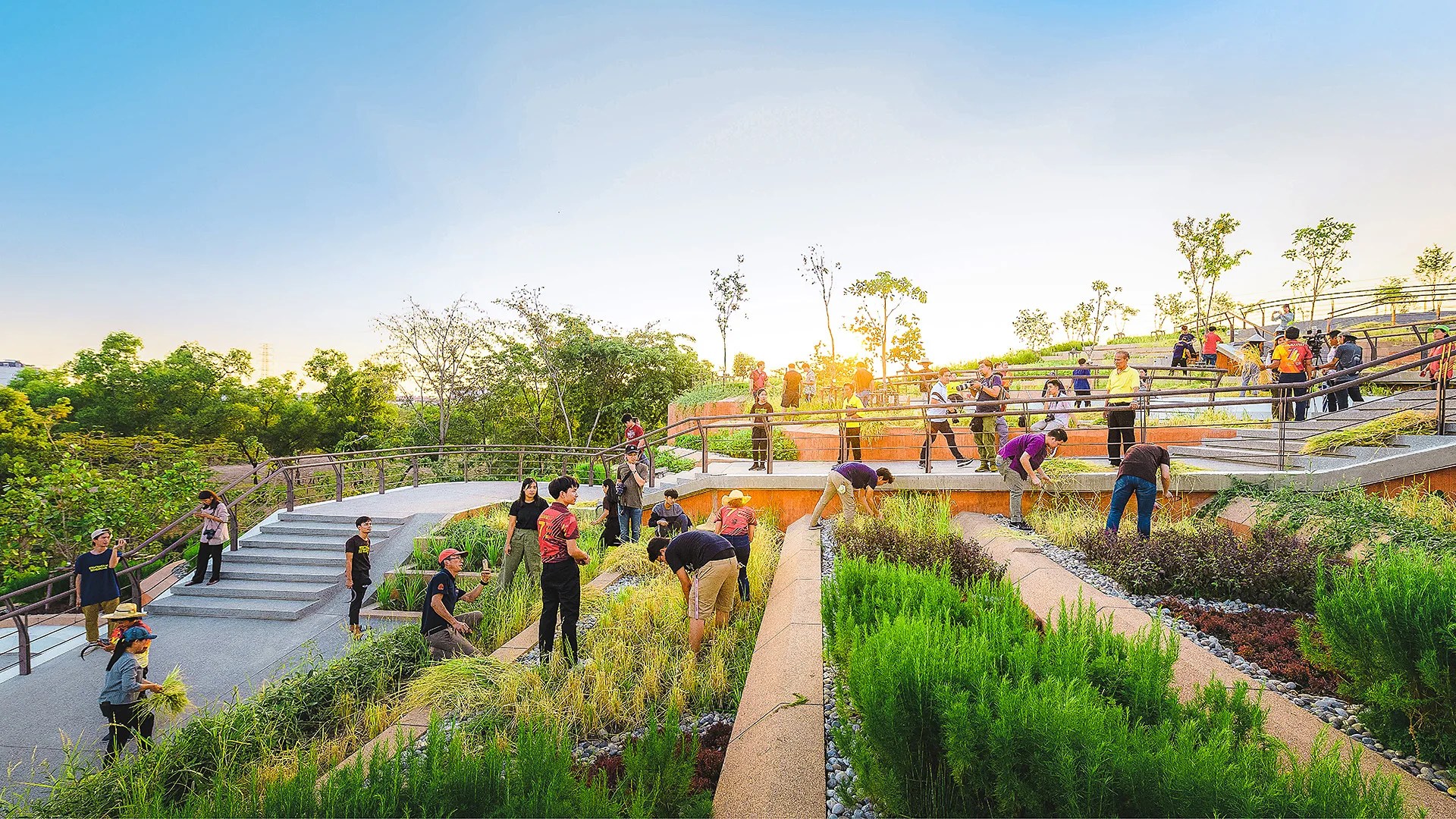
Photo: Panoramic Studio/Landprocess.
Thammasat University’s rooftop farm features cascades of rice paddy-style terraces used to grow organic crops.

Here in the US, we are all preoccupied with floods because we’re in the midst of an extreme hurricane season. So it seems strange to think of places where a certain amount of flooding is desired — rice paddies.

Xiaoying You at the BBC writes about what can be learned from ancient techniques for controlling rice-paddy flooding.

“One of Kotchakorn Voraakhom’s most memorable moments growing up in Bangkok in the 1980s was playing in floodwaters in a small boat built by her father in front of her home.

” ‘I was so happy that I didn’t need to go to school because we didn’t know how to get to it,’ recalls Voraakhom, a landscape architect based in the Thai capital.

“But nearly 30 years later, flooding turned from a fun childhood recollection to a devastating experience. In 2011, Voraakhom and her family – along with millions of others in Bangkok – found themselves ‘displaced and homeless‘ when floods plowed through swathes of Thailand and poured into the metropolis. …

“The disaster deeply shook Voraakhom, who believed it was time to use her expertise to do something for her hometown. She founded her own landscape architecture firm, Landprocess, which over the past decade has designed parks, rooftop gardens and public spaces in and around the low-lying city to help its people increase their resilience to flooding.

“Perhaps her most intriguing design so far has been an enormous nature-laden university roof inspired by rice terraces, a traditional form of agriculture that has been practiced in Asia for some 5,000 years. …

“The university roof designed by Voraakhom is part of a wider trend in Asia that is seeing architects seek inspiration from the region’s rice terraces and other agricultural heritages to help urban communities reduce waterlogging and flooding. …

‘The answers to the future of climate change, many of them are actually in the past,’ says Voraakhom.

“At Thammasat University, north of Bangkok, tiers of small paddy fields cascade down from the top of the building along Voraakhom’s green roof, allowing the campus to collect rainwater and grow food.

“There are four ponds around the building to catch and hold the water flowing down. On dry days, this water is pumped back up using the clean energy generated by the solar panels on the roof and used to irrigate the rooftop paddy fields. …

“Compared to a design made of concrete, the green roof can slow down runoff – excess rainwater that flows to the ground, a big problem for Bangkok – by about 20 times, according to estimates from Voraakhom. It can also lower the temperature inside the building by 2-4C (3.6-5.4F) during Bangkok’s notoriously hot summer, she says.

“Rice terraces are layer upon layer of paddy fields usually created by smallholder farmers along the sides of hills and mountains to maximize the use of land. They can be found in many Asian countries. …

“While their shapes and sizes may vary, all rice terraces are built to follow natural contor lines, which means each layer has equal elevation above sea level. This feat enables them to collect and hold rain and use it to nurture the soil and crops. Some rice terraces, such as those of the Hani people in southern China, overlook rivers, allowing the tiered soil to reduce, decelerate and purify excess rainwater washing down from the top of the mountain before it flows into the valley.

“Such indigenous know-how, passed down by generations of small-scale farmers, can hugely benefit Asian cities when it comes to handling rainstorms, according to Yu Kongjian, a professor of landscape architecture at Peking University in Beijing and the brains behind China’s ‘sponge city’ concept

“Chinese cities – as well as many others in Asia – have a monsoon climate, which is characterized by rainy summers and drier winters. … Huge downpours mean their flood-control measures need to be based on localized ways of adaptation tested and proven over thousands of years, he argues.

“Rice terraces are one of the pillars of Yu’s spongy city theory, which urges cities to turn to soil and greenery – not steel or cement – to solve flooding and excess rainfall problems. According to him, rainwater should be absorbed and retained at the source, slowed down in its flow and then adapted to where it ends up. Rice terraces deal with mitigating floods at the source, Yu says. …

“The Yanweizhou park, for example, completed in 2014 in Jinhua, Yu’s hometown, has a rice-terrace-like bank planted with grasses that can adapt to an underwater environment. The spongy feature is capable of reducing the park’s yearly maximum flood level by up to 63%, compared with a concrete one, a 2019 paper found.

“Such designs can also filter floodwater, which is often contaminated by sewage, chemicals and other pollutants. Another of Yu’s projects, Shanghai Houtan Park, is situated on a piece of once highly polluted land that used to house a landfill site for industrial waste. Since its establishment in 2009, each hectare of the park, which also features Yu’s terracing element, is capable of purifying 800 tons of heavily polluted water per day.”

Read about related flooding projects at the BBC, here. Fascinating photos.

Read Full Post »

Photo: Mary Altaffer/AP.
Construction underway on a flood resiliency project in East River Park in Manhattan in October 2022. Hello, Boston! See this?

For years there have been voices crying in the wilderness about the danger Boston faces from flooding. A city originally lifted from the sea like the Netherlands, Boston has powerful “progress” fanatics that have allowed the Seaport area to be overbuilt in the last 20 years. The Boston Globe’s David Abel even made a movie about it, calling the city’s touted Innovation District the Inundation District.

Meanwhile, in New York City, politicians have heeded a painful lesson from Hurricane Sandy.

Andrew S. Lewis writes at Yale Environment360, “On a recent morning in Asser Levy Playground, on Manhattan’s East Side, a group of retirees traded serves on a handball court adjacent to a recently completed 10-foot-high floodwall. Had a sudden storm caused the East River to start overtopping this barrier, a 79-foot-long floodgate would have begun gliding along a track, closing off the playground and keeping the handball players dry. In its small way, this 2.4-acre waterfront park is a major proof of concept for a city at the forefront of flood resilience planning — a city working toward living with, and not against, water.

“The Asser Levy renovation, completed in 2022, is part of East Side Coastal Resiliency (ESCR), the largest urban resiliency project currently underway in the United States. Over the next three years, at a total cost of $1.8 billion, ESCR will reshape two-and-a-half miles of Lower Manhattan’s shoreline. But ESCR is just one link in a much larger, $2.7 billion initiative called the BIG U — a series of contiguous flood resilience projects that runs from Asser Levy, near 25th Street, around the southern tip of Manhattan, and up to Battery Park City, along the Hudson River. When finished, the BIG U will amount to 5.5 miles of new park space specifically designed to protect over 60,000 residents and billions of dollars in real estate against sea level rise and storm surges.

“The BIG U was conceived in the aftermath of 2012’s Superstorm Sandy, which flooded 17 percent of New York City and caused $19 billion in damage. Like Hurricane Katrina in 2005, Sandy helped push New York … toward embracing the Dutch concept of ‘living with water,’ which emphasizes building infrastructure that can both repel and absorb water while also providing recreational and open space.

“In New York, ESCR, like any large infrastructure project slated for a densely populated place, has moved in fits and starts. Still, New York is making significant progress. ‘Anything that’s on the scale of Manhattan is always going to be so much bigger and more complicated,’ says Amy Chester, director of Rebuild by Design, the post-Sandy design competition from which ESCR was born. ‘And yet a lot has been done.’

“The ESCR project area encompasses a flood-prone wedge of Manhattan’s natural topography — a ‘pinch point’ between two higher stretches of shoreline. Some 400 years ago, when the island was inhabited by the Lenni-Lenape, this shoreline was woods and marsh that never rose more than a few feet above sea level. Tidal creeks drained from uplands dense with American chestnut, aster, and goldenrod, winding through spartina meadows to the river. Today, that landscape is lost beneath four separate public housing complexes, whose roughly 10,000 residents count on East River Park to buffer their homes from a waterway that has risen 8 inches since the mid-20th century.

“Because ESCR is the first segment of the BIG U to get underway, its path has been rocky, from debates about its final design, to budget cuts, to new concerns about the evolving risks of climate change, including the extreme rain events that New York experienced this year. …

“In 2018, the administration of Mayor Bill de Blasio quietly revamped the design: it would be faster and cheaper, the mayor’s team said, to wipe the park clean, elevate the landscape with more than a million tons of fill, then build anew on top.

“Unlike the kind of permeable buffers championed by the Dutch, the raised park would function more like a hard barrier. … Opposition to the redesign remains, but many residents of the public housing complexes, which are at high risk of flooding, support it. In the fall of 2021, demolition crews got to work. …

“The park will be landscaped with pathways and vegetation beds that snake around and through sports fields, an amphitheater, and playgrounds to form a terraced topography that will function as a berm to keep water from city streets. More floodwalls and retractable gates will run the park’s length and extend into surrounding streets, where archaic infrastructure will be overhauled so stormwater is less likely to mix with wastewater during flooding. …

“Other segments of the BIG U are also underway. In the Battery, at the city’s southern tip, the waterfront is being elevated with fill. Next, floodwalls, higher-capacity drainage, and new park space will be installed. Similar projects to protect the historic South Street Seaport area and the Financial District remain in the planning and design phase. …

” ‘Building a level of resilience capacity across society is critically important,’ says Henk Ovink, the former Netherlands Special Envoy for International Water Affairs and one of the creators of Rebuild by Design. ‘If you don’t invest in the most vulnerable links, the chain breaks.’ ”

Read more at Yale e360, here. No firewall. Donations solicited.

Read Full Post »

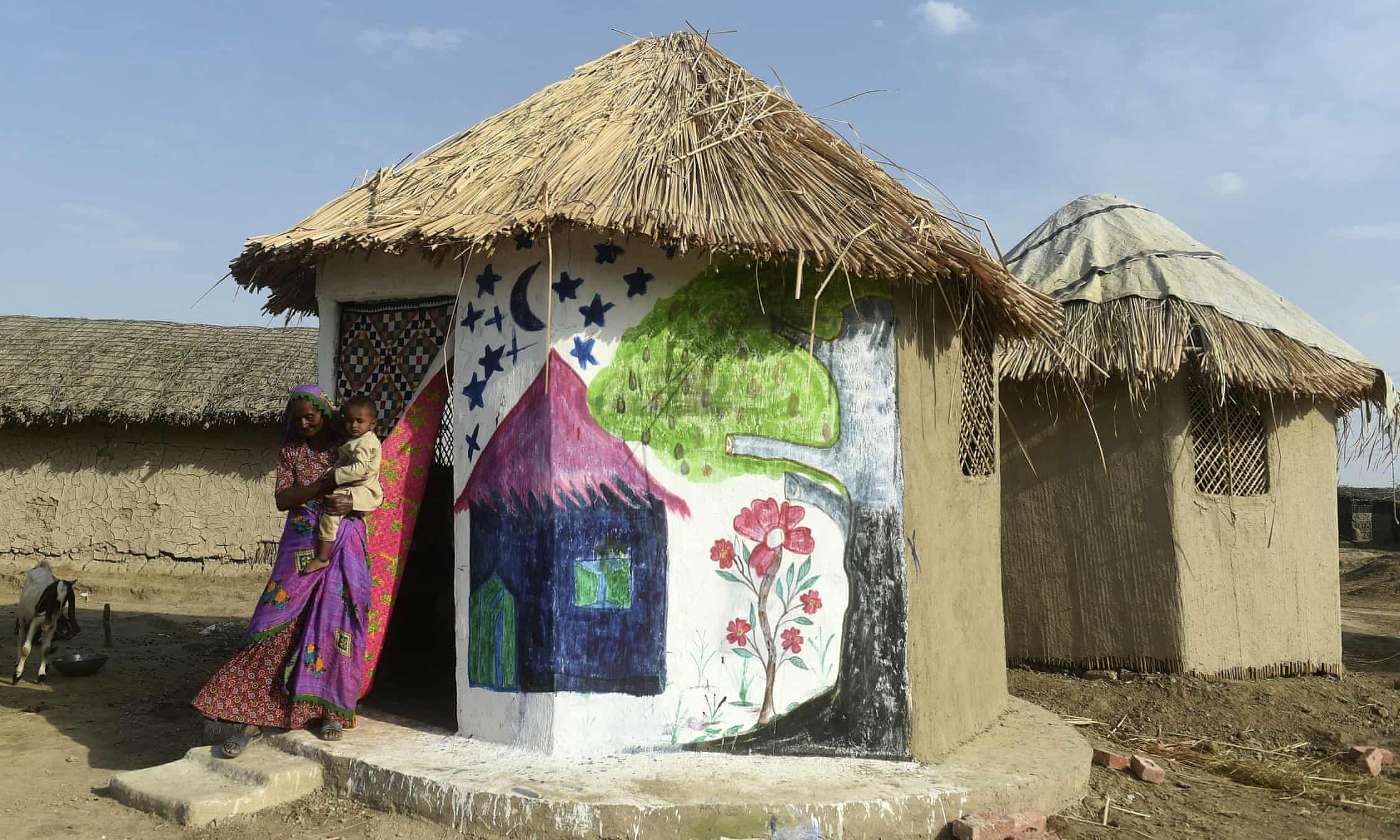
Photo: Asif Hassan/AFP/Getty Images.
A resident with her flood-resistant hut made from bamboo at a cost of about $87.

The news of floods this week is tragic. In Libya a dam suddenly broke, wiping away villages, and even near me, a quixotic rainfall — 11 inches in about 6 hours — submerged many homes in one city while the rest of the region was untouched.

Pakistan, of course, has suffered worse. That’s why it’s extra interesting to read about a sustainable, cost-efficient way that some poor areas there are rebuilding.

Zofeen T Ebrahim writes at the Guardian, “A year ago, Shani Dana’s mudbrick house was swept away in the worst floods on record to hit Pakistan. More than 1,700 people were killed and 900,000 homes damaged or destroyed. Sindh province, where Dana lives, was the worst affected.

“While waiting for government money to rebuild her home in Wasram village, in the Tando Allahyar district, word reached Dana that the Heritage Foundation of Pakistan (HFP), founded by a renowned architect, Yasmeen Lari, was building one-room homes in neighboring Pono village.

“The buildings ‘looked like rounded chauhras [traditional huts], but were octagonal in shape and the walls were much sturdier,’ says Dana.

“The foundation agreed to help Wasram rebuild and in March the HFP team joined villagers to construct 50 new homes. Prefabricated bamboo frames were built on meter-high raised platforms. Walls made of bamboo canes were fixed and plastered with mud mixed with rice husk and lime, and radial-style conical roofs were fitted. Four solar panels, six water hand pumps and 25 toilets were also built.

“ ‘This will not be swept away if the floods come again. It is not built at ground level, it’s airier and brighter since there is a window – ours didn’t have one before – and also looks much neater, since the walls and floor are plastered,’ says Dana outside her new home. …

“The HFP has helped build more than 5,000 chauhras since September [2022]. ‘In the next two months, I should be able to build another 2,600 homes,’ says Lari, who is urging every villager who has built their home to help 10 others build theirs.

“A year after the floods, tens of thousands of people are still waiting for help to rebuild. Organizations like HFP and the NGO Karachi Relief Trust have been stepping in.

“About 250 of the 1,000 one-room homes KRT is building in villages across Sindh, Punjab and Balochistan provinces … are being built using burned-earth bricks or cement blocks with roofs made of steel girders and precast cement slabs. ‘The houses we built in 2010 have survived and aged well,’ said Ahsan Najmi, the trust’s architect. …

“The Sindh People’s Housing Foundation (SPHF), which is overseeing the rebuilding, hopes 50,000 one-bedroom ‘resilient’ cement, brick and steel homes will be livable by September. It has enough money to cover the cost of 350,000 homes, but needs at least $500m to finish all the work. …

“However, Lari questions the cost of the project and believes rebuilding could be cheaper and more sustainable. The houses SPHF is asking people to build cost 300,000 rupees [~$1,030] each, about the same amount KRT’s homes are costing.

“HFP homes, which are made of fully cured bamboo, the ends of which are covered with lime to protect them from termites, cost just 25,000 rupees. The lime in the plaster and bamboo also absorb and store carbon from the air, helping mitigate the effects of the climate crisis.

“ ‘I’m not doing anything new. I may have tweaked the design, but the material used is age-old, indigenous and easily available,’ says Lari, who began her humanitarian work after a 7.6-magnitude earthquake shook northern Pakistan in 2005. …

“Lari, who is this year’s recipient of the Royal Institute of British Architects’ royal gold medal, one of the world’s highest honours for architecture, says she would like the government to adopt sustainable alternatives to housing. ‘I am happy to provide any assistance if they would like to provide a better quality of life for the poor,’ she says. ‘Our design is open source, available free. We can also identify many trained master artisans. It is up to the government. We are there to further the cause.’

“An essential part of Lari’s work is involving communities in the rebuilding process so they learn a trade. While the foundation pays for the bulk of the materials and brings its expertise, local people collect the mud and rice husk, and provide the labor.”

More at the Guardian, here. No firewall. Donations encouraged.
Read Full Post »

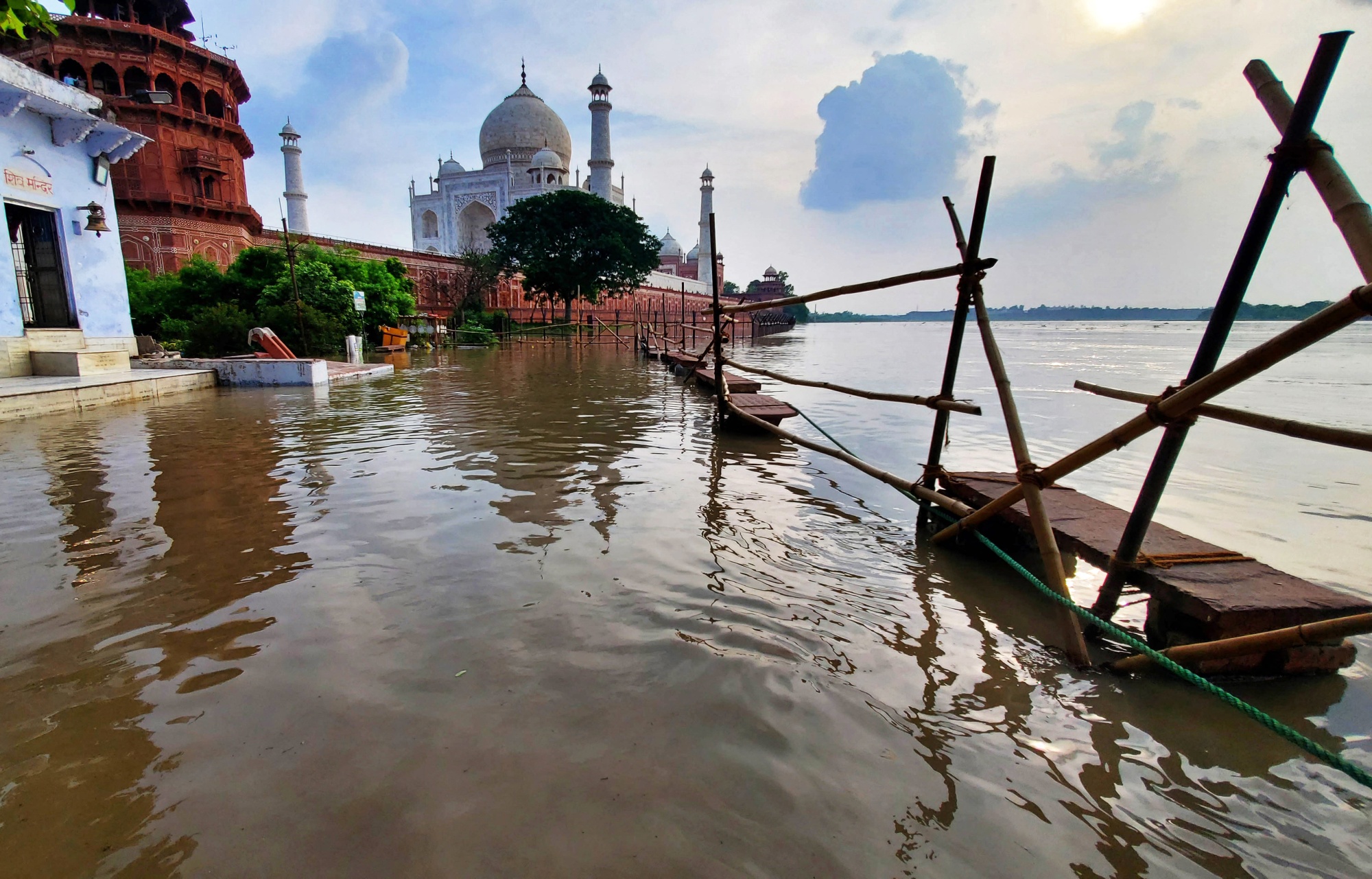
Photo: Pawan Sharma/AFP via Getty Images.
The flooded banks of the Yamuna river near the Taj Mahal in Agra, India.

“It’s an ill wind that blows nobody good.” Maybe so, but how can severe flooding ever benefit a landmark?

First, let’s look at the worries about flooding near the Taj Mahal. In a July 20 Nikkei Asia report, Neeta Lal wrote, “Indians watched with alarm this week as the surging Yamuna River reached the outer walls of the country’s most recognizable landmark — the white-marbled Taj Mahal — for the first time in 45 years, due to heavy monsoon rains that have wreaked havoc and killed scores in the north of the country.

“Apart from highlighting the vulnerability of the 17th-century mausoleum in Agra, into which officials on Wednesday assured media the water was unlikely to enter, flooding has disrupted life across several states in recent weeks. Tens of thousands of people have been displaced, roads have caved in, homes have collapsed, and schools have been forced to close. Waist-deep water at Kaziranga National Park sent rare one-horned rhinos, elephants and deer fleeing to nearby villages, authorities said.

“A State Bank of India report this week made an early estimate of economic damage at nearly $2 billion.

“The crisis comes in a year when many parts of the world are experiencing severe heat waves and other extreme conditions attributed to climate change. Although flooding is nothing new in India, experts warn that global warming means the country can expect more extreme weather and must plan accordingly.

“New Delhi has not been spared. In the capital, nearly 10,000 people were forced into 33 makeshift relief camps arranged by the local Aam Admi Party (AAP) government, according to an official statement last week. Some were still in the shelters this week.

“Residents holed up at a camp in Delhi’s Civil Lines area complained of a lack of amenities. ‘We’ve been here for three days after losing all our belongings in floods but are struggling to get basics like food and water. Mosquitoes are also posing a problem,’ said Rashida Bai, 48, a widow and mother of three. However, her neighbor, Amina Yusuf, praised the government ‘for providing rations and promising 10,000 rupees ($122) per family as financial support.’ “

Meanwhile at Bloomberg CityLab, Sreeja Biswas addresses the Taj Mahal angle. “Extreme weather is a threat to cultural sites all over the world, but northern India’s latest monsoon may turn out to be positive for the Taj Mahal.from the Yamuna river, a major tributary of the Ganges, reached the compound walls of the UNESCO World Heritage Site on July 18, following a period of heavy rain that left thousands displaced in the neighboring state of New Delhi and caused devastating floods around the region. It was the closest Yamuna waters had come to the Taj Mahal in 45 years, flooding the visitor viewing area, according to local media reports.

“The Taj Mahal’s white marble exterior may suffer minimal damage, but the heightened water level will likely raise the moisture content of the structure’s wooden foundation, increasing its life span, said Raj Kumar Patel, superintendent archaeologist for the Archaeological Survey of India, a government agency responsible for archaeological research and preservation of historical monuments.

“The Taj Mahal is supported in part by a base of deodar wood, which becomes stronger when it absorbs water, Patel said. Drainage pipes divert the river water, and deep wells filled with rock, wood and other solid material provide stability to the massive building above.

“A drying Yamuna river has previously been a concern for the Taj Mahal — built in the 17th century by Mughal Emperor Shah Jahan in memory of his queen Mumtaz Mahal — as a lack of moisture shrank the supporting rafters at its base. The building has also suffered years of extreme air pollution and acid rain that has turned the monument yellow-green. …

“The recent flooding in northern India has been far less fortunate for other sites. The Mehtab Bagh, or Moonlight Garden, near the Taj Mahal, was mostly submerged in the recent rains and will likely need new grass, according to Patel.”

More at CityLab, here, and at Nikkei Asia, here.

Read Full Post »

Photo: Jim Weber/Santa Fe New Mexican/AP/File.
Fire rages along a ridgeline near the Taos County line as firefighters from all over the country converge on northern New Mexico to battle a fire on May 13, 2022.

An interesting experiment is taking place in New Mexico, where leaders are merging recovery efforts for children who were affected by recent wildfires and floods with recovery efforts for the environment.

At the Christian Science Monitor, Sarah Matusek has the story.

“Sara Villa watches her second grader, Aaron, focus on the task, his jacket hood raised against the November chill. He’s one of several dozen students on a school excursion at a New Mexico ranch. The Villas evacuated their nearby Holman home in the spring due to wildfire, then again in the summer due to floods. Because of water damage, the family went into debt purchasing a new mobile home, says Ms. Villa. Other scars are harder to see.

“Aaron gets ‘scared now when it rains,’ she says. ‘I just try to explain to him that he’s OK.’

“Aaron, shy, offers a snaggletooth smile. The ball in his mud-smeared palms is stuffed with seeds of native grasses. Students can plant these ‘seed bombs’ where they please, such as at home or here at Collins Lake Ranch, where about half of its 300 acres burned last spring in the state’s largest recorded wildfire.

“The activity is part of a school district experiment linking environmental recovery to that of students, whose families lost ranchland, income, freezers full of food, and safe drinking water. This school year, the rural Mora Independent School District (MISD) has tried several ways of harnessing lessons about such disasters to ‘promote the healing,’ says Superintendent Marvin MacAuley. …

“The district hired a second social worker to deal with an upswell of behavioral issues. MISD has also doubled down on logistical preparedness, which includes ongoing food distribution to local families and the drafting of school flood-response plans. …

“Not unlike the weather radio that Mr. MacAuley keeps on his desk, antenna raised at the ready, district staffers have had to broaden their attention to student needs that include not only academics but also resilience.

“ ‘I want them to recover. I want them to succeed,’ says the superintendent. …

“Family trees in Mora County intertwine with Indigenous, Spanish, and Mexican histories; some residents trace back ties to the land through nine generations. The district of around 400 students – most are Hispanic, and nearly all qualify for free or reduced-price lunches. …

“In April, prescribed burning in Santa Fe National Forest botched by the U.S. Forest Service grew into the largest wildfire in recorded New Mexico history. The blaze of over 340,000 acres was fueled by adverse conditions that the government says it underestimated. April set a record dry average for the state in terms of precipitation: five-hundredths of an inch that month. …

“As the fire blazed, Mr. MacAuley, a former wildland firefighter for the U.S. Forest Service, made the call to send students and staff home early. Evacuations followed. After a ‘chaotic’ two weeks, he says displaced teachers resumed lessons through a semblance of virtual learning. Though the district had begun using 1-to-1 computing during the pandemic, not all children evacuated with devices, let alone landed where they had access to Wi-Fi. …

“Summer flooding from thunderstorms was made worse by the wildfire. At the start of the fall semester, flooding cued two early dismissals and the sheltering of students late at school until the roads cleared. …

“Researchers are beginning to understand the impact of climate change on young people, including through self-reporting of ‘climate anxiety.’ In April 2021, a year before the New Mexico blaze, the National Association of School Psychologists adopted a resolution recognizing the importance of mitigating climate-related harms (like air pollution, extreme heat, and wildfire) to the learning and mental health of students. 

“MISD is now equipped with cots, food, and water in case of future needs to shelter students. And the district used American Rescue Plan Act education funding to hire the second social worker based on a spike in social-emotional needs, with a third contracted on an as-needed basis. …

“Senior Casey Benjamin is among those who helped, as a junior firefighter. Sixth grader Ana Crunk, daughter of the teacher, volunteered at an evacuation center in Peñasco.

“Though it was ‘scary’ to flee home, helping out ‘helped me feel better,’ says Ana, whose own family was evacuated for two weeks. …

“Mora’s expeditionary learning, first mentioned in a report by Searchlight New Mexico, is partially meant to address social-emotional needs. Sometimes called experiential or project-based learning, the hands-on learning approach was developed by educators in the 1990s.

“Since the fall semester, several expeditionary learning days, including the seed bomb outing, have taken place at Collins Lake Ranch, a nonprofit serving people with disabilities. In other lessons there, students learned to fly drones for aerial data collection and tested post-fire water quality, in partnership with the New Mexico Forest and Watershed Restoration Institute at New Mexico Highlands University. …

“The district has [also] launched its first team to enter the New Mexico Envirothon, a problem-solving competition that tests student knowledge of natural resources.”

More at the Monitor, here.

Read Full Post »

Photo: Serious Shea.
Community members stand by a tree planted in Senegal during the launch of the Great Green Wall Corporate Alliance, an initiative that is part of larger efforts to prevent desertification in Africa’s Sahel region. “Serious Shea,” says the Christian Science Monitor, “is transforming a previously firewood-dependent shea industry in Burkina Faso.”

When it comes to human rights and climate justice, corporations can get into the act. It can even boost their brand. Blogger Rebecca told me about a clothing company, Fair Indigo, where she buys clothes because the cotton is organic and she knows the workers are paid a fair wage. I myself have bought cotton towels at Patagonia, which has protected the environment for decades and now promises not to use cotton from Chinese forced labor.

At the Christian Science Monitor, Taylor Luck, Whitney Eulich, Ahmed Ellali, and Sandra Cuffe write about how various countries are working on water conservation — and how certain companies are helping.

“In Guatemala, farmers are setting up ‘living fences’ around fields, creating a buffer of roots to protect their soil during increasingly strong rainy seasons. In Jordan, local Bedouin communities and authorities are pioneering resilient desert agriculture in a region that has been hit by longer and more intense heat waves.

“And in Burkina Faso, William Kwende has been working to revolutionize shea butter production – by substituting renewable energy for traditional wood-burning methods that result in deforestation. He has introduced an approach with 100% renewable energy, self-sustaining biomass burners, and a closed water system, which is curbing emissions while also reducing crop losses. 

“At a time of global strain on food production, including an emerging famine in parts of East Africa, his story symbolizes the potential for using innovation to adapt to a changing climate.

The business Mr. Kwende co-founded, called Serious Shea, is designed to promote reforestation and to secure fairer wages and independence for the local women at the heart of the process. 

“A key part of the innovation: Serious Shea’s eco-processing centers transform shea tree biomass into natural biofertilizer and biochar, enriching soils that are at risk of desertification and reducing reliance on expensive imported chemical fertilizers. 

“ ‘People talk about water and food imports, but when you talk about food crises and adaptation, fertilizer is at the heart of it,’ Mr. Kwende tells the Monitor on the sidelines of COP 27 [Conference of Parties 27], this year’s global climate summit, at Sharm el-Sheikh. …

“Across the globe, innovative ideas like that are greatly needed. Extreme weather events are affecting the vital sector of food production – with the shifts especially hard for Indigenous communities and small-scale farmers. In Peru, rising temperatures have upended the livelihoods of alpaca farmers. In Pakistan, massive floods have sidelined several million acres from crop production. In Somalia and Kenya alone, drought threatens to push millions into food-poverty and starvation. …

“With its own farmers suffering losses amid intense heat waves and drop in Nile waters, atop the food-security crisis in the Horn of Africa, Egypt has placed agriculture front and center to an unprecedented degree at the current [COP]. …

“Agriculture experts say some of the solutions will involve mass-produced technologies such as battery-operated farm equipment. But it will also involve the rise and transfer of hundreds of local, homegrown solutions emerging across the world, many of which advocates say can cut carbon, improve resilience, and be replicated elsewhere. 

“In Mexico, where last summer eight of 32 states experienced moderate to extreme drought and where half of all municipalities in the country face water shortages, some farmers turn 2-liter soda bottles upside down over saplings to capture morning dew or dig holes and line them with organic materials like leaves, to retain rainfall around young trees.

“To the south in Peru, Alina Surquislla’s family has never seen anything like the current effects of rising temperatures in their three generations of alpaca herding. 

“There’s no water; the grass is turning yellow and disappearing for lack of rain,” says Ms. Surquislla. Alpacas are dying out at worrying rates. Speaking over a Wi-Fi satellite connection while walking at nearly 16,000 feet above sea level in the Apurimac region … for now, she says the answer for herders is to go to higher and higher elevations in search of water and grazing.

“Water is also scarce in Jordan. There, local Bedouin communities and authorities are scaling up pioneering desert agriculture in Al Mudawara, a border region near Saudi Arabia that has been hit by longer and more intense heat waves in the past few years. 

“Since 2019, under a directive by Jordan’s King Abdullah, each family in the area has been tending to 6-acre plots of yellow corn and green onions, watered from an underground aquifer. The crops have proved resilient to more frequent 120 degree F temperatures, sprouting up into green waves amid reddish desert sands that have not been utilized for agriculture in modern history. 

“Now over 4,000 acres of corn stalks stand 3 feet high and onions sprout in Al Mudawara. These provide alternative sources of income and living for Bedouin families, many of whom have been forced to abandon traditional camel shepherding due to the mounting costs of imported animal feed. …

“Says Abu Fahed al Huweiti, former director of the Al Mudawara Agricultural Cooperative that has steered the project. ‘It has given a new hope for people here.’

“In Tunisia, amid the lush fig and olive groves of Djebba, clinging to the tops of the Gorraa mountain, farmers continue a centuries-old terraced farming that has helped them cope with massive heat waves and drought that has hit much of Tunisia. 

“A series of cement-lined canals crisscross down the hill through the terraced farms, carrying water from natural springs fed by winter’s snow to groves of figs, pomegranates, quince, and olives on a rotating basis of collective water-sharing. 

“This ingenious method of traditional Berber farming provides timed irrigation of entire land plots, allowing local farmers to grow not only trees but also herbs and diverse flora and fauna, feeding livestock and chickens – all from the same measured water delivery. …

“ ‘We in Djebba keep using the same old techniques because it has shown success. It is an inherited model of coexistence and represents the ideal use of available water resources,’ says Fawzi Djebbi, Djebba farmer, activist, and head of the annual Djebba Fig Festival.  ‘Here we use the water as a collective resource from the mountains. This water belongs to all of us.’  

“Knowledge- and expertise-sharing has also been critical to speeding up farmers’ adaptation to the pummeling effects of severe weather events. 

“The CCDA, an Indigenous and small farmers movement for land rights and rural development in Guatemala, is working with many of their 1,300 affiliated communities around new techniques to help farmers adapt. This year’s rainy season has been one of the longest and heaviest this century, for example.

“One technique is planting trees and plants with deep roots around crop plots. The plants are a buffer against erosion, provide shade during the hot and dry season, and sometimes include edible plants as well. …

“Global organizations are seeking to spread helpful practices and information. The United Nations Food and Agriculture Organization (FAO) has been teaming up with Vodafone to get early warning systems and messages to rural farmers across Africa to better prepare for projected climate trends and to provide advice on mitigation measures.” 

More at the Monitor, here.

Read Full Post »

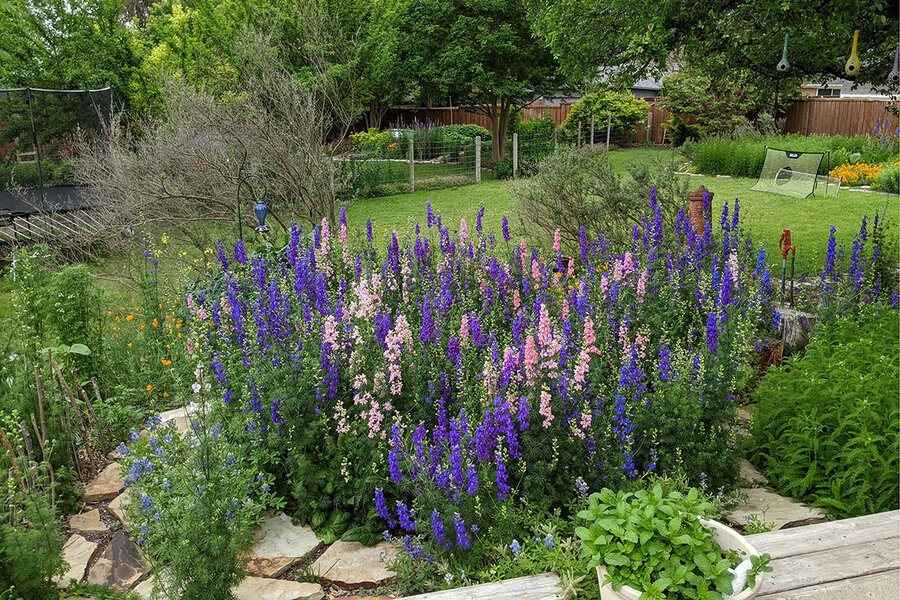
Photo: Kyle Peavey.
Kyle Peavey’s backyard in Richardson, Texas. He collects water in a 1,100 gallon rainwater tank to grow his flowers and vegetables.

One way that people are conserving natural resources these days is by being more thoughtful about the water they use in their homes and gardens.

To some extent this is going back to the old ways. On a recent Zoom panel discussing rural America, Montana Senator Jon Testa recalled how conservative with water his mother had to be when he was growing up. He said she could wash a sinkful of dishes with one cup of water.

Sen. Testa’s mother wouldn’t have been thinking about climate change, but she knew scarcity. Here is a report from Tara Adhikari at the Christian Science Monitor on conserving water today.

“In one Texas suburb, a battle of rainwater harvesting tanks is on. During a neighborhood garden tour in May, Kyle Peavy spotted Richard Townsend’s 260-gallon tank and decided to go even bigger. Just two months later, Mr. Peavy installed his own rainwater harvesting system – four times the size. 

“ ‘I’m both proud and slightly envious,’ says Mr. Townsend of Mr. Peavy’s system.

“The two neighbors use the tanks to water their backyard gardens. And while plants like rainwater better than sink water, the men installed these water systems for another reason besides gardening. Both see rainwater harvesting as a practical way to respond to water scarcity. They’re not alone.  

“Rainwater harvesting dates back more than 4,000 years to early Roman and Mayan civilizations. In its simplest form, it involves collecting water as it falls from the sky into barrels, so the water can be saved for later use. Today, this ancient solution is seeing a resurgence among homeowners, businesses, school districts, and at least one church. 

“Among green solutions to climate change, rainwater harvesting stands out in its potential to address two sides of a water paradox – flooding that destroys critical infrastructure, as well as drought conditions that threaten freshwater supplies. 

“ ‘We know that some areas are going to become drier. We know that storms are going to become bigger. And thinking about any practice that can help us address multiple of these issues is really important,’ says Sarah Sojka, associate professor of physics and environmental studies at Randolph College in Lynchburg, Virginia. 

“As Americans across the United States turn back to one of the oldest methods in the book, there’s a sense of empowerment that comes from knowing one small action can have a ripple effect. One small tank might just inspire something bigger.

“Typically, when rainwater falls on a roof, it is routed through a gutter system out into the yard or driveway and eventually into the road. Along the way, the water picks up pesticides and road contaminants, before flowing into curbside cuts that direct it into a nearby stream or lake. 

As the urban landscape has become more and more built up, the number of impermeable surfaces, such as paved roads, has increased, forcing larger quantities of water – and pollutants – into local waterways. …

“Rainwater harvesting tanks divert that flow path, reducing the amount of water that hits local systems all at once. As stored tank water replaces tap water for outdoor use, the draw on the municipal supply is reduced, and water that soaks in through the ground eventually helps to replenish baseline flow.

“But it’s not just an old-new way to water. It’s also a new way to think about water as more than an unending supply that spews from the tap. In drier climates especially, rainwater harvesting can provide a visual reminder of natural cycles, which can precipitate the ultimate goal: an actual reduction in water use. …

“Although Mr. Townsend doesn’t consider himself a ‘green warrior,’ he wants his children to understand these cycles. The rainwater tank, which shows natural ebbs and flows, helps him share greater water consciousness with his children. …

“Although one rainwater harvesting tank is unlikely to change local water quality and supply, when implemented at scale, the tanks can aid in overall water conservation – and local governments are taking notice. 

“To encourage widespread adoption, cities across the U.S. are subsidizing the costs of tank installation, which can range from a few hundred to several thousand dollars. Tucson, Arizona, started its rainwater harvesting rebate program in 2012, after residents had been living under drought conditions for over a decade. In Arizona, water is sourced from groundwater and the Colorado River, which was put under a drought contingency plan in 2019. …

“ ‘Americans just really like being self-sufficient, and … at its core, this is self-sufficiency,’ says Jaimie Galayda, a rebate participant who now works for Tucson Water. …

“When rainwater is collected, says [Fouad Jaber, a professor and water resources extension specialist at Texas A&M University] it reduces the amount of water used from the municipal supply, which comes from local waterways. And if used for outdoor purposes, the water will soak into the ground, eventually feeding back into local bodies of water. …

“St. Louis has a different problem, but rainwater harvesting is helping just the same. Like many older cities, St. Louis has a combined sewer system, meaning storm pipes connect with wastewater pipes. Normally, all the water is treated before entering the Mississippi River, but large storms overwhelm the system, creating direct overflow into the river. And when large quantities of water enter all at once, the water quickly swells out into the surrounding communities.  

“Large rainwater cisterns like the one at Jubilee Community Church help to divert the water before it overflows. In 2018 the church installed a 150,000-gallon cistern with funding and other support from St. Louis’ municipal sewer district and The Nature Conservancy. Rain flows off the church’s roof to the underground catchment, then irrigates a large garden and orchard, which includes tomatoes, cucumbers, beets, figs, and even juju berries.  

” ‘Building the rainwater tank with the garden on top is a way of reinvesting in the community, says Andy Krumsieg, the church’s pastor. ‘This is a very sustainable project because it will keep water out of the sewer system forever … and it created a tool for urban agriculture.’ “

More at the Monitor, here.

Read Full Post »

Photo: Melanie Stetson Freeman/Staff
According to the Christian Science Monitor, Valmeyer, Illinois, “was overwhelmed by a 100 year flood event in 1993. Townspeople wanted to stay together and decided to move their town 2 miles away and about 400 feet up.”

Floods are creating havoc in Europe right now, and even where I live, there are daily warnings about rising rivers. These and other dramatic weather events are being blamed on climate change. The problems will only increase, so what to do? For one thing, stop putting everything back the way it was before a flood.

I really admire the pragmatism of oft-flooded Vameyer, Illinois, which bit the bullet and moved the whole town.

Doug Struck has the story at the Christian Science Monitor. “It was 1:30 a.m. Dennis Knobloch stood at the top of a hillside cemetery – ‘that cemetery right there,’ he says, pointing over his shoulder. The water was coming. He and others from the town had worked for weeks, sandbagging levees, bulldozing rock and rubble, to try to hold the swelling river. They had failed. His radio crackled: The last levee was gone.

“ ‘It’s your call, mayor,’ the utility chief said. 

“Mr. Knobloch gave the order: Cut the power. He watched as the town below him – his town – flickered to dark, street by street, engulfed by the night and the Mississippi River.

“ ‘It was the hardest thing I did in my life,’ the former mayor says now. 

“Hundreds of small Midwest towns like Valmeyer were caught in the Great Flood of 1993. Unlike most of the others, the survival of Valmeyer – born anew, 2 miles away in a cornfield about 400 feet higher – is getting renewed interest 28 years later. …

“The planners look at the trends and say a pullback from vulnerable areas is inevitable. Call it ‘managed retreat.’ Last year in the United States, 1.7 million people had to flee natural disasters, and many found they could not return to their homes. The trends are expected to accelerate.

“ ‘Valmeyer remains the poster child of managed retreat in the U.S. up to the present,’ says Nicholas Pinter, a professor and associate director of the Center for Watershed Sciences at University of California, Davis.

“There have been dozens of complete or partial relocations of towns in American history, Dr. Pinter writes in the journal Issues in Science and Technology. Many were of Native American or Alaskan Inuit communities that were in vulnerable locations to start.

Other towns have repeatedly fled rivers – Niobrara, Nebraska, hauled its houses by horse and wagon away from flooding in the Missouri River in 1881 and moved again in 1971.

“But many proposed relocations did not succeed. Valmeyer did, with a few asterisks. 

“ ‘They made it happen. It wasn’t a bunch of ivory tower or Washington, D.C., experts,’ says Dr. Pinter.

“When the floods overtopped the levees in August 1993, half of Valmeyer, 30 miles south of St. Louis, was plunged under 14 feet of water. The other half on the sloped terrain left houses holding a foot to 8 feet of water. 

“The town had flooded three times before in the 1940s, cleaned up, and survived. This was different. The floodwaters stayed long enough to become fetid, the houses full of rotting debris and mold. A second crest hit a month later.

“ ‘The smell. I can’t describe the smell. I’ll never forget it,’ says Susie Dillenberger, who lived by one of the levees. She recalls barges bringing rock and rubble up the river to try to reinforce the barrier as the water rose. She worked with other volunteers to fill sandbags. She slept with her family in one room in case they had to flee suddenly. … They labored until a mandatory evacuation was declared and the river rose in their vacated houses.

“As the townsfolk waited they stayed with friends or relatives – and eventually in trailers provided by the Federal Emergency Management Agency, quickly nicknamed “FEMAville.” And they met in the school gyms of nearby towns to begin to think of what to do. As the receding river revealed its damage, the concept of moving the whole town took shape.

” ‘We took the idea to the residents,’ recalls Mr. Knobloch, an investment and insurance broker who four months earlier had been reelected mayor. ‘We said we have no idea how to do this, and no idea if it’s going to work. We’re not even sure yet what’s involved. But if we try it, will you be willing to be a part of it?’ 

“Nearly 70% of the people said yes. Many had grown up in Valmeyer, and had families there for two or three generations. ‘They didn’t want to see the town go away,’ he says.

“Soon they focused on a 500-acre cornfield on a bluff 2 miles away. Residents split into a bevy of committees to work with planners, engineers, and architects. Within two months, Mr. Knobloch went to Washington with printed plans drawn up by the townsfolk, and asked for money. The politicians were impressed.

“Eventually, state and federal governments pledged about 80% of the $33 million cost. The town bought the land on the bluff, pulled numbers from a hat to lottery off lots, and began construction. Mr. Knobloch quit his job – his wife, a microbiologist, supported the family – and worked full time through all the permits, planning, and problems of creating a town from nothing.

“They dealt with 22 agencies, unexpected limestone sinkholes, protected bat species, and a hurried archaeological excavation when Native American artifacts were found. …

“Looking back on it now, with what we were able to achieve, to keep the community together and keep the people together – definitely, it was well worth the time and effort.’ “

Read about both upsides and downsides — and about the people who chose to stay put — at the Monitor, here.

Read Full Post »

Older Posts »