Feeds:
Posts
Comments

Posts Tagged ‘global warming’

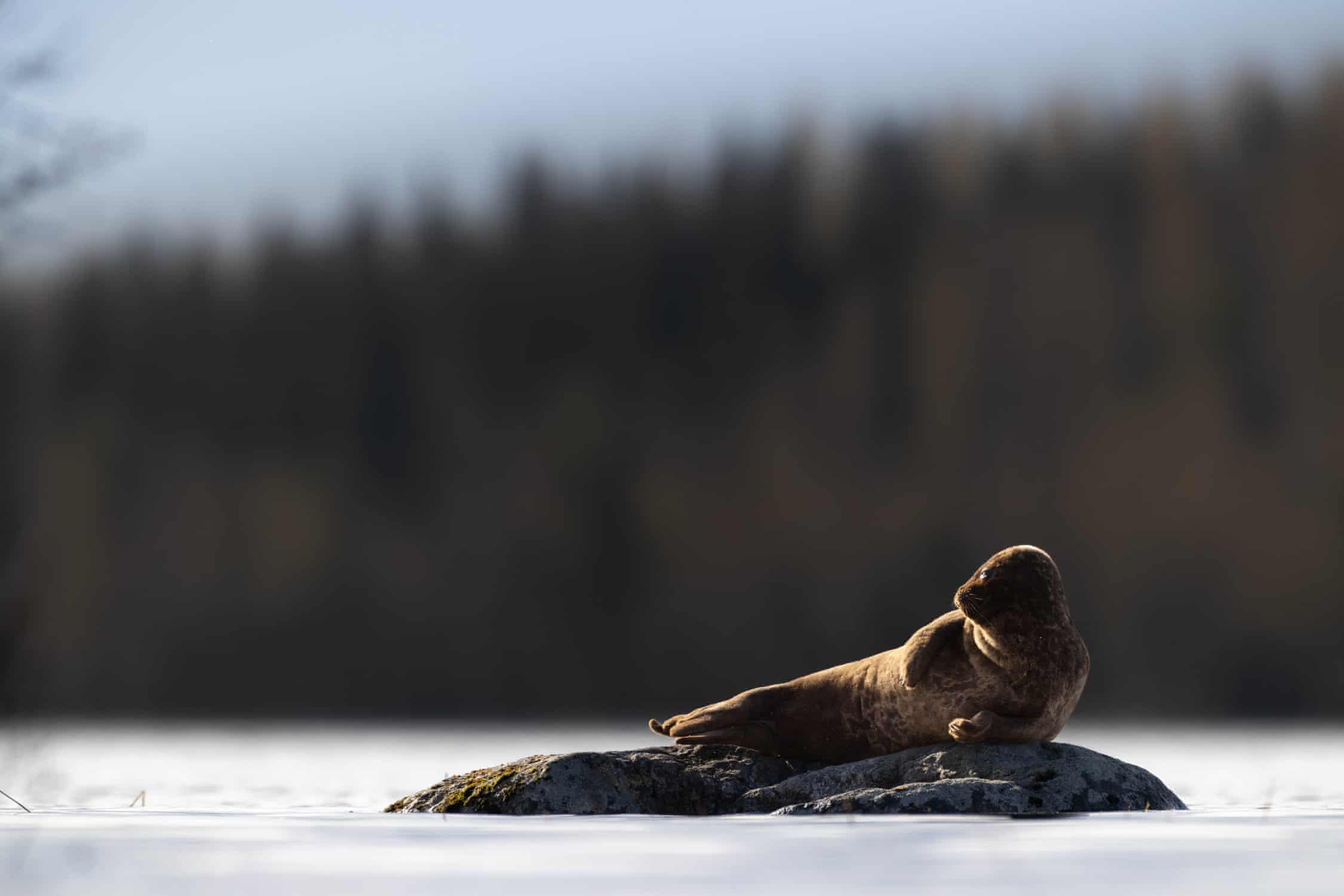
Photo: Samuel Bloch.
Saimaa ringed seals are very sensitive to disturbance, and it is forbidden to deliberately approach them without a permit.

I once wrote here about one of John’s a Ukrainian employees who told me that in Soviet days it was dangerous to read certain books. People read The Master and Margarita, for example, under the library table with a flashlight if no one was around.

I don’t think we are there yet, but I do have a sense that a whole segment of our society will be living an alternate life and trying not to draw attention. That might include people who care about wildlife and global warming, like the Finns in today’s story.

Phoebe Weston writes at the Guardian, “Eight hours shoveling snow in -20C [-4 F] might not sound like the ideal day out, but a committed team of volunteers in Finland are working dawn to dusk building enormous snow drifts for one of the world’s most endangered seals.

“The Saimaa ringed seal was once common around Lake Saimaa in the south-east of the country, but only 495 of them remain.

“The seals make ‘snow caves’ inside snow drifts where they raise their young and protect them from the elements and predators such as red foxes – but as the climate warms, the snow is disappearing. To save these rare seals, 300 volunteers spend days shoveling snow into piles [23 feet long] around the edge of the frozen lake. Last winter they made 200, and the seal population is growing as a result. …

Volunteers meet at first light and work until dusk. [Vincent Biard, a PhD student and volunteer from the University of Eastern Finland] describes the day as ‘kind of fun,’ and adds, ‘you actually have an impact, which is nice. If we don’t do it, then they would just go extinct quite quickly.’ …

“Saimaa seals are less than 1.5 metres long and each one has a unique fur pattern – individual to each animal, like human fingerprints. In the late 1980s their population dwindled to its lowest point, with fewer than 200 left, driven by hunting and deaths caused by fish traps. Accidental deaths in fishing nets remain a challenge.

“Now, the seals are fully protected but the threat of the climate emergency looms large. Between 1925 and 2002, the maximum thickness of the ice decreased by 1.5cm [~i/2 inch] a decade. In mild winters the ice caves can collapse, leaving the pups exposed, with up to 30% of them dying.

“Human-made snow drifts are larger and ‘more durable than natural snow drifts,’ says [Jari Ilmonen, coordinator of Our Saimaa Seal Life, which is an EU-funded program]. …

In the future, ice cover is expected to disappear before the pupping season has ended.

“There have already been some winters where there has not been enough snow to create an artificial drift. In some cases the seals have been known to breed elsewhere, but with no snow ‘just a few would hang on,’ says Ilmonen.

“However, scientists from the University of Eastern Finland are working on plan B. They are creating artificial dens, or nest boxes, that mimic the real thing, with preliminary research showing the seals use them for resting, giving birth and nursing their young. The nest boxes could be used in ice-free winters, researchers say. …

“There are about 40 dens on the lake, where three pups have already been born, but Ilmonen wants to get more out there. ‘If you think that there are maybe 500 seals and maybe 100 pups born each year, you’d need a lot of the boxes,’ he says.

Find more of the Guardian’s age of extinction coverage here, and follow the biodiversity reporters Phoebe Weston and Patrick Greenfield in the Guardian app for more nature coverage.

More at the Guardian, here. No firewall, but voluntary subscriptions support responsible news.

Read Full Post »

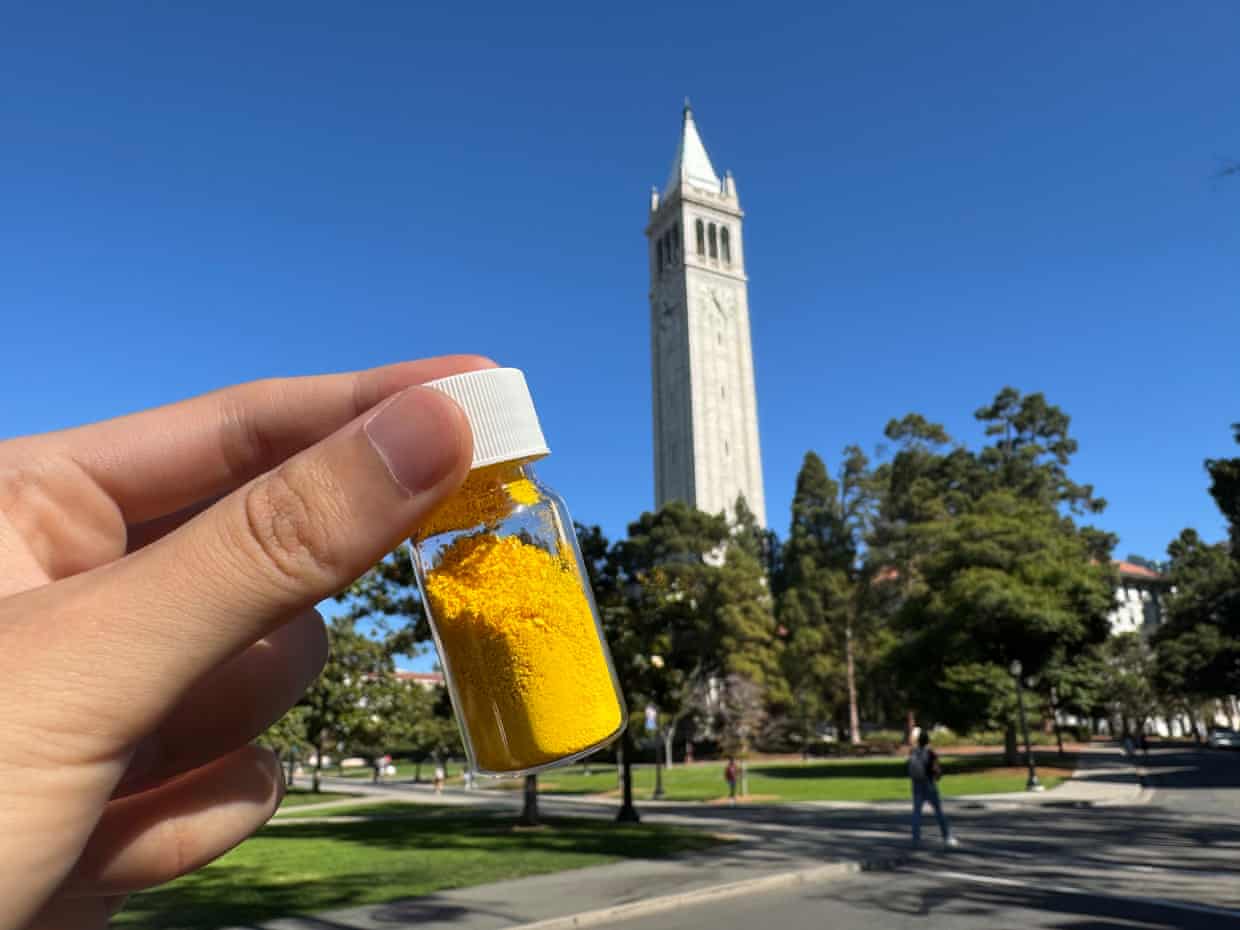
Photo: Zihui Zhou/University of California, Berkeley.
A carbon-capturing powder, pictured on Berkeley’s campus. 

Somehow or other scientific research about global warming will continue. Today’s example comes from Berkeley in California.

At the Guardian, Katharine Gammon reports, “An innocuous yellow powder, created in a lab, could be a new way to combat the climate crisis by absorbing carbon from the air.

“Just half a pound of the stuff may remove as much carbon dioxide as a tree can, according to early tests. Once the carbon is absorbed by the powder, it can be released into safe storage or be used in industrial processes, like carbonizing drinks.

“ ‘This really addresses a major problem in the tech field, and it gives an opportunity now for us to scale it up and start using it,’ says Omar Yaghi, a chemist at the University of California, Berkeley. It’s not the first material to absorb carbon, but ‘it’s a quantum leap ahead [of other compounds] in terms of the durability of the material.’

“The powder is known as a covalent organic framework, with strong chemical bonds that pull gases out of the air. The material is both durable and porous, and can be used hundreds of times, making it superior to other materials used for carbon capture.

“Yaghi has been working on similar materials for decades. It’s part of a broader push to collect tiny amounts of carbon from the air – either from power plants or from air around cities. Yaghi’s research with Zihui Zhou, a graduate student in his lab, and others was published in the journal Nature. …

“Yaghi’s team tested the new powder and found that it could successfully absorb and release carbon more than 100 times. It fills up with carbon in about two hours, and then must be heated to release the gas before starting the process over again. It only requires a temperature of about 120F to release the carbon; that makes it an improvement over other methods, which require a much higher temperature.

“That feature means places that already produce extra heat – such as factories or power plants – could use it to release the gas and start the cycle again. The material could be incorporated into existing carbon capture systems or future technology.

“Yaghi … plans to scale the use of this type of carbon capture with his Irvine, California-based company, Atoco, and believes the powder can be manufactured in multi-ton quantities in less than a year.

“Shengqian Ma, a chemist at the University of North Texas who was not involved in the new work, says this technology could be gamechanging. ‘One longstanding challenge for direct air capture lies in the high regeneration temperatures,’ he says, adding that the new material can substantially reduce the energy needed to use direct air capture. …

“Says Farzan Kazemifar, a associate professor in the department of mechanical engineering at San Jose State University who was not involved in the new study, ‘In the short term, replacing large emitters of carbon dioxide – like coal power plants – with renewable electricity offers the fastest reduction in emissions. However, in the long term, in case the emissions don’t go down at the desired pace, or if global warming effects intensify, we may need to rely on technologies that can remove carbon dioxide from the atmosphere, and direct air capture is one of those technologies.’

“Still, removing carbon from the air remains difficult, and as with all early-stage lab-scale studies, the challenge is scaling up the system for pilot studies. … Any technology to capture the gas from the air requires moving huge volumes of air – and that requires large electricity consumption for running fans, says Kazemifar. …

“Some scientists worry that the expectations of direct air capture systems has been overly rosy. A group of scientists from MIT recently wrote a paper analyzing the assumptions of many climate stabilization plans, and pointing to ways that direct air capture may be overly optimistic.

“Ma also points out that a major challenge to using this approach to combat climate change lies in the high cost of materials for creating substances that capture carbon.

“Still, Yaghi says this material can change the way we address carbon removal. ‘This is something we’ve been working on for 15 years, that basically addresses some of the lingering problems,’ he says.”

More at the Guardian, here.

Read Full Post »

Photo: ItalianNotes.
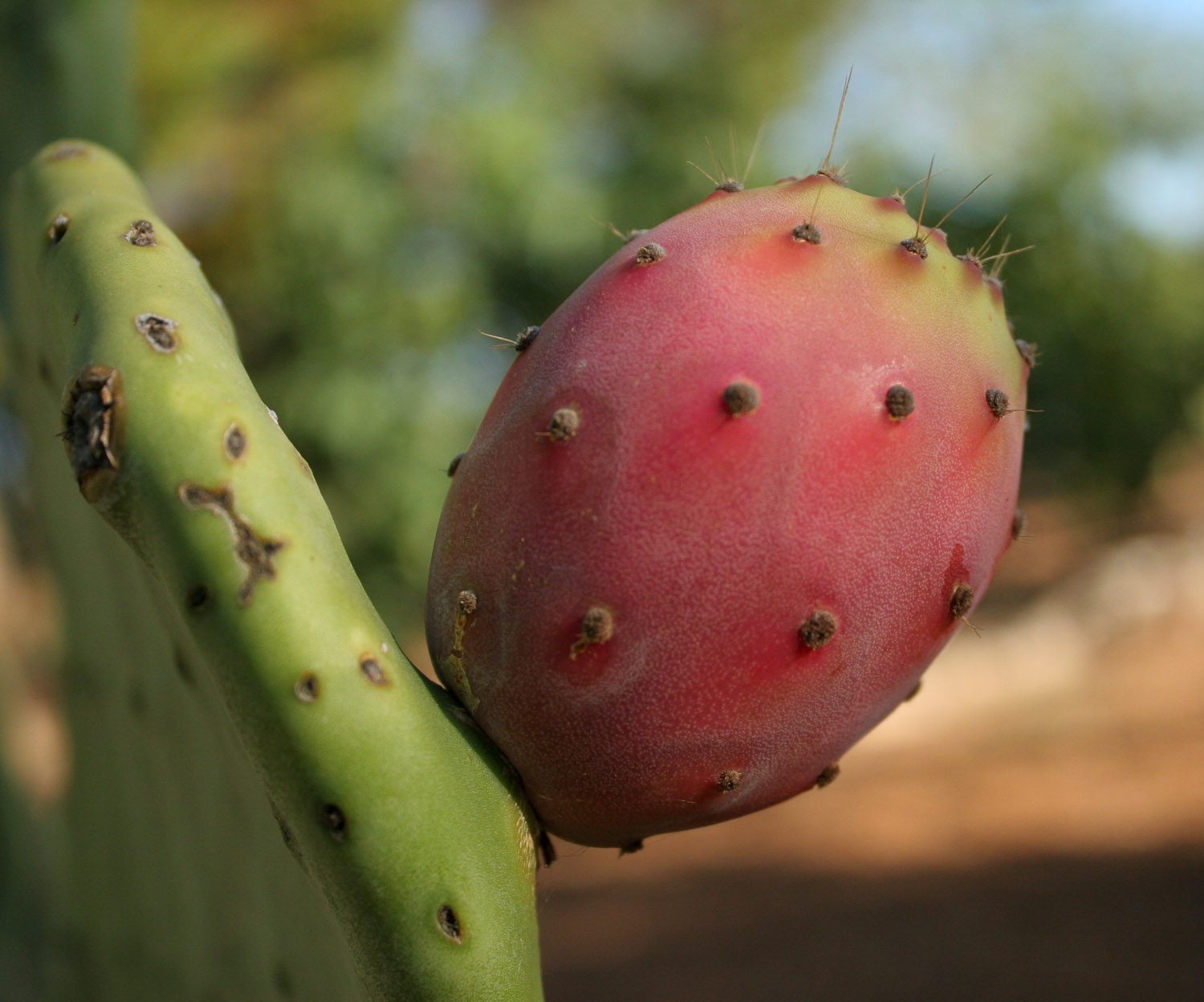
Prickly pear, or cactus pear. When Italy suffers from drought, some people turn to an edible cactus.

A while ago I posted photos I’d taken in New England and was surprised to see a cactus this far north. Hannah called it “prickly pear” and told me it was known for its versatility. It’s apparently the same cactus that Italy is looking to as a reliable food source.

Stefano Bernabei and Gavin Jones write at Reuters, “Global warming, drought and plant disease pose a growing threat to agriculture in Italy’s arid south, but a startup founded by a former telecoms manager believes it has found a solution: Opuntia Ficus, better known as the cactus pear.

“Andrea Ortenzi saw the plant’s potential 20 years ago when working for Telecom Italia in Brazil, where it is widely used as animal feed. On returning to Italy he began looking at ways to turn his intuition into a business opportunity.

“He and four friends founded their company, called Wakonda, in 2021, and began buying land to plant the crop in the southern Puglia region where the traditionally dominant olive trees had been ravaged by an insect-borne disease called Xylella.

“The damage from the plant disease has been compounded by recurring droughts and extreme weather in the last few years all over Italy’s southern mainland and islands, hitting crops from grapes to citrus fruits.

“Ortenzi is convinced the hardy and versatile cactus pear, otherwise called the prickly pear or, in Italy, the Indian fig, can be a highly profitable solution yielding a raft of products such as soft drinks, flour, animal feed and biofuel. …

” ‘As an industry, cactus pear production is growing rather quickly, especially for fodder use and as a source of biofuel,’ said Makiko Taguchi, agricultural officer at the United Nations’ Food and Agriculture Organization headquartered in Rome.

“The cactus produces a tasty fruit eaten in much of Latin America and the Mediterranean, while in Mexico the flat green pads that form the arms of the cactus, are used in cooking. In Tunisia, where it covers around 12% of cultivated land, second only to olive trees, the cactus pear is a major source of income for thousands, particularly women who harvest and sell the fruit.

“In Brazil, which has the world’s largest production, it is mainly cultivated in the north-east for fodder, while Peru and Chile use it to extract a red dye known as Cochineal, used in food and cosmetic production.

Sportswear group Adidas and carmaker Toyota have recently shown interest in using the cactus to produce plant-based leather sourced mainly from Mexico.

“The cactus pear is not yet included in the FAO’s agricultural output statistics, but Taguchi cited the rapid expansion of CactusNet, a contact network of cactus researchers and businesses worldwide which she coordinates. …

“The plant, native to desert areas of south and north America, thrives in the increasingly arid conditions of Italy’s south, and needs ten times less water than maize, a comparable crop whose byproducts also include animal feed and methane. …

“Of the roughly 100,000 hectares of olive trees destroyed by Xylella in southern Puglia, only 30,000 will be replanted in the same way, [Ortenzi] told Reuters in an interview. ‘Potentially 70,000 could be planted with prickly pears,’ he said. …

“Wakonda’s business model discards the fruit and focuses instead on the prickly pads, which are pressed to yield a juice used for a highly nutritious, low-calorie energy drink. The dried out pads are then processed to produce a light flour for the food industry or a high-protein animal feed.

“Wakonda’s circular, ecological production system also includes ‘biodigester’ tanks in which the waste from the output cycle is transformed into methane gas used as a bio-fuel either on site or sold. …

“Under Ortenzi’s business plan, rather than buying up land to plant the cactus, Wakonda aims to persuade farmers of its potential and then license out to them, in return for royalties, all the equipment and know-how required to exploit it.

” ‘The land remains yours, you convert it to prickly pears and I guarantee to buy all your output for at least 15 years,’ Ortenzi said.”

Hmmm. I have two issues. Throwing out the fruit seems super wasteful. And methane may be a biofuel, but it’s no better for the environment than fossil fuel. What do you think?

More at Reuters, here. No firewall.

Read Full Post »

Photo: Ning Zeng.
An ancient log excavated and likely buried naturally, cleaned and dried, with the lower end sawed off for lab analysis.

And while we’re on the subject of reducing carbon in the atmosphere, consider an ancient process that works without our help. You may find it a little weird, however, especially as intentionally pursuing this natural approach merely postpones carbon escape for a few thousand years!

Dino Grandoni writes at the Washington Post, “On the outside, its rust-red bark had peeled. Its sweet, distinct cedar smell had disappeared. But at its core, it’s still as hard as a tabletop — and may just contain a way of slowing down rapidly rising temperatures.

“A 3,775-year-old log unintentionally discovered under a farm in Canada may point to a deceptively simple method of locking climate-warming carbon out of the atmosphere for thousands of years, according to a study published [in September].

“ ‘This accidental discovery really gave a critical data point,’ said Ning Zeng, a University of Maryland climate scientist whose team unearthed the ancient chunk of wood. ‘It’s a single data point,’ he added, but it ‘provides the data point we need to really say under what conditions we can preserve wood for a thousand years or longer.’

“Figuring out ways of sequestering carbon may be crucial to meeting the world’s goal of halting warming beyond 2 degrees Celsius above pre-industrial levels. … Doing something as simple as burying wood underground in the right spot, these researchers say, may be a cheap and scalable way of doing just that.

“Forests are Earth’s lungs, sucking up six times the amount of carbon dioxide (CO2) that people pump into the atmosphere every year by burning coal and other fossil fuels. But much of that carbon quickly makes its way back into the air once insects, fungi and bacteria chew through leaves and other plant material. …

“What if that decay could be delayed? Under the right conditions, tons of wood could be buried underground in wood vaults, locking in a portion of human-generated CO2 for potentially thousands of years. While other carbon-capture technologies rely on expensive and energy-intensive machines to extract CO2, the tools for putting wood underground are simple: a tractor and a backhoe.

“Finding the right conditions to impede decomposition over millennia is the tough part. To test the idea, Zeng worked with colleagues in Quebec to entomb wood under clay soil on a crop field about 30 miles east of Montreal.

“ ‘We were trying to do a small pilot project at first,’ said Ghislain Poisson, an agronomist with Quebec’s Agricultural Ministry who worked with Zeng. … But when the scientists went digging in 2013, they uncovered something unexpected: A piece of wood already buried about 6½ feet underground. The craggy, waterlogged piece of eastern red cedar appeared remarkably well preserved. …

“Radiocarbon dating revealed the log to be 3,775 years old, give or take a few decades. Comparing the old chunk of wood to a freshly cut piece of cedar showed the ancient log lost less than 5 percent of its carbon over the millennia.

“The log was surrounded by stagnant, oxygen-deprived groundwater and covered by an impermeable layer of clay, preventing fungi and insects from consuming the wood. Lignin, a tough material that gives trees their strength, protected the wood’s carbohydrates from subterranean bacteria. The team wrote up their results in a paper in the journal Science. …

“Said Daniel L. Sanchez, an assistant professor at the University of California at Berkeley who was not involved in the study, ‘Scientists and entrepreneurs have long contemplated burying wood as a climate solution.’

“The next step is to find prehistoric logs in other locations, to see how well other types of soil preserve wood. … The researchers estimate buried wood can sequester up 10 billion tons of CO2 per year, which is more than a quarter of annual global emissions from energy, according to the International Energy Agency.

“One of the biggest challenges isn’t so much the supply of wood but rather the cost of transporting it to the right spots, Poisson said. ‘There’s probably a lot of unmerchantable wood right now that doesn’t have any market or doesn’t have any purpose.’ “

Hmmm. What do you think? Transporting wood to a burial site wouldn’t just be costly, it would cause more emissions. Not sure the scientists have thought this through. More at the Post, here.

Read Full Post »

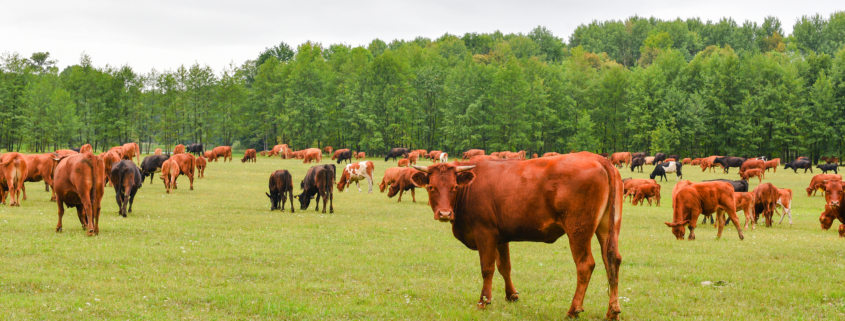
Livestock produces a lot of methane, which is unlikely ever to be balanced out by carbon captured in the soil. The Soil Association Exchange wants you to know about a few positive effects, however. 

It’s an ongoing process to keep up on the latest, especially when it comes to protecting the planet. I myself once thought that massive tree planting had the biggest bang for the charitable buck. Then I learned that, although trees are important, they can’t help much without due consideration given to where and how they are planted, and what varieties of trees they are.

Today I’m trying to bone up on the situation with cows, which we all know (including a young grandson who has cut beef out of his diet) produce too much climate-warming methane gas.

James Tapper reports at the Guardian, “New data shows [cows] may play an important role in renewing farm soil. Research by the Soil Association Exchange shows that farms with a mixture of arable crops and livestock have about a third more carbon stored within their soil than those with only arable crops, thanks to the animals’ manure.

“This also has an effect on biodiversity: mixed arable and livestock farms support about 28 grassland plant species in every field, compared with 25 for arable-only and 22 for dairy-only.

“Joseph Gridley, chief executive of SAE, which was set up by the Soil Association in 2021 to support and measure sustainable farming, said it was unlikely that carbon captured in soil would balance out the enormous amounts of methane created by cattle. Farm livestock around the world creates about 14% of human-induced climate emissions.

“ ‘It’s pretty unequivocal in the data that having livestock on your farm does mean you have more emissions – five or six times more emissions,’ he said. ‘But if you integrate livestock into the system, on every metric on soil health, there’s an improvement, and on a lot of the biodiversity measures as well.’

“Soils are degrading, but by how much exactly is unclear. In 2015, the UN Food and Agriculture Organization claimed that the world had only 60 harvests left, but researchers at Oxford University and Our World In Data said in 2021 that there was a complex picture. …

“Lee Reeves, UK head of agriculture at Lloyds bank, which helps fund SAE … suggested ministers should create a decarbonization strategy, and a standardized carbon calculator, so that farmers and other businesses could use a single tool to calculate their carbon impacts.

“ ‘Moving from traditional to regenerative farming can see a dip in profitability for the first five years, so the government needs to support farmers and banks in that,’ he said.

“[In the UK] the Department for the Environment, Food and Rural Affairs has been investigating so-called methane blockers as a way to reduce emissions. Adding substances such as essential oils, probiotics and even seaweed to cattle feed can reduce the amount of burps and wind they generate.

“Last month the Green Alliance charity said that feeding Bovaer, a methane blocker, to a third of the UK’s dairy cows would cut the country’s emissions by about 1%. Yet this is not happening, the campaign group warned, because farmers were unwilling to pay extra for something they did not benefit from. It said methane blockers should be subsidized, as other green farming schemes were.”

More at the Guardian, here. The Natural Resources Defense Council explains more about regenerative farming here.

Read Full Post »

Photo: Elke Scholiers/Getty Images.
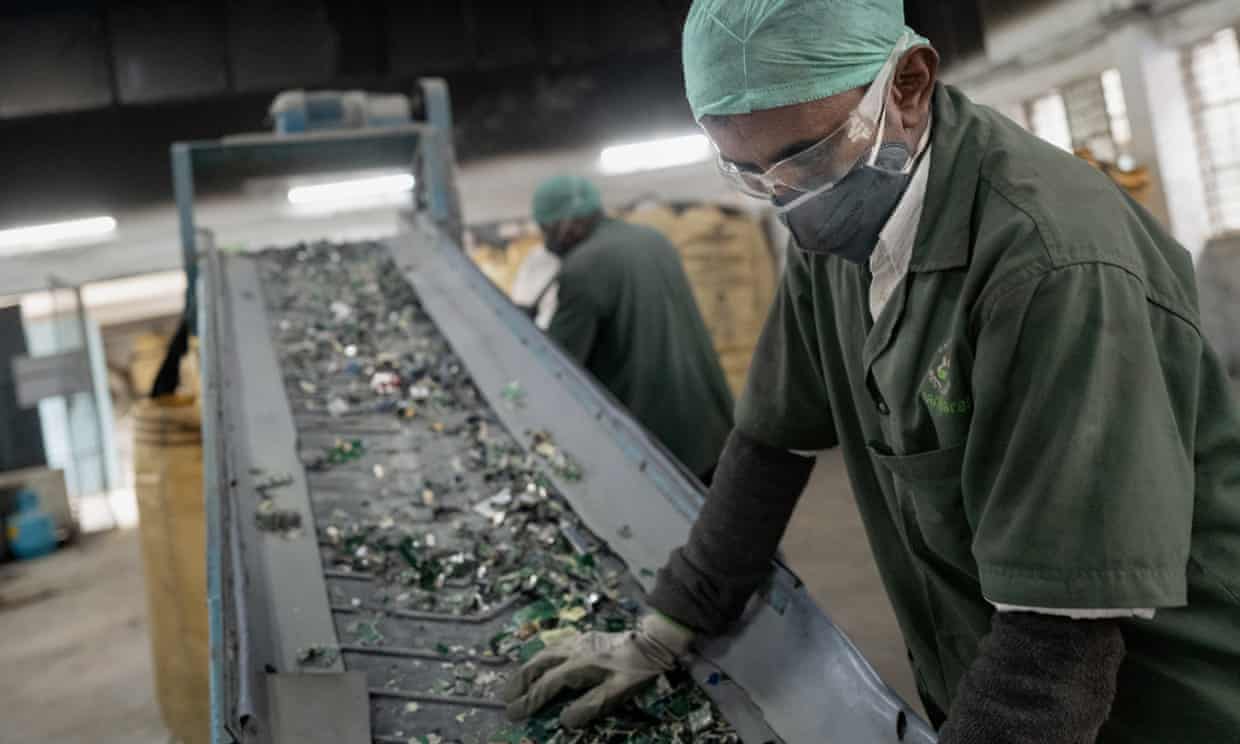
Workers sorting electronic waste at a factory in India. A team at University of Edinburgh is using microbes to recycle lithium, cobalt, and other expensive minerals — a greener way to go.

As we know, the downside of going all-electric to reduce the global-warming effects of fossil fuels is the mining of rare minerals for electricity, for batteries. But that mining can be destructive to communities wherever it’s done. Not to mention there’s a finite supply of such minerals on the planet.

Fortunately, human ingenuity even in the darkest times keeps functioning and looking for better ways to do things.

Robin McKie at the Guardian reports on what is potentially a greener way to acquire the rare minerals needed in the batteries we have today.

“Scientists have formed an unusual new alliance in their fight against climate change,” writes McKie. “They are using bacteria to help them extract rare metals vital in the development of green technology. …

“The work is being spearheaded by scientists at the University of Edinburgh and aims to use bacteria that can extract lithium, cobalt, manganese and other minerals from old batteries and discarded electronic equipment. These scarce and expensive metals are vital for making electric cars and other devices upon which green technology devices depend, a point stressed by Professor Louise Horsfall, chair of sustainable biotechnology at Edinburgh. …

“Said Horsfall, ‘All those photovoltaics, drones, 3D printing machines, hydrogen fuel cells, wind turbines and motors for electric cars require metals – many of them rare – that are key to their operations.’

“Politics is also an issue, scientists warn. China controls not only the main supplies of rare earth elements, but dominates the processing of them as well. ‘To get around these problems we need to develop a circular economy where we reuse these minerals wherever possible, otherwise we will run out of materials very quickly,’ said Horsfall. ‘There is only a finite amount of these metals on Earth and we can no longer afford to throw them away as waste as we do now.’ …

“And the key to this recycling was the microbe, said Horsfall. ‘Bacteria are wonderful, little crazy things that can carry out some weird and wonderful processes. Some bacteria can synthesize nanoparticles of metals, for example. We believe they do this as a detoxification process. Basically they latch on metal atoms and then they spit them out as nanoparticles so that they are not poisoned by them.’

“Using such strains of bacteria, Horsfall and her team have now taken waste from electronic batteries and cars, dissolved it and then used bacteria to latch on to specific metals in the waste and deposit these as solid chemicals. ‘First we did it with manganese. Later we did it with nickel and lithium. And then we used a different strain of bacteria and we were able to extract cobalt and nickel.’

“Crucially the strains of bacteria used to extract these metals were naturally occurring ones. In future, Horsfall and her team plan to use gene-edited versions to boost their output of metals. ‘For example, we need to be able to extract cobalt and nickel separately, which we cannot do at present.’

“The next part of the process will be to demonstrate that these metals, once removed from old electronic waste, can then be used as the constituents of new batteries or devices. ‘Then we will know if we are helping to develop a circular economy for dealing with green technologies.’ “

More at the Guardian, here. Remember the detestable partygoer in the Graduate who insisted “there’s a great future in plastics”? We now know what that kind of thinking led to. Sounds to me like the future might actually be in chemistry.

Read Full Post »

 Photo: WikiPedant/ Wikimedia.
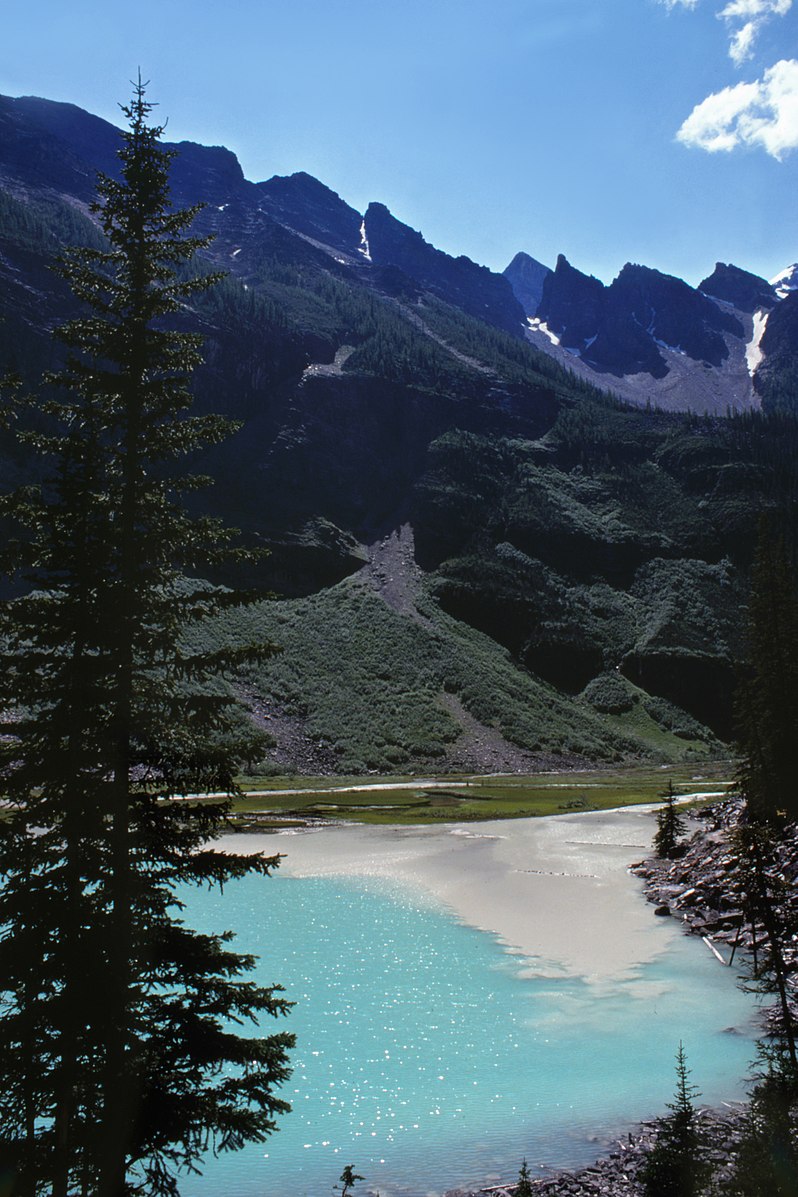
An example of “glacial rock flour” pours into Lake Louise, Alberta, Canada. 

Here’s a new-to-me theory: a discharge from our melting glaciers may be able to soak up some of the unwanted carbon in the atmosphere.

Dino Grandoni writes at the Washington Post, “Minik Rosing grew up around the fine mud flowing from Greenland’s glaciers. It wasn’t until much later, when his own daughter had grown up and was in her mid-20s, that he realized how special it is.

“During a family vacation in rural Greenland, where there was no electricity, she was fishing ice out of a milky-blue fjord for a gin and tonic when that mud gripped her feet so tightly that she had to abandon one of her boots.

“As temperatures rise, meltwater is flushing out millions of tons of this stuff: ultrafine powder ground down by the island’s melting glaciers. Geologists have a culinary-sounding name for the microscopic particles: ‘rock flour.’

“The loss of his daughter’s boot got Rosing thinking. Maybe those tiny grains of rock could be used to trap something much bigger: the carbon emissions that are altering the frozen landscape and way of life on the island.

“ ‘Greenland has been seen as the example and the horror story of climate change, and never been portrayed as a part of the solution,’ said Rosing, a geology professor at the University of Copenhagen in Denmark who was born in Greenland.

“As global emissions continue to rocket, he is part of a growing group of scientists looking for ways to suck carbon right out of the sky, an example of a sometime contentious suite of technologies called geoengineering. …

“Give it enough time and most of the carbon dioxide that humanity is pumping into the air will be taken back by the planet. CO2 dissolves in rainwater and reacts with rocks to form carbon-containing compounds that lock the gas out of the atmosphere. That naturally occurring process, called ‘chemical weathering,’ literally petrifies the air.

“The problem — at least for us humans — is that chemical weathering takes millennia to work its carbon-absorbing magic. Humanity doesn’t have that kind of time: The U.N. Intergovernmental Panel on Climate Change says society needs to drastically reduce CO2 emissions by the end of the decade. The situation has gotten so bad that the panel of scientists says we need to develop ways of pulling carbon from the air to avert catastrophe.

“So what if we could speed things up? What if, Minik Rosing and other scientists wonder, we exposed more carbon-absorbing rocks to the carbon-laden air? They call that technique ‘enhanced weathering.’

“Most enhanced-weathering proposals involve pulverizing tons of basalt or other rocks and spreading them across the land. But all that crushing would consume an enormous amount of energy that might result in more greenhouse-gas emissions. That’s where rock flour comes in.

“Glaciers flow over the bedrock like a slow-moving river. Over centuries, the tremendous weight of the ice grinds the rock underneath into a fine powder only a few ten-thousandths of a centimeter, or microns, in diameter — finer than most sand found on a beach. …

“The fineness of the grains is the flour’s advantage. It gives the substance an enormous surface area to expose to the air, making it an attractive candidate for enhanced weathering. …

“To test how well rock flour stashes carbon, Rosing and [Christiana Dietzen, a soil scientist working with Rosing] hauled about 200 tons of the stuff from Greenland for experiments.

“The material packed a one-two punch, according to a pair of papers the researchers published last year: Not only did it suck up carbon when spread over farm fields in southern Denmark, but it also enriched the soil with nutrients and increased the yield of corn and potatoes in the first year of application.

“The researchers estimate that, given enough time, spreading rock flour on all agricultural land in Denmark would suck up a quantity of carbon approximately equal to the annual emissions of that country (or of Hong Kong or Syria). Preliminary results show longer-lasting crop yields in nutrient-poor soil in Ghana.”

More at the Post, here.

Read Full Post »

Photo: Melanie Stetson Freeman
The
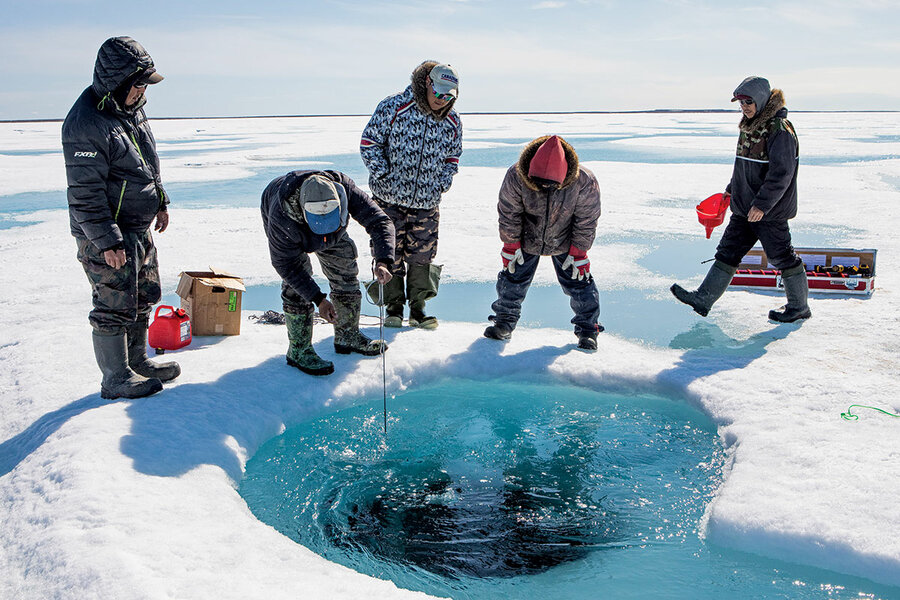
Christian Science Monitor highlights indigenous “Guardians” who made a “hole in Arctic Ocean ice – a window on climate-related changes – where they monitor water quality and measure ice thickness.

Cold parts of the world are threatened. The cold-loving people who live there are deeply concerned and are monitoring the losses for climate scientists.

Sara Miller Llana writes for the Christian Science Monitor, “Masked against the Arctic glare in orange-tinted sunglasses, Tad Tulurialik is a modern conservation ‘Guardian’ of his fast-melting homeland.

“At the start of an early summer workday that never sees the sun set, he kicks his all-terrain vehicle into gear. Safe in his ancestors’ knowledge of sea currents and ice fissures, he navigates a course right off the edge of the Canadian shore onto the aqua iridescence of the frozen Arctic Ocean. He’s following older Guardians to a manmade hole in the ice shelf, a window toward understanding climate-related changes in the sea.

“Even out on the ocean surface, his rifle is always swung over his shoulder. Wherever he sees a caribou or musk ox, it’s an existential given that he’ll take it. Food security isn’t found in a grocery aisle in this northernmost Canadian mainland settlement, tellingly named with the Inuktitut word for a caribou hunting blind.

“In some ways, as a government-paid conservation Guardian in training, the 24-year-old Mr. Tulurialik is doing what he’s done his whole life. Like most Inuit boys, he was ‘on the land’ as soon as he could walk. His childhood was spent on tundra and on sea and lake ice to hunt and fish with his grandparents, who raised him. His life was marked not by school grades but by first fox trapped, first polar bear shot. These were such priorities that he dropped out of high school.

“That could have made him part of Canada’s persistent social inequality – Indigenous youth in some of the remotest parts of the country, undereducated, underqualified, and often losing touch with rich traditions and fleeing homelands for economic opportunity. Except today, he’s part of a solution, as a member of Canada’s Indigenous Guardians, a conservation corps working in 170 far-flung Indigenous communities.

“Guided and taught by elders, he and other young Inuit born since 1989, when warming of the Arctic turned precipitous, are part of an effort to safeguard their homelands and their cultural ‘right to be cold.’ They’re also helping Canada achieve international conservation commitments made last year, when it led a global pledge at the United Nations Biodiversity Conference in Montreal to protect 30% of its land and oceans by 2030.

“For Mr. Tulurialik, who worked in construction and sewer maintenance after leaving school, a paid job as a conservationist is a dream: ‘I never thought I would work and get paid for what I grew up doing.’ 

“Together, he and his Guardian colleagues are tasked with creating a sustainable future, transforming Western-style conservation work into something that more closely resembles a traditional Indigenous environmental ethos. Guardians blend science with Indigenous knowledge in a budding conservation economy dependent on the transfer of knowledge from elders to youth. 

“The ultimate aim of the Guardians’ work in Taloyoak is to use their sustainable Inuit practices – learned orally over millennia – to support the creation and maintenance of an Indigenous Protected and Conserved Area. The size of Maine, it is one of more than 90 in development across Indigenous Canada. Here in northern Nunavut territory, the IPCA conservation plan is led by the local hunter and trapper association.

It’s nurturing an economy of land-based jobs and markets as an alternative to a future in extractive industries in a territory long eyed by mining and oil interests.

“The land will be protected from development, conserving both biodiversity and a way of life based on sustainable hunting and fishing – while sequestering huge amounts of carbon, the culprit in global warming.

“ ‘This is a win-win situation’ … says Paul Okalik, the first premier of Nunavut who now works with Canada’s World Wildlife Fund (WWF), which is supporting Taloyoak’s efforts. …

“Indigenous lands, from the Brazilian Amazon to Hawaii coastlines to Canada’s high-latitude forests, represent 20% of the globe but hold 80% of the world’s biodiversity. Inhabitants have stewarded the land for centuries. Yet in a warming climate, their homelands are in some of the most at-risk environments. 

“The Arctic is this nation’s – and arguably the world’s – crisis point. Here, warming is happening at up to four times the rate of the rest of the world, leading to melting permafrost, retreating glaciers, and receding sea ice. This has broad implications for the global ecosystem. Arctic ice melt slows ocean currents and makes the oceans more acidic – changes that have global implications for both climate patterns and sea habitats. Increased melting also creates what scientists call a ‘positive feedback loop’: As dark water replaces white snow on ice, the surfaces of the ocean and Earth absorb more sunlight rather than reflecting it. This causes even more warming. …

“Taloyoak locals have already worried about warming changing their ways. Last summer was the Northern Hemisphere’s hottest on record. The year prior, Taloyoak recorded its all-time hottest temperature of 78.8 F. Locals stayed home rather than go outside in, for them, the unbearable temperature.”

Imagine the high 70s being unbearable! The rest of North America will be learning about “unbearable” soon — if it hasn’t already.

The Monitor‘s long and intriguing feature on the work in the far north is here. No firewall.

Read Full Post »

041217-shadows-stripe-forest-floor

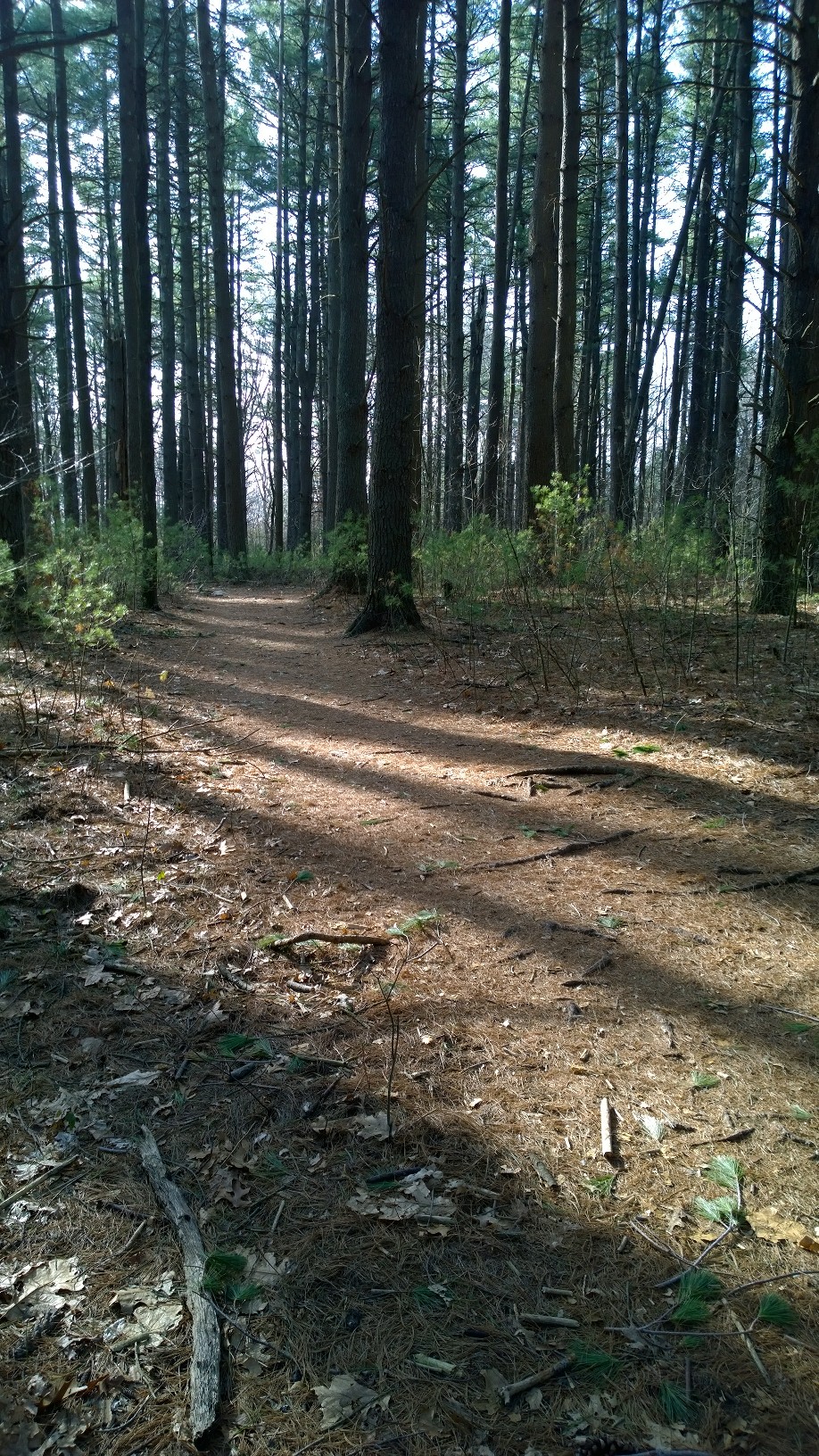
Photo: Suzanne and John’s Mom.
Some living things benefit the planet more the older they get.

Those of us who were enthusiastic about planting zillions of trees to store carbon have been learning that the trees need to be part of a healthy ecosystem to do the most good. A collaboration among hundreds of forest ecologists offers keys to what works.

Patrick Greenfield writes at the Guardian, “Forest conservation and restoration could make a major contribution to tackling the climate crisis as long as greenhouse gas emissions are slashed, according to a study.

“By allowing existing trees to grow old in healthy ecosystems and restoring degraded areas, scientists say 226 gigatonnes of carbon could be sequestered, equivalent to nearly 50 years of US emissions for 2022.

But they caution that mass monoculture tree-planting and offsetting will not help forests realize their potential. …

“The research, published [in November] in the journal Nature as part of a collaboration between hundreds of leading forest ecologists, estimates that outside of urban agricultural areas in regions with low human footprints where forests naturally exist, they could draw down large amounts of carbon.

“About 61% of the potential could be realized by protecting standing forests, allowing them to mature into old growth ecosystems like Białowieża forest in Poland [check out the new Polish administration’s environmentalism] and Belarus or California’s sequoia groves, which survived for thousands of years. The remaining 39% could be achieved by restoring fragmented forests and areas that have already been cleared.

“Amid greenwashing concerns around nature’s role in climate crisis mitigation, the researchers underlined the importance of biodiversity helping forests reach their carbon drawdown potential, warning that planting huge numbers of single species would not help and urgent cuts to fossil fuel emissions were needed.

“Rising numbers of forest fires and higher temperatures due to the climate crisis would be likely to reduce the potential, they said. ‘Most of the world’s forests are highly degraded. In fact, many people have never been in one of the few old growth forests that remain on Earth,’ said Lidong Mo, a lead author of the study. ‘To restore global biodiversity, ending deforestation must be a top priority.’

“At Cop26 in 2021, world leaders pledged to halt and reverse deforestation by the end of this decade, although data shows that countries are currently off track. Brazil, Colombia and Indonesia are among nations making progress, however. The researchers said meeting this target, along with making good on UN climate and biodiversity agreements, was crucial to forests reaching their full potential.

“ ‘Conserving forests, ending deforestation and empowering people who live in association with those forests has the power to capture 61% of our potential. That’s huge. It’s potentially reframing forest conservation. It’s no longer avoided emissions, it’s massive carbon drawdown, too,’ said Tom Crowther, the head of the Crowther Lab at ETH Zurich. …

“ ‘It can be achieved by millions of local communities, Indigenous communities, farmers and foresters who promote biodiversity. It could be agroforestry for cacao, coffee or banana, natural regeneration, rewilding or creating habitat corridors. They’re successful when nature becomes the economic choice.’ …

“The research follows a controversial 2019 paper on the potential of forests to mitigate the climate crisis, which was also co-authored by Crowther, that provoked intense scientific debate among forest ecologists. … Several scientists felt that potential for nature to help meet climate goals had been overstated and the paper advocated for the creation of mass tree-planting, driving greenwashing concerns.

“Simon Lewis, a professor of Global Change Science at University College London who was a leading critic of the 2019 paper, said the new estimate was much more reasonable and conservative.

“There is a lot of spin and bluster about what trees can do for the environment. To cut through this always ask: what is the amount of carbon taken up by a hectare of land, and over what time period, he said. … ‘There is still only a finite amount of land to dedicate to forests, and ability of trees to sequester carbon is limited. The reality is that we need to slash fossil fuel emissions, end deforestation, and restore ecosystems to stabilize the climate in line with the Paris agreement.’

“Crowther acknowledged that he had been overzealous in the messaging around the 2019 paper. … ‘The fact that it was so much carbon I think gave people the idea that [the study] was suggesting that tree planting could be an alternative to cutting emissions, which categorically cannot be.’ ”

More at the Guardian, here.

Read Full Post »

Photo: Melanie Stetson Freeman/CSM Staff.
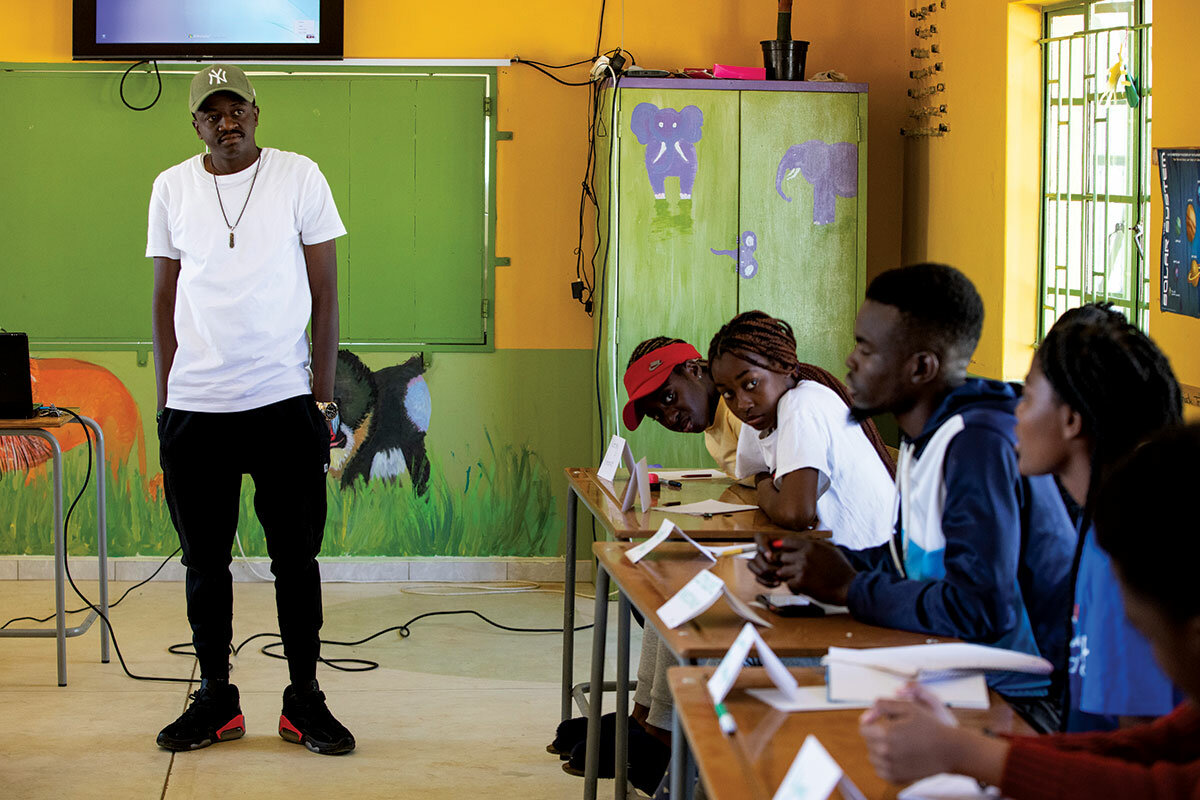
The Christian Science Monitor says, “Deon Shekuza is a peripatetic presence at climate summits as well as at the grassroots – like the class on green hydrogen he taught to young teens in an informal settlement in Windhoek, Namibia, last July.”

Climate activism is no longer mainly the purview of the industrialized Northern Hemisphere or those with enough income and time to worry about it. Now people on the front lines are leading the way. For them it’s a matter of survival.

Sara Miller Llana writes at the Christian Science Monitor about Deon Shekuza, a climate influencer in Namibia, who is “as comfortable proselytizing green energy to youth on the hardscrabble roads and villages of this former German colony as he is in Namibia’s government ministries and the halls of United Nations conferences.

“Paid with respect if not a salary, he’s part of a rising breed of young climate activists across the Global South whose work, suggests one climate expert, may well determine the temperature of your world.

“Africa, which has contributed least to climate warming, is the continent most threatened by the droughts, floods, and heat intensified by climate change. In that extremity, the relentlessly positive Mr. Shekuza sees great opportunity for progress for Namibia.

“In the dusty chaos of an informal settlement on the edge of this capital city one recent morning, he faces his biggest challenge: capturing the imaginations of young teens on a complex topic. The kids have gathered in a bright community center classroom, not for school credit and certainly not for fun on their Saturday off, but to hear Mr. Shekuza teach green hydrogen 101. Namibia has staked its future on this next big solution for a global clean energy transition. …

(The process, simply put, would use solar or wind power to extract hydrogen molecules from desalinated seawater, producing green ammonium that would be used for regional and global fuel markets to power transportation and electricity production.)

“No one here knows what green hydrogen is, let alone how it might be the route to social justice that Namibia’s leaders proclaim.  Grasping for something understandable, Mr. Shekuza gestures out the window at the ancient and humble street scene of women laden with bushels of branches gathered from the forest for heating and cooking fuel. ‘This is exactly what we do not want for our people, right? Some energy sources keep you in the past, and some energy sources move you into the future. This is why we are here talking about green hydrogen.’

“After 90 minutes, Mr. Shekuza is satisfied. These kids might not exactly understand Namibia’s renewable energy policy, but they understand green hydrogen potential: jobs for them in a new economy that could turn Africa’s perpetual sunlight into clean fuel for electricity and transportation here and for export. …

“For activists across Namibia – like the Inuit in the Arctic, or youth from small island nations – caring and conserving is the easy part. These youth grew up living sustainable lives well before it was trendy. Many were born on the land, in the bush, on the coast, with no playgrounds except the natural environment around them. They conserved not for environmentalism, but for survival. …

“Mr. Shekuza and young African activists like him across the continent who are part of the Climate Generation, as we’re calling it, see a chance – the kind Mr. Shekuza tells the children in the informal settlement to seize, the kind he has seized for himself. …

“Mr. Shekuza can barely afford to do the work he has cut out for himself. For all his social confidence, he hesitates at the doorstep of his home before inviting visitors in for the first time ever. Descending from sunny daylight down a step at the side of a large old house, he enters the tiny basement space he shares with his mother.

“With a revealing flourish of humility, he pulls the worn blue curtain separating his mother’s bed from his floor space: ‘This,’ he says, ‘is climate activism in Africa.’

“In his windowless corner lies his bed. … On the chipped yellow paint of a cement wall are dozens of badges from U.N. conferences. A single business suit hangs from the curtain rope.

“This is the headquarters of his nongovernmental organization. With just the grants and fees he cobbles together from government and U.N. funding, the 33-year-old college dropout educates himself, hatches ideas for mentoring youth, and speaks via Zoom to august groups, all on the floor here. For an online speech on climate justice for a British Museum conference, he had no option but to give his speech right there, cross-legged on his sleeping pad, dressed in a traditional African tunic, surrounded by clothes, caps, shoes, and [policy] documents. …

“The environment, he says, was always a part of his interest: Nature was his escape from the noise and dilapidation of poverty in his rural hometown of Grootfontein. … ‘We are people who never look at the environment like something that is separate, because you grew up looking at it as part of you,’ he says. …

“He co-founded the NGO Namibian Youth on Renewable Energy (NAYoRE); gave himself the title ‘youth advocate for sustainable development’; worked with other organizations and networks on biodiversity, farming, and climate change; and started crisscrossing the globe on invitations to attend and address government, U.N., and private conferences. …

” ‘[Young people] may see me with a fancy English up here, but my lifestyle is no different from that kid in the shack. So when I speak for the youth, I’m coming from experience and I’m speaking something solid.’

“He pulls out a binder on agriculture in Namibia and how to use regenerative practices in one of the most water-stressed nations on the planet. It’s the latest document he’s read, and he’s read all of it: ‘I have dedicated hours and hours and hours … like trying to upgrade and up-skill myself. And I did that in and out of school, but I found the most benefit came out of it.’ …

“On a late Friday afternoon, Mr. Shekuza meets at a cafe with Micky Kaapama, whom he has been tutoring to be a climate activist, or, as they put it, a ‘biodiversity enthusiast.’ The glamorous fashion model studied biology and, crucially, has 12,000 Instagram followers. …

“As if trying to convince her of what she has to gain, he pulls out his phone to show an invitation from the Namibian president’s office that he’s just received. Addressed to Deon Shekuza, ‘Youth Advocate for Sustainable Development,’ it’s for a luncheon with Hyphen, a German- and British-financed Namibian company that signed a deal last May with Namibia to build the largest green hydrogen project in the country. It’s an $11 billion agreement.

“But there’s a hitch in the impressive invite. He has no idea how he can even afford to get to the event five hours away in Keetmanshoop.”

Find out what happens at the Monitor, here. No firewall.

Read Full Post »

Photo: Espen Finstad/Secrets of the Ice.
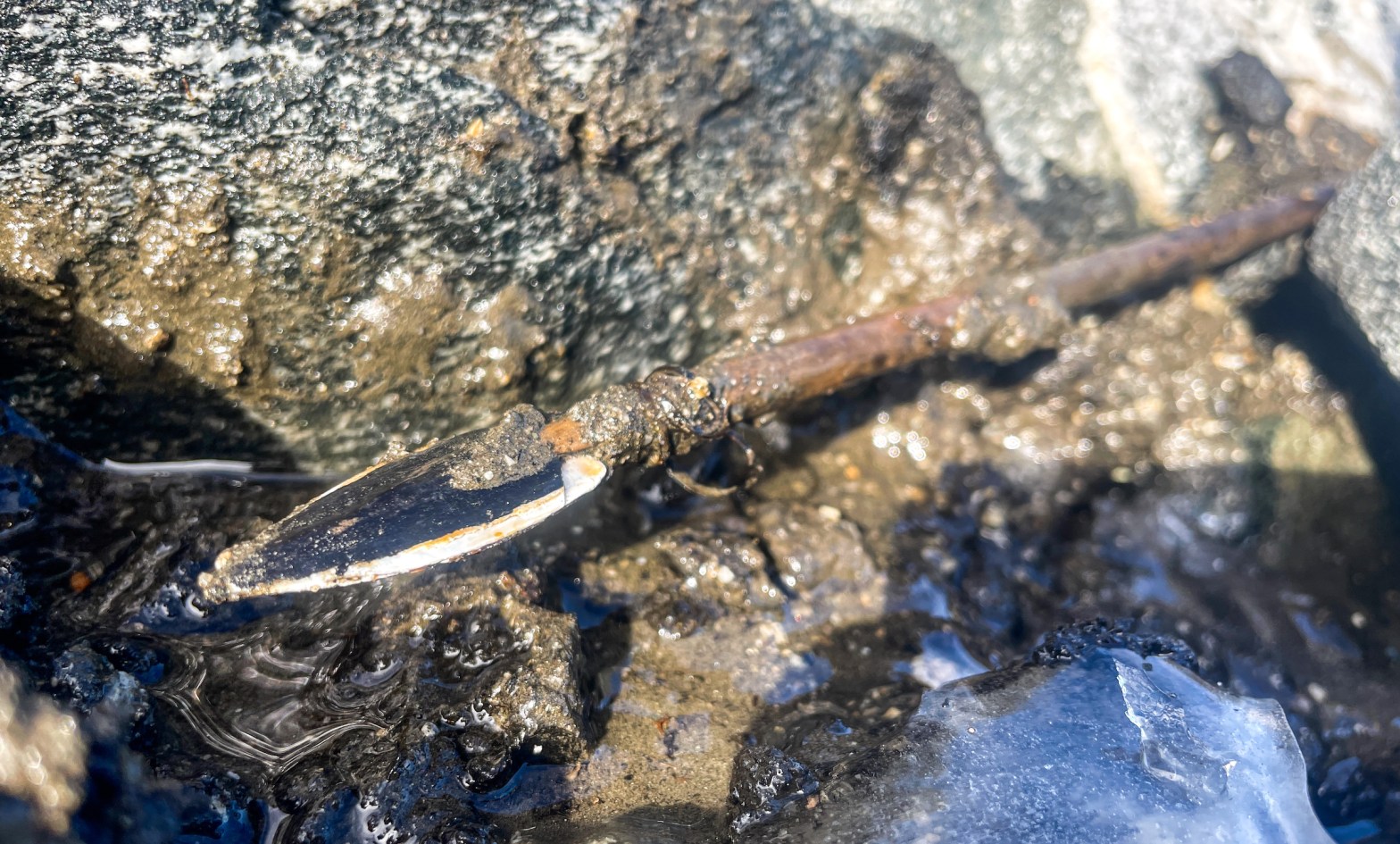
Melting glaciers are revealing older and older artifacts. Archaeologists discovered the arrow above in Norway’s Jotunheimen Mountains. Made out of freshwater pearl mussel, it’s one of the best preserved findings so far.

I hesitate to say that anything about climate change has an upside, but we might as well enjoy the things that keep being revealed — at least until we reach the more important goal of controlling global warming.

At Hyperallergic, Maya Pontone reports on melting glaciers in Norway and the latest Bronze Age discoveries.

“Archaeologists trekking through the Jotunheimen Mountains in Norway’s Innlandet County,” Pontone writes, “came across a remarkable find — an intact shell arrow dating back to the Early Bronze Age. Fastened with an arrowhead made of freshwater pearl mussel, the well-preserved hunting tool dates back 3,600 years and is one of eight shell arrows that have emerged from melting ice in Norway in recent years.

“On September 13, archaeologist Espen Finstad and his research team came across the artifact while checking a site as part of a routine monitoring job they typically run at the end of the field season. While the discovery of the ancient weapon was an unprecedented surprise that day, it is just one of hundreds that the Secrets of the Ice glacial archaeology team has uncovered over the past decade due to climate change.

“ ‘The glaciers and ice patches are retreating and releasing artifacts that have been frozen in time by the ice,’ Lars Holger Pilø, co-director of the archaeology program, told Hyperallergic. …

“The archaeologists have been continuously rescuing artifacts from Innlandet’s glaciers and ice patches since the fall of 2006, when the first ‘big melt‘ hit the Jotunheimen Mountains, located northwest of Oslo. [It’s the] home of the mythological jötnar, the rock and frost giants in Norse folklore. …

“ ‘Now the artifacts are exposed and deteriorating fast, so we are in a race against time to find and rescue the artifacts,’ Pilø said.

“So far, the Secrets of the Ice research team has mapped 66 ice sites and recovered approximately 4,000 finds including hunting gear and tools, textile remnants, transportation equipment, and clothing materials. The team has also found biological specimens such as antlers, bones, and dung.

“ ‘Arrows with shell arrowheads only became known in Europe when they started melting out of the ice in Norway,’ Pilø explained about the recent discovery. …

“As global warming transforms Norway’s mountainous landscape, Finstad, Pilø and their fellow glacier archaeologists are rushing to collect the exposed artifacts, which continue to get older as the ice continues to melt.

‘Most of the ice here in Norway will be gone in this century,’ Pilø said. ‘You can say that we are melting back in time.’

“Just last week, the team recovered another arrow, this one with an intact quartzite arrowhead, that is ‘probably 3000 to 3500 years old,’ according to Pilø. The team also found an iron horse bit with remnants of a leather bridle, a Medieval horseshoe, a Viking age knife, and an arrowhead for a crossbow bolt this month.

“ ‘The finds are incredible, but the reason they are melting out is sad,’ Pilø said, explaining how the ice melt will lead to drastic changes in Norway’s landscape, local wildlife, agriculture, tourism, and hydro-electrical power plants dependent on glacial water.

“ ‘It will be a very different world,’ he lamented.”

Feel free to revisit my February post about amateur archaeologists in Norway — the three buddies who under cover of darkness have found hundreds of previously unknown rock-carving sites. Click here.

More from Hyperallergic, here.

Read Full Post »

Photo: Fernando Cortes via Inside Higher Ed.

Unless people are committed to the “ain’t it awful?” worldview, they probably respond in more positive ways to pitches about hopeful progress than pitches describing how dire everything is.

In an opinion piece at Inside Higher Ed, Stephen Porder agrees, noting that climate-change education is more likely to be effective when students learn that there is hope.

Porder writes, “The first year I taught Introduction to Environmental Science was 2007, the year after the release of An Inconvenient Truth. The class was full of eager students, most of whom would have described themselves as environmentalists. … I was there to teach them the science — basically how to use hypothesis testing, data and analysis to convince them the world is going to hell. They didn’t need much convincing.

“The endless description of problems, with little emphasis on solutions, is a hallmark of almost all environmental science and studies textbooks. After 20-plus years teaching in this field, I’ve come to think that our relentless focusing on the negative is, at best, missing an opportunity. … My more recent experiences teaching about solutions, rather than problems, suggests that a healthy dose of positivity even in the face of profound environmental challenges will reach a broader audience, gain more traction and diversify the people working on the admittedly wicked environmental challenges of the 21st century.

“Back in 2007, I walked into the classroom, fresh out of my Ph.D. and postdoc, eager to share the wonders of environmental science. I marveled at the data from the group run by Charles Keeling, who measured rising carbon dioxide in the atmosphere at the observatory on Mauna Loa in Hawai‘i. … I dove into the details of carbon isotopes to demonstrate just how we knew that the rise in carbon dioxide was a result of fossil fuel combustion, as opposed to natural sources. The course was definitely a science course —but looking back I realize each bit of data and analysis was perfused with pessimism. …

“Still, my course evaluations were good. … These good evaluations came from students who were mostly self-selected environmentalists — passionate about ‘saving the planet.’ They were bright, motivated and talented. … Other equally bright, motivated and talented students didn’t take the course. I wondered why.

“Having talked to many such students since, I’ve learned many felt a bit excluded. The environment was a worry for them, as it is for most of us, but it wasn’t their primary worry. They also felt like environmental studies or sciences was not a place where they could explore solutions. They felt that there was a relentless focus on what was wrong, rather than how to put it right. Finally, they felt like the problems we were describing were going to be fixed by people beyond the environmental field.

“I’ve come to agree with them. I, at least, was not doing enough to train problem-solvers. I’d been training people to cleverly document problems. I don’t think I’m the only one in the field who’s fallen into that trap. …

“I handed off Introduction to Environmental Science to a younger professor a few years ago, and from here on out I’m focusing on solutions, not problems. Climate solutions. Agricultural solutions. Deforestation solutions. They exist. They are not perfect and involve hard trade-offs. But their existence should be front and center in our teaching.

“Just putting ‘Climate Solutions’ in a course name dramatically changed my student enrollment. Surprisingly, very few environmental studies and sciences students signed up. Instead, students majoring in economics, political science, engineering, applied math and a variety of humanities fields appeared in my classroom. … Like all my students, they were united by their climate anxiety. But they came for, and responded to, the idea of solutions.

“This eclectic group brought a wealth of different interests, skills and weaknesses to the class and was eager to learn from each other about different approaches to overcoming the 21st century’s biggest environmental (I would argue societal) challenge. They were thrilled at the opportunity to contribute to a better future, even if the environment was not their top priority (for some it became a top priority when they learned there were things they could actually do to make a difference). Many had felt unwelcome in environmental studies/sciences, which often demands a political and philosophical homogeneity of its participants.

“As an example of this, a senior applied math major told me he had been searching for a field where his math could have impact. He had never taken an environmental class before (despite plenty of environmental angst) in part because he didn’t feel welcome or like he fit in with environmentalists. He now works doing data analytics for a solar power company. …

“Solutions are picking up speed. Technological advances in transportation (electric vehicles), space heating (heat pumps) and electricity production (renewables) have made extraordinary leaps since I started teaching. Given that transportation, space heating and electricity generation make up more than 70 percent of all fossil fuel emissions, this is huge news! We should be teaching about it at every level and helping our students gain the skills to push these revolutions forward as engineers, community organizers, investors and so on.

“Already these advances have cooled our future. A decade ago, we were headed for four to five degrees Celsius warming by century’s end. Now three degrees Celsius is more likely. Anyone who studies climate knows that’s still way too much warming to be safe, but it’s also a huge step in the right direction. You may not hear that in most environmental science classes, or in the news, but you should. Even better news is that most of what precludes keeping that number to two degrees Celsius is political, not technological. That wasn’t true when I started teaching, so we need to update our curricula to reflect this remarkable progress.

“I don’t mean to be overly optimistic. The challenges to a stable climate future are enormous. … But by relentlessly beating a drum of negativity in the absence of hope, we’re driving away brilliant young minds that could help make the world a better place.”

More at Inside Higher Ed, here. No paywall.

Read Full Post »

Photo: Emily Piper-Vallillo/WBUR.
Program mentor Meshell Whyte with students who participated in the 2023 UMass Boston Summer Program in Urban Planning.

Today’s story is not only about addressing troubling effects of climate change in cities but also about encouraging young people in the communities most affected to be part of finding solutions.

Emily Piper-Vallillo reports at WBUR, “Boston students recently wrapped up a month-long study of extreme heat in Roxbury, exploring ways to mitigate the crisis and its impact on residents through the field of urban planning.

“Nearly 30 high school students participated in the University of Massachusetts Boston Summer Program in Urban Planning, which concluded [in July] with a presentation at Roxbury Community College. …

“The program introduces students of color from environmental justice communities like Roxbury and Dorchester to careers in urban planning and design. It’s part of a larger effort to diversify the field of urban planning, which remains overwhelmingly white.

“ ‘Only 5.2% of Boston’s planners are non-white, in a city where just in the city alone, 28% of our population is African American,’ said Ken Reardon, co-founder of the program and chair of UMass Boston’s Department of Urban Planning and Community Development. …

“Built as a working class community at a time when extreme heat was not as common as it is today, Roxbury has densely packed buildings with few trees, according to the students’ presentation. Many spaces are exposed to direct sun. Slides and swings in neighborhood playgrounds were constructed with heat-absorbing materials, making them unusable when temperatures rise.

“In fact, the students found that air temperatures in Roxbury are, on average, 10 degrees warmer than at Boston’s Logan Airport.

“They made this discovery by collecting 135 temperature readings across 38 Roxbury locations to identify the hottest spaces. Readings ranged from 83 to 102 degrees Fahrenheit, with the highest temperatures collected on sidewalks and at bus stops.

“Collecting data was grueling, said Blue Hills Regional Technical student Aidan Luciano. He and his peers hit the streets with remote sensors recording the humidity and heat index during the month of July — when temperatures sometimes rose above 100 degrees.

“ ‘[But] it’s going to pay off in the end because we are going to be helping other people,’ Luciano said. ,,,

“One group designed a new cooling children’s playground on RCC’s campus. Scheduled to open in 2025, the playground will replace a parking lot near the historic Dudley House site. After further community input, the final design will incorporate many ideas from the students themselves, said Ruben Flores, special projects manager at Roxbury Community College.

“Flores was particularly impressed by the inclusion of splash pads and water misters to reduce the temperature of the playground.

“Participating students received college credit from UMass Boston and were paid around $15 an hour.

“Paying students was an important part of making this opportunity accessible to low-income students of color who are less likely to be able to afford unpaid internships, Reardon said.

“Beyond collecting temperature data, students sought to understand how Roxbury residents experience extreme heat, said TechBoston student Neicka Mathias.

“Over the course of July, students interviewed nearly 100 Roxbury residents about coping with rising temperatures. The most common suggestion for improvement they heard was to increase the number of water sources throughout the neighborhood.

“Students also worked with residents to identify public spaces in Roxbury where heat mitigation solutions are most needed. These include areas where  people frequently wait for public transit or line up outside favorite local restaurants. …

“ ‘Give a chance to these communities of color that are outside the spaces where decisions have been made and they will show you great work,’ Flores said.”

More at WBUR, here. No firewall.

Read Full Post »

Photo: Naomi Antonino/CNET.
“As the world warms, non-native species threaten Earth’s last great wilderness,” says Jackson Ryan.

In the interest of identifying a problem in order to do something about it, today I share bad news about Antarctica: the invasion of alien species.

Jackson Ryan reports at CNET Science, “At the bottom of the stairwell leading to deck five, an alien lies upturned on green nonslip flooring. If you get close enough, you can see one of its six legs twitching and one of its translucent wings crushed to pieces. Unlike the throng of Antarctic expeditioners aboard the RSV Nuyina, Australia’s newest icebreaking ship, it hasn’t cleared customs. 

“Days after the Nuyina departed its harbor in Hobart, Tasmania, the alien buzzed its way across the Derwent River, slipped through an open door and zipped into the bowels of the ship until this restless, twitching death. 

“Scientists call the creature Musca domestica. You likely know it as the housefly.

“Even if it hadn’t been felled by an errant hand or boot, it likely wouldn’t have survived the journey to Antarctica. At temperatures below 14 degrees Fahrenheit, flies move lackadaisically and seem to barely get airborne. I know this because I’ve been watching them as part of the crew onboard the Nuyina as it crosses the Southern Ocean. Surviving flies buzz at the ship’s windows, trying to escape the upper decks. 

“If their prison break were to succeed, they’d find themselves facing seemingly endless waters, with nowhere to go. The Southern Ocean provides a formidable barrier to entering Antarctica, a great wall of water and powerful currents that has separated the continent from the rest of the world for about 30 million years. Couple that with freezing temperatures, and the Antarctic provides little hope for a wayward housefly trapped on a ship.

“But Antarctica’s temperature is changing, and dramatically. In March, a French-Italian base in East Antarctica recorded temperatures 70 degrees higher than average for that time of year. That may just be an unprecedented anomaly, but it’s expected the continent’s average temperatures could rise a few degrees by 2050. In particular regions, like the western peninsula, the continent is warming at a rate 10 times faster than the rest of the world. In February 2020, the temperature at Argentina’s Esperanza Base research station reached 18.3 degrees Fahrenheit – an all-time high – providing the kind of conditions a wayward housefly might survive in. 

“Historically, it’s been difficult for lost flies to reach the most southern landmass on Earth. As Antarctic explorers aimed to discover and map the continent in the 1800s, humans began providing fleeting opportunities for alien trespass. A handful of nations with a permanent presence across the continent annually resupply research stations that provide permanent outposts for studying the ice and the Antarctic ecosystem. …

” ‘Back-of-the-napkin math, less than a million people in the entire history of human existence have visited Antarctica,’ says Dana Bergstrom, an ecologist at the Australian Antarctic Division. 

“But that too is changing. Before the pandemic slowed cruises to a halt, Antarctic tourism was on the rise. In the 2019-20 season, almost 75,000 people visited the continent, according to IAATO, the chief tourist body in the Antarctic. That’s a 35% increase over the previous season.

“Wherever humans go, so too our pests. Signatories to the Antarctic Treaty and the Madrid Protocol, which include protections for the Antarctic environment, must endeavor to limit their effects on the pristine wilderness, and tourist bodies like IAATO and national Antarctic programs go to great lengths to prevent biological invasions. …

“If an alien were to slip in, it could be disastrous for the delicate Antarctic ecosystems hidden from the world for millennia.

” ‘It’s a super special place to understand how the planet works,’ says Bergstrom. ‘And so it’s really worthwhile putting all our efforts to try to keep nature operating without interfering.’

“On the eastern edge of Antarctica … [a] base, called Davis, is Australia’s southernmost presence on the continent.  In 2014, its hydroponics facility was the site of an infamous alien invasion.

“In May of that year, expeditioners entered the facility, composed of two gray shipping containers, to pick fresh greens for the chef’s evening meal. … During the vegetable collection, they inspected the facility’s water and noticed a black mat had developed over the surface. ‘When they looked closer, they realized it wasn’t a mat,’ says Andy Sharman, environmental manager at the Australian Antarctic Division, ‘it was thousands of tiny invertebrates.’

“Davis had been invaded by The Thing, a thousand times over. An alien species of arthropod known as Xenylla had snuck into the facility and began multiplying in the warm, wet conditions. The flealike critters, known as collembolans, hadn’t been seen in this region of the Antarctic before but had become established in warmer areas. A crack team of scientists deduced that should they get out, they might threaten the local ecosystem.

Almost immediately, the station went into eradication mode. ‘We had a biohazard response like you might get with a virus or disease,’ notes Sharman.

“The effort was blazingly fast. The response team sprayed alcohol throughout the facility, then bagged and burned everything, including recently harvested vegetables that had already made it to the Davis kitchen. The building was subjected to rigorous freeze-thaw cycling; the heat would trick any leftover eggs into hatching and then the temperatures would drop to minus 11 degrees Celsius, killing the hatchlings. 

“The response team also took extreme social distancing measures. ‘We actually lifted the whole building out and parked it on the sea ice and left it there,’ says Sharman. A few months after the discovery and various eradication measures, the containers were shipped back to Australia.

“An investigation into the source of the incursion eventually discovered that the aliens likely got in through plant feed. Subsequent monitoring hasn’t found the collembolan in the area since, but other stations have experienced invasions, too, and protecting the continent from such risks is a constant battle. 

“Exterminating The Things at Davis is one of the Australian Antarctic Division’s success stories, but the threat of incursion is constant. Invertebrates are the most widely dispersed non-native species and are known to hide in shoes and bags, while plant seeds can become stuck in Velcro and marine creatures can lurk in ballast tanks on vessels.” 

The long, interesting CNET article is, here. No firewall.

Read Full Post »

Photo: Basri Marzuki/Nurphoto via Getty Images.
A volunteer ties a newly-grown mangrove to a stake on Teluk Palu Beach, Indonesia. A science writer asks, Is international funding shortchanging nature-based climate solutions like this?

Here’s something to think about. As we try to remedy damage to the environment, are we overlooking the power of small steps that add up and instead favoring big-deal engineering approaches?

Fred Pearce at YaleEnvironment360 suggests we are indeed. “On the low-lying northern shore of the Indonesian island of Java,” he writes, “the sea has invaded a kilometer inland in places in recent years, engulfing whole communities and vast expanses of rice paddy. But villagers are fighting back against further advances by erecting brushwood barriers in the mud to help the natural regeneration of mangroves.

“This innovative nature-based response to rising sea levels and worsening storms, sponsored by the Indonesian government and the Dutch-based environmental group Wetlands International, could be scaled up across Asia. Within a decade it could be helping at least 10 million people in similar situations to protect and restore their denuded coastlines — all at a fraction of the cost of sea walls, says Jane Madgwick, CEO of Wetlands International.

“But it can do that only if local projects are developed and the financing secured. And so far, she says, progress has been slow. …

“There are a ‘growing number of analyses and reviews of the effectiveness of habitats as natural defenses,’ writes Siddharth Narayan, now of East Carolina University. Hundreds of local projects to restore ecosystems on coastlines and mountains, in river valleys, forests, and grassy plains, have proved their worth in using restored nature to boost the resilience of millions of people to the ravages of onrushing climate change. Most are cheaper and more effective than any engineering alternatives, with more spinoff benefits for ecosystems and fewer downsides.

But the political will and funding that could turn pilot projects for nature-based climate adaptation into policy norms benefitting hundreds of millions more people are still largely absent.

“Most nature-climate activities ‘are currently not funded,’ says Ebony Holland, climate researcher at the London-based International Institute for Environment and Development. …

“Nature-based climate adaptation remains the poor relation of climate finance. First, that’s because private investors, philanthropists, aid agencies, and development banks are usually happier to pay for climate ‘mitigation’ projects that curb emissions of planet-warming gases than for helping communities adapt to climate change. Overall, adaptation of all kinds has so far attracted less than a quarter, and by some measures only 5 percent, of international climate funding, according to Barbara Buchner of the Climate Policy Initiative, a San Francisco-based think tank.

“And second because policymakers and funders still mostly prefer engineering solutions. Holland found that less than 10 percent of funding for climate adaptation in the least-developed nations — which are usually the most vulnerable — went into projects that harnessed nature. The remaining 90 percent ‘poured concrete.’ …

“Overall, the UN Environment Programme and the Global Commission on Adaptation, an international body set up by the Dutch government, both estimate that about 1 percent of total climate finance has so far gone toward such nature-based adaptation projects.

“Governments in Glasgow promised to close the funding gap between adaptation and mitigation by doubling adaptation funding. [In April] climate finance chiefs from leading funding governments met in Lahti, Finland, to discuss how to achieve this. But official reports of the meeting record little discussion of the need for more nature-based projects. Instead, the main topic was to ‘seek ways to give the private sector a bigger role in adaptation finance.’

“This could be a step back for nature since, in the past, private financiers have been even less keen on nature-based solutions than public-sector donors, says Madgwick.

“The casebook of successful nature-based adaptation is growing fast. Perhaps best documented are the benefits from restoring coastal ecosystems such as mangroves to protect coastal communities from storm waves, tidal surges, and rising sea levels, which are all increasing as climate change gathers pace.

“The world has lost half its mangroves along shorelines, but those that remain are protecting some 18 million people and several tens of billion dollars’ worth of property from flooding every year, says Michael Beck, a marine scientist at the University of California Santa Cruz. Their importance can only grow. Unlike sea walls, mangroves appear to keep pace with rising sea levels, self-seeding inland to maintain their barriers against storms and tidal surges and nurturing marine fisheries.

“The island nations and river deltas of Asia would benefit most from their restoration, but a study by the World Bank and The Nature Conservancy found great potential too in African countries, including Guinea, Mozambique, Sierra Leone, Madagascar, and Guinea-Bissau.

“The restoration of other coastal ecosystems can be equally effective. A review by Narayan of 52 such projects around the world found that salt marshes, sea grasses, and coral reefs all reduced the height of storm waves at typically between a half and one-fifth of the cost of sea walls. Yet scaling up is failing to keep pace with the success of pilot projects. …

“In parts of the Panchase mountain region of Nepal, a favorite with foreign trekkers, the restoration of wetlands and community ponds is protecting local communities against both worsening floods and droughts, while improving soils, revitalizing biodiversity, and encouraging tourism. It is part of a three-nation project known as the Mountain Ecosystems-based Adaptation Program devised over a decade ago by UN agencies and implemented in remote corners of Nepal, Uganda, and Peru.

“But despite ambitious plans for new projects in neighboring Bhutan, Kenya, and Colombia, scaling up remains elusive. Communities in most mountain regions stressed by climate change are plagued by dam projects that extract their water for use downstream, rather than being helped to conserve their water and improve their climate resilience. …

“[Nathalie Seddon of the Nature-Based Solutions Initiative, an interdisciplinary research center at the University of Oxford] says nature-based adaptation can simultaneously help meet the three great challenges of our time: responding to climate change, protecting biodiversity, and ensuring human well-being. But right now, the opportunities for delivering these synergies are still going begging.” 

More at YaleEnvironment360, here. No firewall.

Read Full Post »

« Newer Posts - Older Posts »