Feeds:
Posts
Comments

Posts Tagged ‘honey’

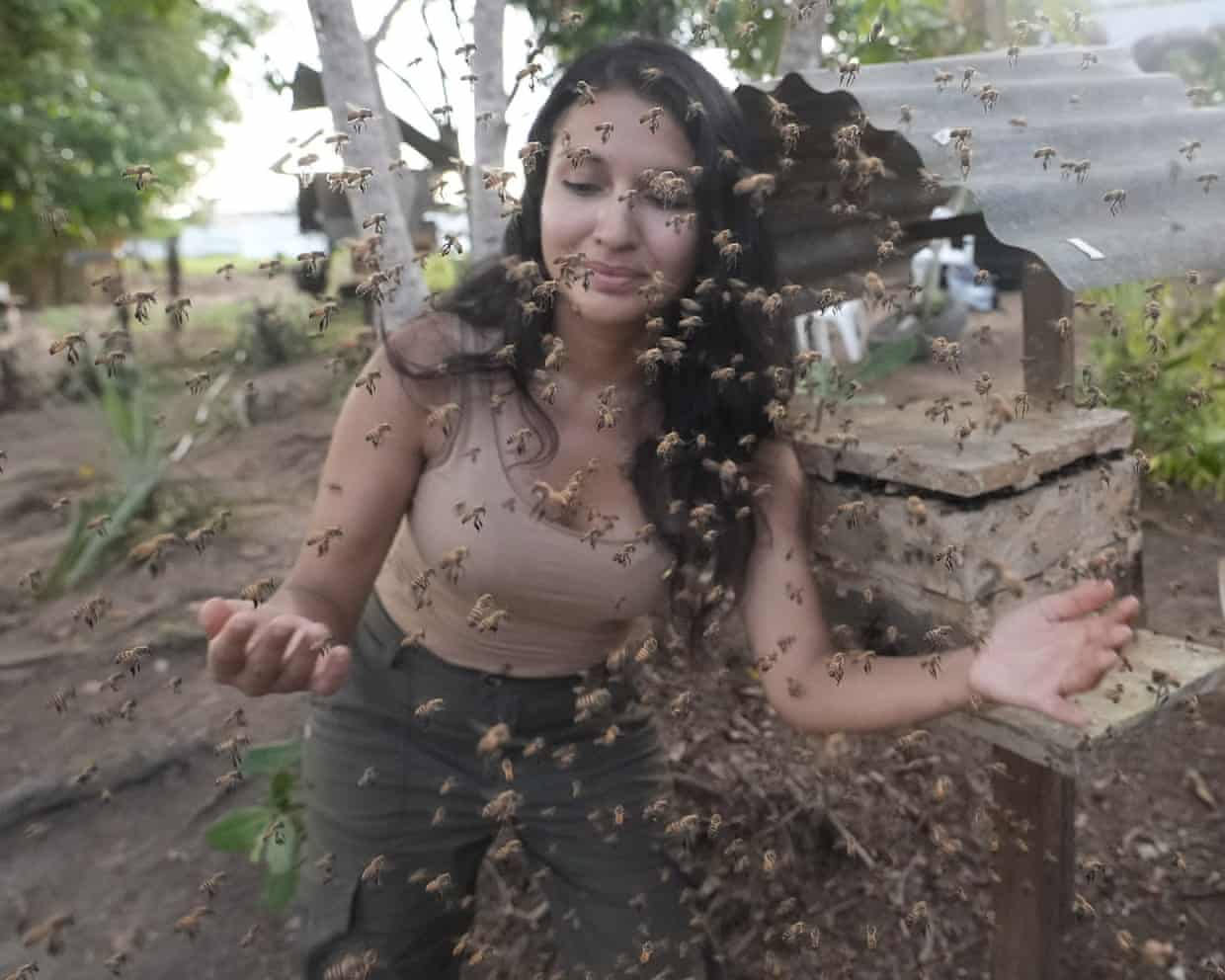
Photo: Miryan Delgado.
Satipo and Nauta municipalities are the first in Peru to grant legal rights to stingless bees. 

Today’s article is about protecting special bees in the Amazon. As I read it, I couldn’t help thinking about a novella called The Bee Wife, by novelist, blogger — and advocate for indigenous Amazonian languages — Francesca Forrest.

The article is about stingless bees in Peru being granted legal rights.

Damien Gayle at the Guardian, “Stingless bees from the Amazon have become the first insects to be granted legal rights. …

“It means that across a broad swathe of the Peruvian Amazon, the rainforest’s long-overlooked native bees – which, unlike their cousins the European honeybees, have no sting – now have the right to exist and to flourish. Cultivated by Indigenous peoples since pre-Columbian times, stingless bees are thought to be key rainforest pollinators, sustaining biodiversity and ecosystem health.

“But they are faced with a deadly confluence of climate change, deforestation and pesticides, as well as competition from European bees, and scientists and campaigners have been racing against time to get stingless bees on international conservation red lists.

“Constanza Prieto, Latin American director at the Earth Law Center, who was part of the campaign, said: ‘This ordinance marks a turning point in our relationship with nature: it makes stingless bees visible, recognizes them as rights-bearing subjects, and affirms their essential role in preserving ecosystems.’

“The world-first ordinances, passed in two Peruvian regions in the past few months, follow a campaign of research and advocacy spearheaded by Rosa Vásquez Espinoza, founder of Amazon Research Internacional, who has spent the past few years traveling into the Amazon to work with Indigenous people to document the bees.

“Espinoza, a chemical biologist, first started researching the bees in 2020, after a colleague asked her to conduct an analysis of their honey, which was being used during the pandemic in Indigenous communities where treatments for Covid were in short supply. She was stunned by the findings.

” ‘I was seeing hundreds of medicinal molecules, like molecules that are known to have some sort of biological medicinal property,’ Espinoza recalled. ‘And the variety was also really wild – these molecules have been known to have anti-inflammatory effects or antiviral, antibacterial, antioxidant, even anti-cancer.’

“Espinoza, who has written a book, The Spirit of the Rainforest, about her work in the Amazon, began leading expeditions to learn more about stingless bees, working with Indigenous people to document the traditional methods of finding and cultivating the insects, and harvesting their honey.

“Found in tropical regions across the world, stingless bees, a class that encompasses a number of varieties, are the oldest bee species on the planet. About half of the world’s 500 known species live in the Amazon, where they are responsible for pollinating more than 80% of the flora, including such crops as cacao, coffee and avocados.

“They also hold deep cultural and spiritual meaning for the forest’s Indigenous Asháninka and Kukama-Kukamiria peoples. ‘Within the stingless bee lives Indigenous traditional knowledge, passed down since the time of our grandparents,’ said Apu Cesar Ramos, president of EcoAshaninka of the Ashaninka Communal Reserve. ‘The stingless bee has existed since time immemorial and reflects our coexistence with the rainforest.’

“From the outset, Espinoza began hearing reports that the bees were becoming more difficult to find. ‘We were talking actively with the different community members and the first things they were saying, which they still do to this day, is: “I cannot see my bees any more. It used to take me 30 minutes walking into the jungle to find them. And now it takes me hours.’ “

“Her chemical analysis had also turned up some concerning findings. Traces of pesticides were appearing in the stingless bees’ honey – despite their being kept in areas far from industrial agriculture. …

“For years, the only kinds of bees to have official recognition in Peru have been European honeybees, brought to the continent by colonizers in the 1500s.

“ ‘It almost created a vicious cycle. I cannot give you the funding because you’re not on the list, but you cannot even get on the list because you don’t have the data. You don’t have the funding to get it.’ In 2023, they formally began a project to map the extent and ecology of the bees, ‘because by that time we had already spoken with the [International Union for the Conservation of Nature (IUCN)] and some government people in Peru and understood that that data was critical.’

“The mapping revealed links between deforestation and the decline of stingless bees – research that helped contribute to the passing of a law in 2024 recognising stingless bees as the native bees of Peru. The law was a critical step, as Peruvian law requires the protection of native species. …

“In experiment in 1950s Brazil to create a strain that would produce more honey in tropical conditions led to the creation of the Africanized honeybee. … Now, Espinoza and her colleagues found, these Africanized bees have begun outcompeting the comparatively gentle stingless bees in their own habitats. …

“Living a semi-nomadic lifestyle in a remote part of the Avireri Vraem Biosphere reserve, Elizabeth [an Asháninka elder] farmed and kept bees at a spot in the forest some distance from her home. But she described how her stingless bees had been displaced by Africanized bees, which attacked her violently whenever she visited.

“ ‘I felt so scared, to be honest,’ said Espinoza. … ‘I want them gone.’ “

Read what happened next at the Guardian, here.

Read Full Post »

Photo: Destiny Connect
More than 50% of the honey sold in South Africa is imported. Mokgadi Mabela, a beekeeper and founder of the Native Nosi, is striving to change the business landscape.

How doth the little busy bee
Improve each shining hour …”

Yesterday I paid a visit to friends who recently moved to Massachusetts from Minnesota. The wife is a textile and quilt artist. The husband is a woodworker and beekeeper. Before moving, he sold his 2,000 pounds of honey and all his beekeeping equipment. But the new home came with a beehive in the backyard, and he can’t resist setting up on a smaller scale.

I think these two, retired from careers that have nothing to do with bees or art, may be the most industrious people I have ever met.

Speaking of busy bees, I just happen to have a post today on beekeeping. Hope you like it. Nazley Omar wrote the story for Destiny Connect.

“More than 50% of the honey sold in South Africa is imported. Mokgadi Mabela, a beekeeper and founder of the Native Nosi, is striving to change the business landscape [and] keeping the legacy of beekeeping in her family alive.

“She is a third-generation beekeeper who specialises in organic honey production. Mabela launched the Native Nosi in 2015 with the aim of producing local, quality pure honey, alleviating poverty through job creation and providing rural beekeepers with access to urban markets.

“ ‘In South Africa, beekeeping was historically never part of the basic academic curricula in agriculture,’ she says. ‘Therefore, your average South African knows very little about bees and their role in the ecosystem value chain.’ …

“Several bee species across the globe are heading towards extinction, which would have a huge impact on agriculture and food production. Mabela says we need more beekeepers to help preserve bees and produce honey.

“ ‘Ordinary citizens who have no interest in beekeeping can help by planting more trees and plants that are bee-friendly, as habitat loss is one of the factors contributing to the global bee population decline.’ …

“It’s important for South Africans to consume honey, wax and by-products that are produced organically and locally. Imported honey products have to be irradiated in order to limit South Africans to the exposure of impurities and diseases.

“ ‘Although this process is done with good intent, it destroys all the nutrients and delicate properties for which honey is known. When you buy local, you consume natural, quality honey that has not been subjected to any processing,’ explains Mabela.

“When Mabela first launched her company, she encountered many challenges. The startup capital required to buy beehives and processing equipment was high. She tackled this by buying honey from her father and other beekeepers and selling it to raise enough money to buy beehives, increasing her production and securing her own supply.

“I also won [an award] through a pitch competition sponsored by SAB, Standard Bank and The Hook Up Dinner, which I used to buy the equipment. …

“ ‘We are here to change the game and smash stereotypes about young, black, females in business and agriculture. … Starting is often the most difficult step. Once you start, you are able to get a lot of the fear out the way and get on with the real business.’ ”

More at Destiny Connect, here.

Read Full Post »

Time for another animal story. Edie Freedman has a surprising one about elephants, African farmers, and bees at a new-to-me website called O’Reilly.

“Although elephant populations have increased since the 1970s, the human population has grown even more quickly,” she writes “cutting the elephants’ habitat up into farms and roads. The elephants’ key migratory routes have been cut off in many places. As result, they regularly break through fences, where they eat and destroy crops. When the farmers confront elephants on their property, things don’t generally end well for either party.

“Lucy King, a researcher working with Save the Elephants, has spent many years investigating the problems involved in crop protection. Her goal is to find long-term solutions that reduce the frequency of human-elephant conflicts—and that can be financed and managed by local farmers.

“As Ms. King looked into the elephants’ habits for any clues to keeping them out of fields planted with crops, she noticed that they tended to avoid acacia trees with active nests of African bees. Elephants, it so happens, are afraid of the bees, and will move away from an area and warn other elephants if they hear bees buzzing nearby.

“And so the beehive fence was invented. The fences are simple, inexpensive, and easy for the farmers to build and maintain. … The hives are hung at chest height, which makes it easy for the farmer to harvest the honey, while also making them highly visible to the elephants.

“The hives, connected by wires,  are hung every 10 meters around the perimeter of a field. The farmers leave wide pathways between their crops so elephants can move past the fences along their migratory routes. If an elephant makes contact with one of the hives or the connecting wires, the beehives all along the fence will swing and release the bees.”

More here.

What a terrific solution! Where there’s a will, there’s a way.

Photo: oreilly.com

Read Full Post »

In parts of South Sudan, honey is providing a bit of hope for the future. Barbara Lewis reports at Reuters that the charity Honey Care Africa has invested $1 million in the country, helping farmers earn more than $75,000 from beekeeping and benefiting 400 families.

“A harvest of honey from the equatorial forests of South Sudan will help its struggling poor and, through the pollination of bees, improve the nation’s crop yields, those involved say.

“Spring production over the coming weeks is expected to deliver 60 tons, double the volume of an initial batch of exports last year to Kenya.

“South Sudan’s honey harvests had suffered because decades of fighting closed off the former main trade route through the north.

” ‘Honey production is not a panacea. We’re not trying to save the country or eliminate the conflict, but we do want to do our part,’ Madison Ayer, head of the development charity Honey Care Africa, told Reuters.

“Honey Care Africa has been working since 2013 in South Sudan, where it sees potential to collect honey from bees immune to the problems that have depleted colonies in the United States and to a lesser extent in Europe.

“The charity has worked in Kenya for a decade, but droughts can be a problem for honey-making there, so it sought to expand. …

” ‘When I get the money from the honey, I pay the school fees of my children. I buy other things like sugar, tomatoes, onions. I keep some money with me for emergencies in case my children get sick,’ Lilian Sadia James, one of the South Sudanese beekeepers working with Honey Care, says.”

More here.

Photo: David W. Cerny/Reuters

Read Full Post »

I liked this story at TreeHugger on protecting trees and fighting poverty at the same time — especially the part about the importance of women in the effort.

Sami Grover writes, “The old trope that we can either have economic development or environmental protection has been pretty much blown out of the water by this point. …

“Nowhere is this more true than the dry lands of Africa, where desertification, resource depletion, climate disruption and political unrest have all taken their toll on communities’ ability to survive and thrive. There is, however, plenty to be hopeful about too. …

Tree Aid, a charity which works with villagers living in the drylands of Africa, has long been at the forefront of this fight. By working cooperatively with villagers and on-the-ground non-profit partners in Africa, the charity doesn’t just plant trees, but rather increases villagers’ capacity to protect, nurture and utilize trees to protect their soils, increase agricultural yields, and provide a buffer against the drought, floods and failed crops that are predicted to get ever more common with the advance of climate change.

“A new free report from the charity, entitled Building Resilience to Climate Shocks, the charity is seeking to spread the word about how trees can be used to both alleviate poverty and protect the environment at the same time. …

“Previous tree planting efforts in the drylands have often failed because they’ve either focused on the wrong species of trees, or they have failed to take into account the needs, resources and skills of the local population. …

“Unless short-term needs are met, long-term needs are compromised. … Tree Aid has worked with villagers to develop alternatives to ecologically damaging land management practices:

TREE AID provides training for villagers to plan ways to make money in the short-term as well as the long. For example by producing honey from the bees which live on unburnt land and using fallen trees for fuelwood. This gives them enough income to sustain and invest in their futures and environments, as well as preparing themselves for weather extremes. …

“One of the strategies the charity uses to build climate resilience is to establish ‘Tree Banks’ within a community. These banks are essentially mixed-species tree plantings that can provide for a range of needs from fuel wood to animal fodder to fruit or other products. Each community establishes rules and management practices for when and how a Tree Bank may be used. …

“Any successful strategy for regreening these regions must work within those cultures to empower and educate women as caretakers of the environment: When women take part in decision-making there is a long-term positive impact on trees. They become important forest caretakers.”

More at Tree Aid, here ,and at Treehugger, here.

Photo: Tree Aid


Read Full Post »

Mark Guarino has a nice story in the Christian Science Monitor about a Chicago woman of great determination.

” ‘Pollinate’ is a word that Brenda Palms Barber likes to throw around when talking to people about her work.

She pollinates jobs for recently released inmates looking for a second chance. She pollinates faith among the people who take a chance in hiring them. She pollinates an upswing in North Lawndale, one of the most impoverished neighborhoods in Chicago, about five miles west of downtown.

“She also pollinates honey. At least that’s the job of the bees she has spent five years raising.

Indeed, Ms. Barber has brought swarms of bees to the city’s West Side, using them to foster job creation among a stigmatized group of people who live on the bottom rung of the economic ladder: black males who exit the state or county prison system with little formal education or job skills….

” ‘We have to be their first employers,’ she says. ‘We have to prove to society that people who did bad things, people who need second chances, can be positive in the workplace, that they will be loyal and hard-working and honest employees.’ “

More here.

Photo: David Harold Ropinksi/Sweet Beginnings
Brenda Palms Barber’s honey-products program has hired 275 ex-offenders since 2007. After 90 days, they shift to the outside workforce.

Read Full Post »

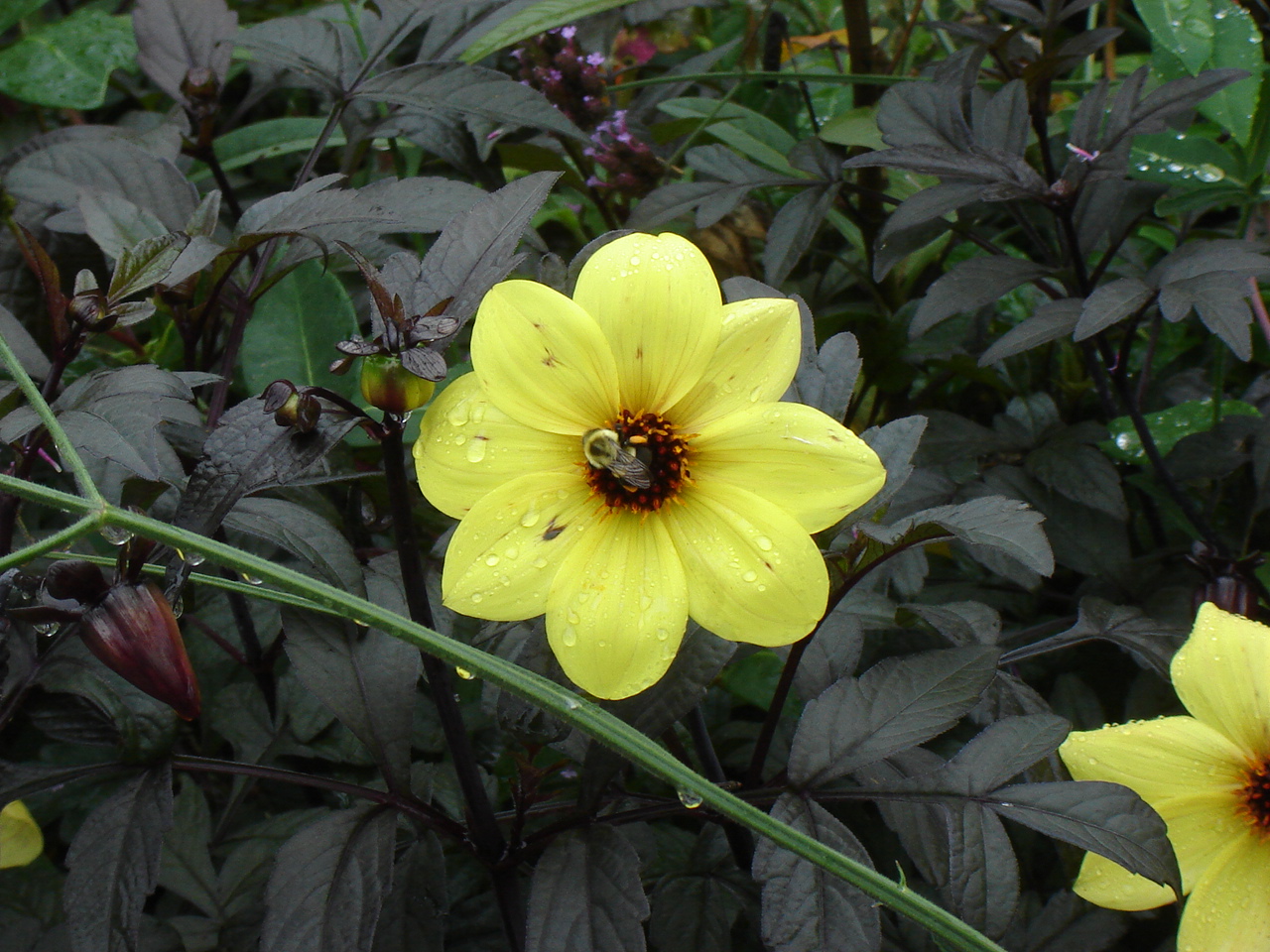
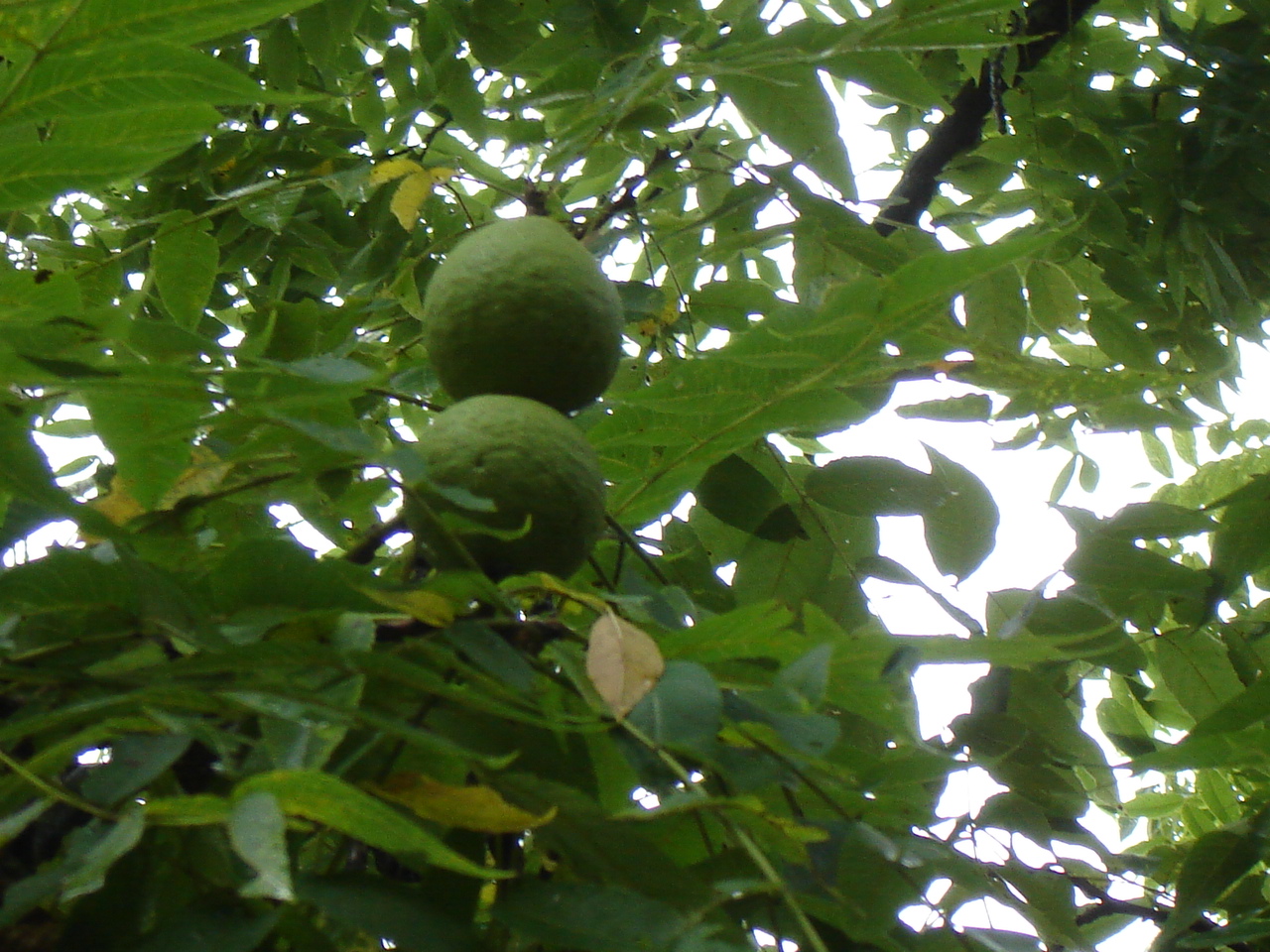
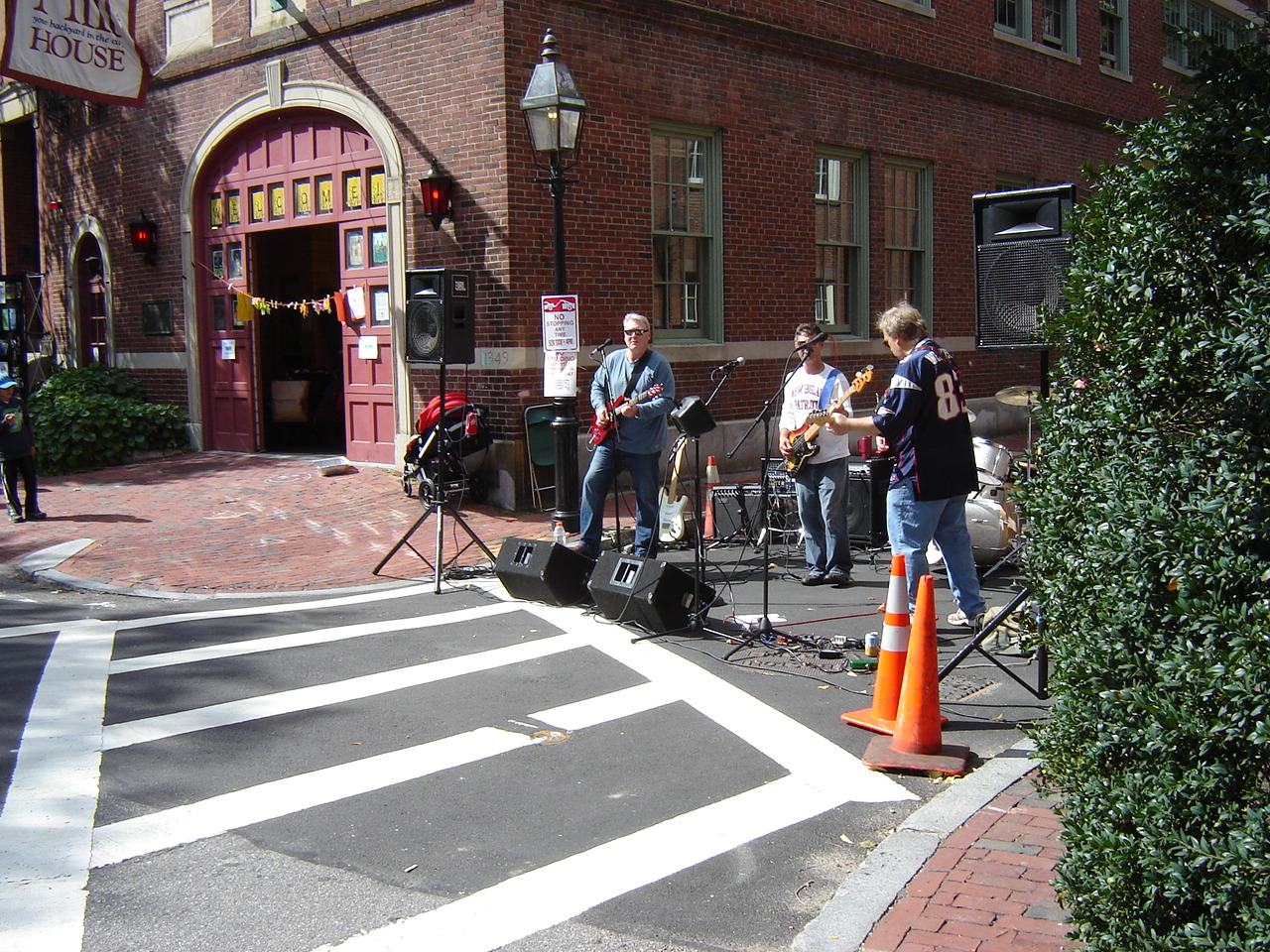
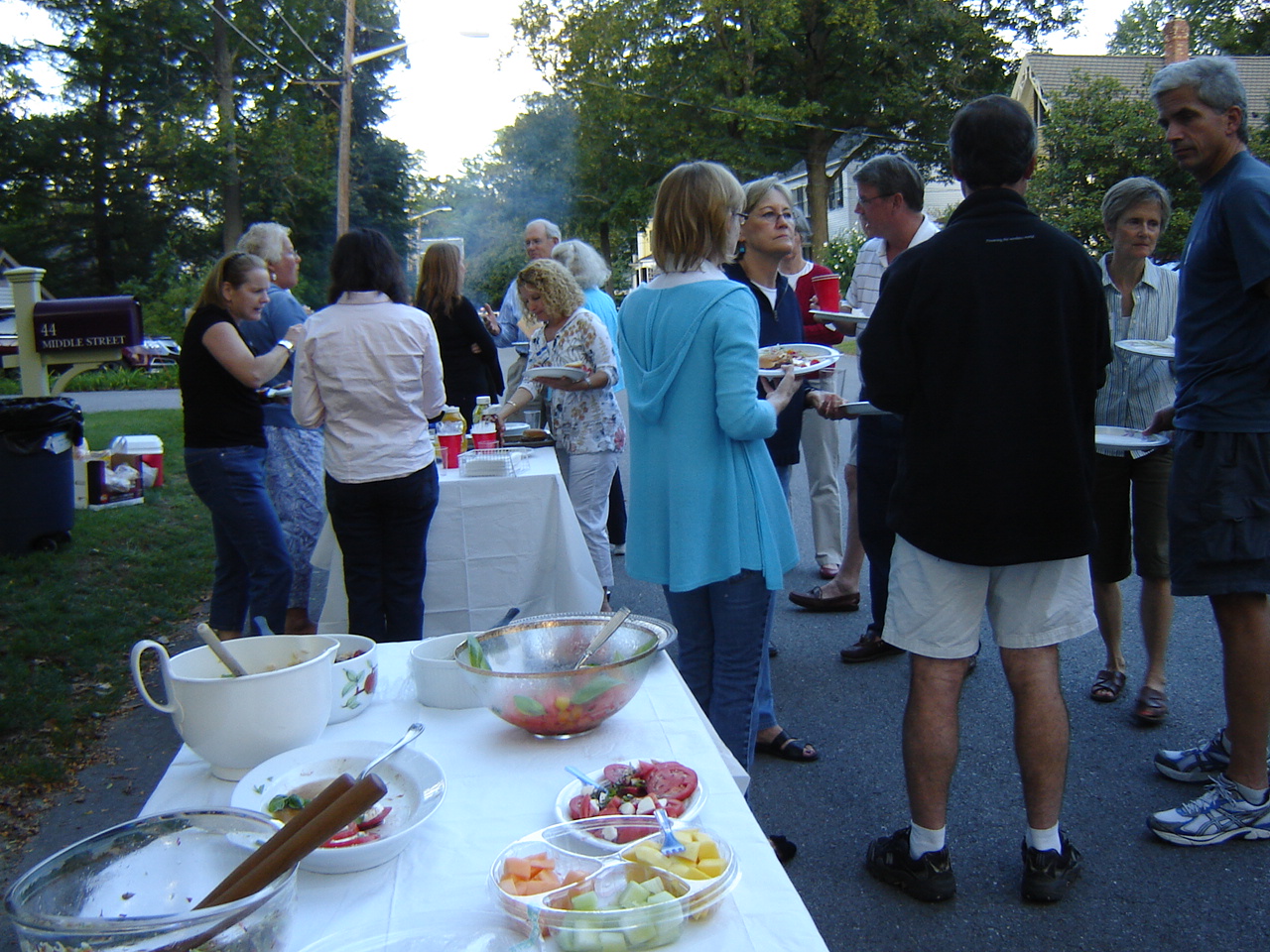
This is the time of year for walnut trees to bear fruit, for bees to bring in the last of the wine, and for block parties. Beacon Hill’s party is way more elaborate than any block party in Concord and is considered a time to raise funds for a cause. See if you can guess which party is which.

Orchard
by H. D.

I saw the first pear
as it fell—
the honey-seeking, golden-banded,
the yellow swarm
was not more fleet than I,
(spare us from loveliness)
and I fell prostrate
crying:
you have flayed us
with your blossoms,
spare us the beauty
of fruit-trees.

The honey-seeking
paused not,
the air thundered their song,
and I alone was prostrate.

O rough-hewn
god of the orchard,
I bring you an offering—
do you, alone unbeautiful,
son of the god,
spare us from loveliness:

these fallen hazel-nuts,
stripped late of their green sheaths,
grapes, red-purple,
their berries
dripping with wine,
pomegranates already broken,
and shrunken figs
and quinces untouched,
I bring you as offering.

Read Full Post »