Feeds:
Posts
Comments

Posts Tagged ‘incarceration’

Photo: Kerem Yücel/MPR News via Oregon Public Broadcasting.
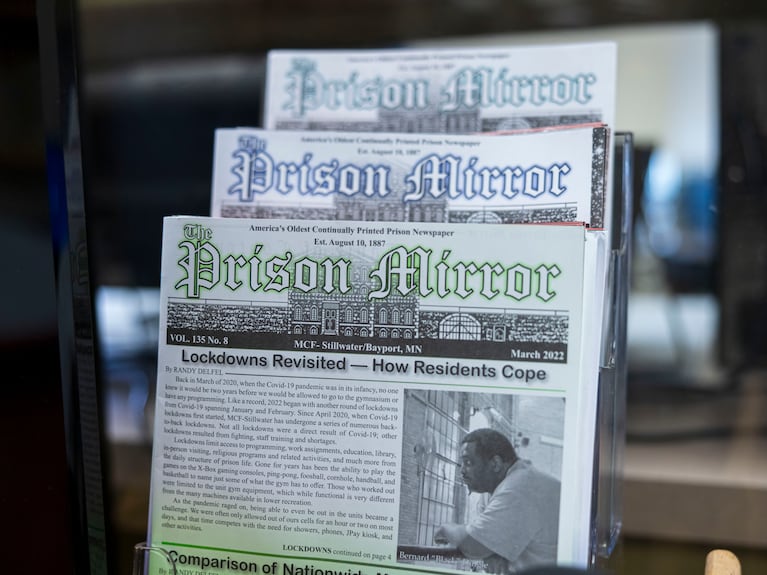
Previous issues of the Prison Mirror, which has been publishing since 1887, sit on display in the Minnesota Correctional Facility in Stillwater.

From time to time I like to run a story about interesting prison programs or ex-offenders trying to make good. I’m pretty sure we don’t have the right kind of prisons in the US. You may recall me writing about the system in Norway, which is completely different. (Click here and here.)

Meg Anderson (Minnesota Public Radio NPR) wrote recently about a longtime enrichment program at a prison in Minnesota.

“Inside a state prison near Stillwater, Minn., past the guards and the wings of cells stacked one on top of another, tucked in the corner of a computer lab, Richard Adams and Paul Gordon are fervently discussing grammar.

“Both men are on staff at the Prison Mirror, a newspaper made by and for the people held at the Minnesota Correctional Facility – Stillwater. Gordon had written a profile on the prison art instructor. He read it aloud to Adams. …

“Conversations like this have been happening in this prison for more than a century. The Prison Mirror is one of the oldest prison newspapers in the country, running since 1887. Publications like this aren’t common, but in an era where many journalism outlets in the free world are struggling to thrive amid scores of layoffs, journalism behind bars is actually growing.

“ ‘Overall we do see a growth and a lot of interest in starting publications, starting podcasts even. And so that’s really quite exciting,’ says Yukari Kane, CEO of the Prison Journalism Project.

“Thirty years ago, she says there were estimated to be only six prison newspapers. Today, there are more than two dozen. That doesn’t take into account the hundreds of incarcerated writers submitting work to publications on the outside, like The Marshall Project’s Life Inside series.

“Kane says this kind of work can offer a window into what prison is actually like, one that prison administrators aren’t necessarily going to offer up freely. … Even if a newspaper doesn’t circulate far beyond the prison yard, it can offer a sense of empowerment for its writers. …

“The Stillwater prisoners write book reviews, legal explainers, and summaries of local, national and international events for the monthly newspaper. One man recently submitted an essay on homesickness. Another wrote an editorial criticizing lockdowns. The men on staff — there are only three of them — had to apply for these unpaid jobs, and they’re highly sought after.

“Adams says the job requires a lot of reading and research about what’s going on around the world and the prison. There are challenges. They don’t have the internet, for instance, so they have to rely on print media and articles printed out by prison staff.

“The prison also has to approve everything the paper publishes. The men say that can limit what they write about, especially if they want to report on the harsher aspects of their lives.

“ ‘I am limited in the sense of, they’re not going to let me print all types of crazy things about the water or the lockdowns or getting restrained or anything like that, which is understandable to a degree,’ Gordon says.

“Last fall, around 100 Stillwater prisoners refused to return to their cells. Gordon says the disobedience was their way of protesting extreme heat, poor water quality, and staffing shortages, which he says often result in lockdowns. He plans to write about it, but says he has been retaliated against in the past for sending reporting to outside publications.

“ ‘I was a lot more aggressive in my writing back then, and that was a learning experience for me,’ he says.

Brian Nam-Sonenstein, a senior editor at the Prison Policy Initiative, says punishment for doing journalism behind bars is common. ‘You can lose what are called good time credits, which are essentially time off of your sentence based on good behavior. You could go to solitary confinement. You could have your privileges revoked,’ he says. …

“Marty Hawthorne works at the Stillwater prison and oversees the Prison Mirror.

“ ‘They have a lot of freedom. My philosophy is: It’s their newspaper. It’s not my newspaper,’ he says. ‘I believe they have a right to do what they’re doing.’ He says if the men plan to publish something critical, he makes sure whoever they’re writing about has an opportunity to respond. But he says he also pushes back when leadership tries to censor stories he believes are fair.”

More at NPR, here. No firewall.
Read Full Post »

Photo: Marissa Leshnov via the Guardian.
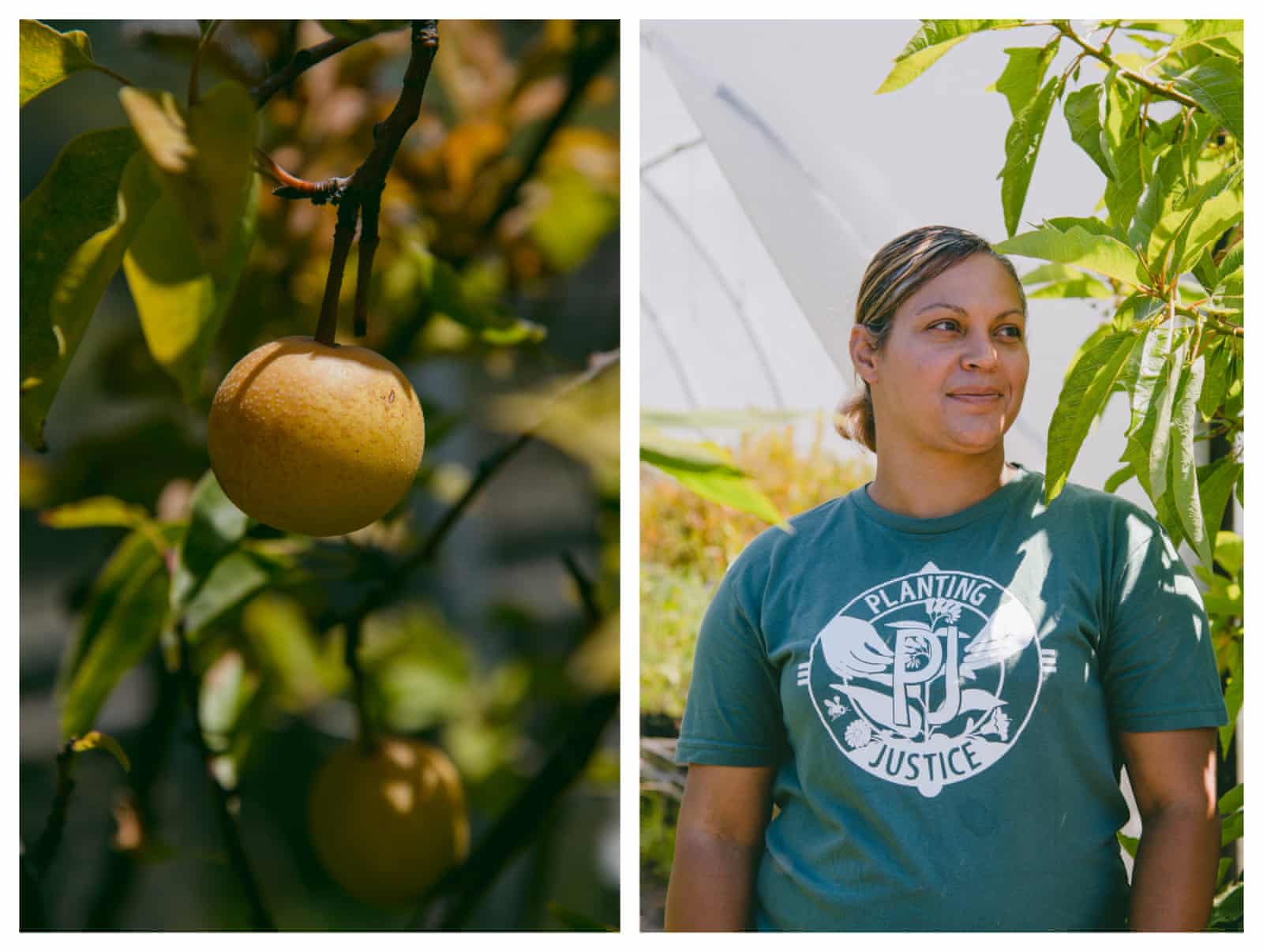
From the Guardian: Sol Mercado says her work as a gardener has brought her comfort and helped to reconnect with her roots.

Can Nature turn a life around? We’ve had a number of articles suggesting the answer is yes. Among others, our 2023 story about a traumatized Iraq veteran who discovered hiking in the wilderness.

Now Caitlin Yoshiko Kandil, of the Guardian, describes the role that an urban garden can play in life after prison.

“When Sol Mercado was incarcerated, one of her few sources of comfort was to dig her hands into dirt. Coming from a family of sugarcane and coffee farm workers in Puerto Rico, a love of gardening was in her roots. But it wasn’t until she was in prison and started participating in a gardening program that she truly connected with this part of her heritage. …

“Mercado – who was released a year and a half ago – now works for Planting Justice, a food justice organization based in Oakland, California, that tackles inequalities in the industrialized food system, from the underpayment of food workers to the lack of fresh produce in low-income neighborhoods.

“Planting Justice addresses food sovereignty with marginalized communities – in particular people who have been affected by the criminal justice system – through gardening workshops in prisons and jails, such as San Quentin state prison, and jobs for those formerly incarcerated.

“For Mercado, 36, the organization helped turn her life around. …

“ ‘What I learned in prison is that if I want to change, if I want to blossom, I need to work on myself and remove unhealthy things from my life,’ she said. ‘It’s the same as a plant. A plant, if you don’t weed it, if you don’t prune it, if you don’t water it, it’s not going to grow and give fruit.’

“Planting Justice’s two-acre (nearly 1 hectare) nursery – which grows more than 1,200 varieties of plants – is tucked between a busy highway and a railroad line in Sobrante Park, a low-income, predominantly Black and Latino neighborhood that’s long been a food desert with no grocery stores within walking distance. The land the nursery sits on once belonged to the Indigenous Ohlone people, so Planting Justice is working with the Sogorea Te’ Land Trust, a local organization that helps facilitate the return of Indigenous land to Indigenous people; once the transfer is complete, Planting Justice will lease the land from them.

“Founded in 2009, Planting Justice has installed 550 edible gardens at schools, community centers and homes; hosts education programs for local youth; distributes produce to local residents; gives away free fruit smoothies at Bay Area Rapid Transit stations; and sources produce for the Good Table, a nearby cafe where diners pay what they can afford.

“As part of a new initiative that started this year, Planting Justice is also planting 1,000 fruit trees – apple, pear, pomegranate, peach, olive and fig trees – in East Oakland homes for free.

“Like Mercado, many Planting Justice employees were formerly incarcerated. Some came to the organization through re-entry programs and partnerships in jails and prisons, while others found their way after their release.

Planting Justice says its recidivism rate is 2%, far lower than California’s rate of nearly 50%. …

“Bilal Coleman said he first heard about Planting Justice while incarcerated at San Quentin state prison, north of San Francisco. He was coming to the end of his 20-year sentence and was participating in a partner program called Insight Garden – and Planting Justice was advertising that it was hiring people returning home to the San Francisco Bay Area.

“Coleman said that gardening is in his roots. “Ever since I can remember, there’s been a garden in my family,” he said. But that wasn’t the immediate draw to Planting Justice; it was the security of having a job lined up after his parole, benefits and good pay – salaries start at $19 an hour. ‘It was a chance to get on my feet before I actually paroled,’ he said. …

“Planting Justice’s presence can be felt throughout Sobrante Park, revitalizing a neighborhood that’s long been in decline. Sobrante Park has been ‘underresourced and overpenalized for generations, where there aren’t the same food options,’ said Julia Toro, nursery office manager.

“Covonne Page, Planting Justice’s land team lead, was born and raised here, and recalls a time when things were different. The 33-year-old said that he and his friends would ride inflatable rafts on the San Leandro Creek, which was lined with wild blackberry bushes and filled with lizards and turtles. Most houses had fruit trees and vegetable gardens in the back yard, and families would trade their harvest so that everyone had their fill of oranges, loquats, lemons and plums. This bounty meant the community ate well; Page remembers his grandmother’s blackberry cobbler and his grandfather’s plum jam. …

“But years of disinvestment, longtime residents leaving – often for prison – and environmental degradation have decimated this landscape, Page said. … By bringing fruit trees back to people’s yards and teaching them how to garden, Planting Justice is not only offering much-needed jobs to the community; it’s revitalizing its food culture and sovereignty.”

More at the Guardian, here. No paywall. Great photographs by Marissa Leshnov.

Read Full Post »

Photo: STR/Reuters/Landov.
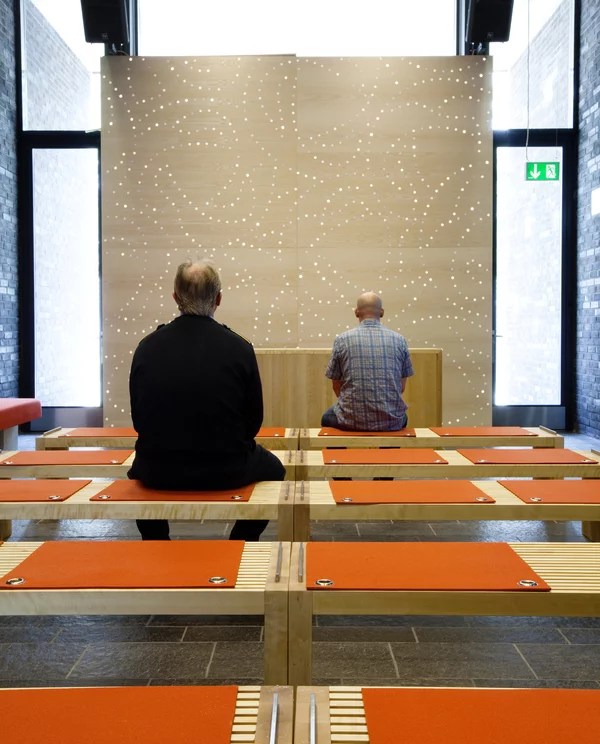
Two men sit inside the chapel at Halden prison in far southeast Norway in this picture taken in 2010. Prisoners here spend 12 hours a day in their cells, compared to many U.S. prisons where inmates spend all but one hour in their cell. NPR’s 2015 story is here.

Some years ago (2016), I wrote about research on Norway’s humane prisons. In a December 2023 Christian Science Monitor article, Troy Aidan Sambajon shows that some US prisons are moving in the same direction. Or at least testing the concept.

“Earlier this year,” he reports, “California Gov. Gavin Newsom announced a new vision for the San Quentin State Penitentiary, centered on rehabilitation and job training, inspired by another prison system that has halved its recidivism rate – in Norway. …

“About 2 out of 3 Americans released from jails and prisons per year are arrested again, and 50% are re-incarcerated, according to the Harvard Political Review. In Norway, that rate is as low as 20%. 

‘It has everything to do with your social safety net, your network, your support structure, and your job opportunities.’

“As more U.S. states seek to improve their correctional systems, the Norwegian model could prove key. It aims to create a less hostile environment, both for people serving time and for prison staff, with the goal of more successfully helping incarcerated people reintegrate into society. …

“ ‘Overcrowding, violence, and long sentences are common in U.S. prisons, often creating a climate of hopelessness for incarcerated people, as well as people who work there,’ says Jordan Hyatt, associate professor of criminology and justice studies at Drexel University. Correctional employees experience some of the highest rates of mental illness, sleep disorders, and physical health issues of all U.S. workers, a 2018 Lexipol report found. …

“Making a prison environment more humane will translate to a more efficient prison system overall, experts say. And the Norwegian model prioritizes rehabilitation and reintegration over punishment. Safety, transparency, and innovation are considered fundamental to its approach. Core practices aim to create a feeling that life as part of a community continues even behind walls and bars, says Synøve Andersen, postdoctoral research criminologist at the University of Oslo. 

“In some Norwegian prisons, incarcerated people wear their own clothes, cook their own meals, and work in jobs that prepare them for employment, says Dr. Andersen. They have their own space, too, since single-unit cells are the norm. …

“While they are separated from society, incarcerated people should experience normal, daily routines so they can have increased opportunities to reform without being preoccupied with fear of violence from other inmates, she argues.

“The principle of dynamic security means correctional officers also must have more complex social duties besides safety and security, including actively observing and engaging with the prison population, understanding individuals’ unique needs, calculating flight risks. …

“Washington state’s Lt. Lance Graham works within restricted housing and solitary confinement units, an environment he says lacks empathy and connection with those incarcerated. ‘We never had the opportunity to connect with the people in our care.’ 

“But when visiting Norway’s isolation units, he saw [that] their staff was much more engaged with the prison population and was much happier. 

“ ‘This program really promotes staff wellness, changing the relationship that you have with the people in your care,’ says Lieutenant Graham. ‘So you’re not going to have as many instances of fight or flight syndrome in your daily work. You reach common ground and talk like normal folks.’

“ ‘If you actually want to change the prison environment, invest in staff,’ says Dr. Andersen. ‘They’re there all the time. They’re doing the work.’

Amend, a nonprofit from the University of California, San Francisco, partnered with four states – California, South Dakota, Oregon, and Washington – to introduce resources inspired by Norwegian principles and sponsor educational trips to Norway for U.S. correctional leaders. 

“At California’s San Quentin, Governor Newsom hopes to emphasize inmate job training for high-paying trades such as plumbers, electricians, or truck drivers. … In Washington state, prison staff began developing supportive working relationships with the incarcerated in their care by developing individual rehabilitation plans. … In North Dakota, former Director of Corrections Leann Bertsch says after revamping the training and responsibilities of prison officers, interactions between staff and inmates felt respectful and calmer. …

“The Pennsylvania Department of Corrections collaborated with the Norwegian Correctional Services to pilot Little Scandinavia, a transformed housing unit operated at half the regular capacity to allow for individual cells. The on-duty officers at Little Scandinavia have reported enjoying their work much more now and there haven’t been any reports of violence since its opening in May 2022, says Dr. Andersen.

“Norway receives much attention for its low rate of recidivism, but some experts disagree on the measure as a rate of success. ‘[Recidivism] is not just a product of the correctional system. It has everything to do with your social safety net, your network, your support structure, and your job opportunities,’ said Dr. Andersen.”

More at the Monitor, here.

Read Full Post »

Photo: Riley Robinson/Monitor Staff.
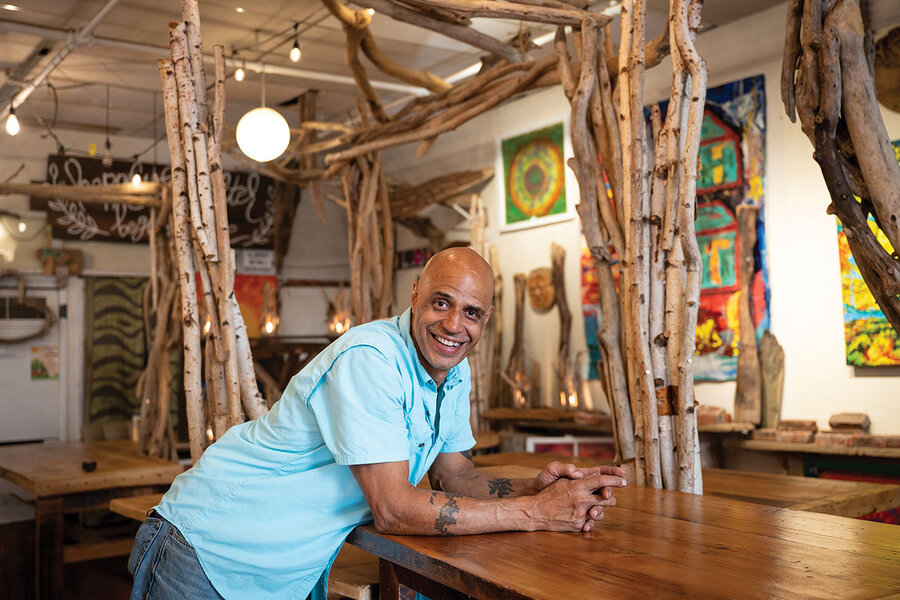
Artist Danny Killion poses in his gallery, Weathered Wood, in Troy, New York. He is one of many who have benefited from the Prison Arts Program.

Some folks have no sympathy for people in prison and would begrudge any type of cultural program that might help them. “If they wanted to do [art, music, a GED …], they shouldn’t have committed the crime.”

But many of us know that life circumstances and not always conscious decisions can accumulate until someone is in big trouble. I like the Norwegian approach to corrections, here, and the often small but meaningful work that is done in the US.

Troy Aidan Sambajon wrote about an example at the Christian Science Monitor.

On a long table, Jeffrey Greene prepares bundles of colored pencils for delivery to Connecticut state prisons. …

“Finished artwork lines the shelves of this airy warehouse, home to the permanent collection of the Prison Arts Program. Mr. Greene reaches up to a high shelf and retrieves a model RV, rendered in detail down to the windowsills. The shingles were cut from cardboard with a nail clipper and glued with a mixture of floor wax and nondairy creamer. Another artist unraveled a prison blanket and crocheted the threads into a 3D horse. …

“[Mr. Greene] has known his students for years, even decades. He can describe the medium they use and the metaphors their pieces convey, and has seen how the artistic process helps students deal with issues like depression, anxiety, and post-traumatic stress disorder.

‘Art unsettles habitual modes of thought and gives you the opportunity to think differently,’ says Robin Greeley, professor of art history at the University of Connecticut.

” ‘It can disrupt your whole routine and can create a sense of wonder.’

“The Prison Arts Program is one of the oldest correctional arts programs in the United States. It’s the longest-running program of Community Partners in Action, a criminal justice nonprofit based in Hartford. …

“Mr. Greene never intended to work in the prison system. After graduating from Hamilton College in New York, he volunteered to teach art workshops in prison on a whim. But he’s never forgotten the impression left by his first day on the job. 

“ ‘Everyone’s developing in this artificial, man-made, absurd, adversarial environment. It’s ridiculous,’ recalls Mr. Greene. …

“ ‘What drives Jeff really is the ability to show the humanity of the prison, of the people that are incarcerated,’ says Beth Hines, director of Community Partners in Action. ‘They know they can count on him when they get out.’

“In each prison he visits, Mr. Greene instructs his students to create art that only exists because they exist. He says it’s about more than finding a hobby while behind bars: ‘They are people that are coming out into the world with this incredible empathy and curiosity.’ Even if they never leave the prison system, he adds, that mindset can have a positive effect on others. …

“For years, Natasha Kinion felt like she’d been swallowed alive in prison. ‘I was guilt-ridden. I was shameful. I was really broken,’ she says in a phone interview. 

“A mother of four who has experienced domestic abuse and substance addiction, Ms. Kinion spent 13 years at York Correctional Institution in Connecticut. There she started making abstract art. 

“ ‘It took me at least the first six years of my incarceration to really open up and allow the healing process to start,’ says Ms. Kinion. …

“Mr. Greene helped Ms. Kinion send her artwork to her children. Her daughter Mayonashia Jones once received a drawing of a butterfly trying to fly with broken wings. She remembers thinking of her mom and wondering, ‘Has she always felt like that?’ …

“Since her release in 2019, Ms. Kinion has published a book about her journey, titled Stand Up You’ve Been Down for Too Long, and has opened her own digital art company, Dezigning Deztiny. 

“ ‘I never told him this … but Jeff is really my hero,’ says Ms. Kinion.

“Danny Killion had little interest in art when he was robbing banks in Connecticut. Then he was caught and sentenced to 12 years in prison. ‘Prison can be a very cold, hard environment,’ says Mr. Killion. …

“He spent 10 years in the Prison Arts Program, learning to concentrate on the artistic process and find solace in a concrete cell. 

“ ‘I’ve never met anyone who’s a more profound teacher,’ says Mr. Killion, who finished his sentence in 2007. As he found his feet in society, Mr. Greene would drop by, offering art materials and a listening ear.

“After working in construction, Mr. Killion began creating furniture using driftwood from the Hudson River. In 2013, he opened his own art studio and gallery, Weathered Wood, in Troy, New York. He traces his transformation back to those first classes with Mr. Greene. …

“This year, Mr. Killion unveiled his first public commission, a sculpture of twisted scrap metal depicting a man breaking through chains, installed at Old New-Gate Prison, a historical site in East Granby, Connecticut. Mr. Greene was there too, both men now standing outside prison gates.”

More at the Monitor, here.

Read Full Post »

Photo: Honolulu Civil Beat.
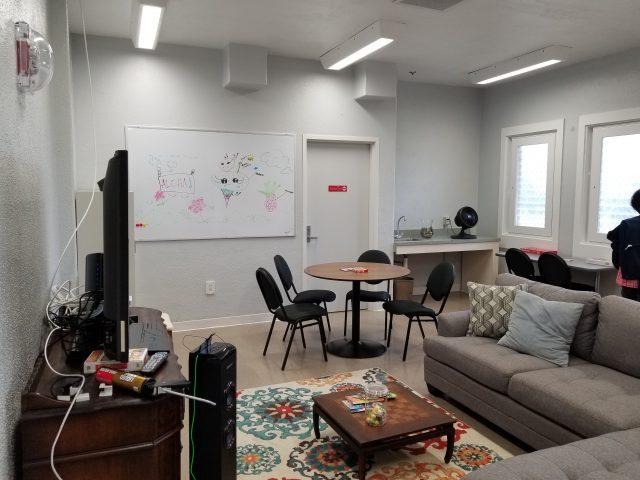
The inside of the Hale Lanipolua Assessment Center, which is run by Hale Kipa and serves as an alternative to the Hawaii Youth Correctional Facility. 

Hawaii has a different approach to helping kids who get in trouble. There’s an understanding that girls in particular often get started in crime after serious childhood abuse — and that locking them up doesn’t solve anything. (See my 2012 post about a Boston theatrical production by former inmates that spelled out just how females can get trapped in an endless cycle of crime and punishment.)

Claire Healy writes at the Washington Post, “When Mark Patterson took over as administrator of the Hawaii Youth Correctional Facility in 2014, he inherited 500 acres of farm ranch — and the care of 26 boys and seven girls between 13 and 19 years old.

“By 2016, his facility, in Kailua, Oahu, was only holding between five and six girls at a time. And in June, the last girl left the facility. For the first time, there are no girls incarcerated in the state of Hawaii.

“Patterson said this moment is ’20 years in the making,’ and the result of a systemwide effort to divert girls from the judicial system and into trauma-based care programs. The number of incarcerated boys has also lowered significantly in the past decade, he added.

“Patterson said HYCF is a last resort — the kids there ‘have run away from programs 10 to 11 times’ and are the most vulnerable of the high-risk youth. But various state officials have agreed that ‘we no longer want to keep sending our kids to prison,’ Patterson said.

‘What I’m trying to do is end the punitive model that we have so long used for our kids, and we replace it with a therapeutic model.’

“He added, ‘Do we really have to put a child in prison because she ran away? What kind of other environment is more conducive for her to heal and be successful in the community?’

“Hawaii isn’t the only state to reach zero girls in long-term placement facilities. According to Lindsay Rosenthal, director of the Vera Institute’s Initiative to End Girls’ Incarceration, Vermont has zero long-term placement facilities for girls, and for nine months in 2020, Maine had zero incarcerated girls statewide. Since February 2021, New York City hasn’t had more than two girls in the state’s juvenile placement facility at any given time.

“This is part of a larger trend in juvenile justice reform: Since 2000, more than 1,000 juvenile facilities have closed, including two-thirds of the largest facilities. And between 2000 and 2018, youth incarceration rates dropped by more than half, according to the Square One Project, a justice reform initiative.

“But just as women are the fastest-growing prison population, the proportion of girls in juvenile detention has increased even as overall numbers have gone down. … As advocates point out, the majority of incarcerated girls are in prison for low-level offenses, often influenced by a history of abuse — as noted in various research — or systemic challenges, such as poverty.

“Rosenthal [emphasized] that a state reaching zero doesn’t necessarily reflect progress — Vermont has sent some girls to facilities in New Hampshire, and placed at least one girl into an adult prison, for example — without the presence of community-based alternative programming. HYCF is an example of a facility that has seen such an investment pay off, she said.

“Gender-focused programming is essential, Rosethal added, because of ‘the criminalization of sexual abuse.’ This legacy, she said, reaches back to colonization and slavery in the United States and has resulted in the disproportionately high incarceration rates of Black and Indigenous women and girls. …

“Patterson said the movement to replace punitive systems with trauma-informed care in Hawaii’s juvenile justice system reaches back to 2004, when Judge Karen Radius, a now-retired First Circuit Family Court judge, founded Girls Court. One of the first in the nation, the program aimed to address the specific crimes and trauma history of girls. …

“Many influential programs in the state followed the formation of Girls Court. In 2009, Project Kealahou launched as a six-year, federally funded program aimed at improving services for Hawaii’s at-risk female youth. And in 2013, Hawaii created the Juvenile Justice Reform Task Force to analyze the juvenile justice system in Hawaii and provide policy recommendations aimed at reducing the HYCF population.

“Then, in 2018, Patterson partnered with the Initiative to End Girls’ Incarceration and drafted a ’10-year strategy to get to zero.’ The overarching goal was to focus on the underlying trauma the youth were suffering from, instead of the crimes they were charged with, Patterson said.

“Before working with youths, Patterson was the warden of Hawaii’s only women’s prison, the Women’s Community Correctional Center (WCCC), across the street. He said his time there showed him how many of the women there could trace their trauma back to their home life as a child.

“That same year, he set out transitioning HYCF into the Kawailoa Youth and Family Wellness Center, remodeling the program around trauma-informed care — a framework for care providers to understand and consider the impact an individual’s trauma history has on their life and health. Today’s campus has a homeless shelter, an assessment center, a vocational program serving youths ages 15 to 24, a farm managed by a nonprofit and a high school for high-risk youths.

“Guiding this transformation was Patterson’s goal of creating a pu’uhonua — a place created within a traditional Hawaiian village for conflict resolution and forgiveness — for Hawaii’s most vulnerable youths.

“As Patterson described it, a pu’uhonua acknowledges and identifies a wrong that has been committed in the village. But unlike a punitive system, ‘we’re going to teach you how to live with the village and manage the wrong,’ he said. ‘So that you’re no longer an outcast, but you’re still welcome back.’ ”

More at the Post, here.

Read Full Post »

Photo: Erika Page/The Christian Science Monitor.
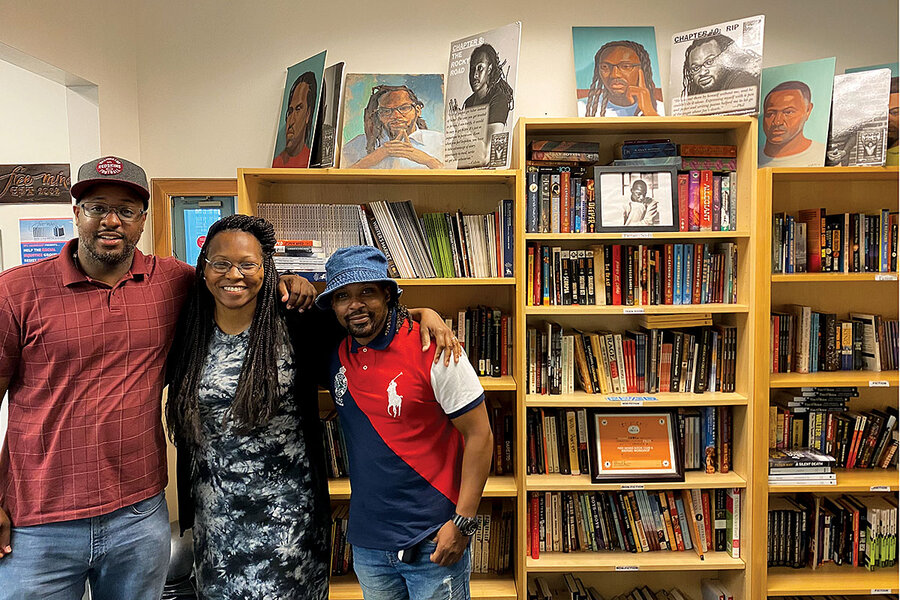
“Craig Watson (left), Keela Hailes (center), and Shannon Battle – seen here at the office of Free Minds Book Club & Writing Workshop in Washington on June 21, 2021 – form a network of support for formerly incarcerated individuals
,” reports the Monitor.

If you were following this blog five years ago, you might have caught the post about Norway’s enlightened prison system, which focuses less on punishment than on rehabilitation (here). Whenever I read about the system in the US and remember Norway’s impressive success, I just feel sad.

In this country, it’s pretty much up to nonprofits and volunteers to reacclimate ex-offenders to society and prevent recidivism. Today’s story is about one such effort, one that a certain US prison allows to enter its walls.

Erika Page reports at the Christian Science Monitor, “Craig Watson only showed up at that poetry workshop back in 2015 because his prison compound’s championship basketball game was canceled. ‘I was just sitting there, like, “I don’t write poems. I don’t rhyme,” ‘ he recalls, chuckling.

“The facilitator from Free Minds Book Club & Writing Workshop told him to forget about rhyming and just express himself. The blank page in front of him began to fill up. Poetry offered an outlet for expressing difficult feelings about a childhood marked by violence. During community ‘write nights,’ Free Minds members gave him positive feedback, and he began to lean into that network of support.

“Free Minds, founded in 2002, operates book clubs and writing workshops in prisons around the United States and at the jail and juvenile detention center in Washington, offering constructive connections among its nearly 2,000 members. Members never ‘graduate’ but remain part of the organization for life; thousands are on its waitlist.

When incarcerated people are released, Free Minds helps them find their feet back home through its reentry program. 

“When Mr. Watson returned from prison through the Second Look Amendment Act in 2019, he had 22 years of catching up to do. Free Minds helped him with practical things, like finding his first job, but most important, the organization became an extended family that kept Mr. Watson from becoming another statistic.  

“Every year, the U.S. releases 7 million people from jail and more than 600,000 from prison. Of the latter, more than two-thirds are rearrested within three years. Many return to communities of historical underinvestment with limited education and weak social support. Criminal records make the job search difficult, and drug use and suicide rates are high, according to a report by the Office of Disease Prevention and Health Promotion. 

“Free Minds offers its 330 reentry members workshops, coaching, counseling, group support, and connections to opportunities. But during the pandemic, Mr. Watson, who was serving as a Free Minds poetry ambassador, noticed he wasn’t hearing from a lot of reentry members.

“So in January, he presented his idea: a formalized peer support program, with the goal that every reentry member would have someone to talk to who had been through it themselves. Today, Mr. Watson is one of 12 peer supporters guiding others through the emotional and logistical challenges of starting over after incarceration. That level of peer involvement is key to the success of reentry, experts say. …

“Mr. Watson traces his journey as a peer supporter back to a time in solitary confinement in 2005. In many prisons, incarcerated people sent to solitary confinement end up doubled up in cells together. His cellmate had just learned of the death of his mother. Mr. Watson sat with the man, though he barely knew him. The two talked, heart to heart. Mostly, Mr. Watson listened. When his time in solitary confinement ended, Mr. Watson voluntarily stayed longer, to be there for his new friend. 

“ ‘I know how important it is to have somebody when you’re going through something,’ says Mr. Watson. …

” ‘The prison system is designed to break ties, to separate the person who is incarcerated from their community,’ says Tara Libert, co-founder and executive director of Free Minds. She says that peer support does the opposite. ‘They repair, restore, and create new community connections which are essential to successful reentry.’ …

“The peer supporters say that helping others helps them heal, too.

“ ‘After talking with them, we understand what our family was going through – our mothers, our sisters, our brothers,’ says Mr. Watson. ‘That’s where that connection really builds.’ ” 

More at the Monitor, here.

Read Full Post »

The United States has the highest incarceration rate in the world. Some reasons: required minimum sentences, for-profit prisons that lobby officials to get more business, lack of programs to treat addictions. Most US prisons don’t help people who commit crimes to learn better behaviors, and it’s hard for ex-offenders to find jobs when they get out.

According to the Sentencing Project, “In the last forty years, incarceration has increased with rates upwards of 500% despite crime rates decreasing nationally.”

The good news is that here and there, local sheriffs are experimenting with techniques to reduce recidivism, as are individual states. Whether the new programs are motivated by the wish to save public money, by compassion, or for any other reason, the trend is promising.

Mikaela Porter writes at the Hartford Courant about an initiative in Connecticut.

“For years John Pittman was known as a lifer in the state prison here. But now, he’s taken on a new identity: mentor. …

” ‘My philosophy is this: no one is going to save us but us,’ Pittman said in an interview. ‘I’m older than these guys – grandfather age – and if they can learn something from me without being in my situation with a life sentence then I felt I did my job.’

“The pilot program, called T.R.U.E. (Truthfulness to oneself and others, Respect toward the community, Understanding ourselves and what brought us here, Elevating into success) was set up [early this year] for about 70 18- to 25-year-old offenders at the prison. …

“The pilot program started with a visit to Germany, when Gov. Dannel P. Malloy, Correction Commissioner Scott Semple, Vera Institute of Justice President Nicholas Turner toured prisons there.

” ‘We saw people behind bars who had keys to their own cells, cells [they] decorated themselves,’ Turner said. ‘They wore their own street clothes and they cooked their own meals and they worked in the community. People who were there left better off than they had come in.’ …

” ‘This population of 18- to 25-year-olds is responsible for 25 percent of the incidents that we respond to within our correctional institutions,’ Cheshire Warden Scott Erfe said.

“Erfe said approximately 100 correction staff over three shifts will work in the unit, and that workers have taken three weeks of training on human development and behavioral impact, motivational interviewing, mediation and conflict resolution for young offenders, trauma-informed interventions for young adult offenders and family engagement.

“The program includes work on life skills, educational assistance, team-building exercises and family assistance.

” ‘Although this unit is still in its infancy, it is clear that this has a chance to be something truly special,’ Erfe said.” More here.

I particularly like the “U” of T.R.U.E. I believe a lack of self-knowledge probably underlies most of the world’s problems, not just incarceration rates.

Photo: Lauren Schneiderman / Hartford Courant
Inmates talk to Connecticut Gov. Dannel P. Malloy about a rehabilitation program at the Cheshire Correctional Institution. Mentors work with offenders between the ages 18-25 to both make facilities safer and prevent young adults from returning to prison.

Read Full Post »

Dan Holin, who used to run a Concord-Lowell volunteer partnership called the Jericho Road Project, is now director of special projects at UTEC in Lowell. (UTEC doesn’t use the longer title its youth founders originally came up with, but since people ask, it was United Teen Equality Center.)

UTEC describes itself as a nonprofit that “helps young people from Lowell and Lawrence, Mass., trade violence and poverty for social and economic success. It works to remove barriers that confront them when they want to turn their lives around and offers young people paid work experience through its social enterprises: mattress recycling, food services and woodworking.”

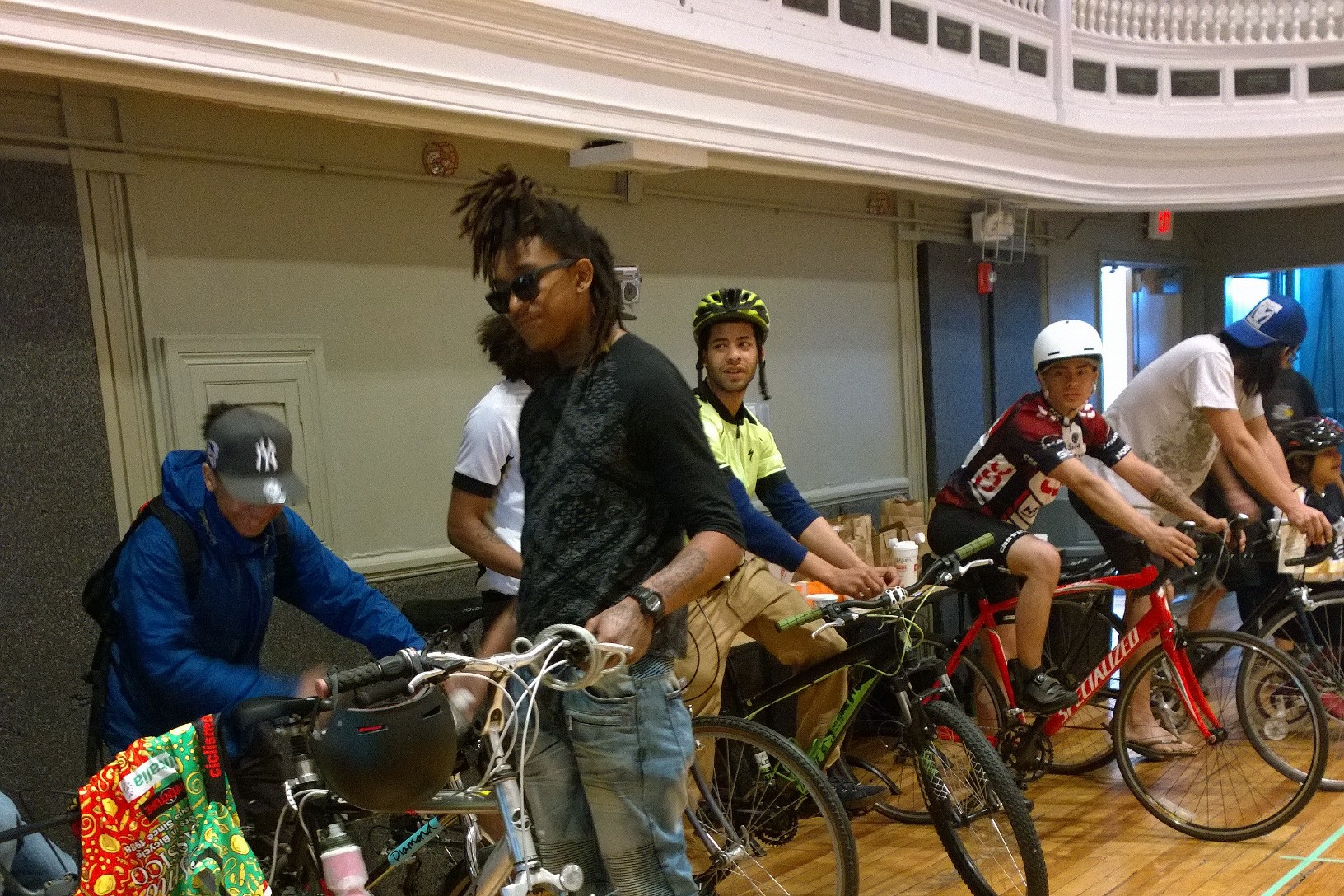
On May 15, Acton’s Pedal Power joined members of the Concord-based Monsters in the Basement bicycling club to share their bike-repair expertise with young people who wanted to acquire bikes and learn to maintain them. Holin, a serious biker himself, organized the event to give UTEC young people two things that he said they normally lack: transportation and fun.

At the event, one of them, Sav, recounted his story of change. Before UTEC I never talked to anyone,” he said. “I was a problem child on the streets. I was hanging around with gangs, selling drugs. I don’t do that now. Seven months ago, I moved from a place with nothing positive. Atlantic City. I let my family know I’m ready to live life. It was hard for me to get into something good: I’ve got a lot of tattoos and a record. But I’m in the culinary program here. It’s a family. They make you feel like you are somebody that has a chance. They give me love like a family. They changed my life for the better. There are so many new things to do here. Yesterday I went kayaking.”

More here.

Sav, in sunglasses, got a good bike at UTEC’s bike event in Lowell on May 15. The bike will provide transportation to his job at UTEC. It will also provide some much needed fun.

051516-UTEC-bike-clinic.jpg

Read Full Post »

I like stories about people who want to help others and then do it by sharing whatever skill they have.

Mary Wiltenburg writes in the Christian Science Monitor about a woman who conveys her love of knitting to men in prison. It took persistence to make it happen.

“The first warden Lynn Zwerling approached with her idea recoiled as if she might bite. The second wouldn’t meet with her. The third claimed to love the idea, then fell out of touch. Outrageous, said the fourth.

“The fifth, Margaret Chippendale, at a minimum-security men’s prison outside Baltimore, didn’t have much hope for Ms. Zwerling’s plan either.

” ‘She brought the program to me and told me: “Your inmates will get hooked. It will relax them, empower them,” ‘ remembers Ms. Chippendale, a 40-year veteran of Maryland’s Department of Public Safety and Correctional Services. ‘And my gut reaction is: “Lynn, I’m always looking for ways to do that, but I’m not sure I’m going to get a bunch of big, macho guys to sit around a table and knit.” ‘ …

“Now, nearly three years later, 254 felons have passed through the Knitting Behind Bars program. Its annual budget is $350, which Zwerling and fellow volunteers raise selling yarn-ball necklaces at the annual Maryland Sheep and Wool Festival. Other donations come through Ravelry.com, a social network for knitters. …

“Adam Hoover is working on an electric blue-and-black striped hat, a fresh pirate skeleton tattoo still raw on his pale forearm.

“The idea that participants give many of the knitted hats they make to local elementary school students appealed to Mr. Hoover. ‘I know how it feels to be out there in the winter sometimes,’ he says. …

“Hoover and [inmate] Harris say the group is a place where they can relax and let their guard down. As they say this, the group falls silent while a red-faced young man with a spider-web tattoo on his neck tells Zwerling about his little brother’s troubles in foster care.

“Nowhere else in the prison do guys share their personal struggles like this, whispers Hoover. ‘I think the ladies bring it out of you,’ says James Russell, working on a pale blue hat beside Hoover. ‘They just have an ease, like you can talk to them about anything. Like a mother would do.’ ”

Read more.

Photograph: Joanne Ciccarello/Christian Science Monitor
Lynn Zwerling, cofounder of Knitting Behind Bars, sits in front of the Jessup Pre-Release Unit in Jessup, Md., where she teaches inmates to knit.

Read Full Post »

I liked Jacki Lyden’s story at National Public Radio about some unusual artists in the 1960s.

“If you traveled by way of Florida’s Route 1 in the 1960s, you might have encountered a young, African-American artist, selling a lushly painted oil landscape from his car. They weren’t allowed in galleries during Jim Crow segregation — but motels, office buildings and tourists would buy their vivid works.

“Together, they formed a loosely associated band around Fort Pierce, Fla., that came to be known as The Highwaymen. At $20 a painting, they made their way out of agricultural jobs like citrus-picking and defined the cultural look of an era.

“Their paintings departed from an earlier tradition of landscape painting in Fort Pierce. A.E. ‘Beanie’ Backus, considered the father of the landscape movement there, caught the clouds and savannahs and inlets that were falling to developers in the mid-century. He would teach many youngsters who came to his studio, including the teenage Alfred Hair, leader of The Highwaymen.

“These artists would take off in their own direction. But success has brought enduring tensions on their home turf, raising questions about art, race and cultural legacy. …

“The who’s who of The Highwaymen can be tricky. (A curator named Jim Fitch coined the name in the ’90s and it stuck.) Gary Monroe, author of The Highwaymen, Florida’s African-American Landscape Artists, counts 26 original painters — 18 of whom are still living. That’s how many were inducted into the Florida Artists Hall of Fame in 2004.”

Lots more.

Photograph: Gary Monroe
Alfred Hair (left) and Robert Lewis

Read Full Post »

An Associated Press story on an “innovative program that allows inmates to reduce their sentences in exchange for generating power” caught the attention of NPR today. It seems that prisoners may volunteer to help “illuminate the town of Santa Rita do Sapucai [Brazil] at night.

“By pedaling, the inmates charge a battery that powers 10 street lamps along a riverside promenade. For every three eight-hour days they spend on the bikes, [the volunteers] get one day shaved off their sentences.

“The project in the southeastern state of Minas Gerais is one of several across Brazil meant to cut recidivism by helping restore an inmate’s sense of self-worth. Prisoners elsewhere can trim their sentences by reading sentences — in books — or taking classes.

“Officials say they’ve heard a few complaints the initiatives are soft on criminals, but there’s been little criticism in the country’s press or in other public forums.” Read more at National Public Radio.

Here is what such a bike might look like.

Photograph: Eric Luse, The Chronicle / San Francisco

Read Full Post »

Today I walked over to the Moakley Courthouse on Boston Harbor to see an art exhibit that the Actors’ Shakespeare Project put together with youth in detention. It consisted of large photographs in which a young person, sometimes in costume, acted out a word from Shakespeare. I did not feel that the presentation in the low-ceiling hallway did the works justice — and having to go through metal detectors to look at them is a bit of a downer — but the concept is positive.

Deborah Becker of WBUR reported that the photographs were part of a larger effort to turn young offenders around with the help of art: “Using the arts as a way to heal and transform is the theme of an exhibit at Boston’s federal courthouse. The artists are children who have been involved with the Massachusetts Department of Youth Services (DYS), the agency that handles youngsters charged with crimes.

“At a recent reception of the artists and DYS officials, 17-year-old Ricky Brown was among the young people proudly describing his work. He helped paint a mural that covers the entire wall of a DYS district office in Springfield. He says it sends a message about kids in the juvenile justice system.

“It brightens up the whole building,” Brown said. “It makes sure to say that we’re not only there to get locked up. It’s there to let people know that we do work together, we do do something positive.”

Read more.

Read Full Post »

I heard the singer Harry Belafonte give a speech today. Boy, is he ever “in the fray” at 85!

He covered his life story: the journey from New York to his mother’s Jamaican relatives to be raised by a poor but big-hearted village; service in WW II; involvement in black theater in Harlem; acting training at the New School with classmates such as Marlon Brando; and social justice activism with people like Eleanor Roosevelt, JFK, Martin Luther King Jr., and Nelson Mandela.

His “monologue” was loaded with intriguing and amusing anecdotes, and his face lit up in that wonderful youthful smile that many will recall.

I was interested to see where the talk would wind up, because it was clear that helping the poor and combating injustice still make him tick. He moved on from his own story to honoring the youthfulness and nonviolence of the Occupy movement and then zeroed in on his current concern, our prison system.

He asked why the country has more people in prison than any other country and why we spend more to build prisons than schools. He acknowledged that states like California and New York are beginning to find better ways to deal with underlying social ills. Belafonte himself volunteers at SingSing to help inmates get a college education.

Bruce Springsteen, he said, once asked him how to deal with some of the issues the country faces, and Belafonte answered that when someone knocks on his door, he opens it. He thinks it is important to hear whatever the knocker has to say.

I can attest to that. As a young teen I myself knocked on his door, and he opened it. I wish I could say I was knocking about social justice, but it was something mundane. That summer people were circulating petitions to keep a road from being built on Fire Island, which we loved partly because there were no roads. Harry Belafonte signed the petition.

Here he is, just having fun.

Read Full Post »

I met Mary Driscoll in playwriting class last summer.

Mary has had a lifetime focus on social justice for marginalized people. She has traveled to foreign countries to work with refugees. For people with HIV, she has taught pilates and the healing art of telling one’s stories. She has performed with mission-oriented theater troupes. And she is the founder of  OWLL, On with Living and Learning, which helps ex-offenders build new lives after prison.

At Mary’s invitation, my husband and I found our way last night to what is a virtual artist colony in the long-abandoned but reemerging warehouse district of South Boston. In Mary’s loft apartment, one of the artists she has drawn into her orbit presented a wonderful cabaret show to raise money for OWLL’s production of Generational Legacy about mothers and children after prison.

Michael Ricca interpreted songs by Michel Legrand with great humor and feeling (including the theme song of our wedding, “What Are You Doing for the Rest of Your Life?”). Ricca is performing the songs and others by Legrand at Scullers in March.

My husband and I enjoyed talking to Mary’s guests  — artists, actors, musicians, social activists, old  friends. We’re especially keen to keep an eye on the doings of the Fort Point Theatre Channel in the Midway Studios building, where Mary  lives and works. The collaborative productions in the Black Box Theatre sound intriguing and offbeat. We like offbeat.

Read Full Post »

Went to see a new play at the Lyric Stage, Superior Donuts. Liked it very much.

Will Lebow was affecting as a disillusioned Chicago donut maker who gets a different perspective on life when a young African American with big ideas applies for work (Omar Robinson). Funny and touching production.

This post is not a review. Rather it is “What I did on Saturday when not doing work I brought home from the office.”

In the morning I was editing an article about Venturing Out, a program that helps ex-offenders tap their street skills to set up legitimate microenterprises. Watching the play, I had a shock of recognition, thinking at first that the story would be about an ex-offender. It wasn’t.

There certainly are plays about such topics. Venturing Out produced one of its own in December, The Castle. And my friend Mary from playwriting class is gearing up for a similar production: “Generational Legacy integrates music and dance and centers around the life of one woman  and her son, both of whom have been incarcerated for non-violent  offenses, … and the challenges and barriers they face as they re-enter their communities.”

I haven’t seen the plays, so I don’t know if they are didactic. Superior Donuts wasn’t. Here’s a scene from it.

Photograph: Mark S. Howard, Boston Globe

Read Full Post »

Older Posts »