Feeds:
Posts
Comments

Posts Tagged ‘iran’

Photo: Gavin Doran.
“Song of the North” involves 483 puppets, 208 animated backgrounds, 16 masks and costumes and nine performers.

Here’s how an incredibly creative Iranian is showing the world something deeper than the stereotypes about his home country.

Jennifer Schuessler wrote about his puppet epic at the New York Times in March.

“On a recent afternoon on 42nd Street in Manhattan, a mythological bird was preparing to take flight. Backstage at the New Victory Theater, a black-clad puppeteer put on an elaborately stylized mask and stepped into a beam of light, throwing the shadow of fluttering hands onto a large scrim.

“Nearby, two other performers were gearing up to practice a sword fight. Then the music started, and a crew of nine began a full run-through of Song of the North, an elaborate shadow puppet staging of stories from the 10th-century Persian epic the Shahnameh.

“From the audience, the show unfolded like a seamless animation. But backstage, the next 80 minutes were half ballet, half mad scramble, as the performers grabbed hundreds of different puppets, props and masks stacked on tables and, with split-second timing, jumped in and out of the light beams streaming from two projectors.

“Leaning against a backstage wall was the show’s creator, Hamid Rahmanian. His role? ‘Stressing out,’ he said.

“Since premiering in 2022 in Paris, Song of the North (which is intended for audiences 8 and older) has received enthusiastic reviews and played to packed houses on three continents. Its arrival in the heart of Times Square [was] timed for Nowruz, the Persian new year celebration. It also coincides with the release of a new contemporary prose translation of the Shahnameh that Rahmanian produced in collaboration with the scholar Ahmad Sadri — the first complete English version by Iranians, Rahmanian said.

“The show is mind-dizzyingly complex, involving 483 puppets, 208 animated backgrounds, 16 character masks and costumes and nine performers who follow more than 2,300 separate cues.

“But the idea behind it, Rahmanian said, is simple: to bring the richness of Persian culture to young audiences and adults whose views of Iran may be dominated by negative stereotypes.

“ ‘Everything about Iran is seen through the lens of politics,’ he said. ‘Iranian culture is a symphony. But in the West, we only hear the drumbeat.’

“The Shahnameh, or Book of Kings, is said to be the longest poem ever written by a single author — twice as long as the Iliad and the Odyssey combined. It was composed by the Persian poet Abu al-Qasem Ferdowsi, who spent 33 years turning centuries of historical and mythological lore into more than 50,000 couplets.

“In Iran, where many people give their children names of characters (Rostom, Sohrab), it remains a cultural touchstone. But growing up in Tehran, Rahmanian, now 56, was resistant to his father’s admonitions to actually read it.

“He was more drawn to visual art, and by 19, he said, had founded his own graphic design business. In 1994, he moved to New York to study computer animation at the Pratt Institute. In 1996, he was hired by Disney, where he worked on projects like Tarzan … but he felt like he didn’t fit in, and left two years later. …

“In 2008, Hamid pivoted to what has become his life’s work: promoting the Shahnameh. … Rahmanian was inspired to create a theatrical piece after seeing a restored version of Lotte Reiniger’s 1926 silent film The Adventures of Prince Achmed, believed to be the oldest surviving full-length animated film. ‘I thought, “I want to do something like that!” ‘ he said. …

“Nazgol Ansarinia, a visual artist visiting from Tehran who was watching backstage, said she was amazed by both the intricacies of the performance and the immediacy of the storytelling.

“ ‘In Iran, everyone knows the stories and characters from the Shahnameh, but the text itself is not that accessible,’ she said. ‘Hamid has really made it accessible.’ ”

More at the Times, here. Beautiful photos and videos.
Read Full Post »

Photo: Kaveh Kazemi/Getty Images.
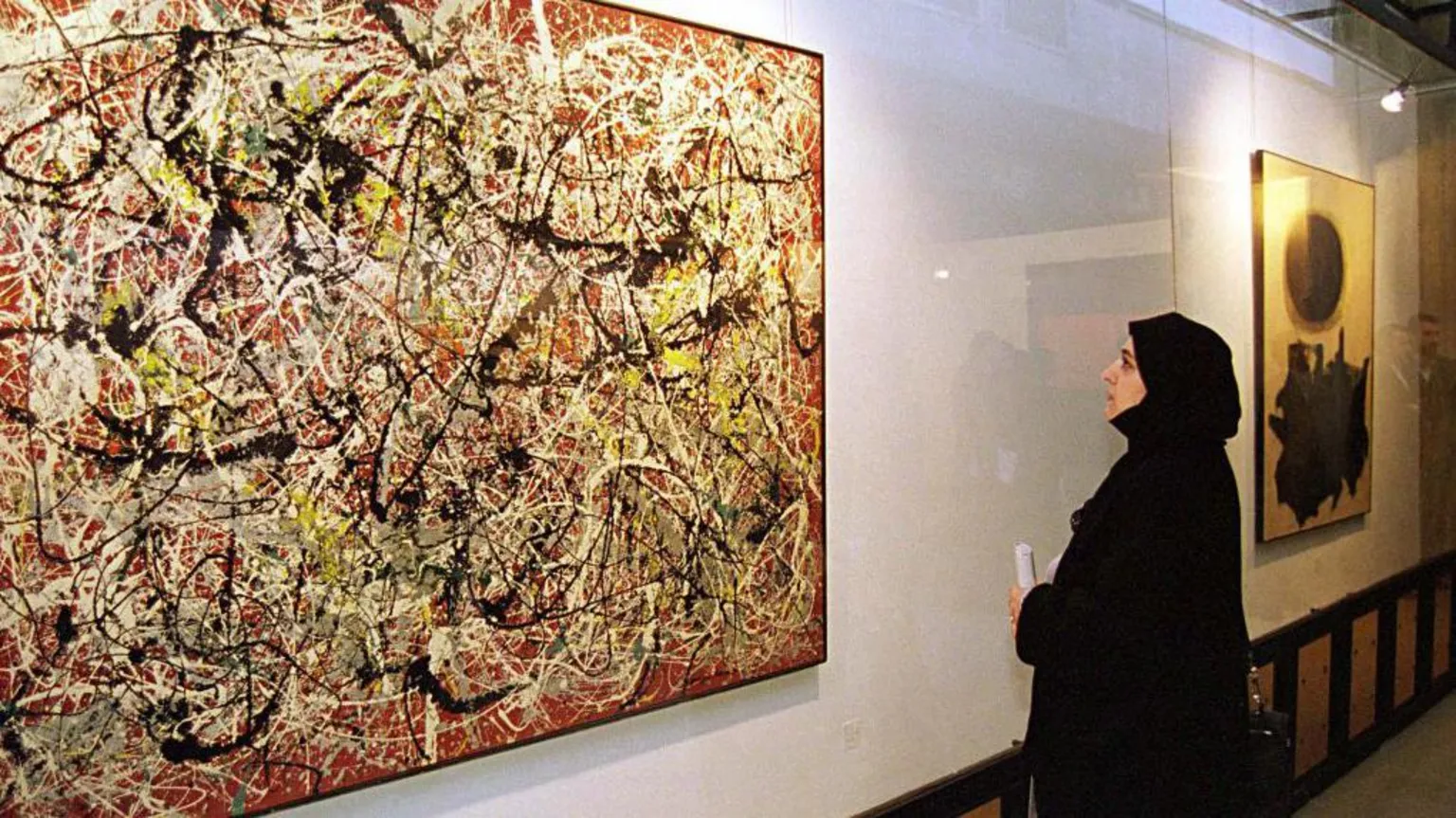
The family of Iran’s former shah collected modern art, including Jackson Pollock’s “Mural On Indian Red Ground.”

A recent BBC story about modern art in Iran (modern like Picasso, Jackson Pollock) took me by surprise. There is so much we don’t know about other countries — especially “enemy” countries.

The art described was collected by the Westernized, pre-Ayatollah Pahlavi family, but what’s interesting to me is the enthusiasm of contemporary Iranians — and the fact they’re allowed to see it.

Armen Nersessian writes, “It has been dubbed one of the world’s rarest treasure troves of art but few people outside its host country know about it. For decades, masterpieces by the likes of Pablo Picasso, Vincent Van Gogh, Andy Warhol and Jackson Pollock have been kept in the basement of a museum in Iran’s capital Tehran, shrouded in mystery. …

“Only a small portion of the work has been exhibited since the 1979 Iranian Revolution but in recent years, the Tehran Museum of Contemporary Art has been showcasing some of its most captivating pieces.

The Eye to Eye exhibition at the Tehran Museum of Contemporary Art, which opened in October 2024, was extended twice due to overwhelming public demand, running until January 2025.

“The display was widely regarded as one of the most significant exhibitions in the history of the museum, and it also became its most visited. …

“Among the artwork is Warhol’s portrait of Farah Pahlavi – Iran’s last queen – a rare piece blending his pop art flair with Iranian cultural history. Elsewhere, Francis Bacon’s work called ‘Two Figures Lying on a Bed with Attendants’ shows figures appearing to spy on two naked men lying on a bed.

“On the opposite wall in the basement of the museum, a portrait of Ayatollah Ruhollah Khomeini, the founder of the Islamic Republic of Iran, is on display in juxtaposition.

“The museum was built in 1977 under the patronage of Pahlavi, the exiled widow of the last Shah of Iran who was overthrown during the revolution. Pahlavi was a passionate art advocate and her cousin, architect Kamran Diba, designed the museum.

“It was established to introduce modern art to Iranians and to bridge Iran closer to the international art scene.

“The museum soon became home to a stunning array of works by luminaries including Picasso, Warhol and Salvador Dali, alongside pieces by leading Iranian modernists, and quickly established itself as a beacon of cultural exchange and artistic ambition.

“But then came the 1979 revolution. Iran became an Islamic republic as the monarchy was overthrown and clerics assumed political control under Ayatollah Khomeini. Many artworks were deemed inappropriate for public display because of nudity, religious sensitivities or political implications.

“Pierre-Auguste Renoir’s ‘Gabrielle with Open Blouse’ was deemed too scandalous. And Warhol’s portrait of the former queen of Iran was too political. In fact, Pahlavi’s portrait was vandalized and torn apart with a knife during the revolutionary turmoil.

“After the revolution, many of the artworks were locked away, collecting dust in a basement that became the stuff of art world legend. It was only in the late 1990s that the museum reclaimed its cultural significance during the reformist presidency of Mohammad Khatami. …

“Some pieces were loaned to major exhibitions in Europe and the United States, briefly reconnecting the collection with the global art world.

“Hamid Keshmirshekan, an art historian based in London, has studied the collection and calls it ‘one of the rarest treasure troves of modern art outside the West.’

“The collection includes Henry’s Moore’s ‘Reclining Figure’ series – an iconic piece by one of Britain’s most celebrated sculptors – and Jackson Pollock’s ‘Mural on Indian Red Ground.’ …

“Picasso’s ‘The Painter and His Model’ – his largest canvas from 1927 – also features, a strong example of his abstract works from the post-cubism period. And there is Van Gogh’s ‘At Eternity’s Gate’ – one of the very rare survivals of his first printmaking campaign during which he produced six lithographs in November 1882. …

“Challenges remain for the museum which operates under a tight budget. Shifting political priorities mean that it often functions more as a cultural hub than a traditional museum. Yet it continues to be a remarkable institution — an unlikely guardian of modern art masterpieces in the heart of Tehran.”

More at the BBC, here.

Read Full Post »

Photo: Sky2105, CC BY-SA 3.0/Wikimedia Commons.
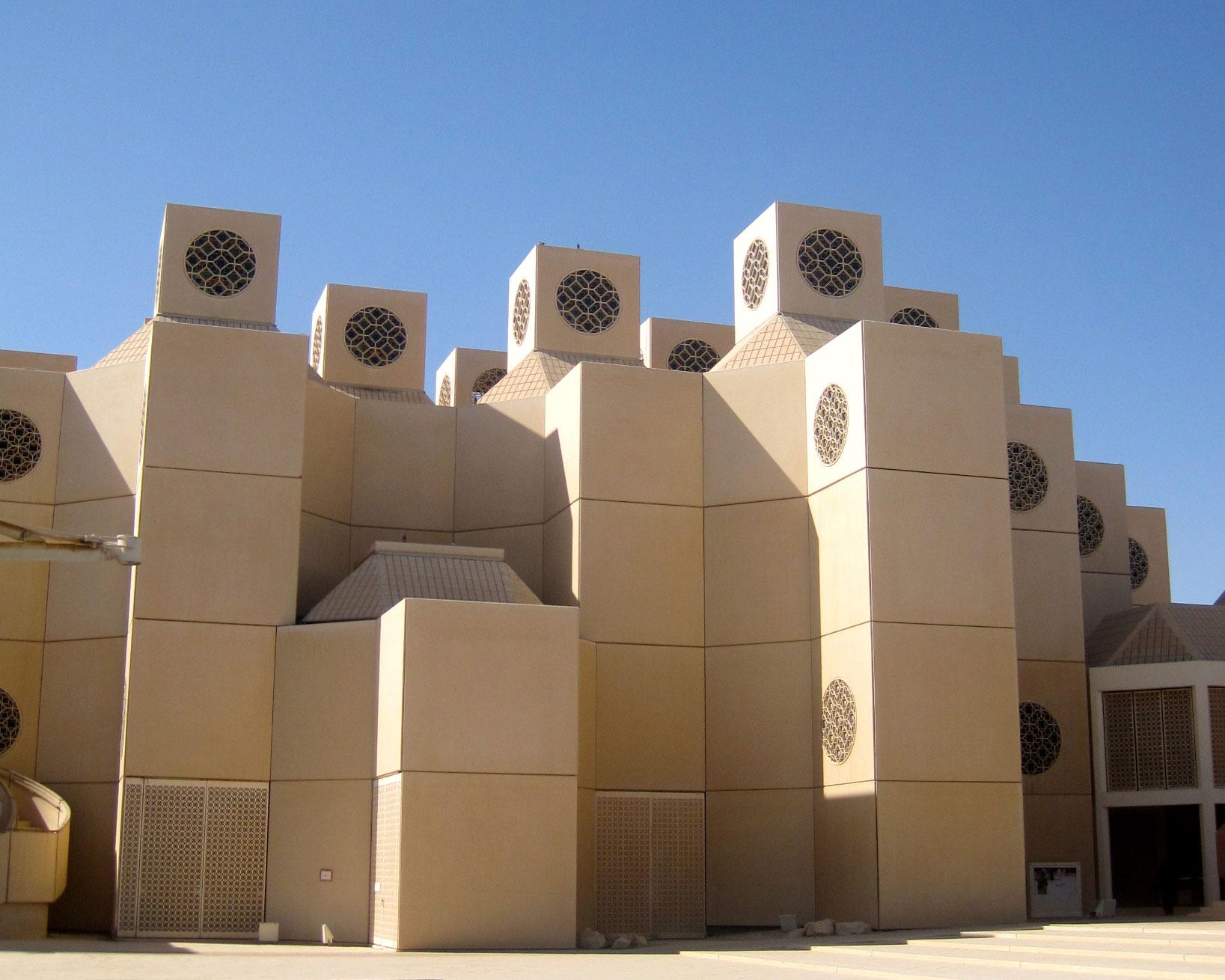
Qatar University campus features a new wind catcher design built into the architecture. The science behind it is borrowed from 12th C Iran.

Here’s a “cool” air-conditioning concept that was new to me but apparently known in Iran for centuries.

Durrie Bouscaren reports at radio show The World, “As a kid, radio producer Sima Ghadirzadeh spent her summers in one of the hottest places on earth — the desert city of Yazd, Iran. … Here, intricate wind-catching towers rise above the alleyways — they’re boxy, geometric structures that take in cooler, less dusty air from high above the city and push it down into homes below. 

“This 12th-century invention — known as badgir in Persian —  remained a reliable form of air-conditioning for Yazd residents for centuries. And as temperatures continue to rise around the world, this ancient way of staying cool has gained renewed attention for its emissions-free and cost-effective design. 

“Wind catchers don’t require electricity or mechanical help to push cold air into a home, just the physical structure of the tower — and the laws of nature. Cold air sinks. Hot air rises. 

“Ghadirzadeh said she can remember as a child standing underneath one in her uncle’s living room in Yazd. 

“ ‘Having been outside in the heat, and then suddenly, going inside and being right under the wind catcher and feeling the cool breeze on you, was so mysterious,’ Ghadirzadeh said. 

“Temperatures in Yazd can regularly reach 115 degrees Fahrenheit. But somehow, it was bearable, Ghadirzadeh said. … Historians say wind catchers are at least 700 years old. Written records in travelers’ diaries and poems reference the unique cooling structures. 

“ ‘From the 13th century, we have references to the wind catcher — by some estimates, they were in use in the 10th and 11th centuries,’ said Naser Rabbat, director of the Aga Khan program for Islamic architecture at MIT. 

“Most wind catchers only cooled the air by a few degrees, but the psychological impact was significant, Rabbat said. They soon appeared all over the medieval Muslim world, from the Persian Gulf to the seat of the Mamluk empire in Cairo, where they are called malqaf. 

“In Iran, the wind catcher is a raised tower that usually opens on four sides because there’s not a dominant wind direction, Rabat said. The ones in Cairo are ‘extremely simple in form,’ usually with a slanted roof and a screen facing the direction of favorable wind, he added.

“Over time, wind catchers became symbols of wealth and success, growing increasingly elaborate. Homeowners would install intricate screens to keep out the birds. Water features and courtyard pools could bring the temperature down even more.  

“ ‘They would even put water jars made out of clay underneath — that would cool the air further,’ Rabbat said. ‘Or, you can put a wet cloth and allow the breeze to filter through, and carry humidity.’ 

“Many of the older techniques that kept life comfortable in the Persian Gulf fell out of favor after World War II, said New York and Beirut-based architect Ziad Jamaleddine. …

“Those shaded walkways, created by overhanging buildings and angled streets so beloved in historic cities like Yazd, were no longer considered desirable. 

“ ‘What they did is they substituted it with the gridded urban fabric city we are very familiar with today. Which perhaps, made sense in the cold climate of western Europe,’ Jamaleddine said.  But in a place like Kuwait or Abu Dhabi, mass quantities of cool air are necessary to make this type of urban planning comfortable. 

“Attempts to re-create wind catchers occurred during the oil crisis of the 1970s and 1980s in cities like Doha, where the Qatar University campus incorporates several equally distributed wind towers. But these projects became less common when oil prices returned to normal. Wind catchers are not easy to replicate without a deep understanding of the landscape and environment, Jamaleddine said. …

“Today, air conditioners and fans make up more than 10% of global electricity use, according to the International Energy Agency. The air conditioners are leaking refrigerant into the atmosphere, which acts as a greenhouse gas. And they no longer function when the power goes out — as seen this summer during extreme heat waves across the world. 

“Architect Sue Roaf thinks it’s ‘almost criminal’ to build structures that continue to rely on air-conditioning, knowing its impact on the climate. Roaf focuses on climate-adaptive building and chose to build her home using the same principles of ventilation and insulation that she learned while studying the wind catchers of Yazd.”

More at The World, here. No paywall.

Read Full Post »

Photo: via Wikimedia Commons and Hyperallergic.
Unknown artist, “Mummy portrait of a young woman named Eirene from Egypt” (c. 1st century BCE), encaustic on wood panel.

Isabella Segalovich at Hyperallergic recently had a lot of fun surveying women’s eyebrows in art.

“Being a public persona on the internet means that my face is looked at almost constantly by strangers,” she writes, “leading to uninvited comments about one feature in particular: my eyebrows. On TikTok, the more viral my video, the more ‘feedback’ my bushier-than-average, Ashkenazic brows receive. Reactions range from applause to truly unhinged amounts of anger and disgust. 

“I started wondering: Have people always been this weird about eyebrows? … Let’s take a quick tour of how [eyebrow] ideals have shown up in art across civilizations throughout history: from bushy, to bold, to completely bare. 

“Ancient Egypt: No matter the gender, many people in Ancient Egypt took special care to bolden their eyebrows with kohl or mesdemet. Like other Northern African and Asian cultures, the face was understood to be sacred, and thus, it required protection: kohl and mesdemet both served to guard against infections around the eyes. Kohl is used by many to this day around the eyes, both for adornment and for spiritual protection or devotion. This preference for strong eyebrows combined with traditions of carved reliefs resulted in highly defined, expressive arches in many Ancient Egyptian portraits. [Check Hyperallergic to see that the] wooden Inner Coffin of the Singer for Amun-Re is a beautiful expression of this high-contrast aesthetic. …

“Nigeria: From 1500 BCE to about 500 CE, a culture in Nok, Nigeria left behind now-famous terracotta sculptures with particularly detailed faces. Researchers Peter Breunig and James Ameje observed Nigerian craftsman Audu Washi, who showed them how to make these terracotta features using traditional methods.

A sharpened, sanded-down piece of wood is gently pushed into the clay to create fine details including the very distinct, graphic [Nok] eyebrows.

“The arched outlines of the eyebrows in these sculptures are similar across the portraits, but subtle tweaks in their shape and the space between them conjure vastly different personalities.

“Ancient Greece and Rome: While it’s hard to imagine with today’s inaccurate images of pristine white sculptures, many women in Ancient Greece and Rome were also unibrow fans! In some settings, a hairy unibrow was not just considered beautiful, but viewed as a sign of wisdom. Victoria Sherrow’s Encyclopedia of Hair recounts how Ancient Greek women used powdered antimony (also known as kohl) or even patches made of goat hair glued onto the forehead to achieve this look. A fresco of Terentius Neo and his (unfortunately anonymous) wife was a unique find in Pompeii because they are displayed as having equal status. Many may have been envious of her pair of prominent eyebrows — or really, just the one. …

“China: Women of the Tang Dynasty in China (618–907 CE) painted their eyebrows in dozens of different fashions, long, short, thick, thin, and wavy, depending on what was in style that year. Well-off women would use qingdai, a blue-ish pigment made from indigo. The woman in the portrait [here] has her face painted with additional decoration on her forehead — huadianor plum makeup. In 5000 Years of Chinese Costume, Xun Zhou writes that women would even decorate between their brows with luminous materials like ‘specks of gold, silver, and emerald feather.’ 

“Europe: Women in late medieval art display a very distinct hairstyle; that is, no hair at all! John Block Friedman writes that ‘misogynistic scientific writing had made female body hair a psychic and physical danger to men.’ So when it came to eyebrows, some women would pluck them until they were almost nonexistent. This plucking extended to thinning out hairlines to reveal large, bald foreheads. Petrus Christus’s 1449 painting ‘A Goldsmith in His Shop’ shows a wealthy woman bedecked in sumptuous fabric. She may have even used harsh chemicals to help rid herself of unsightly hairs. …

“Japan: Eyebrow fashion had an especially unique moment in the Heian period of Japan (794–1185 CE) where, in a manner similar to Chinese trends, both men and women would pluck out their eyebrow hairs completely, drawing new ones an inch above the natural browline. One of these styles was known as hikimayu (引眉) in which both thumbs were dipped in black makeup pigment and then used to create mirroring prints far up on the forehead. This print actually comes from many centuries later in 1876, and is a part of Toyohara Kunichika’s dazzling print series titled Thirty-six Good and Evil Beauties, which are portraits of ‘good and evil’ women throughout Japanese history. …

“Iran: At the beginning of the Qajar dynasty in Persia (1785–1925), male and female ideals of beauty grew closer and closer together, and so did the eyebrows! [Scholar] Afsaneh Najmabadi has shown that women would darken their eyebrows and even decorate their upper lips with mascara to show a faint mustache. Men often took on stereotypically feminine features, sometimes appearing beardless with slim waists in paintings.”

For fabulous pictures from those locales/eras and others, click at Hyperallergic, here. There is even a lovely eyebrow photo of a robot called Kismet. No firewall at Hyperallergic; donations encouraged. PS. Check out the author’s eyebrows here.

Read Full Post »

Call me naive, but I can’t help thinking that the enmity of governments obscures what ordinary people in a country are like and the value that their cultural history holds for the people of other nations. Consider ordinary Iranians for a moment and some wondrous aspects of their ancient empire.

Eve MacDonald, a lecturer in Ancient History at Cardiff University, writes at the Conversation, “It’s simply not possible to do justice to the value of Iran’s cultural heritage – it’s a rich and noble history that has had a fundamental impact on the world through art, architecture, poetry, in science and technology, medicine, philosophy and engineering.

“The Iranian people are intensely aware – and rightly proud of – their Persian heritage. The archaeological legacy left by the civilisations of ancient and medieval Iran extend from the Mediterranean Sea to India and ranges across four millennia. …

“In the 6th century BC, Iran was home to the first world empire. The Achaemenids ruled a multicultural superpower that stretched to Egypt and Asia Minor in the west and India and Pakistan in the east. They were the power by which all other ancient empires measured themselves. Their cultural homeland was in the Fars province of modern Iran. The word Persian is the name for the Iranian people based on the home region of the Achaemenids – Pars.

“Some of the richest and most beautiful of the archaeological and historical heritage in Iran remains there. This includes Parsgardae, the first Achaemenid dynastic capital where King Cyrus (c. 590-529BC) laid down the foundations of law and the first declaration of universal rights while ruling over a vast array of citizens and cultures.

“Nearby is the magnificent site of Persepolis, the great palace of the Achaemenid kings and hub of government and administration. Architecturally stunning, it is decorated with relief sculptures that still today leave a visitor in awe.

“When the Achaemenids fell to the armies of Alexander the Great in the 4th century BC, what followed was great upheaval and also one of the most extraordinary moments in human history. The mixing of Persian and eastern Mediterranean cultures created the Hellenistic Age. …

“With new cities, religions and cultures, this melting pot encouraged the rise of a thriving connectivity that linked urban centres in Iran, Iraq, Afghanistan, Turkmenistan and Syria. … The great city of Seleucia-on-Tigris/Ctesiphon, just south of Baghdad on the Tigris river in modern Iraq, became the western capital and centre for learning, culture and power for a thousand years.

“Hellenistic rulers gave way to Parthian kings in the 2nd century BC and the … Parthian Empire witnessed growing connectivity between east and west and increasing traffic along the silk routes. Their control of this trade led to conflict with the Romans who reached east to grasp some of the resulting spoils.

“It was also a time of religious transition that not only witnessed the rise of Buddhism, but also a thriving Zoroastrian religion that intersected with Judaism and developing Christianity. In the biblical story of the birth of Christ, who were the three kings – the Magi with their gifts for Jesus – but Persian priests from Iran coming to the side of child messiah, astronomers following the comet. …

“The Sasanians ruled a massive geopolitical entity from 224-751 AD. They were builders of cities and frontiers across the empire including the enormous Gorgan wall. … The wall is a fired-brick engineering marvel with a complex network of water canals running the whole length. It once stood across the plain with more than 30 forts manned by tens of thousands of soldiers.

“The Sasanians were the final pre-Islamic dynasty of Iran. In the 7th century AD the armies of the Rashidun caliphs conquered the Sasanian empire, bringing with them Islam and absorbing much of the culture and ideas of the ancient Iranian world. This fusion led to a flowering of early medieval Islam and, of the 22 cultural heritage sites in Iran that are recognised by UNESCO, the 9th century Masjed-e Jāmé in Isfahan is one of the most stunningly beautiful and stylistically influential mosques ever built.

“This was a thriving period of scientific, artistic and literary output. Rich with poetry that told of the ancient Iranian past in medieval courts where bards sang of great deeds. These are stories that we now believe reached the far west of Europe in the early medieval period. …

“Iranian cultural heritage has no one geographic or cultural home, its roots belong to all of us and speak of the vast influence that the Iranians have had on the creation of the world we live in today. Iran’s past could never be wiped off the cultural map of the world for it is embedded in our very humanity.” More at the Conversation, here.

If you’re interested in more about the ancient culture of Iran, try Jason Elliott’s book Mirrors of the Unseen, reviewed at the Guardian, here. A related, equally fascinating, book is Destiny Disrupted, by Tamim Ansary, here. I learned a lot from those books.

P.S. An Iranian-American journalist I follow has been raising funds for healthcare workers in Iran who are dangerously short of personal protective equipment. Click here.

Read Full Post »

d8a7d993d8b3db8cd8a7d8a8_d987d8a7db8c_d986d8b4d8aadb8cd981d8a7d986_d8b4d987d8b1d8b3d8aad8a7d986_d8aed988d8a7d981d88c_d8b1d988d8b3d8aad8a7db8c_d986d8b4d8aadb8cd981d8a7d986_d982d8b1d8a7d8b

Photo: Mohammad Hossein Taghi
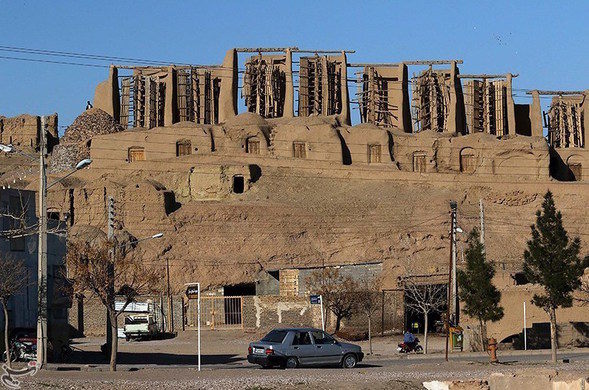
Ancient vertical windmills in Iran’s Nashtifan village. Proof that “the sun also rises and goeth to his downsetting, and there is no new thing under the sun.”

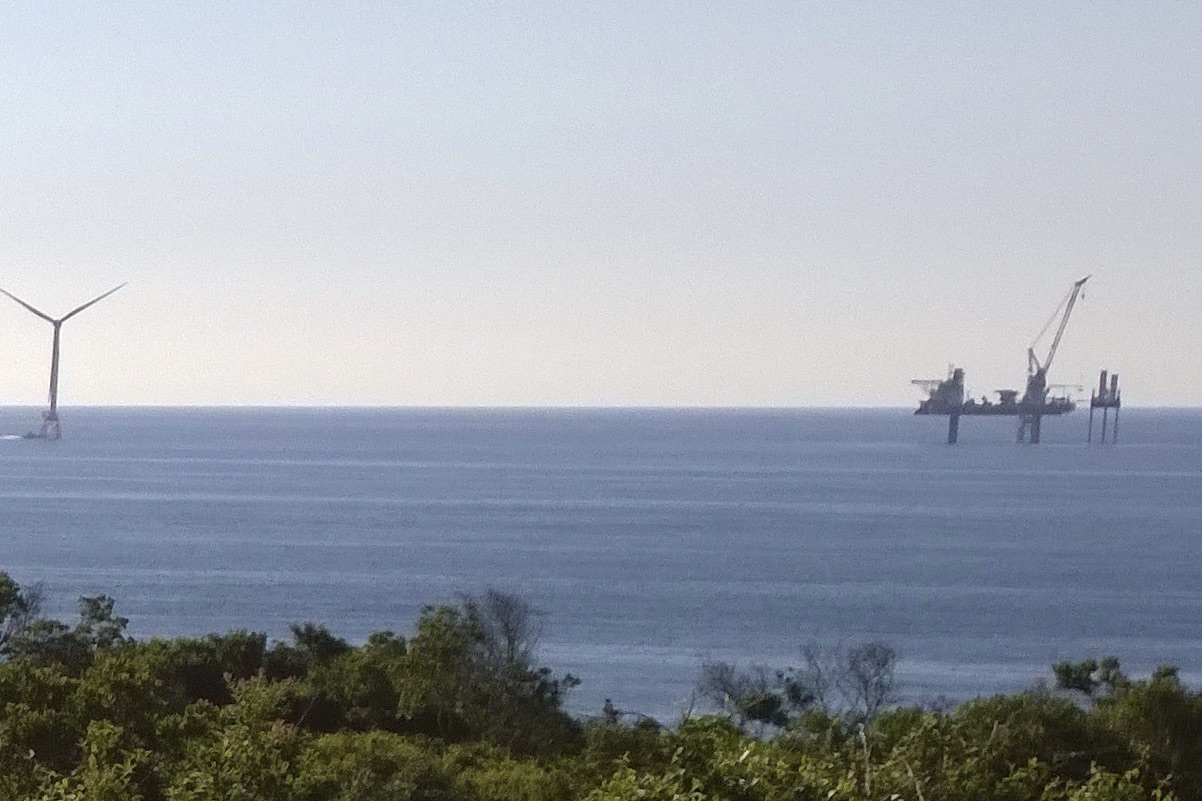
There’s been a lot of excitement in recent years about using windmills for energy, as if we invented the giants I see on summer visits to New Shoreham (below) before Iran did, Don Quixote, the Dutch, or Denmark.

080516-first-deepwater-windmill

The website Atlas Obscura corrects the misapprehension.

“Located on the arid and windswept plains of northeastern Iran, 30 miles from the Afghan border, the small village of Nashtifan is keeping ancient traditions alive amid the winds of change. The town is home to some of the earliest windmills in the world, and the structures are still in use today.

“Along the southern edge of town, a towering 65-foot-tall earthen wall shelters residents from the abrasive gales. The high wall houses two dozen mostly functional vertical axis windmills that date back to ancient Persian times. It’s estimated the structures, made of clay, straw, and wood, are around 1,000 years old, used for milling grain into flour.

“The area is known for its uniquely powerful winds, and in fact the name Nashtifan is derived from words that translate to ‘storm’s sting.’ During turbulent winter months the handcrafted wooden blades whirl with a surprising velocity and power grindstones in a marvel of engineering and passive ventilation. …

“The tall walls framing the windmills both support the turbines, and funnel the airflow like the elliptical throat in a primitive windtunnel.

Unlike European Don Quixote-style windmills, the Persian design is powered by drag as opposed to lift.

“And since the blades are arrayed on a vertical axis, energy is translated down the mast to the grindstone without the need for any of the intermediary gears found on horizontal axis windmills.”

More at Atlas Obscura, here.

Video: Deveci Tech
Note that today’s hybrid vertical-axis turbines in Turkey are using the same principles to generate wind energy from vehicles speeding by. More on that here.

Read Full Post »

Photo: Mohammad M. Rashed
Of the roughly 200 houses in Makhunik, Iran, 70 or 80 stand only 5.0 feet to 6.5 feet tall. Even this boy would have to stoop to get in the door.

Long before the Hobbit, stories abounded around the world about miniature races of people. In Iran, there is actually a kind of proof.

As Shervin Abdolhamidi writes at the BBC, “In the first part of Jonathan Swift’s book Gulliver’s Travels, Lemuel Gulliver washes ashore on the island country of Lilliput, where he encounters the Lilliputians, who stand barely taller than [6 inches].

“While Swift’s Lilliput is merely a fantasy, a comparable village exists in the eastern extremities of Iran. Up until around a century ago, some of the residents of Makhunik, a 1,500-year-old village roughly [47 miles] west of the Afghan border, measured a [little over a yard] in height. …

“In 2005, a mummified body measuring [10 inches] in length was found in the region. The discovery fuelled the belief that this remote corner of Iran, which consists of 13 villages, including Makhunik, was once home to an ancient ‘City of Dwarfs’. Although experts have determined that the mummy was actually a premature baby who died roughly 400 years ago, they contend that previous generations of Makhunik residents were indeed shorter than usual.

“Malnutrition significantly contributed to Makhunik residents’ height deficiency. Raising animals was difficult in this dry, desolate region, and turnips, grain, barley and a date-like fruit called jujube constituted the only farming. Makhunik residents subsisted on simple vegetarian dishes such as kashk-beneh (made from whey and a type of pistachio that is grown in the mountains), and pokhteek (a mixture of dried whey and turnip).

“Arguably the most astonishing dietary anomaly was a disdain for tea – one of the hallmarks of Iranian cuisine and hospitality.

“ ‘When I was a kid no-one drank tea. If someone drank tea, they’d joke and say he was an addict,’ recalled Ahmad Rahnama, referring the stereotype that opium addicts drink a lot of tea. The 61-year-old Makhunik resident runs a museum dedicated to Makhunik’s historic architecture and traditional lifestyle. …

“Although most of Makhunik’s 700 residents are now of average height, reminders of their ancestors’ shorter statures still persist. Of the roughly 200 stone and clay houses that make up the ancient village, 70 or 80 are exceptionally low. …

“Constructing these tiny homes was no easy feat, Rahnama said, and residents’ short stature wasn’t the only reason to build smaller houses. Domestic animals large enough to pull wagons were scarce and proper roads were limited, meaning locals had to carry building supplies by hand for kilometres at a time. Smaller homes required fewer materials, and thus less effort. Additionally, although cramped, smaller houses were easier to heat and cool than larger ones.”

Ah-ha! The wisdom of the Tiny House was tested centuries ago in a remote Iranian village! “The sun also riseth and goeth to his downsetting, and there is no new thing under the sun.”

More here.

Read Full Post »


Photo: David Llada
Dorsa Derakhshani could read before the age of 2 and grew up to be a chess champion. She was banned from Iran’s chess association for not wearing a headscarf.

After you read this article on an Iranian chess prodigy, you are sure to be surprised by her current career goal. Not that there’s anything wrong with it; it’s just surprising.

Mika Klein interviewed Dorsa Derakhshani at WBUR radio’s Only a Game, first watching an old video of Dorsa to get some background.

“The year was 2000. Dorsa was 2, and appearing on a children’s television show. Dorsa wears a red velvet dress with puffy sleeves and dark tights. She’s tightly clutching a stuffed puppy, so the interviewer holds the microphone for her. Dorsa breaks into song, with the poise of seasoned performer, and the studio audience applauds.

“The camera cuts to the audience. Most of the girls are sitting in the back, many are wearing headscarves. Dorsa’s head is uncovered.

“Dorsa was born in Tehran in 1998. And this is just one of many times she appeared on Iranian TV. This time, she reads a story from a children’s book. …

” ‘Are you saying you could read at the age of 2?’

“ ‘No,’ Dorsa says. ‘I could read when I was 1 1/2. But I finished first grade when I was 2.’

“Dorsa’s television career as a child prodigy was never going to last forever, but it ended abruptly when she was 6.

“ ‘They made me wear a scarf against my will,’ says Dorsa … ‘I never went back for the TV.

“ ‘I finished fourth grade when I was 4 1/2. Math, science, everything. … My parents tried to fill my time with other things like music, swimming, ballet, gymnastics, painting.”

“Right next door to her painting class was a chess class. Dorsa decided to join. …

” ‘Chess was really different, because you are actually playing with a live human being,” Dorsa says. … ‘You can’t be 100 percent ready and sure that you play good when you go to a tournament.’

“Dorsa’s first big success came in the Iranian national youth under-8 tournament.

“ ‘It was a big surprise for everyone, because there were players who already had private coaches and they came to win,’ Dorsa says. ‘I came out of nowhere, and I won the tournament. I remember that everybody else was wearing a scarf, even under 8. But I wore a princess dress and a tiara. And it was really cute. …

“Dorsa went on to win three straight gold medals at the 2012, 2013 and 2014 Asian Junior Championships. In the numerical chess ratings lists, Dorsa was at the top for all girls in Asia. …

“I first met Dorsa at the Chess Olympiad in September 2016. She was attending as a journalist, not a player. The tournament was in Baku, the capital of Azerbaijan, a country that is 98 percent Muslim. She did not wear a headscarf at the tournament or on the street. I’ve never seen her wear one.”

Klein continues with a story of the time when Dorsa was traveling and saw that her Instagram account was going crazy. She went to bed and forgot about it. In the morning friends explained that ” ‘they saw on newspaper that my federation banned me — my brother and I, actually, both of us. It was just very out of the blue.’ ”

Dorsa’s brother, Borna, was banned for competing against someone from Israel, Dorsa for not wearing a headscarf.

“She believes the action against her and her brother was a tactic to divert from other news. The announcement came in the middle of the Women’s World Chess Championship, which was being held in Tehran. Several notable players, including the reigning U.S. women’s champion, boycotted the event because players were required to wear a headscarf. All three Iranian women competing had just been eliminated in the opening round. …

“This July, she moved to the U.S. after being accepted to the chess team at St. Louis University. She said there were no problems when she landed in New York and cleared immigration.

” ‘I’m hoping to become a dentist,’ Dorsa says. ‘I’m looking forward to finally having a stable trainer and a team, and I really wish to become grandmaster.’ ”

More at WBUR, here.

Read Full Post »

There are so many interesting cultures in the world! For example, when I was editor of a magazine about lower-income issues in New England, I heard for the first time about the Karen from Burma (Myanmar). Who? Soon after, I managed to acquire an article on Karen refugees in Waterbury, Connecticut, so I was able to learn something along with my readers.

Recently, I heard of another new-to-me minority, members of which are being resettled in Massachusetts. They are called Mandeans, and their pacifist religious beliefs had subjected them to persecution in Iraq and Iran for millennia.

Here is what Brian MacQuarrie writes about them at the Boston Globe.

“The Mandaeans have found safety and acceptance since they began arriving [in Worcester] in 2008, freely practicing a monotheistic religion that predates Christianity and Islam. But they still do not have a temple — a ‘mandi’ for baptisms, marriages, and birth and death rituals — and whether one is built could determine if they continue to call Worcester home.

” ‘Work is not the anchor, living in an apartment is not an anchor, the mandi is the anchor,’ said Wisam Breegi, a leader of the Mandaean community. …

” ‘It really is a culture that is in danger of disappearing,’ said Marianne Sarkis, an anthropology professor at Clark University. ‘If you don’t have a way of preserving the culture and traditions and even the language’ of Aramaic — what a temple helps provide — ‘it is not going to survive very long.’ …

“ ‘We really don’t have the expertise, the know-how, the connections,’ said Breegi, who also has founded a scientific firm that is developing a low-cost, disposable, neonatal incubator for use in developing countries.

“To help forge the religious connections, Breegi and Sarkis are preparing an application for a nonprofit organization to help raise money for the temple. Worcester Mayor Joseph Petty said in an interview he is willing to help the project where he can.

“ ‘They’re all doing what everyone else is trying to do — working hard and getting their kids a good education.’ …

” ‘It’ll just help make Worcester stronger in the long run,’ Petty said of his city’s embrace of Mandaeans and other immigrants. ‘You can’t build walls between people.’ ”

Worcester held a ceremony of welcome in April that “represented the first time — anywhere, at any time — that Mandaeans had been recognized as a valued, important minority group, Sarkis said.” Wow.

More here.

Photo: Craig F. Walker/Globe Staff
The Kalmashy family (left to right) Lilo, and her husband Mahdi and their daughters and Sura and Sahar, shared lunch at their home in Worcester.

Read Full Post »

What would it be like to live in an earth dome? The California Institute of Earth Art and Architecture (Cal-Earth) can help you check out the concept for a day or a weekend or the 12-15 weeks it will take to teach you to build a dome home. Maybe you’d rather settle for building just a “rocket stove mass heater.” Cal-Earth can teach you to do that, too. Hesperia, California, is the place. (Although Cal-Earth’s mailing address is Claremont, near Suzanne’s alma mater.)

From the website: “Superadobe technology was designed and developed by architect Nader Khalili and Cal-Earth Institute, and engineered by P.J. Vittore. Superadobe is a patented system (U.S. patent #5,934,027) freely put at the service of humanity and the environment.”

The television station KCET has more. Reporter Kim Stringfellow says, “As a humanitarian, architect and teacher, Khalili developed the Superadobe building technique incorporating a tubular sandbagging system filled with locally sourced earth that are reinforced with a barbed wire technology and stabilized lime, cement, or asphalt that is locally produced. Dwellings can be used temporarily or may be stabilized, waterproofed, and finished with plaster to create a permanent building. Originally from Iran, Khalili’s structures and building techniques are inspired and informed by centuries of earth building found throughout the Middle East and North Africa. He also is known for his Geltaftan Earth-and-Fire construction system which as also known as Ceramic Houses. ”

Tell me this is not a hobbit house.

Photo: Geoff Lawton 

Read Full Post »

One thinks of Iran as repressive, and having watched the doomed 2009 revolution unfold on twitter, I believe it is. But Iranian theater people seem to be managing to squeeze in some fun.

I blogged before about the Tehran production in a taxi, here. Now Studio 360 has a story on what might be called extreme improvisation. I take that back. There’s a script. But the actor doesn’t get to see it in advance.

“Actors face stage fright all the time,” says Studio 360, a radio show. “But consider this scenario: you show up to perform a one-person show, and you’ve never seen the script. You don’t know what it’s about because you promised not to do any research. It’s your first performance, and the only one you’ll ever have. The theater’s artistic director hands you a fat manila envelope with a script. And go.

“Also, the audience will decide whether you drink a glass of water that appears to have been poisoned.

“This is the premise of White Rabbit, Red Rabbit, by Iranian playwright Nassim Soleimanpour. ‘I did not know what was in front of me inside that envelope,’ says actor Gwydion Suilebhan. ‘What if this script is going to require that I disrobe? Or insult my mother? Or be rude or self-debasing?’ …

“Soleimanpour pulls his strings from afar, because — although the play has been performed in Toronto, Berlin, San Francisco, Brisbane, Edinburgh, London, and now Washington, DC — he really is in a cage. He doesn’t have a passport and can’t leave Iran, so he has never seen his play performed. ‘Nassim has given up the kind of control that is customary for playwrights,’ says Suilebhan, of working with actors and directors to realize the play. ‘At the same time, because he has put all of these restrictions on how it is to be performed, he has seized certain kinds of control that playwrights normally do not have. So he is literally embodying the ideas of control and submission and manipulation that he’s baked into his script.’ ” More.

Photo of Iranian playwright Nassim Soleimanpour found at the HuffingtonPost

Read Full Post »

I started really paying attention to Iran (and to Twitter, tops for breaking news) on June 20, 2009, when the tragic, short-lived Green Revolution erupted, fueling unrealized hopes for a more democratic country.

Then I read Jason Elliot’s Mirrors of the Unseen (and blogged about it here) about his travels in Iran, and especially about the people he met and the architecture he admired. He came up with a theory about the architecture that related to the builders’ Islamic beliefs, a love of nature, and a concept of sacred proportions. (If you should see the Nova special on how Medieval architects used the Bible to decide on ideal Gothic cathedral measurements, you will get the idea.)

Elliot loved the people he met in Iran and bemoans the way the Western media depict them. In full agreement with Elliot is the British translator of ancient Persian poetry, Dick Davis, who was on PBS NewsHour last night.

But though the Iranian people may be like people anywhere, the government is not. Residents are frequently obliged to be cautious. Which is how theatrical productions in the privacy of a taxi have come about.

Haleh Anvari of the Guardian‘s Tehran Bureau has that story.

Unpermitted Whispers is a 35-minute play that takes place in one of Tehran’s ‘Rahi’ taxis, which traverse the city along fixed, often straight-line, routes. Rahis pick up passengers at major intersections and drop them off anywhere along their set route, making for a convenient method of getting around town and one cheaper than the minicabs available in every neighbourhood of the capital.

“In contrast to the minicabs, which provide door-to-door service, the Rahi system affords passengers much more anonymity, allowing for candid and uninhibited conversation. Tehranis frequently share stories that they have overheard in these communal cabs; for many, they serve as an extension of the private sphere in which Iranians feel safe to talk about issues of the day.

Unpermitted Whispers takes advantage of this unlikely superimposition of public and private to tell the story of three passengers, all women, who are picked up by a male driver at different points along his route. …

“The play’s first scene was performed entirely on the telephone, as we eavesdropped on a conversation of a kind with which many Iranian women are familiar: a young bride wants to go to the theatre with her university friends but needs an alibi as her traditional family and jealous husband will not approve.”

More here.

Update 2/5/14: Turns out NY City has a play in a cab. It’s called “Take Me Home” and is reviewed by Neil Genzlinger, here.

Photograph: Hanna Havarinasab
Unpermitted Whispers is a play by Azadeh Ganjeh performed in a taxi.

Read Full Post »

I like reading about street art and what motivates the creative outbursts. I have blogged on this before (Slinkachu, Banksy).

The Art Newspaper recently did quite a long feature on street art inspired by (and inspiring) the Arab Spring.

Anny Shaw and Gareth Harris interview “Hans Ulrich Obrist of London’s Serpentine Gallery, who is chairing a discussion on art patronage in the Middle East as part of a summit at the British Museum and the Royal College of Art (12-13 January).”

” ‘What is interesting to see in Egypt, and in all these countries, is that artists are not only going out into the city, they also become agents of change in society. … If you think about it in terms of the Russian Revolution and Mayakovsky saying “the streets are our brushes, the squares our palettes,” it’s about art going beyond the museum and blurring the boundaries between art and life.’

“Obrist also notes that there is a long-standing tradition, particularly in Egypt, of contemporary artists using the street to mount performances or install works. Indeed, several contemporary Egyptian artists, including Susan Hefuna and Hassan Khan, have used the city as a site for their work, both before and in response to the uprising. …

“As Anthony Downey, the director of contemporary art at Sotheby’s Institute of Art in London, editor of ibraaz.org and a speaker at the summit says, the region has ‘antecedents in graffiti-based pro­tests,’ citing those against the Shah of Iran before his flight from Tehran in 1979 and the graffiti and posters used in Beirut during the civil war in Lebanon.”

What a hoot that this art has been taken up by auction houses like Sotheby’s! But on the whole it’s good for the artists. I know what a great moment it was when the favela artists from Brazil were able to sell their work in the movie Waste Land.

Read more here.


Read Full Post »

I finished Jason Elliot’s book about Iran, Mirrors of the Unseen. It was hard work but rewarding.

I bought the book because I really liked Elliot’s An Unexpected Light about the history, culture, and daily life of Afghanistan back when the mujahideen were still fighting the Soviets. (I’m reasonably sure that Tony Kushner’s prophetic play Homebody/Kabul was partially based on that book.)

Mirrors of the Unseen is a challenging read at times because it is very intellectual. It has lots of words and history and concepts that were new to me, but it also has wonderful stories about the ordinary people Elliot met. Even though he wrote it a few years before the the June 20, 2009, Green Revolution, you can get a sense of the attitudes of normal Iranians and what might have led to the unsuccessful revolt.

Elliot does not focus on politics, but rather on Persian art and architecture, which inspired him at a deep level.

I was reading a passage to my friend Claire on the train, and she said, “No wonder it has taken so long to read! It’s poetry!”

So for my last post on the book, I will give a few examples of Elliot’s style. He describes some English tourists as looking “very sad, and it seemed quite likely they had arrived in Iran by accident, like fish that are said to be swept up in hailstones and deposited hundreds of miles away.”

As he travels toward the southern part of Tehran toward the train station, “the surroundings grew steadily more decrepit, as if an old witch was being shed of her make-up.” And the train itself “had the air of a dragon straining at its leash.”

Here’s my favorite, from a discussion of whether the fascination that all religions seem to have with flame is passed from ancient cultures to modern or is something innate in humans: “Had the sanctity of flame erupted irresistibly into human consciousness as mysteriously as the hexagon into the intelligence of the bee?”

My other posts on the book are here, here, and here.

Read Full Post »

Huck Gutman, the chief of staff for Vermont Senator Bernie Sanders, is a man who knows the value of putting your head into a poem once in a while and leaving the chaos behind. And according to the Boston Globe, an increasing number of people are signing up for his poetry listserv.

“The chief of staff for the Senate’s liberal firebrand has created an unlikely patch of common ground. That place lies in the power of the poetry that longtime University of Vermont professor Huck Gutman … distributes by e-mail to 1,700 readers who include all the Senate chiefs of staff, several White House staffers, university presidents, academics, journalists, and former students.” Read more.

Wallace Stegner has written, “No place is a place until it has a poet.” In fact, there are countries where poetry, ancient and modern, is core to national identity. Perhaps surprising to Americans, one such country is Iran.

I have blogged about Mirrors of the Unseen: Journeys in Iran before. It’s taking me a while to finish it because, for a travel book, it is seriously intellectual. (Here is a post in which author Jason Elliot describes the earliest known electric battery. And here is my post called “Horse Agrees Not To Be Extinct.”)

One of the most intriguing aspects of Elliot’s book is how many ordinary people he meets who have interests that would seem quite high brow to the average Westerner. Workmen who know all about ancient architecture. Postal employees who are still angry that the Greeks twisted the facts about Persia hundreds of years ago. And people who love poetry.

In one anecdote, Elliot makes a vague poetic reference to a seatmate on an airplane who encourages him to go on and read from the blind poet Rudaqi. “I read the first couplet in Persian,” writes Elliot, “but before I could reach the second [my seatmate] said, ‘No, no, it’s like this.’ ” He reads the rest with deep feeling, adding, “Poetry … makes us very emotional.”

Similarly, at a private home, Elliot watches a man rapt and gently swaying to a musical recitation of classical poetry. The man turns out to be the Foreign Minister.

And when Elliot goes to see the chief of immigration police in Isfahan on a routine matter, he interrupts him reading a poetry book and observes that “the final syllables as he stood up, with an unmistakably distant look on his face, were still fading visibly from his lips.”

Read Full Post »

Older Posts »