Feeds:
Posts
Comments

Posts Tagged ‘island’

Photo: AP/Luis Andres Henao.
“Voices of Gullah” members, Joe Murray, from left, Minnie “Gracie” Gadson, Rosa Murray and Charles “Jojo” Brown, sing Gullah spirituals at the Brick Baptist Church, St Helena Island, South Carolina.

Not long ago, I read a fascinating memoir called The Water Is Wide, by Pat Conroy, about teaching poor children on a South Carolina island in 1969-1970. The depravation on that island was troubling to read about.

Today’s story about a different South Carolina island shows a different side. The island elders in this article about preserving tradition have agency.

Luis Andres Henao writes for the Associated Press (AP), “Minnie ‘Gracie’ Gadson claps her hands and stomps her feet against the floorboards, lifting her voice in a song passed down from her enslaved ancestors who were forced to work the cotton and rice plantations of the South Carolina Sea Islands.

“It’s a Gullah spiritual, and the 78-year-old singer is one of a growing group of artists and scholars trying to preserve these sacred songs and their Gullah Geechee culture for future generations. …

“On a recent summer day, her voice rang out inside Coffin Point Praise House. It’s one of three remaining wooden structures on St. Helena Island that once served as a place of worship for the enslaved, and later, for generations of free Black Americans.

“Gadson grew up singing in these praise houses. Today, as a Voices of Gullah member, she travels the U.S. with others in their 70s and 80s singing in the Gullah Creole language that has West African roots.

“ ‘This Gullah Geechee thing is what connects us all across the African diaspora because Gullah Geechee is the blending of all of these cultures that came together during that terrible time in our history called the trans-Atlantic slave trade,’ said Anita Singleton-Prather, who recently performed and directed a play about Gullah history.

“The show highlighted Gullah contributions during the American Revolution, including rice farming and indigo dying expertise. At the theater entrance, vendors offered Gullah rice dishes and demonstrated how to weave sweetgrass into baskets.

“More than 5,000 descendants of enslaved plantation workers are estimated to live on St. Helena Island, the largest Gullah community on the South Carolina coast where respect for tradition and deep cultural roots persists.

“Singleton-Prather [says] that despite slavery’s brutality, the Gullah people were able to thrive, ‘giving our children a legacy — not a legacy of shame and victimization, but a legacy of strength and resilience.’ …

” ‘It’s important to preserve the Gullah culture, mainly because it informs us all, African Americans, where they come from and that it’s still here,’ said Eric Crawford, author of Gullah Spirituals: The Sound of Freedom and Protest in the South Carolina Sea Islands.

“For most of his life, he hadn’t heard the word Gullah. That changed in 2007 with a student’s master’s thesis about Gullah culture in public schools.

“ ‘As I began to investigate it, I began to understand that “Nobody Knows the Trouble I’ve Seen,” “Roll Jordan Roll,” “Kumbaya!” — all these iconic songs came from this area,’ he said.

“Versions of these songs, he said, can be traced back to the 19th century when ‘Slave Songs of the United States,’ the first book of African American spirituals, was recorded on St. Helena Island. …

“He was so curious that he traveled to St. Helena, where he met the singers and began recording their music. … Crawford said, sitting on the original wooden pews of the island’s Mary Jenkins Praise House, ‘They were forced to go to their owners’ church and stay in the balcony. But then in the evening, typically on Sunday evenings, Tuesday and Thursday, they had this space by themselves, away from the watchful eye of the owners, and they could engage in their own songs.’ …

“At a recent concert they clapped their hands in one rhythm, stomped the floor in another and swayed, singing at the island’s Brick Baptist Church.

“ ‘These singers are as close as we would ever come to how the enslaved sang these songs,’ Crawford said. ‘That authenticity — you just cannot duplicate that.’

“He began to take the singers on tour in 2014. Since then, they’ve performed across the U.S. as well as in Belize and Mexico. The touring band’s members include Gadson; 89-year-old Rosa Murray; 87-year-old Joe Murray; and their son, Charles ‘Jojo’ Brown.

“ ‘I’m gonna continue doing it until I can’t do it no more, and hope that younger people will come in, others younger than me, to keep it going,’ said Brown who, at 71. …

“His mother agrees. Sitting in her living room, surrounded by framed photos of dozens of grandchildren, she said she’ll continue singing for them.

“ ‘I hope and pray one or two of them will fall in my footsteps,’ she said.”

More about the Gullah culture at AP, here.

Read Full Post »

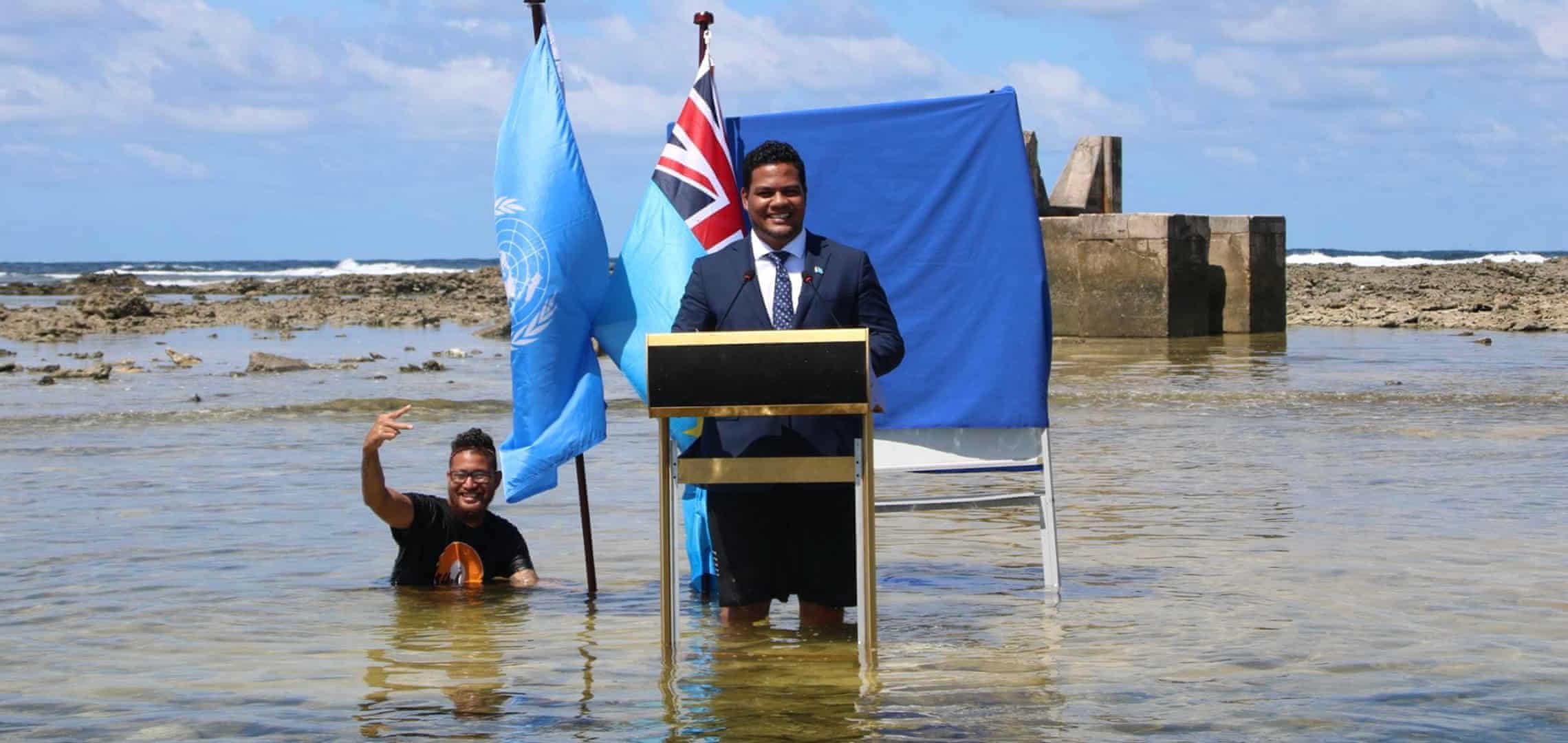
Photo: Tuvalu Foreign Ministry/Reuters.
Tuvalu’s foreign minister Simon Kofe in 2021 making a point as he gives his address to the international climate convention Cop26.

Climate change has been making itself known to most of us in early blooming seasons and the increased number of wildfires. But we don’t necessarily feel in our guts that this is really a moment that will determine if our country continues to exist.

Unless we live in a place like Tuvalu, an island gradually, and then not so gradually, sinking into the sea.

An article at the Guardian proposes that when the inevitable happens, countries like Tuvalu must find a way to keep their statehood.

Isabella Kaminski writes, “States should be able to continue politically even if their land disappears underwater, legal experts have said.

“The conclusions come from a long-awaited report by the International Law Commission that examined what existing law means for continued statehood and access to key resources if sea levels continue to rise due to climate breakdown.

“Average sea levels could rise by as much as [3ft] by 2100 if climate scientists’ worst-case scenarios come true, and recent research suggests they could even exceed projections. This is particularly important for small island developing states because many face an existential threat. …

“Having waded through international law and scholarship and analyzed state views and practices, legal experts concluded that nothing prevents nations from maintaining their maritime boundaries even if the land on which they are drawn changes or disappears. These boundaries give countries navigation rights, access to resources such as fishing and minerals, and a degree of political control.

“There is also general agreement that affected nations should retain their statehood to avoid loss of nationality. Legal experts say these conclusions are essential for maintaining international peace and stability.

“Speaking at the UN Oceans conference in Nice, Penelope Ridings, an international lawyer and member of the ILC, said the commission’s work was driven by the ‘fundamental sense of injustice’ that sea level rise would be felt worst by the most vulnerable states, which had also contributed the least to the problem. …

“The Pacific nation of Tuvalu has been particularly vocal in its concerns. Sea levels on its nine islands and atolls have already [risen] and are expected to get much higher over the coming decades.

“Australia was the first country to recognze the permanence of Tuvalu’s boundaries despite rising sea levels. In 2023, it signed a legally binding treaty committing to help Tuvalu respond to major disasters and offering special visas to citizens who want or need to move. Nearly a third of citizens have entered a ballot for such a visa. Latvia followed with a similar pledge of recognition.

“At the oceans conference, the Tuvaluan prime minister, Feleti Teo, said his citizens were determined to stay on their land for as long as possible. The government has just finished the first phase of a coastal adaptation project, building concrete barriers to reduce flooding and dredging sand to create additional land. …

“He urged Tuvalu’s development partners to be ‘more forthcoming in terms of providing the necessary climate financing that we need to be able to adapt. And to give us more time to live in the land that we believe God has given us and we intend to remain on.’ …

“Bryce Rudyk, a professor of international environmental law at New York University and legal adviser to the Alliance of Small Island States (Aosis), said the ILC had been very responsive to small states, which have traditionally not had their voices heard in matters of international law but are increasingly at the forefront of legal advances on climate change and marine degradation.

“In recent years, Aosis and the Pacific Islands Forum have both declared that their statehood and sovereignty, as well as their membership of intergovernmental organizations such as the UN, will continue regardless of sea level rise.

“The international court of justice [was] petitioned by Aosis to affirm this.”

More at the Guardian, here.
Read Full Post »

Photo: Suzanne and John’s Mom.

Here it is August already and I haven’t even gotten to July photos. Some days it was just too hot to do anything, but as one internet Cassandra has predicted, 2023 will be remembered as cooler than any year to come. Oy.

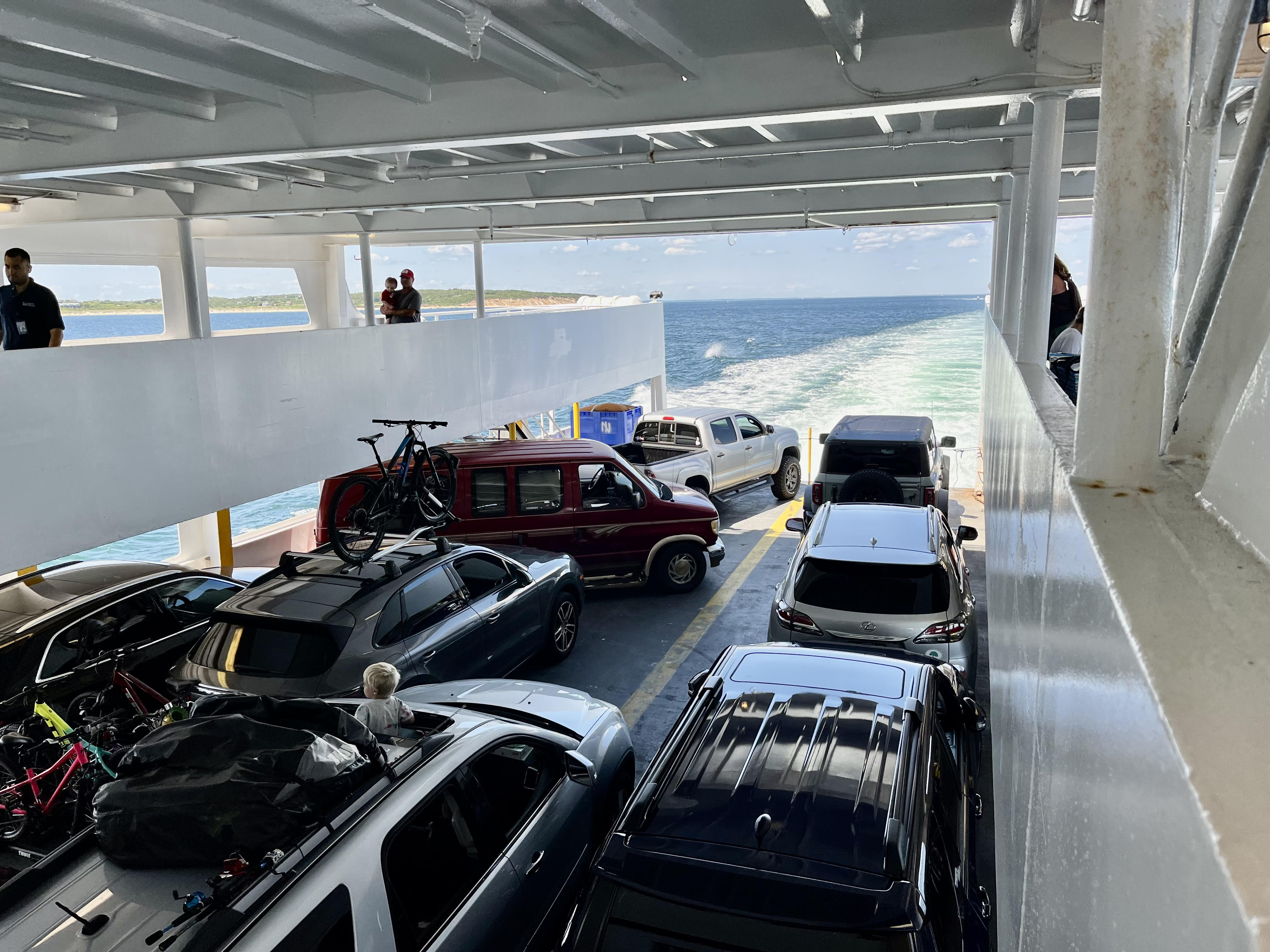
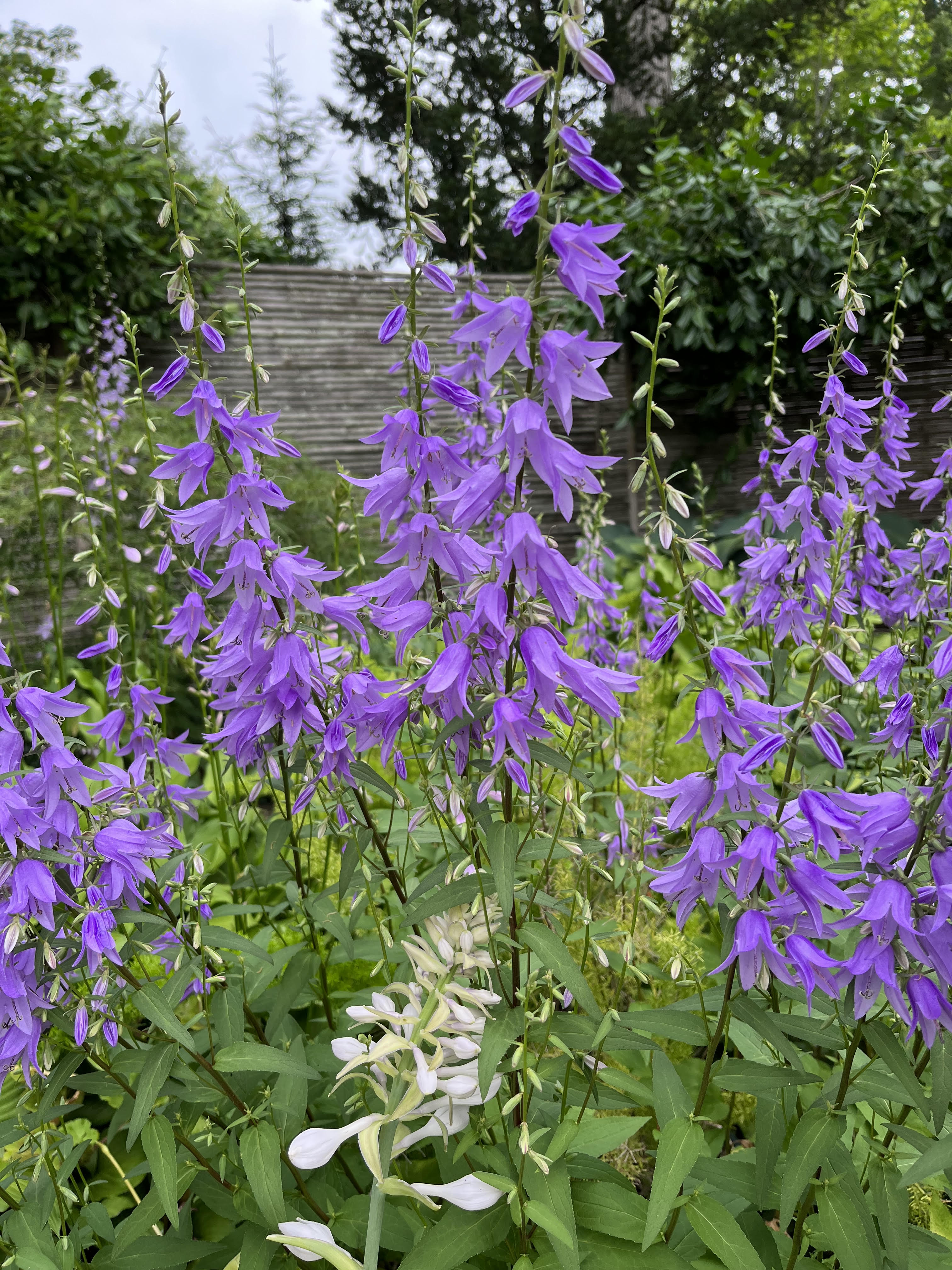
In the first photo, a little boy pops up from the family car like a turtle to observe the wake of the boat. Next we have Creeping bellflower, sometimes called “Evil Twin” because it is not a true bellflower.

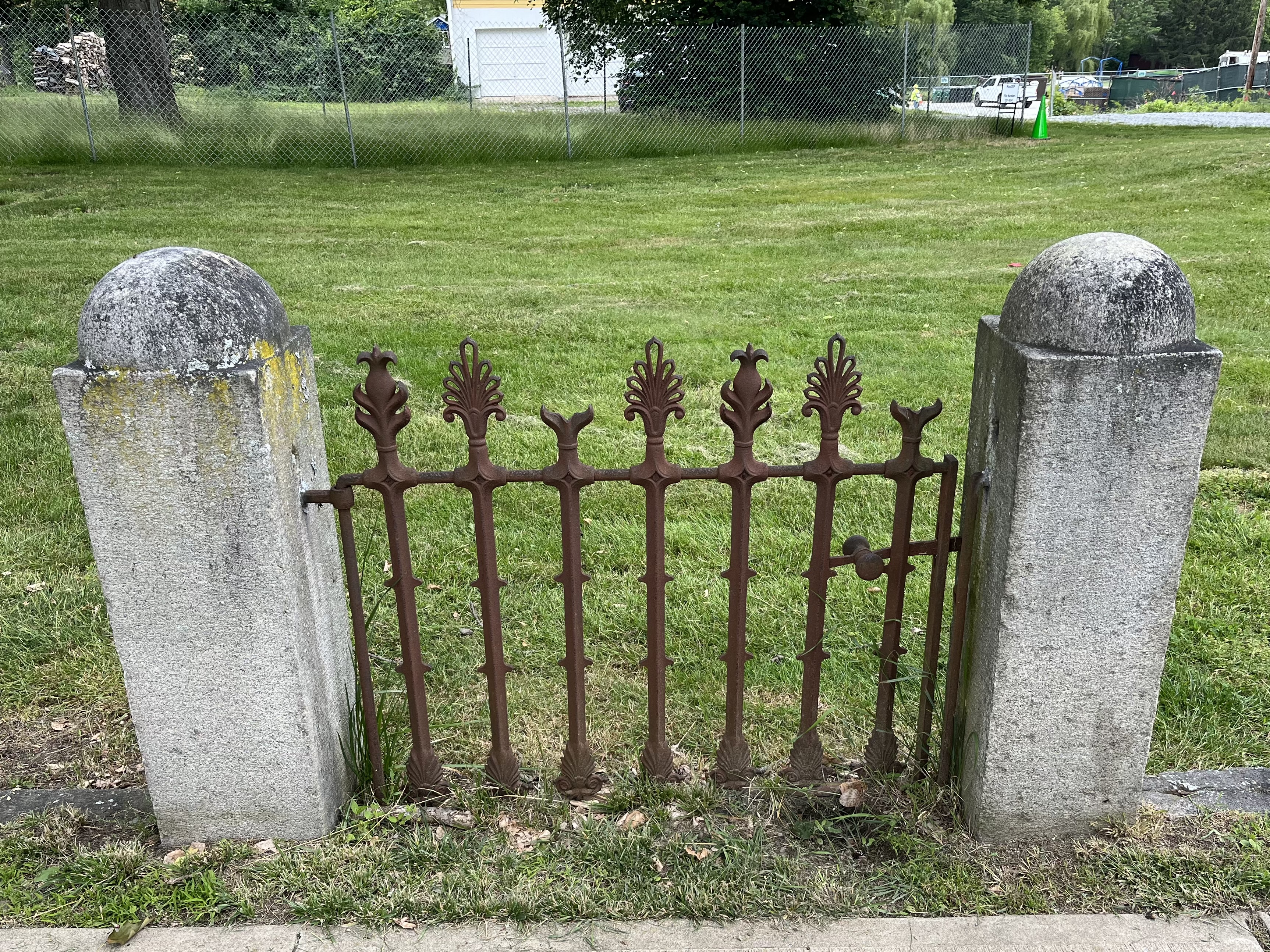
I’m amused by fancy gates that keep nothing in or out.

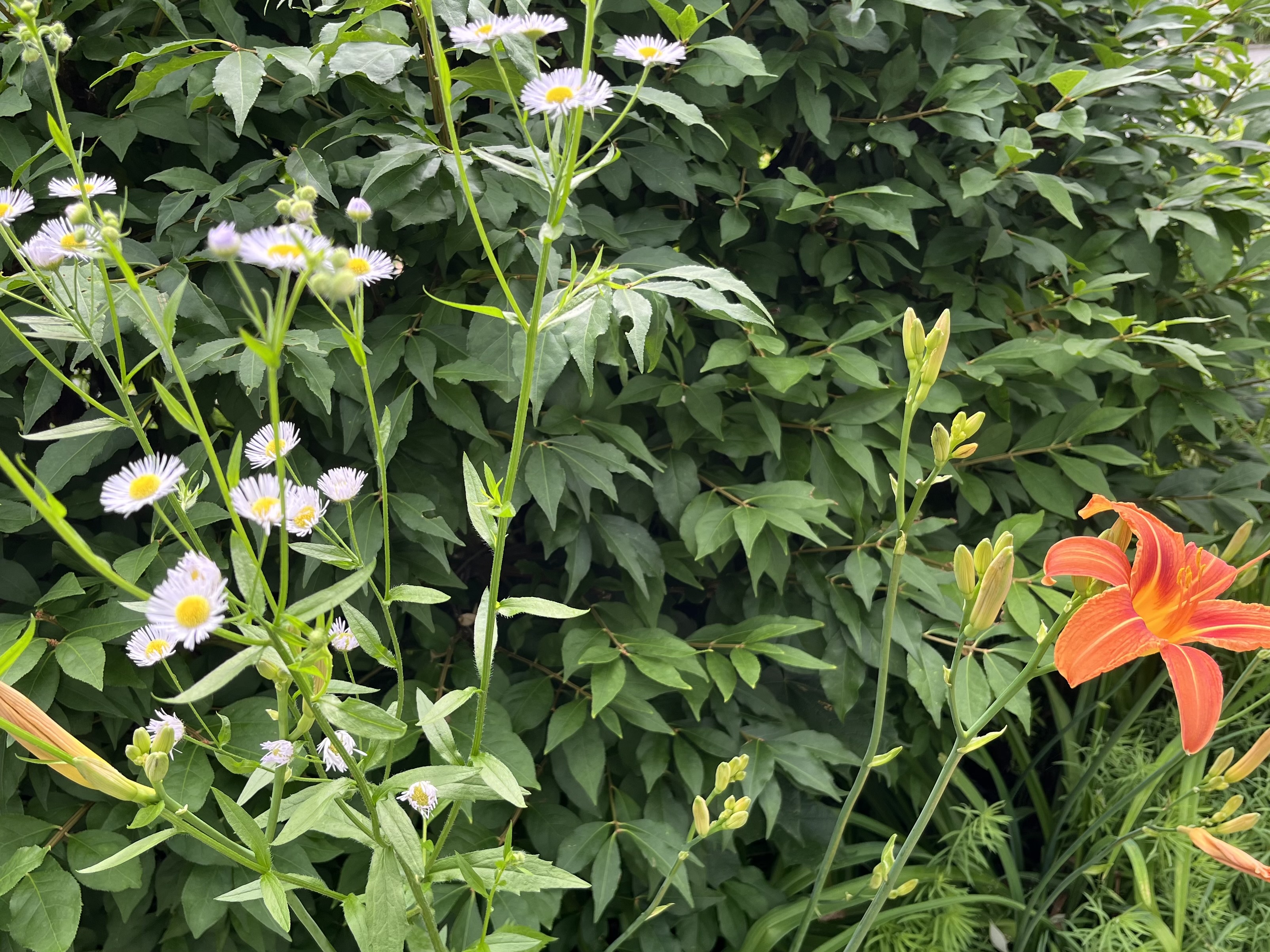
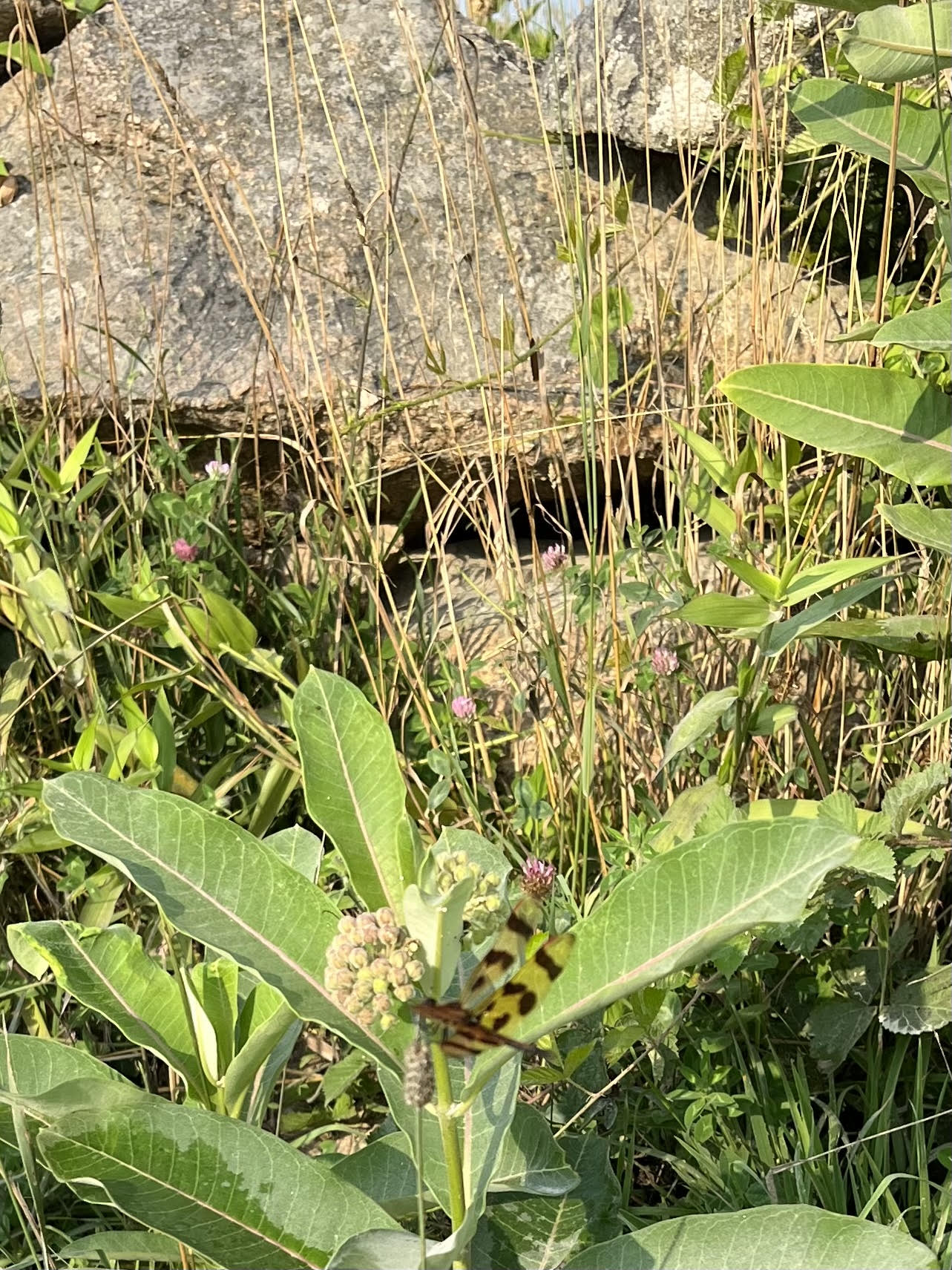
In the yard beside the orange daylily is Daisy fleabane, or so my app tells me. In the next photo, note the dragonfly trying hard not to be seen.

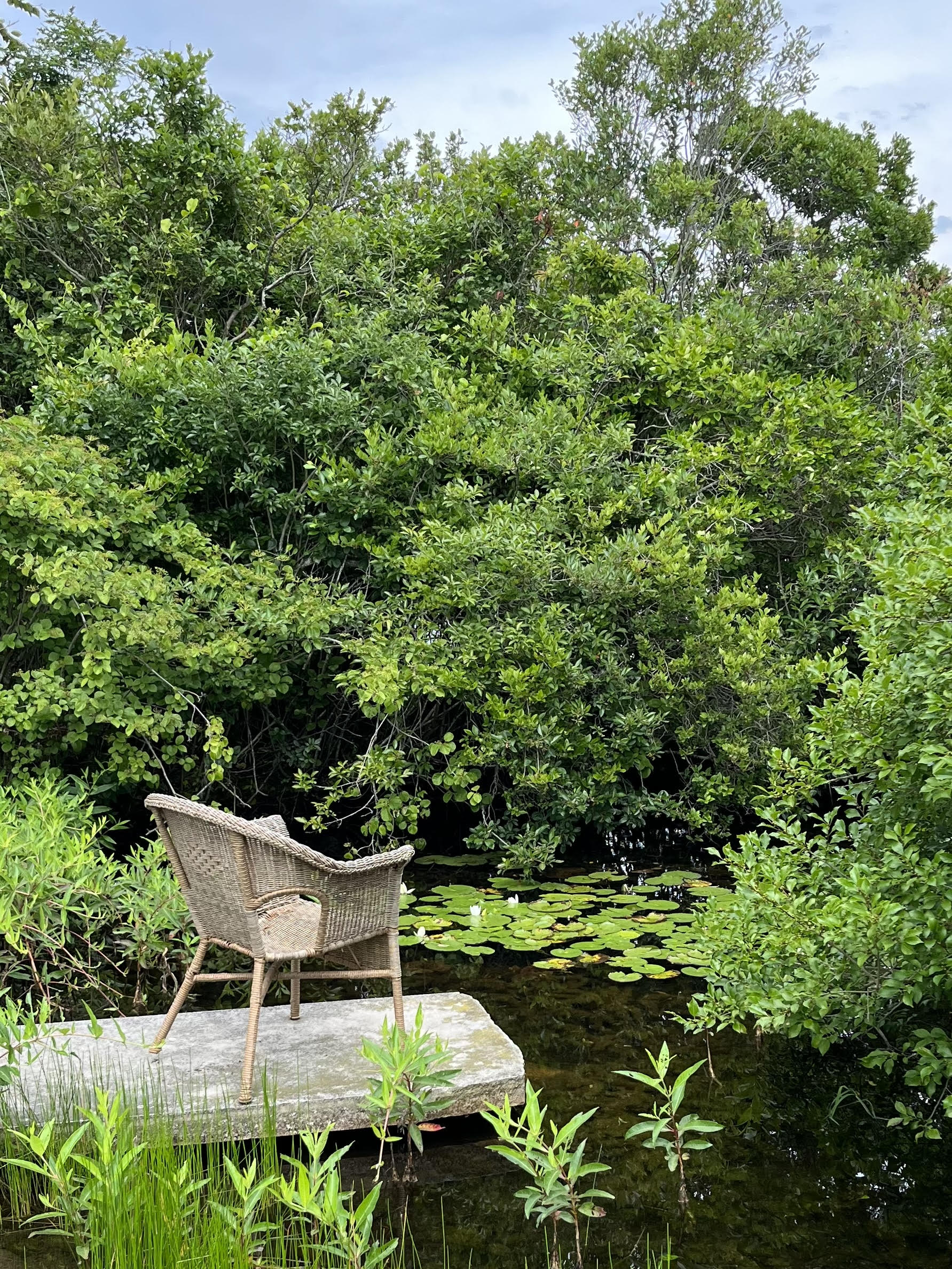
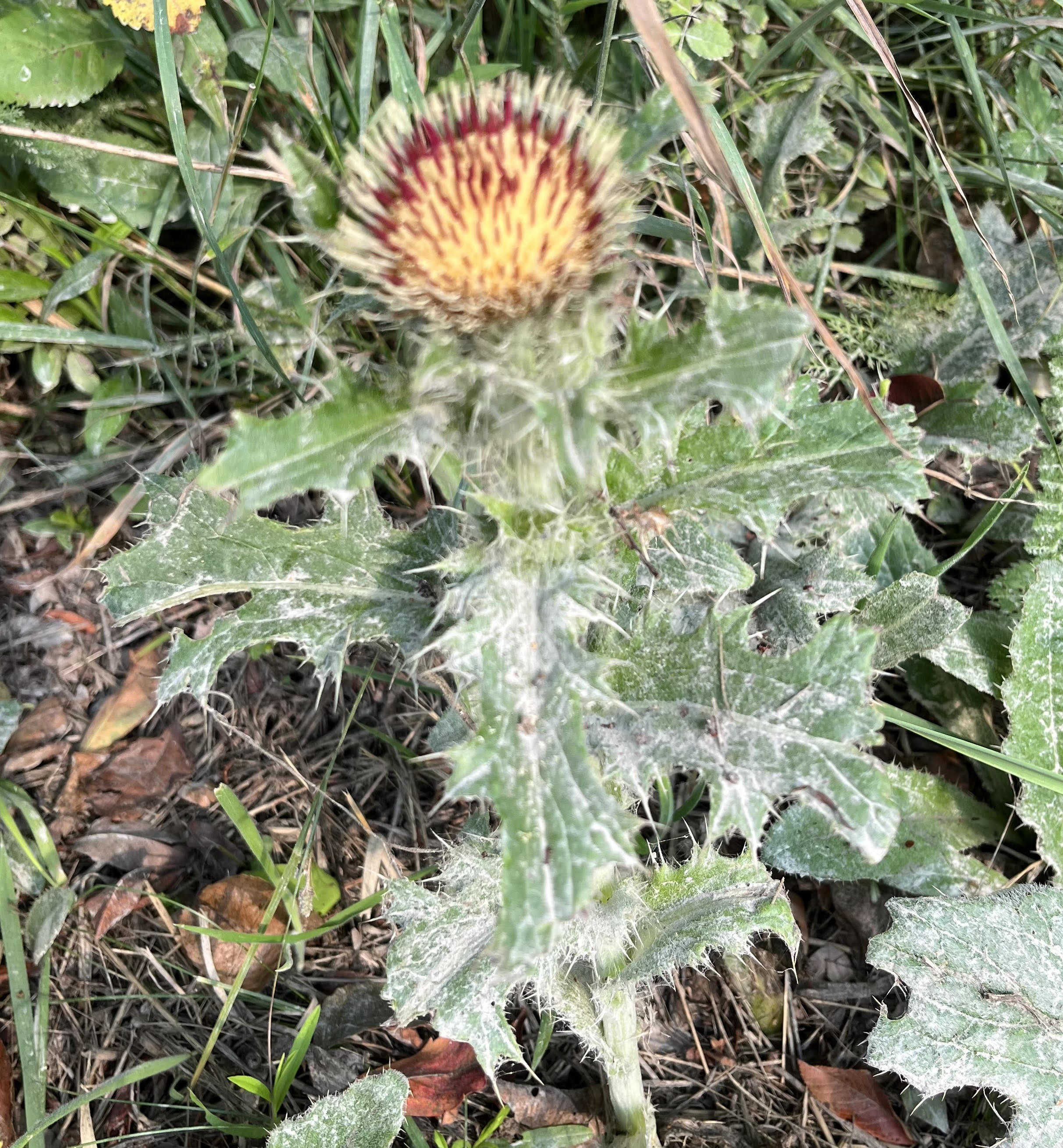
A comfortable chair sits by the summer-blooming water lilies. A mean-looking bull thistle aims to scare off all comers.

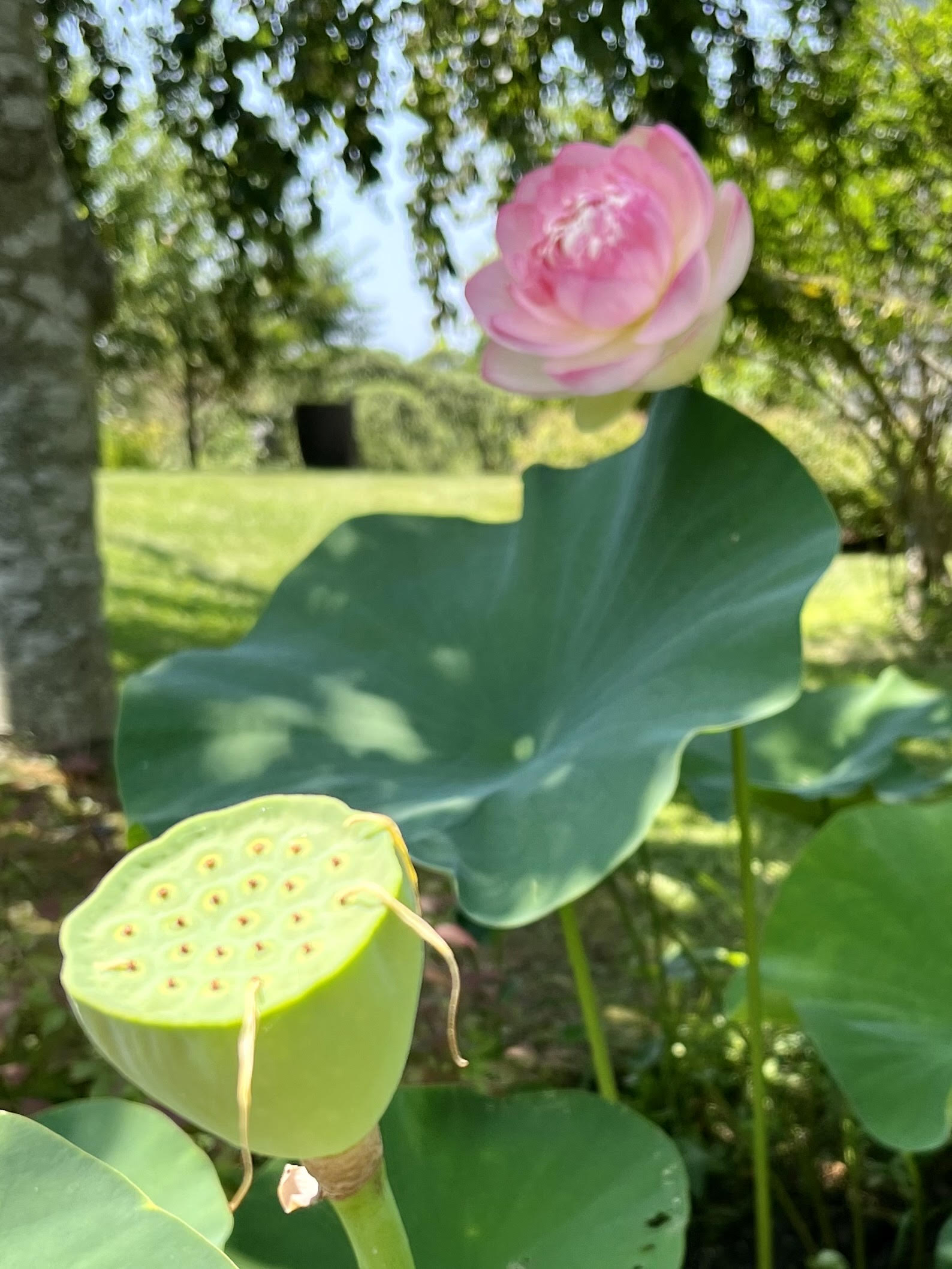
Now take a good look at the foreground of the lotus. This is what is revealed when the flower part dies: its inner self. I like to say that the inner self of a lotus is a shower head.

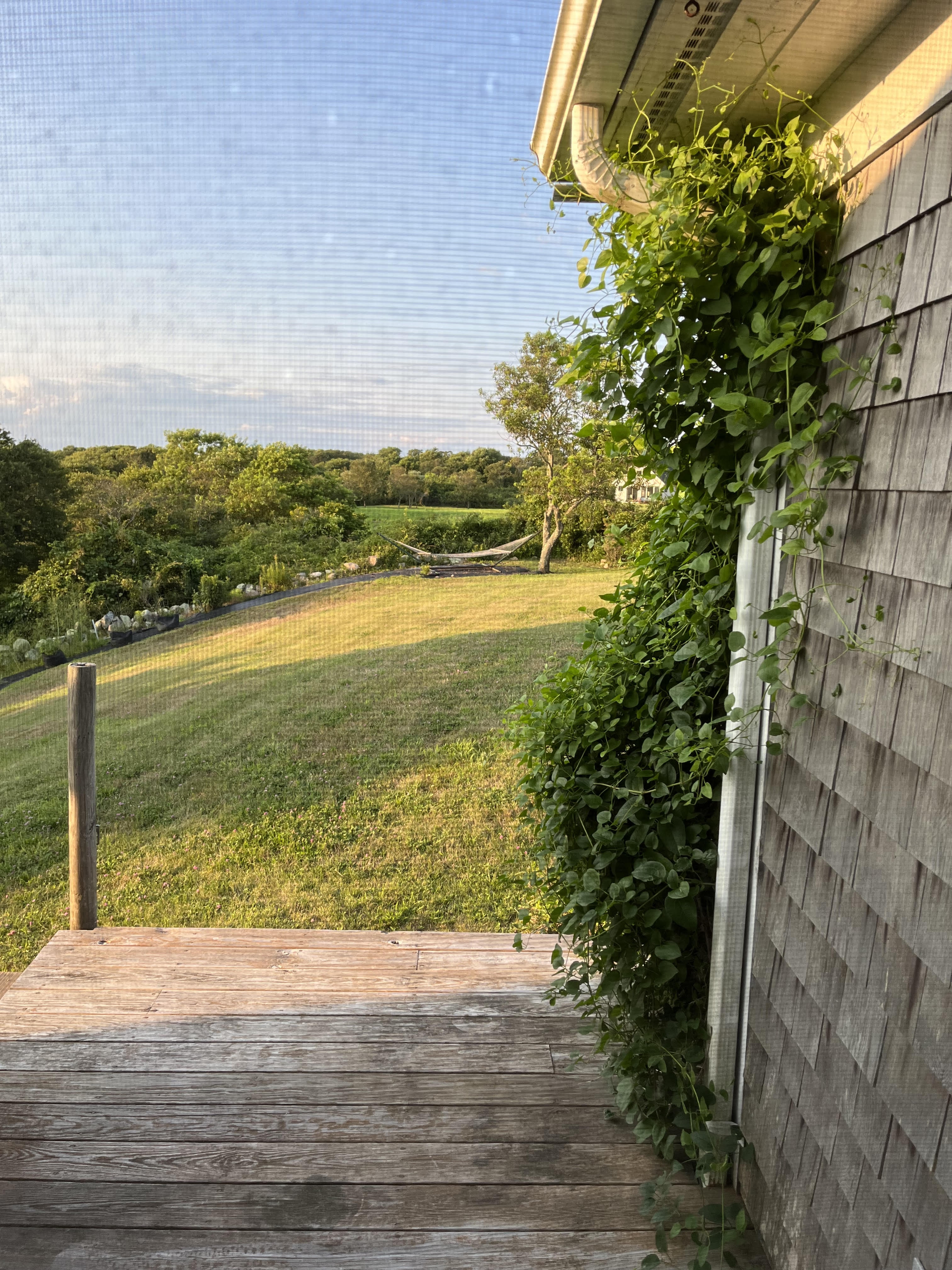
The next scene is dusk in a New Shoreham yard. Soon the deer will pop up from the other side of the stone wall and go looking for free snacks.

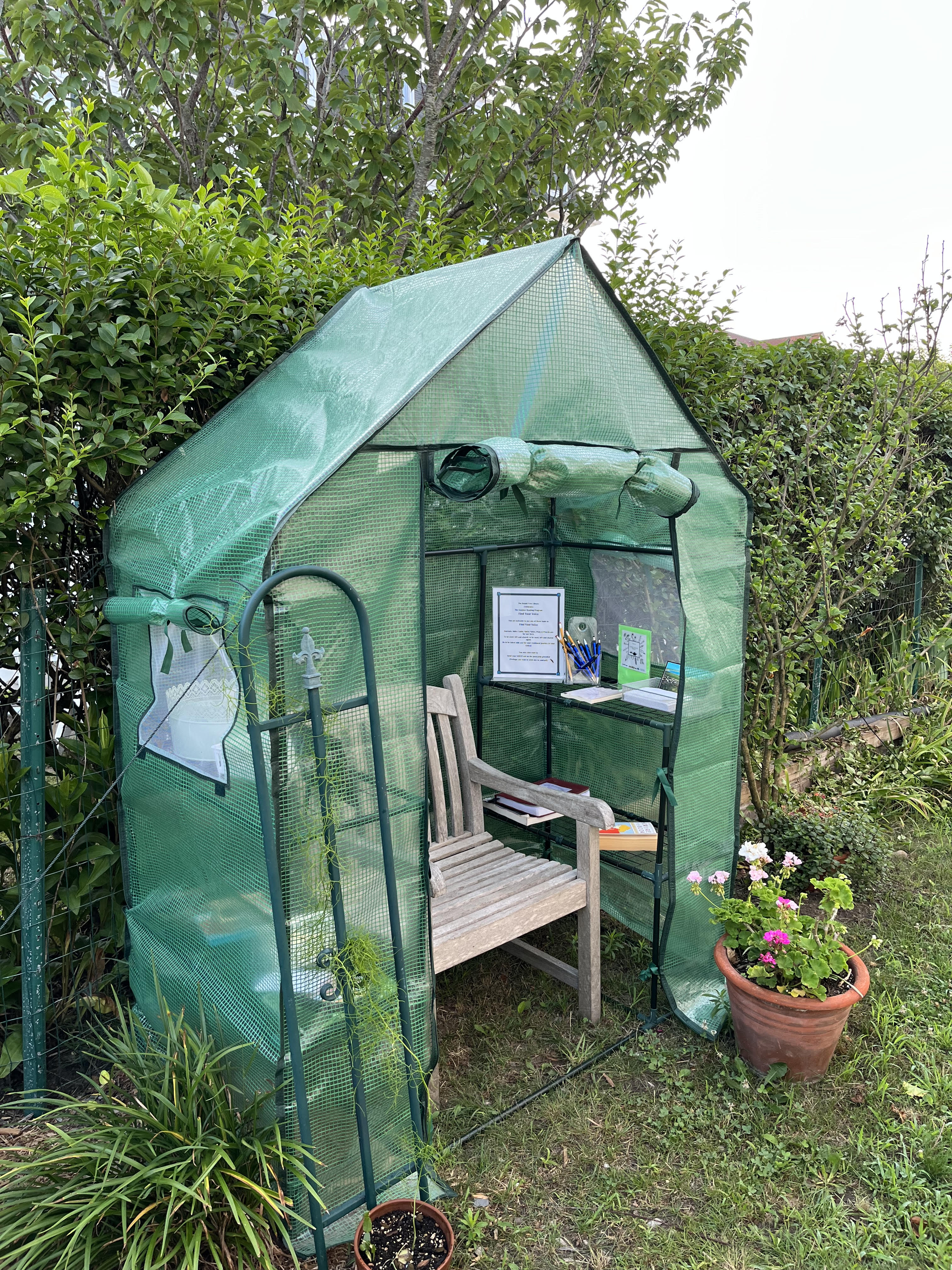
At the island library, where my younger grandson challenged all comers to a game of chess before he went to the nationals in Michigan, you can admire the little tent the librarians set out for quiet pondering and note-taking about books — or anything.

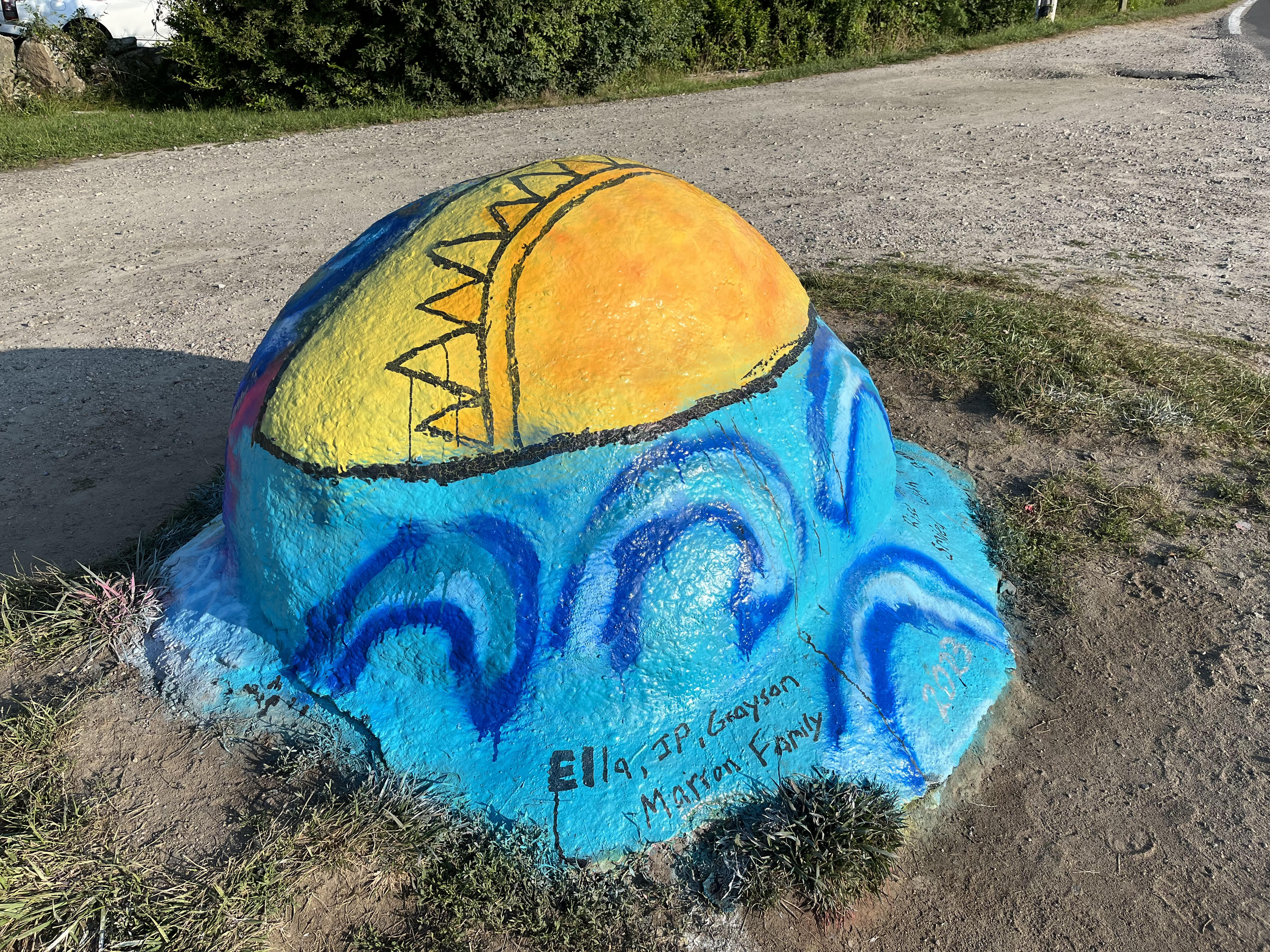
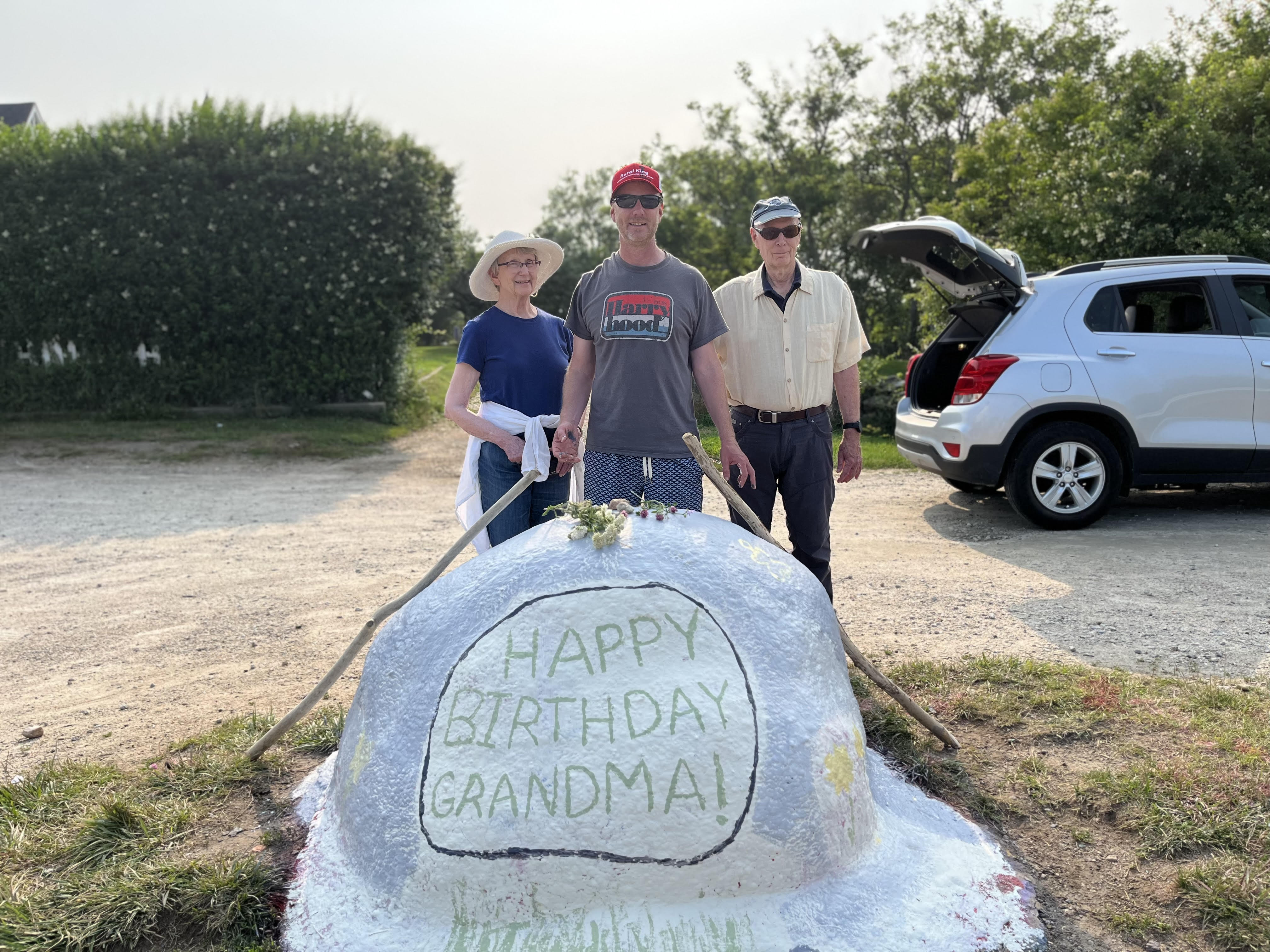
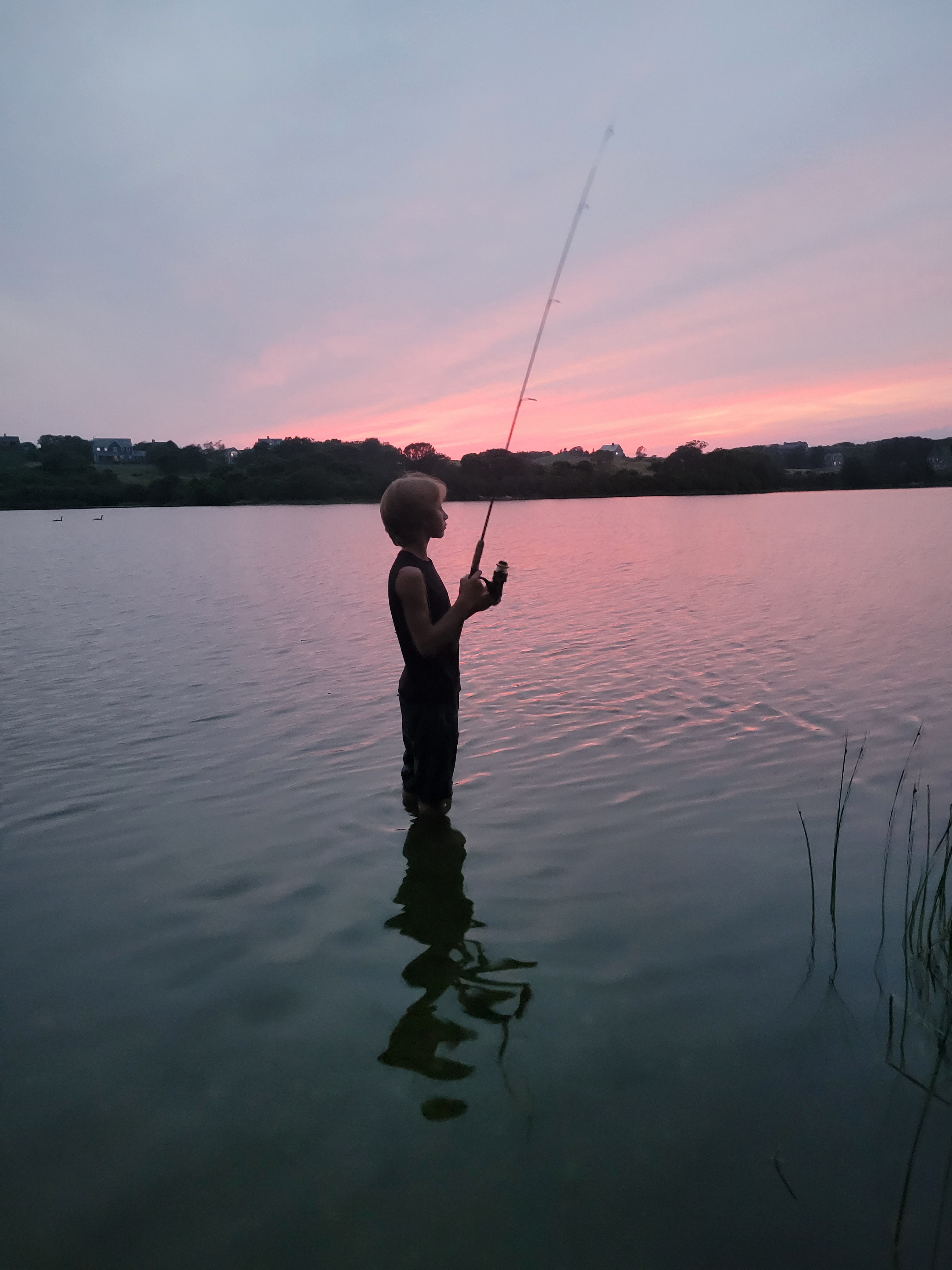
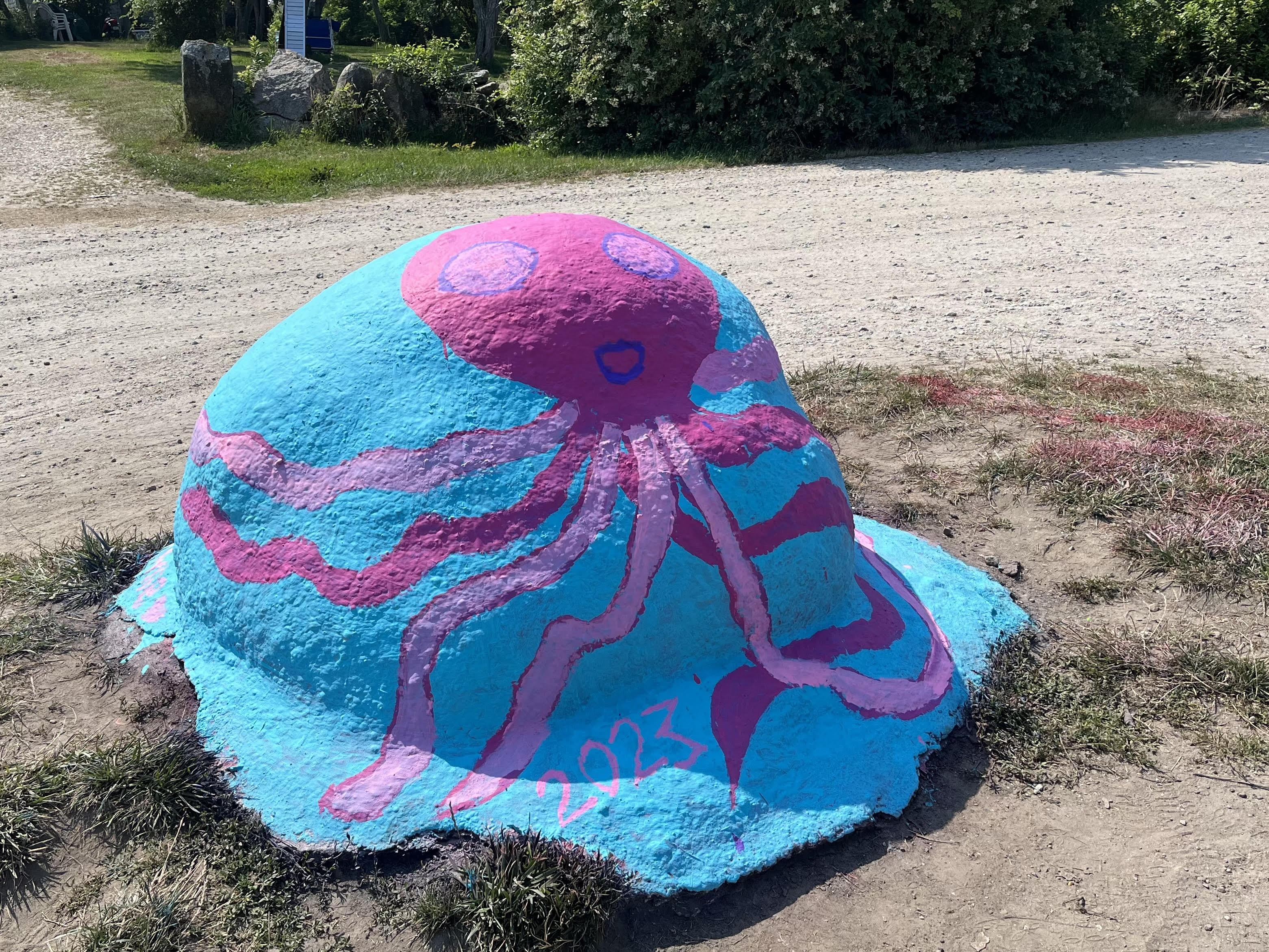
Moving right along, we can check on a few of the summer’s better painted rocks — a surprised-looking octopus, a celebration of sun and sea, and one of my birthday. Pretty much the whole family worked on that last one. My oldest granddaughter did the careful lettering. She also was the photographer for the picture below of her brother fishing at sunset.

Read Full Post »

Photo: Jonathan Bachman/Reuters.
In Louisiana, climate change is erasing Isle de Jean Charles. French-speaking and indigenous residents are moving to higher ground, amid fears of losing their language and culture.

We all know someone who begins to rebuild right after a natural disaster like a wildfire or hurricane, and who are we to judge? But as extreme weather incidents become more common, some of those most affected are, with aching hearts, facing the necessity to be practical.

Patrick Cox reported at PRI’s the World, “Hurricane Ida killed dozens of Lousianans and displaced tens of thousands of others. Among the hardest hit were bilingual and French-speaking communities close to the Mississippi Delta. 

“Alces Adams lives halfway between New Orleans and the Gulf of Mexico in the small community of Cut Off in Lafourche Parish. Hurricane Ida destroyed his trailer.

“People in this part of Louisiana — bayou country — have long learned to live under adverse weather conditions. But things have gotten much worse in recent years. Rising sea levels, erosion and storm after storm have flooded entire communities. For some French speakers, Hurricane Ida was the last straw, and now many are moving away.

“A year after Ida, Adams’ trailer looks just as it did the day after the storm — twisted and torn apart with furniture spilling out, as if attacked by a pack of wild animals. Next to it is a new trailer, Adams’ temporary home provided by FEMA, the Federal Emergency Management Agency.

“Adams was born a block away in his grandparents’ house. His family’s older generation spoke only French. Adams said his grandmother learned English, but refused to speak it, except for one word: ‘Yeah.’ 

“ ‘English was forced on us about 100 years ago,’ Adams said. That’s when English was declared the only language of instruction in public schools. Adams recalled listening to his older relatives as they told him stories in French. Even then, he said, he considered the language beautiful. ‘I loved listening to that.’

“Adams’ grandmother and others told him stories of storms and floods they had survived. It helped prepare him — still a child — when Hurricane Betsy battered the region in 1965. …

“Adams doesn’t know what’s next for him. He comes from a long line of Cajuns who he said were compelled to move from one place to another, to escape poverty or discrimination, or hurricanes and flooding. 

“The French language has been a constant in all of this generational change. Adams knows that each time a French speaker moves away, it’s another micro-blow to the survival of French in southern Louisiana.

“Tulane University linguist Nathalie Dajko has been tracking the decline of French in Lafourche and neighboring Terrebonne Parishes for nearly 20 years. She was in graduate school at Tulane when Hurricane Katrina hit in 2005. It left hundreds of thousands of people homeless. Some even ended up in camps that were scattered across several southern states. Dajko visited a few of the camps as part of a gig she had with Save the Children, a nongovernmental organization.

“ ‘Every now and again, we’d come across these French speakers,’ Dajko said. ‘They would be so excited to meet somebody who spoke French, and they would talk about how they missed the French.’ …

“Louisiana French isn’t standard Parisian French. But French has had longstanding roots in the region after France claimed it in 1682. With the area drawing French speakers, the language gained a foothold. It even spread to local Indigenous tribes in the 1700s. They’d formed protective alliances with the colonial French against the British. Some of their descendants still speak French, especially those who live closer to the ocean — and the floods and storms.

“Across a causeway from one of the larger bayous in Terrebonne Parish is an island called Isle de Jean Charles. Abandoned dwellings are everywhere: collapsed walls, caved-in roofs, debris. A couple of the houses are being fixed up. But most aren’t.  Near the end of the road, a house with a sign outside says, ‘Isle de Jean Charles is not dead.’ … 

“Chris Brunet, who answered the door in a wheelchair, said he spoke French at home and English at school. Like Alces Adams, Brunet’s grandmother only spoke French; his parents were bilingual. Everyone living on the island was a member of the Biloxi-Chitimacha-Choctaw tribe. …

“ ‘Hurricane Ida is the first storm to damage the house,’ he said, pointing out his damaged roof. … Likely to be gone soon is this entire island. In the past 65 years, Isle de Jean Charles has shrunk from 22,000 acres to just 320. 

“It’s not just the storms. There are many reasons why the land is vanishing: rising sea levels, the rerouting of the Mississippi river — some of it natural, some engineered — canal construction, land erosion, some of that caused by oil and gas extraction. Then there’s the levee system, expanded after Hurricane Katrina: a life-saver for those living within it; potentially catastrophic if you’re on the outside of it.

“That’s why Brunet, and almost everyone else on the island, is leaving, with federal government assistance, to a city 35 miles inland where virtually no one speaks French.

“ ‘If I had to predict, I would suggest that people are not going to maintain French,’ linguist Nathalie Dajko said. … Still, Dajko has studied these French and bilingual communities for close to two decades, and said they’re full of surprises. 

“ ‘People have been predicting the death of Louisiana French for generations and it just won’t die,’ she said.”

More at the World, here. For a refresher on Longfellow’s fictional Evangeline, one of the French-speaking Acadians expelled from Canada to settle in Louisiana, click here.
Read Full Post »

Photo: Petros Karadjias/AP.
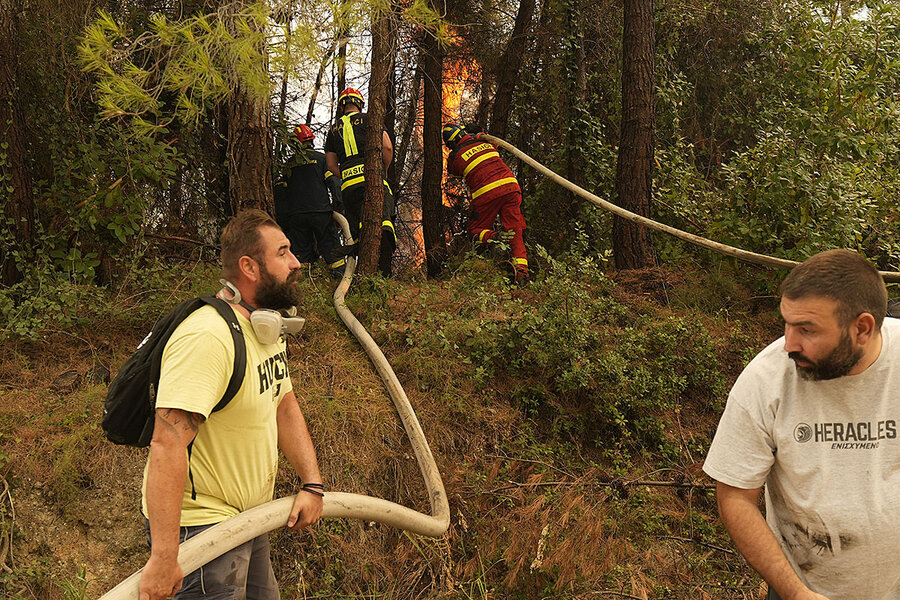
Firefighters try to extinguish a fire in Avgaria village on Evia, an island about 115 miles north of Athens, Aug. 10, 2021.

The Greek government was doing nothing to fight the raging fires on Evia island, and some mainland folks watching the disaster on television couldn’t stand what they were seeing. So they took matters into their own hands.

Tony Rigopoulos and Dominique Soguel reported the story for the Christian Science Monitor.

“Volunteers were the first – and at times only – line of defense against the wildfires that engulfed the Greek island of Evia this week, leaving charred olive trees in a sea of ashes.

“Some were brave local youth. Others came from other parts of the country, shocked into action by the inadequacy of the government response as it scrambled to fight an unprecedented number of fires across multiple fronts, including the capital, Athens.

“Wherever they came from, the volunteers, as well as grassroots support from nearby cities and towns to get supplies into fire-stricken areas, have helped save lives and property from roaring blazes across the island, located just northeast of Athens. The destruction the fires caused is nonetheless catastrophic for many living on Evia, especially in its heavily wooded north. But the actions of volunteers helped prevent loss of life and keep a bad situation from becoming that much worse.

“[The fire] broke out on Aug. 3 and continued to smolder through Thursday. A sinister smoke hung over the small western port of Aidipsos early Wednesday as firefighters and volunteers from other parts of Greece arrived to help Evia.

“The blaze had spared the port, an important entry point to the island, but consumed more than 110,000 acres just beyond. Some villages continued to burn, adding to the bitterness of residents who say the government prioritized fighting a wildfire at a large forest near Athens and allowed the fires on Evia to grow into a huge front that was impossible to battle.

“Known for its fierce winds that stayed mercifully calm in recent days, the island’s north boasted beautiful pine forests that went up in flames all the same, along with vineyards and olive groves. Thousands of residents work either in small honey or resin production facilities. …

Said soccer coach Vaggelis Bekakos, ‘The volunteers saved Evia because there was no one there to help.’ …

“After the fierce wildfires of 2016, says the coach, residents of Limni created a volunteer corps of firefighters and rescuers who received proper training. They are bound by an oath to drop their day jobs and serve any time that there is a fire alert. Mr. Bekakos credits their heroic acts to save the town – broadcast on national TV – with inspiring villagers in other parts of the island to also fight the flames, rather than flee.

“ ‘We were asking the fire service to spray some water on a house that was beginning to burn and they would answer, “We have no such order. Our order is to evacuate the people, not to spray water,” ‘ he recalls. …

“Greece had to battle nearly 600 fires in the span of just eight days, issuing 65 evacuation alerts and evacuating 63,000 people, according to Nikos Hardalias, the deputy minister of crisis management. ‘What I know is that the choices we made saved lives,’ he told journalists on Tuesday. ‘We didn’t underestimate any fire. … We had to deal with a situation that was unique for the fire service: 568 fires!’ …

“Five days after the start of the fires, Marinos, a native of the southern part of Evia who now studies in Athens, went with his friends to the scorching north because there appeared to be no government effort to bring the flames under control.

“ ‘We took branches from trees to hit the flames until they died,’ says Marinos, who didn’t give his last name. ‘Later a man came from the village with his car, carrying the watering tank he uses for his vines. We used that water too. We used anything we could find. …

“ ‘It’s not only the houses, it’s the forest. Their whole life is now in the past. What can they do after this?’

“Maria Papadopoulou, a native of Athens, has devoted days to delivering food and water packages to those in need, shuttling villagers to safety, and rescuing and feeding the few animals that survived the inferno. She agrees that the loss of the forest is a huge problem. ‘The forest and the animals are gone forever,’ she says. ‘In a few days, all the volunteers will leave and the people of the villages will be really alone then. They will continue to live in this huge cemetery.’ ”

More at the Monitor, here.
Read Full Post »

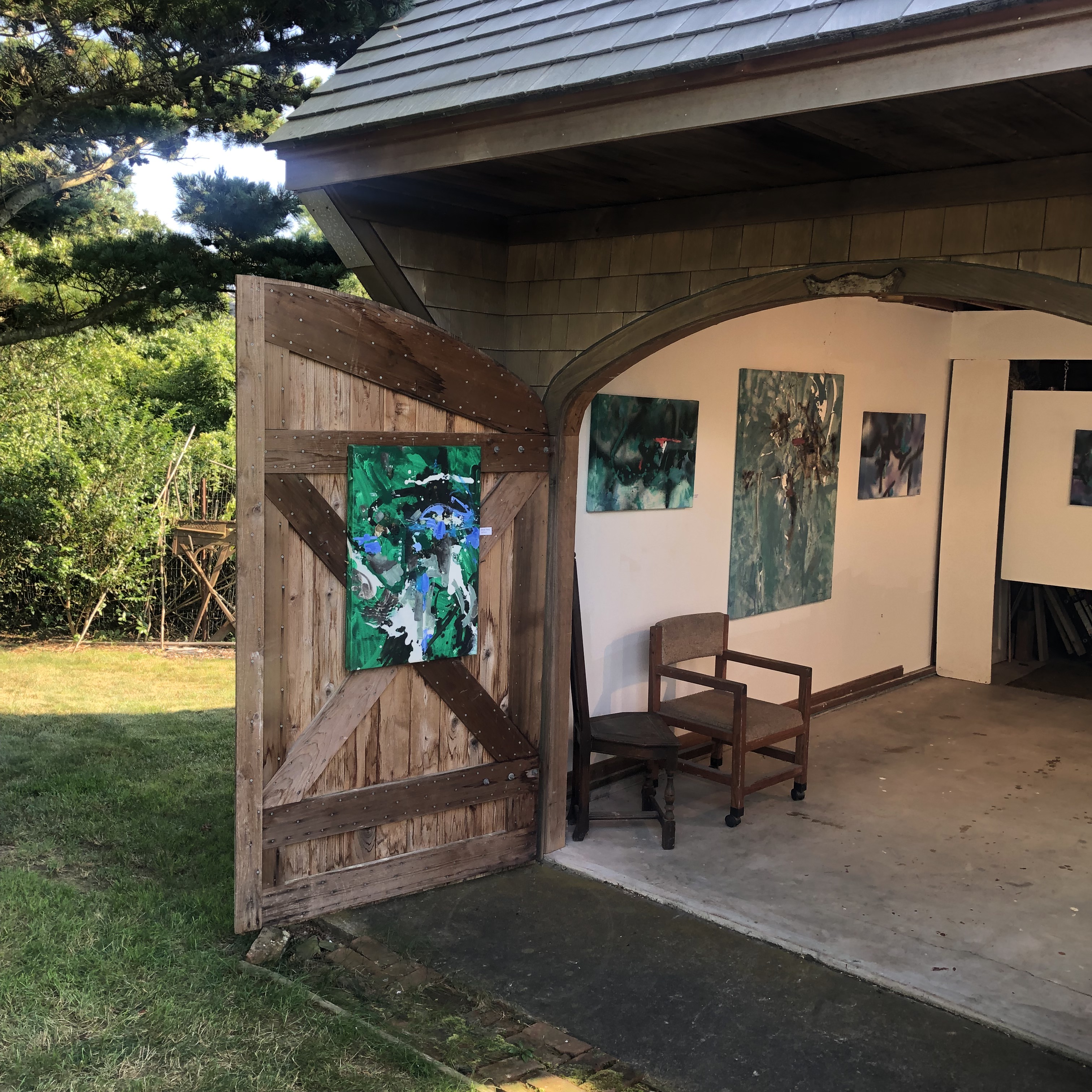
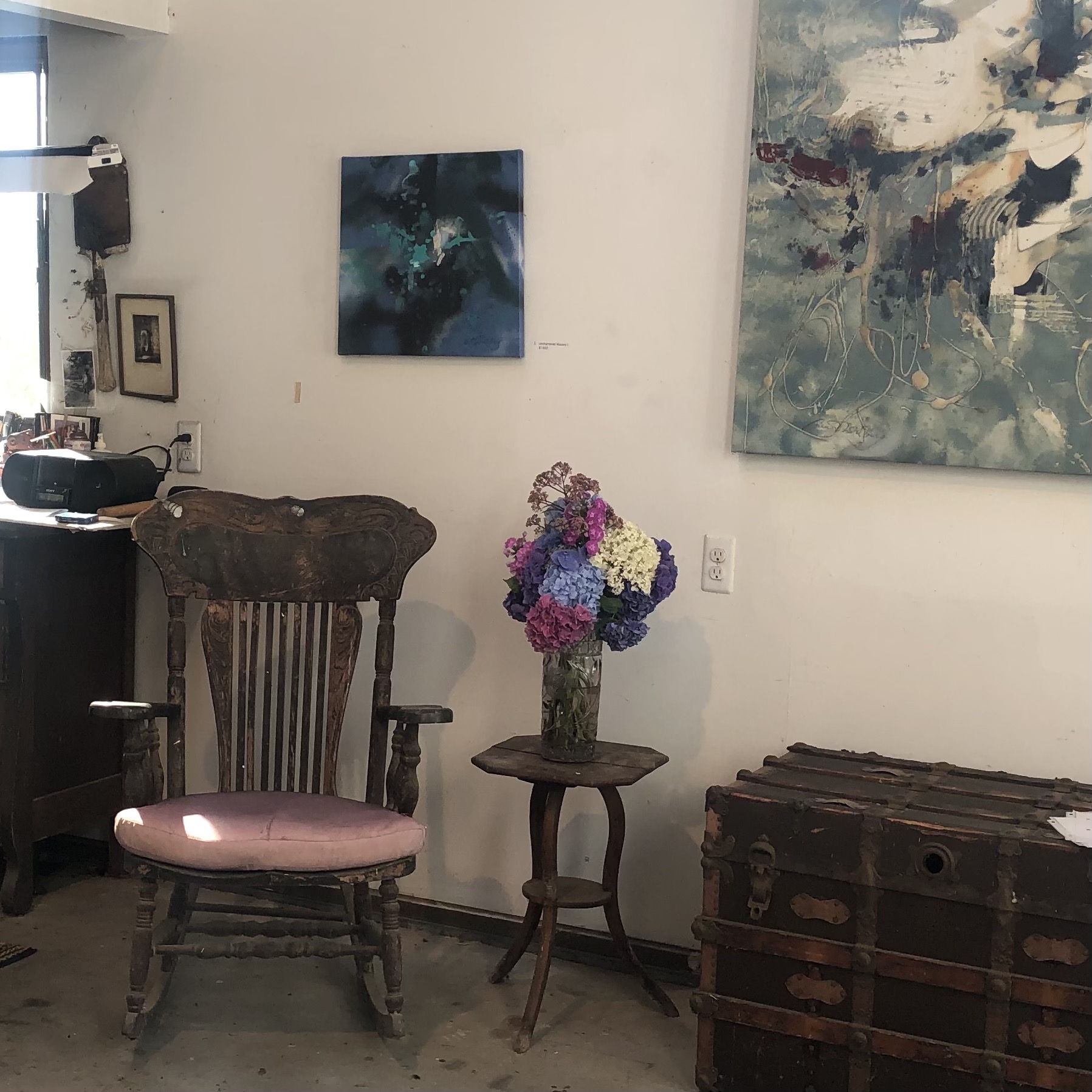
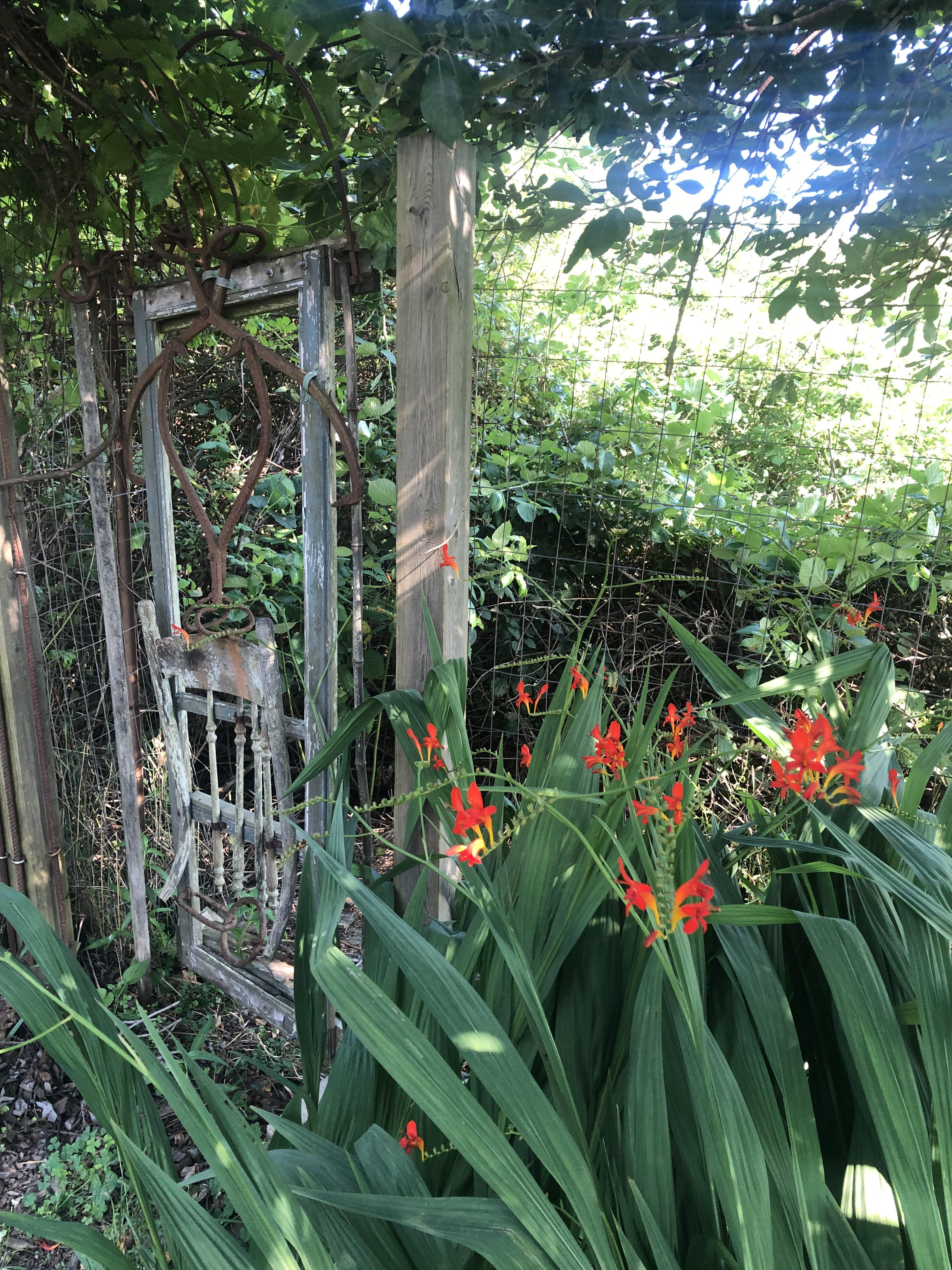
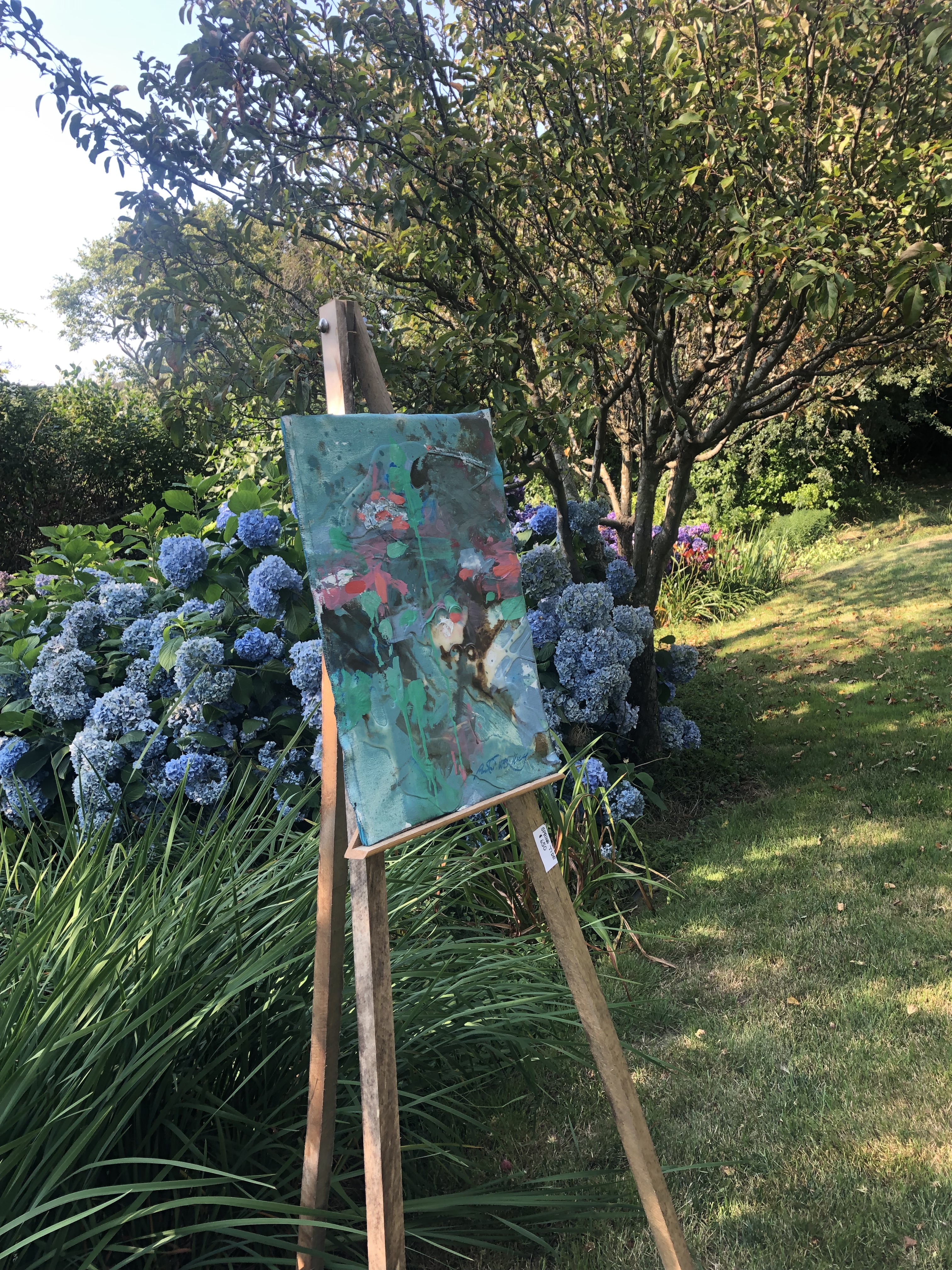
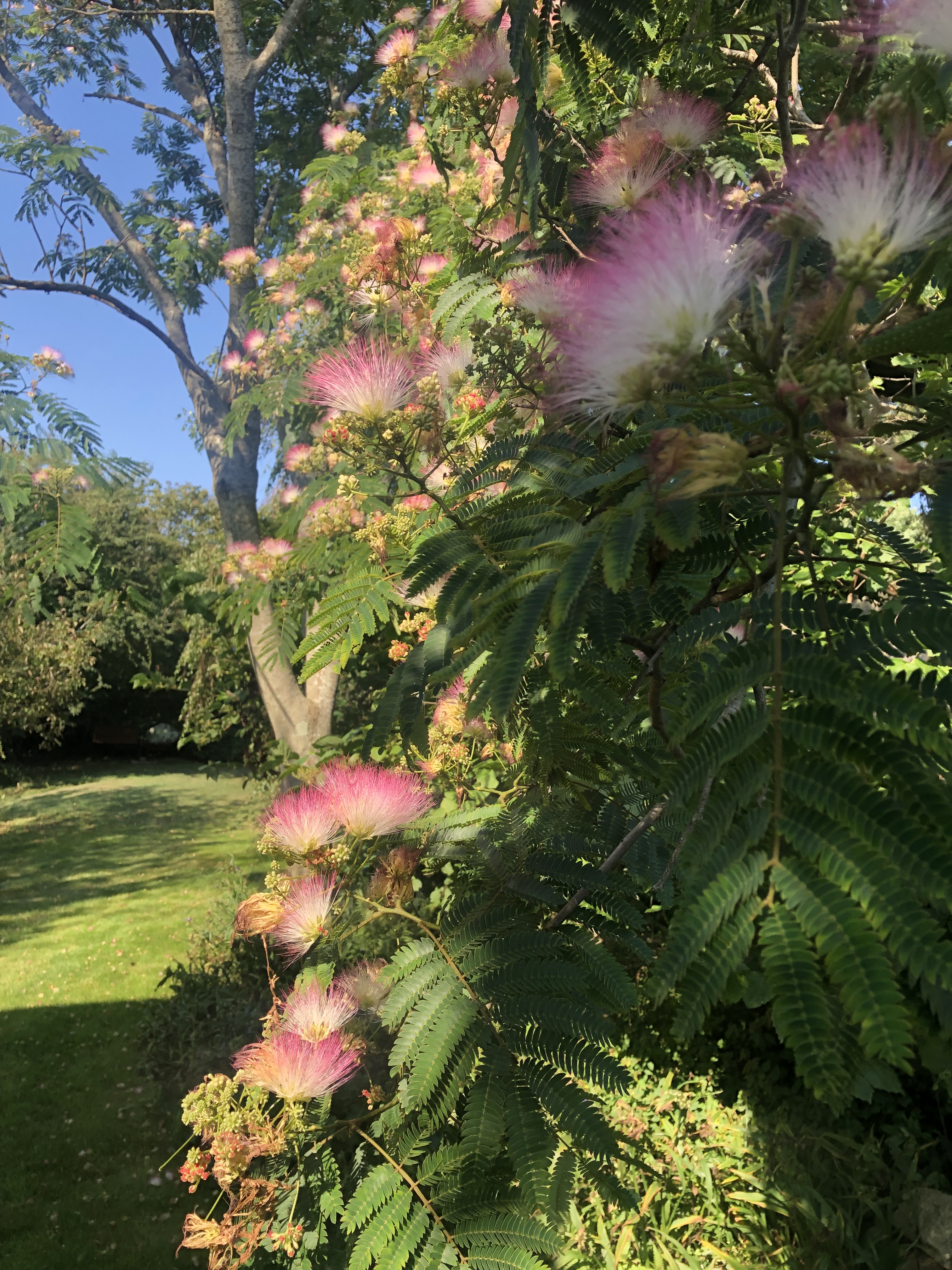
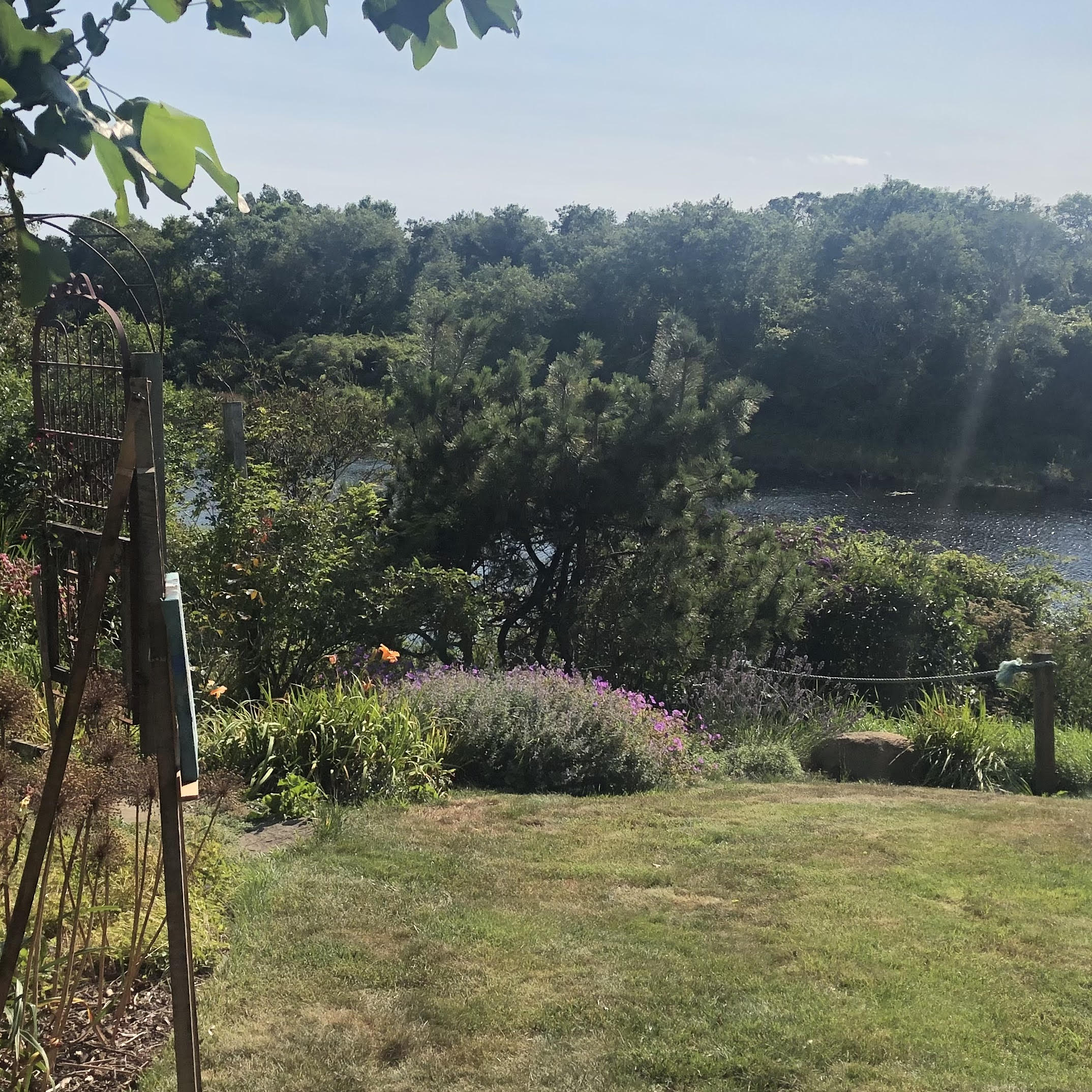
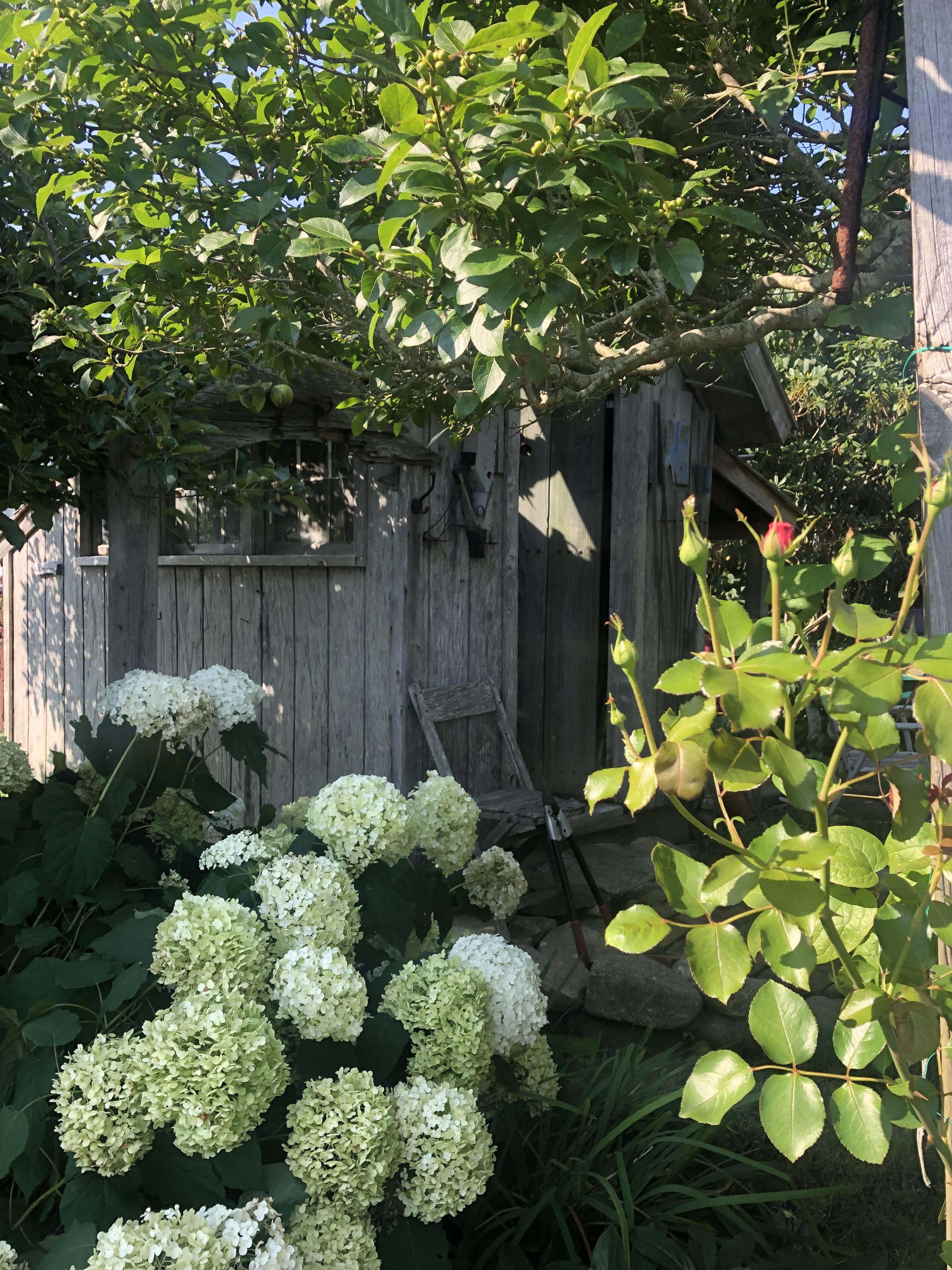
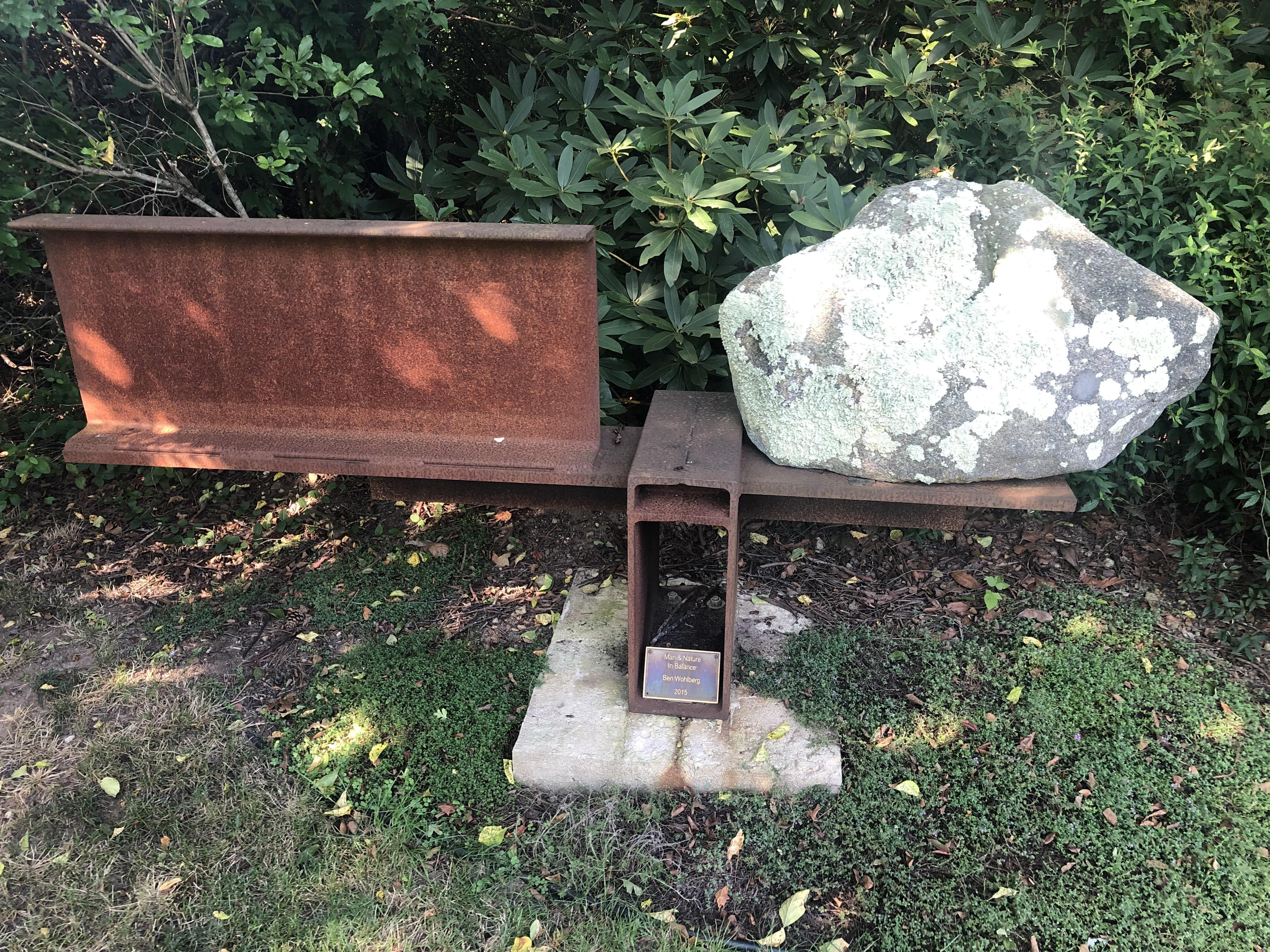
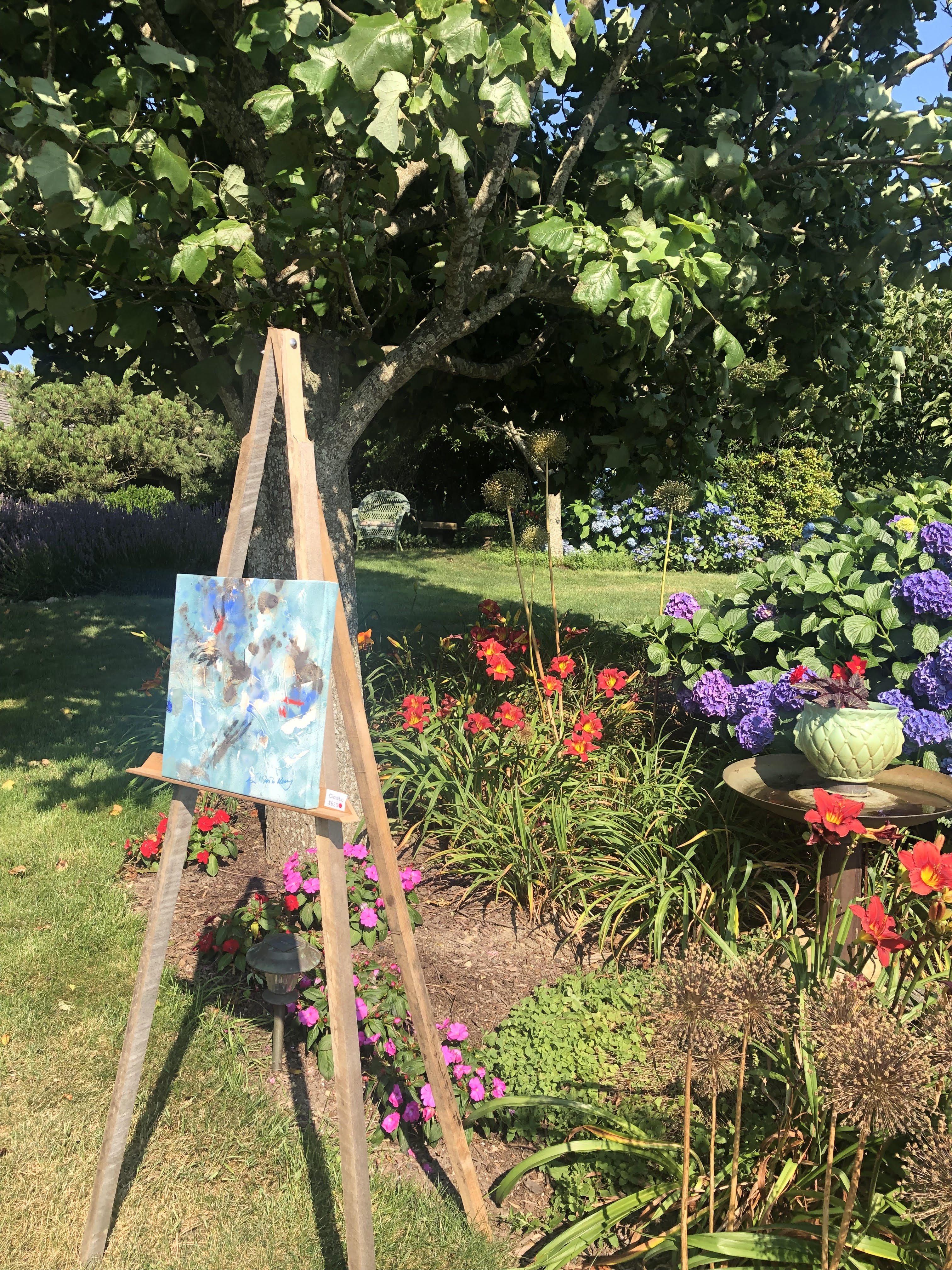
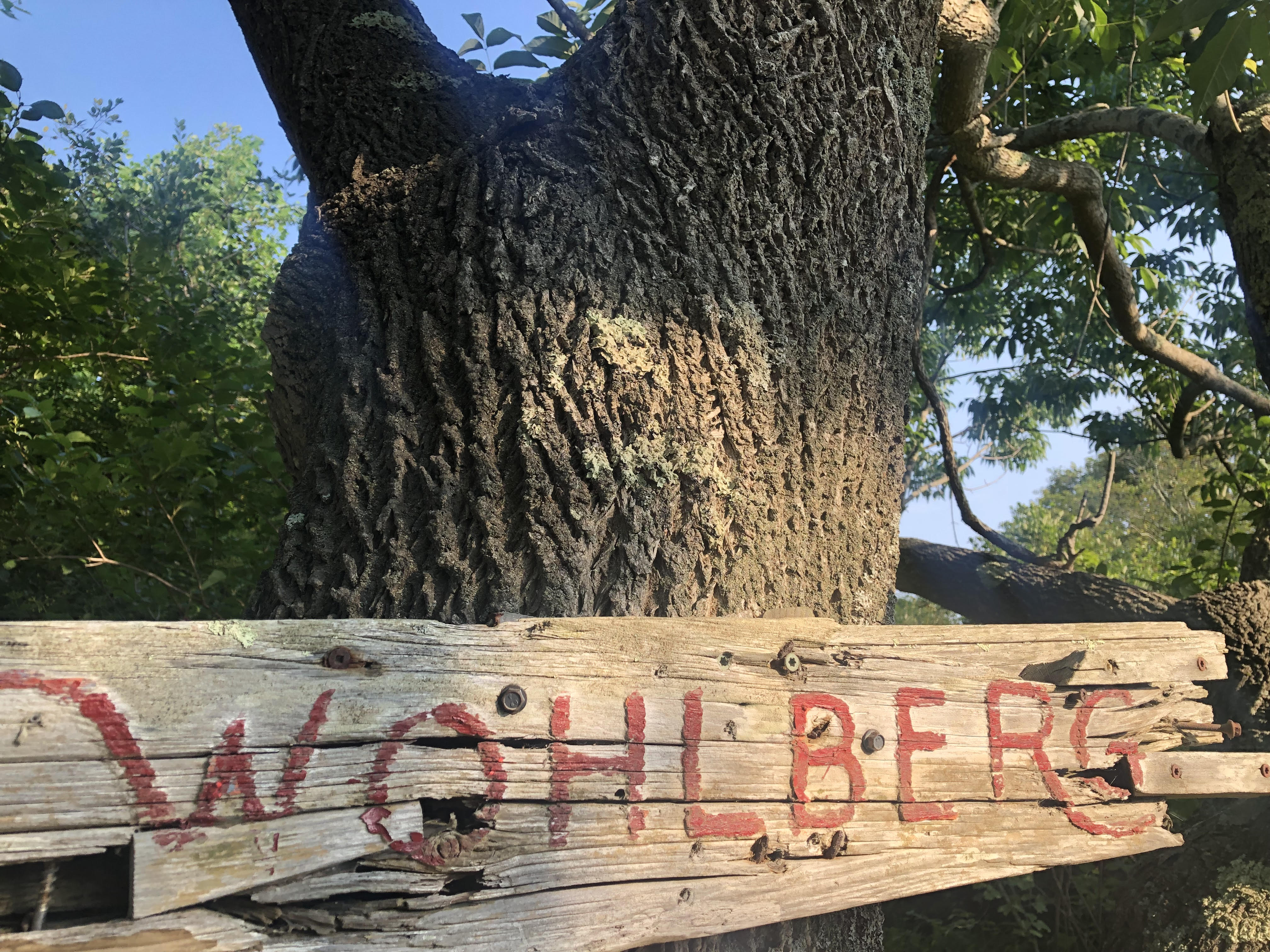
After decades as a commercial artist doing illustrations and portraits, Ben Wohlberg has “retired” to focus on abstract painting and gardening with his wife, Catherine. Once a year, they open to the public the grounds of their lovely summer home located on a shady dirt road. And what a treat that is!

I love the colors of the abstract paintings, which speak to me of the water, sky, flowers, butterflies, and mist that surround the couple on the island they love. In the blues of one with a flight of rose color lifting the upper right corner, I sense a bird flying in a studio window and swooping past a mirror that captures the feeling of its freedom rather than its photograph.

Seeing these paintings on easels around the grounds brings something extra to both. Note the “galrage” below (gallery in a garage) and the sculpture called “Man and Nature in Balance.”

More at Wohlberg’s website and in a video that features two islands the painter loves.

Read Full Post »

2019-Malcolm-Greenaway-Voices-from-Village

Photos: Malcolm Greenaway

April is National Poetry Month. I know quite a few poets, and I truly value the way they capture feelings obliquely and more deeply than common speech. In fact, at my sister’s memorial service in January, I read my friend Ronnie Hess‘s poem called “What We Scarcely Know,” from her collection Ribbon of Sand about a childhood on Fire Island. The theme of sand repeatedly washing away and returning in a new form really spoke to me. What poems speak to you?

ronnie_hess_writer-poet

Photo: Wisconsin poet Ronnie Hess

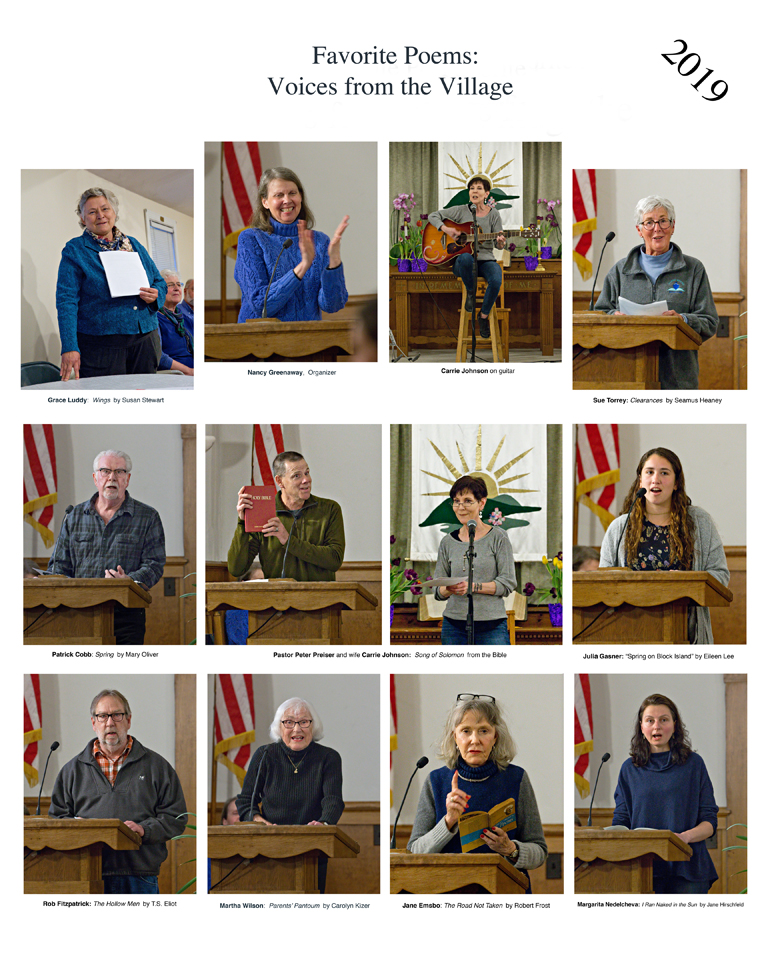
Rhode Island poet Nancy Greenaway has been bringing a love of poetry to her community and to students on Block Island for decades. Recently she told me, “For National Poetry Month, I usually organize a reading of favorite poems by community members who are not poets: a ferry captain, a police chief, a teacher, a real estate broker, a minister, a doctor, a guitar-playing student, a gift shop owner, a first warden [something like a mayor], a manager of the power company, for example.

“We had scheduled the Voices from the Village reading for April 24, but cancelled because of COVID 19. Instead, we are asking community members to email favorite poems to their friends during the month of April. I’ve received two so far:
Wendell Berry’s ‘The Peace of Wild Things‘ and Kitty O’Meara’s ‘And the people stayed home.’ ”

Nancy’s email inspired me to search online for articles about past Voices from the Village events. This is from the Block Island Times, May 2018: “The annual community poetry reading known as Voices from the Village featured a wide range of voices reading the works of many different poets:

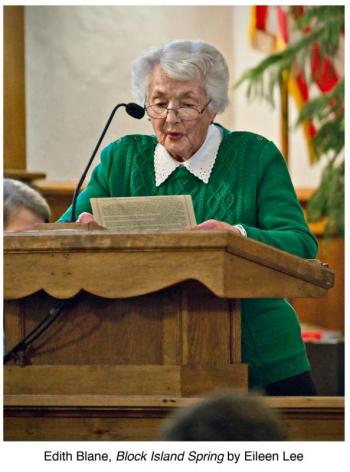
“Here is the poem by [former first warden] Edie Blane’s sister, Eileen Lee, titled ‘Block Island Spring,’ from Jan. 31, 1962.

miss20edie20blane

Photo: Malcolm Greenaway

“Spring doesn’t come to our bleak island home

“With whispering air and fragrant smell of earth.

“Ours is a different world —

“Grey, cold and harsh,

“And April days are angry with us still.

“The equinox comes in with windy roar;

“Pale dune grass dips and rises in its path.

“Seas crash

“White crested and dark shining green.

“The sun is bright but gives no pleasant warmth.

“And yet we have a portent, old as time,

“Though cold winds rule us yet, with icy breath;

“A day of quiet comes —

“The Sound grows still, a pale and milky blue

“The smallest waves lap gently on the shore.

“In the great echoing stillness on the sea

“The sweet slow tolling of the buoy rolls in.

“At last, this is the long awaited time,

“First sign of island spring.”

See all the Malcolm Greenaway photos of the 2018 readers here. And for inspiration from Nature, check the photographer’s website, here.
I’m wondering if a group poetry reading could be done virtually, the way these singers handled the old-time spiritual “Down to the River.” Looks complicated.

Read Full Post »

Greece Enigmatic Islet

Photo: Greek Culture Ministry via AP
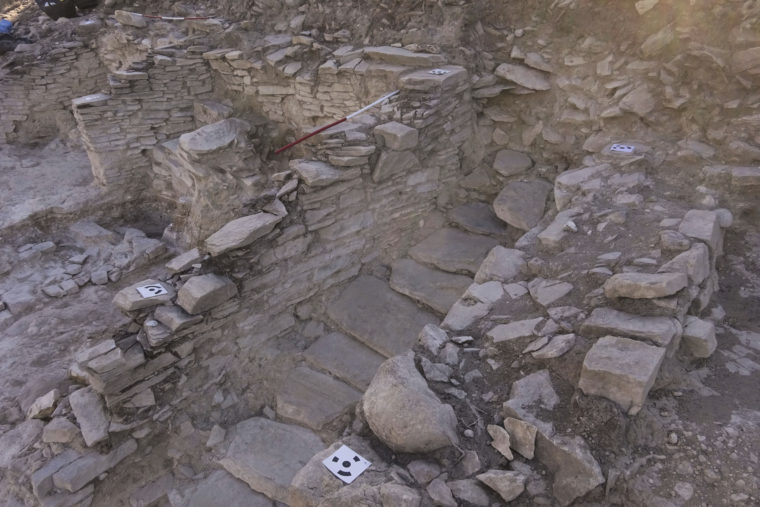
A newly discovered stone staircase is seen in the lower terraces of Dhaskalio islet off Keros island in the Aegean Sea, Greece.
I’m a sucker for any story with revelations about Ancient Greece. But the first article I read on excavations on Keros island made wild claims about how they showed the origins of Greek culture and the reasons the ancients thought their gods lived on mountain tops. Worse, in illustrating the story, the newspaper chose a photo of a burial mask that has been around forever. I had a replica of that very mask as a kid, when there was speculation it was Agamemnon’s.
So I looked for a more more factual article.

The Athens-Macedonian News Agency reports at the National Herald, “An extensive and extremely interesting series of exhibitions has been organised on the Cyclades islands this year by the Cyclades Ephorate of Antiquities. …

“Among these are the exhibitions ‘From the world of Homer. Tinos and the Cyclades in the Mycenaean era’ that runs between July 13 and October 14, which is being held in cooperation with the Piraeus Group Cultural Foundation (PIOP) at the its Museum of Marble Craft in the village of Pyrgos, Tinos. A second exhibition [is] to be inaugurated on July 14 at Archaeological Collection of Koufonisia and will run until September 30, 2019.

“ ‘Both exhibitions are extremely important,’ said Dimitris Athanasoulis, Director of the Cyclades Ephorate of Antiquities, to the Athens-Macedonian News Agency (ANA). ‘On the occasion of the founding of the tomb of Agia Thekla in Tinos, we have a first exhibition for an unknown period of the Cyclades, the Mycenaean period, presenting great and unknown material.’ …

“Four-year excavations and research on the extraordinary architectural findings of Kavos on the island of Keros in the Cycladic Islands group confirmed the existence in Early Cycladic times of a complex, stratified and technically expert society.

“[The research programme under Cambridge University] has ‘revealed impressive architectural remains of a significant Early Cycladic settlement,’ the ministry said.
Under the project, excavations took place on the small islet of Daskalio, originally connected to the nearby site of Kavos on Keros through a narrow strip of land. … The remains of the culture at the time include ‘impressive staircases, drainage pipes and stone buildings that reveal an advanced urban architecture without precedence for the specific period. …

” ‘The complicated, interlinked and multi-level architecture shows the existence of a well-organised and well-built settlement on a steep promontory,’ it added. …

“According to co-excavator professor Colin Renfrew, Daskalio shows that the building techniques that were applied, the existence of huge entrance gates, stone ladders and the drainage pipes throughout the island show that there must have been a specialist architect and a central administration to carry out the building programme. He said the complexity of the construction is only comparable to Knossos on Crete for the same early period, he said. …

“Co-director of the site Michael Boyd added that a unique feature of the site includes the fact that metallurgy played a significant role throughout the life of the settlement. Its extent and scale proves a constant replenishing of raw materials from western Cyclades and Attica, and a social structure that trained and passed skills on to newer generations.”

More here.

Read Full Post »

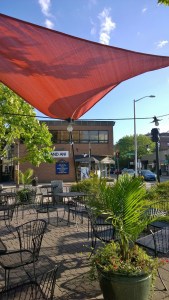
The first two photos today are from Wayland Square in Providence. My husband and I thought the shade covering at l’Artisan looked like something we could use at our house, but by the time we walked back from dinner at the Salted Slate, the pretty covering had gotten all twisted up by the wind.

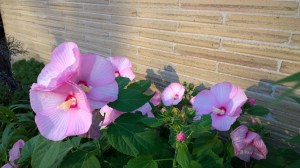
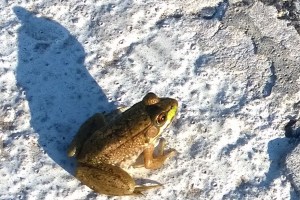
The flowers casting early shadows are Marsh Mallows. The little frog in New Shoreham also cast a long shadow. In the next photo, perhaps you can tell that the herring gull is looking for more of my sandwich.

There’s a sliver of moon above the hanging basket. Hope you can see it. Next is a sample of New Shoreham’s lovely fields and stone walls.

My older granddaughter wanted to know if the car with pink eyelashes was mine. No, but maybe I should think about getting eyelashes for the Fusion.

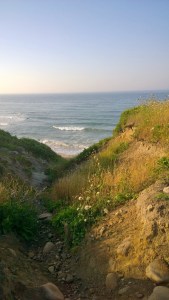
One of my favorite views is looking down the bluffs to the ocean. Often there are surfers riding the waves at this spot. Finally, see how my youngest grandchild cooks breakfast for me in the playhouse.

072716-Wayland-Square-Providence

072516-marsh-mallows-Wayland-Sq-Providence


072316-New-Shoreham-frog

072916-Pt-Judith-herring-gull


072616-moon-and-hanging-baskets

072316-stonewall


072816-car-with-pink-eyelashes

072816-playhouse-with-Mormor


072316-path-to-the-sea

Read Full Post »

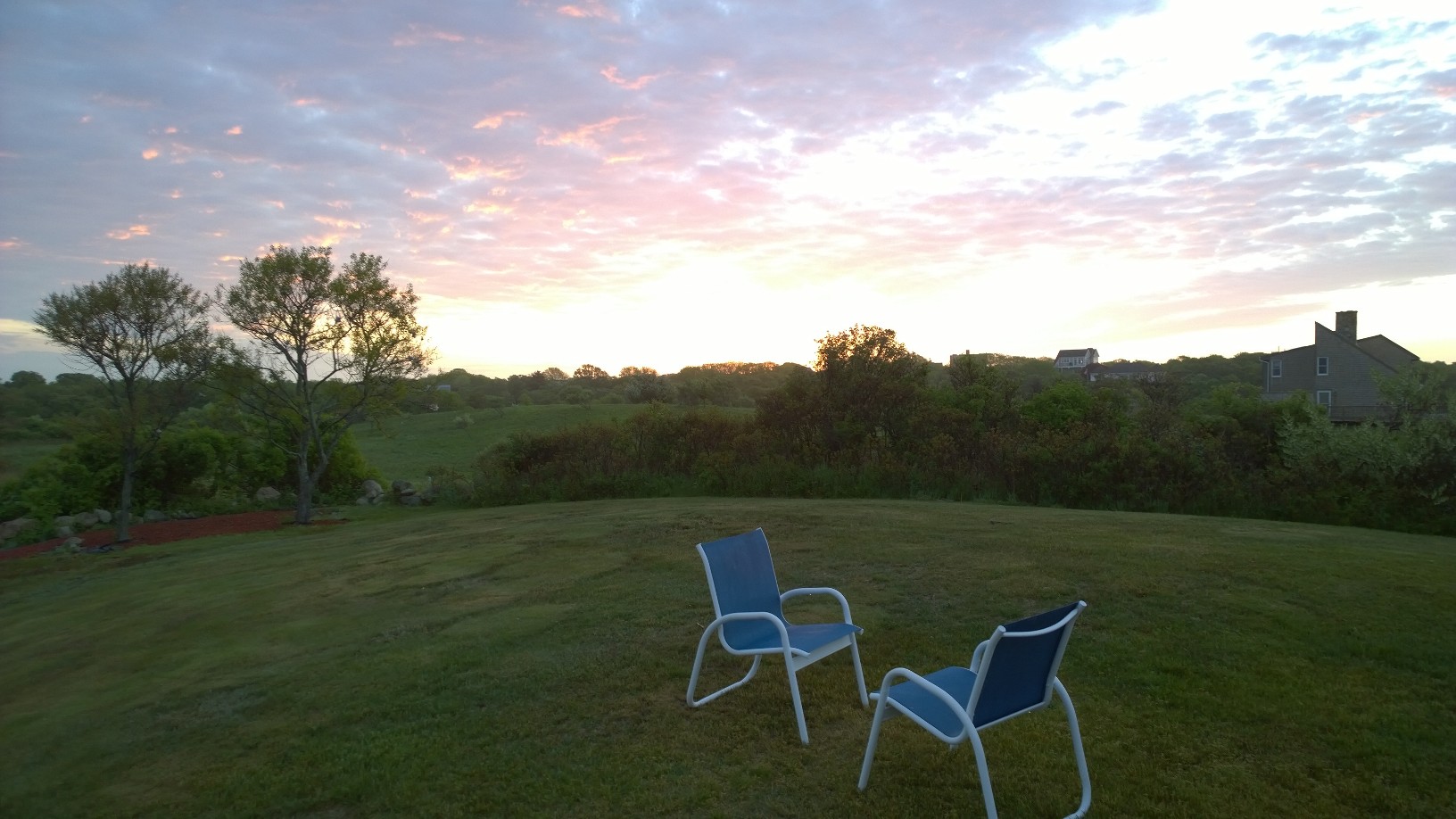
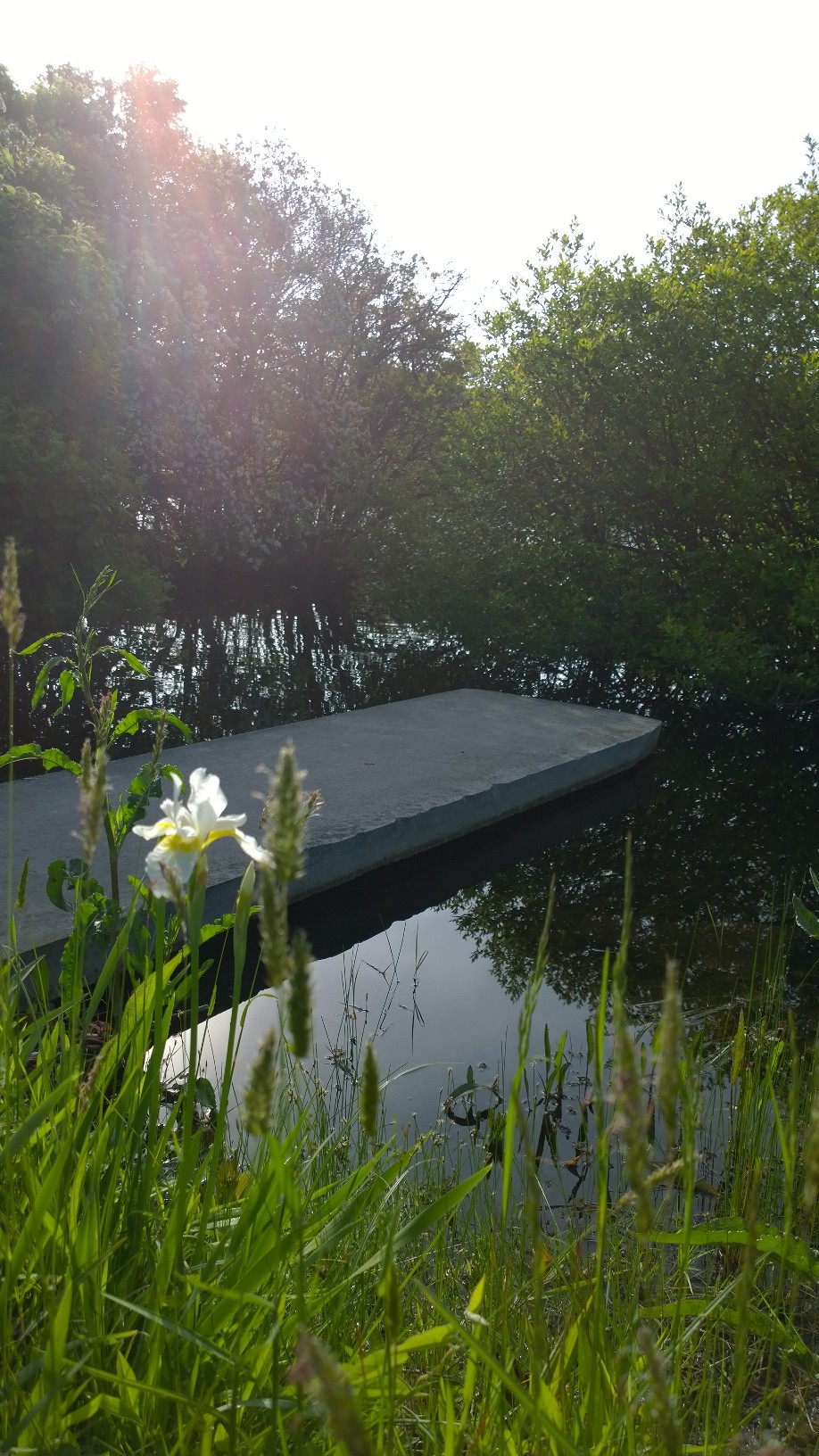
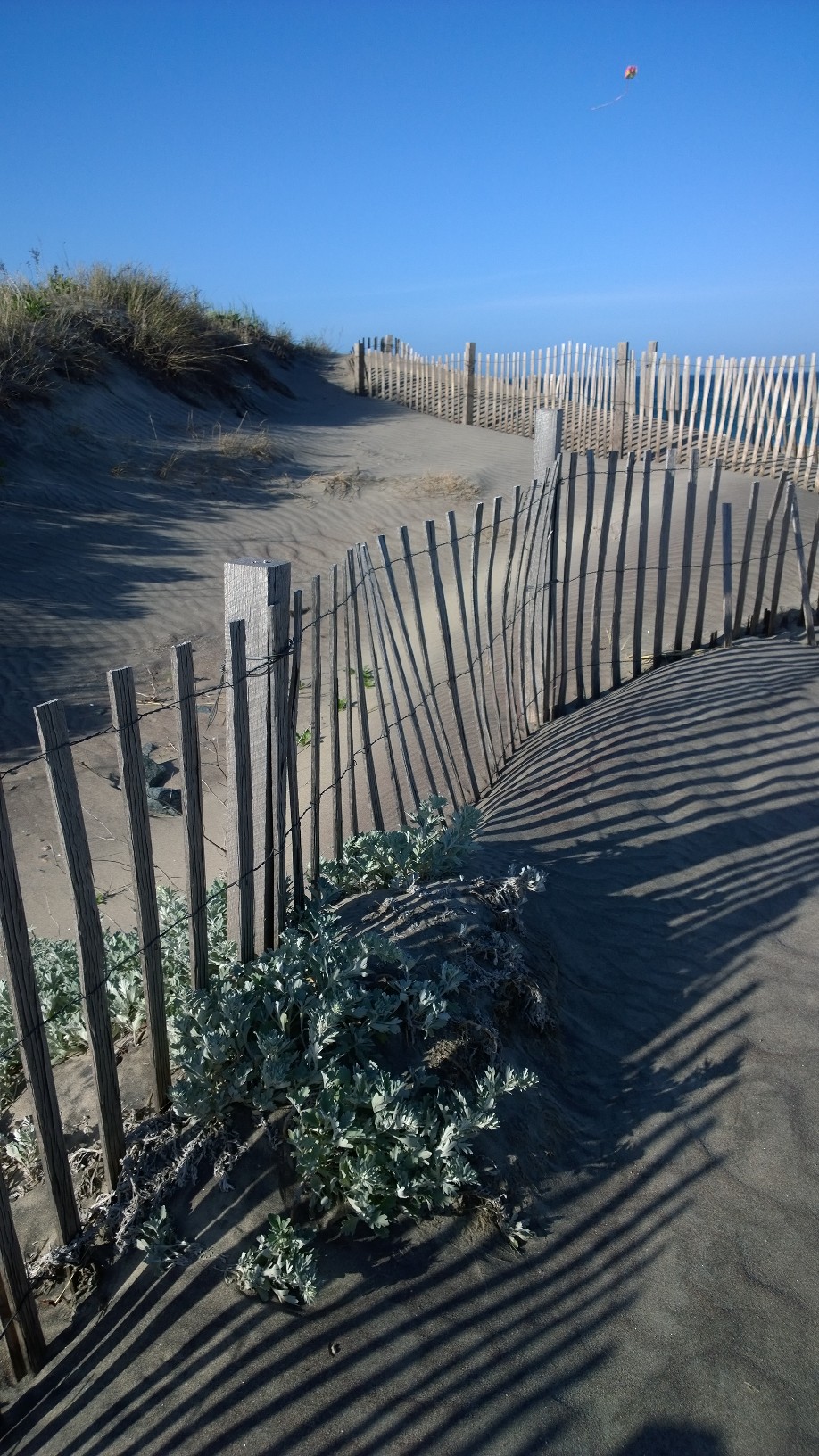
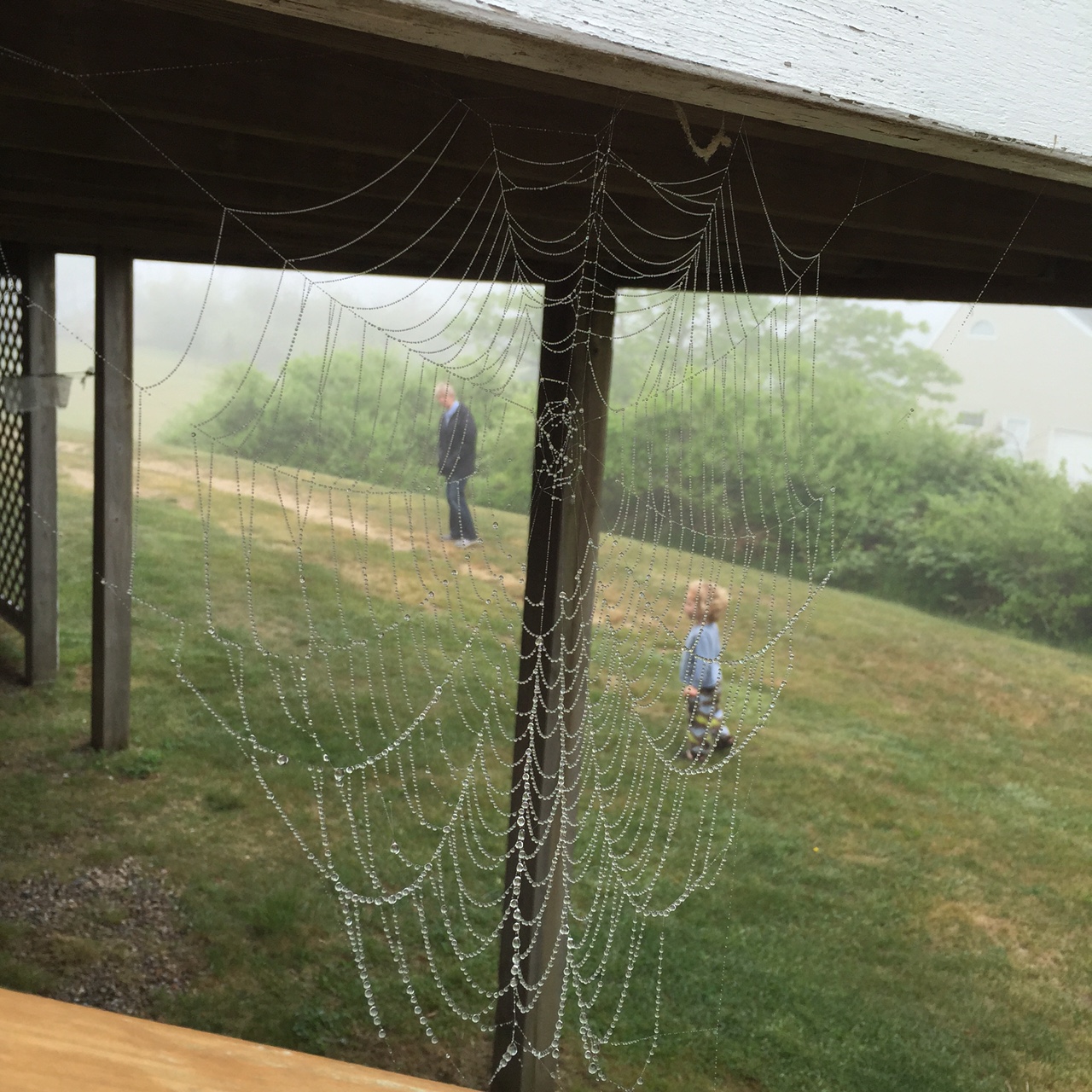
On this cold and rainy day, I am remembering how Saturday in Rhode Island felt like summer. Here are a few pics: dawn, a flowering shrub, white iris, a beach fence, a cobwebby view of my younger grandson and me, the harbor, the boat’s wake in the sunset. (Erik gets credit for the jeweled-cobweb shot.)

new-shoreham-sunrise-53015

iris-in-sunlight

maybe-shad

snow-fence--Crescent-Beach

cobweb-view-of-Mormor-and-G

harbor-New-Shoreham-May-2015

making-a-wake

Read Full Post »

I’ve told the story of “Goldilocks and the Three Bears” many times to my oldest grandchild and was delighted that he responded with a wide grin when I later used — in a completely different context — the phrase “It was just ri-ight.” Everybody in the world seems to know those words from the Grimms’ fairy tale.

So when the audience heard the phrase Sunday in a locally flavored skit to benefit the island medical center, the line got a laugh. One of many.

In this case, the familiar plot points (porridge too hot, door not locked, trespassing girl) had been repurposed into the trial of Gold E. Locks, whom the Three Deer accused of bad manners for the usual (entering uninvited, eating the porridge all up, breaking the chair, sleeping in the bed).

Citigroup Chairman Richard Parsons played the judge and Christopher Walken’s wife, Georgianne, was the jury foreman. (“You’re not the foreman!” declared an indignant deer on the jury. “You’re just a Walk-in.”) But many of the biggest laughs were garnered by those who are famous only locally.

The story really had to be about deer because one of the biggest challenges the medical center has today is diagnosing and treating disease borne by deer ticks. (Three deer introduced to the island in the 1950s multiplied into a major problem. Lots of jokes about the people responsible.)

As unpolished as the entertainment was, the packed house was hugely supportive. In fact, the audience joined the fray. When the honorable counsel for the Locks family charged that the deer home with the open door and fragrant porridge was an “attractive nuisance,” a man in the back shouted, “Do you charge by the minute or the hour?” The answer: “I charge the same rate I charge in Manhattan.”

OK. Maybe you had to be there. The main story I took away was how many people wanted to donate to the medical center and how indulgent and open that made them. And yes, I laughed at all the jokes.

More here.

Photo:  John Freidah/The Providence Journal files /

Read Full Post »

101214-autumn-lotus


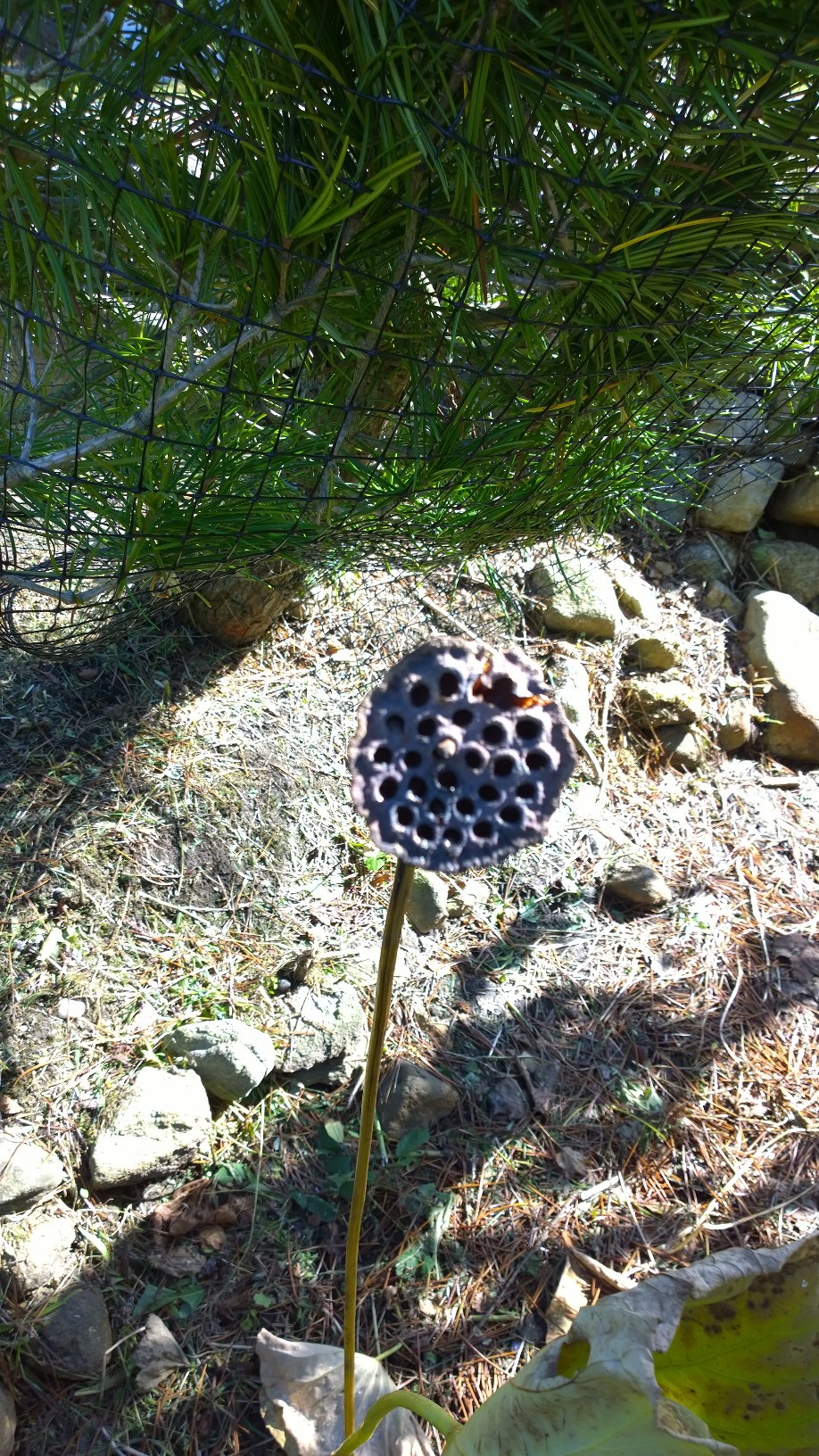
Here are a few autumn photos from the island. The lotus on the left is indifferent to having looked prettier in the summer. It’s still interesting.

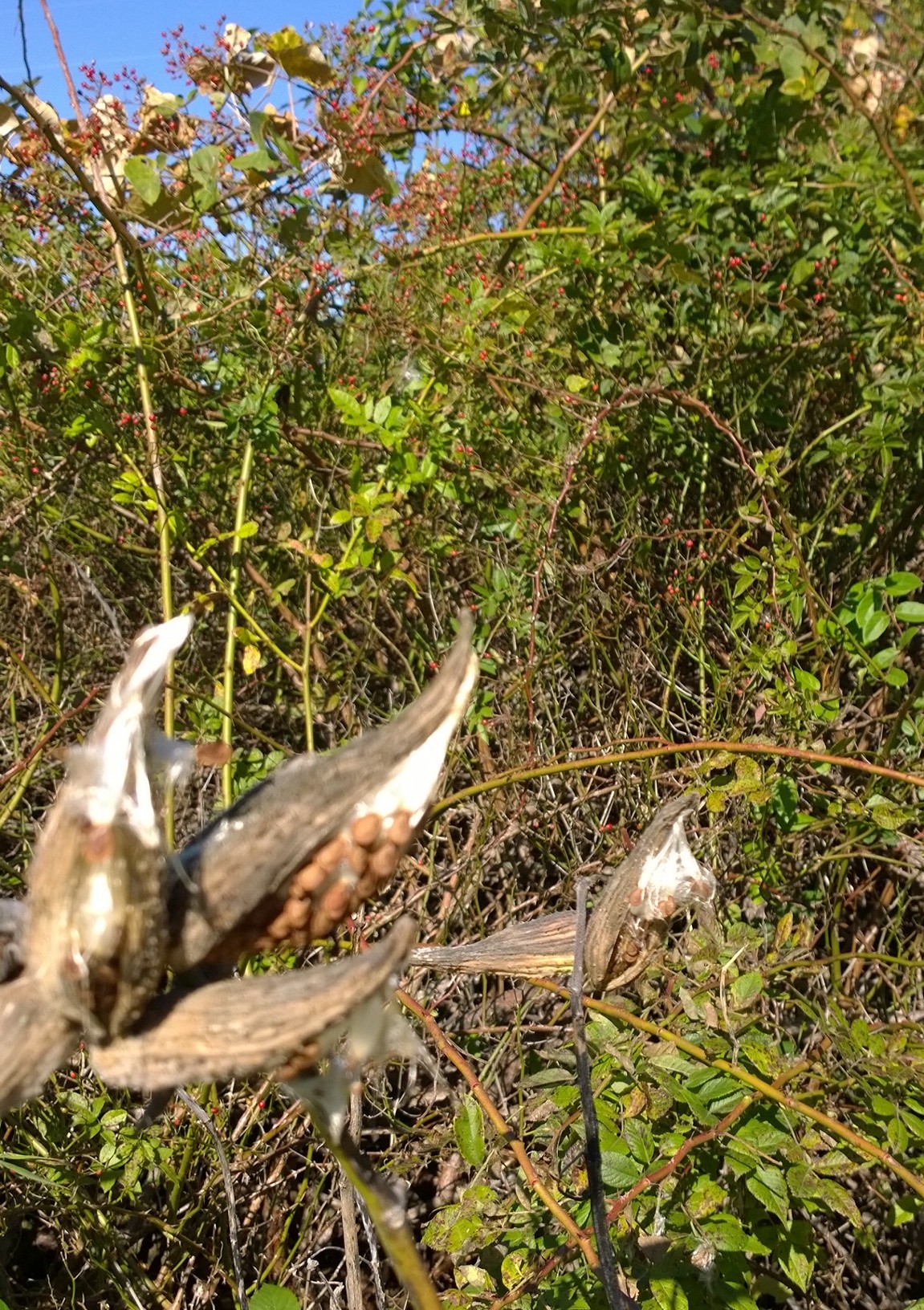
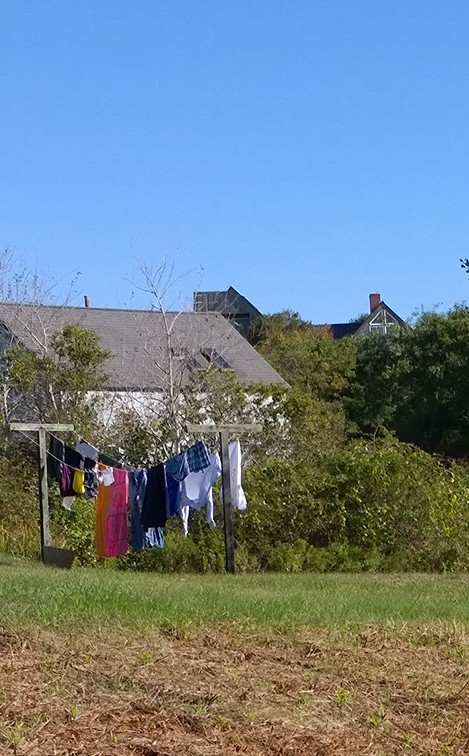
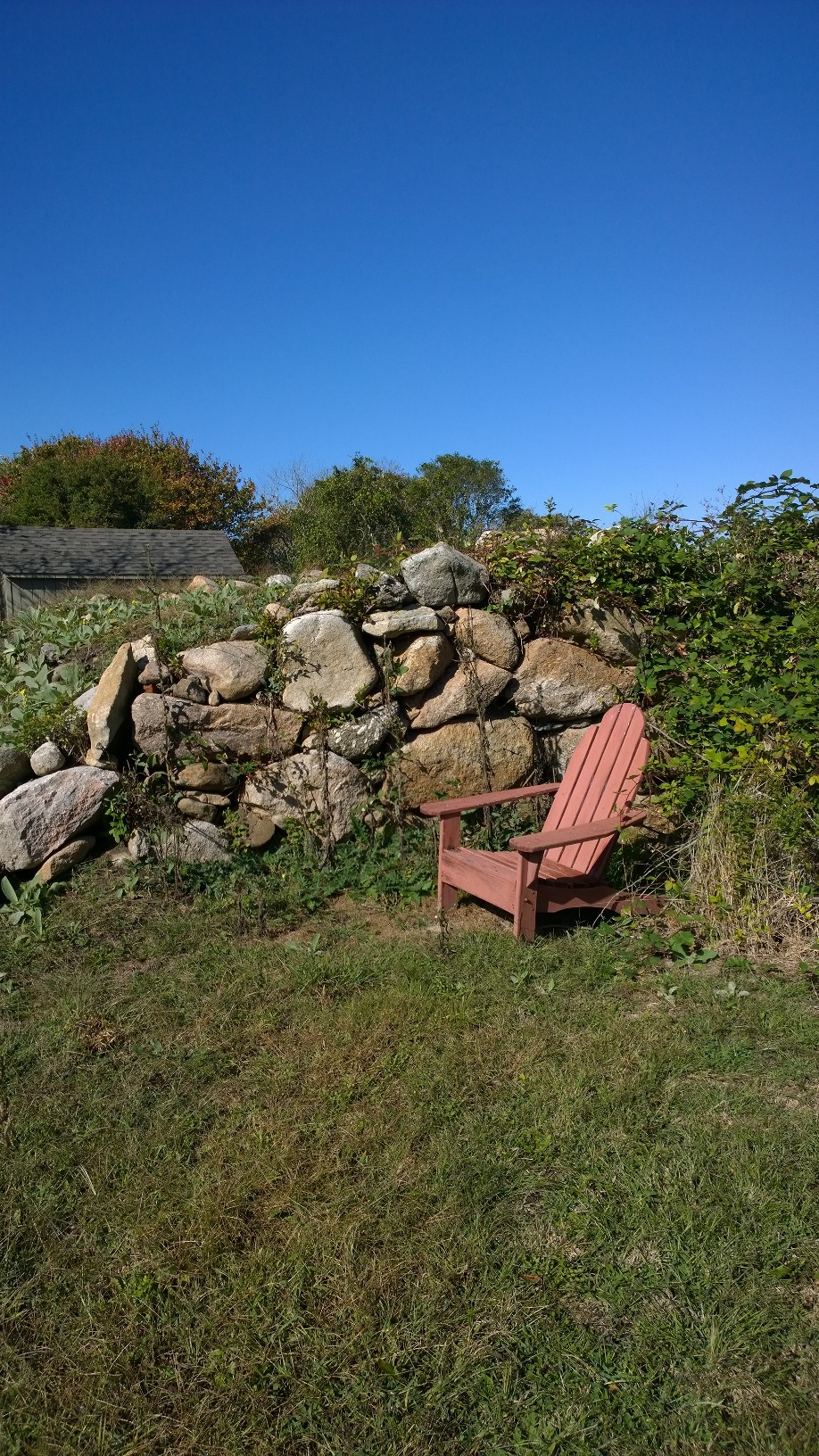
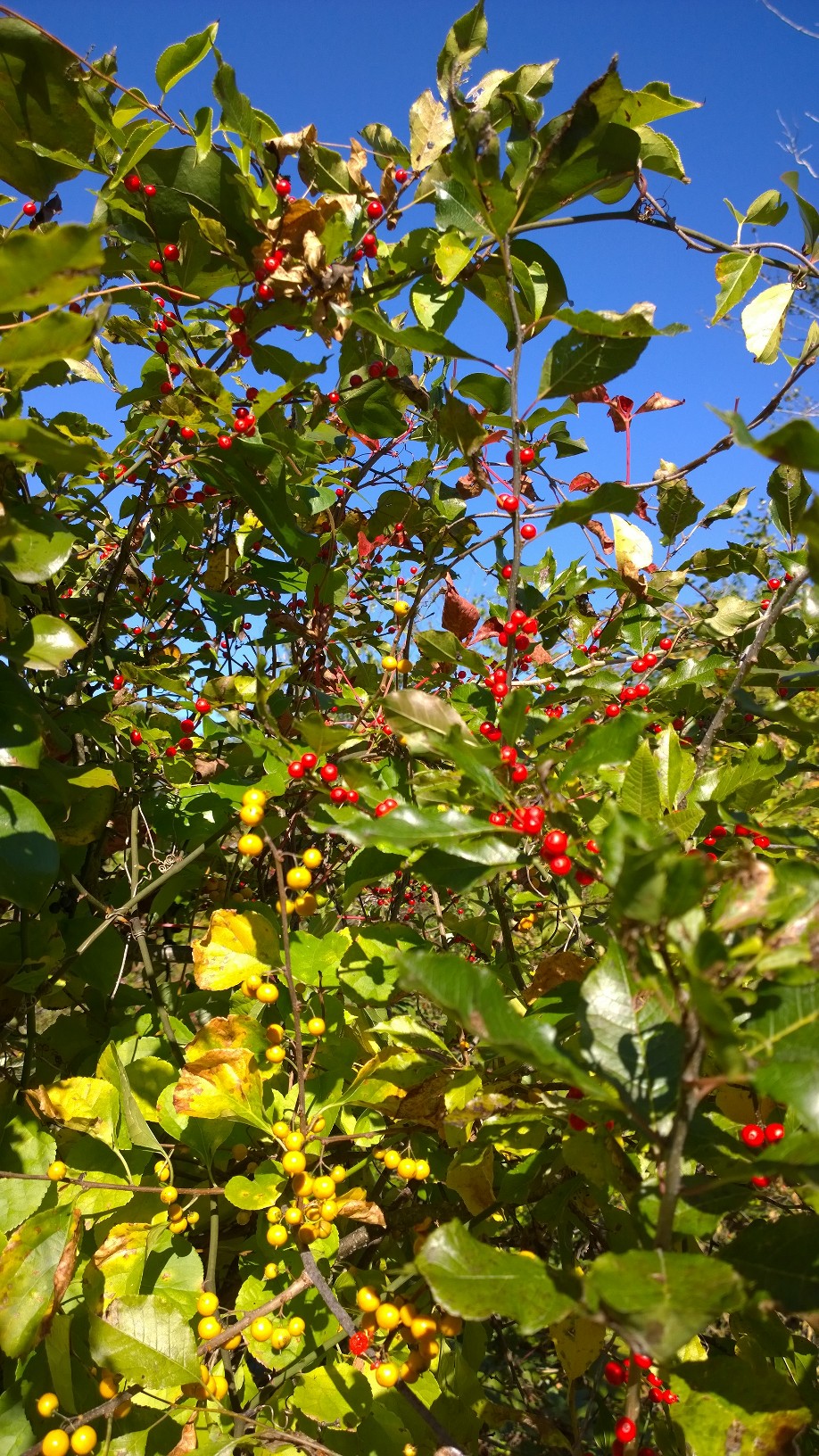
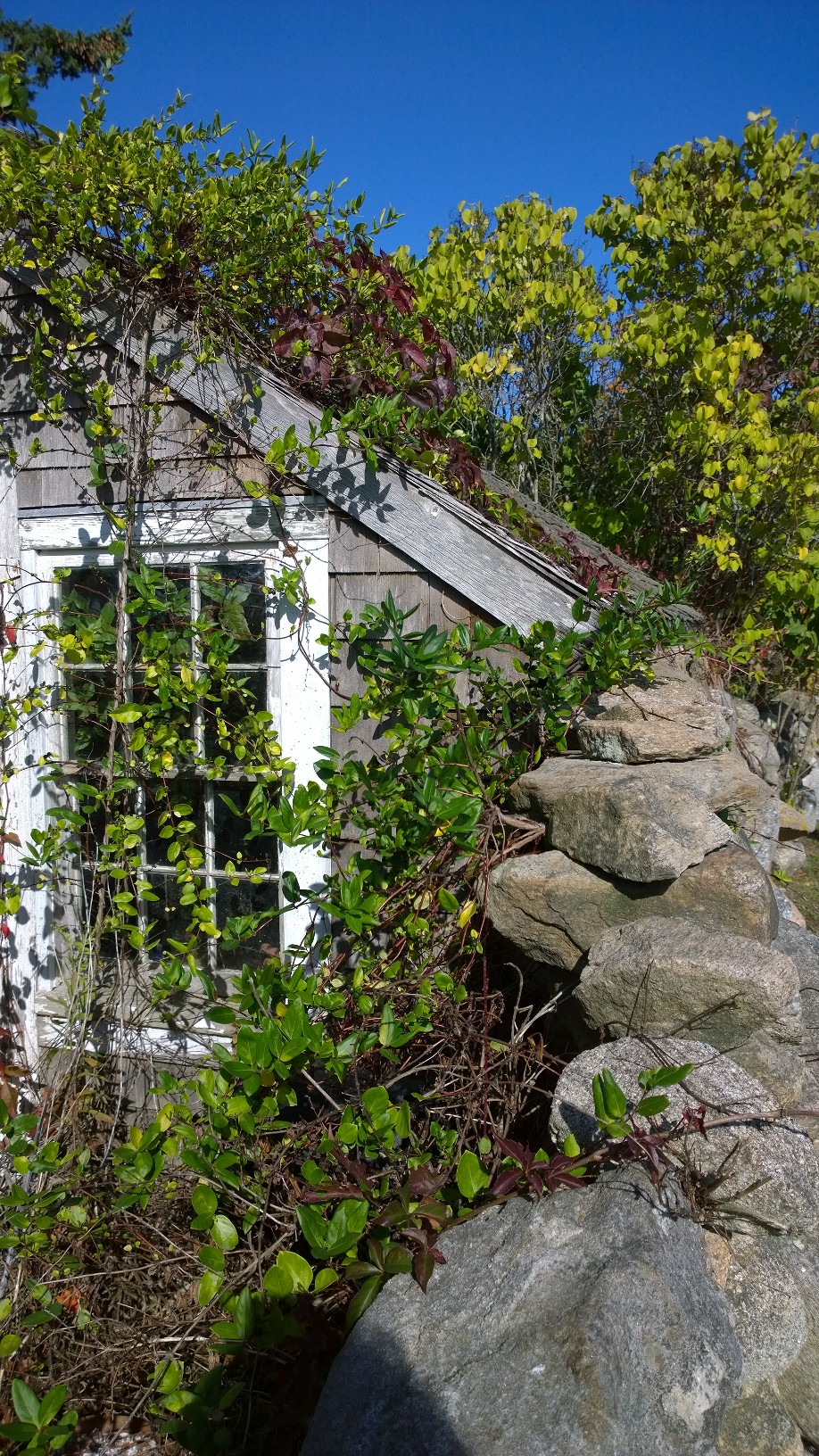
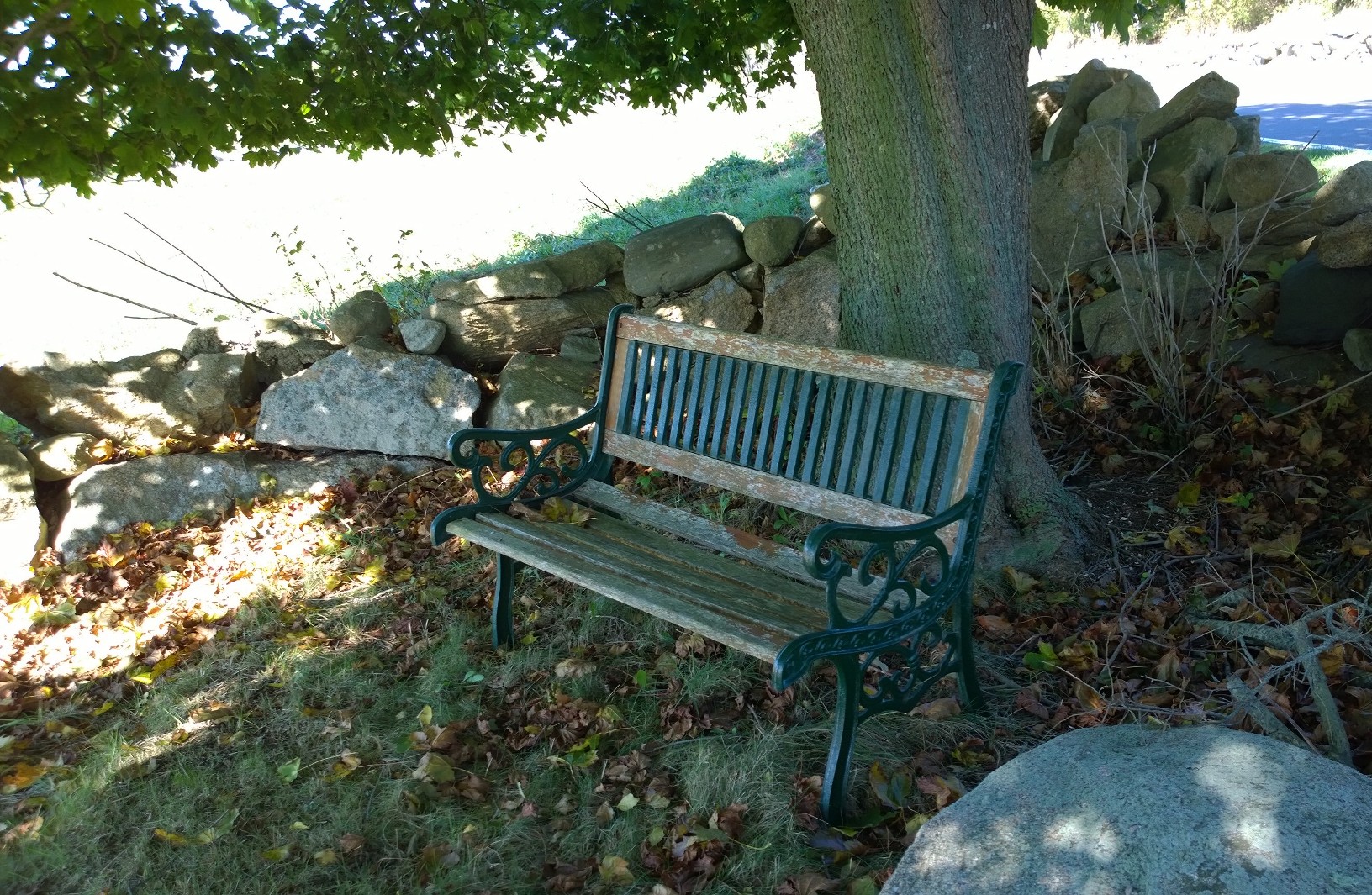
I include milkweed about to sow itself to the four winds, clothes drying on a line, a chair that sat on a houseless property all summer, yellow bittersweet with red winterberry, a neighbor’s shed, and leaves collecting by a bench.

1012214-milkweed

101214-clothesline

101214-outdoor-chair


101214-bittersweet-and-winterberry


101214-shed


101214-bench-and-leaves

Read Full Post »

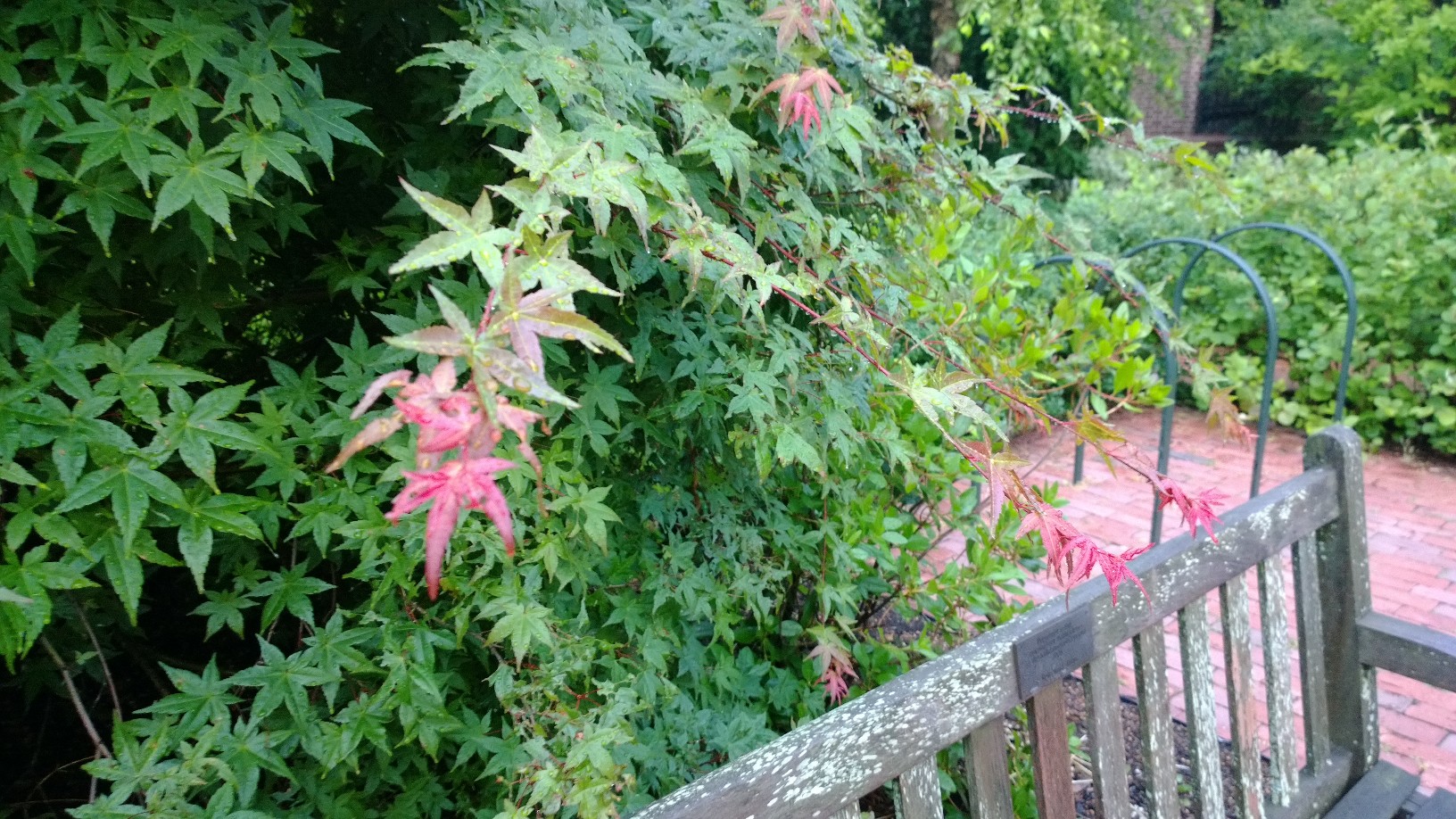
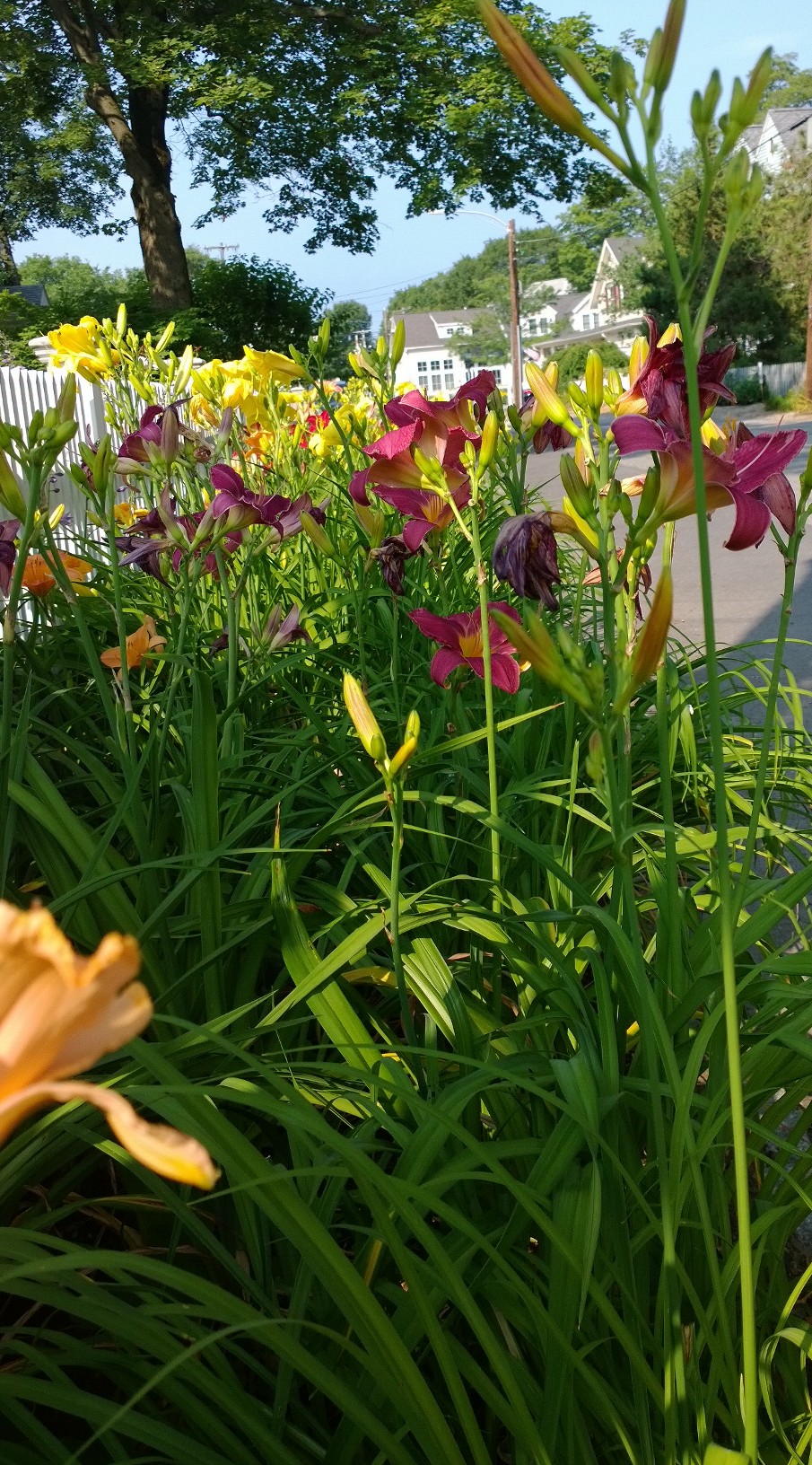
I’ve got a few more photos to share: my neighbor’s lilies and new pink growth on a Japanese maple, for starters.

I also snapped a wedding notice on the painted rock, the unofficial island billboard, before it got painted over with new messages. A bride and groom actually hired a woman to do the painting, which is a new one on me. The painted rock notices are generally more spontaneous.

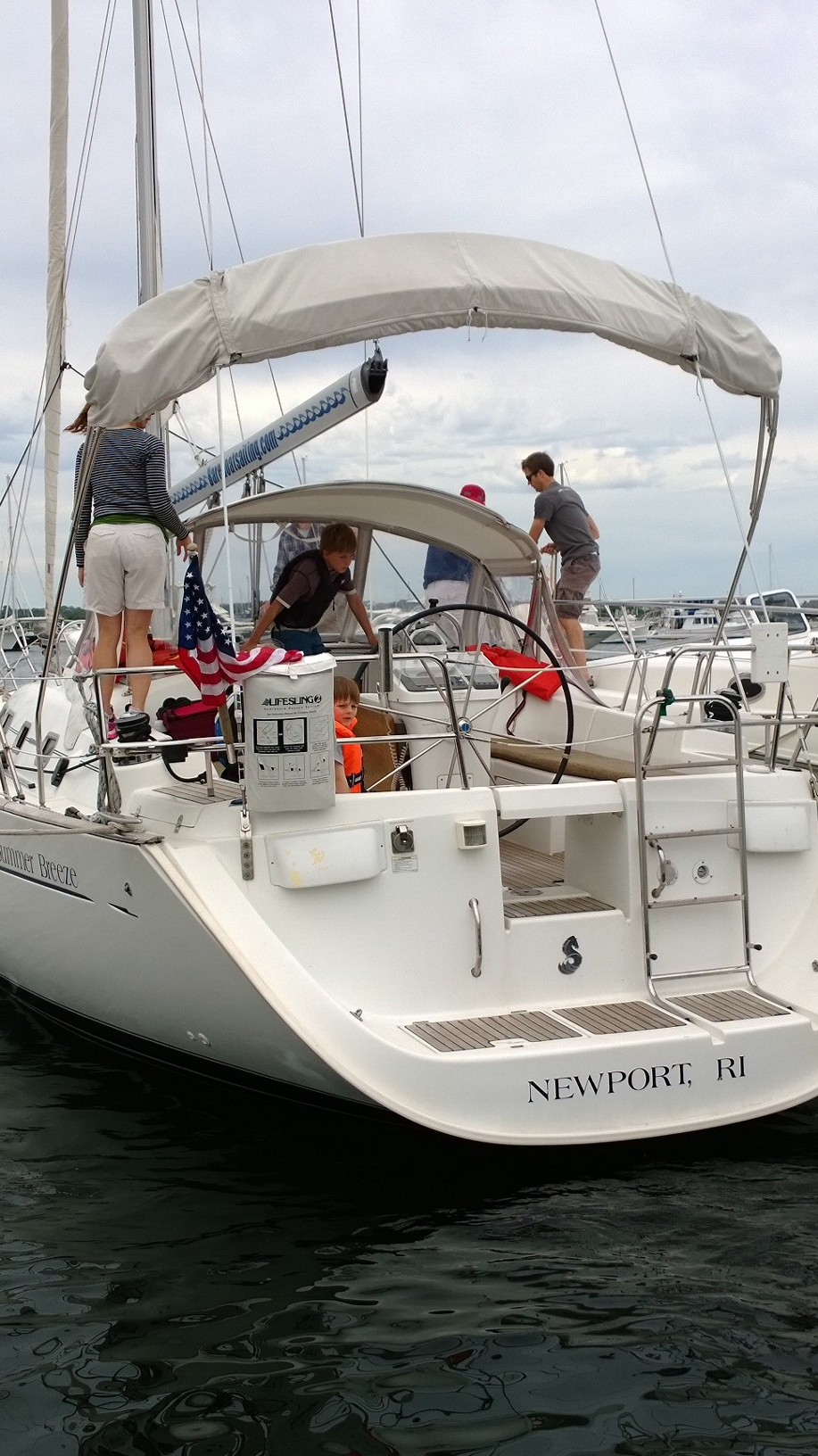
I’ve included three family photos. Erik’s sister’s family rented the sailboat for a couple weeks of catching up with friends in the U.S., and John and my husband joined them for the initial leg of their trip. If they all look a little slaphappy here, maybe it’s because they made it from Newport to the island in an unfamiliar boat without incident.

new-growth-is-pink

my-neighbor-has-lilies


painted-rock-070314

extended-family-rents-a-boat


Maria-poised-to-throw-rope

a-goofy-sailing-crew

Read Full Post »

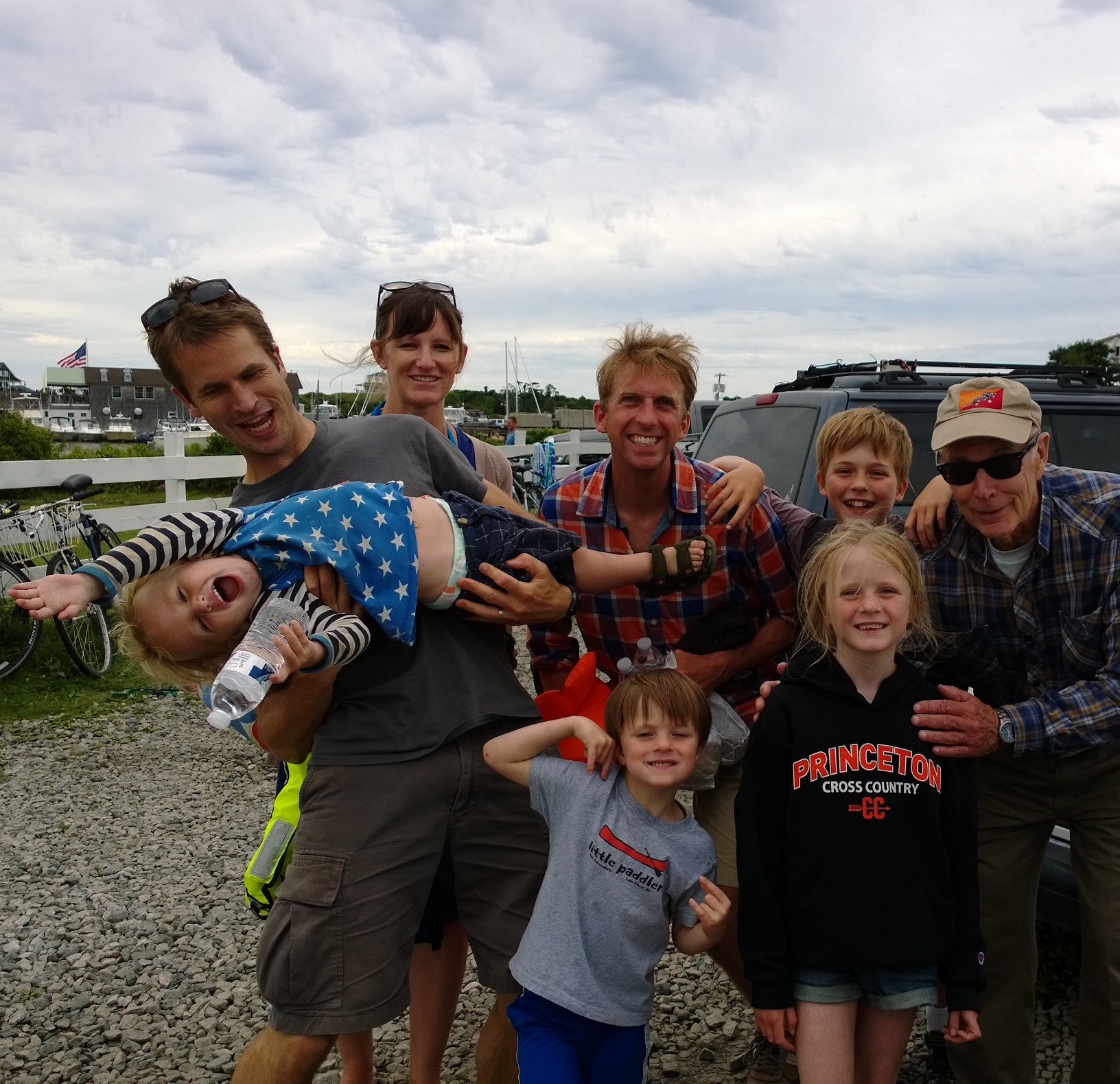
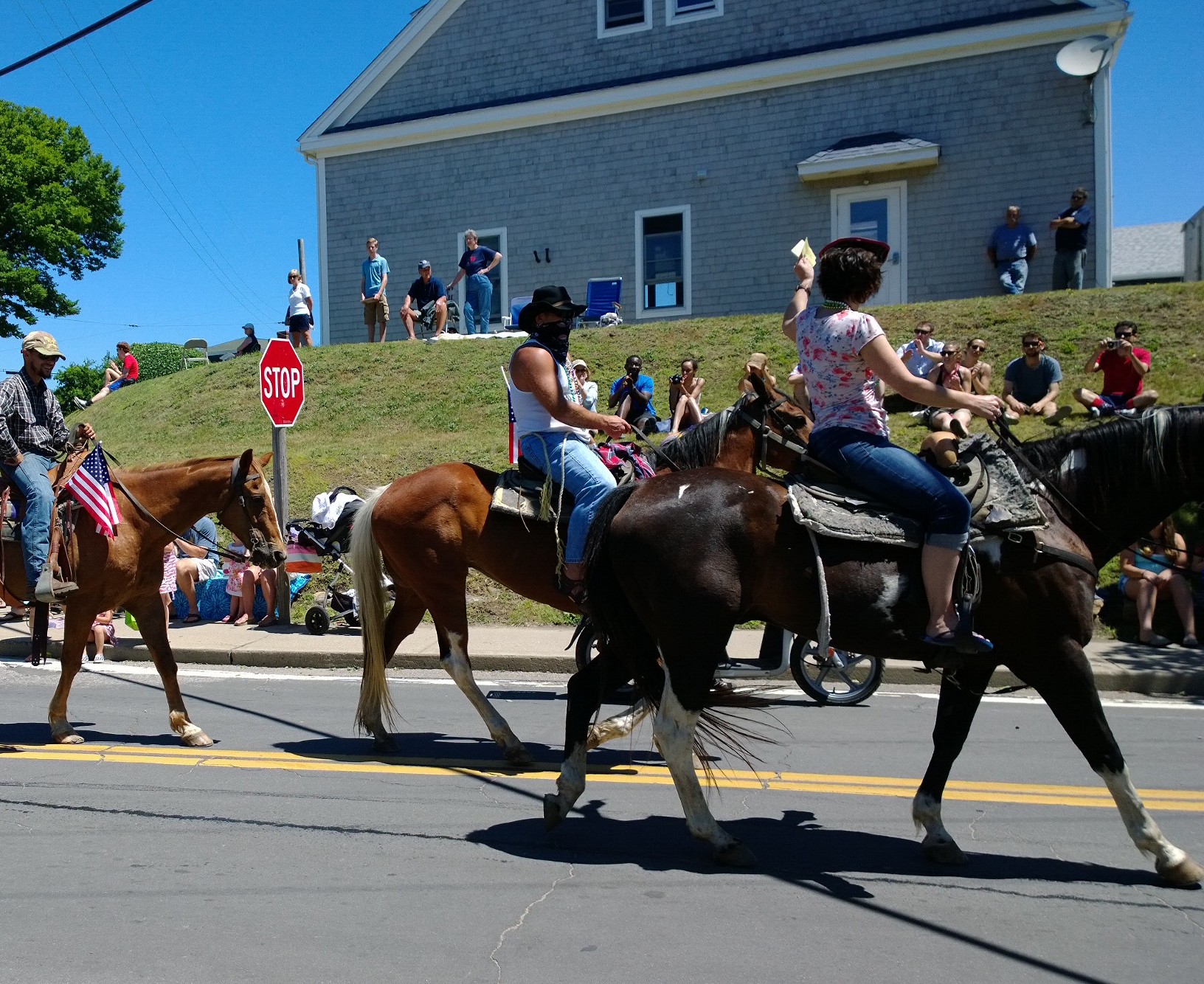
The tail of the hurricane socked us pretty hard on the Glorious Fourth, so the parade, the fire-police-and-rescue steak fry, and the fireworks were put off until the 5th.

Makes me wonder about how people felt on the 5th in 1776, realizing that they were in for it now. That it might not work.

The theme of this year’s parade was children’s books. There were at least two Cat In the Hat floats and two very differently conceived Hungry Caterpillar entries. I managed to to snap the Little Toot float — it’s always good to have a boat in an island parade.

This was Erik’s first Independence Day parade since he became a citizen, and the first that our two-year-old grandson really got into. He will need to brush his teeth especially well tonight. Only very sticky candy like Tootsie Rolls seemed to be tossed to the crowd.

watching-the-parade


fire-truck-in-parade


horses-in-the-parade


070514-fife-and-drum


Little-Toot-in-parade


Read Full Post »

A few photographs. You’ll have to imagine the smell of honeysuckle and the bird calls.

Surfers took the red truck to the overlook to check the waves before the hurricane fringe hit, but they didn’t stay.

Can you read the sign at the garden supply store? Someone found it necessary to post under the hours, “Not open when closed.”

red-truck-of-the-serfers


honeysuckle


roses-july4-2014


many-shades-of-green


wayside-wild-pea


not-open-when-closed-sign


goose-and-garden-porch


garden-supply-store

Read Full Post »

Older Posts »