Feeds:
Posts
Comments

Posts Tagged ‘massachusetts’

Photo: Melanie Stetson Freeman/CSM.
More Than Words bookshop in Massachusetts uses 100% of its proceeds for training and educating young people ages 16 to 24 in professional skills and goal setting.

My husband and I first encountered the bookshop More Than Words on a movie night. We had been to dinner at one of the many cool restaurants in Waltham, Massachusetts, and were just walking around looking in shop windows until it was time for the movie.

Jacob Posner has written about it at the Christian Science Monitor.

“Jarris Charley says he didn’t believe in jobs when he was growing up on the line between Boston’s Roxbury and Dorchester neighborhoods. The people he knew who had legitimate jobs, including his mom, didn’t find much success. Everyone in his community lived check-to-check and paid rent. The drug dealers were the ones with money.

“ ‘So I was invested in the streets: drugs, guns, robberies. That’s just what I was caught up into at a young age,’ he says. He ended up in juvenile detention at age 15, and in prison for robbery at 23.

“Near the end of a five-year prison term, a second chance arrived. An old manager from a job-training program called More Than Words visited, and asked him, ‘Jarris, why don’t you just come back?’

“More Than Words is a bookstore, but one that does much more than sell bestsellers. The program serves young people ages 16 to 24 who face the highest barriers to building stable lives. Participants face homelessness, are in the foster care system, are out of school, or are involved in the legal system. It gives them job skills, but graduates like Mr. Charley say that the sense of belonging and acceptance – that they matter – is the most valuable thing they take from the program.

“ ‘I like to say we’re in the mattering business,’ says founder Jodi Rosenbaum.

“More Than Words’ support goes beyond job training. There’s a paid ‘on-ramp’ of six to 12 weeks in which the program helps with everything from housing and food costs to making sure participants have suitable work attire. Youth development managers offer support in a range of areas, including future employment, housing, transportation, financial planning, and navigating the legal system. After graduation, young people can access career services and bridge funding for tuition, rent, and child care so they can further their education and training.

“ ‘None of this works if that all doesn’t hang together, right? Like a job training program means nothing if you don’t know where you’re sleeping at night or if you have court the next day, and you don’t have people helping you plan and figure that out,’ says Ms. Rosenbaum.

“More Than Words has grown significantly in its two decades of existence. It started with a 150-square-foot office space where young people sold donated books online. Today, it operates three storefronts in the Boston area. It served around 318 young people last year, who sorted about 4.5 million donated books and earned over $3.8 million in net revenue. Almost all More Than Words graduates go on to earn a high school diploma or equivalent degree, according to the organization’s data. …

“ ‘A lot of people feel that they don’t have a lot going for them or they don’t have a lot of potential,’ says Mr. Charley. ‘We speak life into them.’ That was the case for him.

“For the past three years, he’s been mentoring young people at More Than Words. He works in career services, helping young people in the area that tripped him up the most: getting that first good job after graduating from the program.

“Ms. Rosenbaum founded More Than Words in 2004. She had worked as a public school teacher and for the child welfare system, and became disenchanted with government systems. … Ms. Rosenbaum found that the process of selling a book online had therapeutic value. It has clear steps leading toward a positive outcome: Pick up the book from where it was donated, find out how much it’s worth, package the book, ship it, and then watch money come in. …

“More Than Words Boston, where Mr. Charley works, is located on a street just off Interstate 93 in a postindustrial part of South Boston. … Inside, it’s tidy and spacious. In the front, wooden tables carry rattan cross-body bags and socks with giraffes and penguins. All the merchandise is made by businesses that address social issues as part of their mission. …

“[Mr. Charley] had attended Lexington Minuteman High School. He says there were limited spots at the vocational high school for people from his part of the city. Mr. Charley says he’s grateful for the experience, but felt like he was only appreciated for his athletic prowess. …

“ ‘You don’t think a Black person sees that?’ he adds.

“He left school near the end of his sophomore year after an event involving his cousin, he says. Arrest and juvenile detention followed. Then he found his way to More Than Words.

“ ‘He was the first white man I trusted,’ says Mr. Charley about one of his managers. He always asked when he didn’t understand part of Mr. Charley’s experience – instead of just spouting advice. …

“One of Mr. Charley’s goals is to help his mentees understand their behavior and, ultimately, figure out how to stop doing things that get them into trouble.

“Back when Chris Anderson joined More Than Words, around 2005, he worked directly with Ms. Rosenbaum. He was at a group home in Watertown when he first encountered her.

“ ‘Jodi just kind of walked in one time and we’re all sitting in the living room and she kind of just stood up and said, “Does anybody want a job?” ‘ he says.

“He found ‘a sense of belonging’ while helping Ms. Rosenbaum start her business. Participants were stubborn, got in trouble at school, and didn’t do what they were supposed to do. ‘No matter what, she just kept trying to realign you to get onto that path,’ he says. …

“Today, Mr. Anderson, now in his 30s, is a chief operations officer for a technology company, a father, and sits on the board of More Than Words. And he’s still close with Ms. Rosenbaum.”

More at the Monitor, here.

Read Full Post »

Photo: Suzanne Kreiter/Globe Staff.
Lacey Kohler, Urban Greening Projects co-ordinator and Cristiane Caro, cofounder of Pearl Street Garden Collective, worked in the new microforest in Providence, Rhode Island.

I have posted a lot about Miyawaki urban forests in Massachusetts, thanks to my friend Jean (Biodiversity Builders), who showed me several she’s helped to create. I didn’t know that similar work was afoot in nearby Rhode Island.

These efforts are all about what a dense little forest can give to a city neighborhood where there’s very little nature left. It can remove dangerous carbon from the atmosphere while spreading biodiversity all around, making the city a healthier place for both humans and critters.

Ed Fitzpatrick reports on the Rhode Island venture at the Boston Globe, “The asphalt grid of South Providence is lined with multifamily homes and concrete sidewalks. But along Pearl Street, one lot stands out.

“It’s lush and green, with nearly 270 trees packed into a 1,000-square-foot lot. Officially called the Pearl Street Garden, it contains a tiny forest in the middle of the urban jungle.

“ ‘Microforests’ like this one are cropping up in places ranging from Elizabeth, N.J., to Cambridge, Mass., to Pakistan. South Providence has two, both along Pearl Street, created by Groundwork Rhode Island and the Pearl Street Garden Collective. …

“ ‘This isn’t habitat restoration on the scale that is needed in terms of the world,’ said Jacq Hall, director of special projects at Groundwork Rhode Island … but it is a really great way, especially in a city, for people to become very in close touch with biodiversity and why it’s important and why it’s also beautiful.’

“In May, more than 100 people came out to plant the microforest. …

“The pocket forests adhere to the ‘Miyawaki method’ devised in the 1970s by Japanese botanist Akira Miyawaki, which calls for planting a wide variety of local trees in large numbers and in very tight quarters. …

“Massachusetts now has at least 20 microforests, according to Alexandra Ionescu, a Providence resident who is associate director of regenerative projects at Biodiversity for a Livable Climate, a Cambridge-based nonprofit that promotes ecosystem restoration to address climate change. …

“Rhode Island is the smallest and second most densely populated state in the nation, and a 2022 study found it contains 139 square miles of asphalt, concrete, and other hard surfaces, amounting to 13 percent of its land area. Hall said the benefits of forests and tree-lined streets are not distributed evenly in Rhode Island. …

“[Hall said], ‘We’re trying really hard to go back into those places that have been aggressively paved over and try to work in little bits of nature to bring those benefits to more people.’ …

“Hall said microforests help combat climate change because they grow so quickly. With plants packed close together, they both collaborate and compete for resources, racing to reach the sun first. She said research shows forests grown using the Miyawaki method grow 10 times faster than a traditional landscape planting. …

“Hall said projects such as this received a big boost in funding from the federal Inflation Reduction Act of 2022. ‘It was a historic moment,’ she said. …

“Groundwork Rhode Island and the Pearl Street Garden Collective are now looking for other funding sources” because of federal curbacks.

More at the Globe, here. And if you want to know more, search this site for “Miyawaki.” Or just click here.
Read Full Post »

Photos: John and Suzanne’s Mom.
Photos from Massachusetts.

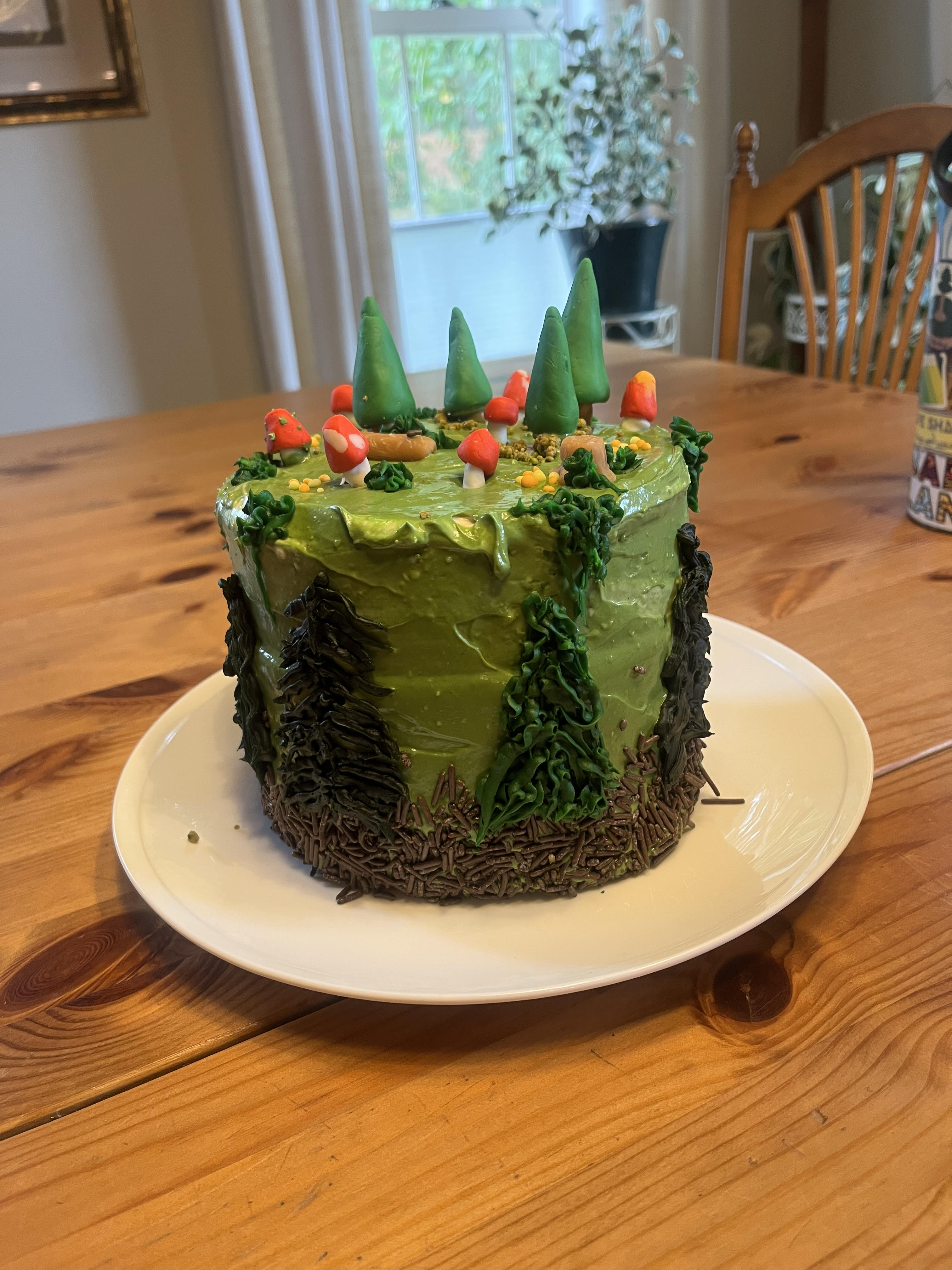
I wanted you to see a few recent photos. The one above is of a cake that Lisa and her daughter Emmie made for a family birthday, an exercise they apparently perform regularly. This time the cake was for a great niece who wanted pistachio. Isn’t it great?

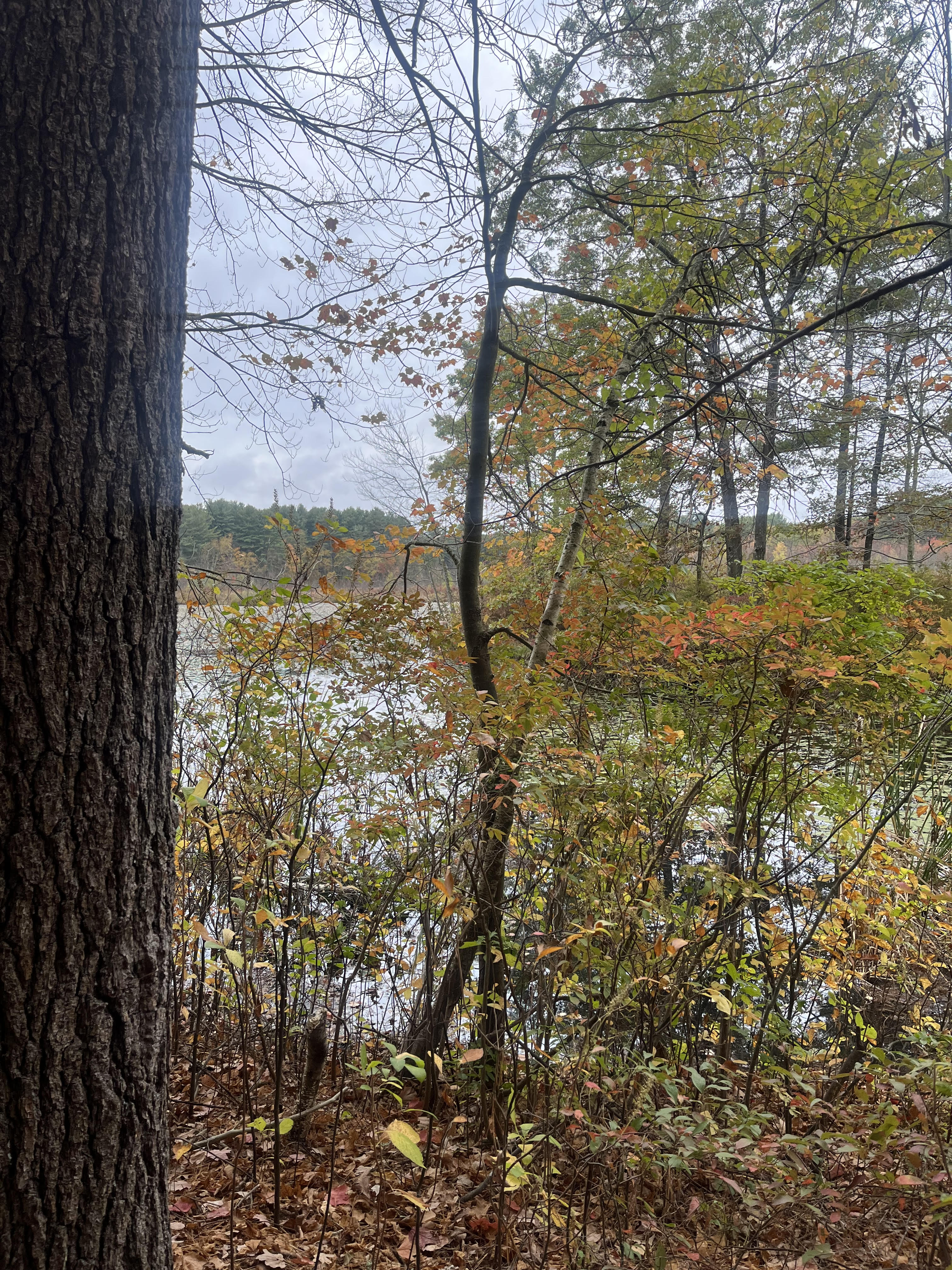
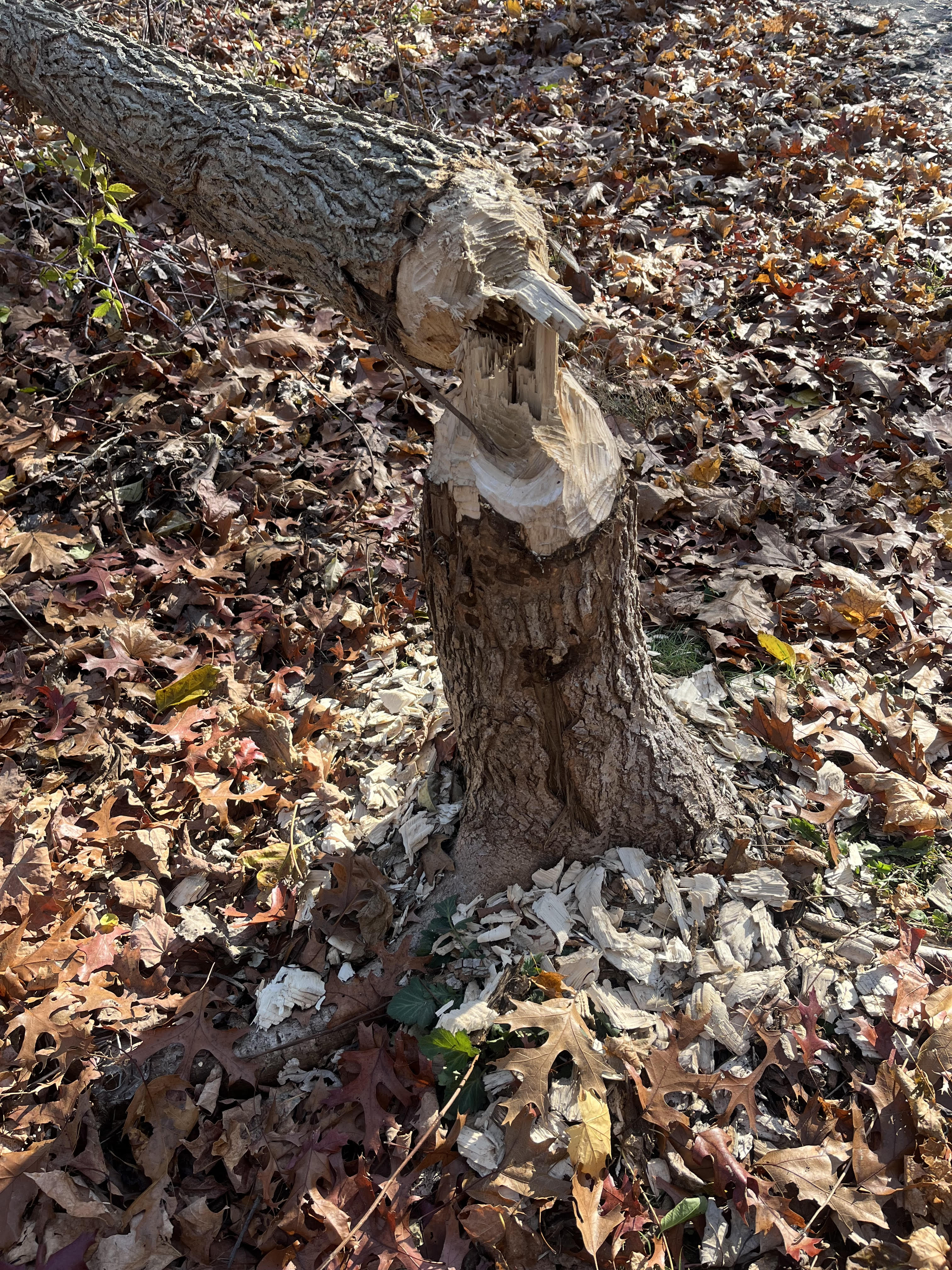
The day I was visiting them Lisa and I had a walk in the cranberry bog near her house. See the view through the trees. The gnawed tree that follows was along a well-traveled trail in a different town that seemed like a surprising place for a beaver to work.

Also surprising to me is the way the sun seems to rise from a hole in the ground near our parking lot. A kind of cliff in that location creates the magical effect. It’s hard to capture the feeling.

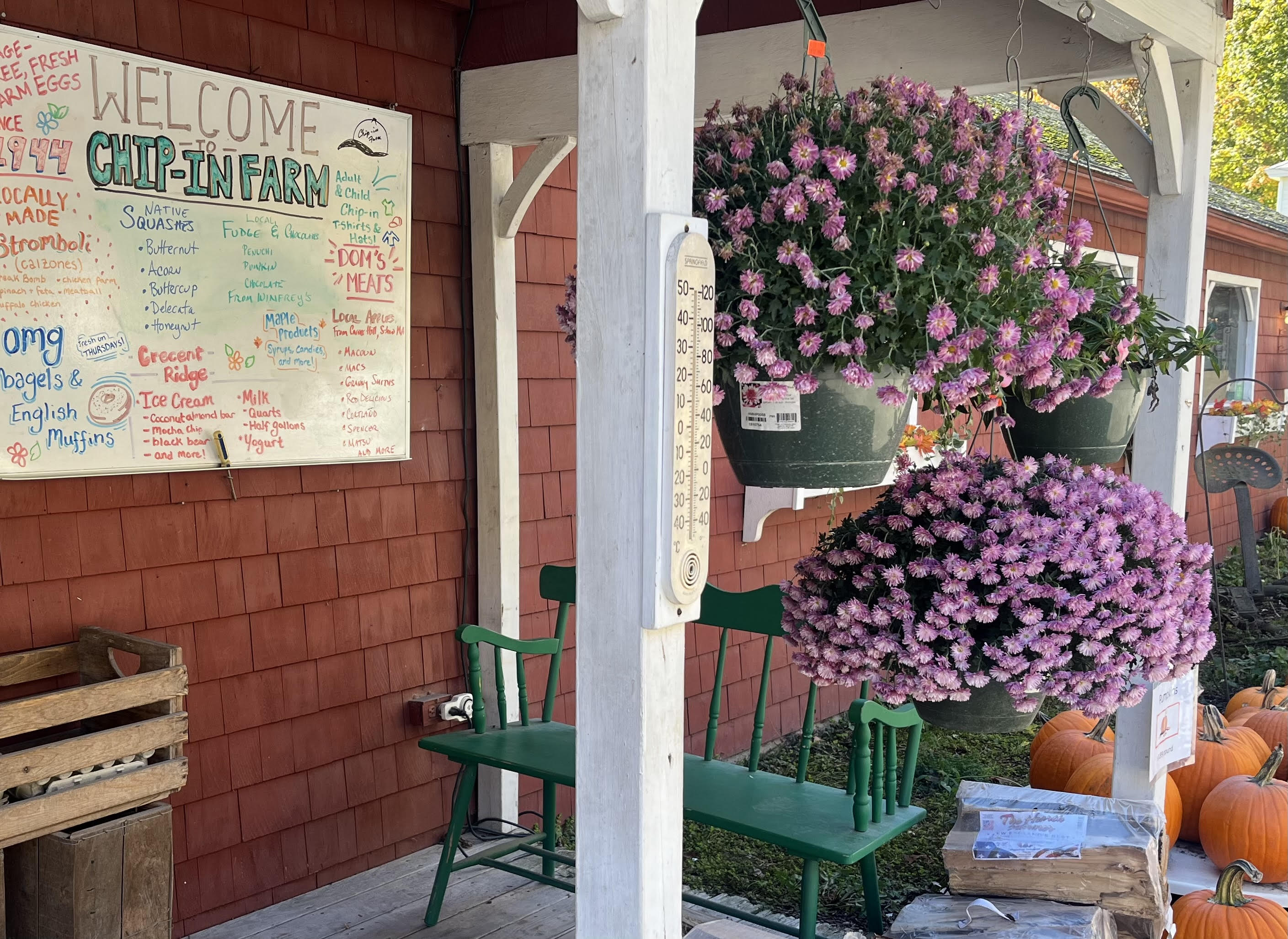
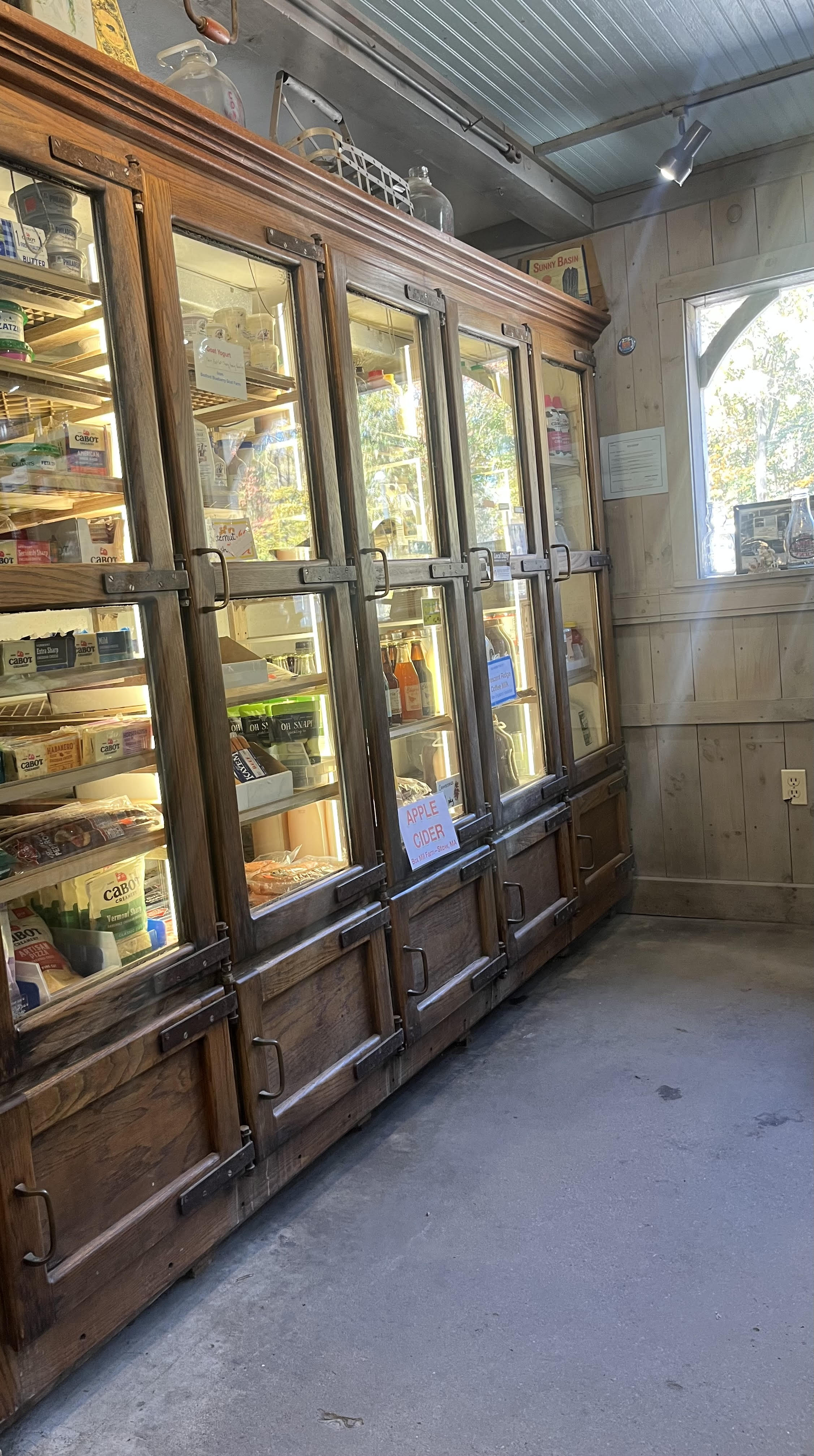
Near a big indoor rink where our granddaughter plays ice hockey, is an adorable little old-time farm we had never noticed, although it’s only one town away. Note the old-time refrigerator indoors.

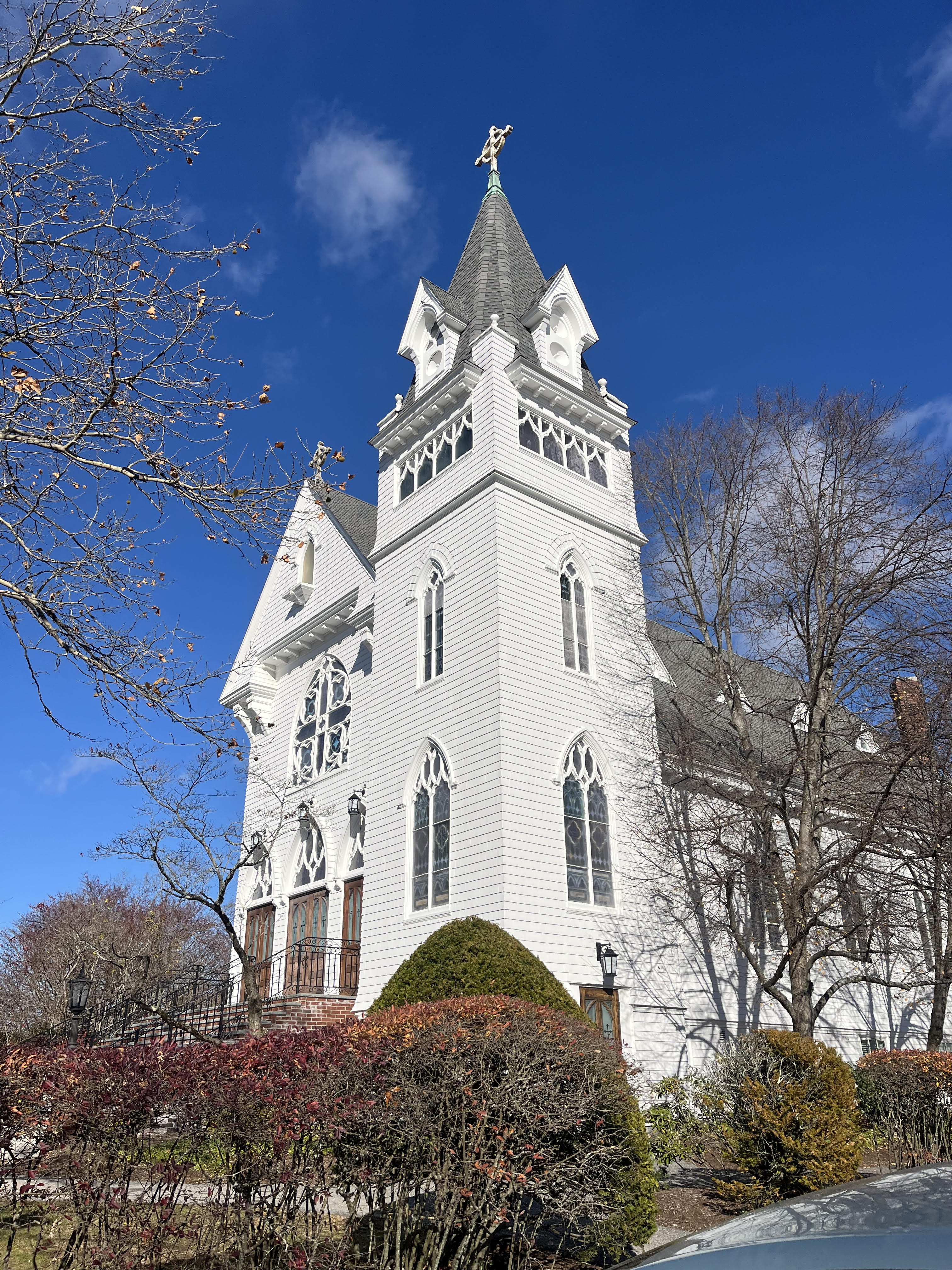
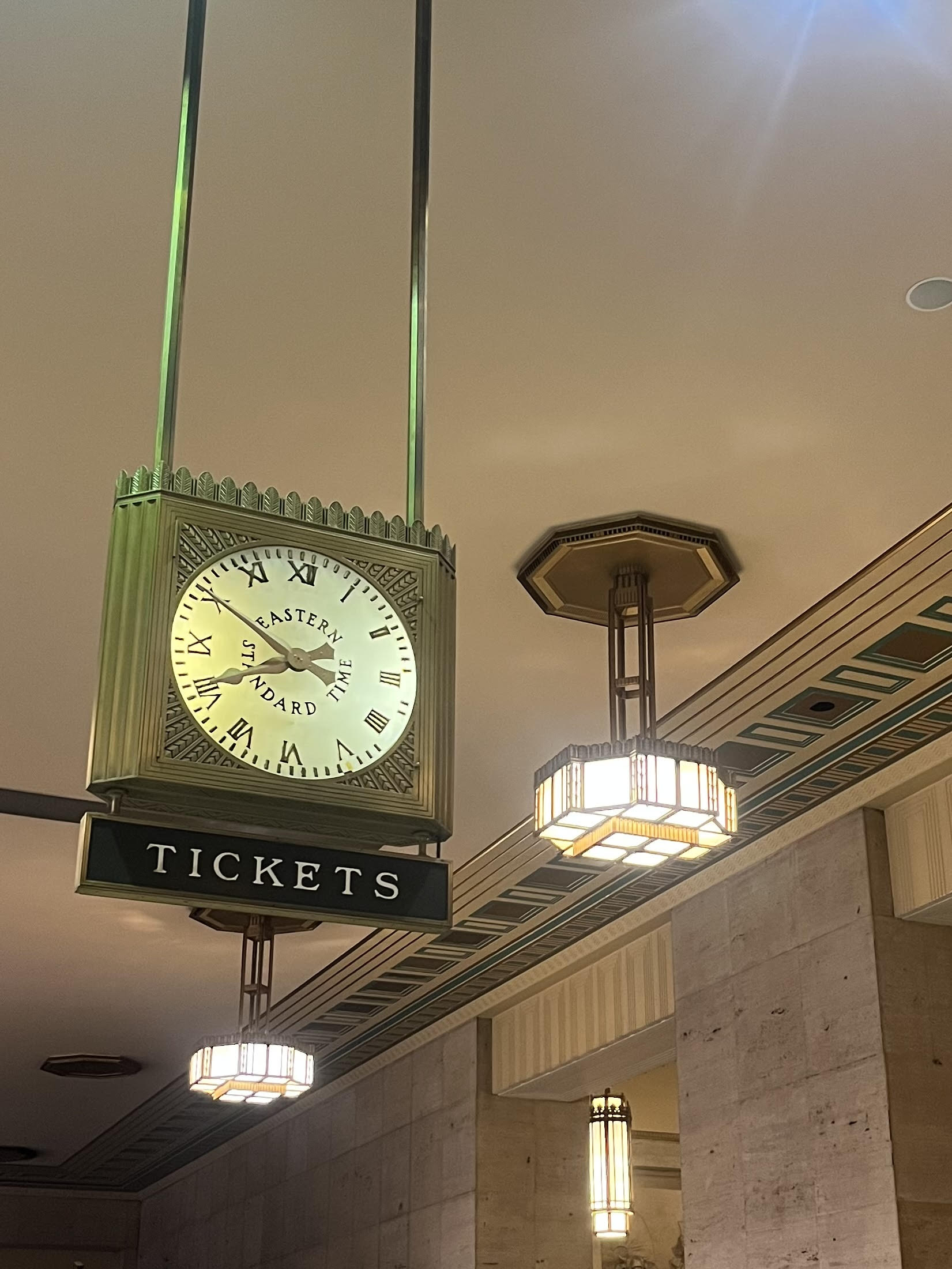
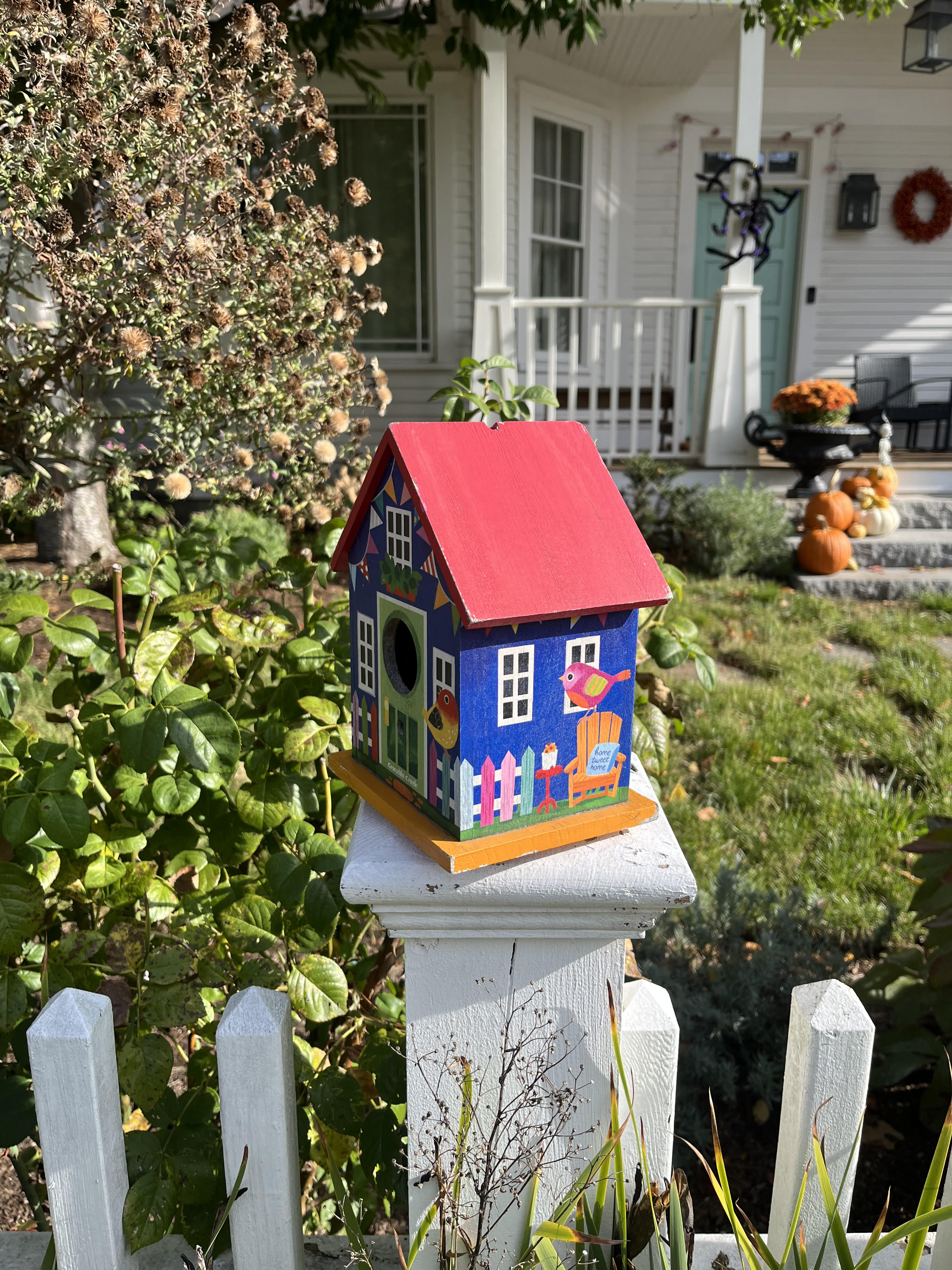
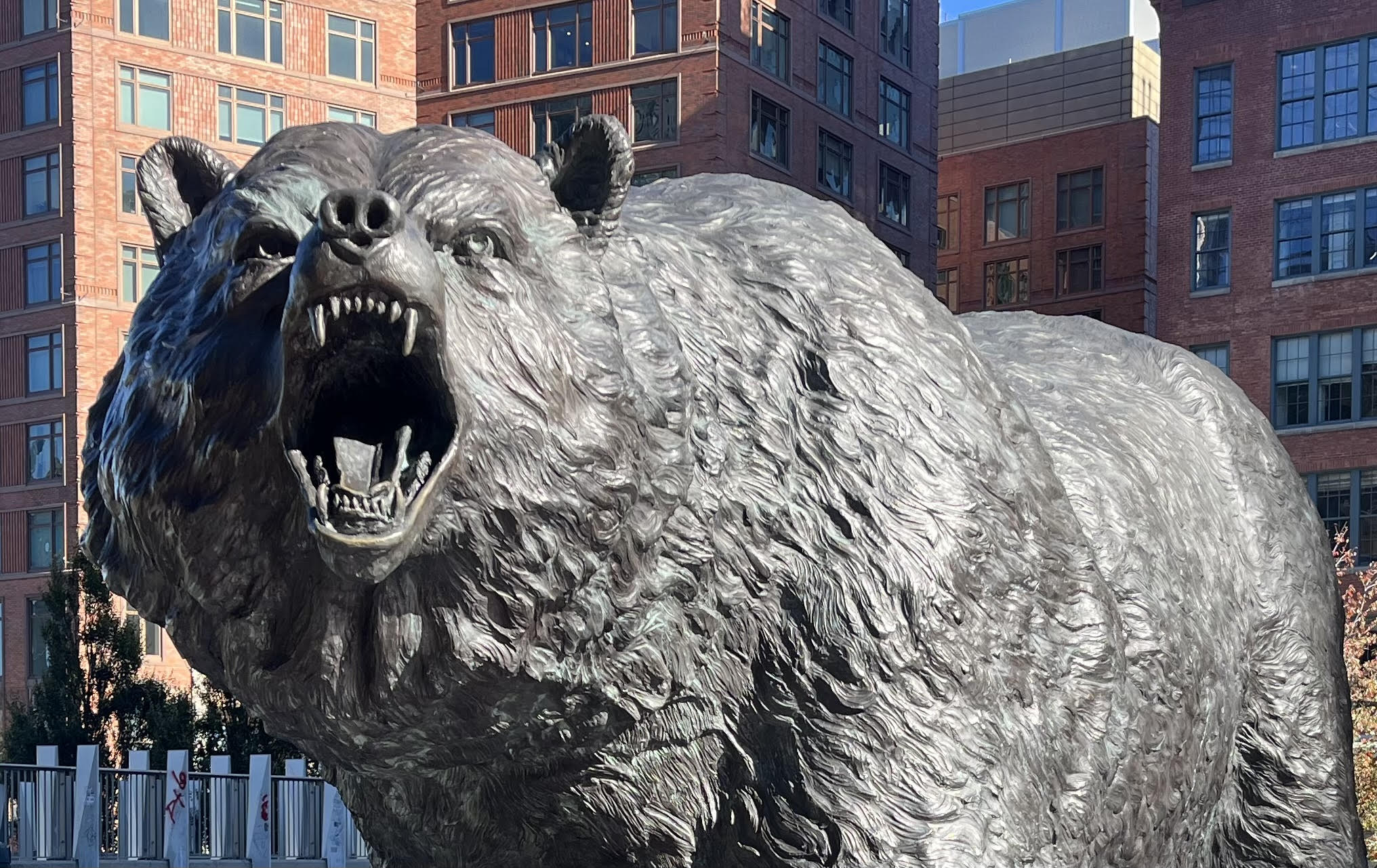
From my walks: a decommissioned church that is now a youth theater, a decorative birdhouse, a fierce sculpture in Boston honoring the Bruins, Boston’s ice hockey team, and a fire and rescue boat on Boston Harbor.

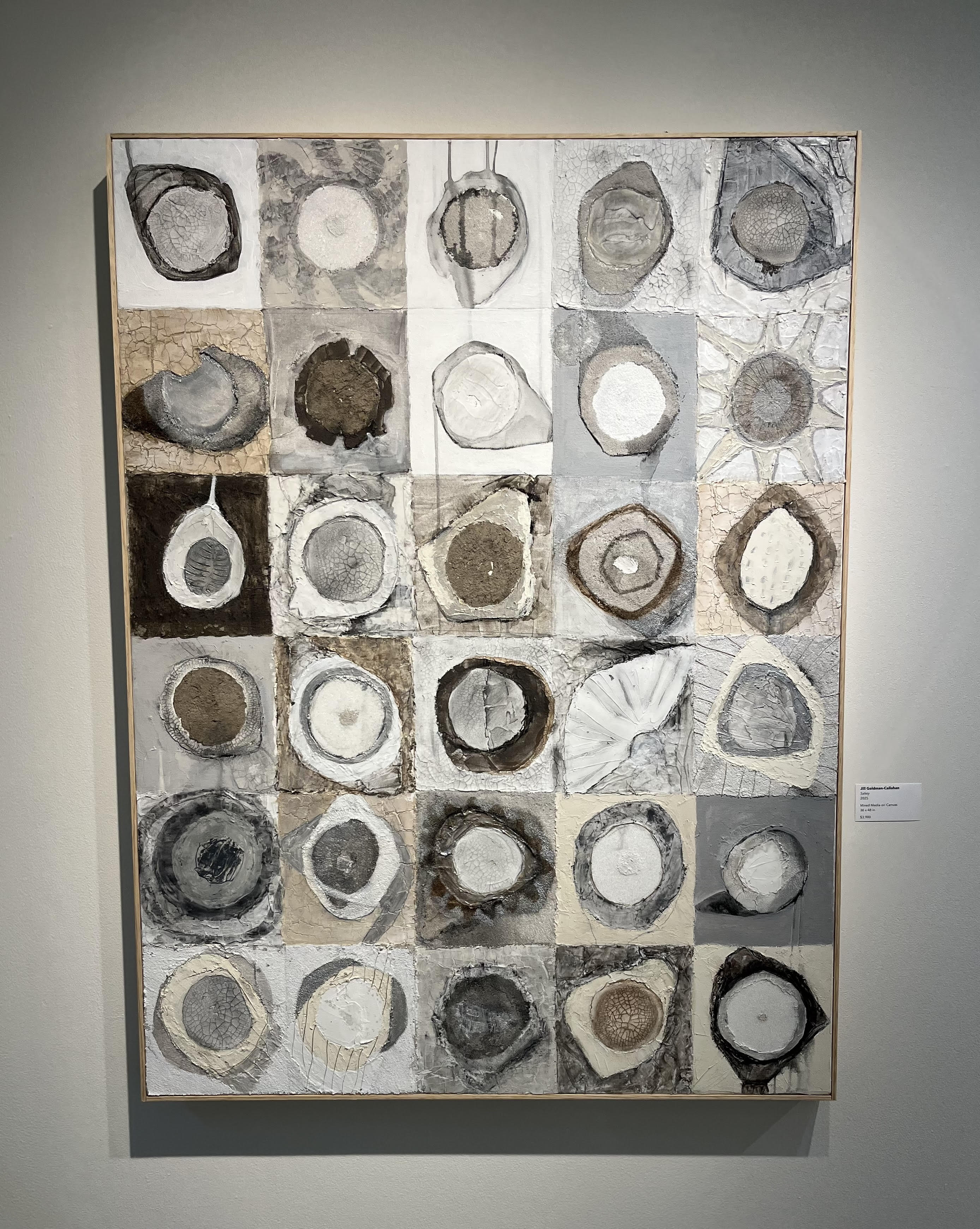
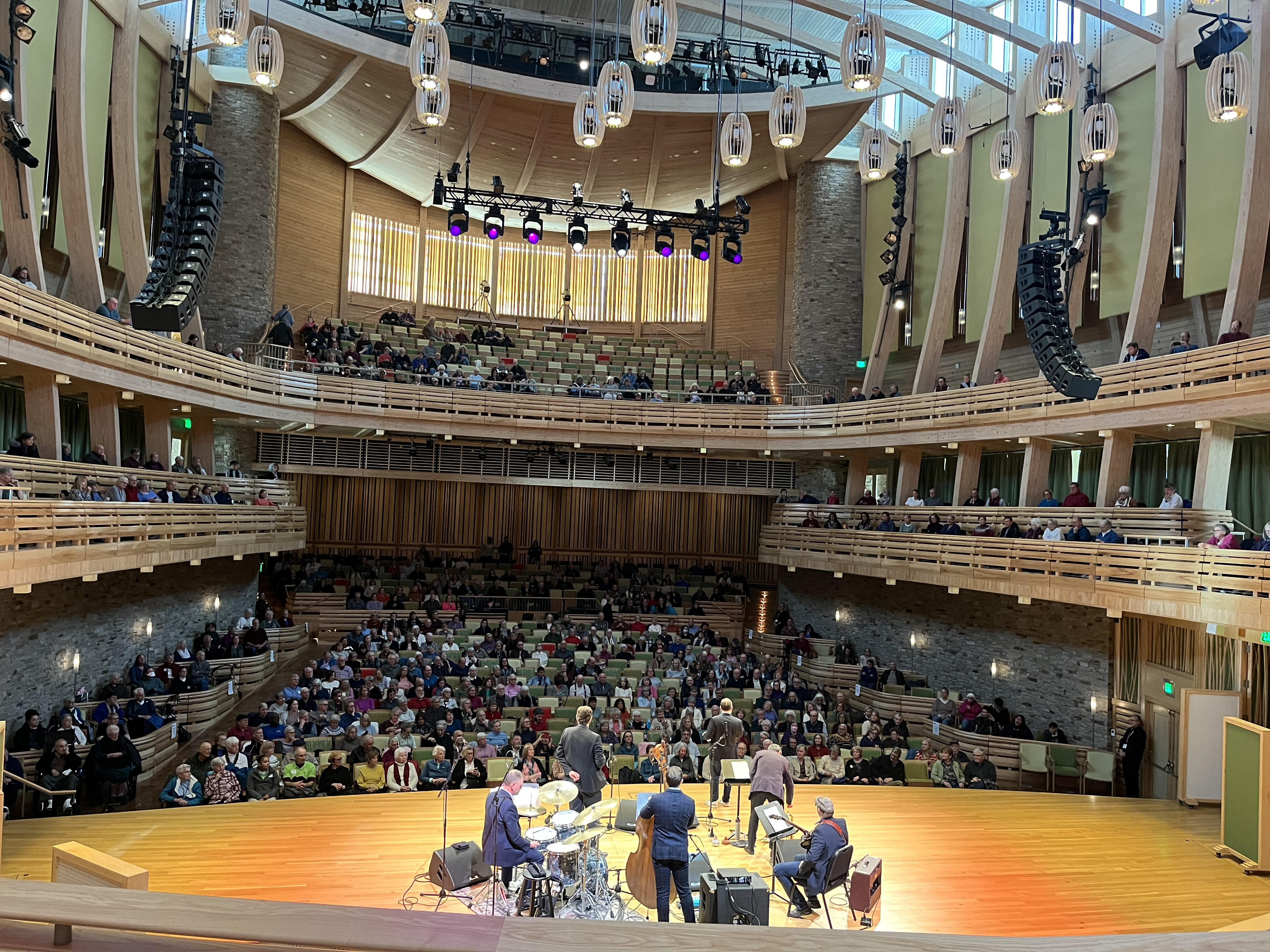
Next we have Jill Goldman Callahan’s hanging at a local gallery. She calls it “Safety,” a title I kind of get although she may mean something different. The impressive auditorium is in Groton, Massachusetts, where we went for a free lunchtime concert. On that particular day the concert was performed by five of the education wing’s jazz teachers.

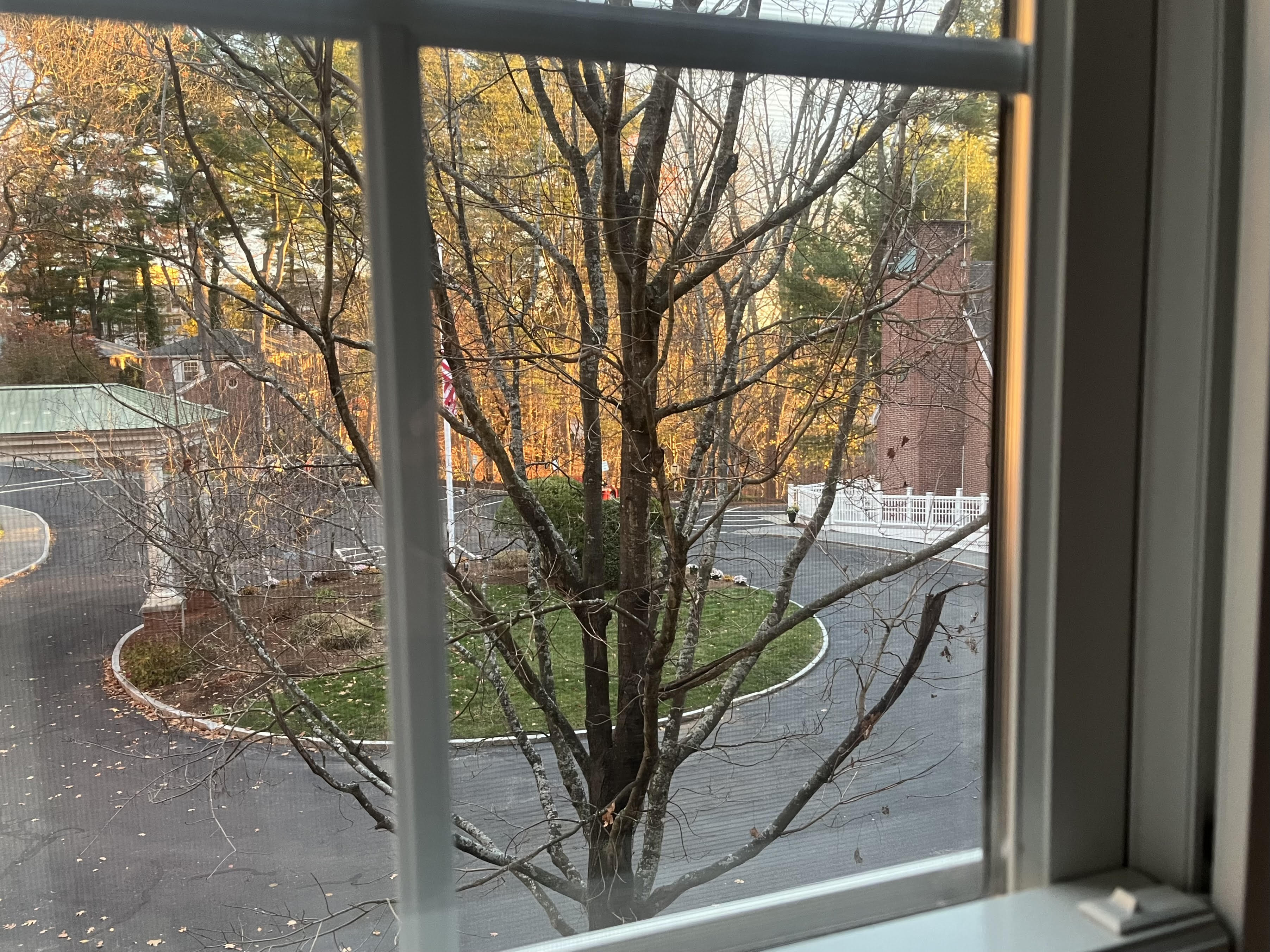
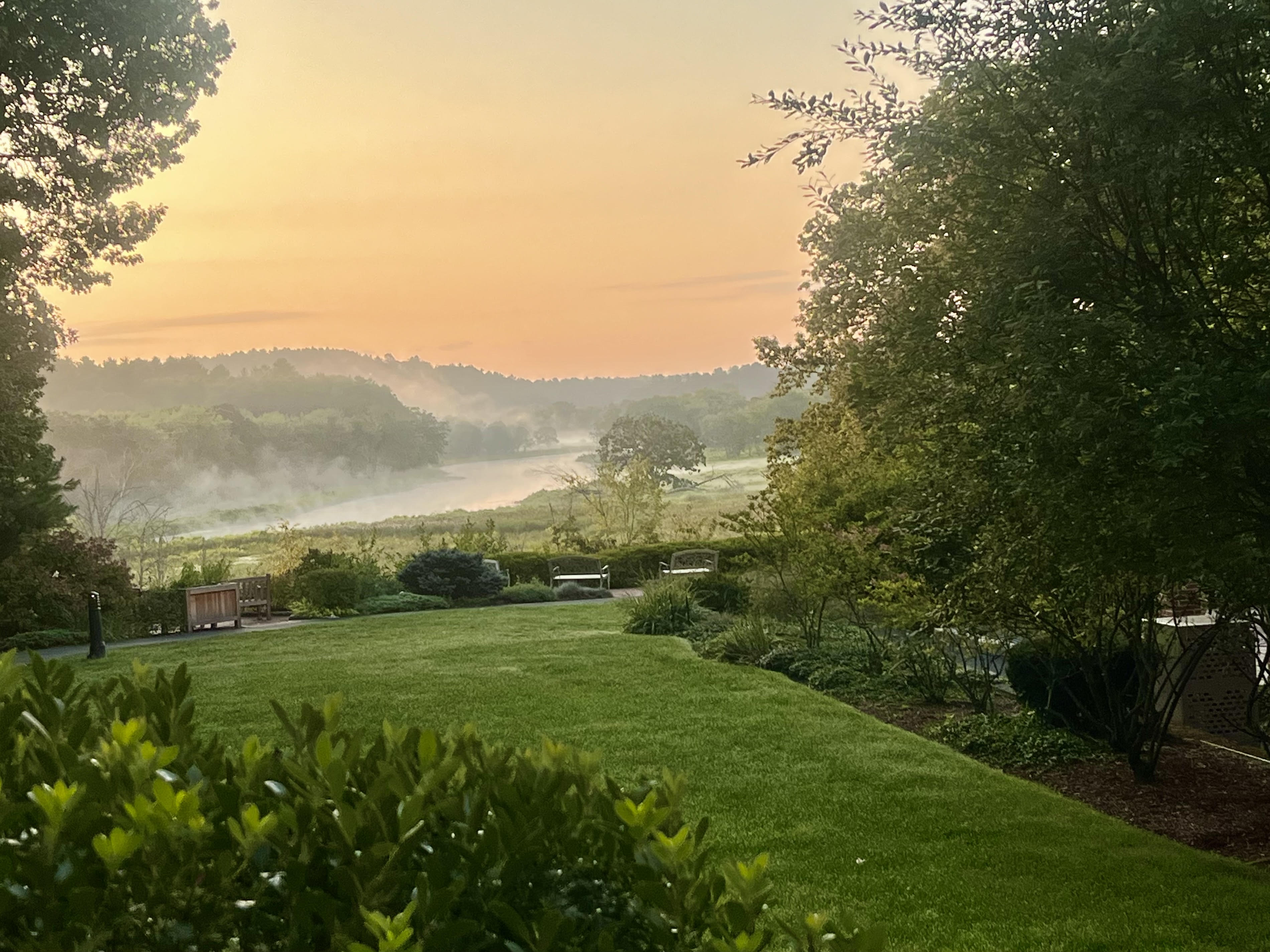
Lastly, a scene I never tire of photographing: the view of dawn from our fitness center.

Read Full Post »

Photo: Maggie Penman/The Washington Post.
Marci Johnson shows off a tiny watering can from deep in a pond. Johnson is a member of Susan Baur’s group Old Ladies Against Underwater Garbage, OLAUG.

A question from today’s article is a perfect example of the real meaning of “begging the question.” Although nowadays the phrase seems to mean “leads to a new question,” good old Fowler’s says it really means something more like “making an unproved assumption.”

Thus “why does diving for trash in a pond make people so happy?” makes the assumption that diving for trash does make people happy.

Let’s read more about the person who begged the question: Susan Baur, founder of the group Old Ladies Against Underwater Garbage.

 ‘It’s a reminder when things feel too overwhelming — it’s not overwhelming if you do it together.’

Maggie Penman writes at the Washington Post, “On an overcast chilly morning in late August, a group of women gather in a sandy parking lot, nearly all of them sporting a bright orange hat with the letters OLAUG — Old Ladies Against Underwater Garbage.

“Founder Susan Baur gets the group’s attention to go over the plan: Two groups of swimmers with masks and snorkels will be dropped off by a pontoon boat in different sections of Johns Pond in Mashpee, Massachusetts.

“Each group, accompanied by a kayaker, will swim in zigzags toward each other, diving as deep as 12 feet to pull trash from the pond’s muddy depths.

“All of the divers — women between 65 and 85 years old — have an enthusiasm for litter. …

“ ‘You literally never know whether you’re going to be excited, humbled, saddened. It’s all there, the whole emotional range you go through on a dive,’ Baur said.

“This area has been cleaned up before, but they know there’s more trash, in particular from a nearby construction site, that is getting dumped in the pond, Baur said. …

“Baur is a retired psychologist. At 85 years old, she is tiny but strong, moving quickly and fluidly as she checks equipment and greets swimmers. She says this project started on a whim in 2018, inspired by her daily swims in freshwater ponds and lakes near her home on Cape Cod.

“ ‘It was three or four or five friends that would get together and clean up a pond and laugh,’ she said.

“They were astounded at how much trash was in local waterways and ponds, and thought they could use more hands. In 2023, OLAUG held tryouts for the first time, making sure volunteers could swim half a mile in under 30 minutes and finish the mile comfortably. They also had to be able to dive repeatedly down 8-10 feet. Overnight, the group expanded to 21 women. The youngest was 64. …

“The dives are organized with walkie-talkies and safety protocols, and coordinated with local homeowners, who often express appreciation with baked goods. Each dive is run by an assigned ‘beach boss’ who handles logistics and checks swimmers in and out of the water. Each diver has an area of expertise. If it’s deep, call Marci. If it’s disgusting, call Susan. …

“Many of the women involved in OLAUG are motivated by environmentalism: wanting to clean up ponds and lakes for the fish and turtles that populate them.

“Some are motivated by the camaraderie or the exercise. For others, it’s the joy of imagining the provenance of the objects pulled out of the mud.

“ ‘Where did this garbage come from?’ asked kayaker Diane Hammer, 70. ‘And how did it get in the pond in the first place?’

“She got involved with OLAUG after moving from Boston to Falmouth in 2020. She looked out her window and saw people in wet suits digging in her pond. Hammer had been watching a lot of true crime during the pandemic, and her first thought was that the divers were FBI agents looking for dead bodies. She soon learned it was Baur and a friend looking for trash.

“ ‘There’s nothing better than doing something good with good people,’ Hammer said. ‘It’s a reminder when things feel too overwhelming — it’s not overwhelming if you do it together.’ …

“This particular Monday morning, divers find a makeshift anchor and a rusted rudder, as well as two shoes — one a woman’s strappy sandal. On another day they found a blue toilet. On another, the back end of a Corvette. They’ve found old beer bottles that seem to have been dumped after an ice fishing expedition a century ago, lots of golf balls and so many baby doll heads. …

“The main reason Baur thinks the women keep coming back to OLAUG is because in the water, they reach a state of flow — the concept in psychology that some researchers believe holds a critical key to happiness.

“ ‘The cool thing about flow is there’s no one thing you have to do to achieve it,’ said Richard Huskey, an associate professor in the communication department at the University of California at Davis who has written about flow. He says the easiest way to understand it is as ‘being in the zone’: being so fully engaged in a task that you are entirely present, totally unselfconscious, not thinking about anything else.

“ ‘There’s nothing like cold water, icky garbage and a little bit of danger to get you out of your head,’ Baur said.

“Marci Johnson agrees. She’s one of the swimmers who joined the group in 2023. Johnson grew up on Cape Cod and moved back with her husband when she retired, but then he died. She was diagnosed with breast cancer. She was feeling isolated and struggling — and then she saw OLAUG was having tryouts.

“ ‘I never was good in gym, I wasn’t on a sports team in school, but I do love swimming,’ she said. ‘You get into a rhythm when you’re swimming long distances, and your mind just goes somewhere else. You work through those problems you’ve been trying to figure out, sitting there thinking about it. But when you’re swimming the answer comes to you. It’s a happy place.’ ”

More at the Post, here.

Read Full Post »

Photo: A nonprofit called Don’t Forget Us, Pet Us.
Kiki on her cart, which she moves around on her own.

Today’s article is from that section of the Washington Post that focuses on cheery stories, often about animals. We learn about a rescued sheep with a talent for learning new tricks.

Sydney Page writes at the Washington Post, “A sheep named Kiki zips around the yard of an animal sanctuary in a motorized wheelchair. She navigates on her own, tilting a joystick with her head to move forward and back, left and right.

“ ‘She’s like a crazy teenager; she wants to go very fast,’ said Deb Devlin, president of the Don’t Forget Us, Pet Us sanctuary in North Dartmouth, Massachusetts.

“Kiki was born with limited mobility and cannot walk. … At birth, Kiki’s mother rejected her and refused to feed her, which is not uncommon when a lamb is sick or disabled. The farm where Kiki was born didn’t have the resources to look after her and contacted Don’t Forget Us, Pet Us to see if they could help. Devlin went right away, in December 2021, to see the 11-day-old lamb.

“ ‘When I first saw her, I felt so sad for her,’ said Devlin, who co-founded the nonprofit sanctuary in 2016. ‘She was on this gentleman’s lap, she was wrapped in a blanket, and she was shivering.’

“Kiki can feel sensations from her neck down, though she is unable to move herself. During Kiki’s first months at the sanctuary, Devlin and other volunteers tried physical therapy, chiropractic treatments, laser therapy and even tendon release surgery. None of it worked.

“[So] Devlin began focusing on what Kiki could already do. She decided to experiment with toys as enrichment. … She got interactive, press-and-play children’s toys and quickly noticed that Kiki was able to operate them using her head.

“ ‘When she got the hang of the toy, she would press through the buttons until she got to her favorite song, “Twinkle, Twinkle,” ‘ Devlin said. ‘She would stop and put her head on it and gaze up, listening to the music.’

“Then Kiki began to dance. … Seeing how easily Kiki controlled the toys, Devlin suspected she might also be able to use a joystick to navigate. …

“Devlin and her team of five volunteers experimented with trying to adapt Kiki’s stroller into something she could maneuver herself, but they struggled to come up with a design. …

“After joining e-bike groups on social media for advice, Devlin tried a motorized wheelchair. She reached out to Mobility Equipment Recyclers of New England — a wheelchair store in North Kingston, Rhode Island — and secured a motorized chair for Kiki with the help of donations.

“Devlin then zip-tied a cargo stroller body to the wheelchair base and repositioned the joystick so Kiki could reach it with her head. The result was a cart Kiki could move on her own. …

“When Kiki took control of the wheelchair for the first time, everyone was stunned.

“ ‘It took seconds for her to start driving it,’ Devlin said [adding] it was clear Kiki knew what she was doing.

“ ‘She knows the cause and effect of that joy stick and that she is moving herself,’ she said. …

A video the sanctuary shared on social media of Kiki driving around the yard went viral, drawing thousands of comments.

“Everybody online finds her so inspirational,” Devlin said. “The only thing we were really lacking with Kiki was independent mobility, and now she has it.”

Of the more than 7,000 comments on a Facebook post of the video, Devlin said, the majority are positive. … Still, some commenters questioned her quality of life.

“ ‘For me, those reactions were very hard,’ Devlin said, explaining that Kiki gets regular wellness checks to ensure she isn’t in pain or discomfort. …

“Kiki eats and drinks, grazes, sunbathes, makes music with a chime set, watches Disney shows, listens to Taylor Swift and even kayaksShe dances and visits schools and meets with children who have disabilities, helping them feel less alone. …

“Now that Kiki can drive on her own, volunteers said she’s developed a sassy side.

“ ‘You tell her it’s time to stop and she’ll look at you and drive away,’ said volunteer Jess Bullock. … Bullock said despite her mobility challenges, Kiki seems like a very happy girl. …

“Devlin said Kiki’s story is one of resilience and hope. ‘She has had such an impact on so many,’ she said. ‘Everyone is just so taken by Kiki and her journey.’ ”

More at the Post, here. I guess I’m guilty of speciesism, but I admit that the thing I like best about Kiki is that her success cheers human children who have disabilities. What is your take?

Read Full Post »

Photos: Suzanne’s Mom.

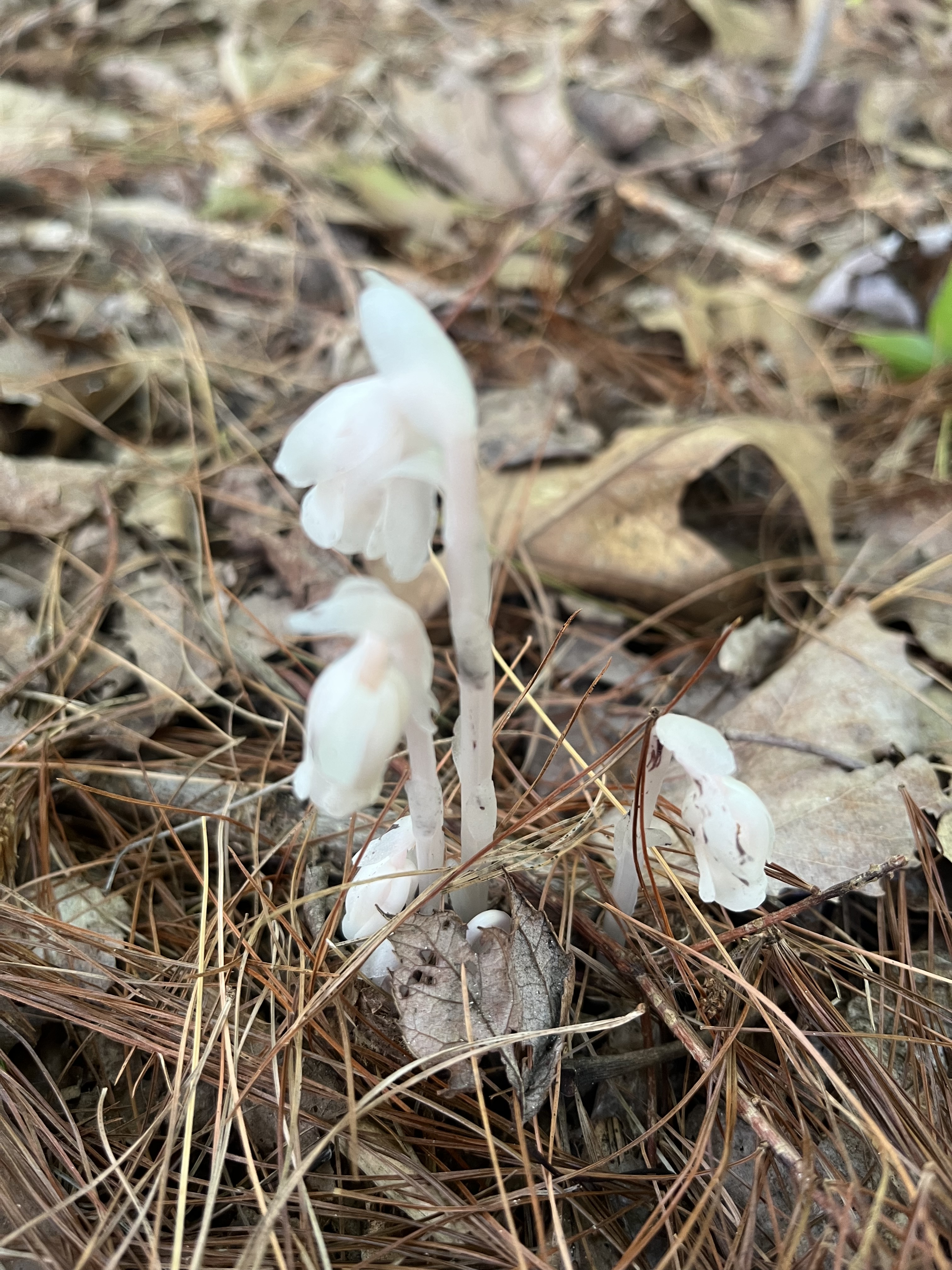
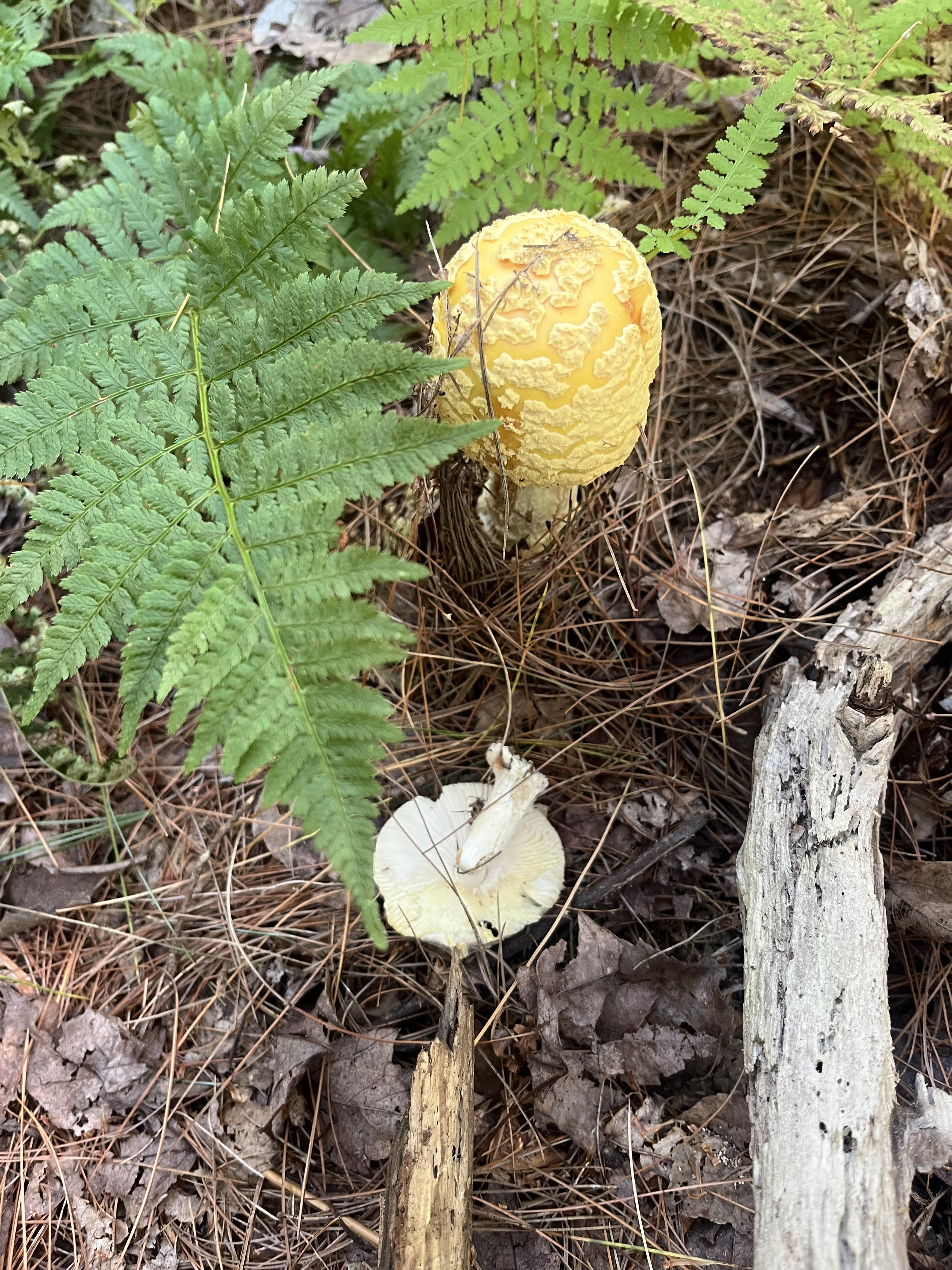
After an unexpected visit from mushroom hunters in September, I’ve started paying attention to what pops up after rain. It’s not that I want to eat wild mushrooms, but I would like to know something about them. Their names for example. I do know the one above. It used to be called Indian pipe, but nowadays, it’s called Ghost pipe, a name that works for me. [Late note: See naturalist Kim Gaffett’s helpful corrections in the comments below.]

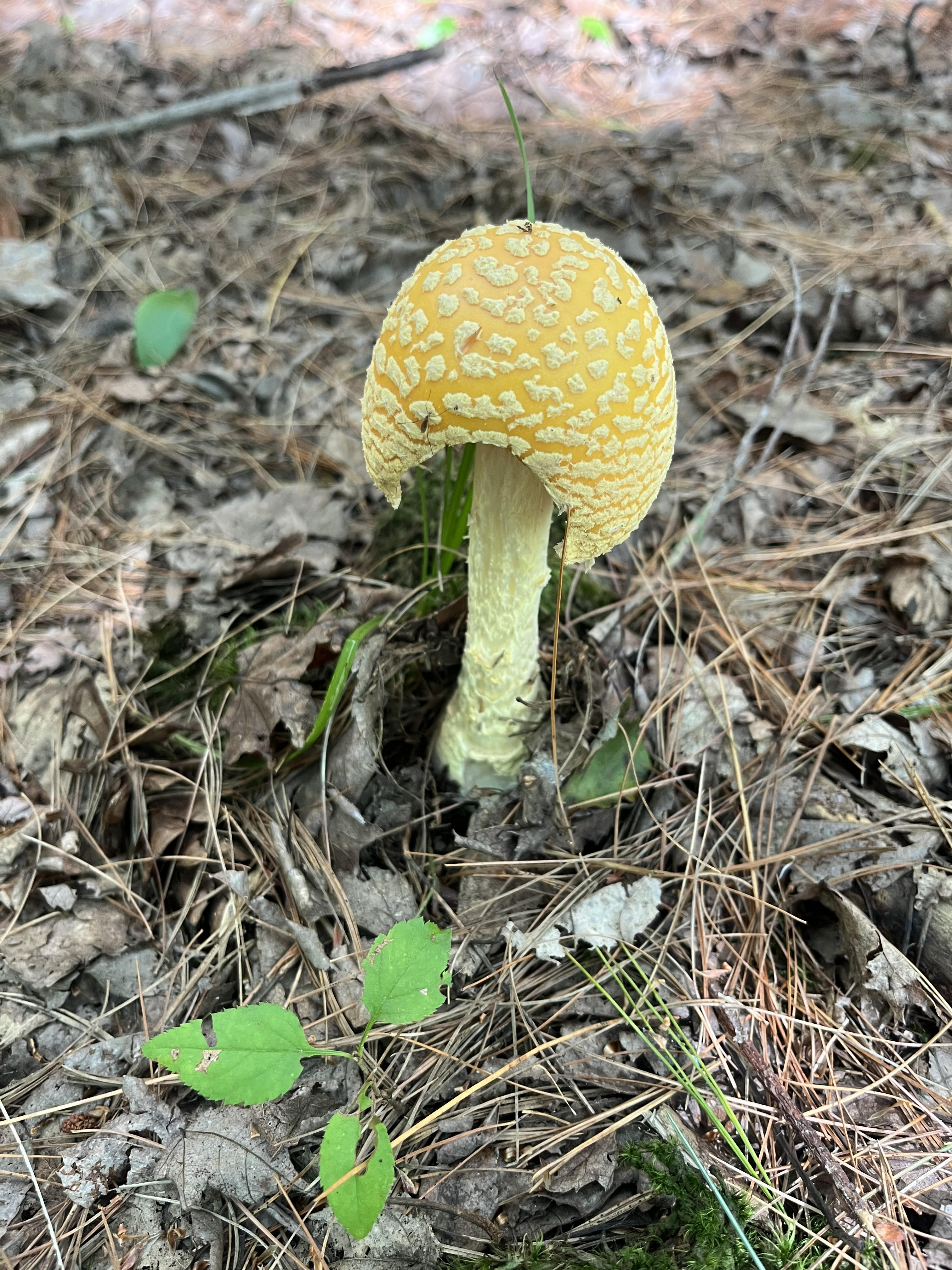
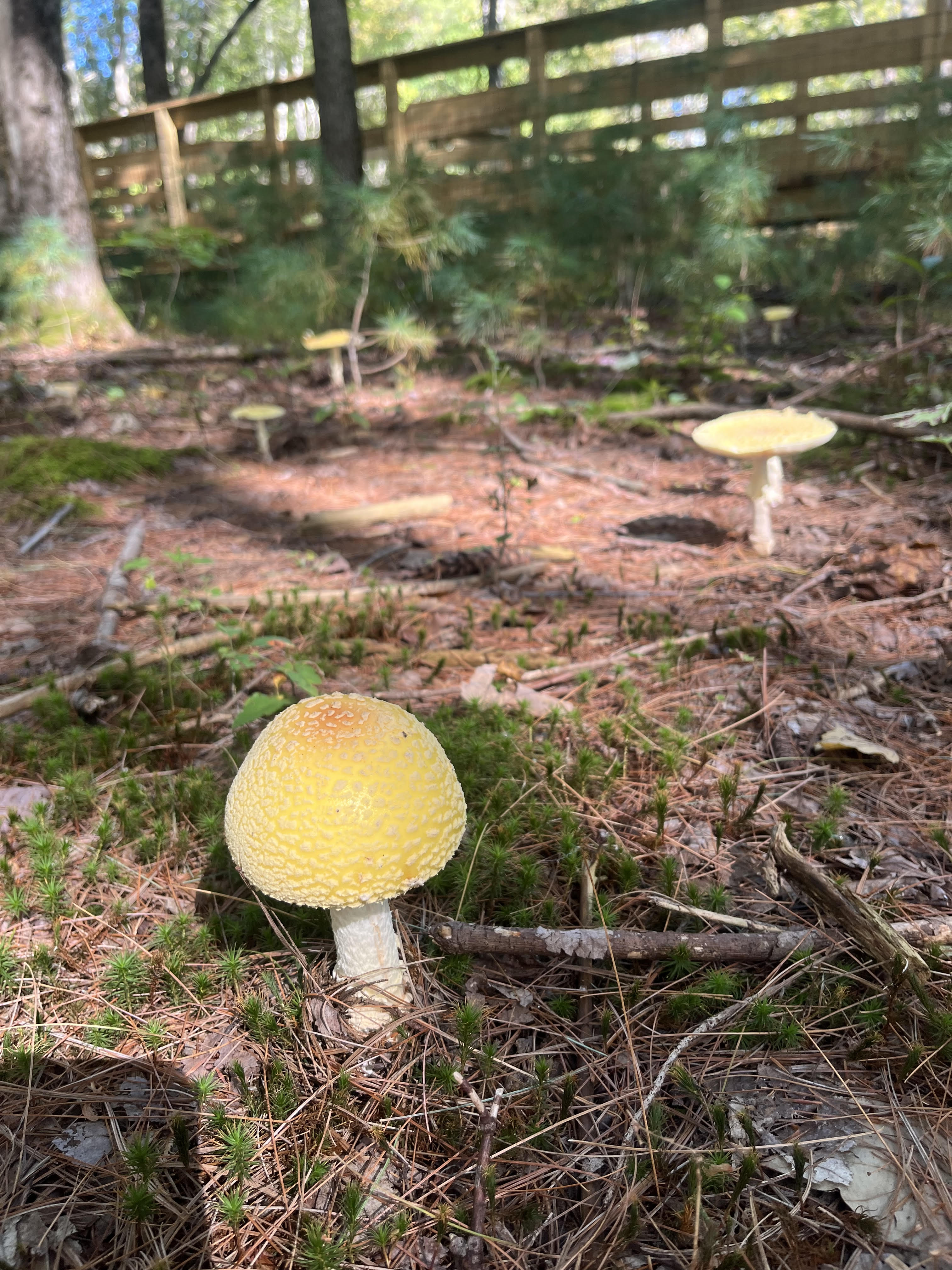
Just from noticing a little more, I’ve realized that the round yellow ones with the white dots flatten out after a few days. I haven’t decided if I want to pay for the mushroom-identifier app, so if you’re a micologist, maybe you could tell me the little guy’s name.

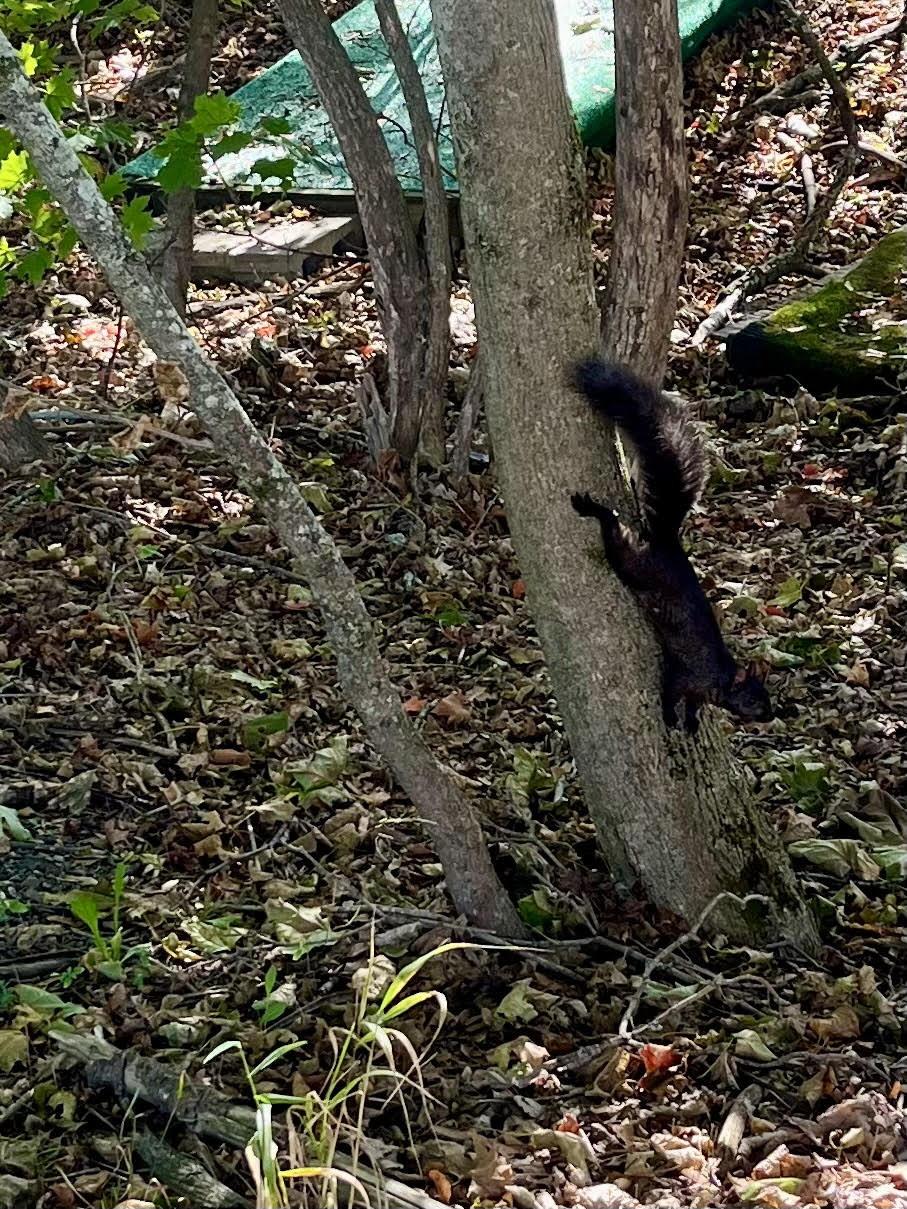
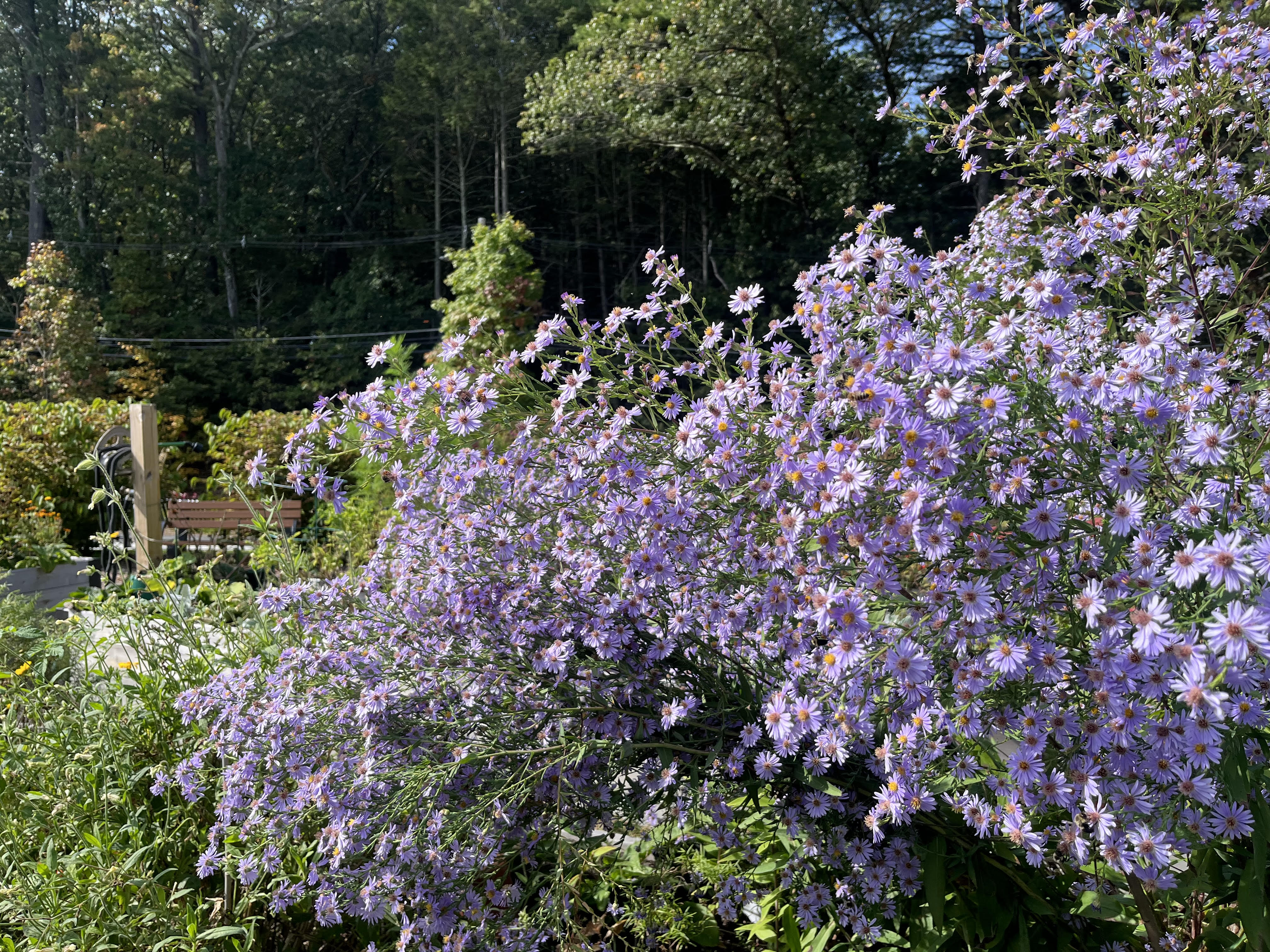
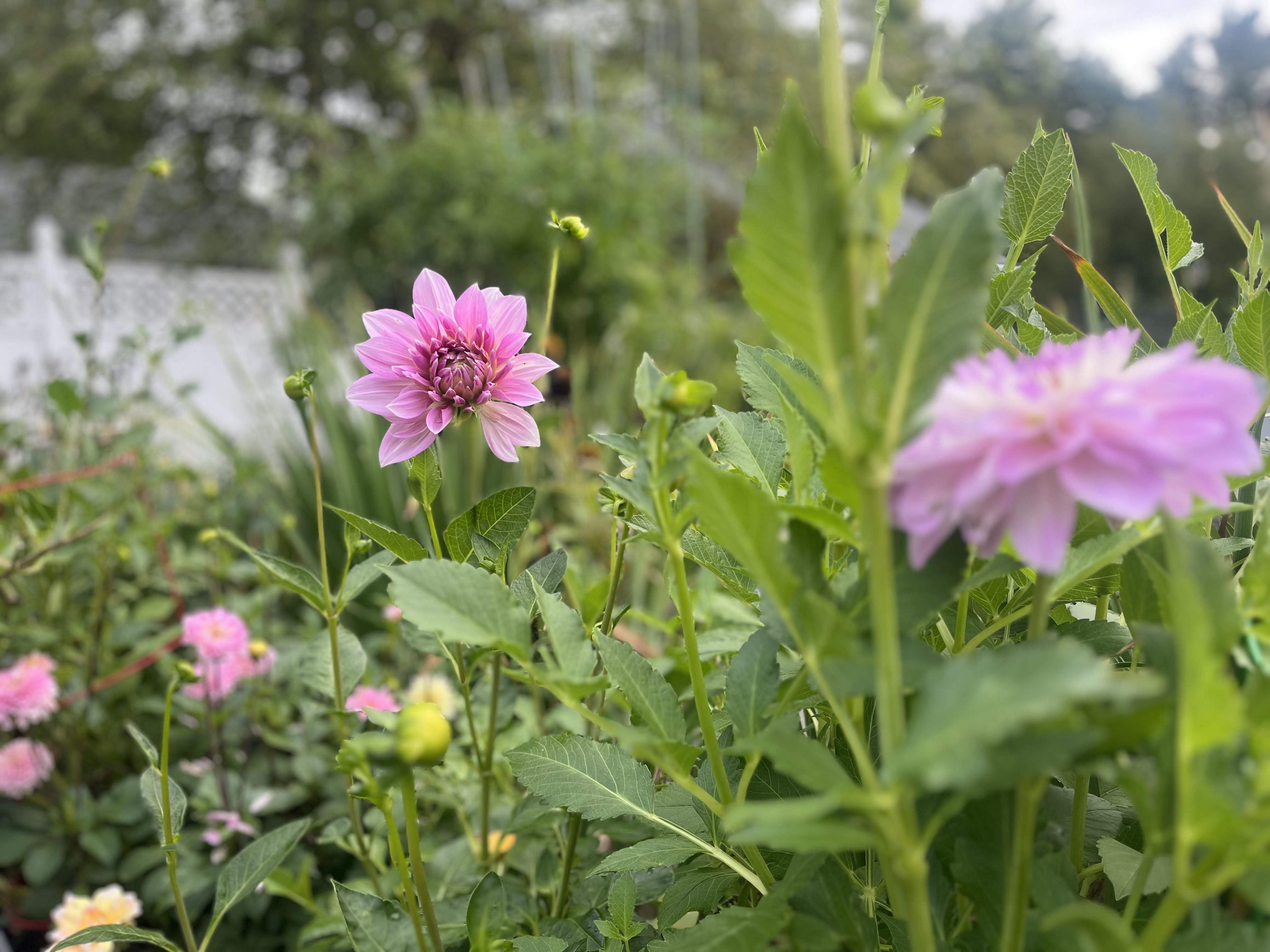
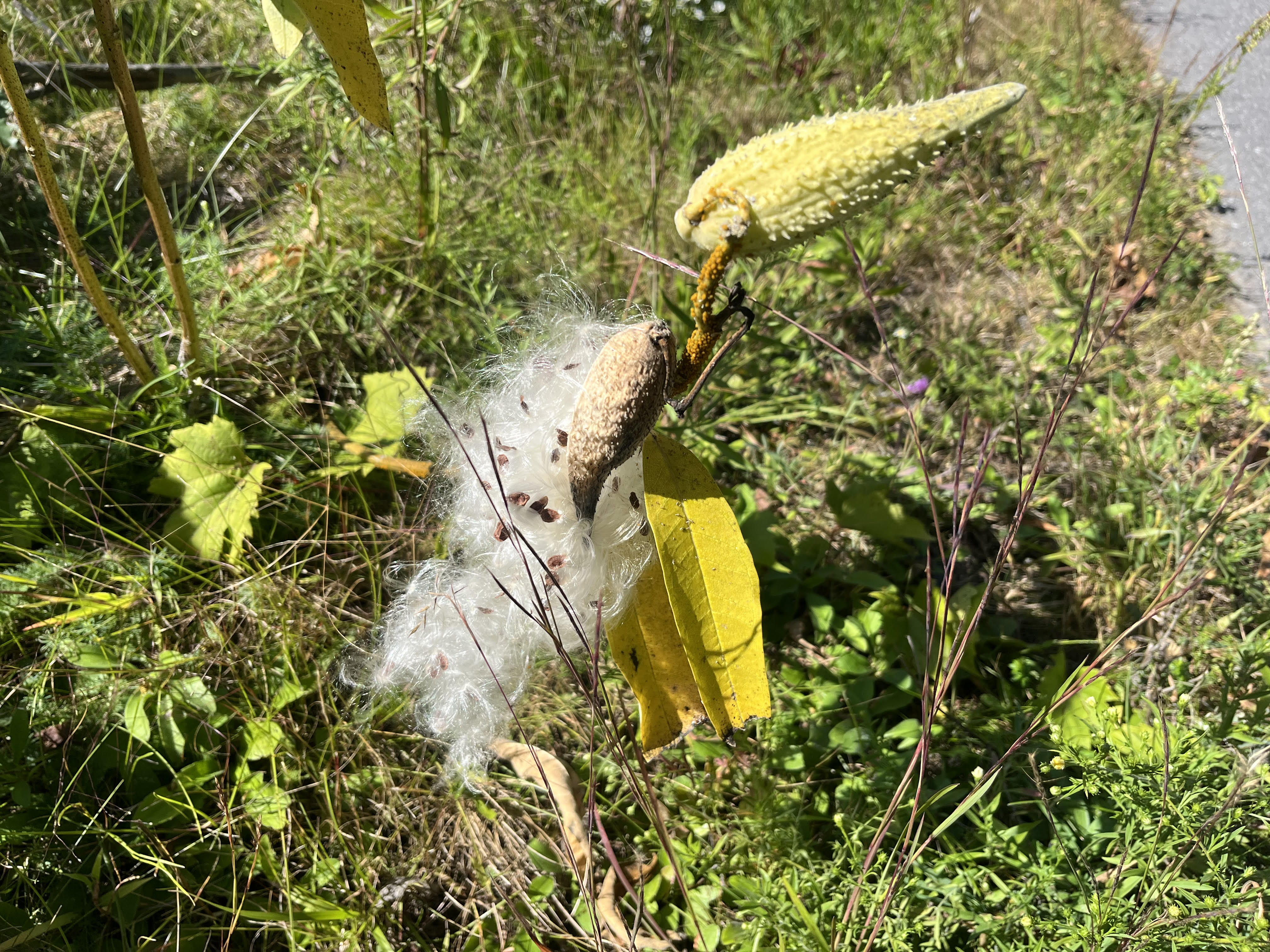
From my walks in Massachusetts: there’s a black squirrel who lives along the bike path, unusual around here. Kathleen’s garden box features a gigantic aster practically dancing with buzzing pollinators. Pat’s garden box has late-blooming dahlias. The milkweed announces fall.

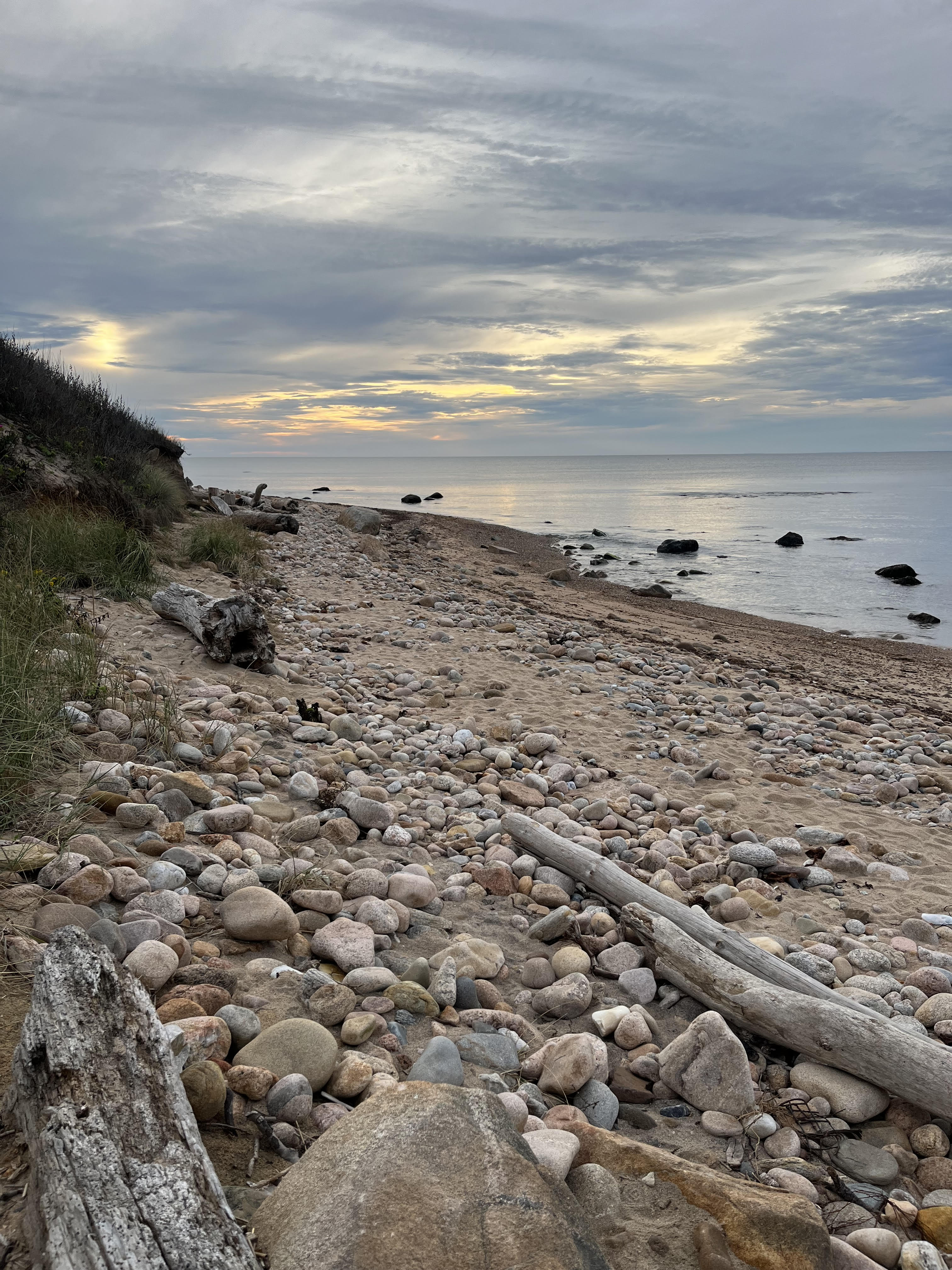
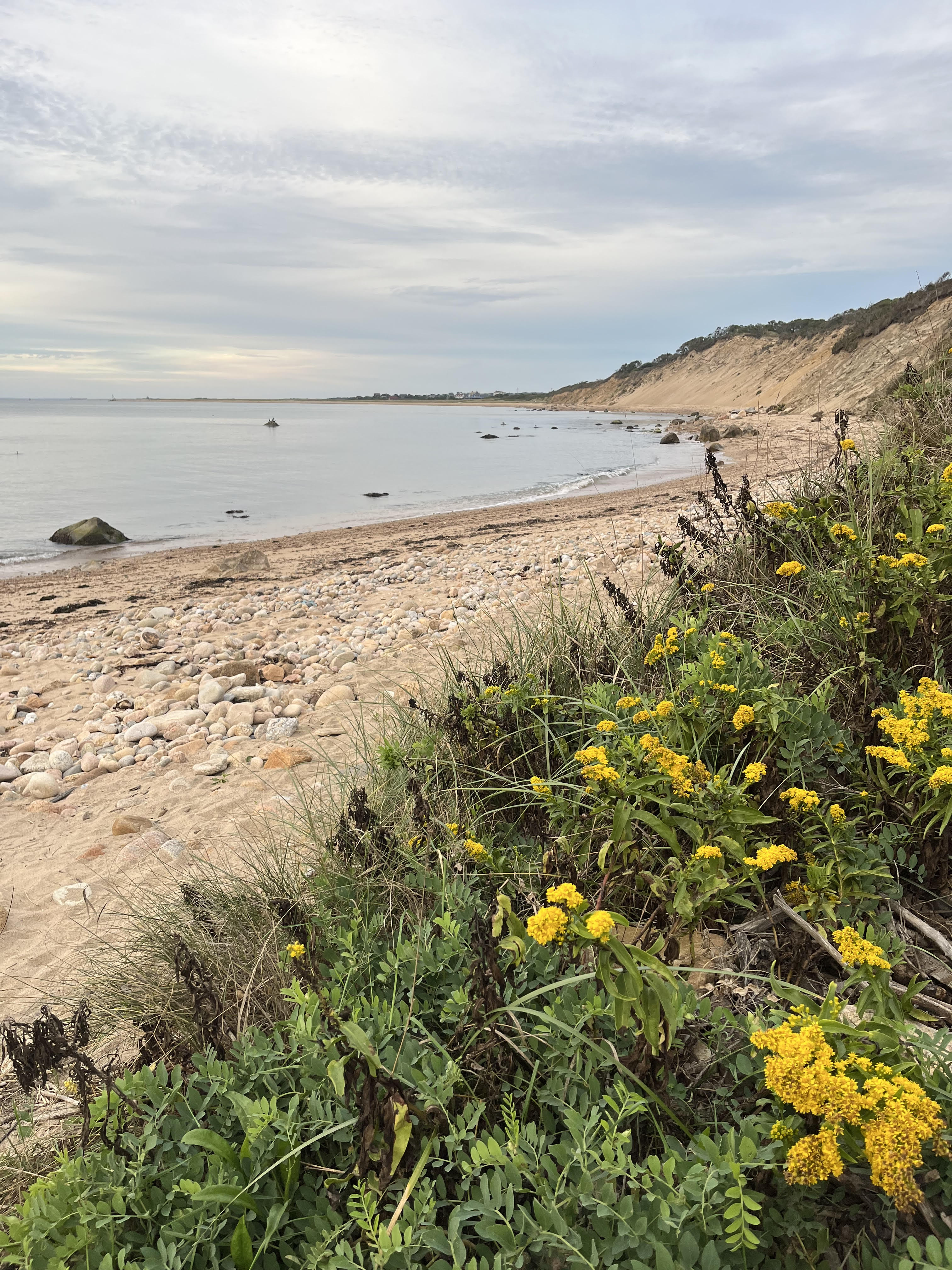
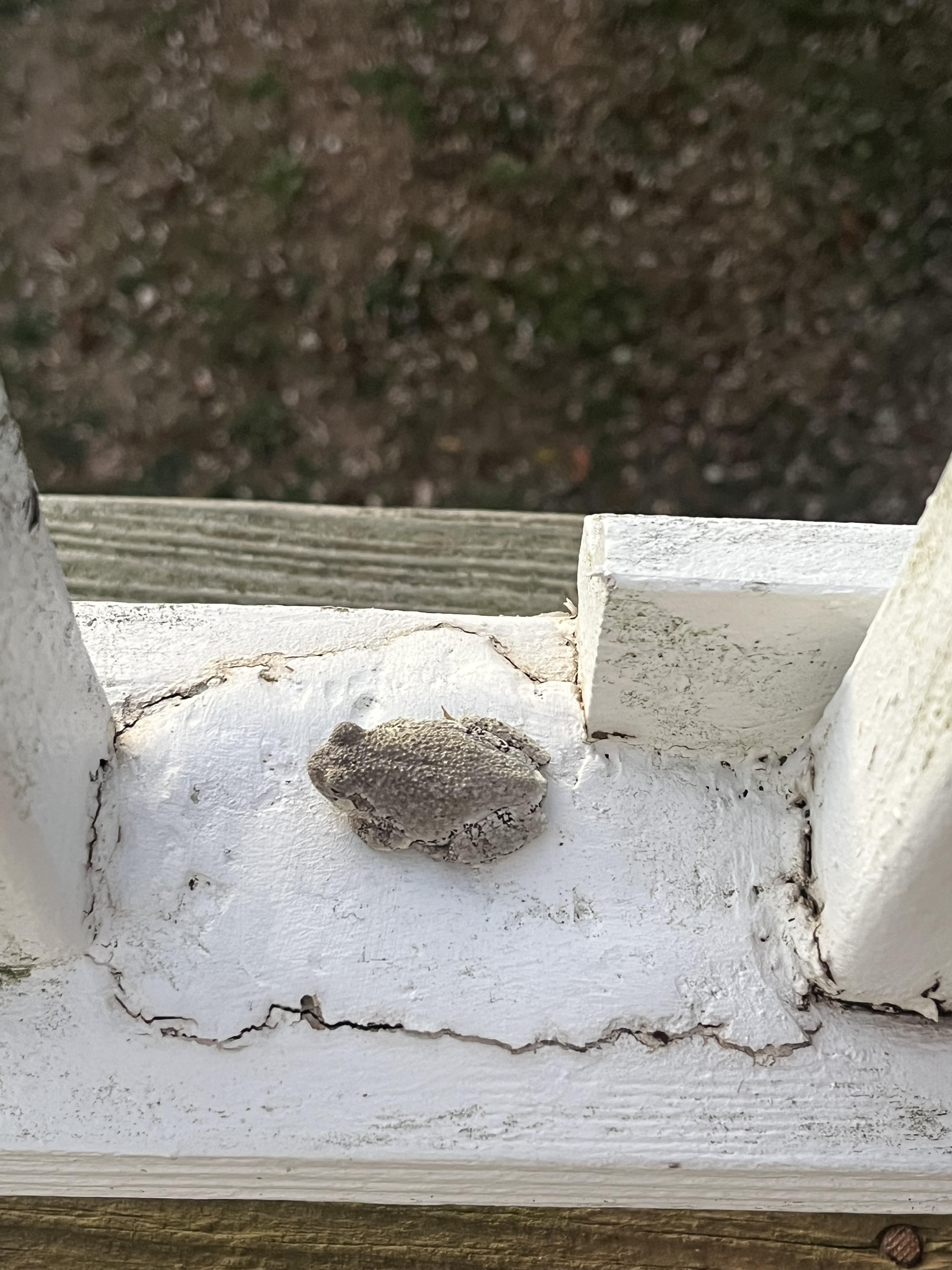
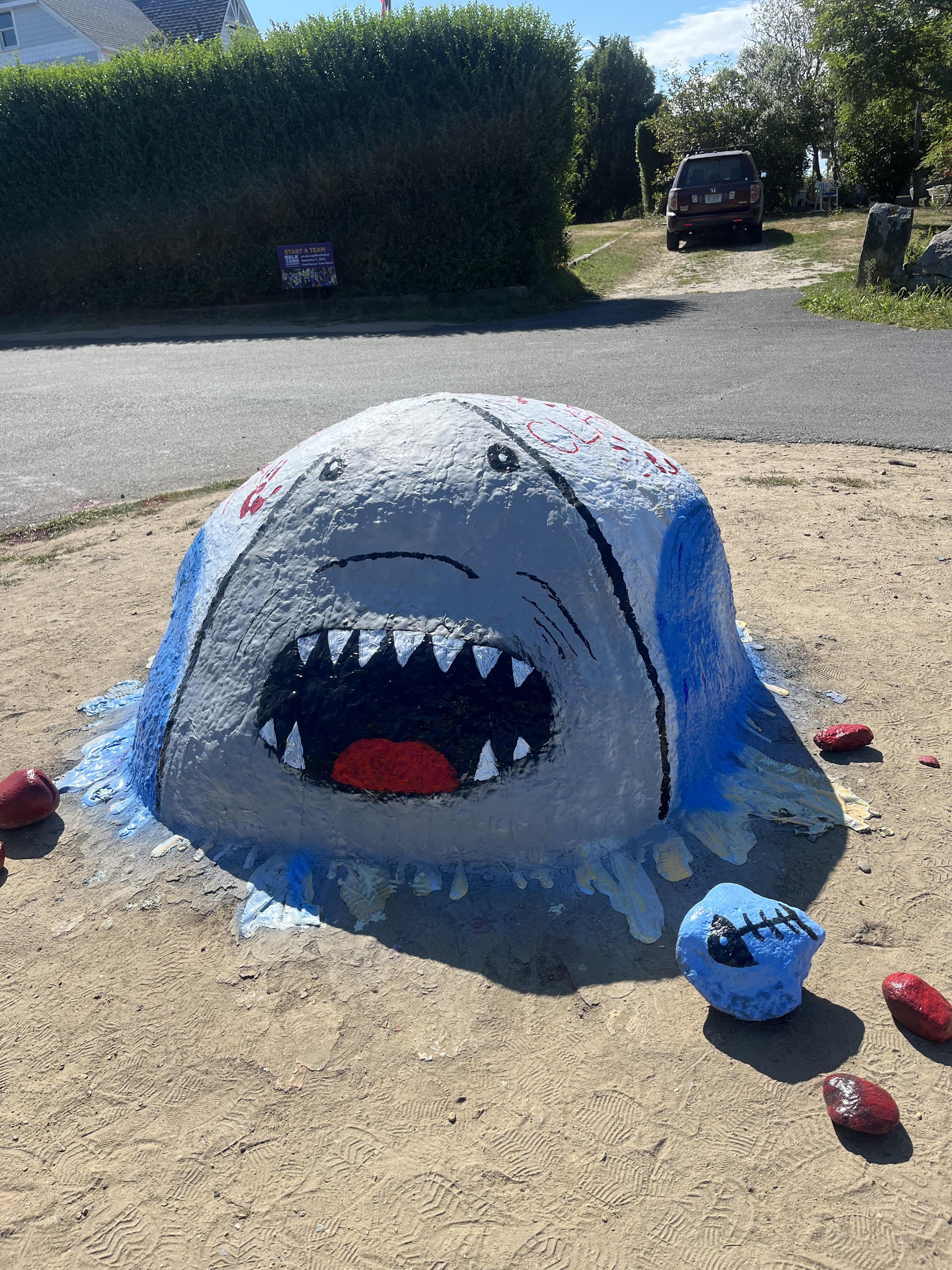
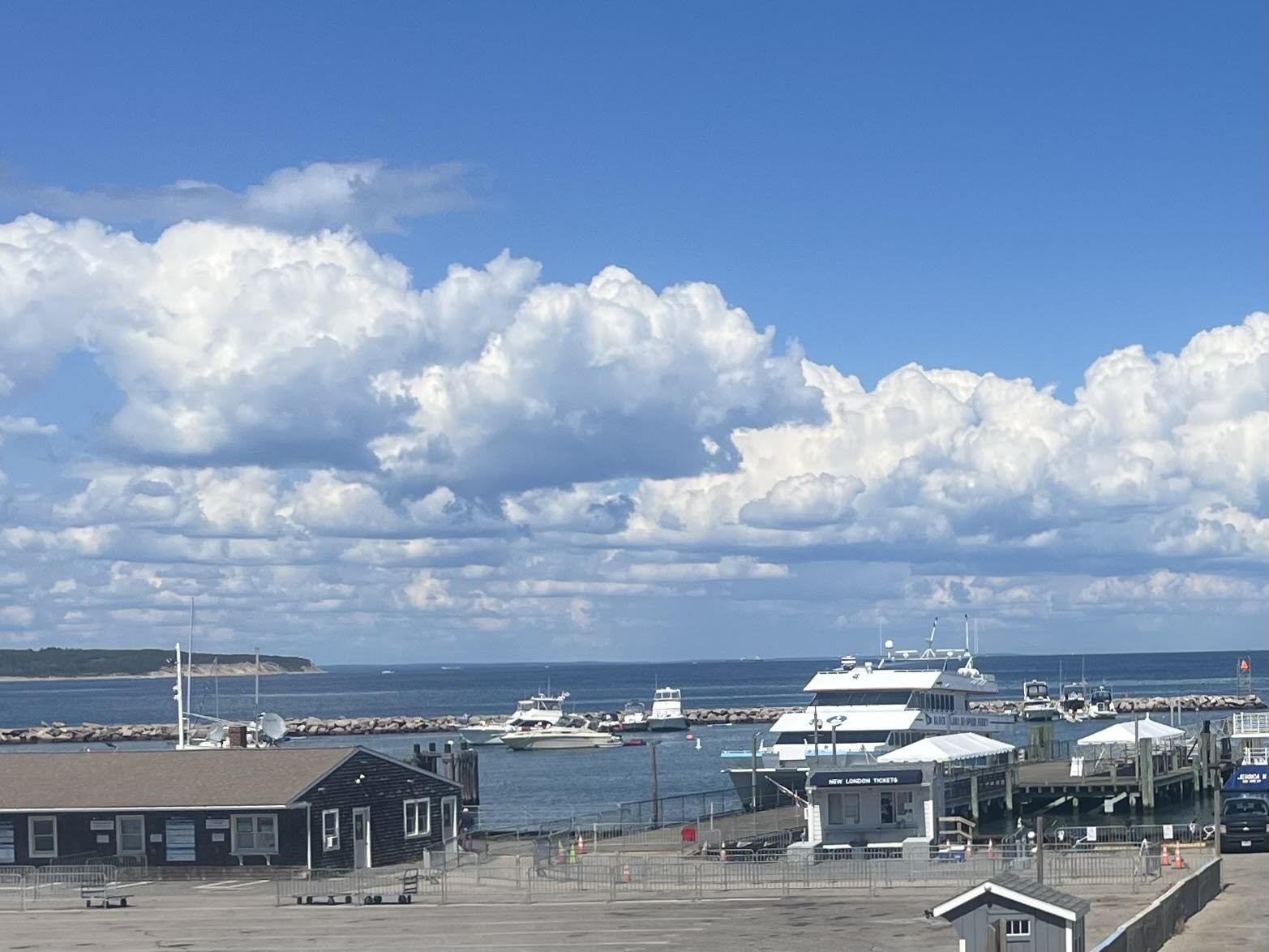
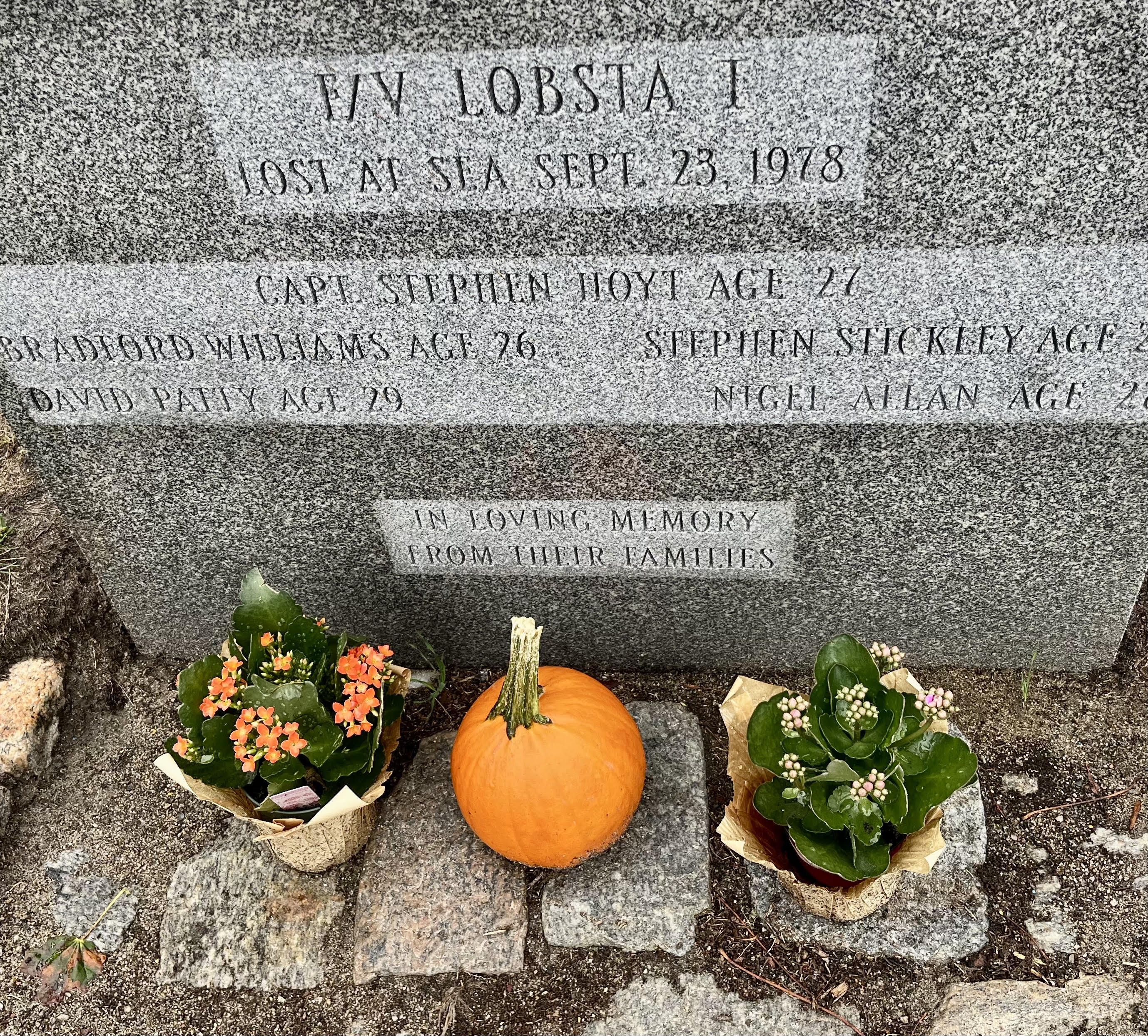
From my walks in Rhode Island: New Shoreham’s West Side beaches are quiet in the evening. One view shows the goldenrod that covers the island at this time of year. The tiny frog is, I think, a peeper, normally seen in spring. The shark on the rock celebrates a big anniversary for a famous movie that gave white sharks a bad name. The cloud photo shows the sea at its most benign. The one after that shows its dark side, a tombstone for fishermen whose bodies will never be found.

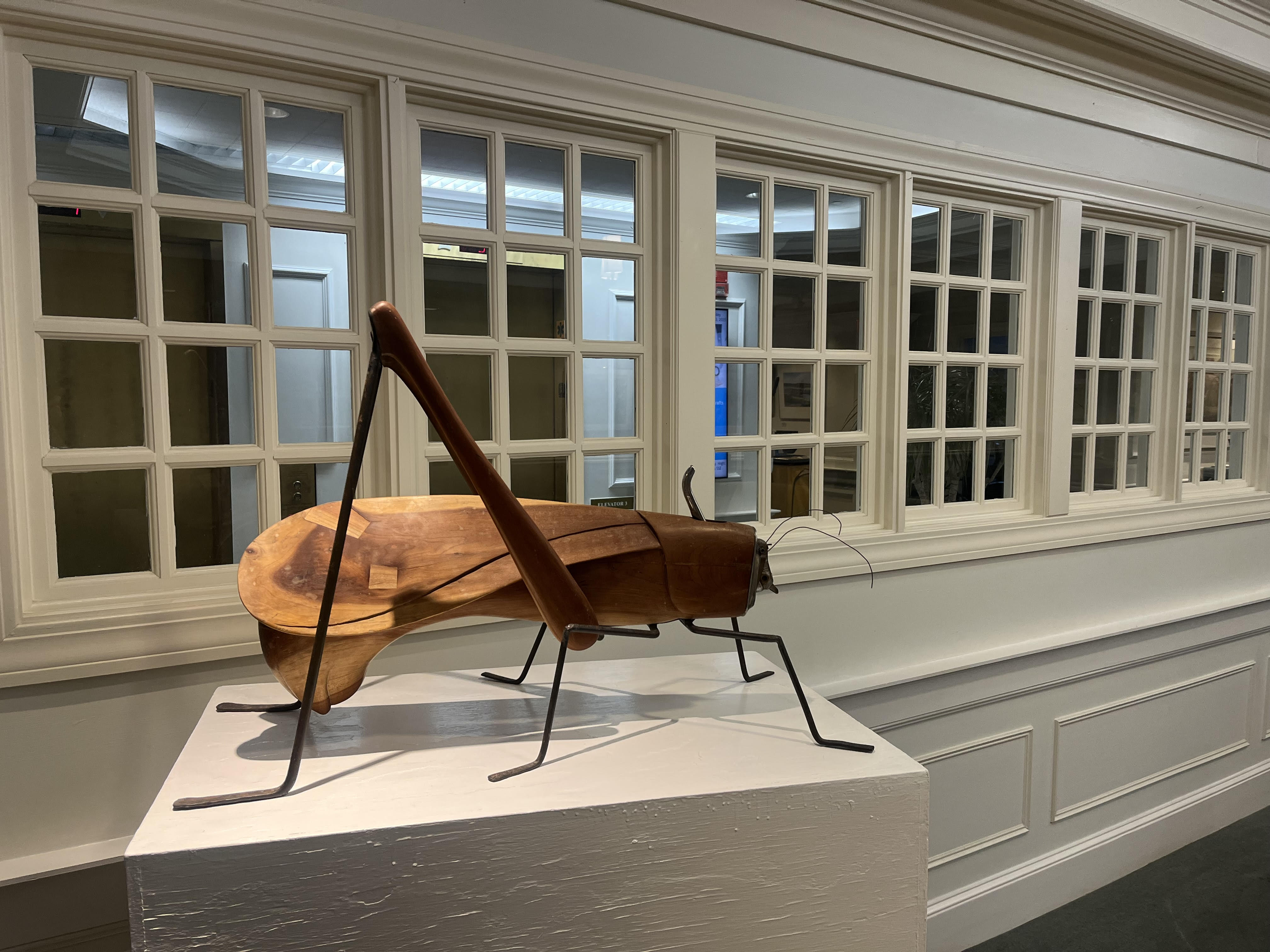
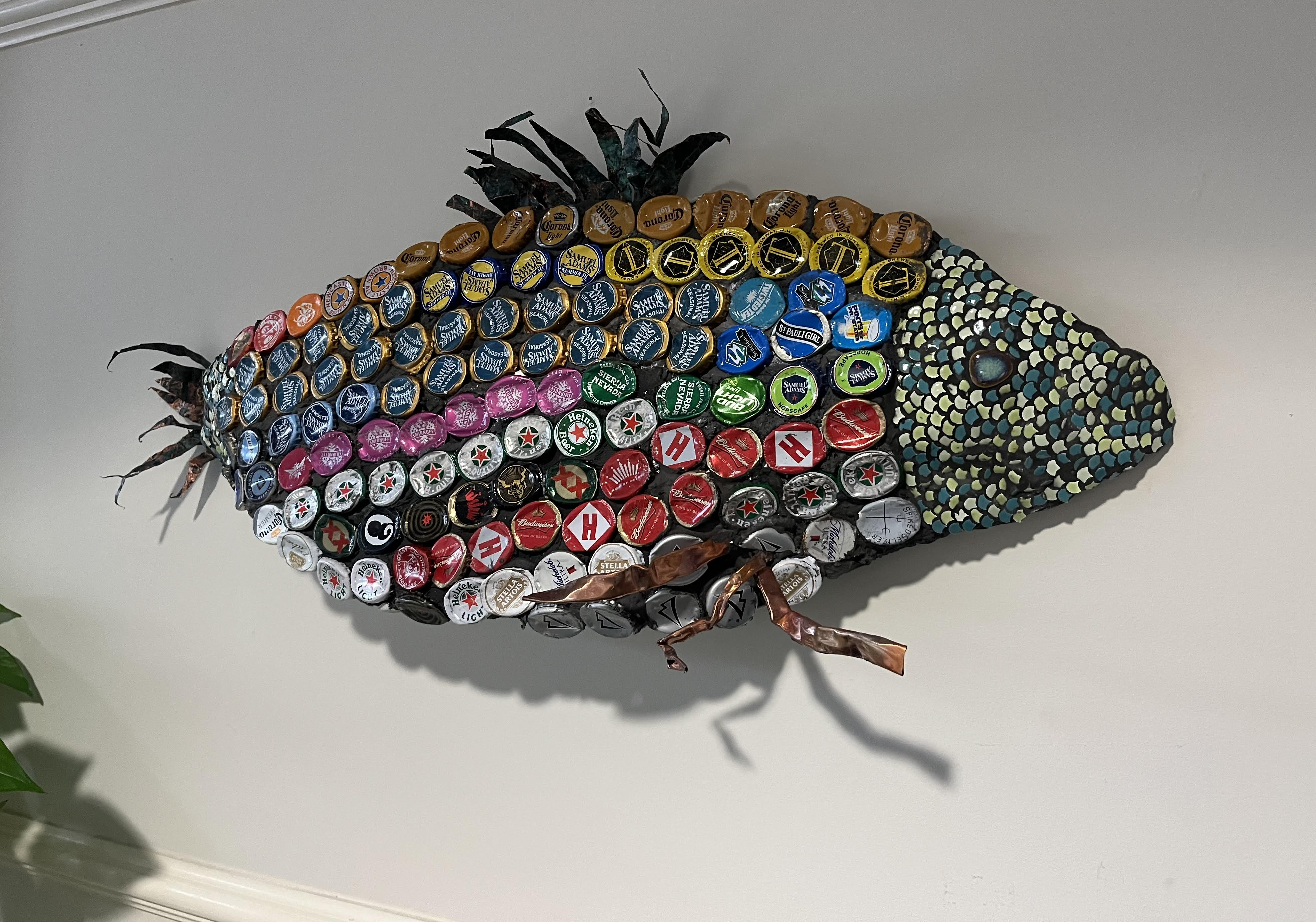
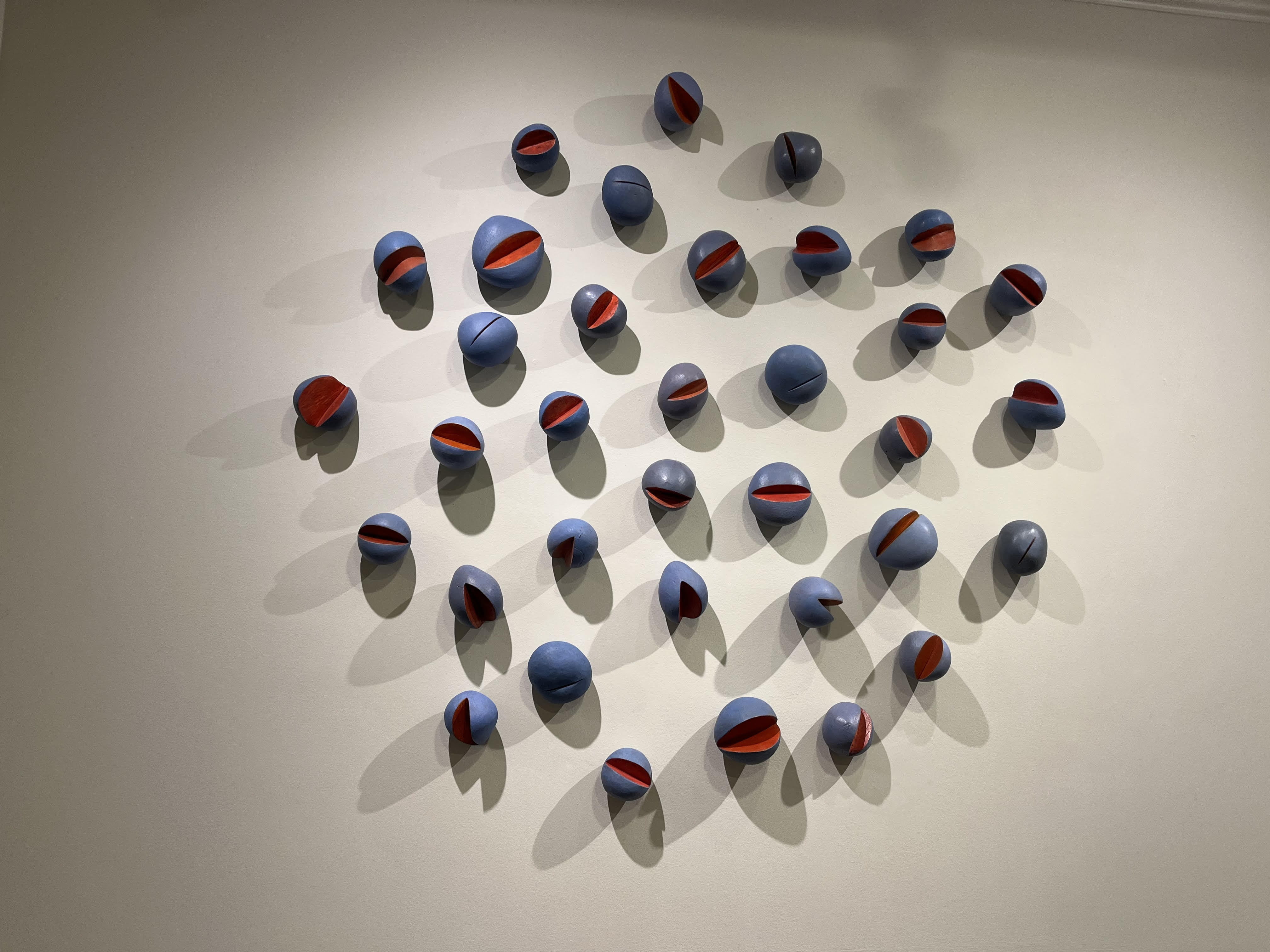
From where I live now: artwork that includes a metal fish by Cassie Doyon and Muppet-like shapes by Joan Mullen. Finally, an early morning view of the Sudbury River from our fitness center.

Read Full Post »

Photo: Nancy’s nephew Andrew.
Beautiful poison.
The moon is clothed in smoke from a distant wildfire.

Here are recent photos in no particular order. They cover Massachusetts, Rhode Island, and Pennsylvania, where we attended my brother-in-law’s funeral.

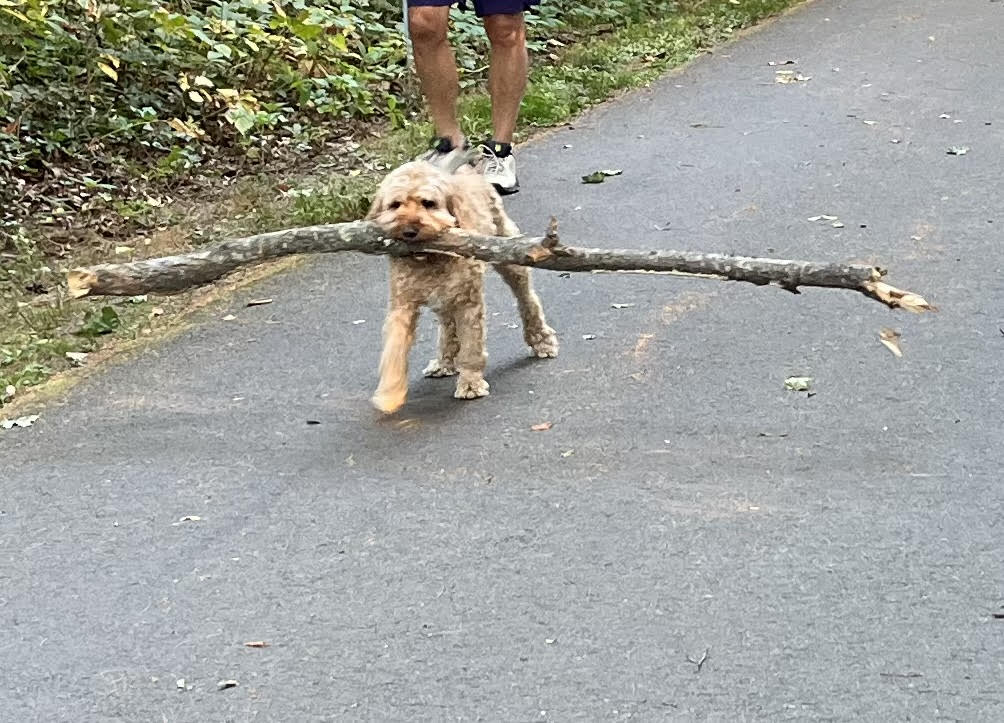
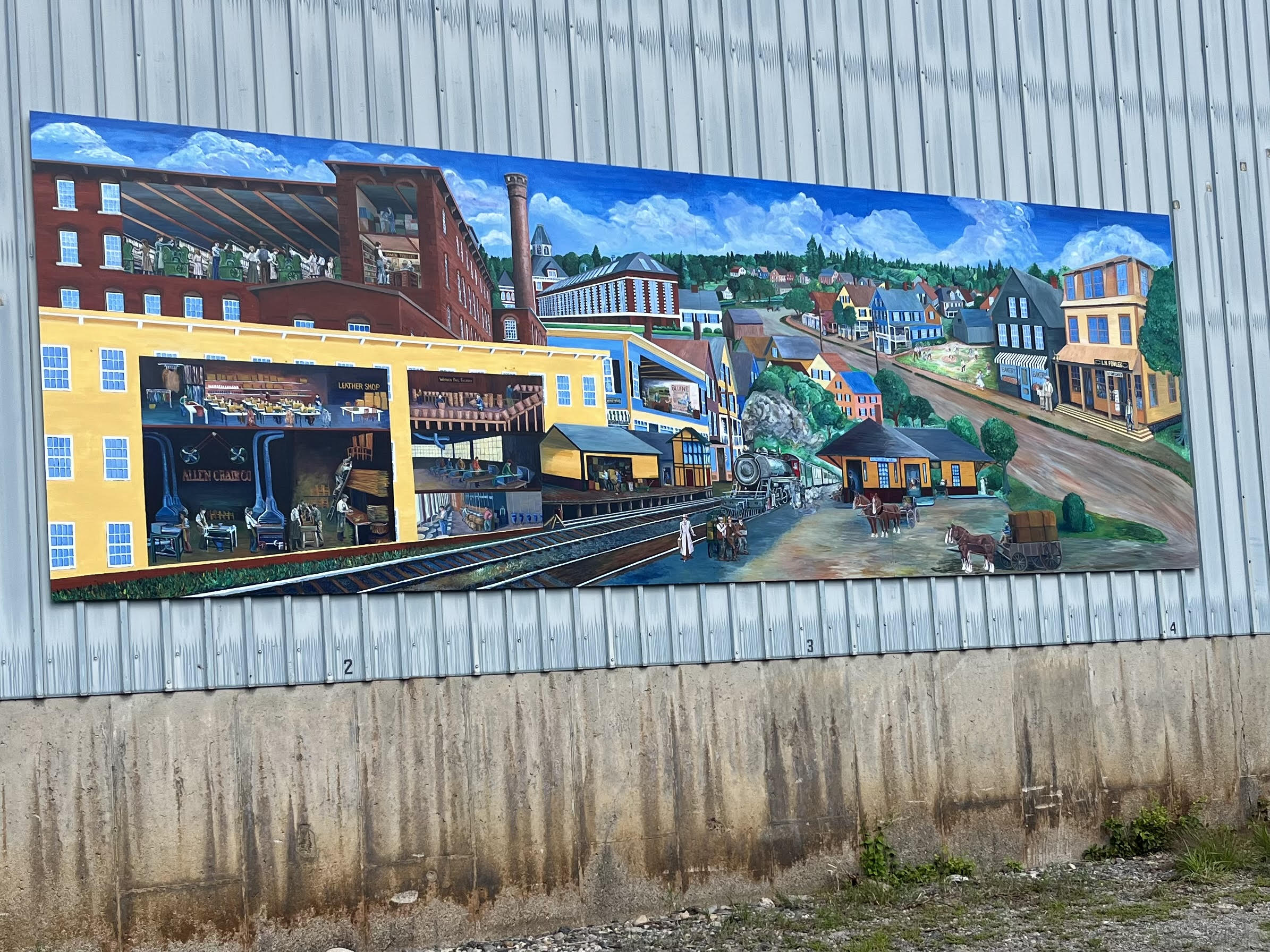
I start off below with an ambitious dog on the rail trail. His owner told me firmly, “He’s not taking that one home.” Then I have a photo of the nearby mural depicting our town in the 19th century.

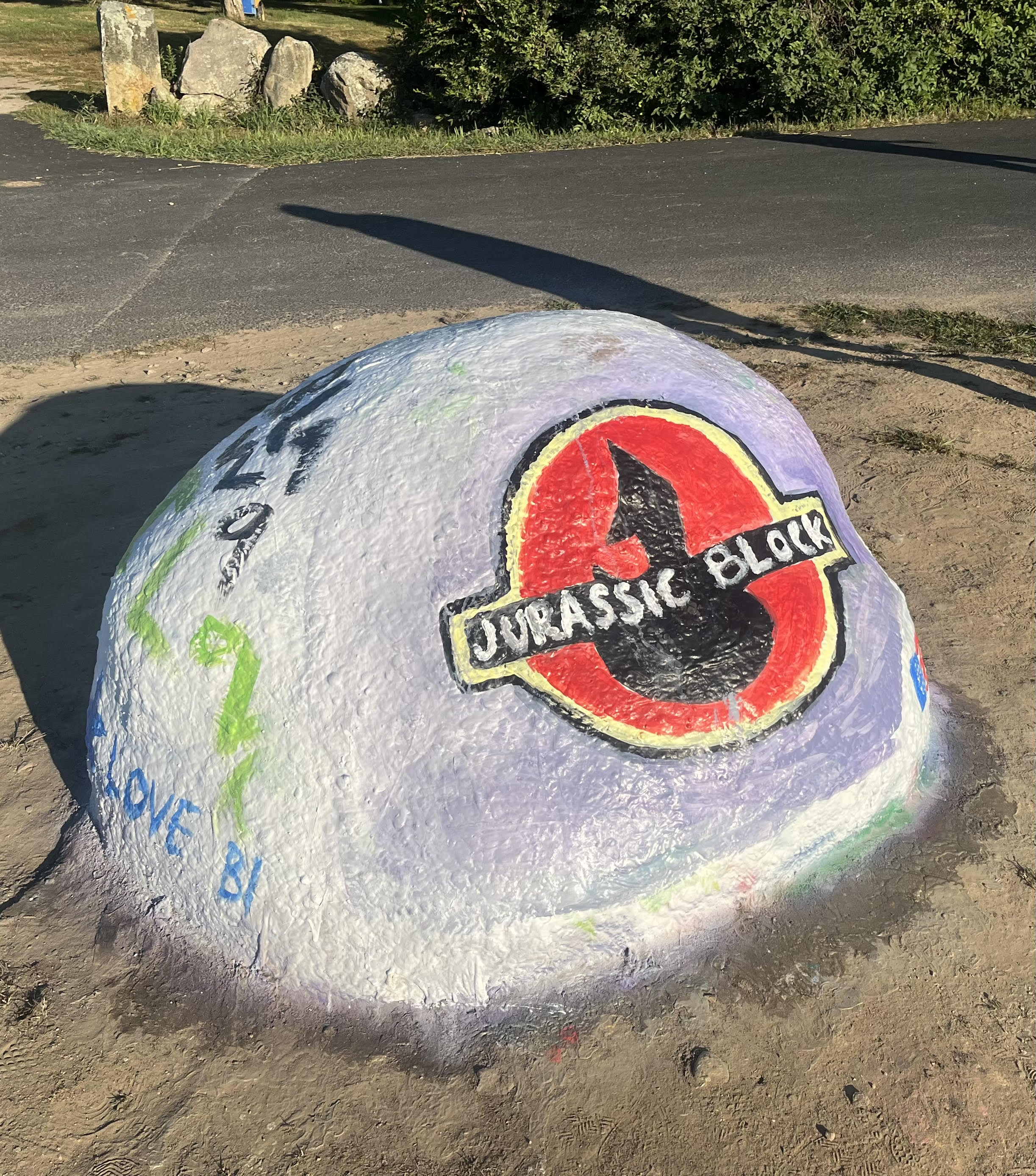
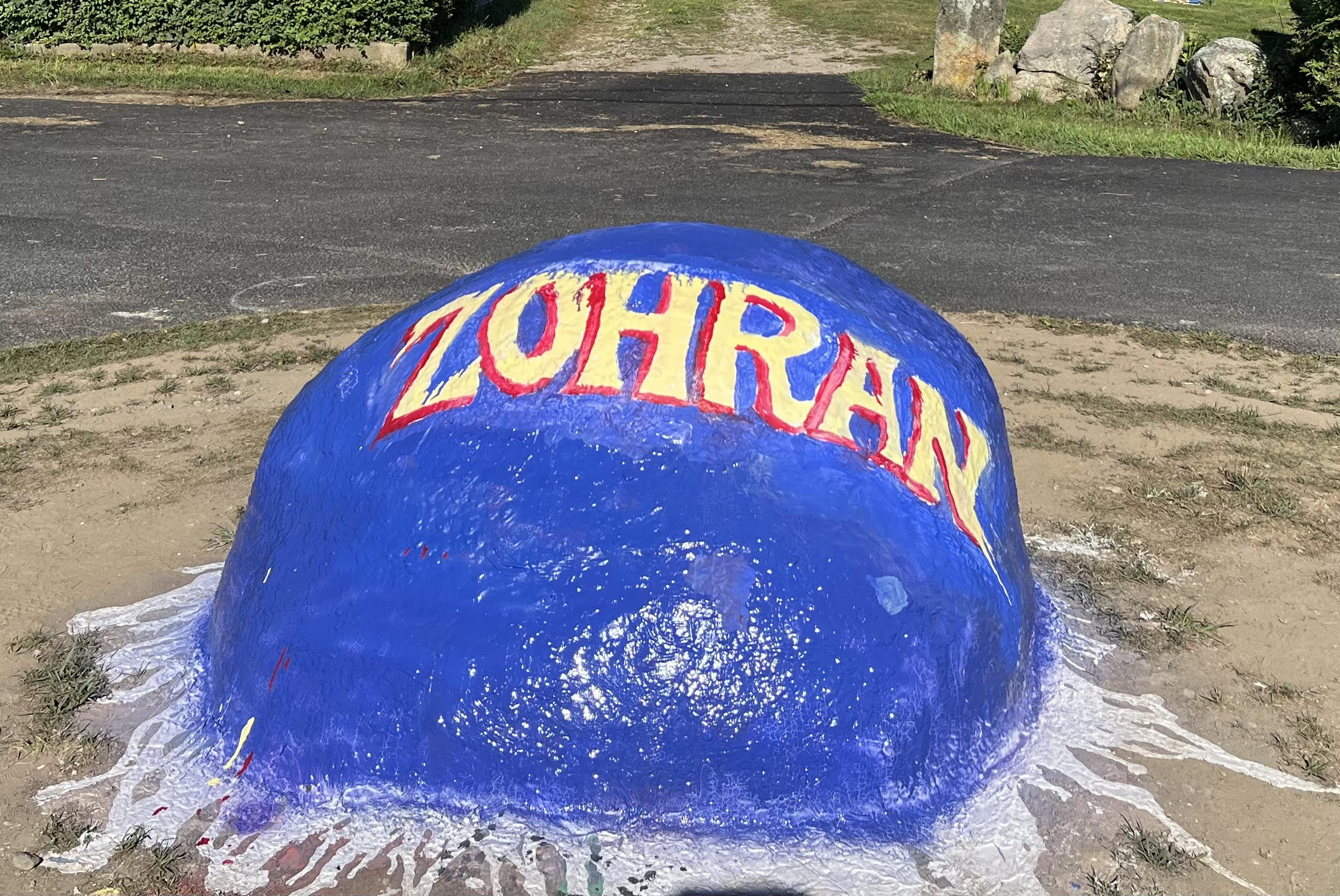
A couple of painted rock offerings come next. (Someone is a fan of the New York City mayoral candidate who won his primary.)

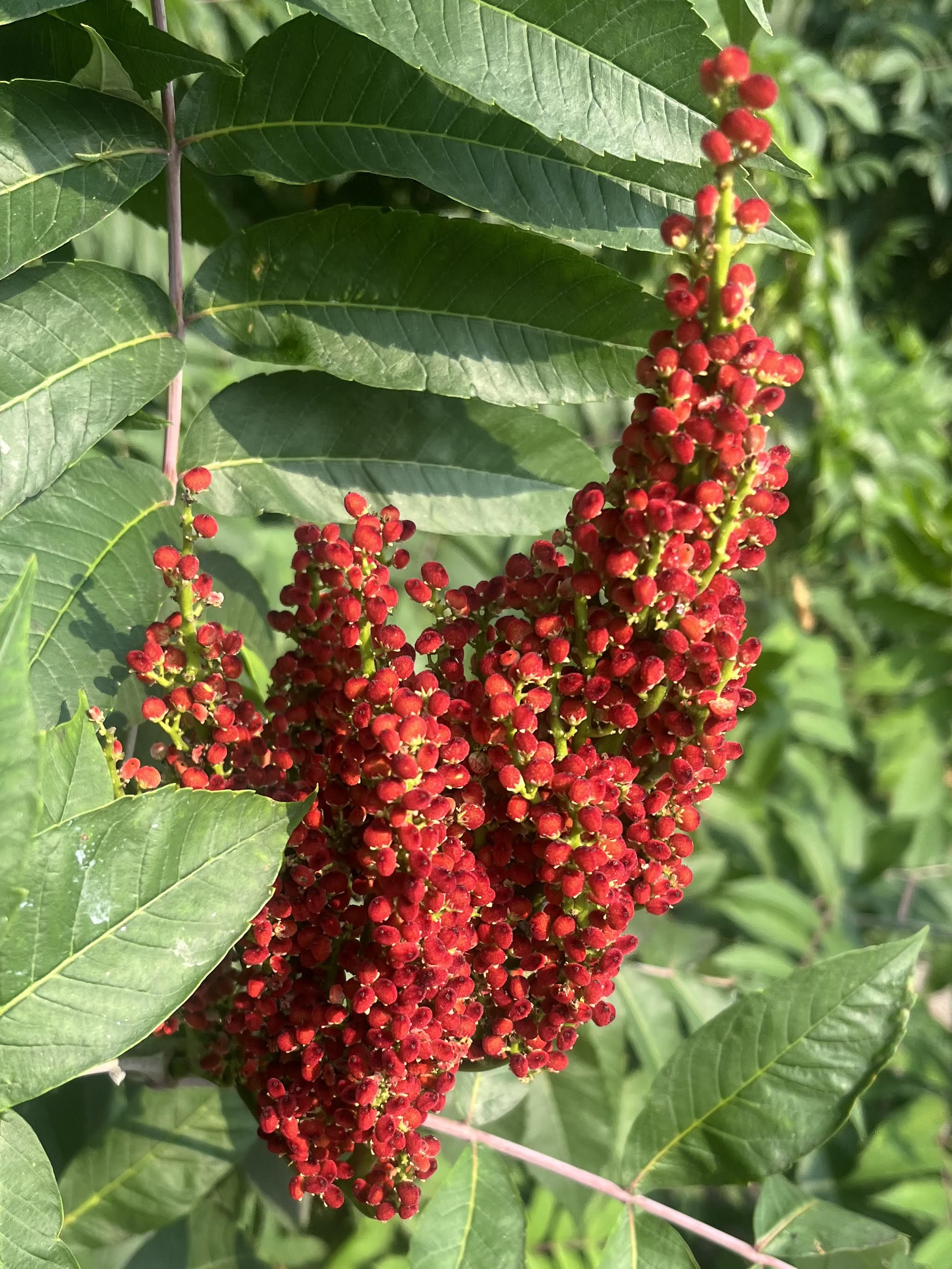
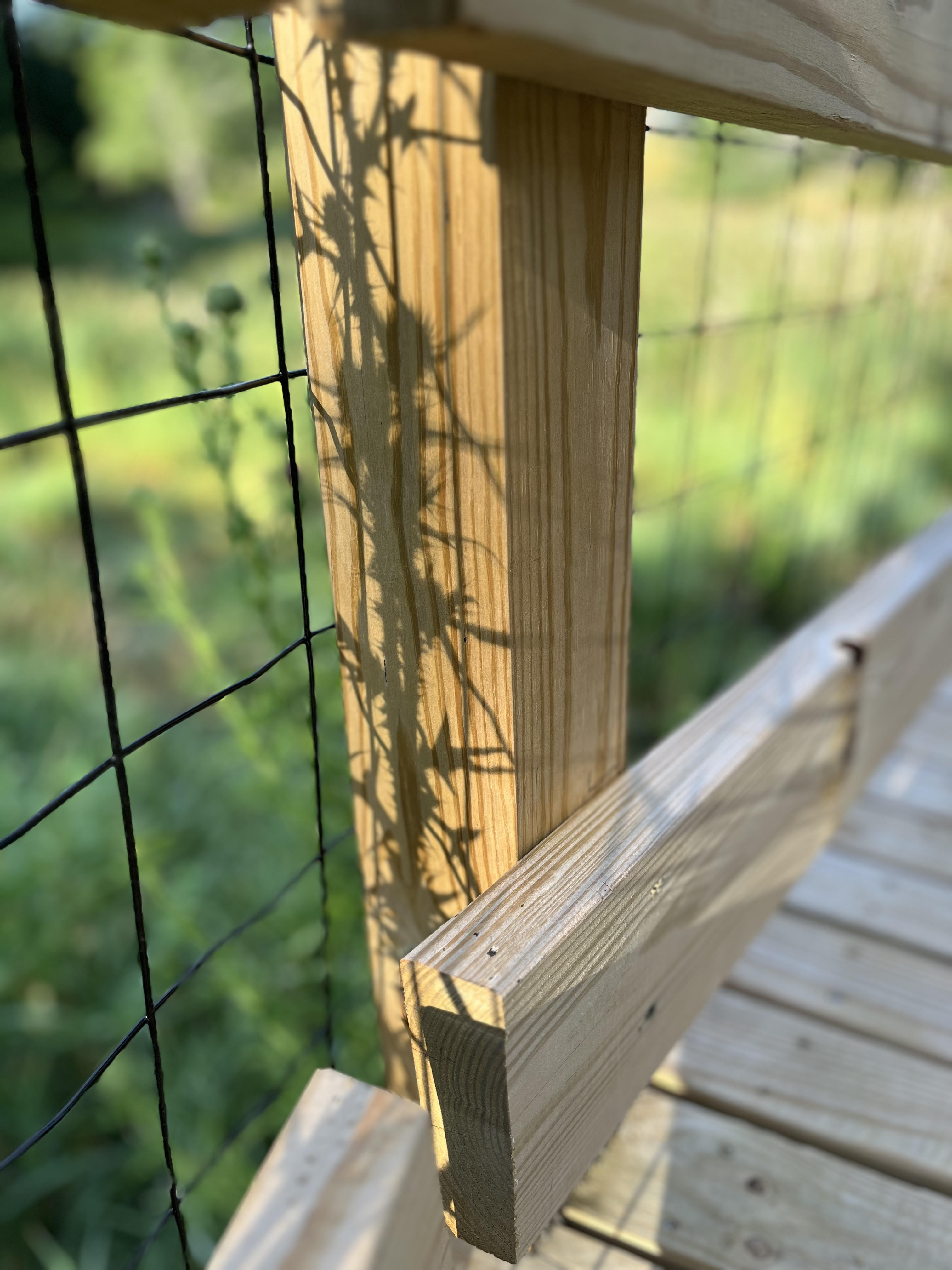
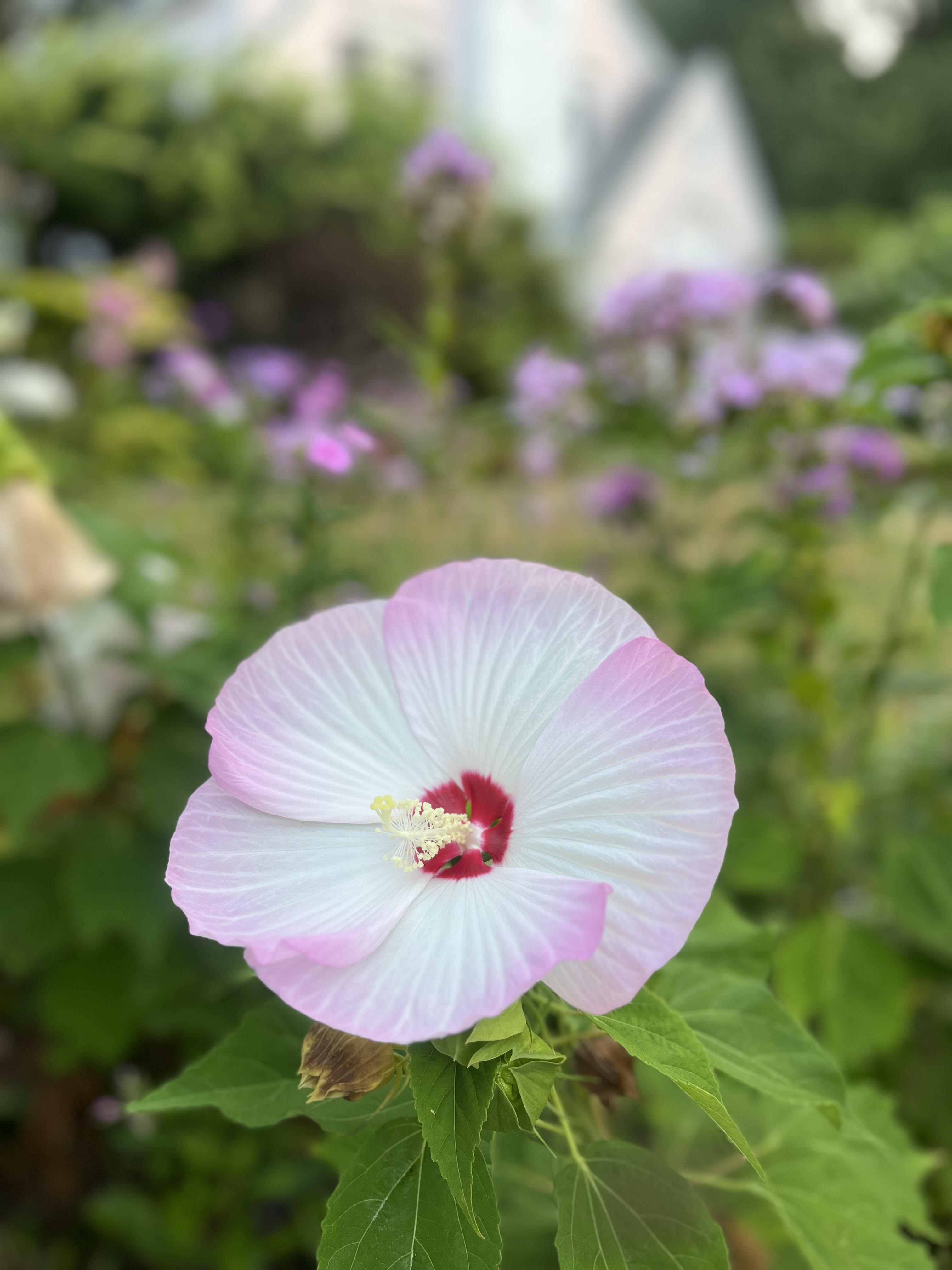
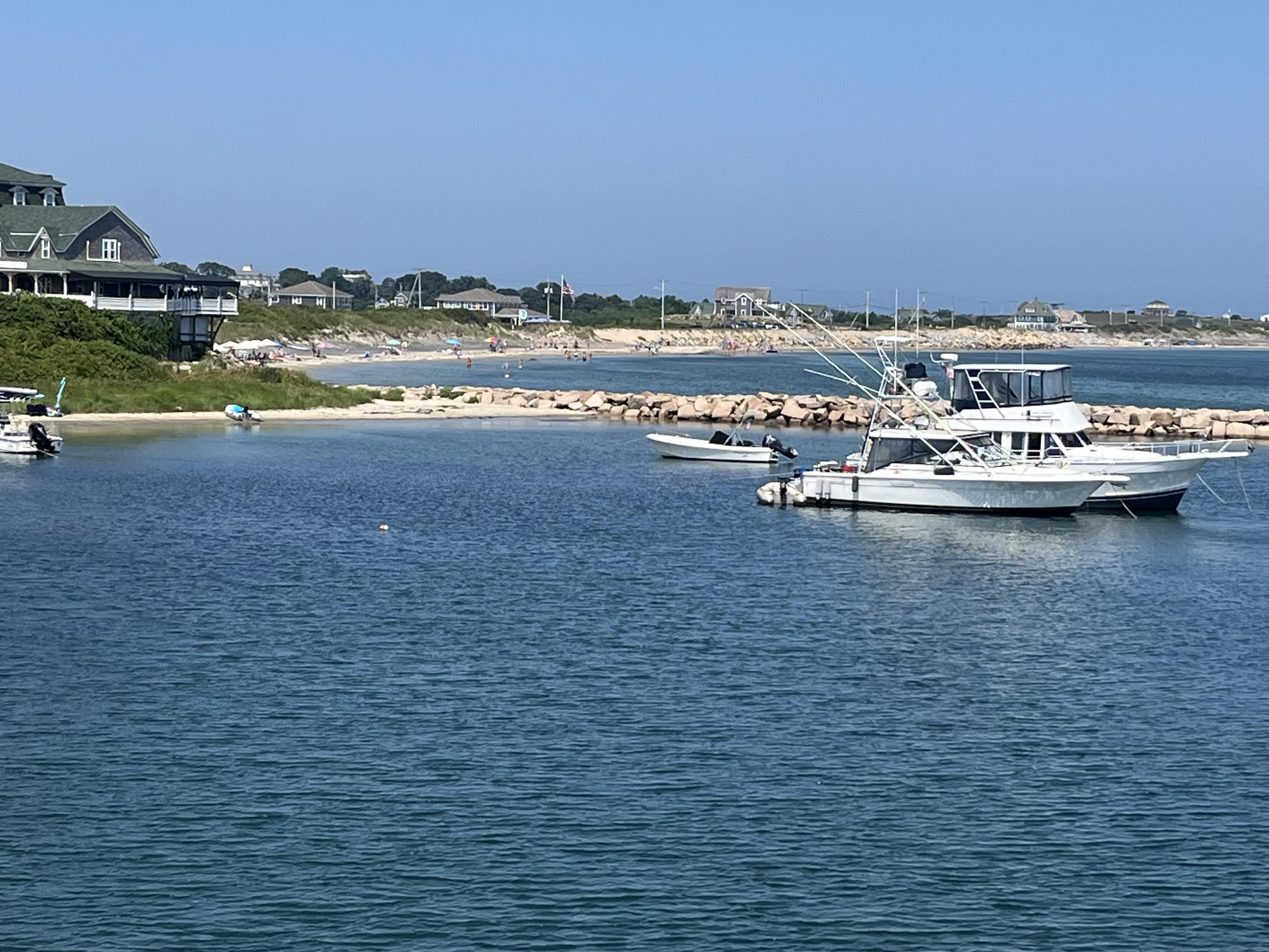
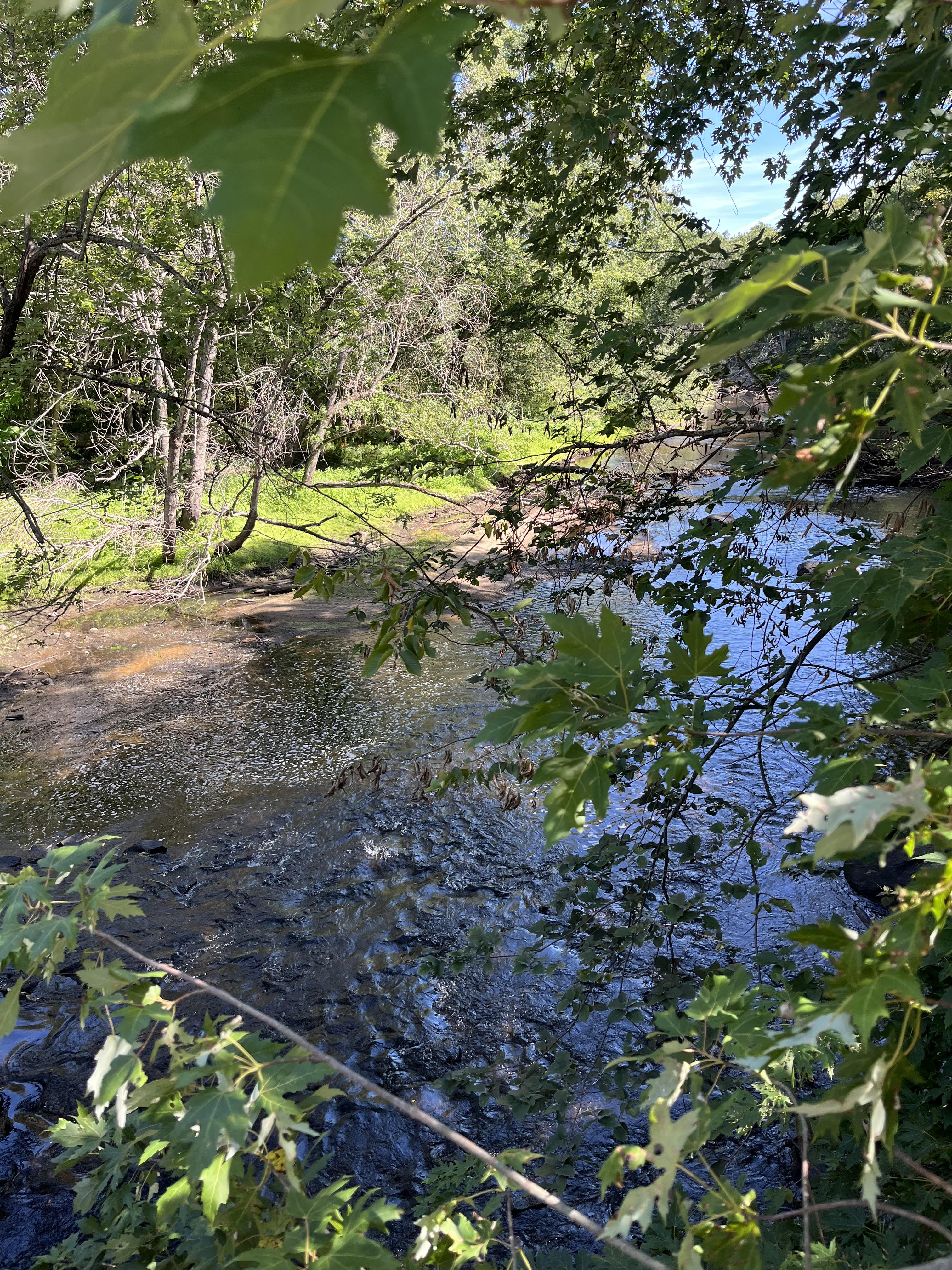
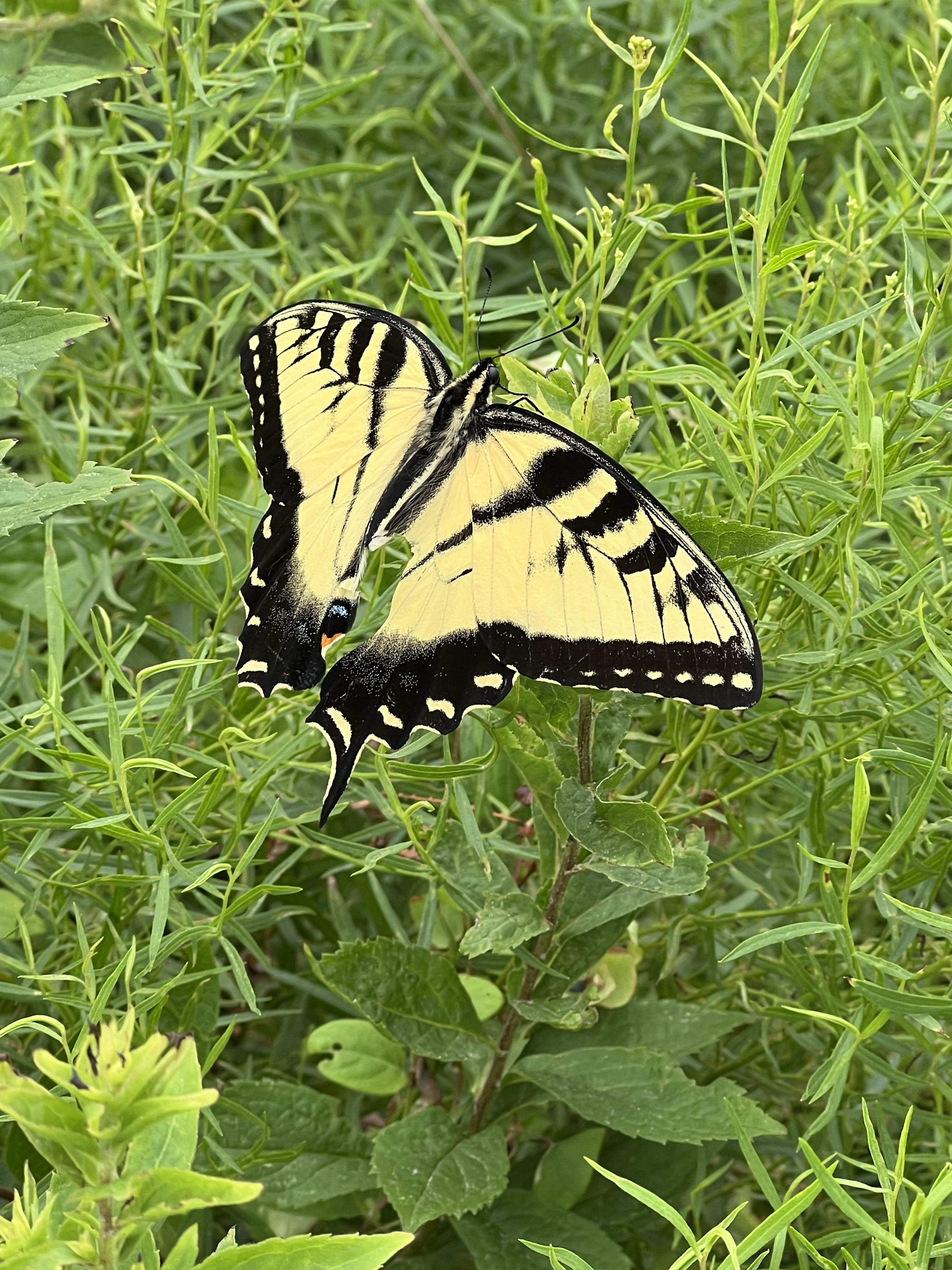
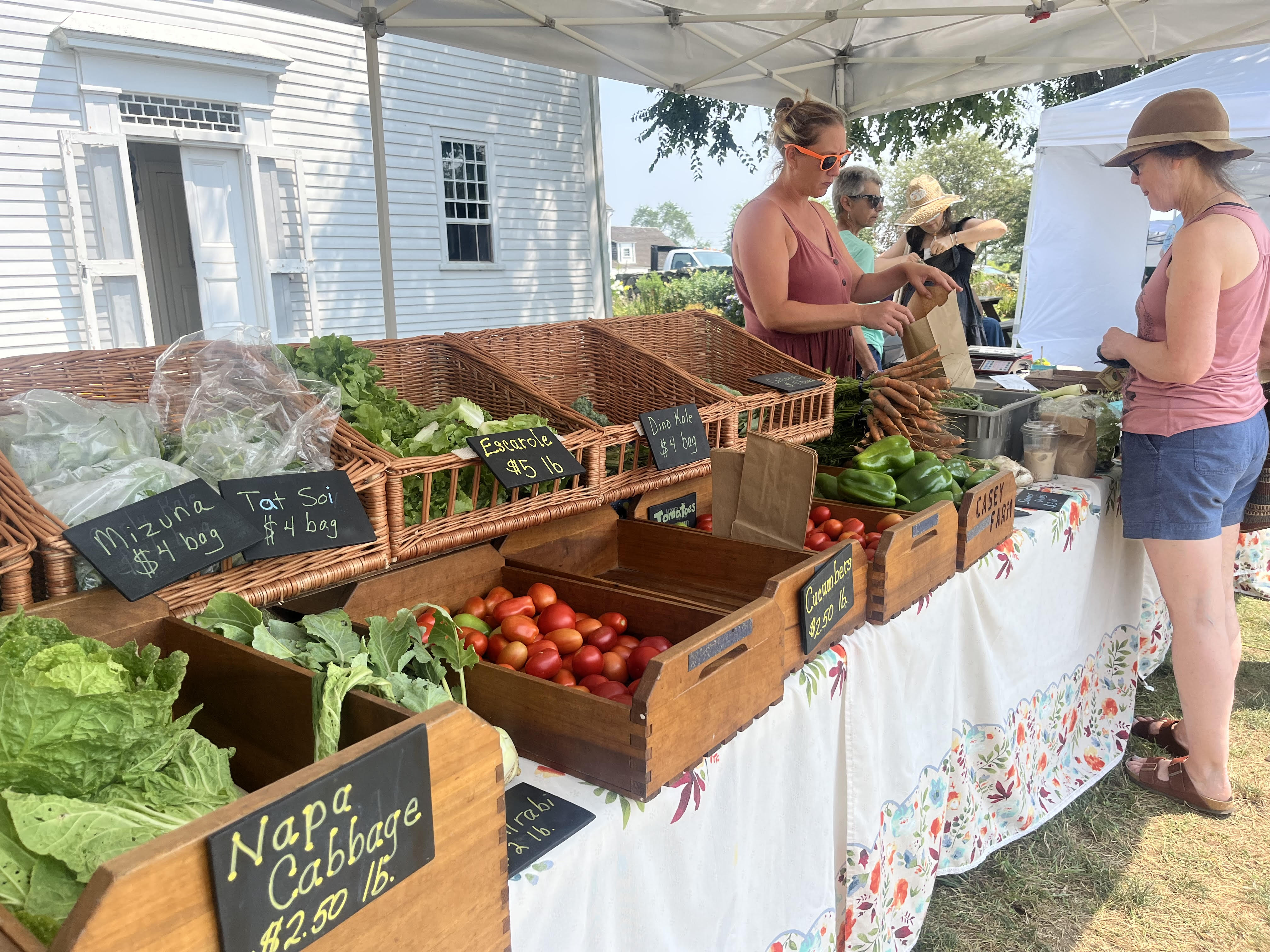
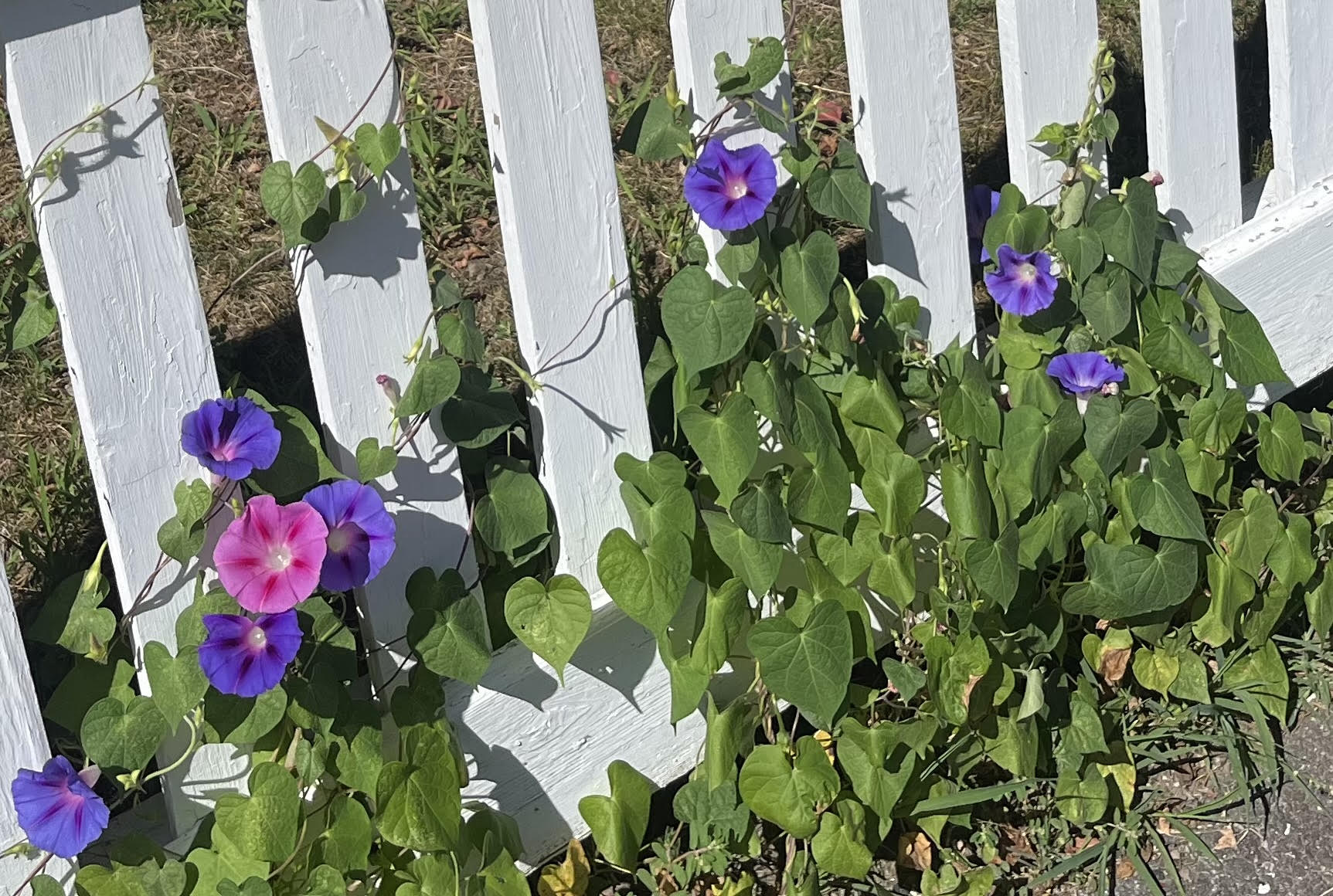
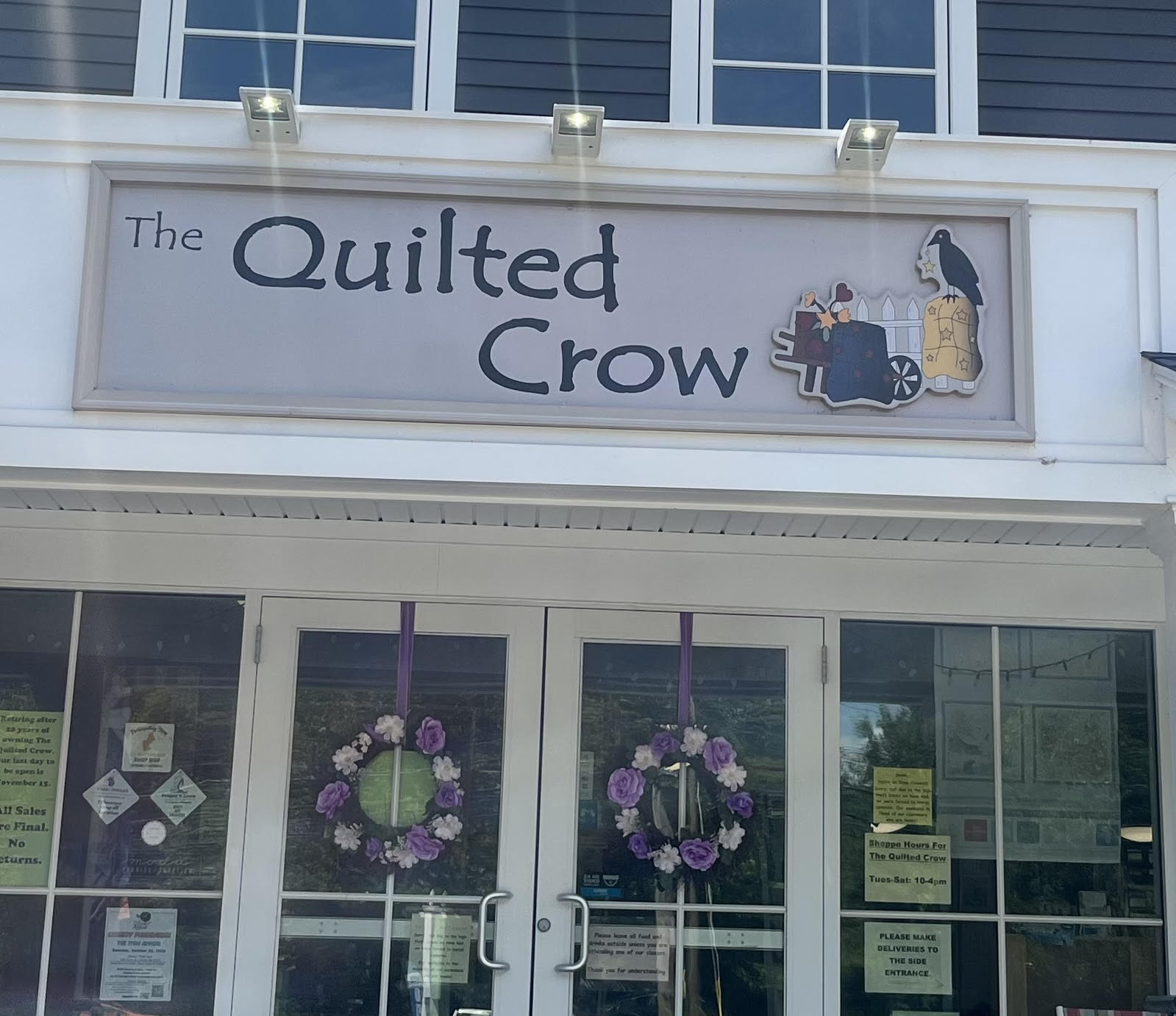
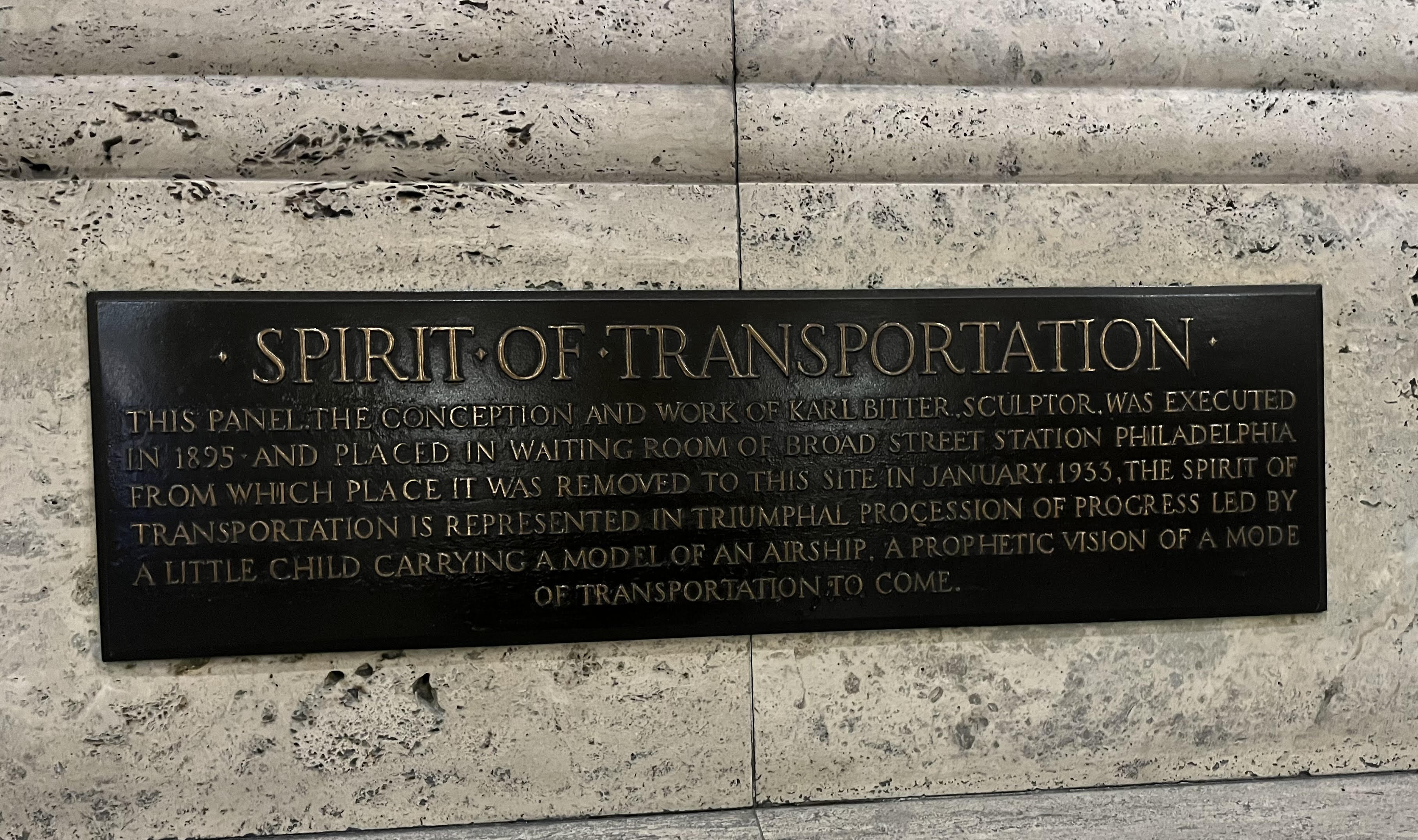
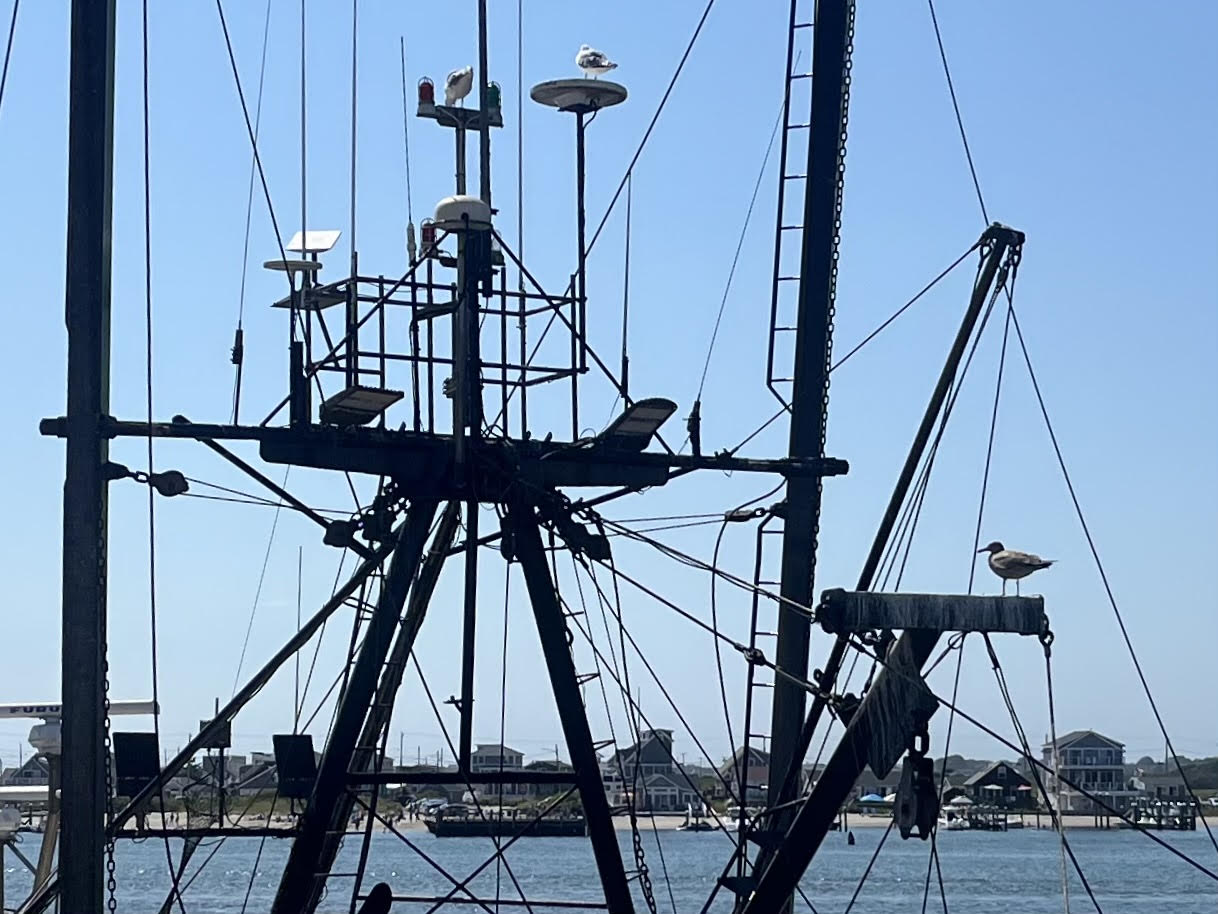
Staghorn sumac, thistle shadows, a blooming August yard, swamp rose mallow, New Shoreham’s Old Harbor, the Assabet River, a swallowtail butterfly holding still for photographer Sandra M Kelly, Casey Farm, Morning glories or bindweed (not sure which), the shop where I got my 100-year-old quilt repaired, the 30th Street Amtrak station in Philadelphia, and gulls on a fishing vessel in Galilee.

Read Full Post »

Photo: Mark Stockwell/Boston Globe.
Mohammed Hannan of Hannan Healthy Foods farm in Lincoln, Massachusetts, holds garlic, one of many organic greens grown on his farm.

After the US takes a step forward, it always seems to take two steps back. In today’s story, We learn about federal funds that have been supporting sustainable agriculture. Until now.

Jocelyn Ruggiero reports for the Boston Globe, “It’s dreary, gray, and unseasonably chilly on the first day of Community Supported Agriculture pickups at the Hannan Healthy Foods farm. As CSA members trickle in to collect their bags of produce, they chat with Mohammed Hannan and passersby who’ve stopped to buy green garlic, beets, collards, and various herbs and greens at the farm stand. Hannan’s 11-year-old daughter, Afsheen, sits bundled up at the checkout table, reading a book alongside volunteer and longtime CSA member Tricia Moore. Aside from the weather, the scene looks similar to opening day last summer. But circumstances are vastly different from what they were 12 months ago.

“One person is notably absent. Hannan’s wife, Kaniz Fouzia, died of pancreatic cancer in March. And even as the family grieves, Hannan confronts the practical challenges of running the farm without his primary support.

“He also faces another crisis. Last year, as with every year since it launched, the farm’s biggest buyer was the New Entry Sustainable Farming Project’s Food Hub, which purchased $7,000 in produce, primarily funded by two federal grants: the Local Food Purchase Assistance and Local Food for Schools Cooperative Agreement programs.

“Since 2021, the Food Hub has bought more than $32,000 of produce from Hannan, supported by these food grants, both part of the 2021 American Rescue Plan. These initiatives enable local schools, food banks, and senior centers to purchase produce from the Hub and, by extension, local farmers and producers. They’ve brought close to $20 million to the Massachusetts economy. Both the LFPA and LFS were originally scheduled to run through December 2025, [but the federal] administration abruptly and prematurely terminated funding for both programs. …

“Established in 2005, the Food Hub aggregates and distributes vegetables grown by more than 35 beginning, immigrant, and refugee farmers in the Boston region. It is an initiative of the Friedman School of Nutrition Science and Policy at Tufts University, which was founded in 1998 to integrate recent immigrants and refugees with farming backgrounds into Massachusetts agriculture. …

“[The] sudden termination of multiple streams of support disrupted many long-planned efforts and, in some cases, left farmers holding the bill for purchases they had already made based on awards that were withdrawn.

“It’s no coincidence that Hannan is the steward of a successful farm. He’s always had close ties to agriculture. He grew up on his family’s organic farm in Bangladesh, which was both a source of food and income. Hannan went on to earn a master’s degree in wildlife biology, studying the country’s ecologically critical coastal areas. In 2014, he gave up an opportunity to accept a Duke fellowship when his wife received a US Diversity Visa; the family left Bangladesh to settle in Cambridge.

“He eked out a living at multiple minimum-wage jobs — Walgreens, Indian restaurants, and MIT facilities — before landing work in biotech, then as a lab manager at MIT. During the lean years, he yearned for the affordable organic food that was so accessible in Bangladesh. He wondered, ‘How can I change my situation? How can I grow food here?’ …

“Unsure about whether working a full-time job while running a farm would be feasible, Hannan spent the summer of 2017 volunteering mornings, nights, and weekends at White Rabbit Farm in Dracut. … He began the New Entry Sustainable Farming Project farmer training program that winter, leasing a small piece of land through New Entry and growing produce to feed his family. By 2019, he had launched his first 30-member CSA and was selling to the Food Hub. In 2020, he graduated and set his sights on a plot in Lincoln.

“The weeds were chest-high on the 2.5-acre barren plot, and there was no potable water for washing produce. … ‘I came up with a plan: I’ll grow veggies that do not need washing: bottle and bitter gourds, tomatoes, eggplants, peppers.’ As he expanded, Hannan connected with the Lincoln community through an online forum. There, he met Tom Flint, an 11th-generation Lincoln farmer. Flint introduced him to Lincoln Land Conservation Trust trustee Jim Henderson, who let Hannan use his backyard sink and cure garlic in his barn. These were the first of many new friends who welcomed him to Lincoln. …

“During COVID, unsolicited, strangers started contacting Hannan: ‘I had accountants, engineers, doctors. They were helping on the weekends. … We were laughing, harvesting … and eating from the farm. It was really good.’ Town residents later responded to his query on the town’s forum and helped Hannan build a deer fence when he couldn’t afford a contractor. His robust volunteer network has strengthened and extended beyond Lincoln, and today includes such groups as the Boston-based climate justice nonprofit Mothers Out Front. …

“[Today] Hannan’s MIT job subsidizes his farm, and his volunteer community provides supplemental support. However, for many other small farmers affected by funding cuts, the consequences will be existential. As Hannan puts it: ‘Small farmers like me … will definitely choose other options.’ ”

More at the Globe, here.
Read Full Post »

Photo: Pat Greenhouse/Globe Staff.
Dutch artist Hendrick Avercamp’s winter scene, stolen in 1978, arrived in May at the Worcester Art Museum in Massachusetts. 

As an inveterate reader of mystery novels, I do love a yarn about art thieves, especially if there’s a clever sleuth who figures out what happened. It’s best if the perps end up in jail, but you can’t have it all. These things take time.

At the Boston Globe, Malcolm Gay has a good story about Clifford Schorer, a former president of the Worcester Art Museum’s board as well as “an international art dealer and sleuth who spends his days (and many nights) hunting ‘sleepers’ — lost masterpieces whose true identities have been obscured through the ages.

“Schorer had flown from Brussels [on a day last May] with the painting he now carried in his hands, a winter scene by the acclaimed Dutch Golden Age artist Hendrick Avercamp.

“The artwork was stolen nearly half a century earlier in a sensational 1978 heist from the baronial estate of Helen and Robert Stoddard, a Worcester industrialist. The Avercamp picture, along with numerous other paintings and other valuables taken from the home that night, had not been seen since. Local officials were stumped. So was the FBI. …

“[Schorer] and a conservator carefully unwrapped the package, revealing the aged but unscathed picture of Dutch figures skating in winter.

“ ‘It was nirvana,’ Warner Fletcher, a nephew of the Stoddards, said of the moment. …

“The Avercamp originally disappeared the night of June 22, 1978, when thieves broke into the 36-acre Stoddard estate, hacking open sofa cushions to cart away valuable works by Camille Pissarro, J.M.W. Turner, and Pierre-Auguste Renoir, among others. …

“That night, with Helen undergoing cancer treatment at a Boston hospital, Robert turned in just before midnight. [He] was sound asleep when thieves broke in through the sun porch.

“The burglars ransacked the home, rifling through drawers and closets. They drank the couple’s liquor and ate food from the fridge, according to later news reports. They made their way through each room, snatching paintings from the walls and pocketing collectibles including miniature carvings, silver tea sets, watches, and valuable music boxes.

“When Stoddard awoke the next morning, he realized the house had been robbed when he found his glasses on the floor. …

” ‘We never had a suspect,’ Ralph E. Doyle, a retired detective sergeant with the Worcester Police Department, told the Telegram & Gazette in 2000.

That‘s not to say there haven‘t been breakthroughs.

“The most valuable work in the Stoddard’s collection, Pissarro’s 1902 oil on canvas, ‘Bassins Duquesne et Berrigny à Dieppe, temps gris,’ surfaced at a Cleveland auction house in 1998. …

“The discovery of the Pissarro prompted authorities to look closely at a Springfield-area art dealer named Robert Cornell and his ex-wife, Jennifer Abella-Cornell, who had brought the painting to Ohio. But the estranged couple gave wildly conflicting accounts. [An FBI] spokesperson later told the Telegram & Gazette that reconciling their stories was ‘like beating a dead horse.’ …

“The trail of the Avercamp and other missing works then went cold. Frustrated by the lack of progress and still hoping they might be retrieved, Fletcher, the Stoddards’ nephew, finally turned to Schorer in 2021. He put information about the missing artworks in a manila envelope and sent it to the sleuth.

“Fletcher was by then familiar with Schorer. … He’s renowned in the trade, and he’d recently discovered a previously unknown drawing by Northern Renaissance master Albrecht Dürer that was purchased at a Concord estate sale for $30.

“Schorer was only vaguely aware of the Stoddard theft at the time, but as he looked through the envelope’s contents, he began to concentrate on the works he found most interesting: the Avercamp, the Turner, and an oil painting by 19th-century Dutch painter Johan Jongkind. …

“His search came up empty. But from his years of experience tracking down stolen art, Schorer knew that disreputable dealers will sometimes misrepresent works to evade detection.

“ ‘Finally, I said, “All right, if I had that painting, who would I fence it as?” ‘ Schorer recalled thinking.

“He knew that Avercamp, a mute painter who specialized in outdoor winter scenes, had a nephew, Barent Avercamp, who mimicked the style of his more gifted relative. Schorer turned again to his computer, this time searching for winter scenes by the famed painter’s nephew.

Bingo: Fifteen minutes later, he came across a throw pillow that was selling for $18.40 with a portion of the missing Avercamp scene — including a distinctive arch — printed on its case. …

“Schorer had made a breakthrough. The only known images of the Avercamp were grainy black and white photos from the ’70s. But this image was in color. It could mean only one thing: The photo was taken after the theft.

“ ‘I clicked on that, and it took me to a page trying to sell me a pillow,’ Schorer recalled. There, just above the asking price, he also found the logo of the image licensing company that held the source file.

“Schorer navigated to the site and paid $39 to download the photo. As he parsed its metadata, he discovered the copyright on the image: L.S.F.A.L., an acronym for Lawrence Steigrad Fine Arts Ltd., a dealer he’d known for years.

“Steigrad told Schorer he’d taken a photo of the painting for Newhouse Galleries, which had offered the artwork at a fine arts fair in the Netherlands in the mid-90s.

“Working another angle, Schorer discovered the name of the person who’d originally sold the work to Newhouse: Sheldon Fish. Fish told Schorer he’d purchased the painting at the Brimfield Antique Flea Market, a short drive from Worcester.”

Brimfield, Holy Cow! It’s a really famous flea market in our area, where Suzanne found most of the antique lockets she sold. I followed her around as she shopped one rainy weekend before Covid.

I love reading this stuff. The rest of the story is at the Globe, here.
Read Full Post »

Photo: Cassandra Klos/New York Times.
Heather Billings, food waste reduction consultant.

Have you ever marveled at the different kinds of jobs humans have tackled in the history of the world? My mind goes to glassblowers, harness makers, oil cup salesmen, jester to the king. And there are always new jobs popping up to meet new demands.

In Massachusetts, for example, you can now find a career as a “food waste consultant.”

Somini Sengupta reports at the New York Times, “America has a food waste problem: Rotten tomatoes and pizza boxes end up in trash dumps and produce a potent planet-heating gas called methane.

“Massachusetts has a fix: A state regulation requires businesses to keep food out of dumpsters. To help them comply, the state offers a carrot, in the form of a chatty, practical, 63-year-old hand-holding food-waste-reduction consultant named Heather Billings.

“Which is how, on a frigid Wednesday morning, Ms. Billings found herself poking around the narrow kitchen of the Port Tavern, a sports bar in Newburyport, Mass.

“An owner of the Port Tavern, Abbie Hannan, [invited] Ms. Billings to look at how the restaurant managed its waste. She quickly spotted a very solvable problem at the prep cook’s station: a 23-gallon trash can into which went tomato tops and other food scraps. Then came the dumpster inspection. Could anything in there go to compost?

“Ms. Billings, a consultant contracted by the state government, took notes, snapped pictures and peered behind the bar to assess where the lemon wedges and plastic olive skewers ended up.

“She had some easy fixes for Port Tavern’s co-owner Abbie Hannan. She proposed inexpensive, four-gallon plastic buckets to nest inside the bigger trash bins to collect food scraps. She connected Ms. Hannan to compost haulers and a charity that could pick up leftover edible food.

“ ‘Our biggest challenge will be to get everyone to follow the rules,’ Ms. Hannan surmised.

“ ‘A visual reminder is always good,’ Ms. Billings replied. She opened her binder to show signs that could be affixed to the kitchen walls.

“State regulations require institutions that produce half a ton of waste per week — hospitals, universities, restaurants — to divert organic waste away from landfills and incinerators. …

“In theory, there’s a stick for those that fail to comply. If state inspectors see large amounts of food waste being trucked into a waste site, they try to trace it back to where it’s coming from. Enforcement is rare. In the last 10 years since the regulations have been in place, only 141 businesses have been cited for not complying with the regulation. …

“Some food that’s wasted is still good. There are charities in the Boston area that take the surplus from restaurants and grocery stores. Because, even as so much food goes to waste, many Americans are still hungry

“An independent study published in the journal Science concluded that among the half dozen states with composting laws, Massachusetts had gone farthest in reducing total waste in its landfills. … Environmentalists want Massachusetts to go further, by requiring residents to also keep food waste out of landfills and requiring cities and towns to offer rat-proof compost bins. ‘We’re still throwing away a lot of food,’ said Kirstie Pecci, who heads an advocacy group called Just Zero. …

“One additional benefit of the food waste rule: It has spurred new businesses around the state, like Black Earth Compost. Composting turns food waste into dirt that farmers and gardeners can use to nourish their soil. …

“[Ms. Billings’s] passion for keeping useful things out of the trash goes back decades. … She is now a senior waste reduction consultant for CET, formerly called the Center for EcoTechnology, a nonprofit group contracted by the state to help businesses comply with the regulation.

“Her job, as she sees it, is to observe and advise. Do people who work in the kitchen have to travel far to dispose of compost? Are dumpsters clearly labeled so employees know what should go in them? Can restaurants save money by reducing their trash volumes? Is there enough organic waste to send to an anaerobic digester facility, where organic matter is turned into fuel?

“At Port Tavern, the trickiest problem stood in the parking lot. The bar shares the dumpster with three other restaurants. Only if everyone agrees to hire a compost hauler would they be able to reduce the trash they generate, and the cost of trash pickup.

“ ‘It’s complicated,’ Ms. Hannan warned.

“ ‘Not insurmountable,’ Ms. Billings replied, with her signature cheer.” More at the Times, here.
Some residents where I live compost with Black Earth. But we’re still trying to persuade our kitchens to do the same. The people in charge tend to think — unlike Ms. Billings — that what is complicated is “insurmountable.”

Read Full Post »

Photos: Suzanne and John’s Mom.
First Jack-in-the-Pulpit I had seen in years.

Today I’m sharing recent photos — mostly of Massachusetts spring flowers. One thing I’m especially enjoying this year is all the wildflowers. After my retirement community built a boardwalk that could accommodate walkers and wheelchairs, the administration and a group of residents started planting (ethically grown) wildflowers. Wonderful! And then we got a trip to the Native Plant Trust’s Garden in the Woods, which is entirely wildflowers.

Below, note a flowering May apple near our boardwalk. It’s followed by yellow Lady slippers at Garden in the Woods. At the same nature preserve, we learned about Golden club, which is found in the wetland area. So unusual!

There are more pictures from Garden in the Woods after that.

Next are a couple photos from our local library. The librarians love fun art projects, often involving child artists. They offer loads of activities for kids. For example: painting book bricks to border a garden.

Next are Jane’s poppies. Jane has a variety of flowers and edibles in one of the raised beds in our community.

Finally, here are some pansies that seemed to sing, reminding me of the pansies in a wacky Disney remix I love.

Read Full Post »

Photo: Melanie Stetson Freeman/CSM.
Abe Marciniec is the site manager of Vanguard Renewables, an organics recycling facility in Agawam, Massachusetts. It processes food waste from supermarkets, distribution centers, universities, and residential drop-offs, turning it to fuel.

Today’s story about Massachusetts being the only state to reduce food waste would seem to be a triumph, and in terms of intentions, it is. But I am ambivalent about the value of turning food waste into gas. Methane, after all, is one of the worst. See what you think.

Troy Aidan Sambajon reports at the Christian Science Monitor, “On a recent Thursday, Abe Marciniec unloads two dozen pallets of ice cream – enough to fill 31 refrigerators – into a machine that transforms it into fuel.

“Today’s flavor is room-temperature rocky road, but this facility handles all kinds of food waste from supermarkets, distribution centers, universities, and even residential drop-offs.

“ ‘We get everything you can find in Aisles 1 through 12,’ says Mr. Marciniec, site manager of the Agawam Organics Recycling Facility, owned and operated by Vanguard Renewables. Mr. Marciniec’s recycling facility is one of six in the commonwealth and only one of 25 nationwide.

“As the expired ice cream funnels into a turbo separator, Mr. Marciniec watches the machine strip food from its packaging. The organic waste is then trucked to a dairy farm, where it’s mixed with cow manure and processed into renewable natural gas.

“ ‘It’s really a great circle,’ says Mr. Marciniec. ‘Food starts at the farm, and our farms turn it back into energy. Farm to table, then back to farm.’ …

“Facilities like this one, which can process up to 250 tons of food waste daily, replace manual work typically done by hand or not done at all. That’s a crucial step in diverting waste away from landfills. Americans throw out about 40% of food annually – a waste of both money and natural resources. Reducing food waste can increase food security, promote resource and energy conservation, and address climate change.

“The Bay Sate has become a leader in reducing food waste. In fact, it’s the only state to significantly do so – to the tune of 13.2% – according to a 2024 study. Massachusetts was among the first five states to enact a food waste ban in 2014. (The others were California, Connecticut, Rhode Island, and Vermont.)

“ ‘The law has worked really well in Massachusetts,’ says Robert Sanders, an assistant professor of marketing and analytics at the University of California San Diego and co-author of the study. ‘That’s due to three things: affordability, simplicity, and enforcement.’

“[Food waste is] the largest category of waste – at 25% – sent to landfills in the United States. In 2019, 66 million tons of food waste came from retail, food service, and households. Around 60% of this waste was sent to landfills, according to the Environmental Protection Agency.

“Vanguard Renewables specializes in turning organic waste into renewable energy. The Massachusetts-based company partners with dairy farms to convert food scraps and manure into biogas through anaerobic digestion.

Microorganisms in cow manure digest organic matter, releasing biogas – a mix of methane and carbon dioxide. 

“The gas is captured in large steel vats on the farm and refined into renewable natural gas, which can be used to heat homes and power buildings. … Since 2014, Vanguard has processed more than 887,000 tons of food waste in New England, producing enough natural gas to heat 20,000 homes for a year. By 2028, the company plans to have more than 50 systems across the country.

“In western Massachusetts, Amherst College has become a model for limiting food waste at the source. Last year, it was recognized as the winner in the zero waste category in the Campus Race to Zero Waste Case Study Competition.

“ ‘The goal has been to push us aggressively to make sure everything is compostable,’ says Weston Dripps, director of sustainability. To achieve that, the school has phased out single-use plastics, to-go boxes, and even canned water, replacing them with refill stations and compostable materials.

“In 2023, Amherst College generated 238 tons of food waste – roughly 4 to 5 tons per week. But instead of ending up in landfills, Vanguard collected 100% of that waste and processed it at its Agawam facility.

“That total includes both pre-consumer waste – such as kitchen scraps from food prep – and postconsumer waste, like leftovers scraped off plates in the dining hall and campus cafés. ‘To really have a clean waste stream, we have to focus on the front end,’ says Mr. Dripps.

“Amherst’s approach goes beyond composting. Each month, the school donates 2,000 to 3,000 pounds of frozen surplus food to the the Food Bank of Western Massachusetts, ensuring edible food reaches those in need.

“Commercial businesses, too, are finding ways to cut down on waste. Maura Duggan, founder and CEO of Fancypants Baking Co., knows firsthand how much food can go to waste in the food industry. Her company produces hundreds of thousands of cookies each week.

“At its Walpole facility, Fancypants has large totes from Vanguard, which collect burnt cookies, food scraps, and anything that can’t be donated or sold. Last year alone, Fancypants diverted about 22 tons of waste. …

“Back in Agawam, Mr. Marciniec passes by 275-gallon totes full of leafy vegetables. Every day, he faces the reality that Americans waste 92 billion pounds of food a year – enough to make 145 million meals.

“ ‘It really makes you think about the things we take for granted,’ he reflects.

“ ‘Millions of people are starving everywhere, and the amount of food waste in this country is substantial,’ says Mr. Marciniec. ‘I’m sure we can do a better job.’ ”

Although I hate to quibble with this effort to at least do something, I know that enforcement has not reached my residential facility yet. Moreover, I’m pretty sure what we really need is not to have so much waste in the first place. What do you think? Is this a good first step?

Note Earle’s comment on my earlier post about this process, here.
More at the Monitor, here.
Read Full Post »

Photo: Biodiversity for a Livable Climate.
A Miyawaki forest at Danehy Park in North Cambridge, Massachusetts, planted on September 25, 2021 — with the help of enthusiastic volunteers. Other Miyawaki forests don’t look like much in April. But just watch!

Although I blogged about Miyawaki mini urban forests in 2023, here, and again after a tip from Hannah in Philadelphia, here, I had never seen one in person and didn’t really understand the concept. These are not forests you take a walk in. They are deliberately planted too densely for entering, which is why one elementary school asked for a crescent shape to let kids see the native plants that their teachers were talking about.

On a special day in April, my friend Jean Devine of Biodiversity Builders took two of us on a tour of three Miyawaki Forests and the site for one that she and students at her local high school are building.

Now I think I get it. In order to have a healthy climate, we need a healthy, biodiverse planet. And the effects of even very small sites can spread. Birds, small animals, pollinators, and other critters flourish in these biodiverse pockets.

Biodiversity for a Livable Climate: Restoring Ecosystems to Reverse Global Warming says, “The Miyawaki Forest is an ultra dense, biodiverse pocket forest that recreates the complexity of natural forests and the relationships and processes that help them grow strong and resilient. By giving home to a vast array of native species, they boost the biodiversity of the area and nurture pollinators, supporting and restoring ecosystems. They sequester carbon in the soil, reduce air pollution and soil contamination, improve water absorption to buffer against flooding and erosion, and cool the surrounding area to mitigate the urban heat island effect. They also create a living classroom for people and communities to learn about native ecology, engage in stewardship, and experience the interconnectedness of the natural world.”

GBH tv provides a forum on the concept, asking, “What can hold more than 500 species, sequester more than 500 lbs. CO2/year, be 10F cooler than its surroundings, soak up lots of rainwater, and be made by and for children in a space no bigger than a tennis court? A ‘mini-forest’ planted using the Miyawaki Method, of course!

“Biodiversity for a Livable Climate hosts Miyawaki-Method advocates Hannah Lewis (Bio4Climate Compendium editor) and Daan Bleichrodt (The Netherlands’ Tiny Forest initiative leader), as they talk about mini-/tiny-forests and their role in climate resilience, urban beautification, and connecting all of us to nature.” More here.
My photos are from mini forests Massachusetts, one in a large park in Cambridge, one in a Cambridge neighborhood’s pocket park, and one at an elementary school in Watertown. At the latter, the children sit on tree stumps for classes. Note the art they created for their forest, too. The forest doesn’t look like much in April, but just wait!

More at Biodiversity for a Livable Climate, here, and here.
Read Full Post »

Photos: Suzanne and John’s Mom. (Erik took the photo of my grandson.)
Where I like to walk these days.

We had some gorgeous days in April, and May is shaping up nicely, too.

I start my latest photo round-up with the boardwalk my retirement community built according to stringent environmental regulations. I love the feeling of walking in the woods, and right now, wildflowers that were already there are coming up, while residents are planting others with the guidance of a woman specializing in the removal of invasive species.

The first photo below is a white trillium. Next in the leaf litter, you see a stand of May apples and a group of Spring beauty wildflowers. The apple tree has buds about to bloom.

Blogger Will McMillan bloomed at my retirement community the other day with one of his deep dives into the heroes of the American Songbook. This time it was Hoagy Carmichael. It’s amazing the forgotten songs Will digs up for his shows — while also presenting classics like “Skylark” and “Stardust.” There was a funny one about a jazz band in the afterlife, where all Carmichael’s departed friends were playing.

In one week, we went to see a grandson in the musical Matilda, which was polished and lots of fun, and the Spitfire Grille, which did not impress.

I also attended the Edvard Munch exhibit at the Harvard Museums, which I liked very much. It had paintings as well as a lot of prints in different stages of development to demonstrate Munch’s experiments with technique. The exhibit is there until the end of July, so try to catch it if you are ever near Cambridge, Massachusetts.
Meanwhile, at Umbrella Arts, there’s a textile show called “Weaving an Address.” The beautiful fiber art here is by Kimberly Love Radcliffe. The first one I photographed she calls “Have Faith in Art.” Then “Ms. Nina God Damn” references singer Nina Simone’s response to the murder of Black Sunday school girls in 1963. And the last Radcliffe I’m showing is a portrait of civil rights icon Fannie Lou Hamer. I just love these works.

Read Full Post »

042118-trout-lily-brick-wal

Photos: Suzanne and John’s Mom.
Trout lilies in Massachusetts.

I always look eagerly for the early spring wildflowers to emerge. I even planted several kinds when we had a house. You are not supposed to transplant them, because most require very special woodland conditions, but there are vendors who grow them from scratch, like Grow Native Massachusetts and Garden in the Woods, and their flowers are safe.

It was only this year I learned that these beloved wildflowers are called spring ephemerals.

The Massachusetts government website says, “Early flowering plants that produce leaves, bloom, and set seed quickly after the snow melts in the spring are referred to as spring ephemerals. … They represent the seasons changing. Spring ephemeral flowers also provide the much-needed first nectar and pollen of the season for over-wintering pollinators, including bumblebee queens, mining bees, halictid or sweat bees, early butterflies, beetles, flies, and gnats. In return, these insects transfer pollen from one plant to another. 

“Spring ephemerals are found in deciduous forests dominated by sugar maple, ash, black cherry, and hop hornbeam trees. Before the trees have their leaves, these wildflowers show up early to take advantage of the unobscured access to sunlight. While the trees are still dormant, spring ephemerals are in a race against time. They take advantage of the above-average nutrient levels in the soil (from decomposing fall leaves) to photosynthesize quickly. This provides the energy they need for flowering, setting seed, and storing carbohydrates for the following year all before the tree canopy blocks sunlight from the forest floor. 

“The forest trees pull large amounts of water out of the soil when they start to grow leaves. The amount of water being absorbed by the trees is so great that it causes groundwater levels to drop. Before this happens, spring ephemerals use the higher moisture levels in the soil to carry out their life cycle. The dampness also helps them tolerate low temperatures they often face in early spring.

“Please keep in mind that the survival of a plant population depends on each plant’s ability to produce seed for the following year. If you find a location with these beautiful plants, enjoy them in place and do not pick them. Other people who follow in your path will appreciate what you have admired and left untouched, as will the many native pollinator insects that depend on spring ephemerals for their survival.”

If you are interested in more, Wikipedia gets wonky with scientific explanations of not just spring ephemerals but desert, mud flat, and weedy ephemerals. Here’s what is says about the spring ones.

“Spring ephemerals are woodland wildflowers which develop aerial parts (i.e. stemsleaves, and flowers) of the plant early each spring and then quickly bloom, and produce seed. The leaves often wither leaving only underground structures (i.e. rootsrhizomes, and bulbs) for the remainder of the year. This strategy is very common in herbaceous communities of deciduous forests as it allows small herbaceous plants to take advantage of the high levels of sunlight reaching the forest floor prior to the formation of a canopy by woody plants. Examples include: spring beautiestrilliumsharbinger of spring and the genus of Dicentra particularly D. cucullaria, Dutchman’s breeches and D. canadensis, squirrel corn.”

More at Wikipedia, here. Mass.gov, here, has some great photos.

An early spring flower called bloodroot, planted by a committee at my retirement community.

Read Full Post »

Older Posts »