Feeds:
Posts
Comments

Posts Tagged ‘music’

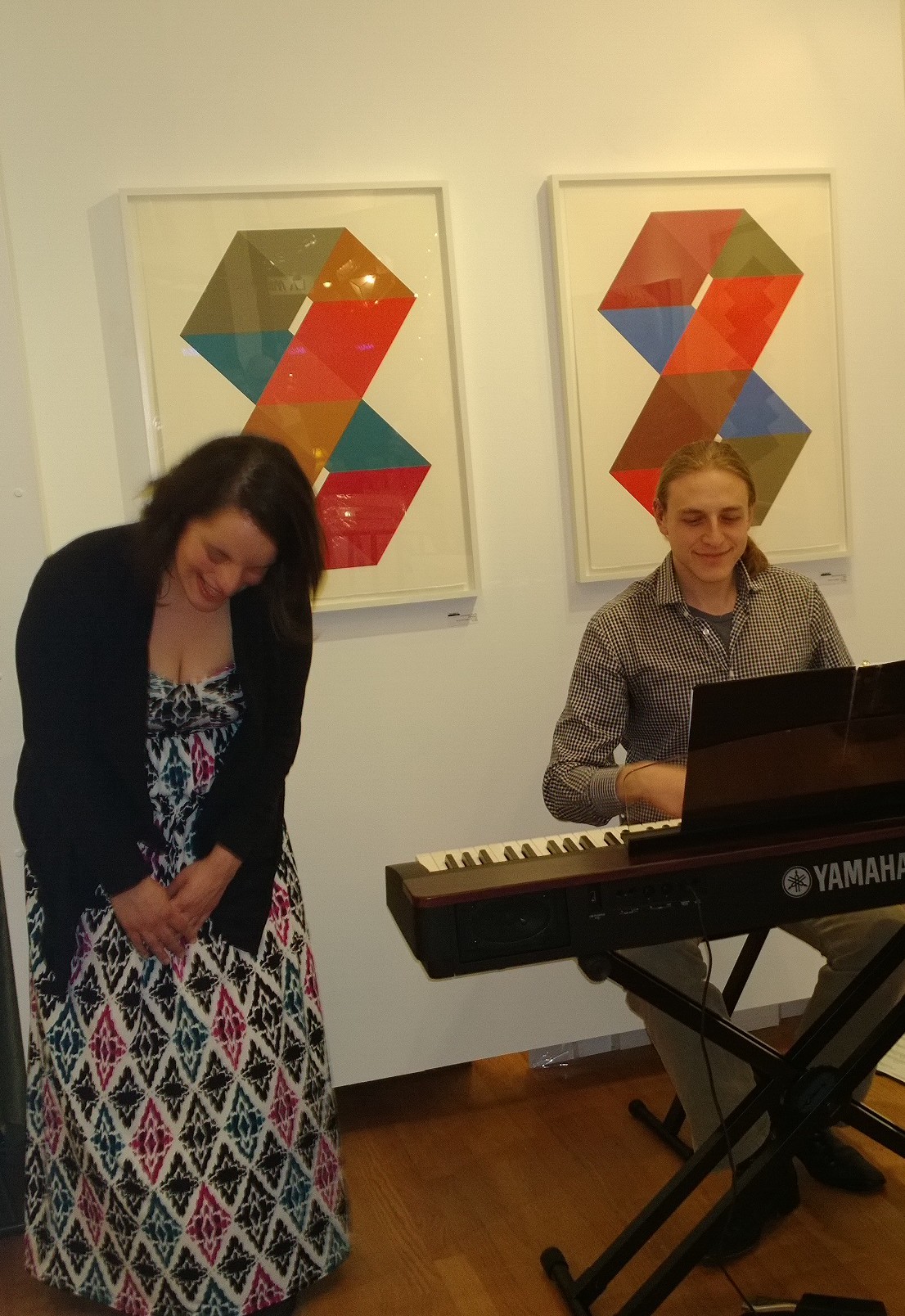
13Forest is an art and craft gallery in Arlington that invites Opera on Tap singers to perform at openings. Our daughter-in-law sent us an e-mail about this today, and we went. It was charming.

From Mark Adamo’s opera Little Women, the young performers sang Amy’s aria, Prof. Bhaer’s aria, and Beth’s, a gentle farewell. There was also a song based on a letter a soldier wrote to his wife before a battle in the Civil War.

A short and sweet event. Made us wonder why more galleries don’t do this.

Opera on Tap taking a bow at 13Forest Art Gallery. Read about the national organization bringing opera to the people here.

opera-on-tap-13-forest-gallery

Read Full Post »

Something fun from Studio 360: the mystery of the Toynbee tiles.

“For more than two decades, an unknown artist has been leaving a message in the streets of Philadelphia. The message is has been cut by hand into a linoleum tile, and pressed into the asphalt by the weight of passing cars. There are dozens of these around the city; old ones wear away, and new ones appear. The message is the same:

TOYNBEE IDEA
IN Kubrick’s 2001
RESURRECT DEAD
ON PLANET JUPITER

“The Toynbee tiles, as they’re called, have become a thing in Philly — you can even buy a t-shirt (the tiler isn’t getting royalties). For artists, the cryptic message inspires far-out forms of creativity, but perhaps nothing as ambitious as the ten-minute work by the rapper and ‘bedroom composer’ Raj Haldar, who performs as Lushlife.

“The work is in four parts, one for each line of the tiles’ message. By the end, the ‘Toynbee Suite’ has left behind anything resembling hip-hop, going out on a two-minute clarinet solo.

“But what exactly is the Toynbee message? Alfred Toynbee was a historian and philosopher of the 20th century, known for the 12-volume A Study of History. …

“A documentary film speculated that the tiler remained unseen by dropping the tiles from a car with cut-out floorboards.”

More on the mystery here, where you also can listen to the rapper’s tile-inspired music and check out a map showing where Toynbee tiles are located around Philadelphia.

Photo: Kimberly Blessing/flickr
A Toynbee Tile at 9th and Market Streets in Philadelphia, Pa.

Read Full Post »

Here’s an idea: music made with a bicycle.

Mario Aguilar writes at Gizmodo, “Riding a bike is a musical experience in more than a metaphorical way: Brakes squeal, spokes click, derailleurs clang. Composer Johnnyrandom sampled himself ‘playing’ his bicycle and the results are positively gorgeous. …

“It’s hard to believe that all of [the] sounds are made by a bicycle. Some of them are strictly the byproduct of the bike’s mechanical operation, like the sound it makes when you release a brake lever. Others are created when you play different parts of the bike with a musical accessory.

“For example, Johnnyrandom records the low-pitched flutter of a pick scratching on a spinning wheel, and tunes the bicycle’s spokes so he could play them with a bow like a string instrument. After capturing the sounds with a portable recorder, the different sounds were arranged and sequenced using software. This two-minute mix gives you a feel for the wide sonic that he was able to create.”

In typical bloggy fashion, I got this from Andrew Sullivan, who got it from Gizmodo (which also has a kinoscope of Frank Zappa, on the old Steve Allen tv show playing a bicycle, and a video of how Johnny Random works), who got it from This Is Colossal. Where will this message in a bottle land next?

(Be sure to check my post on composer Kenneth Kirschner, here, for more contemporary music using unusual instruments.)

Read Full Post »

Cynthia-Marie Marmo O’Brien has a nice story at Narratively on a close-knit Latino subculture in the Bronx.

“Generations of Nuyoricans — Puerto Rican New Yorkers — have found familia in a little house on an overgrown patch of the South Bronx,” O’Brien writes. The place is known as La Casita.

She continues, “Today I am relaxing with some of the regulars under the hanging branches of trees separating us from the busy life on the street; they have picked grapes from overhead and are making wine.

“I came here with César Colón-Montijo to experience plena, a musical genre indigenous to Puerto Rico. In his scholarship, Colón-Montijo, an ethnomusicologist who the regulars consider part of la familia, describes plena as a way through the South Bronx’s difficulties. Plena has always been a call-and-response form of song; its origins are usually attributed to striking workers. …

“La casita is the classic liminal space: neither Puerto Rico nor New York; neither a secular sanctuary for all nor a performance place for legends. It is all four. Puerto Rican flags fly and an original album cover of John F. Kennedy’s 1960s speeches is displayed along with other memorabilia. No topic is too big or small for plena’s repertoire; there’s even a plena about JFK. After the city’s Puerto Rican Day Parade every June, the music royalty of the island flock here.”

Read more here and see how people use music to transport themselves to Puerto Rico while still in the Bronx.

Photos: Emon Hassan
Jose Rivera (left) during a jam session at the Casita. On the right, demonstrating how an out-of-tune piano can still make music.

Read Full Post »

The Israeli who was once a successful animator but turned to singing, Asaf Avidan, is playing at the Somerville Theatre tonight. James Reed wrote about him at the Boston Globe, and I was intrigued enough to check out his latest video. See the two little boys, below. Avidan is the one who gives them a large crystal when they are busking on toy instruments.

Reed writes,  “To fall in love merely with Asaf Avidan’s voice, which is easy to do, would be missing the bigger picture. … It’s the voice of resignation and resilience, beautiful but often brutal, and it just so happens that Avidan’s high timbre gives his performances an androgynous allure that leaves you hanging on every word.

“That much is true. But also at play is the fact that Avidan, a 32-year-old singer-songwriter with a substantial following in Europe and his native Israel, is particularly adept at deconstructing heartache in the most poetic of terms. That’s evident on ‘Different Pulses,’ his soulful latest album.”

The singer says, “The way I sing came from the reason I started singing. I was a successful animator up until about 2006, and because this reason to sing the blues [after a breakup] was so sudden in my life and so painful, I really needed for it to be physically difficult. I would find myself going higher on the scales, making it more difficult and screamy. I think that level of emotion brought me to these high scales, and that’s what people hear now. They hear the emotion.” More at the Globe.

Read Full Post »

When John played saxophone in high school, I got it in my head that I should set a good example about practicing by going back to piano and seeing if I could make more progress than I did as a child.

In the first lesson, the teacher asked me what what I wanted to learn to play, and I said Boogie Woogie. So we did a little bit of that, and I thought I would really learn it. In the next lesson, she said, “You don’t want to learn this, it’s so repetitious.” So I studied what the teacher liked, which was classical. It fizzled out after a few years because I didn’t like to practice any more than John did.

Anyway, I still like Boogie Woogie, and was tickled when the FortPointer tweeted this new Boogie written especially for Fort Point. What happy music! It makes you want to jump right up and — well — boogie.

https://soundcloud.com/tysavias/fort-point-boogie

Read Full Post »

Listening to the lone WICN radio host early Saturday morning reminded me of when I was a WGMC radio host in Greece, New York — until Suzanne was six months old and starting to reach over the baby seat to grab the turntable.

I was never sure if anyone was out there listening, but I liked doing it anyway.

Kind of like blogging.

At 5:30 a.m., the WICN host was playing a series of mellow tunes. He seemed to be enjoying the music, which means he didn’t talk much. I appreciate that kind of host so much more than the ones who love to hear themselves talk.

WICN, “Jazz Plus,  for New England,” is a rare boon to jazz lovers. Having been to the studio recently to donate school instruments, I couldn’t help thinking that the hours before dawn on a Saturday must be pretty bleak and lonely in that industrial part of Worcester.

The only thing I was able learn about the host after Googling around was that his last name is Chandler. It was nice to think of Mr. Chandler enjoying the music in that barren neighborhood before 6 a.m., and I wish I had told him that someone was listening and appreciated the way he rode the records, transitioning so smoothly.

You can listen to WICN online, here, if you don’t live near Worcester. Send the station an e-mail to tell a host you’re listening. It’s a small outfit. I’m still waiting to hear back from my own e-mail.

If you are free during a weekday, be sure to catch a live performance by Pamela Hines and Arnie Krakowsky (below) on January 29.

Update 1/27/14: WICN General Manager Gerry Weston e-mails that the early morning host was “Osay Chandler, he’s out of Pittsburgh.”

Photo: WICN
Join pianist Pamela Hines and her special guest on January 29 at 2 p.m. Arnie Krakowsky, a  professional tenor saxophone jazz musician, will perform live with Hines in the WICN studio.

Read Full Post »

Album cover for The Bathrooms are Coming!, a 1969 American-Standard musical (Blast Books)

I heard a great Studio360 show today. It was on the industrial musicals once used by corporations to get the sales team charged up to go out and sell.

“In the 1950, 60s, and 70s, a subgenre of musical theater entertained thousands. It had showstoppers composed by some of the brightest talent in the business. But instead of selling out Broadway houses, these shows played to packed hotel ballrooms and convention halls. …

“ ‘It was to build morale and build a sense of being on a team,’ explains Steve Young. ‘You weren’t isolated, you were a part of a greater whole that was looking out for you.’ A writer for David Letterman, Young has made himself the curator of the world’s largest collection of corporate musical theater performances. ‘Sales Training,’ a groovy number from 1972, includes specs for York air conditioner’s new line. ‘Once in a Lifetime’ breathlessly heralds the arrival of the 1958 Ford Edsel.

“Writing these musicals was no simple task and corporations spent lavishly to attract top talent. In 1966, John Kander and Fred Ebb wrote Go Fly a Kite for General Electric (in which Benjamin Franklin meets modern utility executives) — they went on to win a Tony for Cabaret. …

“Steve Young is co-author of the book  Everything’s Coming Up Profits.”

If you like musicals, you really must listen to the whole Studio360 show. It’s too funny.

You don’t want to miss “PDM (Power Distribution Management) Can Do”
from Go Fly a Kite — General Electric, 1966, by John Kander, Fred Ebb, and Walter Marks, or “An Exxon Dealer’s Wife.” Be sure to catch the song composed to sell Edsels and the haunting American-Standard number “My Bathroom” from 1969. (“My bathroom, my bathroom is a private kind of place.”)

Studio360’s show,”Curtain Call: Industrial Strength Musicals,” may be found here.

Read Full Post »

Lots of creative people need a little push to just sit down and do it.

If I recall writer Anne Lamott’s advice in Bird by Bird correctly, she says that in addition to writing a little every day and embracing terrible first drafts, the most important thing is a group of other creative types with whom you meet on a regular basis to say what you have done since last time.

So it doesn’t surprise me that there are popular musicians who are grateful to be allowed into a songwriting challenge called “The Song Game.”

Acacia Squires wrote about it for National Public Radio: “Bob Schneider finished writing ‘The Effect,’ a song from his latest album, Burden of Proof, in just a few days. That’s how he does it: For 12 years, the Texas musician has beaten back the urge to procrastinate by writing a song once a week, every week. It began casually, just him and a friend sharing their songs with one another. …

“Now it’s grown into an Internet-based, deadline-driven songwriting motivation strategy which Schneider calls ‘The Song Game.’ It’s a game without winners or losers — just productivity. He’s filled five studio albums with songs from the game since 2001, and says he still needs it all these years later.

” ‘There’s the critical voice inside your head and it stops people from writing,’ he says. ‘I try to eliminate that voice by saying, “Look, I’m gonna write a song. I’m gonna try to make it interesting.” ‘ …

“One of the ground rules of the game: fail to submit a song every week, and Schneider will cut you from the invite-only email list. And here’s another rule: the phrase. To keep songwriters from working ahead, he sends a short phrase to the group that has to be in the next week’s song.”

Read more here and see what well-known songs started out with the word of the week from Schneider.

Photo: Chris Miller
Singer and songwriter Bob Schneider, founder of “The Song Game”

Read Full Post »

Today the public radio program Studio 360 featured a shortened version of a wonderful WNYC documentary about the year 1913. That was the year Stravinsky’s The Rite of Spring was only one of many “shocking” arts events to usher in the modern age.

From the Studio 360 website: “What a year was 1913! In an exhibition in a New York Armory, American viewers confronted Cubism and abstraction for the first time. In Vienna, the audience at a concert of atonal music by Schoenberg and others broke out into a near-riot. And in Paris, Stravinsky and Nijinsky’s new ballet The Rite of Spring burst on stage with inflammatory results.

Culture Shock 1913 tells the stories behind these and other groundbreaking events that year, and goes back to consider what led to this mad, Modernist moment.

” ‘I think in a lot of ways it was just the beginning of a century just of absolute chaos and nightmare, and as so often, the artists heard it and reflected it first,’ notes the critic Tim Page.

“WNYC’s Sara Fishko speaks with thinkers, authors, musicians, art curators, and historians about this unsettling era of sweeping change — and the not-so-subtle ways in which it mirrors our own uncertain age.

“This Studio 360 episode is an abridged version of a one-hour documentary Sara Fishko produced for WNYC.” More here.

I liked how the documentary explains that the shock was derived from artists not wanting to master and perfect what was done in the past or to replicate nature but rather to be different and to focus on structure, taking things apart and putting back again differently. Artists themselves organized the Armory Show, not curators or galleries. They went to Europe, where change was erupting like crazy, and they brought back art never seen in conservative America.

A key takeaway was that when we see something really new we often think it is ugly, as people thought the Eiffel Tower ugly. But once they look and look some more, they begin to like it.

That helps me think about some of the art Asakiyume and I saw yesterday at the Worcester Museum of Art. It sure looked ugly to me, but it’s a good idea to keep an open mind. Asakiyume sets a good example in that department.

(My mother was born in 1913. Perhaps something was in the air that year that can explain her rebellious nature.)

Photograph taken by spDuchamp/flickr
Marcel Duchamp’s NudeDescending a Staircase, No. 2, was featured in the landmark Armory Show and outraged most visitors because she wasn’t reclining like traditional nudes and she was in motion and it was hard to see her.

Read Full Post »
We watched a lovely thing on PBS recently, an opera about the Christmas armistice in World War I. You have probably heard of it. The combatants decided to take Christmas off. A movie was made about it, taking a few liberties with the story. Then the Minnesota Opera Company commissioned  composer Kevin Puts to write an opera based on the movie.

From the composer’s website: “Silent Night is an opera in two acts by composer Kevin Puts and librettist Mark Campbell, based on the 2005 film Joyeux Noël, directed by Christian Carion and produced by Nord-Ouest Production. Commissioned by Minnesota Opera with co-producer Opera Company of Philadelphia, it opened on November 12, 2011 at the Ordway Theater, St. Paul Minnesota … The opera is sung in English, German, French, Italian and Latin.

The interplay of the five languages was charming, especially when the German officer translated English into French and French into English so the three main officers could understand one another.

Read Allan Kozinn’s comments about this Pulitzer Prize winner at the NY Times ArtsBeat blog, here.

I will say that, delightful as it is to see the soldiers put down their arms and show each other pictures of loved ones back home, it makes the misery and futility of war doubly painful as the men are ordered back to battle and the camera pans over the lifeless bodies and the very young faces.

Peace is something to think about at Christmas. Ordinary people just want to live in peace.

Read Full Post »

This story at WBUR radio was fun.

Reporter Andrea Shea says, “It starts off kind-of guerilla with its hand-held camera shots of people in the Museum of Fine Arts’ Shapiro Family Courtyard. But soon the now-trending video captures the swift bloom of a holiday-spirited ‘flash mob.’ At least that’s what the MFA is calling it. It’s actually more of a ‘pop-up’ performance by 50 or so students from Berklee College of Music.

“Music stands appear, followed by a posse of string players and a choir. Their rendition of ‘O Holy Night’ peaks with soloist Mark Joseph. This surprise concert came together on last Saturday. The video was posted Wednesday.”

As of this posting had nearly 182,550 views.

Shea continues, “What’s being dubbed the ‘XMAS flash mob’ was 25-year-old Berklee grad Evan Chapman’s idea. He’s in charge of an organization called the Loft Sessions that showcases up-and-coming artists. …

” ‘It’s a little surreal to be honest,’ he said, ‘I mean, in the back of my head I think I was hoping it would do this well — but I never thought that it would.’ ” More.

A commenter on YouTube says of the video, “OK, so maybe this is a sort of poser version of a flash mob in that it was so incredibly well organized with microphones and folks bringing their instruments and music and such…but it ROCKS nonetheless! Why didn’t I go to Berklee when I had the chance?!?!”

Read Full Post »

The Arab world is divided on whether Jennifer Grout is an interloper or the reincarnation of their beloved Egyptian chanteuse Umm Kalthoum. Last night she placed third in the Beirut-based “Arabs Got Talent.”

You will be hearing a lot about this young American singer of classical Arabic songs, who is wowing judges without being able to speak a word of Arabic. If nothing else, she is giving the show international recognition. This story is from Agence France Presse (AFP).

Having taught herself to sing “the Arab world’s best-known, most difficult songs,” says AFP, Grout gave contestants in “Arabs Got Talent” a run for their money.

In early December, “Her blonde hair loose and without a sign of make-up, the 23-year-old appeared before a panel of judges to audition for the ‘Arabs Got Talent.’

“When Egyptian film star and panel member Ahmed Helmy asked her in Arabic what her what her name was, she didn’t have a clue what he was saying.

“But then she began to play the oud and sing a classic by Egyptian diva Umm Kalthoum, ‘Baeed Annak’ (Far From You).

“She stunned the audience, enunciating every word to perfection as her voice effortlessly navigated the quarter-notes that make Arabic music so distinctive. …

“As a 20-year-old student in Boston, Grout says she ‘came across an online article about Fairouz” [a Lebanese singer often referred to as ambassador to the stars].

” ‘I listened to her and watched a video of her, and I was just really intrigued and mesmerised by her voice. So I decided to start exploring Arabic music more,’ Grout told AFP.”

Read more about her discovery of Arab music and the classical instrument called the oud three years ago and how she ended up competing on a show in Lebanon, here.

Photo: Joseph Eid/AFP
Jennifer Grout, a contestant in the pan-Arab TV show “Arabs Got Talent”, poses for a photo at the MBC television station studios in Zouk Mosbeh, north of Beirut, on December 4, 2013.

Read Full Post »

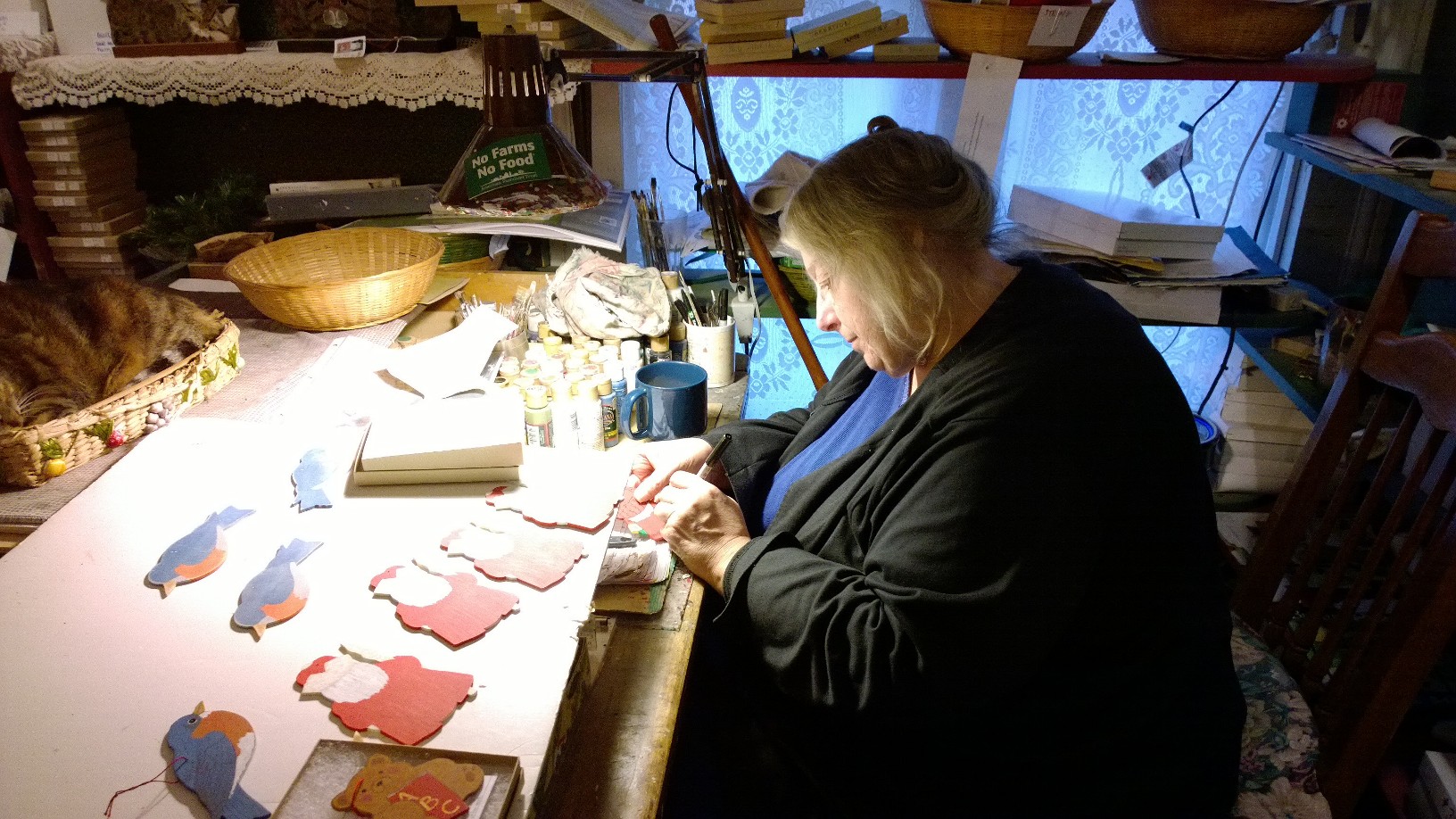
Gaelic McTigue, at All Things Bright and Beautiful in Waitsfield, Vermont, fills orders from around the world to create painted wooden ornaments. Here she is in her shop. Below is a bear ornament that she signed for two of our grandkids. (We got a Swedish elf ornament for our Swedish-American grandson’s tree.)

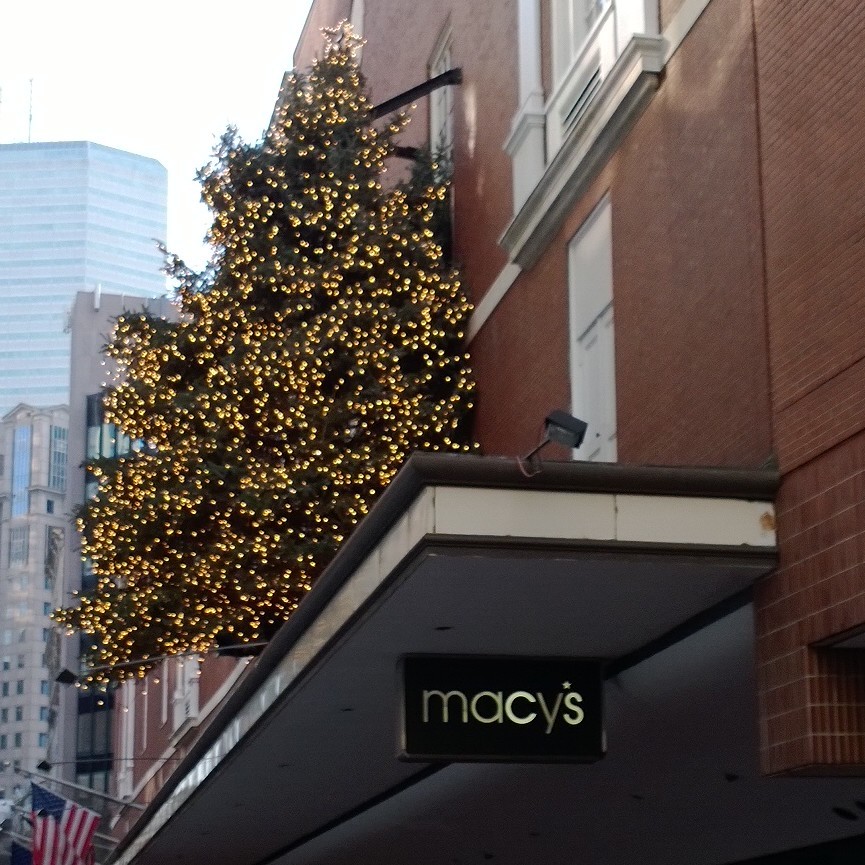
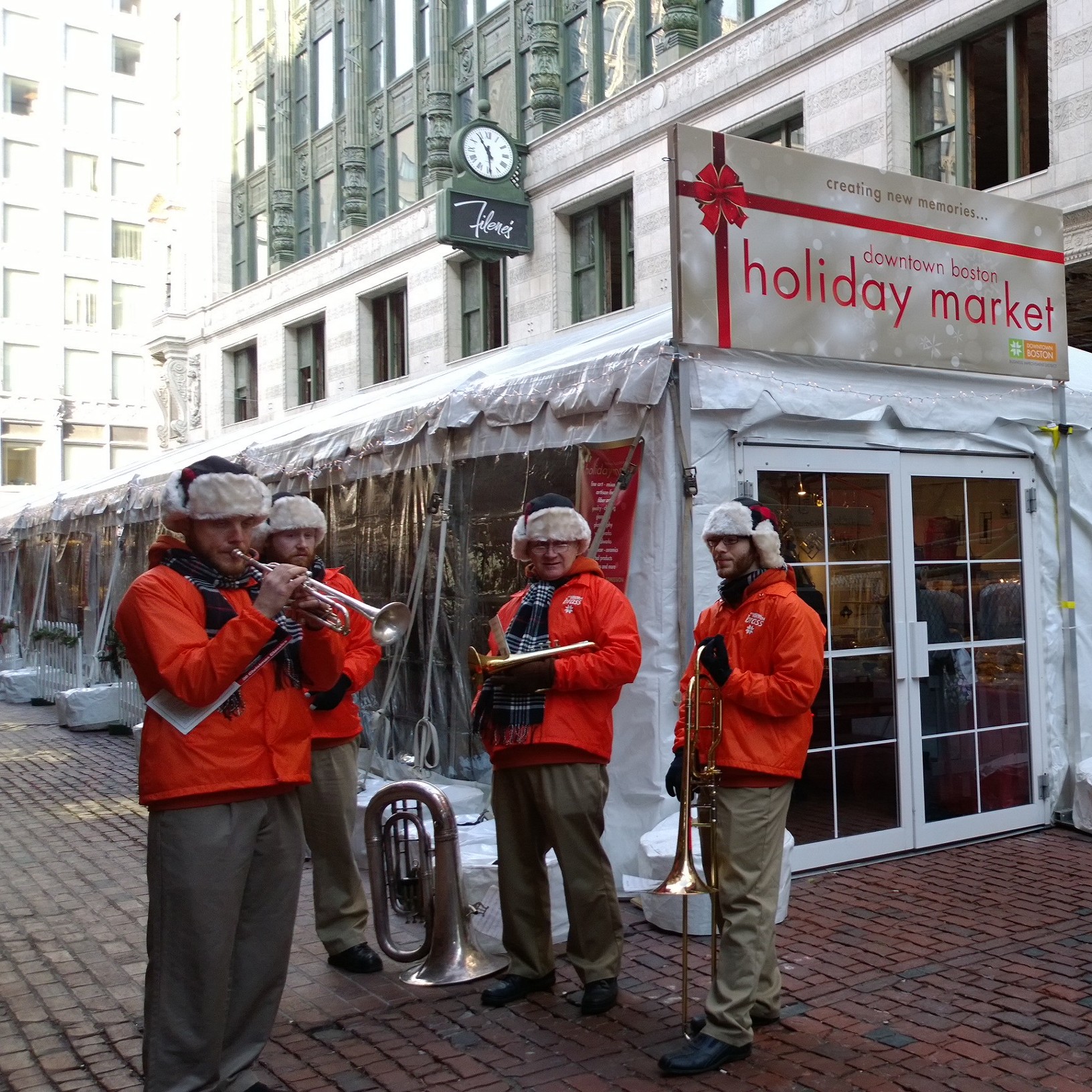
I’ve included a couple other seasonal photos: the Hampton Falls, New Hampshire, tree at Macy’s, the brass band starting to warm up at the craft market.

For a nice Advent carol, check out composer Jeff Fuhrer’s “What Are We Waiting For?” on http://www.soundcloud.com. I tried to upload the MP3 he sent but couldn’t figure out how. Catchy tune.

Gaelic-McTigue-Waitsfield-VT

All-Things-Bright-bear

Macys-tree-Downtown-Crossing

trumpet-warms-up

Read Full Post »

The NY Times contains a Science section on Tuesdays, and it always has delightful tidbits. Today Sindya N. Bhanoo writes that if you had music lessons at a young age, the experience may benefit you in old age.

“A new study reports that older adults who took lessons at a young age can process the sounds of speech faster than those who did not.

“ ‘It didn’t matter what instrument you played, it just mattered that you played,’ said Nina Kraus, a neuroscientist at Northwestern University and an author of the study, which appears in The Journal of Neuroscience.

“She and her collaborators looked at 44 healthy adults ages 55 to 76, measuring electrical activity in a region of the brain that processes sound.

“They found that participants who had four to 14 years of musical training had faster responses to speech sounds than participants without any training — even though no one in the first group had played an instrument for about 40 years.” More here.

Now, of course, I am looking back and trying to count how many years of piano lessons I had as a kid. I’m sure it was at least the four Kraus deems necessary. But I hardly ever practiced, so probably the effect was small.

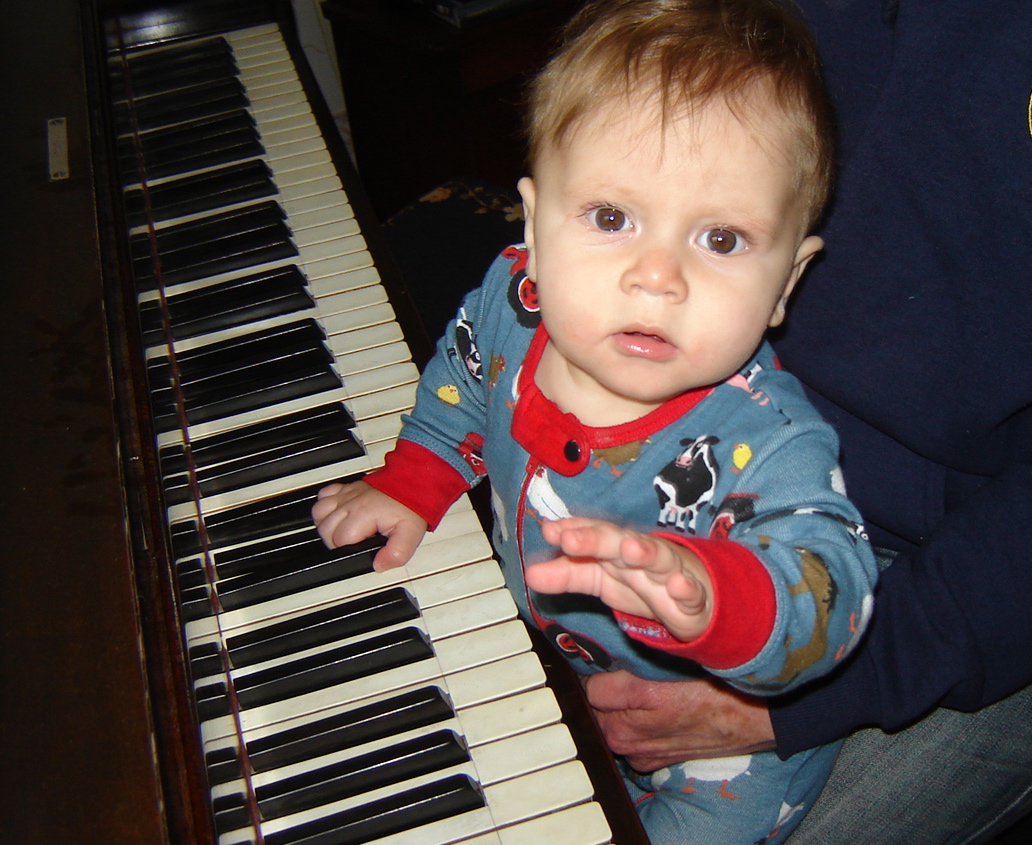
The serious pianist below was sitting on my lap when the picture was taken in 2011.

at-the-piano

Read Full Post »

« Newer Posts - Older Posts »