Feeds:
Posts
Comments

Posts Tagged ‘muslim’

Photo: It’s Time.
Jewish Israeli singer Achinoam Nini and Palestinian Israeli singer Mira Awad take the stage at the People’s Peace Summit in Jerusalem, May 9, 2025.

You wouldn’t know it from the headlines, but in Israel there are actually quite a few Jewish and Palestinian individuals who refuse to give up on peaceful coexistence.

Dina Kraft reports at the Christian Science Monitor, “For Israelis and Palestinians, May 28 marked 600 days of the most devastating period either side has known since Israel’s foundation. And yet amid it all, there are people trying to build bridges from one side to the other, attempting – together – to create a different reality.

“Some of them gathered recently for a well-attended two-day People’s Peace Summit in Jerusalem, forged by a coalition of Jewish and Palestinian peace-building and coexistence organizations. They sought to demonstrate that a peace movement is a viable and growing notion, and that joint Jewish-Palestinian activism is withstanding the raging war and shattered trust.

“ ‘The way to peace will not be short, but it is better than endless war,’ Sally Abed, a Palestinian citizen of Israel, called out from the Jerusalem stage to an auditorium packed with over 3,000 people. She is a leader of Standing Together, a fast-growing group uniting Jewish and Palestinian Israeli citizens.

“One outspoken Israeli peace activist is Maoz Inon, whose parents were burned to death in their home near Gaza in Hamas’ Oct. 7, 2023, attack that sparked the war. He and his siblings responded with a vow to seek peace, not revenge.

“ ‘Yes, we are devastated from the horrors that are happening in Gaza and the West Bank, and we acknowledge the ongoing trauma both peoples are enduring,’ he says in an interview. ‘But we know the only way to end the bloodshed and the cycle of violence, revenge, and hate is shaping and creating a new reality. We are learning from spiritual and faith leaders, security leaders, and from other conflict areas that were resolved.’

“In the aftermath of Oct. 7, Mr. Inon paired with a fellow entrepreneur, Aziz Abu-Sarah, a Palestinian from East Jerusalem whose older brother died soon after being imprisoned and beaten in the first intifada. Together they have been advocating reconciliation, equality, and justice.

“They say they can see their growing impact in their growing list of invitations to speak, not only at peace-related events but also in public schools, at universities, and at conferences. Their joint TED Talk has gone viral, and their work caught the attention of the late Pope Francis, leading to a Vatican meeting.

“It can be difficult for Israelis and Palestinians to work together openly. Activists are called naive at best, traitors at worst. But, Mr. Abu-Sarah argues, ‘We are offering the only viable answer to the current reality. As Maoz told me after his parents were killed, “Right now, we are in the desert – no food, no water. We’re lost. And when you’re lost in the desert, you call out for water.”

” ‘We are calling out for peace. … In times like these, we must work with Israelis who oppose the bombardment of Gaza and genuinely support peace. [But] bridge-building must be rooted in clear principles: equality, justice, recognition, healing, and safety for all. It’s not just about dialogue. It must lead to real action and tangible change. We do have strong, principled allies on the Israeli side. … They need us, and we need them, because without each other, we’re weaker – and the killing won’t stop.’

“[Standing Together] sees the recent surge in activism as the sign of an awakening among Israeli Jews who view the war as endangering Palestinian civilians alongside Hamas-held Israeli hostages and soldiers. …

“Illustrating both the challenge and the potential for peace activists, throngs of ultranationalist young Israelis swept through Jerusalem’s Old City on May 26, shouting hateful slogans in a sometimes-violent march marking the day in 1967 when Israel captured East Jerusalem.

“Volunteers from Standing Together and the Free Jerusalem collective, a group of predominantly Jewish Jerusalem residents that works with Palestinians in the city, acted as a ‘humanitarian guard’ to prevent violence. In a scene captured on video, a Jewish Israeli volunteer can be seen rushing into a crowd of far-right marchers surrounding a Palestinian man. …

“ ‘We always have something we can do and a way we can do it,’ wrote Rula Daoud, co-director of Standing Together, herself a Palestinian citizen of Israel.

“Mohammad Darawshe, director of strategy at Givat Haviva, Israel’s oldest and largest organization working for a shared Jewish-Arab society, says bridge-building is challenging for Palestinian Israelis. They face systemic discrimination and are often seen as a fifth column in Israel, he says, and while they have an ethnic and cultural affinity for West Bank and Gaza Palestinians, they have limited political influence.

“ ‘As peacemakers they have a very underutilized role. But if empowered by Israel and by Palestinians on the other side, then they could play a significant role in peacemaking thanks to our bilingualism and dual identity,’ he says. …

“Mika Almog, creative director of the It’s Time movement that organized the peace summit, says that it is hard to counter the general Israeli mindset that there are no Palestinian partners for peace, especially in the wake of the Oct. 7 atrocities. …

“She says Israelis have been told that the conflict could be contained through periodic wars, but not resolved. ‘We have been taught that this is a reasonable price,’ she says. ‘In order for Israelis to be able to sustain and build faith [in the prospects for peace] we need to see Palestinian partners within Israel but also partners in Gaza and the West Bank.’

“At the summit, a view of life in Gaza came in the form of a brief video of a Palestinian woman walking through the rubble. She details the difficulties of her life: living in a tent, subsisting on limited food and water.

“ ‘We are living a tragedy,’ she says. ‘Most people in Gaza are against extremism and terrorism. We want peace.’ ”

More at the Monitor, here. No firewall. Subscription prices are reasonable.
Read Full Post »

Photo: Nathaniel Bivan.
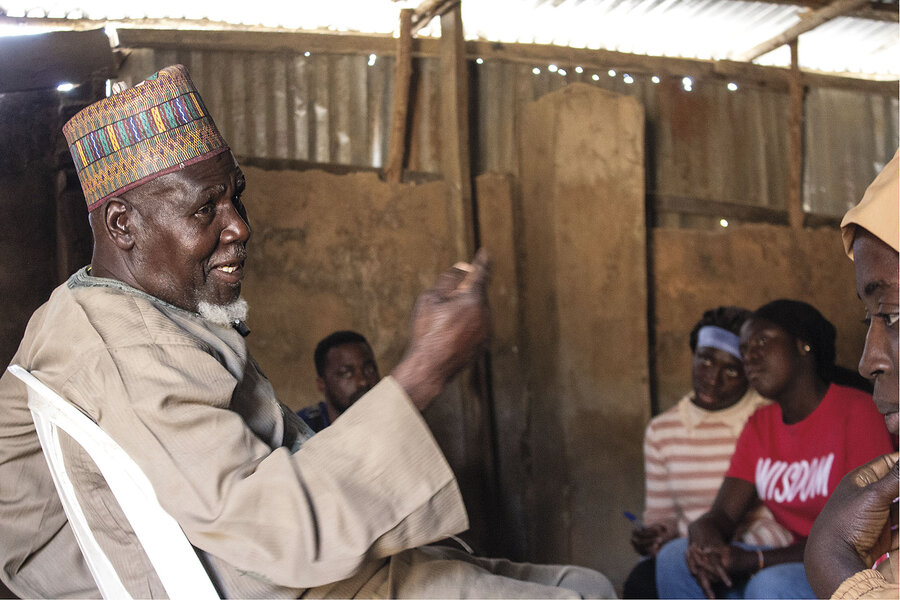
Ahmed Haruna speaks during a storytelling session in Nigeria.

I know I pick sides when I read about wars. It’s pretty clear that Russia invaded an independent neighbor when it launched attacks on Ukraine, for example. I have to remind myself that civilians on all sides suffer. And then for years after — sometimes generations after — bitterness festers. Not a good thing.

So I was interested to read how some Nigerians are working to ease longlasting enmity. Whatever works, I’d say.

Nathaniel Bivan writes at the Christian Science Monitor, “Seven years ago, when Dalyop Timothy Toma was 15, an angry mob came in the night to torch his family’s home in Kyeng village. Everyone but his grandfather fled outside into the bushes to safety. 

“ ‘He couldn’t run because he was disabled,’ recalls Mr. Toma, his face contorting in grief at the memory of his grandfather’s killing. Then he adds matter-of-factly, ‘We were planning revenge.’

“Mr. Toma and his family, who are Christians from the Berom ethnic group, blamed Muslims, mainly from the Fulani group, for the attack. Sectarian tensions run high in Kyeng and other communities in Nigeria’s Plateau state. Disputes often involve politics or land and sometimes erupt into violence.

“But in 2022, a youth leader from Kyeng invited Mr. Toma to do something extraordinary: Recount his painful story aloud to a large room full of people from different ethnic groups that he distrusted. That gathering, organized by a nongovernmental organization called Youth Initiative Against Violence and Human Rights Abuse (Yiavha), changed Mr. Toma’s attitude toward those he thought were his enemies.

‘Telling my story helped me heal gradually,’ says Mr. Toma, explaining that he no longer thirsts for vengeance.

“Yiavha has made him a peace ambassador, tasked with spreading his story of grace and forgiveness at intergenerational storytelling sessions in his community and in others.

“Plateau state, in central Nigeria, is home to some 4 million people. Jacob Choji Pwakim, a longtime peace-building activist in Jos, the state’s capital, founded Yiavha to change the narrative in communities that have been riven by ethno-religious attacks.

“The origins of the violence in Plateau state can be traced to a tumultuous week in Jos in early September 2001. More than 1,000 people were killed and tens of thousands displaced amid a long-running struggle for political and economic power among the area’s different ethnic groups. Disputes also flared between settlers and people indigenous to Jos. 

“Yiavha has held at least 66 storytelling sessions across the state. Elders have given accounts of bygone times when residents from various ethnic groups lived in harmony, even sharing gifts during religious celebrations for Eid and Christmas. Meanwhile, young people have recounted why they destroyed farms or livestock belonging to members of a different faith or tribe.

” ‘This was what inspired me to set up Yiavha in 2014, with the objective of creating a platform where young people across the divide can talk about their experiences without judgment,’ Mr. Pwakim says. 

“So far, Yiavha has worked with up to 3,300 young people, including more than 300 who have been trained as peace ambassadors who might eventually organize storytelling sessions in their communities. Other young people become agents of change after attending the sessions, organizing interfaith meals, youth soccer competitions, and trash cleanups. …

“One sunny afternoon in February, a group of young people is assembled at a soccer viewing center in Kambel, a community in the Anglo-Jos settlement within Jos. Ahmed Haruna is at the front of the room telling stories to the rapt audience, which includes residents of both Kambel and Channel Seven, another community in Anglo-Jos.

“ ‘Growing up, we didn’t even know the difference, who was Muslim or Christian among us,’ Mr. Haruna says. Over the years, residents have lived in segregated areas, with Christians mainly in Kambel and Muslims mainly in Channel Seven. But the storytelling sessions are gradually bringing them together to interact once again. 

“After Mr. Haruna finishes sharing stories about the settlements’ tranquil past, peace ambassador Joshua Tsok opens the floor for questions. …

“Training for peace ambassadors is extensive. In 2023, for example, peace ambassadors gathered in Barkin Ladi, another community in Plateau state known for violent sectarian conflict. A training facilitator, Hussaini Umaru, who is an associate professor in the department of theater and film arts at the University of Jos, says he divided the young people into groups and asked them to narrate and dramatize personal experiences of conflict, and then discuss the episodes. 

“It is not easy for ambassadors to trust their trainers. Umar Farouk Musa, a development consultant who facilitated a training session last August, explains that this is typically the first hurdle. ‘Some thought we were there to introduce an agenda or to spy. But we built their confidence,’ he says. 

“The government’s Plateau Peace Building Agency is a key partner with Yiavha. Kenneth Dakop, a team lead for the agency, says that Yiavha’s initiatives have helped transform young people who previously were drivers of violence in their communities. ‘Most of them are either unemployed or into substance and drug abuse,’ he says. 

“Yiavha’s ambassadors have seen transformations in themselves. ‘I want to become a professional teacher,’ Mr. Toma says. 

“This year, Yiavha paired Mr. Toma with a Fulani boy and assigned each of them to plant a pear tree in the other’s village to signify a commitment to peace.”

More at the Monitor, here.

Read Full Post »

Photo: Dominique Soguel.
The
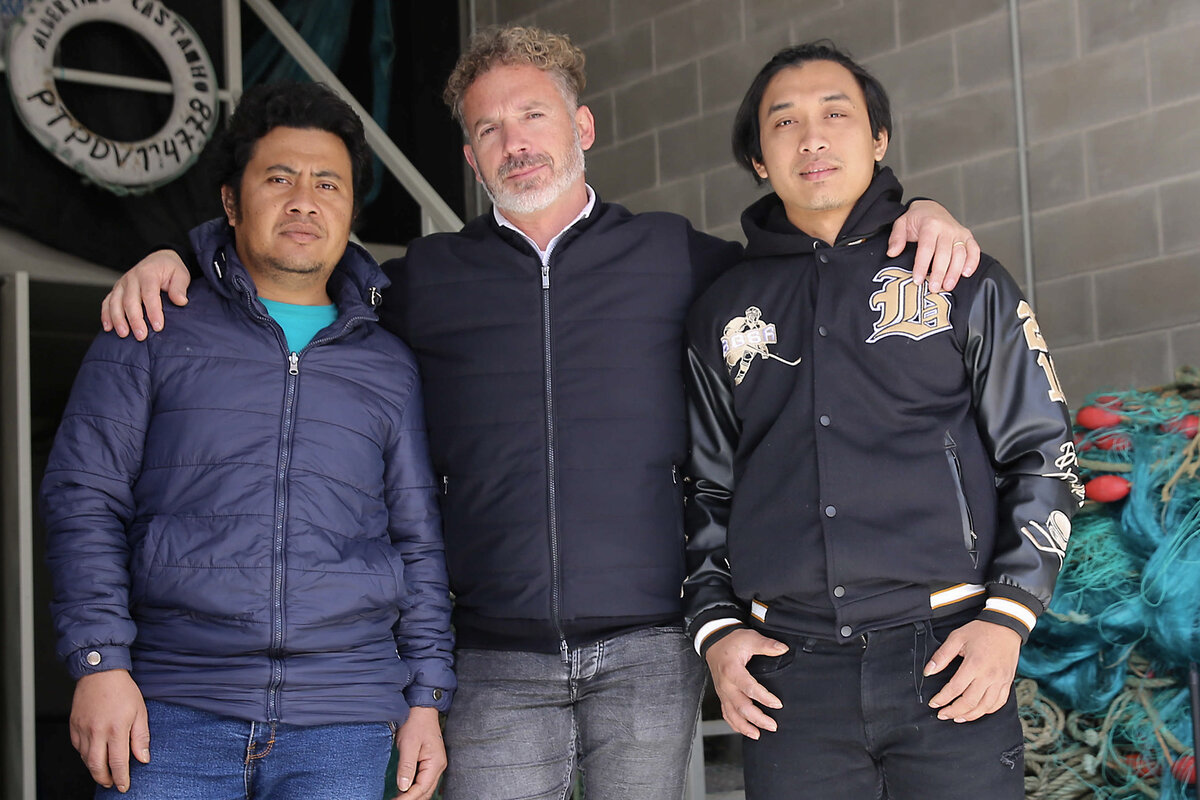
Christian Science Monitor shows a Portuguese fishing vessel captain with two of his Indonesian deckhands, March 8, 2024.

The Christian Science Monitor does a great job of finding stories about humans treating other humans with respect, even kindness. Such stories do exist. Why other media outlets don’t spend much time on them is anybody’s guess. They seem to think that anger is what people want, but why do they think that?

Dominique Soguel writes that many in Portugal are giving a welcome to migrants rejected elsewhere. They know it’s in their mutual interest. A far-right party is trying to change that, but so far harmony, says Soquel, is winning.

“Among the warehouses of one of Portugal’s oldest ports, conversations are flowing among the men sorting their fishing nets. But not without the help of Google Translate.

“The fishers at work include not just Portuguese people but also Indonesians. Thanks to a local ship captain who ventured east to solve labor shortages, Póvoa de Varzim sees a steady supply of deckhands from Indonesia, and now they account for half of all crew mates.

“And while an influx of Muslim migrants into a traditional vocation like fishing is the sort of event that would be potentially inflammatory elsewhere in Europe, in Portugal it seems to be working out without much fuss.

“ ‘The Indonesians are quite well integrated in the community,’ says another ship captain, Manuel Marques. ‘We were never against their culture. We did not ask them to change a single thing. We tried to make things as easy for them as if they were at home.

‘We do need them, and we know it. There is a mutual respect.’ …

“ ‘We also have a place to worship here, like a mosque,’ says Wahono Lucky, an Indonesian fisher. ‘I tell my boss that I don’t eat pork – I eat meat, chicken, rice, pasta, but no pork. Muslim, Christian, it’s never a problem here.’ …

“ ‘We are the only country in the European Union that allows people to come to Portugal without a job,’ notes journalist and professor Paulo Agostinho. ‘We are one of the biggest entry doors for Europe, and we are having problems with Brussels because of that. But Portugal does not have an immigration problem.’

“People from former colony Brazil make up about a third of the migrant population. Citizens of the Community of Portuguese Language Countries are also well represented, benefiting from facilitated residency procedures. In recent years, migration from India, Pakistan, Nepal, and Bangladesh has ticked up.

“Not all of Portugal’s South Asian arrivals are integrating smoothly. In the agricultural fields of Póvoa de Varzim, the sense of harmony that is palpable portside is elusive.

“Lazaro Morgado, a foreman overseeing a quartet of Indians planting seeds, clearly prefers working with a Brazilian, with whom he shares a native tongue. ‘It is complicated for the Portuguese to work with the migrants,’ says Mr. Morgado. ‘Sometimes they don’t know the procedure, and it is hard to explain. And sometimes they don’t obey the Portuguese worker even though at the end of the day, the Portuguese one is the one directly accountable to the boss.’

“Two Indian workers say they paid exorbitant sums – about €14,000 ($15,200) – to visa consultants to get here. ‘Not all Portuguese like migrants,’ notes Hardy Singh, one of the Indian workers, citing experiences of job and housing rejections on account of his ethnicity. ‘But our boss here is good.’

“Back at the port, Mr. Marques wants the Indonesian crews to stay. That’s why he – like other shipowners in the area – houses the workers in apartments scattered across the community and invites them for barbecues. The Indonesian fishers also get minimum-wage contracts and a paid-for trip home for vacation.

“ ‘Some Portuguese don’t make as much as them because they are on contract, while we only get paid if we go to sea,’ laments Tomas Postiga, an older fisher. But he grasps the importance of Indonesian workers to keep the traditional community afloat and prefers them to workers of other nationalities. Religious differences are not a problem. ‘Some are religious. Some are not. It changes nothing,’ stresses Mr. Postiga. …

“For Masrura Rashid, [Portugal’s Moorish quarter] is simply home. She arrived here six months ago, after studying engineering and wandering in the lush tea gardens of Sylhet, Bangladesh. Her father moved to Lisbon first, obtaining the right to family reunification. Now she works at her uncle’s travel agency.

“In a street rich in halal butchers and supermarkets, Ms. Rashid does not especially stand out. Donning traditional Muslim attire that fully covers her face, she is keen to learn Portuguese. ‘It’s easy here,’ she shares. ‘The weather, the environment, the people, it’s all good.’ “

More at the Monitor, here. No paywall. Subscriptions are not expensive.

Read Full Post »

Map: Jacob Turcotte/CSM.
There are still people in India who appreciate having friends from other religions.

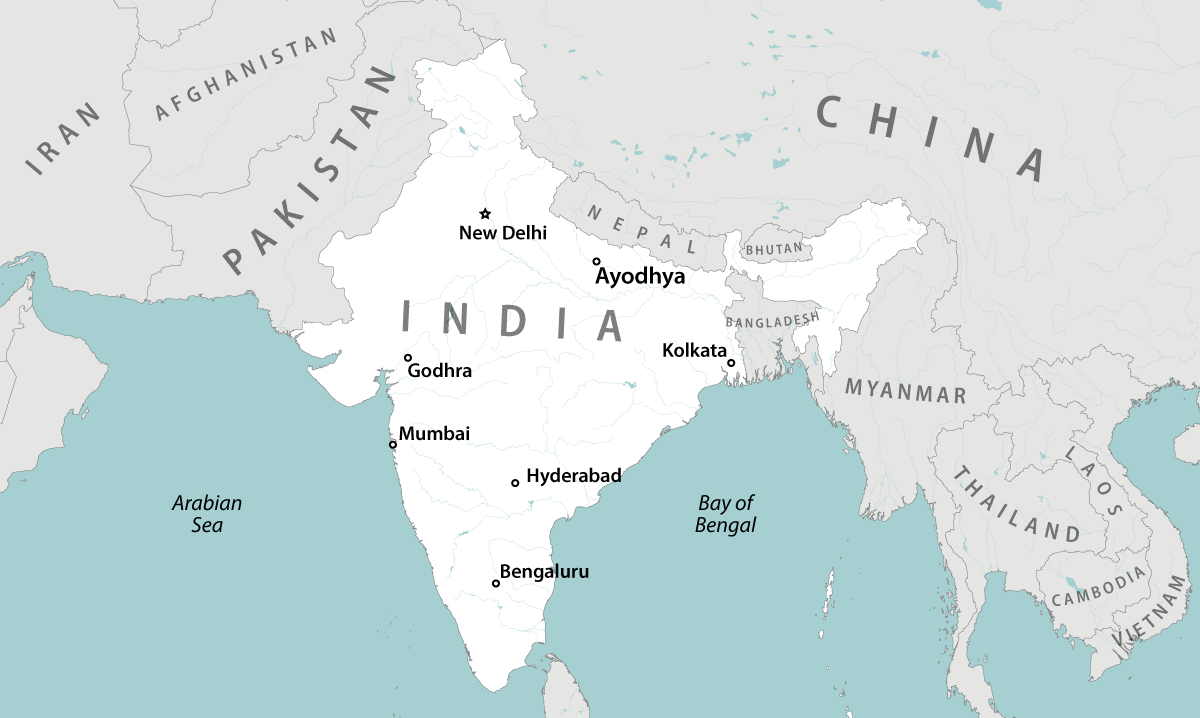
There is not much to celebrate about Hindu-Muslim relations in India these days, where the current power structure seems to have turned its back on peaceful coexistence. But trust the Christian Science Monitor to come up with a rare upbeat story! It’s about an interfaith friendship between Sadiq Ali, a Muslim, and Mahant Gyan Das, a Hindu, that has survived many political storms.

Shweta Desai  writes, “The light blue walls of Sadiq Ali’s living room are adorned with photos of Hindu seer Mahant Gyan Das. The two have been friends since the 1980s, when Mr. Ali was a volleyball player and Mr. Gyan Das a wrestler. They bonded over their shared love of sports, and Mr. Gyan Das regularly visited Mr. Ali’s family tailoring shop to get his tunics stitched. 

“About 20 years ago, their friendship took on a new meaning. Days of violent riots had rocked the nation and left more than 700 Muslims dead. It tore open old wounds in Ayodhya, a north Indian city where the Muslim community was still reeling from the destruction of the historic Babri mosque by a Hindu mob in 1992.  

“Sensing the need for an olive branch, Mr. Gyan Das, then head priest of the city’s historic Hanuman Garhi temple, invited 1,000 Muslims to the temple premises during Ramadan to break their daily fast. Mr. Ali helped host the feast, which still fills its organizers with pride and nostalgia – especially as Ayodhya is once again in the spotlight for Hindu-Muslim tensions.

“[Recently] Prime Minister Narendra Modi unveiled an opulent Hindu temple on the site where the Babri mosque once stood. 

“Like the mob which leveled the mosque, Mr. Modi and his supporters in the ruling Bharatiya Janata Party (BJP) claim that Babri was built over the birthplace of Hindu deity Ram, and the construction of the new Ram temple has become a rallying point for India’s growing Hindu nationalist movement. …

“In such polarized times, Mr. Gyan Das and Mr. Ali’s friendship offers a reminder of what Ayodhya could have – and perhaps still can – become: a symbol of multiculturalism and tolerance.

‘Ordinary people here want to live in peace,’ says Valay Singh, author of Ayodhya: City of Faith, City of Discord.

“He argues that the city’s reputation as India’s ‘ground zero’ of communal conflict overshadows its history as a heartland where different religious traditions have long intersected. In fact, he notes, the land for the Hanuman Garhi temple was donated to the region’s Hindu community by Muslim ruler Shuja-ud-Daula in the 18th century.

“ ‘It was a common tradition for the religious establishments to receive patronage from the Muslim rulers,’ he says. …

“[The] religious strife has deep roots – several weaving back toward Ayodhya. The destruction of the Babri mosque, for instance, came after decades of campaigning by right-wing Hindu groups, such as the Vishva Hindu Parishad (VHP), and led to months of communal violence across India. In Ayodhya, Muslims and their properties were singled out. Mr. Ali’s shop was plundered multiple times. …

“Indeed, the mosque’s demolition and resulting chaos left deep fissures between the Hindu majority and Muslim minority throughout the country. 

“Those rifts grew during the 2002 Gujarat riots, which were sparked by a deadly fire on a train carrying Hindu pilgrims from Ayodhya to Godhra, Gujarat. …The following year, Mr. Gyan Das approached Mr. Ali with his idea to organize an interfaith iftar fast-breaking meal at Hanuman Garhi.

“At first, the tailor was baffled. He reminded Ayodhya’s most influential seer that after breaking fast, Muslims must offer the namaz prayers. Will the Hindu seers accept prayers to Allah on the temple’s premises? Mr. Gyan Das was confident they would.

“In November 2003, with fanfare and high security, saffron-robed priests from several local temples welcomed their Muslim guests, serving them fruits and yogurt. Around sunset, calls of ‘Allahu Akbar!’ mingled with the sounds of conch shells and temple bells, as rows of Muslims bowed down to read the namaz. Both sides prayed together for peace and brotherhood to prevail across the country.

“The Muslim community reciprocated. After the iftar, hundreds of seers marched to Mr. Ali’s home to break the Hindu Ekadashi fast with seviyan, a traditional sweet prepared by Muslims on festive occasions. …

“The iftar [inspired] Yugal Kishore Shastri, one of few outspoken Hindu priests who have left the far-right and put their faith in the spirit of Indian secularism. Mr. Shastri says he split from the VHP after discovering that there was ‘no evidence of an ancient Ram temple under the mosque structure.’ …

“Although it’s getting harder for activists to cut through the vitriol and bring communities together … ‘There will always be a place for people who work for Hindu-Muslim peace,’ he says.”

More at the Monitor, here.

Read Full Post »

Photo: Sarah Aziz.
Muslims and Jews in Kolkata, India, have a long history of friendship.
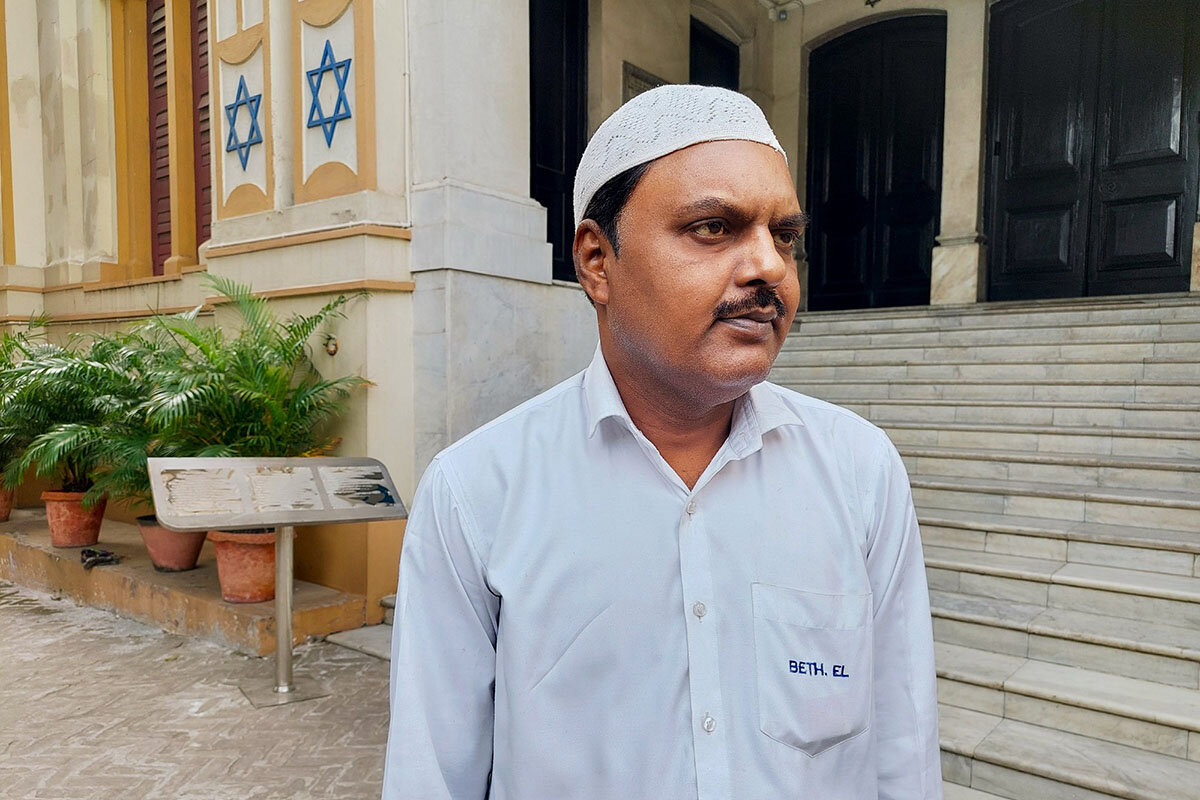
Shaikh Wasim, one of six Muslims who work as caretakers in Kolkata’s synagogues, stands outside his place of work.

All religions teach peace and friendship. So why do they go to war with each other? Sometimes humans make no sense.

In India, which under the current Hindu prime minister is known for repression of Muslims, one city has a surprising story to tell. Not about Hindus and Muslims, alas, but about Jews and Muslims. And the story is especially welcome in this time, when the war in Gaza has made relations worse in other parts of the world.

At the Christian Science Monitor, Sarah Aziz explains how Kolkata, India, is different.

‘The Oct. 7 attack profoundly affected the Jewish community in Kolkata, but failed to sour Jewish-Muslim relations.’

“Dilawar Mondal gently bends the stems of a centuries-old myrtle plant to examine its aromatic leaves, used in the Jewish ritual bath for the dead. It is among the myriad plants, shrubs, and trees that he has tended to for the last eight years in Kolkata’s only Jewish cemetery, established in the early 19th century by Jewish merchants from Baghdad and Aleppo.

“He pauses to check the time – the sun is overhead, which means he’ll soon need to take a break to perform Zuhr, the afternoon Muslim prayer.

“Many of the city’s Jewish institutions – including synagogues, schools, and the cemetery – are maintained by Muslim caretakers. The intertwined communities have offered each other hope, security, and strength amid rising global hostilities following Hamas’ Oct. 7 attack and Israel’s military campaign in Gaza. …

“The camaraderie and respect between the Jewish and Muslim communities of Kolkata can be traced back to the establishment of the cemetery, says Owaiz Aslam, founder of the Kolkata-based Indian Pluralism Foundation, which promotes interfaith harmony among Indian youth.

“Historical records show Shalom Aaron Obadiah Cohen, the founder of the Baghdadi Jewish community in Kolkata, reached out to a Bengali Muslim friend regarding the cemetery.

“ ‘They were new to the country and needed help,’ Mr. Aslam says. ‘The Muslim friend offered him a plot of his own land free of cost, but … Cohen insisted on giving his friend a gold ring as a token of solidarity between the two communities, which continues even today.’ … 

“More than a century later, the Baghdadi Jews in Kolkata assigned a Muslim family from the neighboring state of Odisha the job of caring for their synagogues, explains Navras Jaat Aafreedi, an expert in Jewish history who teaches at Presidency University in Kolkata.

“Since then, several generations of that family have continued to serve the three synagogues in Kolkata – Beth El, Maghen David, and Neveh Shalom – even as the Jewish population here has dwindled.

“Fewer than 15 Jewish residents remain, most of them older. But women’s rights activist Jael Silliman, who grew up Jewish in Kolkata, says that the synagogues still hold special significance.

“ ‘These three beautiful spiritual spaces mark our presence in the city, and recall and embody our history in a place where we flourished and prospered through trade and business endeavors,’ says the scholar, noting with pride that Kolkata is home to the only two synagogues protected by the Archaeological Survey of India as important heritage sites.

“Today, the synagogues draw tourists from all over the world, and in November, Mr. Aslam initiated an interfaith Jewish-Muslim prayer ceremony at the Beth El Synagogue, where he prayed for the safe return of the hostages taken from Israel by Hamas on Oct. 7.

“ ‘As a Muslim, my heart cries for innocent children and adults suffering in Israel as well as Gaza,’ he says.

“At the same synagogue, Shaikh Wasim shows up for work in his pristine uniform, Beth. El’ embroidered on his breast pocket and a white topi, or Muslim skullcap, on his head. With reports of a global uptick in antisemitic attacks against synagogues and other Jewish institutions, Mr. Wasim and the five other caretakers who currently oversee Kolkata’s synagogues are no strangers to fear. 

“ ‘I am afraid, like any other human being,’ he says. ‘But the deep love that the Jewish and Muslim people in Kolkata share always pulls me back to the synagogue, no matter the circumstance.’

“[Jo Cohen, secretary for Jewish Community Affairs in Kolkata] says the Oct. 7 attack profoundly affected the Jewish community in Kolkata, but failed to sour Jewish-Muslim relations.

“ ‘The Muslim caretakers of the synagogues and the cemetery, alongside my Muslim friends, are as close to me as ever. The Israel-Gaza situation has not affected our relationships in the slightest,’ says Ms. Cohen, who also serves as honorary secretary at the city’s Jewish Girls’ School, where the majority of the students are Muslim. 

“Later, while cleaning around the synagogue, Mr. Wasim echoes Ms. Cohen’s sentiments. ‘I pray for the violence and bloodshed to end, so that Jewish and Muslim communities can coexist in peace like they do in Kolkata,’ he says. …

“ ‘Ultimately, a Jew and a Muslim are praying to the same God, even if they call Him by different names,’ [Cohen] says.”

More at the Monitor, here.

Read Full Post »

Photo: NBC4 Washington.
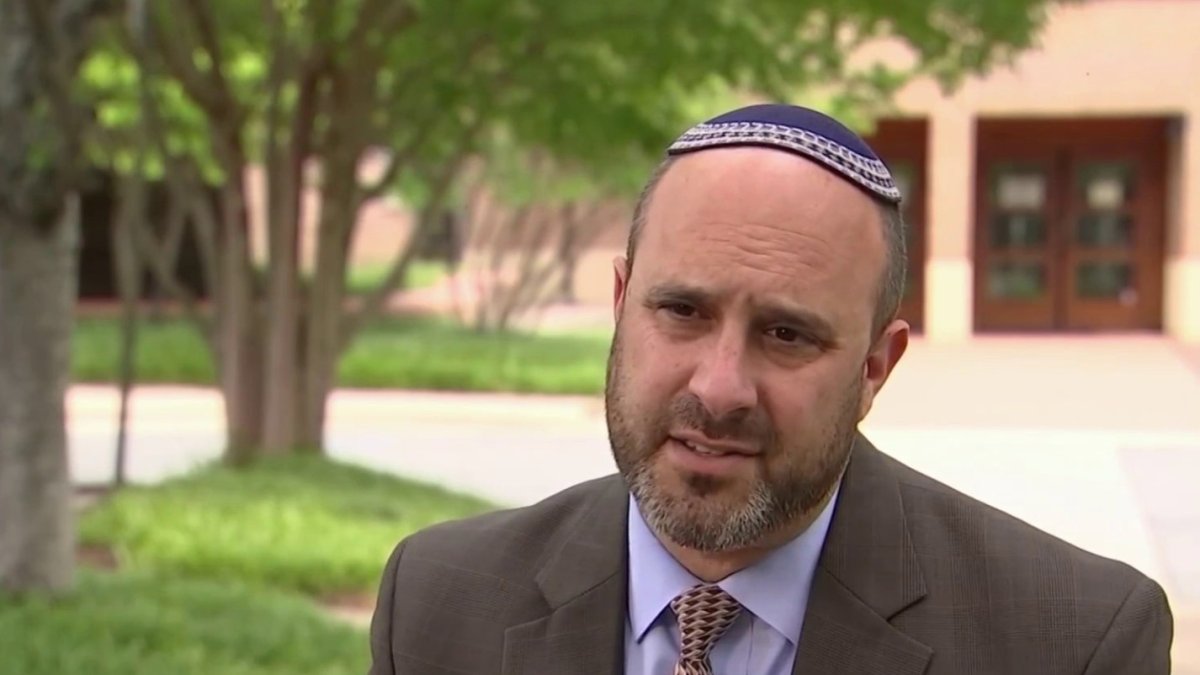
In Potomac, Maryland, Har Shalom rabbi Adam Raskin has pulled together faith leaders help support Afghan refugees.

When leaders of differing faiths recognize they are all called to do the same kinds of good works, great things can happen. Today’s example is from Potomac, Maryland.

Sydney Page writes at the Washington Post, “Adam Raskin, a rabbi at Congregation Har Shalom in Potomac, Md., knew how difficult the situation was for Afghan refugees in the Washington region.

“Since the historic airlift out of Kabul last year, more than 3,700 Afghan evacuees have been resettled in the District [of Columbia, DC], Maryland and Virginia, overwhelming social service agencies and leaving some refugee families waiting for housing and in limbo.

“Raskin and his congregants decided to help by sponsoring a refugee family.

‘We thought it was very much in line with our values,’ Raskin said. ‘For Jews, many of whom were refugees from places of persecution, there is a special sensitivity for this issue.’

“As members of the congregation began researching the resettlement process, they quickly learned how complicated it can be, and how many resources are required.

“ ‘We could do this on our own,’ Raskin recalled thinking to himself, ‘but wouldn’t it be amazing to collaborate with a Christian and Muslim congregation? … This is a country where religions don’t have to be at odds with each other, but actually where religious communities collaborate and find common ground,’ Raskin said.

“He contacted St. Francis Episcopal Church and the Islamic Community Center of Potomac to gauge their interest in an interfaith initiative, and both congregations were enthusiastically on board.

“ ‘We definitely wanted to get involved,’ said Sultan Chowdhury, who was one of the founding members of the Islamic center, and currently serves as its trustee. ‘God gave us an opportunity to truly learn about each other. It is wonderful to see how close we are.’

“Kathy Herrmann, the parish life coordinator at St. Francis, agreed.

“ ‘I have felt such a kinship with them and such a warmth and love emanating from the other two,’ she said. ‘We all have the same goal to help this family become acclimated and feel the love that we have for them.’ …

“The congregations have recruited volunteers to collaborate, including Stew Remer, who has been a member of Congregation Har Shalom since 1982 and has spearheaded the effort.

“ ‘We created an informal partnership where we are working together to provide support for the family,’ Remer said. ‘It’s amazing that we’re doing this with other organizations.’

“He started by contacting various resettlement agencies to learn more about how to sponsor an Afghan family. He got in touch with the Immigration and Refugee Outreach Center, which connected him with the [Wahdat family — a 36-year-old father, a 30-year-old mother and their 19-month-old daughter].

“For the past month, the congregations have divvied up responsibilities to support the newcomers. The church has taken on a health-care advocacy role, identifying doctors and dentists willing to provide pro bono services for the family. The mosque, meanwhile, has been helping with translation services and assisting with cultural needs, such as providing traditional Afghan clothing. The synagogue has been organizing transportation, legal and financial support, as well as helping the family to apply for food stamps and Medicaid. …

“Christianity, Islam and Judaism are all considered Abrahamic religions that view Abraham, a prophet, as the patriarch of their faith. The Bible highlights Abraham’s hospitality and his willingness to welcome strangers. …

“ ‘We have enjoyed the privilege of being together, trying to understand each other better and propagate peace,’ Chowdhury said. ‘It’s eye opening for all of us, and it’s a blessing.’

“ ‘This isn’t a short-term project. We are in it for the long haul,’ said Herrmann.”

Check out the Post, here. It has details on the State Department’s sponsor program, which guides those who want to help resettle the Afghan families. Americans owe them.

Read Full Post »

Photo: Anamni Gupta/Indian Express.
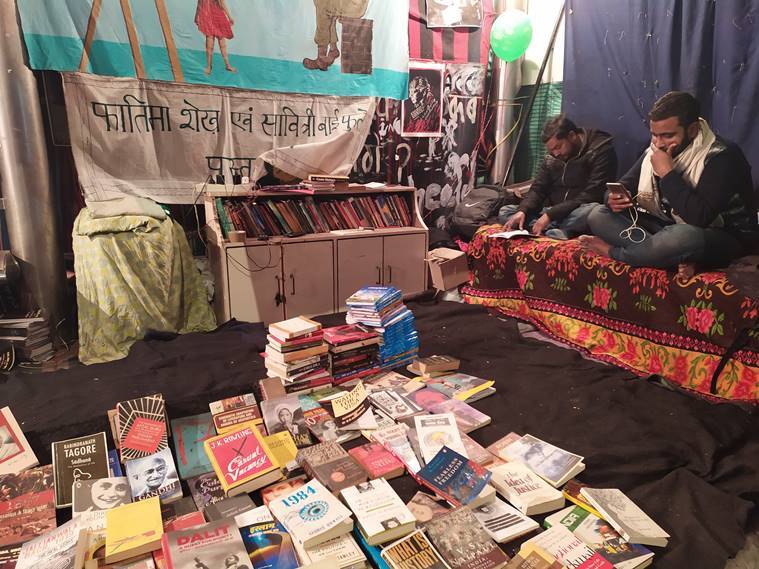
One aspect of the 2019 Shaheen Bagh protest organized by Muslim women against India’s Citizenship Amendment Act was the emergence of free libraries.

Most Americans don’t keep track of politics in India, but it was hard to miss the news back in 2019 when the Modi government decided to change the rules about who could be counted as a citizen. Muslim women organized a protest that spread across the country from the original site in Shaheen Bagh. One aspect has remained.

As Harshvardhan reported at India’s National Herald in January, “The Shaheen Bagh protest site is gone, but its legacy continues to inspire those who dream of a more egalitarian and democratic India. Led mostly by Muslim women, the Shaheen Bagh protest site inspired one of the most aesthetically-pleasing and thought-provoking experiments with protest art in recent times. Walls and streets of Jamia Millia Islamia and Shaheen Bagh protest site exploded with creativity as students and artists camped there and experimented with ideas. …

“One of the most distinctive contributions of the Shaheen Bagh movement was the introduction of a ‘protest site library.’ The idea of a ‘protest library’ came up during the Occupy Wall Street protest, one of the largest popular demonstrations in the United States. Occupy protesters erected a tent and established a ‘People’s Library’ in Manhattan’s Zuccotti Park in November 2011. This one of its kind library held over 5000 volumes of books along with magazines and newspapers, and was finally razed down by the police.

“Since then, the concept of a ‘People’s Library’ captured the imagination of protesters all across the world. It travelled to Gezi Park in Istanbul in 2013 when people resisted the commercialisation of public spaces. Make-shift libraries cropped up in different parts of Spain during the anti-austerity 15-M movement (2011-15) and then it travelled to Hong Kong during the pro-democracy movement there.

“At Shaheen Bagh, a group of students decided to convert a bus stand into a makeshift library in the heydays of the anti-CAA protests [CAA stands for the Citizenship Amendment Act of 2019]. The ‘Fatima Sheikh Savitribai Phule Library’ captured the imagination of people and soon the make-shift library started to attract a lot of donors and also inspired similar libraries at different anti-CAA protest sites.

“The year 2020, an otherwise gloomy year dominated by the COVID-19 pandemic … ended on a high note with the farmers’ uprising against the three farm bills, passed by the BJP-controlled Parliament in haste. … By blocking the entry points of nation’s capital, farmers are actually attempting to block the privatization and corporatization of Indian economy. Along with that, the protests are also a powerful assertion of the right to dissent. …

“It is but natural that such a huge protest in terms of both mobilization and concerns will also develop into a rich site for cultural production enriching the protest repertoire of the country. In one of the most innovative moves, protesting farmers launched their own bi-weekly newspaper. … They also set up libraries at the protest sites. [It] clearly carried on the legacy of the Shaheen Bagh protests. Now, we can be sure that protest site libraries are going to feature every time there is a sustained peoples’ movement.

“The first library came up at Tikri Border, Pillar no 783. On December 22 [2020], a group of students began the ‘Shaheed Bhagat Singh Library’ with a single book stand with almost 200 books standing against a yellow tent. Farmers at Tikri border welcomed the idea and people could be seen browsing through the limited books available there. Soon the idea picked up and similar libraries came up at Singhu border as well as Ghazipur border while attempts were being made to establish one at Shahjahanpur border. …

“From the anti-CAA movement to the anti-farm law movement, the protesters have been accused of being ‘uneducated’ and … of ‘not having ‘read the law’ or ‘not knowing what they are protesting against or for.’ …

“The protest-site libraries stand as proof that these people are not ‘uneducated folks’ [but] are mature enough to develop a concrete socio-economic-political understanding and act upon it.”

More at the National Herald, here. Search Suzanne’s Mom’s blog on the word “library” for examples of other unusual libraries around the world.

Read Full Post »

Photo: University of Pennsylvania
An illustrated headpiece from a mid-18th century collection of ghazals and rubāʻīyāt.

Today’s article is about an ancient type of poetry still in use. Before yesterday I might have thought it a bit too esoteric for a chatty blog post, but yesterday Suzanne’s kids showed me an educational iPad program they love, and the 8-year-old started discussing metaphors and onomatopoeia.

I decided we could handle ghazals.

Claire Chambers writes at 3QuarksDaily, “Ghazal poetry is an intimate and relatively short lyric form of verse from the Middle East and South Asia. The form thrives in such languages as Arabic, Persian, Urdu, and now English. Like the Western ode, these poems are often addressed to a love object. …

“A mixture of sacred, profane, romantic, and melancholic elements are frequently stitched into the ghazal’s poetic fabric. Many ghazals revolve around the theme of lovers’ separation. This topic also functions as an image for the Muslim worshipper’s longing for Allah. In doing so, the ghazal draws comparisons with seventeenth-century metaphysical poetry. Like ghazalists, John Donne would ostensibly write about love for a woman but also shadow forth devotion to God. …

“In the Muslim world, the arts are less likely to be locked away in compartments or considered elitist as they are in the West, and more likely to be part of everyday life. In the Indian subcontinent and its diaspora, mushairas (meaning ‘gathering of poets’) are interactive poetic meetings. These recitals, with their call and response tradition, have made the ghazals an instantly recognizable form in the popular consciousness.

Because of this accessible performative and musical tradition, working-class South Asians have nearly as much access to poetry as the elite. …

“Rich images can be found in Urdu ghazals: tropes include the moth and the flame, stars and diamonds, and the rose and the nightingale. Such leitmotifs from ghazal poetry have various connotations (relating to such issues as politics, love, and religion) to different people in particular contexts. …

“By noticing the opulence associated with Urdu poetry, one realizes that Islam is a diverse religion and culture. … In modern-day Britain and the United States, ghazals have become a popular form. Here, they sometimes touch on a migrant’s yearning for home and belonging. The year before he died, the Kashmiri-American poet Agha Shahid Ali (1949–2001) published Ravishing DisUnities, a collection of ghazals mostly by fellow Americans. …

“Chafing against the free-verse liberties new world poets had previously taken with the ghazal, he exhorted contributors to return to structural ‘form for form’s sake’, while reinvigorating the form in the fresh language of English. As a Pakistani-American poet from the next generation Shadab Zeest Hashmi puts it in her beautiful nonfiction book Ghazal Cosmopolitan, ‘the ghazal fuses the old with the new, the friend with the stranger – reflecting, refracting, and constantly reminding us that America to is a convergence of sorts, a cultivation of diversity – at least the promise of it’. …

“The ghazal is made up of semi-autonomous couplets, each of which helps to set up the logic of the whole poem. The form is notable for its rhyme, the symmetry of its couplets, and a [refrain] at the end of the second line of each couplet. …

“In the first ghazal Ali ever wrote, he ends with an explanation of his middle name’s significance in Arabic, that language which has been extolled in the [refrain] of each of the foregoing couplets:

‘Listen, listen: They ask me to tell them what Shahid means:
‘It means “The Beloved” in Persian, “witness” in Arabic.’ ”

The article also features an amusing explanation from the American poet John Hollander — known partly for inventing the humorous double dactyl with Anthony Hecht — which uses the ghazal form to show how a ghazal is constructed. The poets among you might find it useful.

More.

Read Full Post »

2019-02-26-hijab

Photo: Gabrielle Emanuel/WGBH News
Shamso Ahmed has opened the first salon in Massachusetts specifically catering to Muslim women who wear hijabs, a religious head covering.

For some Muslim women, as for some Orthodox Jewish women, covering their hair in public is a religious obligation. Even though no one sees their hair when they are outside, when they are at home or among other women, they want it to look nice. Getting a good haircut at a salon can be a challenge, though.

As a young Virginia woman in a 2013 PRI story said, “There’s a JC Penney that has a hair salon nearby and they kind of stick you in a back storage room, and it’s okay, you still get a haircut, but it’s not the greatest atmosphere and you do kind of feel like you’re being shoved in a corner. It’s nice when they have the real chairs, especially when you’re going to pay that much for a haircut.”

Luckily in Boston, there’s a salon specifically for hijab-wearing women. Gabrielle Emanuel has the story,

“For most people, going to a beauty salon and getting a haircut is routine. But for Muslim women in Massachusetts who cover their hair for religious reasons, it can be a real challenge. At a traditional hair salon, they risk men seeing them without their headscarves on.

“But that is now changing. Massachusetts’ first salon and spa established specifically for Muslim women opened. … Shamso Ahmed is the woman behind the new business. She says she’s been dreaming about this since she was a young girl.

“At the age of 10, Shamso Ahmed fled the civil war in Somalia and arrived in Boston with her family. Two years later, she started wearing a hijab, a Muslim head covering, and that’s when she came up with the idea of opening a salon.

“ ‘I envisioned this huge, big salon that had all the services you could think of,’ remembered Ahmed. She wanted a place where ‘women felt safe.’

“Now, some two decades later, Ahmed has a degree in accounting and training in cosmetology. And she has a salon. While it’s not huge, the storefront is decked out. …

“In a neighborhood peppered with beauty shops, what makes Shamso Hair Studio and Spa unique is not the silver and black décor — or even the henna body art or the hammam steam spa — it is who is allowed in and who is not.

“Ahmed says the space is carefully designed to be female-only. At the door there’s a camera and a code required. The windows are frosted so people walking past can’t see in.

“For Muslim women who wear hijabs, Ahmed says it’s long been hard to find a place to get your hair done. … She said some women go to a salon and befriend a stylist, asking them to come to their home. Others ask to go to a salon after it’s closed for the day or they get their hair done in a backroom. Still others rely on female relatives.

“When Ahmed isn’t working on her other business, a translation service, she has often worked as a stylist going from house to house. Now, Ahmed is hoping her clients and others will come to her salon. …

“Ahmed said there’s been a lot of enthusiasm in the Muslim community, and people came from other states just to attend the opening. ‘Maine, Rhode Island, New York, New Hampshire,’ she ticked off the places. ‘Some of them came from Ohio, Virginia, Maryland, DC.’ …

“For Ahmed, this isn’t just a childhood dream she’s fulfilling. She said she’s also living out her mother’s dream, who owned a small business in Somalia before war broke out.”

More at PRI, here. There are a couple similar salons in Virginia. Read about them here.

Read Full Post »

real-kashmir-7-591a66101b34d7f508201129db96670cb2626d2a-s600-c85

Photo: Furkan Latif Khan/NPR
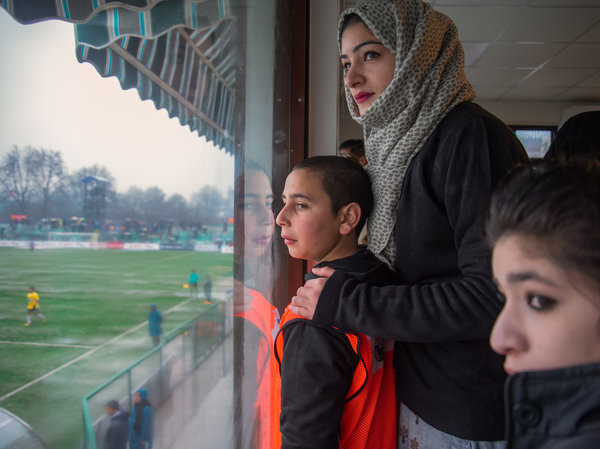
In wartorn Kashmir, there are Muslims and Hindus who who would rather play soccer than spend their lives fighting. Above, loyal Snow Leopards fans watch a game.

In every part of the world, no matter how troubled, there are always people who would rather play ball.

I have to blame the British colonial empire for leaving behind the seeds of war everywhere it went, chopping up countries without attention to the needs of the people living there. But thank goodness that human nature and the love of peace is strong! There are always some folks who have no interest in fighting.

Kashmir, created by Partition as the British left India, is an example of what I mean. Today, because of the way the country was divided, Kashmir knows constant war between Hindus and Muslims. Despite that, two friends, one Hindu and one Muslim, started something beautiful.

Lauren Frayer writes at National Public Radio (NPR), “They play soccer in a disputed Himalayan valley prone to car bombs, strikes and heavy snow. Soldiers with machine guns patrol their home stadium. Players sometimes have to arrive at practice three hours early to avoid police curfews. Their team is less than three years old, with a budget that’s one-tenth that of some of their competitors.

“[As of February 2019], Real Kashmir Football Club, from Indian-controlled Kashmir, [was] tantalizingly close to winning India’s top professional soccer title. They’ve been flitting back and forth between first, second and third place, and the season ends in early March.

” ‘We’re the only club in India that has sold-out stadiums at almost every game,’ says the team’s co-founder Shamim Mehraj. ‘What we have done is give people some hope in a place that has actually been taken down by conflict and violence for the past 60 years. It’s helping this place heal.’ …

“A natural disaster helped give birth to this soccer team. In 2014, the Kashmir Valley suffered devastating floods. Hundreds of people were killed. Schools were closed, and young people spilled out onto the streets of Mehraj’s hometown Srinagar, the summer capital of Jammu and Kashmir and one of the largest cities in the valley.

“One evening, Mehraj and a friend had an idea.

” ‘We used to go for evening walks. We would see a lot of kids hanging around doing nothing, and I had been a footballer myself. That’s when I thought, “Why don’t I get some balls and at least give these kids something to do?” ‘ recalls Mehraj, 38. He had played for his college team in New Delhi, and for his state in amateur soccer tournaments.

“Mehraj, who is Muslim, and his Hindu friend Sandeep Chattoo, 52, got friends and neighbors to pitch in and buy 1,000 soccer balls, which they handed out to flood victims. But why stop there? In March 2016, they started a team.

“They applied for the team to compete in India’s I-League 2nd Division — the pro soccer equivalent of baseball’s minor leagues. Mehraj and Chattoo invested their own money to pay players’ salaries. They also hired a Scottish former player, David Robertson, who had been coaching a professional soccer team in Phoenix, Arizona, to coach Real Kashmir, a.k.a. the ‘Snow Leopards.’

“Robertson had never been to India, and admits he probably couldn’t have placed Kashmir on a map.

” ‘All I ever saw was TV shows that showed it’s 90 degrees — it’s hot in India! But I arrived here and the next day, it was snowing,’ says Robertson, 50, now in his third season as Real Kashmir’s coach. ‘There was no Internet, the electricity was out, and I just thought, “I want to go home.” ‘

“Mehraj invited Robertson over to his family’s house, gave him a hot water bottle and some home-cooked Kashmiri food — and convinced him to stay. Since then, Robertson has recruited his own son, Mason Robertson, 24, to play for Real Kashmir. By the end of the 2017-2018 season, several Robertson relatives were in the stands at the team’s home stadium in Srinagar, to watch Real Kashmir win the 2nd Division title. …

“[By February, the team was] neck-and-neck with Chennai City FC and East Bengal FC for the top title in Indian professional soccer. …

” ‘I never did think we would go this far,’ Mehraj tells NPR, as he looks out over the turf at Real Kashmir’s home stadium. …

“Kashmir’s 21 percent unemployment rate triple that of the rest of India and militant groups recruit from the ranks of young, idle Kashmiri men. Soccer ‘keeps him away from that,’ says Ishfaq Hussain, 52, a former professional cricket player whose son Muhammad Hammad plays center-back for Real Kashmir. ‘He thinks always about when to play, when to practice. He’s got no time to join politics or go shouting or pelleting stones.’ …

“His teammates include fellow Kashmiris and recruits from Africa, Europe and across India — including Muslims, Hindus, Christians and atheists. Mehraj says he can’t manufacture T-shirts, stickers and banners fast enough to keep up with fans’ demand.”

More of the NPR story here. Follow the rankings here.

Read Full Post »

Photo: WGRZ
The owner of Sakina Halal Grill, Kazi Mannan, knows what it’s like to be hungry. Thanks to his paying customers in DC, he can give meals to the homeless for free.

Don’t you love successful people who remember how painful poverty and daily anxiety about food can be — and who decide to help others? Tim Ebner reports at the Eater in Washington, DC, about a restaurateur who did just that.

“Come 2 p.m. in many Washington, D.C., restaurants, the lunch rush is all but over. … But for Kazi Mannan, owner of Sakina Halal Grill, the lunch rush is just getting started.

“On a late-Friday afternoon, the door to his Pakistani-Nepalese-Indian restaurant keeps swinging open. A homeless man who is deaf walks through the door. He carries a note. Mannan reads it, then attempts to sign with the man.

“Mannan asks if he wants something to eat while gesturing toward his mouth. The man holds up two fingers and pulls out $2, but Mannan shakes his head no.

“ ‘No money,’ ” he says. ‘You eat for free.’

“That’s Mannan’s policy for every homeless person who walks through the door. At Sakina Halal Grill, the poor, homeless, and hungry eat for free — Mannan calculates he gave away 6,000 meals in 2016 — and the waiters serve them in the dining room, as if they’re full paying customers.

“The buffet-style, halal restaurant, which is undergoing a name change from Mayur Kabab House to Sakina Halal Grill — ‘It’s a tribute to all the mothers around the world,’ Mannan, who lost his mother Sakina, 26 years ago, says of the switch. …

” ‘I’m the little guy on this block,’ Mannan said. ‘And, I love it. …

‘I want to say, “Hey listen, corporate people and people in politics! Listen to me!” I want to show them what love can do, and I want to spread a wave of love that touches the lives of millions.’

“Mannan says he’s living the immigrant dream, in a place where people are likely to take notice. Keeping his door open — which he did Thursday during the #ADayWithoutImmigrants strike — is more than just good business, it’s an expression of his faith. …

” ‘Kazi Mannan: The restaurant has been here for decades. I took it over in 2013 and this really was my dream. I came from a village in Pakistan that didn’t have electricity or plumbing. Our school was completely outdoors. It was always my dream to overcome poverty and own a restaurant. …

” ‘I started working at a gas station off Benning Road in Northeast. At the time, it was a very dangerous neighborhood. I worked there for a few years, and eventually, I saved enough money to start a limousine service; someone told me that I could make my own money as a driver. The funny thing is — that’s where you meet all of the stars of D.C. I still own the company, and I’m very proud that I can provide jobs to people like me, immigrants. Because seriously for me, this is not about the money. …

” ‘My mother taught me to be generous and give with my time. Because remember, we were broke. But, if we had a guest visit, she would make tea and welcome them into our home. She gave everything of herself. …

” ‘I’m a Muslim-American. And I like to believe that when I’m giving to the poor and hungry, God sees that. Just the act of giving a smile to someone can be a blessing. Just think about what food has the power to do. …

‘ ‘The chefs work together … and not only do they make delicious food, but they represent places, which are typically at odds with each other. They come together in this kitchen and use pure love and food. …

” ‘I am proud to be Muslim-American. I am proud to be a citizen of this country. And as a Muslim, I want to show others the true essence of Islam — and that is to love.”

More at the Eater, here. Manna’s initiative seems to be going strong (click here for a 2019 update), which is reassuring as the Eater article is from 2017. I was sorry to see that when Panera tried something similar, a pay-what-you-want model, it didn’t last. (See Bloomberg.) As philanthropic people keep trying to find ways to feed the hungry while running a business, a model that works long-term will emerge. Meanwhile, one kind individual can make a huge difference in many lives.

Read Full Post »


Photo: Ivan Pierre Aguirre/for the Washington Post
Mustafa Azimi, center, joins a discussion group hosted by Randy Harris, a friend, whose table is usually positioned near the Islamic Center’s table at a New Mexico farmers market.

Even though Thanksgiving dinners have an unfortunate reputation for fraught conversations among family members, it’s still true that sitting together and sharing food often bridges differences. That’s why going places where food is the main event — say, farmers markets — could be a great way to find commonalities with people from other cultures.

Abigail Hauslohner at the Washington Post describes one market’s experiment.

“The mother and daughter arrived just before 8 a.m., unpacking the table and folding chairs from the back of a white minivan. It was a chilly 43 degrees, and the sun cast long shadows between the farmers market stalls and the funnel cake truck, the smell of grilled meat and wood smoke hovering.

“Sureyya Hussain carefully laid out the Korans.

“Soon, the curious passersby began to approach with their questions, their comments and their concerns. The answers, Hussain hoped, would inform and enlighten — or at least spur constructive conversations about being Muslim in America.

“ ‘We wanted to have a voice about what Islam is for us,’ said Hussain, 50, who organizes the monthly table, where anyone can come to learn about Islam. …

“For some of the nation’s small-town mosques and groups of recent immigrants, the instinct has been to turn inward, keep a low profile, buy security cameras, and tell young people to avoid confrontations. Other communities have tried the exact opposite: public engagement.

“The Islamic Center of Las Cruces, the only mosque in this desert town of 101,000 about an hour north of the Mexican border, is one of them.

“Hussain and other members of the mosque’s Dawa — or outreach committee — come here, to the town’s farmers market, and set up a sign that says ‘Know Islam’ amid the stalls hawking apples, kettle corn and handmade soaps. They provide free Korans and pamphlets on different Islamic beliefs, and then they sit there for five hours, offering themselves up for whatever comes their way. …

“Sometimes the conversations get difficult — maybe even a little uncomfortable or combative — but the volunteers do their best to stay calm and friendly.

“ ‘I could very easily sit in my house and hang out, but I’ve decided to do something, and this is the consequence of doing something,’ said Mustafa Azimi, 27, a nurse, who joined Hussain and her daughter, along with his wife and another member of the mosque. ‘People are going to ask you questions. The goal is showing the community that Islam is not what the news portrays. If people knew that Muslims are also — like, that I’m a nurse who also knows how to cook food — that would be awesome.’ …

“ ‘Overall it’s been wonderful,’ said Hussain, a lawyer who grew up in Wyoming and is a mother of three. ‘People are friendly. People have a lot to say. Even people who disagree with us.’ …

” ‘We get more people that are stopping just to tell us that they either love us being here, or, like ACT for America, yell us down,’ Hussain said. ‘We get more of that because both sides feel the need to tell us how they feel.’

“As 1 p.m. approached and the farmers market began to wind down, a man in a cowboy hat, lugging a large metal washtub, walked up, looked at the sign and struck up a conversation. …

“ ‘Do you follow sharia law?’ [asked a guy calling himself Washtub Jerry.] ‘Do you want sharia law? Because it’s not compatible with the Constitution.’

“[Radwan Jallad, an electrical engineer and member of the mosque’s Dawa committee] explained: ‘Sharia law says you’re required to follow the law of the country.’

“Jerry seemed satisfied. He accepted a Koran, and said he would visit again.” More at the Washington Post, here. And check out a similar “Ask a Muslim” initiative started by one couple in Cambridge, Mass., here.

Read Full Post »


Photo: Brian van der Brug / Los Angeles Times
Lining up for tacos outside the Islamic Center of Santa Ana.  The ‘Taco Truck at Every Mosque’ event for iftar (evening meal that breaks the fast during Ramadan) promotes solidarity and understanding.

Community organizers are getting creative with ways to pull different groups together. Consider this California example.

Anh Do writes at the Los Angeles Times: “Activists Rida Hamida and Ben Vazquez wanted to find a way to promote unity among the region’s Muslim and Latino communities, so they came up with a novel idea.

“After daily fasting as part of the holy month of Ramadan, dozens of local Muslims joined their Latino neighbors Saturday night in the parking lot of the new Islamic Center of Santa Ana, taking part in the inaugural event of the campaign dubbed Taco Trucks at Every Mosque.

“Organizers said the idea is to demystify Islam through the sharing of food and to unite two groups, Muslims and Latinos, facing increasing discrimination. …

” ‘This is perfect timing. The purpose of this month is to give charity, to grow our character and our inner lives and to nourish our soul through service. What better way to do that than by learning from one another?’ asked coordinator Hamida, whose goal is to host food trucks that will serve halal tacos at every mosque in Orange County. …

“Even young participants such as Idrees Alomari, 13, were encouraged by Saturday’s event, which he said was a good way to show how people can appreciate their differences and similarities. …

” ‘All the way from the parking entrance to inside, everyone’s been like, “Welcome, welcome, we’re so glad to have you here,” ‘ said Dulce Saavedra, 24, [a] youth organizer for Resilience OC, a nonprofit created from the merging of Santa Ana Boys and Men of Color and Raiz, a group pushing for partnerships between law enforcement and immigrants.” More at the Los Angeles Times, here.

This initiative reminds me of an annual event that took place in Lowell, Mass. It was a gigantic soccer tournament with teams from the scores of immigrant groups in the city. I always admired the ONELowell initiative because it can be hard to get minorities to band together and realize they can collaborate to promote common needs. Sharing a sport loved by many nationalities seemed like a good place to start.

Read Full Post »

boghosian_27homeless6_met

Photo: Aram Boghosian for The Boston Globe
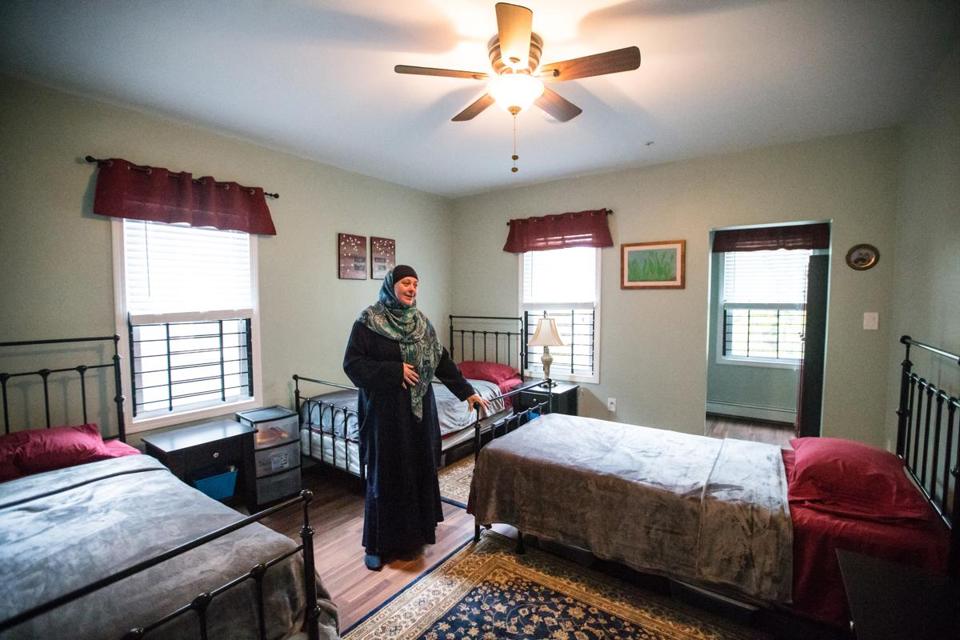
Malika MacDonald is director of the Amal Women’s Center, which provides shelter for Muslim women and children in need of temporary housing.

When I was working at the central bank, we had a Hubert Humphrey Fellow visit us from Bahrain. One aspect of America she was studying was homelessness. She said there was no homelessness in her country. She said families would never let it happen; they would take people in.

Having no way to know whether that was true in every case, I was nevertheless intrigued. Was it something about the culture in a Muslim country?

One thing I do know is that in this country, alas, Muslim women and children like other women and children, sometimes find themselves in need of temporary housing. That was the impetus for a new center in Boston, the brainchild of an Egyptian-American college student.

Lisa Wangsness wrote about the initiative at the Boston Globe. Here is the part of the article that touched me the most.

“The project began six years ago, when Mona Salem, then a 20-year-old Egyptian-American college student, was trying to help a young Muslim friend who wanted to escape a foster home where she felt unsafe.

“Salem thought her friend would feel most comfortable in a Muslim-run shelter for women, but soon discovered none existed in Boston. So she began raising money to start one, and teamed up with [Malika MacDonald, the national director of the Islamic Circle of North America Relief USA’s Transitional Housing Network.] …

“Donations poured in from every direction. Dishes and pots and pans for the kitchen arrived from families affiliated with the Framingham and Wayland mosques. A man offered his Home Depot credit card to pay for lighting. Various groups and individuals sponsored each of the bedrooms, furnishing them with bright-colored bedding and art for the walls.

“Salem said she was near tears when she saw the finished house the other day.

“ ‘That place was a dump when we first got there, and now it’s beautiful — absolutely beautiful,’ she said. ‘That says a lot about . . . how strong we are as a community to help one another.’

“Help arrived from beyond the local Muslim community as well. An artist in Texas sent an Arabesque Moroccan ceiling medallion for the living room. A board member of the interfaith group Kids4Peace Boston donated a lacquered dining table and banquette. The founder of a planned shelter for transgender people in Indiana sent along bathroom towels, MacDonald said.”

I suspect many of those donors know what it’s like to feel different and look for comfort.

More at the Boston Globe, here.

Read Full Post »

So much anxiety about “the others” these days, anxiety that is seldom based on knowing even one of those others!

That is why I found this story by Steve Annear in the Boston Globe so charming and important.

He wrote, “Mona Haydar knew that when she set up two signs outside a Cambridge library [in December] with the words ”Ask a Muslim’ and ‘Talk to a Muslim,’ she had to be prepared for strong opinions about her faith.

“But the Duxbury resident said the impromptu experiment led to a meaningful series of conversations about religion, politics, history, and sports. It was an experience that, even in a time of prejudice against Muslims, showed Haydar that ‘the community is loving.’

“ ‘We just wanted to talk to people and we didn’t see any harm in doing that,’ said Haydar. ‘We are just normal people. There is definitely fear [in America], and I want to talk about it, because it’s actually misplaced and misguided — I am really nice!’

“Holding a box of doughnuts and cartons of coffee from Dunkin’ Donuts, and wearing a traditional hijab, Haydar last Friday and Saturday planted herself alongside her husband, Sebastian Robins, outside the library for several hours each day.

“Haydar said that over the two days they spoke with more than 100 strangers. The initiative, she said, was inspired by a similar act, called Talk to an Iraqi, that was featured on ‘This American Life’ in 2008.” More here.

I’d say she gave a gift to the Cambridge populace, which although considered open-minded, is not monolithic. And she seems to have received a gift in return: the satisfaction of initiating an important conversation and of confirming that the majority of people are kind.

Photo: Mona Haydar
Mona Haydar and her husband, Sebastian Robins, stood outside of a library in Cambridge.

Read Full Post »

Older Posts »