Feeds:
Posts
Comments

Posts Tagged ‘nature’


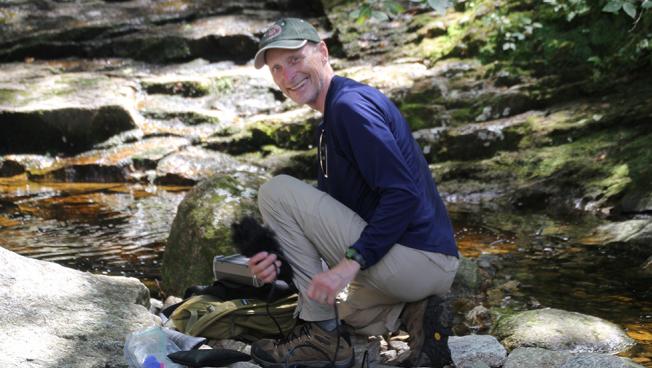
Photo: Ginny Fordham
Berklee professor Steve Wilkes gathers sound at the White Mountain National Forest in New Hampshire. A recent project also captures Cape Cod.

Berklee professor Steve Wilkes and his collaborator David Masher have created some amazing soundscapes that capture the music of the natural world. Their work is described at the Hear the Forest website:

“Hear The Forest is an effort to initiate the process of building an aural-map – essentially, an audio time capsule – of New Hampshire’s White Mountain National Forest.  Supported by the National Forest Service and the Arts Alliance of Northern New Hampshire, this work will be performed by Berklee College of Music Professor, Steve Wilkes, as part of the 2017 Artist-in-residence program. …

“In addition to his field ecology and sound recording work, Wilkes will offer several public programs, including workshops that will provide residents and visitors with information on contributing to the ongoing sound file collection on the White Mountain National Forest. …

“ ‘I hope to be able to express and communicate to others this profound sense of inspiration – and to help everyone slow down a bit, and really listen,’ ” Wilkes says. More here.

You might also like hear an interesting interview with Wilkes that was broadcast at WGBH. The station provides this intro: “Nature is rich with dynamic sounds, like the roaring of waterfalls or the sweetness of birdsong.

“Berklee professor Steve Wilkes … captured the still whispers of buzzing bugs, the martian-like atmosphere at the summit of Mount Washington and the laughter of children enjoying the park — all essential sounds to create a ‘digital aural map’ of the forest, which he calls Hear The Forest. Callie Crossley speaks with Wilkes about his project.” More here.

I like the idea of encouraging others to contribute their own nature recordings to the White Mountains project. It feels like something anyone could do if they just paid attention — and paying attention is the whole idea.

Read Full Post »

093017-empty-stage

092917-Play-at-Old-Manse


093017-path-made-of-apples


When we lived in Minneapolis in the late 1990s, we would tell friends back in Massachusetts that we thought the Twin Cities theater scene was the best anywhere. They would say, “You mean the Guthrie?”

No, actually. We meant the many small, more-experimental theater groups that popped up everywhere.

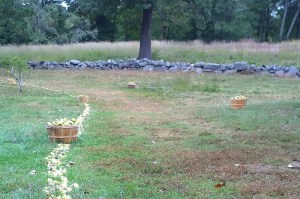
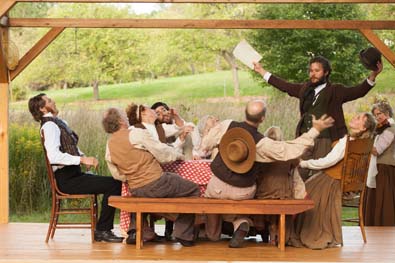
Friday we were introduced to new one, TigerLion, which performed an outdoor “walking” play about Henry David Thoreau and Ralph Waldo Emerson at the Old Manse. Above you see one of several stages and the warm-up team performing before the show. (Note also that the audience’s path to the next stage set is lined with apples.)

The highly physical acting style kept everyone from toddlers to adults entertained as did the whacky sound effects, wild locomotive and cabin-in-the-woods creations, and energetic choruses.

When the Royal Shakespeare Theater decided in the late 1970s that the best way to convey the uniqueness of Dickens was to recite chunks of his narration (as in their production of Nicholas Nickleby), I think they changed theater forever. The inventive TigerLion expands on the use of a chorus, at one point having it speak the conversation of the pantomiming protagonists — even the crunching of the apples they eat. (Really funny.)

The troupe wants audiences to delight in nature and save the planet from unchecked exploitation. From the website: “We celebrate human wisdom and the spirit of nature through creative works that awaken, inform, and delight. …

TigerLion Arts presents Nature, the mythic telling of Emerson and Thoreau’s mutual love affair with the natural world.  …

“A professional ensemble of actors takes the audience on a journey through the natural environment as scenes unfold around them. Bagpipes, ancient flutes, drums and rich choral arrangements are intricately woven into the experience. …

“This original work is collaboratively created with writer/actor Tyson Forbes, a direct descendant of Ralph Waldo Emerson.

“In today’s world, we are so estranged from our natural environment, and at TigerLion Arts, we feel that humankind must reconnect with nature in order to survive.  As oil spills into our oceans, as we race through our lives, as we look further and further outside ourselves for the answers, it is our hope that Nature can be a catalyst for our collective healing.”

More.

Photo: TigerLion
Energetic Minneapolis theater group recreating the interactions of Henry David Thoreau and Ralph Waldo Emerson.

201401

Read Full Post »


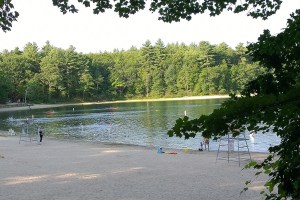
On an impossibly beautiful summer morning, Kristina and I decided to take a walk around Walden Pond, made famous by 19th century environmentalist and thinker Henry David Thoreau.

When we got to the parking lot, we were surprised to see how many cars were already there at 7:30 — people coming to walk, swim, snorkel, sit on the beach, and just enjoy nature.

Kristina was an ideal guide as she had just been to the pond the week before with other Thoreau fans celebrating his 200th birthday. She also has done a lot of art and writing and diving there over the years and was friends with the man who found the site of Thoreau’s small cabin, Roland Robbins.

On our walk, we noticed temporary signs from an alphabet book about Thoreau written at the Thoreau Farm Writers Retreat. The book is just one of many examples of the ways people make the venerated promoter of civil disobedience their own. Kristina mentioned there is even a Swedish Thoreauvian from Göteborg studying the soil around the cabin site, including the outhouse soil!

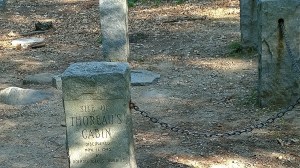
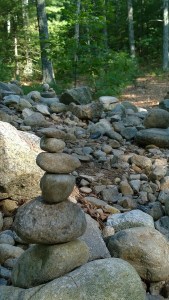
Thoreau’s friend Bronson Alcott started the tradition of leaving memorial stones at the site. Today the pile is testimony to the many thousands of visitors who wanted to pay their respects.

072317-Thoreau-alphabet-book

072317-Thoreau-book-letter-Z


072317-Thoreau-cabin-site

072317-Thoreau-cairn-at-Walden


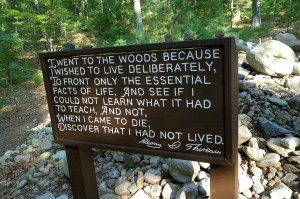
072317-to-live-deliberately

Read Full Post »

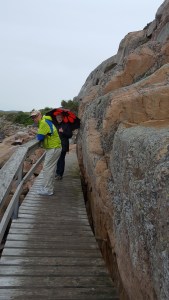
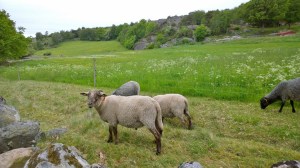
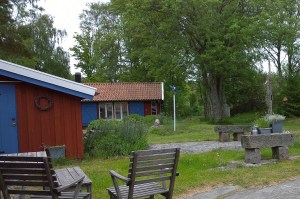
This morning Stuga 40 took us on a walk around breathtaking Veddö. I can take time now to give you only a few pictures as we are headed out again, but you may expect more photos in the days to come. Stuga 40 took the beautiful view of a red house with the harbor behind it.

060217-not-the-right-place-for-umbrellas

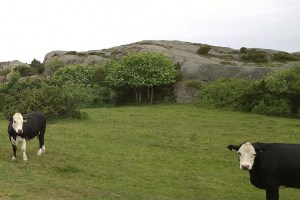
060217-cows-graze-Swedish-nature-preserve


060217-sheep-in-Sweden

060217-beautifulSwedish-west-coast


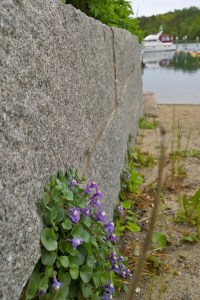
060217-flowers-beside-harbor-in-Sweden

060217-guest-buildings-Sweden


060217-formerly-a-Swedish-farm

Read Full Post »

Photographic Themes

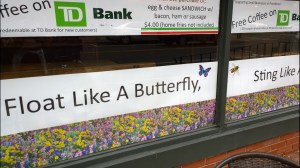
I’m starting to notice that my photos (all taken on my mobile phone) have recurrent themes. Today’s nine pictures reflect a few of those interests: words on signs, shadows, plants, nature, art. Either I’m in a rut, or I’m going to get really good at a few themes.

090716-float-like-butterfly

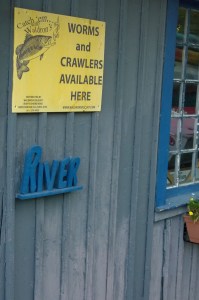
090216-worms-and-crawlers-concord


090716-outcasts-outlast

091716-umbrella-center-concord


090516-volunteer-flowers-concord-ma

091116-growing-thru-wall


091516-danish-window-ornament-shadow

091616-clouds-over-supermarket


090216-rr-reflection-concord-ma

Read Full Post »

Do you know about the “Great Animal Orchestra“? Rachel Donadio at the NY Times has the story.

“The bioacoustician and musician Bernie Krause has been recording soundscapes of the natural world since 1968, from coral reefs to elephant stamping grounds to the Amazonian rain forest.

“Now, Mr. Krause’s recordings have become part of an immersive new exhibition at the Cartier Foundation here called ‘The Great Animal Orchestra.’ Named after Mr. Krause’s 2012 book of the same title, the show opens on Saturday and runs through Jan. 8, [2017].

“At its heart is a work by the London-based collective United Visual Artists, who have transformed Mr. Krause’s recordings of the natural world into 3-D renderings. Imagine stepping into a soundproofed black-box theater whose walls spring to life with what look like overlapping electrocardiograms, representing different species’ sounds. …

“The installation includes recordings Mr. Krause made in Algonquin Park in Ontario, where he found himself caught between two packs of wolves; in the Yukon Delta, a subarctic area in Alaska, where birds from different continents converge; and in the Central African Republic, where he heard monkeys. He also captured the cacophony of the Amazon, and whales off Alaska and Hawaii. …

“Mr. Krause is a polymathic musician who performed with the folk group the Weavers and helped introduce the Moog synthesizer to pop music — including songs by the Doors and Van Morrison — and film scores. He hears natural sounds with a studio producer’s ear.”

Read more here about Krause and his efforts to get the word out on the disappearing habitats of his featured animals.

This article inspires me to pay better attention to the music of the natural world on my morning walks. So much beauty goes right over my head.

Photo: Tim Chapman
Bernie Krause on St. Vincent Island, Fla., in 2001.
 

Read Full Post »


On my walk this morning I saw an official-looking sign on a fence in a residential neighborhood. The sign read “Certified Wildlife Habitat.”

I had to look it up when I got home. The website of the National Wildlife Federation says, “Wildlife needs our help. … You can invite wildlife back to your own yard and neighborhood by planting a simple garden that provides habitat. …

“Providing a sustainable habitat for wildlife begins with your plants. That’s why we call it  a wildlife habitat ‘garden.’ When you plant the native plant species that wildlife depend on, you create habitat and begin to restore your local environment. Adding water sources, nesting boxes and other habitat features enhances the habitat value of your garden to wildlife. By choosing natural gardening practices, you make your yard a safe place for wildlife. …

“Here is what your wildlife garden should include:

“Food: Native plants provide nectar, seeds, nuts, fruits, berries, foliage, pollen and insects eaten by an exciting variety of wildlife. Feeders can supplement natural food sources.

“Water: All animals need water to survive and some need it for bathing or breeding as well.

“Cover: Wildlife needs places to find shelter from bad weather and places to hide from predators or stalk prey.

“Places to Raise Young: Wildlife needs resources to reproduce and keep their species going. Some species have totally different habitat needs in their juvenile phase than they do as adults.

“Sustainable Practices: How you manage your garden can have an effect on the health of the soil, air, water and habitat for native wildlife as well as the human community.

“Already have all these elements in your wildlife garden? Certify today!” And there’s a box to click on if you think you are ready.

Now I’m wondering if the chipmunk on our back steps today thinks our yard could qualify. It’s a small yard, so not much cover. And we’d need to provide water. Hmm.

More at the National Wildlife Federation, here.

Read Full Post »

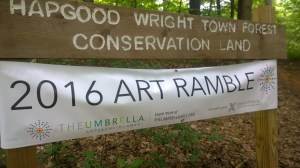
At first I saw no art. I didn’t enter the woods where the sign was, and I thought, “Maybe I have the wrong time.”

But the Hapgood Wright Town Forest is a work of art in itself, and I was up for a walk. The hilly pine-needle paths, the pond, the sounds of bullfrogs, wind in the trees, unfamiliar bird calls — all lovely. Then bit by bit, I began noticing pieces of art, part of the 2016 Art Ramble, which can be seen in the woods until September 5. How good of artists to do this!

The Umbrella Community Arts Center explains on its website, “This collaborative project with the Concord Department of Natural Resources celebrates all the arts. Sculpture, poetry, dance, and dramatic readings encourage the intersection of art, nature, and community in a historic natural setting.

“The arts offer a doorway for exploring our relationship with nature and place. An exhibit map will guide you through the exhibit at your own pace. And our calendar of special events and activities offers numerous opportunities to engage with the artists and with nature along the trails.

“We invite you to visit often, reflect, and play.  Share your experiences via writing and drawing in the journals provided along the trail.  Or make your own art using natural materials in the forest.”

[Nancy, this sounds like an event you organized last year.]

Curator Ursula Ziegler says, “It’s been a rumble-tumble-fantastic-interesting road, and it has already exposed us to so many interesting-important dialogues, thoughts, and ideas. Beyond the visible part of art works in a public space, there is an equally important but less visible part, which are the conversations, networks, and structures that are created within our local community and beyond.”

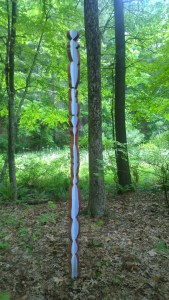
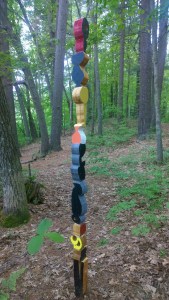
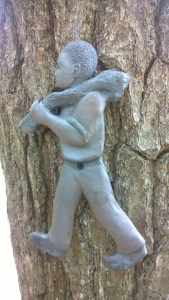
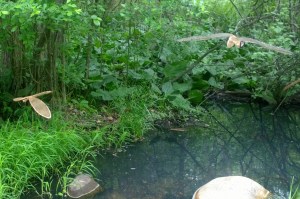
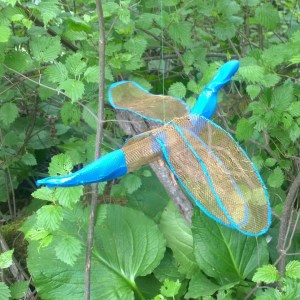
I took some pictures of ceramic toadstools, a QR code I don’t know how to use that would have identified an artist, sapling-like totems (or totem-like saplings), a small sculpture of a boy attached to a tree, fluttery dragonflies and the sign I missed on entering.

060316-toadstools-town-forest-art

060316-QR-code-town-forest-art


060316-art-blends-in-at-town-forest

060316-totem-at-town-forest-art


060316-boy-on-tree-art

060316-dragonflies-town-forest-art


6tag-060316-dragonfly

060316-town-forest-art

Read Full Post »

Sam Borden at the NY Times had a cool story yesterday about a jack-of-all-trades performer who never got much attention — until his ability to mimic the sounds of nature turned him into an overnight sensation.

According to Borden, Gennady Tkachenko-Papizh, 52, finally got attention in March.

“That was when, while sitting at a cafe [in Berlin] checking his smartphone, he saw that Miss Arab U.S.A. — who is a 22-year-old Brooklyn-born Syrian named Fabiola al-Ibrahim — had, for some reason, posted to her Facebook page a video of Mr. Tkachenko-Papizh competing on a talent show in the former Soviet republic of Georgia. ‘This will take you to another world!’ she promised of the link, which leads to about three minutes of Mr. Tkachenko-Papizh vocalizing the sounds of crickets, bird wings rustling, water dripping and hyper-dramatized operatic chanting.
“The show, ‘Georgia’s Got Talent,’ is about what you might expect from spectacles like this anywhere … Yet Mr. Tkachenko-Papizh’s performance, which he began by solemnly intoning, ‘Let us try to feel what the Mother Earth wants to tell us,’ resonated more deeply. …

“The video on Miss Arab U.S.A.’s page has logged more than 70 million views and inspired more than 102,000 comments — mostly unbridled encomiums.”

Despite the change in Tkachenko-Papizh’s life, says Borden, he is not becoming a prima donna. “He lives here with his wife, Larissa Porkhimovich, who is a financial auditor, and their two young children (he also has an older son from a previous relationship), and he said that he is most interested in simply harnessing ‘this gift I have, which has a magical effect.’

“It has taken some adjustment for his wife. ‘I think he really likes testing, trying things,’ she said. ‘It can be a little strange — sometimes I am in the house and I will just hear sounds, like a bird flying, but it is inside. But that is who he is.’ ”

More here.

Photo: Gordon Welters for The New York Times
Gennady Tkachenko-Papizh said he hopes to travel to London soon to work on recording an album. 

Read Full Post »

I’ve been learning a lot lately from reading ecoRI’s Tim Faulkner. Recently he wrote about entrepreneurial approaches to taking carbon out of the atmosphere. He notes that one of the more ironic opportunities, according to Thorne Sparkman of investor Slater Technology Fund, is through the oil and gas industry, which uses CO2 in extraction and now can at least bury it instead of releasing it.

“Finding ways of supplying some [CO2] from existing carbon sources is a one of the main markets in the emerging, and broadly defined, field of carbon capture and storage (CCS),” writes Faulkner.

“ ‘CO2 is everywhere, but it has not really been harnessed,’ said Emily Cole, co-founder of Liquid Light, a New Jersey-based startup that wants to reduce greenhouse gasses by transforming carbon dioxide into industrial chemicals. …

Enhanced Energy Group of West Kingstown is also looking at cutting emissions from the oil and gas industry, while increasing production. Its founder, Paul Dunn, spent 25 years designing engines for the Navy, some of which were emissions free.  He’s now building power sources that sequester CO2 before it vents into the air. …

Bioprocess Algae is converting unwanted CO2 into algae for fish and animal feed, and as nutritional supplements. The company recently relocated its headquarters from Portsmouth, R.I., to Shenandoah, Iowa, to be closer its CO2 supply source, a corn-fueled ethanol plant.”

Chief technology officer Toby Ahrens says that sequestering carbon dioxide in algae may not have large-scale prospects, but so far, it is one of the few profitable opportunities in this arena. More at ecoRI, here.

Photo: iStock
Trees are one way to sequester carbon.

Read Full Post »

You know that Adam named the animals and T.S. Eliot the cats. Now Maria Popova at Brain Pickings delves into a Native American author’s book on the naming of mosses and other aspects of the natural environment.

“To name a thing is to acknowledge its existence as separate from everything else that has a name,” says Popova, “to confer upon it the dignity of autonomy while at the same time affirming its belonging with the rest of the nameable world; to transform its strangeness into familiarity, which is the root of empathy. …

“And yet names are words, and words have a way of obscuring or warping the true meanings of their objects. ‘Words belong to each other,’ Virginia Woolf observed in the only surviving recording of her voice, and so they are more accountable to other words than to the often unnameable essences of the things they signify.

“That duality of naming is what Robin Wall Kimmerer, a Thoreau of botany, explores with extraordinary elegance in Gathering Moss: A Natural and Cultural History of Mosses (public library) — her beautiful meditation on the art of attentiveness to life at all scales.

“As a scientist who studies the 22,000 known species of moss — so diverse yet so unfamiliar to the general public that most are known solely by their Latin names rather than the colloquial names we have for trees and flowers — Kimmerer sees the power of naming as an intimate mode of knowing. As the progeny of a long lineage of Native American storytellers, she sees the power of naming as a mode of sacramental communion with the world. …

“Drawing on her heritage — her family comes from the Bear Clan of the Potawatomi — Kimmerer adds:

In indigenous ways of knowing, all beings are recognized as non-human persons, and all have their own names. It is a sign of respect to call a being by its name, and a sign of disrespect to ignore it. Words and names are the ways we humans build relationships, not only with each other, but also with plants.

[…]

Intimate connection allows recognition in an all-too-often anonymous world… Intimacy gives us a different way of seeing.

More at Brain Pickings.

At the suggestion of Brain Pickings, I am deep into a biography of Beatrix Potter and her scientific work drawing and learning the names of mushrooms. Like mosses, they are multitudinous but generally lacking common names.

Photo: Robin Wall Kimmerer

Read Full Post »

Someone posted a chair by Jeffro Uitto on Facebook, and I had to know more.

Uitto’s About page says, “On the Washington coast there’s a place where nature’s leftovers get a second chance at stardom. The place is Knock on Wood, and Jeffro Uitto is the artist making the magic happen.

“Since high school Jeffro has been creating with wood, his favorite medium. This stuff isn’t from a lumber mill either. Each piece is found and rescued from the shores of Tokeland, the banks of Smith Creek, or the valleys between the Willapa Hills. In due time the varied sticks, slabs, and roots are cured and then found a fitting home. …

“Not everything is built right in the shop though. Clients have brought Jeffro on site to build one-off creations in places like Alaska and Hawaii.

“Jeffro’s shop is located near the historic Tokeland Hotel, a stone’s throw from Willapa Bay. … Visitors are surprised to see that many of Jeffro’s tools are hand made by the artist himself. After you get to know him, this isn’t surprising at all.”

Be sure to check out the amazing sculptures at Jeffro Uitto’s website, here.

Photos: Jeffro Uitto

Read Full Post »

One of the websites I check for cool stories is the one for Living on Earth, an excellent environmental news magazine from Public Radio International. In a recent episode, host Steve Curwood interviewed the author of a new book on the rare Asian “unicorn.”

“CURWOOD: Deep in the forests of southeast Asia lives a creature nicknamed the Asian Unicorn, and it’s nearly as rare as the mythical creature, as well. … And it is right at the edge of extinction. Writer William deBuys accompanied conservationists on an expedition to study the saola, and his book The Last Unicorn lays out the story and the challenges of saving a species so rare. …

“DEBUYS: The saola was discovered to Western science only in 1992. Local villagers in the habitat of the saola [such as Laos] have known it was there forever, but this new discovery was made when scientists saw a rack of horns on the wall of a hunter’s shack. And these horns are the most distinctive features of the saola. They’re long, almost straight, and beautifully tapered to a very sharp point, so that when the saola stands profile, the two horns in perspective merge into one, and it appears to have only one horn, it appears to be a unicorn. Perhaps only dozens to a few hundred still exist, and there are none in captivity. …

“CURWOOD: Tell us what it’s like there in the forest. What would you hear in the forest?

“DEBUYS: Oh, the music of the forest was constantly inspiring and entertaining. The birdcalls never ceased. We heard laughing thrushes, and we heard drongos and Indian cuckoos and all kinds of birds with really distinctive calls. There was a kind of chorus behind us all the time.

“But the most marvelous thing occurred at first light, almost every morning. We heard the calls of gibbons. Gibbons are small apes, beautiful, slender animals that swing through the trees, so gracefully, and their calls are ethereal. And they call, male to female and female to male, in mated couples, and you can think of it as almost a kind of love song that you hear echoing through the forest. …

“Our expedition basically had three purposes: one was to look for saola habitat and for saola in that habitat. A second was to evaluate the poaching pressure on the landscape. And a third was to conduct a kind of conservation diplomacy in the villages of the forest. …

“CURWOOD: How many saola did you see?

“DEBUYS: Well, we saw none. No Westerner has yet seen a saola in the wild, and the joke is that saola are so like unicorns, and everybody knows that in the Middle Ages, the only people who had an outside chance of seeing a unicorn had to be absolutely pure of heart. And Robichaud and I joke that if that applies also to saola, then we were disqualified from the get-go.” More here.

Note the thoughtful discussion at Living on Earth about the rights and sensitivities of native peoples where the conservation efforts are focused.

Photo: William Robichaud / Wildlife Conservation Society
The first adult saola to be observed outside of its habitat.

Read Full Post »

John-E-tughole

An article by Gretchen Reynolds at the New York Times “Well” blog details new research on the stress-reducing effects of walking in nature.

Reynolds writes, “City dwellers [have] a higher risk for anxiety, depression and other mental illnesses than people living outside urban centers …

“Various studies have found that urban dwellers with little access to green spaces have a higher incidence of psychological problems than people living near parks and that city dwellers who visit natural environments have lower levels of stress hormones immediately afterward than people who have not recently been outside.

“But just how a visit to a park or other green space might alter mood has been unclear. Does experiencing nature actually change our brains in some way that affects our emotional health? That possibility intrigued Gregory Bratman, a graduate student at the Emmett Interdisciplinary Program in Environment and Resources at Stanford University.

In his “new study, which was published last week in Proceedings of the National Academy of Sciences, Mr. Bratman and his collaborators decided to closely scrutinize what effect a walk might have on a person’s tendency to brood. … Such rumination [is] strongly associated with increased activity in a portion of the brain known as the subgenual prefrontal cortex.”

The results: “As might have been expected, walking along the highway had not soothed people’s minds. Blood flow to their subgenual prefrontal cortex was still high and their broodiness scores were unchanged. But the volunteers who had strolled along the quiet, tree-lined paths showed slight but meaningful improvements in their mental health, according to their scores on the questionnaire. They were not dwelling on the negative aspects of their lives as much as they had been before the walk.” More here.

As we used to chant to our overexcited dog when we picked her up after a grooming, “I’m calm, you’re calm.”

Try out this Derek Wolcott poem for your walk in the woods. It is read on SoundCloud by my husband’s college classmate, Jon Kabat-Zinn.

Read Full Post »

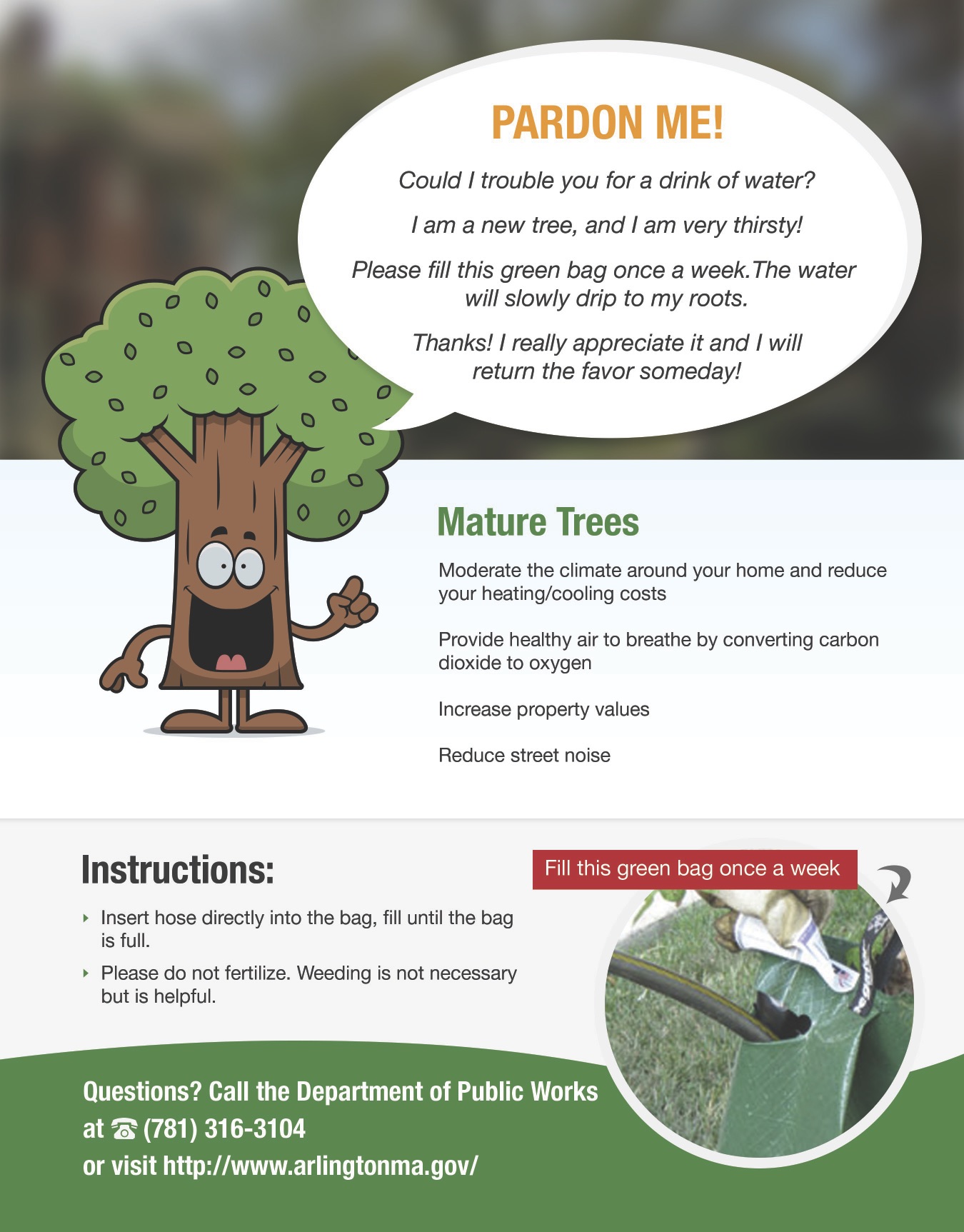
John (founder of www.mistersmartyplants.com) is a member of Arlington Tree Committee. He figured out a way to use Google Maps to identify heritage trees in town and got a sign made to encourage residents to adopt a thirsty tree.

Now that so many urban and suburban areas have taken down their trees to make construction projects easier, people are realizing what they’re missing.

Many have noted that trees play a role in residents’ mental and physical health.

University of Washington research social scientist Kathy Wolf has studied the health aspects and also has economic arguments. She has shown that an “urban canopy”  makes local shopping more agreeable for customers and lends vitality to downtown business districts. Read what she has learned, here.

Chris Mooney at the Washington Post notes other research. “In a new paper published Thursday, a team of researchers present a compelling case for why urban neighborhoods filled with trees are better for your physical health. The research appeared in the open access journal Scientific Reports.

“The large study builds on a body of prior research showing the cognitive and psychological benefits of nature scenery — but also goes farther in actually beginning to quantify just how much an addition of trees in a neighborhood enhances health outcomes. The researchers, led by psychologist Omid Kardan of the University of Chicago, were able to do so because they were working with a vast dataset of public, urban trees kept by the city of Toronto — some 530,000 of them, categorized by species, location, and tree diameter — supplemented by satellite measurements of non-public green space (for instance, trees in a person’s back yard). …

“Controlling for income, age and education, we found a significant independent effect of trees on the street on health,” said Marc Berman, a co-author of the study and also a psychologist at the University of Chicago. “It seemed like the effect was strongest for the public [trees]. Not to say the other trees don’t have an impact, but we found stronger effects for the trees on the street.”

Thank you to my high school classmate, Susie from Cleveland, for putting the Washington Post article on Facebook.

071115-Arlington-Tree-Watering

Read Full Post »

« Newer Posts - Older Posts »