Feeds:
Posts
Comments

Posts Tagged ‘nature’

Someone posted a chair by Jeffro Uitto on Facebook, and I had to know more.

Uitto’s About page says, “On the Washington coast there’s a place where nature’s leftovers get a second chance at stardom. The place is Knock on Wood, and Jeffro Uitto is the artist making the magic happen.

“Since high school Jeffro has been creating with wood, his favorite medium. This stuff isn’t from a lumber mill either. Each piece is found and rescued from the shores of Tokeland, the banks of Smith Creek, or the valleys between the Willapa Hills. In due time the varied sticks, slabs, and roots are cured and then found a fitting home. …

“Not everything is built right in the shop though. Clients have brought Jeffro on site to build one-off creations in places like Alaska and Hawaii.

“Jeffro’s shop is located near the historic Tokeland Hotel, a stone’s throw from Willapa Bay. … Visitors are surprised to see that many of Jeffro’s tools are hand made by the artist himself. After you get to know him, this isn’t surprising at all.”

Be sure to check out the amazing sculptures at Jeffro Uitto’s website, here.

Photos: Jeffro Uitto

Read Full Post »

One of the websites I check for cool stories is the one for Living on Earth, an excellent environmental news magazine from Public Radio International. In a recent episode, host Steve Curwood interviewed the author of a new book on the rare Asian “unicorn.”

“CURWOOD: Deep in the forests of southeast Asia lives a creature nicknamed the Asian Unicorn, and it’s nearly as rare as the mythical creature, as well. … And it is right at the edge of extinction. Writer William deBuys accompanied conservationists on an expedition to study the saola, and his book The Last Unicorn lays out the story and the challenges of saving a species so rare. …

“DEBUYS: The saola was discovered to Western science only in 1992. Local villagers in the habitat of the saola [such as Laos] have known it was there forever, but this new discovery was made when scientists saw a rack of horns on the wall of a hunter’s shack. And these horns are the most distinctive features of the saola. They’re long, almost straight, and beautifully tapered to a very sharp point, so that when the saola stands profile, the two horns in perspective merge into one, and it appears to have only one horn, it appears to be a unicorn. Perhaps only dozens to a few hundred still exist, and there are none in captivity. …

“CURWOOD: Tell us what it’s like there in the forest. What would you hear in the forest?

“DEBUYS: Oh, the music of the forest was constantly inspiring and entertaining. The birdcalls never ceased. We heard laughing thrushes, and we heard drongos and Indian cuckoos and all kinds of birds with really distinctive calls. There was a kind of chorus behind us all the time.

“But the most marvelous thing occurred at first light, almost every morning. We heard the calls of gibbons. Gibbons are small apes, beautiful, slender animals that swing through the trees, so gracefully, and their calls are ethereal. And they call, male to female and female to male, in mated couples, and you can think of it as almost a kind of love song that you hear echoing through the forest. …

“Our expedition basically had three purposes: one was to look for saola habitat and for saola in that habitat. A second was to evaluate the poaching pressure on the landscape. And a third was to conduct a kind of conservation diplomacy in the villages of the forest. …

“CURWOOD: How many saola did you see?

“DEBUYS: Well, we saw none. No Westerner has yet seen a saola in the wild, and the joke is that saola are so like unicorns, and everybody knows that in the Middle Ages, the only people who had an outside chance of seeing a unicorn had to be absolutely pure of heart. And Robichaud and I joke that if that applies also to saola, then we were disqualified from the get-go.” More here.

Note the thoughtful discussion at Living on Earth about the rights and sensitivities of native peoples where the conservation efforts are focused.

Photo: William Robichaud / Wildlife Conservation Society
The first adult saola to be observed outside of its habitat.

Read Full Post »

John-E-tughole

An article by Gretchen Reynolds at the New York Times “Well” blog details new research on the stress-reducing effects of walking in nature.

Reynolds writes, “City dwellers [have] a higher risk for anxiety, depression and other mental illnesses than people living outside urban centers …

“Various studies have found that urban dwellers with little access to green spaces have a higher incidence of psychological problems than people living near parks and that city dwellers who visit natural environments have lower levels of stress hormones immediately afterward than people who have not recently been outside.

“But just how a visit to a park or other green space might alter mood has been unclear. Does experiencing nature actually change our brains in some way that affects our emotional health? That possibility intrigued Gregory Bratman, a graduate student at the Emmett Interdisciplinary Program in Environment and Resources at Stanford University.

In his “new study, which was published last week in Proceedings of the National Academy of Sciences, Mr. Bratman and his collaborators decided to closely scrutinize what effect a walk might have on a person’s tendency to brood. … Such rumination [is] strongly associated with increased activity in a portion of the brain known as the subgenual prefrontal cortex.”

The results: “As might have been expected, walking along the highway had not soothed people’s minds. Blood flow to their subgenual prefrontal cortex was still high and their broodiness scores were unchanged. But the volunteers who had strolled along the quiet, tree-lined paths showed slight but meaningful improvements in their mental health, according to their scores on the questionnaire. They were not dwelling on the negative aspects of their lives as much as they had been before the walk.” More here.

As we used to chant to our overexcited dog when we picked her up after a grooming, “I’m calm, you’re calm.”

Try out this Derek Wolcott poem for your walk in the woods. It is read on SoundCloud by my husband’s college classmate, Jon Kabat-Zinn.

Read Full Post »

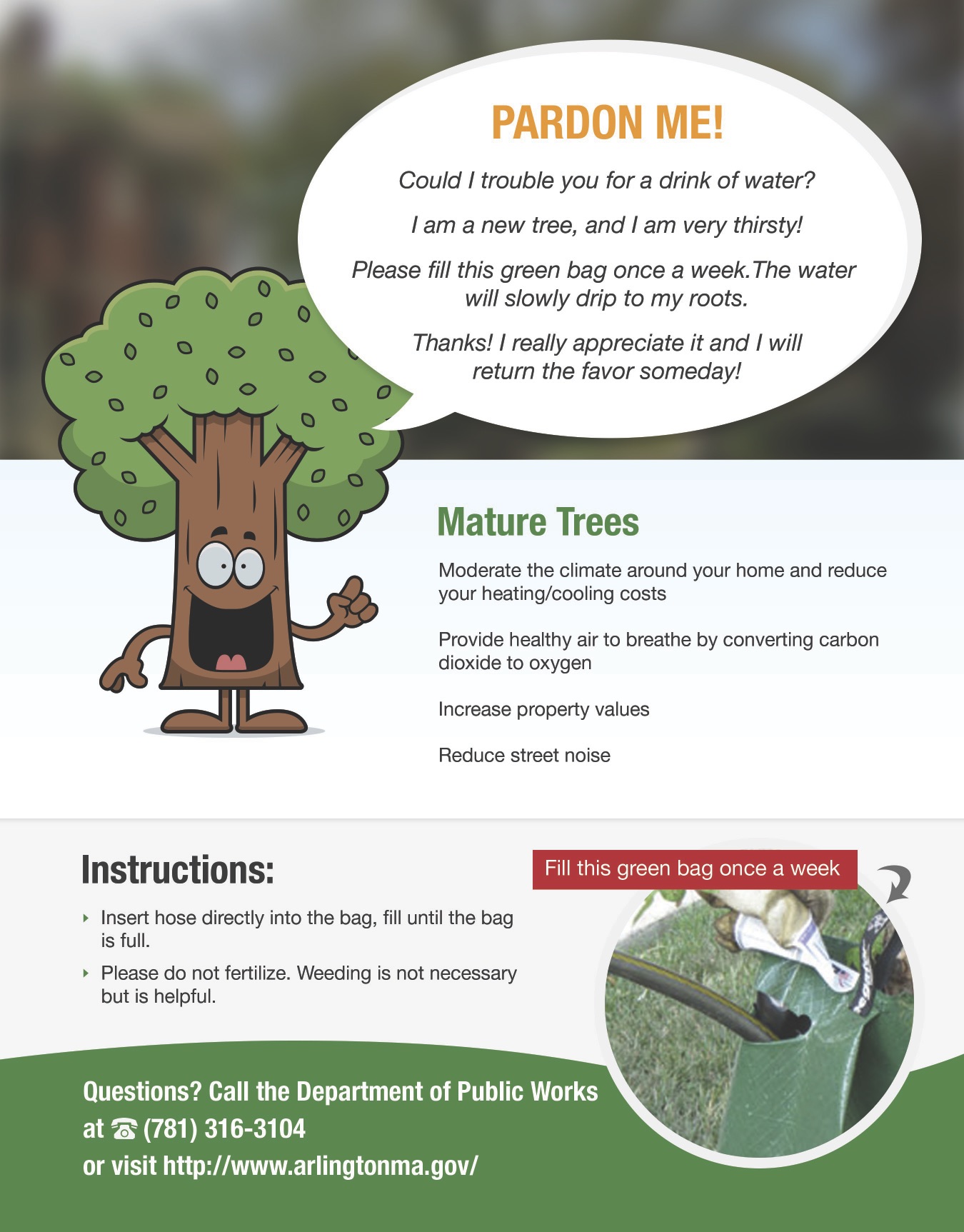
John (founder of www.mistersmartyplants.com) is a member of Arlington Tree Committee. He figured out a way to use Google Maps to identify heritage trees in town and got a sign made to encourage residents to adopt a thirsty tree.

Now that so many urban and suburban areas have taken down their trees to make construction projects easier, people are realizing what they’re missing.

Many have noted that trees play a role in residents’ mental and physical health.

University of Washington research social scientist Kathy Wolf has studied the health aspects and also has economic arguments. She has shown that an “urban canopy”  makes local shopping more agreeable for customers and lends vitality to downtown business districts. Read what she has learned, here.

Chris Mooney at the Washington Post notes other research. “In a new paper published Thursday, a team of researchers present a compelling case for why urban neighborhoods filled with trees are better for your physical health. The research appeared in the open access journal Scientific Reports.

“The large study builds on a body of prior research showing the cognitive and psychological benefits of nature scenery — but also goes farther in actually beginning to quantify just how much an addition of trees in a neighborhood enhances health outcomes. The researchers, led by psychologist Omid Kardan of the University of Chicago, were able to do so because they were working with a vast dataset of public, urban trees kept by the city of Toronto — some 530,000 of them, categorized by species, location, and tree diameter — supplemented by satellite measurements of non-public green space (for instance, trees in a person’s back yard). …

“Controlling for income, age and education, we found a significant independent effect of trees on the street on health,” said Marc Berman, a co-author of the study and also a psychologist at the University of Chicago. “It seemed like the effect was strongest for the public [trees]. Not to say the other trees don’t have an impact, but we found stronger effects for the trees on the street.”

Thank you to my high school classmate, Susie from Cleveland, for putting the Washington Post article on Facebook.

071115-Arlington-Tree-Watering

Read Full Post »

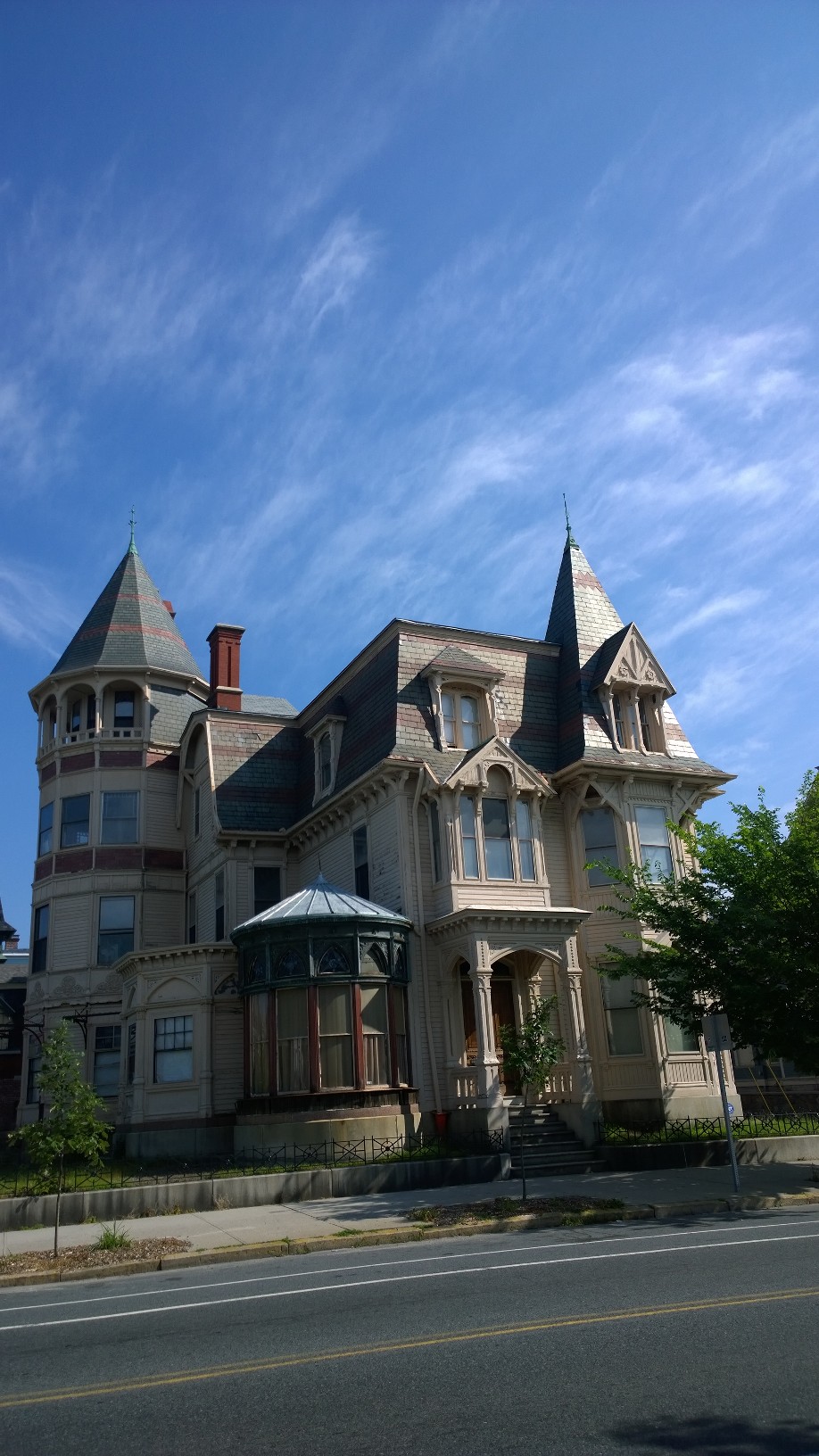
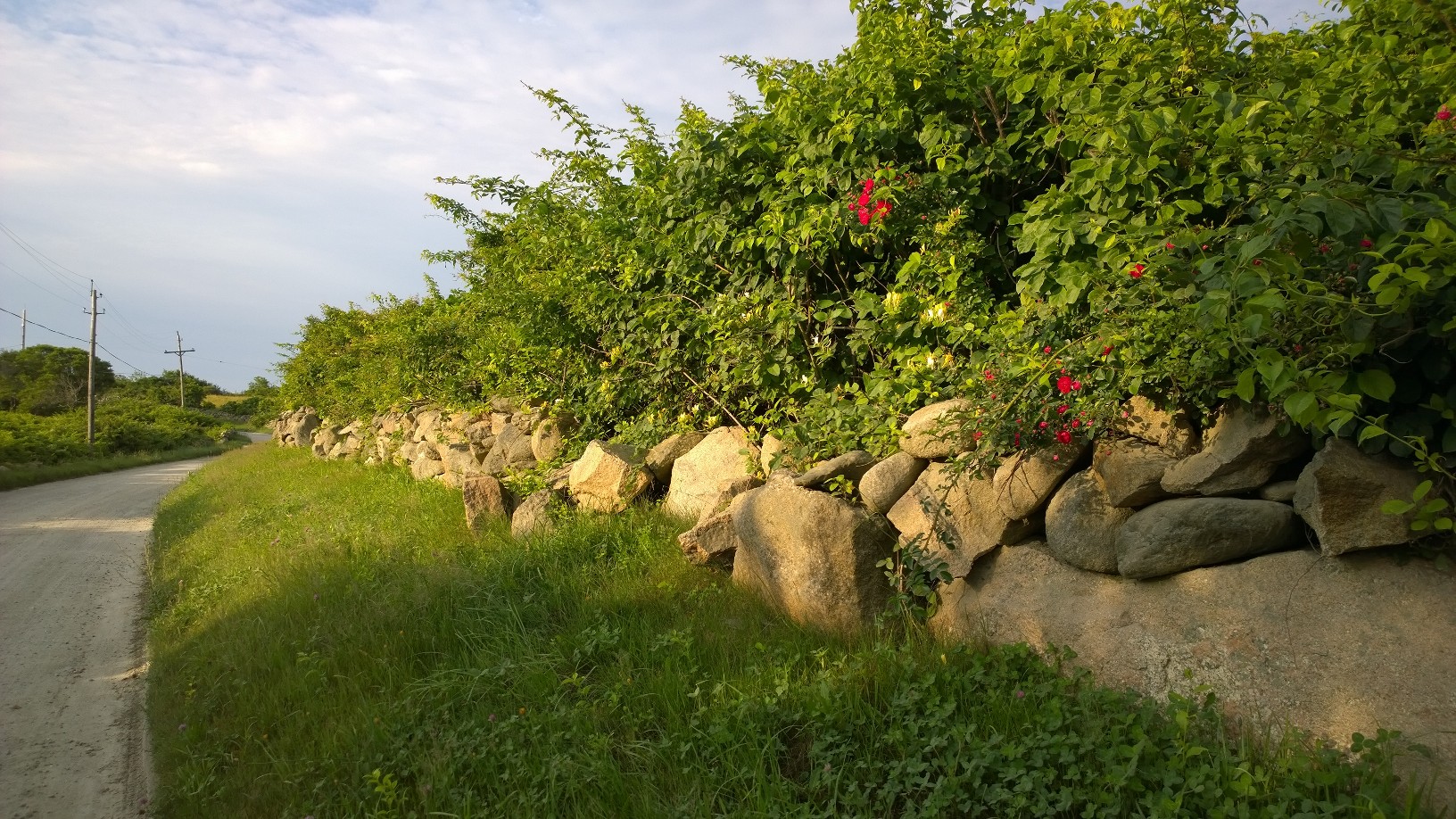
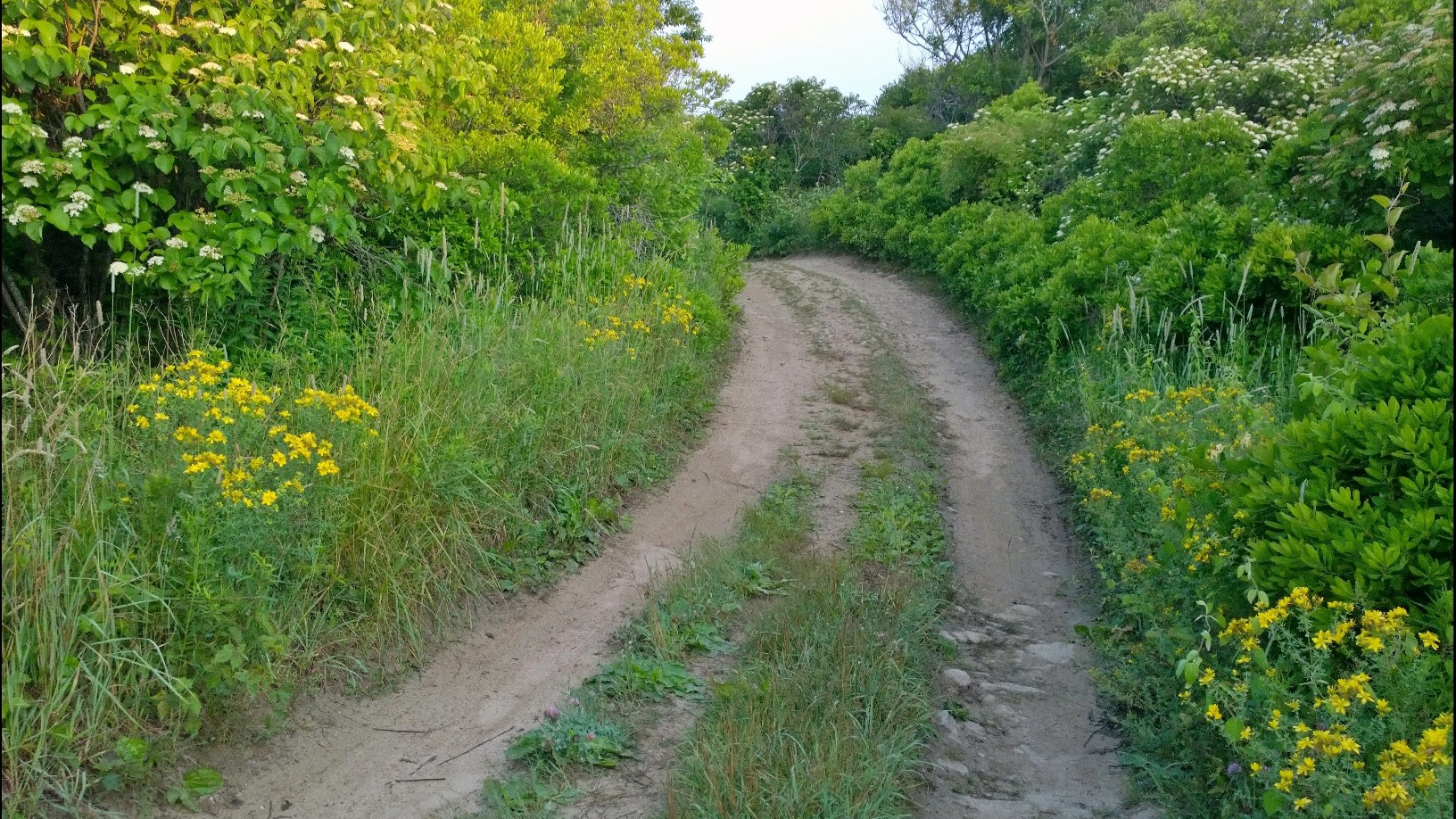
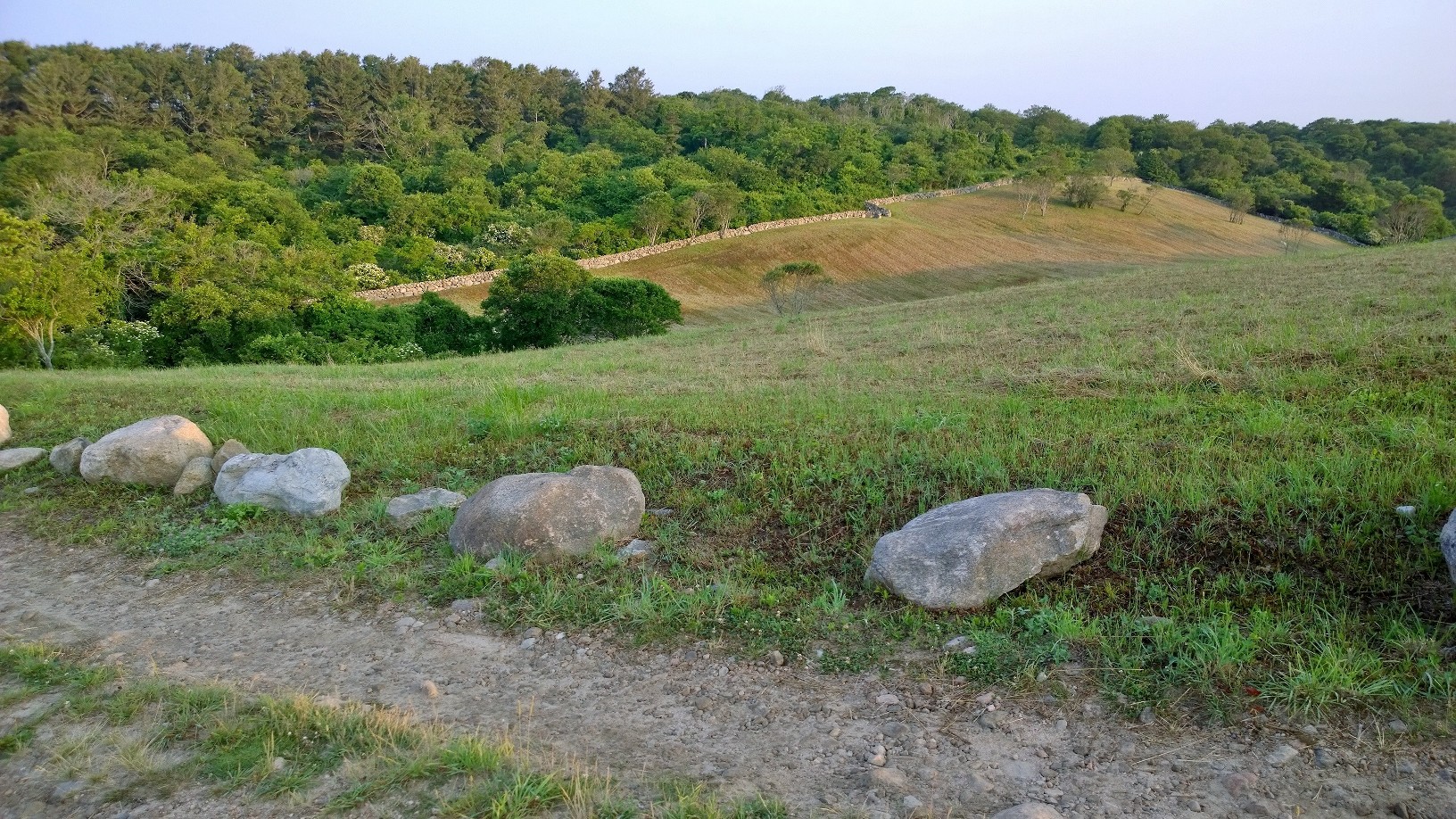
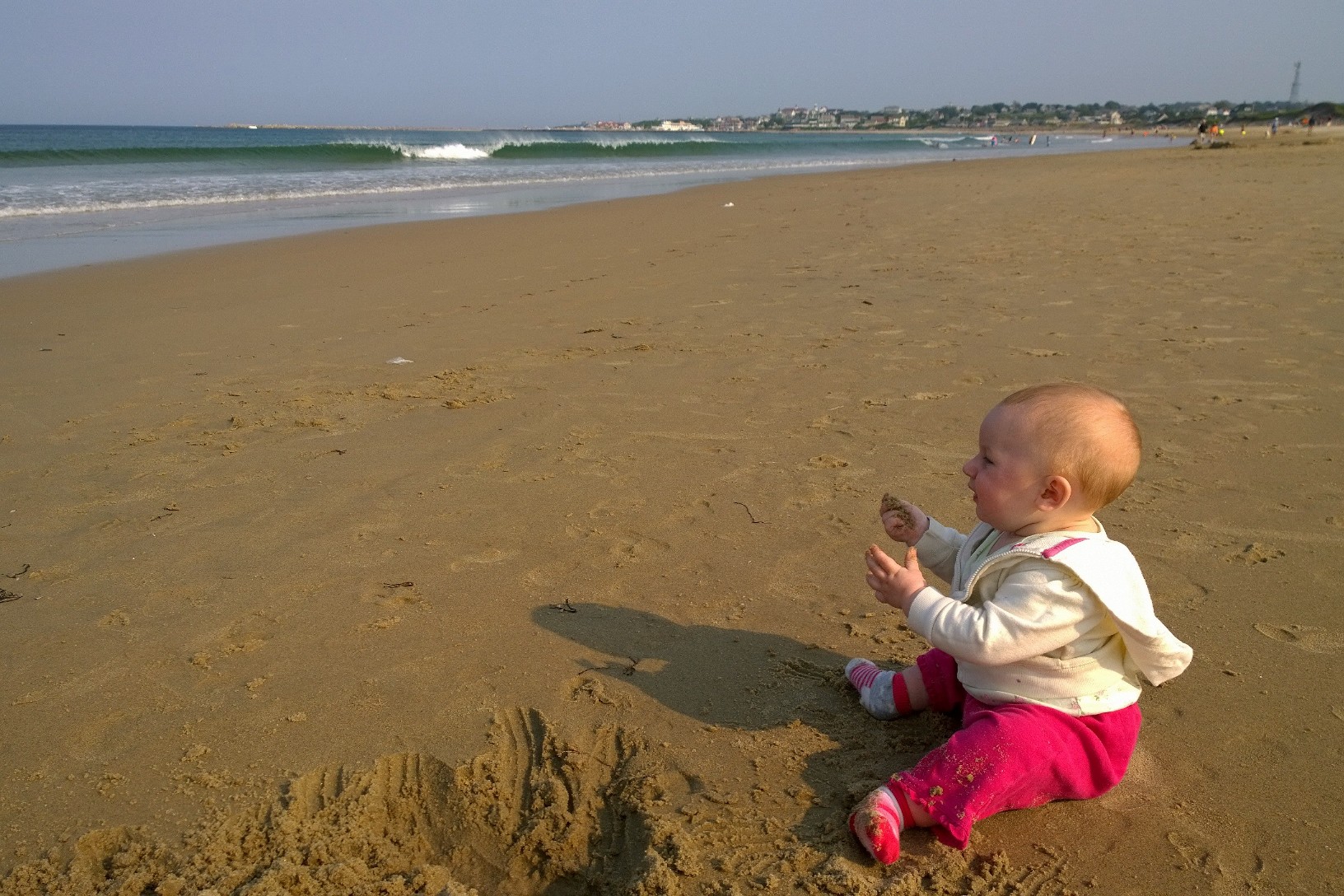
The little state with the big heart. Showing an intriguing old house in Providence, and island scenes in early morning and late afternoon.

This is the peaceful side of things, contrasting with the stories we just heard from an exhausted policeman we know who spent the last five days trying to control unruly 4th of July crowds, working from 5 a.m. to 11 p.m. “And we have only two cells to put them in,” he said in exasperation.

So hard to understand why, with all this beauty around them, people would do so much damage to themselves.

Providence-fixer-upper

stone-wall-morning

country-road-70515

fields-New_Shoreham

John-E-tughole

looking-down-the-bluffs

070515-beach-late-afternoon

Read Full Post »

In a move that will benefit the environment, farmers are placing increased emphasis on the quality of their soil and cutting back on ploughing. It took a kind of soil evangelist to create the revolution.

Erica Goode has the story at the NY Times.

“Gabe Brown is in such demand as a speaker that for every invitation he accepts, he turns down 10 more. …

“Mr. Brown, a balding North Dakota farmer who favors baseball caps and red-striped polo shirts, is not talking about disruptive technology start-ups, political causes, or the latest self-help fad.

“He is talking about farming, specifically soil-conservation farming, a movement that promotes leaving fields untilled, ‘green manures’ and other soil-enhancing methods with an almost evangelistic fervor.

“Such farming methods, which mimic the biology of virgin land, can revive degenerated earth, minimize erosion, encourage plant growth and increase farmers’ profits, their proponents say. And by using them, Mr. Brown told more than 250 farmers and ranchers who gathered at the hotel for the first Southern Soil Health Conference, he has produced crops that thrive on his 5,000-acre farm outside of Bismarck, N.D., even during droughts or flooding.

“He no longer needs to use nitrogen fertilizer or fungicide, he said, and he produces yields that are above the county average with less labor and lower costs. ‘Nature can heal if we give her the chance,’ Mr. Brown said.” More here.

Sounds like wisdom that even a backyard farmer could embrace.

Photo: Brandon Thibodeaux for The New York Times
“My goal is to improve my soil so I can grow a better crop so I can make more money,” [says Texas farmer Terry] McAlister, who farms 6,000 acres of drought-stricken cropland. 


Read Full Post »

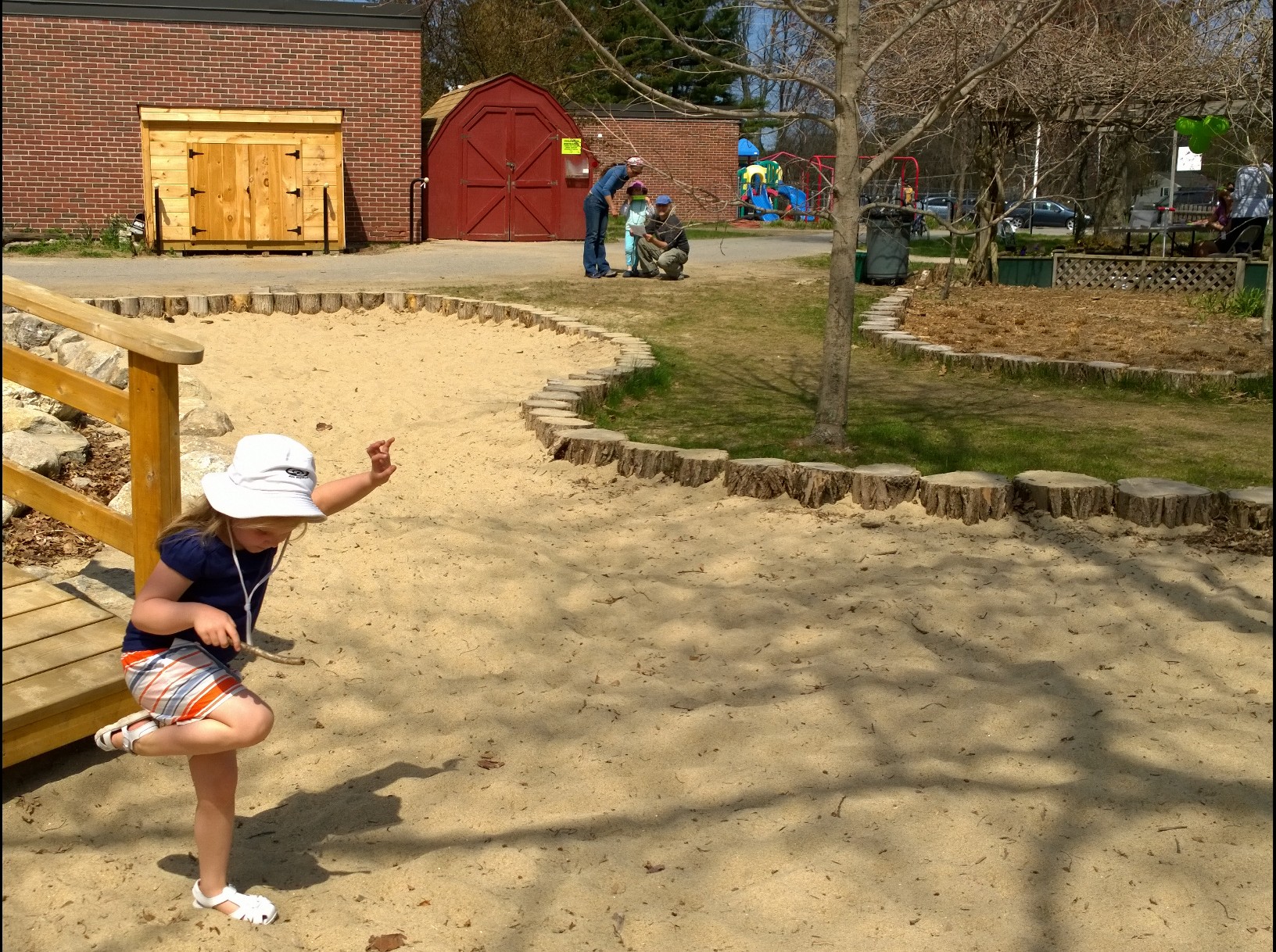
giant-sandbox-at-playscape

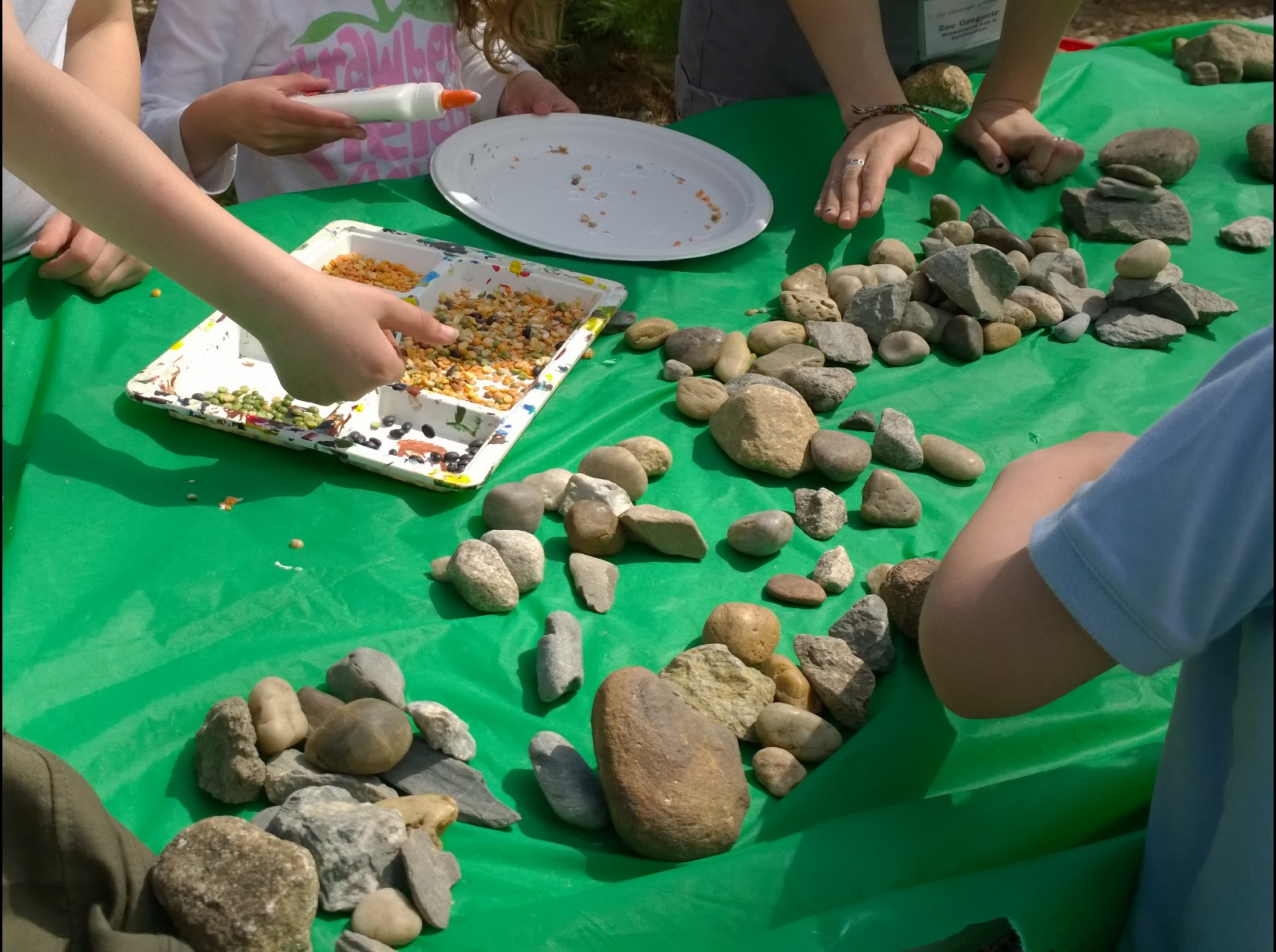
gluing-nature-collage

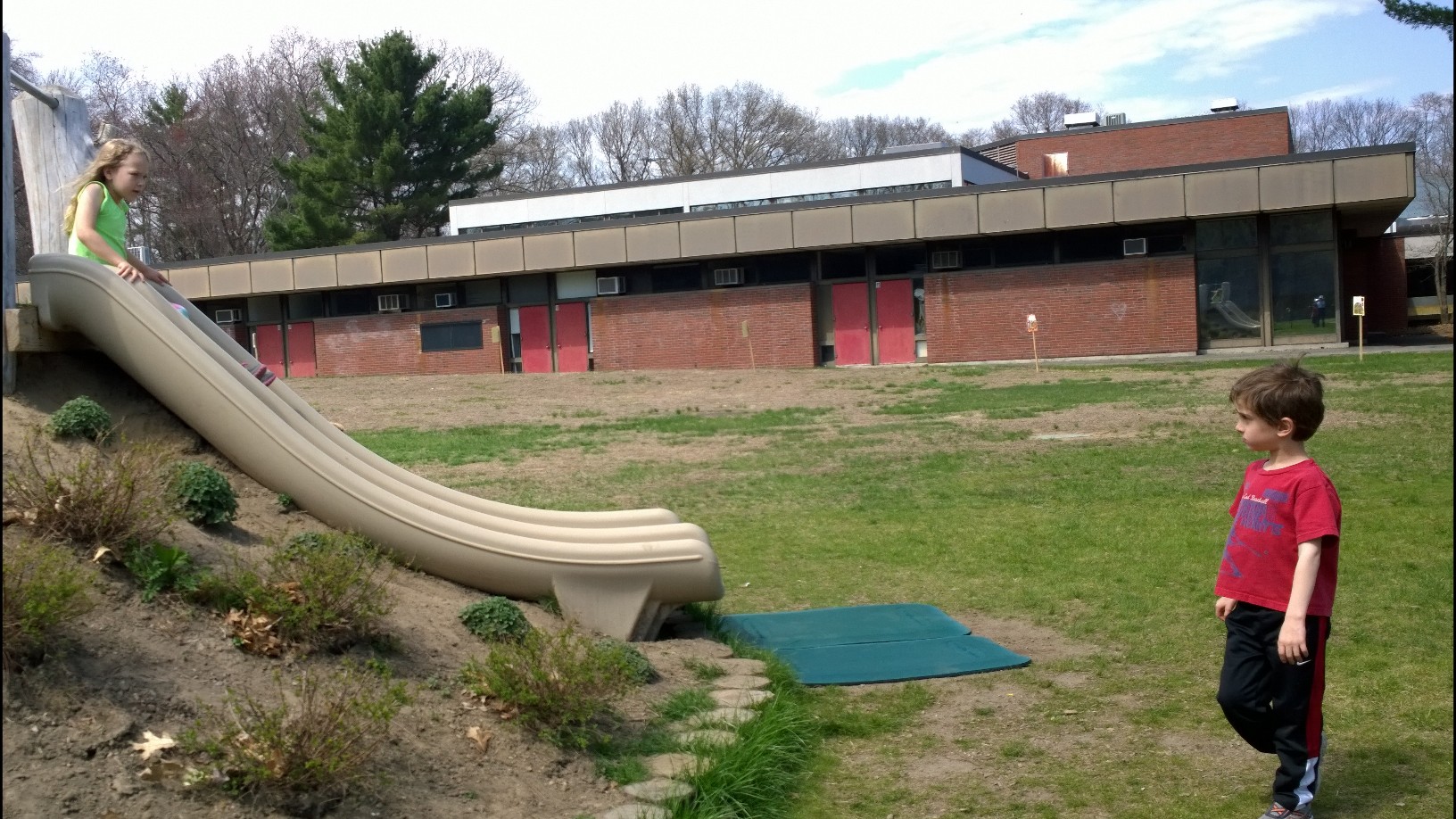
slide-at-Ripley-Playscape

I wrote about the early stages of the Playscape at the Ripley School three years ago, here. The idea of the playscape was to incorporate nature activities into a playground. An open house was held last Sunday, and I saw lots of children, parents, and grandparents checking it out.

Perhaps because it was early in the season, perhaps because an open house seems to call for planned activities, it was hard to see if there were enough attractions available for exploring nature on quieter days. Of course, I grew up on the edge of an orchard, a forest, and a mountain, and no one told us kids how to have fun there. Anything less in nature play seems sparse.

One thing I liked was not really an interaction with nature except that you had to walk through a field to engage. It was the story walk for Lynne Cherry’s picture book on a groundhog who learns to make his own garden rather than help himself to other people’s. The laminated page spreads on posts around the field were charming and had lots of useful details about plants and seeds.

A gardening friend on my commuter train was very glad to hear the groundhog learned to grow his own food and leave hers alone.

Read Full Post »

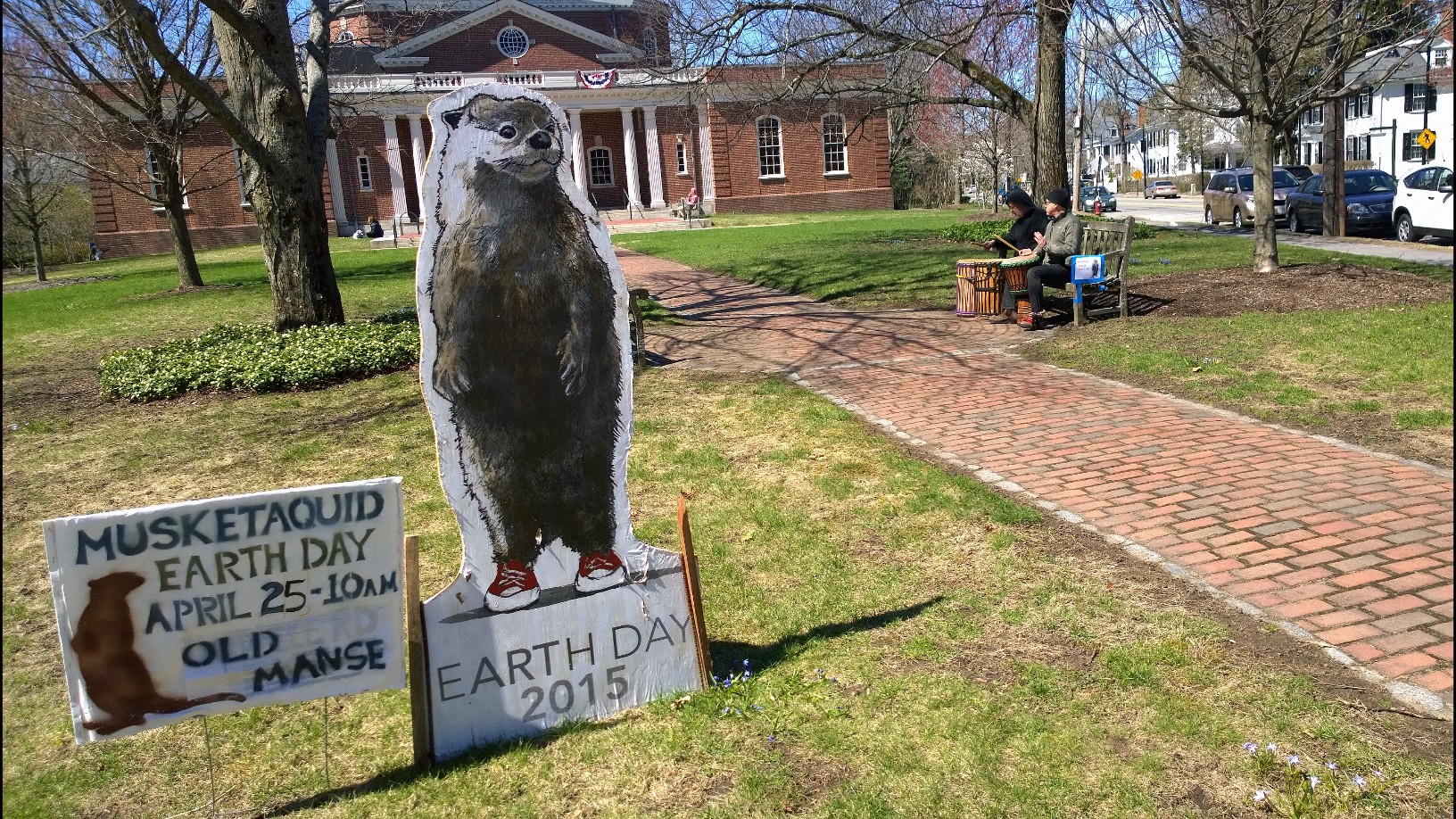
otter-welcome

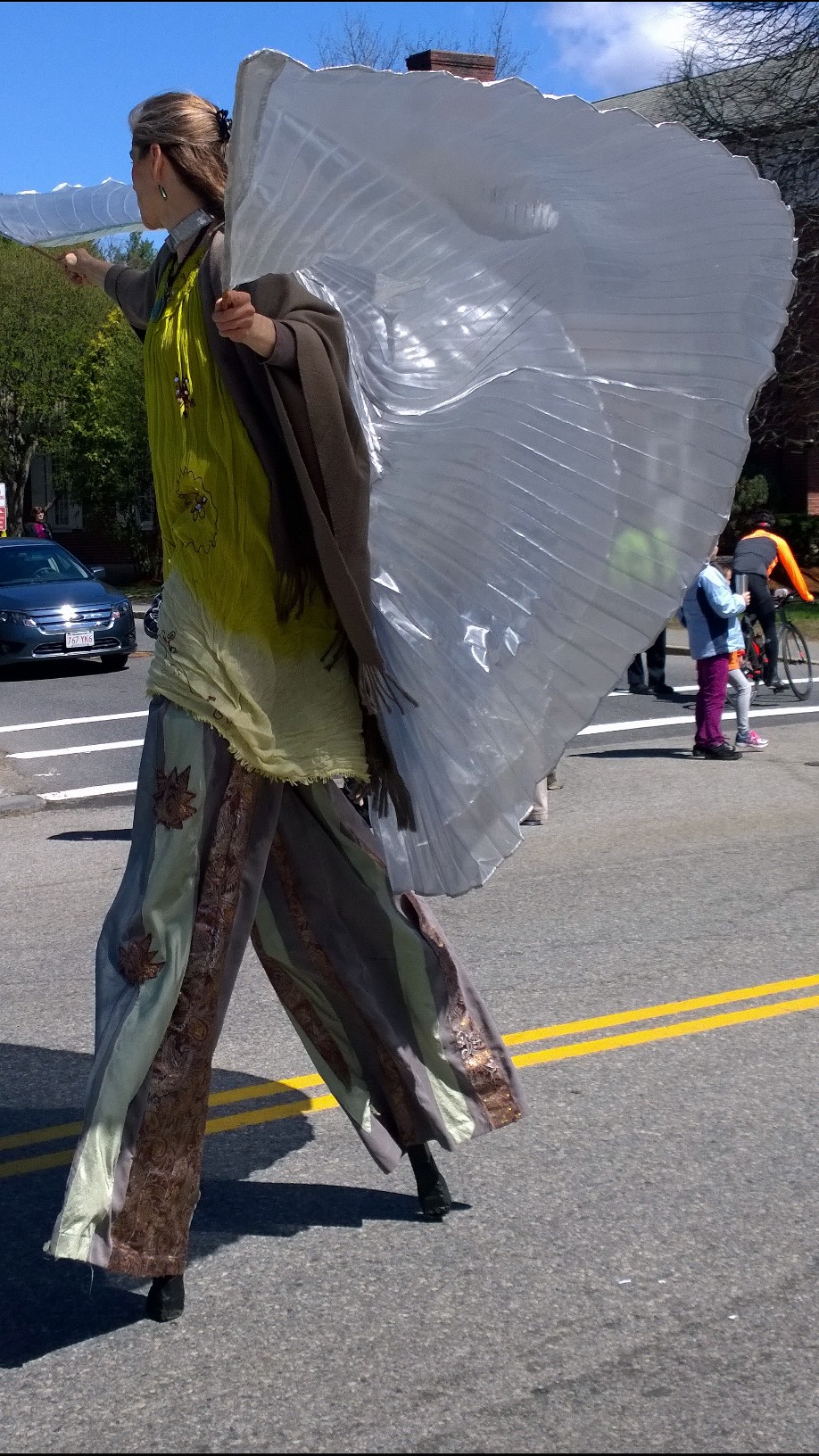
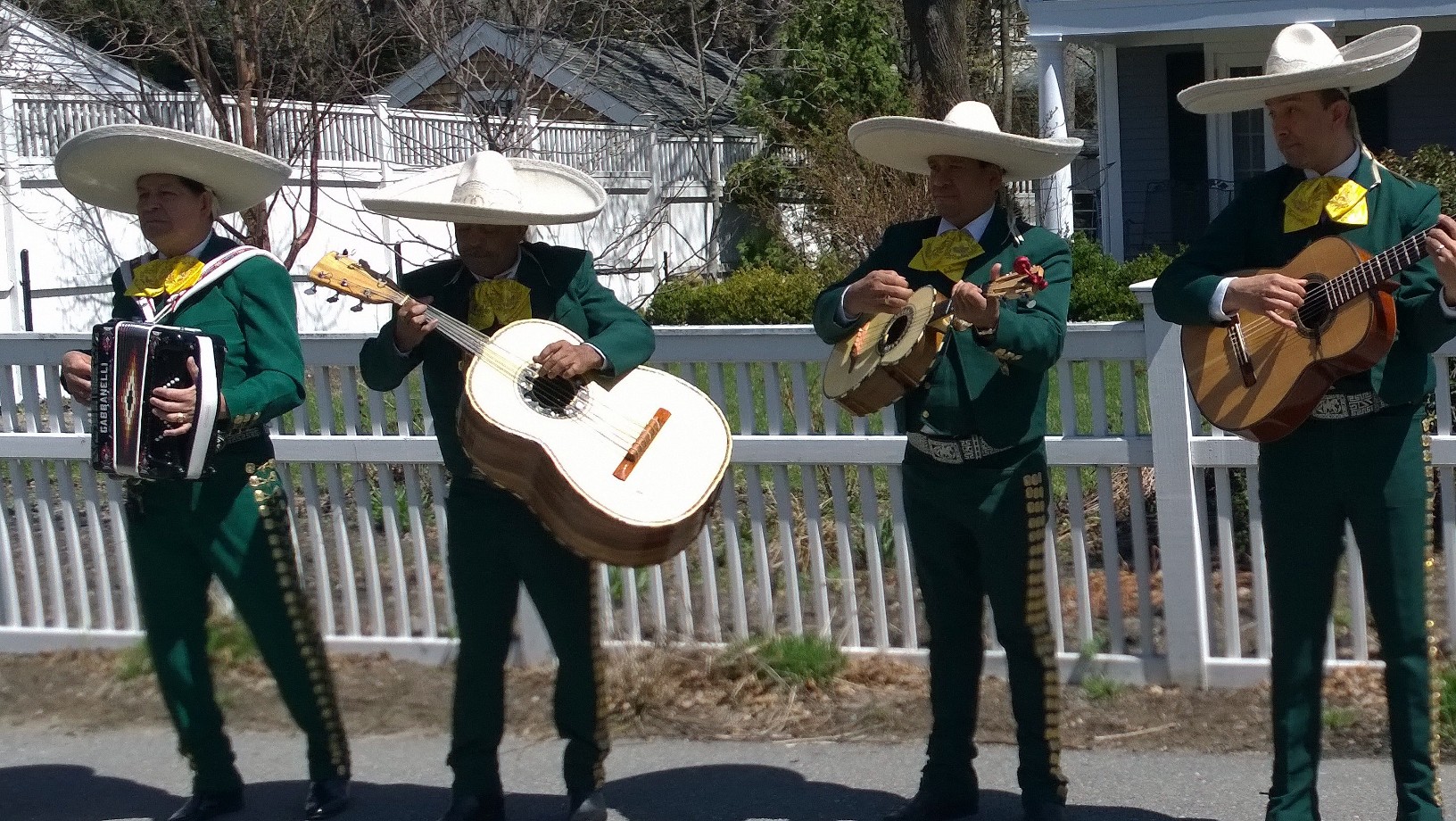
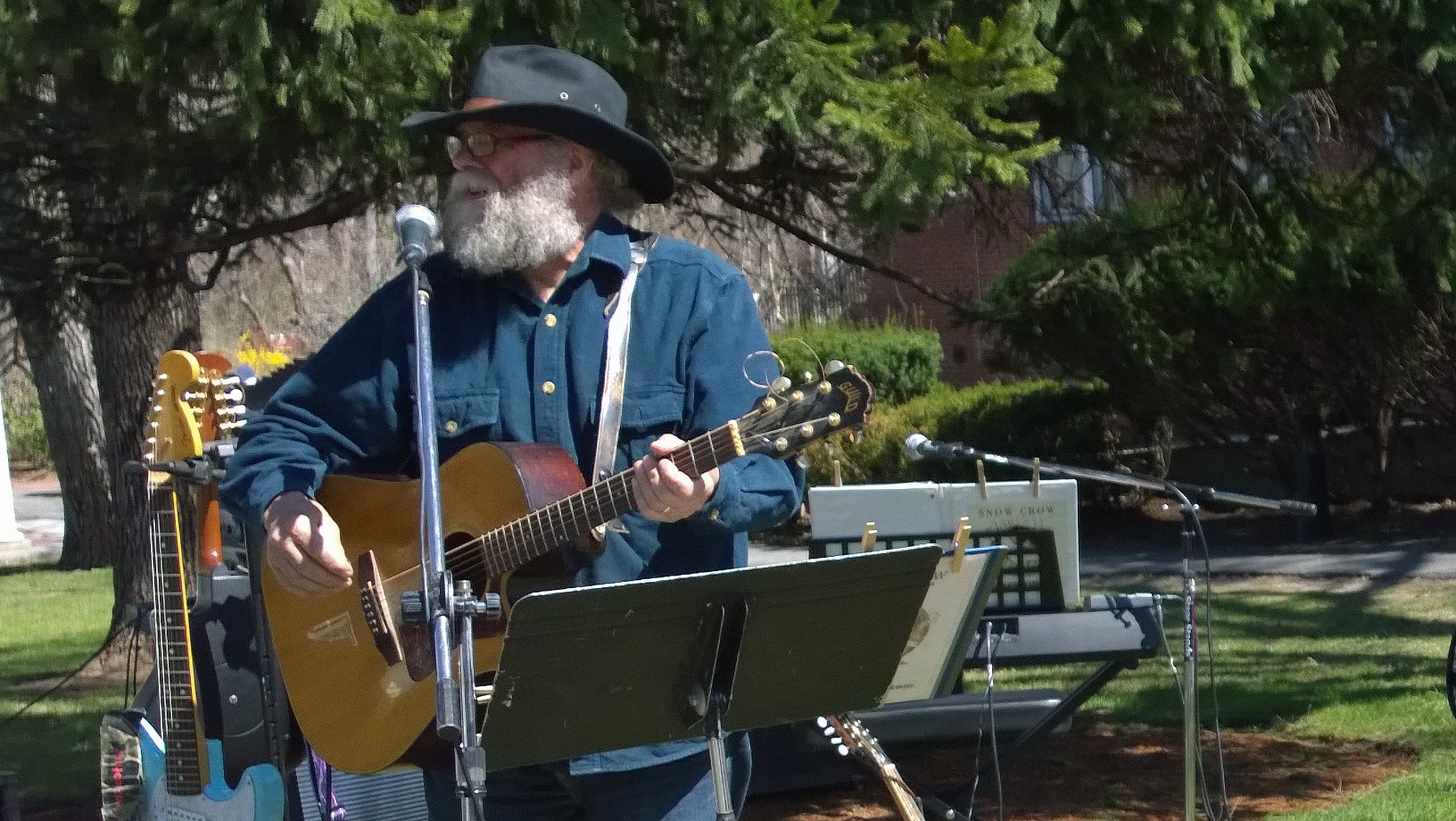
It was still chilly on Saturday, but a great day for the Musketaquid Parade celebrating the Earth. Bands, stilt walkers, homemade floats, drummers, tables for environmental advocates of all kinds.

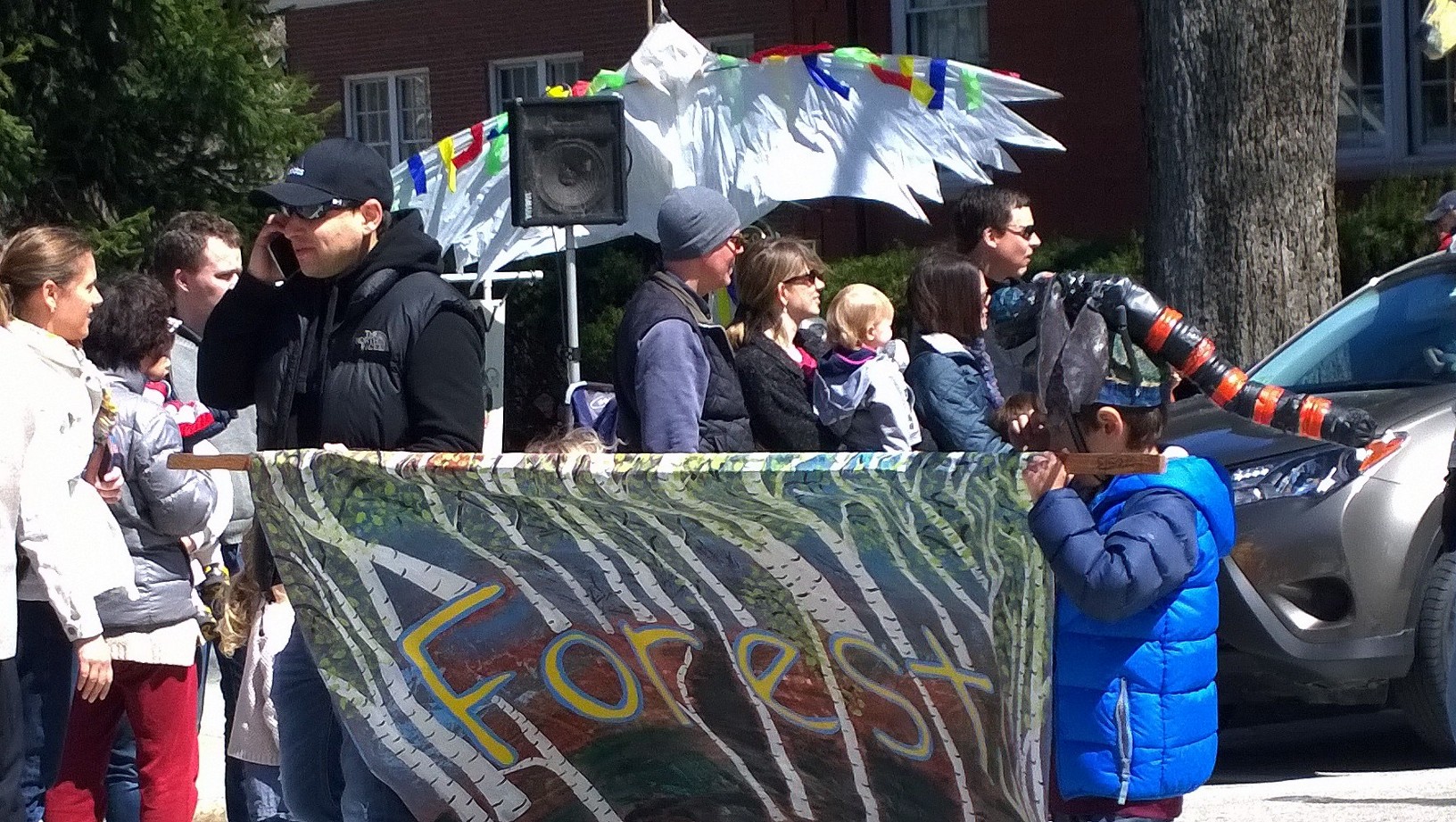
Does the boy with the “forest” banner whose dad is on a cellphone remind you of the picture book Sidewalk Flowers?

In the afternoon, I helped my 3-year-old grandson dig holes for strawberry plants. (“It’s gonna be a flower. It’s gonna be beautiful!”)

joyous-drummers

perhaps-a-fox

stilts-and-wings

mariachi-band

Earth_Day-guitar

forest-and-cellphone

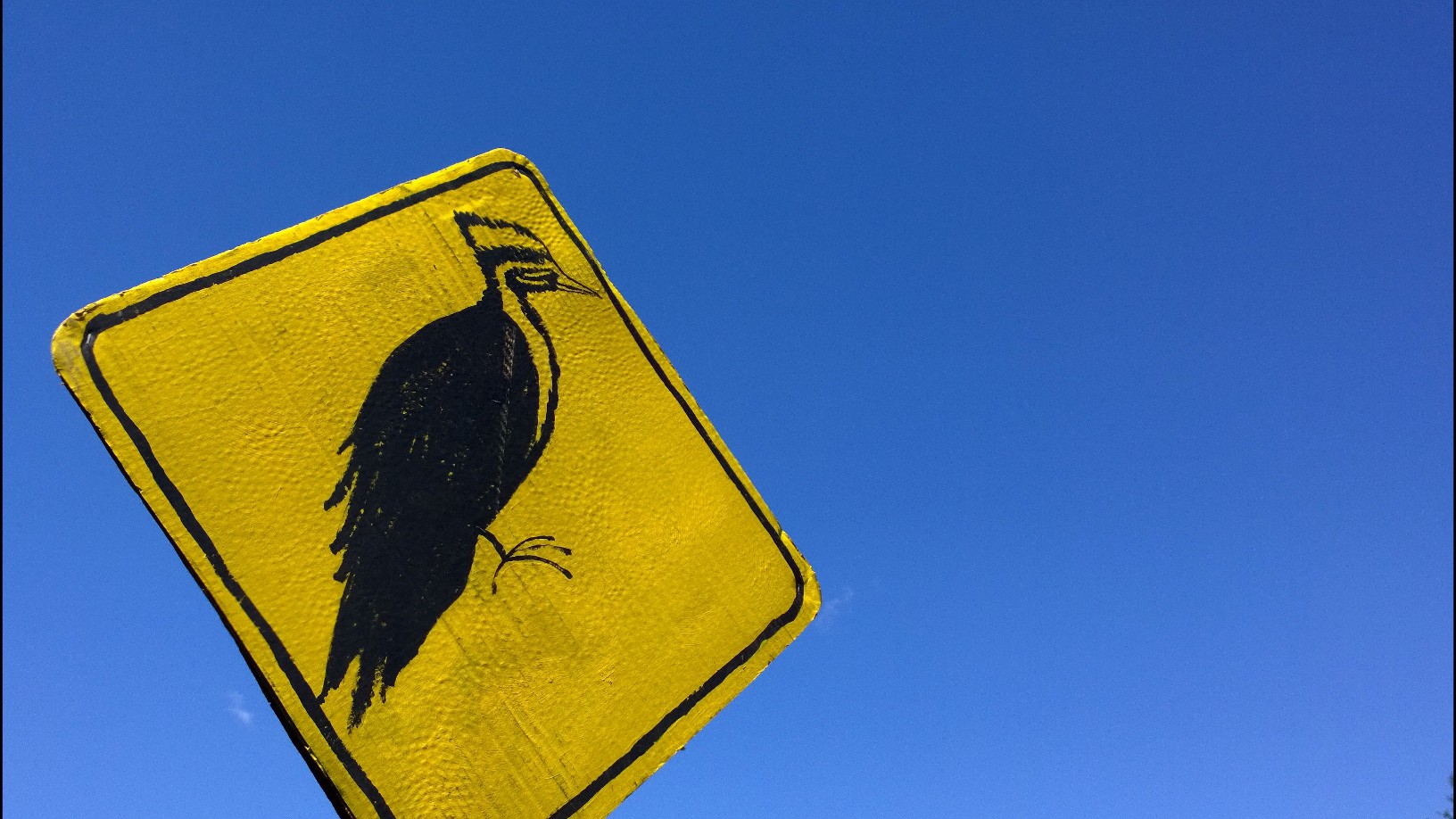
woodpecker-for-Earth-Day

Read Full Post »

Over at TreeHugger, Kimberley Mok has a post on an Italian filmmaker’s study of breathtakingly beautiful marine life.

“The ocean is a mysterious place,” she writes, “full of wondrous creatures and hidden delights, waiting to be discovered. The very nature of this massive body of fluid is primordial and seen as a symbol of the subconscious in many cultures. Italian filmmaker Sandro Bocci, also known as Bolidesottomarino, recently released a sneak peak at a ‘non-verbal’ film he’s working on, titled ‘Porgrave.’ Showing captivating scenes of vibrantly coloured underwater organisms, it’s a close-up look at a ‘microworld’ that many of us never get to see — or may never get to see, if ocean acidification, pollution and habitat loss continues at today’s alarming rate.

“According to Bocci’s website, Julia Set Collection, the film is influenced by thinkers like Alan Moore, Jan Hanlo, Don DeLillo, Kurt Vonnegut, Alfred Van Vogt, and is

an experimental film orbiting scientific and philosophical reflections on time and space, and that through various shooting techniques, fields of magnification, and an exciting soundtrack, weaves a web between science and magic.”

Please click here. The photos are extraordinary.

Photo: Sandro Bocci

Read Full Post »

I read Maria Popova’s review of this children’s book on the universe a while ago and have been thinking about it ever since.

She writes, “There’s something at once incredibly empowering and incredibly humbling in knowing that the flame in your fireplace came from the sun.

“That’s precisely the kind of cosmic awe environmental writer Elin Kelsey and Toronto-based Korean artist Soyeon Kim seek to inspire in kids in You Are Stardust (public library) — an exquisite picture-book that instills that profound sense of connection with the natural world. Underpinning the narrative is a bold sense of optimism …

“Kim’s breathtaking dioramas … mix tactile physical materials with fine drawing techniques and digital compositing to illuminate the relentlessly wondrous realities of our intertwined existence: The water in your sink once quenched the thirst of dinosaurs; with every sneeze, wind blasts out of your nose faster than a cheetah’s sprint; the electricity that powers every thought in your brain is stronger than lightning.

“But rather than dry science trivia, the message is carried on the wings of poetic admiration for these intricate relationships:

“Be still. Listen.
“Like you, the earth breathes.” More here.

Popova adds these thoughts from particle physicist and cosmologist Lawrence Krauss:

Atoms come in different types called elements. Hydrogen, oxygen and carbon are three of the most important elements in your body. … How did those elements get into our bodies? The only way they could have got there, to make up all the material on our Earth, is if some of those stars exploded a long time ago, spewing all the elements from their cores into space. … So, most of the atoms that now make up your body were created inside stars! The atoms in your left hand might have come from a different star from those in your right hand. You are really a child of the stars.

Art: Soyeon Kim
From the children’s book You Are Stardust

Read Full Post »

Suzanne’s friend Sara Van Note is heading off to Central America to research a story, but before leaving, she filed this report on a wasp that is being used to fight the emerald ash borer.

“A swampy forest in the floodplain of  the Merrimack River is one of the first places in New Hampshire where the dreaded emerald ash borer was discovered. These days, Molly Heuss of the New Hampshire Division of Forestry and Lands knows just how to find the tree-munching beetles lurking in green and black ash. …

“In recent years, the emerald ash borer has chewed its way through tens of millions of ashes across 24 states and two Canadian provinces, and counting.”

So scientists have decided to use a parasitic wasp to combat the menace.

“The parasites are descendants of wasps brought to the US from China, where the borer is also from. And they are very tiny. ‘About the size of a pin,’ says entomologist Juli Gould, of the US Department of Agriculture in Massachusetts. …

“The borers themselves were discovered in North America in 2002. They probably got here by stowing away in shipping crates. Scientists here knew nothing about them at the time, so Gould says they began working with colleagues in China to find a way to control the bugs.” More here.

Using the parasitic wasp is a last-ditch effort, and other scientists worry that the wasp could end up doing other things that are less desirable. That’s always a possibility, as Erik pointed out the other day when I showed him an article in the Providence Journal about a local effort to beat back a winter moth infestation. The article said that the parasitic fly Cyzenis albicans dines only on winter moths, so no worries. But Erik was skeptical. The best laid plans of mice and men …

Photo: John Cameron
Mountain Ash in New Hampshire

Read Full Post »

The radio show Living on Earth (LOE) reported recently on work to restore seaweeds that are a key part of the ecosystem.

From the LOE website: “Ripped from the seafloor by strong swells, massive amounts of kelp recently washed ashore in southern California. But the uprooted algae may actually be a sign of successful kelp restoration efforts. Marine biologist Nancy Caruso discusses the fragile ecosystem and how she and a community are helping to rebuild the majestic kelp forests.”

Radio host Steve Curwood interviewed Caruso. She recounts how she began 12 years ago with a group of students and volunteers “to restore the kelp forests off of Orange County’s coast.”

After a storm, she says, big holes get ripped in the forest of kelp, often 10 feet high. Then “new life can grow from the bottom up, and so if we see this happen, which we’re seeing right now, the kelp returns immediately after this event, then we know that our restoration efforts are successful, and after 30 years of our local ecosystem not having healthy kelp forests, we can rest assured that it’s now restored.”

To Curwood’s question about how restoration is done, Caruso answers, “It was actually quite an effort because I had the help of 5,000 students from ages 11 to 18 as well as 250 skilled volunteer divers, and we planted this kelp in 15 different areas in Orange County. There’s a spot down in Dana Point. It’s the only kelp forest that was left in Orange County so we would collect the reproductive blades from those kelp plants, and I would take them into the classrooms for the students to clean them and we would actually stress them out overnight. We would leave them out of water in the refrigerator, kind covered with paper towels, and then the next morning we would put them back in the ice-cold seawater and the kelp blade would release millions of spores” that would then be raised in nurseries and returned to the ocean.

“All those animals that get washed up on the beach inside the wrangled tangled kelp become a food source for shorebirds that live along our coast.”

More from Living on Earth here. For more on the importance of seaweed, see also Derrick Z. Jackson’s article in the Boston Sunday Globe: “Eelgrass Could Save the Planet.”

Photo: NOAA’s National Ocean Service
Kelp forests can be seen along much of the west coast of North America.

Read Full Post »

And speaking of schools that develop a love of the natural world, check out this story from the radio show Living on Earth.

“On the other side of the world, in the tourist paradise of Bali, there’s a school that the U.S. Green Building Council named the greenest school on Earth for 2012. It’s called the Green School, and it educates some 300 students from 25 different countries. Living on Earth’s Bobby Bascomb went to check out what’s so green about the school.”

Among the people he spoke with was Charis Ford, director of communications for the Green School.

“BOBBY BASCOMB: It rains a lot in Bali. Humidity and bugs typically destroy a bamboo structure in about 4 years, but the Green School buildings should survive 20 years or more.

“CHARIS FORD: We use treated bamboo, but it’s been treated with salt essentially. We heat water and we submerge the bamboo poles into the saltwater and it makes the bamboo unpalatable to termites and mold and funguses and other things that would biodegrade the bamboo. …

“FORD: All the building companies that he spoke with were like well, ‘You have to have walls. All schools have to have walls,’ and John [Hardy, a Canadian jewelry designer who moved to Bali in the 1970s and founded the school] said, ‘Why do they have to have walls?”’ They rubbed their chins and scratched their heads and said, “’Well, where are the kids going to hang the art?’ As it turns out, you don’t have to have walls. And we don’t have walls and we’re quite happy about it.

“BASCOMB: Just outside the classroom, a chicken wanders through a patch of green beans. Gardens are everywhere, integrated throughout the campus. They mimic a natural forest ecosystem using edible plants, a design called permaculture.

“FORD: When you wander around Green School’s campus, you might think it looks kind of like it’s wild, but then as you tune in and look at the plants that you’re around, you’ll see that that’s a bean trellis, and that’s a guava tree, and that’s ginger. Even though it looks like a jungle setting, you get a little closer and you see that’s chocolate — cacao pods — hanging from a tree next to you.” Lots more here. You also can listen to the recording of the radio interview.

Photo: Mark Fabian
On extremely hot days a canvas envelope can be pulled around a wall-less Green School classroom so cool air can be piped in to keep kids comfortable. 

Read Full Post »

In June I wrote (here) about my friend Jean Devine’s latest venture, “Meadowscaping for Biodiversity.” Jean hoped to get middle-grade kids involved in creating a meadow where once there was lawn juiced with chemicals — and learning how meadows provide habitat for many small creatures. She conducted a pilot program over the summer with her collaborator Barbara Passero and an 8th grade science teacher, Steve Gordon.

Jean e-mails her friends and fans, “We’re delighted to announce that our 8-week summer pilot of “Meadowscaping for Biodiversity” in Waltham, MA, was a great success! The three of us, along with a strong soil turner and a landscape designer, worked with a few boy scouts (and their mothers) to repurpose a 400 square foot plot on the east lawn of Christ Church Episcopal (750 Main St. across from the Waltham Public Library) into a meadow filled with native plants.

“Why did we do this? To engage youth in fun, project-based, outdoor education, while providing native plants as habitat — especially food source — for bees, caterpillars, butterflies, birds, etc.

“The end result? An aesthetically pleasing product and proof that Meadowscaping for Biodiversity, a generative/environmental education program, pays a solution forward to the next generation by inspiring, engaging, and empowering students to be problem solvers and stewards of the Earth. All involved, including the vendors who supplied plants and garden materials, were able to see that this program helps heal the Earth and improve outdoor educational opportunities for youth ‘one meadow at a time.’ Now all we have to do is convince funders, teachers, city planners etc. of the benefits of this program!”

If you fit any of those categories or just want to learn more, contact information is here.

biodiversity-kids

Read Full Post »

Fireflies are not as ubiquitous as they used to be, and that’s a concern. They are like the canary in the mine. If fireflies go, other species go.

What has caused the decline? Lawn chemicals? Rapid urbanization? Scientists want to know.

NY Times reporter Alan Bllinder writes from Greenville, South Carolina, about a crowdsourced research project to help figure out what’s going on.

“As dusk faded over the home of Jeremy Lyons and his sons on a recent evening here, one ritual of the Southern summer — the soft hiss of a can of mosquito repellent — signaled that the start of another was near.

“And although Raine Lyons, 6, grimaced, coughed and flinched during his dousing with bug spray, he soon stood near a chain-link fence in his backyard and shouted, in speedy succession: ‘Found one! Found one! Found one!’ Mr. Lyons, perched on his knee next to Raine, was almost completely silent as he tapped the screen of his cellphone again and again and again.

“There, on a weeknight in a South Carolina backyard, a father and his son, in their different ways, were counting fireflies. But an evening among fireflies was not merely a modest round of summertime nostalgia; instead, it was part of a multiyear quest by Clemson University researchers to measure the firefly population and investigate whether urbanization, especially here in the fast-growing South, threatens the insects.” Read how they are going about it here.

I hope we can reverse the decline of fireflies. I have so many happy memories of them from my childhood and my children’s childhood.

Photo: Jacob Biba for The New York Times
Raine Lyons counting fireflies alongside his father, Jeremy, in Greenville, S.C., as volunteers in the Vanishing Firefly Project of Clemson University.

Read Full Post »

« Newer Posts - Older Posts »