Feeds:
Posts
Comments

Posts Tagged ‘new york’

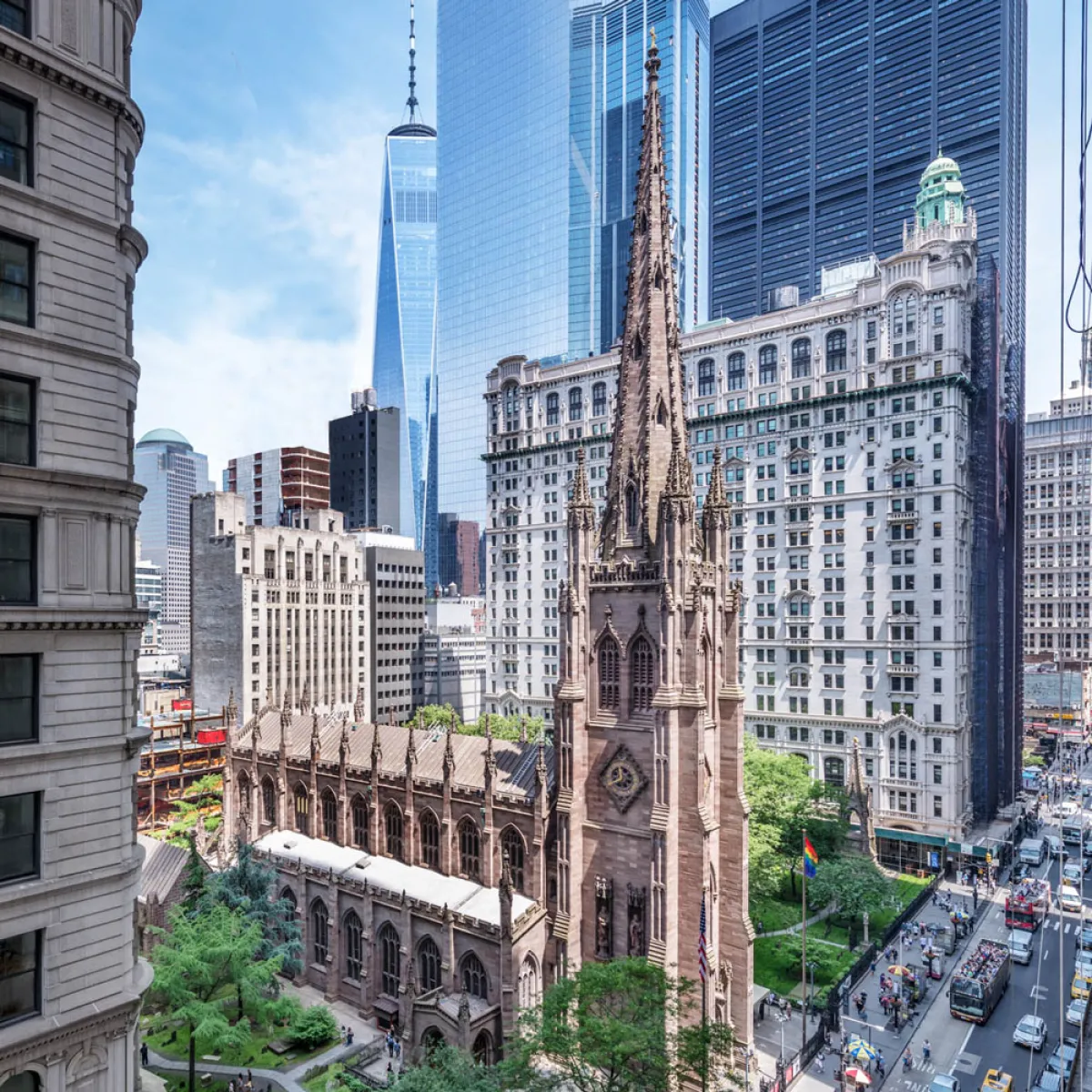
Photo: Trinity Church.

One of the churches most affected by the collapse of the Twin Towers at Ground Zero was Trinity, a 300-year-old church that, after a recent upgrade, is still going strong. Today’s story is about Trinity and its hosting of a bell-ringing competition.

Rose Adams writes at the Gothamist, “Bells reverberated across the Financial District on [a Saturday in October], producing thunderous clangs and glissandos.

“Bands had traveled as far as hundreds of miles to climb into the landmark Trinity Church tower and strike eight bells in a complex, intricate order for the national Trinity Striking Competition, a demonstration of skill in the 17th-century art of change ringing. …

“Down in the churchyard, only band members and unsuspecting tourists milled about. Trinity didn’t advertise the contest, which had participants from Washington, Boston, Smith College and the church itself. A world-renowned expert in the art form, Simon Linford of England, judged how evenly the teams rang — no jumbled notes or overlapping gongs.

“Change ringing requires strength and focus. Participants each tug a rope attached to a bell weighing between 500 and 2,700 pounds, working together to chime all the bells in unique sequences, known as ‘changes.’

“For Saturday’s contest, each team arrived having memorized a ‘touch,’ or 238 permutations of eight bells, which takes about 15 minutes to ring. A full peal — the gold standard of change ringing — involves more than 5,000 permutations and lasts more than three hours.

“ ‘It’s a meditation of sorts,’ said Austin Paul, 30, a software engineer who led the Boston team. Paul learned about change ringing eight years ago from a friend who studied bells. ‘I love the sound of it. I love the mathematical problems in it. And I love the social aspect of it, too,’ Paul said.

“Ringing remains popular in its native England, which holds a national, 12-bell striking competition. But in North America, which houses only about 50 bell towers, compared to Britain’s 5,000, the art form has been kept alive by a small group of enthusiasts, mostly along the East Coast.

“The Trinity contest was the first U.S. competition in six years, and the mood was friendly.

“ ‘Competition is not the main thing,’ said Micah Walter, 31, from the Smith College team. ‘It’s more for the social aspect of getting together with the other ringers.’

“Trinity Church’s band, an eclectic group of all ages, practices weekly and performs about twice a month for church service. Although the ringing is unpaid and takes years to master, the group has found a steady stream of members through word of mouth.

“ ‘If you really get hooked by change ringing, you tend to do it for your entire lifetime,’ said the band’s leader Tim Barnes, who has been ringing for 46 years.

Despite Trinity’s hometown advantage, Saturday’s win went to the Boston band, which rings in Old North Church, where Paul Revere was a change ringer.

“The Washington team, the 2018 defending champions, came in close second, followed by New York and Smith College.

“The third-place finish didn’t faze New York, though. The team has been rebuilding since Trinity tower’s yearslong closure.

“ ‘From a band development perspective, we feel great,’ Barnes said. …

“Future competitions may enlist younger members in training. Seraphim Ericsson, a 10-year-old bell enthusiast who knows the hertz and specifications of each Trinity bell, hopes to compete one day.

“The hardest part of change ringing, Ericsson said, is ringing ‘the tenor’ — the 2,700-pound bell, which is the church’s biggest.”

More at the Gothamist, here.

Read Full Post »

Photo: Creatives Rebuild New York.
Painter Athesia Benjamin created a self-portrait while participating in the guaranteed income program.

From time to time this blog has checked in on experiments in basic income taking place around the world. If you use search terms like “basic income” or “guaranteed income” in my search box, you will find many related articles, including ones on helping Kenyan villagers, keeping New Orleans teens in school, slashing homelessness in Finland, and supporting artists in Ireland.

New York has also piloted a basic income for artists.

Maya Pontone writes at Hyperallergic, “Early findings from a guaranteed income program for artists across New York State reveal that such initiatives can provide crucial support for artists’ financial stability, professional advancement, and individual well-being. 

“While more comprehensive results are slated to be released at the end of the year, preliminary outcomes show that when artists receive guaranteed income, they generally concentrate on addressing outstanding debt, bills, and increasing their personal savings. They also have more freedom to work on their practice and more time for caregiving responsibilities.

“The report was compiled by Creatives Rebuild New York (CRNY), a $125 million guaranteed income and work opportunity initiative that began in 2021 and is chiefly funded by the Andrew W. Mellon Foundation, the Stavros Niarchos Foundation, and the Ford Foundation. Under the program, CRNY provided 2,400 artists across New York no-strings-attached monthly payments of $1,000 for 18 consecutive months, prioritizing individuals who are acutely impacted by institutional barriers to financial security based on their race, physical ability, sexual orientation, citizenship status, and caregiving tasks.

“On average, the survey found that 17% of the guaranteed monthly payments were used to pay off debt, principally outstanding credit card balances and loans and mortgages. Furthermore, artists saved approximately $150 more each month and put nearly $140 of the payments toward expenses like rent and utilities. The initiative also showed that participants generally reported feeling improved mental and emotional health in comparison to those who did not receive guaranteed monthly payments. …

“ ‘Going through a breast cancer diagnosis during a pandemic was the most difficult experience of my life,’ shared one anonymous participant quoted in the report. …

‘Guaranteed Income gave me the support I needed to slowly build my life back, become strong and healthy again, and has truly led me back to this industry feeling safe, valued and supported,’ the participant wrote.

“In an interview with Hyperallergic, Maura Cuffie-Peterson, CRNY’s director of strategic initiatives, explained that critics of guaranteed income programs generally ‘claim that they disincentivize work. … Our report shows that not only are artists working with a guaranteed income, but they’re really shaping work that is meaningful to them and in their community life.’

“The report’s findings add to survey results released by CRNY this summer that showed a majority of NY artists are in precarious financial positions, currently earning significantly below living wage standards.

“ ‘When done ethically and in collaboration of those who are directly impacted, research can lead us to better designed programs and even policy solutions,’ Cuffie-Peterson said, adding that guaranteed income programs could be more beneficial if they ran for longer periods of time.

“As an example, she cited Minnesota arts organization Springboard for the Arts’s recent announcement that it is extending its guaranteed income pilot for artists to five years and offering additional financial counseling services.

“ ‘It’s less what should be researched next, but more how these things that are all being researched are building up into something bigger, more impactful, and more meaningful to more people,’ Cuffie-Peterson said.”

More at Hyperallergic, here.

Read Full Post »

Photo: MSG Entertainment/Victoria Lewis.
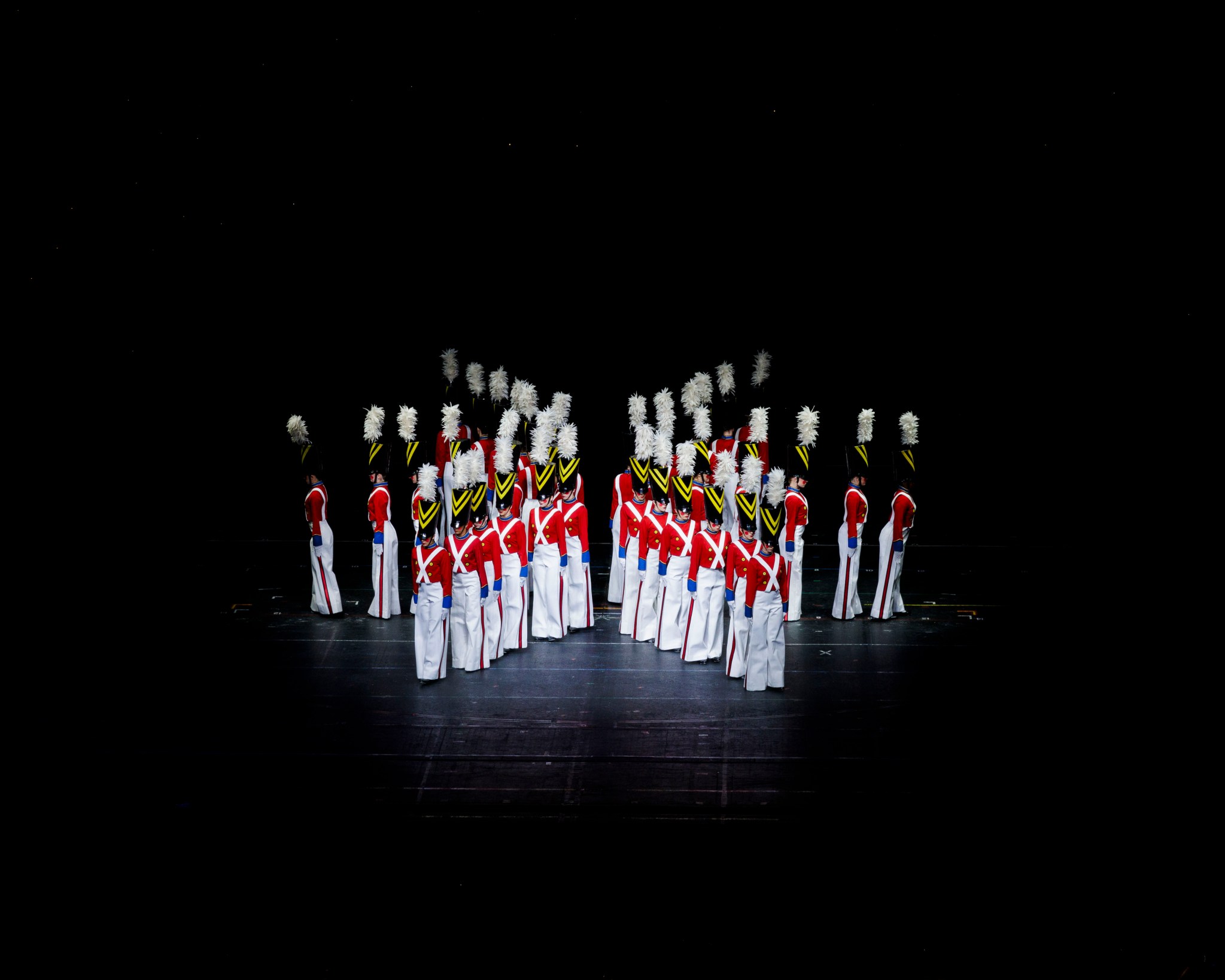
In “Parade of the Wooden Soldiers,” the 36 Rockettes on stage imitate the stiff movements of toy soldiers. This photo was taken during a dress rehearsal on November 6, 2024. 

For many New Yorkers and visitors to New York, the holiday season is a time to see the Rockettes at Radio City Music Hall. I went there once as a child with my babysitter. We saw the Rockettes, and then we saw the featured movie. The movie was Million Dollar Mermaid, a biopic about an Australian swimming legend. It starred Esther Williams and it made a big impression on me. Maybe an even bigger impression than the Rockettes did.

But the Rockettes are a wonder of the world. And today’s article — from Popular Science, of all things — explains just how they do what they do.

Laura Baisas writes, “Every holiday season, the Radio City Rockettes dazzle with their eye-high kicks that seemingly defy gravity. During the precision dance company’s roughly 200 shows over eight weeks, a dancer can do up to 650 kicks in a single day. For all this kicking, Rockettes must stay in peak physical condition. While this signature kick is a festive feat of physics in its own right, the math on stage also makes the magic.

“The Rockette’s home at Radio City Music Hall in New York City first opened its doors in 1932. … With this storied stage history, it should come as no surprise that a show that has been running for close to a century continues to use some tried-and-true, but admittedly low-tech methods. 

‘Our stage is set up like a giant piece of graph paper.’ 

“ ‘Our stage is set up like a giant piece of graph paper,’ Julie Branam, a former Rockette herself and the current director and choreographer of the Radio City Christmas Spectacular, tells Popular Science. ‘Every two feet, there’s a number and a dash or a solid line. There are also colored lines, so you will see red, green, blue, white, and upstage of each one of those lines is a dotted line. So everywhere you look, is a giant piece of graph paper and that’s how we figure things out.’ …

“Rehearsals typically start in October and the whole show is plotted onto actual paper so that the choreographers and dancers can get an idea of how their dances will look from the audience. For example, the iconic ‘Parade of Wooden Soldiers‘ number is seven pages long for roughly five to six minutes of dancing. 

“ ‘As we are learning choreography, I can sort of see almost an overhead visual of where my coordinate is,’ Danelle Morgan, a current Rockette who also serves as an Assistant Choreographer and Dance Captain, tells Popular Science. …

“ ‘Parade of the Wooden Soldiers’ is one of the original numbers from the show, which has been performed since the Christmas Spectacular first premiered in 1933. It’s a fan favorite, for its military-like steps and the iconic slow fall at the piece’s conclusion. …

“ ‘Every four counts they’re going to replace the line in front of them and we have 24 counts. And then that spoke [of the wheel] will revolve,’ explains Branam. ‘So you can really see where you’re going and know where everybody is and how far they’re traveling.’

“Choreographers will also use design softwares like OmniGraffle to create a digital version of these stage puzzles and plot the movements of the 36 dancers on stage. Each dancer follows an individual track, so she knows what order and where to go on the stage. Everyone is also lettered so that they can refer back to the plot points and quickly see where they need to be. Still, it’s all easier said than done on paper. 

“ ‘As a dancer, I challenge my body so much, but each Rockette has to challenge their brain so much as well.’ … says Morgan. ‘When you step into this position, then it’s a completely different brain game and a different brain challenge. It’s puzzles.’ …

“Since uniformity is key to making the precise patterns that the Rockettes are famous for, the company has what are called swings. In performing, swings are sort of an understudy times 10, who has to learn multiple parts instead of just one. Morgan is currently one of 12 swings in the company. …

“ ‘We know every single Rockette’s individual track, with the help of our charts and the information that we get in rehearsal, so we’re ready to jump in at a moment’s notice,’ says Morgan. … ‘We can jump in costume and then give the audience the same show that they deserve every single show. It’s a high adrenaline situation every time.’

“The festive costumes might make being Rockette look glamorous, but it takes a lot of grit to be a Rockette. In addition to the precision of their dancing, costume changes as short as 78 seconds, and physical challenges, there is also the mental load of performing in up to four shows a day for eight weeks. 

“That comes down to ‘training your resilience,’ putting mind over matter, and importantly, leaning on your fellow Rockettes when you think you just can’t do another kick. The special appearances at major events like the Macy’s Thanksgiving Day Parade or Rockefeller Center Christmas Tree Lighting or working with younger dancers also help boost company morale. 

“ ‘It’s just constantly having that reminder that what we do is something super unique that brings so much joy to so many people,’ says Morgan. ‘I think that helps us get through and keeps us motivated.’ “

More at Popular Science, here.

Read Full Post »

Photo: Alexandra Genova for the New York Times.
Last year, Churchtown Dairy in Claverack, N.Y., drew hundreds of carolers. (Notice the loft above.)

Other than blogger Deb at A Bear’s Thimble, most of us have lost the daily connection with farm animals that our ancestors knew. When we take our kids to a farm, it seems exotic. No wonder people jump at the chance described in today’s story.

Arielle Gordon reported at the New York Times, “About 200 carolers had just begun the second verse of the classic Christmas song ‘The Friendly Beasts’ when a little girl let out a squeal of delight. About 20 feet below the balcony, on the floor of the large domed barn, two of the half-dozen dairy cows were butting heads. As the grazing heifers lifted their horns, their playful roughhousing seemed like a display of holiday cheer.

“[The] Churchtown Dairy in Claverack, N.Y., once again hosted a Yuletide tradition: caroling to the herd of 28 cattle that call the cathedral-like barn their winter home. What began a decade ago as a way for the farm’s staff and their families to celebrate the herd has since grown to an annual tradition that brings locals and out-of-towners to the farm’s 250-acre property each December.

“[Preregistration] for the two caroling events filled up within hours of going online. Farm staff fielded phone calls from frustrated would-be carolers, some of whom blamed an Instagram post advertising the event for its rise in popularity.

“ ‘We’re considering adding a third night next year to accommodate all the interest,’ said Grace Pullin, Churchtown’s director of partnerships and programs. …

“Attendee, Sharon Mclees, 64, has attended for six years. Growing up around cows, Ms. Mclees said she felt comforted by the tranquillity at Churchtown. ‘I love the farm atmosphere,’ she said. ‘It’s just so back to nature.’

“Churchtown Dairy was founded in 2012 by Abby Aldrich Rockefeller, the granddaughter of the business magnate John D. Rockefeller, but the property has been under her family’s purview for decades. Her mother, Peggy Rockefeller, purchased the land as part of a larger acquisition of over 2,700 acres by the American Farmland Trust, an agricultural nonprofit Peggy started in 1980.

“The younger Ms. Rockefeller partnered with the architect Rick Anderson to design the farm, traveling the country visiting barns for inspiration. For her, the dome is a sign of a healthy, biodynamic farm. … Mr. Anderson explained that its shape served a more practical purpose: ‘Cows hate corners.’

“The dairy is not unique in its caroling tradition; just a few miles up the Taconic State Parkway, Hawthorne Valley Farms has been singing to its herd in a smaller event on Christmas Eve for the past 40 years. Staff members at Churchtown each had a different theory on the origins of the practice. Ms. Pullin suggested it might have been inspired by the work of the German esoteric philosopher and biodynamic farming pioneer Rudolph Steiner, who claimed that cow horns had ‘astral-ethereal formative powers.’

“Eric Vinson, a herd manager on the farm, referenced the old European myth that animals are able to communicate with humans at Christmastime. In more contemporary contexts, scientists at the University of Leicester found that cows produced more milk when played songs with less than 100 beats per minute. (R.E.M.’s ‘Everybody Hurts’ seemed to go over especially well.) By that logic, carols, with their measured pace, could be conducive to a happy herd. …

“Carolers, armed with illustrated songbooks, began with Christmas classics — ‘The First Noel,’ ‘Silent Night,’ ‘Joy to the World,’ — before Ms. Pullin opened the floor to requests. There were shouts of ‘Free Bird,’ but the crowd eventually settled on ‘Feliz Navidad’ as the final number of the night.

“The cows wagged their tails in appreciation — or maybe they were swatting away loose hay — and for a moment, the myth seemed to come alive: Animals and humans communicating for the holiday.”

The farm sells raw, unpasteurized milk. My mother sometimes bought raw milk at a farm near brother Will’s nursery school in Rockland County, New York. That was definitely a Rudolf Steiner farm. The nursery school followed his ideas, too.

You can read about the quality control drill that keeps raw milk safe at Churchtown Dairy, here. And do let me know if you have ever sung carols to cows! I want to try it.

Read Full Post »

Photo: Girl Scout Troop 6000.
Girl Scouts of Greater New York’s Troop 6000 is a first-of-its-kind program designed to serve families living in temporary housing in the New York City shelter system.

Kindness and compassion are not dead. You just need to know where to find them.

Consider New York’s Girl Scout Troop 6000, which reaches out to migrant children.

Sara Herschander reports for the Chronicle of Philanthropy, “Once a week in a midtown Manhattan hotel, dozens of Girl Scouts gather in a spare room made homey by string lights and children’s drawings. They earn badges, go on field trips to the Statue of Liberty, and learn how to navigate the subway in a city most have just begun to call home.

“They are the newest members of New York City’s largest Girl Scout troop. And they live in an emergency shelter where 170,000 asylum seekers and migrants, including tens of thousands of children, have arrived from the southern border since the spring of 2022.

“As government officials debate how to handle the influx of new arrivals, the Girl Scouts — whose Troop 6000 has served kids who live in the shelter system since 2017 — are quietly welcoming hundreds of the city’s youngest new residents with the support of donations. Most of the girls have fled dire conditions in South and Central America and endured an arduous journey to the U.S.

“Not everybody is happy about the evolution of Troop 6000. With anti-immigrant rhetoric on the rise and a contentious election ahead, some donors see the Girl Scouts as wading too readily into politically controversial waters. That hasn’t fazed the group — or their small army of philanthropic supporters. Amid city budget cuts and a growing need for services, they are among dozens of charities that say their support for all New Yorkers, including newcomers, is more important than ever.

“ ‘If it has to do with young girls in New York City, then it’s not political,’ said Meridith Maskara, CEO of the Girl Scouts of Greater New York. ‘It’s our job.’ …

“Last year, Troop 6000 opened its newest branch at a hotel-turned-shelter in Midtown Manhattan, one of several city-funded relief centers for migrants. Though hundreds of families sleep at the shelter every night, the Girl Scouts is the only children’s program offered. …

“Last January, the group began recruiting at the shelter and rolled out a bilingual curriculum to help scouts learn more about New York City through its monuments, subway system, and political borders. …

“With few other after-school opportunities available, the girls are ‘so hungry for more’ ways to get involved, says Giselle Burgess, senior director of the Girl Scouts of New York’s Troop 6000.

“Seven years ago, Burgess, a single mother of six, built Troop 6000 from the ground up after losing her rental home to developers. While living in a hotel-turned-shelter, she got the idea of creating a troop for girls like her daughters. It was the height of ‘NIMBYism,’ she says, the not-in-my-backyard movement opposed to local homeless shelters.

“At the time, she asked: ‘Who’s gonna give us a chance?’

“As it turns out, ‘the donations started pouring in,’ she says. A New York Times profile lead to a groundswell of philanthropy. … So, when the mayor’s office floated the idea of starting a troop at the Midtown shelter, the Girl Scouts were ready. …

“Troop 6000 employs bilingual social workers and a transition specialist versed in supporting children who’ve experienced trauma. But otherwise, it operates much like any other Girl Scout troop. Most importantly, says Maskara, the troop offers a glimmer of consistency to children who often must pack up, move homes, and switch schools in the middle of the academic year. Scouts are encouraged to continue participating even when their families move. …

“ ‘Keeping the girls connected is what matters the most for us right now,’ says Burgess. ‘There’s a lot of emotion, frustration, and hurt.’ Around 50 scouts who have left the shelter participate in a virtual troop. ‘We want to be able to encourage the girls and let them know it’s not over,’ she says. ‘We’re still here.’ “

More here.

Read Full Post »

Photo: Battery Dance.
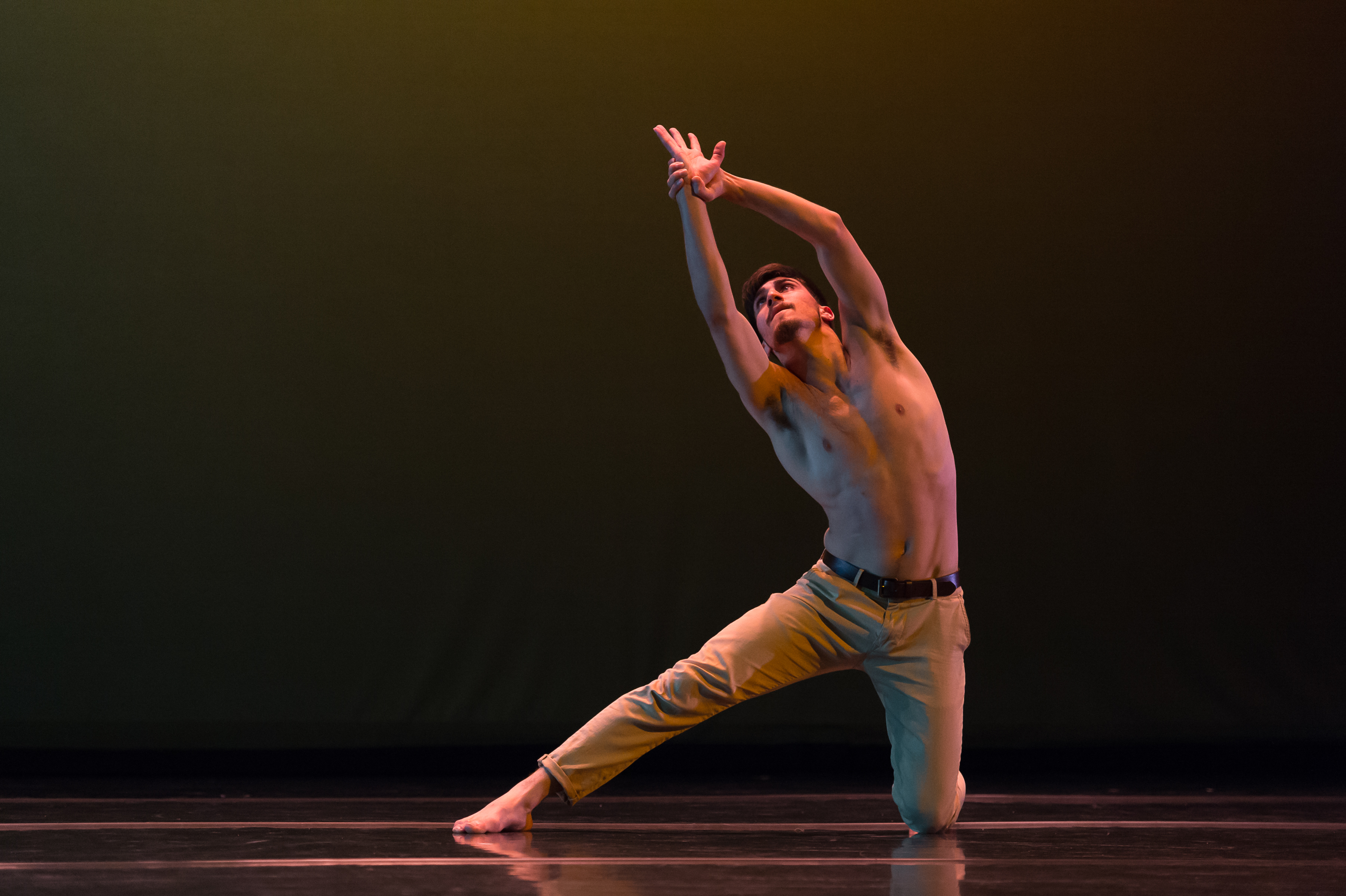
Hussein Smko, a mostly self-taught Kurdish dancer/choreographer whose talent was spotted by Battery Dance over social media in 2014, inspring the company to give him training over Skype.

I love stories of surprising personal journeys, like the one today about a Kurdish boy whose admiration for a soldier’s hiphop move started him on a road to a dance career in the US.

Here’s Brian Schaefer at the New York Times . “When Hussein Smko was 9, the American military arrived in his hometown, Erbil, the capital of Iraq’s Kurdish region. It was 2003, and Smko, already a survivor of the Kurdish civil war, would chase the American Humvees with other kids. One day a soldier beckoned him over and demonstrated a simple, beguiling gesture: He held out a straight arm then made it ripple like water, a classic hip-hop move.

“ ‘I thought it was like a big sparkle,’ Smko, 30, said in an interview. ‘And I was like, How could you break your bones like that?’

“That brief encounter loomed large for Smko, starting him on an unlikely dance journey that eventually brought him to a small, sun-dappled theater in Tarrytown, N.Y., where he was rehearsing with the Swedish choreographer Pontus Lidberg last week: the dance they were preparing, ‘On the Nature of Rabbits. …

“Smko’s path to this moment has been twisting and at times precarious. After his encounter with that liquid-armed soldier, he immersed himself in hip-hop dance, learning Michael Jackson routines through pirated music videos. Finding outlets for dance was difficult. … He was teased and called gay. But he persevered, and at 13 he started the Street Wolves, a hip-hop troupe that helped spread the form in Kurdistan.

“His pursuit of dance brought him to workshops offered by American Voices, a cultural exchange program affiliated with the United States Department of State. That led to a two-month tour of several East Coast cities, including Niagara Falls, N.Y., where he met his future wife, a U.S. citizen. After the tour, he moved in with her, then brought her to Kurdistan in 2013. The next year, ISIS laid siege to the region.

“Smko’s wife returned to the U.S. to give birth to their daughter while he stayed and prepared to fight. But a relative dissuaded him, which sparked a realization.

“ ‘I decided then that I want to fight through art,’ he said. … He applied for a green card and moved to Niagara Falls in 2015. The next summer, he was contacted by Jonathan Hollander, the founder and director of Battery Dance, a New York company that had briefly trained Smko on Skype years earlier. …

“The company quickly absorbed him into its classes and rehearsals, and suddenly Smko was dancing with trained professionals. ‘Hussein came up to that level,’ Hollander said. ‘It was just a miracle.’

“[In] 2020, he found himself at a crossroads. He worked for the Muslim American Leadership Alliance, and at a hotel front desk. He and his wife separated. He went back to Erbil to see his family, his first visit in seven years.

“His prospects improved in 2022, when he was introduced to the dancer and filmmaker Sasha Korbut and cast in the short film Incomplete, alongside Lidberg. ‘Our energies were synced up,’ Lidberg said of working with Smko. ‘It was the most natural thing.’

“That chemistry inspired Lidberg to include Smko in the development of ‘Rabbits.’ … Smko’s contribution to the process proved invaluable. Lidberg, who is used to working with polished, formally trained dancers, appreciated Smko’s raw physicality and unaffected vitality. …

“In 2019, he founded a company, Project Tag, that has shown work at the Battery Dance Festival and other small performance platforms. It is ‘a goal for me to speak about my background and my history.’ “

More at the Times, here.

I liked how Battery Dance described its original connection with the dancer: “Hussein Smko was the Adel Euro Fellow from 2016-2020.  A self-trained Kurdish dancer/choreographer whose talent was spotted by Battery Dance over social media in the summer of 2014, he was subsequently trained via Skype from his home in Iraq connected with Battery Dance practitioners in their studios in New York City. He managed to get to the U.S. in early 2016 and was granted Permanent Resident Status.”

Read Full Post »

Photo: Josh Appel/Unsplash.
The New York City melting pot, where 700 languages are spoken — 150 of them endangered.

New York City attracts people from all over the world, so it’s perhaps not surprising that there are an extraordinary number of languages spoken — major languages and endangered languages.

Alex Carp’s impressive story at the New York Times digs into the details.

“Most people think of endangered languages as far-flung or exotic, the opposite of cosmopolitan. ‘You go to some distant mountain or island, and you collect stories,’ the linguist Ross Perlin says, describing a typical view of how such languages are studied. But of the 700 or so speakers of Seke, most of whom can be found in a cluster of villages in Nepal, more than 150 have lived in or around two apartment buildings in Brooklyn. Bishnupriya Manipuri, a minority language of Bangladesh and India, has become a minority language of Queens.

‘All told, there are more endangered languages in and around New York City than have ever existed anywhere else,’ says Perlin, who has spent 11 years trying to document them.

“And because most of the world’s languages are on a path to disappear within the next century, there will likely never be this many in any single place again.

“Language loss has been a natural part of human history for centuries, but it was typically small in scale and relatively confined. The lost language could sometimes leave traces in the language that overtook it, what linguists have called a ‘grammatical merger’ of intersecting societies.

“About 30 years ago, though, the linguists Ken Hale and Michael Krauss warned of a new, more dire form of loss in which a dominant language would ‘simply overwhelm Indigenous, local languages and cultures.’ Hundreds of languages were essentially gone, Krauss noted, and others were quickly fading. Several were spoken by as few as one or two people.

“As Perlin writes in his new book — Language City: The Fight to Preserve Endangered Mother Tongues in New York, out this month — what stands to be lost is more than mere words. ‘Languages represent thousands of natural experiments: ways of seeing, understanding and living that should rightly form a major part of any meaningful account of what it is to be human.’

“With Daniel Kaufman, also a linguist, Perlin directs the Endangered Language Alliance, in Manhattan. When E.L.A. was founded, in 2010, Perlin lived in the Chinese Himalayas, where he studied Trung, a language with no standard writing system, dictionary or codified grammar. (His work helped establish all three.) He spent most of his time in the valley where the largest group of remaining speakers lived; the only road in or out was impassable in winter.

“After three years, Perlin returned to New York City, where he had grown up. … In 2016, E.L.A. began to map the languages spoken in the city. A vast majority were not recognized by large businesses, schools or city government. Officially, Perlin said, they were simply not there. ‘None of the communities with whom we planned to partner were recorded as even existing in the census,’ Kaufman and Perlin later wrote.

“Since their project began, Perlin and Kaufman have located speakers of more than 700 languages. Of those languages, at least 150 are listed as under significant threat in at least one of three major databases for the field. …

“A language’s endangerment is not simply a function of its size but also a measure of its relationship to the societies around it. Sheer numbers ‘have always mattered less than intergenerational transmission, Perlin writes in Language City. Until recently, in many regions of the world, dozens of languages lived side by side, each with no more than a few thousand speakers. Gurr-goni, an Aboriginal Australian language, had long been stable with 70. A language survives, Perlin writes, by sharing life with those who speak it. …

“When Perlin and Kaufman document a language, they work alongside native speakers to transcribe and translate video interviews that are recorded locally and during trips to a language’s home region. …

“To document Seke, for example, Perlin works with Rasmina Gurung, a 26-year-old nurse who happens to be one of the youngest Seke speakers in the world. Most Seke speakers, about 500 people, live across five neighboring villages in northern Nepal, near Tibet. Though the villages are within walking distance, each has developed its own Seke dialect. Like many of the smaller languages of ‘traditional face-to-face societies,’ Perlin writes, Seke has no ‘formal, all-purpose hello,’ because villagers live among the same groups of people and rarely encounter a Seke-speaking stranger. Instead, a question — Where are you going? What are you doing? — would be more common. …

“As E.L.A. produced its first language maps, the institute’s work caught the eye of Thelma Carrillo, a research scientist in the city’s Health Department. Carrillo, who is part Zapotec, was working on a Latino health initiative, but the city had what Perlin and Kaufman found to be ‘no basic demographic information’ on New Yorkers from Indigenous communities in Latin America, even though they have been migrating here in large numbers since the 1990s.

“ ‘We found ourselves in this odd position of being a conduit between the Indigenous Latin Americans of the city and the city agencies, because other organizations that work with them see them as Mexican or Guatemalan,’ Kaufman says. …

“By the start of the pandemic, the city had begun official outreach in nine Indigenous languages and recorded videos in several other endangered languages. By reaching these communities in their own languages, New York City offered what is almost certainly the first official recognition that they exist.

“Still, Perlin and Kaufman are keenly aware that the corpus they are building — word by word and sometimes syllable by syllable — might someday turn out to be a kind of fossil record.

“Outside of the office, Gurung mostly speaks Seke in voice notes to elders overseas or to tell her mother a secret she doesn’t want her sister to hear. On her first trip to Nepal with E.L.A., she ended every interview with the same question: ‘Do you think our language will survive?’ ”

More at the Times, here. Terrific maps and graphics.

Read Full Post »

Photo: Safeed Rahbaran/New York Times via the Las Vegas Sun.
“George Lee at the Four Queens Hotel and Casino in Las Vegas, on Jan. 16, 2024. Lee was the original Tea in ‘George Balanchine’s The Nutcracker,’ ” says the New York Times. “A documentary filmmaker found him and a lost part of ballet history in Las Vegas.”

Several of my good friends from college are Chinese. I don’t know if I am stereotyping my friends, but having come from a throughly impractical family, I was impressed at once with what seemed to me a startling level of practicality. Practicality about what kinds of courses to take for what kind of well-paying jobs; even practicality about potential marriage partners.

So one of the things that struck me about the mother in today’s lovely story was the way she helped her son earn rice during the Japanese occupation of China and her advice to him when they headed to America.

Siobhan Burke reports at the New York Times, “Among the blaring lights and all-hours amusements of downtown Las Vegas, in a sea of slot machines at the Four Queens Hotel and Casino, George Lee sits quietly at a blackjack table, dealing cards eight hours a day, five days a week, a job he’s been doing for more than 40 years.

“Lee, 88, was likely in his usual spot when the filmmaker Jennifer Lin was sifting through old photos at the New York Public Library for the Performing Arts in 2022, wondering what had become of a dancer with a notable place in ballet history. Pictured in a publicity shot for the original production of ‘George Balanchine’s The Nutcracker,’ in the role known as Tea, was a young Asian dancer identified as George Li.

“For Lin, a veteran newspaper reporter turned documentarian, the picture raised intriguing questions. In 1954, when the photo was taken, it was rare to see dancers of color on the stage of New York City Ballet, the company Balanchine co-founded. Who was this young man, this breaker of racial barriers, this pioneer? Was he still alive? And if so, what was he up to?

“ ‘I became absolutely obsessed with trying to find out what happened to George Li,’ Lin said in a video interview.

“In just over a year, that obsession has blossomed into a short film, Ten Times Better, that chronicles the unexpected story of Lee’s life: from his childhood in 1940s Shanghai, where his performing career began; to a refugee camp in the Philippines, where he fled with his mother, a Polish ballet dancer, in 1949; to New York City and the School of American Ballet, where Balanchine cast him in ‘The Nutcracker’; to Flower Drum Song on Broadway, his first of many musical theater gigs; and ultimately, to Las Vegas, where he left dance for blackjack dealing in 1980. (He changed the spelling of his last name in 1959, when he became a United States citizen.) …

“ ‘So many years I haven’t done ballet,’ Lee said over coffee at the Four Queens on a recent Sunday, after his shift. ‘And then suddenly Jennifer comes and tries to bring everything up.’ …

“Lin was not the only one who had been searching for Lee. In 2017, while organizing an exhibition on ‘The Nutcracker,’ Arlene Yu, who worked for the New York Public Library at the time and is now Lincoln Center’s head archivist, was puzzled by the relatively few traces of him in the library’s vast dance collection. ‘Whereas if you look at some of his peers in ‘The Nutcracker’ in 1954, they went on to careers where there was a lot more documentation.’ …

“Lee, in his heyday, was a dancer to know. At just 12, he was already winning public praise. In a preview of a recital of the King-Yanover School in Shanghai, the North China Daily News called him an ‘extremely promising young Chinese boy, whose technique is of a very high standard.’ A reviewer wrote that he ‘already may be said to be the best Chinese interpreter of Western ballet.’ (Lee saved these newspaper clippings and shared them with Lin.) …

“Lee’s mother, Stanislawa Lee, who had danced with the Warsaw Opera, was his first ballet teacher; as a child, he would follow along with her daily barre exercises. Shanghai had a significant Russian population, and with that a robust ballet scene. To earn money, Stanislawa arranged for her son to perform in nightclubs — ‘like a polka dance, or Russian dance, or sailor dance,’ Lee said. The clubs would pay them in rice. …

“In 1951, an American friend of Lee’s father sponsored them to come to New York, where he introduced Lee to the School of American Ballet, City Ballet’s affiliated school. As Lee narrates these twists and turns in the film, one memory anchors his recollections. Before they immigrated, his mother issued a warning. ‘You are going to America, it’s all white people, and you better be 10 times better,’ he recalls her saying. ‘Remember that: 10 times better!’

“The footage of Lee in his 20s suggests he took that advice to heart. In television appearances — with the company of the ballet star André Eglevsky, and in a number from Flower Drum Song on the Ed Sullivan Show — his power and precision dazzle.

“ ‘He was good; he was really good,’ [Phil Chan, cofounder of Final Bow for Yellowface, an initiative focused on ending offensive depictions of Asians in ballet] said. ‘Clean fifth, high jump, polished turns, stick the landing — the training is all there. He’s already 10 times better than everybody else.’ …

“In a 1979 interview heard in the film, the former City Ballet soloist Richard Thomas, who took over the role of Tea, raves about Lee’s peerless acrobatic jumps: ‘He was wonderful! Balanchine choreographed a variation for him that none of us have ever been able to equal.’

“As Lee remembers it … the City Ballet makeup artist put him in full yellowface, and Balanchine insisted he take off the makeup. ‘He is Asian enough! Why do you make him more?’ he remembers Balanchine saying. Lee was costumed in the Fu Manchu mustache, queue ponytail and rice paddy hat often associated with the role, now widely critiqued as racist caricatures. But he said he didn’t take offense. ‘Dancing is dancing,’ he said. …

“He pieced together jobs for more than 20 years, often unsure of what would come next. He was dancing in a Vegas revue, ‘Alcazar de Paris,’ now in his 40s, when a blackjack dealer friend suggested he go to dealer school. ‘I can’t dance all my life,’ he remembers thinking.” More at the Times, here.

Read Full Post »

Photo: Landon Speers/Guardian.
A Woodstock, New York, woodsman who prefers to be anonymous, cuts logs in his yard to deliver to neighbors.

Some people do good deeds and seek no credit. At the Guardian, David Wallis wrote early this year about one of those people.

“On a chilly morning in Woodstock, New York, frozen dew turns lawns a glistening white as puffs of smoke from chimneys float across the road.

“ ‘Winter is here,’ declares the woodsman, a broad-shouldered man in a black-and-gray checked wool shirt and navy denim Carhartt overalls as he sharpens his orange chainsaw. … The woodsman, who requested anonymity, is an accomplished director, writer and producer with several popular film and TV credits on his IMDb page. But he now devotes much of his time to supplying his struggling – and sometimes freezing – neighbors with free firewood. …

‘Many people are suffering,’ said the woodsman. ‘So many more than I imagined. Quietly, just secretly, really suffering.’

“The numbers back him up. Almost half of the children in the local public school district are economically disadvantaged, meaning that they or their families receive government anti-poverty aid such as supplemental nutrition assistance program (Snap) or disability funds. Affordable housing is in short supply: there are only a handful of long-term rentals on Zillow in the 12498 zip code with an average price of nearly $4,000 per month.

“A cord (128 cubic feet) of firewood, about enough fuel for a month or two, costs between $250 and $350 in Ulster county – up from about $200 before Covid. … In the world’s wealthiest nation, some people freeze to death inside their homes. … For many Americans, warmth is just another unattainable luxury.

“The woodsman has been an active activist for several years, helping refugees in Mexico stay in safe houses, distributing free masks during Covid and organizing voter registration drives with the Comedy Resistance, a non-profit organization.

“He moved to upstate New York from Los Angeles a few years ago to look after his mother, who had cancer and then Covid. He stocked a paying stand, which operated on the honor system, outside his mother’s house with bundles of wood; she donated the proceeds to local charities. But some of the bundles of wood vanished. The thefts distressed the woodsman, who recalled that a friend ‘suggested that I put a sign out on the stand that says if you if you need wood to heat your home, but you don’t have the resources, just ask me and I will deliver.’

“That conversation sparked the free firewood program. Two local librarians, Hollie Ferrara of the Woodstock Library and Elizabeth Potter of the Phoenicia Library, voluntarily spread the word about the grassroots initiative.

“ ‘Most people who work here can’t afford to live here,’ said Ferrara. ‘But there are still outlying folks who have been in their homes for a long time who basically have just about just enough money to live on and that’s about it.’ She acknowledged that librarians like her routinely act as unofficial social workers. …

“Residuals from the woodsman’s entertainment career defray some of his expenses. But Potter solicits donations for the charity from the community. Some benefactors leave gift cards for gasoline and stash them under a rock on her porch, or drop off oil for chainsaws.

“She first called on the woodsman during a power outage, a regular occurrence in upstate New York, two winters ago. An older couple had burned through their ‘last stick of wood.’ Within hours, the woodsman came to the rescue. ‘They said they and their spouse were huddled under the blankets upstairs, the fire long gone out, freezing cold, when they saw headlights in their drive and the soul-warming sound of wood being thrown on to the gravel. He got them through until the power was restored.’

“The woodsman considers his volunteerism a cheap form of therapy. ‘I’m sort of a quiet guy,’ he said. Giving away wood ‘does draw me out, pushes me out. When you interact with people, and I listen a lot, you do you learn their stories. And I’m moved by every one of them.’

“He often monitors his clients’ firewood reserves and notices that he is receiving requests for help earlier this winter than last, a sign, he believes, of increasing economic struggle. …

“When I visited him, he decided to check in with repeat customers who live about 20 minutes away from his wood lot. When driving on country roads, he eyed passing wood piles and offered reviews at 40 miles per hour. … He inspected a pile of logs strewn on the land to ensure they were not rotted. We then chatted in the house with Tom and Malley Heinlein, who had asked him to cut and split their wood. …

“Tom, the family’s main breadwinner, is gaunt and slowly recovering from Mycobacterium chelonae, a severe bacterial infection, that sapped his strength and swelled his body. ‘We’ve been happily living our independent little quirky life for all this time,’ Malley said wistfully. ‘And then all of a sudden, something trips you up.’ ” More at the Guardian, here. No paywall.

I have to say, I laughed out loud reading that, when the woodsman was a child, his mother boycotted grapes to help the United Farm Workers. I did that, too. Don’t know if there’s a direct connection, but both Suzanne and John do various kinds of good works now.

Read Full Post »

Photo: Mary Altaffer/AP.
Construction underway on a flood resiliency project in East River Park in Manhattan in October 2022. Hello, Boston! See this?

For years there have been voices crying in the wilderness about the danger Boston faces from flooding. A city originally lifted from the sea like the Netherlands, Boston has powerful “progress” fanatics that have allowed the Seaport area to be overbuilt in the last 20 years. The Boston Globe’s David Abel even made a movie about it, calling the city’s touted Innovation District the Inundation District.

Meanwhile, in New York City, politicians have heeded a painful lesson from Hurricane Sandy.

Andrew S. Lewis writes at Yale Environment360, “On a recent morning in Asser Levy Playground, on Manhattan’s East Side, a group of retirees traded serves on a handball court adjacent to a recently completed 10-foot-high floodwall. Had a sudden storm caused the East River to start overtopping this barrier, a 79-foot-long floodgate would have begun gliding along a track, closing off the playground and keeping the handball players dry. In its small way, this 2.4-acre waterfront park is a major proof of concept for a city at the forefront of flood resilience planning — a city working toward living with, and not against, water.

“The Asser Levy renovation, completed in 2022, is part of East Side Coastal Resiliency (ESCR), the largest urban resiliency project currently underway in the United States. Over the next three years, at a total cost of $1.8 billion, ESCR will reshape two-and-a-half miles of Lower Manhattan’s shoreline. But ESCR is just one link in a much larger, $2.7 billion initiative called the BIG U — a series of contiguous flood resilience projects that runs from Asser Levy, near 25th Street, around the southern tip of Manhattan, and up to Battery Park City, along the Hudson River. When finished, the BIG U will amount to 5.5 miles of new park space specifically designed to protect over 60,000 residents and billions of dollars in real estate against sea level rise and storm surges.

“The BIG U was conceived in the aftermath of 2012’s Superstorm Sandy, which flooded 17 percent of New York City and caused $19 billion in damage. Like Hurricane Katrina in 2005, Sandy helped push New York … toward embracing the Dutch concept of ‘living with water,’ which emphasizes building infrastructure that can both repel and absorb water while also providing recreational and open space.

“In New York, ESCR, like any large infrastructure project slated for a densely populated place, has moved in fits and starts. Still, New York is making significant progress. ‘Anything that’s on the scale of Manhattan is always going to be so much bigger and more complicated,’ says Amy Chester, director of Rebuild by Design, the post-Sandy design competition from which ESCR was born. ‘And yet a lot has been done.’

“The ESCR project area encompasses a flood-prone wedge of Manhattan’s natural topography — a ‘pinch point’ between two higher stretches of shoreline. Some 400 years ago, when the island was inhabited by the Lenni-Lenape, this shoreline was woods and marsh that never rose more than a few feet above sea level. Tidal creeks drained from uplands dense with American chestnut, aster, and goldenrod, winding through spartina meadows to the river. Today, that landscape is lost beneath four separate public housing complexes, whose roughly 10,000 residents count on East River Park to buffer their homes from a waterway that has risen 8 inches since the mid-20th century.

“Because ESCR is the first segment of the BIG U to get underway, its path has been rocky, from debates about its final design, to budget cuts, to new concerns about the evolving risks of climate change, including the extreme rain events that New York experienced this year. …

“In 2018, the administration of Mayor Bill de Blasio quietly revamped the design: it would be faster and cheaper, the mayor’s team said, to wipe the park clean, elevate the landscape with more than a million tons of fill, then build anew on top.

“Unlike the kind of permeable buffers championed by the Dutch, the raised park would function more like a hard barrier. … Opposition to the redesign remains, but many residents of the public housing complexes, which are at high risk of flooding, support it. In the fall of 2021, demolition crews got to work. …

“The park will be landscaped with pathways and vegetation beds that snake around and through sports fields, an amphitheater, and playgrounds to form a terraced topography that will function as a berm to keep water from city streets. More floodwalls and retractable gates will run the park’s length and extend into surrounding streets, where archaic infrastructure will be overhauled so stormwater is less likely to mix with wastewater during flooding. …

“Other segments of the BIG U are also underway. In the Battery, at the city’s southern tip, the waterfront is being elevated with fill. Next, floodwalls, higher-capacity drainage, and new park space will be installed. Similar projects to protect the historic South Street Seaport area and the Financial District remain in the planning and design phase. …

” ‘Building a level of resilience capacity across society is critically important,’ says Henk Ovink, the former Netherlands Special Envoy for International Water Affairs and one of the creators of Rebuild by Design. ‘If you don’t invest in the most vulnerable links, the chain breaks.’ ”

Read more at Yale e360, here. No firewall. Donations solicited.

Read Full Post »

Photos: Suzanne and John’s Mom.

I love walking around dirty old New York, even in cold and rainy weather. Today’s photos are from last weekend, when I took the train down for a wedding.

It’s the small things one notices. The saxophone player under the pedestrian bridge in Central Park, where the sound amplifies like an orchestra. He was playing “Beauty and the Beast,” with his sax case open for tips, a stick placed inside to keep any bills from blowing away.

A nicely dressed woman on a city bus scrolling her phone and wearing a rubber Halloween monster mask — blue and green rubber with a gaping hole at the nose and beaver teeth hanging down.

Then there were two people from my childhood that I ran into on the same morning in the Upper West Side. Not people I even knew from the Upper West Side but from Fire Island. The one I met in an elevator was a close childhood friend. The one I met in a diner was someone I knew from the Ocean Beach teenage musicals I directed. So there we were in a diner on Broadway singing one of those old teenage show tunes.

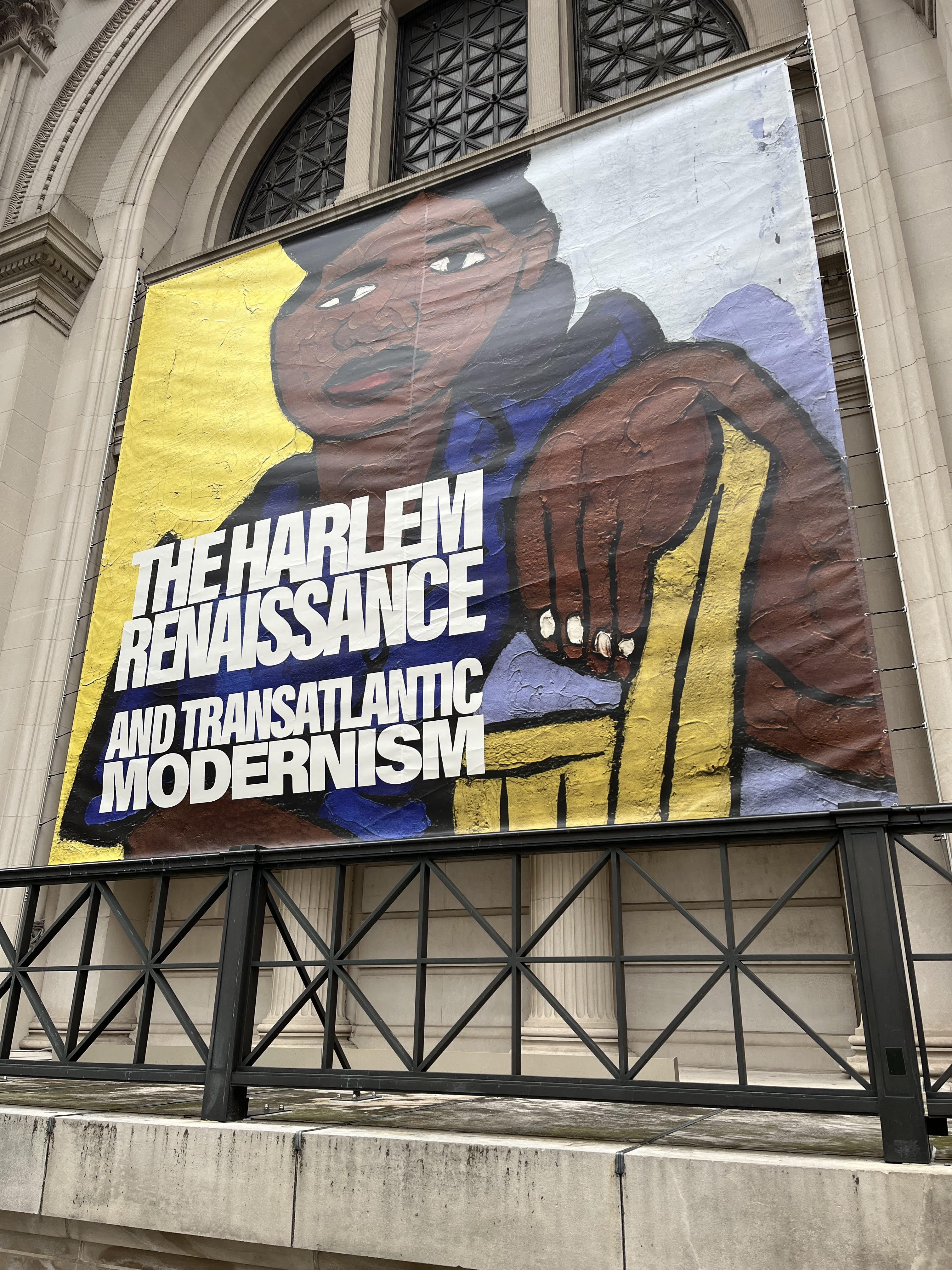
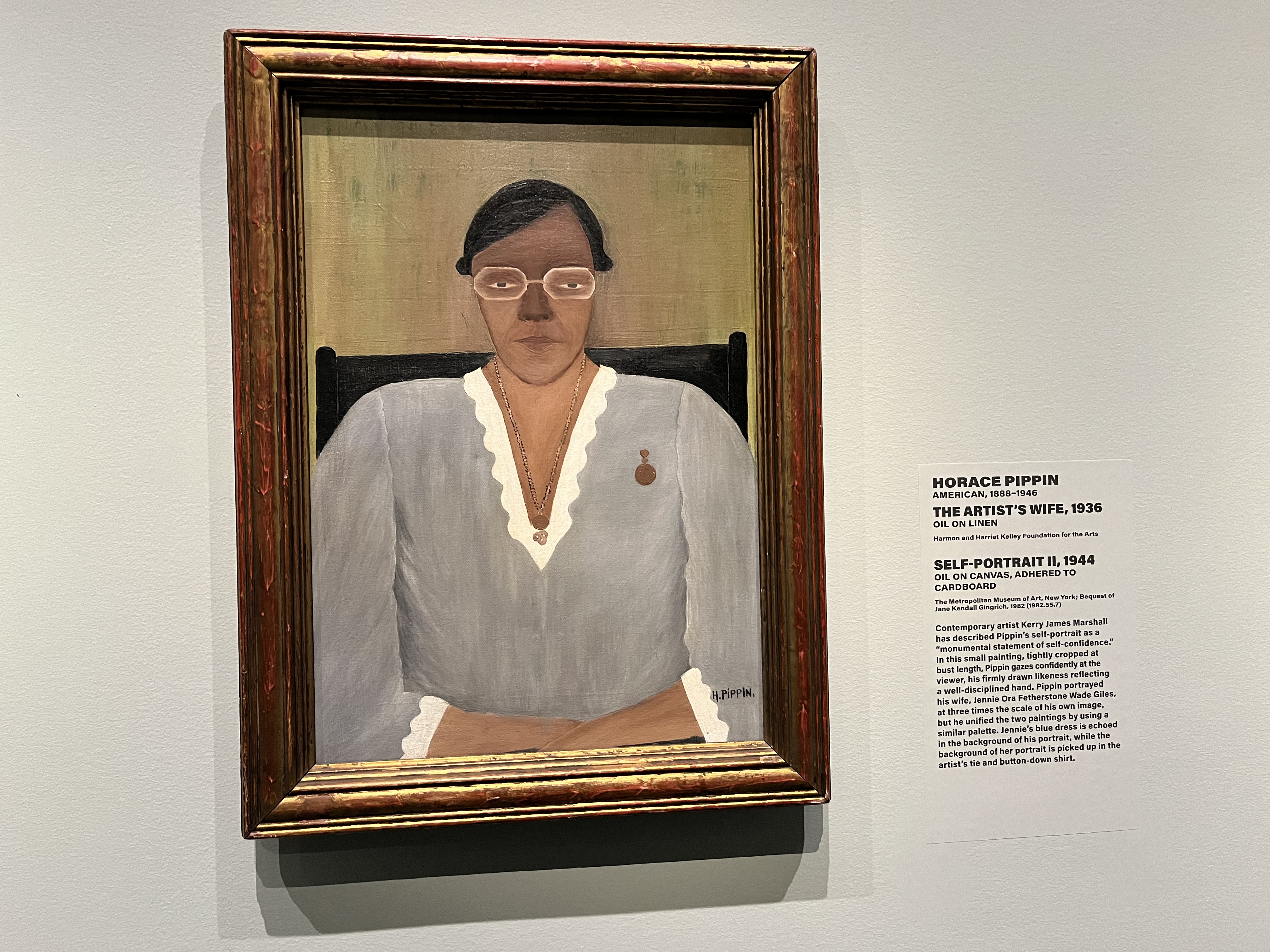
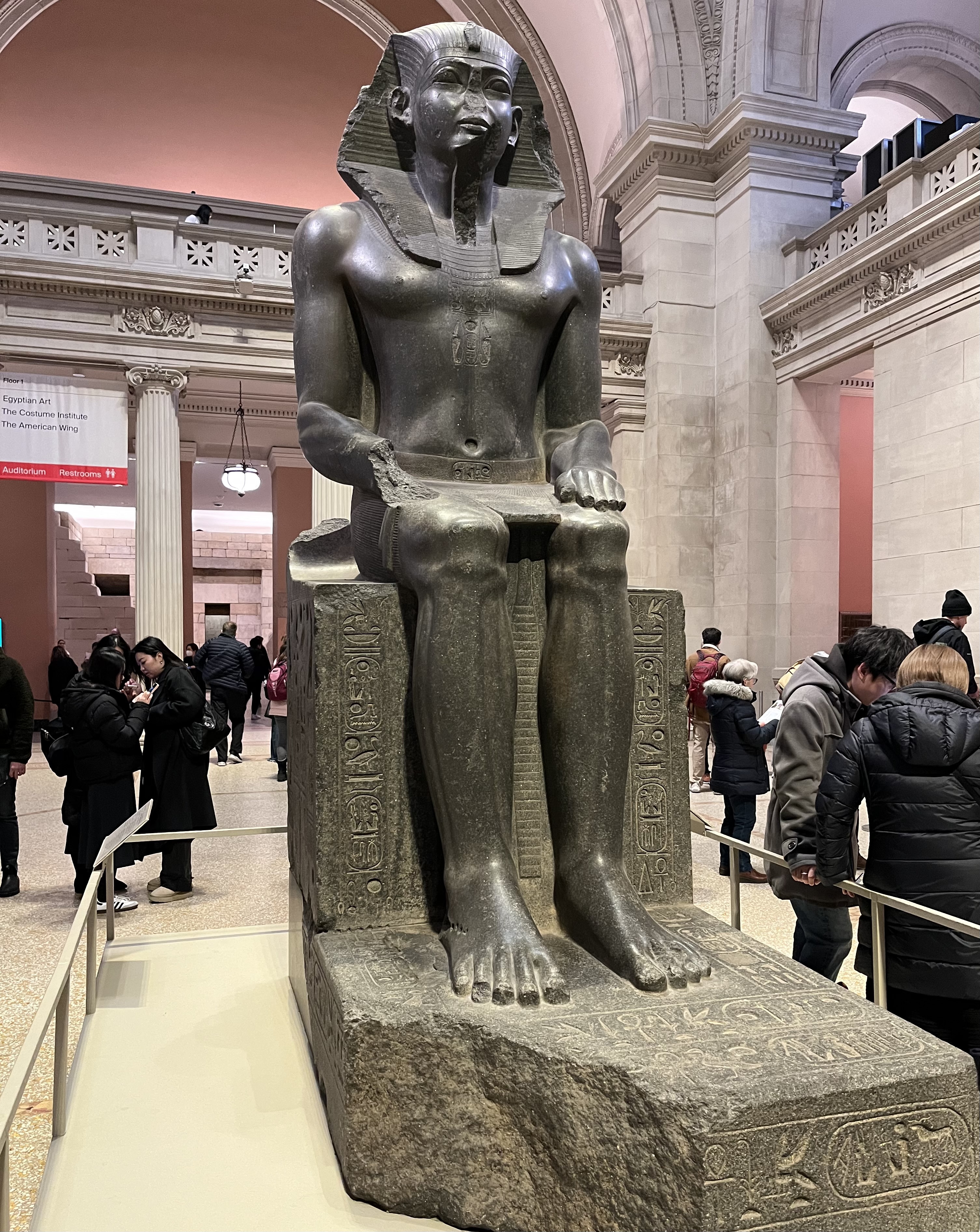
I got myself lost in Central Park on my way to the Met Museum to see the Harlem Renaissance exhibit. Like all New York, it was way too crowded, too many long lines. You spend 20 minutes waiting to buy a ticket, and then, if you want to unload your coat and backpack, you can wait in a ten-minute line to check them in and another long line to pick them up. I decided I could carry mine.

I photographed the Horace Pippin painting for my artist friend Meredith, a Pippin fan. There were many works by Aaron Douglas, but it was too crowded for much picture taking. Here’s a representative sample of Douglas’s art from the Rhode Island School of Design Museum.

The Met exhibit was huge, with portraits of luminaries like Langston Hughes, Zora Neale Hurston, James Weldon Johnson, and Marian Anderson, and scenes of Black life in the 1920s and ’30s rendered in many styles and media. Some artists, like photographer Carl Van Vechten, were not technically part of the Harlem Renaissance, but close observers.

Moving on to other New York sights.

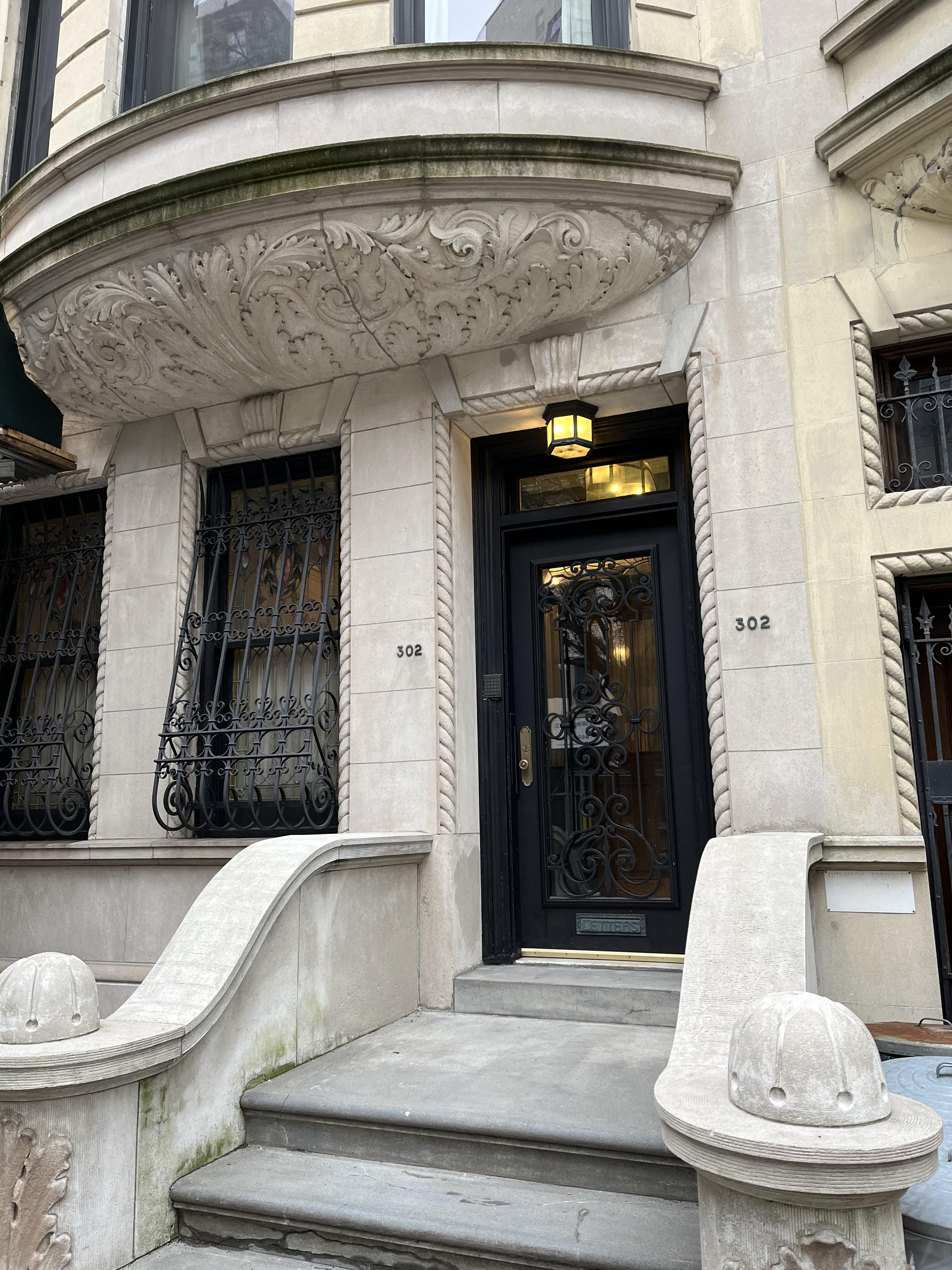
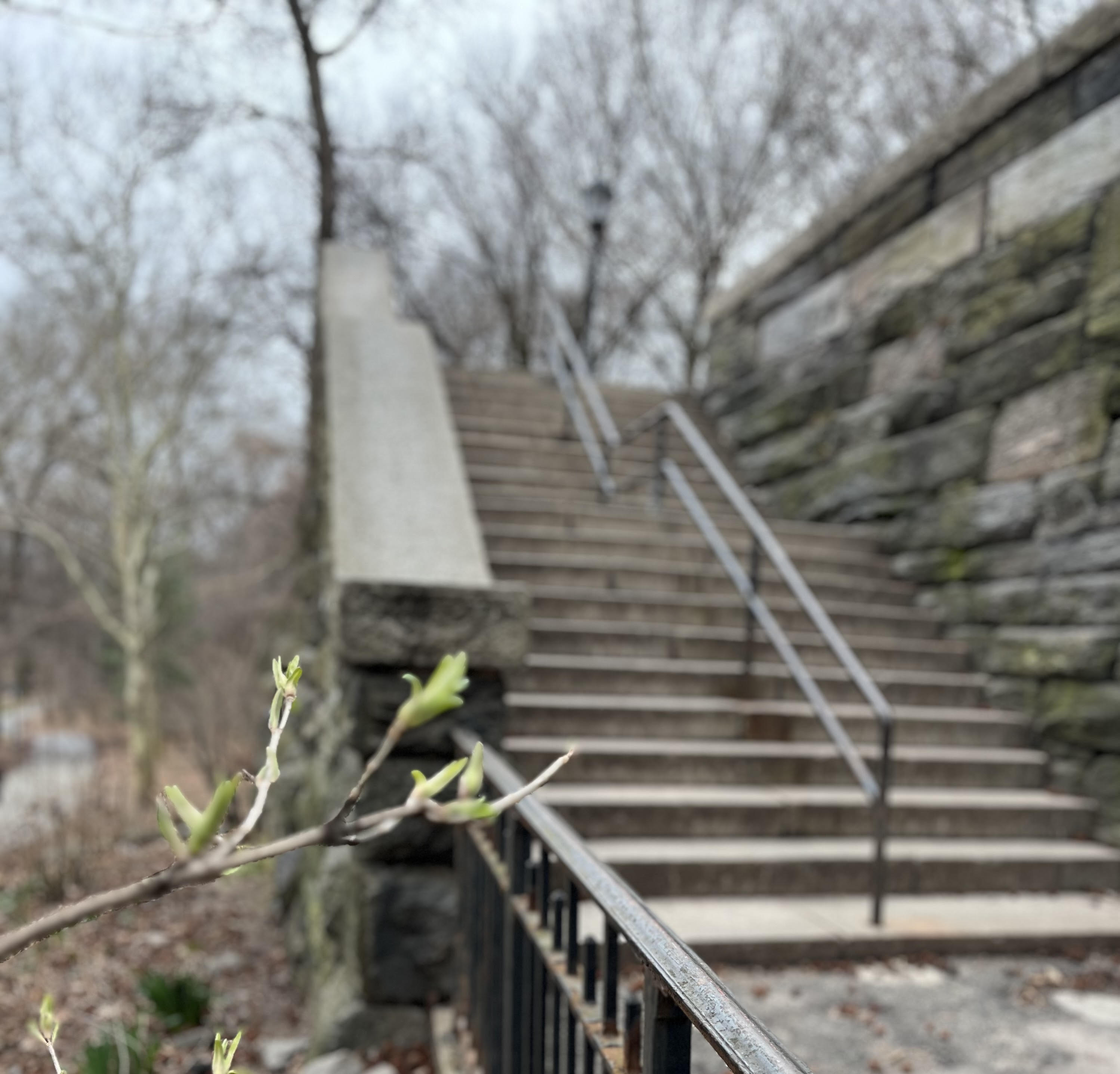
I often envy blogger Sheree, at View from the Back, who can post the most wonderful door photos. Of course, she lives in Europe. I have to go to New York to get anything comparable. Here are two interesting doors, the second in Riverside Park, where signs of spring were defying the miserable weather.

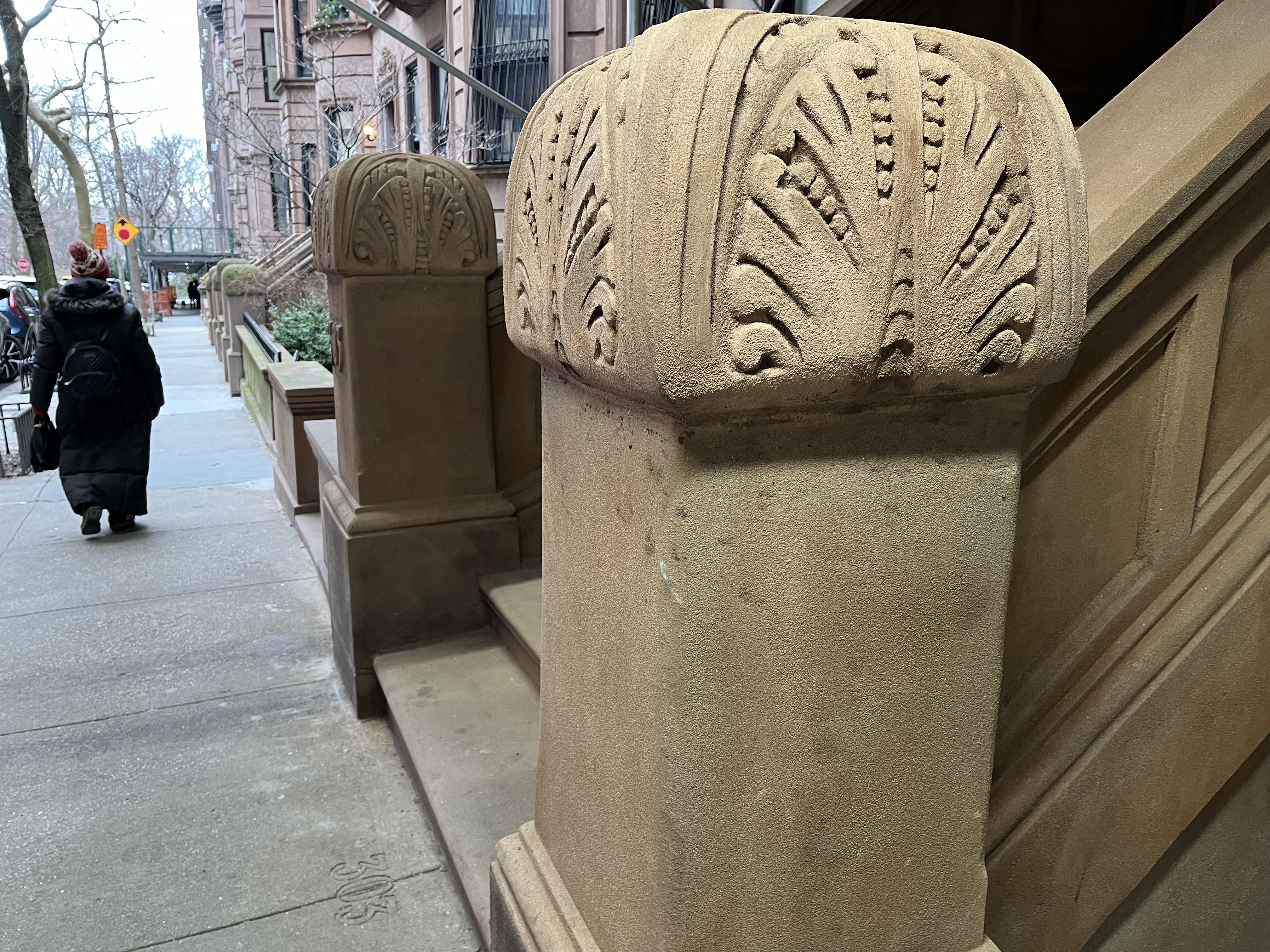
I love that new homeowners in New York often clean up the lovely, old architectural details. Notice the carved staircase, all sandblasted and spiffy.

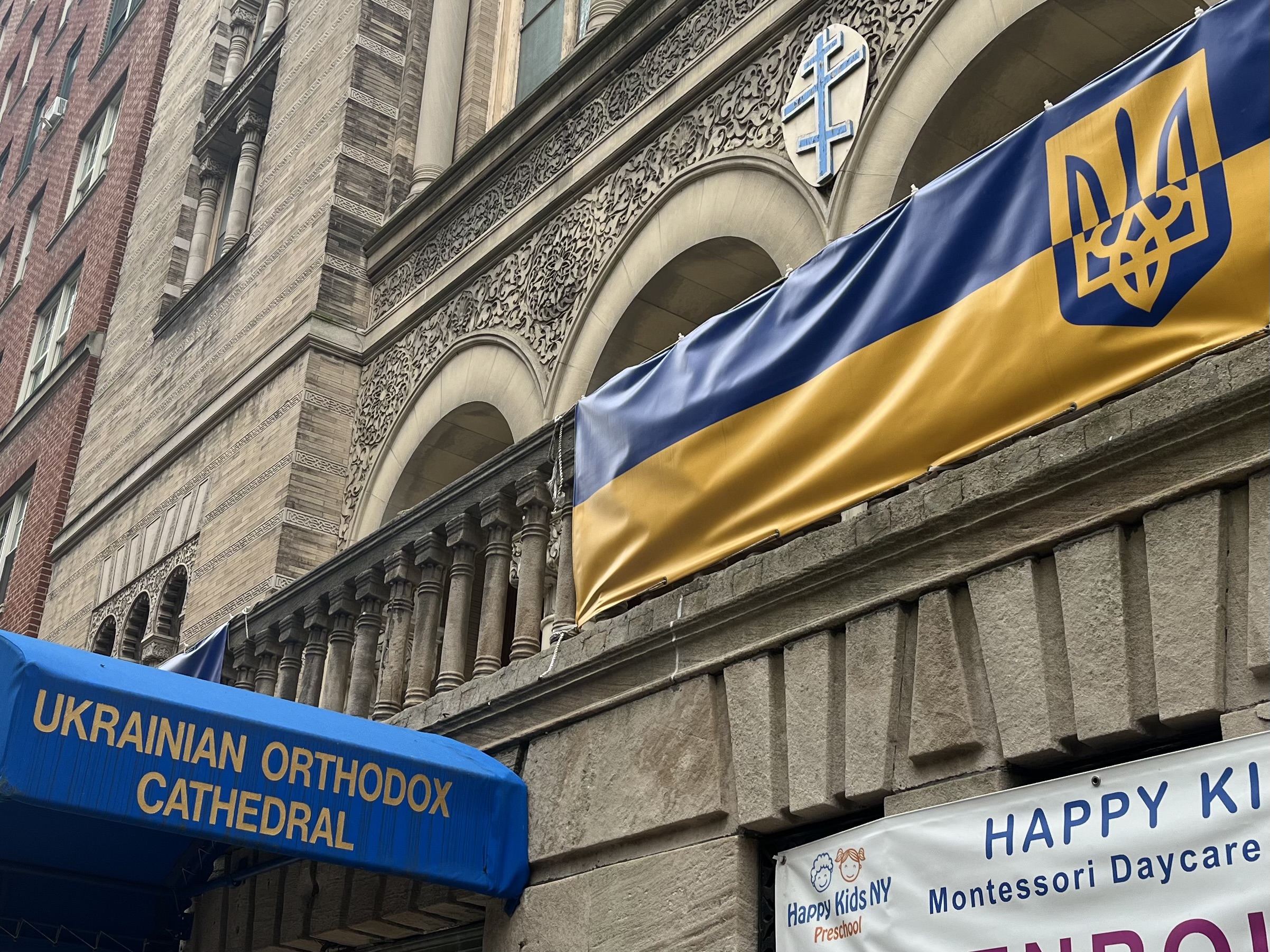
Finally, here’s a shot for my Ukrainian friends. Thinking of you. Always.

Read Full Post »

Photo: Stefano Giovannini for N.Y.Post.
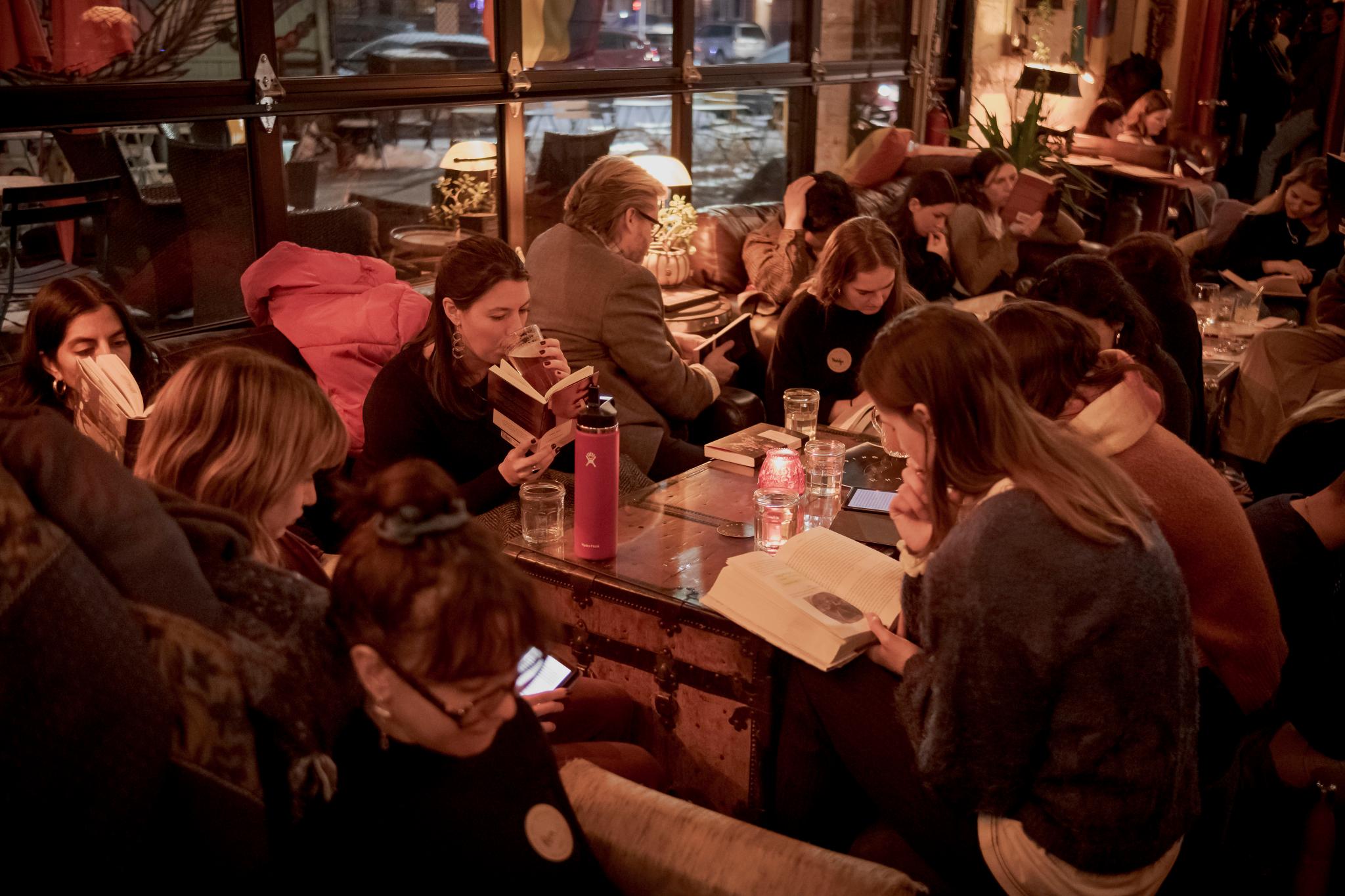
Reading Rhythms is ‘not a book club’ but ‘a reading party,’ says the NY Post, ‘where about 60 to 80 bookworms gather to read” in company — not all the same book, just whatever they happen to be reading.

Here’s an idea whose time has come: gatherings where people who love reading read whatever they like in the same place at the same time and maybe take a few breaks to socialize. It’s called a “reading party,” and the foursome behind the concept calls themselves Reading Rhythms.

Molly Young writes at the New York Times, “On a cold Monday in December, 65 people were gathered for Reading Rhythms, an event that bills itself as ‘not a book club’ but ‘a reading party.’ The parties, which began in May, take place on rooftops, in parks and at bars. The premise is simple: Show up with a book, commit to vanquishing a chapter or two and chat with strangers about what you’ve just read.

“The attendees that night, each of whom had paid a $10 entry fee, were the lucky ones: 270 people were on the wait-list to get in. …

“The idea for Reading Rhythms emerged when four friends in their 20s — Ben Bradbury, Charlotte Jackson, John Lifrieri and Tom Worcester — discovered a shared sense of alarm over the deterioration of their book consumption. The causes were what you’d expect: annihilated attention spans, too much socializing, the treacherous enchantments of the iPhone.

“Bradbury and Worcester, who are roommates, hosted the first event on their rooftop. A playlist was compiled, 10 friends showed up with books, everyone read for a bit and talked about what they’d read, and then … went home.

” ‘I got an hour of reading done and I hung out with some of my best friends, which I’d wanted to do anyway,’ [Bradbury] said. ‘That doesn’t usually happen.’ …

“The four solidified a format, gave the series a name, planned additional parties, opened up the invite list and started an Instagram account. Since May there have been parties in New York, Los Angeles and (of all places) Croatia. …

“At the event this month, none of the guests seemed to operate under the illusion that they’d reinvented any wheels. And ‘glorified library’ actually described the ambience well: Seating included antique armchairs, deep sofas and velvety settees; flickering votive candles emitted an amber glow; hot toddies and beer were available. …

“As the founders continued to host parties, they settled upon a structure. Attendees are given a name tag and half an hour to find a seat and settle in. A host then gets up before the crowd and explains the night’s schedule: 30 minutes of reading, a break, 30 more minutes of reading and then a set of discussions organized around loose prompts. Parties are held early in the week to capture gentle, non-weekend energy.

“Lifrieri, one of the founders, suggested everyone pluck an idea from what we’d just read and ‘turn to a stranger’ to discuss. An icy dart of trepidation shot through my body at the command, but to a stranger I turned: Dilvan, 29, who was reading Michael A. Singer’s The Untethered Soul.

“Dilvan shared a paragraph that she’d highlighted and we discussed its implications, which turned out to be mutually troubling. Conversation turned to other topics: Dilvan had moved to the United States from Turkey for college, specifically to study in ‘a cold location’ featuring snow. The idea of weather-based school selection was fascinating to me. Dilvan landed in Minnesota, which satisfied her temperature requirements and also prompted her to learn English rapidly thanks to the absence of other Turks in the area. …

“Reading postures varied. Some attendees sat cross-legged with a book resting lapwise. Others were curled up on a sofa. Many adopted a modified ‘The Thinker’ position. One man read his book standing ramrod straight, like a marsh bird. Not once did a cellphone chime.

More at the Times, here, and at Reading Rhythms, here.

Read Full Post »
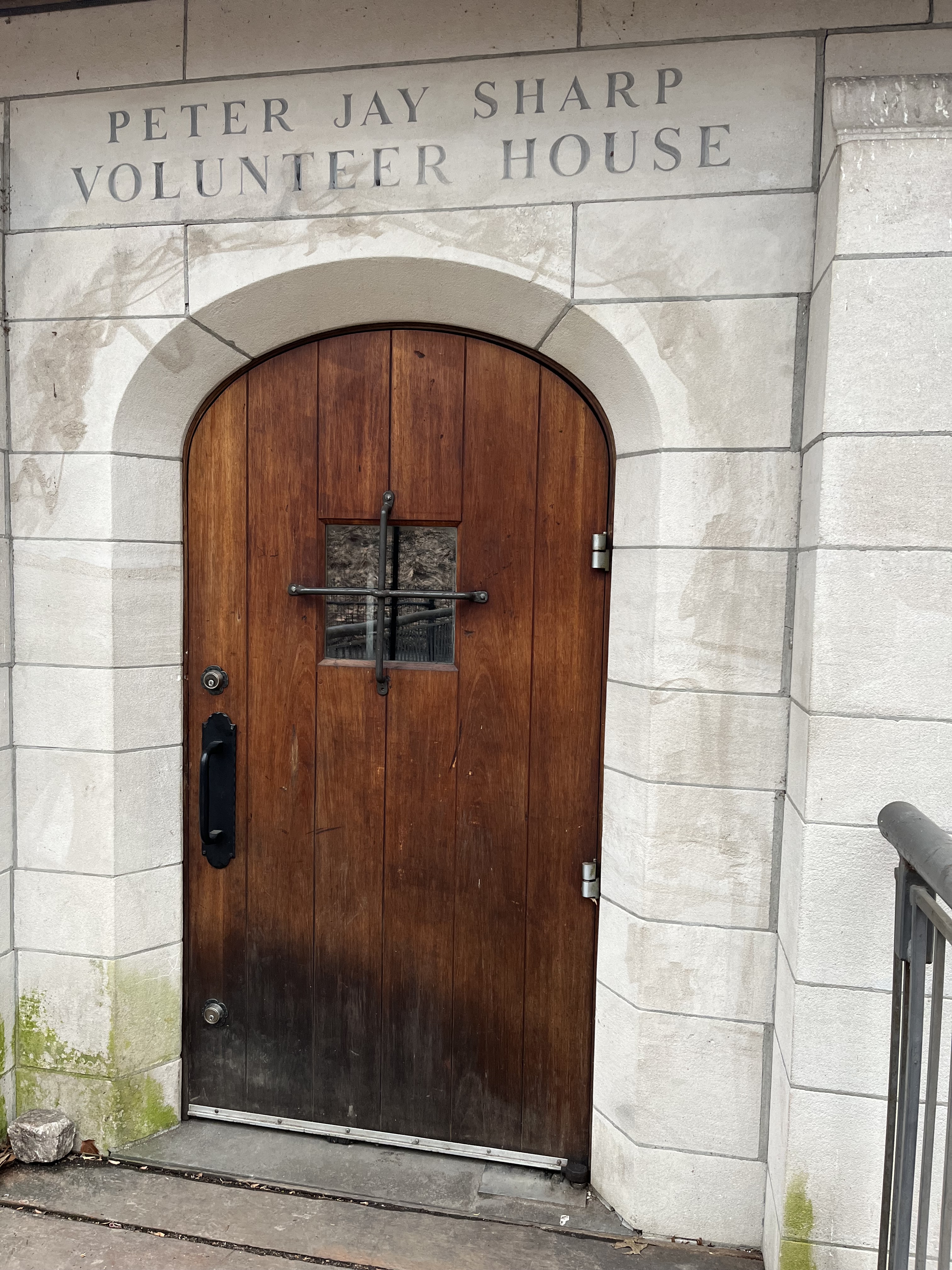
Photo: Elaine Velie.
The New York Botanical Garden’s annual Holiday Train Show features nearly 200 miniature landmarks, all made of natural materials. This miniature is the Guggenheim Museum.

Probably because gifts of toy trains have long been associated with Christmas, model train displays are big at the holiday season. When I was working at the Fed, I loved the seasonal layouts at nearby South Station. (See below.)

Now Elaine Velie is reporting at the art newspaper Hyperallergic about a particulticularly artistic setup in New York.

“Inside the New York Botanical Garden’s (NYBG) Enid A. Haupt Conservatory, a miniature Guggenheim Museum sports a mushroom-cap roof, the Statue of Liberty is made of palm fronds, and the Brooklyn Bridge is supported by a dizzyingly intricate arrangement of tiny twigs. The scaled-down landmarks are just a few of the nearly 200 NYC buildings constructed using natural materials at NYBG’s annual Holiday Train Show, where around 20 doll-size conductors barrel and weave over a half-mile of track.

“The show begins outdoors, where trains circle jagged mountains and zoom above giant snowdrop flowers and rabbits in a fairytale-style enchanted forest, carting pinecones, bark, and acorn tops.

Photo: New York Botanical Garden.

“Laura Busse Dolan runs the Applied Imagination company that creates the structures in the exhibition. Dolan’s father, Paul Busse, founded Applied Imagination in 1991, and a year later, the botanical models maker displayed 15 buildings in NYBG’s first Holiday Train Show. Each year, a team of 15 artists adds new work to the show, and NYBG changes the exhibition’s layout and plantings. …

“This year’s train show is the biggest to date and stars Coney Island’s long-gone giant elephant, Manhattan’s demolished old Penn Station, Hudson Valley mansions, a miniature Central Park, and a host of museums including the Metropolitan Museum of Art, the Frick, and the Guggenheim, among other structures.

“ ‘I think Frank Lloyd Wright would very much approve of this,’ Dolan said of the mini-Guggenheim made of ‘cobbled together’ pieces of shell fungus. Another standout is a copy of NYBG’s Mertz Library. It’s decorated with black walnuts that an NYBG staff member collected. …

“The grand finale can be found in the conservatory pond room. City landmarks like the Statue of Liberty, the Empire State Building, the Staten Island Ferry, the Plaza Hotel, and even the Oculus float on the stagnant water and line the stone fountain. …

“ ‘We’re in awe of the beauty,’ [visitor Mary] Trester said. ‘And the craft of the artists — the attention to detail and everything they do.’

“The Holiday Train Show is open through January 15, 2024.”

Extraordinary pictures at Hyperallergic, here. No firewall.

Photo: Suzanne’s Mom.
Model train at South Station Boston.

Read Full Post »

Photo: JShadab1/Twitter.
Says the NY Post, “A sea lion enjoyed a brief taste of freedom as she hitched a ride on floodwaters and swam out of her Central Park Zoo pool enclosure on Friday.”

Once upon a time, I was a kid who shared a crowded bedroom with two younger brothers. As the oldest, I was often relied on to help out — for example, by keeping the younger ones from wandering when they were supposed to go to sleep. And I did like telling them stories.

My series about a seal called Sammy who left the zoo at night for adventures but always came back in the morning must have meant something important to me because there were many episodes.

Sammy’s escape was different from Sally the Sea Lion’s in today’s story because Sammy had a secret place in the bottom of the tank where he went in and out, and he stayed away all night. Sally, on the other hand, merely took advantage of yesterday’s flooding to swim out the top of her enclosure for a brief look around and then go home.

I guess she was used to hanging out with the other sea lions there, her friends. I know what my hairdresser would think about this. She has almost convinced me that zoos are wrong. I think Tracie would let all the animals out if there were a way to do it safely.

Claire Fahy reports at the New York Times, “A female sea lion, known as Sally, escaped from her enclosure at the Central Park Zoo briefly on Friday, swimming out of the pool where she is kept when the heavy rains lashing New York City flooded the zoo grounds.

“Workers monitored Sally’s movements as she explored the area around the enclosure before rejoining the zoo’s other two sea lions in the pool, said Jim Breheny of the Wildlife Conservation Society’s Zoos and Aquarium, which oversees four zoos and the city’s aquarium.

“By 3 p.m., the water at the zoo had receded, and all animals were contained in their enclosures, Mr. Breheny said. No staff members were in danger during the storm, and the city’s four zoos were closed so that employees could focus on keeping animals safe.

“For Karen Dugan and her colleagues at the city’s parks department, the roving sea lion made for a rare sight from their third-floor offices in the agency’s headquarters at the Arsenal, a building inside the park that overlooks the zoo.” More at the Times, here.

What does an animal escaping the zoo mean to you?

Read Full Post »

Photo: Maya Pontone/Hyperallergic.
Xiyadie, “Butterfly” (2023), paper cutout featured in July art show in Queens.  

Queens, a borough of New York City, is often a gateway to America for newcomers, and as a result it has a diverse and interesting population. The art that residents produce is also diverse and interesting, as an unusual show in a mini-mall recently revealed.

Maya Pontone reports at Hyperallergic, “Located at the tail end of the 7 train not far from LaGuardia Airport, Flushing is a magnet for both longtime Asian American Pacific Islander (AAPI) residents and newcomers from overseas. Home to New York City’s largest Chinatown, the Queens community has served as an entryway for new immigrants in search of work and housing.

“A new exhibition pays homage to Flushing and its history by spotlighting the work of eight artists, most of whom are residents of the neighborhood, and encouraging community contributions and interaction. Home-O-Stasis: Life and Livelihoods in Flushing, curated by Herb Tam and Lu Zhang, is staged in one of the area’s many mini-malls — places increasingly threatened by gentrification. …

“On the inside of the space, you can find a butcher, a beauty shop, a cell phone service store, a money transfer service/tea shop, and a barber; and in the far back, a 99-cent store. …

“A community-driven exhibition, Home-O-Stasis is interwoven into the mini-mall space as though camouflaged, blending in and standing out in understated yet profound ways. At the building’s entrance among hanging real estate ads, shoppers are greeted by a red paper-cut butterfly made by Chinese artist Xiyadie, who was taught traditional paper-cut artistry by his grandmother. Decorated with Buddhist etchings and an impression of the U-Haul clocktower on College Point Boulevard, the delicate work was created for the migrant workers who come to the mini-mall in search of housing.

A handwritten sign written by Xueli Wang that reads ‘Mom, have you eaten?’ catches people searching the bulletin board off guard. …

“Above the paper ads directly in view of the shop owners, a deconstructed calendar with dates and symbols carefully cut out by hand hangs from two delicate red threads tied to the ceiling beams — an allusion to the boundless, continual nature of passing time by Flushing-born sculptor Anne Wu. …

“For Home-O-Stasis, Yuki He and Qianfan Gu from the collective Mamahuhu created ‘Flushing Polyphonous’ (2023), a humorous reinterpretation of Flushing’s map as a Monopoly-like board game. With magnetic pieces and a pair of die, the game takes players through the Queens neighborhood focusing on landmarks and shared hyperlocal experiences. …

“ ‘You would say, “Oh, you go to that dumpling house next to the gas station.” Nobody uses the title of the shop,’ Zhang, one of Home-O-Stasis’s curators and artist contributors, told Hyperallergic. …

” ‘You can get everything you need when you start a life in New York,’ Zhang said, pointing out how many newcomers, luggage in hand, will often stop at the mini-mall first to browse the bulletin’s housing options, set up their phones, buy food, send money abroad, and purchase other home supplies. …

“ ‘In the new malls, each vendor is separated in their room. It has like a hierarchy,’ she said, adding that this mini-mall’s open layout gives it a ‘more organic community.’ …

“Zhang also said that when she and Tam were first hanging up the exhibition, some of the shop owners in the mini-mall seemed skeptical. But not long after Home-O-Stasis opened in late May, local businesses adapted to the art, welcoming the works and even caring for the installations when the curators aren’t present. …

“The daughter of the barber shop’s owner, Nikki, moved the cards and magnets to the side from ‘Flushing Polyphonous’ when she noticed that people kept knocking the game pieces to the ground. Tina Lin, who runs the skincare shop Tina House, has taken to caring for Wang’s reimagined flyers and Janice Chung’s photographic series HAN IN TOWN (2022) when the works get moved around. …

“One of the final elements of the exhibition, called Dream City 2.0, is dedicated to a community archive of personal landmarks and experiences. Inspired by a 1940s commercial development project that would have eradicated much of the neighborhood, the project calls on residents to build another version of Flushing based on past dreams rather than a reimagined future. On a sheet, residents have written down the names of vanished noodle shops, bookstores, and other spaces that have since been replaced by new businesses and apartments.” Oooh, I love that concept!

See other unusual art at Hyperallergic, here. No firewall. Subscriptions encouraged.

Read Full Post »

« Newer Posts - Older Posts »