Feeds:
Posts
Comments

Posts Tagged ‘new york’

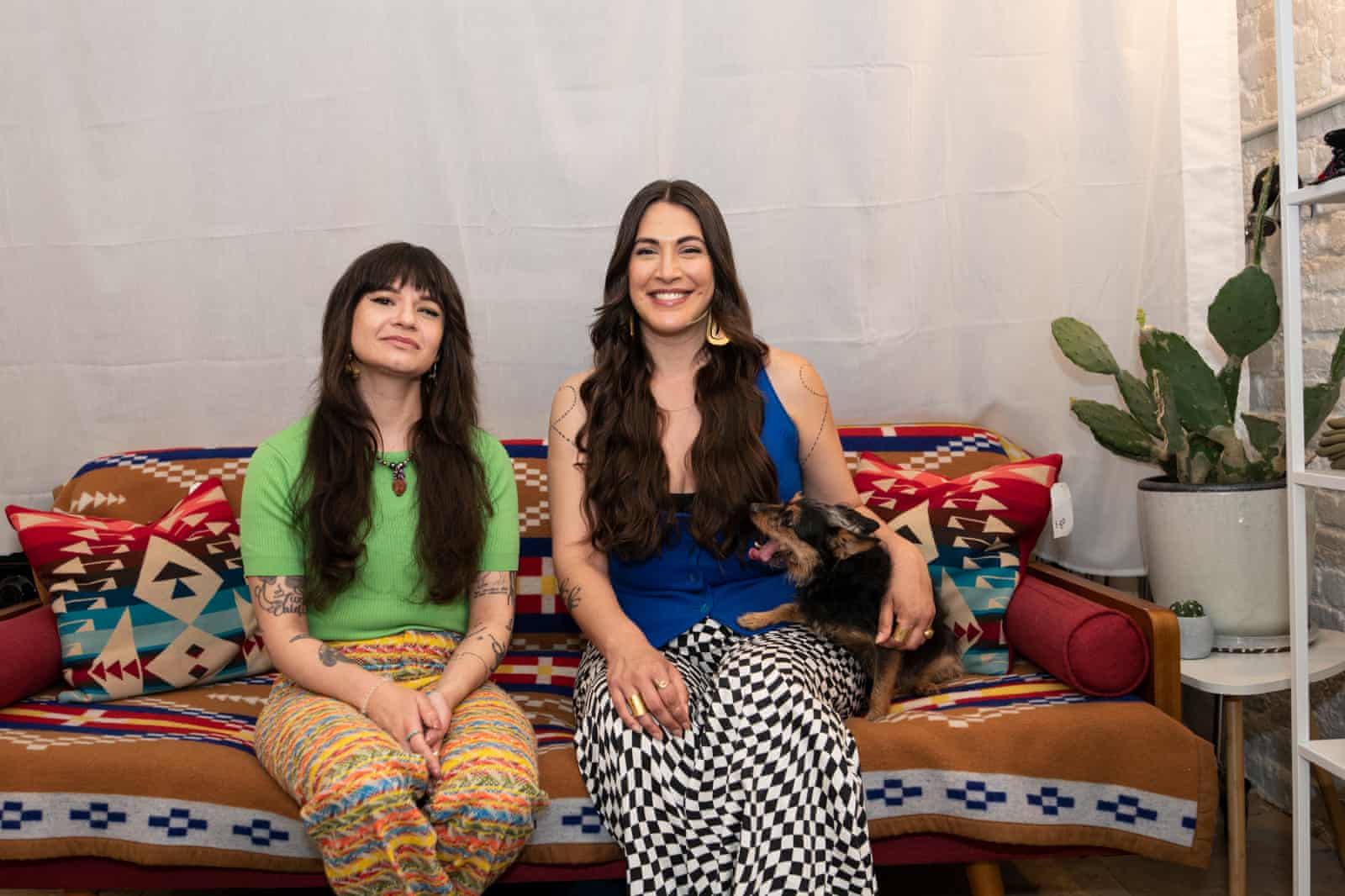
Photo: Maria Spann/The Guardian.
Liana Shewey and Korina Emmerich run a forward-thinking indigenous store in New York.

A friend who had just read Rinker Buck’s Life on the Mississippi was telling me recently how stunned she was to learn details of the Trail of Tears and related horrors visited on natives. Most of us know very little about that and have hardly been aware that indigenous people have been living among us all along.

At the very least, we are noticing them more now, learning more.

In today’s article, Sophia Herring of the Guardian interviews two very visible indigenous women with a new kind of shop in New York City.

“Location, location, location. It can make or break a business,” Herring says. “For Liana Shewey and Korina Emmerich, it was a call to action. When a mutual friend told the activists and creatives – Shewey is an educator and Emmerich is a fashion designer – about a newly vacant storefront on the ground floor of her mother’s Manhattan co-op building, the pair … visited the space. … ‘We jumped on it,’ said Shewey.

“The co-op board wasn’t willing to hand the keys over to just anyone. But their friend’s mother is Navajo, and also the board president. Within days the building had its newest tenant: Relative Arts NYC, a boutique that carries pieces by Indigenous designers and also hosts literary readings, album releases and art installations featuring work by Indigenous artists.

“ ‘It just felt so important for us to have a space, as grassroots organizers in the city,’ said Shewey, who was raised in Stillwater, Oklahoma, and is a member of the Mvskoke (Creek) Nation. Building a store that specializes in goods from Indigenous and many female-owned labels was a natural way to support their community. …

“The merchandise builds on their mission to shatter stereotypes. The entrepreneurs speak to ‘Indigenous futurism,’ an emerging art and design movement that leans away from cliches. …

“Emmerich, who grew up in Eugene, Oregon, and whose father is of Puyallup descent, focused on her own fashion label, EMME Studio, in her late 20s and early 30s. Her work has appeared on the cover of InStyle magazine and in the Lexicon of Fashion exhibition at the Metropolitan Museum of Art. She still makes pieces by special order, and the shop doubles as an atelier. When she spoke with the Guardian, she was rushing to complete a dress that she was making for a producer of Killers of the Flower Moon, the new Martin Scorsese film, to wear to the Cannes film festival. Shewey, whose day job is as an outreach educator at the New-York Historical Society, was speaking from her car, where she was taking a break from a marathon day of teaching four sixth-grade classes.

“The entrepreneurs, who can be found at their shop every weekend, relied on crowdfunding to convert the space into a store. An initial round of fundraising garnered $6,465, which covered shelving units and a sofa from Craigslist. They found a handful of industrial school chairs on the side of the road.

“The pair are breaking even, and still debating whether to form a nonprofit or operate as an LLC. ‘We want Relative Arts to be a greater incubation hub for people to be able to learn, create and work out of,’ said Shewey. …

Sophia Herring: Tell me about what led you both here.

Liana Shewey: I lived in Portland for about a decade and got really integrated into the local rock’n’roll scene. I bartended, worked at a local Starbucks, and then eventually started a music production company of my own with a few friends. In 2014, I moved to the Czech Republic and started organizing around the refugee crisis. I came back in 2016 when everything was happening with Standing Rock. It made me realize my struggle is here and I need to be with my community.

“Korina Emmerich: At 13, I made my first jingle dress regalia, and got very into sewing. I came to New York with two suitcases, a cat and $75. I worked in a boutique and I had my own line. I actually had a lot of success, thanks to a company called Brand Assembly that helps support smaller designers. But you slowly realize with everything in the fashion industry, if you want to do it ethically, you will be poor. I just dreamed that one day I would have a space to be able to share everybody’s work.

“Herring: How do you work as a team?

“Emmerich: We’ve been planning and organizing together for so long that we just naturally gravitate towards each other in our work style. Liana is analytical and does the logistical things as well as planning, and organizing when it comes to programming. I have this more creative, community outreach part of my work where building relationships is such an important aspect. …

“Herring: How do you choose what goes in the store?

“Emmerich: Our goal is to showcase contemporary Indigenous designers who are doing fun, subversive, wearable work, as opposed to the assumption of what Indigenous design has to look like. I want to talk about how Indigenous people exist here and now and we’re doing contemporary work here and now. There’s no rule that says we have to only exist in a historical context.

“Herring: What is it like operating an Indigenous business within a community that so rarely acknowledges it’s on Indigenous land to begin with?

“Emmerich: Even though Relative Arts may be the first of its kind, we are not the first ones to be doing this work. It was amazing to have the American Indian Community House come to open the space on our first day, to say a prayer and give us their blessing.

“Shewey: I’m thinking about how many people come off the streets and buy one of our pieces just because they like the garments themselves. Then they look at the basketball jersey and ask: what is the Salish Sea? [The Salish coast, along the north-western US and Canada, is home to Indigenous nations.] If they didn’t know, they walk out having learned about decolonization. …

“Herring: What is your long-term goal?

“Emmerich: We like to think of Relative Arts as a hub. The plans that we have are so much bigger than just a store. …

“Shewey: We’ve mused that we want it to kind of look like an Indigenous-futurist version of Andy Warhol’s Factory. It would be so wonderful to have thousands of feet, although I doubt Andy ever had to apply for funding.”

More at the Guardian, here. No firewall. Donations encouraged.

Read Full Post »

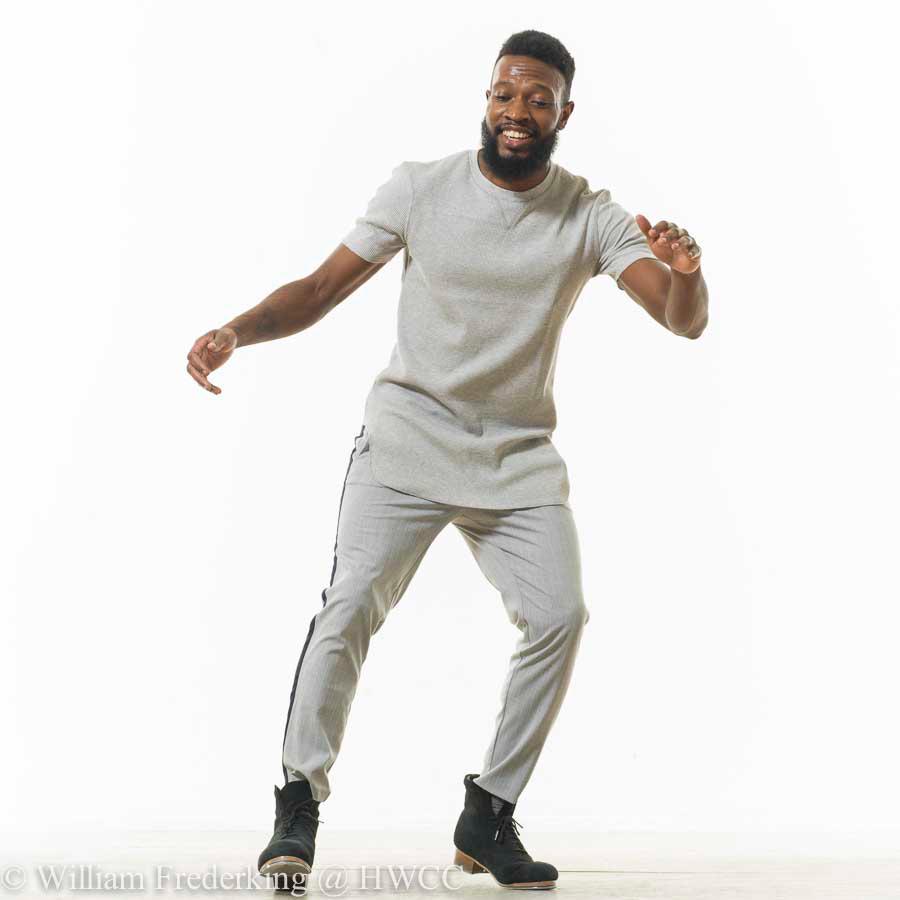
Photo: William Frederking.
Ja’Bowen Dixon is a performance and visual artist on the Broadway Dance Center faculty. He is one of the founding members of the tap dance company M.A.D.D. Rhythms

The New York subway gets a bad rap these days, but did you know about all the art down there? So much great stuff to experience.

Gia Kourlas writes at the New York Times, “You can tell when Ja’Bowen is feeling a song. The grounded power of his feet — whether tapping delicate, whispery notes or hitting rhythmic patterns with ferocity and speed — enlivens an unassuming place: a subway platform.

“But beyond his sleek and supple feet, there is simply his presence. With rigor, elegance and humor, he takes the craft of tap seriously while disarming the crowds that pass through his impromptu theater.

‘You know, more than tap dancing, I’m working to bring some good energy to the city, to the moment where I am.’

“Stumbling on Ja’Bowen is like uncovering a New York City art secret. The lucidity of his body and the music that it produces are steadying forces in an unpredictable space. For months now, this Chicago transplant has been bringing quality tap to the uptown F platform at Delancey Street/Essex Street.

“What he creates with taps and a wooden board — his portable stage — is a reciprocal experience. His dances are containers for waves of energy that pass between him and a crowd. He is a dance artist who makes people smile. Of all ages. In the subway.

“ ‘I get real hyped, and then the audience gets real hyped, and then I lay back a little bit and the audience gets a little quiet,’ he said. ‘It’s like a tennis match going back and forth.’

“His improvs often start slowly. ‘If I’m being honest,’ he said, ‘sometimes people aren’t paying attention or could care less that I’m down there.’

“When a dancer, or really any performer, needs too much love, I tend to look the other way. Ja’Bowen is different. He can seem lost in his own world, dancing for himself until he feels the people around him drawing closer, looking — taking a break from social media to watch a live performance. That’s when he sends his energy out to the crowd.

“Ja’Bowen knows audiences love it when he dances fast, but his preference is to sit back in the pocket, to swing. His internal focus — the way he listens and reacts in this unprotected space of strangers — is a vulnerable display of deep body-mind awareness. And while his musical sensitivity starts at his feet, it doesn’t end there. He dances with his entire self. He likes to play with the levels and emotions in music.

“Ja’Bowen hails from a tap family in Chicago, where his older brother and a friend started the collective company M.A.D.D. Rhythms in part to give Ja’Bowen, then a teenager, something to do. Ja’Bowen joined the percussive-forward group with no formal training. Once he became proficient enough, he started performing in the streets.

“ ‘That’s what really developed my talent more than anything else,’ Ja’Bowen said. ‘You build the skill in rehearsals, but performing is a different thing.’

“If a train is a minute or so away and he’s done with his number, he’ll pick up his mic and invite kids on the platform — they watch him in awe — to learn a step. ‘I’m inviting the kids up, and I’m wishing everybody a good day and that’s intentional,’ he said. ‘You know, more than tap dancing, I’m working to bring some good energy to the city, to the moment where I am.’

“That idea is proven again and again. ‘Hey, tap dancer!’ a woman cried out from the opposite side of the platform one day. She wanted to know where to find him on Instagram.

“Where does his inspiration come from? Ja’Bowen, also an actor and musician, draws a lot from Jimmy Slyde for the way he used tap as a way to connect with an audience, as well as Sammy Davis Jr. and Gregory Hines. ‘It’s not just their footwork but their presentation,’ he said, ‘the way they talk to an audience when they’re onstage, the way they stand still.’

“Tap, he added, is like music. ‘The notes that you’re not playing also have just as much importance as the notes you do play.’ ”

More at the Times, here. Awesome videos.

Read Full Post »

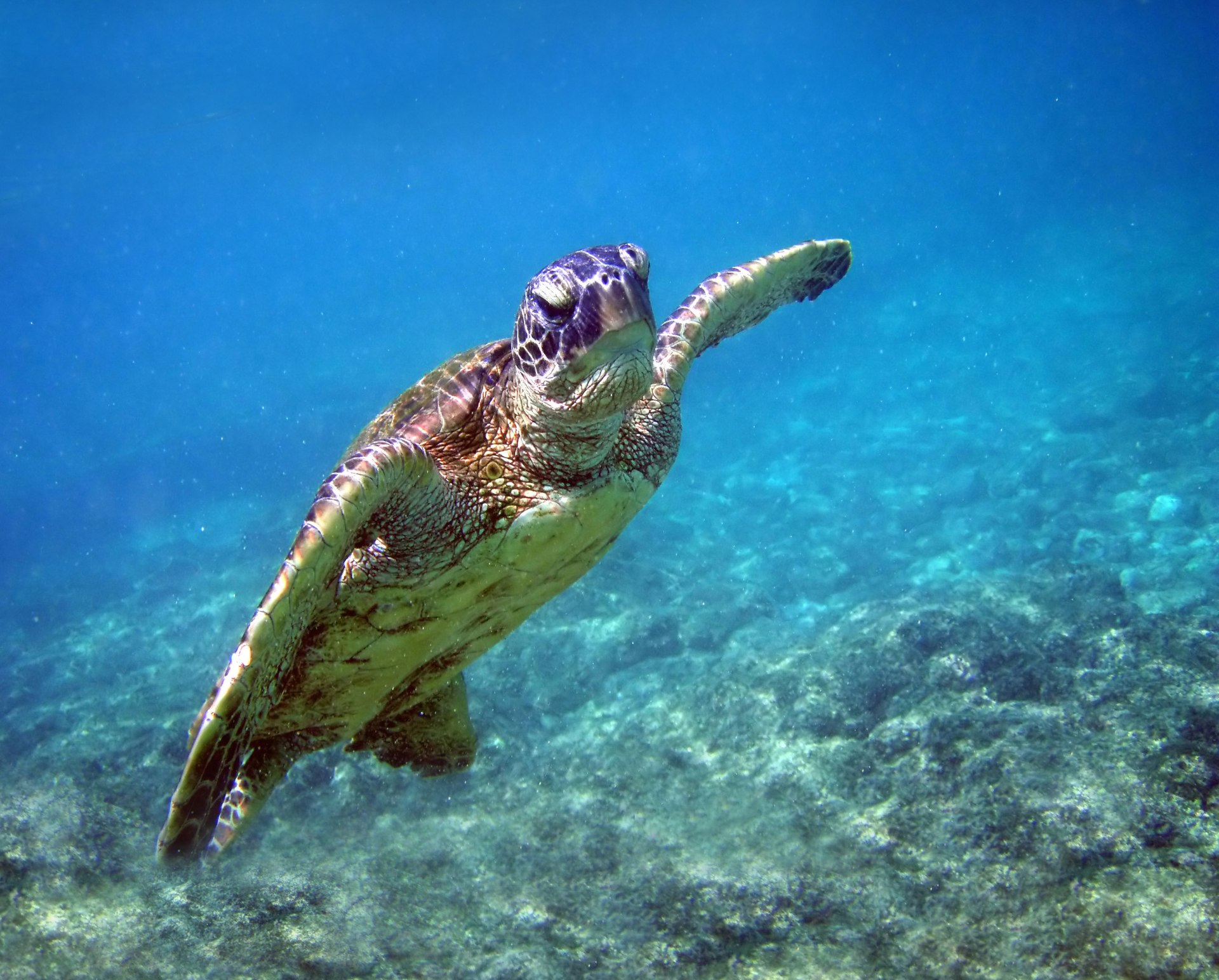
Photo: Brocken Inaglory/Wikimedia.
The green sea turtle above is in Hawaii. Others are in Florida, Egypt, and around the world. When threatened species like these get in trouble, they may receive care at a New York rehab center.

Americans are pretty good at volunteering, and there are so many ways to volunteer that everyone should be able to find something that suits them. I like assisting in English classes for immigrants. The volunteers in today’s story get involved with sea turtles under the guidance of scientists.

Dodai Stewart reports at the New York Times, “On a recent Thursday morning, Maxine Montello was at work making breakfast for 48 hungry diners.

“She had a stack of numbered plastic trays, and a clipboard with a list of corresponding menu orders. Methodically, she placed each tray on a scale, cut up pieces of frozen squid and cold raw herring and added them — including heads and tails — measuring just the right amount.

“Pills were hidden inside some of the fish, and Ms. Montello referred to notes about her customers. ‘Some of them don’t like the tails,’ she said. ‘And Number 7 doesn’t like the squid.’ …

“Ms. Montello is the rescue program director at the New York Marine Rescue Center in Riverhead, Long Island, a nonprofit organization stretched to its limits after receiving a record number of sick sea turtles in urgent need of aid this season. …

“The sea turtle swims under the radar. ‘Even people that might spend a fair amount of time on the water in the Northeast might never see a sea turtle,’ said Barbara Schroeder, the sea turtle coordinator for National Oceanic and Atmospheric Administration Fisheries. ‘But they do use Northeast waters extensively.’ …

“The rescue center mainly sees two types of sea turtles: green and Kemp’s ridley. Both varieties generally travel north in the summer and spend winters in warmer waters down south.

“The green sea turtle, a threatened species with a beautiful starburst pattern on its shell, can be found all over the world. The Atlantic Ocean population often nests in Florida and travels as far as Massachusetts in the summer. They live to about 70 years old, growing to three feet long and 350 pounds.

“The Kemp’s ridley sea turtle, a critically endangered species that nests in Mexico and eats crabs in the waters of New England and the Mid-Atlantic States, is smaller, growing to about 100 pounds.

“Once on the edge of being extinct, the Kemp’s ridley sea turtle has ‘a very positive conservation story,’ said Ms. Schroeder. Shrimp trawling and the killing of nesting turtles and their eggs at their very restricted nesting beaches had caused their numbers to plummet into the hundreds, but the Endangered Species Act, signed 50 years ago, has helped stabilize the population.

“Climate change has created new challenges to the turtles’ survival. Warming waters mean that ‘turtles and other species are expanding their normal territory,’ Ms. Montello explained. ‘So more and more turtles are going further north.’ Then, when cold weather arrives, often suddenly, the turtles are stranded. … Sea turtles are coldblooded, so when the water temperature drops, so does their body temperature. They become cold-stunned — similar to hypothermia — and go into a state of shock, washing up on beaches.

“The rescue center, founded in 1996, usually treats about 30 or 40 cold-stunned sea turtles during the winter. Ms. Montello has looked at records dating back to 1980, and said this year’s numbers are concerning. … ‘This year we had 95.’

“Of the 95 turtles found cold-stunned this season, 48 are still alive and in the care of the rescue center. The others were either dead when they washed up or perished soon after.

‘Their survival is dependent on how quickly they’re found,’ said Ms. Montello. …

“A lot is unknown about these creatures’ lives in the New York area, and much of the data comes from stranded turtles, not thriving ones. Ms. Montello’s research plans involve recording turtle behavior using customized video cameras that will be attached with suction cups to the backs of healthy turtles when they are released. …

“After the raw fish was loaded onto plastic trays, Victoria Gluck, a biologist on staff, carried a tray over to a turtle tank and doled out the meals with tongs, piece by piece, to the corresponding patients, whose numbers were written on their backs with nontoxic paint. Two volunteers, Britney Dowling and Cecilia Gonzalez, used nets to keep the other hungry turtles away as Ms. Gluck placed fish in front of each turtle, ensuring that they all got their allotted share; a turtle is supposed to eat 2 percent of its body weight a day.

“In the wild, sea turtles are solitary, so being in a tank alongside others in the rescue center makes some of the residents grumpy. On a whiteboard in the kitchen, the team had compiled a list of ‘tank bullies’: turtles known to push their tank mates or try to steal their food. …

“A veterinarian visits once a week, but otherwise the staff members — eight total, four full time and four part time, all women — and a small army of citizen scientists and volunteers are responsible for spotting cold-stunned turtles and helping them recuperate.” Read the rest of the story at the Times, here.

Read Full Post »

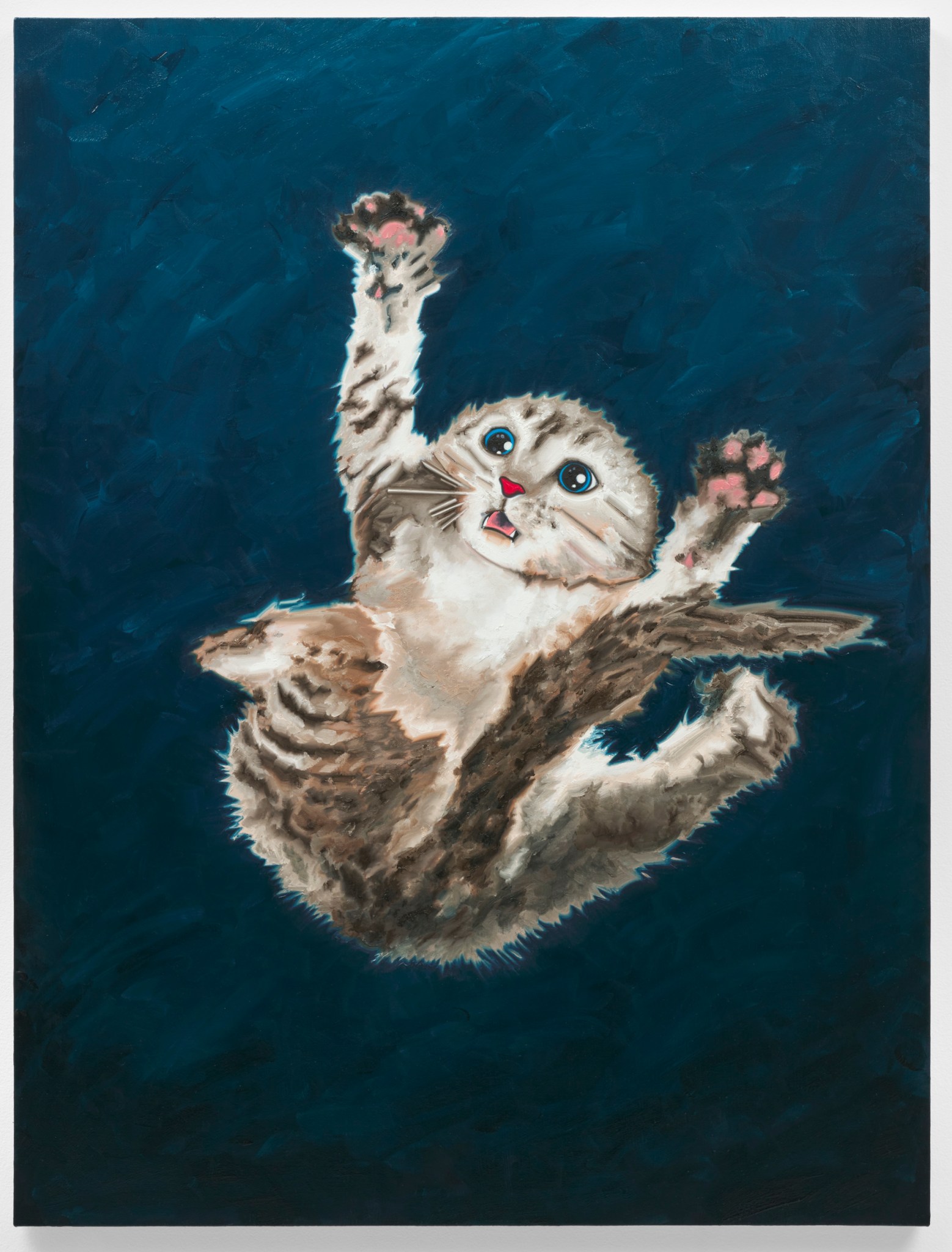
Photo: Mrs.
Luke O’Halloran‘s “Eeeeeeeeeee” (2022).

Are you a cat person or a dog person? Both? I’m not sure that I have a preference, but over the years, I’ve cohabited with more cats than dogs mainly because they are so independent and relatively easy to care for.

I know from YouTube that there’s a large segment of the population that can’t get enough of videos featuring cats, and as the gallery in today’s post notes, cats have been subjects of awe throughout history.

“Since ancient Egypt,” the Mrs. gallery’s website notes, “cats have maintained a ubiquitous presence in art. Originally symbolic of an Egyptian idol and guide in the afterlife, during the Middle Ages cats became synonymous with superstition, witchcraft, and paganism — associations that linger to this day. It wasn’t until the 1600s that they became the domestic companions they are known as today. Featuring artists from multiple generations, this exhibition depicts cats in all of their glory, as loving companions, fierce protectors, stubborn rebels, shadows in the dark, mythical shapeshifters, and as vehicles of unabashed comic relief.” 

Today I must apologize to readers who might have been able to get to the Mrs. art gallery in Queens, New York: the cat-art show has ended. Fortunately, you can still enjoy it online at Hyperallergic.

Elaine Velie wrote about it there: “Cats have descended upon Maspeth, Queens, where Mrs. gallery is featuring the work of 39 artists focused on a single theme: furry felines. Cats have been an art historical focus for thousands of years, and the gallery’s latest exhibition, titled ‘Even a Cat Can Look at the Queen,’ suggests they are here to stay.

“From Cait Porter’s loving rendering of a fuzzy tabby’s paw to a Philip Hinge chair sculpture made out of scratching posts, the exhibition includes works by longtime artists of Mrs.’s program as well as some who have never before shown with the gallery.

“Almost all of the works are by living artists, with a few exceptions, including an Andy Warhol print that presents perhaps the exhibition’s most straightforward depiction of a cat. A painting by Renate Druks — movie star, director, and avid painter of cats — titled ‘Male Cat Club’ (1980) evokes the visual language of the Hollywood Golden Age she lived through. … The setting looks like a movie or stage set and the outdoor views visible in the background evoke the dreary exteriors of film noir.

“Other works in the show are decidedly more modern, such as Sophie Vallance’s ‘Tiger Diner’ (2022), which features the checkerboard pattern and rounded aesthetic that has become popularized on social media over the last few years. But like Druks, Vallance places cats in a surprising setting; namely, sitting in a diner.

“In both paintings — and in almost every work in the exhibition — cats display the utmost confidence, a holier-than-thou attitude that any cat parent will likely recognize in their own beloved pet. The animals take up space with dignity, suggesting that the oddity is not their presence but that of a human being.

“Other highlights include Katharine Kuharic’s ‘Long Wait’ (1990), an oil painting with such fine lines it looks like a tapestry. … Elbert Joseph Perez’s ‘Pierrot Greatest Performance’ (2022) is a highly detailed portrayal of a cat presenting an ominous paw toward his toy likeness as an audience of creepy, obscured cats watches the animal from the dark. …

“Johanna Strobel’s sculpture commemorates feline hero Félicette, the first cat in space, and Abby Lloyd’s ‘Enchanted Cat Girl’ (2019), a pink anthropomorphic foam figure, assumes different facial expressions depending on where the viewer stands. Lloyd has impressively managed to keep the sculpture upright despite the figure’s enormous head.

“The show’s title, Even a Cat Can Look at the Queen, comes from an old English proverb implying that even people of the lowest status — as low as a cat — have rights. After gazing at the works in the exhibition, however, the proverb seems too on-the-nose. With their distinguished attitudes and regal postures, it’s quite evident cats can ‘look at the queen.’ As Anna Stothart notes in her essay for the show, perhaps the ancient Egyptians were right: Dogs may be man’s best friends, but cats are humans’ idols, and although they may bless us with companionship, we exist only to serve them.’ “

Do you have a favorite piece of art from the show? For me, it was hard to pick. Click at Hyperallergic, here, to choose from some great pictures. The gallery’s site is here.

Read Full Post »

Photo: Mark Lennihan.
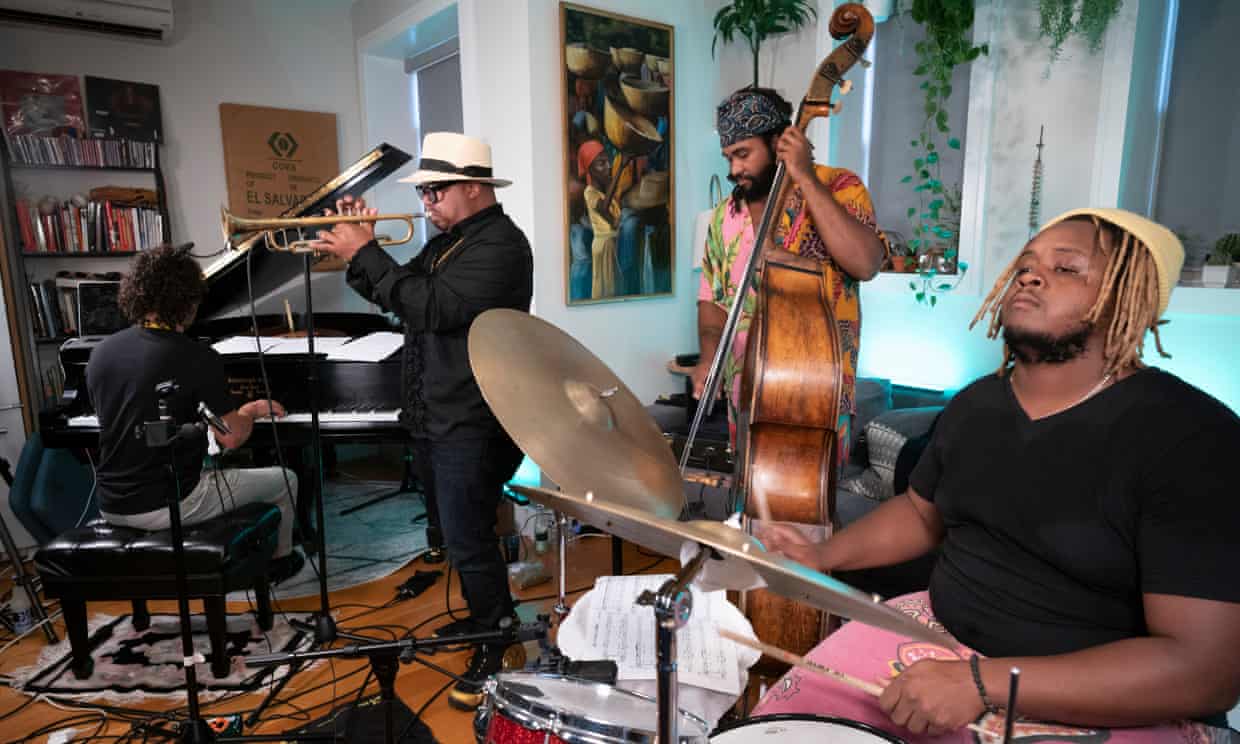
Emmet Cohen (left), Nicholas Payton, Russell Hall, and Kyle Pool livestreaming one of the weekly jazz concerts Cohen launched from his small apartment when the pandemic struck.

I was listening to Christian McBride hosting “Jazz Night in America” (streaming weekly at WICN, here), and he made me want to learn more about the young musician Emmet Cohen.

Allen Morrison wrote at about Cohen’s pandemic venture at the Guardian: “It’s the most exclusive jazz concert in New York. Only about eight guests can attend the weekly shows, by invitation only, squeezing into the 32-year-old jazz pianist Emmet Cohen’s fifth-floor walk-up in Harlem. Meanwhile, thousands more around the world tune into livestreams of the event on Facebook and YouTube.

“Live From Emmet’s Place started as a near-desperate response to the disappearance of gigs for musicians when the Covid-19 pandemic began. Ninety-four shows later, the weekly concert featuring Cohen, his trio with bassist Russell Hall and drummer Kyle Poole, and a roster of guest musicians who represent some of the jazz world’s leading lights, has evolved into the most highly watched regular online jazz show in the world.

“Talking on a recent Monday afternoon four hours before showtime, Cohen, a one-time child prodigy who has become one of his generation’s most highly regarded jazz pianists, was chilling in a T-shirt and shorts. At this hour, his one-bedroom apartment seems relatively spacious by New York standards. But that’s only until the technicians – a piano tuner, a sound engineer, a videographer – start arriving and setting up equipment. …

After two and a half years, [it’s] been transformed from a ragtag live shoot using only an iPhone into a hi-tech, multi-camera production with pristine sound.

“The superior production values would count for little if they were not in the service of a charismatic, often dazzling, trio of performers. Partly it’s Cohen’s energy, exceptional musicianship, and likable personality. Partly it’s the appeal of his inclusive brand of jazz, incorporating the entire tradition of the genre from the 1920s to the present day. And partly it’s the joy and esprit de corps with which the trio perform, evident in Cohen’s frequent ear-to-ear grin and the trio’s telepathy.

“At first, the current music scene in Harlem was the central focus of the show. ‘There’s such a high concentration of great musicians living here, right down the block,’ he said, citing regular guests like saxophonists Patrick Bartley and Tivon Pennicott and trumpeter Bruce Harris, all rising jazz stars on the New York scene.

“ ‘There’s a rich history of great jazz musicians living in this area: Billie Holiday lived on the corner, Mary Lou Williams up the street, Thelonious Monk would hang out here … all the stride piano greats would play Harlem rent parties. Duke Ellington and his whole band lived here, Sonny Rollins … So, it just felt very natural to host a Harlem rent party, but an updated, digital, virtual version, where we could invite people in to try to make the rent and get the musicians paid at a time when people were really struggling.’

“These days, Live From Emmet’s Place has an audience that averages about 1,000 fans each Monday night on Facebook and YouTube, but videos of most of the shows, as well as dozens of individual songs, have logged tens of thousands more views on YouTube. One video, featuring the sparkling French-born jazz singer Cyrille Aimee, has racked up 4.6m views.

“ ‘I wanted to figure out how to create an online community where we could play and make money. When you play at [the New York City jazz club] Smalls there are 80 people, if you sell out; at Birdland, 250. When we did the first concert from the apartment on March 22, 2020, after one week the livestream had 40,000 views. For a jazz group to reach that many people requires months, if not years, of touring.’ …

“In its pre-pandemic infancy, the webcast’s unlikely success could scarcely have been imagined. In February 2020, Cohen and the trio were flying high. … ‘Suddenly we had no gigs and no idea when we would play again.

“[The show] quickly became an international ‘communal gathering,’ Cohen said. ‘And community, in a time of hardship, turned out to be the most important thing.’ …

“ ‘When I’m on the road,’ Poole said, ‘people say to me, “I’m part of the Emmet’s Place community.” ‘ …

“ ‘The pandemic caused incredible destruction and dismay, but there was a silver lining,’ Cohen reflected. … ‘The fact that we’re a family, Kyle, Russell and me, showed the brotherhood and what it means to be a band in a time of crisis.’ ”

Live From Emmet’s Place can be viewed most Monday nights at approximately 7:30 PM ET on Facebook and YouTube. More at the Guardian, here. And at NPR, here, you can click on links to several of the musical numbers.

French speakers, Rejoice.

Read Full Post »

Pirate Artist

Photo: Art in America.
Dick Riley’s approach to art stirs things up.

The New York Times calls this anti-plastic missionary a “pirate artist.” Melena Ryzik‘s article explains how he got that moniker.

“The artist Duke Riley isn’t exactly sure why he had the idea to turn a plastic tampon applicator into a fishing lure, but he knows one thing for certain: It works.

“He put it to the test one summer day on a buddy’s boat in Block Island Sound, and, with his pastel bait bouncing along the ocean floor, pulled up a sizable fluke. It was a keeper — ‘I definitely ate it,’ he said.

“The applicator tube had first washed up ashore, part of the many tons of seaborne trash that Riley, a Brooklyn artist known to scavenge New York’s waterways for materials and inspiration, has collected over the years. Putting this spent plastic product to use as fish food — that was some D.I.Y. upcycling. Putting it into the Brooklyn Museum of Art: that is Riley’s wild and singular artistic ingenuity.

“There’s a film of the fishing endeavor, done in the style of a crusty YouTube tutorial. The lures — displayed on pegboard, as in a real bait shop — join other plastic detritus that Riley has repurposed, like straws, dental floss picks and vape pens, in ‘DEATH TO THE LIVING, Long Live Trash,‘ an exhibition [that opened in June] at the Brooklyn Museum. Across multiple rooms and settings, it confronts the calamitous environmental impact of the plastics industry and the ways in which unchecked consumption, for personal convenience, has polluted waterways.

“Its centerpiece is more than 200 works of painstakingly hand-drawn scrimshaw that Riley has spent three years making. Instead of the whale teeth and walrus tusks that 19th-century sailors once etched, he uses a contemporary, dispiritingly abundant, analog: discarded plastics. Lotion tubes, squirt bottles, brushes, a honey bear, solo flip-flops, a Wiffle ball and a legless lawn flamingo now stained bone-white, all provide the canvas for Riley’s patterned mariner drawings in India ink.

“As whalers often depicted the leaders and profiteers of their day, Riley portrays the C.E.O.s of chemical companies, plastic industry lobbyists and others he deems responsible for producing the devastating tonnages of single-use plastics that are engulfing our oceans and threatening our ecosystems. It’s a downer, but if you look closely there’s often a Riley twist of humor, like the seagull shown relieving itself on the head of a water bottle magnate.

“ ‘This is an artist who I always refer to as a modern-day pirate,’ said Anne Pasternak, the director of the Brooklyn Museum. ‘He’s not just an aesthete pointing to something passively, he’s working to actively spur change — you have to be in it with an artist like Duke. He’s not going to hold back.’

“Calling out corporate titans and politicians — particularly when institutions like the Brooklyn Museum depend on them for donations and support — comes from a fearless ethic and ‘a wit that is hilarious and unforgiving.’ She added, ‘I always think of him as the George Carlin of the art world.’ …

“Best known for ‘Fly by Night,’ a 2016 performance in which 2,000 trained pigeons outfitted with LEDs lit up the New York sky, or for launching his own homemade Revolutionary War submarine into the path of the Queen Mary 2 cruise ship, Riley has mostly succeeded by navigating around the commercial New York art world, though he holds degrees from some of its prestigious feeder institutions (a B.F.A. from the Rhode Island School of Design and an M.F.A. in sculpture from Pratt Institute). …

“ ‘Duke is a natural,’ said Ernesto Pujol, an artist and former professor at Pratt who has mentored him. ‘A huge talent. … He had to fight his way for the art world to see him holistically — he is the kind of artist that is always more than you bargain for.’ …

“Riley works in many mediums: The Brooklyn exhibition includes films, decorative installations, mosaics and illustrations, like a vast map of Brooklyn’s Gowanus Canal, encompassing its history from precolonial bounty to Dutch settlers through the polluted Superfund site that in 2007 tested positive for gonorrhea. …

“His mosaics offer one of the biggest wows of the show. Inspired by sailors’ valentines, a nautical souvenir traditionally made of shells, Riley’s are enormous and quite beautiful.

Only on close inspection do you notice that the perfect, shiny seashells are interlaid with a rainbow of bottle caps, cigar tips, bits of mechanical pencils, and bread bag clips, all harvested from New York streets and waterfronts. …

“[His studio is] a cleanish space, stacked with neatly bagged, color-coordinated trash. A trailer outside was filled with more refuse. Some of it came from Fishers Island, the exclusive enclave in Long Island Sound, where Riley had a residency in 2019, and where he met a woman whose full-time job is to rid its beaches, the summer home of families like the DuPonts, of plastic rubbish.

“ ‘The exhibition is so much about holding people accountable, and the little acts that people can take to solve this problem,’ Liz St. George, the show’s curator, said. That includes museum administrators; in the course of working with Riley, they changed cafeteria suppliers to minimize plastic, and reconfigured water fountains to accommodate reusable bottles. …

“He did the scrimshaw in solitude aboard his boat, now docked in Rhode Island. A Massachusetts native who worked on the fish docks and grew up visiting places like the New Bedford Whaling Museum, he has always been attracted to a New England nautical aesthetic. …

“This week, Riley is also debuting a mosaic in Boston’s central library. It is one of only a few pieces of contemporary art purchased for permanent installation in the landmark 1895 building, since a circa-1900s John Singer Sargent mural. Riley’s work is partly inspired by the Great Molasses Flood of 1919, an urban disaster caused when a storage tank exploded, releasing millions of gallons of the sticky stuff. It destroyed neighborhoods in the North End, a community of Italian immigrants. …

“For his core group of collaborators, no project is too brazen, or too labor-intensive. ‘We always pull it off,’ said Nicholas Schneider, a New York City firefighter and a longtime member of Riley’s crew. Through all the fun, ‘there is always a somber or very serious component that I think he’s always been the most focused on and proud of.’ “

More at the Times, here. See also Art in America, here.

Read Full Post »

Although the Staten Island of actor Pete Davidson and Saturday Night Live is a running joke, there is more to this borough of New York City than people realize.

Liza Weisstuch at the Washington Post decided to visit as a tourist and found a lot of surprises.

“In 1916, a young woman with dreams of making it big on Broadway lit off from her home in Cincinnati, leaving her young children with their grandparents, and arrived in New York City. She never found success as an actress. Instead, she opened an antiques gallery on Madison Avenue in Manhattan and developed a keen fondness for — rather, obsession with — Tibetan art and took up residence on Lighthouse Hill, a leafy enclave of Staten Island.

“While Jacques Marchais never set foot in Asia, she accrued what remains one of the largest collections of Tibetan art outside Tibet. It’s all housed in the Jacques Marchais Museum of Tibetan Art, which she opened in 1947, next to her home. It took her nine years to build, during which time she collected stones in her pickup truck that were used in the construction of the museum and terraced garden.

“ ‘It’s a wonder there were any stones left on Staten Island after she was done,’ the museum’s executive director, Jeff Gaal, told me, pointing out the flat roof, trapezoidal-trimmed windows and doors with crosscut wood posts, a few of the elements in the style of a Tibetan monastery in the United States. …

“One day last spring, I sat for a while in the garden outside. It was easy to understand why Marchais found it a refuge from Manhattan.

“Staten Island, which sits 5.2 miles south of New York City’s Financial District and measures 58.5 square miles, has been called many things: the greenest borough, the Forgotten Borough, Staten Italy, the Rock, the city’s dump. (It was the site of a noxious 2,000-plus-acre landfill, one of the world’s largest, for more than 50 years. A project to turn it into green space is underway, with some sections now open to the public.) …

“Arguably today’s most famous Staten Islander is SNL prodigy and boyfriend to the stars Pete Davidson, who wrote and starred in Judd Apatow’s The King of Staten Island in 2020. …

“Over the past few months, I’ve made a few trips to the borough to see things I sheepishly and shamefully never knew there were to see. And learning what makes the island so unique has brought my understanding of New York City — and it’s no exaggeration to say other parts of the world, too — into clearer focus.

“Case in point: Tibet. And also, Sri Lanka. A community of Sri Lankans from the South Asian island nation has grown here over the past few decades. Lakruwana [restaurant], which opened its first location in Manhattan in the 1990s and its second here in 2000, is a bedrock of the community. It’s run by Jayantha Wijesinghe and her husband, Lakruwana, who met on the Staten Island Ferry. He oversees the place and decorated it with art, furniture and Buddhist sculptures he shipped over from Sri Lanka. She’s the chef, and her visually arresting dishes emphasize traditional flavor — curries and sambals. Their daughter, Julia, created a Sri Lankan museum, the first outside the country, in the restaurant’s basement in 2017. She was 18. …

“What was fast becoming an Asian-arts-oriented expedition continued a few days later when I returned to visit Snug Harbor Cultural Center & Botanical Garden, an 83-acre campus that encompasses three museums, 14 botanical gardens, two art galleries and a two-acre urban farm where produce is grown for some of New York City’s most famous restaurants. Among the sites is the New York Chinese Scholar’s Garden, an otherworldly … tranquil space, a re-creation of Ming Dynasty Chinese gardens. Sounding like the stuff of fairy tales, the buildings were fabricated in China by 40 artisans, then shipped to New York City and assembled here in the late 1990s in accordance with old-world methods. That’s to say: no nails, screws or glue, just pegs securing the latticework. …

“Snug Harbor is not why people call Staten Island ‘the greenest borough.’ You can chalk that up to the Greenbelt, a 2,800-acre expanse of parks, trails and open spaces that cuts diagonally across the center of the island. (For scale, Central Park is 843 acres.) The park on top of the aforementioned dump nearly doubles the island’s green space. Red foxes, groundhogs, beavers, deer, wild turkeys and great blue herons are just a sampling of the wildlife that roam the woods and wetlands. …

“Going back to the Lenape Indians who lived here when the Dutch arrived, life and commerce revolved around the farmland. And the sea. A visit to the museum at Historic Richmond Town, a collection of 40 structures (including outhouses) on the site of a 17th-century village, offers insight on that, with its display of old local oyster shells, some as large as adult shoes. …

“A visit to the National Lighthouse Museum, located in a former Coast Guard station a few minutes from the ferry terminal, gave me a clearer understanding of the island’s critical role in the evolution of the nation’s lighthouse network.”

More at the Post, here.

Read Full Post »

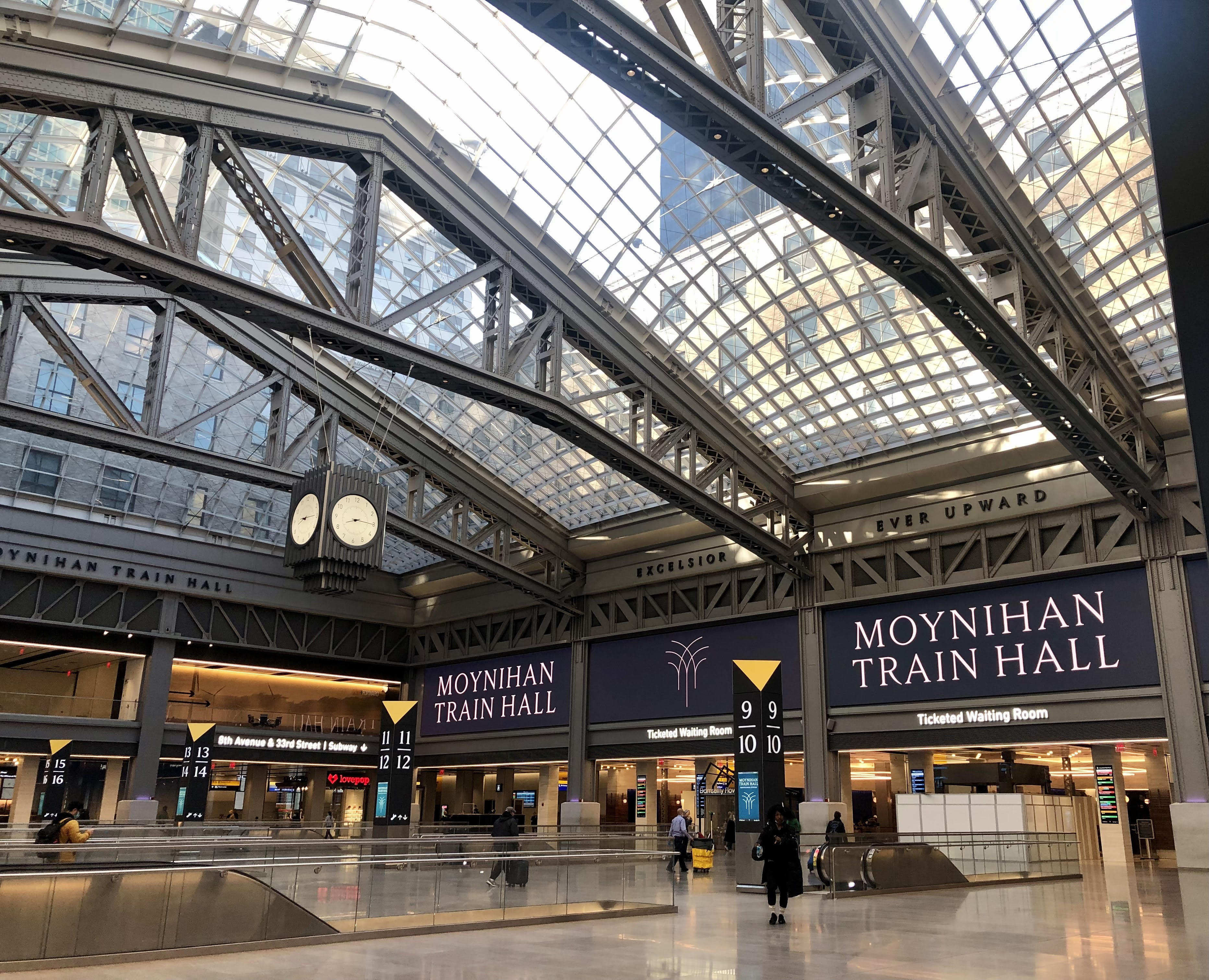
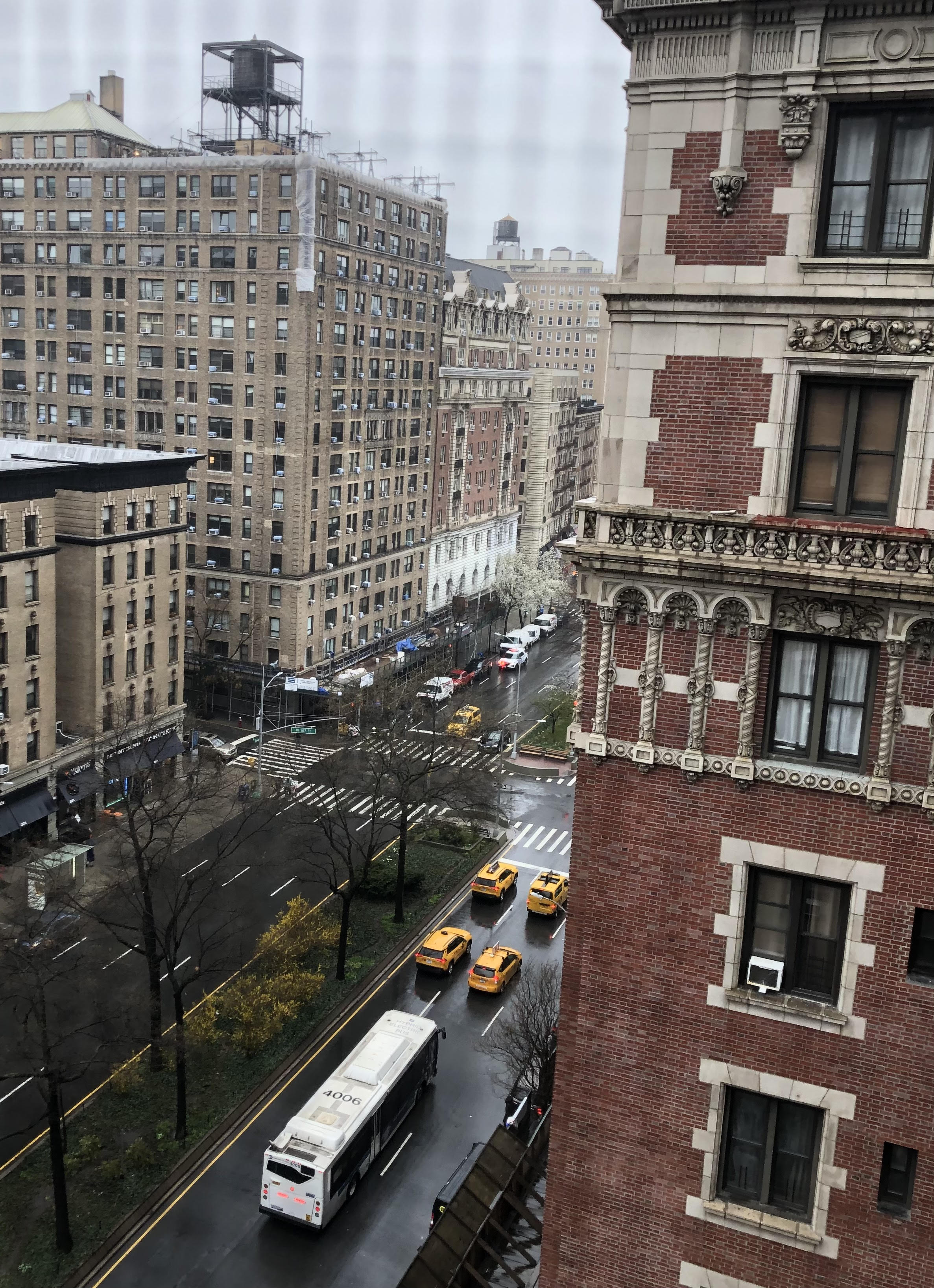
The new version of Penn Station, New York, is across the street in the former Post Office. The Moynihan Train Hall has a large, high dome that lets in lots of light.

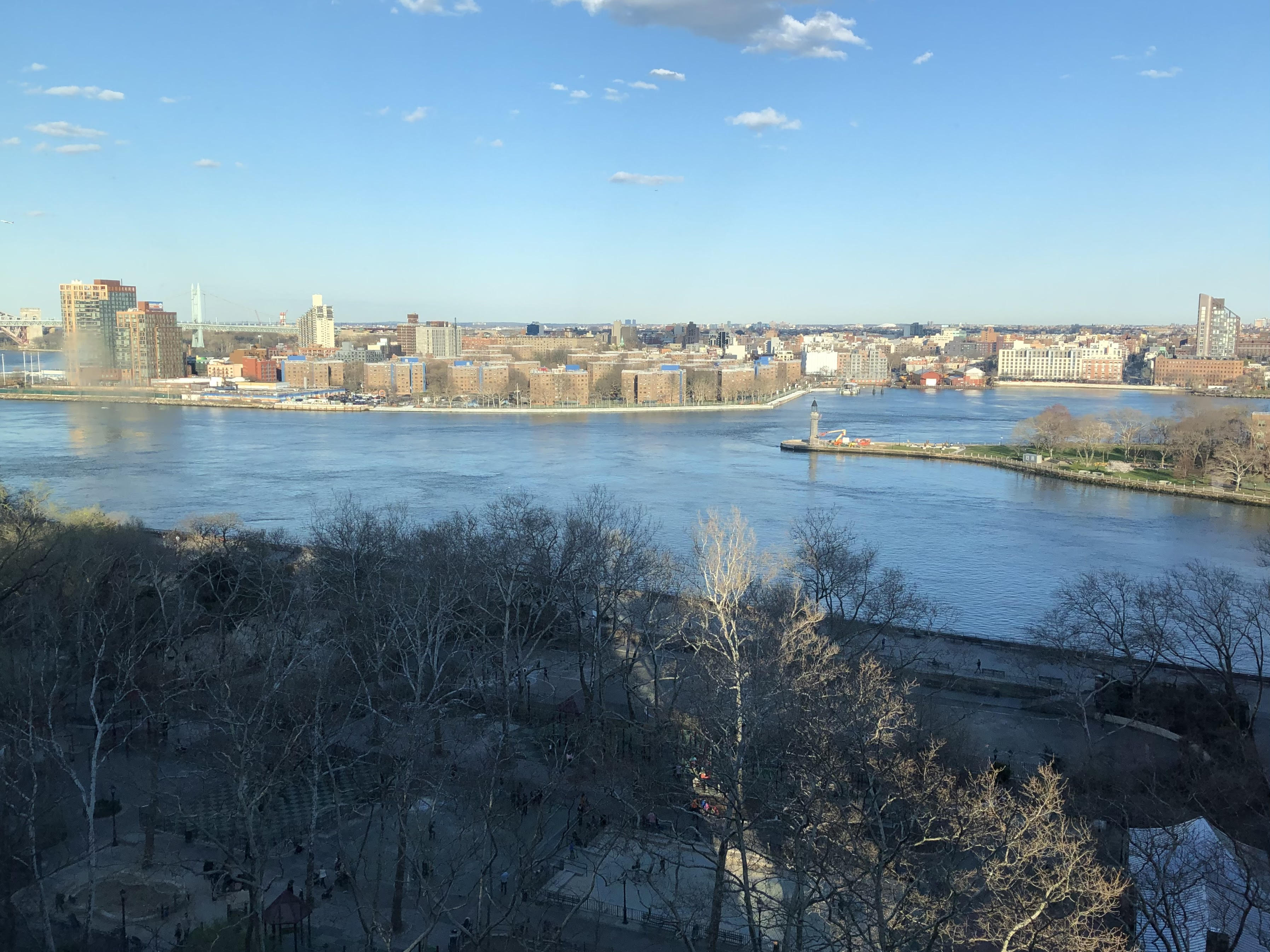
I do love New York. But thanks to Covid, I hadn’t been to visit it for two years. Last week I had my first big post-Covid adventure and went to my high school reunion in the city.

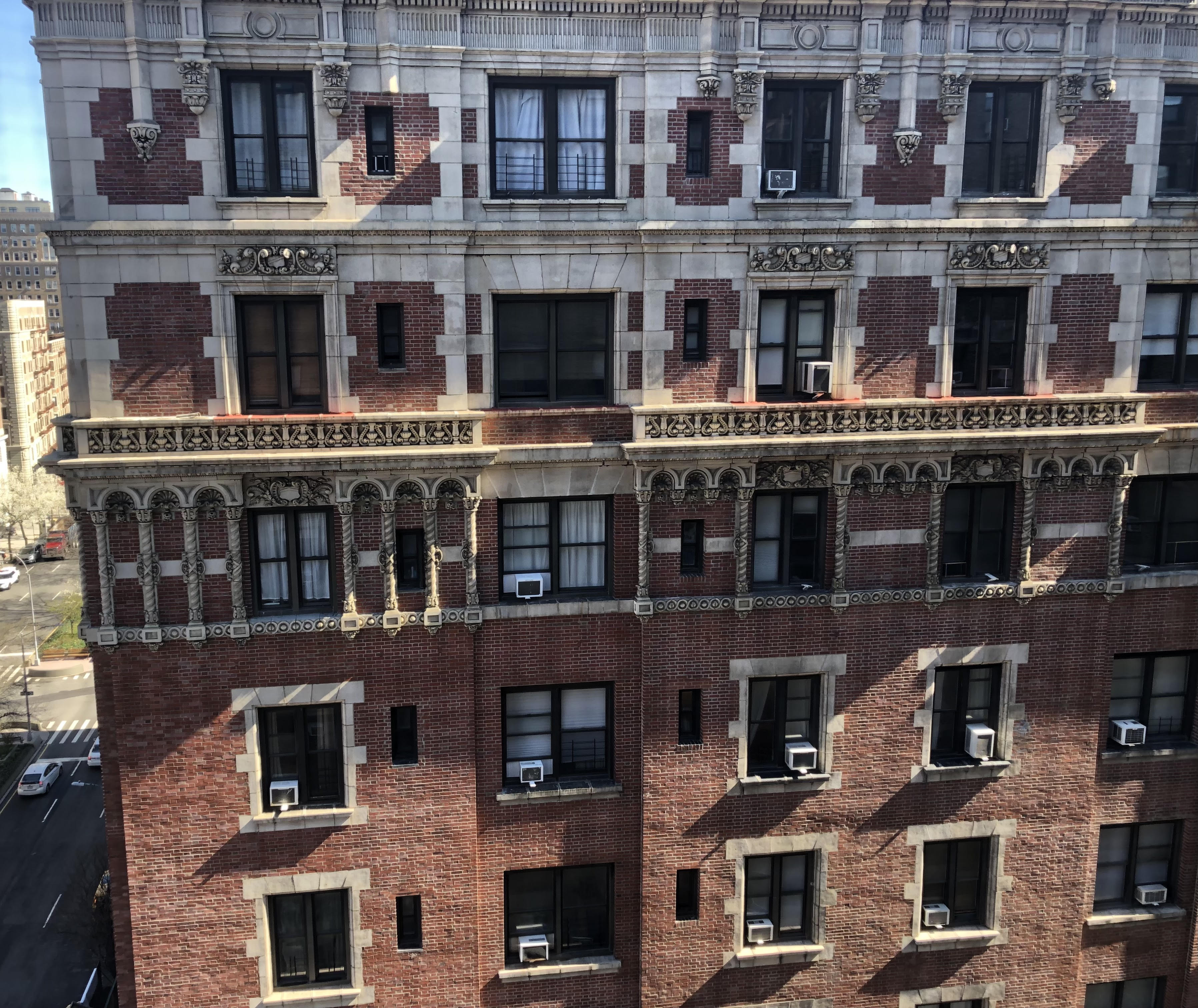
New York is in a constant state of crumbling and rising, disintegrating and reemerging. Like the rest of the world, I suppose. It’s just that in New York, it’s more obvious.

What did I feel about the city after two-plus years? I love the Upper West Side, but there are parts of it that are messier than ever: trash bags ripped open and spread all over the sidewalk, dog feces, a once productive community garden destroyed and turned into a mattress dump, a rat. In some places, I had a sense of New York saying, “OK, I give up!”

In the midst of all that, though, are the mothers leaving the projects holding the hands of their small children to get them safely to school, babies watching pigeons and laughing, workers going to work whether they feel like it or not. And right up against the trash and disintegration is the pristine haven of Central Park, where people from every walk of life are enjoying nature and enjoying being with other people from every walk of life who are enjoying nature. And dog lovers are throwing balls for happy, well-cared-for dogs.

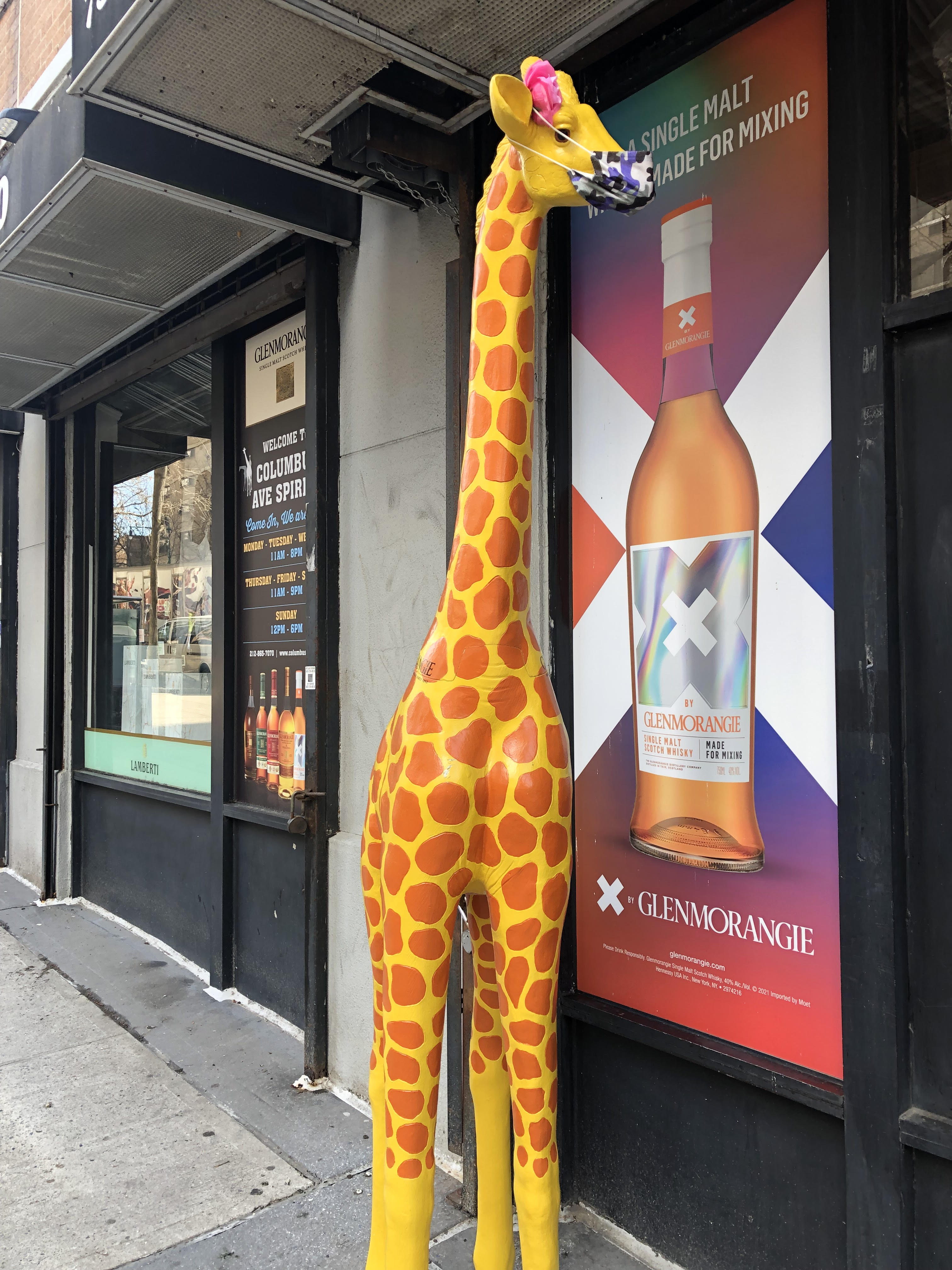
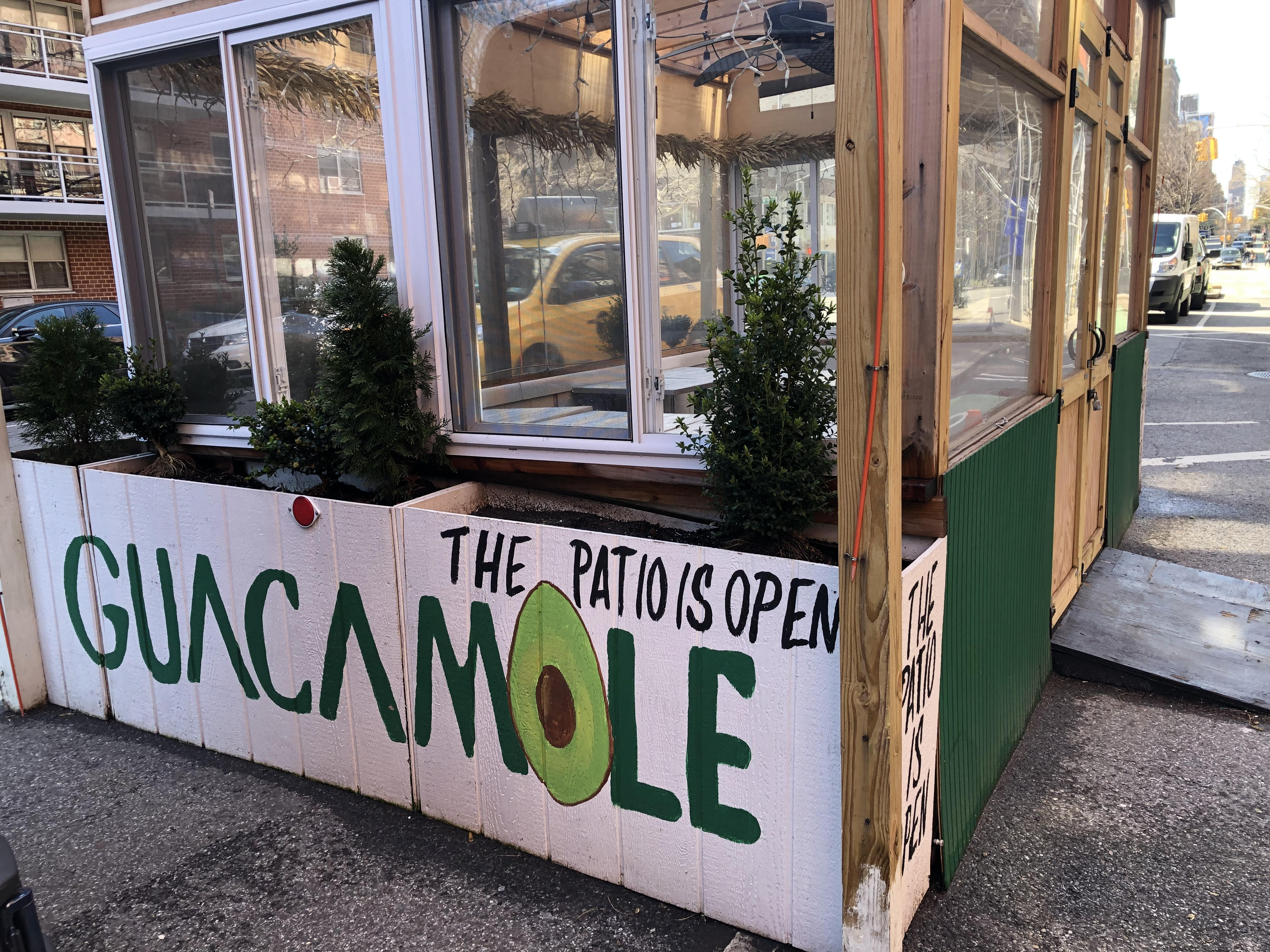
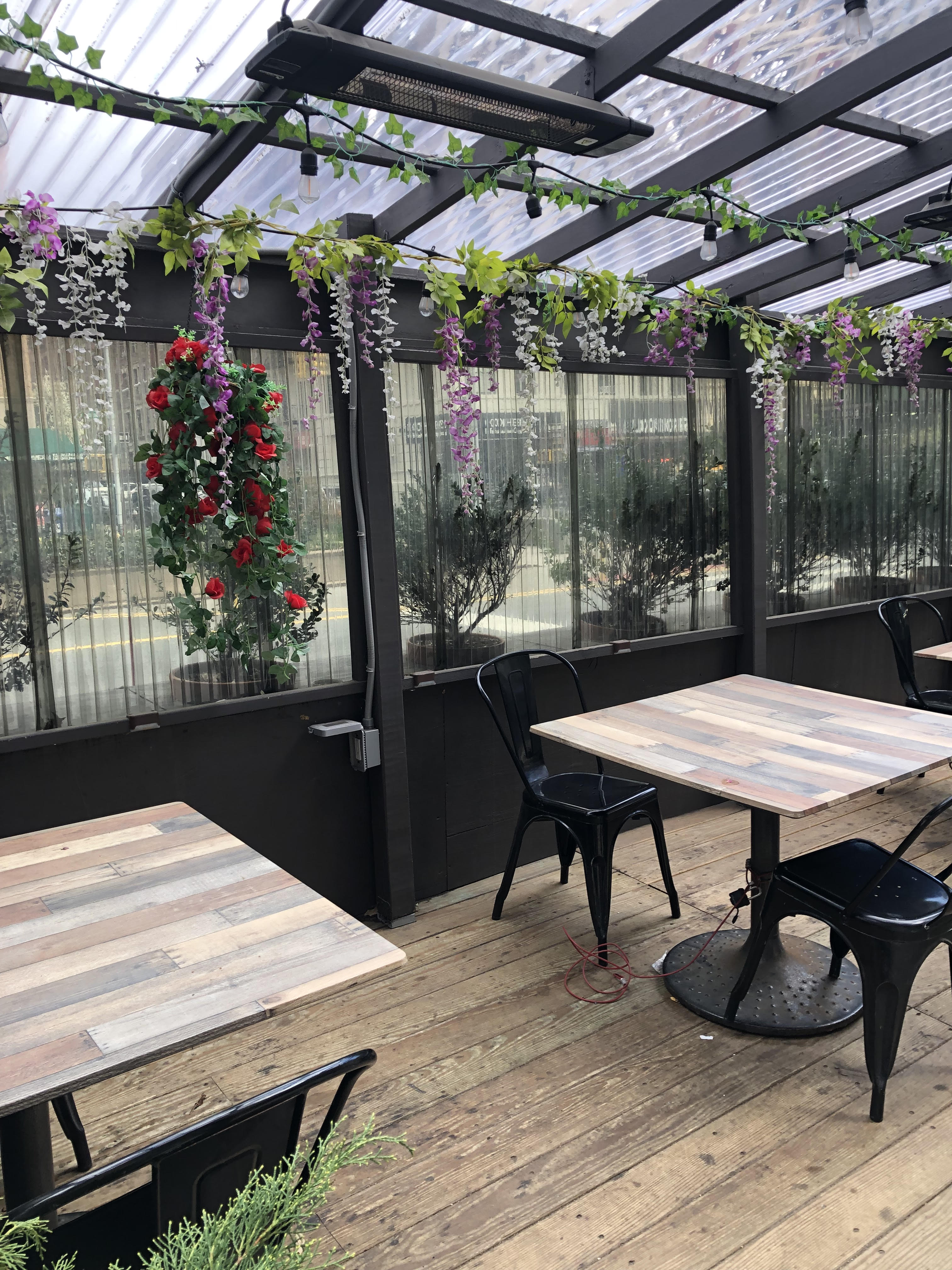
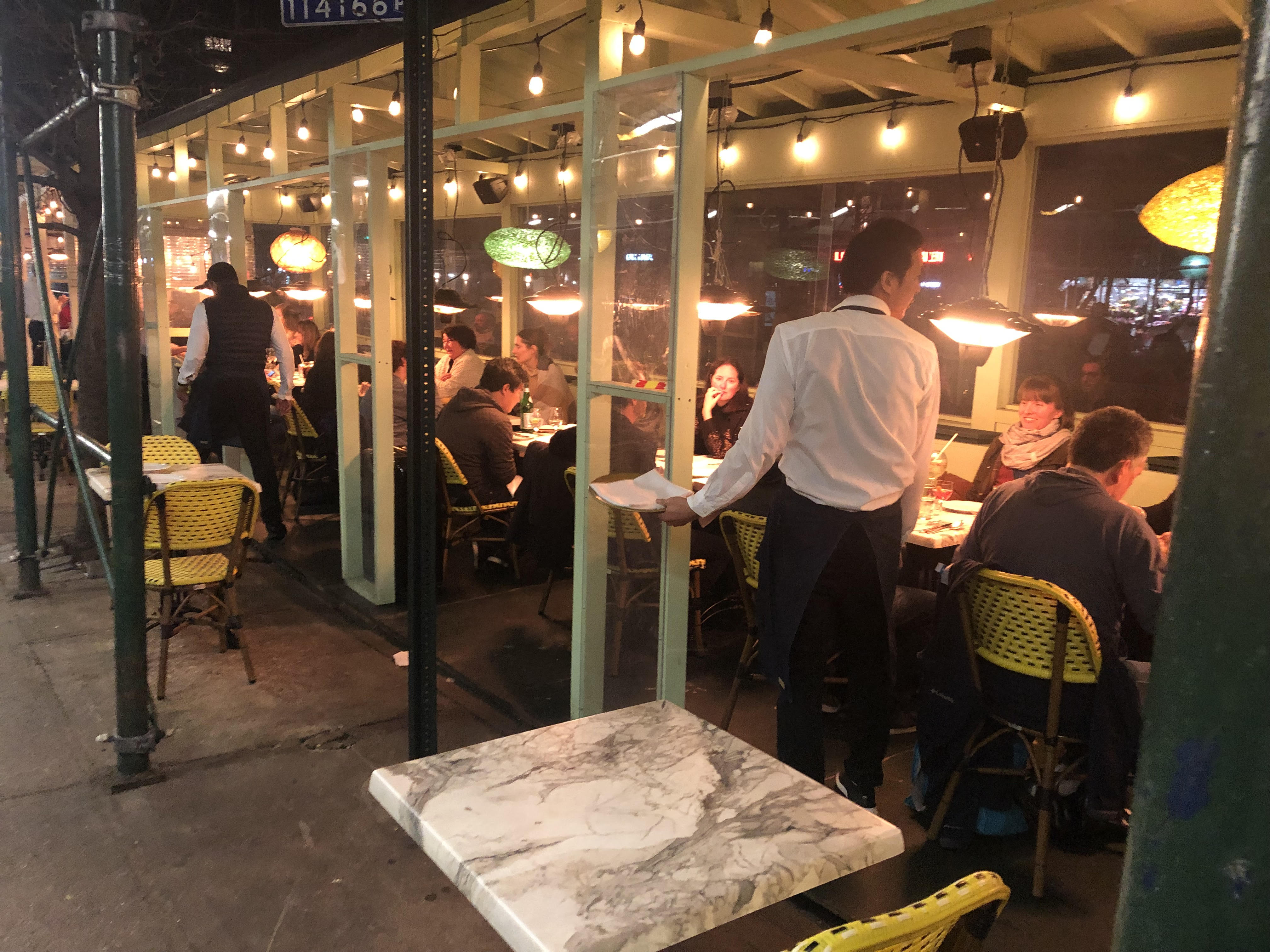
Note the endurance of a small business below — a liquor store, no less — and its playful effort to grab your attention. Note the adaptability of Covid-era restaurants, almost every one of which has an air-circulating shed that looks ratty by day and magical after dark.

I wake in the night to the racket of something or other on Upper Broadway and roll over with a smile on my face. It’s the Lullaby of Broadway.

Read Full Post »

Photo: Peter Aaron/OTTO.
Jean Shin’s installation “FALLEN” at the Olana State Historic Site, part of the recent “Cross-Pollination art show.

I don’t know if growing up near the Hudson River has anything to do with it, but I’ve always loved the monumental nature paintings of the Hudson River School. In recent years, different kinds of art have made the region famous, including art shown at Dia Beacon and the offbeat Visitors film screened at the ICA in Boston and elsewhere. (That’s the one with the Icelandic musicians playing haunting music in the bathtubs and salons of a ruined Hudson River mansion.)

Not far from Rokeby, the ruin in question, another mansion has been turned into a museum called Olana, and today’s post is about putting its classic paintings together with more modern conceptions of nature.

Sarah Rose Sharp wrote at Hyperallergic last October about Cross Pollination, “a collaborative exhibition that spans institutions and centuries, to put artists in conversation with each other on the topic of ecology — and hummingbirds.

“The exhibition is organized between the Olana Partnership at the Olana State Historic Site (once the home of Frederic Church), the Thomas Cole National Historic Site, and Crystal Bridges Museum of American Art in Arkansas. The historic presentations include 16 paintings from a series of hummingbirds and habitats — The Gems of Brazil (1863-64) — by naturalist and painter Martin Johnson Heade (1819-1904).

“This Audubon-like survey of Brazilian hummingbirds — and the resulting writing on the artist’s part to protest the overhunting of their populations — serves as the aesthetic and philosophical inspiration for a series of new works commissioned for the exhibition. The exhibition also includes paintings by Thomas Cole and Frederic Church, as well as botanical works on both paper and porcelain by Emily Cole, Cole’s daughter, and Isabel Charlotte Church, Church’s daughter. This generational affair also features some highlights from natural specimens collected by Thomas Cole and Frederic Church, including items from the Church family’s extensive collection of bird eggs.

“The exhibition is presented simultaneously at both Olana State Historic Site in Hudson, New York, and the Thomas Cole National Historic Site in Catskill, New York.

“With these 19th-century collections that focused so intently on natural systems as their inspiration, a cohort of 21st-century American artists present works in response. The contemporary artists are known to take on issues of biodiversity, habitat protection, and environmental sustainability, and contributions include new works by Rachel Berwick, Mark Dion and Dana Sherwood, Lisa Sanditz and Emily Sartor, and Jean Shin.

“On location at the Thomas Cole Site, ‘The Pollinator Pavilion’ is a public artwork by Mark Dion and Dana Sherwood created for the exhibition, where pollinators and humans can share the same space. Jean Shin used the remains of a fallen hemlock tree at the Olana site to create a memorial artwork in its memory, titled ‘FALLEN’ (the tree died of natural causes). …

“Ironically, though Heade, Cole, and Church advocated for the preservation of natural spaces, the fad of biological specimen collections like the ones being presented fueled a market for hunting the birds that Heade idealized. Even these days, as evidence of our excess mounts in flaming piles on land and sea, it seems we can still hardly even agree that the planet is a finite resource, let alone determine who is entitled to take any little piece of it that catches their eye. Perhaps this exhibition [holds] the seeds of change within it.”

More at Hyperallergic, here.

The video below did a pretty good job of educating me, but it’s painful. The “10-Minute” professor doesn’t ultimately shy away from our destruction of nature and native tribes.

Read Full Post »

Photo: Jackson Hole News & Guide.
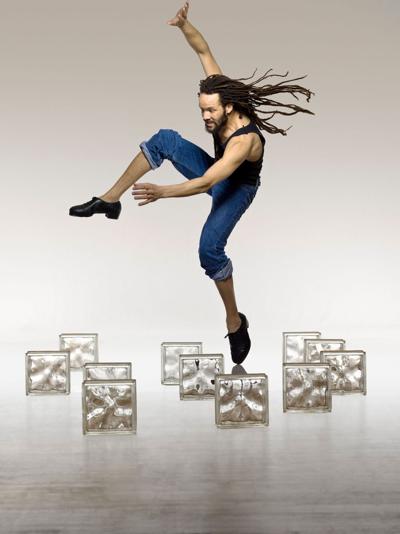
Tap dancer extraordinaire Savion Glover recently returned to live theater in New York, and a critic was there.

Because I used to be a theater reviewer, I was interested in comments by critic Peter Marks at the Washington Post about returning to live entertainment after being fully vaccinated. He was nervous, but it was all great.

It was early April when Marks decided to test the waters.

“Slowly, painstakingly, theatergoing is making its way back to three live dimensions,” he wrote, “and we’re all learning the rules of engagement. On Friday night, the process began for me outside the Kraine Theater on East Fourth Street, where I was about to attend a solo performance by Mike Daisey. And one unhappy couple who thought they were attending, too — couldn’t.

They hadn’t noted the warning in the marketing materials: that admission required proof of full vaccination and that it had to have been at least 14 days since the last shot.

“ ‘I spent $100 on tickets I can’t use,’ the man groused as he tried to argue with one of the theater’s representatives, and then, with his companion, walked disconsolately away. …

“Here’s a little secret: Everything is not about you. Especially now, at this sensitive juncture, when the overseers of public spaces are trying to build back trust and operate without risk of spreading this insidious, calamitous infection.

“I can report that once the rest of us were inside — 25 or so socially distanced in a black box theater that normally seats up to 99 — the evening unfolded exuberantly. It was the first of three live theatrical events I attended over the weekend, the first time in a year my schedule resembled something like the days before covid-19. I wore my mask throughout the shows, a feat that a year ago I had convinced myself would be too uncomfortable to tolerate. …

“A year of watching theater online had left me feeling as if I had been forever condemned to crave my favorite brand and had to settle for a knockoff. So being released from virtual captivity and newly free to breathe the fresh (read: ventilated) air of live performance was, well, a blessing. …

“The weekend amounted to a preview of the palette of measures being put in place to get theater safely up to speed, in spaces still with severe restrictions on capacity. If my experience is any indication, the process is going to be a challenge for culture vultures. Not impossible, but varied, patience-testing and even a bit stressful. Theaters seem to be evolving their own peculiar systems, with pre-attendance health questionnaires, idiosyncratic ticketing apps, entrance and exit protocols, document checks and seating arrangements. …

“My experience in the great indoors involved three wildly different productions: Daisey’s discourse on the past year, ”What the F— Just Happened?’; an NYPopsUp performance with Nathan Lane and Savion Glover at Broadway’s St. James Theatre; and the off-Broadway debut at the Daryl Roth Theatre of ‘Blindness,’ a dystopian drama experienced via headphones.

“The vaccine seemed to have immunized my English major’s brain from worry. In each of the environments, I felt perfectly safe. Although when ushers at the Daryl Roth told me that the bathrooms were shut and that patrons would have to use a nearby Starbucks, I did have a moment of anxiety that I would need to run for a, er, latte break. Other anxieties: waiting in line on Saturday outside the St. James for a worker to check my credentials — photo I.D., vaccination card, QR-coded ticket — and fumbling with my cellphone as the screen went dark. And, for that matter, trying to remember whether the tickets were in my email or on an app or had been texted to me. Or was that the covid-19 survey that arrived by text?

“Mercifully, that momentary panic subsided by the time the lights went down — reliably, in that hallowed tradition of starting six minutes later than the time on the ticket. Daisey’s one-night-only show was an account of a year of living pandemically, recounted entertainingly in his signature countenance of enlightened outrage. Saturday’s event at the St. James was a delightful demonstration of tap artistry by Glover and of flawless comic timing by Lane playing a theater-starved New Yorker as conjured by playwright Paul Rudnick. …

“Daisey’s ‘What the F— Just Happened?,’ [was] also live-streamed. Sitting for a spell a couple dozen feet from the stage, listening to a talented storyteller spin a version of a year not entirely unlike the one I had just spent, felt really, really good.”

More here.

Read Full Post »

Photo: Rob Hitt.
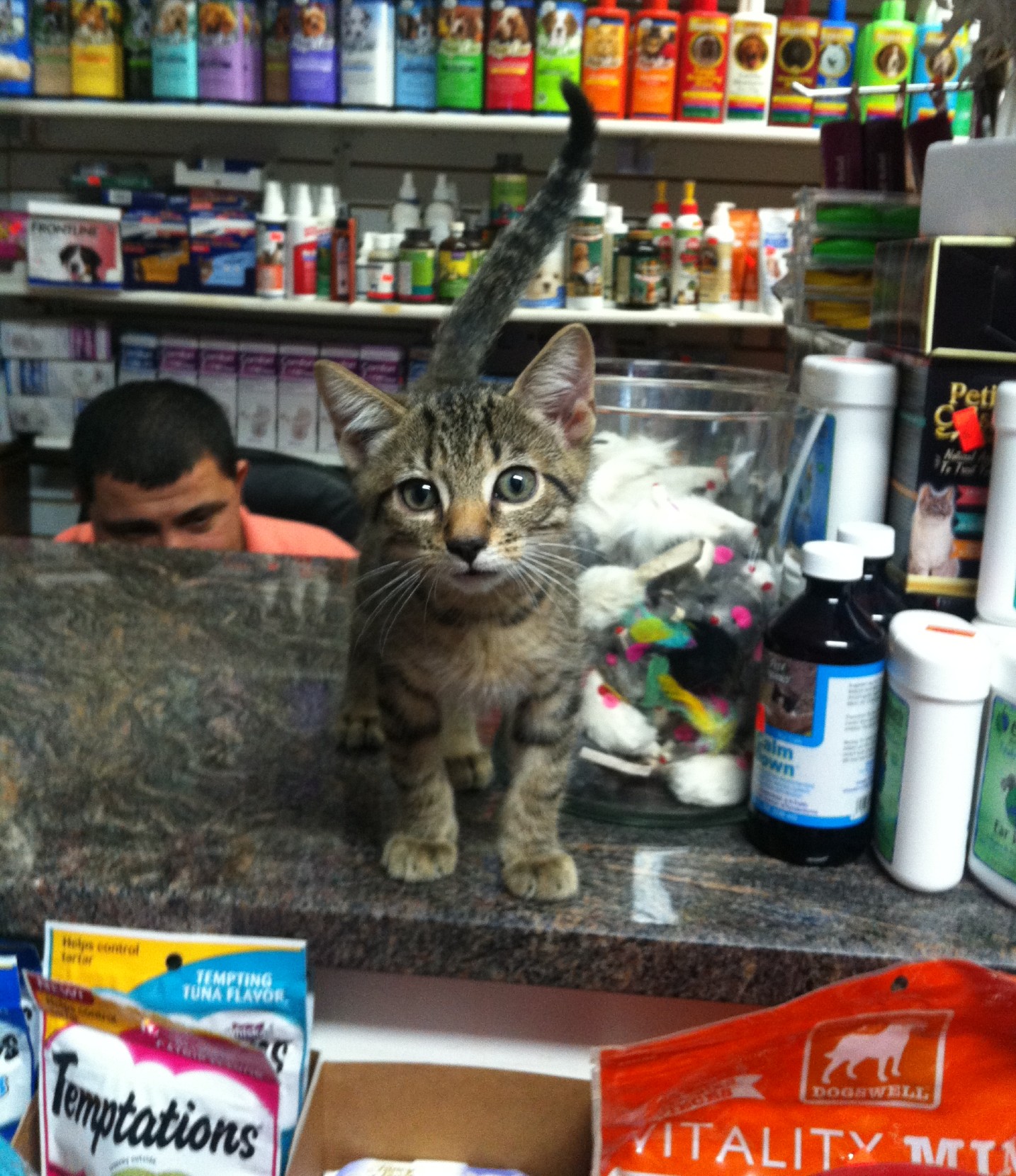
A kitten is on duty in a New York shop.

New Yorkers seem to love the cats that hang out in little food shops and chase mice. More often than not, local culture overrules concerns about health regulations. And shoppers love to share photos of their favorite bodega cats on social media.

Hakim Bishara writes at Hyperallergic about one such enthusiast. “Who doesn’t like bodega cats? The feline sheriffs, tasked with warding off rodents and pests in New York’s convenience stores and delis, have long signified a unique and beloved local phenomenon.

“Since 2012, Rob Hitt, a Brooklyn-based web developer and music producer, has been taking and collecting photographs of domesticated cats in bodegas across the city and posting them on his social media. Since then, his Twitter and Instagram accounts have gained a massive following, with hundreds of contributions featuring adorable bodega cats patrolling stores, perching on shelves among products, climbing onto ATM machines, or examining customers with a suspicious eye. …

“While New York’s public health department codes prohibit bodega cats, they have been valuable assets to their owners, who prefer to pay the $200 to $350 fine for holding the cat than dealing with a rodent infestation, which can harm products while also incurring a penalty of $300.

“As Hitt’s social media clout grew, he started an online shop selling bodega cats-themed merchandise, from shirts and tote bags to baby onesies. A portion of the profits goes to NYC animal rescue and trap–neuter–return organizations including FlatbushcatsTrapKingPets Are Wonderful Support (PAWS) NY, and others. Hitt also promotes the work of such organizations on his blog.”

By the way, when a bodega cat was kidnapped a couple years ago, the neighborhood was outraged. The New York Times had that story.

Azi Paybarah wrote, ” ‘The incident happened at 7:19 a.m. Friday,’ Anik Ahmed said. ‘She went outside at like 7:20, and the guy picked her up at like 7:23. And we noticed the cat was missing by 7:35.’

“Mr. Ahmed, 27, was referring to Lexi, the year-and-a-half-old tabby who has been a fixture at 71 Fresh Deli and Grocery, his store in Kips Bay, Manhattan. Surveillance video appears to show the cat vanishing when a man passes by. …

“She was ‘the neighborhood’s cat,’ one worker told NY1. The Daily News described how ‘bereft’ workers were searching for ‘the furry darling.’ …

“Fliers with Lexi’s picture are being distributed. Mr. Ahmed said he thought the catnapping was intentional, but added, ‘I’m not going to press charges.’

“Lexi came into Mr. Ahmed’s life when a friend’s cat had a litter. Soon, Mr. Ahmed said, he found himself with a curious kitten who befriended customers and workers alike.

“She even started helping around the store: Mr. Ahmed said the building’s superintendent noticed a reduction in the rodent population.

“Before opening the deli about five years ago, Mr. Ahmed was a software engineer tester, looking for potential breaches in new websites and apps. He acknowledges now that he could have kept Lexi more secure.”

More at the New York Times, here. I haven’t been able to discover if Lexi was ever returned to Ahmed. If you know, please comment below. And you can enjoy lots of pictures of other bodega cats at Hyperallergic, here.

Read Full Post »

Art: Jacob Lawrence, via PEM.
Missing Panel 28 from the “American Struggle” series as shown at PEM, the Peabody Essex Museum in Salem, Massachusetts. This panel and one other were recently found in New York City.

Have you been following the story of the missing panels of a major work by African American master Jacob Lawrence? It was exciting enough when one missing panel was discovered in New York in the past year, but two? In different homes?

Hilarie M. Sheets at the New York Times reported on the latest developments.

“When a nurse living on the Upper West Side checked an app for neighborhood bulletins last fall, she learned about the recent discovery of a Jacob Lawrence painting in an apartment a few blocks away. It had turned out to be one of five panels long missing from the artist’s groundbreaking 30-panel series “Struggle: From the History of the American People,” which was on view at the Metropolitan Museum of Art, right across Central Park.

“The name Jacob Lawrence rang a bell. She walked over to look more closely at a small figurative painting on her dining room wall, where it had hung for two decades, its signature barely legible. It was a gift from her mother-in-law, who had taped a 1996 New York Times profile on Lawrence to the back. The nurse, who had only glanced at the back while dusting, learned from the app that Lawrence was a leading modernist painter of the 20th century — and one of the few Black artists of his time to gain broad recognition in the art world.

“Could lightning strike twice in just two weeks’ time? The woman told the story to her 20-year-old son, who had studied art in college and quickly Googled the Met’s exhibition. He found a murky black-and-white photograph of their very painting being used as a place holder for Panel 28. It was titled ‘Immigrants admitted from all countries: 1820 to 1840—115,773,’ and the wall label read: ‘location unknown.’

“ ‘It didn’t look like anything special, honestly,’ said the owner. … ‘I didn’t know I had a masterpiece.’ …

“After she had connected the dots, she called the Met, but her messages went unreturned. By day three, her son suggested they just head over on his motorbike. His mother recalled:

‘I grabbed a young kid at the information desk in the lobby and said, “Listen, nobody calls me back. I have this painting. Who do I need to talk to?” ‘

“Eventually, an administrator from the modern and contemporary art department met them downstairs and asked the owner to email her photos of the work — which she did on the spot, from her phone.

“By that evening, Randall Griffey and Sylvia Yount, the co-curators of the Met’s Lawrence show, and Isabelle Duvernois, the Met’s paintings conservator, were making their second trip to an Upper West Side apartment in the space of two weeks to verify the authenticity of a Lawrence painting that had not been seen publicly since 1960.

“The nurse, who has agreed to lend her painting for the last two stops of the traveling exhibition, was granted anonymity because she said she was concerned for her family’s security living with a now-valuable artwork. The panel will debut March 5 at the Seattle Art Museum in ‘Jacob Lawrence: The American Struggle’ and remain on view through May 23.

“Before the discovery of Panel 16, first reported by The New York Times on Oct. 21, the Met’s team had known only the work’s title and subject matter — Shays’ Rebellion — but had no image to help authenticate it. … With Panel 28, they had a low-quality photograph of the work, which had been exhibited in the late 1950s at the gallery of Lawrence’s dealer Charles Alan.

“The painting, in vivid red, gold and brown tempera on hardboard, shows two women draped in shawls flanking a man in a broad-brimmed hat, their heads bowed and oversized hands clasped toward the center of the image. The panel, evoking old-world travelers, was inspired by immigration statistics in Richard B. Morris’s 1953 ‘Encyclopedia of American History,’ part of Lawrence’s exhaustive research on the foundational contributions of immigrants, Blacks and Native Americans to the building of the nation. (He refers specifically in the title to the number of immigrants who came to the United States during the early years of the 19th century.) …

“The owner of Panel 28 doesn’t know how her mother-in-law — who was an immigrant herself and raised her family on the Upper West Side while amassing an eclectic array of inexpensive artworks — acquired the painting. ‘I have a feeling my mother-in-law didn’t pay much more than $100,’ she said.”

More at the New York Times, here.

Read Full Post »

A new exhibit at the Whitney in New York City highlights the art of some outstanding black photographers, a group that worked not just in New York but around the world.

Nadja Sayej reports at the Guardian, “In 1973, a group of 14 New York photographers huddled into a photo studio on West 18th Street in Manhattan, posing in front of a Hasselblad camera for a group shot authored by Anthony Barboza, who stands smiling in the picture.

“ ‘I remember arranging the lighting and then my assistant took the photo,’ said Barboza to the Guardian. ‘It’s a photo of a family. That’s what it is. A family photo.’

“It shows the members of the Kamoinge Workshop, a collective of black photographers who formed in 1963 to document black culture in Harlem, and beyond, from live jazz concerts to portraits of Malcolm X, Miles Davis and Grace Jones, as well as the civil rights movement and anti-war protests.

“A selection of over 100 photos by the group are on view in a survey at the Whitney Museum of American Art in New York called Working Together: The Photographers of the Kamoinge Workshop, which runs until 28 March. …

“The Kamoinge (pronounced kom-wean-yeh) collective all started in 1963, when a group of 14 black New York photographers came together to form a group, to trade skills and offer critiques to one another. They chose ‘Kamoinge,’ as it means ‘a group of people acting together’ in Kenya’s Gikuyu language. They worked to tell black stories by depicting black communities, from local neighbors to superstars, and saw their rise around the same time as the Black Arts Movement. Kamoinge photographer Adger Cowans, who is 84, always believed the group could show the truth of black lives, more so than an outsider. …

“ ‘When I wasn’t shooting commercial work in the studio, I was shooting out in the streets,’ … said Barboza. ‘We all learned from each other. They were my greatest mentors.’ …

” ‘I did a lot of portraits of black artists and musicians in my spare time,’ said Barboza who photographed Michael Jackson at 21, as well as James Baldwin and Gordon Parks. Nine of the 14 original artists are alive today, working and living in New York, including Beuford Smith, Ming Smith and Herb Randall. …

“As one of the group’s members Ray Francis said in 1982: ‘We were a group that stars fell on,’ and credit observational photographers like Henri Cartier-Bresson, Gordon Parks and Dorothea Lange as influences. Another member, Ming Smith, calls it: ‘Making something out of nothing. I think that’s like jazz.’

“The Whitney exhibition is organized into five sections, including one community-focused section, which details the day to day life of people in the city, at work, play and travel. Another section is focused on music, as jazz has been a prime influence in the group. …

“There are also sections devoted to abstraction and surrealism, civil rights, depicting figures in the movement, and one global section, focusing on African diasporic communities, as the photographers traveled to Cuba, Senegal and Jamaica to shoot, as well as the South. …

“Harlem-born photographer, Shawn Walker, one of the group’s founding members, is showing a photo depicting two dapper men in white suits and hats on Easter Sunday in Harlem, dated 1972. ‘I would go to the churches and after everyone came out of mass, I’d go to 125th Street to lurk at everyone hawking off all their new wares,’ he said. …

“ ‘I would hang out around Hotel Theresa, even now if you’re not doing anything and you hang out in that area, you’re bound to come home with some photos. Even if I’m coming home from shopping and I have an extra 30 minutes, I’ll grab a seat and watch people come by and start shooting.’

“It has been a tough year for Walker. ‘I caught the virus and lost a leg, but I’m alive,’ he says. …

“Ming Smith was the group’s first female member. She recently said in an interview: ‘Being a black woman photographer was like being nobody,’ explaining that: ‘It was just my camera and me. I worked to capture black culture, the richness, the love. That was my incentive. It wasn’t like I was going to make money from it, or fame – not even love, because there were no shows.’ …

“As Barboza says, the key to a good portrait is not necessarily technical savviness, but to convey emotion, a feeling. It isn’t about over-thinking anything. .. ‘There’s a quiet, spiritual feeling from the photographs,’ said Barboza. ‘It’s beauty. I call it “the eye dreaming.” ‘ ”

More at the Guardian, here.

Read Full Post »

Photo: CNN “The Good Stuff”
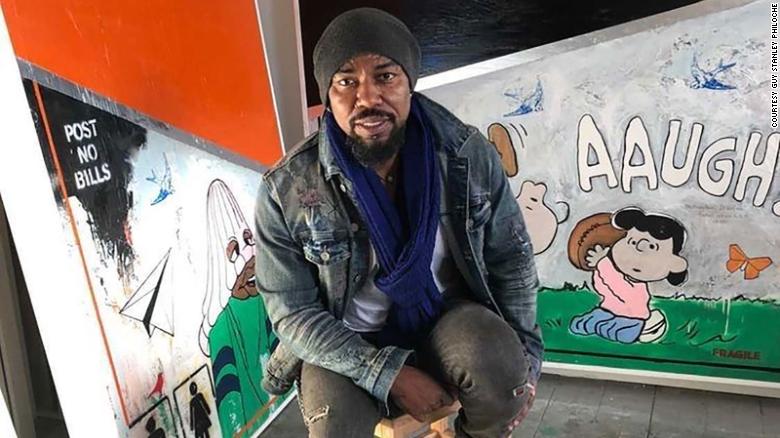
Guy Stanley Philoche, seen here with his own work, has helped fellow artists survive the pandemic by buying their art.

No one can solve all the problems of the world, but if we each try to address a problem we see in our particular corner of the world, we can move civilization forward. In today’s story, an artist saw other artists struggling in lockdown and knew what he could do to help.

Alaa Elassar, writes at CNN’s “The Good Stuff,” “Painter Guy Stanley Philoche, a New Yorker known for his colorful textured abstract artworks, has spent more than $65,000 buying work from struggling artists affected by the coronavirus pandemic.

“Philoche, 43, has dedicated himself to seeking out artists from around the world who are unable to make ends meet and has so far purchased more than 150 artworks for up to $500 each. His own pieces sell for up to $120,000, according to Cavalier Galleries.

” ‘The art world is my community and I needed to help my community,’ Philoche told CNN. ‘People say New York is dead, but it’s far from that. There’s an artist somewhere writing the next greatest album. There’s a kid right now in his studio painting the next Mona Lisa. There’s probably a dancer right now choreographing the next epic ballet.’ …

“When the pandemic began to affect families across the country, many people found themselves unable to pay rent, afford WiFi for their kids’ distance learning, or even put food on the table.

“As the ability to afford the basic necessities slowly diminished, art became a luxury not many could splurge on. In turn, hundreds of thousands of artists and independent creators were left without an income stream in the midst of the chaos.

“One of these artists was Philoche’s own friend, who just had a baby and had lost his job because of the pandemic.

‘I told him, “Don’t worry, we’re New Yorkers. We’ve been through 9/11, the blackout, the market crash, we’ve got this,” ‘ Philoche said. ‘But he was scared, so I bought a painting from him to help him get through it.’

” ‘It was such a big deal for him at that moment, and that’s when I realized if he’s panicking like this, other artists are too.’ … So, Philoche took matters into his own hands.

“On March 20, he posted on Instagram a video asking artists who were feeling the effects of the pandemic to direct message him their work. Whenever he saw a piece he fell in love with, Philoche bought it and paid for it to be shipped to his East Harlem studio.

“Within months, artists from Los Angeles and Chicago to London and New Zealand — and even artists who were in prison — reached out to him with their stories and their creations. … ‘It meant a lot to me. I want to help as many artists as possible, to make sure they are able to buy groceries, or pay their rent, or get their kids diapers or formula.’

“For Tara Blackwell, an artist from Stamford, Connecticut, art is her sole source of income. The only way she can survive off her art is through showing her work to collectors at exhibits, galleries, and studio visits — all which stopped because of the pandemic. …

” ‘The struggle to make a living as an artist is something I’ve known from a young age. I’m used to the ups and downs, but this felt different. There were so many unknowns.’ …

“Philoche purchased ‘Free Speech’ for $500 from Blackwell’s ‘Corner Store’ series, in which she uses retro pop culture imagery from her childhood with graffiti influences and the incorporation of subtle social-political commentary. ‘His support meant the world to me at a time when things seemed really bleak.’ …

“When Philoche was 3 years old, his family immigrated to the US from Haiti with nothing to their name. ‘Leaving one country to come to another was difficult. I didn’t speak the language, I was awkward and weird and trying to find myself in a new country,’ Philoche said. ‘I learned the language by watching cartoons and reading comics, and found my voice by drawing Disney characters. It’s how it all started.’ …

“Philoche started off by sliding business cards under apartment doors and hopping from art gallery to art gallery in hopes of meeting interested collectors. ‘Fast forward twenty years, I’m in the game,’ he said. ‘But throughout those years, I had no one open a door for me. It was me going through the back door, the window, until I found a way in the room by myself. Now that I have a seat at the table and I actually have a voice, I vowed to myself to open that door for other artists.’

“After struggling for years to make a name for himself, the artist now has a philosophy: ‘Sell a painting, buy a painting.’ ”

More at CNN, here.

Read Full Post »

farming_soul-fire-farms-group-portrait_july2018

Photo: Soul Fire Farm
Run by a collective of black, brown, and Jewish people, Soul Fire Farm works to end injustice within the food system and offers trainings for people of color to learn essential agricultural skills,

I’ve been reading a sad book by Sarah Smarsh called Heartland. It’s about generations of her family on a small Kansas farm, and the subtitle tells it all : “A Memoir of Working Hard and Being Broke in the Richest Country on Earth.” So far she hasn’t said anything about today’s young people returning to the land with enthusiasm, which blog followers know is one of my interests. I’m into the chapter about giant agribusiness taking everything over.

But I know there are more stories out there offering hope for small, sustainable farming. Today’s story is about an upstate New York farm that focuses on helping black and brown people learn agricultural skills and fight food injustice.

From the radio show Living on Earth: “Leah Penniman is the co-founder of Soul Fire Farm and joins host Steve Curwood to discuss her new book, Farming While Black: Soul Fire Farm’s Practical Guide to Liberation on the Land, and her journey as a woman of color reclaiming her space in the agricultural world. …

“CURWOOD: Tell me a little bit about your journey falling in love with nature and farming, and how it has led you to create your book, Farming While Black.

“PENNIMAN: Well, nature was my only solace and friends growing up in a rural white town. … In absence of peer connection, I went to the forest and found a lot of support and love in nature. And so, when I became old enough to get a summer job, I [was] able to land a position at the Food Project in Boston, Massachusetts, where we grew vegetables to serve to folks without houses, to people experiencing domestic violence. And there was something so good about that elegant simplicity of planting, and harvesting, and providing for the community. That was the antidote I needed to all the confusion of the teenage years. …

“I feel connected to the whole ecosystem, but the plants are incredible. They have these secret lives that we can’t see, or even imagine. So take, for example, the trees of the forest, right? There’s a underground network of mycelium that connects their roots, and they’re able to pass messages and warnings. They pass sugars and minerals to each other through this underground network. And they collaborate across species, across family. And so, when we tune into that, I think we learn something about what it is to be a human being and how to live in community with each other in a way that if we’re not connected to nature, we sort of lose that deeper sense of who we are, who were meant to be.

“CURWOOD: Now, your book is not only a how-to guide for folks who are interested in pursuing a path similar to yours, but it also, well, it has some history, sociology, environmental lessons all wrapped up in this package. Why did you add those additional stories and information in with your guide, rather than it, well, having it be strictly a manual?

“PENNIMAN: Well, I wrote this book for my younger self. So, after a few years of farming, I would go to these organic farming conferences, and all the presenters were white. … In putting together this book, I was really thinking about myself as a 16-year-old and, all the other returning generation of black and brown farmers who need to see that we have a rightful place in the sustainable farming movement that isn’t circumscribed by slavery, sharecropping, and land-based oppression, that we have a many, many thousand-year noble history of innovation and dignity on the land. …

“The raised beds of the Ovambo and the terraces of Kenya, and the community-supported agriculture of Dr. Whatley, those are to remind us that, you know, we’ve been doing this all along, and we belong. …

“CURWOOD: You have a waiting list of people who want to come to Soul Fire Farm and learn how to do this? …

“PENNIMAN: This was something that just surprised me because I thought I was just a weirdo out here, I was going to start this farm with my family, grow food, provide it to those who need it most in the community. And that was going to be it. And I got a call our first year from this woman, Kafi Dixon in Boston who said, you know, through tears, I just needed to hear your voice to know that it was possible for a woman like me to farm, and that I wasn’t crazy, and that there’s hope. Right? And that was the first of thousands and thousands of phone calls and emails to come of folks saying, ‘I need to learn to farm, I want to do it in a culturally relevant, safe, space. I want to learn from people who look like me.’ …

“We’re living under a system that my mentor Karen Washington calls food apartheid. So, in contrast to a food desert as defined by the US Department of Agriculture, which is a high poverty zip code without supermarkets, right, a food apartheid is a human created system, not a natural system like a desert. … There are consequences to that. We see in black and brown communities a very high disproportionate incidence of diabetes, heart disease, obesity, cancer, even some learning disabilities, and poor eyesight. …

“CURWOOD: One of the most intriguing sections of your book Farming While Black: Soul Fire Farm’s Practical Guide to Liberation on the Land is this explanation of how you can clean up lead-contaminated soil, which you find in so many places in the urban environment. You have a very practical guide as to how you can use natural plants to chelate, that is, to remove lead from the soil, so that it’s safe to grow food there. I don’t think I’ve seen that anywhere else. …

“PENNIMAN: There’s an incredible plant, it’s an African origin plant called Pelargonium or scented geranium, and it’s a hyper accumulator. So, you can plant it, you acidify the soil, you plant it and it will suck the lead out and store the lead in its body. So, then you can dispose of that plant in a safe place. …

“CURWOOD: And what do you think people of color lost when we lost contact with the land?

“PENNIMAN: Certainly not all folks of color, right? Right now, about 85 percent of our food in this country is grown by brown skinned people who speak Spanish. And … it’s a belief in West African cosmology that our ancestors exist below the earth and below the waters, and by having contact with the earth we’ve received their wisdom and guidance. And with the layers of pavement, and steel, and glass, and the skyscrapers, it’s harder to feel that contact. … When folks come to Soul Fire and get their feet back on the earth, what I hear time and again is, I’m remembering things I didn’t know that I forgot.”

More at Living on Earth, here.

Read Full Post »

« Newer Posts - Older Posts »