Feeds:
Posts
Comments

Posts Tagged ‘nigeria’

Photo:  Shereefdeen Ahmad.
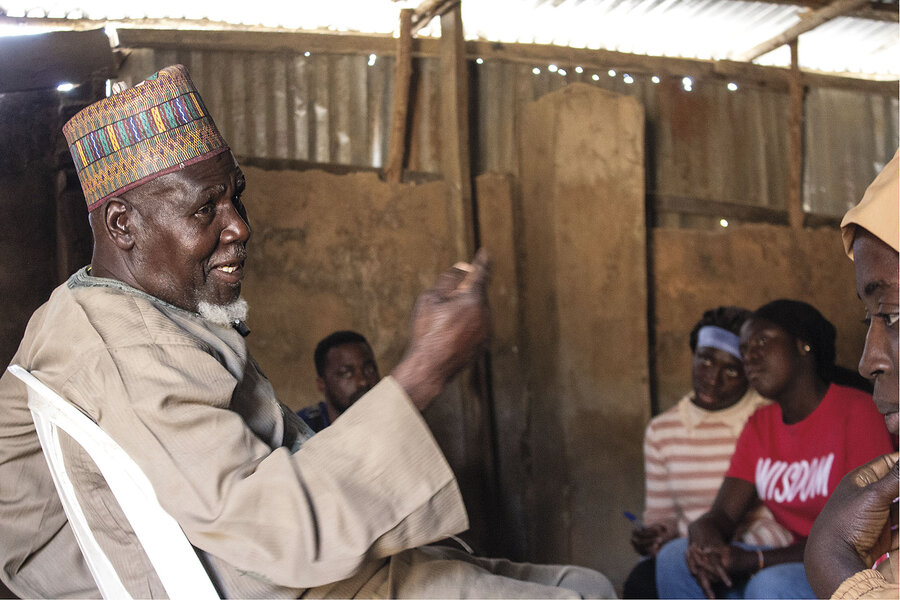
“Today you do not play as rivals, but as brothers,” a match organizer tells the men from Nigeria and Benin.

One of the worst things about colonialism is the way it arbitrarily separates ethnic groups and plunks families down in different countries. Today we see how a sport is bringing relatives back together.

Shereefdeen Ahmad writes for the Christian Science Monitor, “It’s game day at the village soccer field, and spectators bunch along the sidelines with banners and drums to support their teams.

“They watch as the captains of the two squads walk to the center of the field for a coin flip to determine who kicks off first. …

“This match is part of a festival celebrating the culture of the Borgu, an ethnic group that straddles the border between Benin and its eastern neighbor, Nigeria. The teams and fans gathered here today have come from both countries, part of an effort to use soccer to bridge the divide imposed by colonial powers more than a century ago.

“ ‘I believe that football can reconnect us beyond those lines,’ says organizer Adam Kabirou, who regularly hosts cross-border matches.

“Mr. Kabirou grew up hearing stories about the Borgu kingdom, a civilization tracing its roots to the late 15th century. He also learned how colonial powers carved up his people’s lands in the late 19th century, splitting the Borgu between present-day Benin and Nigeria.

“Today, the majority of Borgu, approximately 1.4 million, reside in Benin, with a smaller population in Nigeria.

“As a child, Mr. Kabirou saw firsthand how that border created a rift between his community and the Borgu people living just 15 miles away on the other side. For one thing, the two groups often literally didn’t have the words to speak to one another.

Borgu in Nigeria learned English, the colonial language there, while Borgu in Benin spoke French, the language of their former rulers.

“These languages mingled with Batonu, the Borgu language, changing the way it was spoken on each side of the border.

“Meanwhile, Western-style schooling in both countries had pushed the Borgu people away from their shared customs and traditions, says Lafia Hussaini, a Borgu ethnographer and adjunct lecturer at the Centre for Cultural Studies and Creative Arts at the University of Ilorin in Nigeria. [Simultaneously] the border created an administrative division that made close ties practically difficult. …

“Sometimes the division even cut through a single community. For instance, half of the village of Chikanda sits in Benin, the other half in Nigeria. The difference is most clear at night. Electric lights illuminate the houses on the Beninese side of the border, while the Nigerian side, which doesn’t have an electricity connection, is dark.

“Over the years, Mr. Kabirou, a farmer, occasionally attended cross-border soccer matches, and saw how the game shrank the distances between the two communities. So in 2022, he decided to organize a tournament.

“In its most recent edition, in 2024, the Tournoi Brassage Culturel – the Cultural Blend Tournament – drew five teams from Nigeria and 15 from Benin. Mr. Kabirou estimates that more than 4,000 fans attended the final match between Gwanara, Nigeria, and Tchatchou, Benin.

“For the players who participate in these matches, the importance stretches beyond soccer.

“Bashiru Adamu, a Nigerian player, says he barely knew his paternal family in Benin before crossing the border to play a match here in 2023. Now, whenever he comes to play a game, he pays them a visit as well. …

“Today, there are three separate tournaments bringing together Borgu teams from Nigeria and Benin. … They have been important not only for the players, but for spectators as well.

“Watching these matches ‘has really brought us together,’ says Souaibou Seko, a resident of Nikki, Benin. In addition to the soccer itself, he says, he appreciates the cultural performances from Borgu artists that often take place before matches or at halftime.

“These performances ‘stress our newfound cultural unity,’ says Sanni Sika Gounoun, chairman of the organizing committee for the Solidarity Tournament. ‘This camaraderie is growing organically.’ “

This article is published in collaboration with Egab,” which focuses on stories from lesser known areas.

More at the Monitor, here.

Read Full Post »

Photo: Ogar Monday.
Two students sit outside an experimental Nigerian school’s computer lab, donated by the Irish Embassy.

Today’s article is about an educational experiment in Africa that makes it possible for the “poorest of the poor” to get an education. The experiment is focused on keeping payments low and teaching kids to become “problem solvers.”

Ogar Monday writes at the Christian Science Monitor, “Groups of students, deep in discussion, are huddled under a large schoolyard canopy on a sweltering morning. Flanked by two teachers, Kingsley Bangwell strolls among the students. He stops beside one group and asks, What problem are you solving?’

“Two students rise. Faridat Bakare, a girl with paper in hand, responds. ‘Our work is on the lack of proper business strategy among female-owned small businesses in Kuje,’ she says.

“She explains that many women in that Nigerian city unintentionally limit the growth of businesses they start by overlooking the four P’s of marketing: product, price, place, and promotion. The students’ solution is to start a mentorship cycle connecting established businesswomen with local budding entrepreneurs. Mr. Bangwell nods his approval and moves on to another group.

“Mr. Bangwell is a co-founder of the Knowledge, Solutions, Skills, and Kreativity (Knosk) school in Kuje, on the outskirts of Nigeria’s capital, Abuja. For 100 naira (6 cents) a day, the school provides six years of learning for students who would otherwise be unable to afford it.

“The exercise that Mr. Bangwell is observing is part of a solutions ‘hackathon.’ Over four days, students engage with small-business owners in their communities to identify real-world challenges and develop solutions.

“ ‘The goal is to help them think critically and work collaboratively,’ Mr. Bangwell says. Winning teams receive prizes, but the biggest takeaway, he insists, is that the students realize ‘they, too, can provide answers to questions around them.’

“In 2018, while she was at a hospital in Abuja, Irene Bangwell overheard a cleaner talking about her teenage daughter, who had dropped out of school to work alongside her. The cleaner explained that she couldn’t afford the $19-per-term school fees for the girl. She believed that it was better for her daughter to work and save money than to attend an underfunded public school with little promise of quality education.

“Mrs. Bangwell, who had spent years working with young people, understood the mother’s concerns. Although public schools in Nigeria are mostly free, they are chronically underfunded, which has led to crumbling infrastructure, teacher shortages, and frequent strikes. Private schools provide better alternatives, but with nearly 39% of Nigerians living below the poverty line, many families find such schools out of their reach.

“Mrs. Bangwell shared the cleaner’s story with her husband, who has a background in youth development. They started Knosk in September 2019 after reaching out to community leaders, churches, mosques, and public primary schools, asking them to refer students who couldn’t afford secondary education. …

“Parents contribute $4 per term.

“ ‘We cater to the poorest of the poor,’ Mrs. Bangwell says. ‘If we don’t take the child in, they have no other chance at an education.’

“The school provides a curriculum that integrates computer and vocational skills, daily lunch, menstrual supplies for female students, and a boarding facility for a few students. …

“Victoria Simon, one of Knosk’s pioneer students, was 6 months old when she lost her father. By age 9, she had also lost her mother, leaving her in the care of her older sister. After Victoria completed primary school in 2018, her family had no means to send her for further education.

“ ‘We were ready to give up when my sister heard about Knosk,’ Victoria recalls.

“The school sounded too good to be true. But two weeks later, Victoria took Knosk’s entrance exam and wrote a 300-word essay about her aspirations. ‘I wrote about creating a free six-month training program for women and giving them tools to start their businesses,’ she says. …

“For some families, even the small fees that Knosk charges are a struggle. And according to Mrs. Bangwell, those fees are not enough to sustain the school. ‘Between paying teachers, uniforms, feeding the kids, and providing learning materials, we need more support,’ she says. Yet no child is ever turned away for unpaid fees.

“The school, which started with 30 students and now has 170, relies heavily on what it calls ‘education angels.’ These are individuals and organizations that sponsor students, for $156 per year.

“Knosk’s impact hasn’t gone unnoticed. ‘The quality of teaching and learning there is comparable to any private school in this area,’ says Daudu Shedrach, an education inspector with the Federal Capital Development Authority. …

“At Knosk, every student is called ‘solver,’ a title that reflects expectations. ‘A solver sees problems and takes action,’ Mrs. Bangwell explains. ‘We build their capacity to see beyond their challenges and to think like contributors to society, not victims.’

“For solvers like Mustapha Ibrahim, who joined Knosk in 2019 after losing his father two years earlier, the title has become a compass for how he approaches life. ‘There is no problem that I cannot solve,’ he says. ‘I just have to think hard about it.’

“Mustapha recalls how he once struggled with self-doubt and anger, believing that his life had ended when his father died. … Today, Mustapha dreams of becoming an aeronautical engineer. ‘I’m always fascinated by how airplanes stay in the sky despite their weight,’ he says.

“He also hopes to give back to the school that changed his life.

“ ‘I want to make it,’ he says, ‘and then come back to help other kids like me. Because I honestly don’t know who I would have become without this place.’ ”

More at the Monitor, here. No firewall. Subscriptions are reasonable.

Read Full Post »

Photo: Nathaniel Bivan.
Ahmed Haruna speaks during a storytelling session in Nigeria.

I know I pick sides when I read about wars. It’s pretty clear that Russia invaded an independent neighbor when it launched attacks on Ukraine, for example. I have to remind myself that civilians on all sides suffer. And then for years after — sometimes generations after — bitterness festers. Not a good thing.

So I was interested to read how some Nigerians are working to ease longlasting enmity. Whatever works, I’d say.

Nathaniel Bivan writes at the Christian Science Monitor, “Seven years ago, when Dalyop Timothy Toma was 15, an angry mob came in the night to torch his family’s home in Kyeng village. Everyone but his grandfather fled outside into the bushes to safety. 

“ ‘He couldn’t run because he was disabled,’ recalls Mr. Toma, his face contorting in grief at the memory of his grandfather’s killing. Then he adds matter-of-factly, ‘We were planning revenge.’

“Mr. Toma and his family, who are Christians from the Berom ethnic group, blamed Muslims, mainly from the Fulani group, for the attack. Sectarian tensions run high in Kyeng and other communities in Nigeria’s Plateau state. Disputes often involve politics or land and sometimes erupt into violence.

“But in 2022, a youth leader from Kyeng invited Mr. Toma to do something extraordinary: Recount his painful story aloud to a large room full of people from different ethnic groups that he distrusted. That gathering, organized by a nongovernmental organization called Youth Initiative Against Violence and Human Rights Abuse (Yiavha), changed Mr. Toma’s attitude toward those he thought were his enemies.

‘Telling my story helped me heal gradually,’ says Mr. Toma, explaining that he no longer thirsts for vengeance.

“Yiavha has made him a peace ambassador, tasked with spreading his story of grace and forgiveness at intergenerational storytelling sessions in his community and in others.

“Plateau state, in central Nigeria, is home to some 4 million people. Jacob Choji Pwakim, a longtime peace-building activist in Jos, the state’s capital, founded Yiavha to change the narrative in communities that have been riven by ethno-religious attacks.

“The origins of the violence in Plateau state can be traced to a tumultuous week in Jos in early September 2001. More than 1,000 people were killed and tens of thousands displaced amid a long-running struggle for political and economic power among the area’s different ethnic groups. Disputes also flared between settlers and people indigenous to Jos. 

“Yiavha has held at least 66 storytelling sessions across the state. Elders have given accounts of bygone times when residents from various ethnic groups lived in harmony, even sharing gifts during religious celebrations for Eid and Christmas. Meanwhile, young people have recounted why they destroyed farms or livestock belonging to members of a different faith or tribe.

” ‘This was what inspired me to set up Yiavha in 2014, with the objective of creating a platform where young people across the divide can talk about their experiences without judgment,’ Mr. Pwakim says. 

“So far, Yiavha has worked with up to 3,300 young people, including more than 300 who have been trained as peace ambassadors who might eventually organize storytelling sessions in their communities. Other young people become agents of change after attending the sessions, organizing interfaith meals, youth soccer competitions, and trash cleanups. …

“One sunny afternoon in February, a group of young people is assembled at a soccer viewing center in Kambel, a community in the Anglo-Jos settlement within Jos. Ahmed Haruna is at the front of the room telling stories to the rapt audience, which includes residents of both Kambel and Channel Seven, another community in Anglo-Jos.

“ ‘Growing up, we didn’t even know the difference, who was Muslim or Christian among us,’ Mr. Haruna says. Over the years, residents have lived in segregated areas, with Christians mainly in Kambel and Muslims mainly in Channel Seven. But the storytelling sessions are gradually bringing them together to interact once again. 

“After Mr. Haruna finishes sharing stories about the settlements’ tranquil past, peace ambassador Joshua Tsok opens the floor for questions. …

“Training for peace ambassadors is extensive. In 2023, for example, peace ambassadors gathered in Barkin Ladi, another community in Plateau state known for violent sectarian conflict. A training facilitator, Hussaini Umaru, who is an associate professor in the department of theater and film arts at the University of Jos, says he divided the young people into groups and asked them to narrate and dramatize personal experiences of conflict, and then discuss the episodes. 

“It is not easy for ambassadors to trust their trainers. Umar Farouk Musa, a development consultant who facilitated a training session last August, explains that this is typically the first hurdle. ‘Some thought we were there to introduce an agenda or to spy. But we built their confidence,’ he says. 

“The government’s Plateau Peace Building Agency is a key partner with Yiavha. Kenneth Dakop, a team lead for the agency, says that Yiavha’s initiatives have helped transform young people who previously were drivers of violence in their communities. ‘Most of them are either unemployed or into substance and drug abuse,’ he says. 

“Yiavha’s ambassadors have seen transformations in themselves. ‘I want to become a professional teacher,’ Mr. Toma says. 

“This year, Yiavha paired Mr. Toma with a Fulani boy and assigned each of them to plant a pear tree in the other’s village to signify a commitment to peace.”

More at the Monitor, here.

Read Full Post »

Photo: Nathaniel Bivan.
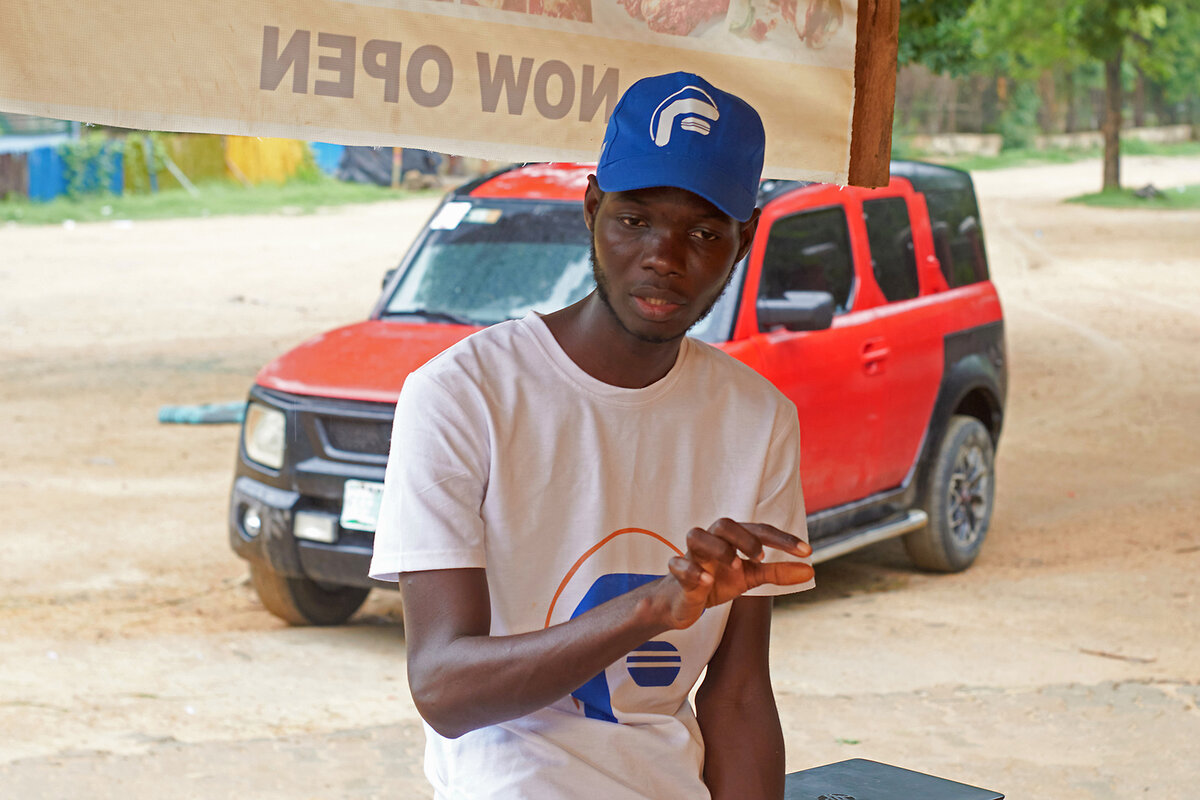
Muhammad Auwal Ahmad wears a cap and shirt with the Flowdiary logo during a meetup in KanoNigeria with some of his educational app’s tutors and students.

Whenever I used to read about Boko Haram terrorists in Nigeria, all I could think was how horrifying and hopeless the situation seemed. But it’s amazing how the human spirit can work around almost any hopeless situation.

Today’s story is about the young man who invented an app to help displaced Nigerian youth learn skills — despite terrorists and a disrupted education.

Nathaniel Bivan reports at the Christian Science Monitor, “Seventeen-year-old Ahmad Aminu finished secondary school and would like to go to college near his village in Zamfara state. But this region of northwestern Nigeria bears the brunt of attacks by bandits who kidnap students for ransom. …

“The 17-year-old Mr. Aminu [has] been able to take – for free, or at very little cost – courses in various digital skills in Hausa. He is becoming a well-known graphic designer within the community surrounding Dalba.

“ ‘The payment depends,’ says Mr. Aminu, the excitement clear in his voice. Designing an invitation card, for example, earns him about 2,000 Nigerian nairas, about $1.25; doing video editing, up to 3,000 nairas.

“ ‘In a month, I make as much as 30,000 naira,’ he says. ‘I really thank God.’ …

“Mr. Aminu is the sort of student whom Muhammad Auwal Ahmad had in mind when he created Flowdiary two years ago as a 23-year-old attending Federal University Gashua in northeastern Yobe state. He says Flowdiary now has more than 8,000 students enrolled from far-flung, impoverished areas across northern Nigeria; on average, almost one-fifth of those are active weekly users. The platform’s name refers to opportunities flowing to young people who might not normally have them.

“ ‘We have students from regions affected by terrorism and banditry … that we train and mentor,’ Mr. Ahmad says, noting that students who speak only Hausa struggle to find online courses in digital skills in their language.

“Mr. Ahmad’s dream began in Bayamari, a village in Yobe state that has only two small schools, a health center, and a police outpost. As a curious tween growing up there, Mr. Ahmad started researching digital technology when his father brought home a mobile phone and, later, a computer. Gradually, Mr. Ahmad started troubleshooting and soon had ambitious digital goals. …

“After unsuccessful attempts at building a couple of online businesses as an undergraduate computer science student, Mr. Ahmad set up Flowdiary in March 2022. It started as a team of tutors, who included some of his friends, teaching digital skills on Telegram to other young people across northern Nigeria at low cost.

“By that November, students could access the Flowdiary website. In February 2023, the app’s release became official. Paying as little as 1,200 nairas per course, students could register to learn web development, graphic design, and other digital skills. Tutors net half of the proceeds from course fees, and the rest goes toward operational costs such as maintaining the app and helping link Flowdiary students with career opportunities, Mr. Ahmad explains.

“Registered as a business, not as a nonprofit, Flowdiary has struggled to find other funding. … But Mr. Ahmad says he is set to obtain some much-needed funding after winning the 2024 Yobe State Research and Innovation Challenge, a prestigious regional competition organized by the Biomedical Science Research and Training Center of Yobe State University, in partnership with Yobe’s state government. …

“In 2011, Al’amin Dalha Suleiman and his seven family members abandoned their home in Maiduguri, the capital of northeastern Borno state, because of the Boko Haram insurgency there. They fled to Kano, more than 500 kilometers (about 310 miles) away, mourning the deaths of neighbors and friends as well as the loss of the family’s hat shop. But discrimination in Kano against outsiders forced them to return three years later to Maiduguri, where Mr. Suleiman struggled to revive the family business. …

“Through a friend on Facebook, Mr. Suleiman heard last year about Flowdiary. He enrolled in several courses, including video editing, web development, and graphic design. There was a major challenge, though – the need for wireless data and a laptop. For months, Mr. Suleiman struggled to finish the courses over his phone, but the payoff – the skills he has acquired – has been worth it. …

“Mr. Ahmad currently teaches computer science in northwestern Kebbi state as part of his National Youth Service Corps requirement. His vision after the one-year program is to expand the Flowdiary platform to reach more young people and – crucially – to help them grow their skills into careers.

“The end of online training for each student does not necessarily mean goodbye at Flowdiary. The Flowdiary team recently set up a mentoring and internship program; any student who takes a course can apply to work with companies that Flowdiary has forged a relationship with. As of late September, 20 students had secured internships – including two with Abdul Gusau, the owner of Abdoul Shoe Ventures in Zamfara.

“ ‘It is impressive to see how effective Flowdiary is through the work the interns are putting in my store,’ Mr. Gusau says. “ ‘The graphic designer has not yet entered the intermediate class, and yet his work is excellent. The same goes for the social media manager, who runs effective ads.’ “

More at the Monitor, here. No paywall. Subscriptions solicited.

Read Full Post »

Photo: Nathaniel Bivan.
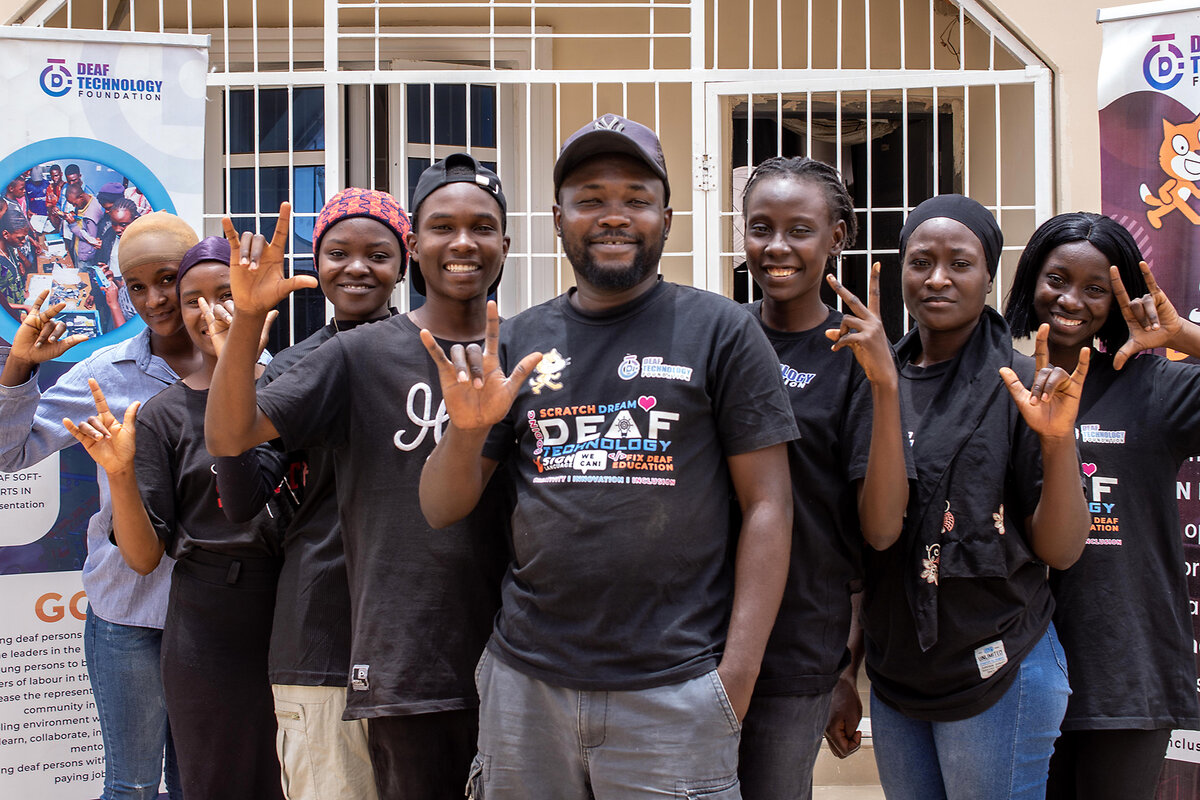
Wuni Bitrus (co-founder of the Deaf Technology Foundation) and some of his students sign “I love you” in Jos, Nigeria.

Things change so fast in our world that I can only hope a positive story I read in June is still true in August. It’s a worry. At the same time, we do know that people keep a good thing going — somehow — even with turmoil all around them.

I preface today’s story with that observation because I have been hearing about protests and riots in Nigeria that started with grievances about the economy and then went berserk as the government overreacted.

Nathaniel Bivan at Christian Science Monitor wrote in June about progress for the deaf community in Nigeria.

“In a one-room apartment in Jos, Nigeria, instructor Wuni Bitrus and almost a dozen students gather around a table cluttered with equipment – a toolbox, a 12-volt adapter, a coding panel, a set of jumper cables, a mix of colored wires. The students’ idea: to build the prototype for a ‘smart’ door that opens with the touch of a finger.

“The students chat back and forth in sign language, and Mr. Bitrus signs back. The group discusses using Arduino, an open-source electronics platform, and one student wonders how fingerprints can be stored. Mindful of Nigeria’s electricity problems, Mr. Bitrus genially advises the group to use a battery-powered keypad lock system first and incorporate a fingerprint feature later. 

“ ‘It works well, rather than waste time reinventing the wheel,’ Mr. Bitrus says. After nodding in agreement, the students excitedly start working.

“This is just another afternoon in a club run by the Deaf Technology Foundation, a nonprofit co-founded by Mr. Bitrus in 2017 that trains Nigerian children and young adults who are deaf in computer programming and robotics. The students also work to improve their reading skills, and receive career guidance and counseling to help them believe in themselves.

“Mr. Bitrus’ … desire to change the prospects of Nigeria’s deaf and hard-of-hearing community was sparked in 2014 by his encounter with a 13-year-old girl while he was teaching as part of the National Youth Service Corps in Zamfara state. Mr. Bitrus had noticed that the teen faced discrimination, and he became determined to learn sign language and teach her to use a computer. Three years later, he marshaled the resources, including funding from the Massachusetts Institute of Technology, to form the Deaf Technology Foundation.

“One of the darkest memories that Mercy Samson Grimah, a foundation student, has about growing up is looking at the faces of people around her and recognizing insults and negative energy directed at her. 

“ ‘That hurt me so bad because I knew in my heart that I could do anything. They just see us as lesser human beings,’ she says. ‘I wanted to show them that deaf people can become whatever they want to be.’ … 

“Ms. Grimah says her private secondary school did not formally teach sign language to her, nor much of anything else. But there was one teacher who knew how to sign, and she taught Ms. Grimah. … She dropped out in her third year because her parents could not pay her school fees, but fortunately, she had already formed a bond with the Deaf Technology Foundation. …

“Five years ago, Ms. Grimah and several other students made a road trip from Jos to Nigeria’s capital, Abuja, to compete in MakeX, a robotics contest. … Although Ms. Grimah’s team was not chosen to go on to represent Nigeria in the international competition, it emerged fourth among about 15 teams.

“ ‘Our team was the only one made up of the deaf,’ says Ms. Grimah, her eyes lighting up.

“Her father, Grimah Samson, adds, ‘What they are doing changed her.’ …

“Joy Yusuf, another Deaf Technology Foundation student, had wanted to become a doctor. But she was moved to a new school where the principal and staff said there was no way that could happen, even though the school welcomed students with disabilities.  

“ ‘It was a blow for me,’ Ms. Yusuf says. ‘I cried. I had to call Mr. Bitrus and my father to beg them, but [the principal and staff] still refused. For me, Deaf Tech is the only way I can have anything close to [studying] medicine.’  Now, she, too, wants to become a web developer.” 

More at the Monitor, here. No paywall.

The part of Nigeria where this story takes places is Jos. Online I found something interesting about it: “The state has over forty ethno-linguistic groups. Some of the indigenous tribes in the state are the Berom, Afizere, Amo, Anaguta, Aten, Bogghom, Buji, Challa, Chip, Fier, Gashish, Goemai, Irigwe, Jarawa, Jukun, Kofyar (comprising Doemak, Kwalla, and Mernyang), Montol, Mushere, Mupun, Mwaghavul, Ngas, Piapung, Pyem, Ron-Kulere, Bache, Talet, Taroh (Tarok), Youm and Fulani/Kanuri in Wase.” Wow.

Read Full Post »

Photo: Sunday Alamba/AP.
Nigerian women find it hard to secure the bank loans needed to start a business, but social media platforms are providing alternative credit lines.

Do you know about lending circles? I learned about them when I worked at the Fed. Immigrants in the US sometimes use them to save money, waiting for their turn to get the whole pot. The circles can be risky, but they are needed.

Ogar Monday wrote for the Christian Science Monitor about a What’sApp lending circle in Africa.

“When Pricilla Yaor found a dream job that meant moving to the Nigerian capital, Abuja, there was just one hitch: There was no way she could afford rent in the country’s most expensive city. For the supermarket cashier, it was a struggle to raise the 300,000 naira ($390) she needed for a single-room flat on the outskirts of the city. Like most renters, she was expected to pay her entire annual rent in one lump sum – a typical practice among Nigerian landlords.

“Still, armed with a new job, Ms. Yaor thought she could get a loan from the bank. ‘I was given plenty of forms to fill, asked to bring two sureties, and I was asked if I had any property that I could use as collateral,’ she recalls. 

“None of this was surprising. In Nigeria, 98% of women have no access to formal credit, limiting their ability to run businesses, pay for studies, or buy a home. Ms. Yaor never returned to the bank. Even if she had met its criteria, she could not afford the 18.75% interest on a bank loan, a typical charge.

“Instead, her saving grace – and a lifeline for a growing number of women in Africa’s most populous nation – came in the form of a women-only WhatsApp group that she was invited to by a cousin. Members of the group each pool in an equal sum every month and rotate who receives the payout. …

“There were no processing charges, and a trusted member of the group was appointed as an admin. A month after joining, Ms. Yaor received 400,000 naira ($506).Soon, she joined another group to raise funds for her younger brother’s school fees. The groups also helped her buy a fridge for her apartment and later a generator to keep the lights on during daily blackouts.

Rotating saving programs, as they’re officially called, provide a safety net across much of Africa. … The use of these programs has skyrocketed in Nigeria recently – aided by technology such as WhatsApp and boosted by inflation that has soared to its highest level in two decades. 

“In the past year, some 4 million Nigerians have been pushed into poverty by inflation that has caused eye-watering price rises for everything from food staples to transport. Women have borne the brunt of the country’s debt crisis. …

“Opportunities for women lag in many fields ranging from education to income; on average, their wages are 22% lower than those of men. Meanwhile, culture and tradition have subjected women to the role of caregiver at home, for which they are not paid. What’s more, women face historical biases embedded in the formal banking system, says Okpetoritse Akperi, a financial expert with a multinational company based in Nigeria.

“As in many other developing countries, Nigerian women struggle to get loans because “creditworthiness is typically judged by the ability to repay. … Even when banking services are available, they are not accessible to half of the women who run businesses, who have to rely on cash for all transactions. 

“But that is slowly changing. Mobile credit companies such as Branch and FairMoney, boasting a combined 20 million downloads on the Google Play Store, are gaining popularity due to their lenient lending regulations.

“ ‘Technology now allows alternative credit assessments, helping women to access financial services without traditional barriers,’ says Iyonuluwa Pikuda, a financial analyst with Lagos-based Money Africa. Using WhatsApp lending groups, though, allows users to bypass any kind of formal structure altogether. …

“While the program has few overall downsides, the risks that do exist are not negligible. ‘We have had cause to report the admin of a group to the police because she refused to release the funds after everyone had sent in theirs,’ Ms. Yaor says of one such experience. But because everyone in the group is known to at least one other person, such matters are usually quickly resolved. … Members are united by their shared interest in helping each other raise funds, she points out. And the alternative is the banking sector’s bureaucracy and high interest rates.”

More at the Monitor, here.

Read Full Post »

Photo: BBC News.
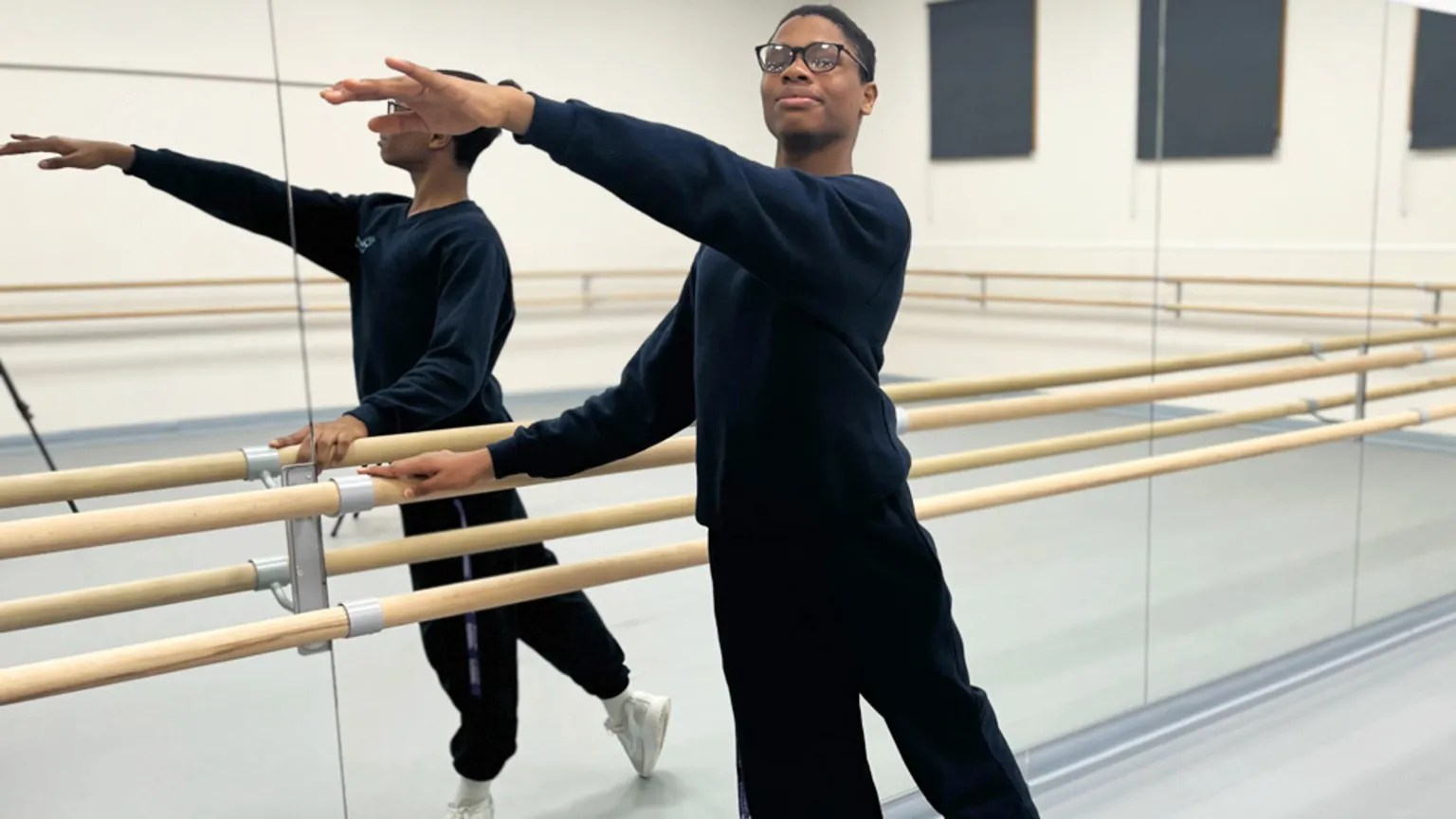
Said Anthony’s mother, “People were telling me that this type of dance is not for boys. But it’s what he loves doing, so I let him go for it.”

The other day, my husband and I were talking about the discovery of the very young Judy Garland (scroll down here) and how the pressures of being a child star really messed her up. Fortunately, many parents of child stars since then have learned to keep a steady hand on the tiller.

Consider the story of the young Nigerian dancer that Jenna Abaakouk writes about at BBC News.

“Dubbed Nigeria’s viral ballet dancer, 13-year-old Anthony Madu’s life has changed beyond recognition over the last three years after his dance moves and internet fame catapulted him from his modest home in Lagos to one of the UK’s most prestigious ballet schools.

“It was his dance teacher who filmed the young boy in June 2020 as he practiced pirouettes barefoot in the rain.

“Afterwards, he uploaded the video to social media where it caught the eye of Hollywood actress Viola Davis who shared it to her huge following on Twitter. … It led to Anthony being offered a scholarship at the Jacqueline Kennedy Onassis School at the American Ballet Theatre. However, Covid-19 restrictions at the time meant the training had to take place online.

“It was then that Anthony was given a chance to study at Elmhurst Ballet School in Birmingham — which had seemed to him an unattainable dream. …

“Sitting in one of the school’s practice studios, he shyly admits it has not been an easy transition. ‘For the first year, it felt really, really hard trying to adjust to like the weather compared to Nigeria and also missing home as well,’ he says.

“However he has how settled down and enjoys the strictures of his new dance regime. ‘I video call my mum every day and hang out with my friends. Here, we do more classical ballet. It has to be precise, like having the arms right.’ …

Without the chance for formal training, he taught himself through watching videos and copying moves that fascinated him.

“It was a hobby that surprised his family. ‘When he was five years, I saw him dancing. I thought: “What is wrong with you?” ‘ Ifeoma Madu, Anthony’s mother, who still lives in Lagos, tells the BBC. ‘People were telling me that this type of dance is not for boys. But it’s what he loves doing, so I let him go for it,’ she says.

“As Anthony’s interest developed, his family moved to a different neighborhood of the city so he could attend the Lagos Leap of Dance Academy. …

“Mike Wamaya, a ballet teacher in Kibera — Africa’s largest informal urban settlement — in Kenya’s capital, Nairobi, is impressed by Anthony’s story.

” ‘It is very rare to see young boys getting scholarships from Africa to go outside to dance,’ the 48-year-old, who has more than 250 children taking his classes, tells the BBC. … Mr Wamaya admits too that many young boys on the continent do not pursue ballet because of the social stigma associated with it. ‘People are very homophobic and as a male dancer you are called gay. … This built a lot of resilience in us. We got teased a lot but I’m very happy that my students used the teasing to prove those people wrong.’ …

“Anthony has already inspired other young people in Nigeria and the rest of Africa to pursue their dancing ambitions. His journey is also to be shown to a much wider audience as Disney is making a documentary about it. Called Madu, it is currently in post-production. …

“Life in Birmingham is also broadening Anthony’s horizons, as there is more on offer academically at Elmhurst. ‘When I was in Nigeria, I didn’t do things like art. But now I love drawing. And learning other dances too. Aside from ballet, contemporary is my favorite,’ he says. …

” ‘There might be struggles along the way but remember it’s just temporary and it will be worth it in the end.’ “

More at the BBC, here. No paywall.

Read Full Post »

Photo: Slum2School.
Slum2School volunteers in Nigeria come from all walks of life and help coordinate enrichment activities for children.

One precept that the pandemic underscored for us all is that children need to be in school. We know how hard the year was for American children who couldn’t go in person, but just imagine what it was like for kids in a poor Nigerian neighborhood with no computers! In fact, the children in today’s article are lucky to have school at all. An idealistic young Nigerian man made it happen.

Shola Lawal writes at the Christian Science Monitor, “It was one of the few times Otto Orondaam was ever tempted to quit.

“The year was 2012 and Mr. Orondaam’s passion project, Slum2School, was off to a bumpy start. Here in Makoko, a low-income neighborhood on the Lagos Lagoon, many fishing families need children to stay home and help with their trade. His brand-new nonprofit aimed to get those kids into school, and for weeks, he’d planned an event, hounding a medical company for mosquito nets to hand out as an incentive.

“But just minutes before, the company called – it could not deliver the nets.

“ ‘I cried horribly,’ the young reformer recalls, laughing, sitting in a well-lit office and sporting a deep-blue turtleneck. ‘The parents were waiting and this was going to be the highlight of the event, the only thing they could take home, but there were no nets. It was a heartbreaking moment for me.’

“But Mr. Orondaam’s upbeat personality soon took over. He quickly called up friends, asking for donations. Two hours later, he zoomed in and out of a market, purchasing and distributing 200 mosquito nets – and ended up enrolling 114 children in existing public primary and high schools that the organization partnered with.

“Fast-forward to 2021, and Slum2School says it has directly sponsored almost 2,000 children. Many are still from Makoko – including Hamdalat Hussein’s grandson, Abdulmalik.

‘What Slum2School is doing for us here is good,’ she says in the local Yoruba language. … ‘I am praying to see him become somebody after he finishes school.’

“Nigeria has one of the world’s highest rates of out-of-school children, according to UNICEF – around one-third – although primary education is free and compulsory. Learning during pandemic shutdowns has been especially challenging, since only around half the population has internet access. … When the pandemic struck, Slum2School launched a virtual class for high schoolers, after distributing hundreds of tablets.

“ ‘I was able to teach myself graphics design and many things like how to make logos and flyers,’ says Habeebat Olatunde. Her siblings had skipped around her, fascinated, as she joined hundreds of children in class from their home in Iwaya, another low-income neighborhood bordering Makoko. Now in her final year of high school, Habeebat says she wants to be a human rights lawyer and fight for vulnerable teenage girls. …

“On a recent afternoon, Mr. Orondaam sat in Slum2School’s headquarters in the upscale Lekki area of Lagos, with outer walls shaped like colorful crayons. He flicked through old photos and chuckled at one of himself, thin and sunburned – one of the first times he went to Makoko, standing beside smiling parents holding nets, with the neighborhood’s wooden shacks as a backdrop.

“Growing up in Port Harcourt, a city in southern Nigeria, Mr. Orondaam studied to be a doctor but pivoted to social work, influenced by his parents. His father was the first doctor from his village and would offer free services. His mother was basically ‘everyone’s mother,’ he says. ‘Our classmates would not have sandals, and my mum would come and take yours and give them. The things I picked up from that was devotion to service, serving with your heart.’ …

“He first encountered Makoko through a documentary. … He felt compelled to visit while completing his National Youth Service Corps in Lagos – a mandatory one-year program for Nigerian university graduates.

“ ‘It was the first time I was seeing that kind of community,’ Mr. Orondaam remembers. ‘There were kids there who had never been in school and had no plans to go. I loved the energy. I knew they were happy, but I thought, “You can be happier with education; if you have an education, you can make better choices.” ‘

“He resigned from his stifling bank job and started weekly visits to Makoko, updating friends via a blog. When he came up with the idea to send 100 children to school, they supported him.” 

Read what happened next at CSM, here.

Read Full Post »

Few things equal the joy of dancing, as I keep learning from my 5-year-old granddaughter and the videos Suzanne and Erik send of her living-room performances. They make me want to get up and boogie, too.

A teacher in Africa who loves ballet thought, Why not? There may be no ballet in Nigeria, but kids need to dance.

As Noor Brara explains at the New York Times, “In June, a minute-long video featuring a young ballet student dancing in the rain began circulating on the internet. As the rain falls, forming puddles between the uneven slabs of concrete on which he dances, Anthony Mmesoma Madu, 11, turns pirouette after pirouette.

“Though the conditions for such dancing are all wrong — dangerous, even — he twirls on, flying barefoot into an arabesque and landing it. …

“The wide reach of the video — it has been seen more than 20 million times on social media platforms — has turned a spotlight on the unlikely story of a ballet school in a poor suburb of Lagos, Nigeria: the Leap of Dance Academy.

“Founded in 2017, the academy has transformed the lives of its students, affording them a place to dance and to dream. And in the last few months, it has inspired influential people in ballet to lend a hand. Seemingly overnight, a world of opportunity has opened up: for the students, scholarships and invitations to attend prestigious schools and companies overseas; and for the school, sizable donations, which will allow for building a proper space, outfitted with a real dance floor.

“For now, the Leap of Dance Academy is housed at the home of its founder, Daniel Owoseni Ajala, in Ajangbadi, Ojo, on the western outskirts of Lagos. Every day after school, Mr. Ajala’s 12 students walk to his apartment, where he pushes aside his furniture and spreads a thin vinyl sheet over the concrete floor for class, throwing open the doors and windows to let in the light. …

“Much of this is filmed and posted to the school’s Instagram feed, where the students’ joy is evident in each video, their movements precise and praiseworthy — as the comments, hearts and trembling star emojis left by their fans attest. …

” ‘In the beginning, people kept saying, “What are they doing?!” ‘ Mr. Ajala said. ‘I had to convince them that ballet wasn’t a bad or indecent dance, but actually something that requires a lot of discipline that would have positive effects on the lives of their children outside the classroom. I always say, it’s not only about the dance itself — it’s about the value of dance education.’

“When Mr. Ajala, 29, founded Leap of Dance three years ago, he was a self-taught recreational dancer with a dream: to open a ballet school for students who were serious about learning the art form and possibly pursuing it professionally one day. …

“As a child, Mr. Ajala became obsessed with ballet after watching “Save the Last Dance,” the 2001 movie about a lapsed ballet dancer (Julia Stiles) who moves to the South Side of Chicago after her mother dies …

“Mr. Ajala said he was captivated by the movement he saw onscreen and, perhaps even more, by the discipline and sacrifice that was evidently required to master it. Ballet appealed to him for another reason, too: It wasn’t widely taught or practiced in Nigeria. ‘I wanted to be different,’ he said. …

“Mr. Ajala’s role in the lives of his students goes beyond dance; he is invested in their whole development. One day a week class is dedicated solely to academics; the students come to the academy with their homework, with Mr. Ajala providing one-on-one tutoring as needed. They practice speaking, reading and writing in English together. And between lessons, which run from mid afternoon to early evening, he cooks them a meal. …

“Recently, too, the students have begun learning conversational Spanish, Italian and Chinese from their ballet teachers abroad, like [Thalema Williams, in St. Croix, and Mary Hubbs, in Brooklyn, Mich., who gave him lessons online to improve his technique]. ‘I want the kids to be able to relate to people internationally,’ Mr. Ajala said.”

At the Times, here, you can read how he manages to keep the ballet classes free. Very inspiring story.

Photo: Stephen Tayo for the New York Times
Anthony Mmesoma Madu, left, with fellow students from the Leap of Dance Academy, in Ajangbadi, Ojo, Nigeria.

Read Full Post »

98989420_04ba6d56-1f9e-40c2-a5e0-e5d9484b2294 Photo: Penny Dale/BBC Africa
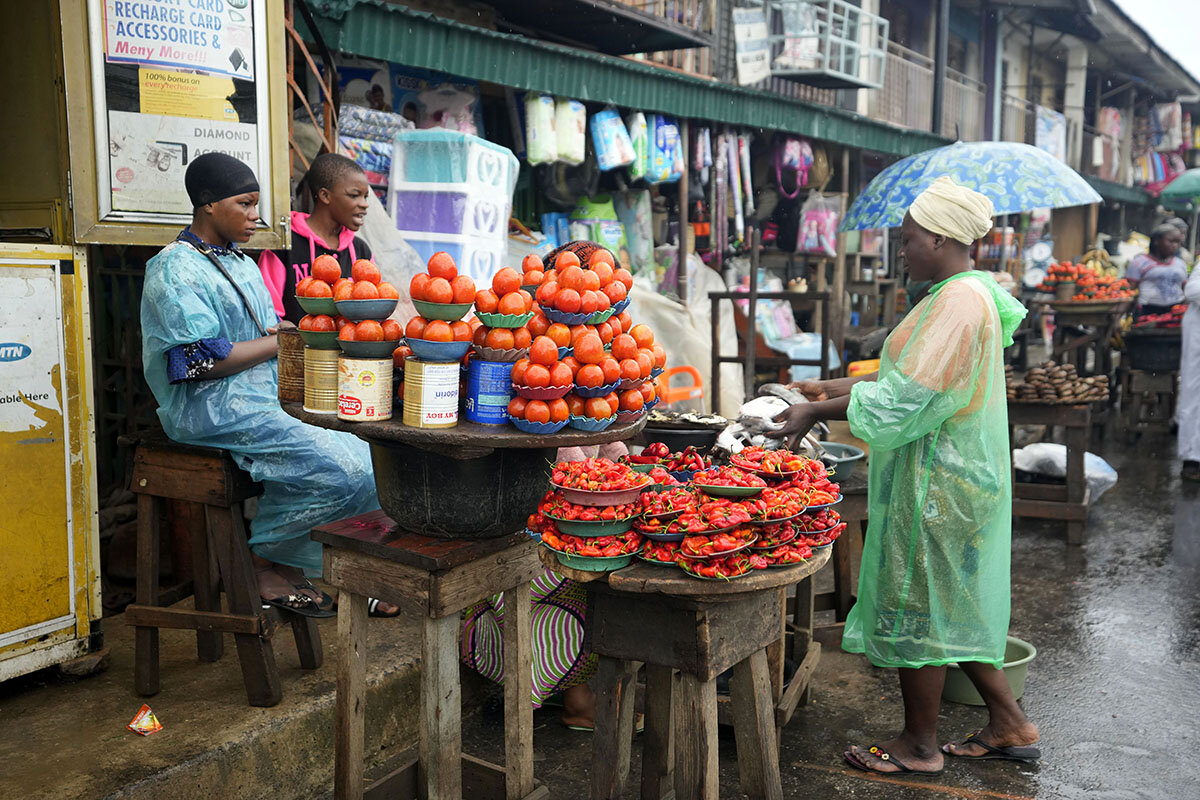
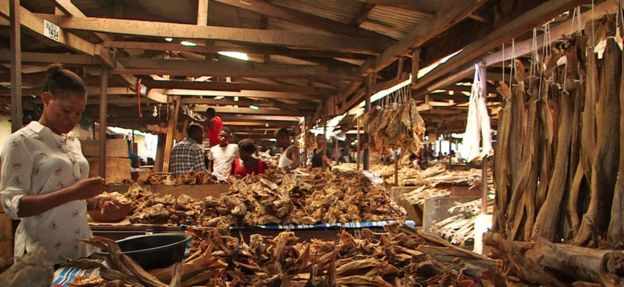
In Nigerian markets the smell of stockfish — a culinary stable that comes from Norway — permeates the air.

I was interested to learn that something called “stockfish,” from Norway, has become a staple of the Nigerian diet. Penny Dale and Victoria Uwonkunda of BBC Africa have the story.

” ‘The taste of stockfish is life. We can’t cook without stockfish.’

“That’s the verdict of women at the bustling Onyingbo market in Nigeria’s commercial capital, Lagos, as they carefully choose pieces of the specially dried cod. …

“The smell of stockfish is pungent. … As the moisture drips out, the flavour of the fish deepens to create a rich, intense and complex taste.

“It is perfect for a Nigerian palate, which favours big and bold flavours such as fermented locust beans and chilli pepper, says young chef Michael Elegbde.

“Based in Lagos, Mr Elegbde is a rising star in Nigeria’s culinary world — and his signature dishes revolve around stockfish. Growing up, he spent a lot of time helping his grandmother in the kitchen, and she loved stockfish as a key ingredient in traditional dishes. …

“It was only later in life — when he had followed in his grandmother’s cooking footsteps — that he discovered the fish that he had grown up with actually came from almost half-way round the world, in the cold Arctic waters off the coast of Norway. …

“Between January and April, millions of cod migrate from the Barents Sea to breed in the fjords — and the climate is perfect for the natural drying process.

” ‘You need both cold and dry weather, and you need sun. We have everything here. We are gifted from God,’ laughs Erling Falchs, whose family business Saga Fisk has been in the stockfish trade for six generations.

“After gutting, cod is hung out on huge wooden A-frames, up to 10 metres high, and left to dry for three months in in the cold, crisp winter air. No salt, no additives – just in the same way that it has been dried since the time of the Vikings.

“Although Nigeria has a long coastline teeming with other species of fish, people say the stockfish has a unique taste and so it is Norway’s biggest export market for the fish. …

“It was the Biafran civil war in Nigeria 50 years that really set the scene for stockfish to become a must-have ingredient in Nigerian cuisine. In the course of three bloody years, more than a million people died — mostly from hunger. It was a humanitarian crisis on an unprecedented scale, and churches and relief agencies from all over the world joined together to fly in emergency supplies.

“Norway’s contribution was stockfish. It doesn’t need refrigeration, and it is full of protein and vitamins — perfect to combat kwashiorkor, the malnutrition that characterised the Biafran war.”

Read more at the BBC, here.

Read Full Post »

Photograph: Devesh Uba
Grocery store in Makoko, Lagos, Nigeria.

A recent manmade-island story in the Guardian made me think of Francesca Forrest’s lovely novel Pen Pal, which involves a girl in a floating community in the U.S. South who corresponds with a political prisoner in Asia.

The Guardian article, however, is about designers and architects building islands for populations threatened by rising seas.

Jessa Gamble writes, “It may seem like science fiction, but as rising sea levels threaten low-lying nations around the world, neighbourhoods like [the Yan Ma Tei breakwater in Hong Kong’s Causeway Bay, where residents live in boats] may become more common.

“Whereas some coastal cities will double down on sea defences, others are beginning to explore a solution that welcomes approaching tides. What if our cities themselves were to take to the seas? …

“The immediate and most numerous victims of climate change are sure to be in the developing world. In Lagos, the sprawling slum of Makoko regularly suffers floods, and its stilted houses are shored up with each new inundation. It’s under threat of razing by authorities.

“The Nigerian-born architect Kunlé Adeyemi proposes a series of A-frame floating houses to replace the existing slum. As proof of concept, his team constructed a floating school for the community. Still, many buildings do not make a city: infrastructure remains a problem here. One solution would be to use docking stations with centralised services, rather like hooking up a caravan to power, water and drainage lines at a campground.” More.

It all sounds like Noah building an ark. But I can’t help thinking it would be better to end global warming in the first place.

Photograph: Seasteading Institute, by way of the Guardian
The Seasteading Institute proposes a series of floating villages.

Read Full Post »