Feeds:
Posts
Comments

Posts Tagged ‘outdoors’

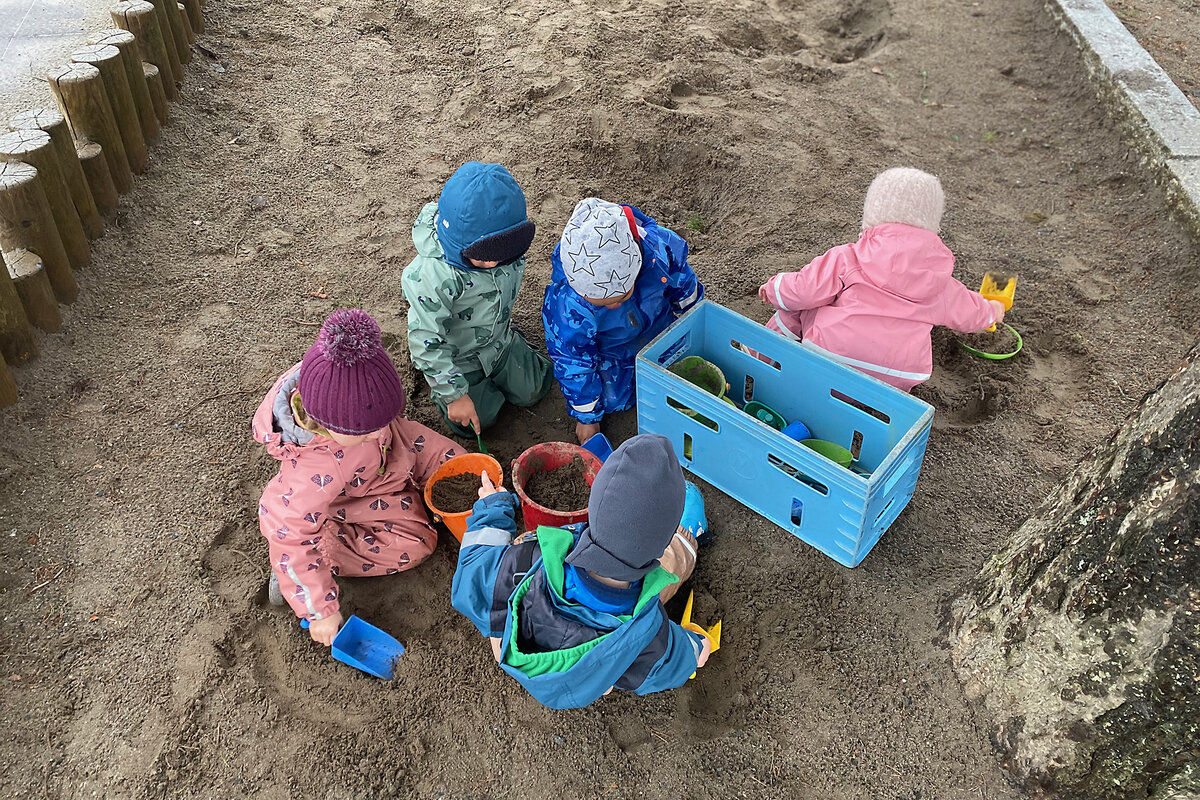
Photo: Jackie Mader/The Hechinger Report.
In Norway, a joyful, secure childhood is a legal right.

I was intrigued by today’s story on Norway’s approach to childhood. One point that made me smile was that the children in early-education programs take naps outdoors, bundled up in sleeping bags. My younger grandson took naps that way. Maybe because he’s half Swedish. Those Northerners don’t believe in bad weather.

Jackie Mader writes at the Hechinger Report via the Christian Science Monitor, “Just north of Oslo, Sylvia Lorentzen’s two child care programs straddle a narrow, winding road that leads up to the lush forests that encircle parts of Norway’s capital.

“In Norway’s system of universal child care, children ages 5 and under immerse themselves in nature. In the winter, those in Ms. Lorentzen’s care learn to ski and sled. In the summer, they swim, canoe, and rock climb – and then rest in hammocks.

“Around age 4, they learn how to safely use a knife. Then they huddle together outside, whittling wooden figures out of sticks to practice. By age 5, they are cutting logs with a saw and building fires. Toddlers nap outside, bundled inside puffy, miniature sleeping bags affixed to their strollers.

“Universal child care is ‘both seen as an investment for the society and an investment for the child,’ says Kristin Aasta Morken, a program leader in the city of Oslo. Public funding covers 85% of operating costs for child care programs in Norway. Parents pay about $182 per month.

“In the United States, it’s parents, mostly, who cover the costs for this care – though some employers and local jurisdictions may offer partial reimbursement.

‘Social differences are something Norway does not accept.’

“ ‘Kindergarten is so important to level out social inequities,’ says Robert Ullmann, head of a consortium of child care centers. ‘In Norway, we think it’s democratic that everyone can have the same opportunities and move out of being poor. Social differences are something Norway does not accept.’ …

“ ‘A really important pillar of Norway’s early ed philosophy is the value of childhood in itself,’ says Henrik D. Zachrisson, director of the Centre for Research on Equality in Education at the University of Oslo. ‘Early ed is supposed to be a place where children can be children and have the best childhood possible.’

“It’s an idea that undergirds Norway’s nationalized approach to its ‘kindergartens,’ which here serve children age 5 and younger, including toddlers and infants. …

“On a drizzly morning earlier this year at Preståsen Kanvas-barnehage, one of Mr. Ullmann’s kindergarten programs in south Oslo, children roam around an expansive play yard, building sandcastles under the canopy of a large pine tree. Others zoom down a hill on bikes.

“In another playground on campus, children shriek as they splash through a large puddle. This draws more children hoping to play. Rather than caution the children about getting wet, a teacher walks over and hands them buckets to have at it.

“Children with disabilities, who are often segregated in American child care programs, are included in activities. Some of them have a city-funded aide who attends to their needs.

“In some rooms, posters on the wall show pictures of common items or common requests, so children still learning Norwegian can point to what they need. In one room, children are learning about the Muslim holiday, Eid al-Fitr. …

“Ironically, Norway’s policies have been inspired in part by American studies that found troubling language skills gaps between higher- and lower-income children. Other influential American scholarship also revealed high educational returns from investing in early childhood programs.

“ ‘The argument I’ve heard is that if you don’t send your children to kindergarten, then you steal some possible experiences from them,’ says Adrian Kristinsønn Jacobsen, a doctoral candidate at the University of Stavanger in Norway who studies early childhood science education rooted in experiencing nature.

“There are important contexts affecting each country’s approach, however. Norway is home to about 5.5 million people, and about 82% are ethnically Norwegian. This population lives in an area roughly the size of Montana. Norway is also a top producer of oil, which helped generate a per capita household income that was over $104,000 in 2022, according to the International Monetary Fund.

“The U.S., on the other hand, has 62 times the number of residents that Norway has and a far more diverse population. In 2022, per capita household income in the U.S. was about $77,000.

“In Norway, nearly 1.4% of the country’s gross domestic product goes toward early childhood programs. The U.S. spends less than 0.4% of its GDP, according to the Organization for Economic Cooperation and Development.

“Public funding covers 85% of operating costs for child care programs in Norway. As of this summer, the tuition parents pay has been capped at about $182 per month. This applies to both public and private programs, and includes in-home kindergartens, which preserve a certain amount of choice for parents. Programs receive funding on a per-child basis. Kindergartens that care for children under 3 years old receive twice the funding of those ages 3 to 5, since toddlers and infants require more individualized care.

“Norwegian children are guaranteed a spot in a kindergarten after they turn 1 year old – about the time many parents’ paid leave ends. If parents decide not to send their children to a kindergarten, they receive financial assistance to stay home.

“Norway’s understanding of kindergarten is deeply ingrained in its culture. But these benefits, signed into law in the Kindergarten Act of 2006 – which repeats the word ‘play’ 56 times – also express some of the country’s deeply held values.

“Child care programs must acknowledge ‘the intrinsic value’ of childhood, according to the 63-page law. ‘The Kindergarten must be based on fundamental values in the Christian and humanist heritage and tradition, such as respect for human dignity and nature, on intellectual freedom, charity, forgiveness, equality and solidarity, values that also appear in different religions and beliefs and are rooted in human rights,’ the law declares. …

“The law proclaims, too, that kindergartens should ‘promote democracy and equality and counteract all forms of discrimination.’ ”

More at the Monitor, here.

Read Full Post »

Photo: Alex Hecht for the New York Times.
A team helps Hunter Noack and his piano travel to scenic locations to give his concerts an outdoor vibe.

What I’m wondering as I read today’s story about classical piano in the great outdoors is whether the project is more about bringing nature into the concert experience or about attracting new audiences. Doesn’t it draw traditional concertgoers? Besides the whale, that is.

Sopan Deb reports at the New York Times that “for the last decade, the classical pianist Hunter Noack has been embarking on an unusual journey: He hauls a thousand-pound 1912 Steinway concert grand piano to places in the outdoors not known for hosting concerts. …

“This summer, Noack, 36, is in the midst of a 10th-anniversary tour of his ‘In A Landscape’ project, which has taken him to Jack London State Historic Park in Glen Ellen, Calif.; Black Butte Ranch in Sisters, Ore.; and Warm Springs Preserve in Ketchum, Idaho. …

“Inspired by the preservationist John Muir, Noack started the project as a way of getting closer to nature, and bringing classical music to rural areas where it is not typically accessible. The idea, Noack said, is to remove the barriers that typically limit classical music to concert venues like Carnegie Hall.

“ ‘What John Muir was trying to articulate is that we don’t just need the wild to recreate in,’ Noack said in an interview. ‘We need the wild to be human, and to be more compassionate, and to be more empathetic. And that’s the medicine that I needed. To be outside.’

“The roots of the project can be traced back to 2015. Noack, a native of Sunriver, Ore., had just moved to Portland, a couple of years after graduating from the Guildhall School of Music in London. He was working odd jobs and struggling with student debt. He considered joining the National Guard, but instead applied for a small grant from a regional arts and culture council in Portland to try an experiment. …

“After graduating from college, Noack, along with a friend from boarding school, created an immersive play in San Francisco. In London, Noack eagerly took in shows by the experimental theater company Punchdrunk.

“ ‘These theater and opera companies were really pushing the boundaries, and that’s what I wanted to do with my art: classical piano,’ Noack said.

“A traveling group of six helps Noack bring his piano to the various remote locations. The team has developed a system for moving the nine-foot instrument. The piano sits on a custom-designed 16-foot flatbed trailer, and can go anywhere that a four-wheel-drive vehicle can. Once they have arrived at a destination, the trailer turns into the stage.

“The first year, Noack rented a piano from a local dealer. But when he said he wanted to bring the rented piano to Mount Bachelor, in Bend, Ore., and the Alvord Desert, in the southeastern part of the state, the dealer did not want to take on the insurance liability. Afterward, in 2017, a philanthropist purchased and donated the piano that Noack uses today.

“Noack didn’t intend for ‘In A Landscape’ to be a full-time job, but the initial audience response was so large that he kept going. … The concerts are held rain or shine, hot or cold. (The temperature during concerts has ranged from subfreezing to above 100 degrees.)

“Among the notable locales where Noack has played are the entrance to Yellowstone (via the Roosevelt Arch in Montana), Joshua Tree National Park in California, Crater Lake in southern Oregon and Banff National Park in Canada. …

“Noack’s shows have even appeared to attract wildlife. He recalled that at a two-night run near the Oregon coast, the piano was located near a cliff. A whale swam up to shore for both performances and lingered for their entirety.

“ ‘I like to think that the whale was enjoying this show,’ Noack said.

“Among other wildlife that made appearances were free-range horses, birds and deer.

“Noack’s ambition to bring a piano to unfamiliar territory is expansive. He said he wants to perform at, among other striking sites, remote villages in Canada; at the Preikestolen, a steep cliff in Norway; during a safari in Africa; atop Vinicunca, the rainbow mountain in the Andes of Peru; and by the salt flats of Bolivia.

“ ‘My hope is that I can use this project, my love of the music and my curiosity about how public lands and natural resources are managed, to explore the world and learn,’ Noack said.”

More at the Times, here.

Read Full Post »

Erik’s Swedish/Danish niece and nephews live in Copenhagen and went back to school quite a long time ago. The youngest went first, taking his seat in a classroom full of Covid-19 protections. Meanwhile, in other parts of Denmark, outdoor learning is getting increased attention.

Rick Noack writes at the Washington Post, “On a balmy Monday afternoon earlier this month, Sebastian Lukas, 27, watched from across a clearing as his third- and fourth-grade students whittled branches into spearheads with sharp knives.

“His gaze turned to another group, who were supposed to be working on math problems. Two students, perched on a log, scrambled to produce their textbooks, just in time to look busy.

“Lukas began the year teaching in a classroom like any other, in Samso Frie Skole, a school on the Danish island of Samso. But when the novel coronavirus pandemic struck, the school, like many across the country, embraced a new way to hold certain classes: almost entirely outdoors.

“Instead of sitting at desks, Lukas’s students wander through a rambling woodland, lush with trees and crisscrossed by dirt tracks. …

“Some countries, including Germany, have a tradition of outdoor preschools and kindergartens, which have begun to catch on in the United States as well. The pandemic may drive more countries to experiment with the model for older students. …

“Samso, a sparsely populated, energy self-sufficient and carbon-neutral 44-square-mile island that was once a meeting point for Vikings, is a windy, hour-long trip by ferry from the mainland village of Hou.

“The Samso Frie Skole — a private school funded, like many others in Denmark, in large part through public grants — first pondered the move outdoors long before the pandemic. Coronavirus accelerated those plans.

“The new, forested area, surrounded by grain fields, includes old farmhouses, where students will be able to take shelter in bad weather, according to principal Anna Mattsson.

“ ‘It’s going to be a combination of indoors and outdoors,’ she said. The aim is to have students learn outside several times a week, with fluctuations based on weather.

“No one at the school said they were worried about the impending winter.

“ ‘We’re used to it,’ said Rikke Ulk, the chair of the school’s support association. ‘It’s a matter of dressing well.’

“Until the new buildings are ready, students must walk or bike more than a mile from their old classrooms to their new forest school. Teachers haul some of the younger children in carts affixed to bicycles.

“Milling about before one such shuttle ride on a September morning, Noa, 11, said she liked the new school setup. It’s ‘just so beautiful — it makes me happy,’ she said. …

“Some said they preferred certain aspects of learning inside. ‘Sometimes, it’s better just being in the classroom, so we can focus,’ said Sally, 12.

“Cian, 9, an aspiring cook or robot engineer, disagreed. ‘It’s better to be here,’ he said, holding his math book. ‘It’s cozier.’

“Lukas said outdoor class works better for some students than others. ‘But some kids who have a hard time sitting love to come out here,’ he said, and some students who struggled to focus on math indoors have shown aptitude outside. …

“One of the most commonly accepted Danish arguments in favor of outdoor schooling centers on health benefits, said Mads Bolling, a researcher at the Steno Diabetes Center Copenhagen. Students are able to avoid the adverse affects of sitting still all day.

“But he cautioned that potential disadvantages are not yet fully understood, and some research suggests outdoor schooling appears to provide the most for children who are already highly motivated. …

“Even if outdoor class may not be practical for all schools or in all climates, said Bolling, it is not an all-or-nothing proposition. Samso Frie Skole plans to be flexible about which classes meet outside and which do not.” More here.

Read Full Post »

It rained hard at noon, but the stalwarts opening booths for the first farmers market of the season hung on and before long the weather cleared, and it was sunny and warm.

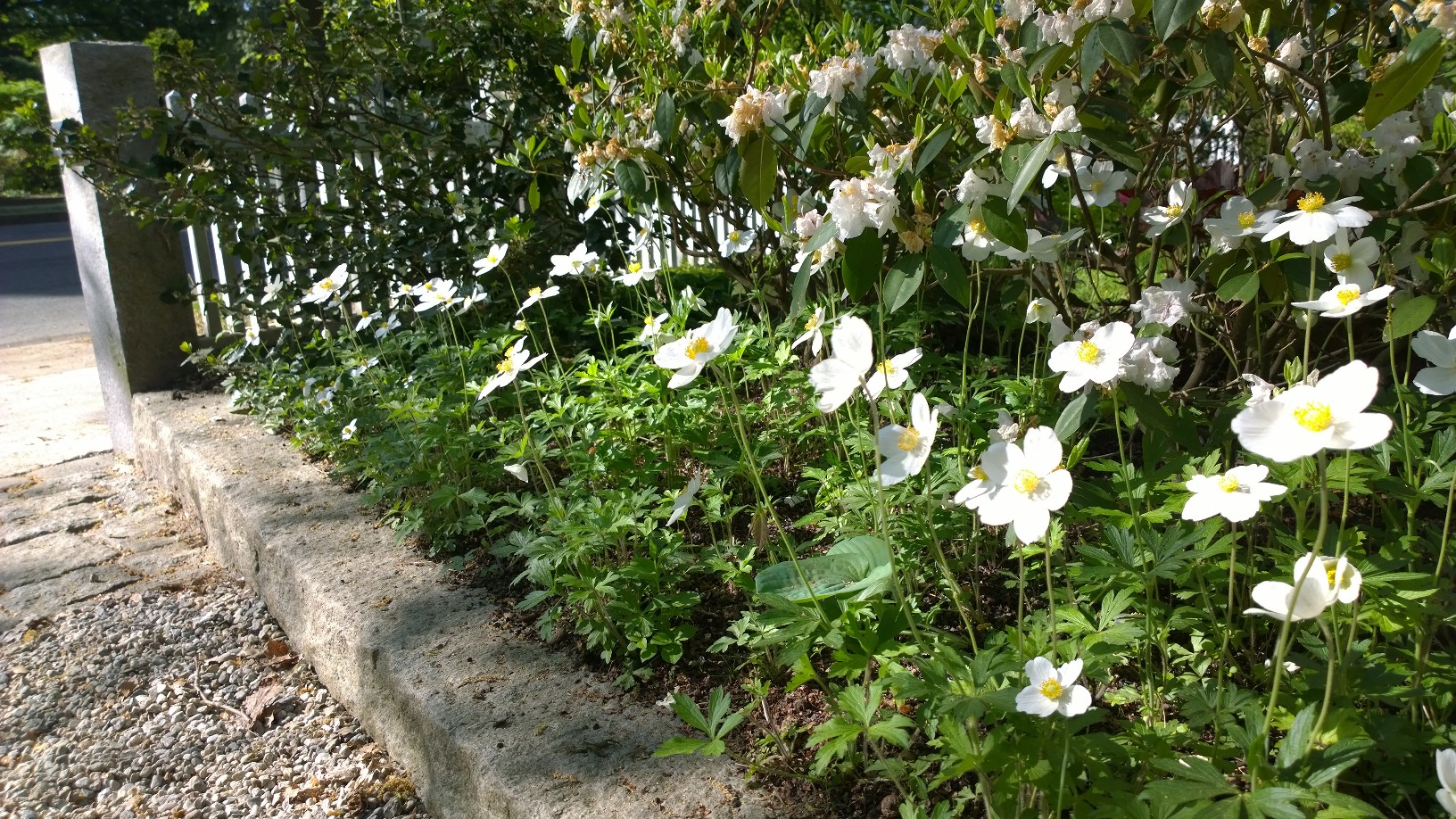
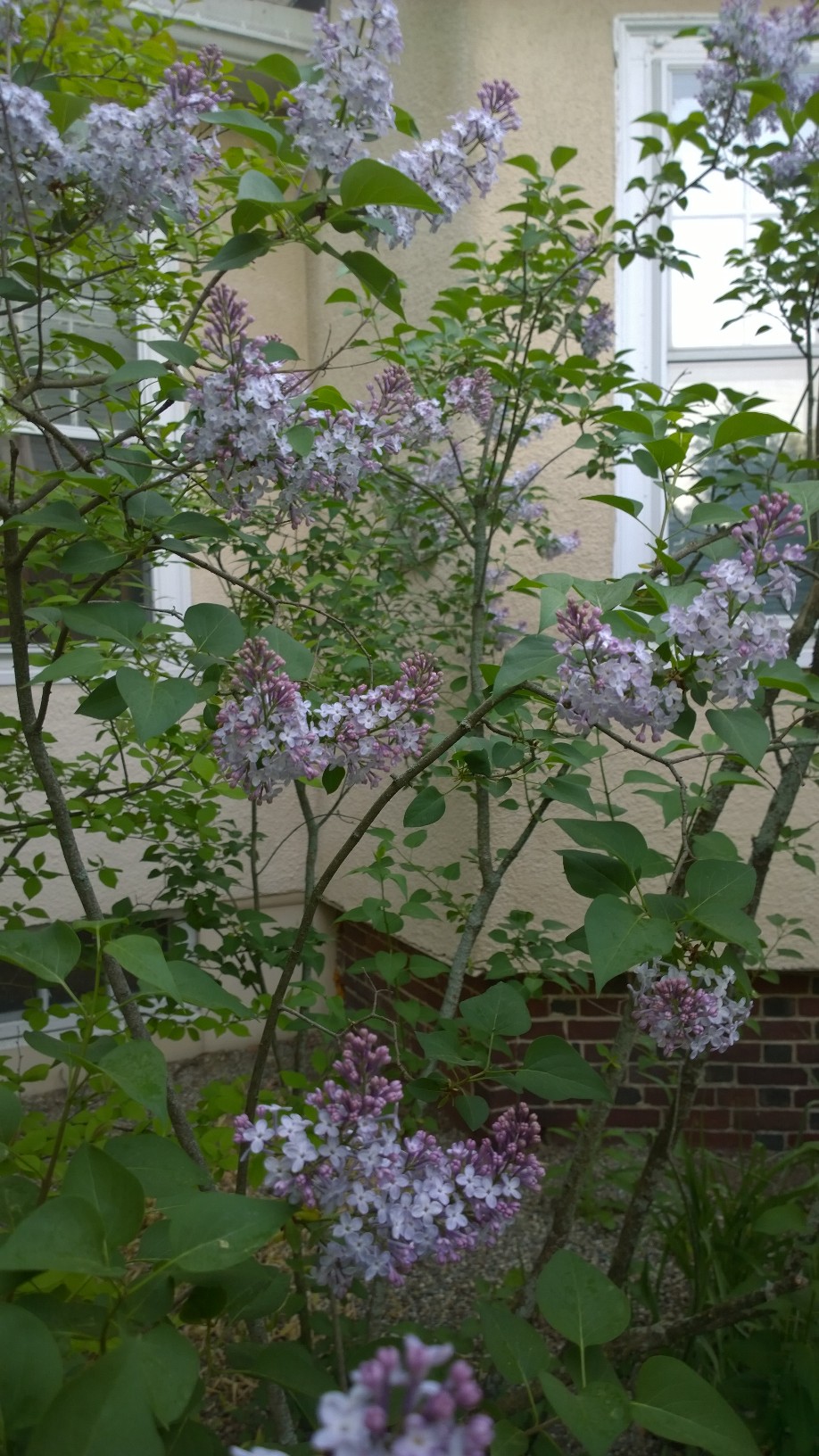
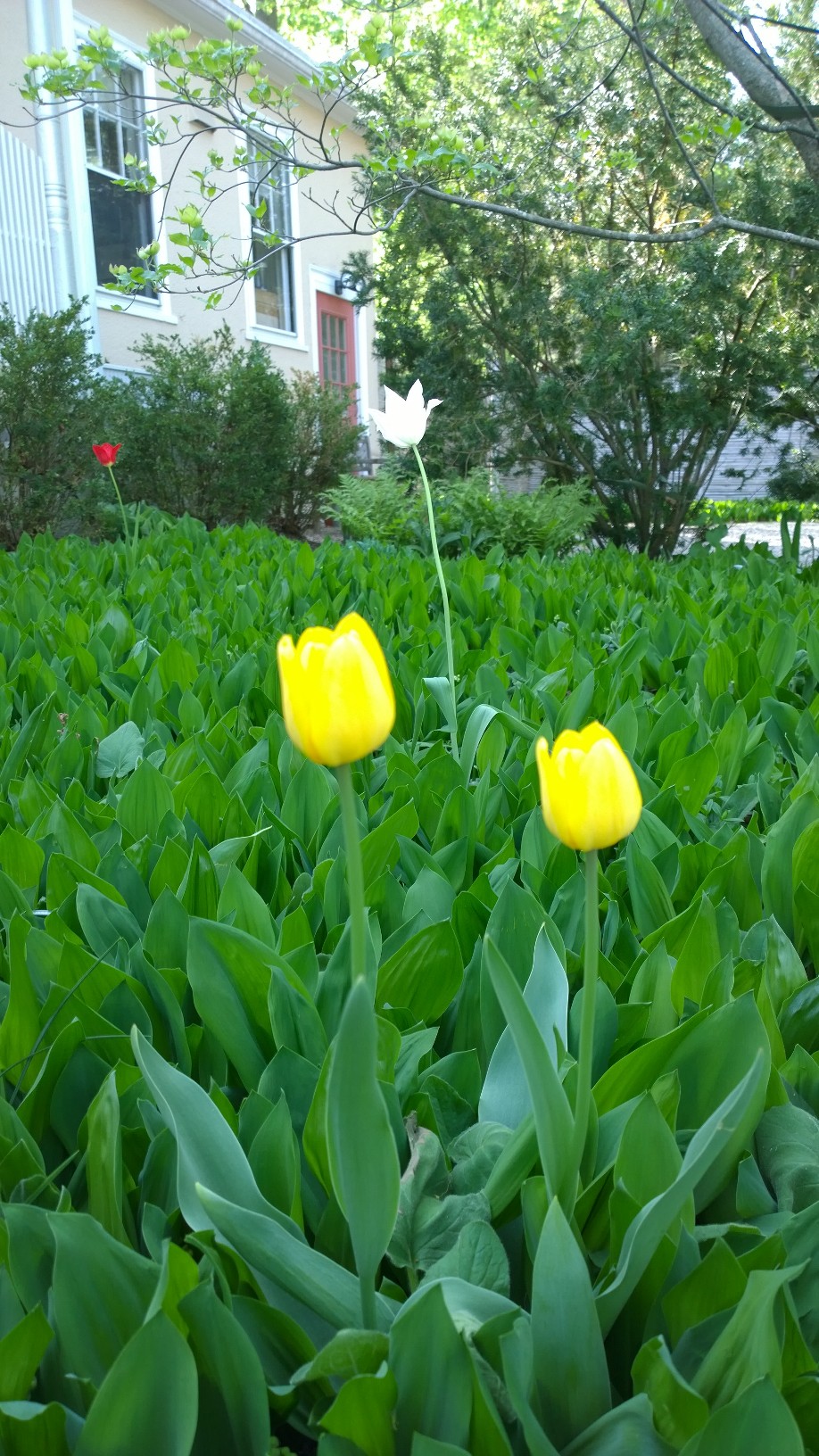
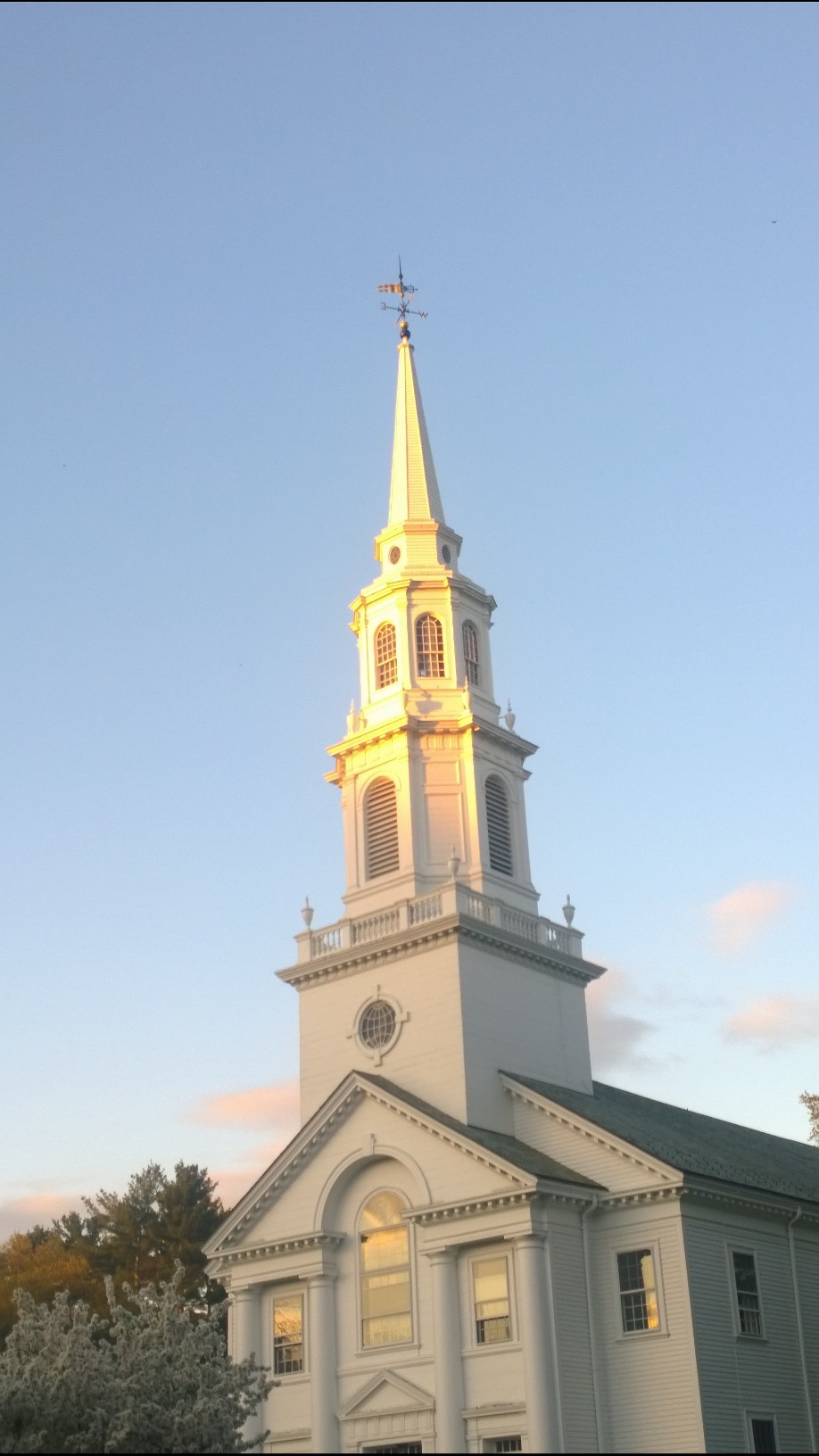
Today I’m posting some recent outdoor photos from Massachusetts and Rhode Island and thinking particularly how seed pods, the smell of lilacs, and small landscapers make me happy.

twisted-tree

early-blooms

more-lilacs

rhododendren-and-lichen

tulips

steeple

more-pods

pods

landscaping-truck

Read Full Post »

My friend Jean Devine is always up to something interesting. A Brown U grad, with an MBA from Simmons, she used to work in investor relations but in recent years has been testing the waters of social entrepreneurship.

Her latest initiative, with Barbara Passero of Sandpiper Creative, is called meadowscaping and is intriguing on many levels.

With access to a Waltham church lawn for a summer youth program, Jean and Barbara will work with kids to convert the yard into a meadow that uses native species from Garden in the Woods and provides a habitat to the bugs and other small creatures that make a healthy environment.

From the Meadowscaping for Biodiversity website: Meadowscaping “is an outdoor, project-based, environmental education program that provides middle school youth with real-world experiences in STEAM learning (Science, Technology, Engineering, Arts and Math), while inspiring and empowering them to address challenges to the environment and our society.

“Today, few children spend time experiencing Nature and the benefits of outdoor recreation, education, and contemplation. Founder and former Director of the Children and Nature Network (C& NN) Richard Louv coined the phrase nature-deficit disorder to describe the negative effects of reduced outdoor time on children’s development. …

“Children who spend little time outdoors may value nature less than children who spend time outdoors in free play. Similarly, children who feel part of something bigger than themselves may … understand their dependence on a clean environment and know that they are responsible for caring for the Earth as their home.” More here.

The idea behind the meadowscaping summer program is that children, both at a young age and as they become adults, can actually do something about the environment.

Remember our post “The Doctor Is In” about the woman who sets up in a Providence park to listen to your worries about global warming (here)? Stop worrying and do something, say the meadowscape entrepreneurs. Give up lawn chemicals, plant a meadow, provide a home for tiny necessary critters, and work to make change.

white-iris-in-morning

Read Full Post »

The Street Pianos are in Boston and getting some enthusiastic use. Today was a lovely day to be outside, and I saw several people of varying skill levels playing the two pianos in Dewey Square.

Occupy Boston’s time in the square having failed to do anything to change the tragedy of homelessness, a loose-knit fraternity were hanging out, listening to the music or taking a turn. A group of us from work went over to hear an economist/musician play duets with strangers and then start taking requests.

Since the pianos are supposed to stay outdoors in Boston until October 14 — sunshine, rain, or snow — several colleagues were wondering about how the Celebrity Series folks, who are sponsoring them, intend to keep the pianos safe. We concluded that the huge pieces of plastic nearby were placed there in the faith that public-spirited passerby would do the right thing in case of a cloudburst.

It was a beautiful day for a work break singing Gospel, rock, “Climb Every Mountain, and “Old MacDonald Had a Farm” (for a toddler in a stroller whose mom stopped to watch).

092613-girl-plays-street-piano

Economist-plays-street-piano

Read Full Post »

On the radio show “Living on Earth,” Bruce Gllerman interviewed Antioch education professor David Sobel recently about helping kids grow up to care about nature.

“Research shows that adults who are strong environmental stewards were allowed to explore nature unfettered as kids. …  Sobel says educators are too focused on rules and making sure that students learn correct scientific terms instead letting kids be kids. …

“SOBEL: Kids should have alone time in the woods. If it gets crazy, then there should be some adult intervention. … There needs to be a large quotient of being outdoors, in the meadows and in the woods, as well as the more didactic, pictorial experience of IMAX and National Geographic.

“GELLERMAN: So basically, take the kid kayaking.

“SOBEL: Take the kid kayaking. Take the kid berry-picking.

“GELLERMAN: Well, [with] a lot of parents — you say ‘berry-picking’ and they’ll say, ‘Oh my gosh, they’ll pick something poisonous!’ I know I take my kid mushrooming, and I tell other parents, and they look at me like ‘Oh my God, should we call the police on this guy?’

“SOBEL: Exactly. It’s fascinating how shocked and disapproving other parents are about [that] kind of behavior. … One of the things in childhood that seems to shape environmental behaviors in adulthood is parents taking their kids mushroom picking and berry picking: selecting a natural resource for consumption …

“GELLERMAN: You know, Professor, if I were asked, I could trace my environmentalism to when I was just maybe four years old. And my mother gave me a spoon, put me in the garden, and I started digging to China. Do you have a memory like that?

“SOBEL: The analogous memory that I recount is a snow day when I was about eight years old. And my friends and I decided we would play this game where they were gonna go off and I was gonna to follow them fifteen minutes later. And in the midst of tromping through waist-deep snow all by myself, my glasses were fogging up, I had one of those little epiphany moments: that I was out here, all by myself, in the snowy wilderness, and wasn’t this great! It’s a recurrent phenomenon that kids have these great moments, somewhere in early to middle childhood, that often connect them to the natural world.”

More at the website, where you also can listen to the recording of the interview.

Photo: Flickr CC/your neighborhood librarian
Walking in the woods. 

Read Full Post »