Feeds:
Posts
Comments

Posts Tagged ‘science’

It’s amazing what mysterious creatures scientists find in the fossil records of life on our planet. Jonathan Webb describes one such creature at the BBC.

“A 430 million-year-old sea creature apparently dragged its offspring around on strings like kites — a baffling habit not seen anywhere else in the animal kingdom.

“Scientists who discovered the fossil have dubbed it the ‘kite runner.’ Ten capsules tethered to its back appear to contain juvenile progeny, all at different stages of development.

“Reported in the journal PNAS, the many-legged, eyeless, 1 centimeter [fossil] was dug up from a site in Herefordshire before being taken to Oxford and computerised. This process involved grinding away the specimen, slice by slice, and photographing each of those sections to assemble a 3D reconstruction. …

” ‘You take its anatomy, code it into a data set and then run probabilistic methods on it, which will tell you how likely it is that something evolved in a particular way,’ [David Legg, a palaeontologist from the Oxford University Museum of Natural History,] explained. …

” ‘Nothing is known today that attaches the young by threads to its upper surface,’ said co-author Derek Briggs, from Yale University. …

“It was the variety of shapes seen among the 10 tethered babies that Dr Legg found most convincing. ‘We see them develop and begin to resemble the adult form more and more, as they get bigger,’ he said. ‘I’m definitely convinced that that’s what they were.’ ”

More at the BBC, here.

Photo: D Briggs/D Siveter/ Sutton/D Legg
This tiny, eyeless fossil creature, unrelated to any living species, carried babies in capsules tethered to its back.

Read Full Post »

Here’s a recent story about how fungi, of all things, may be affecting global warming.

From ScienceDaily: “Microscopic fungi that live in plants’ roots play a major role in the storage and release of carbon from the soil into the atmosphere, according to a University of Texas at Austin researcher and his colleagues at Boston University and the Smithsonian Tropical Research Institute. The role of these fungi is currently unaccounted for in global climate models. Some types of symbiotic fungi can lead to 70 percent more carbon stored in the soil.

” ‘Natural fluxes of carbon between the land and atmosphere are enormous and play a crucial role in regulating the concentration of carbon dioxide in the atmosphere and, in turn, Earth’s climate,’ said Colin Averill, lead author on the study and graduate student in the College of Natural Sciences at UT Austin. …

“Soil contains more carbon than both the atmosphere and vegetation combined, so predictions about future climate depend on a solid understanding of how carbon cycles between the land and air.

“Plants remove carbon from the atmosphere during photosynthesis in the form of carbon dioxide. Eventually the plant dies, sheds leaves, or loses a branch or two, and that carbon is added to the soil. The carbon remains locked away in the soil until the remains of the plant decompose, when soil-dwelling microbes feast on the dead plant matter and other organic detritus. That releases carbon back into the air. …

“Where plants partner with [ecto- and ericoid mycorrhizal] (EEM) fungi, the soil contains 70 percent more carbon per unit of nitrogen than in locales where [other] fungi are the norm. The EEM fungi allow the plants to compete with the microbes for available nitrogen, thus

reducing the amount of decomposition and lowering the amount of carbon released back into the atmosphere.

More.

Photo: Colin Averill
The fruiting body of a fungus associated with the roots of a Hemlock tree in Harvard Forest.

h

Read Full Post »

I’m turning to Maria Popova again as she reviews a book on classic scientific illustrations for her blog.

Natural Histories: Extraordinary Rare Book Selections from the American Museum of Natural History Library … [spans] five centuries of anthropology, astronomy, earth science, paleontology, and zoology representing all seven continents. Each highlighted work is accompanied by a short essay exploring its significance, what makes it rare — scarcity, uniqueness, age, binding type, size, value, or nature of the illustrations — and its place in natural history. …

“What makes many of these illustrations particularly fascinating is that they represent a brief slice of history in the evolution of visual representation — after the advent of photography in the early 20th century, many of these lavish artistic illustrations were supplanted by photographic images, which shifted science to a much more aesthetically sterile approach to describing and depicting species.

“They’re also a heartening and enduring example of the magic that lies at the intersection of art and science as scientists not only sought out the best artists to illustrate their articles, but also versed themselves in drawing and produced exquisite artworks of their own.”

More at Brain Pickings. Hippos, crabs, owls, whales, monkeys, frogs, trilobites!

Illustration: Louis Renard (1678-1746)
Although there are coloration and anatomical errors in these drawings, all the specimens can be identified to genus, and some even to species. 

Read Full Post »

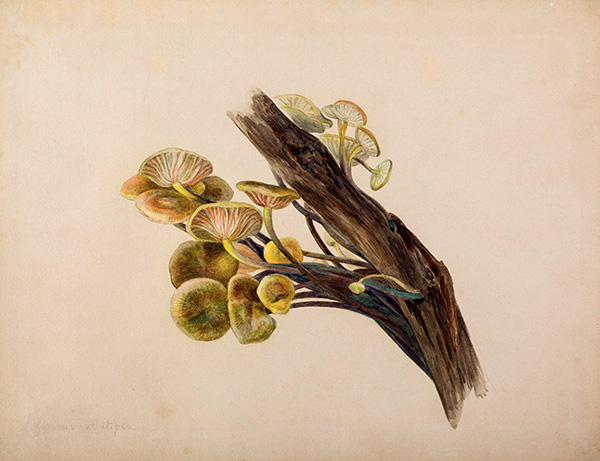
There was more to Beatrix Potter than Flopsy, Mopsy, and Cottontail. Her meticulous drawings of flora and fauna made serious contributions to the science of the day.

Maria Popova at Brain Pickings shares Potter’s mushroom drawings and more.

“At a time when women had no right to vote and virtually no access to higher education, very rarely owned property and were themselves considered the property of their husbands, Potter became a commercially successful writer and artist, using the royalties from her books to purchase her famed Hill Top Farm, where she lived simply and with great love for the land for the remaining four decades of her life. …

“Linda Lear’s altogether magnificent Beatrix Potter: A Life in Nature (public library) — [is] by far the best book on Potter and one of the finest biographies ever written, Lear’s prose itself a supreme work of art.

“A formal scientific education was virtually inaccessible to women, except for the rare Ada Lovelace or Maria Mitchell, and membership in scientific societies was strictly reserved for men. But Potter’s scientific work was exceptional in that she deliberately tried to penetrate the very institutions that dismissed women’s scientific labor solely on the basis of gender. …

“By her early twenties, Potter had developed a keen interest in mycology and began producing incredibly beautiful drawings of fungi, collecting mushroom specimens herself and mounting them for careful observation under the microscope. … Lear writes:

Beatrix’s interest in drawing and painting mushrooms, or fungi, began as a passion for painting beautiful specimens wherever she found them. She never saw art and science as mutually exclusive activities, but recorded what she saw in nature primarily to evoke an aesthetic response. She was drawn to fungi first by their ephemeral fairy qualities and then by the variety of their shape and colour and the challenge they posed to watercolour techniques. Unlike insects or shells or even fossils, fungi also guaranteed an autumn foray into fields and forests, where she could go in her pony cart without being encumbered by family or heavy equipment.

More here.

Art: Beatrix Potter
Flammulina velutipes (Armitt Museum and Library)

Read Full Post »

A young man I know on the train was interviewed on a National Public Radio program about his unusual brain and what scientists are learning from it.

Jonathan was born without a cerebellum. His father, Richard, who also used to take the train, told me how he worked with Jonathan from his earliest days to prove the doctors wrong about what he would be able to do in life.

Jon Hamilton writes at NPR, “Since his birth 33 years ago, Jonathan Keleher has been living without a cerebellum, a structure that usually contains about half the brain’s neurons. This exceedingly rare condition has left Jonathan with a distinctive way of speaking and a walk that is slightly awkward. He also lacks the balance to ride a bicycle.

“But all that hasn’t kept him from living on his own, holding down an office job [at the Institute for Community Inclusion] and charming pretty much every person he meets. …

“Jonathan is also making an important contribution to neuroscience. By allowing scientists to study him and his brain, he is helping to change some long-held misconceptions about what the cerebellum does. And that, in turn, could help the hundreds of thousands of people whose cerebellums have been damaged by a stroke, infection or disease.

“For decades, the cerebellum has been the ‘Rodney Dangerfield of the brain,’ says Dr. Jeremy Schmahmann, a professor of neurology at Harvard and Massachusetts General Hospital. It gets no respect because most scientists only know about its role in balance and fine motor control. …

“Research on Jonathan and people like him supports the idea that the cerebellum really has just one job: It takes clumsy actions or functions and makes them more refined. ‘It doesn’t make things. It makes things better,’ Schmahmann says.

“That’s pretty straightforward when it comes to movement. The brain’s motor cortex tells your legs to start walking. The cerebellum keeps your stride smooth and steady and balanced.

” ‘What we now understand is what that cerebellum is doing to movement, it’s also doing to intellect and personality and emotional processing,’ Schmahmann says.

“Unless you don’t have a cerebellum. Then, Schmahmann says, a person’s thinking and emotions can become as clumsy as their movements. …

“His sister, Sarah Napoline, [says] her brother is a great listener, but isn’t introspective. …

“Jonathan also needed to be taught a lot of things that people with a cerebellum learn automatically, Sarah says: how to speak clearly, how to behave in social situations and how to show emotion.

“Yet Jonathan is now able to do all of those things. He’s done it by training other areas of his brain to do the jobs usually done by the cerebellum, Schmahmann says.

“It’s taken decades, Richard says. He adds that it couldn’t have happened at all if his son were less resilient and determined.”

Read more at NPR, here.

Photo: Ellen Webber for NPR
Jonathan Keleher is one of a handful of people who have lived their entire lives without a cerebellum.

Read Full Post »

Douglas Quenqua recently wrote in the NY Times about a study with rats that could someday lead to aids for the blind.

“Blind rats with a sensor and compass attached to their brains were able to navigate a maze as successfully as sighted rats, researchers found.

“Researchers at the University of Tokyo wanted to test whether a mammal could use allocentric sense — the awareness of one’s body relative to its environment — to replace vision. The scientists attached a geomagnetic sensor and digital compass to the visual cortices of rats with their eyes sewn shut.

“When the rats moved their heads, the sensors generated electrical impulses to tell them which direction they were facing. The rats were then trained to find pellets in various mazes.

“Within a few days, the blind rats were able to navigate the mazes as well as rats that could see. The two groups of rodents relied on similar navigation strategies. The findings, published in the journal Current Biology, could help lead to devices that help blind people independently navigate their surroundings.

“ ‘The most plausible application is to attach a geomagnetic sensor to a cane so that the blind can know the direction via tactile signals such as vibration,’ Yuji Ikegaya, a pharmacologist and co-author of the study, wrote in an email.” More here.

I couldn’t find a picture of three rats together although there were lots of drawings of three blind mice. I started thinking, Do children even know nursery rhymes anymore? I wonder what they would make of Jack, for example, who fell down “and broke his crown” and “went to bed to mend his head with vinegar and brown paper.” I know a couple kids who would have a lot of questions about that medical treatment.

Perhaps we should make a concerted effort to teach these rhymes before they are lost completely. After all, they are part of our culture, one of our many cultures.

Photo: redorbit

Read Full Post »

Over at TreeHugger, Kimberley Mok has a post on an Italian filmmaker’s study of breathtakingly beautiful marine life.

“The ocean is a mysterious place,” she writes, “full of wondrous creatures and hidden delights, waiting to be discovered. The very nature of this massive body of fluid is primordial and seen as a symbol of the subconscious in many cultures. Italian filmmaker Sandro Bocci, also known as Bolidesottomarino, recently released a sneak peak at a ‘non-verbal’ film he’s working on, titled ‘Porgrave.’ Showing captivating scenes of vibrantly coloured underwater organisms, it’s a close-up look at a ‘microworld’ that many of us never get to see — or may never get to see, if ocean acidification, pollution and habitat loss continues at today’s alarming rate.

“According to Bocci’s website, Julia Set Collection, the film is influenced by thinkers like Alan Moore, Jan Hanlo, Don DeLillo, Kurt Vonnegut, Alfred Van Vogt, and is

an experimental film orbiting scientific and philosophical reflections on time and space, and that through various shooting techniques, fields of magnification, and an exciting soundtrack, weaves a web between science and magic.”

Please click here. The photos are extraordinary.

Photo: Sandro Bocci

Read Full Post »

I read Maria Popova’s review of this children’s book on the universe a while ago and have been thinking about it ever since.

She writes, “There’s something at once incredibly empowering and incredibly humbling in knowing that the flame in your fireplace came from the sun.

“That’s precisely the kind of cosmic awe environmental writer Elin Kelsey and Toronto-based Korean artist Soyeon Kim seek to inspire in kids in You Are Stardust (public library) — an exquisite picture-book that instills that profound sense of connection with the natural world. Underpinning the narrative is a bold sense of optimism …

“Kim’s breathtaking dioramas … mix tactile physical materials with fine drawing techniques and digital compositing to illuminate the relentlessly wondrous realities of our intertwined existence: The water in your sink once quenched the thirst of dinosaurs; with every sneeze, wind blasts out of your nose faster than a cheetah’s sprint; the electricity that powers every thought in your brain is stronger than lightning.

“But rather than dry science trivia, the message is carried on the wings of poetic admiration for these intricate relationships:

“Be still. Listen.
“Like you, the earth breathes.” More here.

Popova adds these thoughts from particle physicist and cosmologist Lawrence Krauss:

Atoms come in different types called elements. Hydrogen, oxygen and carbon are three of the most important elements in your body. … How did those elements get into our bodies? The only way they could have got there, to make up all the material on our Earth, is if some of those stars exploded a long time ago, spewing all the elements from their cores into space. … So, most of the atoms that now make up your body were created inside stars! The atoms in your left hand might have come from a different star from those in your right hand. You are really a child of the stars.

Art: Soyeon Kim
From the children’s book You Are Stardust

Read Full Post »

The New York Times Science section had a cute piece in January about surprising friendships among different species of animals. Perhaps you saw it.

Erica Goode reported, “Videos of unlikely animal pairs romping or snuggling have become so common that they are piquing the interest of some scientists, who say they invite more systematic study. Among other things, researchers say, the alliances could add to an understanding of how species communicate, what propels certain animals to connect across species lines and the degree to which some animals can adopt the behaviors of other species.

” ‘There’s no question that studying these relationships can give you some insight into the factors that go into normal relationships,’ said Gordon Burghardt, a professor in the departments of psychology and ecology and evolutionary biology at the University of Tennessee, who added that one video he liked to show students was of a small and persistent tortoise tussling over a ball with a Jack Russell terrier. …

“Until recently, any suggestion that interspecies relationships might be based simply on companionship would probably have been met with derision, dismissed as Pixar-like anthropomorphism. That has changed as research has gradually eroded some boundaries between homo sapiens and other animals. Other species, it turns out, share abilities once considered exclusive to humans, including some emotions, tool use, counting, certain aspects of language and even a moral sense. …

Barbara J. King, an anthropologist at the College of William and Mary, said that she hoped researchers would begin to collect examples of cross-species interactions to build a database that would merit scientific scrutiny. ‘I think we’re not even at the point of being able to extract patterns because the database is so small,’ she said, adding that the topic could also benefit from a rigorous definition of what constitutes a ‘friendship’ between members of different species.” More here.

Photo: Noah’s Ark Animal Sanctuary by way of Africa Geographic.

Read Full Post »

As an icebreaker at lunch Monday, a colleague asked us all to go around the table and name a New Year’s resolution. I said I was going to emulate the phone-reading guy in the comic who tells his friend, “Yes, I just got a text, but I think there’s also a subtext.”

I meant that I want to go beneath the surface of things, to listen to what people are really saying. You know how you can sharpen your skills in that department? Read fiction.

That’s according to an Emory University study written up at MicGabe Bergado has the story. “It’s not news that reading has countless benefits: Poetry stimulates parts of the brain linked to memory and sparks self-reflection … But readers of fiction? They’re a special breed.

“The study: A 2013 Emory University study looked at the brains of fiction readers. [Neuroscientist Gregory Berns and coauthors] compared the brains of people after they read to the brains of people who didn’t read. The brains of the readers — they read Robert Harris’ Pompeii over a nine-day period at night — showed more activity in certain areas than those who didn’t read.

“Specifically, researchers found heightened connectivity in the left temporal cortex, part of the brain typically associated with understanding language. The researchers also found increased connectivity in the central sulcus of the brain, the primary sensory region, which helps the brain visualize movement. When you visualize yourself scoring a touchdown while playing football, you can actually somewhat feel yourself in the action. A similar process happens when you envision yourself as a character in a book: You can take on the emotions they are feeling. …

“Need more proof? Psychologists David Comer Kidd and Emanuele Castano at the New School for Social Research focused on the effect of literary fiction, rather than popular fiction, on readers.  For the experiment, participants either read a piece of literary fiction or popular fiction, followed by identifying facial emotions solely through the eyes. Those who read literary fiction scored consistently higher, by about 10%.

” ‘We believe that one critical difference between lit and pop fiction is the extent to which the characters are complex, ambiguous, difficult to get to know, etc. (in other words, human) versus stereotyped, simple,’ Castano wrote to Mic.” More here.

Thank you, Claire, for sending this. You know what I like.

WP_20141231_17_28_21_Pro

Read Full Post »

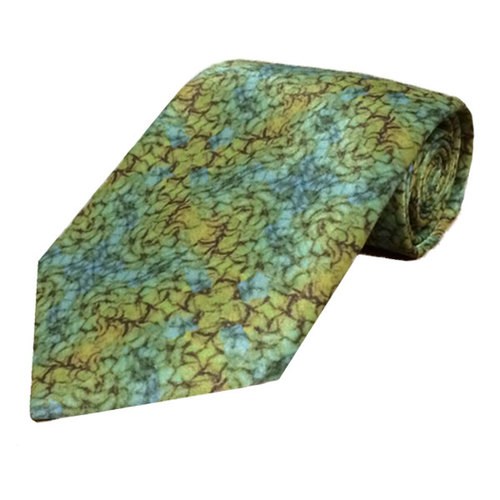
If you are a scientist who wears ties, or if you know one, consider designing your own at Vermont-based Cerebella. Past design ideas have resulted in frog-skin, moon-jellyfish, pollen-tetrad, and obelia (a tiny marine animal) neckties.

At Cerebella’s blog, Lucy Partman wrote on October 13 about how she ended up Chief Curator for the company.

“I grew up in New York City … going to museums— and I mean a lot of museums —especially the Met. … My parents … are designers and own a clothing store in Manhattan so dinner table discussions often involved fabric prints, shirt designs, sizes, quantities, and window displays …

“At LaGuardia High School of Music & Art and Performing Arts … I went from biology to painting, from art history to calculus.

“At Yale, I tried to continue this interdisciplinary education. I majored in both history of art and biology and constantly sought to intertwine these interests, passions. For example, I worked with conservators — who work in a hybrid art studio and science lab — at the Yale Center for British Art to conserve paintings …

“I founded an organization at the Slifka Center called Slifka Arts to provide students the opportunity to curate and exhibit student art. … Shortly after the opening of an exhibit I curated at the Slifka Center called Only in a Woman: Microscopic Images by Harvey Kliman, MD, PhD — which will soon be exhibited at Brown Medical School — Ariele [Faber, Cerebella founder,] contacted me regarding the exhibit and Cerebella. Our conversation has continued ever since.” More here.

Photo: Cerebella
Frog-skin Necktie. Each Cerebella textile pattern is designed by finding inspiration under the microscope.

Read Full Post »

No matter how bad things get in the great world, there will always be someone who starts a quirky, individualistic project just for the love of it, reassuring us all.

In Providence recently, a few folks got together to resurrect an abandoned natural history museum partly to see what an early museum looked like, partly because it was a shame to throw it all out.

In the NY Times, Henry Founatain wrote,  “If museums are meant to preserve objects forever, then forever ended here in 1945.

“That year, Brown University’s natural history museum, which included multitudes of animal skeletons and specimens among its 50,000 items, as well as anthropological curiosities like rope made from human hair, was thrown away.

“It was a sad end to what had been a labor of love for John Whipple Potter Jenks, a Brown alumnus, taxidermist and naturalist who founded the teaching museum in 1871.

“But Jenks had died in 1894 — on the steps of the museum, no less — and what by then was known as the Jenks Museum fell into disarray. It was shuttered in 1915, and the objects were scattered or stored until most of them were hauled, in 92 truckloads, to a nearby dump in 1945.

“But now the Jenks Museum lives again, at least temporarily, in an exhibition that is as much about art as it is about science.

“A group of Brown graduate students, with help from a faculty adviser and a New York artist, has rounded up a few surviving odds and ends, commissioned artists to recreate some of the vanished objects, and installed it all in Rhode Island Hall, the home of the original museum. The exhibition, which also includes a recreation of Jenks’s office as it might have looked in the year of his death, will be on display until spring.” Read more here.

The Lost Museum will be on display in Rhode Island Hall on the Brown University campus, 60 George Street, the Jenks Museum’s original home, through May 2015.

Photo: Mike Cohea/Brown University
The office of John Whipple Potter Jenks, who founded the natural history museum at Brown University, was recreated for an exhibition called Lost Museum.

Read Full Post »

Fireflies are not as ubiquitous as they used to be, and that’s a concern. They are like the canary in the mine. If fireflies go, other species go.

What has caused the decline? Lawn chemicals? Rapid urbanization? Scientists want to know.

NY Times reporter Alan Bllinder writes from Greenville, South Carolina, about a crowdsourced research project to help figure out what’s going on.

“As dusk faded over the home of Jeremy Lyons and his sons on a recent evening here, one ritual of the Southern summer — the soft hiss of a can of mosquito repellent — signaled that the start of another was near.

“And although Raine Lyons, 6, grimaced, coughed and flinched during his dousing with bug spray, he soon stood near a chain-link fence in his backyard and shouted, in speedy succession: ‘Found one! Found one! Found one!’ Mr. Lyons, perched on his knee next to Raine, was almost completely silent as he tapped the screen of his cellphone again and again and again.

“There, on a weeknight in a South Carolina backyard, a father and his son, in their different ways, were counting fireflies. But an evening among fireflies was not merely a modest round of summertime nostalgia; instead, it was part of a multiyear quest by Clemson University researchers to measure the firefly population and investigate whether urbanization, especially here in the fast-growing South, threatens the insects.” Read how they are going about it here.

I hope we can reverse the decline of fireflies. I have so many happy memories of them from my childhood and my children’s childhood.

Photo: Jacob Biba for The New York Times
Raine Lyons counting fireflies alongside his father, Jeremy, in Greenville, S.C., as volunteers in the Vanishing Firefly Project of Clemson University.

Read Full Post »

I’ve put off writing about sprites because I’m not sure I can explain what they are  — powerful upward lightning flashes that send electricity around the earth and were originally going to be photographed by an astronaut on the ill-fated Columbia.

A team of scientists and a few daredevil pilots flew repeatedly into storms to prove the visions were real. The television show Nova covered the quest.

“NARRATOR: On a stormy night, in Denver, a team of scientists takes to the air to investigate a mystery.

“RONALD WILLIAMS (United States Air Force): I reported it, and nobody believed me.

“NARRATOR: They’re trying to catch a burst of energy so fleeting and hard to see that scientists call it by the ethereal name of ‘sprite.’

“EARLE WILLIAMS (Massachusetts Institute of Technology): The bolts that cause sprites are superbolts, the kind of lightning that’ll blow your T.V. sky high. …

“KERRI CAHOY (Massachusetts Institute of Technology): You can see airglow that’s more diffuse and just in layers than the curtain-like aurora.

“NARRATOR: NOVA takes to the air, on a quest to record these elusive events.

“GEOFF MCHARG (United States Air Force Academy): Sprite!

“NARRATOR: And the effort also continues above, from the vantage point of space, where the work had it’s beginning during the ill-fated Columbia mission, with Israeli astronaut Ilon Ramon.

“YOAV YAIR (The Open University of Israel): I asked him, ‘Please bring me one sprite image.’ He said, ‘Don’t worry, I’ll get you a couple.’

“NARRATOR: Ramon’s colleagues now continue where he left off.

“SATOSHI FURUKAWA (Japanese Astronaut): We must take over their work. I thought that was the survivors’ duty.

“NARRATOR: Their dramatic discoveries are revealing that we live on an electrified planet, surrounded by a global circuit that rings the earth. And like a planetary heartbeat, we can now detect it.”

More here.

 Image: Nova

Read Full Post »

My friend Jean Devine is always up to something interesting. A Brown U grad, with an MBA from Simmons, she used to work in investor relations but in recent years has been testing the waters of social entrepreneurship.

Her latest initiative, with Barbara Passero of Sandpiper Creative, is called meadowscaping and is intriguing on many levels.

With access to a Waltham church lawn for a summer youth program, Jean and Barbara will work with kids to convert the yard into a meadow that uses native species from Garden in the Woods and provides a habitat to the bugs and other small creatures that make a healthy environment.

From the Meadowscaping for Biodiversity website: Meadowscaping “is an outdoor, project-based, environmental education program that provides middle school youth with real-world experiences in STEAM learning (Science, Technology, Engineering, Arts and Math), while inspiring and empowering them to address challenges to the environment and our society.

“Today, few children spend time experiencing Nature and the benefits of outdoor recreation, education, and contemplation. Founder and former Director of the Children and Nature Network (C& NN) Richard Louv coined the phrase nature-deficit disorder to describe the negative effects of reduced outdoor time on children’s development. …

“Children who spend little time outdoors may value nature less than children who spend time outdoors in free play. Similarly, children who feel part of something bigger than themselves may … understand their dependence on a clean environment and know that they are responsible for caring for the Earth as their home.” More here.

The idea behind the meadowscaping summer program is that children, both at a young age and as they become adults, can actually do something about the environment.

Remember our post “The Doctor Is In” about the woman who sets up in a Providence park to listen to your worries about global warming (here)? Stop worrying and do something, say the meadowscape entrepreneurs. Give up lawn chemicals, plant a meadow, provide a home for tiny necessary critters, and work to make change.

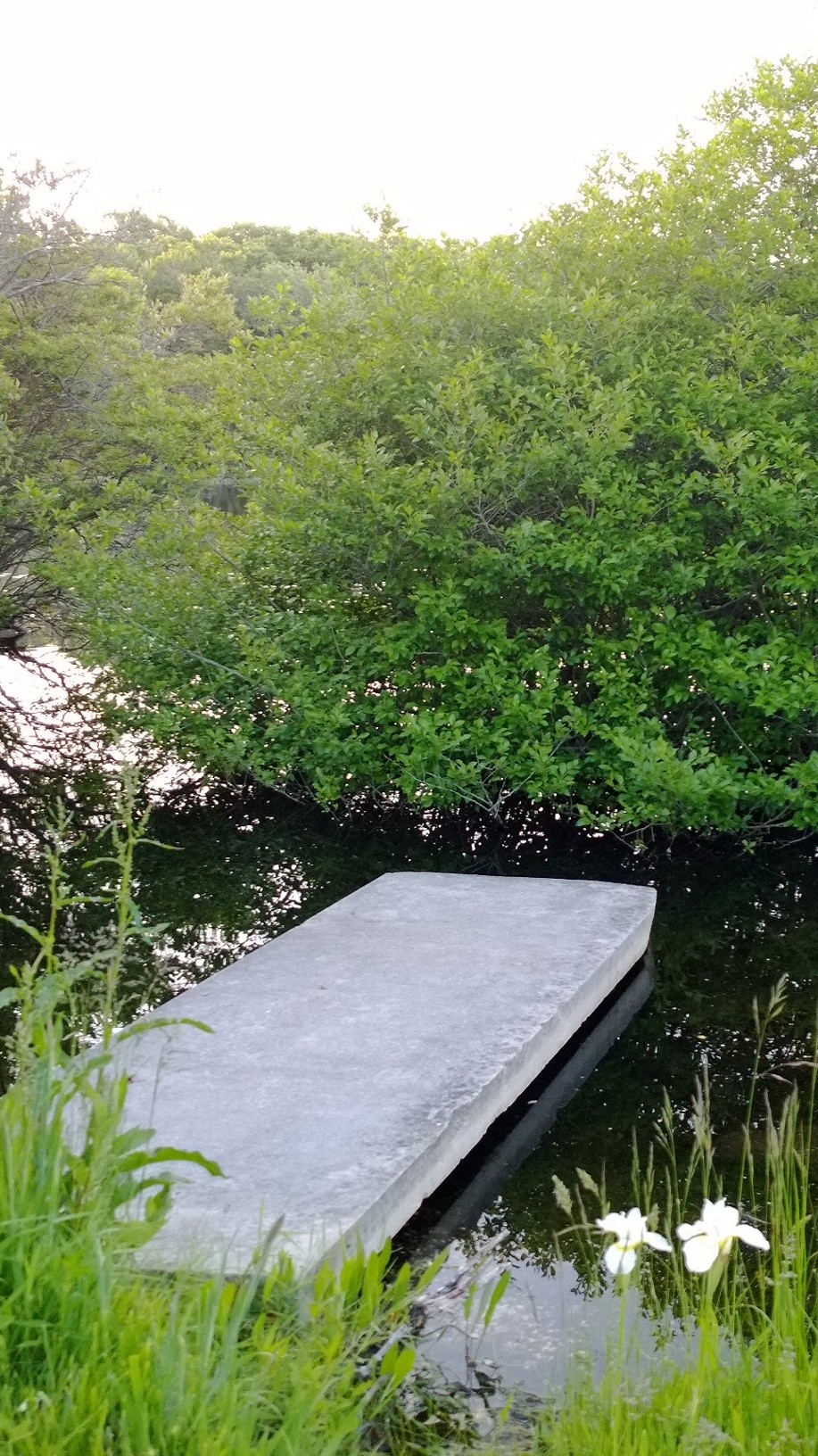
white-iris-in-morning

Read Full Post »

« Newer Posts - Older Posts »