Feeds:
Posts
Comments

Posts Tagged ‘tv’

Photo: CBS.
Topper was a television series based on the 1937 film Topper, which was based on two novels by Thorne Smith. Topper’s house was haunted by the ghosts of the former occupants.

At least as early as Ancient Greek playwrights, thespians have had to find ways to create ghosts onstage — and later, in film. Today’s story for Halloween explains how it can be accomplished.

Margaret Hall writes at Playbill, “Theater has always been good at making the unreal feel like it is in reach. Whether it be transporting an audience across time, space, or even dimension, the suspension of disbelief that theatre inspires is a rife playground for the imagination. Audiences eat up the opportunity to believe in the impossible. …

“That impossible belief has, for centuries, included a glimpse into the afterlife. Be it Hamlet’s ghostly father or the hallucinatory son in Next to Normal, theatermakers love to explore what may be just outside the realm of our awareness. Over the centuries, a whole host of techniques have been developed to demonstrate the concept of ‘spirit’ onstage. …

“Perhaps the most important technical advancement in the art of stage spirits is Pepper’s Ghost, an illusion that has been so successful that it has changed our very conception of what a ghost is supposed to look like.

“Before Pepper’s Ghost, spirits were most commonly portrayed as quasi-corporeal, walking the same floorboards as the living and obeying many of the same rules of physics that govern flesh and blood. After all, how is a ghost supposed to make the haunting sounds of footsteps if their feet never touch the ground?

“Pepper’s Ghost changed all of that. Named for the English scientist John Henry Pepper, who popularized the illusion in the 1800s, the technique is an early example of projection work onstage. … While the Ancient Greeks had to rely on body doubling and shadows to project different forms, Pepper’s Ghost harnessed light. Using a specially arranged room out of view of the audience, a plate of glass would be placed at an angle to reflect the interior of the hidden room out toward the audience.

“While the glass would remain hidden for much of a performance, at key moments the stage lighting would be angled to catch the reflection of a brightly lit actor in the hidden room. The audience would then perceive the hazy projection as a ghostly figure located among the actors on the main stage. Due to the necessary angles needed to make the glass undetectable, it was functionally impossible to make the projected actor appear as though they were standing on the same floor as the actors on the main stage. Instead, a floating ghost was popularized, as was the idea of a ghost fading in and out of visibility (such levels of solid-ness could be adjusted by dimming or brightening the light shone on the hidden actor).

“Pepper’s Ghost immediately became a sensation. Imagine how it must have felt to watch Macbeth swing to strike the ghost of Banquo for the first time, only for his sword to pass through him! … While the technique is now nearly 200 years old, it is still employed across the globe. …

“The principles of Pepper’s Ghost serve as the foundation from which many more digitally based techniques have since developed. The use of reflection, light, and spatial projection are practically the cornerstones for modern stage illusions.

“It’s no secret that projections and LED screens are all the rage on stage these days. Their ability to transform a space with very little transition time is prized, bringing elements of the filmmaker’s toolkit into the theatermaker’s arsenal. While some shows now rely on digital projections (remember Dear Evan Hansen?), many have found a middle ground, blending the digital and the practical to great effect.

“Consider McNeal. … While the dead remain six feet under in the new play, the show does deal with a modern kind of poltergeist: Artificial Intelligence and its impact on the art-making process. McNeal incorporates a number of cutting-edge digital techniques, including deep-fake technology (which digitally alters images and videos of real people), and generative artificial intelligence (which creates images out of written requests).

“At various points in the play, star Robert Downey Jr. is transformed on screens built into the set using deepfakes, appearing at various points to be Ronald Reagan, Winston Churchill, Barry Goldwater, and more. … In McNeal’s climax, director Bartlett Sher strips away the technology, going even further back in theatre illusion history than Pepper’s Ghost to call upon one of the simplest analog tricks: body doubling. After an hour of high concept digital effects, the switch back to practicality is shockingly effective.

“Though digital effects have become more common in recent years, for many ghostly shows, practicality is becoming the hot new trend. After all, when you can’t trust anything you see on a screen, it is easy to yearn for the simplicity of something happening right in front of your eyes. In Les Misérables, the ghostly personages of Fantine and Eponine in the finale are simply played by the original actors draped in white, as are the ghosts of Our Town. …

“While it is important to explore the options new technology can open, it is also key to remember that sometimes, the simplest answer is the smartest.”

More at Playbill, here. Is anyone old enough to remember the ghostly couple (and their ghostly St Bernard) from the 1950s TV show Topper?

Read Full Post »

Photo: Everett Collection.
A de-aged version of actors Tom Hanks and Robin Wright, created by artificial intelligence for the 2024 film Here.

We are well into the age of AI, and I certainly hope that doesn’t mean we’re going to realize the dire warnings of one of its pioneers but just use it in relatively harmless ways.

Today’s story is about using AI to “de-age” actors in a movie covering 60 years.

Benj Edwards writes at Wired, “Here, a $50 million Robert Zemeckis–directed film [used] real-time generative AI face transformation techniques to portray actors Tom Hanks and Robin Wright across a 60-year span, marking one of Hollywood’s first full-length features built around AI-powered visual effects.

“The film adapts a 2014 graphic novel set primarily in a New Jersey living room across multiple time periods. Rather than cast different actors for various ages, the production used AI to modify Hanks’s and Wright’s appearances throughout.

“The de-aging technology comes from Metaphysic, a visual effects company that creates real time face swapping and aging effects. During filming, the crew watched two monitors simultaneously: one showing the actors’ actual appearances and another displaying them at whatever age the scene required.

“Metaphysic developed the facial modification system by training custom machine-learning models on frames of Hanks’ and Wright’s previous films. This included a large dataset of facial movements, skin textures, and appearances under varied lighting conditions and camera angles. …

“Unlike previous aging effects that relied on frame-by-frame manipulation, Metaphysic’s approach generates transformations instantly by analyzing facial landmarks and mapping them to trained age variations. … Traditional visual effects for this level of face modification would reportedly require hundreds of artists and a substantially larger budget closer to standard Marvel movie costs.

“This isn’t the first film that has used AI techniques to de-age actors. ILM’s approach to de-aging Harrison Ford in 2023’s Indiana Jones and the Dial of Destiny used a proprietary system called Flux with infrared cameras to capture facial data during filming, then old images of Ford to de-age him in postproduction. By contrast, Metaphysic’s AI models process transformations without additional hardware and show results during filming. …

“Meanwhile, as we saw with the SAG-AFTRA union strike [in 2023], Hollywood studios and unions continue to hotly debate AI’s role in filmmaking. While the Screen Actors Guild and Writers Guild secured some AI limitations in recent contracts, many industry veterans see the technology as inevitable. …

“Even so, the New York Times says that Metaphysic’s technology has already found use in two other 2024 releases. Furiosa: A Mad Max Saga employed it to re-create deceased actor Richard Carter’s character, while Alien: Romulus brought back Ian Holm’s android character from the 1979 original. Both implementations required estate approval under new California legislation governing AI recreations of performers, often called deepfakes. …

“Robert Downey Jr. recently said in an interview that he would instruct his estate to sue anyone attempting to digitally bring him back from the dead for another film appearance. But even with controversies, Hollywood still seems to find a way to make death-defying (and age-defying) visual feats take place onscreen — especially if there is enough money involved.”

What could go wrong?

The first thing I think of is fewer job opportunities for actors who play younger versions of stars. Still, I’d love to see an AI child version of the actress who plays Astrid in the French crime show of the same name, because I think it would look more natural than the mimicking girl they’ve got. (Awesome tv, by the way. Check it out on PBS Passport.)

More at Wired, here. This story originally appeared on Ars Technica.

Read Full Post »

Image: Cineteca di Bologna as part of Progetto Chaplin.  

We had one of the first televisions because my father was writing a story for Fortune on Dumont. It was a little black & white screen in a huge wooden box.

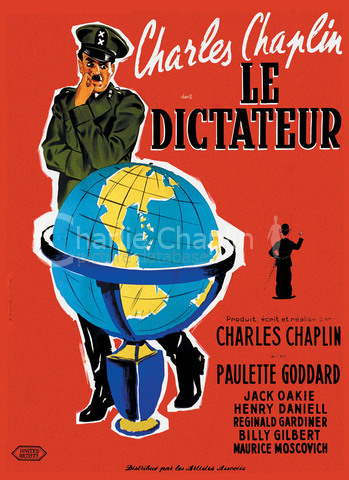
There really wasn’t much on in the beginning. We watched endless silent movies like Charlie Chaplin, and some with sound like The Tons of Fun, featuring big, heavyset guys, or Laurel & Hardy. The Lone Ranger was considered a huge advancement and even in black & white Disney was pure magic. Artist AndreÌ Dugo came over to watch what we were watching because he was writing Tom’s Magic TV.

But that was later.

Today I am remembering those hours of watching silent movies because the radio show the World tells me that silent movies are still being shown.

Theo Merz writes at the World, “On a recent Saturday evening, an audience ranging from teenagers to the retired, gathered at the film institute in Brussels, Belgium, to watch Isn’t Life Wonderful, a 1924 movie by the American director D.W. Griffith.

“It’s one of Griffith’s lesser-known works telling the story of a couple of Polish refugees who fall in love despite the hardships they face in Germany following World War I.

“ ‘We have an amazing collection of silent films in the Cinematek,’ said Christophe Piette, who chooses which films to screen. …

“The Cinematek — the only remaining cinema in the world with a regular schedule of silent films (along with live piano accompaniment) — is thriving.

“ ‘It is a museum, like, you could say; Paris has the Louvre Museum.’ …

“Piette said that around 80% of silent movies have been lost forever — at the time they were being made, the industry just wasn’t very interested in preserving its output. But Piette’s predecessors tasked themselves with collecting every single silent film that remained. Now, the cinematheque has about 10,000 such movies.

“ ‘[The Cinematek] really wanted to share it with the audience and with younger people who are used to younger films — to recent films — and to show them where cinema was coming from. It is our mission.’ …

“The silent film program has been going since the 1980s, and Piette said it’s as popular as ever. But he complained about a lack of funding from the Belgian government, especially given the program’s unique status and the broad audience it attracts.

“Lucas Vienne is 17 years old. He comes to the Cinematek most days and was in the audience for Isn’t Life Wonderful.

“ ‘I started to come here to see very popular movies, the Shining and stuff like that,’ he said. ‘But then, I started to check out films I’d never heard of.’

“Now, Vienne said that he doesn’t see much difference between silent films and more recent movies — for him, it’s all cinema. ‘I’m also interested in the history of cinema — so, coming back to silent film, it’s interesting to see how film evolved.’

“For the price of a ticket, audiences not only get to see a movie  — they also get a live concert.

“Hughes Marachel is one of a roster of pianists who accompany every single film. He’s 59 and has been working at the Cinematek part-time for more than three decades.

“Marachel is a professional performer and composer. But when he’s playing there, his main aim is to blend into the background.

“ ‘You are not to be the star,’ he said. ‘The star is the movie. The best compliment you can make to a silent movie pianist is: “Wow, I forgot you were there.” ‘

“Often, pianists are seeing the film for the first time, and everything they play is entirely improvised. ‘You just let the picture on the screen, the movie, impress you, and the impression comes in your body and in your fingers. And you play.’

‘Marachel said that interest in the screenings dipped when film on demand became widely available at home. Now, the movies are picking up again as audiences seek out something different. …

“ ‘For young people, it’s very interesting.’

“Many of the films he accompanies are a hundred years old — if not more. But the Cinematek hopes it’ll still be attracting an audience a hundred years into the future.

More at the World, here.

I looked for a bit more on Hughes Maréchal.

The website Screen Composers says, “Hughes Marachel composed more than 80 film original soundtracks, with inspiration reflecting his interest and passion for a large spectrum of music. His long experience as a silent movie pianist allows him to quickly adapt to and grasp a film’s rhythm and emotional intensity.

“He can also rely on his extended experience with multiple instruments and time as a studio musician.

“With a vivid interest in acoustic music, he enjoys the hypnotic power of atmospheric music, the lyricism and poetry that music can convey. Since the beginning of his career, Hughes has always viewed the job as a dialogue between the musician and the director (as well as the movie editor and sound engineer and designer) working together to serve the film. Music only has meaning if it brings an additional dimension to the visual one.”

Read Full Post »

Photo: Political Blind Date
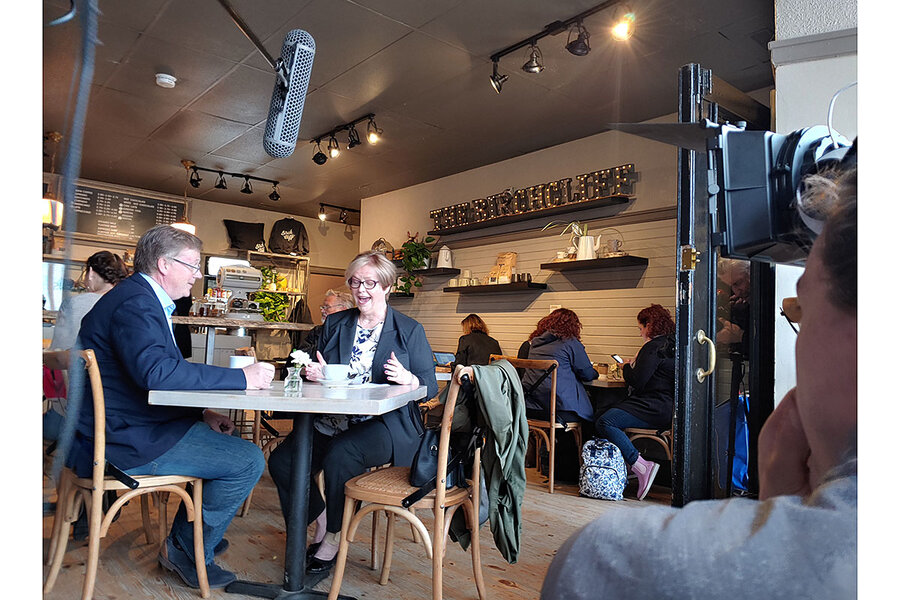
Toronto City Councilors Gary Crawford and Shelley Carroll, who hold very different political views, chat in a Toronto coffee shop during an episode of the TV show “Political Blind Date.”

What if each of us tried to reach across the divide? My brave friend Nancy does it in a class at the Council on Aging, where she actually talks politics. I’m not strong enough for that, but I really do work at nurturing the things I have in common with people whose politics are different. There are always things we have in common. After all, if Earth got invaded by hostile space aliens, we’d all be helping each other out without a second thought.

In Canada, they aren’t waiting for space aliens.

Sara Miller Llana writes at the Christian Science Monitor about a popular television show that has participants reaching across the political divide.

“When Gary Crawford confided to Shelley Carroll on TV that he has a daughter with a disability, the mother who raised a daughter diagnosed with autism replied instinctively, ‘Oh, Gary’ – conveying an empathy so obvious in just two words.

“It’s not that the Toronto city councilors didn’t know one another. They’d worked together in City Hall for the better part of a decade. But more often than not, they were dug in on either side of the chamber, battling over city finances.

“So this meeting, at a cozy Toronto coffee shop, was an intentional step away from those fiery legislative sessions, a way to help two rival politicians find common ground in sustaining North America’s fastest-growing city – even if Ms. Shelley envisions new revenue tools while Mr. Crawford dubs himself a ‘keep taxes low kinda guy.’

“Welcome to ‘Political Blind Date.’ The popular Canadian television show might sound like a hokey reality show for the political set. But for its creators, the aim is to undo some of the stubborn binaries that have built up around contentious issues from gun rights to taxation to immigration to climate change.

“Getting beyond the media scrum, the yelling during parliamentary question periods, the sound bites on nightly news, and the callous swipes over social media, producers set the stage for participants to engage one another with the time and respect that complex problems require.

‘Respect is at the heart of it. Not only are politicians, in the way they are using political rhetoric, not respecting each other; they’re disrespecting their citizenry,’ says Mark Johnston, showrunner of ‘Political Blind Date.’ ‘And at the same time, there’s been a disrespect and dehumanization of politicians.’ …

“With the filming of a fifth season underway, about 50 politicians have already participated, spending two days together with each other’s constituents and wrestling with legalization of marijuana, Indigenous rights, and climate change. It’s not easy: In one episode, a politician who supports gun rights visited a Toronto mother whose children were hit by bullets at a playground. 

“The goal is not to get the two politicians to reverse their positions, something that rarely happens. It’s to slow down and study policies in all their complexity, and to hear the human concerns and perspectives that lie behind their support. …

“During the episode on Toronto city finances, which aired in January 2020, Mr. Crawford hands Ms. Carroll a button to put on. Hers is a big yellow disk with an arrow pointing upward, reading ‘High Property Taxes.’ His reads the opposite, the arrow pointing downward next to ‘Low Property Taxes.’ 

“But after the show, he realizes the buttons don’t make as much sense as he originally thought. They both want their constituents to be able to stay in their homes and rely on services their taxes pay for. …

“He says he’s still a ‘low tax kinda guy.’ But the experience opened him up to a conversation he would not have been willing to have before the episode. And both say they talk more than they ever did before. ‘We’re often understaffed, under-resourced, and really stretched for time,’ says Ms. Carroll. ‘We don’t get to know enough about each other’s personal lives. So you don’t know where each other are coming from. 

“ ‘You can have different politics, but it always helps if you can humanize and say, “OK, I get your point of view and it’s different from mine, but I know where you’re coming from, so let’s work on it,” ‘ she says. …

“Anna-Kay Russell, co-founder and director of funding partnerships for the Canadian Black Policy Network, says this kind of connection between two rivals has a trickle-down effect. ‘The “us versus them” mentality not only seeps into the behavior of our politicians, but down into the mindsets of the voters, and it detracts from the fact that we’re a nation that needs to and should be operating as one, collectively,’ she says. …

“The show has averaged about 195,000 viewers per episode, a solid number for a small network like TVO, says [John Ferri, an executive of TVO, the television network that airs the show,] and it has been optioned to the United Kingdom, France, Israel, and South Africa. The show’s creators are also shopping it to the United States, given all the divisions that have grown amid the pandemic. …

“[Johnston] sees potential even in the explosive political environment of the U.S. ‘It’s easy to sit behind a Twitter account or stand up in a legislature,’ he says. ‘But if you agree to go on a journey with another human being, I just think in general people are going to listen to each other.’ ”

More at the Christian Science Monitor, here.

Read Full Post »

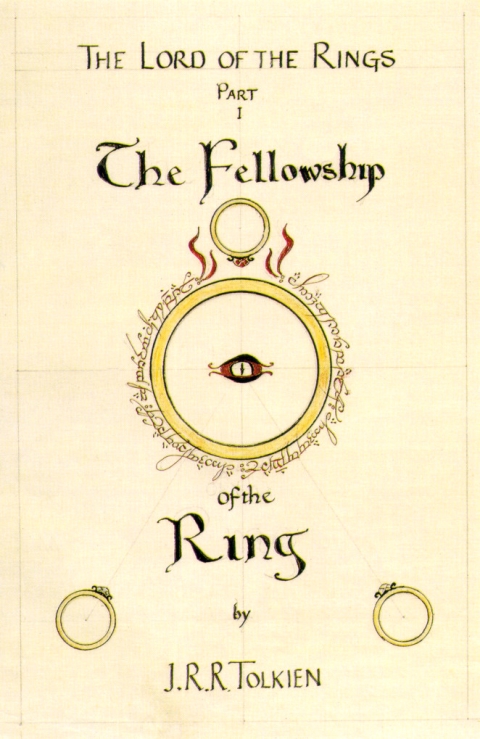
Art: JRR Tolkien.
Photo from the Open Culture website.

Wow. Where were all the artists when this version of The Lord of the Rings was made for television? Were they imprisoned in the Gulag? I think my childhood dream of presenting a production of “Snow White and Rose Red” at the Lafayette Theater would have gone better.

Andrew Roth, reporting for the Guardian from Moscow, has a funny report on the Soviet version of The Lord of the Rings.

“A Soviet television adaptation of The Lord of the Rings thought to have been lost to time was rediscovered and posted on YouTube last week, delighting Russian-language fans of JRR Tolkien.

“The 1991 made-for-TV film, Khraniteli, based on Tolkien’s The Fellowship of the Ring, is the only adaptation of his Lord of the Rings trilogy believed to have been made in the Soviet Union.

Aired 10 years before the release of the first installment of Peter Jackson’s movie trilogy, the low-budget film appears ripped from another age: the costumes and sets are rudimentary, the special effects are ludicrous, and many of the scenes look more like a theatre production than a feature-length film.

“The score, composed by Andrei Romanov of the rock band Akvarium, also lends a distinctly Soviet ambience to the production, which was reportedly aired just once on television before disappearing into the archives of Leningrad Television. Few knew about its existence until Leningrad Television’s successor, 5TV, abruptly posted the film to YouTube last week [part one | part two], where it has gained more than 800,000 views within several days. …

“Earlier adaptations and even translations of Tolkien’s work in the Soviet Union were hard to come by, with some convinced that the story of an alliance of men, elves and dwarves fighting a totalitarian eastern power had been blocked by the censor.

“But another suggestion for the sparsity of translations was that Tolkien’s intricate plot and linguistic invention made it difficult to translate into Russian without either adulterating the original or leaving Soviet audiences without any idea of what was happening.

“Nonetheless, the schlocky adaptation appeared to scratch a nostalgic itch for many who watched it.

“ ‘It is as absurd and monstrous as it is divine and magnificent. The opening song is especially lovely. Thanks to the one who found this rarity,’ wrote another. In the opening song, Romanov sings a rough translation of Tolkien’s description of the origins of the rings of power, of which three are given to the elves, seven to the dwarves, and nine to mortal men, doomed to die.

“The Soviet version includes some plot elements left out of Jackson’s $93m blockbuster, including an appearance by the character Tom Bombadil. …

“In 1985, Leningrad Television aired its first version of Tolkien’s work, a low-budget adaptation of The Hobbit featuring ballet dancers from what is now the Mariinsky theatre and a moustachioed narrator standing in for Tolkien. The abridged production, titled The Fantastic Journey of Mister Bilbo Baggins, the Hobbit, skips over the trolls and elves in an hour-long romp that was long believed to be the only finished Tolkien adaptation produced during the Soviet Union. …

“Jackson’s adaptation of the trilogy was a hit in Russia. Many young Russians watched a version dubbed by the translator Dmitry Puchkov under the pseudonym Goblin, which was notable for its expletive-laden reinterpretation of the text. In that version, Frodo is called Fyodor Mikhailovich, Legolas has a pronounced Baltic accent, and Aragorn yells, ‘Whoever doesn’t hit [an orc] is an ass,’ as his archers let their arrows fly during the defense of Helm’s Deep.”

More at the Guardian, here.

Read Full Post »

Photo: Rosa Furneaux
Haroon Ebrat reaches for his notepad, where he has written down audience requests. The entrepreneurial immigrant runs Afghan Theatre TV, a Farsi-language variety show, out of his garage in suburban California.

I’m impressed how this immigrant from Afghanistan took it on himself to keep his culture alive by broadcasting a variety show from his garage. Many viewers have responded with gratitude.

Jeremy Lybarger writes at Pacific Standard, “Afghan Theatre TV operates out of a soundproof garage 40 miles east of San Francisco. … It’s an unexpected setting for a studio whose Farsi-language variety shows stream online 24 hours a day to more than a million viewers a month, according to the station. But much about Afghan Theatre TV is unexpected, starting with its credo that politics and show business don’t mix. …

” ‘We entertain,’ says Haroon Ebrat, the network’s 66-year-old founding impresario and star. On most afternoons for the last six years, he’s shuffled out to his garage in house slippers to host the live call-in shows that have made him famous, or at least recognizable to the Muslims who mob him, groupie-like, in restaurants, supermarkets, and parking lots across the Bay Area. The calls — 500 an hour, Ebrat says — come from all over: Canada, Germany, Russia, Australia, and many of the dozens of other countries that make up the Afghan diaspora. …

“Afghanistan has been in a quasi-permanent state of war for over three decades, historically exporting more refugees per year than any nation besides Syria. Most Afghans decamp to neighboring Iran or Pakistan, but approximately 124,000 live in America. …

” ‘He has preserved the culture of Afghanistan,’ says Ebrat’s 36-year-old daughter Shabnam, who hosts a call-in show of her own, often accompanied by a local psychic who counsels callers about work and love. Such preservation has come at a cost, both literal and cultural.

“Afghan Theatre TV is a family business, as are many of the more than 3,000 ethnic media outlets. … In between these segments of original programming, the station airs Afghan music videos and concert footage, and on some nights local musicians perform traditional songs like a live house band (hence the soundproofing). Ebrat, a prolific filmmaker, also screens the movies he’s made, which are ultra-low-budget mash-ups of comedy, action, and music starring him and his family.

“The station boasts a handful of Bay Area advertisers — kebab shops, halal supermarkets, Muslim-owned tax services — but Ebrat relies on his children to keep the lights on. (Shabnam is a real estate agent; [older brother] Burhan works with cars.) …

“Ethnic media, produced by and for immigrants, faces unique challenges. The relatively small niche audiences, for example, can discourage advertisers. … Even large outlets struggle to survive. Channel 18, a multilingual network that broadcast out of Los Angeles for more than 40 years, filed for bankruptcy in 2012 before finally shuttering its international format in 2017. …

“Part [the] experience includes reckoning with cultural disagreements within the same family. Shabnam Ebrat has become a target for older or more traditional Muslims who see her appearance — dyed-blond hair and make-up — as an affront to God. She doesn’t wear a hijab either. On Instagram, where her selfies reach about 23,000 followers, commenters debate whether or not she’s going to hell for posing in miniskirts and bikinis. …

“There’s the added stigma of being outspoken in a society that, to many Western onlookers, muzzles women. In Afghanistan, some women have no public identity of their own. They’re referred to simply as the wife of, daughter of, or sister of. …

“Overall, though, politics are absent from Afghan Theatre TV, where the maxim is that entertainment brings people together and politics drive a wedge. Haroon is more interested in the zombie horror movie he has in production than he is in discussing the White House. His only stated political aspiration, however vague, is to restore peace in Afghanistan.” More.

Seems like a good idea to stick to entertainment. One thing I’ve noticed while working with Afghan refugees, whether their first language is Farsi or Dari, is that individuals are, well, individualistic. Like groups everywhere, Afghans may have attitudes that diverge a good bit.

Read Full Post »

In Tanzania, women farmers appearing on a TV show called in English “Female Food Heroes” are bringing attention to the importance of their work and the barriers to expansion.

Oxfam America reporter Coco McCabe writes about contestant Edna Kiogwe, “She grew up in a farming family and knows well the hurdles they face, especially women farmers who, in her country, own only a small fraction of the land. …

“It’s that inequality — and the lost opportunities buried beneath it — to which Kiogwe and 14 other women farmers helped to bring attention this year as contestants in the fifth season of a highly popular reality TV show shot in Tanzania and aired across East Africa. Called Mama ‘Shujaa wa Chakula ,’ or ‘Female Food Heroes,’ the Oxfam-sponsored show celebrates the vital contributions women farmers make in feeding the planet, and highlights the challenges many encounter on a daily basis, including limited access to land, credit, and training opportunities. …

“In the village of Kisanga, where ‘Mama Shujaa wa Chakula’ was filmed [in 2015], the 15 contestants learned a great deal about the struggles local farmers face in feeding their families. Each of the women stayed with a village family for the duration of the three-week shoot, and daily contests included designing tools that could be useful to Kisanga farmers, interviewing them about their agricultural challenges, and putting together skits to help bring attention to those hurdles. …

“Kiogwe [now] spends most of her time in Dar es Salaam, a coastal city about a two-and-a-half hour drive away, where she lives and works as a civil servant. But her city life belies her village roots — and her keen interest in farming. Unlike most women in Tanzania, Kiogwe owns her own land, given to her by her forward-thinking father on her wedding day. She harvests corn, cassava, rice, and sugar cane, carefully aligning her 28 days of annual leave from her city job with peak work times on her small farm in the Morogoro region. …

“ ‘I want to make agriculture like a business,’ says Kiogwe. … With a little effort, greater value can be added to the fruits farmers grow, for instance.

“ ‘Change it from fruit to juice, we can sell it … We can add value to maize — maize flour for porridge — and you can have a good label and good packaging and compete with international businesses. That is my dream.’ ” More here.

According to OXFAMCloseup, the nonprofit’s quarterly magazine, the episodes shot in Kisanga, Tanzania, aired in five countries and had 14 million people tune in. The magazine adds, “Versions of the program are now being produced in Ethiopia and Nigeria, and some finalists have become involved in local, national, and even global farmer advocacy.”

Photo: Coco McCabe / Oxfam America
Edna Kiogwe helps her host family with the morning chores in Kisanga, where the TV show “Female Food Heroes” was filmed in 2015.

Read Full Post »

When I was growing up in Rockland County, New York, my parents liked to buy art from artist friends and, when possible, offer other kinds of support. They hired the Hungarian-American artist André Dugo, for example, to paint a portrait of my brother Bo and me sitting in an armchair and reading one of the artist’s children’s books. We often read his book Pete the Crow or the books featuring a cardinal and a blue jay, or the one about the calf that ate the wrong kind of grass and puffed up like a balloon.

One day, Mr. Dugo came to our house to watch television with us. (We had one of the first TVs because my father was writing a story on Dumont for Fortune magazine.) We kept asking Mr. Dugo what he would like to see, and he kept saying he just wanted to see whatever we ordinarily watched.

As we worked our way through several programs, Mr. Dugo noted our reactions, sometimes asking questions.

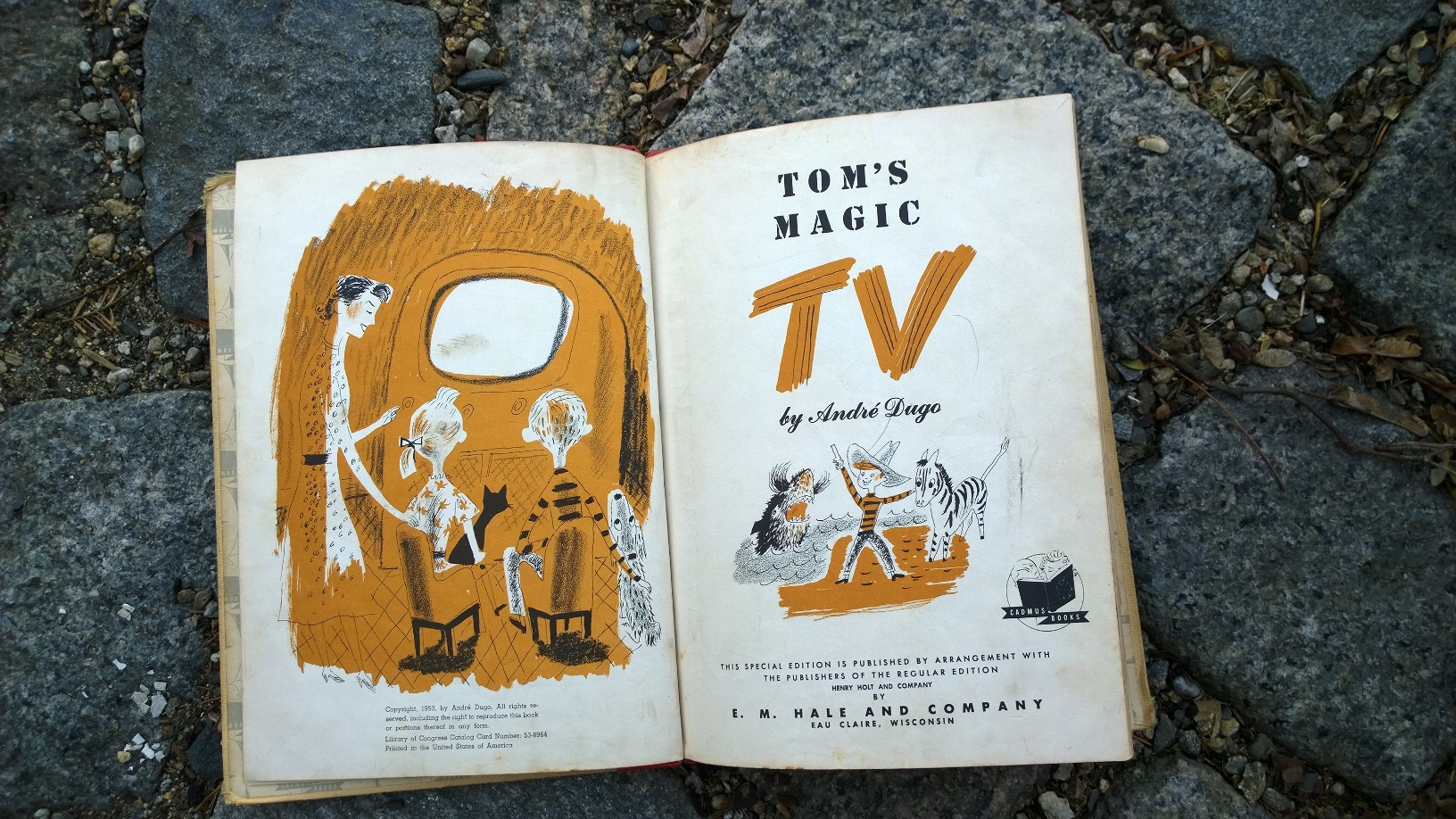
Not many months after, a children’s book came out. It was called Tom’s Magic TV, and its premise was that a boy traveled through the TV screen and into adventures with sharks, circus clowns, puppets, cowboys and spacemen. Bo and I were not mentioned. The mother didn’t look like my mother. This was an early exposure to children’s-literature research — or poetic license.

I’m pretty sure that Gene Autry was the model for the cowboy adventure.

030916-Toms-Magic-TV-Dugo

Read Full Post »

Even if, like me, you never got into the TV show “The Wire,” you may know that it was about a troubled section of Baltimore. You also may be interested in a new school there, intended to serve as a real community gathering place.

New York Times design critic Michael Kimmelman has the story.

“In many ways, public schools are gated communities, dead zones,” writes Kimmelman. “They’re shuttered after dark and during the summer, open to parents and students while in session but not to the larger community.

“A new public school in one of the poorest neighborhoods in East Baltimore wants to challenge the blueprint. Designed by Rob Rogers, of Rogers Partners in New York, Henderson-Hopkins, as it’s called, aspires to be a campus for the whole area — with a community center, library, auditorium and gym — as well as a hub for economic renewal.

“This is the neighborhood where parts of ‘The Wire’ were filmed. In 2000, when the city’s mayor convened local business leaders, the vacancy rate was 70 percent. Poverty was twice the city average. Crime, infant mortality and unemployment were all through the roof.

“The idea that emerged — of making the school the centerpiece of a major redevelopment project — is a grand urban experiment. Operated by Johns Hopkins University in collaboration with Morgan State University, the school, which opened in January, belongs to a $1.8 billion plan that also includes new science and technology buildings, a park, retail development and mixed-income housing. While gentrification might threaten to displace the poor, the school is to be the glue that helps bind the district together.” Read more here.

Photo: Matt Roth for The New York Times
Henderson-Hopkins, which shares its library, gym, auditorium, and other features with the surrounding area, is designed to catalyze change in a blighted section of Baltimore.
 

Read Full Post »

I have always loved theater, and even when I have been in a play and felt stage fright, I have been able to make it work as a springboard for the lines I have to say. But when I have to do a presentation as myself and not a character, I freeze up.

Which is why I keep taking classes in how to give presentations, to no avail. But the class that I took last week may finally help me. And I think the secret of it was that the instructor, though an experienced corporate coach and adviser, is also a practicing actor and playwright.

He was very good at paring down the words participants wanted to use and helping choose the most effective ones. And his ideas about how to make an entrance, how to stand, natural gestures to use, tone of voice, and eye contact seemed to have roots in the stage. Even the freshness of his own presentation to the class seemed the result of having to say the same lines night after night in a show and make them seem new.

Of course, no class is magic, so we have to wait and see how it goes when I do my work presentation in late March. But I am definitely going to try harder to apply what I heard than when I took presentation classes in the past full of jargon, phony jokes, and gimmicks that are supposed to work but don’t seem to have a lot underpinning them.

The teacher was Brandt Johnson. See the actor here. See the corporate consultant here. Another one of these people who lead several lives simultaneously.

Read Full Post »