Feeds:
Posts
Comments

Posts Tagged ‘uk’

The last time I checked into the always intriguing website This Is Colossal, I followed a link to My Modern Met, where Katie Hosmer writes about a trampoline that people are bouncing on in the Llechwedd slate caverns of Wales.

“This underground labyrinth of netting is a giant trampoline playground set inside a slate quarry cavern in the Welsh mining town of Blaenau Ffestiniog. Developed by Zip World, Bounce Below [offers] visitors a playful experience deep beneath the surface of the earth.

“The tourist attraction features three giant trampolines suspended across the cave, ranging from 20 feet to 180 feet high. Ten foot net walls prevent people from climbing out, while walkways connect the trampolines, and slides offer an easy way to exit. As visitors jump around, the walls of the surrounding cavern are illuminated with glowing blue, green, pink, and purple lights.

” ‘We got the idea when my business partner saw this done in woods in France but this has never been done in a cavern, this really is a world first in Wales,’ says Sean Taylor, owner of Zip World. ‘It’s a one hour activity where customers get dressed up in a cotton overall and given a helmet; they then jump on a train and travel inside the mountain.’ ”  More crazy pictures at My Modern Met, here.

How do you keep ’em down in the bouncy house after they’ve seen cave trampolining?

Photo: My Modern Met

Read Full Post »

What could be more likely to generate Deep Thoughts than finding 800,000-year-old footprints on the beach? The footprint Robinson Crusoe found may have had more immediate application to his daily life, but this could also stir the imagination.

In case you missed the story, here is  Sudeshna Chowdhury’s version at the Christian Science Monitor.

“The earliest known humans in northern Europe have left evidence of their existence on an English beach, in the form of footprints.

“A team of scientists from the British Museum, Britain’s Natural History Museum, and Queen Mary University of London have discovered a series of 800,000-year-old footprints left by early humans in the ancient estuary muds at the Happisburgh site, an excavation site known for preservation of sediments containing ancient flora and fauna, in Britain’s Norfolk Coast.

“Scientists spotted at least 12 clear footprints, Nick Ashton, a curator at the British Museum, told the Monitor.

” ‘At first we weren’t sure what we were seeing,’ says Dr. Ashton, ‘but as we removed any remaining beach sand and sponged off the seawater, it was clear that the hollows resembled prints, perhaps human footprints, and that we needed to record the surface as quickly as possible before the sea eroded it away.’ ” More here.

I think these footprints call for a poem. Send me one? Even a haiku would be lovely.

Update 2/12/14
We who still know fear
,
Thousands of years on, would keep
Your print from the tide.

Photo:  Martin Bates
Area A at Happisburgh with detail of footprint surface. Scientists discovered a series of 800,000-year-old footprints left by early humans in Norfolk Coast, UK


Read Full Post »

ArtsJournal.com is a great source of leads from around the world, which is why I sometimes come up with stories from far away places like Belarus. The ArtsJournal blog covers art, theater, film, books, dance, music, media — and interesting creativity tidbits from the world of psychology.

Recently a link to the British publication The Stage highlighted a story about UK policymakers taking steps to build the next generation of artists.

Nicola Merrifield writes that the national strategy, Building a Creative Nation, “is calling upon the UK’s 107,000 creative sector employers to each recruit a person aged 16 to 24 by 2016.

“The initiative is designed to ensure that young people are able to gain paid jobs in arts organisations. It will urge employers to join organisations such as the Royal Opera House and Ambassador Theatre Group in signing up to the Fair Access Principle, which encourages responsible recruitment practices.

“As part of the campaign, Creative and Cultural Skills, the sector’s leading body for skills development, will create 5,500 apprenticeships, paid internships and traineeships across the UK by 2016.

“This is part of CC Skills’ £15 million Creative Employment Programme launched earlier this year to combat unpaid internships in the arts sector, which aims to subsidise 6,500 training schemes for people aged 16-24. This scheme, which was financially supported by ACE, has seen employers take on 1,000 unemployed people so far.

“Industry leaders including former Royal Opera House chief executive Tony Hall, ticket provider Live Nation’s international chief operating officer Paul Latham and Dirty Dancing founding co-producer Michael Jacobsen are backing the Building a Creative Nation strategy.

“Pauline Tambling, joint chief executive of CC Skills, said: ‘We’re looking to build upon the work that our supporters have been doing to help young people into work across the creative industries, which has already achieved so much.’ ”

More.

Photo: Tristram Kenton
Laura Evelyn in “Once Upon A Christmas” by Look Left Look Right in Covent Garden Piazza

Read Full Post »

As the New Yorker magazine was wont to label quirky British news items, “There’ll always be an England.”

Today’s tidbit is from the BBC, courtesy of my web-surfing spouse. Will Gompertz writes about the fierce competition to be crowned Cultural City of 2017.

Hull won. There seems to be a bit of bad blood among the losers.

“Hull has been named the UK’s next City of Culture, beating Leicester, Dundee and Swansea Bay to the right to hold the title in 2017. Hull, known for being the home of poet Philip Larkin, the Ferens gallery and the Truck theatre, will follow the 2013 City of Culture, Londonderry.

“The UK government chooses a new destination every four years, with the aim of helping tourism and the economy. Hull council leader Stephen Brady said winning was ‘a real game-changer.’ …

“TV producer Phil Redmond, who chaired the City of Culture panel, said Hull was the unanimous choice because it put forward ‘the most compelling case based on its theme as “a city coming out of the shadows.” ‘ …

“Swansea’s city council said losing to Hull was a ‘bitter disappointment.’ In an apparent swipe at the winners, council leader David Phillips said the residents of Hull ‘had to have something to look forward to.’ He added his team wouldn’t give up, as ‘there were too many good ideas in the bid, we’re not going to let them slip through our fingers.’

“Leicester’s Mayor Peter Soulsby expressed similar sentiments, saying: ‘We don’t need to wait until 2017 to show ourselves off. We are going to do it now.’

“In Dundee, bid director Stuart Murdoch simply said the city was ‘broken-hearted.’

More.

Almost makes you want to visit the losers to make them feel better.

Photo: http://www.bbc.co.uk
The Hull Truck theatre company’s £14.5m new home, 2009.

Read Full Post »

Photo: Getty Popperfoto
L.S. Lowry, (pictured in 1957), the artist from Manchester, is the subject of a major new show at the Tate Britain gallery.

Some years ago when my husband was in England on business, he acquired a print of workers coming and going outside a factory. The original was by L.S. Lowry, whose paintings of industrial Britain turn out to be very popular in the UK.

Popularity, however, is not a ticket to being shown at the Tate Britain. Belatedly, Lowry will receive a retrospective in 2014.

Oliver Wainwright at the Daily Mail writes, “Clouds of smoke belch from forests of chimneys, while armies of spidery figures scuttle to and fro between narrow terrace houses and imposing factory gates.

“Crowds of fans shiver on the edge of a football field, a fist-fight breaks out, and barefoot children tease a stray cat on the street corner.

“These are the scenes depicted in the haunting paintings of L.S. Lowry who, more than any other artist, managed to capture the strange, bleak beauty of daily life in northern industrial towns.

“His dream-like images captured the popular imagination, adorning chocolate boxes and biscuit tins, tea towels and jigsaws.

“Yet they are scarcely to be found on the walls of our major national galleries. The Tate owns 23 of his works, but has only ever exhibited one on its walls in the past 20 years — and then only briefly. …

“Why has it taken so long?

” ‘He’s a victim of his own fan base,’ said Chris Stephens, Tate Britain’s Head of Displays. ‘What makes Lowry so popular is the same thing which stops him being the subject of serious critical attention. What attracts so many is a sort of sentimentality about him.’

“This is a strangely inverted piece of art world logic,” Wainwright comments, “where the popularity of an artist is seen as an obstacle to showing their work.”

If you’re an artist, be careful to stay off “chocolate boxes and biscuit tins, tea towels and jigsaws” — or wait to be discovered by art experts of a future generation.

More here and here.

 © The estate of L.S. Lowry
L.S. Lowry, Coming out of School, 1927

Read Full Post »

March 1 is World Book Day. Who knew?

Alison Flood and Michael Bonnet write about the event in The Guardian: “Celebrated in over 100 countries around the world, World Book Day is the UK’s largest festival of reading and aims to encourage a lifelong love of literature in children. Thousands of schools and nurseries are joining in, with more than 14m book vouchers given out to children, and hundreds of events – from Where’s Wally ‘flash mobs’ to author talks and literary fancy dress competitions – taking place up and down the country.” Read more.

The World Book Day website says this is the event’s 15th year. “It’s a celebration of authors, illustrators, books and (most importantly) it’s a celebration of reading. In fact, it’s the biggest celebration of its kind, designated by UNESCO as a worldwide celebration of books and reading.”


Read Full Post »

There is always something new to learn about Stonehenge, a site shrouded in mystery for centuries.

Rossella Lorenzi writes at Discovery News, “Using noninvasive technologies such as ground-penetrating radar and geophysical imaging, a team from the University of Birmingham’s IBM Visual and Spatial Technology Centre, known as VISTA, and the Ludwig Boltzmann Institute for Archaeological Prospection and Virtual Archaeology in Vienna, discovered evidence of two huge pits positioned on a celestial alignment at Stonehenge. …

” ‘This is the first time we have seen anything quite like this at Stonehenge,’ said project leader Vince Gaffney, an archaeologist from the University of Birmingham. ‘When viewed from the Heel Stone, a rather enigmatic stone which stands just outside the entrance to Stonehenge, the pits effectively mark the rising and setting of the sun at midsummer days.’ ”

Read more here.

On YouTube you can find both boring videos about Stonehenge and funny ones. A comedy routine by Eddie Izzard made me laugh, but it’s a bit too naughty for Suzanne’s Mom’s Blog. You can check out a few of Spinal Tap singing “Stonehenge” in the movie This is Spinal Tap. And here is a great scene about Druids from that movie.

Read Full Post »

It’s amazing how much the arts can help people.

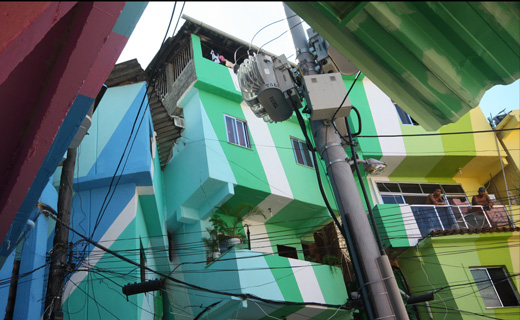
I have blogged about programs that use the arts to turn convicts toward something positive, to build up the self-worth of the homeless, to turn Brazilian slums into more hopeful places. The list goes on.

Recently ArtsJournal.com alerted me to a BBC story on an arts initiative that helps veterans reacclimate to civilian life.

“Many veterans are turning to charities for help. One is using the unlikely weapon of art to help fight the psychological wounds of war, while another organisation is actively encouraging artwork in the army. Outside of the [national health service] the charity Combat Stress is the biggest provider of support to armed forces veterans with conditions such as post-traumatic stress disorder (PTSD), depression and anxiety.

“Art therapy is one of the treatments it uses. Drawing, sculpting and painting are helping patients manage their symptoms with great success.

” ‘Traumatic memories take a different path from our normal memories and tend to be frozen in the body in the central nervous system,’ explains Janice Lobban, who has been a trauma therapist at Combat Stress for the past 10 years. …

“Group sessions typically begin with the therapist giving a one or two word brief to inspire creativity before veterans are given a selection of materials for painting, modelling or writing. After 45 minutes of quick work, the group then get together to talk about and describe what they’ve just created.

” ‘I try to keep a blank mind and just let images and feelings rise out from my unconscious to my hand and things start appearing,’ says Richard Kidgell … who served in the Royal Air Force from 1978 to 1985. ‘What surprises me is that while I’m drawing I don’t know what it is — they’re just images, but by the end of the session I’ve made a complete story. It’s quite enlightening as sometimes I’m not entirely sure what I’ve drawn until I speak to others about it.’ ”

Read more of Genevieve Hassan’s story on arts therapy for veterans here.

Read Full Post »

Remember this post on paper sculptures of dragons and other animals left surreptitiously at libraries in the UK?

Well, I thought you might like this post from WordPress blogger Tokyo Bling. It features paper dragons by Siryu. More pictures here, with explanations for readers who speak Japanese.

And here’s yet another origami artist at work on a dragon.

Read Full Post »

I blogged a while back about a prison arts program that seemed to help some offenders discover a more positive, less antisocial side of themselves. Today I have a similar story, this one from England.

“Allowing prisoners to take part in art [projects] can help cut reoffending rates in half, according to a report commissioned by the Arts Alliance. The group of charities has voiced concern that in tough economic times such projects may be cut.” Nick Higham of the BBC reports in a video clip here.

I admire people who have the faith in human nature to try to reach society’s lost souls with arts or yoga or meditation or any other enrichment.

My second cousin, Alex, went to college in Cambridge, Mass., and did an internship teaching meditation techniques to some serious cases at the Suffolk County jail. She loved it and was inspired to go to graduate school and work with others in trouble.

Her mother tells me her latest internship is with a social services agency an hour and 20 minutes away. “She is managing several extremely challenging cases and spends a lot of time making home visits in dismal housing projects. Her days include fighting for housing for her clients, calling the police when bruised and beaten women answer the door, mediating confrontations between single moms who are managing 3-9 children and school officials who won’t let a child ride the bus due to behavioral issues. Her clients have been victims of domestic and other forms of violence and most have substance abuse issues. Her job is to find resources to rehabilitate troubled families. She is learning fast how to be the ultimate problem solver, confidante and counselor.  Most of all, she is extremely happy and energized by the challenge.”

I am in awe that this tough work makes Alex happy and energized. We are lucky to have people like that on the front lines.


Read Full Post »

« Newer Posts