Feeds:
Posts
Comments

Posts Tagged ‘woodland’

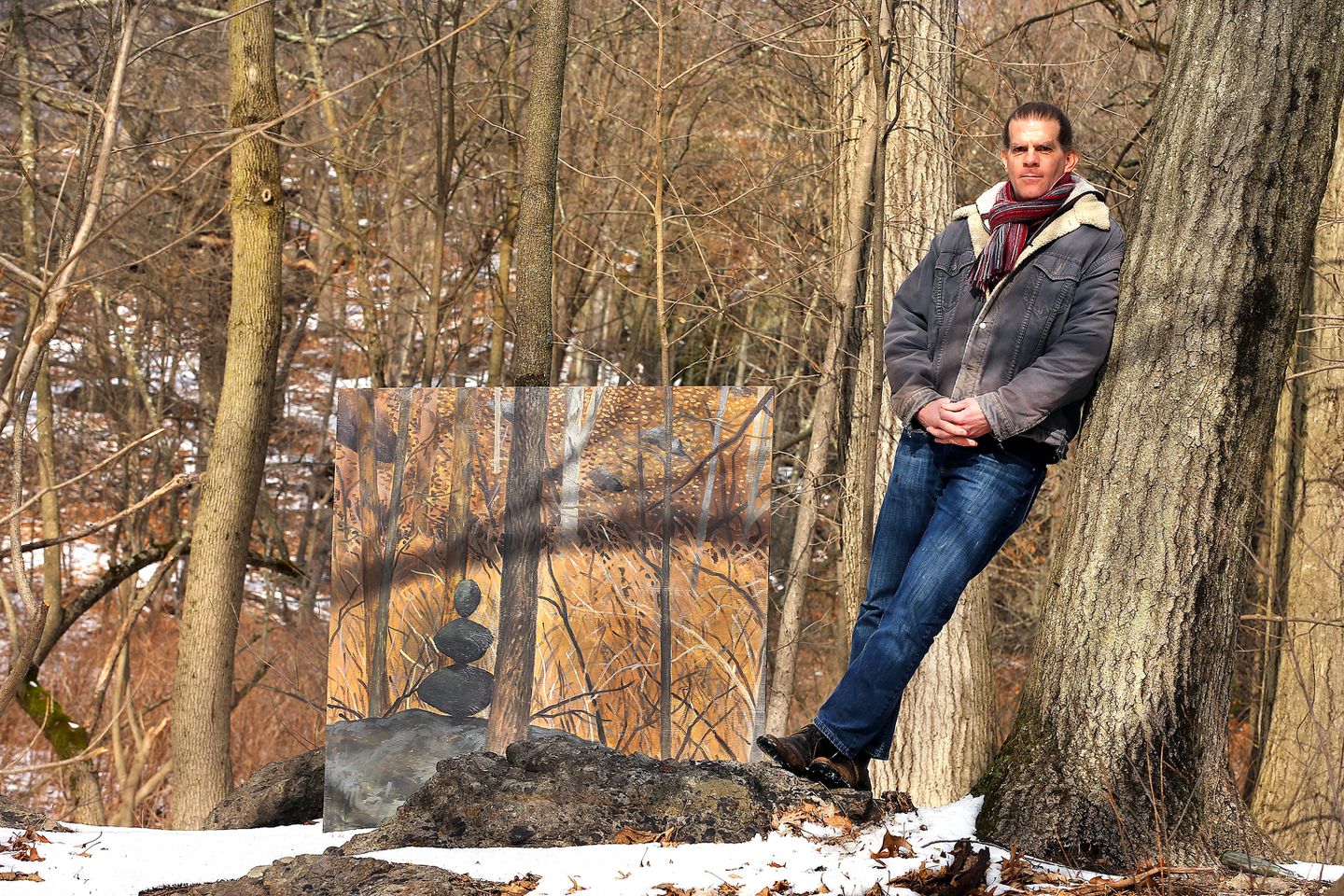
Photo: John Tlumacki/Globe Staff.
Artist and muralist Alex Cook painted two illusion paintings that he placed in Boston’s Franklin Park. The challenge is to keep them from being stolen.

It takes a brave artist to leave work in the woods. Where I live, Umbrella Arts members create art for an annual theme, trusting dog walkers, nature lovers, and connoisseurs to leave the paintings and sculptures in place over a period of months.

In Boston, trompe-l’œil art is appearing in woodland. Steve Annear has the story at the Boston Globe.

“When Jeffrey Jacobs went for a stroll along the trails in Boston’s Franklin Park last month, on a day when winter briefly gave way to spring, he expected to see the usual brown and beige leaves blanketing the ground, bare trees towering overhead, and a smattering of wildlife. But something else caught his attention that day: a clever piece of camouflaged artwork, just off the beaten path.

“The large painting perfectly matched its surroundings, but made it appear as if the trunks of the two trees it leaned against had been partially removed, replaced by a stack of gray stones and a twig wedged between the missing parts as if holding them up.

“ ‘I appreciated the illusion; I thought it was just wonderful,’ said Jacobs, who posted about his discovery on a Facebook page for Jamaica Plain residents. …

“The mysterious mural was one of two paintings recently hidden in a section of the sprawling park known as The Wilderness as part of a project by local artist Alex Cook. …

“ ‘There’s something so magical about coming across something wonderful in the woods,’ said Cook, a muralist by trade whose work is featured prominently on buildings around Boston and beyond. …

“The idea for the project, which he describes as a bit of a ‘treasure hunt,’ came at the beginning of the pandemic, when Cook was temporarily living in New Jersey with his wife’s family.

“After stumbling across a pair of boards from an old ping-pong table in the basement, he was inspired to bring them outside and use them as canvases. …

“ ‘All my projects had evaporated,’ he said. ‘I started making paintings on this thing.’

“Each Monday for several months, Cook would whip up a different mural on the boards, which he leaned against a pair of trees. …

“Some of the last murals he painted in the series were ‘illusion paintings’ that blended in with the natural surroundings and the trees that supported them. They had elements of trickery. …

“The memory of the playful paintings and the joy they brought people recently came back to him. He grabbed a wood panel, packed his art supplies into a bag, and headed out to the trail near his home in Jamaica Plain.

“The result was the first of two, 4-foot-by-4-foot paintings for people to discover on their way through Franklin Park. In a description of the process, which he posted online, Cook said the biggest challenge was reproducing and depicting the natural colors of the backdrop as accurately as possible, so everything lined up.

“ ‘And it’s crazily hard as the light is changing all through the day,’ he wrote. ‘But wicked fun when it works.’ …

“His work has ‘been received so warmly’ by the community, especially on Facebook, where people have marveled at its ingenuity.

“ ‘I appreciate this so much!’ one person wrote beneath a post of his artwork. ‘I walk here every day and finding surprise art is a delight and a treasure.’

“In the category of ‘this is why we can’t have nice things,’ [a painting with] missing trunks was stolen from its spot sometime in the past few days. But Cook is hoping the ‘art bandit’ will return it. …

“ ‘If you find yourself at a party and this painting is on the wall, do us all a favor and bring it right back to Franklin Park.’

“As for the remaining mural, once spring arrives and it no longer matches the landscape, Cook may swap it out for one that fits the season. Later, he’d like to feature his work in a more neutral environment, like an indoor art gallery. For now, he hopes his art continues to bring joy to unsuspecting viewers.

“ ‘I just want people to get a feeling of beauty, of wonder, of mystery,’ he said.”

Cook makes me think of Orson, the youngest of the Easter Egg Artists, who can’t help painting everything he sees. More at the Globe, here.
Read Full Post »

062620-clouds-and-blue-sky

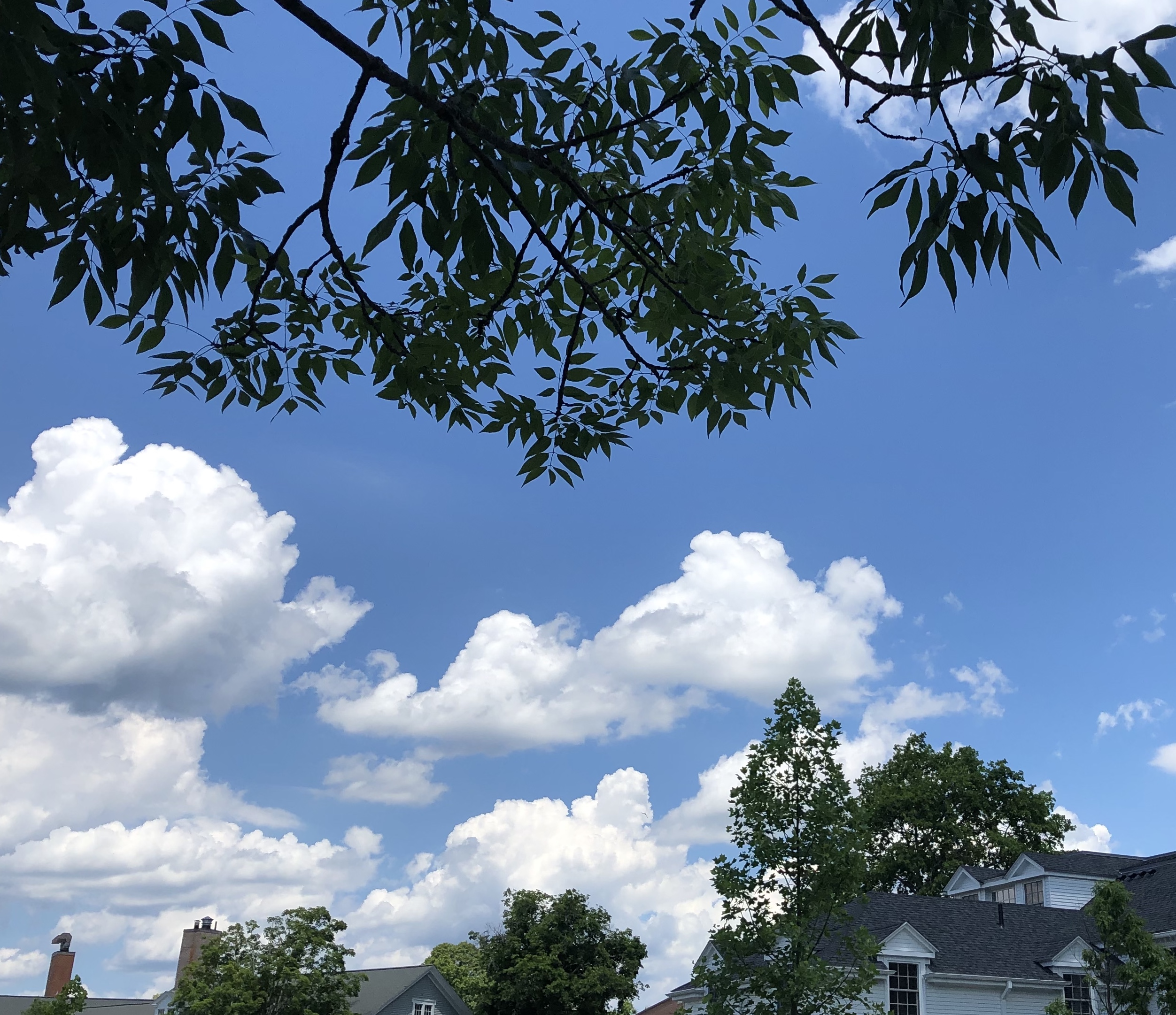
Hello, summer clouds — so beautiful! I was discussing them with my friend Nancy yesterday, and she told me she had signed up some years ago with the UK-based Cloud Appreciation Society, which sends her a daily cloud picture and a few words on cloud science or cloud mythology. Consider joining if you need a daily pick-me-up in quarantine.

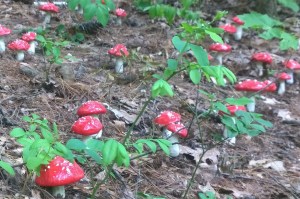
The next two pictures reference my growing appreciation of fungus. Then comes a bright red intruder in the forest, reminding me of the lamppost that Lucy found in the wintry Narnia woodland after emerging from the wardrobe.

The doorknob in the tree made Suzanne think of a handy panic button (I think she is tired of lockdown), but I’m pretty sure it leads into a home. Probably not a hobbit home, since they prefer burrows underground. Maybe it belongs to Owl.

I love the little red squirrels that have started to appear in our region. John thinks global warming may be bringing them up from the south. Clue me in if you know.

The decidedly unscenic bug repellent had been abandoned along the bike trail. I didn’t touch it as I am a Covid germaphobe, but I got a laugh: I’d been slapping mosquitoes for the whole walk.

In the town of Lincoln, yarn stretched between trees caught my eye. A bit further along the conservation trail, there was a helpful explanation.

The tippy old wooden building is next to Orchard House, a childhood home of author Louisa May Alcott. The building was named the School of Philosophy by Louisa’s hippy father Bronson and continues to offer presentations and lectures in normal times. (I put up my photo of Louisa in her coronavirus face mask for yesterday’s post.)

Speaking of adapting to the times, you will note that the Colonial Inn (founded in 1716) has marked off six-foot segments on its brick walk for safe distancing.

The Art Deco frieze on the old Emerson school building welcomes visitors to what is now the Umbrella Center for the Arts.

I don’t think I need to explain the last three. Sometimes readers give me their reactions to one or two pics. I do get a kick out of that — should you feel moved to comment.

Read Full Post »

At first I saw no art. I didn’t enter the woods where the sign was, and I thought, “Maybe I have the wrong time.”

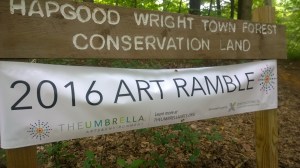
But the Hapgood Wright Town Forest is a work of art in itself, and I was up for a walk. The hilly pine-needle paths, the pond, the sounds of bullfrogs, wind in the trees, unfamiliar bird calls — all lovely. Then bit by bit, I began noticing pieces of art, part of the 2016 Art Ramble, which can be seen in the woods until September 5. How good of artists to do this!

The Umbrella Community Arts Center explains on its website, “This collaborative project with the Concord Department of Natural Resources celebrates all the arts. Sculpture, poetry, dance, and dramatic readings encourage the intersection of art, nature, and community in a historic natural setting.

“The arts offer a doorway for exploring our relationship with nature and place. An exhibit map will guide you through the exhibit at your own pace. And our calendar of special events and activities offers numerous opportunities to engage with the artists and with nature along the trails.

“We invite you to visit often, reflect, and play.  Share your experiences via writing and drawing in the journals provided along the trail.  Or make your own art using natural materials in the forest.”

[Nancy, this sounds like an event you organized last year.]

Curator Ursula Ziegler says, “It’s been a rumble-tumble-fantastic-interesting road, and it has already exposed us to so many interesting-important dialogues, thoughts, and ideas. Beyond the visible part of art works in a public space, there is an equally important but less visible part, which are the conversations, networks, and structures that are created within our local community and beyond.”

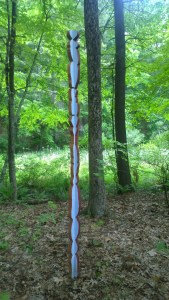
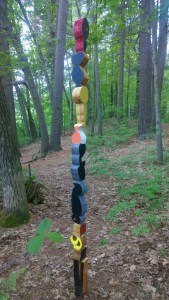
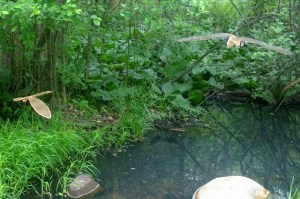
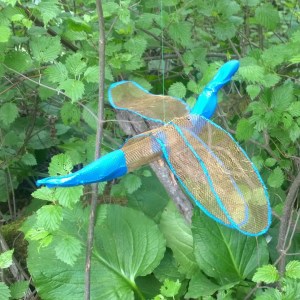
I took some pictures of ceramic toadstools, a QR code I don’t know how to use that would have identified an artist, sapling-like totems (or totem-like saplings), a small sculpture of a boy attached to a tree, fluttery dragonflies and the sign I missed on entering.

060316-toadstools-town-forest-art

060316-QR-code-town-forest-art


060316-art-blends-in-at-town-forest

060316-totem-at-town-forest-art


060316-boy-on-tree-art

060316-dragonflies-town-forest-art


6tag-060316-dragonfly

060316-town-forest-art

Read Full Post »

Back in June, Jane Devlin tweeted a link to a story on a curious “urban algae canopy” designed for EXPO 2015 in Milan.

Ross Brooks wrote at Inhabitat, “The Urban Algae Canopy by ecoLogic Studio is a piece of bio-digital architecture that combines micro-algal cultures and real time digital cultivation protocols. To be displayed at Expo Milano 2015, the structure is able to control the flow of energy, water and carbon dioxide based on weather patterns, visitors’ movements, and other environmental variables. It’s the first of its kind in the world, and … will be able to produce the oxygen equivalent of four hectares of woodland, along with nearly 330 pounds of biomass per day.” More at Inhabitat.

DOMUSweb adds that Claudia Pasquero and Marco Poletto of ecoLogicStudio “proposed a new vision of future bio-digital architecture powered by microalgae organisms as part of the Future Food District project, curated by Carlo Ratti Associati at the central crossroads of the EXPO site. …

“The flows of energy, water and CO2 are … regulated to respond and adjust  to weather patterns and visitors’ movements.  As the sun shines more intensively, algae would photosynthesise and grow, thus reducing the transparency of the canopy and increasing its shading potential.” More from DOMUS.

Photo: ecoLogicStudio
Urban Algae Canopy

Read Full Post »

As a kid of 10 or so, I played in the woods, frequently all alone. It was magical.

As an adult, I wonder if it’s no longer considered safe. I don’t ever hear of children playing in the woods. That’s why I was interested to read about a growing movement called Forest Schools.

Siobhan Starrs writes for the Associated Press, “In the heart of north London lies the ancient Queens Wood, a green forest hidden away in a metropolis of more than 8 million residents. The sounds of the city seem to fade away as a group of children plays in a mud kitchen, pretending to prepare food and saw wood.

“These aren’t toddlers on a play date — it’s an unusual outdoor nursery school, the first of its kind in London, following a trend in Scandinavia, Germany and Scotland. It allows local children to learn, and let their imagination run free, completely surrounded by nature. …

“Each morning a group of children gather at the Queens Wood camp, which the nursery team prepares each morning before the children arrive. A circle of logs provides a place to gather for snacks, stories and songs. The mud kitchen provides an opportunity to make a proper mess and have a sensory experience, a rope swing provides some excitement and a challenge, and several tents are set up for naps and washing up.

“In a clearing in the woods, a fallen tree trunk can be transformed by imagination into a rocket train, calling at the beach and the moon, with leaves for tickets.

“A 2-year-old, Matilda, finds a stick — but in her mind it’s not a stick. It’s a wand. She says she is a magic fairy who can fly. Then suddenly the stick has become a drum stick, and a gnarled tree stump her drum. She taps away contentedly, the rhythm all her own.” Read more here.

Speaking of fallen tree trunks, I particularly remember a big tree that fell in the forest after a storm and the fun a friend and I had making up stories on it.

Photo: Matt Dunham/AP
Forest schools are increasing in popularity in the United Kingdom.

Read Full Post »