Feeds:
Posts
Comments

Posts Tagged ‘ww II’

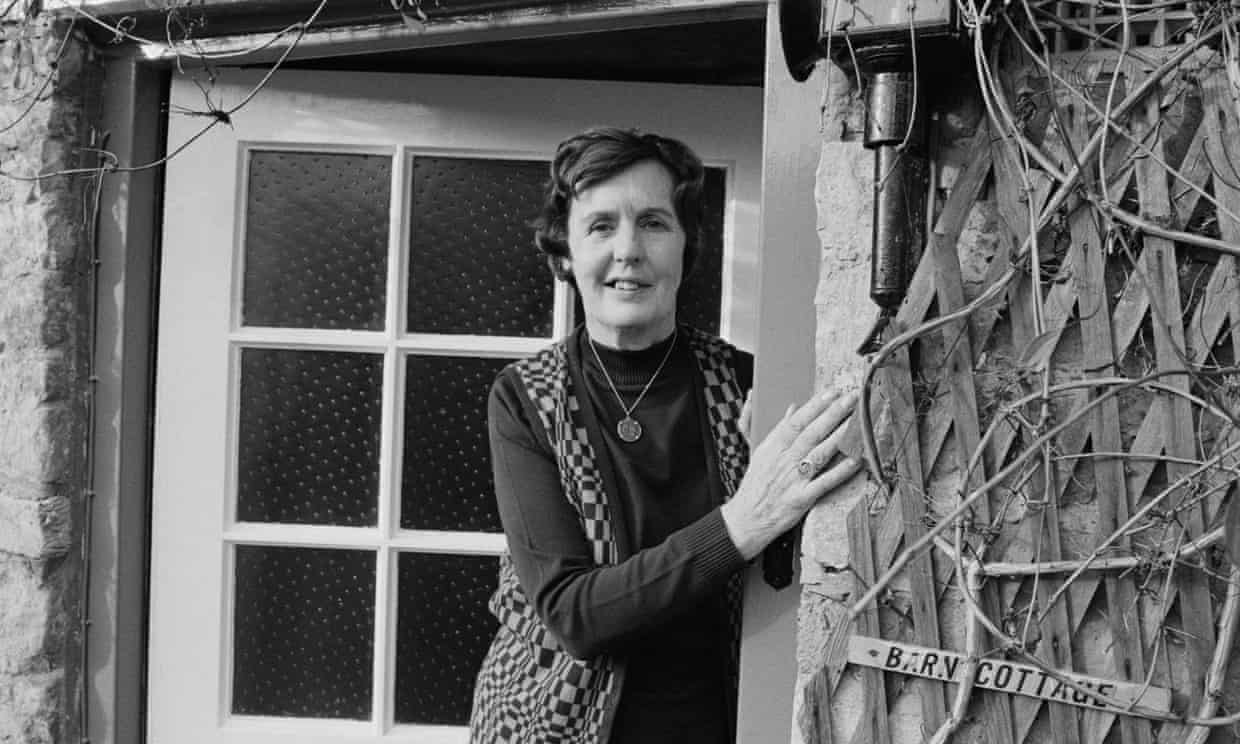
Photo: United News/Popperfoto/Getty Images.
British novelist Barbara Pym is said to have been trained as a spy.

Barbara Pym had a unique style of novel writing, very homey and at the same time, full of intrigue. I went through an intense Barbara Pym phase back in the day and am not surprised to learn that her powerful ability to observe and interpret small details might have made her a good candidate for a different field. Both wartime censorship (ugh!) and spying.

In today’s article, we learn that Pym received special training as an “examiner” to find coded messages and secret writing in normal-seeming letters. And there was probably more.

Nadia Khomami writes at the Guardian, “It is an irony that she herself would have reveled in: Barbara Pym, the author who punctured the social strictures of 20th-century Britain, worked as a censor during the second world war.

“But research suggests that rather than just poring over the private letters that must have helped hone her talent, she may have also been working for [British spy agency] MI5.

“New work by Claire Smith published {in May] proposes that Pym’s time as an ‘examiner’ for the government and in the navy could be more than a poacher-turned-gamekeeper tale about a future satirist. …

“Smith said: ‘In one of her novels, she said being an examiner was really rather dull. But when I began to look closely at her, I discovered many oddities.’

“She believes that Pym’s keen eye for detail was utilized for coded messages and secret writing in otherwise normal-seeming correspondence, becoming one of a group of female examiners who received special training.

“Smith, who worked in the Foreign and Commonwealth Office for 27 years and is the only female diplomat to have negotiated with the Taliban, said: ‘They were the ones looking for the micro dots, the secret writing, the messages concealed in ordinary letters. And because Pym was a writer, she would have noted odd ways of constructing sentences. She’d have been extremely valuable.’

“Dame Jilly Cooper described Pym as the author who ‘brought me more happiness and gentle laughter than any other writer.’ But before she became feted for works such as Excellent Women and A Glass of Blessings, Pym spent the prewar era looking for a job in publishing.

“Instead she became a censor in 1941, ostensibly charged with checking private correspondence between Irish families in Britain and Ireland.

“ ‘I thought it very odd that an Oxford graduate who speaks German and is already writing should really only be looking at letters between Irish families,’ Smith said.

“Pym made several trips to Germany in the 1930s, and even had a relationship with a young Nazi officer.

“The research, British Naval Censorship in World War II: A Neglected Intelligence Function, is being published with the support of the Barbara Pym Society. It coincides with the commemoration of Pym’s home in Pimlico, London, with a blue plaque by English Heritage.

“Within Pym’s notebooks and diaries, which are housed in the University of Oxford’s Bodleian Library, Smith discovered that she had written about learning code when she was an examiner and how she even made a submission to MI5.

“Smith said: ‘If you’re just reading everybody’s letters to strike out forbidden parts, why would you be learning code?’

“And Pym’s time as a postal censor in the Women’s Royal Naval Service (nicknamed the Wrens) also holds key clues to a hidden past.

“She was fast-tracked for promotion and became a naval censor in Southampton when the admiralty was preparing for D-day, before seeing out the rest of the war in Naples.

“It was during her time on the south coast that the biggest oddity occurred, according to Smith. ‘In the second world war, MI5 used PO Box 500 as their address, and in correspondence they were often referred to as ‘Box 500.’ That’s quite different from the box numbers that naval personnel used.

“ ‘But on the back of one of her letters that was going outside the UK, Pym – in her own handwriting – wrote her initials, [naval land base] HMS Mastodon, and Box 500.’ …

“One final piece of the puzzle Smith stumbled upon was that after Pym died, her literary executor was ‘at great pains to say one piece of work, the comic spy thriller So Very Secret, wasn’t successful because Pym didn’t know any spies.’

“ ‘I thought: why mention that at all?’ Smith said.”

So it’s still conjecture. Seems likely, though. We know from the story of Jane Austen’s sister that literary executors can be extremely cautious about revealing anything. And Pym would have been good at spying.

I think anyone who’s a little bit paranoid, a little touchy about double meanings in the words of others could be good at finding hidden messages. What do you think? Any Pym fans here?

More at the Guardian, here.
Read Full Post »

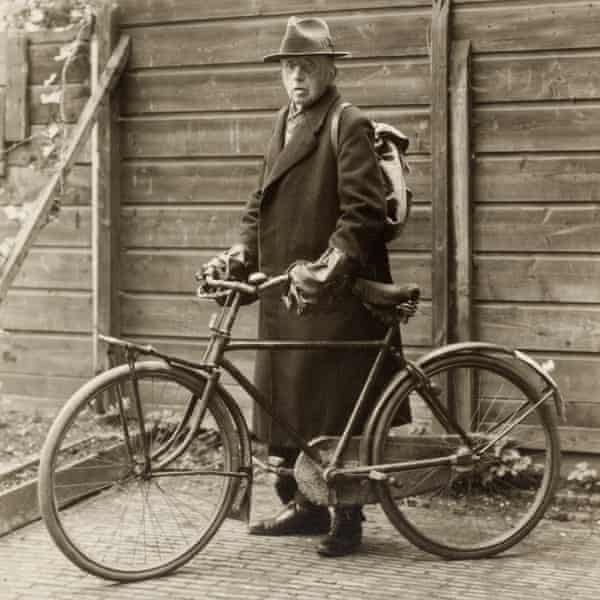
Photo: rkd/Mauritshuis.
Wilhelm Martin, the director of the Mauritshuis museum, quietly resisted by removing artworks from the museum during the Nazi occupation. And he hid people.

Today we go back to WW II to gather new information on the difficult choices that people had to make under Nazi occupation and how some Dutchmen practiced resistance while hiding in plain sight.

The Guardian‘s Senay Boztas reported the story from the Netherlands.

“The 13-year-old boy answered the doorbell,” she begins. “ ‘Tell your dad I’m here,’ said a man, who stored his bicycle and then disappeared upstairs.

“It was 1944, and right under the noses of Nazi command, people were hiding in the attic of The Hague’s Mauritshuis museum from forced labour conscription – Arbeitseinsatz – under which hundreds of thousands of men from the Nazi-occupied Netherlands were conscripted to work in Germany.

“The memories of 93-year-old Menno de Groot – a Dutch-Canadian who was that young boy – form an extraordinary part of a book and an exhibition of the secret history of the Dutch museum during the second world war.

“ ‘He must have gone all the way to the attic,’ De Groot tells his granddaughter Kella Flach in a video for the exhibition, referring to the man who he assumed had arrived to go into hiding. ‘I don’t know how many were up there. I have no idea how they lived up there, how they got there.’

“The chance find of a logbook by De Groot’s father, Mense de Groot, an administrator who from 1942 lived in the Mauritshuis museum with his wife and children, including Menno, inspired researchers to examine the museum’s history.

“ ‘People were hiding in November 1944 because of the Arbeitseinsatz, but hiding in the Mauritshuis was hiding in plain sight,’ Quentin Buvelot, a researcher and curator, said. ‘It was a house in the storm.’

“Art from the museum, including Johannes Vermeer’s Girl With a Pearl Earring, was first hidden in a bomb-proof bunker underneath the building and later stored in locations around the Netherlands. The German-born museum director Wilhelm Martin played a careful role, allowing the Nazis five propaganda exhibitions while also quietly resisting.

“A newly discovered note on Martin’s retirement in 1953 revealed he was involved in supporting people who had gone undercover on Assendelftstraat and in the museum. ‘Martin doesn’t say how many, but he says that on a daily basis, 36 loaves of bread were delivered. …

“Secret concerts were also held in the museum’s basement between 1942 and 1944, according to Frank van Vree, an author and researcher at the NIOD institute for War, Holocaust and Genocide Studies. ‘They were held to support musicians who were cornered by their resistance to German measures, especially compulsory membership of the Nazi Kultuurkamer,’ he said. …

“Mense de Groot, who was hired to work at the museum when the janitor retired, also worked for the resistance. ‘He usually got Trouw, an underground newspaper,’ Menno de Groot says in the exhibition. ‘And my dad, he copied them, made more copies. …

“Life under occupation was a series of difficult choices, according to Eelke Muller, a historian and NIOD specialist in looted art. ‘There was little knowledge [before this research] about how culture could be a political instrument for resistance from the Netherlands but also a strong ideological instrument for the occupier,’ she said. ‘Every museum, every civil servant in times of war was confronted with huge dilemmas: do you choose principled resistance, enthusiastically get behind Nazi ideas, or are you somewhere in the middle?’ More at the Guardian, here. No paywall.

Nina Siegal at the New York Times adds details about the famous Vermeer that Martin also hid.

“At first it went to a bomb shelter in the basement of a museum, then an art bunker built into the dunes on the North Sea in the Netherlands. Toward the end of the war it was hidden in a secured cave in Maastricht, a Dutch city near the Belgian border.

“Starting in 1939, as war in Europe spread and the Nazi invasion of the Netherlands loomed, leaders of the Mauritshuis, the jewel box museum in The Hague, took extraordinary steps to protect Johannes Vermeer’s ‘Girl With a Pearl Earring’ and other works central to its collection.

“Wilhelm Martin, the museum’s director at the time, removed it and other famous works … before the Germans arrived because he understood that they would be in peril, both from bombardments and from potential Nazi looting afterward.

“The survival of these works, through strategic planning, diplomatic appeasement and the German affinity with the conquered Dutch as ethnic brethren, is now the subject of an exhibit at the Mauritshuis. ‘Facing the Storm: A Museum in Wartime,’ which is on view until June 29, coincides with the 80th anniversary of the liberation of the Netherlands in 1945 and is based on extensive new research.”

I hope blogging chefs Michiel and Jeen in the Netherlands get to see this.

Read Full Post »

Now is the winter of our discontent.

For some reason, I thought today might be a good day to talk about the women of the French Resistance and the power of flying under the radar.

The Library of Congress research guide on the French Resistance says, “Women had a unique ability to serve as Resistants, in some part due to views among many Nazis that women were harmless and non-threatening. … Women were by default granted much greater latitude in moving around — and when apprehended were much more likely to convince officers or soldiers of their innocence.

“Often overlooked, they served as consummate spies. Often speeding along by bicycle, women devised all manner of ways to hide items in their purses and baskets. They used baby carriages as a sort of camouflage to transport goods. …

“Women were invaluable as messengers and couriers; they carried everything from arms and ammunition to intelligence and Resistance propaganda. They also rescued airmen shot down … and operated what were called ‘escape lines’ that served to usher US and British servicemen into safety. They gathered military intelligence (some of these women even worked with Madames in brothels … where information could be gathered secretly), decoded messages, managed underground publications, ran guns, provided support for strikers, and carried out sabotage of German communications. They [worked] as typists and counterfeiters, and proved themselves brave and extraordinarily wily. …

“Recent scholarship has finally brought women Resistants out from the shadows. Women were often slower than men to write about their experiences, but as decades went on, and in some cases archives opened, more of these stories came to light.

“[One] valuable source of material are the témoignages — statements made by individuals during interviews conducted immediately after the War. Some such interviews were under the auspices of the Comité d’Historie de la Deuxième Guerre Mondiale in Paris. Many of these sources can be found at the Bibliothèque nationale de France or the Bibliothèque Marguerite Durand in Paris. …

“Some accounts of these women and their activities can be found in reports from those U.S. servicemen, which are available in the National Archives, Washington National Records Center in [Maryland]. There are firsthand accounts of downed American airmen who were assisted by Resistants. Many of these accounts talk about being fed, given medical attention and shelter, and even being shepherded to a safehouse. For safety reasons, these women did not usually give their real names, thus they will forever remain anonymous.

“As Margaret L. Rossiter notes in her study, Women in the Resistance, some women that have gained attention for their heroic acts managed to preform them while nonchalantly preforming their day jobs.

“Jeanne Berthomier, who was a civil servant in the Ministry of Public Works in Paris, managed to deliver top-secret information typed on tissue paper to the Alliance chief, Marie Madeleine Fourcade. Mme Paule Letty-Mouroux used her position as a secretary at the Marine de Toulon in order to report the repair status of Axis ships. Mme Marguerite Claeys collected information from agents who posed as customers at the company she owned with her husband — all without his knowledge.

“Simone Michel Lévy used her job in the Postal, Telegraph, and Telephone Service (PTT) to obtain intelligence [that] she managed to send to London under the code name of Emma. These women all took enormous risks and many of them were eventually caught and arrested. …

“Women from a variety of countries, including Britain and the US, served in the French Resistance. Isabel Townsend Pell … was an American socialite who joined the French Resistance during World War II — one of the few women who was part of the Maquis — purportedly due to her good aim. Going by a code name of Fredericka … she was imprisoned twice during the war, and subsequently decorated with the Legion of Honor for her service.

The stories of these women and countless others stand as testaments to the fact that no matter what role you have or where you find yourself, there is often a way to contribute to a larger cause. …

“Eighty years after their Liberation, France continues to commemorate French Resistance fighters and Allied veterans from WWII. … On May 27th, 2024, in the presence of the family of Alice Arteil, a secondary school in Le Mayet-de Montagne, was renamed in honor of French Resistant Alice Arteil. Arteil was one of the only women to command her own Resistance group. Her knowledge of the mountainous and woody terrain was invaluable for the rescue missions and the general activities of the group.” More at LOC, here.

At the website, there are other women, listed alphabetically. I loved reading about Pippa the “knitting spy,” who hid her information within a knitting kit by knotting codes onto silk. Was she thinking about Madame Defarge? What a testament to fiction being as real as real life — and sometimes more influential!

“ ‘En 1940, il n’y avait plus d’hommes. C’étaient des femmes qui ont démarré la Résistance.’ 
-Germaine Tillion, quoted in Femmes de la Résistance: 1940-1945.”

Read Full Post »

Photo: Kyle Cummings/Randolph-Macon College.
Kayla Smith, left, and Hannah Winton help Andy Valero try on an Eisenhower jacket from the World War II era at his Virginia home.

Although in the US we tend to move national holidays to a Monday, Veterans Day is always November 11. This year the 11th just happens to land on a Monday. The holiday was established in commemoration of the Allies and Germany signing an armistice on Nov. 11, 1918, to end WW I. (One historian says this was unfortunately “a peace to end all peace” because the eventual agreement contained the seeds not only of WW II but of endless conflicts in the Middle East.)

In honor of Veterans Day, Cathy Free shared a WW II veteran story at the Washington Post.

“Kayla Smith was looking forward to taking a World War II history class in college two years ago when she learned on the first day of school that the class had been canceled with no explanation.

“ ‘I was so disappointed, because I’d really been looking forward to learning what the Greatest Generation went through,’ said Smith, 23, a history and archaeology major at Randolph-Macon College in Ashland, Va. …

“ ‘I started thinking, “There must be some World War II veterans who are still alive,” ‘ she said. …

“She enlisted the help of a friend, Hannah Winton, and the two of them began calling veterans organizations in central Virginia.

“ ‘We were told that most of the World War II veterans were gone, but we decided to keep looking,’ Smith said. …

“That year, she and Winton were at the Virginia State Fair when they noticed a woman running a booth with information about Veterans of Foreign Wars. The woman put them in touch with a veterans support group in Norfolk, and that’s how Smith and Winton met Andy Valero and Leo Dormon, who are 99 and 100, respectively.

“Valero, a U.S. Army veteran who survived the Battle of the Bulge, and Dormon, an aviator who served in the U.S. Navy, invited the college students to their homes in the Tidewater, Va., area to chat.

“ ‘Something unexpected happened,’ Winton said. ‘We enjoyed talking to them so much that we wanted to keep going back.’

“She and Smith now visit the men several times a month — often with freshly baked brownies — to talk or have lunch. They also accompany them to veterans events, funerals and World War II commemorations.

“ ‘I never thought that at 21, some of my best friends would be 99 and 100,’ Winton said. ‘You can read about war and study it, but these guys actually lived it. I feel honored to be their friend.’ …

“Dormon is recovering from a recent stroke, Winton said, which has given her a deeper appreciation for the visits she has had with him and Valero.

“ ‘We savor every minute, because you never know when it might be the last time you see them,’ she said. ‘When they are gone, their history goes with them.’

“She and Smith said they spent hours asking the two veterans about their war experiences and looking through photos. …

“ ‘I feel really bonded with Leo, and I love to listen to him,” Winton said. “Since his stroke, he has slower recall, but just being with him is important to me. We don’t always have to talk.’

“Dormon, who was a Navy flight instructor, flew more than 35 different aircraft and trained more than 300 pilots during World War II. He also flew during the Korean and Vietnam wars.

“ ‘I’m an aviation nerd, and he’s a fighter pilot with more than 10,000 flight hours,’ said Winton, who hopes to become a Navy pilot someday. ‘We took him and Andy to an air show in June, and Leo was thrilled to go up in one of the vintage planes.’ …

“Dormon said he always looks forward to spending time with Winton and Smith.

“ ‘Hannah and Kayla have been regular visitors, and I have been so thankful to see both,’ he told the Washington Post in a written statement. ‘Taking the time to visit an aging person takes courage and patience, and they’ve made my life much happier. Bless them both.’ …

“[In December 1944] ‘it was the worst winter in 25 years, and we had frozen fingers and trench foot,’ he said, referring to the painful condition that results from standing for a lengthy time in a cold and wet environment.

“Valero lost several of his close comrades in the battle.

“ ‘I didn’t talk about it for many years, but I felt comfortable talking about it with Kayla and Hannah,’ he said. ‘They’re very caring and they feel like family to me. They’re like angels who came out of nowhere.’ ”

More at the Post, here.

Read Full Post »

Photo: The Valley Ledger.
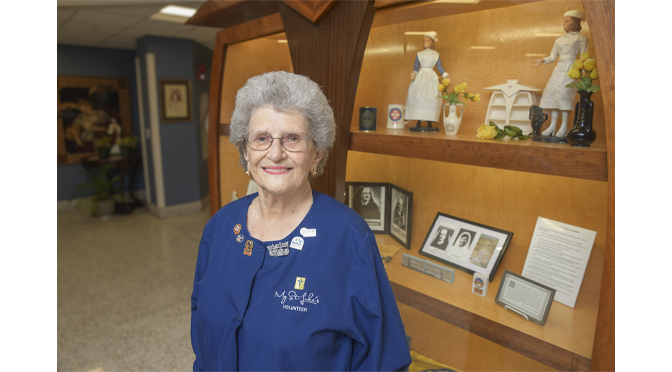
Grace Carr became a nurse cadet in 1944. She is still active as a volunteer at St. Luke’s Sacred Heart Campus in Allentown, Pa.

Nancy L and I, both living in retirement communities, have been fascinated to see how differently we ourselves — and the people around us — age. It’s like we’re making a study of our cohort.

Nancy tells me with a certain awe about an active woman over 100 that she’s met where there are people in their 70s who can barely function. What makes the difference? she wonders. We ponder together whether it’s all genetics, something about the life they’ve lived, a combination of those elements, or what.

From the Washington Post comes a story about an elderly WW II-era nurse called Grace Carr who adds to the wonderment.

Cathy Free writes, “Grace Carr was 17 when she left her family home in the coal town of Freeland, Pa., to pursue a dream she’d had since she was 5 years old.

“ ‘Ever since I can remember, I wanted to be a nurse and work in a hospital,’ said Carr, who as a child spent hours wrapping her dolls in bandages and taking their temperatures. …

“Carr, now 97, is still at it, working exactly where she started: St. Luke’s Sacred Heart Campus in Allentown, Pa., about 60 miles from where she grew up.

“Although she retired from her nursing job at age 62, Carr continued as a volunteer at the hospital, and she now shows up every Wednesday to escort patients to their tests, deliver flowers to rooms and take specimens to the lab.

“ ‘From the time she shows up in the morning until she leaves in the afternoon, Grace always has the same happy smile,’ said Beth Fogel, the hospital’s volunteer engagement specialist, who has known Carr for 20 years.

“ ‘She never shows any weariness and always has the same pep in her step,’ she said. ‘Everyone loves talking to her.’

“Carr has logged more than 6,000 hours as a volunteer, taking only a few months off at the height of the coronavirus pandemic. ‘I love people, and my health is good, so I’m happy to do what I can,’ she said. …

“Carr, formerly known as Grace Malloy, started training to become a nurse at Sacred Heart Hospital during World War II in 1944.

“ ‘When I went to nursing school at the hospital, we all lived on-site in a home for nurses,’ she said. ‘We had classes for most of the day, then we’d go onto the floors and learn about all the usual things nurses did, like making beds, taking temperatures and helping to keep the patients comfortable.’ In her first year as a trainee, she was paid $15 a month.

“The U.S. Army paid for her training on the condition that she serve in the U.S. Cadet Nurse Corps and work in a public hospital like Sacred Heart after graduation, she said. The nurse cadet program ensured that U.S. hospitals didn’t experience nursing shortages during the war. …

“Carr said the Army gave her two cadet uniforms — one for summer and one for winter — and she’d often wear them when she took the train home to visit her parents. …

“When Carr’s boyfriend, Edward Carr, came home from serving in the military, they were married in 1947 — the same year she graduated from nursing school.

“Carr was then hired to work the night shift at Sacred Heart, which she did for more than 20 years while raising four daughters and a son. She laughs when people ask her whether she slept during those years.

“ ‘I’d take little naps,’ Carr said. ‘Then when my husband came home, I’d let him take over until it was time for my hospital shift to start at 11 p.m. I look back on it now and I think, “How in the world did I do that?” … I always felt thankful to be doing something I loved.’

“Carr passed her work ethic along to two younger sisters who followed her into nursing. Her daughter Grace Loring also worked at the same hospital. …

“Loring, now retired after 35 years as a pediatric nurse, picks up Carr at her home in Allentown every Wednesday and drives her to and from the hospital. She said she often wonders how her mother managed it all while she was growing up.

“ ‘I also worked nights when I became a nurse, but I was single, and I could just go to bed,’ she said. ‘My mom was there for us after school, she handled the housework and the gardening, and she made matching Easter outfits for us every Easter.’ …

“ ‘When I was a student nurse, I was working in the maternity nursery and had to take this adorable baby boy to his mother,’ Carr said. ‘That little boy later married my oldest daughter, Janet, and he’s now 78. …

” ‘I’ve been given a lot by the hospital,’ Carr said. ‘So as long as I’m healthy and able, I’m going to keep coming back.’ ”

More at the Post, here, and at the Valley Ledger, here.

Read Full Post »

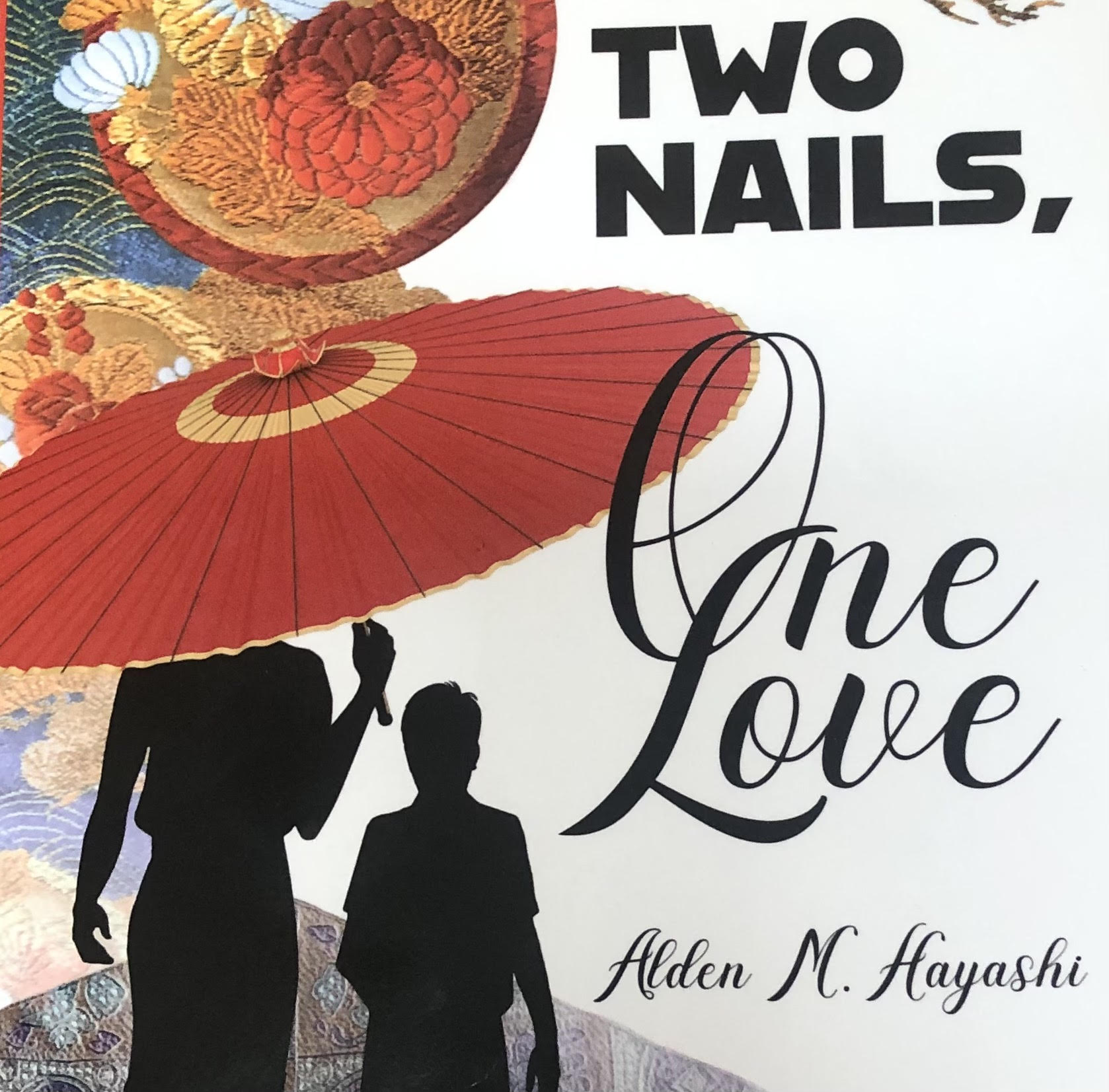
Art: Jana Brenning.
The above novel by Alden Hayashi came into being partly because he wanted to write about his mother’s WW II trauma and the incarceration of innocent Japanese Americans in camps. It’s also about the difficulty of coming out to a very cautious parent as a gay man.

I’ve been telling friends, especially friends in book groups, to check out Alden Hayashi’s novel. It’s based on his relationship with his reticent Japanese American mother, who suffered injustice at the hands of the US, her birth country — a history she long kept hidden. Since publication, the book has found an audience not only in the Japanese American community, but among other Americans. After all, this is our history, and we need to Face History.

Alden had a lot of experience from his day job ghost-writing books for management consultants and others, and he thought it would have been ideal if he had been able to ghost-write his mother’s story. But as he explained in one of the online book discussions he’s been invited to attend lately, his mother didn’t begin to open up about her history until late in life, and he could tell that some of the dates were getting confused. He had already learned a lot on his own by research into obscure government documents and by attending a Japanese American group’s visit to his mother’s infamous camp in Arkansas. (Americans used to refer to these camps as “internment camps,” but they are more properly called “concentration camps.”)

I do not think that making this history part of a book about the gay son coming out in a family conditioned against being the “nail that sticks up” has kept it from being a good novel. If anything, the mother’s story made the son’s feel more real, and the son’s story helped show the consequences of an early trauma for a future parent.

But the aspect that will rivet you the most is learning that many of these Americans were rounded up from the camps to be exchanged with Americans trapped in Japan and occupied Asia. The first group that went “home” were in fact Japanese people who wanted to go. But for Americans like Alden’s mother, home was Hawaii, her birthplace. She had never even visited Japan. And her family was being sent to a country they felt they were at war with. In fact, her brother fought and died for the US alongside other Japanese Americans. The family definitely did not find a warm welcome when they got to Japan.

I’d read many intriguing vignettes about this history on Alden’s Facebook page and was thrilled it got into a book. No wonder he bristled during the years 2016-2020, when a whole religion was considered terrorist by some powerful people. He was so afraid of history repeating itself.

Be sure to look for the moment when the mother in the novel visits the Statue of Liberty with her grown son. Find the book here.

Check out this interesting conversation between Alden and another Japanese American author.

Read Full Post »

4000182-0001

Image: Collection of Stephen J. Hornsby/Osher Map Library and Smith Center for Cartographic Education
America—A Nation of One People From Many Countries,” by Emma Bourne, published in 1940 by the Council Against Intolerance in America.

At Atlas Obscura, Lauren Young writes about a powerful 1940 map showing America as a nation of immigrants.

“In the years leading up to the Second World War,” says Young, “isolationist sentiment coursed pretty strongly throughout the United States. Some Americans feared that immigrants were a threat to the country. …

“ ‘With the exception of the Indian, all Americans or their forefathers came here from other countries,’ the illustrator Emma Bourne inscribed on the map. The Council Against Intolerance commissioned Bourne’s work in an effort to remind Americans that the U.S. had always defined itself as a country of varied national origins and religious backgrounds.

“Bourne illustrates America’s unique ethnic and religious diversity by erasing state borderlines and showing the nation as one unit. Long red ribbons weave through the landscape to show clusters of immigrant groups and where they settled, from Japanese in the West to Italians in the East. At the bottom left is an inset scroll listing famous Americans in literature, science, industry, and the arts alongside their ethnic backgrounds, including George Gershwin and Albert Einstein, who became a U.S. citizen the year the map was published. …

“Bourne also emphasizes the range of religions present during this era, along with staple industries in each state, including a giant potato in Idaho, a huge fish in Washington, and large lobster in Maine. Detailed figures of people at work are meant to show how immigrants are active in creating a prosperous America.” Read more here.

(Thank you for the lead, Bob!)

Read Full Post »

The concept of paying it forward has been flourishing in Naples, at least with regard to buying a cup of coffee for someone who can’t afford one.

Recently, reporter Gaia Pianigiani interviewed Neapolitans about the “suspended coffee practice. Coffee shop customer Laura Cozzolino explained, “ ‘As a Neapolitan who tries to restrict herself to four coffees a day, I understand that coffee is important. It’s a small treat that no one should miss.’

“The suspended coffee is a Neapolitan tradition that boomed during World War II and has found a revival in recent years during hard economic times.

“From Naples, by word of mouth and via the Internet, the gesture has spread throughout Italy and around the world, to coffee bars as far-flung as Sweden and Brazil. In some places in Italy, the generosity now extends to the suspended pizza or sandwich, or even books. …

“In a time of hardship, Italians can lack many things, but their coffee is not one of them. So it may be the most common item left at many cafes, as a gift, for people too poor to pay.”

More at the NY Times.

Photo: Gianni Cipriano for The New York Times
Receipts are left to be claimed by those who are unable to afford a cup of coffee. 

Read Full Post »

Here’s another story about an older worker from John. I think we’ll discover more of these, given that retirement today doesn’t have the same appeal for everyone.

“Frank Gurrera is old-school Brooklyn,” writes Pete Donohue at the NY Daily News.

“Gurrera, a World War II veteran, is nearly 90 years old. But he’s still working as a subway machinist at the MTA’s sprawling brick maintenance complex in Coney Island. Gurrera makes or modifies parts for workhorse trains that were built decades ago and need periodic roof-to-wheels overhauls in order to remain in service.

“ ‘I enjoy the work,’ he said. ‘It’s the satisfaction of making something from nothing, making something from just a piece of metal.’

“Gurrera is exactly the type of transit worker the Daily News celebrates with its annual Hometown Heroes in Transit awards, which honor bus and subway workers who demonstrate exceptional dedication, bravery, compassion, ingenuity and other admirable qualities.” More about the awards here.

Although this story is from New York, people like Gurrera are also valued in Greater Boston, which has the oldest subway system in the country. The Boston Globe has reported on local machinists who are needed to make train parts by hand.

Photo: Pearl Gabel/NY Daily News
Frank Gurrera, who turns 90 on Oct. 29, makes subway train parts that no longer are available from the original manufacturer. The parts are used for workhorse MTA trains that were built decades ago.

Read Full Post »