Feeds:
Posts
Comments

Archive for May, 2014

What’s not to love about Rhode Island? OK, a few shady politicians, high unemployment, low graduation rates — I get it. But Rhode Islanders definitely overdo the “ain’t it awful” schtick.

Architectural Digest has just named Providence the best small city in America for a host of good reasons (thanks for that tip, Suzanne), and if you like “quirky,” Rhode Island has lots of that, too. No one would ever call a big state quirky. For some characteristics, small is better.

Speaking of quirky, this story was passed along by Kate C. It’s about a creative-writing instructor at Brown University who is worried enough about global warming to set up a booth in a public park to commiserate with others about the issue.

Philip Eil writes in the Providence Phoenix,  “It is a crisp Tuesday afternoon in May at Burnside Park in downtown Providence. …

“A few minutes after 2:30 pm, Kate Schapira arrives at the south entrance of the park, pulling a bright red metal hand truck. Over the next few minutes, she unpacks and arranges items from the truck: a small wooden desk; a wooden stool; a rainbow-colored beach umbrella with a white plastic stand; a box containing a stack of homemade cardboard “RI IS MY HOME” cards, each with its own labeled sketch of local flora and fauna (“Eastern Chipmunk/Tamias Striatus,” “House Sparrow/Passer Domesticus”); a glass jar labeled “DONATIONS OF 5¢ FOR ENVIRONMENTAL JUSTICE LEAGUE OF RI”; a pad of poster-sized paper with a hand drawn map of the state of Rhode Island under the words “PUT YOUR WORRIES ON THE MAP”; and two cardboard signs to be affixed to front of the table that read “CLIMATE ANXIETY COUNSELING 5¢” and “THE DOCTOR IS IN.” …

“Today is the first day of Schapira’s Climate Anxiety Counseling. Over the next four weeks, the 35-year-old poet and Brown University creative writing instructor will report to this spot, five days a week, for three hours per shift (two on Saturdays), to talk with passersby about the Earth’s changing climate.” More here.

If you have ever cherished time spent in accommodations overlooking one of Rhode Island’s magnificent beaches, you might like to stop in for a visit with the “doctor” and discuss what might be done to keep the lovely Ocean State from acquiring too much ocean.

Photo: Providence Phoenix

Read Full Post »

Kai sent a link to a story about a guy who has his mother living in a tiny house in his backyard.

I had to laugh. The house is about the size of my garage, and as much fun as it would be to live in a child’s playhouse, I can’t imagine what a born pack rat would do with all her clutter. (Not to mention, how many grown children want a parent living in the backyard?)

Sandy Keenan reports in the NY Times, “In most cities, adding a second house to a single-family lot would be illegal or would set off an epic battle with the neighbors that could drag on for years. But not in Portland, Ore.

“There, this kind of housing — referred to officially as ‘accessory dwelling units,’ but better known as granny flats, garage apartments or alley houses — is being welcomed and even encouraged, thanks to friendly zoning laws. And additional living spaces are springing up everywhere, providing affordable housing without changing the feeling or texture of established neighborhoods the way high-rise developments can. …

“Eric Engstrom, a principal city planner, has seen these small structures become increasingly popular during his 16 years working for the city. And as he put it, ‘Given the low vacancy rate, when they’re done, you can rent them out in about an hour.’ Which means that adding an accessory dwelling unit, or A.D.U., increases the value of a piece of property. …

“It was in 2010 when the biggest changes took place. That was when the city relaxed the limitations on size and began offering the equivalent of a cash incentive by waiving the hefty fees usually levied on new development. Other cities in the Northwest have been moving in this direction, but Portland is the first to offer a significant financial benefit and one of the few that does not require owners to live on the site, provide additional off-street parking or secure the approval of their neighbors.” More.

I know of at least one resort community that allows accessory apartments for family members. It’s a good idea, but there’s always the worry that in the season, some folks will just rent them out to tourists and still need a place to stay.

Photo: Laure Joliet for The New York Times
A 480-square-foot garage, now a home: one of many small dwellings encouraged by the city of Portland, Ore.

Read Full Post »

The radio show Living on Earth is a source of information that I find delightful — not only because the topics are about nature but because they are sometimes so offbeat.

Recently the focus was on a new species in the ocean under the ice.

“Under the Antarctic ice lurk newly discovered sea anemones. Frank Rack, Executive Director of the U.S. Antarctic Geological Drilling team, tells host by Steve Curwood about how the team discovered this new species that hangs upside down from the Ross Ice Shelf. …

CURWOOD: “A team from ANDRILL, that’s the Antarctic Geological Drilling, has discovered a new type of sea anemone, while testing a remotely operated vehicle under the Ross Ice Shelf off Antarctica. The researchers are geologists and sedimentologists. The director of the team is Frank Rack from University of Nebraska.

RACK: “We were melting holes through the 270 meters of ice. We were deploying oceanographic sensors to measure current speed and direction. …

CURWOOD: “How long did it take you to find sea anemones down there?

RACK: “It was a total surprise. We melted a hole through the ice, and we had been running a camera down to the sea floor and back up. And in those observations, the ice shelf looked plain and featureless, but when we put down the robot and had more sensitive camera systems and could get very close to the bottom of the ice, that’s where the anemones appeared. They were quite numerous and widespread, and they were living in burrows in the bottom of the ice shelf, hanging upside down into the water column. …

CURWOOD: “So if they’re on the bottom of the ice, way down under the sea, they’re upside down, they’re hanging down like bats, huh?

RACK: “They are. They’re at about 230 meters below the sea level, and then there’s another 650 to 680 meters of water below. So the currents are circulating water across the continental shelf and up underneath the floating ice shelf, and the anemones are feeding and surviving in that environment.”

Read the whole transcript here.

Photo: Frank R. Rack, ANDRILL Science Management Office, University of Nebraska-Lincoln
An underwater picture of the sea anemones.


Read Full Post »

Over at Bill Littlefield’s Only a Game on WBUR radio, Karen Given recently provided the background on athletic banners made in New England. The radio show is entertaining for all sorts of listeners as it covers anything remotely related to sports.

“The sewing room at New England Flag and Banner is humming with activity,” says Given. “It’s been that way for a while now — the company’s been around since 1892. The current owner, Ned Flynn, has only been in charge since 2006. …

“Among the photos on Flynn’s wall is one of Fenway Park, adorned with red, white, and blue bunting to celebrate the return of baseball after World War II.”

After a mini tour, Given describes the banner-making process: “Staples temporarily hold together full sheets of brightly colored fabric — usually nylon. The paper is used as a stencil to mark the pattern, but the design isn’t cut out. At least not yet.

“Skilled sewers, some of whom have been working here for 30 years, deftly zigzag around the stenciled marks. And finally, the extra fabric is cut off by hand, layer by layer, revealing the design.

“ ‘It’s counterintuitive,’ Flynn said. ‘People think we sew letters on and sew logos on. It’s actually the opposite. What we do is sew the image on and then we cut everything around it off.’ ” More here.

I like to read about longtime businesses like this chugging along in New England. I also like reading about start-up businesses. With three entrepreneurs in the family — including Suzanne (Luna&Stella), Erik (Nordic Technology Group), and John (Optics for Hire) — I am pretty sure the local economy is going to be OK.

Photo: Karen Given/Only a Game

Read Full Post »

If you want to convert the moisture in clouds into water to feed a parched land, you could train to be a sorcerer.

Alternatively, you could go to the Massachusetts Institute of Technology.

Beth Buczynski at MIT’s inhabitat.com has the story on the “giant nets that trap moisture in the foggy mist, and funnel all of the tiny droplets into a container where they add up to water we can drink.”

According to “findings published online in the journal Langmuir, most existing fog harvesting systems are far from optimized. … Postdoc Kyoo-Chul Park PhD, MIT alumnus Shreerang Chhatre PhD, graduate student Siddarth Srinivasan, chemical engineering professor Robert Cohen, and mechanical engineering professor Gareth McKinley, believe that by closing the gaps in the net material, they can drastically improve the efficiency of fog harvesting systems.”

A press release from the research team says, “Chilean investigators have estimated that if just 4 percent of the water contained in the fog could be captured, that would be sufficient to meet all of the water needs of that nation’s four northernmost regions, encompassing the entire Atacama Desert area.”

Photo: Shutterstock

Read Full Post »

Even when I take my walk in the house on a bad day in winter, I find that walking helps me think. My pace indoors or out is not very energetic, but I like that all sorts of ideas and memories pop into my head as I walk.

At the NY Times blog called “Well,” Gretchen Reynolds describes new research that ties walking to creativity.

“A brief stroll, even around your office, can significantly increase creativity, according to a handy new study. Most of us have heard by now that exercise, including walking, generally improves thinking skills, both immediately and in the longer term. …

“Similarly, exercise has long been linked anecdotally to creativity. For millenniums, writers and artists have said that they develop their best ideas during a walk …

“Researchers at Stanford University recently decided to test that possibility, inspired, in part, by their own strolls. ‘My adviser and I would go for walks’ to discuss thesis topics, said Marily Oppezzo, at the time a graduate student at Stanford. ‘And one day I thought: “Well, what about this? What about walking and whether it really has an effect on creativity?” ‘

“With the enthusiastic support of her adviser, Daniel Schwartz, a professor in the Stanford Graduate School of Education, Dr. Oppezzo [gathered] her volunteers in a deliberately dull, unadorned room equipped with only a desk and (somewhat unusually) a treadmill, Dr. Oppezzo asked the students to sit and complete tests of creativity … Then the participants walked on the treadmill, at an easy, self-selected pace that felt comfortable. The treadmill faced a blank wall. While walking, each student repeated the creativity tests, which required about eight minutes.

“For almost every student, creativity increased substantially when they walked.”

The study was published this month in the Journal of Experimental Psychology: Learning, Memory, and Cognition.

 More here, where Reynolds notes that there was no difference when the volunteers walked outdoors instead of on a treadmill.

Embed from Getty Images

Read Full Post »

I had just cut out this story for the blog, when a colleague from northern China stopped by my office. He said it was the fifth time he had come upstairs to see if he could find another friend who was getting laid off. He wanted to give her a hug. I said, “Hug? Look at this.”

Didi Kirsten Tatlow, who writes dispatches from China for the NY Times, had just filled me in on a change among my friend’s former countrymen: “Of all the changes to sweep China since the death of Mao Zedong in 1976 — stock markets, private cars, fashion — one thing seemed not to have changed: No hugging. Chinese were physically reserved. That’s changing now.

“Recently, it seems like everyone is hugging. Friends are hugging. Family members are hugging. In hugging between Chinese and non-Chinese, it was non-Chinese who once foisted physical affection on the Chinese. Today it may be a Chinese initiating contact. The tables are turning. …

“Teachers are joining in. In Nanjing, the Liuhe District Experimental Elementary School began a class in emotional intelligence last fall, concerned that children lacked it and would thus be held back in the world, the newspaper Modern Express reported.

“The third graders’ homework: Hug your parents tonight. Sixty schools in the district now have emotional intelligence classes, the newspaper said.”

My co-worker’s first reaction to the news clipping was, “They are always trying to copy Americans.” But then he got a funny look on his face.

“Actually, the last time I went home, my uncle hugged me. I was really surprised. He’s my father’s generation. We were always taught to show more respect for older people.”

I’m happy to see hugs are catching on with nontraditional huggers. As they say of chicken soup, “It wouldn’t hurt.”

(A thank you to John’s family for all the hugs this morning!)

Photo:  Ng Han Guan/Associated Press

Read Full Post »

Longtime concert pianist Byron Janis recently wrote an essay for the Wall Street Journal about programs using music to help veterans with PTSD and other traumas to heal.

“Can music heal?” he asks. “There’s been a great deal of study by neuroscientists on the different ways music acts upon the brain, affecting our behavior, memory and the like. …

“I recently witnessed the healing effects of music first hand. As part of their ‘National Initiative for Arts and Health in the Military,’ I was invited by Americans for the Arts to visit the Walter Reed National Military Medical Center and participate in ‘Stages of Healing.’ This program, created by Dr. Micah Sickel, helps patients learn how to play a musical instrument and facilitates live performances whose aim, according to the hospital, is to ‘enhance the healing process’ …

I knew what I wanted to play for them—two Chopin waltzes and ‘A Hero’s Passing By’ … I then played two songs from a musical I had written about the Hunchback of Notre Dame. One was a love song and the other is titled ‘Like Any Man,’ which I felt very much suited the occasion. The Hunchback sings that although he is so disabled, he is just like any man.” Read more.

Photo of Byron Janis in 1962: Wikimedia Commons

Read Full Post »

Gregg tweeted recently about Robinson Meyer’s Atlantic article on 92-year-old metallurgist Ursula Franklin.

Meyer writes, “It’s hard to describe what Ursula Franklin’s done in her life. There’s just too much.

“The 92-year-old metallurgist pioneered the field of archeometry, the science of dating archaeologically discovered bronzes, metals, and ceramics. Her research into spiking levels of radioactive strontium in baby teeth factored heavily into the U.S. government’s decision to institute a nuclear test ban.

“She delivered the Massey Lectures—an important, annual series of talks delivered by Canadian public intellectuals—in 1989, and she was the first woman to be named University Professor at the University of Toronto, the university’s highest position.

“She was also born in Munich in 1921, and was imprisoned in a Nazi work camp for the last 18 months of the war.”

Meyers’s questions cover much of Franklin’s life, her pacifism, and her trail-blazing for women scientists. It’s a long interview. Here’s a taste.

“Once you were at the University of Toronto … did you see the university change over your time there, and just generally what was it like to be a female professor of engineering during the ’70s and ’80s?”

Franklin answers, “Well, pretty lonely. You know the real difficulty is to protect and advance your women students, and to see that they are in a hassle-free learning environment. When I came to the university, I’d been around long enough to know that I wasn’t one of the gang, and I never would be. I didn’t have a desire to be one of the boys.

“But the great wish—to give my women students a hassle-free, happy learning environment—that’s what’s difficult. The culture of engineering is not a culture of acceptance and understanding of anything that is female and—at the same time—equal. So that’s… that’s a real job. It was a long and hard [work] in this, and it’s by no means yet all done.”

I remember the fuss over strontium 90 in milk. How great to read about this woman ‘s role in uncovering the problem and to see that she is going strong at 92. More at the Atlantic.

Ursula Franklin  photo

Read Full Post »

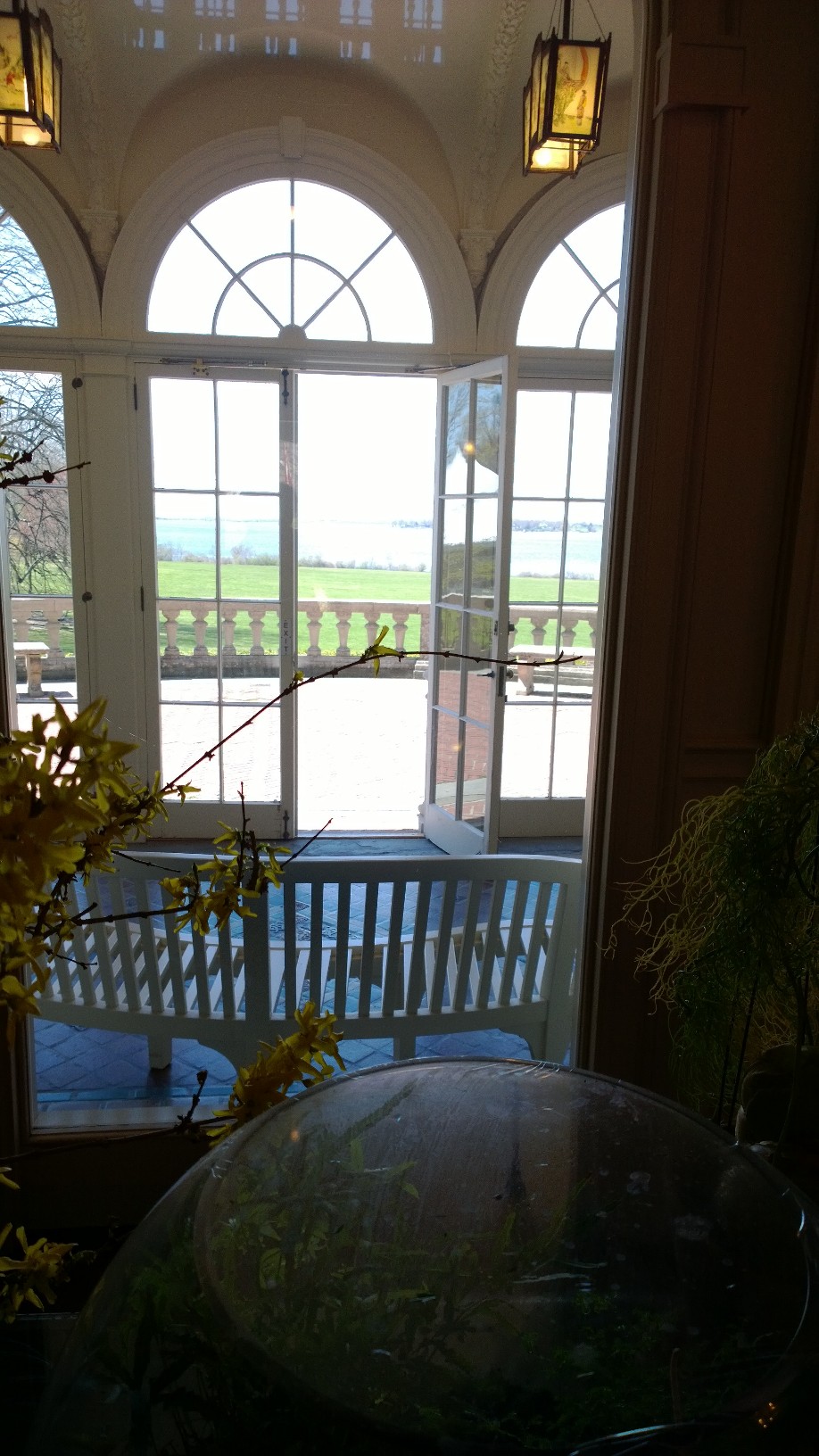
What a treat to be outdoors in the Greenway again! Flowers and trees are starting to bloom, and there is always something new to observe.

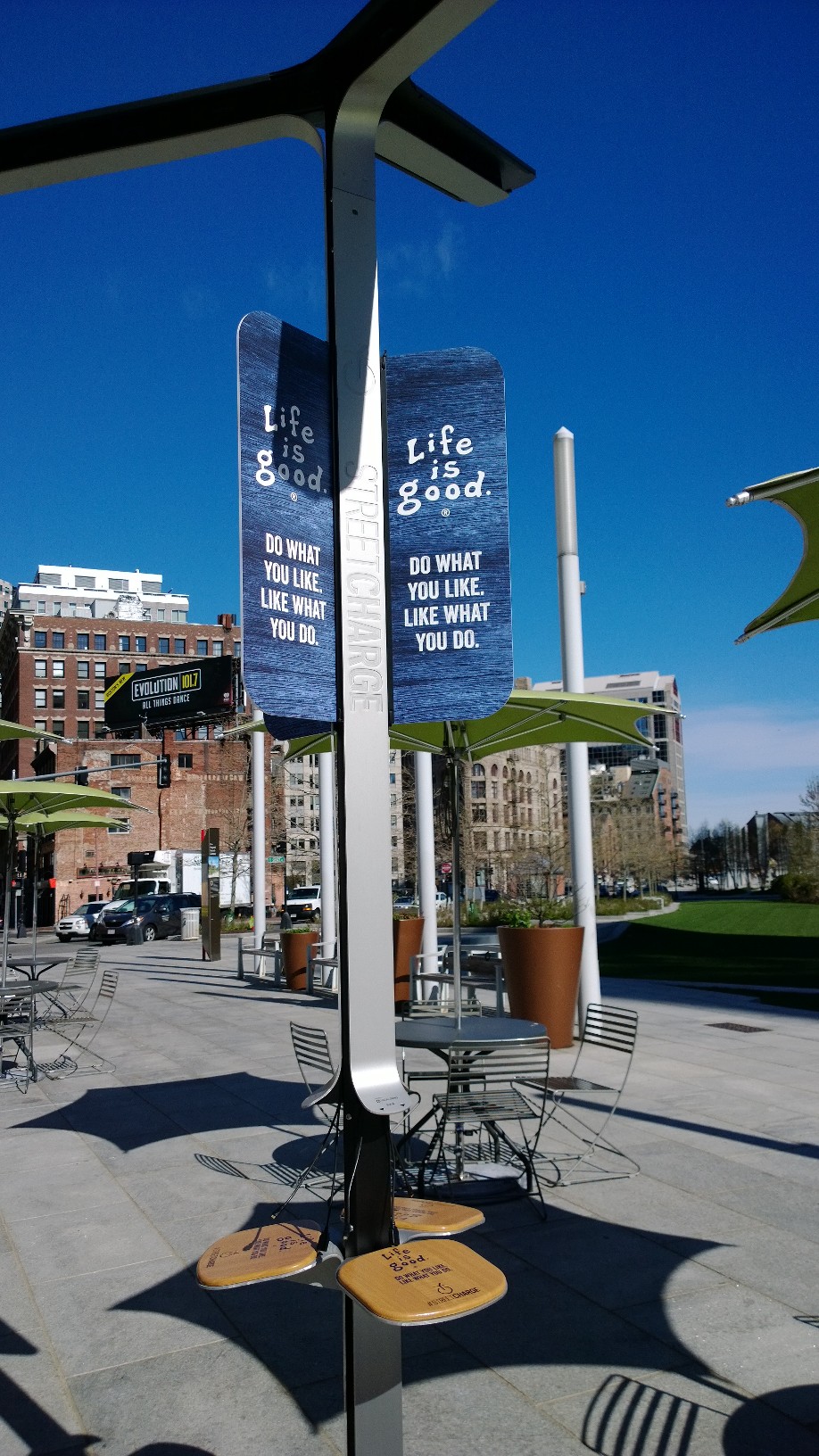
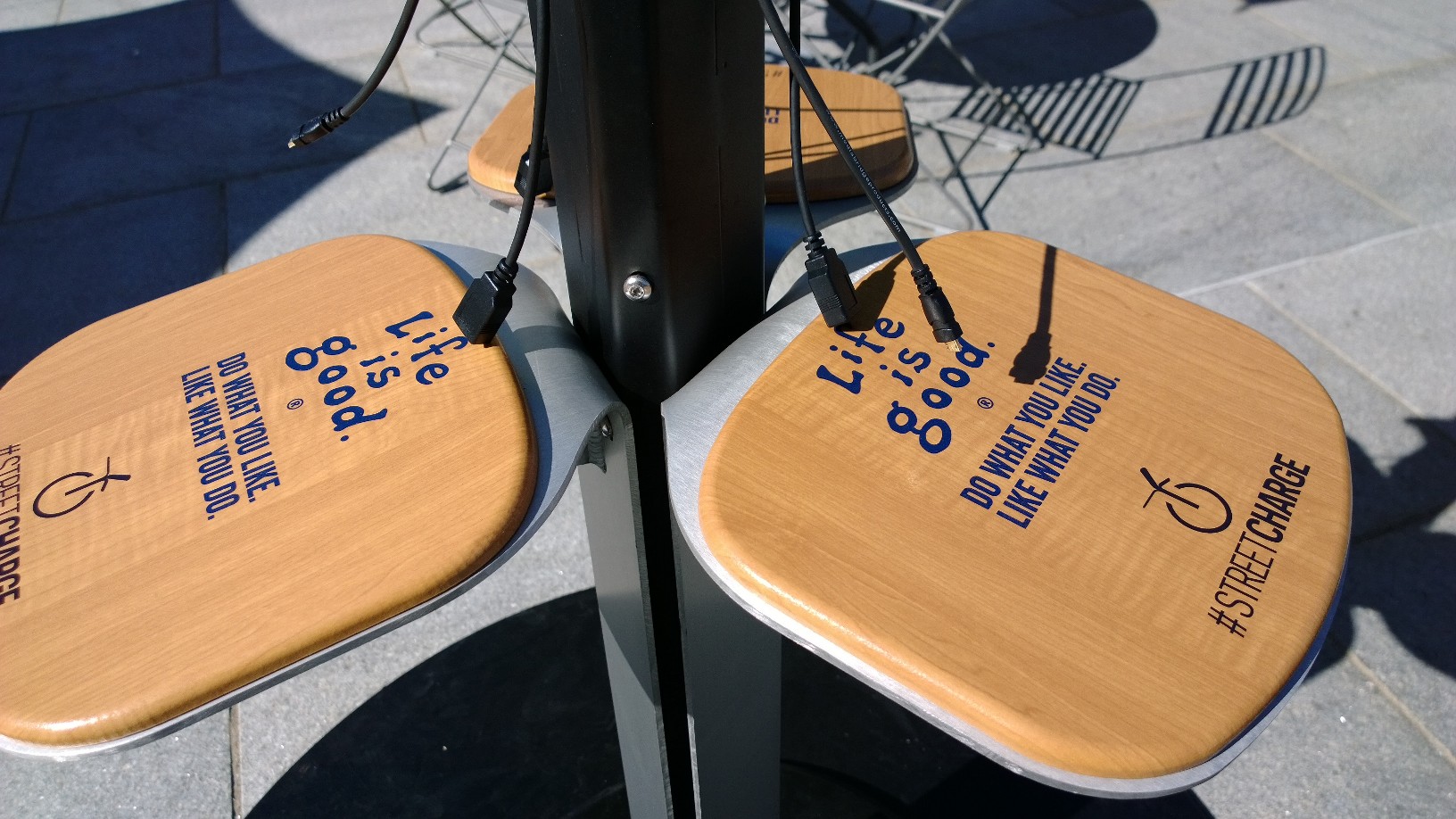
Although I don’t use my phone on my walk, except to take pictures, a new amenity provided by Fort Point neighbor Life is good is likely to be welcomed by many visitors. I saw one phone-recharging kiosk near the Dewey Square food trucks and one near the Boston Harbor Hotel.

Got my lunch at the Vietnamese food truck Bon Me and ate outside in the sun.

spring-in-the-Greenway050614-Greenway-Boston


phone-recharging-kioskLifeisgood-kiosk-in-Greenway


Dewey-Square-food-truckscorner-Atlantic-and-Congress


Read Full Post »

Some posts at Andrew Sullivan I only need to glance at briefly and bells go off: for example, this entry about an artist who works with coral.

Andrew quotes Amelia Urry writing about Courtney Mattison, who became enamored of coral while studying conservation biology at Brown University and moonlighting at the Rhode Island School of Design.

“Mattison’s newest piece, Our Changing Seas III,” says Urry at Grist, “depicts a hurricane-spiral of bleached corals coalescing to a bright center. You can read it as a message of hope or one of impending doom, depending on your disposition …

At the heart of Mattison’s artwork is her desire to inspire real-life changes in how people view and treat the world’s oceans and environments. Similar to the Our Changing Seas series, Courtney Mattison’s Hope Spots collection comprises 18 vignettes, each of which represents a vital marine ecosystem in its ideal form (that is, protected from various threats such as global warming or pollution).” Read more at Grist, here.

Art: Courtney Mattison
“Our Changing Seas III,” a ceramic coral reef

Read Full Post »

The Globe travel section had some fun recently with unusual sleeping structures offered to travelers. This goes beyond accommodations on stilts in the South Seas.

Diane Bair and Pamela Wright report, “Cradled in a ‘human nest’ made of twigs and branches, on a hillside above the Pacific Ocean, we drifted off to dreamland to the sounds of barking sea lions and crashing waves, a relaxation mix tape made by Mother Nature herself.

“This is camping? Nope. It’s a kind of ‘glamping,’ a.k.a. glamorous camping. While the human nest isn’t wildly luxurious, it’s certainly unique, one of the hallmarks of the glamping experience. ‘Yurts, treehouses, domes, eco-pods, barns, bell tents, cabins, and safari tents — whatever you choose, it’s going to be original,’ says Katie Stearns of Glamping Hub, an online site with 1,200 listings. In addition, ‘you have an incredibly unique access to nature,’ Stearns says.”

Click here to see photos of an Oregon tree-house for grownups, glass igloos in Finland, and lots of other imaginative places to bed down around the world.

Photo: Boston Globe
“Dreamcatcher” bubble, part of a colony of five bubbles set in a Provencal pine forest near Marseille

Read Full Post »

Wow, what an awesome job the Concord Players did with this goofy musical by the folks who brought you Monty Python!

Spamalot had so many insane costume changes, extravagant production numbers, and giddy jokes that it never allowed you a minute to think how silly it all is.

We laughed a lot. They say laughing is good for your health, and I can see why it is good for mental health at least — when you are really laughing, you can’t think about anything but the thing that is making you laugh. So you’re really “living in the moment,” as the gurus advise.

Tom was one of the trumpet players (not the one who gets shot by the conductor for playing the wrong trumpet themes in the overture), and Claire gave a party after the matinee. Wisely, she decided not to emphasize Spam for the meal (“No one would have come to the party,” she said) and instead presented a delicious spread with a Cinco de Mayo theme.

Several guests cracked out their smart phones to inform us about what Cinco de Mayo celebrates (the 1862 defeat of the French by Mexicans at Pueblo — not sure I feel much wiser, though).

Spamalot is sold out. But it was sold out today, too, and I saw a few empty seats, so take a chance — maybe a ticket holder won’t show up. The woman next to me was offended by some of the naughtiness and irreverence and left at intermission. So you could always come for the second half.

Read Full Post »

Photos: Above, Herreshoff Marine Museum, Bristol, RI.
Below: Suzanne’s Mom

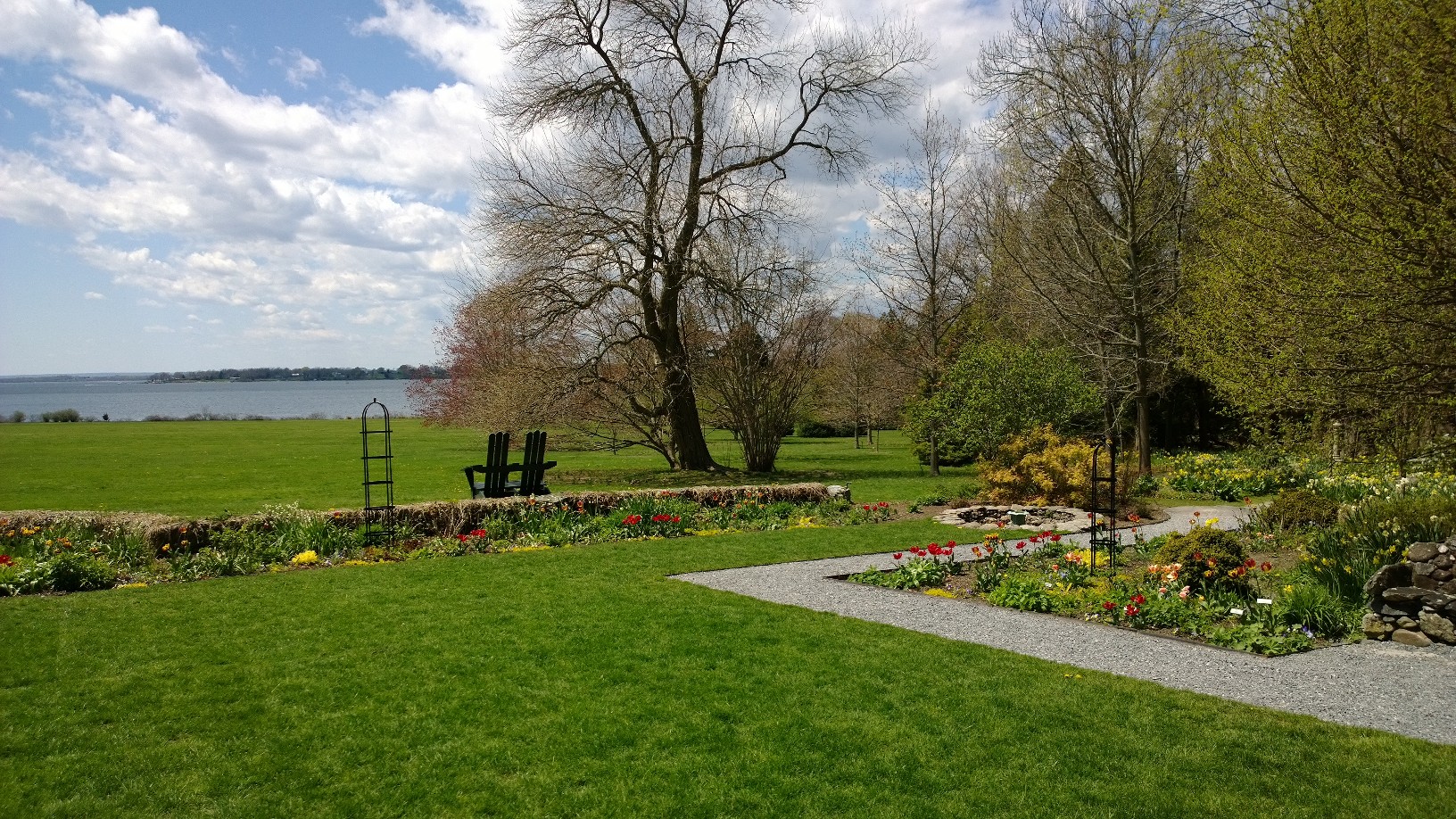
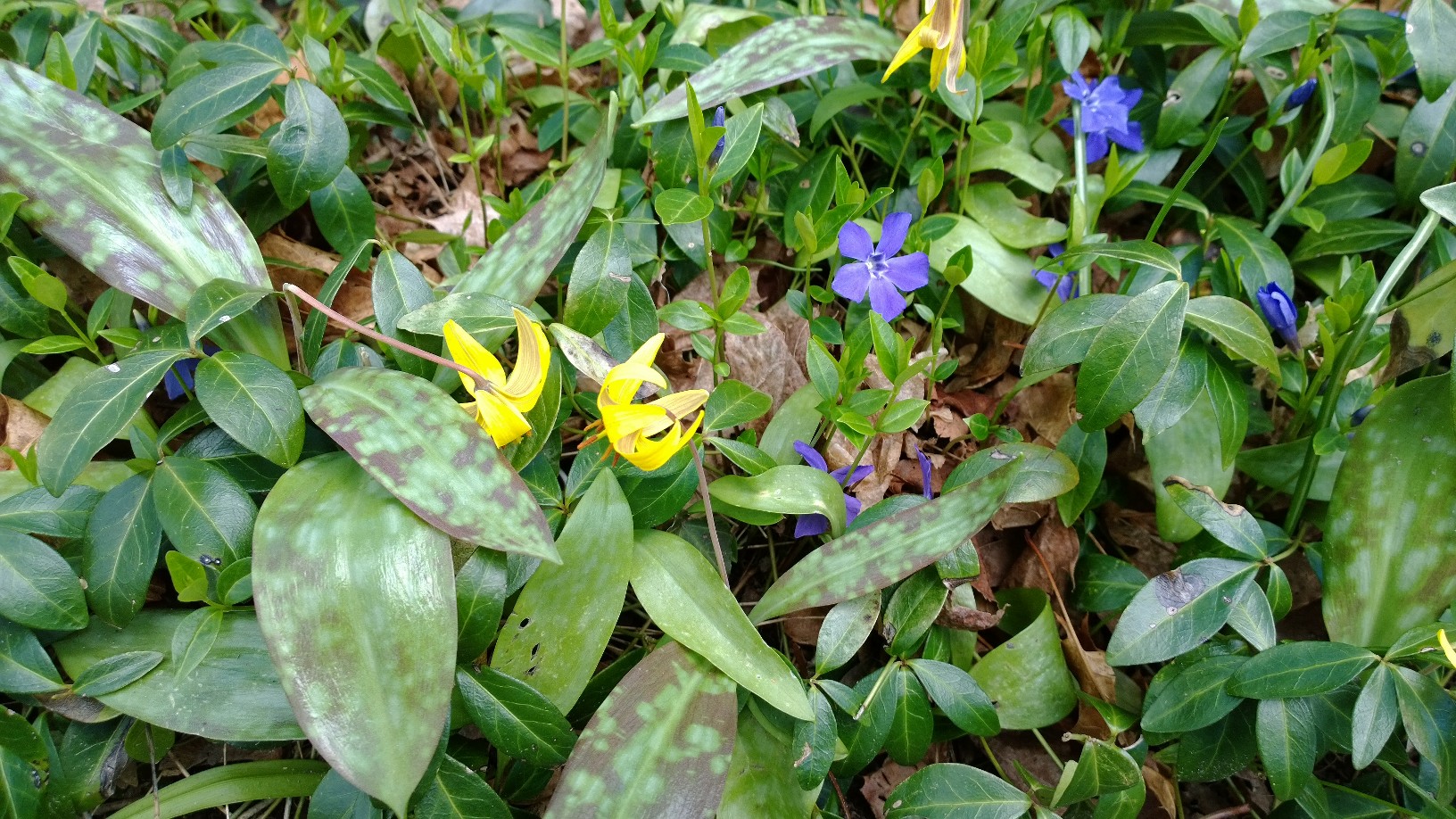
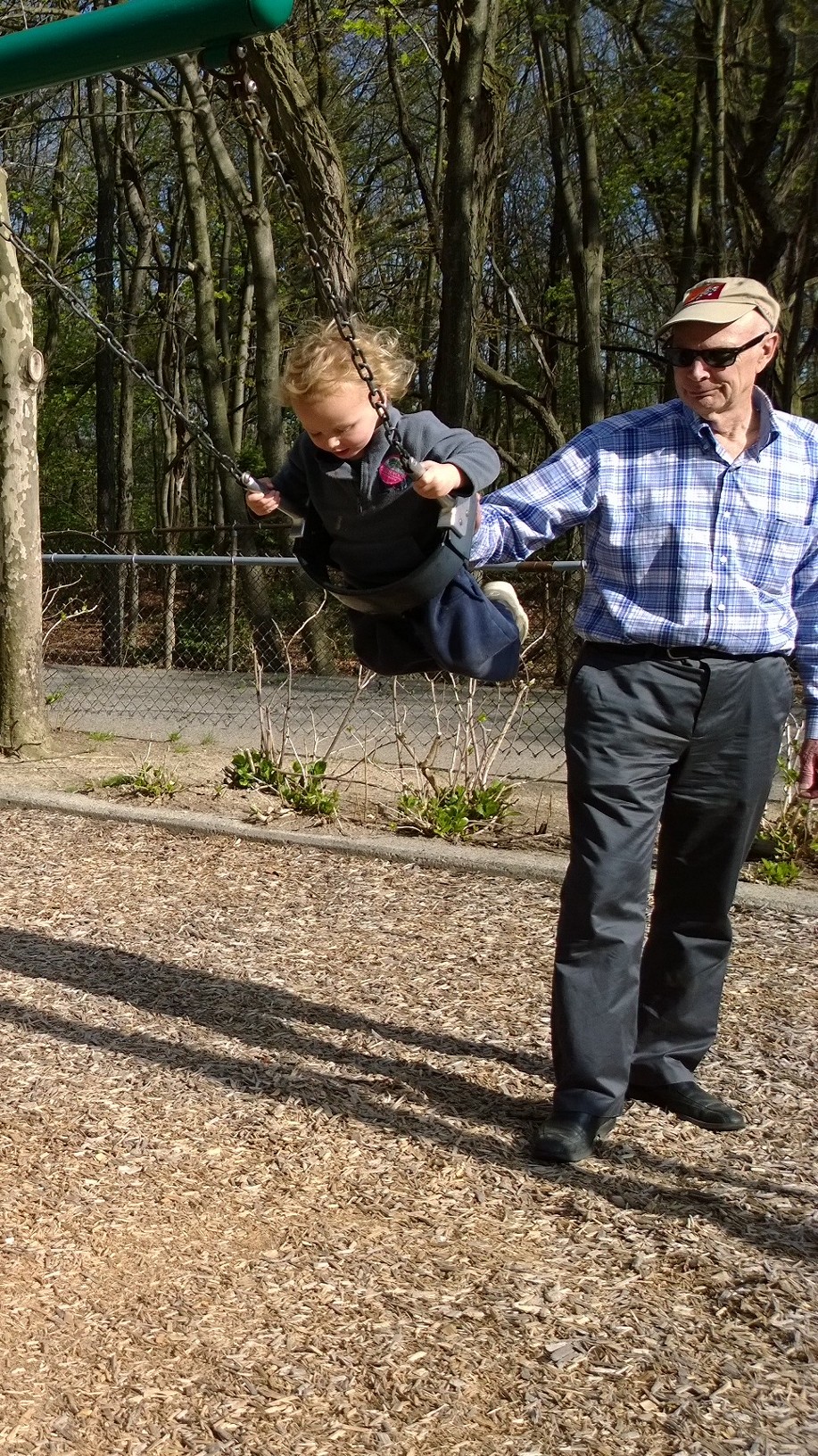
A certain napless two-year-old wore out five devoted adults in Rhode Island today — but what a fine time we had! From the Blithewold estate, to the yacht museum, to the playground, it was a grand way to spend a warm spring day near the sea.

And so, to bed … zzzzzzzzzzzz.

Blithewold-vista

Blithewold-Bristol-R!


Blithewold-flowers


fountaindog-toothed-violet


Blithewold-stone-benchMorfar-and-G-050314


Read Full Post »

I can think of a few people I know who would love to conduct an orchestra just once.

A couple years ago, I was telling Suzanne and Erik how the Melrose Symphony Orchestra had a drawing at the Holiday Pops concert for an audience member to conduct the last number, and Erik said he would really love to do that. Given that he won a business-plan competition yesterday, he might feel like conducting an orchestra right now. Since there’s no orchestra handy, the next best thing might be an electronic simulator.

Writes Liz Stinson for Wired, “Most of us will never get the chance to conduct a real symphony orchestra, and that’s probably for the best. But a fake symphony orchestra made up of towering speakers, motion controllers, and touchscreens? Totally doable.

“A new installation at the Mendelssohn Museum in Leipzig, Germany lets you do exactly that, no music school required. The Mendelssohn Effektorium, by design studio WhiteVOID, is an interactive installation that allows you to have complete control over a virtual symphony. In this world you’re Felix Mendelssohn-Bartholdy, and your instruments come in the form of 13 upright speakers with digital displays on them.

“Each of these speakers corresponds to a certain instrument group: woodwinds, brass, percussion, vocals and so on. It’s up you how much spotlight each instrument gets and how fast the tempo moves.” More at Wired. Be sure to play the video demonstration of someone conducting this way.

Photo: WhiteVOID
A Leap Motion sensor calculates your speed based on the pendulum interval of your movements and adjusts the tempo accordingly.

Read Full Post »

« Newer Posts - Older Posts »