Feeds:
Posts
Comments

Archive for May, 2014

At my husband’s college reunion yesterday, we heard a former classmate talk about a wonderfully innovative school he founded  in San Diego (High Tech High).

After hearing that a fairly typical class project was developing a genetic bar code to identify endangered species in the bush, my husband wondered how such an inventive school can function in today’s teaching-to-the-test world. I myself figured that whatever the kids absorb from meaningful projects and cutting-edge teaching they absorb deeply enough to pass tests if they need to.

And when I think of the lengths to which test mania is going, I think more schools should learn from High Tech High. Consider the latest testing aberration: robots grading essays.

Les Perelman at the Boston Globe gives examples:

” ‘According to professor of theory of knowledge Leon Trotsky, privacy is the most fundamental report of humankind. Radiation on advocates to an orator transmits gamma rays of parsimony to implode.

“Any native speaker over age 5 knows that the preceding sentences are incoherent babble. But a computer essay grader, like the one Massachusetts may use as part of its new public school tests, thinks it is exceptionally good prose.

“PARCC, the consortium of states including Massachusetts that is developing assessments for the Common Core Curriculum, has contracted with Pearson Education, the same company that graded the notorious SAT essay, to grade the essay portions of the Common Core tests. Some students throughout Massachusetts just took the pilot test, which wasted precious school time on an exercise that will provide no feedback to students or to their schools.

“It was, however, not wasted time for Pearson. The company is using these student essays to train its robo-grader to replace one of the two human readers grading the essay, although there are no published data on their effectiveness in correcting human readers.

“Robo-graders do not score by understanding meaning but almost solely by use of gross measures, especially length and the presence of pretentious language. The fallacy underlying this approach is confusing association with causation. A person makes the observation that many smart college professors wear tweed jackets and then believes that if she wears a tweed jacket, she will be a smart college professor.” More here.

Uh-oh. Sounds like the children’s book Petunia. Fortunately, a timely explosion taught the silly goose that books have pages you need to read, that carrying a book under your wing doesn’t make you smart.

More explosions needed.

Photo: blog.spoongraphics.co.uk
Read Full Post »

Barnes-3


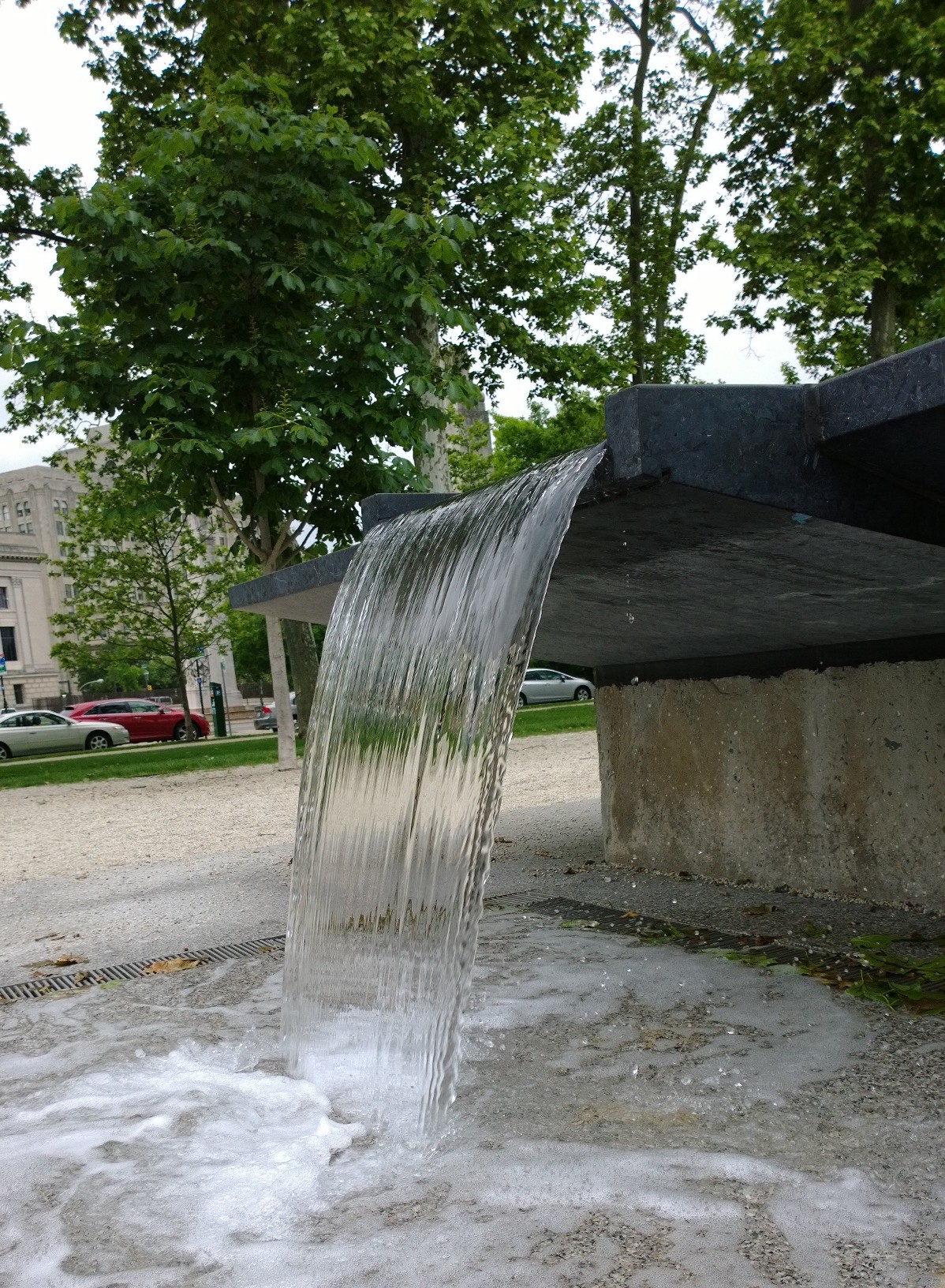
Barnes-waterfall

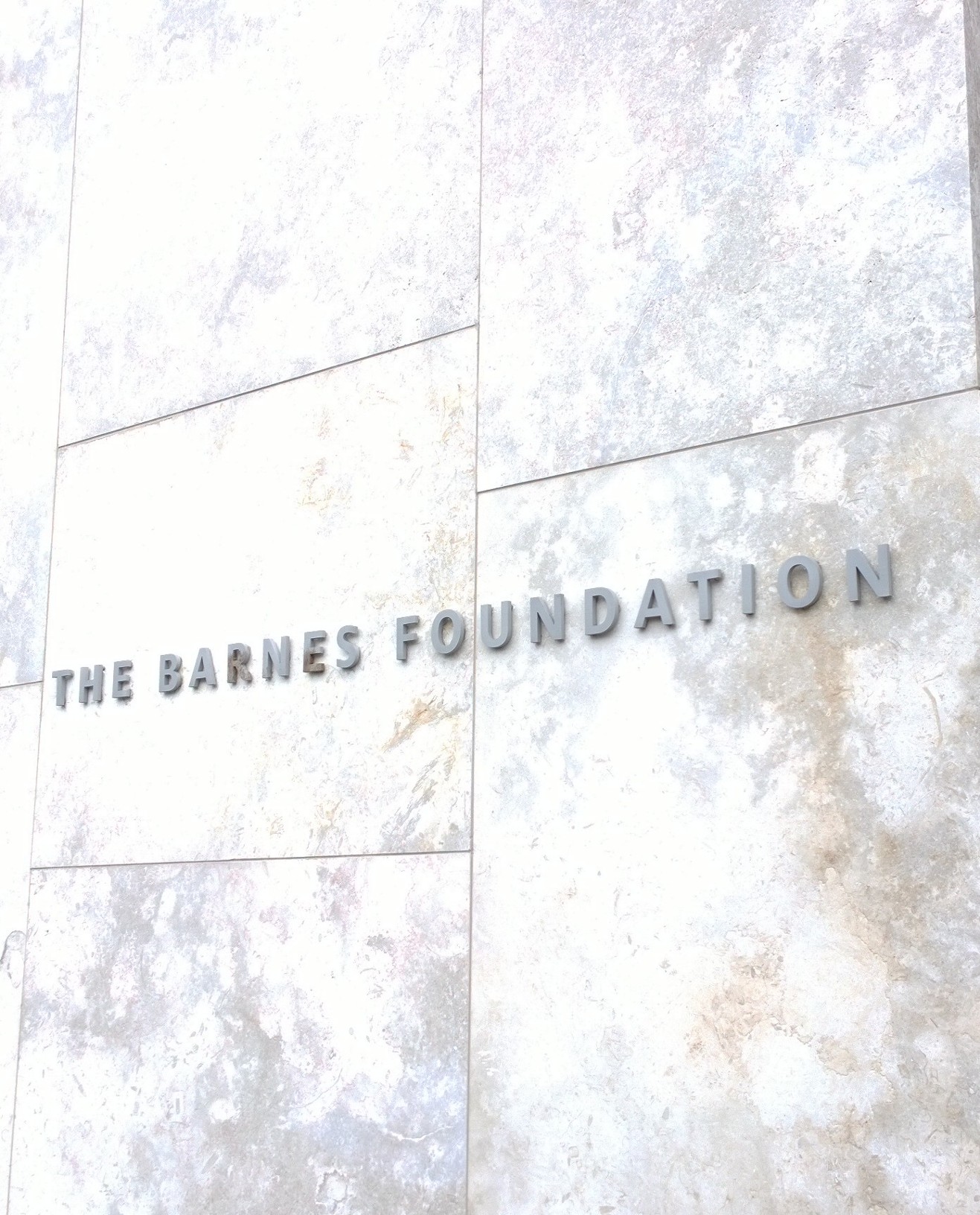
Today I need the Indian goddess with the many arms because I want to say about the Barnes Collection in its new home, “On the one hand, on the other hand, on the third hand …”

After I saw the documentary The Art of the Steal, about how the fabulous art collection that was willed to a historically black college to keep it from art-world experts ended up in the hands of art world experts, I thought a trustee at Lincoln University had sold his patrimony for a mess of pottage. Now I think that receiving untold wealth is a curse and the donor better have a good plan and lots of resources to support the unfortunate recipient. (More about the movie.)

That’s two hands.

On Thursday, having visited the Albert C. Barnes collection in its new Philadelphia Museum of Art building, I needed a few more hands.

On the third hand, the building is gorgeous in its simplicity and displays the art (69 Cezannes, anyone? How about 60 Matisses? 44 Picassos? 178 Renoirs? Do you love Seurat? Van Gogh? Pennsylvania Dutch furniture?) in the quirky layout of the old Merion, Pa., setting and without labels as Barnes did. On the fourth hand, lack of labels is annoying. On the fifth hand, the art experts provide an ipod with lectures on selected works and a booklet to identify all the items exhibited. On the sixth hand, faithful as the layout is, Dr. Barnes, who made his money in pharmaceuticals and wanted ordinary working families to enjoy and study art without the filter of the art establishment — would have had a heart attack about the entry fee and the standard gift shop and coffee shop and other luxurious museum appointments.

The museum is definitely worth seeing, for the building, the art, and the way the roaring controversy was all handled. But it’s the little things I will cherish like finding black and white illustrations that reminded me of Dickens illustrations and turned out to be by the school friend Barnes asked to help form his taste and get him started on collecting (William Glackens).

Giorgio de Chirico, Portrait of Albert C. Barnes, 1926

Read Full Post »

We watched Only When I Dance on Netflix last weekend, and afterward my husband did a Google search on the dancer who won the awards.

(The other dancer was heartbreaking. She was told that because she was black, there would be no opportunity in Brazil to join a company and she’d have to win a place abroad. Abroad, they told her she weighed too much — even though she was quite slender. Her family was poor and sacrificed everything for her.)

Dancer Irlan Silva ended up at the Boston Ballet.

James H. Burnett III wrote about him for the Globe. “At 23, Silva is a rising talent with Boston Ballet. But six years ago he wasn’t sure whether he’d even live long enough to see his dream of a career in ballet come to fruition. …

“Where he came from — a gritty favela in Rio de Janeiro — was documented in a critically acclaimed 2009 documentary called Only When I Dance, in which Silva and another dancer from the slums of Rio, Isabela Coracy, battle the odds in pursuit of their careers. Favelas, shanty towns that surround the city, are rife with poverty and violence. …

“Silva’s interest in ballet developed when he attended a professional performance at the age of 10. ‘I was hooked immediately,’ he says.

“He says his natural flexibility and leaping ability carried him until he was able to receive formal training, but not every flexible would-be dancer in Brazil was able to land a spot in Centro de Dança Rio, the nation’s premier ballet school.

“ ‘My teacher — a great teacher — Mariza Estrella  is responsible for inspiring me and pushing me on my way, out of the nest.’ …

” ‘Ballet can be expensive,’ he says. ‘My mother ran a cafe from her home. She still does in the same place. And she just made sure I had whatever I needed, like ballet shoes. …

“His father … Irenildo Santos, a factory worker in Rio, said through an interpreter in a recent phone interview that his son’s dancing ability was what convinced him that ballet was a worthwhile pursuit.

“ ‘We live in a very tough community. It can be very dangerous. There is crime. And there are even people who wish to harm you if you don’t behave in a certain way or fit a certain mold. … But when I saw him dance the first time, I was very moved. And now I am his fan. I am his biggest fan.’ ” Read more.

Photo: Essdras M Suarez/Boston Globe
Dancer Irlan Silva

Read Full Post »

It’s a little hard to get my head around using this topic for an opera, but an article at FastCo Design makes it seem almost logical.

“A legendary 1960s battle over the urban design of New York City is getting its dramatic due. The struggle between urban planner Robert Moses and journalist/activist Jane Jacobs over Moses’s proposed Lower Manhattan Expressway will become an opera, thanks to composer Judd Greenstein and director Joshua Frankel.

“Moses and Jacobs had deeply divergent visions of New York City’s future. Moses was the powerful planner behind a swath of New York City expressways that displaced half a million people during his reign as the city’s master builder. He envisioned a city built for easy driving.

“Jacobs, who popularized the idea of eyes on the street — the notion that streets are safer and more vibrant when there are pedestrians on them — vehemently opposed Moses’s plans to raze Washington Square Park and much of Greenwich Village, where she lived, to build yet more miles of highway.” More here.

If you ask nicely, I will sing you the lyrics Arnold Horwitt wrote to the tune of “Everything’s Coming Up Roses” (substituting the word Moses) that the crowd sang on a ferry ride to protest a road Moses proposed for Fire Island.

Photo: FastCoDesign

Read Full Post »

Zachary Sampson has a nice article at the Globe today. It’s about a project in Boston enlisting passersby to help create a mural.

The mural “was created by artist Ernest McKinley English. He joined with ArtLifting — a Boston organization that works with homeless and disabled artists — to organize the project, which he said was meant to foster collaboration. …

“Liz Powers, cofounder of ArtLifting, said English’s vision dovetails with her organization’s purpose. ‘Both Ernest and ArtLifting have the mission of bringing people together through art, building community through art,’ she said.”

The mural “held a hidden message that would be revealed upon completion. …

“The part-in-a-whole ethic resonated with many of the artists who worked on the piece, both amateur and professional.

“ ‘I think the greatest message,’ [artist Randy] Nicholson said, ‘is as a community, we can accomplish what we can’t as individuals.’ ” More here.

Years ago, Suzanne and John helped paint a beautiful mural about our town for the commuter rail station. Their names were included in the credits and we always felt proud reading them when we passed by.

Photo: Michele McDonald for the Boston Globe
Sisters work on paint-by-numbers mural outside the Prudential Center.

Read Full Post »

An Imperial Elegy
by Wilfred Owen

Not one corner of a foreign field
But a span as wide as Europe;
An appearance of a titan’s grave,
And the length thereof a thousand miles,
It crossed all Europe like a mystic road,
Or as the Spirits’ Pathway lieth on the night.
And I heard a voice crying
This is the Path of Glory.

@-> @-> @->
Born in Shropshire, England, poet Wilfred Owen is best known for telling the truth of what he saw in World War I, a war joined too lightheartedly by many of his countrymen 100 years ago. He  died at the Sambre-Oise Canal a week before the Armistice was signed.

Read more about Owen here.

Photo: Suzanne’s Mom
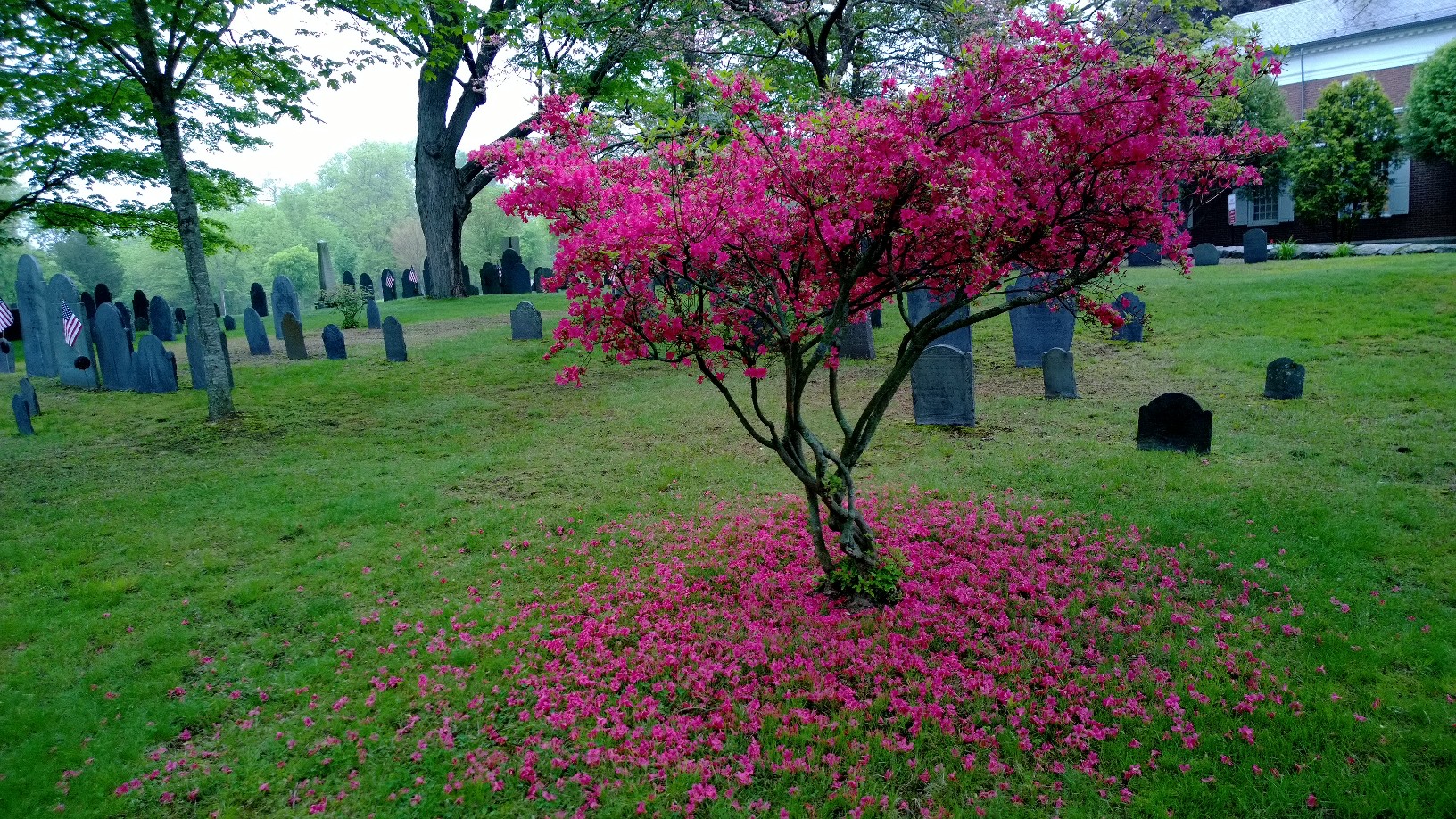
Azalea moving to the next phase

azalea-moving-to-next-stage

Read Full Post »

If you like trompe l’oeil painting — that sleight of hand that makes you think you are seeing one thing when it’s really another — you will love “invisible” architecture.

Writes Mallika Rao at the Huffington Post, ” ‘Invisible’ architecture isn’t a novel concept … But it’s an evolving one. Given the pace of technological change, an architect is never done finding fresh ways to make a building disappear.”

Consider the picture below.

“The revelation is the technology the architects chose not to use,” says Rao. “No fancy LEDs or futuristic materials are needed to build “Invisible Barn,” as the parallelogram-shaped structure pictured in Socrates Sculpture Park is known. The brainchild of the New York-based architecture firm stpmj, it’s designed to be made of wood and sheeted with mirror film, at a cost of $5,000.

“The idea is to ‘blur the perceptual boundary’ between object and setting, according to a statement sent by the architects to The Huffington Post. Niches built into the structure mean the experience changes the closer you get — up close, you can see where true birch trees turn into reflected ones. …

“If it seems whimsical, that’s because the idea was hatched for the Folly contest, an annual event held by the Architectural League of New York. The name references the age-old concept of the ‘architectural folly,’ a fanciful, small building typically set in a garden as a conversation starter.” More here.

Photo: stpmj, an architecture firm

Read Full Post »

Photo: Thomas Ondrey/The Plain Dealer
Zumba instructor Kelly Perkins, center, leads a group dance-walking  through Shaker Heights on Friday. The local version of the craze was organized by Shaker resident Jennifer Lehner.

Mary Ann is one of Cleveland’s biggest boosters. This week she’s been posting on Facebook about a dance-walk outing she joined Friday.

Janet Cho at the Cleveland Plain Dealer interviewed dance-walk organizer Jennifer Lehner.

“The idea came out of a backyard barbecue,” Cho writes. Lehner “was chatting with her friend Karen Katz, wife of Fire Food & Drink’s Doug Katz, about the fun YouTube video where WNBC television reporter Ben Aaron convinces New Yorkers to strut their stuff with him down the city streets.

” ‘We should do that!’ Katz said.

” ‘About one hour later I went home and bought the dancewalkfitness.com domain, set up the website and the Facebook page,’ she said. ‘You know, that’s just how I roll.’ …

“Lehner envisions tying the dance-walks in with her monthly Flash Cashers events, since the group might end up having lunch at a local restaurant after the workout.

“Flash-Cashers summons consumers to descend upon a local Shaker Heights-area business to spend at least $20 each during the cash mob event, giving the merchant a welcome one-night boost and increasing awareness among residents who may never have stepped foot in the store before.” Read more at the Cleveland Plain Dealer, here.

And here is Ben Aaron, who started the whole thing.

Read Full Post »

David Guttenfelder seems to get into North Korea and take pictures there more than anyone else, but what are you allowed to take pictures of in North Korea?

When Guttenfelder isn’t attending any official event, he improvises. He may have invented an art form in North Korea — artifact photography. He snaps bunches of plastic flowers in a hotel room, dinner menus, concert programs and labels them as “artifacts,” numbered.

No wonder he is involved with a new artifact museum, mmuseumm, which features the kooky things people collect.

Consider Toothpaste Tubes from Around the World, collected by Tucker Viemeister.  Says Viemeister, “Although I come from a ‘Crest family,’ I got my first tube of foreign toothpaste in Finland in 1985. We were shopping for normal stuff (Marimekko and toiletries). I saw a tube of toothpaste that’s [got a] name as long as the tube! They have long words in Finland.

“As I traveled around, I’d sample the toothpaste around the world. It was fun to buy and fit easily in my bag. Meanwhile it was an easy gift!

“I noticed that toothpaste is a universal media for indigenous people – a veritable blank canvas — both graphics on the generic tube and the flavors of the paste. French brands are more gourmet, Asian is more fruity, while American is very sharp (it this stereotyping?).” More here.

The museum is in Cortlandt Alley between Franklin St. and White St. in Manhattan.

(I wonder if my collection of wooden thread spools is extensive enough for a museum. I am afraid I lost the varied European toilet papers I collected on a trip at age 15.)


Read Full Post »

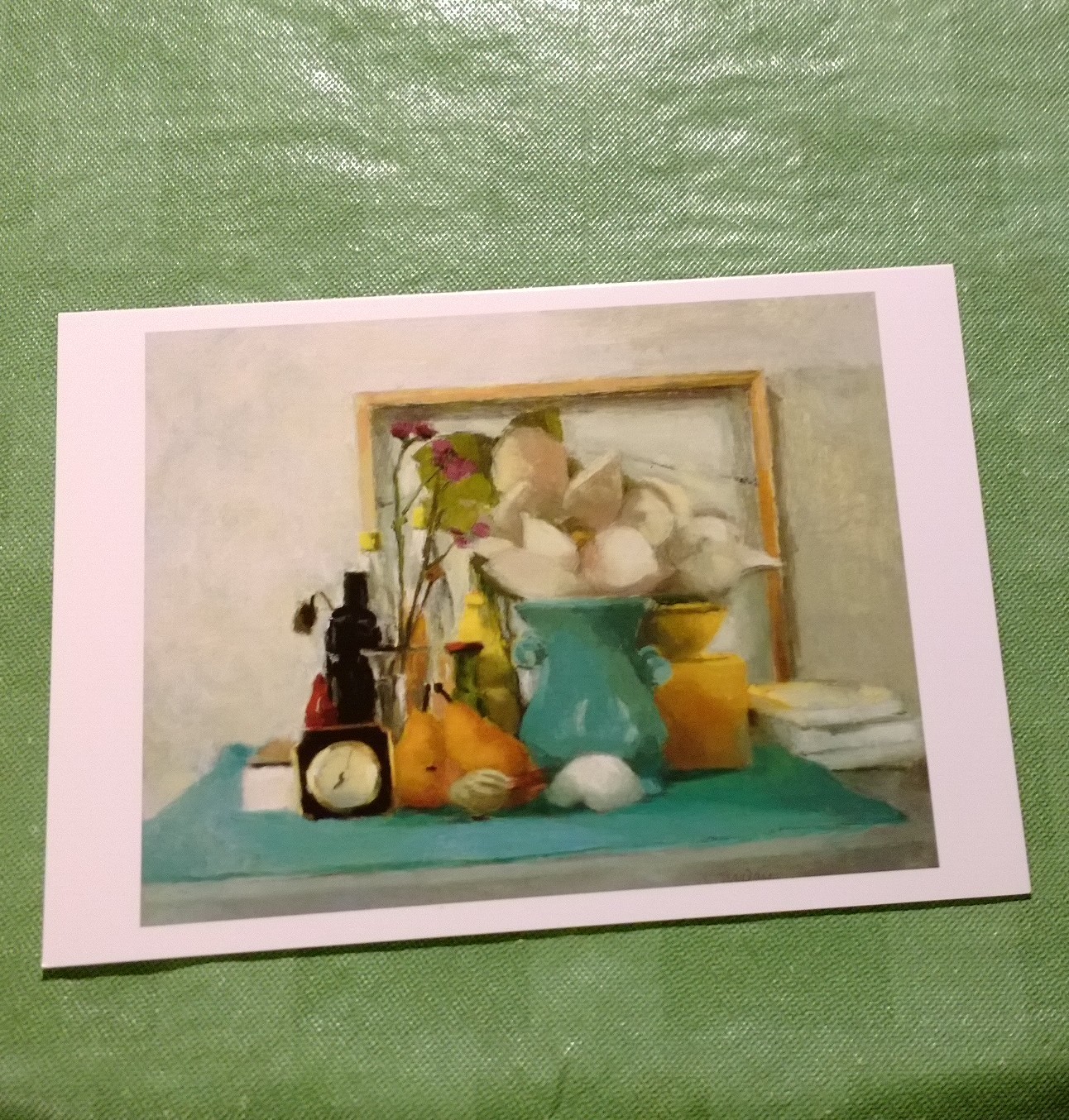
Fyfe-Day-repertoire-with-frame-cardGreeting card of Meredith Fyfe Day’s “Repertoire with Frame.”

Back in the early 1990s, I worked for Meredith Fyfe Day at Harte-Hanks newspapers, where we whipped into shape tottering stacks of press releases of wildly varying literacy.

That was Meredith’s day job. She was also a working artist. My husband and I have long enjoyed her shows, several of which were at the Whistler House Museum of Art in Lowell when Meredith was the artist in residence.

Recently a friend of hers tagged her on Facebook, which was how I learned that the Lowell Sun wrote an article on her latest artistic venture.

Reporter Debbie Hovanasian writes at the Sun, that Meredith “was recently awarded a grant from the Parker Foundation. The result is ‘Making Art with Artists,’ and Fife Day, who teaches painting at Middlesex Community College, couldn’t be more thrilled.

“During her prior experience teaching art to young students,’I could see the kids blossoming, even the tough kids who said they didn’t like art. I would encourage them and it would light a spark. They’d come back with such enthusiasm, and I fell in love with seeing that change in children,’ she said.

” ‘Making Art with Artists’ is a seven-week summer program offered on Tuesdays and Thursdays at no cost at Christ Church United on East Merrimack Street [Lowell, MA] …  with emphasis on fourth- to eighth-graders, she said.

“The program facilitates the teaching of art to under-resourced and under-served children, Fife Day said. The four teachers are experienced, working artists who will make a presentation of their own work to the students in two successive classes. …

“One of the program’s goals is for the children to adapt the techniques of the artists in order to make their own artwork as well as collaborative artwork, using their own and combined imaginations, Fife Day explained. It also aims to give children a positive alternative to high-risk behavior by giving them high quality educational opportunities …

“Fife Day is currently seeking community donors — food or funds — for a lunch program, which she plans to offer free of charge to the budding artists, a cost not covered within the grant.

“The day is structured so that the students work on individual projects in the morning and group projects in the afternoon. There’s also yoga after lunch and free time early morning and late afternoon, during which Fife Day is exploring having musicians and other volunteers willing to donate their time to entertain or supervise the children.

” ‘It’s about giving the children hope and letting them have fun believing in themselves, knowing that the next day can be as much fun as this one,’ she said.” More here.

Photo: Lowell Sun
Art by Meredith Fyfe Day

Read Full Post »

At the radio show Living on Earth, Steve Curwood recently interviewed Gary Cook of Greenpeace about an effort to get tech companies to be greener.

CURWOOD: “Back in 2012, you criticized Apple for using carbon-intensive energy from coal plants to power its servers. …

COOK: “Just after we spoke, they made a commitment to be 100 percent renewably powered, and as the end of last year, they even made that goal. So, it’s been quite a big shift.

CURWOOD: “100 percent renewable energy. How’s that possible?

COOK: “It requires some effort. Apple has done a lot in North Carolina where they have their largest data center in terms of deploying two different solar farms and an onsite fuel cell that’s powered with biogas energy, so it’s all renewable. They have several other data centers. … In Oregon they’re using wind; in Nevada they’re using solar.

“So they’ve actually shown a commitment from the top, been very aggressive, probably the most aggressive of any of the brands to make sure as they grow, they’re using clean energy.

CURWOOD: “Biogas. Where are they getting that from?’

COOK:” Currently, they’re getting that from landfill and some other renewable sources. The landfill is methane capture in the southeast, and they’re having that piped to where their data center is in North Carolina.”

The radio interview covers several other efforts tech companies are making. It’s a good thing, too, when you consider, as Living on Earth points out, “If the Internet were a country, it would be the sixth largest consumer of electricity in the world.” More here.

Photo: George Nikitin, Greenpeace
The Greenpeace Airship A.E. Bates flies over Facebook headquarters with a banners reading “Building a Greener Internet” and “Who’s The Next To Go Green?” Apple, Facebook and Google have committed to powering their data centers with renewable energy.

Read Full Post »

I love the Fort Point area of Boston, across a channel from where I work. But even on a moderately stormy day, the water rises so high it threatens to overflow the banks. So the thinking behind one of the latest art installations there is no joke.

Peter Agoos’s “Tropical Fort Point” ( April 28 – June 15, 2014) is part of the the spring public art series presented by the Fort Point Arts Community Inc. Agoos says about his floating palm trees, “The struggle for quality public open space in the neighborhood and the likelihood of climate change-induced rising sea levels are the conceptual parents of Tropical Fort Point.”

There are several other new presentations around the area. “I Wandered,” by Kate Gilbert and Karen Shanley, “celebrates the joyous arrival of spring and invites you to explore the Fort Point through poetry. Large graphic daffodils and select phrases from ‘I Wandered Lonely As a Cloud,’ William Wordsworth’s 1807 poem about discovering a ‘host of dancing daffodils,’ can be found in five different spots around the neighborhood—encouraging us to … reconnect with the lost art of meditative walking.”

“Silver Lining,” by Elisa Hamilton, “is an inclusive exploration of our relationship with hope that invites the public to engage in the brilliance of possibility.” See photos and artist statements at Fort Point Arts, here.

Agoos-Tropical-Fort-Point

palm-trees-visit-Boston


Read Full Post »

Kids ages 3 to 5 seem to have a strong compulsion to check out trucks up close. So when organizations like Concord Recreation decide to do a little fundraising by providing the opportunity, parents of preschoolers know they just have to go.

I was walking back from the store when John’s wife and son pulled up and said they were on their way to Touch a Truck. I couldn’t resist. I said we’d meet them there.

I don’t know the names of all the trucks, but I can tell you the array included an ice cream truck, a fire engine, a police van, a front loader, and a truck for drilling telephone pole holes. There was one with a bucket for raising a person up high. My husband pointed out the rubber gloves you have to wear if you’re working around high-voltage lines. He explained how many times the gloves get dipped in rubber and carefully checked during the manufacturing process.

My grandson tried all the trucks. You can see that it’s fairly serious business.

051814-touch-a-truck

serious-truck-driver


checking-out-the-truck

Read Full Post »

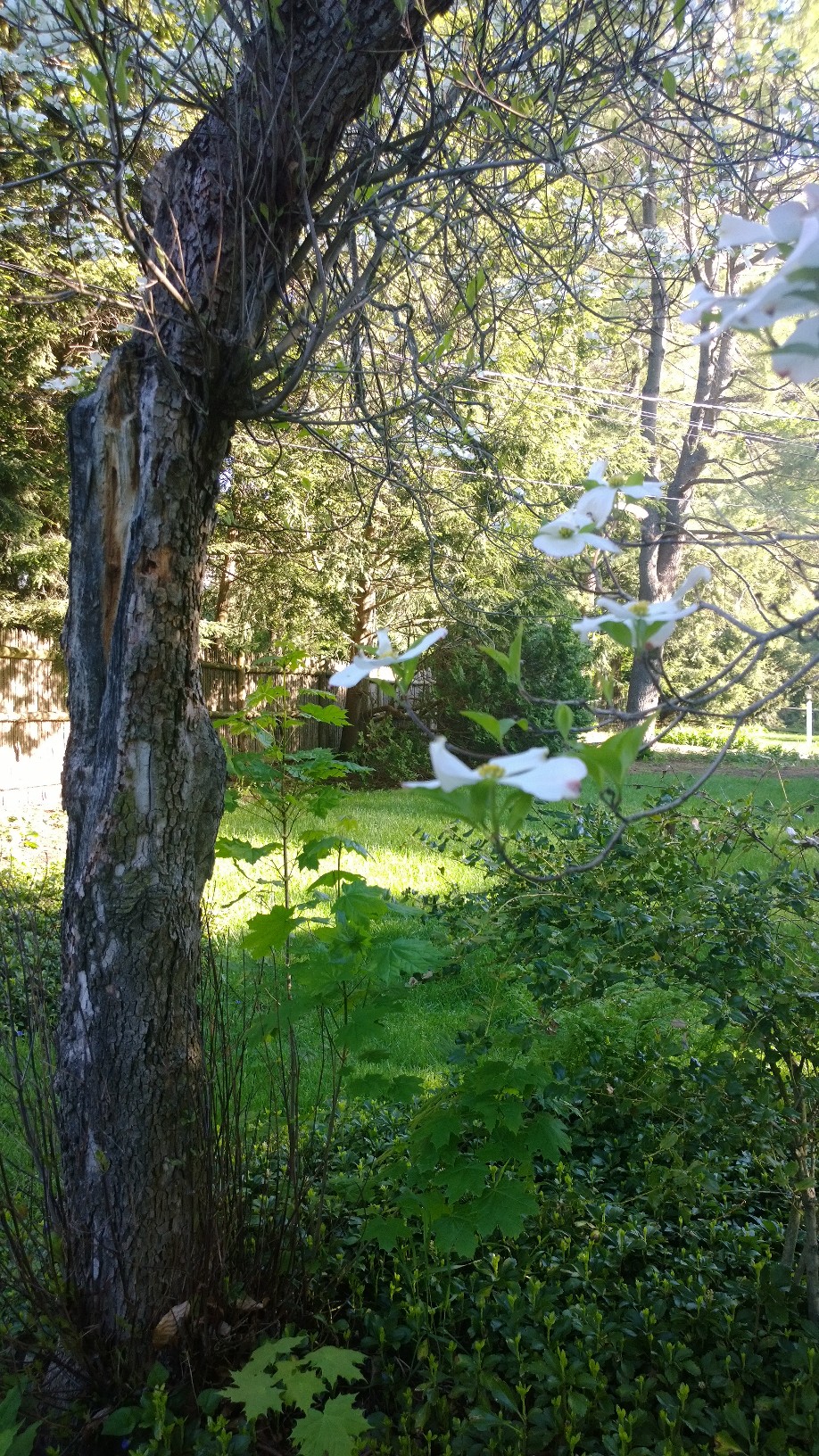
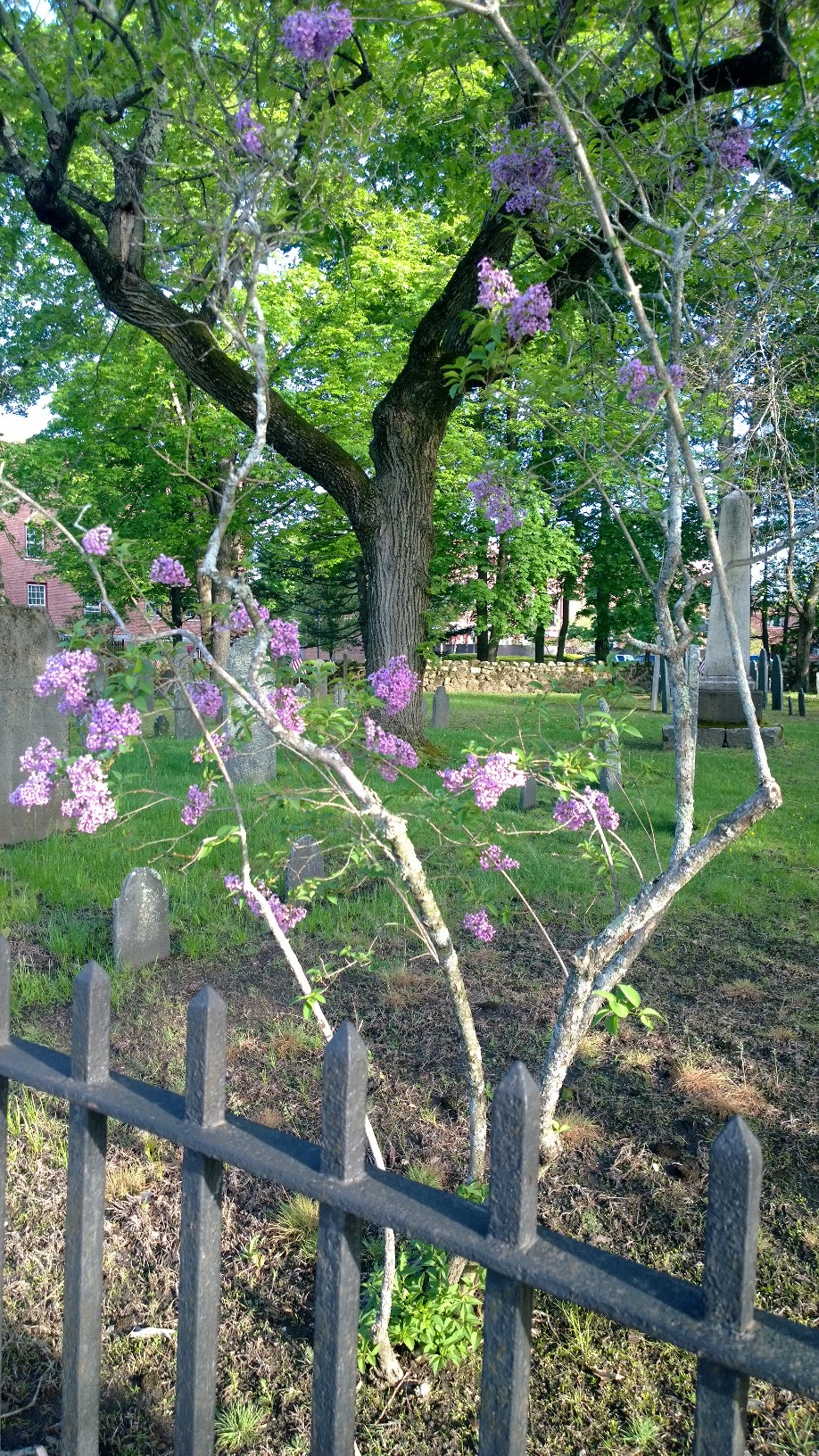
These photos are mostly from walks in Concord, although one is from Blithewold in Bristol, R.I. I’d like to develop my eye for good shots in winter, but there are so many more reasons to take pictures in spring! I especially love old, blasted trees with delicate, young flowers. I include one, a dogwood. The lilac in the graveyard is another tree that doesn’t know it’s not as hale and hearty as ever.

On Nashawtuc, a hundred different bird calls replaced the sounds of traffic.

Morning-sky-050214

rustic-flower-basket


church-herb-gaarden

dappled-rhodies


red-impatiens


wisteria-at-dawn


flowers-at-Blithewold

bondir-landscaping


crippled-but-flowering-dogwood

lilac-in-graveyard


Read Full Post »

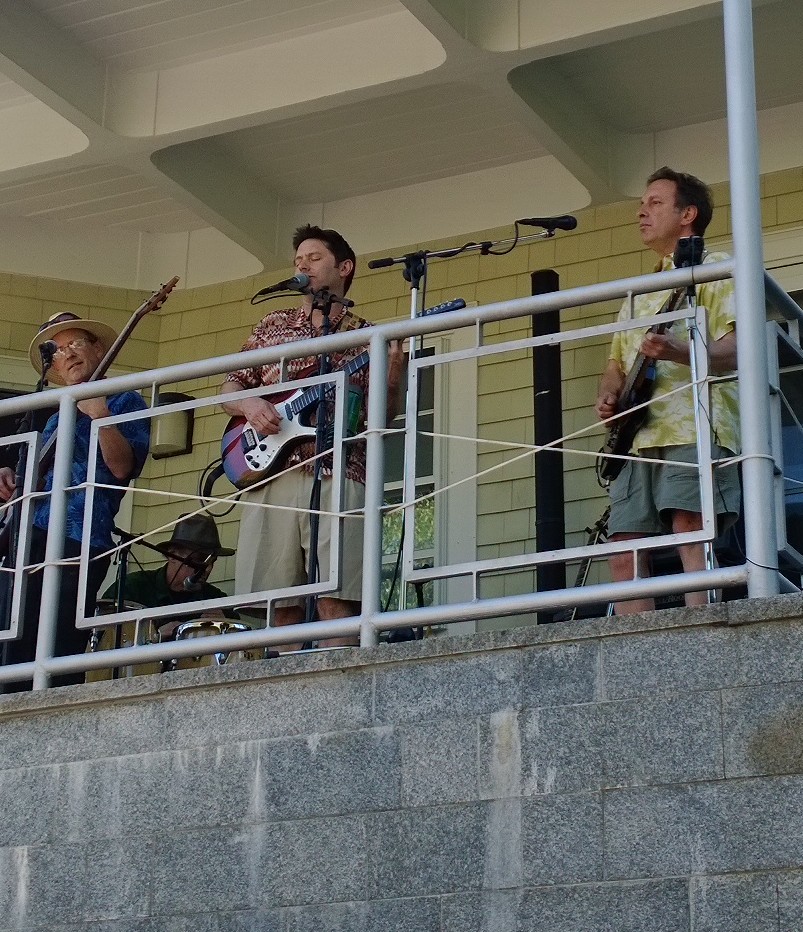
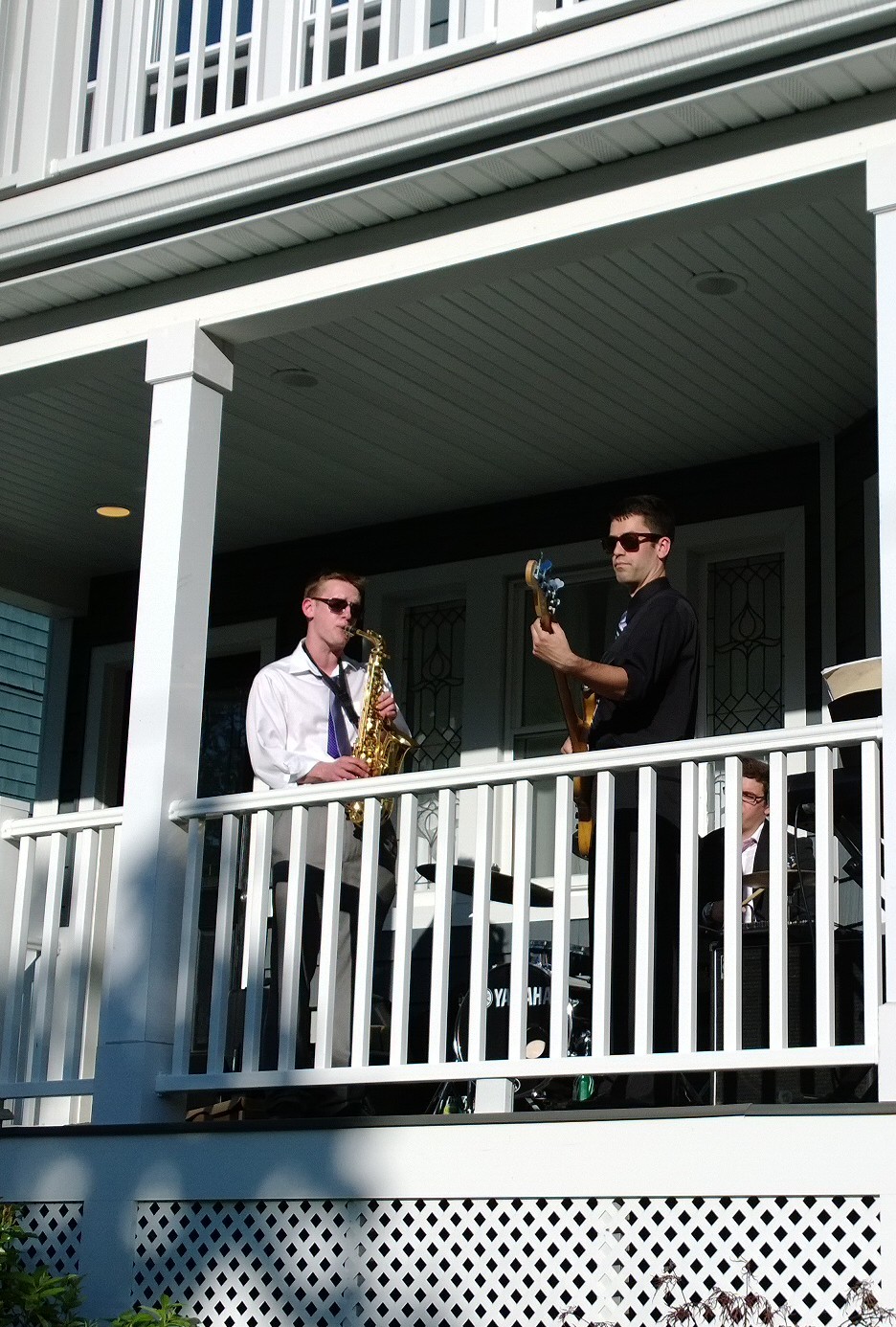
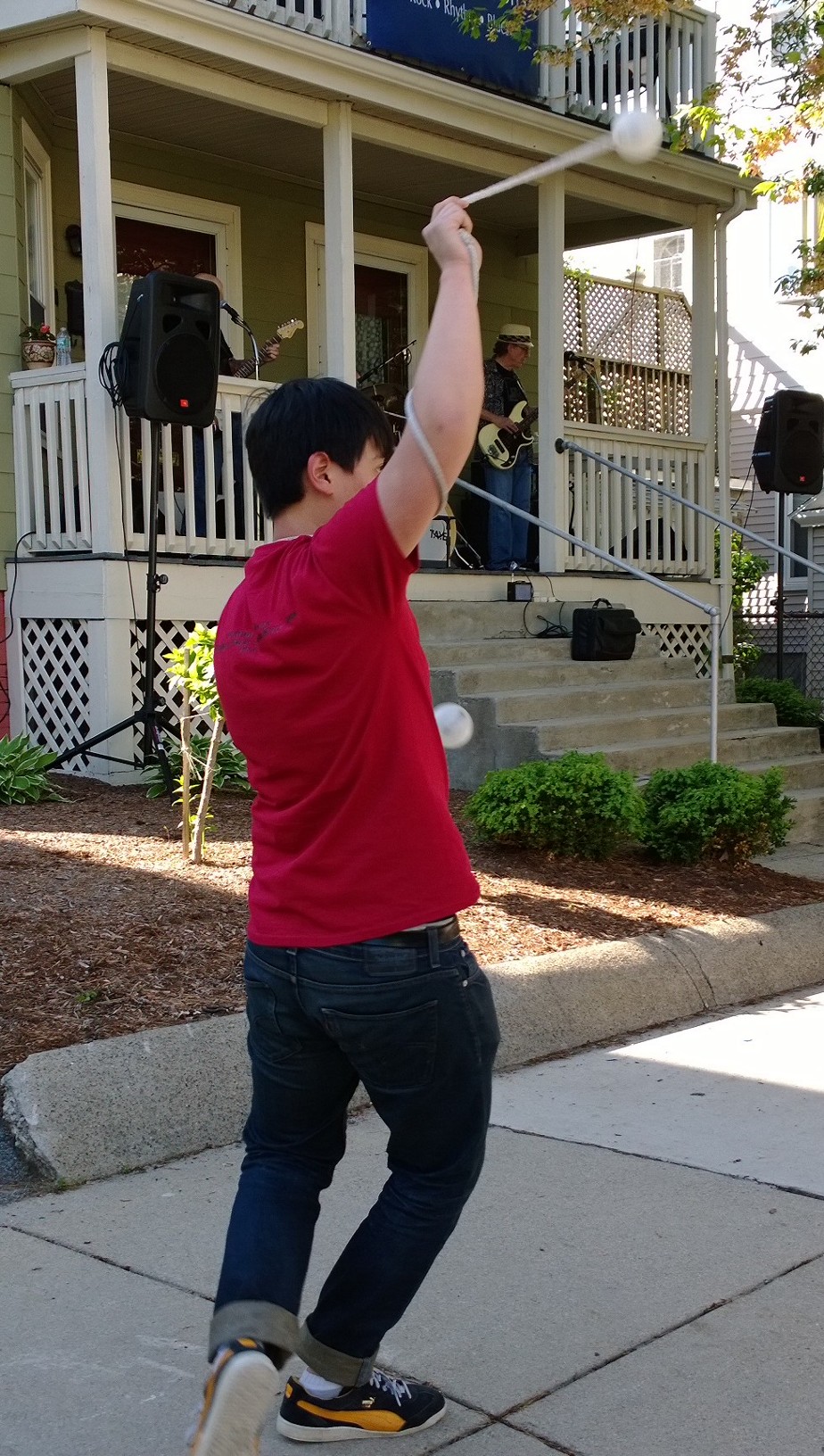
The rainy Saturday turned out to be gorgeous, so we went to the Somerville PorchFest and ran into some people we know.

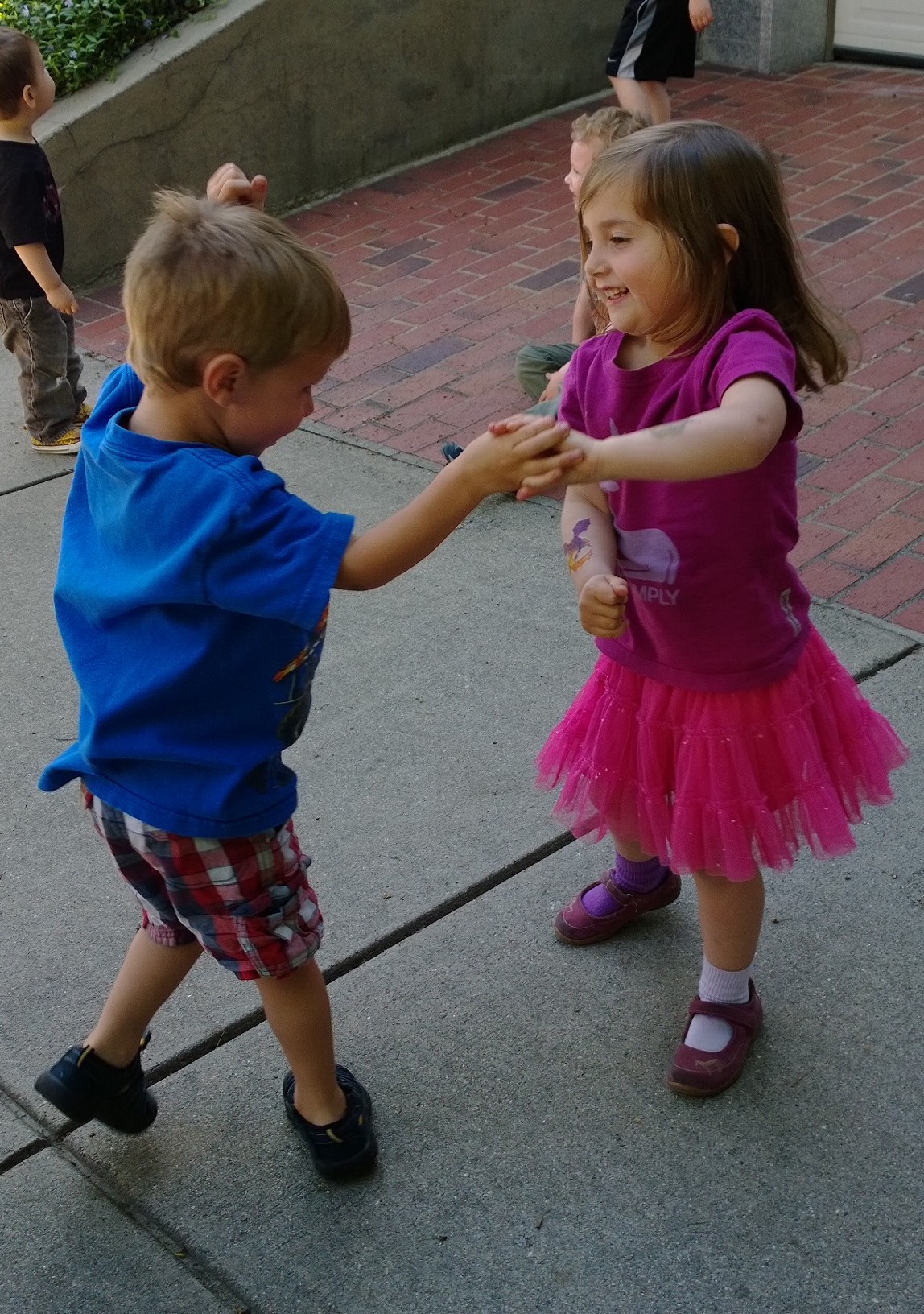
A variety of bands play on porches around the town.  Neighbors sit on their steps to listen, families and college students wander in, entertainers entertain, and almost everyone is moved to dance.

My grandson and his best friend are pictured cutting a rug.

Read about this annual event here.

one-porch-fest-band

somerville-porchfest-051714


twirling-balls-on-string

dancers-at-porch-fest


Read Full Post »

Older Posts »