Feeds:
Posts
Comments

Archive for October, 2015

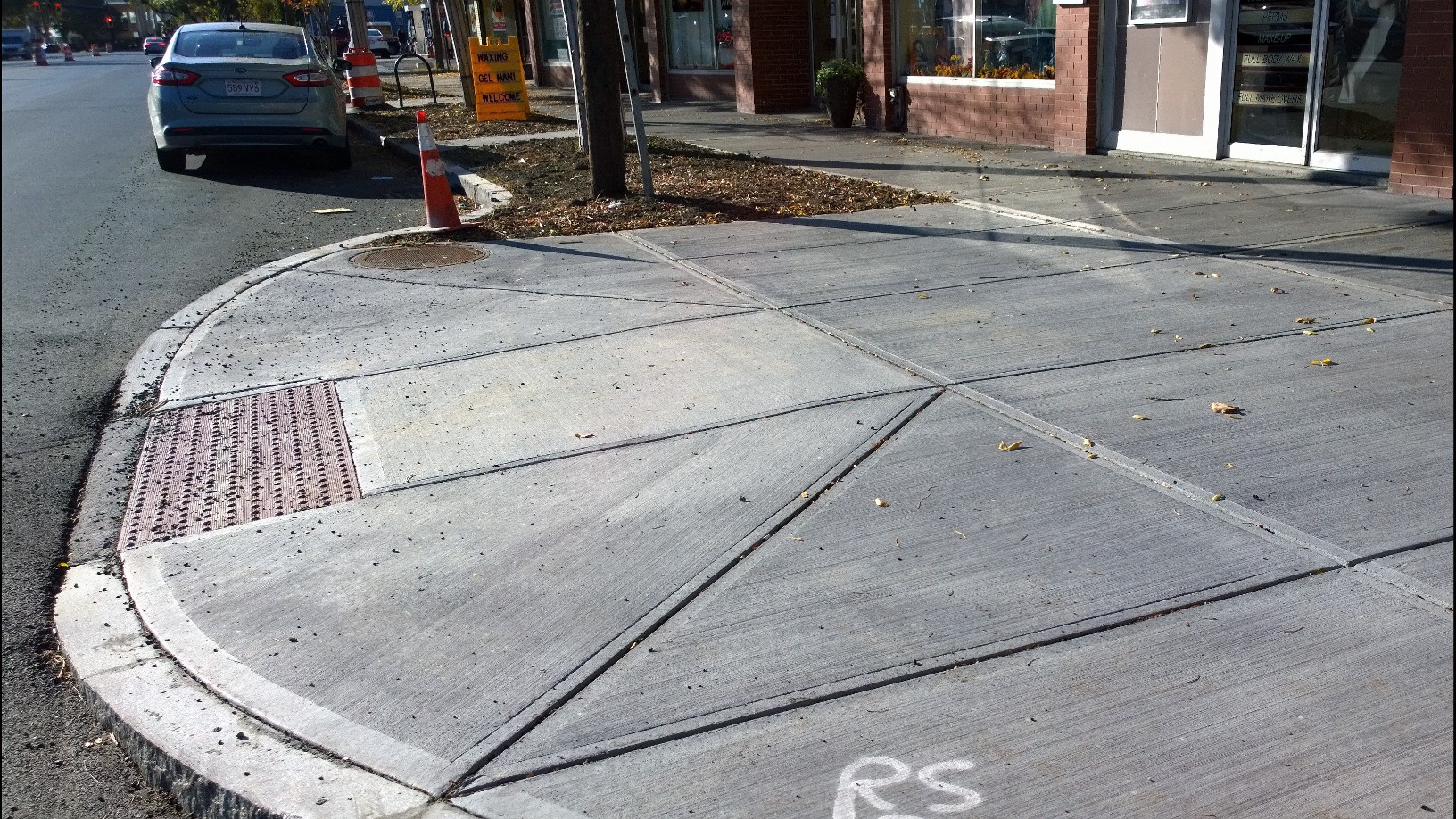
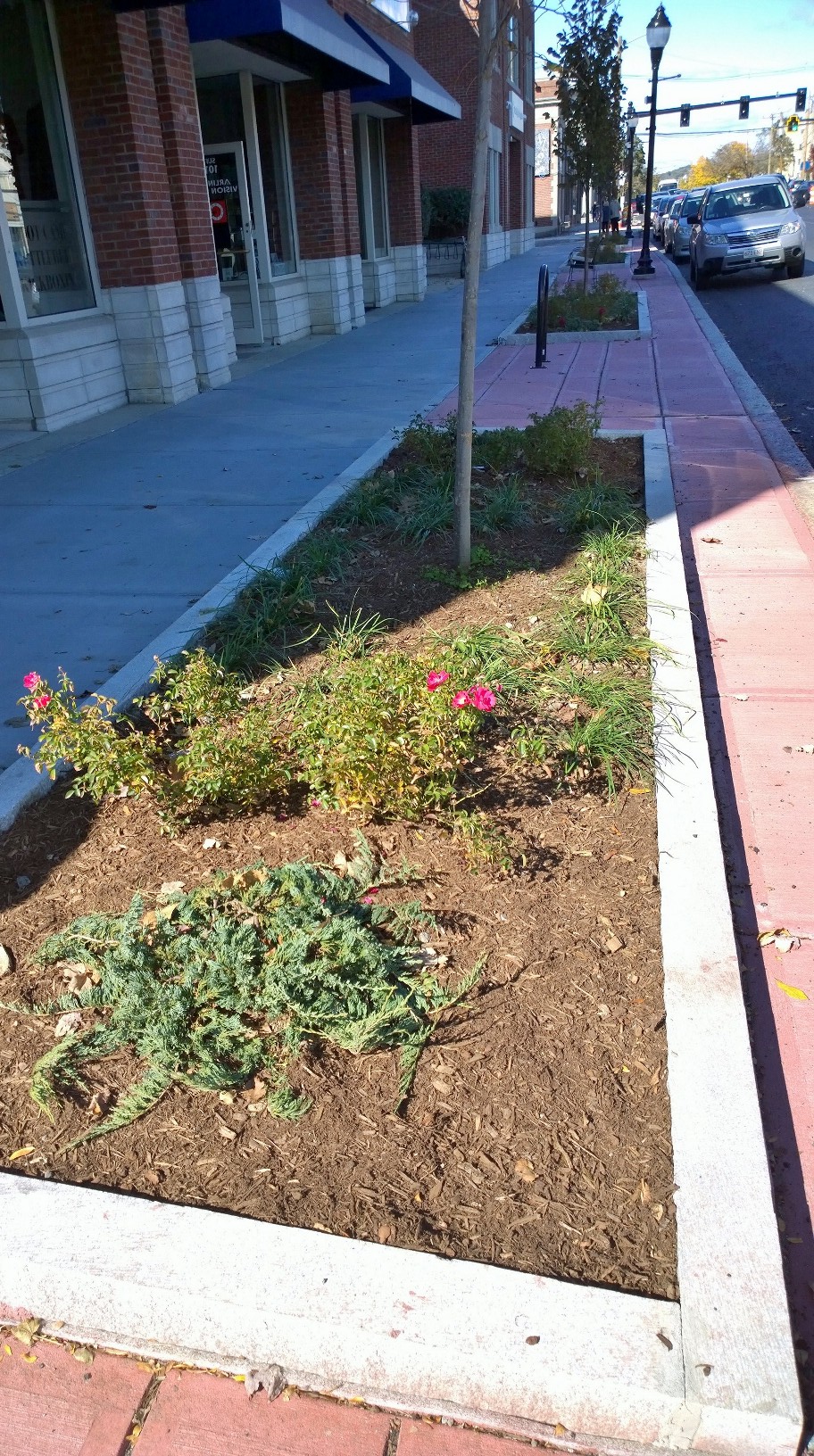
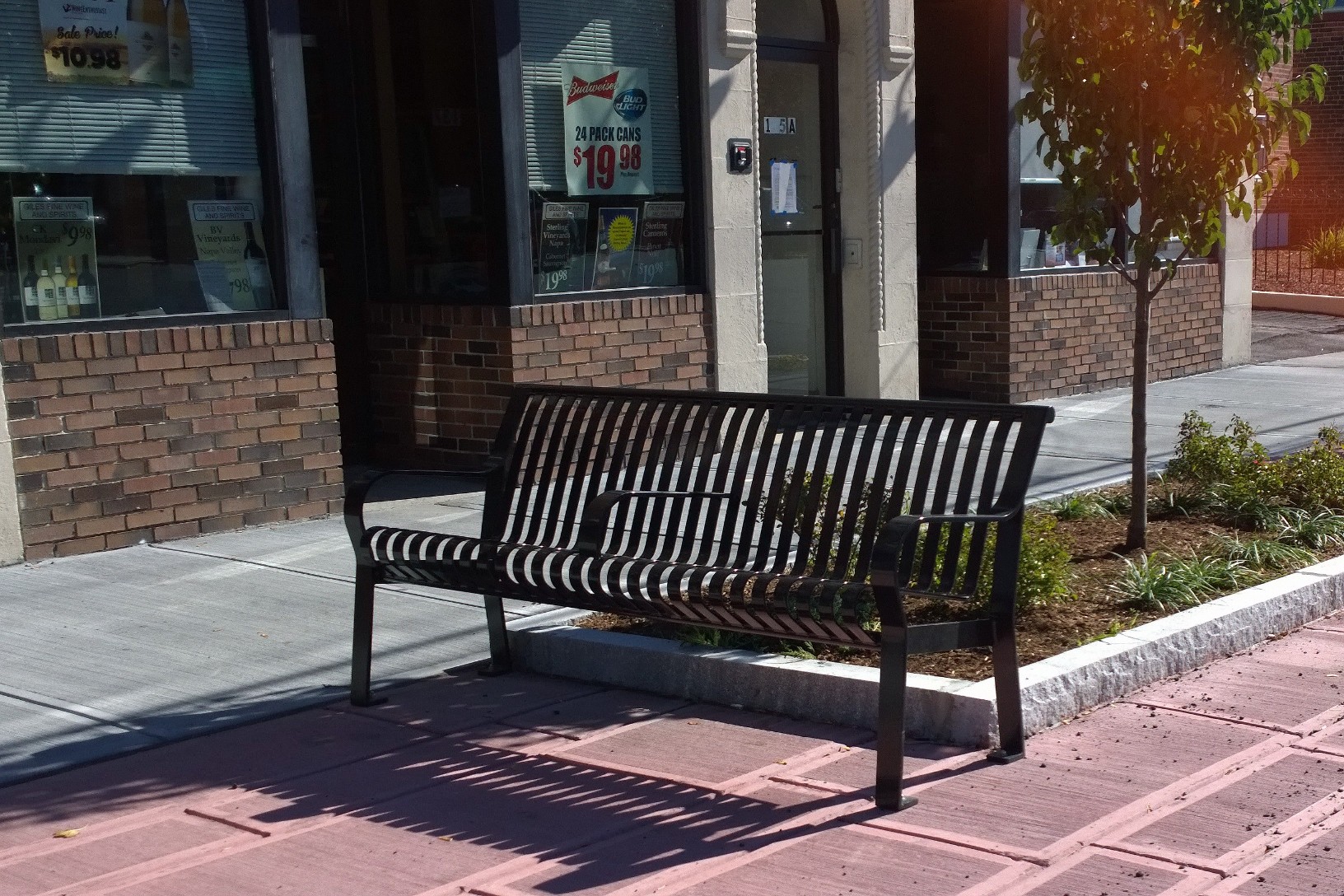
Massachusetts Avenue in East Arlington is shrinking. After contentious debate, the town decided to widen the sidewalks, add barrier islands in the street, and new plantings and benches.

The job is not done, but in spite of construction and less room for vehicles, the traffic doesn’t seem to have increased — one of those counterintuitive results that designers tout. The goal is to make the street more pedestrian and bike friendly and allow more community activities on sidewalks. Through the tree committee, John has been involved with the beautification side of things.

One of the issues that gets raised when a major disruption like this is afoot is the effect on small businesses. Neighbors are making a point of shopping local, hoping that Arlington merchants won’t suffer.

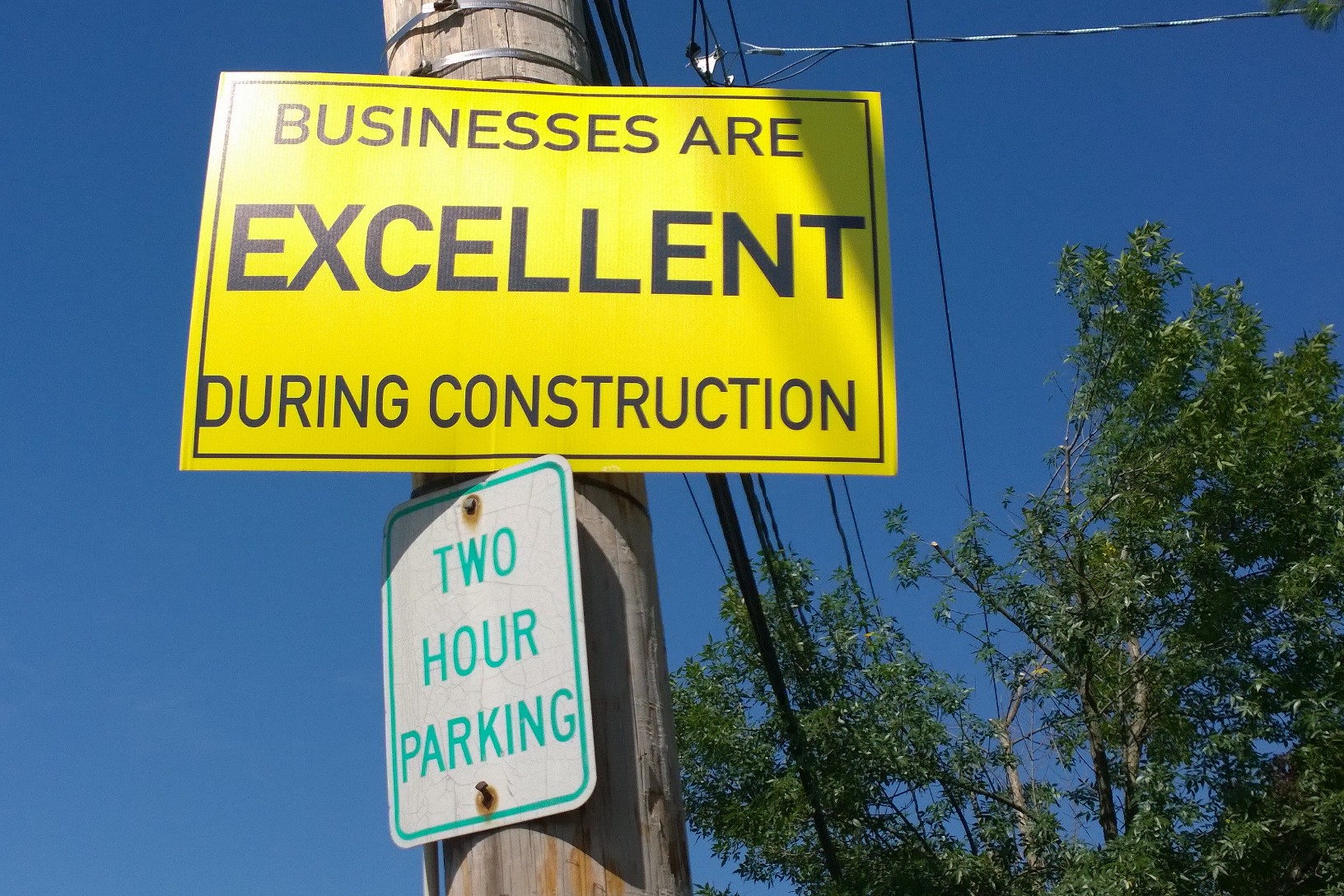
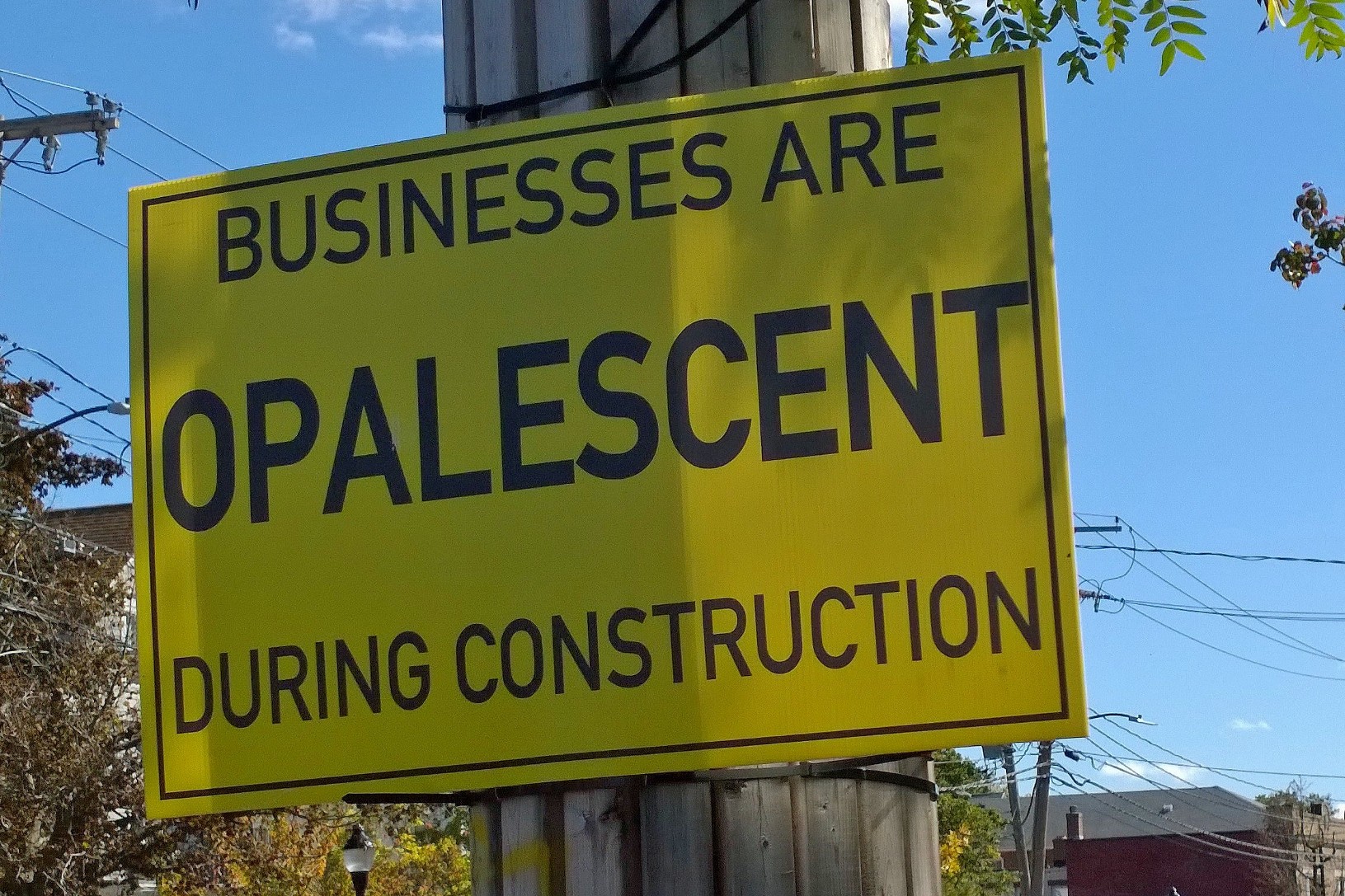
And to make sure residents don’t forget how important that is, there is an amusing signage campaign — signs saying that “Businesses are [fill in the blank] during Construction.”

For example, “Businesses are Opalescent during Construction.” Other Mad-Libs-type adjectives used are Quirky, Colorific, Radiant, Prismatic, Harmonic, Niblicious, and Excellent.

Below, I include a couple of the signs. And I tried to show how the project is coming along — the wide sidewalk, the plantings, the bench. I look forward to seeing how the residents begin to make use of their new public spaces.
091915-shop-local-despite-construction

101715-support-small-biusiness

101715-bump-out-sidewalk

101715-widening-the-walk

101715-wider-walk-allows-benches

Read Full Post »

I’ve been learning a lot lately from reading ecoRI’s Tim Faulkner. Recently he wrote about entrepreneurial approaches to taking carbon out of the atmosphere. He notes that one of the more ironic opportunities, according to Thorne Sparkman of investor Slater Technology Fund, is through the oil and gas industry, which uses CO2 in extraction and now can at least bury it instead of releasing it.

“Finding ways of supplying some [CO2] from existing carbon sources is a one of the main markets in the emerging, and broadly defined, field of carbon capture and storage (CCS),” writes Faulkner.

“ ‘CO2 is everywhere, but it has not really been harnessed,’ said Emily Cole, co-founder of Liquid Light, a New Jersey-based startup that wants to reduce greenhouse gasses by transforming carbon dioxide into industrial chemicals. …

Enhanced Energy Group of West Kingstown is also looking at cutting emissions from the oil and gas industry, while increasing production. Its founder, Paul Dunn, spent 25 years designing engines for the Navy, some of which were emissions free.  He’s now building power sources that sequester CO2 before it vents into the air. …

Bioprocess Algae is converting unwanted CO2 into algae for fish and animal feed, and as nutritional supplements. The company recently relocated its headquarters from Portsmouth, R.I., to Shenandoah, Iowa, to be closer its CO2 supply source, a corn-fueled ethanol plant.”

Chief technology officer Toby Ahrens says that sequestering carbon dioxide in algae may not have large-scale prospects, but so far, it is one of the few profitable opportunities in this arena. More at ecoRI, here.

Photo: iStock
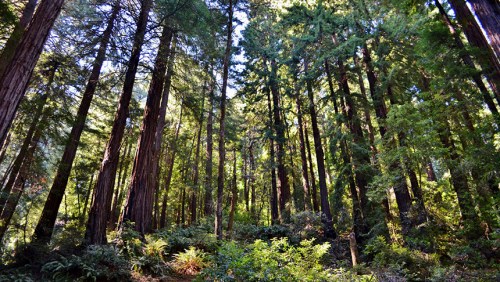
Trees are one way to sequester carbon.

Read Full Post »

Is the New England cottontail no longer in trouble? I guess, as David Abel suggests at the Boston Globe, it depends on who you talk to.

“The threatened New England cottontail — the region’s only native rabbit, made immortal in The Adventures of Peter Cottontail [by Thorton Burgess] — appears to be making a comeback.

“Federal wildlife officials [are] removing the cottontail from the list of candidates to be named an endangered species. It’s the first time any species in New England has been removed from the list as a result of conservation efforts. …

“Wildlife officials said the bark-colored rabbits, which have lost nearly 90 percent of their dwelling areas to development, are benefiting from an increasing effort to protect their habitat. …

“The rabbit, which has perky ears and a tail that looks like a puff of cotton, has been the victim of development that has wiped out most of the region’s young forests. … Unlike its abundant cousin, the Eastern cottontail, the New England species relies on the low-lying shrubs of young forests for food and protection from predators, such as raptors, owls, and foxes. …

“Some environmental advocates worry that the federal government may be acting prematurely in removing [New England cottontails] from the list of candidates for endangered status …

“It has never been easy to galvanize concern for the cottontails, given how much they look like the nonnative Eastern cottontails. Those rabbits, brought to the region by trappers in the 19th century, have flourished because they have better peripheral vision than the native bunnies …

“ ‘People think they’re everywhere,’ Scott Ruhren, director of conservation for the Audubon Society of Rhode Island, said of the local cottontails. ‘But like every species, they are important and deserve a place on the New England landscape.’ ” More here.

Update January 10, 2019: More good news at EcoRI, here. If zoos can do more this sort of wildlife restoration, they will go a long way toward justifying their existence to opponents.

Photo: Mark Lorenz for The Boston Globe
A New England cottontail bred in a refuge in Newington, N.H., was penned Thursday in advance of its release.

Read Full Post »

It took a little poking around on the web as neither the Rhode Island State Arts Council nor the Block Island Airport seem to have published any information on the airport’s new exhibit, but I can finally share some tidings of artist Neal Personeus.

From Cape Scapes: “Neal began his interest in driftwood sculptures as a young boy on the beaches of North Truro in Cape Cod, Massachusetts. His original works were typically pirate ships in the sand made from the various flotsam and jetsam that Cape Cod Bay and the Atlantic Ocean would return to the land. By the time he was in his early teens, his works began to change towards wharf scenes and typical seaside shops perched upon interesting driftwood base pieces.

“When Neal was in his early twenties, he became an architectural and engineering draftsman. He rented a beachside cottage with some friends during the summer of 1984, and spent the entire vacation working beachside on his sculptures while watching the Olympics. It was during this time that he honed in on the type of works he would ultimately settle upon. Utilizing his interest in architecture, he would scour the beaches and dunes for beautifully bleached and unusually shaped base pieces, and then picture the style of house that would blend into and compliment the environment of the base piece.” More here.

You can find lots of Neal’s work on Pinterest if you search on Neal Personeus. And check out this Warwick Museum of Art poster featuring the piece called “Yeah … but the view” here.

Art: Neal Personeus
This humorous piece, currently in an exhibit of Personeus sculptures at the Block Island Airport, is called “Yeah … but the view.”

Read Full Post »

Rupa Shenoy had an interesting story on WGBH radio recently. It was about local startups interested in urban farming. I wrote previously about Higher Ground Farm, situated on top of the Design Center in South Boston, but Grove Labs, with its use of LED lighting for indoor gardening, was new to me.

Shenoy says, “Some of these new entrepreneurs are thinking big. Jamie Byron and Gabe Blanchet graduated from MIT and started Grove Labs two years ago with the idea to make every living room a potential growing space. …

“Their product is a cabinet that allows people to grow fruits and vegetables year-round in the home. It’s connected to the internet, controlled by an app on your phone, and designed to make urban farming easy and engaging.

“There are a few models set up in a space at Greentown Labs in Somerville, which they share with other startups. Each wooden cabinet, with several components, is about the size of an entertainment center.

“At the heart of the cabinet system is a fish swimming in a tank. The waste from that fish is sucked into tubes and converted into nitrate fertilizer. The fertilizer is pumped around the cabinet to trays filled with brown clay pebbles. That’s where the fruits and vegetables grow, with the pebbles serving as soil. Byron says once you get the system up and running, you can harvest enough for about two small salads everyday.” More at WGBH.

For more on using fish to fertilize your produce, see my recent post about an experiment in Duluth, here.

Photo: Rupa Shenoy / WGBH News
Somerville startup Grove Labs plans to sell cabinets for growing produce in your home.

Read Full Post »

As a child, were you ever into secret communication methods? A couple tin cans on a line between houses? Invisible ink? Goose language?

I was. Which is why this Cranston Library fundraiser appealed to me. You could embed a message in the library branches’ sidewalks. But it would only be visible when wet.

Gregory Smith
 wrote about WaterWalk for the Providence Journal:Library officials are inviting the public to pay $25 for an opportunity to display an image and a pithy message in a now-you-see-it/now-you-don’t manner on walkways. …

“At work is a technique in which library staff members and volunteers will apply a stencil and a superhydrophobic (water-repellent) solution to display the image and message. On a sunny day, the image and message are invisible, but on a rainy day, they become visible.

“The images are expected to last six months to one year and have been demonstrated to last even in the Northeast, where a snow shovel is likely to scrape the surface, according to Katy Dorchies, community engagement manager for the libraries. ..

“The donor is allowed to select one of three images and to compose a personal message of up to 10 characters — a name or a phrase. …

“The three images reflect someone’s love of reading, interest in technology and support for libraries, respectively. …

“The images are scheduled to be in place at the beginning of October.” More here.

Photo: Frieda Squires/The Providence Journal files
Walkways at the Cranston’s central library, seen here, and two branch locations will feature in WaterWalk, a fundraiser.

Read Full Post »

Gotta love MIT. There is always something crazy going on over there. And when MIT and Rhode Island School of Design (RISD) ideas come together, watch out.

At WBUR radio, Fred Thys explains about a new, multidiscipline design program.

Matt “Kressy has put MIT’s first-ever integrated design and management (IDM) students in a kind of boot camp. He wanted to immerse the engineers, designers and business school students in a project where they would have to work in concert. …

“The task: build instruments from found materials. And boy did the students find materials. Mechanical engineer Maria Tafur, from Bogota, made a clarinet from a carrot. Engineer Tammy Shen, from Taipei, has made an instrument that includes glass bottles. …

“Kressy was teaching a course at the Rhode Island School of Design when he got the idea for the new IDM master’s program. He was also teaching engineers and business students at MIT — but it was the design students from RISD that caught Kressy’s attention by asking a critical question:

‘How does this product enhance our lives?’ …

“Kressy says it took 13 years for his idea for a design program to get traction at MIT. When it did, he was able to pick 18 students with completely different criteria from what MIT typically uses.

“ ‘And that rubric had crazy metrics, such as the metric love,’ Kressy says. ‘And the love metric was basically: Does this candidate have a large capacity for love and compassion? …

“ ‘When I showed the rubric to my colleagues here, let’s just say it got mixed responses,’ he says, laughing.”

To get at the love-and-compassion metric, he asked applicants to submit a portfolio indicating their efforts to make the world a better place.

You can read here about the impressive portfolios, struggles to get to MIT from poor countries, and inventive ideas for the future.”

Photo: Jesse Costa/WBUR
MIT integrated design graduate students Maria Tafur and Masakazu Nagata play their homemade instruments along with Brave Sharab, 7, on Main Street in Cambridge.

Read Full Post »

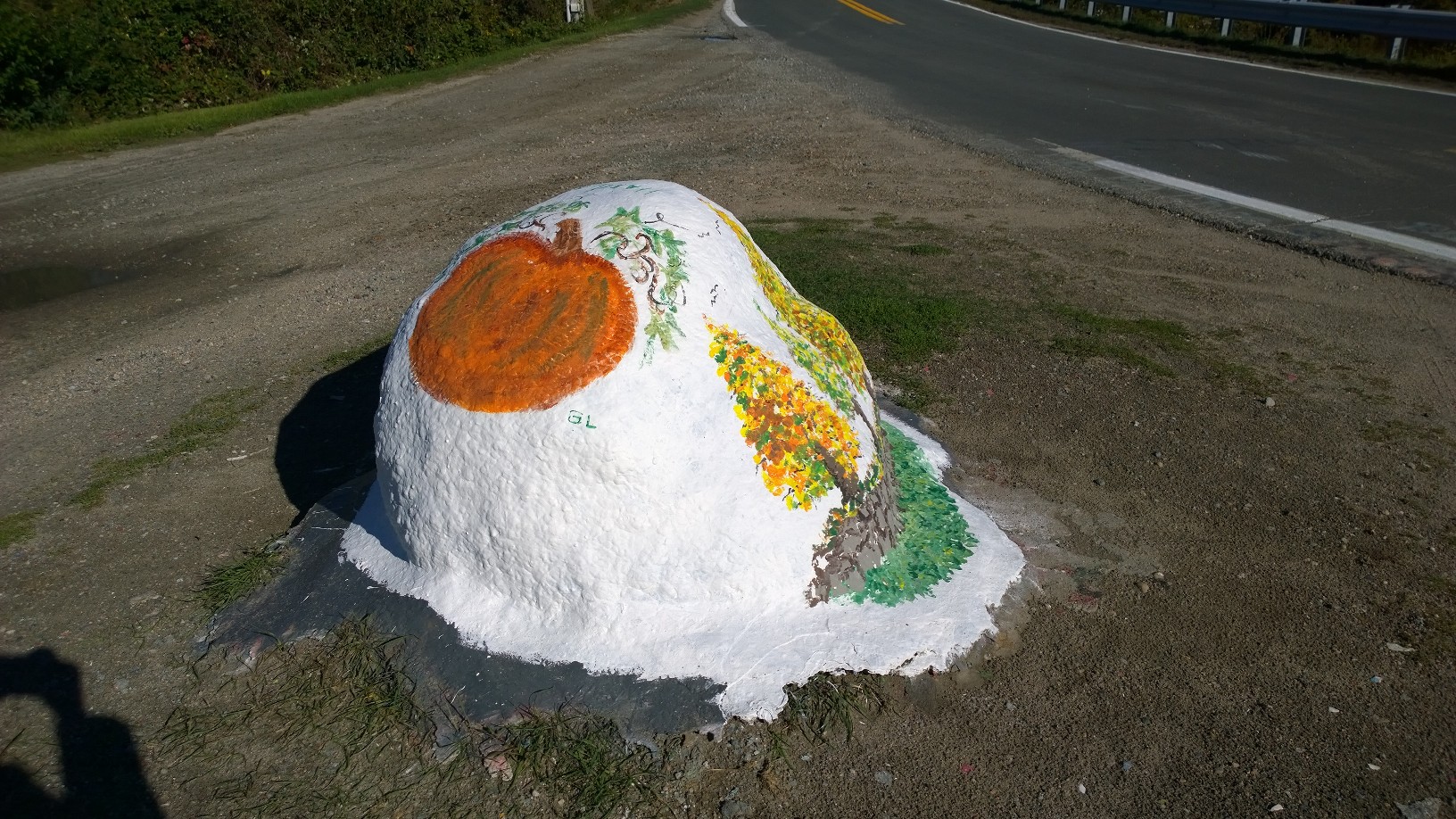
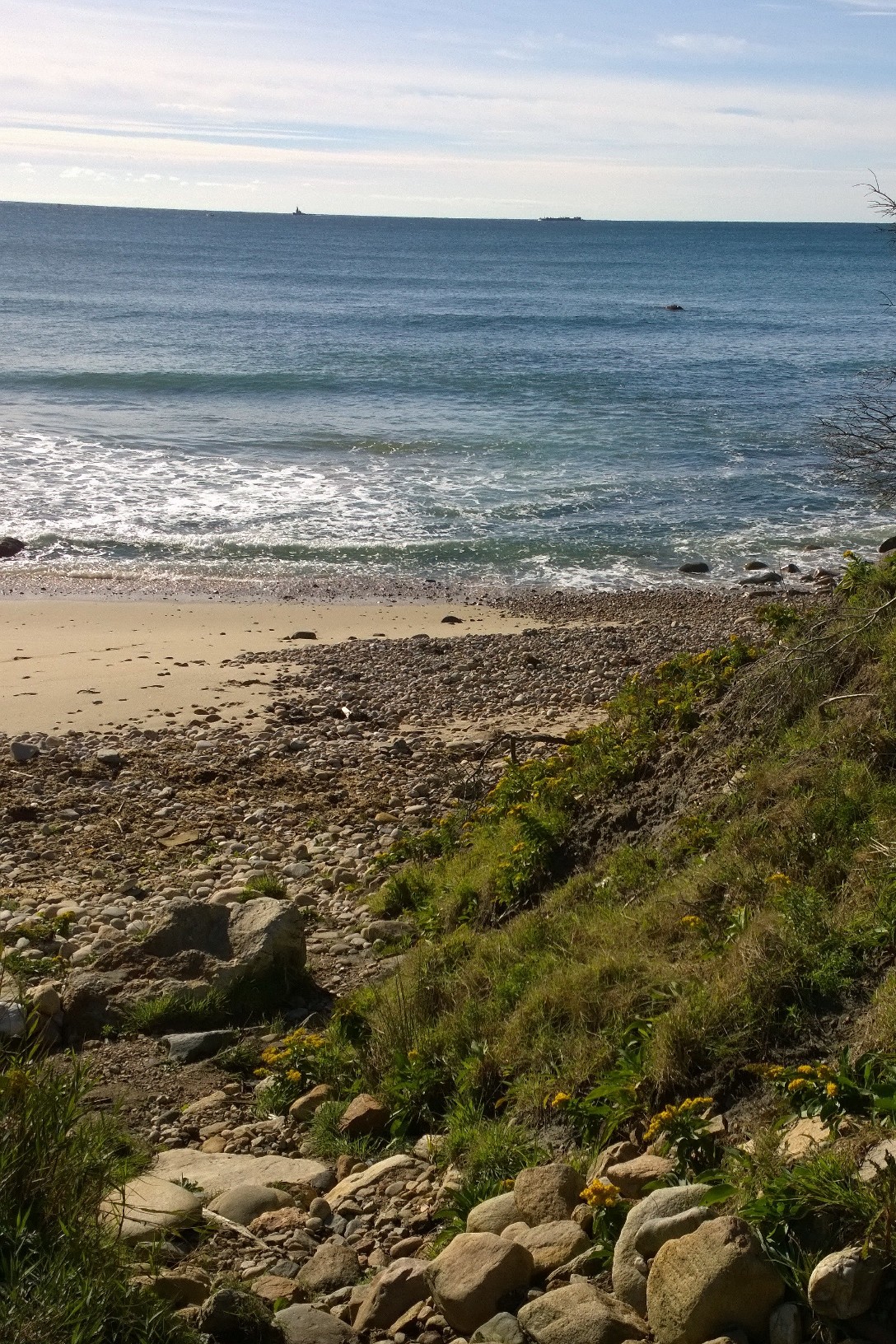
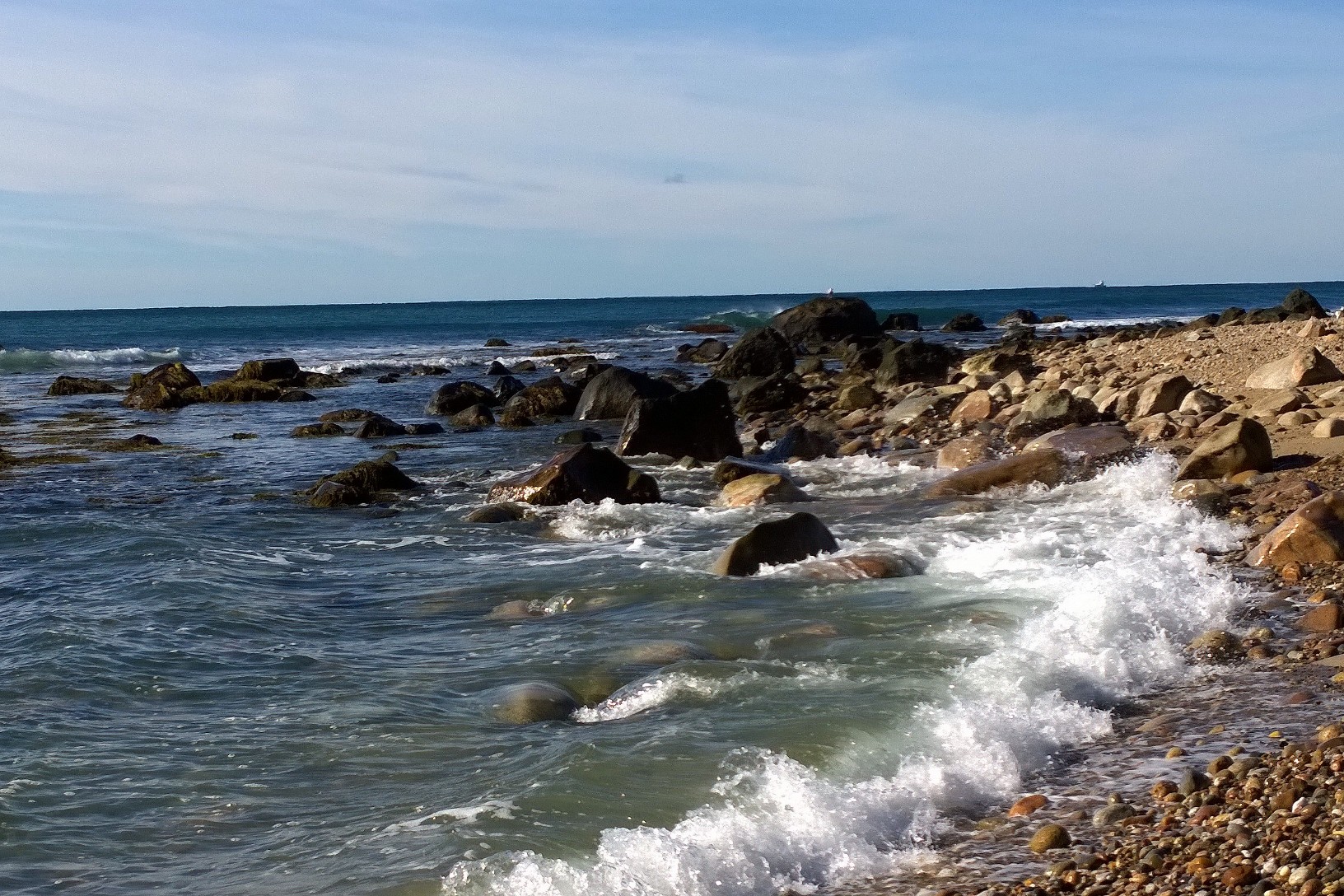
A bouncy boat ride in heavy rain last night. A warm sunny morning. Here are a few photos from my last island weekend of 2015.

An especially nice autumnal theme for the Painted Rock. Whoever painted it was lucky to have their artwork survive nearly three days. That would be unheard of in the summer, when birthday messages get painted over by wedding felicitations several times a day.

Down the bluffs on a steep path. Waves breaking on the beach. Tide pools.

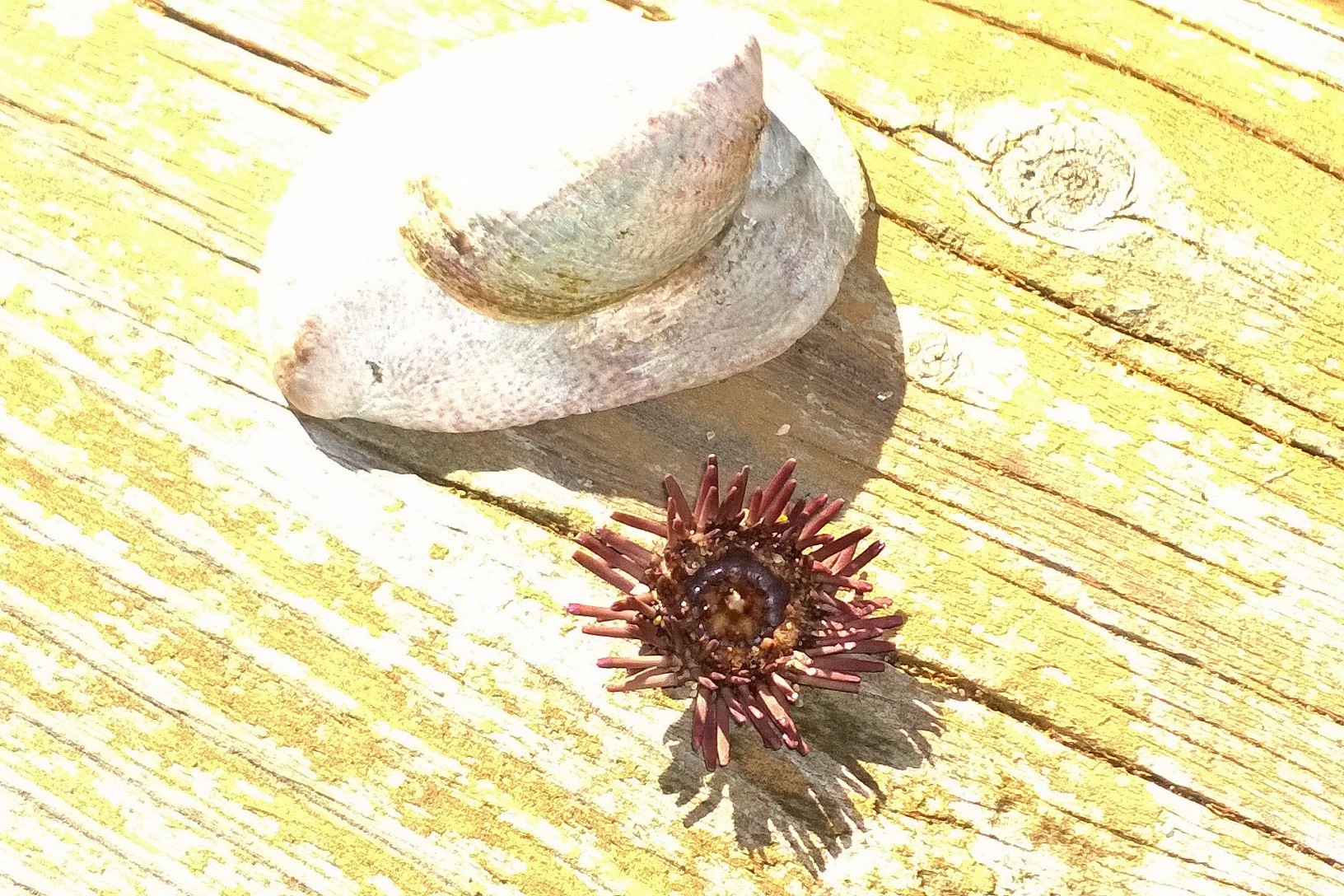
I was delighted to find a little urchin (I don’t think I ever had before) and a slipper shell with a smaller slipper shell hitching a ride.

101015-painted-rock-fall-colors

101015-painted-rock-fall

101015-steep-path-to-beach

101015-surf-at-bluffs

101015-tide-pools

101015-urchin-and-slipper-shell

Read Full Post »

New online services make it easy to borrow things you need temporarily but don’t want to buy.

Janet Morrissey writes at the NY Times, “When vandals broke into Stephanie Ciancio’s Land Cruiser in 2014 and stole her car stereo, she did not have the time and money to replace it. It was particularly vexing for Ms. Ciancio, a 34-year-old San Francisco resident, because she had been planning to take a four-day road trip to Fern Canyon, Calif., over the long July 4 weekend, and the idea of making the eight-hour drive without music was depressing.

“So she logged onto Peerby.com, typed in her predicament, and within 40 minutes was connected with someone willing to lend her a Beats wireless Bluetooth speaker for her car trip.” She was thrilled.

Peerby founder Daan Weddepohl, Morrissey contintues, “was born in Rotterdam in 1980 and developed a passion for computers and programming at a young age. ‘I asked for a compiler for my 13th birthday,’ he said.

“He pored over books and joined online bulletin boards to hone his programming skills. His parents, both psychiatrists, encouraged his entrepreneurial spirit and interest in technology. But it was a fire that ignited the Peerby dream.

“In February 2009, fire ripped through Mr. Weddepohl’s apartment building, … Most of Mr. Weddepohl’s belongings were destroyed by fire, water or smoke.

“He was devastated. But in the months after, Mr. Weddepohl watched in amazement as friends — and even strangers — offered furniture, tools and other items to help him get back on his feet. It was a revelation. “’ discovered that the people around me were so much more important than the stuff,’ he said. ‘People love to help other people out — we’re wired to help others.’ ”

Read how the Peerby concept grew from the ashes, here.

I blogged earlier this year about this concept. You can read “Borrowing Gadgets you Need Only Once,” here.

Photo:Jason Henry for The New York Times
Stephanie Ciancio was able to borrow a wireless Bluetooth speaker from Matt Dodge through an online service called Peerby.com. 

Read Full Post »

A Lancaster, Massachusetts, woman who came to the country at age 12 without a word of English is giving back by helping immigrants get a start in farming — and her model is being picked up around the nation.

Jane Dornbusch at the Boston Globe writes, “Maria Moreira, 62, is fond of the proverb ‘Necessity is the mother of invention.’ When her kids were small and she and her husband had a dairy farm in this Central Massachusetts town, she had plenty of milk, hungry kids to feed, and a need to make a little money.

“So she started a business making a soft Portuguese cheese — she calls it simply Portuguese fresh cheese — that reflected her roots in the Azores, where she was born.

“That was in 1986. A year earlier, she had seen another need, and, in her own inventive way, she’d set about meeting it. Moreira and her husband, Manny, had a 70-acre field, not far from their farm, that they used to grow corn.

“A Hmong woman, an immigrant from Laos, approached Moreira about using a small corner of the field to grow her own crops. Soon, word spread, and little by little the entire field was given over to immigrant farmers, each in charge of his or her own plot. Today, says Moreira, 275 farmers are growing more than 75 kinds of vegetables at what is now called Flats Mentor Farm. …

“Gus Schumacher, former Massachusetts commissioner of food and agriculture, came to know Moreira’s work when he served as a USDA undersecretary in the late ’90s. He notes that she was among a handful of leaders — others included John Ogonowski (one of the pilots killed on 9/11) and Jennifer Hashley, of New Entry Sustainable Farming Project — supporting refugees and immigrants in establishing themselves as farmers and market gardeners. It’s a movement that has since gained momentum nationally, he says. ‘But it all started in Massachusetts.’ ”

More at the Globehere.

Photo: Joanne Rathe/Globe Staff
Maria Moreira, of Flats Mentor Farm, holds some lemon basil.

Read Full Post »

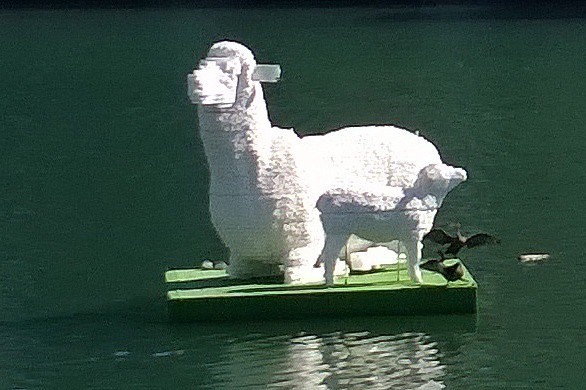
Today I sat on a shady bench next to Fort Point Channel and ate my Vietnamese noodles from the food truck. In front of me, floating on a green platform visited by cormorants, were two sheep — a big one and a small one. As the breeze and the tide nudged the platform, it turned slowly, showing the sculptures with different shadings and from different angles.

Steve Annear at the Boston Globe says, “The installation, called ‘Who Wears Wool,’ was created by artist Hilary Zelson, and pays homage to the Fort Point area’s former wool trade. … Earlier this year, FPAC [Fort Point Arts Community] put out a request for proposals seeking an artist who could weave together a prominent display connecting the neighborhood’s arts community with residents and visitors.  …

“For the project, Zelson said she layered EPS foam — or expanded polystyrene — to create the bodies of the sheep. The layers are held together with a spray adhesive, and the sheep are bolted to the dock with an armature of steel rods. Once built, the sheep were covered in packing peanuts to create the look of wool, before the entire thing was covered with a white acrylic latex coating …

“Zelson started working on the project in August. The first six weeks alone were dedicated to planning, she said.

“ ‘Once I was able to get the foam to my studio, I was working seven days a week,’ she said. ‘It was probably a 300-hour project.’ … The project — from the 3D renderings to the welding to the stacking of foam — was documented on Zelson’s Instagram account”

More here.

What I see in my photo are a ewe and a lamb — and cormorants.
100715-sheep-sculpture-ft-pt-channe;l

Read Full Post »

My mother liked to buy from people who sold door-to-door. There aren’t many door-to-door salespeople who get a welcome these days. Maybe Brownies with Girl Scout cookies or Cub Scouts with popcorn, but not many others. I haven’t seen an Avon lady in decades.

My mother bought from a “huckster,” a vegetable salesman in an old school bus painted blue. And of course, there was the Fuller Brush Man.

Recently, Linda Matchan at the Boston Globe wrote about a Massachusetts-based Fuller Brush Man who is still making sales after 40 years.

Al Cohen, she says, has been at it second-longest of the three remaining Fuller Brush Men in Massachusetts — “40 years with the Fuller Brush Co., which was launched 110 years ago by Alfred C. Fuller in his sister’s Somerville basement. He’s done it by selling one Angle Broom and Wooly Bully Hand Duster at a time.

“ ‘Toward the end of summer, he appears. And we’re elated,’ said Melissa Zeller, a longtime Cohen customer who lives in the South End and has a summer home in Hull. …

“On a recent morning, he worked Hull’s Allerton Hill neighborhood. He’d brought a replacement mop head for one customer and hand soap for an older woman who’d been buying it for years.

“ ‘How you been?’ he greeted the customer, who was slow to answer the door.

‘ ‘Very sick,’ she said. ‘I had two heart attacks and I lost Tom.’

“The day was hot and it was slow going. … Then things got better. Maureen Keiller and Patrick Miehe bought a broom after Cohen assured them it was ‘laboratory tested to last over a million sweeps.’ Afterward, George and Helen Kelley ordered several items, though it was a challenging sell at first.

“ ‘I don’t think I’ll pay $25 for a broom,’ said Helen, 82. ‘It’ll last,’ said Cohen. ‘How long will I last?’ she said.

“For that matter, how long will Al Cohen keep at it?

“ ‘It keeps me going,’ he said. ‘And if I stopped, it would almost be a letdown for some of my customers. Some of them depend on me.’ ”

More here.

Photo: Pat Greenhouse/Globe Staff
Al Cohen, 64, estimates that he still has about 1,000 regular customers for his Fuller cleaning products.

Read Full Post »

Sy Montgomery had a lovely story in the Boston Globe about studies investigating  animals’ dreams. I zeroed in on the beautiful little zebra finch.

“What do birds dream about?” Montgomery asks.

“Singing.

“University of Chicago professor Daniel Margoliash conducted experiments on zebra finches. Like all birds, zebra finches aren’t born knowing their songs; they learn them, and young birds spend much of their days learning and rehearsing the song of their species. …

“The researcher was able to determine the individual notes based on the firing pattern of the neurons. While the birds were asleep, their neurons fired in the same order — as if they were singing in their dreams.”

At American Scientist, Michael Szpir titles a related article “To Sleep, Perchance to Sing.”

“It turns out that single neurons in the forebrain song system of the sleeping birds display a pattern of activity that’s only seen in the waking bird when it sings. [Amish S.] Dave and Margoliash think that this neuronal activity is part of the learning process — the birds are rehearsing in their sleep by dreaming about singing.

“Since the awake male zebra finch will sing when a female is presented, it seems natural to ask whether the male finch has an image in mind when he sings in his sleep. Margoliash won’t speculate, but if human males are any indication we might imagine they dream of fetching female finches. It’s either that or bird seed.

“You can hear the song of the awake zebra finch at: http://www.williams.edu:803/Biology/ZFinch/zfsong.html.” More.

Read what other critters dream about at the Globe, here.

Photo: Nigel Mann

Read Full Post »

In 2007, conceptual artist Yoko Ono established the John Lennon Peace Tower in Iceland, a beam of multiple, heaven-directed lights that is intended to appear every year from John Lennon’s birthday, Oct. 9, to Dec. 8. It was most recently relit in 2014.

Wikipedia says, “The Imagine Peace Tower (Icelandic: Friðarsúlan, meaning ‘the peace column’) is a memorial to John Lennon from his widow, Yoko Ono, located on Viðey Island in Kollafjörður Bay near Reykjavík, Iceland.

“It consists of a tall tower of light, projected from a white stone monument that has the words ‘Imagine Peace’ carved into it in 24 languages. These words, and the name of the tower, are a reference to Lennon’s peace anthem ‘Imagine.’

“The Tower consists of 15 searchlights with prisms that act as mirrors, reflecting the column of light vertically into the sky from a 10-metre wide wishing well. … The power for the lights is provided by Iceland’s unique geothermal energy grid. It uses approximately 75 killowatts of power.

“Buried underneath the light tower are over 1 million written wishes that Ono gathered over the years in another project, called Wish Trees. … Iceland was selected for the project because of its beauty and its ecofriendly use of geothermal energy.” More at Wikipedia.

Says the Peace Tower website: “One of the mesmerising features of the Imagine Peace  Tower is that the strength, intensity and brilliance of its light continually changes with the prevailing weather and atmospheric conditions unique to Iceland – creating a clear pillar of light on a cloudless night, beams irridescing with rainbow refractions in rain or snowfall, and brilliantly reflecting off and through any moving layers of cloud.” More.

Photo: McKay Savage
“Imagine Peace” Tower

Read Full Post »

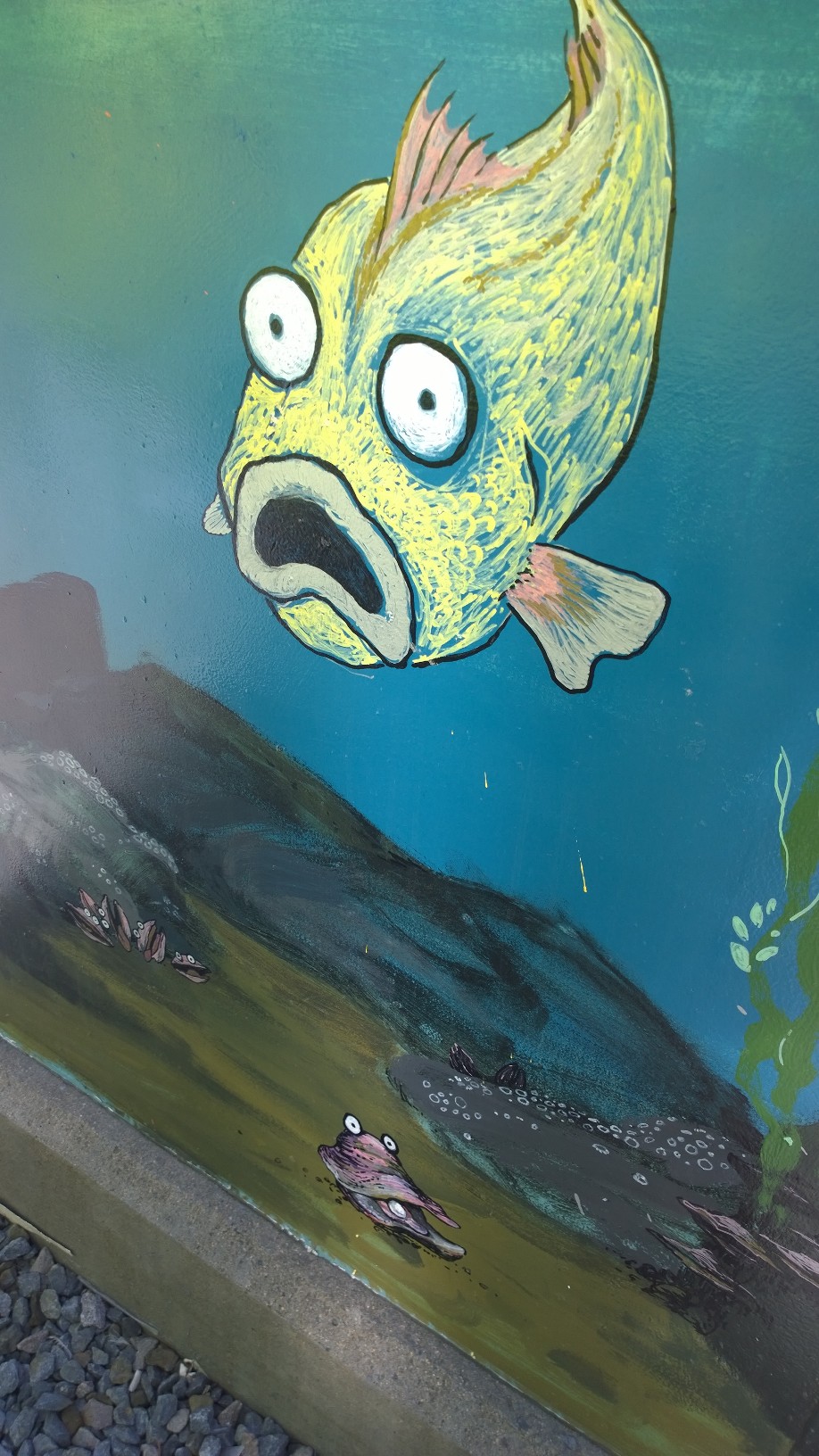
Adding appeal to a neighborhood by having local artists decorate utility boxes has become a thing. The adorable utility-box sea creatures below, however, have their work cut out for them as the only agreeable aspect of a heavily trafficked truck route between parking lots in South Boston.

I’ve taken photos of quite a few decorated utility boxes in the last couple years, and I think they work best in places where they support other amenities — trees, flowers, attractive storefronts. Otherwise they seem to be fish out of water.

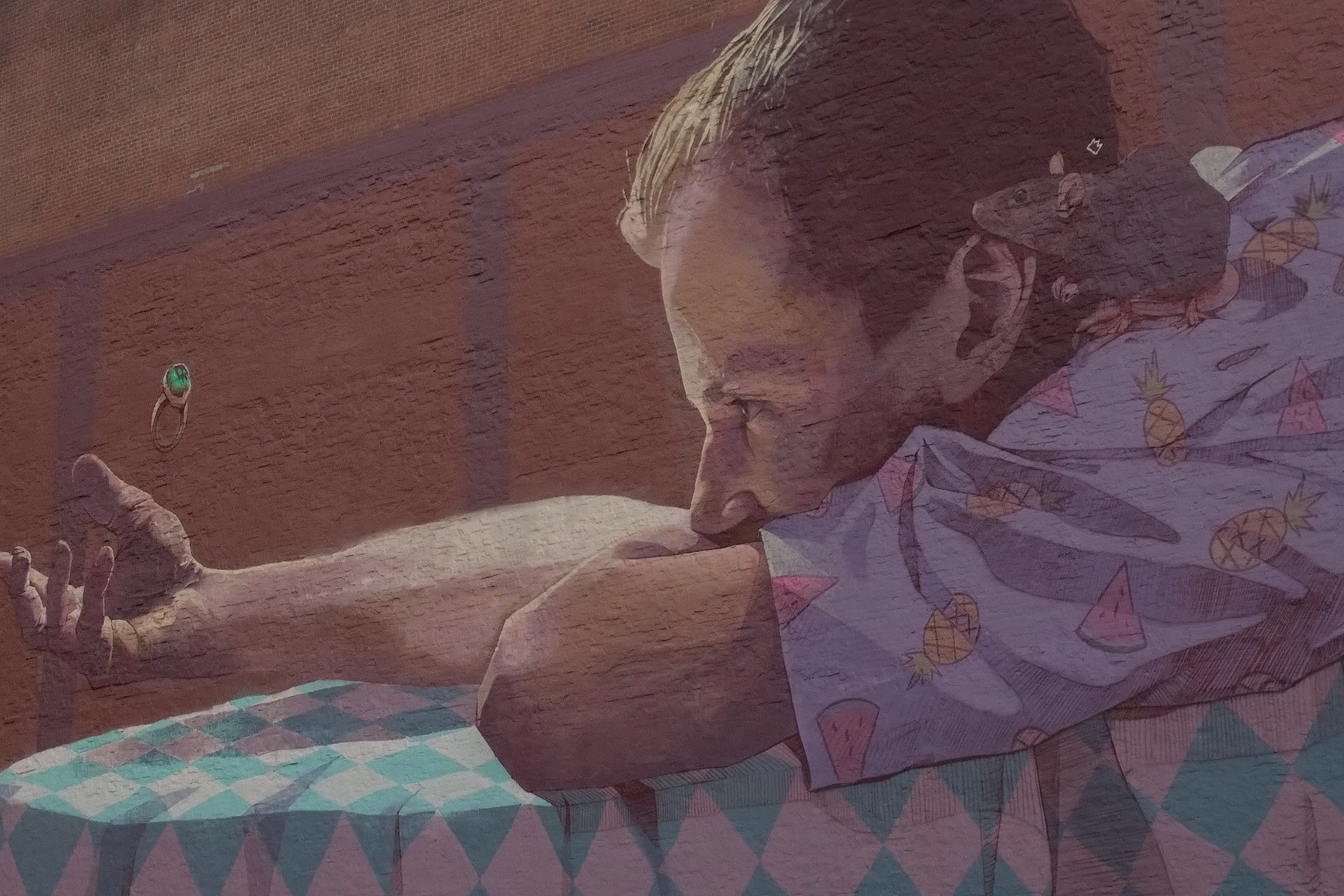
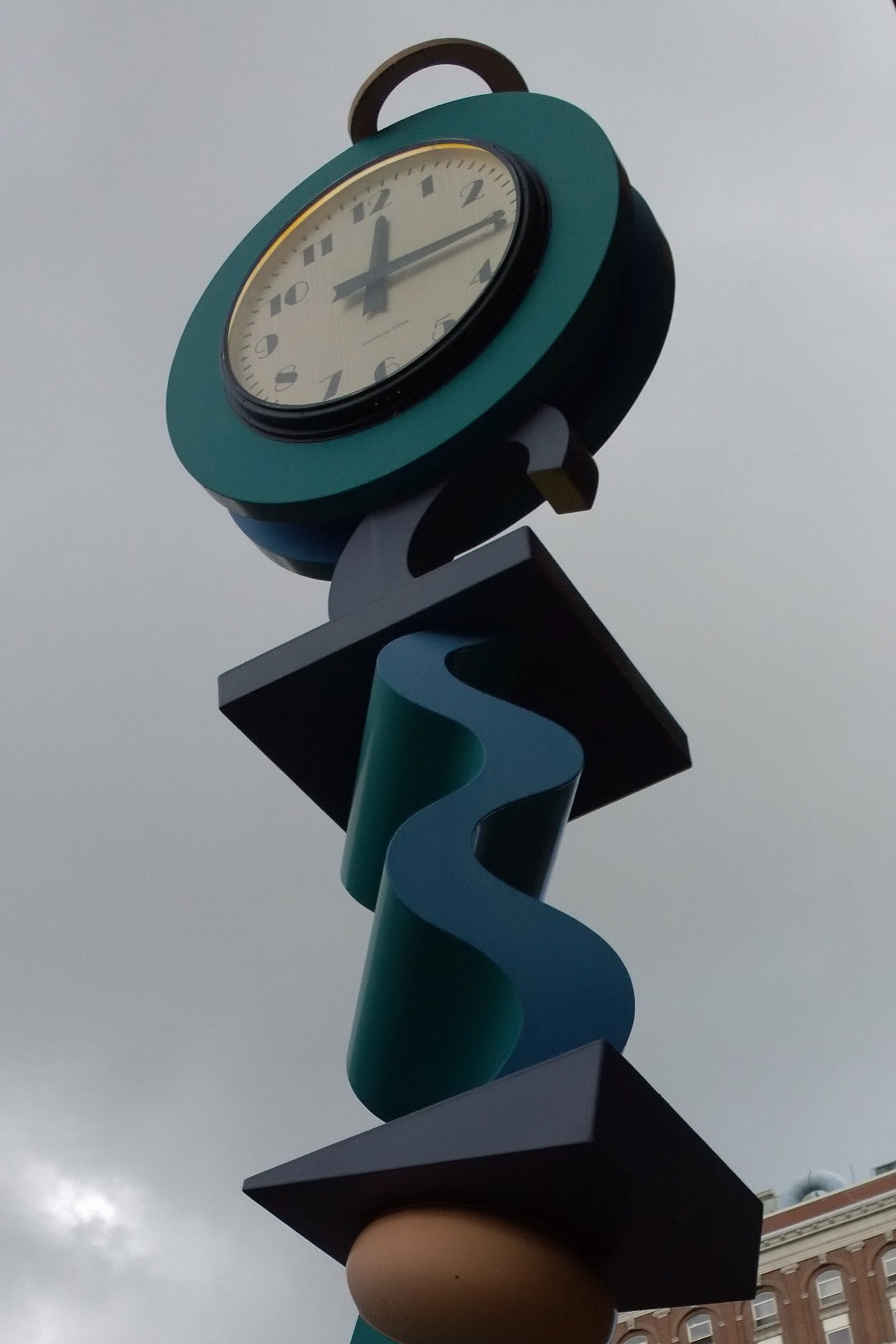
The unusual mural in downtown Providence is an example of street art with companions. The crazy Alice in Wonderland-type clock, for example, is nearby.

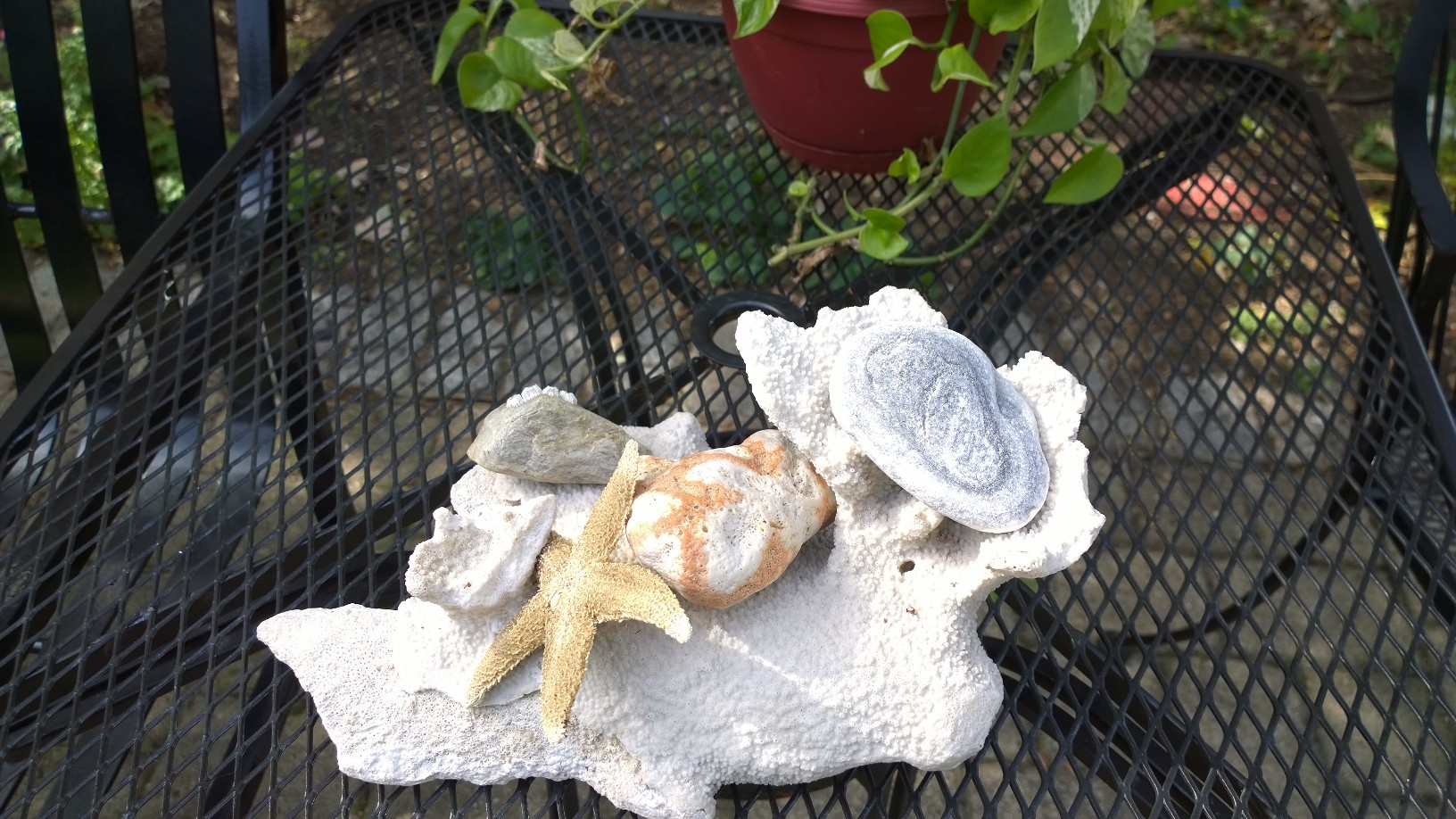
From other recent photographic undertakings comes shell art in Wormwood Park, sun-drenched crab apples, and a floating flower in the Greenway.

092515-utility-box-lobster

092515-fish-on-utility-box

092915-Providence-mural

092915-crazy-clock-in-Prov

092515-wormwood-park-display

092715-crabapples

082015-flower-in-Greenway-for-DS

Read Full Post »

« Newer Posts - Older Posts »