Feeds:
Posts
Comments

Archive for August, 2021

Photo: Jonny Weeks/The Guardian
A new artwork, part of the Whitegold trail in St Austell, Cornwall. (That mask tells me we are still in the Covid era!)

Artists to the rescue again! In today’s story, they have molded clay that was once profitably mined for industrial purposes into a new draw for a UK town.

Steven Morris writes at the Guardian, “Tourists have long tended to bypass the Cornish town of St Austell on their way to the surfing beaches of Cornwall’s north coast or the bays and creeks of the south, while artists have have been drawn by the crystal-clear light of St Ives and Newlyn.

“But thanks partly to a public art project inspired by its once-great china clay industry, and the impending arrival of a Cornish answer to The Angel of the North [a gigantic statue designed by artist Antony Gormley]. St Austell is enjoying something of a renaissance.

“Visitors have arrived this summer to follow a trail around the town, taking in art installations including an imposing mural of a Cornish honey bee constructed out of 11,000 tiles handmade from china clay.

“Young artists who cannot afford to live in places like St Ives are opting to move to St Austell and other towns in the former industrial backbone of Cornwall, opening ceramics studios and brightening the towns with street art. …

“ ‘It’s a really exciting time for the town,’ said St Austell’s mayor, Richard Pears. ‘The town is being transformed by art. You walk around now and see scaffolding all over the place. The place is on the move: more interesting, more vibrant, cooler.’

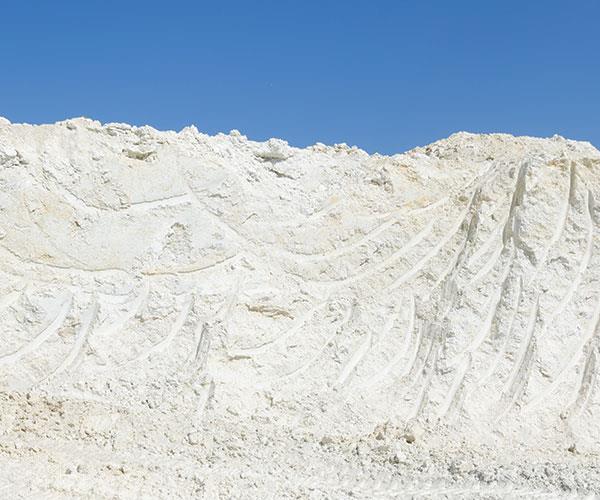
“Pears said the discovery of china clay, used in the manufacture of a products including paper, rubber and paint, made St Austell the Silicon Valley of the 18th and 19th centuries. It employed thousands of people and created a striking addition to the landscape – the bright white sharp-tipped spoil tips nicknamed the Cornish Alps.

“Over the decades the number of people working in the industry fell off and the fortunes of the town declined. The arrival of the Eden Project in a reclaimed china clay pit has helped the wider area, but relatively few of the attraction’s million annual visitors bothered to go to the town centre. …

“Partners including Eden, St Austell Brewery and the mining company Imerys have backed the ‘Whitegold art trail’ as part of a regeneration scheme, the Austell Project.

The art curator Alex Murdin said: ‘It’s about reinventing St Austell. Art always makes people look again.’

“The bee mural has been an important centrepoint of the project. Local people were asked to draw things they liked about the area and the images – from Cornish pasties to mackerels – were printed on individual china clay tiles.

“Favourite sites such as an aqueduct and Eden’s biomes also feature on an installation in the town called Clay Planet. A piece called Seed Bank is made out of recycled fragments of china clay while the Age of Aquarius takes inspiration from the revered St Ives potter Bernard Leach.

“The project is also about details. A cafe features a gleaming new sign made from china clay tiles. The planters outside the market house have been made by a local potter using a rough glaze popular in the 19th century. The place has a buzz about it, with new shops opening including an artisan baker and chocolatier. …

“The final commission – Earth Goddess – should be in place by the end of the year, created from five large circles of clay, each built in three sections, placed on top of each other – looking like giant ceramic beads on a metal pole.

“The artist, Sandy Brown, who has a studio in north Devon, has had a challenging time working out how to make such a large structure stable but is confident it will stand the test of time.”

More at the Guardian, here. There’s more about china clay at the Independent, here. And I just learned that the upset-tummy standard of my childhood, Kaopectate, is made from china clay (kaolin) and pectin!

Photo: CDE.
China clay.
Read Full Post »

Photo: Aaron Ufumeli/EPA.
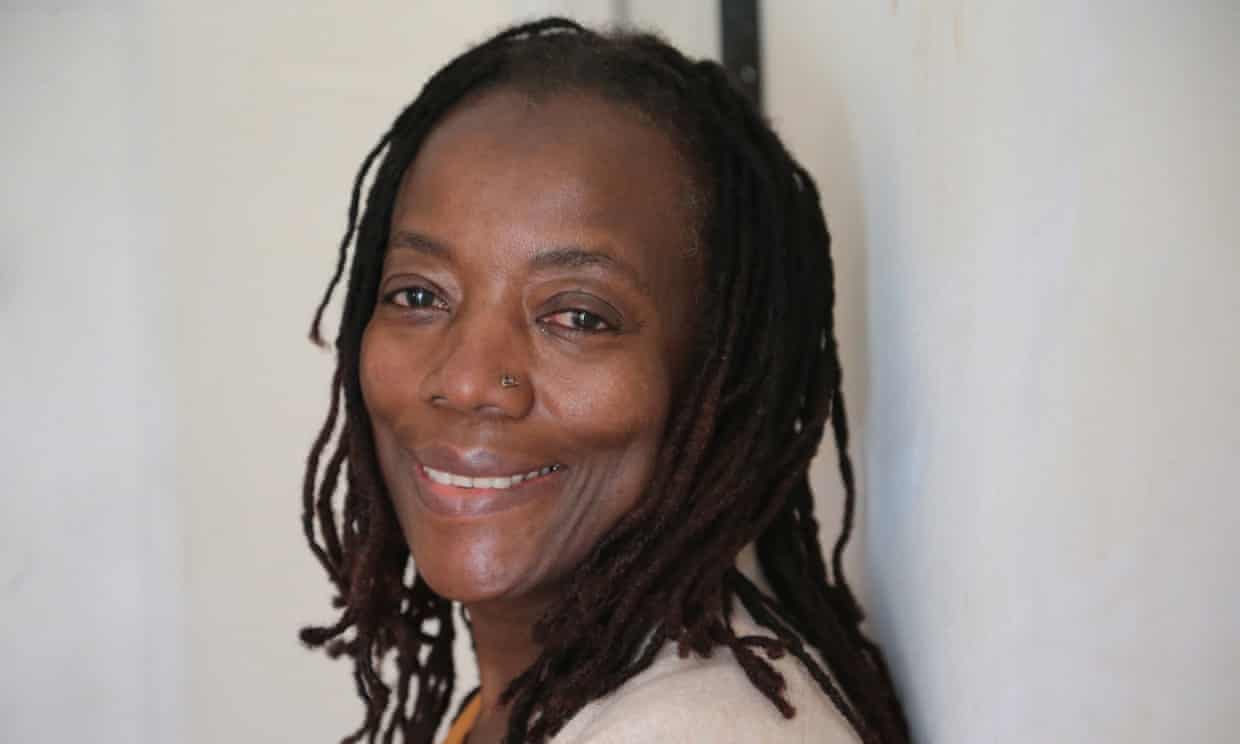
Author Tsitsi Dangarembga has joined the Future Library, offering a work that won’t be read for 100 years. 

There are many ways artists can highlight how global warming is hurting the planet. Katie Paterson, for example, once created an installation that allowed people to listen in on the sound of glaciers melting. Now she has come up with the idea of a Future Library in hopes that it will still exist in 100 years so that people can read the works of the celebrated authors who have joined the project.

Alison Flood reports on one such author at the Guardian. “Tsitsi Dangarembga made the Booker shortlist for her most recent novel, This Mournable Body, the story of a girl trying to make a life in post-colonial Zimbabwe which was praised as ‘magnificent’ and ‘sublime.’ Her next work, however, is likely to receive fewer accolades: it will not be revealed to the world until 2114.

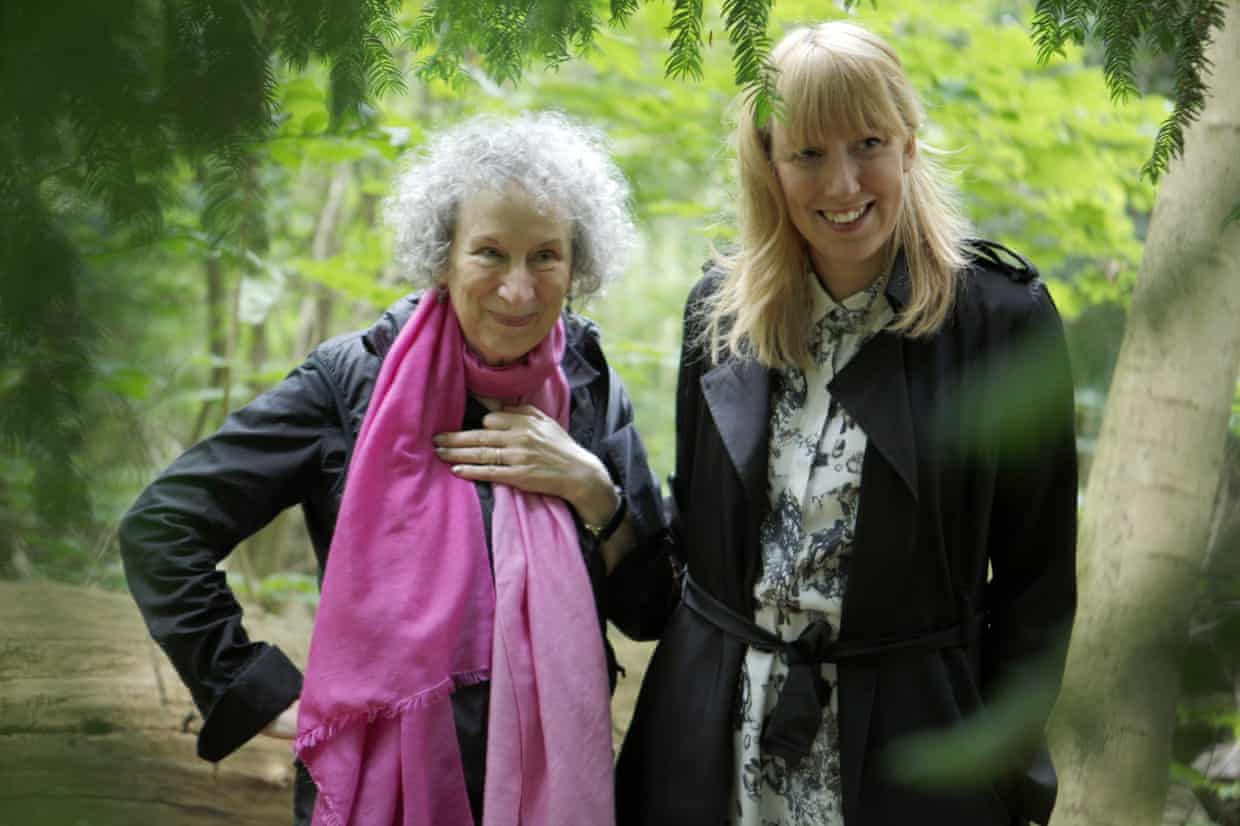
“The Zimbabwean writer is the eighth author selected for the Future Library project, an organic artwork dreamed up by the Scottish artist Katie Paterson. It began in 2014 with the planting of 1,000 Norwegian spruces in a patch of forest outside Oslo. Paterson is asking one writer a year to contribute a manuscript to the project – ‘the length of the piece is entirely for the author to decide’ – with Margaret Atwood, Ocean Vuong and Karl Ove Knausgård already signed up. The works, unseen by anyone but the writers themselves, will be kept in a room lined with wood from the forest in the Deichman library in Oslo. One hundred years after Future Library was launched, in 2114, the trees will be felled, and the manuscripts printed for the first time.

“The artwork ‘perfectly expresses my yearning for a human culture that centres the earth’s sustainability,’ said Dangarembga. ‘I share with many other dwellers of our beautiful planet a deep sense of concern for our home’s wellbeing.’ …

“The author, whose acclaimed debut Nervous Conditions (1988) was the first novel written in English by a black woman from Zimbabwe, said she was already “settling on the story” she would tell. She was not worried about the fact that she will never know how her writing is received.

‘I’m always my first audience. … A lot of my life has been writing into the void. So I’m used to writing into the void.’

“Paterson said that Future Library was ‘honoured’ to include Dangarembga. … ‘Tsitsi Dangarembga’s words have shaped the world. Praised for her ability to capture and communicate vital truths, the Zimbabwean novelist is admired worldwide as a voice of hope,’ said Paterson. ‘She examines oppression, discrimination, and systemic racism, through writing that is brave and unforgettable.’ …

” ‘I don’t think of myself in those terms,’ Dangarembga said. ‘So it’s really a great honour, I’m very pleased about it.’

Nervous Conditions, to which This Mournable Body is a sequel, was named by the BBC as one of the 100 books that shaped the world. Currently in Harare, the Zimbabwean author is working on a piece of non-fiction, and a speculative young adult novel. She is also awaiting a trial date after she was arrested during anti-corruption protests in Harare last year, and charged with intention to incite public violence. Authors and free speech organisations have called for the charges to be dropped, describing them as an outrage.”

More at the Guardian, here.

Photo: Giorgia Polizzi.
Novelist Margaret Atwood with artist Katie Paterson at the inauguration of the Future Library forest in Norway. 

Read Full Post »

Photo: Erika Page/The Christian Science Monitor.
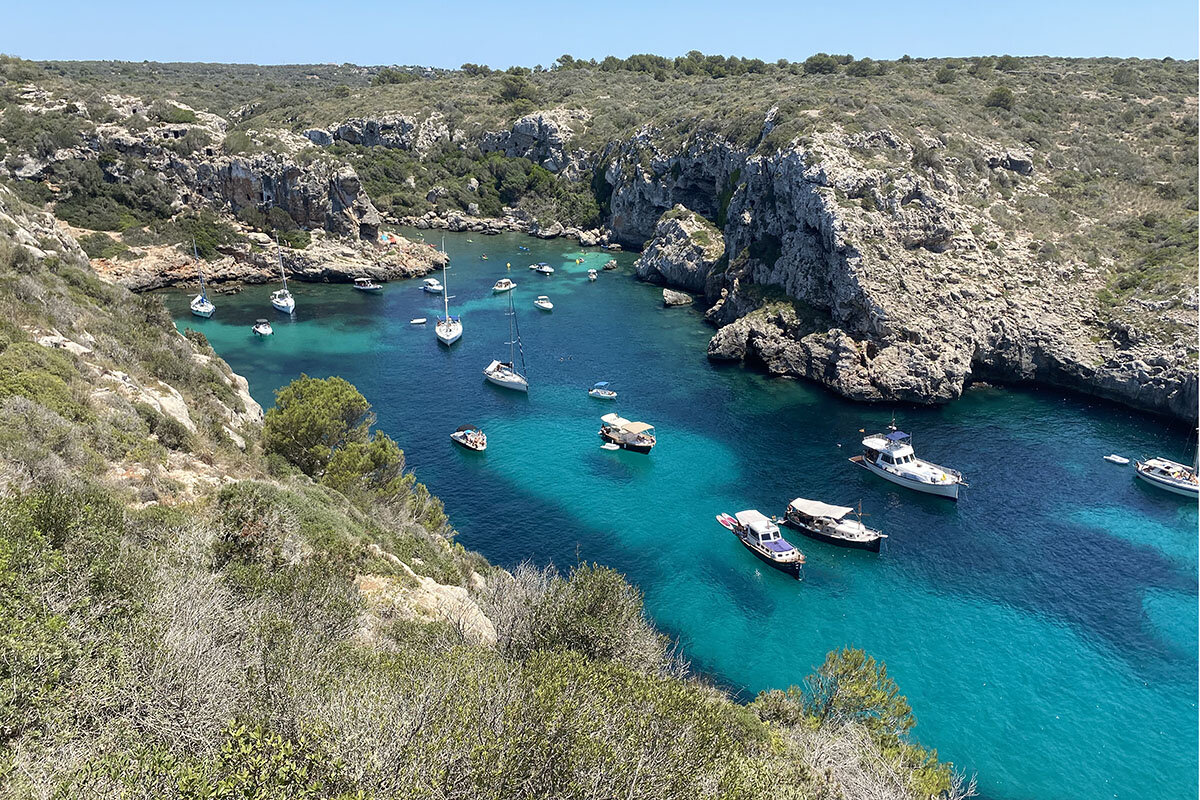
Yachts are not supposed to be anchored above Posidonia seagrass per a 2018 decree that the Mediterranean island of Menorca hopes will allow tourism to coexist with ecology.

Tourism can wreak havoc on a community’s determination to protect its environment, but educating tourists can make it work. At the Christian Science Monitor, Erika Page reports that on one Mediterranean island, even children know how to take action.

“When the yacht lowers its anchor into the sea off the Spanish island of Menorca, nine-year-old Nubia Manzanares, playing on a nearby dock with neighbors, immediately notices the ecological blunder and leaps into action.

“The untrained eye wouldn’t notice anything wrong. But Nubia, who has snorkeled in these waters her whole life, knows immediately that the ship has anchored itself directly on top of a meadow of Posidonia oceanica, a seagrass most tourists have never heard of. The anchor will damage the precious plant and likely tear it out of the earth when it goes to leave.

“She grabs her paddleboard and oar and sets out to warn the boat that it is parked illegally. (She brings her uncle along as well, just in case the boater doesn’t react kindly.)

“Nubia is one of many Menorcans who are doing everything they know how to protect the ribbon-like Posidonia, which lives underwater in expansive meadows, known to some as the ‘lungs of the Mediterranean.’ Occupying around 250 square miles in the Balearic Islands alone, the plant is as important in the fight against climate change as it is for the local ecosystem. But it is disappearing at the alarming rate of 5% per year.

Menorca has earned a reputation for its sustainable model of tourism, in many cases having prioritized environmental protectionism over tourist development.

“But as tourism has grown in recent decades, and Posidonia meadows continue to shrink, the island is facing a new and serious challenge. Menorcans are working to solve the problem by digging deep into the values that have made the island the oasis it is today: respect, balance, and well-informed care for the island as a whole.

“ ‘High-quality tourism is tourism that understands and values what and who we are,’ says Isaac Olives Vidal, director of sustainable projects for the Consell Insular, a local government body. ‘This is the most important thing: that the people who come to your house, or to Menorca, or to any other place, value what you are, what you have, and that they respect it.’

“Posidonia is found all around coastlines of the Balearic Islands, an archipelago off the Spanish coast that includes popular tourist destinations Ibiza and Mallorca, as well as the smaller and more pristine Menorca.

Posidonia meadows soak up five times more carbon dioxide each year than a similarly sized segment of the Amazon rainforest and are a major producer of the region’s oxygen.

“The seagrass also acts as a powerful water filtration system, provides a habitat for 20% of the Mediterranean’s species, protects coastlines from erosion, and is responsible for around 85% of the island’s sand formation. Without Posidonia, locals are quick to note, there would be no crystalline waters or white sand beaches for tourists to visit.

“Some scientists estimate that nearly 30% of the Mediterranean’s Posidonia has already disappeared, due to damage from boat anchors, eutrophication (excessive accumulation of nutrients), and construction projects. Because the plant grows back at the slow rate of less than half an inch each year, and replanting Posidonia is difficult and costly, protection is key.

“Saving what is left of the Posidonia won’t be easy for Menorca, an island whose economy depends fundamentally on tourism. …

“ ‘In general, the people of Menorca are much more conservationist,’ says Victor Carretero, a marine technician at the Balearic Ornithological Group (GOB) Menorca, an environmental organization that grew out of demonstrations against plans for urban development in the 1970s. …

“For Nubia’s mother, Rocio Manzanares, protecting the Posidonia is a matter of respect.

“When her two daughters were younger, they sometimes complained about the seagrass – even the most ardent Posidonia devotees admit that the plant stinks when washed up on the beach. So Ms. Manzanares modeled the reverence she knows the plant deserves.

“ ‘Well, I love the Posidonia,’ she would respond excitedly to her children, telling stories about the many ways the plant protects the island – things she learned from GOB Menorca. ‘When kids say it’s gross, I give them another vision,” she says.

“But in the past two decades, she’s noticed that the tourists who come to the island don’t treat the beaches or the ocean with the same respect her daughters now do. …

“ ‘The real political interest is nautical tourism,’ says Pep Escrivà, a firefighter who wrote a proposal to formally protect specific regions of the island from motorized boats. … ‘[Politicians are] scared that if they pressure the boat renters, they won’t have as much business. But that’s the wrong way of seeing things. Because if you protect the natural world, you create space for another type of tourist.’ ”

More at the Monitor, here. The beautiful pictures of the island will make you want to go there, but if you do, please be respectful of the seagrass!

Read Full Post »

Photo: Suzanne Kreiter/Globe staff.
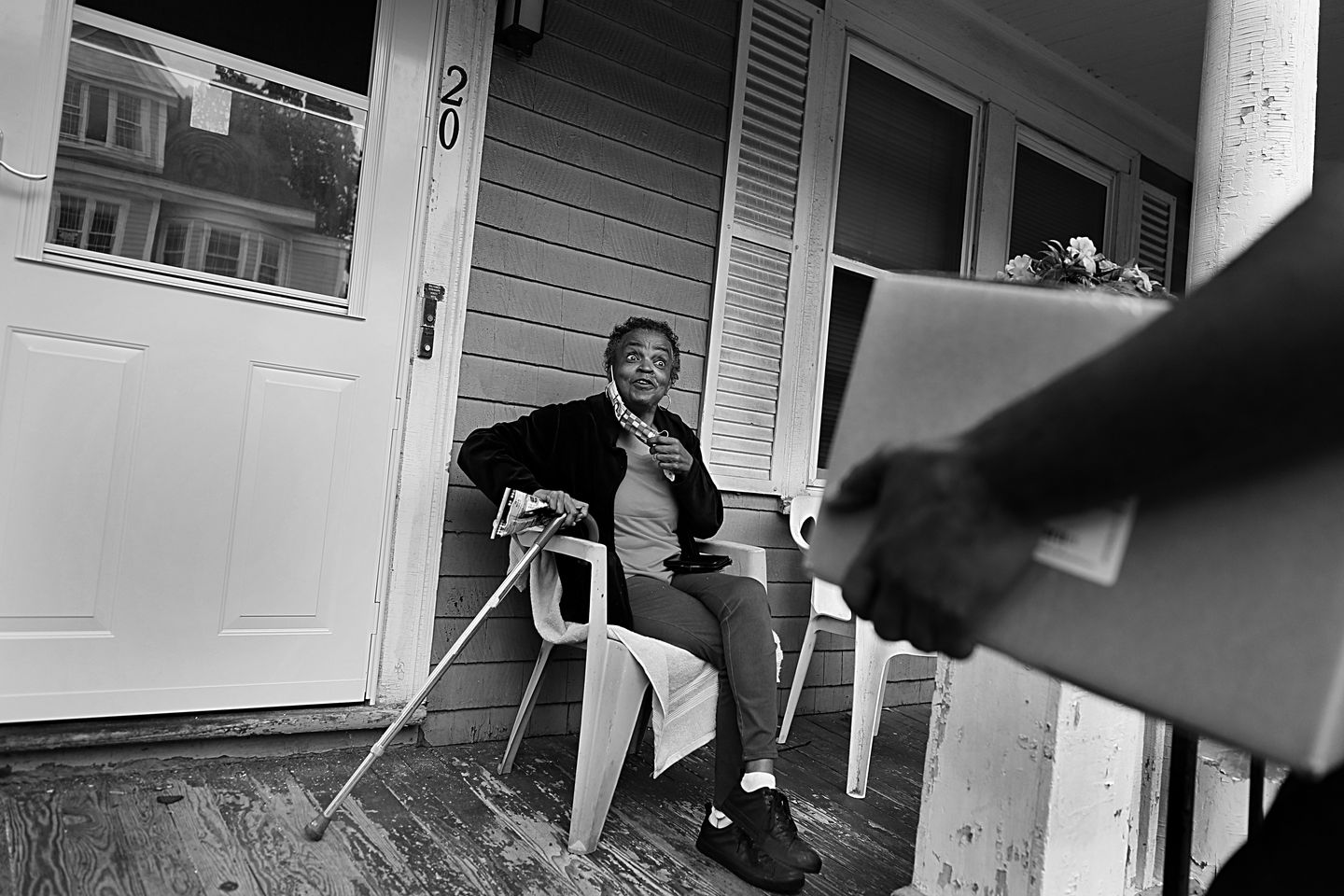
Restaurant owner Donnell Singleton delivered fresh vegetables and a chicken and rice dinner to JoAnn Witt in Dorchester in 2020 during the height of the pandemic.

As I try to catch up on articles I saved from before the lockdown and in its early days, I thought you’d be interested to know that the Boston restaurant in this inspiring June 2020 piece was still operating on its community-oriented principles.

Suzanne Kreiter at the Boston Globe wrote the story and took the pictures.

“When the pandemic shut down Boston’s schools in March [2020], Food for the Soul restaurant owner Donnell Singleton made a decision. Working with activist Monica Cannon-Grant of Violence in Boston, Singleton closed his Grove Hall restaurant to customers and turned it into a provider of free meals for the community.

“He thought they would feed a couple hundred people on the first day. Some 850 showed up. The next day, 1,050. On the third day, 1,200 people came for chicken, collard greens, sandwiches, rice, and other fixings.

“Unable to continue safely serving so many people out of the storefront restaurant he opened four years ago on Warren Street, Singleton and Cannon-Grant transitioned the effort to a free community food delivery service. …

“To support the effort, Singleton at first relied on donations. Then Cannon-Grant swung into action. ‘Monica is the queen of grass-roots,’ Singleton said.

“He got a Resiliency Fund grant from the city, as well as money from the Boston Foundation, Nike, and other funders. Singleton couldn’t pay his staff, but they stayed on as volunteers. Through her own fund-raising prowess, Cannon-Grant provided stipends to the restaurant’s staff so they could keep food on their own families’ tables.

Other volunteers from the community, having no job to go to during the pandemic, crammed into his small restaurant to cook, package food, and drive meals to families, many of whom were in need even before COVID-19. …

“Every day, potential customers peer in the windows or ask through the door for Singleton’s soul food, a mouth-watering assortment of chicken (fried, baked, barbecued, smothered, and jerk), fried haddock, beef ribs, brisket, rice and beans, and more. But they have to wait.

“Singleton said he’s not worried about lost business. He said he felt it would be ‘almost disgraceful’ not to have been there for his community.

‘“Sometimes you have to ask yourself what’s important,’ he said.

“Singleton, a 47-year-old father of three, was born and raised in Roxbury. He attended Latin Academy and was the first member of his family to graduate from high school and college, Clark Atlanta University. He has worked as a teacher, often focusing on at-risk youths, and he owns a children’s book publishing company, Origin Nile Publishing.” More at the Boston Globe, here.

From the restaurant’s website: “Food For The Soul is the only location in Boston where you can walk in and find a Muslim, a Jew, a Christian, a cop, a fireman, and a school teacher. All of these individuals would be of different ages, ethnicities, sexual orientations, socio-economical levels, and educational levels. It is here at Food For The Soul [that] every single one of those people are the same, ‘human beings deserving of and receiving great service, great products, and amazing Food For The Soul.”

Follow the restaurant’s unusual array of community activities on Facebook, here.

Read Full Post »

Photo: IPHES.
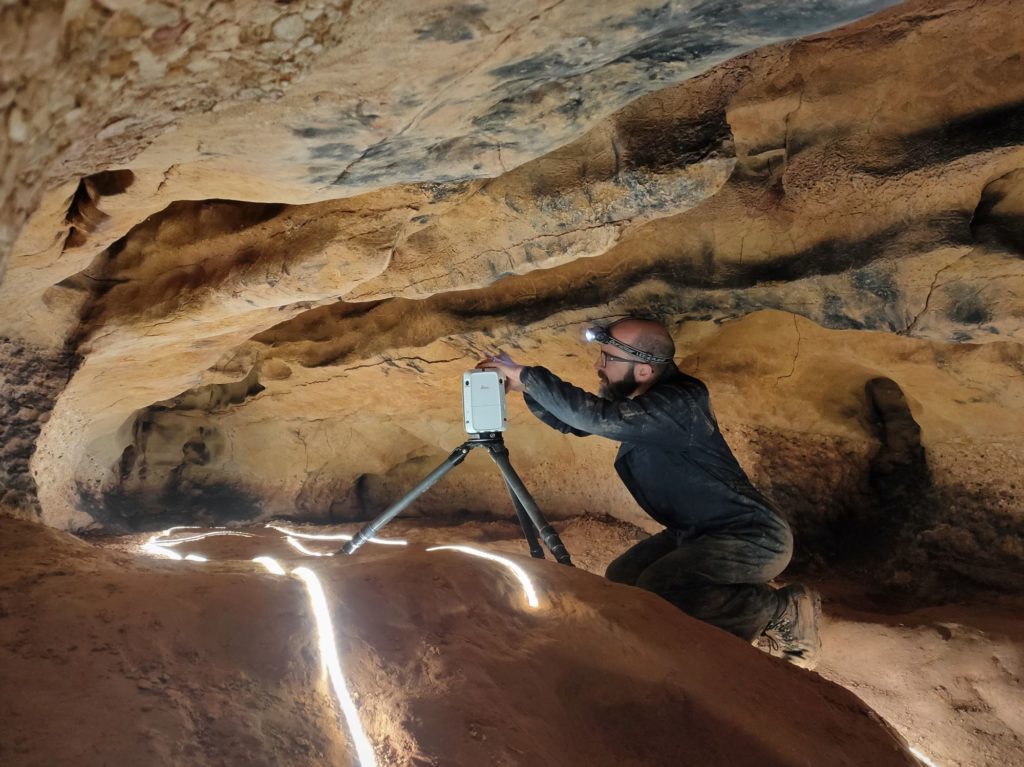
Archaeologist makes a 3D scan of the prehistoric cave art at Font Major in Spain.

Without going into space and littering it with our detritus and conflicts, there are plenty of unknowns here to satisfy our taste for exploration. In this article from ArtNet News, we learn, for example, about a recent discovery made in Spain that opened up a whole new batch of mysteries.

Javier Pes writes, “Experts have discovered a cave full of prehistoric carvings in northern Spain. Among the hundreds of rock carvings, some believed to be 15,000 years old, are vivid depictions of horses, deer, and bulls, as well as a wealth of mysterious and abstract symbols. Unlike the famous prehistoric paintings at Altamira, also in northern Spain, the recently discovered cave art in Catalonia is carved directly into the soft surface of the rock.

“A team of archaeologists stumbled across the richly decorated cave at the end of October 2019. … Josep Maria Vergès, who led the team from IPHES (the Catalan Institute of Human Palaeoecology and Social Evolution) described the find as ‘exceptional’ in a statement, and compared the cave to a ‘shrine.’

“The cave art is now being recorded and studied using 3D scanning technology. The engravings were created on a layer of soft sand deposited on the cave’s surface in an area that is difficult to access. The artworks are extremely fragile. … Several figures seem to have been damaged in the past by visitors who were unaware of their existence. Experts are now studying the best way to preserve the remarkable finds.

“Vergès tells Artnet News, that he felt a ‘mixture of surprise and disbelief, followed by great satisfaction,’ when the he first saw the ancient works of art. ‘Surprise because the cave is not an ideal place to find engravings due to the characteristics of the rock, the walls were very irregular, and the specialists thought that it was not suitable for painting or engraving.’ …

“The oldest art in the cave is believed to date back to the Late Stone Age, or Upper Paleolithic period. The earliest cave paintings at Altamira date from the same period, although they are around 20,000 years older. 

“Researchers uncovered the art within a nearly two-mile-long complex of caverns about 60 miles from Barcelona called the Cave of Font Major, which was first discovered in 1853. Parts of this cave complex, one of Europe’s largest, are open as a subterranean museum, although the specific stretch containing these carvings is closed to the public. …

“[In a related event] anthropologists working at Abri Blanchard in France’s Vézère Valley announced in 2017 the rediscovery of a 38,000-year-old rock engraving. It depicts an aurochs, or wild cow, and rows of dots. That ancient image is believed to be one of the earliest artworks found in Europe.”

More at ArtNet News, here.

Read Full Post »

Photo: Genesis Center.
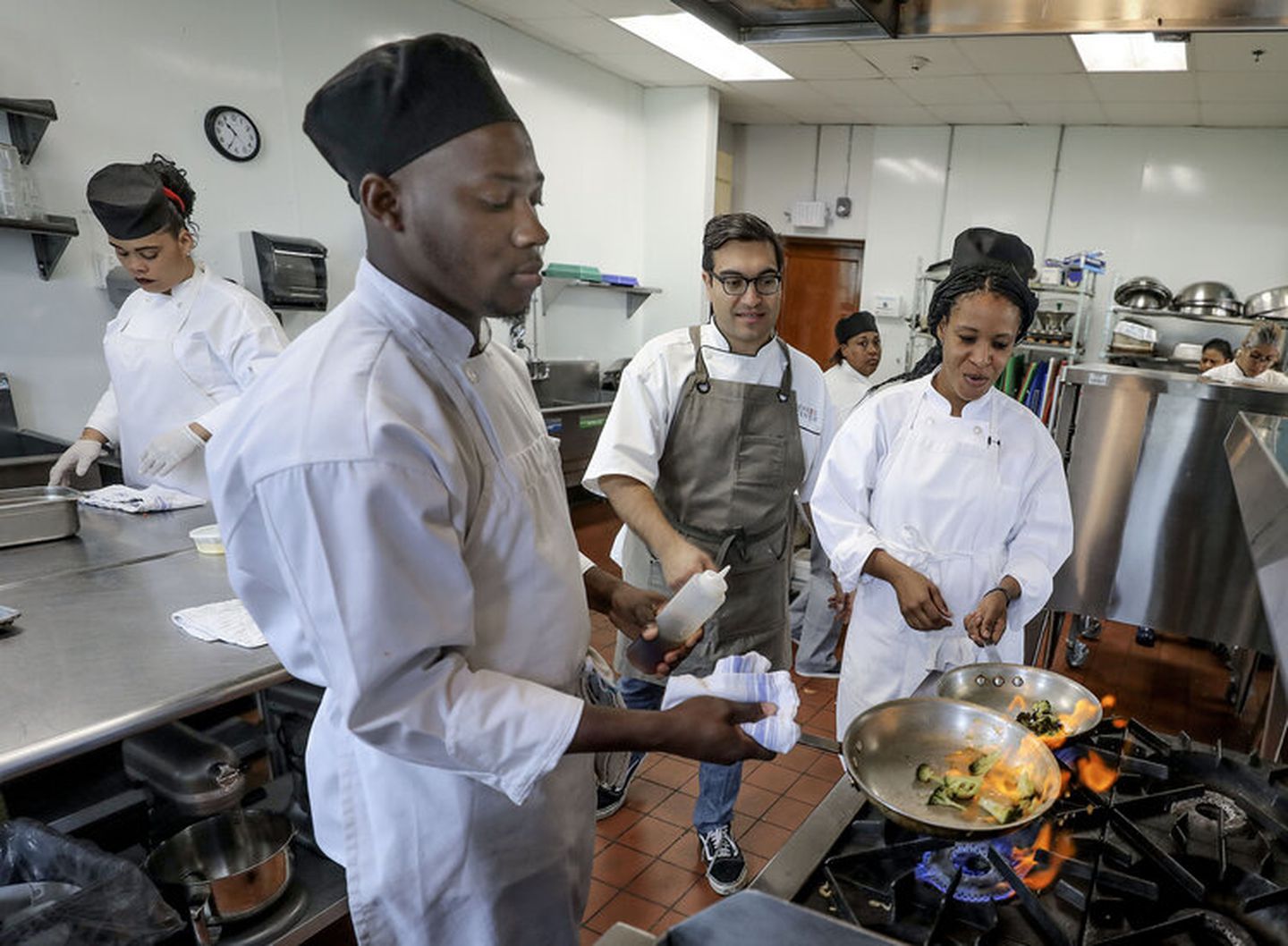
Culinary skills training session in Providence. The amazing Josh Riazi built the program into what it is today.

One of the two Providence agencies where I’ve been volunteering to help English teachers is the Genesis Center. In addition to providing English classes to immigrants, Genesis offers child care, many social services, and career programs. Perhaps the most renowned of its trainings is under the aegis of a gifted and highly motivated chef called Josh Riazi. I have tasted the food. It’s top of the line.

Alexa Gagosz wrote at the Boston Globe about plans for expanding the program.

“In the next few weeks, construction will be underway at the Providence Public Library. … Come 2022, a new restaurant run by the Genesis Center, known as CHOP (the Culinary Hub of Providence) will open as a hybrid retail store and workforce and economic development hub. The initiative, according to the Center’s chief executive Shannon Carroll, is a natural expansion of the Center’s longstanding culinary arts program that has been a pipeline to local restaurants for decades.

“But the key difference with this program, said Carroll, is that participants will get paid to learn and will experience a ‘real world’ environment as they develop their culinary skills. Students will have knife skills training, classes in safety and sanitation, proper use of equipment, culinary math, soft skills, and participating in food production for the CHOP commissary. Carroll said they will be able to complete their Servsafe certification and work on individualized goals related to their career and financial empowerment. …

Q: Who can become a student and how much does it cost?

“Carroll: Genesis Center (located in Providence’s West End neighborhood) serves families throughout the greater Providence area. … The training program would be no cost to the students and participants would receive an hourly wage as apprentices. This paid, on-the-job training allows us to reach students who cannot afford to spend several months on training with no income.

Q: How is the program funded?

Carroll: Our programs are funded through grants both for the buildout of the space and the training program. [Funders include Anonymous, Carter Family Foundation, Champlin Foundation, City of Providence, Egavian Foundation, Governor’s Workforce Board, Jacques Pepin Foundation, Ocean State Charities Trust, and Social Enterprise Greenhouse.]

Q: When and why did the Center decide to expand its culinary program?

Carroll: We have had many conversations over the years about expanding our culinary offerings to reflect the changes in the industry and the needs and wants of our students.

“When we toured the PPL renovations last year, before COVID, they mentioned wanting to open a cafe in the space. The location, timing, and synergy of missions between the PPL and Genesis Center just made sense to us. It was the perfect opportunity to explore taking our program to the next level.

Q: How does CHOP fit into the mission at the Genesis Center?

Carroll: Our mission is to provide the highest quality education, job training, and support services to people of diverse cultures so that they may achieve economic independence and participate fully in society.

“Many [of Genesis Center’s adult learners] hold full-time employment or multiple part-time jobs, but they struggle to support their families with very low-income levels. Most of them have children. They struggle with the same challenges faced by most low-income individuals — unstable housing, inconsistent resources for transportation, limited resources for child care and health care, and difficulty overcoming unexpected problems or emergencies. As members of racial, ethnic, cultural, and linguistic minority groups, they face additional barriers to education and employment. …

Q: How will the menu work at CHOP?

Carroll: It will reflect the diverse community we serve. We plan to incorporate feedback and recipes from our staff and students to provide lunch and to-go items to the downtown business community. … We hope it will serve as a community space to bring people together.”

More at the Globe, here, and at ConvergenceRI, here.

Read Full Post »

Photo: Patrick Reynolds.
The Maori-designed “redevelopment of New Zealand’s New Plymouth regional airport is a finalist in the Prix Versailles Airports 2021 awards,” the Guardian reports.

A modicum of justice is seen in an unlikely place: the redesign of an airport by indigenous people from whom the airport land was stolen as recently as 1960.

Eva Corlett reports for the Guardian, “A tiny regional airport in New Zealand that weaves a Māori story of love and longing into its architecture is in the running for a prestigious design award, up against international heavyweights including New York’s LaGuardia.

“Unesco’s Prix Versailles recognizes architecture that fosters a better interaction between economy and culture, and includes a range of categories from airports to shopping malls. The finalists for the airport category include the New York LaGuardia upgrade, Berlin’s Brandenburg airport and international airports in Athens, Kazakhstan and the Philippines.

“The sixth airport finalist is Te Hono – meaning ‘to connect’ – and is found in New Plymouth, a town with a population of 85,000, on the western shoulder of the North Island.

“After six design options were floated, Rangi Kipa – a member of the local Puketapu hapū (subtribe) and lead figure on cultural design, settled upon a story. ‘The Ascension from the Earth, Descending from the Sky,’ tells the story of Tamarau, a celestial being, who was so captivated by the earthly beauty of Rongo-ue-roa, a terrestrial being, that he came down to meet her.

“ ‘This story aligns closely with the creation narrative of Te Ātiawa iwi [tribe],’ said Rangi. …

“The spine of the building is oriented to represent the journey from the mountain to the river – the main ancestral walking track in this area, and while visitors may notice these aspects of the architecture first, there are many subtle stories told through the details.

“Manaakitanga – the Māori concept of hospitality – also influences the design. Campbell Craig, the project’s architect and associate for design at firm Beca, said the project attempted to challenge western architectural practices that do not bear any relationship to Māori design.

“ ‘It was important for Puketapu to welcome and take care of guests in a place that is in many ways the gateway to the region,’ said Craig. ‘The faceted curved forms of the building at the entrance and airside “embrace” travelers, to shelter them from the elements.’

“In 1960, the land the airport sits on was confiscated from Māori, under the Public Works Act to build an aerodrome. This was a major source of grievance for the hapū, who had urupā [burial grounds] on the site. …

“Kipa said: ‘For the most part, we have been invisible in our own landscape for 160 years, so it’s amazing to have the chance to influence, and give life to, some of the things that make us who we are.’

“For Craig, the most heartening aspect of the project was the intensive collaboration between Māori, the airport and the architects, which enabled a sense of collective ownership over it.

“ ‘The experience at Te Hono provided a blueprint for working with tāngata whenua [people of the land],’ he said, adding that it would be an approach embedded into all of their future projects.”

More at the Guardian, here.

Read Full Post »

Photo: The Home Depot.
Easy-care succulent plants are media stars in China.

A new craze in China shows a revealing side of the natural character, including the determination to find online fun that no government could possibly object to. In fact, I can’t imagine anyone objecting — unless the fad were to lead to depletion of the planet’s succulent plants.

Rebecca Tan writes at the Washington Post, “There’s a group of burgeoning new stars on China’s live-streaming scene. They’re painfully photogenic, diverse in age and origin, and offer up vividly different performances as the seasons change.

“Succulents.

“The thick, fleshy plants have been growing in popularity in China for nearly a decade, but only recently collided with live-streaming in e-commerce, a $60 billion industry that got a massive boost during the pandemic. Hundreds of thousands of people are logging on daily to admire these vegetating celebrities, oohing as chattering hosts turn and twirl them around, showing off blushes of new color, entire centimeters of growth, or — what a treat! — some velvety new leaves.

“ ‘For me, it’s a must-watch every day. I can’t not watch it, I’ll feel like I’m missing something,’ said Yang Weichun, 39, of Zhejiang province. Before live-streaming drew her into a passion for succulents, or ‘duorou’ in Chinese, her phone used to be filled with pictures of her two sons, 13 and 16. Now, her phone has space only for pictures and videos of her several hundred plants, which she scrolls through daily to feel at peace. Unlike teenage boys, she noted, succulents never throw tantrums.

“ ‘My sons say, “mom is silly to buy so many succulents, what is it for?” But when I look at my succulents, these useless things, I feel really happy,’ said Yang, a business executive with 14-hour work days. ‘It’s like unconditional love.’

“Yang is a top client at Gumupai Succulents — one of the many succulent nurseries in the mountainous region of southwest China run by 30-somethings fleeing their former lives in cramped cities. Equipped with selfie sticks and ring lights, these online-only merchants are part of what Chinese media calls ‘new farmers.’

“A former fruit-peddler who auctions off fruit online as ‘Brother Pomegranate‘ garnered 7 million fans. A once-struggling beekeeper found riches through Douyin, the Chinese version of TikTok.

“Succulent sellers have found their success through live-streaming, described by Forbes as ‘the Home Shopping Network, but with charismatic, trendy anchors.’ On platforms like Taobao Live, sellers host videos that last 16 hours a day or more, blurring the lines between commerce, entertainment, and social media.

“Jialu Shan, an economist who studies China’s digital market at the International Institute for Management Development, said live-streaming caught on because it cut out the middleman between buyer and seller, offering more transparency and intimacy in a country often short of both. Instead of relying on Photoshopped or filtered images, buyers can examine products in real time, pose questions to sellers and swap notes with other users. …

“In China, home to nearly 1 billion Internet users, there are some unique outgrowths to traditional plant-rearing.

“Demand is on the rise for ‘succulent fostering,’ merchants say. A growing number of (wealthy) clients want to own succulents but aren’t in a rush to get them right away — or ever, actually. They prefer to outsource the parenting part of plant parenthood, content with watching their wards grow through pictures, videos or maybe the occasional visit.

“According to state-run broadcaster CCTV, more than 80 percent of succulent sellers now provide fostering. One seller told local media that when he started fostering mid-pandemic, he only wanted to take care of a few succulents on behalf of friends in hotter places. Now, he has 5 acres of land and 270,000 foster plants. A 37-year-old seller from Yunnan, who asked to be identified by her live-streaming name Queen of the Strange Flower, said she has 600 clients who have left plants under her care — some for as long as four years. …

“Yang is Gumupai’s biggest foster client, with hundreds of succulents under their care. She wants eventually to retrieve all her dourou — she recently bought a house with a large garden expressly for this purpose, she said — but she’s in no rush. She’s working toward retiring at age 50, at which point, her succulent-rearing skills will be more up-to-mark, she said. And in the meantime, she can see her plants whenever she wants, a collection of pin-sharp pixels on her phone screen.

“ ‘In the past, I wanted to travel and see all of China’s grand rivers and mountains. Now, I don’t have any of that desire at all,’ Yang said. ‘I just want to be in my garden, raising my succulents — just that simple.’ “

More at the Post, here.

Read Full Post »

Photo: Paul Braven/ AAP.
Images in support of the men and women fighting devastating bushfires were projected onto the Sydney Opera House January 2020

Remember the massive fires in the Australian bush and all the terrified koalas? It wasn’t that long ago. Artists were among those who used their talents to raise funds in the aftermath. I think the opinion piece written for the Conversation in January 2020 about Australia foreshadows the many ways artists were destined to help during the international disaster we now refer to as Covid.

Jo Caust, associate professor at the University of Melbourne, wrote the op-ed because at the time, a government was treating the arts as a nice-to-have but unnecessary frill.

Caust wrote, “Artists are again finding themselves at the receiving end of criticism over funding.

“A mural on the wall of a fire station funded through the Western Australia Percent for Art scheme has met with a hostile reaction in the light of the bushfire crisis.

“In WA [Western Australia] all new public buildings costing $2 million or more must spend 1% of the building costs on public art projects – a bipartisan initiative since 1989.

“Public art plays an important role in connecting communities, humanizing the environment and giving a community a unique identity, but WA Shadow Minister for Emergency Services Steve Thomas told the ABC ‘I think it is time for this policy to end. [It] is more important to put that money into the equipment [emergency services] require rather than art work to decorate the building,’ he said.

“Artists are a critical community resource, but this criticism is a familiar refrain in Australia, where arts practice is seen as non-essential.

“The federal government determined in December 2019 the arts no longer matter to the nation by disappearing the arts from mention as a governmental responsibility and continuing to cut arts funding.

Across the country, the average income of artists from their artwork is A$18,800, yet artists have raised millions of dollars in support of the 2020 bushfire crisis.

“Comedian Celeste Barber has raised over $50 million from more than 1.2 million people to help those who need it. Pink, Elton John, Metallica, Nicole Kidman and Keith Urban, Chris Hemsworth, Kylie and Danni Minogue – to name only a handful – have personally donated large amounts of their own money to help fighters and victims.

“Visual artist Scott Marsh raised more than $60,000 by painting a mural in Chippendale. … The Stardust Circus prevented a blackout at the Ulladulla Evacuation Centre by lending their generator. Theatre companies are organizing collections at their performances for bushfire relief.

More than 32 concerts are taking place across the country with musicians giving their time for free to fundraise. Visual artists are auctioning their work. Writers, illustrators and editors are donating books, mentoring, and naming rights to characters in forthcoming books to support firefighters. …

“Art and artists can have a transformational role in rural communities by building resilience. Rural communities value their local history and artists can play an essential role in recording and validating a community’s culture.

“Arts institutions, such as regional galleries, can also have a dramatic impact on a community. In 2012, the Bendigo Art Gallery generated $16.3 million for the local economy. The Book Town festival in Clunes, the Writers Festival in Byron Bay and the Folk Festival in Port Fairy are all crucial to the sense of community in those towns.

“Artists can be critical in restoring hope and providing healing to a community after it has experienced trauma. The Creative Recovery Network works together with emergency management agencies across Australia to help communities affected by trauma and natural disasters to recover from their experiences. …

“While the arts can create provocation, they can also be a means of honoring feelings and processing grief. There are times when communities need more than financial relief to recover from loss. They need a way to make sense of it so they can move forward.

“Artists have stepped up in a huge way at this dark time in Australian history by volunteering their talents and resources to support communities and firefighters.

“They have demonstrated artists and arts practice can contribute to our society with passion, ingenuity, and imagination. It is time the arts and artists received the respect they deserve by our governments and the broader community.”

More at the Conversation, here.

Read Full Post »

Photo: Alia Smith.
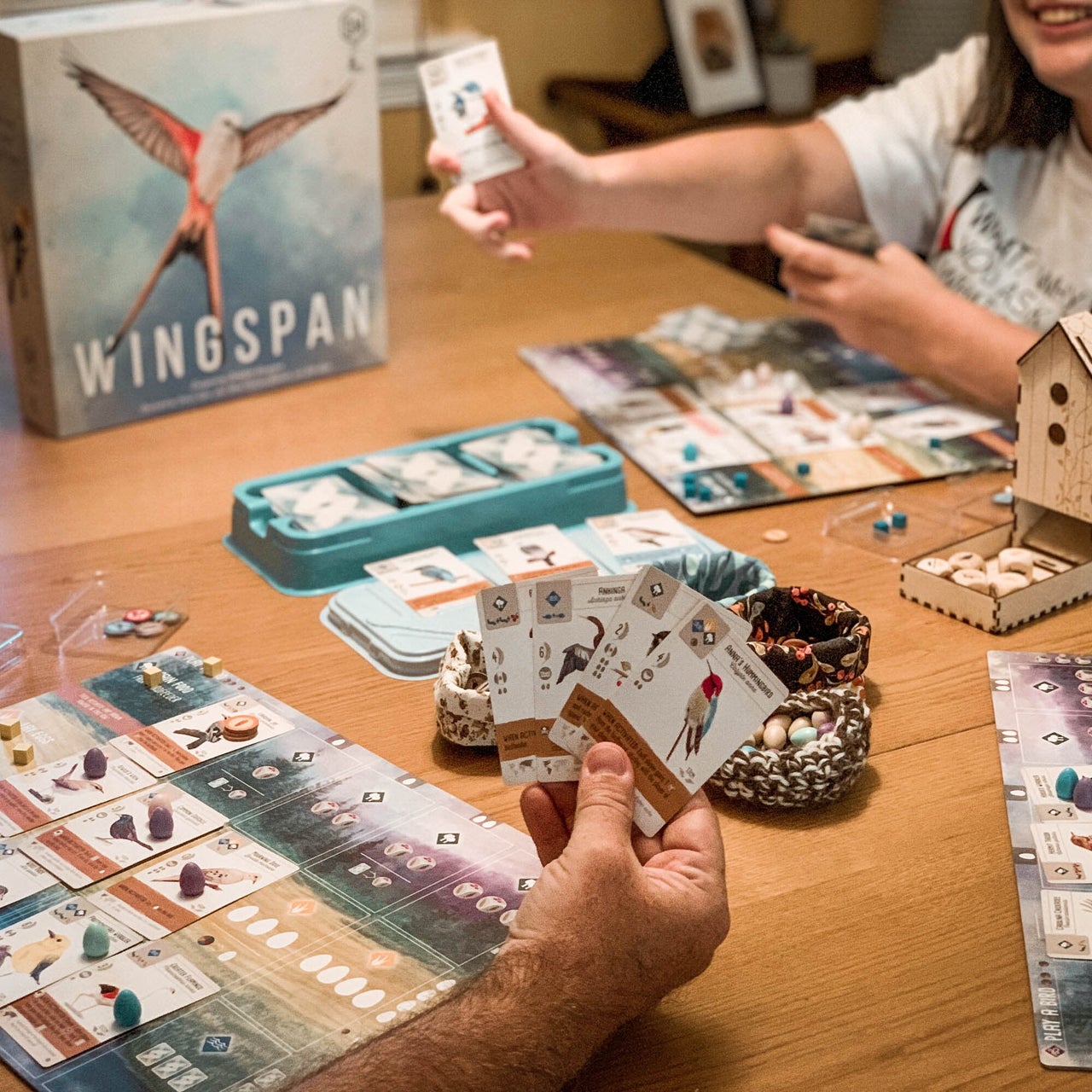
Playing the Wingspan board game.

Are you a board-game enthusiast? I am not usually, but as Hurricane Henri sweeps over Rhode Island and activities are shut down like it’s the pandemic all over again, I’m thinking we may need more board games in the house. And the one in today’s story looks like a winner.

Dan Kois writes at Slate about Wingspan’s recent phenomenal success.

“In the winter of 2005, Elizabeth Hargrave, a health policy analyst, took a ski trip with a group of friends from her church. The problem was, she said, she grew up in Florida, ‘and I don’t actually enjoy skiing, or any winter sports.’ One of the friends had brought a selection of board games. … Hargrave, who played bridge but hadn’t really played board games since she was a kid, was ‘totally hooked,’ she said. …

“After she returned home to the D.C. suburbs, she continued playing games. She loved the math of them, the way they became puzzles. … In her newfound fandom, Hargrave was like thousands of adults who’ve rediscovered the joy of board games, especially as a new kind of game took over the market.

“In ‘Eurostyle’ games, players complete complex, evolving challenges more involved than simply traveling around a game board answering trivia questions or paying rent. And in Eurostyle games, players are never eliminated. …

“[But Hargrave] and her friends found themselves annoyed that all the games seemed to revolve around medieval villages, or trains, or trading economies in vaguely Mediterranean locales. ‘At one point we placed a moratorium on games about castles,’ she said. This led her to a question: Why weren’t there games about subjects she actually found compelling? Maybe she would design one, she thought. And that led to another question: What did she like enough to want to make a whole game out of it?

“That one was easy. Birds.

“My family discovered Wingspan,” the Slate reporter continues, “with its beautiful, hand-painted cards and gentle, strategic gameplay, last year, and soon we were playing it every weekend. Wingspan has transformed the way I think about games, about competition, and even about art. ,,,

“When it was released in 2019, it was an instant hit, and that was before everyone found themselves stuck inside during the pandemic. In 2020, as the pandemic drove Americans both into their homes to stare at their families and out into the woods to stare at birds, Wingspan blew up, outselling every other game its publisher makes combined. That company, Stonemaier Games, has now sold 1.3 million copies of the game and its expansions, plus another 125,000 digital editions on Steam, Nintendo Switch, Xbox, and iOS. …

“Wngspan is what’s known among serious gamers as an ‘engine-building game,’ which means that as the game goes on, the combination of birds you play becomes more and more efficient at generating points each turn, like an engine running faster and faster. Your cuckoo lays eggs, and the eggs not only give you points but make it possible to play more birds, which also give you more points but have their own powers that generate points in other ways. I prefer thinking about the mechanism of Wingspan not as an engine I am building, but as an ecosystem I am fostering.

If I’ve strategized well, the birds in my ecosystem will be knitted together into a web of complex, mutually beneficial relationships. …

“It’s those interconnections that Hargrave began mapping out in a ginormous spreadsheet once she decided she really did want to design a board game. For four years, she researched birds, brainstormed play ideas, and — most crucially — tested the game, over and over, every week for years, with a group of friends. …

“During the years she was playtesting Wingspan, she worked as a health policy consultant, often running focus groups, and her experience with analyzing data and interpreting consumer response was also crucial to Wingspan’s development. The numbers work in Wingspan. What seems at the beginning like a set of coincidences or accidents reveal themselves by game’s end as a cleverly designed system that ensures everyone finds a way to score points.

“When Hargrave felt she had a solid game, she cold-emailed every publisher that seemed like it might be amenable to a game about birds by a first-time designer. Most ignored her or turned her down, but in 2016 she did land a few meetings at Gen Con, an Indianapolis board game convention. One executive, Jamey Stegmaier of Stonemaier Games, listened to her pitch for Bring in the Birds, as it was called, responded with a list of suggested changes, and told her that if she revised the game and came back to him, he’d consider it. That meant another half-year of unpaid work before Stegmaier accepted her revision and agreed to manufacture the game. Hargrave, as a first-time designer, received no advance, so until the game sold, she wouldn’t see a dime.

“But boy, did the game sell. …

“I think that the game’s sly cooperative nature — the way Hargrave’s design gently pushes you not to beat your neighbor but to succeed with her, together — goes hand in hand with its conservationist spirit. Of course passionate birders become Wingspan players, and Hargrave has heard from many nonbirder Wingspan fans who are now investing in bird feeders and signing up for eBird accounts (us, for example). But there’s also something inspiring about engaging with the outdoors in this constructive way, at a time when most human impact upon the environment seems so dire. Nature is not a zero-sum game, and neither is the human effort to preserve it: The more people you invite to the table to work together, the more everyone achieves. “

More at Slate, here.

Read Full Post »

Photo: Ben Raines/ Alabama Press Register.
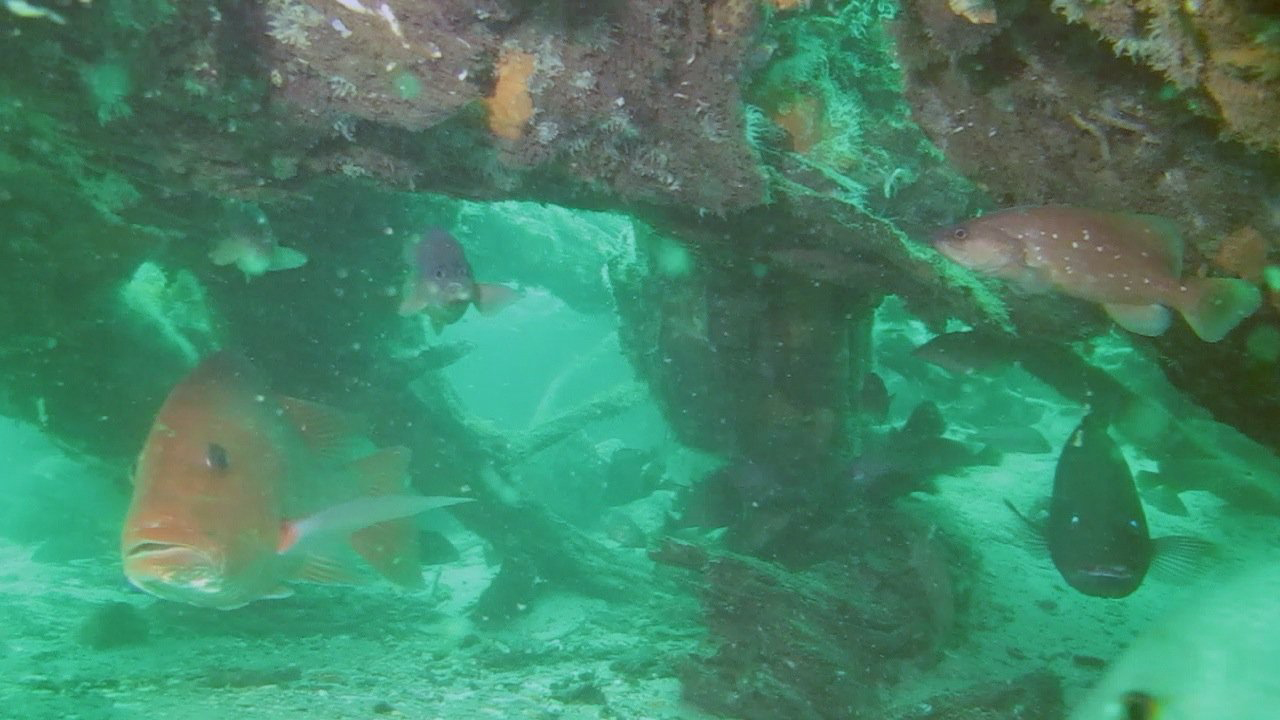
“Sixty feet beneath the waters off the Gulf coast of Alabama lies a forest of cypress stumps more than 50,000 years old,” says Living on Earth. “Fish hide among the roots of the trees.

Hello from Hurricane Central. The guy in charge of New Shoreham’s power company says to expect that Henri will cause a loss of electricity, so if I break my perfect 10-year-plus record of daily blogging, you’ll know why.

Meanwhile, let’s think about scuba diving in an ancient, submerged forest in the Gulf of Mexico.

Living on Earth host Steve Curwood interviewed Ben Raines in 2012 about this and reposted the story and video because of new urgency to get the area classified as a marine sanctuary before it’s exploited.

“STEVE CURWOOD: Deep beneath the surface of the Gulf of Mexico, off the Alabama coast, lie ancient cypress trees that only a handful of people have ever seen. One of those lucky few is Ben Raines, director of the [South Alabama Land Trust].

“BEN RAINES: For many years I was the environment reporter for the paper down here, the Press-Register, and so I had a buddy who owned a scuba diving shop, and he used to taunt me with this tale of an underwater forest that he had been diving on one time, and I pestered him for years and years and years, and he finally agreed to take me out there.

“He heard about it from a fisherman who just noticed a ledge on his bottom machine as he was riding across the gulf. So he started fishing there and catching a lot of Red Snapper. And he gave the numbers, the GPS coordinates, to my buddy that owns the dive shop and asked him to go out there and see what it was. He hit the bottom and said there’s a bunch of trees.

“CURWOOD: Now how deep is deep for an underwater forest?

“RAINES: Well, this is about 60 feet. Of course, all over the Earth, we know sea levels have gone down hundreds of feet. So we have a delta, a river delta here. Further up in the delta, about 80 miles inland, there’s sand dollars all over in these limestone bluffs. So we know sea level was that high at one time. Now we’ve got these trees 60 feet underwater, so sea level was that low, and it’s just a fascinating push and pull of the ocean through the climatic change over the eons.

“CURWOOD: So when did you finally get to visit the forest?

“RAINES: I got out there a year ago last August. …

The way we dive here, we’ll drop the anchor over whatever the GPS number is. And then we swim down the anchor line to get to the spot because the water’s a little murky — otherwise you get lost.

“I went down the anchor line, and when I hit the bottom, there it was. The first stump. And it was about as big around as a garbage can lid, but it had that very distinctive irregular shape that a Cypress trunk has. … Then it was surrounded by ‘knees.’ You know, Cypress trees have knees — you see them in the swamps — that stick up out of the water to kind of help hold them in place, and here was a Cypress tree on the bottom of the ocean. And I swam a few feet, and there was another one, and a few feet more, another one, and I quickly realized they were all around me in every direction. …

“It’s totally enchanting. You know, these trees are covered in anemones and crabs and shrimp — and then you have these huge clouds of Red Snapper and Grouper following you around. I was down there one day swimming along the ledge where the biggest stumps are, and I turned around and there was this huge funnel shape of fish behind me, I mean it must have been 200 Snapper, and they were just following me around. When I stopped, they would stop. When I turned around, they all fell in behind me. …

“[Groupers] come right up to you. And some of the fish that are down there, the trigger fish, will actually come up and chew on your camera. You have to shoo them away. They just seem to have no fear. …

“From the moment I hit the bottom and saw the stumps, it was just exhilarating. You knew you were in this sort of ‘land of the lost,’ this place that shouldn’t exist, but here it was, and I got the camera out, I hit the record button, and I never turned it off, and that’s exactly what I’ve done every dive I’ve made down there. And now I’ve been going down there with three cameras, you know, setting them up in different locations just to kind of capture this place while it’s there, because if we get a storm, it could theoretically come into the Gulf and change everything out there and bury this place up again. You know, it may be a very ephemeral place. We may only get to see it for a little while. …

“I cut some sections out of them, gave them to Christine DeLong at LSU, and she had them radio carbon dated, and they had to do them three times in all I think because they didn’t believe the results. So they expected them to be 12,000 years old, which was the last ice age. Instead they came back radio carbon dead each time they tested them, which means they’re 50,000 years old or longer. …

“We had another team come out from University of Southern Mississippi, and we had them do a sonar survey so we could try and get an extent of it because I’ve only been swimming around 300 yards of it. It turns out it’s spread close to a mile. …

“CURWOOD: We first aired this story back in 2012 and the fight to protect Alabama’s underwater forest from business interests continues. Scientists and advocates have asked the Biden administration to designate the site a marine sanctuary.”

More at Living on Earth, here.

Read Full Post »

Photo: Andrea Pyenson.
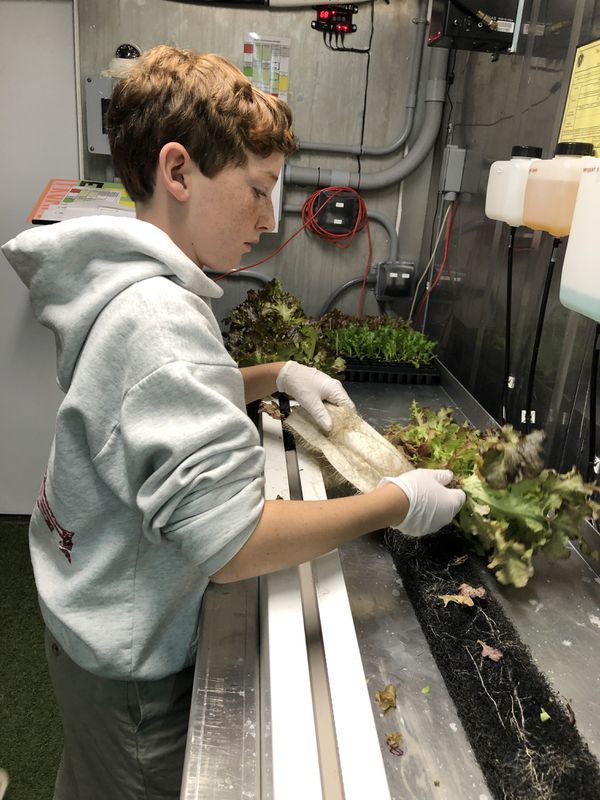
In this 2019 photo, a student harvested lettuce at the Rivers School’s Freight Farm.

Are we all too disconnected from the wisdom and skills of our ancestors? At the Rivers School and other Massachusetts schools, students have been getting hands-on insight into growing food — but a bit differently from how our ancestors grew it.

Boston Globe correspondent Andrea Pyenson reported on the hydroponic initiative in a January 2020 article.

“Inside the big white shipping container parked behind a classroom building on the campus of the Rivers School in Weston, it smells like a verdant field on a warm spring day, with a degree of humidity that is completely at odds with the cold, dry air outside. A variety of lettuces, herbs, and a smattering of other vegetables grow on vertical towers in adjustable rows. The sixth-grade students who maintain the school’s Freight Farm cycle through in groups of four to reap the bounty of work they started at the beginning of the 2019-2020 academic year. The first harvest day was in late October.

“ ‘They all love to come in here,’ says Emily Poland, who teaches eighth-grade science and is the farm director at this independent school for grades 6 through 12. The Freight Farm and related projects are built in to the sixth-grade curriculum, incorporating humanities, social justice, and science, among other subjects. Students spend time there once a week planting, cleaning, and harvesting. Farming is a club activity for the school’s high school students, who can go in during their free time.

“Based in Boston, Freight Farms manufactures technologically advanced hydroponic farming systems. In 320-square-foot, climate-controlled shipping containers, users can grow up to 13,000 plants at a time, vertically, without soil. The company was founded in 2010 by Brad McNamara and Jon Friedman. Several area schools, among them Rivers, Boston Latin School, and Worcester State University, are using the farms to grow food for their own communities, for their neighbors, and as educational tools.

“For Poland, managing the farm was a natural extension of her teaching. ‘I like to create curriculum. I care about food. I like to be outside,’ she says. One of the sixth-graders’ annual activities, which combines academics with community service, is cooking a meal for the Natick Open Door at St. Paul’s Episcopal Church. These are hosted every week and attended primarily by seniors. Poland explains that planning the meal incorporates math skills because the students have to scale recipes to feed up to 45 people. And naturally they use their own greens in the salads. …

“Boston Latin, a public exam school for grades seven through 12, acquired its farm in 2013 after students in the Youth Climate Action Network won the $75,000 prize in the Global Green Schools Makeover Competition. Farming is a student-run after-school activity here, under the guidance of eighth-grade history and civics teacher Cate Arnold. …

“Addy Krom, a junior, notes of the farm, ‘You can come in, it’s a whole different environment. All the stress from school [goes] away.’ Adds sophomore Azalea Thompson, ‘This makes locally grown food more accessible to the city.’ The students give the food they grow to faculty members, bring some home, and are working to create a CSA. With Arnold’s help they are also trying to reestablish a more consistent connection to a food pantry in Jamaica Plain, where a former Boston Latin parent, recently deceased, used to deliver their greens.

“At Worcester State, Mark Murphy, associate director of dining services, oversees the Freight Farm, which sits outside of Sheehan Hall, the school’s newest dormitory and site of its main cafeteria. Rich Perna, former director of dining, made the decision to purchase the farm five years ago, says Murphy, ‘to bring hyperlocal produce to the campus.’

“Murphy has been responsible for the farm for the last two years. An employee of Chartwells, which has the contract for all of the school’s food services, he grows almost all of the greens for the cafeteria, as well as for alumni catering events. …

“At full capacity, Murphy explains, the farm produces about two acres’ worth of crops. He is constantly looking for different varieties of lettuce that will appeal to the students and is currently ‘trying to figure out a gourmet mix.’ In addition to three varieties of lettuce, he grows kale, rainbow Swiss chard, parsley, and basil. He coordinates with the cafeteria’s cooks, telling them what he is growing so they can plan menus to incorporate the farm’s production. …

“Through a partnership with the Worcester Public Schools and its program that helps young adults with differences transition from school to the workforce Murphy has three part-time helper/trainees. Once a week three students, who have completed high school with a certificate, come (often with a job coach from the program) to seed, plant, harvest, and clean. Murphy is in the process of hiring one of the students, who has aged out of the program. She ‘has a lot of passion for the farm,’ he says.”

More at the Boston Globe, here.

Read Full Post »

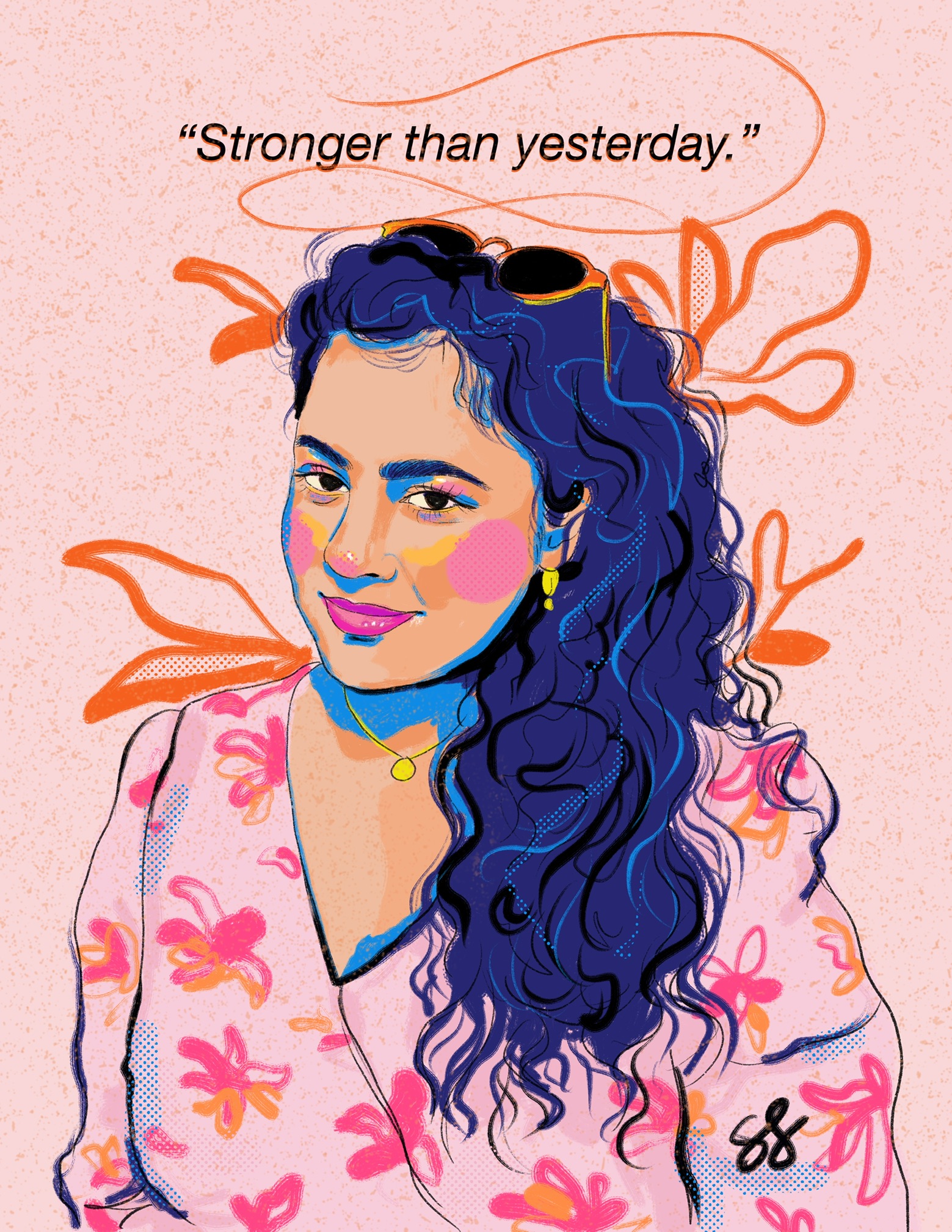
Illustration: Shivani Javeri.
Many artists in India donated their work to fundraisers such as the Fearless Immunity art sale to help others during the height of the pandemic.

You can trust artists to come through when there’s a need for empathy. They are often sensitive enough — perhaps wounded enough — to feel someone else’s pain and want to do something about it.

For example, as Rohini Kejriwal reports at Hyperallergic, India’s creative community became a beacon of hope during Covid-19, using their talents to raise money for vulnerable populations.

“In April and May, amidst a devastating second wave of COVID-19, India faced an overwhelming shortage of hospital beds and vaccines, choked crematoriums, and a rising death count. …

“From their homes, artists took to social media and used visuals, words, and even cake to raise funds for frontline workers and organizations helping affected communities get basic supplies like oximeters, thermometers, basic medicines, and masks. From every part of the country, illustrators, photographers, poets, and bakers came together to do their bit. 

“Hundreds of illustrators across the country have sold their prints, calendars, and other merchandise in exchange for donations to individuals and organizations most affected by coronavirus. … Keeping transparency in mind, the artists and their supporters shared donation receipts publicly, and Instagram was suddenly flooded with posts by good Samaritans doing whatever they could. 

“Several artists also took on commissions, like Shivani Javeri and Upamanyu Bhattacharyya, who made digital portraits for COVID-19 relief, and Divya, who did pet portraits on commission. Ria Mohta of Artisan’s Arbor created Feel Good postcards, through which people could buy postcards and write a customized message for loved ones. Creative Dignity, a volunteer-run movement, has been working to help traditional artisans and craftspeople from India who face the double threat of a health crisis and livelihood uncertainty. 

“Several print sales have been hosted by the photography community as well, like Art for India, Ode to India, and Prints for Hope by Eight Thirty; Chennai Photo Biennale’s PhotoSolidarity, as well as the Print for Srishti sale, with 45 participating photographers, initiated by photojournalist Smita Sharma.

“A series of art sales, in which multiple artists pooled and sold their work to raise funds as a collective, also arose. Author-illustrator Devangana Dāsh brought together 26 talented women artists to sell digital artworks; Kulture Shop ran two Art Fights Covid campaigns with 50 artists selling their art for oxygen relief; the Fearless Collective created an art sale Fearless Immunity; and LOCOPOPO and a group of artists and illustrators sold their original works and art prints.

A Friendly Fundraiser was started by a group of friends who decided to donate their time in exchange for donations, offering a variety of services and experiences from home coffee brewing, writing better college essays, personalized digital portraits, and even guidance on raising a puppy in lockdown. More recently, community fundraisers with various workshops and panels have grown in popularity, like student-run initiative Moonflower COVID Relief and Sensory Expansion by Unlocked

“India’s poetry and music communities have also had a part to play. In May, a group of writers hosted an evening of poetry, In the Dark Times, There Will Be Singing. Poet Nakuul Mehta is currently running #PoemsForHumanity, where he writes and performs an original poem for those who donate. 

“Even the independent music community has been doing their bit. Producer Arjun Vagale mobilized his friends in the Indian electronic music community, and together, they created a charity compilation album titled SOS. Producers Sanaya Ardeshir and Krishna Javeri collaborated with the coffee estate Kerehaklu to create Kerelief, natural soundscapes intended to bring calm. Sanaya, along with 11 other producers, also helped create CRSP (Covid Relief Sample Pack),  a bespoke sample pack of sounds produced from across the globe.

“Offering workshops as a way to share practical knowledge also became a way to incentivize donations. Shub (also known as the Hungry Palette) hosted a visual journaling workshop, and natural color maker Manya Cherabuddi started a fundraiser called Find Your Calm and donated all the proceeds from her classes on natural dyes and pigments. In June, NPI Collective hosted a 3-day workshop on children’s books as maps to help navigate the pandemic.”

More at Hyperallergic, here.

Read Full Post »

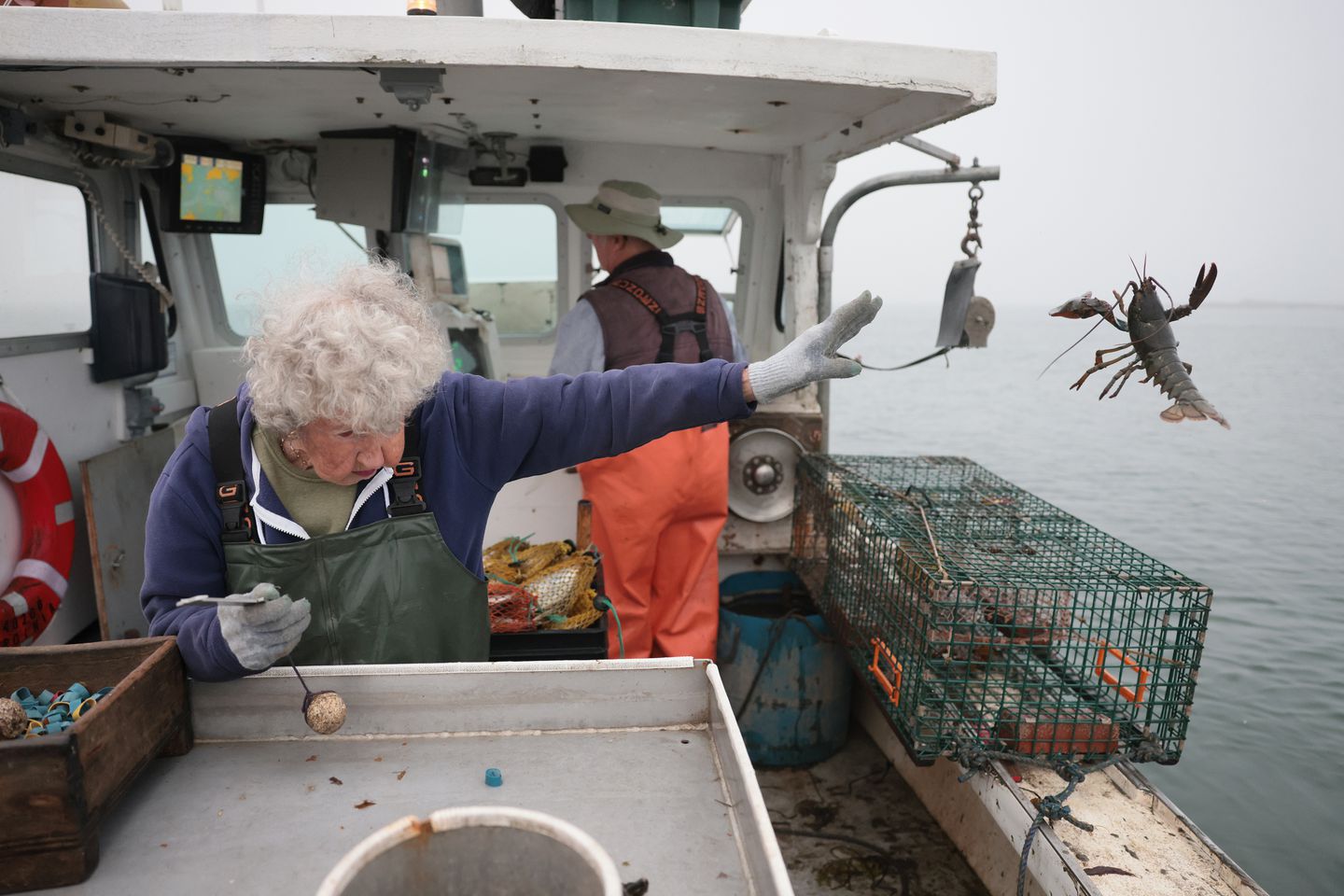
Photo: Jessica Rinaldi/Globe (WHAT a picture! Rinaldi is among the best.)
Virginia Oliver tossed back an undersized lobster as she and her son, Max, haul traps in Maine.

Are you ready for another story about someone loving their job at an advanced age? Brian MacQuarrie of the Boston Globe interviewed a 101-year-old woman who still fishes for lobster — Virginia Oliver of South Thomaston, Maine.

“It’s not yet 5 a.m.,” he writes, “and the landing at the Spruce Head Fishermen’s Co-op is shrouded in predawn fog that obscures the waters beyond. It’s time to go to work, and Virginia Oliver and her son Max approach the dock in the dark in a 30-foot lobster boat.

“They tie up under the stark, mist-speckled glare from an overhead light. Bait is brought aboard, equipment adjusted, and Max peers into the gloom as he eases the boat into Penobscot Bay.

“In the world of Maine lobstering, it’s a scene that is repeated countless times up and down the state’s rugged coast. But here’s the difference: No other boat has a 101-year-old lobsterwoman aboard, and a fully working one at that.

” ‘I grew up with this,’ said Virginia Oliver, a Rockland woman who began lobstering when she was 8, just before the Great Depression. ‘It’s not hard work for me. It might be for somebody else, but not me.’ …

“The fog began to burn off shortly before 7 a.m., and … Max pointed out a ‘sweet spot’ for lobstering among the many small, rocky islands.

“His mother came to work this day with a bit of makeup on her face, her blue eyes and a pair of small earrings twinkling in the hazy dawn. …

“Virginia Oliver has been working these waters since she first accompanied her lobsterman father as a young girl. After raising four children, she returned to the bay with her husband, who died 15 years ago. Since then, she has continued to venture from shore, three mornings a week, to a saltwater world as familiar as the street where she was born and still lives.

“ ‘When I first started, there weren’t any women but me,’ Oliver said, dressed in olive-green overalls, a blue sweatshirt, and high boots. ‘My husband and I used to go out in all kinds of weather. There aren’t as many lobsters today, though. They’re way overfished, like everything else.’

“Oliver’s job is to measure the lobsters, using pliers to place tight bands around the claws of the keepers, tossing the undersized overboard, and stuffing small pogies into bait bags.

“Naturally right-handed, Oliver has worked the pliers with her left hand since she broke her right wrist several years ago. Despite the change, her hand movements seem remarkably supple and strong. …

“Oliver is meticulous when she measures, tossing back lobsters that are only a hair shorter than the 3¼-inch legal minimum from the eye socket to the rear of the body shell. She also can’t keep egg-bearing or reproductive females, a state requirement that helps bolster the lobster stock. …

“Max Oliver, 78, does double duty as helmsman and hauler, emptying every trap that a hydraulic wheel pulls from the water. Between mother and son, they have choreographed an intricate ballet of demanding, physical work that’s conducted quietly and efficiently.

“Max chuckled over his mother’s stamina and work ethic.

“ ‘It’s pretty damn good, that’s what I call it,’ he said, maneuvering the boat in low water past pine-studded islands. ‘She might give me hell once in a while, though,’ he added with a laugh. ‘She’s the boss.’ …

“Her son drives her to the boat during lobster season, which for the Olivers stretches from the end of May to the beginning of November. They rise about 3 a.m., go to bed at 10 p.m., and look mildly amused when asked how they manage it.

“Oliver said she doesn’t nap when the lobstering is done for the day. There’s shopping to do; there are errands and trips to the post office.

“ ‘I find plenty of housework, too. I don’t like to do it, but I have to do it,’ she said. … ‘I still drive — a GMC four-wheel-drive truck. As you can tell, I’m pretty independent.’

“Her three sons and one daughter range in age from 76 to 82. One of them, 79-year-old Bill, waited at the Spruce Head Co-op this recent morning as he prepared to go lobstering in a separate boat. His mother’s work habits seem to run in the family.

“ ‘Someone asked me, why don’t you retire? I said, “I can’t. My mother would break my neck.” ‘ “

Read more and enjoy all Jessica Rinaldi’s amazing photos of this woman at the Globe, here.

Read Full Post »

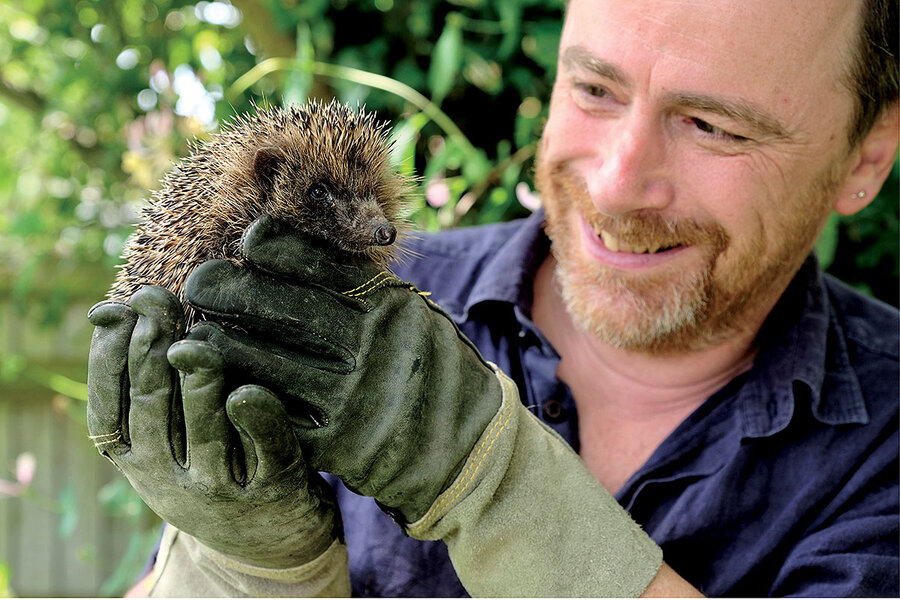
Photo: Hugh Warwick.
Hugh Warwick has collected over a million signatures calling for legislation to require planners and construction companies to create “hedgehog highways”

When we lived in Minneapolis, we had friends with a pet hedgehog called Hazel. I didn’t know if there were any rules about keeping hedgehogs as pets in those days. All I knew was that hedgehogs were adorable. And the way they curled up in a ball when anxious reminded me of myself. Or an ostrich.

Time to give up our ostrich behavior and do something about hedgehogs’ loss of habitat. Shafi Musaddique has a report at the Christian Science Monitor.

“Jo Wilkinson realized she was losing her students’ attention, so she turned to an old friend: the hedgehog. As a sustainability and engagement officer at Britain’s University of Sheffield, she wanted to rally students around sustainable foods and energy conservation. But it could be hard to hold students’ interest. That was until she proposed building a ‘hedgehog safari’ trail on campus. …

“ ‘I recognized straightaway that hedgehogs captured everyone’s imagination,’ says Ms. Wilkinson. ‘There’s something about them that does that to people.’

“Her effort to expand hedgehog habitats at Sheffield earned British Hedgehog Preservation Society (BHPS) funding in 2019. … Within 18 months, she had a fully funded national project that has certified 110 ‘hedgehog-friendly’ campuses across the country. …

“Britain’s hedgehogs need all the help they can get. The country’s ‘red lists’ categorize species based on how threatened they are. Hedgehogs joined the lists in 2020, officially classified as vulnerable to extinction. But advocates and organizations like Ms. Wilkinson and BHPS, which maintains her Hedgehog Friendly Campus accreditation program, are working to save the iconic British garden dweller.

“Researchers estimate there were about 1.5 million hedgehogs across England, Scotland, and Wales collectively in the mid-1990s.

The population size is difficult to keep track of, but studies show that British hedgehog numbers in rural areas have declined by 50% since 2000, though in cities and towns the decline is closer to 30%.

“ ‘It’s almost as if hedgehogs are moving out and doing the opposite of humans,’ says Ms. Wilkinson. ‘They’re moving into towns and cities because perhaps those places are providing them a bit of a refuge.’ Hedgehogs tend to follow people, she says, and have found that they can scavenge on cat and dog food in gardens. …

“That’s become more valuable as rural areas have lost wildflowers, bramble patches, and leaf and log piles in the countryside. Pesticides from intensive, modern farming practices and ‘habitat fragmentation’ – the ‘chopping up’ of Britain’s landscape into smaller pieces – have added to the rural challenges facing hedgehogs, says Hugh Warwick, author of four books dedicated to the spiky critters.

“The self-dubbed hedgehog connoisseur leads the fight in finding solutions to the destruction of hedgehog habitats due to ‘manicured gardens.’ From his garden shed in Oxford, Mr. Warwick has drummed up over a million signatures for a petition calling for British planning law requiring all new developments to include ‘hedgehog highways’: holes to allow hedgehogs to move freely between gardens.

“Mr. Warwick – once described by a British politician as the ‘Lorax of hedgehogs’ in reference to Dr. Seuss’ literary character who ‘speaks for the trees’ and fights suburban development – has managed to convince the government to change planning law guidance through his petition and online campaigning. …

“[The] hamlet of Kirtlington has already devised a hedgehog highway featuring eccentric holes, miniature stairs, and knocked-down walls that knit gardens together. Villagers took a map of the hamlet and spent time working out the minimum number of holes to connect a maximum number of gardens. A map of the hedgehog highway helps tourists trace the paths of the tiny inhabitants. … Recognizing the threat toward one of the U.K.’s favorite creatures is an opportunity for people to reconnect with their surroundings.

“For Ryan Wallace, sustainability officer at the University of London, which is part of the Hedgehog Friendly Campus initiative, that means ensuring hedgehogs thrive in the most unlikely of places: central London. Though surrounded by Regency-era houses and within walking distance of busy tourist attractions, the public squares of Bloomsbury offer overgrown bushes and ample foliage. That makes them – and the neighboring university – fertile ground for hedgehogs, though none were seen last year.

“ ‘They can travel up to 2 miles through the streets of London,’ says Mr. Wallace. … ‘Hedgehogs have loads of benefits people don’t realize. They keep the slug population down, and they’re natural pest killers,’ he says. ‘They’re also a good indicator of how well the natural environment is doing.’ …

“ ‘If there’s a space in your garden where you can let the weeds grow, do that and stop cutting the grass,’ says Ms. Wilkinson. ‘Let nature be nature.’ …

“[At] Nottingham Trent University, a ‘bronze-winning’ Hedgehog Friendly Campus … the school’s sustainable development projects officer has plans to add special hedgehog accommodations like ramps to provide safe exit from ponds. ‘They can swim really well, but they get tired,’ she says. ‘If they can’t climb out, they’ll get into trouble.’ …

“For many advocates, hedgehog conservation isn’t just about the survival of a species. It’s a chance to connect with bigger environmental issues such as climate change. ‘You can start with hedgehogs, because that doesn’t scare people off. Everybody has an anecdote about a hedgehog.’ “

Do you?

More at the Monitor, here.

Read Full Post »

Older Posts »