Feeds:
Posts
Comments

Archive for December, 2021

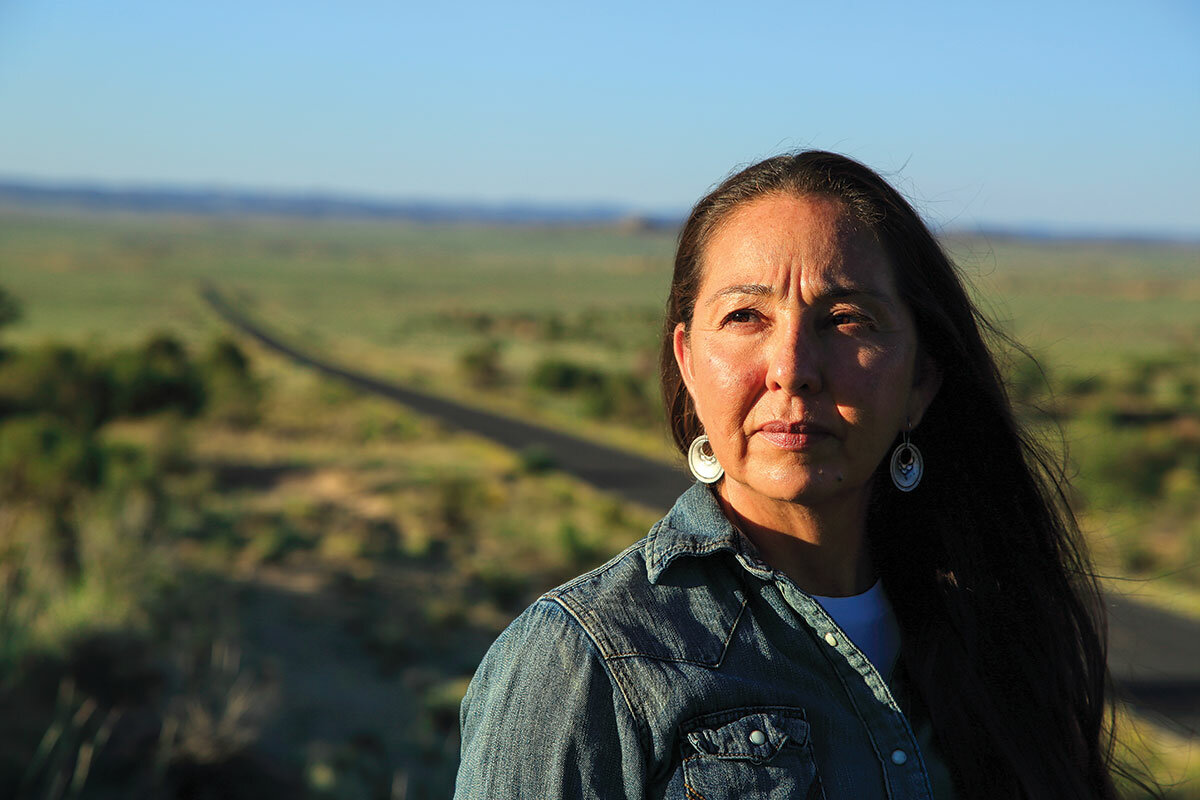
Photo: Randall Hyman.
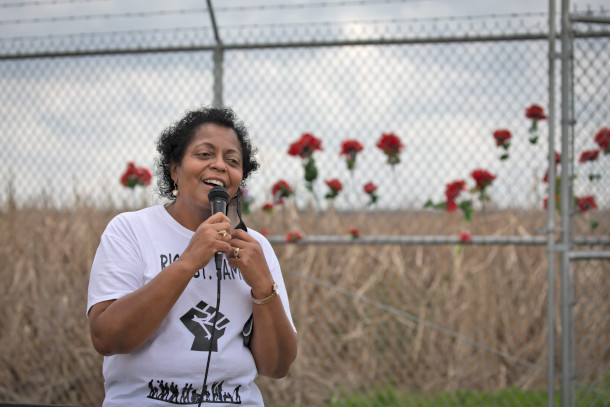
The Christian Science Monitor: “Activist Nicole Horseherder, who heads a nonprofit that seeks to protect water supplies on the reservation, stands on a ridge near Black Mesa in northern Arizona, the site of past disputes over coal mining.”

I’m grateful for the environmental leadership of indigenous people. They were environmentalists centuries before anyone used that word, and I think that paying attention to them will help us learn how to protect our planet.

Randall Hyman reports at the Christian Science Monitor about Navajo women who instinctively understand the importance of the natural world and their community’s place in it — and who don’t give up.

“One who has a master’s degree in linguistics,” Hyman says, “has made green energy a crusade on a reservation where coal, gas, and uranium have reigned supreme for decades, leaving tainted groundwater in their wake.

“Another returned to the Navajo reservation from Chicago to find that fracking had marred large sections of her native land – something she now works to stop in one of the largest methane hot spots in the United States. 

“A third was so distraught by the lack of ballot access on the reservation that she organized getting voters to the polls on horseback – her version of saddle-up democracy. 

“Two others have immersed themselves in politics directly – one as the youngest member of the Arizona State Legislature and the other as one of three women on the 24-member Navajo Nation Council. …

“Their efforts come at a particularly fraught time. Last year, from the vermilion sands bordering the Grand Canyon to the oil-rich scrublands east of Chaco Canyon, the Navajo Nation was hit by a perfect storm – a convergence of soaring pandemic deaths, dwindling energy revenues, and rising unemployment. Amid the chaos, Native women stepped up in what some see as an unprecedented wave. While one COVID-19 relief group raised $18 million in a matter of months, other women redoubled efforts to dismantle policies that have left Navajo (Diné) people vulnerable. 

“ ‘I think that you’re actually seeing a return to the way that Diné society has always been,’ says Nicole Horseherder, executive director of Tó Nizhóní Ání (Sacred Water Speaks), an organization pushing for new energy policies and water protection across the Navajo Nation. ‘Women are coming forward and saying, “I am a leader too. I can make these decisions. I can make better decisions.” ‘ …

“Underneath all the narratives is another factor – the dominant presence of women in Navajo society, where taking charge is rooted in a matrilineal culture. 

“ ‘When you see the destruction in your community, you realize you have to do something,’ says Wendy Greyeyes, assistant professor of Native American studies at the University of New Mexico in Albuquerque. ‘So, women are empowered. A lot of that harks back to our own creation stories. Changing Woman was a very powerful deity who reflected thinking about the longevity of our existence, of the Diné people. This ideology is baked into our DNA as Navajo women – our need to care and nurture and protect our communities, our families.’ …

“A year ago, on a chilly December morning, Nicole Horseherder marked an explosive turning point in her long battle against coal mining. Standing on a slope overlooking the towering smokestacks of the coal-fired Navajo Generating Station in northern Arizona, Ms. Horseherder set her cellphone on livestream and gazed at the 775-foot monoliths glowing in the sunrise a mile away.

“The stacks had been a landmark of the high desert for nearly half a century, symbols of fleeting prosperity and persistent pollution. The power plant serviced major cities of the Southwest and ran the huge Colorado River pumps supplying much of their water, but was among the top 10 carbon emitters in the United States. At precisely 8:30 a.m., a thunderous rumble shattered the clear morning and clouds of smoke mushroomed as 1,500 pounds of dynamite collapsed the stacks. …

“When I caught up with her last August on the Second Mesa of the Hopi reservation deep within the encircling borders of the Navajo reservation, [Horseherder] recalled her journey’s start. Driving to an overlook, she pointed north toward distant Big Mountain. For her, it stirred painful memories. 

“Ownership of the hardscrabble land surrounding Big Mountain, called Black Mesa, had long been an unresolved intertribal treaty issue. It remained in limbo until the 1950s and ’60s, when a Utah lawyer named John Boyden persuaded a minority of Hopi litigants to take it to court.

“True to its name, Black Mesa is underlain by rich coal seams. It is also sacred to the Navajos and Hopis, many of whom opposed outsiders tapping their minerals. But the lawsuit prevailed, eventually forcing the removal of some 10,000 Navajo residents while dividing mineral rights equally between the tribes. Boyden subsequently leased land and mineral rights for Peabody coal company. A half-century of coal mining and environmental controversy ensued. 

“Ms. Horseherder’s epiphany came when she returned home from Vancouver, British Columbia, with a master’s degree in the 1990s and discovered that her dream of leading a pastoral life had turned to dust. The springs that her family’s livestock depended on had run dry. ‘My whole attention and focus shifted,’ says Ms. Horseherder. ‘It became, “How am I going to protect the place where I live – how am I going to bring the water back? And where did the water go in the first place? ” ‘

“Ms. Horseherder became a vocal activist and founded Tó Nizhóní Ání, or Sacred Water Speaks. At the time, Peabody was pumping billions of gallons of water from deep aquifers, mixing it with pulverized coal, and sending the slurry through 273 miles of pipeline to a Nevada power plant. It assured tribal officials that the technology was safe, and many supported the operation because coal mining was a pillar of the Navajo and Hopi economies for nearly 50 years, providing tax revenues and well-paying jobs. 

“But environmentalists contended that depressurizing the aquifer was lowering the water table. While Ms. Horseherder fought Peabody for years – and others lost scores of animals to stock ponds they said were tainted by slurry – the power plant and related activities were only closed when the economics of the operations no longer worked. Wells never recovered, and impacts endure to this day, critics say. ‘What we’d like to see them do first,’ she says, ‘is fully reclaim those lands that they’ve mined, and reclaim the water as well.’ “

More at the Monitor, here.
Read Full Post »

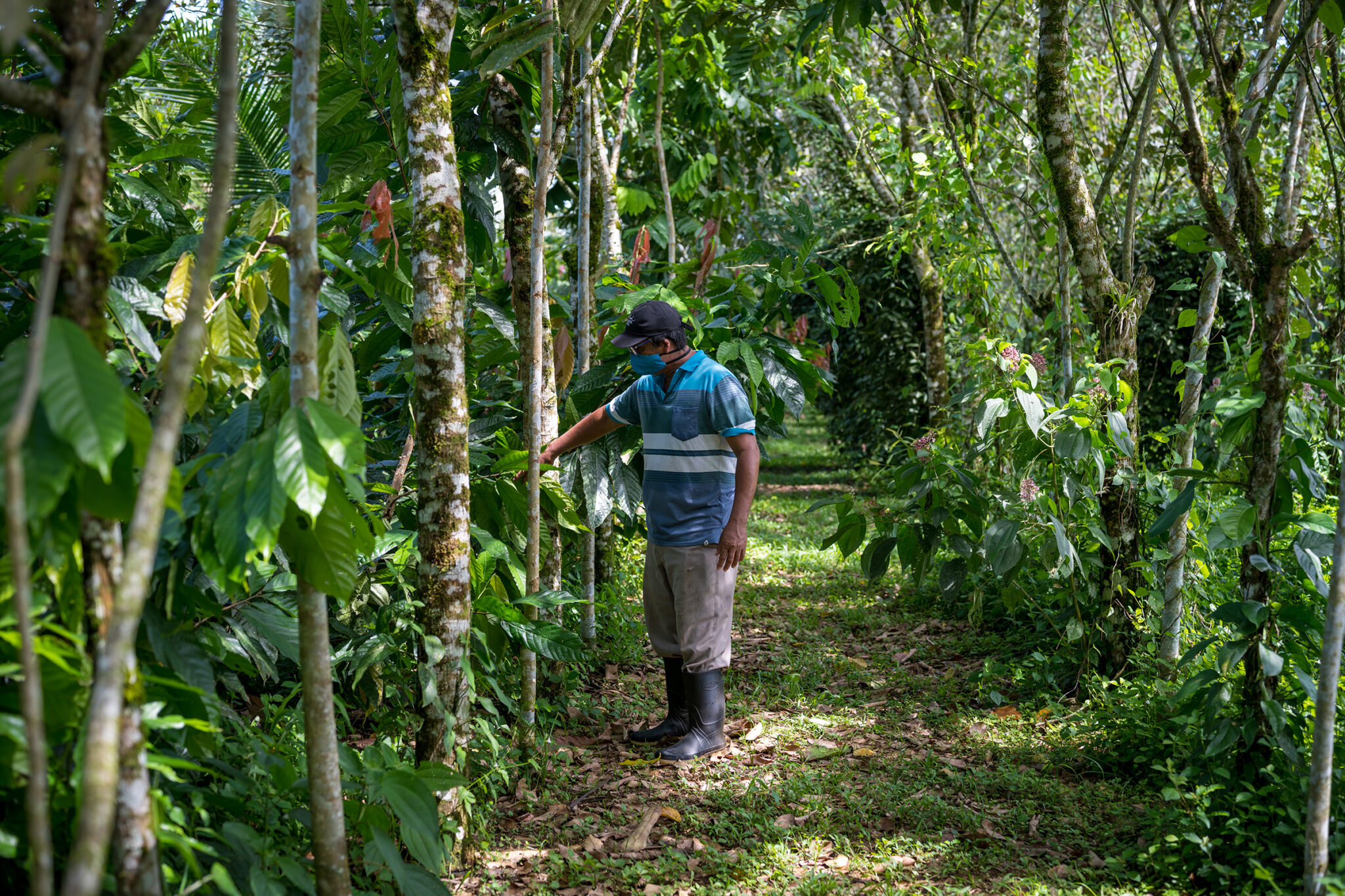
Photo: Earthshot.
Costa Rica won a Earthshot prize for its success reversing damage to tropical forests by incentivizing landowners to leave unused land alone.

I really liked this story about an effort in Costa Rica that is helping restore tropical forests. A study says that although “it’s not a license to kill” forests, they can come back eventually if humans just leave them alone to heal.

Tik Root writes at the Washington Post, “Deforestation is a global and accelerating threat. But new research shows that tropical forests can recover naturally and remarkably quickly on abandoned lands.

“The study, published [in] the journal Science, found that under low-intensity use, soil on previously deforested land can recover its fertility in less than a decade. Characteristics such as the layering of plants and trees in a forest, as well as species diversity, came back in about 25 to 60 years.

“ ‘I was totally surprised how quickly it went,’ said Lourens Poorter, an ecologist at Wageningen University in the Netherlands and lead author on the paper.

‘These forests can recover very fast and they can do it by themselves.’

“Burgeoning secondary forests are good for the climate as well. They are able to sequester more carbon dioxide from the atmosphere than established forests; like the voracious food intake of a sprouting teen compared to that of an older adult.

“ ‘It does provide a glimmer of hope for this process of tropical reforestation,’ said Meg Lowman, a conservation biologist and author of The Arbornaut: A Life Discovering the Eighth Continent in the Trees Above. ‘My only caution is that I don’t think it’s ever a substitute for the importance of saving big trees and old growth forests.’

“Older forests ultimately store more carbon dioxide than young forests, and deforestation releases those stockpiles, which helps drive climate change. The study found that it took more than a century for the overall biomass of tropical forests — and thus their carbon storage ability — to return fully. The recovery of a forest’s species makeup lasted a similar period.

“The longer time frame for the revival of these key benefits is among the reasons that Poorter says maintaining current forest cover is crucial. ‘First, stop deforestation and conserve old growth forests,’ he emphasized. The fact that deforested land can recover ‘is not a license to kill.’

“A 2019 study estimated that some 5.5 million hectares of tropical forest — an area more than twice the size of Belize — is lost each year to expanding commercial cropland, pastures and tree plantations. But cleared land is often abandoned as cultivation shifts, said Poorter, and researchers wanted to know, ‘Can it recover?’

“The answer is yes. … The subsurface soil, for example, often remains relatively vibrant after deforestation, which enables a faster recovery. The warmth and humidity of the tropics also allow trees to grow extremely fast, with some species climbing more than a dozen feet per year.

“And this all happens largely without human intervention, Poorter said. Seeds, roots and stumps embedded in the soil, or the spread of plants from adjacent forests, kick-start the recovery process. … ‘The conditions are that there has to be nearby forests, and the soil can’t be too degraded.’ “

The Post article continues with Daniel Nepstad, a tropical ecologist and president of the San Francisco-based Earth Innovation Institute, who says, ” ‘The research bolsters the policy argument for a nature-based approach to forest restoration. The cheapest way to get forest back on the land is to let nature do the work.’

“He would encourage governments to incentivize farmers and landowners to protect secondary forests and promote regrowth.

“Organizations such as the Natural Capital Project advocate for similar approaches to ecosystem services restoration. Costa Rica recently won Prince William’s Earthshot Prize for a program that helps reverse deforestation by paying farmers to protect and reforest their land. …

“This paper drew on 77 sites in three continents, comprising 2,275 plots and 226,343 stems.”

More at the Post, here.

Read Full Post »

Photo: KSTP.
Violence interrupters in Minneapolis (above) made 1,400 contacts with community members between May and November and successfully mediated 210 incidents that threatened to escalate into gun violence, according to a city official. Other interrupters may be elderly church members sitting in chairs at key locales.

In a recent opinion piece in the Washington Post, Louis King and Jerry McAfee write about “interrupters,” who work to stop gang violence. Louis King is president and chief executive of Summit Academy OIC in Minneapolis. Jerry McAfee is pastor of the city’s New Salem Missionary Baptist Church.

They write, “On May 28, Gloria Howard, an elder with Shiloh Temple, opened a lawn chair and sat down on one of the most dangerous street corners in North Minneapolis. Every day since, as part of the 21 Days of Peace community organizing project, she and others like her in our city have sat on street corners that are threatened by violence. Through the simple act of publicly taking a seat — staking their claim to a peaceful neighborhood by interrupting violence — they have undoubtedly saved lives.

“The campaign began after three children were shot in Minneapolis over a period of a few weeks this spring [and one]was critically injured.

“Tragic stories such as theirs are occurring in cities across the country, as alarm bells ring in city halls and state capitols about rising violent crime. The problem is due in large part to a loss of trust between communities and law enforcement; disinvestment in neighborhoods and schools where more help, not less, is needed; and decades of failure to keep guns off the streets. …

“Too many leaders are responding by adopting a Nixonian ‘tough on crime’ stance — which usually translates into over-policing and under-supporting these communities. That is a shortsighted non-solution — George Floyd’s murder beneath the knee of a police officer in Minneapolis last year can be traced directly back to policies that respond to crime by emboldening and insulating the police from the community rather than encouraging deeper engagement with the community.

Being a violence interrupter isn’t the only answer, but it is clearly helping in Minneapolis.

“In late May, we joined dozens of community members like Howard as churches and neighborhood associations mobilized in the effort called 21 Days of Peace — based on the idea that it would take at least three weeks for habits to start changing.

“Our group asked the Minneapolis Police Department to identify the most dangerous spots in our neighborhood, the 4th Precinct, and then we went there, pulled out our chairs and sat down. For the past three months, we have conferred daily with the precinct about the number of volunteers (two to 15, usually) and hours needed. We work in shifts, using a sign-up log online. In the winter, we’ll work on relationship-building with young people in the community.

“The precinct’s police inspector, Charlie Adams, tells us that since 21 Days of Peace began setting up in the Northside in ‘hot spots,’ the precinct ‘has seen a reduction in violent crimes in those areas.’ …

“The city’s overall violent-crime statistics have improved across the summer. In June, homicides in Minneapolis declined from June 2020, the first such drop this year. Then the same thing happened in July and August. …

“What makes this simple act of sitting apparently so powerful?

“The people sitting on these corners in their chairs are members of the community. We know our young people, and they know us. But more important, we represent one of the strongest bastions of moral authority left in these areas: the Black church. We draw on the power of congregation — of family, of friends and of community — to try to interrupt the violence.”

Read about other groups doing this work in other cities at the Post, here.

Read Full Post »

Photo: Goldman Environmental Prize.
Founder of RISE St. James and 2021 Goldman Environmental Prize winner Sharon Lavigne speaks at the first annual African American Celebration at the grave site of enslaved ancestors at the Buena Vista Cemetery. The land was purchased by Formosa Plastics for a proposed petrochemical complex.

Ever since textile artist Jamie Bourgeois did a fabric-dying experiment with the polluted waters around Louisiana’s Cancer Alley, I’ve been supporting the Louisiana Bucket Brigade and Rise St. James — grassroots nonprofits fighting back against industries like Formosa Plastics.

So I was delighted to see that radio show Living on Earth interviewed a leader of that fight.

“In the aftermath of Hurricane Ida, the communities of the Louisiana region known as ‘Cancer Alley’ were left to deal with destroyed homes, no electricity, and polluted water. That’s on top of the toxic air they breathe every day because of industrial pollution, and Black residents have been fighting for environmental justice there for decades.

“Sharon Lavigne is the founder of RISE St. James and a 2021 Goldman Prize recipient for her work in organizing against a massive Formosa plastics plant, and she joins Host Steve Curwood to discuss the hurricane’s impacts and the health effects of industrial pollution in her community.

“STEVE CURWOOD: The climate emergency is in a downward spiral, as President Joe Biden recently observed when he visited areas hit hard by Hurricane Ida and its aftermath. …

“The poor and disadvantaged are especially hard hit from big cities to places like former farmland along the Mississippi. This 85 mile stretch between Baton Rouge and New Orleans is called Cancer Alley, and it’s the site of some of 150 petrochemical plants, a notorious source of toxic chemicals for locals on a normal day. But in the aftermath of Hurricane Ida many plants released even more pollutants than average as they dealt with high winds, high water and as much as 15 inches of rain.

“Many residents of this region are low income, descendants of the Black slaves who once toiled on the vast sugar plantations of the lower Mississippi. … Sharon Lavigne lives on land bought by her grandfather in St James Parish. She retired as a special education teacher to devote herself full time to advocacy as founder of RISE Saint James, an environmental justice group working to stop even more toxic industrial development in cancer alley. Her organization and others sued Formosa, a Taiwanese company that wants to build an ethane cracking plant nearby. That prompted the Army Corps of Engineers and the courts to require an updated environmental impact statement of the facility and earned Sharon the 2021 Goldman Environmental Prize for North America. …

“SHARON LAVIGNE: I live on the west bank of the Mississippi River in St. James Parish, and Hurricane Ida, it just, it has so much destruction. So many homes have their roof off. Some of the homes are totally demolished. And when it came, it stayed here while it didn’t move fast like it normally moves like hurricanes normally move. So this one was the worst I have ever experienced. …

“In the master bedroom, over half a room, the insulation, and the sheet rock is all on the beat, the carpet is wet. Everything is, I hope, I hope I can salvage the furniture, because that was my mother’s bedroom set. And I hope I can save it but we have to get all the stuff all insulation and sheet rock off of it first, to see how much we can save. … We don’t have electricity right now. We don’t have anything. …

“CURWOOD: Sharon, I understand you’re the founder of RISE St. James. That’s its a grassroots environmental organization. You mobilized against this $12.5 billion plastics manufacturing plant. Now what kinds of toxic pollutants [went] into release? What were the chemicals involved?

“LAVIGNE: Benzene. Benzene is one, and that’s cancer causing. Formaldehyde. There’s a whole bunch of chemicals, a whole lot of greenhouse gases that they’re going to release in the air and into the water. … Even though we have twelve refineries and industries in the fifth district where I live. They don’t care. They want to add some more to us. So once they add this industry to us, we’re not going to be able to live. It’s going to be too much in the air for us to breathe and live. We are having trouble breathing. Now we have people with asthma. We have people with all all types of respiratory illnesses. We have people with cancer all up and down this river. …

“And our governor approved this industry. Our parish officials approved this industry and they live here in St. James. That’s the part that hurt me, because they live here with us. … I don’t care if I don’t have any money. I’m going to fight for my community. And this is where I’ve been all my life. And this is where I want to stay. …

“CURWOOD: What about the location of this plant? …

“LAVIGNE: This plant would be two miles from my home. It would be one mile from a church and a school, public school. And that’s when I said no more. … I didn’t know how many we had, to be honest with you, until I went to a community meeting. And when I went to that meeting, I found out so many things that were going on, and all the chemicals and the people that were sick. One lady was on oxygen and she had cancer. … I said, I asked them, ‘Why don’t we fight from Formosa?’

“And they said, ‘Oh, the governor approved that. And they said the parish council is gonna approve it too and once they approve it, it’s a done deal. There is nothing you could do about it.’ And I told them, ‘We need to do something about it because we have too many. And they said, ‘Oh, Sharon, you are wasting your time. You can’t fight industry.’ …

“I prayed and I asked God what I should do. And he told me to fight. So that’s when I started to fight. I didn’t know what to do to fight. I didn’t know how to do this, this type of thing because I was never involved in involved in environmental issues, I was never involved in anything in the parish. We formed RISE St. James in October of 2018. Then we started meeting other organizations in New Orleans and different places, in that we formed a coalition and we called it Coalition against Death Alley. …

“The governor came down here in 2019, November 1st. … When somebody came to me, and asked me if I will speak to the governor, I said, ‘Sure, I sure would.’

“I said, ‘Governor, I would like you to stop Formosa. Don’t let it come into our neighborhood.’ And this is what he answered me: ‘I’m going to do a health study.’ … I was so hurt. I was so let down because he just threw it off like it was nothing.”

Then the community filed lawsuits. Read more at Living on Earth, here.

Read Full Post »

Photo: Mark Boss.
The Hoover Dam on the Colorado River, on the border between Arizona and Nevada, is one of the 2,400 hydroelectric plants that produce energy in the United States.

I toyed with calling this post “The Farmer and the Cowman Should Be Friends,” from a song in Oklahoma, but I didn’t think anyone besides Will would get it. I just wanted to convey the idea that when opposing sides negotiate in good faith, it’s possible to come to mutually satisfactory agreements. In the case of the energy-sector and environmental adversaries in today’s story, it took a couple of years.

Brad Plumer at the New York Times begins by saying, “The industry that operates America’s hydroelectric dams and several environmental groups announced an unusual agreement [in 2020] to work together to get more clean energy from hydropower while reducing the environmental harm from dams, in a sign that the threat of climate change is spurring both sides to rethink their decades-long battle over a large but contentious source of renewable power.

“The United States generated about 7 percent of its electricity [in 2019] from hydropower, mainly from large dams built decades ago, such as the Hoover Dam, which uses flowing water from the Colorado River to power turbines. But while these facilities don’t emit planet-warming carbon dioxide, the dams themselves have often proved ecologically devastating, choking off America’s once-wild rivers and killing fish populations.

“So, over the past 50 years, conservation groups have rallied to block any large new dams from being built, while proposals to upgrade older hydropower facilities or construct new water-powered energy-storage projects have often been bogged down in lengthy regulatory disputes over environmental safeguards.

“The new agreement signals a desire to de-escalate this long-running war. In a joint statement, industry groups and environmentalists said they would collaborate on a set of specific policy measures that could help generate more renewable electricity from dams already in place, while retrofitting many of the nation’s 90,000 existing dams to be safer and less ecologically damaging.

“The two sides also said they would work together to accelerate the removal of older dams that are no longer needed, in order to improve the health of rivers. More than 1,000 dams nationwide have already been torn down in recent decades.

“The statement, the result of two years of quiet negotiations, was signed by the National Hydropower Association, an industry trade group, as well as environmental groups including American Rivers, the World Wildlife Fund and the Union of Concerned Scientists. Another influential organization, The Nature Conservancy, listed itself as a ‘participant,’ signaling that it was not prepared to sign the full statement but would stay engaged in the ongoing dialogue over hydropower policies.

“Bob Irvin, the president of American Rivers, which has long highlighted the harm that dams cause to the nation’s waterways, said that growing concern over global warming had caused some environmentalists to reassess their longstanding opposition to hydropower.

“ ‘The climate crisis has become a lot more acute and we recognize that we need to generate carbon-free energy whenever and wherever we can,’ Mr. Irvin said. ‘And we do see that hydropower has a role to play there.’

“Mr. Irvin emphasized that his group would still oppose any effort to build new dams on rivers. But that still left plenty of room for compromise.” More at the Times, here.

Devon Ryan has an update from the Stanford Woods Institute for the Environment, where the work of compromise took place: “Key ideas and proposals from an agreement between the hydropower industry and environmental community, facilitated through a Stanford Woods Institute for the Environment Uncommon Dialogue, have been included in the $1 trillion infrastructure package adopted by the U.S. Senate.

“President Biden signed the infrastructure bill, ‘Infrastructure Investment and Jobs Act,’ into law on November 15, 2021, which included over $2.3 billion for the ‘3Rs’ dam infrastructure priorities set by agreements that came out of the Uncommon Dialogue led by Dan Reicher and hosted by the Stanford Woods Institute for the Environment.

In the fall of 2020, [amid] one of the most divisive periods in American history, the hydropower and river conservation communities, traditionally at odds, reached an agreement to work together to address the nation’s more than 90,000 dams.

“The momentous agreement was the result of a two-and-a-half-year Uncommon Dialogue, an ongoing process organized by the Stanford Woods Institute for the Environment that brings public and private sector leaders and researchers together to develop practical solutions to pressing sustainability challenges.

“Now, key ideas from that pact and a subsequent detailed proposal are incorporated into the bipartisan Senate infrastructure bill, including $2.3 billion for the ‘3Rs’ of U.S. dams: Rehabilitation for safety, Retrofit for power and Removal for conservation.”

More at Stanford, here.

Read Full Post »

Photo: Daniil Shvedov.
An eco-playground in the Gorkinsko-Ometyevsky Forest near Kazan.

The problem with headlines is that they tend to focus on bad stuff — a bad leader, say, planning bad moves in a country we know about only from headlines. But a leader can’t be everywhere all the time, and no country is a monolith. Especially not one as big and diverse as Russia.

Alex Ulam has a Bloomberg City Lab story about something going on way out in the semi-autonomous Russian republic of Tatarstan.

“In 2015, Natalia Fishman-Bekmambetova arrived in [Kazan] to oversee a large public works program. Then only 24 years old, she found a city with a population of 1.7 million, a renowned university, grand boulevards and major historic sites, including a Unesco-listed walled Kremlin from which Mongols once ruled.

“But Kazan also was a typical post-Soviet city — surrounded by drab concrete tower complexes and parking lots. Since the fall of the Soviet Union in 1991, little attention had been devoted to revitalizing derelict public open spaces or to building new ones.

“Six years after Fishman-Bekmambetova’s arrival, a massive initiative often referred to as a ‘green revolution‘ has dramatically reshaped this city 450 miles east of Moscow. Tatarstan’s Public Space Development Program, launched by Fishman-Bekmambetova and Tatarstan President Rustam Minnikhanov, has created or upgraded more than 420 projects throughout the republic, including parks, walkways, gardens and other kinds of landscaped areas.

“You don’t have to walk far in Kazan to see how the new public space program has changed the city. Near the center of the city is the Lake Kaban Embankments, designed by the Chinese-Russian consortium Turenscape +MAP and completed in 2017. The project transformed a formerly deserted postindustrial site around three lakes into a waterfront promenade with rows of trees, beds of wild grasses and wooden decks. At night, the area is illuminated by lights inside glowing red benches of diaphanous resin. Huge fountains rise on the lakes; restored wetlands help clean the once-heavily polluted water.

“Southeast of the city, Fishman-Bekmambetova’s team oversaw the rebirth of the 87-hectacre Gorkinsko-Ometevsky Forest, a new park that features a ski hill and an eco-playground along with preserved woodlands and performance spaces, located on a site where local activists successfully defeated the construction of medical centers and a planned road that would have bisected the park.

“The most ambitious project in the works for Fishman-Bekmambetova’s team is the Kazanska River Strategy, a plan for a 22-kilometer stretch of urban river and 68 kilometers of embankment running the entire length of Kazan; it’s one of the largest landscape projects in Russia. More at CityLab, here.

And while we’re feeling surprised about Russia, here’s a story by Fred Weir at the Christian Science Monitor about environmental action in the far north.

Arkhangelsk, a Russian region almost as big as France that borders the White Sea, is a land of permafrost and marshy tundra, with stunted Arctic forest, rolling hills, and labyrinthine lakes and rivers. It’s been inhabited by Russians for almost a thousand years; Indigenous peoples, some related to Finnish Laplanders, have been there much longer.

“People here are very conscious of history. Much of it revolves around their fragile Arctic habitat and the need to preserve it.

“About two years ago, mass popular protest forced Moscow authorities to abandon plans to build a giant waste dump near the village of Shiyes in this Arctic region that had been intended to receive 2 million tons annually of the garbage overflowing from heavy-consuming Moscow. The success of that ‘Stop Shiyes’ struggle launched a lasting ecological movement and ushered in the election of a more environment-friendly local leadership. It also planted surprisingly divergent ideas in some peoples’ minds about how to take that newfound consciousness and turn it toward a permanent transformation. ….

“For Oleg Mandrykin, a local real estate developer from the closed naval shipyard city of Severodvinsk, it served as inspiration to try and get into national politics in order to raise ecological awareness in Moscow. Anastasia Trofimova, an Arkhangelsk doctor, went a different direction, eschewing politics for [business]. And Alexandra Usacheva heads Clean North, a group that interfaces between the public and local authorities to promote ecological education.”

More at the Monitor, here.
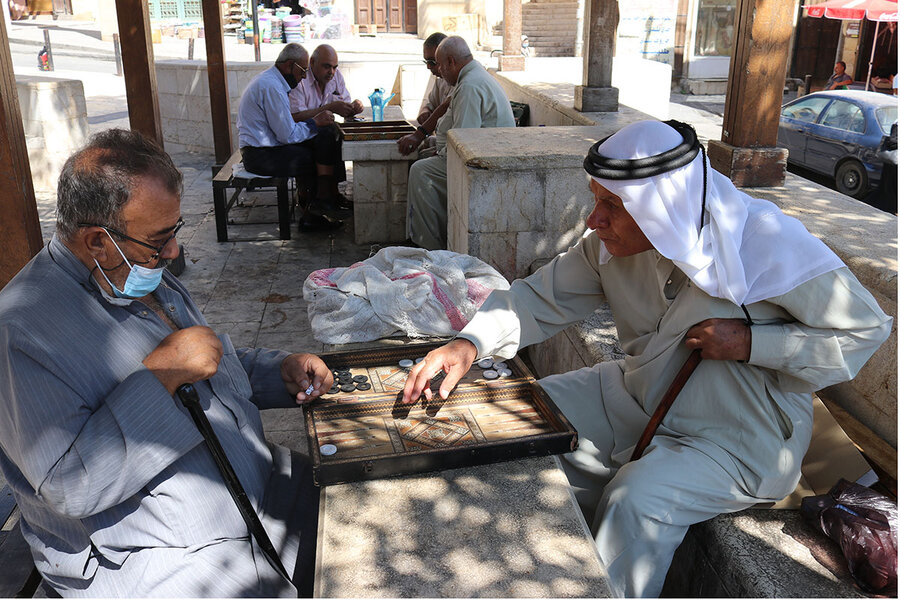
Photo: Fred Weir.
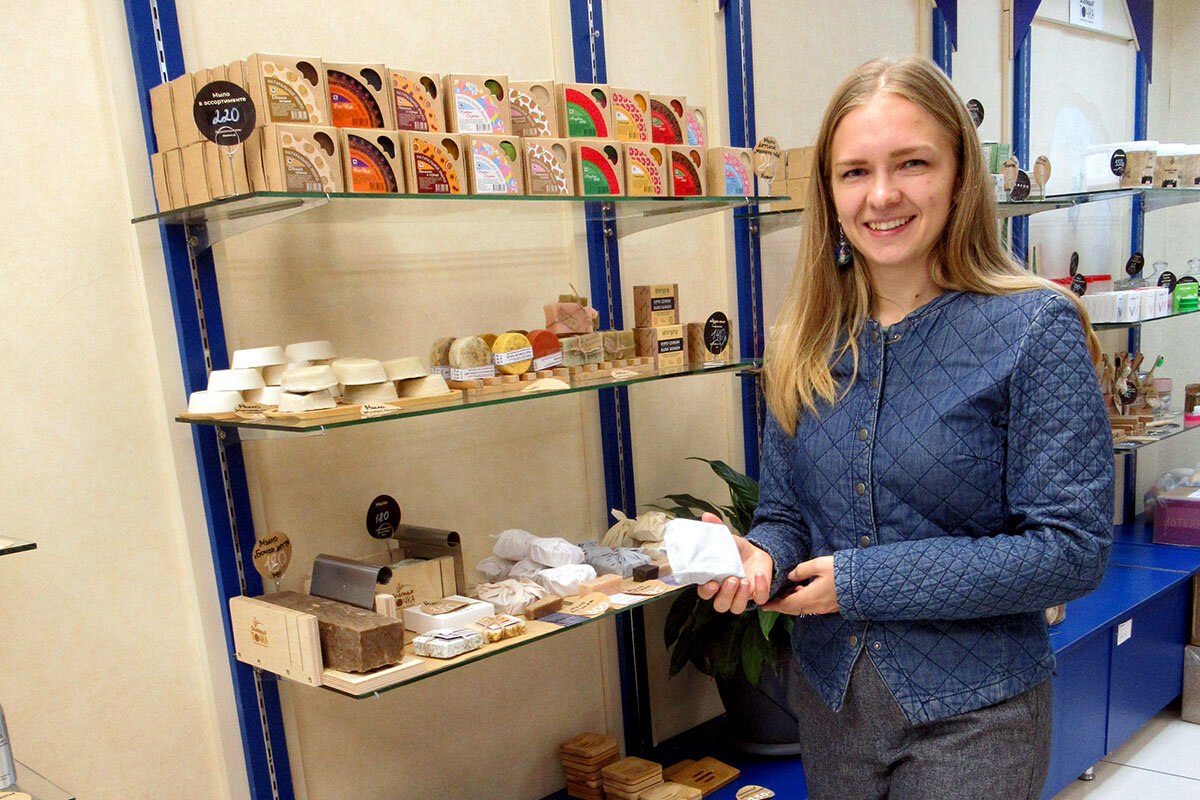
Anastasia Trofimova, a doctor, in her shop in Arkhangelsk, Russia. She was inspired by protests against a proposed landfill to launch a business that sells around 700 products made from natural or recycled materials.

Read Full Post »

Photo: Henning Bagger/Ritzau Scanpix/AFP/Getty Images.
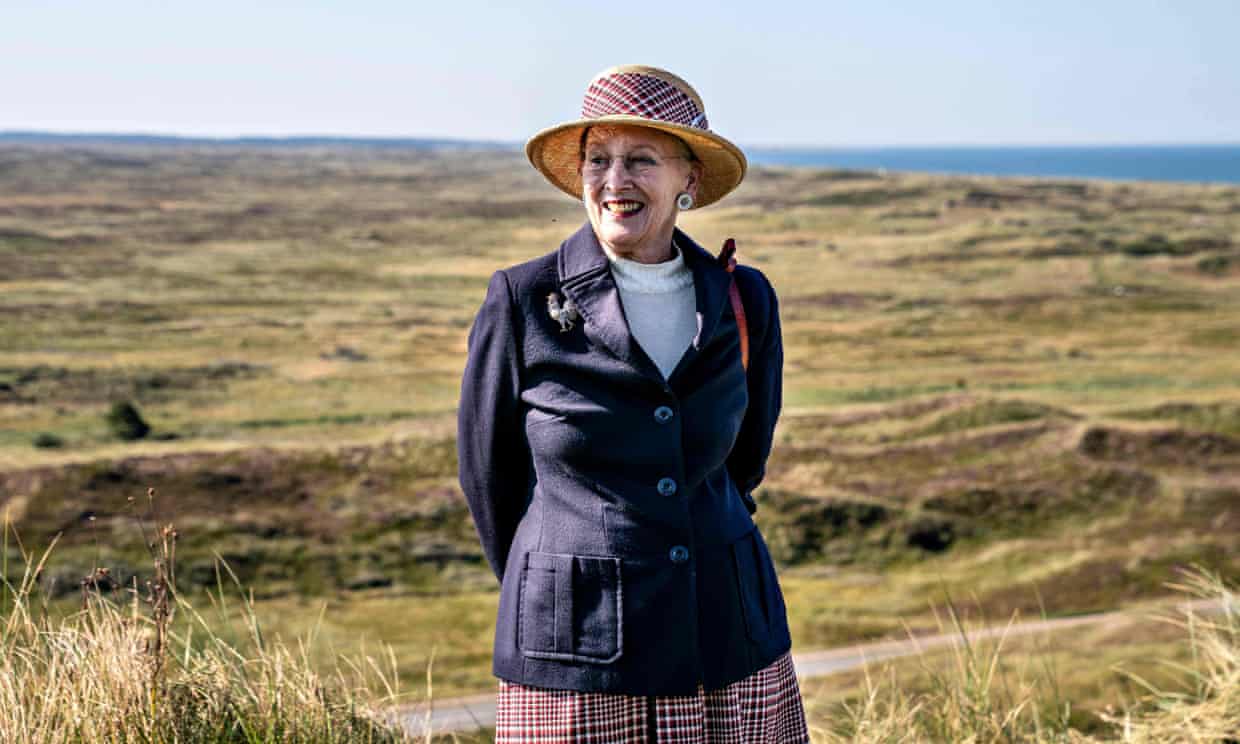
Queen Margrethe II of Denmark is set designer on a Karen Blixen fantasy movie. So cool! But this is not the queen’s first rodeo.

I didn’t know anything about Denmark’s artist-queen before seeing an article in the Guardian. The report made me want to learn more.

Andrew Pulver wrote, “Queen Margrethe II, reigning monarch of Denmark, is to design the sets for a forthcoming Netflix film adapted from a novel by Karen Blixen. …

“A romantic fantasy set in the fairytale kingdom of Babenhausen, Ehrengard will be directed by Bille August, the veteran Danish director of Pelle the Conqueror (which won both the Palme d’Or and Oscar for best foreign language film in 1988) and The Best Intentions (which won August a second Palme d’Or).

“Margrethe, who ascended to the Danish throne in 1972 and is commander-in-chief of the country’s defence forces, has also had a long career as an artist, including drawing the illustrations for Danish editions of Lord of the Rings, and exhibitions at galleries including the Arken Museum of Modern Art in Ishoj near Copenhagen. She also has screen credits as a production designer on the 2009 [fairy] tale The Wild Swans, and a short film adaptation of Hans Christian Andersen’s The Snow Queen in 2000.

“In a statement, Margrethe said: ‘Karen Blixen’s stories have always fascinated me, with their aesthetic tales, their imagination and their, to me, image-creating worlds – and I’m very happy to be part of this project.’ …

“August added: ‘The Queen has created the most fantastic decoupages for the occasion, and they will be the dominant feature of the film’s overall scenographic expression.’ ” More at the Guardian, here.

In a WordPress blog post from the Danish Home of Chicago, Mia wrote more about the queen: “Bewitching memories came tumbling out when I read about ‘The Fairy-Tale Queen‘ at Amalienborg Museum in Copenhagen. The special exhibit … is the work of Queen Margrethe II, whose artwork is on display. The exhibit shows the queen’s costume designs and scenography for productions of fairy tales, including ThumbelinaThe Steadfast Tin SoldierCinderella and The Nutcracker, that were presented at The Royal Theatre and The Pantomime Theatre. …

“I couldn’t wait to ask our friend Farfar, who lives at the Danish Home, whether he knew about the multi-talented queen of Denmark.[He] always thought of Margrethe as a pretty young thing. Her father, Frederik IX, was the Danish sovereign Farfar grew up revering. He had moved to the U.S. by the time Margrethe became queen in 1972. ‘I remember that she wore a daisy pin on her wedding gown,’ Farfar said, surprising me. ‘Daisy is her nickname, you know.’

“As a resident of The Danish Home, Farfar celebrates Queen Margrethe’s April 16 birthday every year … but he had never heard of her prodigious artistic talent. …

“While still the crown princess, Margrethe had sent J.R.R. Tolkien her own illustrations for his Lord of the Rings book. She used a pseudonym, so Tolkien had no idea the artwork that so charmed him had a royal provenance. The queen’s illustrations were published in a 1977 Danish edition of the Tolkien classic.

“Over the years, Margrethe has not only dreamed up costume designs, scenography and illustrations, but has also designed some of her own clothes and created paintings that have been displayed in some of Denmark’s most popular museums. Some of her watercolors appeared last year on postage stamps of Greenland, which is a constituent country of Denmark.

“She [is] serious enough about her art to clear her schedule every Thursday afternoon in devotion to it.” More.

At the Culture Trip, Aliki Seferou has more on the queen’s illustrations for the Danish version of The Lord of the Rings. “In 1977, five years after Margrethe’s father had died, leaving her the throne of Denmark, the Queen’s illustrations were printed and published in the Danish edition of The Lord of The Rings as well as on a British edition published by the Folio Society. If you’ve seen these editions and wonder how her name slipped your attention, it’s because Queen Margrethe used the pseudonym Ingahild Grathmer. …

“Even though the Queen of Denmark has an impressive academic background with studies in Political Science at Aarhus University, … Archaeology at the University of Cambridge and some years at the London School of Economics, it seems that she’s always been attracted to more creative activities. She’s known for designing her own dresses, ceremonial garments for the Danish bishops as well as costumes for theatrical plays. Among her most popular works are her designs for the movie Wild Swans, which is based on Hans Christian Andersen’s renowned fairy tale, and her costumes for the Royal Danish Ballet’s production of A Folk Tale.” More.

I have to say that my favorite part may be that, by tradition, this woman artist is the commander in chief of her nation’s defense department.

Read Full Post »

Photo: Kirk Siegler/NPR.
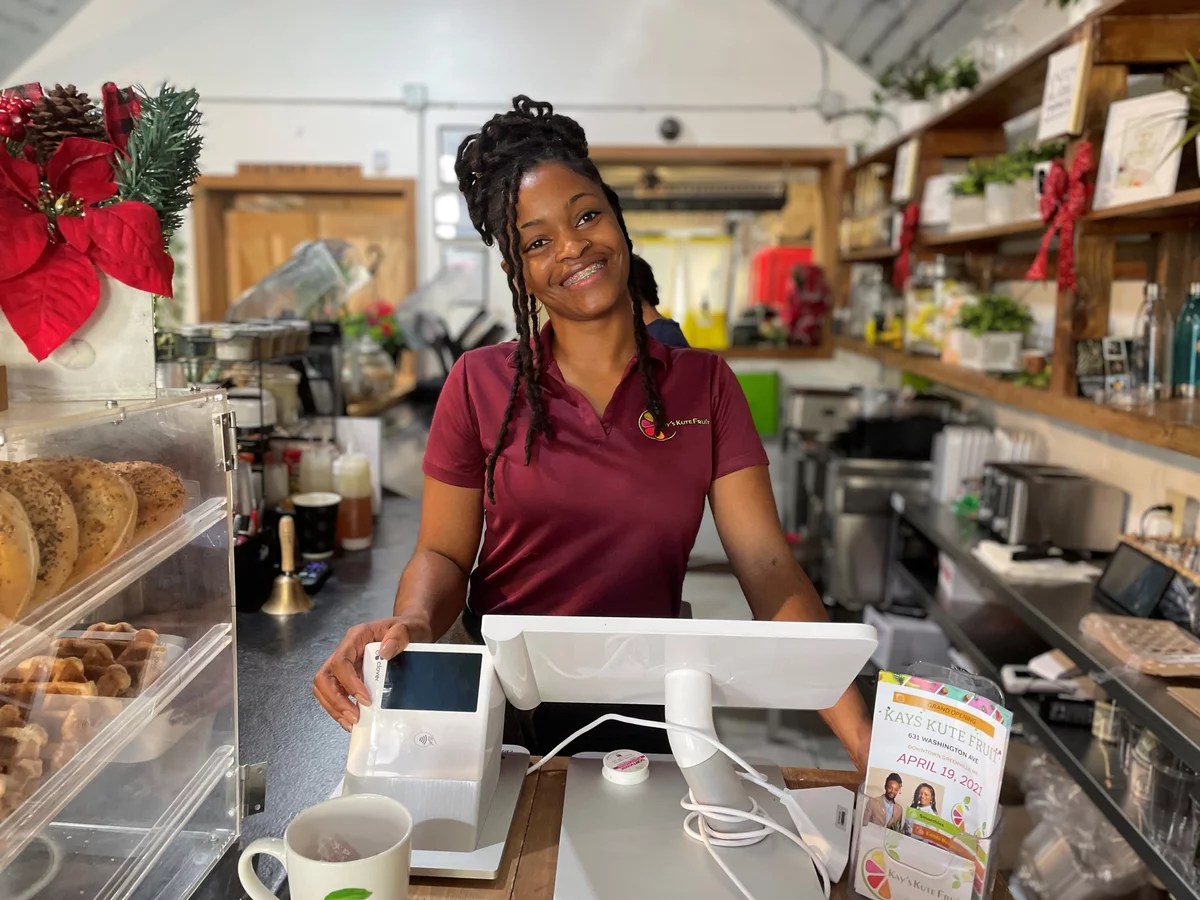
Kenesha Lewis, 30, opened a juice and smoothie shop in her hometown of Greenville, Miss. where fresh and healthy food options are hard to find.

Why do valuable communities get forgotten? Because they are rural? Because they are minority? Because they are very small businesses? Well, watch out, World! Remember the Mouse That Roared. In two years of stepping back and taking stock, we are starting to see more people refuse to be sidelined.

Kirk Siegler has a report at National Public Radio (NPR) one one example: Black businesses in rural Mississippi.

“In Greenville, Miss., pop. 27,000, a modern, brightly lit juice bar stands out in the small downtown lined with mostly mom and pop businesses and a few taverns near the town’s riverbank casino. …

“Turning heads is the owner of Kay’s Kute Fruit, 30 year-old Kenesha Lewis.

” ‘I’m really excited for the young people to walk in, and they say, who’s the owner, and they’re like, what? I had somebody do that to me,’ Lewis says laughing.

“Growing up here, she can’t recall any prominent Black-owned businesses like hers (today the town is about 81% Black). She and her husband Jason Lewis opened up this brick and mortar last Spring after a few years of making edible fruit arrangements and smoothies and selling them out of their home on the side of their regular jobs. …

“The Delta is known the world over for its delicious comfort food, but fresh produce and even regular grocery stores are few and far between. At Kay’s the blenders appear to always be running, churning up pineapple or mango smoothies with the popular add-ons of chia seeds or turmeric. …

“Lewis got the idea to start a business after her husband kept getting on her case for eating too much sugar.

” ‘I lost two teeth and he said, “wait a minute now, you’re too young to be losing these teeth,” ‘ she recalls, laughing. [So] we created smoothies together, and I said, okay, this is good for me.’

“And it turns out, it was also good for business. Lewis exceeded her projected annual sales in her first month after opening. Growing up, she says people in her community were good entrepreneurs but they usually worked out of their homes. …

” ‘Our Black people are waking up, they know that they can do this,’ Lewis says. ‘I think that we have helped them to understand that they can do this, they can succeed.’ …

“Hundreds of new Black-owned businesses like Lewis’s are starting to spring up in this region long seen as being dismissed or ‘forgotten’ by outsiders.

“Drive south of Memphis, near the massive river levees, and a lot of small town store fronts are boarded up. … So when Tim Lampkin, 35, moved back to his hometown of Clarksdale after college and a stint working in corporate America, he had an idea.

” ‘When I came back I noticed that a majority of the businesses in [Coahoma County] are white owned,’ Lampkin says. Like in nearby Greenville, more than 80% of Clarksdale’s 15,000 residents are African American.

“In 2016, Lampkin started what he calls an economic justice non-profit. Higher Purpose Co. helped Kenesha Lewis in Greenville from start to finish, applying for a loan, prepping her for meetings with bankers. And they follow up frequently with her today, all things Lampkin says would probably be a given for aspiring white business owners in the area.

” ‘If we’re going to make special exceptions for entrepreneurs because, you know, they’re a white farmer and we know their family, why can’t a Black entrepreneur get the same level of access and understanding and patience when it comes to getting access to capital?’ Lampkin asks.

“A mentorship program Higher Purpose started in late 2019 is now helping some 300 Black entrepreneurs across Mississippi take their business acumen to the next level. The non-profit helps them do things like find grants to cover closing costs or tap into donations and seed money for renting or buying spaces and storefronts. …

“At Delta State University in Cleveland, Miss., Rolando Herts, director of the Delta Center for Culture and Learning, says the region is a microcosm for the country’s broader racial and economic inequality.

” ‘In the consciousness of America, this is considered to be one of, if not the most, racist states in the union,’ Herts says. ‘Everybody’s able to look at Mississippi and say, “at least we’re not Mississippi.” ‘

“Ever since the Delta was plowed up into plantations mostly after the Civil War, Herts says there’s been a permanent Black underclass. Many don’t trust the banks, for good reason, he says, and in turn many banks traditionally haven’t done business in the still segregated Black communities. …

“For Herts, it will take hundreds more groups like Higher Purpose to really right the wrongs of the past. But he does see momentum behind their work, which is driven by mostly young, energetic and social media savvy people.

“And the businesses they’re supporting are filling a need. One of Higher Purpose’s biggest success stories is Dr. Mary Williams in Clarksdale. She opened what was then the town’s first urgent and primary care facility about three years ago. Before then, she says, working people had to drive 45 miles or go to the local ER just to get routine care after hours.

“She soon discovered there were many untreated cases of hypertension, high blood pressure, diabetes and obesity in her community. …

” ‘A lot of them … didn’t know their blood pressure was up, they didn’t know they were diabetic,’ Williams says.

“But getting to where she is today, weathering the pandemic with a clinic that now serves some 3,000 patients, wasn’t easy.

“While working as a nurse practitioner at the local hospital, Williams got ‘no’ after ‘no’ from banks when she applied for loans to start her business. One told her she may be a good health care provider, but that didn’t mean she was a good business owner. Another said there was no business like hers in Clarksdale to base her proposal on, so she’d have to put up her house as collateral.

” ‘I mean, the whole idea for this loan was for community development,’ Williams says. ‘Here I am bringing in a clinic to develop the community and improve our health care and I got a hard “no” unless I give them my house.’

“That lit a fire in her: she was going to help her underserved community if it took everything she had.” Read more at NPR, here.

Read Full Post »

Photo: Special Music School.
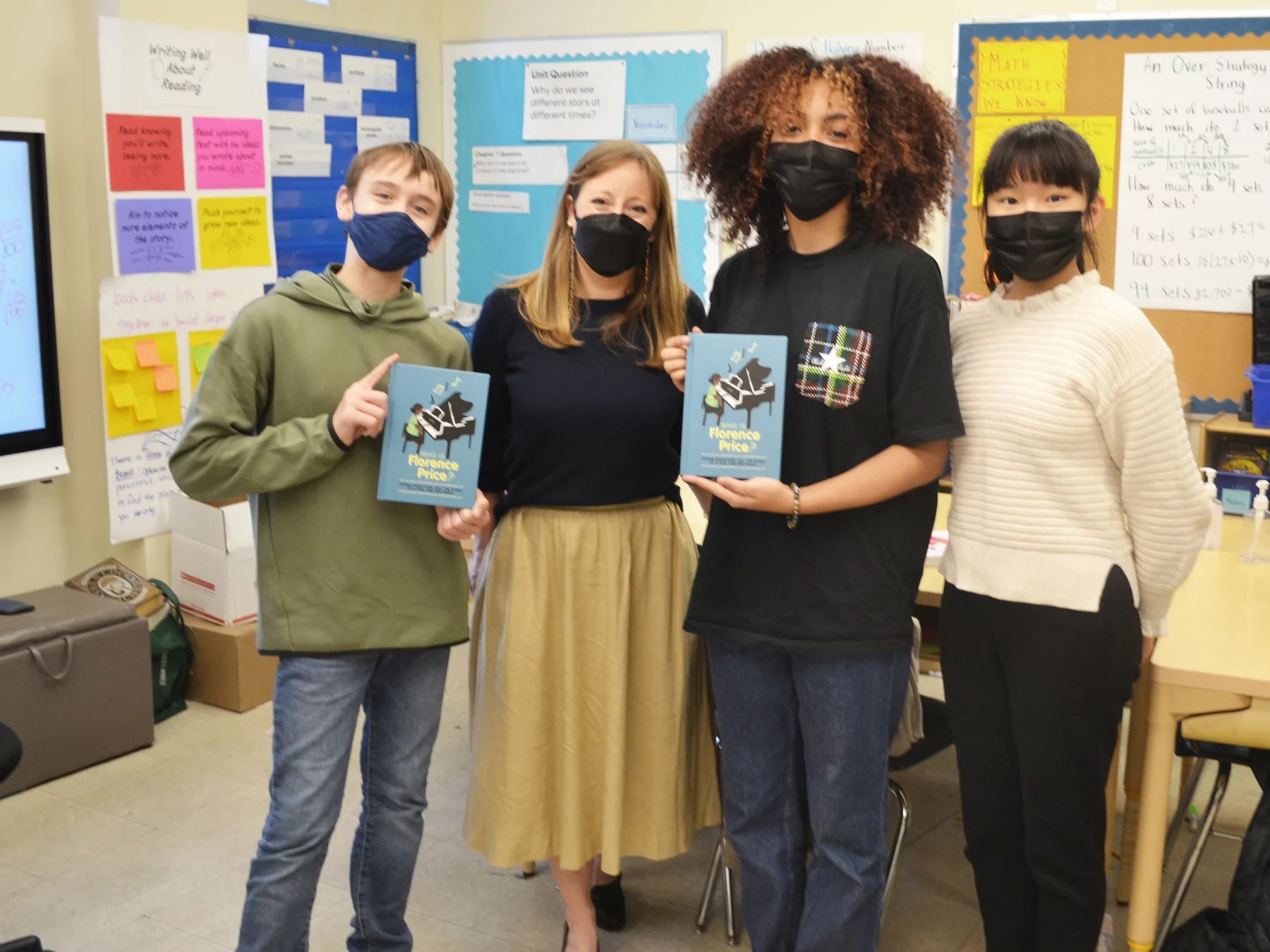
Three of the student authors of Who Is Florence Price? (left to right: Sebastián Núñez, Hazel Peebles and Sophia Shao), joined by their English teacher, Shannon Potts.

I want to follow where today’s kids are leading. So many of them seem to recognize they have to take matters into their own hands if they want change in their lifetimes, whether it’s a question of global warming or gun safety or race relations.

In today’s story, we see that empowerment can start early.

Anastasia Tsioulcas reports at Natural Public Radio (NPR), “For decades, it was almost impossible to hear a piece of music written by Florence Price. Price was a Black, female composer who died in 1953. But a group of New York City middle school students had the opportunity to quite literally write Florence Price’s history. Their [book]Who Is Florence Price? is now out and available in stores.

“The kids attend Special Music School, a K-12 public school in Manhattan that teaches high-level music instruction alongside academics. Shannon Potts is an English teacher there.

” ‘Our children are musicians, so whether or not we intentionally draw it together, they bring music into the classroom every day in the most delightful ways,’ Potts says. …

“Potts assigned her sixth, seventh and eighth grade students to study Florence Price — a composer born in Little Rock, Arkansas in 1887. She was the first Black woman to have her music played by a major American orchestra: the Chicago Symphony Orchestra performed her Symphony No. 1 in 1933 and her Piano Concerto in One Movement the next year. …

“Despite Price’s talent and drive, most classical music performers and gatekeepers put her aside, and her work failed to gain traction with the large, almost exclusively white institutions that could have catapulted her to mainstream renown. …

“Recently, though, there’s been a blossoming of interest in Price’s work. A recording of her symphonies by the Philadelphia Orchestra was just nominated for a Grammy. In the months ahead, her music will be performed by the San Francisco Symphony, the Atlanta Symphony Orchestra and the Chicago Symphony Orchestra.

“When the students began researching Price, however, they realized that although there were a few materials written about her life for grown-ups, there was nothing aimed at kids.

“That gave Potts had an idea: She would have her students write and illustrate their own book about Florence Price, and about how her music was rediscovered. As the kids’ book begins:

” ‘In 2009, a couple bought an old house outside of Chicago. in the attic, they found boxes filled with yellowed sheets of music. Every piece was written by the same woman, Florence Price. “Who is Florence Price?” they wondered…

” ‘Florence’s mind was filled with music, but she had a big question. She was a girl and her skin was a different color than so many of the composers she knew about. Could she grow up to be a famous composer, too? When Florence was only 11, her first piece was published. Was it possible that Florence’s music could change things?’

Special Music School [executive] director Kate Sheeran was extremely enthusiastic about the students’ work. …

“Sheeran was so impressed that she ordered a small, self-published print run of their work. She sent it around to various people in the classical music community — including Robert Thompson, the president of G. Schirmer, the company that publishes Florence Price’s music.

‘I think it’s one of the few moments in my job where I had to cancel the next meeting and I was just kind of filled with tears,’ Thompson recalls. ‘It was just an incredibly beautiful moment.’

“Thompson agreed to publish the book; all royalties will go to Kaufman Music Center, which is a non-profit organization.

Rebecca Beato is a 14-year-old violinist from Queens. She was also one of the lead illustrators of Who Is Florence Price? and she says that Price has been a personal inspiration. ‘Her music has been out there, performed by major orchestras,’ Beato says, ‘and she’s a woman of color, which even now — it’s like difficult to get your music shown to the world.’ …

“Hazel Peebles, a 13-year-old violist from Harlem, says that you can hear Price’s personal history in her music. ‘It really is beautiful,’ Peebles observes. ‘She worked in some of her history, some of her Black background into the music.’ …

“What the students learned in creating this book goes far beyond music, Kate Sheeran says.

‘They’re also seeing that they can have a voice in shaping who writes history and who tells stories … and that we don’t have to just accept the way music is presented to us or the way music history is presented to us — that they too can shape that.’ …

“Potts says that the very last lines of her students’ book have already come true, thanks to their hard work and creativity. ‘Today, Florence’s music can be heard all around the world just like she dreamed of when she was young,’ Potts reads. ‘If someone asks, “Who is Florence Price?” you can tell them.’ “

More at NPR, here.

Read Full Post »

Photo: Ben James/Connecticut Public Radio.
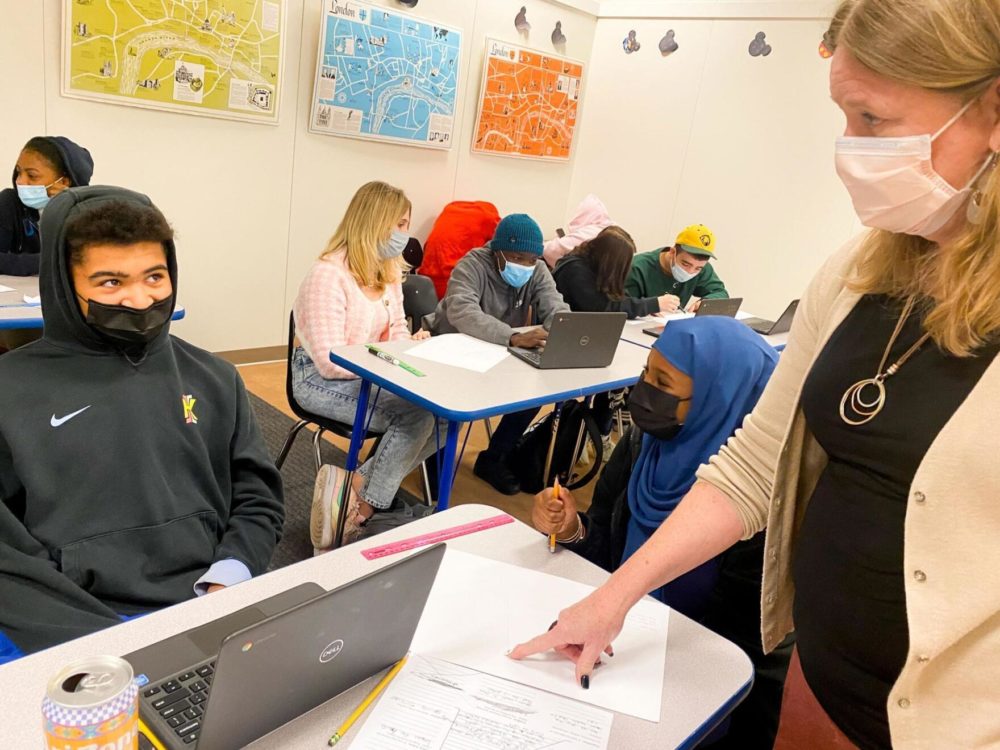
Teacher Susan Blethen supports ESL students in a normal high school classroom in Burlington, Vermont.

On Mondays and Tuesdays, I assist teachers at two different Rhode Island agencies where they lead English as a Second Language classes. Since Covid, the classes have been online. I think it’s harder for the adults to learn a new language than kids, but our students are very motivated. They have their reasons — “to get a better job,” “to help my children with their homework,” “to talk to the doctor,” “to go to university.” It’s satisfying to watch them progress.

Young students from other countries also have reasons. Ben James of Connecticut Public Radio has a story about a few in the public school system of Burlington, Vermont, where multilingual liaisons smooth the transition to American schools.

“In an office at Burlington High School, just off Lake Champlain in northern Vermont, Chacha Ngunga made a phone call.

“ ‘Jambo jambo,’ he said, greeting a student’s father in their shared language, Swahili.

“Ngunga is a multilingual liaison — one of 12 employed by the Burlington district.

“A few feet away, Noor Bulle, another liaison, made a call in Maay Maay, one of the two major dialects of the Somali language. He reaches a Somali Bantu mother whose five children would soon enter district schools. The mother expressed amazement that her family was already on Bulle’s radar.

“Tens of thousands of Afghans who left their country after the Taliban took over in August will be resettling in the United States. Many of them are kids, so schools across the country are preparing to get these students up to speed. According to Bulle, the multilingual liaisons act as cultural brokers, helping refugee families understand how the U.S. school system works.

“Bibek Gurung, a graduate of Burlington High, is now a junior at Champlain College in Burlington, studying criminal justice. He arrived in Burlington during fifth grade, speaking almost no English. He said his Nepali-speaking liaison helped him with high school and with what he calls life stuff.

“ ‘I was actually looking for a job, and he advocated for me,’ Gurung said. ‘Through him, I was able to work for the Burlington Police Department as a beach-and-park patrol officer.’ …

“Shawna Shapiro, an associate professor at Middlebury College whose research focuses on the high school-to-college transition for refugee students, says many English learners in the U.S. finish high school unprepared for college. Part of the problem, she said, lies with English language learning programs that place students in lower-level academic classes, leaving them bored and underchallenged.

“Shapiro said educators underestimate not only refugee students’ abilities, but also their cultural and family resources.

“ ‘When you talk with students … you hear [them say,] “I feel underchallenged,” and then you pursue that a little more, and they say, ‘That’s frustrating because my parents were leaders in the refugee camp, and my mom was a professor, and my uncle was a police officer, and we’re here, and it feels like no one recognizes any of that,’ ” she said.

“Samjana Rai, a college-bound senior who arrived from Nepal when she was in seventh grade, has heard a similar frustration from her peers about low expectations.

” ‘A lot of my friends want to go to college,’ Rai said. ‘But because of classes that they had to take in sophomore year, freshman year, it’s a little harder for them to go to the college that they want to go to.’ …

“Down the hallway from the multilingual liaison office, 30-year veteran teacher Susan Blethen introduced a lesson to her integrated class of native English speakers and English learners. It’s taught by two teachers: the regular subject teacher and Blethen, who is a specialist in English Language Learning. …

“One purpose of the mixed classes, Blethen explained, is to make sure the English learners are being taught material that stimulates and inspires them to take on more challenges. In previous years, many of the English learners in this class would have been placed in what’s called ‘sheltered instruction,’ separated from their native-English-speaking peers.

“Blethen was the first teacher in Vermont to become certified as an English language learning instructor. She recalled a moment from early in her career.

“ ‘I actually had a social studies teacher yell at me when I was a young teacher, saying, “Why are they in my class if they can’t speak English? You have to teach them English before they can come into my class.” ‘ …

“Standing with a group of her peers, [Somali student] Aden said the languages and cultures of refugee students are still undervalued. …

“ ‘Bilingual people aren’t dumb. [They] can be challenged, and they can be doing higher things.’

“Aden herself plans to take honors civics next semester. ‘I thought, instead of doing an easy class, I should just challenge myself, because I’d be learning more if I did.’ ”

More at WBUR, here.

Read Full Post »

Photo: TBC via Flipboard.
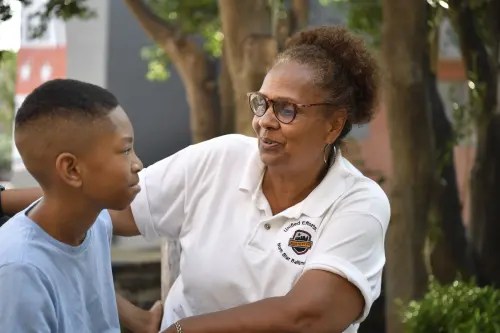
Phyllis Ali and her grandson are both involved in a retired Baltimore cop’s inspiring youth initiative.

In Baltimore, a former cop saw that, for poor children, a lack of options can create desperation. So she created a foundation to help kids envision a world of possibility — and to give them the tools to make dreams come true.

Theresa Vargas writes at the Washington Post, “During a drive earlier this week, Phyllis Ali asked the children in the car with her what they wanted to be when they grew up.

” ‘An astronaut,’ said one.

“ ‘A schoolteacher,’ said another.

“A boy replied that he hoped to be the owner of ‘a nice house.’

“ ‘I’m just glad they want to be something,’ Ali said, reflecting on that drive. ‘I’m just glad that none of them said, “I don’t know.” ‘ …

“The 68-year-old Baltimore native has spent much of her adult life working with the city’s children, and she has seen how people too often write off those who live on blocks with boarded-up buildings. She has also seen what is lost when they do.

“ ‘We can’t cast them away because of their environment,’ she said. ‘Don’t take their hope away. They are somebody. Just because they are here doesn’t mean they don’t have talents and hopes and futures. They are somebody.’

” ‘In the car with Ali that day were her 12-year-old grandson, whom she calls Scooter, and his younger siblings, ages 6, 7 and 8. They were headed to the Baltimore offices of the advertising agency TBC to join other children in the filming of a commercial.

“For hours on Monday, those children would wait for their names to be called, and then step under bright lights, look into a camera and offer an answer to that same question Ali had asked. …

“The children are participants in a program that is based in a Baltimore neighborhood where many families live below the poverty line. It’s also a place that people across the nation saw burn six years ago after a CVS was looted and torched during the uprising that followed Freddie Gray’s police-custody death.

“Debbie Ramsey, a former Baltimore police detective and the founder of the nonprofit Unified Efforts, said that about a week before that fire, she and others — with the blessing of community leaders — had picked the Penn-North neighborhood as the site for a program that would aim to help children thrive.

“ ‘When the uprising began, that did not scare us away,’ Ramsey told [me]. ‘I said, “Okay, that’s a confirmation. This is where we have to be.” ‘

“In the six years that have followed, Unified Efforts has worked in the neighborhood with more than 120 young people between the ages of 5 and 24. Initially, the organization planned to stop working with teenagers once they graduated high school, but the staff continued to hear from participants even after they got their diplomas. A college student in New York recently reached out to say that if she had a bike she could get to her classes more easily. The staff helped her get one. …

“It takes only spending a day in some of the city’s most impoverished neighborhoods to see that the organization is up against a mix of painful and complex challenges. In the year that followed Gray’s death, I spent months profiling a teenager who attended a Baltimore high school that was located next to a public-housing project. …

“The teenager I wrote about had spent three weeks alone in his home without hot water, a working stove or lights, after his mother was hospitalized. His school records showed he had struggled, ending one year with a 1.64 GPA, but I also witnessed him be the only student in his class to complete an assignment. It called for him to write a poem using a simile or metaphor.

‘The sun is the smile behind the night,’ his began.

“That tug-of-war between struggle and potential is something Ramsey knows well. She saw it as a police officer and she sees it now as the executive director of Unified Efforts. [The program] aims to ‘reduce summer and vital learning loss’ … offering children a safe haven to learn and exposing them to experiences they might not have otherwise. …

“Participants not only spent days learning from a violinist; they were handed their own violins to take home. They not only spent a summer with staff who made sure they were fed (and given clean clothes if they showed up in ones that were soiled in a way that would draw insults from their peers); they were given laptops to continue working at home. High school students are sent every year to a college prep writing workshop and given the chance to work with professionals to produce a magazine filled with their stories.

“ ‘I have something I call “the crayon model” and that is what really forms our foundation,’ Ramsey said. ‘When our kids are at a table and creating, we put no less than 300 crayons on the table. We do that to show what abundance looks like.’ “

More at the Post, here.

Read Full Post »

Photo: West Volusia Beacon.
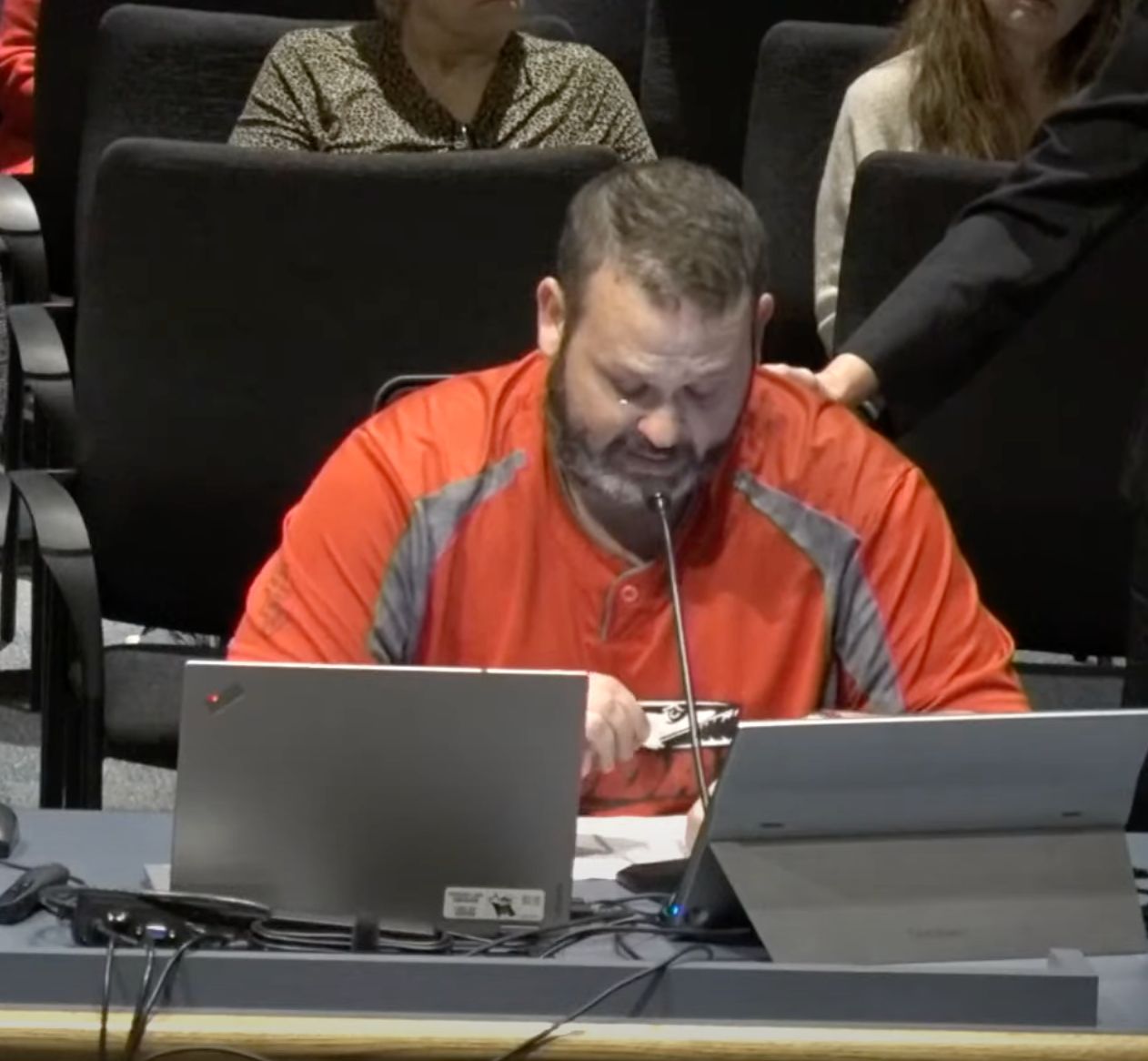
Charles Peacock, a paraprofessional at New Smyrna Beach High School, tells the Volusia County School Board that he has recently been made homeless.

It pains me to think how little most of those entrusted with educating America’s children — daycare professionals, teachers, teachers’ aides — are paid. We are talking about work that any country should give the highest respect and reward.

In today’s story, a popular Florida teaching assistant confesses that he cannot find housing on his income. The shame he feels should be for us.

Kyle Swenson wrote at the Washington Post recently about the moment Charles Peacock went public.

“They called his name and Charles Peacock hustled up to the microphone to address the Volusia County School Board. The public comment period gave him three minutes. He had practiced his speech, but the 40-year-old knew that somewhere in that time frame, his emotions would overwhelm him.

“He introduced himself as a teacher’s assistant — called a ‘paraprofessional’ in the district — at New Smyrna Beach High School, a school of nearly 1,900-students near Daytona Beach, Fla. The divorced father of three detailed how overworked he and his colleagues are, how the ranks have thinned due to high demands and low compensation.

“Then he paused, knowing that his next sentences swung from workplace complaint to raw confession.

‘I myself, like most others, have to work multiple jobs in order to simply scrape by. I put in 80-plus hours each week, every week, between four jobs to barely make it,’ he said, the words bobbing along on muffled sobs.

“ ‘After four years with the county, I make a minimum salary which equates to less than a thousand dollars per month.’

“Peacock stopped, took a breath, and looked at the board.

“ ‘I personally have been made homeless,’ he said. ‘At least one of your employees — one who is great at their job, has been nominated for para of the year, who loves his students beyond measure — is homeless. Living out of his car. Crashing on couches from time to time. Getting showers at friend’s houses. I dare you to look me in the eyes right here, right now, and tell me that this is okay.’

“His three minutes were up.

“Peacock … represents a large number of Americans who struggle outside the reach of public policy because they don’t fall inside the traditional definitions of poverty. He was homeless, but he technically wasn’t poor.

“Untangling the difference for the board, or explaining it in public, was nothing compared with knowing that after the meeting that his family would now have questions.

“ ‘It wasn’t hard facing the board,’ he said later. ‘Facing my kids was harder.’

“Peacock’s typical day starts at 7 a.m. He is at the school by 8 a.m. He is done by 4 p.m., but then it’s off to a local bar where he works security. That gig ends between midnight and 2 a.m. Weekends, he umpires youth baseball games.

“For all of this scramble, Peacock estimates he makes somewhere between $22,000 to $25,000 each year.

“ ‘It was exhausting, and I was not the only one of my colleagues trying to keep this kind of schedule,’ he said. ‘We were all exhausted.’ …

“For decades, poverty experts have warned that the federal government’s official measurement misses a larger chunk of Americans. One measure that has since emerged has been pioneered by the United Way: the ALICE threshold, or Asset Limited, Income Constrained, Employed. Since 2009, United Way and its partners have used the criteria to take a high-definition snapshot of people in Peacock’s position — those living above the federal poverty line but scrambling to pay for necessities. …

“After his divorce, Peacock could only afford to rent a bedroom in a friend’s house. The profession he had chosen — he makes $11.65 an hour — alone could not support his basic needs.

” ‘I make next to nothing doing a job that I love,’ Peacock told the board in November. ‘But when does that love get outweighed by the need to survive, and dare I say, thrive? … If I’m in this situation, how many other paras are on the brink?’

“He decided to speak before the board and publicly detail his own situation. ‘That was difficult, trying to swallow my pride.’ “

More at the Post, here.

Read Full Post »

Photo: Taylor Luck.
Elders in Salt, Jordan, play a daily game of backgammon in the town square. Salt is a new UNESCO World Heritage Site. It is known for remarkable hospitality.

Pretty much every religion adjures believers to welcome the stranger, but every day we see that the size of the need overwhelms even those who have not forgotten about that. Except in Salt, Jordan.

Taylor Luck writes at the Christian Science Monitor, “Welcome to the world’s newest UNESCO World Heritage Site, a breezy hillside town perched above the Jordan Valley that is celebrated for, well, its legendary hospitality.

“In Salt, history and economics have helped create a unique mix of cultures and faiths and a harmony of yellow-gold stone buildings and community. Don’t believe it? Simply ask the city’s elders.

“You can find them every day gathered in the Ain Plaza, formerly the site of fresh springs and now the town square in the twin shadows of Salt’s Great Mosque and Anglican Church. They will gladly tell you how their hospitality and way of life were passed from generation to generation – if they have time.

“For most of the day, they huddle around stone tables locked in intense games of backgammon and mancala, exhibiting the steely concentration of professional athletes. They say they welcome the UNESCO designation as a chance to share what they call ‘hospitality and harmony’ with the world.

“ ‘Here we welcome all, and we embrace every person,’ says Abu Ali, awaiting his turn at backgammon. He pointed to his compatriots of different faiths and tribes embroiled in matches. 

‘We don’t see Muslim, Christian, tribes, or urbanites – we see each other’s humanity, and the humanity in all who visit.’

“Dating back to the Iron Age, Salt is located strategically on the trade and pilgrimage routes between Damascus and Jerusalem, and between the Mediterranean Sea and the Arabian Peninsula. The agricultural village grew into a flourishing hillside city in the 17th, 18th, and 19th centuries, attracting residents from across the Levant, Turkey, Arabia, the Caucasus, and west Asia.

“The constant, diverse flow of visitors and merchants created neighborhoods in which each street and hill had a mix of Christians and Muslims – Palestinians, Syrians, Turks, Circassians, Chechens, and members of local tribes all building their homes together.

“For centuries, Salt families would house and feed travelers, including merchants, Christian pilgrims on their way to Jerusalem, or Muslims heading east for the Hajj – offering at least three days of lodging, no questions asked.

“Not a single hotel was built in the town, as it was considered ‘shameful’ not to host a guest in one’s home. Only in the past two years have guest-houses emerged; but the idea of a guest paying for lodging is still highly controversial.

“ ‘Please have lunch with me,’ strangers told Jordanian visitors and a reporter, during a visit in mid-August.

“In its announcement in late July that Salt had been added to the World Heritage list, UNESCO highlighted the city’s unique makeup as a ‘Place of Tolerance and Urban Hospitality.’

“ ‘In Salt, there is not a single area here that is segregated by race, religion, or origin,’ says former Mayor Khaled Al Khashman. ‘This is very rare in this region and, historically, rare in the world.’

“The town’s traditional architecture has long encouraged community. Most of Salt’s yellow sandstone homes consisted of a single room with a domed roof, with two or four homes sharing a communal courtyard, walls, rooftop, and entrance.

“Families would sit in their communal courtyard, cooking or drinking evening tea together while their children played. Neighbors shared food, drink, and supplies, and took part in each other’s celebrations, religious holidays, and family milestones. The layout meant neighbors were often closer than blood relatives. …

“Salt resident Nadia Abu Samen, a Muslim, restored one of these compounds. … She says her mother was raised by her family’s Christian neighbors, and her uncles and aunts were given Christian first names to honor their neighbors.

“For the past decade Ms. Abu Samen has carefully preserved an abandoned compound of four joined rooms – two homes belonging to Christian families, two homes belonging to Muslim families – and turned them into a cultural center, exhibition, and cafe. She traces Salt’s trademark harmony to the ‘uniform simplicity of traditional life.’ ” More at the Monitor, here.
If your ethnicity or religion is not mentioned in the article, I hope you will visit sometime and let us know if you were welcomed. A town that has been given such a high award for hospitality has a reputation to uphold!

Read Full Post »

Photo: James Rebanks via BBC.
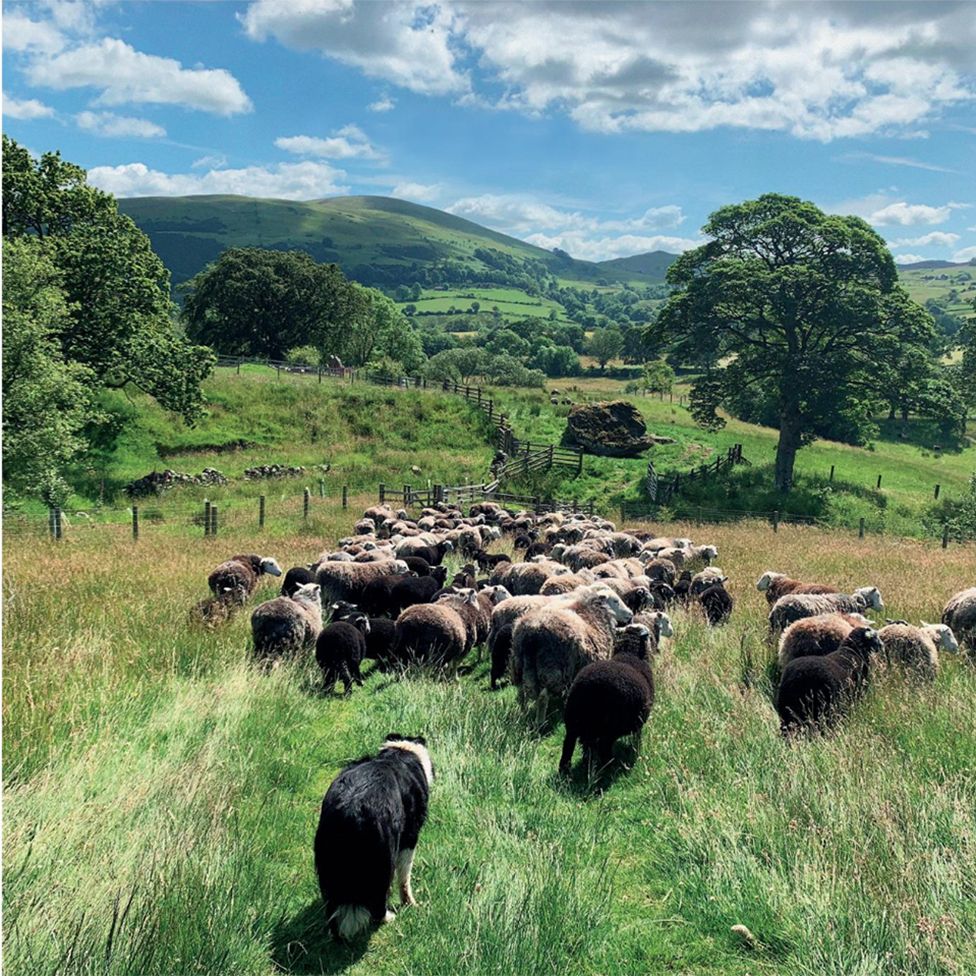
A farmer in England shows how regenerative farming can produce better food while fighting climate change.

There’s a farmer in the UK who hopes to change the way farmers farm in order to promote biodiversity and a healthier planet. He raises sheep.

Here’s a report by William Booth at the Washington Post: “Britain’s rock-star shepherd and best-selling author, James Rebanks, is out at the family farm, giving the tour, waxing rhapsodic about his manure. The glory of it — of the crumbly, muffin-top consistency of a well-made plop from a grass-fed cow. …

“Don’t get the man started on soil health. Rebanks is a soil geek, with the zeal of the convert. … Rebanks represents one possible future for farming, which is set to be transformed in the promise of a post-Brexit, zero-carbon world. The British government plans to strip away all traditional farm subsidies and replace those payments with an alien system of ‘public money for public goods.’

“What are these public goods? Not food. Bees! In 21st-century Britain, the goods will be clean water, biodiversity, habitat restoration, hedgerows, pretty landscapes, wildflowers, flood mitigation and adaptation to climate change. …

“This transformation could be huge: Farmland is 70 percent of England’s landscape and produces 10 percent of its greenhouse gases. There is no net-zero-carbon future without farmers.

“As the best-known farmer in the whole of the United Kingdom, Rebanks finds himself at the center of this transition. In agriculture circles, he’s a super influencer, famous for his Twitter feed. He has nearly 150,000 followers, who check for his posts and postcard-perfect videos and photos of his idyllic home in England’s poetic Lake District and the doings of his beloved Herdwick sheep.

“The shepherd riffs on the circle of life, the frenzy of lambing season, the deliciousness of grilled mutton and the wisdom of sheepdogs — speckled with rants against the alleged ruinous stupidity of industrial farming ‘where the field has become the factory floor.’ …

“He cannot fathom that the planet, and his little corner of it, has been so messed up. He also cannot make up his mind whether we are doomed or just might pull through, a feeling that resonates with many.

“He wrote two books about all this, both international bestsellers. The latest, published to stellar reviews this month in the United States, is Pastoral Song: A Farmer’s Journey.

“On one level, the book is about how cheap food culture, globalization and super-efficient, ­hyper-mechanized, highly productive modern farms (giant monocultures of beets, wheat, corn) are terrible for nature (insects, rivers, climate) and our health (obesity, diabetes) and our farmers (indebted, pesticide-dependent, stressed).

“On a deeper level, though, the pages are about healing, about how one farmer in Cumbria is trying very hard to turn his landscape into a sustainable, profitable little Eden by deploying both ancient and cutting-edge techniques. …

“British politicians make the pilgrimage to see what he has done. So do British journalists. He has made the cover of the Financial Times magazine and is the subject of a 30-minute documentary on the BBC. He pens guest columns for the right-wing Daily Mail and the left-wing Guardian. …

“The government is embarking on the biggest change in the management of its countryside since the end of World War II. No longer will farmers live on the Basic Payment Scheme. They will be paid for those new public goods; the old subsidies for ‘food security’ will end. It is a radical experiment, to be carried out on a national scale.

“Yesterday’s farms grew food and outgassed methane. The farms of tomorrow will grow food and sequester carbon. Or at least that is the idea. …

“British farmers, like their counterparts elsewhere in Europe, have subsisted for three generations on subsidies. Without the dole, government figures show, 42 percent of all farms here would operate at a loss. Most small operators wouldn’t survive without the checks. The payments — $3 billion annually — are to be phased out over the next seven years. …

“Rebanks doesn’t think the plan is nearly smart enough or big enough, or that the public understands how much it will cost to have a real impact for farmers, nature and climate. He thinks $3 billion year is ‘a drop in the bucket.’ …

“If anyone can make the switch to this new system of ‘public money for public goods,’ surely it should be Rebanks. He seems more than halfway there already. …

“His family has been shepherding in Cumbria for 600 years. His methods — moving sheep between the communal hilltop fells and the valley below — would be recognizable to the Vikings, who did the same when they settled here more than a millennium ago with a similar breed of hearty sheep.

“Over the past 10 years, with help from conservationists and supporters, he and his family — his wife and four kids — have ‘re-wiggled’ a drainage ditch and created a natural stream plus wetland. They’re planting 25,000 saplings. There were no ponds on the property before. There are 25 now, with otters. Three miles of hedgerows have been restored and 30 acres revived as a wildflower meadow. …

“He’s chopping up the farm to smaller and smaller fields — ‘it’s all hedges and edges, which is good for nature.’ He estimates he has taken 15 percent of his farm out of active production.

“ ‘Listen, the truth is there must be some letting go,’ he said. ‘You can’t drain it all and use it all for farming or grazing. You have to set some aside.’ ”

More at the Post, here.

Read Full Post »

Photo Reflections

The next time that I post photos, I hope I can include some action around the bird feeder. Although there are experts who recommend feeding the birds year-round, I usually wait to put seeds in the feeder until it’s really hard for birds to find other food. As of this moment, they are still having a good time with all the berries and naturally occurring seeds in our yard.

I continue to take outdoor walks in the cold, identifying birds with my Merlin app for birdsong. I’m also working with a grandson to learn more about birds through Wingspan, the board game. (I blogged about it here but didn’t understand then how difficult it is to learn the rules.)

Here are a few more photos: from cold, frosty walks; from a nice, warm art gallery featuring a circus of skate-egg-case performers; and from Kristina’s visit to balmy North Carolina.

Read Full Post »

« Newer Posts - Older Posts »