Feeds:
Posts
Comments

Archive for December, 2021

Photo: Kenneth K. Lam/Baltimore Sun.
Harold Morales, left, an associate professor at Morgan State University, loads boxes of vegetables with help from Troy Costner, center, and Artar Isreal, right, at Plantation Park Heights Urban Farm to deliver to a community center.

In a time of wintry weather and a return to isolation, it’s nice to think of warmer days and communities working outdoors together. Today’s story is about an urban farm in Baltimore that is providing healthful food where it’s needed most.

Stephanie Garcia writes at the Baltimore Sun about Plantation Park Heights Urban Farm.

“The lot at the corner of Springhill and Cottage avenues in Baltimore used to be vacant. Today, it’s home to one of the top 10 innovative farms in the country, according to the American Farm Bureau Federation.

“Known as Plantation Park Heights Urban Farm, it was founded eight years ago by Richard Francis, affectionately known as Farmer Chippy, who was looking for a community from the Caribbean diaspora in Baltimore and wanted to grow food for — and with — Park Heights residents.

“The farm has grown beyond Park Heights, with farmers aiming to grow 250,000 pounds of food across 30 city-owned vacant lots, all leased by the Plantation. … Collectively, these farmers and others in Baltimore plan to build the city’s first AgriHood, or a marketplace and community-shared agriculture and training resource institute. …

“Francis [has] secured partnerships with the University of Maryland, Coppin State University and Holistic Wellness and Health, which offers fresh plant-based cooking classes.

” ‘We’ll be positioned and ready to serve our youngest citizens, those who are at risk in Park Heights,’ Francis said. ‘The institute is going to put agriculture in the classroom and following through with our children so that they can become farmers and chefs before they become scientists, doctors and lawyers.’ …

“Francis said the farm’s name is intentionally provocative. ‘We wanted to remind children of the colonizers, that this is where it all started,’ Francis explained. ‘One group produces and the other group developed a thriving economy. Today, we say equal rights and justice for all on the Plantation. Let’s include those who were left out.’

“Agriculture is found across Baltimore, with over 20 urban farms and 100 community gardens, according to the Baltimore Office of Sustainability. It is a hotbed for art and community service, hosting poetry open mics and bringing quality produce to Maryland correctional institutions. [The Plantation] also has connected families with resources beyond farming and agriculture, helping dozens of neighbors with energy-saving grants and other services to help prevent eviction and homelessness.

“One community partner is the Morgan State University Center for the Study of Religion and the City. … Harold Morales, an associate professor of philosophy and religious studies at Morgan State, usually visits the urban farm on Thursday afternoons. He can be found pulling weeds, planting, harvesting and distributing one of the 300 free food boxes donated weekly through a U.S. Department of Agriculture program. Morales also helps with grant writing and research for the Plantation. …

“Park Heights Renaissance, a nonprofit organization focused on land and economic development, awarded the Plantation a $25,000 grant to support agriculture in classrooms across four public elementary schools in Park Heights. Children ages 5 to 15 are learning how to grow, harvest and package nutrient-dense foods for families in the community.

“Morales refers to the Plantation as a little piece of the Caribbean in Park Heights, where land, food and community come together. ‘Shovel, rakes, soil. Those are the things you need to survive in the urban context, but that’s not what people usually think,’ Morales said.

“Francis has seen plenty of similarities to his native Trinidad and Tobago. ‘Park Heights is like a Third World city. It has been neglected, it is heavily populated with Black and Brown people,’ he said. ‘It has a port, and it has a thriving economy happening outside of the poverty. We have an amazing educational system in the Caribbean, just like here with Johns Hopkins and the likes. But we are still unable to retain our talent, because most of these people graduate and go outside for opportunities.’ …

“Caribbean crops like sugar cane, sweet potatoes and Trinidad scorpion peppers are grown at the Plantation. Youth farmers learn that plantain leaves have healing properties for bites or stings and can be used like a bandage. …

“ ‘What’s often referred to as food deserts more appropriately should be called food apartheid,’ Morales said. … Francis echoes that sentiment and wants to transform Park Heights from a food desert into a food oasis. AgriHood Baltimore is key for this vision to come to fruition. ‘It is the close of the summer season for us, and we’re getting ready for next year,’ he said. ‘We’re coming bigger, better, faster and stronger.’ “

More at the Baltimore Sun, here.
Read Full Post »

Photo: World Housing.
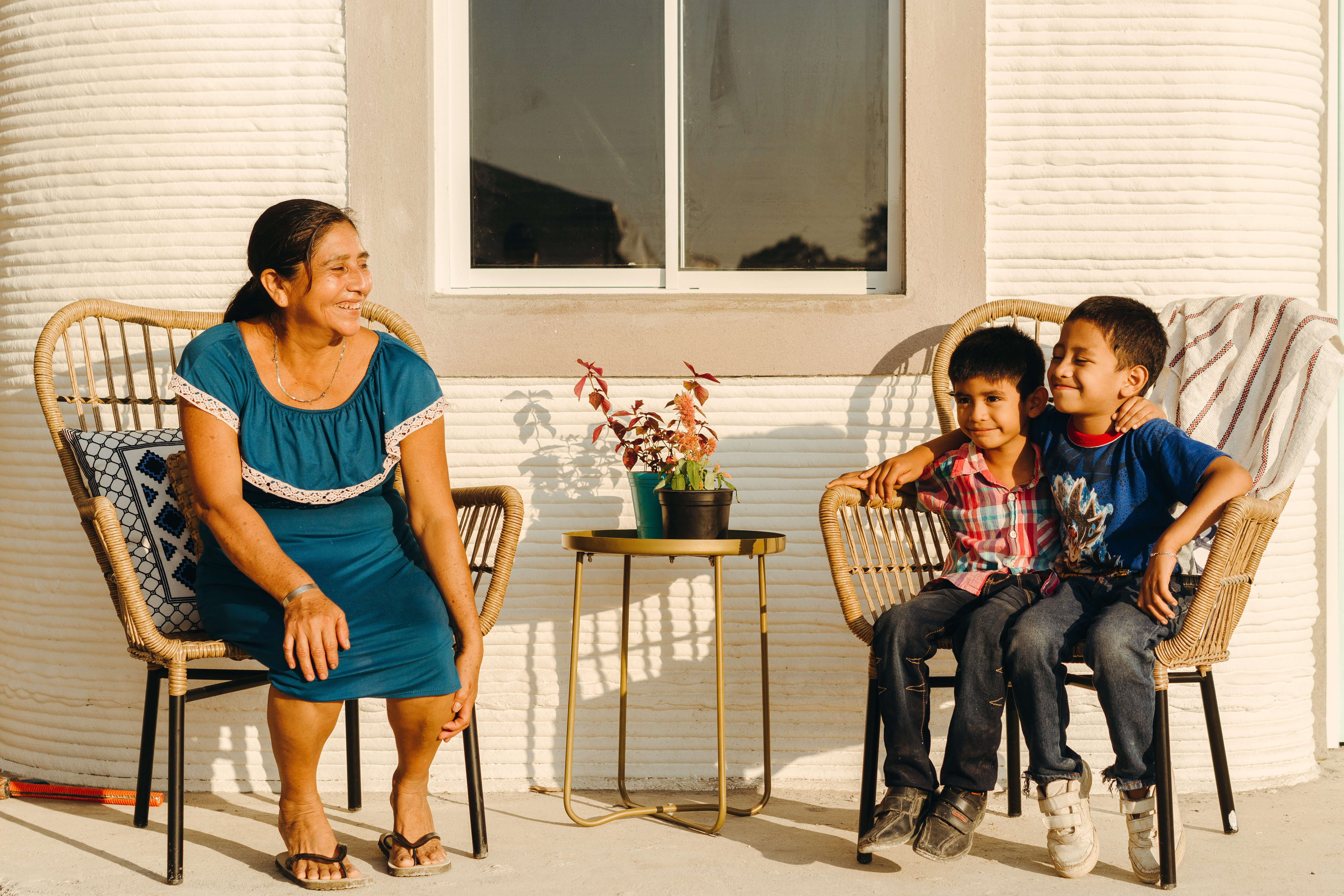
In a tiny village on the outskirts of Nacajuca, Mexico, builders are creating new homes using an oversize 3-D printer.

Pop-up temporary cabins, 3-D-printed buildings: whether such super-cheap housing is a good idea or not, it’s probably the wave of the future because we are so far behind providing shelter for all. Typhoons, floods, entrenched poverty, opioid devastation. All require new solutions to homelessness.

First, let’s take a look at 3-D homes in Mexico.

Debra Kamin reports at the New York Times, “Pedro García Hernández, 48, is a carpenter in the southeastern Mexican state of Tabasco, a rainforest-shrouded region of the country where about half of the residents live below the poverty line.

“He ekes out a living making about 2,500 pesos ($125.17) a month from a tiny workspace inside the home he shares with his wife, Patrona, and their daughter, Yareli. The home has dirt floors, and during Tabasco’s long rainy season, it’s prone to flooding. Dust from his construction projects coats nearly everything in the home, clinging to the bedroom walls, the pump toilet and the counters of his makeshift kitchen.

“But that will soon change. In a matter of months, Mr. Hernández and his family are moving to a new home on the outskirts of Nacajuca, Mexico: a sleek, 500-square-foot building with two bedrooms, a finished kitchen and bath, and indoor plumbing. What’s most unusual about the home is that it was made with an 11-foot-tall three-dimensional printer. …

“And now, the era of the 3-D printed community has arrived. Mr. Hernández’s home is one of 500 being built by New Story, a San Francisco nonprofit organization focused on providing housing solutions to communities in extreme poverty, in partnership with Échale, a social housing production company in Mexico, and Icon, a construction technology company in Austin, Texas.

“When New Story broke ground on the village in 2019, it was called the world’s first community of 3-D printed homes. Two years and a pandemic later, 200 homes either are under construction or have been completed, 10 of which were printed on site by Icon’s Vulcan II printer. Plans for roads, a soccer field, a school, a market and a library are in the works.

“Single-family homes are a good testing ground for the durability of 3-D printed construction because they are small and offer a repetitive design process without much height, said Henry D’Esposito, who leads construction research at JLL, a commercial real estate firm.

They can also be constructed to tolerate natural disasters: Nacajuca sits in a seismic zone, and the homes there have already withstood a magnitude 7.4 earthquake. …

“ ‘We know that being able to build more quickly, without sacrificing quality, is something that we have to make huge leaps on if we’re going to even make a dent on the issue of housing in our lifetime,’ said Brett Hagler, New Story’s chief executive and one of four founders.

“The organization was started in 2015, shortly after Mr. Hagler took a trip to Haiti and saw families still living in tents years after the 2010 earthquake there. Across the globe, 1.6 billion people live with inadequate housing, according to Habitat for Humanity. …

“Speed is only one factor in bringing a village to completion — New Story has teamed up with local officials in Tabasco to bring sewage services, electricity and water to the community.

“Mr. Hernández, who has plans to expand his construction business to a larger space in his new home, said he was not focused on a move-in date. He cares about the long-term impact the home will have for his daughter, who is studying to become a nurse.

“ ‘When we receive the house, my daughter will be able to rely on it,’ he said. ‘She won’t have to worry anymore.’ ”

Meanwhile in Boston, construction crews have been working on a pop-up, temporary community to relieve the pressure at a trouble spot known locally as Mass and Cass.

Milton J. Valencia reports at the Boston Globe, “The crews had already built new pop-up cabins over the last two weeks. And on this day, they were digging through concrete to connect to water and sewer lines, putting the finishing touches on a new, makeshift cottage community to house people who are homeless.

“The pop-up community — which could be fully operational by Monday — is just one piece of what state and city officials hope will be the solution to a sprawling tent encampment at the intersection of Massachusetts Avenue and Melnea Cass Boulevard, what has become the epicenter of the region’s opioid crisis.

Photo: Suzanne Kreiter/Globe.
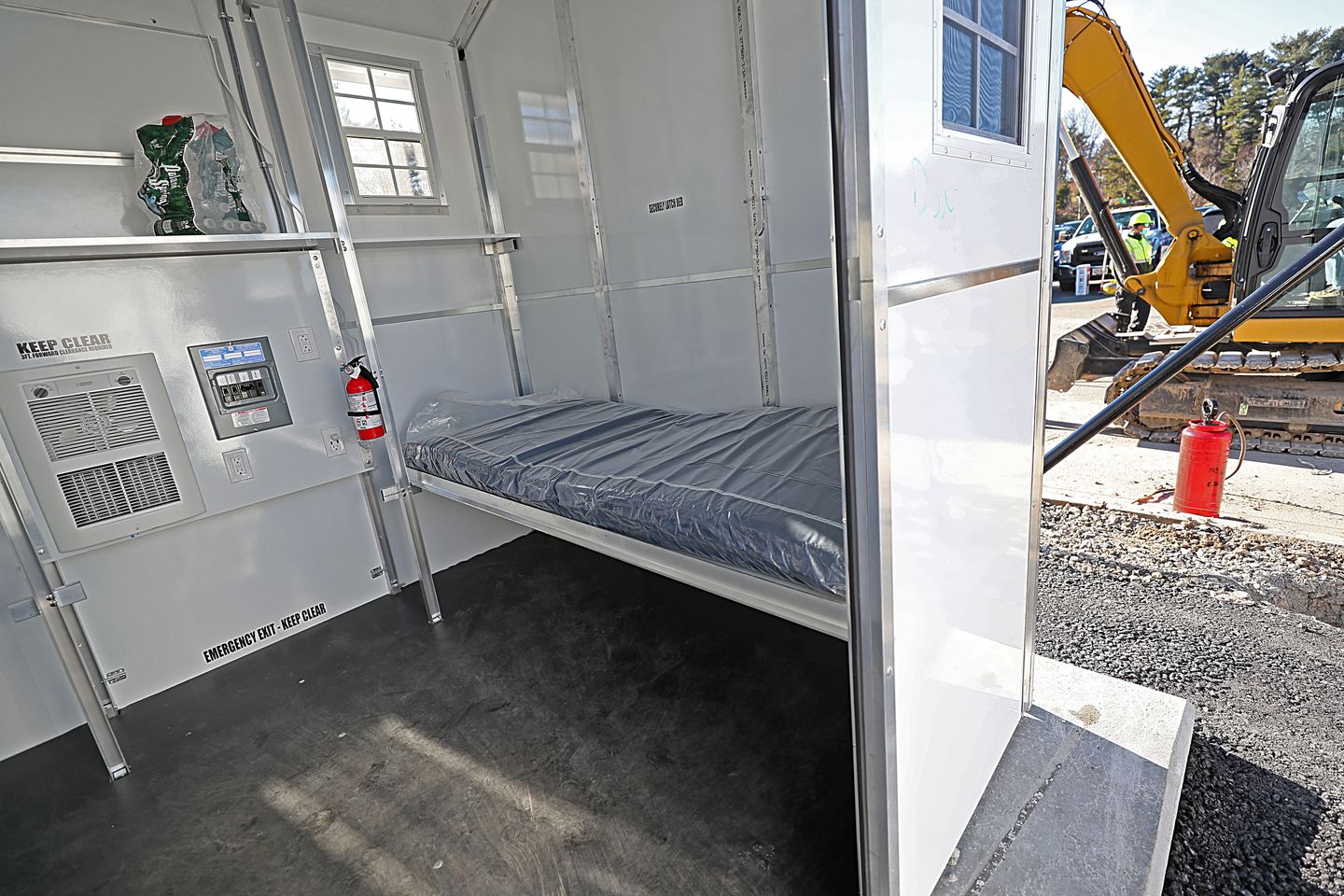
An inside view of one of the temporary cottages on the grounds of the Lemuel Shattuck Hospital campus.

“Seventeen sleeping cabins, ranging in size from 64 to 100 square feet, are lined up in two rows. At one end is a courtyard. And at the front of the village is a 500-square-foot structure that will serve as a common room, where those living there can gather for meals or counseling. Other services — to help treat addiction or mental illness — will be available at the site. And at the end of the day, those living there can retire to their own personal sleeping space. …

“As city officials and social workers push people to leave their tent encampments near the Mass. and Cass intersection, they invite them to the new cottage community, marketing it as a temporary but appealing option that could serve as a warmer, safer transition to long-term housing.”

Will there, in fact, be safer, long-term housing? That is the question.

More on 3-D homes at the Times, here, and on Boston’s pop-up community at the Globe, here.

Read Full Post »

Photo: Shaniqwa Jarvis/Glamour.
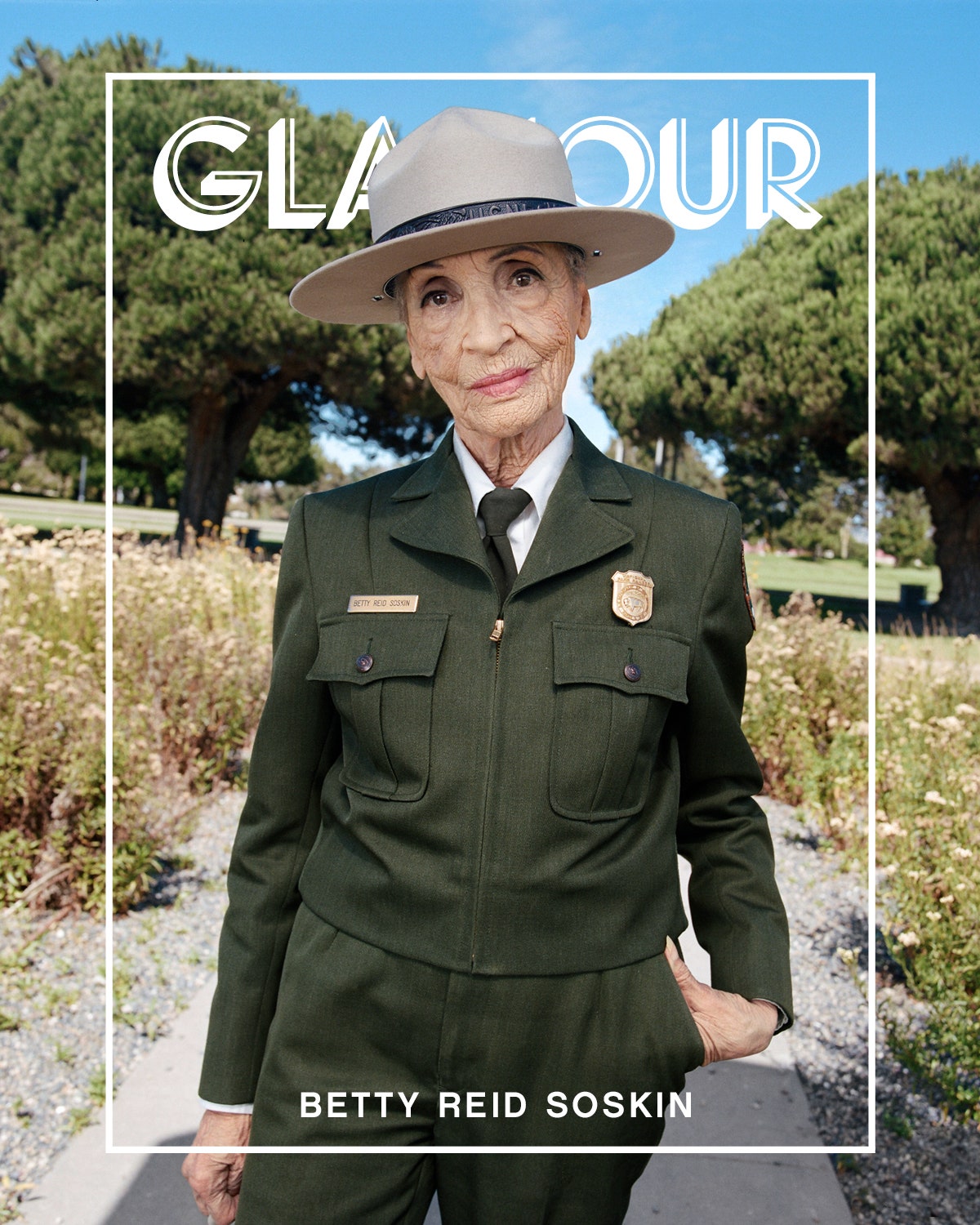
Betty Reid Soskin works at the Rosie the Riveter World War II Home Front National Historical Park in Richmond, Calif. Soskin is the oldest active ranger in the National Park Service.

In a fascinating September article at the Washington Post, Sydney Page interviewed a no-nonsense park ranger who was in her 80s when she heard a call to improve on the way US history is told. Here’s her story.

“When asked how it feels to be 100 years old, Betty Reid Soskin [said]: ‘The same way I felt at 99.’

“But she’s not just any centenarian: Soskin is the oldest active ranger in the National Park Service. …

“When it comes to sharing her story, Soskin is not shy. As a park ranger at the Rosie the Riveter World War II Home Front National Historical Park in Richmond, she spends her days recounting her rich and complicated history, in the hope that her firsthand account will resonate with people, and encourage them to share their own stories.

“ ‘I think everyone’s story is very important. There is so much diversity,’ Soskin said. ‘It’s in that mix that the great secret of a democracy exists.’

“It wasn’t until 21 years ago, though, that Soskin truly started telling her own tale — and it happened by coincidence. While working as a field representative for a California assemblyman, Soskin attended a meeting with planners from the National Park Service.

“They were organizing the development of the Rosie the Riveter WWII Home Front National Historical Park, created in 2000 to honor Americans on the home front, who worked in various industries across the country to bolster the war effort.

“The park paid homage to Rosie the Riveter, a pop-culture icon, symbolizing civilian women who worked in shipyards and factories — assuming the vacated jobs of men — during the war. But the depiction of a red-bandana-wearing White woman didn’t speak to Soskin’s own experience on the home front as a Black woman in segregated America, she said. During the war, Soskin worked as a file clerk in a segregated union, Boilermakers Auxiliary 36.

“ ‘Black women were not freed or emancipated in the workforce,’ she said in a 2015 interview with the Washington Post. ‘Unions were not racially integrated and wouldn’t be for a decade. They created auxiliaries that all Blacks were dumped into. We paid dues but didn’t have power or votes.’

Sitting in that meeting with the National Park Service planners as the only Black person in the room, she realized something: ‘The history, as I had lived it, was nowhere in sight — not one minute of it.

“Soskin decided to change that. She became a consultant to the park in 2003, and a park ranger in 2007 at the age of 85. Sharing her story with as many people as possible, she decided, was her way of reclaiming her history, and that of countless others whose tales have gone untold.

“She’s become known for saying: ‘What gets remembered is determined by who is in the room doing the remembering.’ So she made it her mission to stay in the proverbial room — which, in her case, was in the park’s visitor center. …

“Tom Leatherman, the park’s superintendent, said Soskin has had a profound impact on the park.

“ ‘She has been fundamental to us being able to tell a more complete story,’ he explained. … Soskin has propelled the park, Leatherman added, to seek other stories of people who have been marginalized and ensure that they are heard — including voices that are Latinx, Native American, Japanese American and LGBTQ. …

“The content of her presentations is dictated, in large part, by what visitors want to know. Often Soskin speaks of her upbringing in a tightknit Cajun-Creole family and her experiences with racial discrimination growing up in Oakland, Calif. …

“Over the years, Soskin — who has four children, five grandchildren and one great-grandchild — wore many hats: mother, musician, civil rights activist, antiwar advocate and finally, park ranger. Her most recent role is what pushed her into the national spotlight.

“Just like that, ‘someone dropped a uniform on the life that I was already leading,’ Soskin said. … Wearing it, she said, feels right.

“ ‘Little girls that see me in uniform see possibility. They have a feeling there’s an option open to them that they wouldn’t have known otherwise,’ she said. …

“Since becoming a ranger, Soskin was awarded the Silver Service Medallion by the National WWII Museum; she was presented with a commemorative coin from President Barack Obama; and she has written a memoir called ‘Sign My Name to Freedom,‘ which is being made into a documentary. …

“Her most recent accolade came just in time for her 100th birthday: A middle school was renamed after her.

“ ‘I didn’t know that would mean so much, except that it does, because I think that it means that I will go forward into history along with all the other people,’ she paused to wipe a tear, ‘who have tried to make a difference.’ ”

More at the Post, here. You might also like the 2018 article about Soskin at Glamour, here.

Read Full Post »

Photo: Ramona Peters.
Called “All Four Points,” this piece refers to the points of the compass. Ceramacist Ramona Peters, a member of Massachusetts’s Mashpee Wampanoag tribe, has helped revive 1600s Wampanoag traditional forms in clay.

I was reading about indigenous ceramics in New England at the Tomaquag Museum’s blog when I got interested in the origins of that remarkable institution and its plans for a new home near the University of Rhode Island campus.

First the ceramics post.

“My name is Haley Johnson and I am a Mashpee Wampanoag Ceramicist. I have a BFA in Ceramics from Rhode Island College.[As] an Education Intern at the Tomaquag Museum, I am dedicated to teaching about the past and advocating for the future of Indigenous arts and artists. …

“The Northeast is unique in its ceramic practices as can be seen in the color and textures of the clay, the shapes of our vessels, and the patterns and designs on finished work. … The natural clays that come from the Northeast are rich in minerals and sediments that lend to its bright oranges and deep reds upon firing. These colors then become signifiers of where the clay, and by extension, the vessel is from. …

“Traditionally in the coastal Northeast, cone shaped bottoms and wide mouths indicate cooking vessels. These pieces were designed specifically to heat food like soups and stews evenly. Ramona Peters (Mashpee Wampanoag) is a contemporary potter who creates with a similar shape language. [But usually] she makes the bottom of her vessels flat so that they are more easily displayed.. …

“Pottery adornment is also popular amongst Native ceramicists. By dragging and pressing tools into wet clay, patterns similar to those seen on Southern New England woven splint basketry can be made. Peters does this in her work.”

For a legend explaining how Maushop, creator of Noepe, or Martha’s Vineyard, and his taste for whale meat created the colors of the local clay, click here.

Now for the plan to create a bigger Tomaquag Museum. Nancy Burns-Fusaro at the Westerly Sun writes, “Rhode Island’s first and only indigenous museum is preparing to soar grandly into the 21st century.

“The Tomaquag Museum, which began inside the small Ashaway home of anthropologist Eva Butler more than 60 years ago, will move to an expansive, 18-acre site off Ministerial Road in South Kingstown, on the very land where ancestors of the Niantic and Narragansett tribal nations lived and worked for millennia prior to the arrival of European settlers.

” ‘We are so excited and so thankful,’ Executive Director Lorén Spears said [as] she discussed plans for the new museum and research center, which is scheduled to open in 2023. The plans include four new buildings and plenty of room for exhibits, area hikes, property tours, visitor parking, gardens full of native plants, medicinals, berries and herbs, new classrooms, performance space, a fully functional kitchen, gift shop, restaurant, pavilions, sculpture gardens, a replica of an early Native village, and a long house. …

“For Spears, a Narragansett tribal member who has worked tirelessly to educate the public on Native history, culture, the environment and the arts for more than a quarter of a century, the project is a dream come true.

” ‘It’s an exciting time,’ said Spears, who has taught at Brown University, the University of Rhode Island and in the Newport Public Schools and continues to teach classes and workshops designed to promote thoughtful dialogue about indigenous history. …

“Spears said the museum staff and members of the board of directors have been searching for the right location for years  now, and this piece of land, steeped in history and owned by the University of Rhode Island, is more than ideal. …

“Spears said the new site is visible yet rural, centrally located and accessible by car, foot and bicycle, but ‘the cherry on the top’ was the existence of viable public transportation.  

‘It’s accessible by public transportation,’ said Spears. “[Buses] run by all day and all night. It’s accessible from the north, south, east and west.’

“The property, which lies just south of Route 138 and north of Route 1, is a few miles away from the Kingston train station and adjacent to the South Kingstown bike path. …

” ‘Tourists will be able to find us,’ Spears said with a small laugh, noting that the museum’s current location is not as accessible. …

” ‘It’s a game changer,’ said Elizabeth Francis, executive director of the Rhode Island Council for the Humanities. The new facility, she said, will allow the museum to more fully share its programming, collections and archives, will help usher in a new era and help introduce a new generation to all the museum’s ‘wonderful material.’ …

“The project, ‘is a testament to how current and present Rhode Island’s indigenous community is,’ Francis added. ‘They  are not locked away in a distant past … they are not static but are here and essential.’ …

“Constantly praising the museum’s staff, board members and collaborators, Spears also pays tribute to her ancestors, especially the women who founded the museum. 

“In 1958, she said, Mary E. Glasko, better known as Princess Red Wing, Narragansett/Pokanoket-Wampanoag, founded Tomaquag Museum, Rhode Island’s first and only Indigenous Museum, with the help of a friend and colleague, anthropologist Eva Butler. When Butler died in 1969, Tomaquag moved to the now-legendary Dovecrest Restaurant, owned by Ferris and Eleanor Spears Dove, the matriarch of the Narragansett Tribe who died in 2019 at the age of 100. After Dovecrest closed, Tomaquag moved to its current quarters in Exeter.

“But now, Spears said, it’s time to focus on the future.”

More on the new museum at the Boston Globe, here, the Providence Journal, here, and the Westerly Sun, here.
Read Full Post »

Photo: Warner Brothers.
Bugs Bunny.

My husband was watching the Met’s Götterdämmerung around 4:30 this morning, so naturally I was reminded of Looney Tunes. Really. Bugs Bunny and the gang provided the best introduction to opera anywhere.

An article by Jaime Weinman at the Walrus (excerpted from his book Anvils, Mallets and Dynamite: The Unauthorized Biography of Looney Tunes) reflects on the durability of the Warner Brothers series.

“I grew up in a period when it seemed normal that a child born in 1976 would prefer to spend his Saturday morning watching cartoons from the 1940s and ’50s. A lot of the people I know enjoyed the same experience. Why did several generations watch old Looney Tunes alongside new work and actually prefer the stuff made before they were born? It was partly a historical accident caused by television’s demand for endless material at a relatively high cost. …

“Every television station required was a supply of preexisting content, something that might cost money to run but not to produce. The broadcasting rights for pre-1948 Warner Bros. cartoons weren’t very expensive, and the show was far better than most of the programming available for the same price.

“So part of Looney Tunes’ enduring success reflects the simple power of money. They were made for the big screen, and while they weren’t lavishly budgeted compared to the cartoons of Disney, they had much more time and per-unit money than television cartoons. On television, the Looneys were up against shows that had to turn out twenty-two minutes per week and looked like it. … Looney Tunes seemed edgier and freer than the new material. …

“However much kids loved watching Looney Tunes, the cartoons never got the credit they deserved. There hasn’t been much mainstream film criticism about them. When they were being made, they were almost totally ignored by all but two critics: James Agee and Manny Farber. Later, after the cartoons started appearing on TV, younger critics got interested. …

“The case has sometimes been made for the great Looney Tunes characters as underdogs, but it’s never a convincing case because the characters aren’t actually struggling against anything. They seldom have to try hard: as long as it’s funny, they can produce a weapon out of nowhere, and the most horrific acts of violence cause them no stronger reaction than irritation. In a more serious comedy, the characters feel an exaggerated version of what we might feel in their shoes, whether anger, fear, or determination. We can’t usually identify much with a Looney Tunes character because we know that nothing has consequences for them. …

“Bill Scott, who co-wrote cartoons at Warner Bros. for several years and then moved to [United Productions of America, the cartoon studio usually considered the most artistic and ambitious] said that ‘the kiss of death at UPA was to be considered a Warner Brothers writer.’ Looney Tunes writers, he added, were dismissed as ‘clothesline gag’ writers, for whom a story was just a cheap, insubstantial way to support the gags.

“That description wasn’t exactly wrong. If Warner Bros. creators have a choice between telling a joke and giving the film a consistent style, they’ll almost always choose the joke. …

“Warner Bros. cartoons had arguably the best soundtracks in American film comedy. Mel Blanc, who voiced all the important recurring characters except Elmer Fudd, was so essential to the studio that he became the first voice actor ever to get credit for short cartoons; composer Carl Stalling, who essentially invented the art of animated movie music when he worked for Disney, spent most of his career at Warner Bros., working closely with the directors (and sound effects wizard Treg Brown) to set a tempo for all the animated action and make sure that the sounds and movements complemented each other perfectly. The result of all this is a series where the dialogue has the wise-guy tone and fast pace of radio comedy, the music is funny, the animation is funny, the sound effects are funny, and none of them ever do something that’s redundant. …

“Like music, the laughs come from timing and rhythm. The gag is divided into three basic beats: Bugs hands the firecracker to the parrot; the firecracker explodes; the smoke clears, showing the ashen but otherwise unharmed bird. This all happens in just a few seconds, but each of these beats is held just long enough for it to play properly.” More at the Walrus, here.

To return to where I started today, here are a few online reviews of the Looney Tunes opera themes.

On “What’s Opera, Doc?” … “Elmer Fudd becomes the hero of Siegfried as he woos Brunhilde (played by Bugs Bunny in drag–if a rabbit can be in drag). This is a classic animated feature with full orchestration. It integrates the eternal effort of Elmer to kill the wabbit while repeatedly falling for the smart alecky rodent. The singing, of course, is quite horrible, but great credit to Mel Blanc for carrying on and staying in tune. What a remarkable talent Blanc was!”

On “Long-Haired Hare” … “Here Bugs takes his revenge on an opera singer named Giovanni Jones and does so with hilarious consequences. The last few minutes are absolutely priceless and one of my all time favourite endings in a Looney Tunes cartoon. Mel Blanc is brilliant as Bugs and Nicolai Shutorov gives a bravura singing performance as Giovanni.”

On “The Rabbit of Seville” … Bugs and Elmer “wander on to an opera stage and continue their combativeness to the music of the Barber of Seville. Apparently, there was a time when the average citizen had a thing for opera and these cartoon presentations fed into that. Anyway, the pacing is masterful. Elmer is about as gullible as he can be, and Bugs takes advantage at every turn. The pacing of the famous musical piece works very well and our two heroes find their way to a masterful conclusion.”

Read Full Post »

Photo: Angel Valentin/The Guardian.
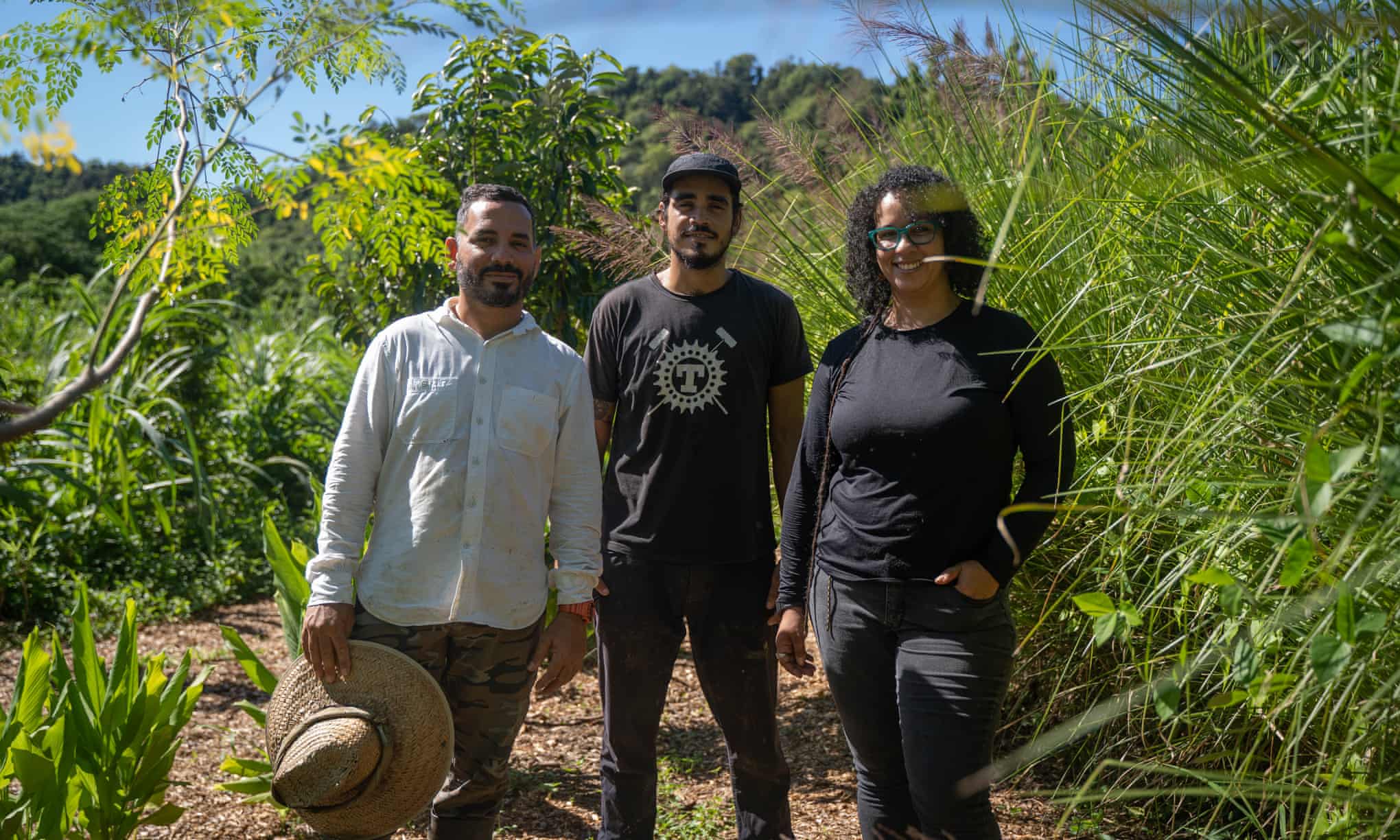
“Puerto Rico imports 85% of its food,” the Guardian reports. The three farms of Güakiá Colectivo Agroecológico in Dorado “seek food sovereignty and climate solutions.”

The UK-based Guardian has some of the best coverage of North America to be found anywhere, and it’s free. Readers are asked to contribute, and I recommend doing so if you want to support good journalism.

A few days ago, the Guardian posted this update on an agricultural movement in Puerto Rico that, if taken up elsewhere, could make a big difference to the planet.

Nina Lakhani wrote, “Puerto Rico was once a thriving agricultural hub thanks to its tropical climate, rich biodiversity, and sustainable farming traditions. Today, less than 2% of the workforce is employed in agriculture and tens of thousands of acres of arable land sit idle. Meanwhile 85% of the food eaten in Puerto Rico is imported, grocery prices are among the highest in the US and last year two in five people experienced food insecurity.

“ ‘Unemployment is brutal, prices are brutal, migration from the island is brutal,’ said Denise Santos, who runs Puerto Rico’s food bank.

“Puerto Rico, a mountainous Caribbean archipelago, is also one of the places in the world most affected by extreme weather such as storms, floods and droughts. In 2017, Hurricane Maria devastated the islands and people went hungry as ships were unable to dock at the damaged ports.

“In the face of so many challenges, a new wave of interest in food and farming among younger Puerto Ricans is flourishing, as part of a wider movement demanding political, environmental and social justice. Small scale sustainable farming known as agroecology is driving a resurgence in locally grown produce that chefs, farmers, entrepreneurs and researchers argue can help revitalize the local economy, improve food sovereignty and both mitigate and adapt to the climate crisis.

“Agroecology is low impact agriculture that works with nature and local conditions to produce food sustainably so as to protect biodiversity and soil quality while drawing carbon out of the atmosphere.

  • “It involves a set of farming principles and practices that can be adapted to any ecosystem, microclimate and culture – a way of life practiced for thousands of years by indigenous people and peasant farmers. Farmers often integrate crops, livestock and trees (agroforestry) in order to maximize ecological conditions, such as a fruit orchard that aids water retention and provides shade for crops and grazing animals who in turn fertilize the earth to improve the yield.
  • “Crop rotation and crop cover are fundamental to this holistic approach, that takes into consideration the well-being of the Earth, those who produce the food as well as the local communities who eat it. …
  • “Advocates say agroecology offers locally driven solutions to a myriad of interconnected crises including food insecurity, biodiversity loss, environmental degradation and global heating.
  • “Agroecology is a social and political movement seeking to influence public policies so that sustainable farming benefits from government support (tax breaks, subsidies, and bailouts) currently propping up the dominant industrial agriculture system which is a major cause of biodiversity loss and accounts for more than a quarter of global greenhouse gases.”

The Guardian goes on to profile “three agroecology farms striving to change what and how Puerto Ricans eat by challenging the political, economic and agricultural status quo.” Here is one.

Güakiá Colectivo Agroecológico “is the collective brainchild of four graduates from [the Josco Bravo project] whose main objective is to improve access to healthy affordable food for vulnerable local communities. The farm is located off a highway in Dorado, an economically divided municipality with both multimillion dollar beach homes and families living hand-to-mouth in houses without indoor plumbing.

“The land belongs to a New York-based order of nuns who agreed to rent them 11 acres in 2017 for a symbolic amount ($1 per acre per year) after they’d almost given up hope of finding somewhere affordable. Back then it was a mess, having been used for years as an unauthorized rubbish dump, and they were still cleaning up when Maria struck, leaving many without work, shelter, food or clean water.

By the beginning of 2018, they were able to share the first crop – plantain, beans, yuca and papaya – with families going hungry.

” ‘Agroecology has always been a form of resistance against colonial capitalism, and here we are trying to rescue collective working and reject individualism by reconnecting people to the land and food, and building trust and solidarity,’ said Marissa Reyes-Diaz, 32, a biology graduate who also works for the nonprofit El Puente: Latino Climate Action Network. (All four members of the collective have second jobs.)

“Agroforestry is a big focus here, and there are fragrant fruit trees growing alongside a variety of crops, which has created multiple small ecosystems that help keep precious nutrients and rainwater in the ground. (Diversity enhances a farm’s resilience, as different crops are vulnerable and resistant to different pests, climate extremes and soil deficiencies.)

“So far the orchards have helped them survive two very dry spells, but it’s not enough to sustain and grow the farm, even with rainwater tanks and water from a neighbouring farmer. They’re trying to raise $40,000 to build a well connecting to the underground aquifer as water remains the biggest obstacle to long term success.

“But Güakiá is not just a farm, it’s also a community hub where neighbors come to enjoy the green spaces and try unfamiliar produce such as beets, turmeric roots and wild basil, as well as taste tomatoes fresh from the vine.

“Some locals volunteer, others exchange their food waste (needed to make compost) for vegetables, and prices remain accessible. They’ve hosted festivals with live music, art exhibitions, self defence classes, yoga and dominos — a very popular Caribbean pastime — and have built an emergency shelter fitted with solar panels ready for the next climate catastrophe. Reyes-Diaz said: ‘Agroecology has never been just about producing food, it’s also about sustaining our physical and mental health and spiritual well-being.’ ”

More at the Guardian, here.

Read Full Post »

Photo: Sierra Sullivan via KCRA.
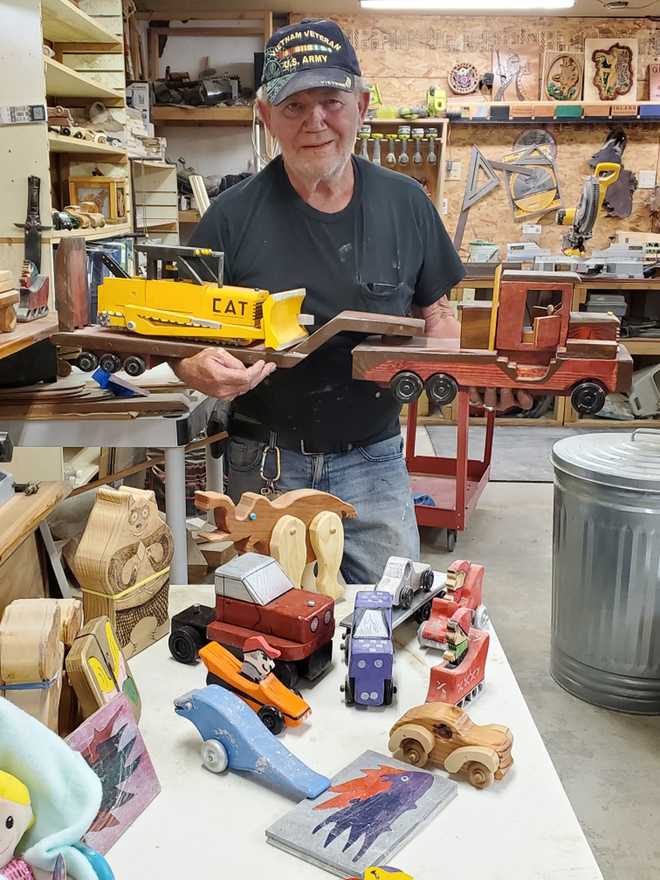
Mike Sullivan, 72, says his two older brothers were carpenters who made him toys when he was a child.

I saw this story of good works several places online and saved it for Christmas Day.

CNN’s Amy Chillag wrote, “A real-life Santa’s workshop is churning out toys in Desert Hot Springs, California. A 26-year Army veteran and his wife have spent most of the last decade making toys in a woodshop behind their house. It’s a labor of love that started as a hobby.

” ‘After retirement, I got bored and needed something to do,’ 72-year-old Mike Sullivan told CNN.

“The couple joined a woodworking club and one of their projects was to build toys for kids.

” ‘Christmas time, we had a chance to see the kids get the toys and see how much joy it was,’ said Sullivan.

“They were hooked. … Mike and Judy Sullivan spend nearly every day in the shop.

” ‘We’re both in good health and are able to be out here six to seven days a week for eight to 10 hours,’ Sullivan said. ‘It’s so much fun.’ …

“Mike buys the lumber, the drill bits and saws and makes the patterns — cutting and sanding away. Judy is quality control and decorator.

” ‘I run my hands over all the toys and feel for something that’s not supposed to be there — a loose wheel or splinter,’ said Judy. She also spray paints and decorates. …

“This year, their toys were especially needed with so many parents out of work due to the impact of the coronavirus pandemic on the economy.

“The Sullivans … are extra careful scheduling folks at intervals to come check out the toys. ‘We try to enforce safe distancing and masking,’ said Mike.

“This week, they’re delivering hundreds of toys to a kindergarten class, the Coachella Valley Rescue Mission and a church food pantry. They’ve mailed toys as far away as Indiana and Texas. Not only are the toys free, but the couple pays for the shipping although, they admit, that’s getting tough.

” ‘As long as I can afford it, I can send them where I can,’ he said. …

“The Sullivans’ toys will also be distributed to children during a drive-thru giveaway with social distancing, ‘making sure everyone is safe and happy and healthy.’ …

“The couple makes trains, cars, trucks, pull and push toys (little alligators, elephants), ducks you put on a string and pull along behind you. They also make educational toys: alphabet puzzles, jigsaw puzzles, stackers with different size blocks on a pole. …

“Judy Sullivan said they watch [their grandchildren and great-grandchildren] play with the toys and see what they like and don’t like about them. ‘If they drop a toy on the floor and break the head of a duck, we better reinforce that.’ …

“Mike says while he’s full of shrapnel from his service, that doesn’t slow him down in the toy factory. ‘You have to adapt and overcome.’

He refuses to charge for his toys. Maybe it’s because he knows what it’s like not to have much money.

” ‘My dad was a miner, we were considerably poor,’ said the retired Army first sergeant, who grew up in Montana.

“His older brothers were both carpenters and made toys for him when he was a child. ‘Most of the things I got were handmade toys. They were wonderful toys, I know how much I enjoyed them.’ … Those memories stick with him and he inherited their love of wood. ‘We do it for those who are less fortunate than we are now.’

“Their daughter says her parents spent $19,000 out of pocket last year on supplies (she does their taxes). …

“The hundreds of wheels and axles for the cars, trucks and trains are especially costly. With their kids’ encouragement, they started a GoFundMe to help.

“Mike hopes anyone who wants a Christmas present next year will reach out to him, and he’ll do his best to get it to them, wherever they are.”

More at CNN, here, and at the Washington Post, here.
Read Full Post »

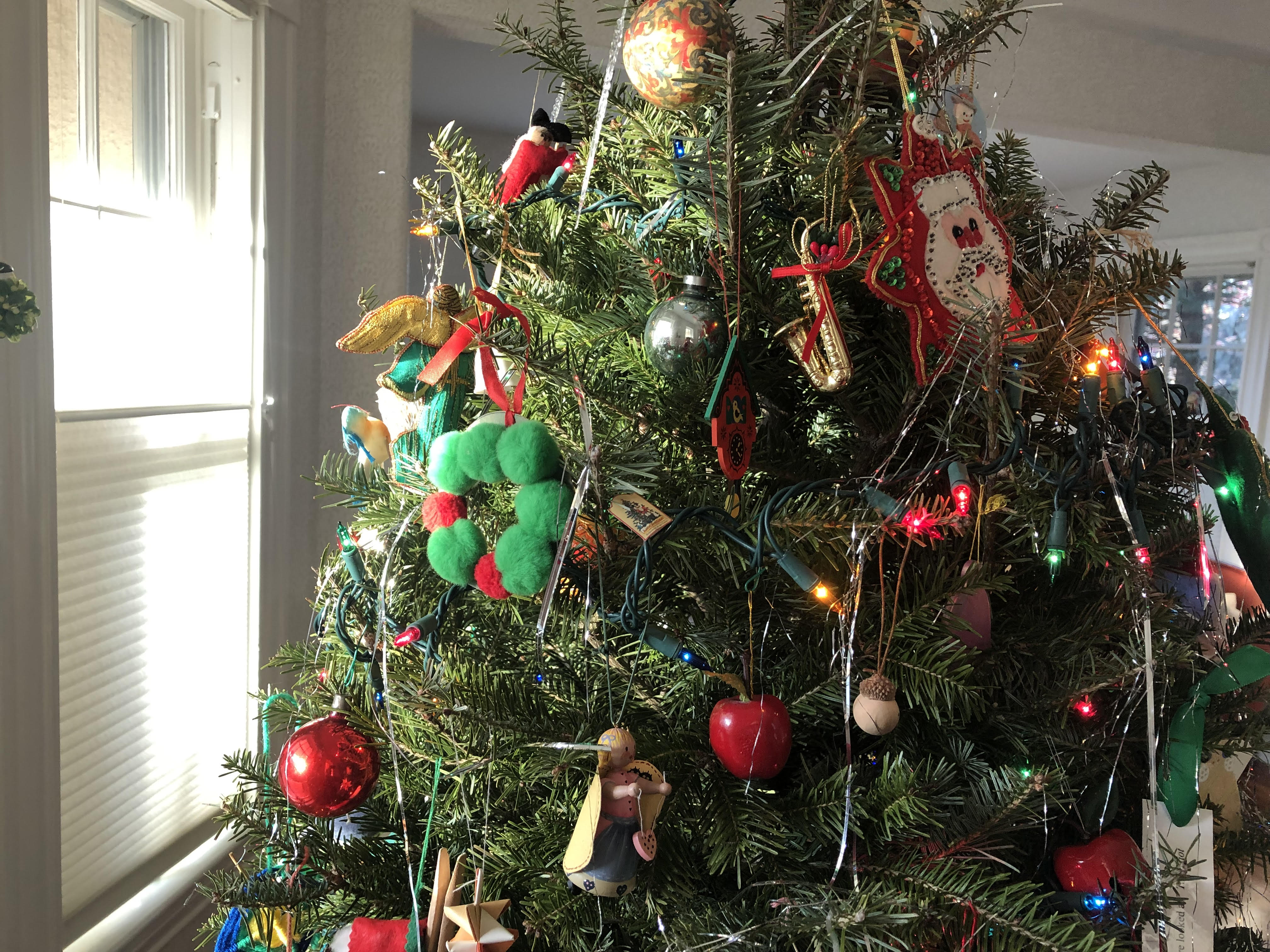
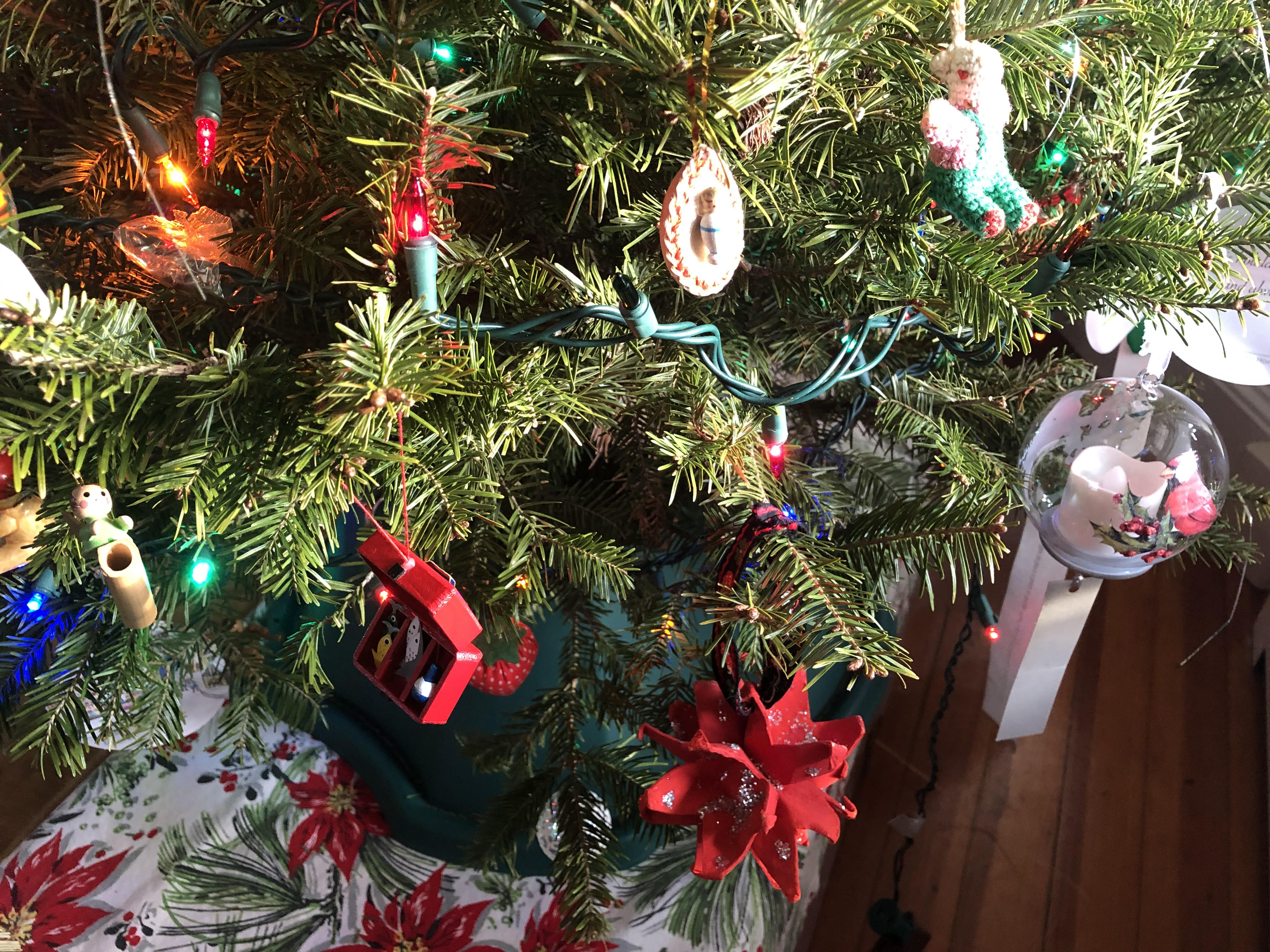
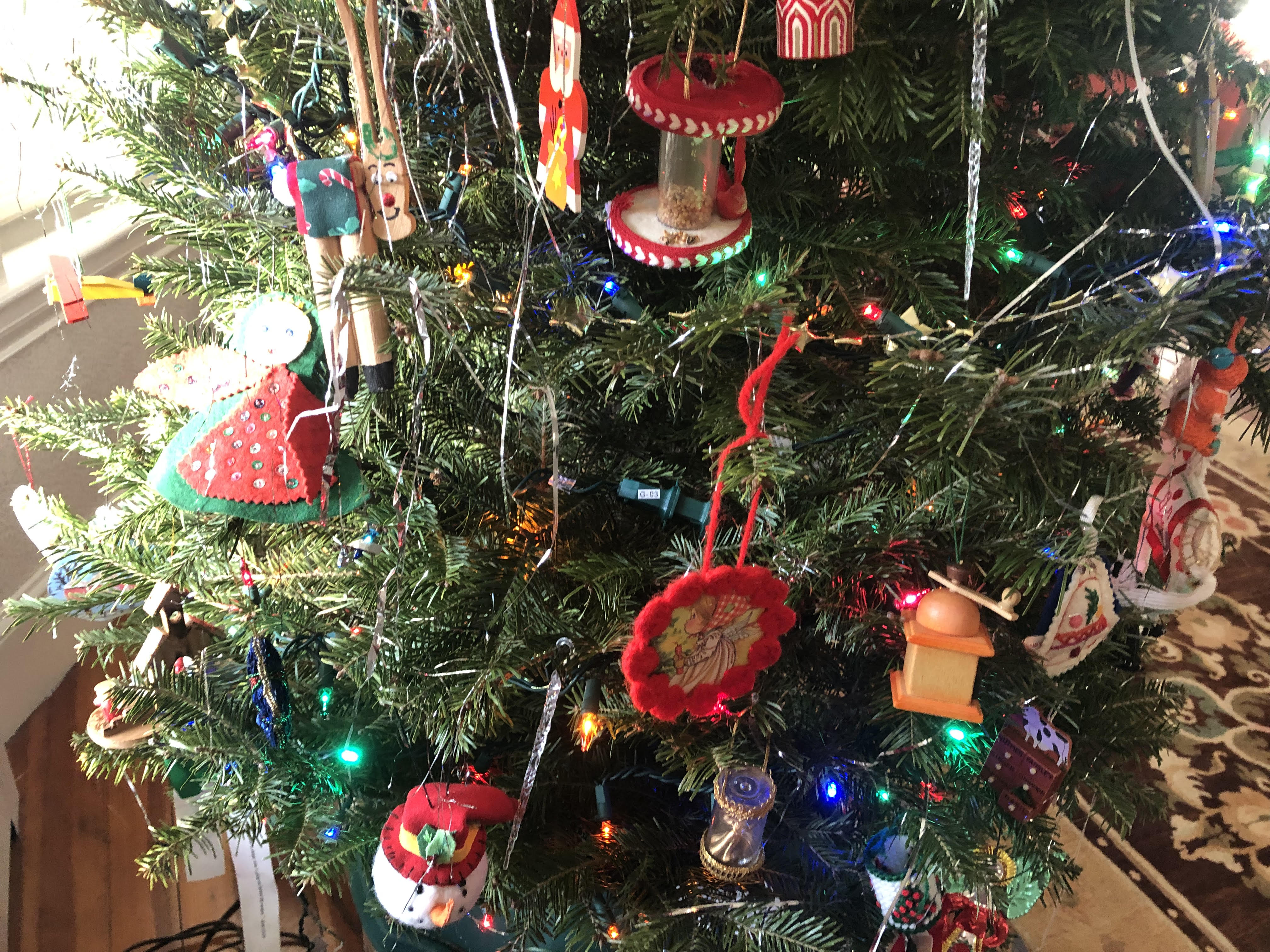
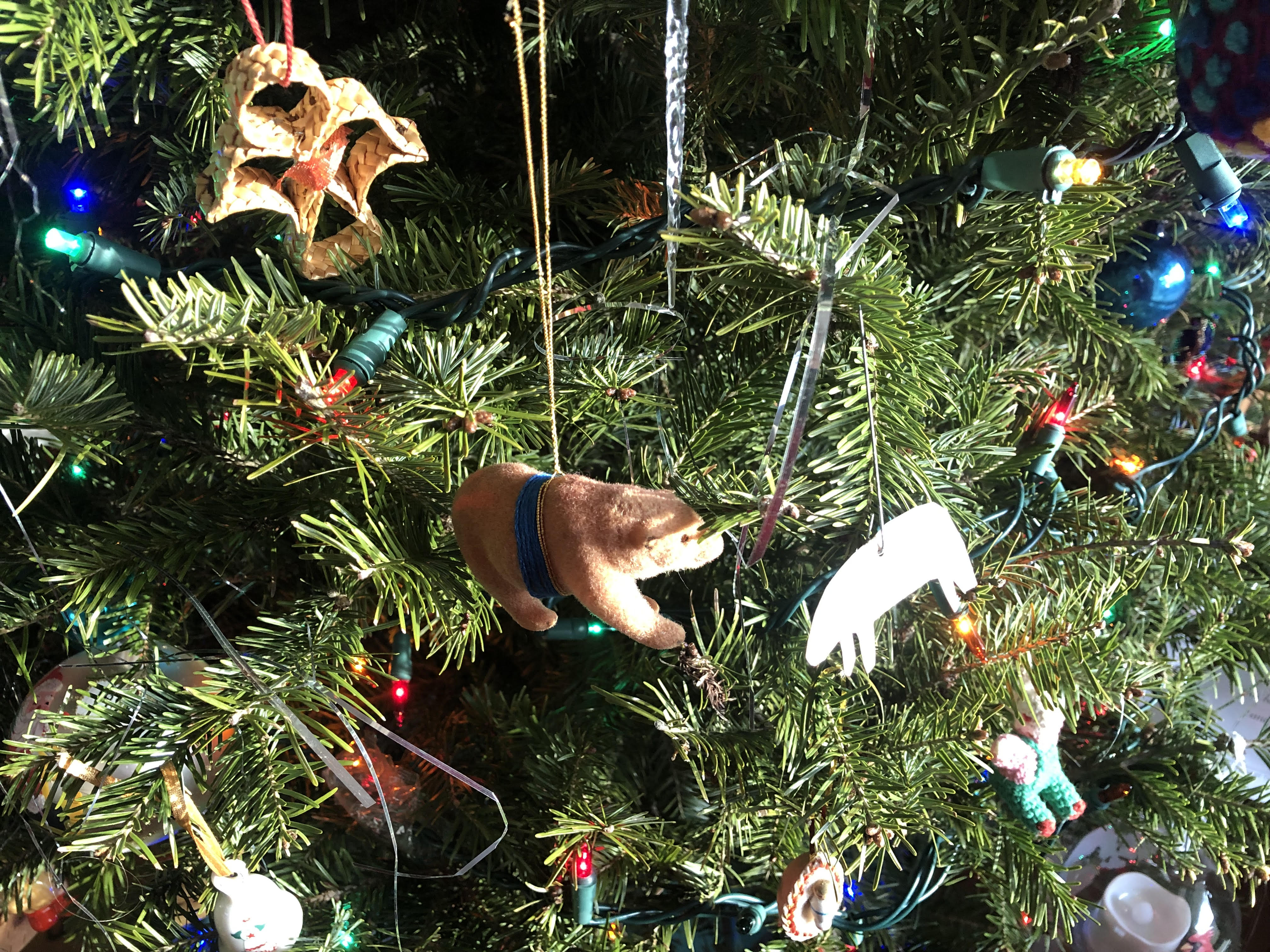
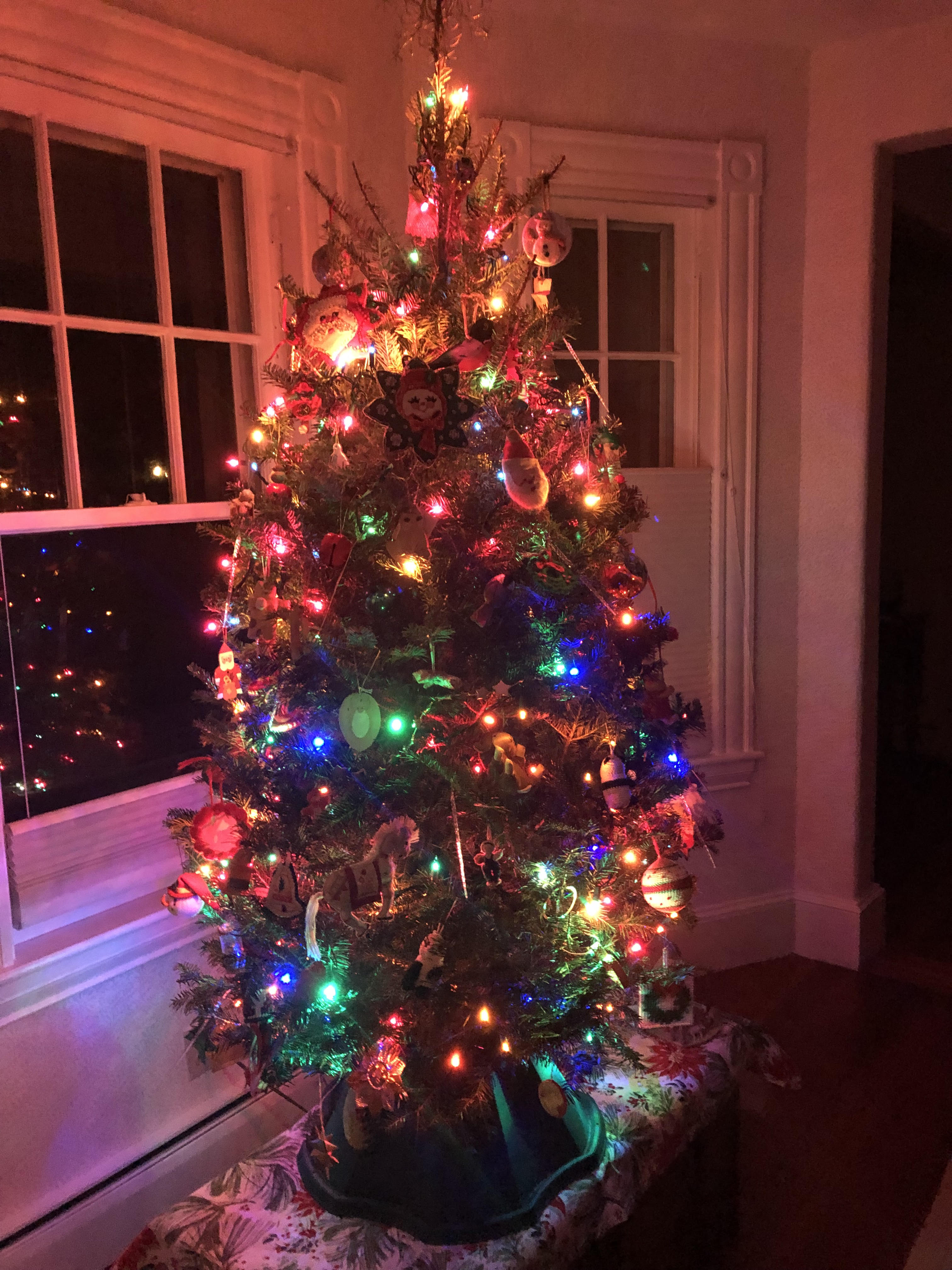
Even though we’re buying smaller and smaller Christmas trees each year and you’d think I wouldn’t be able to cram on decades’ worth of ornaments, I hate to leave anything out.

There’s a cross-stitched ornament that John made from a kit when he was four. Numerous decorations were created by my husband’s Aunt Mae, who had an active life past age 100 and made knitted, crocheted, and sequined ornaments that she kept secret as she worked on them during the year.

There are many items made in the Crafts for Christmas workshops at church, which encourages children to make, rather than buy, presents to give. Most were the work of John and Suzanne in the 1980s. Others were made by their own children in pre-Covid church workshops. The wide range of workshop items include everything from Christmas doorknob covers to reindeer ornaments constructed of clothespins.

I love looking at the tiny crocheted figures from China that I found in a shop at Niagara on the Lake when Suzanne was two. They remind me of our time at the Shaw Festival in Canada. My husband and I traded off babysitting so he could see a play and I could laugh myself silly at a performance by the concert comedienne Anna Russell.

I also have an origami star in shiny green paper from someone in an Esperanto group that used to meet monthly at my house.

A little baseball ornament and a tiny box of fishing tackle remind me of early interests of John, who now coaches baseball and teaches kids in the family to fish.

Really far back in time, I acquired a small Christmas stocking for one of my dolls — that goes on the tree, too.

There’s a horse-saddle ornament, a memento from a vacation that the Clymers took out West. And I still hang up a large glass ball from the Lillian Vernon surprise box. I painted “1980” on it back then.

I also hang up quotations looped with a green ribbon, an idea my husband got on a business trip to Singapore, where they hang sayings outdoors.

The clunky red-paint-and-sparkles thing you see below is something I made from an egg carton years ago. Recently married, I thought it would be fun to take Crafts for Christmas at the local adult ed after work while my husband took a different class. Can’t imagine how I stayed awake in those days!

Please be sure to notice that hanging near a bear ornament is something white that has the same shape. That is what my husband made for a three-year-old John, who asked him to make another bear. Though not usually into crafts, the guy did his best, and I like seeing his white cardboard bear every year.

Read Full Post »

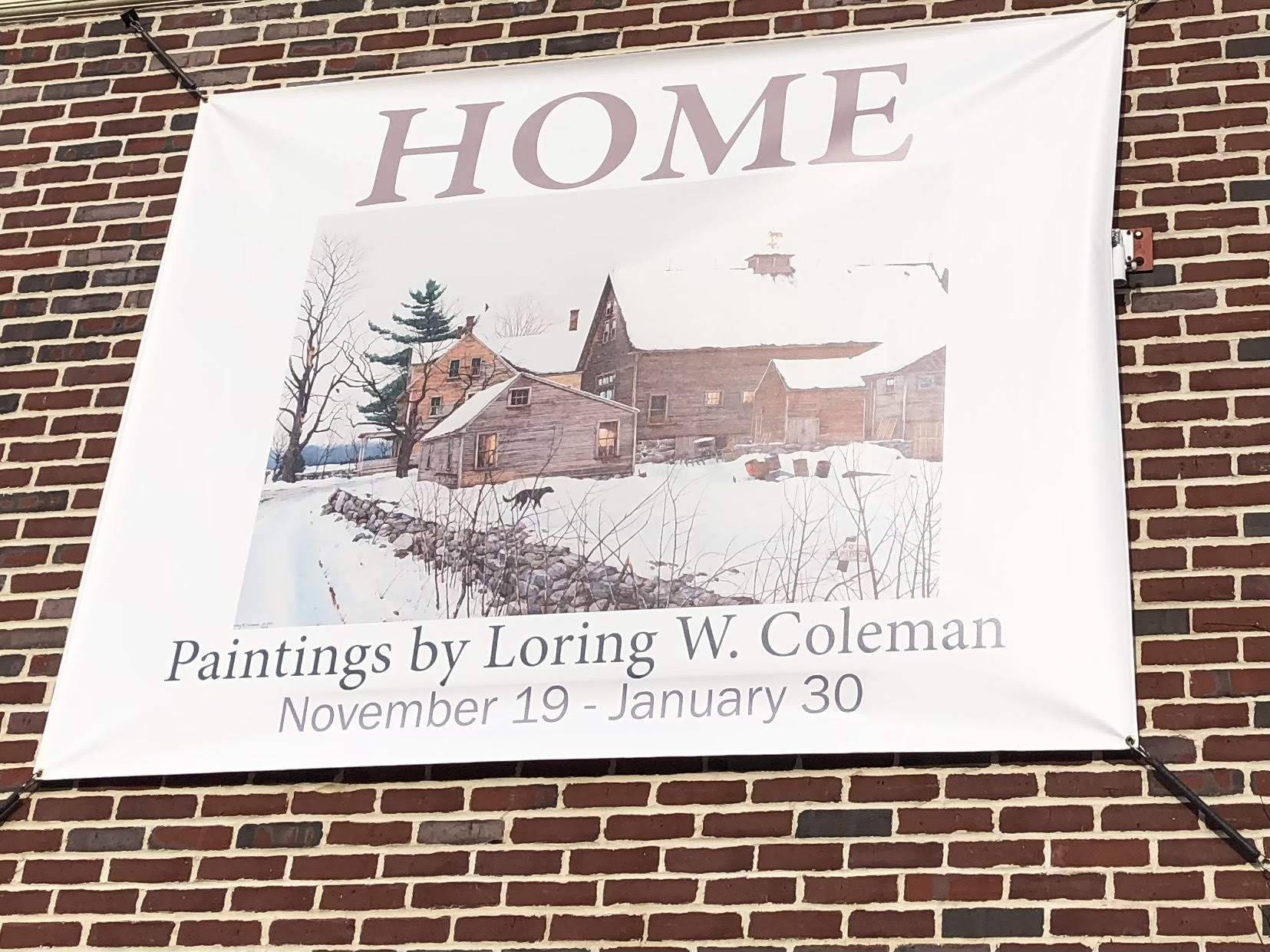
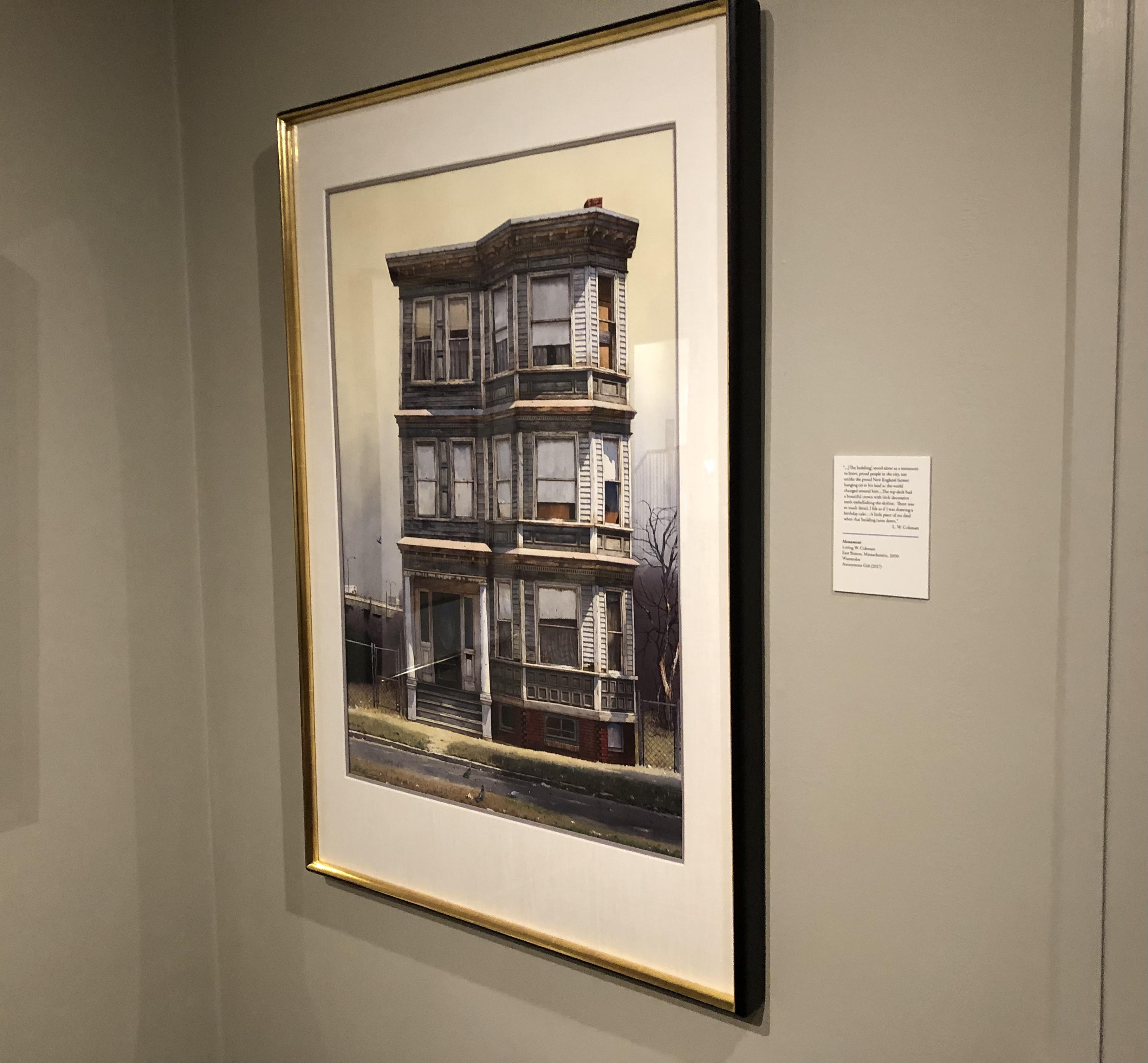
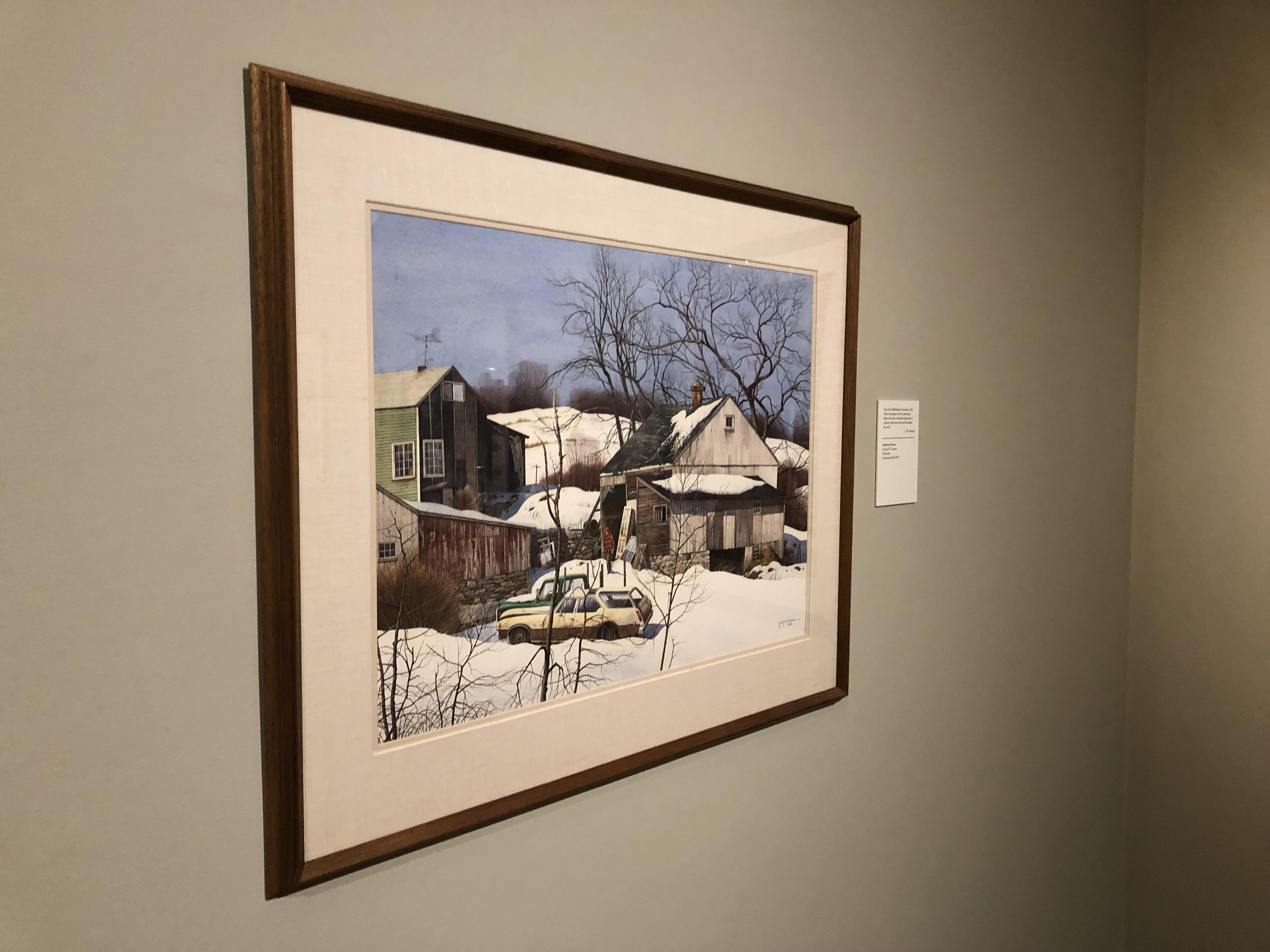
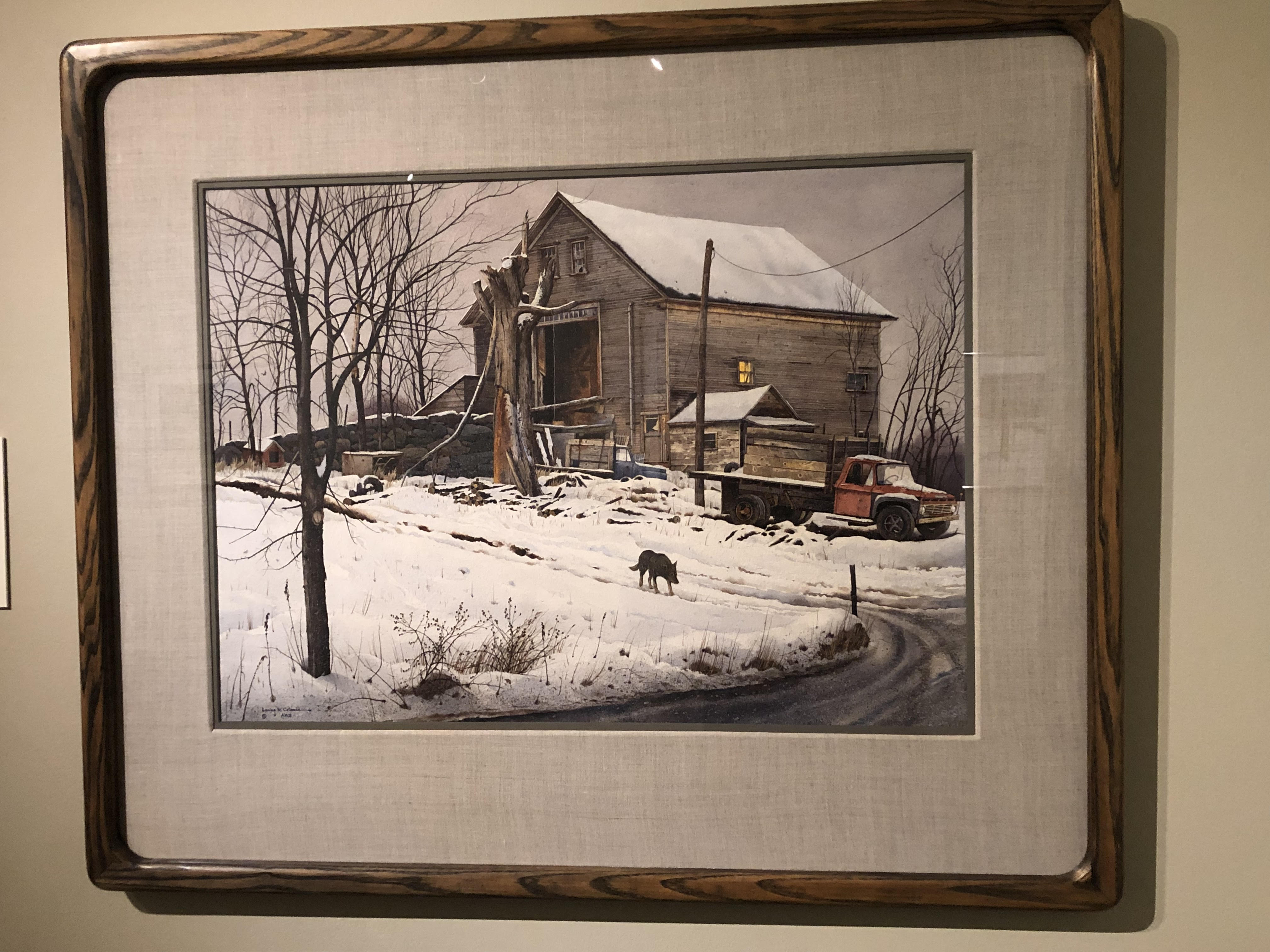
I walked over to the museum the other day, mainly to see the artwork of the late Loring Coleman, a guy in love with ruined New England farmhouses and crumbling barns. He knew how to bring out the beauty and significance of these disappearing landmarks.

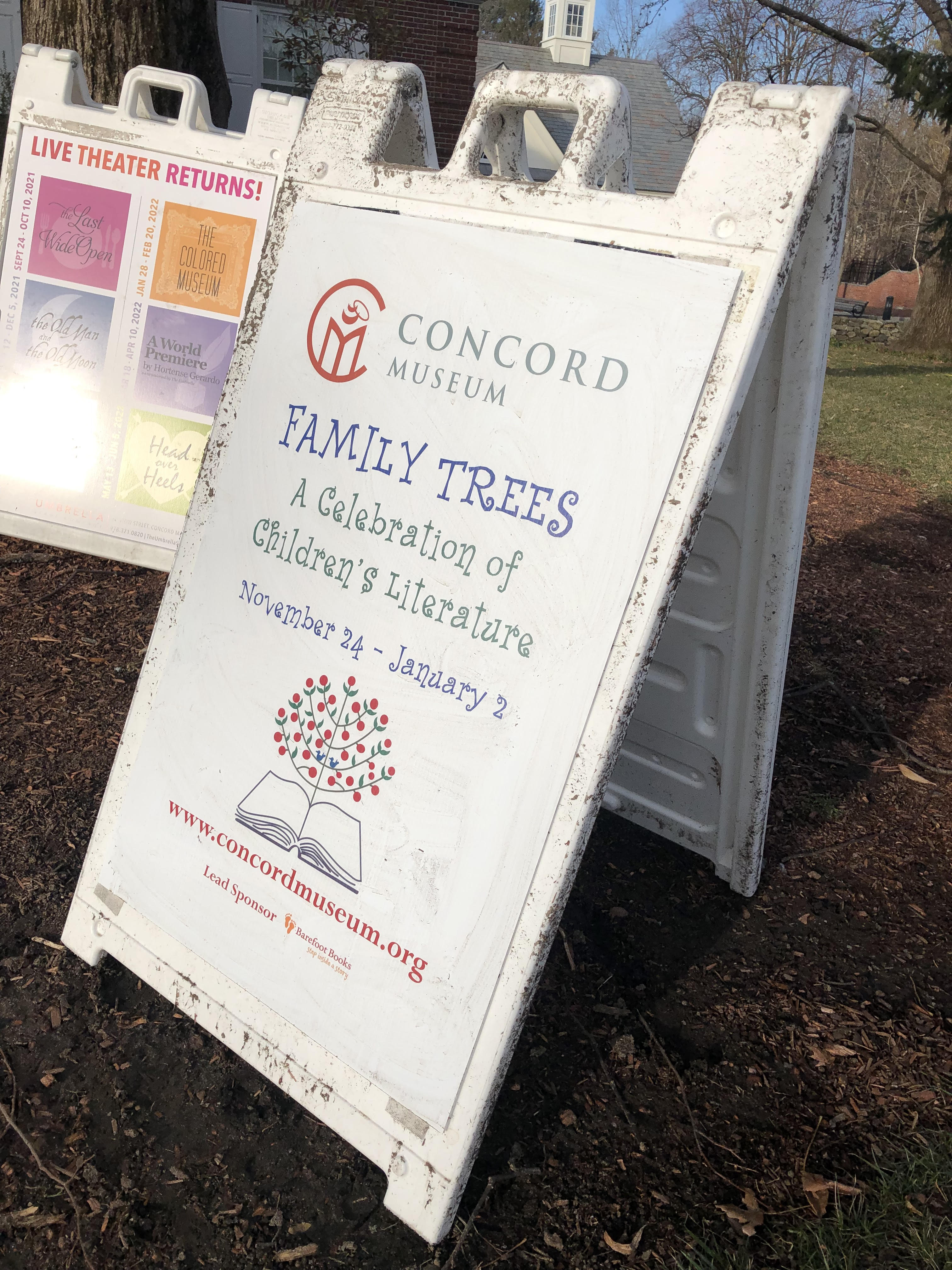
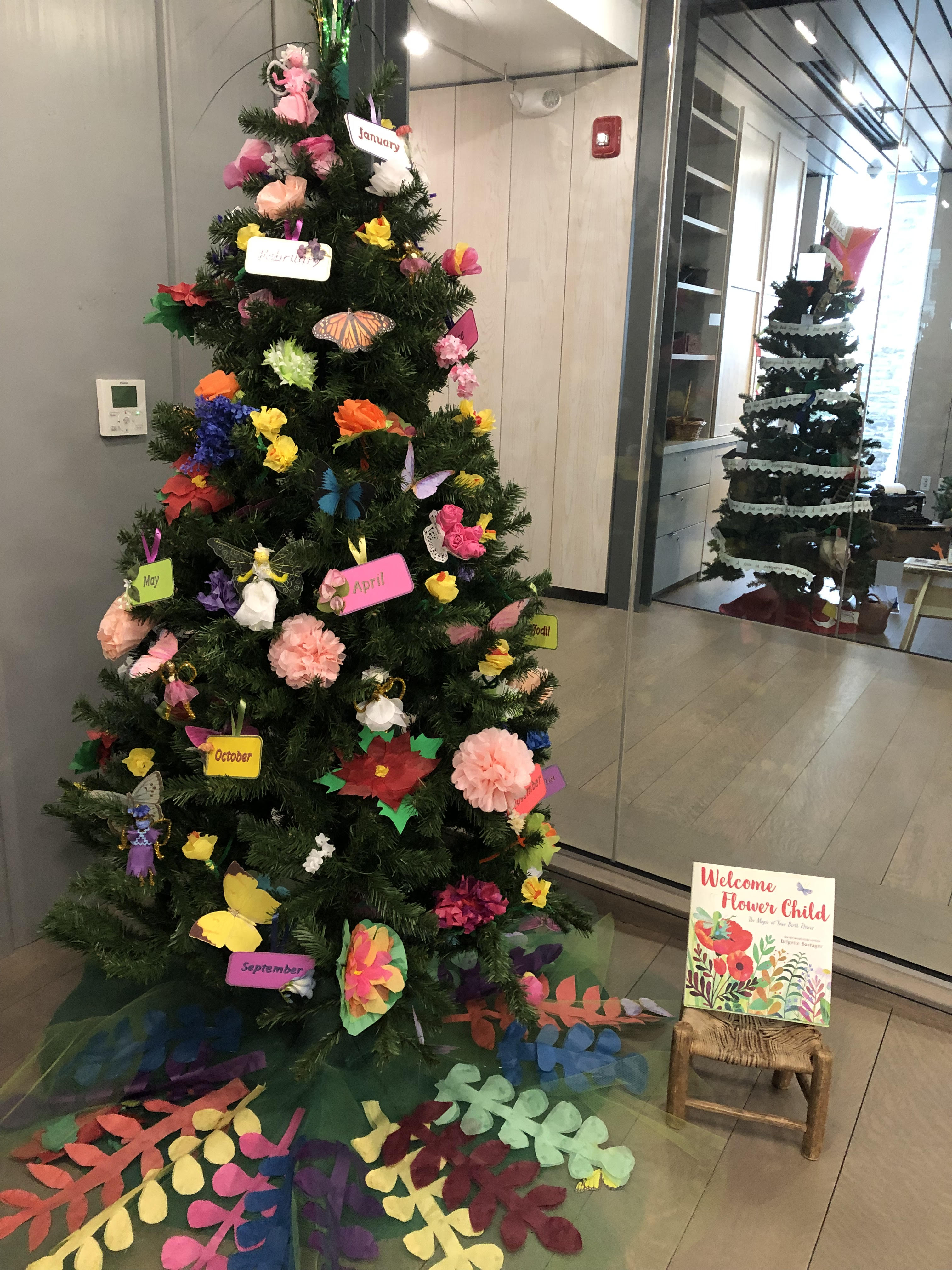
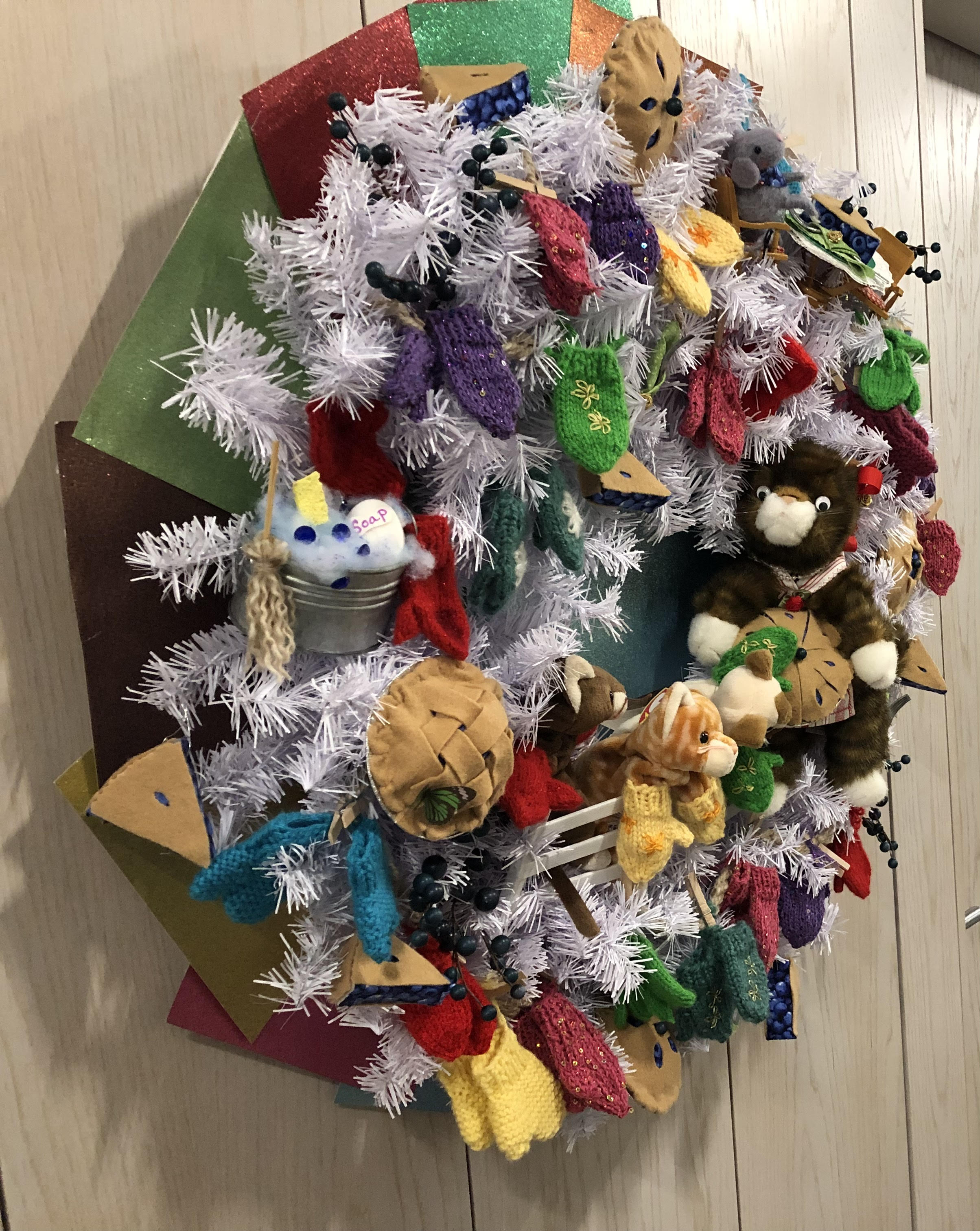
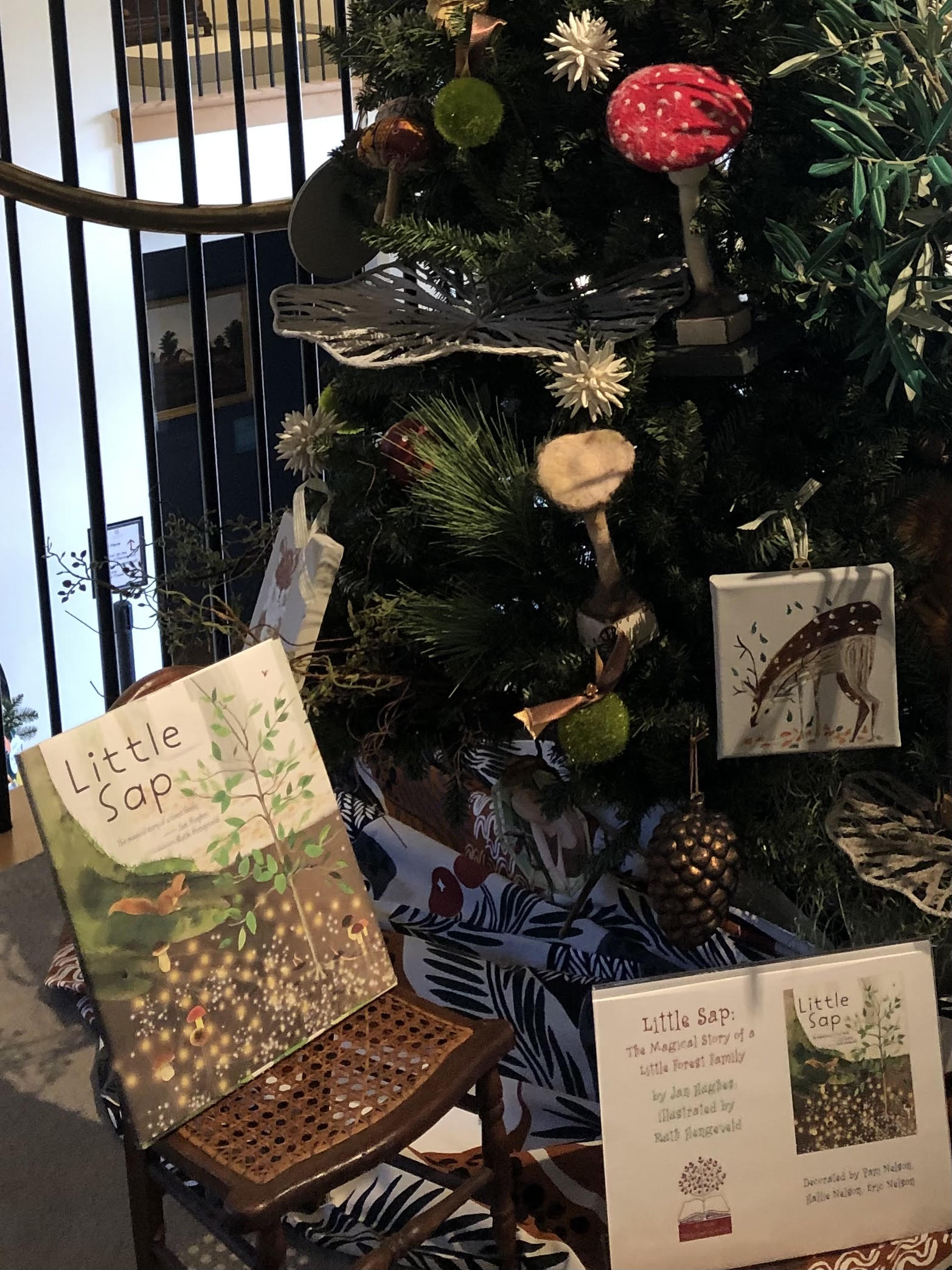
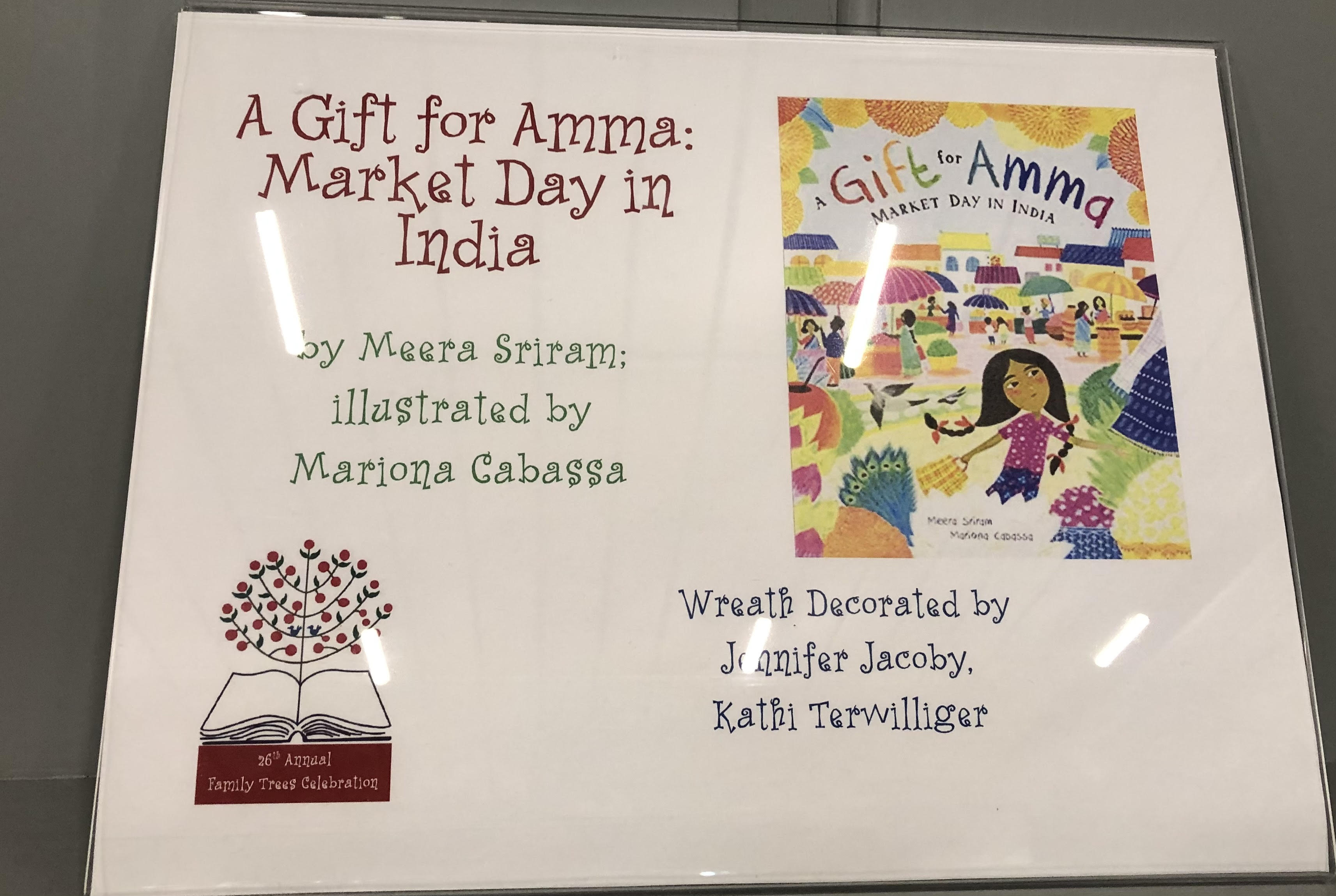
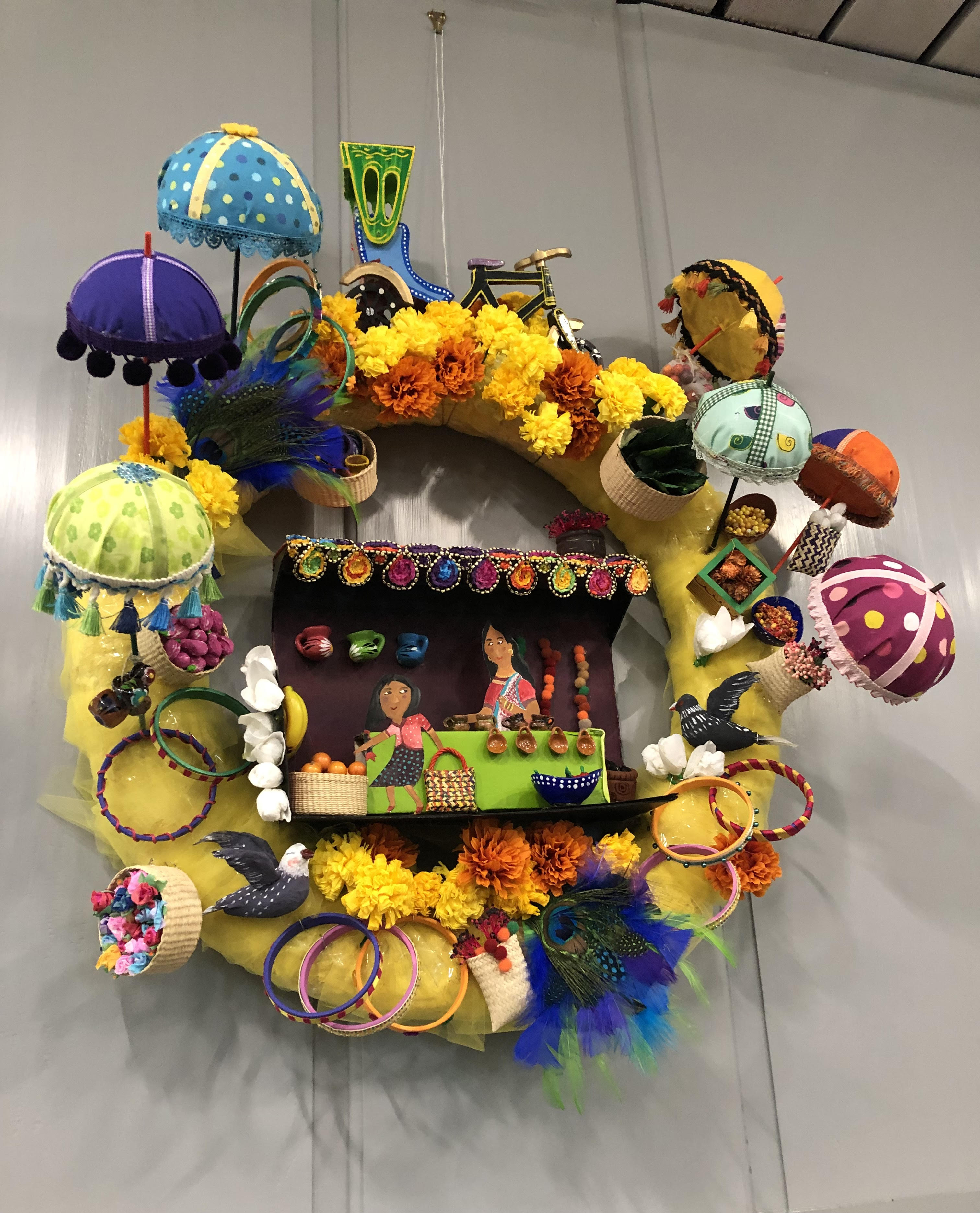
The museum’s annual feature called Family Trees also caught my attention. That’s a community effort in which local families and organizations decorate trees or wreaths with the theme of a beloved storybook.

The Garden Club, for example, did a tree this year on a flower-themed picture book, and the Council on Aging made tiny mittens for those famous little kittens who lost theirs. (Lots of skilled knitters at the Council on Aging!) Check out the covers of all the delightful books here.
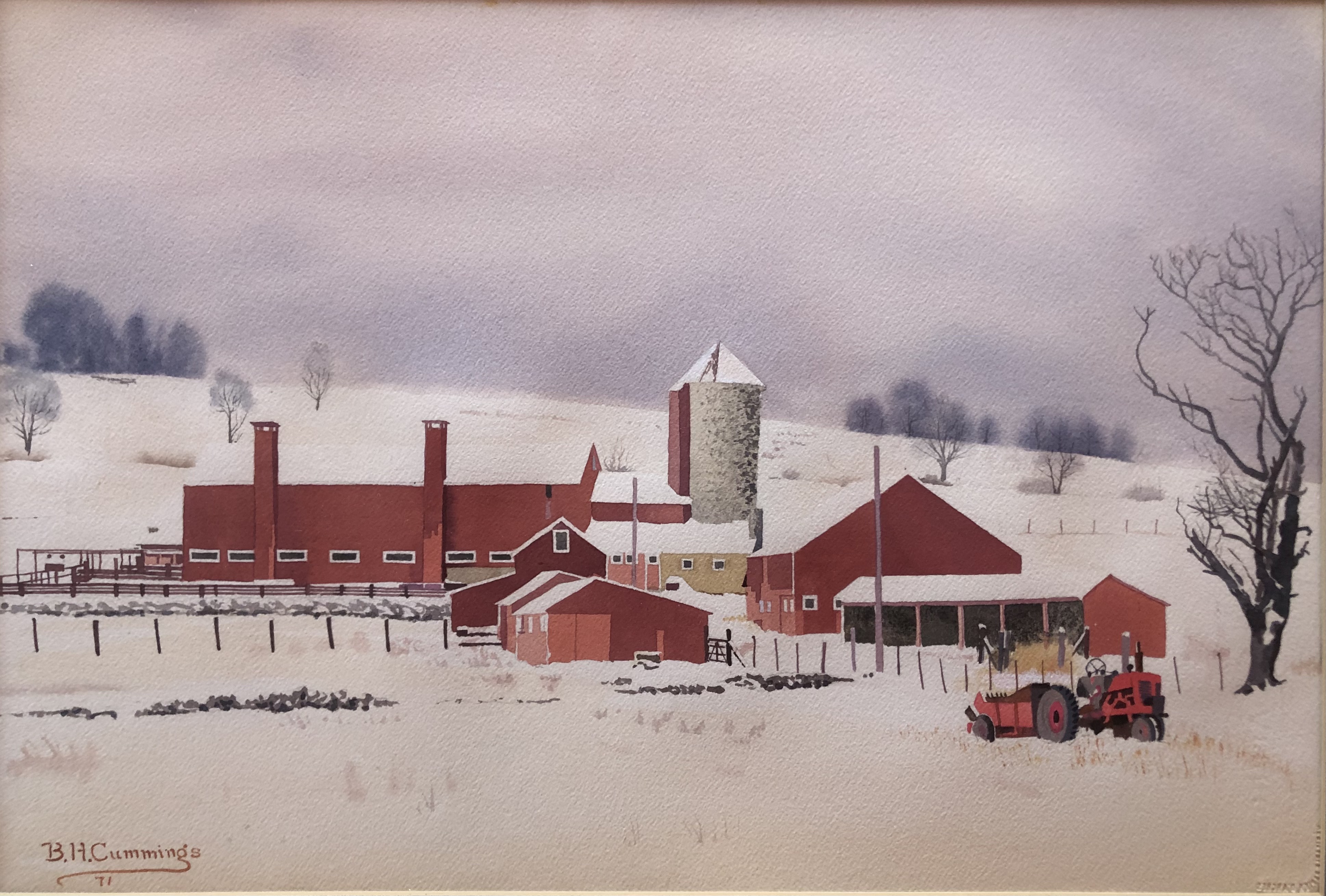
PS. I’m going to add a beautiful barn painting at the end of this post. It’s by a former neighbor, Ben Cummings, and was brought to my attention by his son, Earle, and his daughter, Caroline. Like many of the buildings featured in the Coleman paintings, these red barns are no more.

Read Full Post »

Bronze apple knocker.

During the Civil War, I was once told, soldiers from upstate New York who knocked apples off trees with their rifles were derided as apple knockers. But as I can’t find that history on the internet, I think it may be apocryphal.

Nevertheless, the expression was definitely used to differentiate New York City folks from every other New Yorker when we lived upstate years ago.

Back then, I said to my mother that I thought someone should make a door knocker in the shape of an apple. Whether she had thought of it before or was responding to my comment, she was the one who took action.

Her little company is long defunct, but whenever I visit a home of people who knew her, I see a bronze apple knocker on their door. My own house has the one above on the back door and another on the front door. If my children are the ones to sell our home one day, I hope they remember to stipulate in the contract that the knockers stay with them — collectors’ items now.

Moving right along, I have a few recent photos to show you. Below is another of my winter hellabore photos. I can’t get enough of these flowers, also called Lenten Rose, which bloom in the coldest weather.

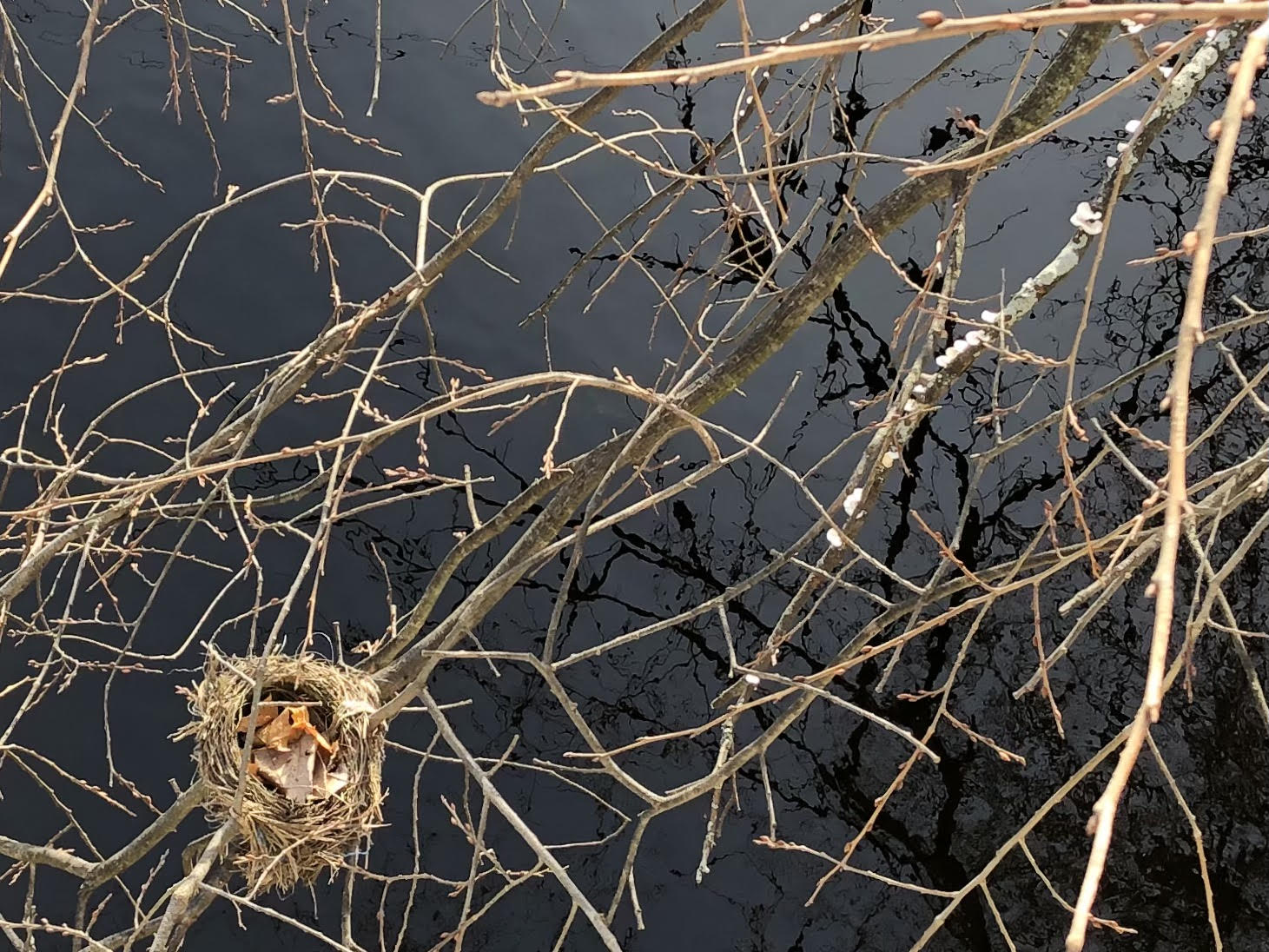
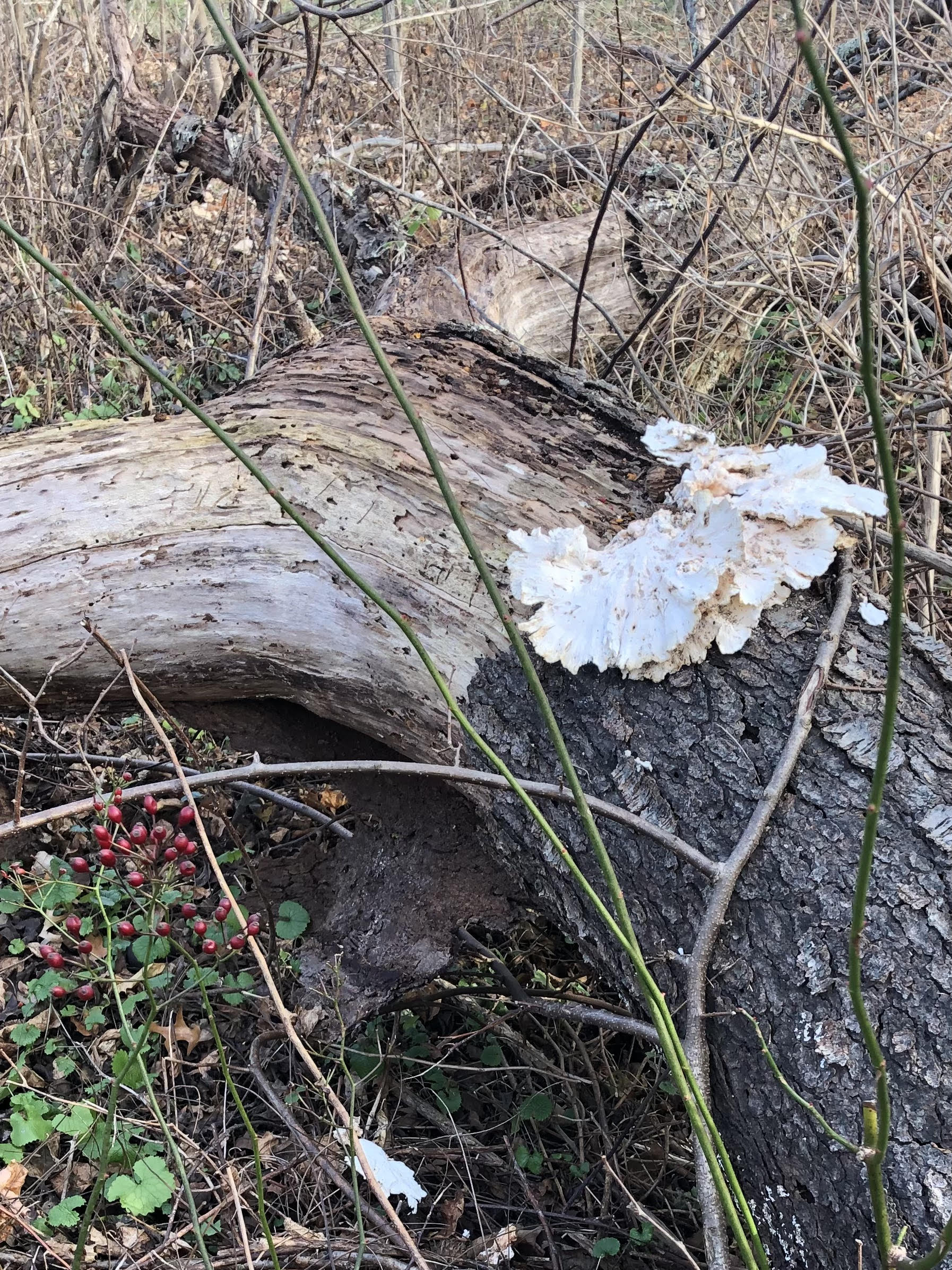
The two snarly-twig photos show an abandoned nest over the Sudbury River and a fancy-dress fungus near the elementary school’s playground.

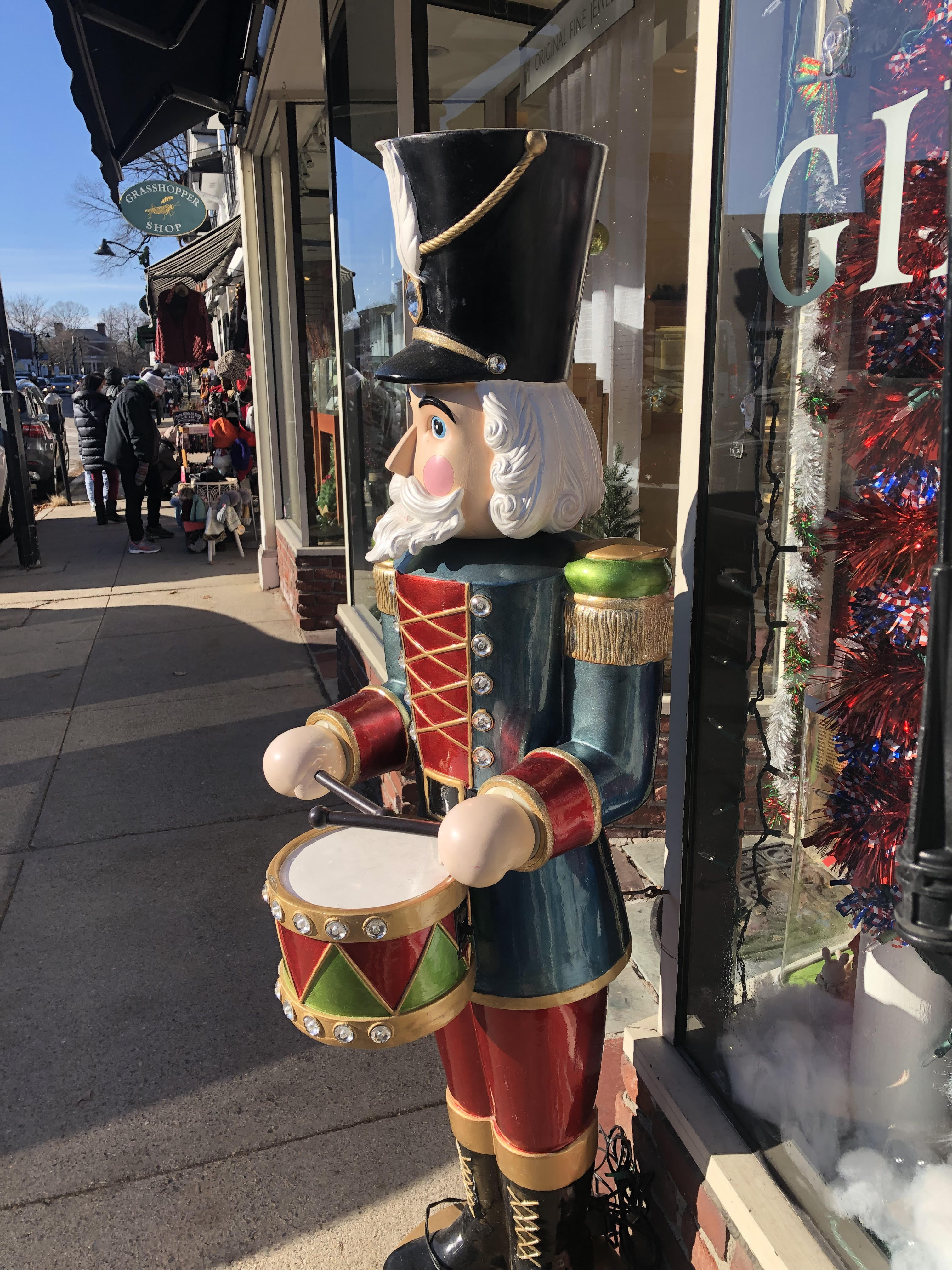
The post box for Santa reminds me that my youngest grandchild just got a response from her letter to the North Pole — exciting for all concerned. The cheery toy soldier on Main Street points passersby to a staircase leading to a toy shop below.

My husband and I went to our first post-Covid show at Umbrella Arts and especially loved the non-traditional holiday songs. Today, reading headlines about all the well-vaccinated people getting the Omicron variant, we’re probably going back in hibernation like the ground hog that sees its shadow. We’re not post-Covid after all.

I made the chocolate cookies from a recipe in the newspaper. The kids decorated some of them with frosting and sprinkles.

I also have a photo from friends who set off for a Christmas vacation in Hawaii after the guy in the last photo recovered from Covid followed by pneumonia.

Read Full Post »

Photo: Caitlin Faulds/ecoRI News.
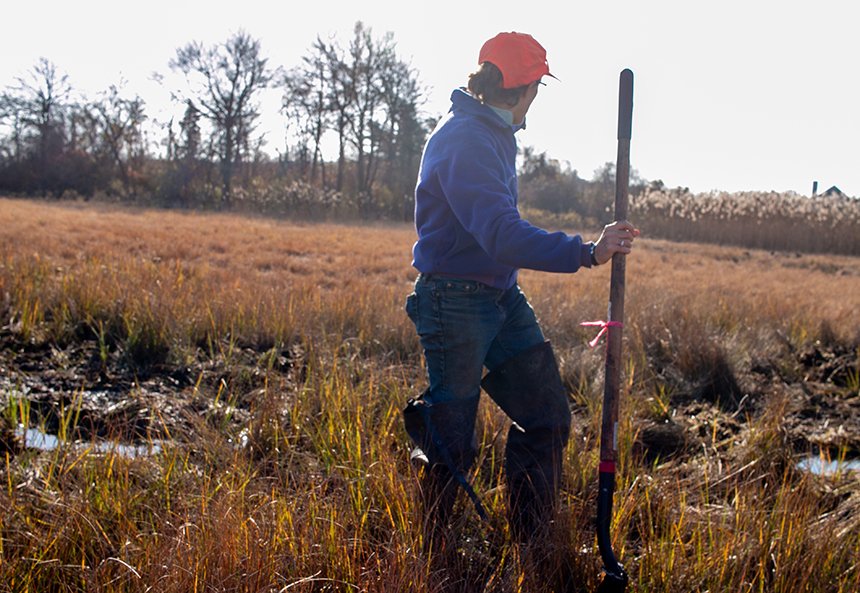
Save The Bay’s Wenley Ferguson is leading a marsh migration project on Sapowet Marsh in Tiverton, R.I. The goal is to slowly drain pools of standing water, some more than 18 inches deep, to protect marsh grasses and stop erosion.

Today I learned a few things about marshes that I didn’t know. For example, they are supposed to be wet but not too wet. In Rhode Island, one important wetland was dying — until it was given a helping hand.

Caitlin Faulds has the story at ecoRI News. “The grasses are dying. Clusters of broken, denuded stems stand in shallow pools of brackish water, making a patchwork of the low-lying marshlands. The slow balding is invisible from the blacktop of Seapowet Avenue, hidden behind a thick curtain of phragmites. But standing boot-deep in the peat, surrounded by the sulfuric scent of decomposition, the bare ground is clear evidence of the steady saltwater creep happening in marshes across Rhode Island.

“Spartina alterniflora, or smooth cordgrass, is notoriously salt-tolerant and a common feature in saltwater marsh environments.

“ ‘They can grow along the edge of the cove and get flooded twice a day, but they can’t grow in standing water,’ said Wenley Ferguson, shovel in hand. All around, the sunlight glints off pools of standing water, unable to drain and slowly growing with each high tide.

“The average sea level in Rhode Island has increased by about a foot since 1929. Storm surges and king tides have pushed further and further inland. Normally, the marsh would respond to the rising high-water line by matching the migration inland. But with the sea on one side and a dense web of roads, development, cultivated fields, and invasive species on the other — and accelerated sea-level rise on its way — Sapowet Marsh has nowhere to move. …

“Ferguson has been working with the Rhode Island Department of Environmental Management (DEM) at the Sapowet Marsh Wildlife Management Area, a 260-acre state property, for more than five years now. … Under Ferguson’s watch, Sapowet has become home to the largest marsh migration facilitation project in the state — a small counter to the forces at play. …

“The cordgrass roots are taut, but they cut easy. Just one stomp and the shovel sinks through the muck, water pooling up and over the toes of Ferguson’s black rubber boots. …

“Earlier in the week, Ferguson — along with a handful of DEM employees and volunteers — used shovels and a small excavator to dig a weaving network of runnels through the marsh. These shallow creeks will give the pooling water a route out to Narragansett Bay, allowing the area to slowly drain.

If the root zone of the marsh plants is able to dry even slightly, they will grow ‘healthy and happy,’ Ferguson said. Healthy plants build up a stronger root base, and a stronger root base makes a coastline more resilient to erosion and sea-level rise.

“But ‘we don’t want to drain it too fast,’ she said. It has been three days since they dug the first runnels and the water level has dropped only slightly, exposing a few inches of bare mud — exactly as planned. The standing water is thick with unconsolidated sediments and topped by a bacterial mat. If the water rushes out all at once, this sediment will pour into the bay. It’s better to dig in phases and let it settle out in the marsh, maintaining as much high ground as possible. …

“Ferguson fought to keep the peat in the marsh. … ‘These areas will just be a little higher, and they might recolonize,’ Ferguson said. ‘And when I say might — they do recolonize.’

“Within one season, the islands will host new sprouts of cordgrass, or they’ll prove high and dry enough to support clusters of high marsh grasses. The clusters of high grass will make ideal nesting habitat for the saltmarsh sparrow.”

Read about other benefits at ecoRI, here.
Read Full Post »

Photo: National Park Service.
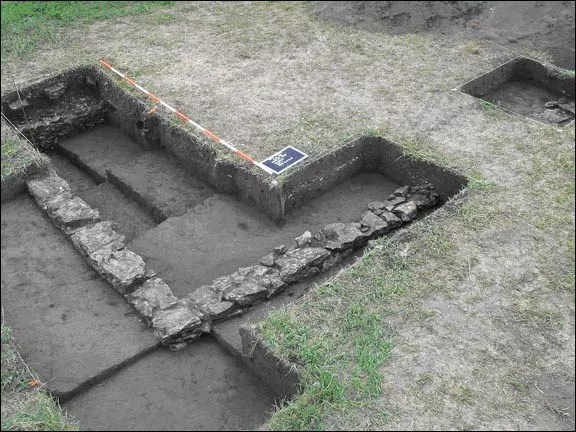
Archeological excavation at an integrated community founded by a former slave in Illinois.

One thing that’s interesting about today’s story is that political differences have been set aside in the restoration of an abandoned town founded by a former slave.

Mark Guarino reports at the Washington Post, “As a child, Gerald McWorter often listened to his father tell stories about growing up on a farm in New Philadelphia, Ill. But it wasn’t until a family reunion in 2005 that he fully understood the significance of his lineage: Everyone he met that day was in some way affected by the story of his great-great-grandfather, a formerly enslaved man from Kentucky who in 1836 became the first Black person in the United States to plat and register a town.

“During Frank McWorter’s time, New Philadelphia thrived as a community where Black and White families worked together as equals long before the Civil War was fought to preserve — or destroy — that possibility.

“The revelations have emerged through three decades of archaeological digs, advocacy by local community members, oral histories and family artifacts, letters and research. The momentum was enough to convince Gerald McWorter, 78, that he and other relatives ‘had an obligation’ to ‘become stewards of a story that is bigger than us.’

“Also convinced was Rep. Darin LaHood (R-Ill.), who introduced a bill that would designate the site of New Philadelphia a part of the National Park Service. …

“Frank McWorter was born into slavery in 1777 and grew up on a Kentucky plantation. His White enslaver, George McWhorter, was also his father. Frank was an entrepreneur of sorts whose father allowed him to earn wages outside his hours of slavery in a cave where he foraged and sold materials used for gunpowder.

By 1817, Frank had saved enough money to buy freedom for his wife, Lucy, who was pregnant with their fifth child. Two years later, he was able to buy his own freedom.

“Emancipating 15 other family members would follow, a process that lasted through 1857 — three years after the death of Frank, who came to be known as Free Frank. …

“ ‘It’s often hard for people to get out of their heads that it would take 40 years to buy your family back from slavery. It’s a really heroic story that captured the imagination,’ said Gerald McWorter, a professor emeritus at the University of Illinois at Urbana-Champaign, where he taught African American studies.

“The first person in the McWorter family to actively document Frank’s life was Gerald’s aunt, Thelma McWorter Kirkpatrick Wheaton, who collected family documents, letters and photos as well as interviewed older descendants. Her daughter used that material to write her doctoral dissertation about Frank McWorter, and the University of Kentucky Press published it as a book in 1983.

“Frank McWorter’s dream included buying his own land, and he eventually purchased 80 acres, sight unseen, in Pike County, Ill., along the Missouri border. It was thick prairie then, and the McWorters arrived in 1831 to clear it for growing crops and constructing a town. Descendants of McWorter remained in the area until the late 1990s.

“New Philadelphia existed for half a century. Named after the eastern metropolis that symbolized brotherly love for all races, it was a prosperous frontier town that had a post office, a school, a store, a blacksmith shop and two shoemakers, presumably to supply footwear for runaway enslaved people who passed through on their way to Canada. The town was home to as many as 29 households, and neighboring farmsteads used its services.

“But what distinguished the community was where it was located: just 20 miles from Hannibal, Mo., a bustling river town that served as a major site for auctions of enslaved people. Just over the Mississippi River, African Americans were human chattel and subject to horrific violence, but in New Philadelphia, they freely owned guns, earned good livings and worked the land with their White neighbors. …

“The renewed interest in New Philadelphia began in 1996 after a community group formed to enshrine McWorter’s story on a sign at a rest stop along a state highway next to the cemetery where he is buried. Group founder Phil Bradshaw, a farmer and longtime Republican who is White, said that early on, he would receive ‘nasty notes and nasty comments’ from townspeople about the advocacy. Eventually, those subsided. …

“The community group, the New Philadelphia Association, bought more than 30 acres that Frank McWorter had owned and allowed archaeologists from the University of Illinois and the University of Maryland to dig over several summers to unearth remnants of the town. Although no original buildings remain, the area has walking trails with smartphone-enabled kiosks that tell McWorter’s story. …

“For Gerald McWorter, the integrated town his great-great-grandfather built gives him hope.

“ ‘If New Philadelphia was possible, maybe [racial harmony in] America is possible,’ he said.”

More at the Post, here.
Read Full Post »

Photo: Raphael Alves via Washington Post.
Bored during Covid, an indigenous Brazilian girl started sharing her culture on TikTok, where she is Cunhaporanga_oficial.

Maybe I don’t follow all the right news outlets, but I hear about way more TikTok stories that are positive than negative. Today we learn that a 22-year-old from an indigenous tribe in the Amazon is teaching the world about her culture through playful TikTok posts [Cunhaporanga_oficial].

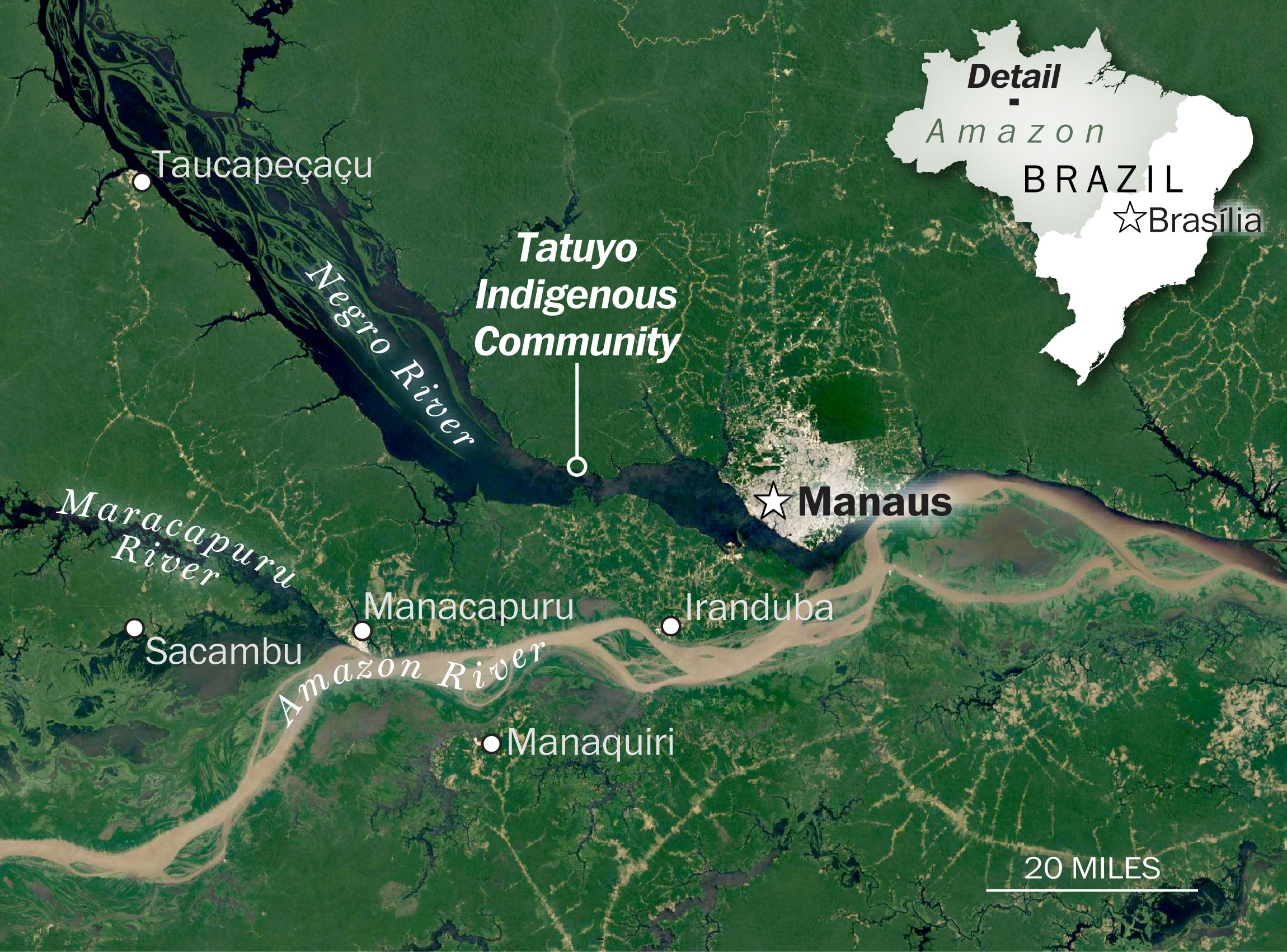
Terrence McCoy reported at the Washington Post, “In the middle of the Amazon forest, along the banks of the Rio Negro, a young woman in face paint was bored. The coronavirus pandemic had cut off the flow of visitors, further isolating this Indigenous village, accessible only by boat. So Cunhaporanga Tatuyo, 22, was passing her days, phone in hand, trying to learn the ways of TikTok.

“She danced to songs, dubbed videos, wildly distorted her appearance — the full TikTok experience. None of it found much of an audience.

“Then she held up a wriggly, thick beetle larva to the camera.

‘People ask, “Cunhaporanga, is it true that you really eat larva?” ‘

“ ‘Of course we eat them! Do you want to see?’

“The bug met its end (‘Mmmhhh,’ Cunhaporanga said), and a new viral star was born — streaming from the most remote of locations. Cunhaporanga’s home is a cluster of thatched-roof huts along the river’s edge, surrounded by nothing but Amazon jungle. The dozens of residents who live here are fellow members of the Tatuyo people. They paint their faces in bright red, wear elaborate feathered headdresses, live alongside squawking macaws that Cunhaporanga warns should not be mistaken for pets, and survive off whatever they can grow or catch.

“All of it is now a vivid backdrop for what has become one of the most dynamic and fastest-growing social media presences in Brazil. In little more than 18 months, Cunhaporanga has collected over 6 million TikTok followers, simply by showing scenes from her everyday life. To her, the activities she posted were unremarkable. But for her growing audience,they brought into sudden intimacy a world that could not have seemed more distant.

“Cunhaporanga offering a bowl of larvae to her family to eat: 6.7 million views. Cunhaporanga brandishing a tool used to make cassava flour: 16.1 million views. Cunhaporanga dancing on the pristine banks of the river — it’s still TikTok, after all — to a viral pop song: 4.1 million views.

“As social media reaches into the Amazon rainforest, one of digital media’s final frontiers, it is opening an unprecedented window into Indigenous life, clearing away the barriers once imposed by geography. For the first time, some of the planet’s most isolated peoples are in daily communication with the outside world without the traditional filters of journalists, academics or advocates.

“ ‘This is an important opportunity,’ said Beto Marubo, a member of the Marubo people, whose village just got the Internet and is already going viral. ‘The Brazilian people don’t know Indigenous people, and from this lack of information has come all sorts of terrible stereotypes like Indigenous people are lazy or indolent or unhappy.’

“The digitalization of Indigenous life is now colliding with some of Brazil’s most powerful political currents. President Jair Bolsonaro rose to power lamenting the size of Indigenous territories and advocating that they be opened up to business interests. … ‘Indians don’t speak our language, don’t have money, don’t have culture,’ Bolsonaro said in 2015 as he publicly plotted a run for the presidency. … ‘How did they come to have 13 percent of the national territory?’

“On one slice of that Indigenous land last month, Cunhaporanga — who speaks flawless Portuguese and considers herself to be fully Brazilian — was walking in the sun, TikTok on her mind. She wanted to continue to show her people’s culture but didn’t know how long she’d be able to. …

“ ‘It’s really expensive,’ she said, still unsure about how to earn much on a platform that’s often difficult to monetize. Some followers have donated a few bucks here and there, but not much. …

“She knows larvae are viral gold. Nearly every video of the squirmy little critters, which are harvested from an Amazonian palm tree and allegedly taste like coconut, brings in millions of views. But when she published that first video, they were, to her, just everyday food — as basic as flour or fish.

“She was stunned by the response: Within hours of the video’s posting, more than a million people had watched.”

More at the Post, here.
Read Full Post »

Photo: Feature China/Barcroft Images.
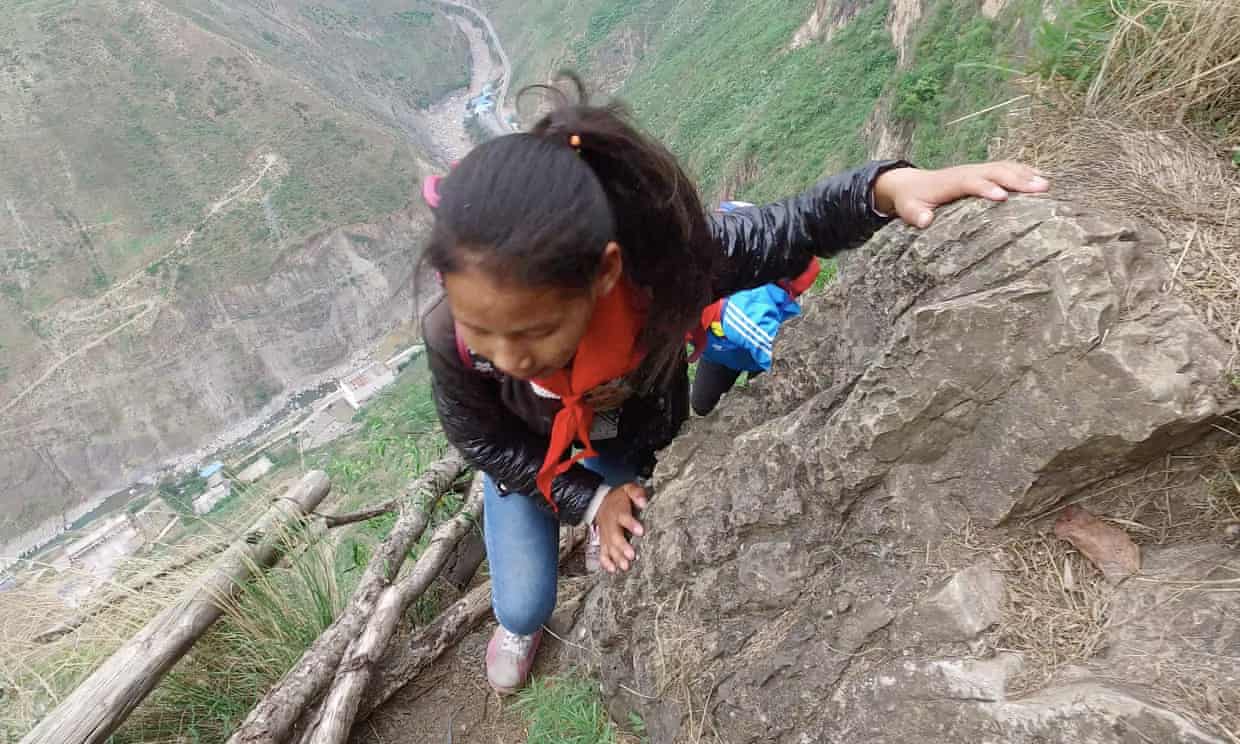
“There are 17 vine ladders on the 800-metre-high way home, but the most dangerous part is a path on the cliff without a vine ladder.In 2016, the Guardian reported this story on children as young as six going to school from Atuler village in Sichuan.

In one of the online English classes where I volunteer, the teacher likes to provide unusual news stories for our adult students to practice their reading on. Recently she gave the class an article from 2016 that astounded us all. After class, I searched online for a follow-up.

In 2016, Tom Phillips wrote at the Guardian, “To attend class, backpack-carrying pupils from Atuler village in Sichuan province must take on an 800-metre rock face, scrambling down rickety ladders and clawing their way over bare rocks as they go.

“Images of their terrifying and potentially deadly 90-minute descent went viral on the Chinese internet [after] they were published in a Beijing newspaper. The photographs were taken by Chen Jie, an award-winning Beijing News photographer. …

“Chen used his WeChat account to describe the moment he first witnessed the village’s 15 school children, aged between six and 15, scaling the cliff. ‘There is no doubt I was shocked.’ … Chen, who spent three days visiting the impoverished community, said the perilous trek, which he undertook three times, was not for the faint of heart.

‘It is very dangerous. You have to be 100% careful,’ he told the Guardian. ‘If you have any kind of accident, you will fall straight into the abyss.’

“So steep was the climb that Zhang Li, a reporter from China’s state broadcaster CCTV who was also dispatched to the mountain, burst into tears as she attempted to reach Atuler village. ‘Do we have to go this way?’ the journalist said as her team edged its way up the cliff face. ‘I don’t want to go.’

“Api Jiti, the head of the 72-family farming community which produces peppers and walnuts, told Beijing News there had been insufficient room to build a school for local children on the mountaintop.

“But the perils were evident. The villager chief told the Beijing News that ‘seven or eight’ villagers had [died] after losing their grip during the climb while many more had been injured. He had once nearly fallen from the mountain himself.

“The trek to school is now considered so grueling that the children have been forced to board, only returning to their mountaintop homes to see their families twice a month.

“Villager Chen Jigu told reporters the wooden ladders used to move up and down the mountain were, like the village, hundreds of years old. ‘We replace a ladder with a new one when we find one of them is rotten,’ he said.”

In the Insider follow-up story, we learn that the government came to the rescue, although not everyone agreed to move. Michelle Mark wrote, “The Chinese government has resettled 84 households who once lived in a remote village at the top of a 2,624-foot cliff.

“The village made international headlines in 2016, after harrowing photos showed young children climbing down the cliff to go to school, descending rickety ladders made of vines and scaling narrow paths without any guardrails or safety devices.

“The villagers have since been moved into apartment buildings near the town center of Zhaojue County in the province of Sichuan, according to the state-run broadcaster CGTN.

“The broadcaster quoted one villager who said Atule’er residents drew lots for their new homes — [the villager] said he was allowed a 1,076-square-foot dwelling because there are five people in his family, and that he was looking forward to accessing services in the new area that were previously unavailable to him. …

“The resettlement of the Atule’er villagers is reportedly part of a broader campaign to house impoverished families in remote villages. The Zhaojue County site is expected to soon house more than 18,000 residents from 4,057 households, according to CGTN.

“Despite the efforts, not all Atule’er villagers were willing to leave their homes. CNN reported that 30 households intended to stay in their clifftop homes, partly due to a newfound tourist economy. Roughly 100,000 people visited Atule’er in 2019, creating some $140,000 in revenue for the village”!

More at the Guardian, here, and at Insider, here.

Read Full Post »

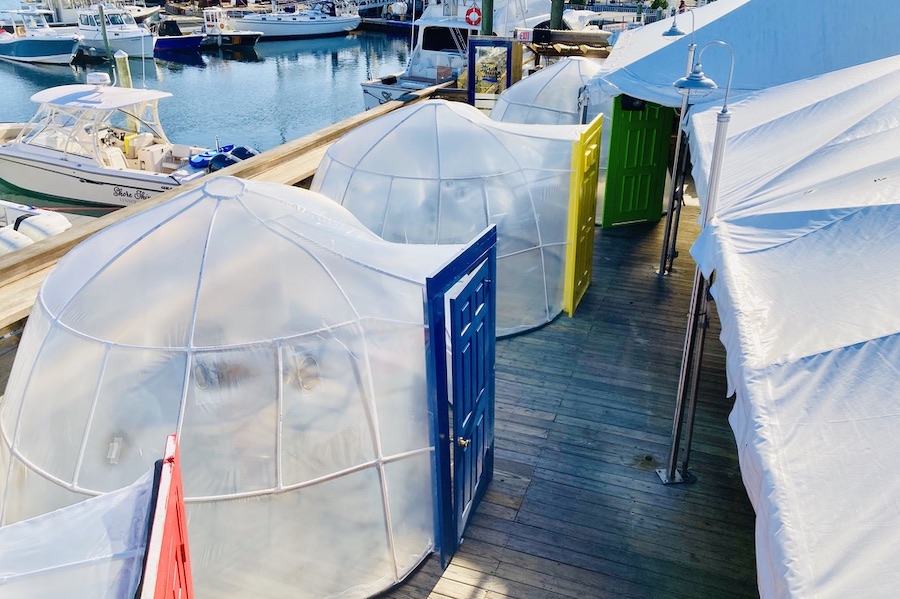
Photo: Mile Marker One.
Igloos at Mile Marker One restaurant in Ipswich, Mass.

Plenty of people I know are eating indoors at restaurants again, but I’m still too Covid-phobic. I want to support restaurants by doing takeout, but I am not going to take off a mask indoors unless I know that everyone in the building is triple vaccinated.

One innovation during the pandemic has been the tent for outdoor dining. Although some of those tents look too enclosed for your faithful hypochondriac, I thought it was interesting to read what Carolina A. Miranda had to say at the Los Angeles Times about their evolution.

She wrote, “Over the course of the last year, I’ve eaten enchiladas in a party tent. I’ve gotten COVID-tested in a party tent. I spent a night dancing to house music in a party tent. I’ve seen party tents double as retail shops, church naves, gymnasiums and outdoor living rooms. …

“Last year, as the pandemic isolated us into our respective domestic cocoons, designers took to their AutoCAD to imagine a brave new world of design ‘solutions’ for the pandemic. These included wearable head-to-thigh social distancing shields and space-age cones [But] we’ve learned infinitely more about how to rethink the design of our buildings from the pandemic’s most prominent workhorse: the party tent. …

“It can be staked into soil or anchored on pavement. The simplest models, a standard canopy, can shield you from the sun; more protective ones come with collapsible walls that can be adapted to the weather as needed. …

“The party tent is symbolic of all the other improvised architectures that have arisen during the pandemic: the parking lots turned into eating spaces with twinkle lights and umbrellas; the wooden dining platforms crafted out of plywood and two-by-fours; the izakaya on La Brea whose collapsible walls are actually transparent shower curtains. In Echo Park, Misty Mansouri, the owner of the Lady Byrd Café, has turned an impractical triangle of concrete on her property into an al fresco dining room courtesy of an ebullient agglomeration of Christmas trees and portable greenhouses employed as individual dining pods.

“Temporary structures can even be found in hyper-glam iterations — like the space-age, vented dining pod at Wolfgang Puck’s Spago in Beverly Hills. A 6,500-square-foot modular dining room constructed in the middle of Canon Drive, it was created by VX Design Solutions, a custom fabrication studio, and Choura, an event production company, and was assembled in less than a week. That structure opened in March 2021 and is still going strong. ‘We fill it up every single day,’ says Steve Scott Springer, the restaurant’s general manager.

“Party tents may not be around for the long haul, but they have qualities that are worth integrating into the hardscape of our cities. They offer flexibility and permeability and serve as a reminder that in the mild Southern California climate we don’t always need to encase ourselves in hermetically sealed cells of HVAC. If well-building design issues such as fresh air and sunlight had been gaining currency before the pandemic, COVID-19 and its many variants have made it a matter of urgency.

“ ‘Being able to kick open the doors makes people who are inside those doors feel so much better,’ says architect Oonagh Ryan, founding principal of ORA, an L.A.-based studio that has worked extensively in the commercial and hospitality sectors. ‘And operable windows, those are key.’

“One of ORA’s most recent projects is the design of Agnes, a popular Pasadena comfort food outpost that also contains a cheese shop. Housed in a 1920s stable once employed by the Pasadena fire department, the bulk of the restaurant’s design was conceived before COVID, but a number of programmatic choices made since the pandemic began have helped make the space more resilient.

“The key is flexibility. The street-facing side has operable windows and the rear of the dining room has sliding doors that can be propped open to connect with a patio out back, drawing fresh air through the building. A private dining room likewise opens to the elements. The patio, which harbors additional seating, is protected by a weatherproof canopy that can be pulled back when the weather is mild. It’s an outdoor space that can be used come rain or come shine. And the furniture isn’t fixed, so it can be reconfigured into different densities. …

“When the restaurant opened in June, the surge of COVID-19 infections had tapered off and indoor dining had resumed. But the pandemic made the coming months wildly uncertain, meaning that the design needed to be responsive to shifting health directives. ‘If the pandemic was still going strong,’ Ryan says, ‘we had a plan for how we could rearrange everything into more retail.’ ”

“If the pandemic was still going strong.” Is it? Who knows?

You get several free articles at the LA Times, here, if you’re not a subscriber. I think you will enjoy the variety of party tents in the photos.

Read Full Post »

Older Posts »